EP1849331B1 - Techniken zum zugreifen auf ein drahtloses kommunikationssystem mit wegstimm-fähigkeit - Google Patents
Techniken zum zugreifen auf ein drahtloses kommunikationssystem mit wegstimm-fähigkeit Download PDFInfo
- Publication number
- EP1849331B1 EP1849331B1 EP06720356.2A EP06720356A EP1849331B1 EP 1849331 B1 EP1849331 B1 EP 1849331B1 EP 06720356 A EP06720356 A EP 06720356A EP 1849331 B1 EP1849331 B1 EP 1849331B1
- Authority
- EP
- European Patent Office
- Prior art keywords
- time
- interval
- tune
- communication system
- terminal
- Prior art date
- Legal status (The legal status is an assumption and is not a legal conclusion. Google has not performed a legal analysis and makes no representation as to the accuracy of the status listed.)
- Expired - Lifetime
Links
Images


Classifications
-
- H—ELECTRICITY
- H04—ELECTRIC COMMUNICATION TECHNIQUE
- H04W—WIRELESS COMMUNICATION NETWORKS
- H04W88/00—Devices specially adapted for wireless communication networks, e.g. terminals, base stations or access point devices
- H04W88/02—Terminal devices
- H04W88/06—Terminal devices adapted for operation in multiple networks or having at least two operational modes, e.g. multi-mode terminals
-
- H—ELECTRICITY
- H04—ELECTRIC COMMUNICATION TECHNIQUE
- H04L—TRANSMISSION OF DIGITAL INFORMATION, e.g. TELEGRAPHIC COMMUNICATION
- H04L12/00—Data switching networks
- H04L12/28—Data switching networks characterised by path configuration, e.g. LAN [Local Area Networks] or WAN [Wide Area Networks]
-
- H—ELECTRICITY
- H04—ELECTRIC COMMUNICATION TECHNIQUE
- H04B—TRANSMISSION
- H04B1/00—Details of transmission systems, not covered by a single one of groups H04B3/00 - H04B13/00; Details of transmission systems not characterised by the medium used for transmission
- H04B1/69—Spread spectrum techniques
- H04B1/707—Spread spectrum techniques using direct sequence modulation
-
- H—ELECTRICITY
- H04—ELECTRIC COMMUNICATION TECHNIQUE
- H04W—WIRELESS COMMUNICATION NETWORKS
- H04W74/00—Wireless channel access
Definitions
- the present disclosure relates generally to communication, and more specifically to techniques for accessing and monitoring wireless communication systems.
- Wireless communication systems are widely deployed to provide various communication services such as voice, packet data, video, broadcast, messaging, and so on. These systems may be multiple-access systems capable of supporting communication with multiple users by sharing the available system resources. Examples of such multiple-access systems include Code Division Multiple Access (CDMA) systems, Time Division Multiple Access (TDMA) systems, Frequency Division Multiple Access (FDMA) systems, Orthogonal Frequency Division Multiplexing (OFDM), and Opportunity Driven Multiple Access (ODMA).
- CDMA system may implement a radio access technology (RAT) such as Wideband-CDMA (W-CDMA) or cdma2000, which covers IS-2000, IS-856, and IS-95 standards.
- W-CDMA Wideband-CDMA
- cdma2000 which covers IS-2000, IS-856, and IS-95 standards.
- GSM Global System for Mobile Communications
- Document WO 2005/002257 discloses an apparatus capable to communicate with at least a first communication system and a second communication system by time division multiplexing a single receiver, comprising a receiver and a controller, wherein the controller is configured to determine a protected time interval for the first communication system, wherein the protected time interval is a time interval in which the receiver is tuned to the first communication system.
- Some wireless communication systems are capable of providing voice and packet data services, which may be referred to as "data and voice” systems.
- One such system is a 1xEV-DV ("Evolution Data-Voice") system that implements IS-2000 and/or IS-95.
- Voice and packet data services have different characteristics. For example, voice service typically requires a common grade of service (GoS) for all users as well as relatively stringent delays. In contrast, packet data service may be able to tolerate different GoS for different users and variable delays.
- the 1xEV-DV system may first allocate system resources to voice users and then allocate any remaining system resources to packet data users who are able to tolerate longer delays.
- Some wireless communication systems are optimized for packet data service, which may be referred to as "data only” systems.
- data only One such system is a 1xEV-DO ("Evolution Data-Optimized") system that implements IS-856.
- Packet data transmission is typically characterized by long periods of silence punctuated by bursts of traffic.
- a service provider may deploy multiple wireless communication systems to provide enhanced services for its subscribers.
- the service provider may deploy a 1xEV-DV system to provide voice and packet data services for a large geographic area and may deploy a 1xEV-DO system to provide packet data service for areas where packet data usage is expected to be high.
- the coverage areas of the two systems typically overlap.
- a hybrid terminal may be capable of communicating with the 1xEV-DV and 1xEV-DO systems.
- the terminal is typically able to receive service from one of the two systems at any given moment depending on the location of the terminal and the desired service.
- the terminal may have registered with the 1xEV-DV system and may be monitoring this system for page and other messages.
- the terminal may thereafter attempt to access the 1xEV-DO system to obtain packet data service.
- the terminal would then enter a 1xEV-DO access state and perform a sequence of tasks in order to access the 1xEV-DO system.
- the terminal is typically not able to monitor the 1xEV-DV system for page and other messages. Consequently, the terminal may miss an incoming call while attempting to access the 1xEV-DO system, which is highly undesirable.
- a first communication system e.g., a 1xEV-DO system
- a second communication system e.g., a 1xEV-DV system
- the terminal determines a protected time interval for an access probe (request) to be sent to the first system and a starting time for sending the access probe such that the protected time interval does not overlap a tune-away interval in which the terminal is to be tuned away from the first system. The terminal then sends the access probe to the first system at the starting time.
- the terminal transmits at least one access probe in order to access the first system and may need to wait a pseudo-random time duration between access probes.
- the terminal may also need to tune its receiver to the second system at certain time intervals, which are called tune-away intervals, in order to receive page and other messages and/or to perform other tasks.
- the terminal determines a transmission time for an access probe and an expected response time for an acknowledgment from the first system for the access probe.
- the terminal determines a protected time interval for the access probe based on the transmission time and/or the expected response time.
- the protected time interval is the time interval in which the receiver is tuned to the first system and may be equal to the expected response time or the transmission time plus the expected response time.
- the terminal determines a starting time (e.g., a starting access channel cycle) for sending the access probe such that the protected time interval does not overlap a tune-away interval in which the terminal is to tuned to the second system, e.g., to monitor a paging channel.
- This starting time may be initially set to the end of a prior access probe plus a pseudo-random wait duration. This starting time may be advanced forward or moved backward in time, if needed, by a time duration selected such that the protected time interval does not overlap the tune-away interval.
- the terminal then sends the access probe to the first system at the starting time.
- the terminal may tune to the second system prior to the tune-away interval, perform any required task on the second system, and then tune back to the first system at the end of the tune-away interval.
- the terminal may send each subsequent probe in similar manner.
- FIG. 1 shows an exemplary deployment 100 whereby a 1xEV-DO system overlays a 1xEV-DV system.
- the 1xEV-DV system includes a number of base stations 110 that provide voice and packet data services for terminals 130 located within the coverage area of these base stations.
- the 1xEV-DO system includes a number of base stations 120 that provide packet data service for terminals 130 located within the coverage areas of these base stations.
- Base stations 110 and 120 may be located at different sites or co-located at the same sites.
- a base station controller (BSC) 142 couples to base stations 110 and provides coordination and control for these base stations.
- a BSC 144 couples to base stations 120 and provides coordination and control for these base stations.
- BSCs 142 and 144 may further couple to a network entity 140 that supports communication between the 1xEV-DV system and the 1xEV-DO system.
- a base station In general, a base station (1xEV-DV terminology) is a fixed station used for communicating with the terminals and may also be called an access point (1xEV-DO terminology), a Node B (W-CDMA terminology), a base transceiver station (BTS), or some other terminology.
- a terminal may be fixed or mobile and may also be called a mobile station (1xEV-DV terminology), an access terminal (1xEV-DO terminology), a user equipment (W-CDMA terminology), a wireless device, a subscriber unit, or some other terminology.
- the term “base station” is used for a fixed station and the term “terminal” is used for a wireless device that communicates with the fixed station.
- a solid line with arrows on both ends indicates communication between a terminal and a base station.
- a dashed line with an arrow on one end indicates reception of pilot and/or signaling by a terminal from a base station.
- a terminal may communicate with one or multiple base stations on the forward link and/or reverse link at any given moment.
- the forward link (or downlink) refers to the communication link from the base stations to the terminals
- the reverse link (or uplink) refers to the communication link from the terminals to the base stations.
- a hybrid terminal may have registered with the 1xEV-DV system and may operate in an idle state when the terminal is not actively exchanging data with any base station in the 1xEV-DV system. In the idle state, the terminal typically monitors a paging channel (PCH) from the 1xEV-DV system for messages applicable to the terminal. Such messages may include page messages that alert the terminal to the presence of an incoming call and overhead messages that carry system and other information for the terminal.
- PCH paging channel
- the paging channel is partitioned into PCH slots.
- Each PCH slot has a duration of 80 milliseconds (ms).
- the SCI can range from -4 to +7, and the slot cycle can range from 80 ms to 163.84 seconds, respectively.
- Each slot cycle contains 16 ⁇ 2 SCI PCH slots that are assigned indices of 1 through 16 ⁇ 2 SCI .
- the terminal is assigned a specific PCH slot index that is determined by identification information for the terminal.
- This identification information may be an International Mobile Subscriber Identifier (IMSI) that is unique for each terminal, a Mobile Identification Number (MIN), an Electronic Serial Number (ESN), a Temporary Mobile Subscriber Identifier (TMSI), and so on.
- IMSI International Mobile Subscriber Identifier
- MIN Mobile Identification Number
- ESN Electronic Serial Number
- TMSI Temporary Mobile Subscriber Identifier
- the PCH slot index for the terminal is fixed, and each PCH slot with that slot index is called an assigned paging slot.
- the terminal processes the assigned paging slot in each slot cycle since a message may be sent to the terminal in this paging slot.
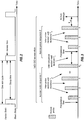
- FIG. 2 shows a timeline for processing the paging channel by a terminal in the 1xEV-DV system.
- the terminal may operate in a slotted mode whereby (1) the 1xEV-DV system sends messages to the terminal only in the assigned paging slots and (2) the terminal monitors the paging channel for messages during the assigned paging slots.
- the terminal transitions from a sleep state to an awake state prior to the assigned paging slot in each slot cycle, monitors the paging channel, and performs other functions to maintain the communication link with the 1xEV-DV system.
- the awake time denotes the time duration when the terminal is in the awake state
- the sleep time denotes the time duration when the terminal is in the sleep state.
- the awake time typically spans the assigned paging slot, any necessary setup and warm-up times for circuitry within the terminal, and software overhead and "clean up" time.
- the starts of the awake time for consecutive assigned paging slots are separated by T SC seconds.
- a hybrid terminal can operate on both the 1xEV-DV and 1xEV-DO systems by time division multiplexing a single receiver.
- the hybrid terminal can maintain an active connection with the 1xEV-DO system to obtain packet data service and monitor the paging channel on the 1xEV-DV system. This may be achieved by (1) temporarily halting the 1xEVDO connection prior to each assigned paging slot on the 1xEV-DV system, (2) tuning the receiver to the 1xEV-DV system to receive the paging channel, and (3) tuning the receiver back to the 1xEV-DO system and resuming the 1xEVDO connection after processing the 1xEV-DV paging channel.
- the hybrid terminal can operate on the 1xEVDO system with minimum impact on monitoring of the 1xEV-DV paging channel.
- the operation described above is for a case in which the hybrid terminal has already accessed the 1xEV-DO system and has established an active connection with the 1xEV-DO system.
- the terminal is not able to monitor the paging channel while attempting to access the 1xEV-DO system.
- the reason for this is because the terminal needs to perform a sequence of time-critical tasks in order to access the 1xEV-DO system, and tuning the receiver away to monitor the paging channel may disrupt this sequence of tasks, as described below.
- the terminal enters a 1xEVDO access state and performs an access procedure in order to access the 1xEV-DO system.
- the terminal transmits one or more access probes to the 1xEV-DO system.
- the 1xEV-DO system responds with an access channel acknowledgment (ACAck) message that acknowledges successful reception of an access probe from the terminal.
- ACAck access channel acknowledgment
- IS-856 specifies the manner in which access probes can be transmitted.
- access probes are transmitted on an access channel to the 1xEV-DO system.
- the access channel is divided into access channel cycles, with each access channel cycle having a configurable duration of N acd slots.
- Each slot has a duration of 1.667 milliseconds (ms) and is identified by system time T sys_s , which is given in units of slots.
- An access probe can only be transmitted starting at a new access channel cycle but may span one or multiple access channel cycles.
- each silence interval has a configurable duration of N SI frames.
- Each frame has a duration of 26.67 ms (or 16 slots) and is identified by system time T sys_f , which is given in units of frames.
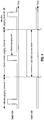
- FIG. 3 shows a timeline for accessing the 1xEV-DO system, which is called an access probe timeline.
- a terminal may transmit up to N s access probe sequences to the 1xEV-DO system and may transmit up to N p access probes for each access probe sequence, where N p and N s are configurable parameters.
- the terminal performs a persistence test before starting the first access probe sequence.
- the persistence test is used to control congestion on the access channel.
- the terminal For the persistence test, the terminal generates a pseudo-random number x between 0 and 1, compares x against a threshold value q , and declares success if x is less than q, where q is a configurable parameter for each class of terminals.
- the terminal can start transmission of access probes if the persistence test succeeds or if 4/ q consecutive persistence tests fail.
- the terminal After passing the persistence test, the terminal transmits the first access probe on the access channel and then listens for an ACAck message from the 1xEV-DO system. If an ACAck message is not received, then the terminal waits a random duration of T p slots, counting from the end of the prior access probe.
- This random wait duration T p is also called an inter-probe backoff and is computed as follows. The terminal initially sets a variable y total to zero. The terminal then generates a pseudo-random integer number y that is uniformly distributed between 0 and N pbo , where N pbo is the maximum wait duration (in units of access channel duration) between access probes.
- the terminal determines the time interval in which the second access probe will be transmitted. If this probe transmission interval overlaps a silence interval, then the terminal transmits the access probe after the silence interval. This is achieved by generating a new pseudo-random number y , adding this new y to the current y total , and computing the new random wait duration T p . The terminal continues to increase the wait duration until the probe transmission interval does not overlap the silence interval. The terminal then transmits the second access probe T p slots after the end of the first access probe.
- the terminal transmits each subsequent access probe in the first access probe sequence in the same manner, i.e., transmits the access probe, listens for an ACAck message, waits a random duration, and transmits another access probe.
- the terminal may transmit up to N p access probes for the first access probe sequence.
- the terminal waits a random duration of T s slots before starting a second access probe sequence.
- the random wait duration T s is also called an inter-sequence backoff and is computed in similar manner as the inter-probe random wait duration T p , except that the pseudo-random number y is uniformly distributed between 0 and N sbo , where N sbo is the maximum wait duration between access probe sequences.
- the terminal then transmits the second access probe sequence in the same manner as the first access probe sequence.
- the terminal may transmit up to N s access probe sequences for the access procedure.
- the terminal continues to transmit access probes, one at a time, until either (1) an ACAck message is received from the 1xEV-DO system or (2) the maximum number of access probes has been transmitted. For the example shown in FIG. 3 , the terminal receives an ACAck message T ack slots after sending the third access probe in the second access probe sequence. The terminal stops transmitting the access probes upon receiving this ACAck message. If the terminal has sent the maximum number of access probe sequences and still does not receive an ACAck message within T ack_max slots after the last access probe, then the terminal exits the 1xEV-DO access state with a failure indication.
- the access procedure described above indicates that the terminal performs a sequence of time-critical tasks for the access probe timeline.
- the terminal is not able to tune the receiver away to monitor the paging channel without possibly disrupting this access probe timeline.
- the terminal is not able to tune away to the system during the assigned paging slots because of (1) the random nature of the inter-probe wait durations T p and the inter-sequence wait durations T s and (2) the asynchronous nature of the ACAck message from the 1xEV-DO system.
- FIG. 4 shows monitoring of the 1xEV-DV paging channel and accessing of the 1xEV-DO system by a conventional hybrid terminal.
- the conventional terminal stops monitoring the paging channel prior to entering the 1xEV-DO access state at time T a and resumes monitoring the paging channel after completing the access procedure and exiting from the 1xEV-DO access state at time T b .
- the conventional terminal may miss page messages while in the 1xEV-DO access state if the assigned paging slot falls between times T a and T b , as shown in FIG. 4 .
- the access probe timeline may be modified to allow a hybrid terminal to perform inter-system tasks while accessing the 1xEV-DO system.
- inter-system tasks may include monitoring the paging channel on another system (e.g., the system), making pilot measurements, receiving signaling, or performing some other task on another frequency and/or another system, and so on.
- the modification to the access probe timeline minimally impacts the operation of the hybrid terminal for 1xEV-DO system access and is imperceptible to the 1xEV-DO system.
- the terminal transmits the access probe such that the total probe interval does not overlap a tune-away interval, which is a time interval in which the terminal needs to tune the receiver to another system.
- the tune-away interval may correspond to an assigned paging slot on the system, pilot or signaling transmission from another system, or some other event.
- the terminal transmits the access probe starting in an access channel cycle that meets the probe transmission criterion, which is nonoverlapping of the total probe interval with a tune-away interval. This starting access channel cycle may be determined in various manners.
- the terminal In a first scheme for determining the starting access channel cycle, the terminal first determines the random wait duration (if any) for the access probe in the normal manner, as specified by IS-856 and described above. The terminal then determines whether any portion of the total probe interval overlaps a tune-away interval. If the answer is yes, then the terminal either delays or advances the transmission of the access probe such that the total probe interval does not overlap a tune-away interval.
- the terminal may transmit this access probe in the access channel cycle immediately after the tune-away interval.
- the terminal may add N a slots to the random wait duration T p , where N a is selected such that the total probe interval does not overlap the tune-away interval.
- N a may be the minimum number of slots that meets the probe transmission criterion.
- the terminal may subtract N b slots from the random wait duration T p , where N b is selected such that the total probe interval does not overlap the tune-away interval.
- the terminal may add N a slots to the inter-sequence random wait duration T s or alternatively subtract N b slots from T s such that the total probe interval does not overlap the tune-away interval.
- Each subsequent access probe may be transmitted in the same manner.
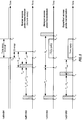
- FIG. 5 shows transmission of access probes with tune-away capability.
- the terminal transmits a first access probe at time T 1 and does not receive an ACAck message for this access probe.
- the terminal determines a random wait duration T w for a second access probe, where T w may be either T s or T p .
- the terminal next determines the total probe interval T total for the second access probe, as shown in equation (3). This total probe interval occurs between times T 4 and T 7 , where T 4 is T w slots after the end of the first access probe at time T 2 .
- the terminal needs to tune away between times T 6 and T 8 , which is the tune-away interval. Since the total probe interval overlaps the tune-away interval between times T 6 and T 7 , the terminal may either delay or expedite the transmission of the second access probe.
- the terminal adds N a slots to the random wait duration T w , where N a is selected such that T 2 + T w + N a ⁇ T 8 .
- the terminal may tune away to another system at time T 6 , perform the necessary task, tune back to the 1xEV-DO system at time T 8 , and transmit the second access probe at time T 9 , which is after time T 8 .
- the terminal subtracts N b slots from the random wait duration T w , where N b is selected such that T 2 + T w - N b + T total ⁇ T 6 .
- the terminal transmits the second access probe at time T 3 , which is T w - N b slots after the end of the first access probe and is at least T total prior to the start of the tune-away interval at time T 6 .
- the terminal completes the transmission of the second access probe and the waiting for the ACAck message at time T 5 , which is before time T 6 .
- the terminal may then tune away to another system at time T 6 , perform the necessary task, and tune back to the 1xEV-DO system at time T 8 .
- the terminal delays the transmission of the first access probe and determines the random wait duration for each subsequent access probe by taking into account a tune-away interval in similar manner as a silence interval.
- the terminal may transmit this access probe starting in the access channel cycle immediately after any silence interval and any tune-away interval.
- the terminal For each subsequent access probe in the first access probe sequence, the terminal generates a pseudo-random number y and computes the random wait duration T p , as shown in equation (2). The terminal then determines whether (1) the probe transmission interval overlaps a silence interval or (2) the total probe interval overlaps a tune-away interval.
- the terminal If either condition (1) or (2) is true, then the terminal generates a new pseudo-random number y , adds this new y to the current y total , and computes the new random wait duration T p .
- the terminal continues to increase the wait duration T p until (a) the probe transmission interval does not overlap a silence interval and (b) the total probe interval does not overlap a tune-away interval.
- the terminal transmits the next access probe T p slots after the end of the prior access probe.
- the terminal computes the random wait duration T s between access probe sequences in the same manner.
- the terminal continues to increase the wait duration T s until (a) the probe transmission interval does not overlap a silence interval and (b) the total probe interval does not overlap a tune-away interval.
- the terminal then transmits the first access probe in the new sequence T s slots after the end of the last access probe in the prior sequence.
- the second scheme results in delayed transmission of an access probe if the total probe interval overlaps a tune-away interval.
- the access probe is transmitted starting in an access channel cycle that is some pseudo-random number of slots from the end of the tune-away interval, instead of in the access channel cycle immediately after the end of the tune-away interval.
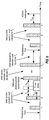
- FIG. 6 shows an example for accessing the 1xEV-DO system and monitoring the paging channel by a hybrid terminal with the modified access probe timeline.
- the terminal transmits the first and second access probes in the normal manner and does not receive an ACAck message.
- the terminal determines the random wait duration T p and the total probe interval, realizes that the total probe interval overlaps the tune-away interval, and hence delays the transmission of the third access probe by N a slots.
- the access probe transmission without the delay is shown by a dashed box in FIG. 6 . Delaying the transmission of the third access probe allows the terminal to tune away to monitor the paging channel.
- the transmission of subsequent access probes proceeds in the normal manner without the need to delay any of these access probes.
- the modified access probe timeline allows the terminal to tune away and monitor another system with a short interruption in the access procedure. Without the tune away capability, the terminal would not be able monitor the 1xEV-DV paging channel during 1xEV-DO system access and may miss page messages. The tune away capability may significantly reduce the missed page rate due to 1xEVDO system access.
- an access probe is transmitted such that the total probe interval does not overlap any portion of a tune-away interval. This restriction may be relaxed if the terminal does not need to transmit to the 1xEV-DV system and only needs to time division multiplex the receiver between monitoring the 1xEV-DV system for page messages and the 1xEV-DO system for an ACAck message.
- the terminal transmits an access probe such that the expected response time does not overlap a tune-away interval.
- the probe transmission time may overlap a tune-away interval since the terminal can transmit to the 1xEV-DO system and concurrently receive from the 1xEV-DV system.
- the second access probe may be transmitted starting earlier than time T 8 and completing at or after time T 9 .
- the terminal delays or expedites the transmission of an access probe if the total probe interval (or the expected response time) overlaps a tune-away interval.
- the terminal may also terminate the access procedure and exit the 1xEVDO access state if the tune-away interval exceeds a predetermined duration (e.g., 500 ms).
- the terminal may provide a failure indication upon exiting the 1xEVDO access state.
- FIG. 7 shows a process 700 performed by a hybrid terminal for accessing the 1xEV-DO system with tune-away capability.
- Process 700 is for the embodiment in which the terminal delays or expedites the transmission of an access probe such that the total probe interval does not overlap a tune-away interval.
- the terminal sets a variable s for the current access probe sequence to one and a variable p for the current access probe to one (block 710).
- the terminal Prior to starting a new access probe sequence, the terminal performs a persistence test (block 712). A determination is then made whether (1) the persistence test succeeds or (2) the number of consecutive unsuccessful persistence tests exceeds 4/ q (block 714). If both conditions are false and the answer is 'No' for block 714, then the terminal returns to block 712 to perform another persistence test. Otherwise, if either condition is true and the answer is 'Yes' for block 714, then the terminal proceeds to block 720 and starts the new access probe sequence.
- the terminal Prior to transmitting a new access probe, the terminal determines a starting access channel cycle for sending the access probe such that the total probe interval does not overlap a tune-away interval (block 720). This starting access channel cycle may be determined based on the first or second scheme described above or in some other manner. The terminal then sends the new access probe at the starting access channel cycle (block 722). After transmitting the access probe, the terminal waits for an ACAck message. If an ACAck message is received, as determined in block 724, then the terminal terminates the access procedure with a success indication (block 726).
- a determination is made whether the maximum number of access probes has been sent for the current access probe sequence, i.e., whether p N p (block 730). If the answer is 'No', then variable p is incremented (block 732). The terminal then determines the inter-probe random wait duration T p and waits this duration (block 734). The terminal then returns to block 720 to transmit a new access probe for the current access probe sequence.
- a determination is made whether the maximum number of access probe sequences has been sent, i.e., whether s N s (block 740). If the answer is 'No', then variable s is incremented (block 742). The terminal then determines the inter-sequence random wait duration T s and waits this duration (block 744). The terminal then returns to block 712 to perform a persistence test prior to initiating a new access probe sequence. Back in block 740, if the maximum number of access probe sequences has been sent and the answer is 'Yes', then the terminal terminates the access procedure with a failure indication (block 746).
- the access techniques with tune-away capability have been described specifically for 1xEV-DV and 1xEV-DO systems.
- These techniques may be used for other wireless communication systems such as, for example, a W-CDMA system, a GSM system, a wireless local area network (WLAN) such as an IEEE 802.11 network, an Orthogonal Frequency Division Multiple Access (OFDMA) system, and so on.
- WLAN wireless local area network
- OFDMA Orthogonal Frequency Division Multiple Access
- These techniques allow a terminal to access a system while performing tasks for one or more other systems.
- the terminal may access the 1xEV-DO system while monitoring a paging channel in the 1xEV-DV system, making pilot measurement in a W-CDMA system and/or a GSM system, and so on.
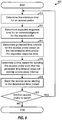
- FIG. 8 shows a process 800 performed by a hybrid terminal for accessing a first communication system (e.g., a 1xEV-DO system) with tune-away capability to a second communication system (e.g., a 1xEV-DV system).
- the terminal determines a transmission time for an access probe to be sent to the first system (block 810) and an expected response time for an acknowledgment from the first system for the access probe (block 812).
- the terminal determines a protected time interval for the access probe based on the transmission time and/or the expected response time (block 814).
- the protected time interval is the time interval in which the receiver is tuned to the first system and may be between (1) the expected response time and (2) the transmission time plus the expected response time.
- the terminal determines a starting time for sending the access probe such that the protected time interval does not overlap a tune-away interval (block 816).
- This starting time may be set initially to the end of a prior access probe plus a pseudo-random wait duration. This starting time may be advanced forward or moved backward in time, if needed, by a time duration selected such that the protected time interval does not overlap a tune-away interval.
- the terminal then sends the access probe to the first system at the starting time (block 818).
- the terminal returns to block 810 if another access probe is to be sent, as determined in block 820, and terminates the process otherwise.
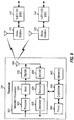
- FIG. 9 shows a block diagram of an embodiment of a hybrid terminal 130.
- Terminal 130 includes a wireless modem for communication with multiple systems (e.g., 1xEV-DV and 1xEV-DO systems), a controller 940, a memory 942, and a timer 944.
- data and signaling to be sent by terminal 130 are processed (e.g., formatted, encoded, and interleaved) by an encoder 922 and further processed (e.g., modulated, spread, channelized, and scrambled) by a modulator (Mod) 924 to generate a stream of data chips.
- Mod modulator
- a transmitter unit (TMTR) 932 conditions (e.g., converts to analog, filters, amplifies, and frequency upconverts) the data chip stream to generate a reverse link signal, which is transmitted via an antenna 936.
- TMTR transmitter unit
- RCVR receiver unit
- Receiver unit 938 conditions (e.g., filters, amplifies, frequency downconverts, and digitizes) the received signal to generate data samples.
- a demodulator (Demod) 926 processes (e.g., descrambles, despreads, channelizes, and demodulates) the data samples to obtain symbol estimates.
- a decoder 928 further processes (e.g., deinterleaves and decodes) the symbol estimates to obtain decoded data.
- Encoder 922, modulator 924, demodulator 926, and decoder 928 may be implemented by a modem processor 920 and may be provided on a single application specific integrated circuit (ASIC) along with, e.g., the controller 940, memory 942, and timer 942. These units perform processing as specified by the systems.
- ASIC application specific integrated circuit
- Controller 940 directs the operation of various units within terminal 130.
- Memory unit 942 stores program codes and data used by controller 940 and other units.
- Timer 944 provides timing information used to determine when to send access probes to one system (e.g., the 1xEV-DO system) and when to tune away to another system (e.g., the 1xEV-DV system).
- Controller 940 may implement process 700 in FIG. 7 to access the 1xEV-DO system while monitoring the 1xEV-DV system or process 800 shown in FIG. 8 .
- the access techniques with tune-away capability described herein may be implemented by various means. For example, these techniques may be implemented in hardware, software, or a combination thereof.
- the processing units used to access one system, monitor another system, and so on may be implemented within one or more ASICs, digital signal processors (DSPs), digital signal processing devices (DSPDs), programmable logic devices (PLDs), field programmable gate arrays (FPGAs), processors, controllers, micro-controllers, microprocessors, electronic devices, other electronic units designed to perform the functions described herein, or a combination thereof.
- DSPs digital signal processors
- DSPDs digital signal processing devices
- PLDs programmable logic devices
- FPGAs field programmable gate arrays
- processors controllers, micro-controllers, microprocessors, electronic devices, other electronic units designed to perform the functions described herein, or a combination thereof.
- the access techniques with tune-away capability may be implemented with modules (e.g., procedures, functions, and so on) that perform the functions described herein.
- the software codes may be stored in a memory unit (e.g., memory unit 942 in FIG. 9 ) and executed by a processor (e.g., controller 940).
- the memory unit may be implemented within the processor or external to the processor.
Landscapes
- Engineering & Computer Science (AREA)
- Computer Networks & Wireless Communication (AREA)
- Signal Processing (AREA)
- Mobile Radio Communication Systems (AREA)
- Transceivers (AREA)
Claims (14)
- Eine Vorrichtung (130) geeignet zum Kommunizieren mit wenigstens einem ersten Kommunikationssystem und einem zweiten Kommunikationssystem durch Zeitmultiplexierung eines einzelnen Empfängers, die Vorrichtung (130) aufweisend einen Empfänger (938) und einen Controller (940), wobei der Controller (940) konfiguriert ist zu
Bestimmen (814) eines gesamten geschützten Zeitintervalls für eine Zugangsanfrage, die zu dem ersten Kommunikationssystem gesendet werden soll, wobei das gesamte geschützte Zeitintervall ein Zeitintervall ist, in welchem der Empfänger (938) abgestimmt ist auf das erste Kommunikationssystem und einer erwarteten Antwortzeit für eine Bestätigung von dem ersten Kommunikationssystem für die Zugangsanfrage,
Bestimmen (816) einer Startzeit für Senden der Zugangsanfrage, so dass das gesamte geschützte Zeitintervall nicht überlappt mit einem Tune-Away Intervall, wobei die Startzeit vorwärts fortgeschritten oder zurückversetzt in der Zeit ist, durch eine Zeitdauer ausgewählt, so dass das gesamte geschützte Zeitintervall nicht überlappt mit dem Tune-Away Intervall, das Tune-Away Intervall ist ein Zeitintervall, in welchem der Empfänger (938) weggetunet ist weg von dem ersten Kommuniktationssystem für Pagingüberwachung auf dem zweiten Kommunikationssystem, und
Initiieren zu senden (818) der Zugangsanfrage zu dem ersten Kommunikationssystem zu der Startzeit. - Die Vorrichtung (130) von Anspruch 1, wobei der Controller (940) weiter konfiguriert ist, um zu
Bestimmen (810) einer Übertragungszeit für die Zugangsanfrage, Bestimmen (814) des gesamten geschützten Zeitintervalls weiter basierend auf der Übertragungszeit. - Die Vorrichtung (130) von Anspruch 1, wobei der Controller (940) weiter konfiguriert ist, um zu
Bestimmen einer Anfangszeit für Senden der Zugangsanfrage, und Setzen der Startzeit auf die Anfangszeit plus oder minus einer null oder nicht-null Zeitdauer ausgewählt, so dass Übertragung von der Zugangsanfrage zu der Startzeit resultiert in dem gesamten geschützten Zeitintervall nicht überlappend mit dem Tune-Away Interval. - Die Vorrichtung (130) von Anspruch 3, wobei der Controller (940) weiter konfiguriert ist zu Bestimmen eine pseudo-zufällige Wartedauer und zu Setzen der Anfangszeit auf das Ende von einer vorherigen Zugangsanfrage plus der pseudo-zufälligen Wartedauer.
- Die Vorrichtung (130) von Anspruch 1, wobei der Controller (940) weiter konfiguriert ist zu Initialisieren der Startzeit zu dem Ende von einer vorherigen Zugangsanfrage, zu Bestimmen einer pseudo-zufälligen Wartedauer, fortzuschreiten der Startzeit um die pseudo-zufällige Wartedauer und zu wiederholen des Bestimmens einer pseudo-zufälligen Wartedauer und fortzuschreiten der Startzeit bis Übertragung von der Zugangsanfrage zu der Startzeit resultiert in dem gesamten geschützten Zeitintervall nicht überlappend mit dem Tune-Away Intervall.
- Die Vorrichtung (130) von Anspruch 1, wobei der Controller (940) weiter konfiguriert ist den Empfänger (938) anzuweisen zu Tunen auf das zweiten Kommunikationssystem vor dem Tune-Away Intervall und anzuweisen den Empfänger (938) zurückzutunen zu dem ersten Kommunikationssystem nach dem Tune-Away Intervall.
- Die Vorrichtung (130) von Anspruch 6, wobei der Controller (940) weiter konfiguriert ist zu empfangen einen Paging-Kanal von dem zweiten Kommunikationssystem während des Tune-Away Intervalls.
- Die Vorrichtung (130) von Anspruch 1, wobei das Tune-Away Intervall korrespondiert zu einem zugewiesenen Paging-Slot für das zweite Kommunikationssystem.
- Die Vorrichtung (130) von Anspruch 1, wobei in dem Tune-Away Intervall ebenfalls überwacht wird für eine Pilot-Übertragung oder eine Signalisierungs-Übertragung von dem zweiten Kommunikationssystem.
- Die Vorrichtung (130) von Anspruch 1, wobei in dem Tune-Away Intervall ebenfalls Pilot-Messungen durchgeführt werden können.
- Ein Verfahren zum Kommunizieren mit wenigstens einem ersten Kommunikationssystem und einem zweiten Kommunikationssystem durch Zeitmultiplexierung eines einzelnes Empfängers, das Verfahren aufweisend:Bestimmen (814) eines gesamten geschützten Zeitintervalls für eine Zugangsanfrage, die zu dem ersten Kommunikationssystem gesendet werden soll, wobei das gesamte geschützte Zeitintervall ein Zeitintervall ist, in welchem der Empfänger getunet ist auf das erste Kommunikationssystem und einer erwarteten Antwortzeit für eine Bestätigung von dem ersten Kommunikationssystem für die Zugangsanfrage,Bestimmen (816) einer Startzeit für Senden der Zugangsanfrage, so dass das gesamte geschützte Zeitintervall nicht überlappt mit einem Tune-Away Intervall, wobei die Startzeit vorwärts fortgeschritten oder zurückversetzt in der Zeit ist, durch eine Zeitdauer ausgewählt, so dass das gesamte geschützte Zeitintervall nicht überlappt mit dem Tune-Away Intervall, das Tune-Away Intervall ist ein Zeitintervall, in welchem der Empfänger weggetunet istvon dem ersten Kommuniktationssystem für Pagingüberwachung auf dem zweiten Kommunikationssystem, undSenden (818) der Zugangsanfrage zu dem ersten Kommunikationssystem zu der Startzeit.
- Das Verfahren von Anspruch 11, wobei das Bestimmen (816) der Startzeit für Senden der Zugangsanfrage aufweist:Bestimmen einer pseudo-zufälligen Wartedauer,Setzen der Startzeit auf das Ende von einer vorherigen Zugangsanfrage plus die pseudo-zufällige Wartedauer, undAnpassen der Startzeit entweder vorwärts oder rückwärts in der Zeit, wenn nötig, um eine Zeitdauer ausgewählt, so dass Übertragung von der Zugangsanfrage zu der angepassten Startzeit resultiert in dem gesamten geschützten Zeitintervall nicht überlappend mit dem Tune-Away Intervall.
- Das Verfahren von Anspruch 11, weiter aufweisend:Tunen des Empfängers auf das zweite Kommunikationssystem vor dem Tune-Away Intervall;Empfangen eines Pagingkanals von dem zweiten Kommunikationssystem; undTunen des Empfängers zurück zu dem ersten Kommunikationssystem nach dem Tune-Away Intervall.
- Ein maschinen-lesbares Medium enthaltend maschinenausführbare Instruktionen, um einen Prozessor in einem drahtlosen Gerät anzuweisen, ein Verfahren gemäß einem der Ansprüche 11 bis 13 auszuführen.
Applications Claiming Priority (4)
| Application Number | Priority Date | Filing Date | Title |
|---|---|---|---|
| US64995905P | 2005-02-03 | 2005-02-03 | |
| US69856605P | 2005-07-12 | 2005-07-12 | |
| US11/282,064 US7848305B2 (en) | 2005-02-03 | 2005-11-16 | Techniques for accessing a wireless communication system with tune-away capability |
| PCT/US2006/004124 WO2006084241A1 (en) | 2005-02-03 | 2006-01-31 | Techniques for accessing a wireless communication system with tune-away capability |
Publications (2)
| Publication Number | Publication Date |
|---|---|
| EP1849331A1 EP1849331A1 (de) | 2007-10-31 |
| EP1849331B1 true EP1849331B1 (de) | 2017-12-27 |
Family
ID=36581691
Family Applications (1)
| Application Number | Title | Priority Date | Filing Date |
|---|---|---|---|
| EP06720356.2A Expired - Lifetime EP1849331B1 (de) | 2005-02-03 | 2006-01-31 | Techniken zum zugreifen auf ein drahtloses kommunikationssystem mit wegstimm-fähigkeit |
Country Status (11)
| Country | Link |
|---|---|
| US (2) | US7848305B2 (de) |
| EP (1) | EP1849331B1 (de) |
| JP (1) | JP4664382B2 (de) |
| KR (1) | KR100988741B1 (de) |
| CN (1) | CN101151922B (de) |
| BR (1) | BRPI0606890A2 (de) |
| CA (1) | CA2596806A1 (de) |
| ES (1) | ES2660436T3 (de) |
| HU (1) | HUE038142T2 (de) |
| SG (1) | SG173240A1 (de) |
| WO (1) | WO2006084241A1 (de) |
Families Citing this family (46)
| Publication number | Priority date | Publication date | Assignee | Title |
|---|---|---|---|---|
| US7848305B2 (en) * | 2005-02-03 | 2010-12-07 | Qualcomm Incorporated | Techniques for accessing a wireless communication system with tune-away capability |
| US20060248197A1 (en) * | 2005-04-27 | 2006-11-02 | Evans Scott C | Adaptive connectionless scheduling protocol |
| JP2008532352A (ja) * | 2005-02-14 | 2008-08-14 | ノキア コーポレイション | データバーストメッセージを介して移動端末をクロスページングするためのシステム、ネットワーク、移動端末、コンピュータプログラム製品及び方法 |
| US9247467B2 (en) * | 2005-10-27 | 2016-01-26 | Qualcomm Incorporated | Resource allocation during tune-away |
| US8068835B2 (en) | 2005-10-27 | 2011-11-29 | Qualcomm Incorporated | Tune-away and cross paging systems and methods |
| US8229433B2 (en) | 2005-10-27 | 2012-07-24 | Qualcomm Incorporated | Inter-frequency handoff |
| US8134977B2 (en) * | 2005-10-27 | 2012-03-13 | Qualcomm Incorporated | Tune-away protocols for wireless systems |
| US20070258436A1 (en) * | 2006-05-05 | 2007-11-08 | Kulkarni Narayan A | Measurement data record method for detecting hybrid mobile tune away |
| CN100499869C (zh) * | 2006-05-24 | 2009-06-10 | 华为技术有限公司 | 一种终端设备接入方法及系统 |
| CA2662736C (en) * | 2006-09-15 | 2014-11-04 | Research In Motion Limited | Apparatus, and associated method, for forming a page message including a structure of partial identifiers of differing bit lengths using random or pseudorandom numbers and for using random ati |
| TWI419528B (zh) * | 2006-09-18 | 2013-12-11 | 內數位科技公司 | 切換媒體獨立交接多連結層資源 |
| US7894393B2 (en) * | 2006-09-26 | 2011-02-22 | Via Telecom, Inc. | Systems and methods for determining slotted mode operation timing in a hybrid access terminal |
| US8103295B2 (en) * | 2006-12-12 | 2012-01-24 | Qualcomm Incorporated | Optimistic access procedure at dormant target handset in a CDMA2000 1X network with F-QPCH enabled |
| US8259747B2 (en) * | 2008-07-07 | 2012-09-04 | Samsung Electronics Co., Ltd. | Effective idle mode for advanced wireless system |
| JP5332840B2 (ja) * | 2009-04-08 | 2013-11-06 | ソニー株式会社 | 無線通信装置、無線通信システム、無線通信方法及びプログラム |
| US8135402B1 (en) * | 2009-06-22 | 2012-03-13 | Sprint Spectrum L.P. | Network access based on control-channel status |
| US9025572B2 (en) * | 2009-09-03 | 2015-05-05 | Via Telecom Co., Ltd. | Apparatus, system, and method for access procedure enhancements |
| US8462651B1 (en) | 2009-12-28 | 2013-06-11 | Sprint Spectrum L.P. | Methods and devices for using silence intervals to enhance wireless communications |
| US8229477B1 (en) | 2010-02-05 | 2012-07-24 | Sprint Communications Company L.P. | Multiple paging channels in wireless communication systems |
| US8442570B1 (en) | 2010-03-24 | 2013-05-14 | Sprint Communications Company L.P. | Wireless tune away based upon wireless device state |
| US8731605B1 (en) | 2010-04-12 | 2014-05-20 | Sprint Communications Company L.P. | Wireless tune away based upon wireless device location |
| US8605652B1 (en) | 2010-04-22 | 2013-12-10 | Sprint Communications Company L.P. | Wireless tune away based upon congestion |
| US8346270B1 (en) | 2010-09-14 | 2013-01-01 | Sprint Spectrum L.P. | Method and system of avoiding missed tuneaways |
| KR20120049604A (ko) * | 2010-11-09 | 2012-05-17 | 삼성전자주식회사 | 모바일 디바이스의 메모리 관리 방법 및 장치 |
| US8576880B1 (en) | 2010-12-30 | 2013-11-05 | Sprint Communications Company L.P. | Congestion-based wireless paging channels |
| US9614606B2 (en) * | 2011-12-28 | 2017-04-04 | Qualcomm Incorporated | Method and apparatus for power aware receive diversity control |
| US9313685B2 (en) * | 2012-02-06 | 2016-04-12 | Zte Corporation | Enhancement of access control for CDMA2000 |
| US9319952B2 (en) | 2012-03-30 | 2016-04-19 | Apple Inc. | Apparatus and methods for synchronization recovery in a hybrid network |
| US9807651B2 (en) | 2012-04-04 | 2017-10-31 | Apple Inc. | Assisted management of radio resources across dual networks |
| WO2013153513A2 (en) * | 2012-04-09 | 2013-10-17 | Telefonaktiebolaget L M Ericsson (Publ) | Methods and apparatus for enhancing network positioning measurement performance by managing uncertain measurement occasions |
| US9408221B2 (en) * | 2012-04-13 | 2016-08-02 | Qualcomm Incorporated | Methods and apparatus for determining how to perform operations after communication suspend based on information before the suspend |
| US20130295920A1 (en) * | 2012-05-02 | 2013-11-07 | Qualcomm Incorporated | Apparatus and methods of limited tune away |
| US9906998B2 (en) | 2012-05-08 | 2018-02-27 | Qualcomm Incorporated | Mechanism to improve dynamic sharing of receive chain(s) among radio access technologies |
| US9277582B2 (en) * | 2012-05-17 | 2016-03-01 | Apple Inc. | Fast communication recovery in dual network radio resource management |
| US9055495B2 (en) * | 2012-06-26 | 2015-06-09 | Apple Inc. | Cell re-selection in a device configured to operate according to multiple cellular communication protocols |
| US8879506B1 (en) * | 2012-10-29 | 2014-11-04 | Sprint Spectrum L.P. | Method and apparatus for dynamically scheduled tuneaway |
| US9025576B2 (en) * | 2012-11-01 | 2015-05-05 | Qualcomm Incorporated | Apparatus and method for employing a tune-away operation to communicate simultaneously with a plurality of channels |
| US9204353B2 (en) | 2013-03-15 | 2015-12-01 | Qualcomm Incorporated | Receiver-only tune-away |
| US8570951B1 (en) | 2013-07-03 | 2013-10-29 | Qualcomm Incorporated | Apparatus and method for improved tune-away operations in (C+G) DSDS devices |
| US9743452B2 (en) * | 2013-09-30 | 2017-08-22 | Apple Inc. | Adaptive reception of LTE in a single radio wireless device |
| GB2522217A (en) * | 2014-01-16 | 2015-07-22 | Parcelhome Ltd | Electronic lock apparatus, method and system |
| US9338716B2 (en) | 2014-05-15 | 2016-05-10 | Qualcomm Incorporated | Piecewise aggregation of overhead messaging sets |
| US20150350982A1 (en) * | 2014-05-28 | 2015-12-03 | Qualcomm Incorporated | Method and apparatus for improving voice and data communications in a wireless network |
| US20160037414A1 (en) * | 2014-07-31 | 2016-02-04 | Qualcomm Incorporated | Transmission control for user equipment |
| US20170094568A1 (en) * | 2015-09-25 | 2017-03-30 | Qualcomm Incorporated | Tune away adjustment procedure |
| US10034320B2 (en) * | 2016-09-15 | 2018-07-24 | Qualcomm Incorporated | System and methods for performing an adaptive access procedure on a multi-SIM wireless communication device |
Citations (2)
| Publication number | Priority date | Publication date | Assignee | Title |
|---|---|---|---|---|
| US20030144000A1 (en) * | 2002-01-31 | 2003-07-31 | Glazko Serguei A. | Timing transitions between wireless communication systems |
| WO2005002257A2 (en) * | 2003-06-23 | 2005-01-06 | Quorum Systems, Inc. | Time interleaved multiple standard single radio system apparatus and method |
Family Cites Families (16)
| Publication number | Priority date | Publication date | Assignee | Title |
|---|---|---|---|---|
| US6614768B1 (en) * | 1989-04-28 | 2003-09-02 | Broadcom Corporation | Enhanced mobility and address resolution in a wireless premises based network |
| US5937019A (en) | 1996-08-07 | 1999-08-10 | Qualcomm Incorporated | Method and apparatus for reliable intersystem handoff in a CDMA system |
| US6483826B1 (en) * | 1999-02-19 | 2002-11-19 | Telefonaktiebolaget Lm Ericsson (Publ) | Utilization of plural multiple access types for mobile telecommunications |
| US6438117B1 (en) | 2000-01-07 | 2002-08-20 | Qualcomm Incorporated | Base station synchronization for handover in a hybrid GSM/CDMA network |
| GB2360674A (en) * | 2000-03-21 | 2001-09-26 | Inmarsat Ltd | Concurrent use of multiple TDMA Protocols |
| US7194263B2 (en) * | 2001-09-17 | 2007-03-20 | Microsoft Corporation | System and method for concurrent operation of a wireless device in two disjoint wireless networks |
| JP4116563B2 (ja) | 2001-11-27 | 2008-07-09 | シャープ株式会社 | 無線通信システム |
| US6980823B2 (en) * | 2002-01-31 | 2005-12-27 | Qualcomm Inc. | Intermediate wake mode to track sleep clock frequency in a wireless communication device |
| JP4013665B2 (ja) | 2002-06-21 | 2007-11-28 | 株式会社日立製作所 | 無線通信方式および無線装置 |
| JP4016776B2 (ja) | 2002-09-20 | 2007-12-05 | ソニー株式会社 | 無線通信システム、無線通信装置及び無線通信方法、並びにコンピュータ・プログラム |
| US7613160B2 (en) * | 2002-12-24 | 2009-11-03 | Intel Corporation | Method and apparatus to establish communication with wireless communication networks |
| KR100640332B1 (ko) * | 2003-01-28 | 2006-10-30 | 삼성전자주식회사 | 음성 서비스와 패킷 데이터 서비스를 지원하는 복합 액세스 단말의 크로스 호출 방법 |
| DE60319503T2 (de) | 2003-04-11 | 2009-05-28 | Telefonaktiebolaget Lm Ericsson (Publ) | Verfahren zur Synchronisierung in einem mobilen Funkendgerät |
| US20050281227A1 (en) * | 2004-06-18 | 2005-12-22 | Lucent Technologies, Inc. | Method and apparatus fo reducing latency during handoffs in a communications system |
| JP4620414B2 (ja) | 2004-09-09 | 2011-01-26 | 京セラ株式会社 | 無線通信端末装置及びプログラム |
| US7848305B2 (en) * | 2005-02-03 | 2010-12-07 | Qualcomm Incorporated | Techniques for accessing a wireless communication system with tune-away capability |
-
2005
- 2005-11-16 US US11/282,064 patent/US7848305B2/en active Active
-
2006
- 2006-01-31 KR KR1020077019649A patent/KR100988741B1/ko not_active Expired - Lifetime
- 2006-01-31 CA CA 2596806 patent/CA2596806A1/en not_active Abandoned
- 2006-01-31 HU HUE06720356A patent/HUE038142T2/hu unknown
- 2006-01-31 JP JP2007554294A patent/JP4664382B2/ja not_active Expired - Lifetime
- 2006-01-31 ES ES06720356.2T patent/ES2660436T3/es not_active Expired - Lifetime
- 2006-01-31 EP EP06720356.2A patent/EP1849331B1/de not_active Expired - Lifetime
- 2006-01-31 WO PCT/US2006/004124 patent/WO2006084241A1/en not_active Ceased
- 2006-01-31 SG SG2010007557A patent/SG173240A1/en unknown
- 2006-01-31 CN CN2006800099472A patent/CN101151922B/zh not_active Expired - Lifetime
- 2006-01-31 BR BRPI0606890-1A patent/BRPI0606890A2/pt not_active IP Right Cessation
-
2010
- 2010-11-05 US US12/940,886 patent/US8238321B2/en not_active Expired - Lifetime
Patent Citations (2)
| Publication number | Priority date | Publication date | Assignee | Title |
|---|---|---|---|---|
| US20030144000A1 (en) * | 2002-01-31 | 2003-07-31 | Glazko Serguei A. | Timing transitions between wireless communication systems |
| WO2005002257A2 (en) * | 2003-06-23 | 2005-01-06 | Quorum Systems, Inc. | Time interleaved multiple standard single radio system apparatus and method |
Also Published As
| Publication number | Publication date |
|---|---|
| US8238321B2 (en) | 2012-08-07 |
| EP1849331A1 (de) | 2007-10-31 |
| HUE038142T2 (hu) | 2018-09-28 |
| US20060176870A1 (en) | 2006-08-10 |
| KR20070099045A (ko) | 2007-10-08 |
| WO2006084241A1 (en) | 2006-08-10 |
| US20110044300A1 (en) | 2011-02-24 |
| CA2596806A1 (en) | 2006-08-10 |
| JP2008538663A (ja) | 2008-10-30 |
| KR100988741B1 (ko) | 2010-10-20 |
| US7848305B2 (en) | 2010-12-07 |
| ES2660436T3 (es) | 2018-03-22 |
| SG173240A1 (en) | 2011-08-29 |
| JP4664382B2 (ja) | 2011-04-06 |
| CN101151922B (zh) | 2013-01-02 |
| CN101151922A (zh) | 2008-03-26 |
| BRPI0606890A2 (pt) | 2009-07-21 |
Similar Documents
| Publication | Publication Date | Title |
|---|---|---|
| EP1849331B1 (de) | Techniken zum zugreifen auf ein drahtloses kommunikationssystem mit wegstimm-fähigkeit | |
| KR100397406B1 (ko) | 고 우선순위 및/또는 긴급 오버로드 액세스 제어 시스템 | |
| EP1806947B1 (de) | System für einen Handover in einem zellularen Mobilfunknetz | |
| US7773992B2 (en) | Timing transitions between wireless communication systems | |
| JP5027254B2 (ja) | 改善されたsib7およびsib14スケジューリングにより通話設定遅延を低減させる方法および装置 | |
| EP2127446B1 (de) | Verfahren und vorrichtung für verminderte verzögerung bei einem verbindungsaufbau mittels einstellung von sib7- und sib14-planungsfrequenz | |
| WO2008049889A1 (en) | A method and apparatus of using a relay station to assist processing of requests from user ends | |
| CN113678560A (zh) | 随机接入过程中传输信息的方法、终端设备和网络设备 | |
| CN101601326A (zh) | 通过将干扰信息包含在寻呼消息中来减小呼叫建立延迟的方法和装置 | |
| CN117480849B (zh) | 一种控制随机接入的方法及装置、终端设备 | |
| US7075907B1 (en) | Method for signalling DTX periods and allocation of new channels in a statistical multiplexed radio interface | |
| CA2461610A1 (en) | System and method for sending a supplemental channel request message in a wireless communication device | |
| US12185387B2 (en) | Random access problem reporting method, terminal device and storage medium | |
| HK1112146A (en) | Techniques for accessing a wireless communication system with tune-away capability | |
| RU2372739C2 (ru) | Методика получения доступа к системе радиосвязи с возможностью отстраивания | |
| CN112672431A (zh) | 随机接入方法和装置 |
Legal Events
| Date | Code | Title | Description |
|---|---|---|---|
| PUAI | Public reference made under article 153(3) epc to a published international application that has entered the european phase |
Free format text: ORIGINAL CODE: 0009012 |
|
| 17P | Request for examination filed |
Effective date: 20070830 |
|
| AK | Designated contracting states |
Kind code of ref document: A1 Designated state(s): AT BE BG CH CY CZ DE DK EE ES FI FR GB GR HU IE IS IT LI LT LU LV MC NL PL PT RO SE SI SK TR |
|
| 17Q | First examination report despatched |
Effective date: 20071115 |
|
| DAX | Request for extension of the european patent (deleted) | ||
| RIC1 | Information provided on ipc code assigned before grant |
Ipc: H04W 88/06 20090101AFI20170202BHEP Ipc: H04B 1/707 20110101ALN20170202BHEP Ipc: H04W 74/00 20090101ALN20170202BHEP |
|
| GRAP | Despatch of communication of intention to grant a patent |
Free format text: ORIGINAL CODE: EPIDOSNIGR1 |
|
| INTG | Intention to grant announced |
Effective date: 20170316 |
|
| RIC1 | Information provided on ipc code assigned before grant |
Ipc: H04W 74/00 20090101ALN20170307BHEP Ipc: H04W 88/06 20090101AFI20170307BHEP Ipc: H04B 1/707 20110101ALN20170307BHEP |
|
| GRAS | Grant fee paid |
Free format text: ORIGINAL CODE: EPIDOSNIGR3 |
|
| GRAJ | Information related to disapproval of communication of intention to grant by the applicant or resumption of examination proceedings by the epo deleted |
Free format text: ORIGINAL CODE: EPIDOSDIGR1 |
|
| GRAL | Information related to payment of fee for publishing/printing deleted |
Free format text: ORIGINAL CODE: EPIDOSDIGR3 |
|
| REG | Reference to a national code |
Ref country code: DE Ref legal event code: R079 Ref document number: 602006054415 Country of ref document: DE Free format text: PREVIOUS MAIN CLASS: H04Q0007380000 Ipc: H04W0088060000 |
|
| INTC | Intention to grant announced (deleted) | ||
| GRAP | Despatch of communication of intention to grant a patent |
Free format text: ORIGINAL CODE: EPIDOSNIGR1 |
|
| RIC1 | Information provided on ipc code assigned before grant |
Ipc: H04W 74/00 20090101ALN20170705BHEP Ipc: H04W 88/06 20090101AFI20170705BHEP Ipc: H04B 1/707 20110101ALN20170705BHEP |
|
| INTG | Intention to grant announced |
Effective date: 20170804 |
|
| GRAA | (expected) grant |
Free format text: ORIGINAL CODE: 0009210 |
|
| AK | Designated contracting states |
Kind code of ref document: B1 Designated state(s): AT BE BG CH CY CZ DE DK EE ES FI FR GB GR HU IE IS IT LI LT LU LV MC NL PL PT RO SE SI SK TR |
|
| REG | Reference to a national code |
Ref country code: GB Ref legal event code: FG4D |
|
| REG | Reference to a national code |
Ref country code: CH Ref legal event code: EP |
|
| REG | Reference to a national code |
Ref country code: DE Ref legal event code: R082 Ref document number: 602006054415 Country of ref document: DE Representative=s name: BARDEHLE PAGENBERG PARTNERSCHAFT MBB PATENTANW, DE |
|
| REG | Reference to a national code |
Ref country code: AT Ref legal event code: REF Ref document number: 959360 Country of ref document: AT Kind code of ref document: T Effective date: 20180115 |
|
| REG | Reference to a national code |
Ref country code: FR Ref legal event code: PLFP Year of fee payment: 13 |
|
| REG | Reference to a national code |
Ref country code: IE Ref legal event code: FG4D |
|
| PGFP | Annual fee paid to national office [announced via postgrant information from national office to epo] |
Ref country code: NL Payment date: 20171227 Year of fee payment: 13 |
|
| REG | Reference to a national code |
Ref country code: DE Ref legal event code: R096 Ref document number: 602006054415 Country of ref document: DE |
|
| REG | Reference to a national code |
Ref country code: NL Ref legal event code: FP |
|
| REG | Reference to a national code |
Ref country code: ES Ref legal event code: FG2A Ref document number: 2660436 Country of ref document: ES Kind code of ref document: T3 Effective date: 20180322 |
|
| PG25 | Lapsed in a contracting state [announced via postgrant information from national office to epo] |
Ref country code: LT Free format text: LAPSE BECAUSE OF FAILURE TO SUBMIT A TRANSLATION OF THE DESCRIPTION OR TO PAY THE FEE WITHIN THE PRESCRIBED TIME-LIMIT Effective date: 20171227 Ref country code: SE Free format text: LAPSE BECAUSE OF FAILURE TO SUBMIT A TRANSLATION OF THE DESCRIPTION OR TO PAY THE FEE WITHIN THE PRESCRIBED TIME-LIMIT Effective date: 20171227 |
|
| PGFP | Annual fee paid to national office [announced via postgrant information from national office to epo] |
Ref country code: ES Payment date: 20180221 Year of fee payment: 13 Ref country code: FI Payment date: 20180104 Year of fee payment: 13 |
|
| REG | Reference to a national code |
Ref country code: LT Ref legal event code: MG4D |
|
| REG | Reference to a national code |
Ref country code: AT Ref legal event code: MK05 Ref document number: 959360 Country of ref document: AT Kind code of ref document: T Effective date: 20171227 |
|
| PG25 | Lapsed in a contracting state [announced via postgrant information from national office to epo] |
Ref country code: BG Free format text: LAPSE BECAUSE OF FAILURE TO SUBMIT A TRANSLATION OF THE DESCRIPTION OR TO PAY THE FEE WITHIN THE PRESCRIBED TIME-LIMIT Effective date: 20180327 Ref country code: GR Free format text: LAPSE BECAUSE OF FAILURE TO SUBMIT A TRANSLATION OF THE DESCRIPTION OR TO PAY THE FEE WITHIN THE PRESCRIBED TIME-LIMIT Effective date: 20180328 Ref country code: LV Free format text: LAPSE BECAUSE OF FAILURE TO SUBMIT A TRANSLATION OF THE DESCRIPTION OR TO PAY THE FEE WITHIN THE PRESCRIBED TIME-LIMIT Effective date: 20171227 |
|
| PGFP | Annual fee paid to national office [announced via postgrant information from national office to epo] |
Ref country code: FR Payment date: 20180117 Year of fee payment: 13 |
|
| PG25 | Lapsed in a contracting state [announced via postgrant information from national office to epo] |
Ref country code: CY Free format text: LAPSE BECAUSE OF FAILURE TO SUBMIT A TRANSLATION OF THE DESCRIPTION OR TO PAY THE FEE WITHIN THE PRESCRIBED TIME-LIMIT Effective date: 20171227 Ref country code: EE Free format text: LAPSE BECAUSE OF FAILURE TO SUBMIT A TRANSLATION OF THE DESCRIPTION OR TO PAY THE FEE WITHIN THE PRESCRIBED TIME-LIMIT Effective date: 20171227 Ref country code: CZ Free format text: LAPSE BECAUSE OF FAILURE TO SUBMIT A TRANSLATION OF THE DESCRIPTION OR TO PAY THE FEE WITHIN THE PRESCRIBED TIME-LIMIT Effective date: 20171227 Ref country code: SK Free format text: LAPSE BECAUSE OF FAILURE TO SUBMIT A TRANSLATION OF THE DESCRIPTION OR TO PAY THE FEE WITHIN THE PRESCRIBED TIME-LIMIT Effective date: 20171227 |
|
| PG25 | Lapsed in a contracting state [announced via postgrant information from national office to epo] |
Ref country code: AT Free format text: LAPSE BECAUSE OF FAILURE TO SUBMIT A TRANSLATION OF THE DESCRIPTION OR TO PAY THE FEE WITHIN THE PRESCRIBED TIME-LIMIT Effective date: 20171227 Ref country code: RO Free format text: LAPSE BECAUSE OF FAILURE TO SUBMIT A TRANSLATION OF THE DESCRIPTION OR TO PAY THE FEE WITHIN THE PRESCRIBED TIME-LIMIT Effective date: 20171227 Ref country code: IS Free format text: LAPSE BECAUSE OF FAILURE TO SUBMIT A TRANSLATION OF THE DESCRIPTION OR TO PAY THE FEE WITHIN THE PRESCRIBED TIME-LIMIT Effective date: 20180427 Ref country code: PL Free format text: LAPSE BECAUSE OF FAILURE TO SUBMIT A TRANSLATION OF THE DESCRIPTION OR TO PAY THE FEE WITHIN THE PRESCRIBED TIME-LIMIT Effective date: 20171227 |
|
| PGFP | Annual fee paid to national office [announced via postgrant information from national office to epo] |
Ref country code: IT Payment date: 20180323 Year of fee payment: 13 |
|
| REG | Reference to a national code |
Ref country code: CH Ref legal event code: PL |
|
| PG25 | Lapsed in a contracting state [announced via postgrant information from national office to epo] |
Ref country code: MC Free format text: LAPSE BECAUSE OF FAILURE TO SUBMIT A TRANSLATION OF THE DESCRIPTION OR TO PAY THE FEE WITHIN THE PRESCRIBED TIME-LIMIT Effective date: 20171227 |
|
| REG | Reference to a national code |
Ref country code: HU Ref legal event code: AG4A Ref document number: E038142 Country of ref document: HU Ref country code: DE Ref legal event code: R097 Ref document number: 602006054415 Country of ref document: DE |
|
| PG25 | Lapsed in a contracting state [announced via postgrant information from national office to epo] |
Ref country code: LU Free format text: LAPSE BECAUSE OF NON-PAYMENT OF DUE FEES Effective date: 20180131 |
|
| REG | Reference to a national code |
Ref country code: IE Ref legal event code: MM4A |
|
| PLBE | No opposition filed within time limit |
Free format text: ORIGINAL CODE: 0009261 |
|
| STAA | Information on the status of an ep patent application or granted ep patent |
Free format text: STATUS: NO OPPOSITION FILED WITHIN TIME LIMIT |
|
| REG | Reference to a national code |
Ref country code: BE Ref legal event code: MM Effective date: 20180131 |
|
| PG25 | Lapsed in a contracting state [announced via postgrant information from national office to epo] |
Ref country code: CH Free format text: LAPSE BECAUSE OF NON-PAYMENT OF DUE FEES Effective date: 20180131 Ref country code: DK Free format text: LAPSE BECAUSE OF FAILURE TO SUBMIT A TRANSLATION OF THE DESCRIPTION OR TO PAY THE FEE WITHIN THE PRESCRIBED TIME-LIMIT Effective date: 20171227 Ref country code: LI Free format text: LAPSE BECAUSE OF NON-PAYMENT OF DUE FEES Effective date: 20180131 Ref country code: BE Free format text: LAPSE BECAUSE OF NON-PAYMENT OF DUE FEES Effective date: 20180131 |
|
| PGFP | Annual fee paid to national office [announced via postgrant information from national office to epo] |
Ref country code: HU Payment date: 20171227 Year of fee payment: 13 |
|
| 26N | No opposition filed |
Effective date: 20180928 |
|
| PG25 | Lapsed in a contracting state [announced via postgrant information from national office to epo] |
Ref country code: IE Free format text: LAPSE BECAUSE OF NON-PAYMENT OF DUE FEES Effective date: 20180131 |
|
| PG25 | Lapsed in a contracting state [announced via postgrant information from national office to epo] |
Ref country code: SI Free format text: LAPSE BECAUSE OF FAILURE TO SUBMIT A TRANSLATION OF THE DESCRIPTION OR TO PAY THE FEE WITHIN THE PRESCRIBED TIME-LIMIT Effective date: 20171227 |
|
| REG | Reference to a national code |
Ref country code: NL Ref legal event code: MM Effective date: 20190201 |
|
| PG25 | Lapsed in a contracting state [announced via postgrant information from national office to epo] |
Ref country code: FI Free format text: LAPSE BECAUSE OF NON-PAYMENT OF DUE FEES Effective date: 20190131 Ref country code: NL Free format text: LAPSE BECAUSE OF NON-PAYMENT OF DUE FEES Effective date: 20190201 Ref country code: FR Free format text: LAPSE BECAUSE OF NON-PAYMENT OF DUE FEES Effective date: 20190131 |
|
| PG25 | Lapsed in a contracting state [announced via postgrant information from national office to epo] |
Ref country code: HU Free format text: LAPSE BECAUSE OF NON-PAYMENT OF DUE FEES Effective date: 20190201 |
|
| PG25 | Lapsed in a contracting state [announced via postgrant information from national office to epo] |
Ref country code: IT Free format text: LAPSE BECAUSE OF NON-PAYMENT OF DUE FEES Effective date: 20190131 |
|
| REG | Reference to a national code |
Ref country code: ES Ref legal event code: FD2A Effective date: 20200310 |
|
| PG25 | Lapsed in a contracting state [announced via postgrant information from national office to epo] |
Ref country code: TR Free format text: LAPSE BECAUSE OF FAILURE TO SUBMIT A TRANSLATION OF THE DESCRIPTION OR TO PAY THE FEE WITHIN THE PRESCRIBED TIME-LIMIT Effective date: 20171227 |
|
| PG25 | Lapsed in a contracting state [announced via postgrant information from national office to epo] |
Ref country code: ES Free format text: LAPSE BECAUSE OF NON-PAYMENT OF DUE FEES Effective date: 20190201 |
|
| PG25 | Lapsed in a contracting state [announced via postgrant information from national office to epo] |
Ref country code: PT Free format text: LAPSE BECAUSE OF FAILURE TO SUBMIT A TRANSLATION OF THE DESCRIPTION OR TO PAY THE FEE WITHIN THE PRESCRIBED TIME-LIMIT Effective date: 20171227 |
|
| PGFP | Annual fee paid to national office [announced via postgrant information from national office to epo] |
Ref country code: GB Payment date: 20241212 Year of fee payment: 20 |
|
| PGFP | Annual fee paid to national office [announced via postgrant information from national office to epo] |
Ref country code: DE Payment date: 20241217 Year of fee payment: 20 |