EP1833897B1 - Semi-crystalline polymer composition and article manufactured therefrom - Google Patents
Semi-crystalline polymer composition and article manufactured therefrom Download PDFInfo
- Publication number
- EP1833897B1 EP1833897B1 EP05821467A EP05821467A EP1833897B1 EP 1833897 B1 EP1833897 B1 EP 1833897B1 EP 05821467 A EP05821467 A EP 05821467A EP 05821467 A EP05821467 A EP 05821467A EP 1833897 B1 EP1833897 B1 EP 1833897B1
- Authority
- EP
- European Patent Office
- Prior art keywords
- polymer composition
- oxide
- nitride
- composition according
- anyone
- Prior art date
- Legal status (The legal status is an assumption and is not a legal conclusion. Google has not performed a legal analysis and makes no representation as to the accuracy of the status listed.)
- Expired - Lifetime
Links
Images
Classifications
-
- C—CHEMISTRY; METALLURGY
- C08—ORGANIC MACROMOLECULAR COMPOUNDS; THEIR PREPARATION OR CHEMICAL WORKING-UP; COMPOSITIONS BASED THEREON
- C08K—Use of inorganic or non-macromolecular organic substances as compounding ingredients
- C08K3/00—Use of inorganic substances as compounding ingredients
- C08K3/18—Oxygen-containing compounds, e.g. metal carbonyls
- C08K3/20—Oxides; Hydroxides
- C08K3/22—Oxides; Hydroxides of metals
-
- C—CHEMISTRY; METALLURGY
- C08—ORGANIC MACROMOLECULAR COMPOUNDS; THEIR PREPARATION OR CHEMICAL WORKING-UP; COMPOSITIONS BASED THEREON
- C08K—Use of inorganic or non-macromolecular organic substances as compounding ingredients
- C08K3/00—Use of inorganic substances as compounding ingredients
- C08K3/28—Nitrogen-containing compounds
-
- C—CHEMISTRY; METALLURGY
- C08—ORGANIC MACROMOLECULAR COMPOUNDS; THEIR PREPARATION OR CHEMICAL WORKING-UP; COMPOSITIONS BASED THEREON
- C08L—COMPOSITIONS OF MACROMOLECULAR COMPOUNDS
- C08L77/00—Compositions of polyamides obtained by reactions forming a carboxylic amide link in the main chain; Compositions of derivatives of such polymers
-
- C—CHEMISTRY; METALLURGY
- C08—ORGANIC MACROMOLECULAR COMPOUNDS; THEIR PREPARATION OR CHEMICAL WORKING-UP; COMPOSITIONS BASED THEREON
- C08K—Use of inorganic or non-macromolecular organic substances as compounding ingredients
- C08K3/00—Use of inorganic substances as compounding ingredients
- C08K3/18—Oxygen-containing compounds, e.g. metal carbonyls
- C08K3/20—Oxides; Hydroxides
- C08K3/22—Oxides; Hydroxides of metals
- C08K2003/2227—Oxides; Hydroxides of metals of aluminium
-
- C—CHEMISTRY; METALLURGY
- C08—ORGANIC MACROMOLECULAR COMPOUNDS; THEIR PREPARATION OR CHEMICAL WORKING-UP; COMPOSITIONS BASED THEREON
- C08K—Use of inorganic or non-macromolecular organic substances as compounding ingredients
- C08K3/00—Use of inorganic substances as compounding ingredients
- C08K3/38—Boron-containing compounds
- C08K2003/382—Boron-containing compounds and nitrogen
Definitions
- the present invention concerns a semi-crystalline polymer composition, in particular a polyphthalamide composition, and an article manufactured therefrom.
- US 6,600,633 describes an overmold for a disc drive actuator assembly to encapsulate and support an actuator coil material comprising (i) a base resin, such as a liquid crystal polymer, a polyethylene naphthalate, a polyethylene terephthalate, a polybutylene terephthalate, a polyamide, a polyphthalamide, a polyphenylene sulphide, a polycarbonate, a polyetheretherketone or a polyphenylene oxide, and (ii) a ceramic filler blended with the resin such as boron nitride, alumina, aluminum nitride, magnesium oxide, zinc oxide, silicon carbide, beryllium oxide and chromium oxide (see col. 4,1.
- a base resin such as a liquid crystal polymer, a polyethylene naphthalate, a polyethylene terephthalate, a polybutylene terephthalate, a polyamide, a polyphthalamide, a polyphenylene sulph
- JP 2004/059,638 in the name of Kuraray, teaches that a polyphthalamide composition excellent in heat conductivity, heat resistance, low water absorption and moldability, can be obtained by blending a polyphthalamide containing 60-100 mole % terephthalic acid units and 60-100 mole % 1,9-nonanediamine and/or 2-methyl-1,8-octanediamine units with a heat conductive filler and optionally a plasticizer.
- heat conductive fillers examples include calcium silicate whiskers, carbon fibers, metal oxides, metal powders, alumina, oxides such as gold, silver, copper, iron, aluminum, magnesium, beryllium and titanium oxides, boron nitride and aluminum nitride.
- the heat conductive filler can consist of one, two or more of the above listed fillers
- the 6 therein examplified compositions all comprise a sole ceramic filler (see table 1); more generally, like US 6,600,633 , JP 2004/059,638 does not describe any specific combination of the above listed fillers, nor does it suggest any benefit that could result from such a specific combination of inorganic fillers.
- compositions and/or articles disclosed in US 6,600,633 and JP 2004/059,638 still present several drawbacks.
- the improvement in thermal conductivity achieved with the above detailed compositions and/or articles is in general not sufficient, or requires a high amount of an expensive inorganic filler, such as boron nitride ; besides, using a very high amount of certain cheaper inorganic fillers, like aluminum oxide, can be detrimental to some other important properties of the semi-crystalline polymer composition, like the electrical insulating properties. Then, improved compositions and/or articles are still strongly needed.
- a first objective of the present invention is to provide a semi-crystalline polymer composition, in particular a polyphthalamide composition, which provides various advantages over prior art semi-crystalline polymer compositions, in particular an improved thermal conductivity, without retaining their drawbacks, in particular poor insulating properties.
- the present invention concerns a polymer composition
- a polymer composition comprising
- an "element” is intended to denote an element from the Periodic Table of the Elements.
- the value of the electronegativity of an element, as well as the acid, amphoteric or basic character of the oxide derived from an element at a certain stage of oxidation that are to be taken into consideration for the purpose of the present invention are those reported in the Periodic Table of the Elements edited by J. Breysem, c/o VEL s.a., "Produits, requisitelage et sheettures pour le capita", printed in Belgium in February 1987 .
- an "amphoteric oxide” is intended to denote either a predominantly acid amphoteric oxide or an amphoteric oxide in the strictest meaning of the term (i.e. without acid or basic predominance).
- a predominantly basic amphoteric oxide is not an amphoteric oxide to the purpose of the present invention.
- the semi-crystalline polymer (SCP) has advantageously a heat deflection temperature of above 80°C under a load of 1.82 MPa when measured according to ASTM D648.
- the semi-crystalline polymer (SCP) is advantageously a polycondensation polymer.
- the semi-crystalline polymer (SCP) comprises advantageously recurring units comprising at least one arylene group.
- the semi-crystalline polymer (SCP) is preferably a polycondensation polymer comprising recurring units comprising at least one arylene group.
- the semi-crystalline polymer (SCP) is preferably a polyamide.
- the polyamide can be notably an aliphatic polyamide such as nylon 6, nylon 66 or nylon 12, a polyamide of which less than or equal to 50 mole % of the recurring units comprise at least one aromatic group, or an aromatic polyamide as defined hereafter.
- aromatic polyamide is intended to denote any polymer more than 50 mole % of the recurring units comprise at least one aromatic group.
- Polyamides are notably formed by the polycondensation reaction between at least one diacid and one diamine, and/or by the auto-polycondensation reaction of at least one aminoacid
- the aromaticity of the aromatic recurring units of the aromatic polyamide can come from the diacid and/or from the diamine and/or from the aminoacid.
- Non limitative examples of aromatic diacids are phthalic acids and naphthalenedicarboxylic acids.
- Metaxylylenediamine is an example of aromatic diamine.
- a first group of preferred aromatic polyamides consists of PMXDAs, i.e. aromatic polyamides of which more than 50 mole % of the recurring units are formed by the polycondensation reaction between at least one aliphatic diacid and metaxylylenediamine.
- the aliphatic diacid can be notably adipic acid.
- Suitable PMXDAs are notably available as IXEF R PMXDAs from Solvay Advanced Polymers, L.L.C.
- a second group of preferred aromatic polyamides consists of polyphthalamides, i.e. aromatic polyamides of which more than 50 mole % of the recurring units are formed by the polycondensation reaction between at least one phthalic acid and at least one aliphatic diamine.
- the aliphatic diamine can be notably hexamethylenediamine, nonanediamine, 2-methyl-1,5-pentadiamine, and 1,4-diaminobutane.
- Suitable polyphthalamides are notably available as AMODEL ® polyphthalamides from Solvay Advanced Polymers, L.L.C.
- poly(tere/iso)phthalamides are often preferred.
- poly(tere/iso)phthalamides may be preferred in certain particular embodiments of the present invention.
- poly(tere/iso)phthalamides are defined as aromatic polyamides of which (i) more than 50 mole % of the recurring units are formed by the polycondensation reaction between terephthalic acid, isophthalic acid and at least one diamine, (ii) more than 25 and up to 50 mole % of the recurring units are formed by the polycondensation reaction between terephthalic acid and at least one diamine, (iii) from 1 to 25 mole % of the recurring units are formed by the polycondensation reaction between terephthalic acid and at least one diamine.
- poly(tere/iso)phthalamides further comprise recurring units formed by the polycondensation reaction between at least one aliphatic diacid and at least one aliphatic diamine.
- poly(tere/iso)phthalamides are preferably free of recurring units formed by the polycondensation reaction between o-phthalic acid and at least one diamine.
- polyterephthalamides are defined as aromatic polyamides of which more than 50 mole % of the recurring units are formed by the polycondensation reaction between terephthalic acid and at least one diamine.
- a first class of preferred polyterephthalamides consists of polyterephthalamides the recurring units of which are formed by the polycondensation reaction between terephthalic acid and at least one aliphatic diamine [class (I)].
- a second class of preferred polyterephthalamides consists of polyterephthalamides the recurring units of which are formed by the polycondensation reaction between terephthalic acid, isophthalic acid and at least one aliphatic diamine [class (II)].
- a third class of preferred polyterephthalamides consists of polyterephthalamides the recurring units of which are formed by the polycondensation reaction between terephthalic acid, at least one aliphatic diacid and at least one aliphatic diamine [class (III)]. Such recurring units are respectively referred to as terephthalamide and aliphatic acid-amide recurring units.
- a first preferred subclass consists of polyterephthalamides in which the mole ratio of the terephthalamide recurring units with respect to the total number of moles of the recurring units (i.e. the terephthalamide plus the aliphatic acid-amide recurring units) is 60 mole % or more; in addition, it is advantageously 80 mole % or less, and preferably 70 mole % or less [subclass (III-1)].
- a second preferred subclass consists of polyterephthalamides in which the mole ratio of the terephthalamide recurring units with respect to the total number of moles of the recurring units (i.e. the terephthalamide plus the aliphatic acid-amide recurring units) is less than 60 mole % [subclass (III-2)].
- a fourth class of preferred polyterephthalamides consists of polyterephthalamides the recurring units of which are formed by the polycondensation reaction between terephthalic acid, isophthalic acid, at least one aliphatic diacid and at least one aliphatic diamine [class (IV)].
- the semi-crystalline polymer (SCP) is contained in the polymer composition in an amount of advantageously at least 10 wt %, preferably at least 20 wt % and more preferably at least 30 wt % (based on the total weight of the composition).
- SCP semi-crystalline polymer
- ⁇ denotes the electronegativity of the element from which the oxide is derived.
- the oxide (OX) is preferably an amphoteric oxide.
- the oxide (OX) is an oxide of an element having an electronegativity of preferably at most 2.0, more preferably at most 1.8, and still more preferably at most 1.6.
- the oxide (OX) is an oxide of an element having preferably an electonegativity of at least 1.4.
- the most preferred oxide (OX) is aluminum oxide.
- Non limitative examples of nitrides (NI) of an element having an electronegativity ( ⁇ ) of from 1.3 to 2.5 are listed « Handbook of Chemistry and Physics » CRC Press, 64 th edition, pages B-65 to B-158. The code into brackets is the one attributed by the CRC Handbook to the concerned nitride, while ⁇ denotes the electronegativity of the element from which the nitride is derived.
- the nitride (NI) is a nitride of an element having an electronegativity of preferably at least 1.6, and more preferably at least 1.8.
- the nitride (NI) is the nitride of an element having an electronegativity of preferably at most 2.2.
- nitride is chosen preferably from nitrides of an element chosen from Groups IIIa, IVa, IVb, Va, Vb, VIa, VIb, VIIb and VIII of the Periodic Table of the Elements, and more preferably from nitrides of an element of Group IIIa of the Periodic Table of the Elements.
- nitride boron nitride
- the oxide (OX) and the nitride (NI) are contained in the polymer composition in a cumulated amount [(OX) + (NI)] of advantageously above 40 wt %, and preferably above 50 wt % (based on the total weight of the composition).
- the oxide (OX) and the nitride (NI) are contained in the polymer composition in a cumulated amount [(OX) + (NI)] of advantageously below 80 wt %, and preferably below 70 wt % (based on the total weight of the composition).
- the oxide (OX) over nitride (NI) weight ratio [(OX):(NI)] is 2.0, and still more preferably above 2.5.
- the oxide (OX) over nitride (NI) weight ratio [(OX):(NI)] is below 12.0, preferably below 6.0, more preferably below 4.0, and still more preferably below 3.5.
- the polymer composition can optionally comprise additional ingredients, e.g. impact modifiers such as elastomers, fillers such as glass fiber and talc, mold release agents, plasticizers, lubricants, anti-degradation stabilizers including thermal stabilizers, light stabilizers and antioxidants.
- impact modifiers such as elastomers
- fillers such as glass fiber and talc
- mold release agents such as plasticizers
- plasticizers such as plasticizers
- lubricants e.g., lubricants, anti-degradation stabilizers including thermal stabilizers, light stabilizers and antioxidants.
- levels of these optional additional ingredients is determined for the particular use envisioned, with up to 50 wt %, preferably up to 10 wt % and more preferably up to 5 wt % (based on the total weight of the polymer composition) of such additional additives considered to be within the range of ordinary practice in the art.
- Another objective of the present invention is to provide a part of an article or an article comprising a semi-crystalline polymer composition, in particular a power tool armature comprising a polyphthalamide composition, which provides various advantages over prior art parts and articles, in particular an improved thermal conductivity, without retaining their drawbacks, in particular poor insulating properties.
- the present invention concerns a part of an article, said part comprising the polymer composition as above described.
- the part consists of the polymer composition.
- a part of an article which is especially envisioned within the frame of the present invention is an encapsulating part.
- Another part of an article which is especially envisioned within the frame of the present invention is a reflector cup.
- the present invention concerns also an article comprising the polymer composition as above described.
- the article consists of the polymer composition.
- the present invention further concerns an article comprising at least one part comprising the polymer composition as above described.
- the part consists of the polymer composition.
- the article can be chosen from electronic components, optoelectronic components, computer components, surface-mounted technology components and cell phone components.
- It can also be chosen from mechanical components such as bearings and bushings.
- a first article which is especially envisioned within the frame of the present invention is an electrical motor armature comprising a coil encapsulated by an overmold part consisting of the polymer composition as above described.
- the encapsulation of the overmold part can be notably achieved by overcoating.
- the overmold part can be a film wound through-out the armature.
- the coil can notably consist of copper windings. When energized, the copper windings create usually an electrical field, thus a magnetic field, that drives the motor.
- the overmold part eliminates advantageously the possibility of grit eroding the coating on the copper windings.
- the windings are thereby usually maintained with no short circuits, retaining power.
- the conductivity of the overmold part allows advantageously the conventional heat removal system (air flow through the motor) to remain effective.
- Another article which is especially envisioned within the frame of the present invention is a disc drive actuator assembly comprising an actuator coil encapsulated and supported by an overmold part consisting of the polymer composition as above described.
- emission apparatus an optoelectronic component that emits a radiation
- emission apparatuses are keyless entry systems of an automobile, lightings in a refrigerator, liquid crystal display apparatuses, automobile front panel lighting apparatuses, desk lamps, headlights, household electrical appliance indicators and outdoor display apparatuses such as traffic signs, and optoelectronic devices comprising at least one semi-conductor chip that emits and/or transmits electromagnetic radiation commonly known as Light Emitting Diodes devices (LEDs).
- LEDs Light Emitting Diodes devices
- the emission apparatus is a Light Emitting Diode device (LED).
- the LED comprises usually at least one part comprising, and preferably consisting of, the polymer composition as above described.
- the part is preferably chosen from basic housings and heatsink slugs.
- the part acts usually as reflector.
- more than 50 wt % of the part comprises the polymer composition (the part can possibly further contain notably a metal; for example, for certain end uses, the surface of the part acting as reflector may be metal plated). More preferably, more than 90 wt % of the part comprises the polymer composition. Still more preferably, the part consists essentially of the polymer composition. The most preferably, the part consists of the polymer composition.
- LEDs are preferably chosen from the group of top view LEDs, side view LEDs and power LEDs.
- Top view and side view LEDs comprise usually a basic housing, which, in general, acts as reflector; besides, top view and side view LEDs usually do not comprise any heatsink slug.
- power LEDs comprise usually a heatsink slug, which, in general, acts as reflector; power LEDs usually further comprise a basic housing, which is a part distinct from the heatsink slug.
- the top view LEDs are notably used in automotive lighting applications such as instrumental panel displays, stop lights and turn signals.
- the side view LEDs are notably used for mobile appliance applications such as, for example, cell phones and PDAs.
- the power LEDs are notably used in flashlights, automotive day light running lights, signs and as backlight for LCD displays and TVs.
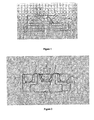
- FIG. 1 An exemplary embodiment of a top view LED is provided in Figure 1 , which illustrates a sectional view of said embodiment.
- the top view LED 1 comprises a basic housing 2 comprising, and preferably consisting of, the polymer composition. As will be detailed hereafter, the basic housing 2 acts also as reflector cup. No heatsink slug is present
- the LED 1 further comprises a prefabricated electrical lead frame 3 .
- Lead frame 3 is advantageously encapsulated by injection molding with the polymer composition included in the basic housing 2.
- the basic housing 2 has a cavity 6.
- a semiconductor chip 4 that emits electromagnetic radiations, such as a LED chip, is mounted inside such cavity.
- the semiconductor chip 4 is generally bonded and electrically contact-connected on one of the lead frame terminals by means of a bonding wire 5.
- a transparent or translucent potting compound e.g. an epoxy, a polycarbonate or a silicone resin, not shown in Figure 1
- a transparent or translucent potting compound is generally built into the cavity in order to protect the LED chip.
- the cavity of the basic housing with non perpendicular inner areas in such a way that the cavity acquires a form opening towards the front side (the sectional view of the inner wall of the cavity may have, for instance, the form of an oblique straight line, as in the exemplary embodiment in accordance with Figure 1 , or that of a parabola).
- the inner walls 7 of the cavity serve as reflector cup for the radiation which is emitted laterally by the semiconductor chip, notably reflecting this radiation towards the front side of the basic housing.
- FIG. 2 An exemplary embodiment of a power LED is provided in Figure 2 , which illustrates a sectional view of said embodiment.
- the power LED 8 comprises a basic housing 2 comprising, and preferably consisting of, the polymer composition.
- the LED 8 further comprises a prefabricated electrical lead frame 3.
- the power LED 8 also comprises a carrier body or heatsink slug 9 which may be of metal (e.g. aluminum) or which may comprise, or consist of, the polymer composition.
- a cavity 6 is realized in the upper portion of the heatsink slug 9.
- a semiconductor LED chip 4 that emits electromagnetic radiations is mounted on the bottom area of cavity 6 and it is generally fixed by means of a chip carrier substrate or solder connection 10 to the heatsink slug 9.
- the solder connection 10 is generally an epoxy resin or another equivalent adhesive material.
- the LED chip is generally conductively connected to the electric terminals of the lead frame 3 via the bonding wires 5.
- the inner walls 7 of the cavity 6 run generally from the bottom area of the cavity to the front side so as to form a reflector cup increasing the external efficiency of the LED chip.
- the inner walls 7 of the reflector cup may be, for example, straight and oblique (like in the exemplary embodiment in accordance with Figure 2 ) or concavely curved.
- the lead frame 3 and the heatsink slug 9 are encapsulated within the basic housing 2.
- the cavity is generally completely filled, likewise in the first exemplary embodiment of Figure 1 , with a radiation-transmissive, for example transparent, encapsulation compound (the encapsulant is not shown in Figure 2 ).
- the invented polymer composition is particularly suitable for making basic housings and/or heatsink slugs as above described, because, besides having excellent thermal conductivity thus allowing the heat produced by the optoelectronic device to be easily dissipated, it has also good mechanical properties, high heat deflection temperature, good plateability, good adhesion to lead frame, excellent optical properties, notably excellent initial whiteness and high retention of reflectance.
- optical properties of the polymer composition are generally largely enough for the purpose of making reflector cups having inner walls with excellent reflectance.
- the polymer composition according to the present invention exhibits advantageously improved whiteness and surface aspect over prior art polymer compositions.
- another aspect of the present invention is to a part susceptible of acting as reflector in an emission apparatus, especially in a LED, said part comprising the polymer composition as above described.
- more than 50 wt % of the part comprises the polymer composition (the part can possibly further contain notably a metal; for example, for certain end uses, the surface of the part acting as reflector may be metal plated). More preferably, more than 90 wt % of the part comprises the polymer composition. Still more preferably, the part consists essentially of the polymer composition. The most preferably, the part consists of the polymer composition.
- the part is susceptible of constituting the basic housing and/or the heatsink slug of a LED. More preferably, the part is either the basic housing of a LED or the heatsink slug of a LED.
- the present invention is not limited to the above cited articles.
- the blended mixture was fed to the first barrel of a twin screw extruder comprising 8 barrels via a loss in weight feeder.
- a side stuffer introduced the thermal conductive filler along with a reinforcing filler as specified in Table 1.
- the blended mixture was compressed and cooled in barrel 8.
- An extrudate (E1) was recovered from barrel 8. The extrudate was cooled and pelletized with conventional equipment.
- the thermal conductivity of extrudate (E1) was measured according to ASTM D5930-01. (E1) had a thermal conductivity of about 3.5 W/(m.K).
- An extrudate (E2) was prepared by physically blending and extruding the components specified in Table 1, following a procedure identical to that of Example 1.
- An extrudate (E3) was prepared by physically blending and extruding the components specified in Table 1, following a procedure identical to that of Example 1.
- An extrudate (E4) was prepared physically blending and extruding the components specified in Table 1, following a procedure identical to that of Example 1.
- An extrudate (E5) was prepared physically blending and extruding the components specified in Table 1, following a procedure identical to that of Example 1.
- a first objective of the present invention is to provide a semi-crystalline polymer composition, in particular a polyphthalamide composition, having various advantages over prior art semi-crystalline polymer compositions and in particular an improved thermal conductivity.
- semi-crystalline polymer compositions which have thermal conductivity values significantly higher than 3 W/(m.K) are usually considered by the skilled in the art as top-rank materials and are placed in the "VERY HIGH performance level” segment.
- Polymer compositions whose thermal conductivity is from 2 to 3 W/(m.K) are usually considered by the skilled in the art as materials in the "HIGH performance level” segment.
- Polymer compositions whose thermal conductivity is from 1 to 2 W/(m.K) are usually considered by the skilled in the art as materials in the "MEDIUM performance level” segment.
- polymer compositions whose thermal conductivity is below 1 W/(mK) are usually considered by the skilled in the art as materials in the "LOW performance level” segment.
- Another objective of the invention is to provide a semi-crystalline polymer composition having an improved balance between thermal conductivity performance level and cost, notably cost of the loading in thermally conductive filler.
- polymer compositions (E1) and (E2) were characterized by thermal conductivity levels significantly higher than those of polymer composition (E3) (control), although polymer compositions (E1) and (E2) did not comprise a total amount of thermally conductive fillers higher than that of composition (E3).
- compositions (E1) and (E2) were able to provide thermal conductivity levels similar or even better than that of polymer composition (E5) (control), although compositions (E1) and (E2) contained boron nitride in an amount equal to only about one-third to one-fifth of the amount of boron nitride contained in composition (E5), and a total amount of thermal conductive filler [i.e. (OX)+(NI)] close to that of composition (E5).
Landscapes
- Chemical & Material Sciences (AREA)
- Health & Medical Sciences (AREA)
- Chemical Kinetics & Catalysis (AREA)
- Medicinal Chemistry (AREA)
- Polymers & Plastics (AREA)
- Organic Chemistry (AREA)
- Compositions Of Macromolecular Compounds (AREA)
Applications Claiming Priority (3)
| Application Number | Priority Date | Filing Date | Title |
|---|---|---|---|
| US63653104P | 2004-12-17 | 2004-12-17 | |
| US71016105P | 2005-08-23 | 2005-08-23 | |
| PCT/EP2005/056803 WO2006064032A1 (en) | 2004-12-17 | 2005-12-15 | Semi-crystalline polymer composition and article manufactured therefrom |
Publications (2)
| Publication Number | Publication Date |
|---|---|
| EP1833897A1 EP1833897A1 (en) | 2007-09-19 |
| EP1833897B1 true EP1833897B1 (en) | 2011-10-12 |
Family
ID=35985388
Family Applications (1)
| Application Number | Title | Priority Date | Filing Date |
|---|---|---|---|
| EP05821467A Expired - Lifetime EP1833897B1 (en) | 2004-12-17 | 2005-12-15 | Semi-crystalline polymer composition and article manufactured therefrom |
Country Status (8)
| Country | Link |
|---|---|
| US (1) | US20090286914A1 (enExample) |
| EP (1) | EP1833897B1 (enExample) |
| JP (1) | JP5054540B2 (enExample) |
| KR (1) | KR20070087612A (enExample) |
| CN (1) | CN101080446B (enExample) |
| AT (1) | ATE528343T1 (enExample) |
| TW (1) | TW200635993A (enExample) |
| WO (1) | WO2006064032A1 (enExample) |
Families Citing this family (13)
| Publication number | Priority date | Publication date | Assignee | Title |
|---|---|---|---|---|
| TWI321857B (en) * | 2006-07-21 | 2010-03-11 | Epistar Corp | A light emitting device |
| CN101765627B (zh) * | 2007-07-23 | 2012-12-05 | 帝斯曼知识产权资产管理有限公司 | 用于照明系统的塑料构件 |
| TW201030087A (en) * | 2008-10-30 | 2010-08-16 | Solvay Advanced Polymers Llc | Power LED device with a reflector made of aromatic polyester and/or wholly aromatic polyester |
| US20120321247A1 (en) * | 2010-10-26 | 2012-12-20 | Fusion Optix, Inc. | Heat Dissipating Optical Element and Lighting System |
| US8552101B2 (en) | 2011-02-25 | 2013-10-08 | Sabic Innovative Plastics Ip B.V. | Thermally conductive and electrically insulative polymer compositions containing a low thermally conductive filler and uses thereof |
| US8741998B2 (en) | 2011-02-25 | 2014-06-03 | Sabic Innovative Plastics Ip B.V. | Thermally conductive and electrically insulative polymer compositions containing a thermally insulative filler and uses thereof |
| KR101934139B1 (ko) * | 2011-09-20 | 2018-12-31 | 티코나 엘엘씨 | 폴리아릴렌 설파이드/액정 중합체 얼로이 및 이를 포함하는 조성물 |
| JP6466169B2 (ja) * | 2011-09-27 | 2019-02-06 | ローディア オペレーションズ | 高い熱伝導率を有するポリアミド組成物 |
| EP2765163A1 (en) * | 2013-02-12 | 2014-08-13 | Solvay Specialty Polymers USA, LLC. | Mobile electronic device |
| US9227347B2 (en) | 2013-02-25 | 2016-01-05 | Sabic Global Technologies B.V. | Method of making a heat sink assembly, heat sink assemblies made therefrom, and illumants using the heat sink assembly |
| US20150101570A1 (en) * | 2013-10-14 | 2015-04-16 | General Electric Company | Electrical lead frame with protective coating and method of applying same |
| JP6798884B2 (ja) * | 2013-12-18 | 2020-12-09 | ソルベイ スペシャルティ ポリマーズ ユーエスエー, エルエルシー | 油およびガス回収物品 |
| US11634542B2 (en) * | 2020-07-05 | 2023-04-25 | Ht Materials Corporation | High temperature semicrystalline poly(aryl ether ketone) copolymers |
Family Cites Families (21)
| Publication number | Priority date | Publication date | Assignee | Title |
|---|---|---|---|---|
| US5642779A (en) * | 1909-06-30 | 1997-07-01 | Sumitomo Electric Industries, Ltd. | Heat sink and a process for the production of the same |
| USRE31883E (en) * | 1969-12-16 | 1985-05-14 | General Electric Company | Resinoid grinding wheels containing nickel-coated cubic boron nitride particles |
| JPS5461253A (en) * | 1977-10-25 | 1979-05-17 | Hitachi Cable Ltd | Electrical insulator having improved thermal conductivity |
| US5196471A (en) * | 1990-11-19 | 1993-03-23 | Sulzer Plasma Technik, Inc. | Thermal spray powders for abradable coatings, abradable coatings containing solid lubricants and methods of fabricating abradable coatings |
| JPH04198265A (ja) * | 1990-11-26 | 1992-07-17 | Toyobo Co Ltd | 電子部品封止用樹脂組成物 |
| US5710475A (en) * | 1995-11-22 | 1998-01-20 | General Electric Company | Insulation of high thermal conductivity and apparatus containing same |
| US5709960A (en) * | 1996-06-21 | 1998-01-20 | Motorola, Inc. | Mold compound |
| US5929138A (en) * | 1996-11-05 | 1999-07-27 | Raychem Corporation | Highly thermally conductive yet highly comformable alumina filled composition and method of making the same |
| US5781412A (en) * | 1996-11-22 | 1998-07-14 | Parker-Hannifin Corporation | Conductive cooling of a heat-generating electronic component using a cured-in-place, thermally-conductive interlayer having a filler of controlled particle size |
| US5900447A (en) * | 1997-05-01 | 1999-05-04 | Edison Polymer Innovation Corporation | Composition for forming high thermal conductivity polybenzoxazine-based material and method |
| US5908889A (en) * | 1997-12-03 | 1999-06-01 | Nalco Chemical Company | Polyamide binders for ceramics manufacture |
| US6236061B1 (en) * | 1999-01-08 | 2001-05-22 | Lakshaman Mahinda Walpita | Semiconductor crystallization on composite polymer substrates |
| US6048919A (en) * | 1999-01-29 | 2000-04-11 | Chip Coolers, Inc. | Thermally conductive composite material |
| US6165612A (en) * | 1999-05-14 | 2000-12-26 | The Bergquist Company | Thermally conductive interface layers |
| US6481874B2 (en) * | 2001-03-29 | 2002-11-19 | Gelcore Llc | Heat dissipation system for high power LED lighting system |
| US6600633B2 (en) * | 2001-05-10 | 2003-07-29 | Seagate Technology Llc | Thermally conductive overmold for a disc drive actuator assembly |
| US20030040563A1 (en) * | 2001-08-23 | 2003-02-27 | Sagal E. Mikhail | Substantially non-abrasive thermally conductive polymer composition containing boron nitride |
| US6693793B2 (en) * | 2001-10-15 | 2004-02-17 | Mitsui Mining & Smelting Co., Ltd. | Double-sided copper clad laminate for capacitor layer formation and its manufacturing method |
| JP2004059638A (ja) * | 2002-07-25 | 2004-02-26 | Kuraray Co Ltd | ポリアミド組成物 |
| US20050049350A1 (en) * | 2003-08-25 | 2005-03-03 | Sandeep Tonapi | Thin bond-line silicone adhesive composition and method for preparing the same |
| JP4906243B2 (ja) * | 2004-06-02 | 2012-03-28 | 電気化学工業株式会社 | 無機質粉末及びその用途 |
-
2005
- 2005-12-14 TW TW094144359A patent/TW200635993A/zh unknown
- 2005-12-15 US US11/721,980 patent/US20090286914A1/en not_active Abandoned
- 2005-12-15 EP EP05821467A patent/EP1833897B1/en not_active Expired - Lifetime
- 2005-12-15 CN CN2005800434809A patent/CN101080446B/zh not_active Expired - Fee Related
- 2005-12-15 JP JP2007546062A patent/JP5054540B2/ja not_active Expired - Fee Related
- 2005-12-15 AT AT05821467T patent/ATE528343T1/de not_active IP Right Cessation
- 2005-12-15 WO PCT/EP2005/056803 patent/WO2006064032A1/en not_active Ceased
- 2005-12-15 KR KR1020077013679A patent/KR20070087612A/ko not_active Ceased
Also Published As
| Publication number | Publication date |
|---|---|
| EP1833897A1 (en) | 2007-09-19 |
| US20090286914A1 (en) | 2009-11-19 |
| ATE528343T1 (de) | 2011-10-15 |
| WO2006064032A1 (en) | 2006-06-22 |
| TW200635993A (en) | 2006-10-16 |
| JP5054540B2 (ja) | 2012-10-24 |
| KR20070087612A (ko) | 2007-08-28 |
| CN101080446A (zh) | 2007-11-28 |
| JP2008524362A (ja) | 2008-07-10 |
| CN101080446B (zh) | 2012-01-04 |
Similar Documents
| Publication | Publication Date | Title |
|---|---|---|
| KR101324741B1 (ko) | 반사판용 폴리아미드 조성물, 반사판, 상기 반사판을 구비한 발광 장치, 및 상기 발광 장치를 구비한 조명 장치 및 화상 표시 장치 | |
| CA2432522C (en) | Polyamide composition | |
| KR101744001B1 (ko) | Led용 반사판 및 그것을 구비하는 발광 장치 | |
| US20090286914A1 (en) | Semi-crystalline polymer composition and article manufactured therefrom | |
| JP5024071B2 (ja) | 放熱性樹脂組成物 | |
| JPWO2015033955A1 (ja) | 熱可塑性樹脂組成物、樹脂成形品、及びメッキ層付樹脂成形品の製造方法 | |
| JP2009202567A (ja) | 樹脂製部材及び金属製部材からなる複合体の製造方法並びにled実装用基板及びled用リフレクター | |
| JP2009167358A (ja) | 放熱性樹脂組成物 | |
| KR20180022686A (ko) | Led 반사판용 폴리아미드 조성물, led 반사판, 그 반사판을 구비한 발광 장치 | |
| JP6841551B2 (ja) | Led反射板用ポリアミド組成物、led反射板、該反射板を備えた発光装置 | |
| KR20180082449A (ko) | Led 반사판용 폴리에스테르 조성물, led 반사판, 그 반사판을 구비하는 발광 장치 | |
| WO2017209172A1 (ja) | Led反射板用ポリエステル組成物、led反射板、該反射板を備える発光装置 | |
| KR20180120723A (ko) | 발광 장치의 구성요소용 플루오로중합체 조성물 | |
| WO2013017674A1 (en) | Polyamide composition | |
| EP3083828A1 (en) | Polyester compositions with improved whiteness | |
| KR101905366B1 (ko) | 열전도성 레이저 직접 구조화 조성물 | |
| KR20110075216A (ko) | 반사성, 내충격성, 내열성 및 내습성이 우수한 폴리아마이드 수지 조성물 및 그 제조방법 |
Legal Events
| Date | Code | Title | Description |
|---|---|---|---|
| PUAI | Public reference made under article 153(3) epc to a published international application that has entered the european phase |
Free format text: ORIGINAL CODE: 0009012 |
|
| 17P | Request for examination filed |
Effective date: 20070717 |
|
| AK | Designated contracting states |
Kind code of ref document: A1 Designated state(s): AT BE BG CH CY CZ DE DK EE ES FI FR GB GR HU IE IS IT LI LT LU LV MC NL PL PT RO SE SI SK TR |
|
| DAX | Request for extension of the european patent (deleted) | ||
| 17Q | First examination report despatched |
Effective date: 20100322 |
|
| GRAP | Despatch of communication of intention to grant a patent |
Free format text: ORIGINAL CODE: EPIDOSNIGR1 |
|
| GRAS | Grant fee paid |
Free format text: ORIGINAL CODE: EPIDOSNIGR3 |
|
| GRAA | (expected) grant |
Free format text: ORIGINAL CODE: 0009210 |
|
| AK | Designated contracting states |
Kind code of ref document: B1 Designated state(s): AT BE BG CH CY CZ DE DK EE ES FI FR GB GR HU IE IS IT LI LT LU LV MC NL PL PT RO SE SI SK TR |
|
| REG | Reference to a national code |
Ref country code: GB Ref legal event code: FG4D |
|
| REG | Reference to a national code |
Ref country code: CH Ref legal event code: EP |
|
| REG | Reference to a national code |
Ref country code: IE Ref legal event code: FG4D |
|
| REG | Reference to a national code |
Ref country code: DE Ref legal event code: R096 Ref document number: 602005030627 Country of ref document: DE Effective date: 20120105 |
|
| REG | Reference to a national code |
Ref country code: NL Ref legal event code: T3 |
|
| LTIE | Lt: invalidation of european patent or patent extension |
Effective date: 20111012 |
|
| REG | Reference to a national code |
Ref country code: AT Ref legal event code: MK05 Ref document number: 528343 Country of ref document: AT Kind code of ref document: T Effective date: 20111012 |
|
| PG25 | Lapsed in a contracting state [announced via postgrant information from national office to epo] |
Ref country code: LT Free format text: LAPSE BECAUSE OF FAILURE TO SUBMIT A TRANSLATION OF THE DESCRIPTION OR TO PAY THE FEE WITHIN THE PRESCRIBED TIME-LIMIT Effective date: 20111012 Ref country code: BE Free format text: LAPSE BECAUSE OF FAILURE TO SUBMIT A TRANSLATION OF THE DESCRIPTION OR TO PAY THE FEE WITHIN THE PRESCRIBED TIME-LIMIT Effective date: 20111012 Ref country code: IS Free format text: LAPSE BECAUSE OF FAILURE TO SUBMIT A TRANSLATION OF THE DESCRIPTION OR TO PAY THE FEE WITHIN THE PRESCRIBED TIME-LIMIT Effective date: 20120212 |
|
| PG25 | Lapsed in a contracting state [announced via postgrant information from national office to epo] |
Ref country code: SE Free format text: LAPSE BECAUSE OF FAILURE TO SUBMIT A TRANSLATION OF THE DESCRIPTION OR TO PAY THE FEE WITHIN THE PRESCRIBED TIME-LIMIT Effective date: 20111012 Ref country code: PT Free format text: LAPSE BECAUSE OF FAILURE TO SUBMIT A TRANSLATION OF THE DESCRIPTION OR TO PAY THE FEE WITHIN THE PRESCRIBED TIME-LIMIT Effective date: 20120213 Ref country code: SI Free format text: LAPSE BECAUSE OF FAILURE TO SUBMIT A TRANSLATION OF THE DESCRIPTION OR TO PAY THE FEE WITHIN THE PRESCRIBED TIME-LIMIT Effective date: 20111012 Ref country code: LV Free format text: LAPSE BECAUSE OF FAILURE TO SUBMIT A TRANSLATION OF THE DESCRIPTION OR TO PAY THE FEE WITHIN THE PRESCRIBED TIME-LIMIT Effective date: 20111012 Ref country code: GR Free format text: LAPSE BECAUSE OF FAILURE TO SUBMIT A TRANSLATION OF THE DESCRIPTION OR TO PAY THE FEE WITHIN THE PRESCRIBED TIME-LIMIT Effective date: 20120113 |
|
| PG25 | Lapsed in a contracting state [announced via postgrant information from national office to epo] |
Ref country code: CY Free format text: LAPSE BECAUSE OF FAILURE TO SUBMIT A TRANSLATION OF THE DESCRIPTION OR TO PAY THE FEE WITHIN THE PRESCRIBED TIME-LIMIT Effective date: 20111012 |
|
| PG25 | Lapsed in a contracting state [announced via postgrant information from national office to epo] |
Ref country code: EE Free format text: LAPSE BECAUSE OF FAILURE TO SUBMIT A TRANSLATION OF THE DESCRIPTION OR TO PAY THE FEE WITHIN THE PRESCRIBED TIME-LIMIT Effective date: 20111012 Ref country code: DK Free format text: LAPSE BECAUSE OF FAILURE TO SUBMIT A TRANSLATION OF THE DESCRIPTION OR TO PAY THE FEE WITHIN THE PRESCRIBED TIME-LIMIT Effective date: 20111012 Ref country code: MC Free format text: LAPSE BECAUSE OF NON-PAYMENT OF DUE FEES Effective date: 20111231 Ref country code: BG Free format text: LAPSE BECAUSE OF FAILURE TO SUBMIT A TRANSLATION OF THE DESCRIPTION OR TO PAY THE FEE WITHIN THE PRESCRIBED TIME-LIMIT Effective date: 20120112 Ref country code: SK Free format text: LAPSE BECAUSE OF FAILURE TO SUBMIT A TRANSLATION OF THE DESCRIPTION OR TO PAY THE FEE WITHIN THE PRESCRIBED TIME-LIMIT Effective date: 20111012 Ref country code: CZ Free format text: LAPSE BECAUSE OF FAILURE TO SUBMIT A TRANSLATION OF THE DESCRIPTION OR TO PAY THE FEE WITHIN THE PRESCRIBED TIME-LIMIT Effective date: 20111012 |
|
| PLBE | No opposition filed within time limit |
Free format text: ORIGINAL CODE: 0009261 |
|
| STAA | Information on the status of an ep patent application or granted ep patent |
Free format text: STATUS: NO OPPOSITION FILED WITHIN TIME LIMIT |
|
| PG25 | Lapsed in a contracting state [announced via postgrant information from national office to epo] |
Ref country code: RO Free format text: LAPSE BECAUSE OF FAILURE TO SUBMIT A TRANSLATION OF THE DESCRIPTION OR TO PAY THE FEE WITHIN THE PRESCRIBED TIME-LIMIT Effective date: 20111012 Ref country code: PL Free format text: LAPSE BECAUSE OF FAILURE TO SUBMIT A TRANSLATION OF THE DESCRIPTION OR TO PAY THE FEE WITHIN THE PRESCRIBED TIME-LIMIT Effective date: 20111012 Ref country code: IT Free format text: LAPSE BECAUSE OF FAILURE TO SUBMIT A TRANSLATION OF THE DESCRIPTION OR TO PAY THE FEE WITHIN THE PRESCRIBED TIME-LIMIT Effective date: 20111012 |
|
| 26N | No opposition filed |
Effective date: 20120713 |
|
| REG | Reference to a national code |
Ref country code: IE Ref legal event code: MM4A |
|
| PG25 | Lapsed in a contracting state [announced via postgrant information from national office to epo] |
Ref country code: IE Free format text: LAPSE BECAUSE OF NON-PAYMENT OF DUE FEES Effective date: 20111215 |
|
| REG | Reference to a national code |
Ref country code: DE Ref legal event code: R097 Ref document number: 602005030627 Country of ref document: DE Effective date: 20120713 |
|
| PG25 | Lapsed in a contracting state [announced via postgrant information from national office to epo] |
Ref country code: AT Free format text: LAPSE BECAUSE OF FAILURE TO SUBMIT A TRANSLATION OF THE DESCRIPTION OR TO PAY THE FEE WITHIN THE PRESCRIBED TIME-LIMIT Effective date: 20111012 |
|
| PG25 | Lapsed in a contracting state [announced via postgrant information from national office to epo] |
Ref country code: ES Free format text: LAPSE BECAUSE OF FAILURE TO SUBMIT A TRANSLATION OF THE DESCRIPTION OR TO PAY THE FEE WITHIN THE PRESCRIBED TIME-LIMIT Effective date: 20120123 |
|
| PG25 | Lapsed in a contracting state [announced via postgrant information from national office to epo] |
Ref country code: LU Free format text: LAPSE BECAUSE OF NON-PAYMENT OF DUE FEES Effective date: 20111215 |
|
| PG25 | Lapsed in a contracting state [announced via postgrant information from national office to epo] |
Ref country code: FI Free format text: LAPSE BECAUSE OF FAILURE TO SUBMIT A TRANSLATION OF THE DESCRIPTION OR TO PAY THE FEE WITHIN THE PRESCRIBED TIME-LIMIT Effective date: 20111012 |
|
| PG25 | Lapsed in a contracting state [announced via postgrant information from national office to epo] |
Ref country code: TR Free format text: LAPSE BECAUSE OF FAILURE TO SUBMIT A TRANSLATION OF THE DESCRIPTION OR TO PAY THE FEE WITHIN THE PRESCRIBED TIME-LIMIT Effective date: 20111012 |
|
| PG25 | Lapsed in a contracting state [announced via postgrant information from national office to epo] |
Ref country code: HU Free format text: LAPSE BECAUSE OF FAILURE TO SUBMIT A TRANSLATION OF THE DESCRIPTION OR TO PAY THE FEE WITHIN THE PRESCRIBED TIME-LIMIT Effective date: 20111012 |
|
| REG | Reference to a national code |
Ref country code: FR Ref legal event code: PLFP Year of fee payment: 11 |
|
| REG | Reference to a national code |
Ref country code: FR Ref legal event code: PLFP Year of fee payment: 12 |
|
| PGFP | Annual fee paid to national office [announced via postgrant information from national office to epo] |
Ref country code: CH Payment date: 20161213 Year of fee payment: 12 Ref country code: GB Payment date: 20161214 Year of fee payment: 12 |
|
| REG | Reference to a national code |
Ref country code: FR Ref legal event code: PLFP Year of fee payment: 13 |
|
| PGFP | Annual fee paid to national office [announced via postgrant information from national office to epo] |
Ref country code: NL Payment date: 20171115 Year of fee payment: 13 Ref country code: FR Payment date: 20171113 Year of fee payment: 13 |
|
| REG | Reference to a national code |
Ref country code: CH Ref legal event code: PL |
|
| GBPC | Gb: european patent ceased through non-payment of renewal fee |
Effective date: 20171215 |
|
| PG25 | Lapsed in a contracting state [announced via postgrant information from national office to epo] |
Ref country code: GB Free format text: LAPSE BECAUSE OF NON-PAYMENT OF DUE FEES Effective date: 20171215 Ref country code: CH Free format text: LAPSE BECAUSE OF NON-PAYMENT OF DUE FEES Effective date: 20171231 Ref country code: LI Free format text: LAPSE BECAUSE OF NON-PAYMENT OF DUE FEES Effective date: 20171231 |
|
| REG | Reference to a national code |
Ref country code: NL Ref legal event code: MM Effective date: 20190101 |
|
| PG25 | Lapsed in a contracting state [announced via postgrant information from national office to epo] |
Ref country code: NL Free format text: LAPSE BECAUSE OF NON-PAYMENT OF DUE FEES Effective date: 20190101 |
|
| PG25 | Lapsed in a contracting state [announced via postgrant information from national office to epo] |
Ref country code: FR Free format text: LAPSE BECAUSE OF NON-PAYMENT OF DUE FEES Effective date: 20181231 |
|
| PGFP | Annual fee paid to national office [announced via postgrant information from national office to epo] |
Ref country code: DE Payment date: 20220622 Year of fee payment: 18 |
|
| REG | Reference to a national code |
Ref country code: DE Ref legal event code: R119 Ref document number: 602005030627 Country of ref document: DE |
|
| PG25 | Lapsed in a contracting state [announced via postgrant information from national office to epo] |
Ref country code: DE Free format text: LAPSE BECAUSE OF NON-PAYMENT OF DUE FEES Effective date: 20240702 |
|
| PG25 | Lapsed in a contracting state [announced via postgrant information from national office to epo] |
Ref country code: DE Free format text: LAPSE BECAUSE OF NON-PAYMENT OF DUE FEES Effective date: 20240702 |