EP1814848B9 - 2,3,4-substituted-cyclopentanones as therapeutic agents - Google Patents
2,3,4-substituted-cyclopentanones as therapeutic agents Download PDFInfo
- Publication number
- EP1814848B9 EP1814848B9 EP05852061A EP05852061A EP1814848B9 EP 1814848 B9 EP1814848 B9 EP 1814848B9 EP 05852061 A EP05852061 A EP 05852061A EP 05852061 A EP05852061 A EP 05852061A EP 1814848 B9 EP1814848 B9 EP 1814848B9
- Authority
- EP
- European Patent Office
- Prior art keywords
- oxo
- hydroxy
- propylsulfanyl
- enyl
- acetic acid
- Prior art date
- Legal status (The legal status is an assumption and is not a legal conclusion. Google has not performed a legal analysis and makes no representation as to the accuracy of the status listed.)
- Expired - Lifetime
Links
- 0 CC(*)CCc([s]c1ccccc11)c1Cl Chemical compound CC(*)CCc([s]c1ccccc11)c1Cl 0.000 description 20
- PSZIYSPXHSKNBD-UHFFFAOYSA-N C#CC(CCc([s]c1c2cccc1)c2Cl)O Chemical compound C#CC(CCc([s]c1c2cccc1)c2Cl)O PSZIYSPXHSKNBD-UHFFFAOYSA-N 0.000 description 1
- FQDVDYXKZIOYLV-UHFFFAOYSA-N C#CC(CCc1cc(cccc2)c2[s]1)O Chemical compound C#CC(CCc1cc(cccc2)c2[s]1)O FQDVDYXKZIOYLV-UHFFFAOYSA-N 0.000 description 1
- SZSMMBMLEOVHTG-VDQWVVDMSA-N CC(C[C@H](CCC(C)(CCc1cc(cccc2)c2cc1)O)[C@H]1SCCCSCC(O)=O)C1=O Chemical compound CC(C[C@H](CCC(C)(CCc1cc(cccc2)c2cc1)O)[C@H]1SCCCSCC(O)=O)C1=O SZSMMBMLEOVHTG-VDQWVVDMSA-N 0.000 description 1
- HRBUUVZQSQJNBR-SMDDNHRTSA-N CCC[C@H]([C@H]1SCCCSCC(OC)=O)C=CC1=O Chemical compound CCC[C@H]([C@H]1SCCCSCC(OC)=O)C=CC1=O HRBUUVZQSQJNBR-SMDDNHRTSA-N 0.000 description 1
- RJTJVVYSTUQWNI-UHFFFAOYSA-N CCc1cc(cccc2)c2cc1 Chemical compound CCc1cc(cccc2)c2cc1 RJTJVVYSTUQWNI-UHFFFAOYSA-N 0.000 description 1
- SZEWMFFRHZYMBG-UHFFFAOYSA-N COC(CCc([s]c1ccccc11)c1Cl)=O Chemical compound COC(CCc([s]c1ccccc11)c1Cl)=O SZEWMFFRHZYMBG-UHFFFAOYSA-N 0.000 description 1
- XWAPMJJHUCLGAE-OXJNMPFZSA-N COC(CSCCCS[C@H]([C@@H](CCCSc1ccccc1)C=C1)C1=O)=O Chemical compound COC(CSCCCS[C@H]([C@@H](CCCSc1ccccc1)C=C1)C1=O)=O XWAPMJJHUCLGAE-OXJNMPFZSA-N 0.000 description 1
- IALJCGVTOBBLGA-WRPLSTKMSA-N COC(CSCCCS[C@H]([C@H](CC1)/C=C/C(CCc2cc(cccc3)c3[s]2)O)C1=O)=O Chemical compound COC(CSCCCS[C@H]([C@H](CC1)/C=C/C(CCc2cc(cccc3)c3[s]2)O)C1=O)=O IALJCGVTOBBLGA-WRPLSTKMSA-N 0.000 description 1
- PLOAQFVBCGLCNX-UHFFFAOYSA-N O=C(CCc1cc(cccc2)c2[s]1)NC1CC1 Chemical compound O=C(CCc1cc(cccc2)c2[s]1)NC1CC1 PLOAQFVBCGLCNX-UHFFFAOYSA-N 0.000 description 1
- FZYHMPQXSQYXMH-UHFFFAOYSA-N O=CCCc([s]c1ccccc11)c1Cl Chemical compound O=CCCc([s]c1ccccc11)c1Cl FZYHMPQXSQYXMH-UHFFFAOYSA-N 0.000 description 1
- BYRGKAZHRGJIAW-UHFFFAOYSA-N OCCCc([s]c1ccccc11)c1Cl Chemical compound OCCCc([s]c1ccccc11)c1Cl BYRGKAZHRGJIAW-UHFFFAOYSA-N 0.000 description 1
- RBQWUEZVJWICRQ-CIMHIEHWSA-N [O-][NH+]=C(CSCCCS[C@H]([C@@H](CCC(CCc1cc(cccc2)c2[s]1)O)CC1)C1=O)O Chemical compound [O-][NH+]=C(CSCCCS[C@H]([C@@H](CCC(CCc1cc(cccc2)c2[s]1)O)CC1)C1=O)O RBQWUEZVJWICRQ-CIMHIEHWSA-N 0.000 description 1
Images





Classifications
-
- C—CHEMISTRY; METALLURGY
- C07—ORGANIC CHEMISTRY
- C07D—HETEROCYCLIC COMPOUNDS
- C07D333/00—Heterocyclic compounds containing five-membered rings having one sulfur atom as the only ring hetero atom
- C07D333/50—Heterocyclic compounds containing five-membered rings having one sulfur atom as the only ring hetero atom condensed with carbocyclic rings or ring systems
- C07D333/52—Benzo[b]thiophenes; Hydrogenated benzo[b]thiophenes
- C07D333/62—Benzo[b]thiophenes; Hydrogenated benzo[b]thiophenes with hetero atoms or with carbon atoms having three bonds to hetero atoms with at the most one bond to halogen, e.g. ester or nitrile radicals, directly attached to carbon atoms of the hetero ring
-
- A—HUMAN NECESSITIES
- A61—MEDICAL OR VETERINARY SCIENCE; HYGIENE
- A61P—SPECIFIC THERAPEUTIC ACTIVITY OF CHEMICAL COMPOUNDS OR MEDICINAL PREPARATIONS
- A61P27/00—Drugs for disorders of the senses
- A61P27/02—Ophthalmic agents
-
- A—HUMAN NECESSITIES
- A61—MEDICAL OR VETERINARY SCIENCE; HYGIENE
- A61P—SPECIFIC THERAPEUTIC ACTIVITY OF CHEMICAL COMPOUNDS OR MEDICINAL PREPARATIONS
- A61P27/00—Drugs for disorders of the senses
- A61P27/02—Ophthalmic agents
- A61P27/06—Antiglaucoma agents or miotics
-
- A—HUMAN NECESSITIES
- A61—MEDICAL OR VETERINARY SCIENCE; HYGIENE
- A61P—SPECIFIC THERAPEUTIC ACTIVITY OF CHEMICAL COMPOUNDS OR MEDICINAL PREPARATIONS
- A61P43/00—Drugs for specific purposes, not provided for in groups A61P1/00-A61P41/00
-
- C—CHEMISTRY; METALLURGY
- C07—ORGANIC CHEMISTRY
- C07C—ACYCLIC OR CARBOCYCLIC COMPOUNDS
- C07C323/00—Thiols, sulfides, hydropolysulfides or polysulfides substituted by halogen, oxygen or nitrogen atoms, or by sulfur atoms not being part of thio groups
- C07C323/50—Thiols, sulfides, hydropolysulfides or polysulfides substituted by halogen, oxygen or nitrogen atoms, or by sulfur atoms not being part of thio groups containing thio groups and carboxyl groups bound to the same carbon skeleton
- C07C323/51—Thiols, sulfides, hydropolysulfides or polysulfides substituted by halogen, oxygen or nitrogen atoms, or by sulfur atoms not being part of thio groups containing thio groups and carboxyl groups bound to the same carbon skeleton having the sulfur atoms of the thio groups bound to acyclic carbon atoms of the carbon skeleton
- C07C323/52—Thiols, sulfides, hydropolysulfides or polysulfides substituted by halogen, oxygen or nitrogen atoms, or by sulfur atoms not being part of thio groups containing thio groups and carboxyl groups bound to the same carbon skeleton having the sulfur atoms of the thio groups bound to acyclic carbon atoms of the carbon skeleton the carbon skeleton being acyclic and saturated
-
- C—CHEMISTRY; METALLURGY
- C07—ORGANIC CHEMISTRY
- C07C—ACYCLIC OR CARBOCYCLIC COMPOUNDS
- C07C405/00—Compounds containing a five-membered ring having two side-chains in ortho position to each other, and having oxygen atoms directly attached to the ring in ortho position to one of the side-chains, one side-chain containing, not directly attached to the ring, a carbon atom having three bonds to hetero atoms with at the most one bond to halogen, and the other side-chain having oxygen atoms attached in gamma-position to the ring, e.g. prostaglandins ; Analogues or derivatives thereof
- C07C405/0008—Analogues having the carboxyl group in the side-chains replaced by other functional groups
- C07C405/0033—Analogues having the carboxyl group in the side-chains replaced by other functional groups containing sulfur
-
- C—CHEMISTRY; METALLURGY
- C07—ORGANIC CHEMISTRY
- C07D—HETEROCYCLIC COMPOUNDS
- C07D333/00—Heterocyclic compounds containing five-membered rings having one sulfur atom as the only ring hetero atom
- C07D333/50—Heterocyclic compounds containing five-membered rings having one sulfur atom as the only ring hetero atom condensed with carbocyclic rings or ring systems
- C07D333/52—Benzo[b]thiophenes; Hydrogenated benzo[b]thiophenes
- C07D333/54—Benzo[b]thiophenes; Hydrogenated benzo[b]thiophenes with only hydrogen atoms, hydrocarbon or substituted hydrocarbon radicals, directly attached to carbon atoms of the hetero ring
- C07D333/56—Radicals substituted by oxygen atoms
-
- C—CHEMISTRY; METALLURGY
- C07—ORGANIC CHEMISTRY
- C07C—ACYCLIC OR CARBOCYCLIC COMPOUNDS
- C07C2601/00—Systems containing only non-condensed rings
- C07C2601/06—Systems containing only non-condensed rings with a five-membered ring
- C07C2601/08—Systems containing only non-condensed rings with a five-membered ring the ring being saturated
Definitions
- This invention relates to therapeutically active agents. Particularly this invention relates to compounds which are prostaglandin or prostamide receptor agonists.
- Ocular hypotensive agents are useful in the treatment of a number of various ocular hypertensive conditions, such as post-surgical and post-laser trabeculectomy ocular hypertensive episodes, glaucoma, and as presurgical adjuncts.
- Glaucoma is a disease of the eye characterized by increased intraocular pressure. On the basis of its etiology, glaucoma has been classified as primary or secondary. For example, primary glaucoma in adults (congenital glaucoma) may be either open-angle or acute or chronic angle-closure. Secondary glaucoma results from pre-existing ocular diseases such as uveitis, intraocular tumor or an enlarged cataract.
- the underlying causes of primary glaucoma are not yet known.
- the increased intraocular tension is due to the obstruction of aqueous humor outflow.
- chronic open-angle glaucoma the anterior chamber and its anatomic structures appear normal, but drainage of the aqueous humor is impeded.
- acute or chronic angle-closure glaucoma the anterior chamber is shallow, the filtration angle is narrowed, and the iris may obstruct the trabecular meshwork at the entrance of the canal of Schlemm. Dilation of the pupil may push the root of the iris forward against the angle, and may produce pupilary block and thus precipitate an acute attack. Eyes with narrow anterior chamber angles are predisposed to acute angle-closure glaucoma attacks of various degrees of severity.
- Secondary glaucoma is caused by any interference with the flow of aqueous humor from the posterior chamber into the anterior chamber and subsequently, into the canal of Schlemm.
- Inflammatory disease of the anterior segment may prevent aqueous escape by causing complete posterior synechia in iris bombe, and may plug the drainage channel with exudates.
- Other common causes are intraocular tumors, enlarged cataracts, central retinal vein occlusion, trauma to the eye, operative procedures and intraocular hemorrhage.
- glaucoma occurs in about 2% of all persons over the age of 40 and may be asymptotic for years before progressing to rapid loss of vision.
- topical ⁇ -adrenoreceptor antagonists have traditionally been the drugs of choice for treating glaucoma.
- Eicosanoids and their derivatives are currently commercially available for use in glaucoma management.
- Eicosanoids and derivatives include numerous biologically important compounds such as prostaglandins and their derivatives.
- Prostaglandins can be described as derivatives of prostanoic acid which have the following structural formula:
- prostaglandins are known, depending on the structure and substituents carried on the alicyclic ring of the prostanoic acid skeleton. Further classification is based on the number of unsaturated bonds in the side chain indicated by numerical subscripts after the generic type of prostaglandin [e.g. prostaglandin E 1 (PGE 1 ), prostaglandin E 2 (PGE 2 )], and on the configuration of the substituents on the alicyclic ring indicated by ⁇ or ⁇ [e.g. prostaglandin F 2 ⁇ (PGF 2 ⁇ )].
- PGE 1 prostaglandin E 1
- PGE 2 prostaglandin E 2
- United States Patent No. 4,131,738 and United States Patent No. 4,147,877 disclose certain 6-hydroxy, 11-dihydro and 11 hydroxymethyl prostaglandin E derivatives.
- British patent 1601994 discloses certain 11-dihydro and 11-alkyl prostaglandin E derivatives.
- Prostaglandin EP 4 selective agonists are believed to have several medical uses.
- U.S. Patent No. 6,552,067 B2 teaches the use of prostaglandin EP4 selective agonists for the treatment of "methods of treating conditions which present with low bone mass, particularly osteoporosis, frailty, an osteoporotic fracture, a bone defect, childhood idiopathic bone loss, alveolar bone loss, mandibular bone loss, bone fracture, osteotomy, bone loss associated with periodontitis, or prosthetic ingrowth in a mammal".
- U.S. Patent No. 6,586,468 B1 teaches that prostaglandin EP4 selective agonists "are useful for the prophylaxis and/or treatment of immune diseases (autoimmune diseases (amyotrophic lateral sclerosis (ALS), multiple sclerosis, Sjoegren's syndrome, arthritis, rheumatoid arthritis, systemic lupus erythematosus, etc.), post-transplantation graft rejection, etc.), asthma, abnormal bone formation, neurocyte death, pulmopathy, hepatopathy, acute hepatitis, nephritis, renal insufficiency, hypertension, myocardial ischemia, systemic inflammatory syndrome, pain induced by ambustion, sepsis, hemophagocytosis syndrome, macrophage activation syndrome, Still's diseases, Kawasaki diseases, bum, systemic granuloma, ulcerative colitis, Crohn's diseases, hypercytokinemia at dialysis, multiple organ failure, shock, etc
- IBD Inflammatory bowel disease
- US-B1-6 410 591 discloses a method of treating ocular hypertension or glaucoma which comprises administering to an animal having ocular hypertension or glaucoma a therapeutically effective amount of a compound represented by general formula I: wherein
- US-B1-6 538 018 discloses a method of treating ocular hypertension or glaucoma which comprises administering to an animal having ocular hypertension or glaucoma a therapeutically effective amount of a compound represented by the general formula I: wherein
- WO 02/102389 discloses a method of treating ocular hypertension or glaucoma which comprises administering to an animal having ocular hypertension of glaucoma a therapeutically effective amount of a compound represented by the general formula I: wherein
- the claimed compounds have the structure.
- Y is a carboxylic acid or ester thereof comprising from 0 to 12 carbon atoms.
- Y is a carboxylic acid, functional group, i.e. one of the structures shown below.
- Salts of any of these acids of any pharmaceutically acceptable form may also be present.
- an ester of one of the organic acids shown above comprising from 0 to 12 carbon atoms is also contemplated.
- a hydrocarbyl moiety replaces a hydrogen atom of an acid such as in a carboxylic acid ester, e.g. CO 2 R 2 .
- Y is CO 2 (R 2 ) wherein R 2 is independently H, C 1 -C 6 alkyl, phenyl, or biphenyl.
- A is -S-(CH 2 ) 3 SCH 2 -, i.e.
- J is H or CH 3 .
- compounds represented by the structural formula below are possible.
- pharmaceutical acceptable salts of compounds represented by the above structures are also contemplated.
- E is -CH 2 R or -R, where R is naphthyl, benzothienyl or phenyl.
- the compound shown below, or a pharmaceutically acceptable salt thereof, is particularly useful.
- the compounds disclosed herein are useful for the prevention or treatment of glaucoma or ocular hypertension in mammals, or for the manufacture of a medicament for the treatment of glaucoma or ocular hypertension. They are also useful for the treatment of those diseases disclosed in the art as being amenable to treatment by prostaglandin EP 4 agonist, such as the ones listed previously.
- a “pharmaceutically acceptable salt” is any salt that retains the activity of the parent compound and does not impart any additional deleterious or untoward effects on the subject to which it is administered and in the context in which it is administered compared to the parent compound.
- a pharmaceutically acceptable salt also refers to any salt which may form in vivo as a result of administration of an acid, another salt, or a prodrug which is converted into an acid or salt.
- Pharmaceutically acceptable salts of acidic functional groups may be derived from organic or inorganic bases.
- the salt may comprise a mono or polyvalent ion.
- the inorganic ions lithium, sodium, potassium, calcium, and magnesium.
- Organic salts may be made with amines, particularly ammonium salts such as mono-, di- and trialkyl amines or ethanol amines. Salts may also be formed with caffeine, tromethamine and similar molecules.
- Hydrochloric acid or some other pharmaceutically acceptable acid may form a salt with a compound that includes a basic group, such as an amine or a pyridine ring.
- a drug to be administered systemically it may be confected as a powder, pill, tablet or the like, or as a solution, emulsion, suspension, aerosol, syrup or elixir suitable for oral or parenteral administration or inhalation.
- non-toxic solid carriers include, but are not limited to, pharmaceutical grades of mannitol, lactose, starch, magnesium stearate, sodium saccharin, the polyalkylene glycols, talcum, cellulose, glucose, sucrose and magnesium carbonate.
- the solid dosage forms may be uncoated or they may be coated by known techniques to delay disintegration and absorption in the gastrointestinal tract and thereby provide a sustained action over a longer period.
- a time delay material such as glyceryl monostearate or glyceryl distearate may be employed. They may also be coated by the technique described in the U.S. Pat. Nos.
- Liquid pharmaceutically administrable dosage forms can, for example, comprise a solution or suspension of one or more of the presently useful compounds and optional pharmaceutical adjutants in a carrier, such as for example, water, saline, aqueous dextrose, glycerol, ethanol and the like, to thereby form a solution or suspension.
- a carrier such as for example, water, saline, aqueous dextrose, glycerol, ethanol and the like, to thereby form a solution or suspension.
- the pharmaceutical composition to be administered may also contain minor amounts of nontoxic auxiliary substances such as wetting or emulsifying agents, pH buffering agents and the like.
- auxiliary agents are sodium acetate, sorbitan monolaurate, triethanolamine, sodium acetate, triethanolamine oleate, etc.
- Actual methods of preparing such dosage forms are known, or will be apparent, to those skilled in this art; for example, see Remington's Pharmaceutical Sciences, Mack Publishing Company, Easton, Pa., 16th Edition, 1980 .
- the composition of the formulation to be administered, in any event contains a quantity of one or more of the presently useful compounds in an amount effective to provide the desired therapeutic effect.
- Parenteral administration is generally characterized by injection, either subcutaneously, intramuscularly or intravenously.
- Injectables can be prepared in conventional forms, either as liquid solutions or suspensions, solid forms suitable for solution or suspension in liquid prior to injection, or as emulsions. Suitable excipients are, for example, water, saline, dextrose, glycerol, ethanol and the like.
- the injectable pharmaceutical compositions to be administered may also contain minor amounts of non-toxic auxiliary substances such as wetting or emulsifying agents, pH buffering agents and the like.
- the amount of the presently useful compound or compounds administered is, of course, dependent on the therapeutic effect or effects desired, on the specific mammal being treated, on the severity and nature of the mammal's condition, on the manner of administration, on the potency and pharmacodynamics of the particular compound or compounds employed, and on the judgment of the prescribing physician.
- a liquid which is ophthalmically acceptable is formulated such that it can be administered topically to the eye.
- the comfort should be maximized as much as possible, although sometimes formulation considerations (e.g. drug stability) may necessitate less than optimal comfort.
- the liquid should be formulated such that the liquid is tolerable to the patient for topical ophthalmic use.
- an ophthalmically acceptable liquid should either be packaged for single use, or contain a preservative to prevent contamination over multiple uses.
- solutions or medicaments are often prepared using a physiological saline solution as a major vehicle.
- Ophthalmic solutions should preferably be maintained at a comfortable pH with an appropriate buffer system.
- the formulations may also contain conventional, pharmaceutically acceptable preservatives, stabilizers and surfactants.
- Preservatives that may be used in the pharmaceutical compositions of the present invention include, but are not limited to, benzalkonium chloride, chlorobutanol, thimerosal, phenylmercuric acetate and phenylmercuric nitrate.
- a useful surfactant is, for example, Tween 80.
- various useful vehicles may be used in the ophthalmic preparations of the present invention. These vehicles include, but are not limited to, polyvinyl alcohol, povidone, hydroxypropyl methyl cellulose, poloxamers, carboxymethyl cellulose, hydroxyethyl cellulose and purified water.
- Tonicity adjustors may be added as needed or convenient. They include, but are not limited to, salts, particularly sodium chloride, potassium chloride, mannitol and glycerin, or any other suitable ophthalmically acceptable tonicity adjustor.
- buffers include acetate buffers, citrate buffers, phosphate buffers and borate buffers. Acids or bases may be used to adjust the pH of these formulations as needed.
- an ophthalmically acceptable antioxidant for use in the present invention includes, but is not limited to, sodium metabisulfite, sodium thiosulfate, acetylcysteine, butylated hydroxyanisole and butylated hydroxytoluene.
- excipient components which may be included in the ophthalmic preparations are chelating agents.
- a useful chelating agent is edetate disodium, although other chelating agents may also be used in plaice or in conjunction with it.
- ingredients are usually used in the following amounts: Ingredient Amount (% w/v) active ingredient about 0.001-5 preservative 0-0.10 vehicle 0-40 tonicity adjustor 1-10 buffer 0.01-10 pH adjustor q.s. pH 4.5-7.5 antioxidant as needed surfactant as needed purified water as needed to make 100%
- Topical formulations may generally be comprised of a pharmaceutical carrier, cosolvent, emulsifier, penetration enhancer, preservative system, and emollient.
- Treatment of inflammatory bowel disease may be accomplished by the administration of the compounds described herein to the suffering mammal.
- Inflammatory bowel disease describes a variety of diseases characterized by inflammation of the bowels including, but not limited to, ulcerative colitis and Crohn's disease.
- Treatment may be accomplished by oral administration, by suppository, or parenteral administration, or some other suitable method.
- these methods include 1) administration of a prodrug, including an azo or a carbohydrate based prodrug; 2) coating the drug with, or encapsulating or impregnating the drug into a polymer designed for delivery to the colon, 3) time released delivery of the drug, 4) use of a bioadhesive system; and the like.
- intestinal microflora are capable of reductive cleavage of an azo bond leaving the two nitrogen atoms as amine functional groups.
- the azo prodrug approach has been used to deliver to 5-aminosalicylic acid humans in clinical trials for the treatment of irritable bowel disease.
- bacteria of the lower GI also have enzymes which can digest glycosides, glucuronides, cyclodextrins, dextrans, and other carbohydrates; and ester prodrugs formed from these carbohydrates have been shown to deliver the parent active drugs selectively to the colon.
- glycoside conjugates may be useful for the delivery of steroids to the human colon.
- Other in vivo studies have suggested that glucouronide, cyclodextrin, and dextran prodrugs of steroids or non-steroidal anti-inflammatory drugs are useful for delivery of these drugs to the lower GI tract.
- An amide of salicylic acid and glutamic acid has been shown to be useful for the delivery of salicylic acid to the colon of rabbit and dog.
- carbohydrate polymers such as amylase, arabinogalactan, chitosan, chondroiton sulfate, dextran, guar gum, pectin, xylin, and the like, or azo-group containing polymers can be used to coat a drug compound, or a drug may be impregnated or encapsulated in the polymer. It is believed that after oral administration, the polymers remain stable in the upper GI tract, but are digested by the microflora of the lower GI thus releasing the drug for treatment.
- Polymers which are sensitive to pH may also be used since the colon has a higher pH than the upper GI tract.
- Such polymers are commercially available.
- Rohm Pharmaceuticals, Darmstadt, Germany markets pH dependent methacrylate based polymers and copolymers which have varying solubilities over different pH ranges based upon the number of free carboxylate groups in the polymer under the tradename Eudragit®.
- Eudragit® dosage forms are currently used to deliver salsalazine for the treatment of ulcerative colitis and Crohn's disease. Time release systems, bioadhesive systems, and other delivery systems have also been studied.
- HEK-293 cells stably expressing the human or feline FP receptor, or EP 1 , EP 2 , or EP 4 receptors were washed with TME buffer, scraped from the bottom of the flasks, and homogenized for 30 sec using a Brinkman PT 10/35 polytron.
- TME buffer was added to achieve a final 40 ml volume in the centrifuge tubes (the composition of TME is 100 mM TRIS base, 20 mM MgCl 2 , 2M EDTA; 10N HCl is added to achieve a pH of 7.4).
- the cell homogenate was centrifuged at 19000 r.p.m. for 20 min at 4° C using a Beckman Ti-60 rotor. The resultant pellet was resuspended in TME buffer to give a final 1 mg/ml protein concentration, as determined by Biorad assay.
- Radioligand binding competition assays vs. [ 3 H-]17 -phenyl PGF 2 ⁇ (5 nM) were performed in a 100 ⁇ l volume for 60 min. Binding reactions were started by adding plasma membrane fraction. The reaction was terminated by the addition of 4 ml ice-cold TRIS-HCl buffer and rapid filtration through glass fiber GF/B filters using a Brandel cell harvester. The filters were washed 3 times with ice-cold buffer and oven dried for one hour. Non-specific binding was determined with 10 uM unlabeled 17 -phenyl PGF 2 ⁇ .
- [ 3 H-] PGE 2 (5 nM; specific activity 180 Ci mmol) was used as the radioligand for EP receptors. Binding studies employing EP 1 , EP 2 , EP 3 ,EP 4 were performed in duplicate in at least three separate experiments. A 200 ⁇ l assay volume was used. Incubations were for 60 min at 25°C and were terminated by the addition of 4 ml of ice-cold 50 mM TRIS-HCl, followed by rapid filtration through Whatman GFB filters and three additional 4 ml washes in a cell harvester (Brandel). Non-specific binding determined with 10 -5 M of unlabeled PGE 2 ,.
- HEK-293(EBNA) cells stably expressing one type or subtype of recombinant human prostaglandin receptors (prostaglandin receptors expressed: hDP/Gqs5; hEP 1 ; hEP 2 /Gqs5; hEP 3A /Gqi5; hEP 4 /Gqss; hFP; hIP; hTP), were cultured in 100 mm culture dishes in high-glucose DMEM medium containing 10% fetal bovine serum, 2 mM 1-glutamine, 250 ⁇ g/ml geneticin (G418) and 200 ⁇ g/ml hygromycin B as selection markers, and 100 units/ml penicillin G, 100 ⁇ g/ml streptomycin and 0.25 ⁇ g/ml amphotericin B.
- Cells were excited with an Argon laser at 488 nm, and emission was measured through a 510-570 nm bandwidth emission filter (FLIPRTM, Molecular Devices, Sunnyvale, CA). Drug solution was added in a 50 ⁇ l volume to each well to give the desired final concentration. The peak increase in fluorescence intensity was recorded for each well.
- FLIPRTM 510-570 nm bandwidth emission filter
- HBSS-HEPES buffer On each plate, four wells each served as negative (HBSS-HEPES buffer) and positive controls (standard agonists: BW245C (hDP); PGE 2 (hEP 1 ; hEP 2 /Gqs5; hEP 3A /Gqi5; hEP 4 /Gqs5); PGF 2 ⁇ (hFP); carbacyclin (hIP); U-46619 (hTP), depending on receptor).
- standard agonists BW245C (hDP); PGE 2 (hEP 1 ; hEP 2 /Gqs5; hEP 3A /Gqi5; hEP 4 /Gqs5); PGF 2 ⁇ (hFP); carbacyclin (hIP); U-46619 (hTP), depending on receptor).
- the peak fluorescence change in each drug-containing well was then expressed relative to the controls.
- HTS high-throughput
- CoRe concentration-response
- IOP Intraocular Pressure
- Intraocular pressure studies in dogs involved pneumatonometry performed in conscious, Beagle dogs of both sexes (10-15 kg). The animals remained conscious throughout the study and were gently restrained by hand. Drugs were administered topically to one eye as a 25 ⁇ L volume drop, the other eye received 25 ⁇ L vehicle (0.1% polysorbate 80:10 mM TRIS) as a control. Proparacaine (0.1 %) was used for corneal anesthesia during tonometry. Intraocular pressure was determined just before drug administration and at 2, 4 and 6 hr thereafter on each day of the 5 day study. Drug was administered immediately after the first IOP reading.
- Dog pupil diameter was measured using an optistick (a mm ruler which included half-circle references of standard widths (mm) for reference. Gently restraining the dog by hand, pupil diameter was determined by matching a half-circle to the pupil in normal room light. In dogs with very dark pupils a specialized penlight was used, but only very briefly to avoid pupil constriction. Pupil diameter was measured at the same time as IOP and hyperemia.
- Ocular surface hyperemia was evaluated at the same time points as intraocular pressure measurement. It should be noted that untreated dog eyes frequently have a pink/red tone. Thus, values of trace or even mild are not necessarily out of the normal range.
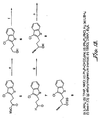
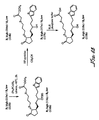
- Lithium aluminum hydride (22.4 mmole, 22.4 ml) was added to a solution of 101 (2.0 g, 11.2 mmole) in THF(100 ml) at 0 °C. After 5 minutes, the mixture was warmed to room temperature and stirred for 2 hours. The mixture was then cooled to 0°C, and MeOH (1ml) was added slowly until no gas was evolved, followed by the addition of 1NHCl. After stirring for 30 min at room temperature, the mixture was concentrated in vacuo, diluted in 1N HCl, and extracted with EtOAc(x3). The combined organics were washed with brine, dried (Na 2 SO 4 ), concentrated in vacuo and dried over pump for 16 hours to give 1.8 g of crude 102.
- Methyl(triphenyl phosphoranylidene)acetate (8.5g, 25.3 mmole) was added to a solution of 3 (2.1 g, 12.9 mmole) in toluene (200ml). After 2 days at room temperature, the mixture was concentrated in vacuo and the crude was loaded on a pack of silica gel in suction filter and washed with a solvent (8/1: hexane /EtOAc). The combined organics were concentrated in vacuo to give 3.0 g of 104.
- Lithium borohydride (0.57 g, 0.026 mole) was added to a solution of 105 (3.0 g, 0.013 mole) in ether (100 ml) at 0°C, followed by the addition of MeOH (0.83 g, 0.026 mole). The mixture was then warmed to room temperature and stirred for 3 hours. After TLC indicated no starting materials, the mixture was cooled to 0 °C and aqueous solution of NaOH was added dropwise. After 1 hour of stirring, the mixture was combined with brine and extracted with EtOAc (x3). The combined organics were washed with brine, dried (Na 2 SO 4 ), concentrated in vacuo, and purified by flash column chromatography (100 % DCM) to give 2.5 g of 106.
- the concentrated product was diluted with hexane, washed with sodium bisulfite (x2), brine, dried (Na 2 SO 4 ), concentrated in vacuo, and purified by flash column chromatography (100 % hexane) to give 1.5 g of 110.
- Rabbit liver esterase (3.0 mg, 300 ⁇ mole) was added to a solution of 117a (3.0 mg, 0.0062 mmole) in phosphate buffer/MeCN (1.5 ml/0.2 ml). After 16 hours at room temperature, the mixture was loaded on flash column chromatography (2/1 : EtOAc/hexane ⁇ 100 % EtOAc) to give 1.6 mg of 118a.
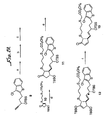
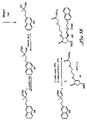
- Methyl(triphenyl phosphoranylidene)acetate (8.5g, 25.6 mmole) was added to a solution of 119 (2.1 g, 12.8 mmole) in toluene (200ml). After 16 hours at room temperature, the mixture was concentrated in vacuo and the crude was loaded on a pack of silica gel in suction filter and washed with a solvent (8/1: hexane /EtOAc). The combined organics were concentrated in vacuo to give 2.7 g of 120.
- Chlorotris(triphenyl phosphine)rhodium (1.1 g, 1.2 mmole) was added to a solution of 120 (2.7 g, 0.012 mole) in EtOH (100ml). The mixture was charged with H 2 and stirred at room temperature for 3 days. The mixture was then concentrated in vacuo and purified by flash column chromatography (9/1 : hexane/EtOAc) to give 2.7 g of 121.
- Lithium borohydride (0.77 g, 0.035 mole) was added to a solution of 121 (2.7 g, 0.012 mole) in ether (200 ml) at 0 °C, followed by the addition of MeOH (1.1 g, 0.035 mole). The mixture was then warmed to room temperature and stirred for 2 hours. After TLC indicated no starting materials, the mixture was cooled to 0 °C and aqueous solution of NaOH was added dropwise. After 1 hour of stirring, the mixture was combined with brine and extracted with EtOAc (x3).
- Dimethyl sulfoxide (3.5 ml, 49 mmole) was added dropwise to a solution of oxayl chloride (12 ml, 24 mmole) in DCM (150 ml) at -78°C. After 5 minutes, a solution of 122 (2.3 g, 12 mmole) in DCM (40ml) was added and stirred for 1 hour at -78 °C. After the addition of triethylamine(9.9 g, 98 mmole), the mixture was warmed to room temperature over I hour, poured into saturated NaHCO 3 , and extracted with DCM (x3).
- Methylmagunesium bromide (31.7 ml, 44.4 mmole) was added to a solution of 123 (2.1 g, 11 mmole) in THF (100 ml) at 0 °C. The mixture was warmed to room temperature over 16 hours, quenched with saturated aqueous NH 4 Cl and concentrated in vacuo. The crude was diluted with NH 4 Cl and extracted with EtOAc (x3). The combined organics were washed with brine, dried (Na 2 SO 4 ), concentrated in vacuo and purified by flash column chromatography (4/1 : hexane/EtOAc) to give 1.9 g of 124.
- Tetrapropylammonium perruthenate 130 mg, 0.37 mmole was added to a mixture of 124 (760 mg, 3.7 mmole), N -morpholine oxide (1.1 g, 9 mmole), and 4 A° sieve (760 mg) in DCM (50 ml). After I hour, the mixture was purified by flash column chromatography (100 % DCM) to give 710 mg of 125.
- the concentrated product was diluted with hexane, washed with sodium bisulfite (x2), brine, dried (Na 2 SO 4 ), concentrated in vacuo, and purified by flash column chromatography (100 % hexane) to give 1.1 g of 128.
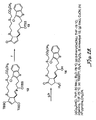
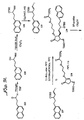
- Rabbit liver esterase (5.7 mg, 570 ⁇ mole) was added to a solution of 133 (5.7 mg, 0.012 mmole) in phosphate buffer/MeCN (2.7 ml/0.3 ml). After 16 hours at room temperature, the mixture was loaded on flash column chromatography (2/1 : EtOAc/hexane ⁇ 100 % EtOAc) to give 1.0 mg of 134a and 2.5 mg of 134b
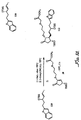
- Ethynylmagunesium bromide (54.7 ml, 27.2 mmole) was added to a solution of 123 (3.3 g, 17.7 mmole) in THF (200 ml) at 0 °C. The mixture was warmed to room temperature over 16 hours, quenched with saturated aqueous NH 4 Cl and concentrated in vacuo. The crude was diluted with NH 4 Cl and extracted with EtOAc (x3). The combined organics were washed with brine, dried (Na 2 SO 4 ), concentrated in vacuo and purified by flash column chromatography (4/1 : hexane/EtOAc) to give 2.67g of 135.
- the concentrated product was diluted with hexane, washed with sodium bisulfite (x2), brine, dried (Na 2 SO 4 ), concentrated in vacuo, and purified by flash column chromatography (100 % hexane ⁇ 1 % DCM/hexane) to give 1.7 g of 137.
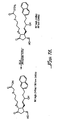
- Rabbit liver esterase (1.2 mg, 120 ⁇ mole) was added to a solution of 140a (35 mg, 0.069 mmole) in phosphate buffer/MeCN (1.5 ml/0.5 ml). After 16 hours at room temperature, the mixture was loaded on flash column chromatography (5% MeOH/EtOAc) to give 15 mg of 141a.
Landscapes
- Chemical & Material Sciences (AREA)
- Organic Chemistry (AREA)
- Health & Medical Sciences (AREA)
- Life Sciences & Earth Sciences (AREA)
- General Health & Medical Sciences (AREA)
- General Chemical & Material Sciences (AREA)
- Medicinal Chemistry (AREA)
- Nuclear Medicine, Radiotherapy & Molecular Imaging (AREA)
- Bioinformatics & Cheminformatics (AREA)
- Pharmacology & Pharmacy (AREA)
- Engineering & Computer Science (AREA)
- Animal Behavior & Ethology (AREA)
- Chemical Kinetics & Catalysis (AREA)
- Public Health (AREA)
- Veterinary Medicine (AREA)
- Ophthalmology & Optometry (AREA)
- Pharmaceuticals Containing Other Organic And Inorganic Compounds (AREA)
- Organic Low-Molecular-Weight Compounds And Preparation Thereof (AREA)
- Acyclic And Carbocyclic Compounds In Medicinal Compositions (AREA)
- Detergent Compositions (AREA)
Applications Claiming Priority (2)
| Application Number | Priority Date | Filing Date | Title |
|---|---|---|---|
| US10/997,039 US7183324B2 (en) | 2004-11-23 | 2004-11-23 | 2,3,4-substituted cyclopentanones as therapeutic agents |
| PCT/US2005/042428 WO2006058063A1 (en) | 2004-11-23 | 2005-11-21 | 2,3,4-substituted-cyclopentanones as therapeutic agents |
Publications (3)
| Publication Number | Publication Date |
|---|---|
| EP1814848A1 EP1814848A1 (en) | 2007-08-08 |
| EP1814848B1 EP1814848B1 (en) | 2010-07-28 |
| EP1814848B9 true EP1814848B9 (en) | 2011-12-21 |
Family
ID=36087629
Family Applications (1)
| Application Number | Title | Priority Date | Filing Date |
|---|---|---|---|
| EP05852061A Expired - Lifetime EP1814848B9 (en) | 2004-11-23 | 2005-11-21 | 2,3,4-substituted-cyclopentanones as therapeutic agents |
Country Status (11)
| Country | Link |
|---|---|
| US (1) | US7183324B2 (enExample) |
| EP (1) | EP1814848B9 (enExample) |
| JP (1) | JP5114205B2 (enExample) |
| AT (1) | ATE475643T1 (enExample) |
| AU (1) | AU2005309605B2 (enExample) |
| BR (1) | BRPI0518299A2 (enExample) |
| CA (1) | CA2588599A1 (enExample) |
| DE (1) | DE602005022613D1 (enExample) |
| DK (1) | DK1814848T3 (enExample) |
| ES (1) | ES2347808T3 (enExample) |
| WO (1) | WO2006058063A1 (enExample) |
Families Citing this family (14)
| Publication number | Priority date | Publication date | Assignee | Title |
|---|---|---|---|---|
| US20050222094A1 (en) * | 2001-06-14 | 2005-10-06 | Burk Robert M | Treatment of inflammatory bowel disease |
| US7872045B2 (en) | 2001-06-14 | 2011-01-18 | Allergan, Inc. | Combination therapy for glaucoma treatment |
| US7799336B2 (en) | 2004-04-30 | 2010-09-21 | Allergan, Inc. | Hypotensive lipid-containing biodegradable intraocular implants and related methods |
| TWI386208B (zh) * | 2005-04-18 | 2013-02-21 | Allergan Inc | 治療性的經取代環戊酮 |
| US20070232660A1 (en) * | 2006-04-04 | 2007-10-04 | Allergan, Inc. | Therapeutic and delivery methods of prostaglandin ep4 agonists |
| CN101686985A (zh) | 2007-05-08 | 2010-03-31 | 国立大学法人浜松医科大学 | 含有ep4激动剂的细胞毒性t细胞的活化剂 |
| US7781465B2 (en) * | 2007-08-21 | 2010-08-24 | Allergan, Inc. | Therapeutic oxazolidinones and thiazolidinones |
| US20110293549A1 (en) | 2009-02-03 | 2011-12-01 | Athena Cosmetics, Inc. | Composition, method and kit for enhancing hair |
| US20120190637A1 (en) | 2009-10-14 | 2012-07-26 | Gemmus Pharma, Inc. | Combination therapy treatment for viral infections |
| CN103167875A (zh) * | 2010-08-17 | 2013-06-19 | 阿勒根公司 | 用于治疗角膜浑浊的ep2或ep4激动剂 |
| CA2920856C (en) | 2013-08-09 | 2026-03-03 | Ardelyx, Inc. | Ph modulating compounds for inhibiting gastrointestinal phosphate uptake |
| EP4046628A1 (en) | 2013-10-31 | 2022-08-24 | Allergan, Inc. | Prostamide-containing intraocular implants and methods of use thereof |
| CN106928121B (zh) * | 2015-12-29 | 2020-05-12 | 暨南大学 | 3-取代-苯并五元杂环-2-羰基化合物的高效制备方法 |
| TWI879060B (zh) * | 2022-09-16 | 2025-04-01 | 法商液態空氣喬治斯克勞帝方法研究開發股份有限公司 | 用於沈積含金屬膜之新穎的螯合和空間位阻配位基及其相應有機金屬錯合物 |
Family Cites Families (12)
| Publication number | Priority date | Publication date | Assignee | Title |
|---|---|---|---|---|
| US4166452A (en) | 1976-05-03 | 1979-09-04 | Generales Constantine D J Jr | Apparatus for testing human responses to stimuli |
| DE2715838A1 (de) | 1977-04-05 | 1978-10-19 | Schering Ag | Neue prostanderivate und verfahren zu ihrer herstellung |
| US4256108A (en) | 1977-04-07 | 1981-03-17 | Alza Corporation | Microporous-semipermeable laminated osmotic system |
| US4131738A (en) | 1977-07-05 | 1978-12-26 | The Upjohn Company | 6-Hydroxy-PGE1 compounds |
| US4265874A (en) | 1980-04-25 | 1981-05-05 | Alza Corporation | Method of delivering drug with aid of effervescent activity generated in environment of use |
| US6043275A (en) | 1998-04-16 | 2000-03-28 | Ono Pharmaceutical Co., Ltd. | 3,7-dithiaprostanoic acid derivative |
| EP1114816A4 (en) | 1998-09-14 | 2002-09-04 | Ono Pharmaceutical Co | SUBSTITUTED PHENYL-PROSTAGLANDIN E DERIVATIVES- $ g (V) AND MEDICINAL PRODUCTS CONTAINING THEM AS ACTIVE INGREDIENT |
| EA200300379A1 (ru) | 2000-11-27 | 2003-08-28 | Пфайзер Продактс Инк. | Селективные агонисты рецептора ep4 в лечении остеопороза |
| US6410591B1 (en) * | 2001-05-08 | 2002-06-25 | Allergan Sales, Inc. | 3,7 or 3 and 7 thia or oxa prostanoic acid derivatives as agents for lowering intraocular pressure |
| US20030027853A1 (en) * | 2001-06-14 | 2003-02-06 | Allergan Sales, Inc. | 3, 7or3 and 7 thia or oxa prostanoic acid derivatives as agents for lowering intraocular pressure |
| AU2002259210B2 (en) | 2001-06-14 | 2007-11-08 | Allergan, Inc. | 3, 7 or 3 and 7 thia or oxa prostanoic acid derivatives as agents for lowering intraocular pressure |
| US7101906B2 (en) * | 2004-11-16 | 2006-09-05 | Allergan, Inc. | 2,3,4-substituted cyclopentanones as therapeutic agents |
-
2004
- 2004-11-23 US US10/997,039 patent/US7183324B2/en not_active Expired - Lifetime
-
2005
- 2005-11-21 WO PCT/US2005/042428 patent/WO2006058063A1/en not_active Ceased
- 2005-11-21 ES ES05852061T patent/ES2347808T3/es not_active Expired - Lifetime
- 2005-11-21 AU AU2005309605A patent/AU2005309605B2/en not_active Ceased
- 2005-11-21 JP JP2007543434A patent/JP5114205B2/ja not_active Expired - Fee Related
- 2005-11-21 DK DK05852061.0T patent/DK1814848T3/da active
- 2005-11-21 BR BRPI0518299-9A patent/BRPI0518299A2/pt not_active Application Discontinuation
- 2005-11-21 AT AT05852061T patent/ATE475643T1/de not_active IP Right Cessation
- 2005-11-21 CA CA002588599A patent/CA2588599A1/en not_active Abandoned
- 2005-11-21 EP EP05852061A patent/EP1814848B9/en not_active Expired - Lifetime
- 2005-11-21 DE DE602005022613T patent/DE602005022613D1/de not_active Expired - Lifetime
Also Published As
| Publication number | Publication date |
|---|---|
| EP1814848A1 (en) | 2007-08-08 |
| ES2347808T3 (es) | 2010-11-04 |
| EP1814848B1 (en) | 2010-07-28 |
| AU2005309605B2 (en) | 2012-08-23 |
| WO2006058063A1 (en) | 2006-06-01 |
| US7183324B2 (en) | 2007-02-27 |
| DE602005022613D1 (en) | 2010-09-09 |
| US20060111430A1 (en) | 2006-05-25 |
| ATE475643T1 (de) | 2010-08-15 |
| JP2008520737A (ja) | 2008-06-19 |
| ES2347808T9 (es) | 2011-06-13 |
| BRPI0518299A2 (pt) | 2008-11-11 |
| AU2005309605A1 (en) | 2006-06-01 |
| DK1814848T3 (da) | 2010-11-08 |
| CA2588599A1 (en) | 2006-06-01 |
| JP5114205B2 (ja) | 2013-01-09 |
Similar Documents
| Publication | Publication Date | Title |
|---|---|---|
| EP2263674A1 (en) | 10,10-dialkyl prostanoic acid derivatives as agents for lowering intraocular pressure | |
| EP1814848B1 (en) | 2,3,4-substituted-cyclopentanones as therapeutic agents | |
| US7169807B2 (en) | 10-Hydroxy-11-dihydroprostaglandin analogs as selective EP4 agonists | |
| EP1812387B1 (en) | 2,3,4-substituted cyclopentanones as therapeutic agents | |
| US8557860B2 (en) | Cyclopentane heptan(ENE)OIC acid, 2-heteroarylalkenyl derivatives as therapeutic agents | |
| US7994195B2 (en) | Therapeutic substituted piperidone compounds | |
| WO2006022966A1 (en) | 2-heteroarylalkenylcyclopentane heptan- (ene) -oic acid derivatives as therapeutic agents | |
| US7439386B2 (en) | Therapeutic substituted cyclopentanones | |
| AU2005304764B2 (en) | Substituted pyrrolidone compounds as EP4 agonists | |
| WO2006022974A1 (en) | 2-heteroarylalkenylcyclopentane heptan - (ene) - oic acid derivatives as therapeutc agents | |
| AU2012238252A1 (en) | Substituted pyrrolidone compounds as EP4 agonists | |
| HK1086191B (en) | 10,10-dialkyl prostanoic acid derivatives as agents for lowering intraocular pressure |
Legal Events
| Date | Code | Title | Description |
|---|---|---|---|
| PUAI | Public reference made under article 153(3) epc to a published international application that has entered the european phase |
Free format text: ORIGINAL CODE: 0009012 |
|
| 17P | Request for examination filed |
Effective date: 20070521 |
|
| AK | Designated contracting states |
Kind code of ref document: A1 Designated state(s): AT BE BG CH CY CZ DE DK EE ES FI FR GB GR HU IE IS IT LI LT LU LV MC NL PL PT RO SE SI SK TR |
|
| 17Q | First examination report despatched |
Effective date: 20070914 |
|
| DAX | Request for extension of the european patent (deleted) | ||
| GRAP | Despatch of communication of intention to grant a patent |
Free format text: ORIGINAL CODE: EPIDOSNIGR1 |
|
| GRAS | Grant fee paid |
Free format text: ORIGINAL CODE: EPIDOSNIGR3 |
|
| GRAA | (expected) grant |
Free format text: ORIGINAL CODE: 0009210 |
|
| AK | Designated contracting states |
Kind code of ref document: B1 Designated state(s): AT BE BG CH CY CZ DE DK EE ES FI FR GB GR HU IE IS IT LI LT LU LV MC NL PL PT RO SE SI SK TR |
|
| REG | Reference to a national code |
Ref country code: GB Ref legal event code: FG4D |
|
| REG | Reference to a national code |
Ref country code: CH Ref legal event code: EP |
|
| REG | Reference to a national code |
Ref country code: IE Ref legal event code: FG4D |
|
| REF | Corresponds to: |
Ref document number: 602005022613 Country of ref document: DE Date of ref document: 20100909 Kind code of ref document: P |
|
| REG | Reference to a national code |
Ref country code: CH Ref legal event code: NV Representative=s name: NOVAGRAAF INTERNATIONAL SA |
|
| REG | Reference to a national code |
Ref country code: NL Ref legal event code: T3 |
|
| REG | Reference to a national code |
Ref country code: ES Ref legal event code: FG2A Ref document number: 2347808 Country of ref document: ES Kind code of ref document: T3 |
|
| REG | Reference to a national code |
Ref country code: DK Ref legal event code: T3 |
|
| REG | Reference to a national code |
Ref country code: SE Ref legal event code: TRGR |
|
| REG | Reference to a national code |
Ref country code: SE Ref legal event code: RPOT |
|
| LTIE | Lt: invalidation of european patent or patent extension |
Effective date: 20100728 |
|
| PG25 | Lapsed in a contracting state [announced via postgrant information from national office to epo] |
Ref country code: LT Free format text: LAPSE BECAUSE OF FAILURE TO SUBMIT A TRANSLATION OF THE DESCRIPTION OR TO PAY THE FEE WITHIN THE PRESCRIBED TIME-LIMIT Effective date: 20100728 Ref country code: AT Free format text: LAPSE BECAUSE OF FAILURE TO SUBMIT A TRANSLATION OF THE DESCRIPTION OR TO PAY THE FEE WITHIN THE PRESCRIBED TIME-LIMIT Effective date: 20100728 Ref country code: FI Free format text: LAPSE BECAUSE OF FAILURE TO SUBMIT A TRANSLATION OF THE DESCRIPTION OR TO PAY THE FEE WITHIN THE PRESCRIBED TIME-LIMIT Effective date: 20100728 |
|
| PG25 | Lapsed in a contracting state [announced via postgrant information from national office to epo] |
Ref country code: IS Free format text: LAPSE BECAUSE OF FAILURE TO SUBMIT A TRANSLATION OF THE DESCRIPTION OR TO PAY THE FEE WITHIN THE PRESCRIBED TIME-LIMIT Effective date: 20101128 Ref country code: BG Free format text: LAPSE BECAUSE OF FAILURE TO SUBMIT A TRANSLATION OF THE DESCRIPTION OR TO PAY THE FEE WITHIN THE PRESCRIBED TIME-LIMIT Effective date: 20101028 Ref country code: PL Free format text: LAPSE BECAUSE OF FAILURE TO SUBMIT A TRANSLATION OF THE DESCRIPTION OR TO PAY THE FEE WITHIN THE PRESCRIBED TIME-LIMIT Effective date: 20100728 Ref country code: CY Free format text: LAPSE BECAUSE OF FAILURE TO SUBMIT A TRANSLATION OF THE DESCRIPTION OR TO PAY THE FEE WITHIN THE PRESCRIBED TIME-LIMIT Effective date: 20100728 Ref country code: SI Free format text: LAPSE BECAUSE OF FAILURE TO SUBMIT A TRANSLATION OF THE DESCRIPTION OR TO PAY THE FEE WITHIN THE PRESCRIBED TIME-LIMIT Effective date: 20100728 Ref country code: PT Free format text: LAPSE BECAUSE OF FAILURE TO SUBMIT A TRANSLATION OF THE DESCRIPTION OR TO PAY THE FEE WITHIN THE PRESCRIBED TIME-LIMIT Effective date: 20101129 |
|
| PG25 | Lapsed in a contracting state [announced via postgrant information from national office to epo] |
Ref country code: LV Free format text: LAPSE BECAUSE OF FAILURE TO SUBMIT A TRANSLATION OF THE DESCRIPTION OR TO PAY THE FEE WITHIN THE PRESCRIBED TIME-LIMIT Effective date: 20100728 Ref country code: GR Free format text: LAPSE BECAUSE OF FAILURE TO SUBMIT A TRANSLATION OF THE DESCRIPTION OR TO PAY THE FEE WITHIN THE PRESCRIBED TIME-LIMIT Effective date: 20101029 Ref country code: BE Free format text: LAPSE BECAUSE OF FAILURE TO SUBMIT A TRANSLATION OF THE DESCRIPTION OR TO PAY THE FEE WITHIN THE PRESCRIBED TIME-LIMIT Effective date: 20100728 |
|
| PG25 | Lapsed in a contracting state [announced via postgrant information from national office to epo] |
Ref country code: SK Free format text: LAPSE BECAUSE OF FAILURE TO SUBMIT A TRANSLATION OF THE DESCRIPTION OR TO PAY THE FEE WITHIN THE PRESCRIBED TIME-LIMIT Effective date: 20100728 Ref country code: CZ Free format text: LAPSE BECAUSE OF FAILURE TO SUBMIT A TRANSLATION OF THE DESCRIPTION OR TO PAY THE FEE WITHIN THE PRESCRIBED TIME-LIMIT Effective date: 20100728 Ref country code: EE Free format text: LAPSE BECAUSE OF FAILURE TO SUBMIT A TRANSLATION OF THE DESCRIPTION OR TO PAY THE FEE WITHIN THE PRESCRIBED TIME-LIMIT Effective date: 20100728 Ref country code: RO Free format text: LAPSE BECAUSE OF FAILURE TO SUBMIT A TRANSLATION OF THE DESCRIPTION OR TO PAY THE FEE WITHIN THE PRESCRIBED TIME-LIMIT Effective date: 20100728 |
|
| REG | Reference to a national code |
Ref country code: CH Ref legal event code: PFA Owner name: ALLERGAN, INC. Free format text: ALLERGAN, INC.#2525 DUPONT DRIVE#IRVINE CA 92612 (US) -TRANSFER TO- ALLERGAN, INC.#2525 DUPONT DRIVE#IRVINE CA 92612 (US) |
|
| PLBE | No opposition filed within time limit |
Free format text: ORIGINAL CODE: 0009261 |
|
| STAA | Information on the status of an ep patent application or granted ep patent |
Free format text: STATUS: NO OPPOSITION FILED WITHIN TIME LIMIT |
|
| PG25 | Lapsed in a contracting state [announced via postgrant information from national office to epo] |
Ref country code: MC Free format text: LAPSE BECAUSE OF NON-PAYMENT OF DUE FEES Effective date: 20101130 |
|
| 26N | No opposition filed |
Effective date: 20110429 |
|
| REG | Reference to a national code |
Ref country code: DE Ref legal event code: R097 Ref document number: 602005022613 Country of ref document: DE Effective date: 20110429 |
|
| PG25 | Lapsed in a contracting state [announced via postgrant information from national office to epo] |
Ref country code: HU Free format text: LAPSE BECAUSE OF FAILURE TO SUBMIT A TRANSLATION OF THE DESCRIPTION OR TO PAY THE FEE WITHIN THE PRESCRIBED TIME-LIMIT Effective date: 20110129 Ref country code: LU Free format text: LAPSE BECAUSE OF NON-PAYMENT OF DUE FEES Effective date: 20101121 |
|
| PG25 | Lapsed in a contracting state [announced via postgrant information from national office to epo] |
Ref country code: TR Free format text: LAPSE BECAUSE OF FAILURE TO SUBMIT A TRANSLATION OF THE DESCRIPTION OR TO PAY THE FEE WITHIN THE PRESCRIBED TIME-LIMIT Effective date: 20100728 |
|
| PGFP | Annual fee paid to national office [announced via postgrant information from national office to epo] |
Ref country code: DK Payment date: 20131125 Year of fee payment: 9 |
|
| PGFP | Annual fee paid to national office [announced via postgrant information from national office to epo] |
Ref country code: IE Payment date: 20131125 Year of fee payment: 9 Ref country code: GB Payment date: 20131127 Year of fee payment: 9 Ref country code: DE Payment date: 20131127 Year of fee payment: 9 Ref country code: SE Payment date: 20131127 Year of fee payment: 9 Ref country code: CH Payment date: 20131127 Year of fee payment: 9 |
|
| PGFP | Annual fee paid to national office [announced via postgrant information from national office to epo] |
Ref country code: NL Payment date: 20131126 Year of fee payment: 9 Ref country code: ES Payment date: 20131126 Year of fee payment: 9 |
|
| PGFP | Annual fee paid to national office [announced via postgrant information from national office to epo] |
Ref country code: FR Payment date: 20141118 Year of fee payment: 10 |
|
| PGFP | Annual fee paid to national office [announced via postgrant information from national office to epo] |
Ref country code: IT Payment date: 20141126 Year of fee payment: 10 |
|
| REG | Reference to a national code |
Ref country code: DE Ref legal event code: R119 Ref document number: 602005022613 Country of ref document: DE |
|
| REG | Reference to a national code |
Ref country code: NL Ref legal event code: V1 Effective date: 20150601 |
|
| REG | Reference to a national code |
Ref country code: DK Ref legal event code: EBP Effective date: 20141130 |
|
| REG | Reference to a national code |
Ref country code: SE Ref legal event code: EUG Ref country code: CH Ref legal event code: PL |
|
| GBPC | Gb: european patent ceased through non-payment of renewal fee |
Effective date: 20141121 |
|
| PG25 | Lapsed in a contracting state [announced via postgrant information from national office to epo] |
Ref country code: LI Free format text: LAPSE BECAUSE OF NON-PAYMENT OF DUE FEES Effective date: 20141130 Ref country code: CH Free format text: LAPSE BECAUSE OF NON-PAYMENT OF DUE FEES Effective date: 20141130 Ref country code: SE Free format text: LAPSE BECAUSE OF NON-PAYMENT OF DUE FEES Effective date: 20141122 |
|
| PG25 | Lapsed in a contracting state [announced via postgrant information from national office to epo] |
Ref country code: NL Free format text: LAPSE BECAUSE OF NON-PAYMENT OF DUE FEES Effective date: 20150601 |
|
| PG25 | Lapsed in a contracting state [announced via postgrant information from national office to epo] |
Ref country code: DK Free format text: LAPSE BECAUSE OF NON-PAYMENT OF DUE FEES Effective date: 20141130 Ref country code: GB Free format text: LAPSE BECAUSE OF NON-PAYMENT OF DUE FEES Effective date: 20141121 Ref country code: IE Free format text: LAPSE BECAUSE OF NON-PAYMENT OF DUE FEES Effective date: 20141121 Ref country code: DE Free format text: LAPSE BECAUSE OF NON-PAYMENT OF DUE FEES Effective date: 20150602 |
|
| REG | Reference to a national code |
Ref country code: ES Ref legal event code: FD2A Effective date: 20151229 |
|
| PG25 | Lapsed in a contracting state [announced via postgrant information from national office to epo] |
Ref country code: ES Free format text: LAPSE BECAUSE OF NON-PAYMENT OF DUE FEES Effective date: 20141122 |
|
| PG25 | Lapsed in a contracting state [announced via postgrant information from national office to epo] |
Ref country code: IT Free format text: LAPSE BECAUSE OF NON-PAYMENT OF DUE FEES Effective date: 20151121 |
|
| REG | Reference to a national code |
Ref country code: FR Ref legal event code: ST Effective date: 20160729 |
|
| PG25 | Lapsed in a contracting state [announced via postgrant information from national office to epo] |
Ref country code: FR Free format text: LAPSE BECAUSE OF NON-PAYMENT OF DUE FEES Effective date: 20151130 |