EP1807533B1 - APPLICATIONS OF ISOLATED NUCLEIC ACID FRAGMENTS COMPRISING CpG ISLANDS - Google Patents
APPLICATIONS OF ISOLATED NUCLEIC ACID FRAGMENTS COMPRISING CpG ISLANDS Download PDFInfo
- Publication number
- EP1807533B1 EP1807533B1 EP05798900.6A EP05798900A EP1807533B1 EP 1807533 B1 EP1807533 B1 EP 1807533B1 EP 05798900 A EP05798900 A EP 05798900A EP 1807533 B1 EP1807533 B1 EP 1807533B1
- Authority
- EP
- European Patent Office
- Prior art keywords
- nucleic acid
- cpg
- sample
- binding
- peptide
- Prior art date
- Legal status (The legal status is an assumption and is not a legal conclusion. Google has not performed a legal analysis and makes no representation as to the accuracy of the status listed.)
- Expired - Lifetime
Links
Images

Classifications
-
- C—CHEMISTRY; METALLURGY
- C12—BIOCHEMISTRY; BEER; SPIRITS; WINE; VINEGAR; MICROBIOLOGY; ENZYMOLOGY; MUTATION OR GENETIC ENGINEERING
- C12N—MICROORGANISMS OR ENZYMES; COMPOSITIONS THEREOF; PROPAGATING, PRESERVING, OR MAINTAINING MICROORGANISMS; MUTATION OR GENETIC ENGINEERING; CULTURE MEDIA
- C12N15/00—Mutation or genetic engineering; DNA or RNA concerning genetic engineering, vectors, e.g. plasmids, or their isolation, preparation or purification; Use of hosts therefor
- C12N15/09—Recombinant DNA-technology
- C12N15/10—Processes for the isolation, preparation or purification of DNA or RNA
- C12N15/1034—Isolating an individual clone by screening libraries
- C12N15/1093—General methods of preparing gene libraries, not provided for in other subgroups
-
- C—CHEMISTRY; METALLURGY
- C12—BIOCHEMISTRY; BEER; SPIRITS; WINE; VINEGAR; MICROBIOLOGY; ENZYMOLOGY; MUTATION OR GENETIC ENGINEERING
- C12N—MICROORGANISMS OR ENZYMES; COMPOSITIONS THEREOF; PROPAGATING, PRESERVING, OR MAINTAINING MICROORGANISMS; MUTATION OR GENETIC ENGINEERING; CULTURE MEDIA
- C12N15/00—Mutation or genetic engineering; DNA or RNA concerning genetic engineering, vectors, e.g. plasmids, or their isolation, preparation or purification; Use of hosts therefor
- C12N15/09—Recombinant DNA-technology
- C12N15/10—Processes for the isolation, preparation or purification of DNA or RNA
- C12N15/1034—Isolating an individual clone by screening libraries
-
- C—CHEMISTRY; METALLURGY
- C12—BIOCHEMISTRY; BEER; SPIRITS; WINE; VINEGAR; MICROBIOLOGY; ENZYMOLOGY; MUTATION OR GENETIC ENGINEERING
- C12Q—MEASURING OR TESTING PROCESSES INVOLVING ENZYMES, NUCLEIC ACIDS OR MICROORGANISMS; COMPOSITIONS OR TEST PAPERS THEREFOR; PROCESSES OF PREPARING SUCH COMPOSITIONS; CONDITION-RESPONSIVE CONTROL IN MICROBIOLOGICAL OR ENZYMOLOGICAL PROCESSES
- C12Q1/00—Measuring or testing processes involving enzymes, nucleic acids or microorganisms; Compositions therefor; Processes of preparing such compositions
- C12Q1/68—Measuring or testing processes involving enzymes, nucleic acids or microorganisms; Compositions therefor; Processes of preparing such compositions involving nucleic acids
- C12Q1/6813—Hybridisation assays
- C12Q1/6834—Enzymatic or biochemical coupling of nucleic acids to a solid phase
- C12Q1/6837—Enzymatic or biochemical coupling of nucleic acids to a solid phase using probe arrays or probe chips
-
- G—PHYSICS
- G01—MEASURING; TESTING
- G01N—INVESTIGATING OR ANALYSING MATERIALS BY DETERMINING THEIR CHEMICAL OR PHYSICAL PROPERTIES
- G01N33/00—Investigating or analysing materials by specific methods not covered by groups G01N1/00 - G01N31/00
- G01N33/48—Biological material, e.g. blood, urine; Haemocytometers
- G01N33/50—Chemical analysis of biological material, e.g. blood, urine; Testing involving biospecific ligand binding methods; Immunological testing
- G01N33/53—Immunoassay; Biospecific binding assay; Materials therefor
- G01N33/5308—Immunoassay; Biospecific binding assay; Materials therefor for analytes not provided for elsewhere, e.g. nucleic acids, uric acid, worms, mites
-
- Y—GENERAL TAGGING OF NEW TECHNOLOGICAL DEVELOPMENTS; GENERAL TAGGING OF CROSS-SECTIONAL TECHNOLOGIES SPANNING OVER SEVERAL SECTIONS OF THE IPC; TECHNICAL SUBJECTS COVERED BY FORMER USPC CROSS-REFERENCE ART COLLECTIONS [XRACs] AND DIGESTS
- Y10—TECHNICAL SUBJECTS COVERED BY FORMER USPC
- Y10S—TECHNICAL SUBJECTS COVERED BY FORMER USPC CROSS-REFERENCE ART COLLECTIONS [XRACs] AND DIGESTS
- Y10S436/00—Chemistry: analytical and immunological testing
- Y10S436/807—Apparatus included in process claim, e.g. physical support structures
- Y10S436/809—Multifield plates or multicontainer arrays
Definitions
- the present invention relates to a method of isolating fragments of nucleic acid according to the density of CpG dinucleotides and subsequent procedures for producing a library and/or an array or microarray of these fragments, as well as uses thereof.
- the target DNA sequence of this methylation modification is the dinucleotide 5'CpG3', also referred to as the CpG dinucleotide, which is self-complementary and occurs in symmetrical pairs.
- CpG dinucleotides In the human genome, approximately 70% of CpG dinucleotides are methylated in most cell types. In particular clusters of non-methylated CpG dinucleotides called CpG islands occur at the transcriptional start sites of 56% of human genes. These CpG islands are generally between 1 and 2Kbp in length. Altogether these CpG island clusters account for about 2% of the genome. CpG moieties in the remaining 98% of the genome are sparsely distributed and approximately 80% of the CpG pairs located therein are methylated. Because of the high cytosine-guanine frequency of CpG islands, it is possible to identify them without knowledge of the methylation pattern of the DNA. Using this bioinformatic criterion, the human genome project has estimated that there are about 30,000 CpG islands per genome.
- Promoters and transcription start sites of most mammalian genes comprise CpG islands. Normally CpG dinucleotide pairs within a CpG island are non-methylated and as a result, the gene associated with the CpG island is transcribable, though not necessarily transcribed. Almost all of the CpG islands within the inactive X-chromosome of cells derived from female humans are heavily methylated and condensed, with the exception of the Xist gene which remains unmethylated at its 5' CpG island. This corresponds to the activity of the Xist gene which is required for the initial propagation of the inactive state.
- pseudogenes in which sequences homologous to expressed genes (for example ⁇ -globulin pseudogene) are methylated at the cytosine nucleotides and are seen to loose a large proportion of the CpG dinucleotides over time but gain 5'TG3' dinucleotides.
- CpG island methylation occurs when genes are shut down irrevocably during development as may occur with, for example, certain genes on the inactive X-chromosome, for example phosphoglycerate kinase 1, and at imprinted genes for example insulin-like growth factor 2 receptor gene ( Igf2r ), H19.
- Unscheduled CpG island methylation may also occur as a result of disease and has been extensively documented in conditions such as cancer: for example, shut down of the RB genes causes Retinoblastoma, and silencing of the MLH1 gene causes increased mutability that promotes several tumour types.
- genes of this kind are usually lost through the occurrence of inactivating mutations, it is apparent that they can also be silenced by DNA methylation.
- CpG island methylation is the silencing of the FMRI gene in fragile X syndrome, which is the most common genetic form of mental retardation affecting males.
- CpG island methylation in disease, there have been suggestions that other common conditions (schizophrenia, arthritis, autoimmune diseases) might also have a similar basis.
- CpG island library may significantly facilitate research into the methylation patterns of these CpG islands in diseases such as those detailed above.
- CpG island nucleic acid fragments may be isolated using a peptide which is capable of binding exclusively to non-methylated CpG dinucleotides.
- a method of isolating CpG island nucleic acid fragments comprising the steps of;
- the peptide capable of binding CpG dinucleotide pairs is complexed to (coupled/otherwise associated with) an appropriate support, for example a solid support.
- an appropriate support for example a solid support.
- the peptide may be coupled to /associated with said solid support by, for example, covalent, ionic or hydrophobic interactions.
- the solid support may, for example, be agarose, sepharose, polyacrylamide, agarose/polyacrylamide co-polymers, dextran, cellulose, polypropylene, polycarbonate, nitocellulose, glass paper or any other suitable substance capable of providing a suitable solid support.
- the solid support may be in the form of granules, a powder or a gel suitable for use in chromatography such as those available from Amersham Biosciences.
- the peptide capable of binding CpG dinucleotide pairs comprises at least a portion of the CpG Binding Domain protein 1 (MBD1) which retains the ability to bind CpG dinucleotide pairs.
- MBD1 CpG Binding Domain protein 1
- the peptide capable of binding CpG dinucleotide pairs comprises the cysteine rich CxxC-3 domain of the MBD1 transcriptional repressor (J ⁇ rgensen, 2004).
- the peptide capable of binding CpG dinucleotide pairs comprises the MBD1 transcriptional repressor.
- the peptide capable of binding CpG dinucleotide pairs may be provided by a peptide or fragment thereof, homologous to the MBD1 transcriptional repressor. (Lee et al., 2001 and Birke et al., 2002).
- homologous refers to a polypeptide, or fragment thereof that retains the means of binding CpG dinucleotide pairs and shares a degree of sequence identity/similarity with the naturally occurring MBD1 transcriptional repressor and in particular the CxxC-3 domain. It is well known to one of skill in the art that the quaternary and tertiary structure of a polypeptide is usually highly conserved such that the specific function of that polypeptide is also retained. It is also well known that the primary structure of a peptide may exhibit considerable variation in its sequence without resulting in a significant decrease in the activity of the mature peptide.
- an homologous peptide useful in the present invention may share only, for example, 25% amino acid sequence identity with the MBD1 polypeptide when the conserved residues of the two peptides are aligned.
- the polypeptide of the present invention capable of binding CpG dinucleotide pairs may include polypeptides or fragments thereof which show 25%, preferably 40%, more preferably 60% even more preferably 75% and most preferably 90% or 95% sequence identity with the MBD1 transcriptional repressor.
- the peptide capable of binding CpG dinucleotide pairs preferentially binds those CpG dinucleotide pairs which are unmethylated.
- unmethylated refers to CpG dinucleotide pairs that lack modification by way of the addition of a methyl group to the 5' cytosine nucleotide which would otherwise yield 5-methylcytosine.
- the peptide capable of binding CpG dinucleotide pairs is coupled to the solid support.
- the peptide capable of binding CpG dinucleotide pairs further comprises a binding moiety providing a means of coupling said peptide to the solid support.
- a binding moiety could be for example a peptide or other small chemical moiety, for example biotin/streptavidin
- the binding moiety is a peptide fused to the peptide capable of binding CpG dinucleotide pairs.
- the resultant peptide fusion may be produced by recombinant means.
- the binding moiety may be conjugated to the peptide capable of binding CpG dinucleotide pairs.
- the binding moiety may comprise any of the oligopeptides His n where n is 4-20, preferably n is 5-10 and more preferably n is 6.
- Such oligopeptides have a high affinity for divalent nickel (Ni), enabling the polypeptide to be coupled to the nickel chelating resin Ni 2+ -NTA -agarose.
- Exemplary vectors suitable for expressing a peptide capable of binding CpG dinucleotides::binding moiety fusion are generally available from Merck Biosciences (Novagen ® ) and include, for example pET14b, pET15b, pET16b, pET19b and pET30b. [REFERENCE]
- the binding moiety may comprise a glutathione S-transferase (GST).
- GST has a high affinity for glutathione which may be coupled to a solid support such as, for example, sepharose 4B.
- Exemplary vectors suitable for expressing a peptide capable of binding CpG nucleotide pairs::binding moiety fusion are generally available from Amersham Biosciences and include pGEX-4T-2, pGEX-6P-1 and pGEX-4T-3.
- any small molecule capable of being immobilised on a solid support such as those substantially described above may be suitable for immobilising a peptide capable of binding CpG nucleotide pairs.
- small molecule it is to be understood that molecules with a M r of less than 2000 are envisaged useful.
- a peptide capable of binding CpG nucleotide pairs may be labelled with, for example, biotin and contacted to a suitable solid support, for example agarose, to which a molecule such as streptavidin is coupled.
- a suitable solid support for example agarose
- streptavidin a molecule such as streptavidin
- the peptide capable of binding CpG dinucleotide pairs may be chemically cross-linked to the solid support.
- the peptides capable of binding CpG dinucleotide pairs may be chemically cross-linked to the solid support by means of, for example, activation of the solid support by the addition of cyanogen bromide (CNBr) as disclosed by Axen et al (1967). Briefly upon addition of CNBr the solid support reacts rapidly at pH 8-9 with free amino acid groups in the polypeptide to be cross-linked to the solid support.
- the solid support for use in this way is agarose, for example CNBr-activated agarose.
- the peptide which is capable of binding CpG dinucleotide pairs may be coupled to the solid support by means of an antibody or fragment thereof which specifically reacts with a portion of said peptide.
- the antibody is coupled to the suitable solid support.
- the antibody or fragments thereof useful in this way may be monoclonal antibodies or fragments which have an affinity for the peptide which is capable of binding CpG dinucleotide pairs.
- the techniques of monoclonal antibody production are well known to one of ordinary skill in the art.
- CpG island nucleic acid fragments may also be desirable to isolate CpG island nucleic acid fragments from a variety of organisms.
- Samples of nucleic acid for example DNA
- the methods of the present invention may also be applicable to samples isolated from plant material. Plant genomes are heavily methylated at CpG, but it has been shown that plant genes can be greatly enriched from genomic DNA by selecting non-methylated DNA that is equivalent to the CpG islands of animals (Whitelaw et al, 2003; Palmer et al, 2003). The present invention may therefore be used for gene isolation from genomes of many plant species.
- a sample of a nucleic acid may be obtained from, for example cells grown in vitro, or in vivo or a tissue biopsy or where appropriate, may include blood, saliva or any other suitable sample from which nucleic acid may be obtained.
- the sample obtained should yield nucleic acid which accurately reflects the methylation status of the patient's 5'CP3' islands, said methylation status arising as a result of a subject's disease state i.e. healthy, having a particular disease or predisposed to/developing a disease.
- the sample may, if possible, comprise a tissue biopsy obtained directly from the tumour or from cells neighbouring the tumour.
- the sample may at least comprise cells derived from the same tissue affected by the disease.
- Techniques of DNA extraction from cells are well known and may comprise, for example, the use of lipid membrane solubilising agents, e.g. detergents and protesase enzymes. Substances which cause nucleic acid to precipitate, for example ethanol, may then be used to isolate the nucleic acid (see for example Sambrook et al ).
- the nucleic acid obtained from the sample may be fragmented using restriction endonuclease enzymes, for example HindIII, EcoR1, BamH1 and Pst1.
- restriction endonuclease enzymes may be used individually to fragment the nucleic acid sample, or alternatively a number of restriction endonuclease enzymes could be used in combination.
- nucleic acid fragmentation may include, sonic disruption of the nucleic acid or the use of shearing forces.
- unbound material for example fragmented nucleic acid, preferably absent of any CpG islands or possessing solely methylated CpG islands, remain unbound to the solid support media.
- the solid substrate may be washed, for example, and an osmotically balanced and neutral solution such as e.g. phosphate buffered saline (PBS), may be applied to the solid support media such that unbound material is removed.
- PBS phosphate buffered saline
- a sodium chloride gradient may be established within a resin, such as a nickel chelating resin, for example NTA-agarose, packed within an affinity chromatography column, such that particular fragments of nucleic acid are caused to be separated from the column upon contact with a particular concentration of sodium chloride.
- a resin such as a nickel chelating resin, for example NTA-agarose
- affinity chromatography column such that particular fragments of nucleic acid are caused to be separated from the column upon contact with a particular concentration of sodium chloride.
- Other means of separation include the use of reduced glutathione solutions in the case of GST affinity chromatography, alterations in pH or enzymatic cleavage.
- steps c) and d) of the method according to the first aspect of the present invention may be repeated.
- steps c) and d) of the method according to the first aspect of the present invention may be repeated.
- substantially all the nucleic acid fragments containing CpG islands may be isolated while ensuring that contamination with nucleic acid fragments not containing CpG islands or methylated CpG islands is significantly reduced.
- a peptide/support complex comprising a solid support and a peptide which is capable of binding CpG nucleotide pairs, for isolating CpG island nucleic acid fragments.
- a method of producing a CpG island library comprising the steps of;
- the fragments may be cloned into suitable vectors by many methods, all of which are known to a person of ordinary skill in the art.
- the nucleic acid fragments dissociated from the solid support may be added to a suitable vector in the presence of a DNA ligating enzyme, such as, for example T4 ligase and left to incubate for a period of time, for example 16°C for approximately 10 hours.
- a DNA ligating enzyme such as, for example T4 ligase and left to incubate for a period of time, for example 16°C for approximately 10 hours.
- commercial cloning and sequencing vectors such as TOPO pCR4, available form Invitrogen lifesciences, or other such ligase free systems, may be used to clone fragments of nucleic acid in preparation for subsequent amplification by PCR and/or sequencing.
- the cloned fragments of the CpG island library of the present invention may be sequenced.
- the techniques of nucleic acid sequencing are well known in the art and may include Sanger's method of dideoxynucleotide sequencing.
- sequencing the cloned fragments of nucleic acid obtained by the above described method it is possible to obtain a library of fragments which represent substantially all the CpG islands within the genome of the organism from which the sample is derived (Molecular Cloning: A Laboratory Manual, Sambrook & Russell).
- a method of producing a CpG island library array comprising the steps of;
- the cloned CpG island nucleic acid fragments of the CpG island library are amplified by use of the polymerase chain reaction (PCR). Again, such techniques are well know and described for example in Sambrook et al.
- the cloned CpG island nucleic acid fragments of the CpG island nucleic acid library may be excised from the suitable vector into which they have been cloned, by use of a restriction endonuclease, additionally or alternatively a combination of restriction endonuclease enzymes may be used.
- the restriction endonuclease or combination of restriction endonuclease enzymes fragment the vector at a point either side of the cloned CpG island nucleic acid fragment.
- the amplified nucleic acid fragments may be denatured so as create fragments of single stranded nucleic acid.
- the amplified nucleic acid fragments are subjected to heat treatment, for example incubated for a period of time in a boiling water bath or heating block, such that the fragments of double stranded DNA are caused to dissociate to single stranded fragments.
- the CpG island array may be produced by synthesising oligonucleotides which are specific to the nucleic acid fragments of the CpG island produced in accordance with the present invention and coupling, in an array, the oligonucleotides to a suitable library array substrate.
- arrays need not be produced covering the entire genome. It is possible using the present method to prepare arrays based on portions of the genome including, for example, one or more chromosomes (including mitochondrial DNA as being representative of a chromosome).
- the present inventors have obtained library of CpG island fragments and cloned and sequenced them (see Table1). This shows that a library produced according to the present methods is much more representative than librarys obtained following prior art methods, such as described in Cross et al (1994).
- the present invention provides libraries comprising CpG island specific nucleic acid sequences derived from the clones identified in Table 1.
- a method of making a CpG island array comprising the steps of: preparing one or more CpG island specific sequence(s) using the information derived from Table 1; and binding in an array said one or more sequences to a substrate.
- the library may comprise sequence from one or more clones, e.g. more than 1,000, 2,000, 3,000, 4,000, 5,000, 6,000, 7,000, 8,000, 9,000, 10,000 or from substantially all clones identified or sequence from one or more clones from a particular genome, typically greater than 25%, 50%, 60%, 70%, 80%, 90% or 95%, including substantially all clones identified from a particular genome.
- the present invention also provides use of the information derived from Table 1 in the preparation of a CpG island library and/or array.
- sequences may be obtained, for example, by recombinant or synthetic means.
- the library of CpG islands is arranged in an array, preferably a microarray.
- the array or microarray is prepared on any suitable, preferably non-porous substrate.
- the suitable substrate may include glass or a plastics materials.
- Information regarding suitable substrates and the protocols used to generate arrays or microarrays may be obtained from the National Human Genome Research Institute, Bethesda USA.
- the surface of the suitable microarray substrate is treated in someway so that the fragmented nucleic acid may be coupled to it.
- the surface of the suitable substrate may be made hydrophobic so as to prevent spread of individual nucleic acid samples applied to the microarray substrate and positively charged so as to facilitate the coupling of the fragmented nucleic acid to the microarray substrates.
- Such a hydrophobic/positively charged surface may be obtained by use of a substance such as poly-L-lysine.
- the amplified nucleic acid fragments may be spotted on to the surface as an array.
- Preferably automated printing procedures known in the art may be utilised to apply the amplified nucleic acid fragments as an array.
- the methods of producing a CpG library and an array or microarray as substantially described herein result in a library of CpG island fragments which accurately represent substantially all of the CpG islands in the genome of the organism being investigated.
- the resultant library and/or array or microarray may provide a means of probing the entire complement of CpG islands for modifications which may result in aberrant gene expression.
- arrays may be provided which accurately represent substantially all of the CcpG islands from a specific portion or portions of a genome, such as a chromosome or chromosomes.
- Modifications include, for example, the methylation of CpG dinucleotide pairs resulting in the silencing of genes associated with the CpG island.
- Other modifications may include the removal of methyl groups from CpG islands such that genes silenced by methylation may suddenly, through removal of the methyl modification, become active.
- a CpG island library array preferably a microarray obtainable by the method according to the fourth aspect.
- the CpG island library microarray may provide a means of determining the methylation status of nucleic acid isolated from e.g. a subject possessing a specific disease. In this way it may be possible to obtain an accurate profile of those genes that have been modulated by addition or removal of methyl groups.
- the sample may be from any suitable human or non human subject, for example plants, horses, pigs or chickens (see above) and in the form of a tissue biopsy or, for example, a fluid sample, for example blood, saliva or the like.
- a sample may comprise cells.
- a sample may be obtained using sterile swabs, scalpels or the like to scrape or wipe across a particular tissue surface, for example the skin or the cheek or palate inside the buccal cavity.
- Cross et al., 2000 disclose the use of short oligonucleotide catch-linker molecules to facilitate the amplification of small amounts of nucleic acid.
- CpG island nucleic acid fragments isolated in accordance with the first and/or second aspect of the present invention may be ligated to catch-linker oligonucleotides. Ligation of isolated CpG nucleotide fragments to catch-linker oligonucleotides permits the amplification of said fragments by PCR. Additionally or alternatively, random oligonucleotide primers may be used to amplify the isolated CpG island fragments.
- radiolabelled nucleotides may be used in a PCR reaction to obtain amplified DNA fragments which are capable of being detected.
- fluorescent, colourmetric or chemilluminescent tagged nucleotides may also be used.
- fluorochromes such as Cy3 and Cy5 may be used to label the amplified DNA fragments.
- the DNA fragments may be contacted with the array or microarray of the present invention by means of a hybridisation procedure.
- the optionally labelled nucleic acid fragments may be hybridised to the suitable microarray surface using conditions suitable to cause hybridisation of the DNA fragments to the suitable microarray substrate.
- the hybridisation conditions under which DNA fragments bind to microarray substrates are well known in the art. Briefly, various combinations of temperature, salt concentration and incubation time are used dependant upon the length and AT::GC content of the DNA fragments being hybridised. (McCarthy & Church, 1970; McKeon et al., 1982; McKim & Hawley, 1995; McKnight & Kingsbury, 1982 and McNally et al., 2000)
- Detection of bound fragmented DNA fragments may be achieved by any suitable means. If, for example, fluorochromes such as Cy3 and Cy5 are used the microarray, these may be subjected to light generated by a laser typically of wavelengths about 525nm and 650nm which have the effect of causing the Cy3 and Cy5 fluorochromes used to label the amplified fragmented DNA to fluoresce. Under these circumstances the microarray may be viewed under a microscope and wherever hybridisation between a DNA fragment obtained from a sample of diseased tissue hybridises with a DNA fragment within the CpG library microarray, a fluorescing spot will be visible.
- fluorochromes such as Cy3 and Cy5
- the microarray may be subjected to light generated by a laser typically of wavelengths about 525nm and 650nm which have the effect of causing the Cy3 and Cy5 fluorochromes used to label the amplified fragmented DNA to fluoresce. Under these circumstances the microarray
- control sample it is meant a sample of nucleic acid, derived from tissue, blood, saliva or any other suitable source, from a patient possessing a normal CpG island methylation pattern.
- normal it is meant a methylation patter typical of that possessed by a healthy individual
- Cross et al, 1994 disclose the use of an affinity matrix that contains the methyl-CpG binding domain from the rat chromosomal protein MeCP2, attached to a solid support.
- a column containing this matrix fractionates DNA according to its degree of CpG methylation, strongly retaining those sequences that are highly methylated.
- agents which are capable of modulating the methylation status of CpG islands For example, it may be desirable to remove a methyl group from a CpG island in order that a gene may become reactivated, alternatively it may be desirable to identify an agent capable of silencing a gene by methylation of the associated CpG island. Agents identified by this method may be potentially beneficial in the treatment of diseases such as, for example, cancer, schizophrenia, arthritis, Alzheimer's disease and auto immune diseases.
- the simultaneous extraction of methylated CpG islands using the method of Cross et al, 1994 and the method of obtaining unmethylated CpG islands as described herein followed by the subsequent labelling and simultaneous hybridisation of the resultant fragments to the array or microarray of the present invention may facilitate the determination of the methylation status of CpG islands in certain diseases.
- Genomic DNA from any source may be applied, for example, to two separate small volume columns (for example spun columns known in the art) that contain, respectively, an immobilised peptide of the present invention, preferably the peptide comprising the CxxC-3 domain of MBD1, which is capable of binding non-methylated DNA and an immobilised peptide capable of binding methylated CpG islands, such as the methyl-CpG binding domain taught by Cross et al 1994.
- the "methylated" column will have retained densely methylated DNA (for example CpG islands), whereas the column of the present invention will have retained CpG-rich non-methylated DNA (for example non-methylated CpG islands).
- PCR amplification of the retained DNA using primers for a specific DNA sequence will identify if that sequence is methylated (retained by "methylated” prior art column but not by column of the present invention) or non-methylated (retained by the column of the present invention but not by the prior art column capable of binding methylated DNA).
- the use of both complementary columns together provides a robust assay that provides a reliable readout of CpG methylation status of a particular DNA sequence.
- nucleic acid is caused to crosslink with proteins capable of binding nucleic acid, for example chromatin, by the addition of, for example, a chemical such as formaldehyde.
- the nucleic acid/protein fragments are then isolated by cellular disruption by means of, for example, sonication or the use of a French Press.
- Antibodies specifically reactive to a nucleic acid binding protein, or transcription factor of interest are then contacted with the nucleic acid/protein complexes. Techniques such as affinity chromatography may be used to recover the antibody/nucleic acid/protein complexes.
- Affinity chromatography may involve the use of compounds capable of binding antibodies for example protein A and/or antibodies.
- the nucleic acid of the antibody/nucleic acid/protein complex is then removed from the complex by means of reversing the crosslinks formed by the addition of formaldehyde.
- the removed nucleic acid is then applied to the microarray of the present invention. In this way the target genes that are likely to be regulated by the protein capable of binding nucleic acid, for example a transcription factor, may be identified.
- the tubes were returned to ice for 30 minutes, after which they were transferred to a 42°C water bath for 45 seconds (heat shock activation) and returned to ice for 5 minutes.
- 0.5mls of LB broth was added to each tube and then they were transferred to 37°C for 1hour in an agitating incubator (to express kanomycin resistance prior to plating).
- Using a glass spreader, each strain was inoculated onto five pre-dried kanomycin/agar plates, and placed in a 37°C incubator overnight (spreading was carried using sterile technique).
- 3 ⁇ l of (1000x / 1M) IPTG was added to the 3ml analytical BL21 culture (grown for five hours at 37°C). Once mixed, the culture was returned to the incubator for a further three hours to induce. 250 ⁇ l samples were taken just prior to addition of IPTG and after 1, 2 and 3 hours for induction analysis. Once these samples had been analysed by SDS-PAGE (see later section), the large scale BL21 induction was carried out. The 4litres of diluted overnight cultures were analysed for growth state by OD 600 . 1ml samples of each culture were removed at various time courses, and their absorbance at 600nm was determined using a photospectrophotometer and 1ml cuvettes (kan/LB was used as a zero).
- IPTG IPTG was added, as for the analytical sample and induced for 2 hours (as determined by SDS-PAGE analysis of analytical samples). Induced cultures were then transferred to ice for protein extraction. 250 ⁇ l samples of un-induced and induced culture were stored for SDS-PAGE analysis.
- the two-hour IPTG induced BL21 cultures were transferred to 4 pre-cooled, 1litre centrifugation tubes, and centrifuged at 4°C for 20 minutes at 4200rpm. Supernatants were carefully decanted and the pellets resuspended in 50mls of pre-cooled (1x) PBS. The cells were transferred to four 50ml, pre-cooled centrifuge tubes and, centrifuged again, this time for ten minutes. Supernatants were disregarded and the pellets were resuspended, each in 30mls of lysis buffer (pre-cooled) using disposable pasteur pipettes.
- Frozen lysates were thawed on ice and subsequently centrifuged for 15 minutes at 17,000g (4°C) and the supernatant then kept on ice.
- Stock Ni-NTA superflow (Qiagen) was gently inverted to re-suspend the beads into a slurry (slurry volume is ca 2x bed volume).
- Three 2ml aliquots of slurry were transferred to three 50ml falcon tubes and sedimented at 500g for 5minutes.
- the Supernatant (ethanol) was carefully decanted and the beads resuspended in 10mls of pre-cooled, wash buffer (10x bed volume). This was centrifuged again, as before, and the supernatant disregarded.
- This wash was repeated a further twice prior to addition of lysate.
- the lysate was split equally into 3x40ml aliquots and added to the three tubes of washed beads.
- the beads were resuspended in the lysate and place on rollers at 4°C for two hours (for His tag binding to the Ni-NTA beads).
- the beads were then centrifuged as for the washes, the supernatant removed and stored and the beads resuspended in 5mls of wash buffer. All three tubes were transferred to a single 20ml Bio-Rad poly-prep column and the tubes rinsed with wash buffer on to the column. The flow through was stored and the column washed with three 10ml volumes of wash buffer, after which the column was capped.
- the His-CxxC-3 was eluted from the column over seven 2ml fractions, in a 250mM Imidazole wash buffer. A 1ml aliquot of the elution buffer was added to the column and allowed to equilibrate for 10minutes, after which it was allowed to flow through and was collected. This process was repeated a further six times (until the Ni-NTA had become blue rather than brown). The un-bound sample, washes and fractions were analysed by SDS-PAGE to assess both purity and which fractions to pool and dialyze (to remove the bulk of the Imidazole from the protein).
- the sample was allowed to flow through the column and was washed with 20mls of 1x binding buffer. Elution's were then carried out using elution buffers ranging 200-1000mM NaCl in 100mM steps (prepared using 2x master mix, 5M NaCl and dH 2 O). 2mls of the first elution buffer was passed through the column and stored on ice, followed by the second, etc. Once all the fractions had been collected, the column was disregarded and the un-bound fractions, washes and fractions were SDS-PAGE analysed for both, purity and determination of the fractions to be pooled (those containing the His-CxxC-3). Once these fractions had been pooled they were dialyzed as for the Nickel purification and stored at 4°C.
- Protein concentrations of the purified His-CxxC-3 was determined using the protein dye (Bio-Rad 500-0002) Bradford assay of (Bradford, 1976).
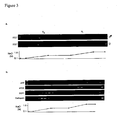
- Bandshift assays were carried out on 100ml 1.3% w/v agarose gels, consisting of 1.3gs of agarose in 0.5x TBE set with 15 wells. Bandshifts were probed with the radiolabeled probe CG11 constructed as reported by (Meehan et al., 1989) in both methylated and non-methylated form. CG11 was diluted in bromophenol blue dye at a ratio of 1:1 to give a concentration of 15-25pmol/ ⁇ l, prior to loading the gel. Non-specific competitor DNA was already prepared from E. coli .
- 20 ⁇ l reactions were prepared, containing 4 ⁇ l of (5x) Binding buffer, 1 ⁇ l E.coli competitor DNA, 2 ⁇ l of CG11 (methylated or non-methylated depending on requirement), a range of His-CxxC-3 (200-1000ng) and dH20 as required to make reaction up to 20 ⁇ l. Controls were duplicated for both CG11 forms, one containing 3 ⁇ ls of His-CxxC-3 (activity proven by previous bandshifts) and another with no protein factor.
- His-CxxC-3 was bound to 1ml of Ni-NTA superflow beads and packed onto a Pharmacia HR5/5 liquid chromatography column according to the method of (3) with the following adjustments. Buffer washes were 2x3mls and a total of six fractions were collected. Bradford assay was carried out on all fractions to assess non-specific binding to the column. An additional SDS-PAGE analysis of a sample of protein bound Ni-NTA was compared against BSA standards to determine the CxxC-3 content of the column. The HR5/5 column was fully disassembled and equilibrated in column buffer 1 prior to packing.
- Beads were resuspended in 3x3ml of column buffer 1, and packed onto the column (1ml/min continuous flow rate from the bottom) until all beads were fully sedimented.
- the column was assembled using the drop to drop method (ensuring no air traps), and the flow direction reversed for 20mls of column buffer 1 to thoroughly pack the Ni-NTA (see Pharmacia instructions sheet on assembly).
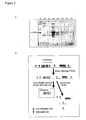
- 2x5 ⁇ l (6 ⁇ g) of the plasmid pABS was digested using EcoRI and BamHI (1 and 2 restriction sites respectively), producing three different sized fragments of 2.7, 2.1 and 1.4kb (for restriction digestion see later section).
- the completion of the digest was analysed by agarose gel electrophoresis. Restriction samples were subsequently NaCl / Ethanol precipitated according to standard procedures with the addition of tRNA (2 ⁇ l of 10mg/ml) stock as a carrier, to reduce DNA loss. Samples were then resuspended in 30 ⁇ l TE (Tris / EDTA).
- the ethanol was removed using a p1000 pipette and then carefully with p20 pipette to avoid dislodging the pelleted DNA, and then air-dried for 5-10minutes. Samples were the resuspended in the desired amount of TE, using a p1000 pipette and stored in a Perspex holder at -20°C.
- 3x1ml samples were prepared for loading, such that the DNA was contained within a 0.1 M NaCl running buffer. Both the methylated and non-methylated samples contained 500ng of DNA and the methylated/non-methylated sample contained 500ng of each. These samples were prepared in 0.1 M NaCl running buffer just prior to loading onto the column. Mounting the CxxC-3 affinity column to the Pharmacia FPLC system (Fast Protein Liquid Chromatography):
- the FPLC pumps were set to 1ml/min, valve position 1.3 and WASH A.B to position 1.1 and washed through, (first with dH 2 O/Azide and then with a sample of 0.1 M NaCl running buffer).
- Pump A and B were run from column buffers 1 and 2 respectively, and the FPLC set to wash the system through with a 0.1 M NaCl Buffer (10mls at 1ml/min), the CxxC-3 column was then attached by the drop to drop method ensuring that the outlet was higher than the inlet during attachment (0.1 M NaCl buffer being pumped at 0.2ml/min during attachment).
- the FPLC was set to run two separate methods files, first a wash and then a column run.
- the wash cycle ran 5mls of 0.1 M NaCl buffer through the column, followed by 5mls of 1M NaCl buffer and then another 5mls of 0.1 M NaCl buffer.
- the run cycle introduced a pre-loaded 1ml DNA sample (from the sample loop) on to the column, then ran 0.1 M NaCl buffer through the column for 4.8mls. At this point the concentration was increased to 1M NaCl buffer (to produce a concentration gradient over 30 1ml fractions). This concentration was maintained for 5mls before returning to 0.1M NaCl buffer for the final 5mls. All running was carried out at 1ml/min, with 1ml fractions collected from 0-41mls and the UV chart reader measuring over the entire program. Fractions were stored in Perspex container until their analysis.
- the 41 fractions were transferred into liquid scintillation viles containing the protocol 4 flag (for 32 P counting).
- the counter was started and measured the CPM (counts per minute) of the 41 samples over 2 1 ⁇ 2 hours.
- the values were subsequently plotted with Microsoft EXCEL to determine the elution profile of labeled DNA.
- Restriction digestion was carried out using the New England Biolabs restriction endonucleases and supplied buffers / BSA as directed.
- reactions were generally made to 20 ⁇ l, such as to contain the desired amount of DNA (e.g. 1-10 ⁇ l), 0.5 ⁇ l of each restriction enzyme, 2 ⁇ l of (10x) BSA (if required), 2 ⁇ l of (10x) NEBuffer (whichever gives the optimum activity for the endonucleases being used) and then made up to 20 ⁇ l in dH 2 O. Reactions were then transferred to 37°C for 3-4 hours prior to analysis of cleavage. Restriction endonucleases were always added to the reaction mixture last to ensure that they were correctly buffered. It is important that the volume of enzyme added never exceeds 10% of the total reaction volume as the resultant elevated glycerol content may lead to inhibition of the endonuclease activity.
- Samples were prepared in (6x) loading buffer (e.g. 20 ⁇ l DNA with 4 ⁇ l loading buffer / or made to volume in water).
- (6x) loading buffer e.g. 20 ⁇ l DNA with 4 ⁇ l loading buffer / or made to volume in water.
- the dried DNA was resuspended in 15 ⁇ l of (TE:loading buffer / 6:1) and loaded. Every gel was imaged with a 10 ⁇ l load of 1 kb+ DNA ladder in lane 1. UV images of the fraction gels were taken with a UV ruler such that the size markers could be superimposed onto the 32 P Phosphor images.
- Samples were prepared depending on the specific procedure used, but generally large sample (250 ⁇ l), were centrifuged for 1 minute at 16k rpm and the pellet resuspended in a desired amount of 1x DTT loading buffer (pellet samples such as the lysate were prepared in the same way). Small fraction sample such as those from the purification stages were made to the desired concentration in 2x DTT loading buffer.
- Each SDS-PAGE gel was calibrated using a 10 ⁇ l load of the 2-212kDa broad range size markers (New England Biolabs). All samples and size markers were boiled for 3 minutes, at 100°C and returned to ice briefly before loading.
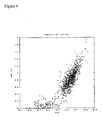
- the present inventors have generated a library and sequenced the CpG island sequences. These sequences have been correlated with the human genome sequence and the sequences, clone identifiers and their positions are described in Table 1. Using the CxxC column of the present invention, a far more representative library of fragments has been generated from the human genome in comparison to the library obtained using, for example, the Cross et al (1994) method (12,000 uniquely mapped sequences versus 6,000 uniquely mapped sequences). The present method and resulting library is therefore about twice as representative than those librarys obtained using prior art methods and therefore has potentially much greater utility.
Landscapes
- Life Sciences & Earth Sciences (AREA)
- Health & Medical Sciences (AREA)
- Chemical & Material Sciences (AREA)
- Engineering & Computer Science (AREA)
- Genetics & Genomics (AREA)
- Organic Chemistry (AREA)
- Zoology (AREA)
- Biotechnology (AREA)
- Wood Science & Technology (AREA)
- Biomedical Technology (AREA)
- Molecular Biology (AREA)
- Bioinformatics & Cheminformatics (AREA)
- General Engineering & Computer Science (AREA)
- Microbiology (AREA)
- Immunology (AREA)
- Physics & Mathematics (AREA)
- Biochemistry (AREA)
- General Health & Medical Sciences (AREA)
- Biophysics (AREA)
- Analytical Chemistry (AREA)
- Plant Pathology (AREA)
- Crystallography & Structural Chemistry (AREA)
- Proteomics, Peptides & Aminoacids (AREA)
- Hematology (AREA)
- Urology & Nephrology (AREA)
- Medicinal Chemistry (AREA)
- Food Science & Technology (AREA)
- Pathology (AREA)
- Cell Biology (AREA)
- Tropical Medicine & Parasitology (AREA)
- General Physics & Mathematics (AREA)
- Bioinformatics & Computational Biology (AREA)
- Measuring Or Testing Involving Enzymes Or Micro-Organisms (AREA)
- Preparation Of Compounds By Using Micro-Organisms (AREA)
- Apparatus Associated With Microorganisms And Enzymes (AREA)
Applications Claiming Priority (2)
| Application Number | Priority Date | Filing Date | Title |
|---|---|---|---|
| GBGB0423991.9A GB0423991D0 (en) | 2004-10-29 | 2004-10-29 | Applications of nucleic acid fragments |
| PCT/GB2005/004202 WO2006046076A2 (en) | 2004-10-29 | 2005-10-31 | Applications of isolated nucleic acid fragments comprising cpg islands |
Publications (2)
| Publication Number | Publication Date |
|---|---|
| EP1807533A2 EP1807533A2 (en) | 2007-07-18 |
| EP1807533B1 true EP1807533B1 (en) | 2015-07-01 |
Family
ID=33515735
Family Applications (1)
| Application Number | Title | Priority Date | Filing Date |
|---|---|---|---|
| EP05798900.6A Expired - Lifetime EP1807533B1 (en) | 2004-10-29 | 2005-10-31 | APPLICATIONS OF ISOLATED NUCLEIC ACID FRAGMENTS COMPRISING CpG ISLANDS |
Country Status (8)
| Country | Link |
|---|---|
| US (1) | US8105787B2 (enExample) |
| EP (1) | EP1807533B1 (enExample) |
| JP (1) | JP2008518596A (enExample) |
| CN (1) | CN101056992A (enExample) |
| AU (1) | AU2005298360A1 (enExample) |
| CA (1) | CA2585831A1 (enExample) |
| GB (1) | GB0423991D0 (enExample) |
| WO (1) | WO2006046076A2 (enExample) |
Families Citing this family (10)
| Publication number | Priority date | Publication date | Assignee | Title |
|---|---|---|---|---|
| ATE335816T1 (de) | 2002-09-18 | 2006-09-15 | Sirs Lab Gmbh | Verfahren zum nachweis prokaryontischer dna |
| ES2384571T3 (es) * | 2004-03-05 | 2012-07-09 | Sirs-Lab Gmbh | Procedimiento para el enriquecimiento y/o la separación de ADN procariota mediante una proteína que se une específicamente a ADN que contiene motivos CpG no metilados |
| AU2005308918B2 (en) | 2004-11-29 | 2012-09-27 | Sequenom, Inc. | Means and methods for detecting methylated DNA |
| JP5774805B2 (ja) * | 2004-11-29 | 2015-09-09 | セクエノム,インコーポレイティド | メチル化dnaを検出する方法、及びキット |
| WO2012058634A2 (en) * | 2010-10-28 | 2012-05-03 | Salk Institute For Biological Studies | Epigenomic induced pluripotent stem cell signatures |
| CN102776270A (zh) * | 2011-05-12 | 2012-11-14 | 中国科学院上海生命科学研究院 | 检测dna甲基化的方法和装置 |
| US9461716B2 (en) * | 2015-03-02 | 2016-10-04 | Intel IP Corporation | Near field communications (NFC) modulation feedback apparatus for tuned antenna configurations |
| WO2020216966A1 (en) * | 2019-04-26 | 2020-10-29 | Thermo Fisher Scientific Baltics Uab | Isolated nucleic acid binding domains |
| CN111647643A (zh) * | 2020-06-05 | 2020-09-11 | 南京邮电大学 | 一种dna特异性甲基化位点的制备及检测方法 |
| NL2031337B1 (en) * | 2022-03-18 | 2023-09-29 | Univ Twente | Method for separating high-methylated DNA and low-methylated DNA |
Family Cites Families (1)
| Publication number | Priority date | Publication date | Assignee | Title |
|---|---|---|---|---|
| US6605432B1 (en) | 1999-02-05 | 2003-08-12 | Curators Of The University Of Missouri | High-throughput methods for detecting DNA methylation |
-
2004
- 2004-10-29 GB GBGB0423991.9A patent/GB0423991D0/en not_active Ceased
-
2005
- 2005-10-31 CN CNA2005800375162A patent/CN101056992A/zh active Pending
- 2005-10-31 AU AU2005298360A patent/AU2005298360A1/en not_active Abandoned
- 2005-10-31 US US11/666,558 patent/US8105787B2/en not_active Expired - Fee Related
- 2005-10-31 EP EP05798900.6A patent/EP1807533B1/en not_active Expired - Lifetime
- 2005-10-31 JP JP2007538516A patent/JP2008518596A/ja not_active Abandoned
- 2005-10-31 CA CA002585831A patent/CA2585831A1/en not_active Abandoned
- 2005-10-31 WO PCT/GB2005/004202 patent/WO2006046076A2/en not_active Ceased
Non-Patent Citations (1)
| Title |
|---|
| VOO KUI SHIN ET AL: "Cloning of a mammalian transcriptional activator that binds unmethylated CpG motifs and shares a CXXC domain with DNA methyltransferase, human trithorax, and methyl-CpG binding domain protein 1", MOLECULAR AND CELLULAR BIOLOGY, AMERICAN SOCIETY FOR MICROBIOLOGY, WASHINGTON, US, vol. 20, no. 6, 1 March 2000 (2000-03-01), pages 2108 - 2121, XP002262527, ISSN: 0270-7306, DOI: 10.1128/MCB.20.6.2108-2121.2000 * |
Also Published As
| Publication number | Publication date |
|---|---|
| EP1807533A2 (en) | 2007-07-18 |
| WO2006046076A3 (en) | 2006-09-08 |
| AU2005298360A1 (en) | 2006-05-04 |
| WO2006046076A2 (en) | 2006-05-04 |
| US20080076671A1 (en) | 2008-03-27 |
| JP2008518596A (ja) | 2008-06-05 |
| CN101056992A (zh) | 2007-10-17 |
| US8105787B2 (en) | 2012-01-31 |
| CA2585831A1 (en) | 2006-05-04 |
| GB0423991D0 (en) | 2004-12-01 |
Similar Documents
| Publication | Publication Date | Title |
|---|---|---|
| US4556643A (en) | Assay method and probe for polynucleotide sequences | |
| US6110684A (en) | Mismatch detection techniques | |
| US5861244A (en) | Genetic sequence assay using DNA triple strand formation | |
| US20210371910A1 (en) | Detection of dna hydroxymethylation | |
| US20110189674A1 (en) | Method for quantifying or detecting dna | |
| WO2017075265A1 (en) | Multiplex analysis of single cell constituents | |
| JPH11514850A (ja) | 特異的捕捉および検出が可能なヌクレオチドプローブを用いた核酸検出法 | |
| US20030170689A1 (en) | DNA microarrays comprising active chromatin elements and comprehensive profiling therewith | |
| EP1807533B1 (en) | APPLICATIONS OF ISOLATED NUCLEIC ACID FRAGMENTS COMPRISING CpG ISLANDS | |
| KR20110053358A (ko) | Dna를 정량 또는 검출하는 방법 | |
| EP1368501A1 (en) | Mutation detection using muts and reca | |
| CN102037140A (zh) | Dna甲基化测定方法 | |
| AU2008230349A1 (en) | Method of measuring DNA methylation | |
| US8206935B2 (en) | Method of rapidly quantifying hydroxymethylated DNA | |
| US20080248958A1 (en) | System for pulling out regulatory elements in vitro | |
| EP1007733B1 (en) | Universal solid-phase hybridization apparatus | |
| JP5277681B2 (ja) | Dnaメチル化測定方法 | |
| US20070148636A1 (en) | Method, compositions and kits for preparation of nucleic acids | |
| US20050239078A1 (en) | Sequence tag microarray and method for detection of multiple proteins through DNA methods | |
| JPH0646899A (ja) | 核酸結合因子の検出のための迅速な検定 | |
| JP5151709B2 (ja) | Dnaを定量又は検出する方法 | |
| Overturf | Basic Molecular Laboratory Methods | |
| CN119899820A (zh) | Dhx8融合蛋白及其制备方法 | |
| Chang et al. | Bibliography of the current world literature | |
| PRESENT | 9804 GENE AND METHODS OF USE THEREOF |
Legal Events
| Date | Code | Title | Description |
|---|---|---|---|
| PUAI | Public reference made under article 153(3) epc to a published international application that has entered the european phase |
Free format text: ORIGINAL CODE: 0009012 |
|
| 17P | Request for examination filed |
Effective date: 20070529 |
|
| AK | Designated contracting states |
Kind code of ref document: A2 Designated state(s): AT BE BG CH CY CZ DE DK EE ES FI FR GB GR HU IE IS IT LI LT LU LV MC NL PL PT RO SE SI SK TR |
|
| 17Q | First examination report despatched |
Effective date: 20070924 |
|
| DAX | Request for extension of the european patent (deleted) | ||
| GRAP | Despatch of communication of intention to grant a patent |
Free format text: ORIGINAL CODE: EPIDOSNIGR1 |
|
| GRAJ | Information related to disapproval of communication of intention to grant by the applicant or resumption of examination proceedings by the epo deleted |
Free format text: ORIGINAL CODE: EPIDOSDIGR1 |
|
| GRAP | Despatch of communication of intention to grant a patent |
Free format text: ORIGINAL CODE: EPIDOSNIGR1 |
|
| INTG | Intention to grant announced |
Effective date: 20150108 |
|
| INTG | Intention to grant announced |
Effective date: 20150120 |
|
| GRAS | Grant fee paid |
Free format text: ORIGINAL CODE: EPIDOSNIGR3 |
|
| GRAA | (expected) grant |
Free format text: ORIGINAL CODE: 0009210 |
|
| AK | Designated contracting states |
Kind code of ref document: B1 Designated state(s): AT BE BG CH CY CZ DE DK EE ES FI FR GB GR HU IE IS IT LI LT LU LV MC NL PL PT RO SE SI SK TR |
|
| REG | Reference to a national code |
Ref country code: GB Ref legal event code: FG4D |
|
| REG | Reference to a national code |
Ref country code: AT Ref legal event code: REF Ref document number: 734007 Country of ref document: AT Kind code of ref document: T Effective date: 20150715 Ref country code: CH Ref legal event code: EP |
|
| REG | Reference to a national code |
Ref country code: DE Ref legal event code: R096 Ref document number: 602005046872 Country of ref document: DE |
|
| REG | Reference to a national code |
Ref country code: IE Ref legal event code: FG4D |
|
| REG | Reference to a national code |
Ref country code: AT Ref legal event code: MK05 Ref document number: 734007 Country of ref document: AT Kind code of ref document: T Effective date: 20150701 |
|
| REG | Reference to a national code |
Ref country code: NL Ref legal event code: MP Effective date: 20150701 |
|
| REG | Reference to a national code |
Ref country code: LT Ref legal event code: MG4D |
|
| PG25 | Lapsed in a contracting state [announced via postgrant information from national office to epo] |
Ref country code: LV Free format text: LAPSE BECAUSE OF FAILURE TO SUBMIT A TRANSLATION OF THE DESCRIPTION OR TO PAY THE FEE WITHIN THE PRESCRIBED TIME-LIMIT Effective date: 20150701 Ref country code: GR Free format text: LAPSE BECAUSE OF FAILURE TO SUBMIT A TRANSLATION OF THE DESCRIPTION OR TO PAY THE FEE WITHIN THE PRESCRIBED TIME-LIMIT Effective date: 20151002 Ref country code: LT Free format text: LAPSE BECAUSE OF FAILURE TO SUBMIT A TRANSLATION OF THE DESCRIPTION OR TO PAY THE FEE WITHIN THE PRESCRIBED TIME-LIMIT Effective date: 20150701 Ref country code: FI Free format text: LAPSE BECAUSE OF FAILURE TO SUBMIT A TRANSLATION OF THE DESCRIPTION OR TO PAY THE FEE WITHIN THE PRESCRIBED TIME-LIMIT Effective date: 20150701 |
|
| PG25 | Lapsed in a contracting state [announced via postgrant information from national office to epo] |
Ref country code: AT Free format text: LAPSE BECAUSE OF FAILURE TO SUBMIT A TRANSLATION OF THE DESCRIPTION OR TO PAY THE FEE WITHIN THE PRESCRIBED TIME-LIMIT Effective date: 20150701 Ref country code: PT Free format text: LAPSE BECAUSE OF FAILURE TO SUBMIT A TRANSLATION OF THE DESCRIPTION OR TO PAY THE FEE WITHIN THE PRESCRIBED TIME-LIMIT Effective date: 20151102 Ref country code: IS Free format text: LAPSE BECAUSE OF FAILURE TO SUBMIT A TRANSLATION OF THE DESCRIPTION OR TO PAY THE FEE WITHIN THE PRESCRIBED TIME-LIMIT Effective date: 20151101 Ref country code: PL Free format text: LAPSE BECAUSE OF FAILURE TO SUBMIT A TRANSLATION OF THE DESCRIPTION OR TO PAY THE FEE WITHIN THE PRESCRIBED TIME-LIMIT Effective date: 20150701 Ref country code: SE Free format text: LAPSE BECAUSE OF FAILURE TO SUBMIT A TRANSLATION OF THE DESCRIPTION OR TO PAY THE FEE WITHIN THE PRESCRIBED TIME-LIMIT Effective date: 20150701 Ref country code: ES Free format text: LAPSE BECAUSE OF FAILURE TO SUBMIT A TRANSLATION OF THE DESCRIPTION OR TO PAY THE FEE WITHIN THE PRESCRIBED TIME-LIMIT Effective date: 20150701 |
|
| REG | Reference to a national code |
Ref country code: DE Ref legal event code: R097 Ref document number: 602005046872 Country of ref document: DE |
|
| PG25 | Lapsed in a contracting state [announced via postgrant information from national office to epo] |
Ref country code: EE Free format text: LAPSE BECAUSE OF FAILURE TO SUBMIT A TRANSLATION OF THE DESCRIPTION OR TO PAY THE FEE WITHIN THE PRESCRIBED TIME-LIMIT Effective date: 20150701 Ref country code: IT Free format text: LAPSE BECAUSE OF FAILURE TO SUBMIT A TRANSLATION OF THE DESCRIPTION OR TO PAY THE FEE WITHIN THE PRESCRIBED TIME-LIMIT Effective date: 20150701 Ref country code: DK Free format text: LAPSE BECAUSE OF FAILURE TO SUBMIT A TRANSLATION OF THE DESCRIPTION OR TO PAY THE FEE WITHIN THE PRESCRIBED TIME-LIMIT Effective date: 20150701 Ref country code: CZ Free format text: LAPSE BECAUSE OF FAILURE TO SUBMIT A TRANSLATION OF THE DESCRIPTION OR TO PAY THE FEE WITHIN THE PRESCRIBED TIME-LIMIT Effective date: 20150701 Ref country code: SK Free format text: LAPSE BECAUSE OF FAILURE TO SUBMIT A TRANSLATION OF THE DESCRIPTION OR TO PAY THE FEE WITHIN THE PRESCRIBED TIME-LIMIT Effective date: 20150701 |
|
| PLBE | No opposition filed within time limit |
Free format text: ORIGINAL CODE: 0009261 |
|
| STAA | Information on the status of an ep patent application or granted ep patent |
Free format text: STATUS: NO OPPOSITION FILED WITHIN TIME LIMIT |
|
| PG25 | Lapsed in a contracting state [announced via postgrant information from national office to epo] |
Ref country code: RO Free format text: LAPSE BECAUSE OF FAILURE TO SUBMIT A TRANSLATION OF THE DESCRIPTION OR TO PAY THE FEE WITHIN THE PRESCRIBED TIME-LIMIT Effective date: 20150701 Ref country code: LU Free format text: LAPSE BECAUSE OF FAILURE TO SUBMIT A TRANSLATION OF THE DESCRIPTION OR TO PAY THE FEE WITHIN THE PRESCRIBED TIME-LIMIT Effective date: 20151031 |
|
| REG | Reference to a national code |
Ref country code: CH Ref legal event code: PL |
|
| 26N | No opposition filed |
Effective date: 20160404 |
|
| PG25 | Lapsed in a contracting state [announced via postgrant information from national office to epo] |
Ref country code: MC Free format text: LAPSE BECAUSE OF FAILURE TO SUBMIT A TRANSLATION OF THE DESCRIPTION OR TO PAY THE FEE WITHIN THE PRESCRIBED TIME-LIMIT Effective date: 20150701 |
|
| REG | Reference to a national code |
Ref country code: IE Ref legal event code: MM4A |
|
| PG25 | Lapsed in a contracting state [announced via postgrant information from national office to epo] |
Ref country code: LI Free format text: LAPSE BECAUSE OF NON-PAYMENT OF DUE FEES Effective date: 20151031 Ref country code: CH Free format text: LAPSE BECAUSE OF NON-PAYMENT OF DUE FEES Effective date: 20151031 |
|
| PG25 | Lapsed in a contracting state [announced via postgrant information from national office to epo] |
Ref country code: SI Free format text: LAPSE BECAUSE OF FAILURE TO SUBMIT A TRANSLATION OF THE DESCRIPTION OR TO PAY THE FEE WITHIN THE PRESCRIBED TIME-LIMIT Effective date: 20150701 |
|
| REG | Reference to a national code |
Ref country code: FR Ref legal event code: PLFP Year of fee payment: 12 |
|
| PG25 | Lapsed in a contracting state [announced via postgrant information from national office to epo] |
Ref country code: IE Free format text: LAPSE BECAUSE OF NON-PAYMENT OF DUE FEES Effective date: 20151031 |
|
| PG25 | Lapsed in a contracting state [announced via postgrant information from national office to epo] |
Ref country code: BE Free format text: LAPSE BECAUSE OF FAILURE TO SUBMIT A TRANSLATION OF THE DESCRIPTION OR TO PAY THE FEE WITHIN THE PRESCRIBED TIME-LIMIT Effective date: 20150701 |
|
| PG25 | Lapsed in a contracting state [announced via postgrant information from national office to epo] |
Ref country code: HU Free format text: LAPSE BECAUSE OF FAILURE TO SUBMIT A TRANSLATION OF THE DESCRIPTION OR TO PAY THE FEE WITHIN THE PRESCRIBED TIME-LIMIT; INVALID AB INITIO Effective date: 20051031 Ref country code: BG Free format text: LAPSE BECAUSE OF FAILURE TO SUBMIT A TRANSLATION OF THE DESCRIPTION OR TO PAY THE FEE WITHIN THE PRESCRIBED TIME-LIMIT Effective date: 20150701 |
|
| PG25 | Lapsed in a contracting state [announced via postgrant information from national office to epo] |
Ref country code: NL Free format text: LAPSE BECAUSE OF FAILURE TO SUBMIT A TRANSLATION OF THE DESCRIPTION OR TO PAY THE FEE WITHIN THE PRESCRIBED TIME-LIMIT Effective date: 20150701 Ref country code: CY Free format text: LAPSE BECAUSE OF FAILURE TO SUBMIT A TRANSLATION OF THE DESCRIPTION OR TO PAY THE FEE WITHIN THE PRESCRIBED TIME-LIMIT Effective date: 20150701 |
|
| PG25 | Lapsed in a contracting state [announced via postgrant information from national office to epo] |
Ref country code: TR Free format text: LAPSE BECAUSE OF FAILURE TO SUBMIT A TRANSLATION OF THE DESCRIPTION OR TO PAY THE FEE WITHIN THE PRESCRIBED TIME-LIMIT Effective date: 20150701 |
|
| REG | Reference to a national code |
Ref country code: FR Ref legal event code: PLFP Year of fee payment: 13 |
|
| REG | Reference to a national code |
Ref country code: FR Ref legal event code: PLFP Year of fee payment: 14 |
|
| PGFP | Annual fee paid to national office [announced via postgrant information from national office to epo] |
Ref country code: FR Payment date: 20190913 Year of fee payment: 15 |
|
| PGFP | Annual fee paid to national office [announced via postgrant information from national office to epo] |
Ref country code: DE Payment date: 20191015 Year of fee payment: 15 |
|
| PGFP | Annual fee paid to national office [announced via postgrant information from national office to epo] |
Ref country code: GB Payment date: 20191031 Year of fee payment: 15 |
|
| REG | Reference to a national code |
Ref country code: DE Ref legal event code: R119 Ref document number: 602005046872 Country of ref document: DE |
|
| GBPC | Gb: european patent ceased through non-payment of renewal fee |
Effective date: 20201031 |
|
| PG25 | Lapsed in a contracting state [announced via postgrant information from national office to epo] |
Ref country code: DE Free format text: LAPSE BECAUSE OF NON-PAYMENT OF DUE FEES Effective date: 20210501 Ref country code: FR Free format text: LAPSE BECAUSE OF NON-PAYMENT OF DUE FEES Effective date: 20201031 |
|
| PG25 | Lapsed in a contracting state [announced via postgrant information from national office to epo] |
Ref country code: GB Free format text: LAPSE BECAUSE OF NON-PAYMENT OF DUE FEES Effective date: 20201031 |