EP1806754A2 - System und Verfahren zum Erfassen und Übertragen von Positionsinformationen eines Steuerstabes eines Kernreaktors - Google Patents
System und Verfahren zum Erfassen und Übertragen von Positionsinformationen eines Steuerstabes eines Kernreaktors Download PDFInfo
- Publication number
- EP1806754A2 EP1806754A2 EP06126882A EP06126882A EP1806754A2 EP 1806754 A2 EP1806754 A2 EP 1806754A2 EP 06126882 A EP06126882 A EP 06126882A EP 06126882 A EP06126882 A EP 06126882A EP 1806754 A2 EP1806754 A2 EP 1806754A2
- Authority
- EP
- European Patent Office
- Prior art keywords
- control rod
- position data
- data
- multiplexed
- control
- Prior art date
- Legal status (The legal status is an assumption and is not a legal conclusion. Google has not performed a legal analysis and makes no representation as to the accuracy of the status listed.)
- Withdrawn
Links
- 238000000034 method Methods 0.000 title abstract description 25
- 238000004891 communication Methods 0.000 claims abstract description 93
- 239000002131 composite material Substances 0.000 claims description 33
- 230000001133 acceleration Effects 0.000 claims description 5
- 239000000523 sample Substances 0.000 description 23
- 230000005540 biological transmission Effects 0.000 description 19
- 238000007726 management method Methods 0.000 description 15
- 235000014676 Phragmites communis Nutrition 0.000 description 10
- 239000000446 fuel Substances 0.000 description 9
- XLYOFNOQVPJJNP-UHFFFAOYSA-N water Substances O XLYOFNOQVPJJNP-UHFFFAOYSA-N 0.000 description 7
- 238000006243 chemical reaction Methods 0.000 description 5
- 230000001276 controlling effect Effects 0.000 description 5
- 238000010586 diagram Methods 0.000 description 5
- 230000033001 locomotion Effects 0.000 description 5
- 238000013480 data collection Methods 0.000 description 4
- 238000009835 boiling Methods 0.000 description 3
- 239000011159 matrix material Substances 0.000 description 3
- 238000012545 processing Methods 0.000 description 3
- 238000005260 corrosion Methods 0.000 description 2
- 230000007797 corrosion Effects 0.000 description 2
- 239000000835 fiber Substances 0.000 description 2
- 230000006870 function Effects 0.000 description 2
- 238000003780 insertion Methods 0.000 description 2
- 230000037431 insertion Effects 0.000 description 2
- 230000003287 optical effect Effects 0.000 description 2
- 230000008569 process Effects 0.000 description 2
- 230000009257 reactivity Effects 0.000 description 2
- 230000007704 transition Effects 0.000 description 2
- 239000011358 absorbing material Substances 0.000 description 1
- 230000004913 activation Effects 0.000 description 1
- 230000008901 benefit Effects 0.000 description 1
- 230000008878 coupling Effects 0.000 description 1
- 238000010168 coupling process Methods 0.000 description 1
- 238000005859 coupling reaction Methods 0.000 description 1
- 230000003247 decreasing effect Effects 0.000 description 1
- 238000013461 design Methods 0.000 description 1
- 238000001514 detection method Methods 0.000 description 1
- 230000000694 effects Effects 0.000 description 1
- 229910052735 hafnium Inorganic materials 0.000 description 1
- VBJZVLUMGGDVMO-UHFFFAOYSA-N hafnium atom Chemical compound [Hf] VBJZVLUMGGDVMO-UHFFFAOYSA-N 0.000 description 1
- 230000003116 impacting effect Effects 0.000 description 1
- 230000006872 improvement Effects 0.000 description 1
- 230000007774 longterm Effects 0.000 description 1
- 238000012423 maintenance Methods 0.000 description 1
- 239000000463 material Substances 0.000 description 1
- 230000007246 mechanism Effects 0.000 description 1
- 230000001105 regulatory effect Effects 0.000 description 1
- 230000003252 repetitive effect Effects 0.000 description 1
- 238000005070 sampling Methods 0.000 description 1
- 239000004065 semiconductor Substances 0.000 description 1
- 230000001360 synchronised effect Effects 0.000 description 1
Images



Classifications
-
- G—PHYSICS
- G21—NUCLEAR PHYSICS; NUCLEAR ENGINEERING
- G21C—NUCLEAR REACTORS
- G21C7/00—Control of nuclear reaction
- G21C7/36—Control circuits
-
- G—PHYSICS
- G21—NUCLEAR PHYSICS; NUCLEAR ENGINEERING
- G21C—NUCLEAR REACTORS
- G21C17/00—Monitoring; Testing ; Maintaining
- G21C17/10—Structural combination of fuel element, control rod, reactor core, or moderator structure with sensitive instruments, e.g. for measuring radioactivity, strain
-
- Y—GENERAL TAGGING OF NEW TECHNOLOGICAL DEVELOPMENTS; GENERAL TAGGING OF CROSS-SECTIONAL TECHNOLOGIES SPANNING OVER SEVERAL SECTIONS OF THE IPC; TECHNICAL SUBJECTS COVERED BY FORMER USPC CROSS-REFERENCE ART COLLECTIONS [XRACs] AND DIGESTS
- Y02—TECHNOLOGIES OR APPLICATIONS FOR MITIGATION OR ADAPTATION AGAINST CLIMATE CHANGE
- Y02E—REDUCTION OF GREENHOUSE GAS [GHG] EMISSIONS, RELATED TO ENERGY GENERATION, TRANSMISSION OR DISTRIBUTION
- Y02E30/00—Energy generation of nuclear origin
- Y02E30/30—Nuclear fission reactors
Definitions
- the present disclosure relates generally to nuclear reactors and, more particularly, to systems and methods for collecting and transmitting nuclear reactor control rod position information.
- a reactor pressure vessel (RPV) of a boiling water reactor (BWR) typically has a reactor core formed from a plurality of fuel elements located within the reactor pressure vessel.
- the fuel elements are grouped to form a fuel bundle and a sufficient number of fuel bundles are combined to form a reactor core capable of a self-sustaining chain reaction.
- Neutron-absorbing control rods are inserted into the core to control the reactivity of the core.
- the reactivity of the core can be adjusted by incremental insertions and withdrawals of the control rod.
- Each control rod is housed in a guide tube and is moved within the guide tube by a control rod drive that is controlled by a rod drive control system.
- the rod drive control system controls a hydraulic control unit that causes the control rod drive to move the control rod, either inserting or withdrawing the control rod from the core's fuel bundle.
- control rods are the primary means for the nuclear reaction with the nuclear core, it is essential that the position of each control rod within the core bundle be identified and monitored in order to provide position data for controlling the control rods and therefore the nuclear reaction.
- a magnet is typically associated with each control rod and is detected by a reed switch positioned to detect the proximity of the magnet and therefore the position of the control rod within the core bundle.
- the reed switches generate a position signal that is periodically scanned and collected by a collection module.
- a control rod position signal is transmitted to a control rod management system by a plurality of collection modules over a shared serial data communication facility coupled to an intermediate collection module that collects the control rod data and forwards it to a control rod management system.
- the inventors hereof have recognized that the current systems and methods for collecting and transmitting control rod position data are not as robust and reliable as is desired for controlling such a critical component of a nuclear reactor.
- the current systems receive position signals from the control rod position sensors over a serial communication facility and therefore the rod control systems are only provided control rod position data on a relatively slow update rate.
- the inventors have designed systems and methods as described herein that, in some embodiments, provide for higher data collection rates for control rod position information and improved transmission of the collected control rod position data to control rod management and control systems by utilizing transmission of multiplexed position signals over a bus communication facility in parallel with other multiplexed position signals.
- Some embodiments as described in this disclosure can provide for improved control rod position data updates that can enhance the management and control of the control rods within the nuclear reactor core.
- a system for collecting control rod position data in a nuclear reactor includes a position data multiplexer module coupled to a plurality of first position sensors associated with a first control rod and a plurality of second position sensors associated with a second control rod, the multiplexer module configured for multiplexing first control rod position data and second control rod position data into a first multiplexed position signal, and transmitting the first multiplexed position signal over a bus communication facility in parallel with a second multiplexed position signal having third control rod position data from a third control rod.
- a system in a nuclear power plant, includes a first position data multiplexer module, a second position data multiplexer module, and a control module.
- the first position data multiplexer module is coupled to a plurality of first position sensors associated with a first control rod and a plurality of second position sensors associated with a second control rod and is configured for receiving first control rod position data from the first position sensors, receiving second control rod position data from the second position sensors, multiplexing the first control rod position data and the second control rod position data into a first multiplexed position signal associated with the first control rod and the second control rod, and transmitting the first multiplexed position signal over a bus communication facility.
- the second position data multiplexer module is coupled to a plurality of third position sensors associated with a third control rod and a plurality of fourth position sensors associated with a fourth control rod, and is configured for receiving third control rod position data from the third position sensors, receiving fourth control rod position data from the fourth position sensors, multiplexing the third control rod position data and the fourth control rod position data into a second multiplexed position signal associated with the third control rod and the fourth control rod, and transmitting the second multiplexed position signal over the bus communication facility in parallel with the first multiplexed position signal.
- the control module is coupled to the bus communication facility and configured for receiving the first multiplexed position signal in parallel with the second multiplexed position, multiplexing at least a portion of the first multiplexed position signal with at least a portion of the second multiplexed position signal into a composite position signal, and transmitting the composite position signal over a data communication facility.
- a method in a nuclear reactor including multiplexing first control rod position data and second control rod position data into a first multiplexed position signal, multiplexing third control rod position data and fourth control rod position data into a second multiplexed position signal, and transmitting the first multiplexed position signal over a bus communication facility in parallel with the second multiplexed position signal.
- a method in a nuclear reactor control system including determining first control rod position data from a plurality of first position sensors associated with a first control rod, and determining second control rod position data from a plurality of second position sensors associated with a second control rod.
- the method also includes multiplexing the first control rod position data and the second control rod position data into a first multiplexed position signal associated with the first control rod and the second control rod, and transmitting the first multiplexed position signal over the bus communication facility in parallel with a second multiplexed position signal having third control rod position data from a plurality of third position sensors associated with a third control rod.
- the method further includes receiving the first multiplexed position signal and the second multiplexed position over the bus communication facility, multiplexing at least a portion of the first multiplexed position signal with at least a portion of the second multiplexed position signal into a composite position signal, and transmitting the composite position signal over a data communication facility.
- Fig. 1 is a sectional view, with parts cut away, of a boiling water nuclear reactor pressure vessel (RPV) 10.
- the reactor pressure vessel 10 has a generally cylindrical shape and is closed at one end by a bottom head 12 and at its other end by a removable top head 14.
- a side wall 16 extends from bottom head 12 to top head 14.
- Side wall 16 includes a top flange 18.
- Top head 14 is attached to top flange 18.
- a cylindrically shaped core shroud 20 surrounds a reactor core 22.
- the shroud 20 is supported at one end by a shroud support 24 and includes an opposed removable shroud head 26.
- An annulus 28 is formed between shroud 20 and side wall 16.
- the pump deck 30 includes a plurality of circular openings 32, with each opening housing a jet pump 34.
- the jet pumps 34 are circumferentially distributed around the core shroud 20.
- An inlet riser pipe 36 is coupled to two jet pumps 34 by a transition assembly 38.
- Each jet pump 34 includes an inlet mixer 40, and a diffuser 42.
- Heat is generated within the core 22, which includes fuel bundles 46 of fissionable material. Water circulated up through the core 22 is at least partially converted to steam. Steam separators 48 separate the steam from the water, and the water is recirculated. Steam dryers 50 remove residual water from the steam. The steam exits reactor pressure vessel 10 through a steam outlet 52 near vessel top head 14.
- the amount of heat generated in the core 22 is regulated by inserting and withdrawing a plurality of control rods 54 of neutron absorbing material, for example, hafnium. To the extent that a control rod 54 is inserted into fuel bundle 46, it absorbs neutrons that would otherwise be available to promote the chain reaction which generates heat in core 22.
- the control rod 54 couples with a control rod drive (CRD) 58 which moves the control rod 54 relative to a core plate 64 and the fuel bundles 46, thereby controlling the nuclear reaction within the core 22.
- the control rod drive 58 extends through the bottom head 12 and is enclosed in a control rod drive housing 66.
- a control rod guide tube 56 extends vertically from control rod drive housing 66 to core plate 64. The control rod guide tubes 56 restrict non-vertical motion of the control rods 54 during insertion and withdrawal.
- a plurality of rod position probes 68 each having a plurality of control rod position sensors (not shown in Fig. 1, but see Fig. 2 and related discussion below) and each being associated with one of the control rods 54, are located underneath the reactor pressure vessel 10.
- Each position probe 68 provides control rod position data 70 generated by control rod position sensors over a sensor data facility 69.
- the control rod position data 70 is collected and transmitted to a rod position information system (RPIS) or similar system (not shown in Fig. 1).
- RPIS rod position information system
- one or more of the control rod position collecting and transmission components, systems, or methods may be redundant or duplicated, combined or implemented as a separate module or system, and are still considered to be within the scope of this disclosure.
- a system for collecting control rod position data in a nuclear reactor includes a position data multiplexer module coupled to a plurality of first position sensors associated with a first control rod and a plurality of second position sensors associated with a second control rod, the multiplexer configured for multiplexing first control rod position data and second control rod position data into a first multiplexed position signal, and transmitting the multiplexed position signal over a bus communication facility in parallel with a second multiplexed position signal having third control rod position data from a third control rod.
- Fig. 2 illustrates a simplified block diagram of a control rod position collection system according to one exemplary embodiment.
- a position data multiplexer module 202 is coupled to first rod position sensors 204A for receiving first control rod position data 70A and second rod position sensors 204B for receiving second control rod position data 70B.
- a multiplexer sub-module 206 multiplexes the first control rod position data 70A and the second control rod position data 70B into a first multiplexed position signal 208.
- a transmission sub-module 210 formats the first multiplexed position signal 208 and transmits the first multiplexed position signal 208 over a bus transmission facility 212 in parallel with one or more other similarly multiplexed position signals 208N.
- the bus transmission facility 212 can be any type of transmission facility and protocol capable of supporting the receipt and transmission of two or more data or transmission signals in parallel communication over a bus rather than serial communication.
- the one or more other multiplexed position signals includes multiplexed position data from sensors 204N (not shown) associated with other control rods 54.
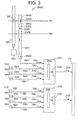
- Fig. 3 illustrates another exemplary embodiment.
- a first control rod 54A1 is moved within the core 22 (shown in Fig. 1) by a first control rod drive 58A1 and relative to an associated first position probe 68A1.
- the first control rod 54A1 includes a position emitter 302 positioned on or associated with the first control rod 54A1 or the first control rod drive 58A1 and is configured for interacting with position sensors 204AN for identifying the position of first control rod 54A1 with the core 22.
- the position emitter 302 can be any type of device capable of having a position or relative position sensed by one or more position sensors 204 and in one embodiment, is a magnet or magnetic device, by way of example.
- the position sensors 204 can be any type of device configured for detecting the presence of the position emitter 302 and in one embodiment is a reed switch, by way of example.
- Each of the position sensors 204 is coupled to a sensor data facility 69 for transporting position data 70A1 to a first position collection device or system such as a position data multiplexer module 202A.
- the position sensors 204 can provide an individual signal over a dedicated sensor data facility 69 or can be coupled or wired as a group or matrix of wires or as individual sensor data facilities 69 so as to enable the utilization of a fewer number of physical sensor data facilities 69 than the number of position sensors 204 on the associated position probe 68A1.
- a position probe 68 has 53 reed switches positioned at intervals along a 13 foot length of the position probe 68, with each reed switch being positioned to determine at least one proximity of the position emitter 302 as the control rod 54 is positioned within the core 22.
- the 53 reed switches can be coupled such that approximately one-half of the reed switches are coupled in parallel and that the position data 70 from each of the 53 reed switches are transmitted over a sensor data facility 69 having a 5 x 6 matrix of wires.
- the 5 x 6 wire matrix as the sensor data facility 69, fewer wires are required to transmit the sensor position signals 70 from the 53 position sensors 204 of one position probe 68. This is only one example and other arrangements and coupling mechanisms can also be utilized consistent with the current disclosure.
- a single position emitter 302A1 is illustrated at a first position RP1.
- sensor 204A1-A detects the presence of position emitter 302A1 and sends a position signal 70A1 indicative of the proximate position of emitter 302.
- position sensor 204A1-5 will then detect the proximate position of emitter 302A1 and sends a related position signal 70A1.
- the position sensor 204A1-1 no longer sends the signal 70A1.
- the position data 70A1 is provided to first position data multiplexer module 202A for position data generated by the first position sensors 204A1-1 and 204A1-5, as well as the other sensors 204A1-2 to 204A1-N during the movement from position RP1 to position RP2.
- the first position data multiplexer module 202A receives second position data 70A2 from second position sensors 204A2-N (not shown) associated with a second position probe 68A2 and a second control rod 54A2.
- Additional, third position data 70A3 and fourth position data 70A4 can also be transmitted to first position data multiplexer module 202A from additional control rods 54A3 and 54A4, respectively.
- control rods 54A1 to 54A4 are illustrated in Fig. 3, it should be understood that one or more control rods 54 can be associated with the first position data multiplexer module 202A and any of the other position data multiplexer modules 202 and still be within the scope of the current disclosure.
- the first multiplexer 202 multiplexes one or more of the received position data 70A1, 70A2, 70A3 and/or 70A4 into a multiplexed position signal 208A and transmits the first multiplexed position signal 208A over the bus communication facility 212.
- one or more additional position data multiplexer modules 202B can also receive one or more position data 70, such as position data 70B1, 70B2, 70B3 and/or 70B4 from position probes 68B1, 68B2, 68B3 and 68B4, respectively.
- the additional position data multiplexer modules 202B include a multiplexer sub-module 206B and bus communications sub-module 210B that multiplex and generate a second (or third or more) multiplexed position signal 208B and that transmit the second multiplexed position signal 208B over the bus communication facility 212 in parallel with the first multiplexed position signal 208A and possibly third, fourth or more additional multiplexed position signals 208N.
- each of the control rod position multiplexer modules 202 can receive the position data 70 on a short interval basis and can transmit the multiplexed position signal 208 including the position data 70 over the shared bus communication facility 212 without delay and therefore at a improved rate and repeat the transmission at decreased intervals.
- the transmission of current and timely position data 70 for each and every sensor 204 associated with each and every control rod 54 within a reactor core 22 can preferably occur at intervals of equal to or less than about once every 5 msec.
- various operational control improvement are enabled as compared to other systems that heretofore have only collected and transmitted rod position data at rates that are greater than every 50 msec.
- This is a benefit as a collecting and transmitting data rate of equal to or less than can provide for detailed rod position data during a reactor scram that provides for a movement of the control rod 54 from a full out to full in position in about 3 seconds.
- some operations of the reactor can be improved that provide for increased safety and improved efficiency of reactor operations.
- a system for collecting and transmitting control rod position data in a nuclear power plant includes a first position data multiplexer module, a second position data multiplexer module, and a position data control module.
- the first position data multiplexer module is coupled to a plurality of first position sensors associated with a first control rod and a plurality of second position sensors associated with a second control rod and is configured for receiving first position data from the first position sensors, receiving second position data from the second position sensors, multiplexing the first position data and the second position data into a first multiplexed position signal associated with the first control rod and the second control rod, and transmitting the first multiplexed position signal over a bus communication facility.
- the second position data multiplexer module is coupled to a plurality of third position sensors associated with a third control rod and a plurality of fourth position sensors associated with a fourth control rod, and is configured for receiving third position data from the third position sensors, receiving fourth position data from the fourth position sensors, multiplexing the third position data and the fourth position data into a second multiplexed position signal associated with the third control rod and the fourth control rod, and transmitting the second multiplexed position signal over the bus communication facility in parallel with the first multiplexed position signal.
- the position data control module is coupled to the bus communication facility and configured for receiving the first multiplexed position signal in parallel with the second multiplexed position, multiplexing at least a portion of the first multiplexed position signal with at least a portion of the second multiplexed position signal into a composite position signal, and transmitting the composite position signal over a data communication facility.
- a control rod position information system is coupled to the data communication facility and configured for receiving the transmitted composite position signal. Such a control rod position information system can be further configured for utilizing the received composite position signal as well as one or more of the position data provided therein for management of the control rod. For example, the control rod position information system can be configured to determine or calculate as a function of the received composite position signal, the velocity and/or acceleration of one or more control rods, as described above.
- a rod control system 400 includes the position probe 68 that can be inserted into a probe tube of a control rod drive 58.
- Each position probe 68 can include a plug and receptacle, a thermocouple, and a plurality of position sensors, such as 53 normally-open reed switches (often referred to by switch numbers S00 through S52, including both even and odd switches) that are positioned along a predetermined length, such as about 13 feet.
- the position of the control rod drive 58 and therefore the control rod 54 is determined by actuation of the reed switches when the magnet or emitter 302 attached to the drive piston of the control rod drive 58 is proximate to the detection point of the position sensor 204.
- the position sensors 204 can be closed individually at each position proximate to the magnet/emitter 302.
- the control rod drive 58 operates to move the control rod 54 based on defined locking positions that are associated with one or more of the position sensors 204 along the length of the piston of the control rod drive 58.
- the position sensors 204 individually close at each locking position (defined by the even numbered position sensors 204) and at the halfway points between locking positions (defined by the odd numbered position sensors 204).
- the position sensors 204 can be biased with a voltage generated by the position data multiplexer module 202.
- an analog signal such as position data 70, is transmitted to the position data multiplexer module 202 by the particular position sensor 204.
- the position of the control rod 54 can range from control rod full-in during reactor shutdown to control rod full-out during full power reactor operation.
- the rod control system 400 can include a rod position information system (RPIS) 402 having a plurality of position data multiplexer modules 202A to 202N.
- RPIS rod position information system
- Each position data multiplexer module 202 is coupled via a position data facility 69 to one or more position probes 68 and their associated position sensors 204 (not shown in Fig. 4).
- each position probe 68 detects the position of an associated control rod 54 and generates position data 70A1 that is transmitted over position sensor data facility 69A1 to the position data multiplexer module 202A.
- the position data multiplexer module 202A receives one or more position data 70N, multiplexes the position data 70A to produce a multiplexed position signal 208A, and transmits the multiplexed position signal 208A over bus communication facility 212 in parallel with one or more other multiplexed position signals 208N.
- the bus communication facility 212 can be implemented as a backplane for one or more circuit cards to provide the parallel bus communication path between the various inserted cards configured with one or more position data multiplexer modules 202.
- the position data control module 404 can also be implemented as an additional circuit card also coupled to the same backplane.
- the bus communication facility 212 enables the parallel communication of the various position data multiplexer module 202 circuit cards to the position data control module 404 circuit card without impeding or otherwise interrupting the communication of the other position data multiplexer module 202 circuit cards with the position data control module card 404.
- one or more position data multiplexer module 202 circuit cards can be removed from the rod position information system 402 or a cabinet associated therewith, without impacting the collecting and transmitting of control rod position data 70 from the other position data multiplexer module 202 circuit cards.
- the position data multiplexer module 202 can generate a position sensor bias voltage 407A1 to 407N1 to enable the activation of the generation of the position data 70 by the position sensor 204 in the presence of the position emitter 302.
- the position data multiplexer module 202 senses the status of the position sensors 204 of each associated and coupled position probe 68.
- the bias voltages 407A1 to 407N1 can in some embodiments be individually selected for each of a plurality of sets of coupled position probe position sensors 204.
- the bias voltage can be the same or different for each coupled position probe 68 and can be selectable by reactor operational personnel to enable the proper operation of the particular set of position sensors 204.
- the bias voltages 407A1 to 407N1 for each set of position sensors 204 can be set at or via the position data multiplexer module 202 during normal operations to enable adjustment for changes in operating conditions.
- the bias voltage 407 can be direct current voltages of about 5 Vdc, about 12 Vdc, and about 24 Vdc, by way of example. Of course other direct current or alternating current voltages can also be utilized and still be within the scope of the disclosure.
- the position data multiplexer module 202 can include one or more voltage converters (not shown) to produce the one or more of the bias voltages 407A1 to 407N1.
- the bias voltages 407A1 to 407N1 generated by a position data multiplexer module 202 for each set of position sensors 204 can be based on factors such as minimum powering objectives, corrosion from electrical contacts, corrosion removal, false positive position sensor sensings, humidity, position sensor characteristics, by way of example.
- the position data multiplexer module 202 can be self-initiating in their transmission of control rod position data 70 which can be on a timed or repetitive basis or can be on a basis of changed position. In other embodiments, the transmission of control rod position data 70 can be only in responsive to a command, a query or a request from the position data control module 404 over the bus communication facility 212.
- the multiplexed position signal 208 can also provide addressing of the control rod position data 70 to enable the identification of the particular control rod 54. For example, in one embodiment, an identification word having ten bits of data, can be used to identify each control rod 54 in a nuclear reactor core 22. Additionally, each position sensor 204 can be uniquely addressed or positioned within a data word to uniquely identify the current control rod position data 70 and therefore the position of the control rod 54.
- a position data control module 404 can be configured with a bus communication interface 406 for receiving the one or more multiplexed position signals 208N that have been transmitted in parallel from the bus communication facility 212.
- the position data control module 404 can be configured to passively receive the position data 70 or to query or send a command to each of the position data multiplexer modules 202 over the bus communication facility 212.
- the position data control module 404 Upon receipt of the position data 70 associated from one or more control rods 54, the position data control module 404 multiplexes two or more position data 70 as received from two or more multiplexed position signals 208 into a composite position signal 408.
- a data communication interface module 410 of the position data control module 404 transmits the composite position signal 408 over a data communication facility 412 to one or more coupled systems.
- the data communication interface module 410 and the data communication facility 412 can be any type of data communication protocol or system. For example, in some embodiments they are compatible with a data communication protocol transmitting at a data rate equal to or greater than about 1 Mbps, and in other embodiments, transmitting at a data rate equal to or greater than about 10 Mbps, or in other embodiments, equal to or greater than about 100 Mbps.
- the data communication facility can be a Ethernet, Fiber Distributed Data Interface, Fieldbus, by way of examples, or a similarly suitable data communications protocol and facility. Generally, a higher rate can be desirable to provide for more timely updates of position data thereby increase the data accuracy for management and control of each control rod.
- the position data control module 404 can serve as a master control for all coupled position probes 68 or rod position multiplexer modules 202, such as a multiplexer card, for example.
- the position data control module 404 interfaces with the parallel bus communication facility 212 using a suitable communication protocol to send and receive data from each associated probe position data multiplexer module 202.
- the position data control module 404 collects the control rod position data 70 and control rod address for the control rod position data 70 as provided by the position data multiplexer modules 202 and packages, formats and/or multiplexes the collected position data 70 from all of the coupled position data multiplexer modules 202 for all supported position probes 68 (and position sensors 204 associated therewith) into a composite position signal 408 having a high speed data communication protocol and transmits the data communication signal over a high speed data communication facility 412.
- the data communication facility 412 can include an Ethernet operating at 10 Mbps, or a fiber distributed data network operating at about 10 Mbps or about 100 Mbps, by way of examples. Other data communication facilities and protocols as known to those skilled in the art or that can be developed are also suitable for transmitting the composite position signal 408.
- the position data control module 404 can be configured to query each position data multiplexer module 202 coupled to an associated bus communication facility at a rate equal to or less than about every 5 msec.
- the position data control module 404 can be configured for collecting the control rod position data 70 from the position data multiplexer module 202 and for sending the collected control rod position data 70 to one or more rod control management systems or auxiliary systems.
- the disclosure herein enables the sending of updated and current control rod position data 70 to these remote systems at about equal to or less than about 5 msec. At this rate, improved reactor control rod 54 control can now be implemented.
- the position data control module 404, the position data multiplexer module 202, and the bus communication facility 212 can each be configured to support a parallel communication protocol for communications. In some embodiments, this can include a Manchester encoded, time division multiplexed party line or half-duplex master-slave digital synchronous data communication protocol operating at about 1 MHz or more.
- the bus communications can be based on one or more known communication standards, such as the MIL-STD-1553B communication standard, by way of example, or variations or similar multiplexed communication protocols.
- the command, synchronization, and data formatting for the bus communication can be of any type suitable for the collection and transmission of control rod position data 70 as described above, including addressing of such control rod position data 70 as to enable the identification of the control rod 54, the position probe 68, as well as one or more of the position sensors 204.
- the structure of the data communication message containing the composite position signal can also be of any suitable communication protocol and format. As noted, in some embodiments this can include a Ethernet communication protocol. As with the bus communications, the data communication protocol format should include the addressing or otherwise addressing of the control rod position data 70 so as to enable the identification of the control rod 54, the position probe 68, as well as one or more of the position sensors 204.
- the rod control system 400 can also include one or more rod control management systems (RCMS) 414 (shown in Fig. 4 with two such systems 414A and 414N) can be communicatively coupled to the data communication facility 412 for receiving the composite position signals 408 from one or more position data control modules 404. More than one rod control management systems 414 can be configured to receive the composite position signal 408 for redundancy or backup.
- one or more auxiliary systems 422 can be directly coupled to the data communication facility for receiving the composite position signal 408, or can be coupled to the rod control management system 414A for receiving control rod position data 70 as contained in the composite position signal 408 or operational data associated with or determined as a function of the composite position signal 408.
- auxiliary system 422 can include a display located in a reactor control room. The display receives the control rod position data 70 associated with one or more control rods 54 and displays for reactor operational personal the present position of the control rod in the reactor core 22.
- control rod control system 400 provides for the collecting and transmitting control rod position data that is updated at timely intervals for improved nuclear reactor operation.
- control rod position data 70 from each of the position sensors associated with a control rod 54 with the current system, the velocity and acceleration of the control rod 54 can now be determined.
- control rod position data of equal to or less than about 5 msec sampling for each position sensor 204 can provide the ability to calculate a speed and acceleration to the rod during a reactor scram.
- the control rod can travel up to 48 inches per sec for a distance of 144 inches, for a total movement time of around 3 seconds with a total set of greater than 600 control rod position data samples.
- some embodiments include a method in a nuclear reactor including multiplexing first control rod position data and second control rod position data into a first multiplexed position signal, multiplexing third control rod position data and fourth control rod position data into a second multiplexed position signal, and transmitting the first multiplexed position signal over a bus communication facility in parallel with the second multiplexed position signal.
- multiplexing can include addressing the first position data with an address identifying the first control rod and the second position data with an address identifying the second control rod.
- multiplexing can include biasing the first position sensors with a first voltage and biasing the second position sensors with a second voltage.
- the biasing of the position sensor can include biasing a first voltage for the first position sensors that is different than a second voltage for the second position sensors.
- the first position data is received from a plurality of first position sensors associated with a first control rod
- the second position data is received from a plurality of second position sensors associated with a second control rod
- the third position data is received from a plurality of third position sensors associated with a third control rod
- fourth position data is received from a plurality of fourth position sensors associated with a fourth control rod.
- some methods can include the multiplexing first control rod position data and second control rod position data into a first multiplexed position signal and multiplexing third control rod position data and fourth control rod position data into a second multiplexed position signal. Additionally, the first multiplexed position signal can be transmitted over a bus communication facility in parallel with the second multiplexed position signal.
- a method according to the current invention can include receiving the first multiplexed position signal and the second multiplexed position in parallel over a bus communication facility, and multiplexing at least a portion of the first multiplexed position signal with at least a portion of the second multiplexed position signal into a composite position signal and transmitting the composite position signal over a data communication facility.
- the composite signal is transmitted over a data communication facility includes formatting the composite signal into a data communication signal having a bit rate of greater than about 1.0 Mbps or equal to or greater than about 10 Mbps, by way of examples.
- a method can include receiving the first position data, receiving the second position data, multiplexing the first position data and the second position data into a multiplexed position signal, multiplexing into a composite position signal, and transmitting the composite position signal are each repeated at a rate of equal to or less than about 5 msec.
- a method in a nuclear reactor control system can include determining first position data from a plurality of first position sensors associated with a first control rod, and determining second position data from a plurality of second position sensors associated with a second control rod. The method can also includes multiplexing the first position data and the second position data into a first multiplexed position signal associated with the first control rod and the second control rod, and transmitting the first multiplexed position signal over the bus communication facility in parallel with a second multiplexed position signal having third position data from a plurality of third position sensors associated with a third control rod.
- the method further can include receiving the first multiplexed position signal and the second multiplexed position over the bus communication facility, multiplexing at least a portion of the first multiplexed position signal with at least a portion of the second multiplexed position signal into a composite position signal, and transmitting the composite position signal over a data communication facility.
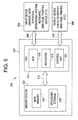
- the computer system 500 includes a computer 502 having at least one high speed processing unit (CPU) 512, in conjunction with a memory system 522, an input device 504 coupled by input interface 506, and an output device 508 coupled by output interface 510. These elements are interconnected by at least one bus structure 514.
- CPU high speed processing unit
- the computer system 500 can be utilized to implement one or more systems and methods as described above including, by way of example, the position data multiplexer module 202, the multiplexer sub-module 206, the communication interface sub-module 210, the position data control module 404, the rod control management system 404, and the control rod drive 418.
- the illustrated CPU 512 is of familiar design and includes an arithmetic logic unit (ALU) 516 for performing computations, a collection of registers 518 for temporary storage of data and instructions, and a control unit 520 for controlling operation of the system 500.
- ALU arithmetic logic unit
- the illustrated embodiment of the invention operates on an operating system designed to be portable to any of these processing platforms.
- the memory system 522 generally includes high-speed main memory 524 in the form of a medium such as random access memory (RAM) and read only memory (ROM) semiconductor devices, and secondary storage 526 in the form of long term storage mediums such as floppy disks, hard disks, tape, CD-ROM, flash memory, by way of example. and other devices that store data using electrical, magnetic, optical or other recording media.
- the main memory 524 also can include video display memory for displaying images through a display device.
- the memory system 522 can comprise a variety of alternative components having a variety of storage capacities.
- the input devices 504 and output devices 508 also are familiar.
- the input device 504 can comprise a keyboard, a mouse, a physical transducer, (such as the position sensor 204), by way of example.
- the output device 508 can comprise a display, a printer, a transducer such as a speaker, or a communication facility such as a bus communication facility 212 or a high speed data communication facility such as Ethernet, by way of example.
- Some devices, such as a network adapter or a modem, can be used as input and/or output devices.
- the computer system 500 further includes an operating system and at least one application program.
- the operating system is the set of software which controls the computer system's operation and the allocation of resources.
- the application program is the set of software that performs a task desired by the user, using computer resources made available through the operating system. Both are resident in the illustrated memory system 522.
- Some of the technical effects of some of the embodiments of the invention include for increased rod position data collection and improved transmission of the collected control rod position data to a control rod management and control system thereby enabling improved control rod position data updates and management and control of the control rods within the nuclear reactor core.
Landscapes
- Physics & Mathematics (AREA)
- Engineering & Computer Science (AREA)
- Plasma & Fusion (AREA)
- General Engineering & Computer Science (AREA)
- High Energy & Nuclear Physics (AREA)
- Chemical & Material Sciences (AREA)
- Chemical Kinetics & Catalysis (AREA)
- Monitoring And Testing Of Nuclear Reactors (AREA)
Applications Claiming Priority (1)
| Application Number | Priority Date | Filing Date | Title |
|---|---|---|---|
| US11/325,644 US20070153955A1 (en) | 2006-01-04 | 2006-01-04 | System and method for collecting and transmitting nuclear reactor control rod position information |
Publications (1)
| Publication Number | Publication Date |
|---|---|
| EP1806754A2 true EP1806754A2 (de) | 2007-07-11 |
Family
ID=37908127
Family Applications (1)
| Application Number | Title | Priority Date | Filing Date |
|---|---|---|---|
| EP06126882A Withdrawn EP1806754A2 (de) | 2006-01-04 | 2006-12-21 | System und Verfahren zum Erfassen und Übertragen von Positionsinformationen eines Steuerstabes eines Kernreaktors |
Country Status (5)
| Country | Link |
|---|---|
| US (1) | US20070153955A1 (de) |
| EP (1) | EP1806754A2 (de) |
| JP (1) | JP2007183272A (de) |
| MX (1) | MX2007000130A (de) |
| TW (1) | TW200739607A (de) |
Cited By (2)
| Publication number | Priority date | Publication date | Assignee | Title |
|---|---|---|---|---|
| CN107507657A (zh) * | 2017-06-30 | 2017-12-22 | 中广核核电运营有限公司 | Rpi棒位探头线圈测试系统及方法 |
| US10910115B2 (en) | 2017-03-08 | 2021-02-02 | Ge-Hitachi Nuclear Energy Americas Llc | Digital systems and methods for high precision control in nuclear reactors |
Families Citing this family (5)
| Publication number | Priority date | Publication date | Assignee | Title |
|---|---|---|---|---|
| JP5591597B2 (ja) * | 2010-06-16 | 2014-09-17 | 株式会社東芝 | 制御棒位置監視装置 |
| US8761329B2 (en) | 2011-09-22 | 2014-06-24 | Westinghouse Electric Company Llc | Rod position detection apparatus and method |
| WO2014152048A2 (en) * | 2013-03-14 | 2014-09-25 | Cytonome/St, Llc | Assemblies and methods for reducing optical crosstalk in particle processing systems |
| CN115458196B (zh) * | 2022-10-18 | 2024-09-03 | 西安交通大学 | 一种压水堆棒束燃料组件流致振动实验装置及方法 |
| CN118426386B (zh) * | 2024-07-02 | 2024-11-01 | 国核自仪系统工程有限公司 | 机柜状态的检测装置及其应用方法 |
Family Cites Families (13)
| Publication number | Priority date | Publication date | Assignee | Title |
|---|---|---|---|---|
| GB920274A (en) * | 1959-11-21 | 1963-03-06 | Rolls Royce | Improvements in or relating to nuclear reactors |
| US3706921A (en) * | 1968-08-08 | 1972-12-19 | Diamond Power Speciality | Reactor control including individual and group rod motor controls |
| US4053355A (en) * | 1975-10-14 | 1977-10-11 | The United States Of America As Represented By The United States Energy Research And Development Administration | Nuclear reactor remote disconnect control rod coupling indicator |
| US4282061A (en) * | 1979-02-22 | 1981-08-04 | Hitachi, Ltd. | System for preventing erroneous operation of control rods |
| JPS59151090A (ja) * | 1983-02-17 | 1984-08-29 | 株式会社日立製作所 | 原子炉制御棒駆動機構の駆動水制御装置 |
| US4801422A (en) * | 1986-12-23 | 1989-01-31 | Electric Power Research Institute, Inc. | Apparatus for installing and removing a control rod drive in a nuclear reactor |
| US5309485A (en) * | 1992-07-06 | 1994-05-03 | General Electric Company | Core automated monitoring system |
| US5513229A (en) * | 1993-11-12 | 1996-04-30 | General Electric Company | Method for removing control rod drive using tool to verify control rod drive uncoupling |
| JPH07134191A (ja) * | 1993-11-12 | 1995-05-23 | Toshiba Corp | 制御棒駆動機構の駆動装置 |
| US5984504A (en) * | 1997-06-11 | 1999-11-16 | Westinghouse Electric Company Llc | Safety or protection system employing reflective memory and/or diverse processors and communications |
| JP3848074B2 (ja) * | 2000-10-31 | 2006-11-22 | 株式会社日立製作所 | 原子炉手動操作装置 |
| US6650722B1 (en) * | 2001-12-21 | 2003-11-18 | General Electric Company | Hydraulic control unit transponder card |
| US6798859B1 (en) * | 2003-08-18 | 2004-09-28 | General Electric Company | Branch amplifier card |
-
2006
- 2006-01-04 US US11/325,644 patent/US20070153955A1/en not_active Abandoned
- 2006-12-21 EP EP06126882A patent/EP1806754A2/de not_active Withdrawn
- 2006-12-28 JP JP2006353559A patent/JP2007183272A/ja not_active Withdrawn
- 2006-12-29 TW TW095149901A patent/TW200739607A/zh unknown
-
2007
- 2007-01-08 MX MX2007000130A patent/MX2007000130A/es not_active Application Discontinuation
Cited By (3)
| Publication number | Priority date | Publication date | Assignee | Title |
|---|---|---|---|---|
| US10910115B2 (en) | 2017-03-08 | 2021-02-02 | Ge-Hitachi Nuclear Energy Americas Llc | Digital systems and methods for high precision control in nuclear reactors |
| CN107507657A (zh) * | 2017-06-30 | 2017-12-22 | 中广核核电运营有限公司 | Rpi棒位探头线圈测试系统及方法 |
| CN107507657B (zh) * | 2017-06-30 | 2019-06-07 | 中广核核电运营有限公司 | Rpi棒位探头线圈测试系统及方法 |
Also Published As
| Publication number | Publication date |
|---|---|
| JP2007183272A (ja) | 2007-07-19 |
| US20070153955A1 (en) | 2007-07-05 |
| MX2007000130A (es) | 2008-11-14 |
| TW200739607A (en) | 2007-10-16 |
Similar Documents
| Publication | Publication Date | Title |
|---|---|---|
| MX2007000130A (es) | Sistema y metodo para recopilar y transmitir informacion de posicion de barra de control de reactor nuclear. | |
| JP4999222B2 (ja) | 原子炉の炉心の少なくとも1つの動作パラメタを監視する方法 | |
| EP2661752B1 (de) | Drahtloser in-core-neutronen-monitor | |
| US5078957A (en) | Incore instrumentation system for a pressurized water reactor | |
| JPH0365693A (ja) | 実時間出力上昇を阻止する方法 | |
| CN107851469A (zh) | 控制棒位置指示器 | |
| CN1064171C (zh) | 用于同时测试若干控制棒的系统和方法 | |
| CN101421798A (zh) | 用于核反应堆的具有可变电子卡的内部检测仪表系统和相应的改进核反应堆的内部检测仪表系统的方法 | |
| US5475720A (en) | Non-condensable gas tolerant condensing chamber | |
| US6650722B1 (en) | Hydraulic control unit transponder card | |
| JP5762839B2 (ja) | Tipシステムおよびtip監視制御装置 | |
| JP6418640B2 (ja) | 制御棒監視システム、および制御棒監視方法 | |
| KR20230039689A (ko) | 원자로 및 원자로 개방 방법 | |
| US6798859B1 (en) | Branch amplifier card | |
| Deitrich et al. | Fuel dynamics experiments supporting FTR loss-of-flow analysis | |
| US20010031030A1 (en) | Device for measuring the drop time of control rods into the core of a nuclear reactor | |
| Lux et al. | Experience with the upgraded VERONA-u WWER-440 core monitoring system | |
| JPS6191597A (ja) | 移動式炉心内較正装置の駆動制御装置 | |
| Szappanos | Advanced loose parts detection system for nuclear power plants | |
| Bruschi et al. | Safety: Evolving Technologies for Tomorrow’s Power Reactors | |
| Prock et al. | On-line test of signal validation software on the LOBI-MOD2 facility in Ispra, Italy | |
| Lish et al. | Development of I2S-LWR instrumentation systems | |
| Girard et al. | Core parameter monitoring on French LMFBR: Requirements, current design and new trends | |
| Siddiqui et al. | A thermal analysis computer programme package for the estimation of KANUPP coolant channel flows and outlet header temperature distribution | |
| Jia et al. | Scenario identification of the integrated system validation for the two-modular nuclear power plant |
Legal Events
| Date | Code | Title | Description |
|---|---|---|---|
| PUAI | Public reference made under article 153(3) epc to a published international application that has entered the european phase |
Free format text: ORIGINAL CODE: 0009012 |
|
| AK | Designated contracting states |
Kind code of ref document: A2 Designated state(s): AT BE BG CH CY CZ DE DK EE ES FI FR GB GR HU IE IS IT LI LT LU LV MC NL PL PT RO SE SI SK TR |
|
| AX | Request for extension of the european patent |
Extension state: AL BA HR MK YU |
|
| STAA | Information on the status of an ep patent application or granted ep patent |
Free format text: STATUS: THE APPLICATION IS DEEMED TO BE WITHDRAWN |
|
| 18D | Application deemed to be withdrawn |
Effective date: 20100701 |