EP1718133B1 - Improved control system for fluorescent light fixture - Google Patents
Improved control system for fluorescent light fixture Download PDFInfo
- Publication number
- EP1718133B1 EP1718133B1 EP06006307A EP06006307A EP1718133B1 EP 1718133 B1 EP1718133 B1 EP 1718133B1 EP 06006307 A EP06006307 A EP 06006307A EP 06006307 A EP06006307 A EP 06006307A EP 1718133 B1 EP1718133 B1 EP 1718133B1
- Authority
- EP
- European Patent Office
- Prior art keywords
- communicates
- fluorescent light
- module
- control
- power output
- Prior art date
- Legal status (The legal status is an assumption and is not a legal conclusion. Google has not performed a legal analysis and makes no representation as to the accuracy of the status listed.)
- Expired - Lifetime
Links
Images



Classifications
-
- H—ELECTRICITY
- H05—ELECTRIC TECHNIQUES NOT OTHERWISE PROVIDED FOR
- H05B—ELECTRIC HEATING; ELECTRIC LIGHT SOURCES NOT OTHERWISE PROVIDED FOR; CIRCUIT ARRANGEMENTS FOR ELECTRIC LIGHT SOURCES, IN GENERAL
- H05B41/00—Circuit arrangements or apparatus for igniting or operating discharge lamps
- H05B41/14—Circuit arrangements
- H05B41/26—Circuit arrangements in which the lamp is fed by power derived from DC by means of a converter, e.g. by high-voltage DC
- H05B41/28—Circuit arrangements in which the lamp is fed by power derived from DC by means of a converter, e.g. by high-voltage DC using static converters
- H05B41/282—Circuit arrangements in which the lamp is fed by power derived from DC by means of a converter, e.g. by high-voltage DC using static converters with semiconductor devices
- H05B41/285—Arrangements for protecting lamps or circuits against abnormal operating conditions
- H05B41/2851—Arrangements for protecting lamps or circuits against abnormal operating conditions for protecting the circuit against abnormal operating conditions
- H05B41/2856—Arrangements for protecting lamps or circuits against abnormal operating conditions for protecting the circuit against abnormal operating conditions against internal abnormal circuit conditions
-
- H—ELECTRICITY
- H05—ELECTRIC TECHNIQUES NOT OTHERWISE PROVIDED FOR
- H05B—ELECTRIC HEATING; ELECTRIC LIGHT SOURCES NOT OTHERWISE PROVIDED FOR; CIRCUIT ARRANGEMENTS FOR ELECTRIC LIGHT SOURCES, IN GENERAL
- H05B41/00—Circuit arrangements or apparatus for igniting or operating discharge lamps
- H05B41/14—Circuit arrangements
- H05B41/26—Circuit arrangements in which the lamp is fed by power derived from DC by means of a converter, e.g. by high-voltage DC
- H05B41/28—Circuit arrangements in which the lamp is fed by power derived from DC by means of a converter, e.g. by high-voltage DC using static converters
- H05B41/295—Circuit arrangements in which the lamp is fed by power derived from DC by means of a converter, e.g. by high-voltage DC using static converters with semiconductor devices and specially adapted for lamps with preheating electrodes, e.g. for fluorescent lamps
- H05B41/298—Arrangements for protecting lamps or circuits against abnormal operating conditions
- H05B41/2981—Arrangements for protecting lamps or circuits against abnormal operating conditions for protecting the circuit against abnormal operating conditions
- H05B41/2986—Arrangements for protecting lamps or circuits against abnormal operating conditions for protecting the circuit against abnormal operating conditions against internal abnormal circuit conditions
Definitions
- the present invention relates to fluorescent light fixtures, and more particularly to control systems for fluorescent light fixtures.
- a fluorescent lamp 10 includes a sealed glass tube 12 that contains a first material such as mercury and a first inert gas such as argon, which are both generally identified at 14.
- the tube 12 is pressurized.
- Phosphor powder 16 may be coated along an inner surface of the tube 12.
- the tube 12 includes electrodes 18A and 188 (collectively electrodes 18) that are located at opposite ends of the tube 12. Power is supplied to the electrodes 18 by a control system that may include an AC source 22, a switch 24, a ballast module 26 and a capacitor 28.
- the control system supplies power to the electrodes 18. Electrons migrate through the gas 14 from one end of the tube 12 to the opposite end. Energy from the flowing electrons changes some of the mercury from a liquid to a gas. As electrons and charged atoms move through the tube 12, some will collide with the gaseous mercury atoms. The collisions excite the atoms and cause electrons to move to a higher state. As the electrons return to a lower energy level they release photons or light. Electrons in mercury atoms release light photons in the ultraviolet wavelength range. The phosphor coating 16 absorbs the ultraviolet photons, which causes electrons in the phosphor coating 16 to jump to a higher level. When the electrons return to a lower energy level, they release photons having a wavelength corresponding to white light.
- the fluorescent light 10 To send current through the tube 12, the fluorescent light 10 needs free electrons and ions and a difference in charge between the electrodes 18. Generally, there are few ions and free electrons in the gas 14 because atoms typically maintain a neutral charge. When the fluorescent light 10 is turned on, it needs to introduce new free electrons and ions.
- the ballast module 26 outputs current through both electrodes 18 during starting.
- the current flow creates a charge difference between the two electrodes 18.
- both electrode filaments heat up very quickly. Electrons are emitted, which ionizes the gas 14 in the tube 12. Once the gas is ionized, the voltage difference between the electrodes 18 establishes an electrical arc.
- the flowing charged particles excite the mercury atoms, which triggers the illumination process. As more electrons and ions flow through a particular area, they bump into more atoms, which frees up electrons and creates more charged particles. Resistance decreases and current increases.
- the ballast module 26 regulates power both during and after startup.
- some ballast modules 50 include a control module 54, one or more electrolytic capacitors 56 and other components 58.
- the electrolytic capacitors 56 may be used to filter or smooth voltage. Electrolytic capacitors 56 and/or other system components may be sensitive to high operating temperatures. If the operating temperature exceeds a threshold for a sufficient period, the electrolytic capacitor 56 and/or other system components may be damaged and the fluorescent light 10 may become inoperable.
- US 6,453,145 B1 discloses a flash lamp comprising a main bank capacitor composed of electrolytic capacitors and also a temperature detector for detecting the temperature of the main bank capacitor. When the detected temperature raises above a pre-determined value, the charging procedure of the main bank capacitor is stopped.
- WO 88/01467 discloses a method for the operation of a fluorescent lamp wherein the temperature of the power dissipating device in the power converter is detected and some limiting operation is performed in response to the detected temperature.
- a ballast module for a fluorescent light according to claim 1 is provided. It comprises an electrolytic capacitance element.
- a temperature sensor senses a temperature of the electrolytic capacitance element.
- a control module communicates the temperature sensor and adjusts power output to the fluorescent light when the sensed temperature exceeds a predetermined threshold.
- control module reduces the power output to the fluorescent light.
- the control module reduces the power output for a predetermined period.
- the control module increases power output to the fluorescent light after the predetermined period.
- the control module turns off the power output to the fluorescent light.
- the control module turns off the power output for a predetermined period.
- the control module increases power output to the fluorescent light after the predetermined period.
- the control module modulates the power output based on the sensed temperature.
- a system comprises the ballast module and further comprises a switch that selectively provides power to the control module.
- the switch is a three-way switch.
- a rectifier module has an input that selectively communicates with a voltage source.
- the electrolytic capacitance element and the control module communicate with an output of the rectifier module.
- the ballast module further comprises a first power transistor having a first terminal that communicates with a first output terminal of the rectifier and a control terminal that communicates with the control module.
- a second power transistor has a first terminal that communicates with a second terminal of the first power transistor, and a control terminal that communicates with the control module.
- a second capacitance element communicates with the first and second terminals of the first power transistor.
- An inductance element has one end that communicates with the second terminal of the first power transistor and an opposite end that communicates with an electrode of the fluorescent light.
- a system comprises the ballast module and further comprises the fluorescent light having first and second pairs of electrodes.
- a third capacitance element communicates with one of the first pair of electrodes and one of the second pair of electrodes.
- a system comprises the ballast module and further comprises the fluorescent light having first and second pairs of electrodes.
- a fourth capacitance element communicates with one of the first pair of electrodes and the second capacitance element.
- a ballast module for a fluorescent light comprises electrolytic capacitance means for providing capacitance. Temperature sensing means senses a temperature of the electrolytic capacitance means. Control means communicates with the temperature sensing means for adjusting power output to the fluorescent light when the sensed temperature exceeds a predetermined threshold.
- control means reduces the power output to the fluorescent light.
- the control means reduces the power output for a predetermined period.
- the control means increases power output to the fluorescent light after the predetermined period.
- the control means turns off the power output to the fluorescent light.
- the control means turns off the power output for a predetermined period.
- the control means increases power output to the fluorescent light after the predetermined period.
- the control means modulates the power output based on the sensed temperature.
- a system comprises the ballast module and further comprises switching means for selectively providing power to the control means.
- the switching means is a three-way switching means.
- Rectifier means for rectifying has an input that selectively communicates with a voltage source.
- the electrolytic capacitance means and the control means communicate with an output of the rectifier means.
- First power switching means for switching has a first terminal that communicates with a first output terminal of the rectifier and a control terminal that communicates with the control means.
- Second power switching means for switching has a first terminal that communicates with a second terminal of the first power switching means, and a control terminal that communicates with the control means.
- Second capacitance means for providing capacitance communicates with the first and second terminals of the first power switching means.
- Inductance means for providing inductance has one end that communicates with the second terminal of the first power switching means and an opposite end that communicates with an electrode of the fluorescent light.
- a system comprises the ballast module and further comprises the fluorescent light having first and second pairs of electrodes.
- Third capacitance means for providing capacitance communicates with one of the first pair of electrodes and one of the second pair of electrodes.
- a system comprises the ballast module and further comprises the fluorescent light having first and second pairs of electrodes.
- Fourth capacitance means for providing capacitance and that communicates with one of the first pair of electrodes and the second capacitance means.
- a method for operating a ballast module for a fluorescent light comprises providing an electrolytic capacitance element in the ballast module; sensing a temperature of the electrolytic capacitance element; and adjusting power output to the fluorescent light when the sensed temperature exceeds a predetermined threshold.
- the method includes reducing the power output to the fluorescent light.
- the method includes reducing the power output for a predetermined period.
- the method includes increasing power output to the fluorescent light after the predetermined period.
- the method includes turning off the power output to the fluorescent light.
- the method includes turning off the power output for a predetermined period.
- the method includes increasing power output to the fluorescent light after the predetermined period.
- the method includes modulating the power output based on the sensed temperature.
- the method includes selectively providing power to the control module.
- a control system for a fluorescent light comprises a first electrical component.
- a temperature sensor senses a temperature of the first electrical component.
- a control module communicates with the temperature sensor and adjusts power output to the fluorescent light when the sensed temperature exceeds a predetermined threshold.
- control module reduces the power output to the fluorescent light.
- the control module reduces the power output for a predetermined period.
- the control module increases power output to the fluorescent light after the predetermined period.
- the control module turns off the power output to the fluorescent light.
- the control module turns off the power output for a predetermined period.
- the control module increases power output to the fluorescent light after the predetermined period.
- the control module modulates the power output based on the sensed temperature.
- the control system further comprises a switch that selectively provides power to the control module.
- the switch is a three-way switch.
- a rectifier module has an input that selectively communicates with a voltage source.
- the electrolytic capacitance element and the control module communicate with an output of the rectifier module.
- control system further comprises a first power transistor having a first terminal that communicates with a first output terminal of the rectifier and a control terminal that communicates with the control module.
- a second power transistor has a first terminal that communicates with a second terminal of the first power transistor, and a control terminal that communicates with the control module.
- a second capacitance element communicates with the first and second terminals of the first power transistor.
- An inductance element has one end that communicates with the second terminal of the first power transistor and an opposite end that communicates with an electrode of the fluorescent light.
- the control system further comprises the fluorescent light having first and second pairs of electrodes.
- a third capacitance element communicates with one of the first pair of electrodes and one of the second pair of electrodes.
- the control system further comprises the fluorescent light having first and second pairs of electrodes.
- a fourth capacitance element communicates with one of the first pair of electrodes and the second capacitance element.
- a control system for a fluorescent light comprises first means for providing a first electrical function. Temperature sensing means senses a temperature of the first means. Control means communicates with the temperature sensing means for adjusting power output to the fluorescent light when the sensed temperature exceeds a predetermined threshold.
- control means reduces the power output to the fluorescent light.
- the control means reduces the power output for a predetermined period.
- the control means increases power output to the fluorescent light after the predetermined period.
- the control means turns off the power output to the fluorescent light.
- the control means turns off the power output for a predetermined period.
- the control means increases power output to the fluorescent light after the predetermined period.
- the control means modulates the power output based on the sensed temperature.
- the control system further comprises switching means for selectively providing power to the control means.
- the switching means is a three-way switching means.
- Rectifier means for rectifying has an input that selectively communicates with a voltage source.
- the electrolytic capacitance means and the control means communicate with an output of the rectifier means.
- First power switching means for switching has a first terminal that communicates with a first output terminal of the rectifier and a control terminal that communicates with the control means.
- Second power switching means for switching has a first terminal that communicates with a second terminal of the first power switching means, and a control terminal that communicates with the control means.
- Second capacitance means for providing capacitance communicates with the first and second terminals of the first power switching means.
- Inductance means for providing inductance has one end that communicates with the second terminal of the first power switching means and an opposite end that communicates with an electrode of the fluorescent light.
- the control system further comprises the fluorescent light having first and second pairs of electrodes.
- Third capacitance means for providing capacitance communicates with one of the first pair of electrodes and one of the second pair of electrodes.
- the control system further comprises the fluorescent light having first and second pairs of electrodes.
- Fourth capacitance means for providing capacitance and that communicates with one of the first pair of electrodes and the second capacitance means.
- a method for operating a control system for a fluorescent light comprises providing a first electrical component; sensing a temperature of the first electrical component; and adjusting power output to the fluorescent light when the sensed temperature exceeds a predetermined threshold.
- the method includes reducing the power output to the fluorescent light.
- the method includes reducing the power output for a predetermined period.
- the method includes increasing power output to the fluorescent light after the predetermined period.
- the method includes turning off the power output to the fluorescent light.
- the method includes turning off the power output for a predetermined period.
- the method includes increasing power output to the fluorescent light after the predetermined period.
- the method includes modulating the power output based on the sensed temperature.
- the method includes selectively providing power to the control module.
- FIG. 1 is a functional block diagram of an exemplary control system for a fluorescent light according to the prior art
- FIG. 2 is a more detailed functional block diagram of the control system for the fluorescent light of FIG. 1 ;
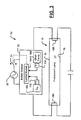
- FIG. 3 is a functional block diagram of an improved control system for a fluorescent light according to the present invention.
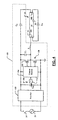
- FIG. 4 is an electrical schematic and functional block diagram of an exemplary implementation of the control system of FIG. 3 ;
- FIG. 5 is a first exemplary flowchart illustrating steps for operating the control system of FIG. 3 ;
- FIG. 6 is a second exemplary flowchart illustrating steps for operating the control system of FIG. 3 ;
- FIG. 7 is a third exemplary flowchart illustrating steps for operating the control system of FIG. 3 .
- module refers to an application specific integrated circuit (ASIC), an electronic circuit, a processor (shared, dedicated, or group) and memory that execute one or more software or firmware programs, a combinational logic circuit, and/or other suitable components that provide the described functionality.
- ASIC application specific integrated circuit
- processor shared, dedicated, or group
- memory that execute one or more software or firmware programs
- combinational logic circuit and/or other suitable components that provide the described functionality.
- a ballast module 100 includes a control module 104, one or more electrolytic capacitors 108, and one or more other components generally identified at 110.
- the ballast module 100 includes one or more temperature sensing modules 112 and 114 that sense operating temperatures of components of the ballast module 100 and/or of the control system of the florescent light 10.
- the temperature sensor 112 senses an operating temperature of the electrolytic capacitor 108 and the temperature sensor 114 senses an operating temperature of one or more other components 110 of the ballast module 100 and/or the control system.
- the control module 104 adjusts operation of the fluorescent light 10 based on one or more of the sensed operating temperatures. For example, the control module 104 shuts off the florescent light 10 when the operating temperature of the electrolytic capacitor 56 exceeds a predetermined temperature threshold. Alternately, the control module 104 turns off the florescent light 10 for a predetermined period, until reset, indefinitely and/or using other criteria. In other implementations, the control module 104 lowers an output voltage and/or current of the ballast module 100 for a predetermined period, indefinitely, until reset and/or using other criteria.
- ballast module 100 includes a full or half-wave rectifier 120, the electrolytic capacitor 106 and the control module 104.
- a first terminal of a power transistor 126 is connected to a first output of the rectifier 120.
- a second terminal is connected to the control module 104 and to a first terminal of a power transistor 128.
- the control module 104 switches the power transistors on and off to vary current and/or voltage to the florescent light 10 during startup and/or operation.
- a capacitor C1 may be .connected to the first output of the rectifier 120, the second terminal of the power transistor 126, the first terminal of the power transistor 128 and one end of an inductor L. An opposite end of the inductor L may communicate with one end of the electrode 18A. An opposite end of the electrode 18A is coupled by a capacitor C3 to one end of the electrode 18B. The first output of the rectifier 120 is coupled by a capacitor C2 to an opposite end of the electrode 18B.
- step 200 control determines whether the switch 24 is on. If false, control returns to step 204. If step 204 is true, control determines whether the florescent light 10 is already on. If true, control continues with step 208 and determines whether a sensed temperature is greater than a threshold temperature. The sensed temperature may relate to the electrolytic capacitor 56 and/or other components of the ballast module 100 and/or other components of the control system. If step 206 is false, control starts the light in step 214 continues with step 208. If step 208 is false and the threshold temperature has not been exceeded, control determines whether the switch 24 is off in step 210. If the switch 24 is not off, control returns to step 204.
- step 204 control determines whether the switch 24 is on. If false, control returns to step 204.
- control turns off the switch 24 and/or florescent light 10 in step 216.
- the switch 24 may be controlled by the control module 104. Alternately, the control module 104 may turn off the florescent light 10 independent from a position of the switch 24. Alternately, the control module 104 may operate as a three way switch in conjunction with a three-way switch 24.
- step 210 is true and the switch 24 is off, control turns off the florescent light 10 in step 218.
- step 208 When step 208 is false, control returns to step 204.
- step 208 When step 208 is true, control turns off the florescent light 10 in step 242.
- step 246 control starts a timer.
- step 250 control determines whether the timer is up. If step 250 is true, control returns to step 204. Otherwise, control returns to step 250.
- step 208 control reduces power that is output to the florescent light 10 in step 282. Reducing power output to the florescent light 10 may include reducing voltage and/or current output by the ballast module 100. The florescent light 10 may be operated in this mode until reset using the switch 24. Alternately in step 286. control starts a timer. In step 290, control determines whether the timer is up. If step 290 is true, control returns to step 204. Otherwise, control returns to step 290.
- the broad teachings of the present invention can be implemented in a variety of forms.
- the temperature of a component can be sensed and the power output can be modulated accordingly.
- Hysteresis, averaging and/or other techniques can be used to reduce flicker and/or other noticeable changes in light intensity that may occur.
Landscapes
- Circuit Arrangements For Discharge Lamps (AREA)
Applications Claiming Priority (2)
| Application Number | Priority Date | Filing Date | Title |
|---|---|---|---|
| US67225005P | 2005-04-18 | 2005-04-18 | |
| US11/112,808 US7560866B2 (en) | 2005-04-18 | 2005-04-22 | Control system for fluorescent light fixture |
Publications (2)
| Publication Number | Publication Date |
|---|---|
| EP1718133A1 EP1718133A1 (en) | 2006-11-02 |
| EP1718133B1 true EP1718133B1 (en) | 2008-10-08 |
Family
ID=36917318
Family Applications (1)
| Application Number | Title | Priority Date | Filing Date |
|---|---|---|---|
| EP06006307A Expired - Lifetime EP1718133B1 (en) | 2005-04-18 | 2006-03-27 | Improved control system for fluorescent light fixture |
Country Status (6)
| Country | Link |
|---|---|
| US (3) | US7560866B2 (enExample) |
| EP (1) | EP1718133B1 (enExample) |
| JP (2) | JP5204379B2 (enExample) |
| DE (1) | DE602006003011D1 (enExample) |
| SG (1) | SG126839A1 (enExample) |
| TW (1) | TWI426827B (enExample) |
Families Citing this family (5)
| Publication number | Priority date | Publication date | Assignee | Title |
|---|---|---|---|---|
| US7560866B2 (en) * | 2005-04-18 | 2009-07-14 | Marvell World Trade Ltd. | Control system for fluorescent light fixture |
| US7619447B2 (en) * | 2005-09-27 | 2009-11-17 | Marvell World Trade Ltd. | High voltage high side transistor driver |
| GB2469810A (en) * | 2009-04-28 | 2010-11-03 | Kaoyi Electronic Co Ltd | A fluorescent lamp with overheat protection function to cut-off power |
| US20130156204A1 (en) * | 2011-12-14 | 2013-06-20 | Mitel Networks Corporation | Visual feedback of audio input levels |
| CN115855303B (zh) * | 2022-11-30 | 2025-08-15 | 西北核技术研究所 | 一种基于双色热敏磷光涂层测温的薄膜型热流传感器 |
Family Cites Families (57)
| Publication number | Priority date | Publication date | Assignee | Title |
|---|---|---|---|---|
| US3587061A (en) * | 1968-09-24 | 1971-06-22 | Automatic Elect Lab | Time-shaped lamp control apparatus employing lamp filament resistance as an integral status memory |
| US3978368A (en) * | 1973-02-21 | 1976-08-31 | Hitachi, Ltd. | Discharge lamp control circuit |
| WO1988001467A1 (en) | 1986-08-15 | 1988-02-25 | Mound Holdings Limited | Fluorescent lamp operation |
| WO1988010467A1 (en) | 1987-06-19 | 1988-12-29 | Lucero, James, L. | Drive-through credit card payment device |
| EP0394966B1 (en) * | 1989-04-25 | 1994-12-28 | Matsushita Electric Works, Ltd. | Power supply |
| US5003230A (en) * | 1989-05-26 | 1991-03-26 | North American Philips Corporation | Fluorescent lamp controllers with dimming control |
| JPH04126349A (ja) * | 1990-09-18 | 1992-04-27 | Toshiba Lighting & Technol Corp | 放電ランプ装置 |
| US5402303A (en) * | 1991-04-18 | 1995-03-28 | Luck; Jonathan M. | Remotely-powdered and remotely-addressed zero-standby-current energy-accumulating high-power solenoid drivers, particularly for systems that are micropowered |
| US5309066A (en) * | 1992-05-29 | 1994-05-03 | Jorck & Larsen A/S | Solid state ballast for fluorescent lamps |
| US5357170A (en) * | 1993-02-12 | 1994-10-18 | Lutron Electronics Co., Inc. | Lighting control system with priority override |
| EP0621743B1 (en) * | 1993-04-23 | 1998-09-09 | Koninklijke Philips Electronics N.V. | Power factor correcting circuit |
| KR0155936B1 (ko) * | 1995-12-26 | 1998-12-15 | 손욱 | 형광 램프용 안정기 회로 |
| FR2749121B1 (fr) * | 1996-05-24 | 1998-06-19 | Alcatel Mobile Comm France | Dispositif d'interface homme-machine pour terminal telephonique |
| US5744912A (en) * | 1996-06-26 | 1998-04-28 | So; Gin Pang | Electronic ballast having an oscillator shutdown circuit for single or multiple fluorescent tubes for lamps |
| US5798614A (en) * | 1996-09-26 | 1998-08-25 | Rockwell International Corp. | Fluorescent lamp filament drive technique |
| KR100355728B1 (ko) * | 1997-01-07 | 2002-11-18 | 샤프 가부시키가이샤 | 조명장치,그구동방법및그조명장치를포함한표시장치 |
| EP0889675A1 (en) * | 1997-07-02 | 1999-01-07 | MAGNETEK S.p.A. | Electronic ballast with lamp tyre recognition |
| FR2771590B1 (fr) * | 1997-11-21 | 2003-01-03 | Sgs Thomson Microelectronics | Circuit de commande de lampe fluorescente |
| EP0945710B2 (de) * | 1998-03-21 | 2009-10-28 | Continental Automotive GmbH | Anzeigeinstrument |
| US6140751A (en) * | 1998-03-30 | 2000-10-31 | General Electric Company | Electrolytic capacitor heat sink |
| US5973455A (en) * | 1998-05-15 | 1999-10-26 | Energy Savings, Inc. | Electronic ballast with filament cut-out |
| US5959525A (en) * | 1998-08-13 | 1999-09-28 | Cts Corporation | Variable resistance slide control device with a switch |
| DE19850441A1 (de) * | 1998-10-27 | 2000-05-11 | Trilux Lenze Gmbh & Co Kg | Verfahren und Vorschaltgerät zum Betrieb einer mit einer Leuchtstofflampe versehenen Leuchte |
| JP3315385B2 (ja) * | 1998-12-09 | 2002-08-19 | 松下電器産業株式会社 | 蛍光ランプ点灯装置 |
| US6285138B1 (en) * | 1998-12-09 | 2001-09-04 | Matsushita Electric Industrial Co., Ltd. | Apparatus for lighting fluorescent lamp |
| US6191539B1 (en) * | 1999-03-26 | 2001-02-20 | Korry Electronics Co | Fluorescent lamp with integral conductive traces for extending low-end luminance and heating the lamp tube |
| DE19923945A1 (de) * | 1999-05-25 | 2000-12-28 | Tridonic Bauelemente | Elektronisches Vorschaltgerät für mindestens eine Niederdruck-Entladungslampe |
| US6140772A (en) * | 1999-07-26 | 2000-10-31 | Rockwell Collins, Inc. | Method and apparatus for control of fluorescent lamps |
| US6424100B1 (en) * | 1999-10-21 | 2002-07-23 | Matsushita Electric Industrial Co., Ltd. | Fluorescent lamp operating apparatus and compact self-ballasted fluorescent lamp |
| JP3770012B2 (ja) * | 1999-11-16 | 2006-04-26 | コニカミノルタビジネステクノロジーズ株式会社 | フラッシュ定着装置 |
| DE19963292A1 (de) * | 1999-12-27 | 2001-06-28 | Tridonic Bauelemente | Elektronisches Vorschaltgerät |
| KR20030038550A (ko) * | 2000-06-02 | 2003-05-16 | 오스텍 인스트루먼츠 피티와이 리미티드 | 필라멘트 제어기 |
| US6300728B1 (en) * | 2000-06-16 | 2001-10-09 | Bgm Engineering, Inc. | Method and apparatus for powering fluorescent lighting |
| TW458485U (en) * | 2000-07-31 | 2001-10-01 | Nat Science Council | Pre-heat circuit of gas discharging lamp |
| US6376999B1 (en) * | 2000-09-15 | 2002-04-23 | Philips Electronics North America Corporation | Electronic ballast employing a startup transient voltage suppression circuit |
| IT1318952B1 (it) * | 2000-10-02 | 2003-09-19 | St Microelectronics Srl | Circuito di protezione alle alte correnti in convertitori perilluminazione |
| CA2323299A1 (en) * | 2000-10-12 | 2002-04-12 | Photoscience Japan Corporation | Water treatment assembly |
| US6710993B1 (en) * | 2000-11-27 | 2004-03-23 | Koninklijke Philips Electronics N.V. | Method and apparatus for providing overload protection for a circuit |
| DE10106438A1 (de) * | 2001-02-09 | 2002-08-14 | Patent Treuhand Ges Fuer Elektrische Gluehlampen Mbh | Vorschaltgerät zum Betrieb von elektrischen Lampen |
| JP3942387B2 (ja) * | 2001-02-13 | 2007-07-11 | 株式会社小糸製作所 | 放電灯点灯回路 |
| US7015655B2 (en) * | 2001-05-25 | 2006-03-21 | Matsushita Electric Works, Ltd. | Electronic ballast for a high intensity discharge lamp |
| JP2003264093A (ja) * | 2002-01-07 | 2003-09-19 | Mitsubishi Electric Corp | 高圧放電灯点灯装置 |
| US6781328B2 (en) * | 2002-01-15 | 2004-08-24 | Matsushita Electric Industrial Co., Ltd. | Image display apparatus and method for operating the same and lamp unit for image display apparatus |
| US6828740B2 (en) * | 2002-02-20 | 2004-12-07 | Matsushita Electric Industrial Co., Ltd. | Electrodeless discharge lamp operating apparatus, electrodeless compact self-ballasted fluorescent lamp and discharge lamp operating apparatus |
| JP3850311B2 (ja) * | 2002-02-21 | 2006-11-29 | オムロン株式会社 | 残存寿命予測報知方法および電子機器 |
| US6713966B2 (en) * | 2002-05-21 | 2004-03-30 | Yazaki North America, Inc. | Event and arc detection in lamps |
| HK1051122A2 (en) * | 2002-05-24 | 2003-06-27 | Clipsal Asia Holdings Limited | A dimming apparatus especially a dimmer for a compact fluorescent lamp |
| US6940733B2 (en) * | 2002-08-22 | 2005-09-06 | Supertex, Inc. | Optimal control of wide conversion ratio switching converters |
| KR100493170B1 (ko) | 2003-02-06 | 2005-06-02 | 삼성전자주식회사 | 콘텍스트 기반 통신방법 및 이를 위한 콘텍스트 기반이동통신시스템 |
| US7126288B2 (en) * | 2003-05-05 | 2006-10-24 | International Rectifier Corporation | Digital electronic ballast control apparatus and method |
| JP2004342321A (ja) * | 2003-05-12 | 2004-12-02 | Matsushita Electric Works Ltd | 放電灯点灯装置 |
| WO2005006820A1 (en) | 2003-06-13 | 2005-01-20 | Ictel, Llc | Electronic ballast |
| TWM255612U (en) * | 2004-03-25 | 2005-01-11 | Fu-Hua Miau | Metal composite lamp control device with low current for remotely starting |
| TWM257075U (en) * | 2004-04-29 | 2005-02-11 | Ligtek Electronics Co Ltd | Three-stage electronic ballast for metal halide lamps |
| US7145342B2 (en) * | 2004-07-07 | 2006-12-05 | Access Business Group International Llc | System and method for automated filament testing of gas discharge lamps |
| US7560866B2 (en) * | 2005-04-18 | 2009-07-14 | Marvell World Trade Ltd. | Control system for fluorescent light fixture |
| US7414369B2 (en) * | 2005-04-18 | 2008-08-19 | Marvell World Trade Ltd. | Control system for fluorescent light fixture |
-
2005
- 2005-04-22 US US11/112,808 patent/US7560866B2/en not_active Expired - Fee Related
-
2006
- 2006-03-22 SG SG200601868A patent/SG126839A1/en unknown
- 2006-03-27 EP EP06006307A patent/EP1718133B1/en not_active Expired - Lifetime
- 2006-03-27 DE DE602006003011T patent/DE602006003011D1/de not_active Expired - Lifetime
- 2006-03-31 JP JP2006099049A patent/JP5204379B2/ja not_active Expired - Fee Related
- 2006-03-31 TW TW095111643A patent/TWI426827B/zh not_active IP Right Cessation
-
2009
- 2009-07-14 US US12/502,570 patent/US8120286B2/en not_active Expired - Fee Related
-
2012
- 2012-02-20 US US13/400,269 patent/US8531107B2/en not_active Expired - Fee Related
- 2012-02-27 JP JP2012040573A patent/JP5379875B2/ja not_active Expired - Fee Related
Also Published As
| Publication number | Publication date |
|---|---|
| JP2012124180A (ja) | 2012-06-28 |
| DE602006003011D1 (de) | 2008-11-20 |
| US8120286B2 (en) | 2012-02-21 |
| EP1718133A1 (en) | 2006-11-02 |
| US20090273305A1 (en) | 2009-11-05 |
| JP2006302883A (ja) | 2006-11-02 |
| JP5204379B2 (ja) | 2013-06-05 |
| US7560866B2 (en) | 2009-07-14 |
| SG126839A1 (en) | 2006-11-29 |
| TWI426827B (zh) | 2014-02-11 |
| US20120146551A1 (en) | 2012-06-14 |
| US20060238145A1 (en) | 2006-10-26 |
| JP5379875B2 (ja) | 2013-12-25 |
| US8531107B2 (en) | 2013-09-10 |
| TW200701840A (en) | 2007-01-01 |
Similar Documents
| Publication | Publication Date | Title |
|---|---|---|
| KR970011552B1 (ko) | 자동 고온정지 회로를 지닌 조광 가능한 고역률, 고효율 전자안정기 제어기의 집적회로 | |
| US8395327B2 (en) | High-pressure discharge lamp lighting device and lighting fixture using the same | |
| JP5777114B2 (ja) | ランプ用電子バラスト回路 | |
| US6501235B2 (en) | Microcontrolled ballast compatible with different types of gas discharge lamps and associated methods | |
| US8531107B2 (en) | Control system for fluorescent light fixture | |
| US7365498B2 (en) | Electrodeless discharge lamp lighting device and luminaire | |
| JP4506073B2 (ja) | 放電灯点灯装置及び照明装置 | |
| CN1856205B (zh) | 用于荧光灯具的改良的控制系统 | |
| JP4513152B2 (ja) | 放電灯点灯装置 | |
| EP1720382B1 (en) | Improved control system for fluorescent light fixture | |
| CA2211054C (en) | Fluorescent lamp lighting device | |
| US20140015416A1 (en) | Lamp driving module | |
| JP4376996B2 (ja) | 蛍光灯の直流点灯装置 | |
| CN202262008U (zh) | 放电灯保护电路、电子镇流器以及放电灯灯具 | |
| HK1097160A (en) | Improved control system for fluorescent light fixture | |
| KR100505756B1 (ko) | 상태 천이 회로를 구비한 메탈 할라이드 램프용 순시점등형 전자식 안정기 | |
| JP3763837B2 (ja) | 蛍光ランプ点灯装置 | |
| JP3893782B2 (ja) | 照明装置 | |
| KR200320775Y1 (ko) | 상태 천이 회로를 구비한 메탈 할라이드 램프용 순시점등형 전자식 안정기 | |
| WO2002019769A2 (en) | Circuit device | |
| HK1097159A (en) | Improved control system for fluorescent light fixture | |
| JPH08203683A (ja) | 無電極放電灯点灯装置 | |
| JP2006114355A (ja) | 無電極放電灯点灯装置及び照明器具 | |
| JP2011034720A (ja) | 放電灯点灯装置及び照明装置 | |
| JP2006278010A (ja) | 電源装置、放電灯点灯装置及び照明器具 |
Legal Events
| Date | Code | Title | Description |
|---|---|---|---|
| PUAI | Public reference made under article 153(3) epc to a published international application that has entered the european phase |
Free format text: ORIGINAL CODE: 0009012 |
|
| AK | Designated contracting states |
Kind code of ref document: A1 Designated state(s): AT BE BG CH CY CZ DE DK EE ES FI FR GB GR HU IE IS IT LI LT LU LV MC NL PL PT RO SE SI SK TR |
|
| AX | Request for extension of the european patent |
Extension state: AL BA HR MK YU |
|
| 17P | Request for examination filed |
Effective date: 20070412 |
|
| 17Q | First examination report despatched |
Effective date: 20070521 |
|
| AKX | Designation fees paid |
Designated state(s): DE FR GB |
|
| GRAP | Despatch of communication of intention to grant a patent |
Free format text: ORIGINAL CODE: EPIDOSNIGR1 |
|
| GRAS | Grant fee paid |
Free format text: ORIGINAL CODE: EPIDOSNIGR3 |
|
| GRAA | (expected) grant |
Free format text: ORIGINAL CODE: 0009210 |
|
| AK | Designated contracting states |
Kind code of ref document: B1 Designated state(s): DE FR GB |
|
| REG | Reference to a national code |
Ref country code: GB Ref legal event code: FG4D |
|
| REF | Corresponds to: |
Ref document number: 602006003011 Country of ref document: DE Date of ref document: 20081120 Kind code of ref document: P |
|
| PLBE | No opposition filed within time limit |
Free format text: ORIGINAL CODE: 0009261 |
|
| STAA | Information on the status of an ep patent application or granted ep patent |
Free format text: STATUS: NO OPPOSITION FILED WITHIN TIME LIMIT |
|
| 26N | No opposition filed |
Effective date: 20090709 |
|
| REG | Reference to a national code |
Ref country code: FR Ref legal event code: PLFP Year of fee payment: 11 |
|
| PGFP | Annual fee paid to national office [announced via postgrant information from national office to epo] |
Ref country code: GB Payment date: 20160329 Year of fee payment: 11 Ref country code: FR Payment date: 20160328 Year of fee payment: 11 |
|
| PGFP | Annual fee paid to national office [announced via postgrant information from national office to epo] |
Ref country code: DE Payment date: 20160331 Year of fee payment: 11 |
|
| REG | Reference to a national code |
Ref country code: DE Ref legal event code: R119 Ref document number: 602006003011 Country of ref document: DE |
|
| GBPC | Gb: european patent ceased through non-payment of renewal fee |
Effective date: 20170327 |
|
| REG | Reference to a national code |
Ref country code: FR Ref legal event code: ST Effective date: 20171130 |
|
| PG25 | Lapsed in a contracting state [announced via postgrant information from national office to epo] |
Ref country code: DE Free format text: LAPSE BECAUSE OF NON-PAYMENT OF DUE FEES Effective date: 20171003 Ref country code: FR Free format text: LAPSE BECAUSE OF NON-PAYMENT OF DUE FEES Effective date: 20170331 |
|
| PG25 | Lapsed in a contracting state [announced via postgrant information from national office to epo] |
Ref country code: GB Free format text: LAPSE BECAUSE OF NON-PAYMENT OF DUE FEES Effective date: 20170327 |