EP1709169B1 - Stabilization of enzymes - Google Patents
Stabilization of enzymes Download PDFInfo
- Publication number
- EP1709169B1 EP1709169B1 EP05702349A EP05702349A EP1709169B1 EP 1709169 B1 EP1709169 B1 EP 1709169B1 EP 05702349 A EP05702349 A EP 05702349A EP 05702349 A EP05702349 A EP 05702349A EP 1709169 B1 EP1709169 B1 EP 1709169B1
- Authority
- EP
- European Patent Office
- Prior art keywords
- lipase
- enzyme
- emulsion
- phase
- process according
- Prior art date
- Legal status (The legal status is an assumption and is not a legal conclusion. Google has not performed a legal analysis and makes no representation as to the accuracy of the status listed.)
- Expired - Lifetime
Links
Images


Classifications
-
- C—CHEMISTRY; METALLURGY
- C12—BIOCHEMISTRY; BEER; SPIRITS; WINE; VINEGAR; MICROBIOLOGY; ENZYMOLOGY; MUTATION OR GENETIC ENGINEERING
- C12N—MICROORGANISMS OR ENZYMES; COMPOSITIONS THEREOF; PROPAGATING, PRESERVING, OR MAINTAINING MICROORGANISMS; MUTATION OR GENETIC ENGINEERING; CULTURE MEDIA
- C12N9/00—Enzymes; Proenzymes; Compositions thereof; Processes for preparing, activating, inhibiting, separating or purifying enzymes
- C12N9/96—Stabilising an enzyme by forming an adduct or a composition; Forming enzyme conjugates
Definitions
- THIS INVENTION relates to the stabilization of enzymes. More particularly, it relates to a process for producing stabilized enzyme structures, to stabilized enzyme structures, and to the use of such stabilized enzyme structures.
- Enzymes are commonly required as catalysts in various industries, such as in chemical, pharmaceutical and cosmetic industries. However, unlike chemical catalysts, enzymes have limited application and shelf life due to their instability. Enzymes are extremely temperature and pH dependant, making their use in many processes difficult. In addition, soluble enzymes cannot be easily recovered from aqueous media, and enzyme activity generally decreases during storage or processing, limiting the application of enzymes as catalysts in chemical processing.
- enzyme immobilization provides the dual advantages of increasing enzyme stability by making the enzymes more rigid (by immobilizing them on or in a solid phase), and increasing the overall size of the catalyst, thereby making recovery simpler.
- immobilization of enzymes onto solid supports is therefore commonly practiced with the aim of stabilizing the enzymes and reducing costs by making them recyclable.
- immobilized enzymes display limitations, the most important being reduced enzyme activity per unit reactor volume due to only a small fraction of the immobilized volume constituting the active catalyst (enzyme).
- the Applicant is also aware of self-supported immobilized enzymes in the form of cross-linked enzyme crystals (CLEC) and cross-linked enzyme agglomerates (CLEA) as described by López-Serrano P., Cao L., van Rantwijk & Sheldon R.A. (2002). 'Cross-linked enzyme aggregates with enhanced activity : application to lipases', Biotechnology Letters., 24, 1379-1383 .
- CLEC and CLEA cross-linked enzymes are stable in reaction media, and can be easily separated and recycled.
- CLEA appears to provide a less expensive and more efficient method compared to CLEC where time-consuming crystallization protocols are required.
- both CLEC and CLEA are limiting in that some active sites of the enzymes are not exposed, and hence processes utilizing either CLEA or CLEC would require excess enzyme catalyst (with an associated increased cost) for a particular function, to compensate for this.
- these processes do not have easy control over particle size and morphology over a large range of particle sizes.
- a process for producing enzyme structures which process includes providing an emulsion of droplets of a first liquid phase dispersed in a second liquid phase, with the one liquid phase being a hydrophilic phase and the other liquid phase being a hydrophobic phase which is immiscible with the hydrophilic phase, and with enzyme molecules being located at or within interfacial boundaries of the droplets and the second liquid phase; and cross-linking the enzyme molecules of the respective droplets so that individual enzyme structures, which are stable and in which the enzymes are immobilized with a majority of active sites of the enzymes being orientated either internally or externally, are formed from individual droplets; and recovering the individual enzyme particles from the second liquid phase.
- each enzyme structure comprises a spherical wall of cross-linked immobilized enzyme molecules, and a hollow centre, core or interior which can either be empty or contain a liquid, i.e. be filled, as hereinafter described.
- the individual structures may have openings so that the liquid phases can pass in or out of the structures.
- the structures may be liquid impervious, ie they may be in the form of capsules, with the first liquid phase then being trapped inside the capsules ie filling the hollow cores of the capsules. If such stabilized enzyme capsules are then used in a liquid reaction system, eg to catalyze the reaction system, they can easily be separated from the other components of the reaction system, eg by flotation, by selecting a first liquid phase having an appropriate density.
- they need not necessarily only be separated by flotation since the fact that the stabilized enzyme structures are self-supporting, means that they can easily be separated from the other components in the reaction system and recycled or re-used.
- Enzyme molecules often contain both hydrophilic and hydrophobic ends or faces. When such enzymes are used, collection and/or orientation thereof at the interfacial boundaries of the droplets and the second liquid phase, will be enhanced or ensured. Modifications may be made to native enzymes to enhance such properties.
- an additive for modifying the hydrophobicity and/or charge of the enzyme may be added to the hydrophilic phase and/or to the hydrophobic phase and/or to the emulsion.
- additives or modifiers that can be used for this purpose include specific amino acids; amino compounds; proteins; long chain hydrocarbon aldehydes; and other modifiers which bind covalently or otherwise to the enzymes.
- the enzyme can be selected from enzyme classes such as Esterases, Proteases, Nitrilases, Nitrile hydratases, Oxynitrilases, Epoxide hydrolases, Halohydrin dehalogenases, Polyphenoloxidases (eg laccase), Penicillin amidases, Amino acylases, Ureases, Uricases, Lysozymes Asparaginases, Elastases, it is preferably lipase.
- enzyme classes such as Esterases, Proteases, Nitrilases, Nitrile hydratases, Oxynitrilases, Epoxide hydrolases, Halohydrin dehalogenases, Polyphenoloxidases (eg laccase), Penicillin amidases, Amino acylases, Ureases, Uricases, Lysozymes Asparaginases, Elastases, it is preferably lipase.
- the lipase can be chosen from microbial, animal, or plant sources, including any one of the following: Pseudomonas cepacia lipase, Pseudomonas fluorescens lipase, Pseudomonas alcaligenes lipase Candida rugosa lipase, Candida antarctica lipase A, Candida antarctica lipase B, Candida utilis lipase, Thermomyces lanuginosus lipase, Rhizomucor miehei lipase, Aspergillus niger lipase, Aspergillus oryzae lipase, Penicillium sp lipase, Mucor javanicus lipase, Mucor miehei lipase, Rhizopus arrhizus lipase, Rhizopus delemer lipase, Rhizopus japonicus lipase, Rhizopus niveus lipa
- the stabilized lipase structures may, in particular, be used in hydrolysis, acidolysis, alcoholysis, esterification, transesterification, interesterification, ammoniolysis, aminolysis, and perhydrolysis reactions.
- Other enzyme classes will be used in other reaction mechanisms particular to their function.
- the emulsion may be provided by dissolving or solubilizing the enzyme in the hydrophilic phase (herein also referred to as 'the water phase' or simply as 'W'), and forming the emulsion by mixing the enzyme containing hydrophilic phase with the hydrophobic phase (herein also referred to as 'the oil phase' or simply as 'O')
- the emulsion may be of the type O/W, ie oil or hydrophobic phase droplets in a continuous water or hydrophilic phase, W/O, ie water or hydrophilic phase droplets in a continuous oil or hydrophobic phase, O/W/O, W/O/W, or the like.
- the process may further include selectively precipitating the enzyme at the interface (for O/W emulsions) or within the droplet volume (for W/O emulsions), for-example, by increasing the concentration of a salt present in the water phase ('salting out').
- the cross-linking of the enzyme molecules may be effected by means of a cross-linking agent.
- the process may include adding the cross-linking agent to the hydrophilic phase and/or to the hydrophobic phase and/or to the emulsion.
- the cross-linking agent will typically be selected so that the cross-linking is only effected once a sufficient time period has elapsed, after the emulsion formation, for enzyme orientation at the phase interface to take place.
- the cross-linking agent when used, is a multifunctional reagent, ie a molecule having two or more functional groups or reactive sites which can react with groups on the enzyme to form a dross-linked macromolecule, ie the stabilized structure.
- the cross-linking agent may be selected from the following: an isocyanate such as hexamethylene diisocyanate or toluene diisocyanate; an aldehyde such as glutaraldehyde, succinaldehyde and glyoxal; an epoxide; an anhydride; or the like.
- the use of various cross-linking reagents may also allow for modification of the spheres' physical and/or chemical properties.
- Protection of the active sites of an enzyme from being occupied by, or reacting with, the crosslinking agent may be achieved by the addition of a temporary protectant that can occupy the active sites during cross-linking.
- this protectant may, for example, be tributyrin.
- Tributyrin which is water-soluble, can then easily be removed by washing in water.
- Specific enzymes (even within specific classes) require different protectants to minimise or prevent activity loss during cross-linking.
- agglomeration of the stabilized enzyme structures or spheres is a problem, this may be reduced or inhibited through the addition of amino acids after cross-linking.
- amino acids may react with any residual free cross-linker groups and thus modify the cross-linked spheres' physical properties. Modification of the spheres by amino acids may also enhance the activity of the enzyme towards a specific substrate by manipulating the surface properties of the spheres.
- Phenylglycine may, for example, be added to cross-linked spheres to improve sphere hydrophobicity while modification with aspartic acid would result in improved hydrophilicity of the spheres.
- the process includes recovering or separating the stabilized enzyme structures from the second liquid phase, eg by means of flotation, filtration, centrifugation, magnetism, or the like.
- the thus recovered stabilized enzyme structures may be washed, if desired, and thereafter dried, if also desired. Drying of the stabilized enzyme structures may be effected by means of spray drying, vacuum drying or lyophilization (freeze drying).
- the process may further include, if desired, extracting the first liquid phase from the stabilized enzyme structures, eg by means of drying, freeze drying or extraction with a suitable solvent, such as hexane or supercritical carbon dioxide (for hydrophobic liquids) or water (for hydrophilic liquids).
- a suitable solvent such as hexane or supercritical carbon dioxide (for hydrophobic liquids) or water (for hydrophilic liquids).
- the first liquid phase can then be extracted by supercritical fluid extraction.
- the fluid is then preferably supercritical carbon dioxide.
- the critical point for carbon dioxide (31.2°C and 73.8 bar) is sufficiently low so that the extraction process will not damage the stabilized enzyme structure.
- the hydrophilic phase in which the enzymes are dissolved may comprise only water, it is believed that improved results may be achieved if it then includes a suitable buffer.
- the buffer should be selected to facilitate the cross-linking of the enzyme molecules, while ensuring enzyme stability.
- the hydrophilic phase may comprise a buffer solution with pH 7-8.
- a buffer may be phosphate buffered saline (PBS) solution, a Tris-(hydroxymethyl)-aminomethane (TRIS) buffer-containing aqueous solution, or a KH 2 PO 4 /NaOH solution.
- the hydrophilic phase may include or comprise a polyethylene glycol (PEG).
- PEG polyethylene glycol
- a low molecular weight polyethylene glycol such as PEG400 or PEG100
- it may be used on its own, ie the hydrophilic phase will then consist of the low molecular weight polyethylene glycol.
- a higher molecular weight polyethylene glycol may optionally instead be used, with it then being dissolved in water to form the hydrophilic phase.
- an isocyanate is used as the cross-linking agent in a water-in-oil emulsion
- the cross-linking agent will react with the PEG as well as with the enzyme, leading to the formation of reinforced stabilized enzyme capsules that contain an enzyme incorporated membrane with an internal hydrogel support.
- acrylamide may be polymerized to provide a similar support. This can advantageously improve the mechanical strength of the capsules, improving, for example, resistance against shear damage.
- the water immiscible phase ie the hydrophobic phase, may comprise an oil such as mineral, jojoba or avocado oil; a hydrocarbon such as decane, heptane, hexane or isododecane; an ether such as dioctyl ether, diphenyl ether, or the like; an ester such as triglyceride, isopropyl palmitate or isopropyl myristate; or the like.
- an oil such as mineral, jojoba or avocado oil
- a hydrocarbon such as decane, heptane, hexane or isododecane
- an ether such as dioctyl ether, diphenyl ether, or the like
- an ester such as triglyceride, isopropyl palmitate or isopropyl myristate; or the like.
- the emulsion used in the process of the invention will normally be in the form of a water-in-oil or W/O emulsion; however, as previously indicated, instead a oil-in-water or O/W, oil-in-water-in-oil, ie O/W/O, or water-in-oil-in-water, ie W/O/W, emulsions can be used.
- a water-in-oil emulsion can be used to ensure that most of the lipase active sites, which are hydrophobic, are oriented outwardly, thus increasing the total effective activity of the structures.
- a second enzyme can advantageously be dissolved in the aqueous or hydrophilic phase. If this second enzyme also has the ability to accumulate at the droplet/second liquid phase interfaces, the resultant cross-linked enzyme structures will contain both enzymes. Alternatively, if the second enzyme is selected so that it does not accumulate at the interfaces, a cross-linked enzyme structure will result with one enzyme being a major component of the structure, white the second enzyme is encapsulated or contained inside the structure.
- Such a combination enzyme structure can advantageously be used, for example, to catalyze multiple reactions in a single reaction step.
- co-factors or reaction mediators modified or otherwise, may be included in the droplet, e.g. a redox enzyme and suitable mediator may be incorporated in the sphere in order to regenerate a second redox enzyme in the sphere.
- a triglyceride which is hydrolysable by lipase, may be used as the hydrophobic or oil phase, with an O/W emulsion being formed; the dispersed or oil phase, ie the triglyceride, contained within the stabilized cross-linked structures or spheres is hydrolyzed by the lipase during and after the cross-linking reaction.
- the hydrolyzed products are generally water-soluble, and can thus readily be leached out, thereby minimizing or reducing the number of processing steps required to produce the stabilized structures.
- an initial O/W emulsion can be formed. In doing so, a certain degree of purification of the lipase takes place, since impurities present therein will not collect at the interfacial boundaries to the same extent as the lipase.
- the process may then include, before effecting the cross-linking, centrifuging the emulsion and separating a concentrated emulsion from a dilute water phase. Thereafter, a further O/W emulsion can be formed, using the concentrated emulsion. This step can, if desired, be repeated one or more times, to increase lipase purity.
- the emulsion may then be inverted to form a W/O emulsion, by the addition of surfactants with lower HLB values, which may be in the range of 3-10, more preferably 4-6. This ensures preferential orientation of the lipase active sites towards the outside of the dispersed phase droplets. Thereafter, cross-linking of the lipase as hereinbefore described, can be effected.
- the internal cross-linked enzyme sphere morphology can be controlled by modifying the dissolved enzyme concentration in the aqueous phase.
- a hollow enzyme sphere can be formed through using reduced enzyme concentration, and activity by weight will improve due to decreased average diffusional distances for substrates.
- a modifier may be added to the hydrophilic phase and/or to the hydrophobic phase and/or to the emulsion.
- One or more of the following modifiers can be added in this fashion: a surfactant, a precipitator and an additive.
- a surfactant may be used when it is desired to impart enhanced enzyme activity (as regards its use in a subsequent catalyzed reaction), and improved emulsion stability.
- the surfactant may be anionic, cationic, non-ionic, zwitterionic, polymeric, or mixtures of two or more of these.
- an anionic surfactant when used, it may be an alkyl sulphate such as sodium lauryl sulphate or sodium laureth sulphate, or an alkyl ether sulphate.
- a cationic surfactant When a cationic surfactant is used, it may be centrimonium chloride.
- non-ionic surfactant when used, it may be an ethoxylated alkyl phenol such as polyoxyethylene(10) iso-octylcyclohexyl ether (Triton X100) or polyoxyethylene(9) nonylphenyl ether (Nonoxynol-9).
- a zwitterionic or amphiphillic surfactant when used, it may be decyl betaine.
- a polymeric surfactant when used, it may be an ethylene oxide-propylene oxide-ethylene oxide triblock copolymer, also known as a poloxamer, such as that available under the trade name Pluronic from BASF, or it may be a propylene oxide-ethylene oxide-propylene oxide triblock copolymer, also known as a meroxapol.
- a precipitator can be used when it is desired to precipitate the enzyme onto the emulsion interfaces.
- the precipitator when present, may be an inorganic salt such as ammonium sulphate; an organic solvent such as 1,2-dimethylethane or acetone; or a dissolved polymer.
- Additives or adjuvants will be used to impart desired properties to the emulsion and/or to the stabilized enzyme structures.
- Properties that can be modified by use of such additives include pH, by using, for example, a buffer; ionic strength, by using, for example, salts; viscosity, by using, for example, PEG; magnetic properties, by using, for example, iron salts; agglomeration tendency, by using, for example, a surfactant possessing steric hindrance properties; and zeta potential, by using, for example, an anionic surfactant.
- an enzyme structure which comprises cross-linked enzyme molecules so that the structure is stable, with the structure being hollow, and in which the enzymes are immobilized, with a majority of active sites of the enzymes being orientated either internally or externally.
- the enzyme structure may be as hereinbefore described with reference to the first aspect of the invention.
- a method of carrying out a reaction which includes allowing a reaction medium to undergo a reaction in the presence of a plurality of the enzyme structures as hereinbefore described, with the reaction thus being catalyzed by the enzyme structures.
- the activity of the stabilized enzyme (lipase) structures was determined using a p-Nitrophenylacetate assay method as described by Vorderwülbecke, T., Kieslich, K. & Erdmann, H. (1992). 'Comparison of lipases by different assays', Enzyme Microb. Technol., 14, 631-639 ; and López-Serrano P., Cao L., van Rantwijk & Sheldon R.A. (2002). 'Cross-linked enzyme aggregates with enhanced activity : application to lipases', Biotechnology Letters., 24, 1379-1383 .
- This assay measures the release of p-nitrophenol from a ⁇ -nitrophenyl ester of a fatty acid.
- the reaction is done at pH 7.4 at 37°C and the liberated ⁇ -nitrophenol is measured at 410nm.
- the activity obtained was 63 U/g lipase, where U is ⁇ mol/min.
- a lipase solution was prepared by resuspending Candida rugosa lipase (Altus Biologics, Inc.) in 100 mM Tris-CI (Tris(hydroxymethyl)aminomethane) buffer (pH 8.0) to a final concentration of 100 mg/ml.
- Tris-CI Tris(hydroxymethyl)aminomethane
- the enzyme sample was diafiltered using an Amicon ultrafiltration cell fitted with a 10 K polyether sulfone membrane (Microsep (Pty) Ltd, PO Box 391647, Bramley 2018, South Africa) against 3 volumes of 100 mM Tris-CI buffer (pH 8.0).
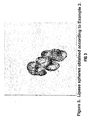
- Lipase spheres were prepared using the following reagents in the following volumes: 200 ⁇ l Candida rugosa lipase solution (as prepared above); 50 ⁇ l nonoxynol-4; 50 ⁇ l tributyrin; 5 ml mineral oil. This mixture was emulsified by stirring for 1 minute at 1500 rpm. To this solution 40 ⁇ l gluteraldehyde was added (25% aqueous solution) and allowed to stir for a further 10 minutes. The emulsion was allowed to stand at 4°C for 12 hours.
- the activity of the stabilized enzyme (lipase) structures was determined using a p-nitrophenylpalmitate and ⁇ -nitrophenylbutyrate assay method as described by Vorderwülbecke, T., Kieslich, K. & Erdmann, H. (1992). 'Comparison of lipases by different assays', Enzyme Microb. Technol., 14, 631-639 ; and Lopez-Serrano P., Cao L., van Rantwijk & Sheldon R.A. (2002). 'Cross-linked enzyme aggregates with enhanced activity application to lipases', Biotechnology Letters., 24, 1379-1383 .
- This assay measures the release of ⁇ -nitrophenol from a p-nitrophenyl ester of a fatty acid.
- the reaction is done at pH 8.0 at 37°C and the liberated p-nitrophenol is measured at 410nm.
- the activity without tributyrin as additive was 0.11% (for p-nitrophenylpalmitate) compared to the original free enzyme in aqueous solution, Surprisingly, the activity obtained with tributyrin as an additive ranged from about 5% (for p-nitrophenylpalmitate) to 124% (for p-nitrophenylbutyrate) compared to the original free enzyme in aqueous solution.
- Example 2 was repeated, except that the cross-linking agent used was activated dextran from leuconstoc species, average molecular weight 20 kDa (dextran aldehyde), the oil phase was vegetable oil, the ratio of lipase solution to Tris buffer was 1:1, and no surfactant was used.
- Dextran aldehyde was prepared by reacting dextran with excess sodium metaperiodate as described by Hong, T., Guo, W., Yuan, H., Li, J., Liu, Y., Ma, L., Bai, Y., & Li, T. (2004) 'Periodate oxidation of nanoscaled magnetic dextran composites', Journal of Magnetism and Magnetic Materials, 269, 95-100 . Activity obtained was 7.5% (for ⁇ -nitrophenylpalmitate) compared to the original free enzyme in aqueous solution.
- Example 2 was repeated, except that an oil-in-water emulsion was generated by changing the ratio of liquid phases and the surfactant.
- Example 3 was repeated except that the enzyme used was laccase from UD4 species as described by Jordaan, J., Pletschke, B.I. & Leukes, W.D. (2004) 'Purification and partial characterization of a thermostable laccase from an unidentified basidiomycete'. Enz Microb Technol. 34, 635-641 , and the tributyrin was substituted with syringic acid (saturated solution in ethanol).
- the enzyme used was laccase from UD4 species as described by Jordaan, J., Pletschke, B.I. & Leukes, W.D. (2004) 'Purification and partial characterization of a thermostable laccase from an unidentified basidiomycete'. Enz Microb Technol. 34, 635-641 , and the tributyrin was substituted with syringic acid (saturated solution in ethanol).
- the spheres were equilibrated with 100 mM succinate-lactate buffer pH 4.5.
- the spheres were assayed for laccase activity with ABTS as the substrate at 25°C and the product was followed spectrophotometrically at 420 nm according to the method of Jordaan, J. & Leukes, W.D. (2003) 'Isolation of a thermostable laccase with DMAB and MBTH oxidative coupling activity from a mesophilic white rot fungus'. Enz Microb Technol. 33(2/3), 212-219 .
- Example 2 Decreasing the lipase concentration of Example 2 (without tributyrin) by half, leads to an increase of more than 100% in lipase activity by weight.
- Laccase spheres were prepared according to the method in Example 5. The spheres were reacted six times with 2,2'-Azino-bis-(3-ethylbenzothiazoline-6-sulfonic acid diammonium salt (ABTS) as a substrate with recovery and washing between each reaction. Laccase activity after these six recycles was comparable to the original activity of the spheres.
- ABTS 2,2'-Azino-bis-(3-ethylbenzothiazoline-6-sulfonic acid diammonium salt
- Lipase spheres were prepared according to the method in Example 2. The spheres were reacted three times with naproxen ethyl ester (NEE) as a substrate at 40°C, with recovery and washing between each reaction. Activity decreased by about 70% over three recycles for the cross-linked lipase spheres (CLECs of the same enzyme showed similar activity losses. Brady, D., Steenkamp, L., Skein, E., Chaplin, J.A. and Reddy, S. (2004) 'Optimisation of the enantioselective biocatalytic hydrolysis of naproxen ethyl ester using ChiroCLEC-CR. Enz. Microb. Technol. 34, 283-291 ).
- Lipase spheres were prepared according to the method in Example 2. The spheres were reacted with ⁇ -nitrophenylpalmitate as a substrate, with recovery and washing between each reaction. Activity decreased to 79.6% of original lipase sphere activity in the final recycle.
- Candida rugosa lipase spheres were prepared according to the method in Example 2.
- Candida rugosa lipase CLEA's were prepared according to Example 8 of United States Patent Application 20030149172, Cao, L., and Elzinga, J. , with a gluteraldehyde to ethylene diamine ratio of 1:7.88.
- Water in Oil Candida rugosa lipase spheres were prepared according to the method in Example 2.
- Oil in Water Candida rugosa lipase spheres were prepared according to the method in Example 2 except that the volume of oil was reduced to 0.2 ml and the volume of buffer was increased to 5 ml.
- Specific activity obtained for the Water in Oil emulsion was 136.0% higher than the Oil in Water emulsion with p-nitrophenylbutyrate as the substrate, and increase from 8.9 to 26.0 U/mg from the OinW to WinO emulsion.
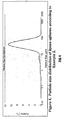
- Candida rugosa lipase spheres were prepared according to the method in Example 2, except that a Silverson homogenizer was used to create the emulsion rather than stirring. Two experiments were performed varying only in the speed setting of the homogenizer, namely 1000 and 3000 rpm respectively. Particle size distribution was determined and the results indicated a mean diameter of 52.0 ⁇ m and 20.6 ⁇ m for the spheres produced using 1000 rpm and 3000 rpm respectively while specific activity increased by 28% and 83% for ⁇ -nitrophenylpalmitate and ⁇ -nitrophenylbutyrate as substrates respectively compared to.
- the invention thus provides a method of stabilizing an enzyme by means of cross-linking, using emulsions as a vehicle therefor.
- the invention also relates to exposing maximum surface area of enzyme per unit volume of the structure, for subsequent reaction when the structure is used as a catalyst. Additionally, the stabilized enzyme structures are easily recyclable, less expensive than most immobilized enzyme products, and will find widespread application as catalysts in various processes.
- lipases due to the selective orientation of lipases at the hydrophilic/hydrophobic phase interface, they will be concentrated there. So this method, when applied in the example of an oil in water emulsion, will simultaneously purify the desired lipase from a crude cell lysate. The same would be true of other enzymes with external hydrophobic regions, including many membrane-associated enzymes.
- oil-in-water emulsions can permit mono-layer lipase spheres, thereby providing a cross-linking method that provides the maximum surface area to enzyme mass.
- water-in-oil emulsions would allow for denser, multi-layered enzyme spheres.
Landscapes
- Life Sciences & Earth Sciences (AREA)
- Chemical & Material Sciences (AREA)
- Health & Medical Sciences (AREA)
- Genetics & Genomics (AREA)
- Organic Chemistry (AREA)
- Zoology (AREA)
- Engineering & Computer Science (AREA)
- Bioinformatics & Cheminformatics (AREA)
- Wood Science & Technology (AREA)
- Microbiology (AREA)
- Medicinal Chemistry (AREA)
- Biomedical Technology (AREA)
- Molecular Biology (AREA)
- Biochemistry (AREA)
- General Engineering & Computer Science (AREA)
- General Health & Medical Sciences (AREA)
- Biotechnology (AREA)
- Enzymes And Modification Thereof (AREA)
- Preparation Of Compounds By Using Micro-Organisms (AREA)
- Immobilizing And Processing Of Enzymes And Microorganisms (AREA)
- Jellies, Jams, And Syrups (AREA)
- Pharmaceuticals Containing Other Organic And Inorganic Compounds (AREA)
- Manufacturing Of Micro-Capsules (AREA)
Applications Claiming Priority (2)
| Application Number | Priority Date | Filing Date | Title |
|---|---|---|---|
| ZA200400685 | 2004-01-28 | ||
| PCT/IB2005/000192 WO2005080561A1 (en) | 2004-01-28 | 2005-01-27 | Stabilization of enzymes |
Publications (2)
| Publication Number | Publication Date |
|---|---|
| EP1709169A1 EP1709169A1 (en) | 2006-10-11 |
| EP1709169B1 true EP1709169B1 (en) | 2008-09-10 |
Family
ID=34887950
Family Applications (1)
| Application Number | Title | Priority Date | Filing Date |
|---|---|---|---|
| EP05702349A Expired - Lifetime EP1709169B1 (en) | 2004-01-28 | 2005-01-27 | Stabilization of enzymes |
Country Status (11)
| Country | Link |
|---|---|
| US (1) | US7700335B2 (enExample) |
| EP (1) | EP1709169B1 (enExample) |
| JP (1) | JP4931603B2 (enExample) |
| CN (1) | CN1914316B (enExample) |
| AT (1) | ATE408008T1 (enExample) |
| CA (1) | CA2554033C (enExample) |
| DE (1) | DE602005009658D1 (enExample) |
| DK (1) | DK1709169T3 (enExample) |
| ES (1) | ES2313285T3 (enExample) |
| WO (1) | WO2005080561A1 (enExample) |
| ZA (1) | ZA200605759B (enExample) |
Families Citing this family (9)
| Publication number | Priority date | Publication date | Assignee | Title |
|---|---|---|---|---|
| WO2010089967A1 (ja) * | 2009-02-04 | 2010-08-12 | 不二製油株式会社 | 乳化粉末リパーゼ製剤の製造方法 |
| CN102154254A (zh) * | 2010-12-17 | 2011-08-17 | 云南大学 | 一种α-淀粉酶固定化的方法 |
| CN102304498A (zh) * | 2011-09-08 | 2012-01-04 | 天津市林业果树研究所 | 在油包水乳液中制备的交联酶聚集体及其制备方法 |
| EP2906337A2 (en) * | 2012-10-09 | 2015-08-19 | Csir | Production of particles |
| CN103484445A (zh) * | 2013-09-29 | 2014-01-01 | 甘肃省科学院生物研究所 | 一种球形酶制品及其制备方法 |
| CN106715583B (zh) * | 2014-09-29 | 2020-07-14 | 乐金华奥斯有限公司 | 聚合物粉末及其制备方法 |
| WO2017036915A1 (en) * | 2015-08-28 | 2017-03-09 | Unilever N.V. | Liquid detergency composition comprising protease and non-protease enzyme |
| CN108753755B (zh) * | 2018-05-30 | 2022-01-14 | 上海师范大学 | 一种交联生物酶催化剂及其应用 |
| CN114052085B (zh) * | 2021-12-03 | 2022-08-12 | 东北农业大学 | 一种分子层面模拟母乳脂质的0-6个月婴儿配方奶粉及其制备方法 |
Family Cites Families (10)
| Publication number | Priority date | Publication date | Assignee | Title |
|---|---|---|---|---|
| CA1196863A (en) * | 1983-06-08 | 1985-11-19 | Mattheus F.A. Goosen | Slow release injectable insulin composition |
| US4671954A (en) * | 1983-12-13 | 1987-06-09 | University Of Florida | Microspheres for incorporation of therapeutic substances and methods of preparation thereof |
| EP0452140B1 (en) * | 1990-04-11 | 1998-12-30 | Morinaga Milk Industry Co., Ltd. | Method for producing low-fat spread and oil-in-water-in-oil type spread |
| FR2683159B1 (fr) * | 1991-10-31 | 1994-02-25 | Coletica | Procede de fabrication de nanocapsules a paroi a base de proteines reticulees; nanocapsules ainsi obtenues et compositions cosmetiques, pharmaceutiques et alimentaires en comportant application. |
| JP2001151800A (ja) * | 1999-09-09 | 2001-06-05 | Hidetoshi Tsuchida | アルブミン重合体、その製造方法および血小板代替物 |
| US6343225B1 (en) * | 1999-09-14 | 2002-01-29 | Implanted Biosystems, Inc. | Implantable glucose sensor |
| EP1088887A1 (en) | 1999-09-23 | 2001-04-04 | Dsm N.V. | Crosslinked enzyme aggregates |
| JP4790957B2 (ja) * | 1999-10-01 | 2011-10-12 | ノボザイムス アクティーゼルスカブ | 酵素粒質物 |
| US6343255B1 (en) * | 2000-02-06 | 2002-01-29 | Sanford Christopher Peek | Method and system for providing weather information over the internet using data supplied through the internet and a wireless cellular data system |
| US20010046493A1 (en) * | 2000-02-24 | 2001-11-29 | Alex Margolin | Lipase-containing composition and methods of use thereof |
-
2005
- 2005-01-27 CA CA2554033A patent/CA2554033C/en not_active Expired - Fee Related
- 2005-01-27 ES ES05702349T patent/ES2313285T3/es not_active Expired - Lifetime
- 2005-01-27 AT AT05702349T patent/ATE408008T1/de not_active IP Right Cessation
- 2005-01-27 JP JP2006550346A patent/JP4931603B2/ja not_active Expired - Fee Related
- 2005-01-27 CN CN2005800035211A patent/CN1914316B/zh not_active Expired - Fee Related
- 2005-01-27 DE DE602005009658T patent/DE602005009658D1/de not_active Expired - Lifetime
- 2005-01-27 US US10/586,894 patent/US7700335B2/en not_active Expired - Fee Related
- 2005-01-27 EP EP05702349A patent/EP1709169B1/en not_active Expired - Lifetime
- 2005-01-27 WO PCT/IB2005/000192 patent/WO2005080561A1/en not_active Ceased
- 2005-01-27 DK DK05702349T patent/DK1709169T3/da active
-
2006
- 2006-07-12 ZA ZA200605759A patent/ZA200605759B/xx unknown
Also Published As
| Publication number | Publication date |
|---|---|
| CA2554033C (en) | 2013-04-02 |
| US7700335B2 (en) | 2010-04-20 |
| ZA200605759B (en) | 2008-08-27 |
| US20080213858A1 (en) | 2008-09-04 |
| ES2313285T3 (es) | 2009-03-01 |
| CN1914316A (zh) | 2007-02-14 |
| JP4931603B2 (ja) | 2012-05-16 |
| DE602005009658D1 (de) | 2008-10-23 |
| EP1709169A1 (en) | 2006-10-11 |
| CN1914316B (zh) | 2012-08-29 |
| CA2554033A1 (en) | 2005-09-01 |
| DK1709169T3 (da) | 2008-12-15 |
| WO2005080561A1 (en) | 2005-09-01 |
| JP2007534314A (ja) | 2007-11-29 |
| ATE408008T1 (de) | 2008-09-15 |
Similar Documents
| Publication | Publication Date | Title |
|---|---|---|
| Imam et al. | Enzyme entrapment, biocatalyst immobilization without covalent attachment | |
| Wang et al. | Biocatalytic Synthesis Using Self‐Assembled Polymeric Nano‐and Microreactors | |
| Hobbs et al. | Biocatalysis in supercritical fluids, in fluorous solvents, and under solvent-free conditions | |
| Knezevic et al. | Immobilization of lipase from Candida rugosa on Eupergit® C supports by covalent attachment | |
| US9574054B2 (en) | Emulsion-derived particles | |
| Goswami | Lipase catalysis in presence of nonionic surfactants | |
| Sakaki et al. | Lipase-catalyzed optical resolution of racemic naproxen in biphasic enzyme membrane reactors | |
| WO2014057424A2 (en) | Production of particles | |
| EP1709169B1 (en) | Stabilization of enzymes | |
| Brady et al. | Spherezymes: A novel structured self-immobilisation enzyme technology | |
| Prazers et al. | An ultrafiltration membrane bioreactor for the lipolysis of olive oil in reversed micellar media | |
| Fadnavis et al. | Gelatin blends with alginate: gels for lipase immobilization and purification | |
| JP2009005669A (ja) | 固定化酵素ナノファイバー及びその製造方法並びに該ナノファイバーを用いた反応装置 | |
| Gouda et al. | Production of a polyester degrading extracellular hydrolase from Thermomonospora fusca | |
| Alves et al. | Design for preparation of more active cross-linked enzyme aggregates of Burkholderia cepacia lipase using palm fiber residue | |
| Coşkun et al. | Immobilization of Candida antarctica lipase on nanomaterials and investigation of the enzyme activity and enantioselectivity | |
| Garcia-Galan et al. | Biotechnological prospects of the lipase from Mucor javanicus | |
| Basri et al. | Immobilization of hydrophobic lipase derivatives on to organic polymer beads | |
| Fadnavis et al. | Synthetic Applications of Enzymes Entrapped in Reverse Micelles & Organo-GelsΨ | |
| Roy et al. | Cross-linked enzyme aggregates for applications in aqueous and nonaqueous media | |
| Dewei et al. | Collagen-immobilized lipases show good activity and reusability for butyl butyrate synthesis | |
| US5510247A (en) | Centrifugal multiphase systems and method for using the same | |
| CN117925569A (zh) | 一种固定化脂肪酶的制备方法及其在Pickering界面催化中的应用 | |
| US6927051B1 (en) | Polymer-protein surfactants | |
| Miletic | Improved biocatalysts based on Candida antarctica lipase B immobilization |
Legal Events
| Date | Code | Title | Description |
|---|---|---|---|
| PUAI | Public reference made under article 153(3) epc to a published international application that has entered the european phase |
Free format text: ORIGINAL CODE: 0009012 |
|
| 17P | Request for examination filed |
Effective date: 20060726 |
|
| AK | Designated contracting states |
Kind code of ref document: A1 Designated state(s): AT BE BG CH CY CZ DE DK EE ES FI FR GB GR HU IE IS IT LI LT LU MC NL PL PT RO SE SI SK TR |
|
| RIN1 | Information on inventor provided before grant (corrected) |
Inventor name: MOOLMAN, FRANCIS SEAN Inventor name: JORDAAN, JUSTIN Inventor name: ROLFES, HEIDI Inventor name: BRADY, DEAN Inventor name: CHETTY, AVASHNEE SHAMPARKESH |
|
| DAX | Request for extension of the european patent (deleted) | ||
| GRAP | Despatch of communication of intention to grant a patent |
Free format text: ORIGINAL CODE: EPIDOSNIGR1 |
|
| GRAS | Grant fee paid |
Free format text: ORIGINAL CODE: EPIDOSNIGR3 |
|
| GRAA | (expected) grant |
Free format text: ORIGINAL CODE: 0009210 |
|
| AK | Designated contracting states |
Kind code of ref document: B1 Designated state(s): AT BE BG CH CY CZ DE DK EE ES FI FR GB GR HU IE IS IT LI LT LU MC NL PL PT RO SE SI SK TR |
|
| REG | Reference to a national code |
Ref country code: GB Ref legal event code: FG4D |
|
| REG | Reference to a national code |
Ref country code: CH Ref legal event code: EP |
|
| REG | Reference to a national code |
Ref country code: IE Ref legal event code: FG4D |
|
| REF | Corresponds to: |
Ref document number: 602005009658 Country of ref document: DE Date of ref document: 20081023 Kind code of ref document: P |
|
| REG | Reference to a national code |
Ref country code: CH Ref legal event code: NV Representative=s name: LUCHS & PARTNER PATENTANWAELTE |
|
| REG | Reference to a national code |
Ref country code: DK Ref legal event code: T3 |
|
| PG25 | Lapsed in a contracting state [announced via postgrant information from national office to epo] |
Ref country code: LT Free format text: LAPSE BECAUSE OF FAILURE TO SUBMIT A TRANSLATION OF THE DESCRIPTION OR TO PAY THE FEE WITHIN THE PRESCRIBED TIME-LIMIT Effective date: 20080910 |
|
| PG25 | Lapsed in a contracting state [announced via postgrant information from national office to epo] |
Ref country code: AT Free format text: LAPSE BECAUSE OF FAILURE TO SUBMIT A TRANSLATION OF THE DESCRIPTION OR TO PAY THE FEE WITHIN THE PRESCRIBED TIME-LIMIT Effective date: 20080910 Ref country code: SI Free format text: LAPSE BECAUSE OF FAILURE TO SUBMIT A TRANSLATION OF THE DESCRIPTION OR TO PAY THE FEE WITHIN THE PRESCRIBED TIME-LIMIT Effective date: 20080910 Ref country code: FI Free format text: LAPSE BECAUSE OF FAILURE TO SUBMIT A TRANSLATION OF THE DESCRIPTION OR TO PAY THE FEE WITHIN THE PRESCRIBED TIME-LIMIT Effective date: 20080910 |
|
| REG | Reference to a national code |
Ref country code: ES Ref legal event code: FG2A Ref document number: 2313285 Country of ref document: ES Kind code of ref document: T3 |
|
| PG25 | Lapsed in a contracting state [announced via postgrant information from national office to epo] |
Ref country code: BG Free format text: LAPSE BECAUSE OF FAILURE TO SUBMIT A TRANSLATION OF THE DESCRIPTION OR TO PAY THE FEE WITHIN THE PRESCRIBED TIME-LIMIT Effective date: 20081210 |
|
| PG25 | Lapsed in a contracting state [announced via postgrant information from national office to epo] |
Ref country code: PT Free format text: LAPSE BECAUSE OF FAILURE TO SUBMIT A TRANSLATION OF THE DESCRIPTION OR TO PAY THE FEE WITHIN THE PRESCRIBED TIME-LIMIT Effective date: 20090210 Ref country code: IS Free format text: LAPSE BECAUSE OF FAILURE TO SUBMIT A TRANSLATION OF THE DESCRIPTION OR TO PAY THE FEE WITHIN THE PRESCRIBED TIME-LIMIT Effective date: 20090110 Ref country code: RO Free format text: LAPSE BECAUSE OF FAILURE TO SUBMIT A TRANSLATION OF THE DESCRIPTION OR TO PAY THE FEE WITHIN THE PRESCRIBED TIME-LIMIT Effective date: 20080910 Ref country code: SK Free format text: LAPSE BECAUSE OF FAILURE TO SUBMIT A TRANSLATION OF THE DESCRIPTION OR TO PAY THE FEE WITHIN THE PRESCRIBED TIME-LIMIT Effective date: 20080910 |
|
| PLBE | No opposition filed within time limit |
Free format text: ORIGINAL CODE: 0009261 |
|
| STAA | Information on the status of an ep patent application or granted ep patent |
Free format text: STATUS: NO OPPOSITION FILED WITHIN TIME LIMIT |
|
| PG25 | Lapsed in a contracting state [announced via postgrant information from national office to epo] |
Ref country code: EE Free format text: LAPSE BECAUSE OF FAILURE TO SUBMIT A TRANSLATION OF THE DESCRIPTION OR TO PAY THE FEE WITHIN THE PRESCRIBED TIME-LIMIT Effective date: 20080910 |
|
| 26N | No opposition filed |
Effective date: 20090611 |
|
| PG25 | Lapsed in a contracting state [announced via postgrant information from national office to epo] |
Ref country code: MC Free format text: LAPSE BECAUSE OF NON-PAYMENT OF DUE FEES Effective date: 20090131 |
|
| REG | Reference to a national code |
Ref country code: IE Ref legal event code: MM4A |
|
| PG25 | Lapsed in a contracting state [announced via postgrant information from national office to epo] |
Ref country code: SE Free format text: LAPSE BECAUSE OF FAILURE TO SUBMIT A TRANSLATION OF THE DESCRIPTION OR TO PAY THE FEE WITHIN THE PRESCRIBED TIME-LIMIT Effective date: 20081210 Ref country code: IE Free format text: LAPSE BECAUSE OF NON-PAYMENT OF DUE FEES Effective date: 20090127 |
|
| PG25 | Lapsed in a contracting state [announced via postgrant information from national office to epo] |
Ref country code: PL Free format text: LAPSE BECAUSE OF FAILURE TO SUBMIT A TRANSLATION OF THE DESCRIPTION OR TO PAY THE FEE WITHIN THE PRESCRIBED TIME-LIMIT Effective date: 20080910 |
|
| PG25 | Lapsed in a contracting state [announced via postgrant information from national office to epo] |
Ref country code: GR Free format text: LAPSE BECAUSE OF FAILURE TO SUBMIT A TRANSLATION OF THE DESCRIPTION OR TO PAY THE FEE WITHIN THE PRESCRIBED TIME-LIMIT Effective date: 20081211 |
|
| PG25 | Lapsed in a contracting state [announced via postgrant information from national office to epo] |
Ref country code: LU Free format text: LAPSE BECAUSE OF NON-PAYMENT OF DUE FEES Effective date: 20090127 |
|
| PG25 | Lapsed in a contracting state [announced via postgrant information from national office to epo] |
Ref country code: HU Free format text: LAPSE BECAUSE OF FAILURE TO SUBMIT A TRANSLATION OF THE DESCRIPTION OR TO PAY THE FEE WITHIN THE PRESCRIBED TIME-LIMIT Effective date: 20090311 |
|
| PG25 | Lapsed in a contracting state [announced via postgrant information from national office to epo] |
Ref country code: TR Free format text: LAPSE BECAUSE OF FAILURE TO SUBMIT A TRANSLATION OF THE DESCRIPTION OR TO PAY THE FEE WITHIN THE PRESCRIBED TIME-LIMIT Effective date: 20080910 |
|
| PG25 | Lapsed in a contracting state [announced via postgrant information from national office to epo] |
Ref country code: CY Free format text: LAPSE BECAUSE OF FAILURE TO SUBMIT A TRANSLATION OF THE DESCRIPTION OR TO PAY THE FEE WITHIN THE PRESCRIBED TIME-LIMIT Effective date: 20080910 |
|
| REG | Reference to a national code |
Ref country code: FR Ref legal event code: PLFP Year of fee payment: 12 |
|
| REG | Reference to a national code |
Ref country code: FR Ref legal event code: PLFP Year of fee payment: 13 |
|
| PGFP | Annual fee paid to national office [announced via postgrant information from national office to epo] |
Ref country code: CZ Payment date: 20161229 Year of fee payment: 13 |
|
| PGFP | Annual fee paid to national office [announced via postgrant information from national office to epo] |
Ref country code: ES Payment date: 20161229 Year of fee payment: 13 Ref country code: FR Payment date: 20161229 Year of fee payment: 13 |
|
| PGFP | Annual fee paid to national office [announced via postgrant information from national office to epo] |
Ref country code: NL Payment date: 20170110 Year of fee payment: 13 |
|
| PGFP | Annual fee paid to national office [announced via postgrant information from national office to epo] |
Ref country code: CH Payment date: 20170112 Year of fee payment: 13 Ref country code: DE Payment date: 20170125 Year of fee payment: 13 |
|
| PGFP | Annual fee paid to national office [announced via postgrant information from national office to epo] |
Ref country code: BE Payment date: 20161228 Year of fee payment: 13 Ref country code: GB Payment date: 20170125 Year of fee payment: 13 Ref country code: DK Payment date: 20170110 Year of fee payment: 13 |
|
| PGFP | Annual fee paid to national office [announced via postgrant information from national office to epo] |
Ref country code: IT Payment date: 20170123 Year of fee payment: 13 |
|
| REG | Reference to a national code |
Ref country code: DE Ref legal event code: R119 Ref document number: 602005009658 Country of ref document: DE |
|
| REG | Reference to a national code |
Ref country code: DK Ref legal event code: EBP Effective date: 20180131 |
|
| REG | Reference to a national code |
Ref country code: CH Ref legal event code: PL |
|
| REG | Reference to a national code |
Ref country code: NL Ref legal event code: MM Effective date: 20180201 |
|
| GBPC | Gb: european patent ceased through non-payment of renewal fee |
Effective date: 20180127 |
|
| PG25 | Lapsed in a contracting state [announced via postgrant information from national office to epo] |
Ref country code: FR Free format text: LAPSE BECAUSE OF NON-PAYMENT OF DUE FEES Effective date: 20180131 Ref country code: DE Free format text: LAPSE BECAUSE OF NON-PAYMENT OF DUE FEES Effective date: 20180801 |
|
| REG | Reference to a national code |
Ref country code: FR Ref legal event code: ST Effective date: 20180928 |
|
| REG | Reference to a national code |
Ref country code: BE Ref legal event code: MM Effective date: 20180131 |
|
| PG25 | Lapsed in a contracting state [announced via postgrant information from national office to epo] |
Ref country code: LI Free format text: LAPSE BECAUSE OF NON-PAYMENT OF DUE FEES Effective date: 20180131 Ref country code: BE Free format text: LAPSE BECAUSE OF NON-PAYMENT OF DUE FEES Effective date: 20180131 Ref country code: NL Free format text: LAPSE BECAUSE OF NON-PAYMENT OF DUE FEES Effective date: 20180201 Ref country code: CZ Free format text: LAPSE BECAUSE OF NON-PAYMENT OF DUE FEES Effective date: 20180127 Ref country code: GB Free format text: LAPSE BECAUSE OF NON-PAYMENT OF DUE FEES Effective date: 20180127 Ref country code: CH Free format text: LAPSE BECAUSE OF NON-PAYMENT OF DUE FEES Effective date: 20180131 |
|
| PG25 | Lapsed in a contracting state [announced via postgrant information from national office to epo] |
Ref country code: DK Free format text: LAPSE BECAUSE OF NON-PAYMENT OF DUE FEES Effective date: 20180131 |
|
| PG25 | Lapsed in a contracting state [announced via postgrant information from national office to epo] |
Ref country code: IT Free format text: LAPSE BECAUSE OF NON-PAYMENT OF DUE FEES Effective date: 20180127 |
|
| REG | Reference to a national code |
Ref country code: ES Ref legal event code: FD2A Effective date: 20190731 |
|
| PG25 | Lapsed in a contracting state [announced via postgrant information from national office to epo] |
Ref country code: ES Free format text: LAPSE BECAUSE OF NON-PAYMENT OF DUE FEES Effective date: 20180128 |