EP1679972B1 - Aromatisation d'un produit laitier a partir d'au moins une bacterie produisant une bacteriocine et appartenant au genre pediococcus - Google Patents
Aromatisation d'un produit laitier a partir d'au moins une bacterie produisant une bacteriocine et appartenant au genre pediococcus Download PDFInfo
- Publication number
- EP1679972B1 EP1679972B1 EP04805323A EP04805323A EP1679972B1 EP 1679972 B1 EP1679972 B1 EP 1679972B1 EP 04805323 A EP04805323 A EP 04805323A EP 04805323 A EP04805323 A EP 04805323A EP 1679972 B1 EP1679972 B1 EP 1679972B1
- Authority
- EP
- European Patent Office
- Prior art keywords
- bacteriocin
- bacterium
- milk
- belonging
- pediococcus
- Prior art date
- Legal status (The legal status is an assumption and is not a legal conclusion. Google has not performed a legal analysis and makes no representation as to the accuracy of the status listed.)
- Expired - Lifetime
Links
Images

Classifications
-
- A—HUMAN NECESSITIES
- A23—FOODS OR FOODSTUFFS; TREATMENT THEREOF, NOT COVERED BY OTHER CLASSES
- A23C—DAIRY PRODUCTS, e.g. MILK, BUTTER OR CHEESE; MILK OR CHEESE SUBSTITUTES; PREPARATION THEREOF
- A23C19/00—Cheese; Cheese preparations; Making thereof
- A23C19/02—Making cheese curd
- A23C19/032—Making cheese curd characterised by the use of specific microorganisms, or enzymes of microbial origin
- A23C19/0323—Making cheese curd characterised by the use of specific microorganisms, or enzymes of microbial origin using only lactic acid bacteria, e.g. Pediococcus and Leuconostoc species; Bifidobacteria; Microbial starters in general
-
- A—HUMAN NECESSITIES
- A23—FOODS OR FOODSTUFFS; TREATMENT THEREOF, NOT COVERED BY OTHER CLASSES
- A23C—DAIRY PRODUCTS, e.g. MILK, BUTTER OR CHEESE; MILK OR CHEESE SUBSTITUTES; PREPARATION THEREOF
- A23C13/00—Cream; Cream preparations; Making thereof
- A23C13/12—Cream preparations
- A23C13/16—Cream preparations containing, or treated with, microorganisms, enzymes, or antibiotics; Sour cream
-
- A—HUMAN NECESSITIES
- A23—FOODS OR FOODSTUFFS; TREATMENT THEREOF, NOT COVERED BY OTHER CLASSES
- A23C—DAIRY PRODUCTS, e.g. MILK, BUTTER OR CHEESE; MILK OR CHEESE SUBSTITUTES; PREPARATION THEREOF
- A23C9/00—Milk preparations; Milk powder or milk powder preparations
- A23C9/12—Fermented milk preparations; Treatment using microorganisms or enzymes
- A23C9/123—Fermented milk preparations; Treatment using microorganisms or enzymes using only microorganisms of the genus lactobacteriaceae; Yoghurt
- A23C9/1236—Fermented milk preparations; Treatment using microorganisms or enzymes using only microorganisms of the genus lactobacteriaceae; Yoghurt using Leuconostoc, Pediococcus or Streptococcus sp. other than Streptococcus Thermophilus; Artificial sour buttermilk in general
Definitions
- lactic acid bacteria are used for the acidification of milk, which causes the fermentation of curdled milk. Concerning these lactic acid bacteria, we also speak of ferments or starters.
- microorganisms are used for cheese refining. In this case we speak of ripening flora or non-starters. These microorganisms make it possible to transform the curd into a partially lipolysed, proteolyzed product enriched in aromatic compounds such as, for example, amino acids or fatty acids.
- the most generally used refining agents are those of the genus Arthrobacter, Candida, Corynebacterium, Debaryomyces, Geotrichum, Kluyveromyces, Lactobacillus, Lactococcus, Leuconostoc, Micrococcus, Pediococcus, Propionibacterium, Rhodotorula, Saccharomyces, Staphylococcus, Streptococcus or Penicillium, for example Penicillium.
- roqueforti for the ripening of Roquefort.
- Refining is of great importance to give flavor to the dairy product.
- Litopoulou-Tzanetaki et al. Litopoulou-Tzanetaki et al, 1989, Microbiology, Food, Nutrition 7 (2): 113-122 ) describes that selected strains of pediococci can be added to the ferments for the production of dairy products.
- EP 0574 681 A1 describes yoghurt containing bacteriocin from Pediococcus acidilactici .
- the invention proposes the use of at least one bacterium producing a bacteriocin and belonging to the genus Pediococcus for flavoring a dairy product characterized in that the bacterium belonging to the genus Pediococcus is the bacterium Pediococcus acidilactici deposited at the CNCM on 20 October 2003 in the name of Rhodia Chimie, 26 Quai Alphonse Gallo, 92512 Boulogne Billancourt, under number CNCM I-3113.
- this bacterium producing a bacteriocin advantageously makes it possible to inhibit, by competition, unwanted wild flora, which most often develop opportunistically.
- Another advantage of the present invention is that this bacterium producing a bacteriocin and belonging to the genus Pediococcus can be used together with bacteria used for the acidification of the dairy product, that is to say with ferments or bacteria called starters.
- the use of at least one bacterium producing a bacteriocin and belonging to the genus Pediococcus according to claim 1 makes it possible to aromatize the dairy product without changing the manufacturing technology of the dairy product, or to change the parameters of the acidification kinetics of the product. dairy product for example.
- the invention also has the advantage of making it possible to refine the dairy product at a temperature higher than the traditional refining temperatures, for example at a temperature of between 4 ° C. and 15 ° C., and preferably between 4 ° C. and 10 ° C for the Cheddar.
- Another advantage of the present invention is that it makes it possible to increase the ripening speed and to obtain a significant aromatic profile already from 6 months of ripening, sometimes 4 months of ripening, in particular for Cheddar cheese.
- the invention relates to the use of at least one bacterium producing a bacteriocin and belonging to the genus Pediococcus for flavoring a dairy product, characterized in that the bacterium belonging to the genus Pediococcus is the bacterium Pediococcus acidilactici deposited at the CNCM on October 20, 2003. name of Rhodia Chimie, 26 Quai Alphone Gallo, 92512 Boulogne-Billancourt, under number CNCM I-3113.
- the genus Pediococcus belongs to the family Streptococaceae. Bacteria belonging to this genus are gram-positive, and generally catalase-negative, homofermentary bacteria that produce lactate D or L from carbohydrates.
- Bacteria of the genus Pediococcus are naturally present in milk and widely used in the food industry, especially the meat industry because they allow to provide texture and inhibit undesirable flora whose pathogenic flora in the meat products.
- Advantageously bacterium producing a bacteriocin and belonging to the genus Pediococcus may be associated with at least one bacterium sensitive to said bacteriocin.
- bacteriocin sensitive is meant a bacterium that can be killed or lysed or whose growth is slowed down or stopped by the presence and / or action of said bacteriocin.
- bacteriocin means a peptide substance secreted by lactic acid bacteria, and having bactericidal or bacteriostatic properties with respect to various so-called "sensitive" foreign bacteria.
- Advantageously bacterium producing a bacteriocin and belonging to the genus Pediococcus may be associated with at least one bacterium sensitive to said bacteriocin selected from lactic acid bacteria of the genera Lactococcus, Lactobacillus, Pediococcus, Leuconostoc, Streptococcus.
- the flavored dairy product according to the invention may also be a fermented milk.
- the dairy product according to the invention comprises milk of animal and / or vegetable origin.
- milk of animal origin mention may be made of cow's milk, sheep's milk, goat milk, camel milk or buffalo milk.
- milk of vegetable origin mention may be made of any fermentable substance of vegetable origin which may be used according to the invention, in particular from soybean seed, rice, coconut or malt.
- flavored dairy products mention may be made, inter alia, of soft cheeses, uncooked pressed dough, cooked dough, pasta dough, fresh dough, parsley dough, processed cheese or Cottage Cheese, as well as yoghurt, matured cream, milk drinks, a milk product retentate or infant milk.
- the use of the bacterium according to the invention for flavoring a dairy product is in a conventional manner for a person skilled in the art. In the case of the manufacture of a dairy product, it will be carried out in the usual manner in this field, and in particular by fermentation of a dairy product by incorporation of a ferment.
- the bacterium according to the invention may be premixed with lactic ferments or large leaven whatever its liquid or solid state and whatever its dry form, lyophilized or frozen. It is also conceivable to use the bacterium according to the invention during the acidification step of the dairy product or to add it during manufacture.
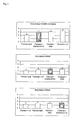
- the figure 1 represents the averages of the scores obtained on the flavor descriptors for each cheese of the Cheddar type of the study. Interpretation of the results of the Newman-Keuls test: the difference between Cheddar type cheeses linked by the same letter is not significant.
- EXAMPLE Sensory characterization of the ferment associated with the CNCM bacterium I-3113, and comparison with the ferment alone and with the ferment associated either with a bacterium Lactobacillus helveticus (LH) or with another bacterium Pediococcus pentosaceus not producing bacteriocin (PED)
- a milk is reconstituted from skimmed milk powder and calcium chloride (35 ml of Calciol Marschall ® solution at 500 g / l per 100 liters of milk).
- the dissolution time of the powders is approximately 30 minutes. This milk thus obtained is stored for 24 hours at 10 ° C.
- a quantity of cream is added in order to obtain a fat composition of 44 grams per liter of milk as well as the acidification ferment at the rate of 2.10E + 6 cfu / ml (colony-forming unit / ml) and the strain to be tested (ie CNCM strain I-3113 or LH or PED) at the rate of 10E + 6 cfu / ml at 32 ° C in a mini-tank .
- Rennet having a chymosin concentration of 520 mg of chymosin / liter of rennet, is added to the milk at a rate of 25ml of rennet / 100 liters of milk.
- the pH is recorded during manufacture using a KNICK PORTAMESS ® pH meter and a Metttler Toledo batch penetration pH electrode 406-M6-DXK-S7 / 25.
- the duration of coagulation is about 60 minutes.
- the cheddar cheese thus produced is impermeable 24 hours after inoculation with the ferment and placed in a ventilated oven at 8 ° C, until their sensory analysis 6 months later.
- Cheddars thus obtained were evaluated in sensory analysis after 6 months of storage at 8 ° C. Quantitative descriptive analysis of the Cheddars, maintained at an optimal tasting temperature of 14 ° C, was performed by a panel of 15 experts on a non-structured linear scale of 0 to 6 points. This sensory profile analysis was duplicated a few days apart. The judges, previously selected and trained, made their assessment on 7 flavor descriptors: aromatic intensity, acidity, sulfur, cream, sweet, bitter and meat broth. Sensory differences were assessed by a two-factor fixed-type analysis of variance (called ANOVA), followed by a Newman-Keuls mean comparison test with an alpha threshold of 5% on each of the descriptors. The software used for these statistical analyzes are Fizz ® (Biosystems) and Statgraphics ® .
- Table 1 Average score given by the sensory panel for cheddars obtained with different bacteria from flavor descriptor tests Cheddars Aromatic intensity Acidity Cream Sulfur Bitter Sugar Meat broth Ferment alone 2.13 1.13 1.39 0.75 2.48 0.73 0.50 Ferment + CNCM I-3113 3.10 1.70 1.61 0.96 1.01 1.37 1.25 Ferment + LH 3.42 1.42 1.16 1.22 1.31 1.50 1.57 Ferment + PED 3.15 1.70 1.44 1.18 2.23 0.91 1.00 Cheddars Aromatic intensity Acidity Cream Sulfur Bitter Sugar Meat broth Ferment alone B AT AT AT AT AT B B Ferment + CNCM I-3113 AT AT AT AT AT B AT AT Ferment + LH AT AT AT AT B AT Ferment + PED AT AT AT AT AT AB AB
- the figure 1 shows a histogram representation of the results obtained in Tables 1 and 2: Graphical representations of the averages of the scores obtained on the flavor descriptors for each cheese of the Cheddar type of the study. Interpreting the results of the Newman-Keus test: the difference between cheeses of the type Cheddars connected by the same letter is not significant.
- the addition of the CNCM I-3113 bacterium considered as a flavoring can significantly modify the organoleptic properties of Cheddar compared to Cheddar with the ferment alone or Cheddar with the ferment supplemented with the PED bacteria.
- the Cheddar containing the ferment supplemented with the CNCM I-3113 bacteria stands out from the Cheddar containing the ferment alone in that it has a significantly more pronounced aromatic intensity, a sweet taste and a meat broth aroma and that it develops significantly less bitterness.
- the Cheddar containing the ferment supplemented with the CNCM I-3113 bacterium differs from the Cheddar containing the ferment added with the PED bacteria in that it has a significantly lower bitterness.
- Cheddar made according to the invention also has an aromatic profile that is not significantly different from that produced with the ferment supplemented with the LH strain.
Landscapes
- Life Sciences & Earth Sciences (AREA)
- Microbiology (AREA)
- Chemical & Material Sciences (AREA)
- Engineering & Computer Science (AREA)
- Food Science & Technology (AREA)
- Polymers & Plastics (AREA)
- Dairy Products (AREA)
- Medicines Containing Material From Animals Or Micro-Organisms (AREA)
- Micro-Organisms Or Cultivation Processes Thereof (AREA)
- Preparation Of Compounds By Using Micro-Organisms (AREA)
Description
- La présente invention a pour objet l'utilisation d'au moins une bactérie produisant une bactériocine et appartenant au genre Pediococcus pour aromatiser un produit laitier.
- La fabrication des produits laitiers nécessite l'utilisation de différents microorganismes ayant des rôles spécifiques en technologie alimentaire.
- Notamment les bactéries lactiques sont utilisées pour l'acidification du lait ce qui provoque la fermentation du lait en caillé. Concernant ces bactéries lactiques, on parle également de ferments ou de starters.
- D'autres microorganismes sont quant à eux utilisés pour l'affinage des fromages. Dans ce cas on parle de flore d'affinage ou de non-starters. Ces microorganismes permettent de transformer le caillé en un produit partiellement lipolysé, protéolysé, enrichi en composés aromatiques comme par exemple des acides aminés ou des acides gras. Les agents d'affinage les plus généralement utilisés sont ceux du genre Arthrobacter, Candida, Corynebacterium, Debaryomyces, Geotrichum, Kluyveromyces, Lactobacillus, Lactococcus, Leuconostoc, Micrococcus, Pediococcus, Propionibacterium, Rhodotorula, Saccharomyces, Staphylococcus, Streptococcus ou Penicillium comme par exemple Penicillium roqueforti pour l'affinage du roquefort.
- L'affinage est d'une grande importance pour donner de la flaveur au produit laitier.
- Or l'addition d'agents d'affinage traditionnels aux ferments d'acidification est insuffisante dans certains cas, pour développer la flaveur souhaitée dans le produit laitier. En effet les agents d'affinage traditionnels ne jouent pas toujours leur rôle au cours du processus d'affinage et ne permettent pas d'aromatiser suffisamment le produit laitier, en particulier lorsque la durée d'affinage est courte ou réduite. Dans ce cas le profil aromatique recherché n'est pas obtenu et d'autres flaveurs indésirables peuvent apparaîtrent comme par exemple l'amertume.
- Litopoulou-Tzanetaki et al. (Litopoulou-Tzanetaki et al,1989, Microbiologie, Aliments, Nutrition 7(2): 113-122) décrit que des souches sélectionnées de pediococci peuvent être ajoutées aux ferments pour la production de produits laitiers.
-
EP 0574 681 A1 décrit un yaourt contenant de la bactériocine provenant de Pediococcus acidilactici. - Aussi afin de répondre aux exigences des industriels il est devenu nécessaire de trouver de nouveaux microorganismes susceptibles d'affiner et d'aromatiser les produits laitiers.
- Aussi le problème que se propose de résoudre la présente invention est de fournir un moyen pour aromatiser les produits laitiers de manière significative et rapide.
- Dans ce but l'invention propose l'utilisation d'au moins une bactérie produisant une bactériocine et appartenant au genre Pediococcus pour aromatiser un produit laitier caractérisée en ce que la bactérie appartenant au genre Pediococcus est la bactérie Pediococcus acidilactici déposée à la CNCM le 20 octobre 2003 au nom de Rhodia Chimie, 26 Quai Alphonse Gallo, 92512 Boulogne Billancourt, sous le numéro CNCM I-3113.
- L'utilisation de cette bactérie produisant une bactériocine permet avantageusement d'inhiber par compétition des flores sauvages non désirées, qui se développent le plus souvent de manière opportuniste.
- Un autre avantage de la présente invention est que cette bactérie produisant une bactériocine et appartenant au genre Pediococcus peut être utilisée conjointement avec des bactéries utilisées pour l'acidification du produit laitier, c'est à dire avec des ferments ou des bactéries dites starters.
- Avantageusement l'utilisation d'au moins une bactérie produisant une bactériocine et appartenant au genre Pediococcus selon la revendication 1 permet d'aromatiser le produit laitier sans changer la technologie de fabrication du produit laitier, ni changer les paramètres de la cinétique d'acidification du produit laitier par exemple.
- Enfin l'utilisation d'au moins une bactérie produisant une bactériocine et appartenant au genre Pediococcus selon la revendication 1 permet d'obtenir un produit laitier affiné de manière significative, ne présentant pas de mauvais goûts ou mauvaises odeurs.
- Les expressions « affiné de manière significative » ou « aromatiser de manière significative », signifient différent par rapport à un produit laitier affiné de manière classique.
- L'invention a encore pour avantage de permettre d'affiner le produit laitier à une température supérieure aux températures traditionnelles d'affinage comme par exemple à une température comprise entre 4°C et 15°C, et de préférence comprise entre 4°C et 10°C pour le Cheddar.
- Un autre avantage de la présente invention est de permettre d'augmenter la vitesse d'affinage et d'obtenir un profil aromatique significatif déjà à partir de 6 mois d'affinage, parfois 4 mois d'affinage, en particulier pour le Cheddar.
- D'autres avantages et caractéristiques de l'invention apparaîtront clairement à la lecture de la description et des exemples donnés à titre purement illustratifs et non limitatifs qui vont suivre.
- L'invention concerne l'utilisation d'au moins une bactérie produisant une bactériocine et appartenant au genre Pediococcus pour aromatiser un produit laitier caractérisée en ce que la bactérie appartenant au genre Pediococcus est la bactérie Pediococcus acidilactici déposée à la CNCM le 20 octobre 2003 au nom de Rhodia Chimie, 26 Quai Alphone Gallo, 92512 Boulogne-Billancourt, sous le numéro CNCM I-3113.
- Le genre Pediococcus appartient à la famille Streptococaceae. Les bactéries appartenant à ce genre sont des bactéries gram-positives, et généralement catalase-negatives, homofermentaires et produisant du lactate D ou L à partir de carbohydrates.
- Les bactéries du genre Pediococcus sont naturellement présentes dans le lait et largement utilisées dans l'industrie alimentaire, et notamment l'industrie de la viande car elles permettent d'apporter de la texture et d'inhiber les flores indésirables dont les flores pathogènes dans les produits de charcuterie.
- Avantageusement la bactérie produisant une bactériocine et appartenant au genre Pediococcus peut être associée à au moins une bactérie sensible à ladite bactériocine.
- Par l'expression « sensible à la bactériocine » on entend une bactérie qui peut être tuée ou lysée ou encore dont la croissance est ralentie ou stoppée, par la présence et / ou l'action de ladite bactériocine.
- Par bactériocine, on entend une substance peptidique sécrétée par des bactéries lactiques, et possédant des propriétés bactéricides ou bactériostatiques vis à vis de diverses bactéries étrangères dites « sensibles ».
- Avantageusement la bactérie produisant une bactériocine et appartenant au genre Pediococcus peut être associée à au moins une bactérie sensible à ladite bactériocine choisi parmi les bactéries lactiques des genres Lactococcus, Lactobacillus, Pediococcus, Leuconostoc, Streptococcus.
- Les bactéries appartenant au genre Pediococcus font partie des bactéries dites NSLAB (« Non Starter Lactic Acid Bacteria » en anglais) qui sont des bactéries lactiques ne contribuant pas significativement à l'acidification.
- L'utilisation d'au moins une bactérie produisant une bactériocine et appartenant au genre Pediococcus selon la revendication 1 permet d'obtenir une intensité aromatique marquée dans les produits laitiers, ainsi que des caractères sucré et bouillon de viande plus marqués et une amertume significativement plus faible, par rapport au même produit laitier réalisé sans addition de ladite bactérie.
- Le produit laitier aromatisé selon l'invention peut aussi être un lait fermenté.
- De préférence le produit laitier selon l'invention comprend du lait d'origine animale et/ou végétale.
- A titre de lait d'origine animale on peut citer le lait de vache, de brebis, de chèvre, de chamelle ou de bufflesse.
- A titre de lait d'origine végétale on peut citer toute substance fermentescible d'origine végétale qui peut être utilisée selon l'invention notamment provenant de graine de soja, de riz, de coco ou de malt.
- Parmi les produits laitiers aromatisés selon l'invention on peut citer entre autres les fromages à pâte molle, à pâte pressée non cuite, à pâte cuite, à pâte filée, à pâte fraîche, à pâte persillée, les fromages fondus ou le Cottage Cheese, ainsi que le yaourt, la crème maturée, les boissons lactées, un rétentat de produit laitier ou un lait infantile.
- Parmi les fromages aromatisés selon l'invention on peut citer entre autres le Banon, le Bleu d'Auvergne, le Brie, la Boulette d'Avesne, le Caerphilly, le Camembert, le Cantal, le Carré de l'Est, le Chanco, le Chaource, le Cheddar, le Cheshire, le Cotija, le Coulommiers, le Danbo, le Dauphin, le Double Gloucester, l'Edam, l'Emmental, l'Epoisse, la Feta, le Gorgonzola, le Gouda, le Jarlsberg, le Limburger, le Livarot, la Mimolette, le Manchego, le Maroilles, le Monterey Jack, la Mozzarella, le Munster, le type Parmesan, le Pélardon, le Pont l'Evêque, la Raclette, le Red Leicester, le Roquefort, le Saint-Félicien, le Saint-Marcellin, le Saint-Nectaire, le Saint-Paulin, le Stilton, le Tilsit, la Tomme de Savoie, le Vacherin Mont-D'or, le Vieux-Lille.
- L'utilisation de la bactérie selon l'invention pour aromatiser un produit laitier se fait de manière classique pour l'homme du métier. Dans le cas de la fabrication d'un produit laitier, celle-ci sera réalisée de manière habituelle dans ce domaine, et notamment par fermentation d'un produit laitier par incorporation d'un ferment.
- Notamment il est possible de mélanger au moins une bactérie produisant une bactériocine et appartenant au genre Pediococcus directement avec les ferments lactiques ou le grand levain utilisés pour fabriquer le produit laitier. Dans ce cas la bactérie selon l'invention peut être préalablement mélangée aux ferments lactiques ou au grand levain quelque soit son état liquide ou solide et quelque soit sa forme sèche, lyophilisée ou congelée. Il est également envisageable d'utiliser la bactérie selon l'invention pendant l'étape d'acidification du produit laitier ou d'ajouter celle-ci au cours de la fabrication.
- La
figure 1 représente les moyennes des notes obtenues sur les descripteurs de flaveur pour chacun des fromages du type Cheddar de l'étude. Interprétation des résultats du test de Newman-Keuls : la différence entre les fromages du type Cheddar reliés par une même lettre n'est pas significative. - Les exemples suivants illustrent l'invention sans toutefois en limiter la portée.
- EXEMPLE : Caractérisation sensorielle du ferment associé à la bactérie CNCM I-3113, et comparaison avec le ferment seul et avec le ferment associé soit à une bactérie Lactobacillus helveticus (LH) soit à une autre bactérie Pediococcus pentosaceus ne produisant pas de bactériocine (PED)
- Un lait est reconstitué à partir de poudre de lait écrémé et de chlorure de calcium (35 ml d'une solution de Calciol Marschall® à 500 g/l pour 100 litres de lait). Le temps de dissolution des poudres est d'environ 30 minutes. Ce lait ainsi obtenu est stocké 24 heures à 10°C.
- Puis une quantité de crème est ajoutée afin d'obtenir une composition en matière grasse de 44 grammes par litre de lait ainsi que le ferment d'acidification à raison de 2.10E+6 ufc/ml (unité formant colonie/ml) et la souche à tester (soit la souche CNCM I-3113 ou LH ou PED) à raison de 10E+6 ufc/ml environ à 32°C en mini-cuve. De la présure, ayant une concentration en chymosine de 520 mg de chymosine / litre de présure, est ajoutée au lait à raison de 25ml de présure /100 litres de lait. Le pH est enregistré au cours de la fabrication à l'aide d'un pH mètre KNICK PORTAMESS® et d'une électrode de pH de pénétration lot 406-M6-DXK-S7/25 Metttler Toledo. La durée de la coagulation est de 60 minutes environ.
- Le caillé obtenu est découpé. L'ensemble, caillé et sérum, est chauffé à 40°C. Le sérum qui s'est formé est soutiré. Puis on attend que le caillé ait atteint un pH de 5,20 pour pouvoir saler le caillé avec 3% de NaCl, pourcentage exprimé en masse par rapport à la masse du produit fini. Le caillé est ensuite placé dans des moules puis pressé.
- Les fromages du type Cheddar ainsi fabriqués sont mis sous films imperméables 24 heures après inoculation par le ferment et placés dans une étuve ventilée à 8°C, jusqu'à leur analyse sensorielle 6 mois plus tard.
- Les Cheddars ainsi obtenus ont été évalués en analyse sensorielle après 6 mois de stockage à 8°C. L'analyse descriptive quantitative des Cheddars, maintenus à une température optimale de dégustation de 14°C, a été réalisée par un jury de 15 experts sur une échelle linéaire non structurée de 0 à 6 points. Cette analyse de profil sensoriel a été dupliquée à quelques jours d'intervalle. Les juges, préalablement sélectionnés et entraînés, ont effectué leur évaluation sur 7 descripteurs de flaveur : intensité aromatique, acidité, soufré, crème, sucré, amer et bouillon de viande. Les différences sensorielles ont été évaluées par une analyse de variance (dénommée ANOVA) à deux facteurs, modèle fixe, suivie d'un test de comparaison de moyenne de Newman-Keuls avec un seuil alpha de 5% sur chacun des descripteurs. Les logiciels utilisés pour ces analyses statistiques sont Fizz® (Biosystèmes) et Statgraphics®.
- Les données concernant le fromage Cheddar obtenu avec le ferment additionné de la bactérie CNCM I-3113 ont été confrontées à celles des Cheddars obtenus avec le ferment seul et le ferment additionné des autres bactéries de référence (LH ou PED). Les valeurs moyennes obtenues pour les descripteurs de flaveur retenus sont indiquées dans le tableau 1 et les différences significatives ressortant de l'ANOVA et du test de comparaison de moyennes sont répertoriées dans le tableau 2 et la
figure 1 .Tableau 1 : Moyenne des notes attribuées par le jury d'analyse sensorielle pour les cheddars obtenus avec les différentes bactéries des essais sur les descripteurs de flaveur Cheddars Intensité aromatique Acidité Crème Soufré Amer Sucré Bouillon de viande Ferment seul 2,13 1,13 1,39 0,75 2,48 0,73 0,50 Ferment + CNCM I-3113 3,10 1,70 1,61 0,96 1,01 1,37 1,25 Ferment + LH 3,42 1,42 1,16 1,22 1,31 1,50 1,57 Ferment + PED 3,15 1,70 1,44 1,18 2,23 0,91 1,00 Tableau 2 : Comparaison de moyennes sur chacun des descripteurs de flaveur par le test de Newman-Keuls à 5%. Interprétation des résultats : la différence entre les Cheddars reliés par une même lettre n'est pas significative Cheddars Intensité aromatique Acidité Crème Soufré Amer Sucré Bouillon de viande Ferment seul B A A A A B B Ferment + CNCM I-3113 A A A A B A A Ferment + LH A A A A B A A Ferment + PED A A A A A AB AB - La
figure 1 montre une représentation par histogramme des résultats obtenus dans les tableaux 1 et 2 : Représentations graphiques des moyennes des notes obtenues sur les descripteurs de flaveur pour chacun des fromages du type des Cheddars de l'étude. Interpréprétation des résultats du test de Newman-Keus : la différence entre les fromages du type Cheddars reliés par une même lettre n'est pas significative. - L'addition de la bactérie CNCM I-3113 considérée comme aromatisante permet de modifier de manière significative les propriétés organoleptiques du Cheddar comparativement au Cheddar avec le ferment seul ou au Cheddar avec le ferment additionné de la bactérie PED. En effet, le Cheddar contenant le ferment additionné de la bactérie CNCM I-3113 se démarque du Cheddar contenant le ferment seul en ce sens qu'il possède une intensité aromatique, une saveur sucrée et un arôme bouillon de viande significativement plus prononcés et qu'il développe significativement moins d'amertume. Le Cheddar contenant le ferment additionné de la bactérie CNCM I-3113 se démarque du Cheddar contenant le ferment additionné de la bactérie PED en ce sens qu'il possède une amertume significativement plus faible. Le Cheddar fabriqué selon l'invention a également un profil aromatique non significativement différent de celui fabriqué avec le ferment additionné de la souche LH.
Claims (6)
- Utilisation d'au moins une bactérie produisant une bactériocine et appartenant au genre Pediococcus pour aromatiser un produit laitier, caractérisée en ce que la bactérie appartenant au genre Pediococcus est la bactérie Pediococcus acidilactici déposée à la CNCM le 20 octobre 2003 au nom de Rhodia Chimie, 26 Quai Alphonse Le Gallo, 92512 Boulogne-Billancourt, sous le numéro CNCM I-3113.
- Utilisation selon la revendication précédente caractérisée en ce que la bactérie produisant une bactériocine et appartenant au genre Pediococcus est associée à au moins une bactérie sensible à ladite bactériocine.
- Utilisation selon l'une des revendications précédentes caractérisée en ce que la bactérie produisant une bactériocine et appartenant au genre Pediococcus est associée à au moins une bactérie sensible à ladite bactériocine choisi parmi les bactéries lactiques des genres Lactococcus, Lactobacillus, Pediococcus, Leuconostoc, Streptococcus.
- Utilisation selon l'une des revendications précédentes caractérisée en ce que le produit laitier est un lait fermenté
- Utilisation selon l'une des revendications précédentes caractérisée en ce que le produit laitier est choisi parmi les fromages à pâte molle, à pâte pressée non cuite, à pâte cuite, à pâte filée, à pâte fraîche, à pâte persillée, les fromages fondus ou le Cottage Cheese, ainsi que le yaourt, la crème maturée, les boissons lactées, un rétentat de produit laitier ou un lait infantile.
- Utilisation selon l'une des revendications précédentes caractérisée en ce que le produit laitier est le Cheddar.
Priority Applications (1)
| Application Number | Priority Date | Filing Date | Title |
|---|---|---|---|
| PL04805323T PL1679972T3 (pl) | 2003-10-31 | 2004-10-27 | Aromatyzacja produktów mlecznych przy zastosowaniu co najmniej jednej bakterii produkującej bakteriocynę i należącej do rodzaju Pediococcus |
Applications Claiming Priority (2)
| Application Number | Priority Date | Filing Date | Title |
|---|---|---|---|
| FR0312807A FR2861549B1 (fr) | 2003-10-31 | 2003-10-31 | Aromatisation d'un produit laitier a partir d'au moins une bactrerie produisant une bacteriocine et appartenant au genre pediococcus |
| PCT/FR2004/002766 WO2005041675A1 (fr) | 2003-10-31 | 2004-10-27 | Aromatisation d’un produit laitier a partir d’au moins une bacterie produisant une bacteriocine et appartenant au genre pediococcus |
Publications (2)
| Publication Number | Publication Date |
|---|---|
| EP1679972A1 EP1679972A1 (fr) | 2006-07-19 |
| EP1679972B1 true EP1679972B1 (fr) | 2009-08-26 |
Family
ID=34429804
Family Applications (1)
| Application Number | Title | Priority Date | Filing Date |
|---|---|---|---|
| EP04805323A Expired - Lifetime EP1679972B1 (fr) | 2003-10-31 | 2004-10-27 | Aromatisation d'un produit laitier a partir d'au moins une bacterie produisant une bacteriocine et appartenant au genre pediococcus |
Country Status (11)
| Country | Link |
|---|---|
| US (1) | US20080292749A1 (fr) |
| EP (1) | EP1679972B1 (fr) |
| AT (1) | ATE440498T1 (fr) |
| AU (1) | AU2004285314A1 (fr) |
| CA (1) | CA2543674A1 (fr) |
| DE (1) | DE602004022847D1 (fr) |
| DK (1) | DK1679972T3 (fr) |
| ES (1) | ES2330443T3 (fr) |
| FR (1) | FR2861549B1 (fr) |
| PL (1) | PL1679972T3 (fr) |
| WO (1) | WO2005041675A1 (fr) |
Families Citing this family (10)
| Publication number | Priority date | Publication date | Assignee | Title |
|---|---|---|---|---|
| ES2557160T3 (es) * | 2006-10-23 | 2016-01-22 | Nestec S.A. | Modulación del aroma y el sabor mediante biotransformación en productos lácteos |
| KR102724112B1 (ko) | 2011-07-12 | 2024-10-31 | 임파서블 푸즈 인크. | 소비재를 위한 방법 및 조성물 |
| US20140220217A1 (en) | 2011-07-12 | 2014-08-07 | Maraxi, Inc. | Method and compositions for consumables |
| BR112014000681B1 (pt) | 2011-07-12 | 2020-03-10 | Maraxi, Inc. | Réplica de queijo contendo proteínas de origem vegetal e gorduras derivadas de nozes, leguminosas ou sementes, bactéria, fungo ou alga |
| US10039306B2 (en) | 2012-03-16 | 2018-08-07 | Impossible Foods Inc. | Methods and compositions for consumables |
| BR112015016651A2 (pt) | 2013-01-11 | 2017-07-11 | Impossible Foods Inc | réplica de queijo não láctea compreendendo um coacervado |
| SI2943072T1 (en) | 2013-01-11 | 2018-07-31 | Impossible Foods Inc. | Methods and compositions for affecting the flavor and aroma profile of consumables |
| JP6759103B2 (ja) | 2014-03-31 | 2020-09-23 | インポッシブル フーズ インコーポレイテッド | ひき肉レプリカ |
| JP7607208B2 (ja) | 2020-08-18 | 2024-12-27 | 長野県 | ナチュラルチーズの製造方法 |
| FR3151180A1 (fr) * | 2023-07-21 | 2025-01-24 | MyLevain | Levain et ses utilisations boulangères et fromagères |
Family Cites Families (3)
| Publication number | Priority date | Publication date | Assignee | Title |
|---|---|---|---|---|
| US4880743A (en) * | 1987-10-02 | 1989-11-14 | Microlife Technics, Inc. | Bacterial composition for inhibiting psychrotrophic bacteria in cream or milk based products |
| EP0574681A1 (fr) * | 1992-06-15 | 1993-12-22 | Quest International B.V. | Produit à base de yaourt contenant une bactériocine de Pediococcus acidilacte |
| US5626893A (en) * | 1994-10-18 | 1997-05-06 | Reddy; Malireddy S. | Method of treating a divided cheese product for anticaking |
-
2003
- 2003-10-31 FR FR0312807A patent/FR2861549B1/fr not_active Expired - Fee Related
-
2004
- 2004-10-27 PL PL04805323T patent/PL1679972T3/pl unknown
- 2004-10-27 DK DK04805323T patent/DK1679972T3/da active
- 2004-10-27 AT AT04805323T patent/ATE440498T1/de not_active IP Right Cessation
- 2004-10-27 AU AU2004285314A patent/AU2004285314A1/en not_active Abandoned
- 2004-10-27 ES ES04805323T patent/ES2330443T3/es not_active Expired - Lifetime
- 2004-10-27 EP EP04805323A patent/EP1679972B1/fr not_active Expired - Lifetime
- 2004-10-27 WO PCT/FR2004/002766 patent/WO2005041675A1/fr not_active Ceased
- 2004-10-27 US US10/577,351 patent/US20080292749A1/en not_active Abandoned
- 2004-10-27 CA CA002543674A patent/CA2543674A1/fr not_active Abandoned
- 2004-10-27 DE DE602004022847T patent/DE602004022847D1/de not_active Expired - Fee Related
Also Published As
| Publication number | Publication date |
|---|---|
| WO2005041675A1 (fr) | 2005-05-12 |
| DK1679972T3 (da) | 2009-12-14 |
| US20080292749A1 (en) | 2008-11-27 |
| ES2330443T3 (es) | 2009-12-10 |
| PL1679972T3 (pl) | 2010-01-29 |
| CA2543674A1 (fr) | 2005-05-12 |
| FR2861549A1 (fr) | 2005-05-06 |
| AU2004285314A1 (en) | 2005-05-12 |
| ATE440498T1 (de) | 2009-09-15 |
| DE602004022847D1 (de) | 2009-10-08 |
| EP1679972A1 (fr) | 2006-07-19 |
| FR2861549B1 (fr) | 2006-07-07 |
Similar Documents
| Publication | Publication Date | Title |
|---|---|---|
| Litopoulou-Tzanetaki et al. | Microbiological characteristics of Greek traditional cheeses | |
| Viljoen | The interaction between yeasts and bacteria in dairy environments | |
| HUE034259T2 (en) | Biological protection using Lactobacillus rhamnosus strains | |
| CN102307481B (zh) | 硬质或半硬质天然干酪及其制备方法 | |
| Yann et al. | Usefulness of natural starters in food industry: The example of cheeses and bread | |
| KR101200183B1 (ko) | 막걸리를 첨가한 경질 치즈의 제조방법 | |
| Dolci et al. | Impact of Lactococcus lactis as starter culture on microbiota and metabolome profile of an Italian raw milk cheese | |
| KR101065461B1 (ko) | 산머루 가공식품 함유 치즈 및 이의 제조방법 | |
| JP2009100678A (ja) | 風味・呈味に優れた低脂肪チーズ及びその製造方法。 | |
| FR2861549A1 (fr) | Aromatisation d'un produit laitier a partir d'au moins une bactrerie produisant une bacteriocine et appartenant au genre pediococcus | |
| Nuñez | Existing technologies in non-cow milk processing and traditional non-cow milk products | |
| Laranjo et al. | Traditional Mediterranean cheeses: Lactic acid bacteria populations and functional traits | |
| EP1986502B1 (fr) | Composition et procede d'aromatisation de produits laitiers, souche de bacterie lactique, utilisation desdites composition ou souche | |
| EP2938201B1 (fr) | Mélange d'aromatisants pour fabriquer de la mozzarella | |
| St-Gelais et al. | Production of fresh Cheddar cheese curds with controlled postacidification and enhanced flavor | |
| Pintado et al. | Cheese microbiology | |
| EP1862076A1 (fr) | Procédé de préparation de fromage avec une culture starter adjointe mésophile; fromage et lactosérum susceptible d'être obtenu d'après ce procédé | |
| Tunick | Aging of Hispanic Cheese | |
| KR101383973B1 (ko) | 천연 에센셜오일이 도포된 항진균 숙성 치즈의 제조방법 및 그로부터 제조되는 항진균 숙성 치즈 | |
| Loretan | The diversity and technological properties of yeasts from indigenous traditional South African fermented milks | |
| Camelo‐Silva et al. | Sensory Profiles of Pan‐American Fresh, Soft and Other Cheese Varieties | |
| Kanawjia et al. | Cheese technology | |
| KR20250093020A (ko) | 블루베리 추출액을 함유하는 고다 치즈 및 이의 제조 방법 | |
| EP1056350B1 (fr) | Composition pour l'aromatisation de fromages | |
| Malik | Flavor Development in Various Forms of Cheese |
Legal Events
| Date | Code | Title | Description |
|---|---|---|---|
| PUAI | Public reference made under article 153(3) epc to a published international application that has entered the european phase |
Free format text: ORIGINAL CODE: 0009012 |
|
| 17P | Request for examination filed |
Effective date: 20060427 |
|
| AK | Designated contracting states |
Kind code of ref document: A1 Designated state(s): AT BE BG CH CY CZ DE DK EE ES FI FR GB GR HU IE IT LI LU MC NL PL PT RO SE SI SK TR |
|
| DAX | Request for extension of the european patent (deleted) | ||
| 17Q | First examination report despatched |
Effective date: 20070411 |
|
| GRAP | Despatch of communication of intention to grant a patent |
Free format text: ORIGINAL CODE: EPIDOSNIGR1 |
|
| GRAS | Grant fee paid |
Free format text: ORIGINAL CODE: EPIDOSNIGR3 |
|
| GRAA | (expected) grant |
Free format text: ORIGINAL CODE: 0009210 |
|
| AK | Designated contracting states |
Kind code of ref document: B1 Designated state(s): AT BE BG CH CY CZ DE DK EE ES FI FR GB GR HU IE IT LI LU MC NL PL PT RO SE SI SK TR |
|
| REG | Reference to a national code |
Ref country code: GB Ref legal event code: FG4D Free format text: NOT ENGLISH |
|
| REG | Reference to a national code |
Ref country code: CH Ref legal event code: EP |
|
| REG | Reference to a national code |
Ref country code: IE Ref legal event code: FG4D Free format text: LANGUAGE OF EP DOCUMENT: FRENCH |
|
| REF | Corresponds to: |
Ref document number: 602004022847 Country of ref document: DE Date of ref document: 20091008 Kind code of ref document: P |
|
| REG | Reference to a national code |
Ref country code: ES Ref legal event code: FG2A Ref document number: 2330443 Country of ref document: ES Kind code of ref document: T3 |
|
| REG | Reference to a national code |
Ref country code: DK Ref legal event code: T3 |
|
| PG25 | Lapsed in a contracting state [announced via postgrant information from national office to epo] |
Ref country code: AT Free format text: LAPSE BECAUSE OF FAILURE TO SUBMIT A TRANSLATION OF THE DESCRIPTION OR TO PAY THE FEE WITHIN THE PRESCRIBED TIME-LIMIT Effective date: 20090826 Ref country code: SE Free format text: LAPSE BECAUSE OF FAILURE TO SUBMIT A TRANSLATION OF THE DESCRIPTION OR TO PAY THE FEE WITHIN THE PRESCRIBED TIME-LIMIT Effective date: 20090826 Ref country code: FI Free format text: LAPSE BECAUSE OF FAILURE TO SUBMIT A TRANSLATION OF THE DESCRIPTION OR TO PAY THE FEE WITHIN THE PRESCRIBED TIME-LIMIT Effective date: 20090826 |
|
| REG | Reference to a national code |
Ref country code: PL Ref legal event code: T3 |
|
| PG25 | Lapsed in a contracting state [announced via postgrant information from national office to epo] |
Ref country code: SI Free format text: LAPSE BECAUSE OF FAILURE TO SUBMIT A TRANSLATION OF THE DESCRIPTION OR TO PAY THE FEE WITHIN THE PRESCRIBED TIME-LIMIT Effective date: 20090826 |
|
| PG25 | Lapsed in a contracting state [announced via postgrant information from national office to epo] |
Ref country code: BG Free format text: LAPSE BECAUSE OF FAILURE TO SUBMIT A TRANSLATION OF THE DESCRIPTION OR TO PAY THE FEE WITHIN THE PRESCRIBED TIME-LIMIT Effective date: 20091126 Ref country code: PT Free format text: LAPSE BECAUSE OF FAILURE TO SUBMIT A TRANSLATION OF THE DESCRIPTION OR TO PAY THE FEE WITHIN THE PRESCRIBED TIME-LIMIT Effective date: 20091228 Ref country code: CY Free format text: LAPSE BECAUSE OF FAILURE TO SUBMIT A TRANSLATION OF THE DESCRIPTION OR TO PAY THE FEE WITHIN THE PRESCRIBED TIME-LIMIT Effective date: 20090826 |
|
| REG | Reference to a national code |
Ref country code: IE Ref legal event code: FD4D |
|
| BERE | Be: lapsed |
Owner name: DANISCO A/S Effective date: 20091031 |
|
| PG25 | Lapsed in a contracting state [announced via postgrant information from national office to epo] |
Ref country code: RO Free format text: LAPSE BECAUSE OF FAILURE TO SUBMIT A TRANSLATION OF THE DESCRIPTION OR TO PAY THE FEE WITHIN THE PRESCRIBED TIME-LIMIT Effective date: 20090826 Ref country code: EE Free format text: LAPSE BECAUSE OF FAILURE TO SUBMIT A TRANSLATION OF THE DESCRIPTION OR TO PAY THE FEE WITHIN THE PRESCRIBED TIME-LIMIT Effective date: 20090826 Ref country code: CZ Free format text: LAPSE BECAUSE OF FAILURE TO SUBMIT A TRANSLATION OF THE DESCRIPTION OR TO PAY THE FEE WITHIN THE PRESCRIBED TIME-LIMIT Effective date: 20090826 Ref country code: IE Free format text: LAPSE BECAUSE OF FAILURE TO SUBMIT A TRANSLATION OF THE DESCRIPTION OR TO PAY THE FEE WITHIN THE PRESCRIBED TIME-LIMIT Effective date: 20090826 |
|
| PG25 | Lapsed in a contracting state [announced via postgrant information from national office to epo] |
Ref country code: SK Free format text: LAPSE BECAUSE OF FAILURE TO SUBMIT A TRANSLATION OF THE DESCRIPTION OR TO PAY THE FEE WITHIN THE PRESCRIBED TIME-LIMIT Effective date: 20090826 Ref country code: MC Free format text: LAPSE BECAUSE OF NON-PAYMENT OF DUE FEES Effective date: 20091031 |
|
| REG | Reference to a national code |
Ref country code: CH Ref legal event code: PL |
|
| PLBE | No opposition filed within time limit |
Free format text: ORIGINAL CODE: 0009261 |
|
| STAA | Information on the status of an ep patent application or granted ep patent |
Free format text: STATUS: NO OPPOSITION FILED WITHIN TIME LIMIT |
|
| PG25 | Lapsed in a contracting state [announced via postgrant information from national office to epo] |
Ref country code: DE Free format text: LAPSE BECAUSE OF NON-PAYMENT OF DUE FEES Effective date: 20100501 |
|
| 26N | No opposition filed |
Effective date: 20100527 |
|
| PG25 | Lapsed in a contracting state [announced via postgrant information from national office to epo] |
Ref country code: GR Free format text: LAPSE BECAUSE OF FAILURE TO SUBMIT A TRANSLATION OF THE DESCRIPTION OR TO PAY THE FEE WITHIN THE PRESCRIBED TIME-LIMIT Effective date: 20091127 Ref country code: CH Free format text: LAPSE BECAUSE OF NON-PAYMENT OF DUE FEES Effective date: 20091031 Ref country code: LI Free format text: LAPSE BECAUSE OF NON-PAYMENT OF DUE FEES Effective date: 20091031 Ref country code: BE Free format text: LAPSE BECAUSE OF NON-PAYMENT OF DUE FEES Effective date: 20091031 |
|
| PG25 | Lapsed in a contracting state [announced via postgrant information from national office to epo] |
Ref country code: LU Free format text: LAPSE BECAUSE OF NON-PAYMENT OF DUE FEES Effective date: 20091027 |
|
| PG25 | Lapsed in a contracting state [announced via postgrant information from national office to epo] |
Ref country code: HU Free format text: LAPSE BECAUSE OF FAILURE TO SUBMIT A TRANSLATION OF THE DESCRIPTION OR TO PAY THE FEE WITHIN THE PRESCRIBED TIME-LIMIT Effective date: 20100227 |
|
| PG25 | Lapsed in a contracting state [announced via postgrant information from national office to epo] |
Ref country code: TR Free format text: LAPSE BECAUSE OF FAILURE TO SUBMIT A TRANSLATION OF THE DESCRIPTION OR TO PAY THE FEE WITHIN THE PRESCRIBED TIME-LIMIT Effective date: 20090826 |
|
| REG | Reference to a national code |
Ref country code: DE Ref legal event code: R081 Ref document number: 602004022847 Country of ref document: DE Owner name: DUPONT NUTRITION BIOSCIENCES APS, DK Free format text: FORMER OWNER: DANISCO A/S, KOPENHAGEN/COPENHAGEN, DK Effective date: 20120821 |
|
| REG | Reference to a national code |
Ref country code: ES Ref legal event code: PC2A Owner name: DUPONT NUTRITION BIOSCIENCES APS Effective date: 20121210 |
|
| REG | Reference to a national code |
Ref country code: NL Ref legal event code: SD Effective date: 20150616 |
|
| REG | Reference to a national code |
Ref country code: FR Ref legal event code: PLFP Year of fee payment: 12 |
|
| REG | Reference to a national code |
Ref country code: FR Ref legal event code: PLFP Year of fee payment: 13 |
|
| PGFP | Annual fee paid to national office [announced via postgrant information from national office to epo] |
Ref country code: ES Payment date: 20160915 Year of fee payment: 13 |
|
| PGFP | Annual fee paid to national office [announced via postgrant information from national office to epo] |
Ref country code: GB Payment date: 20161026 Year of fee payment: 13 |
|
| REG | Reference to a national code |
Ref country code: FR Ref legal event code: PLFP Year of fee payment: 14 |
|
| GBPC | Gb: european patent ceased through non-payment of renewal fee |
Effective date: 20171027 |
|
| PG25 | Lapsed in a contracting state [announced via postgrant information from national office to epo] |
Ref country code: GB Free format text: LAPSE BECAUSE OF NON-PAYMENT OF DUE FEES Effective date: 20171027 |
|
| REG | Reference to a national code |
Ref country code: FR Ref legal event code: PLFP Year of fee payment: 15 |
|
| REG | Reference to a national code |
Ref country code: ES Ref legal event code: FD2A Effective date: 20181226 |
|
| PG25 | Lapsed in a contracting state [announced via postgrant information from national office to epo] |
Ref country code: ES Free format text: LAPSE BECAUSE OF NON-PAYMENT OF DUE FEES Effective date: 20171028 |
|
| PGFP | Annual fee paid to national office [announced via postgrant information from national office to epo] |
Ref country code: NL Payment date: 20220916 Year of fee payment: 19 |
|
| PGFP | Annual fee paid to national office [announced via postgrant information from national office to epo] |
Ref country code: PL Payment date: 20220913 Year of fee payment: 19 Ref country code: FR Payment date: 20220908 Year of fee payment: 19 |
|
| PGFP | Annual fee paid to national office [announced via postgrant information from national office to epo] |
Ref country code: IT Payment date: 20220913 Year of fee payment: 19 Ref country code: DK Payment date: 20221011 Year of fee payment: 19 |
|
| P01 | Opt-out of the competence of the unified patent court (upc) registered |
Effective date: 20231103 |
|
| REG | Reference to a national code |
Ref country code: DK Ref legal event code: EBP Effective date: 20231031 |
|
| REG | Reference to a national code |
Ref country code: NL Ref legal event code: MM Effective date: 20231101 |
|
| PG25 | Lapsed in a contracting state [announced via postgrant information from national office to epo] |
Ref country code: NL Free format text: LAPSE BECAUSE OF NON-PAYMENT OF DUE FEES Effective date: 20231101 |
|
| PG25 | Lapsed in a contracting state [announced via postgrant information from national office to epo] |
Ref country code: NL Free format text: LAPSE BECAUSE OF NON-PAYMENT OF DUE FEES Effective date: 20231101 Ref country code: FR Free format text: LAPSE BECAUSE OF NON-PAYMENT OF DUE FEES Effective date: 20231031 |
|
| PG25 | Lapsed in a contracting state [announced via postgrant information from national office to epo] |
Ref country code: DK Free format text: LAPSE BECAUSE OF NON-PAYMENT OF DUE FEES Effective date: 20231031 |
|
| PG25 | Lapsed in a contracting state [announced via postgrant information from national office to epo] |
Ref country code: DK Free format text: LAPSE BECAUSE OF NON-PAYMENT OF DUE FEES Effective date: 20231031 |
|
| PG25 | Lapsed in a contracting state [announced via postgrant information from national office to epo] |
Ref country code: IT Free format text: LAPSE BECAUSE OF NON-PAYMENT OF DUE FEES Effective date: 20231027 |
|
| PG25 | Lapsed in a contracting state [announced via postgrant information from national office to epo] |
Ref country code: IT Free format text: LAPSE BECAUSE OF NON-PAYMENT OF DUE FEES Effective date: 20231027 |
|
| PG25 | Lapsed in a contracting state [announced via postgrant information from national office to epo] |
Ref country code: PL Free format text: LAPSE BECAUSE OF NON-PAYMENT OF DUE FEES Effective date: 20231027 |