EP1674406A1 - Beutelverpackung mit peelbarer Siegelnaht - Google Patents
Beutelverpackung mit peelbarer Siegelnaht Download PDFInfo
- Publication number
- EP1674406A1 EP1674406A1 EP04026755A EP04026755A EP1674406A1 EP 1674406 A1 EP1674406 A1 EP 1674406A1 EP 04026755 A EP04026755 A EP 04026755A EP 04026755 A EP04026755 A EP 04026755A EP 1674406 A1 EP1674406 A1 EP 1674406A1
- Authority
- EP
- European Patent Office
- Prior art keywords
- bag
- sealed
- seam
- film
- temperature
- Prior art date
- Legal status (The legal status is an assumption and is not a legal conclusion. Google has not performed a legal analysis and makes no representation as to the accuracy of the status listed.)
- Withdrawn
Links
- 239000000463 material Substances 0.000 claims abstract description 11
- 238000004519 manufacturing process Methods 0.000 claims abstract description 4
- 238000000034 method Methods 0.000 claims abstract description 4
- 238000007789 sealing Methods 0.000 claims description 23
- -1 polyethylene Polymers 0.000 claims description 15
- 229920000573 polyethylene Polymers 0.000 claims description 10
- 239000004698 Polyethylene Substances 0.000 claims description 8
- 229920001577 copolymer Polymers 0.000 claims description 5
- 229920001155 polypropylene Polymers 0.000 claims description 5
- 239000004743 Polypropylene Substances 0.000 claims description 4
- 229920000642 polymer Polymers 0.000 claims description 4
- 230000000630 rising effect Effects 0.000 claims description 2
- 239000011888 foil Substances 0.000 abstract 1
- 230000015572 biosynthetic process Effects 0.000 description 2
- 150000001875 compounds Chemical class 0.000 description 2
- 229920001519 homopolymer Polymers 0.000 description 1
- 239000007788 liquid Substances 0.000 description 1
- 229920006280 packaging film Polymers 0.000 description 1
- 239000012785 packaging film Substances 0.000 description 1
- 238000004806 packaging method and process Methods 0.000 description 1
Images
Classifications
-
- B—PERFORMING OPERATIONS; TRANSPORTING
- B65—CONVEYING; PACKING; STORING; HANDLING THIN OR FILAMENTARY MATERIAL
- B65D—CONTAINERS FOR STORAGE OR TRANSPORT OF ARTICLES OR MATERIALS, e.g. BAGS, BARRELS, BOTTLES, BOXES, CANS, CARTONS, CRATES, DRUMS, JARS, TANKS, HOPPERS, FORWARDING CONTAINERS; ACCESSORIES, CLOSURES, OR FITTINGS THEREFOR; PACKAGING ELEMENTS; PACKAGES
- B65D75/00—Packages comprising articles or materials partially or wholly enclosed in strips, sheets, blanks, tubes or webs of flexible sheet material, e.g. in folded wrappers
- B65D75/52—Details
- B65D75/58—Opening or contents-removing devices added or incorporated during package manufacture
- B65D75/5855—Peelable seals
-
- B—PERFORMING OPERATIONS; TRANSPORTING
- B32—LAYERED PRODUCTS
- B32B—LAYERED PRODUCTS, i.e. PRODUCTS BUILT-UP OF STRATA OF FLAT OR NON-FLAT, e.g. CELLULAR OR HONEYCOMB, FORM
- B32B27/00—Layered products comprising a layer of synthetic resin
- B32B27/06—Layered products comprising a layer of synthetic resin as the main or only constituent of a layer, which is next to another layer of the same or of a different material
- B32B27/08—Layered products comprising a layer of synthetic resin as the main or only constituent of a layer, which is next to another layer of the same or of a different material of synthetic resin
-
- B—PERFORMING OPERATIONS; TRANSPORTING
- B32—LAYERED PRODUCTS
- B32B—LAYERED PRODUCTS, i.e. PRODUCTS BUILT-UP OF STRATA OF FLAT OR NON-FLAT, e.g. CELLULAR OR HONEYCOMB, FORM
- B32B27/00—Layered products comprising a layer of synthetic resin
- B32B27/32—Layered products comprising a layer of synthetic resin comprising polyolefins
-
- B—PERFORMING OPERATIONS; TRANSPORTING
- B32—LAYERED PRODUCTS
- B32B—LAYERED PRODUCTS, i.e. PRODUCTS BUILT-UP OF STRATA OF FLAT OR NON-FLAT, e.g. CELLULAR OR HONEYCOMB, FORM
- B32B27/00—Layered products comprising a layer of synthetic resin
- B32B27/32—Layered products comprising a layer of synthetic resin comprising polyolefins
- B32B27/327—Layered products comprising a layer of synthetic resin comprising polyolefins comprising polyolefins obtained by a metallocene or single-site catalyst
-
- B—PERFORMING OPERATIONS; TRANSPORTING
- B32—LAYERED PRODUCTS
- B32B—LAYERED PRODUCTS, i.e. PRODUCTS BUILT-UP OF STRATA OF FLAT OR NON-FLAT, e.g. CELLULAR OR HONEYCOMB, FORM
- B32B5/00—Layered products characterised by the non- homogeneity or physical structure, i.e. comprising a fibrous, filamentary, particulate or foam layer; Layered products characterised by having a layer differing constitutionally or physically in different parts
- B32B5/14—Layered products characterised by the non- homogeneity or physical structure, i.e. comprising a fibrous, filamentary, particulate or foam layer; Layered products characterised by having a layer differing constitutionally or physically in different parts characterised by a layer differing constitutionally or physically in different parts, e.g. denser near its faces
- B32B5/142—Variation across the area of the layer
-
- B—PERFORMING OPERATIONS; TRANSPORTING
- B32—LAYERED PRODUCTS
- B32B—LAYERED PRODUCTS, i.e. PRODUCTS BUILT-UP OF STRATA OF FLAT OR NON-FLAT, e.g. CELLULAR OR HONEYCOMB, FORM
- B32B7/00—Layered products characterised by the relation between layers; Layered products characterised by the relative orientation of features between layers, or by the relative values of a measurable parameter between layers, i.e. products comprising layers having different physical, chemical or physicochemical properties; Layered products characterised by the interconnection of layers
- B32B7/04—Interconnection of layers
- B32B7/06—Interconnection of layers permitting easy separation
-
- B—PERFORMING OPERATIONS; TRANSPORTING
- B31—MAKING ARTICLES OF PAPER, CARDBOARD OR MATERIAL WORKED IN A MANNER ANALOGOUS TO PAPER; WORKING PAPER, CARDBOARD OR MATERIAL WORKED IN A MANNER ANALOGOUS TO PAPER
- B31B—MAKING CONTAINERS OF PAPER, CARDBOARD OR MATERIAL WORKED IN A MANNER ANALOGOUS TO PAPER
- B31B70/00—Making flexible containers, e.g. envelopes or bags
- B31B70/60—Uniting opposed surfaces or edges; Taping
- B31B70/64—Uniting opposed surfaces or edges; Taping by applying heat or pressure
-
- B—PERFORMING OPERATIONS; TRANSPORTING
- B32—LAYERED PRODUCTS
- B32B—LAYERED PRODUCTS, i.e. PRODUCTS BUILT-UP OF STRATA OF FLAT OR NON-FLAT, e.g. CELLULAR OR HONEYCOMB, FORM
- B32B2250/00—Layers arrangement
- B32B2250/24—All layers being polymeric
- B32B2250/242—All polymers belonging to those covered by group B32B27/32
-
- B—PERFORMING OPERATIONS; TRANSPORTING
- B32—LAYERED PRODUCTS
- B32B—LAYERED PRODUCTS, i.e. PRODUCTS BUILT-UP OF STRATA OF FLAT OR NON-FLAT, e.g. CELLULAR OR HONEYCOMB, FORM
- B32B2307/00—Properties of the layers or laminate
- B32B2307/30—Properties of the layers or laminate having particular thermal properties
- B32B2307/31—Heat sealable
-
- B—PERFORMING OPERATIONS; TRANSPORTING
- B32—LAYERED PRODUCTS
- B32B—LAYERED PRODUCTS, i.e. PRODUCTS BUILT-UP OF STRATA OF FLAT OR NON-FLAT, e.g. CELLULAR OR HONEYCOMB, FORM
- B32B2307/00—Properties of the layers or laminate
- B32B2307/50—Properties of the layers or laminate having particular mechanical properties
- B32B2307/546—Flexural strength; Flexion stiffness
-
- B—PERFORMING OPERATIONS; TRANSPORTING
- B32—LAYERED PRODUCTS
- B32B—LAYERED PRODUCTS, i.e. PRODUCTS BUILT-UP OF STRATA OF FLAT OR NON-FLAT, e.g. CELLULAR OR HONEYCOMB, FORM
- B32B2307/00—Properties of the layers or laminate
- B32B2307/50—Properties of the layers or laminate having particular mechanical properties
- B32B2307/582—Tearability
-
- B—PERFORMING OPERATIONS; TRANSPORTING
- B32—LAYERED PRODUCTS
- B32B—LAYERED PRODUCTS, i.e. PRODUCTS BUILT-UP OF STRATA OF FLAT OR NON-FLAT, e.g. CELLULAR OR HONEYCOMB, FORM
- B32B2307/00—Properties of the layers or laminate
- B32B2307/70—Other properties
- B32B2307/748—Releasability
-
- B—PERFORMING OPERATIONS; TRANSPORTING
- B32—LAYERED PRODUCTS
- B32B—LAYERED PRODUCTS, i.e. PRODUCTS BUILT-UP OF STRATA OF FLAT OR NON-FLAT, e.g. CELLULAR OR HONEYCOMB, FORM
- B32B2439/00—Containers; Receptacles
- B32B2439/40—Closed containers
- B32B2439/46—Bags
-
- B—PERFORMING OPERATIONS; TRANSPORTING
- B32—LAYERED PRODUCTS
- B32B—LAYERED PRODUCTS, i.e. PRODUCTS BUILT-UP OF STRATA OF FLAT OR NON-FLAT, e.g. CELLULAR OR HONEYCOMB, FORM
- B32B2439/00—Containers; Receptacles
- B32B2439/70—Food packaging
-
- B—PERFORMING OPERATIONS; TRANSPORTING
- B65—CONVEYING; PACKING; STORING; HANDLING THIN OR FILAMENTARY MATERIAL
- B65D—CONTAINERS FOR STORAGE OR TRANSPORT OF ARTICLES OR MATERIALS, e.g. BAGS, BARRELS, BOTTLES, BOXES, CANS, CARTONS, CRATES, DRUMS, JARS, TANKS, HOPPERS, FORWARDING CONTAINERS; ACCESSORIES, CLOSURES, OR FITTINGS THEREFOR; PACKAGING ELEMENTS; PACKAGES
- B65D75/00—Packages comprising articles or materials partially or wholly enclosed in strips, sheets, blanks, tubes or webs of flexible sheet material, e.g. in folded wrappers
- B65D75/008—Standing pouches, i.e. "Standbeutel"
-
- B—PERFORMING OPERATIONS; TRANSPORTING
- B65—CONVEYING; PACKING; STORING; HANDLING THIN OR FILAMENTARY MATERIAL
- B65D—CONTAINERS FOR STORAGE OR TRANSPORT OF ARTICLES OR MATERIALS, e.g. BAGS, BARRELS, BOTTLES, BOXES, CANS, CARTONS, CRATES, DRUMS, JARS, TANKS, HOPPERS, FORWARDING CONTAINERS; ACCESSORIES, CLOSURES, OR FITTINGS THEREFOR; PACKAGING ELEMENTS; PACKAGES
- B65D75/00—Packages comprising articles or materials partially or wholly enclosed in strips, sheets, blanks, tubes or webs of flexible sheet material, e.g. in folded wrappers
- B65D75/52—Details
- B65D75/58—Opening or contents-removing devices added or incorporated during package manufacture
- B65D75/5805—Opening or contents-removing devices added or incorporated during package manufacture for tearing a side strip parallel and next to the edge, e.g. by means of a line of weakness
Definitions
- the invention relates to a bag made of a flexible film with at least one sealing layer, wherein the film is sealed against itself or against another film along a sealed seam and delimits a filling material space.
- the invention also relates to a method and a flexible film for the production of the bag.
- Bags made of flexible film material are widely used today as packaging for liquid and free-flowing or pourable products of all kinds.
- Known pouches are, for example, flat and tubular bags in various sizes for use in household and industry. All bags have in common the formation of a tightly closed Gregutraumes, which is formed by sealing of flexible film material against itself or against another film material to form an inseparable sealed seam.
- a prefabricated bag is first produced, which is still open at one point. After filling the contents, the tight closure of the bag takes place in a further sealing step.
- pouches To remove the contents of such bags are torn, for example, transverse to the seal or cut at a designated point with a pair of scissors. Often, pouches also have an opening aid in the form of a tear notch located in the seal seam.
- the invention has for its object to provide a bag of the type mentioned, which can be torn open on the one hand in a simple way and on the other hand allows the formation of a pouring without excessive force and without mechanical aids.
- the peelable portion of the sealing seam preferably extends over a bag corner.
- At least one ripping aid in particular a notch, is arranged in the sealed seam.
- a preferred embodiment of a bag is a stand-up pouch having a bottom and a bag wall rising from the bottom, the pouch end remote from the bottom forming at least one pouch corner and the peelable portion of the sealed seam extending over the pouch corner.
- At least one tear-open aid in particular a notch, can be arranged in the sealed seam below the bag corner.
- a method for producing a bag from a flexible film having at least one sealing layer in which the film is sealed against itself to form a sealed seam to the bag, the sealing seam to form a peelable connection between the mutually sealed films in a partial area in a first temperature T 1 and to form an inseparable compound, ie a compound having a very high peel strength, sealed between the films sealed against each other at a second temperature T 2 higher than the first temperature T 1 .
- the first temperature T 1 is preferably in a range of 95 to 115 ° C and the second temperature T 2 in a range> 130 ° C.
- the width of the temperature window for producing a sealed seam with good peel properties is about 20 ° C. Within this temperature window, the peel force required to separate the sealing seam increases with increasing temperature.
- the first temperature T 1 for generating a peelable seal is about 15 to 30 ° C lower than the second temperature T 2 to produce an inseparable seal or seal with very high peel strength.
- the setting of the desired peel force or the inseparability of a sealed seam is achieved by a corresponding change in the temperature in the sealing station.
- the film may contain two or more layers C 1 -C 2, C 3 , ... C n .
- the thickness of the film is usually in the range of about 30 to 150 microns, depending on the application. However, the film thickness is not limited to this range. Depending on the desired thickness of the films, the number of layers C of homo- or copolymer polyethylene or polypropylene vary.
- the temperature range given above applies in particular to the multilayer coextruded film according to the invention with the layer sequence ABC (or C 1 -C 2 , C 3 ,... C n ).
- the multi-layer coextrusion film of the invention makes it possible to produce bags of any size and shape.
- the essential advantage of the multilayer coextruded film over known prior art packaging films composed of at least two films is that the duality of a peelable and an inseparable seal can be achieved with a single film according to the invention.
- Another advantage of the multi-layer coextrusion film according to the invention is evident when a bag is torn open. If the tear notch is positioned so that the tear initiated by the notch is in the direction of the extruded film, the tear will continue to be linear in this direction as the bag tears further. This property is taken into account in bag making by placing the imaginary tear line with the associated tear notches parallel to the direction of film travel.
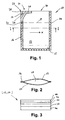
- a bag 10 shown in FIGS. 1 and 2 consists of two approximately rectangular wall parts 12, 14 of flexible film material.
- the two wall parts 12, 14 are connected inseparably or with high peel strength via a common sealing seam 16 and delimit a filling material space 18.
- a bottom part 15 sealed between the wall parts 12, 14 is indicated from the same film material.
- the bottom part 15 becomes a standing surface, i. the bag 10 is a so-called stand-up pouch.
- a peelable portion 20 of the sealed seam 16 extends over a bottom portion 15 remote bag corner 22 and is part of an easy-open closure 24.
- tear tabs 26, 28, which consist of the in this Corner area not against each other sealed wall parts 12, 14 result.
- the bag 10 has an opening 30 in an edge region.
- the opening 30 is bounded by the edge of the wall parts 12, 14, which are not yet sealed against each other in this area. After filling the bag 10 with a filling material, the two wall parts 12, 14 sealed in the region of the opening 30 against each other and the bag is closed in this manner.
- two opposing tear scores 32, 34 are arranged in the sealed seam 16.
- the imaginary connecting line p between the two tear scores 32, 34 is parallel to the running direction x of the film, from which the wall parts 12, 14 are formed.
- the different sealing strength which leads on the one hand to the inseparable sealed seam 16 with very high peel strength and on the other hand to the peelable portion 20 of the sealed seam 16, is brought about by different sealing temperatures.
- a film material which is particularly suitable for producing the bag 10 has, according to FIG. 3, a sealing layer 36 made of an ionomeric elastomeric polymer.
- a sealing layer 36 made of an ionomeric elastomeric polymer.
- To the sealing layer 36 includes a layer 38 of a metallocene-catalyzed Polyethylene of a density of 0.927 to 0.956 g / cm 3 at.
- Other layers 40, 42, 44 are optionally made of homo- or copolymer polyethylene or polypropylene.
Landscapes
- Chemical & Material Sciences (AREA)
- Chemical Kinetics & Catalysis (AREA)
- Engineering & Computer Science (AREA)
- Mechanical Engineering (AREA)
- Bag Frames (AREA)
Abstract
Description
- Die Erfindung betrifft einen Beutel aus einer flexiblen Folie mit wenigstens einer Siegelschicht, wobei die Folie entlang einer Siegelnaht gegen sich selbst oder gegen eine weitere Folie gesiegelt ist und einen Füllgutraum begrenzt. Die Erfindung betrifft auch ein Verfahren und eine flexible Folie zur Herstellung des Beutels.
- Beutel aus flexiblem Folienmaterial sind heute als Verpackung für flüssige und schütt- oder rieselfähige Füllgüter aller Art weit verbreitet. Bekannte Beutelverpackungen sind beispielsweise Flach- Stand- und Schlauchbeutel in verschiedenen Grössen zur Verwendung in Haushalt und Industrie. Allen Beuteln gemeinsam ist die Bildung eines dicht verschlossenen Füllgutraumes, der durch Siegeln von flexiblem Folienmaterial gegen sich selbst oder gegen ein weiteres Folienmaterial unter Ausbildung einer untrennbaren Siegelnaht entsteht. Üblicherweise wird zunächst ein vorgefertigter Beutel hergestellt, der an einer Stelle noch offen ist. Nach dem Einfüllen des Füllgutes erfolgt das dichte Verschliessen des Beutels in einem weiteren Siegelschritt.
- Zur Entnahme des Füllgutes werden derartige Beutel beispielsweise quer zur Siegelnaht aufgerissen oder an einer hierfür bezeichneten Stelle mit einer Schere aufgeschnitten. Oft weisen Beutel auch eine Öffnungshilfe in der Form einer in der Siegelnaht angeordneten Einreisskerbe auf.
- Der Erfindung liegt die Aufgabe zugrunde, einen Beutel der eingangs genannten Art zu schaffen, der einerseits auf einfache Art aufgerissen werden kann und andererseits auch ohne übermässigen Kraftaufwand und ohne mechanische Hilfsmittel die Bildung einer Ausgiessöffnung ermöglicht.
- Zur erfindungsgemässen Lösung der Aufgabe führt, dass die Siegelnaht in einem Teilbereich peelbar ausgebildet ist.
- Zur Bildung einer Ausgiessöffnung verläuft der peelbare Teilbereich der Siegelnaht bevorzugt über eine Beutelecke.
- Zweckmässigerweise ist in der Siegelnaht wenigstens eine Aufreisshilfe, insbesondere eine Kerbe, angeordnet.
- Eine bevorzugte Ausführung eines Beutels ist ein Standbeutel mit einem Boden und einer vom Boden aufragenden Beutelwand, wobei das dem Boden entfernt liegende Beutelende wenigstens eine Beutelecke bildet und der peelbare Teilbereich der Siegelnaht über die Beutelecke verläuft. In der Siegelnaht unterhalb der Beutelecke kann wenigstens eine Aufreisshilfe, insbesondere eine Kerbe, angeordnet sein.
- Bei einem Verfahren zur Herstellung eines Beutels aus einer flexiblen Folie mit wenigstens einer Siegelschicht, bei dem die Folie gegen sich selbst unter Bildung einer Siegelnaht zum Beutel gesiegelt wird, wird die Siegelnaht zur Bildung einer peelbaren Verbindung zwischen den gegeneinander gesiegelten Folien in einem Teilbereich bei einer ersten Temperatur T1 und zur Bildung einer untrennbaren Verbindung, d.h. einer Verbindung mit sehr hoher Peelfestigkeit, zwischen den gegeneinander gesiegelten Folien bei einer gegenüber der ersten Temperatur T1 höheren zweiten Temperatur T2 gesiegelt.
- Die erste Temperatur T1 liegt bevorzugt in einem Bereich von 95 bis 115 °C und die zweite Temperatur T2 in einem Bereich > 130 °C. Die Breite des Temperaturfenster zur Herstellung einer Siegelnaht mit guten Peeleigenschaften beträgt etwa 20 °C. Innerhalb dieses Temperaturfensters steigt die zur Trennung der Siegelnaht erforderliche Peelkraft mit zunehmender Temperatur an.
- Im Allgemeinen liegt die erste Temperatur T1 zur Erzeugung einer peelbaren Siegelung etwa 15 bis 30 °C tiefer als die zweite Temperatur T2 zur Erzeugung einer untrennbaren Siegelung bzw. einer Siegelung mit sehr hoher Peelfestigkeit.
- Die Einstellung der gewünschten Peelkraft bzw. der Untrennbarkeit einer Siegelnaht erfolgt durch entsprechende Veränderung der Temperatur in der Sealingstation.
- Eine zur Herstellung eines erfindungsgemässen Beutels mit den gewünschten Peeleigenschaften einer Siegelnaht geeignete flexible Folie umfasst wenigstens drei Schichten und wird über eine Mehrschicht-Blasfolien-Coextrusion mit der folgenden Schichtfolge hergestellt:
- A. Siegelschicht aus einem ionomeren elastomeren Polymer
- B. Metallocen-katalysiertes Polyethylen
- C. Homo- oder Copolymer Polyethylen oder Polypropylen
- Anstelle einer einzigen dritten Schicht C kann die Folie zwei oder mehr Schichten C1- C2, C3, ...Cn enthalten.
- Die Dicke der Folie liegt je nach Anwendung üblicherweise im Bereich von etwa 30 bis 150 µm. Die Foliendicke ist jedoch nicht auf diesen Bereich beschränkt. Je nach gewünschter Dicke der Folien kann die Anzahl der Schichten C aus Homo- oder Copolymer Polyethylen oder Polypropylen variieren.
- Die oben angegebenen Temperaturbereich gelten insbesondere für die erfindungsgemässe Mehrschicht-Coextrusionsfolie mit der Schichtfolge A-B-C (bzw. C1 - C2, C3, ...Cn).
- Mit der erfindungsgemässen Mehrschicht-Coextrusionsfolie lassen sich Beutel jeglicher Grösse und Form herstellen. Der wesentliche Vorteil der Mehrschicht-Coextrusionsfolie gegenüber bekannten, aus wenigstens zwei Filmen zusammengesetzten Verpackungsfolien nach dem Stand der Technik liegt darin, dass die Dualität einer peelbaren und einer untrennbaren Siegelung erfindungsgemäss mit einer einzigen Folie bzw. einem einzigen Film erreicht werden kann.
- Ein weiterer Vorteil der erfindungsgemässen Mehrschicht-Coextrusionsfolie zeigt sich beim Aufreissen eines Beutels. Wir die Aufreisskerbe so positioniert, dass der von der Kerbe initiierte Riss in der Laufrichtung der extrudierten Folie liegt, so verläuft der Riss beim weiteren Aufreissen des Beutels weiter linear in dieser Richtung. Diese Eigenschaft wird bei der Beutelherstellung berücksichtigt, indem die gedachte Aufreisslinie mit den zugehörigen Aufreisskerben parallel zur Folienlaufrichtung gelegt wird.
- Weitere Vorteile, Merkmale und Einzelheiten der Erfindung ergeben sich aus der nachfolgenden Beschreibung bevorzugter Ausführungsbeispiele sowie anhand der Zeichnung; diese zeigt schematisch in
- Fig. 1 eine Seitenansicht eines teilweise verschlossenen Beutels;
- Fig. 2 einen Schnitt durch den Beutel von Fig. 1 nach deren Linie |-|;
- Fig. 3 den Querschnitt durch eine flexible Folie.
- Ein in den Fig. 1 und 2 gezeigter Beutel 10 besteht aus zwei etwa rechteckförmigen Wandteilen 12, 14 aus flexiblem Folienmaterial. Die beiden Wandteile 12, 14 sind über eine gemeinsame Siegelnaht 16 untrennbar bzw. mit hoher Peelfestigkeit miteinander verbunden und begrenzen einem Füllgutraum 18. In einem Bodenbereich des Beutels 10 ist ein zwischen die Wandteile 12, 14 eingesiegeltes Bodenteil 15 aus demselben Folienmaterial angedeutet. Beim Befüllen des Beutels 10 wird das Bodenteil 15 zu einer Standfläche, d.h. der Beutel 10 ist ein so genannter Standbeutel.
- Ein peelbarer Teilbereich 20 der Siegelnaht 16 verläuft über eine dem Bodenteil 15 entfernt liegende Beutelecke 22 und ist Bestandteil eines leicht zu öffnenden Verschlusses 24. Zum Öffnen dieses Verschlusses 24 dienen im Bereich der Beutelecke 22 angeordneten Aufreisslaschen 26, 28, die sich aus den in diesem Eckbereich nicht gegeneinander gesiegelten Wandteilen 12, 14 ergeben.
- Der Beutel 10 weist in einem Randbereich eine Öffnung 30 auf. Die Öffnung 30 ist begrenzt durch den Rand der Wandteile 12, 14, die in diesem Bereich noch nicht gegeneinander gesiegelt sind. Nach dem Befüllen des Beutels 10 mit einem Füllgut werden die beiden Wandteile 12, 14 im Bereich der Öffnung 30 gegeneinander gesiegelt und der Beutel wird auf diese Weise verschlossen.
- Unterhalb des peelbaren Teilbereichs 20 sind zwei einander gegenüberliegende Aufreisskerben 32, 34 in der Siegelnaht 16 angeordnet. Die gedachte Verbindungslinie p zwischen den beiden Aufreisskerben 32, 34 liegt parallel zur Laufrichtung x der Folie, aus der die Wandteile 12, 14 gebildet sind.
- Der Beutel lässt sich auf zwei Arten öffnen:
- Durch Ziehen an den Aufreisslaschen 26, 28 werden die Folien 12, 14 im Bereich der Beutelecke 22 unter Bildung einer Ausgiessöffnung voneinander gepeelt.
- Durch Ziehen am oberen Ende des Beutels quer zur Siegelnaht 16 mit den Aufreisskerben 32, 34 reissen die Wandteile 12, 14 des Beutels 10 bei einer der Aufreisskerben 32, 34. Bei weiterem Ziehen setzt sich der Riss durch die beiden Wandteile 12, 14 linear und parallel zur Folienlaufrichtung x unter Bildung einer grossen Entnahmeöffnung quer über den Beutel 10 bis zum gegenüberliegenden Beutelrand fort.
- Die unterschiedliche Siegelstärke, die einerseits zur untrennbaren Siegelnaht 16 mit sehr hoher Peelfestigkeit und andererseits zum peelbaren Teilbereich 20 der Siegelnaht 16 führt, wird durch unterschiedliche Siegeltemperaturen herbeigeführt.
- Ein zur Herstellung des Beutels 10 besonderes geeignetes Folienmaterial weist gemäss Fig. 3 eine Siegelschicht 36 aus einem ionomeren elastomeren Polymer auf. An die Siegelschicht 36 schliesst eine Schicht 38 aus einem Metallocen-katalysierten Polyethylen einer Dichte von 0.927 bis 0.956 g/cm3 an. Weitere Schichten 40, 42, 44 bestehen wahlweise aus Homo- oder Copolymer Polyethylen oder Polypropylen.
Claims (10)
- Beutel aus einer flexiblen Folie (12, 14) mit wenigstens einer Siegelschicht, wobei die Folie (12, 14) entlang einer Siegelnaht (16) gegen sich selbst oder gegen eine weitere Folie gesiegelt ist und einen Füllgutraum (18) begrenzt,
dadurch gekennzeichnet, dass
die Siegelnaht (16) in einem Teilbereich (20) peelbar ausgebildet ist. - Beutel nach Anspruch 1, dadurch gekennzeichnet, dass der peelbare Teilbereich (20) der Siegelnaht (16) über eine Beutelecke (22) verläuft.
- Beutel nach Anspruch 1 oder 2, dadurch gekennzeichnet, dass in der Siegelnaht (16) wenigstens eine Aufreisshilfe (32, 34), insbesondere eine Kerbe, angeordnet ist.
- Beutel nach Anspruch 1, dadurch gekennzeichnet, dass er als Standbeutel mit einem Boden und einer vom Boden aufragenden Beutelwand ausgebildet ist, wobei das dem Boden entfernt liegende Beutelende wenigstens eine Beutelecke (22) bildet und der peelbare Teilbereich (20) der Siegelnaht (16) über die Beutelecke (22) verläuft.
- Beutel nach Anspruch 4, dadurch gekennzeichnet, dass in der Siegelnaht (16) unterhalb der Beutelecke (22) wenigstens eine Aufreisshilfe (32, 34), insbesondere eine Kerbe, angeordnet ist.
- Verfahren zur Herstellung eines Beutels aus einer flexiblen Folie (12, 14) mit wenigstens einer Siegelschicht, wobei die Folie (12, 14) gegen sich selbst unter Bildung einer Siegelnaht (16) zum Beutel (10) gesiegelt wird, dadurch gekennzeichnet, dass die Siegelnaht (16) in einem Teilbereich (20) bei einer ersten Temperatur T1 zur Bildung einer peelbaren Verbindung zwischen den gegeneinander gesiegelten Folien (12, 14) und bei einer gegenüber der ersten Temperatur T1 höheren zweiten Temperatur T2 zur Bildung einer untrennbaren Verbindung zwischen den gegeneinander gesiegelten Folien (12, 14) gesiegelt wird.
- Verfahren nach Anspruch 6, dadurch gekennzeichnet, dass die erste Temperatur T1 in einem Bereich von 95 bis 115°C und die zweite Temperatur T2 in einem Bereich > 130°C liegt.
- Verfahren nach Anspruch 7, dass die erste Temperatur T1 15 bis 30 °C tiefer liegt als die zweite Temperatur T2.
- Flexible Folie mit einer Siegelschicht (36) zur Herstellung eines Beutels (10) nach einem der Ansprüche 1 bis 5, dadurch gekennzeichnet, dass die Folie eine Mehrschicht-Coextrusionsfolie ist und Siegelschicht (36) aus einem ionomeren elastomeren Polymer besteht, die über eine aus einem Metallocen-katalysierten Polyethylen bestehende zweiten Schicht (38) mit wenigstens einer weiteren Schicht (40, 42, 44) aus Homo- oder Copolymer Polypropylen oder Polyethylen verbunden ist.
- Flexible Folie nach Anspruch 9, dadurch gekennzeichnet, dass die zweite Schicht (38) aus einem Metallocen-katalysierten Polyethylen einer Dichte von 0.927 bis 0.956 g/cm3 besteht.
Priority Applications (2)
| Application Number | Priority Date | Filing Date | Title |
|---|---|---|---|
| EP04026755A EP1674406A1 (de) | 2004-11-11 | 2004-11-11 | Beutelverpackung mit peelbarer Siegelnaht |
| US11/260,194 US20080031555A1 (en) | 2004-11-11 | 2005-10-28 | Pouch-type packaging |
Applications Claiming Priority (1)
| Application Number | Priority Date | Filing Date | Title |
|---|---|---|---|
| EP04026755A EP1674406A1 (de) | 2004-11-11 | 2004-11-11 | Beutelverpackung mit peelbarer Siegelnaht |
Publications (1)
| Publication Number | Publication Date |
|---|---|
| EP1674406A1 true EP1674406A1 (de) | 2006-06-28 |
Family
ID=34927331
Family Applications (1)
| Application Number | Title | Priority Date | Filing Date |
|---|---|---|---|
| EP04026755A Withdrawn EP1674406A1 (de) | 2004-11-11 | 2004-11-11 | Beutelverpackung mit peelbarer Siegelnaht |
Country Status (2)
| Country | Link |
|---|---|
| US (1) | US20080031555A1 (de) |
| EP (1) | EP1674406A1 (de) |
Cited By (2)
| Publication number | Priority date | Publication date | Assignee | Title |
|---|---|---|---|---|
| EP1905577A1 (de) * | 2006-09-28 | 2008-04-02 | Alcan Technology & Management Ltd. | Schlauchbeutel aus einem mehrschichtigen Film |
| EP3306239A1 (de) * | 2016-10-04 | 2018-04-11 | Cofresco Frischhalteprodukte GmbH & Co. KG | Beutel zur herstellung von eiswürfeln |
Families Citing this family (27)
| Publication number | Priority date | Publication date | Assignee | Title |
|---|---|---|---|---|
| US9150342B2 (en) | 2003-04-16 | 2015-10-06 | Intercontinental Great Brands Llc | Resealable tray container |
| US7963413B2 (en) | 2006-05-23 | 2011-06-21 | Kraft Foods Global Brands Llc | Tamper evident resealable closure |
| US8308363B2 (en) | 2006-05-23 | 2012-11-13 | Kraft Foods Global Brands Llc | Package integrity indicator for container closure |
| US8114451B2 (en) | 2006-12-27 | 2012-02-14 | Kraft Foods Global Brands Llc | Resealable closure with package integrity feature |
| US8408792B2 (en) | 2007-03-30 | 2013-04-02 | Kraft Foods Global Brands Llc | Package integrity indicating closure |
| US20100018974A1 (en) | 2008-07-24 | 2010-01-28 | Deborah Lyzenga | Package integrity indicating closure |
| GB0819200D0 (en) | 2008-10-20 | 2008-11-26 | Cadbury Holdings Ltd | Packaging |
| USD619018S1 (en) | 2009-10-30 | 2010-07-06 | Stokely-Van Camp, Inc. | Pouch |
| US20110127319A1 (en) * | 2009-12-01 | 2011-06-02 | Kraft Foods Global Brands Llc | Resealable flexible film packaging products and methods of manufacture |
| PL2347971T3 (pl) | 2010-01-26 | 2012-11-30 | Biscuit Gle | Opakowanie na produkty żywnościowe z możliwością wielokrotnego szczelnego zamykania i sposób wytwarzania |
| US8814430B2 (en) * | 2010-02-23 | 2014-08-26 | Kraft Foods R&D, Inc. | Food package having opening feature |
| PL2368811T3 (pl) | 2010-03-23 | 2012-11-30 | Biscuit Gle | Opakowanie na produkty żywnościowe z możliwością wielokrotnego szczelnego zamykania i sposób wytwarzania |
| BR112012029073A2 (pt) | 2010-05-18 | 2016-08-16 | Kraft Foods Global Brands Llc | embalagem flexível refechável e métodos para a fabricação da mesma |
| US9656783B2 (en) | 2010-05-18 | 2017-05-23 | Intercontinental Great Brands Llc | Reclosable flexible packaging and methods for manufacturing same |
| USD642933S1 (en) | 2010-09-16 | 2011-08-09 | Tropicana Products, Inc. | Pouch |
| CN103517855B (zh) | 2011-03-17 | 2016-03-16 | 洲际大品牌有限责任公司 | 可再闭合的柔性膜包装产品及制造方法 |
| EP2968832B1 (de) | 2013-03-14 | 2019-07-17 | Hollister Incorporated | Medizinische produktverpackung |
| USD734165S1 (en) | 2013-03-14 | 2015-07-14 | Hollister, Inc. | Catheter package |
| USD746152S1 (en) | 2014-06-04 | 2015-12-29 | Hollister Incorporated | Catheter package |
| USD764943S1 (en) | 2014-06-04 | 2016-08-30 | Hollister Incorporated | Catheter package |
| GB201610432D0 (en) * | 2016-06-15 | 2016-07-27 | Mars Inc | Easy Peel Pouch |
| WO2019069206A1 (en) * | 2017-10-02 | 2019-04-11 | Masterpack S.P.A. | REFERMABLE BAG |
| USD894012S1 (en) | 2018-08-23 | 2020-08-25 | Mars, Incorporated | Pouch |
| USD896633S1 (en) | 2019-01-29 | 2020-09-22 | Golden State Foods Corp. | Container |
| USD896634S1 (en) | 2019-01-29 | 2020-09-22 | Golden State Foods Corp. | Container |
| AR119924A1 (es) | 2019-09-30 | 2022-01-19 | Dow Global Technologies Llc | Película multicapa flexible |
| USD999067S1 (en) | 2021-03-10 | 2023-09-19 | Church & Dwight Co., Inc. | Peelable package |
Citations (7)
| Publication number | Priority date | Publication date | Assignee | Title |
|---|---|---|---|---|
| EP0686497A2 (de) * | 1994-06-06 | 1995-12-13 | W.R. Grace & Co.-Conn. | Folien mit Schweisseigenschaften und diese enthaltende Verpackungen |
| US5604000A (en) * | 1995-01-18 | 1997-02-18 | Reynolds Consumer Products Inc. | Heat-sealable peelable composition |
| US5716473A (en) * | 1993-07-02 | 1998-02-10 | International Paper | Method of making a semi-rigid cereal carton |
| US6270255B1 (en) * | 1997-04-18 | 2001-08-07 | Kraft Foods, Inc. | Opening system for beverage container |
| US20020126921A1 (en) * | 2001-03-07 | 2002-09-12 | Bell Gary M. | Flexible stand-up pouch constructions for dispensing liquids |
| US20040031823A1 (en) * | 2002-07-30 | 2004-02-19 | Sanford Redmond | Aperture forming means and package |
| US20040157015A1 (en) * | 1998-06-26 | 2004-08-12 | Idemitsu Petrochemical Co., Ltd. | Easily openable self-standing bag |
Family Cites Families (6)
| Publication number | Priority date | Publication date | Assignee | Title |
|---|---|---|---|---|
| US3768725A (en) * | 1971-11-11 | 1973-10-30 | Nat Distillers Chem Corp | Breathable, sterilizable and peelable pouch and method of manufacture thereof |
| JP2895176B2 (ja) * | 1990-07-30 | 1999-05-24 | 味の素株式会社 | 易引き裂き性フィルム及びそれから作られたパウチ |
| US5492411A (en) * | 1995-01-18 | 1996-02-20 | Reynolds Consumer Products Inc. | Tamper evident peelable seal |
| US6458469B1 (en) * | 1999-07-08 | 2002-10-01 | Exxonmobil Chemical Company | Multilayer oriented films with metallocene catalyzed polyethylene skin layer |
| US6780269B2 (en) * | 1999-12-22 | 2004-08-24 | Tetra Laval Holdings & Finance S.A. | Method for preparing laminate for packaging material and laminate for packaging material |
| JP4351403B2 (ja) * | 2001-07-23 | 2009-10-28 | 株式会社細川洋行 | ジッパ袋及びその製造方法 |
-
2004
- 2004-11-11 EP EP04026755A patent/EP1674406A1/de not_active Withdrawn
-
2005
- 2005-10-28 US US11/260,194 patent/US20080031555A1/en not_active Abandoned
Patent Citations (7)
| Publication number | Priority date | Publication date | Assignee | Title |
|---|---|---|---|---|
| US5716473A (en) * | 1993-07-02 | 1998-02-10 | International Paper | Method of making a semi-rigid cereal carton |
| EP0686497A2 (de) * | 1994-06-06 | 1995-12-13 | W.R. Grace & Co.-Conn. | Folien mit Schweisseigenschaften und diese enthaltende Verpackungen |
| US5604000A (en) * | 1995-01-18 | 1997-02-18 | Reynolds Consumer Products Inc. | Heat-sealable peelable composition |
| US6270255B1 (en) * | 1997-04-18 | 2001-08-07 | Kraft Foods, Inc. | Opening system for beverage container |
| US20040157015A1 (en) * | 1998-06-26 | 2004-08-12 | Idemitsu Petrochemical Co., Ltd. | Easily openable self-standing bag |
| US20020126921A1 (en) * | 2001-03-07 | 2002-09-12 | Bell Gary M. | Flexible stand-up pouch constructions for dispensing liquids |
| US20040031823A1 (en) * | 2002-07-30 | 2004-02-19 | Sanford Redmond | Aperture forming means and package |
Cited By (3)
| Publication number | Priority date | Publication date | Assignee | Title |
|---|---|---|---|---|
| EP1905577A1 (de) * | 2006-09-28 | 2008-04-02 | Alcan Technology & Management Ltd. | Schlauchbeutel aus einem mehrschichtigen Film |
| WO2008037441A1 (de) * | 2006-09-28 | 2008-04-03 | Alcan Technology & Management Ltd. | Schlauchbeutel aus einem mehrschichtigen film |
| EP3306239A1 (de) * | 2016-10-04 | 2018-04-11 | Cofresco Frischhalteprodukte GmbH & Co. KG | Beutel zur herstellung von eiswürfeln |
Also Published As
| Publication number | Publication date |
|---|---|
| US20080031555A1 (en) | 2008-02-07 |
Similar Documents
| Publication | Publication Date | Title |
|---|---|---|
| EP1674406A1 (de) | Beutelverpackung mit peelbarer Siegelnaht | |
| EP0274514B1 (de) | Packung zum verpacken von stückigem verpackungsgut, sowie verfahren zum herstellen solcher packungen | |
| DE3650724T2 (de) | Mehrschichtkunststoffilm, Verfahren zu dessen Herstellung und daraus hergestellte Verpackung | |
| DE3650654T2 (de) | Kunststoffzusammensetzung und diese Zusammensetzung enthaltende Filme und Mehrschichtstrukturen sowie daraus hergestellte Verpackungen | |
| DE3783186T2 (de) | Thermoplastischer beutel. | |
| EP0700280B1 (de) | Peelfähige polymere mehrschichtfolie für einen medizinischen mehrkammerbeutel und verfahren zu dessen herstellung | |
| DE3542565C2 (de) | Kunststofftüte und Verfahren zu ihrer Herstellung | |
| EP0451243B1 (de) | Packung für stückiges packungsgut | |
| DE60219688T2 (de) | Verpackung, wie zum beispiel beutel, mit ausgerichteter aufreissöffnung | |
| EP2439149B1 (de) | Beutelverpackung | |
| DE60130982T2 (de) | Verfahren zur herstellung von verpackungsmaterial | |
| DE2117980A1 (de) | Kunststoffilm mit elastischer Verstärkung als Einreißkante | |
| EP2374604B1 (de) | Foliendeckel zum Verschließen eines Behälters und Verfahren zu seiner Herstellung | |
| WO2001015994A1 (de) | Verpackung mit als schwächungslinie dienender rille | |
| EP1629967B1 (de) | Siegelbare Verbundfolie und deren Verwendung zur Herstellung eines Schlauchbeutels | |
| CH664540A5 (de) | Folienverpackung fuer papiertaschentuecher. | |
| DE102009043360A1 (de) | Aufreißverpackung | |
| DE102009046507A1 (de) | Wiederverschließbare Verpackung mit Doppelklebstelle | |
| EP0557484B2 (de) | Schlauchbeutelpackung mit öffnungshilfe | |
| DE69616833T2 (de) | Hohe selbstklebeeigenschaften aufweisende polymere zusammensetzungen sowie daraus hergestellte verpackungsmaterialien und verpackungen | |
| EP3126137B1 (de) | Verpackungsbeutel mit einem biaxial orientierten siegelfolienverbund | |
| DE60009418T2 (de) | Stossdämpfendes Verpackungsmaterial | |
| DE102006049338A1 (de) | Mehrschichtiges Kunststoffrohr | |
| DE2748500A1 (de) | Verpackungsmaterial | |
| DE102024111109B4 (de) | Folienverpackung, insbesondere HFFS- oder VFFS-Folienverpackung mit zusätzlicher Risseinleitungshilfe an einer Längsverbindungsnaht |
Legal Events
| Date | Code | Title | Description |
|---|---|---|---|
| PUAI | Public reference made under article 153(3) epc to a published international application that has entered the european phase |
Free format text: ORIGINAL CODE: 0009012 |
|
| AK | Designated contracting states |
Kind code of ref document: A1 Designated state(s): AT BE BG CH CY CZ DE DK EE ES FI FR GB GR HU IE IS IT LI LU MC NL PL PT RO SE SI SK TR |
|
| AX | Request for extension of the european patent |
Extension state: AL HR LT LV MK YU |
|
| 17P | Request for examination filed |
Effective date: 20061228 |
|
| AKX | Designation fees paid |
Designated state(s): AT BE BG CH CY CZ DE DK EE ES FI FR GB GR HU IE IS IT LI LU MC NL PL PT RO SE SI SK TR |
|
| AXX | Extension fees paid |
Extension state: YU Payment date: 20061228 Extension state: MK Payment date: 20061228 Extension state: LV Payment date: 20061228 Extension state: LT Payment date: 20061228 Extension state: HR Payment date: 20061228 Extension state: AL Payment date: 20061228 |
|
| 17Q | First examination report despatched |
Effective date: 20070226 |
|
| GRAP | Despatch of communication of intention to grant a patent |
Free format text: ORIGINAL CODE: EPIDOSNIGR1 |
|
| RIN1 | Information on inventor provided before grant (corrected) |
Inventor name: ROBERTS, PETER |
|
| GRAS | Grant fee paid |
Free format text: ORIGINAL CODE: EPIDOSNIGR3 |
|
| GRAL | Information related to payment of fee for publishing/printing deleted |
Free format text: ORIGINAL CODE: EPIDOSDIGR3 |
|
| STAA | Information on the status of an ep patent application or granted ep patent |
Free format text: STATUS: THE APPLICATION IS DEEMED TO BE WITHDRAWN |
|
| 18D | Application deemed to be withdrawn |
Effective date: 20090603 |