EP1669898A2 - Vorrichtung und Verfahren zur Dateisystempfadverarbeitung - Google Patents
Vorrichtung und Verfahren zur Dateisystempfadverarbeitung Download PDFInfo
- Publication number
- EP1669898A2 EP1669898A2 EP05257327A EP05257327A EP1669898A2 EP 1669898 A2 EP1669898 A2 EP 1669898A2 EP 05257327 A EP05257327 A EP 05257327A EP 05257327 A EP05257327 A EP 05257327A EP 1669898 A2 EP1669898 A2 EP 1669898A2
- Authority
- EP
- European Patent Office
- Prior art keywords
- node
- path
- name
- file system
- extension
- Prior art date
- Legal status (The legal status is an assumption and is not a legal conclusion. Google has not performed a legal analysis and makes no representation as to the accuracy of the status listed.)
- Withdrawn
Links
Images




Classifications
-
- G—PHYSICS
- G06—COMPUTING OR CALCULATING; COUNTING
- G06F—ELECTRIC DIGITAL DATA PROCESSING
- G06F9/00—Arrangements for program control, e.g. control units
-
- G—PHYSICS
- G06—COMPUTING OR CALCULATING; COUNTING
- G06F—ELECTRIC DIGITAL DATA PROCESSING
- G06F16/00—Information retrieval; Database structures therefor; File system structures therefor
- G06F16/10—File systems; File servers
- G06F16/16—File or folder operations, e.g. details of user interfaces specifically adapted to file systems
Definitions
- Apparatuses and methods consistent with the present invention relate to a file system path processing device and a method thereof, and more particularly, to a file system path processing device and a method which enable directories or files to be easily searched for from where they are located.
- portable storage media In general, electronic devices, such as home appliances, communication devices, and set-top boxes, use portable storage media for storing and processing data. Examples of portable storage media include hard disc drives, floppy disks, universal serial bus (USB) flash drives (UFDs), secure digital (SD) cards, memory sticks, multimedia memory cards (MMCs), and compact flash cards.
- USB universal serial bus
- SD secure digital
- MMC multimedia memory cards
- a portable storage medium 10 is connected to a host device 20 by being inserted into a slot 21 formed in the host device 20. Once connected to the host device 20, the portable storage medium 10 receives data from the host device 20 and stores the data.
- the host device 20 includes a file system which stores data in the portable storage medium 10 as directories and files and manages the directories and files, and stores the file system in the portable storage medium 10 together with the data.
- a file system is processed for obtaining abstract data, e.g., a volume, a data block map, data blocks, directories and files.
- a file system operation refers to an operation of indexing and modifying the abstract data processed in the file system.
- the file system is implemented in an abstract form in a hierarchical tree structure to then use a name of a path created by connecting a root node and a node where the predetermined file or directory is located.
- a first symbol '/' indicates a root node in the path name.
- the symbol '/' may also be used to discriminate the file or directory at a lower layer of the root node. If a predetermined node may have a child node, it may be referred to as a directory. On the other hand, if a predetermined node cannot have any child node, it may be referred to as a file.
- Figure 2 is a block diagram of a conventional file system path processing device.
- the system includes a user input unit 30 to which a user issues a request for processing a predetermined file or directory, a path interpretation unit 40 which interprets a path name for the predetermined file or directory, and a processing unit 50 which processes the predetermined file or directory upon the request of the user.
- Figure 3 is a diagram illustrating a conventional method of accessing to a file or directory upon the request of a user using the system of Figure 2.
- nodes ranging from the root node to a node where the pertinent file 'ls' is located Prior to interpretation of the path name '/user/bin/ls', nodes ranging from the root node to a node where the pertinent file 'ls' is located are connected.
- the processing the file 'ls' requested from the user may include adding, reading, writing, or deleting.
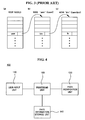
- the path interpretation unit 40 determines whether a node 'user' (/user/) exists among a plurality of children nodes of the root node '/' in the file system, as shown in Figure 3(a).
- the path interpretation unit 40 detects whether a node 'bin' (/user/bin/) exists among a plurality of children nodes of the node 'user', as shown in Figure 3(b). Thereafter, if the node 'bin' is found, the path interpretation unit 40 detects whether a node 'ls' (/user/bin/ls) exists among a plurality of children nodes of the node 'bin', as shown in Figure 3(c). If the node 'ls' is found, the processing unit 50 processes the node 'ls' upon the request of the user.
- the path interpretation unit 40 searches through all nodes from the root node to the node where the file 'ls' is located to find the file 'ls'. Therefore, if there are only a few nodes between the root node and a node corresponding to a directory or file requested by the user, the path interpretation unit 40 can search for the requested directory or file within a relatively short period of time. However, if there are a considerable number of nodes between the root node and the node corresponding to the requested directory or file, it may take the path interpretation unit 40 a considerable amount of time to search for the requested directory or file.
- the predetermined directory or file In the case of searching for a predetermined directory or file using a file allocation table (FAT) file system, the predetermined directory or file must be sequentially compared with other directories and files. As the number of directories or files to be compared with the predetermined directory or file increases, a time required for searching for the predetermined directory or file also increases.
- FAT file allocation table
- U.S. Patent No. 6,643,654 discloses a file system which enables a directory, a file, or a data stream to be quickly accessed by representing a path name, a file name, and a named data stream as, for example, "/DIR1/foo:stream1", using symbols '/' and ':'.
- this patented file system requires a user to learn about in advance the location of a directory or file that he or she wishes to navigate. Therefore, when there are a considerable number of directories or files to be searched, a considerable time would be required for searching for a desired directory or file.
- the present invention provides a file system path processing device and a method thereof in which a predetermined file or directory can be quickly searched for and processed by appropriately modifying how a path name for the predetermined file or directory is designated or interpreted.
- a file system path processing device including a user input unit that receives a path name input by a user, the path name comprising a node extension and an object name; and a processing unit that generates a number of nodes at a predetermined layer and generates an object at one node among the generated nodes, the one node corresponding to the object name.
- a file system path processing device including a user input unit that receives a path name input by a user, the path name comprising a node extension and an object name that are used for accessing to a predetermined object located at one node among a plurality of nodes generated at a predetermined layer; and a processing unit that determines the one node where the predetermined object is located by referencing the node extension and enables accessing to the predetermined object.
- a file system path processing device comprising: a user input unit that receives a path name input by a user, the path name comprising a node extension and an object name; and a processing unit that generates a number of nodes at a predetermined layer and an object at one node among the generated nodes, the one node corresponding to the object name, and enables the object to be accessible by determining the one node where the object is located by referencing the node extension.
- a file system path processing method including receiving a path name input by a user, the path name comprising a node extension and an object name; and generating, according to the path name, a number of nodes at a predetermined layer and generating an object at one node among a plurality of nodes, the one node corresponding to the object name.
- a file system path processing method including receiving a path name input by a user, the path name comprising a node extension and an object name that are used for accessing to a predetermined object included in one node among a plurality of nodes generated at a predetermined layer; and determining the one node where the predetermined object is located by referencing the node extension and enabling accessing to the predetermined object.
- FIG 4 is a block diagram of a file system path processing device 100 according to an exemplary embodiment of the present invention.
- the file system path processing device 100 includes a user input unit 110 which receives a path name comprising a node extension and the name of an object to be generated from a user, and a processing unit 120 generates an object by referencing the node extension included in the path name received by the user input unit 110 and/or enables the object to be accessible.
- the node extension is an identifier specifying a real path to the object generated by the processing unit 120, which will be described later in further detail.
- a node may be a directory or a file.
- a node that may have a child node is referred to as a directory
- a node that cannot have any child node is referred to as a file.
- it is assumed that a node is a directory that may have another directory or a file as a child node.
- an object that may be generated at a node by the processing unit 120 may be a directory or a file.
- a file system a plurality of files or directories are abstracted in a hierarchical tree structure and are accessed by referencing the hierarchical tree structure.
- files or directories are treated as objects.
- objects files or directories generated at a node are referred to as objects.
- a user may generate an object at a predetermined node using a path name comprising a node extension 200 and an extended parent node name 300.
- the node extension 200 comprises first node extensions 210 indicating whether nodes are to be generated at a predetermined layer or not, a second node extension 220 whose value X indicates the number of nodes to be generated at the predetermined layer, an extended parent node name 300 which is the name of an extended parent node of X nodes generated by referencing the second node extension 220.
- the user may indicate whether he or she wishes to generate as many nodes as children nodes of the extended parent node using the first node extensions 210 and may specify the number of nodes to be generated as children nodes of the extended parent node using the second node extension 220.
- a symbol $ is used as a first node extension 210.
- a number, a letter, or a symbol other than the symbol $ may be used as a first node extension 210.
- more than one first node extension may be used, and the number of first node extensions included in the node extension 200 may be determined according to the purpose of use.
- the first node extensions 210 may also be used as a basis of determining whether the file system path processing device 100 according to an exemplary embodiment of the present invention enables a user to generate or to access to an object using the path name including the node extension 200.
- the processing of a file system path may be carried out by a method according to an exemplary embodiment of the present invention. However, if the user does not use the first node extensions 210, the processing of a file system path may be carried out in a conventional method.
- three first node extensions 210 may be included in a path name, i.e., one ahead of the extended parent node name 300, another between the extended parent node name 300 and the second node extension 220, and the other behind the second node extension 220.
- a symbol ':' may be located between the extended parent node name 300 and the second node extension 220 as the first node extension 210.
- the second node extension 220 may come ahead of the extended parent node name 300.
- the second node extension 220 specifies a number of nodes to be generated as children nodes of an extended parent node 300. It is assumed that the second node extension 220 is set to 100 and that 100 nodes, i.e., zeroth through ninety ninth nodes, are generated as children nodes of the extended parent node with the extended parent node name 300 by referencing the second node extension 220.
- the processing unit 120 may generate an object at a node corresponding to an output of a predetermined function which receives as input a name of the object to be generated and a value of the second node extension 220.
- the user wishes to generate an object with an object name 'ls' using a path name '/user/$bin$100$/'.
- the first node extension 210 corresponds to '$'
- the value of the second node extension 220 is '100'
- the extended parent node name 300 is 'bin'.
- the processing unit 120 may generate 100 nodes at a lower layer of the bin node as an extended parent node and generates the object at one node among the generated nodes, the one node corresponding to an output of a hash function hash( ) as the node extension function having 'ls' and '100' as inputs. While the present exemplary embodiment has been described that both the object name 'ls' and the value '100' of the second node extension 220 are used as elements of the node extension function, only the object name 'ls', which is an essential element of the node extension function, may be input to the node extension function.
- the object name 'ls' may be input to the hash function hash( ) together with a variety of elements representing the path name.
- the processing unit 120 generates zeroth through ninety ninth nodes as children nodes of the extended parent node 'bin'. Thereafter, if the output of the hash function hash( ), i.e., hash(ls, 100), is determined to be, for example, 3, the processing unit 120 may change the path name '/user/$bin$100$/' into a path name '/user/bin/3/ls'.
- the hash function hash( ) is provided as an example for a better understanding of the present invention, and thus, a function other than the hash function hash( ) may be used as a node extension function according to the purpose of use.
- it may be determined what type of function is to be used as the node extension function according to the value X of the second node extension 220.
- all possible functions may be candidates for the node extension function as long as they produce as many outputs as the value of the second node extension 220, that is, X.
- the file system path processing device 100 may also include a path modification unit 130 which changes the path name input by the user according to an output of the node extension function and a path information storage unit 140 which stores path information regarding a node corresponding to the output of the node extension function.
- a node where the object is located can be quickly searched for by referencing the information stored in the path information storage unit 140.
- the user can easily access to an object generated by the processing unit 120 by referencing a path name including the node extension 200 illustrated in Figure 5.
- the user may access to the object 'ls' using the path name '/user/$bin$100$/ls'.
- the processing unit 120 determines whether the path name '/user/$bin$100$/ls' includes the node extension 200 and recognizes that the path name '/user/$bin$100$/ls' includes the node extension 200 and the output of the node extension function, i.e., hash(ls, 100), is 3.
- the processing unit 120 determines whether nodes as children nodes of the node 'bin' have been generated at a lower layer of the 'bin' node as the extended parent node by referencing the first node extension 210 of the node extension 200 included in the path name input by the user. In addition, the processing unit 120 determines the number of nodes that have been generated as the children nodes of the node 'bin' by referencing the second node extension 220. Thereafter, the processing unit 120 inputs the object name 'ls' and the value of the second node extension 220, i.e., '100', to the hash function hash( ), thereby obtaining a value '3' as the output of the hash function hash( ).
- the path modification unit 130 replaces the node extension 200 included in the path name input by the user with the output of the hash function hash( ), i.e., 3, so that the path name '/user/$bin$100$/ls' is changed into '/user/bin/3/ls'. Therefore, it is possible to search for a predetermined node where an object that the user wishes to access to is located without the need to search through all nodes.
- the aforementioned path name change may be performed by the processing unit without employing the path modification unit 130 according to an exemplary embodiment.
- the processing unit 120 may read or delete all of the 100 nodes generated by referencing the node extension 200.
- the processing unit 120 sequentially reads a plurality of nodes '/user/bin/0' through '/user/bin/99' and returns the contents of the nodes to the user. If the user inputs a delete command rmdir( ) together with the path name '/user/$bin$100$/', the processing unit 120 deletes all of the nodes '/user/bin/0' through '/user/bin/99' and then deletes an extended parent node '/user/bin' of the nodes '/user/bin/0' through '/user/bin/99'.
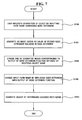
- Figure 7 is a flowchart illustrating a method of generating an object using a file system path processing method according to an exemplary embodiment of the present invention.
- a user requests generation of a predetermined object by inputting the path name including the node extension 200 and an object name to the user input unit 110.
- the path name includes the node extension 200 and the extended parent node name 300.
- the node extension 200 includes the first node extension 210 and the second node extension 220, as illustrated in Figure 5.
- the processing unit In operation S120, the processing unit generates as many nodes as the value of the second node extension 220 as children nodes of a node (hereinafter referred to as an extended parent node) where the predetermined object is to be generated.
- the nodes generated in operation S120 may be named in different ways using a variety of numbers, letters, and/or symbols.
- the processing unit 120 chooses one of the generated nodes corresponding to an output of a node extension function having the object name as an input.
- Information regarding the node chosen in operation S130 is stored in the path information storage unit 140.
- the user can easily access to the predetermined object later by referencing the information stored in the path information storage unit 140.
- the user may access to the predetermined object using the node extension function, rather than by referencing the information stored in the path information storage unit 140.
- the processing unit 120 changes the input path name into a path name including the information regarding the node chosen in operation S130.
- the predetermined object is generated by referencing the path name obtained in operation S140.
- Figure 8 is a flowchart illustrating a method of accessing to an object generated using the method of Figure 7 according to an exemplary embodiment of the present invention.
- a user requests access to a predetermined object by inputting an object name and a path name which have been used for generating the predetermined object.
- the path modification unit 130 changes the input path name with reference to an output of a node extension function having the object name as a user input.
- the path modification unit 130 may change the path name input by the user by referencing information stored in the path information storage unit 140.
- the processing unit 120 accesses to the predetermined object by referencing the changed path name.
- the processing unit 120 may sequentially verify the contents of the nodes or sequentially delete the nodes.
- the processing unit 120 determines whether a node 'user' exists among children nodes of a root node '/', as illustrated in Figure 9(a).
- the processing unit 120 If the node 'user' is found from among the children nodes of the root node '/', it is determined whether a node 'bin', which is an extended parent node, exists among children nodes of the node 'user' (/user/), as illustrated in Figure 9(b). If the node 'bin' (/user/bin/) is found from among the children nodes of the node 'user', the processing unit 120 generates X nodes by referencing a second node extension 220 included in the input path name '/user/$bin$X$/ls', as illustrated in Figure 9(c).
- the processing unit 120 determines one node among the X nodes, the one node corresponding to an output of a node extension function having the object name 'ls' and the value of the second node extension 220 as input values, and generates an object with a name 'ls' at the location of the one node according to the determination result, as illustrated in Figure 9(d).
Landscapes
- Engineering & Computer Science (AREA)
- Theoretical Computer Science (AREA)
- Physics & Mathematics (AREA)
- General Engineering & Computer Science (AREA)
- General Physics & Mathematics (AREA)
- Human Computer Interaction (AREA)
- Data Mining & Analysis (AREA)
- Databases & Information Systems (AREA)
- Software Systems (AREA)
- Information Retrieval, Db Structures And Fs Structures Therefor (AREA)
Applications Claiming Priority (1)
| Application Number | Priority Date | Filing Date | Title |
|---|---|---|---|
| KR1020040100568A KR100714682B1 (ko) | 2004-12-02 | 2004-12-02 | 파일 시스템 경로 처리 장치 및 방법 |
Publications (2)
| Publication Number | Publication Date |
|---|---|
| EP1669898A2 true EP1669898A2 (de) | 2006-06-14 |
| EP1669898A3 EP1669898A3 (de) | 2007-03-07 |
Family
ID=35852637
Family Applications (1)
| Application Number | Title | Priority Date | Filing Date |
|---|---|---|---|
| EP05257327A Withdrawn EP1669898A3 (de) | 2004-12-02 | 2005-11-29 | Vorrichtung und Verfahren zur Dateisystempfadverarbeitung |
Country Status (5)
| Country | Link |
|---|---|
| US (1) | US20060123043A1 (de) |
| EP (1) | EP1669898A3 (de) |
| JP (1) | JP4391983B2 (de) |
| KR (1) | KR100714682B1 (de) |
| CN (1) | CN1783087A (de) |
Families Citing this family (5)
| Publication number | Priority date | Publication date | Assignee | Title |
|---|---|---|---|---|
| KR100856245B1 (ko) | 2006-12-26 | 2008-09-03 | 삼성전자주식회사 | 파일 시스템 장치 및 그 파일 시스템의 파일 저장 및 파일 탐색 방법 |
| US20080208961A1 (en) * | 2007-02-23 | 2008-08-28 | Hostway Corporation | Parallel retrieval system |
| US7908252B1 (en) | 2008-03-19 | 2011-03-15 | Crossroads Systems, Inc. | System and method for verifying paths to a database |
| KR101811755B1 (ko) * | 2011-07-15 | 2018-01-26 | 엘지전자 주식회사 | 이동 단말기 |
| US12032531B1 (en) * | 2023-01-31 | 2024-07-09 | Vast Data Ltd. | Filesystem pathnames indexing using path change annex |
Citations (1)
| Publication number | Priority date | Publication date | Assignee | Title |
|---|---|---|---|---|
| US6643654B1 (en) | 2001-06-25 | 2003-11-04 | Network Appliance, Inc. | System and method for representing named data streams within an on-disk structure of a file system |
Family Cites Families (81)
| Publication number | Priority date | Publication date | Assignee | Title |
|---|---|---|---|---|
| US4176662A (en) * | 1977-06-17 | 1979-12-04 | The United States Of America As Represented By The Administrator Of The National Aeronautics And Space Administration | Apparatus for endoscopic examination |
| US4531943A (en) * | 1983-08-08 | 1985-07-30 | Angiomedics Corporation | Catheter with soft deformable tip |
| US4601698A (en) * | 1984-09-17 | 1986-07-22 | Moulding Jr Thomas S | Method of and instrument for injecting a fluid into a uterine cavity and for dispersing the fluid into the fallopian tubes |
| JPH074040B2 (ja) * | 1985-10-09 | 1995-01-18 | 株式会社日立製作所 | 超音波探触子 |
| JPH07112473B2 (ja) * | 1986-06-25 | 1995-12-06 | 株式会社日立メデイコ | 超音波診断装置 |
| US4841977A (en) * | 1987-05-26 | 1989-06-27 | Inter Therapy, Inc. | Ultra-thin acoustic transducer and balloon catheter using same in imaging array subassembly |
| US4858613A (en) * | 1988-03-02 | 1989-08-22 | Laboratory Equipment, Corp. | Localization and therapy system for treatment of spatially oriented focal disease |
| US5372138A (en) * | 1988-03-21 | 1994-12-13 | Boston Scientific Corporation | Acousting imaging catheters and the like |
| US5109861A (en) * | 1989-04-28 | 1992-05-05 | Thomas Jefferson University | Intravascular, ultrasonic imaging catheters and methods for making same |
| US5399158A (en) * | 1990-05-31 | 1995-03-21 | The United States Of America As Represented By The Secretary Of The Army | Method of lysing thrombi |
| US5520189A (en) * | 1990-07-13 | 1996-05-28 | Coraje, Inc. | Intravascular ultrasound imaging guidewire |
| US5368558A (en) * | 1991-01-11 | 1994-11-29 | Baxter International Inc. | Ultrasonic ablation catheter device having endoscopic component and method of using same |
| US6461296B1 (en) * | 1998-06-26 | 2002-10-08 | 2000 Injectx, Inc. | Method and apparatus for delivery of genes, enzymes and biological agents to tissue cells |
| US5325860A (en) * | 1991-11-08 | 1994-07-05 | Mayo Foundation For Medical Education And Research | Ultrasonic and interventional catheter and method |
| US5524620A (en) * | 1991-11-12 | 1996-06-11 | November Technologies Ltd. | Ablation of blood thrombi by means of acoustic energy |
| DE69331692T2 (de) * | 1992-09-16 | 2002-10-24 | Hitachi, Ltd. | Ultraschallbestrahlungsgeraet |
| US5429136A (en) * | 1993-04-21 | 1995-07-04 | Devices For Vascular Intervention, Inc. | Imaging atherectomy apparatus |
| US5840031A (en) * | 1993-07-01 | 1998-11-24 | Boston Scientific Corporation | Catheters for imaging, sensing electrical potentials and ablating tissue |
| CA2165829A1 (en) * | 1993-07-01 | 1995-01-19 | John E. Abele | Imaging, electrical potential sensing, and ablation catheters |
| JP3294387B2 (ja) * | 1993-07-21 | 2002-06-24 | 立花 克郎 | 超音波強度分布測定方法 |
| US6113570A (en) * | 1994-09-09 | 2000-09-05 | Coraje, Inc. | Method of removing thrombosis in fistulae |
| US5509896A (en) * | 1994-09-09 | 1996-04-23 | Coraje, Inc. | Enhancement of thrombolysis with external ultrasound |
| US5626554A (en) * | 1995-02-21 | 1997-05-06 | Exogen, Inc. | Gel containment structure |
| US5558092A (en) * | 1995-06-06 | 1996-09-24 | Imarx Pharmaceutical Corp. | Methods and apparatus for performing diagnostic and therapeutic ultrasound simultaneously |
| US5895356A (en) * | 1995-11-15 | 1999-04-20 | American Medical Systems, Inc. | Apparatus and method for transurethral focussed ultrasound therapy |
| US5728062A (en) * | 1995-11-30 | 1998-03-17 | Pharmasonics, Inc. | Apparatus and methods for vibratory intraluminal therapy employing magnetostrictive transducers |
| US5895398A (en) * | 1996-02-02 | 1999-04-20 | The Regents Of The University Of California | Method of using a clot capture coil |
| DE69733815T2 (de) * | 1996-02-15 | 2006-06-08 | Biosense Webster, Inc., Diamond Bar | Sonde zur exkavation |
| DE59712045D1 (de) * | 1996-08-22 | 2004-12-02 | Storz Medical Ag Kreuzlingen | Vorrichtung zur behandlung des herzens |
| US5812135A (en) * | 1996-11-05 | 1998-09-22 | International Business Machines Corporation | Reorganization of nodes in a partial view of hierarchical information |
| US5846205A (en) * | 1997-01-31 | 1998-12-08 | Acuson Corporation | Catheter-mounted, phased-array ultrasound transducer with improved imaging |
| US5897637A (en) * | 1997-03-07 | 1999-04-27 | Apple Computer, Inc. | System and method for rapidly identifying the existence and location of an item in a file |
| WO1998047259A2 (en) * | 1997-03-10 | 1998-10-22 | Fielder Guy L | File encryption method and system |
| US6585763B1 (en) * | 1997-10-14 | 2003-07-01 | Vascusense, Inc. | Implantable therapeutic device and method |
| US6464680B1 (en) * | 1998-07-29 | 2002-10-15 | Pharmasonics, Inc. | Ultrasonic enhancement of drug injection |
| US6575956B1 (en) * | 1997-12-31 | 2003-06-10 | Pharmasonics, Inc. | Methods and apparatus for uniform transcutaneous therapeutic ultrasound |
| ES2255155T3 (es) * | 1998-02-05 | 2006-06-16 | Biosense Webster, Inc. | Dispositivo para la administracion intracardiaca de farmacos. |
| US6165144A (en) * | 1998-03-17 | 2000-12-26 | Exogen, Inc. | Apparatus and method for mounting an ultrasound transducer |
| GB9811574D0 (en) * | 1998-05-30 | 1998-07-29 | Ibm | Indexed file system and a method and a mechanism for accessing data records from such a system |
| US6283935B1 (en) * | 1998-09-30 | 2001-09-04 | Hearten Medical | Ultrasonic device for providing reversible tissue damage to heart muscle |
| US6308714B1 (en) * | 1998-11-10 | 2001-10-30 | Coraje, Inc. | Ultrasound enhanced chemotherapy |
| US6277077B1 (en) * | 1998-11-16 | 2001-08-21 | Cardiac Pathways Corporation | Catheter including ultrasound transducer with emissions attenuation |
| US6206831B1 (en) * | 1999-01-06 | 2001-03-27 | Scimed Life Systems, Inc. | Ultrasound-guided ablation catheter and methods of use |
| US6406443B1 (en) * | 1999-06-14 | 2002-06-18 | Exogen, Inc. | Self-contained ultrasound applicator |
| US20010007940A1 (en) * | 1999-06-21 | 2001-07-12 | Hosheng Tu | Medical device having ultrasound imaging and therapeutic means |
| US6387116B1 (en) * | 1999-06-30 | 2002-05-14 | Pharmasonics, Inc. | Methods and kits for the inhibition of hyperplasia in vascular fistulas and grafts |
| US6561979B1 (en) * | 1999-09-14 | 2003-05-13 | Acuson Corporation | Medical diagnostic ultrasound system and method |
| US6733451B2 (en) * | 1999-10-05 | 2004-05-11 | Omnisonics Medical Technologies, Inc. | Apparatus and method for an ultrasonic probe used with a pharmacological agent |
| DE19949426C2 (de) * | 1999-10-13 | 2003-03-13 | Wolf Gmbh Richard | Akustisches Therapiegerät |
| KR100570428B1 (ko) * | 1999-10-29 | 2006-04-12 | 주식회사 케이티 | 그룹핑을 이용한 파일시스템에서의 데이터 저장방법 |
| US6626855B1 (en) * | 1999-11-26 | 2003-09-30 | Therus Corpoation | Controlled high efficiency lesion formation using high intensity ultrasound |
| US6635017B1 (en) * | 2000-02-09 | 2003-10-21 | Spentech, Inc. | Method and apparatus combining diagnostic ultrasound with therapeutic ultrasound to enhance thrombolysis |
| US6704730B2 (en) * | 2000-02-18 | 2004-03-09 | Avamar Technologies, Inc. | Hash file system and method for use in a commonality factoring system |
| EP1278471B1 (de) * | 2000-04-27 | 2005-06-15 | Medtronic, Inc. | Vibrationsempfindliche ablationsvorrichtung |
| US6503202B1 (en) * | 2000-06-29 | 2003-01-07 | Acuson Corp. | Medical diagnostic ultrasound system and method for flow analysis |
| US6790187B2 (en) * | 2000-08-24 | 2004-09-14 | Timi 3 Systems, Inc. | Systems and methods for applying ultrasonic energy |
| US20020091339A1 (en) * | 2000-08-24 | 2002-07-11 | Timi 3 Systems, Inc. | Systems and methods for applying ultrasound energy to stimulating circulatory activity in a targeted body region of an individual |
| US6500185B1 (en) * | 2000-09-29 | 2002-12-31 | Primus Medical, Inc. | Snare device |
| US6575922B1 (en) * | 2000-10-17 | 2003-06-10 | Walnut Technologies | Ultrasound signal and temperature monitoring during sono-thrombolysis therapy |
| JP2002140219A (ja) * | 2000-11-01 | 2002-05-17 | Toshiba Corp | ファイル処理方法、ファイル処理装置、ファイル管理用記録媒体 |
| US6514220B2 (en) * | 2001-01-25 | 2003-02-04 | Walnut Technologies | Non focussed method of exciting and controlling acoustic fields in animal body parts |
| US20030013972A1 (en) * | 2001-05-29 | 2003-01-16 | Makin Inder Raj. S. | Treatment of lung lesions using ultrasound |
| US6537224B2 (en) * | 2001-06-08 | 2003-03-25 | Vermon | Multi-purpose ultrasonic slotted array transducer |
| US20030060735A1 (en) * | 2001-09-25 | 2003-03-27 | Coffey Kenneth W. | Therapeutic ultrasonic delivery system |
| US7220239B2 (en) * | 2001-12-03 | 2007-05-22 | Ekos Corporation | Catheter with multiple ultrasound radiating members |
| EP1450900B1 (de) * | 2001-12-03 | 2006-07-26 | Ekos Corporation | Ultraschallkatheter für kleine gefässe |
| JP4167178B2 (ja) * | 2001-12-14 | 2008-10-15 | イコス コーポレイション | 血液の流れの再開の判定 |
| US6829617B2 (en) * | 2002-02-15 | 2004-12-07 | International Business Machines Corporation | Providing a snapshot of a subset of a file system |
| AU2003212481A1 (en) * | 2002-02-28 | 2003-09-09 | Ekos Corporation | Ultrasound assembly for use with a catheter |
| KR100484942B1 (ko) * | 2002-03-14 | 2005-04-25 | 한국전자통신연구원 | 대용량 파일시스템의 디렉토리 관리방법 |
| US6709396B2 (en) * | 2002-07-17 | 2004-03-23 | Vermon | Ultrasound array transducer for catheter use |
| US7287046B2 (en) * | 2002-09-30 | 2007-10-23 | Emc Corporation | Method and system of compacting sparse directories in a file system |
| US20040064051A1 (en) * | 2002-09-30 | 2004-04-01 | Talish Roger J. | Ultrasound transducer coupling apparatus |
| US6993603B2 (en) * | 2002-12-09 | 2006-01-31 | Microsoft Corporation | Managed file system filter model and architecture |
| US6730048B1 (en) * | 2002-12-23 | 2004-05-04 | Omnisonics Medical Technologies, Inc. | Apparatus and method for ultrasonic medical device with improved visibility in imaging procedures |
| KR100962763B1 (ko) * | 2003-01-20 | 2010-06-10 | 엘지전자 주식회사 | 데이터 방송 파일 시스템 처리 방법 |
| US7412449B2 (en) * | 2003-05-23 | 2008-08-12 | Sap Aktiengesellschaft | File object storage and retrieval using hashing techniques |
| US6961620B2 (en) * | 2003-09-16 | 2005-11-01 | Boston Scientific Scimed, Inc. | Apparatus and methods for assisting ablation of tissue using magnetic beads |
| US7029446B2 (en) * | 2003-10-30 | 2006-04-18 | Martin Edmund Wendelken | Standoff holder and standoff pad for ultrasound probe |
| WO2005072391A2 (en) * | 2004-01-29 | 2005-08-11 | Ekos Corporation | Small vessel ultrasound catheter |
| CA2553165A1 (en) * | 2004-01-29 | 2005-08-11 | Ekos Corporation | Method and apparatus for detecting vascular conditions with a catheter |
-
2004
- 2004-12-02 KR KR1020040100568A patent/KR100714682B1/ko not_active Expired - Fee Related
-
2005
- 2005-11-29 EP EP05257327A patent/EP1669898A3/de not_active Withdrawn
- 2005-11-30 JP JP2005347104A patent/JP4391983B2/ja not_active Expired - Fee Related
- 2005-11-30 CN CNA2005101258257A patent/CN1783087A/zh active Pending
- 2005-12-02 US US11/291,890 patent/US20060123043A1/en not_active Abandoned
Patent Citations (1)
| Publication number | Priority date | Publication date | Assignee | Title |
|---|---|---|---|---|
| US6643654B1 (en) | 2001-06-25 | 2003-11-04 | Network Appliance, Inc. | System and method for representing named data streams within an on-disk structure of a file system |
Also Published As
| Publication number | Publication date |
|---|---|
| EP1669898A3 (de) | 2007-03-07 |
| US20060123043A1 (en) | 2006-06-08 |
| KR100714682B1 (ko) | 2007-05-04 |
| JP4391983B2 (ja) | 2009-12-24 |
| KR20060061941A (ko) | 2006-06-09 |
| JP2006164276A (ja) | 2006-06-22 |
| CN1783087A (zh) | 2006-06-07 |
Similar Documents
| Publication | Publication Date | Title |
|---|---|---|
| CN100468399C (zh) | 查询到任务的映射 | |
| KR100930455B1 (ko) | 쿼리별 검색 컬렉션 생성 방법 및 시스템 | |
| EP1176523A2 (de) | Dateisystem mit erweiterten Attributen | |
| US7765213B2 (en) | Ordered index | |
| US20070276848A1 (en) | Apparatus and method for managing data | |
| US6330567B1 (en) | Searching system for searching files stored in a hard disk of a personal computer | |
| KR20080002815A (ko) | 전자 정보의 탐색, 내비게이션 및 검색 | |
| CN110888837B (zh) | 对象存储小文件归并方法及装置 | |
| CN102365640A (zh) | 在分级的基于信任的配置中结构化并搜索数据 | |
| KR20140041499A (ko) | 격리된 애플리케이션을 위한 중개된 아이템 액세스 기법 | |
| CN115344549B (zh) | 一种多版本功能恢复历史版本的方法、装置及存储介质 | |
| JP2005302038A (ja) | Bツリー中の連続キーの名前を変更する方法およびシステム | |
| US20070094315A1 (en) | Apparatus and method for storing and managing additional data in file system | |
| CN103257971A (zh) | 终端和文件管理方法 | |
| EP1669898A2 (de) | Vorrichtung und Verfahren zur Dateisystempfadverarbeitung | |
| WO2009093219A1 (en) | Method and apparatus for organizing media data in a database | |
| EP1632856A1 (de) | Speicherverwaltungseinheit, speichereinheit, dateiverarbeitungssystem, dateiverwaltungssystem und diesbezügliche verfahren und programme | |
| EP1603060A2 (de) | Methode und Gerät zum Verschieben von Multimediadateien und Speichermedium, ein Speicherprogramm zum Ausführen der Methode | |
| CN113946544B (zh) | 一种分布式文件系统的元数据组织方法及装置 | |
| JP2007516487A (ja) | 取り外し可能な記憶媒体に格納されたファイルに対してアプリケーションでアクセスする方法 | |
| JP6520052B2 (ja) | 情報処理装置及び情報処理プログラム | |
| CN106326224B (zh) | 一种文件查找方法及装置 | |
| KR100619042B1 (ko) | 메모리 카드의 파일 검색 방법 및 장치 | |
| KR100729505B1 (ko) | 망가입자 정보의 페이지단위 출력을 위한 인덱싱방법 | |
| JP2000132439A (ja) | パーソナルコンピュータのハードディスクに記憶されたファイルを検索する検索システム |
Legal Events
| Date | Code | Title | Description |
|---|---|---|---|
| PUAI | Public reference made under article 153(3) epc to a published international application that has entered the european phase |
Free format text: ORIGINAL CODE: 0009012 |
|
| 17P | Request for examination filed |
Effective date: 20051210 |
|
| AK | Designated contracting states |
Kind code of ref document: A2 Designated state(s): AT BE BG CH CY CZ DE DK EE ES FI FR GB GR HU IE IS IT LI LT LU LV MC NL PL PT RO SE SI SK TR |
|
| AX | Request for extension of the european patent |
Extension state: AL BA HR MK YU |
|
| PUAL | Search report despatched |
Free format text: ORIGINAL CODE: 0009013 |
|
| AK | Designated contracting states |
Kind code of ref document: A3 Designated state(s): AT BE BG CH CY CZ DE DK EE ES FI FR GB GR HU IE IS IT LI LT LU LV MC NL PL PT RO SE SI SK TR |
|
| AX | Request for extension of the european patent |
Extension state: AL BA HR MK YU |
|
| 17Q | First examination report despatched |
Effective date: 20070509 |
|
| AKX | Designation fees paid |
Designated state(s): DE FR GB NL |
|
| APBK | Appeal reference recorded |
Free format text: ORIGINAL CODE: EPIDOSNREFNE |
|
| APBN | Date of receipt of notice of appeal recorded |
Free format text: ORIGINAL CODE: EPIDOSNNOA2E |
|
| APBR | Date of receipt of statement of grounds of appeal recorded |
Free format text: ORIGINAL CODE: EPIDOSNNOA3E |
|
| APAF | Appeal reference modified |
Free format text: ORIGINAL CODE: EPIDOSCREFNE |
|
| RAP1 | Party data changed (applicant data changed or rights of an application transferred) |
Owner name: SAMSUNG ELECTRONICS CO., LTD. |
|
| APBT | Appeal procedure closed |
Free format text: ORIGINAL CODE: EPIDOSNNOA9E |
|
| STAA | Information on the status of an ep patent application or granted ep patent |
Free format text: STATUS: THE APPLICATION IS DEEMED TO BE WITHDRAWN |
|
| 18D | Application deemed to be withdrawn |
Effective date: 20120301 |