EP1656351B1 - Process for preparation of 4-aryl-nicotinamide derivatives - Google Patents
Process for preparation of 4-aryl-nicotinamide derivatives Download PDFInfo
- Publication number
- EP1656351B1 EP1656351B1 EP04763155A EP04763155A EP1656351B1 EP 1656351 B1 EP1656351 B1 EP 1656351B1 EP 04763155 A EP04763155 A EP 04763155A EP 04763155 A EP04763155 A EP 04763155A EP 1656351 B1 EP1656351 B1 EP 1656351B1
- Authority
- EP
- European Patent Office
- Prior art keywords
- phenyl
- tolyl
- formula
- methyl
- process according
- Prior art date
- Legal status (The legal status is an assumption and is not a legal conclusion. Google has not performed a legal analysis and makes no representation as to the accuracy of the status listed.)
- Expired - Lifetime
Links
Classifications
-
- C—CHEMISTRY; METALLURGY
- C07—ORGANIC CHEMISTRY
- C07D—HETEROCYCLIC COMPOUNDS
- C07D213/00—Heterocyclic compounds containing six-membered rings, not condensed with other rings, with one nitrogen atom as the only ring hetero atom and three or more double bonds between ring members or between ring members and non-ring members
- C07D213/02—Heterocyclic compounds containing six-membered rings, not condensed with other rings, with one nitrogen atom as the only ring hetero atom and three or more double bonds between ring members or between ring members and non-ring members having three double bonds between ring members or between ring members and non-ring members
- C07D213/04—Heterocyclic compounds containing six-membered rings, not condensed with other rings, with one nitrogen atom as the only ring hetero atom and three or more double bonds between ring members or between ring members and non-ring members having three double bonds between ring members or between ring members and non-ring members having no bond between the ring nitrogen atom and a non-ring member or having only hydrogen or carbon atoms directly attached to the ring nitrogen atom
- C07D213/60—Heterocyclic compounds containing six-membered rings, not condensed with other rings, with one nitrogen atom as the only ring hetero atom and three or more double bonds between ring members or between ring members and non-ring members having three double bonds between ring members or between ring members and non-ring members having no bond between the ring nitrogen atom and a non-ring member or having only hydrogen or carbon atoms directly attached to the ring nitrogen atom with hetero atoms or with carbon atoms having three bonds to hetero atoms with at the most one bond to halogen, e.g. ester or nitrile radicals, directly attached to ring carbon atoms
- C07D213/78—Carbon atoms having three bonds to hetero atoms, with at the most one bond to halogen, e.g. ester or nitrile radicals
- C07D213/81—Amides; Imides
- C07D213/82—Amides; Imides in position 3
-
- A—HUMAN NECESSITIES
- A61—MEDICAL OR VETERINARY SCIENCE; HYGIENE
- A61K—PREPARATIONS FOR MEDICAL, DENTAL OR TOILETRY PURPOSES
- A61K31/00—Medicinal preparations containing organic active ingredients
- A61K31/33—Heterocyclic compounds
- A61K31/395—Heterocyclic compounds having nitrogen as a ring hetero atom, e.g. guanethidine or rifamycins
- A61K31/435—Heterocyclic compounds having nitrogen as a ring hetero atom, e.g. guanethidine or rifamycins having six-membered rings with one nitrogen as the only ring hetero atom
- A61K31/465—Nicotine; Derivatives thereof
-
- C—CHEMISTRY; METALLURGY
- C07—ORGANIC CHEMISTRY
- C07D—HETEROCYCLIC COMPOUNDS
- C07D213/00—Heterocyclic compounds containing six-membered rings, not condensed with other rings, with one nitrogen atom as the only ring hetero atom and three or more double bonds between ring members or between ring members and non-ring members
- C07D213/02—Heterocyclic compounds containing six-membered rings, not condensed with other rings, with one nitrogen atom as the only ring hetero atom and three or more double bonds between ring members or between ring members and non-ring members having three double bonds between ring members or between ring members and non-ring members
- C07D213/04—Heterocyclic compounds containing six-membered rings, not condensed with other rings, with one nitrogen atom as the only ring hetero atom and three or more double bonds between ring members or between ring members and non-ring members having three double bonds between ring members or between ring members and non-ring members having no bond between the ring nitrogen atom and a non-ring member or having only hydrogen or carbon atoms directly attached to the ring nitrogen atom
- C07D213/60—Heterocyclic compounds containing six-membered rings, not condensed with other rings, with one nitrogen atom as the only ring hetero atom and three or more double bonds between ring members or between ring members and non-ring members having three double bonds between ring members or between ring members and non-ring members having no bond between the ring nitrogen atom and a non-ring member or having only hydrogen or carbon atoms directly attached to the ring nitrogen atom with hetero atoms or with carbon atoms having three bonds to hetero atoms with at the most one bond to halogen, e.g. ester or nitrile radicals, directly attached to ring carbon atoms
- C07D213/78—Carbon atoms having three bonds to hetero atoms, with at the most one bond to halogen, e.g. ester or nitrile radicals
- C07D213/84—Nitriles
- C07D213/85—Nitriles in position 3
Definitions
- the present invention relates to a process for the manufacture of compounds of general formula wherein
- R 1 and R 1' are independently hydrogen, lower alkyl, alkoxy, halogen, cyano or alkylamino;
- NK-1 Neurokinin 1
- substance P The central and peripheral actions of the mammalian tachykinin substance P have been associated with numerous inflammatory conditions including migraine, rheumatoid arthritis, asthma, and inflammatory bowel disease as well as mediation of the emetic reflex and the modulation of central nervous system (CNS) disorders such as Parkinson's disease.
- CNS central nervous system
- these compounds are useful in the treatment of pain, headache, especially migraine Alzheimer's disease, multiple sclerosis, attenuation of morphine withdrawal, cardiovascular changes, oedema, such as oedema caused by thermal injury, chronic inflammatory diseases such as rheumatoid arthritis, asthma/bronchial hyperreactivity and other respiratory diseases including allergic rhinitis, inflammatory diseases of the gut including ulcerative colitis and Crohn's disease, ocular injury and ocular inflammatory diseases.
- the compounds may be useful in the treatment of a number of physiological disorders, which include disorders of the central nervous system such as anxiety, depression and psychosis.
- the neurokinin-1 receptor antagonists are further useful for the treatment of motion sickness, for treatment induced vomiting and for the reduction of cisplatin-induced emesis.
- lower alkyl denotes a straight- or branched-chain alkyl group containing from 1-7 carbon atoms, for example, methyl, ethyl, propyl, isopropyl, n-butyl, i-butyl, t-butyl and the like.
- Preferred lower alkyl groups are groups with 1-4 carbon atoms.
- lower alkoxy denotes a group wherein the alkyl residues are as defined above, and which is attached via an oxygen atom.
- halogen denotes chlorine, iodine, fluorine and bromine.
- cycloalkyl denotes a saturated carbocyclic group, containing 3-6 carbon atoms.
- cyclic tertiary amine denotes, for example, pyrrol-1-yl, imidazol-1-yl, piperidin-1-yl, piperazin-1-yl, morpholin-4-yl, thiomorpholin-4-yl, 1-oxo-thiomorpholin-4-yl or 1,1-dioxo-thiomorpholin-4-yl.
- 5 or 6 membered heterocyclic group denotes, for example pyridinyl, pyrimidinyl, oxadiazolyl, triazolyl, tetrazolyl, thiazolyl, thienyl, furyl, pyranyl, pyrrolyl, imidazolyl, pyrazolyl, isothiazolyl, piperazinyl or piperidyl.
- the compounds of formula II can be manufactured according to e.g. EP-A-1035115 .
- This method for manufacturing the compounds of general formula I is high-yielding but requires the use of expensive starting materials. Furthermore, the key step in this method is the substitution of the pyridine with R 1 R 1' C 6 H 3 MgCl by Grignard Reaction. The success of this reaction depends on the substitution patter on the aromatic ring. In case that electron withdrawing groups decrease the reactivity of the Grignard reagent, a Suzuki type reaction (Suzuki Coupling) must be performed.
- the problem at the root of the present invention is therefore to provide a process for preparing the compounds of formula I, which process is preferred in case the Grignard Reaction will not work or does not work well. This process is useful for the synthesis of further NK1 receptor antagonists.
- the compound of formula is obtained in good yield by the reaction of 2-chloroacetamide with pyridine.
- the reaction is described in A. R. Katritzky, N. E. Grzeskowiak and J. Alvarez-Builla, J. C. S. Perkin I, 1981, 1180-1185 .
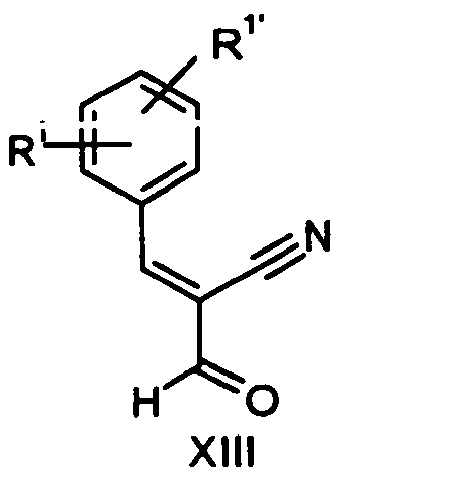
- a solution of 3,3-dimethoxypropionitrile (XII) and compound of formula XI is added to sodium methanolate in an alcohol, such as lower alkyl alcohol, cycloalkyl alcolhol, preferably methanol by keeping the internal temperature below 30°C, preferably below 20°C.
- the reaction mixture is stirred at a temperature varying between 20-30°C, preferably between 22-25°C for 5 to 20 hours, preferably 10 to 12 hours.
- An acid for example, acetic acid, H 2 SO 4 or HCl is then added to the reaction mixture at a temperature between 10-30 °C, preferably between 15-25 °C. After stirring the resulting mixture for 5 to 180 minutes, preferably 30 to 60 minutes, the compound of formula XIII is obtained in good yield.
- step a) More detailed description of step a) is following:
- the reaction takes place in an organic solvent, such as ether, ketone or alcohol, preferably alcohol, most preferably methanol.
- the reaction mixture is treated with an organic base, such as triethylamine at about 10 to 50°C, preferably 20 to 30 °C.
- the reaction mixture is stirred for 0.5 to 12 hours, preferably 2 hours and concentrated in vacuum.
- the residue is then taken up in an organic solvent, such as dichloromethane, treated with (chloromethylene)dimethylammonium chloride (Vilsmeiers Reagent) and heated to 30 to 60 °C, preferably 45 °C for 0.5 to 5 hours, preferably 1 hour. In order to remove all volatile matter, the mixture is concentrated in vacuum.
- organic solvent such as dichloromethane
- Vilsmeiers Reagent (chloromethylene)dimethylammonium chloride
- the resulting residue is heated, neat or dissolved in a solvent with high boiling temperature, such as xylene, toluene, diphenylether, to 150 to 240 °C, preferably 170 to 200 °C, most preferably 180-190°C for 10 to 60 minutes, preferably 15 minutes, cooled down to 10 to 30 °C, preferably 20-25°C and dissolved in an organic solvent and purified by extraction with water.
- a solvent with high boiling temperature such as xylene, toluene, diphenylether
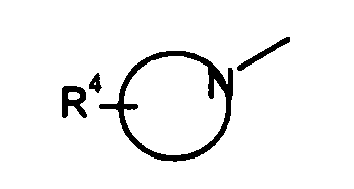
- R 1 and R 1' are, independently from each other, lower alkyl, alkoxy, halogen, cyano or alkylamino; P is halogen and R 2 is a cyclic tertiary amine of the group wherein R 4 is described above.
- R 1 and R 1' are, independently from each other, hydrogen, lower alkyl, alkoxy, halogen, cyano or alkylamino; P is chloro and R 2 is morpholin-4-yl, 4-methyl-piperazin-1-yl or 1,1,-dioxothiomorpholin-4-yl.
- the present process is applied for the manufacture of 6-hydroxy-4-o-tolyl-nicotinonitrile, 6-oxo-4-p-tolyl-1,6-dihydro-pyridine-3-carbonitrile, 4-(2-chloro-phenyl)-6-oxo-1,6-dihydropyridine-3-carbonitrile, 4-(4-chloro-phenyl)-6-oxo-1,6-dihydro-pyridine-3-carbonitrile, 4-(3-cyano-phenyl)-6-oxo-1,6-dihydro-pyridine-3-carbonitrile, 4-(4-cyano-phenyl)-6-oxo-1,6-dihydro-pyridine-3-carbonitrile, 4-(4-methoxy-phenyl)-6-oxo-1,6-dihydropyridine-3-carbonitrile, 4-(3-methoxy-phenyl)-6-oxo-1,6-dihydropyridine-3-carbonitrile, 4-
- 2-Propenenitrile, 2-formyl-3-p-tolyl was synthesized analogous to example 1b using 3,3-Dimethoxypropionitrile and p-tolylaldehyde.
- 2-Propenenitrile, 2-formyl-3-(2-chloro-phenyl) was synthesized analogous to example 1b using 3,3-dimethoxypropionitrile and o-chloro-benzaldehyde.
- 2-Ppenenitrile, 2-formyl-3-(4-chloro-phenyl) was synthesized analogous to example 1b using 3,3-dimethoxypropionitrile and o-chloro-benzaldehyde.
- 2-Propenenitrile, 2-formyl-3-(3-ryano-phenyl) was synthesized analogous to example 1b using 3,3-Dimethoxypropionitrile and m-cyano-benzaldehyde.
- 2-Propenenitrile, 2-formyl-3-(4-cyano-phenyl) was synthesized analogous to example 1b using 3,3-dimethoxypropionitrile and p-cyano-benzaldehyde.
- 2-Propenenitrile, 2-formyl-3-(4-methoxy-phenyl) was synthesized analogous to example 1b using 3,3-Dimethoxypropionitrile and p-methoxy-benzaldehyde.
- 2-Propenenitrile, 2-formyl-3-(3-methoxy-phenyl) was synthesized analogous to example 1b using 3,3-dimethoxypropionitrile and m-methoxy-benzaldehyde.
- 2-Propenenitrile, 2-formyl-3-(2-methoxy-phenyl) was synthesized analogous to example 1b using 3,3-dimethoxypropionitrile and o-methoxy-benzaldehyde.
- 2-Propenenitrile, 2-formyl-3-(4-dimethylamino-phenyl) was synthesized analogous to example 1b using 3,3-dimethoxypropionitrile and p-dimethylaminobenzaldehyde.
- 2-Cyano-cinnamic aldehyde was synthesized analogous to example 1b using 3,3-dimethoxypropionitrile and benzaldehyde.
Landscapes
- Chemical & Material Sciences (AREA)
- Organic Chemistry (AREA)
- Health & Medical Sciences (AREA)
- Life Sciences & Earth Sciences (AREA)
- Pharmacology & Pharmacy (AREA)
- Epidemiology (AREA)
- Medicinal Chemistry (AREA)
- Animal Behavior & Ethology (AREA)
- General Health & Medical Sciences (AREA)
- Public Health (AREA)
- Veterinary Medicine (AREA)
- Pyridine Compounds (AREA)
- Pharmaceuticals Containing Other Organic And Inorganic Compounds (AREA)
- Plural Heterocyclic Compounds (AREA)
Abstract
Description
- The present invention relates to a process for the manufacture of compounds of general formula

- R1 and R1'
- are independently hydrogen, lower alkyl, lower alkoxy, halogen, cyano or alkylamino;
- R2
- is -N(R3)2, -N(R3)(CH2)nOH, -N(R3)S(O)2-lower alkyl, -N(R3)S(O)2-phenyl, -N=CH-N(R3)2, -N(R3)C(O)R3 or a cyclic tertiary amine of the group
- R3
- is, independently from each other, hydrogen, C3-6-cycloalkyl, benzyl or lower alkyl;
- R4
- is hydrogen, hydroxy, lower alkyl, -(CH2)nCOO-lower alkyl, -N(R3)CO-lower alkyl, hydroxy-lower alkyl, cyano, -(CH2)nO(CH2)nOH, -CHO or a 5-or 6- membered heterocyclic group, optionally bonded via an alkylene group.
- The compounds of formula I are valuable intermediate products for the manufacture of therapeutically active compounds of general formula
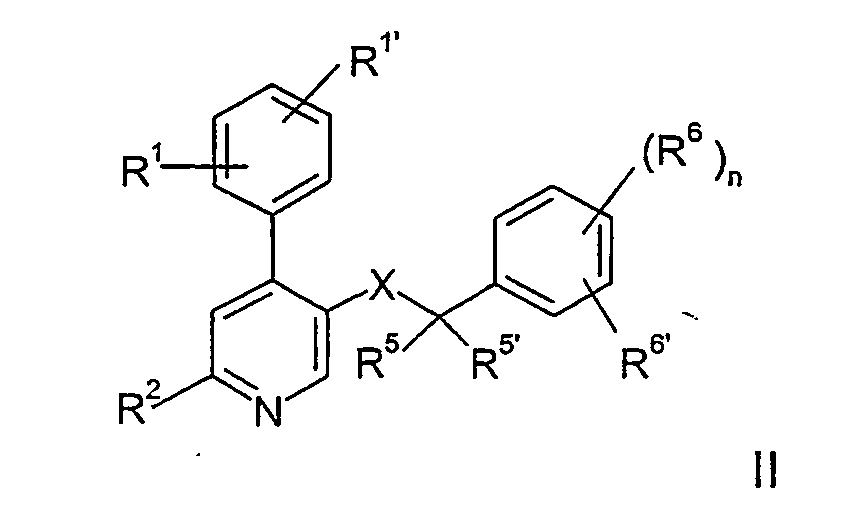
R1 and R1' are independently hydrogen, lower alkyl, alkoxy, halogen, cyano or alkylamino;
R2 is -N(R3)2, -N(R)(CH2)nOH, -N(R3)S(O)2-lower alkyl, -N(R3)S(O)2-phenyl, -N=CH-N(R3)2, -N(R3)C(O)R3 or a cyclic tertiary amine of the group

- R3
- is, independently from each other, hydrogen, C3-6-cycloalkyl, benzyl or lower alkyl;
- R4
- is hydrogen, hydroxy, lower alkyl, -(CH2)nCOO-lower alkyl, -N(R3)CO-lower alkyl, hydroxy-lower alkyl, cyano, -(CH2)nO(CH2)nOH, -CHO or a 5-or 6 membered heterocyclic group, optionally bonded via an alkylene group.
- R5 and R5'
- are independently from each other hydrogen, lower alkyl or together with the carbon atom form a cycloalkyl group;
- R6 and R6'
- are independently from each other hydrogen, halogen, trifluoromethyl, lower alkoxy or cyano; or
- R6 and R6'
- may be together -CH=CH-CH=CH-, optionally substituted by one or two substituents selected from lower alkyl or lower alkoxy;
- X
- is -C(O)N(R3)-, -(CH2)mO-, -(CH2)mN(R3)-, -N(R3)C(O)-, or -N(R3) (CH2)m-;
- n
- is 0-4; and
- m
- is 1 or 2.
- Compounds of formula II are described in
EP-A-1035115 , such as
N-(3,5-Bis-trifluoromethyl-benzyl)-N-methyl-6- [methyl-(2-morpholin-4-yl-ethyl)-amino]-4-o-tolyl-nicotinamide,
N-(3,5-Bis-trifluoromethyl-benzyl)-N-methyl-6-morpholin-4-yl-4-o-tolyl-nicotinamide,
N-(3,5-Bis-trifluoromethyl-benzyl)-N-methyl-6-thiomorpholin-4-yl-4-o-tolyl-nicotinamide,
N-(3,5-Bis-trifluoromethyl-benzyl)-N-methyl-6-(1-oxo-1λ6-4-thiomorpholin 4-yl)-4-o-tolyl-nicotinamide,
N-(3,5-Bis-trifluoromethyl-benzyl)-6-(1,1-dioxo-1λ6-6-thiomorpholin-4-yl)-N-methyl-4-o-tolyl-nicotinamide,
N-(3,5-Bis-trifluoromethyl-benzyl)-N-methyl-6-piperazin-1-yl-4-o-tolyl-nicotinamide,
N-(3,5-Bis-trifluoromethyl-benzyl)-6-[4-(2-hydroxy-ethyl)-piperazin-1-yl]-N-methyl-4-o-tolyl-nicotinamide,
2-(3,5-bis-trifluoromethyl-phenyl)-N-[6-(4-methyl-piperazin-1-yl)-4-o-tolyl-pyridin-3-yl]-N-methyl-isobutyramide,
2-(3,5-bis-trifluoromethyl-phenyl)-N-(6-morpholin-4-yl-4-o-tolyl-pyridin-3-yl)-N-methyl-isobutyramide,
2-(3,5-Bis-trifluoromethyl-phenyl)-N-[4-(4-fluoro-2-methyl-phenyl)-6-(4-methyl-piperazin-1-yl)-pyridin-3-yl]-N-methyl-isobutyramide,
2-(3,5-Bis-trifluoromethyl-phenyl)-N-[4-(2-chloro-phenyl)-pyridin-3-yl]-N-methyl-isobutyramide,
2-(3,5-Bis-trifluoromethyl-phenyl-N-methyl-N-(4-o-tolyl-pyridin-3-yl)-isobutyramide,
2-(3,5-Bis-trifluoromethyl-phenyl)-N-methyl-N-[6-(4-pyrimidin-2-yl-piperazin-1-yl)-4-o-tolyl-pyridin-3-yl] -isobutyramide,
2-(3,5-Bis-trifluoromethyl-phenyl)-N-(6-morpholin-4-yl-4-o-tolyl-pyridin-3-yl)-isobutyramide,
2-(3,5-Bis-trifluoromethyl-phenyl)-N-[4-(2-chloro-phenyl)-6-dimethylamino-pyridin-3-yl] -isobutyramide,
2-(3,5-Bis-trifluoromethyl-phenyl)-N-methyl-N-(6-piperazin-1-yl-4-o-tolyl-pyridin-3-yl)-isobutyramide,
and
2-(3,5-bis-trifluoromethyl-phenyl)-N-[6-(1,1-dioxo-1λ6-thiomorpholin-4-yl)-4-o-tolyl-pyridin-3-yl] -N-methyl-isobutyramide. - These compounds of formula II are antagonists of the Neurokinin 1 (NK-1, substance P) receptor. The central and peripheral actions of the mammalian tachykinin substance P have been associated with numerous inflammatory conditions including migraine, rheumatoid arthritis, asthma, and inflammatory bowel disease as well as mediation of the emetic reflex and the modulation of central nervous system (CNS) disorders such as Parkinson's disease. Furthermore, these compounds are useful in the treatment of pain, headache, especially migraine Alzheimer's disease, multiple sclerosis, attenuation of morphine withdrawal, cardiovascular changes, oedema, such as oedema caused by thermal injury, chronic inflammatory diseases such as rheumatoid arthritis, asthma/bronchial hyperreactivity and other respiratory diseases including allergic rhinitis, inflammatory diseases of the gut including ulcerative colitis and Crohn's disease, ocular injury and ocular inflammatory diseases. Furthermore, the compounds may be useful in the treatment of a number of physiological disorders, which include disorders of the central nervous system such as anxiety, depression and psychosis. The neurokinin-1 receptor antagonists are further useful for the treatment of motion sickness, for treatment induced vomiting and for the reduction of cisplatin-induced emesis.
- The following definitions of the general terms used in the present description apply irrespective of whether the terms in question appear alone or in combination.
- As used herein, the term "lower alkyl" denotes a straight- or branched-chain alkyl group containing from 1-7 carbon atoms, for example, methyl, ethyl, propyl, isopropyl, n-butyl, i-butyl, t-butyl and the like. Preferred lower alkyl groups are groups with 1-4 carbon atoms.
- The term "lower alkoxy" denotes a group wherein the alkyl residues are as defined above, and which is attached via an oxygen atom.
- The term "halogen" denotes chlorine, iodine, fluorine and bromine.
- The term "cycloalkyl" denotes a saturated carbocyclic group, containing 3-6 carbon atoms.
- The term "cyclic tertiary amine" denotes, for example, pyrrol-1-yl, imidazol-1-yl, piperidin-1-yl, piperazin-1-yl, morpholin-4-yl, thiomorpholin-4-yl, 1-oxo-thiomorpholin-4-yl or 1,1-dioxo-thiomorpholin-4-yl.
- The term "5 or 6 membered heterocyclic group" denotes, for example pyridinyl, pyrimidinyl, oxadiazolyl, triazolyl, tetrazolyl, thiazolyl, thienyl, furyl, pyranyl, pyrrolyl, imidazolyl, pyrazolyl, isothiazolyl, piperazinyl or piperidyl.
- The compounds of formula II can be manufactured according to e.g.
EP-A-1035115 . - It is known (
EP-A-1035115 ) that the present compounds of formula I can be prepared for example, by processes described in scheme 1 below:
- This method for manufacturing the compounds of general formula I is high-yielding but requires the use of expensive starting materials. Furthermore, the key step in this method is the substitution of the pyridine with R1R1'C6H3MgCl by Grignard Reaction. The success of this reaction depends on the substitution patter on the aromatic ring. In case that electron withdrawing groups decrease the reactivity of the Grignard reagent, a Suzuki type reaction (Suzuki Coupling) must be performed.
- The problem at the root of the present invention is therefore to provide a process for preparing the compounds of formula I, which process is preferred in case the Grignard Reaction will not work or does not work well. This process is useful for the synthesis of further NK1 receptor antagonists.
- The problem is solved, according to the present invention, by a process for preparing the compounds of formula I as show in scheme 2:

- In scheme 2 the definition of substituents for R1, R1' and R2 is described above.
- The compound of formula

- The preparation of compound of formula

- A solution of 3,3-dimethoxypropionitrile (XII) and compound of formula XI is added to sodium methanolate in an alcohol, such as lower alkyl alcohol, cycloalkyl alcolhol, preferably methanol by keeping the internal temperature below 30°C, preferably below 20°C. The reaction mixture is stirred at a temperature varying between 20-30°C, preferably between 22-25°C for 5 to 20 hours, preferably 10 to 12 hours.
- An acid, for example, acetic acid, H2SO4 or HCl is then added to the reaction mixture at a temperature between 10-30 °C, preferably between 15-25 °C. After stirring the resulting mixture for 5 to 180 minutes, preferably 30 to 60 minutes, the compound of formula XIII is obtained in good yield.
- The process according to the present invention for preparing the compounds of formula I comprising the steps of:
- a) reacting a compound of formula


- More detailed description of step a) is following:
- The reaction takes place in an organic solvent, such as ether, ketone or alcohol, preferably alcohol, most preferably methanol. The reaction mixture is treated with an organic base, such as triethylamine at about 10 to 50°C, preferably 20 to 30 °C. The reaction mixture is stirred for 0.5 to 12 hours, preferably 2 hours and concentrated in vacuum.
- The residue is then taken up in an organic solvent, such as dichloromethane, treated with (chloromethylene)dimethylammonium chloride (Vilsmeiers Reagent) and heated to 30 to 60 °C, preferably 45 °C for 0.5 to 5 hours, preferably 1 hour. In order to remove all volatile matter, the mixture is concentrated in vacuum.
- The resulting residue is heated, neat or dissolved in a solvent with high boiling temperature, such as xylene, toluene, diphenylether, to 150 to 240 °C, preferably 170 to 200 °C, most preferably 180-190°C for 10 to 60 minutes, preferably 15 minutes, cooled down to 10 to 30 °C, preferably 20-25°C and dissolved in an organic solvent and purified by extraction with water. The layers are separated. Evaporation of the organic phase in vacuum give product of formula

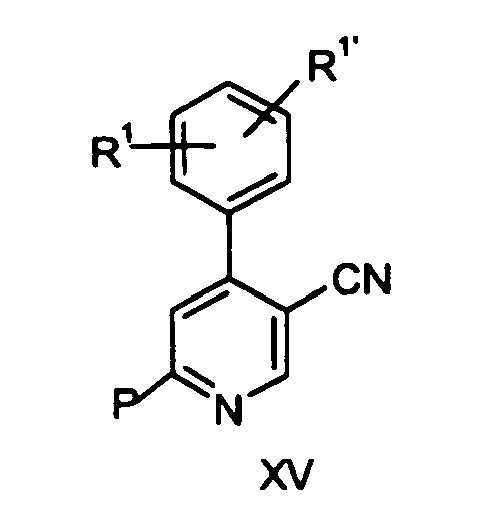
- b) converting the OH/=O function of compounds of formula XIV/XIVa into a leaving group P

The reaction of compound of formula XVI with reagents containing leaving groups, for example, POCl3, PBr3, MeI or (F3CSO2)2O, is carried out in an organic solvent, for example dichloromethane, trifluoromethyl benzene or chlorobenzene and at a temperature of about 40 to 80 °C, preferably about 50°C for 60 to 240 minutes, preferably 80 minutes. - c) substituting the leaving group P of formula XVI by R2 with HR2 to form a compound of formula

Step c) is preferably performed in an organic solvent, for example DMF, DMSO, N methylpyrrolidene chlorobenzene, toluene or mixtures thereof and at a temperature of about 60 to 150 °C, preferably 90 to 120 °C, most preferably 112°C for 10 to 240 minutes, preferably 20 to 120 minute, most preferably 30 to 60 minutes. The mixture is cooled down and treated with an acid, such as sulfuric acid, acetic acid or hydrochloride. - d) hydrolyzing the nitrile function of formula XVI to form a compound of formula

Step d) is carried out in an acidic medium, for example H2SO4, HCl or acetic acid, with or without an organic solvent at a temperature of 50 to 140 °C, preferably 60 to 90 °C, most preferably 70°C for 1 to 8 hours, preferably 2 hours. - According to a preferred embodiment of the invention, R1 and R1' are, independently from each other, lower alkyl, alkoxy, halogen, cyano or alkylamino; P is halogen and R2 is a cyclic tertiary amine of the group

- According to a more preferred embodiment of the invention, R1 and R1' are, independently from each other, hydrogen, lower alkyl, alkoxy, halogen, cyano or alkylamino; P is chloro and R2 is morpholin-4-yl, 4-methyl-piperazin-1-yl or 1,1,-dioxothiomorpholin-4-yl.
- According to a still more preferred embodiment of the invention, the present process is applied for the manufacture of 6-hydroxy-4-o-tolyl-nicotinonitrile, 6-oxo-4-p-tolyl-1,6-dihydro-pyridine-3-carbonitrile, 4-(2-chloro-phenyl)-6-oxo-1,6-dihydropyridine-3-carbonitrile, 4-(4-chloro-phenyl)-6-oxo-1,6-dihydro-pyridine-3-carbonitrile, 4-(3-cyano-phenyl)-6-oxo-1,6-dihydro-pyridine-3-carbonitrile, 4-(4-cyano-phenyl)-6-oxo-1,6-dihydro-pyridine-3-carbonitrile, 4-(4-methoxy-phenyl)-6-oxo-1,6-dihydropyridine-3-carbonitrile, 4-(3-methoxy-phenyl)-6-oxo-1,6-dihydro-pyridine-3-carbonitrile, 4-(2-methoxy-phenyl)-6-oxo-1,6-dihydro-pyridine-3-carbonitrile, 4-(4-dimethylamino-phenyl)-6-oxo-1,6-dihydro-pyridine-3-carbonitrile, 6-oxo-4-phenyl-1,6-dihydro-pyridine-3-carbonitrile, N-(6-oxo-4-phenyl-1,6-dihydro-pyridine-3-yl)-acetamide, 6-chloro-4-o-tolyl-nicotinonitrile, 6-morpholin-4-yl-4-tolyl-nicotinonitrile, 6-(4-methyl-piperazin-1-yl)-4-o-tolyl-nicotinonitrile, 6-(1,1-dioxo-1λ6-6-thiomorpholin-4-yl)-tolyl-nicotinonitrile, 6-morpholin-4-yl-4-o-tolyl-nicotinamide, 6-(4-methylpiperazin-1-yl)-4-o-tolyl-nicotinamide and 6-(1,1-dioxo-1λ6-6-thiomorpholin-4-yl)-tolyl-nicotinamide.
- Preferred embodiments of the present invention is described in more detail by following examples 1 to 14.
- 50.00 g (524.01 mmol) 2-chloroacetamide were suspended in 100 ml acetonitril. 41.45 g (524.01 mmol) pyridine were added and the suspension was heated at 90°C for 10 hours. The suspension was cooled to 22°C , suction filtered and washed with 100 ml hexane. The product 1-carbamoylmethyl-pyridinium chlorid(79.10 g) was obtained as colorless crystals after being recrystallized from ethanol, m.p 205.2°C.
H1 NMR (400MHz, CDCl3, ppm). 5.50 (s, 2H), 7.72 (s, 1H), 8.17-8.20 (m, 2H), 8.32 (s, 1H), 8.64-8.68 (m, 1H), 9.04 (d, 2H). - A solution of 13.19 g (110.00 mmol) 3,3-dimethoxypropionitrile and 12.39 g (100.00 mmol) o-tolylaldehyde was added to 23.40 g (130.00 mmol) sodium methanolate in 22.0 ml methanol by keeping the internal temperature below 20°C. The reaction mixture was stirred at 22-25°C overnight and concentrated in vacuo (rotary evaporator at 40°C and 20 mbar). 100.00 ml HCl (25%) were added at 15-25°C and the resulting mixture stirred for 60 minutes. The precipitate was suction filtered, washed with 30 ml methanol (precooled to -20°C) and dried in vacuo to afford 16.14 g of 2-formyl-3-o-tolyl-acrylonitrile as yellowish crystals, m.p. 81.5°C..
H1 NMR (300 MHz, DMSO, ppm). 2.51 (s, 1H), 7.41- 7.58 (m, 3H), 8.06 (d, 1H), 8.76 (s, 1H), 9.74 (s, 1H). MS (EI): m/e = 171([M] 30), 156 (100), 143 (23), 115 (46). - 1.726 g (10.0 mmol) 1-carbamoylmethyl-pyridinium chloridand 1.712 g (10.0 mmol) 2-formyl-3-o-tolyl-acrylonitrile in 24.8 ml methanol were treated with 1.05 g (10.4 mmol) triethylamine at 20-30°C. The reaction mixture was stirred for 2 hours and concentrated in vacuo (rotary evaporator at 40°C and 20 mbar). The residue was taken up in 50 ml dichloromethane, treated with 2.56 g (20.0 mmol) (chloromethylene)dimethylammonium chloride (Vilsmeiers Reagent) and heated at 45°C for 1 hour. In order to remove all volatile matter, the mixture was concentrated in vacuo (rotary evaporator at 45°C and 20 mbar). The residue was heated to 180-190°C for 15 minutes, cooled down to 20-25°C and distributed in 80.0 ml dichloromethane and 80.0 ml water. The layers were separated. Evaporation of the organic phase in vacuo gave 1.37 g of amorphous product of 6-hydroxy-4-o-tolyl-nicotinonitrile.
H1 NMR (400MHz, CDCl3, ppm). 2.30 (s, 3H), 6.54 (s, 1H), 7.18 (d, 1H), 7.28-7.38 (m, 3H), 7.92 (s, 1H). NH ? MS (ISP): 211 ([M+H+] 100). - A mixture of 2.5 g (11.89 mmol) 6-hydroxy-4-o-tolyl-nicotinonitrile, 3.64 g (23.78 mmol) phosphorus oxychloride in 10.0 ml dichloromethane was heated at 50°C for 80 minutes. The mixture was cooled down to 20-25°C, poured on water by keeping the internal temperature between 20-30°C and extracted by adding additional 80.0 ml dichloromethane. Evaporation of the organic phase in vacuo gave 2.9 g of crude product of 6-chloro-4-o-tolyl-nicotinonitrfle which was purified by chromatography over silica gel (ethylacetate: hexane = 4:1) to afford 2.4 g of, m.p. 112.4°C.
H1 NMR (400 MHz, CDCl3, ppm). 2.24 (s, 3H), 7.16 (s, 1H), 7.30-7.41 (m, 4H), 8.74 (s, 1H). MS (ISP): 229 ([M+H+] 100). - 500 mg (2.1865 mmol) 6-chloro-4-o-tolyl-nicotinonitrile were dissolved in 10.0 ml toluene and heated to 112°C. At this temperature 762 mg (8.746 mmol) morpholine were added and the reaction mixture was stirred for further 30 minutes. The mixture was cooled down to 20-25°C and treated with 900 mg sulfuric acid (95%). The organic phase was washed with 5 ml water (pH of the water phase 7-7.5). Evaporation in vacuo gave 530 mg of 6-morpholin-4-yl-4-tolyl-nicotinonitrile as a white foam.
H1 NMR (300 MHz, CDCl3, ppm). 2.24 (s, 3H), 3.65-3.68 (m, 4H), 3.77-3.82 (m, 4H), 6.47 (s, 1H), 7.15-7.35 (m, 4H), 8.48 (s, 1H). MS (ISP): 280 ([M+H+] 100). - A mixture of 500 mg (1.79 mmol) crude 6-morpholin-4-yl-4-tolyl-nicotinonitrile, 0.5 ml toluene and 475 mg sulfuric acid (95%) were heated at 70°C for 2 hours. The suspension was cooled down to 20-25°C and quenched with 5 ml water. 5 ml ethylacetate were added followed by a solution of 710 mg sodium hydroxide in 2 ml water. Evaporation of the organic phase in vacuo gave 700 mg colorless solid. After purification by chromatography over silica gel (ethyl acetate/hexane 1:2) 490 mg of 6-morpholin-4-yl-4-o-tolyl-nicotinamide were obtained as colorless crystals, m.p. 144-145°C.
H1 NMR (300 MHz, CDCl3, ppm). 2.15 (s, 3H), 3.62-3.64 (m, 4H), 3.80-3.82 (m, 4H), 5.0-5.3 (br, 2H), 6.30 (s, 1H), 7.2-7.37 (m, 4H), 8.94 (s, 1H). MS (EI): m/e = 297 ([M] 64), 266 ([M-CH2OH] 100). - 500 mg (2.1865 mmol) 6-chloro-4-o-tolyl-nicotinonitrile were dissolved in 10.0 ml toluene and heated to 112°C. At this temperature 2.19 g (21.865 mmol) 1-methylpiperazine were added and the reaction mixture was stirred for further 60 minutes. The mixture was cooled down to 50°C and concentrated under reduced pressure. 5 ml toluene were added to the obtained residue at a temperature of 20-25°C, followed by 900 mg sulfuric acid (95%). The organic phase was washed with 5 ml water. Evaporation in vacuo gave 520 mg of 6-(4-methyl-piperazin-1-yl)-4-o-tolyl-nicotinonitrile as a beige foam.
H1 NMR (300 MHz, CDCl3, ppm). 2.25 (s, 3H), 2.35 (s, 3H), 2.46-2.52 (m, 4H), 3.70-3.73 (m, 4H), 6.48 (s, 1H), 7.15-7.37 (m, 4H), 8.46 (s, 1H). MS (ISP): 293 ([M+H+] 100). - 480 mg (1.642 mmol) 6-(4-methyl-piperazin-1-yl)-4-o-tolyl-nicotinonitrile were treated with 3.8 ml sulfuric acid (90%) and heated at 80°C for 1 hour. The mixture was cooled down to 20-25°C and treated with 20 ml ethyl acetate. 2.0 g sodium hydroxyde solution (28%) was added and the organic phase was washed with 6 ml water. Evaporation in vacuo gave 380mg of 6-(4-methylpiperazin-1-yl)-4-o-tolyl-nicotinamide as a light yellow crystalline foam.
H1 NMR (400 MHz, CDCl3, ppm). 2.15 (s, 3H), 2.34 (s, 3H), 2.45-2.52 (m, 4H), 3.67-3.73 (m, 4H), 5.01-5.28 (b, 2H), 6.31 (s, 1H), 7.20-7.36 (m, 4H), 8.93 (s, 1H). MS (ISP): 332 ([M+H+] 100). - A mixture of 500 mg (2.1865 mmol) 6-chloro-4-o-tolyl-nicotinonitrile, 1.478 g (10.9325 mmol) thiomorpholin 1,1-dioxide and 5 ml ethyl acetate were heated at 80°C for 12 hours. The mixture was cooled down to 20-25°C and treated with 7.5 ml ethyl acetate followed by 5.0 ml water. The organic phase was washed with 5.0 ml water and concentrated under reduced pressure. Crystallization from dichloromethane/hexane 1:2 gave 450 mg of 6-(1,1-dioxo-1λ6-6-thiomorpholin-4-yl)-tolyl-nicotinonitrile as beige crystals, m.p. 182.7°C.
H1 NMR (300 MHz CDCl3, ppm). 2.24 (s, 3H), 3.07-3.11 (m, 4H), 4.24-4.28 (m,4H), 6.63 (s, 1H), 7.14-7.41 (m, 4H), 8.52 (s, 1H). MS (ISP): 328 ([M+H+] 100). - 400 mg (1.222 mmol) 6-(1,1-dioxo-1λ6-6-thiomorpholin-4-yl)-tolyl-nicotinonitrilewere diluted with 400 mg sulfuric acid (95%) and heated at 70°C for 2 hours. The mixture was cooled down to 20-25°C, treated with 5 ml ethyl acetate followed by a solution of 600 mg sodium hydroxide in 2 ml water. The organic phase was washed twice with 2 ml water, concentrated under reduced pressure to yield 360 mg of 6-(1,1-dioxo-1λ6-6-thiomorpholin-4-yl)-tolyl-nicotinamide as white crystals, m.p. 239.7°C.
H1NMR (300 MHz, DMSO, ppm). 2.11 (s, 1H), 3.07-3.18 (m, 4H), 4.06-4.17 (m, 4H), 6.77 (s, 1H), 7.06-7.26 (m, 6H), 8.40 (s, 1H). MS (ISP): 346 ([M+H+] 100). - The synthesis was performed analogous to example 1c using 1-carbamoylmethyl-pyridinium chloridand 2-propenenitrile, 2-formyl-3-p-tolyl to produce 6-oxo-4-p-tolyl-1,6-dihydro-pyridine-3-carbonitrile (amorphous).
H1 NMR (400 MHz, DMSO, ppm). 2.37 (s, 3H), 6.40 (s, 1H), 7.33 (d, 2H), 7.45 (d, 2H), 8.35 (s, 1H), 12.71 (s, 1H). MS (EI): m/e = 210 ([M] 15), 86 (100), 58 (30). - 2-Propenenitrile, 2-formyl-3-p-tolyl was synthesized analogous to example 1b using 3,3-Dimethoxypropionitrile and p-tolylaldehyde.
- The synthesis was performed analogous to example 1c using 1-carbamoylmethyl-pyridinium chloride and 2-propenenitrile, 2-formyl-3-(2-chloro-phenyl) to produce 4-(2-chloro-phenyl)-6-oxo-1,6-dihydro-pyridine-3-carbonitrile(amorphous).
H1 NMR (400 MHz, CDCl3, ppm). 6.59 (s, 1H), 7.26-7.55 (m, 5H), 7.92 (s, 1H). MS (ISP): 231 ([M+H+] 100). - 2-Propenenitrile, 2-formyl-3-(2-chloro-phenyl) was synthesized analogous to example 1b using 3,3-dimethoxypropionitrile and o-chloro-benzaldehyde.
- The synthesis was performed analogous to example 1c using 1-carbamoylmethyl-pyridinium chloride and 2-propenenitrile, 2-formyl-3-(4-chloro-phenyl) to produce 4-(4-chloro-phenyl)-6-oxo-1,6-dihydro-pyridine-3-carbonitrile.
H1 NMR (400 MHz, DMSO, ppm). 6.46 (s, 1H), 7.59 (s, 4H), 8.38 (s, 1H), 12.81 (s, 1H). MS (ISP): 231 ([M+H+] 100). - 2-Ppenenitrile, 2-formyl-3-(4-chloro-phenyl) was synthesized analogous to example 1b using 3,3-dimethoxypropionitrile and o-chloro-benzaldehyde.
- The synthesis was performed analogous to example 1c using 1-carbamoylmethyl-pyridinium chloride and 2-propenenitrile, 2-formyl-3-(3-cyano-phenyl) to produce 4-(3-cyano-phenyl)-6-oxo-1,6-dihydro-pyridine-3-carbonitrile (amorphous).
H1 NMR (400 MHz, DMSO, ppm). 6.55 (s, 1H), 7.74 (t, 1H), 7.91 (d, 1H), 7.99 (d, 1H), 8.06 (s, 1H), 8.42 (s, 1H), 12.72 (s, 1H). MS (ISN): 220 ([M-H] 100). - 2-Propenenitrile, 2-formyl-3-(3-ryano-phenyl) was synthesized analogous to example 1b using 3,3-Dimethoxypropionitrile and m-cyano-benzaldehyde.
- The synthesis was performed analogous to example 1c using 1-carbamoylmethyl-pyridinium chloride and 2-propenenitrile, 2-formyl-3-(4-cyano-phenyl) to produce 4-(4-cyano-phenyl)-6-oxo-1,6-dihydro-pyridine-3-carbonitrile (amorphous).
H1 NMR (400 MHz, DMSO, ppm). 6.52 (s, 1H), 7.76 (d, 2H), 8.01 (d, 2H), 8.42 (s, 1H), 12.87 (s, 1H). MS (ISN): 220-([M-H] 100). - 2-Propenenitrile, 2-formyl-3-(4-cyano-phenyl) was synthesized analogous to example 1b using 3,3-dimethoxypropionitrile and p-cyano-benzaldehyde.
- The synthesis was performed analogous to example 1c using 1-carbamoylmethyl-pyridinium chloridand 2-propenenitrile, 2-formyl-3-(4-methoxy-phenyl) to produce 4-(4-methoxy-phenyl)-6-oxo-1,6-dihydro-pyridine-3-carbonitrile(amorphous).
H1 NMR (400 MHz, DMSO, ppm). 3.82 (s, 3H), 6.33 (s, 1H), 7.06 (d, 2H), 7.51 (d, 2H), 8.31 (s, 1H), 12.54 (s, 1H). MS (ISN): m/e = 226 (32), 225 (M-H, 100). - 2-Propenenitrile, 2-formyl-3-(4-methoxy-phenyl) was synthesized analogous to example 1b using 3,3-Dimethoxypropionitrile and p-methoxy-benzaldehyde.
- The synthesis was performed analogous to example 1c using 1-carbamoylmethyl-pyridinium chloridand 2-propenenitrile, 2-formyl-3-(3-methoxy-phenyl) to produce 4-(3-methoxy-phenyl)-6-oxo-1,6-dihydro-pyridine-3-carbonitrile (amorphous).
H1 NMR (400 MHz, CDCl3, ppm). 3.87 (s, 3H), 6.66 (s, 1H), 7.04-7.07 (m, 2H), 7.12-7.41 (m, 3H), 7.94 (s, 1H). MS (ISP): 227 ([M+H+] 100). - 2-Propenenitrile, 2-formyl-3-(3-methoxy-phenyl) was synthesized analogous to example 1b using 3,3-dimethoxypropionitrile and m-methoxy-benzaldehyde.
- The synthesis was performed analogous to example 1c using 1-carbamoylmethyl-pyridinium chloridand 2-propenenitrile, 2-formyl-3-(2-methoxy-phenyl) to produce 4-(2-methoxy-phenyl)-6-oxo-1,6-dihydro-pyridine-3-carbonitrile (amorphous).
H1 NMR (400 MHz, CDCl3, ppm). 3.89 (s, 3H), 6.59 (s, 1H), 7.02-7.46 (m, 4H), 7.84 (s, 1H), 12.91 (s, 1H). MS (ISP): 227 ([M+H+] 100). - 2-Propenenitrile, 2-formyl-3-(2-methoxy-phenyl) was synthesized analogous to example 1b using 3,3-dimethoxypropionitrile and o-methoxy-benzaldehyde.
- The synthesis was performed analogous to example 1c using 1-carbamoylmethyl-pyridinium chloridand 2-propenenitrile, 2-formyl-3-(4-dimethylamino-phenyl) to produce 4-(4-dimethylamino-phenyl)-6-oxo-1,6-dihydro-pyridine-3-carbonitrile (amorphous).
H1 NMR (400 MHz, DMSO, ppm). 2.97 (s, 6H), 6.26 (s, 1H), 6.79 (d, 2H), 7.43 (d, 2H), 8.25 (s, 1H), 9.18 (s, 1H). MS (ISP): 240 ([M+H+] 100), 262 ([M+Na+], 10). - 2-Propenenitrile, 2-formyl-3-(4-dimethylamino-phenyl) was synthesized analogous to example 1b using 3,3-dimethoxypropionitrile and p-dimethylaminobenzaldehyde.
- The synthesis was performed analogous to example 1c using 1-carbamoylmethyl-pyridinium chloridand 2-cyano-cinnamic aldehyde to produce 6-oxo-4-phenyl-1,6-dihydro-pyridine-3-carbonitrile (amorphous).
H1 NMR (300 MHz, DMSO, ppm). 6.44 (s, 1H), 7.51-7.58 (m, 5H), 8.39 (s,1H), 12.60 (s, 1H). MS (ISN): 195 ([M-H] 100). - 2-Cyano-cinnamic aldehyde was synthesized analogous to example 1b using 3,3-dimethoxypropionitrile and benzaldehyde.
- The synthesis was performed analogous to example 1c using 1-carbamoylmethyl-pyridinium chlorid and 2-acetamido-cinnamic aldehyde. In this case treatment with Vilsmeiers Reagent was not required. The obtained residue after Michael Addition Reaction was directly heated at 190°C for 30 min to produce N-(6-oxo-4-phenyl-1,6-dihydro-pyridine-3-yl)-acetamide (amorphous).
H1 NMR (400 MHz, DMSO, ppm). 1.78 (s, 3H), 6.27 (s, 1H), 7.35-7.43 (m, 6H), 9.01 (s, 1H), 11.5 (s, 1H). MS (ISP): 229 ([M+H+] 100), 187 (15). - 2-Acetamido-cinnamic aldehyde was synthesized in analogy to a described procedure (K.Eiter, E.Sackl, Monatshefte für Chemie 1952, 123-136).


Claims (24)
- Process for the manufacture of compounds of general formula
 R1 and R1' are independently hydrogen, C1-7-alkyl, C1-7-alkoxy, halogen, cyano or alkylamino;R2 is -N(R3)2, -N(R3)(CH2)nOH, -N(R3)S(O)2- C1-7-alkyl, -N(R3)S(O)2-phenyl, -N=CH-N(R3)2, -N(R3)C(O)R3 or a cyclic tertiary amine of the group

R4 is hydrogen, hydroxy, C1-7-alkyl, -(CH2)nCOO- C1-7-alkyl, -N(R3)CO- C1-7-alkyl, hydroxy-C1-7-alkyl, cyano, -(CH2)nO(CH2)nOH, -CHO or a 5-or 6 membered heterocyclic group, optionally bonded via an alkylene group;
characterized in that it comprises the steps ofa) reacting a compound of formula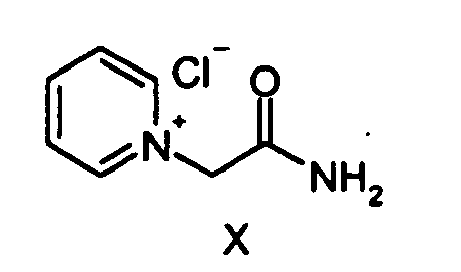
to a compound of formula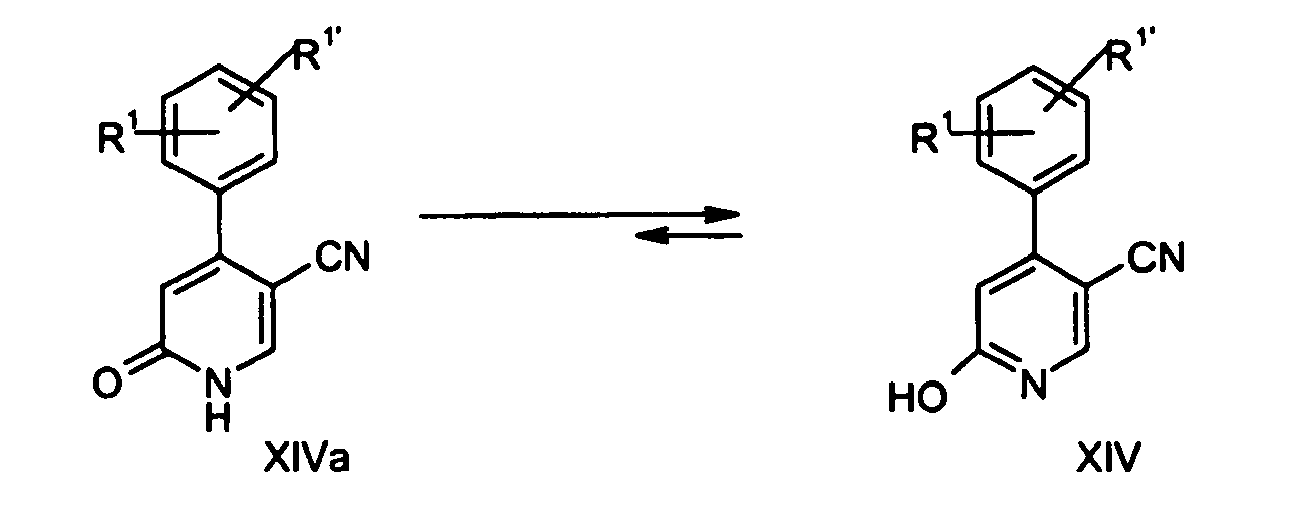 b) converting the OH/=O function of compounds of formula XIV/XIVa into a leaving group P with a reagent containing a leaving group, selected from the group comprising POCl3, PBr3, MeI or (F3CSO2)2O to form a compound of formula
 c) substituting the leaving group P by R2 with HR2 to form a compound of formula
 d) hydrolyzing the nitrile function in an acidic medium comprising H2SO4, HCl or acetic acid, to a compound of formulawherein the definition of the substituents is given above.
- A process according to claim 1, wherein R1 and R1' are, independently from each other, hydrogen, C1-7-alkyl, C1-7-alkoxy, halogen, cyano or C1-7-alkylamino; P is halogen and R2 is a cyclic tertiary amine of the group
- A process according to claim 2, wherein R1 and R1' are, independently from each other, hydrogen, C1-7-alkyl, C1-7-alkoxy, halogen, cyano or alkylamino; P is chloro and R2 is morpholin-4-yl, 4-methyl-piperazin-1-yl and 1,1-dioxothiomorpholin-4-yl.
- A process according to claim 1, for the manufacture of 6-oxo-4-p-tolyl-1,6-dihydropyridine-3-carbonitrile, 4-(2-chloro-phenyl)-6-oxo-1,6-dihydro-pyridine-3-carbonitrile, 4-(4-chloro-phenyl)-6-oxo-1,6-dihydro-pyridine-3-carbonitrile, 4-(3-cyano-phenyl)-6-oxo-1,6-dihydro-pyridine-3-carbonitrile, 4-(4-cyano-phenyl)-6-oxo-1,6-dihydro-pyridine-3-carbonitrile, 4-(4-methoxy-phenyl)-6-oxo-1,6-dihydro-pyridine-3-carbonitrile, 4-(3-methoxy-phenyl)-6-oxo-1,6-dihydro-pyridine-3-carbonitrile, 4-(2-methoxy-phenyl)-6-oxo-1,6-dihydro-pyridine-3-carbonitrile, 4-(4-dimethylamino-phenyl)-6-oxo-1,6-dihydro-pyridine-3-carbonitrile, 6-oxo-4-phenyl-1,6-dihydro-pyridine-3-carbonitrile, N-(6-oxo-4-phenyl-1,6-dihydro-pyridine-3-yl)-acetamide, 6-chloro-4-o-tolyl-nicotinonitrile, 6-morpholin-4-yl-4-tolyl-nicotinonitrile, 6-(4-methyl-piperazin-1-yl)-4-o-tolyl-nicotinonitrile, 6-(1,1-dioxo-1λ6-6-thiomorpholin-4-yl)-tolyl-nicotinonitrile, 6-morpholin-4-yl-4-o-tolyl-nicotinamide, 6-(4-methylpiperazin-1-yl)-4-o-tolyl-nicotinamide and 6-(1,1-dioxo-1λ6-6-thiomorpholin-4-yl)-tolyl-nicotinamide.
- A process according to claim 1, wherein the compound of formula XIII is prepared by step 1) of reacting 3,3-dimethoxypropionitrile (XII) with a compound of formula

- A process according to claim 5, wherein the step 1) is carried out in an alcohol at a temperature varying between 20 to 30 °C for 5 to 20 hours.
- A process according to claim 6, which reaction is carried out in methanol at a temperature varying between 22 to 25 °C for 10 to 12 hours.
- A process according to claim 5, wherein in step 2) the reaction mixture of step 1) is acidated with an acid at a temperature between 10-30 °C and stirring the resulting mixture for 5 to 180 minutes.
- A process according to claim 8, wherein the acid is hydrochloride, the temperature is between 15 to 25 °C and the resulting mixture is stirred for 30 to 60 minutes.
- A process according to claim 1, wherein step a) comprises step a1), compounds of formula X and 3,3-dimethoxypropionitrile XII is reacted in an organic solvent and treated with an organic base, step a2), the obtained reaction mixture of step a1) is taken up in an organic solvent and treated with Vilsmeiers Reagent and step a3), the resulting residue of step a2) is heated, neat or dissolved in a solvent with high boiling temperature.
- A process according to claim 10, step a1) takes place in an organic solvent, and the reaction mixture is treated with triethylamine at 10 to 50 °C and stirred for 0.5 to 12 hours.
- A process according to claim 11, which reaction takes place in methanol and at 20 to 30 °C and stirred for 2 hours.
- A process according to claim 10, step a2), wherein the organic solvent is dichloromethane, the Vilsmeiers Reagent is (chloromethylene)dimethylammonium chloride, the reaction temperature is 30 to 60 °C and the time is 0.5 to 5 hours.
- A process according to claim 13, the temperature is about 45 °C and the time is 1 hour.
- A process according to claim 10, step a3), wherein the solvent is xylene, toluene, or diphenylether, the temperature is 150 to 240 °C and the reaction time is 10 to 60 minutes.
- A process according to claim 15, wherein the solvent is toluene, the temperature is 180-190 °C and the reaction time is 15 minutes.
- A process according to claim 1, wherein step b) is carried out in an organic solvent at a temperature of about 40 to 80 °C and reaction time is 60 to 240 minutes.
- A process according to claim 17, wherein the organic solvent is dichloromethane, at a temperature of 50 °C and time is 80 minutes.
- A process according to claim 1, wherein step c) is performed in DMF, DMSO, N-methylpyrrolidene chlorobenzene, toluene or mixtures thereof and at a temperature of 60 to 150 °C for 10 to 240 minutes.
- A process according to claim 19, wherein the solvent is toluene, the temperature is 112 °C and the reaction time is 30 to 60 minutes.
- A process according to claim 1, wherein step d) is carried out in an acidic medium with or without an organic solvent at a temperature of 50 to 140 °C for 1 to 8 hours.
- A process according to claim 21, wherein the temperature is 60 to 80 °C and the reaction time is 2 hours.
- A process for the manufacture of compounds of general formula
 R1 and R1' are independently hydrogen, C1-7-alkyl, alkoxy, halogen, cyano or alkylamino;R2 is -N(R3)2, -N(R3)(CH2)nOH, -N(R3)S(O)2- C1-7-alkyl, -N(R3)S(O)2-phenyl, -N=CH-N(R3)2, -N(R3)C(O)R3 or a cyclic tertiary amine of the group
 R3 is, independently from each other, hydrogen, C3-6-cycloalkyl, benzyl or C1-7-alkyl;R4 is hydrogen, hydroxy, C1-7-alkyl, -(CH2)nCOO- C1-7-alkyl, -N(R3)CO- C1-7-alkyl, hydroxy-C1-7-alkyl, cyano, -(CH2)nO(CH2)nOH, -CHO or a 5-or 6 membered heterocyclic group, optionally bonded via an alkylene group.R5 and R5' are independently from each other hydrogen, C1-7-alkyl or together with the carbon atom form a cycloalkyl group;R6 and R6' are independently from each other hydrogen, halogen, trifluoromethyl, C1-7-alkoxy or cyano; orR6 and R6' may be together -CH=CH-CH=CH-, optionally substituted by one or two substituents selected from C1-7-alkyl or C1-7-alkoxy;X is -C(O)N(R3)-, -(CH2)mO-, -(CH2)mN(R3)-, -N(R3)C(O)-, or -N(R3)(CH2)m-;n is 0 - 4; andm is 1 or 2.characterized in that the intermediate compound of formula I is obtained by the steps ofa) reacting a compound of formula

to a compound of formula b) converting the OH/=O function of compounds of formula XIV/XIVa into a leaving group P with a reagent containing a leaving group, selected from the group comprising POCl3, PBr3, Mel or (F3CSO2)2O to form a compound of formula
 c) substituting the leaving group P by R2 with HR2 to form a compoud of formula
 d) hydrolyzing the nitrile function in an acidic medium comprising H2SO4, HCl or acetic acid, to a compound of formulawherein the definition of the substituents is given above.
- A process according to claim 23, wherein the prepared compounds of formula II are:N-(3,5-Bis-trifluoromethyl-benzyl)-N-methyl-6-[methyl-(2-morpholin-4-yl-ethyl)-amino] -4-o-tolyl-nicotinamide,N-(3,5-Bis-trifluoromethyl-benzyl)-N-methyl-6-morpholin-4-yl-4-o-tolyl-nicotinamide,N-(3,5-Bis-trifluoromethyl-benzyl)-N-methyl-6-thiomorpholin-4-yl-4-o-tolyl-nicotinamide,N-(3,5-Bis-trifluoromethyl-benzyl)-N-methyl-6-(1-oxo-1λ6-4-thiomorpholin-4-yl)-4-o-tolyl-nicotinamide,N-(3,5-Bis-trifluoromethyl-benzyl)-6-(1,1-dioxo-1λ6-6-thiomorpholin-4-yl)-N-methyl-4-o-tolyl-nicotinamide,N-(3,5-Bis-trifluoromethyl-benzyl)-N-methyl-6-piperazin-1-yl-4-o-tolyl-nicotinamide, N-(3,5-Bis-trifluoromethyl-benzyl)-6-[4-(2-hydroxy-ethyl)-piperazin-1-yl]-N-methyl-4-o-tolyl-nicotinamide,2-(3,5-bis-trifluoromethyl-phenyl)-N-[6-(4-methyl-piperazin-1-yl)-4-o-tolyl-pyridin-3-yl]-N-methyl-isobutyramide,2-(3,5-bis-trifluoromethyl-phenyl)-N-(6-morpholin-4-yl-4-o-tolyl-pyridin-3-yl)-N-methyl-isobutyramide,2-(3,5-Bis-trifluoromethyl-phenyl)-N-[4-(4-fluoro-2-methyl-phenyl)-6-(4-methyl-piperazin-1-yl)-pyridin-3-yl]-N-methyl-isobutyramide,2-(3,5-Bis-trifluoromethyl-phenyl)-N-[4-(2-chloro-phenyl)-pyridin-3-yl]-N-methyl-isobutyramide,2-(3,5-Bis-trifluoromethyl-phenyl-N-methyl-N-(4-o-tolyl-pyridin-3-yl)-isobutyramide, 2-(3,5-Bis-trifluoromethyl-phenyl)-N-methyl-N-[6-(4-pyrimidin-2-yl-piperazin-1-yl)-4-o-tolyl-pyridin-3-yl]-isobutyramide,2-(3,5-Bis-trifluoromethyl-phenyl)-N-(6-morpholin-4-yl-4-o-tolyl-pyridin-3-yl)-isobutyramide,2-(3,5-Bis-trifluoromethyl-phenyl)-N-[4-(2-chloro-phenyl)-6-dimethylamino-pyridin-3-yl]-isobutyramide,2-(3,5-Bis-trifluoromethyl-phenyl)-N-methyl-N-(6-piperazin-1-yl-4-o-tolyl-pyridin-3-yl)-isobutyramide,
and2-(3,5-bis-trifluoromethyl-phenyl)-N-[6-(1,1-dioxo-1λ6-thiomorpholin-4-yl)-4-o-tolyl-pyridin-3-yl]-N-methyl-isobutyramide.
Priority Applications (1)
| Application Number | Priority Date | Filing Date | Title |
|---|---|---|---|
| EP04763155A EP1656351B1 (en) | 2003-07-15 | 2004-07-10 | Process for preparation of 4-aryl-nicotinamide derivatives |
Applications Claiming Priority (3)
| Application Number | Priority Date | Filing Date | Title |
|---|---|---|---|
| EP03015599 | 2003-07-15 | ||
| PCT/EP2004/007618 WO2005014549A1 (en) | 2003-07-15 | 2004-07-10 | Process for preparation of 4-aryl-nicotinamide derivatives |
| EP04763155A EP1656351B1 (en) | 2003-07-15 | 2004-07-10 | Process for preparation of 4-aryl-nicotinamide derivatives |
Publications (2)
| Publication Number | Publication Date |
|---|---|
| EP1656351A1 EP1656351A1 (en) | 2006-05-17 |
| EP1656351B1 true EP1656351B1 (en) | 2007-12-19 |
Family
ID=34042828
Family Applications (1)
| Application Number | Title | Priority Date | Filing Date |
|---|---|---|---|
| EP04763155A Expired - Lifetime EP1656351B1 (en) | 2003-07-15 | 2004-07-10 | Process for preparation of 4-aryl-nicotinamide derivatives |
Country Status (14)
| Country | Link |
|---|---|
| US (1) | US7288658B2 (en) |
| EP (1) | EP1656351B1 (en) |
| JP (1) | JP4575918B2 (en) |
| KR (1) | KR100742013B1 (en) |
| CN (1) | CN1835922B (en) |
| AT (1) | ATE381543T1 (en) |
| CA (1) | CA2532355C (en) |
| DE (1) | DE602004010820T2 (en) |
| DK (1) | DK1656351T3 (en) |
| ES (1) | ES2297457T3 (en) |
| IL (1) | IL173000A0 (en) |
| MX (1) | MXPA06000405A (en) |
| TW (1) | TWI280239B (en) |
| WO (1) | WO2005014549A1 (en) |
Families Citing this family (21)
| Publication number | Priority date | Publication date | Assignee | Title |
|---|---|---|---|---|
| MX2007000198A (en) * | 2004-07-06 | 2007-03-15 | Hoffmann La Roche | Process for preparing carboxamide pyridine derivatives used as intermediates in the synthesis of nk-1 receptor antagonists. |
| US8597947B2 (en) | 2004-12-29 | 2013-12-03 | Hadasit Medical Research Services & Development Limited | Undifferentiated stem cell culture systems |
| EP2410043A3 (en) | 2004-12-29 | 2013-01-23 | Hadasit Medical Research Services And Development Ltd. | Stem cells culture systems |
| US8956866B2 (en) | 2007-04-18 | 2015-02-17 | Hadasit Medical Research Services And Development Ltd. | Retinal pigment epithelial cells differentiated from embryonic stem cells with nicotinamide and activin A |
| JP2018502575A (en) | 2014-12-30 | 2018-02-01 | セル キュア ニューロサイエンシズ リミテッド | Evaluation method of retinal pigment epithelial cell population |
| IL305070B2 (en) | 2014-12-30 | 2025-11-01 | Cell Cure Neurosciences Ltd | RPE cell populations and methods for their production |
| JP7055095B2 (en) | 2015-07-29 | 2022-04-15 | ハダシット メディカル リサーチ サービシーズ アンド ディベロップメント リミテッド | Large-scale production of retinal pigment epithelial cells |
| US11090337B2 (en) | 2015-08-05 | 2021-08-17 | Cell Cure Neurosciences Ltd | Preparation of photoreceptors for the treatment of retinal diseases |
| DK3331994T3 (en) | 2015-08-05 | 2022-11-21 | Cell Cure Neurosciences Ltd | PRODUCTION OF RETINAL PIGMENT EPITHELIAL CELLS |
| HRP20250311T1 (en) | 2015-10-26 | 2025-07-18 | Cell Cure Neurosciences Ltd. | PREPARATION OF RETINAL PIGMENT EPITHELIAL CELLS |
| CN106892864A (en) * | 2015-12-21 | 2017-06-27 | 上海科胜药物研发有限公司 | It is a kind of how the crystal formation A of the smooth free alkali of appropriate skin and preparation method thereof |
| CA3052872A1 (en) | 2017-02-08 | 2018-08-16 | Hadasit Medical Research Services And Development Ltd. | Photoreceptor cells for the treatment of retinal diseases |
| CA3056653A1 (en) | 2017-03-16 | 2018-09-20 | Lineage Cell Therapeutics, Inc. | Methods for the treatment of retinal diseases |
| CN111741735A (en) | 2017-12-29 | 2020-10-02 | 细胞治疗神经科学有限公司 | Retinal Pigment Epithelial Cell Composition |
| CN113038951B (en) | 2018-09-20 | 2024-04-30 | 耶达研究及发展有限公司 | Treatments for ALS |
| EP3754014A1 (en) | 2019-06-21 | 2020-12-23 | Centre d'Etude des Cellules Souches (CECS) | Automated method for preparing retinal pigment epithelium cells |
| CN110862364B (en) * | 2019-11-14 | 2022-12-30 | 中国科学技术大学 | Process for preparing furanylaldehydes |
| TWI853255B (en) | 2021-06-09 | 2024-08-21 | 美商譜系細胞治療公司 | Methods and compositions for treating retinal diseases and conditions |
| MX2024001213A (en) | 2021-07-28 | 2024-03-14 | Lineage Cell Therapeutics Inc | Expansion of retinal pigment epithelium cells. |
| CN114181142B (en) * | 2021-12-31 | 2023-10-20 | 浙江工业大学 | Synthesis method of 6- (4-methylpiperazine-1-yl) -4-o-tolylpropionic nicotinamide |
| IL316305A (en) | 2022-04-25 | 2024-12-01 | Hadasit Med Res Service | Methods and compositions for treating vision loss |
Family Cites Families (36)
| Publication number | Priority date | Publication date | Assignee | Title |
|---|---|---|---|---|
| GB1557420A (en) | 1977-03-10 | 1979-12-12 | Soc D Etudes Prod Chimique | Preparation of isobutyramide derivatives |
| KR810001320B1 (en) | 1977-03-17 | 1981-10-14 | 삐에르 위브 | Process for the preparation of new isobutyranide |
| KR810001697B1 (en) | 1978-02-06 | 1981-10-27 | 삐에르 위브 | Novel Method for Preparing Isobutyramid Derivatives |
| EP0089765A3 (en) | 1982-03-17 | 1984-05-23 | Smith Kline & French Laboratories Limited | Pyridine derivatives |
| US4745123A (en) | 1986-02-18 | 1988-05-17 | Warner-Lambert Company | Substituted tetrahydro-3-pyridine-carboxylic acid, ester, and amide cholinergic agents |
| GB8607312D0 (en) | 1986-03-25 | 1986-04-30 | Ici Plc | Therapeutic agents |
| GB8607313D0 (en) | 1986-03-25 | 1986-04-30 | Ici Plc | Pharmaceutical compositions |
| CA1339423C (en) | 1988-09-14 | 1997-09-02 | Yuji Ono | Pyridine compounds and pharmaceutical use thereof |
| US4994456A (en) | 1989-03-01 | 1991-02-19 | Nisshin Flour Milling Co., Ltd. | Pyridinecarboxylic acid amide derivatives and pharmaceutical compositions comprising same |
| US4973597A (en) | 1989-06-30 | 1990-11-27 | Eli Lilly And Company | Anticonvulsant agents |
| HU207047B (en) | 1989-11-07 | 1993-03-01 | Richter Gedeon Vegyeszet | Process for producing new pyridine derivatives and pharmaceutical copositions comprising same |
| US5364943A (en) | 1991-11-27 | 1994-11-15 | Pfizer Inc. | Preparation of substituted piperidines |
| GB9021056D0 (en) | 1990-09-27 | 1990-11-07 | Pfizer Ltd | Antiarrhythmic agents |
| GB9214120D0 (en) | 1991-07-25 | 1992-08-12 | Ici Plc | Therapeutic amides |
| US5719147A (en) | 1992-06-29 | 1998-02-17 | Merck & Co., Inc. | Morpholine and thiomorpholine tachykinin receptor antagonists |
| WO1994003429A1 (en) | 1992-07-31 | 1994-02-17 | Merck Sharp & Dohme Limited | Substituted amines as tachykinin receptor antagonists |
| US5387595A (en) | 1992-08-26 | 1995-02-07 | Merck & Co., Inc. | Alicyclic compounds as tachykinin receptor antagonists |
| GB9305672D0 (en) | 1993-03-19 | 1993-05-05 | Wyeth John & Brother Ltd | Amide derivatives |
| AU6807994A (en) | 1993-05-28 | 1994-12-20 | Taisho Pharmaceutical Co., Ltd. | Medicinal use of pyridine derivative |
| NZ264063A (en) | 1993-08-13 | 1995-11-27 | Nihon Nohyaku Co Ltd | N-(2-phenylpyrid-3-yl)- and n-(4-phenylpyrimidin-5-yl)-n'-phenylurea derivatives and pharmaceutical compositions |
| IL111960A (en) | 1993-12-17 | 1999-12-22 | Merck & Co Inc | Morpholines and thiomorpholines their preparation and pharmaceutical compositions containing them |
| DE69434063D1 (en) | 1993-12-29 | 2004-11-11 | Merck Sharp & Dohme | Substituted morpholine derivatives and their use as therapeutic agents |
| IL112778A0 (en) | 1994-03-04 | 1995-05-26 | Merck & Co Inc | Substituted heterocycles, their preparation and pharmaceutical compositions containing them |
| ATE206710T1 (en) | 1994-06-06 | 2001-10-15 | Warner Lambert Co | TACHYKININ (NK1) RECEPTOR ANTAGONISTS |
| AU2753195A (en) | 1994-06-24 | 1996-01-19 | Taisho Pharmaceutical Co., Ltd. | Pyridine derivative |
| US6294537B1 (en) | 1995-03-17 | 2001-09-25 | Sanofi-Synthelabo | Compounds which are specific antagonists of the human NK3 receptor and their use as medicinal products and diagnostic tools |
| TW394773B (en) | 1995-03-24 | 2000-06-21 | Takeda Chemical Industries Ltd | Cyclic compounds for antagonizing tachykinin receptor, substance p receptor and neurokinin a receptor, their production and pharmaceutical composition |
| AR004735A1 (en) | 1995-11-24 | 1999-03-10 | Smithkline Beecham Spa | CHINOLEIN 4-AMIDO SUBSTITUTED, A PROCEDURE FOR ITS PREPARATION, A PHARMACEUTICAL COMPOSITION THAT CONTAINS THEM AND THE USE OF THE SAME FOR THE PREPARATION OF A MEDICINAL PRODUCT. |
| UA49006C2 (en) | 1996-03-29 | 2002-09-16 | Файзер Інк. | 6-phenyl-pyridin-2-ylamine derivatives, pharmaceutical composition, method of inhibition of of nitric oxide syntase of mammals and method of treatment |
| AU4885097A (en) | 1996-11-08 | 1998-06-03 | Sankyo Company Limited | Arylureas or arylmethylcarbamoyl derivatives |
| US5972938A (en) | 1997-12-01 | 1999-10-26 | Merck & Co., Inc. | Method for treating or preventing psychoimmunological disorders |
| WO2000050398A2 (en) | 1999-02-24 | 2000-08-31 | F. Hoffmann-La Roche Ag | Phenyl- and pyridinyl derivatives as neurokinin 1 antagonists |
| DK1394150T3 (en) * | 1999-02-24 | 2011-03-21 | Hoffmann La Roche | 4-phenylpyridine derivatives and their use as NK-1 receptor antagonists |
| EP1103545B1 (en) | 1999-11-29 | 2003-11-05 | F. Hoffmann-La Roche Ag | 2-(3,5-Bis-trifluoromethyl-phenyl)-N-methyl-N-(6-morpholin-4-yl-4-o-tolyl-pyridin-3-yl)-isobutyramide |
| US6303790B1 (en) | 1999-11-29 | 2001-10-16 | Hoffman-La Roche Inc. | Process for the preparation of pyridine derivatives |
| TWI287003B (en) | 2000-07-24 | 2007-09-21 | Hoffmann La Roche | 4-phenyl-pyridine derivatives |
-
2004
- 2004-07-09 US US10/888,912 patent/US7288658B2/en not_active Expired - Lifetime
- 2004-07-09 TW TW093120669A patent/TWI280239B/en not_active IP Right Cessation
- 2004-07-10 DK DK04763155T patent/DK1656351T3/en active
- 2004-07-10 JP JP2006519843A patent/JP4575918B2/en not_active Expired - Lifetime
- 2004-07-10 ES ES04763155T patent/ES2297457T3/en not_active Expired - Lifetime
- 2004-07-10 CA CA2532355A patent/CA2532355C/en not_active Expired - Lifetime
- 2004-07-10 DE DE602004010820T patent/DE602004010820T2/en not_active Expired - Lifetime
- 2004-07-10 AT AT04763155T patent/ATE381543T1/en active
- 2004-07-10 KR KR1020067000860A patent/KR100742013B1/en not_active Expired - Lifetime
- 2004-07-10 CN CN2004800232840A patent/CN1835922B/en not_active Expired - Lifetime
- 2004-07-10 WO PCT/EP2004/007618 patent/WO2005014549A1/en not_active Ceased
- 2004-07-10 MX MXPA06000405A patent/MXPA06000405A/en active IP Right Grant
- 2004-07-10 EP EP04763155A patent/EP1656351B1/en not_active Expired - Lifetime
-
2006
- 2006-01-05 IL IL173000A patent/IL173000A0/en unknown
Also Published As
| Publication number | Publication date |
|---|---|
| CN1835922B (en) | 2011-08-31 |
| TW200524872A (en) | 2005-08-01 |
| KR20060036090A (en) | 2006-04-27 |
| TWI280239B (en) | 2007-05-01 |
| CA2532355C (en) | 2012-05-15 |
| JP4575918B2 (en) | 2010-11-04 |
| DE602004010820T2 (en) | 2008-12-04 |
| US7288658B2 (en) | 2007-10-30 |
| ATE381543T1 (en) | 2008-01-15 |
| CN1835922A (en) | 2006-09-20 |
| MXPA06000405A (en) | 2006-03-17 |
| WO2005014549A1 (en) | 2005-02-17 |
| CA2532355A1 (en) | 2005-02-17 |
| IL173000A0 (en) | 2006-06-11 |
| DK1656351T3 (en) | 2008-04-21 |
| US20050014792A1 (en) | 2005-01-20 |
| JP2009500292A (en) | 2009-01-08 |
| EP1656351A1 (en) | 2006-05-17 |
| DE602004010820D1 (en) | 2008-01-31 |
| ES2297457T3 (en) | 2008-05-01 |
| KR100742013B1 (en) | 2007-07-23 |
Similar Documents
| Publication | Publication Date | Title |
|---|---|---|
| CA2532355C (en) | Process for preparation of 4-aryl-nicotinamide derivatives | |
| JP3095521B2 (en) | Piperazine derivative | |
| CA2415890C (en) | N-oxides as nk1 receptor antagonist prodrugs of 4-phenyl-pyridine derivatives | |
| JP4833080B2 (en) | Derivatives of 1-piperazine- and 1-homopiperazine-carboxylates, methods for their preparation and their use as inhibitors of FAAH enzymes | |
| AU2002212118B2 (en) | 4-phenyl-pyridine derivatives as neurokinin-1 receptor antagonists | |
| KR101372941B1 (en) | Substituted pyridyl amide compounds as modulators of the histamine h3 receptor | |
| NO168770B (en) | ANALOGY PROCEDURE FOR THE PREPARATION OF THERAPEUTIC ACTIVE BENZIMIDAZOLD DERIVATIVES | |
| CA2015033C (en) | Tertiary alkyl functionalized piperazine derivatives | |
| NZ502948A (en) | 4-Phenyl-pyridine derivatives and use for treating diseases related to NK-1 receptor antagonists | |
| NO338957B1 (en) | Piperidine and piperazine-1-carboxylic acid amide derivatives and related compounds as modulators of fatty acid amide hydrolase (FAAH) for the treatment of anxiety, pain and other conditions | |
| EP1446399B1 (en) | Piperazine derivatives having sst1 antagonistic activity | |
| JP2001151755A (en) | Method for producing pyridine derivative | |
| EP1928833B1 (en) | Novel quinoline compounds capable of binding at the cb2 receptor | |
| EP0230402A2 (en) | Pharmacologically active alkylol derivatives | |
| JPH01104041A (en) | N-((2-oxo-1-pyrrolidinyl)acetyl)piperazine derivative, production thereof and remedy for senile dementia | |
| HK1068338B (en) | Piperazine derivatives having sst1 antagonistic activity | |
| MXPA00008146A (en) | Cyclic amide compounds |
Legal Events
| Date | Code | Title | Description |
|---|---|---|---|
| PUAI | Public reference made under article 153(3) epc to a published international application that has entered the european phase |
Free format text: ORIGINAL CODE: 0009012 |
|
| 17P | Request for examination filed |
Effective date: 20060215 |
|
| AK | Designated contracting states |
Kind code of ref document: A1 Designated state(s): AT BE BG CH CY CZ DE DK EE ES FI FR GB GR HU IE IT LI LU MC NL PL PT RO SE SI SK TR |
|
| 17Q | First examination report despatched |
Effective date: 20060714 |
|
| DAX | Request for extension of the european patent (deleted) | ||
| GRAP | Despatch of communication of intention to grant a patent |
Free format text: ORIGINAL CODE: EPIDOSNIGR1 |
|
| GRAS | Grant fee paid |
Free format text: ORIGINAL CODE: EPIDOSNIGR3 |
|
| GRAA | (expected) grant |
Free format text: ORIGINAL CODE: 0009210 |
|
| AK | Designated contracting states |
Kind code of ref document: B1 Designated state(s): AT BE BG CH CY CZ DE DK EE ES FI FR GB GR HU IE IT LI LU MC NL PL PT RO SE SI SK TR |
|
| REG | Reference to a national code |
Ref country code: GB Ref legal event code: FG4D |
|
| REG | Reference to a national code |
Ref country code: IE Ref legal event code: FG4D |
|
| REG | Reference to a national code |
Ref country code: CH Ref legal event code: EP |
|
| REF | Corresponds to: |
Ref document number: 602004010820 Country of ref document: DE Date of ref document: 20080131 Kind code of ref document: P |
|
| REG | Reference to a national code |
Ref country code: DK Ref legal event code: T3 |
|
| PG25 | Lapsed in a contracting state [announced via postgrant information from national office to epo] |
Ref country code: SE Free format text: LAPSE BECAUSE OF FAILURE TO SUBMIT A TRANSLATION OF THE DESCRIPTION OR TO PAY THE FEE WITHIN THE PRESCRIBED TIME-LIMIT Effective date: 20080319 |
|
| REG | Reference to a national code |
Ref country code: ES Ref legal event code: FG2A Ref document number: 2297457 Country of ref document: ES Kind code of ref document: T3 |
|
| PG25 | Lapsed in a contracting state [announced via postgrant information from national office to epo] |
Ref country code: FI Free format text: LAPSE BECAUSE OF FAILURE TO SUBMIT A TRANSLATION OF THE DESCRIPTION OR TO PAY THE FEE WITHIN THE PRESCRIBED TIME-LIMIT Effective date: 20071219 Ref country code: SI Free format text: LAPSE BECAUSE OF FAILURE TO SUBMIT A TRANSLATION OF THE DESCRIPTION OR TO PAY THE FEE WITHIN THE PRESCRIBED TIME-LIMIT Effective date: 20071219 Ref country code: PL Free format text: LAPSE BECAUSE OF FAILURE TO SUBMIT A TRANSLATION OF THE DESCRIPTION OR TO PAY THE FEE WITHIN THE PRESCRIBED TIME-LIMIT Effective date: 20071219 |
|
| PG25 | Lapsed in a contracting state [announced via postgrant information from national office to epo] |
Ref country code: CZ Free format text: LAPSE BECAUSE OF FAILURE TO SUBMIT A TRANSLATION OF THE DESCRIPTION OR TO PAY THE FEE WITHIN THE PRESCRIBED TIME-LIMIT Effective date: 20071219 |
|
| ET | Fr: translation filed | ||
| REG | Reference to a national code |
Ref country code: HU Ref legal event code: AG4A Ref document number: E003216 Country of ref document: HU |
|
| PG25 | Lapsed in a contracting state [announced via postgrant information from national office to epo] |
Ref country code: SK Free format text: LAPSE BECAUSE OF FAILURE TO SUBMIT A TRANSLATION OF THE DESCRIPTION OR TO PAY THE FEE WITHIN THE PRESCRIBED TIME-LIMIT Effective date: 20071219 Ref country code: RO Free format text: LAPSE BECAUSE OF FAILURE TO SUBMIT A TRANSLATION OF THE DESCRIPTION OR TO PAY THE FEE WITHIN THE PRESCRIBED TIME-LIMIT Effective date: 20071219 |
|
| PG25 | Lapsed in a contracting state [announced via postgrant information from national office to epo] |
Ref country code: PT Free format text: LAPSE BECAUSE OF FAILURE TO SUBMIT A TRANSLATION OF THE DESCRIPTION OR TO PAY THE FEE WITHIN THE PRESCRIBED TIME-LIMIT Effective date: 20080519 |
|
| PLBE | No opposition filed within time limit |
Free format text: ORIGINAL CODE: 0009261 |
|
| STAA | Information on the status of an ep patent application or granted ep patent |
Free format text: STATUS: NO OPPOSITION FILED WITHIN TIME LIMIT |
|
| 26N | No opposition filed |
Effective date: 20080922 |
|
| PG25 | Lapsed in a contracting state [announced via postgrant information from national office to epo] |
Ref country code: GR Free format text: LAPSE BECAUSE OF FAILURE TO SUBMIT A TRANSLATION OF THE DESCRIPTION OR TO PAY THE FEE WITHIN THE PRESCRIBED TIME-LIMIT Effective date: 20080320 |
|
| PG25 | Lapsed in a contracting state [announced via postgrant information from national office to epo] |
Ref country code: EE Free format text: LAPSE BECAUSE OF FAILURE TO SUBMIT A TRANSLATION OF THE DESCRIPTION OR TO PAY THE FEE WITHIN THE PRESCRIBED TIME-LIMIT Effective date: 20071219 Ref country code: BG Free format text: LAPSE BECAUSE OF FAILURE TO SUBMIT A TRANSLATION OF THE DESCRIPTION OR TO PAY THE FEE WITHIN THE PRESCRIBED TIME-LIMIT Effective date: 20080319 |
|
| PG25 | Lapsed in a contracting state [announced via postgrant information from national office to epo] |
Ref country code: MC Free format text: LAPSE BECAUSE OF NON-PAYMENT OF DUE FEES Effective date: 20080731 Ref country code: CY Free format text: LAPSE BECAUSE OF FAILURE TO SUBMIT A TRANSLATION OF THE DESCRIPTION OR TO PAY THE FEE WITHIN THE PRESCRIBED TIME-LIMIT Effective date: 20071219 |
|
| PG25 | Lapsed in a contracting state [announced via postgrant information from national office to epo] |
Ref country code: LU Free format text: LAPSE BECAUSE OF NON-PAYMENT OF DUE FEES Effective date: 20080710 |
|
| PG25 | Lapsed in a contracting state [announced via postgrant information from national office to epo] |
Ref country code: TR Free format text: LAPSE BECAUSE OF FAILURE TO SUBMIT A TRANSLATION OF THE DESCRIPTION OR TO PAY THE FEE WITHIN THE PRESCRIBED TIME-LIMIT Effective date: 20071219 |
|
| REG | Reference to a national code |
Ref country code: FR Ref legal event code: PLFP Year of fee payment: 12 |
|
| REG | Reference to a national code |
Ref country code: FR Ref legal event code: PLFP Year of fee payment: 13 |
|
| REG | Reference to a national code |
Ref country code: FR Ref legal event code: PLFP Year of fee payment: 14 |
|
| REG | Reference to a national code |
Ref country code: FR Ref legal event code: PLFP Year of fee payment: 15 |
|
| PGFP | Annual fee paid to national office [announced via postgrant information from national office to epo] |
Ref country code: NL Payment date: 20230622 Year of fee payment: 20 Ref country code: IT Payment date: 20230620 Year of fee payment: 20 Ref country code: IE Payment date: 20230622 Year of fee payment: 20 Ref country code: FR Payment date: 20230621 Year of fee payment: 20 Ref country code: DK Payment date: 20230622 Year of fee payment: 20 |
|
| PGFP | Annual fee paid to national office [announced via postgrant information from national office to epo] |
Ref country code: BE Payment date: 20230622 Year of fee payment: 20 |
|
| PGFP | Annual fee paid to national office [announced via postgrant information from national office to epo] |
Ref country code: GB Payment date: 20230620 Year of fee payment: 20 Ref country code: ES Payment date: 20230801 Year of fee payment: 20 Ref country code: CH Payment date: 20230802 Year of fee payment: 20 Ref country code: AT Payment date: 20230622 Year of fee payment: 20 |
|
| PGFP | Annual fee paid to national office [announced via postgrant information from national office to epo] |
Ref country code: HU Payment date: 20230630 Year of fee payment: 20 Ref country code: DE Payment date: 20230620 Year of fee payment: 20 |
|
| REG | Reference to a national code |
Ref country code: DE Ref legal event code: R082 Ref document number: 602004010820 Country of ref document: DE Representative=s name: KRAUS & LEDERER PARTGMBB, DE |
|
| REG | Reference to a national code |
Ref country code: DE Ref legal event code: R071 Ref document number: 602004010820 Country of ref document: DE Ref country code: NL Ref legal event code: MK Effective date: 20240709 |
|
| REG | Reference to a national code |
Ref country code: CH Ref legal event code: PL Ref country code: DK Ref legal event code: EUP Expiry date: 20240710 |
|
| REG | Reference to a national code |
Ref country code: ES Ref legal event code: FD2A Effective date: 20240729 |
|
| REG | Reference to a national code |
Ref country code: GB Ref legal event code: PE20 Expiry date: 20240709 |
|
| REG | Reference to a national code |
Ref country code: BE Ref legal event code: MK Effective date: 20240710 |
|
| REG | Reference to a national code |
Ref country code: AT Ref legal event code: MK07 Ref document number: 381543 Country of ref document: AT Kind code of ref document: T Effective date: 20240710 |
|
| REG | Reference to a national code |
Ref country code: IE Ref legal event code: MK9A |
|
| PG25 | Lapsed in a contracting state [announced via postgrant information from national office to epo] |
Ref country code: IE Free format text: LAPSE BECAUSE OF EXPIRATION OF PROTECTION Effective date: 20240710 |
|
| PG25 | Lapsed in a contracting state [announced via postgrant information from national office to epo] |
Ref country code: GB Free format text: LAPSE BECAUSE OF EXPIRATION OF PROTECTION Effective date: 20240709 |
|
| PG25 | Lapsed in a contracting state [announced via postgrant information from national office to epo] |
Ref country code: ES Free format text: LAPSE BECAUSE OF EXPIRATION OF PROTECTION Effective date: 20240711 |
|
| PG25 | Lapsed in a contracting state [announced via postgrant information from national office to epo] |
Ref country code: IE Free format text: LAPSE BECAUSE OF EXPIRATION OF PROTECTION Effective date: 20240710 Ref country code: GB Free format text: LAPSE BECAUSE OF EXPIRATION OF PROTECTION Effective date: 20240709 Ref country code: ES Free format text: LAPSE BECAUSE OF EXPIRATION OF PROTECTION Effective date: 20240711 |