EP1654725B1 - Dynamische regelung der verarbeitungslast in einem wavetable-synthesizer - Google Patents
Dynamische regelung der verarbeitungslast in einem wavetable-synthesizer Download PDFInfo
- Publication number
- EP1654725B1 EP1654725B1 EP04740109A EP04740109A EP1654725B1 EP 1654725 B1 EP1654725 B1 EP 1654725B1 EP 04740109 A EP04740109 A EP 04740109A EP 04740109 A EP04740109 A EP 04740109A EP 1654725 B1 EP1654725 B1 EP 1654725B1
- Authority
- EP
- European Patent Office
- Prior art keywords
- cpu
- song
- determining
- cpu load
- logic
- Prior art date
- Legal status (The legal status is an assumption and is not a legal conclusion. Google has not performed a legal analysis and makes no representation as to the accuracy of the status listed.)
- Expired - Lifetime
Links
Images

Classifications
-
- G—PHYSICS
- G10—MUSICAL INSTRUMENTS; ACOUSTICS
- G10H—ELECTROPHONIC MUSICAL INSTRUMENTS; INSTRUMENTS IN WHICH THE TONES ARE GENERATED BY ELECTROMECHANICAL MEANS OR ELECTRONIC GENERATORS, OR IN WHICH THE TONES ARE SYNTHESISED FROM A DATA STORE
- G10H7/00—Instruments in which the tones are synthesised from a data store, e.g. computer organs
- G10H7/002—Instruments in which the tones are synthesised from a data store, e.g. computer organs using a common processing for different operations or calculations, and a set of microinstructions, e.g. programs, to control the sequence thereof
- G10H7/006—Instruments in which the tones are synthesised from a data store, e.g. computer organs using a common processing for different operations or calculations, and a set of microinstructions, e.g. programs, to control the sequence thereof using two or more algorithms of different types to generate tones, e.g. according to tone color or to processor workload
-
- G—PHYSICS
- G10—MUSICAL INSTRUMENTS; ACOUSTICS
- G10H—ELECTROPHONIC MUSICAL INSTRUMENTS; INSTRUMENTS IN WHICH THE TONES ARE GENERATED BY ELECTROMECHANICAL MEANS OR ELECTRONIC GENERATORS, OR IN WHICH THE TONES ARE SYNTHESISED FROM A DATA STORE
- G10H2230/00—General physical, ergonomic or hardware implementation of electrophonic musical tools or instruments, e.g. shape or architecture
- G10H2230/025—Computing or signal processing architecture features
- G10H2230/041—Processor load management, i.e. adaptation or optimization of computational load or data throughput in computationally intensive musical processes to avoid overload artifacts, e.g. by deliberately suppressing less audible or less relevant tones or decreasing their complexity
Definitions
- the present invention relates to the generation of sounds by means of a wavetable synthesizer, and more particularly to the control of the processing load imposed by a wavetable synthesizer.
- analog music synthesizers were constrained to using a variety of modular elements. These modular elements included oscillators, filters, multipliers and adders, all interconnected with telephone style patch cords. Before a musically useful sound could be produced, analog synthesizers had to be programmed by first establishing an interconnection between the desired modular elements and then laboriously adjusting the parameters of the modules by trial and error. Because the modules used in these synthesizers tended to drift with temperature change, it was difficult to store parameters and faithfully reproduce sounds from one time to another time.
- VLSI Very Large Scale Integration
- DSP digital signal processing
- the wavetable synthesizer is a sampling synthesizer in which one or more real musical instruments are "sampled,” by recording and digitizing a sound produced by the instrument(s), and storing the digitized sound into a memory.
- the memory of a wavetable synthesizer includes a lookup table in which the digitized sounds are stored as digitized waveforms. Sounds are generated by "playing back" from the wavetable memory, to a digital-to-analog converter (DAC), a particular digitized waveform.
- DAC digital-to-analog converter
- sampling synthesizer The basic operation of a sampling synthesizer is to playback digitized recordings of entire musical instrument notes under the control of a person, computer or some other means. Playback of a note can be triggered by depressing a key on a musical keyboard, from a computer, or from some other controlling device.
- a standard control language such as the Musical Instrument Digital Interface (MIDI)
- MIDI Musical Instrument Digital Interface
- Data representing a sound in a wavetable memory may be created using an analog-to-digital converter (ADC) to sample, quantize and digitize the original sound at a successive regular time interval (i.e., the sampling interval, T s ).
- ADC analog-to-digital converter
- the digitally encoded sound is stored in an array of wavetable memory locations that are successively read out during a playback operation.
- a looped sample is a short segment of a wavetable waveform stored in the wavetable memory that is repetitively accessed (e.g., from beginning to end) during playback. Looping is particularly useful for playing back an original sound or sound segment having a fairly constant spectral content and amplitude.
- a simple example of this is a memory that stores one period of a sine wave such that the endpoints of the loop segment are compatible (i.e., at the endpoints the amplitude and slope of the waveform match to avoid a repetitive "glitch” that would otherwise be heard during a looped playback of an unmatched segment).
- a sustained note may be produced by looping the single period of a waveform for the desired length of duration time (e.g., by depressing the key for the desired length, programming a desired duration time, etc.).
- the length of a looped segment would include many periods with respect to the fundamental pitch of the instrument sound. This avoids the "periodicity" effect of a looped single period waveform that is easily detectable by the human ear, and improves the perceived quality of the sound (e.g., the "evolution” or "animation” of the sound).
- the sounds of many instruments can be modeled as consisting of two major sections: the "attack” (or onset) section and the “sustain” section.
- the attack section is the initial part of a sound, wherein amplitude and spectral characteristics of the sound may be rapidly changing.
- the onset of a note may include a pick snapping a guitar string, the chiff of wind at the start of a flute note, or a hammer striking the strings of a piano.
- the sustain section of the sound is that part of the sound following the attack, wherein the characteristics of the sound are changing less dynamically.
- a great deal of memory is saved in wavetable synthesis systems by storing only a short segment of the sustain section of a waveform, and then looping this segment during playback.
- Amplitude changes that are characteristic of a particular or desired sound may be added to a synthesized waveform signal by multiplying the signal with a decreasing gain factor or a time varying envelope function.
- signal amplitude variation naturally occurs via decay at different rates in various sections of the sound.
- a period of decay may occur shortly after the initial attack section.
- a period of decay after a note is "released” may occur after the sound is terminated (e.g., after release of a depressed key of a music keyboard).
- the spectral characteristics of the acoustic sound signal may remain fairly constant during the sustain section of the sound, however, the amplitude of the sustain section also may (or may not) decay slowly.
- the forgoing describes a traditional approach to modeling a musical sound called the Attack-Decay-Sustain-Release (ADSR) model, in which a waveform is multiplied with a piecewise linear envelope function to simulate amplitude variations in the original sounds.
- ADSR Attack-Decay-Sustain-Release
- wavetable synthesis systems have utilized pitch shifting, or pitch transposition techniques, to generate a number of different notes from a single sound sample of a given instrument.
- pitch shifting or pitch transposition techniques
- Two types of methods are mainly used in pitch shifting: asynchronous pitch shifting and synchronous pitch shifting.
- asynchronous pitch shifting In asynchronous pitch shifting, the clock rate of each of the DAC converters used to reproduce a digitized waveform is changed to vary the waveform frequency, and hence its pitch.
- each channel of the system In systems using asynchronous pitch shifting, each channel of the system is required to have a separate DAC. Each of these DACs has its own clock whose rate is determined by the requested frequency for that channel. This method of pitch shifting is considered asynchronous because each output DAC runs at a different clock rate to generate different pitches.
- Asynchronous pitch shifting has the advantages of simplified circuit design and minimal pitch shifting artifacts (as long as the analog reconstruction filter is of high quality).
- asynchronous pitch shifting methods have several drawbacks. First, a DAC would be needed for each channel, which increases system cost with increasing channel count. Another drawback of asynchronous pitch shifting is the inability to mix multiple channels for further digital post processing such as reverberation.
- Asynchronous pitch shifting also requires the use of complex and expensive tracking reconstruction filters-one for each channel-to track
- the pitch of the wavetable playback data is changed using sample rate conversion algorithms.
- sample rate conversion algorithms accomplish sample rate conversion essentially by generating, from the stored sample points, a different number of sample points which, when accessed at a standard clock rate, generate the desired pitch during playback. For example, if sample memory accesses occur at a fixed rate, and if a pointer is used to address the sample memory for a sound, and the pointer is incremented by one after each access, then the samples for this sound would be accessed sequentially, resulting in some particular pitch.
- sample points e.g., one or more zero values
- the resultant sample points, x down [ n ] are played back at the original sampling rate, the pitch will have been shifted downward.
- the sample memory address pointer would consist of an integer part and a fractional part, and thus the increment value could be a fractional number of samples.
- the memory pointer is often referred to as a "phase accumulator" and the increment value is called the "phase increment.”
- the integer part of the phase accumulator is used to address the sample memory and the fractional part is used to maintain frequency accuracy.
- a sub-optimal interpolation generates distortion (artifacts) due to a portion of the signal being folded back at the Nyquist frequency F s /2 (F s being the sampling rate used when the table sequence was recorded). This distortion is perceived as annoying and has to be controlled.
- the interpolation degree defined as the number of wavetable samples used in the interpolation, is a parameter that sets the performance of the synthesizer. The higher the degree that is used, the lower the distortion present in the generated signal.
- a high interpolation degree costs complexity. For example, the computational complexity using the traditional truncated sin( x )/ x interpolation algorithm grows linearly with the interpolation degree. Synthesizers presently available commonly use interpolation degrees on the order of ten, since this results in a good trade-off between complexity and sound quality.
- Low-end systems may require, for example, at least 24 voices, and a high performance synthesizer for musicians may require the capability of generating up to 128 simultaneous voices.
- Voice generation is often implemented in a synthesizer using one or several central processing units (CPUs).
- CPUs central processing units
- the computational power of the CPU imposes a limit on the number of voices that can be executed.
- the computational power required for maintaining a sufficient interpolation degree is lacking if, at the same time, it is desired to provide a high level of polyphony. For example, it is difficult to implement levels of polyphony as high as 40 voices or more, using an interpolation degree around ten, without the use of dedicated hardware accelerators.
- the computational load on the CPU varies greatly during the execution of a MIDI song.
- the word “song” is used generically to refer not only to music in the traditional sense, but also to any sounds that can be encoded for automated reproduction by means of a control language such as MIDI.
- a wavetable synthesizer is controlled by dynamically determining a present CPU loading estimate associated with a song being played by the wavetable synthesizer. An interpolation degree is determined based on the present CPU loading estimate, and the wavetable synthesizer is adjusted to utilize the interpolation degree when playing the song.
- determining the interpolation degree based on the present CPU load estimate comprises comparing the present CPU loading estimate with a predefined permissible maximum CPU load limit and determining the interpolation degree based on the comparison. In some embodiments, determining the interpolation degree based on the comparison comprises determining the interpolation degree, based on the comparison, so as to provide a best quality of song synthesis without exceeding the predefined permissible maximum CPU load limit.
- determining the interpolation degree based on the comparison comprises halting song synthesis, based on the comparison, in order to avoid song synthesis at a quality that is below a predetermined threshold.
- the quality of song synthesis is increased (e.g., by adjusting the interpolation degree to a higher value) when the present CPU loading estimate is reduced.
- the quality of song synthesis may be reduced (e.g., by adjusting the interpolation degree to a lower value) when the present CPU loading estimate is increased.
- dynamically determining the present CPU loading estimate associated with the song being played by the wavetable synthesizer can comprise, while playing the song, detecting that a new voice has been set active; determining an additional CPU load value that corresponds to the new voice; and adding the additional CPU load value to an accumulated CPU loading estimate that represents the present CPU loading estimate.
- dynamically determining the present CPU loading estimate associated with the song being played by the wavetable synthesizer can comprise, while playing the song, detecting that an existing voice has been newly deactivated; determining a CPU load value that corresponds to the newly deactivated voice; and subtracting the corresponding CPU load value from an accumulated CPU loading estimate that represents the present CPU loading estimate.
- the invention can additionally be considered to be embodied entirely within any form of computer readable carrier, such as solid-state memory, magnetic disk, optical disk or carrier wave (such as radio frequency, audio frequency or optical frequency carrier waves) containing an appropriate set of computer instructions that would cause a processor to carry out the techniques described herein.
- computer readable carrier such as solid-state memory, magnetic disk, optical disk or carrier wave (such as radio frequency, audio frequency or optical frequency carrier waves) containing an appropriate set of computer instructions that would cause a processor to carry out the techniques described herein.
- any such form of embodiments may be referred to herein as "logic configured to" perform a described action, or alternatively as “logic that" performs a described action.
- one or more of the earlier-mentioned problems are addressed by providing methods and apparatuses that dynamically control interpolation complexity of the wavetable synthesizer.
- a maximum amount of available CPU loading is defined (i.e., available for use by the wavetable synthesizer).
- the CPU loading can, for example, be specified in MIPS, although this is not essential to the invention.
- the interpolation degree is dynamically changed in response to the complexity of the portion of the song being decoded. In this way, the actual CPU loading imposed by the wavetable synthesizer is made to stay below the defined maximum amount of available CPU loading.
- the number of voices that are presently to be simultaneously executed is taken as the measure of complexity of the portion of the song being decoded. It will be recognized, however, that in alternative embodiments, other indicia could be used to detect present song complexity.
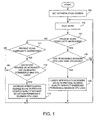
- FIG. 1 is a flow chart of an embodiment of the invention.
- the wavetable synthesizer's interpolation degree is set so as to provide a desired quality (e.g., a best quality) without exceeding the maximum permissible CPU load (step 103).
- the song is played (step 105).
- the strategy adopted in this process is as follows: When being scheduled to decode a less complex content, the interpolator algorithm will be set to run a higher interpolation degree, and thus a higher amount of CPU loading (e.g., a higher MIPS number), in order to perform a higher quality output. Conversely, when being scheduled to decode a more complex content, the interpolator algorithm is set to run a lower interpolation degree, and thus a lower CPU loading (e.g., a lower MIPS number), in order to make sure that processing stays below the maximum permissible CPU load limit.
- This strategy makes the synthesizer run a more constant amount of CPU loading, and therefore makes the decision algorithm act as a dynamic CPU load limiter.
- the present level of song complexity is monitored. If the present song complexity increases ("YES" path out of decision block 107), then it is determined whether this increase will result in the permissible maximum CPU load limit being exceeded (decision block 108). If it will, then the interpolation degree is lowered so as to continue to provide a desired (e.g., best) quality without exceeding the maximum permissible CPU load limit (step 109). The song then continues to be played (return to step 105). If the increased song complexity will not result in exceeding the maximum permissible CPU load limit ("NO" path out of decision block 108), then the song simply continues to be played (return to step 105).
- masking property There are two kinds of masking effects: temporal masking and frequency masking. Both masking effects make any distortion that is adjacent (in time or in frequency) to a distinct and more powerful signal less perceptible (if not entirely imperceptible).
- the masking threshold for interpolation distortion also increases, thereby making it possible to allow a lower degree in the interpolation algorithm in the synthesizer without jeopardizing the audio quality.
- a song may have a dynamically varying level of polyphony.
- the estimated CPU loading at the highest interpolation degree (which is interpolation degree 11 in our example) will vary as well.
- a 7-point interpolation degree would have been used when generating music requiring a 150 MIPS level of CPU load at the normal 11-point interpolation.
- the interpolation degree would have decreased without audibly increasing artifacts/distortion.
- the computational load in this example will never exceed the desired MIPS limit. It will be noted that if even selection of the simple linear interpolation method would cause the synthesizer to exceed the maximum permissible CPU loading limit, then the decision is made not to execute at all in order to avoid overloading the CPU. In alternative embodiments, even if selection of some of the lowest interpolation degrees will not cause the synthesizer to exceed the maximum permissible CPU loading limit, it may nonetheless be decided not to execute at all if the audio quality is perceived to become annoying at these levels.
- CPU_LOADING_ESTIMATE an accumulating estimate
- the accumulating estimate is only updated whenever a synthesizer voice is activated or deactivated, since in practice this is the only time the estimate will change.
- CPU_LOADING_ESTIMATE is initially set equal to zero (step 201) since at the beginning of the song there are no voices active. The song is then played (step 203).
- step 213 the corresponding CPU load associated with the newly deactivated voice is determined (step 213) and then subtracted from the existing accumulated CPU loading estimate (step 215). Playing of the song then continues as before (return to step 203).
- the CPU loading estimates will likely be less often updated, and will likely result in fewer CPU cycles being used for the estimation method.
- the invention thus provides an intelligent approach that limits the computational load in a wavetable-based synthesizer without lowering the perceived sound quality. It also provides means for accurately controlling the maximum load that the synthesizer imposes on the CPU. This is of vital importance in systems such as mobile terminals (e.g., cellular telephones) that have only limited available processing power, and yet which may find it desirable to provide a high level of polyphony (e.g., up to 40 simultaneous voices for producing polyphonic ring signals).
- mobile terminals e.g., cellular telephones
- polyphony e.g., up to 40 simultaneous voices for producing polyphonic ring signals.
Landscapes
- Engineering & Computer Science (AREA)
- General Engineering & Computer Science (AREA)
- Physics & Mathematics (AREA)
- Acoustics & Sound (AREA)
- Multimedia (AREA)
- Electrophonic Musical Instruments (AREA)
Claims (30)
- Verfahren zum Steuern eines Wellentabellen-Synthesizers, wobei das Verfahren umfasst:dynamisches Bestimmen einer gegenwärtigen CPU-Lastschätzung, die mit einem Lied verknüpft ist, das von dem Wellentabellen-Synthesizer abgespielt wird;Bestimmen eines Interpolationsgrades auf Grundlage der gegenwärtigen CPU-Lastschätzung; undEinstellen des Wellentabellen-Synthesizers, um den Interpolationsgrad zu verwenden, wenn das Lied abgespielt wird.
- Verfahren nach Anspruch 1, wobei das Bestimmen des Interpolationsgrades auf Grundlage der gegenwärtigen CPU-Lastschätzung umfasst:Vergleichen der gegenwärtigen CPU-Lastschätzung mit einer zuvor definierten, zulässigen, maximalen CPU-Lastgrenze und Bestimmen des Interpolationsgrades auf Grundlage dieses Vergleichs.
- Verfahren nach Anspruch 2, wobei das Bestimmen des Interpolationsgrades auf Grundlage des Vergleichs umfasst:Bestimmen des Interpolationsgrades auf Grundlage des Vergleichs, um so eine beste Qualität der Liedsynthese bereitzustellen, ohne die zuvor definierte, zulässige, maximale CPU-Lastgrenze zu überschreiten.
- Verfahren nach Anspruch 2, wobei das Bestimmen des Interpolationsgrades auf Grundlage des Vergleichs umfasst:Anhalten der Liedsynthese auf Grundlage des Vergleichs, um Liedsynthese bei einer Qualität zu vermeiden, die unter einer zuvor bestimmten Schwelle liegt.
- Verfahren nach Anspruch 1, mit:Einstellen des Interpolationsgrades auf einen höheren Wert in Reaktion auf das Detektieren, dass sich die gegenwärtige CPU-Lastschätzung vermindert hat.
- Verfahren nach Anspruch 1, mit:Einstellen des Interpolationsgrades auf einen niedrigeren Wert in Reaktion auf das Detektieren, dass sich die gegenwärtige CPU-Lastschätzung erhöht hat.
- Verfahren nach Anspruch 1, wobei das Bestimmen des Interpolationsgrades auf Grundlage der gegenwärtigen CPU-Lastschätzung umfasst:Vergleichen der gegenwärtigen CPU-Lastschätzung mit einem oder mehreren zuvor definierten CPU-Lastpegeln und Bestimmen des Interpolationsgrades auf Grundlage von einem oder mehreren Vergleichen, wobei jeder des einen oder der mehreren, zuvor definierten CPU-Lastpegel einem entsprechendem aus einem Satz von einem oder mehreren Interpolationsgraden entspricht.
- Verfahren nach Anspruch 1, wobei das dynamische Bestimmen der gegenwärtigen CPU-Lastschätzung, die mit dem Lied verknüpft ist, das von dem Wellentabellen-Synthesizer abgespielt wird, umfasst:während dem Abspielen des Liedes, Detektieren, dass eine neue Stimme aktiviert wurde;Bestimmen eines zusätzlichen CPU-Lastwertes, der der neuen Stimme entspricht; undAddieren des zusätzlichen CPU-Lastwertes zu einer akkumulierten CPU-Lastschätzung, die die gegenwärtige CPU-Lastschätzung darstellt.
- Verfahren nach Anspruch 8, wobei das Bestimmen des zusätzlichen CPU-Lastwertes, der der neuen Stimme entspricht, umfasst:Benutzen einer Identität der neuen Stimme, um auf den zusätzlichen CPU-Lastwert von einem Speicher zuzugreifen und diesen abzufragen.
- Verfahren nach Anspruch 1, wobei das dynamische Bestimmen der gegenwärtigen CPU-Lastschätzung, die mit dem Lied verknüpft ist, das von dem Wellentabellen-Synthesizer abgespielt wird, umfasst:während dem Abspielen des Lieds, Detektieren, dass eine existierende Stimme neu deaktiviert wurde;Bestimmen eines CPU-Lastwertes, der der neu deaktivierten Stimme entspricht; undSubtrahieren des entsprechenden CPU-Lastwertes von einer akkumulierten CPU-Lastschätzung, die die gegenwärtige CPU-Lastschätzung darstellt.
- Vorrichtung zum Steuern eines Wellentabellen-Synthesizers, wobei die Vorrichtung umfasst:eine Logik, die dynamisch eine gegenwärtige CPU-Lastschätzung bestimmt, die mit einem Lied verknüpft ist, das von dem Wellentabellen-Synthesizer abgespielt wird;eine Logik, die einen Interpolationsgrad auf Grundlage der gegenwärtigen CPU-Lastschätzung bestimmt; undeine Logik, die den Wellentabellen-Synthesizer einstellt, den Interpolationsgrad zu verwenden, wenn das Lied abgespielt wird.
- Gerät nach Anspruch 11, wobei die Logik, die den Interpolationsgrad auf Grundlage der gegenwärtigen CPU-Lastschätzung bestimmt, umfasst:eine Logik, die die gegenwärtige CPU-Lastschätzung mit einer zuvor definierten, zulässigen, maximalen CPU-Lastgrenze vergleicht und den Interpolationsgrad auf Grundlage dieses Vergleichs bestimmt.
- Vorrichtung nach Anspruch 12, wobei die Logik, die den Interpolationsgrad auf Grundlage des Vergleichs bestimmt, umfasst:eine Logik, die den Interpolationsgrad bestimmt, der auf dem Vergleich basiert, um eine beste Qualität der Liedsynthese bereitzustellen, ohne die zuvor definierte, zulässige, maximale CPU-Lastgrenze zu überschreiten.
- Vorrichtung nach Anspruch 12, wobei die Logik, die den Interpolationsgrad auf Grundlage des Vergleichs bestimmt, umfasst:eine Logik, die die Liedsynthese auf Grundlage des Vergleichs anhält, um eine Liedsynthese bei einer Qualität zu vermeiden, die unter einer zuvor bestimmten Schwelle liegt.
- Vorrichtung nach Anspruch 11, mit:einer Logik, die den Interpolationsgrad auf einen höheren Wert in Reaktion auf das Detektieren einstellt, dass sich die gegenwärtige CPU-Lastschätzung vermindert hat.
- Vorrichtung nach Anspruch 11, mit:einer Logik, die den Interpolationsgrad auf einen niedrigeren Wert in Reaktion auf das Detektieren einstellt, dass sich die gegenwärtige CPU-Lastschätzung erhöht hat.
- Vorrichtung nach Anspruch 11, wobei die Logik, die den Interpolationsgrad auf Grundlage der gegenwärtigen CPU-Lastschätzung bestimmt, umfasst:eine Logik, die die gegenwärtige CPU-Lastschätzung mit einem oder mehreren zuvor definierten CPU-Lastpegeln vergleicht und den Interpolationsgrad auf Grundlage von einem oder mehreren Vergleichen bestimmt, wobei jeder des einen oder der mehreren, zuvor definierten CPU-Lastpegel einem entsprechendem aus einem Satz von einem oder mehreren Interpolationsgraden entspricht.
- Vorrichtung nach Anspruch 11, wobei die Logik, die dynamisch die gegenwärtige CPU-Lastschätzung bestimmt, die mit dem Lied verknüpft ist, das von dem Wellentabellen-Synthesizer abgespielt wird, umfasst:eine Logik, die detektiert, dass eine neue Stimme aktiviert wurde, während das Lied abgespielt wird;eine Logik, die einen zusätzlichen CPU-Lastwert bestimmt, der der neuen Stimme entspricht; undeine Logik, die den zusätzlichen CPU-Lastwert zu einer akkumulierten CPU-Lastschätzung addiert, die die gegenwärtige CPU-Lastschätzung darstellt.
- Vorrichtung nach Anspruch 18, wobei die Logik, die den zusätzlichen CPU-Lastwert bestimmt, der der neuen Stimme entspricht, umfasst:eine Logik, die eine Identität der neuen Stimme verwendet, um auf den zusätzlichen CPU-Lastwert von einem Speicher zuzugreifen und diesen abzufragen.
- Vorrichtung nach Anspruch 11, wobei die Logik, die dynamisch die gegenwärtige CPU-Lastschätzung bestimmt, die mit dem Lied verknüpft ist, das von dem Wellentabellen-Synthesizer abgespielt wird, umfasst:eine Logik, die detektiert, dass eine existierende Stimme, neu deaktiviert wurde, während das Lied abgespielt wird;eine Logik, die einen CPU-Lastwert bestimmt, der der neu deaktivierten Stimme entspricht; undeine Logik, die den entsprechenden CPU-Lastwert von einer akkumulierten CPU-Lastschätzung subtrahiert, die die gegenwärtige CPU-Lastschätzung darstellt.
- Computerlesbares Speichermedium, das ein oder mehrere Anweisungen gespeichert hat, um einen Prozessor zu veranlassen, einen Wellentabellen-Synthesizer zu steuern, wobei die Anweisungen den Prozessor veranlassen durchzuführen:dynamisches Bestimmen einer gegenwärtigen CPU-Lastschätzung, die mit einem Lied verknüpft ist, das von dem Wellentabellen-Synthesizer abgespielt wird; Bestimmen eines Interpolationsgrades auf Grundlage der gegenwärtigen CPU-Lastschätzung; undEinstellen des Wellentabellen-Synthesizers, um den Interpolationsgrad zu verwenden, wenn das Lied abgespielt wird.
- Computerlesbares Speichermedium nach Anspruch 21, wobei das Bestimmen des Interpolationsgrades auf Grundlage der gegenwärtigen CPU-Lastschätzung umfasst:Vergleichen der gegenwärtigen CPU-Lastschätzung mit einer zuvor definierten, zulässigen, maximalen CPU-Lastgrenze und Bestimmen des Interpolationsgrades auf Grundlage dieses Vergleichs.
- Computerlesbares Speichermedium nach Anspruch 22, wobei das Bestimmen des Interpolationsgrades auf Grundlage des Vergleichs umfasst:Bestimmen des Interpolationsgrades auf Grundlage des Vergleichs, um so eine beste Qualität der Liedsynthese bereitzustellen, ohne die zuvor definierte, zulässige, maximale CPU-Lastgrenze zu überschreiten.
- Computerlesbares Speichermedium nach Anspruch 22, wobei das Bestimmen des Interpolationsgrades auf Grundlage des Vergleichs umfasst:Anhalten der Liedsynthese auf Grundlage des Vergleichs, um Liedsynthese bei einer Qualität zu vermeiden, die unter einer zuvor bestimmten Schwelle liegt.
- Computerlesbares Speichermedium nach Anspruch 21, wobei die Anweisungen den Prozessor dazu veranlassen, durchzuführen:Einstellen des Interpolationsgrades auf einen höheren Wert in Reaktion auf das Detektieren, dass sich die gegenwärtige CPU-Lastschätzung vermindert hat.
- Computerlesbares Speichermedium nach Anspruch 21, wobei die Anweisungen den Prozessor dazu veranlassen, durchzuführen:Einstellen des Interpolationsgrades auf einen niedrigeren Wert in Reaktion auf das Detektieren, dass sich die gegenwärtige CPU-Lastschätzung erhöht hat.
- Computerlesbares Speichermedium nach Anspruch 21, wobei das Bestimmen des Interpolationsgrades auf Grundlage der gegenwärtigen CPU-Lastschätzung umfasst:Vergleichen der gegenwärtigen CPU-Lastschätzung mit einem oder mehreren, zuvor definierten CPU-Lastpegeln und Bestimmen des Interpolationsgrades auf Grundlage von einem oder mehreren Vergleichen, wobei jeder des einen oder der mehreren, zuvor definierten CPU-Lastpegel einem entsprechendem aus einem Satz von einem oder mehreren Interpolationsgraden entspricht.
- Computerlesbares Speichermedium nach Anspruch 21, wobei das dynamische Bestimmen der gegenwärtigen CPU-Lastschätzung, die mit dem Lied verknüpft ist, das von dem Wellentabellen-Synthesizer abgespielt wird, umfasst:während dem Abspielen des Liedes, Detektieren, dass eine neue Stimme aktiviert wurde;Bestimmen eines zusätzlichen CPU-Lastwertes, der der neuen Stimme entspricht; undAddieren des zusätzlichen CPU-Lastwertes zu einer akkumulierten CPU-Lastschätzung, die die gegenwärtige CPU-Lastschätzung darstellt.
- Computerlesbares Speichermedium nach Anspruch 28, wobei das Bestimmen des zusätzlichen CPU-Lastwertes, der der neuen Stimme entspricht, umfasst:Benutzen einer Identität der neuen Stimme, um auf den zusätzlichen CPU-Lastwert von einem Speicher zuzugreifen und diesen abzufragen.
- Computerlesbares Speichermedium nach Anspruch 21, wobei das dynamische Bestimmen der gegenwärtigen CPU-Lastschätzung, die mit dem Lied verknüpft ist, das von dem Wellentabellen-Synthesizer abgespielt wird, umfasst:während dem Abspielen des Lieds, Detektieren, dass eine existierende Stimme neu deaktiviert wurde;Bestimmen eines CPU-Lastwertes, der der neu deaktivierten Stimme entspricht; undSubtrahieren des entsprechenden CPU-Lastwertes von einer akkumulierten CPU-Lastschätzung, die die gegenwärtige CPU-Lastschätzung darstellt.
Applications Claiming Priority (2)
| Application Number | Priority Date | Filing Date | Title |
|---|---|---|---|
| US10/621,459 US7038119B2 (en) | 2003-07-18 | 2003-07-18 | Dynamic control of processing load in a wavetable synthesizer |
| PCT/EP2004/006669 WO2005015537A1 (en) | 2003-07-18 | 2004-06-21 | Dynamic control of processing load in a wavetable synthesizer |
Publications (2)
| Publication Number | Publication Date |
|---|---|
| EP1654725A1 EP1654725A1 (de) | 2006-05-10 |
| EP1654725B1 true EP1654725B1 (de) | 2007-03-07 |
Family
ID=34062989
Family Applications (1)
| Application Number | Title | Priority Date | Filing Date |
|---|---|---|---|
| EP04740109A Expired - Lifetime EP1654725B1 (de) | 2003-07-18 | 2004-06-21 | Dynamische regelung der verarbeitungslast in einem wavetable-synthesizer |
Country Status (5)
| Country | Link |
|---|---|
| US (1) | US7038119B2 (de) |
| EP (1) | EP1654725B1 (de) |
| AT (1) | ATE356402T1 (de) |
| DE (1) | DE602004005213D1 (de) |
| WO (1) | WO2005015537A1 (de) |
Families Citing this family (10)
| Publication number | Priority date | Publication date | Assignee | Title |
|---|---|---|---|---|
| TWI227010B (en) * | 2003-05-23 | 2005-01-21 | Mediatek Inc | Wavetable audio synthesis system |
| US20050098022A1 (en) * | 2003-11-07 | 2005-05-12 | Eric Shank | Hand-held music-creation device |
| TWI252468B (en) * | 2004-02-13 | 2006-04-01 | Mediatek Inc | Wavetable synthesis system with memory management according to data importance and method of the same |
| US20060282261A1 (en) * | 2005-06-13 | 2006-12-14 | Andrej Petef | Sample rate control in pitching audio systems |
| JP4645337B2 (ja) * | 2005-07-19 | 2011-03-09 | カシオ計算機株式会社 | 波形データ補間装置 |
| JP2007163845A (ja) * | 2005-12-14 | 2007-06-28 | Oki Electric Ind Co Ltd | 音源システム |
| US7807915B2 (en) * | 2007-03-22 | 2010-10-05 | Qualcomm Incorporated | Bandwidth control for retrieval of reference waveforms in an audio device |
| JP4475323B2 (ja) * | 2007-12-14 | 2010-06-09 | カシオ計算機株式会社 | 楽音発生装置、及びプログラム |
| US8762561B2 (en) * | 2008-07-23 | 2014-06-24 | Qualcomm Incorporated | System, method or apparatus for combining multiple streams of media data |
| US9251254B2 (en) * | 2012-12-21 | 2016-02-02 | Qualcomm Incorporated | Controlling the execution speed of a processor in an audio processing system |
Family Cites Families (5)
| Publication number | Priority date | Publication date | Assignee | Title |
|---|---|---|---|---|
| JPH08160959A (ja) | 1994-12-02 | 1996-06-21 | Sony Corp | 音源制御装置 |
| JP2998612B2 (ja) | 1995-06-06 | 2000-01-11 | ヤマハ株式会社 | 楽音発生装置 |
| GB2306043A (en) * | 1995-10-03 | 1997-04-23 | Ibm | Audio synthesizer |
| JP3658826B2 (ja) * | 1995-12-21 | 2005-06-08 | ヤマハ株式会社 | 楽音生成方法 |
| SG67993A1 (en) | 1996-08-30 | 1999-10-19 | Yamaha Corp | Sound source system based on computer software and method of generating acoustic waveform data |
-
2003
- 2003-07-18 US US10/621,459 patent/US7038119B2/en not_active Expired - Fee Related
-
2004
- 2004-06-21 EP EP04740109A patent/EP1654725B1/de not_active Expired - Lifetime
- 2004-06-21 DE DE602004005213T patent/DE602004005213D1/de not_active Expired - Lifetime
- 2004-06-21 WO PCT/EP2004/006669 patent/WO2005015537A1/en not_active Ceased
- 2004-06-21 AT AT04740109T patent/ATE356402T1/de not_active IP Right Cessation
Also Published As
| Publication number | Publication date |
|---|---|
| ATE356402T1 (de) | 2007-03-15 |
| DE602004005213D1 (de) | 2007-04-19 |
| EP1654725A1 (de) | 2006-05-10 |
| US7038119B2 (en) | 2006-05-02 |
| US20050011341A1 (en) | 2005-01-20 |
| WO2005015537A1 (en) | 2005-02-17 |
Similar Documents
| Publication | Publication Date | Title |
|---|---|---|
| US6900381B2 (en) | Method for removing aliasing in wave table based synthesizers | |
| US5744742A (en) | Parametric signal modeling musical synthesizer | |
| US5744739A (en) | Wavetable synthesizer and operating method using a variable sampling rate approximation | |
| WO1997017692A9 (en) | Parametric signal modeling musical synthesizer | |
| JP4181637B2 (ja) | ウェーブテーブルシンセサイザに使用される音響サンプルを予め処理するための期間強制フィルタ | |
| JP2008112183A (ja) | 音響シンセサイザにおける低減メモリリバーブシミュレータ | |
| US7038119B2 (en) | Dynamic control of processing load in a wavetable synthesizer | |
| Massie | Wavetable sampling synthesis | |
| Jensen | The timbre model | |
| JP3008922B2 (ja) | 楽音発生装置および楽音発生方法 | |
| US6965069B2 (en) | Programmable melody generator | |
| CN100533551C (zh) | 在嵌入式器件中产生敲打声 | |
| US6300552B1 (en) | Waveform data time expanding and compressing device | |
| US5324882A (en) | Tone generating apparatus producing smoothly linked waveforms | |
| GB2294799A (en) | Sound generating apparatus having small capacity wave form memories | |
| RU2314502C2 (ru) | Устройство и способ для обработки звука звонка | |
| JP3744247B2 (ja) | 波形圧縮方法及び波形生成方法 | |
| US20060086238A1 (en) | Apparatus and method for reproducing MIDI file | |
| JP3095018B2 (ja) | 楽音発生装置 | |
| JP3788096B2 (ja) | 波形圧縮方法及び波形生成方法 | |
| JPS61248096A (ja) | 電子楽器 | |
| Jensen | The timbre model-discrimination and expression | |
| KR100598207B1 (ko) | Midi 재생 장치 및 방법 | |
| JP2003122379A (ja) | 周波数解析方法および音響信号の符号化方法 | |
| JP2836028B2 (ja) | 自動演奏装置 |
Legal Events
| Date | Code | Title | Description |
|---|---|---|---|
| PUAI | Public reference made under article 153(3) epc to a published international application that has entered the european phase |
Free format text: ORIGINAL CODE: 0009012 |
|
| 17P | Request for examination filed |
Effective date: 20060118 |
|
| AK | Designated contracting states |
Kind code of ref document: A1 Designated state(s): AT BE BG CH CY CZ DE DK EE ES FI FR GB GR HU IE IT LI LU MC NL PL PT RO SE SI SK TR |
|
| GRAP | Despatch of communication of intention to grant a patent |
Free format text: ORIGINAL CODE: EPIDOSNIGR1 |
|
| DAX | Request for extension of the european patent (deleted) | ||
| GRAS | Grant fee paid |
Free format text: ORIGINAL CODE: EPIDOSNIGR3 |
|
| GRAA | (expected) grant |
Free format text: ORIGINAL CODE: 0009210 |
|
| AK | Designated contracting states |
Kind code of ref document: B1 Designated state(s): AT BE BG CH CY CZ DE DK EE ES FI FR GB GR HU IE IT LI LU MC NL PL PT RO SE SI SK TR |
|
| PG25 | Lapsed in a contracting state [announced via postgrant information from national office to epo] |
Ref country code: PL Free format text: LAPSE BECAUSE OF FAILURE TO SUBMIT A TRANSLATION OF THE DESCRIPTION OR TO PAY THE FEE WITHIN THE PRESCRIBED TIME-LIMIT Effective date: 20070307 Ref country code: NL Free format text: LAPSE BECAUSE OF FAILURE TO SUBMIT A TRANSLATION OF THE DESCRIPTION OR TO PAY THE FEE WITHIN THE PRESCRIBED TIME-LIMIT Effective date: 20070307 Ref country code: BE Free format text: LAPSE BECAUSE OF FAILURE TO SUBMIT A TRANSLATION OF THE DESCRIPTION OR TO PAY THE FEE WITHIN THE PRESCRIBED TIME-LIMIT Effective date: 20070307 Ref country code: CH Free format text: LAPSE BECAUSE OF FAILURE TO SUBMIT A TRANSLATION OF THE DESCRIPTION OR TO PAY THE FEE WITHIN THE PRESCRIBED TIME-LIMIT Effective date: 20070307 Ref country code: LI Free format text: LAPSE BECAUSE OF FAILURE TO SUBMIT A TRANSLATION OF THE DESCRIPTION OR TO PAY THE FEE WITHIN THE PRESCRIBED TIME-LIMIT Effective date: 20070307 Ref country code: FI Free format text: LAPSE BECAUSE OF FAILURE TO SUBMIT A TRANSLATION OF THE DESCRIPTION OR TO PAY THE FEE WITHIN THE PRESCRIBED TIME-LIMIT Effective date: 20070307 Ref country code: AT Free format text: LAPSE BECAUSE OF FAILURE TO SUBMIT A TRANSLATION OF THE DESCRIPTION OR TO PAY THE FEE WITHIN THE PRESCRIBED TIME-LIMIT Effective date: 20070307 Ref country code: SI Free format text: LAPSE BECAUSE OF FAILURE TO SUBMIT A TRANSLATION OF THE DESCRIPTION OR TO PAY THE FEE WITHIN THE PRESCRIBED TIME-LIMIT Effective date: 20070307 |
|
| REG | Reference to a national code |
Ref country code: GB Ref legal event code: FG4D |
|
| REG | Reference to a national code |
Ref country code: CH Ref legal event code: EP |
|
| REF | Corresponds to: |
Ref document number: 602004005213 Country of ref document: DE Date of ref document: 20070419 Kind code of ref document: P |
|
| REG | Reference to a national code |
Ref country code: IE Ref legal event code: FG4D |
|
| PG25 | Lapsed in a contracting state [announced via postgrant information from national office to epo] |
Ref country code: SE Free format text: LAPSE BECAUSE OF FAILURE TO SUBMIT A TRANSLATION OF THE DESCRIPTION OR TO PAY THE FEE WITHIN THE PRESCRIBED TIME-LIMIT Effective date: 20070607 |
|
| PG25 | Lapsed in a contracting state [announced via postgrant information from national office to epo] |
Ref country code: ES Free format text: LAPSE BECAUSE OF FAILURE TO SUBMIT A TRANSLATION OF THE DESCRIPTION OR TO PAY THE FEE WITHIN THE PRESCRIBED TIME-LIMIT Effective date: 20070618 |
|
| PG25 | Lapsed in a contracting state [announced via postgrant information from national office to epo] |
Ref country code: PT Free format text: LAPSE BECAUSE OF FAILURE TO SUBMIT A TRANSLATION OF THE DESCRIPTION OR TO PAY THE FEE WITHIN THE PRESCRIBED TIME-LIMIT Effective date: 20070807 |
|
| ET | Fr: translation filed | ||
| NLV1 | Nl: lapsed or annulled due to failure to fulfill the requirements of art. 29p and 29m of the patents act | ||
| REG | Reference to a national code |
Ref country code: CH Ref legal event code: PL |
|
| PG25 | Lapsed in a contracting state [announced via postgrant information from national office to epo] |
Ref country code: SK Free format text: LAPSE BECAUSE OF FAILURE TO SUBMIT A TRANSLATION OF THE DESCRIPTION OR TO PAY THE FEE WITHIN THE PRESCRIBED TIME-LIMIT Effective date: 20070307 |
|
| PG25 | Lapsed in a contracting state [announced via postgrant information from national office to epo] |
Ref country code: RO Free format text: LAPSE BECAUSE OF FAILURE TO SUBMIT A TRANSLATION OF THE DESCRIPTION OR TO PAY THE FEE WITHIN THE PRESCRIBED TIME-LIMIT Effective date: 20070307 Ref country code: CZ Free format text: LAPSE BECAUSE OF FAILURE TO SUBMIT A TRANSLATION OF THE DESCRIPTION OR TO PAY THE FEE WITHIN THE PRESCRIBED TIME-LIMIT Effective date: 20070307 |
|
| PLBE | No opposition filed within time limit |
Free format text: ORIGINAL CODE: 0009261 |
|
| STAA | Information on the status of an ep patent application or granted ep patent |
Free format text: STATUS: NO OPPOSITION FILED WITHIN TIME LIMIT |
|
| PG25 | Lapsed in a contracting state [announced via postgrant information from national office to epo] |
Ref country code: DE Free format text: LAPSE BECAUSE OF FAILURE TO SUBMIT A TRANSLATION OF THE DESCRIPTION OR TO PAY THE FEE WITHIN THE PRESCRIBED TIME-LIMIT Effective date: 20070609 Ref country code: DK Free format text: LAPSE BECAUSE OF FAILURE TO SUBMIT A TRANSLATION OF THE DESCRIPTION OR TO PAY THE FEE WITHIN THE PRESCRIBED TIME-LIMIT Effective date: 20070307 Ref country code: MC Free format text: LAPSE BECAUSE OF NON-PAYMENT OF DUE FEES Effective date: 20070630 |
|
| 26N | No opposition filed |
Effective date: 20071210 |
|
| PG25 | Lapsed in a contracting state [announced via postgrant information from national office to epo] |
Ref country code: GR Free format text: LAPSE BECAUSE OF FAILURE TO SUBMIT A TRANSLATION OF THE DESCRIPTION OR TO PAY THE FEE WITHIN THE PRESCRIBED TIME-LIMIT Effective date: 20070608 Ref country code: IT Free format text: LAPSE BECAUSE OF FAILURE TO SUBMIT A TRANSLATION OF THE DESCRIPTION OR TO PAY THE FEE WITHIN THE PRESCRIBED TIME-LIMIT Effective date: 20070307 |
|
| PG25 | Lapsed in a contracting state [announced via postgrant information from national office to epo] |
Ref country code: IE Free format text: LAPSE BECAUSE OF NON-PAYMENT OF DUE FEES Effective date: 20070621 |
|
| PG25 | Lapsed in a contracting state [announced via postgrant information from national office to epo] |
Ref country code: EE Free format text: LAPSE BECAUSE OF FAILURE TO SUBMIT A TRANSLATION OF THE DESCRIPTION OR TO PAY THE FEE WITHIN THE PRESCRIBED TIME-LIMIT Effective date: 20070307 |
|
| PG25 | Lapsed in a contracting state [announced via postgrant information from national office to epo] |
Ref country code: CY Free format text: LAPSE BECAUSE OF FAILURE TO SUBMIT A TRANSLATION OF THE DESCRIPTION OR TO PAY THE FEE WITHIN THE PRESCRIBED TIME-LIMIT Effective date: 20070307 |
|
| PG25 | Lapsed in a contracting state [announced via postgrant information from national office to epo] |
Ref country code: LU Free format text: LAPSE BECAUSE OF NON-PAYMENT OF DUE FEES Effective date: 20070621 Ref country code: BG Free format text: LAPSE BECAUSE OF FAILURE TO SUBMIT A TRANSLATION OF THE DESCRIPTION OR TO PAY THE FEE WITHIN THE PRESCRIBED TIME-LIMIT Effective date: 20070607 |
|
| PG25 | Lapsed in a contracting state [announced via postgrant information from national office to epo] |
Ref country code: HU Free format text: LAPSE BECAUSE OF FAILURE TO SUBMIT A TRANSLATION OF THE DESCRIPTION OR TO PAY THE FEE WITHIN THE PRESCRIBED TIME-LIMIT Effective date: 20070908 Ref country code: TR Free format text: LAPSE BECAUSE OF FAILURE TO SUBMIT A TRANSLATION OF THE DESCRIPTION OR TO PAY THE FEE WITHIN THE PRESCRIBED TIME-LIMIT Effective date: 20070307 |
|
| PGFP | Annual fee paid to national office [announced via postgrant information from national office to epo] |
Ref country code: FR Payment date: 20120705 Year of fee payment: 9 Ref country code: GB Payment date: 20120625 Year of fee payment: 9 |
|
| GBPC | Gb: european patent ceased through non-payment of renewal fee |
Effective date: 20130621 |
|
| REG | Reference to a national code |
Ref country code: FR Ref legal event code: ST Effective date: 20140228 |
|
| PG25 | Lapsed in a contracting state [announced via postgrant information from national office to epo] |
Ref country code: GB Free format text: LAPSE BECAUSE OF NON-PAYMENT OF DUE FEES Effective date: 20130621 |
|
| PG25 | Lapsed in a contracting state [announced via postgrant information from national office to epo] |
Ref country code: FR Free format text: LAPSE BECAUSE OF NON-PAYMENT OF DUE FEES Effective date: 20130701 |