EP1647934B1 - Secure image authentication with discrete level tamper localization - Google Patents
Secure image authentication with discrete level tamper localization Download PDFInfo
- Publication number
- EP1647934B1 EP1647934B1 EP05109428.2A EP05109428A EP1647934B1 EP 1647934 B1 EP1647934 B1 EP 1647934B1 EP 05109428 A EP05109428 A EP 05109428A EP 1647934 B1 EP1647934 B1 EP 1647934B1
- Authority
- EP
- European Patent Office
- Prior art keywords
- multimedia
- pixel
- pixels
- sample
- image
- Prior art date
- Legal status (The legal status is an assumption and is not a legal conclusion. Google has not performed a legal analysis and makes no representation as to the accuracy of the status listed.)
- Expired - Lifetime
Links
Images


Classifications
-
- H—ELECTRICITY
- H04—ELECTRIC COMMUNICATION TECHNIQUE
- H04N—PICTORIAL COMMUNICATION, e.g. TELEVISION
- H04N19/00—Methods or arrangements for coding, decoding, compressing or decompressing digital video signals
- H04N19/46—Embedding additional information in the video signal during the compression process
- H04N19/467—Embedding additional information in the video signal during the compression process characterised by the embedded information being invisible, e.g. watermarking
-
- G—PHYSICS
- G06—COMPUTING OR CALCULATING; COUNTING
- G06T—IMAGE DATA PROCESSING OR GENERATION, IN GENERAL
- G06T1/00—General purpose image data processing
- G06T1/0021—Image watermarking
- G06T1/0042—Fragile watermarking, e.g. so as to detect tampering
-
- H—ELECTRICITY
- H04—ELECTRIC COMMUNICATION TECHNIQUE
- H04N—PICTORIAL COMMUNICATION, e.g. TELEVISION
- H04N1/00—Scanning, transmission or reproduction of documents or the like, e.g. facsimile transmission; Details thereof
- H04N1/00002—Diagnosis, testing or measuring; Detecting, analysing or monitoring not otherwise provided for
- H04N1/00005—Diagnosis, testing or measuring; Detecting, analysing or monitoring not otherwise provided for relating to image data
-
- H—ELECTRICITY
- H04—ELECTRIC COMMUNICATION TECHNIQUE
- H04N—PICTORIAL COMMUNICATION, e.g. TELEVISION
- H04N1/00—Scanning, transmission or reproduction of documents or the like, e.g. facsimile transmission; Details thereof
- H04N1/00002—Diagnosis, testing or measuring; Detecting, analysing or monitoring not otherwise provided for
- H04N1/00026—Methods therefor
- H04N1/00037—Detecting, i.e. determining the occurrence of a predetermined state
-
- H—ELECTRICITY
- H04—ELECTRIC COMMUNICATION TECHNIQUE
- H04N—PICTORIAL COMMUNICATION, e.g. TELEVISION
- H04N1/00—Scanning, transmission or reproduction of documents or the like, e.g. facsimile transmission; Details thereof
- H04N1/32—Circuits or arrangements for control or supervision between transmitter and receiver or between image input and image output device, e.g. between a still-image camera and its memory or between a still-image camera and a printer device
- H04N1/32101—Display, printing, storage or transmission of additional information, e.g. ID code, date and time or title
- H04N1/32144—Display, printing, storage or transmission of additional information, e.g. ID code, date and time or title embedded in the image data, i.e. enclosed or integrated in the image, e.g. watermark, super-imposed logo or stamp
-
- H—ELECTRICITY
- H04—ELECTRIC COMMUNICATION TECHNIQUE
- H04N—PICTORIAL COMMUNICATION, e.g. TELEVISION
- H04N1/00—Scanning, transmission or reproduction of documents or the like, e.g. facsimile transmission; Details thereof
- H04N1/32—Circuits or arrangements for control or supervision between transmitter and receiver or between image input and image output device, e.g. between a still-image camera and its memory or between a still-image camera and a printer device
- H04N1/32101—Display, printing, storage or transmission of additional information, e.g. ID code, date and time or title
- H04N1/32144—Display, printing, storage or transmission of additional information, e.g. ID code, date and time or title embedded in the image data, i.e. enclosed or integrated in the image, e.g. watermark, super-imposed logo or stamp
- H04N1/32149—Methods relating to embedding, encoding, decoding, detection or retrieval operations
- H04N1/32203—Spatial or amplitude domain methods
- H04N1/32208—Spatial or amplitude domain methods involving changing the magnitude of selected pixels, e.g. overlay of information or super-imposition
- H04N1/32213—Modulating the least significant bits of pixels
-
- G—PHYSICS
- G06—COMPUTING OR CALCULATING; COUNTING
- G06T—IMAGE DATA PROCESSING OR GENERATION, IN GENERAL
- G06T2201/00—General purpose image data processing
- G06T2201/005—Image watermarking
- G06T2201/0051—Embedding of the watermark in the spatial domain
-
- G—PHYSICS
- G06—COMPUTING OR CALCULATING; COUNTING
- G06T—IMAGE DATA PROCESSING OR GENERATION, IN GENERAL
- G06T2201/00—General purpose image data processing
- G06T2201/005—Image watermarking
- G06T2201/0061—Embedding of the watermark in each block of the image, e.g. segmented watermarking
-
- H—ELECTRICITY
- H04—ELECTRIC COMMUNICATION TECHNIQUE
- H04N—PICTORIAL COMMUNICATION, e.g. TELEVISION
- H04N2201/00—Indexing scheme relating to scanning, transmission or reproduction of documents or the like, and to details thereof
- H04N2201/32—Circuits or arrangements for control or supervision between transmitter and receiver or between image input and image output device, e.g. between a still-image camera and its memory or between a still-image camera and a printer device
- H04N2201/3201—Display, printing, storage or transmission of additional information, e.g. ID code, date and time or title
- H04N2201/3225—Display, printing, storage or transmission of additional information, e.g. ID code, date and time or title of data relating to an image, a page or a document
- H04N2201/3233—Display, printing, storage or transmission of additional information, e.g. ID code, date and time or title of data relating to an image, a page or a document of authentication information, e.g. digital signature, watermark
Definitions
- This disclosure relates to multimedia authentication and tampered pixel or sample localization.
- Multimedia authentication is a technology to check authenticity and integrity of multimedia signals. It is often desirable to localize tampered pixels or samples for a tampered signal so unmodified parts can still be used. Technologies to fulfill this goal have been actively studied in recent years.
- a class of proposed technologies, called complete or hard authentication, is to detect any modifications to a multimedia signal.
- Hard authentication technologies can be classified into pixel-wise schemes and block-wise schemes.
- a pixel-wise scheme is designed to localize tampered pixels (or samples that are implied by "pixels" in the following without explicit reference for audio signals) in additional to verify authenticity for the whole signal.
- a block-wise scheme on the other hand, is designed to localize tampered blocks.
- a block-wise scheme is securer in general than a pixel-wise one, but has much coarser tamper localization capability. Details on proposed authentication technologies can be found in [1][2].
- Y-M scheme the fragile watermarking scheme proposed by Yeung and Mintzer [3][4].
- the Y-M scheme applies a secret binary function to map the value of each pixel, perturbed if necessary, to a preset logo bit.
- the scheme is able to localize a single tampered pixel. Its vulnerabilities under various circumstances were reported in [5]-[9], and fixes in [10]-[13].
- a typical fix is to introduce neighborhood dependency in mapping a pixel to a logo bit, such as the scheme proposed in [10].
- Fridrich attributed this new vulnerability to the inherent sequential nature in modifying pixels during the watermarking process in a pixel-wise scheme, and believed that no pixel-wise schemes could fix this vulnerability. She turned attention to develop a block-wise scheme in [14] which does not suffer from any of the aforementioned vulnerabilities for pixel-wise schemes. Unfortunately, a block-wise scheme greatly reduces the tampering localization capability. A tampered pixel can no longer to be identified.
- block-wise image authentication schemes are typically considered to be the only viable solution.
- One such solution is a block-wise authentication scheme which can localize tampered blocks rather than a single pixel - for security reasons, the size of a block is generally 128 pixels or larger.
- Fridrich J "Hybrid Watermark for Tamper Detection in Digital Images” International Symposium on Signal Processing and its Applications. Proceedings, vol. 1, August 22, 1999, pages 301 to 304 relates to a hybrid watermark for tamper detection in digital images.
- a hybrid image authentication watermark obtained as a combination of a fragile and a robust watermark is presented.
- the fragile watermark has good localization and security properties, but cannot be used to distinguish malicious changes, such as feature adding or removal from innocent image processing operations.
- the hybrid watermark can be used to accurately pinpoint changes as well as distinguish tamper from innocent operations.
- the authentication can be done without accessing any information about the original image.
- the watermark scheme proposed does not have certain security gaps common to many previously proposed fragile watermarks.
- a block cipher is used instead of binary look-up tables. Pixel values are perturbed by small quantities so that the cipher maps small pixel neighborhoods to a fixed binary logo. This process is further modified in order to embed image indices (time stamps) into disjoint blocks of every image. This is necessary for detection of collages from multiple authenticated images.
- the watermark extraction algorithm will return an image that resembles random noise. Since it requires a user key during both the insertion and the extraction procedures, it is not possible for an unauthorized user to insert a new watermark or alter the existing watermark so that the resulting image will pass the test.
- multimedia is evaluated to determine authenticity of the multimedia. This evaluation is based on data block(s). Responsive to determining that the multimedia is not authentic, a tampered portion of the multimedia is localized by addressing each respective pixel or sample of the tampered portion.
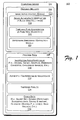
- Fig. 1 illustrates an exemplary system 100 for secure image authentication with discrete tamper localization.
- System 100 includes computing device 102, which includes program module(s) 104 and program data 106.
- Program modules 104 include, for example, image authentication module 108, which performs secure image authentication with discrete tamper localization.
- Program data 106 includes, for example, image(s) 110, authentic and/or tampered image indication(s) 112, tampered pixel(s) 114, and other data 116.
- Image authentication module 108 provides an authentication scheme that securely authenticates an image 110 with dual independent mechanisms, including signal authenticity verification 118 and tampered pixel localization 120 mechanisms. These integrated but independent mechanisms merge the best of a pixel-wise scheme and of a block-wise scheme into a single system to provide a secure authentication scheme with discrete tamper localization capability that is secure to all known attacks, while maintaining discrete tamper localization.
- the signal authenticity verification 118 and tampered pixel localization 120 are optimized for their respective tasks. This is in contrast to existing pixel-wise schemes, which are subject to vulnerability because they utilize a single mechanism for two very different purposes: authenticity verification and tamper localization.
- signal authenticity verification 118 implements a block-wise scheme to verify authenticity of an image 110.
- an entire image 110 is considered to be a block.
- image 110 is segmented into multiple disjoint blocks, and a block-wise scheme is applied to each block.
- Tampered pixel localization 120 is integrated with signal authenticity verification 118 to provide a pixel-wise mechanism to localize tampered pixels.
- the pixel-wise mechanism addresses each pixel individually in an image 110 to provide pixel-level tamper localization. This is different from the block-wise scheme in signal authentication verification 118 which produces a output (authentic or not) to indicate the status for a whole block, i.e. a collection of pixels, and therefore cannot indicate the status for each pixel in the block.
- Tampered pixel localization 120 utilizes one or multiple previously watermarked pixels in a pixel scan order as a neighborhood of the current pixel. Any ways to order pixels in an image can be used as the pixel scan order. The scan order can be publicly disclosed or kept as secret information. In a particular implementation to be described below, random ordering of pixels is used as the pixel scan order. As explained below, this random ordering of pixels enables a post-processing process to refine candidates of tampered pixels, and therefore improves probability of detecting even a single tampered pixel of an image 110. A method to generate random ordering of pixels is given later in this manuscript.
- image 110 is an L -bit grayscale image 110, L>1, although the described operations of image authentication module 108 can also operate on color image(s) or multimedia types such as audio or video data.
- image authentication module 108 hash operations for grayscale images may be applied to all color components. The resulting digital signature is embedded to one color component such as the Y-component; while operations of tampered pixel localization 120 for grayscale images can be applied independently to each color component.
- An alternative implementation for color image is to apply operations of image authentication module 108 for grayscale images to each color component independently. In this case, signal authenticity verification 118 can verify authenticity for each color component.
- Tampered pixel localization 120 implements watermarking operations by embedding a fragile watermark into image 110.
- Fragile watermark is a special type of watermarks whose integrity is destroyed when the watermarked signal undergoes small changes. This watermark is used to detect / localize tampered pixels.
- Signal authenticity verification 118 generates a digital signature or MAC (Message Authentication Code).
- the digital signature or MAC is shown as a respective portion of "other data" 116.
- Watermarking component 122 utilizes a least significant bit embedding (watermarking) to embed the digital signature or MAC into selected pixels of image 110, potentially along with other optional embedding data such as image ID, image size, title, owner information, etc. Watermarking component also extracts the watermarking and possibly other data from the watermarked image 110.
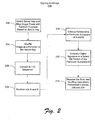
- Fig. 2 shows exemplary operations of procedure 200 to sign a grayscale image 110.
- image authentication module 108 uses a secret key K selected for the grayscale image I 110 to generate a random mapping function f .
- secret means that the key should be kept as a secret.
- secret key K is different from the "private key” in a public/private encryption cipher, which is also used in some of our implementations.
- the secret key K is selected by a user and input to module 108.
- key K is kept separately from the image I .
- K is encrypted and inserted into a header of the image 110 or embedded into the least significant bits of pre-selected pixels of the image I with the watermarking module 122.
- image authentication module 108 shuffles the image I 110 to a randomized image:
- X Shuffle K ( I ) , where the shuffling function Shuffle K ( ⁇ ) depends on the key K.
- secret key-based shuffling is used which makes the neighborhood pixels for each pixel secret.
- a shuffling function that randomly permutes pixels is used and publicly disclosed. This randomizes the neighborhood pixels/samples so that the fact that modified pixels in a typical modification are connected can be exploited by tampered pixel localization module 120 to differentiate a tampered pixel from its neighbor pixel(s) used in fragile-watermarking the pixel.
- a binary logo L of the same size as the image I is used by image authentication module 108 to check integrity of a fragile watermark.
- a binary logo L is a binary image generated or selected by a user, and is widely used in fragile watermarking to detect tampered pixels. In this implementation, only image 110 undergoes shuffling operation while the logo L does not. In an alternative implementation, the logo L undergoes the same operations of block 204 as the image I, i.e., the sample shuffling function is applied to the logo L .
- both X (the shuffled image) and the logo L are ordered into a 1-D vector of length N by zigzag scan, row-by-row scan, or an arbitrary scan, where N is the number of pixels in the image I 110.
- these 1-D vectors will still be represented as X and L, respectively. Note that there is a one-to-one correspondence between a 2-D image and the corresponding 1-D vector. This will not generate any confusion since it is easy to tell which one should be used in a context.
- a single-indexed X such as X (i) means the i -th element in the 1-D vector X
- a double-indexed X such as X (i, j) means the element at i -th row and j -th column of the 2-D image X
- image authentication module 108 partitions all pixels in X (the converted image) into first and second disjoint subspaces - A and B - such that B contains the last r pixels and A contains the remaining pixels.
- the least significant bit (LSB) of each pixel in B is set to zero.
- the value of r is discussed below with respect to the hashing operation.
- image authentication module 108 enforces a relationship in a particular subspace of the first and second disjoint subspaces. For example, in one implementation, image authentication module 108 zeros-out the least significant bits of partition B.
- image authentication module 108 embeds a digital signature in a specific bit portion of the particular subspace B .
- image authentication module 108 hashes resulting X (result from block 208) with a one-way cryptographic hash function H (e.g., SHA-1 or MD5) to generate a hash value of X
- One-way hash function H converts an arbitrary string such as an 1-D vector into a string of fixed digits.
- image authentication module 212 encrypts the hash value with the private key of an asymmetric encryption to generate a digital signature D .
- the value of r in the partitioning operation (block 208) is the size of D in number of bits. D is embedded into the LSBs of the pixels in B. If additional data is needed to be embedded in the image I , the value of r should be large enough to represent both D and the additional information in bits; the additional data is embedded together with D .
- a keyed hash or MAC is applied to the resulting X after operations in block 208 to generate a digest D .
- this value is still referred to as a digital signature in this manuscript.
- Use of a hash function and MAC are different in that if MAC or keyed hash is used, they are embedded directly without encryption.
- image authentication module 108 reverses the scan and the shuffling operations of block 206 and block 204 to finish the process of signing the image 110.
- Fig. 3 shows an exemplary procedure 300 for image authentication.
- the left-most digit of a component reference number identifies the particular figure in which the component first appears.
- Signal authenticity verification 118 verifies authenticity of a challenged image I ' (i.e., an image 110) as follows.
- a challenged image 110 is input.
- the challenged image may have been signed and/or undergone other operations (known and/or unknown operations).
- This shuffling function and the key K are the same as used in block 204 in signing the image. Operations in this block are the same as the operations in block 204 in Fig. 2 .
- X ' is ordered into a 1-D vector of length, using a same scan order as that used in block 206 in signing the image, where N is the number of pixels in the challenged image I ' . Again the same symbol X' is used to represent both the 2-D image X' and its corresponding 1-D vector in the following description without any confusion.
- all pixels in X' are partitioned into two disjoint subspaces A ' and B ', where B' contains the last r pixels and A' contains the remaining pixels.
- the secret key K (as well as the public key for decryption in some implementations) is used for verification of the challenged image. If K is embedded in the image, as described as an alternative implementation for the signing procedures described above, then a complex management of the secret key K for each signed image 110 is not needed.
- embedded D' is extracted from the LSBs of the pixels in the subspace B'.
- the extracted D' is decrypted with the public key to recover the embedded hash value h .
- This hash function is the same as the signing procedure described above. If keyed hash or MAC is used in signing procedure, the same function is also used to the result from block 314 block 316 to generate h' for the challenged image I '
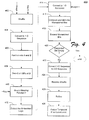
- Fig. 4 shows an exemplary procedure 400 for tampered pixel localization.
- procedure 400 For purposes of discussion, aspects of procedure 400 are discussed with respect to the features of Fig. 1 .
- the left-most digit of a component reference number identifies the particular figure in which the component first appears.
- tampered pixel localization 120 localizes (i.e., identifies) tampered pixels as follows.
- the shuffling function and the key K are the same ones used to sign the image.
- X' is ordered into 1-D vectors of length N by the same scan order as in the signing procedure, where N is the number of pixels in challenged image I' .
- N is the number of pixels in challenged image I' .
- the same symbol X ' is used in the following to represent both the 2-D image X' and its corresponding 1-D vector without any confusion.
- all pixels in X' are partitioned into two disjoint subspaces A' and B' , where B' contains the last r pixels and A' contains the remaining pixels.
- the least significant bit (LSB) of each pixel in the subspace B' is set to zero.
- the binary mapping function f is regenerated using the secret key K and the same operations as those used in block 202 in the signing procedure to generate the binary mapping function f .
- This mapping is used to obtain the results of block 412.
- equation (1) is applied to the results of block 408.
- the result from block 412 is referred to as the extracted L' .
- the original logo L is scanned into a 1-D vector using the same scan order that applies to images in block 404. This 1-D vector is still represented by L .
- the set S D ⁇ i
- S it is determined if S is empty. If S is empty, the tampered pixels cannot be localized by the scheme and the procedure 400 terminates. If S is not empty, the procedure continues at block 422, wherein the 1-D sequence is converted to a 2-D image. The same scan order used to convert a 2-D image to a 1-D vector in block 404 is used in this operation. This conversion is the reverse operation of that of block 404. A simple way to realize this reverse operation is to copy each value in the 1-D vector to the corresponding pixel in the 2-D image.
- the shuffling operation of block 402 is reversed to locate a set of pixels S * corresponding to the set S .
- block 424 simply moves the pixel (m, n) back to the position (i, j) to reverse the shuffling operation.
- Those pixels in S* are potentially tampered.
- a refinement operation is used to refine the pixels in S* . An exemplary refinement operation is described below beginning in paragraph [0032].
- the localized tampered pixels 114 of the inauthentic image I 110 are output.
- a cryptographic hash or MAC function is used to generate a digital signature for an image 110 (see description of block 212 in paragraph [0023]) except the LSBs of image 110 pixels used to embed the digest or its encrypted version. Any change to a signed image will be detected by the authenticity verification procedure, except when unlikely collision of the cryptographic hash or MAC function occurs. It is therefore impossible for an attacker to successfully launch the oracle attack or any other known attacks with respect to a signed image 110. On the other hand, it is possible that some tampered pixels can not be detected by the tamper localization operations of component 120.
- tamper localization operations are further refined by pixel neighborhood dependency criteria.
- This implementation exploits the fact that typical manipulations in real applications result in connected modified pixels in an image 110. Pixels in S* that are isolated or whose connected paths are smaller than a preset threshold are removed from S *. A connected path of a pixel P in S * is the number of the pixels in S * that can reach the pixel P through neighbor pixels in S *.
- the definition of neighborhood is the natural neighborhood in an image which is different from the neighborhood used elsewhere in this manuscript for introducing more pixel(s) in the mapping function Equ. (1). The remaining pixels in S* are identified as tampered pixels.
- LSBs of the pixels in the subspace B' corresponding to the mismatched bits are determined to have been altered / manipulated.
- asymmetric encryption is used in operation 212 of Fig. 2 , such a conclusion can not be made.
- the number of bits to be embedded is also increased. The advantage is that authorized verifiers, i.e., those users or machines with access to the secrets to perform authenticity verification and discrete tamper localization, cannot forge a digital signature, since the private key is needed in forgery.
- program modules generally include routines, programs, objects, components, data structures, etc., that perform particular tasks or implement particular abstract data types. While the systems and methods are described in the foregoing context, acts and operations described hereinafter may also be implemented in hardware.
- Fig. 5 illustrates an example of a suitable computing environment for secure image authentication with discrete tamper localization may be fully or partially implemented.
- Exemplary computing environment 500 is only one example of a suitable computing environment for the exemplary system of Fig. 1 and exemplary operations of Figs. 2 through 4 , and is not intended to suggest any limitation as to the scope of use or functionality of systems and methods the described herein. Neither should computing environment 500 be interpreted as having any dependency or requirement relating to any one or combination of components illustrated in computing environment 500.
- the methods and systems described herein are operational with numerous other general purpose or special purpose computing system, environments or configurations.
- Examples of well-known computing systems, environments, and/or configurations that may be suitable for use include, but are not limited to, personal computers, server computers, multiprocessor systems, microprocessor-based systems, network PCs, minicomputers, mainframe computers, distributed computing environments that include any of the above systems or devices, and so on.
- Compact or subset versions of the framework may also be implemented in clients of limited resources, such as handheld computers, or other computing devices.
- the invention is practiced in a distributed computing environment where tasks are performed by remote processing devices that are linked through a communications network.
- program modules may be located in both local and remote memory storage devices.
- an exemplary system for secure image authentication with discrete tamper localization includes a general purpose computing device in the form of a computer 510 implementing, for example, system 100 of Fig. 1 .
- the following described aspects of computer 510 are exemplary implementations of client computing device 102 of Fig. 1 .
- Components of computer 510 may include, but are not limited to, processing unit(s)520, a system memory 530, and a system bus 521 that couples various system components including the system memory to the processing unit 520.
- the system bus 521 may be any of several types of bus structures including a memory bus or memory controller, a peripheral bus, and a local bus using any of a variety of bus architectures.
- such architectures may include Industry Standard Architecture (ISA) bus, Micro Channel Architecture (MCA) bus, Enhanced ISA (EISA) bus, Video Electronics Standards Association (VESA) local bus, and Peripheral Component Interconnect (PCI) bus also known as Mezzanine bus.
- ISA Industry Standard Architecture
- MCA Micro Channel Architecture
- EISA Enhanced ISA
- VESA Video Electronics Standards Association
- PCI Peripheral Component Interconnect
- a computer 510 typically includes a variety of computer-readable media.
- Computer-readable media can be any available media that can be accessed by computer 510 and includes both volatile and nonvolatile media, removable and non-removable media.
- Computer-readable media may comprise computer storage media and communication media.
- Computer storage media includes volatile and nonvolatile, removable and non-removable media implemented in any method or technology for storage of information such as computer-readable instructions, data structures, program modules or other data.
- Computer storage media includes, but is not limited to, RAM, ROM, EEPROM, flash memory or other memory technology, CD-ROM, digital versatile disks (DVD) or other optical disk storage, magnetic cassettes, magnetic tape, magnetic disk storage or other magnetic storage devices, or any other medium which can be used to store the desired information and which can be accessed by computer 510.
- Communication media typically embodies computer-readable instructions, data structures, program modules or other data in a modulated data signal such as a carrier wave or other transport mechanism, and includes any information delivery media.
- modulated data signal means a signal that has one or more of its characteristics set or changed in such a manner as to encode information in the signal.
- communication media includes wired media such as a wired network or a direct-wired connection, and wireless media such as acoustic, RF, infrared and other wireless media. Combinations of the any of the above should also be included within the scope of computer-readable media.
- System memory 530 includes computer storage media in the form of volatile and/or nonvolatile memory such as read only memory (ROM) 531 and random access memory (RAM) 532.
- ROM read only memory
- RAM random access memory
- BIOS basic input/output system
- RAM 532 typically contains data and/or program modules that are immediately accessible to and/or presently being operated on by processing unit 520.
- Fig. 5 illustrates operating system 534, application programs 535, other program modules 536, and program data 538.
- the computer 510 may also include other removable/non-removable, volatile/nonvolatile computer storage media.
- Figure 5 illustrates a hard disk drive 541 that reads from or writes to non-removable, nonvolatile magnetic media, a magnetic disk drive 551 that reads from or writes to a removable, nonvolatile magnetic disk 552, and an optical disk drive 555 that reads from or writes to a removable, nonvolatile optical disk 556 such as a CD ROM or other optical media.
- removable/non-removable, volatile/nonvolatile computer storage media that can be used in the exemplary operating environment include, but are not limited to, magnetic tape cassettes, flash memory cards, digital versatile disks, digital video tape, solid state RAM, solid state ROM, and the like.
- the hard disk drive 541 is typically connected to the system bus 521 through a non-removable memory interface such as interface 540, and magnetic disk drive 551 and optical disk drive 555 are typically connected to the system bus 521 by a removable memory interface, such as interface 550.
- the drives and their associated computer storage media discussed above and illustrated in Figure 5 provide storage of computer-readable instructions, data structures, program modules and other data for the computer 510.
- hard disk drive 541 is illustrated as storing operating system 544, application programs 545, other program modules 546, and program data 548. Note that these components can either be the same as or different from operating system 534, application programs 535, other program modules 536, and program data 538.
- Application programs 535 includes, for example program modules 104 of Fig. 1 .
- Program data 538 includes, for example, program data 106 of Fig. 1 .
- Operating system 544, application programs 545, other program modules 546, and program data 548 are given different numbers here to illustrate that they are at least different copies.
- a user may enter commands and information into the computer 510 through input devices such as a keyboard 562 and pointing device 561, commonly referred to as a mouse, trackball or touch pad.
- Other input devices may include a microphone, joystick, game pad, satellite dish, scanner, or the like.
- These and other input devices are often connected to the processing unit 520 through a user input interface 560 that is coupled to the system bus 521, but may be connected by other interface and bus structures, such as a parallel port, game port or a universal serial bus (USB).
- USB universal serial bus
- a monitor 591 or other type of display device is also connected to the system bus 521 via an interface, such as a video interface 590.
- computers may also include other peripheral output devices such as speakers 598 and printer 596, which may be connected through an output peripheral interface 595.
- the computer 510 operates in a networked environment using logical connections to one or more remote computers, such as a remote computer 580.
- the remote computer 580 may be a personal computer, a server, a router, a network PC, a peer device or other common network node, and as a function of its particular implementation, may include many or all of the elements described above relative to the computer 510, although only a memory storage device 581 has been illustrated in Figure 5 .
- the logical connections depicted in Figure 5 include a local area network (LAN) 581 and a wide area network (WAN) 583, but may also include other networks.
- LAN local area network
- WAN wide area network
- Such networking environments are commonplace in offices, enterprise-wide computer networks, intranets and the Internet.
- the computer 510 When used in a LAN networking environment, the computer 510 is connected to the LAN 581 through a network interface or adapter 580. When used in a WAN networking environment, the computer 510 typically includes a modem 582 or other means for establishing communications over the WAN 583, such as the Internet.
- the modem 582 which may be internal or external, may be connected to the system bus 521 via the user input interface 560, or other appropriate mechanism.
- program modules depicted relative to the computer 510, or portions thereof may be stored in the remote memory storage device.
- Figure 5 illustrates remote application programs 585 as residing on memory device 581.
- the network connections shown are exemplary and other means of establishing a communications link between the computers may be used.
Landscapes
- Engineering & Computer Science (AREA)
- Multimedia (AREA)
- Signal Processing (AREA)
- Health & Medical Sciences (AREA)
- Biomedical Technology (AREA)
- General Health & Medical Sciences (AREA)
- Physics & Mathematics (AREA)
- General Physics & Mathematics (AREA)
- Theoretical Computer Science (AREA)
- Editing Of Facsimile Originals (AREA)
- Image Processing (AREA)
- Storage Device Security (AREA)
Applications Claiming Priority (1)
| Application Number | Priority Date | Filing Date | Title |
|---|---|---|---|
| US10/963,696 US7454797B2 (en) | 2004-10-13 | 2004-10-13 | Secure image authentication with discrete level tamper localization |
Publications (3)
| Publication Number | Publication Date |
|---|---|
| EP1647934A2 EP1647934A2 (en) | 2006-04-19 |
| EP1647934A3 EP1647934A3 (en) | 2006-05-03 |
| EP1647934B1 true EP1647934B1 (en) | 2014-07-30 |
Family
ID=35781263
Family Applications (1)
| Application Number | Title | Priority Date | Filing Date |
|---|---|---|---|
| EP05109428.2A Expired - Lifetime EP1647934B1 (en) | 2004-10-13 | 2005-10-11 | Secure image authentication with discrete level tamper localization |
Country Status (3)
| Country | Link |
|---|---|
| US (1) | US7454797B2 (enExample) |
| EP (1) | EP1647934B1 (enExample) |
| JP (1) | JP4889274B2 (enExample) |
Families Citing this family (20)
| Publication number | Priority date | Publication date | Assignee | Title |
|---|---|---|---|---|
| US7730037B2 (en) * | 2004-10-18 | 2010-06-01 | George Mason Intellectual Properties, Inc. | Fragile watermarks |
| JP4310285B2 (ja) * | 2005-02-09 | 2009-08-05 | キヤノン株式会社 | 情報処理方法及び装置、並びにコンピュータプログラム及びコンピュータ可読記憶媒体 |
| CN100547608C (zh) * | 2005-03-23 | 2009-10-07 | 北京华旗数码影像技术研究院有限责任公司 | 数字图像水印的方法及相应装置和可添加水印的数码相机 |
| US7647557B2 (en) * | 2005-06-29 | 2010-01-12 | Intel Corporation | Techniques for shuffling video information |
| JP4436294B2 (ja) * | 2005-08-26 | 2010-03-24 | 株式会社トリニティーセキュリティーシステムズ | 認証処理方法、認証処理プログラム、記録媒体および認証処理装置 |
| US8442221B2 (en) * | 2005-09-30 | 2013-05-14 | Konica Minolta Laboratory U.S.A., Inc. | Method and apparatus for image encryption and embedding and related applications |
| US8076630B2 (en) * | 2006-07-31 | 2011-12-13 | Visualant, Inc. | System and method of evaluating an object using electromagnetic energy |
| US8356178B2 (en) * | 2006-11-13 | 2013-01-15 | Seagate Technology Llc | Method and apparatus for authenticated data storage |
| JP5340029B2 (ja) * | 2008-06-27 | 2013-11-13 | キヤノン株式会社 | 情報処理装置及びその制御方法、検証装置及びその制御方法 |
| US8538062B1 (en) * | 2008-08-28 | 2013-09-17 | Nvidia Corporation | System, method, and computer program product for validating an aspect of media data processing utilizing a signature |
| KR101038108B1 (ko) * | 2009-05-22 | 2011-06-08 | 주식회사 파일태그 | 위변조 검증용 이미지파일 생성방법 및 이미지파일의 위변조 검증방법 |
| US8584246B2 (en) * | 2009-10-13 | 2013-11-12 | International Business Machines Corporation | Eliminating false reports of security vulnerabilities when testing computer software |
| US8468605B2 (en) * | 2009-11-30 | 2013-06-18 | International Business Machines Corporation | Identifying security vulnerability in computer software |
| US8528095B2 (en) | 2010-06-28 | 2013-09-03 | International Business Machines Corporation | Injection context based static analysis of computer software applications |
| US8832810B2 (en) | 2010-07-09 | 2014-09-09 | At&T Intellectual Property I, L.P. | Methods, systems, and products for authenticating users |
| US9380050B2 (en) | 2014-06-20 | 2016-06-28 | Xerox Corporation | Scan image authentication |
| US11200634B2 (en) * | 2018-01-26 | 2021-12-14 | Ford Global Technologies, Llc | Dynamic watermarking of vehicle camera images |
| US10729980B2 (en) * | 2018-12-27 | 2020-08-04 | Intel Corporation | Anti-cheating solution to detect graphics driver tampering for online gaming |
| CN110263805B (zh) | 2019-05-07 | 2021-03-30 | 创新先进技术有限公司 | 证件验证、身份验证方法、装置及设备 |
| CN116503234B (zh) * | 2023-06-26 | 2023-11-14 | 南湖实验室 | 一种基于密码学的商标防伪方法 |
Family Cites Families (7)
| Publication number | Priority date | Publication date | Assignee | Title |
|---|---|---|---|---|
| JP2000155834A (ja) * | 1998-11-20 | 2000-06-06 | Canon Inc | 不正検知装置、方法、電子透かし埋め込み装置、方法及びコンピュータ読み取り可能な記憶媒体 |
| JP3342677B2 (ja) * | 1999-06-22 | 2002-11-11 | インターナショナル・ビジネス・マシーンズ・コーポレーション | コンテンツデータ鑑定装置 |
| JP3805141B2 (ja) * | 1999-07-07 | 2006-08-02 | キヤノン株式会社 | 画像処理方法及び装置と記憶媒体 |
| EP1518410A1 (en) * | 2002-06-24 | 2005-03-30 | Koninklijke Philips Electronics N.V. | Robust signature for signal authentication |
| CN100423579C (zh) * | 2002-06-24 | 2008-10-01 | 皇家飞利浦电子股份有限公司 | 图像验证签名的嵌入 |
| CN1703722A (zh) * | 2002-10-09 | 2005-11-30 | 皇家飞利浦电子股份有限公司 | 图像篡改的定位 |
| US7730037B2 (en) * | 2004-10-18 | 2010-06-01 | George Mason Intellectual Properties, Inc. | Fragile watermarks |
-
2004
- 2004-10-13 US US10/963,696 patent/US7454797B2/en active Active
-
2005
- 2005-10-07 JP JP2005295204A patent/JP4889274B2/ja not_active Expired - Fee Related
- 2005-10-11 EP EP05109428.2A patent/EP1647934B1/en not_active Expired - Lifetime
Also Published As
| Publication number | Publication date |
|---|---|
| EP1647934A3 (en) | 2006-05-03 |
| US20060080743A1 (en) | 2006-04-13 |
| JP4889274B2 (ja) | 2012-03-07 |
| EP1647934A2 (en) | 2006-04-19 |
| US7454797B2 (en) | 2008-11-18 |
| JP2006115501A (ja) | 2006-04-27 |
Similar Documents
| Publication | Publication Date | Title |
|---|---|---|
| US7454797B2 (en) | Secure image authentication with discrete level tamper localization | |
| Fridrich | Security of fragile authentication watermarks with localization | |
| Chen et al. | A fuzzy c-means clustering-based fragile watermarking scheme for image authentication | |
| Chang et al. | A watermarking-based image ownership and tampering authentication scheme | |
| Rey et al. | A survey of watermarking algorithms for image authentication | |
| Nyeem et al. | Digital image watermarking: its formal model, fundamental properties and possible attacks | |
| Fridrich et al. | New fragile authentication watermark for images | |
| Liu et al. | An image fragile watermark scheme based on chaotic image pattern and pixel-pairs | |
| Wang et al. | A majority-voting based watermarking scheme for color image tamper detection and recovery | |
| Zhang et al. | Fragile watermarking scheme with extensive content restoration capability | |
| Boucherkha et al. | A lossless watermarking based authentication system for medical images | |
| CN101010691A (zh) | 用于数字内容安全的系统和方法 | |
| Wu et al. | A secure image authentication algorithm with pixel-level tamper localization | |
| Lee et al. | A survey of watermarking-based authentication for digital image | |
| Chang et al. | High capacity data hiding for grayscale images | |
| Zhu et al. | Multimedia authentication and watermarking | |
| He et al. | Block-chain based fragile watermarking scheme with superior localization | |
| Lei et al. | An image watermarking based on multi-level authentication for quick response code | |
| Dadkhah et al. | An efficient image self-recovery and tamper detection using fragile watermarking | |
| Hisham et al. | A quick glance at digital watermarking in medical images | |
| Raj | A survey on reversible data hiding in encrypted image | |
| Pizzolante et al. | Reversible copyright protection for dna microarray images | |
| Dadkhah et al. | Efficient image authentication and tamper localization algorithm using active watermarking | |
| He et al. | Cryptanalysis on majority-voting based self-recovery watermarking scheme | |
| D’Angelo et al. | Watermark-based authentication |
Legal Events
| Date | Code | Title | Description |
|---|---|---|---|
| PUAI | Public reference made under article 153(3) epc to a published international application that has entered the european phase |
Free format text: ORIGINAL CODE: 0009012 |
|
| PUAL | Search report despatched |
Free format text: ORIGINAL CODE: 0009013 |
|
| AK | Designated contracting states |
Kind code of ref document: A2 Designated state(s): AT BE BG CH CY CZ DE DK EE ES FI FR GB GR HU IE IS IT LI LT LU LV MC NL PL PT RO SE SI SK TR |
|
| AX | Request for extension of the european patent |
Extension state: AL BA HR MK YU |
|
| AK | Designated contracting states |
Kind code of ref document: A3 Designated state(s): AT BE BG CH CY CZ DE DK EE ES FI FR GB GR HU IE IS IT LI LT LU LV MC NL PL PT RO SE SI SK TR |
|
| AX | Request for extension of the european patent |
Extension state: AL BA HR MK YU |
|
| 17P | Request for examination filed |
Effective date: 20061024 |
|
| 17Q | First examination report despatched |
Effective date: 20061122 |
|
| AKX | Designation fees paid |
Designated state(s): AT BE BG CH CY CZ DE DK EE ES FI FR GB GR HU IE IS IT LI LT LU LV MC NL PL PT RO SE SI SK TR |
|
| GRAP | Despatch of communication of intention to grant a patent |
Free format text: ORIGINAL CODE: EPIDOSNIGR1 |
|
| RIC1 | Information provided on ipc code assigned before grant |
Ipc: H04N 1/32 20060101ALI20140127BHEP Ipc: H04N 1/00 20060101ALI20140127BHEP Ipc: G06T 1/00 20060101AFI20140127BHEP Ipc: H04N 19/467 20140101ALI20140127BHEP |
|
| INTG | Intention to grant announced |
Effective date: 20140218 |
|
| GRAS | Grant fee paid |
Free format text: ORIGINAL CODE: EPIDOSNIGR3 |
|
| GRAA | (expected) grant |
Free format text: ORIGINAL CODE: 0009210 |
|
| AK | Designated contracting states |
Kind code of ref document: B1 Designated state(s): AT BE BG CH CY CZ DE DK EE ES FI FR GB GR HU IE IS IT LI LT LU LV MC NL PL PT RO SE SI SK TR |
|
| REG | Reference to a national code |
Ref country code: GB Ref legal event code: FG4D |
|
| REG | Reference to a national code |
Ref country code: CH Ref legal event code: EP |
|
| REG | Reference to a national code |
Ref country code: AT Ref legal event code: REF Ref document number: 680281 Country of ref document: AT Kind code of ref document: T Effective date: 20140815 |
|
| REG | Reference to a national code |
Ref country code: IE Ref legal event code: FG4D |
|
| REG | Reference to a national code |
Ref country code: DE Ref legal event code: R096 Ref document number: 602005044328 Country of ref document: DE Effective date: 20140911 |
|
| REG | Reference to a national code |
Ref country code: AT Ref legal event code: MK05 Ref document number: 680281 Country of ref document: AT Kind code of ref document: T Effective date: 20140730 |
|
| REG | Reference to a national code |
Ref country code: NL Ref legal event code: VDEP Effective date: 20140730 |
|
| REG | Reference to a national code |
Ref country code: LT Ref legal event code: MG4D |
|
| PG25 | Lapsed in a contracting state [announced via postgrant information from national office to epo] |
Ref country code: BG Free format text: LAPSE BECAUSE OF FAILURE TO SUBMIT A TRANSLATION OF THE DESCRIPTION OR TO PAY THE FEE WITHIN THE PRESCRIBED TIME-LIMIT Effective date: 20141030 Ref country code: PT Free format text: LAPSE BECAUSE OF FAILURE TO SUBMIT A TRANSLATION OF THE DESCRIPTION OR TO PAY THE FEE WITHIN THE PRESCRIBED TIME-LIMIT Effective date: 20141202 Ref country code: SE Free format text: LAPSE BECAUSE OF FAILURE TO SUBMIT A TRANSLATION OF THE DESCRIPTION OR TO PAY THE FEE WITHIN THE PRESCRIBED TIME-LIMIT Effective date: 20140730 Ref country code: ES Free format text: LAPSE BECAUSE OF FAILURE TO SUBMIT A TRANSLATION OF THE DESCRIPTION OR TO PAY THE FEE WITHIN THE PRESCRIBED TIME-LIMIT Effective date: 20140730 Ref country code: GR Free format text: LAPSE BECAUSE OF FAILURE TO SUBMIT A TRANSLATION OF THE DESCRIPTION OR TO PAY THE FEE WITHIN THE PRESCRIBED TIME-LIMIT Effective date: 20141031 Ref country code: FI Free format text: LAPSE BECAUSE OF FAILURE TO SUBMIT A TRANSLATION OF THE DESCRIPTION OR TO PAY THE FEE WITHIN THE PRESCRIBED TIME-LIMIT Effective date: 20140730 Ref country code: LT Free format text: LAPSE BECAUSE OF FAILURE TO SUBMIT A TRANSLATION OF THE DESCRIPTION OR TO PAY THE FEE WITHIN THE PRESCRIBED TIME-LIMIT Effective date: 20140730 |
|
| PG25 | Lapsed in a contracting state [announced via postgrant information from national office to epo] |
Ref country code: NL Free format text: LAPSE BECAUSE OF FAILURE TO SUBMIT A TRANSLATION OF THE DESCRIPTION OR TO PAY THE FEE WITHIN THE PRESCRIBED TIME-LIMIT Effective date: 20140730 Ref country code: PL Free format text: LAPSE BECAUSE OF FAILURE TO SUBMIT A TRANSLATION OF THE DESCRIPTION OR TO PAY THE FEE WITHIN THE PRESCRIBED TIME-LIMIT Effective date: 20140730 Ref country code: AT Free format text: LAPSE BECAUSE OF FAILURE TO SUBMIT A TRANSLATION OF THE DESCRIPTION OR TO PAY THE FEE WITHIN THE PRESCRIBED TIME-LIMIT Effective date: 20140730 Ref country code: LV Free format text: LAPSE BECAUSE OF FAILURE TO SUBMIT A TRANSLATION OF THE DESCRIPTION OR TO PAY THE FEE WITHIN THE PRESCRIBED TIME-LIMIT Effective date: 20140730 Ref country code: CY Free format text: LAPSE BECAUSE OF FAILURE TO SUBMIT A TRANSLATION OF THE DESCRIPTION OR TO PAY THE FEE WITHIN THE PRESCRIBED TIME-LIMIT Effective date: 20140730 Ref country code: IS Free format text: LAPSE BECAUSE OF FAILURE TO SUBMIT A TRANSLATION OF THE DESCRIPTION OR TO PAY THE FEE WITHIN THE PRESCRIBED TIME-LIMIT Effective date: 20141130 |
|
| REG | Reference to a national code |
Ref country code: DE Ref legal event code: R082 Ref document number: 602005044328 Country of ref document: DE Representative=s name: GRUENECKER PATENT- UND RECHTSANWAELTE PARTG MB, DE |
|
| REG | Reference to a national code |
Ref country code: CH Ref legal event code: PUE Owner name: MICROSOFT TECHNOLOGY LICENSING, LLC, US Free format text: FORMER OWNER: MICROSOFT CORPORATION, US |
|
| REG | Reference to a national code |
Ref country code: GB Ref legal event code: 732E Free format text: REGISTERED BETWEEN 20150312 AND 20150318 |
|
| REG | Reference to a national code |
Ref country code: DE Ref legal event code: R081 Ref document number: 602005044328 Country of ref document: DE Owner name: MICROSOFT TECHNOLOGY LICENSING, LLC, REDMOND, US Free format text: FORMER OWNER: MICROSOFT CORP., REDMOND, WASH., US Effective date: 20150310 Ref country code: DE Ref legal event code: R082 Ref document number: 602005044328 Country of ref document: DE Representative=s name: GRUENECKER PATENT- UND RECHTSANWAELTE PARTG MB, DE Effective date: 20150310 Ref country code: DE Ref legal event code: R081 Ref document number: 602005044328 Country of ref document: DE Owner name: MICROSOFT TECHNOLOGY LICENSING, LLC, REDMOND, US Free format text: FORMER OWNER: MICROSOFT CORP., REDMOND, WASH., US Effective date: 20140801 Ref country code: DE Ref legal event code: R081 Ref document number: 602005044328 Country of ref document: DE Owner name: ZHIGU HOLDINGS LIMITED, GEORGE TOWN, KY Free format text: FORMER OWNER: MICROSOFT CORP., REDMOND, WASH., US Effective date: 20150310 Ref country code: DE Ref legal event code: R081 Ref document number: 602005044328 Country of ref document: DE Owner name: ZHIGU HOLDINGS LIMITED, GEORGE TOWN, KY Free format text: FORMER OWNER: MICROSOFT CORP., REDMOND, WASH., US Effective date: 20140801 |
|
| RAP2 | Party data changed (patent owner data changed or rights of a patent transferred) |
Owner name: MICROSOFT TECHNOLOGY LICENSING, LLC |
|
| PG25 | Lapsed in a contracting state [announced via postgrant information from national office to epo] |
Ref country code: DK Free format text: LAPSE BECAUSE OF FAILURE TO SUBMIT A TRANSLATION OF THE DESCRIPTION OR TO PAY THE FEE WITHIN THE PRESCRIBED TIME-LIMIT Effective date: 20140730 Ref country code: IT Free format text: LAPSE BECAUSE OF FAILURE TO SUBMIT A TRANSLATION OF THE DESCRIPTION OR TO PAY THE FEE WITHIN THE PRESCRIBED TIME-LIMIT Effective date: 20140730 Ref country code: EE Free format text: LAPSE BECAUSE OF FAILURE TO SUBMIT A TRANSLATION OF THE DESCRIPTION OR TO PAY THE FEE WITHIN THE PRESCRIBED TIME-LIMIT Effective date: 20140730 Ref country code: CZ Free format text: LAPSE BECAUSE OF FAILURE TO SUBMIT A TRANSLATION OF THE DESCRIPTION OR TO PAY THE FEE WITHIN THE PRESCRIBED TIME-LIMIT Effective date: 20140730 Ref country code: RO Free format text: LAPSE BECAUSE OF FAILURE TO SUBMIT A TRANSLATION OF THE DESCRIPTION OR TO PAY THE FEE WITHIN THE PRESCRIBED TIME-LIMIT Effective date: 20140730 Ref country code: SK Free format text: LAPSE BECAUSE OF FAILURE TO SUBMIT A TRANSLATION OF THE DESCRIPTION OR TO PAY THE FEE WITHIN THE PRESCRIBED TIME-LIMIT Effective date: 20140730 |
|
| REG | Reference to a national code |
Ref country code: DE Ref legal event code: R097 Ref document number: 602005044328 Country of ref document: DE |
|
| PG25 | Lapsed in a contracting state [announced via postgrant information from national office to epo] |
Ref country code: MC Free format text: LAPSE BECAUSE OF FAILURE TO SUBMIT A TRANSLATION OF THE DESCRIPTION OR TO PAY THE FEE WITHIN THE PRESCRIBED TIME-LIMIT Effective date: 20140730 Ref country code: LU Free format text: LAPSE BECAUSE OF FAILURE TO SUBMIT A TRANSLATION OF THE DESCRIPTION OR TO PAY THE FEE WITHIN THE PRESCRIBED TIME-LIMIT Effective date: 20141011 |
|
| REG | Reference to a national code |
Ref country code: FR Ref legal event code: TP Owner name: MICROSOFT TECHNOLOGY LICENSING, LLC, US Effective date: 20150429 Ref country code: CH Ref legal event code: PL |
|
| PLBE | No opposition filed within time limit |
Free format text: ORIGINAL CODE: 0009261 |
|
| STAA | Information on the status of an ep patent application or granted ep patent |
Free format text: STATUS: NO OPPOSITION FILED WITHIN TIME LIMIT |
|
| PG25 | Lapsed in a contracting state [announced via postgrant information from national office to epo] |
Ref country code: BE Free format text: LAPSE BECAUSE OF NON-PAYMENT OF DUE FEES Effective date: 20141031 |
|
| 26N | No opposition filed |
Effective date: 20150504 |
|
| REG | Reference to a national code |
Ref country code: IE Ref legal event code: MM4A |
|
| PG25 | Lapsed in a contracting state [announced via postgrant information from national office to epo] |
Ref country code: LI Free format text: LAPSE BECAUSE OF NON-PAYMENT OF DUE FEES Effective date: 20141031 Ref country code: CH Free format text: LAPSE BECAUSE OF NON-PAYMENT OF DUE FEES Effective date: 20141031 |
|
| REG | Reference to a national code |
Ref country code: FR Ref legal event code: PLFP Year of fee payment: 11 |
|
| PG25 | Lapsed in a contracting state [announced via postgrant information from national office to epo] |
Ref country code: IE Free format text: LAPSE BECAUSE OF NON-PAYMENT OF DUE FEES Effective date: 20141011 |
|
| PG25 | Lapsed in a contracting state [announced via postgrant information from national office to epo] |
Ref country code: SI Free format text: LAPSE BECAUSE OF FAILURE TO SUBMIT A TRANSLATION OF THE DESCRIPTION OR TO PAY THE FEE WITHIN THE PRESCRIBED TIME-LIMIT Effective date: 20140730 |
|
| PGFP | Annual fee paid to national office [announced via postgrant information from national office to epo] |
Ref country code: FR Payment date: 20150908 Year of fee payment: 11 |
|
| PGFP | Annual fee paid to national office [announced via postgrant information from national office to epo] |
Ref country code: GB Payment date: 20151007 Year of fee payment: 11 |
|
| PG25 | Lapsed in a contracting state [announced via postgrant information from national office to epo] |
Ref country code: BE Free format text: LAPSE BECAUSE OF FAILURE TO SUBMIT A TRANSLATION OF THE DESCRIPTION OR TO PAY THE FEE WITHIN THE PRESCRIBED TIME-LIMIT Effective date: 20140730 Ref country code: TR Free format text: LAPSE BECAUSE OF FAILURE TO SUBMIT A TRANSLATION OF THE DESCRIPTION OR TO PAY THE FEE WITHIN THE PRESCRIBED TIME-LIMIT Effective date: 20140730 Ref country code: HU Free format text: LAPSE BECAUSE OF FAILURE TO SUBMIT A TRANSLATION OF THE DESCRIPTION OR TO PAY THE FEE WITHIN THE PRESCRIBED TIME-LIMIT; INVALID AB INITIO Effective date: 20051011 |
|
| REG | Reference to a national code |
Ref country code: DE Ref legal event code: R081 Ref document number: 602005044328 Country of ref document: DE Owner name: ZHIGU HOLDINGS LIMITED, GEORGE TOWN, KY Free format text: FORMER OWNER: MICROSOFT TECHNOLOGY LICENSING, LLC, REDMOND, WASH., US Ref country code: DE Ref legal event code: R081 Ref document number: 602005044328 Country of ref document: DE Owner name: ZHIGU HOLDINGS LIMITED, GEORGE TOWN, KY Free format text: FORMER OWNER: MICROSOFT TECHNOLOGY LICENSING, LLC, REDMOND, WA, US Ref country code: DE Ref legal event code: R082 Ref document number: 602005044328 Country of ref document: DE Representative=s name: GRUENECKER PATENT- UND RECHTSANWAELTE PARTG MB, DE |
|
| GBPC | Gb: european patent ceased through non-payment of renewal fee |
Effective date: 20161011 |
|
| REG | Reference to a national code |
Ref country code: FR Ref legal event code: ST Effective date: 20170630 |
|
| PG25 | Lapsed in a contracting state [announced via postgrant information from national office to epo] |
Ref country code: FR Free format text: LAPSE BECAUSE OF NON-PAYMENT OF DUE FEES Effective date: 20161102 Ref country code: GB Free format text: LAPSE BECAUSE OF NON-PAYMENT OF DUE FEES Effective date: 20161011 |
|
| P01 | Opt-out of the competence of the unified patent court (upc) registered |
Effective date: 20230531 |
|
| PGFP | Annual fee paid to national office [announced via postgrant information from national office to epo] |
Ref country code: DE Payment date: 20231020 Year of fee payment: 19 |
|
| REG | Reference to a national code |
Ref country code: DE Ref legal event code: R119 Ref document number: 602005044328 Country of ref document: DE |
|
| PG25 | Lapsed in a contracting state [announced via postgrant information from national office to epo] |
Ref country code: DE Free format text: LAPSE BECAUSE OF NON-PAYMENT OF DUE FEES Effective date: 20250501 |