EP1646202A2 - Stateful und Mehrere-Protokolle Eindringungsdetektion für Stimme-über-IP - Google Patents
Stateful und Mehrere-Protokolle Eindringungsdetektion für Stimme-über-IP Download PDFInfo
- Publication number
- EP1646202A2 EP1646202A2 EP05256040A EP05256040A EP1646202A2 EP 1646202 A2 EP1646202 A2 EP 1646202A2 EP 05256040 A EP05256040 A EP 05256040A EP 05256040 A EP05256040 A EP 05256040A EP 1646202 A2 EP1646202 A2 EP 1646202A2
- Authority
- EP
- European Patent Office
- Prior art keywords
- protocol
- message
- intrusion
- illustrative embodiment
- detection system
- Prior art date
- Legal status (The legal status is an assumption and is not a legal conclusion. Google has not performed a legal analysis and makes no representation as to the accuracy of the status listed.)
- Withdrawn
Links
Images




Classifications
-
- H—ELECTRICITY
- H04—ELECTRIC COMMUNICATION TECHNIQUE
- H04L—TRANSMISSION OF DIGITAL INFORMATION, e.g. TELEGRAPHIC COMMUNICATION
- H04L12/00—Data switching networks
- H04L12/02—Details
- H04L12/22—Arrangements for preventing the taking of data from a data transmission channel without authorisation
-
- H—ELECTRICITY
- H04—ELECTRIC COMMUNICATION TECHNIQUE
- H04L—TRANSMISSION OF DIGITAL INFORMATION, e.g. TELEGRAPHIC COMMUNICATION
- H04L63/00—Network architectures or network communication protocols for network security
- H04L63/14—Network architectures or network communication protocols for network security for detecting or protecting against malicious traffic
- H04L63/1433—Vulnerability analysis
-
- H—ELECTRICITY
- H04—ELECTRIC COMMUNICATION TECHNIQUE
- H04L—TRANSMISSION OF DIGITAL INFORMATION, e.g. TELEGRAPHIC COMMUNICATION
- H04L12/00—Data switching networks
- H04L12/66—Arrangements for connecting between networks having differing types of switching systems, e.g. gateways
Definitions
- the present invention relates to telecommunications in general, and, more particularly, to network security.
- An intrusion is when an unauthorized user (e.g., a "hacker,” etc.) attempts to break into or misuse (e.g., steal confidential data, etc.) a computer system.
- An intrusion-detection system monitors messages (e.g., packets, etc.) incoming to a computer system and outgoing from the computer system, and based on these messages tries to determine whether an intrusion is being attempted.
- An intrusion-detection system might conclude that an intrusion attempt is in progress when an atypical or suspicious sequence of messages occurs, or when a sequence of messages matches a known "intrusion signature.”
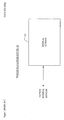
- FIG. 1 depicts a schematic diagram of telecommunications system 100 in accordance with the prior art.
- telecommunications system 100 comprises internal network 101 (e.g., a corporate metropolitan-area network, a residential local-area network, etc.), which receives messages via an external network (e.g., the Internet, etc.) and sends messages via the external network to external data-processing systems.
- internal network 101 e.g., a corporate metropolitan-area network, a residential local-area network, etc.
- an external network e.g., the Internet, etc.
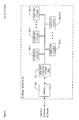
- FIG. 2 depicts a schematic diagram of the elements of internal network 101, in accordance with the prior art.
- internal network 101 comprises: intrusion-detection system 202, firewall 203, and computer systems 204-1 through 204-N, where N is a positive integer, interconnected as shown.
- Each computer system 204- n might be a personal computer, a server, a laptop computer, a personal digital assistant (PDA) with wireless local-area network communication capability, etc.
- PDA personal digital assistant
- rules include: block all messages from domain badguys.com; block all messages except those of a certain protocol type; etc.
- firewall 203 If firewall 203 lets the incoming message through, then intrusion-detection system 202 subsequently receives the message and inspects it.
- Intrusion-detection system 202 provides an additional layer of security by detecting intrusion attempts that comprise one or more messages that are allowed through firewall 203.
- firewall 203 might restrict external access to a web server in internal network 101 to port 80, but without an intrusion-detection system, it might be possible to attack the web server itself via legitimate traffic through port 80 due to bugs in the web server software (e.g., ColdFusion, Apache, etc.).
- firewall 203 acts as a "fence" around internal network 101.
- a fence provides security but does not have the ability to detect when someone is trying to break in (e.g., by digging an underground tunnel, etc.).
- Intrusion-detection system 202 is able to recognize some break-in attempts that firewall 203 cannot detect.
- VoIP Voice over Internet Protocol
- IP Internet Protocol
- VoIP user agents at the calling and called telecommunications terminals send and receive packets that contain encoded voice signals in accordance with the Real-time Transport Protocol (RTP).
- RTP Real-time Transport Protocol
- a VoIP gateway might employ a media management protocol such as the Media Gateway Control Protocol (MGCP) or MEGACO/H.248 in order to translate traffic transparently between an IP-based network and a non-IP-based network (e.g., between a PSTN phone and an IP phone, etc.).
- MGCP Media Gateway Control Protocol
- MEGACO/H.248 Media Gateway Control Protocol
- VoIP Voice over Internet Protocol
- VoIP-based intrusions Some intrusion-detection systems of the prior art provide inadequate security against intrusions that employ VoIP packets (i.e., VoIP-based intrusions).
- the present invention is based on the observation that a particular characteristic of Voice over Internet Protocol traffic can make it difficult for some intrusion-detection systems to recognize a VoIP-based intrusion attempt.
- the illustrative embodiment is based on the fact that (i) Voice over Internet Protocol is a service that is supported by a plurality of protocols (e.g., SIP, RTP, etc.), and (ii) it is possible to attack a data-processing system via particular sequences of messages that span across two or more of these protocols.
- call hijacking is one type of VoIP-based intrusion.
- an attacker sends a SIP REINVITE message to the VoIP user agent at the called terminal.
- a RENIVITE message is sent for call migration (e.g., transferring a call from a wireline phone to a cellular phone, etc.).
- a malicious REINVITE message sent by a third-party attacker can redirect RTP traffic sent to the called terminal to some other terminal.
- a BYE attack Another example of a VoIP-based intrusion is called a BYE attack, the goal of which is to prematurely terminate a call.
- a BYE attack an attacker sends a faked SIP BYE message to a user agent A currently engaged in a VoIP call.
- User agent A upon receiving the BYE message, concludes that the user agent of the remote party (user agent B) wants to terminate the call. Consequently, user agent A stops its outgoing RTP message stream immediately, while user agent B, unaware of the third-party BYE message, continues to send RTP messages to user agent A.
- an intrusion is based on messages for two application-layer protocols: SIP and RTP.
- Such intrusions can be thwarted in the illustrative embodiment of the present invention by including an appropriate cross-protocol rule in the intrusion-detection system rule base (i.e., a rule that has a pre-condition covering two or more protocols.)
- an appropriate cross-protocol rule in the intrusion-detection system rule base (i.e., a rule that has a pre-condition covering two or more protocols.)
- the illustrative VoIP-based intrusions described above involve protocols SIP and RTP, some VoIP-based intrusions might be based on other protocol combinations. For example, some instant messaging attacks are based on a combination of SIP and IP messages.
- cross-protocol rules can be employed to protect against intrusions that are based on services other than Voice over Internet Protocol.
- cross-protocol intrusions can employ sub-application-layer protocols (e.g., Internet Protocol, etc.) as well as application-layer protocols (e.g., SIP, RTP, etc.).
- the intrusion-detection system of the illustrative embodiment is stateful (i.e., it allows rules with pre-conditions that are based on the state of a protocol in a particular session).
- the state of a protocol at any particular time during a session can be based on any prior events in the session (e.g., messages, timeouts, etc.).
- a cross-protocol intrusion typically involves two or more sessions (e.g., a SIP session and a RTP session, etc.) that are interrelated in some fashion (e.g., the sessions belong to the same call, belong to the same transaction, etc.)
- the firewall like the intrusion-detection system, is stateful and is capable of employing cross-protocol rules.
- the firewall might not be stateful, or might not be capable of employing cross-protocol rules like the intrusion-detection system.
- the illustrative embodiment comprises generating at a data-processing system a signal based on (i)the state of a first protocol in a first session, and (ii) the state of a second protocol in a second session; wherein the first protocol is different than the second protocol.
- Figure 1 depicts a schematic diagram of a telecommunications system in accordance with the prior art.
- Figure 2 depicts a schematic diagram of the elements of internal network 101, as shown in Figure 1, in accordance with the prior art.
- Figure 3 depicts a schematic diagram of the elements of an internal network in accordance with the illustrative embodiment of the present invention.
- Figure 4 depicts the logical architecture of intrusion-detection system 302, as shown in Figure 3, in accordance with the illustrative embodiment of the present invention.
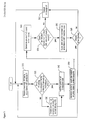
- FIG. 5 depicts a flowchart of the salient tasks of intrusion-detection system 302, in accordance with the illustrative embodiment of the present invention.
- Figure 6 depicts the logical architecture of firewall 303, as shown in Figure 3, in accordance with the illustrative embodiment of the present invention.
- FIG. 7 depicts a flowchart of the salient tasks of firewall 303, in accordance with the illustrative embodiment of the present invention.
- Figure 8 depicts a schematic diagram of the elements of internal network 301, as shown in Figure 3, in accordance with a second illustrative embodiment of the present invention.
- FIG. 3 depicts a schematic diagram of the elements of internal network 301 in accordance with the illustrative embodiment of the present invention.
- internal network 301 comprises: intrusion-detection system 302, firewall 303, and computer systems 204-1 through 204- N , where N is a positive integer, interconnected as shown.
- Computer systems 204-1 through 204- N remain unchanged from the prior art in accordance with the illustrative embodiment of the present invention. Therefore no changes in software, hardware, etc. are required for any of computer systems 204 in order to make and use embodiments of the present invention.
- Intrusion-detection system 302 is capable of protecting internal network 301 from some intrusion attempts, in accordance with the illustrative embodiment of the present invention.
- intrusion-detection system 302 is capable of storing stateful cross-protocol intrusion signatures in its rule base, and of recognizing intrusion attempts that match one or more of these signatures, as described below and with respect to Figures 4 and 5,
- Firewall 303 is capable of preventing selected incoming messages from entering further into internal network 301, in accordance with the illustrative embodiment of the present invention. As is described below and with respect to Figures 6 and 7, firewall 303 is capable of storing stateful cross-protocol rules in its rule base, and of blocking incoming messages accordingly based on one or more of these rules.
- intrusion-detection system 302 and firewall 303 might also inspect outgoing messages from internal network 301.
- an outgoing message might be blocked (e.g ., a message for opening a File Transfer Protocol session, etc .), or an intrusion alert might be generated based on the outgoing message (e.g ., a spoofed outgoing VoIP message, etc.).
- intrusion-detection system 302 might be a hardware-based "appliance" that comprises a processor and memory, while in some other embodiments intrusion-detection system 302 might be a program that runs on a server, personal computer, etc .
- firewall 303 might be a hardware appliance that comprises a processor and memory, while in some other embodiments firewall 303 might be a program that runs on a server, personal computer, etc .
- intrusion-detection system 302 and firewall 303 might belong to a single hardware appliance, or might be programs that run on a single platform.
- FIG. 4 depicts the logical architecture of intrusion-detection system 302, in accordance with the illustrative embodiment of the present invention.
- intrusion-detection system 302 comprises four program modules: message processor 410, state generator 420, event generator 430, and rule-matching engine 440; and four data: trail history 415, trail states 425, event history 435, and rule base 445.
- the sequence of control- and dataflow-events that occur when an incoming message arrives at intrusion-detection system 302 is represented in Figure 4 by events 407, 413, 417, 422, 423, 427, 432, 433, 437, 442, 443, and 447.
- message processor 410 An incoming message arriving at intrusion-detection system 302 (dataflow-event 407) is received by message processor 410.
- message processor 410 is capable of:
- Control passes to state generator 420 (control-event 417).
- State generator 420 reads updated trail history 415 (dataflow-event 422), generates one or more trail states (e.g., updates the state of an existing trail, initializes the state of a newly-created trail, etc.), and updates the information in trail states 425 accordingly (dataflow-event 423).
- Control then passes to event generator 420 (control-event 427).
- Event generator 430 reads updated trail states 425 (dataflow-event 432) and generates one or more events based on this information.
- An event is a layer of abstraction that correlates the information in footprints and concentrates the information into a single descriptive entity. Events are advantageous because (i) they hide some details of the rule-matching process (described below), and (ii) they enable the triggering of rule-matching at the moment of interest rather than upon each incoming footprint, thereby improving performance.
- Event generator then updates event history 435 accordingly (dataflow-event 423), and control passes to rule-matching engine 440 (control-event 437).
- Rule-matching engine 440 loads updated event history 435 (dataflow-event 442) and rule base 445 (dataflow-event 443) and attempts to match one or more events against rules of rule base 445.
- rule base 445 might contain the following rule: IF an RTP message from a user agent A is received after a SIP BYE message from user agent A THEN generate a call-hijacking intrusion alert
- rule-matching engine 440 finds a matching rule, the rule is "fired" (e.g ., an intrusion alert is generated, the incoming message is blocked, a new rule is added to rule base 445, etc .) as indicated by an output signal that is represented in Figure 4 as event 447. If no matching rule is found, at event 447 the incoming message is output to the appropriate destination computer system 204 of internal network 301. (As described above, in some embodiments a message received at intrusion-detection system 302 might in fact be an outgoing message from internal network 301, in which case the message is passed on to firewall 303 at event 447.)
- intrusion-detection system 302 an alternative method of knowledge representation might be employed in lieu of the rule based system of the illustrative embodiment. For example, some embodiments might use decision trees, Bayesian inference networks, neural networks, etc. As will be further appreciated by those skilled in the art, in some embodiments of the present invention intrusion-detection system 302 might employ rules that are based on some combination of events, trail states, and individual footprints, instead of events alone. It will be clear to those skilled in the art how to make and use such embodiments after reading this specification.
- FIG. 5 depicts the salient tasks of intrusion-detection system 302 in flowchart form.
- a message M that is in accordance with a protocol P is received, in well-known fashion.
- Task 520 checks whether there is already a trail in trail history 415 that corresponds to the combination of (i) the session to which message M belongs, and (ii) protocol P. If so, execution continues at task 540; otherwise execution proceeds to task 530.
- information about message M (e.g., the sender of the message, the destination of the message, the type of message, the contents of the message, etc.) is stored in a footprint in the appropriate trail of trail history 415, in well-known fashion.
- updated states for each trail in trail history 415 are generated based on the prior states in trail history 415 and on the added footprint of task 540, in well-known fashion (e.g., via a state transition diagram, etc.).
- an event E is generated based on the updated trail states of trail history 415, and is stored in event history 435.
- task 560 can be accomplished by a variety of methods, such as associating arcs of a state transition diagram with an output event, etc.
- Task 570 checks whether an intrusion signature of a rule in rule base 445 matches the events of event history 435, which includes newly-generated event E. If so, execution proceeds to task 580; otherwise, execution continues at task 595.
- an alert is issued, or an action is executed, or both, in accordance with the rule matched at task 570.
- Task 590 checks whether message M should be blocked (i.e. , prevented from exiting intrusion-detection system 302. If so, execution continues back at task 510; otherwise, execution continues at task 595.
- message M is output from intrusion-detection system 302, in well-known fashion. After task 595, execution continues back at task 510.
- FIG. 6 depicts the logical architecture of firewall 303, in accordance with the illustrative embodiment of the present invention.
- firewall 303 comprises three program modules: message processor 610, state generator 620, and rule-matching engine 630; and three data: trail history 615, trail states 625, and rule base 645.
- message processor 610 message processor 610
- state generator 620 state generator 620
- rule-matching engine 630 data: trail history 615, trail states 625, and rule base 645.
- the sequence of control- and dataflow-events that occur when an incoming message arrives at firewall 303 is represented in Figure 6 by events 607, 613, 617, 622, 623, 627, 642, 643, and 647.
- message processor 610 An incoming message arriving at firewall 303 (dataflow-event 607) is received by message processor 610.
- message processor 610 is capable of:
- Control passes to state generator 620 (control-event 617).
- State generator 620 reads updated trail history 615 (dataflow-event 622), generates one or more trail states, and updates the information in trail states 625 accordingly (dataflow-event 623).
- Control passes to rule-matching engine 640 (control-event 627).
- Rule-matching engine 640 loads trail states 625 (dataflow-event 642) and rule base 645 (dataflow-event 643) and attempts to match one or more events against rules of rule base 645.
- trail states 625 dataflow-event 642
- rule base 645 dataflow-event 643
- rule-matching engine 640 finds a matching rule, the rule is "fired" (e.g., an intrusion alert is generated, the incoming message is blocked, a new rule is added to rule base 645, etc.) as indicated by an output signal that is represented in Figure 6 as event 647. If no matching rule is found, at event 647 the incoming message is output to intrusion-detection system 302. (As described above, in some embodiments a message received at firewall 303 might in fact be an outgoing message from internal network 301 that intrusion-detection system 302 forwarded to firewall 303 after examination. In such cases, the message is transmitted via the external network to its destination.)
- firewall 303 in some embodiments of firewall 303, an alternative method of knowledge representation might be employed in lieu of the rule based system of the illustrative embodiment. For example, some embodiments might use decision trees, Bayesian inference networks, neural networks, etc. As will be further appreciated by those skilled in the art, in some embodiments of the present invention firewall 303 might employ rules that are based on events, either instead of or in combination with trail states, as in the illustrative embodiment of intrusion-detection system 202. It will be clear to those skilled in the art how to make and use such embodiments after reading this specification.
- FIG. 7 depicts a flowchart of the salient tasks of firewall 303, in accordance with the illustrative embodiment of the present invention.
- a message M that is in accordance with a protocol P is received, in well-known fashion.
- Task 720 checks whether there is already a trail in trail history 615 that corresponds to the combination of (i) the session to which message M belongs, and (ii) protocol P. If so, execution continues at task 740; otherwise execution proceeds to task 730.
- information about message M (e.g., the sender of the message, the destination of the message, the type of message, the contents of the message, etc.) is stored in a footprint in the appropriate trail of trail history 615, in well-known fashion.
- updated states for each trail in trail history 615 are generated based on the prior states in trail history 615 and on the added footprint of task 740, in well-known fashion (e.g., via a state transition diagram, etc.).
- Task 770 checks, based on the trail states and rule base 645, whether message M is permitted to pass through firewall 303. If so, execution proceeds to task 780; otherwise, execution continues at task 795.
- message M is output from firewall 303, in well-known fashion. After task 795, execution continues back at task 710.
- Figure 8 depicts a schematic diagram of the elements of internal network 301, in accordance with a second illustrative embodiment of the present invention.
- the functionality of intrusion-detection system 302 in the first illustrative embodiment is distributed among message processor 801, intrusion-detection system 802, and message processors 804-1 through 804- N .
- intrusion-detection system 802 is similar to that of intrusion-detection system 302 (i.e., Figure 4), except that there is no message processor 410.
- the functions of message processor 410 are instead performed by message processor 801 and message processors 804-1 through 804- N .
- the output of message processor 801 and message processors 804-1 through 804- N are transmitted to intrusion-detection system 802 to perform the remaining functions of intrusion-detection system 302 (i.e., state generator 420, event generator 430, and rule-matching engine 440).
- An advantage of the second illustrative embodiment is that by distributing the message processing throughout internal network 301, attacks on internal communications (e.g., a VoIP call between two computer systems 204- i and 204- j , etc.) can be detected.
- a disadvantage of the second illustrative embodiment is the added complexity in deploying and maintaining a distributed architecture.
- the proliferation of message processors in the second illustrative embodiment might result in substantially higher hardware costs. It will be clear to those skilled in the art how to make and use message processor 801, intrusion-detection system 802, and message processors 804-1 through 804- N of the second illustrative embodiment.
Landscapes
- Engineering & Computer Science (AREA)
- Computer Security & Cryptography (AREA)
- Computer Networks & Wireless Communication (AREA)
- Signal Processing (AREA)
- Computer Hardware Design (AREA)
- Computing Systems (AREA)
- General Engineering & Computer Science (AREA)
- Data Exchanges In Wide-Area Networks (AREA)
- Computer And Data Communications (AREA)
- Telephonic Communication Services (AREA)
Applications Claiming Priority (1)
| Application Number | Priority Date | Filing Date | Title |
|---|---|---|---|
| US10/955,594 US7451486B2 (en) | 2004-09-30 | 2004-09-30 | Stateful and cross-protocol intrusion detection for voice over IP |
Publications (2)
| Publication Number | Publication Date |
|---|---|
| EP1646202A2 true EP1646202A2 (de) | 2006-04-12 |
| EP1646202A3 EP1646202A3 (de) | 2012-04-04 |
Family
ID=35601916
Family Applications (1)
| Application Number | Title | Priority Date | Filing Date |
|---|---|---|---|
| EP05256040A Withdrawn EP1646202A3 (de) | 2004-09-30 | 2005-09-28 | Stateful und Mehrere-Protokolle Eindringungsdetektion für Stimme-über-IP |
Country Status (4)
| Country | Link |
|---|---|
| US (2) | US7451486B2 (de) |
| EP (1) | EP1646202A3 (de) |
| JP (1) | JP2006120138A (de) |
| KR (1) | KR100822553B1 (de) |
Families Citing this family (21)
| Publication number | Priority date | Publication date | Assignee | Title |
|---|---|---|---|---|
| US7058796B2 (en) * | 2002-05-20 | 2006-06-06 | Airdefense, Inc. | Method and system for actively defending a wireless LAN against attacks |
| US20050015626A1 (en) * | 2003-07-15 | 2005-01-20 | Chasin C. Scott | System and method for identifying and filtering junk e-mail messages or spam based on URL content |
| US7680890B1 (en) | 2004-06-22 | 2010-03-16 | Wei Lin | Fuzzy logic voting method and system for classifying e-mail using inputs from multiple spam classifiers |
| US7953814B1 (en) * | 2005-02-28 | 2011-05-31 | Mcafee, Inc. | Stopping and remediating outbound messaging abuse |
| US8484295B2 (en) * | 2004-12-21 | 2013-07-09 | Mcafee, Inc. | Subscriber reputation filtering method for analyzing subscriber activity and detecting account misuse |
| US7451486B2 (en) * | 2004-09-30 | 2008-11-11 | Avaya Inc. | Stateful and cross-protocol intrusion detection for voice over IP |
| US9160755B2 (en) | 2004-12-21 | 2015-10-13 | Mcafee, Inc. | Trusted communication network |
| US9015472B1 (en) | 2005-03-10 | 2015-04-21 | Mcafee, Inc. | Marking electronic messages to indicate human origination |
| US8738708B2 (en) | 2004-12-21 | 2014-05-27 | Mcafee, Inc. | Bounce management in a trusted communication network |
| US8107625B2 (en) * | 2005-03-31 | 2012-01-31 | Avaya Inc. | IP phone intruder security monitoring system |
| US8281392B2 (en) | 2006-08-11 | 2012-10-02 | Airdefense, Inc. | Methods and systems for wired equivalent privacy and Wi-Fi protected access protection |
| US8484733B2 (en) * | 2006-11-28 | 2013-07-09 | Cisco Technology, Inc. | Messaging security device |
| US8689334B2 (en) * | 2007-02-28 | 2014-04-01 | Alcatel Lucent | Security protection for a customer programmable platform |
| US9438641B2 (en) * | 2007-09-12 | 2016-09-06 | Avaya Inc. | State machine profiling for voice over IP calls |
| US9178898B2 (en) * | 2007-09-12 | 2015-11-03 | Avaya Inc. | Distributed stateful intrusion detection for voice over IP |
| US9100417B2 (en) * | 2007-09-12 | 2015-08-04 | Avaya Inc. | Multi-node and multi-call state machine profiling for detecting SPIT |
| US9736172B2 (en) * | 2007-09-12 | 2017-08-15 | Avaya Inc. | Signature-free intrusion detection |
| US10354229B2 (en) | 2008-08-04 | 2019-07-16 | Mcafee, Llc | Method and system for centralized contact management |
| KR101107742B1 (ko) * | 2008-12-16 | 2012-01-20 | 한국인터넷진흥원 | 에스아이피(sip) 기반 서비스의 보호를 위한 sip 침입 탐지 및 대응 시스템 |
| JP4775451B2 (ja) * | 2009-02-04 | 2011-09-21 | ブラザー工業株式会社 | 電話サーバ、及びコンピュータプログラム |
| CN102812431A (zh) | 2010-03-22 | 2012-12-05 | Lrdc系统有限公司 | 用于识别与保护一组源数据的完整性的方法 |
Citations (1)
| Publication number | Priority date | Publication date | Assignee | Title |
|---|---|---|---|---|
| WO2004023307A1 (en) | 2002-09-06 | 2004-03-18 | O2Micro, Inc. | Vpn and firewall integrated system |
Family Cites Families (18)
| Publication number | Priority date | Publication date | Assignee | Title |
|---|---|---|---|---|
| US6279113B1 (en) | 1998-03-16 | 2001-08-21 | Internet Tools, Inc. | Dynamic signature inspection-based network intrusion detection |
| US6711127B1 (en) | 1998-07-31 | 2004-03-23 | General Dynamics Government Systems Corporation | System for intrusion detection and vulnerability analysis in a telecommunications signaling network |
| US6370648B1 (en) | 1998-12-08 | 2002-04-09 | Visa International Service Association | Computer network intrusion detection |
| US6609205B1 (en) | 1999-03-18 | 2003-08-19 | Cisco Technology, Inc. | Network intrusion detection signature analysis using decision graphs |
| US6539030B1 (en) * | 2000-02-07 | 2003-03-25 | Qualcomm Incorporated | Method and apparatus for providing configurable layers and protocols in a communications system |
| JP4099930B2 (ja) * | 2000-06-02 | 2008-06-11 | 株式会社日立製作所 | ルータ装置及びvpn識別情報の設定方法 |
| US8996698B1 (en) * | 2000-11-03 | 2015-03-31 | Truphone Limited | Cooperative network for mobile internet access |
| KR100441409B1 (ko) * | 2001-11-12 | 2004-07-23 | 주식회사 안철수연구소 | 바이러스 탐지 엔진을 갖는 침입 탐지 시스템 |
| US8370936B2 (en) | 2002-02-08 | 2013-02-05 | Juniper Networks, Inc. | Multi-method gateway-based network security systems and methods |
| US8561167B2 (en) * | 2002-03-08 | 2013-10-15 | Mcafee, Inc. | Web reputation scoring |
| US6944670B2 (en) * | 2002-03-13 | 2005-09-13 | Commatch Ltd. | Method and apparatus for multiple processing of a plurality of communication protocols on a single processing machine |
| AU2003261445A1 (en) * | 2002-08-09 | 2004-02-25 | Netscout Systems Inc. | Intrusion detection system and network flow director method |
| US20040086093A1 (en) * | 2002-10-29 | 2004-05-06 | Schranz Paul Steven | VoIP security monitoring & alarm system |
| US20040165709A1 (en) * | 2003-02-24 | 2004-08-26 | Pence Robert Leslie | Stealth interception of calls within a VoIP network |
| US7715434B2 (en) * | 2003-07-30 | 2010-05-11 | Michael Andrew Fischer | Managing an access point in the presence of separate protocols that share the same communications channel |
| US7830861B2 (en) * | 2003-10-16 | 2010-11-09 | At&T Intellectual Property Ii, L.P. | Method and apparatus for functional architecture of voice-over-IP SIP network border element |
| US7451486B2 (en) * | 2004-09-30 | 2008-11-11 | Avaya Inc. | Stateful and cross-protocol intrusion detection for voice over IP |
| KR100624483B1 (ko) * | 2004-10-06 | 2006-09-18 | 삼성전자주식회사 | 네트워크에서의 차등 침입탐지 장치 및 방법 |
-
2004
- 2004-09-30 US US10/955,594 patent/US7451486B2/en active Active
-
2005
- 2005-09-28 EP EP05256040A patent/EP1646202A3/de not_active Withdrawn
- 2005-09-28 KR KR1020050090327A patent/KR100822553B1/ko not_active Expired - Fee Related
- 2005-09-30 JP JP2005287464A patent/JP2006120138A/ja active Pending
-
2008
- 2008-08-28 US US12/200,069 patent/US7814547B2/en not_active Expired - Lifetime
Patent Citations (1)
| Publication number | Priority date | Publication date | Assignee | Title |
|---|---|---|---|---|
| WO2004023307A1 (en) | 2002-09-06 | 2004-03-18 | O2Micro, Inc. | Vpn and firewall integrated system |
Non-Patent Citations (1)
| Title |
|---|
| YU-SUNG WU ET AL: "Scidive: a stateful and cross protocol intrusion detection architecture for voice-over-IP environments", DEPENDABLE SYSTEMS AND NETWORKS, 2004 INTERNATIONAL CONFERENCE ON FLORENCE, ITALY 28 JUNE - 1 JULY 2004, PISCATAWAY, NJ, USA,IEEE, 28 June 2004 (2004-06-28), pages 401 - 410, XP010710802, ISBN: 978-0-7695-2052-0, DOI: 10.1109/DSN.2004.1311913 * |
Also Published As
| Publication number | Publication date |
|---|---|
| US20060075497A1 (en) | 2006-04-06 |
| US20080313737A1 (en) | 2008-12-18 |
| US7814547B2 (en) | 2010-10-12 |
| US7451486B2 (en) | 2008-11-11 |
| KR20060051727A (ko) | 2006-05-19 |
| JP2006120138A (ja) | 2006-05-11 |
| EP1646202A3 (de) | 2012-04-04 |
| KR100822553B1 (ko) | 2008-04-17 |
Similar Documents
| Publication | Publication Date | Title |
|---|---|---|
| US7814547B2 (en) | Stateful and cross-protocol intrusion detection for voice over IP | |
| EP2037656B1 (de) | Signaturlose eingriffserkennung | |
| KR101277913B1 (ko) | 침입 검출 방법 | |
| Nassar et al. | Holistic VoIP intrusion detection and prevention system | |
| EP1928145B1 (de) | Autonome Sicherheitsplattform | |
| EP1933526A1 (de) | Eingebettete Firewall an einem Telekommunikationsendpunkt | |
| Do Carmo et al. | Artemisa: An open-source honeypot back-end to support security in VoIP domains | |
| Shan et al. | Research on security mechanisms of SIP-based VoIP system | |
| Pelaez et al. | Misuse patterns in VoIP | |
| Farley et al. | VoIP Shield: A transparent protection of deployed VoIP systems from SIP-based exploits | |
| Satapathy et al. | A comprehensive survey of security issues and defense framework for VoIP Cloud | |
| Garuba et al. | Security in the new era of telecommunication: Threats, risks and controls of VoIP | |
| El-Moussa et al. | Overview of SIP attacks and countermeasures | |
| Farley et al. | Exploiting VoIP softphone vulnerabilities to disable host computers: Attacks and mitigation | |
| Berger et al. | Internet security meets the IP multimedia subsystem: an overview | |
| Singh et al. | BLAZE: A Mobile Agent Paradigm for VoIP Intrusion Detection Systems. | |
| Pogar | Data security in a converged network | |
| Hofbauer et al. | CDRAS: An approach to dealing with Man-in-the-Middle attacks in the context of Voice over IP | |
| Roberts | Voice over IP security | |
| Martin et al. | Security Issues of VoIP | |
| Arya Chandrapal Singh et al. | VoIP Security Threat Taxonomy and Privacy | |
| Farley et al. | Disabling a computer by exploiting softphone vulnerabilities: threat and mitigation | |
| Materna | A proactive approach to VoIP security | |
| KR20100027829A (ko) | 가상 프록시 서버를 이용한 에스아이피 공격탐지 시스템 및방법 | |
| Raad et al. | Secure VoIP architecture based on honeypot technology |
Legal Events
| Date | Code | Title | Description |
|---|---|---|---|
| PUAI | Public reference made under article 153(3) epc to a published international application that has entered the european phase |
Free format text: ORIGINAL CODE: 0009012 |
|
| 17P | Request for examination filed |
Effective date: 20051007 |
|
| AK | Designated contracting states |
Kind code of ref document: A2 Designated state(s): AT BE BG CH CY CZ DE DK EE ES FI FR GB GR HU IE IS IT LI LT LU LV MC NL PL PT RO SE SI SK TR |
|
| AX | Request for extension of the european patent |
Extension state: AL BA HR MK YU |
|
| RIN1 | Information on inventor provided before grant (corrected) |
Inventor name: BAGCHI, SAURABH Inventor name: WU, YU-SUNG Inventor name: TSAI, TIMOTHY KOHCHIH Inventor name: SINGH, NAVJOT Inventor name: GARG, SACHIN |
|
| RIN1 | Information on inventor provided before grant (corrected) |
Inventor name: BAGCHI, SAURABH Inventor name: WU, YU-SUNG Inventor name: TSAI, TIMOTHY KOHCHIH Inventor name: SINGH, NAVJOT Inventor name: GARG, SACHIN |
|
| RAP1 | Party data changed (applicant data changed or rights of an application transferred) |
Owner name: AVAYA INC. |
|
| PUAL | Search report despatched |
Free format text: ORIGINAL CODE: 0009013 |
|
| AK | Designated contracting states |
Kind code of ref document: A3 Designated state(s): AT BE BG CH CY CZ DE DK EE ES FI FR GB GR HU IE IS IT LI LT LU LV MC NL PL PT RO SE SI SK TR |
|
| AX | Request for extension of the european patent |
Extension state: AL BA HR MK YU |
|
| RIC1 | Information provided on ipc code assigned before grant |
Ipc: H04L 12/22 20060101ALI20120229BHEP Ipc: H04L 29/06 20060101AFI20120229BHEP |
|
| 17Q | First examination report despatched |
Effective date: 20121112 |
|
| AKX | Designation fees paid |
Designated state(s): DE GB |
|
| STAA | Information on the status of an ep patent application or granted ep patent |
Free format text: STATUS: THE APPLICATION IS DEEMED TO BE WITHDRAWN |
|
| 18D | Application deemed to be withdrawn |
Effective date: 20150401 |