EP1928145B1 - Autonome Sicherheitsplattform - Google Patents
Autonome Sicherheitsplattform Download PDFInfo
- Publication number
- EP1928145B1 EP1928145B1 EP07022171.8A EP07022171A EP1928145B1 EP 1928145 B1 EP1928145 B1 EP 1928145B1 EP 07022171 A EP07022171 A EP 07022171A EP 1928145 B1 EP1928145 B1 EP 1928145B1
- Authority
- EP
- European Patent Office
- Prior art keywords
- security
- workflow
- telecommunications
- script
- data
- Prior art date
- Legal status (The legal status is an assumption and is not a legal conclusion. Google has not performed a legal analysis and makes no representation as to the accuracy of the status listed.)
- Expired - Fee Related
Links
Images

Classifications
-
- H—ELECTRICITY
- H04—ELECTRIC COMMUNICATION TECHNIQUE
- H04L—TRANSMISSION OF DIGITAL INFORMATION, e.g. TELEGRAPHIC COMMUNICATION
- H04L63/00—Network architectures or network communication protocols for network security
- H04L63/14—Network architectures or network communication protocols for network security for detecting or protecting against malicious traffic
- H04L63/1408—Network architectures or network communication protocols for network security for detecting or protecting against malicious traffic by monitoring network traffic
- H04L63/1425—Traffic logging, e.g. anomaly detection
-
- G—PHYSICS
- G06—COMPUTING OR CALCULATING; COUNTING
- G06F—ELECTRIC DIGITAL DATA PROCESSING
- G06F21/00—Security arrangements for protecting computers, components thereof, programs or data against unauthorised activity
- G06F21/50—Monitoring users, programs or devices to maintain the integrity of platforms, e.g. of processors, firmware or operating systems
- G06F21/55—Detecting local intrusion or implementing counter-measures
-
- G—PHYSICS
- G06—COMPUTING OR CALCULATING; COUNTING
- G06Q—INFORMATION AND COMMUNICATION TECHNOLOGY [ICT] SPECIALLY ADAPTED FOR ADMINISTRATIVE, COMMERCIAL, FINANCIAL, MANAGERIAL OR SUPERVISORY PURPOSES; SYSTEMS OR METHODS SPECIALLY ADAPTED FOR ADMINISTRATIVE, COMMERCIAL, FINANCIAL, MANAGERIAL OR SUPERVISORY PURPOSES, NOT OTHERWISE PROVIDED FOR
- G06Q10/00—Administration; Management
- G06Q10/06—Resources, workflows, human or project management; Enterprise or organisation planning; Enterprise or organisation modelling
-
- H—ELECTRICITY
- H04—ELECTRIC COMMUNICATION TECHNIQUE
- H04L—TRANSMISSION OF DIGITAL INFORMATION, e.g. TELEGRAPHIC COMMUNICATION
- H04L63/00—Network architectures or network communication protocols for network security
- H04L63/14—Network architectures or network communication protocols for network security for detecting or protecting against malicious traffic
- H04L63/1441—Countermeasures against malicious traffic
Definitions
- the present invention relates to telecommunications in general, and, more particularly, to a workflow script-based security platform that is well-suited for telecommunications devices.
- Modem telecommunications systems comprise networks that switch or route data packets between endpoint devices with the assistance of other devices such as servers, routers, and so forth.
- the networks include the Internet, Internet Protocol-based broadband networks (both private and public), local area networks (LAN), and so forth.
- the endpoint devices come in a variety of forms such as a standalone telephone, a notebook computer, a personal digital assistant (PDA), a tablet computer, and so forth, and operate In accordance with packet-based protocols such as Internet Protocol (IP), Session Initiation Protocol (SIP), and H.323 protocol.
- IP Internet Protocol
- SIP Session Initiation Protocol
- H.323 protocol The endpoints are capable of originating outgoing calls and receiving incoming calls and are further capable of one or more communication modes that comprise voice, audio, video, data, email, instant messaging, and chat.
- the servers are data-processing systems that fulfill, for example, call-processing requests from the telecommunications endpoints and also perform other tasks that are essential to
- Some of the aforementioned attributes consequently make it easier for an intruder to access a telecommunications system than ever before.
- many of the endpoints are softphones which, by nature, can be accessed in a way similar to how a personal computer can be accessed.
- the problem with a softphone being present is that an intruder has the capability to introduce malicious software, or "malware," into the softphone without the user's knowledge.
- the malware e.g ., a computer virus, etc .
- the malware could be used by the intruder for toll fraud by instructing the softphone to call the telephone number of the intruder's choice and by controlling the malware via instructions from an external server to which the malware connects. Itis not surprising that intruders are increasingly targeting telecommunications systems with a wide variety of security attacks.
- the US 2006259341 describes an exception handling system and method for dynamically recovering from a workflow exception occurring in a mobile network communication system.
- the system has multiple workflows and at least one mission critical item.
- An attack tree modeling analyses is performed to identify the mission critical item.
- Another operation includes writing a plurality of forward recovery rules to protect the mission critical item using a transaction datalog fragment of transaction logic.
- the recovery rules are enabled through an engine in communication with the mobile network communication system.
- the multiple workflows are monitored for indication of a system attack on any one of the multiple workflows. A new workflow is automatically generated upon detection of the system attack.
- the exception handling system is overlayed on the mobile network.
- the present invention enables security monitoring and protection across a plurality of related telecommunications devices.
- the self-operating security platform of the present invention is based on a collection of security adapters that are tied together into a service-oriented environment and are coupled with an orchestration engine that loads and executes workflow scripts. Workflow scripts have been used for business applications, but their usage in real-time telecommunications devices is relatively new.
- the security adapters and orchestration engine of the illustrative embodiment are present across one or more of the telecommunications devices themselves. Each security adapter monitors a different aspect of the system for intrusions or other security threats,
- the specific security protection rules are taught to the security platform in a basic profile; as the security platform runs, it builds up the actual profile of how the telecommunications device performs in a normal state.
- the security platform of the illustrative embodiment "composes" and executes new workflow scripts from basic workflow scripts, based on security status indications received, the execution states, and the run-time behavior of the telecommunications device being protected.
- the task of building the actual profile can be considered a long-running, self-expanding workflow that executes in the orchestration engine.
- the self-expanding nature of the workflow enables the telecommunications device to leam the behavioral patterns of its user or users.
- the security platform of the illustrative embodiment is advantageous of some techniques in the prior art for a couple of reasons.
- the security platform collects data and acts on the data for the majority of security incidents, thereby removing the burden from security experts of having to search through and correlate the data, and manually try to fix the problems.
- the collecting of data happens during potential security attacks, so the telecommunications device being protected becomes more secure as it hardens itself. This is superior to requiring an investigation after the fact on how a device was compromised.
- the illustrative embodiment of the present invention comprises: monitoring a security status of a first element of a first data-processing system; detecting that an intrusion has occurred that targeted the first element; and composing a third workflow script from a first portion of a first workflow script and a second portion of a second workflow script, based on the security status and on the detection.
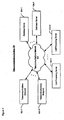
- FIG. 1 depicts telecommunications system 100 in accordance with the illustrative embodiment of the present invention.
- System 100 is a group of interactive components that perform telecommunications-related functions; system 100 comprises telecommunications network 101; call-processing servers 102-1 through 102- M , wherein M is a positive integer; telecommunications endpoints 103-1 through 103- N , wherein N is a positive integer; and call-control database servers 104-1 through 104- P , wherein P is a positive integer, interconnected as shown.
- System 100 is capable of the switching and transmission of media signals (e.g. , voice, audio, video, etc. ) and call-control signals, as are well-known in the art.
- media signals e.g. , voice, audio, video, etc.
- Telecommunications network 101 is a telecommunications network that comprises one or more of the Internet, the Public Switched Telephone Network (PSTN), a local area network (LAN), and so forth.
- Network 101 comprises or is connected to one or more transmission-related nodes such as gateways, routers, or switches that are used to direct data packets from one or more sources to the correct destinations of those packets.
- Network 101 is capable of handling, in well-known fashion, Internet Protocol-based messages that are transmitted among two or more Internet Protocol-capable processing systems such as between call-control database servers 104-1 through 104- P and call-processing servers 102-1 through 102- M , between call-processing servers 102-1 through 102- M and endpoints 103-1 through 103- N , and so forth.
- server 102- m is capable of reading in and analyzing the dialed digits from telecommunications endpoint 103- n , and well as processing the corresponding call initiation request.
- Call-processing server 102- m is also capable of receiving, from one or more of database servers 104-1 through 104- P , call-control rules that server 102- m uses to initiate calls and subscriber-related information about telecommunications endpoints 103-1 through 103- N and their users.
- call-processing server 102- m perform telecommunications functions such as call initiation are described below and with respect to Figure 2 . It will be clear to those skilled in the art, after reading this specification, how to make and use call-processing server 102- m .
- call-processing server 102- m is further capable of executing workflow scripts as part of a self-operating security platform.
- the components that constitute the security platform are described below and with, respect to Figure 3 .
- the security platform of the illustrative embodiment can be implemented in one or more components of telecommunications system 100, in various combinations.
- Telecommunications endpoint 103- n is a communications device such as an Internet Protocol-based endpoint, a Session Initiation Protocol-based (SIP-based) endpoint, and an H.323 endpoint, and can be in a variety of forms such as a standalone telephone, a notebook computer, a personal digital assistant (PDA), a tablet computer, and so forth.
- the endpoints are capable of originating outgoing calls and receiving incoming calls, In well-known fashion.
- each endpoint is capable of one or more communication modes that comprise, but are not limited to voice, audio, video, data, email, instant messaging, and chat. It will be clear to those skilled in the art, after reading this specification, how to make and use telecommunications endpoint 103-1 through 103- N .
- Each database server is capable of acquiring and maintaining call-control rules and subscriber information, in well-known fashion. It will be clear to those skilled in the art, after reading this specification, how to make and use call-control database servers 104-1 through 104- P .
- FIG. 2 depicts the salient components of call-processing server 102- m in accordance with the illustrative embodiment of the present invention.
- Server 102- m comprises receiver 201, processor 202, memory 203, and transmitter 204, interconnected as shown.
- Receiver 201 is an interface that receives signals from other nodes (e.g. , telecommunications endpoint 103- n , database server 104- p , etc .) via network 101 and forwards the information encoded in the signals to processor 202, in well-known fashion. It will be clear to those skilled in the art, after reading this specification, how to make and use receiver 201.
- other nodes e.g. , telecommunications endpoint 103- n , database server 104- p , etc .
- Processor 202 is a general-purpose processor that is capable of receiving information from receiver 201, executing instructions stored in memory 203, reading data from and writing data into memory 203, executing the tasks described below and with respect to Figure 5, and transmitting information to transmitter 204.
- processor 202 might be a special-purpose processor. In either case, it will be clear to those skilled in the art, after reading this specification, how to make and use processor 202.
- Memory 203 stores the instructions and data used by processor 202.
- Memory 203 might be any combination of dynamic random-access memory (RAM), flash memory, disk drive memory, and so forth. It will be clear to those skilled in the art, after reading this specification, how to make and use memory 203.
- Transmitter 204 is an interface that receives information from processor 202 and transmits signals that encode this information to other nodes (e.g. , telecommunications endpoint 103- n , database server 104- p , etc .) via network 101, in well-known fashion. It will be clear to those skilled in the art, after reading this specification, how to make and use transmitter 204.
- nodes e.g. , telecommunications endpoint 103- n , database server 104- p , etc .
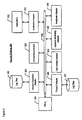
- FIG. 3 depicts the salient software components of security platform 300 that is resident at call-processing server 102- m , in accordance with the illustrative embodiment of the present invention
- Platform 300 is based on a distributed collection of security adapters that are tied together into an internal, service-oriented environment that is coupled with an intelligent orchestration engine. Each security adapter monitors a different aspect of the system for intrusions or other security threats.
- security platform 300 comprises proxy 301, message bus 302, orchestration engine 303, intrusion detection adapter 304, log file database 305, firewall adapter 306, log file database 307, user access adapter 308, network monitoring adapter 309, hardware adapter 310, application adapter 311, and application 312, interrelated as shown.
- Proxy 301 is responsible for abstracting the bindings between adapters 304, 306, and 308 through 311, and orchestration engine 303.
- the abstracting enables the adapters to be added to or removed from server 102- m dynamically at run-time without taking the system out of service.
- Proxy 301 routes a received request for a security-related function to the appropriate security adapter or orchestration engine, based on metadata criteria expressed by the state in the received request.
- Message bus 302 connects the other components of security platform 300 together.
- bus 302 enables the transmission of messages among proxy 301, orchestration engine 303, and the adapters, in well-known fashion.
- bus 302 is based on the Java Message Service (JMS), as is known in the art.
- JMS Java Message Service
- Orchestration engine 303 receives information from proxy 301, executes the tasks described below and with respect to Figures 4 and 5, and transmits information to proxy 301.
- Intrusion detection adapter 304 performs intrusion detection, in concert with a system such as "Tripwire on Linux,' which typically writes to a log file when there is a problem.
- adapter 304 monitors logs writes in log file database 305 and searches for specific information contained in the log file that matches the profile in orchestration engine 303.
- Firewall adapter 306 monitors the logs of attempts at unauthorized or illegal entry and use of unauthorized or unsecured services at call-processing server 102- m , where the log is written to a log file in database 307 by the firewall of server 102- m .
- Adapter 304 passes the information about the log writes to orchestration engine 303.
- User access adapter 308 monitors for and notifies engine 303 about unauthorized file access attempts, repeated login failures, and unfamiliar login "source hosts.”
- Application adapter 311 monitors and reports on application-specific logs (e.g. , related to application 312, etc. ) and other system logs that match the security states within the workflow being executed.
- application-specific logs e.g. , related to application 312, etc.
- other system logs that match the security states within the workflow being executed.
- Network monitoring adapter 309 provides for data compilation of application output (i.e. , to a log) for unexpected packets, packet rates, or malformed packets, any of which can indicate that a denial of service attack is under way.
- Hardware adapter 310 is intended to ensure that no inappropriate "hot swaps" occur of the companion hardware component. This is particularly applicable for smartcards or other security-specific devices. As those who are skilled in the art will appreciate, there can be multiple hardware driver adapters ( i.e. , one for each hardware device),
- Security platform 300 in accordance with the illustrative embodiment, is depicted as comprising software components that are connected via a message bus and that co-exist within the same data-processing system (i.e. , call-processing server 102- m ).
- call-processing server 102- m the same data-processing system
- some all or of the depicted software components can span multiple, physically-distinct, data-processing systems that are connected together ( e.g. , via a local-area network, etc. ).
- Each adapter of platform 300 presents the information it gathers to orchestration engine 303, which maps that information to finite state machines.
- the finite state machines describe the behavior of securing the system via moving from state to state based on the information that is received. For example, at the first indication that something is out of place, such as an unauthorized user trying to access the system, platform 300 may move from the current state to a heightened monitoring state. If security threats are identified in other areas, platform 300 may then move from the heightened monitoring state to a securing state where the system takes steps specifically to lock the unauthorized user out of the system, to shut down non-essential services, and to operate with minimal functionality until the security threat has been avoided.
- orchestration engine 303 can be given long-running profiles that are base profiles to be studied, learned, and expanded upon over time based on the usage of the system. For example, if no one logs into the system between 2 AM and 3 AM, platform 300 will recognize that behavior over time as additional criteria in the workflow processing. Then, if a login occurs at 2:30 AM, platform 300 will trigger a higher alert than It would at another time. In accordance with the illustrative embodiment, this is accomplished with minimal, non-compiled instructions that are sent to and executed by orchestration engine 303, such as in the form of an Extensible Markup Language-based (XML-based) script as is known in the art.
- XML-based Extensible Markup Language-based
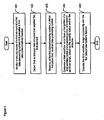
- Figure 4 depicts a flowchart diagram of the salient tasks performed by security platform 300 of call-processing server 102- m , in accordance with the illustrative embodiment of the present invention. As those who are skilled in the art will appreciate, some of the events that appear in Figure 4 can occur in parallel or in a different order than that depicted.
- platform 300 continually monitors a security status of a first element of a first data-processing system (i.e., call processing server 102- m ) that executes one or more software modules. At least some of the software modules perform one or more telecommunications functions (e.g. , initiating and maintaining calls, etc. ) and utilize the monitored element in the course of being executed. For example, intrusion detection adapter 304 monitors log files In database 305 to see if a log write has occurred that would suggest an access attempt. In some alternative embodiments, the monitoring takes place at a data-processing system that is physically distinct from the first data-processing system, such as database server 104-2, telecommunications endpoint 103-3, another call-processing server, and so forth.
- a data-processing system that is physically distinct from the first data-processing system, such as database server 104-2, telecommunications endpoint 103-3, another call-processing server, and so forth.
- platform 300 detects that an intrusion has occurred that targeted the element that is being monitored.
- orchestration engine 303 of platform 300 receives a status Indication from the monitoring component.
- the status indication might indicate that an intrusion has occurred or the indication might merely provide pertinent information that orchestration engine 303 will process further.
- engine 303 is further capable of receiving additional status indications from various sources. For example, a different status indication than the first might indicate, or at least suggest, that a denial of service attack is occurring, as received from network monitoring adapter 309.
- orchestration engine 303 composes a third workflow script by merging at least a portion of a first workflow script with at least a portion of a second workflow script, as well as with possibly additional scripts.
- the composition of the third workflow script is based on the security status reported in or inferred from the received status indication or indications.
- the workflow script can also be based on the state of one or more software modules, such as those modules that are performing telecommunications functions or those performing security-related tasks.
- the workflow scripts are Extensible Markup Language-based (XML-based). It will be clear to those skilled in the art, however, how to make and use embodiments of the present invention in which the scripts are based on a language other than XML. Moreover, as those who are skilled in the art will appreciate, the merging of two or more portions of scripts can be performed independently of the form of those scripts.
- XML-based Extensible Markup Language-based
- orchestration engine 303 executes the third workflow script to address the security issue.
- the script can be executed concurrently with the telecommunications functions also being processed at call-processirig server 102- m .
- the execution of the workflow script results in a corrective action taking place, such as changing an access permission of a log file (or other computer file) or reverting to an earlier version of a computer file,
- orchestration engine 303 might be tracking 100. different types of security attacks, along with the 50 different ways that the security attacks can be combined. Each type of security attack is represented in platform 300 as a different workflow script. Engine 303 dynamically loads different sets of the workflow scripts; composes a new workflow script by combining the individual, loaded workflow scripts and based, in part, on the possible combinations being tracked; and executes the new script to handle a particular combination of attacks that is consistent with the particular security situation. These "on-demand" workflow scripts deal with, in particular, spontaneous security issues that arise.
- two workflow scripts are stored as part of security platform 300: a first script that looks for unsuccessful logins and a second script that logs all access for a particular Internet Protocol (IP) address.
- IP Internet Protocol
- the first script takes the originating IP address of the access attempts and inserts the address as the monitor target in the second script, thereby creating a new, third script that platform 300 executes.
- the third script might also be able to recognize certain access patterns and, in turn, might eventually escalate the "log all access” action to a "deny all access” action.
- a fourth workflow script monitors the actions of the third script, as well as others, by looking at the access logs for the all of the IP addresses that end up completely denied. If the fourth script detects a set number of occurrences ( e.g. , three occurrences, etc. ) of the same access pattern resulting in a blocked IP address, the fourth script creates a fifth script that looks for this access pattern and immediately denies access to the originating IP address, without platform 300 having to detect the address via the third script.
- a set number of occurrences e.g. , three occurrences, etc.
- Orchestration engine 303 is further capable of executing other types of workflow scripts of different origins.
- engine 303 can execute a workflow script that is not necessarily composed of two or more scripts.
- engine 303 can execute a workflow script that acquires the current secure state of each component and aspect of the data-processing system that is being protected ( i.e., server 102- m ).
- engine 303 can execute a workflow script that enables the software components of the protected system to interact with the security functions, such as when those components need to access computer files during the normal course of providing the intended telecommunications functionality to valid users.
- engine 303 is also capable of executing other "long-standing" workflow scripts, in addition to these examples.
Landscapes
- Engineering & Computer Science (AREA)
- Computer Security & Cryptography (AREA)
- Theoretical Computer Science (AREA)
- Computer Hardware Design (AREA)
- General Engineering & Computer Science (AREA)
- Business, Economics & Management (AREA)
- Strategic Management (AREA)
- Entrepreneurship & Innovation (AREA)
- Physics & Mathematics (AREA)
- General Physics & Mathematics (AREA)
- Signal Processing (AREA)
- Computer Networks & Wireless Communication (AREA)
- Computing Systems (AREA)
- Economics (AREA)
- Human Resources & Organizations (AREA)
- Software Systems (AREA)
- Game Theory and Decision Science (AREA)
- Educational Administration (AREA)
- Development Economics (AREA)
- Marketing (AREA)
- Operations Research (AREA)
- Quality & Reliability (AREA)
- Tourism & Hospitality (AREA)
- General Business, Economics & Management (AREA)
- Computer And Data Communications (AREA)
- Data Exchanges In Wide-Area Networks (AREA)
Claims (9)
- Verfahren, umfassend:Überwachen eines Sicherheitsstatus eines ersten Elements eines ersten Datenverarbeitungssystems;Erkennen, dass ein Eindringen vorgekommen ist, das auf das erste Element abzielte;Zusammensetzen eines dritten Workflow-Skripts aus einem ersten Abschnitt eines ersten Workflow-Skripts und einem zweiten Abschnitt eines zweiten Workflow-Skripts basierend auf dem Sicherheitsstatus und auf der Erkennung, undAusführen des dritten Workflow-Skripts.
- Verfahren nach Anspruch 1, wobei das Eindringen den Zugriff auf eine Computerdatei ohne Berechtigung dazu darstellt.
- Verfahren nach Anspruch 2, wobei das Ausführen dazu führt, dass eine Zugangsberechtigung für die Computerdatei geändert wird.
- Verfahren nach Anspruch 2, wobei das Ausführen zu einem Rückgriff auf eine frühere Version der Computerdatei führt.
- Verfahren nach Anspruch 1, wobei das erste Element eine Protokolldatei ist.
- Verfahren nach Anspruch 1, wobei das erste Workflow-Skript eine erste Art von Angriff auf die Sicherheit darstellt.
- Verfahren nach Anspruch 6, wobei das zweite Workflow-Skript eine zweite Art von Angriff auf die Sicherheit darstellt, und wobei die Zusammensetzung des dritten Workflow-Skripts auf einer Regel dazu basiert, wie die erste Art von Angriff auf die Sicherheit und die zweite Art von Angriff auf die Sicherheit kombiniert werden.
- Verfahren nach Anspruch 1, wobei der Sicherheitsstatus durch ein zweites Datenverarbeitungssystem überwacht wird, das physisch von dem ersten Datenverarbeitungssystem getrennt ist.
- Verfahren nach Anspruch 8, wobei das erste Datenverarbeitungssystem eine erste Telekommunikationsfunktion ausführt und wobei das zweite Datenverarbeitungssystem eine zweite Telekommunikationsfunktion ausführt.
Applications Claiming Priority (1)
| Application Number | Priority Date | Filing Date | Title |
|---|---|---|---|
| US11/564,210 US20080127343A1 (en) | 2006-11-28 | 2006-11-28 | Self-Operating Security Platform |
Publications (3)
| Publication Number | Publication Date |
|---|---|
| EP1928145A2 EP1928145A2 (de) | 2008-06-04 |
| EP1928145A3 EP1928145A3 (de) | 2008-08-27 |
| EP1928145B1 true EP1928145B1 (de) | 2013-04-24 |
Family
ID=39283782
Family Applications (1)
| Application Number | Title | Priority Date | Filing Date |
|---|---|---|---|
| EP07022171.8A Expired - Fee Related EP1928145B1 (de) | 2006-11-28 | 2007-11-15 | Autonome Sicherheitsplattform |
Country Status (3)
| Country | Link |
|---|---|
| US (1) | US20080127343A1 (de) |
| EP (1) | EP1928145B1 (de) |
| JP (1) | JP4751379B2 (de) |
Cited By (1)
| Publication number | Priority date | Publication date | Assignee | Title |
|---|---|---|---|---|
| CN103839008A (zh) * | 2014-03-21 | 2014-06-04 | 彭岸峰 | 一句话脚本后门和php变量函数后门免疫安全服务 |
Families Citing this family (7)
| Publication number | Priority date | Publication date | Assignee | Title |
|---|---|---|---|---|
| US9098680B2 (en) * | 2011-12-22 | 2015-08-04 | Abbvie Inc. | Application security framework |
| US9288058B2 (en) | 2013-09-03 | 2016-03-15 | Red Hat, Inc. | Executing compliance verification or remediation scripts |
| US20150149616A1 (en) * | 2013-11-27 | 2015-05-28 | Institute For Information Industry | Server and share link management method thereof |
| EP3547121B1 (de) * | 2017-01-11 | 2023-11-15 | Nippon Telegraph and Telephone Corporation | Kombinationsvorrichtung, kombinationsverfahren und kombinationsprogramm |
| JP6978662B2 (ja) * | 2017-03-23 | 2021-12-08 | 富士通株式会社 | 出力プログラム、情報処理装置、及び出力方法 |
| CN109391600B (zh) * | 2017-08-10 | 2021-08-13 | 东软集团股份有限公司 | 分布式拒绝服务攻击防护方法、装置、系统、介质及设备 |
| US10740494B2 (en) * | 2017-09-06 | 2020-08-11 | Google Llc | Central and delegate security processors for a computing device |
Family Cites Families (15)
| Publication number | Priority date | Publication date | Assignee | Title |
|---|---|---|---|---|
| US5960170A (en) * | 1997-03-18 | 1999-09-28 | Trend Micro, Inc. | Event triggered iterative virus detection |
| US5960404A (en) * | 1997-08-28 | 1999-09-28 | International Business Machines Corp. | Mechanism for heterogeneous, peer-to-peer, and disconnected workflow operation |
| WO2000014618A2 (en) * | 1998-08-24 | 2000-03-16 | Fujitsu Limited | Workflow system and method |
| JP2000148276A (ja) * | 1998-11-05 | 2000-05-26 | Fujitsu Ltd | セキュリティ監視装置,セキュリティ監視方法およびセキュリティ監視用プログラム記録媒体 |
| US7114077B2 (en) * | 2000-08-23 | 2006-09-26 | Ryan Miller | Verification system for confidential data input |
| US9521207B2 (en) * | 2002-05-09 | 2016-12-13 | Protel Communications Limited | Unified integration management—contact center portal |
| US7327690B2 (en) * | 2002-08-12 | 2008-02-05 | Harris Corporation | Wireless local or metropolitan area network with intrusion detection features and related methods |
| US7152242B2 (en) * | 2002-09-11 | 2006-12-19 | Enterasys Networks, Inc. | Modular system for detecting, filtering and providing notice about attack events associated with network security |
| US20040064731A1 (en) * | 2002-09-26 | 2004-04-01 | Nguyen Timothy Thien-Kiem | Integrated security administrator |
| US20050043961A1 (en) * | 2002-09-30 | 2005-02-24 | Michael Torres | System and method for identification, detection and investigation of maleficent acts |
| US7941854B2 (en) * | 2002-12-05 | 2011-05-10 | International Business Machines Corporation | Method and system for responding to a computer intrusion |
| US7523503B2 (en) * | 2003-01-21 | 2009-04-21 | Hewlett-Packard Development Company, L.P. | Method for protecting security of network intrusion detection sensors |
| US7584474B2 (en) * | 2003-02-25 | 2009-09-01 | Bea Systems, Inc. | Systems and methods for transaction chaining |
| US7451432B2 (en) * | 2004-10-01 | 2008-11-11 | Microsoft Corporation | Transformation of componentized and extensible workflow to a declarative format |
| US8392236B2 (en) * | 2005-05-13 | 2013-03-05 | The Boeing Company | Mobile network dynamic workflow exception handling system |
-
2006
- 2006-11-28 US US11/564,210 patent/US20080127343A1/en not_active Abandoned
-
2007
- 2007-11-15 EP EP07022171.8A patent/EP1928145B1/de not_active Expired - Fee Related
- 2007-11-28 JP JP2007306938A patent/JP4751379B2/ja not_active Expired - Fee Related
Cited By (1)
| Publication number | Priority date | Publication date | Assignee | Title |
|---|---|---|---|---|
| CN103839008A (zh) * | 2014-03-21 | 2014-06-04 | 彭岸峰 | 一句话脚本后门和php变量函数后门免疫安全服务 |
Also Published As
| Publication number | Publication date |
|---|---|
| EP1928145A2 (de) | 2008-06-04 |
| JP4751379B2 (ja) | 2011-08-17 |
| EP1928145A3 (de) | 2008-08-27 |
| US20080127343A1 (en) | 2008-05-29 |
| JP2008152769A (ja) | 2008-07-03 |
Similar Documents
| Publication | Publication Date | Title |
|---|---|---|
| EP1928145B1 (de) | Autonome Sicherheitsplattform | |
| US7814547B2 (en) | Stateful and cross-protocol intrusion detection for voice over IP | |
| US10230745B2 (en) | Using high-interaction networks for targeted threat intelligence | |
| Zhu et al. | A taxonomy of cyber attacks on SCADA systems | |
| US7870610B1 (en) | Detection of malicious programs | |
| CN111294345A (zh) | 一种漏洞检测方法、装置及设备 | |
| US20070174917A1 (en) | Platform for analyzing the security of communication protocols and channels | |
| US20090265777A1 (en) | Collaborative and proactive defense of networks and information systems | |
| US11429716B2 (en) | Collaborative application security | |
| CA3079913A1 (en) | Methods and systems for monitoring cyber-events | |
| CN101258470A (zh) | 将保护代理自动部署到连接至分布式计算机网络的设备 | |
| WO2017044352A1 (en) | Implementation comparison-based security system | |
| Hindocha et al. | Malicious threats and vulnerabilities in instant messaging | |
| US11665199B2 (en) | Using cloned accounts to track attacks on user accounts | |
| Khosravifar et al. | An experience improving intrusion detection systems false alarm ratio by using honeypot | |
| Kunal et al. | A secure software defined networking for distributed environment | |
| US11451584B2 (en) | Detecting a remote exploitation attack | |
| Sabaz et al. | Systematic Literature Review on Security Vulnerabilities and Attack Methods in Web Services | |
| US12513183B2 (en) | Real-time ransom and security breach detection and prevention | |
| US12585786B2 (en) | Authentication of device configurations for authenticated devices | |
| Fucs et al. | New botnets trends and threats | |
| Chang et al. | Design and Implementation of a Zero Trust Access Control Model Driven by Session Lifecycle | |
| CASE | Rao Ali Nawaz | |
| CN117424711A (zh) | 网络安全管理方法、装置、计算机设备及存储介质 | |
| KR101091697B1 (ko) | 탐지되기 어려운 디도스 공격을 방어하는 방법 |
Legal Events
| Date | Code | Title | Description |
|---|---|---|---|
| PUAI | Public reference made under article 153(3) epc to a published international application that has entered the european phase |
Free format text: ORIGINAL CODE: 0009012 |
|
| AK | Designated contracting states |
Kind code of ref document: A2 Designated state(s): AT BE BG CH CY CZ DE DK EE ES FI FR GB GR HU IE IS IT LI LT LU LV MC MT NL PL PT RO SE SI SK TR |
|
| AX | Request for extension of the european patent |
Extension state: AL BA HR MK RS |
|
| PUAL | Search report despatched |
Free format text: ORIGINAL CODE: 0009013 |
|
| AK | Designated contracting states |
Kind code of ref document: A3 Designated state(s): AT BE BG CH CY CZ DE DK EE ES FI FR GB GR HU IE IS IT LI LT LU LV MC MT NL PL PT RO SE SI SK TR |
|
| AX | Request for extension of the european patent |
Extension state: AL BA HR MK RS |
|
| 17P | Request for examination filed |
Effective date: 20090212 |
|
| AKX | Designation fees paid |
Designated state(s): DE GB |
|
| GRAP | Despatch of communication of intention to grant a patent |
Free format text: ORIGINAL CODE: EPIDOSNIGR1 |
|
| RAP1 | Party data changed (applicant data changed or rights of an application transferred) |
Owner name: AVAYA INC. |
|
| GRAJ | Information related to disapproval of communication of intention to grant by the applicant or resumption of examination proceedings by the epo deleted |
Free format text: ORIGINAL CODE: EPIDOSDIGR1 |
|
| GRAP | Despatch of communication of intention to grant a patent |
Free format text: ORIGINAL CODE: EPIDOSNIGR1 |
|
| GRAS | Grant fee paid |
Free format text: ORIGINAL CODE: EPIDOSNIGR3 |
|
| GRAA | (expected) grant |
Free format text: ORIGINAL CODE: 0009210 |
|
| AK | Designated contracting states |
Kind code of ref document: B1 Designated state(s): DE GB |
|
| REG | Reference to a national code |
Ref country code: GB Ref legal event code: FG4D |
|
| REG | Reference to a national code |
Ref country code: DE Ref legal event code: R096 Ref document number: 602007029943 Country of ref document: DE Effective date: 20130620 |
|
| PGFP | Annual fee paid to national office [announced via postgrant information from national office to epo] |
Ref country code: DE Payment date: 20131113 Year of fee payment: 7 Ref country code: GB Payment date: 20131113 Year of fee payment: 7 |
|
| PLBE | No opposition filed within time limit |
Free format text: ORIGINAL CODE: 0009261 |
|
| STAA | Information on the status of an ep patent application or granted ep patent |
Free format text: STATUS: NO OPPOSITION FILED WITHIN TIME LIMIT |
|
| 26N | No opposition filed |
Effective date: 20140127 |
|
| REG | Reference to a national code |
Ref country code: DE Ref legal event code: R097 Ref document number: 602007029943 Country of ref document: DE Effective date: 20140127 |
|
| REG | Reference to a national code |
Ref country code: DE Ref legal event code: R119 Ref document number: 602007029943 Country of ref document: DE |
|
| GBPC | Gb: european patent ceased through non-payment of renewal fee |
Effective date: 20141115 |
|
| PG25 | Lapsed in a contracting state [announced via postgrant information from national office to epo] |
Ref country code: DE Free format text: LAPSE BECAUSE OF NON-PAYMENT OF DUE FEES Effective date: 20150602 Ref country code: GB Free format text: LAPSE BECAUSE OF NON-PAYMENT OF DUE FEES Effective date: 20141115 |