EP1644481B1 - Verwendung von an der biosynthese von nukleinsäuren beteiligten verbindungen als gefrierschutzmittel - Google Patents
Verwendung von an der biosynthese von nukleinsäuren beteiligten verbindungen als gefrierschutzmittel Download PDFInfo
- Publication number
- EP1644481B1 EP1644481B1 EP04738974A EP04738974A EP1644481B1 EP 1644481 B1 EP1644481 B1 EP 1644481B1 EP 04738974 A EP04738974 A EP 04738974A EP 04738974 A EP04738974 A EP 04738974A EP 1644481 B1 EP1644481 B1 EP 1644481B1
- Authority
- EP
- European Patent Office
- Prior art keywords
- culture
- frozen
- cultures
- imp
- spp
- Prior art date
- Legal status (The legal status is an assumption and is not a legal conclusion. Google has not performed a legal analysis and makes no representation as to the accuracy of the status listed.)
- Expired - Lifetime
Links
Images


Classifications
-
- C—CHEMISTRY; METALLURGY
- C12—BIOCHEMISTRY; BEER; SPIRITS; WINE; VINEGAR; MICROBIOLOGY; ENZYMOLOGY; MUTATION OR GENETIC ENGINEERING
- C12N—MICROORGANISMS OR ENZYMES; COMPOSITIONS THEREOF; PROPAGATING, PRESERVING, OR MAINTAINING MICROORGANISMS; MUTATION OR GENETIC ENGINEERING; CULTURE MEDIA
- C12N1/00—Microorganisms; Compositions thereof; Processes of propagating, maintaining or preserving microorganisms or compositions thereof; Processes of preparing or isolating a composition containing a microorganism; Culture media therefor
- C12N1/38—Chemical stimulation of growth or activity by addition of chemical compounds which are not essential growth factors; Stimulation of growth by removal of a chemical compound
-
- A—HUMAN NECESSITIES
- A23—FOODS OR FOODSTUFFS; TREATMENT THEREOF, NOT COVERED BY OTHER CLASSES
- A23C—DAIRY PRODUCTS, e.g. MILK, BUTTER OR CHEESE; MILK OR CHEESE SUBSTITUTES; PREPARATION THEREOF
- A23C19/00—Cheese; Cheese preparations; Making thereof
- A23C19/02—Making cheese curd
- A23C19/032—Making cheese curd characterised by the use of specific microorganisms, or enzymes of microbial origin
-
- C—CHEMISTRY; METALLURGY
- C12—BIOCHEMISTRY; BEER; SPIRITS; WINE; VINEGAR; MICROBIOLOGY; ENZYMOLOGY; MUTATION OR GENETIC ENGINEERING
- C12N—MICROORGANISMS OR ENZYMES; COMPOSITIONS THEREOF; PROPAGATING, PRESERVING, OR MAINTAINING MICROORGANISMS; MUTATION OR GENETIC ENGINEERING; CULTURE MEDIA
- C12N1/00—Microorganisms; Compositions thereof; Processes of propagating, maintaining or preserving microorganisms or compositions thereof; Processes of preparing or isolating a composition containing a microorganism; Culture media therefor
- C12N1/04—Preserving or maintaining viable microorganisms
Definitions
- the invention relates to the field of frozen and freeze-dried microbial cultures and compounds involved in biosynthesis of nucleic acids as cryoprotective agents. More particularly the invention relates to cultures obtained by the use of such agents, which in addition to the cryoprotective activity, confer an increased metabolic culture activity when inoculated into the medium to be fermented or converted. Such frozen or freeze-dried cultures are useful in the manufacturing of numerous food and feed products.
- Microorganisms are involved in the manufacture of food and feed products including most dairy products.
- Bacterial cultures in particular cultures of bacteria generally classified as lactic acid bacteria, are essential in the making of all fermented milk products, cheese and butter.
- cultures of certain non-bacterial microorganisms e.g. certain yeasts and fungi, are used to process food and feed products.
- Cultures of these microorganisms are often referred to as starter cultures and impart specific features to various dairy products by performing a number of functions. Starter cultures are widely used in a variety of industries such as, the diary industry as well as in the wine manufacturing industry, and the juice manufacturing industry, the meat processing industry.
- Lactic acid bacteria designate a group of Gram positive, non-motile, microaerophilic or anaerobic bacteria that ferment sugar with the production of acids including lactic acid.
- Industrially some of the most useful lactic acid bacteria include Lactococcus species, Streptococcus species, Enterococcus species, Lactobacillus species, Leuconostoc species and Pediococcus species.
- Commonly used dairy starter culture strains of lactic acid bacteria are generally divided into mesophilic organisms having optimum growth temperatures at about 30°C and thermophilic organisms having optimum growth temperatures in the range of about 35°C to about 45°C.
- organisms belonging to the mesophilic group include Lactococcus lactis subsp. lactis, Lactococcus lactis subsp. cremoris, Leuconostoc mesenteroides subsp. cremoris, Pediococcus pentosaceus, Lactococcus lactis subsp. lactis biovar diacetylactis and Lactobacillus paracasei subsp. paracasei.
- Thermophilic lactic acid bacterial species include as examples Streptococcus thermophilus, Enterococcus faecium, Lactobacillus delbrueckii subsp. lactis, Lactobacillus helveticus, Lactobacillus delbrueckii subsp. bulgaricus and Lactobacillus acidophilus.
- Dairy starter cultures are also classified according to their specific species composition and preferred industrial use.
- a pure starter culture comprises only a single specie whereas a mixed culture comprises two or more different species.
- Starter cultures are often categorized according to the temperature at which they display optimal growth or maximal enzymatic activity.
- Mesophilic starter cultures typically have an optimum temperature of about 30°C, whereas thermophilic cultures have an optimum temperature of about 35-45°C (Nielsen and Ullum, 1999). Examples of commercial mesophilic mixed cultures include:
- An O-culture is used to make cheese without holes (Cheddar, Cheshire, Feta).
- a D-culture is used to make butter.
- a L-culture is used to make cheese with small holes (e.g., cottage cheese) and curdled milk products with low CO 2 -production
- a LD-culture is used to make cheese with normal hole sizes, curdled milk products (junket) and sour butter.
- Commercially, LD-cultures are currently one of the most used mixed cultures.
- thermophilic mixed cultures examples include:
- a Yoghurt culture is used to make yoghurt and special Italian cheeses
- Thermophilic cheese culture is used to make Emmentaler cheese and special Italian cheeses.
- Propionibacterium is frequently used as dairy starter cultures, particularly in the manufacture of cheese. Also organisms belonging to the Brevibacterium genus and the Bifidobacterium genus are commonly used as food starter cultures.
- Another group of microbial starter cultures is fungal cultures, including yeast cultures and cultures of filamentous fungi, which are useful in the manufacture of certain types of cheese and beverage. Examples include Penicillium roqueforti, Penicillium candidum, Geotrichum candidum, Torula kefir, Saccharomyces kefir and Saccharomyces cerevisiae.
- Starter cultures are also widely used in the meat processing industry, e.g. for the manufacturing of various sausages and salamis.
- Concentrated frozen cultures are commercially very interesting since the cultures can be inoculated directly into the production container. By using concentrated frozen cultures the end-user avoids the otherwise obligatory, time-consuming intermediary fermentation step during which the starter culture is amplified, and the end-user reduces the risk of contamination significantly. Concentrated cultures, may be referred to as DVS - direct vat set TM cultures.
- concentrated freeze-dried DVS TM cultures may be prepared. These cultures have an additional advantage in that they can be shipped without refrigeration.
- cryoprotective agents have been found to effect the concentration of the cytosol in a controlled and minimally injurious manner so that ice crystallization in the cytosol is precluded or minimized during freezing.
- the viability of freeze-dried cultures may also be improved by use of cryoprotective agents.
- cryoprotective agents for freeze-dried cultures.
- EP259739 describes a number of different cryoprotective agents for freeze-dried cultures.
- cryoprotection such as carbonhydrates, proteins and certain surface active agents.
- cryoprotective agents In general relatively large amounts of cryoprotective agents are required in order to obtain the cryoprotective effect. While this presents an insignificant problem in some settings, it presents a significant problem for food processing industries where even a small undesired deviation in the taste of the fermented or processed product that is caused by the cryoprotective agent can be detrimental. We are not aware of any commercial available concentrated frozen cultures that contain significant amounts of cryoprotective agents.
- Agents other than carbonhydrates, proteins and surface-active agents have been used to improve the stability of cultures at low temperature.
- WO 00/39281 describes the use of IMP and compounds involved in the biosynthesis of DNA synthesis to stabilize the metabolic activity of a liquid starter cultures, rather than the stability of frozen or freeze-dried cultures.
- WO 00/19817 describes a cryoprotective composition, in which a combination compounds rather than any single component is used for cryoprotection.
- the combination includes a calcium channel blocker, a cell nutrient matrix, water and adenosine.
- pharmaceutical active compounds such as calcium channel blockers are not acceptable for food industry applications.
- JP 05 308956 describes a culture medium for the culture of nitrite bacteria that comprises a high molecular polysaccharide in which a unit consisting of 1 molecule of alpha-Lrhamnose, 1 molecule of D-glucuronic acid and 2 molecules of D-glucose polymerized linearly and e.g. ATP.
- Nitritate bacteria cultured in this medium can be frozen and stored. There is no indication that components of the medium may function as a cryoprotective agent when added to concentrated cultures prior to freezing.
- the present inventors observed for instance that frozen LD-cultures have a significant loss of activity within the first 1-3 weeks of frozen storage (as illustrated in example 1). After the first few weeks further loss of activity was relatively insignificant and in line with the prior known results described above.
- the inventors identified unrecognised stability problems relate to the freezing and the initial phase of storage for some types of commercially relevant concentrated frozen lactic acid bacteria cultures, e.g. commercial available frozen LD-cultures. Particularly, when the cultures are stored at the temperature provided by modem industrial freezers, typically around -50°C.
- the inventors have identified a new class of cryoprotective agents that address both the problem of stability and confer an increased metabolic activity of the culture.
- One embodiment of the invention relates to a concentrated frozen or freeze-dried culture as defined in claim 1, wherein the culture comprises one or more cryoprotective agent(s) selected from the group consisting of one or more compound(s) involved in the biosynthesis of nucleic acids or one or more derivative(s) of any such compounds, wherein the one or more cryoprotective agent(s) is/are selected from the group consisting of purine bases, pyrimidine bases, nucleosides and nucleotides.
- the cryoprotective agent is preferably added to the viable bacteria before they are frozen or freeze dried.
- the present invention also provides a method as defined in claims 17 or 18 for making a frozen culture or a freeze dried culture as defined in claim 1 comprising the following steps: adding one or more cryoprotective agent(s) as defined in claim 1 to viable organisms as defined in claim 1; freezing the material with an amount of the cryoprotective agent or a mixture of agents of claim 1 to get frozen material, and packing the frozen (or freeze dried) material in a suitable way.
- the method comprises a step where sublimation of water from the frozen material occurs prior to the packing step.
- the present invention there is also provided a method of preparing a food and a feed product, which comprises the usage of a culture according to the invention.
- the food product is selected from a milk-based product, a meat product, a vegetable product and a beverage.
- a further advantage of the herein described new class of cryoprotective agents is that they retain the viability as well as the metabolic activity of the reconstituted cells and do not affect the taste of the fermented or processed product in any adverse way.
- lactic acid bacterium designates a gram-positive, microaerophilic or anaerobic bacterium, which ferments sugars with the production of acids including lactic acid (as the predominantly produced acid), acetic acid and propionic acid.
- the industrially most useful lactic acid bacteria are found among Lactococcus species (spp.), Streptococcus spp., Lactobacillus spp., Leuconostoc spp., Pediococcus spp., Brevibacterium spp, Enterococcus spp. and Propionibacterium spp.
- bacteria belonging to the group of the strict anaerobic bacteria bifidobacteria, i.e. Bifidobacterium spp. which are frequently used as food starter cultures alone or in combination with lactic acid bacteria, are generally included in the group of lactic acid bacteria.
- a concentrated culture is referred to a composition that have a content of viable cells (colony forming units, CFUs) which is at least 10 8 CFU per ml, more preferably at least 10 9 CFU per ml, more preferably at least 10 10 CFU per ml, more preferably at least 10 11 CFU per ml, or more preferably at least 10 12 CFU per ml.
- CFUs colony forming units
- packing should be understood broadly. It denotes that the frozen or freeze-dried culture is packed in a manner that may be provided to the user. It may be packed in a bottle, a tetra-pack®, a bag, etc.
- a cryoprotective agent denotes a substance that is able to improve the resistance of the damaging effects induced by freezing and the initial phase of the storage of a frozen or freeze-dried culture. In the present context it may be a single specific cryoprotective agents or it may be two or more different agents. Accordingly, the w/w percentage of the cryoprotective agent(s) within the culture material should be understood as the sum of the amount of cryoprotective agent(s).
- a preferred way to determine whether a substance is a cryoprotective agent that is able to improve resistance of the frozen culture to the damaging effects induced by freezing and the initial phase of the storage is to spilt a culture, as described herein, into two samples, adding a specified amount of the cryoprotective agent to one of them, freezing both of them and measuring the acidifying activity in the relevant media (e.g. milk) of the cultures on the same day as freezing and periodically (e.g. up to one year) when kept under frozen storage. If the culture with cryoprotective agent has improved activity seen over the storage period (such as improved milk-acidifying activity) the substance is a cryoprotective agent.
- a suitable milk acidifying activity assay is given in working examples herein.
- agent(s) selected from the group consisting one or more compound(s) involved in the biosynthesis of nucleic acids which previously were shown by the inventors to improve the stability of non-frozen, liquid starter cultures.
- WO 00/39281 describes the use of IMP and compounds involved in the biosynthesis of DNA synthesis to stabilize the metabolic activity of a liquid starter cultures, but contrary to cultures, which remain liquid during cooling, cultures that freeze are subjected to a number of potential damaging issues that relates directly to the freezing process.
- microorganisms are subjected to death and injury as the culture begins to freeze and ice is formed both extra- and intracellularly.
- the ice formation imposes mechanical damage to cells and furthermore generates high extra cellular osmotic pressures that will dehydrate the cells. Changes in the ionic strength and pH of the water phase as a result of freezing will also disrupt the structure and function of numerous cell components and macromolecules which depend on these factors for their stability (Adams, 2000).
- an effective cryoprotective agent is very much different depending on whether the cryoprotective agent is designed to protect liquid or frozen cultures, and consequently, additives, which are effective cryoprotective agents of liquid cultures, may not be effective for frozen cultures.
- additives which are effective cryoprotective agents of liquid cultures
- One example of such an additive is Na-formate.
- 3% Na-formate is effective to increase the storage stability of liquid lactic acid bacterial starter culture concentrates.
- 3% Na-formate decrease the storage stability of frozen lactic acid bacterial starter culture.
- inosine-5'-monophosphate significantly improves the resistance of the damaging effects induced by freezing and the initial phase of the storage.
- the addition of IMP also significantly improves the stability of a freeze-dried culture as illustrated in example 9 below. From example 10 below it is clear that not only IMP, but a wider range of agents selected from the group consisting of compound(s) involved in the biosynthesis of nucleic acids are effective as cryoprotective agents.
- the cryoprotective compound which is useful to improve the resistance of the damaging effects induced by freezing and the initial phase of the storage of a starter culture is a compound selected from the group consisting of purine bases, pyrimidine bases, nucleosides and nucleotides.
- Such compounds are exemplified by inosine-5'-monophosphate (IMP), adenosine-5'-monophosphate (AMP), guanosine-5'-monophosphate (GMP), uranosine-5'-monophosphate (UMP), cytidine-5'-monophosphate (CMP), adenine, guanine, uracil, cytosine, guanosine, uridine, cytidine, hypoxanthine, xanthine, hypoxanthine, orotidine, thymidine, inosine and a derivative of any of such compounds or mixtures thereof.
- IMP inosine-5'-monophosphate
- AMP adenosine-5'-monophosphate
- GMP guanosine-5'-monophosphate
- UMP uranosine-5'-monophosphate
- CMP cytidine-5'-monophosphate
- WO 00/19817 provides a combination of a calcium channel blocker, a cell nutrient matrix, water and adenosine as a cryoprotective composition, however, the possible cryoprotective activity of single components, such as e.g. adenosine was not discussed. However, adenosine may not be effective as a cryoprotective agent, as illustrated in example 12 and 15, wherein adenosine appears to decrease the stability of bacterial cultures. Further, Demetriou ( WO 00/19817 ) used amounts of 2.7 to 3.6 mM adenosine.
- cryoprotective agent is very effective as a cryoprotective agent and both adenosine and inosine are purine nucleotides. This observation can be extended to the monophosphates.
- IMP inosinic acid
- AMP adenylic acid
- the one or more cryoprotective agent(s) is/are selected from the group of pyrimidine nucleotides and inosine.
- the one or more cryoprotective agent(s) is/are selected from the group of nucleoside monophosphates.
- at least one or the only cryoprotective agent is IMP.
- cryoprotectant agents are not in general described to increase the metabolic activity of thawed or reconstituted cultures.
- the cryoprotective agents of the invention as defined above may in addition to their cryoprotective activity also confer an increased metabolic activity (booster effect) of the culture when it is inoculated into the medium to be fermented, processed or converted.
- one embodiment of the invention is a frozen or freeze-dried culture as defined in claim 1, wherein the cryoprotective agent is an agent or mixture of agents, which in addition to its cryoprotectivity has a booster effect.
- cryoprotective agent confers an increased metabolic activity (booster effect) on to the thawed or reconstituted culture when it is inoculated into the medium to be fermented or converted.
- Viability and metabolic activity are not synonymous concepts.
- Commercial frozen or freeze-dried cultures may retain their viability, although they may have lost a significant portion of their metabolic activity e.g. cultures may lose their acid-producing (acidification) activity when kept stored even for shorter periods of time. Thus viability and booster effect has to be evaluated by different assays.
- booster effect is assessed by quantifying the relevant metabolic activity of the thawed or reconstituted culture relative to the viability of the culture.
- the acidifying activity assay described below is one example of an assay quantifying the relevant metabolic activity of the thawed or reconstituted culture.
- the booster effect is further illustrated in Example 3.
- the acid-producing activity is exemplified herein, this invention is intended to encompass the stabilization of any types of metabolic activities of a culture.
- the term "metabolic activity” refers to the oxygen removal activity of the cultures, its acid-producing activity, i. e. the production of e. g. lactic acid, acetic acid, formic acid and/or propionic acid, or its metabolite producing activity such as the production of aroma compounds such as acetaldehyde, ( ⁇ -acetolactate, acetoin, diacetyl and 2,3-butylene glycol (butanediol)).
- the frozen culture contains or comprises from about 0.1% to about 20% of the cryoprotective agent or mixture of agents measured as %w/w of the frozen material. It is, however, preferable to add the cryoprotective agent or mixture of agents at an amount which is in the range from 0.2% to 15%, more preferably within the range of 0.2% to 10%, more preferably within the range of 0.5% to 7%, and more preferably within the range of 1% to 6% by weight, including within the range of 2% to 5% of the cryoprotective agent or mixture of agents measured as %w/w of the frozen material by weight.
- the culture comprises approximately 3% of the cryoprotective agent or mixture of agents measured as %w/w of the frozen material by weight.
- the preferred amount of approximately 3% of the cryoprotective agent corresponds to concentrations in the 100 mM range. It should be recognized that for each aspect of embodiment of the invention the ranges may be increments of the described ranges.
- the term "material" of the culture denotes the relevant substances of the culture including both the viable bacteria and cryoprotective agent. Possible packing is not included. Consequently, the weight of the material of the culture does not include the weight of possible packing.
- the cryoprotective agent or mixture of agents is/are present at an amount of 0.8% to 55% by weight, or within the range of 1.3% to 40% by weight, or within the range of 3% to 30% by weight, or within the range of 6% to 25% by weight, including the range of 10% to 24% by weight.
- the freeze-dried culture comprises approximately 16% of the cryoprotective agent or mixture of agents measured as %w/w of the freeze-dried material by weight.
- the frozen or freeze-dried culture may contain further conventional additives including nutrients such as yeast extract, sugars, antioxidants, inert gases and vitamins etc. Also surfactants including Tween® compounds can be used as further additive to the culture according to the invention.
- Such conventional additives which in addition may be added to the culture according to the invention, may be selected from proteins, protein hydrolysates and amino acids.
- Preferred suitable examples of these include the ones selected from the group consisting of Glutamic acid, Lysine, Na-glutamate, Na-caseinate, Malt extract, Skimmed milk powder, Whey powder, Yeast extract, Gluten, Collagen, Gelatin, Elastin, Keratin, and Albumins or mixtures thereof.
- the conventional additives is a carbonhydrate.
- suitable examples of these include the ones selected from the group consisting of Pentoses (eg. Ribose, Xylose), Hexoses (e.g. fructose, mannose, Sorbose), Disaccharides (eg. Sucrose, Trehalose, Melibiose, Lactulose), Oligosaccharides (e.g. Raffinose), Oligofrutoses (eg. Actilight, Fribroloses), Polysaccharides (e.g. Maltodextrins, Xanthan Gum, Pectin, Alginate, Microcrystalline cellulose, Dextran, PEG), and Sugar alcohols (Sorbitol, Manitol and Inositol).
- Pentoses eg. Ribose, Xylose
- Hexoses e.g. fructose, mannose, Sorbose
- Disaccharides eg. Suc
- the present invention relates to any concentrated frozen of freeze dried cultures as defined in claim 1, and is in particular directed to cultures of microorganisms that are involved in the manufacture of food and feed products including most dairy products.
- the embodiments of the invention comprise bacterial cultures as defined in claim 1, in particular cultures of bacteria that are generally classified as lactic acid bacteria and which are essential in the making of all fermented milk products, cheese and butter. Cultures of such bacteria are often referred to as starter cultures and they impart specific features to various dairy products by performing a number of functions. However also cultures that comprise fungal cultures which do not form part of the present invention, including yeast cultures and cultures of filamentous fungi, which are particularly used in the manufacture of certain types of cheese and beverage, are referred to in the prior art as starter cultures. Also cultures, which are used to process other types of food or feed products, are referred to as starter cultures. The cultures used in the manufacturing of silage are often referred to as starter cultures too.
- any starter culture organism as defined in claim 1 that is of use in the food or feed industry including the dairy industry can be used.
- the starter culture can comprises one or more organisms selected from the group consisting of a Bifidobacterium spp., a Brevibacterium spp., a Propionibacterium spp., a Lactococcus spp., a Streptococcus spp., a Lactobacillus spp. including the Lactobacillus acidophilus, Enterococcus spp., Pediococcus spp., a Leuconostoc spp., Oenococcus spp.. Lactococcus spp.
- Lactococcus lactis including Lactococcus lactis subsp. lactis and Lactococcus lactis subsp: cremoris which are commonly used in the manufacture of cheeses with a closed texture, e. g. Cheddar, Feta and cottage cheese.
- the starter culture organism can be selected from a genetically modified strain of one or more of the above lactic acid bacterial strains or any other starter culture strains as defined in claim 1.
- the expression "genetically modified bacterium” is used in the conventional meaning of that term i.e. it refers to strains obtained by subjecting a bacterial strain to any conventionally used mutagenization treatment including treatment with a chemical mutagen such as ethanemethane sulphonate (EMS) or Nmethyl-N'-nitro-N-nitroguanidine (NTG), to UV light or to spontaneously occurring mutants, including classical mutagenesis.
- mutants of lactic acid bacteria and other potential useful starter culture organisms can be provided by such technology including site-directed mutagenesis and PCR techniques and other in vitro or in vivo modifications of specific DNA sequences once such sequences have been identified and isolated.
- useful starter culture organisms can be obtained by use of recombinant DNA-technology.
- useful starter culture organisms by recombination of DNA-sequences that were inherent to the particular organism, i.e. self-cloning, is attractive from a food-regulation point of view.
- the starter culture may comprise a mixture of strains including a mixture of strains of different lactic acid bacterial species, such as e. g. a mixture of Streptococcus thermophilus and Lactobacillus delbrueckii subsp. bulgaricus.
- dairy starter culture strains generally divided into “mesophilic organisms”, which in the present context is organisms having optimum growth temperatures at about 30°C and “thermophilic organisms”, which in the present context is organisms having optimum growth temperatures in the range of about 40 to about 45°C.
- the culture according to the invention comprises one or more mesophilic organisms having optimum growth temperatures at about 30°C.
- Typical organisms belonging to such mesophilic organisms include Lactococcus lactis, Lactococcus lactis subsp. cremoris, Leuconostoc mesenteroides subsp. cremoris, Pediococcus pentosaceus, Lactococcus lactis subsp. lactis biovar diacetylactis, Lactobacillus casei and Lactobacillus paracasei subsp. paracasei.
- the culture according to the invention comprises one or more thermophilic organism(s) having optimum growth temperatures at about 40°C to about 45°C.
- Thermophilic organisms are frequently used to produce yoghurt and other fermented milk products, but also certain cheese are produced by use of thermophilic cultures, e.g. emmentaler cheese and special Italian cheeses.
- Typical organisms belonging to such Thermophilic organisms include organisms selected from the group comprising Streptococcus thermophilus, Enterococcus faecium, Lactobacillus delbrueckii subsp. lactis, Lactobacillus helveticus, Lactobacillus delbrueckii subsp. bulgaricus and Lactobacillus acidophilus.
- lactic acid bacteria cultures have found widely commercial use.
- a preferred embodiment of the invention is a LAB-culture that comprises one or more organisms selected from the group consisting of Lactococcus spp., Streptococcus spp., Enterococcus spp., Lactobacillus spp., Leuconostoc spp., Pediococcus spp. and Bifidobacterium spp.
- An O-culture is used to make cheese without holes (Cheddar, Cheshire, Feta) and typically comprises one or more organisms selected from the group comprising Lactococcus lactis subsp. lactis and Lactococcus lactis subsp. cremoris.
- a D-culture is used to make butter and typically comprise one or more Lactococcus species i.e. Lactococcus lactis subsp. lactis, Lactococcus lactis subsp. cremoris and Lactococcus lactis subsp. lactis biovar diacetylactis.
- a L-culture can conveniently be used to produce cheese with only small holes (cottage cheese) and curdled milk products with low CO 2 -production
- organisms in an L-culture are Lactococcus lactis subsp. lactis, Lactococcus lactis subsp. cremoris and Leuconostoc spp.
- a LD-culture is used to make cheese with normal hole sizes, curdled milk products (junket) and sour butter.
- a LD-culture is currently one of the most used mixed cultures.
- a LD-culture typically comprises one or more organisms selected from the group comprising Lactococcus lactis subsp. lactis, Lactococcus lactis subsp. cremoris, Lactococcus lactis subsp. lactis biovar diacetylactis and Leuconostoc spp.
- a preferred LD-culture comprises: Table 1.
- LD-culture composition Lactococcus lactis subsp. lactis, Lactococcus lactis subsp. cremoris 60 - 95 %, preferably 70 - 90% Lactococcus lactis subsp. lactis biovar diacetylactis, Leuconostoc spp 5 - 40 %, preferably 0,1 to 30 %
- Example 2 herein provides an example of a stabilized LD-culture.
- a particular preferred embodiment of the present invention is culture-comprising Lactobacillus acidophilus.
- the invention provides a method for making a frozen culture comprising following steps: 1) adding the cryoprotective agent as defined in claim 1 to a concentrated culture of viable organisms as defined in claim 1, 2) freezing the material as defined in claim 17 to get frozen material, and 3) packing the frozen material in a suitable way.
- cryogenic temperatures refer to temperatures below - 50°C, preferentially to temperatures below -150°C (123°K).
- Cells may also be directly contacted to a chilled solid, such as a liquid nitrogen frozen steel block.
- the cryogenic fluid may also be poured directly onto a container of cells.
- the direct method also encompasses contact cells with gases, including air, at a cryogenic temperature.
- a cryogenic gas stream of nitrogen or helium may be blown directly over or bubbled into a cell suspension.
- Indirect method involved placing the cells in a container and contacting the container with a solid, liquid, or gas at cryogenic temperature.
- the container for the indirect freezing method does not have to be impermeable to air or liquid.
- a plastic bag or a Tetra-Pak ® are adequate.
- the culture is concentrated, e.g. by centrifugation or ultrafiltration, the cryoprotective agent(s) is (are) added to the culture and the culture is subsequently added drop wise into liquid N 2 forming frozen culture granula.
- the frozen culture granula is then collected and packed in order could to be provided to the user.
- the frozen culture granula may be packed in a bottle, a tetra-pack ® , a bag, or any container which is suitable for the purpose.
- the frozen and packed culture granula are typically kept and distributed at temperatures which ensures that they stay frozen until they are to be used for inoculation of the media to be fermented or processed.
- the invention provides a method for making a freeze dried culture according to claim 1 comprising following steps: 1) adding a cryoprotective agent selected from an agent as defined in claim 1 to a concentrated culture of a viable organisms as defined in claim 1, 2) freezing the material to get frozen material, 3) sublimation of water from the frozen material as defined in claim 18, and 4) packing the freeze dried material in a suitable way.
- the addition of cryoprotective agent(s), the optional concentration step, the freezing (or freeze-drying) and the packing steps can be performed as described.
- freeze-dried or lyophilised cultures can be shipped and stored without refrigeration for extended periods of time, provided that they are kept at dry conditions. However even in the case of freeze-dried cultures, storage below 0°C is recommended.
- both frozen and freeze-dried cultures according to the invention are provided as commercial DVS ® -starter or Redi-Set ® cultures.
- DVS ® -starter cultures are provided directly to the medium containing production fermentor or container in the form of frozen or freeze-dried cells. This results in an almost instantaneous regeneration of viable cells.
- Many of the commercially distributed starter cultures are lactic acid bacteria cultures, thus, a preferred embodiment of the present invention is the frozen or freeze-dried lactic acid bacteria (LAB) culture obtained as described.
- the invention pertains to a method of preparing a food or a feed product said method comprising using a frozen of freeze-dried culture according to the invention.
- the food product is a milk-based product such as cheese, yoghurt, butter or a liquid fermented milk product, such as e. g. buttermilk, Ymer, Butter or drinking yoghurt.
- the food-product is a cheese including: soft cheese types, including but not limited to Camenbert, Brie, Argentine Port Salut, Crezenza, and Gorgonzola; Emmenthal cheese types, including but not limited to Emmenthal and Gruyère; Cottage cheese types, including but not limited to Cottage cheese; Feta cheese types, including but not limited to Feta and White cheese; Continental cheese types, including but not limited to Gouda, Edam, Maasdam, Samsoe, Saint Paulin, Raclette, Manchego, and Prato; Pasta Filata cheese types, including but not limited to Mozzarella, Pizza cheese, Provolone, and Kaskawal; Cheddar cheese types, including but not limited to Cheddar, Territorials, American Cheddar, Montere
- the food product may be selected from a meat product, a vegetable product and a beverage such as wine and beer.
- probiotic is in the present context understood a microbial culture which, when ingested in the form of viable cells by humans or animals, confers an improved health condition, e. g. by suppressing harmful micro-organisms in the gastrointestinal tract, by enhancing the immune system or by contributing to the digestion of nutrients.
- a typical example of such a probiotically active product is "sweet acidophilus milk”.
- the method according to the invention is used in the production of an animal feed such as silage e. g. grass, cereal material, peas, alfalfa or sugar-beet leaf, where bacterial cultures are inoculated in the feed crop to be ensiled in order to obtain a preservation hereof, or in protein rich animal waste products such as slaughtering offal and fish offal, also with the aims of preserving this offal for animal feeding purposes.
- an animal feed such as silage e. g. grass, cereal material, peas, alfalfa or sugar-beet leaf, where bacterial cultures are inoculated in the feed crop to be ensiled in order to obtain a preservation hereof, or in protein rich animal waste products such as slaughtering offal and fish offal, also with the aims of preserving this offal for animal feeding purposes.
- Fig 1 Shows the stability of a commercial frozen concentrated culture (F-DVS TM Fl-Da N, Chr. Hansen A/S Item. No. 501691) during the initial phase of storage at -50°C.
- the activity of the culture is determined by the acidifying activity assay using an amount of inoculation material, which is 0.01% w/v.
- the pH was measured after 6 hrs. of incubation at 30°C in milk. Note: a higher pH is indicative of less acidifying activity (i.e. less metabolic activity) of the culture.
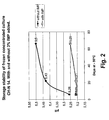
- Fig 2 Shows the storage stability expressed as the acidifying activity of frozen concentrated culture F-DVS TM CH-N 14 (Chr. Hansen A/S Item. No. 200118), with and without 3% w/w IMP added. Note: the ordinate shows the pH measured after 6 hrs. of incubation at 30°C, amount of inoculation material: 0.01% w/v. A higher pH is indicative of less acidifying activity (i.e. less metabolic activity) of the culture. Open squares indicate cultures added IMP, whereas diamonds indicate cultures without IMP.
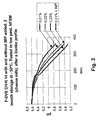
- Fig 3 Shows the acidifying activity of F-DVS TM CH-N 14 cultures (Chr. Hansen A/S Item. No. 200118) with and without IMP added.
- the fermentation was performed with cultures after 2 months of storage at - 50°C.
- the fermentation was tested in low-pasteurized full milk following the Danbo temperature-profile of Table 2.
- the amounts of culture added are given in % (w/v). Note: the ordinate shows the pH measured after 6 hrs. of incubation at 30°C. A higher pH is indicative of less acidifying activity (i.e. less metabolic activity) of the culture.
- Fig 4 Illustrates loss of activity during freezing of the F-DVS TM CH-N 19 culture (Chr. Hansen A/S Item. No. 501593). The culture was tested for activity same as the culture was produced (on day 0). Error bars indicate the standard deviation. Note: the ordinate shows the pH measured after 6 hrs. of incubation at 30°C, amount of inoculation material: 0.01% w/v. A higher pH is indicative of less acidifying activity (i.e. less metabolic activity) of the culture.
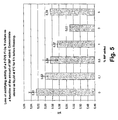
- Fig 5 Illustrates the loss of acidifying activity of a F-DVS TM F1-Da N culture (Chr. Hansen A/S Item. No. 501691) as a function of the amount of IMP added. Concentrates were stored as liquid at 8°C for 5 h before freezing. Error bars indicate the standard deviation. Note: the ordinate shows the pH measured after 6 hrs. of incubation at 30°C, amount of inoculation material: 0.01% w/v. A higher pH is indicative of less acidifying activity (i.e. less metabolic activity) of the culture.
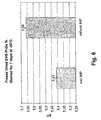
- Fig 6 Shows the storage stability expressed as the acidifying activity of freeze-dried concentrated culture DVS TM FI-Da N culture with and without 3% w/w IMP added. The culture was tested for activity after 7 days storage at -50°C. Error bars indicate the standard deviation. Note: the ordinate shows the pH measured after 6 hrs. of incubation at 30°C, amount of inoculation material: 0.01 % w/v. A higher pH is indicative of less acidifying activity (i.e. less metabolic activity) of the culture.
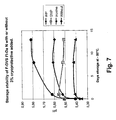
- Fig 7 Shows the storage stability expressed as the acidifying activity of frozen concentrated culture (F-DVS TM FI-Da N, Chr. Hansen A/S Item. No. 501691) during the initial phase of storage with or without 3% w/w IMP, GMP, Inosine or nothing added.
- the ordinate shows the pH measured after 6 hrs. of incubation at 30°C, amount of inoculation material: 0.01% w/v.
- a higher pH is indicative of less acidifying activity (i.e. less metabolic activity) of the culture.
- Solid diamond indicates addition of 3% w/w IMP
- grey square indicates addition of 3% w/w GMP
- solid triangle indicates addition of 3% w/w Inosine and a sphere indicates that no cryoprotective additive were added.
- F-DVS TM Frozen Direct Vat Cultures
- the LD-cultures were cultured in a medium having the following composition: Casein hydrolysate (Oxoid, Basingstoke, UK, Product Code L41), 30 g/l; Primatone RL (Quest, Naarden, The Netherlands, Product Code 5X59051), 30 g/l; soya peptone (Oxoid, Basingstoke, UK, Product Code L44), 30 g/l; yeast extract (Oxoid, Basingstoke, UK, Product Code L21), 15 g/l; MgSO4, 1.5 g/l; Na-ascorbate, 3 g/l; and lactose 50 g/l.
- the medium was sterilized by UHT-treatment (143°C for 8 sec.).
- the finished medium had a pH of 6.5.
- the fermentation was performed in a 100 1 fermentation tank at 30°C using 1% (w/w) of the culture mentioned above as inoculum.
- the anaerobic fermentation was run with nitrogen in the headspace and a headspace pressure of about 0.2 bar.
- the cultures were allowed to acidify to pH 6.0.
- the pH was subsequently maintained at 6.0 by controlled addition of 13.4 N NH 4 OH.
- the bacteria in fermentation broths were concentrated 10-20 times by centrifugation additives added and subsequently frozen as pellets in liquid nitrogen at one atmosphere of pressure if not otherwise indicated.
- the acidifying activity of pellets were measured at various times after freezing the rest of the pellets were stored at - 50°C until further analysis, unless otherwise indicated.
- inosine-5'-monophosphate IMP
- IMP inosine-5'-monophosphate
- AMP adenosine-5'-monophosphate
- UMP uranosine-5'-monophosphate
- CMP cytidine-5'-monophosphate
- Frozen culture was inoculated on a 0.01 % (w/w) level in 200 ml UHT-sterilized reconstituted skimmed milk (RSM) containing 9.5% (w/w) solid matter and heated at 99°C for 30 minutes (LAB-milk). The RSM was incubated at 30°C for 6h to permit acidification of the substrate material.
- the acidification activity was measured as described in Example 6: Analytical Procedure QAm-052, "acidification activity - UHT", Chr. Hansen A/S (Denmark).
- the acidification is performed according to a temperature profile reflecting the temperature time-course which the culture will typically encounter when used in the dairy for production of a given dairy product in this case the DANBO cheese.
- the acidification activity was measured as described in example 7: Analytical Procedure QAm-043, acidification activity - "Programmed temperature profile” Chr. Hansen A/S (Denmark).
- CFU analysis was measured and calculated as described in example 8: Analytical Procedure Q-AM-071, "Enumeration of microorganisms” Chr-Hansen A/S (Denmark).
- Example 1 Stability study of frozen LD-culture of FI-Da N.
- the acidification activity was drastically decreased during the very first few days of storage. After only one week of storage the acidification activity was reduced with 0.26 pH unit. This reduction is equivalent to a 50% reduction of the acidification activity after only one week of storage. After two weeks of storage further loss of the cultures acidification activity became less pronounced and the acidification activity of the culture only decreased marginally during the rest of the period.
- Example 2 Stability study of frozen LD-culture of CH N14 using IMP as cryoprotective agent.
- This example describes the stability study with frozen direct vat set cultures (F-DVS TM ) of CH N14 formulated with IMP as cryoprotective agent.
- concentration of IMP was kept at 3% w/w per gram concentrated biomass.
- the IMP was added to the concentrate as a 30% w/w sterile solution.
- biomass was harvested and concentrated via centrifugation from fermentation broth of F-DVS TM CH N 14.
- the cell concentrate was divided into two portions of 300 gram each and IMP was added to one of the portion.
- the additives and concentrates were mixed for 30 minutes, frozen in liquid nitrogen and subsequently stored at -50°C.
- the frozen culture had a content of viable bacteria of at least 10 10 colony forming units (CFU) per g frozen material.
- Culture activity in milk (LAB-milk) was measured following 3 days of storage at -50°C and the activity was followed periodically up to 65 days.
- Example 3 Stability study of frozen LD-culture of F-DVS TM CH N14 using IMP as cryoprotective agents tested after a temperature profile.
- One set of bottles with low pasteurized full milk was inoculated with a frozen CH N14 culture without added IMP.
- the amount of culture added was 0.01%, 0.02% and 0.03%, respectively (w/w%).
- Another set of bottles with low pasteurized full milk was inoculated with a frozen CH N14 culture with 3% (w/w%) IMP added prior to freezing. In this case the amount of culture added was 0.01 % (w/w%).
- the booster effect was not apparent in example 2, because in example 2 the milk had been subjected to a rather harsh heat sterilization procedure, i.e. LAB milk. In our experience, the booster effect is most pronounced in milk used for cheese fabrication since such milk typically is low-pasteurized milk.
- Example 4 Loss of activity during freezing of CH-N 19.
- This example describes the loss of activity during the freezing of a CH N19 culture formulated with IMP as cryoprotective agent.
- concentration of IMP was kept at 3% w/w per gram concentrated biomass (added as a sterile 30% w/w solution).
- biomass was harvested and concentrated via centrifugation from the fermentation broth of the CH-N 19 culture.
- the cell concentrate was divided into two portions of 300 gram and IMP was added to one of the portions.
- the additives and concentrates were mixed for 30 minutes and subsequently 150 g of the two portions was frozen in liquid nitrogen.
- the culture had a content of viable bacteria of at least 10 10 colony forming units (CFU) per g frozen material. Frozen and non-frozen cultures with and without added IMP were tested for their acidifying activities immediately after they were produced. Culture activity in milk (heat sterilized LAB-milk) was measured.
- IMP also is able to act as a cryoprotective agent and counteract the impact exerted by the freezing of this type of culture.
- Example 5 Dose response for IMP using culture of F-DVS TM FI-Da N
- This example describes the dose response study with frozen cultures (F-DVS TM ) of Fl-Da-N formulated with IMP as cryoprotective agent.
- concentration of IMP were 0%, 0.1 %, 0.5%, 1%, 3% and 6% w/w per gram concentrated biomass.
- the additive was added to the concentrate as a 30% sterile solution.
- the cell concentrate was divided into 6 portions of 300 gram and IMP was added to each one of the portions.
- the frozen culture had a content of viable bacteria of at least 10 10 colony forming units (CFU) per g frozen material.
- Culture activity in milk was measured the same day as the frozen cultures were formulated.
- Results are shown in figure 5 .
- Example 6 Analytical Procedure QAm-052, "acidification activity - UHT", Chr. Hansen A/S (Denmark).
- This method is used for determination of acidification activity.
- the culture is diluted and inoculated into milk. Incubate over a given time at a given temperature. After incubation pH is measured.
- the activity analysis consists of 2 growth steps.
- a bulk starter is prepared by growing the culture in milk over a given time and temperature. After this the bulk starter is inoculated in milk, and after a new incubation pH is measured.
- LIMS Laboratory Information Management System
- Bottles for 1 st weighing are tempered to inoculation temperature (can be either cold or hot milk).
- Buffer pH 4.01 and pH 7.00 are placed in water bath at incubation temperature at least 30 min before calibration of pH meter.
- Frozen cultures Frozen samples/control standards are before 1st weighing placed in a foam box with dry ice and are kept here till all weighings are done.
- the product is thawn according to, see local instruction. After thawing the sample may be kept at 4°C for max. 30 min, before use.
- a can is placed in a water bath at 22°C for 20 min in order to thaw the contents. After thawing the culture may be kept at 4°C for max. 30 min. before use.
- Freeze dried samples/control standards are acclimatized at room temperature for at least 15 min before start of analysis.
- the bottle for the 1 st weighing is placed on the balance, which is set to zero.
- Time for 1st weighing is always entered when inoculation is carried out in warm milk.
- the actual amount of inoculum (1st weighing) is entered with at least two decimals.
- the rotation apparatus (speed 2) is used for 5 min or until the products has been distributed.
- the bottle for the 2nd weighing is placed on the balance, which is set to zero.
- the dilution bottle is shaken carefully before 2nd weighing is carried out.
- the 2 nd weighing is carried out according to current quality control (Qc) procedures at time 1 minute.
- Time for 2nd weighing is entered when the inoculation are cold/warm.
- the actual amount of inoculum (2nd weighing) is entered with at least 2 decimals.
- the activity bottle is turned and the inoculation procedure is repeated for next samples/control.
- Activity bottles which are inoculated from the same 1st weighing, are inoculated in succession.
- At first one 1st weighing is prepared from each control standard/single strain. From each of these the 2nd weighings are carried out to the same activity bottle, so this will contain all control standards/single strains.
- the inoculation for this can be carried out at the same time as the inoculation for acidification activity.
- 2nd weighing can be done in cold activity milk, which is placed at 4°C until incubation in a water bath, which is heated to incubation temperature. In this case the bottles are incubated for 1 ⁇ 2 hour more than the given incubation time.
- the bottles After inoculation of the activity milk, the bottles are placed in a water bath with cooling.
- the temperature sensor from a contact watch is placed in a bottle with uninoculated milk, which is placed in the water bath.
- a contact watch is connected to start heating of the water at a given time, and first when the temperature for the product of concern the incubation time starts.
- Control standard MUST be incubated together with its connected samples in the same water bath.
- Calibration is carried out according to current instructions regarding electrode calibration and maintenance.
- pH must be measured in the samples/Control standards at Time measurement . If time exceeded more than one minute, it is notes. If time is exceeded more than two minutes, the measuring is skipped. Just before time of measurement the bottle is turned 180°.
- the pH measurement is carried out in the bottle or in a sample, which is poured in a 50 ml beaker with magnet stirring.
- pH is entered with at least 2 decimals.
- Example 7 Analytical Procedure QAm-043, acidification activity - "Programmed temperature profile” Chr. Hansen A/S (Denmark).
- This method is used for determination of acidification activity according to Pearce test and in other situations where acidification is performed according to a temperature profile e.g. Danbo-profile. Only Pearce test is included by the IDF standard.(international dairy standard)
- the acidification is performed according to a temperature profile reflecting the temperature course, which the culture will typically encounter when used in the dairy for production of a given dairy product.
- pH is measured at a fixed time.
- a continuous pH measurement may be applied.
- Dilution milk 206.9 g cold (4°C) LAB-milk (i.e. UHT-sterilized reconstituted skimmed milk (RSM) containing 9.5% (w/w) solid matter and heated at 99°C for 30 minutes).
- RSM skimmed milk
- Activity milk 200g cold (4°C) low pasteurised whole milk 3.5% fat.
- Buffers pH 7.00 ⁇ 0.01 and pH 4.01 ⁇ 0.01.
- Water bath/s is/are tempered to the initial temperature of the temperature profile to be used.
- Buffers pH 4.01 and pH 7.00 are placed in water bath at the specified measuring temperature ⁇ 0.2 °C at least 30 min before calibration of pH meter.
- Frozen samples/control standards are before 1st weighing placed in a foam box with dry ice and are kept here till all weighings are done.
- the product is thawn according to current instructions.
- the sample After thawing the sample may be kept at 4°C for max. 30 min. before use.
- Freeze dried samples and control standards are acclimatized at room temperature for at least 15 min before start of analysis.
- the sample may be stored at +8°C.
- the actual amount of inoculum (1st weighing) is entered with at least two decimals.
- the rotation apparatus For freeze dried products the rotation apparatus must be used. It has to be driven with frequent speed for 5 minutes or till the product is completely soluted. This is controlled by leaving the bottle on the table for a moment and then checking the solution by looking in the bottom of the bottle.
- 1st weighing can stand at room temperature for max. 15 minutes before 2nd weighing.
- the dilution bottle is turned before 2nd weighing is carried out.
- the actual amount of inoculum (2nd weighing) is entered with at least 2 decimals.
- the activity bottle is turned and the inoculation procedure is repeated for samples/control standards.
- Activity bottles which are inoculated from the same 1st weighing, are inoculated in succession.
- Rennet is not added to Danbo-profile.
- the bottles are subsequently incubated at one time, as described in 6.
- control standard with corresponding samples MUST be incubated in the same water bath.
- All activity bottles are incubated at the same time in a pre-heated water bath at the defined starting temperature for the temperature profile.
- the temperature profile is started at the same time as the bottles are placed in the water bath.
- incubation temperature is controlled by a thermostat programmed to follow a certain temperature profile.
- a thermostat programmed to follow a certain temperature profile.
- the water level in the water bath should be min. 2 cm higher than the milk level. Milk.
- Table 3 Temperature programme in Pearce profile (following the IDF) Time, minutes Temperature, °C Variation 0 31.0 ⁇ 0.2 °C 50 31.0 ⁇ 0.2 °C 54 31.7 ⁇ 0.5 °C 58 32.2 ⁇ 0.5 °C 62 32.8 ⁇ 0.5 °C 66 33.3 ⁇ 0.5 °C 70 33.9 ⁇ 0.5 °C 73 34.4 ⁇ 0.5 °C 76 35.0 ⁇ 0.5 °C 79 35.6 ⁇ 0.5 °C 82 36.1 ⁇ 0.5 °C 85 36.7 ⁇ 0.5 °C 87.5 37.2 ⁇ 0.5 °C 90 37.8 ⁇ 0.2 °C 360 37.8 ⁇ 0.2 °C Table 4: The Danbo-profile Time, minutes Temperature, °C Variation 02:40 31.0°C ⁇ 0.2 °C 00:15 Ramp 31.0°C to 38.0°C ⁇ 0.5 °C 00:
- Calibration is carried out at initial temperature according to current instructions regarding electrode calibration and maintenance.
- the pH measurement is carried out in the bottle or in a sample, which is poured into a 50 ml beaker with magnet stirring.
- pH is entered with at least 2 decimals.
- the measuring procedure is continued till all samples / control standards and the uninoculated milk are measured.
- the pH values are sampled from the moment the temperature profile is started. After the incubation is completed, the measured pH values in both buffers at initial temperature are registered.
- Example 8 Analytical Procedure Q-AM-071, "Enumeration of microorganisms” Chr-Hansen A/S (Denmark).
- This method is used for enumeration of lactic acid bacteria in various starter cultures and for counting of cross contaminants.
- the method is applicable only together with the concerned culture's analytical programme according to current quality control (Qc) procedures, why reference must be given to the analytical parameters herein.
- the method is a quantitative method where the result is reported as CFU/g.
- a known amount of sample is homogenized with diluent and decimal dilutions are prepared. Appropriate dilutions are mixed with Leesment Agar or spread on the surface. After incubation all colonies are counted.
- pH after autoclaving 7.0 ⁇ 0.2.
- the prepared diluent (Table 5) may be stored for 6 months at 5°C in a dark place.
- Table 6 Leesment Agar, Contents Tryptone (Oxoid L42) 20.0 g Yeast extract (Oxoid L21) 5.0 g Gelatine 2.5 g Lactose 10.0 g NaCl 4.0 g Tri-sodium-citrate, 2H2O (Merck 6432) 2.0 g Calcium lactate, 5H2O (Merck 2102) 8.0 g Agar (So-Bi-Gel) 12.0 g
- the prepared Leesment Agar (Table 6) may be stored dark for 6 months at 5°C.
- the contents in the bottle are mixed by shaking the bottle for 7 sec 20-25 times in an angle of 30°.
- the contents in the tube are mixed on a whirlmixer at maximum speed for 3x1 sec.
- N ⁇ c / n ⁇ 1 + 0.1 ⁇ n ⁇ 2 ⁇ d
- the calculated count may be reported as in the example above or as a rounded number with two significant digits.
- 19 184 is rounded to 19 000 and is reported as 1.9 x 10 4 .
- 294 x 10 8 is rounded to 290 x 10 8 and is reported as 2.9 x 10 10 .
- Example 28 500 is rounded to 28 000 and
- Example 9 Stability study of a freeze-dried LD-culture of FI-Da N.
- biomass was harvested and concentrated via centrifugation from fermentation broth of F1-Da N.
- the cell concentrate was divided into 2 portions of 300 gram and IMP was added to one of the portions.
- the additives and concentrates were mixed and stored for 5 hours at 8°C and subsequently frozen in liquid nitrogen and further stored at -50°C for one day before freeze-drying. After freeze-drying was completed the culture was stored at - 50°C until analysis.
- the frozen culture had a content of viable bacteria of at least 10 10 colony forming units (CFU) per g frozen material.
- Culture activity in milk (LAB-milk) was measured after 7 days of storage at -50°C.
- Results are shown in figure 6 .
- Example 10 Stability study of frozen LD-culture of F-DVS TM FI-Da N using different compounds involved in the biosynthesis of nucleic acids as cryoprotective agents.
- This example describes the stability study with frozen direct vat set cultures F-DVS TM FI-Da N (Chr. Hansen A/S Item. No. 501691) formulated with either nucleotides IMP or GMP (guanosine-5'-monophosphate) or a nucleoside, Inosine as cryoprotective agent.
- concentration of IMP, GMP or Inosine was kept at 3% w/w per gram concentrated biomass.
- the IMP and GMP were added to the concentrate as a 25% w/w sterile aqueous solution, whereas the Inosine was added as dry powder.
- Inosine water was added to the culture in an amount, which equals the amount added in the case of IMP or GMP addition.
- biomass was harvested and concentrated via centrifugation from fermentation broth of F-DVS TM FI-Da N.
- the cell concentrate was divided into four portions of 300 gram each and IMP, GMP, inosine or nothing was added to one of the portions.
- the additives and concentrates were mixed for 30 minutes, frozen in liquid nitrogen and subsequently stored at -50°C.
- the frozen culture had a content of viable bacteria of at least 10 10 colony forming units (CFU) per g frozen material.
- Culture activity in milk (LAB-milk) was measured the same day as the cultures were frozen and the activity was followed periodically up to 13 days.
- F-DVS TM FI-Da N free of additives is loosing activity.
- Relative to the culture stabilized by Inosine the reduction in stability of a culture without added Inosine is equal to 0.41 pH units for F-DVS TM FI-Da N after storage for 13 days at - 50°C. 0.41 pH units corresponds to a 60% loss of acidification activity.
- the difference in stability between a F-DVS TM FI-Da N culture with or without added GMP equals 0,31 pH units, which corresponds to a 50% loss of acidification activity.
- Example 11 Prolonged stability study of frozen LD-culture of F-DVS TM FI-Da N using different compounds involved in the biosynthesis of nucleic a-cids as cryoprotective agents.
- This example describes the prolonged stability study with frozen direct vat set cultures F-DVS TM FI-Da N (Chr. Hansen A/S Item. No. 501691) formulated with either nucleotides IMP or GMP (guanosine-5'-monophosphate) or a nucleoside, Inosine as cryoprotective agents. Experimental details were as described in Example 10, with the exception that the activity was monitored for an extended period of time.
- This example describes the stability of freeze-dried LD-cultures (FD-DVS) of Fl-Da-N formulated with and without a number of different additives, which may act as cryoprotective agents.
- concentration of the various additives were 3% w/w per gram concentrated biomass unless otherwise indicated.
- biomass was harvested and concentrated via centrifugation from fermentation broth of F1-Da N as described in the Materials and Method section.
- the cell concentrate was divided into a number of portions and was added to each of the portions.
- the additives and concentrates were mixed and stored for 5 hours at 8°C and subsequently frozen in liquid nitrogen and further stored at -50°C for one day before freeze-drying. After freeze-drying was completed the culture was stored at -50°C until analysis.
- the freeze-dried culture had a content of viable bacteria of at least 10 10 colony forming units (CFU) per g freeze-dried material.
- Culture activity in milk (LAB-milk) was measured by the acidifying activity assay after 1 day and after 2 months of storage at -50°C.
- This example describes the effect of an addition of a combination of two potential cryoprotective agents (IMP and Inosine) on the activity implied by the manufacturing of a frozen L. bulgaris culture. In the example activities of cultures with and without such addition were compared.
- IMP and Inosine potential cryoprotective agents
- the L. bulgaricus culture was cultured in MRS broth (Difco) for 12 hrs at 40°C.
- the culture was cooled to 12°C and the pH of the culture was adjusted to 6,0. Following cooling; the bacteria in fermentation broths were concentrated 10-20 times by centrifugation, additives were added and subsequently slowly frozen in a freezer with controlled cooling ensuring a cooling-rate of approximately 1°C per minute until -50°C was reached.
- the cultures were stored at -50°C until next day (approximately 18 hrs) before the acidification assay was performed.
- the acidification assay was performed as described in the Materials and Methods section except that the assay was based on a 0.02 % w/w inoculum and performed at 40°C for a period of 5 hours.
- w/w refer to weight of additive per gram concentrated biomass.
- the IMP and inosine were added to the concentrate as an aqueous solution resulting in a 13% increase of the volume of the culture.
- This example explores the effect of a combination of 3% w/w IMP and 2% w/w Inosine on the stability of slowly frozen Bifidobacterium infantis.
- the Bifidobacterium infantis culture was cultured in MRS broth (Difco). The culture was cooled to 12°C and the pH of the culture was adjusted to 6,0. Following cooling, the bacteria in fermentation broths were concentrated 10-20 times by centrifugation, additives were added and subsequently the cultures were frozen either fast by dripping the concentrated culture into liquid nitrogen (culture A) or slowly by cooling the culture in a freezer with controlled cooling ensuring a cooling-rate of approximately 1°C per minute until -50°C was reached (culture B and C). The cultures were stored at -50°C until next day (approximately 18 hrs) before the viability assay (CFU assay) was performed as described in the Materials and Methods.
- CFU assay viability assay
- This example describes the stability of frozen direct vat set cultures (F-DVS TM ) of the CH-N 19 culture formulated with and without a number of different additives, which may act as cryoprotective agents.
- biomass was harvested and concentrated via centrifugation from fermentation broth of F-DVS TM CH-N 19.
- the cell concentrate was divided into a number of portions the various additives were added.
- the additives and concentrates were mixed for 30 minutes, dropwise frozen in liquid nitrogen and subsequently stored at -50°C.
- Culture activity in milk was measured as acidification activity after 1 day and 6 days of storage at -50°C.
- the activity assay is based on a 0,005% w/v inoculum and 6 hrs incubation at 30°C.
- this experiment showed that the various additives have a very different effect on the stability of a frozen culture. Interestingly, this experiment showed that both adenosine and adenosine-5'-monophosphate are harmful to the activity of the culture. The experiment also provided evidence that 3 % w/w Na-formate is detrimental to the activity of frozen cultures.
- Example 16 Trial with addition of IMP and Inosine (from example 15) with CH-N 19TM added for the production of Gouda 45+cheese
- Raw milk was delivered from the Borup Dairy, Denmark, which had been pasteurized at ⁇ 72°C for 15 sec (organic milk, 76-78C for 15 sec) and then cooled to 5°C.
- the protein content will normally vary from 3.4-3.7% protein.
- the milk received was analyzed on the Milkoscanner(Foss Electric A/S, Hiller ⁇ d, Denmark) for fat and protein %.
- the milk temperature was taken and a sample was taken for bacteriological analysis.
- the milk was stored in a cooling room until use.
- the milk for Gouda 45+ production should have a fat content of 3.00% (with a protein content of 3.4%), which in the final cheese will result in ⁇ 45% fat in dry matter.
- the fat-to-protein ratio was calculated using the standard methods of the art.
- the cheese milk was standardized by adding the calculated amounts of cream or skim milk. After standardization the milk was preheated in the heat exchanger to the pre-ripening temperature of 32°C and pumped into the cheese vats. A slow agitation (235 rpm) was continued until rennet is dispersed in the milk.
- Saltpeter was added in a concentration of 0.020%, being 30 g per 150 kg milk.
- CaCl2 was added to the milk in an amount of 0-20 g per 150 kg milk from a 34% solution if needed.
- Rennet CHY-MAX Plus 200 IMCU/mL was added in the amount of 0.022% w/w (30.0 g per 150 kg).
- the rennet was diluted in 3 times its volume in clean cold tap water before use. Agitation (235 rpm) was continued for not more than 1 min after rennet addition and the agitator was removed from the vat. It appears that the milk has coagulated after 35 min. following the addtion of rennet.
- Coagulation of the milk normally takes 30-45 min.
- the coagulum was cut by the frame cutter with 5 mm between the strings.
- the frame cutter was first run horizontally from end to end followed by a run vertically from end to end in the cheese vat. Then the coagulum was cut vertically from side to side three times down the sides of the vat until cubes of 5 mm were obtained.
- the curd was treated very carefully at this stage to minimize losses to the whey.
- the agitator was replaced into the vat and the curd was pre-stirred slowly (350 rpm) for 15-20 min. After 15-20 min 45 kg of whey was drained off and the agitator was then adjusted to a faster stirring level for 20 min (415 rpm).
- the scalding was then started by raising the temperature to 38°C in the first set of batches and 40°C for the second set of batches within 20 min. A slow, steady and controlled temperature increase was required. After reaching 38°C or 40°C, the stirring was carried on with a total stirring of 85 min (meaning 35-45 min. at 38°C or 40°C).
- the agitator was removed and the curd was allowed to settle in the vat.
- the curd was then pitched and pre-pressed using the pre-pressing-plates and the hydraulic cylinders to apply a pressure of 2.5 bar to the curd for 30 min.
- pre-pressing the curd was cut into two blocks.
- the cheese blocks were placed in appropriate moulds (30 x 30 cm) with the same side downwards as during the pre-pressing.
- the moulds were then placed in the pressing unit and pressed for 20 min at 2 bar and subsequently for 1-2 hour at 4-6 bar. After end of pressing the height of the cheeses was measured, the cheeses were weighed, identified, and the pH was analyzed. Finally, the cheeses were stored in the moulds until they reached pH 5.7, and after that they went directly to salting in brine.
- Salting was carried out for 20-24 hours in a brine of 20% NaCl + 0.25% CaCl2, at a temperature of 10-12°C to reach a salt content of about 1.7% in the final cheeses. It was important that the cheeses were properly separated and submerged during the brine salting to obtain the desired salt content. After salting the cheeses were dried for 1-2 hours before packaging.
- the cheeses were evaluated after 8 weeks. The chemical analysis was determined to ensure that the cheese was within the requirements of this kind of cheese (moisture, salt, fat) 4 weeks old. A sensory evaluation of the cheeses was also conducted to ensure that it had the right eye formation, texture and flavor.
- Vat 407 F-DVS CHN-19 added IMP and Inosine. Scalding temperature of 38C
- Example 17 Trial with addition of IMP and Inosine to F-DVS R-604 for the production of Cheddar cheese
- Cheddar is one of the most widely produced cheeses. Originally it was only made in the UK but is now made all over the world, predominantly in Australia, Canada, Ireland, New Zealand and the USA. The basic principles of Cheddar cheesemaking remain the same in all countries with only a few modifications.
- the colour may range from pale cream to deep yellow. Annatto is added in some cases to give an orange/red colour. The texture is firm and close, and the cheese does not crumble when cut. Most Cheddar is sold when it has matured for 3-5 months, and it is very mild. Good mature Cheddar has a nutty flavor with a distinctive bite and is best matured after 9-12 months.
- This procedure describes the traditional Cheddar making procedure, and serves to determine the effects of cryopreservation with IMP and Inosine on the culture inoculum.
- a control culture of F-DVS R-604 cryopreserved without IMP and Inosine (Batch 1) is added as inoculum at a concentration of about 750g/5000 liters of culture.
- a test culture of F-DVS R-604 cryopreserved with IMP and Inosine (Batch 2) is added as inoculum at a concentration of about 500g/5000 liters of culture.
- Rennet CHY-MAX Powder Extra is added to each of the batches in the amount of 2.5-3 g per 1001 of milk. Following the addition of Rennet, a gel will form within 30-45 minutes.
- the following procedure is followed as closely as possible for each of the batches tested.
- the curd is cut into small cubes of 5 x 5 mm.
- the temperature is then raised to about 38-40 °C over a 40-50 min period.
- the curd and the whey are stirred for 30-50 minutes depending on the moisture content required.
- the curd and whey are separated and the curd is allowed to fuse.
- the curd is then "Cheddared”.
- the fused curd is cut into blocks, which are turned every 10-15 minutes.
- the acidity of the whey from the blocks reaches pH 5.5-5.6, the curd is milled. Milling involves cutting the large curd blocks into finger-sized pieces.
- Moulding and pressing takes place in a tower under partial vacuum, with a sharp mechanical pressing.
- the cheese is formed in 20 kg blocks and vacuum packed in plastic bags.
- the cheese is ripened at 7-10°C for 3-12 months, depending on the strength of flavour required (i.e., mild or mature).
- the Cheddar cheese produced from each of the batches will be compared for taste, texture and other qualities to determine whether the use of inoculum cryopreserved with IMP and Inosine influences the final Cheddar cheese product.
- Inoculum containing a mixture of IMP and Inosine will produce practically the same quality of cheese as an inoculum lacking a mixture of IMP and Inosine.
- a further advantage of the invention is that a reduced quantity of concentrated inoculum may be used if the inoculum contains an admixture of IMP and Inosine.
- Example 18 Trial with addition of IMP and Inosine to F-DVS ST-M3 for the production of Cottage cheese
- Cottage cheese is a very popular low fat soft cheese in weight conscious UK and the USA. Plain cottage cheese is very bland so it is popular to flavour the product by adding chives, onions, etc.
- Two methods of manufacturing of cottage cheese are used: a short set method and a long set method. Details of both are provided. The short set method is described immediately, followed by the long set method which is described in section five.
- Milk is ordered from Borup Dairy (Denmark) and delivered as raw milk, which is pasteurized at approximately 72°C (162°F) for 15 sec, and then cooled to about 34°C.
- a control culture of F-DVS ST-M3 cryopreserved without IMP and Inosine (Batch 1) is added as inoculum at a concentration of about 2500g/5000 liters of culture.
- a test culture of F-DVS ST-M3 cryopreserved with IMP and Inosine (Batch 2) is added as inoculum at a concentration of about 2000g/5000 liters of culture.
- Rennet CHY-MAX Powder Extra is added to each of the batches in the amount of 0.2-0.5 g per 50001 of milk.
- the following procedure is followed as closely as possible for each of the batches tested.
- the milk is incubated for 4.5-5 hours until a pH of 4.65-4.8 is reached.
- the curd is cut into even cubes of about 12 mm.
- the curd rests for 10-15 minutes.
- the curd is stirred very gently, and scalding is commenced to a temperature of 55-58 °C which is achieved in 60-75 minutes.
- the curd is sufficiently firm, the whey is drained off.
- the curd is then washed and drained three times as follows:
- the process is similar to the one which may be used in the short set method, except for the inoculation concentration of culture, the incubation temperature and incubation time.
- a control culture of F-DVS ST-M3 cryopreserved without IMP and Inosine (Batch 1) is added as inoculum at a concentration of about 500g/5000 liters of culture.
- a test culture of F-DVS ST-M3 cryopreserved with IMP and Inosine (Batch 2) is added as inoculum at a concentration of about 300g/5000 liters of culture.
- the lower inoculation concentration and incubation temperature of 20-22°C will result in a longer incubation time needed to achieve the desired end pH, which will normally take 14-18 hours.
- the Cottage cheese produced from each of the batches will be compared for taste, texture and other qualities to determine whether the use of inoculum cryopreserved with IMP and Inosine influences the final Cottage cheese product.
- Inoculum containing a mixture of IMP and Inosine will produce practically the same quality of cheese as an inoculum lacking a mixture of IMP and Inosine.
- a further advantage of the invention is that a reduced quantity of concentrated inoculum may be used if the inoculum contains an admixture of IMP and Inosine.
- Example 19 Trial with addition of IMP and Inosine to F-DVS ST-M3 for the production of Mozzarella/Pizza cheese
- Mozzarella is mostly used as Pizza cheese. As it is firmer than Soft Cheese Mozzarella it is easier to grate. There are various types of Mozzarella which have different contents of water and fat in dry matter. Part skim, low-moisture Mozzarella is normally used as Pizza Cheese. Most often the curd is fermented to pH 5.0-5.2 before the curd is mixed with hot water and stretched. The choice of culture has a major influence on the characteristics of Pizza Cheese (i.e., stretching, browning, melting and oiling off).
- Milk is ordered from Borup Dairy (Denmark) and delivered as raw milk, which is pasteurized at approximately 72°C (162°F) for 15 sec, and then cooled to about 36-38°C.
- a control culture of F-DVS ST-M3 cryopreserved without IMP and Inosine (Batch 1) is added as inoculum at a concentration of about 750g/5000 liters of culture.
- a test culture of F-DVS ST-M3 cryopreserved with IMP and Inosine (Batch 2) is added as inoculum at a concentration of about 500g/5000 liters of culture. The culture is incubated for 30-45 minutes at 35-38°C.
- Rennet CHY-MAX Powder Extra is added to each of the batches in the amount of 1-3 g per 1001 of milk.
- the following procedure is followed as closely as possible for each of the batches tested.
- the coagulum is cut into 5-8 mm cubes, and is allowed to heal for 5 minutes.
- the temperature is then increased to 40-43°C for 15-20 minutes with stirring.
- the cheese is then handled using the Cheddar curd method, where all of the whey is drained, the curd is cut into blocks and the blocks are turned during fermentation. Milling of the curd occurs at pH 5-5.25.
- the desired pH is obtained, the cheese is placed in a stretching machine and mixed with hot water, 75-80°C. The process will take about 10-15 minutes, and the temperature of the cured reaches approximately 58-65°C.
- the stretched cheese is moulded and immediately cooled in chilled water to 5-10°C, which will stop further acidification. Brine the cheese in a saturated salt brine at a temperature of 10°C or lower.
- the Mozzarella/Pizza cheese produced from each of the batches will be compared for taste, texture and other qualities to determine whether the use of inoculum cryopreserved with IMP and Inosine influences the final Mozzarella/Pizza cheese product.
- Inoculum containing a mixture of IMP and Inosine will produce practically the same quality of cheese as an inoculum lacking a mixture of IMP and Inosine.
- a further advantage of the invention is that a reduced quantity of concentrated inoculum may be used if the inoculum contains an admixture of IMP and Inosine.
- Example 20 Trial with addition of IMP and Inosine to F-DVS CH-N 11 for the production of Maasdammer cheese
- Maasdammer is a Swiss cheese type, named after the river Maas in the Netherlands.
- the cheese has a relatively large eye formation as well as a mild and nutty flavour due to the propionic acid bacteria added.
- Milk is ordered from Borup Dairy (Denmark) and delivered as raw milk, which is pasteurized at approximately 72°C (162°F) for 15 sec or heat-treated at 65-70°C for 20 seconds, and then cooled to about 30-32°C.
- a control culture of F-DVS CH-N 11 cryopreserved without IMP and Inosine (Batch 1) is added as inoculum at a concentration of about 750g/5000 liters of culture.
- a test culture of F-DVS CH-N 11 cryopreserved with IMP and Inosine (Batch 2) is added as inoculum at a concentration of about 500g/5000 liters of culture. The culture is incubated for 10-40 minutes at 32°C.
- Rennet CHY-MAX Powder Extra is added to each of the batches in the amount of 1-3 g per 1001 of milk.
- a gel will form in about 30-45 minutes.
- the coagulum is cut into 5-7 mm cubes, and the curd is slowly stirred for 15-25 minutes. Approximately 35-45% of the whey is drained off and the curd is gently stirred for 15 minutes. Approximately 15-20% (of the start volume) hot water at approximately 60°C is added. The temperature of the curd is about 35-38°C, and is stirred for about 30-45 minutes. Most of the whey is drained, and the curd is lightly pressed at 2-4 kg/cm 2 under the remaining whey for 15-30 minutes.
- the curd is cut into suitably sized blocks which are fitted into moulds. The moulds are lightly pressed for 20 minutes, followed by pressing at 4-6 kg/cm 2 for 1-2 hours.
- the curd blocks are dumped directly into cold brine at a pH of 5.6-5.7, and the target salt concentration of the cheese is 1-1.5%.
- the Maasdammer cheese produced from each of the batches will be compared for taste, texture and other qualities to determine whether the use of inoculum cryopreserved with IMP and Inosine influences the final Massdammer cheese product.
- Inoculum containing a mixture of IMP and Inosine will produce practically the same quality of cheese as an inoculum lacking a mixture of IMP and Inosine.
- a further advantage of the invention is that a reduced quantity of concentrated inoculum may be used if the inoculum contains an admixture of IMP and Inosine.
- Example 21 Trial with addition of IMP and Inosine to F-DVS CHN-12 for the production of Brie/Camembert cheese
- Stabilised Brie/Camembert differs from Traditional Brie/Camembert in that softening of the cheese core is not so time dependent as the pH min, in the end of the curd manufacture, is 4.9-5.4 compared to 4.6-4.8 for Traditional Brie/Camembert.
- White moulds are used to give cheese its characteristic, white surface and its taste. There are two primary way of stabilising the pH of cheese:
- Milk is ordered from Borup Dairy (Denmark) and delivered as raw milk, which is pasteurized at approximately 72°C (162°F) for 15 sec, and then cooled to about 35-37°C.
- a control culture of F-DVS CHN-12 cryopreserved without IMP and Inosine (Batch 1) is added as inoculum at a concentration of about 250g/5000 liters of culture.
- a test culture of F-DVS CHN-12 cryopreserved with IMP and Inosine (Batch 2) is added as inoculum at a concentration of about 200g/5000 liters of culture.
- Into the mould is introduced 3-5 u of liquid PCa 1, PCa 3 or PCa FD per 1000 liters, as well as 0.5-1 u of GEO CD1.
- Rennet CHY-MAX Powder Extra is added to each of the batches in the amount of 2.5-3 g per 1001 of milk.
- a gel will form in about 30-45 minutes.
- the coagulum is cut into 10 mm cubes, and 40% of the whey is drained. The same volume of water is added at about 40-45°C.
- the culture is allowed to stand for 30-50 minutes with occasional, gentle stirring.
- the curd is ladled from the vat into the mould, and the mould is turned first after one hour, turned a second time after three hours, and turned a third time after eight hours.
- the curd is removed from the mould and immersed in 18% brine.
- the cheese is sprayed with 1-2 u of PCa 1, PCa 3 or PCa FD per 100 kilograms of cheese.
- the cheese ripens at 14-15°C and 85% relative humidity for one day, then at 12°C and 95% relative humidity for 8-10 days.
- the cheese surface is dried, packed and stored at 4°C.
- Each cheese is packed in grease-proof paper and placed in a cardboard or chip box.
- the Brie/Camembert cheese produced from each of the batches will be compared for taste, texture and other qualities to determine whether the use of inoculum cryopreserved with IMP and Inosine influences the final Brie/Camembert cheese product.
- Inoculum containing a mixture of IMP and Inosine will produce practically the same quality of cheese as an inoculum lacking a mixture of IMP and Inosine.
- a further advantage of the invention is that a reduced quantity of concentrated inoculum may be used if the inoculum contains an admixture of IMP and Inosine.
- Example 22 Trial with addition of IMP and Inosine to DVSTM FD-N for the production of cultured Buttermilk in 3-liter scale
- the cultured buttermilk was tested for appropriate flavor on days 1 and 8: Day 1: FD-N with IMP and Inosine: Fresh, low CO2, good aroma FD-N without IMP and Inosine: Fresh, low CO2, good aroma Day 8: FD-N with IMP and Inosine: Fresh, low CO2, good aroma FD-N without IMP and Inosine: High mouth feel, fresh, low CO2, good aroma
- inoculation material can be halfed if a mixture of IMP and Inosine has been added to the inoculation material in comparison with an inoculating material without IMP and Inosine.
- a similar quality of cheese in terms of taste and texture was produced using either the experimental inoculum or the control inoculum.
Landscapes
- Life Sciences & Earth Sciences (AREA)
- Chemical & Material Sciences (AREA)
- Engineering & Computer Science (AREA)
- Health & Medical Sciences (AREA)
- Genetics & Genomics (AREA)
- Organic Chemistry (AREA)
- Biotechnology (AREA)
- Zoology (AREA)
- Wood Science & Technology (AREA)
- Bioinformatics & Cheminformatics (AREA)
- Microbiology (AREA)
- Tropical Medicine & Parasitology (AREA)
- Biomedical Technology (AREA)
- Virology (AREA)
- Medicinal Chemistry (AREA)
- Biochemistry (AREA)
- General Engineering & Computer Science (AREA)
- General Health & Medical Sciences (AREA)
- Polymers & Plastics (AREA)
- Food Science & Technology (AREA)
- General Chemical & Material Sciences (AREA)
- Micro-Organisms Or Cultivation Processes Thereof (AREA)
- Dairy Products (AREA)
- Fodder In General (AREA)
- Pharmaceuticals Containing Other Organic And Inorganic Compounds (AREA)
- Saccharide Compounds (AREA)
- Preparation Of Compounds By Using Micro-Organisms (AREA)
- Freezing, Cooling And Drying Of Foods (AREA)
- Coloring Foods And Improving Nutritive Qualities (AREA)
Claims (26)
- Gefrorene oder gefriergetrocknete Kultur, die ein oder mehrere Kryoprotektive umfasst, ausgewählt aus der Gruppe bestehend aus einer oder mehreren Verbindung(en), die an der Biosynthese von Nukleinsäuren beteiligt sind, oder ein oder mehrere Derivate von beliebigen solchen Verbindungen; und
wobei das eine oder mehrere Kryoprotektive ausgewählt aus der Gruppe bestehend aus Purinbasen, Pyrimidinbasen, Nukleosiden und Nukleotiden ist/sind; und
wobei die Kultur etwa 0.1 % bis etwa 20% des Kryoprotektivs umfasst oder eine Mischung von Wirkstoffen gemessen als Gew.-% des gefrorenen Materials; oder in dem Fall, dass die Kultur eine gefriergetrocknete Kultur ist, ist das Kryoprotektiv oder die Mischung von Wirkstoffen in einer Menge von 0.8% bis 55% nach Gewicht vorhanden; und
wobei die Kultur einen oder mehrere Organismen aus der Gruppe bestehend aus Bifidobacterium spp., Brevibacterium spp., Propionbacterium spp., Lactococcus spp., Lactobacillus spp., Streptococcus spp., Enterococcus spp., Pediococcus spp., Leuconostoc spp. oder Oenococcus spp. umfasst. - Kultur nach Anspruch 1, wobei das eine oder mehrere Kryoprotektiv ein Nukleotid ist.
- Kultur nach Anspruch 1, wobei das eine oder mehrere Kryoprotektiv aus der Gruppe von Pyrimidinnukleotiden und Inosin ausgewählt ist/sind.
- Kultur nach Anspruch 3, wobei das eine oder mehrere Kryoprotektiv aus der Gruppe bestehend aus IMP, UMP und CMP ausgewählt ist.
- Kultur nach Anspruch 3, wobei das Kryoprotektiv Inosin-5'-monophosphate (IMP) und Inosin umfasst.
- Kultur nach Anspruch 4, wobei das Kryoprotektiv Inosin-5'-Monophosphat (IMP) ist.
- Die Kultur nach einem beliebigen der Ansprüche 1 - 6, wobei das eine oder mehrere Kryoprotektiv ein Wirkstoff oder eine Mischung von Wirkstoffen ist, die, zusätzlich zu ihrer Kryoprotektivität, eine Verstärkerwirkung hat.
- Kultur nach einem beliebigen der vorherigen Patentansprüche, wobei die Kultur etwa 2% bis etwa 5% des Kryoprotektivs oder der Mischung von Wirkstoffen umfasst, gemessen als Gew.-% des gefrorenen Materials.
- Kultur nach einem beliebigen der vorherigen Patentansprüche, die gefriergetrocknet wird.
- Kultur nach einem beliebigen der vorherigen Patentansprüche, wobei die Kultur eine Starterkultur ist.
- Kultur nach einem beliebigen der vorherigen Patentansprüche, die einen oder mehrere mesophile Organismen mit optimalen Wachstumstemperaturen bei etwa 30°C umfasst.
- Kultur nach Anspruch 11, wobei die Kultur einen oder mehrere mesophile Organismen aus der folgenden Gruppe umfasst: Lactococcus lactis, Lactococcus lactis subsp. cremoris, Leuconostoc mesenteroides subsp. cremoris, Pediococcus pentosaceus, Lactococcus lactis subsp. lactis biovar diacetylactis, Lactobacillus casei subsp. casei und Lactobacillus paracasei subsp. paracasei.
- Kultur nach einem beliebigen der Ansprüche 1 oder 9-10, die einen oder mehrere wärmeliebende Organismen mit optimalen Wachstumstemperaturen bei etwa 35°C bis etwa 45°C umfasst.
- Kultur nach Anspruch 13, wobei die Kultur einen oder mehrere wärmeliebende Organismen aus der folgenden Gruppe umfasst: Streptococcus thermophilus, Enterococcus faecium, Lactobacillus delbrueckii subsp. lactis, Lactobacillus helveticus, Lactobacillus delbrueckii subsp. bulgaricus und Lactobacillus acidophilus.
- Kultur nach Anspruch 1, wobei der Organismus ein Lactococcus spp. ist, der einen oder mehrere der folgenden umfasst: Lactococcus lactis subsp. lactis und Lactococcus lactis subsp. cremoris.
- Kultur nach Anspruch 1, wobei der Organismus ein Lactobacillus spp. ist, der Lactobacillus acidophilus umfasst.
- Verfahren zur Herstellung einer gefrorenen Kultur nach Anspruch 1 mit folgenden Phasen:1) Hinzufügung eines Kryoprotektivs, ausgewählt aus einem Wirkstoff nach Anspruch 1, zu einer konzentrierten Kultur von lebensfähigen Organismen nach Anspruch 1,2) Einfrieren des Materials, um gefrorenes Material mit einer Menge an Kryoprotektiv oder einer Mischung von Wirkstoffen nach Anspruch 1 zu erhalten, und3) Verpacken des gefrorenen Materials auf geeignete Art.
- Verfahren zur Herstellung einer gefriergetrockneten Kultur nach Anspruch 1 mit folgenden Phasen:1) Hinzufügung eines Kryoprotektivs, ausgewählt aus einem Wirkstoff nach Anspruch 1, zu einer konzentrierten Kultur von lebensfähigen Organismen nach Anspruch 1,2) Einfrieren des Materials, um gefrorenes Material zu erhalten,3) Sublimation von Wasser aus dem gefrorenen Material, um gefriergetrocknetes Material mit einer Menge an Kryoprotektiv oder einer Mischung von Wirkstoffen nach Anspruch 1 zu erhalten, und4) Verpacken des gefriergetrockneten Materials auf geeignete Art.
- Verfahren nach Anspruch 17, wobei der Organismus ein Lactoccocus spp. ist, der einen oder mehrere der folgenden umfasst: Lactococcus lactis subsp. lactis und Lactococcus lactis subsp. cremoris.
- Verfahren nach Anspruch 17, wobei der Organismus ein Lactobacillus spp. ist, der Lactobacillus acidophilus umfasst.
- Verfahren nach Anspruch 18, wobei der Organismus ein Lactoccccus spp. ist, der einen oder mehrere der folgenden umfasst: Lactococcus lactis subsp. lactis und Lactococcus lactis subsp. cremoris.
- Verfahren nach Anspruch 18, wobei der Organismus ein Lactobacillus spp. ist, der Lactobacillus acidophilus umfasst.
- Verfahren zur Herstellung eines kultivierten Lebensmittels mit Kultivierung eines Vorläufermaterials mit der Kultur nach einem der Ansprüche 1-16, und Erhalten eines kultivierten Lebensmittels.
- Verfahren nach Anspruch 23, wobei das kultivierte Lebensmittel aus einem Milchvorläufermaterial hergestellt wird.
- Verfahren nach Anspruch 24, wobei das kultivierte Lebensmittel Buttermilch ist.
- Verfahren nach Anspruch 24, wobei das kultivierte Lebensmittel ein Käse aus der folgenden Gruppe ist: Cheddar, Gouda-Käse, Cottage, Emmentaler, Grana, Mozzarella/Pizza, Maasdammer und stabilisierter Brie oder Camembert.
Priority Applications (3)
| Application Number | Priority Date | Filing Date | Title |
|---|---|---|---|
| EP04738974A EP1644481B1 (de) | 2003-07-02 | 2004-07-02 | Verwendung von an der biosynthese von nukleinsäuren beteiligten verbindungen als gefrierschutzmittel |
| EP10166624A EP2239317A1 (de) | 2003-07-02 | 2004-07-02 | Verwendung von Verbindungen, die bei der Biosynthese von Nukleinsäure als Kryoprotektive beteiligt sind |
| PL04738974T PL1644481T3 (pl) | 2003-07-02 | 2004-07-02 | Zastosowanie związków włączonych w biosyntezę kwasów nukleinowych jako czynników krioochronnych |
Applications Claiming Priority (3)
| Application Number | Priority Date | Filing Date | Title |
|---|---|---|---|
| EP03077079A EP1493806A1 (de) | 2003-07-02 | 2003-07-02 | Verwendung von Verbindungen, welche in der Biosynthese von Nukleinsäuren involviert sind, als Gefrierschutz |
| EP04738974A EP1644481B1 (de) | 2003-07-02 | 2004-07-02 | Verwendung von an der biosynthese von nukleinsäuren beteiligten verbindungen als gefrierschutzmittel |
| PCT/DK2004/000477 WO2005003327A1 (en) | 2003-07-02 | 2004-07-02 | Use of compounds involved in biosynthesis of nucleic acids as cryoprotective agents |
Publications (2)
| Publication Number | Publication Date |
|---|---|
| EP1644481A1 EP1644481A1 (de) | 2006-04-12 |
| EP1644481B1 true EP1644481B1 (de) | 2010-06-23 |
Family
ID=33427154
Family Applications (3)
| Application Number | Title | Priority Date | Filing Date |
|---|---|---|---|
| EP03077079A Withdrawn EP1493806A1 (de) | 2003-07-02 | 2003-07-02 | Verwendung von Verbindungen, welche in der Biosynthese von Nukleinsäuren involviert sind, als Gefrierschutz |
| EP10166624A Withdrawn EP2239317A1 (de) | 2003-07-02 | 2004-07-02 | Verwendung von Verbindungen, die bei der Biosynthese von Nukleinsäure als Kryoprotektive beteiligt sind |
| EP04738974A Expired - Lifetime EP1644481B1 (de) | 2003-07-02 | 2004-07-02 | Verwendung von an der biosynthese von nukleinsäuren beteiligten verbindungen als gefrierschutzmittel |
Family Applications Before (2)
| Application Number | Title | Priority Date | Filing Date |
|---|---|---|---|
| EP03077079A Withdrawn EP1493806A1 (de) | 2003-07-02 | 2003-07-02 | Verwendung von Verbindungen, welche in der Biosynthese von Nukleinsäuren involviert sind, als Gefrierschutz |
| EP10166624A Withdrawn EP2239317A1 (de) | 2003-07-02 | 2004-07-02 | Verwendung von Verbindungen, die bei der Biosynthese von Nukleinsäure als Kryoprotektive beteiligt sind |
Country Status (14)
| Country | Link |
|---|---|
| EP (3) | EP1493806A1 (de) |
| JP (1) | JP5592049B2 (de) |
| CN (1) | CN100582216C (de) |
| AT (1) | ATE471976T1 (de) |
| AU (1) | AU2004253986B2 (de) |
| CA (1) | CA2530522C (de) |
| DE (1) | DE602004027810D1 (de) |
| DK (1) | DK1644481T3 (de) |
| ES (1) | ES2347789T3 (de) |
| NZ (1) | NZ544997A (de) |
| PL (1) | PL1644481T3 (de) |
| RU (1) | RU2344168C2 (de) |
| UA (1) | UA87462C2 (de) |
| WO (1) | WO2005003327A1 (de) |
Families Citing this family (26)
| Publication number | Priority date | Publication date | Assignee | Title |
|---|---|---|---|---|
| US6787348B1 (en) | 1998-08-26 | 2004-09-07 | Chr. Hansen | Liquid starter cultures having improved storage stability and use thereof |
| US9289003B2 (en) | 2003-07-02 | 2016-03-22 | Chr. Hansen A/S | Use of compounds involved in biosynthesis of nucleic acids as cryoprotective agents |
| ATE486123T1 (de) * | 2005-01-05 | 2010-11-15 | Chr Hansen As | Verwendung von an der biosynthese von nukleinsäure beteiligten verbindungen zur steigerung der ausbeute von bakterienkulturen |
| WO2007042577A2 (en) | 2005-10-14 | 2007-04-19 | Chr. Hansen A/S | Composition comprising enzymatically digested yeast cells and method of preparing same. |
| WO2010101175A1 (ja) * | 2009-03-04 | 2010-09-10 | 明治乳業株式会社 | 凍結乾燥粉末状菌体及びその製造方法 |
| JP5226820B2 (ja) * | 2010-03-31 | 2013-07-03 | 森永乳業株式会社 | モッツァレラチーズの製造方法 |
| PL2563169T3 (pl) * | 2010-04-27 | 2017-11-30 | Chr. Hansen A/S | Sposób wytwarzania napoju fermentowanego |
| CN103249830A (zh) | 2010-12-10 | 2013-08-14 | 帝斯曼知识产权资产管理有限公司 | 起子培养物组合物 |
| WO2013001862A1 (ja) * | 2011-06-29 | 2013-01-03 | 雪印種苗株式会社 | 新規乳酸菌及びこれを用いるサイレージ又は発酵飼料の調製方法 |
| MX367899B (es) | 2012-04-25 | 2019-09-11 | Chr Hansen As | Uso de bacterias de acido lactico para preparar productos alimenticios fermentados con mayor dulzura natural. |
| CA2893309C (en) * | 2012-12-04 | 2020-09-22 | Chr. Hansen A/S | Process for direct inoculation from frozen concentrated ferments and associated device |
| AU2014302735B2 (en) | 2013-06-27 | 2016-12-15 | Starbucks Corporation D/B/A Starbucks Coffee Company | Biopreservation methods for beverages and other foods |
| CN104642541B (zh) * | 2013-11-20 | 2018-03-23 | 内蒙古伊利实业集团股份有限公司 | 产气发酵乳和风味发酵乳及其制作方法 |
| KR20160118497A (ko) | 2015-04-02 | 2016-10-12 | 세종대학교산학협력단 | 투라노즈를 함유하는 동결보존제 |
| US10633570B2 (en) | 2015-04-16 | 2020-04-28 | The School Corporation Kansai University | Anti-ice nucleation activator |
| JP6823601B2 (ja) | 2015-10-30 | 2021-02-03 | 株式会社ヤクルト本社 | 微生物乾燥菌体の製造方法 |
| EA201891864A1 (ru) | 2016-03-31 | 2019-03-29 | Кхр. Хансен А/С | Применение глюкозодефицитных штаммов streptococcus thermophiles в способе получения ферментированных молочных продуктов |
| CN106199007B (zh) * | 2016-08-03 | 2017-04-05 | 烟台普罗吉生物科技发展有限公司 | 蛋白保护剂 |
| EA201991967A1 (ru) | 2017-03-28 | 2020-03-02 | Кхр. Хансен А/С | Композиция молочнокислых бактерий для получения ферментированных пищевых продуктов с улучшенной природной сладостью и вкусом |
| KR101865713B1 (ko) | 2017-10-10 | 2018-06-08 | 세종대학교산학협력단 | 투라노즈를 함유하는 동결보존제 |
| CN112020303A (zh) | 2018-04-24 | 2020-12-01 | 科·汉森有限公司 | 包括应用乳糖缺陷型嗜热链球菌菌株、乳糖缺陷型德氏乳杆菌保加利亚亚种菌株和益生菌菌株的生产发酵乳制品的组合物和方法 |
| EP3788175A1 (de) * | 2018-05-04 | 2021-03-10 | Chr. Hansen A/S | Verbesserte wiederherstellung der nitratreduktaseaktivität |
| JP7319033B2 (ja) * | 2018-09-27 | 2023-08-01 | 株式会社明治 | 軟質カビ系チーズ用スターター |
| EA202193114A1 (ru) | 2019-05-28 | 2022-03-18 | Кхр. Хансен А/С | Способ получения ферментированного молочного продукта с повышенным уровнем пробиотиков |
| WO2021116311A1 (en) | 2019-12-10 | 2021-06-17 | Chr. Hansen A/S | Method for preparing cultures of lactic acid bacteria |
| CN115558620B (zh) * | 2022-09-30 | 2023-10-20 | 微康益生菌(苏州)股份有限公司 | 一种乳酸菌冻干保护剂及其制备方法和应用 |
Family Cites Families (11)
| Publication number | Priority date | Publication date | Assignee | Title |
|---|---|---|---|---|
| JPS5071891A (de) * | 1973-11-05 | 1975-06-14 | ||
| EP0259739A1 (de) | 1986-09-10 | 1988-03-16 | Rhone-Poulenc Inc. | Veränderte Stabilität von gefriergetrockneten Kulturen |
| US5756315A (en) * | 1989-12-05 | 1998-05-26 | Kyowa Hakko Kogyo Co., Ltd. | Inosine-guanosine kinase |
| JP3040507B2 (ja) * | 1991-03-19 | 2000-05-15 | 三菱重工業株式会社 | 硝酸菌の保存と復元方法 |
| WO2000039281A2 (en) * | 1998-08-26 | 2000-07-06 | Chr. Hansen A/S | Liquid starter cultures having improved storage stability and use thereof |
| US6485959B1 (en) * | 1998-10-07 | 2002-11-26 | Cedars Sinai Medical Center | Cell preconditioning and cryopresevation medium |
| FR2785501B1 (fr) * | 1998-11-10 | 2001-01-05 | Centre Nat Rech Scient | Solution de perfusion et/ou de conservation et/ou de reperfusion lors de la transplantation d'organes |
| EP1038951A1 (de) * | 1999-03-23 | 2000-09-27 | Societe Des Produits Nestle S.A. | Synthetisches Mittel für die Züchtung von Lactobacillus und/oder die Bifidobacterien |
| EP1048215B2 (de) * | 1999-04-30 | 2008-07-23 | Societe Des Produits Nestle S.A. | Erhöhtes Wachstum von Milchsäurebakterien im Milch |
| DE60124071T2 (de) * | 2000-01-21 | 2007-05-31 | Chr. Hansen A/S | Porphyrin enthaltende milchsäurebakterien und deren verwendung |
| US9289003B2 (en) * | 2003-07-02 | 2016-03-22 | Chr. Hansen A/S | Use of compounds involved in biosynthesis of nucleic acids as cryoprotective agents |
-
2003
- 2003-07-02 EP EP03077079A patent/EP1493806A1/de not_active Withdrawn
-
2004
- 2004-07-02 DK DK04738974.7T patent/DK1644481T3/da active
- 2004-07-02 CN CN200480018890A patent/CN100582216C/zh not_active Expired - Lifetime
- 2004-07-02 WO PCT/DK2004/000477 patent/WO2005003327A1/en not_active Ceased
- 2004-07-02 UA UAA200600911A patent/UA87462C2/ru unknown
- 2004-07-02 CA CA2530522A patent/CA2530522C/en not_active Expired - Lifetime
- 2004-07-02 NZ NZ544997A patent/NZ544997A/en not_active IP Right Cessation
- 2004-07-02 DE DE602004027810T patent/DE602004027810D1/de not_active Expired - Lifetime
- 2004-07-02 AU AU2004253986A patent/AU2004253986B2/en not_active Expired
- 2004-07-02 EP EP10166624A patent/EP2239317A1/de not_active Withdrawn
- 2004-07-02 AT AT04738974T patent/ATE471976T1/de not_active IP Right Cessation
- 2004-07-02 JP JP2006517969A patent/JP5592049B2/ja not_active Expired - Lifetime
- 2004-07-02 PL PL04738974T patent/PL1644481T3/pl unknown
- 2004-07-02 ES ES04738974T patent/ES2347789T3/es not_active Expired - Lifetime
- 2004-07-02 EP EP04738974A patent/EP1644481B1/de not_active Expired - Lifetime
- 2004-07-02 RU RU2006102957/13A patent/RU2344168C2/ru active
Also Published As
| Publication number | Publication date |
|---|---|
| DE602004027810D1 (de) | 2010-08-05 |
| RU2344168C2 (ru) | 2009-01-20 |
| EP2239317A1 (de) | 2010-10-13 |
| ATE471976T1 (de) | 2010-07-15 |
| EP1493806A1 (de) | 2005-01-05 |
| CA2530522C (en) | 2016-05-10 |
| DK1644481T3 (da) | 2010-09-27 |
| WO2005003327A1 (en) | 2005-01-13 |
| PL1644481T3 (pl) | 2010-12-31 |
| CN100582216C (zh) | 2010-01-20 |
| JP2007506411A (ja) | 2007-03-22 |
| NZ544997A (en) | 2009-03-31 |
| ES2347789T3 (es) | 2010-11-04 |
| RU2006102957A (ru) | 2006-07-27 |
| AU2004253986B2 (en) | 2008-06-12 |
| CA2530522A1 (en) | 2005-01-13 |
| AU2004253986A1 (en) | 2005-01-13 |
| UA87462C2 (ru) | 2009-07-27 |
| CN1816616A (zh) | 2006-08-09 |
| EP1644481A1 (de) | 2006-04-12 |
| JP5592049B2 (ja) | 2014-09-17 |
Similar Documents
| Publication | Publication Date | Title |
|---|---|---|
| EP1644481B1 (de) | Verwendung von an der biosynthese von nukleinsäuren beteiligten verbindungen als gefrierschutzmittel | |
| US8597929B2 (en) | Liquid starter cultures having an improved storage stability and use thereof | |
| US9848615B2 (en) | Storage stable frozen lactic acid bacteria culture | |
| US20190124940A1 (en) | Manufacture of cheese | |
| EP1141233B1 (de) | Flüssige starterkulturen mit verbesserter lagerstabilität und ihre verwendung | |
| EP2223609A1 (de) | Gefrorene Laborkultur individueller gefrorener Pellets | |
| US9289003B2 (en) | Use of compounds involved in biosynthesis of nucleic acids as cryoprotective agents | |
| CN103966131B (zh) | 一种具有高肽酶活力的植物乳杆菌及其应用 | |
| JP2026031922A (ja) | 真菌による腐敗を制御するための細菌組成物およびその使用 | |
| US20050069862A1 (en) | Use of compounds involved in biosynthesis of nucleic acids as cryoprotective agents | |
| JP4185125B2 (ja) | 新規チーズスターター | |
| WO2025132628A2 (en) | Strains and uses thereof for improving mozzarella flavoring | |
| Lavasani et al. | Effect of Bifidobacterium lactis on some physico-chemical and organoleptical properties of Lighvan cheese | |
| Lavasani | Research Journal of Pharmaceutical, Biological and Chemical Sciences | |
| PL200502B1 (pl) | Ciekła kultura starterowa, sposób uzyskiwania ciekłej kultury starterowej i sposób wytwarzania produktów mleczarskich |
Legal Events
| Date | Code | Title | Description |
|---|---|---|---|
| PUAI | Public reference made under article 153(3) epc to a published international application that has entered the european phase |
Free format text: ORIGINAL CODE: 0009012 |
|
| 17P | Request for examination filed |
Effective date: 20060202 |
|
| AK | Designated contracting states |
Kind code of ref document: A1 Designated state(s): AT BE BG CH CY CZ DE DK EE ES FI FR GB GR HU IE IT LI LU MC NL PL PT RO SE SI SK TR |
|
| DAX | Request for extension of the european patent (deleted) | ||
| 17Q | First examination report despatched |
Effective date: 20090304 |
|
| GRAP | Despatch of communication of intention to grant a patent |
Free format text: ORIGINAL CODE: EPIDOSNIGR1 |
|
| RAX | Requested extension states of the european patent have changed |
Extension state: LV Payment date: 20060202 Extension state: LT Payment date: 20060202 |
|
| GRAS | Grant fee paid |
Free format text: ORIGINAL CODE: EPIDOSNIGR3 |
|
| GRAA | (expected) grant |
Free format text: ORIGINAL CODE: 0009210 |
|
| AK | Designated contracting states |
Kind code of ref document: B1 Designated state(s): AT BE BG CH CY CZ DE DK EE ES FI FR GB GR HU IE IT LI LU MC NL PL PT RO SE SI SK TR |
|
| AX | Request for extension of the european patent |
Extension state: LT LV |
|
| REG | Reference to a national code |
Ref country code: CH Ref legal event code: EP |
|
| REG | Reference to a national code |
Ref country code: IE Ref legal event code: FG4D |
|
| REF | Corresponds to: |
Ref document number: 602004027810 Country of ref document: DE Date of ref document: 20100805 Kind code of ref document: P |
|
| REG | Reference to a national code |
Ref country code: DK Ref legal event code: T3 |
|
| REG | Reference to a national code |
Ref country code: NL Ref legal event code: T3 |
|
| REG | Reference to a national code |
Ref country code: SE Ref legal event code: TRGR |
|
| REG | Reference to a national code |
Ref country code: ES Ref legal event code: FG2A Ref document number: 2347789 Country of ref document: ES Kind code of ref document: T3 |
|
| LTIE | Lt: invalidation of european patent or patent extension |
Effective date: 20100623 |
|
| PG25 | Lapsed in a contracting state [announced via postgrant information from national office to epo] |
Ref country code: SI Free format text: LAPSE BECAUSE OF FAILURE TO SUBMIT A TRANSLATION OF THE DESCRIPTION OR TO PAY THE FEE WITHIN THE PRESCRIBED TIME-LIMIT Effective date: 20100623 Ref country code: AT Free format text: LAPSE BECAUSE OF FAILURE TO SUBMIT A TRANSLATION OF THE DESCRIPTION OR TO PAY THE FEE WITHIN THE PRESCRIBED TIME-LIMIT Effective date: 20100623 Ref country code: FI Free format text: LAPSE BECAUSE OF FAILURE TO SUBMIT A TRANSLATION OF THE DESCRIPTION OR TO PAY THE FEE WITHIN THE PRESCRIBED TIME-LIMIT Effective date: 20100623 |
|
| PG25 | Lapsed in a contracting state [announced via postgrant information from national office to epo] |
Ref country code: GR Free format text: LAPSE BECAUSE OF FAILURE TO SUBMIT A TRANSLATION OF THE DESCRIPTION OR TO PAY THE FEE WITHIN THE PRESCRIBED TIME-LIMIT Effective date: 20100924 |
|
| REG | Reference to a national code |
Ref country code: PL Ref legal event code: T3 |
|
| PG25 | Lapsed in a contracting state [announced via postgrant information from national office to epo] |
Ref country code: EE Free format text: LAPSE BECAUSE OF FAILURE TO SUBMIT A TRANSLATION OF THE DESCRIPTION OR TO PAY THE FEE WITHIN THE PRESCRIBED TIME-LIMIT Effective date: 20100623 |
|
| PG25 | Lapsed in a contracting state [announced via postgrant information from national office to epo] |
Ref country code: MC Free format text: LAPSE BECAUSE OF NON-PAYMENT OF DUE FEES Effective date: 20100731 Ref country code: RO Free format text: LAPSE BECAUSE OF FAILURE TO SUBMIT A TRANSLATION OF THE DESCRIPTION OR TO PAY THE FEE WITHIN THE PRESCRIBED TIME-LIMIT Effective date: 20100623 Ref country code: BE Free format text: LAPSE BECAUSE OF FAILURE TO SUBMIT A TRANSLATION OF THE DESCRIPTION OR TO PAY THE FEE WITHIN THE PRESCRIBED TIME-LIMIT Effective date: 20100623 Ref country code: CY Free format text: LAPSE BECAUSE OF FAILURE TO SUBMIT A TRANSLATION OF THE DESCRIPTION OR TO PAY THE FEE WITHIN THE PRESCRIBED TIME-LIMIT Effective date: 20100623 Ref country code: CZ Free format text: LAPSE BECAUSE OF FAILURE TO SUBMIT A TRANSLATION OF THE DESCRIPTION OR TO PAY THE FEE WITHIN THE PRESCRIBED TIME-LIMIT Effective date: 20100623 Ref country code: PT Free format text: LAPSE BECAUSE OF FAILURE TO SUBMIT A TRANSLATION OF THE DESCRIPTION OR TO PAY THE FEE WITHIN THE PRESCRIBED TIME-LIMIT Effective date: 20101025 Ref country code: SK Free format text: LAPSE BECAUSE OF FAILURE TO SUBMIT A TRANSLATION OF THE DESCRIPTION OR TO PAY THE FEE WITHIN THE PRESCRIBED TIME-LIMIT Effective date: 20100623 |
|
| REG | Reference to a national code |
Ref country code: CH Ref legal event code: PL |
|
| PLBI | Opposition filed |
Free format text: ORIGINAL CODE: 0009260 |
|
| PLAX | Notice of opposition and request to file observation + time limit sent |
Free format text: ORIGINAL CODE: EPIDOSNOBS2 |
|
| 26 | Opposition filed |
Opponent name: DANISCO A/S Effective date: 20110323 |
|
| PG25 | Lapsed in a contracting state [announced via postgrant information from national office to epo] |
Ref country code: CH Free format text: LAPSE BECAUSE OF NON-PAYMENT OF DUE FEES Effective date: 20100731 Ref country code: LI Free format text: LAPSE BECAUSE OF NON-PAYMENT OF DUE FEES Effective date: 20100731 |
|
| PG25 | Lapsed in a contracting state [announced via postgrant information from national office to epo] |
Ref country code: IT Free format text: LAPSE BECAUSE OF NON-PAYMENT OF DUE FEES Effective date: 20100702 |
|
| REG | Reference to a national code |
Ref country code: DE Ref legal event code: R026 Ref document number: 602004027810 Country of ref document: DE Effective date: 20110323 |
|
| PG25 | Lapsed in a contracting state [announced via postgrant information from national office to epo] |
Ref country code: IE Free format text: LAPSE BECAUSE OF NON-PAYMENT OF DUE FEES Effective date: 20100702 |
|
| PGRI | Patent reinstated in contracting state [announced from national office to epo] |
Ref country code: IT Effective date: 20110616 |
|
| PLAF | Information modified related to communication of a notice of opposition and request to file observations + time limit |
Free format text: ORIGINAL CODE: EPIDOSCOBS2 |
|
| PLAF | Information modified related to communication of a notice of opposition and request to file observations + time limit |
Free format text: ORIGINAL CODE: EPIDOSCOBS2 |
|
| PLBB | Reply of patent proprietor to notice(s) of opposition received |
Free format text: ORIGINAL CODE: EPIDOSNOBS3 |
|
| PLAB | Opposition data, opponent's data or that of the opponent's representative modified |
Free format text: ORIGINAL CODE: 0009299OPPO |
|
| R26 | Opposition filed (corrected) |
Opponent name: DANISCO A/S Effective date: 20110323 |
|
| PG25 | Lapsed in a contracting state [announced via postgrant information from national office to epo] |
Ref country code: HU Free format text: LAPSE BECAUSE OF FAILURE TO SUBMIT A TRANSLATION OF THE DESCRIPTION OR TO PAY THE FEE WITHIN THE PRESCRIBED TIME-LIMIT Effective date: 20101224 Ref country code: BG Free format text: LAPSE BECAUSE OF FAILURE TO SUBMIT A TRANSLATION OF THE DESCRIPTION OR TO PAY THE FEE WITHIN THE PRESCRIBED TIME-LIMIT Effective date: 20100623 Ref country code: LU Free format text: LAPSE BECAUSE OF NON-PAYMENT OF DUE FEES Effective date: 20100702 |
|
| PG25 | Lapsed in a contracting state [announced via postgrant information from national office to epo] |
Ref country code: TR Free format text: LAPSE BECAUSE OF FAILURE TO SUBMIT A TRANSLATION OF THE DESCRIPTION OR TO PAY THE FEE WITHIN THE PRESCRIBED TIME-LIMIT Effective date: 20100623 |
|
| PLAB | Opposition data, opponent's data or that of the opponent's representative modified |
Free format text: ORIGINAL CODE: 0009299OPPO |
|
| PLCK | Communication despatched that opposition was rejected |
Free format text: ORIGINAL CODE: EPIDOSNREJ1 |
|
| R26 | Opposition filed (corrected) |
Opponent name: DUPONT NUTRITION BIOSCIENCES APS Effective date: 20110323 |
|
| APBM | Appeal reference recorded |
Free format text: ORIGINAL CODE: EPIDOSNREFNO |
|
| APBP | Date of receipt of notice of appeal recorded |
Free format text: ORIGINAL CODE: EPIDOSNNOA2O |
|
| APAH | Appeal reference modified |
Free format text: ORIGINAL CODE: EPIDOSCREFNO |
|
| APBQ | Date of receipt of statement of grounds of appeal recorded |
Free format text: ORIGINAL CODE: EPIDOSNNOA3O |
|
| PG25 | Lapsed in a contracting state [announced via postgrant information from national office to epo] |
Ref country code: BG Free format text: LAPSE BECAUSE OF FAILURE TO SUBMIT A TRANSLATION OF THE DESCRIPTION OR TO PAY THE FEE WITHIN THE PRESCRIBED TIME-LIMIT Effective date: 20100923 |
|
| REG | Reference to a national code |
Ref country code: FR Ref legal event code: PLFP Year of fee payment: 12 |
|
| PLAB | Opposition data, opponent's data or that of the opponent's representative modified |
Free format text: ORIGINAL CODE: 0009299OPPO |
|
| REG | Reference to a national code |
Ref country code: DE Ref legal event code: R100 Ref document number: 602004027810 Country of ref document: DE |
|
| APBU | Appeal procedure closed |
Free format text: ORIGINAL CODE: EPIDOSNNOA9O |
|
| R26 | Opposition filed (corrected) |
Opponent name: DUPONT NUTRITION BIOSCIENCES APS Effective date: 20110323 |
|
| PLBN | Opposition rejected |
Free format text: ORIGINAL CODE: 0009273 |
|
| STAA | Information on the status of an ep patent application or granted ep patent |
Free format text: STATUS: OPPOSITION REJECTED |
|
| 27O | Opposition rejected |
Effective date: 20150721 |
|
| REG | Reference to a national code |
Ref country code: FR Ref legal event code: PLFP Year of fee payment: 13 |
|
| REG | Reference to a national code |
Ref country code: FR Ref legal event code: PLFP Year of fee payment: 14 |
|
| REG | Reference to a national code |
Ref country code: FR Ref legal event code: PLFP Year of fee payment: 15 |
|
| REG | Reference to a national code |
Ref country code: DE Ref legal event code: R082 Ref document number: 602004027810 Country of ref document: DE |
|
| PGFP | Annual fee paid to national office [announced via postgrant information from national office to epo] |
Ref country code: NL Payment date: 20230614 Year of fee payment: 20 Ref country code: IT Payment date: 20230612 Year of fee payment: 20 Ref country code: FR Payment date: 20230620 Year of fee payment: 20 Ref country code: DK Payment date: 20230627 Year of fee payment: 20 |
|
| PGFP | Annual fee paid to national office [announced via postgrant information from national office to epo] |
Ref country code: SE Payment date: 20230613 Year of fee payment: 20 Ref country code: PL Payment date: 20230613 Year of fee payment: 20 |
|
| PGFP | Annual fee paid to national office [announced via postgrant information from national office to epo] |
Ref country code: GB Payment date: 20230608 Year of fee payment: 20 Ref country code: ES Payment date: 20230809 Year of fee payment: 20 |
|
| PGFP | Annual fee paid to national office [announced via postgrant information from national office to epo] |
Ref country code: DE Payment date: 20230607 Year of fee payment: 20 |
|
| REG | Reference to a national code |
Ref country code: DE Ref legal event code: R071 Ref document number: 602004027810 Country of ref document: DE |
|
| REG | Reference to a national code |
Ref country code: NL Ref legal event code: MK Effective date: 20240701 |
|
| PG25 | Lapsed in a contracting state [announced via postgrant information from national office to epo] |
Ref country code: GB Free format text: LAPSE BECAUSE OF EXPIRATION OF PROTECTION Effective date: 20240701 |
|
| REG | Reference to a national code |
Ref country code: DK Ref legal event code: EUP Expiry date: 20240702 |
|
| REG | Reference to a national code |
Ref country code: GB Ref legal event code: PE20 Expiry date: 20240701 |
|
| REG | Reference to a national code |
Ref country code: ES Ref legal event code: FD2A Effective date: 20240729 |
|
| PG25 | Lapsed in a contracting state [announced via postgrant information from national office to epo] |
Ref country code: GB Free format text: LAPSE BECAUSE OF EXPIRATION OF PROTECTION Effective date: 20240701 |
|
| REG | Reference to a national code |
Ref country code: SE Ref legal event code: EUG |
|
| PG25 | Lapsed in a contracting state [announced via postgrant information from national office to epo] |
Ref country code: ES Free format text: LAPSE BECAUSE OF EXPIRATION OF PROTECTION Effective date: 20240703 |
|
| PG25 | Lapsed in a contracting state [announced via postgrant information from national office to epo] |
Ref country code: ES Free format text: LAPSE BECAUSE OF EXPIRATION OF PROTECTION Effective date: 20240703 |