EP1644158B1 - Verfahren zum zerspanen eines werkstücks aus einer titan-basislegierung - Google Patents
Verfahren zum zerspanen eines werkstücks aus einer titan-basislegierung Download PDFInfo
- Publication number
- EP1644158B1 EP1644158B1 EP04738910A EP04738910A EP1644158B1 EP 1644158 B1 EP1644158 B1 EP 1644158B1 EP 04738910 A EP04738910 A EP 04738910A EP 04738910 A EP04738910 A EP 04738910A EP 1644158 B1 EP1644158 B1 EP 1644158B1
- Authority
- EP
- European Patent Office
- Prior art keywords
- workpiece
- hydrogen
- lanthanum
- titanium
- tial6v4
- Prior art date
- Legal status (The legal status is an assumption and is not a legal conclusion. Google has not performed a legal analysis and makes no representation as to the accuracy of the status listed.)
- Expired - Lifetime
Links
Images



Classifications
-
- B—PERFORMING OPERATIONS; TRANSPORTING
- B23—MACHINE TOOLS; METAL-WORKING NOT OTHERWISE PROVIDED FOR
- B23P—METAL-WORKING NOT OTHERWISE PROVIDED FOR; COMBINED OPERATIONS; UNIVERSAL MACHINE TOOLS
- B23P25/00—Auxiliary treatment of workpieces, before or during machining operations, to facilitate the action of the tool or the attainment of a desired final condition of the work, e.g. relief of internal stress
-
- C—CHEMISTRY; METALLURGY
- C22—METALLURGY; FERROUS OR NON-FERROUS ALLOYS; TREATMENT OF ALLOYS OR NON-FERROUS METALS
- C22F—CHANGING THE PHYSICAL STRUCTURE OF NON-FERROUS METALS AND NON-FERROUS ALLOYS
- C22F1/00—Changing the physical structure of non-ferrous metals or alloys by heat treatment or by hot or cold working
- C22F1/02—Changing the physical structure of non-ferrous metals or alloys by heat treatment or by hot or cold working in inert or controlled atmosphere or vacuum
-
- C—CHEMISTRY; METALLURGY
- C22—METALLURGY; FERROUS OR NON-FERROUS ALLOYS; TREATMENT OF ALLOYS OR NON-FERROUS METALS
- C22F—CHANGING THE PHYSICAL STRUCTURE OF NON-FERROUS METALS AND NON-FERROUS ALLOYS
- C22F1/00—Changing the physical structure of non-ferrous metals or alloys by heat treatment or by hot or cold working
- C22F1/16—Changing the physical structure of non-ferrous metals or alloys by heat treatment or by hot or cold working of other metals or alloys based thereon
- C22F1/18—High-melting or refractory metals or alloys based thereon
- C22F1/183—High-melting or refractory metals or alloys based thereon of titanium or alloys based thereon
Definitions
- the invention relates to a method for machining a workpiece made of a titanium-based alloy and a TiA16V4 alloy.
- EP-A-0 479 212 discloses a TiA16V4 alloy in a proportion of 0.06-1.53% by weight lanthanum.
- Titanium and titanium alloys have three characteristic properties that give them their technical significance: high strength with good ductility, low specific weight and good corrosion resistance against oxidizing acids. Due to these favorable combinations of properties, titanium alloys are u. a. used in aerospace, in jet engines and high-performance engines and in chemical apparatus engineering.
- a typical alloy is TiA16V4 with a tensile strength of 900-1200N / mm 2 with an elongation at break of about 10%.
- this popular titanium material is used for compressor blades, rivets, screws, via switch cells, via drive shafts, gearbox parts, rotor heads, through to fuel tanks and combustion chamber housings.
- Titanium and its alloys are tough and difficult to machine, so that only cutting speeds can be achieved that correspond to about one-third of the achievable cutting speeds of carbon steel.
- the incoming air is through a Turbocharger pre-compressed.
- the turbocharger compressor wheels are usually made of aluminum alloys. If the efficiency of the engines is to be further improved, the compression ratio must be increased even further. Due to the even more heated compressed air high compression ratios then cause high temperatures on the compressor wheels. Aluminum alloys are no longer suitable for use in such turbochargers due to their low heat resistance. For this reason, TiAl6V4 is used. However, the bad machinability is a big problem and increases the production costs drastically, but must be accepted.
- the compressor wheels have a diameter of up to 2 m.
- To produce a blank is forged from a block of material.
- the final contour of the compressor blades is machined by machining from the blank by a milling process.
- the machining time of the titanium alloy workpiece is about ten times that of aluminum. On the machining therefore accounts for a high proportion of manufacturing costs.
- the method is characterized by the steps according to claim 1.
- the hydrogen atoms diffused into the workpiece make the material easy to machine. Especially at high cutting speeds, the cutting force decreases by more than 50% compared to the conventional titanium alloy. Upon re-heating of the workpiece in a vacuum after processing, the hydrogen atoms diffuse out of the material again and the original ductility is restored.
- the workpiece is heated to about 973K.
- the subsequent cooling takes place in decommissioned annealing furnace.
- the hydrogen concentration in the workpiece should be less than 1.5 weight percent hydrogen (H) in titanium (Ti).
- the hydrogen-containing atmosphere is in the annealing furnace under a pressure of 5.10 3 Pa. This corresponds to an equilibrium concentration of about 0.5% by weight of hydrogen in titanium.
- the glow time depends in principle on the component geometry. It is in the hydrogen-containing atmosphere but at least 2 hours.
- the workpiece is also exposed to the cooling of the hydrogen-containing atmosphere.
- the vacuum is preferably 2.10 -3 Pa.
- the annealing temperature in vacuo is preferably 973 K.
- the heating of the workpiece takes place in particular preferably inductively.
- Surface oxides and / or other cover layers are removed from the workpiece before heating at least in the areas that are to be machined later.
- the liberation of surface oxides or cover layers is preferably carried out by means of an etching solution, which in particular preferably consists of a mixture of H 2 O, HNO 3 and HF and H 2 O 2 .
- the titanium-based alloy in particular the TiAl6V4-based alloy, is mixed with lanthanum, the lanthanum content being 0.3-1.5 atomic%.
- the titanium-based alloy may also be added to cerium in small amounts.
- a titanium-based alloy which is mixed with lanthanum, is characterized by an increased thermal conductivity, which reduces the frictional heat generated during machining.
- higher cutting speeds can consequently be realized than with workpieces made of a previously known titanium-based alloy. These higher cutting speeds can be achieved without the workpiece being loaded with hydrogen before machining.
- the titanium base alloy TiAl6V4 is conventionally produced, i. H. Casting, forging, as well as the required heat treatments are carried out according to the prior art, so that a material with duplex structure and high tensile strength with good ductility arises and can be formed after production of the blank of the alloy of this in a conventional manner.
- the alloy Before machining the workpiece, the alloy is either completely or only in the areas to be machined with an etching solution, for example, consists of 50 ml H 2 O, 50 ml HNO 3 , 10 ml of the solution [12 ml HF + 70ml H 2 O 2 ], Cleaned for 5 - 10 minutes so that surface oxides and possible cover layers on the workpiece surface are removed. Subsequently, the workpiece is brought to a temperature of 973 K (700 ° C) in an induction furnace in which a hydrogen-containing atmosphere at a pressure of 5.10 3 Pa prevails and annealed for at least 2 hours, whereby hydrogen atoms diffuse into the workpiece and in the Store base material.
- an etching solution for example, consists of 50 ml H 2 O, 50 ml HNO 3 , 10 ml of the solution [12 ml HF + 70ml H 2 O 2 ], Cleaned for 5 - 10 minutes so that surface oxides and possible cover layers on the work
- the diffusion rate of hydrogen in titanium is high compared to other metals. At 973 K about 0.1 mm / min. This means that with one hour of annealing, a penetration of hydrogen into the titanium workpiece of 6 mm is to be expected. The penetration depth increases with increasing temperature. Since the volume to be cut is known, the loading time can be adjusted accordingly, so that only the areas to be machined with hydrogen are enriched. The glow time depends in principle on the component geometry. The larger the areas of the components to be machined, the longer the workpiece has to be annealed. The hydrogen concentration in the workpiece after cooling should be 0.5 wt .-% in titanium.
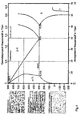
- FIG. 5 shows the degree of segmentation G over the cutting speed v c for a loaded and an unloaded material at a chip thickness a p of 40 microns and 80 microns.
- Segment chips have saw blade-like appearance, while chip chips are chips with constant cross section over the span length.
- the workpiece After machining, the workpiece is etched again and then annealed. This time, a vacuum of 2.10 -3 Pa is applied. The workpiece is annealed again at 773 K to allow the hydrogen atoms to diffuse out of the workpiece, thereby producing the original ductility of the workpiece. If, in exceptional cases, the ductility of the workpiece loaded with hydrogen is sufficiently high for certain applications, it is possible to dispense with annealing again after machining.
- FIGS. 3a and 3b show that the requirements for the strength and ductility of the material at room temperature (293 K) and at 973 K are ensured by the modified alloy.
- the achieved strength of the hydrogen-loaded samples was within the ⁇ -phase-dependent fluctuation range of various duplex structures.
- FIG. 3a shows the loading of the material (workpiece) with a decrease in strength by about 8% leads to a reduction in the elongation at break, resulting in a decreasing elongation at break of 20% to 8%. Due to the trailing discharge treatment, the toughness can be increased again to about 16%, ie significantly, with the same strength. All three materials show a ductile fracture behavior with a honeycomb fracture surface. The samples showed a clear breakage.
- FIG. 3b It can be seen that the strength of the loaded sample compared to the reference sample at 773 K (500 ° C) is slightly increased, which is due to an increased diffusion rate of hydrogen in Titanium can be explained at this temperature, so that there is a hindrance to the dislocation movement. On the other hand, no difference can be found in the elongation at break.
- Hydrogen is known to stabilize the cubic body - centered ⁇ - phase in titanium. Accordingly, according to the in FIG. 4 phase transition ⁇ ⁇ ⁇ shifted by adding hydrogen to lower temperatures, so that would be expected in a heat treatment at 700 ° C (973 K) in a hydrogen-containing atmosphere with the conversion into a pure ⁇ -titanium. Heat treatments in the single-phase area usually lead to a coarse-grained structure. A microstructure analysis was performed on three different samples. The FIGS. 6a to 6c show that it does not come to an undesirable structural change by grain growth, so completely surprisingly after the doping is not present single-phase ⁇ -titanium. This is probably due to the effect of the alloying element aluminum as ⁇ - stabilizer. A coarse-grained structure would significantly degrade the mechanical properties of the material. According to the invention, however, the stability of the structure is ensured.
- the titanium-based alloy in particular the alloy TiAl6V4, can be mixed with lanthanum in an amount of 0.3 to 3 atomic%. Up to a lanthanum content of 1.5 atom%, a complete elimination of lanthanum in the basic structure takes place. The particles have an average size of 12 ⁇ m. The distribution of the lanthanum precipitates is limited to the grain boundaries and the grain interior between the dendrites of the cast structure. Investigations have shown that the excretions are identified as nearly pure lanthanum. Oxygen or nitrogen can not be detected. At Lanthanmony from 2 atomic% forms a second phase in addition to the Lanthanausscheidungen.
- the structure of the second phase consists of a lanthanum matrix (80% of the microstructure) with meandering titanium inclusions (about 20%). Aluminum or vanadium can not be detected. An almost identical appearance of the structure is achievable when the alloy is added to lanthanum cerium.
- the alloy TiAl6V4 with lanthanum is produced in a vacuum arc furnace.
- the master alloy used is the conventional TiAl6V4 alloy, which is placed in the furnace together with elemental lanthanum as a block.
- a vacuum of, for example, 10 -3 Pa is first generated to remove oxygen from the furnace chamber. The ignition of the arc then takes place at about 6.10 4 Pa in the furnace chamber. Since titanium can only dissolve very small amounts of lanthanum at room temperature, a structure of TiAl6V4 with discretely precipitated lanthanum particles is produced during the production of the alloy. Before smelting, the oxide layer on the lanthanum block must be removed.
- the alloy When melting the alloy surprisingly shows that the thermal conductivity of the lanthanum-containing alloy compared to the standard alloy increases because the melt cools much faster than the alloy without Lanthanzusatz.
- the alloy must be thermo-mechanically treated to produce a duplex structure.
- the alloy can be formed in a temperature range between 973 K and 1023 K, for example by extrusion. In the extruded state, this alloy reaches a Tensile strength of about 1000 N / mm 2 and is thus comparable to the base alloy TiAl6V4.
- the cutting force decreases depending on the lanthanum content. It starts from a lanthanum content of 0.3 at% and reduces the cutting force by 20% at a lanthanum content of 0.5 at%. As the figure further shows, the hardness of the material by alloying lanthanum hardly changes.
- FIG. 7b shows that when chipping TiAl6V4 without lanthan addition, a band or tangle chip is formed.
- the alloying of lanthanum results in chipping with short-breaking chips, as are known, for example, from free-cutting steels, but not from TiAl6V4. This is explained by the presence of lanthanum particles in the microstructure.
- the short-breaking chip has the advantage that the contact surface and thus the contact time between the chip and the cutting surface of the tool is reduced, as a result of which the frictional heat generated in the contact zone is significantly reduced. Due to the increased thermal conductivity, the resulting frictional heat is dissipated into the chip to a much greater extent than with TiAl6V4, which reduces the thermal load on the tool and thus increases the service life, which reduces the machining costs.
Landscapes
- Chemical & Material Sciences (AREA)
- Engineering & Computer Science (AREA)
- Mechanical Engineering (AREA)
- Physics & Mathematics (AREA)
- Thermal Sciences (AREA)
- Crystallography & Structural Chemistry (AREA)
- Materials Engineering (AREA)
- Metallurgy (AREA)
- Organic Chemistry (AREA)
- ing And Chemical Polishing (AREA)
- Electrical Discharge Machining, Electrochemical Machining, And Combined Machining (AREA)
- Nonmetal Cutting Devices (AREA)
Description
- Die Erfindung betrifft ein Verfahren zum Zerspanen eines Werkstücks aus einer Titan-Basislegierung und eine TiA16V4-Legierung.
- Die Druckschrift "Hydrogen in Metals and A11oy. B.A. Kolachev, Metal Science and Heat Treatment, Vol. 41, Nos. 3-4, 1999" und die Druckschrift "Effect off the structure on the cutability of Titanium alloys, Yu. B. Egorova et al. Metal Science and Heat Treatment, Vol. 45, Nos. 3-4, March 2003" beschreiben ein Verfahren zum Zerspanen von Werkstücken aus einer Titan-Basislegierung mit folgenden Schritten:
- a) Befreien des Werkstücks zumindest bereichsweise von Oberflächenoxiden und/oder weiteren Deckschichten, und anschliefendes
- b) Erhitzen des Werkstücks in einer wasserstoffhaltigen Atmosphäre, auf eine Glühtemperatur, wobei das Werkstück Wasserstoff aufnimmt;
- c) Abkühlen des Werkstücks,
- d) spanabhebende Bearbeitung des Werkstücks;
- e) Erhitzen des Werkstücks in einer wasserstofffreien Atmosphäre, wobei Wasserstoff herausgelöst wird.
- Die Druckschrift
EP-A-0 479 212 offenbart eine TiA16V4-Legierung mit einem Anteil von 0,06-1,53 Gewichts-% Lanthan. - Titan und Titanlegierungen haben drei charakteristische Eigenschaften, die ihnen ihre technische Bedeutung geben: hohe Festigkeit bei guter Duktilität, niedriges spezifisches Gewicht und gute Korrosionsbeständigkeit gegen oxidierende Säuren. Aufgrund dieser günstigen Kombinationen von Eigenschaften werden Titanlegierungen u. a. in der Luft-und Raumfahrt, in Strahltriebwerken und Hochleistungsmotoren und im chemischen Apparatebau eingesetzt.
- Eine typische Legierung ist TiA16V4 mit einer Zugfestigkeit von 900 - 1200N/mm2 bei einer Bruchdehnung von etwa 10 %. In der Luft- und Raumfahrt wird dieser beliebte Titanwerkstoff für Kompressorschaufeln, Nieten, Schrauben, über Schaltzellen, über Antriebswellen, Getriebeteile, Rotorköpfe bis hin zu Treibstoffbehältern und Brennkammergehäusen eingesetzt.
- Titan und seine Legierungen sind zäh und schwer zerspanbar, so dass nur Schnittgeschwindigkeiten erzielt werden können, die etwa einem 20tel der erreichbaren Schnittgeschwindigkeiten von unlegiertem Stahl entsprechen.
- Um in Großdieselmotoren, wie sie beispielsweise für Schiffe oder Lokomotiven verwendet werden, einen besseren Wirkungsgrad bzw. eine höhere Leistung zu erzielen, wird die einströmende Luft durch einen Turbolader vorverdichtet. Die Turboladerverdichterräder werden dabei in der Regel aus Aluminiumlegierungen hergestellt. Soll der Wirkungsgrad der Motoren weiter verbessert werden, muss das Verdichtungsverhältnis noch weiter erhöht werden. Bedingt durch die noch stärker erwärmte komprimierte Luft bewirken hohe Verdichtungsverhältnisse dann hohe Temperaturen an den Verdichterrädern. Aluminiumlegierungen eignen sich wegen ihrer zu geringen Warmfestigkeit nicht mehr für den Einsatz in solchen Turboladern. Aus diesem Grund wird TiAl6V4 eingesetzt. Die schlechte Zerspanbarkeit stellt aber ein großes Problem dar und erhöht die Fertigungskosten drastisch, muss aber in Kauf genommen werden.
- Die Verdichterräder haben einen Durchmesser von bis zu 2 m. Zur Herstellung wird aus einem Materialblock ein Rohling geschmiedet. Die Endkontur der Verdichterschaufeln wird durch spanabhebende Fertigung aus dem Rohling durch einen Fräsprozess herausgearbeitet. Die Bearbeitungszeit des Werkstücks aus der Titanlegierung ist gegenüber eines aus Aluminium etwa verzehnfacht. Auf die spanende Bearbeitung entfällt daher ein hoher Anteil der Herstellkosten.
- In Folge der hohen Schnittkräfte werden außerdem die Spanwerkzeuge thermisch sehr hoch belastet und sind einem hohen Verschleiss unterworfen.
- Von dieser Problemstellung ausgehend soll ein Verfahren und eine Legierung zum Zerspanen eines Werkstücks aus einer Titan-Basislegierung, insbesondere aus TiA16V4, angegeben werden, das bzw. die höhere Schnittgeschwindigkeiten gestattet.
- Zur Problemlösung zeichnet sich das Verfahren durch die Schritte gemäß Anspruch 1 aus.
- Durch die in das Werkstück diffundierten Wasserstoffatome wird der Werkstoff gut zerspanbar. Insbesondere bei hohen Schnittgeschwindigkeiten nimmt die Schnittkraft um über 50 % gegenüber der herkömmlichen Titanlegierung ab. Beim erneuten Erhitzen des Werkstücks im Vakuum nach der Bearbeitung diffundieren die Wasserstoffatome aus dem Werkstoff wieder heraus und es wird die ursprüngliche Duktilität wieder hergestellt.
- Die Herstellkosten werden aufgrund der verminderten Bearbeitungszeit, insbesondere bei großen Bauteilen, drastisch reduziert. Auch der Werkzeugverschleiss wird reduziert. Erste Versuche haben eine Reduktion von 15% ergeben. Es hat sich insbesondere herausgestellt, dass die Abnahme der Schnittkraft bei höheren Schnittgeschwindigkeiten größer ist als bei niedrigen Schnittgeschwindigkeiten.
- Zur Aufnahme des Wasserstoffs wird das Werkstück aufetwa 973 K erhitzt. Das spätere Abkühlen erfolgt im außer Betrieb genommenen Glühofen. Nach dem Abkühlen soll die Wasserstoffkonzentration im Werkstück unter 1,5 Gewichtsprozent Wasserstoff (H) in Titan (Ti) betragen.
- Die wasserstoffhaltige Atmosphäre steht im Glühofen unter einem Druck von 5.103Pa. Dies entspricht einer Gleichgewichtskonzentration von etwa 0,5 Gew.-% Wasserstoff in Titan.
- Die Glühzeit hängt prinzipiell von der Bauteilgeometrie ab. Sie beträgt in der wasserstoffhaltigen Atmosphäre aber mindestens 2 Stunden.
- Das Werkstück bleibt auch beim Abkühlen der wasserstoffhaltigen Atmosphäre ausgesetzt.
- Damit der Wasserstoff möglichst rasch aus dem Werkstück wieder herausdiffundiert, beträgt das Vakuum vorzugsweise 2.10-3 Pa. Die Glühtemperatur im Vakuum beträgt vorzugsweise wieder 973 K.
- Das Aufheizen des Werkstücks erfolgt insbesondere vorzugsweise induktiv. Oberflächenoxide und/oder weitere Deckschichten werden von dem Werkstück vor dem Erhitzen zumindest in den Bereichen entfernt, die später spanend bearbeitet werden sollen. Die Befreiung von Oberflächenoxiden oder Deckschichten erfolgt vorzugsweise mittels einer Ätzlösung, die insbesondere vorzugsweise aus einer Mischung aus H2O, HNO3 und HF sowie H2O2 besteht.
- Der Titan-Basislegierung, insbesondere der TiAl6V4-Basislegierung, wird Lanthan beigemischt, wobei der Lanthan-Anteil 0,3 - 1,5 Atom-% beträgt.
- Der Titan-Basislegierung kann auch Cer in geringen Mengen zugesetzt sein.
- Überraschenderweise hat sich gezeigt, dass eine Titan-Basislegierung, der Lanthan beigemischt ist, sich durch eine erhöhte Wärmeleitfähigkeit auszeichnet, was die beim Zerspanen entstehende Reibungswärme reduziert. Bei Werkstücken aus einer Titan-Basislegierung mit Lanthan-Beimischung können folglich höhere Zerspangeschwindigkeiten realisiert werden als bei Werkstücken aus einer bisher bekannten Titan-Basislegierung. Diese höheren Schnittgeschwindigkeiten werden erreichbar, ohne dass das Werkstück vor dem Zerspanen mit Wasserstoff beladen wird.
- Anhand der beigefügten Figuren soll ein Ausführungsbeispiel der Erfindung nachfolgend näher erläutert werden.
- Es zeigt:
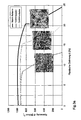
- Figur 1
- einen Vergleich des Schnittkraftverlaufs zwischen herkömmlichem TiAl6V4 und mit Wasserstoff beladenem TiAl6V4 mit einer Spanungsdicke von 40 µm,
- Figur 2
- einen Vergleich des Schnittkraftverlaufs zwischen herkömmlichem TiAl6V4 und mit Wasserstoff beladenem TiAl6V4 mit einer Spanungsdicke von 80 µm,
- Figur 3a
- das Zugversuchsdiagramm zwischen TiAl6V4, mit Wasserstoff beladenem TiAl6V4 und von Wasserstoff entladenem TiAl6V4 bei 293 K,
- Figur 3b
- das Zugversuchsdiagramm zwischen TiAl6V4, mit Wasserstoff beladenem TiAl6V4 und von Wasserstoff entladenem TiAl6V4 bei einer Temperatur 773 K,
- Figur 4
- das Zustandsdiagramm Titan-Wasserstoff,
- Figur 5
- ein Diagramm zur Spananalyse,
- Figur 6a
- eine Gefügeanalyse von TiAl6V4,
- Figur 6b
- eine Gefügeanalyse von beladenem TiAl6V4,
- Figur 6c
- eine Gefügeanalyse von entladenem TiAl6V4,
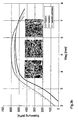
- Figur 7a
- den Verlauf der Schnittkraft und der Härte von TiAl6V4 in Abhängigkeit vom Lanthan-Anteil,
- Figur 7 b
- die verschiedenen Spanformen von TiAl6V4 in Abhängigkeit von dem Lanthan-Anteil.
- Die Titan-Basislegierung TiAl6V4 wird herkömmlich hergestellt, d. h. Gießen, Schmieden, sowie die erforderlichen Wärmebehandlungen erfolgen nach dem Stand der Technik, so dass ein Werkstoff mit Duplexgefüge und hohen Zugfestigkeiten bei guter Duktilität entsteht und nach Herstellung des Rohlings aus der Legierung dieser auf herkömmliche Art umgeformt werden kann.
- Vor dem Zerspanen des Werkstücks wird die Legierung entweder vollständig oder nur in den zu zerspanenden Bereichen mit einer Ätzlösung, die beispielsweise besteht aus 50 ml H2O, 50 ml HNO3, 10 ml der Lösung [12 ml HF + 70ml H2O2], 5 - 10 Minuten gereinigt, so dass Oberflächenoxide und mögliche Deckschichten an der Werkstückoberfläche entfernt werden. Anschließend wird das Werkstück in einem Induktionsofen, in dem eine wasserstoffhaltige Atmosphäre mit einem Druck von 5.103 Pa herrscht, auf eine Temperatur von 973 K (700°C) gebracht und mindestens 2 Stunden geglüht, wodurch Wasserstoffatome in das Werkstück diffundieren und sich in dem Grundwerkstoff einlagern. Die Diffusionsgeschwindigkeit von Wasserstoff in Titan ist im Vergleich zu anderen Metallen hoch. Bei 973 K etwa 0,1 mm/min. Das bedeutet, dass bei einer Stunde Glühzeit eine Eindringtiefe des Wasserstoffs in das Titanwerkstück von 6 mm zu erwarten ist. Die Eindringtiefe erhöht sich mit steigender Temperatur. Da das zu zerspanende Volumen bekannt ist, kann die Beladungszeit entsprechend angepasst werden, so dass nur die zu zerspanenden Bereiche mit Wasserstoff angereichert sind. Die Glühzeit hängt prinzipiell von der Bauteilgeometrie ab. Je größer die zu zerspanenden Bereiche der Bauteile sind, um so länger muss das Werkstück geglüht werden. Die Wasserstoffkonzentration im Werkstück soll nach dem Abkühlen 0,5 Gew.-% im Titan betragen.
- Zum Abkühlen wird der Induktionsofen ausgeschaltet und das Werkstück sich selbst überlassen. Wenn es eine Temperatur erreicht hat, die eine weitere Bearbeitung gestattet, wird das mit Wasserstoff beladene Werkstück spanabhebend bearbeitet.
Figur 5 zeigt den Segmentierungsgrad G über der Schnittgeschwindigkeit vc für einen beladenen und einen unbeladenen Werkstoff bei einer Spanungsdicke ap von 40 µm und von 80 µm. - Der Segmentierungsgrad bestimmt sich nach der Formel:

wobei bei 0 < G < 0,3 ein Fließspan vorliegt, bei G ≈0,3 ein Übergangsspan und bei G > 0,3 ein Segmentspan vorliegt. - Dem linken Bereich der
Figur 5 ist entnehmbar, dass nach der Beladung des Werkstoffs mit Wasserstoff sich bei der Zerspanung ein schnittgewindigkeitsabhängiger Übergang vom Fließ- zum Segmentspan einstellt, der beispielsweise auch bei der Zerspanung von Stählen und Aluminiumlegierungen beobachtet werden kann, nicht jedoch bei unbeladenem TiAl6V4. - Segmentspäne haben ein sägeblattartiges Aussehen, während Fließspäne Späne mit konstantem Querschnitt über der Spanlänge sind.
- Nach dem Zerspanen wird das Werkstück erneut geätzt und dann geglüht. Diesmal wird ein Vakuum von 2.10-3 Pa angelegt. Das Werkstück wird wieder bei 773 K geglüht, damit die Wasserstoffatome aus dem Werkstück wieder herausdiffundieren können, wodurch die ursprüngliche Duktilität des Werkstücks hergestellt wird. Wenn die Duktilität des mit Wasserstoff beladenen Werkstücks im Ausnahmefall für bestimmte Einsatzzwecke ausreichend hoch ist, kann auf das erneute Glühen nach dem Zerspanen verzichtet werden.
- Wie
Figuren 3a und3b zeigen, sind die Anforderungen an die Festigkeit und die Duktilität des Werkstoffs bei Raumtemperatur (293 K) als auch bei 973 K durch die modifizierte Legierung gewährleistet. Die erreichte Festigkeit der wasserstoffbeladenen Proben lag innerhalb der vom α-Phasenanteil abhängigen Schwankungsbreite verschiedener Duplexgefüge. WieFigur 3a zeigt, führt das Beladen des Werkstoffes (Werkstück) bei einer Abnahme der Festigkeit um etwa 8 % zu einer Verminderung der Bruchdehnung, die in einer abnehmenden Bruchdehnung von 20 % auf 8 % resultiert. Durch die nachgestellte Entladungsbehandlung kann bei gleichbleibender Festigkeit die Zähigkeit wieder auf etwa 16 %, also deutlich gesteigert werden. Alle drei Werkstoffe zeigen ein duktiles Bruchverhalten mit einer wabenartigen Bruchfläche. An den Proben war eine deutliche Brucheinschnürung zu erkennen. -
Figur 3b ist entnehmbar, dass die Festigkeit der beladenen Probe gegenüber der Referenzprobe bei 773 K (500 °C) geringfügig erhöht ist, was durch eine erhöhte Diffusionsgeschwindigkeit des Wasserstoffs in Titan bei dieser Temperatur zu erklären ist, so dass es zu einer Behinderung der Versetzungsbewegung kommt. Bei der Bruchdehnung lassen sich hingegen keine Unterschiede messern. - Wasserstoff stabilisiert bekanntlich die kubisch raumzentrierte β - Phase in Titan. Entsprechend wird gemäß dem in
Figur 4 dargestellten Zustandsdiagramm Ti-H die Phasenumwandlung α → β durch Zulegieren von Wasserstoff zu tieferen Temperaturen hin verschoben, so dass bei einer Wärmebehandlung bei 700 ° C (973 K) in wasserstoffhaltiger Atmosphäre mit der Umwandlung in ein reines β-Titangefüge zu rechnen wäre. Wärmebehandlungen im Einphasengebiet führen in der Regel zu einem grobkörnigen Gefüge. An drei verschiedenen Proben wurde eine Gefügeanalyse durchgeführt. DieFiguren 6a bis 6c zeigen, dass es nicht zu einer unerwünschten Gefügeveränderung durch Kornwachstum kommt, also völlig überraschend nach der Dotierung offensichtlich kein einphasiges β -Titan vorliegt. Wahrscheinlich ist dies auf die Wirkung des Legierungselementes Aluminium als α - Stabilisator zurückzuführen. Ein grobkörniges Gefüge würde die mechanischen Eigenschaften des Werkstoffs deutlich verschlechtern. Erfindungsgemäß ist aber die Stabilität des Gefüges sichergestellt. - Der Titan-Basislegierung, insbesondere der Legierung TiAl6V4, kann Lanthan in einer Menge von 0,3 bis 3 Atom-% beigemischt werden. Bis zu einem Lanthan-Gehalt von 1,5 Atom-% findet eine vollständige Ausscheidung des Lanthans im Grundgefüge statt. Die Partikel haben eine durchschnittliche Größe von 12 µm. Die Verteilung der Lanthanausscheidungen beschränkt sich auf die Korngrenzen und das Korninnere zwischen den Dendriten des Gussgefüges. Untersuchungen haben ergeben, dass die Ausscheidungen als nahezu reines Lanthan identifiziert werden. Sauerstoff oder Stickstoff sind nicht nachzuweisen. Bei Lanthangehalten ab 2 Atom-% bildet sich neben den Lanthanausscheidungen eine zweite Phase. Das Gefüge der zweiten Phase besteht aus einer Lanthanmatrix (80 % des Gefüges) mit meanderförmigen Titaneinschlüssen (etwa 20 %). Aluminium oder Vanadium lassen sich nicht nachweisen. Ein nahezu gleiches Aussehen des Gefüges ist erreichbar, wenn der Legierung anstatt Lanthan Cer beigemischt wird.
- Die Legierung TiAl6V4 mit Lanthan wird in einem Vakuum-Lichtbogenofen hergestellt. Als Vorlegierung wird die herkömmliche TiAl6V4-Legierung verwendet, die mit elementarem Lanthan als Block zusammen in den Ofen verbracht wird. Vor dem Schmelzen wird zunächst ein Vakuum von beispielsweise 10-3 Pa erzeugt, um Sauerstoff aus der Ofenkammer zu entfernen. Der Zündvorgang des Lichtbogens erfolgt dann bei cirka 6.104 Pa in der Ofenkammer. Da Titan bei Raumtemperatur nur sehr geringe Mengen von Lanthan lösen kann, entsteht bei der Herstellung der Legierung ein Gefüge aus TiAl6V4 mit diskret ausgeschiedenen Lanthan-Partikeln. Vor dem Einschmelzen muss die Oxidschicht auf dem Lanthanblock entfernt werden. Dies geschieht zum Beispiel mechanisch mit einer Feile mit anschließender Reinigung und Lagerung in Alkohol oder Azeton bis zum Verbringen des Lanthans in den Ofen. Bei Schmelzen der Legierung zeigt sich überraschenderweise, dass sich die Wärmeleitfähigkeit der lanthanhaltigen Legierung gegenüber der Standardlegierung erhöht, da die Schmelze deutlich schneller abkühlt als die Legierung ohne Lanthanzusatz. Damit die technische Anwendbarkeit der Legierung gewährleistet ist, muss die Legierung thermo-mechanisch behandelt werden, um ein Duplexgefüge herzustellen. Die Legierung lässt sich hierzu in einem Temperaturbereich zwischen 973 K und 1023 K beispielsweise durch Strangpressen umformen. Im stranggepressten Zustand erreicht diese Legierung eine Zugfestigkeit von etwa 1000 N/mm2 und ist damit mit der Basislegierung TiAl6V4 vergleichbar.
- Wie
Figur 7a zeigt, vermindert sich die Schnittkraft in Abhängigkeit des Lanthangehalts. Sie setzt ab einem Lanthangehalt von 0,3 Atom-% ein und reduziert die Schnittkraft um 20 % bei einem Lanthangehalt von 0,5 Atom-%. Wie die Figur weiterhin zeigt, ändert sich die Härte des Werkstoffs durch Zulegieren von Lanthan so gut wie nicht. -
Figur 7b zeigt, dass bei der Zerspanung von TiAl6V4 ohne LanthanZusatz ein Band- oder Wirrspan entsteht. Durch das Zulegieren von Lanthan ergeben sich bei der Zerspanung kurzbrechende Späne, wie sie zum Beispiel von Automatenstählen bekannt sind, jedoch nicht von TiAl6V4. Erklärbar ist dies durch die Anwesenheit der Lanthanpartikel im Gefüge. Der kurzbrechende Span hat den Vorteil, dass die Kontaktfläche und damit die Kontaktzeit zwischen Span und Schneidfläche des Werkzeugs verringert wird, wodurch sich die in der Kontaktzone entstehende Reibungswärme deutlich vermindert. Durch die erhöhte Wärmeleitfähigkeit wird die entstehende Reibungswärme zu einem wesentlich größeren Teil als bei TiAl6V4 in den Span abgeleitet, wodurch die thermische Belastung des Werkzeugs herabgesetzt wird und sich damit die Standzeit erhöht, was die Bearbeitungskosten reduziert.
Claims (13)
- Verfahren zum Zerspanen eines Werkstücks aus einer Titan-Basislegierung mit folgenden Schritten:a) Befreien des Werkstückes zumindest bereichsweise von Oberflächenoxiden und/oder weiteren Deckschichten und auschlieβendesb) Erhitzen des Werkstücks in einer wasserstoffhaltigen Atmosphäre, die unter einem Druck von etwa 5.103 Pa steht, auf eine Glühtemperatur von etwa 973 K, wobei das Werkstück Wasserstoff aufnimmt;c) Abkühlen des Werkstücks in der wasserstoffhaltigen Atmosphäred) spanabhebende Bearbeitung des Werkstücks;e) Erhitzen des Werkstücks in einer wasserstofffreien Atmosphäre, wobei Wasserstoff herausgelöst wird.
- Verfahren nach Anspruch 1, dadurch gekennzeichnet, dass das Werkstück zum Herauslösen von Wasserstoff im Vakuum erhitzt wird.
- Verfahren nach Anspruch 1 oder 2, dadurch gekennzeichnet, dass die Glühtemperatur in der wasserstofffreien Atmosphäre, insbesondere im Vakuum mindestens 773 K beträgt
- Verfahren nach einem oder mehreren der vorstehenden Ansprüche, dadurch gekennzeichnet, dass die Glühzeit in der wasserstoffhaltigen Atmosphäre mindestens 2 Stunden beträgt.
- Verfahren nach Anspruch 1, dadurch gekennzeichnet, dass das Vakuum mindestens 2.10-3 Pa beträgt.
- Verfahren nach Anspruch 1 oder 5, dadurch gekennzeichnet, dass die Erhitzung induktiv erfolgt.
- Verfahren nach einem oder mehreren der vorstehenden Ansprüche, dadurch gekennzeichnet, dass die Wasserstoffkonzentration im Werkstück nach dem Abkühlen weniger als 1,5 Gew.-% in Titan beträgt.
- Verfahren nach Anspruch 7, dadurch gekennzeichnet, dass die Wasserstoffkonzentration 0,5 Gew.-% beträgt.
- Verfahren nach Anspruch 8, dadurch gekennzeichnet, dass die Oberflächenoxide und/oder weitere Deckschichten mittels einer Ätzlösung entfernt werden.
- Verfahren nach Anspruch 9, dadurch gekennzeichnet, dass als Ätzlösung eine Mischung bestehend aus H2O, HNO3, HF und H2O2 verwendet wird.
- Verfahren nach Anspruch 10, dadurch gekennzeichnet, dass als Ätzlösung ein Gemisch aus 50 ml H2O, 50 ml HNO3, 10 ml der Lösung [12 ml HF+70ml H2O2] verwendet wird.
- Verfahren nach einem oder mehreren der vorstehenden Ansprüche, dadurch gekennzeichnet, dass das Werkstück aus TiAl6V4 mit einem Anteil von 0,3 - 1,5 Atom-% Lanthan besteht, das im Grundgefüge vollständig ausgeschieden ist und die Ausscheidungen nahezu reines Lanthan sind, die Partikel eine durchschnittliche Größe von 12 µm haben, die Verteilung der Lanthanauscheidungen auf die Korngrenzen und das Korninnere zwischen den Dendriten des Gussgefüges beschränkt sind und Sauerstoff und Stickstoff nicht nachweisbar sind.
- TiAl6V4-Legierung mit einem Anteil von 0,3 - 1,5 Atom-% Lanthan, das im Grundgefüge vollständig ausgeschieden ist und die Ausscheidungen nahezu reines Lanthan sind, die Partikel eine durchschnittliche Größe von 12 µm haben, die Verteilung der Lanthanauscheidungen auf die Korngrenzen und das Korninnere zwischen den Dendriten des Gussgefüges beschränkt sind und Sauerstoff und Stickstoff nicht nachweisbar sind.
Applications Claiming Priority (2)
| Application Number | Priority Date | Filing Date | Title |
|---|---|---|---|
| DE10332078A DE10332078B3 (de) | 2003-07-11 | 2003-07-11 | Verfahren zum Zerspanen eines Werkstücks aus einer Titan-Basislegierung |
| PCT/DE2004/001496 WO2005007338A1 (de) | 2003-07-11 | 2004-07-09 | Verfahren zum zerspanen eines werkstücks aus einer titan-basislegierung |
Publications (2)
| Publication Number | Publication Date |
|---|---|
| EP1644158A1 EP1644158A1 (de) | 2006-04-12 |
| EP1644158B1 true EP1644158B1 (de) | 2008-12-17 |
Family
ID=33521397
Family Applications (1)
| Application Number | Title | Priority Date | Filing Date |
|---|---|---|---|
| EP04738910A Expired - Lifetime EP1644158B1 (de) | 2003-07-11 | 2004-07-09 | Verfahren zum zerspanen eines werkstücks aus einer titan-basislegierung |
Country Status (5)
| Country | Link |
|---|---|
| US (1) | US20060157542A1 (de) |
| EP (1) | EP1644158B1 (de) |
| AT (1) | ATE417697T1 (de) |
| DE (2) | DE10332078B3 (de) |
| WO (1) | WO2005007338A1 (de) |
Cited By (1)
| Publication number | Priority date | Publication date | Assignee | Title |
|---|---|---|---|---|
| DE4293171T1 (de) * | 1991-09-30 | 1993-11-18 | Toshiba Kawasaki Kk | Spannungsquellensteuerungssystem |
Families Citing this family (3)
| Publication number | Priority date | Publication date | Assignee | Title |
|---|---|---|---|---|
| US7704751B2 (en) | 2006-09-18 | 2010-04-27 | 3M Innovative Properties Company | Polymeric fluorescent chemical sensor |
| EP2418044A1 (de) | 2010-08-10 | 2012-02-15 | Technische Universität Darmstadt | Durch induktive Erwärmung gestützte Materialbearbeitung, insbesondere Zerspanen von Titanlegierungen oder Materialien mit vergleichbar geringem Wärmeleitfaktor |
| CN103087718B (zh) * | 2013-01-16 | 2014-12-31 | 四川大学 | 湿法刻蚀镍酸镧薄膜和铁电薄膜/镍酸镧复合薄膜的腐蚀液及其制备方法 |
Family Cites Families (18)
| Publication number | Priority date | Publication date | Assignee | Title |
|---|---|---|---|---|
| US1332968A (en) * | 1914-12-23 | 1920-03-09 | Packard Motor Car Co | Mechanism for forming gears |
| US2974076A (en) * | 1954-06-10 | 1961-03-07 | Crucible Steel Co America | Mixed phase, alpha-beta titanium alloys and method for making same |
| US2892742A (en) * | 1956-06-22 | 1959-06-30 | Metallgesellschaft Ag | Process for improving the workability of titanium alloys |
| US2974021A (en) * | 1957-02-08 | 1961-03-07 | Borowik Albert | Process and composition for chemically treating titanium and its alloys |
| US3605551A (en) * | 1968-11-18 | 1971-09-20 | Richard B Steward | Method of sub-zero cooling while machining space-age materials |
| US3963525A (en) * | 1974-10-02 | 1976-06-15 | Rmi Company | Method of producing a hot-worked titanium product |
| US4595817A (en) * | 1977-12-12 | 1986-06-17 | Bobrov Alexandr V | Method of mechanical machining of workpieces using a plasma arc to heat the cutting zone |
| US4415375A (en) * | 1982-06-10 | 1983-11-15 | Mcdonnell Douglas Corporation | Transient titanium alloys |
| US4505764A (en) * | 1983-03-08 | 1985-03-19 | Howmet Turbine Components Corporation | Microstructural refinement of cast titanium |
| US4512826A (en) * | 1983-10-03 | 1985-04-23 | Northeastern University | Precipitate hardened titanium alloy composition and method of manufacture |
| JPS60232801A (ja) * | 1984-04-27 | 1985-11-19 | Seiko Instr & Electronics Ltd | 難削材の切削加工法 |
| EP0199198A1 (de) * | 1985-04-12 | 1986-10-29 | Daido Tokushuko Kabushiki Kaisha | Titanlegierung mit guter Zerspanbarkeit |
| US4902535A (en) * | 1987-12-31 | 1990-02-20 | Air Products And Chemicals, Inc. | Method for depositing hard coatings on titanium or titanium alloys |
| EP0479212B1 (de) * | 1990-10-01 | 1995-03-01 | Sumitomo Metal Industries, Ltd. | Verfahren zur Verbesserung der Zerspanbarkeit von Titan und Titanlegierungen, und Titanlegierungen mit guter Zerspanbarkeit |
| US5091148A (en) * | 1991-01-02 | 1992-02-25 | Jeneric/Pentron, Inc. | Titanium alloy dental restorations |
| US5211775A (en) * | 1991-12-03 | 1993-05-18 | Rmi Titanium Company | Removal of oxide layers from titanium castings using an alkaline earth deoxidizing agent |
| DE4436670C2 (de) * | 1993-10-27 | 2002-11-21 | United Technologies Corp Pratt | Gegenstände aus Superlegierungen auf Nickelbasis mit verbesserter Zerspanbarkeit sowie Verfahren zur Herstellung eines spanend bearbeiteten Werkstücks aus einer derartigen Superlegierung |
| JP2001348635A (ja) * | 2000-06-05 | 2001-12-18 | Nikkin Material:Kk | 冷間加工性と加工硬化に優れたチタン合金 |
-
2003
- 2003-07-11 DE DE10332078A patent/DE10332078B3/de not_active Expired - Fee Related
-
2004
- 2004-07-09 DE DE502004008693T patent/DE502004008693D1/de not_active Expired - Lifetime
- 2004-07-09 WO PCT/DE2004/001496 patent/WO2005007338A1/de not_active Ceased
- 2004-07-09 US US10/562,678 patent/US20060157542A1/en not_active Abandoned
- 2004-07-09 EP EP04738910A patent/EP1644158B1/de not_active Expired - Lifetime
- 2004-07-09 AT AT04738910T patent/ATE417697T1/de not_active IP Right Cessation
Cited By (1)
| Publication number | Priority date | Publication date | Assignee | Title |
|---|---|---|---|---|
| DE4293171T1 (de) * | 1991-09-30 | 1993-11-18 | Toshiba Kawasaki Kk | Spannungsquellensteuerungssystem |
Also Published As
| Publication number | Publication date |
|---|---|
| DE10332078B3 (de) | 2005-01-13 |
| EP1644158A1 (de) | 2006-04-12 |
| DE502004008693D1 (de) | 2009-01-29 |
| US20060157542A1 (en) | 2006-07-20 |
| WO2005007338A1 (de) | 2005-01-27 |
| ATE417697T1 (de) | 2009-01-15 |
Similar Documents
| Publication | Publication Date | Title |
|---|---|---|
| RU2324576C2 (ru) | Нанокристаллический металлический материал с аустенитной структурой, обладающий высокой твердостью, прочностью и вязкостью, и способ его изготовления | |
| Nieh et al. | Superplastic behavior of a powder metallurgy TiAl alloy with a metastable microstructure | |
| EP0118380B1 (de) | Verfeinerung des Mikogefüges von einen Gussmetall | |
| EP3844313B1 (de) | Hochfeste titanlegierung zur generativen fertigung | |
| DE60313065T2 (de) | Dünne Produkte aus Beta- oder quasi Beta-Titan-Legierungen, Herstellung durch Schmieden | |
| DE69024418T2 (de) | Legierung auf Titan-Basis und Verfahren zu deren Superplastischer Formgebung | |
| JP5758204B2 (ja) | チタン合金部材およびその製造方法 | |
| EP0787815A1 (de) | Regelung der Korngrösse von Superlegierungen auf Nickelbasis | |
| JPS63277745A (ja) | チタン合金製部材の製造方法及び該方法によって製造した部材 | |
| EP0513407A1 (de) | Verfahren zur Herstellung einer Turbinenschaufel | |
| CN102712967A (zh) | 高强度钛合金的制造 | |
| JPH0798989B2 (ja) | 改良した熱間加工から成るチタン合金部品の製造方法及び得られる部品 | |
| EP1964938A1 (de) | Oxiddispersionsgehärteter, durch innere Oxidation hergestellter Pt, PtRh- oder PtAu-Werkstoff mit hohem Oxidanteil und guter Duktilität | |
| EP3971311B1 (de) | Verbesserte, dispersionsgehärtete edelmetalllegierung | |
| DE69230688T2 (de) | Sehr hitzebeständiger träger für autokatalysator | |
| WO2017191246A1 (en) | Method for manufacturing ti alloys with enhanced strength-ductility balance | |
| Boyer | Titanium and its alloys: metallurgy, heat treatment and alloy characteristics | |
| WO1999015708A1 (de) | Legierung auf aluminiumbasis und verfahren zu ihrer wärmebehandlung | |
| Clemens et al. | Characterization of Ti 48Al 2Cr sheet material | |
| WO2000060133A1 (de) | Verfahren zum herstellen einer magnesiumlegierung durch strangpressen und verwendung der stranggepressten halbzeuge und bauteile | |
| DE10332078B3 (de) | Verfahren zum Zerspanen eines Werkstücks aus einer Titan-Basislegierung | |
| Ridley et al. | Effect of cavitation on post-deformation tensile properties of a superplastic copper-base alloy | |
| WO2000063452A1 (de) | Magnesiumlegierungen hoher duktilität, verfahren zu deren herstellung und deren verwendung | |
| DE3610528A1 (de) | Verfahren zum superplastischen formen von keramikmaterial | |
| DE69402912T2 (de) | Eisen-Chrome-Aluminium-Legierungsfolien mit hoher Oxydationsbeständigkeit für Katalysatorträger in katalytischen Konvertern und Verfahren zur Herstellung desselben |
Legal Events
| Date | Code | Title | Description |
|---|---|---|---|
| PUAI | Public reference made under article 153(3) epc to a published international application that has entered the european phase |
Free format text: ORIGINAL CODE: 0009012 |
|
| 17P | Request for examination filed |
Effective date: 20060110 |
|
| AK | Designated contracting states |
Kind code of ref document: A1 Designated state(s): AT BE BG CH CY CZ DE DK EE ES FI FR GB GR HU IE IT LI LU MC NL PL PT RO SE SI SK TR |
|
| 17Q | First examination report despatched |
Effective date: 20060314 |
|
| DAX | Request for extension of the european patent (deleted) | ||
| APBN | Date of receipt of notice of appeal recorded |
Free format text: ORIGINAL CODE: EPIDOSNNOA2E |
|
| APBR | Date of receipt of statement of grounds of appeal recorded |
Free format text: ORIGINAL CODE: EPIDOSNNOA3E |
|
| APAF | Appeal reference modified |
Free format text: ORIGINAL CODE: EPIDOSCREFNE |
|
| APBT | Appeal procedure closed |
Free format text: ORIGINAL CODE: EPIDOSNNOA9E |
|
| GRAP | Despatch of communication of intention to grant a patent |
Free format text: ORIGINAL CODE: EPIDOSNIGR1 |
|
| GRAS | Grant fee paid |
Free format text: ORIGINAL CODE: EPIDOSNIGR3 |
|
| GRAA | (expected) grant |
Free format text: ORIGINAL CODE: 0009210 |
|
| AK | Designated contracting states |
Kind code of ref document: B1 Designated state(s): AT BE BG CH CY CZ DE DK EE ES FI FR GB GR HU IE IT LI LU MC NL PL PT RO SE SI SK TR |
|
| REG | Reference to a national code |
Ref country code: GB Ref legal event code: FG4D Free format text: NOT ENGLISH |
|
| REG | Reference to a national code |
Ref country code: CH Ref legal event code: EP |
|
| REG | Reference to a national code |
Ref country code: IE Ref legal event code: FG4D Free format text: LANGUAGE OF EP DOCUMENT: GERMAN |
|
| REF | Corresponds to: |
Ref document number: 502004008693 Country of ref document: DE Date of ref document: 20090129 Kind code of ref document: P |
|
| PG25 | Lapsed in a contracting state [announced via postgrant information from national office to epo] |
Ref country code: NL Free format text: LAPSE BECAUSE OF FAILURE TO SUBMIT A TRANSLATION OF THE DESCRIPTION OR TO PAY THE FEE WITHIN THE PRESCRIBED TIME-LIMIT Effective date: 20081217 Ref country code: FI Free format text: LAPSE BECAUSE OF FAILURE TO SUBMIT A TRANSLATION OF THE DESCRIPTION OR TO PAY THE FEE WITHIN THE PRESCRIBED TIME-LIMIT Effective date: 20081217 Ref country code: SI Free format text: LAPSE BECAUSE OF FAILURE TO SUBMIT A TRANSLATION OF THE DESCRIPTION OR TO PAY THE FEE WITHIN THE PRESCRIBED TIME-LIMIT Effective date: 20081217 Ref country code: PL Free format text: LAPSE BECAUSE OF FAILURE TO SUBMIT A TRANSLATION OF THE DESCRIPTION OR TO PAY THE FEE WITHIN THE PRESCRIBED TIME-LIMIT Effective date: 20081217 |
|
| NLV1 | Nl: lapsed or annulled due to failure to fulfill the requirements of art. 29p and 29m of the patents act | ||
| REG | Reference to a national code |
Ref country code: IE Ref legal event code: FD4D |
|
| PG25 | Lapsed in a contracting state [announced via postgrant information from national office to epo] |
Ref country code: RO Free format text: LAPSE BECAUSE OF FAILURE TO SUBMIT A TRANSLATION OF THE DESCRIPTION OR TO PAY THE FEE WITHIN THE PRESCRIBED TIME-LIMIT Effective date: 20081217 Ref country code: IE Free format text: LAPSE BECAUSE OF FAILURE TO SUBMIT A TRANSLATION OF THE DESCRIPTION OR TO PAY THE FEE WITHIN THE PRESCRIBED TIME-LIMIT Effective date: 20081217 Ref country code: BG Free format text: LAPSE BECAUSE OF FAILURE TO SUBMIT A TRANSLATION OF THE DESCRIPTION OR TO PAY THE FEE WITHIN THE PRESCRIBED TIME-LIMIT Effective date: 20090317 Ref country code: ES Free format text: LAPSE BECAUSE OF FAILURE TO SUBMIT A TRANSLATION OF THE DESCRIPTION OR TO PAY THE FEE WITHIN THE PRESCRIBED TIME-LIMIT Effective date: 20090328 Ref country code: EE Free format text: LAPSE BECAUSE OF FAILURE TO SUBMIT A TRANSLATION OF THE DESCRIPTION OR TO PAY THE FEE WITHIN THE PRESCRIBED TIME-LIMIT Effective date: 20081217 |
|
| PG25 | Lapsed in a contracting state [announced via postgrant information from national office to epo] |
Ref country code: CZ Free format text: LAPSE BECAUSE OF FAILURE TO SUBMIT A TRANSLATION OF THE DESCRIPTION OR TO PAY THE FEE WITHIN THE PRESCRIBED TIME-LIMIT Effective date: 20081217 Ref country code: SE Free format text: LAPSE BECAUSE OF FAILURE TO SUBMIT A TRANSLATION OF THE DESCRIPTION OR TO PAY THE FEE WITHIN THE PRESCRIBED TIME-LIMIT Effective date: 20090317 Ref country code: PT Free format text: LAPSE BECAUSE OF FAILURE TO SUBMIT A TRANSLATION OF THE DESCRIPTION OR TO PAY THE FEE WITHIN THE PRESCRIBED TIME-LIMIT Effective date: 20090518 |
|
| PG25 | Lapsed in a contracting state [announced via postgrant information from national office to epo] |
Ref country code: SK Free format text: LAPSE BECAUSE OF FAILURE TO SUBMIT A TRANSLATION OF THE DESCRIPTION OR TO PAY THE FEE WITHIN THE PRESCRIBED TIME-LIMIT Effective date: 20081217 |
|
| PLBE | No opposition filed within time limit |
Free format text: ORIGINAL CODE: 0009261 |
|
| STAA | Information on the status of an ep patent application or granted ep patent |
Free format text: STATUS: NO OPPOSITION FILED WITHIN TIME LIMIT |
|
| PG25 | Lapsed in a contracting state [announced via postgrant information from national office to epo] |
Ref country code: DK Free format text: LAPSE BECAUSE OF FAILURE TO SUBMIT A TRANSLATION OF THE DESCRIPTION OR TO PAY THE FEE WITHIN THE PRESCRIBED TIME-LIMIT Effective date: 20081217 |
|
| 26N | No opposition filed |
Effective date: 20090918 |
|
| BERE | Be: lapsed |
Owner name: TECHNISCHE UNIVERSITAT BRAUNSCHWEIG Effective date: 20090731 |
|
| PG25 | Lapsed in a contracting state [announced via postgrant information from national office to epo] |
Ref country code: MC Free format text: LAPSE BECAUSE OF NON-PAYMENT OF DUE FEES Effective date: 20090731 |
|
| REG | Reference to a national code |
Ref country code: CH Ref legal event code: PL |
|
| PG25 | Lapsed in a contracting state [announced via postgrant information from national office to epo] |
Ref country code: LI Free format text: LAPSE BECAUSE OF NON-PAYMENT OF DUE FEES Effective date: 20090731 Ref country code: CH Free format text: LAPSE BECAUSE OF NON-PAYMENT OF DUE FEES Effective date: 20090731 |
|
| PGFP | Annual fee paid to national office [announced via postgrant information from national office to epo] |
Ref country code: IT Payment date: 20090729 Year of fee payment: 6 |
|
| PG25 | Lapsed in a contracting state [announced via postgrant information from national office to epo] |
Ref country code: BE Free format text: LAPSE BECAUSE OF NON-PAYMENT OF DUE FEES Effective date: 20090731 |
|
| PG25 | Lapsed in a contracting state [announced via postgrant information from national office to epo] |
Ref country code: GR Free format text: LAPSE BECAUSE OF FAILURE TO SUBMIT A TRANSLATION OF THE DESCRIPTION OR TO PAY THE FEE WITHIN THE PRESCRIBED TIME-LIMIT Effective date: 20090318 |
|
| PG25 | Lapsed in a contracting state [announced via postgrant information from national office to epo] |
Ref country code: AT Free format text: LAPSE BECAUSE OF NON-PAYMENT OF DUE FEES Effective date: 20090709 |
|
| PG25 | Lapsed in a contracting state [announced via postgrant information from national office to epo] |
Ref country code: LU Free format text: LAPSE BECAUSE OF NON-PAYMENT OF DUE FEES Effective date: 20090709 |
|
| PG25 | Lapsed in a contracting state [announced via postgrant information from national office to epo] |
Ref country code: IT Free format text: LAPSE BECAUSE OF NON-PAYMENT OF DUE FEES Effective date: 20100709 |
|
| PG25 | Lapsed in a contracting state [announced via postgrant information from national office to epo] |
Ref country code: HU Free format text: LAPSE BECAUSE OF FAILURE TO SUBMIT A TRANSLATION OF THE DESCRIPTION OR TO PAY THE FEE WITHIN THE PRESCRIBED TIME-LIMIT Effective date: 20090618 |
|
| PG25 | Lapsed in a contracting state [announced via postgrant information from national office to epo] |
Ref country code: TR Free format text: LAPSE BECAUSE OF FAILURE TO SUBMIT A TRANSLATION OF THE DESCRIPTION OR TO PAY THE FEE WITHIN THE PRESCRIBED TIME-LIMIT Effective date: 20081217 |
|
| PG25 | Lapsed in a contracting state [announced via postgrant information from national office to epo] |
Ref country code: CY Free format text: LAPSE BECAUSE OF FAILURE TO SUBMIT A TRANSLATION OF THE DESCRIPTION OR TO PAY THE FEE WITHIN THE PRESCRIBED TIME-LIMIT Effective date: 20081217 |
|
| PGFP | Annual fee paid to national office [announced via postgrant information from national office to epo] |
Ref country code: GB Payment date: 20120723 Year of fee payment: 9 |
|
| PGFP | Annual fee paid to national office [announced via postgrant information from national office to epo] |
Ref country code: FR Payment date: 20120803 Year of fee payment: 9 |
|
| GBPC | Gb: european patent ceased through non-payment of renewal fee |
Effective date: 20130709 |
|
| REG | Reference to a national code |
Ref country code: FR Ref legal event code: ST Effective date: 20140331 |
|
| PG25 | Lapsed in a contracting state [announced via postgrant information from national office to epo] |
Ref country code: GB Free format text: LAPSE BECAUSE OF NON-PAYMENT OF DUE FEES Effective date: 20130709 |
|
| PG25 | Lapsed in a contracting state [announced via postgrant information from national office to epo] |
Ref country code: FR Free format text: LAPSE BECAUSE OF NON-PAYMENT OF DUE FEES Effective date: 20130731 |
|
| REG | Reference to a national code |
Ref country code: DE Ref legal event code: R082 Ref document number: 502004008693 Country of ref document: DE Representative=s name: GRAMM, LINS & PARTNER PATENT- UND RECHTSANWAEL, DE |
|
| PGFP | Annual fee paid to national office [announced via postgrant information from national office to epo] |
Ref country code: DE Payment date: 20160721 Year of fee payment: 13 |
|
| REG | Reference to a national code |
Ref country code: DE Ref legal event code: R119 Ref document number: 502004008693 Country of ref document: DE |
|
| PG25 | Lapsed in a contracting state [announced via postgrant information from national office to epo] |
Ref country code: DE Free format text: LAPSE BECAUSE OF NON-PAYMENT OF DUE FEES Effective date: 20180201 |