EP1643449B1 - Method for simplifying complex characters - Google Patents
Method for simplifying complex characters Download PDFInfo
- Publication number
- EP1643449B1 EP1643449B1 EP05019484A EP05019484A EP1643449B1 EP 1643449 B1 EP1643449 B1 EP 1643449B1 EP 05019484 A EP05019484 A EP 05019484A EP 05019484 A EP05019484 A EP 05019484A EP 1643449 B1 EP1643449 B1 EP 1643449B1
- Authority
- EP
- European Patent Office
- Prior art keywords
- character
- stroke
- semantic
- recited
- hinting
- Prior art date
- Legal status (The legal status is an assumption and is not a legal conclusion. Google has not performed a legal analysis and makes no representation as to the accuracy of the status listed.)
- Expired - Lifetime
Links
Images




Classifications
-
- G—PHYSICS
- G06—COMPUTING OR CALCULATING; COUNTING
- G06F—ELECTRIC DIGITAL DATA PROCESSING
- G06F3/00—Input arrangements for transferring data to be processed into a form capable of being handled by the computer; Output arrangements for transferring data from processing unit to output unit, e.g. interface arrangements
- G06F3/14—Digital output to display device ; Cooperation and interconnection of the display device with other functional units
-
- G—PHYSICS
- G06—COMPUTING OR CALCULATING; COUNTING
- G06T—IMAGE DATA PROCESSING OR GENERATION, IN GENERAL
- G06T11/00—Two-dimensional [2D] image generation
- G06T11/20—Drawing from basic elements
- G06T11/23—Drawing from basic elements using straight lines or curves
-
- Y—GENERAL TAGGING OF NEW TECHNOLOGICAL DEVELOPMENTS; GENERAL TAGGING OF CROSS-SECTIONAL TECHNOLOGIES SPANNING OVER SEVERAL SECTIONS OF THE IPC; TECHNICAL SUBJECTS COVERED BY FORMER USPC CROSS-REFERENCE ART COLLECTIONS [XRACs] AND DIGESTS
- Y10—TECHNICAL SUBJECTS COVERED BY FORMER USPC
- Y10S—TECHNICAL SUBJECTS COVERED BY FORMER USPC CROSS-REFERENCE ART COLLECTIONS [XRACs] AND DIGESTS
- Y10S345/00—Computer graphics processing and selective visual display systems
- Y10S345/948—Alteration of stored fonts to maintain feature consistency throughout scaled font
Definitions
- the present invention relates to character legibility. More specifically, the present invention relates to reducing at least one character stroke in order to improve a character bitmap produced from an outline of the character at a certain size and output resolution when the character outline is scan converted.
- Figure 1 illustrates a character outline 100.
- a character outline is a mathematical description of a characters shape using lines and curves.
- Character outline 100 includes a feature 120 that is made up of strokes 121-126, and includes strokes 111-112 and 131-133. Identifying strokes 121-126 as feature 120 is a somewhat arbitrary designation that will be described in more detail below with respect to various embodiments of the present invention. For now, it is sufficient to understand that a feature is a collection of one or more strokes for a character.
- Figure 2 shows a bit map 200 of character outline 100 scaled to a grid of sixty pixels. Similar to character outline 100, bit map 200 includes a feature 220 that is made up of strokes 221-226, and includes strokes 211-212 and 231-233. Figure 2 illustrates that when sufficient pixels are available for a character of a particular size, rendering can be a relatively straightforward and simple process.
- bit map 200 On various output devices. Even the least expensive of current laser printers offer resolutions of 300 dots per inch (DPI), with 600 being more common. While uncommon for laser printers, resolutions greater than 2400 DPI are not uncommon for ink-jet printers. Accordingly, if rendered on a 300 DPI laser printer, bit map 200 would be 1/5th of an inch high.
- DPI dots per inch
- Typical display devices however, have much lower resolutions. For example, monitor resolutions of about 100 to 133 pixels per inch (PPI) are considered high, with resolutions of 72 PPI being fairly common. As a result, if rendered on a high resolution monitor, bit map 200 would be approximately 1/2 of an inch high.
- PPI pixels per inch
- optimum reading size for characters is between about nine and twelve points. A point is approximately 1/72nd of an inch. Converting point size to inches, optimum reading size for characters is therefore about 1/8th of an inch to about 1/6th of an inch.
- bit map 200 As indicated above, if rendered on a 300 DPI laser printer, bit map 200 would be 1/5th of an inch high, which is large for reading, but not unreasonably so. However, as also noted above, if rendered on a high resolution monitor, bit map 200 would be approximately 1/2 of an inch high, which is far too large for effective reading.
- character outline 100 In order to make character outline 100 into a bit map for optimal reading on the 72 PPI monitor, character outline 100 would need to be scaled to a grid of twelve pixels, as shown in Figure 3 . On a 72 PPI monitor, bit map 300 would be 1/8th of an inch high. Note, however, that when character outline 100 is scaled to a grid of twelve pixels, there are not enough pixels to accurately represent the shape of the character.
- bit map 300 includes a feature 320 that is made up of strokes 321-326, and includes strokes 311-312 and 331-333. As shown in Figure 3 , however, the shape of the character appears to be broken, with clashing pixels and block spots. For example, there is not white space between strokes 322 and 324A and between strokes 326 and 332.
- fourteen pixels in the vertical direction are about the minimum number required to accurately represent character outline 100, given: one pixel for the top of stroke 411, one pixel for stroke 412, one pixel for the separation between stroke 412 and 422, one pixel for stroke 422, one pixel for the separation between stroke 422 and stroke 424A, one pixel for stroke 424A, one pixel for the separation between stroke 424A and stroke 424B, one pixel for stroke 424B, one pixel for the separation between stroke 424B and 426, one pixel for stroke 426, one pixel for the separation between stroke 426 and stroke 432, one pixel for stroke 432, two pixels for strokes 431 and 433.
- the minimum number of pixels required to represent a character accurately varies from one character to another.
- the distance in the vertical direction from the top of the highest character to the bottom of the lowest character in a font is defined as an "em.”
- An em is not a unit of measure, but rather a shorthand description for this distance. The number of pixels per em is helpful in determining whether the character shape problems illustrated in Figure 3 are likely to occur. At sixty pixels per em ( Figure 2 ) character shape problems are less likely to occur than at twelve pixels per em ( Figure 3 ).
- the character may be altered to improve legibility.
- Figure 4 shows insufficient pixels in the vertical direction
- the problem of insufficient pixels to represent a character applies in the horizontal direction as well.
- One way to alter a character to improve legibility is to remove strokes from the character.
- An Asian character was selected for character outline 100 for purposes of illustration because Asian characters, as compared to Latin characters, tend to have a large number of strokes, and therefore generally are more susceptible to the shape problems, whether in the horizontal or vertical direction, illustrated in Figure 3 at character sizes suited to effective reading.
- Latin and other characters are susceptible to the same shape problems, depending on the number of strokes in the character outline, the target size for the character, resolution of the output device, and so forth.
- Removing a stroke from an Asian character is roughly analogous to removing a letter from an English word. For many English words, removing a letter would not make the word unrecognizable, particularly in the context of surrounding words. Of course, certain letters have more impact than others-removing vowels in the middle of a word is likely to cause fewer problems than removing a consonant at the beginning of a word. Similarly, removing a stroke from an Asian character can reduce the number of pixels needed to represent the character, without impacting legibility in too great of a degree. Like removing letters from an English word, however, the stroke to be removed from an Asian character should be selected to minimize any potential reduction in readability.
- Asian fonts include multiple bit maps, created by the font developer, for rendering characters at different font sizes.
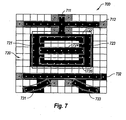
- the stroke-reduced bit map 500 illustrated in Figure 5 is an example bit map for the character outline 100 illustrated in Figure 1 . Note that strokes 124A and 124B have been collapsed into a single stroke 524 to improve legibility. The remaining strokes, 511, 512, 521, 522, 523, 526, and 531-533 are largely unchanged.
- the present invention extends to methods and computer program products for reducing at least one character stroke, in some instances automatically, order to improve a character bitmap produced from an outline of the character at a certain size and output resolution when the character outline is scan converted.
- a character to be output is retrieved, the character comprising one or more features, each of which further comprises one or more strokes.
- the method determines that the character belongs to one or more semantic character classifications and accesses one or more hinting instructions that are associated with each of the one or more semantic character classifications.
- the one or more hinting instructions preserve semantic meaning for the character while altering either stroke presence, stroke location, or both for at least one stroke of at least one feature of the character based on a reference character size and output resolution.
- the actual character size and output resolution for the character is compared to the reference character size and output resolution for the one or more hinting instructions, and the one or more hinting instructions are executed to alter either stroke presence, stroke location, or both for the at least one stroke of the at least one feature of the character to produce a hinted character outline.
- a scaled character bit map may be created from the hinted character outline and sent to a display device or printer.
- the character is from an East Asian language.
- a set of characters to be output are received, each character comprising one or more features with one or more strokes.
- one or more semantic character classifications to which the character belongs and one or more hinting instructions that are associated with the semantic character classification are identified.
- the one or more hinting instructions preserve semantic meaning for the character while altering either stroke presence, stroke location, or both for at least one stroke of at least one feature of the character based on a reference character size and output resolution.
- the one or more hinting instructions are associated with the character.
- the one or more hinting instructions that are associated with the character may be based on a Unicode value, or some other encoding, for the character, and the set of characters may comprise at least a portion of a font.
- the set of characters may be one or more characters from an East Asian language. It should be noted that a character may belong to a plurality of semantic character classifications, that a different reference character size and output resolution may apply to different hinting instructions, and that some hinting instructions may be associated with a character that is specific to only that character.
- the method also may further comprise developing the one or more semantic character classifications and defining the one or more hinting instructions for each of the one or more semantic character classifications.
- a character outline that comprises one or more features, each of which further comprises one or more strokes, and one or more reference character sizes and output resolutions are defined.
- An actual character size and output resolution for the character is compared to the one or more reference character sizes and output resolutions.
- One or more hinting instructions for the character as opposed to one or more stroke-reduced bit maps, are defined, to be executed if the actual character size and output resolution falls within one of the reference character sizes and output resolutions.
- the one or more hinting instructions preserve semantic meaning for the character while reducing at least one stroke of at least one feature of the character to improve character legibility.
- the one or more hinting instructions may collapse a stroke, partially collapse the stroke, shorten the stroke, and so forth.
- the stroke may be any character stroke, including a horizontal stroke, a vertical stroke, or an angled stroke.
- the reference character sizes and output resolutions may be expressed as a target point size and output resolution, as pixels per em, or in any other suitable measure.
- Figure 1 illustrates a character outline for a character
- Figure 2 shows a bit map representation of the character outline illustrated in Figure 1 scaled to a 60-pixel grid
- Figure 3 shows a bit map representation of the character outline illustrated in Figure 1 scaled to a 12-pixel grid
- Figure 4 shows the number of pixels needed in the vertical direction to accurately represent the character outline illustrated in Figure 1 ;
- Figure 5 shows a stroke-reduced bit map, created by the font designer, for the character outline illustrated in Figure 1 ;
- Figure 6 shows a scaled bit map of the character outline illustrated in Figure 1 that has used hinting for grid-fitting
- Figure 7 shows a scaled bit map of the character outline illustrated in Figure 1 that has used hinting for both grid-fitting and stroke reduction;
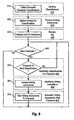
- Figures 8 and 9 show example acts and steps for methods of adding hinting instructions to a character or set of characters.
- Figure 10 illustrates an example computer system that provides a suitable operating environment for the present invention.
- the present invention extends to methods and computer program products for reducing at least one stroke of a character in order to improve a character bitmap produced from an outline of the character at a certain size and output resolution when the character outline is scan converted. It should be noted here that the various disclosed embodiments may focus on different aspects of the present invention for purposes of illustration and clarity. Accordingly, the disclosed embodiments should not be used to limit the scope of the present invention, and therefore combinations of the disclosed embodiments and/or certain portions of the disclosed embodiments should be understood to be included within the scope of the present invention.
- Figure 6 shows a scaled bit map 600 of the character outline illustrated in Figure 1 that has used hinting for grid-fitting purposes.
- Grid-fitting uses hinting instructions that describe how to fit a character outline to the grid prior to determining which pixels should be on. Grid-fitting attempts to preserve the regularity or near-regularity of locations and distances, preserve proportions.
- the horizontal strokes 612, 622, 624A, 624B, 626, and 632 have been fit to the twelve-pixel grid so that the stroke outlines lie along a single pixel.
- Grid-fitting usually occurs along one axis first, and then along the second axis.
- the grid-fitting illustrated in Figure 6 improves the shape of the character, but does not solve the problem of black spots in the image. Referring back to Figure 4 , the reason for this is that a minimum of fourteen pixels are needed to accurately represent character outline 100. In order to improve the shape of the bit map 600, additional hinting is performed to collapse one of the middle strokes 624A or 624B of feature 620.
- Font languages that support hinting instructions, including TRUETYPE, which is commonly used by Apple and Microsoft. Font languages are used to describe character outlines, such as character outline 100, in order to facilitate scaling, and for hinting. However, as indicated above, hinting has not been used for reducing strokes in scaled character outlines for Asian fonts, and more specifically for East Asian (i.e., Japan, simplified and traditional Chinese, Korea, etc.) fonts, due to the difficulties described above and illustrated in Figure 3 .
- character outlines are used for rendering characters where there are sufficient pixels per em to accurately represent the characters, and, when there are insufficient pixels per em to accurately represent the character, either (i) rendered characters offer poor legibility, similar to the character bit map 300 illustrated in Figure 3 , or (ii) multiple stroke-reduced bit maps for each character (see Figure 5 ) are embedded in the font itself, leading to large font development costs and large font files.
- rendered characters offer poor legibility, similar to the character bit map 300 illustrated in Figure 3
- multiple stroke-reduced bit maps for each character are embedded in the font itself, leading to large font development costs and large font files.
- the same highly legible results of multiple bit maps can be matched, and thereby eliminate the need to develop and embed stroke-reduced bit maps inside a font file.
- a character outline is defined.
- the character outline includes one or more features made up of one or more strokes. It should be kept in mind that a feature is simply an arbitrary designation for a collection of one or more strokes, and does not necessarily imply any further structure on the character outline.
- reference character sizes and output resolutions indicate character sizes and output resolutions where stroke reduction should occur. For some characters, no stroke reduction may be required, whereas others may require stroke reduction at one particular character size and output resolution or at multiple character sizes and output resolutions. As indicated previously, the reference character sizes and output resolutions may be expressed as a target point size and output resolution, as pixels per em, or in any other suitable measure.
- a variable for an actual character size and output resolution for the character is compared to the one or more reference character sizes and output resolutions. This variable receives the actual character size and output resolution at runtime.
- one or more hinting instructions for the character are defined, to be executed if the actual character size and output resolution falls within one of the reference character sizes and output resolutions.
- the one or more hinting instructions preserve semantic meaning for the character while reducing one or more strokes of one or more character features improve character legibility.
- the one or more hinting instructions may collapse a stroke, partially collapse the stroke, shorten the stroke, and so forth.
- the stroke may be any character stroke, including a horizontal stroke, a vertical stroke, or an angled stroke.
- a further reduction in font development resources can be achieved by recognizing that certain features are present in multiple characters so that hinting may be added automatically.
- a character feature is simply an arbitrary collection of one or more character strokes.
- the primary reason for using the term "feature" is a desire to facilitate the discussion of semantic character analysis that follows. In other words, a character feature does not necessarily have any significance outside of semantic character analysis.
- stroke reduction should be interpreted broadly to include, but not be limited to, total removal (collapsing) of a stroke, partial removal (collapsing) of a stroke, or shortening a stroke in the horizontal and/or vertical direction.
- stroke reduction is intended to keep both the semantic meaning and legibility of a character viable at differing character sizes and resolutions.
- the semantic analysis involves defining one or more semantic character classifications. Again, these classifications do not necessarily indicate that characters have similar meanings, but rather that similar hinting may be performed on features common to the characters in a semantic classification, in order to improve legibility. It may be that the features, even though they look similar, have entirely different semantic significance. For example, a character feature may have no semantic significance at all because it is part of a larger character feature with semantic significance. Care also should be taken to assure that removing strokes does not make it too difficult for a reader to distinguish between characters.
- a single character may fall into multiple semantic character classifications, and therefore multiple, and possibly independent hinting instructions may be executed or performed on a single character.
- a character may be restricted to a single semantic classification in order to simplify hinting.
- a character that falls into multiple semantic classifications may include additional checks within the hinting language itself to confirm that after one type of hinting has been performed, the character still falls into the other semantic classifications.
- the semantic classifications themselves may identify any incompatibilities between them and their associated hinting, so that only compatible types of hinting are performed. For example, incompatibilities could be identified explicitly by having one or more semantic classifications exclude one or more other semantic classifications, or may be implied by having one or more semantic classifications identify one or more compatible semantic classifications.
- Asian fonts simply include characters that are somewhat predisposed to the identified problems because of the number of strokes they contain.
- the number of strokes, the white space needed to separate the those strokes, the typical resolution of display devices, and the font sizes most favorable to readability make Asian fonts particularly problematic.
- these same problems may be encountered with any characters under the right circumstances.
- complexity refers to a character in the context of a character size and resolution, as opposed to simply the number of strokes present in a character. Accordingly, although the bit map 200 corresponds to a character with a large number of strokes, the character is not complex because there are an adequate number of pixels, a 60-pixel grid in this case, to represent the character. When the character outline 100 is scaled to a 12-pixel grid, such as the one shown in Figure 3 , however, the character becomes complex because there are not enough pixels to represent the character accurately.
- the present invention also may be described in terms of methods comprising functional steps and/or non-functional acts.
- the following is a description of acts and steps that may be performed in practicing the present invention.
- functional steps describe the invention in terms of results that are accomplished, whereas non-functional acts describe more specific actions for achieving a particular result.
- non-functional acts describe more specific actions for achieving a particular result.
- the functional steps and non-functional acts may be described or claimed in a particular order, the present invention is not necessarily limited to any particular ordering or combination of acts and/or steps.
- Figures 8 and 9 show example acts and steps for methods of adding hinting instructions to a character or set of characters.
- a step for receiving (810) a character to be output may include an act of retrieving (812) a character to be output.
- the characters contained within some electronic data may be retrieved one by one and processed in accordance with an embodiment of the invention described in connection with Figure 8 .
- the character may be a character from an East Asian language.
- a step for identifying (820) one or more semantic character classifications for the character may include an act of determining (822) that the character belongs to one or more semantic character classifications.
- a step for identifying (830) one or more hinting instructions that are associated with each of the one or more semantic character classifications may include an act of accessing (832) the one or more hinting instructions.
- the hinting instructions preserve semantic meaning for the character while altering either the presence or location of a stroke, or both, for at least one character stroke of at least one character feature based on a reference character size and output resolution.
- a step for determining (840) that an actual character size and output resolutions for the character is within the reference character size and output resolution for the one or more hinting instructions may include an act of comparing (842) the actual character size and output resolution to the reference character size and output resolution. For example, depending on the number of pixels per em, the character size, and the output resolution, hinting may not be necessary. Consider in particular, the difference between a 600 DPI printer and a 100 PPI display device. Although grid-fitting may be desirable in both cases, with six times the resolution there may not be a need for stroke reduction when printing, but stroke reduction may dramatically improve the legibility of a character on the display device.
- a step for producing (850) a hinted character outline by using the one or more hinting instructions may include an act of executing (852) the one or more hinting instructions.
- a step for preparing (860) a scaled bit map from the hinted character outline may include an act of creating (862) the bit map.
- a step for outputting (870) the bit map may include an act of sending (872) the bit map to an output device, such as a display device or printer.
- a character may belong to a plurality of semantic character classifications, whereas in others a character may be restricted to one semantic character classification. If a character belongs to multiple semantic classifications, it is possible that none, one, or multiple hinting instructions meet the reference character size and output resolution requirement. In other words, different hinting instruction may have different character size and output resolution requirements in order to be executed.
- a step for developing (910) one or more semantic character classifications may include an act of defining (912) the one or more semantic character classifications.
- a step for developing (920) one or more hinting instructions may include an act of defining (922) the one or more hinting instructions for the one or more semantic character classifications.
- a character may belong to a plurality of semantic character classifications.
- a step for receiving (930) a set of characters to be output, each character comprising one or more features with one or more strokes, may include an act of retrieving (932) the set of characters.
- the characters contained within a font may be retrieved and processed in accordance with an embodiment of the invention described in connection with Figure 9 in order to add hinting and semantic analysis to a font where none or limited hinting and semantic analysis existed previously.
- the set of characters may be one or more characters (or even all characters) from an East Asian language font.
- a step for identifying (950) one or more semantic character classifications to which the character belongs may include an act of determining (952) whether the character belong to one or more semantic character classifications.
- a step for identifying (960) one or more hinting instructions that are associated with the one or more semantic character classifications may include an act of accessing (962) the one or more hinting instructions that are associated with a semantic character classification if the character belongs to the semantic character classification.
- the one or more hinting instructions preserve semantic meaning for the character while altering either stroke presence, stroke location, or both for at least one stroke of at least one feature of the character based on a reference size and output resolution.
- a step for associating (970) the one or more hinting instructions with the character may include an act of adding (972) the one or more hinting instructions to the character.
- the one or more hinting instructions may be associated with the character based on a Unicode, or other encoding system, value for the character.
- Embodiments within the scope of the present invention also include computer-readable media for carrying or having computer-executable instructions or data structures stored thereon.
- Such computer-readable media can be any available media that can be accessed by a general purpose or special purpose computer.
- Such computer-readable media can comprise RAM, ROM, EEPROM, CD-ROM or other optical disc storage, magnetic disk storage or other magnetic storage devices, or any other medium which can be used to carry or store desired program code means in the form of computer-executable instructions or data structures and which can be accessed by a general purpose or special purpose computer.
- Computer-executable instructions comprise, for example, instructions and data which cause a general purpose computer, special purpose computer, or special purpose processing device to perform a certain function or group of functions.
- FIG. 10 and the following discussion are intended to provide a brief, general description of a suitable computing environment in which the invention may be implemented.
- the invention will be described in the general context of computer-executable instructions, such as program modules, being executed by computers in network environments.
- program modules include routines, programs, objects, components, data structures, etc. that perform particular tasks or implement particular abstract data types.
- Computer-executable instructions, associated data structures, and program modules represent examples of the program code means for executing steps of the methods disclosed herein.
- the particular sequence of such executable instructions or associated data structures represents examples of corresponding acts for implementing the functions described in such steps.
- the invention may be practiced in network computing environments with many types of computer system configurations, including personal computers, hand-held devices, mobile phones, multi-processor systems, microprocessor-based or programmable consumer electronics, network PCs, minicomputers, mainframe computers, and the like.
- the invention may also be practiced in distributed computing environments where tasks are performed by local and remote processing devices that are linked (either by hardwired links, wireless links, or by a combination of hardwired or wireless links) through a communications network.
- program modules may be located in both local and remote memory storage devices.
- an example system for implementing the invention includes a general purpose computing device in the form of a conventional computer 20, including a processing unit 21, a system memory 22, and a system bus 23 that couples various system components including the system memory 22 to the processing unit 21.
- the system bus 23 may be any of several types of bus structures including a memory bus or memory controller, a peripheral bus, and a local bus using any of a variety of bus architectures.
- the system memory includes read only memory (ROM) 24 and random access memory (RAM) 25.
- ROM read only memory
- RAM random access memory
- BIOS basic input/output system
- BIOS basic routines that help transfer information between elements within the computer 20, such as during start-up, may be stored in ROM 24.
- the computer 20 may also include a magnetic hard disk drive 27 for reading from and writing to a magnetic hard disk 39, a magnetic disk drive 28 for reading from or writing to a removable magnetic disk 29, and an optical disc drive 30 for reading from or writing to removable optical disc 31 such as a CD-ROM or other optical media.
- the magnetic hard disk drive 27, magnetic disk drive 28, and optical disc drive 30 are connected to the system bus 23 by a hard disk drive interface 32, a magnetic disk drive-interface 33, and an optical drive interface 34, respectively.
- the drives and their associated computer-readable media provide nonvolatile storage of computer-executable instructions, data structures, program modules and other data for the computer 20.
- exemplary environment described herein employs a magnetic hard disk 39, a removable magnetic disk 29 and a removable optical disc 31, other types of computer readable media for storing data can be used, including magnetic cassettes, flash memory cards, digital versatile discs, Bernoulli cartridges, RAMs, ROMs, and the like.
- Program code means comprising one or more program modules may be stored on the hard disk 39, magnetic disk 29, optical disc 31, ROM 24 or RAM 25, including an operating system 35, one or more application programs 36, other program modules 37, and program data 38.
- a user may enter commands and information into the computer 20 through keyboard 40, pointing device 42, or other input devices (not shown), such as a microphone, joy stick, game pad, satellite dish, scanner, or the like.
- These and other input devices are often connected to the processing unit 21 through a serial port interface 46 coupled to system bus 23.
- the input devices may be connected by other interfaces, such as a parallel port, a game port or a universal serial bus (USB).
- a monitor 47 or another display device is also connected to system bus 23 via an interface, such as video adapter 48.
- personal computers typically include other peripheral output devices (not shown), such as speakers and printers.
- the computer 20 may operate in a networked environment using logical connections to one or more remote computers, such as remote computers 49a and 49b.
- Remote computers 49a and 49b may each be another personal computer, a server, a router, a network PC, a peer device or other common network node, and typically include many or all of the elements described above relative to the computer 20, although only memory storage devices 50a and 50b and their associated application programs 36a and 36b have been illustrated in Figure 10 .
- the logical connections depicted in Figure 10 include a local area network (LAN) 51 and a wide area network (WAN) 52 that are presented here by way of example and not limitation.
- LAN local area network
- WAN wide area network
- the computer 20 When used in a LAN networking environment, the computer 20 is connected to the local network 51 through a network interface or adapter 53. When used in a WAN networking environment, the computer 20 may include a modem 54, a wireless link, or other means for establishing communications over the wide area network 52, such as the Internet.
- the modem 54 which may be internal or external, is connected to the system bus 23 via the serial port interface 46.
- program modules depicted relative to the computer 20, or portions thereof may be stored in the remote memory storage device. It will be appreciated that the network connections shown are exemplary and other means of establishing communications over wide area network 52 may be used.
Landscapes
- Engineering & Computer Science (AREA)
- Theoretical Computer Science (AREA)
- Physics & Mathematics (AREA)
- General Physics & Mathematics (AREA)
- Human Computer Interaction (AREA)
- General Engineering & Computer Science (AREA)
- Controls And Circuits For Display Device (AREA)
- Image Processing (AREA)
- Editing Of Facsimile Originals (AREA)
Applications Claiming Priority (1)
| Application Number | Priority Date | Filing Date | Title |
|---|---|---|---|
| US10/954,725 US7289123B2 (en) | 2004-09-30 | 2004-09-30 | Simplifying complex characters to maintain legibility |
Publications (3)
| Publication Number | Publication Date |
|---|---|
| EP1643449A2 EP1643449A2 (en) | 2006-04-05 |
| EP1643449A3 EP1643449A3 (en) | 2008-03-19 |
| EP1643449B1 true EP1643449B1 (en) | 2012-11-28 |
Family
ID=35515701
Family Applications (1)
| Application Number | Title | Priority Date | Filing Date |
|---|---|---|---|
| EP05019484A Expired - Lifetime EP1643449B1 (en) | 2004-09-30 | 2005-09-07 | Method for simplifying complex characters |
Country Status (13)
| Country | Link |
|---|---|
| US (2) | US7289123B2 (enExample) |
| EP (1) | EP1643449B1 (enExample) |
| JP (1) | JP2006106729A (enExample) |
| KR (1) | KR20060051590A (enExample) |
| CN (1) | CN1755666B (enExample) |
| AU (1) | AU2005209588B2 (enExample) |
| BR (1) | BRPI0504225A (enExample) |
| CA (1) | CA2521578C (enExample) |
| MX (1) | MXPA05010593A (enExample) |
| MY (1) | MY149259A (enExample) |
| RU (1) | RU2394268C2 (enExample) |
| TW (1) | TWI364715B (enExample) |
| ZA (1) | ZA200507318B (enExample) |
Families Citing this family (24)
| Publication number | Priority date | Publication date | Assignee | Title |
|---|---|---|---|---|
| US7289123B2 (en) * | 2004-09-30 | 2007-10-30 | Microsoft Corporation | Simplifying complex characters to maintain legibility |
| US20060238539A1 (en) * | 2005-04-20 | 2006-10-26 | Opstad David G | Method and apparatus for glyph hinting by analysis of similar elements |
| US7868888B2 (en) * | 2006-02-10 | 2011-01-11 | Adobe Systems Incorporated | Course grid aligned counters |
| US7639259B2 (en) * | 2006-09-15 | 2009-12-29 | Seiko Epson Corporation | Method and apparatus for preserving font structure |
| JP5003606B2 (ja) * | 2008-06-18 | 2012-08-15 | コニカミノルタビジネステクノロジーズ株式会社 | 画像処理装置 |
| US8243077B2 (en) * | 2008-08-29 | 2012-08-14 | Dynacomware Taiwan Inc. | Method for generating stroke-based font characters for a low-resolution display |
| US8239763B1 (en) | 2009-01-07 | 2012-08-07 | Brooks Ryan Fiesinger | Method and apparatus for using active word fonts |
| TW201035782A (en) * | 2009-03-24 | 2010-10-01 | Arphic Technology Co Ltd | Method of adjusting strokes of a character |
| US20130181995A1 (en) * | 2010-09-21 | 2013-07-18 | Hewlett-Packard Developement Company, L.P. | Handwritten character font library |
| US9483167B2 (en) | 2010-09-29 | 2016-11-01 | Adobe Systems Incorporated | User interface for a touch enabled device |
| US9229636B2 (en) | 2010-10-22 | 2016-01-05 | Adobe Systems Incorporated | Drawing support tool |
| US8842120B2 (en) | 2011-03-02 | 2014-09-23 | Adobe Systems Incorporated | Physics rules based animation engine |
| US20130132907A1 (en) * | 2011-03-02 | 2013-05-23 | Adobe Systems Incorporated | Shape pixel rendering |
| US8861875B1 (en) * | 2011-07-29 | 2014-10-14 | Teradici Corporation | Method and apparatus for encoding changed image regions |
| US10031641B2 (en) | 2011-09-27 | 2018-07-24 | Adobe Systems Incorporated | Ordering of objects displayed by a computing device |
| US9536279B2 (en) | 2013-03-11 | 2017-01-03 | Google Technology Holdings LLC | Method and apparatus for creating a graphics data representation and scaling a graphic represented thereby |
| US10568560B2 (en) * | 2013-03-14 | 2020-02-25 | West Virginia University | Endorectal prostate probe with combined PET and US modalities |
| US20140362104A1 (en) * | 2013-06-11 | 2014-12-11 | Microsoft Corporation | Layered z-order and hinted color fonts with dynamic palettes |
| KR102178258B1 (ko) | 2013-09-27 | 2020-11-12 | 삼성전자주식회사 | 디스플레이 장치 및 이의 글자 효과 제공 방법 |
| WO2015141260A1 (ja) * | 2014-03-17 | 2015-09-24 | 株式会社河合楽器製作所 | 手書き音楽記号認識装置およびプログラム |
| US9798943B2 (en) * | 2014-06-09 | 2017-10-24 | I.R.I.S. | Optical character recognition method |
| US10439118B2 (en) * | 2014-12-04 | 2019-10-08 | Maxim Integrated Products, Inc. | MEMS-based wafer level packaging for thermo-electric IR detectors |
| JP6197840B2 (ja) * | 2015-08-24 | 2017-09-20 | コニカミノルタ株式会社 | 画像処理装置、電子ファイル生成方法及びプログラム |
| CN105335198B (zh) | 2015-11-13 | 2018-12-11 | 小米科技有限责任公司 | 字体添加方法及装置 |
Family Cites Families (19)
| Publication number | Priority date | Publication date | Assignee | Title |
|---|---|---|---|---|
| US5359673A (en) * | 1991-12-27 | 1994-10-25 | Xerox Corporation | Method and apparatus for converting bitmap image documents to editable coded data using a standard notation to record document recognition ambiguities |
| US5526476A (en) * | 1992-12-07 | 1996-06-11 | Fujitsu Limited | Method and apparatus for generating character patterns expressed by coordinates of a coordinate system |
| US5586241A (en) * | 1993-06-10 | 1996-12-17 | Hewlett-Packard Company | Method and system for creating, specifying, and generating parametric fonts |
| US5479603A (en) * | 1993-07-21 | 1995-12-26 | Xerox Corporation | Method and apparatus for producing a composite second image in the spatial context of a first image |
| US5684510A (en) | 1994-07-19 | 1997-11-04 | Microsoft Corporation | Method of font rendering employing grayscale processing of grid fitted fonts |
| US5598520A (en) | 1994-09-26 | 1997-01-28 | Microsoft Corporation | Methods and apparatus for hinting a font for controlling stem width as font size and resolution of output device vary |
| JPH09134157A (ja) * | 1995-11-09 | 1997-05-20 | Fujitsu Ltd | ヒント付け方法及びフォントファイル構成方法 |
| JPH09134158A (ja) * | 1995-11-09 | 1997-05-20 | Fujitsu Ltd | 文字処理方法及び処理装置 |
| US6151032A (en) * | 1996-09-20 | 2000-11-21 | Dynalab, Inc. | Stroke-based glyph-outline font generation in low/high resolution space |
| JP3563891B2 (ja) * | 1996-10-24 | 2004-09-08 | キヤノン株式会社 | 文字生成方法及び装置 |
| JPH10222146A (ja) * | 1997-02-07 | 1998-08-21 | Oki Data:Kk | 文字表示装置と表示方法及びフォント情報 |
| US6195473B1 (en) | 1997-12-26 | 2001-02-27 | International Business Machines Corporation | Non-integer scaling of raster images with image quality enhancement |
| US6181835B1 (en) | 1997-12-26 | 2001-01-30 | International Business Machines Corporation | Non-integer scaling of raster images with image quality enhancement using an anamorphically scaled intermediate bitmap |
| US6760028B1 (en) * | 2000-07-21 | 2004-07-06 | Microsoft Corporation | Methods and systems for hinting fonts |
| JP4149676B2 (ja) * | 2001-02-05 | 2008-09-10 | 株式会社東芝 | フォトマスクの修正方法 |
| KR100539056B1 (ko) * | 2001-07-12 | 2005-12-27 | (주)네오퍼스 | 폰트의 손실 압축 및 저장 방법 |
| KR100680638B1 (ko) * | 2002-07-03 | 2007-02-09 | 2012244 온타리오 인크. | 스케일가능 스트로크 폰트 시스템 및 방법 |
| JP3747410B2 (ja) * | 2002-10-04 | 2006-02-22 | インターナショナル・ビジネス・マシーンズ・コーポレーション | アウトラインフォントの印字線幅を設定する技術 |
| US7289123B2 (en) | 2004-09-30 | 2007-10-30 | Microsoft Corporation | Simplifying complex characters to maintain legibility |
-
2004
- 2004-09-30 US US10/954,725 patent/US7289123B2/en not_active Expired - Fee Related
-
2005
- 2005-09-07 EP EP05019484A patent/EP1643449B1/en not_active Expired - Lifetime
- 2005-09-07 AU AU2005209588A patent/AU2005209588B2/en not_active Ceased
- 2005-09-08 TW TW094130935A patent/TWI364715B/zh not_active IP Right Cessation
- 2005-09-12 ZA ZA200507318A patent/ZA200507318B/en unknown
- 2005-09-15 JP JP2005268496A patent/JP2006106729A/ja active Pending
- 2005-09-16 MY MYPI20054345A patent/MY149259A/en unknown
- 2005-09-23 KR KR1020050088756A patent/KR20060051590A/ko not_active Ceased
- 2005-09-29 RU RU2005130354/12A patent/RU2394268C2/ru not_active IP Right Cessation
- 2005-09-29 CA CA2521578A patent/CA2521578C/en not_active Expired - Fee Related
- 2005-09-30 BR BRPI0504225-9A patent/BRPI0504225A/pt not_active IP Right Cessation
- 2005-09-30 CN CN200510108874XA patent/CN1755666B/zh not_active Expired - Fee Related
- 2005-09-30 MX MXPA05010593A patent/MXPA05010593A/es active IP Right Grant
-
2007
- 2007-09-26 US US11/862,132 patent/US7697003B2/en not_active Expired - Fee Related
Non-Patent Citations (1)
| Title |
|---|
| MUNARI B.: "Fantasia", 1990, GIUS. LATERZA & FIGLI SPA, Roma-Bari, ISBN: 88-420-1197-5, XP007913722 * |
Also Published As
| Publication number | Publication date |
|---|---|
| RU2005130354A (ru) | 2007-04-20 |
| EP1643449A2 (en) | 2006-04-05 |
| AU2005209588A1 (en) | 2006-04-13 |
| CA2521578C (en) | 2013-05-14 |
| MXPA05010593A (es) | 2006-04-05 |
| TWI364715B (en) | 2012-05-21 |
| JP2006106729A (ja) | 2006-04-20 |
| CA2521578A1 (en) | 2006-03-30 |
| US7697003B2 (en) | 2010-04-13 |
| US7289123B2 (en) | 2007-10-30 |
| BRPI0504225A (pt) | 2006-05-09 |
| EP1643449A3 (en) | 2008-03-19 |
| CN1755666A (zh) | 2006-04-05 |
| US20080012862A1 (en) | 2008-01-17 |
| CN1755666B (zh) | 2010-06-09 |
| US20060066619A1 (en) | 2006-03-30 |
| TW200622925A (en) | 2006-07-01 |
| RU2394268C2 (ru) | 2010-07-10 |
| AU2005209588B2 (en) | 2009-11-26 |
| ZA200507318B (en) | 2007-05-30 |
| MY149259A (en) | 2013-07-31 |
| HK1082580A1 (en) | 2006-06-09 |
| KR20060051590A (ko) | 2006-05-19 |
Similar Documents
| Publication | Publication Date | Title |
|---|---|---|
| US7697003B2 (en) | Simplifying complex characters to maintain legibility | |
| US8503773B2 (en) | Glyph selection and electronic document generation | |
| US20190304066A1 (en) | Synthesis method of chinese printed character images and device thereof | |
| US7228501B2 (en) | Method for selecting a font | |
| US6337924B1 (en) | System and method for accurately recognizing text font in a document processing system | |
| US20100239160A1 (en) | Image processing apparatus, image processing method, and computer program | |
| US20050067498A1 (en) | Method for generating a display list | |
| US6850228B1 (en) | Universal file format for digital rich ink data | |
| US20170249292A1 (en) | Conditional determination of lookups in glyph processing | |
| US20140320527A1 (en) | Hardware glyph cache | |
| US8467082B1 (en) | Print compound conserving font production method | |
| US20060217959A1 (en) | Translation processing method, document processing device and storage medium storing program | |
| WO2005064588A1 (en) | Arrangement for the scaling of fonts | |
| US9741142B2 (en) | Method and apparatus for enabling text editing in a scanned document while maintaining fidelity of the appearance of the text | |
| US20020181779A1 (en) | Character and style recognition of scanned text | |
| US7281208B2 (en) | Image stitching methods and systems | |
| HK1082580B (en) | Method for simplifying complex characters | |
| US7376894B2 (en) | Vector path merging into gradient elements | |
| JP2022148922A (ja) | 情報処理装置及びプログラム | |
| JPH08123904A (ja) | 書体種類処理装置 | |
| KR100573392B1 (ko) | 적응학습 모듈이 탑재된 문자인식 기반 대용량 문서디지털화 방법 및 시스템 | |
| JP3220437B2 (ja) | 出力制御装置及び方法 | |
| AU2004216608B2 (en) | Method for generating a display list | |
| JP2003223161A (ja) | 情報処理システム、方法及び装置、プログラム並びに記憶媒体 | |
| JP2004151836A (ja) | 文字認識方法 |
Legal Events
| Date | Code | Title | Description |
|---|---|---|---|
| PUAI | Public reference made under article 153(3) epc to a published international application that has entered the european phase |
Free format text: ORIGINAL CODE: 0009012 |
|
| AK | Designated contracting states |
Kind code of ref document: A2 Designated state(s): AT BE BG CH CY CZ DE DK EE ES FI FR GB GR HU IE IS IT LI LT LU LV MC NL PL PT RO SE SI SK TR |
|
| AX | Request for extension of the european patent |
Extension state: AL BA HR MK YU |
|
| REG | Reference to a national code |
Ref country code: HK Ref legal event code: DE Ref document number: 1082580 Country of ref document: HK |
|
| PUAL | Search report despatched |
Free format text: ORIGINAL CODE: 0009013 |
|
| AK | Designated contracting states |
Kind code of ref document: A3 Designated state(s): AT BE BG CH CY CZ DE DK EE ES FI FR GB GR HU IE IS IT LI LT LU LV MC NL PL PT RO SE SI SK TR |
|
| AX | Request for extension of the european patent |
Extension state: AL BA HR MK YU |
|
| 17P | Request for examination filed |
Effective date: 20080916 |
|
| AKX | Designation fees paid |
Designated state(s): AT BE BG CH CY CZ DE DK EE ES FI FR GB GR HU IE IS IT LI LT LU LV MC NL PL PT RO SE SI SK TR |
|
| 17Q | First examination report despatched |
Effective date: 20081111 |
|
| GRAP | Despatch of communication of intention to grant a patent |
Free format text: ORIGINAL CODE: EPIDOSNIGR1 |
|
| GRAS | Grant fee paid |
Free format text: ORIGINAL CODE: EPIDOSNIGR3 |
|
| GRAA | (expected) grant |
Free format text: ORIGINAL CODE: 0009210 |
|
| AK | Designated contracting states |
Kind code of ref document: B1 Designated state(s): AT BE BG CH CY CZ DE DK EE ES FI FR GB GR HU IE IS IT LI LT LU LV MC NL PL PT RO SE SI SK TR |
|
| REG | Reference to a national code |
Ref country code: GB Ref legal event code: FG4D |
|
| REG | Reference to a national code |
Ref country code: CH Ref legal event code: EP |
|
| REG | Reference to a national code |
Ref country code: AT Ref legal event code: REF Ref document number: 586506 Country of ref document: AT Kind code of ref document: T Effective date: 20121215 |
|
| REG | Reference to a national code |
Ref country code: IE Ref legal event code: FG4D |
|
| REG | Reference to a national code |
Ref country code: DE Ref legal event code: R096 Ref document number: 602005037155 Country of ref document: DE Effective date: 20130124 |
|
| REG | Reference to a national code |
Ref country code: AT Ref legal event code: MK05 Ref document number: 586506 Country of ref document: AT Kind code of ref document: T Effective date: 20121128 |
|
| REG | Reference to a national code |
Ref country code: NL Ref legal event code: VDEP Effective date: 20121128 |
|
| REG | Reference to a national code |
Ref country code: HK Ref legal event code: GR Ref document number: 1082580 Country of ref document: HK |
|
| REG | Reference to a national code |
Ref country code: LT Ref legal event code: MG4D |
|
| PG25 | Lapsed in a contracting state [announced via postgrant information from national office to epo] |
Ref country code: ES Free format text: LAPSE BECAUSE OF FAILURE TO SUBMIT A TRANSLATION OF THE DESCRIPTION OR TO PAY THE FEE WITHIN THE PRESCRIBED TIME-LIMIT Effective date: 20130311 Ref country code: FI Free format text: LAPSE BECAUSE OF FAILURE TO SUBMIT A TRANSLATION OF THE DESCRIPTION OR TO PAY THE FEE WITHIN THE PRESCRIBED TIME-LIMIT Effective date: 20121128 Ref country code: LT Free format text: LAPSE BECAUSE OF FAILURE TO SUBMIT A TRANSLATION OF THE DESCRIPTION OR TO PAY THE FEE WITHIN THE PRESCRIBED TIME-LIMIT Effective date: 20121128 Ref country code: SE Free format text: LAPSE BECAUSE OF FAILURE TO SUBMIT A TRANSLATION OF THE DESCRIPTION OR TO PAY THE FEE WITHIN THE PRESCRIBED TIME-LIMIT Effective date: 20121128 |
|
| PG25 | Lapsed in a contracting state [announced via postgrant information from national office to epo] |
Ref country code: SI Free format text: LAPSE BECAUSE OF FAILURE TO SUBMIT A TRANSLATION OF THE DESCRIPTION OR TO PAY THE FEE WITHIN THE PRESCRIBED TIME-LIMIT Effective date: 20121128 Ref country code: LV Free format text: LAPSE BECAUSE OF FAILURE TO SUBMIT A TRANSLATION OF THE DESCRIPTION OR TO PAY THE FEE WITHIN THE PRESCRIBED TIME-LIMIT Effective date: 20121128 Ref country code: BE Free format text: LAPSE BECAUSE OF FAILURE TO SUBMIT A TRANSLATION OF THE DESCRIPTION OR TO PAY THE FEE WITHIN THE PRESCRIBED TIME-LIMIT Effective date: 20121128 Ref country code: PL Free format text: LAPSE BECAUSE OF FAILURE TO SUBMIT A TRANSLATION OF THE DESCRIPTION OR TO PAY THE FEE WITHIN THE PRESCRIBED TIME-LIMIT Effective date: 20121128 Ref country code: GR Free format text: LAPSE BECAUSE OF FAILURE TO SUBMIT A TRANSLATION OF THE DESCRIPTION OR TO PAY THE FEE WITHIN THE PRESCRIBED TIME-LIMIT Effective date: 20130301 Ref country code: CY Free format text: LAPSE BECAUSE OF FAILURE TO SUBMIT A TRANSLATION OF THE DESCRIPTION OR TO PAY THE FEE WITHIN THE PRESCRIBED TIME-LIMIT Effective date: 20121128 Ref country code: PT Free format text: LAPSE BECAUSE OF FAILURE TO SUBMIT A TRANSLATION OF THE DESCRIPTION OR TO PAY THE FEE WITHIN THE PRESCRIBED TIME-LIMIT Effective date: 20130328 |
|
| PG25 | Lapsed in a contracting state [announced via postgrant information from national office to epo] |
Ref country code: AT Free format text: LAPSE BECAUSE OF FAILURE TO SUBMIT A TRANSLATION OF THE DESCRIPTION OR TO PAY THE FEE WITHIN THE PRESCRIBED TIME-LIMIT Effective date: 20121128 |
|
| PG25 | Lapsed in a contracting state [announced via postgrant information from national office to epo] |
Ref country code: EE Free format text: LAPSE BECAUSE OF FAILURE TO SUBMIT A TRANSLATION OF THE DESCRIPTION OR TO PAY THE FEE WITHIN THE PRESCRIBED TIME-LIMIT Effective date: 20121128 Ref country code: SK Free format text: LAPSE BECAUSE OF FAILURE TO SUBMIT A TRANSLATION OF THE DESCRIPTION OR TO PAY THE FEE WITHIN THE PRESCRIBED TIME-LIMIT Effective date: 20121128 Ref country code: BG Free format text: LAPSE BECAUSE OF FAILURE TO SUBMIT A TRANSLATION OF THE DESCRIPTION OR TO PAY THE FEE WITHIN THE PRESCRIBED TIME-LIMIT Effective date: 20130228 Ref country code: DK Free format text: LAPSE BECAUSE OF FAILURE TO SUBMIT A TRANSLATION OF THE DESCRIPTION OR TO PAY THE FEE WITHIN THE PRESCRIBED TIME-LIMIT Effective date: 20121128 Ref country code: CZ Free format text: LAPSE BECAUSE OF FAILURE TO SUBMIT A TRANSLATION OF THE DESCRIPTION OR TO PAY THE FEE WITHIN THE PRESCRIBED TIME-LIMIT Effective date: 20121128 |
|
| PG25 | Lapsed in a contracting state [announced via postgrant information from national office to epo] |
Ref country code: NL Free format text: LAPSE BECAUSE OF FAILURE TO SUBMIT A TRANSLATION OF THE DESCRIPTION OR TO PAY THE FEE WITHIN THE PRESCRIBED TIME-LIMIT Effective date: 20121128 Ref country code: RO Free format text: LAPSE BECAUSE OF FAILURE TO SUBMIT A TRANSLATION OF THE DESCRIPTION OR TO PAY THE FEE WITHIN THE PRESCRIBED TIME-LIMIT Effective date: 20121128 Ref country code: IT Free format text: LAPSE BECAUSE OF FAILURE TO SUBMIT A TRANSLATION OF THE DESCRIPTION OR TO PAY THE FEE WITHIN THE PRESCRIBED TIME-LIMIT Effective date: 20121128 |
|
| PLBE | No opposition filed within time limit |
Free format text: ORIGINAL CODE: 0009261 |
|
| STAA | Information on the status of an ep patent application or granted ep patent |
Free format text: STATUS: NO OPPOSITION FILED WITHIN TIME LIMIT |
|
| 26N | No opposition filed |
Effective date: 20130829 |
|
| REG | Reference to a national code |
Ref country code: DE Ref legal event code: R097 Ref document number: 602005037155 Country of ref document: DE Effective date: 20130829 |
|
| PG25 | Lapsed in a contracting state [announced via postgrant information from national office to epo] |
Ref country code: MC Free format text: LAPSE BECAUSE OF FAILURE TO SUBMIT A TRANSLATION OF THE DESCRIPTION OR TO PAY THE FEE WITHIN THE PRESCRIBED TIME-LIMIT Effective date: 20121128 |
|
| REG | Reference to a national code |
Ref country code: CH Ref legal event code: PL |
|
| GBPC | Gb: european patent ceased through non-payment of renewal fee |
Effective date: 20130907 |
|
| REG | Reference to a national code |
Ref country code: IE Ref legal event code: MM4A |
|
| PG25 | Lapsed in a contracting state [announced via postgrant information from national office to epo] |
Ref country code: IE Free format text: LAPSE BECAUSE OF NON-PAYMENT OF DUE FEES Effective date: 20130907 Ref country code: LI Free format text: LAPSE BECAUSE OF NON-PAYMENT OF DUE FEES Effective date: 20130930 Ref country code: GB Free format text: LAPSE BECAUSE OF NON-PAYMENT OF DUE FEES Effective date: 20130907 Ref country code: CH Free format text: LAPSE BECAUSE OF NON-PAYMENT OF DUE FEES Effective date: 20130930 |
|
| PGFP | Annual fee paid to national office [announced via postgrant information from national office to epo] |
Ref country code: FR Payment date: 20140825 Year of fee payment: 10 |
|
| REG | Reference to a national code |
Ref country code: DE Ref legal event code: R082 Ref document number: 602005037155 Country of ref document: DE Representative=s name: BOEHMERT & BOEHMERT ANWALTSPARTNERSCHAFT MBB -, DE |
|
| PGFP | Annual fee paid to national office [announced via postgrant information from national office to epo] |
Ref country code: DE Payment date: 20140930 Year of fee payment: 10 |
|
| REG | Reference to a national code |
Ref country code: DE Ref legal event code: R082 Ref document number: 602005037155 Country of ref document: DE Representative=s name: BOEHMERT & BOEHMERT ANWALTSPARTNERSCHAFT MBB -, DE Effective date: 20150126 Ref country code: DE Ref legal event code: R081 Ref document number: 602005037155 Country of ref document: DE Owner name: MICROSOFT TECHNOLOGY LICENSING, LLC, REDMOND, US Free format text: FORMER OWNER: MICROSOFT CORPORATION, REDMOND, WASH., US Effective date: 20150126 Ref country code: DE Ref legal event code: R081 Ref document number: 602005037155 Country of ref document: DE Owner name: MICROSOFT TECHNOLOGY LICENSING, LLC, REDMOND, US Free format text: FORMER OWNER: MICROSOFT CORP., REDMOND, WASH., US Effective date: 20121128 |
|
| PG25 | Lapsed in a contracting state [announced via postgrant information from national office to epo] |
Ref country code: TR Free format text: LAPSE BECAUSE OF FAILURE TO SUBMIT A TRANSLATION OF THE DESCRIPTION OR TO PAY THE FEE WITHIN THE PRESCRIBED TIME-LIMIT Effective date: 20121128 |
|
| PG25 | Lapsed in a contracting state [announced via postgrant information from national office to epo] |
Ref country code: HU Free format text: LAPSE BECAUSE OF FAILURE TO SUBMIT A TRANSLATION OF THE DESCRIPTION OR TO PAY THE FEE WITHIN THE PRESCRIBED TIME-LIMIT; INVALID AB INITIO Effective date: 20050907 Ref country code: LU Free format text: LAPSE BECAUSE OF NON-PAYMENT OF DUE FEES Effective date: 20130907 |
|
| REG | Reference to a national code |
Ref country code: FR Ref legal event code: TP Owner name: MICROSOFT TECHNOLOGY LICENSING, LLC, US Effective date: 20150724 |
|
| REG | Reference to a national code |
Ref country code: DE Ref legal event code: R119 Ref document number: 602005037155 Country of ref document: DE |
|
| PG25 | Lapsed in a contracting state [announced via postgrant information from national office to epo] |
Ref country code: IS Free format text: LAPSE BECAUSE OF FAILURE TO SUBMIT A TRANSLATION OF THE DESCRIPTION OR TO PAY THE FEE WITHIN THE PRESCRIBED TIME-LIMIT Effective date: 20121128 |
|
| REG | Reference to a national code |
Ref country code: FR Ref legal event code: ST Effective date: 20160531 |
|
| PG25 | Lapsed in a contracting state [announced via postgrant information from national office to epo] |
Ref country code: DE Free format text: LAPSE BECAUSE OF NON-PAYMENT OF DUE FEES Effective date: 20160401 |
|
| PG25 | Lapsed in a contracting state [announced via postgrant information from national office to epo] |
Ref country code: FR Free format text: LAPSE BECAUSE OF NON-PAYMENT OF DUE FEES Effective date: 20150930 |