EP1631074A2 - Fernsteuerung eines Fernsehgerätes über das Internet - Google Patents
Fernsteuerung eines Fernsehgerätes über das Internet Download PDFInfo
- Publication number
- EP1631074A2 EP1631074A2 EP05107817A EP05107817A EP1631074A2 EP 1631074 A2 EP1631074 A2 EP 1631074A2 EP 05107817 A EP05107817 A EP 05107817A EP 05107817 A EP05107817 A EP 05107817A EP 1631074 A2 EP1631074 A2 EP 1631074A2
- Authority
- EP
- European Patent Office
- Prior art keywords
- web service
- function
- address
- soap
- web
- Prior art date
- Legal status (The legal status is an assumption and is not a legal conclusion. Google has not performed a legal analysis and makes no representation as to the accuracy of the status listed.)
- Ceased
Links
Images




Classifications
-
- H—ELECTRICITY
- H04—ELECTRIC COMMUNICATION TECHNIQUE
- H04N—PICTORIAL COMMUNICATION, e.g. TELEVISION
- H04N5/00—Details of television systems
- H04N5/44—Receiver circuitry for the reception of television signals according to analogue transmission standards
-
- H—ELECTRICITY
- H04—ELECTRIC COMMUNICATION TECHNIQUE
- H04N—PICTORIAL COMMUNICATION, e.g. TELEVISION
- H04N21/00—Selective content distribution, e.g. interactive television or video on demand [VOD]
- H04N21/40—Client devices specifically adapted for the reception of or interaction with content, e.g. set-top-box [STB]; Operations thereof
- H04N21/47—End-user applications
- H04N21/478—Supplemental services, e.g. displaying phone caller identification, shopping application
- H04N21/4782—Web browsing, e.g. WebTV
-
- H—ELECTRICITY
- H04—ELECTRIC COMMUNICATION TECHNIQUE
- H04N—PICTORIAL COMMUNICATION, e.g. TELEVISION
- H04N21/00—Selective content distribution, e.g. interactive television or video on demand [VOD]
- H04N21/40—Client devices specifically adapted for the reception of or interaction with content, e.g. set-top-box [STB]; Operations thereof
- H04N21/41—Structure of client; Structure of client peripherals
- H04N21/4104—Peripherals receiving signals from specially adapted client devices
- H04N21/4126—The peripheral being portable, e.g. PDAs or mobile phones
- H04N21/41265—The peripheral being portable, e.g. PDAs or mobile phones having a remote control device for bidirectional communication between the remote control device and client device
-
- H—ELECTRICITY
- H04—ELECTRIC COMMUNICATION TECHNIQUE
- H04N—PICTORIAL COMMUNICATION, e.g. TELEVISION
- H04N21/00—Selective content distribution, e.g. interactive television or video on demand [VOD]
- H04N21/40—Client devices specifically adapted for the reception of or interaction with content, e.g. set-top-box [STB]; Operations thereof
- H04N21/41—Structure of client; Structure of client peripherals
- H04N21/422—Input-only peripherals, i.e. input devices connected to specially adapted client devices, e.g. global positioning system [GPS]
- H04N21/42204—User interfaces specially adapted for controlling a client device through a remote control device; Remote control devices therefor
-
- H—ELECTRICITY
- H04—ELECTRIC COMMUNICATION TECHNIQUE
- H04N—PICTORIAL COMMUNICATION, e.g. TELEVISION
- H04N21/00—Selective content distribution, e.g. interactive television or video on demand [VOD]
- H04N21/40—Client devices specifically adapted for the reception of or interaction with content, e.g. set-top-box [STB]; Operations thereof
- H04N21/41—Structure of client; Structure of client peripherals
- H04N21/422—Input-only peripherals, i.e. input devices connected to specially adapted client devices, e.g. global positioning system [GPS]
- H04N21/4227—Providing Remote input by a user located remotely from the client device, e.g. at work
-
- H—ELECTRICITY
- H04—ELECTRIC COMMUNICATION TECHNIQUE
- H04N—PICTORIAL COMMUNICATION, e.g. TELEVISION
- H04N21/00—Selective content distribution, e.g. interactive television or video on demand [VOD]
- H04N21/80—Generation or processing of content or additional data by content creator independently of the distribution process; Content per se
- H04N21/85—Assembly of content; Generation of multimedia applications
- H04N21/854—Content authoring
- H04N21/8543—Content authoring using a description language, e.g. Multimedia and Hypermedia information coding Expert Group [MHEG], eXtensible Markup Language [XML]
-
- H—ELECTRICITY
- H04—ELECTRIC COMMUNICATION TECHNIQUE
- H04L—TRANSMISSION OF DIGITAL INFORMATION, e.g. TELEGRAPHIC COMMUNICATION
- H04L12/00—Data switching networks
- H04L12/28—Data switching networks characterised by path configuration, e.g. LAN [Local Area Networks] or WAN [Wide Area Networks]
- H04L12/2803—Home automation networks
- H04L12/2816—Controlling appliance services of a home automation network by calling their functionalities
- H04L12/2818—Controlling appliance services of a home automation network by calling their functionalities from a device located outside both the home and the home network
-
- H—ELECTRICITY
- H04—ELECTRIC COMMUNICATION TECHNIQUE
- H04L—TRANSMISSION OF DIGITAL INFORMATION, e.g. TELEGRAPHIC COMMUNICATION
- H04L12/00—Data switching networks
- H04L12/28—Data switching networks characterised by path configuration, e.g. LAN [Local Area Networks] or WAN [Wide Area Networks]
- H04L12/2803—Home automation networks
- H04L2012/2847—Home automation networks characterised by the type of home appliance used
- H04L2012/2849—Audio/video appliances
-
- H—ELECTRICITY
- H04—ELECTRIC COMMUNICATION TECHNIQUE
- H04N—PICTORIAL COMMUNICATION, e.g. TELEVISION
- H04N21/00—Selective content distribution, e.g. interactive television or video on demand [VOD]
- H04N21/40—Client devices specifically adapted for the reception of or interaction with content, e.g. set-top-box [STB]; Operations thereof
- H04N21/45—Management operations performed by the client for facilitating the reception of or the interaction with the content or administrating data related to the end-user or to the client device itself, e.g. learning user preferences for recommending movies, resolving scheduling conflicts
- H04N21/462—Content or additional data management e.g. creating a master electronic programme guide from data received from the Internet and a Head-end or controlling the complexity of a video stream by scaling the resolution or bit-rate based on the client capabilities
- H04N21/4622—Retrieving content or additional data from different sources, e.g. from a broadcast channel and the Internet
Definitions
- the invention relates to digital video/audio-processing apparatus, to methods of operating digital video/audio-processing apparatus, and to a web service system.
- Digital TVs receive and display digital content transmitted from broadcast stations.
- the content usually contains digital audio/video signals and Electronic Program Guide (EPG) information.
- EPG Electronic Program Guide
- Such TVs provide functions such as program reservation, program reservation cancellation, program information searches, and so on, by using the EPG information. Further, the TVs provide time-on and time-off functions, respectively, turning themselves on and off at desired times.
- the above functions of the conventional TVs are set when a user directly carries out setting jobs with the TVs, by using a remote controller. That is, the above functions can not be set, changed, and so on, at the places where the TVs are not located. Thus, the TV cannot be operated when a user is not at home.
- a conventional TV has a drawback as it can not display images recorded on external recording media without a Universal Serial Bus (USB), smart card interface, or the like, installed therein.
- USB Universal Serial Bus
- of the embodiments of the present invention provides a web service-enabling digital video/audio-processing apparatus, web service method and system, capable of providing web services, through which users can change and perform the functions of the TVs by connecting to the TVs located at a different location than where the user is located. For example, when the TV is at home and the user is not at home.
- the embodiments also provide a web service-enabling digital video/audio-processing apparatus, and web service method and system, capable of providing web services by using the Simple Object Access Protocol (SOAP) and Universal Discovery Description and Integration (UDDI).
- SOAP Simple Object Access Protocol
- UDDI Universal Discovery Description and Integration
- a first aspect of the invention provides digital video/audio processing apparatus, comprising:
- a second aspect of the invention provides a method of operating digital video/audio processing apparatus, the method comprising:
- a third aspect of the invention provides digital video/audio-processing apparatus comprising:
- a fourth aspect of the invention provides a method of operating digital video/audio-processing apparatus, the method comprising:
- a fifth aspect of the invention provides a web service system comprising:
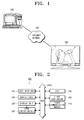
- a web service-enabling digital video/audio-processing apparatus 300 is connected to an external device 200 such as a computer or a TV through the Internet network 100.
- the external device 200 requests a web service using SOAP, and the digital video/audio-processing apparatus 300 provides the web service requested by the external device 200 using SOAP.
- SOAP is an XML-based protocol intended for exchanging structured information and inputted information in the web, and a user can use diverse and automated web services based on an open and shared web infrastructure.
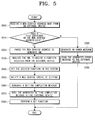
- Figure 2 is a block diagram for showing in more detail an external device of Figure 1.
- the external device 200 is in the form of a computer and includes a user input unit 210, a graphic card 240, a display unit 220, a view generation unit 230, a central processing unit (CPU) 250, a first SOAP engine 260, and a first communication module 270.
- a bus 200a provides data paths between the above individual units.
- Figure 2 shows only the components relevant to the present invention.
- the user input unit 210 is a user interface for operating the external device 200, and may be a keyboard, mouse, buttons, touch panel, or the like.
- the user input unit 210 outputs a signal requesting the view of a web browser and the control view capable of controlling the functions of the digital video/audio-processing apparatus 300. Further, the user input unit 210 enables a user to select a certain function on a displayed view and request web service.
- the graphic card 240 processes a video signal into a displayable signal and outputs the signal to the display unit 220.
- the graphic card 240 signal-processes the web browser view or the control view that is generated by the view generation unit 230, and outputs the view to the display unit 220.
- the display unit 220 displays the view generated by the view generation unit 230.
- the display unit 220 can be a cathode ray tube (CRT), liquid crystal display (LCD), and so on.
- the view generation unit 230 generates a view enabling a user to select a desired one of plural functions provided by the digital video/audio-processing apparatus 300. Further, the view generation unit 230 generates a web service address corresponding to the selected function.
- the web service address is a uniform resource locator (URL) corresponding to a function selected from the web browser view.
- the display unit 220 displays a web browser view. If the IP of the digital video/audio-processing apparatus 300 is inputted on an address window of the web browser view through the user input unit 210, the external device 200 is connected to the digital video/audio-processing apparatus 300, and then the view generation unit 230 generates a view displaying functions provided by the digital video/audio-processing apparatus 300.
- the view generation unit 230 generates a control view through an application program capable of controlling the web browser as well as the digital video/audio-processing apparatus 300, and can generate the above web service address based on the selected function. In such a case, the view generation unit 230 performs the above operations based on the application program generating the control view.
- the view generation unit 230 If a desired function, of a plurality of functions, is selected through the user input unit 210 and an argument of the selected function is established, the view generation unit 230 generates a web service address containing the IP of the digital video/audio-processing apparatus 300, selected function, and the argument of the selected function.
- the selected functions are files which have an extension of 'asmx'.
- the view generation unit 240 generates a web service address as follows:
- the CPU 250 controls the overall operations of the external device 200 by using various control programs that have been stored.
- the first SOAP engine 260 creates, in the form of SOAP, a web service address corresponding to a selected function.
- the first communication module 270 transfers the web service address in the SOAP form, to the digital video/audio-processing apparatus 300 through the Internet network 100.
- the digital video/audio-processing apparatus 300 has a user input unit 305, a tuner 310, a detection unit 315, a video/audio-processing unit 320, a display unit 325, an EPG information storage unit 330, an EPG function storage unit 335, a data storage unit 340, a second communication module 345, a web service engine 350, a second SOAP engine 355, a function setting unit 360, and a control unit 365.
- the web service-enabling digital video/audio-processing apparatus 300 receives EPG information and a broadcast signal transmitted from a transmitter (not shown).
- the web service-enabling digital video/audio-processing apparatus 300 provides web services by using the received EPG information.
- the EPG information is broadcast program guide information related to broadcast signals.
- the user input unit 305 is a viewer interface used to generate to the control unit 365, commands for performing functions supported by the digital video/audio-processing apparatus 300. To do this, the user input unit 305 is provided with function keys (not shown) containing a plurality of numeral keys, i.e. an Enter key, and so on.
- the tuner 310 tunes to a predetermined channel selected by a viewer out of a plurality of channels received through an antenna.
- the tuned channel contains a broadcast signal and EPG information.
- the detection unit 315 detects the EPG information from the tuned channel, and outputs the detected EPG information to the EPG information storage unit 330, and the broadcast signal, except the detected EPG information, is outputted to the video/audio-processing unit 320.
- the EPG information is codified to be sent, by using a particular region of a video signal packet for a digital broadcast signal, so the EPG information can be obtained by detecting and decoding the particular region.
- the video/audio-processing unit 320 decodes a video signal of the outputted broadcast signal and generates displayable image data, and decodes the audio signal of the outputted broadcast signal and generates an audible audio data.
- the generated video data is displayed on the display unit 325, and the audio data is externally outputted through speakers (not shown).
- the video/audio-processing unit 320 if a user requests to display an EPG view, via the user input unit 305, the video/audio-processing unit 320 generates the EPG view by using the EPG information. Furthermore, the video/audio-processing unit 320 overlaps the EPG view with a video signal currently displayed for an output to the display unit 325.
- the EPG view is a graphic user interface (GUI) window containing programs by times and channels that are provided from a plurality of broadcast stations.
- GUI graphic user interface
- the user can use the EPG information and view to set a variety of EPG functions such as program reservation, program reservation cancellation, time-on function at fixed times, time-off function at fixed times, and so on.
- EPG functions such as program reservation, program reservation cancellation, time-on function at fixed times, time-off function at fixed times, and so on.
- the EPG information storage unit 330 stores the EPG information detected by the detection unit 315.
- the stored EPG information provides detailed information on a certain program selected on the EPG view through the user input unit 305.
- the EPG function storage unit 335 stores information related to the EPG function set by a viewer. For example, if a viewer sets a program reservation function to tune and display a certain program at 8 p.m., the EPG function storage unit 335 stores the function of tuning and displaying the certain program at 8 p.m. Further, if a viewer sets the time-on function to turn on at 6 p.m., the EPG function storage unit 335 stores the function of turning on at 6 p.m.
- the data storage unit 340 stores data such as video data, music data, and so on.
- the second communication module 345 is connected, for communications, to the external device 200 through the Internet network 100.
- the second communication module 345 receives a web service address transmitted from the external device 200.
- the web service address is an address for performing a certain function set by the external device 200 and has the SOAP form.
- the web service engine 350 checks whether a file contained in the web service address exists in a function list of a system directory. Further, if the file is checked to exist, the web service engine 350 outputs the web service address to the second SOAP engine 355.
- the file contained in the web service address may have an extension of "asmx" such as "1.asmx".
- the second SOAP engine 355 parses the web service address to generate XML indicating a certain function. Further, the second SOAP engine 355 outputs the generated XML to the web service engine 350.
- the web service engine 350 analyzes the web language outputted from the second SOAP engine 355 to decide a function requested by the external device 200. That is, the web service engine 350 analyzes the web language to decide which function the function setting unit 360 is to set. Further, the web service engine 350 notifies the function setting unit 360 of the decided function.
- the function setting unit 360 sets the function notified by the web service engine 350. For example, if the notified function is the time-on function of turning on at 8 p.m., the function setting unit 360 changes/sets the time-on function stored in the EPG function storage unit 335 into the notified function. Middleware can be used for such a function setting unit 360.
- the function setting unit 360 outputs, to the web service engine 350, a setting completion message indicating that the function has been set.
- the web service engine 350 outputs the setting completion message to the second SOAP engine 355 to generate the message in the SOAP form, and outputs to the second communication module 345 the setting completion message generated in the SOAP form.
- the setting completion message generated in the SOAP form is sent to the external device 200.
- the control unit 365 controls the overall operations of the digital video/audio-processing apparatus 300 according to a control program and a signal applied from the user input unit 305 by the viewer's key input or selection.
- the control unit 365 performs an EPG function set in the EPG function storage unit 335. For example, if a web service requested by the external device 200, that is, a certain function, is the time-on function of power-on at 8 a.m. and the requested function is set from the function setting unit 360 and stored in the EPG function storage unit 335, the control unit 365 turns on the system at 8 a.m.
- the control unit 365 controls the tuner 310, video/audio-processing unit 320, and display unit 325 to tune and display the channel 2 at 8 p.m.
- a user has the external device 200 generate a web service address to control a function that the digital video/audio-processing apparatus 300 provides, and sends the web service address to the digital video/audio-processing apparatus 300 using SOAP, and the digital video/audio-processing apparatus 300 performs a certain function requested from the external device 200 under the control of the web service engine 350. That is, a user can control the operations of the digital video/audio-processing apparatus 300 using the external device 200.
- the view generation unit 230 If the operation S410 is executed, the view generation unit 230 generates a web service address corresponding to the selected function (S420). Then the view generation unit 230 generates a web service address by using an IP of the digital video/audio-processing apparatus 300, a file related to the selected function, and an argument, for example, 8 a.m. and power-on, for carrying out the selected function.
- the first SOAP engine 260 If the operation S420 is executed, the first SOAP engine 260 generates, in the SOAP form, the web service address generated in the operation S420 (S430).
- the first communication module 270 sends the generated web service address to the digital video/audio-processing apparatus 300 through the Internet network 100 (S440).
- the second communication module 345 receives a web service address received in the operation S440 and outputs the address to the web service engine 350(S500).
- the web service engine 350 checks whether a file included in the received web service address exists in a function list of a system directory (S510).
- the second SOAP engine 355 parses the web service address received in the operation S500 to generate the XML temporarily formed in the web service address (S520).
- the web service engine 350 analyzes the generated XML to decide the function requested from the external device 200, and outputs the decided function to the function setting unit 360 (S530).
- the function setting unit 360 sets the decided function in the system, and notifies the web service engine 350 that the function is completely set (S540 and S550). That is, the function setting unit 360 overwrites the time-on function already stored in the EPG function storage unit 335 with the time-on function of power-on at 8 a.m. by using EPG information. Thus, the function selected from the external device 200 is set and stored in the EPG information storage unit 330.
- the web service engine 350 In the operation S550, the web service engine 350 generates a setting completion message indicating that the function is completely set, and the second communication module 345 sends the generated setting completion message to the external device 200 (S560 and S570). If a predetermined period of time lapses, the control unit 365 operates the digital video/audio-processing apparatus 300 to carry out the function set in the operation S540 (S580).
- the web service engine 350 generates an error message, and the second communication module 345 sends the generated error message to the external device 200 (S590 and S595).
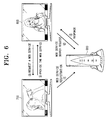
- the digital video/audio-processing apparatus 700 is connected for communications to a web service requester 800 and a UDDI server 900 through the Internet network.
- the digital video/audio-processing apparatus 700 is a TV providing web services, and the web service requester 800 can be devices such as TVs, computers, and the like, that can request web services.
- the digital video/audio-processing apparatus 700 provides certain web services.
- the digital video/audio-processing apparatus 700 requests the UDDI server 900 to register web services that it provides (1).
- the UDDI server 900 has a list of web services that the digital video/audio-processing apparatus 700 provides.
- the web service requester 800 requests the UDDI server 900 to search for a certain web service by using the SOAP (2).
- the UDDI server 900 checks whether the web service requested, to be searched for, is registered, and sends to the web service requester 800 the address of the digital video/audio-processing apparatus 700 providing the checked web service (3). Then, the UDDI server 900 sends the address of the digital video/audio-processing apparatus 700 in SOAP form.
- the web service requester 800 requests the digital video/audio-processing apparatus 700 for the web service, based on the received address of the digital video/audio-processing apparatus 700 (4), and the digital video/audio-processing apparatus 700 provides the web service requester 800 with the requested web service (5).
- Figure 7 is a block diagram for schematically showing the digital video/audio-processing apparatus 700 of Figure 6.
- the digital video/audio-processing apparatus 700 has a first user input unit 705, a first tuner 710, a first video/audio-processing unit 715, a first display unit 720, a data storage unit 725, a registration request unit 730, a web service engine 735, a first SOAP engine 740, a first UDDI module 745, a first communication module 750, and a first control unit 755.
- a first bus 700a provides paths for control signals and data transfers.
- the first user input unit 705 has a plurality of function keys, and is a user interface generating, to the first control unit 755, commands for performing functions supported by the digital video/audio-processing apparatus 700, with the keys used.
- the first tuner 710 tunes a channel set by a viewer out of a plurality of channels received through an antenna.
- the first video/audio-processing unit 715 decodes a broadcast signal of the tuned channel to generate video and audio data that is displayable and audible.
- the generated video data is displayed on the first display unit 720, and the audio data is externally outputted through speakers (not shown).
- the data storage unit 725 stores data, such as video data, music data, and so on, for providing web services.
- the registration request unit 730 If a user manipulates the first user input unit 705 and inputs a list of web services to be registered by using a view such as a web browser or an application program, the registration request unit 730 generates a registration request message to request the UDDI server 900 for web service registrations.
- the registration request message contains a list of web services that the digital video/audio-processing apparatus 700 provides and file information that the list is located.
- the first SOAP engine 740 generates the registration request message in the form of SOAP, and outputs the generated registration request message to the first UDDI server 900.
- the UDDI server 900 is used to register and search for information on web services.
- the first UDDI module 745 generates the registration request message of SOAP form in the UDDI standards by using the UDDI function. That is, the first UDDI module 745 changes a web service, to be provided, into a form that can be registered in the UDDI server 900.
- the first communication module 750 sends to the UDDI server 900 the registration request message generated in the UDDI standards from the first UDDI module 745.
- the digital video/audio-processing apparatus 700 operates as follows.
- the first communication module 750 receives a web service address from the web service requester 800, the first communication module 750 outputs the received web service address to the web service engine 735.
- the received web service address is an address generated according to the request of the web service requester 800, and has the SOAP form.
- the web service engine 735 checks whether a file contained in the received web service address exists in a function list of a system directory. If the file exists, the web service engine 735 outputs the web service address to the first SOAP engine 740. In an exemplary embodiment, the file contained in the web service address may have an extension of 'asmx'.
- the first SOAP engine 740 parses the web service address outputted from the web service engine 735, and generates and outputs XML to the web service engine 735.
- the web service engine 735 analyzes the XML outputted from the first SOAP engine 740 and identifies a web service requested by the web service requester 800. Further, the web service engine 735 reads out of the data storage unit 725 data corresponding to the received web service address, and converts the data into the XML form.
- the first SOAP engine 740 converts, into the SOAP form, the data of XML form generated from the web service engine 735.
- the generated data of SOAP form is sent to the web service requester 800 through the web service engine 735 and the first communication module 750.
- the first control unit 755 controls the overall operations of the digital video/audio-processing apparatus 700 according to a signal applied from the first user input unit 705 and a control program.
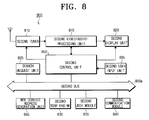
- the web service requester 800 has a second user input unit 805, a second tuner 810, a second video/audio-processing unit 815, a second display unit 820, a search request unit 825, a second SOAP engine 830, a second UDDI module 835, a second communication module 840, a web service address generation unit 845, and a second control unit 850.
- a second bus 800a provides paths for control signals and data transfers.
- the second user input unit 805 is a user interface generating to the second control unit 850 commands for performing functions supported by the web service requester 800 through a plurality of function keys.
- the second tuner 810 tunes to a channel selected by a viewer from a plurality of channels received through an antenna.
- the second video/audio-processing unit 815 decodes a broadcast signal of the selected channel, and generates displayable video/audio data.
- the generated video data is displayed on the second display unit 820, and the generated audio data is externally outputted through speakers (not shown).
- the search request unit 825 If a user manipulates the second user input unit 805, and inputs a desired web service by using an application program or a view such as view of a web browser, the search request unit 825 generates a search request message for requesting the UDDI server 900 to search for the desired web service.
- the second SOAP engine 830 converts the generated search request message into the SOAP format.
- the second UDDI module 835 converts the search request message of SOAP format into the UDDI standards. That is, the second UDDI module 835 converts a certain web service into a format that the UDDI server 900 can search for.
- the second communication module 840 sends the search request message of UDDI standards to the UDDI server 900.
- the second communication module 840 receives an address of a web service provider providing a requested web service sent from the UDDI server 900.
- the address of the web service provider consists of an IP of the web service provider and file information, for example, "1.asmx", of a web service registered by the web service provider.
- the web service address generation unit 845 generates a web service address by using a received address of a web service provider, that is, an address of the digital video/audio-processing apparatus 700 and a requested web service. For example, if the web service requester 800 requests video data, the web service address generation unit 845 generates a web service address by using an address of a web service provider and an argument of "requests video data", which is because a file of "1.asmx" provides video data as well as different data or functions provided by the digital video/audio-processing apparatus 700.
- the second SOAP engine 830 converts into the SOAP format a web service address generated from the web service address generation unit 845.
- the second communication module 840 sends the web service address of SOAP format to the digital video/audio-processing apparatus 700 to request a desired web service. Accordingly, the digital video/audio-processing apparatus 700 performs the operations described with reference to Figure 7 based on the web service address received from the web service requester 800. Thus, the web service of the digital video/audio-processing apparatus 700 is performed.
- the second control unit 850 controls the overall operations of the web service requester 800 according to a control program and a signal applied from the second user input unit 805.
- the UDDI interface unit 910 receives, from the digital video/audio-processing apparatus 700, a registration request message of SOAP format having the UDDI standards. Further, the UDDI interface unit 910 receives from the web service requester 800 a search request message, of SOAP format, having the UDDI standards.
- the UDDI registry 920 registers a list of web services that the digital video/audio-processing apparatus 700 provides, based on the received registration request message.
- the UDDI engine 930 analyzes the received registration request message to register in the UDDI registry 920 a list of web services to be provided. Further, the UDDI engine 930 analyzes the received search request message to check whether a web service requested to be searched for is registered in the UDDI registry 920. Further, if registered, the UDDI engine 930 controls the UDDI interface unit 910 to send to a web service requester an address of the digital video/audio-processing apparatus 700 providing the web service requested to be searched for.
- the digital video/audio-processing apparatus 700 registers in the UDDI server 900 the web services to be provided (S1000).
- the registration request unit 730 generates a registration request message requesting the web service registration
- the first SOAP engine 740 converts the registration request message into the SOAP format.
- the first UDDI module 745 converts the registration request message of SOAP format into the UDDI standards
- the first communication module 750 sends to the UDDI server 900 the registration request message of the UDDI standards.
- the web service to be provided is registered in the UDDI server 900.
- the web service engine 735 checks whether a file contained in the received web service address exists in a function list of the system directory (S1100 and S1200).
- the first SOAP engine 740 parses the web service address to generate the XML temporarily formed in the web service address (S1300).
- the web service engine 735 analyzes the XML resulting from the parsing, and reads out of the data storage unit 725 the data corresponding to the web service address (S1400).
- the web service engine 735 converts the read data into the XML format (S1500). If the operation S1500 is executed, the first SOAP engine 740 converts the XML-formatted data into the SOAP formatted data, and the first communication module 750 sends the SOAP-formatted data to the web service requester 800 (S1600 and S1700).
- the web service requester 800 receives the requested web service. For example, if the web service requester 800 requests video data, the digital video/audio-processing apparatus 700 sends to the web service requester 800 the video data stored in the data storage unit 725. Further, the web service requester 800 stores or displays on the first display unit 720 the video data provided from the digital video/audio-processing apparatus 700.
- the web service engine 735 generates an error message, and the first communication module 750 sends the generated error message to the web service requester 800 (S1800 and S1900).
- a user can connect to a TV installed at home, and change and/or carry out the functions of the TV even when the user is out of home.
- the video/audio-processing apparatus such as a TV provides web service functions.
- the present invention can enable an external device such as a host computer to display an EPG view set in the digital video/audio-processing apparatus by using web services, a user can more freely control the digital video/audio-processing apparatus. Further, the present invention can enables video data, music data, and the like to be shared between a digital video/audio-processing apparatus and a computer and between the digital video/audio-processing apparatuses.
Landscapes
- Engineering & Computer Science (AREA)
- Multimedia (AREA)
- Signal Processing (AREA)
- Human Computer Interaction (AREA)
- Computer Security & Cryptography (AREA)
- Information Transfer Between Computers (AREA)
- Two-Way Televisions, Distribution Of Moving Picture Or The Like (AREA)
Applications Claiming Priority (1)
| Application Number | Priority Date | Filing Date | Title |
|---|---|---|---|
| KR1020040068689A KR100618375B1 (ko) | 2004-08-30 | 2004-08-30 | 웹서비스가 가능한 디지털 영상/음향 처리장치, 그의웹서비스 제공방법 및 웹서비스 시스템 |
Publications (2)
| Publication Number | Publication Date |
|---|---|
| EP1631074A2 true EP1631074A2 (de) | 2006-03-01 |
| EP1631074A3 EP1631074A3 (de) | 2009-11-25 |
Family
ID=36139796
Family Applications (1)
| Application Number | Title | Priority Date | Filing Date |
|---|---|---|---|
| EP05107817A Ceased EP1631074A3 (de) | 2004-08-30 | 2005-08-25 | Fernsteuerung eines Fernsehgerätes über das Internet |
Country Status (4)
| Country | Link |
|---|---|
| US (1) | US7433873B2 (de) |
| EP (1) | EP1631074A3 (de) |
| KR (1) | KR100618375B1 (de) |
| CN (1) | CN100579118C (de) |
Families Citing this family (18)
| Publication number | Priority date | Publication date | Assignee | Title |
|---|---|---|---|---|
| EP1775912B1 (de) * | 2005-10-11 | 2016-01-20 | Alcatel Lucent | Methode zur evaluierung eines zusätzlichen dienstes für ein gerät eines anwenders eines telekommunikationssystems |
| KR100790058B1 (ko) * | 2005-12-16 | 2008-01-02 | 삼성전자주식회사 | 취침 예약 기능을 수행하는 디지털 멀티미디어 방송 수신장치 및 그 취침 예약 방법 |
| CN101150576B (zh) * | 2006-09-20 | 2011-09-28 | 鸿富锦精密工业(深圳)有限公司 | 网络服务器访问系统及方法 |
| US7987278B2 (en) * | 2006-12-18 | 2011-07-26 | Ricoh Company, Ltd. | Web services device profile on a multi-service device: dynamic addition of services |
| US7873647B2 (en) * | 2006-12-18 | 2011-01-18 | Ricoh Company, Ltd. | Web services device profile on a multi-service device: device and facility manager |
| US7904917B2 (en) * | 2006-12-18 | 2011-03-08 | Ricoh Company, Ltd. | Processing fast and slow SOAP requests differently in a web service application of a multi-functional peripheral |
| US8127306B2 (en) * | 2006-12-18 | 2012-02-28 | Ricoh Company, Ltd. | Integrating eventing in a web service application of a multi-functional peripheral |
| US8321546B2 (en) * | 2007-01-10 | 2012-11-27 | Ricoh Company, Ltd. | Integrating discovery functionality within a device and facility manager |
| US8112766B2 (en) * | 2006-12-21 | 2012-02-07 | Ricoh Company, Ltd. | Multi-threaded device and facility manager |
| US8239876B2 (en) * | 2007-06-12 | 2012-08-07 | Ricoh Company, Ltd. | Efficient web services application status self-control system on image-forming device |
| US8453164B2 (en) * | 2007-09-27 | 2013-05-28 | Ricoh Company, Ltd. | Method and apparatus for reduction of event notification within a web service application of a multi-functional peripheral |
| JP5473248B2 (ja) * | 2008-05-26 | 2014-04-16 | キヤノン株式会社 | 情報処理装置、情報処理装置の制御方法及びコンピュータプログラム |
| RU2556338C2 (ru) * | 2009-01-19 | 2015-07-10 | Конинклейке Филипс Электроникс Н.В. | Браузер с состоящей из двух частей машиной обработки сценариев для защиты конфиденциальности |
| CN102480612A (zh) * | 2010-11-21 | 2012-05-30 | 余浪 | 用于传输视频数据和触觉数据的方法以及视频采集装置 |
| US8904444B2 (en) * | 2012-11-15 | 2014-12-02 | Motorola Mobility Llc | Scalable data acquisition and accumulation in a resource constrained environment |
| CN116744039A (zh) * | 2022-03-02 | 2023-09-12 | 北京字节跳动网络技术有限公司 | 一种内容推荐方法及装置 |
| US12010365B2 (en) * | 2022-03-31 | 2024-06-11 | Comcast Cable Communications, Llc | Methods and systems for content management |
| CN119948505A (zh) * | 2022-09-24 | 2025-05-06 | 苹果公司 | 用于管理平台的技术 |
Citations (1)
| Publication number | Priority date | Publication date | Assignee | Title |
|---|---|---|---|---|
| US20030191802A1 (en) | 2002-04-03 | 2003-10-09 | Koninklijke Philips Electronics N.V. | Reshaped UDDI for intranet use |
Family Cites Families (13)
| Publication number | Priority date | Publication date | Assignee | Title |
|---|---|---|---|---|
| US6510466B1 (en) * | 1998-12-14 | 2003-01-21 | International Business Machines Corporation | Methods, systems and computer program products for centralized management of application programs on a network |
| KR100383843B1 (ko) | 1999-12-27 | 2003-05-14 | 엘지전자 주식회사 | 외부 연결기기에 대한 영상기기의 메뉴 원격제어방법 |
| JP2004506350A (ja) * | 2000-08-08 | 2004-02-26 | リプレイティブィ・インコーポレーテッド | リモートテレビジョン再生制御 |
| KR100729758B1 (ko) * | 2000-10-02 | 2007-06-20 | 삼성전자주식회사 | 인터넷을 기반으로 한 네트워크 시스템에서의 서비스제공방법 |
| JP4281238B2 (ja) | 2000-10-06 | 2009-06-17 | ソニー株式会社 | 番組情報提供装置および方法、画像記録システム、並びにプログラム格納媒体 |
| JP3719923B2 (ja) | 2000-10-06 | 2005-11-24 | シャープ株式会社 | デジタル放送受信機の遠隔操作システム |
| US8132105B1 (en) | 2000-10-10 | 2012-03-06 | Koninklijke Philips Electronics, N.V. | Control codes for programmable remote supplied in XML format |
| JP4521123B2 (ja) | 2001-01-04 | 2010-08-11 | 株式会社東芝 | データ放送システム及びデータ放送受信装置 |
| JP4168714B2 (ja) * | 2001-12-17 | 2008-10-22 | ソニー株式会社 | 通信装置および方法、記録媒体、並びにプログラム |
| US7987491B2 (en) * | 2002-05-10 | 2011-07-26 | Richard Reisman | Method and apparatus for browsing using alternative linkbases |
| KR100497362B1 (ko) | 2002-08-22 | 2005-06-23 | 삼성전자주식회사 | 전자 프로그램 가이드 정보 변환 장치 및 방법 |
| KR100594963B1 (ko) * | 2002-09-18 | 2006-07-03 | 한국전자통신연구원 | 사용자 선호 시청 시간대에 선호 프로그램의 제공을 위한개인 채널 서비스 제공 방법 및 그 장치 |
| US20040073941A1 (en) | 2002-09-30 | 2004-04-15 | Ludvig Edward A. | Systems and methods for dynamic conversion of web content to an interactive walled garden program |
-
2004
- 2004-08-30 KR KR1020040068689A patent/KR100618375B1/ko not_active Expired - Fee Related
-
2005
- 2005-08-25 EP EP05107817A patent/EP1631074A3/de not_active Ceased
- 2005-08-29 US US11/212,572 patent/US7433873B2/en not_active Expired - Fee Related
- 2005-08-30 CN CN200510099615A patent/CN100579118C/zh not_active Expired - Fee Related
Patent Citations (1)
| Publication number | Priority date | Publication date | Assignee | Title |
|---|---|---|---|---|
| US20030191802A1 (en) | 2002-04-03 | 2003-10-09 | Koninklijke Philips Electronics N.V. | Reshaped UDDI for intranet use |
Also Published As
| Publication number | Publication date |
|---|---|
| US7433873B2 (en) | 2008-10-07 |
| CN100579118C (zh) | 2010-01-06 |
| KR100618375B1 (ko) | 2006-08-31 |
| EP1631074A3 (de) | 2009-11-25 |
| CN1744605A (zh) | 2006-03-08 |
| KR20060019972A (ko) | 2006-03-06 |
| US20060047668A1 (en) | 2006-03-02 |
Similar Documents
| Publication | Publication Date | Title |
|---|---|---|
| US7433873B2 (en) | Web service-enabling digital video/audio-processing apparatus, and web service method and system therefor | |
| US20240267580A1 (en) | Display apparatus, server apparatus, display system including them, and method for providing content thereof | |
| US7143214B2 (en) | Hand held device having a browser application | |
| US9706241B2 (en) | Systems and methods for casting a graphical user interface display of a mobile device to a display screen associated with a set-top-box device | |
| US7102688B2 (en) | System and method for using a hand held device to display a readable representation of an audio track | |
| US8302125B2 (en) | Apparatus and method for providing EPG, and terminal and method for displaying EPG | |
| US9179175B2 (en) | Control device and method of controlling broadcast receiver | |
| US20020140571A1 (en) | System and method for using a hand held device to display product information | |
| US8789130B2 (en) | Set top box browser control via a wireless handset | |
| US20040017513A1 (en) | Electronic equipment, server, and presentation method of layout script text | |
| EP2472892A1 (de) | Steuervorrichtung und Verfahren zum Steuern eines Rundfunkempfängers | |
| US10097895B2 (en) | Content providing apparatus, system, and method for recommending contents | |
| KR20100041421A (ko) | 디스플레이장치 및 그의 사용자 인터페이스 표시방법 | |
| JP2003169352A (ja) | 携帯端末、番組関連情報提供方法及びシステム | |
| EP1819168A2 (de) | Verfahren und Vorrichtung zur Inhaltsverwaltung, Speichermedium und adaptives Inhaltswiedergabeverfahren damit | |
| US20120169935A1 (en) | Control device, broadcast receiver, method for controlling broadcast receiver, and method for providing service | |
| JP3953497B2 (ja) | 携帯端末 | |
| US20080109863A1 (en) | Video apparatus and signal processing method thereof | |
| CN111131863A (zh) | 令牌发放方法、装置及系统 | |
| JP2007336094A (ja) | 視聴システム及びその制御方法、視聴装置及びその制御方法、並びに制御プログラム | |
| US20090030890A1 (en) | Broadcast receiving apparatus and control method thereof | |
| US20090025044A1 (en) | Method for providing information and broadcast receiving apparatus using the same | |
| CN104205864B (zh) | 信息处理方法、信息处理装置和信息处理系统 | |
| US20100174818A1 (en) | Input Service for Client Devices | |
| CN117812413A (zh) | 终端设备、视频播放方法及介质 |
Legal Events
| Date | Code | Title | Description |
|---|---|---|---|
| PUAI | Public reference made under article 153(3) epc to a published international application that has entered the european phase |
Free format text: ORIGINAL CODE: 0009012 |
|
| AK | Designated contracting states |
Kind code of ref document: A2 Designated state(s): AT BE BG CH CY CZ DE DK EE ES FI FR GB GR HU IE IS IT LI LT LU LV MC NL PL PT RO SE SI SK TR |
|
| AX | Request for extension of the european patent |
Extension state: AL BA HR MK YU |
|
| PUAL | Search report despatched |
Free format text: ORIGINAL CODE: 0009013 |
|
| AK | Designated contracting states |
Kind code of ref document: A3 Designated state(s): AT BE BG CH CY CZ DE DK EE ES FI FR GB GR HU IE IS IT LI LT LU LV MC NL PL PT RO SE SI SK TR |
|
| AX | Request for extension of the european patent |
Extension state: AL BA HR MK YU |
|
| 17P | Request for examination filed |
Effective date: 20100525 |
|
| AKX | Designation fees paid |
Designated state(s): DE GB |
|
| RAP1 | Party data changed (applicant data changed or rights of an application transferred) |
Owner name: SAMSUNG ELECTRONICS CO., LTD. |
|
| 17Q | First examination report despatched |
Effective date: 20130211 |
|
| STAA | Information on the status of an ep patent application or granted ep patent |
Free format text: STATUS: THE APPLICATION HAS BEEN REFUSED |
|
| 18R | Application refused |
Effective date: 20150121 |