EP1624647B1 - IP telephone apparatus, IP telephone system and method for deleting terminal information - Google Patents
IP telephone apparatus, IP telephone system and method for deleting terminal information Download PDFInfo
- Publication number
- EP1624647B1 EP1624647B1 EP05017071A EP05017071A EP1624647B1 EP 1624647 B1 EP1624647 B1 EP 1624647B1 EP 05017071 A EP05017071 A EP 05017071A EP 05017071 A EP05017071 A EP 05017071A EP 1624647 B1 EP1624647 B1 EP 1624647B1
- Authority
- EP
- European Patent Office
- Prior art keywords
- telephone apparatus
- enum server
- telephone
- resource record
- naptr
- Prior art date
- Legal status (The legal status is an assumption and is not a legal conclusion. Google has not performed a legal analysis and makes no representation as to the accuracy of the status listed.)
- Expired - Lifetime
Links
Images




Classifications
-
- H—ELECTRICITY
- H04—ELECTRIC COMMUNICATION TECHNIQUE
- H04M—TELEPHONIC COMMUNICATION
- H04M1/00—Substation equipment, e.g. for use by subscribers
- H04M1/26—Devices for calling a subscriber
-
- H—ELECTRICITY
- H04—ELECTRIC COMMUNICATION TECHNIQUE
- H04M—TELEPHONIC COMMUNICATION
- H04M1/00—Substation equipment, e.g. for use by subscribers
- H04M1/253—Telephone sets using digital voice transmission
- H04M1/2535—Telephone sets using digital voice transmission adapted for voice communication over an Internet Protocol [IP] network
-
- H—ELECTRICITY
- H04—ELECTRIC COMMUNICATION TECHNIQUE
- H04L—TRANSMISSION OF DIGITAL INFORMATION, e.g. TELEGRAPHIC COMMUNICATION
- H04L12/00—Data switching networks
- H04L12/66—Arrangements for connecting between networks having differing types of switching systems, e.g. gateways
-
- H—ELECTRICITY
- H04—ELECTRIC COMMUNICATION TECHNIQUE
- H04L—TRANSMISSION OF DIGITAL INFORMATION, e.g. TELEGRAPHIC COMMUNICATION
- H04L61/00—Network arrangements, protocols or services for addressing or naming
- H04L61/45—Network directories; Name-to-address mapping
- H04L61/4505—Network directories; Name-to-address mapping using standardised directories; using standardised directory access protocols
- H04L61/4511—Network directories; Name-to-address mapping using standardised directories; using standardised directory access protocols using domain name system [DNS]
-
- H—ELECTRICITY
- H04—ELECTRIC COMMUNICATION TECHNIQUE
- H04L—TRANSMISSION OF DIGITAL INFORMATION, e.g. TELEGRAPHIC COMMUNICATION
- H04L61/00—Network arrangements, protocols or services for addressing or naming
- H04L61/45—Network directories; Name-to-address mapping
- H04L61/4535—Network directories; Name-to-address mapping using an address exchange platform which sets up a session between two nodes, e.g. rendezvous servers, session initiation protocols [SIP] registrars or H.323 gatekeepers
-
- H—ELECTRICITY
- H04—ELECTRIC COMMUNICATION TECHNIQUE
- H04L—TRANSMISSION OF DIGITAL INFORMATION, e.g. TELEGRAPHIC COMMUNICATION
- H04L65/00—Network arrangements, protocols or services for supporting real-time applications in data packet communication
- H04L65/10—Architectures or entities
- H04L65/1046—Call controllers; Call servers
-
- H—ELECTRICITY
- H04—ELECTRIC COMMUNICATION TECHNIQUE
- H04L—TRANSMISSION OF DIGITAL INFORMATION, e.g. TELEGRAPHIC COMMUNICATION
- H04L65/00—Network arrangements, protocols or services for supporting real-time applications in data packet communication
- H04L65/10—Architectures or entities
- H04L65/1059—End-user terminal functionalities specially adapted for real-time communication
-
- H—ELECTRICITY
- H04—ELECTRIC COMMUNICATION TECHNIQUE
- H04L—TRANSMISSION OF DIGITAL INFORMATION, e.g. TELEGRAPHIC COMMUNICATION
- H04L65/00—Network arrangements, protocols or services for supporting real-time applications in data packet communication
- H04L65/1066—Session management
- H04L65/1073—Registration or de-registration
-
- H—ELECTRICITY
- H04—ELECTRIC COMMUNICATION TECHNIQUE
- H04L—TRANSMISSION OF DIGITAL INFORMATION, e.g. TELEGRAPHIC COMMUNICATION
- H04L65/00—Network arrangements, protocols or services for supporting real-time applications in data packet communication
- H04L65/1066—Session management
- H04L65/1101—Session protocols
-
- H—ELECTRICITY
- H04—ELECTRIC COMMUNICATION TECHNIQUE
- H04L—TRANSMISSION OF DIGITAL INFORMATION, e.g. TELEGRAPHIC COMMUNICATION
- H04L67/00—Network arrangements or protocols for supporting network services or applications
- H04L67/50—Network services
- H04L67/54—Presence management, e.g. monitoring or registration for receipt of user log-on information, or the connection status of the users
-
- H—ELECTRICITY
- H04—ELECTRIC COMMUNICATION TECHNIQUE
- H04L—TRANSMISSION OF DIGITAL INFORMATION, e.g. TELEGRAPHIC COMMUNICATION
- H04L9/00—Cryptographic mechanisms or cryptographic arrangements for secret or secure communications; Network security protocols
- H04L9/40—Network security protocols
-
- H—ELECTRICITY
- H04—ELECTRIC COMMUNICATION TECHNIQUE
- H04M—TELEPHONIC COMMUNICATION
- H04M3/00—Automatic or semi-automatic exchanges
-
- H—ELECTRICITY
- H04—ELECTRIC COMMUNICATION TECHNIQUE
- H04M—TELEPHONIC COMMUNICATION
- H04M3/00—Automatic or semi-automatic exchanges
- H04M3/42—Systems providing special services or facilities to subscribers
- H04M3/42365—Presence services providing information on the willingness to communicate or the ability to communicate in terms of media capability or network connectivity
- H04M3/42374—Presence services providing information on the willingness to communicate or the ability to communicate in terms of media capability or network connectivity where the information is provided to a monitoring entity such as a potential calling party or a call processing server
-
- H—ELECTRICITY
- H04—ELECTRIC COMMUNICATION TECHNIQUE
- H04M—TELEPHONIC COMMUNICATION
- H04M7/00—Arrangements for interconnection between switching centres
- H04M7/006—Networks other than PSTN/ISDN providing telephone service, e.g. Voice over Internet Protocol (VoIP), including next generation networks with a packet-switched transport layer
-
- H—ELECTRICITY
- H04—ELECTRIC COMMUNICATION TECHNIQUE
- H04L—TRANSMISSION OF DIGITAL INFORMATION, e.g. TELEGRAPHIC COMMUNICATION
- H04L69/00—Network arrangements, protocols or services independent of the application payload and not provided for in the other groups of this subclass
- H04L69/30—Definitions, standards or architectural aspects of layered protocol stacks
- H04L69/32—Architecture of open systems interconnection [OSI] 7-layer type protocol stacks, e.g. the interfaces between the data link level and the physical level
- H04L69/322—Intralayer communication protocols among peer entities or protocol data unit [PDU] definitions
- H04L69/329—Intralayer communication protocols among peer entities or protocol data unit [PDU] definitions in the application layer [OSI layer 7]
Definitions
- the present invention relates to an IP telephone apparatus, an ENUM server, an IP telephone system, and a method for deleting terminal information.
- the present invention particularly relates to an IP telephone apparatus, an ENUM server and an IP telephone system that delete a NAPTR resource record from the ENUM server, and to a method for deleting a NAPTR resource record from the ENUM server.
- an "ENUM (Telephone Number Mapping)" protocol is acknowledged as a protocol that associates the services using the Internet with the telephone numbers or associates the resources on the Internet with the telephone numbers.
- This ENUM protocol is specified in RFC2916 (Publication 1), which is being studied at the IETF (Internet Engineering Task Force) and the ITU-T (International Telecommunication Union-Telecommunication Standardization Sector).
- the "ENUM" protocol has a function that converts a telephone number into a number corresponding to the E.164 system specified by the ITU-T and searches an IP address or a URI (Uniform Resource Identifier) using the mechanism of the DNS (Domain Name System) based on the converted telephone number.
- ENUM architecture includes an ENUM Registrar, a Registrant and an ENUM Tier 2 Nameserver Provider.
- the Tier 2 Namesever keeps all NAPTR Resources Records of a given E.164 number and a process is illustrated for creating/modifying/deleting the NAPTR Records in the Tier 2 database.
- An ENUM system is also being studied so that a service is provided using the "ENUM" protocol.
- an end user of the IP terminal apparatus such as, for example, an IP telephone apparatus which uses the ENUM system can select various functions (URI, the services using the URI ⁇ including telephone communication, e-mail and access to the database ⁇ ).
- the end user thus, needs to set the selected function into a "NAPTR (the Naming Authority Pointer)" resource record and to store the set NAPTR resource record in the ENUM system.
- NAPTR Naming Authority Pointer
- France Patent Fr-A-2841072 discloses a system for consulting and/or updating DNS servers and/or LDAP directories. More specifically, resource records that are stored in a domain name server (DNS) are consulted or modified upon a request from a telecommunication terminal. For instance, a NAPTR record is described and means for updating the NAPTR records via a SMS, voice mode, web, Minitel or E-mail are illustrated.
- DNS domain name server
- the end user of the conventional IP terminal apparatus such as an IP telephone apparatus using the "ENUM" protocol was required to instruct the ENUM server to transmit a request for the deletion when the NAPTR resource record was deleted. It was problematic in that the operation of deleting the NAPTR resource record became complex for the end users since the end users themselves had to transmit the request for the deletion.
- the present invention relates to an IP telephone apparatus, an IP telephone system and a method for deleting a NAPTR ressource record, to the independent claims.
- the present invention is provided to address The above-described problem.
- the objective of the present invention is to provide an IP telephone apparatus, an ENUM server and an IP telephone system that delete a NAPTR record from the ENUM server corresponding to the operation of a predetermined indication key, and to provide a method for deleting the NAPTR record from the ENUM server.
- the predetermined key is provided on the IP telephone apparatus and configured to transmit a request for deleting the NAPTR record.
- This invention relates to an IP telephone apparatus connected to an ENUM server via an IP network.
- the IP telephone apparatus includes an indicator that transmits a request for deleting information regarding the terminal apparatus stored in the ENUM server.
- the IP telephone apparatus also includes a deletion request processor that transmits, to the ENUM server, a request for deleting information regarding the terminal apparatus stored in the ENUM server corresponding to the request from the indicator.
- Fig. 1 is a diagram illustrating a network configuration of the IP telephone system according to the embodiment of the present invention.
- IP telephone system 100 IP telephone apparatus 101, IP telephone apparatus 102, and ENUM server 103 are mutually connected via IP network 104.
- IP telephone system is not limited to the configuration described in Fig. 1 and can be configured to connect to three or more IP telephones.
- IP telephone apparatus 101 (102) has functions that enable voice communication with another IP telephone apparatus via IP network 104.
- ENUM (Telephone Number Mapping) server 103 has a database that stores a NAPTR (The Naming Authority Pointer) resource record (hereafter referred to as NAPTR record).
- NAPTR record The Naming Authority Pointer resource record (hereafter referred to as NAPTR record).
- ENUM server 103 returns, to IP telephone apparatus 101 (102), the NAPTR record stored in the database, in response to the request of IP telephone apparatus 101 (102).
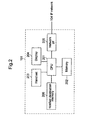
- Fig. 2 is a block diagram illustrating a configuration of IP telephone apparatus 101 according to the embodiment of the present invention.
- IP telephone apparatus 102 has the same configuration as IP telephone apparatus 101.
- IP telephone apparatus 101 is configured mainly with CPU 201, memory 202, handset 203, display 204 and network-interface (henceforth referred to as network I/F) 205 and notified destination memory 206.
- CPU (Central Processing Unit) 201 controls all the operations to perform voice communication with another IP telephone apparatus 102 via IP network 104 based on the program for controlling voice communication.
- the program is stored in memory 202.
- CPU 201 therefore, controls a call with the destination terminal, according to a call control protocol, such as SIP (Session Initiation Protocol) and H. 323.
- SIP Session Initiation Protocol
- CPU 201 also transmits necessary requests to display 204 and network I/F 205.
- CPU 201 controls the transmission of the message "Request the NAPTR record” to ENUM server 103 and the reception of the message "Respond indicating the deletion of the NAPTR record” from ENUM server 103.
- the message “Request the NAPTR record” is transmitted for requesting a NAPTR record corresponding to a destination terminal.
- the message “Respond indicating the deletion of the NAPTR record” is transmitted in response to the message "Request the NAPTR record”.
- CPU 201 also controls to automatically transmit, from network I/F 205 to ENUM server 103, a request for deleting the NAPTR record when absent key 303, which will be described later, is pressed.
- An “absent key” is provided on IP telephone apparatus 101.
- the "absent key” has a function to indicate that the user is not available when the user is out or is not at his desk.
- the NAPTR record of IP telephone apparatus 101 is deleted from the ENUM server.
- the user of IP telephone apparatus 101 can indicate to the user of another IP telephone apparatus that the user is not available by turning off the display lamp of the another IP telephone apparatus, the display lamp indicating that the user is available.
- the "absent key” can be combined with the conventional "answering machine key", which is contained in the answering machine telephone function. In this case, when the "absent key” is pressed, IP telephone apparatus 101 deletes the NAPTR record and turns off the display lamp of another IP telephone apparatus, the display lamp indicating that the user is available. At the same time, IP telephone apparatus 101 performs the same process in order to set a conventional recording mode.
- CPU 201 regularly transmits, from network I/F 205 to ENUM server 103, a request for the NAPTR record of IP telephone apparatus 102.
- CPU 201 Upon receiving, from ENUM server 103 via network I/F 205, a response indicating the deletion of the NAPTR record of IP telephone apparatus 102 corresponding to the request, CPU 201 turns off display lamp 305 indicating that the user is available. Display lamp 305 will be described later.
- CPU 201 upon regularly receiving the request for the NAPTR record of IP telephone apparatus 101 transmitted from IP telephone apparatus 102 via network I/F 205 and when the NAPTR record of IP telephone apparatus 101 has been deleted, CPU 201 returns, to IP telephone apparatus 102 via network I/F205, a response indicating the deletion of the NAPTR record of IP telephone apparatus 101.
- CPU 201 also functions as a deletion request processor.
- Memory 202 has a function as a ROM (Read Only Memory) that stores a program for controlling voice communication and so on that is conducted by CPU 201.
- Memory 202 also has a function as a RAM (Random Access Memory), which is used as a work-memory when CPU 201 performs a program.
- Handset 203 outputs, to CPU 201, an off-hook signal or an on-hook signal, according to the off-hook operation or an on-hook operation performed by the user.
- Handset 203 also contains a microphone and a speaker.
- Handset 203 converts the user's transmitted voice into the transmitted voice signal and outputs, to CPU 201, the converted voice signal when starting voice communication with the destination terminal.
- handset 203 inputs the received voice signal from CPU 201 and outputs the received voice signal as received voice via the speaker.
- Display 204 is configured with a liquid crystal panel and so forth. Display 204 displays the current status of IP telephone apparatus 101 as well as the name, the address, the telephone number, etc. of the source IP telephone apparatus input by CPU 201.
- Network I/F 205 is an interface for IP network 104 that is connected to IP telephone apparatus 101.
- Network I/F 205 transmits, to ENUM server 103, a request for the deletion upon the control of CPU 201 and receives a response indicating the deletion of the NAPTR record of IP telephone apparatus 102.
- Network I/F 205 further functions as a transmitter and a receiver.
- Notified destination memory 206 stores user information of IP telephone apparatus 102, which is the call destination. A result of the deletion process is notified to IP telephone apparatus 102. Notified destination memory 206 also functions as a memory.
- Fig. 3 is a front view illustrating the appearance of IP telephone apparatus 101 according to the present embodiment.
- IP telephone apparatus 102 has the same configuration.
- IP telephone apparatus 101 includes a microphone, handset 203, ten-key pad 302, absent key 303, speaker key 304 and display lamp 305, which indicates that the user is available.
- the microphone receives a user's voice.
- Handset 203 has a speaker that outputs the received voice.
- Ten-key pad 302 inputs telephone numbers and so on.
- Absent key 303 indicates that the user of the IP telephone apparatus is not available. Absent key 303 can switch on and off the answering machine telephone function.
- Speaker key 304 switches output of the voice from the speaker of handset 203 to an external speaker.
- Display lamp 305 shows that the user of another IP telephone apparatus is available.
- IP telephone apparatus 101 contains LAN interface (LAN I/F) 306 and public line interface (public line I/F) 307.
- LAN interface is connected to IP network 104.
- public line interface is connected to the public line network. Absent key 303 functions as an indicator.
- Display 204 is configured with a liquid crystal panel and so on. Display 204 displays the telephone number of the source IP telephone apparatus or the name, the address and so on registered in the telephone directory corresponding to the telephone number of the source IP telephone apparatus, based on the NAPTR record that is received from ENUM server 103. Also, display lamp 305 is able to display, for up to four users of the IP telephone apparatuses, that the user is available.
- Fig. 3 illustrates an instance where the display lamps are configured to display information regarding acquaintance A, acquaintance B, acquaintance D and acquaintance E. Display lamp 305 indicating that the user is available also functions as a display.
- display lamp 305 indicating that the user is available corresponding to the IP telephone apparatus of acquaintance A is lighted, for example, when the IP telephone apparatus of acquaintance A is turned ON, when the key provided on the IP telephone apparatus of acquaintance A indicating that the user is available is pressed, or when a message indicating that the user of the IP telephone apparatus of acquaintance A is available is received from the IP telephone apparatus of acquaintance A.
- the four display lamps of acquaintance A, acquaintance B, acquaintance D and acquaintance E indicating that the user is available are lighted, it indicates that a message that the user of the IP telephone apparatus is available has been received from each of the four IP telephone apparatuses.
- memory 202 of the IP telephone apparatus stores the identification information of the lamp, the names of acquaintances (for example, A) and the telephone numbers corresponding to each other.
- the identification information of the lamp indicates, for example, which lamp of four display lamps 305 indicating that the user is available and provided on the IP telephone apparatuses applies to an individual call destination (for example, lamps from left to right in order are specified as lamp 1, lamp 2, lamp 3 and lamp 4). Therefore, by referring to memory 202, the IP telephone apparatus can determine to which telephone number a request for the NAPTR record of the IP telephone apparatus should be transmitted and which display lamp indicating that the user is available should be turned off upon receiving the response indicating that the NAPTR record of the IP telephone apparatus has been deleted.
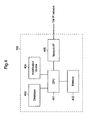
- Fig. 4 is a block diagram illustrating the configuration of ENUM server 103 according to the embodiment of the present invention.
- ENUM server 103 is configured mainly with CPU 401, memory 402, user database 403, input/output device 404, and network I/F 405.
- CPU 401 controls the entire operation of ENUM server 103 based on the control program stored in memory 402. Also, upon receiving, for example, from IP telephone apparatus 101, a request for the registration of a NAPTR record "Register", CPU 401 starts an application software such as "Nsupdate” and registers the NAPTR record of IP telephone apparatus 101 in database 403, which will be described later. Then, CPU 401 returns, from network I/F 405 to IP telephone apparatus 101, a signal indicating completion of the registration.
- CPU 401 when a request for deleting a NAPTR record of IP telephone apparatus 101 is received from IP telephone apparatus 101, CPU 401 starts an application software such as "Nsupdate" and deletes the NAPTR record of IP telephone apparatus 101 stored in database 403, which will be described later. Then, CPU 401 returns, from network I/F 405 to IP telephone apparatus 101, a signal indicating that the NAPTR record of IP telephone apparatus 101 has been deleted.
- CPU 401 functions as a deletion processor.
- Memory 402 has a function as a ROM that stores a control program and so on that is performed by CPU 401.
- Memory 402 also has a function as a RAM that is used as a work-memory when CPU 401 performs a program.
- Database 403 is a database that registers the NAPTR record of IP telephone apparatus 101 and IP telephone apparatus 102.
- Input/output device 404 is configured with an input device and with an output device.
- the input device includes a keyboard that is used when ENUM server 103 is maintained.
- the output device includes a display that displays the maintenance information.
- Network I/F 405 is an interface to IP network 104 that is connected with ENUM server 103.
- Network I/F 405 transmits, to IP telephone apparatus 101 and IP telephone apparatus 102, a message that the registration operation and/or deletion operation have/has been performed by the control of CPU 401. Further, network I/F 405 functions as a transmitter.
- IP telephone system 100 of Fig. 1 from when IP telephone apparatus 101 transmits, to ENUM server 103, a request for the deletion of a NAPTR record to when IP telephone apparatus 101 transmits, to IP telephone apparatus 102, a response indicating the deletion of the NAPTR record.
- the description refers to the sequence diagram in Fig. 5 .
- ENUM server 103 previously stores, into database 403, the NAPTR records of IP telephone apparatus 101 and IP telephone apparatus 102 shown in Fig. 9 .
- IP telephone apparatus 102 is already notified that the user of IP telephone apparatus 101 is available.
- display lamp 305 of IP telephone apparatus 102 indicating that the user of IP telephone apparatus 101 is available is lighted.
- the top line of the ENUM domain name is the NAPTR records of IP telephone 101
- the bottom line of the ENUM domain name is the NAPTR record of IP telephone 102.
- CPU 201 When the user of IP telephone apparatus 101 presses absent key 303 since the user is going to be unavailable, CPU 201 recognizes an ON signal of absent key 303 and transmits, from network I/F 205 to ENUM server 103, a message "Request the deletion of IP telephone apparatus 101" in order to transmit a request for deleting the NAPTR record of the terminal apparatus from ENUM server 103 (step S501).
- IP telephone apparatus 102 reads the telephone number of IP telephone apparatus 101 from memory 202 and regularly transmits, to ENUM server 103, a message "Request the NAPTR record of IP telephone apparatus 101" using the polling function (step S503). Additionally, when four people are registered in memory 202 as call destinations and when the NAPTR records of the IP telephone apparatuses are requested, IP telephone apparatus 102 is configured to regularly transmit a message "Request the NAPTR record" to each of the IP telephone apparatuses.
- CPU 201 in IP telephone apparatus 102 upon receiving, from ENUM server 103 via network I/F 205, the message "Respond indicating the deletion of the NAPTR record of IP telephone apparatus 101 ", CPU 201 in IP telephone apparatus 102 recognizes that the NAPTR record of IP telephone apparatus 101 has been deleted and turns off display lamp 305 indicating that the user is available. More specifically, CPU 201 in IP telephone apparatus 102 searches, from memory 202, the telephone number of IP telephone apparatus 101 since the response indicating the deletion of the NAPTR record of IP telephone apparatus 101 has been received. Then, CPU 201 obtains the identification information of the corresponding lamp (for example, lamp 1) and turns off the display lamp corresponding to lamp 1. Thus, the user of IP telephone apparatus 102 can confirm that the user of IP telephone apparatus 101 is not available.
- the corresponding lamp for example, lamp 1
- IP telephone apparatus 101 ENUM server 103 and IP telephone apparatus 102, according to the sequence diagram shown in Fig. 5 with reference to the flowchart illustrated in Fig. 6 .
- database 403 in ENUM server 103 the respective NAPTR record of IP telephone apparatus 101 and IP telephone apparatus 102 shown in Fig. 9 is previously stored.
- step S601 When the user of IP telephone apparatus 101 presses absent key 303 since the user is going to be unavailable (step S601), CPU 201 in IP telephone apparatus 101 recognizes an ON signal of absent key 303 and transmits, to ENUM server 103, a message "Request for the deletion of IP telephone apparatus 101" in order to transmit a request for deleting the NAPTR record of the terminal apparatus from ENUM server 103 (step S602).
- ENUM server 103 upon receiving the message "Request the deletion of IP telephone apparatus 101" from IP telephone apparatus 101, ENUM server 103 starts an application software such as “Nsupdate” and deletes the NAPTR record of IP telephone apparatus 101 stored in database 403 (step S603). Then, ENUM server 103 returns, from network I/F 405 to IP telephone apparatus 101, a message "Completion of the deletion of IP telephone apparatus 101" (step S604).
- IP telephone apparatus 102 regularly transmits, to ENUM server 103, a message "Request the NAPTR record of IP telephone apparatus 101" using the polling function (step S605).
- CPU 401 in ENUM server 103 Upon regularly receiving the message "Request the NAPTR record of IP telephone apparatus 101" transmitted from IP telephone apparatus 102 via network I/F 405, since in the case the NAPTR record of IP telephone apparatus 101 has been deleted, CPU 401 in ENUM server 103 returns, from network I/F 405 to IP telephone apparatus 102, a message "Respond indicating the deletion of the NAPTR record of IP telephone apparatus 101" (step S606).
- CPU 201 in IP telephone apparatus 102 recognizes that the NAPTR record of IP telephone apparatus 101 has been deleted and turns off display lamp 305 indicating that the user is available (step S607).
- IP telephone apparatus 102 regularly transmits, to ENUM server 103, the message "Request the NAPTR record of IP telephone apparatus 101" using the polling function.
- ENUM server 103 can be configured to transmit, to IP telephone apparatus 102, a message indicating that the NAPTR record of IP telephone apparatus 101 has been deleted.
- ENUM server 103 can be configured to transmit, to IP telephone apparatus 102, a message indicating that the NAPTR record of IP telephone apparatus 101 has been deleted with reference to the sequence diagram in Fig. 7 and the flowchart in Fig. 8 .
- IP telephone apparatus 101 and IP telephone apparatus 102 perform the same registration operation and deletion operation according to the sequence diagram in Fig. 7 as the registration operation and deletion operation up to step S501 and step S502 shown in Fig. 5 .
- the different operation is indicated as step S701 and step S702, and the description of the sequence diagram is limited to this operation.
- CPU 201 in IP telephone apparatus 101 Upon receiving, from ENUM server 103, a message "Completion of the deletion of IP telephone apparatus 101" (step S502), CPU 201 in IP telephone apparatus 101 refers to a call destination stored in notified destination memory 206 and transmits, to IP telephone apparatus 102, a message "Notify that the NAPTR record of IP telephone apparatus 101 has been deleted" (step S701). In this case, the message "Notify that the NAPTR record of IP telephone apparatus 101 has been deleted" is an original message that is designed for this process.
- CPU 201 in IP telephone apparatus 101 transmits a message "Notify that the NAPTR record of IP telephone apparatus 101 has been deleted" to each of the call destinations. It is desirable that the users themselves can register the call destination IP telephone apparatus.
- step S702 Upon receiving, from IP telephone apparatus 101, the message "Notify that the NAPTR record of IP telephone apparatus 101 has been deleted," CPU 201 in IP telephone apparatus 102 returns, to IP telephone apparatus 101, the message "Respond indicating the deletion of IP telephone apparatus 101" (step S702). Then, CPU 201 recognizes that the NAPTR record of IP telephone apparatus 101 has been deleted and turns off display lamp 305 indicating that the user is available. In this case, the message "Respond indicating the deletion of IP telephone apparatus 101" is an original message that is designed for this process.
- step S801 and step S802 are different.
- step S801 upon receiving, from ENUM server 103, a message "Completion of the deletion of IP telephone apparatus 101" , CPU 201 in IP telephone apparatus 101 refers to a call destination stored in notified destination memory 206 and transmits, to IP telephone apparatus 102, a message "Notify that the NAPTR record of IP telephone apparatus 101 has been deleted".
- step S802 upon receiving, from IP telephone apparatus 101, a message "Notify the NAPTR record of IP telephone apparatus 101 has been deleted", CPU 201 in IP telephone apparatus 102 returns, to IP telephone apparatus 101, a message "Respond indicating the deletion of the NAPTR record of IP telephone apparatus 101 ".
- IP telephone system 100 when absent key 303 provided on IP telephone apparatus 101 is pressed, a request for deleting the NAPTR record is transmitted to ENUM server 103 and a process of deleting the NAPTR record of IP telephone apparatus 101 is performed.
- ENUM server 103 After the process of deleting the NAPTR record of IP telephone apparatus 101, ENUM server 103 notifies IP telephone apparatus 102 of a message "Respond indicating the deletion of the NAPTR record of IP telephone apparatus 101", upon receiving the message "Request the NAPTR record of IP telephone apparatus 101" regularly transmitted from IP telephone apparatus 102. Also, IP telephone apparatus 101 notifies IP telephone apparatus 102, which is previously stored in notified destination memory 206 as the call destination, of a message "Notify that the NAPTR record of IP telephone apparatus 101 has been deleted".
- IP telephone apparatus 102 Upon receiving the message "Notify that the NAPTR record of IP telephone apparatus 101 has been deleted", IP telephone apparatus 102 turns off display lamp 305 indicating that the user is available in order to notify the user of IP telephone apparatus 102 that the user of IP telephone apparatus 101 is not available.
- the NAPTR record of IP telephone apparatus 101 is deleted from ENUM server 103, but it is also applicable likewise to a case where the NAPTR record of IP telephone apparatus 102 is deleted from ENUM server 103. Additionally, in the above-described embodiment of the present invention, the deletion of the NAPTR record of IP telephone apparatus 101 is notified to IP telephone apparatus 102, but it is also applicable likewise that the deletion of the NAPTR record of IP telephone apparatus 102 is notified to IP telephone apparatus 101.
- each of the users of IP telephone apparatus 101 and IP telephone apparatus 102 can delete the NAPTR record from ENUM server 103 simply by pressing a predetermined key, for example, absent key 303. Therefore, the user can be saved the trouble of deleting the NAPTR record and can notify another IP telephone apparatus that the user is not available.
- Each of the users of IP telephone apparatus 101 and IP telephone apparatus 102 can also confirm that the user of the another IP telephone apparatus is not available by looking at display lamp 305 indicating that the user is available and seeing that it is OFF, and thus can avoid an unnecessary call. As a result, a user-friendly IP telephone system is provided for the user of the IP telephone apparatus.
- IP telephone apparatus 101 notifies IP telephone apparatus 102 that the NAPTR record of IP telephone apparatus 101 has been deleted using an original message "Notify IP telephone apparatus 101 has been deleted”. Then, IP telephone apparatus 102 responds to IP telephone apparatus 101 using an original message "Respond indicating the deletion of IP telephone apparatus 101". However, another message can also be used for this message.
- IP address of IP telephone apparatus 101 can be specified with a non-standard header of the message (for example, "P" header), and another message can be transmitted to IP telephone apparatus 102.
- a non-standard header of the message for example, "P" header
- IP telephone apparatus 102 can refer to the IP address of IP telephone apparatus 101 specified in "P" header included in the message "Notify Info” and can recognize that the NAPTR record of IP telephone apparatus 101 has been deleted. Then, IP telephone apparatus 102 can return, to IP telephone apparatus 101, "P" header of the message "Notify Info", in which the IP address of IP telephone apparatus 102 is specified.
Landscapes
- Engineering & Computer Science (AREA)
- Signal Processing (AREA)
- Computer Networks & Wireless Communication (AREA)
- Multimedia (AREA)
- Business, Economics & Management (AREA)
- General Business, Economics & Management (AREA)
- Computer Security & Cryptography (AREA)
- Telephonic Communication Services (AREA)
Applications Claiming Priority (2)
| Application Number | Priority Date | Filing Date | Title |
|---|---|---|---|
| JP2004231154 | 2004-08-06 | ||
| JP2005085871A JP4603913B2 (ja) | 2004-08-06 | 2005-03-24 | Ip電話装置及びip電話システム |
Publications (2)
| Publication Number | Publication Date |
|---|---|
| EP1624647A1 EP1624647A1 (en) | 2006-02-08 |
| EP1624647B1 true EP1624647B1 (en) | 2011-07-27 |
Family
ID=35064885
Family Applications (1)
| Application Number | Title | Priority Date | Filing Date |
|---|---|---|---|
| EP05017071A Expired - Lifetime EP1624647B1 (en) | 2004-08-06 | 2005-08-05 | IP telephone apparatus, IP telephone system and method for deleting terminal information |
Country Status (4)
| Country | Link |
|---|---|
| US (1) | US7751386B2 (https=) |
| EP (1) | EP1624647B1 (https=) |
| JP (1) | JP4603913B2 (https=) |
| KR (1) | KR100720601B1 (https=) |
Families Citing this family (16)
| Publication number | Priority date | Publication date | Assignee | Title |
|---|---|---|---|---|
| JP4436208B2 (ja) * | 2004-08-04 | 2010-03-24 | パナソニック株式会社 | Ip電話番号照会システム及びip電話システム |
| JP4511901B2 (ja) * | 2004-10-05 | 2010-07-28 | パナソニック株式会社 | Ip端末装置および通信機能表示方法 |
| US8184798B2 (en) * | 2006-06-13 | 2012-05-22 | Tekelec | Methods, systems and computer program products for accessing number portability (NP) and E.164 number (ENUM) data using a common NP/ENUM data locator structure |
| CN1921518B (zh) * | 2006-08-21 | 2010-05-12 | 华为技术有限公司 | 录制设备、存储服务器、录制系统及方法和回放系统及方法 |
| US8254551B2 (en) * | 2006-12-07 | 2012-08-28 | Tekelec, Inc. | Methods, systems, and computer program products for providing quality of service using E.164 number mapping (ENUM) data in a communications network |
| US7996541B2 (en) | 2007-06-15 | 2011-08-09 | Tekelec | Methods, systems, and computer program products for identifying a serving home subscriber server (HSS) in a communications network |
| US8538000B2 (en) | 2007-08-10 | 2013-09-17 | Tekelec, Inc. | Methods, systems, and computer program products for performing message deposit transaction screening |
| EP2258128B1 (en) | 2008-03-07 | 2017-01-11 | Tekelec Global, Inc. | Methods, systems, and computer readable media for routing a message service message through a communications network |
| WO2010060087A2 (en) | 2008-11-24 | 2010-05-27 | Tekelec | Systems, methods, and computer readable media for location-sensitive called-party number translation in a telecommunications network |
| WO2010132436A2 (en) | 2009-05-11 | 2010-11-18 | Tekelec | Methods, systems, and computer readable media for providing scalable number portability (np) home location register (hlr) |
| EP2686986B1 (en) | 2011-03-18 | 2019-09-11 | Tekelec, Inc. | Method, system, and computer readable media for configurable diameter address resolution |
| US8730951B2 (en) | 2012-06-01 | 2014-05-20 | At&T Intellectual Property I, Lp | Apparatus and methods for origination of voice and messaging communication in a network |
| US9647980B2 (en) * | 2012-06-07 | 2017-05-09 | At&T Intellectual Property I, L.P. | Apparatus and methods for a scalable communications network |
| US9015327B2 (en) | 2012-06-11 | 2015-04-21 | At&T Intellectual Property I, Lp | Apparatus and methods for flexible communicatons in a network |
| US9635526B2 (en) | 2013-03-15 | 2017-04-25 | Tekelec, Inc. | Methods, systems, and computer readable media for utilizing a diameter proxy agent to communicate short message service (SMS) messages |
| US9203936B2 (en) | 2013-10-07 | 2015-12-01 | At&T Intellectual Property I, Lp | Method and apparatus for initiating communication sessions |
Family Cites Families (20)
| Publication number | Priority date | Publication date | Assignee | Title |
|---|---|---|---|---|
| US75304A (en) * | 1868-03-10 | Improvement in differential gear-power machine | ||
| US182781A (en) * | 1876-10-03 | Improvement in steam-heaters | ||
| JPH06104986A (ja) * | 1992-09-21 | 1994-04-15 | Matsushita Electric Works Ltd | 内線呼出し機能を備えた通信システム |
| KR20020048173A (ko) * | 2000-12-16 | 2002-06-22 | 박원배 | 공중 회선 교환 전화망, 인터넷 전화, 키폰 연결을병행하는 전화기 구조 및 그 호 처리 방법 |
| US20020075304A1 (en) | 2000-12-18 | 2002-06-20 | Nortel Networks Limited | Method and system for supporting communications within a virtual team environment |
| GB2371948B (en) * | 2001-02-02 | 2005-09-14 | Nokia Mobile Phones Ltd | Mobile telecommunications device |
| US7269162B1 (en) * | 2001-07-20 | 2007-09-11 | Cisco Technology, Inc. | Integration of presence services with a network enabled telephony device |
| US20030074461A1 (en) * | 2001-10-09 | 2003-04-17 | I-Dns.Net International Pte. Ltd. | Method of mapping names or identifiers to telecommunications network resource locations |
| JP4254996B2 (ja) | 2002-06-04 | 2009-04-15 | 株式会社日立製作所 | コミュニケーションシステムおよびコミュニケーション方法 |
| FR2841072A1 (fr) * | 2002-06-14 | 2003-12-19 | France Telecom | Systeme de consultation et/ou mise a jour de serveurs dns et/ou d'annuaires ldap |
| JP2004080567A (ja) | 2002-08-21 | 2004-03-11 | Matsushita Electric Ind Co Ltd | ネットワーク端末装置とアドレス管理サーバ、及びそのネットワーク通信方法 |
| JP3733940B2 (ja) * | 2002-09-24 | 2006-01-11 | ヤマハ株式会社 | ルータ |
| KR100911095B1 (ko) * | 2002-09-30 | 2009-08-06 | 주식회사 케이티 | 번호 이동성 데이터베이스를 이용한 enum 서비스 호처리 방법 |
| JP2004187034A (ja) * | 2002-12-04 | 2004-07-02 | Matsushita Electric Ind Co Ltd | ピアリソース解決システムおよびピアリソース解決方法 |
| JP2004193984A (ja) * | 2002-12-11 | 2004-07-08 | Nippon Telegr & Teleph Corp <Ntt> | 通信システム、通信方法、サーバ、通信端末、プログラム、並びに、記録媒体 |
| US7523165B2 (en) * | 2002-12-24 | 2009-04-21 | Telefonaktiebolaget L M Ericsson (Publ) | Transmission of application information and commands using presence technology |
| US20040128391A1 (en) * | 2002-12-31 | 2004-07-01 | Robert Patzer | Method and system for managing a validity period in association with a presence attribute |
| FI20030797A0 (fi) * | 2003-05-27 | 2003-05-27 | Nokia Corp | Tietokannan suorituskyvyn parantaminen nimipalvelinjärjestelmässä |
| US7224945B2 (en) * | 2003-06-10 | 2007-05-29 | Nokia Corporation | Mobile station having overlapping translucent material layers and method of forming the same |
| KR100452944B1 (ko) * | 2004-01-20 | 2004-10-21 | 한국인터넷진흥원 | Enum 서비스 시스템 및 이의 운용방법 |
-
2005
- 2005-03-24 JP JP2005085871A patent/JP4603913B2/ja not_active Expired - Fee Related
- 2005-07-19 US US11/183,988 patent/US7751386B2/en not_active Expired - Fee Related
- 2005-08-05 KR KR1020050071965A patent/KR100720601B1/ko not_active Expired - Fee Related
- 2005-08-05 EP EP05017071A patent/EP1624647B1/en not_active Expired - Lifetime
Non-Patent Citations (1)
| Title |
|---|
| ETSI: "ENUM Administration in Europe", ETSI STANDARDS, LIS, SOPHIA ANTIPOLIS CEDEX, FRANCE, 1 July 2002 (2002-07-01), pages complete, XP002311971, ISSN: 0000-0001 * |
Also Published As
| Publication number | Publication date |
|---|---|
| JP4603913B2 (ja) | 2010-12-22 |
| KR100720601B1 (ko) | 2007-05-21 |
| JP2006074722A (ja) | 2006-03-16 |
| EP1624647A1 (en) | 2006-02-08 |
| KR20060050288A (ko) | 2006-05-19 |
| US20060029044A1 (en) | 2006-02-09 |
| US7751386B2 (en) | 2010-07-06 |
Similar Documents
| Publication | Publication Date | Title |
|---|---|---|
| EP1624647B1 (en) | IP telephone apparatus, IP telephone system and method for deleting terminal information | |
| JP4436208B2 (ja) | Ip電話番号照会システム及びip電話システム | |
| US7885252B2 (en) | IP telephone apparatus | |
| US7715367B2 (en) | IP telephone system, IP telephone apparatus and communications method | |
| US8000316B2 (en) | IP telephone apparatus, ENUM server, terminal apparatus and IP telephone system | |
| US8089954B2 (en) | IP telephone system, IP telephone apparatus and communications method | |
| KR100671534B1 (ko) | Ip 전화 시스템, ip 전화 장치 및 착신 유저 식별 방법 | |
| KR100671483B1 (ko) | Ip 전화 장치, enum 서버, 및 인터넷을 통한 통화방법 | |
| KR100598729B1 (ko) | 호 에이전트 장치, ip 전화 장치 및 ip 전화 시스템 | |
| US7778238B2 (en) | IP telephone apparatus | |
| US7729341B2 (en) | IP telephone apparatus and system having automatic registration | |
| EP1624646B1 (en) | Call agent apparatus, IP telephone apparatus and IP telephone system | |
| EP1267528A1 (en) | Information providing system | |
| JP4377741B2 (ja) | Ip電話システム、ip電話装置及び通話方法 | |
| EP1646198A1 (en) | IP communication method, IP terminal apparatus, enum server and IP communication system | |
| KR20010047213A (ko) | 인터넷 또는 전화망을 이용한 개인 통신 채널 검색 서비스방법 |
Legal Events
| Date | Code | Title | Description |
|---|---|---|---|
| PUAI | Public reference made under article 153(3) epc to a published international application that has entered the european phase |
Free format text: ORIGINAL CODE: 0009012 |
|
| 17P | Request for examination filed |
Effective date: 20050805 |
|
| AK | Designated contracting states |
Kind code of ref document: A1 Designated state(s): AT BE BG CH CY CZ DE DK EE ES FI FR GB GR HU IE IS IT LI LT LU LV MC NL PL PT RO SE SI SK TR |
|
| AX | Request for extension of the european patent |
Extension state: AL BA HR MK YU |
|
| AKX | Designation fees paid |
Designated state(s): DE FR GB |
|
| RAP1 | Party data changed (applicant data changed or rights of an application transferred) |
Owner name: PANASONIC CORPORATION |
|
| RTI1 | Title (correction) |
Free format text: IP TELEPHONE APPARATUS, IP TELEPHONE SYSTEM AND METHOD FOR DELETING TERMINAL INFORMATION |
|
| GRAP | Despatch of communication of intention to grant a patent |
Free format text: ORIGINAL CODE: EPIDOSNIGR1 |
|
| GRAS | Grant fee paid |
Free format text: ORIGINAL CODE: EPIDOSNIGR3 |
|
| GRAA | (expected) grant |
Free format text: ORIGINAL CODE: 0009210 |
|
| AK | Designated contracting states |
Kind code of ref document: B1 Designated state(s): DE FR GB |
|
| REG | Reference to a national code |
Ref country code: GB Ref legal event code: FG4D |
|
| REG | Reference to a national code |
Ref country code: DE Ref legal event code: R096 Ref document number: 602005029148 Country of ref document: DE Effective date: 20110915 |
|
| PLBE | No opposition filed within time limit |
Free format text: ORIGINAL CODE: 0009261 |
|
| STAA | Information on the status of an ep patent application or granted ep patent |
Free format text: STATUS: NO OPPOSITION FILED WITHIN TIME LIMIT |
|
| 26N | No opposition filed |
Effective date: 20120502 |
|
| REG | Reference to a national code |
Ref country code: DE Ref legal event code: R097 Ref document number: 602005029148 Country of ref document: DE Effective date: 20120502 |
|
| PGFP | Annual fee paid to national office [announced via postgrant information from national office to epo] |
Ref country code: DE Payment date: 20130821 Year of fee payment: 9 |
|
| PGFP | Annual fee paid to national office [announced via postgrant information from national office to epo] |
Ref country code: GB Payment date: 20130821 Year of fee payment: 9 Ref country code: FR Payment date: 20130823 Year of fee payment: 9 |
|
| REG | Reference to a national code |
Ref country code: DE Ref legal event code: R119 Ref document number: 602005029148 Country of ref document: DE |
|
| GBPC | Gb: european patent ceased through non-payment of renewal fee |
Effective date: 20140805 |
|
| REG | Reference to a national code |
Ref country code: DE Ref legal event code: R119 Ref document number: 602005029148 Country of ref document: DE Effective date: 20150303 |
|
| REG | Reference to a national code |
Ref country code: FR Ref legal event code: ST Effective date: 20150430 |
|
| PG25 | Lapsed in a contracting state [announced via postgrant information from national office to epo] |
Ref country code: GB Free format text: LAPSE BECAUSE OF NON-PAYMENT OF DUE FEES Effective date: 20140805 Ref country code: DE Free format text: LAPSE BECAUSE OF NON-PAYMENT OF DUE FEES Effective date: 20150303 |
|
| PG25 | Lapsed in a contracting state [announced via postgrant information from national office to epo] |
Ref country code: FR Free format text: LAPSE BECAUSE OF NON-PAYMENT OF DUE FEES Effective date: 20140901 |