EP1617316A2 - Energieverwaltung für ein tragbares Rechnersystem - Google Patents
Energieverwaltung für ein tragbares Rechnersystem Download PDFInfo
- Publication number
- EP1617316A2 EP1617316A2 EP05106493A EP05106493A EP1617316A2 EP 1617316 A2 EP1617316 A2 EP 1617316A2 EP 05106493 A EP05106493 A EP 05106493A EP 05106493 A EP05106493 A EP 05106493A EP 1617316 A2 EP1617316 A2 EP 1617316A2
- Authority
- EP
- European Patent Office
- Prior art keywords
- time
- user
- power level
- desired time
- computer system
- Prior art date
- Legal status (The legal status is an assumption and is not a legal conclusion. Google has not performed a legal analysis and makes no representation as to the accuracy of the status listed.)
- Withdrawn
Links
Images




Classifications
-
- G—PHYSICS
- G06—COMPUTING OR CALCULATING; COUNTING
- G06F—ELECTRIC DIGITAL DATA PROCESSING
- G06F1/00—Details not covered by groups G06F3/00 - G06F13/00 and G06F21/00
- G06F1/26—Power supply means, e.g. regulation thereof
-
- G—PHYSICS
- G06—COMPUTING OR CALCULATING; COUNTING
- G06F—ELECTRIC DIGITAL DATA PROCESSING
- G06F1/00—Details not covered by groups G06F3/00 - G06F13/00 and G06F21/00
- G06F1/26—Power supply means, e.g. regulation thereof
- G06F1/32—Means for saving power
- G06F1/3203—Power management, i.e. event-based initiation of a power-saving mode
Definitions
- the present invention relates to power management for a portable computer system.
- a rechargeable battery is generally used as a power supply instead of an AC power source.
- the storage capacity of a particular type of battery is generally dependent on the weight of the battery. In other words, the greater the storage capacity, the greater the weight of the battery.
- NiCd nickel cadmium
- NiMH nickel metal hydride
- Li+ lithium
- lithium polymer batteries have been produced in great numbers.
- fuel cell technology is being studied for use in mobile environments as a computer power supply.
- Korean Patent Publication No. 2002-0080615 discloses a method for managing the battery power in a portable computer, in which the length of time a specific function designated by a user can be used with the remaining battery capacity is estimated and displayed through multi-level modes. Additionally, the length of time a specific function can be used is selected or variably controlled by selecting one of the multi-level modes, thereby effectively reducing unnecessary battery power consumption of components that are unimportant when using the specific function, and increasing the length of time the specific function can be used.
- the power capacity of a device capable of setting a power saving mode and the power capacity of a device incapable of setting a power consumption mode are measured.
- the amount of power consumption by each device is recorded on a recording medium based on the results of the measurement, and the recorded values are occasionally updated.
- the power consumption of each device and the power consumption of the device without setting the power saving mode are measured based on the remaining battery power and a power saving setting level obtained from a recording medium.
- the operation time according to remaining battery power is estimated based on the power consumption of each device and the power consumption of the device without setting the power saving mode, and is output.
- Such techniques can increase the length of time a portable computer system can use a battery to a degree by preventing the unnecessary use of the battery.
- users desire to secure the time required for a specific intended operation through a computer system, for example, one hour of word processing, instead of simply increasing the length of time, for instance, an extra hour and fifteen minutes, the computer system can be used through complicated battery power management.
- users when users can sufficiently perform a desired operation with the remaining battery capacity, they may not feel the need to manage the power of the portable computer system.
- users may desire to secure the time they can work on computers by simply setting a desired amount of time, for instance, one hour, instead of through complicated selection.
- Korean Patent Publication No. 2001-0096576 does not provide a limit on the amount of time input by users, for example, information indicating that the maximum amount of time input by users is 2 hours. As a result, if users input 3 hours as the amount of time required for operating the data processing system, they only receive a warning message without achieving their goals.
- the present invention aims to address the above problems.
- method of power management for a portable computer system comprising calculating a limit on the time that a user can use the system, providing information relating to the calculated limit to the user, receiving information from the user relating to a time for which the user wishes to use the system and setting a power level for the system in dependence on the received information.
- a method for managing the power of a portable computer system comprises calculating the range of a desired time-of-use based on power consumption and a remaining battery capacity at a minimum power level of the portable computer system, providing the calculated range of the desired time-of-use and a desired time input box that allows a user to input the desired time-of-use, inputting the desired time-of-use through the desired time input box, and resetting the power level of the portable computer system according to the input desired time-of-use.
- an apparatus for managing the power of a portable computer system comprising a graphical user interface which provides a user with the range of a desired time-of-use that is calculated based on the power consumption of the portable computer system at a minimum power level and a remaining battery capacity and includes a desired time input box that allows the user to input the desired time-of-use as selected made by the user, and a power manager which resets the power level of the portable computer system such that a total user time including the desired time-of-use input through the graphical user interface exceeds a remaining battery time.
- a portable computer system comprising a battery unit which supplies power, a plurality of devices which provide predetermined functions, a graphical user interface which provides a user with a range of a desired time-of-use that is calculated based on the power consumption of the portable computer system at a minimum power level and a remaining battery capacity and includes a desired time input box that allows the user to input the desired time-of-use as selected by the user, and a power manager which resets the power level of the portable computer system such that a total user time including the desired time-of-use input through the graphical user interface exceeds a remaining battery time for the present state of the portable computer system.
- the portable computer system used in the present invention operates with a battery power supply, preferably includes a plurality of devices with various functions such as a central processing unit (CPU), a display device, and a storage device, and has a computing function. Since the portable computer system includes a battery, it can be used by a mobile user. The portable computer system may use a typical alternating current (AC) power supply when available instead of the battery when the user is not on the move.
- a representative example of the portable computer system is a notebook computer, and the portable computer system may also be comprised in a personal digital assistant (PDA) or a mobile phone having a computing function.
- PDA personal digital assistant
- Figure 1 illustrates a user interface for power management according to an embodiment of the present invention
- Figure 2 illustrates a user interface according to another embodiment of the present invention.
- a user inputs a desired amount of time (hereinafter referred to as a "desired time-of-use") into a user interface for power management
- a desired time-of-use a desired amount of time
- an apparatus for managing the power of a portable computer system attempts to secure the desired time-of-use with a remaining battery capacity by adjusting the power level of the portable computer system.
- the term "desired time-of-use" used in the embodiments of the present invention may be construed as including the amount of time the user desires to add to a current remaining battery time.
- the amount of time the user actually desires to use the battery is the sum of the current remaining battery time and the amount of time the user desires to add to the current remaining battery time, hereinafter referred to as a "total user time".
- the desired time-of-use is defined, by way of example only, as the amount of time the user desires to add to the current remaining battery time.
- the desired time-of-use is the amount of time the user actually desires to use the battery or "total user time".
- the user interface is preferably provided to a user in the form of a graphic user interface (GUI).
- GUI graphic user interface
- the user interface includes a before-input battery information box 110 that shows a power state before the user inputs an additional time, a time input box 120 to which the user can input an additional time, a maximum additional time information box 130, and an after-input battery information box 140.
- the before-input battery information box 110 is provided to the user in a deactivated state and may include information such as a current remaining battery capacity and the amount of time the battery can be used with the current remaining battery capacity.
- a limit on the additional time that can be input by the user is provided through the maximum additional time information box 130.
- the maximum additional time information box 130 is provided in a deactivated state and shows the user the maximum time that can be added.
- the user can recognize the range of the desired time-of-use through the before-input battery information box 110 and the maximum additional time information box 130.
- the time input box 120 is preferably provided to the user in an activated state and the user can input the amount of time to be additionally secured through the time input box 120.
- the time input box 120 includes a text box 121 into which the user can input the amount of time to be additionally obtained from managing the battery power.
- the time input box 120 includes a slider bar 123 that allows the user to select an additional time between a minimum additional time 124 and a maximum additional time 125. The user can select a desired additional time by preferably clicking and dragging a slider 122 on the slider bar 123.
- the time input box 120 includes the text box 121 and the slider bar 123, and the slider 122 automatically moves to a corresponding additional time position on the slider bar 123 once the user inputs a desired additional time into the text box 121. Also, once the user moves the slider 122 to a specific additional time position on the slider bar 123, a corresponding additional time is automatically written in the text box 121.
- the time input box 120 may further include at least one check box for designating priority in reducing the power levels of devices. For example, when a user watches a movie, the brightness of a liquid crystal display (LCD) may be important. In this case, the user can select an LCD check box 126 by clicking on the LCD check box 126 with an input device. Once the LCD check box 126 is selected, the power levels of devices other than the LCD are reduced before the power level of the LCD to secure an additional time desired by a user, for instance, 30 minutes. Similarly, when a specific program is installed in a hard disk (HDD), the user checks a HDD check box 127 with an input device.
- HDD hard disk
- the LCD check box 126 when the LCD check box 126 is not checked, the LCD may be powered off to reduce the power level of the LCD. However, if the LCD check box 126 is checked, the power level of the LCD is maintained higher than 50%. When a user listens to music, a higher amount of power supplied to the LCD may be unnecessary. However, when a user watches a movie, it is essential that a greater amount of power be supplied to the LCD. Such a predetermined value may be preset to a proper value by a manufacturer of portable computers, or may be preset by a user setting. If the LCD check box 126 is checked, the maximum additional time is automatically calculated again. In other words, the maximum power level that is calculated in a state where the power level of the LCD is 0% should be calculated again in a state where the power level of the LCD is 50%.
- the after-input battery information box 140 provides the user with information about the remaining battery capacity after the user inputs the additional time and the remaining battery time.
- the user interface may include an OK button 150, a cancel button 151, and an apply button 152.
- an OK button 150 Once a user inputs an additional time or checks a check box and clicks the apply button 152 with the input device, the information set or changed by the user is stored. If the user clicks the cancel button 151 with the mouse, information set or changed by the user is not stored. If the user clicks the OK button 150 with the input device, the information set or changed by the user is stored and the user interface is terminated.
- the user interface includes a before-input battery information box 210 that shows a power state before the user inputs an additional time, a time input box 220 to which the user can input the additional time, a maximum additional time information box 230, and an after-input battery information box 240.
- the functions of the before-input battery information box 210 and the maximum additional time information box 230 are the same as the embodiment shown in Figure 1.
- the time input box 220 is preferably provided to the user in an activated state like the embodiment shown in Figure 1, and the user can input the amount of time to be additionally secured through the time input box 220.
- the time input box 220 can selectively include a text box 121 or a slider 223 or both of them.
- the user interface may include one or more check boxes 226, 227, and 228.
- the embodiment shown in Figure 2 may further include a reliability indication box 229 in addition to the embodiment shown in Figure 1. The user can select a desired additional time by clicking and dragging a slider bar 222 on the slider 223 with an input device.
- the selected additional time cannot always be secured. This is because the CPU resource consumed by applications and the amount of power consumed by peripheral devices may vary.
- the relationship between reliability and an additional time which is statistically obtained through experimentation by the manufacturer, is further included for a user's reference when the user selects a desired additional time. For example, when the maximum additional time is 62 minutes, if the user selects 62 minutes as an additional time, the reliability indication box 229 may indicate that 62 minutes is secured with a reliability of 75%. In other words, in selecting 62 minutes as the additional time, the user can take into consideration a 25% chance that the additional time selected by the user may not be secured. In other words, according to this embodiment, the user can select a proper additional time based on the reliability of the battery power supply.
- the after-input battery information box 240 may further provide reliability information in addition to information about the remaining battery capacity and the remaining battery time after the user inputs the additional time.
- the user can determine a current remaining battery time through the after-input battery information box 240 after inputting an additional time and understand that there is a 91% probability that the power supply will securely provide power for the current remaining battery time.
- the user interface may include an OK button 250, a cancel button 251, and an apply button 252.
- the user may input the amount of time the user actually desires to use.
- the maximum additional time information box 230 is changed to a maximum available time information box and the time input box 220 may selectively include a text box into which the user can input a total user time (current remaining battery time + additional time) and/or a slider.
- Figure 3 is a flowchart illustrating a process for managing the power of a portable computer system according to an embodiment of the present invention.
- step S310 the power level of a computer system is set to the minimum power level.
- the power level of the computer system is measured in a state where preferably the operating speed of a CPU is set to the minimum value and an HDD or ODD is powered off.
- a maximum additional time is calculated based on the power consumption at the minimum power level and a current remaining battery capacity in step S320.
- the maximum additional time can be obtained by subtracting a current remaining battery time at a current power level from a current remaining battery time at the minimum power level.
- the obtained maximum additional time is provided to a user via a user interface, such as the graphical user interfaces shown in Figures 1 and 2, respectively.
- the user then inputs an additional time (S330).
- the power level is reset (S340).
- the user can secure the input additional time by resetting the power level lower than the current power level. Resetting of the power level will be described in more detail with reference to Figure 4.
- step S350 After the power level is reset, the user uses a computer for the desired amount of time in step S350.
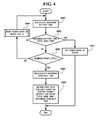
- Figure 4 is a flowchart illustrating in detail a process for resetting a power level according to an embodiment of the present invention.
- the remaining battery time is calculated at a current power level. It is determined in step S420 whether the remaining battery time exceeds a total user time.
- the total user time means a final time to be secured after the user's input of the additional time. For example, when the remaining battery time is 1 hour and the additional time input by the user is 30 minutes, the total user time is 1 hour and 30 minutes.
- step S430 When the remaining battery time does not exceed the total user time, it is determined in step S430 whether a device is at the minimum power level. If the device is not at the minimum power level, a power mode of the device is reset lower than a current power mode in step S440. Resetting of the power mode of the device will be described in more detail with reference to Figure 5. After the power mode of the device is reset, the remaining battery time is calculated again in step S410. It is determined again in step S420 whether the remaining battery time exceeds the total user time. If the remaining battery time calculated while gradually reducing the power level of each device through the foregoing process exceeds the total user time, the power mode of each device is set to a power mode corresponding to the power level of each device in step S450.
- step S460 If a device reaches the minimum power level in a state where the remaining battery time does not exceed the total user time, the maximum available time in such a state is calculated again in step S460. The user is then informed of the fact that a portable computer system cannot operate up to the total user time and of the updated maximum available time in step S470. The user may input a new additional time based on the updated maximum available time.
- the power level of the portable computer system is reset while gradually reducing the power level of each device until the remaining battery time exceeds the total user time.
- the power level of the portable computer system may be reset while gradually reducing the power level of each device after setting an initial power level of each device based on the remaining battery time and the total user time. For example, if the remaining battery time is 1 hour and the total user time is 1 hour and 30 minutes, steps S410 through S470 may be performed to set the final power level of each device of the portable computer system after the initial power level of each device of the portable computer system is pre-set such that the power consumption of the portable computer system becomes about 2/3 of the current power consumption.
- Figure 5 is a flowchart illustrating in detail a process for resetting a power mode of a device according to an embodiment of the present invention.
- step S510 it is determined whether a device of importance, such as a CCD, HDD or ODD, is set through a check box. If a device of importance is set, it is determined in step S520 whether a device of non-importance is in a minimum power mode. If the device of non-importance is not in the minimum power mode, the power level of the device of non-importance is reduced to the minimum power level in step S530.
- a device of importance such as a CCD, HDD or ODD
- the reference power mode indicates a lower limit of the power level to which the power level of the device of importance can be reduced. For example, when an LCD is the device of importance and the power level of the LCD is preset to be maintained higher than 50%, a power mode where the power level of the LCD is 50% is the reference power mode. However, if the LCD is not the device of importance, the reference power mode may be a power mode where the power level of the LCD is 0%. If the power mode of the device of importance exceeds the reference power mode, the power level of the device of importance is reduced in step S550. If the power mode of the device of importance is below the reference power mode, the power level of the device of importance is not reduced.
- step S560 it is determined in step S560 whether all the devices of the portable computer system are in the minimum power mode. If all the devices are not in the minimum power mode, the power level of a device that is not in the minimum power mode is reduced in step S570. If all the devices are in the minimum power mode, the power level is not reduced for any of the devices.
- FIG. 6 is a flowchart illustrating a process for managing the power of a portable computer system according to another embodiment of the present invention.
- step S610 the power level of the portable computer system is set to the minimum power level.
- the power level of the portable computer system is measured in a state where the operating speed of the CPU is set to the minimum value and an HDD or ODD is powered off.
- the maximum additional time is calculated based on power consumption at that time and the remaining battery capacity in step S620.
- the maximum additional time can be obtained by subtracting the remaining battery time at a current power level from the remaining battery time at the minimum power level. The obtained maximum additional time is provided to a user.
- step S630 The user then inputs an additional time in step S630.
- the power level of the portable computer system is reset in step S640.
- the additional time input by the user can be obtained by resetting the power level lower than the current power level. Resetting of the power level is already described with reference to Figure 4.
- step S650 After the power level is reset, the user uses a computer for a desired amount of time in step S650.
- a remaining battery time is periodically measured at predetermined time intervals, such as in 10 minute intervals, (S660) during the use of the computer.
- S660 10 minute intervals
- step S670 it is determined in step S670 whether the battery in its current state can still obtain the total user time.
- Such a process is required because the total user time may not be secured with the remaining battery time obtained by reducing the power level through a power level resetting process (step S640).
- the embodiment of Figure 3 may not secure the total user time.
- the embodiment shown in Figure 6 can obtain the total user time by further including the step of determining whether the total user time can be secured.
- step S640 the power level of each device is reset through the power level resetting process.
- the user then uses the computer in step S650.
- the power level resetting process (step S640) may be automatically performed without the user's specific manipulation as described above.
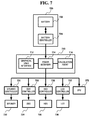
- Figure 7 is a block diagram of an apparatus for managing the power of a portable computer system according to an embodiment of the present invention.
- An apparatus 710 for managing the power of a portable computer system comprises a graphical user interface 712, a power manager 714, and a calculation agent 716.
- the graphical user interface 712 provides a user with information such as a current battery state and the maximum available time of the portable computer system and a time input box into which a user can input an additional time.
- the power manager 714 resets the power level of the portable computer system while reducing the power level of each device of the portable computer system so that the remaining battery time can be greater than a total user time including an additional time input through the graphical user interface 712.
- the calculation agent 716 calculates the maximum additional time by subtracting a current remaining battery time at a current power level from a current remaining battery time at the minimum power level.
- a battery unit 720 of the portable computer system comprises a battery 722 that converts chemical energy into electrical energy and a battery control unit 724 that checks the state of a battery and calculates the remaining capacity of the battery and the remaining amount of time that the battery will be capable of supplying sufficient power. The remaining battery capacity and time information of the battery unit 720 are transferred to the power manager 714.
- the power manager 714 controls the power levels of the various devices included in the portable computer system.
- the devices included in the portable computer system are a speaker 732, an ODD 734, an HDD 736, an LCD 738, and a CPU 739.
- Each of the devices preferably includes its own controller.
- the controllers may be a speaker controller 731 that controls the volume and tone of the speaker 732, an ODD controller 733 controls the reading, writing and deleting operations of the ODD 734, an HDD controller 735 that controls reading, writing and eliminating operations of the HDD 736, and an LCD controller 737 that controls the brightness or color of the LCD 738.
- a user can obtain a desired time to use a portable computer system by merely inputting desired time information without having to input complicated setting information.
- the embodiments of the present invention provide a range of desired time that can be input by the user and a time input box into which the user can input the desired time.
- the power level of a device that is regarded by a user as more important than other devices is reduced last after the power levels of the other devices are reduced.
- the user can use a portable computer for a desired amount of time in an optimized environment.
Landscapes
- Engineering & Computer Science (AREA)
- Theoretical Computer Science (AREA)
- Physics & Mathematics (AREA)
- General Engineering & Computer Science (AREA)
- General Physics & Mathematics (AREA)
- Power Sources (AREA)
Applications Claiming Priority (1)
| Application Number | Priority Date | Filing Date | Title |
|---|---|---|---|
| KR1020040055249A KR100621577B1 (ko) | 2004-07-15 | 2004-07-15 | 휴대용 컴퓨터 시스템의 전원 관리방법 및 장치 |
Publications (2)
| Publication Number | Publication Date |
|---|---|
| EP1617316A2 true EP1617316A2 (de) | 2006-01-18 |
| EP1617316A3 EP1617316A3 (de) | 2010-11-10 |
Family
ID=35241095
Family Applications (1)
| Application Number | Title | Priority Date | Filing Date |
|---|---|---|---|
| EP05106493A Withdrawn EP1617316A3 (de) | 2004-07-15 | 2005-07-14 | Energieverwaltung für ein tragbares Rechnersystem |
Country Status (3)
| Country | Link |
|---|---|
| US (1) | US7389439B2 (de) |
| EP (1) | EP1617316A3 (de) |
| KR (1) | KR100621577B1 (de) |
Cited By (7)
| Publication number | Priority date | Publication date | Assignee | Title |
|---|---|---|---|---|
| WO2007130184A1 (en) * | 2006-04-27 | 2007-11-15 | Hewlett-Packard Development Company, L.P. | Power management system and method |
| WO2008091552A1 (en) * | 2007-01-24 | 2008-07-31 | Hewlett-Packard Development Company, L.P. | Power management system and method |
| EP2017693A3 (de) * | 2007-07-13 | 2009-03-25 | TTE Indianapolis | Benutzerwählbare Laufzeit für eine Anzeigevorrichtung und Verfahren zur Reduzierung des Stromverbrauchs einer Anzeigevorrichtung |
| EP1939711A3 (de) * | 2006-12-28 | 2010-10-27 | MediaTek Inc. | Tragbares Wiedergabegerät, Leistungsverwaltungsvorrichtung und Leistungsverwaltungsalgorithmus dafür |
| CN103200318A (zh) * | 2013-03-07 | 2013-07-10 | 惠州Tcl移动通信有限公司 | 移动终端的节电方法及移动终端 |
| EP2633391A4 (de) * | 2010-10-25 | 2017-03-22 | Microsoft Technology Licensing, LLC | Anzeige einer sich aus einstellungsänderungen ergebenden batterielebensdauer |
| WO2018000827A1 (zh) * | 2016-07-01 | 2018-01-04 | 中兴通讯股份有限公司 | 一种终端电池电量计算方法和装置 |
Families Citing this family (56)
| Publication number | Priority date | Publication date | Assignee | Title |
|---|---|---|---|---|
| US8111265B2 (en) * | 2004-12-02 | 2012-02-07 | Sharp Laboratories Of America, Inc. | Systems and methods for brightness preservation using a smoothed gain image |
| US8947465B2 (en) * | 2004-12-02 | 2015-02-03 | Sharp Laboratories Of America, Inc. | Methods and systems for display-mode-dependent brightness preservation |
| US9083969B2 (en) | 2005-08-12 | 2015-07-14 | Sharp Laboratories Of America, Inc. | Methods and systems for independent view adjustment in multiple-view displays |
| US7961199B2 (en) * | 2004-12-02 | 2011-06-14 | Sharp Laboratories Of America, Inc. | Methods and systems for image-specific tone scale adjustment and light-source control |
| US7768496B2 (en) * | 2004-12-02 | 2010-08-03 | Sharp Laboratories Of America, Inc. | Methods and systems for image tonescale adjustment to compensate for a reduced source light power level |
| US8922594B2 (en) | 2005-06-15 | 2014-12-30 | Sharp Laboratories Of America, Inc. | Methods and systems for enhancing display characteristics with high frequency contrast enhancement |
| US7782405B2 (en) * | 2004-12-02 | 2010-08-24 | Sharp Laboratories Of America, Inc. | Systems and methods for selecting a display source light illumination level |
| US7924261B2 (en) * | 2004-12-02 | 2011-04-12 | Sharp Laboratories Of America, Inc. | Methods and systems for determining a display light source adjustment |
| US8913089B2 (en) * | 2005-06-15 | 2014-12-16 | Sharp Laboratories Of America, Inc. | Methods and systems for enhancing display characteristics with frequency-specific gain |
| US8120570B2 (en) | 2004-12-02 | 2012-02-21 | Sharp Laboratories Of America, Inc. | Systems and methods for tone curve generation, selection and application |
| US8004511B2 (en) * | 2004-12-02 | 2011-08-23 | Sharp Laboratories Of America, Inc. | Systems and methods for distortion-related source light management |
| US7800577B2 (en) * | 2004-12-02 | 2010-09-21 | Sharp Laboratories Of America, Inc. | Methods and systems for enhancing display characteristics |
| US7982707B2 (en) * | 2004-12-02 | 2011-07-19 | Sharp Laboratories Of America, Inc. | Methods and systems for generating and applying image tone scale adjustments |
| US7515160B2 (en) * | 2006-07-28 | 2009-04-07 | Sharp Laboratories Of America, Inc. | Systems and methods for color preservation with image tone scale corrections |
| JP4808036B2 (ja) * | 2006-02-15 | 2011-11-02 | 富士通株式会社 | 電子機器 |
| US7839406B2 (en) * | 2006-03-08 | 2010-11-23 | Sharp Laboratories Of America, Inc. | Methods and systems for enhancing display characteristics with ambient illumination input |
| KR101321432B1 (ko) * | 2006-09-29 | 2013-10-25 | 삼성전자주식회사 | 컴퓨터시스템 및 그 제어방법 |
| US8001400B2 (en) * | 2006-12-01 | 2011-08-16 | Apple Inc. | Power consumption management for functional preservation in a battery-powered electronic device |
| US7826681B2 (en) * | 2007-02-28 | 2010-11-02 | Sharp Laboratories Of America, Inc. | Methods and systems for surround-specific display modeling |
| WO2009043640A1 (de) * | 2007-09-26 | 2009-04-09 | Robert Bosch Gmbh | Verfahren zur information eines fahrers über eine abgabefähigkeit einer anforderbaren mindestleistung eines elektromotors eines fahrzeugs |
| US8155434B2 (en) * | 2007-10-30 | 2012-04-10 | Sharp Laboratories Of America, Inc. | Methods and systems for image enhancement |
| US8345038B2 (en) * | 2007-10-30 | 2013-01-01 | Sharp Laboratories Of America, Inc. | Methods and systems for backlight modulation and brightness preservation |
| KR20090044872A (ko) * | 2007-11-01 | 2009-05-07 | 엘지전자 주식회사 | 휴대용 컴퓨터 및 휴대용 컴퓨터의 절전모드 제어방법 |
| US8378956B2 (en) * | 2007-11-30 | 2013-02-19 | Sharp Laboratories Of America, Inc. | Methods and systems for weighted-error-vector-based source light selection |
| US9177509B2 (en) * | 2007-11-30 | 2015-11-03 | Sharp Laboratories Of America, Inc. | Methods and systems for backlight modulation with scene-cut detection |
| US8207932B2 (en) | 2007-12-26 | 2012-06-26 | Sharp Laboratories Of America, Inc. | Methods and systems for display source light illumination level selection |
| US8179363B2 (en) * | 2007-12-26 | 2012-05-15 | Sharp Laboratories Of America, Inc. | Methods and systems for display source light management with histogram manipulation |
| US8203579B2 (en) * | 2007-12-26 | 2012-06-19 | Sharp Laboratories Of America, Inc. | Methods and systems for backlight modulation with image characteristic mapping |
| US8169431B2 (en) | 2007-12-26 | 2012-05-01 | Sharp Laboratories Of America, Inc. | Methods and systems for image tonescale design |
| US8223113B2 (en) * | 2007-12-26 | 2012-07-17 | Sharp Laboratories Of America, Inc. | Methods and systems for display source light management with variable delay |
| US8531379B2 (en) * | 2008-04-28 | 2013-09-10 | Sharp Laboratories Of America, Inc. | Methods and systems for image compensation for ambient conditions |
| US8416179B2 (en) * | 2008-07-10 | 2013-04-09 | Sharp Laboratories Of America, Inc. | Methods and systems for color preservation with a color-modulated backlight |
| US9330630B2 (en) * | 2008-08-30 | 2016-05-03 | Sharp Laboratories Of America, Inc. | Methods and systems for display source light management with rate change control |
| JP4744584B2 (ja) * | 2008-11-26 | 2011-08-10 | 本田技研工業株式会社 | 運動補助装置 |
| US20100162024A1 (en) * | 2008-12-24 | 2010-06-24 | Benjamin Kuris | Enabling a Charge Limited Device to Operate for a Desired Period of Time |
| BRPI0920495B1 (pt) * | 2009-01-31 | 2020-09-29 | Telefonaktiebolaget Lm Ericsson (Publ) | Sistema de computador e sistema para computação de consumo de energia e método para calcular energia consumida por um sistema |
| US8165724B2 (en) * | 2009-06-17 | 2012-04-24 | Sharp Laboratories Of America, Inc. | Methods and systems for power-controlling display devices |
| US20110001737A1 (en) * | 2009-07-02 | 2011-01-06 | Kerofsky Louis J | Methods and Systems for Ambient-Adaptive Image Display |
| US20110074803A1 (en) * | 2009-09-29 | 2011-03-31 | Louis Joseph Kerofsky | Methods and Systems for Ambient-Illumination-Selective Display Backlight Modification and Image Enhancement |
| US9229510B2 (en) | 2010-11-25 | 2016-01-05 | Industrial Technology Research Institute | Power management method for electro-chemical batteries in low capacity state |
| US8380999B1 (en) * | 2010-12-20 | 2013-02-19 | Amazon Technologies, Inc. | Power management for electronic devices |
| KR101765916B1 (ko) | 2010-12-31 | 2017-08-23 | 엘지이노텍 주식회사 | 전자 선반 라벨 및 배터리 잔량 관리 방법 |
| CN102098392B (zh) * | 2011-01-25 | 2014-03-19 | 中兴通讯股份有限公司 | 一种便携式终端的节能装置和方法 |
| US9807397B2 (en) | 2011-04-11 | 2017-10-31 | Sharp Laboratories Of America, Inc. | System for power allocation |
| JP5568533B2 (ja) * | 2011-09-22 | 2014-08-06 | 日立建機株式会社 | 建設機械およびその電池パック |
| US20130103960A1 (en) * | 2011-10-24 | 2013-04-25 | Motorola Mobility, Inc. | Method and device with intelligent power management |
| KR20130075535A (ko) * | 2011-12-27 | 2013-07-05 | 삼성전자주식회사 | 배터리 관리 방법 및 장치, 이를 이용하는 전자 기기 |
| US8768419B2 (en) * | 2012-01-26 | 2014-07-01 | Verizon Patent And Licensing Inc. | Mobile battery partitioning system and method |
| JP2014071733A (ja) * | 2012-09-28 | 2014-04-21 | Toshiba Corp | 情報処理装置および動作制御方法 |
| EP2746874A3 (de) * | 2012-12-19 | 2017-11-08 | Seiko Epson Corporation | Elektronische Vorrichtung mit Stromerzeugungsfunktion, Steuerverfahren für die elektronische Vorrichtung mit Stromerzeugungsfunktion und tragbare elektronische Vorrichtung mit Stromerzeugungsfunktion sowie Steuerverfahren für die tragbare elektronische Vorrichtung mit Stromerzeugungsfunktion |
| US9886076B2 (en) * | 2014-12-04 | 2018-02-06 | Dell Products, Lp | User scheduled portable device power management |
| WO2019036697A1 (en) | 2017-08-18 | 2019-02-21 | Carrier Corporation | BATTERY OPTIMIZATION TOOL OF A WIRELESS DEVICE FOR CONSUMERS |
| KR20190109630A (ko) | 2018-02-28 | 2019-09-26 | 조선대학교산학협력단 | 사물 인터넷을 이용한 정보처리기기 관리 시스템 및 이를 이용한 정보처리기기 관리 방법 |
| US12086428B2 (en) * | 2021-11-15 | 2024-09-10 | Samsung Electronics Co., Ltd. | Memory controller adjusting power, memory system including same, and operating method for memory system |
| CN113937866B (zh) * | 2021-12-17 | 2022-04-22 | 深圳市爱图仕影像器材有限公司 | 控制设备运行的方法、装置、终端设备及存储介质 |
| CN117393882A (zh) * | 2022-07-04 | 2024-01-12 | 北京小米移动软件有限公司 | 剩余使用时长的预测方法、装置、电子设备及存储介质 |
Citations (4)
| Publication number | Priority date | Publication date | Assignee | Title |
|---|---|---|---|---|
| US5532935A (en) | 1991-10-02 | 1996-07-02 | Kabushiki Kaisha Toshiba | Electronic device capable of automatically controlling power assumption of components employed in accordance with operating time period by user |
| US5915120A (en) | 1996-05-14 | 1999-06-22 | Hitachi, Ltd. | Information processing apparatus having a power management system that dynamically changes operating conditions based upon dynamically selected user preferential order setting |
| EP1139205A1 (de) | 2000-03-09 | 2001-10-04 | International Business Machines Corporation | Leistungssteuerung für Rechner in einem Datenverarbeitungssystem in Abhängigkeit von der gewünschten Batterielebensdauer |
| KR20010096576A (ko) | 2000-03-09 | 2001-11-07 | 포만 제프리 엘 | 요구되는 배터리 수명에 근거한 전력 관리 방법, 시스템및 컴퓨터 프로그램 제품 |
Family Cites Families (7)
| Publication number | Priority date | Publication date | Assignee | Title |
|---|---|---|---|---|
| JP2754958B2 (ja) | 1991-07-17 | 1998-05-20 | 松下電器産業株式会社 | 電源装置 |
| JPH0926469A (ja) | 1995-07-13 | 1997-01-28 | Nec Gumma Ltd | 携帯型情報処理装置のシステム駆動時間表示方法 |
| JPH1097353A (ja) * | 1996-09-19 | 1998-04-14 | Toshiba Corp | コンピュータシステム及び同システムに適用するレジューム処理方法 |
| JPH11143595A (ja) | 1997-11-11 | 1999-05-28 | Matsushita Electric Ind Co Ltd | 携帯型情報処理装置 |
| JP3928292B2 (ja) * | 1999-03-01 | 2007-06-13 | ソニー株式会社 | 電子機器 |
| US6697953B1 (en) * | 2000-11-15 | 2004-02-24 | Ericsson Inc. | Method for reducing power consumption in battery powered devices |
| KR100767171B1 (ko) * | 2001-04-16 | 2007-10-15 | 엘지전자 주식회사 | 휴대용 컴퓨터에서의 배터리 전원 관리방법 |
-
2004
- 2004-07-15 KR KR1020040055249A patent/KR100621577B1/ko not_active Expired - Fee Related
-
2005
- 2005-07-14 US US11/180,550 patent/US7389439B2/en not_active Expired - Fee Related
- 2005-07-14 EP EP05106493A patent/EP1617316A3/de not_active Withdrawn
Patent Citations (4)
| Publication number | Priority date | Publication date | Assignee | Title |
|---|---|---|---|---|
| US5532935A (en) | 1991-10-02 | 1996-07-02 | Kabushiki Kaisha Toshiba | Electronic device capable of automatically controlling power assumption of components employed in accordance with operating time period by user |
| US5915120A (en) | 1996-05-14 | 1999-06-22 | Hitachi, Ltd. | Information processing apparatus having a power management system that dynamically changes operating conditions based upon dynamically selected user preferential order setting |
| EP1139205A1 (de) | 2000-03-09 | 2001-10-04 | International Business Machines Corporation | Leistungssteuerung für Rechner in einem Datenverarbeitungssystem in Abhängigkeit von der gewünschten Batterielebensdauer |
| KR20010096576A (ko) | 2000-03-09 | 2001-11-07 | 포만 제프리 엘 | 요구되는 배터리 수명에 근거한 전력 관리 방법, 시스템및 컴퓨터 프로그램 제품 |
Cited By (14)
| Publication number | Priority date | Publication date | Assignee | Title |
|---|---|---|---|---|
| US7834585B2 (en) | 2006-04-27 | 2010-11-16 | Hewlett-Packard Development Company, L.P. | Prioritizing power-consuming applications of an electronic device powered by a battery |
| US7598702B2 (en) | 2006-04-27 | 2009-10-06 | Hewlett-Packard Development Company, L.P. | Power management system and method for controlling use of power-consuming applications |
| EP2330482A1 (de) * | 2006-04-27 | 2011-06-08 | Hewlett-Packard Development Company, L.P. | System und Verfahren zur Leistungsverwaltung |
| WO2007130184A1 (en) * | 2006-04-27 | 2007-11-15 | Hewlett-Packard Development Company, L.P. | Power management system and method |
| US8004234B2 (en) | 2006-04-27 | 2011-08-23 | Hewlett-Packard Development Company, L.P. | Prioritizing power-consuming applications of an electronic device powered by a battery |
| EP1939711A3 (de) * | 2006-12-28 | 2010-10-27 | MediaTek Inc. | Tragbares Wiedergabegerät, Leistungsverwaltungsvorrichtung und Leistungsverwaltungsalgorithmus dafür |
| US7934107B2 (en) | 2007-01-24 | 2011-04-26 | Hewlett-Packard Development Company, L.P. | Power management system and method |
| JP2010517503A (ja) * | 2007-01-24 | 2010-05-20 | ヒューレット−パッカード デベロップメント カンパニー エル.ピー. | 電力管理システム及び方法 |
| WO2008091552A1 (en) * | 2007-01-24 | 2008-07-31 | Hewlett-Packard Development Company, L.P. | Power management system and method |
| EP2017693A3 (de) * | 2007-07-13 | 2009-03-25 | TTE Indianapolis | Benutzerwählbare Laufzeit für eine Anzeigevorrichtung und Verfahren zur Reduzierung des Stromverbrauchs einer Anzeigevorrichtung |
| EP2633391A4 (de) * | 2010-10-25 | 2017-03-22 | Microsoft Technology Licensing, LLC | Anzeige einer sich aus einstellungsänderungen ergebenden batterielebensdauer |
| CN103200318B (zh) * | 2013-03-07 | 2015-10-28 | 惠州Tcl移动通信有限公司 | 移动终端的节电方法及移动终端 |
| CN103200318A (zh) * | 2013-03-07 | 2013-07-10 | 惠州Tcl移动通信有限公司 | 移动终端的节电方法及移动终端 |
| WO2018000827A1 (zh) * | 2016-07-01 | 2018-01-04 | 中兴通讯股份有限公司 | 一种终端电池电量计算方法和装置 |
Also Published As
| Publication number | Publication date |
|---|---|
| US20060015758A1 (en) | 2006-01-19 |
| EP1617316A3 (de) | 2010-11-10 |
| US7389439B2 (en) | 2008-06-17 |
| KR100621577B1 (ko) | 2006-09-13 |
| KR20060006309A (ko) | 2006-01-19 |
Similar Documents
| Publication | Publication Date | Title |
|---|---|---|
| EP1617316A2 (de) | Energieverwaltung für ein tragbares Rechnersystem | |
| JP6060115B2 (ja) | インテリジェントな電力監視 | |
| US7430675B2 (en) | Anticipatory power management for battery-powered electronic device | |
| US7945797B2 (en) | System and method for portable power source management | |
| JP5336390B2 (ja) | リンク式シェル | |
| CN201150005Y (zh) | 构造成由电池或交流-直流转换器供电的信息处理系统 | |
| TWI424312B (zh) | 在電池供電型電子裝置中用於功能性保存的電力消耗管理 | |
| EP2586115B1 (de) | Hierarchische stromglättung | |
| US8271054B2 (en) | Selective battery power management | |
| US8288994B2 (en) | Management of fast battery charging in mobile devices | |
| US20060279256A1 (en) | Power management system for multi-function battery-operated device | |
| EP1469370A2 (de) | Rechenvorrichtung, Verfahren und Programm zur Leistungseinsparung | |
| US20080218125A1 (en) | Battery Charging System | |
| US20120019197A1 (en) | Apparatus and method to charge a battery | |
| CN107231616A (zh) | 移动终端及其电量的控制方法、装置以及存储介质 | |
| US11598810B2 (en) | Battery runtime forecasting for an information handling system | |
| JP2002315204A (ja) | 充電管理装置 | |
| US9201478B2 (en) | Methods and systems for efficient battery charging and usage | |
| JP5678763B2 (ja) | 電力平準化方法、電力平準化装置、及びプログラム | |
| US20070028131A1 (en) | Energy saving system | |
| JP2004234077A (ja) | ネットワーク接続機器、携帯端末装置およびコンピュータプログラム | |
| JP2010029059A (ja) | 電池管理システム及び電池管理方法 |
Legal Events
| Date | Code | Title | Description |
|---|---|---|---|
| PUAI | Public reference made under article 153(3) epc to a published international application that has entered the european phase |
Free format text: ORIGINAL CODE: 0009012 |
|
| AK | Designated contracting states |
Kind code of ref document: A2 Designated state(s): AT BE BG CH CY CZ DE DK EE ES FI FR GB GR HU IE IS IT LI LT LU LV MC NL PL PT RO SE SI SK TR |
|
| AX | Request for extension of the european patent |
Extension state: AL BA HR MK YU |
|
| PUAL | Search report despatched |
Free format text: ORIGINAL CODE: 0009013 |
|
| AK | Designated contracting states |
Kind code of ref document: A3 Designated state(s): AT BE BG CH CY CZ DE DK EE ES FI FR GB GR HU IE IS IT LI LT LU LV MC NL PL PT RO SE SI SK TR |
|
| AX | Request for extension of the european patent |
Extension state: AL BA HR MK YU |
|
| 17P | Request for examination filed |
Effective date: 20110510 |
|
| AKX | Designation fees paid |
Designated state(s): DE FR GB NL |
|
| 17Q | First examination report despatched |
Effective date: 20110721 |
|
| RAP1 | Party data changed (applicant data changed or rights of an application transferred) |
Owner name: SAMSUNG ELECTRONICS CO., LTD. |
|
| STAA | Information on the status of an ep patent application or granted ep patent |
Free format text: STATUS: EXAMINATION IS IN PROGRESS |
|
| STAA | Information on the status of an ep patent application or granted ep patent |
Free format text: STATUS: THE APPLICATION IS DEEMED TO BE WITHDRAWN |
|
| 18D | Application deemed to be withdrawn |
Effective date: 20190402 |