EP1602102B1 - Konversationsmanagement - Google Patents
Konversationsmanagement Download PDFInfo
- Publication number
- EP1602102B1 EP1602102B1 EP04710262A EP04710262A EP1602102B1 EP 1602102 B1 EP1602102 B1 EP 1602102B1 EP 04710262 A EP04710262 A EP 04710262A EP 04710262 A EP04710262 A EP 04710262A EP 1602102 B1 EP1602102 B1 EP 1602102B1
- Authority
- EP
- European Patent Office
- Prior art keywords
- communication
- response
- user
- transition
- agent
- Prior art date
- Legal status (The legal status is an assumption and is not a legal conclusion. Google has not performed a legal analysis and makes no representation as to the accuracy of the status listed.)
- Expired - Lifetime
Links
- 238000004891 communication Methods 0.000 claims abstract description 211
- 238000000034 method Methods 0.000 claims abstract description 107
- 230000008569 process Effects 0.000 claims abstract description 45
- 230000007704 transition Effects 0.000 claims description 334
- 230000004044 response Effects 0.000 claims description 204
- 230000009471 action Effects 0.000 claims description 19
- 230000009118 appropriate response Effects 0.000 claims description 13
- 238000004458 analytical method Methods 0.000 claims description 12
- 238000009826 distribution Methods 0.000 claims description 7
- 230000000977 initiatory effect Effects 0.000 claims description 4
- 239000003795 chemical substances by application Substances 0.000 description 270
- 230000003993 interaction Effects 0.000 description 88
- 238000005516 engineering process Methods 0.000 description 21
- 238000011161 development Methods 0.000 description 16
- 238000007726 management method Methods 0.000 description 16
- 238000012545 processing Methods 0.000 description 15
- 238000010586 diagram Methods 0.000 description 8
- 230000008520 organization Effects 0.000 description 8
- 238000012360 testing method Methods 0.000 description 8
- 238000013518 transcription Methods 0.000 description 7
- 230000035897 transcription Effects 0.000 description 7
- 238000004422 calculation algorithm Methods 0.000 description 6
- 238000012546 transfer Methods 0.000 description 6
- 230000000694 effects Effects 0.000 description 5
- 238000013507 mapping Methods 0.000 description 5
- 238000003058 natural language processing Methods 0.000 description 5
- 238000012552 review Methods 0.000 description 5
- 230000010354 integration Effects 0.000 description 4
- 230000007246 mechanism Effects 0.000 description 4
- 238000013459 approach Methods 0.000 description 3
- 230000008901 benefit Effects 0.000 description 3
- 239000000284 extract Substances 0.000 description 3
- 230000006870 function Effects 0.000 description 3
- 230000008676 import Effects 0.000 description 3
- 230000006698 induction Effects 0.000 description 3
- 238000011176 pooling Methods 0.000 description 3
- 230000001960 triggered effect Effects 0.000 description 3
- 102100025957 Interleukin-1 receptor-associated kinase 1-binding protein 1 Human genes 0.000 description 2
- 108050002038 Interleukin-1 receptor-associated kinase 1-binding protein 1 Proteins 0.000 description 2
- 238000004364 calculation method Methods 0.000 description 2
- 230000008859 change Effects 0.000 description 2
- 238000010276 construction Methods 0.000 description 2
- 230000001419 dependent effect Effects 0.000 description 2
- 238000013461 design Methods 0.000 description 2
- 230000002452 interceptive effect Effects 0.000 description 2
- 238000000275 quality assurance Methods 0.000 description 2
- 230000029305 taxis Effects 0.000 description 2
- 238000013519 translation Methods 0.000 description 2
- 235000006719 Cassia obtusifolia Nutrition 0.000 description 1
- 235000014552 Cassia tora Nutrition 0.000 description 1
- 244000201986 Cassia tora Species 0.000 description 1
- 238000007792 addition Methods 0.000 description 1
- 230000002411 adverse Effects 0.000 description 1
- 230000002776 aggregation Effects 0.000 description 1
- 238000004220 aggregation Methods 0.000 description 1
- 238000013474 audit trail Methods 0.000 description 1
- 230000006399 behavior Effects 0.000 description 1
- 230000015572 biosynthetic process Effects 0.000 description 1
- 239000000969 carrier Substances 0.000 description 1
- 238000006243 chemical reaction Methods 0.000 description 1
- 239000013078 crystal Substances 0.000 description 1
- 125000004122 cyclic group Chemical group 0.000 description 1
- 238000007418 data mining Methods 0.000 description 1
- 238000003066 decision tree Methods 0.000 description 1
- 230000002708 enhancing effect Effects 0.000 description 1
- 238000002474 experimental method Methods 0.000 description 1
- 238000004880 explosion Methods 0.000 description 1
- 238000000605 extraction Methods 0.000 description 1
- 230000008713 feedback mechanism Effects 0.000 description 1
- 239000000796 flavoring agent Substances 0.000 description 1
- 235000019634 flavors Nutrition 0.000 description 1
- 238000009472 formulation Methods 0.000 description 1
- 238000003780 insertion Methods 0.000 description 1
- 230000037431 insertion Effects 0.000 description 1
- 238000010801 machine learning Methods 0.000 description 1
- 239000000463 material Substances 0.000 description 1
- 239000011159 matrix material Substances 0.000 description 1
- 238000005065 mining Methods 0.000 description 1
- 239000000203 mixture Substances 0.000 description 1
- 238000012986 modification Methods 0.000 description 1
- 230000004048 modification Effects 0.000 description 1
- 230000000877 morphologic effect Effects 0.000 description 1
- 238000005457 optimization Methods 0.000 description 1
- 238000003908 quality control method Methods 0.000 description 1
- 230000007115 recruitment Effects 0.000 description 1
- 238000011160 research Methods 0.000 description 1
- 238000012163 sequencing technique Methods 0.000 description 1
- 238000012706 support-vector machine Methods 0.000 description 1
- 230000001360 synchronised effect Effects 0.000 description 1
- 230000007474 system interaction Effects 0.000 description 1
- 230000026676 system process Effects 0.000 description 1
- 238000012549 training Methods 0.000 description 1
- 230000009466 transformation Effects 0.000 description 1
- 230000007306 turnover Effects 0.000 description 1
Images








Classifications
-
- G—PHYSICS
- G10—MUSICAL INSTRUMENTS; ACOUSTICS
- G10L—SPEECH ANALYSIS TECHNIQUES OR SPEECH SYNTHESIS; SPEECH RECOGNITION; SPEECH OR VOICE PROCESSING TECHNIQUES; SPEECH OR AUDIO CODING OR DECODING
- G10L15/00—Speech recognition
- G10L15/22—Procedures used during a speech recognition process, e.g. man-machine dialogue
-
- G—PHYSICS
- G10—MUSICAL INSTRUMENTS; ACOUSTICS
- G10L—SPEECH ANALYSIS TECHNIQUES OR SPEECH SYNTHESIS; SPEECH RECOGNITION; SPEECH OR VOICE PROCESSING TECHNIQUES; SPEECH OR AUDIO CODING OR DECODING
- G10L15/00—Speech recognition
- G10L15/08—Speech classification or search
- G10L15/18—Speech classification or search using natural language modelling
- G10L15/1822—Parsing for meaning understanding
Definitions
- This invention relates to management of conversations.
- Customer contact centers e.g. call centers
- customer contact centers have emerged as one of the most important and dynamic areas of the enterprise in the new economy.
- cost-effectively serving and retaining customers is of strategic importance.
- Most companies realize that keeping satisfied customers is less expensive than acquiring new ones.
- the contact center has become a cornerstone to a successful business strategy.
- US Patent No. 6 377 944 discloses a system in which responses provided to a customer are automated without interaction with a human agent, or involve direct interaction with a human agent.
- the system may either display a list of matches to the user or send the query to a human agent for placement in a queue for assignment to an agent.
- the automated portion of the system cannot resolve the customer question, then the user is directed to a human agent to resolve the question.
- US Patent No. 6 829 603 discloses a system for managing dialog between a computer system and a user. Specifically, the system is directed to dialog interaction between the user and the computer in the domain of database query formulation and refinement. The reference discusses how to construct systems for querying and performing transactions based on a mapping, or mappings, between the common sense domain organization and the business organization of data in a domain.
- the invention features receiving an arbitrary natural language communication from a user, applying a concept recognition process to automatically derive a representation of concepts embodied in the communication, and using the concept representation to provide to a human agent information useful in responding to the natural language communication.
- Implementations of the invention may include one or more of the following features.
- the arbitrary natural language communication is expressed in speech.
- the communication is expressed using a telephone or other voice instrument.
- the communication is stored in a voice mailbox.
- the arbitrary natural language communication is expressed in text.
- the text is expressed electronically.
- the text is expressed in an email.
- the text is expressed through instant messaging.
- the text is expressed in a manner associated with a web page.
- the concept recognition process is universally applicable to any communication in a natural language.
- the concept representation is expressed in a mark-up language.
- the information provided to the human agent includes an audible playback of a recorded version of the natural language communication.
- the playback is compressed in time relative to the communication.
- the information provided to the human agent includes a display of a text corresponding to the communication.
- the information provided to the human agent includes information about at least one prior communication or response that preceded the natural language communication.
- the concept recognition process is used to determine how much information about prior communications to provide to the human agent.
- the communication is part of a dialog between the user and a response system, the dialog including communications from the user and responses to the user, and the information provided to the human agent includes information about historical portions of the dialog.
- a first mode of expression of the communication from the user is different from a second mode of expression of the responses to the user.
- the first mode and second mode of expression comprise at least one of text or speech.
- the information provided to the human agent includes information about possible responses to the user's communication.
- a first mode of expression of the communications from the user is different from a second mode of expression of the responses to the user.
- the first mode and second mode of expression comprise at least one of text or speech.
- the information about possible responses includes a text of a possible response.
- the information about possible responses includes an indication of a level of confidence in the appropriateness of the response.
- the communication comprises a question and the response comprises an answer to the question.
- the communication comprises a question and the response comprises a request for additional information.
- the human agent is enabled to determine how the information useful in responding to the communication is selected.
- the enabling of the human agent includes permitting the agent to use the communication from the user to control how the responsive information is selected.
- the enabling of the human agent includes permitting the agent to enter a substitute communication to control how the responsive information is selected.
- the substitute communication is a restatement by the human agent of the communication from the user.
- the useful responding information is generated by applying the concept representation to a body of information representing other communications and their relationships to concepts. Applying the concept representation includes a matching process to determine a cluster of similar communications to which the user's communication likely belongs. A state is occupied prior to receipt of the communication, and also including selecting a transition to a next state based on the concept representation and on a set of possible transitions.
- the transition includes an action to be taken in response to the communication.
- the action to be taken comprises a reply communication.
- the set of possible transitions is derived from examples of state-transition-state or stimulus-response sequences. The examples include pre-run-time examples that may be voice or text. The examples occur at runtime.
- the response is selected by the human agent and delivered to the user automatically without the user knowing that it was a human agent who selected the response.
- the response is generated by the human agent.
- the response is spoken or typed by the human agent.
- the response is selected without involvement of a human agent.
- a graphical user interface is provided for a workstation of the human agent, the information useful in responding being presented in the interface, the interface being presented as part of a user interface of a third party's response system software.
- the user interface provides conceptual context for a communication from a user.
- a response is provided to the communication.
- the response is provided in real time relative to the communication.
- the response is provided at a later time relative to the communication.
- the communication is provided in speech and the response is provided in text.
- a human agent is selected to handle a response to the communication.
- the human agent is automatically selected by a work distribution process.
- the work distribution process uses information deduced from the concept representation in automatically selecting the human agent.
- the invention features receiving an arbitrary natural language communication from a user, automatically deriving a representation of concepts embodied in the communication, and using the concept representation, automatically providing a response to the communication in a different mode of expression than the mode of expression used for the communication.
- Implementations of the invention may include one or more of the following features.
- the response is provided in other than real time relative to the communication.
- the communication is provided in speech and the response is provided in text.
- the invention features initiating a dialog with a user by sending a first natural language communication to the user, in response to the first natural language communication to the user, receiving a second natural language communication from the user, applying a concept recognition process to automatically derive a representation of concepts embodied in the second communication, and using the concept representation to provide to a human agent information useful in responding to the second communication.
- the invention features receiving a set of recordings or transcripts of dialogs between users and human agents, recognizing the speech in the recordings, separating each of the dialogs into communications each of which is made by either a user or a human agent, applying a concept recognition process to derive a representation of concepts embodied in each of the communications, and automatically creating a body of state-transition-state or stimulus-response information from the concept representations that enables automated determination of appropriate responses to natural language communications received from users.
- the invention features receiving example dialogs each comprising a sequence of natural language communications between two parties, applying a concept recognition process to automatically derive a representation of concepts embodied in each of the communications, and using the sequences of communications to form a body of state-transition-state or stimulus-response information that enables a determination of an appropriate transition for any arbitrary communication that is received when in a particular one of the states.
- Implementations of the invention may include one or more of the following features.
- the example dialogs comprise sound files and/or transcriptions of typed text.
- the concept representations are used to form clusters of communications that are related in the concepts that are embodied in them.
- the example dialogs comprise historical dialogs.
- the dialogs relate to contact center operation.
- the dialogs comprise requests and responses to the requests.
- the dialogs comprise real-time dialogs.
- the dialogs comprise a string of voice messages.
- the representations of concepts are expressed in a mark-up language.
- the communications in the cluster comprise communications that represent different ways of expressing similar sets of concepts.
- the invention features receiving an arbitrary natural language communication from a user, applying business rules to a conceptual representation of the communication to determine whether or not to refer the communication to a human agent for response, and if the business rules indicate that it is not necessary to refer the communication to the human agent, determining whether a confidence in an automatically generated response is sufficiently high to provide the response without referring the communication to the human agent.
- the invention features receiving an arbitrary natural language communication from a user, automatically selecting a level of response from among a set of different levels that differ in respect to the degree of involvement by the human agent in providing the response.
- Implementations of the invention may include one or more of the following features.
- the selecting is based in part on an estimate of how long it would take the human agent to respond if the communication is referred to the human agent for response.
- the level is selected based on a level of confidence in the appropriateness of an automatically generated response.
- the level is selected based on business rules.
- the levels include a level in which the response is provided automatically.
- the levels include a level in which the response is generated by the human agent.
- the response is entered as text or spoken.
- the levels include a level in which the response is selected by the human agent.
- the selected response is delivered automatically to the user.
- the selected response is delivered to the user without the user knowing that the response had been selected by a human agent.
- the invention features enabling a user to access a contact service facility, receiving communications from the user at the contact service facility, providing responses to the user's communications, and enhancing the user's confidence in the contact service facility by causing at least one of the responses to be selected by a human agent based on the results of an automated concept matching process applied to the communications, the user being unaware that the human agent selected the response.
- a body of state-transition-state or stimulus-response information is maintained that represents possible sequences of natural language communications between a user and a response system, the information being generated automatically from historical sequences of communications, and using selected ones of the sequences of communications to manage human agents who provide responses to user communications.
- Implementations may include one or more of the following features.
- the selected ones are used to train the human agents.
- the selected ones are used to evaluate the human agents.
- the sequences are used to manage the human agents by providing the agents with communications that are part of the sequences and evaluating responses of the human agents against known appropriate responses.
- a body of state-transition-state or stimulus-response information is maintained that represents possible sequences of natural language communications between a user and a response system, the information being generated automatically from historical sequences of communications, and using the body of state-transition-state or stimulus-response information in connection with the operation of a user response system.
- Implementations may include one or more of the following features.
- the body of information is used in connection with testing of the response system.
- the body of information is used in connection with software processes used in the response system.
- a body of state-transition-state or stimulus-response information is maintained that enables automated determination of appropriate responses to natural language communications received from users, receiving other natural language communications from users for which appropriate responses cannot be determined, tracking actions taken by a human agent in connection with responding to the other natural language communications, and automatically inferring from the other natural language communications and the selected responses, information for inclusion in the body of state-transition-state or stimulus-response information.
- Implementations may include one or more of the following features.
- the actions taken by the human agent include responses selected by the human agent for use in responding to the other natural language communications.
- An administrator is enabled to review the inferred information prior to including it in the body of state-transition-state or stimulus-response information.
- the actions taken by the human agent include keystrokes or mouse actions.
- the human agent is provided with possible responses to the natural language communications, and in which the tracking of actions includes tracking which of the possible responses the human agent chooses and inferring that the chosen response is a correct response to one of the communications.
- the human agent is provided with possible responses to the natural language communications, and, if the human agent responds to the communication without choosing one of the possible responses, inferring that the possible responses are incorrect.
- the human user is enabled to indicate that one of the possible answers was correct, even though the human user is respond to the communication without making a choice among the possible responses.
- a body of state transition-state or stimulus-response information is maintained that enables automated determination of appropriate responses to natural language communications received from users, the state-transition-state or stimulus-response information being associated with a contact center of an enterprise, updating the body of information based on communications received from users and responses provided by human agents of the contact center, and analyzing the body of information to infer knowledge about the operation of the enterprise.
- a body of state-transition-state or stimulus-response information is maintained that enables automated determination of appropriate responses to natural language communications received from users, the state-transition-state or stimulus-response information being based on concept representations derived from example natural language communications, the example natural language communications being predominantly in one language, and using the state-transition-state or stimulus-response information to provide appropriate responses to natural language communications received from users in a second language different from the one language.
- a user interface is displayed containing concept representation-based information useful in responding to natural language communications from users, the information including automatically generated possible natural language responses and indications of relative confidence levels associated with the responses.
- Implementations may include one or more of the following features.
- the human agent is enabled to select one of the possible responses.
- the human agent is enabled to enter a substitute of the user's communication, and generating the possible natural language responses from the substitute communication.
- Controls are provided in the interface that enable the human agent to choose a level of response with respect to the degree of involvement of the human agent.
- the level of response includes direct conversation with the user.
- the level of response includes providing the response automatically.
- a body of state-transition-state or stimulus-response information is maintained that enables automated determination of appropriate responses to natural language communications received from users, the state-transition-state or stimulus-response information being based on concept representations derived from example natural language communications, each of the states having possibly multiple transitions leading to a later state, when in a predetermined one of the states, using information about the multiple transitions to improve the accuracy of recognition of a speech recognizer that is processing a spoken communication from a user.
- Implementations may include one or more of the following features.
- the information about multiple transitions is used to improve the accuracy of discriminate matching of the concept representation of the spoken communication with clusters of concept representations in the body of information.
- the invention features enabling two-way natural language communication between each pair of a user, a human agent, and an automated response system, and facilitating the communication by representing the natural language communication as concepts and maintaining a body of state-transition-state or stimulus-response information about sequences of communications between at least two of the user, the human agent, and the response system.
- the invention features receiving natural language communications from users, automatically considering possible responses to the communications and confidence levels with respect to the responses, providing automated responses to a portion of the users based on the confidence levels, and refraining from providing automated responses to another portion of the users.
- the invention features receiving natural language communications from users, automatically recognizing concepts contained in the communications, and distributing the communications to human agents for responding to the users, the distribution being based on the concepts recognized in the communications.
- the invention features a medium bearing a body of information capable of configuring a machine to support an automated communication system, the body of information comprising state-transition-state or stimulus-response information that represents possible sequences of natural language communications occurring back and forth between a user and a response system.
- Implementations may include one or more of the following features.
- the body of information also includes cluster information identifying clusters of variations of communications that express similar concepts, each of the transitions of the state-transition-state or stimulus-response information being associated with one of the clusters.
- the invention features an apparatus comprising a user interface for a human agent at a contact service facility, the user interface including a window containing information provided by a contact service process, the information including information about a user of the facility, and window elements embedded in the window provided by the contact service process, the elements including a list of possible natural language responses based on concept representations for an active communication of a user, and indications of relative confidence that the respective responses are appropriate for the communication of the user.
- the window elements include a place for a human agent to view text corresponding to the communication of the user, and a place for the human agent to enter a substitute text for the communication of the user.
- Natural language processing technology based on concepts or meaning such as the technology described in United States patent 6,401,061 , incorporated by reference in its entirety, can be leveraged to intelligently interact with information based on the information's meaning, or semantic context, rather than on its literal wording.
- a system can then be built for managing communications, for example, communications in which a user poses a question, and the system provides a reply, that system is highly effective, user-friendly, and fault-tolerant because it automatically extracts the key concepts from the user query independently of the literal wording.
- the concept recognition engine (of the kind described in United States patent 6,401,061 ) enables the formation of appropriate responses based on what customers are asking for when they engage the underlying system in conversation over voice or text-based communication channels.
- the conversation may be a synchronous communication with the customer (such as a real-time dialog using voice or instant messaging or other communication via a web page) or asynchronous communication (such as email or voice mail messages).
- asynchronous communication such as email or voice mail messages.
- responses are provided at a later time relative to the customer's inquiries.
- the communication management system creates a knowledge base using logged actual conversations between customers and human agents at a customer contact center.
- logged conversations in this manner instead of trying to program the system for every possible customer interaction makes set up simple, rapid, and within the ability of a wide range of system administrators.
- the contact center administrator simply "feeds" the system the recorded customer interactions using an intuitive administrator user interface.
- the system described here can rapidly model typical question and answer pairs and automate future conversations.
- Each conversation that is processed by the system is modeled as an ordered set of states and transitions to other states in which the transition from each state includes a question or statement by the customer and a response by the human agent (or in some cases, an action to be taken in response to the question, such as posing a question back to the user).
- a symbolic state-transition-state sequence for a conversation that is being processed from a recorded interaction is illustrated in FIG. 1 .
- the delimiter for each statement or communication by the customer or response by the human agent is a period of silence or a spoken interruption.
- the text for each of these statements or responses is extracted from whatever communication medium was used in the conversation, for example, text or speech.
- speech recognition may be used to convert spoken conversation into text.
- the system extracts key concepts from the customer's question or statement or the human agent's response. This extraction is done as described in U.S. Patent 6,401,061 by creating a library of text elements (S-Morphs) and their meaning in terms of a set of concepts (semantic factors) as a knowledge base for use by a concept recognition engine.
- the concept recognition engine parses the text from the customer or agent into these S-Morphs and then concepts matching these S-Morphs are collected.
- the text of one of the responses of the duplicate transitions is preserved in the knowledge base as a standard response. This text can be passed back to the customer as part of a conversational exchange in the form of text or converted into voice.
- the resulting compressed state transition graph forms the knowledge base for the system.
- An example of a compressed state transition graph is illustrated in FIG. 1A .
- all of the information in this knowledge base is stored using a well-defined XML grammar. Examples of mark-up languages include Hyper Text Markup Language (HTML) and Voice Extensible Markup Language (VoiceXML). In this case, a Conversation Markup Language (CML) is used to store the information for the knowledge base.
- HTML Hyper Text Markup Language
- VoIPXML Voice Extensible Markup Language
- CML Conversation Markup Language
- the system may proceed to an operational (run-time) mode in which it is used to manage communications in, for example, a customer contact center.
- the logs that were used to build the knowledge base for a given customer contact center would, in some implementations, be recorded from conversations occurring at that same customer contact center or one that is characterized by similar kinds of conversations.
- the system can keep track of the current state of run-time conversations based on the state transition graph for the customer contact center. For example, after a customer makes his first communication (converted into text) with the customer contact center (for example, the user might make an arbitrary natural language spoken query), the system uses the concept recognition engine to extract the concepts from the text.
- the system attempts to match the concepts from the text with the transitions from the initial state in the contact center's state transition graph. This matching is done by comparing the set of concepts associated with the current communication with sets of concepts stored in the knowledge base. The closer the two sets are, the more confidence there is in the accuracy of the match. If the best matching transition in the knowledge base matches the customer's text with a confidence above some threshold, then the system assumes that it has identified the correct transition, locates the corresponding response in the knowledge base, and communicates that corresponding response to the customer. The system proceeds to the next state in the state transition graph and waits for the customer's next communication. This traversal of a sequence of states and transitions may continue until either the customer terminates the conversation or the state transition graph reaches an end state.
- errors in the text received by the concept recognition engine and non-standard (or unexpected) questions or statements by the customer may require intervention by a human agent.
- the conversion from speech to text may have such errors.
- the system does not rely on complete automation of the responses to the customer but has a smooth transition to manual intervention by the human agent when the automation is unsuccessful.
- this type of gradual automation is suggested by FIG. 2 that shows interactions between the customer 1, the system 3, and the human agent 5.
- automated responses may be given in cases of high confidence, while no response (other than to indicate that the system is unable to respond) is given to the user.)
- the system uses speech recognition technology to engage customers in conversations over the telephone.
- the speech recognition technology converts the customer's speech into text that becomes input to the concept recognition engine.
- the concept recognition engine By integrating the concept recognition engine with speech recognition, the underlying system recognizes what the customer says by conceptually understanding what the customer means. This combination enables new levels of automation in the customer service center by engaging users in intuitive, intelligent, and constructive interaction across multiple channels. And that enables organizations to offload significant volumes of routine customer transactions across all contact channels, saving considerable expense and improving service levels.
- these conversations with the customer may occur over audio interfaces using, for example, a VoiceXML browser, the web using an HTML browser, Instant Messenger using an IM application, email using a mail application as well as other channels not yet in use.
- a VoiceXML browser the web using an HTML browser
- Instant Messenger using an IM application
- email using a mail application as well as other channels not yet in use.
- this system enables the contact center's response to use a different mode of communication than the customer's communication.
- the customer may communicate using voice and the contact center may respond with text or the customer may communicate using text and the contact center may respond with computer generated voice. This is accomplished by either using the saved response text directly or by converting the saved response text into computer generated speech.
- the system provides three types or levels of conversation management and the system may switch between these during a given conversation.
- the system switches among the three modes of conversation management based on the ability of the system to handle the situation. For instance, in automated conversation mode, if the system is unable to match the customer's inquiry with a standard question/response pair with sufficient confidence, then the system may switch to the blended agent assist mode. Furthermore, in a blended agent assist mode, if the human agent determines that none of the computer generated responses are appropriate given the customer's inquiry, then the system may switch to the agent assist takeover conversation mode and the human agent finishes up the conversation.
- the customer also has the capability to switch modes of conversation. For instance, the customer may wish to switch out of automated conversation mode.
- the system may adjust the threshold of confidence in interpreting the customer's communication based on how busy the human agents are. This may give customers the option to try automated responses rather than waiting on busy human agents.
- An additional mode of conversation management occurs when the human agent has sufficient experience with the communication patterns of the system. In this case, if the customer's communication is matched with transitions with a low level of confidence, the human agent may decide to rephrase the customer's question with substitute text that may result in a more successful match. If so, then the conversation may continue in the automated mode.
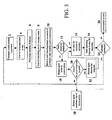
- Conversations between a customer and a contact center that are managed by the system using these three modes of conversation are modeled by the flowchart illustrated in FIG. 3 .
- a user initiates a conversation by communicating a question or statement to the contact center (2).
- the communication is converted into text (4).
- the identified transition may contain variable data that is pertinent to the subsequent response by the system.
- the variable data may be the customer's name or identifying number and has a specific data type ⁇ string, number, date, etc. ⁇ .
- the variable data (when present) is extracted from the text of the customer's communication (6). Special rules may be used to identify the variable data.
- the concept recognition engine parses the remaining text into S-morphs and collects a "bag of concepts" matching these S-morphs (8).
- the system identifies the transition from the current state whose concepts matches the extracted concepts from the customer's communication with the highest level of confidence (10). If data variables are expected in the transition, then matching the data type of the expected variables with the data type of extracted variables is included in the comparison. If the confidence of the match is higher than a set threshold (12), then the system assumes that the customer is on the identified transition. In this case, the system may have to look up data for the response matching the identified transition (14). For instance, if the customer's communication is a question asking about operating hours of a business, then the system may look up the operating hours in a database.
- the system sends the matching response to the user with the extra data if it is part of the response (16).
- This response may be one of many forms of communication. If the conversation is over a phone, then the system's response may be computer-generated speech. If the conversation is text-based, then the response may be text. Of the response may be in text even though the question is in speech, or vice versa.
- the system identifies a transition with insufficient confidence (12), then a human agent at the contact center is prompted for assistance. The human agent views a graphical user interface with a presentation of the conversation so far (18). The system also shows the human agent a list of expected transitions from the current state ranked in order from the transition with the best match with the customer's communication to the worst match.
- the human agent determines if one of the expected transitions is appropriate for the context of the conversation (20). If one transition is appropriate, then the human agent indicates the transition to the system and the system continues the conversation in the automated mode (14). Otherwise, if the human agent determines that no transition is appropriate for the context of the conversation, then the human agent directly takes over the conversation until its completion (28).
- the system may continue expanding its knowledge base while in operational (run-time) mode.
- the system logs conversations between the human agent and the customer when the system is in the agent assist takeover mode. At regular intervals, these conversations are processed as in the initial creation of the knowledge base and the new state transition sequences are added to the knowledge base.
- the agent assist takeover mode typically begins at a state after the initial state.
- one of the new state transition sequences typically is added to the aggregate state transition graph as a transition from a non-initial state. Every time a new state transition sequence is added to the aggregate state transition graph in the knowledge base, the aggregate state transition graph is compressed as described previously.
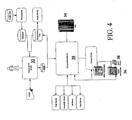
- the conversation server 30 is the run-time engine of the system.
- the conversation server 30 is a Java 2 Enterprise Edition (J2EE) application deployed on a J2EE application server. This application is developed and deployed to the conversation server using the conversation studio 32.
- FIG. 4 shows the relationship between the conversation server 30 and the conversation studio 32.
- J2EE Java 2 Enterprise Edition
- the system is a multi-channel conversational application.
- sets of automated software agents execute the system application.
- multi-channel we mean, for example, that the software agents are capable of interacting with callers over multiple channels of interaction: telephones, web, Instant Messaging, and email.
- conversational we mean that the software agents have interactive conversations with callers similar to the conversations that human agents have with callers.
- the system uses an iterative application development and execution paradigm. As explained earlier, the caller and agent dialogs that support the system application are based on actual dialogs between callers and human customer support agents within the contact center.
- FIG. 4 also shows the relationship between the conversation server and other elements of the system.
- the conversation server 30 interacts with an enterprise information server (34) that accepts data originating from customers and provides data for responses to customer questions.
- the agent workstation 36 executes software with a graphical user interface that allows a human agent to select transitions for the system when a conversation is in the blended agent assist mode.
- the agent phone 38 enables the human agent to enter into a live oral conversation with a customer when the conversation is in the agent assist takeover mode.
- the conversation server 30's internal architecture is depicted in FIG. 5 .
- the conversation server 30 has a core set of four tiers that support the logic of the system application. These tiers are the four tiers that are traditionally found in web application servers. They are presentation 40, workflow 42, business 44, and integration 46.
- the presentation tier 40 is responsible for presenting information to end-users. Servlets such as Java Server Pages (JSPs) are the J2EE technologies traditionally employed in this tier.
- the presentation tier is composed of two subsystems: the interaction channel subsystem 48 and the agent interaction subsystem 50.
- the interaction channel subsystem 48 handles the conversation server's 30 interaction with customers over each of the channels of interaction: web 52, VoiceXML 54, Instant Messenger chat 56, and email 58.
- the agent interaction subsystem handles the conversation server's 30 interaction with the human agents within the contact center.
- the workflow tier 42 handles the sequencing of actions. These actions include transaction against the business objects within the business tier and interactions with end-users.
- the workflow tier 42 is populated by software agents 60 that understand the conversations being held with customers. In addition, these agents interact with the business objects within the business tier 44.
- the software agents 60 are the interpreters of the markup language produced by the conversation studio 32 (the application development system).
- the business tier 44 holds the business objects for the application domain.
- Enterprise Java Beans (EJBs) are the technology traditionally employed in the business tier.
- the conversation server does not introduce system-specific technology into this tier. Rather, it employs the same set of components available to other applications deployed on the J2EE application server.
- the integration tier 46 is responsible for the application server's interface to databases and external systems. J2EE Connectors and Web Services are the traditional technologies employed in this tier. Like the business tier 44, the conversation server 30 does not introduce system-specific technology into this tier. Rather, it employs the traditional J2EE components. The value of a common integration tier is that any work to integrate external systems is available to other applications deployed on the J2EE server.
- the deployment subsystem supports the iterative, hot deployment of system applications. This fits within the iterative application development where conversations are logged and fed back to the conversation studio 32 where personnel within the contact center may augment the application with phrases the system application did not understand.
- the logging subsystem 64 maintains a log of the conversations that software agents 60 have with customers and customer support agents. This log is the input to the iterative application development process supported by the conversation studio 32.
- the contact server interface (CTI) 66 provides a unified interface to a number of CTI and contact servers 72.
- the statistics subsystem 68 maintains call-handling statistics for the human agents. These statistics are equivalent to the statistics provided by ACD and/or contact servers 72. Call center operations folks may use these statistics to ensure that the center has a sufficient workforce of human agents to serve the traffic the center is anticipating.
- the management subsystem 70 allows the conversation server 30 to be managed by network management personnel within the enterprise.
- the subsystem 70 supports a standard network management protocol such as SNMP so that the conversation server 30 may be managed by network management systems such as HP OpenView.
- FIG. 6 shows the components of the workflow tier 40 of the system.
- Software agents 60 are the primary entity within the workflow tier 40.
- Software agents 60 are the automated entities that hold conversations with customers, human agents within the contact center, and the back-end systems. All of these conversations are held according to the applications developed and deployed by the conversation studio 32.
- the functional requirements on the workflow tier 40 are:
- This agent pooling capability is similar to the instance pooling capability of EJBs. It also fits within the workforce management model of contact centers.
- the interaction channel allocates a software agent 60 and requests that the software agent 60 handle a particular application.
- the workflow tier 40 interacts with an application manager that manages the applications. The application manager will select the version of the application to employ (as instructed by the application deployer).
- the software agent 60 checks with the license manager to ensure that interactions are allowed over the requesting channel. If not, the software agent 60 returns an appropriate response.
- Software agents are capable of holding multiple dialogs at once.
- Software agents may hold a conversation with at least one customer while conversing with a human agent during resolution of a response. This capability may be extended to have agents talking to customers over multiple channels at once.
- Software agents 60 hold the conversation according to the application developed in the conversation studio 32.
- Software agents 60 call the concept recognition engine 74 to interpret the customer's input in the context that it was received and act upon the results returned.
- Each software agent 60 maintains a transcript of the conversation it is having. This transcript is ultimately logged via the conversation logging subsystem.
- the transcript contains the following information all appropriately time stamped:
- One of the actions the software agent 60 may take is to request the assistance of a human agent. This will result in a sub transcript for the dialog with the human agent. This transcript contains:
- FIG. 6 shows the components that make up the workflow tier 42 - the agent manager 76 and the agent instance.
- the agent manager 76 handles the pooling of agent instances and the allocation of those instances for particular application.
- the agent manager 76 is responsible for interacting with the other managers / subsystems that make up the conversation server 32 (not shown is the agent manager's 76 interaction with the Statistics subsystem 68).
- Each agent instance 60 logs a conversation transcript with the Logging Manager 78.
- the presentation tier consists of two subsystems: the interaction channels 48 and the agent interaction subsystem 50.
- interaction channel subsystem 48 is built upon the Cocoon XSP processing infrastructure.
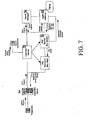
- the interaction channel 48 processing is depicted in FIG. 7 .
- the response document and the XSL style-sheet are defined at a channel basis for the application.
- the response document requests the contents of the CML ⁇ output> tag as well as other artifacts generated from the CML (e.g., grammar file).
- the user defines the response document within the application.
- the response document is processed using the XSL style-sheet defined at the channel.
- the response document must adhere to the DTD that governs response documents. This DTD allows for multi-field forms to be defined.
- the user defines the response document as well as the XSL style sheet. No restrictions are placed on either document and the conversation server 30 is not responsible for any results with respect to the processing of the response.
- This translation handles both the transformation to the channel-specific document language and the branding of a response for a particular client.
- the interaction channel 82 is responsible for logging the recorded customer request and informing the agent of the location of the recording for inclusion in the conversation log and/or passing in the whisper to a human agent.
- the interaction channel subsystem 48 is implemented using the Cocoon infrastructure.
- the Cocoon infrastructure provides a model-view-controller paradigm in the presentation tier 40 of a web application server infrastructure.
- a servlet 90 (the controller) handles the HTTP requests and interacts with the agent instance 60 to process the request.
- the agent instance 60 returns the response XSP document and the XSL style-sheet to apply to the output of the document.
- the XSP document (the model) is compiled and executed as a servlet 92.
- the document requests parameters from the agent instance to produce its output - an XML stream.
- An XSP document is the equivalent of a JSP document.
- XSP compilation only occurs if the XSP document has changed since the last time it was compiled.
- the XML stream is transformed according to the XSL style-sheet (the View) to the language specific to the interaction channel (e.g., HTML, VXML).
- the human agent interaction subsystem is responsible for establishing a dialog with a human agent within the contact center and managing the collaboration between the software agent and human agent to resolve a response that is uncertain.
- the subsystem is also used when a transfer of an application is requested in an application.
- the agent interaction subsystem interacts with the CTI Server Interface to execute the connection within the contact center.
- the CTI Server Interface also provides the agent interaction subsystem with queue statistics that may alter its behavior with respect to the connection to the agent group.
- the agent interaction subsystem (AIS) does the following actions:
- agent desktop application that allows the contact center agent to handle a resolution call. This application takes two forms:
- Speech recognition is the art of automatically converting human spoken language into text.
- speech recognition is the first step in matching the customer's communication with appropriate responses.
- Typical speech recognition entails applying signal processing techniques to speech to extract meaningful phonemes.
- a software search engine is used to search for words from a dictionary that might be constructed from these phonemes.
- the speech recognition portion of the system guides this search by knowledge of the probable context of the communication.
- FIG. 8 The block diagram of this speech recognition portion of the system is illustrated in FIG. 8 .
- the system has access to a knowledge base consisting of a mark-up language, CML, that defines a state transition graph of standard conversations between the customer and the contact call center.
- CML mark-up language
- a software agent Because a software agent keeps track of the current state of the conversation, it can look up all of the probable transitions from this state. Each of these transitions has a "bag of concepts" or a "bag of S-Morphs” 104. These S-Morphs 104 may be converted into matching text 112. The aggregation of the matching text from all of the probable transitions is a subset of all of the words in the dictionary. In general, it is more efficient to search to match a subset of a group rather than the entire group. Thus, the search engine 102 for this speech recognizer first tries to match the phonemes of the customer's communication against the text 112 from all of the probable transitions. The search engine 102 searches in the dictionary for any remaining combination of phonemes not matched with this text.
- the concept recognition engine used in some implementations of the system is an advanced natural language processing technology that provides a robust, language independent way of understanding users' natural language questions from both textual and audio sources.
- the technology automatically indexes and interacts with information based on the meaning, or semantic context, of the information rather than on the literal wording.
- the concept recognition engine understands the way people really talk and type, enabling the system to intelligently engage users in complex conversations independent of phrasing or language, to facilitate access to desired information.
- the concept recognition engine is based on a morpheme-level analysis of phrases, enabling it to produce an "understanding" of the major components of the encapsulated meaning. This technique is computationally efficient, faster than traditional natural language technologies and language independent - in addition to being extremely accurate and robust.
- the concept recognition process is intrinsically robust - it works extremely well with "noisy" input data. This is useful to the system's ability to recognize the spoken word using speech recognition software.
- the system employs a process to accurately recognize meaning in real-world conversational interaction, despite common typographical mistakes, errors generated by speech recognition software, or out-of-context words. Users can say any combination of words, and the system is flexible enough to understand the users' intent.
- the concept recognition engine is based on algorithms that create and compare semantic labels.
- a semantic label for a piece of text of any length is a short encoding that captures the most important components of its meaning.
- items in the source data store(s) are labeled with semantic tags, they can be retrieved, or managed in other ways, by selectively mapping them to free-form voice or text queries or other input text sources - independent of the actual words and punctuation used in these input text sources. For example, a user asking the system "How can I bring back pants that don't fit?" will be provided with relevant information from an organization's return policy database, even if the correct information does not contain the words "pants" or "bring back" anywhere within it. Alternatively worded user queries seeking the same information are conceptually mapped to the same return policies, independent of the actual words used in the input string.
- SLM ASR statistical language model automatic speech recognition
- CRE concept recognition engine
- the concept recognition engine provides a robust, language independent way of understanding users' natural language questions from both textual and audio sources.
- the technology is an advanced natural language processing technology for indexing, mapping and interacting with information based on the meaning, or semantic context, of the information rather than on the literal wording.
- the technology does not rely on a complete formal linguistic analysis of phrases in an attempt to produce a full "understanding” of the text. Instead, the technology is based on a morpheme-level analysis of phrases enabling it to produce an "understanding" of the major components of the encapsulated meaning.
- Morphemes are defined as the smallest unit of language that contains meaning, or semantic context.
- a word may contain one or several morphemes, each of which may have single or multiple meanings.
- a relatively simple example of this is illustrated using the word geography that is comprised of the morphemes geo, meaning the globe, and graph that means illustration. These two distinct morphemes, when combined, form a concept meaning the study of the globe. Thus, individual units of meaning can be combined to form new concepts that are easily understood in normal communication.
- a semantic label for a given piece of text of any length is a short encoding that captures the most important components of its meaning.
- semantic tags When the items in a "database" are labeled with semantic tags, they can be selectively retrieved or mapped to by parsing user-generated free-form text queries or other types of input text strings - independent of the actual words and punctuation used in the input strings.
- CRE determines context in tandem with the SLM ASR by analyzing the resulting engine output and assigning semantic labels which can then be compared to an indexed database of company information. Furthermore, the CRE helps to suppress the effects of speech recognition errors by ignoring those words most commonly misrecognized (the small words) and using the more context-heavy words in its analysis. The effect, therefore, of the CRE is to enable self service systems that accurately recognize meaning in real-world conversational interaction, despite common typographical mistakes or errors generated by speech recognition software. More simply put, the combination of these two technologies enables systems to recognize what you say by understanding what you mean.
- the CRE automatically indexes the data that will be searched and retrieved by users.
- this data is the transcribed recordings of customer conversations with call center agents, but any set of textual information (documents, Frequently Asked Questions (FAQ) listings, free-text information within a database, chat threads, emails etc.) can be indexed using the CRE.
- Indexing is the process by which the CRE groups or 'clusters' data according to its conceptual similarity. Unlike the traditional alphabetical indices, the clusters created by the CRE are special conceptual references which are stored in a multidimensional space called concept space.
- the CRE performs this same process on customer inquiries in real-time. It takes the output from the speech recognition engine and breaks it down into its associated morpheme set using morphological analysis techniques.
- the system handles cluttered input data well, including misspellings, punctuation mistakes, and out of context or out order words, and there are no preset limitations on the length of the input phrase.
- the CRE then uses concept analysis to convert morphemes into the primary atomic concepts described above, assembles this set of atomic concepts into a single concept code for the entire input and then maps that code to its equivalent code within the indexed data.
- this process essentially 'points' user input to a system dialog state that may be a system response, existing interactive voice response (IVR) menu tree, or instruction to query transactional systems for customer account information.
- IVR interactive voice response
- the first step is essentially language-dependent. It means that switching to a different language requires automatic generation of the semantic label for a phrase in a given language. Below we describe two possible ways of solving this problem.
- the second step is based on the semantic index. The index itself does not care about the language of the objects, it just points to them and the semantic labels associated with pointers are language-independent. There is no language-specific information in the semantic index.
- a first approach is compiling new S-Morph dictionaries for the new language. For each human written language a set of S-Morph can be compiled. The compilation process may be based on an analysis of a vocabulary either from a large corpus of text or from a big dictionary in this language.
- a language knowledge base is used to store the information needed for the concept recognition engine.
- This knowledge base has three major components:
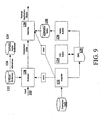
- FIG. 9 A functional block diagram of the concept recognition engine is illustrated in FIG. 9 .
- the blocks of this diagram are described as follows.
- the S-Morph dictionary 122 and Semantic Factor Dictionary 124 are used the Analyzer 128 to produce a set of concept codes.
- the CML file is generated on the basis of examples 142. This results in a CML file that is data driven on the basis of a thesaurus.
- the next step is to do lookup and editing of the CML file. This lookup and editing consists of the following steps:
- the CML file is taken as input information at any point of editing and an index is built. Subsequently, two entries are matched and a similarity calculation with a specified CML/index is done. This may be done for two phrases; for two concept codes; for a phrase and a concept code; for two phrases, for two concept codes, or for a phrase and a concept code in a cyclic mode with one of the inputs coming each time from the feeding file; and for automatic matching and similarity calculation with one of the inputs coming each time from the feeding file and the results stored in an output file.
- preanalysis parsing is done by creating pseudofactors for names; processing single-word and multi-word personal names; processing single-word and multi-word names for businesses and products; and generating part-of-speech tags.
- the conversation mark-up language's (CML) main goal is to specify a set of instructions to the conversation server for handling "conversations" with customers in an automated or semi-automated manner.
- Automated conversations are those that are handled entirely by the conversation server from beginning to end.
- Semi-automated conversations are handled first by the conversation server, and then passed off to a human agent, along with any information that has been collected.
- CML is a markup language that specifies the following:
- the CMLApp language allows applications to be constructed from reusable components.
- the CML describes the request / response interactions typically found in particular customer support contact centers which include the following:
- CML is designed to be interpreted and executed by a conversation server (CS).
- CS conversation server
- the CS has the set of software agents that interpret CML based applications. These agents are fronted by a set of interaction channels that translate between channel specific document language such as HTML, VoiceXML, SIMPL, SMTP and CML's channel-independent representation, and visa versa.
- a CML document (or a set of documents called an application) forms the conversational state transition network that describes the software agent's dialog with the user.
- the user is always in one conversational state, or context, at a time.
- a set of transitions defines the conditions under which the dialog moves to a new context. These conditions include a new request from the user, a particular state within the dialog, or a combination of the two. Execution is terminated when a final context is reached.
- a network is a collection of contexts (states) and transitions defining the dialog a software agent has with a user. There may be one or more networks per CML document each with a unique name by which it is referenced.
- a network defines a set of properties that are active while the network is actively executing. These properties hold the data that is being presented in the output to the user as well as data that govern the execution of the network. For example, the pre-conditions of transitions and post-conditions of context are defined in term of properties.
- Contexts represent the states within the dialog between software agents and users. Every context has a set of transitions defined that take the application to another context (or loops back to the same context).
- a context represents a state where a user's request is expected and will be interpreted. Certain contexts are marked as final.
- a final context represents the end of the dialog represented by the network.
- a subcontext is a special context in which another network is called within the context of the containing network. Subcontexts are liked subroutine calls and there is a binding of the properties of the calling and called network. Subcontexts may be either modal or non-modal. In a modal subcontext, the transitions of its containing network (or ancestors) are not active. In a non-modal subcontext, the transitions of its containing network (and ancestors) are active.
- a transition defines a change from one context to another.
- a transition is taken if its precondition is met and/or the user request matches the cluster of utterances associated with the transition. If a transition does not define a precondition, then only a match between the user request and the transition's utterances is required to trigger the transition. If a transition does not define a cluster of utterances then the transition will be triggered whenever its precondition is true. If neither a precondition nor a cluster of utterances is defined, the transition is automatically triggered. The triggering of a transition results in the execution of the transition's script and the transition to the context pointed to by the transition.
- a CML application requires a single CMLApp document, a single CML document, and a cluster document.
- a multi-document application entails a single CMLApp document, a single cluster document, and multiple CML documents.
- FIG. 10 shows the relationships of a CMLApp document 150, CML documents 154, a cluster document 152, output documents 156, referenced data files 158, and business objects 160.
- Appendix 1 sets forth the text of an example of a CMLApp document named "abc12app.ucmla, a CML cluster document named “abc12clusters.ucmlc”, and a CML document named "abc12ucm1.ucml”.
- the CMLApp document specifies the cluster file using the mark-up "clusterFile” and the CML file using the mark-up "document”.
- the CMLApp document also specifies the channel of communication with the customer using markup "channel type". In this case, the channel type is "VXML".
- the cluster document stores the text of all of the recorded communications from customers that were grouped together into a cluster for a given transition from a given state or context.
- clusters are named c1 through c41.
- Data variables associated with the clusters are specified using the mark-up "variable” and have such types as "properName", and "digitString". These clusters are referenced in the example CML document.
- a CML document defines the state transition graph (or network).
- the example CML document defines a set of states (denoted by mark-up "context name”) and transitions (denoted by mark-up "transition name"). For instance, lines 11-16 of the CML document are as follows:
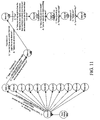
- Lines 11-16 specify that there is a state (or context) s0 that has a transition t0 to state (or context) s1.
- Transition t0 has a customer communication "yeah I'd like to check on the my account balance please" and a contact center response "do you have your account number sir”.
- FIG. 11 illustrates a subset of the total state transition graph defined by the example CML document. This subset includes the transitions from the initial state to s0 (162) to s1 (164) to s2 (166) to s3 (168) to s4 (170) to s5 (172) to s6 (174) and finally to s7 (176).
- the development of a system application uses an iterative development process as illustrated in Figure 12 .
- the activities within this process are transcription 180, initial application development 182, application deployment 184, and iterative application development 186.
- dialogs 190 are the examples 188 that feed the initial application development 182 in the form of Import Markup Language (IML) files.
- IML Import Markup Language
- the initial application development 182 takes the examples and builds a CML application. This is a four-phase process that results in a deployable CML application. The phases are as follows:
- Hot-deployment we mean that a CML application may be redeployed when it is already running on the CS platform. Hot-deployment ensures the following properties of the CML application: the already active application sessions will be allowed to run to completion; all resources employed by a version of an application (e.g., prompt files, etc.) will not be removed or replaced until no longer required; all new application sessions will make use of the newest version of the application; all obsolete versions of the application, and supporting resources, will be removed from the conversation server when no longer needed by active application sessions.
- the hot-deployment of a CML application is a critical enabler of the iterative application development paradigm as it allows for graceful round-trip engineering.
- the conversation server produces a log 192 of the dialogs that occur in each CML application.
- This log 192 indicates the state transition path taken in each dialog and the events (e.g., agent assistance, data exceptions) that caused the path to be followed.
- This log 192 is organized according to the state transition network defined in the CML application.
- the log is available to facilitate adjustments to the CML application.
- this iterative application adjustment has more of a local optimization flavor than the initial application development; for example, unrecognized caller statements may be added as appropriate paraphrases and/or inputs in a state.
- the application developer may feel that the collection of unrecognized statements may warrant a new pass at defining the overall application structure. If so, a version of the initial application development 182 will be initiated.
- the conversation server's support for the iterative development process is a combination of the hot deployment feature described previously and the logging of conversational sessions.
- the conversation log should record the following items:
- the documents for the system are automatically created.
- recorded transactions may be collected in the form of WAV files that represent live recordings (a la CDC) or collected from recording system such as WISE or NICE.
- Other implementations of the method may use manual transcription that transforms WAV files into text.
- text systems such as instant messaging the direct transcripts are used.
- the transcribed file format definition is as follows:
- clusters are auto-labeled, a cluster similarity matrix is created, small clusters are cutoff, a centroid to the head of each cluster is generated, and counts are generated.
- Actions performed on the knowledge base may include further merging or splitting, preserving clusters within manually merged clusters.
- states are generated using the following techniques: thresholds, conservative, merging states - "unions OK", and code prep. Subsequently, states may be manually merged by the contact system administrator.
- the system may continue in the learning mode and expanding its knowledge base. To do this, the system logs all customer interactions. The logging will be used in both the run-time operation of the system and to facilitate offline adding of new interactions to system.
- the system call logging is integrated with other subsystems that record, transcribe, and import customer interactions.
- the system call logging system collects and stores information on every call that is handled by the system platform.
- the system call logging system acts as a repository of information that is gathered by a variety of subsystems to add new interactions and continually improve the system's performance.
- the system call logging system creates a session object for every call that the system processes.
- the session object includes data associated with a specific call.
- the session object includes the following:
- the system also learns from the answers selected by call center agents for escalated interactions.
- the system includes a mechanism for learning over time from how agents handle escalated interactions.
- the learning loop improves the system's productivity without adversely affecting reliability.
- the learning loop enables the system to get more confident about automating interactions that are blended by agents, as well as adding interactions that are taken over by the agent.
- the learning loop uses information collected by the call logging and transcription system to add new user questions to existing clusters. Because the call log specifies which answer, or state, the question belongs to, the learning loop simply presents the administrator with new questions (paraphrases) to be added to an existing cluster. This is done during the normal import process.
- the learning loop For agent takeover calls, the learning loop requires new interactions to be added and approved by the administrator via the conversation studio importer. The learning loop also enables the agent to correct the answer that is presented to them, even though they take over the call and speak with the customer.
- the learning loop process is not completely automated, but requires the administrator to approve new additions.
- the system includes conferring the ability to manage the system to a contact center administrator.
- the administrator logs onto the conversation studio and runs the importer feature.
- the Importer takes all of the new interactions contained in the call logging system that have been transcribed and presents the administrator with a 'cluster' of interactions labeled with a representative question asked in the cluster.
- the administrator can any time zero in (double click) to browse and listen to individual interactions between customers and agents that make up the cluster.
- the administrator determines that the cluster is a new interaction that must be added to the run time system.
- the administrator accepts the 'representative question' provided by the log wizard.
- the administrator composes an answer to the question.
- the administrator runs through a series of dialogs whereby the wizard presents the administrator with individual (or grouped) interactions contained within the cluster.
- the administrator provides a yes/no response for each of these, indicated whether they should be included with the new cluster or not.
- the administrator finishes the wizard.
- the administrator assigns a low confidence threshold to the interaction pair in order to maximize automation rates.
- the administrator tests how this threshold setting will affect automation/blended/error rates. This testing involves using actual recorded interactions to test against the system settings. The results are presented in a written (or graphical) reporting format. After reviewing the results of this testing and analysis, the administrator approves the new interaction and moves on to the next item in the log.
- All interactions escalated to a human agent will present the human agent with the audio recording ("whisper") of the customer inquiry.
- This whisper is automatically played to the human agent when the current interaction appears in the human agent's queue as the current item.
- Played audio should represent enough recorded information to be useful to that agent in resolving the customer question. For example, in addition to hearing the most recent customer utterance, the human agent may need to rewind the recording further to hear the previous interaction.
- the human agent uses a graphical user interface that provides the following information about the conversation:
- pre-collected information in both a standard format, as well as a format that can be customized by the administrator. This includes confirming that the populated fields were accurately recognized, letting agents drag and drag from the system agent screen to a third party application, and having the system 'fill-in' fields in a third-party application.
- the information passed to the agent can appear in several formats.
- the agent is able to access a standard style sheet that has all the information 'known' about the caller.
- This style sheet can be customized by the deploying organization, enabling it to present the pre-collected information to the agent in a way that he is familiar with and increases his productivity.
- a good example of this is the mortgage application process - the agent would receive the normal system screen pop with the pre-collected data already placed in an application. From the system agent screen, the agent is able to select the collected information and drag and drag or copy/paste to a third party system. Or, in fully integrated environments, the system may 'populate' those third-party systems with pre-collected information so that the agent does not have to manually move information between desktop applications.
- the system agent desktop application offers the following key functionality to the agent: Takeover the call; look up information in system knowledge base; rewind, fast forward and listen to audio recording of complete customer inquiry; the system reduces the length of audio as much as possible by removing silence etc. in order to minimize agent time; select the system suggested responses and push them to customer through the system (blended workflow); If customer has asked to speak to an agent or otherwise indicated that the system has provided an incorrect response (e.g., hitting zero or asking to speak to a "human” or "supervisor"), agent desktop application alerts the agent to this fact so that he can takeover the call. For example, this could be similar to the blended alert. Both of these alerts notify that agent that he should takeover the call.
- Other features include edit / amend suggested responses by typing into answer field and the ability to initiate above functions via hot keys.
- the Wizard of Oz configuration is meant to serve as a confidence building measure as organizations prepare to fully deploy the system within their call centers.
- Another confidence building measure is the use of a feedback mechanism for initial rollout and testing whereby the system gives the customer a chance to provide feedback on performance of system. Via the phone, system will ask user question to validate performance or accuracy of answer.
- FIG. 13 depicts the graphical user interface 208 which is a component of the generic agent desktop that allows an human agent to log into workgroups, manage his work state, and receive and place calls; all through interactions with the CTI server.
- the user interface 208 is the control panel through which the agent launches applications that employ the CTI server including the desktop application.
- the interface 208 is modeled on the Avaya IP Agent desktop.
- the most common functions of the desktop are exposed via toolbars.
- the toolbars shown in FIG. 13 are: Phone 200 (provides control over the selected call), Dial 202 (provides a means of placing a call), Agent 204 (provides means of setting the agent's work state with respect to the ACD), and Application 206 (provides a means of launching applications that have been loaded into the interface 208).
- a configuration for the desktop is loaded from the server.
- Part of this configuration is a definition of the applications that may be launched from the desktop.
- the application configuration includes the classes that implement the application and the net location from which to load the application.
- the configuration will include the application data that indicates that a call is targeted at the application.
- FIG. 14 depicts the resolution application or graphical user interface 210.
- This application is triggered every time a call arrives with application data indicating that the call is a resolution call.
- the application user interface is broken into three main sections.
- the presented information is as follows: Application 212 (The CML application being run), Context 214 (The current state within the application), Channel 216 (The channel through which the customer has contacted the center), Threshold 218 (The threshold setting for the context), Over / Under 220 (The reason why the resolution has been presented to the agent; i.e., either there are too many answers over the threshold or not enough answers over the threshold), Assists 222 (The number of times the customer has been assisted in this session), and Time 224 (The length of time that the customer has been in this session).
- the human agent is able to select a proper answer to the customer's question.
- the actions that the agent can perform in this panel are: Search KB 228 (to modify a query and search the knowledge base for answers), Respond 230 (To instruct the software agent as to respond to the customer with the selected answer. Answers 232 matching a query are displayed in the table at the bottom of the panel. Each answer 232 indicates whether it is over or under the context confidence threshold, its match ranking, and a summary of its question.), Take Over 234 (To take over a call from the software agent), Whisper 236 (To hear the recording of the customer's request), and Submit Original Question 238 (To submit the customer's original question as a query to the knowledge base. This is the initial action performed by the application.).
- the graphical user interface 210 also enables a human agent to enter in substitute text for the customer's communication in the box titled "Substitute Question". If the confidence levels of the computer generated responses are low, the human agent may decide to rephrase the customer's communication in such a manner that the human agent knows that the system will match it better.
- Transcript button 240 launches a web page that shows the transcript of the software agent's dialog with the customer in a chat style transcript. This web page is generated from the software agent's running transcript of the conversation through the same Cocoon infrastructure used in the interaction channels.
- Data button 242 launches a web page that shows the application data that has been collected to date by the software agent. This web page is generated from the software agent's application and network properties through the same cocoon infrastructure used in the interaction channels.
- the Wrap-Up Controls allow a human agent to provide guidance that is placed in the conversation log.
- Attach Note button 244 allows the human agent to attach a note to this interaction in the conversation log.
- Mark for Review checkbox 246 is used to indicate that this interaction should be marked for review in the conversation log.
- Done button 248 indicates that the agent is done with this resolution.
- the system proactively indexes, categorizes and monitors archived voice and text-based conversations for quality assurance, dispute resolution and market research purposes. Because it is completely automated, the system can proactively monitor call archives for deviations in customer call patterns, alerting supervisors through regular reporting mechanisms.
- the system transcribes customer audio for later data mining (e.g., quality control for financial services).
- the system may also cluster call by specific topic (sub-cluster), locate and mark deviations in call patterns within sub-clusters, and enable administrator to access specific point within audio stream where deviation occurs.
- This functionality provides an audit trail for what agent says. For example, a cluster about product returns might indicate that different agents direct customers to return products to different locations. To do this, clusters retain data associated with log before multi-pass ASR. For another example, clusters might show that some agents associate existing answer in knowledgebase with a customer question (blended workflow), while other agents pick up the call (takeover workflow) and provide their own response.
Landscapes
- Engineering & Computer Science (AREA)
- Physics & Mathematics (AREA)
- Computational Linguistics (AREA)
- Health & Medical Sciences (AREA)
- Audiology, Speech & Language Pathology (AREA)
- Human Computer Interaction (AREA)
- Acoustics & Sound (AREA)
- Multimedia (AREA)
- Artificial Intelligence (AREA)
- Machine Translation (AREA)
- Telephonic Communication Services (AREA)
- User Interface Of Digital Computer (AREA)
- Materials For Medical Uses (AREA)
- Supports For Pipes And Cables (AREA)
Claims (54)
- Verfahren enthaltend:(a) Empfangen (2), über eine Schnittstelle (48), einer beliebigen Kommunikation in natürlicher Sprache von einem Benutzer (1) als Teil eines Dialogs zwischen dem Benutzer (1) und einem Antwortsystem (Fig. 3,4);(b) Verwenden einer Konzepterkennungs-Einrichtung, um ein Konzepterkennungs-Verfahren (74) anzuwenden (8), um automatisch eine Repräsentation von Konzepten abzuleiten, die in der Kommunikation enthalten sind, wobei das Konzepterkennungs-Verfahren auf einer Analyse der Kommunikation auf der Morphem-Ebene beruht;(c) Versuchen, automatisch eine Antwort auf die Kommunikation vom Benutzer zu erzeugen durch eine Sequenz von Zustandsübergängen (Trans 1,2; Trans 2,3), von denen jeder einem Konzept zugeordnet ist, wobei ein Zustandsübergang durchgeführt wird, wenn ein abgeleitetes Konzept einen Vertrauenspegel überschreitet, der dem Zustandsübergang zugeordnet ist;(d) wenn der Versuch, automatisch eine Antwort zu erzeugen, erfolgreich ist, automatisch Antworten auf die Kommunikation von dem Benutzer, wobei die Antwort eine automatisierte Einrichtung (60) verwendet;(e) sonst, unter Verwenden (18) der Konzept-Repräsentation, die nicht den Vertrauenspegel erreicht hat, Liefern an einen menschlichen Agenten (5), unter Verwendung einer grafischen Benutzer-Schnittstelle (208, 210), von Information, die nützlich ist bei der Antwort auf die Kommunikation in natürlicher Sprache, worin die an den menschlichen Agenten (5) gelieferte Information unter Verwendung der graphischen Benutzerschnittstelle eine Mehrzahl von möglichen Zustandsübergängen enthält, die dem Konzept zugeordnet sind, das von der Kommunikation des Benutzers abgeleitet wurde;(f) Ermöglichen für den menschlichen Agenten (5), auf der graphischen Benutzerschnittstelle einen Zustandsübergang (18, 20) aus der Mehrzahl von möglichen Zustandsübergängen auszuwählen;(g) Liefern (22) einer Antwort an den Benutzer (1) automatisch auf der Grundlage des ausgewählten Übergangs, ohne dem Benutzer anzuzeigen, dass es ein menschlicher Agent war, der die Antwort ausgewählt hat; und(h) wenn der Benutzer eine weitere Kommunikation liefert, Wiederholen der Schritte (a) bis (g).
- Das Verfahren nach Anspruch 1, bei dem die beliebige Kommunikation in natürlicher Sprache als Sprechen ausgedrückt ist.
- Das Verfahren nach Anspruch 2, bei dem in die Kommunikation ausgedrückt ist unter Verwendung eines Telefons oder eines anderen Sprachinstruments.
- Das Verfahren nach Anspruch 2, bei dem die Kommunikation in einer Sprachmailbox gespeichert ist.
- Das Verfahren nach Anspruch 1, bei dem die beliebige Kommunikation in natürlicher Sprache als Text ausgedrückt ist.
- Das Verfahren nach Anspruch 5, bei dem der Text elektronisch ausgedrückt ist.
- Das Verfahren nach Anspruch 6, bei dem der Text in einer E-Mail ausgedrückt ist
- Das Verfahren nach Anspruch 6, bei dem der Text durch eine SMS Nachricht ausgedrückt ist.
- Das Verfahren nach Anspruch 6, bei dem der Text in einer Weise ausgedrückt ist, die mit einer Webseite zusammenhängt.
- Das Verfahren Anspruch 1, bei dem die Konzept-Repräsentation in einer Auszeichnungs- (Mark-up) -Sprache ausgedrückt ist
- Das Verfahren nach Anspruch 2, bei dem die an den menschlichen Agenten (5) gelieferte Information eine hörbare Wiedergabe einer aufgezeichneten Version der Kommunikation in natürlicher Sprache enthält.
- Das Verfahren nach Anspruch 11, bei dem die Wiedergabe bezüglich der Kommunikation zeitlich komprimiert ist.
- Das Verfahren Anspruch 5, bei dem die an den menschlichen Agenten (5) gelieferte Information eine Anzeige eines Textes enthält, der der Kommunikation entspricht.
- Das Verfahren nach Anspruch 1, bei dem die Information, die an den menschlichen Agenten (5) geliefert wird, Information enthält über mindestens eine vorherige Kommunikation oder eine Antwort, die der Kommunikation in natürlicher Sprache voranging.
- Das Verfahren nach Anspruch 14, bei dem das Konzepterkennungs-Verfahren (74) dazu verwendet wird, festzustellen, wie viel Information über vorherige Kommunikationen an den menschlichen Agenten (5) geliefert werden soll.
- Das Verfahren nach Anspruch 1, bei dem die Kommunikation Teil eines Dialogs ist zwischen dem Benutzer (1) und einem Antwortsystem (Fig. 4,3) ist, wobei der Dialog Kommunikationen vom Benutzer (1) und Antworten an den Benutzer (1) enthält und die an den menschlichen Agenten (5) gelieferte Information Information über die historischen Teile des Dialogs enthält.
- Das Verfahren nach Anspruch 1, bei dem die Information über mögliche Antworten einen Text einer möglichen Antwort enthält.
- Das Verfahren nach Anspruch 1, bei dem die Information über mögliche Antworten eine Anzeige eines Vertrauenspegels in der Geeignetheit der Antwort enthält (232).
- Verfahren nach Anspruch 1, bei dem die Kommunikation (2) eine Frage enthält und die Antwort eine Beantwortung der Frage enthält.
- Das Verfahren nach Anspruch 1, bei dem die Kommunikation eine Frage enthält und die Antwort einer Anforderung nach zusätzlicher Information enthält.
- Das Verfahren nach Anspruch 1, ebenfalls enthaltend das Ermöglichen für den menschlichen Agenten (5) festzustellen, wie die für die Beantwortung der Kommunikation nützliche Information ausgewählt wird.
- Das Verfahren nach Anspruch 21, bei dem das Ermöglichen für den menschlichen Agenten (5) die Erlaubnis für den Agenten (5) enthält, die Kommunikation vom Benutzer (1) zu benutzen, um zu steuern, wie die Information für die Beantwortung ausgewählt wird.
- Das Verfahren nach Anspruch 21, bei dem das Ermöglichen für den menschlichen Agenten (5) die Erlaubnis für den Agenten (5) enthält, eine Ersatzkommunikation einzugeben, um zu steuern, wie die Information für die Beantwortung ausgewählt wird.
- Das Verfahren nach Anspruch 23, bei dem die Ersatzkommunikation eine Neuformulierung durch den menschlichen Agenten (5) der Kommunikation vom Benutzer (1) ist.
- Das Verfahren nach Anspruch 1, bei denen in die nützliche Information für die Beantwortung erzeugt wird, indem die Konzept-Repräsentation (74) auf einen Körper von Information angewandt wird, der andere Kommunikationen und deren Verhältnisse zu Konzepten repräsentiert.
- Das Verfahren nach Anspruch 25, bei dem das Anwenden der Konzept-Repräsentation ein Abgleichverfahren (130) enthält, um einen Cluster von ähnlichen Kommunikationen zu bestimmen, zu denen die Kommunikation des Benutzers wahrscheinlich gehört.
- Das Verfahren nach Anspruch 1, bei dem der Übergang eine Aktion enthält, die in Antwort auf die Kommunikation ausgeführt werden soll.
- Das Verfahren nach Anspruch 27, bei dem die durchzuführende Aktion eine Antwortkommunikation enthält.
- Das Verfahren nach Anspruch 27, bei dem die Menge von möglichen Übergängen abgeleitet wird von Beispielen (142) von Zustand-Übergang-Zustand oder Stimulus-Antwort-Sequenzen.
- Das Verfahren nach Anspruch 29, bei dem die Beispiele auch Beispiele vor der Ausführungszeit enthalten (142).
- Das Verfahren nach Anspruch 30, bei dem die Beispiele vor der Ausführungszeit Sprache oder Text enthalten.
- Das Verfahren nach Anspruch 29, bei dem die Beispiele zur Ausführungszeit auftreten.
- Das Verfahren nach Anspruch 1, bei dem die ausgewählte Antwort durch den menschlichen Agenten (5) erzeugt wird.
- Das Verfahren nach Anspruch 33, bei denen die ausgewählte Antwort vom menschlichen Agenten (5) gesprochen oder getippt wird.
- Das Verfahren nach Anspruch 1, bei dem die graphische Schnittstelle dargestellt wird als Teil einer Benutzerschnittstelle einer Antwortsystemsoftware eines Dritt- Anbieters.
- Das Verfahren nach Anspruch 35, bei dem die Benutzerschnittstelle konzeptionellen Kontext (214) für eine Kommunikation von einem Benutzer (1) liefert.
- Das Verfahren nach Anspruch 1, bei dem die ausgewählte Antwort an den Benutzer (1) in Echtzeit bezüglich der Kommunikation geliefert wird.
- Das Verfahren nach Anspruch 1, bei dem die ausgewählte Antwort an den Benutzer (1) zu einer späteren Zeit bezüglich der Kommunikation geliefert wird.
- Das Verfahren nach Anspruch 38, bei dem die Kommunikation als Sprache geliefert wird und die Antwort als Text geliefert wird.
- Das Verfahren nach Anspruch 1, das auch das Auswählen des menschlichen Agenten (5) enthält, um die Antwort auf die Kommunikation zu bearbeiten.
- Das Verfahren nach Anspruch 40, bei dem der menschliche Agent (5) automatisch durch einen Aufgabenverteilungs-Prozess ausgewählt wird.
- Das Verfahren nach Anspruch 41, bei dem der Aufgabenverteilungsprozess-Information verwendet, die aus der Konzept-Repräsentation abgeleitet wird, um automatisch den menschlichen Agenten (5) auszuwählen.
- Das Verfahren nach Anspruch 1, in dem weiter enthalten sind: Initiieren eines Dialogs mit den Benutzer (1), indem eine erste Kommunikation in natürlicher Sprache an den Benutzer (1) gesendet wird; und
in Antwort auf die erste Kommunikation in natürlicher Sprache an den Benutzer (1), Empfangen (2) der beliebigen Kommunikation in natürlicher Sprache von dem Benutzer (1). - Das Verfahren nach Anspruch 1, bei dem weiter enthalten sind, vor dem Empfangen der beliebigen Kommunikation vom Benutzer (1): Empfangen einer Menge von Aufzeichnungen oder Abschriften von Dialogen zwischen Benutzern und menschlichen Agenten (5); Erkennen der Sprache (100) in den Aufzeichnungen, Trennen jedes der Dialoge in Kommunikationen, von denen jede entweder durch einen Benutzer (1) oder einen menschlichen Agenten (5) gemacht wurde; Anwenden eines Konzepterkennungs-Verfahrens (74), um eine Repräsentation von Konzepten abzuleiten, die in jeder der Kommunikationen verkörpert sind; und
automatisches Erzeugen eines Körpers von Zustand-Übergang-Zustand oder Stimulus-Response Informationen von den Konzept-Repräsentationen, die die automatische Bestimmung von geeigneten Antworten ermöglichen auf Kommunikationen in natürlicher Sprache, die von Benutzern (1) erhalten wurden. - Das Verfahren nach Anspruch 1, bei dem weiter enthalten sind, vor dem Empfang der beliebigen Kommunikation von dem Benutzer (1): Empfangen von Beispielsdialogen, von denen jeder eine Sequenz von Kommunikationen in natürlicher Sprache zwischen zwei Parteien enthält; Anwenden eines Konzepterkennungs-Verfahrens (74), um automatisch eine Repräsentation von Konzepten abzuleiten, die in jeder dieser Kommunikationen verkörpert sind; und
Verwenden der Sequenzen von Kommunikationen, um einen Körper von Zustands-Übergang-Zustand oder Stimulus-Response Informationen zu bilden, die eine Bestimmung eines geeigneten Übergangs für jede beliebige Kommunikation ermöglicht, die empfangen wird, wenn ein bestimmter der Zustände vorliegt. - Das Verfahren nach Anspruch 45, bei dem auch enthalten ist das Verwenden der Konzept-Repräsentationen, um Cluster von Kommunikationen zu bilden, die Beziehungen in den Konzepten aufweisen, die darin verkörpert sind.
- Das Verfahren nach Anspruch 45, bei dem sich die Dialoge auf den Betrieb eines Kontakt-Zentrums beziehen.
- Das Verfahren nach Anspruch 45, bei dem die Dialoge Anforderungen und Antworten auf die Anforderungen enthalten.
- Das Verfahren nach Anspruch 45, bei dem die Dialoge Echtzeitdialoge enthalten.
- Das Verfahren nach Anspruch 49, bei dem die Dialoge eine Kette von Sprachnachrichten enthalten.
- Das Verfahren nach Anspruch 46, bei dem die Kommunikationen in dem Cluster Kommunikationen enthalten, die verschiedene Arten darstellen, um ähnliche Mengen von Konzepten auszudrücken.
- Das Verfahren nach Anspruch 35, bei dem auch enthalten sind das Bereitstellen von Steuerungen in der graphischen Benutzerschnittstelle (208, 210), die es dem menschlichen Agenten (5) ermöglichen, eine Antwortebene auszuwählen in Bezug auf den Grad der Einbindung des menschlichen Agenten (5).
- Einrichtung enthaltend Mittel, die dazu eingerichtet sind, das Verfahren gemäß einem der Verfahrensansprüche 1 bis 52 auszuführen.
- Einrichtung nach Anspruch 53, bei der die grafische Benutzerschnittstelle einen Platz (226) für einen menschlichen Agenten (5) enthält, um Text zu betrachten, der der Kommunikation des Benutzers (1) entspricht und einen Platz für den menschlichen Agenten (5), um einen Ersatztext für die Kommunikation des Benutzers (1) einzugeben.
Applications Claiming Priority (3)
| Application Number | Priority Date | Filing Date | Title |
|---|---|---|---|
| US364662 | 1989-06-09 | ||
| US10/364,662 US20040162724A1 (en) | 2003-02-11 | 2003-02-11 | Management of conversations |
| PCT/US2004/004194 WO2004072926A2 (en) | 2003-02-11 | 2004-02-11 | Management of conversations |
Publications (3)
| Publication Number | Publication Date |
|---|---|
| EP1602102A2 EP1602102A2 (de) | 2005-12-07 |
| EP1602102A4 EP1602102A4 (de) | 2007-10-24 |
| EP1602102B1 true EP1602102B1 (de) | 2010-12-29 |
Family
ID=32849613
Family Applications (1)
| Application Number | Title | Priority Date | Filing Date |
|---|---|---|---|
| EP04710262A Expired - Lifetime EP1602102B1 (de) | 2003-02-11 | 2004-02-11 | Konversationsmanagement |
Country Status (5)
| Country | Link |
|---|---|
| US (2) | US20040162724A1 (de) |
| EP (1) | EP1602102B1 (de) |
| AT (1) | ATE493730T1 (de) |
| DE (1) | DE602004030769D1 (de) |
| WO (1) | WO2004072926A2 (de) |
Cited By (5)
| Publication number | Priority date | Publication date | Assignee | Title |
|---|---|---|---|---|
| US20230123548A1 (en) * | 2021-10-15 | 2023-04-20 | EMC IP Holding Company LLC | Method and system to manage technical support sessions using ranked historical technical support sessions |
| US11941641B2 (en) | 2021-10-15 | 2024-03-26 | EMC IP Holding Company LLC | Method and system to manage technical support sessions using historical technical support sessions |
| US12008025B2 (en) | 2021-10-15 | 2024-06-11 | EMC IP Holding Company LLC | Method and system for augmenting a question path graph for technical support |
| US12321947B2 (en) | 2021-06-11 | 2025-06-03 | Dell Products L.P. | Method and system for predicting next steps for customer support cases |
| US12387045B2 (en) | 2021-06-11 | 2025-08-12 | EMC IP Holding Company LLC | Method and system to manage tech support interactions using dynamic notification platform |
Families Citing this family (260)
| Publication number | Priority date | Publication date | Assignee | Title |
|---|---|---|---|---|
| US6104802A (en) | 1997-02-10 | 2000-08-15 | Genesys Telecommunications Laboratories, Inc. | In-band signaling for routing |
| US7031442B1 (en) | 1997-02-10 | 2006-04-18 | Genesys Telecommunications Laboratories, Inc. | Methods and apparatus for personal routing in computer-simulated telephony |
| US6480600B1 (en) | 1997-02-10 | 2002-11-12 | Genesys Telecommunications Laboratories, Inc. | Call and data correspondence in a call-in center employing virtual restructuring for computer telephony integrated functionality |
| US6985943B2 (en) | 1998-09-11 | 2006-01-10 | Genesys Telecommunications Laboratories, Inc. | Method and apparatus for extended management of state and interaction of a remote knowledge worker from a contact center |
| US6711611B2 (en) | 1998-09-11 | 2004-03-23 | Genesis Telecommunications Laboratories, Inc. | Method and apparatus for data-linking a mobile knowledge worker to home communication-center infrastructure |
| USRE46528E1 (en) | 1997-11-14 | 2017-08-29 | Genesys Telecommunications Laboratories, Inc. | Implementation of call-center outbound dialing capability at a telephony network level |
| US7907598B2 (en) | 1998-02-17 | 2011-03-15 | Genesys Telecommunication Laboratories, Inc. | Method for implementing and executing communication center routing strategies represented in extensible markup language |
| US6332154B2 (en) | 1998-09-11 | 2001-12-18 | Genesys Telecommunications Laboratories, Inc. | Method and apparatus for providing media-independent self-help modules within a multimedia communication-center customer interface |
| USRE46153E1 (en) | 1998-09-11 | 2016-09-20 | Genesys Telecommunications Laboratories, Inc. | Method and apparatus enabling voice-based management of state and interaction of a remote knowledge worker in a contact center environment |
| US7929978B2 (en) | 1999-12-01 | 2011-04-19 | Genesys Telecommunications Laboratories, Inc. | Method and apparatus for providing enhanced communication capability for mobile devices on a virtual private network |
| JP2005518114A (ja) * | 2002-02-14 | 2005-06-16 | アバイア テクノロジー コーポレーション | 存在追跡および名前空間相互接続の技術 |
| US7292689B2 (en) * | 2002-03-15 | 2007-11-06 | Intellisist, Inc. | System and method for providing a message-based communications infrastructure for automated call center operation |
| US8170197B2 (en) | 2002-03-15 | 2012-05-01 | Intellisist, Inc. | System and method for providing automated call center post-call processing |
| US8068595B2 (en) | 2002-03-15 | 2011-11-29 | Intellisist, Inc. | System and method for providing a multi-modal communications infrastructure for automated call center operation |
| US7324640B2 (en) * | 2002-03-15 | 2008-01-29 | Rockwell Electronic Commerce Technologies | Transaction outcome state mapping |
| US7657616B1 (en) | 2002-06-10 | 2010-02-02 | Quest Software, Inc. | Automatic discovery of users associated with screen names |
| US7774832B2 (en) * | 2002-06-10 | 2010-08-10 | Quest Software, Inc. | Systems and methods for implementing protocol enforcement rules |
| US20080196099A1 (en) * | 2002-06-10 | 2008-08-14 | Akonix Systems, Inc. | Systems and methods for detecting and blocking malicious content in instant messages |
| US7818565B2 (en) * | 2002-06-10 | 2010-10-19 | Quest Software, Inc. | Systems and methods for implementing protocol enforcement rules |
| JP2005529409A (ja) | 2002-06-10 | 2005-09-29 | アコニクス・システムズ・インコーポレイテッド | プロトコルゲートウェイのためのシステム及び方法 |
| US7707401B2 (en) * | 2002-06-10 | 2010-04-27 | Quest Software, Inc. | Systems and methods for a protocol gateway |
| US7428590B2 (en) * | 2002-06-10 | 2008-09-23 | Akonix Systems, Inc. | Systems and methods for reflecting messages associated with a target protocol within a network |
| US7539086B2 (en) * | 2002-10-23 | 2009-05-26 | J2 Global Communications, Inc. | System and method for the secure, real-time, high accuracy conversion of general-quality speech into text |
| CA2506781C (en) | 2002-11-22 | 2011-02-15 | Intellisist Llc | System and method for providing multi-party message-based voice communications |
| US7474741B2 (en) * | 2003-01-20 | 2009-01-06 | Avaya Inc. | Messaging advise in presence-aware networks |
| US7606714B2 (en) * | 2003-02-11 | 2009-10-20 | Microsoft Corporation | Natural language classification within an automated response system |
| US8230112B2 (en) * | 2003-03-27 | 2012-07-24 | Siebel Systems, Inc. | Dynamic support of multiple message formats |
| US8223944B2 (en) * | 2003-05-05 | 2012-07-17 | Interactions Corporation | Conference call management system |
| US9710819B2 (en) * | 2003-05-05 | 2017-07-18 | Interactions Llc | Real-time transcription system utilizing divided audio chunks |
| AU2004237227B2 (en) * | 2003-05-05 | 2011-07-14 | Interactions Llc | Apparatus and method for processing service interactions |
| CA2526976A1 (en) * | 2003-06-27 | 2005-01-13 | Akonix Systems, Inc. | Context sensitive transfer with active listening and active alerts |
| WO2005009205A2 (en) * | 2003-07-09 | 2005-02-03 | Gensym Corporation | System and method for self management of health using natural language interface |
| US20050047394A1 (en) * | 2003-08-28 | 2005-03-03 | Jeff Hodson | Automatic contact navigation system |
| US20050149855A1 (en) * | 2003-10-21 | 2005-07-07 | Loo Rose P. | Graphical scratchpad |
| US7783513B2 (en) * | 2003-10-22 | 2010-08-24 | Intellisist, Inc. | Business performance and customer care quality measurement |
| US20050114379A1 (en) * | 2003-11-25 | 2005-05-26 | Lee Howard M. | Audio/video service quality analysis of customer/agent interaction |
| US9398152B2 (en) * | 2004-02-25 | 2016-07-19 | Avaya Inc. | Using business rules for determining presence |
| US20050210394A1 (en) * | 2004-03-16 | 2005-09-22 | Crandall Evan S | Method for providing concurrent audio-video and audio instant messaging sessions |
| US7933774B1 (en) * | 2004-03-18 | 2011-04-26 | At&T Intellectual Property Ii, L.P. | System and method for automatic generation of a natural language understanding model |
| US8954325B1 (en) * | 2004-03-22 | 2015-02-10 | Rockstar Consortium Us Lp | Speech recognition in automated information services systems |
| US7275049B2 (en) * | 2004-06-16 | 2007-09-25 | The Boeing Company | Method for speech-based data retrieval on portable devices |
| WO2006002308A2 (en) * | 2004-06-22 | 2006-01-05 | Voice Signal Technologies, Inc. | Extendable voice commands |
| US7376227B2 (en) * | 2004-08-03 | 2008-05-20 | Genesys Telecommunications Laboratories, Inc. | Method and apparatus for integrating agent status between a customer relations management system and a multiple channel communications center |
| US7580837B2 (en) | 2004-08-12 | 2009-08-25 | At&T Intellectual Property I, L.P. | System and method for targeted tuning module of a speech recognition system |
| US8923838B1 (en) | 2004-08-19 | 2014-12-30 | Nuance Communications, Inc. | System, method and computer program product for activating a cellular phone account |
| US7873911B2 (en) * | 2004-08-31 | 2011-01-18 | Gopalakrishnan Kumar C | Methods for providing information services related to visual imagery |
| US20070005490A1 (en) * | 2004-08-31 | 2007-01-04 | Gopalakrishnan Kumar C | Methods and System for Distributed E-commerce |
| US8370323B2 (en) | 2004-08-31 | 2013-02-05 | Intel Corporation | Providing information services related to multimodal inputs |
| WO2006036442A2 (en) * | 2004-08-31 | 2006-04-06 | Gopalakrishnan Kumar | Method and system for providing information services relevant to visual imagery |
| US8949134B2 (en) * | 2004-09-13 | 2015-02-03 | Avaya Inc. | Method and apparatus for recording/replaying application execution with recorded voice recognition utterances |
| US7457751B2 (en) * | 2004-11-30 | 2008-11-25 | Vocera Communications, Inc. | System and method for improving recognition accuracy in speech recognition applications |
| US8498865B1 (en) * | 2004-11-30 | 2013-07-30 | Vocera Communications, Inc. | Speech recognition system and method using group call statistics |
| US7864942B2 (en) * | 2004-12-06 | 2011-01-04 | At&T Intellectual Property I, L.P. | System and method for routing calls |
| US7242751B2 (en) | 2004-12-06 | 2007-07-10 | Sbc Knowledge Ventures, L.P. | System and method for speech recognition-enabled automatic call routing |
| KR100699330B1 (ko) * | 2004-12-31 | 2007-03-23 | 에스케이 주식회사 | 실시간 스트리밍 전송 방법을 이용한 정보 제공 시스템 및그 방법 |
| US7751551B2 (en) | 2005-01-10 | 2010-07-06 | At&T Intellectual Property I, L.P. | System and method for speech-enabled call routing |
| US7415413B2 (en) * | 2005-03-29 | 2008-08-19 | International Business Machines Corporation | Methods for conveying synthetic speech style from a text-to-speech system |
| US7756878B2 (en) * | 2005-03-31 | 2010-07-13 | At&T Intellectual Property I, L.P. | E-mail response system |
| US7995717B2 (en) | 2005-05-18 | 2011-08-09 | Mattersight Corporation | Method and system for analyzing separated voice data of a telephonic communication between a customer and a contact center by applying a psychological behavioral model thereto |
| US8094790B2 (en) | 2005-05-18 | 2012-01-10 | Mattersight Corporation | Method and software for training a customer service representative by analysis of a telephonic interaction between a customer and a contact center |
| US7511606B2 (en) | 2005-05-18 | 2009-03-31 | Lojack Operating Company Lp | Vehicle locating unit with input voltage protection |
| US8094803B2 (en) | 2005-05-18 | 2012-01-10 | Mattersight Corporation | Method and system for analyzing separated voice data of a telephonic communication between a customer and a contact center by applying a psychological behavioral model thereto |
| US7657020B2 (en) | 2005-06-03 | 2010-02-02 | At&T Intellectual Property I, Lp | Call routing system and method of using the same |
| US20070006082A1 (en) * | 2005-06-30 | 2007-01-04 | Microsoft Corporation | Speech application instrumentation and logging |
| US7853453B2 (en) * | 2005-06-30 | 2010-12-14 | Microsoft Corporation | Analyzing dialog between a user and an interactive application |
| US7873523B2 (en) * | 2005-06-30 | 2011-01-18 | Microsoft Corporation | Computer implemented method of analyzing recognition results between a user and an interactive application utilizing inferred values instead of transcribed speech |
| US7647228B2 (en) * | 2005-11-03 | 2010-01-12 | Apptera, Inc. | Method and apparatus for speech processing incorporating user intent |
| WO2007056691A2 (en) | 2005-11-03 | 2007-05-18 | Akonix Systems, Inc. | Systems and methods for remote rogue protocol enforcement |
| US9008075B2 (en) | 2005-12-22 | 2015-04-14 | Genesys Telecommunications Laboratories, Inc. | System and methods for improving interaction routing performance |
| FR2896603B1 (fr) * | 2006-01-20 | 2008-05-02 | Thales Sa | Procede et dispositif pour extraire des informations et les transformer en donnees qualitatives d'un document textuel |
| JP5248867B2 (ja) * | 2006-01-31 | 2013-07-31 | 本田技研工業株式会社 | 会話システムおよび会話ソフトウェア |
| JP4197344B2 (ja) * | 2006-02-20 | 2008-12-17 | インターナショナル・ビジネス・マシーンズ・コーポレーション | 音声対話システム |
| US7599861B2 (en) | 2006-03-02 | 2009-10-06 | Convergys Customer Management Group, Inc. | System and method for closed loop decisionmaking in an automated care system |
| US8225311B1 (en) | 2006-03-30 | 2012-07-17 | Emc Corporation | Deploying and distributing content management code |
| US8751946B2 (en) * | 2006-04-05 | 2014-06-10 | International Business Machines Corporation | Enhanced display of properties for a program object |
| US7716653B2 (en) * | 2006-04-06 | 2010-05-11 | International Business Machines Corporation | Configurable importers and resource writers for converting data into another format |
| US8812556B2 (en) * | 2006-04-06 | 2014-08-19 | International Business Machines Corporation | Storing modification data for recreating modifications |
| WO2007132690A1 (ja) * | 2006-05-17 | 2007-11-22 | Nec Corporation | 音声データ要約再生装置、音声データ要約再生方法および音声データ要約再生用プログラム |
| US8379830B1 (en) | 2006-05-22 | 2013-02-19 | Convergys Customer Management Delaware Llc | System and method for automated customer service with contingent live interaction |
| US7809663B1 (en) | 2006-05-22 | 2010-10-05 | Convergys Cmg Utah, Inc. | System and method for supporting the utilization of machine language |
| US8370127B2 (en) * | 2006-06-16 | 2013-02-05 | Nuance Communications, Inc. | Systems and methods for building asset based natural language call routing application with limited resources |
| US8131756B2 (en) * | 2006-06-21 | 2012-03-06 | Carus Alwin B | Apparatus, system and method for developing tools to process natural language text |
| US7548895B2 (en) * | 2006-06-30 | 2009-06-16 | Microsoft Corporation | Communication-prompted user assistance |
| US9094515B2 (en) | 2006-08-04 | 2015-07-28 | Newvoicemedia Limited | Method and apparatus for using a search engine advantageously within a contact center system |
| US8363807B2 (en) | 2006-09-28 | 2013-01-29 | Nuance Communications, Inc. | System and method for performing an action on a phone in response to a user initiating an outbound call to one or more select phone numbers |
| US7752043B2 (en) | 2006-09-29 | 2010-07-06 | Verint Americas Inc. | Multi-pass speech analytics |
| US10447857B2 (en) | 2006-10-03 | 2019-10-15 | Newvoicemedia Limited | Method and apparatus for operating a contact center system |
| US20080091423A1 (en) * | 2006-10-13 | 2008-04-17 | Shourya Roy | Generation of domain models from noisy transcriptions |
| US8060390B1 (en) * | 2006-11-24 | 2011-11-15 | Voices Heard Media, Inc. | Computer based method for generating representative questions from an audience |
| KR100916717B1 (ko) * | 2006-12-11 | 2009-09-09 | 강민수 | 플레이 되고 있는 동영상 내용 맞춤형 광고 콘텐츠 제공방법 및 그 시스템 |
| US20080154579A1 (en) * | 2006-12-21 | 2008-06-26 | Krishna Kummamuru | Method of analyzing conversational transcripts |
| US8150003B1 (en) | 2007-01-23 | 2012-04-03 | Avaya Inc. | Caller initiated undivert from voicemail |
| CN101242452B (zh) * | 2007-02-05 | 2013-01-23 | 国际商业机器公司 | 用于自动生成声音文档以及提供声音文档的方法和系统 |
| JP4810469B2 (ja) * | 2007-03-02 | 2011-11-09 | 株式会社東芝 | 検索支援装置、プログラム及び検索支援システム |
| US8718262B2 (en) | 2007-03-30 | 2014-05-06 | Mattersight Corporation | Method and system for automatically routing a telephonic communication base on analytic attributes associated with prior telephonic communication |
| US7869586B2 (en) | 2007-03-30 | 2011-01-11 | Eloyalty Corporation | Method and system for aggregating and analyzing data relating to a plurality of interactions between a customer and a contact center and generating business process analytics |
| US8023639B2 (en) | 2007-03-30 | 2011-09-20 | Mattersight Corporation | Method and system determining the complexity of a telephonic communication received by a contact center |
| US20080255835A1 (en) * | 2007-04-10 | 2008-10-16 | Microsoft Corporation | User directed adaptation of spoken language grammer |
| US8396713B2 (en) * | 2007-04-30 | 2013-03-12 | Nuance Communications, Inc. | Method and system for using a statistical language model and an action classifier in parallel with grammar for better handling of out-of-grammar utterances |
| US10671600B1 (en) | 2007-07-24 | 2020-06-02 | Avaya Inc. | Communications-enabled dynamic social network routing utilizing presence |
| US8260619B1 (en) | 2008-08-22 | 2012-09-04 | Convergys Cmg Utah, Inc. | Method and system for creating natural language understanding grammars |
| US10419611B2 (en) | 2007-09-28 | 2019-09-17 | Mattersight Corporation | System and methods for determining trends in electronic communications |
| US9386154B2 (en) * | 2007-12-21 | 2016-07-05 | Nuance Communications, Inc. | System, method and software program for enabling communications between customer service agents and users of communication devices |
| US9092733B2 (en) | 2007-12-28 | 2015-07-28 | Genesys Telecommunications Laboratories, Inc. | Recursive adaptive interaction management system |
| US10176827B2 (en) | 2008-01-15 | 2019-01-08 | Verint Americas Inc. | Active lab |
| US8402046B2 (en) * | 2008-02-28 | 2013-03-19 | Raytheon Company | Conceptual reverse query expander |
| WO2009124223A1 (en) * | 2008-04-02 | 2009-10-08 | Twilio Inc. | System and method for processing telephony sessions |
| WO2009146238A1 (en) * | 2008-05-01 | 2009-12-03 | Chacha Search, Inc. | Method and system for improvement of request processing |
| WO2009146327A1 (en) * | 2008-05-27 | 2009-12-03 | Chacha Search, Inc. | Method and system of improving selection of search results |
| US8285550B2 (en) * | 2008-09-09 | 2012-10-09 | Industrial Technology Research Institute | Method and system for generating dialogue managers with diversified dialogue acts |
| US8615512B2 (en) * | 2008-09-30 | 2013-12-24 | Yahoo! Inc. | Guiding user moderation by confidence levels |
| US8644488B2 (en) | 2008-10-27 | 2014-02-04 | Nuance Communications, Inc. | System and method for automatically generating adaptive interaction logs from customer interaction text |
| US10489434B2 (en) * | 2008-12-12 | 2019-11-26 | Verint Americas Inc. | Leveraging concepts with information retrieval techniques and knowledge bases |
| AU2009335623B2 (en) * | 2009-01-08 | 2012-05-10 | Servicenow, Inc. | Chatbots |
| US8417523B2 (en) * | 2009-02-03 | 2013-04-09 | SoftHUS Sp z.o.o | Systems and methods for interactively accessing hosted services using voice communications |
| FR2943159B1 (fr) * | 2009-03-16 | 2016-10-21 | Alcatel Lucent | Procede d'assistance a un operateur d'un centre d'appels |
| US8719016B1 (en) | 2009-04-07 | 2014-05-06 | Verint Americas Inc. | Speech analytics system and system and method for determining structured speech |
| US8543401B2 (en) * | 2009-04-17 | 2013-09-24 | Synchronoss Technologies | System and method for improving performance of semantic classifiers in spoken dialog systems |
| US8370155B2 (en) * | 2009-04-23 | 2013-02-05 | International Business Machines Corporation | System and method for real time support for agents in contact center environments |
| US8331919B1 (en) | 2009-04-24 | 2012-12-11 | Nuance Communications, Inc. | System, method, and software program product for tracking call failures on a wireless phone |
| US8943094B2 (en) * | 2009-09-22 | 2015-01-27 | Next It Corporation | Apparatus, system, and method for natural language processing |
| US8301581B2 (en) | 2009-09-24 | 2012-10-30 | Avaya Inc. | Group compositing algorithms for presence |
| WO2011066343A2 (en) * | 2009-11-24 | 2011-06-03 | Next Holdings Limited | Methods and apparatus for gesture recognition mode control |
| EP2507723A1 (de) * | 2009-12-04 | 2012-10-10 | Intellisist, Inc. | Umwandlung einer nachricht mit einem posting-wandler |
| US9148353B1 (en) * | 2010-04-29 | 2015-09-29 | Symantec Corporation | Systems and methods for correlating computing problems referenced in social-network communications with events potentially responsible for the same |
| CN102262622A (zh) * | 2010-05-31 | 2011-11-30 | 国际商业机器公司 | 文档处理、模板生成及概念库生成方法和装置 |
| US20110307258A1 (en) * | 2010-06-10 | 2011-12-15 | Nice Systems Ltd. | Real-time application of interaction anlytics |
| US8391464B1 (en) | 2010-06-24 | 2013-03-05 | Nuance Communications, Inc. | Customer service system, method, and software program product for responding to queries using natural language understanding |
| US8762939B1 (en) | 2010-07-02 | 2014-06-24 | Nuance Communications, Inc. | System and method for displaying key performance indicators in an application design tool |
| US9767221B2 (en) | 2010-10-08 | 2017-09-19 | At&T Intellectual Property I, L.P. | User profile and its location in a clustered profile landscape |
| US9122744B2 (en) | 2010-10-11 | 2015-09-01 | Next It Corporation | System and method for providing distributed intelligent assistance |
| US8666726B2 (en) * | 2010-12-21 | 2014-03-04 | Nuance Communications, Inc. | Sample clustering to reduce manual transcriptions in speech recognition system |
| US9245525B2 (en) | 2011-01-05 | 2016-01-26 | Interactions Llc | Automated speech recognition proxy system for natural language understanding |
| US8484031B1 (en) | 2011-01-05 | 2013-07-09 | Interactions Corporation | Automated speech recognition proxy system for natural language understanding |
| US8560321B1 (en) | 2011-01-05 | 2013-10-15 | Interactions Corportion | Automated speech recognition system for natural language understanding |
| US9472185B1 (en) | 2011-01-05 | 2016-10-18 | Interactions Llc | Automated recognition system for natural language understanding |
| US20120290509A1 (en) * | 2011-05-13 | 2012-11-15 | Microsoft Corporation | Training Statistical Dialog Managers in Spoken Dialog Systems With Web Data |
| US8923501B2 (en) * | 2011-07-29 | 2014-12-30 | Avaya Inc. | Method and system for managing contacts in a contact center |
| US8601030B2 (en) * | 2011-09-09 | 2013-12-03 | International Business Machines Corporation | Method for a natural language question-answering system to complement decision-support in a real-time command center |
| US9711137B2 (en) | 2011-11-10 | 2017-07-18 | At&T Intellectual Property I, Lp | Network-based background expert |
| US9117194B2 (en) | 2011-12-06 | 2015-08-25 | Nuance Communications, Inc. | Method and apparatus for operating a frequently asked questions (FAQ)-based system |
| US9082403B2 (en) | 2011-12-15 | 2015-07-14 | Microsoft Technology Licensing, Llc | Spoken utterance classification training for a speech recognition system |
| US20130159895A1 (en) | 2011-12-15 | 2013-06-20 | Parham Aarabi | Method and system for interactive cosmetic enhancements interface |
| US9836177B2 (en) | 2011-12-30 | 2017-12-05 | Next IT Innovation Labs, LLC | Providing variable responses in a virtual-assistant environment |
| US8594281B2 (en) * | 2012-01-10 | 2013-11-26 | Bank Of America Corporation | Dynamic menu framework |
| US9503349B2 (en) * | 2012-01-26 | 2016-11-22 | Zoom International S.R.O. | Complex interaction recording |
| US9223537B2 (en) | 2012-04-18 | 2015-12-29 | Next It Corporation | Conversation user interface |
| CA2823835C (en) * | 2012-08-15 | 2018-04-24 | Homer Tlc, Inc. | Voice search and response based on relevancy |
| US9536049B2 (en) | 2012-09-07 | 2017-01-03 | Next It Corporation | Conversational virtual healthcare assistant |
| US10276157B2 (en) | 2012-10-01 | 2019-04-30 | Nuance Communications, Inc. | Systems and methods for providing a voice agent user interface |
| US10031968B2 (en) * | 2012-10-11 | 2018-07-24 | Veveo, Inc. | Method for adaptive conversation state management with filtering operators applied dynamically as part of a conversational interface |
| US9015097B2 (en) | 2012-12-19 | 2015-04-21 | Nuance Communications, Inc. | System and method for learning answers to frequently asked questions from a semi-structured data source |
| US9070366B1 (en) | 2012-12-19 | 2015-06-30 | Amazon Technologies, Inc. | Architecture for multi-domain utterance processing |
| US9600828B2 (en) * | 2013-01-10 | 2017-03-21 | 24/7 Customer, Inc. | Tracking of near conversions in user engagements |
| US10467854B2 (en) * | 2013-01-10 | 2019-11-05 | [24]7.ai, Inc. | Method and apparatus for engaging users on enterprise interaction channels |
| US9191510B2 (en) | 2013-03-14 | 2015-11-17 | Mattersight Corporation | Methods and system for analyzing multichannel electronic communication data |
| US9064001B2 (en) * | 2013-03-15 | 2015-06-23 | Nuance Communications, Inc. | Method and apparatus for a frequently-asked questions portal workflow |
| US9247061B2 (en) | 2013-03-15 | 2016-01-26 | Avaya Inc. | Answer based agent routing and display method |
| US10445115B2 (en) | 2013-04-18 | 2019-10-15 | Verint Americas Inc. | Virtual assistant focused user interfaces |
| WO2014198272A2 (de) * | 2013-06-14 | 2014-12-18 | Mossler Jonas Carl | Verfahren und vorrichtung zur kommunikation |
| EP2821943A1 (de) * | 2013-07-03 | 2015-01-07 | Accenture Global Services Limited | Abfragebeantwortungsvorrichtung |
| US10162884B2 (en) * | 2013-07-23 | 2018-12-25 | Conduent Business Services, Llc | System and method for auto-suggesting responses based on social conversational contents in customer care services |
| US9412362B2 (en) * | 2013-08-28 | 2016-08-09 | Verint Systems Ltd. | System and method for determining the compliance of agent scripts |
| US9558176B2 (en) | 2013-12-06 | 2017-01-31 | Microsoft Technology Licensing, Llc | Discriminating between natural language and keyword language items |
| US10928976B2 (en) | 2013-12-31 | 2021-02-23 | Verint Americas Inc. | Virtual assistant acquisitions and training |
| KR20150081981A (ko) * | 2014-01-07 | 2015-07-15 | 삼성전자주식회사 | 회의 내용 구조화 장치 및 방법 |
| KR102069700B1 (ko) * | 2014-05-20 | 2020-01-23 | 한국전자통신연구원 | 특화영역 교체형 음성인식 시스템, 모바일 장치 및 그 방법 |
| CN105095182B (zh) * | 2014-05-22 | 2018-11-06 | 华为技术有限公司 | 一种回复信息推荐方法及装置 |
| US10015234B2 (en) | 2014-08-12 | 2018-07-03 | Sony Corporation | Method and system for providing information via an intelligent user interface |
| US20160071517A1 (en) | 2014-09-09 | 2016-03-10 | Next It Corporation | Evaluating Conversation Data based on Risk Factors |
| KR101652446B1 (ko) * | 2014-09-16 | 2016-08-30 | 엘지전자 주식회사 | 이동 단말기 및 그 제어 방법 |
| PL3001659T3 (pl) | 2014-09-25 | 2020-12-28 | Fraunhofer-Gesellschaft zur Förderung der angewandten Forschung e.V. | Ulepszone automatyczne tłumaczenie identyfikacji dzwoniącego |
| US10587541B2 (en) * | 2014-12-02 | 2020-03-10 | Facebook, Inc. | Device, method, and graphical user interface for lightweight messaging |
| US10924444B2 (en) * | 2014-12-02 | 2021-02-16 | Facebook, Inc. | Device, method, and graphical user interface for managing customer relationships using a lightweight messaging platform |
| US11489962B2 (en) * | 2015-01-06 | 2022-11-01 | Cyara Solutions Pty Ltd | System and methods for automated customer response system mapping and duplication |
| US10817520B1 (en) * | 2015-02-25 | 2020-10-27 | EMC IP Holding Company LLC | Methods, systems, and computer readable mediums for sharing user activity data |
| US9911412B2 (en) * | 2015-03-06 | 2018-03-06 | Nuance Communications, Inc. | Evidence-based natural language input recognition |
| US10425534B2 (en) * | 2015-03-30 | 2019-09-24 | Avaya, Inc. | System and method for optimizing agent time |
| JP5974312B1 (ja) * | 2015-04-07 | 2016-08-23 | パナソニックIpマネジメント株式会社 | 販売管理装置、販売管理システムおよび販売管理方法 |
| US10218651B2 (en) * | 2015-04-20 | 2019-02-26 | Oracle International Corporation | Virtual assistance for chat agents |
| US9792281B2 (en) | 2015-06-15 | 2017-10-17 | Microsoft Technology Licensing, Llc | Contextual language generation by leveraging language understanding |
| US10255921B2 (en) * | 2015-07-31 | 2019-04-09 | Google Llc | Managing dialog data providers |
| US9589049B1 (en) * | 2015-12-10 | 2017-03-07 | International Business Machines Corporation | Correcting natural language processing annotators in a question answering system |
| US9978367B2 (en) * | 2016-03-16 | 2018-05-22 | Google Llc | Determining dialog states for language models |
| US10958614B2 (en) * | 2016-05-26 | 2021-03-23 | International Business Machines Corporation | Co-references for messages to avoid confusion in social networking systems |
| US20180090141A1 (en) * | 2016-09-29 | 2018-03-29 | Microsoft Technology Licensing, Llc | Conversational interactions using superbots |
| US10592502B2 (en) | 2016-10-25 | 2020-03-17 | International Business Machines Corporation | Natural language processing review and override based on confidence analysis |
| KR20180082033A (ko) * | 2017-01-09 | 2018-07-18 | 삼성전자주식회사 | 음성을 인식하는 전자 장치 |
| WO2018154360A1 (ja) | 2017-02-24 | 2018-08-30 | オムロン株式会社 | 学習データを生成するための処理方法、システム、プログラムおよび記憶媒体、並びに学習データを生成する方法およびシステム |
| US10636418B2 (en) | 2017-03-22 | 2020-04-28 | Google Llc | Proactive incorporation of unsolicited content into human-to-computer dialogs |
| US10224032B2 (en) * | 2017-04-19 | 2019-03-05 | International Business Machines Corporation | Determining an impact of a proposed dialog act using model-based textual analysis |
| US10360908B2 (en) * | 2017-04-19 | 2019-07-23 | International Business Machines Corporation | Recommending a dialog act using model-based textual analysis |
| US20180314532A1 (en) * | 2017-04-26 | 2018-11-01 | Google Inc. | Organizing messages exchanged in human-to-computer dialogs with automated assistants |
| US9865260B1 (en) * | 2017-05-03 | 2018-01-09 | Google Llc | Proactive incorporation of unsolicited content into human-to-computer dialogs |
| US10810273B2 (en) | 2017-06-13 | 2020-10-20 | Bank Of America Corporation | Auto identification and mapping of functional attributes from visual representation |
| US10176808B1 (en) * | 2017-06-20 | 2019-01-08 | Microsoft Technology Licensing, Llc | Utilizing spoken cues to influence response rendering for virtual assistants |
| US10742435B2 (en) | 2017-06-29 | 2020-08-11 | Google Llc | Proactive provision of new content to group chat participants |
| US10423665B2 (en) * | 2017-08-02 | 2019-09-24 | Oath Inc. | Method and system for generating a conversational agent by automatic paraphrase generation based on machine translation |
| US10515625B1 (en) | 2017-08-31 | 2019-12-24 | Amazon Technologies, Inc. | Multi-modal natural language processing |
| US10884598B2 (en) * | 2017-09-29 | 2021-01-05 | Oracle International Corporation | Analytics for a bot system |
| KR102608469B1 (ko) | 2017-12-22 | 2023-12-01 | 삼성전자주식회사 | 자연어 생성 방법 및 장치 |
| US11133010B1 (en) * | 2018-01-23 | 2021-09-28 | United Services Automobile Association (Usaa) | Intelligent agent for interactive service environments |
| CN113128239B (zh) | 2018-03-07 | 2024-04-09 | 谷歌有限责任公司 | 促进以多种语言与自动化助理的端到端沟通 |
| US10956480B2 (en) * | 2018-06-29 | 2021-03-23 | Nuance Communications, Inc. | System and method for generating dialogue graphs |
| JP7183600B2 (ja) * | 2018-07-20 | 2022-12-06 | 株式会社リコー | 情報処理装置、システム、方法およびプログラム |
| US12141207B2 (en) * | 2018-08-15 | 2024-11-12 | Nippon Telegraph And Telephone Corporation | Major point extraction device, major point extraction method, and non-transitory computer readable recording medium |
| US11568175B2 (en) | 2018-09-07 | 2023-01-31 | Verint Americas Inc. | Dynamic intent classification based on environment variables |
| US10853577B2 (en) * | 2018-09-21 | 2020-12-01 | Salesforce.Com, Inc. | Response recommendation system |
| US11232264B2 (en) | 2018-10-19 | 2022-01-25 | Verint Americas Inc. | Natural language processing with non-ontological hierarchy models |
| US11403596B2 (en) * | 2018-10-22 | 2022-08-02 | Rammer Technologies, Inc. | Integrated framework for managing human interactions |
| US11196863B2 (en) | 2018-10-24 | 2021-12-07 | Verint Americas Inc. | Method and system for virtual assistant conversations |
| US11902467B1 (en) * | 2018-11-09 | 2024-02-13 | Intrado Corporation | System and method of directed flow interactive chat |
| EP3881251A4 (de) * | 2018-11-12 | 2022-07-27 | Gorny, Tomas | System und verfahren zur zuweisung von kundendiensttickets |
| US10770072B2 (en) | 2018-12-10 | 2020-09-08 | International Business Machines Corporation | Cognitive triggering of human interaction strategies to facilitate collaboration, productivity, and learning |
| US10484542B1 (en) * | 2018-12-28 | 2019-11-19 | Genesys Telecommunications Laboratories, Inc. | System and method for hybridized chat automation |
| US11183186B2 (en) * | 2019-01-16 | 2021-11-23 | International Business Machines Corporation | Operating a voice response system |
| US10770059B2 (en) * | 2019-01-29 | 2020-09-08 | Gridspace Inc. | Conversational speech agent |
| US11140265B1 (en) * | 2019-03-22 | 2021-10-05 | Dialpad, Inc. | Automatically providing directives to parties to audio calls in real-time while the calls are occurring |
| US11003863B2 (en) * | 2019-03-22 | 2021-05-11 | Microsoft Technology Licensing, Llc | Interactive dialog training and communication system using artificial intelligence |
| US11170167B2 (en) * | 2019-03-26 | 2021-11-09 | Tencent America LLC | Automatic lexical sememe prediction system using lexical dictionaries |
| US11017157B2 (en) | 2019-05-15 | 2021-05-25 | International Business Machines Corporation | Group pattern based electronic dictionary modification and presentation |
| US10929596B2 (en) | 2019-05-15 | 2021-02-23 | International Business Machines Corporation | Pattern based electronic dictionary modification and presentation |
| CN113728379A (zh) * | 2019-05-31 | 2021-11-30 | 株式会社东芝 | 交流管理装置 |
| JP2020204876A (ja) * | 2019-06-17 | 2020-12-24 | シャープ株式会社 | ネットワークシステム、サーバ、情報処理方法、およびプログラム |
| US20210004831A1 (en) * | 2019-07-05 | 2021-01-07 | Talkdesk, Inc. | System and method for agent assist error correction and detection within a cloud-based contact center |
| US11711465B2 (en) * | 2019-08-22 | 2023-07-25 | [24]7.ai, Inc. | Method and apparatus for providing assistance to calling customers |
| US20210117882A1 (en) * | 2019-10-16 | 2021-04-22 | Talkdesk, Inc | Systems and methods for workforce management system deployment |
| US12271848B2 (en) | 2019-10-29 | 2025-04-08 | Talkdesk, Inc. | Systems and methods for recommending rules for routing calls |
| US11736615B2 (en) | 2020-01-16 | 2023-08-22 | Talkdesk, Inc. | Method, apparatus, and computer-readable medium for managing concurrent communications in a networked call center |
| US12431150B2 (en) | 2020-03-10 | 2025-09-30 | Llsollu Co., Ltd. | Method and apparatus for reconstructing voice conversation |
| KR102208387B1 (ko) * | 2020-03-10 | 2021-01-28 | 주식회사 엘솔루 | 음성 대화 재구성 방법 및 장치 |
| WO2021181679A1 (ja) * | 2020-03-13 | 2021-09-16 | 日本電信電話株式会社 | 対話支援装置、対話支援方法及びプログラム |
| US12112338B2 (en) | 2020-05-11 | 2024-10-08 | T-Mobile Usa, Inc. | Assistance for customer service agents |
| US11900300B2 (en) | 2020-06-11 | 2024-02-13 | T-Mobile Usa, Inc. | Coach-assist controller for customer service representative (CSR) interactions |
| US11626108B2 (en) | 2020-09-25 | 2023-04-11 | Td Ameritrade Ip Company, Inc. | Machine learning system for customer utterance intent prediction |
| US11636269B2 (en) | 2020-10-15 | 2023-04-25 | Fmr Llc | Content creation and prioritization |
| US20220270017A1 (en) * | 2021-02-22 | 2022-08-25 | Capillary Pte. Ltd. | Retail analytics platform |
| CN113035193B (zh) * | 2021-03-01 | 2024-04-12 | 上海匠芯知音信息科技有限公司 | 一种员工管理系统及应用 |
| US11782974B2 (en) * | 2021-03-25 | 2023-10-10 | Bank Of America Corporation | System and method for dynamically identifying and retrieving information responsive to voice requests |
| US11677875B2 (en) | 2021-07-02 | 2023-06-13 | Talkdesk Inc. | Method and apparatus for automated quality management of communication records |
| US12131334B2 (en) | 2021-07-08 | 2024-10-29 | T-Mobile Usa, Inc. | Customer care topic coverage determination and coaching |
| US11409593B1 (en) | 2021-08-05 | 2022-08-09 | International Business Machines Corporation | Discovering insights and/or resolutions from collaborative conversations |
| US11947629B2 (en) * | 2021-09-01 | 2024-04-02 | Evernorth Strategic Development, Inc. | Machine learning models for automated processing of transcription database entries |
| US20230164270A1 (en) * | 2021-11-24 | 2023-05-25 | Rakuten Mobile, Inc. | Systems and methods of providing automated resolutions |
| US11734518B2 (en) | 2021-12-21 | 2023-08-22 | The Adt Security Corporation | Analyzing monitoring system events using natural language processing (NLP) |
| US11856140B2 (en) | 2022-03-07 | 2023-12-26 | Talkdesk, Inc. | Predictive communications system |
| US11736616B1 (en) | 2022-05-27 | 2023-08-22 | Talkdesk, Inc. | Method and apparatus for automatically taking action based on the content of call center communications |
| US11971908B2 (en) | 2022-06-17 | 2024-04-30 | Talkdesk, Inc. | Method and apparatus for detecting anomalies in communication data |
| US11989502B2 (en) | 2022-06-18 | 2024-05-21 | Klaviyo, Inc | Implicitly annotating textual data in conversational messaging |
| US20230409841A1 (en) * | 2022-06-18 | 2023-12-21 | Klaviyo, Inc | Implicitly Associating User Intents to Agent Selected Responses |
| US12086170B2 (en) * | 2022-11-04 | 2024-09-10 | Fmr Llc | Systems and methods for searching content to queries |
| US11943391B1 (en) | 2022-12-13 | 2024-03-26 | Talkdesk, Inc. | Method and apparatus for routing communications within a contact center |
| US20240257142A1 (en) * | 2023-01-26 | 2024-08-01 | Fmr Llc | Intent-aware virtual assistant chat routing |
| US12596878B1 (en) | 2023-02-14 | 2026-04-07 | Anson An-Chun Tsao | System for inferring saliency in a multivariate time series derived from periodic conversation with fine-tuned large language model |
| US12555297B2 (en) * | 2023-02-15 | 2026-02-17 | Dell Products L.P. | Presentation of topic information using adaptations of a virtual environment |
| US12223335B2 (en) | 2023-02-22 | 2025-02-11 | Dell Products L.P. | Framework to recommend configuration settings for a component in a complex environment |
| US12381983B2 (en) | 2023-03-06 | 2025-08-05 | Talkdesk, Inc. | System and method for managing communications in a networked call center |
| US12395588B2 (en) | 2023-08-28 | 2025-08-19 | Talkdesk, Inc. | Method and apparatus for creating a database of contact center response records |
| US20250118298A1 (en) * | 2023-10-09 | 2025-04-10 | Hishab Singapore Private Limited | System and method for optimizing a user interaction session within an interactive voice response system |
| US20250182010A1 (en) * | 2023-12-05 | 2025-06-05 | Samsung Electronics Co., Ltd. | Distribution of interactions between users based on load |
Citations (1)
| Publication number | Priority date | Publication date | Assignee | Title |
|---|---|---|---|---|
| WO2002093554A1 (en) * | 2001-05-14 | 2002-11-21 | General Magic, Inc. | Voice application development methodology |
Family Cites Families (20)
| Publication number | Priority date | Publication date | Assignee | Title |
|---|---|---|---|---|
| JPH05324713A (ja) * | 1992-05-20 | 1993-12-07 | Hitachi Ltd | 自然語処理方法および自然語処理システム |
| US5963940A (en) * | 1995-08-16 | 1999-10-05 | Syracuse University | Natural language information retrieval system and method |
| US6182029B1 (en) * | 1996-10-28 | 2001-01-30 | The Trustees Of Columbia University In The City Of New York | System and method for language extraction and encoding utilizing the parsing of text data in accordance with domain parameters |
| US5895466A (en) * | 1997-08-19 | 1999-04-20 | At&T Corp | Automated natural language understanding customer service system |
| US5960384A (en) * | 1997-09-03 | 1999-09-28 | Brash; Douglas E. | Method and device for parsing natural language sentences and other sequential symbolic expressions |
| US6173279B1 (en) | 1998-04-09 | 2001-01-09 | At&T Corp. | Method of using a natural language interface to retrieve information from one or more data resources |
| US6677944B1 (en) | 1998-04-14 | 2004-01-13 | Shima Seiki Manufacturing Limited | Three-dimensional image generating apparatus that creates a three-dimensional model from a two-dimensional image by image processing |
| US6377944B1 (en) * | 1998-12-11 | 2002-04-23 | Avaya Technology Corp. | Web response unit including computer network based communication |
| US6851115B1 (en) * | 1999-01-05 | 2005-02-01 | Sri International | Software-based architecture for communication and cooperation among distributed electronic agents |
| US6718367B1 (en) * | 1999-06-01 | 2004-04-06 | General Interactive, Inc. | Filter for modeling system and method for handling and routing of text-based asynchronous communications |
| GB9930731D0 (en) * | 1999-12-22 | 2000-02-16 | Ibm | Voice processing apparatus |
| US6829603B1 (en) * | 2000-02-02 | 2004-12-07 | International Business Machines Corp. | System, method and program product for interactive natural dialog |
| US6604094B1 (en) * | 2000-05-25 | 2003-08-05 | Symbionautics Corporation | Simulating human intelligence in computers using natural language dialog |
| US6778951B1 (en) * | 2000-08-09 | 2004-08-17 | Concerto Software, Inc. | Information retrieval method with natural language interface |
| US7136814B1 (en) | 2000-11-03 | 2006-11-14 | The Procter & Gamble Company | Syntax-driven, operator assisted voice recognition system and methods |
| US7158935B1 (en) * | 2000-11-15 | 2007-01-02 | At&T Corp. | Method and system for predicting problematic situations in a automated dialog |
| US6766316B2 (en) * | 2001-01-18 | 2004-07-20 | Science Applications International Corporation | Method and system of ranking and clustering for document indexing and retrieval |
| US6587558B2 (en) * | 2001-01-29 | 2003-07-01 | Immequire, Llc | System and method for virtual interactive response unit |
| US6915246B2 (en) * | 2001-12-17 | 2005-07-05 | International Business Machines Corporation | Employing speech recognition and capturing customer speech to improve customer service |
| US6771746B2 (en) * | 2002-05-16 | 2004-08-03 | Rockwell Electronic Commerce Technologies, Llc | Method and apparatus for agent optimization using speech synthesis and recognition |
-
2003
- 2003-02-11 US US10/364,662 patent/US20040162724A1/en not_active Abandoned
-
2004
- 2004-02-11 EP EP04710262A patent/EP1602102B1/de not_active Expired - Lifetime
- 2004-02-11 AT AT04710262T patent/ATE493730T1/de not_active IP Right Cessation
- 2004-02-11 DE DE602004030769T patent/DE602004030769D1/de not_active Expired - Lifetime
- 2004-02-11 WO PCT/US2004/004194 patent/WO2004072926A2/en not_active Ceased
-
2005
- 2005-09-02 US US11/218,925 patent/US7487095B2/en not_active Expired - Fee Related
Patent Citations (1)
| Publication number | Priority date | Publication date | Assignee | Title |
|---|---|---|---|---|
| WO2002093554A1 (en) * | 2001-05-14 | 2002-11-21 | General Magic, Inc. | Voice application development methodology |
Cited By (6)
| Publication number | Priority date | Publication date | Assignee | Title |
|---|---|---|---|---|
| US12321947B2 (en) | 2021-06-11 | 2025-06-03 | Dell Products L.P. | Method and system for predicting next steps for customer support cases |
| US12387045B2 (en) | 2021-06-11 | 2025-08-12 | EMC IP Holding Company LLC | Method and system to manage tech support interactions using dynamic notification platform |
| US20230123548A1 (en) * | 2021-10-15 | 2023-04-20 | EMC IP Holding Company LLC | Method and system to manage technical support sessions using ranked historical technical support sessions |
| US11915205B2 (en) * | 2021-10-15 | 2024-02-27 | EMC IP Holding Company LLC | Method and system to manage technical support sessions using ranked historical technical support sessions |
| US11941641B2 (en) | 2021-10-15 | 2024-03-26 | EMC IP Holding Company LLC | Method and system to manage technical support sessions using historical technical support sessions |
| US12008025B2 (en) | 2021-10-15 | 2024-06-11 | EMC IP Holding Company LLC | Method and system for augmenting a question path graph for technical support |
Also Published As
| Publication number | Publication date |
|---|---|
| WO2004072926A2 (en) | 2004-08-26 |
| US20060080107A1 (en) | 2006-04-13 |
| EP1602102A4 (de) | 2007-10-24 |
| DE602004030769D1 (de) | 2011-02-10 |
| ATE493730T1 (de) | 2011-01-15 |
| EP1602102A2 (de) | 2005-12-07 |
| US20040162724A1 (en) | 2004-08-19 |
| US7487095B2 (en) | 2009-02-03 |
| WO2004072926A3 (en) | 2005-05-26 |
Similar Documents
| Publication | Publication Date | Title |
|---|---|---|
| EP1602102B1 (de) | Konversationsmanagement | |
| US8000973B2 (en) | Management of conversations | |
| US10810997B2 (en) | Automated recognition system for natural language understanding | |
| US10623572B1 (en) | Semantic CRM transcripts from mobile communications sessions | |
| JP2023543032A6 (ja) | 自然言語会話から意図をマイニングすることによるボットオーサリングに関するシステム及び方法 | |
| JP2023545947A6 (ja) | 意図シーディングを介して会話データから意図をマイニングすることによるボットオーサリングに関するシステム及び方法 | |
| AU2021350115A1 (en) | Systems and methods relating to bot authoring by mining intents from natural language conversations | |
| CN113039537A (zh) | 语义人工智能代理 | |
| GB2375211A (en) | Adaptive learning in speech recognition | |
| GB2375210A (en) | Grammar coverage tool for spoken language interface | |
| US20250190458A1 (en) | Dialogue system and a dialogue method | |
| AU2024205475A1 (en) | Mobile intelligent outside sales assistant |
Legal Events
| Date | Code | Title | Description |
|---|---|---|---|
| PUAI | Public reference made under article 153(3) epc to a published international application that has entered the european phase |
Free format text: ORIGINAL CODE: 0009012 |
|
| 17P | Request for examination filed |
Effective date: 20050908 |
|
| AK | Designated contracting states |
Kind code of ref document: A2 Designated state(s): AT BE BG CH CY CZ DE DK EE ES FI FR GB GR HU IE IT LI LU MC NL PT RO SE SI SK TR |
|
| AX | Request for extension of the european patent |
Extension state: AL LT LV MK |
|
| RAP1 | Party data changed (applicant data changed or rights of an application transferred) |
Owner name: MICROSOFT CORPORATION |
|
| RIC1 | Information provided on ipc code assigned before grant |
Ipc: G10L 15/18 20060101AFI20070607BHEP Ipc: G10L 15/22 20060101ALN20070607BHEP |
|
| A4 | Supplementary search report drawn up and despatched |
Effective date: 20070921 |
|
| 17Q | First examination report despatched |
Effective date: 20090119 |
|
| GRAP | Despatch of communication of intention to grant a patent |
Free format text: ORIGINAL CODE: EPIDOSNIGR1 |
|
| RIC1 | Information provided on ipc code assigned before grant |
Ipc: G10L 15/22 20060101AFI20100618BHEP |
|
| GRAS | Grant fee paid |
Free format text: ORIGINAL CODE: EPIDOSNIGR3 |
|
| GRAA | (expected) grant |
Free format text: ORIGINAL CODE: 0009210 |
|
| AK | Designated contracting states |
Kind code of ref document: B1 Designated state(s): AT BE BG CH CY CZ DE DK EE ES FI FR GB GR HU IE IT LI LU MC NL PT RO SE SI SK TR |
|
| AX | Request for extension of the european patent |
Extension state: AL LT LV MK |
|
| REG | Reference to a national code |
Ref country code: GB Ref legal event code: FG4D |
|
| REG | Reference to a national code |
Ref country code: CH Ref legal event code: EP |
|
| REG | Reference to a national code |
Ref country code: IE Ref legal event code: FG4D |
|
| REF | Corresponds to: |
Ref document number: 602004030769 Country of ref document: DE Date of ref document: 20110210 Kind code of ref document: P |
|
| REG | Reference to a national code |
Ref country code: DE Ref legal event code: R096 Ref document number: 602004030769 Country of ref document: DE Effective date: 20110210 |
|
| REG | Reference to a national code |
Ref country code: NL Ref legal event code: VDEP Effective date: 20101229 |
|
| LTIE | Lt: invalidation of european patent or patent extension |
Effective date: 20101229 |
|
| PG25 | Lapsed in a contracting state [announced via postgrant information from national office to epo] |
Ref country code: CY Free format text: LAPSE BECAUSE OF FAILURE TO SUBMIT A TRANSLATION OF THE DESCRIPTION OR TO PAY THE FEE WITHIN THE PRESCRIBED TIME-LIMIT Effective date: 20101229 Ref country code: SI Free format text: LAPSE BECAUSE OF FAILURE TO SUBMIT A TRANSLATION OF THE DESCRIPTION OR TO PAY THE FEE WITHIN THE PRESCRIBED TIME-LIMIT Effective date: 20101229 Ref country code: SE Free format text: LAPSE BECAUSE OF FAILURE TO SUBMIT A TRANSLATION OF THE DESCRIPTION OR TO PAY THE FEE WITHIN THE PRESCRIBED TIME-LIMIT Effective date: 20101229 Ref country code: AT Free format text: LAPSE BECAUSE OF FAILURE TO SUBMIT A TRANSLATION OF THE DESCRIPTION OR TO PAY THE FEE WITHIN THE PRESCRIBED TIME-LIMIT Effective date: 20101229 Ref country code: FI Free format text: LAPSE BECAUSE OF FAILURE TO SUBMIT A TRANSLATION OF THE DESCRIPTION OR TO PAY THE FEE WITHIN THE PRESCRIBED TIME-LIMIT Effective date: 20101229 Ref country code: BG Free format text: LAPSE BECAUSE OF FAILURE TO SUBMIT A TRANSLATION OF THE DESCRIPTION OR TO PAY THE FEE WITHIN THE PRESCRIBED TIME-LIMIT Effective date: 20110329 |
|
| PG25 | Lapsed in a contracting state [announced via postgrant information from national office to epo] |
Ref country code: CZ Free format text: LAPSE BECAUSE OF FAILURE TO SUBMIT A TRANSLATION OF THE DESCRIPTION OR TO PAY THE FEE WITHIN THE PRESCRIBED TIME-LIMIT Effective date: 20101229 Ref country code: GR Free format text: LAPSE BECAUSE OF FAILURE TO SUBMIT A TRANSLATION OF THE DESCRIPTION OR TO PAY THE FEE WITHIN THE PRESCRIBED TIME-LIMIT Effective date: 20110330 Ref country code: ES Free format text: LAPSE BECAUSE OF FAILURE TO SUBMIT A TRANSLATION OF THE DESCRIPTION OR TO PAY THE FEE WITHIN THE PRESCRIBED TIME-LIMIT Effective date: 20110409 Ref country code: PT Free format text: LAPSE BECAUSE OF FAILURE TO SUBMIT A TRANSLATION OF THE DESCRIPTION OR TO PAY THE FEE WITHIN THE PRESCRIBED TIME-LIMIT Effective date: 20110429 Ref country code: EE Free format text: LAPSE BECAUSE OF FAILURE TO SUBMIT A TRANSLATION OF THE DESCRIPTION OR TO PAY THE FEE WITHIN THE PRESCRIBED TIME-LIMIT Effective date: 20101229 Ref country code: BE Free format text: LAPSE BECAUSE OF FAILURE TO SUBMIT A TRANSLATION OF THE DESCRIPTION OR TO PAY THE FEE WITHIN THE PRESCRIBED TIME-LIMIT Effective date: 20101229 |
|
| PG25 | Lapsed in a contracting state [announced via postgrant information from national office to epo] |
Ref country code: NL Free format text: LAPSE BECAUSE OF FAILURE TO SUBMIT A TRANSLATION OF THE DESCRIPTION OR TO PAY THE FEE WITHIN THE PRESCRIBED TIME-LIMIT Effective date: 20101229 Ref country code: SK Free format text: LAPSE BECAUSE OF FAILURE TO SUBMIT A TRANSLATION OF THE DESCRIPTION OR TO PAY THE FEE WITHIN THE PRESCRIBED TIME-LIMIT Effective date: 20101229 Ref country code: RO Free format text: LAPSE BECAUSE OF FAILURE TO SUBMIT A TRANSLATION OF THE DESCRIPTION OR TO PAY THE FEE WITHIN THE PRESCRIBED TIME-LIMIT Effective date: 20101229 |
|
| PG25 | Lapsed in a contracting state [announced via postgrant information from national office to epo] |
Ref country code: MC Free format text: LAPSE BECAUSE OF NON-PAYMENT OF DUE FEES Effective date: 20110228 |
|
| REG | Reference to a national code |
Ref country code: CH Ref legal event code: PL |
|
| PG25 | Lapsed in a contracting state [announced via postgrant information from national office to epo] |
Ref country code: LI Free format text: LAPSE BECAUSE OF NON-PAYMENT OF DUE FEES Effective date: 20110228 Ref country code: CH Free format text: LAPSE BECAUSE OF NON-PAYMENT OF DUE FEES Effective date: 20110228 Ref country code: DK Free format text: LAPSE BECAUSE OF FAILURE TO SUBMIT A TRANSLATION OF THE DESCRIPTION OR TO PAY THE FEE WITHIN THE PRESCRIBED TIME-LIMIT Effective date: 20101229 |
|
| PLBE | No opposition filed within time limit |
Free format text: ORIGINAL CODE: 0009261 |
|
| STAA | Information on the status of an ep patent application or granted ep patent |
Free format text: STATUS: NO OPPOSITION FILED WITHIN TIME LIMIT |
|
| REG | Reference to a national code |
Ref country code: IE Ref legal event code: MM4A |
|
| 26N | No opposition filed |
Effective date: 20110930 |
|
| REG | Reference to a national code |
Ref country code: DE Ref legal event code: R097 Ref document number: 602004030769 Country of ref document: DE Effective date: 20110930 |
|
| PG25 | Lapsed in a contracting state [announced via postgrant information from national office to epo] |
Ref country code: IE Free format text: LAPSE BECAUSE OF NON-PAYMENT OF DUE FEES Effective date: 20110211 |
|
| PG25 | Lapsed in a contracting state [announced via postgrant information from national office to epo] |
Ref country code: LU Free format text: LAPSE BECAUSE OF NON-PAYMENT OF DUE FEES Effective date: 20110211 |
|
| PG25 | Lapsed in a contracting state [announced via postgrant information from national office to epo] |
Ref country code: TR Free format text: LAPSE BECAUSE OF FAILURE TO SUBMIT A TRANSLATION OF THE DESCRIPTION OR TO PAY THE FEE WITHIN THE PRESCRIBED TIME-LIMIT Effective date: 20101229 |
|
| PG25 | Lapsed in a contracting state [announced via postgrant information from national office to epo] |
Ref country code: HU Free format text: LAPSE BECAUSE OF FAILURE TO SUBMIT A TRANSLATION OF THE DESCRIPTION OR TO PAY THE FEE WITHIN THE PRESCRIBED TIME-LIMIT Effective date: 20101229 |
|
| REG | Reference to a national code |
Ref country code: DE Ref legal event code: R082 Ref document number: 602004030769 Country of ref document: DE Representative=s name: BARDEHLE PAGENBERG PARTNERSCHAFT MBB PATENTANW, DE |
|
| REG | Reference to a national code |
Ref country code: GB Ref legal event code: 732E Free format text: REGISTERED BETWEEN 20150205 AND 20150211 |
|
| REG | Reference to a national code |
Ref country code: DE Ref legal event code: R081 Ref document number: 602004030769 Country of ref document: DE Owner name: MICROSOFT TECHNOLOGY LICENSING, LLC, REDMOND, US Free format text: FORMER OWNER: MICROSOFT CORP., REDMOND, WASH., US Effective date: 20150126 Ref country code: DE Ref legal event code: R082 Ref document number: 602004030769 Country of ref document: DE Representative=s name: BARDEHLE PAGENBERG PARTNERSCHAFT MBB PATENTANW, DE Effective date: 20150126 |
|
| REG | Reference to a national code |
Ref country code: FR Ref legal event code: TP Owner name: MICROSOFT TECHNOLOGY LICENSING, LLC, US Effective date: 20150724 |
|
| REG | Reference to a national code |
Ref country code: FR Ref legal event code: PLFP Year of fee payment: 13 |
|
| REG | Reference to a national code |
Ref country code: FR Ref legal event code: PLFP Year of fee payment: 14 |
|
| REG | Reference to a national code |
Ref country code: FR Ref legal event code: PLFP Year of fee payment: 15 |
|
| PGFP | Annual fee paid to national office [announced via postgrant information from national office to epo] |
Ref country code: FR Payment date: 20190111 Year of fee payment: 16 Ref country code: GB Payment date: 20190206 Year of fee payment: 16 Ref country code: DE Payment date: 20190129 Year of fee payment: 16 Ref country code: IT Payment date: 20190221 Year of fee payment: 16 |
|
| REG | Reference to a national code |
Ref country code: DE Ref legal event code: R119 Ref document number: 602004030769 Country of ref document: DE |
|
| GBPC | Gb: european patent ceased through non-payment of renewal fee |
Effective date: 20200211 |
|
| PG25 | Lapsed in a contracting state [announced via postgrant information from national office to epo] |
Ref country code: FR Free format text: LAPSE BECAUSE OF NON-PAYMENT OF DUE FEES Effective date: 20200229 Ref country code: DE Free format text: LAPSE BECAUSE OF NON-PAYMENT OF DUE FEES Effective date: 20200901 Ref country code: GB Free format text: LAPSE BECAUSE OF NON-PAYMENT OF DUE FEES Effective date: 20200211 |
|
| PG25 | Lapsed in a contracting state [announced via postgrant information from national office to epo] |
Ref country code: IT Free format text: LAPSE BECAUSE OF NON-PAYMENT OF DUE FEES Effective date: 20200211 |