EP1599477B1 - Sulfonamidsubstituierte xanthinderivate zur verwendung als pepck-inhibitoren - Google Patents
Sulfonamidsubstituierte xanthinderivate zur verwendung als pepck-inhibitoren Download PDFInfo
- Publication number
- EP1599477B1 EP1599477B1 EP04710346A EP04710346A EP1599477B1 EP 1599477 B1 EP1599477 B1 EP 1599477B1 EP 04710346 A EP04710346 A EP 04710346A EP 04710346 A EP04710346 A EP 04710346A EP 1599477 B1 EP1599477 B1 EP 1599477B1
- Authority
- EP
- European Patent Office
- Prior art keywords
- alkyl
- benzyl
- phenyl
- fluoro
- amino
- Prior art date
- Legal status (The legal status is an assumption and is not a legal conclusion. Google has not performed a legal analysis and makes no representation as to the accuracy of the status listed.)
- Expired - Lifetime
Links
- 0 *Cc1nc(N(CC2CC2)C(N(Cc(cccc2)c2F)C2=O)=O)c2[n]1 Chemical compound *Cc1nc(N(CC2CC2)C(N(Cc(cccc2)c2F)C2=O)=O)c2[n]1 0.000 description 3
- KKRYAISWWLDSGU-UHFFFAOYSA-N CCCCN(C(N)=C(C(N1Cc(cccc2)c2F)=O)NC(Cc(cc2)ccc2S(Nc2ccccn2)(=O)=O)=O)C1=O Chemical compound CCCCN(C(N)=C(C(N1Cc(cccc2)c2F)=O)NC(Cc(cc2)ccc2S(Nc2ccccn2)(=O)=O)=O)C1=O KKRYAISWWLDSGU-UHFFFAOYSA-N 0.000 description 1
- PDSKXLKBQXBPKV-UHFFFAOYSA-N CCCCN(c1c(C(N2Cc(cccc3)c3F)=O)[nH]c(Cc(cc3)ccc3NS(C(C)C)(=O)=O)n1)C2=O Chemical compound CCCCN(c1c(C(N2Cc(cccc3)c3F)=O)[nH]c(Cc(cc3)ccc3NS(C(C)C)(=O)=O)n1)C2=O PDSKXLKBQXBPKV-UHFFFAOYSA-N 0.000 description 1
- NKGHYNHCOWWRAH-UHFFFAOYSA-N CCCCN(c1c(C(N2Cc(cccc3)c3F)=O)[nH]c(Cc(cc3)ccc3NS(C3C=CC=CC3)(=O)=O)n1)C2=O Chemical compound CCCCN(c1c(C(N2Cc(cccc3)c3F)=O)[nH]c(Cc(cc3)ccc3NS(C3C=CC=CC3)(=O)=O)n1)C2=O NKGHYNHCOWWRAH-UHFFFAOYSA-N 0.000 description 1
- NUSRIWHYVNBNCP-UHFFFAOYSA-N CCCCN(c1c(C(N2Cc(cccc3)c3F)=O)[nH]c(Cc(cc3)ccc3NS(c(c(Cl)c3)ccc3F)(=O)=O)n1)C2=O Chemical compound CCCCN(c1c(C(N2Cc(cccc3)c3F)=O)[nH]c(Cc(cc3)ccc3NS(c(c(Cl)c3)ccc3F)(=O)=O)n1)C2=O NUSRIWHYVNBNCP-UHFFFAOYSA-N 0.000 description 1
- ZYYPLQKQXPDNLP-UHFFFAOYSA-N CCCCN(c1c(C(N2Cc(cccc3)c3F)=O)[nH]c(Cc(cc3)ccc3NS(c(cc3)cc(OC)c3OC)(=O)=O)n1)C2=O Chemical compound CCCCN(c1c(C(N2Cc(cccc3)c3F)=O)[nH]c(Cc(cc3)ccc3NS(c(cc3)cc(OC)c3OC)(=O)=O)n1)C2=O ZYYPLQKQXPDNLP-UHFFFAOYSA-N 0.000 description 1
- FLBRQKBQPUVNDE-UHFFFAOYSA-N CCCCN(c1c(C(N2Cc(cccc3)c3F)=O)[nH]c(Cc(cc3)ccc3NS(c(cc3)ccc3Br)(=O)=O)n1)C2=O Chemical compound CCCCN(c1c(C(N2Cc(cccc3)c3F)=O)[nH]c(Cc(cc3)ccc3NS(c(cc3)ccc3Br)(=O)=O)n1)C2=O FLBRQKBQPUVNDE-UHFFFAOYSA-N 0.000 description 1
- UQRPTICCWLPGNO-UHFFFAOYSA-N CCCCN(c1c(C(N2Cc(cccc3)c3F)=O)[nH]c(Cc(cc3)ccc3NS(c(cc3)ccc3OC)(=O)=O)n1)C2=O Chemical compound CCCCN(c1c(C(N2Cc(cccc3)c3F)=O)[nH]c(Cc(cc3)ccc3NS(c(cc3)ccc3OC)(=O)=O)n1)C2=O UQRPTICCWLPGNO-UHFFFAOYSA-N 0.000 description 1
- VNKMBSYGDPXUGZ-UHFFFAOYSA-N CCCCN(c1c(C(N2Cc(cccc3)c3F)=O)[nH]c(Cc(cc3)ccc3NS(c(cc3Cl)ccc3F)(=O)=O)n1)C2=O Chemical compound CCCCN(c1c(C(N2Cc(cccc3)c3F)=O)[nH]c(Cc(cc3)ccc3NS(c(cc3Cl)ccc3F)(=O)=O)n1)C2=O VNKMBSYGDPXUGZ-UHFFFAOYSA-N 0.000 description 1
- UYJGICRUCUGFJN-UHFFFAOYSA-N CCCCN(c1c(C(N2Cc(cccc3)c3F)=O)[nH]c(Cc(cc3)ccc3NS(c(ccc(Cl)c3)c3Cl)(=O)=O)n1)C2=O Chemical compound CCCCN(c1c(C(N2Cc(cccc3)c3F)=O)[nH]c(Cc(cc3)ccc3NS(c(ccc(Cl)c3)c3Cl)(=O)=O)n1)C2=O UYJGICRUCUGFJN-UHFFFAOYSA-N 0.000 description 1
- DZVMOBXVBQYCBA-UHFFFAOYSA-N CCCCN(c1c(C(N2Cc(cccc3)c3F)=O)[nH]c(Cc(cc3)ccc3NS(c(ccc(F)c3)c3F)(=O)=O)n1)C2=O Chemical compound CCCCN(c1c(C(N2Cc(cccc3)c3F)=O)[nH]c(Cc(cc3)ccc3NS(c(ccc(F)c3)c3F)(=O)=O)n1)C2=O DZVMOBXVBQYCBA-UHFFFAOYSA-N 0.000 description 1
- NBEYELWQCKAKCB-UHFFFAOYSA-N CCCCN(c1c(C(N2Cc(cccc3)c3F)=O)[nH]c(Cc(cc3)ccc3NS(c(cn3)ccc3Cl)(=O)=O)n1)C2=O Chemical compound CCCCN(c1c(C(N2Cc(cccc3)c3F)=O)[nH]c(Cc(cc3)ccc3NS(c(cn3)ccc3Cl)(=O)=O)n1)C2=O NBEYELWQCKAKCB-UHFFFAOYSA-N 0.000 description 1
- KBOAGPXUTNAOSE-UHFFFAOYSA-N CCCCN(c1c(C(N2Cc(cccc3)c3F)=O)[nH]c(Cc(cc3)ccc3NS(c3c(C)c(C)cc(C)c3C)(=O)=O)n1)C2=O Chemical compound CCCCN(c1c(C(N2Cc(cccc3)c3F)=O)[nH]c(Cc(cc3)ccc3NS(c3c(C)c(C)cc(C)c3C)(=O)=O)n1)C2=O KBOAGPXUTNAOSE-UHFFFAOYSA-N 0.000 description 1
- VTPAOFNXAUKGNY-UHFFFAOYSA-N CCCCN(c1c(C(N2Cc(cccc3)c3F)=O)[nH]c(Cc(cc3)ccc3NS(c3ccccc3Cl)(=O)=O)n1)C2=O Chemical compound CCCCN(c1c(C(N2Cc(cccc3)c3F)=O)[nH]c(Cc(cc3)ccc3NS(c3ccccc3Cl)(=O)=O)n1)C2=O VTPAOFNXAUKGNY-UHFFFAOYSA-N 0.000 description 1
- GGUJIEGUIIBZDL-UHFFFAOYSA-N CCCCN(c1c(C(N2Cc3ccccc3)=O)[nH]c(Cc(cc3)ccc3NS(C)(=O)=O)n1)C2=O Chemical compound CCCCN(c1c(C(N2Cc3ccccc3)=O)[nH]c(Cc(cc3)ccc3NS(C)(=O)=O)n1)C2=O GGUJIEGUIIBZDL-UHFFFAOYSA-N 0.000 description 1
- OEIDNHKKWSPTEO-UHFFFAOYSA-N COc1cc(S(Nc2ccc(Cc3nc(N(CC4CC4)C(N(Cc(cccc4)c4F)C4=O)=O)c4[nH]3)cc2)(=O)=O)ccc1 Chemical compound COc1cc(S(Nc2ccc(Cc3nc(N(CC4CC4)C(N(Cc(cccc4)c4F)C4=O)=O)c4[nH]3)cc2)(=O)=O)ccc1 OEIDNHKKWSPTEO-UHFFFAOYSA-N 0.000 description 1
- QMLKGIQTFXTRFD-UHFFFAOYSA-N C[n]1cnc(S(Nc2ccc(Cc3nc(N(CC4CC4)C(N(Cc(cccc4)c4F)C4=O)=O)c4[nH]3)cc2)(=O)=O)c1 Chemical compound C[n]1cnc(S(Nc2ccc(Cc3nc(N(CC4CC4)C(N(Cc(cccc4)c4F)C4=O)=O)c4[nH]3)cc2)(=O)=O)c1 QMLKGIQTFXTRFD-UHFFFAOYSA-N 0.000 description 1
- RHYAQUDCCTUZNF-UHFFFAOYSA-N Cc1nc(S(Nc2ccc(Cc3nc(N(CC4CC4)C(N(Cc(cccc4)c4F)C4=O)=O)c4[nH]3)cc2)(=O)=O)c[n]1C Chemical compound Cc1nc(S(Nc2ccc(Cc3nc(N(CC4CC4)C(N(Cc(cccc4)c4F)C4=O)=O)c4[nH]3)cc2)(=O)=O)c[n]1C RHYAQUDCCTUZNF-UHFFFAOYSA-N 0.000 description 1
- LDSGLJAXWABQIL-UHFFFAOYSA-N O=C(c1c(N2CC3CC3)nc(Cc(cc3)ccc3NS(c3cccc(F)c3)(=O)=O)[nH]1)N(Cc(cccc1)c1F)C2=O Chemical compound O=C(c1c(N2CC3CC3)nc(Cc(cc3)ccc3NS(c3cccc(F)c3)(=O)=O)[nH]1)N(Cc(cccc1)c1F)C2=O LDSGLJAXWABQIL-UHFFFAOYSA-N 0.000 description 1
Classifications
-
- C—CHEMISTRY; METALLURGY
- C07—ORGANIC CHEMISTRY
- C07D—HETEROCYCLIC COMPOUNDS
- C07D473/00—Heterocyclic compounds containing purine ring systems
- C07D473/02—Heterocyclic compounds containing purine ring systems with oxygen, sulphur, or nitrogen atoms directly attached in positions 2 and 6
- C07D473/04—Heterocyclic compounds containing purine ring systems with oxygen, sulphur, or nitrogen atoms directly attached in positions 2 and 6 two oxygen atoms
-
- A—HUMAN NECESSITIES
- A61—MEDICAL OR VETERINARY SCIENCE; HYGIENE
- A61K—PREPARATIONS FOR MEDICAL, DENTAL OR TOILETRY PURPOSES
- A61K31/00—Medicinal preparations containing organic active ingredients
- A61K31/33—Heterocyclic compounds
- A61K31/395—Heterocyclic compounds having nitrogen as a ring hetero atom, e.g. guanethidine or rifamycins
- A61K31/495—Heterocyclic compounds having nitrogen as a ring hetero atom, e.g. guanethidine or rifamycins having six-membered rings with two or more nitrogen atoms as the only ring heteroatoms, e.g. piperazine or tetrazines
- A61K31/505—Pyrimidines; Hydrogenated pyrimidines, e.g. trimethoprim
- A61K31/519—Pyrimidines; Hydrogenated pyrimidines, e.g. trimethoprim ortho- or peri-condensed with heterocyclic rings
- A61K31/52—Purines, e.g. adenine
- A61K31/522—Purines, e.g. adenine having oxo groups directly attached to the heterocyclic ring, e.g. hypoxanthine, guanine, acyclovir
-
- A—HUMAN NECESSITIES
- A61—MEDICAL OR VETERINARY SCIENCE; HYGIENE
- A61P—SPECIFIC THERAPEUTIC ACTIVITY OF CHEMICAL COMPOUNDS OR MEDICINAL PREPARATIONS
- A61P3/00—Drugs for disorders of the metabolism
- A61P3/08—Drugs for disorders of the metabolism for glucose homeostasis
- A61P3/10—Drugs for disorders of the metabolism for glucose homeostasis for hyperglycaemia, e.g. antidiabetics
-
- A—HUMAN NECESSITIES
- A61—MEDICAL OR VETERINARY SCIENCE; HYGIENE
- A61P—SPECIFIC THERAPEUTIC ACTIVITY OF CHEMICAL COMPOUNDS OR MEDICINAL PREPARATIONS
- A61P43/00—Drugs for specific purposes, not provided for in groups A61P1/00-A61P41/00
-
- C—CHEMISTRY; METALLURGY
- C07—ORGANIC CHEMISTRY
- C07D—HETEROCYCLIC COMPOUNDS
- C07D473/00—Heterocyclic compounds containing purine ring systems
- C07D473/02—Heterocyclic compounds containing purine ring systems with oxygen, sulphur, or nitrogen atoms directly attached in positions 2 and 6
- C07D473/04—Heterocyclic compounds containing purine ring systems with oxygen, sulphur, or nitrogen atoms directly attached in positions 2 and 6 two oxygen atoms
- C07D473/06—Heterocyclic compounds containing purine ring systems with oxygen, sulphur, or nitrogen atoms directly attached in positions 2 and 6 two oxygen atoms with radicals containing only hydrogen and carbon atoms, attached in position 1 or 3
-
- C—CHEMISTRY; METALLURGY
- C07—ORGANIC CHEMISTRY
- C07D—HETEROCYCLIC COMPOUNDS
- C07D473/00—Heterocyclic compounds containing purine ring systems
- C07D473/02—Heterocyclic compounds containing purine ring systems with oxygen, sulphur, or nitrogen atoms directly attached in positions 2 and 6
- C07D473/04—Heterocyclic compounds containing purine ring systems with oxygen, sulphur, or nitrogen atoms directly attached in positions 2 and 6 two oxygen atoms
- C07D473/06—Heterocyclic compounds containing purine ring systems with oxygen, sulphur, or nitrogen atoms directly attached in positions 2 and 6 two oxygen atoms with radicals containing only hydrogen and carbon atoms, attached in position 1 or 3
- C07D473/08—Heterocyclic compounds containing purine ring systems with oxygen, sulphur, or nitrogen atoms directly attached in positions 2 and 6 two oxygen atoms with radicals containing only hydrogen and carbon atoms, attached in position 1 or 3 with methyl radicals in positions 1 and 3, e.g. theophylline
Definitions
- the present invention is directed to sulfonamide substituted xanthine derivatives of formula I
- Compounds of formula I and pharmaceutically acceptable salts thereof are modulators of gluconeogenesis and are useful in the treatment of type 2 diabetes.
- HGP hepatic glucose production
- Gluconeogenesis is believed to be the major pathway for this increased glucose production ( Defronzo, R.A., Bonadonna, R.C. and Ferrannini, E., Diabetes Care 15:318-367, 1992 ).
- PEPCK Phosphoenolpyruvate carboxykinase
- the present invention is directed to a compound of formula wherein
- Phosphoenolpyruvate carboxykinase is a key regulatory enzyme in the gluconeogenic pathway.
- PEPCK is believed to be the flux controlling, rate limiting enzyme for this pathway, hence inhibition of this enzyme represents a novel way to improve glucose homeostasis.
- HGP hepatic glucose production
- Previous attempts to control hepatic glucose production (HGP) through inhibition of gluconeogenesis were limited to biguanides such as metformin which inhibits HGP, but by an unknown mechanism.
- Inhibition of HGP by specifically targeting an enzyme, PEPCK, known to be in the gluconeogenic pathway by administration of a therapeutically effective amount of a compound of formula I or a pharmaceutically effective salt thereof is an alternative therapy.
- inhibition of PEPCK by administration of a therapeutically effective amount of a compound of formula I provides superior efficacy and, coupled with reduced side effects, represents a novel treatment for type 2 (non-insulin dependent) diabetes.
- the present invention is also directed to pharmaceutical compositions comprising a therapeutically effective amount of one or more compounds of formula I, or a pharmaceutically acceptable salt thereof, and a pharmaceutically acceptable carrier or excipient.
- the present invention is further directed to a method of treatment of type 2 diabetes comprising administering a therapeutically effective amount of a compound of formula I or a pharmaceutically acceptable salt thereof to a patient in need of such treatment.
- “Lower alkyl” refers to both straight chain and branched chain hydrocarbon groups having from one to seven carbon atoms, such as methyl, ethyl, propyl, butyl, isopropyl, isobutyl and the like. Preferred alkyl groups are methyl, ethyl, butyl and isopropyl. n-Butyl is particularly preferred.
- lower alkoxy denotes a group wherein the alkyl residues are as defined above and which is attached via an oxygen atom.
- Lower alkenyl refers to a hydrocarbon chain as defined for lower alkyl having at least one olefinic double bond, e.g., vinyl, allyl, butenyl and the like.
- “Lower cycloalkyl” refers to cyclic saturated hydrocarbons having between three and seven carbon atoms, such as cyclopropyl, cyclobutyl, cyclopentyl and the like. Cyclopropyl, and cyclobutyl are preferred, with cyclopropyl being more preferred. These cycloalkyl groups may be unsubstituted or substituted with one or more substituents. Preferably, the cycloalkyl groups are unsubstituted.
- Carboxy lower alkyl refers to both straight chain and branched chain hydrocarbon groups having one to seven carbon atoms with at least one carbon possessing a carboxy group.
- Amino lower alkyl refers to both straight chain and branched chain hydrocarbon groups having one to seven carbon atoms with at least one carbon substituted with an amino group.
- substituted denotes that there are no other atoms attached to a chain or ring other than hydrogen.
- substituted as in substituted alkyl, substituted phenyl or substituted aromatic heterocycle, means that the substitution can occur at one or more positions and, unless otherwise indicated, that the substituent at each substitution site are independently selected from the specified options.
- at least one substituted means one, two, three, four or five substituents.
- halogen means fluorine, chlorine, bromine and iodine. Preferred halogens are fluorine, chlorine and bromine.
- Alkyl amino means an amino group substituted with one or two lower alkyl groups such as for example methylamino, dimethylamino, ethylamino, n-propylamino or isopropylamino.
- Alcetamido means an acetylamino group.
- five-membered heteroaromatic ring means a 5-membered aromatic ring with one heteroatom independently selected from the group consisting of nitrogen, sulfur and oxygen.
- exemplary of these five-membered heteroaromatic ring moieties are furane, pyrrole and thiophene.
- 6-membered heteroaromatic having one or two N heteroatoms means pyridine with the ring attachment at the 2, 3, or 4 position or pyridazine, pyrimidine or pyrazine with the attachment point being adjacent to one or two N atoms.
- a 5-membered heteroaromatic ring having two heteroatoms wherein a first heteroatom is N and a second heteroatom is independently selected from the group consisting of N, O and S means an aromatic ring with two heteroatoms, one of which is always N.
- exemplary of these 5-membered heteroaromatic rings are oxazole, imidazole, thiazole, isoxazole, pyrazole, isothiazole and the like.
- the term "5-membered heteroaromatic ring fused to the 6-membered ring, having one, two or three heteroatoms wherein a first heteroatom is N, a second heteroatom is N and a third heteroatom is selected from the group consisting of O and S” means a group such as benzothiadiazole, benzoxadiazole, benzimidazole, benzopyrazole and the like.
- a 6-membered aromatic ring fused to the 6-membered ring, having no or one N heteroatoms encompasses the moieties napthalene, quinoline and isoquinoline.
- “Pharmaceutically acceptable salt” refers to conventional acid-addition salts or base-addition salts that retain the biological effectiveness and properties of the compounds of formula I and are formed from suitable non-toxic organic or inorganic acids or organic or inorganic bases.
- Exemplary acid-addition salts include those derived from inorganic acids such as hydrochloric acid, hydrobromic acid, hydroiodic acid, sulfuric acid, sulfamic acid, phosphoric acid and nitric acid, and those derived from organic acids such as p-toluenesulfonic acid, salicylic acid, trifluoroacetic acid, acetic acid, methanesulfonic acid, oxalic acid, succinic acid, citric acid, malic acid, lactic acid, fumaric acid, and the like.
- Exemplary base-addition salts include those derived from ammonium, potassium, sodium and, quaternary ammonium hydroxides, such as for example, tetramethylammonium hydroxide.
- the chemical modification of a pharmaceutical compound (i.e., drug) into a salt is a technique well known to pharmaceutical chemists to obtain improved physical and chemical stability, hygroscopicity, flowability and solubility of compounds. See, e.g., H. Ansel et. al., Pharmaceutical Dosage Forms and Drug Delivery Systems (6th Ed. 1995) at pp. 196 and 1456-1457 .
- “Therapeutically effective amount” means an amount that is effective to prevent, alleviate or ameliorate symptoms of disease or prolong the survival of the subject being treated. Determination of a therapeutically effective amount is within the skill in the art.
- the present invention is directed to a compound of formula wherein,
- R 1 is C 1-7 -alkyl.
- compounds of formula I wherein R 1 is C 1-7 -alkyl and wherein R 2 is C 1-7 -alkyl.
- examples of such compounds are: 1,3-dimethyl-1H-pyrazole-4-sulfonic acid [4-(1,3-dimethyl-2,6-dioxo-2,3,6,7-tetrahydro-1H-purin-8-ylmethyl)-phenyl]-amide; and 5-chloro-1,3-dimethyl-1H-pyrazole-4-sulfonic acid ⁇ 4-[1,3-dimethyl-2,6-dioxo-2,3,6,7-tetrahydro-1H-purin-8-ylmethyl]-phenyl ⁇ -amide.
- R 1 is C 1-7 -alkyl substituted by phenyl.
- R 1 is C 1-7 -alkyl substituted by phenyl and R 2 is C 1-7 -alkyl.
- An exemplary compound of this preferred compound of formula I is selected from the group consisting of 4-(1-benzyl-3-butyl-2,6-dioxo-2,3,6,7-tetrahydro-1H-purin-8-ylmethyl)-benzenesulfonamide; N -[4-(1-benzyl-3-butyl-2,6-dioxo-2,3,6,7-tetrahydro-1H-purin-8-ylmethyl)-phenyl]-4-methyl-benzenesulfonamide; and N -[4-(1-benzyl-3-butyl-2,6-dioxo-2,3,6,7-tetrahydro-1H-purin-8-ylmethyl)-phenyl]-methanesulfonamide.
- Another preferred compound of formula I has the structure
- a preferred compound of formula IA is where R 2 is C 1-7 -alkyl.
- a more preferred compound of formula IA is where R 2 is n-butyl.
- R 2 is C 1-7 -alkyl, i.e. n-butyl, and R 3 is
- R 4 preferably is H.
- R 5 is a 5-membered heteroaromatic ring having one heteroatom independently selected from the group consisting of N, O and S, with the 5-membered heteroaromatic ring being unsubstituted or substituted by at least one substituent selected from the group consisting of C 1-7 -alkyl, halogen, carboxy C 1-7 -alkyl, amino, alkyl amino and acetamido.
- An exemplary compound of these preferred compounds of formula IA is selected from the group consisting of thiophene-2-sulfonic acid ⁇ 4-[3-butyl-1-(2-fluoro-benzyl)-2,6-dioxo-2,3,6,7-tetrahydro-1H-purin-8-ylmethyl]-phenyl ⁇ -amide; 5-chlorothiophene-2-sulfonic acid ⁇ 4-[3-butyl-1-(2-fluoro-benzyl)-2,6-dioxo-2,3,6,7-tetrahydro-1H-purin-8-ylmethyl]-phenyl ⁇ -amide; 3- ⁇ 4-[3-butyl-1-(2-fluoro-benzyl)-2,6-dioxo-2,3,6,7-tetrahydro-1H-purin-8-ylmethyl]-phenylsulfamoyl ⁇ -thiophene-2-carboxylic acid methyl ester; 4,5-
- R 5 is a 5-membered heteroaromatic ring having two heteroatoms wherein a first heteroatom is N and a second heteroatom is independently selected from the group consisting of N, O and S, the 5-membered heteroaromatic ring being unsubstituted or substituted by at least one substituent selected from the group consisting of C 1-7 -alkyl, halogen, carboxy C 1-7 -alkyl, amino, alkyl amino and acetamido.
- An exemplary compound of these preferred compounds of formula IA is selected from the group consisting of methyl-1H-imidazole-4-sulfonic acid ⁇ 4-[3-butyl-1-(2-fluoro-benzyl)-2,6-dioxo-2,3,6,7-tetrahydro-1H-purin-8-ylmethyl]-phenyl ⁇ -amide trifluoroacetic acid salt; and 5-chloro-1,3-dimethyl-1H-pyrazole-4-sulfonic acid ⁇ 4-[3-butyl-1-(2-fluoro-benzyl)-2,6-dioxo-2,3,6,7-tetrahydro-1H-purin-8-ylmethyl]-phenyl ⁇ -amide.
- R 2 is n-butyl and R 5 is a 6-membered heteroaromatic ring having one N, with the 6-membered heteroaromatic ring being unsubstituted or substituted by at least one substituent selected from the group consisting of C 1-7 -alkyl, halogen, carboxy C 1-7 -alkyl, amino, alkyl amino and acetamido.
- Exemplary of these compounds of formula IA is 6-chloro-pyridine-3-sulfonic acid ⁇ 4-[3-butyl-1-(2-fluoro-benzyl)-2,6-dioxo-2,3,6,7-tetrahydro-1H-purin-8-ylmethyl] - phenyl ⁇ -amide.
- R 2 is n-butyl
- R 5 is and Ar is selected from the group consisting of a 5-membered heteroaromatic ring fused to the 6-membered ring, having one, two, or three heteroatoms, and wherein a first heteroatom is N, a second heteroatom is N and a third heteroatom is selected from the group consisting of O and S; and a 6-membered aromatic ring fused to the 6-membered ring, having no or one N heteroatoms, the fused 6-membered aromatic ring being unsubstituted or substituted by at least one substituent selected from the group consisting of C 1-7 -alkyl, halogen, carboxy C 1-7 -alkyl, amino, alkyl amino and acetamido.
- a compound representative of these preferred compounds is selected from the group consisting of N - ⁇ 4-[3-butyl-1-(2-fluoro-benzyl)-2,6-dioxo-2,3,6,7-tetrahydro-1H-purin-8-ylmethyl]-phenyl ⁇ -1-naphthalenesulfonamide; 5-dimethylamino-naphthalene-1-sulfonic acid ⁇ 4-[3-butyl-1-(2-fluoro-benzyl)-2,6-dioxo-2,3,6,7-tetrahydro-1H-purin-8-ylmethyl]-phenyl ⁇ -amide; benzo[1,2,5]thiadiazole-4-sulfonamid ⁇ 4-[3-butyl-1-(2-fluoro-benzyl)-2,6-dioxo-2.3,6,7-tetrahydro-1H-purin-8-ylmethyl]-phenyl ⁇ -amide; and benzo[1,
- R 2 is n-butyl and R 5 is C 1-7 -alkyl or C 1-7 -alkyl substituted by phenyl.
- a compound representative of these preferred compounds is selected from the group consisting of propane-2-sulfonic acid ⁇ 4-[3-butyl-1-(2-fluoro-benzyl)-2,6-dioxo-2,3,6,7-tetrahydro-1H-purin-8-ylmethyl]-phenyl ⁇ -amide; N - ⁇ 4-[3-butyl-1-(2-fluoro-benzyl)-2,6-dioxo-2,3,6,7-tetrahydro-1H-purin-8-ylmethyl]-phenyl ⁇ -C-phenyl-methanesulfonamide; and ethanesulfonic acid ⁇ 4-[3-butyl-1-(2-fluoro-benzyl)-2,6-dioxo-2,3,6,7-tetrahydro-1H-purin-8-ylmethyl]-phenyl ⁇ -amide.
- Yet another preferred compound of formula IA is where R 2 is n-butyl and R 5 is C 2-7 - alkenyl substituted by phenyl.
- a compound representative of this preferred embodiment is 2-phenyl-ethenesulfonic acid ⁇ 4-[3-butyl-1-(2-fluoro-benzyl)-2,6-dioxo-2,3,6,7-tetrahydro-1H-purin-8-ylmethyl]-phenyl ⁇ -amide.
- Another preferred compound of formula IA is where R 2 is n-butyl and R 5 is phenyl.
- R 2 is n-butyl and R 5 is phenyl.
- Representative of this compound is N - ⁇ 4-[3-butyl-1-(2-fluoro-benzyl)-2,6-dioxo-2,3,6,7-tetrahydro-1H-purin-8-ylmethyl]-phenyl ⁇ -benzenesulfonamide.
- a further preferred compound of formula IA wherein R 2 is n-butyl is where R 5 is phenyl substituted by at least one substituent selected from the group consisting of C 1-7 -alkyl, C 1-7 - alkyl substituted by halogen, halogen, C 1-7 -alkoxy, C 1-7 -alkoxy substituted by halogen, nitro and acetamido.
- a preferred compound of formula IA is where R 2 is n-butyl and R 5 is phenyl substituted by one substituent on the phenyl selected from the group consisting of C 1-7 -alkyl, C 1-7 -alkyl substituted by halogen, halogen, C 1-7 -alkoxy, C 1-7 -alkoxy substituted by halogen, nitro and acetamido.
- a more preferred compound of this embodiment is where the one substituent is halogen.
- a compound representative of the preferred compound wherein the phenyl has one halogen substituent is selected from the group consisting of N - ⁇ 4-[3-butyl-1-(2-fluoro-benzyl)-2,6-dioxo-2,3,6,7-tetrahydro-1H-purin-8-ylmethyl]-phenyl ⁇ -4-chloro-benzenesulfonamide; N - ⁇ 4-[3-butyl-1-(2-fluoro-benzyl)-2,6-dioxo-2,3,6,7-tetrahydro-1H-purin-8-ylmethyl]-phenyl ⁇ -4-iodo-benzenesulfonamide; N - ⁇ 4-[3-butyl-1-(2-fluoro-benzyl)-2,6-dioxo-2,3,6,7-tetrahydro-1H-purin-8-ylmethyl]-phenyl ⁇ -2-chloro-benzenesulfonamide
- R 2 is n-butyl and where R 5 is phenyl substituted by one substituent selected from the group C 1-7 -alkyl and C 1-7 -alkyl substituted by halogen.
- R 2 is n-butyl and where R 5 is phenyl substituted by one substituent selected from the group nitro, alkoxy and alkoxy substituted by halogen.
- R 2 is n-butyl and R 5 is phenyl substituted by two substituents selected from the group consisting of C 1-7 -alkyl, C 1-7 -alkyl substituted by halogen, halogen, C 1-7 -alkoxy, C 1-7 -alkoxy substituted by halogen, nitro and acetamido.
- these two substituents are halogen.
- a further more preferred embodiment is when the two halogen substituents are chloro.
- Representative of the preferred compound when the two halogen substituents are chloro is a compound selected from the group consisting of N - ⁇ 4- [3-butyl-1-(2-fluoro-benzyl)-2,6-dioxo-2,3,6,7-tetrahydro-1H-purin-8-ylmethyl]-phenyl ⁇ -2,4-dichloro-benzenesulfonamide; N - ⁇ 4- [3-butyl-1-(2-fluoro-benzyl)-2,6-dioxo-2,3,6,7-tetrahydro-1H-purin-8-ylmethyl]-phenyl ⁇ -2,5-dichloro-benzenesulfonamide; N - ⁇ 4-[3-butyl-1-(2-fluoro-benzyl)-2,6-dioxo-2,3,6,7-tetrahydro-1H-purin-8-ylmethyl]-phenyl ⁇ -2,6-dichloro-benz
- R 2 is n-butyl and R 5 is phenyl substituted by two halogen substituents, and particularly when on of the halogen substituents is chloro and the other of the halogen substituents is fluoro.
- a compound exemplary of this preferred embodiment is selected from the group consisting of N - ⁇ 4-[3-butyl-1-(2-fluoro-benzyl)-2,6-dioxo-2,3,6,7-tetrahydro-1H-purin-8-ylmethyl]-phenyl ⁇ -2-chloro-4-fluoro-benzenesulfonamide; and N - ⁇ 4-[3-butyl-1-(2-fluoro-benzyl)-2,6-dioxo-2,3,6,7-tetrahydro-1H-purin-8-ylmethyl]-phenyl ⁇ -3-chloro-4-fluoro-benzenesulfonamide.
- Another preferred compound of formula IA is where R 2 is n-butyl and R 5 is phenyl substituted by two halogen substituents, particularly when both of the halogen substituents are fluoro.
- a compound exemplary of this preferred compound is selected from the group consisting of N - ⁇ 4-[3-butyl-1-(2-fluoro-benzyl)-2,6-dioxo-2,3,6,7-tetrahydro-1H-purin-8-ylmethyl]-phenyl ⁇ -2,4-difluoro-benzenesulfonamide; N - ⁇ 4-[3-butyl- 1-(2-fluoro-benzyl)-2,6-dioxo-2,3,6,7-tetrahydro-1H-purin-8-ylmethyl]-phenyl ⁇ -2,6-difluoro-benzenesulfonamide; and N - ⁇ 4-[3-butyl-1-(2-fluoro-benzyl)-2,6-dioxo-2,3,6,7-tetrahydro-1H-purin-8-ylmethyl]-phenyl ⁇ -3,4-difluoro-benzenesulfonamide.
- R 2 is n-butyl and R 5 is phenyl substituted by two substituents selected from the group consisting of C 1-7 -alkyl, C 1-7 -alkyl substituted by halogen, halogen, C 1-7 -alkoxy, C 1-7 -alkoxy substituted by halogen, nitro and acetamido, particularly where one of the two phenyl substituents is halogen and the other phenyl substituent is C 1-7 -alkyl.
- a compound exemplary of this preferred compound is selected from the group consisting of N - ⁇ 4-[3-butyl-1-(2-fluoro-benzyl)-2,6-dioxo-2,3,6,7-tetrahydro-1H-purin-8-ylmethyl]-phenyl ⁇ -3-chloro-4-methyl-benzenesulfonamide; N - ⁇ 4-[3-butyl-1-(2-fluoro-benzyl)-2,6-dioxo-2,3,6,7-tetrahydro-1H-purin-8-ylmethyl]-phenyl ⁇ -3-chloro-2-methyl-benzenesulfonamide; N - ⁇ 4-[3-butyl-1-(2-fluoro-benzyl)-2,6-dioxo-2,3,6,7-tetrahydro-1H-purin-8-ylmethyl]-phenyl ⁇ -2-chloro-6-methyl-benzenesulfonamide; and N -
- R 2 is n-butyl and R 5 is phenyl substituted by two substituents selected from the group consisting of C 1-7 -alkyl, C 1-7 -alkyl substituted by halogen, halogen, C 1-7 -alkoxy, C 1-7 -alkoxy substituted by halogen, nitro and acetamido, particularly wherein the two phenyl substituents are selected from the group consisting of C 1-7 -alkyl, C 1-7 -alkoxyl and nitro.
- a compound exemplary of this preferred embodiment is selected from the group consisting of N - ⁇ 4-[3-butyl-1-(2-fluoro-benzyl)-2,6-dioxo-2,3,6,7-tetrahydro-1H-purin-8-ylmethyl]-phenyl ⁇ -2,5-dimethoxy-benzenesulfonamide; N - ⁇ 4- [3-butyl-1-(2-fluoro-benzyl)-2,6-dioxo-2,3,6,7-tetrahydro-1H-purin-8-ylmethyl]-phenyl ⁇ -2-methoxy-5-methyl-benzenesulfonamide; N - ⁇ 4-[3-butyl-1-(2-fluoro-benzyl)-2,6-dioxo-2,3,6,7-tetrahydro-1H-purin-8-ylmethyl]-phenyl ⁇ -3,4-dimethoxy-benzenesulfonamide; N - ⁇
- a further preferred compound of formula IA is where R 2 is n-butyl and R 5 is phenyl substituted by three substituents selected from the group consisting of C 1-7 -alkyl, C 1-7 -alkyl substituted by halogen, halogen, C 1-7 -alkoxy, C 1-7 -alkoxy substituted by halogen, nitro and acetamido.
- R 2 is n-butyl and R 5 is phenyl substituted by three substituents selected from the group consisting of C 1-7 -alkyl, C 1-7 -alkyl substituted by halogen, halogen, C 1-7 -alkoxy, C 1-7 -alkoxy substituted by halogen, nitro and acetamido.
- a more preferred compound with three substituents on the phenyl is where the three substituents are selected from C 1-7 -alkyl and halogen.
- a compound representative of this preferred compound is selected from the group consisting of N - ⁇ 4-[3-butyl-1-(2-fluoro-benzyl)-2,6-dioxo-2,3,6,7-tetrahydro-1H-purin-8-ylmethyl]-phenyl ⁇ -2,4,6-trimethyl-benzenesulfonamide; N - ⁇ 4-[3-butyl-1-(2-fluoro-benzyl)-2,6-dioxo-2,3,6,7-tetrahydro-1H-purin-8-ylmethyl]-phenyl ⁇ -4-chloro-2,5-dimethyl-benzenesulfonamide; N - ⁇ 4-[3-butyl-1-(2-fluoro-benzyl)-2,6-dioxo-2,3,6,7-tetrahydro-1H-purin-8-ylmethyl]-phenyl ⁇ -2,4-dichloro-6-methyl-benzenesulfonamide
- a further preferred compound of formula IA is where R 2 is n-butyl and R 5 is phenyl substituted by four substituents selected from the group consisting of C 1-7 -alkyl, C 1-7 -alkyl substituted by halogen, halogen, C 1-7 -alkoxy, C 1-7 -alkoxy substituted by halogen, nitro and acetamido.
- R 2 is n-butyl and R 5 is phenyl substituted by four substituents selected from the group consisting of C 1-7 -alkyl, C 1-7 -alkyl substituted by halogen, halogen, C 1-7 -alkoxy, C 1-7 -alkoxy substituted by halogen, nitro and acetamido.
- R 2 is n-butyl and R 5 is phenyl substituted by four substituents selected from the group consisting of C 1-7 -alkyl, C 1-7 -alkyl substituted by halogen
- a compound exemplary of this preferred compound is selected from the group consisting of N - ⁇ 4-[3-butyl-1-(2-fluoro-benzyl)-2,6-dioxo-2,3,6,7-tetrahydro-1H-purin-8-ylmethyl]-phenyl ⁇ -2,3,5,6-tetramethyl-benzenesulfonamide; and N - ⁇ 4-[3-butyl-1-(2-fluoro-benzyl)-2,6-dioxo-2,3,6,7-tetrahydro-1H-purin-8-ylmethyl]-phenyl ⁇ -4-methoxy-2,3,6-trimethyl-benzenesulfonamide.
- R 2 is n-butyl
- R 3 is and R 6 is a 5-membered aromatic heterocyclic ring with one or two heteroatoms wherein a first heteroatom is N and a second heteroatom is selected from the group consisting of N and S, the 5-membered heterocyclic ring being unsubstituted or substituted by at least one substituent selected from the group consisting of C 1-7 -alkyl, halogen, carboxy C 1-7 -alkyl, amino, alkyl amino and acetamido.
- a compound representative of this preferred compound is selected from the group consisting of 4- [3-butyl-1-(2-fluoro-benzyl)-2,6-dioxo-2,3,6,7-tetrahydro-1H-purin-8-ylmethyl] -N- (1,3,5-trimethyl-1H-pyrazol-4-yl)-benzenesulfonamide; and 4-[3-butyl-1-(2-fluoro-benzyl)-2,6-dioxo-2,3,6,7-tetrahydro-1H-purin-8-ylmethyl]- N- thiazol-2-yl-benzenesulfonamide.
- R 2 is n-butyl
- R 3 is and R 6 is a 6-membered aromatic heterocyclic ring with one or two N heteroatoms, the 6-membered heterocyclic ring being unsubstituted or substituted by at least one substituent selected from the group consisting of C 1-7 -alkyl, halogen, carboxy C 1-7 -alkyl, amino, alkyl amino and acetamido.
- a compound exemplary of this preferred compound is selected from the group consisting of 4-[3-butyl-1-(2-fluoro-benzyl)-2,6-dioxo-2,3,6,7-tetrahydro-1H-purin-8-ylmethyl]- N- pyridin-2-yl-benzenesulfonamide; 4-[3-butyl-1-(2-fluoro-benzyl)-2,6-dioxo-2,3,6,7-tetrahydro-1H-purin-8-ylmethyl]- N- pyridin-3-yl-benzenesulfonamide; 4-[3-butyl-1-(2-fluoro-benzyl)-2,6-dioxo-2,3,6,7-tetrahydro-1H-purin-8-ylmethyl]- N- pyridin-4-yl-benzenesulfonamide; 4-[3-butyl-1-(2-fluoro-benzyl)-2,6-di
- R 2 is n-butyl
- R 3 is R 4 is H
- R 5 is a 5-membered aromatic heterocyclic ring with one or two heteroatoms where a first heteroatom is N and a second heteroatom is selected from the group consisting of N and S, the 5-membered heterocyclic ring being unsubstituted or substituted by at least one substituent selected from the group consisting of C 1-7 -alkyl, halogen, carboxy C 1-7 -alkyl, amino, alkyl amino and acetamido.
- R 2 is C 1-7 -alkyl substituted by cyclobutyl
- R 3 is R 4 is H
- R 5 is a 5-membered aromatic heterocyclic ring with one or two heteroatoms wherein a first heteroatom is N and a second heteroatom is selected from the group consisting of N and S, the 5-membered heterocyclic ring being unsubstituted or substituted by at least one substituent selected from the group consisting of C 1-7 -alkyl, halogen, carboxy C 1-7 -alkyl, amino, alkyl amino and acetamido.
- Another preferred compound of formula 1 has the formula
- a preferred compound of formula IB is wherein R 3 is R 4 is H and R 5 is a 5-membered heteroaromatic ring having two heteroatoms wherein a first heteroatom is N, and a second heteroatom is independently selected from the group consisting of N, O and S, the 5-membered heteroaromatic ring being unsubstituted or substituted by at least one substituent selected from the group consisting of C 1-7 -alkyl, halogen, carboxy C 1-7 -alkyl, amino, alkyl amino and acetamido.
- a further preferred compound of formula IB is where the 5-membered heteroaromatic ring with two heteroatoms has two C 1-7 -alkyl substituents.
- Exemplary of this preferred compound is a compound selected from the group consisting of 1,2-dimethyl-1H-imidazole-4-sulfonic acid ⁇ 4-[3-cyclopropylmethyl-1-(2-fluorobenzyl)-2,6-dioxo-2,3,6,7-tetrahydro-1H-purin-8-ylmethyl]-phenyl ⁇ -amide; 3,5-dimethyl-isoxazole-4-sulfonic acid ⁇ 4-[3-cyclopropylmethyl-1-(2-fluoro-benzyl)-2,6-dioxo-2,3,6,7-tetrahydro-1H-purin-8-ylmethyl]-phenyl ⁇ -amide; and 1,3-dimethyl-1H-pyrazole-4-sulfonic acid ⁇ 4-[3-cyclopropylmethyl-1-(2-fluoro-benzyl)-2,6-dioxo-2,3,6,7-tetrahydro-1H-purin-8-y
- An additional preferred compound of formula IB is where the 5-membered heteroaromatic ring with two heteroatoms has one C 1-7 -alkyl substituent.
- this preferred compound is a compound selected from the group consisting of methyl-1H-pyrazole-4-sulfonic acid ⁇ 4-[3-cyclopropylmethyl-1-(2-fluoro-benzyl)-2,6-dioxo-2,3,6,7-tetrahydro-1H-purin-8-ylmethyl]-phenyl ⁇ -amide, and methyl-1H-imidazole-4-sulfonic acid ⁇ 4-[3-cyclopropylmethyl-1-(2-fluoro-benzyl)-2,6-dioxo-2,3,6,7-tetrahydro-1H-purin-8-ylmethyl]-phenyl ⁇ -amide.
- a further preferred compound of formula IB is where the 5-membered heteroaromatic ring with two heteroatoms has one C 1-7 -alkyl substituent and one amino substituent.
- this preferred compound is the compound 2-amino-4-methylthiazole-5-sulfonic acid ⁇ 4-[3-cyclopropylmethyl-1-(2-fluoro-benzyl)-2,6-dioxo-2,3,6,7-tetrahydro-1H-purin-8-ylmethyl]-phenyl ⁇ -amide trifluoro-acetic acid salt.
- a further preferred compound of formula IB is where the 5-membered heteroaromatic ring with two heteroatoms has one C 1-7 -alkyl substituent and one acetamido substituent.
- Exemplary of this preferred compound is N -(5- ⁇ 4-[3-cyclopropylmethyl-1-(2-fluoro-benzyl)-2,6-dioxo-2,3,6,7-tetrahydro-1H-purin-8-ylmethyl]-phenylsulfamoyl ⁇ -4-methyl-thiazol-2-yl)-acetamide.
- Another preferred compound of formula IB is where the 5-membered heteroaromatic ring with two heteroatoms has one C 1-7 -alkyl substituent and one halogen substituent.
- Exemplary of this preferred compound is 5-chloro-1,3-dimethyl-1H-pyrazole-4-sulfonic acid ⁇ 4-[3-ryclopropylmethyl-1-(2-fluoro-benzyl)-2,6-dioxo-2,3,6,7-tetrahydro-1 H-purin-8-ylmethyl]-phenyl ⁇ -amide.
- Another preferred compound of formula IB is where the 5-membered heteroaromatic ring with two heteroatoms has three substituents selected from the group C 1-7 -alkyl, halogen, carboxy C 1-7 -alkyl, amino, alkyl amino and acetamido.
- Exemplary of this preferred compound is 5-chloro-1,3-dimethyl-1H-pyrazole-4-sulfonic acid ⁇ 3-[3-cyclopropylmethyl-1-(2-fluoro-benzyl)-2,6-dioxo-2,3,6,7-tetrahydro-1H-purin-8-ylmethyl]-phenyl ⁇ -amide.
- R 3 is R 4 is H and R 5 is phenyl substituted by at least one substituent selected from the group consisting of C 1-7 -alkyl, C 1-7 -alkyl substituted by halogen, halogen, C 1-7 -alkoxy, C 1-7 -alkoxy substituted by halogen, nitro and acetamido.
- a further preferred compound of formula IB is where R 4 is H and R 5 is phenyl substituted by one halogen.
- Exemplary of this preferred compound is N - ⁇ 4-[3-cyclopropylmethyl-1-(2-fluorobenzyl)-2,6-dioxo-2,3,6,7-tetrahydro-1H-purin-8-ylmethyl]-phenyl ⁇ -3-fluoro-benzenesulfonamide.
- a further preferred compound of formula IB is where R 4 is H and R 5 is phenyl substituted by one alkoxy.
- R 4 is H and R 5 is phenyl substituted by one alkoxy.
- exemplary of this preferred compound is N- ⁇ 4-[3-cyclopropylmethyl-1-(2-fluoro-benzyl)-2,6-dioxo-2,3,6,7-tetrahydro-1H-purin-8-ylmethyl]-phenyl ⁇ -3-methoxy-benzenesulfonamide.
- a further preferred compound of formula IB is where R 4 is H and R 5 is phenyl substituted by one acetamido.
- R 4 is H and R 5 is phenyl substituted by one acetamido.
- exemplary of this preferred compound is N -(4- ⁇ 4-[3-cyclopropylmethyl-1-(2-fluoro-benzyl)-2,6-dioxo-2,3,6,7-tetrahydro-1H-purin-8-ylmethyl]-phenylsulfamoyl ⁇ -phenyl)-acetamide.
- R 4 is H and R 5 is a 6-membered heteroaromatic ring having one N, the 6-membered heteroaromatic ring being unsubstituted or substituted by at least one substituent selected from the group consisting of C 1-7 -alkyl, halogen, carboxy C 1-7 -alkyl, amino, alkyl amino and acetamido.
- a preferred compound of formula IB is where R 4 is H and R 5 is an unsubstituted 6-membered heteroaromatic ring having one N.
- exemplary of this preferred compound is pyridine-3-sulfonic acid ⁇ 4- [3-cyclopropylmethyl-1-(2-fluoro-benzyl)-2,6-dioxo-2,3,6,7-tetrahydro-1H-purin-8-ylmethyl]-phenyl ⁇ -amide trifluoro-acetic acid salt.
- Another preferred compound of IB is where R 4 is H and R 5 is a 6-membered heteroaromatic ring having one N is substituted by two halogen substituents.
- Exemplary of this preferred compound is 5-bromo-6-chloro-pyridine-3-sulfonic acid ⁇ 4-[3-cyclopropylmethyl-1-(2-fluoro-benzyl)-2,6-dioxo-2,3,6,7-tetrahydro-1H-purin-8-ylmethyl]-phenyl ⁇ -amide.
- Another preferred compound of formula IB is where R 3 is and R 4 is H is wherein R 5 is C 1-7 -alkyl.
- Exemplary of this preferred compound is N - ⁇ 4-[3-cyclopropylmethyl-1-(2-fluoro-benzyl)-2,6-dioxo-2,3,6,7-tetrahydro-1H-purin-8-ylmethyl]-phenyl ⁇ -methanesulfonamide.
- Another preferred compound of formula IB is where R 3 is R 4 is H, and where R 5 is C 1-7 -alkyl amino.
- R 3 is R 4 is H
- R 5 is C 1-7 -alkyl amino.
- Exemplary of this preferred compound is N- ⁇ 4-[3-cyclopropylmethyl-1-(2-fluoro-benzyl)-2,6-dioxo-2,3,6,7-tetrahydro-1H-purin-8-ylmethyl]-phenyl ⁇ - N,N -dimethylsulfamide.
- R 3 is R 4 is H
- R 5 is wherein Ar is selected from the group consisting of a 5-membered heteroaromatic ring fused to the 6-membered ring, having one, two, or three heteroatoms, and wherein a first heteroatom is N, a second heteroatom is N and a third heteroatom is selected from the group consisting of O and S, the 5-membered heteroaromatic ring being unsubstituted or substituted by at least one substituent selected from the group consisting of C 1-7 -alkyl, halogen, carboxy C 1-7 -alkyl, amino, alkyl amino and acetamido.
- quinoline-8-sulfonic acid ⁇ 4-[3-cyclopropylmethyl-1-(2-fluoro-benzyl)-2,6-dioxo-2,3,6,7-tetrahydro-1H-purin-8-ylmethyl]-phenyl ⁇ -amide.
- R 3 is R 4 is C 1-7 -alkyl and R 5 is a 5-membered heteroaromatic ring having two heteroatoms wherein a first heteroatom is N and a second heteroatom is independently selected from the group consisting of N, O and S, the 5-membered heteroaromatic ring being unsubstituted or substituted by at least one substituent selected from the group consisting of C 1-7 -alkyl, halogen, carboxy C 1-7 -alkyl, amino, alkyl amino and acetamido.
- Exemplary of this preferred compound is a compound selected from the group consisting of 1,3-dimethyl-1H-pyrazole-4-sulfonic acid ⁇ 4-[3-cyclopropylmethyl-1-(2-fluoro-benzyl)-2,6-dioxo-2,3,6,7-tetrahydro-1H-purin-8-ylmethyl]-phenyl ⁇ -methyl-amide; and 5-chloro-1,3-dimethyl-1H-pyrazole-4-sulfonic acid ⁇ 4-[3-cyclopropylmethyl-1-(2-fluoro-benzyl)-2,6-dioxo-2,3,6,7-tetrahydro-1H-purin-8-ylmethyl]-phenyl ⁇ -methylamide.
- a compound of formula I selected from the group consisting of 5-chloro-1,3-dimethyl-1H-pyrazole-4-sulfonic acid ⁇ 4-[3-cyclopropylmethyl-1-(2-fluoro-benzyl)-2,6-dioxo-2,3,6,7 - tetrahydro-1H-purin-8-ylmethyl]-phenyl ⁇ -amide, 1-methyl-1H-pyrazole-4-sulfonic acid ⁇ 4-[3-cyclopropylmethyl-1-(2-fluoro-benzyl)-2,6-dioxo-2,3,6,7-tetrahydro-1H-purin-8-ylmethyl]-phenyl ⁇ -amide N - ⁇ 4-[3-cyclopropylmethyl-1-(2-fluoro-benzyl)-2,6-dioxo-2,3,6,7-tetrahydro-1H-purin-8-ylmethyl]-phenyl ⁇ -3-methoxy-benz
- the present invention is concerned with a process for the preparation of a compound of formula I of the present invention, which process comprises cyclisation of a compound of formula II wherein R 1 , R 2 and R 3 are as defined in any one of claims 1 to 36, to yield the compound of formula I.
- the invention relates to pharmaceutical compositions comprising a compound of formula I or a pharmaceutically acceptable salt thereof, and a pharmaceutically acceptable excipient.
- the invention relates to the use of compounds of formula I as therapeutic active substances, especially to the use of compounds of formula for the preparation of medicaments for the treatment and/or prophylaxis of diseases which are associated with phosphoenolpyruvate carboxykinase, and more specifically to the use of compounds of formula I for the treatment of type 2 diabetes.
- E. coli cells expressing GST-PEPCK were suspended in 5 volumes of lysis buffer (50 mM Tris-hydroxymethyl aminomethyl (TRIS), 150 mM sodium chloride (NaCl), 10 mM ethylene-diametetraacetic acid (EDTA), 5 mM dithiothreitol (DTT), 1% Nonidet P-40, pH 7.4) in the presence of protease inhibitors, incubated with lysozyme at 200 micrograms/ml for 30 min. at room temperature, and sonicated 4x30 seconds at 4 °C. After centrifugation at 12,000x g for 20 min.
- lysis buffer 50 mM Tris-hydroxymethyl aminomethyl (TRIS), 150 mM sodium chloride (NaCl), 10 mM ethylene-diametetraacetic acid (EDTA), 5 mM dithiothreitol (DTT), 1% Nonidet P-40, pH 7.4
- protease inhibitors incuba
- GST-PEPCK was eluted with the same buffer containing 20 mM glutathione. The eluted protein was concentrated and dialyzed against 25 mM Hepes ( N -[2-hydroxyethyl]piperazine-N'[2-ethanesulfonic acid), 150 mM NaCl, 2.5 mM EDTA, 5 mM DTT, 30% glycerol, pH 7.4, and stored at -20 °C.
- the inhibitory effect of the compounds of the present invention on PEPCK enzymatic activity was determined using recombinant human cytosolic PEPCK, expressed and purified from E.coli as a GST-fusion. Guanosine triphosphate (GTP) and manganese dependent PEPCK enzyme activity catalyzed the decarboxylation of oxalacetate leading to the formation of guanosine diphosphate (GDP) and phosphoenol pyruvate (PEP). This reaction is coupled to pyruvate kinase and lactate dehydrogenase catalyzed reactions and the overall reaction rate determined by measuring the change in absorbance at 340nM ( Chang, H.C. and Lane M.D., J.
- K m values for GTP and OAA were determined according to Michelis-Menten conditions as described in Cornish-Bowden (Fundamentals of Enzyme Kinetics, 1995) in essentially the coupled assay conditions described above. To determine the concentrations at which test compounds inhibited the enzyme 50% (IC 50 ), reaction mixtures containing 3 fold and 10 fold the calculated K m values for GTP and OAA, respectively, were employed. Test compounds were added to reactions over a range of concentrations and IC 50 's were calculated from plots of inhibitor concentration versus enzyme rate. This method of determination of IC 50 values is equally applicable to calculations based on PEPCK cellular assay.
- the desired sulfonamide derivatives were prepared by pre-assembling the sulfonamide component and incorporating this component into the synthetic scheme in place of the protected aniline or aniline precursor.
- 5-Acetamido-6-amino uracil derivatives of general formula 6 were selectively alkylated at the 1 position of the 1H-pyrimidine-2,4-dione to give compounds of general structure 7 by use of the appropriate alkylating agent with anhydrous potassium carbonate in DMF by analogy with the procedure of Müller et al. as described in Synthesis 1995,1295.
- R 3 in compounds of general formula 7 was a Boc-protecting group and the ring atom X was carbon with an attached hydrogen
- the Boc-protecting group was removed by treatment with commercially available 4 Molar hydrogen chloride in p-dioxane solution.
- the crude hydrochloride salts of general formula 8 precipitated from the reaction mixture and were isolated by filtration and used without further purification.
- 5-Acetamido-6-amino derivatives of general formula 8 were cyclized to form the 1,3,8-trisubstituted xanthines of general formula 9 by heating to approximately 50 °C in methanol containing 10% aqueous sodium hydroxide solution in a manner similar to that described by Müller et al. in Synthesis 1995, 1295 .
- the reactions were monitored by TLC until all of the starting 5-acetamido-6-amino derivative of general formula 8 had been consumed.
- the aniline bearing 1,3,8-trisubstituted xanthine derivative of general formula 9 were isolated from the reaction mixture with sufficient purity for subsequent chemical modification by extraction and concentration.
- Nitrosylation of 1,3-disubstituted-6-amino-1H-pyrimidine-2,4-diones of general formula 14 was performed according to the procedure of Müller et al. as described in J. Med. Chem. 1993, 36, 3341 .
- Compounds of general formula 14 were heated in aqueous acetic acid and treated with commercially available sodium nitrite to form the orange to red colored 6-amino-5-nitroso-1H-pyrimidine-2,4-diones of general formula 15 which were isolated by filtration as solids after cooling to 0 °C.
- the 6-amino-5-nitroso-1H-pyrimidine-2,4-diones 15 were reduced to the 5,6-diamino-1H-pyrimidine-2,4-diones of general formula 16 with commercially available sodium dihydrosulfite in 10% aqueous ammonium hydroxide at approximately 90 °C.
- This method is based on the method described by Müller et al. in J. Med. Chem. 1993, 36, 3341 .
- the reaction was judged complete when the color of the nitroso compounds had been fully discharged.
- the 5,6-diamino-1H-pyrimidine-2,4-diones of general formula 16 were relatively unstable and were used immediately in the next step in the synthetic pathway without additional purification.
- Amide derivatives of general formula 17 were stable products which were typically not purified following isolation of the crude reaction product.
- R 6 could also be a sulfonamide group which was attached to the aryl or hetero-aryl ring via nitrogen.
- 5-Acetamido-6-amino derivatives of general formula 17 were cyclized to form the 1,3,8-trisubstituted xanthines of general formula 18 by heating to approximately 50 °C in methanol containing 10% aqueous sodium hydroxide solution in a manner similar to that described by Müller et al. in Synthesis 1995,1295. The reactions were monitored by TLC until all of the starting 5-acetamido-6-amino derivatives of general formula 17 had been consumed. Pure products were obtained using standard chemical purification techniques such as chromatography, crystallization or trituration.
- Sulfonyl chlorides of general formula 32 were condensed with amine derivatives to give sulfonamides of general formula 33 in pyridine either between 0 °C and room temperature or by warming to 50 °C.
- the ethyl ester was removed by heating with potassium hydroxide in ethanol followed by treatment with aqueous hydrochloric acid to form carboxylic acids of general formula 34.
- 5-Amino-pyridines of general formula 37 were then condensed with sulfonyl chloride derivatives under standard conditions to give sulfonamides of general formula 38.
- sulfonamides of general formula 38 When subjected to hydrogenolysis using 1 atmosphere pressure of hydrogen and 10% palladium on carbon catalyst the dibenzyl malonates of general formula 38 are converted into sulfonamide substituted 2-pyridylacetic acid derivatives of general formula 39.
- This compound was prepared by the routes outlined in schemes 1 and 4.
- Step 1 Preparation of 6-amino-3-(2-fluoro-benzyl)-1H-pyrimidine-2,4-dione.
- reaction was stirred at 25 °C overnight. At this time, the reaction mixture was cooled to 0°C and then treated with a solution of sodium thiosulfate (2.47 g in 40 mL of water). A very thick suspension formed which needed to be stirred by hand. The solids were broken up with a spatula. The mixture was then treated with a saturated aqueous sodium bicarbonate solution (300 mL) and was stirred at 0 °C for 30 min. The resulting solid was collected by filtration and washed well with water, toluene, and then ether.
- Step 2 Preparation of 6-amino-3-(2-fluoro-benzyl)-5-nitroso-1H-pyrimidine-2,4-dione.
- Step 3 Preparation of 5,6-diamino-3-(2-fluoro-benzyl)-1H-pyrimidine-2,4-dione.
- Step 4 Preparation of (4- ⁇ [6-amino-3-(2-fluoro-benzyl)-2,4-dioxo-1,2,3,4-tetrahydro-pyrimidin-5-ylcarbamoyl]-methyl ⁇ -phenyl)-carbamic acid tert-butyl ester.
- Step 5 Preparation of (4- ⁇ [6-amino-1-cyclopropylmethyl-3-(2-fluoro-benzyl)-2,4-dioxo-1,2,3,4-tetrahydro-pyrimidin-5-ylcarbamoyl]-methyl ⁇ -phenyl)-carbamic acid tert-butyl ester.
- the residue was diluted with a solution of water (100 mL) and a 1.0 N aqueous hydrochloric acid solution (31 mL).
- the resulting suspension was diluted with chloroform and neutralized with a 1.0 N aqueous hydrochloric acid solution.
- the layers were separated.
- the aqueous layer was extracted with chloroform.
- the organic layers were washed with a saturated aqueous sodium chloride solution, dried over magnesium sulfate, filtered, and concentrated in vacuo.
- Step 6 Preparation of N -[6-amino-1-cyclopropylmethyl-3-(2-fluoro-benzyl)-2,4-dioxo-1,2,3,4-tetrahydro-pyrimidin-5-yl]-2-(4-amino-phenyl)-acetamide, hydrochloride salt.
- Step 7 Preparation of 8-(4-amino-benzyl)-3-ryclopropylmethyl-1-(2-fluoro-benzyl)-3,4,5,7-tetrahydro-purine-2,6-dione.
- Step 8 Preparation of 5-chloro-1,3-dimethyl-1H-pyrazole-4-sulfonic acid ⁇ 4-[3-cyclopropylmethyl-1-(2-fluoro-benzyl)-2,6-dioxo-2,3,6,7-tetrahydro-1H-purin-8-ylmethyl]-phenyl ⁇ -amide.
- reaction was filtered through a pad of celite and was washed with an 8/2 methylene chloride/methanol solution (200 mL). The filtrate was concentrated in vacuo to afford a white solid. This solid was dissolved in a 5/95 methanol/methylene chloride solution. The organics were washed with water (1 x 25 mL). The aqueous layer was then back-extracted with chloroform (1 x 50 mL).
- This compound was prepared by a combination of the routes outlined in schemes 1, 2 and 4.
- Step 1 Preparation of 6-amino-1,3-dimethyl-5-nitroso-1H-pyrimidine-2,4-dione.
- 6-amino-1,3-dimethyl-1H-pyrimidine-2,4-dione (10 mmol) was dissolved in 1:1 water / glacial acetic acid (50 mL total volume) at 80 °C and sodium nitrite (20 mmol) added in portions. After the addition was complete the reaction mixture was stirred at 80 °C for 1 hr. Cooled in ice for 30 mins then filtered and washed with water. The precipitate was dried in vacuo to give crude 6-amino-1,3-dimethyl-5-nitroso-1H-pyrimidine-2,4-dione as ared-violet colored solid which was of sufficient purity for subsequent use without additional purification (89%).
- Step 2 Preparation of 5,6-diamino-1,3-dimethyl-1H-pyrimidine-2,4-dione.
- Step 3 Preparation of ⁇ 4-[(6-amino-1,3-dimethyl-2,4-dioxo-1,2,3,4-tetrahydro-pyrimidin-5-ylcarbamoyl)-methyl]-phenyl ⁇ -carbamic acid tert-butyl ester.
- Step 4 Preparation of N -(6-amino-1,3-dimethyl-2,4-dioxo-1,2,3,4-tetrahydro-pyrimidin-5-yl)-2-(4-amino-phenyl)-acetamide hydrochloride salt.
- Step 5 Preparation of 8-(4-amino-benzyl)-1,3-dimethyl-3,7-dihydro-purine-2,6-dione.
- Step 6 Preparation of 5-chloro-1,3-dimethyl-1H-pyrazole-4-sulfonic acid ⁇ 4-[1,3-dimethyl-2,6-dioxo-2,3,6,7-tetrahydro-1H-purin-8-ylmethyl]-phenyl ⁇ -amide.
- Step 1 Preparation of 2-[4-(2-acetylamino-4-inethyl-thiazole-5-sulfonylamino)-phenyl]- N -[6-amino-1-cydopropylmethyl-3-(2-fluoro-benzyl)-2,4-dioxo-1,2,3,4-tetrahydro-pyrimidin-5-yl] -acetamide.
- reaction mixture was then poured into a mixture of methylene chloride (50 mL) and a 1.0N aqueous hydrochloric acid solution (10 mL). This mixture was extracted with a 1/9 methanol/methylene chloride solution (1 x 50 mL). The organics were dried over magnesium sulfate, filtered, and concentrated in vacuo.
- Step 2 Preparation of N -(5- ⁇ 4-[3-cyclopropylmethyl-1-(2-fluoro-benzyl)-2,6-dioxo-2,3,6,7-tetrahydro-1H-purin-8-ylmethyl]-phenylsulfamoyl ⁇ -4-methyl-thiazol-2-yl)-acetamide.
- Step 1 Preparation of [4-(tert-butoxycarbonyl-methyl-amino)-phenyl]-acetic acid.
- Step 2 Preparation of (4- ⁇ [6-amino-3-(2-fluoro-benzyl)-2,4-dioxo-1,2,3,4-tetrahydro-pyrimidin-5-ylcarbamoyl]-methyl ⁇ -phenyl)-methyl-carbamic acid tert-butyl ester.
- Step 3 Preparation of (4- ⁇ [6-amino-1-cyclopropylmethyl-3-(2-fluoro-benzyl)-2,4-dioxo-1,2,3,4-tetrahydro-pyrimidin-5-ylcarbamoyl]-methyl ⁇ -phenyl)-methyl-carbamic acid tert-butyl ester.
- Step 4 Preparation of N -[6-amino-1-cyclopropylmethyl-3-(2-fluoro-benzyl)-2,4-dioxo-1,2,3,4-tetrahydro-pyrimidin-5-yl] -2-(4-methylamino-phenyl)-acetamide, hydrochloride.
- Step 5 Preparation of N -[6-amino-1-cyclopropylmethyl-3-(2-fluoro-benzyl)-2,4-dioxo-1,2,3,4-tetrahydro-pyrimidin-5-yl]-2- ⁇ 4-[(5-chloro-1,3-dimethyl-1H-pyrazole-4-sulfonyl)-methyl-amino] -phenyl ⁇ -acetamide.
- Step 6 Preparation of 5-chloro-1,3-dimethyl-1H-pyrazole-4-sulfonic acid ⁇ 4-[3-cyclopropylmethyl-1-(2-fluoro-benzyl)-2,6-dioxo-2,3,6,7-tetrahydro-1H-purin-8-ylmethyl] -phenyl ⁇ -methyl-amide.
- the aqueous suspension was extracted with chloroform, the combined chloroform extracts washed with brine, dried with magnesium sulfate, filtered and concentrated in vacuo.
- reaction mixture was filtered through a pad of celite and washed with ethanol followed by a warm solution of 90/10 methylene chloride/ethanol.
- the filtrated was concentrated in vacuo.
- the residue was resubmitted to the reaction conditions with triethylamine (0.015 mL, 0.11 mmol) and was hydrogenated for 4 d.
- the reaction was filtered through a pad of celite and washed with solvent. The filtrate was concentrated in vacuo.
- Step 1 Preparation of 2-(5-nitro-pyridin-2-yl)-malonic acid dibenzyl ester.
- Step 2 Preparation of 2-(5-amino-pyridin-2-yl)-malonic acid dibenzyl ester.
- Step 3 Preparation of 2-[5-(5-chloro-1,3-dimethyl-1H-pyrazole-4-sulfonylamino)-pyridin-2-yl]-malonic acid dibenzyl ester
- Step 4 Preparation of [5-(5-chloro-1,3-dimethyl-1H-pyrazole-4-sulfonylamino)-pyridin-2-yl]-acetic acid
- Step 5 Preparation of N -[6-amino-1-butyl-3-(2-fluoro-benzyl)-2,4-dioxo-1,2,3,4-tetrahydro-pyrimidin-5-yl]-2-[5-(5-chloro-1,3-dimethyl-1H-pyrazole-4-sulfonylamino)-pyridin-2-yl]-acetamide.
- Step 6 Preparation of 5-chloro-1,3-dimethyl-1H-pyrazole-4-sulfonic acid ⁇ 6-[3-butyl-1- . (2-fluoro-benzyl)-2,6-dioxo-2,3,6,7-tetrahydro-1H-purin-8-ylmethyl] -pyridin-3-yl ⁇ -amide.
- Step 1 Preparation of N -[6-amino-3-(2-fluoro-benzyl)-2,4-dioxo-1,2,3,4-tetrahydro-pyrimidin-5-yl]-2-[5-(5-chloro-1,3-dimethyl-1H-pyrazole-4-sulfonylamino)-pyridin-2-yl]-acetamide
- Step 2 Preparation of N -[6-amino-1-cyclobutylmethyl-3-(2-fluoro-benzyl)-2,4-dioxo-1,2,3,4-tetrahydro-pyrimidin-5-yl]-2-[5-(5-chloro-1,3-dimethyl-1H-pyrazole-4-sulfonylamino)-pyridin-2-yl]-acetamide.
- N -[6-amino-3-(2-fluoro-benzyl)-2,4-dioxo-1,2,3,4-tetrahydro-pyrimidin-5-yl]-2-[5-(5-chloro-1,3-dimethyl-1H-pyrazole-4-sulfonylamino)-pyridin-2-yl]-acetamide in N,N,-dimethylformamide was treated with potassium carbonate (4.0 eq.) and (bromomethyl)cyclobutane (2.0 eq.). The reaction mixture was heated to 40 °C for 16 h. At this time, the N,N,-dimethylformamide was removed in vacuo.
- Step 3 Preparation of 5-chloro-1,3-dimethyl-1H-pyrazole-4-sulfonic acid ⁇ 6- [3-cyclobutylmethyl-1-(2-fluoro-benzyl)-2,6-dioxo-2,3,6,7-tetrahydro-1H-purin-8-ylmethyl]-pyridin-3-yl ⁇ -amide.
- Step 1 Preparation of [4-(pyridin-2-ylsulfamoyl)-phenyl] -acetic acid ethyl ester.
- reaction mixture was poured into water and was extracted with ethyl acetate.
- the combined organic extracts were washed with water and a saturated aqueous sodium chloride solution, dried over magnesium sulfate, filtered, and concentrated in vacuo.
- Step 2 Preparation of [4-(pyridin-2-ylsulfamoyl)-phenyl]-acetic acid.
- Step 3 Preparation of N -[1-Butyl-3-(2-fluoro-benzyl)-2,4-dioxo-1,2,3,4-tetrahydro-pyrimidin-5-yl]-2-[4-(pyridin-2-ylsulfamoyl)-phenyl]-acetamide.
- Step 4 Preparation of 4-[3-butyl-1-(2-fluoro-benzyl)-2,6-dioxo-2,3,6,7-tetrahydro-1H-purin-8-ylmethyl]- N -pyridin-2-yl-benzenesulfonamide.
- This compound was prepared by the routes outlined in schemes 3 and 4.
- Step 1 Preparation of 1-butyl-6-chloro-1H-pyrimidine-2,4-dione.
- This compound was prepared by the method of Ishikawa et al. as described in Heterocycles 1990, 31(9), 1641 .
- Step 2 Preparation of 1-butyl-6-chloro-3-(2-fluorobenzyl)-1H-pyrimidine-2,4-dione.
- step 1 The crude product from step 1 (3.0 g, 14.8 mmol) was dissolved in N,N- dimethylformamide (30 mL) and treated with potassium carbonate (4.08 g, 29.6 mmol) and 2-fluorobenzyl bromide (Aldrich) (1.8 ml, 14.8 mmol). The reaction was stirred at 23 °C for 2 hours and then at 48 °C for 3 hours. The reaction was mixed with diluted brine and extracted with ethyl acetate (3X).
- Step 3 Preparation of 1-butyl-3-(2-fluorobenzyl)-6-[2-(4-nitro-phenyl)-ethylamino]-1H-pyrimidine-2,4-dione.
- Butyl-3-(2-fluorobenzyl)-6- [2-(4-nitro-phenyl)-ethylamino]-1H-pyrimidine-2,4-dione (2.3 g, 5.2 mmol) was dissolved in ethanol (20 mL) and treated with isoamyl nitrite (Aldrich) (3.6 mL, 26 mmol). Concentrated aqueous hydrochloric acid (1 mL) was added to the reaction mixture. The reaction was stirred at 23 °C for 40 minutes. The ethanol was removed under reduced pressure and the residue washed with diethyl ether. The solid residue was then dissolved in n-butanol (15 mL), and the mixture refluxed for 30 minutes.
- Step 5 Preparation of 8-(4-amino-benzyl)-3-butyl-1-(2-fluorobenzyl)-3,7-dihydro-purine-2,6-dione.
- Butyl-3-(2-fluorobenzyl)-6- [2-(4-nitro-phenyl)-ethylamino]-1H-pyrimidine-2,4-dione (2.0 g, 4.46 mmol) was dissolved in methanol (100 mL) and treated with zinc dust ( ⁇ 10 ⁇ m, Aldrich; 2.91 g) followed by the addition of a solution of ammonium chloride (5.96 g,112 mmol) in water (50 mL). The reaction mixture was stirred at room temperature for 3 h. The reaction mixture was then filtered through a pad of celite. The filtrate was concentrated to remove methanol and the residual aquous solution was extracted with ethyl acetate (3x).
- Step 6 Preparation of 5-chloro-1,3-dimethyl-1H-pyrazole-4-sulfonic acid ⁇ 4-[3-butyl-1-(2-fluoro-benzyl)-2,6-dioxo-2,3,6,7-tetrahydro-1H-purin-8-ylmethyl]-phenyl ⁇ -amide.
- Phenyl-ethenesulfonic acid ⁇ 4-[3-butyl-1-(2-fluoro-benzyl)-2,6-dioxo-2,3,6,7-tetrahydro-1H-purin-8-ylmethyl]-phenyl ⁇ -amide
- Table 1 Compound IC 50 ( ⁇ M) 1,3-Dimethyl-1H-pyrazole-4-sulfonic acid ⁇ 4-[3-cyclopropylmethyl-1-(2-fluoro-benzyl)-2,6-dioxo-2,3,6,7-tetrahydro-1H-purin-8-ylmethyl]-phenyl ⁇ -amide (example 7) 0.15 N -(5- ⁇ 4-[3-Cyclopropylmethyl-1-(2-fluoro-benzyl)-2,6-dioxo-2,3,6,7-tetrahydro-1H-purin-8-ylmethyl]-phenylsulfamoyl ⁇ -4-methyl-thiazol-2-yl)-acetamide (example 10) 0.22 2-Amino-4-methyl-thiazole-5
- the therapeutically effective amount of a compound in accordance with this invention can vary within wide limits and may be determined by a manner known in the art. Such dosage will be adjusted to the individual requirements in each particular case including the specific compound or compounds being administered, the route of administration, the condition being treated, as well as the patient being treated. In general, in the case of parenteral administration to adult humans weighing approximately 70 Kg, a daily dosage of about 10 mg to about 10,000 mg, preferably from about 200mg to about 1,000 mg should be appropriate, although the upper limit may be exceeded when indicated.
- the daily dosage can be administered as a single dose or in divided doses, or for parental administration, it may be given as continuous infusion. Additionally, administration in the form of an elixir, tablet, capsule or suppository is envisioned and is within the scope of the present invention. The examples below are exemplary, but not limitative of, the invention.
- Step 3 Pass the granulation from Step 3 through a suitable milling equipment.
- Item Ingredients mg/Capsule 1 Compound A * 5 25 100 250 500 2 Anhydrous Lactose 159 123 148 -- -- 3 Corn Starch 25 35 40 35 70 4 Talc 10 15 10 12 24 5 Magnesium Stearate 1 2 2 3 6 Total Fill Weight 200 200 300 300 600 *Compound A represents a compound of the invention.
- Compound A represents a compound of the invention.
Landscapes
- Chemical & Material Sciences (AREA)
- Organic Chemistry (AREA)
- Health & Medical Sciences (AREA)
- Medicinal Chemistry (AREA)
- Diabetes (AREA)
- Veterinary Medicine (AREA)
- Public Health (AREA)
- General Health & Medical Sciences (AREA)
- Animal Behavior & Ethology (AREA)
- Life Sciences & Earth Sciences (AREA)
- Pharmacology & Pharmacy (AREA)
- Chemical Kinetics & Catalysis (AREA)
- General Chemical & Material Sciences (AREA)
- Nuclear Medicine, Radiotherapy & Molecular Imaging (AREA)
- Bioinformatics & Cheminformatics (AREA)
- Engineering & Computer Science (AREA)
- Obesity (AREA)
- Hematology (AREA)
- Endocrinology (AREA)
- Emergency Medicine (AREA)
- Epidemiology (AREA)
- Pharmaceuticals Containing Other Organic And Inorganic Compounds (AREA)
Claims (42)
- Verbindungen der Formel
 R1 aus der Gruppe ausgewählt ist, bestehend aus
C1-7-Alkyl,
C1-7-Alkyl, substituiert durch Phenyl, und
C1-7-Alkyl, substituiert durch Halogen-substituiertes Phenyl;R2 aus der Gruppe ausgewählt ist, bestehend aus
C1-7-Alkyl und
C1-7-Alkyl, substituiert durch C3-7-Cycloalkyl;R3 aus der Gruppe ausgewählt ist, bestehend aus R4 aus der Gruppe ausgewählt ist, bestehend aus H und C1-7-Alkyl;R5 aus der Gruppe ausgewählt ist, bestehend aus
C1-7-Alkyl,
Amino-C1-7-alkyl,
C1-7-Alkyl, substituiert durch Phenyl,
C2-7-Alkenyl, substituiert durch Phenyl,
Phenyl,
Phenyl, substituiert durch mindestens einen Substituenten, ausgewählt aus der Gruppe, bestehend aus C1-7-Alkyl, C1-7-Alkyl, substituiert durch Halogen, Halogen, C1-7-Alkoxy, C1-7-Alkoxy, substituiert durch Halogen, Nitro und Acetamido,
einem 5gliedrigen heteroaromatischen Ring, der ein Heteroatom, unabhängig ausgewählt aus der Gruppe, bestehend aus N, O und S, aufweist, wobei der 5gliedrige heteroaromatische Ring unsubstituiert oder durch mindestens einen Substituenten, ausgewählt aus der Gruppe, bestehend aus C1-7-Alkyl, Halogen, Carboxy-C1-7-alkyl, Amino, Alkylamino und Acetamido, substituiert ist,
einem 5gliedrigen heteroaromatischen Ring, der zwei Heteroatome ausweist, wobei ein erstes Heteroatom N ist und ein zweites Heteroatom unabhängig aus der Gruppe ausgewählt ist, bestehend aus N, O und S, wobei der 5gliedrige heteroaromatische Ring unsubstituiert oder durch mindestens einen Substituenten, ausgewählt aus der Gruppe, bestehend aus C1-7-Alkyl, Halogen, Carboxy-C1-7-alkyl, Amino, Alkylamino und Acetamido, substituiert ist,
einem 6gliedrigen heteroaromatischen Ring, der ein N aufweist, wobei der 6gliedrige heteroaromatische Ring unsubstituiert oder durch mindestens einen Substituenten, ausgewählt aus der Gruppe, bestehend aus C1-7-Alkyl, Halogen, Carboxy-C1-7-alkyl, Amino, Alkylamino und Acetamido, substituiert ist,
einem 6gliedrigen aromatischen Ring, anelliert an den 6gliedrigen Ring, der kein oder ein N-Heteroatom aufweist, wobei der anellierte 6gliedrige aromatische Ring unsubstituiert oder durch mindestens einen Substituenten, ausgewählt aus der Gruppe, bestehend aus C1-7-Alkyl, Halogen, Carboxy-C1-7-alkyl, Amino, Alkylamino und Acetamido, substituiert ist; undR6 aus der Gruppe ausgewählt ist, bestehend aus H,oder ein pharmazeutisch akzeptables Salz davon.
einem 5gliedrigen aromatischen heterocyclischen Ring mit einem oder zwei Heteroatomen, wobei ein erstes Heteroatom N ist und ein zweites Heteroatom aus der Gruppe ausgewählt ist, bestehend aus N und S, wobei der 5gliedrige heterocyclische Ring unsubstituiert oder durch mindestens einen Substituenten, ausgewählt aus der Gruppe, bestehend aus C1-7-Alkyl, Halogen, Carboxy-C1-7-alkyl, Amino, Alkylamino und Acetamido, substituiert ist, und
einem 6gliedrigen aromatischen heterocyclischen Ring mit einem oder zwei N-Heteroatomen, wobei der 6gliedrige heterocyclische Ring unsubstituiert oder durch mindestens einen Substituenten, ausgewählt aus der Gruppe, bestehend aus C1-7-Alkyl, Halogen,
Carboxy-C1-7-alkyl, Amino, Alkylamino und Acetamido, substituiert ist, - Verbindungen nach Anspruch 1 der Formel
 R1 aus der Gruppe ausgewählt ist, bestehend aus
C1-7-Alkyl,
C1-7-Alkyl, substituiert durch Phenyl, und
C1-7-Alkyl, substituiert durch Halogen-substituiertes Phenyl;R2 aus der Gruppe ausgewählt ist, bestehend aus
C1-7-Alkyl und
C1-7-Alkyl, substituiert durch C3-7-Cycloalkyl;R3 aus der Gruppe ausgewählt ist, bestehend aus R4 aus der Gruppe ausgewählt ist, bestehend aus H und C1-7-Alkyl-,R5 aus der Gruppe ausgewählt ist, bestehend aus
C1-7-Alkyl,
Amino-C1-7-alkyl,
C1-7-Alkyl, substituiert durch Phenyl,
C1-7-Alkenyl, substituiert durch Phenyl,
Phenyl,
Phenyl, substituiert durch mindestens einen Substituenten, ausgewählt aus der Gruppe, bestehend aus C1-7-Alkyl, C1-7-Alkyl, substituiert durch Halogen, Halogen, C1-7-Alkoxy, C1-7-Alkoxy, substituiert durch Halogen, Nitro und Acetamido,
einem 5gliedrigen heteroaromatischen Ring, der ein Heteroatom, unabhängig ausgewählt aus der Gruppe, bestehend aus N, O und S, aufweist, wobei der 5gliedrige heteroaromatische Ring unsubstituiert oder durch mindestens einen Substituenten, ausgewählt aus der Gruppe, bestehend aus C1-7-Alkyl, Halogen, Carbox-C1-7-alkyl, Amino, Alkylamino und Acetamido, substituiert ist,
einem 5gliedrigen heteroaromatischen Ring, der zwei Heteroatome aufweist, wobei ein erstes Heteroatom N ist und ein zweites Heteroatom unabhängig aus der Gruppe ausgewählt ist, bestehend aus N, O und S, wobei der 5gliedrige heteroaromatische Ring unsubstituiert oder durch mindestens einen Substituenten, ausgewählt aus der Gruppe, bestehend aus C1-7-Alkyl, Halogen, Carboxy-C1-7-alkyl, Amino, Alkylamino und Acetamido, substituiert ist,
einem 6gliedrigen heteroaromatischen Ring, der ein N aufweist, wobei der 6gliedrige heteroaromatische Ring unsubstituiert oder durch mindestens einen Substituenten, ausgewählt aus der Gruppe, bestehend aus C1-7-Alkyl, Halogen, Carboxy-C1-7-alkyl, Amino, Alkylamino und Acetamido, substituiert ist,
einem 6gliedrigen aromatischen Ring, anelliert an den 6gliedrigen Ring, der kein oder ein N-Heteroatom aufweist, wobei der anellierte 6gliedrige aromatische Ring unsubstituiert oder durch mindestens einen Substituenten, ausgewählt aus der Gruppe, bestehend aus C1-7-Alkyl, Halogen, Carboxy-C1-7-alkyl, Amino, Alkylamino und Acetamido, substituiert ist; undR6 aus der Gruppe ausgewählt ist, bestehend aus H,oder pharmazeutisch akzeptable Salze davon.
einem 5gliedrigen aromatischen heterocyclischen Ring mit einem oder zwei Heteroatomen, wobei ein erstes Heteroatom N ist und ein zweites Heteroatom aus der Gruppe ausgewählt ist, bestehend aus N und S, wobei der 5gliedrige heterocyclische Ring unsubstituiert oder durch mindestens einen Substituenten, ausgewählt aus der Gruppe, bestehend aus C1-7-Alkyl, Halogen, Carboxy-C1-7-alkyl, Amino, Alkylamino und Acetamido, substituiert ist, und
einem 6gliedrigen aromatischen heterocyclischen Ring mit einem oder zwei N-Heteroatomen, wobei der 6gliedrige heterocyclische Ring unsubstituiert oder durch mindestens einen Substituenten, ausgewählt aus der Gruppe, bestehend aus C1-7-Alkyl, Halogen, Carboxy-C1-7-alkyl, Amino, Alkylamino und Acetamido, substituiert ist, - Verbindungen der Formel I nach Anspruch 1 oder 2, wobei R1 C1-7-Alkyl ist.
- Verbindungen der Formel I nach Anspruch 1 oder 2, wobei R1 C1-7-Alkyl, substituiert durch Phenyl, ist.
- Verbindungen der Formel I nach einem der Ansprüche 1 bis 4, wobei R2 C1-7-Alkyl ist.
- Verbindungen der Formel I nach Anspruch 1 mit der Formel

- Verbindungen der Formel IA nach Anspruch 6, wobei R2 C1-7-Alkyl ist.
- Verbindungen der Formel IA nach Anspruch 7, wobei R2 n-Butyl ist.
- Verbindungen der Formel IA nach Anspruch 6, wobei R3

- Verbindungen der Formel IA nach Anspruch 9, wobei R4 H ist.
- Verbindungen der Formel IA nach Anspruch 9, wobei R5 ein 5gliedriger heteroaromatischer Ring ist, der ein Heteroatom, unabhängig ausgewählt aus der Gruppe, bestehend aus N, O und S, aufweist, wobei der 5gliedrige heteroaromatische Ring unsubstituiert oder durch mindestens einen Substituenten, ausgewählt aus der Gruppe, bestehend aus C1-7-Alkyl, Halogen, Carboxy-C1-7-alkyl, Amino, Alkylamino und Acetamido, substituiert ist.
- Verbindungen der Formel IA nach Anspruch 9, wobei R5 ein 5gliedriger heteroaromatischer Ring ist, der zwei Heteroatome aufweist, wobei ein erstes Heteroatom N ist und ein zweites Heteroatom unabhängig aus der Gruppe ausgewählt ist, bestehend aus N, O und S, wobei der 5gliedrige heteroaromatische Ring unsubstituiert oder durch mindestens einen Substituenten, ausgewählt aus der Gruppe, bestehend aus C1-7-Alkyl, Halogen, Carboxy-C1-7-alkyl, Amino, Alkylamino und Acetamido, substituiert ist.
- Verbindungen der Formel IA nach Anspruch 9, wobei R5 ein 6gliedriger heteroaromatischer Ring ist, der ein N aufweist, wobei der 6gliedrige heteroaromatische Ring unsubstituiert oder durch mindestens einen Substituenten, ausgewählt aus der Gruppe, bestehend aus C1-7-Alkyl, Halogen, Carboxy-C1-7-alkyl, Amino, Alkylamino und Acetamido, substituiert ist.
- Verbindungen der Formel IA nach Anspruch 9, wobei R5
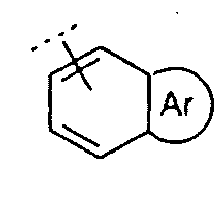
einem 5gliedrigen heteroaromatischen Ring, anelliert an den 6gliedrigen Ring, der ein, zwei oder drei Heteroatome aufweist, und wobei ein erstes Heteroatom N ist, ein zweites Heteroatom N ist und ein drittes Heteroatom aus der Gruppe ausgewählt ist, bestehend aus O und S, und
einem 6gliedrigen aromatischen Ring, anelliert an den 6gliedrigen Ring, der kein oder ein N-Heteroatom aufweist, wobei der anellierte 6gliedrige aromatische Ring unsubstituiert oder durch mindestens einen Substituenten, ausgewählt aus der Gruppe, bestehend aus C1-7-Alkyl, Halogen, Carboxy-C1-7-alkyl, Amino, Alkylamino und Acetamido, substituiert ist. - Verbindungen der Formel IA nach Anspruch 9, wobei R5 C1-7-Alkyl oder C1-7-Alkyl, substituiert durch Phenyl, ist.
- Verbindungen der Formel IA nach Anspruch 9, wobei R5 C2-7-Alkenyl, substituiert durch Phenyl, ist.
- Verbindungen der Formel IA nach Anspruch 9, wobei R5 Phenyl ist.
- Verbindungen der Formel IA nach Anspruch 9, wobei R5 Phenyl, substituiert durch mindestens einen Substituenten, ausgewählt aus der Gruppe, bestehend aus C1-7-Alkyl, C1-7-Alkyl, substituiert durch Halogen, Halogen, C1-7-Alkoxy, C1-7-Alkoxy, substituiert durch Halogen, Nitro und Acetamido, ist.
- Verbindungen der Formel IA nach Anspruch 18, wobei R5 Phenyl, substituiert durch Halogen, ist.
- Verbindungen der Formel IA nach Anspruch 18, wobei R5 Phenyl, substituiert durch C1-7-Alkyl, oder C1-7-Alkyl, substituiert durch Halogen, ist.
- Verbindungen der Formel IA nach Anspruch 18, wobei die Phenylgruppe zwei oder drei Substituenten aufweist, ausgewählt aus der Gruppe, bestehend aus C1-7-Alkyl, C1-7-Alkyl, substituiert durch Halogen, Halogen, C1-7-Alkoxy, C1-7-Alkoxy, substituiert durch Halogen, Nitro und Acetamido.
- Verbindungen der Formel IA nach Anspruch 6, wobei R3

- Verbindungen der Formel IA nach Anspruch 22, wobei R6 ein 5gliedriger aromatischer heterocyclischer Ring mit einem oder zwei Heteroatomen ist, wobei ein erstes Heteroatom N ist und ein zweites Heteroatom aus der Gruppe ausgewählt ist, bestehend aus N und S, wobei der 5 gliedrige heterocyclische Ring unsubstituiert oder durch mindestens einen Substituenten, ausgewählt aus der Gruppe, bestehend aus C1-7-Alkyl, Halogen, Carboxy-C1-7-alkyl, Amino, Alkylamino und Acetamido, substituiert ist.
- Verbindungen der Formel IA nach Anspruch 22, wobei R6 ein 6gliedriger aromatischer heterocyclischer Ring mit einem oder zwei N-Heteroatomen ist, wobei der 6gliedrige heterocyclische Ring unsubstituiert oder durch mindestens einen Substituenten, ausgewählt aus der Gruppe, bestehend aus C1-7-Alkyl, Halogen, Carboxy-C1-7-alkyl, Amino, Alkylamino und Acetamido, substituiert ist.
- Verbindungen der Formel IA nach Anspruch 6, wobei R3

- Verbindungen der Formel IA nach Anspruch 25, wobei R4 H ist und R5 ein 5gliedriger aromatischer heterocyclischer Ring mit einem oder zwei Heteroatomen ist, wobei ein erstes Heteroatom N ist und ein zweites Heteroatom aus der Gruppe ausgewählt ist, bestehend aus N und S, wobei der 5gliedrige heterocyclische Ring unsubstituiert oder durch mindestens einen Substituenten, ausgewählt aus der Gruppe, bestehend aus C1-7-Alkyl, Halogen, Carboxy-C1-7-alkyl, Amino, Alkylamino und Acetamido, substituiert ist.
- Verbindungen der Formel IA nach Anspruch 6, wobei R2 C1-7-Alkyl, substituiert durch Cycloalkyl, ist.
- Verbindungen der Formel I nach Anspruch 8 mit der Formel

- Verbindungen der Formel IB nach Anspruch 28, wobei R3

- Verbindungen der Formel IB nach Anspruch 29, wobei R4 H ist.
- Verbindungen der Formel IB nach Anspruch 29, wobei R5 ein 5gliedriger heteroaromatischer Ring ist, der zwei Heteroatome aufweist, wobei ein erstes Heteroatom N ist und ein zweites Heteroatom unabhängig aus der Gruppe ausgewählt ist, bestehend aus N, O und S, wobei der 5gliedrige heteroaromatische Ring unsubstituiert oder durch mindestens einen Substituenten, ausgewählt aus der Gruppe, bestehend aus C1-7-Alkyl, Halogen, Carboxy-C1-7-alkyl, Amino, Alkylamino und Acetamido, substituiert ist.
- Verbindungen der Formel IB nach Anspruch 29, wobei R5 Phenyl, substituiert durch mindestens einen Substituenten, ausgewählt aus der Gruppe, bestehend aus C1-7-Alkyl, C1-7-Alkyl, substituiert durch Halogen, Halogen, C1-7-Alkoxy, C1-7-Alkoxy, substituiert durch Halogen, Nitro und Acetamido, ist.
- Verbindungen der Formel IB nach Anspruch 29, wobei R5 ein 6gliedriger heteroaromatischer Ring ist, der ein N aufweist, wobei der 6gliedrige heteroaromatische Ring unsubstituiert oder durch mindestens einen Substituenten, ausgewählt aus der Gruppe, bestehend aus C1-7-Alkyl, Halogen, Carboxy-C1-7-alkyl, Amino, Alkylamino und Acetamido, substituiert ist.
- Verbindungen der Formel IB nach Anspruch 29, wobei R5 C1-7-Alkyl ist.
- Verbindungen der Formel IB nach Anspruch 29, wobei R4 C1-7-Alkyl ist.
- Verbindungen der Formel I nach Anspruch 1 oder 2, wobei die Verbindung aus der Gruppe ausgewählt ist, bestehend aus
5-Chlor-1,3-dimethyl-1H-pyrazol-4-sulfonsäure-{4-[3-cyclopropylmethyl-1-(2-fluor-benzyl)-2,6-dioxo-2,3,6,7-tetrahydro-1H-purin-8-ylmethyl]-phenyl}-amid,
1-Methyl-1H-pyrazol-4-sulfonsäure-{4-[3-cyclopropylmethyl-1-(2-fluor-benzyl)-2,6-dioxo-2,3,6,7-tetrahydro-1H-purin-8-ylmethyl]-phenyl}-amid,
N-{4-[3-Cyclopropylmethyl-1-(2-fluor-benzyl)-2,6-dioxo-2,3,6,7-tetrahydro-1H-purin-8-ylmethyl]-phenyl}-3-methoxy-benzolsulfonamid,
N-{4-[3-Cyclopropylmethyl-1-(2-fluor-benzyl)-2,6-dioxo-2,3,6,7-tetrahydro-1H-purin-8-ylmethyl]-phenyl}-3-fluor-benzolsulfonamid,
5-Brom-6-chlor-pyridin-3-sulfonsäure-{4-[3-cyclopropylmethyl-1-(2-fluor-benzyl)-2,6-dioxo-2,3,6,7-tetrahydro- 1H-purin-8-ylmethyl]-phenyl }-amid,
5-Chlor-1,3-dimethyl-1H-pyrazol-4-sulfonsäure- {3-[3-cyclopropylmethyl-1-(2-fluor-benzyl)-2,6-dioxo-2,3,6,7-tetrahydro-1H-purin-8-ylmethyl]-phenyl} -amid,
1,3-Dimethyl-1H-pyrazol-4-sulfonsäure- {4-[3-cyclopropylmethyl-1-(2-fluor-benzyl)-2,6-dioxo-2,3,6,7-tetrahydro-1H-purin-8-ylmethyl]-phenyl }-amid,
N-(5- {4-[3-Cyclopropylmethyl-1-(2-fluor-benzyl)-2,6-dioxo-2,3,6,7-tetrahydro-1H-purin-8-ylmethyl]-phenylsulfamoyl} -4-methyl-thiazol-2-yl)-acetamid;
2-Amino-4-methyl-thiazol-5-sulfonsäure- {4-[3-cyclopropylmethyl-1-(2-fluorobenzyl)-2,6-dioxo-2,3,6,7-tetrahydro-1H-purin-8-ylmethyl]-phenyl}-amid-trifluor-essigsäuresalz,
3,5-Dimethyl-isoxazol-4-sulfonsäure- {4-[3-cyclopropylmethyl-1-(2-fluor-benzyl)-2,6-dioxo-2, 3, 6, 7-tetrahydro-1H-purin-8-ylmethyl]-phenyl}-amid;
1,2-Dimethyl-1H-imidazol-4-sulfonsäure- {4- [3-cyclopropylmethyl-1-(2-fluor-benzyl)-2 ,6-dioxo-2,3,6,7-tetrahydro-1H-purin-8-ylmethyl]-phenyl}-amid,
1-Methyl-1H-imidazol-4-sulfonsäure- {4-[3-cyclopropylmethyl-1-(2-fluor-benzyl)-2,6-dioxo-2,3,6,7-tetrahydro-1H-purin-8-ylmethyl]-phenyl}-amid,
N-{4- [3-Cyclopropylmethyl-1-(2-fluor-benzyl)-2,6-dioxo-2,3,6,7-tetrahydro-1H-purin-8-yl-methyl]-phenyl}-N,N-dimethylsulfamid,
5-Chlor-1,3-dimethyl-1H-pyrazol-4-sulfonsäure-{4-[3-cyclopropylmethyl-1-(2-fluor-benzyl)-2,6-dioxo-2,3,6,7-tetrahydro-1H-purin-8-ylmethyl]-phenyl}-methyl-amid,
Chinolin-8-sulfonsäure- {4-[3-cyclopropylmethyl-1-(2-fluor-benzyl)-2,6-dioxo-2,3,6,7-tetrahydro-1H-purin-8-ylmethyl]-phenyl}-amid,
N-(4- {4-[3-Cyclopropylmethyl-1-(2-fluor-benzyl)-2,6-dioxo-2,3,6,7-tetrahydro-1H-purin-8-ylmethyl]-phenylsulfamoyl}-phenyl)-acetamid,
N-[4-(1-Benzyl-3-butyl-2,6-dioxo-2,3,6,7-tetrahydro-1H-purin-8-ylmethyl)-phenyl]- . 4-methyl-benzolsulfonamid,
Pyridin-3-sulfonsäure-{4-[3-cyclopropylmethyl-1-(2-fluor-benzyl)-2,6-dioxo-2,3,6,7-tetrahydro-1H-purin-8-ylmethyl]-phenyl}-amid-trifluor-essigsäuresalz,
N-{4-[3-Cyclopropylmethyl-1-(2-fluor-benzyl)-2,6-dioxo-2,3,6,7-tetrahydro-1H-purin-8-ylmethyl]-phenyl}-methansulfonamid,
N-[4-(1-Benzyl-3-butyl-2,6-dioxo-2,3,6,7-tetrahydro-1H-purin-8-ylmethyl)-phenyl]-methan-sulfonamid,
5-Chlor-1,3-dimethyl-1H-pyrazol-4-sulfonsäure-{6-[3-butyl-1-(2-fluor-benzyl)-2,6-dioxo-2,3,6,7-tetrahydro-1H-purin-8-ylmethyl]-pyridin-3-yl}-amid,
5-Chlor-1,3-dimethyl-1 H-pyrazol-4-sulfonsäure- {6-[3-cyclobutylmethyl-1-(2-fluor-benzyl)-2,6-dioxo-2,3 ,6,7 -tetrahydro-1H -purin-8-ylmethyl]-pyridin-3-yl}-amid,
1,3-Dimethyl-1H-pyrazol-4-sulfonsäure- {4- [3-cyclopropylmethyl-1 -(2-fluor-benzyl)-2,6-dioxo-2, 3,6,7-tetrahydro-1H-purin-8-ylmethyl]-phenyl}-methyl-amid,
4- [3- Butyl-1-(2-fluor-benzyl)-2,6-dioxo-2,3,6,7 -tetrahydro-1H-purin-8-ylmethyl]-N-pyridin-2-yl-benzolsulfonamid,
4-[3-Butyl-1-(2-fluor-benzy1)-2,6-dioxo-2,3,6,7-tetrahydro-1H-purin-8-ylmethyl]-N-pyridin-4-yl-benzolsulfonamid,
4-[3-Butyl-1-(2-fluor-benzyl)-2,6-dioxo-2,3,6,7-tetrahydro-1H-purin-8-ylmethyl]-N-pyridin-3-yl-benzolsulfonamid,
4-[3-Butyl-1-(2-fluor-benzyl)-2,6-dioxo-2,3,6,7-tetrahydro-1H-purin-8-ylmethyl]-N-pyrimidin-2-yl-benzolsulfonamid und
4-[3-Butyl-1-(2-fluor-benzyl)-2,6-dioxo-2,3,6,7-tetrahydro-1H-purin-8-ylmethyl]-N-(1,3,5-trimethyl-1H-pyrazol-4-yl)-benzolsulfonamid. - Verfahren zur Herstellung einer Verbindung nach einem der Ansprüche 1 bis 36, wobei das Verfahren die Cyclisierung einer Verbindung der Formel II

- Verbindungen nach einem der Ansprüche 1 bis 36, hergestellt durch ein Verfahren nach Anspruch 37.
- Pharmazeutische Zusammensetzungen, umfassend eine Verbindung nach einem der Ansprüche 1 bis 36 oder ein pharmazeutisch akzeptables Salz davon und einen pharmazeutisch akzeptablen Hilfsstoff.
- Verbindungen nach einem der Ansprüche 1 bis 36 zur Verwendung als therapeutisch aktive Substanzen.
- Verwendung von Verbindungen nach einem der Ansprüche 1 bis 36 zur Herstellung von Medikamenten zur Behandlung und/oder Prophylaxe von Krankheiten, die mit Phosphoenolpyruvatcarboxykinase in Verbindung stehen.
- Verwendung nach Anspruch 41 zur Behandlung von Diabetes vom Typ 2.
Applications Claiming Priority (3)
| Application Number | Priority Date | Filing Date | Title |
|---|---|---|---|
| US44856203P | 2003-02-19 | 2003-02-19 | |
| US448562P | 2003-02-19 | ||
| PCT/EP2004/001289 WO2004074288A1 (en) | 2003-02-19 | 2004-02-12 | Sulfonamide substituted xanthine derivatives for use as pepck inhibitors |
Publications (2)
| Publication Number | Publication Date |
|---|---|
| EP1599477A1 EP1599477A1 (de) | 2005-11-30 |
| EP1599477B1 true EP1599477B1 (de) | 2008-01-30 |
Family
ID=32908606
Family Applications (1)
| Application Number | Title | Priority Date | Filing Date |
|---|---|---|---|
| EP04710346A Expired - Lifetime EP1599477B1 (de) | 2003-02-19 | 2004-02-12 | Sulfonamidsubstituierte xanthinderivate zur verwendung als pepck-inhibitoren |
Country Status (14)
| Country | Link |
|---|---|
| EP (1) | EP1599477B1 (de) |
| JP (1) | JP2006515337A (de) |
| KR (1) | KR100728425B1 (de) |
| CN (1) | CN100361992C (de) |
| AT (1) | ATE385234T1 (de) |
| AU (1) | AU2004213124A1 (de) |
| BR (1) | BRPI0407695A (de) |
| CA (1) | CA2514472A1 (de) |
| DE (1) | DE602004011603T2 (de) |
| ES (1) | ES2298722T3 (de) |
| MX (1) | MXPA05008672A (de) |
| PL (1) | PL378555A1 (de) |
| RU (1) | RU2340613C2 (de) |
| WO (1) | WO2004074288A1 (de) |
Families Citing this family (27)
| Publication number | Priority date | Publication date | Assignee | Title |
|---|---|---|---|---|
| JP2010500300A (ja) | 2006-08-08 | 2010-01-07 | サノフィ−アベンティス | アリールアミノアリール−アルキル−置換イミダゾリジン−2,4−ジオン、それらの製造法、それらの化合物を含有する薬剤、およびそれらの使用 |
| EP2025674A1 (de) | 2007-08-15 | 2009-02-18 | sanofi-aventis | Substituierte Tetrahydronaphthaline, Verfahren zu ihrer Herstellung und ihre Verwendung als Arzneimittel |
| WO2010003624A2 (en) | 2008-07-09 | 2010-01-14 | Sanofi-Aventis | Heterocyclic compounds, processes for their preparation, medicaments comprising these compounds, and the use thereof |
| GB0815947D0 (en) * | 2008-09-02 | 2008-10-08 | Univ Dundee | Compounds |
| WO2010068601A1 (en) | 2008-12-08 | 2010-06-17 | Sanofi-Aventis | A crystalline heteroaromatic fluoroglycoside hydrate, processes for making, methods of use and pharmaceutical compositions thereof |
| PE20120693A1 (es) | 2009-06-29 | 2012-07-04 | Agios Pharmaceuticals Inc | Compuestos heterociclos como moduladores de la piruvato cinasa m2 (pkm2) |
| SG178880A1 (en) | 2009-08-26 | 2012-04-27 | Sanofi Sa | Novel crystalline heteroaromatic fluoroglycoside hydrates, pharmaceuticals comprising these compounds and their use |
| WO2011107494A1 (de) | 2010-03-03 | 2011-09-09 | Sanofi | Neue aromatische glykosidderivate, diese verbindungen enthaltende arzneimittel und deren verwendung |
| EP2582709B1 (de) | 2010-06-18 | 2018-01-24 | Sanofi | Azolopyridin-3-on-derivate als inhibitoren von lipasen und phospholipasen |
| US8530413B2 (en) | 2010-06-21 | 2013-09-10 | Sanofi | Heterocyclically substituted methoxyphenyl derivatives with an oxo group, processes for preparation thereof and use thereof as medicaments |
| TW201215388A (en) | 2010-07-05 | 2012-04-16 | Sanofi Sa | (2-aryloxyacetylamino)phenylpropionic acid derivatives, processes for preparation thereof and use thereof as medicaments |
| TW201221505A (en) | 2010-07-05 | 2012-06-01 | Sanofi Sa | Aryloxyalkylene-substituted hydroxyphenylhexynoic acids, process for preparation thereof and use thereof as a medicament |
| TW201215387A (en) | 2010-07-05 | 2012-04-16 | Sanofi Aventis | Spirocyclically substituted 1,3-propane dioxide derivatives, processes for preparation thereof and use thereof as a medicament |
| TWI549947B (zh) * | 2010-12-29 | 2016-09-21 | 阿吉歐斯製藥公司 | 治療化合物及組成物 |
| EP2683698B1 (de) | 2011-03-08 | 2017-10-04 | Sanofi | Mit adamantan- oder noradamantan substituierte benzyl-oxathiazinderivate, diese verbindungen enthaltende arzneimittel und deren verwendung |
| EP2683703B1 (de) | 2011-03-08 | 2015-05-27 | Sanofi | Neue substituierte phenyl-oxathiazinderivate, verfahren zu deren herstellung, diese verbindungen enthaltende arzneimittel und deren verwendung |
| US8809324B2 (en) | 2011-03-08 | 2014-08-19 | Sanofi | Substituted phenyl-oxathiazine derivatives, method for producing them, drugs containing said compounds and the use thereof |
| WO2012120055A1 (de) | 2011-03-08 | 2012-09-13 | Sanofi | Di- und trisubstituierte oxathiazinderivate, verfahren zu deren herstellung, ihre verwendung als medikament sowie sie enthaltendes arzneimittel und deren verwendung |
| EP2683704B1 (de) | 2011-03-08 | 2014-12-17 | Sanofi | Verzweigte oxathiazinderivate, verfahren zu deren herstellung, ihre verwendung als medikament sowie sie enthaltendes arzneimittel und deren verwendung |
| US8846666B2 (en) | 2011-03-08 | 2014-09-30 | Sanofi | Oxathiazine derivatives which are substituted with benzyl or heteromethylene groups, method for producing them, their use as medicine and drug containing said derivatives and the use thereof |
| WO2012120056A1 (de) | 2011-03-08 | 2012-09-13 | Sanofi | Tetrasubstituierte oxathiazinderivate, verfahren zu deren herstellung, ihre verwendung als medikament sowie sie enthaltendes arzneimittel und deren verwendung |
| WO2012120054A1 (de) | 2011-03-08 | 2012-09-13 | Sanofi | Di- und trisubstituierte oxathiazinderivate, verfahren zu deren herstellung, ihre verwendung als medikament sowie sie enthaltendes arzneimittel und deren verwendung |
| EP2766349B1 (de) | 2011-03-08 | 2016-06-01 | Sanofi | Mit carbozyklen oder heterozyklen substituierte oxathiazinderivate, verfahren zu deren herstellung, diese verbindungen enthaltende arzneimittel und deren verwendung |
| WO2013037390A1 (en) | 2011-09-12 | 2013-03-21 | Sanofi | 6-(4-hydroxy-phenyl)-3-styryl-1h-pyrazolo[3,4-b]pyridine-4-carboxylic acid amide derivatives as kinase inhibitors |
| EP2567959B1 (de) | 2011-09-12 | 2014-04-16 | Sanofi | 6-(4-hydroxy-phenyl)-3-styryl-1h-pyrazolo[3,4-b]pyridin-4-carbonsäureamid-derivate als kinaseinhibitoren |
| EP2760862B1 (de) | 2011-09-27 | 2015-10-21 | Sanofi | 6-(4-hydroxy-phenyl)-3-alkyl-1h-pyrazolo[3,4-b]pyridin-4-carbonsäureamidderivate als kinaseinhibitoren |
| BR112021002207A2 (pt) | 2018-08-10 | 2021-05-04 | Diapin Therapeutics, Llc | tri-peptídeos e tratamento de distúrbios metabólicos, cardiovasculares e inflamatórios |
Family Cites Families (3)
| Publication number | Priority date | Publication date | Assignee | Title |
|---|---|---|---|---|
| DE69812070T2 (de) * | 1998-04-24 | 2003-12-11 | K.U. Leuven Research & Development, Leuven | Immununterdrückende Effekte von 8 substituierten Xanthinderivaten |
| GB0008694D0 (en) * | 2000-04-07 | 2000-05-31 | Novartis Ag | Organic compounds |
| EP1515972B1 (de) * | 2002-06-12 | 2009-05-13 | F. Hoffmann-La Roche Ag | Amid substituierte xanthin derivate mit gluconeogenesis modulierender wirkung |
-
2004
- 2004-02-12 EP EP04710346A patent/EP1599477B1/de not_active Expired - Lifetime
- 2004-02-12 KR KR1020057015234A patent/KR100728425B1/ko not_active Expired - Fee Related
- 2004-02-12 RU RU2005128833/04A patent/RU2340613C2/ru not_active IP Right Cessation
- 2004-02-12 JP JP2006500028A patent/JP2006515337A/ja active Pending
- 2004-02-12 PL PL378555A patent/PL378555A1/pl not_active Application Discontinuation
- 2004-02-12 DE DE602004011603T patent/DE602004011603T2/de not_active Expired - Lifetime
- 2004-02-12 CN CNB2004800047229A patent/CN100361992C/zh not_active Expired - Fee Related
- 2004-02-12 BR BRPI0407695-8A patent/BRPI0407695A/pt not_active IP Right Cessation
- 2004-02-12 ES ES04710346T patent/ES2298722T3/es not_active Expired - Lifetime
- 2004-02-12 MX MXPA05008672A patent/MXPA05008672A/es active IP Right Grant
- 2004-02-12 WO PCT/EP2004/001289 patent/WO2004074288A1/en not_active Ceased
- 2004-02-12 AT AT04710346T patent/ATE385234T1/de not_active IP Right Cessation
- 2004-02-12 CA CA002514472A patent/CA2514472A1/en not_active Abandoned
- 2004-02-12 AU AU2004213124A patent/AU2004213124A1/en not_active Abandoned
Also Published As
| Publication number | Publication date |
|---|---|
| KR20050107432A (ko) | 2005-11-11 |
| MXPA05008672A (es) | 2005-10-18 |
| DE602004011603T2 (de) | 2009-01-29 |
| KR100728425B1 (ko) | 2007-06-13 |
| JP2006515337A (ja) | 2006-05-25 |
| CA2514472A1 (en) | 2004-09-02 |
| CN100361992C (zh) | 2008-01-16 |
| RU2340613C2 (ru) | 2008-12-10 |
| ATE385234T1 (de) | 2008-02-15 |
| WO2004074288A1 (en) | 2004-09-02 |
| PL378555A1 (pl) | 2006-05-02 |
| CN1751044A (zh) | 2006-03-22 |
| RU2005128833A (ru) | 2006-07-27 |
| BRPI0407695A (pt) | 2006-03-01 |
| EP1599477A1 (de) | 2005-11-30 |
| ES2298722T3 (es) | 2008-05-16 |
| AU2004213124A1 (en) | 2004-09-02 |
| DE602004011603D1 (de) | 2008-03-20 |
Similar Documents
| Publication | Publication Date | Title |
|---|---|---|
| EP1599477A1 (de) | Sulfonamidsubstituierte xanthinderivate zurverwendung als pepck-inhibitoren | |
| EP3568390B1 (de) | Kleinmolekülige aktivatoren der nicotinamid-phosphoribosyltransferase (nampt) und deren verwendungen | |
| JP4324338B2 (ja) | 縮合イミダゾール化合物及び糖尿病治療薬 | |
| AU2016225896B2 (en) | Heterocyclic compounds useful as PDK1 inhibitors | |
| WO2005090332A1 (ja) | 置換キナゾリン又はピリドピリミジン誘導体 | |
| AU2009249793A1 (en) | GPRI 19 receptor agonists | |
| JP2009533427A (ja) | チオキサンチン誘導体およびそれらのmpo阻害剤としての用途 | |
| EP3459937B1 (de) | Thiazolderivat und anwendungen | |
| KR102711244B1 (ko) | 할로-알릴아민 화합물 및 그의 용도 | |
| EP1515972B1 (de) | Amid substituierte xanthin derivate mit gluconeogenesis modulierender wirkung | |
| JPH11263789A (ja) | プリン誘導体および糖尿病の予防・治療剤としてのアデノシンa2受容体拮抗剤 | |
| US7148229B2 (en) | Sulfonamide substituted xanthine derivatives | |
| CZ20033079A3 (cs) | Léčiva s obsahem derivátů adenosinu k léčení syndromu insulinové rezistence a diabetu | |
| EP1963337B1 (de) | THIENO[2,3-b]PYRIDIN DERIVATE | |
| IL97656A (en) | 1,3-dipropyl-8-aralkyl-xanthine derivatives process for their preparation and pharmaceutical compositions comprising them | |
| US20080255106A1 (en) | Novel 2-Phenyl-Imidazo[4,5-B]Pyridine Derivatives as Inhibitors of Glycogen Synthase Kinase for the Treatment of Dementia and Neurodegenerative Disorders | |
| MONTGOMERY et al. | Synthesis of Potential Anticancer Agents. XXII. 2 Reactions of Orthoesters with 4, 5-Diaminopyrimidines | |
| US20090203692A1 (en) | Novel chemical compounds | |
| US9682941B2 (en) | Substituted biphenyl analogues as dual inhibitors of aromatase and sulfatase | |
| US4389403A (en) | 1-Aroyl-2-phenylamino-2-imidazolines, drugs containing these compounds, and use thereof | |
| HK40053245A (en) | Haloallylamine compounds and application thereof |
Legal Events
| Date | Code | Title | Description |
|---|---|---|---|
| PUAI | Public reference made under article 153(3) epc to a published international application that has entered the european phase |
Free format text: ORIGINAL CODE: 0009012 |
|
| 17P | Request for examination filed |
Effective date: 20050919 |
|
| AK | Designated contracting states |
Kind code of ref document: A1 Designated state(s): AT BE BG CH CY CZ DE DK EE ES FI FR GB GR HU IE IT LI LU MC NL PT RO SE SI SK TR |
|
| AX | Request for extension of the european patent |
Extension state: AL LT LV MK |
|
| DAX | Request for extension of the european patent (deleted) | ||
| 17Q | First examination report despatched |
Effective date: 20070215 |
|
| GRAP | Despatch of communication of intention to grant a patent |
Free format text: ORIGINAL CODE: EPIDOSNIGR1 |
|
| GRAS | Grant fee paid |
Free format text: ORIGINAL CODE: EPIDOSNIGR3 |
|
| GRAA | (expected) grant |
Free format text: ORIGINAL CODE: 0009210 |
|
| AK | Designated contracting states |
Kind code of ref document: B1 Designated state(s): AT BE BG CH CY CZ DE DK EE ES FI FR GB GR HU IE IT LI LU MC NL PT RO SE SI SK TR |
|
| REG | Reference to a national code |
Ref country code: GB Ref legal event code: FG4D |
|
| REG | Reference to a national code |
Ref country code: CH Ref legal event code: EP |
|
| REG | Reference to a national code |
Ref country code: IE Ref legal event code: FG4D |
|
| REF | Corresponds to: |
Ref document number: 602004011603 Country of ref document: DE Date of ref document: 20080320 Kind code of ref document: P |
|
| REG | Reference to a national code |
Ref country code: ES Ref legal event code: FG2A Ref document number: 2298722 Country of ref document: ES Kind code of ref document: T3 |
|
| REG | Reference to a national code |
Ref country code: SE Ref legal event code: TRGR |
|
| REG | Reference to a national code |
Ref country code: HU Ref legal event code: AG4A Ref document number: E003154 Country of ref document: HU |
|
| PG25 | Lapsed in a contracting state [announced via postgrant information from national office to epo] |
Ref country code: SI Free format text: LAPSE BECAUSE OF FAILURE TO SUBMIT A TRANSLATION OF THE DESCRIPTION OR TO PAY THE FEE WITHIN THE PRESCRIBED TIME-LIMIT Effective date: 20080130 Ref country code: PT Free format text: LAPSE BECAUSE OF FAILURE TO SUBMIT A TRANSLATION OF THE DESCRIPTION OR TO PAY THE FEE WITHIN THE PRESCRIBED TIME-LIMIT Effective date: 20080630 |
|
| ET | Fr: translation filed | ||
| PG25 | Lapsed in a contracting state [announced via postgrant information from national office to epo] |
Ref country code: SK Free format text: LAPSE BECAUSE OF FAILURE TO SUBMIT A TRANSLATION OF THE DESCRIPTION OR TO PAY THE FEE WITHIN THE PRESCRIBED TIME-LIMIT Effective date: 20080130 Ref country code: DK Free format text: LAPSE BECAUSE OF FAILURE TO SUBMIT A TRANSLATION OF THE DESCRIPTION OR TO PAY THE FEE WITHIN THE PRESCRIBED TIME-LIMIT Effective date: 20080130 Ref country code: CZ Free format text: LAPSE BECAUSE OF FAILURE TO SUBMIT A TRANSLATION OF THE DESCRIPTION OR TO PAY THE FEE WITHIN THE PRESCRIBED TIME-LIMIT Effective date: 20080130 Ref country code: MC Free format text: LAPSE BECAUSE OF NON-PAYMENT OF DUE FEES Effective date: 20080228 |
|
| PG25 | Lapsed in a contracting state [announced via postgrant information from national office to epo] |
Ref country code: RO Free format text: LAPSE BECAUSE OF FAILURE TO SUBMIT A TRANSLATION OF THE DESCRIPTION OR TO PAY THE FEE WITHIN THE PRESCRIBED TIME-LIMIT Effective date: 20080130 |
|
| PLBE | No opposition filed within time limit |
Free format text: ORIGINAL CODE: 0009261 |
|
| STAA | Information on the status of an ep patent application or granted ep patent |
Free format text: STATUS: NO OPPOSITION FILED WITHIN TIME LIMIT |
|
| 26N | No opposition filed |
Effective date: 20081031 |
|
| PG25 | Lapsed in a contracting state [announced via postgrant information from national office to epo] |
Ref country code: EE Free format text: LAPSE BECAUSE OF FAILURE TO SUBMIT A TRANSLATION OF THE DESCRIPTION OR TO PAY THE FEE WITHIN THE PRESCRIBED TIME-LIMIT Effective date: 20080130 |
|
| PG25 | Lapsed in a contracting state [announced via postgrant information from national office to epo] |
Ref country code: BG Free format text: LAPSE BECAUSE OF FAILURE TO SUBMIT A TRANSLATION OF THE DESCRIPTION OR TO PAY THE FEE WITHIN THE PRESCRIBED TIME-LIMIT Effective date: 20080430 |
|
| PG25 | Lapsed in a contracting state [announced via postgrant information from national office to epo] |
Ref country code: CY Free format text: LAPSE BECAUSE OF FAILURE TO SUBMIT A TRANSLATION OF THE DESCRIPTION OR TO PAY THE FEE WITHIN THE PRESCRIBED TIME-LIMIT Effective date: 20080130 |
|
| PGFP | Annual fee paid to national office [announced via postgrant information from national office to epo] |
Ref country code: SE Payment date: 20091223 Year of fee payment: 7 |
|
| PGFP | Annual fee paid to national office [announced via postgrant information from national office to epo] |
Ref country code: CH Payment date: 20100218 Year of fee payment: 7 Ref country code: ES Payment date: 20100219 Year of fee payment: 7 Ref country code: HU Payment date: 20100108 Year of fee payment: 7 Ref country code: IE Payment date: 20100114 Year of fee payment: 7 |
|
| PGFP | Annual fee paid to national office [announced via postgrant information from national office to epo] |
Ref country code: FI Payment date: 20100127 Year of fee payment: 7 Ref country code: FR Payment date: 20100222 Year of fee payment: 7 Ref country code: IT Payment date: 20100224 Year of fee payment: 7 |
|
| PGFP | Annual fee paid to national office [announced via postgrant information from national office to epo] |
Ref country code: AT Payment date: 20100107 Year of fee payment: 7 Ref country code: DE Payment date: 20100226 Year of fee payment: 7 Ref country code: GB Payment date: 20100107 Year of fee payment: 7 |
|
| PG25 | Lapsed in a contracting state [announced via postgrant information from national office to epo] |
Ref country code: LU Free format text: LAPSE BECAUSE OF NON-PAYMENT OF DUE FEES Effective date: 20080212 |
|
| PG25 | Lapsed in a contracting state [announced via postgrant information from national office to epo] |
Ref country code: TR Free format text: LAPSE BECAUSE OF FAILURE TO SUBMIT A TRANSLATION OF THE DESCRIPTION OR TO PAY THE FEE WITHIN THE PRESCRIBED TIME-LIMIT Effective date: 20080130 |
|
| PGFP | Annual fee paid to national office [announced via postgrant information from national office to epo] |
Ref country code: NL Payment date: 20100208 Year of fee payment: 7 |
|
| PG25 | Lapsed in a contracting state [announced via postgrant information from national office to epo] |
Ref country code: GR Free format text: LAPSE BECAUSE OF FAILURE TO SUBMIT A TRANSLATION OF THE DESCRIPTION OR TO PAY THE FEE WITHIN THE PRESCRIBED TIME-LIMIT Effective date: 20080501 |
|
| PGFP | Annual fee paid to national office [announced via postgrant information from national office to epo] |
Ref country code: BE Payment date: 20100402 Year of fee payment: 7 |
|
| BERE | Be: lapsed |
Owner name: F. HOFFMANN-LA ROCHE A.G. Effective date: 20110228 |
|
| REG | Reference to a national code |
Ref country code: NL Ref legal event code: V1 Effective date: 20110901 |
|
| REG | Reference to a national code |
Ref country code: CH Ref legal event code: PL |
|
| REG | Reference to a national code |
Ref country code: SE Ref legal event code: EUG |
|
| GBPC | Gb: european patent ceased through non-payment of renewal fee |
Effective date: 20110212 |
|
| PG25 | Lapsed in a contracting state [announced via postgrant information from national office to epo] |
Ref country code: CH Free format text: LAPSE BECAUSE OF NON-PAYMENT OF DUE FEES Effective date: 20110228 Ref country code: LI Free format text: LAPSE BECAUSE OF NON-PAYMENT OF DUE FEES Effective date: 20110228 |
|
| REG | Reference to a national code |
Ref country code: FR Ref legal event code: ST Effective date: 20111102 |
|
| REG | Reference to a national code |
Ref country code: IE Ref legal event code: MM4A |
|
| PG25 | Lapsed in a contracting state [announced via postgrant information from national office to epo] |
Ref country code: HU Free format text: LAPSE BECAUSE OF NON-PAYMENT OF DUE FEES Effective date: 20110213 Ref country code: BE Free format text: LAPSE BECAUSE OF NON-PAYMENT OF DUE FEES Effective date: 20110228 Ref country code: FI Free format text: LAPSE BECAUSE OF NON-PAYMENT OF DUE FEES Effective date: 20110212 Ref country code: AT Free format text: LAPSE BECAUSE OF NON-PAYMENT OF DUE FEES Effective date: 20110212 |
|
| PG25 | Lapsed in a contracting state [announced via postgrant information from national office to epo] |
Ref country code: NL Free format text: LAPSE BECAUSE OF NON-PAYMENT OF DUE FEES Effective date: 20110901 Ref country code: IT Free format text: LAPSE BECAUSE OF NON-PAYMENT OF DUE FEES Effective date: 20110212 |
|
| REG | Reference to a national code |
Ref country code: DE Ref legal event code: R119 Ref document number: 602004011603 Country of ref document: DE Effective date: 20110901 |
|
| PG25 | Lapsed in a contracting state [announced via postgrant information from national office to epo] |
Ref country code: FR Free format text: LAPSE BECAUSE OF NON-PAYMENT OF DUE FEES Effective date: 20110228 Ref country code: IE Free format text: LAPSE BECAUSE OF NON-PAYMENT OF DUE FEES Effective date: 20110214 |
|
| PG25 | Lapsed in a contracting state [announced via postgrant information from national office to epo] |
Ref country code: GB Free format text: LAPSE BECAUSE OF NON-PAYMENT OF DUE FEES Effective date: 20110212 |
|
| REG | Reference to a national code |
Ref country code: ES Ref legal event code: FD2A Effective date: 20120411 |
|
| PG25 | Lapsed in a contracting state [announced via postgrant information from national office to epo] |
Ref country code: ES Free format text: LAPSE BECAUSE OF NON-PAYMENT OF DUE FEES Effective date: 20110213 |
|
| PG25 | Lapsed in a contracting state [announced via postgrant information from national office to epo] |
Ref country code: SE Free format text: LAPSE BECAUSE OF NON-PAYMENT OF DUE FEES Effective date: 20110213 |
|
| PG25 | Lapsed in a contracting state [announced via postgrant information from national office to epo] |
Ref country code: DE Free format text: LAPSE BECAUSE OF NON-PAYMENT OF DUE FEES Effective date: 20110901 |