EP1598255A1 - Dynamische Herstellung von einem drahtlosen lokalen Netz (WLAN) in einem Zug. - Google Patents
Dynamische Herstellung von einem drahtlosen lokalen Netz (WLAN) in einem Zug. Download PDFInfo
- Publication number
- EP1598255A1 EP1598255A1 EP05253158A EP05253158A EP1598255A1 EP 1598255 A1 EP1598255 A1 EP 1598255A1 EP 05253158 A EP05253158 A EP 05253158A EP 05253158 A EP05253158 A EP 05253158A EP 1598255 A1 EP1598255 A1 EP 1598255A1
- Authority
- EP
- European Patent Office
- Prior art keywords
- car
- wlan
- nodes
- network
- inter
- Prior art date
- Legal status (The legal status is an assumption and is not a legal conclusion. Google has not performed a legal analysis and makes no representation as to the accuracy of the status listed.)
- Withdrawn
Links
- 238000000034 method Methods 0.000 claims abstract description 48
- 230000008859 change Effects 0.000 claims description 13
- 238000001514 detection method Methods 0.000 claims description 4
- 238000012544 monitoring process Methods 0.000 claims description 2
- 230000004044 response Effects 0.000 claims description 2
- 230000008569 process Effects 0.000 description 15
- 230000006855 networking Effects 0.000 description 4
- 230000004913 activation Effects 0.000 description 1
- 230000004075 alteration Effects 0.000 description 1
- 230000005540 biological transmission Effects 0.000 description 1
- 230000001413 cellular effect Effects 0.000 description 1
- 230000004069 differentiation Effects 0.000 description 1
- 230000000694 effects Effects 0.000 description 1
- 238000005516 engineering process Methods 0.000 description 1
- 238000012423 maintenance Methods 0.000 description 1
- 238000007726 management method Methods 0.000 description 1
- 238000012986 modification Methods 0.000 description 1
- 230000004048 modification Effects 0.000 description 1
- 238000012552 review Methods 0.000 description 1
- 238000001228 spectrum Methods 0.000 description 1
- 230000003068 static effect Effects 0.000 description 1
Images


Classifications
-
- B—PERFORMING OPERATIONS; TRANSPORTING
- B61—RAILWAYS
- B61L—GUIDING RAILWAY TRAFFIC; ENSURING THE SAFETY OF RAILWAY TRAFFIC
- B61L15/00—Indicators provided on the vehicle or train for signalling purposes
- B61L15/0018—Communication with or on the vehicle or train
- B61L15/0027—Radio-based, e.g. using GSM-R
-
- B—PERFORMING OPERATIONS; TRANSPORTING
- B61—RAILWAYS
- B61L—GUIDING RAILWAY TRAFFIC; ENSURING THE SAFETY OF RAILWAY TRAFFIC
- B61L15/00—Indicators provided on the vehicle or train for signalling purposes
-
- H—ELECTRICITY
- H04—ELECTRIC COMMUNICATION TECHNIQUE
- H04W—WIRELESS COMMUNICATION NETWORKS
- H04W12/00—Security arrangements; Authentication; Protecting privacy or anonymity
- H04W12/06—Authentication
-
- H—ELECTRICITY
- H04—ELECTRIC COMMUNICATION TECHNIQUE
- H04W—WIRELESS COMMUNICATION NETWORKS
- H04W84/00—Network topologies
- H04W84/02—Hierarchically pre-organised networks, e.g. paging networks, cellular networks, WLAN [Wireless Local Area Network] or WLL [Wireless Local Loop]
- H04W84/10—Small scale networks; Flat hierarchical networks
- H04W84/12—WLAN [Wireless Local Area Networks]
-
- H—ELECTRICITY
- H04—ELECTRIC COMMUNICATION TECHNIQUE
- H04W—WIRELESS COMMUNICATION NETWORKS
- H04W4/00—Services specially adapted for wireless communication networks; Facilities therefor
- H04W4/06—Selective distribution of broadcast services, e.g. multimedia broadcast multicast service [MBMS]; Services to user groups; One-way selective calling services
-
- H—ELECTRICITY
- H04—ELECTRIC COMMUNICATION TECHNIQUE
- H04W—WIRELESS COMMUNICATION NETWORKS
- H04W4/00—Services specially adapted for wireless communication networks; Facilities therefor
- H04W4/06—Selective distribution of broadcast services, e.g. multimedia broadcast multicast service [MBMS]; Services to user groups; One-way selective calling services
- H04W4/08—User group management
-
- H—ELECTRICITY
- H04—ELECTRIC COMMUNICATION TECHNIQUE
- H04W—WIRELESS COMMUNICATION NETWORKS
- H04W40/00—Communication routing or communication path finding
-
- H—ELECTRICITY
- H04—ELECTRIC COMMUNICATION TECHNIQUE
- H04W—WIRELESS COMMUNICATION NETWORKS
- H04W40/00—Communication routing or communication path finding
- H04W40/24—Connectivity information management, e.g. connectivity discovery or connectivity update
- H04W40/246—Connectivity information discovery
-
- H—ELECTRICITY
- H04—ELECTRIC COMMUNICATION TECHNIQUE
- H04W—WIRELESS COMMUNICATION NETWORKS
- H04W84/00—Network topologies
- H04W84/005—Moving wireless networks
-
- H—ELECTRICITY
- H04—ELECTRIC COMMUNICATION TECHNIQUE
- H04W—WIRELESS COMMUNICATION NETWORKS
- H04W88/00—Devices specially adapted for wireless communication networks, e.g. terminals, base stations or access point devices
- H04W88/14—Backbone network devices
-
- H—ELECTRICITY
- H04—ELECTRIC COMMUNICATION TECHNIQUE
- H04W—WIRELESS COMMUNICATION NETWORKS
- H04W92/00—Interfaces specially adapted for wireless communication networks
- H04W92/02—Inter-networking arrangements
Definitions
- the present invention relates generally to wireless local area networks. More particularly, the present invention relates to the provision of wireless local area networks in vehicles, such as passenger rail cars.
- WLAN wireless local area network
- LAN local area network
- a conventional self-forming wireless mesh network would overcome the problems associated with a wired LAN by eliminating the need for manual configuration and wiring, current self-forming wireless mesh networks discover any nearby wireless node, and add the node to the network, and use the newly discovered node as a transport node in order to extend the network's reach.
- Such existing self-forming wireless mesh networks are unsuitable for use in a moving vehicle, such as a passenger train, as they would continually attempt to incorporate nodes that the vehicle passes along its route, or would attempt to become part of other mesh networks that the vehicle passes along its route. This is clearly undesirable, as it would substantially reduce the bandwidth of the wireless LAN operating aboard the vehicle, as well as the security and reliability of the network.
- a method of automatically forming a wireless local area network (WLAN) within a group of rail cars in a train, each rail car in the group having an access point/router comprises the steps of discovering nodes associated with each rail car for inclusion in the WLAN by discovering authorized access point/routers; grouping the discovered nodes into an inter-car bridge group; connecting all nodes in the inter-car bridge group to form the WLAN; and connecting the WLAN to a wide area network (WAN) to share connectivity to the WAN with each of the nodes in the inter-car bridge group.
- WAN wide area network
- the step of discovering nodes for inclusion can comprise the steps of detecting a first node associated with a first car; adding the first node to the inter-car bridge group; and repeating the steps of detecting and adding until all authorized nodes are found.
- the step of detecting a first node can include detecting a node having a predetermined identifier, such as an extended service set identifier, using a service location protocol. The step of detecting and adding can be repeated until no node is detected within a predetermined time after the detection of a previous node.
- the method further comprises the steps of monitoring the WLAN for a network topology change; and in response to a detection of a change in the network topology, rediscovering nodes associated with each rail car for inclusion in the WLAN to dynamically reconfigure the WLAN.
- the network topology change can be caused by the addition or removal of a rail car having an authorized access point/router, at least one of the nodes in the inter-car bridge group can be a network access point, that establishes an in-car network for passenger access to the WAN through the network access point.
- the network access point can be a wireless network access point that provides a wireless in-car network.
- the embodiments of the present invention provide a method of automatically discovering and dynamically forming a wireless network topology. More particularly, the present invention relates to a method of offering WLAN services within a vehicle, such as a train, by automatically discovering and dynamically forming a wireless network topology.
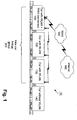
- Figures 1 and 2 show an embodiment of the system of the present invention.
- Figure 1 depicts a train 10 offering WLAN service according to an embodiment of the present invention.
- Rail train 10 comprises multiple passenger rail cars 130, 132, 140, 142.
- a router/access point 100 is deployed on each of the cars 130, 132, 140 in which it is desired to provide WLAN service.
- At least one car, such as car 140 includes an Internet gateway/router 120 for connection to the Internet 160 through a WAN 150 composed of communications links such as satellites, RF towers and cellular networks.
- the WAN access is shared across an inter-car bridge group 200, through an auto-discovered and formed wireless LAN. Not all cars in the train have to offer WLAN service.
- car 142 has no wireless service, and therefore does not form part of the inter-car bridge group 200. It should be noted that the placement or ordering of cars not offering wireless service has no effect on the operation of the present invention.
- Cars offering WLAN can be interspersed throughout the length of the train, separated by intervening cars without WLAN service. All cars having an active router/access point 100 can form part of a given inter-car bridge group.
- Figure 2 shows two rail cars, car 140 and car 130.
- a connection to Internet 160 is made through WAN 150 by Internet Gateway/Router 120.
- Internet Gateway/Router 120 forms wireless connections with router access point 100 on both of the cars.
- the connection between Internet Gateway Router 120 and the Router/Access Point 100 in car 140 can be either a wired or wireless connection.
- the connection to Router/Access Point 100 in car 130 is a wireless connection that can be forged either directly with Internet Gateway/Router 120, with Internet Gateway/Router 120 through the Router/Access Point 100 on car 140, or with Internet Gateway/Router 120 through other intervening Routers/Access Points on unillustrated rail cars.
- This connection between Internet Gateway/Router 120 and any Router/Access Point 100 forms Inter-car WLAN 110.
- Inter-car WLAN 110 can extend to encompass all cars that are equipped with a router/access point 100, or any subset of those cars.
- Inter-car bridge group 200 shown in Figure 1, is the set of all cars having router/access points 100 that are connected to Inter-car WLAN 110.
- Access Point 100 in either of car 130 or car 140, can serve as a network access point for an in-car WLAN such as in-car WLAN 180.
- In-car WLAN 180 permits users 170 to access Internet 160 through the Inter-car WLAN connection 110 with Internet Gateway/Router 120. If additional cars are included in Inter-car WLAN 110, it is preferable that users 170 will connect to the in-car WLAN 180 of their respective cars.
- In-car WLANs such as WLAN 180 are formed and managed by the router/access points 100 in each respective car of Inter-car bridge group 200. This is accomplished by using one of any number of conventional network techniques for establishing a publicly accessible access point.
- Each in-car WLAN is connected through Inter-car WLAN 110 to Internet Gateway/Router 120.
- the Internet gateway/router 120 in such a system can connect to the Internet 160 through the WAN 150.
- the in-car WLAN of each of the cars 130 and 132 preferably operates on its own subnet.
- the router/access points 100 route Internet destined traffic to the Internet gateway/router 120 across the inter-car WLAN 110.
- the inter-car WLAN 110 is a dynamically formed WLAN that bridges the router/access points 100 from each equipped car to the Internet gateway/router 120.
- the Internet Gateway/Router 120 manages connection to Inter 160 through WAN 150, additionally, it routes all Internet destined inter-car traffic. Traffic between users 170 not requiring Internet 160 access are handled by the router/access points 100 that are responsible for each user's in-car WLAN 180.
- FIG 3 is a flowchart illustrating a method of forming Inter-car WLAN 110.
- a train is typically comprised of a number of rail cars. These cars are interchangeably mixed in rail yards to form different trains depending on the need for longer or shorter trains, or other needs that may arise. As a result, the configuration of a train can vary day-by-day.
- the static network names of nodes cannot be provided to Internet Gateway/Router 120 in advance.
- a dynamic method of forming intercar WLAN 110 is required.
- the network can be initialized, shown as system startup (400). Active nodes forming the Inter-car bridge group are discovered (410) to form the inter-car bridge group (420).
- step 410 The details of one implementation of step 410 are described in Figure 4 below.
- One of the internet gateway/routers is established as the connection point to WAN 150, and the connection to WAN 150 is discovered (430).
- WAN 150 is used to connect to Internet 160 (440).
- the connection to Interntet 160 is then maintained (450) until a network topology change (460) is detected.
- a new Inter-car bridge group discovery process is initiated (470), an exemplary method of this step is illustrated in Figure 5 below. Upon completion, the process returns to (420).
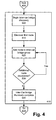
- FIG. 4 illustrates an embodiment of step 410 in more detail.
- the inter-car bridge discovery process starts (500).
- the discovery process identifies a first node for inclusion in the inter-car bridge group (510).
- the discovered node is added to the inter-car bridge group (520). Additional nodes are searched for, and if discovered (530) they too are added to the inter-car bridge group (520).
- the identification process preferably uses a common extended service set ID (ESSID) and service location protocol (SLP) to select nodes for inclusion in the inter-car bridge group.
- ESSID extended service set ID
- SLP service location protocol
- the SLP is a protocol established by the Internet Engineering Task Force (NetCTL) that simplifies the discovery of network resources.
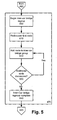
- Figure 5 illustrates an exemplary method for implementing (470). This step is performed after a change in the topology of the network has been detected. Examples of incidence that may result in a network topology change include the activation of an access point/router on a rail car previously not included in the inter-car bridge group, the loss of a connection to an access point/router on a rail car previously included in the inter-car bridge group, the addition of another entire inter-car bridge group or the removal of a subset of the inter-car bridge group to form another separate inter-car bridge group. For the last two examples, this is common when two trains share a common route segment, and are connected to form a single train over the common section of their routes and are severed before and/or after their common route section.
- a number of known techniques can be employed. For example, if a node attempts to connect to the Internet Gateway/Router and cannot, it can broadcast a discovery message, and all nodes receiving the message will then respond and participate in the network regrouping. If one of the access point/routers, or the gateway, do not receive acknowledgement from one of the nodes in an already formed network, they can assume that the node is unavailable and initiate a regrouping process to update the network map. When an unattached node is initialized, it can automatically issue a discovery broadcast message to all nodes sharing an ESSID, so that it is included in the inter-car bridge group.
- two existing inter-car bridge groups When two existing inter-car bridge groups are brought together, they can connect to each other. Two active groups, if they share the same ESSID, will recognize that there is traffic on the network that is not addressed to a known node, and at least one node can then issue a discovery broadcast message to all nodes sharing the ESSID, which will result in the two groups forming a single inter-car bridge group. If two inter-car bridge groups come into close proximity but do not share an ESSID, they will not recognize each other, as the network traffic of one inter-car bridge group will appear as noise to the other inter-car bridge group.
- the process begins with a discovery of nodes (600), which typically involves the broadcast of a network discovery message.
- a first node in the new inter-car bridge group is identified (610), preferably this is a gateway node that can form a connection to Internet 160 through WAN 150.
- the node is added to the inter-car bridge group (620).
- the discovery of new nodes continues, and if more nodes are discovered (630) the process returns to (620).
- the process terminates (640) and returns to (420).
- a timeout counter can be initialized after each node is added. If no node joins before the expiry of the counter the process can terminate with the assumption that no new nodes are available. Other techniques can be utilized as will be apparent to those skilled in the art without departing from the scope of the present invention.
- a request for new node message can be transmitted after each node has joined, so that any node that is powered on after the process has commenced, but before the end of the discovery process, can be added without requiring the restart of the complete inter-car bridge group discovery process.
- User device sessions and statistics are preferably maintained on each router/access point 100, so that information is not lost when inter-car WLANs regroup.
- Self-forming wireless mesh networks are known. They are typically used to extend the reach of networks by having all nodes in the mesh function as part of the network infrastructure. As a result, there is no differentiation between data and infrastructure nodes in the network.
- the present invention allows users to join a network without requiring them to become part of the infrastructure, while at the same time uses mesh-type discovery routines to build a defined network infrastructure in Inter-car WLAN 110 to provide connectivity across inter-car bridge group 200.
- Inter-car bridge group 200 is a series of rail cars in a train, and thus benefits from being selective in the nodes that are part of the infrastructure as the network is in motion, and may pass through other networks.
- Inter-car WLAN 110 and in in-car WLAN 180 can be provided using a number of known networking technologies including IEEE 802.11a/b/g, Wi-MAXTM and other standard wireless networking protocols.
- the networking protocols employ a radiofrequency transmission in unlicensed portion of the wireless spectrum.
- At least one of the rail cars 130, 132 that provide network connectivity to passengers employs a router/access point that communicates with Internet gateway/Router 120 using inter-car WLAN 110, but offers in-car connectivity to the passengers through a wired connection, such as 10/100 base-T Ethernet connection, a universal serial bus connection or a IEEE 1394 (FirewireTM/i.LinkTM) connection.
- a wired connection such as 10/100 base-T Ethernet connection, a universal serial bus connection or a IEEE 1394 (FirewireTM/i.LinkTM) connection.
Landscapes
- Engineering & Computer Science (AREA)
- Mechanical Engineering (AREA)
- Computer Networks & Wireless Communication (AREA)
- Signal Processing (AREA)
- Computer Security & Cryptography (AREA)
- Mobile Radio Communication Systems (AREA)
- Small-Scale Networks (AREA)
Applications Claiming Priority (2)
| Application Number | Priority Date | Filing Date | Title |
|---|---|---|---|
| US57302104P | 2004-05-21 | 2004-05-21 | |
| US573021P | 2004-05-21 |
Publications (1)
| Publication Number | Publication Date |
|---|---|
| EP1598255A1 true EP1598255A1 (de) | 2005-11-23 |
Family
ID=34941417
Family Applications (1)
| Application Number | Title | Priority Date | Filing Date |
|---|---|---|---|
| EP05253158A Withdrawn EP1598255A1 (de) | 2004-05-21 | 2005-05-23 | Dynamische Herstellung von einem drahtlosen lokalen Netz (WLAN) in einem Zug. |
Country Status (2)
| Country | Link |
|---|---|
| US (1) | US20050259598A1 (de) |
| EP (1) | EP1598255A1 (de) |
Cited By (14)
| Publication number | Priority date | Publication date | Assignee | Title |
|---|---|---|---|---|
| EP1914146A2 (de) | 2006-10-11 | 2008-04-23 | Siemens Aktiengesellschaft | Verfahren zur drahtlosen Übermittlung von Informationen zwischen Eisenbahnwagen |
| CN101317394B (zh) * | 2005-11-29 | 2010-11-03 | 诺基亚公司 | 建立和维持可预测移动车辆内的wlan连接的方法、系统以及布置 |
| DE102009052675A1 (de) * | 2009-11-12 | 2011-05-19 | Deutsche Telekom Ag | Verfahren zur Verteilung von Informationen an mobile Endgeräte |
| WO2013104403A1 (de) * | 2012-01-13 | 2013-07-18 | Lufthansa Technik Ag | Bordkommunikationsgeräte für eine kabine eines fahrzeugs, jedes mit einem medienserver und einem funkmodul, mittels dessen diese drahtlos miteinander verbunden sind |
| WO2013130860A1 (en) * | 2012-03-01 | 2013-09-06 | Visual Telehealth Systems, Inc. | System, method, apparatus, and computer program product for providing network connectivity |
| EP2739089A1 (de) * | 2012-11-28 | 2014-06-04 | Nomad Spectrum Limited | Kommunikationsverfahren |
| CN104469788A (zh) * | 2013-09-20 | 2015-03-25 | 阿尔斯通运输技术公司 | 协助沿铁路轨道植入无线电通信基础设施接入点的方法 |
| EP2874860B1 (de) | 2012-10-04 | 2016-11-02 | Siemens Aktiengesellschaft | Bediensystem zur bedienung von funktionseinheiten bei einem schienenfahrzeug |
| WO2017055956A1 (en) * | 2015-09-28 | 2017-04-06 | Hirschmann Automation And Control Gmbh | Systems and methods for automatic wireless coupling |
| CN107205252A (zh) * | 2017-05-05 | 2017-09-26 | 北京星网锐捷网络技术有限公司 | 一种轨道交通链路切换的方法和系统 |
| EP3285436A1 (de) * | 2016-08-17 | 2018-02-21 | Selectron Systems AG | Netzwerk für einen fahrzeugverbund und verfahren zum herstellen eines netzwerks für einen fahrzeugverbund |
| CN107820720A (zh) * | 2015-06-30 | 2018-03-20 | 佩尔皮图姆有限公司 | 无线电中继 |
| CN112319558A (zh) * | 2020-09-23 | 2021-02-05 | 浙江众合科技股份有限公司 | 一种支持可变编组组合的列车自动连挂及解编方法 |
| EP4009675A1 (de) * | 2020-12-04 | 2022-06-08 | Cisco Technology, Inc. | Drahtloses backhaul-system unter verwendung eines mono-tunnels für sich schnell bewegende mobile domänen |
Families Citing this family (21)
| Publication number | Priority date | Publication date | Assignee | Title |
|---|---|---|---|---|
| US7787409B2 (en) * | 2004-01-30 | 2010-08-31 | Southern Focus Investments, Llc | Containerized cargo/high value asset tracking method, device and system |
| US20070297425A1 (en) * | 2006-06-23 | 2007-12-27 | George Chirco | Systems and methods for establishing a network over a substation dc/ac circuit |
| US20080205388A1 (en) * | 2007-02-22 | 2008-08-28 | Microsoft Corporation | Discovery of network devices logically located between a client and a service |
| US8339991B2 (en) | 2007-03-01 | 2012-12-25 | Meraki, Inc. | Node self-configuration and operation in a wireless network |
| EP2096509A1 (de) * | 2008-02-26 | 2009-09-02 | Fujitsu Microelectronics Europe GmbH | Fernbedienung für Mikrosteuerperipheriegeräte ohne Chip |
| DE102009016763B4 (de) * | 2009-04-07 | 2014-03-20 | Siemens Aktiengesellschaft | Vorrichtung zur Übertragung von Informationen |
| US8804619B2 (en) * | 2011-04-27 | 2014-08-12 | Telefonaktiebolaget L M Ericsson (Publ) | Methods for assigning radio resources for mobile devices connected to a mobile communication module and related systems and devices |
| US8868694B2 (en) * | 2011-06-08 | 2014-10-21 | Cisco Technology, Inc. | Configuring multiple network devices in a setup flow |
| CA2900522C (en) * | 2013-03-13 | 2019-10-29 | Wabtec Holding Corp. | Train network management system and method |
| EP3300264B1 (de) * | 2013-06-25 | 2021-02-24 | Andrew Wireless Systems GmbH | Verstärkersystem |
| WO2015081278A1 (en) * | 2013-11-27 | 2015-06-04 | Amsted Rail Company, Inc. | Train and rail yard management system |
| DE102014012673A1 (de) * | 2014-08-22 | 2016-02-25 | Wabco Gmbh | Fahrzeug-Netzwerk und Verfahren zum Aufbau eines Fahrzeug-Netzwerks |
| US9871819B2 (en) * | 2014-11-13 | 2018-01-16 | General Electric Company | Zone-based security architecture for intra-vehicular wireless communication |
| JP6353377B2 (ja) * | 2015-01-30 | 2018-07-04 | 川崎重工業株式会社 | 鉄道車両のネットワークシステム |
| US10305198B2 (en) | 2015-02-25 | 2019-05-28 | At&T Intellectual Property I, L.P. | Facilitating wireless communications via wireless communication assembly apparatuses |
| CN105791071B (zh) * | 2016-02-23 | 2017-06-16 | 中车青岛四方车辆研究所有限公司 | 一种列车控制、服务共网的宽带通信网络架构及通信方法 |
| US10257719B2 (en) * | 2016-02-26 | 2019-04-09 | Crrc Zhuzhou Institute Co., Ltd. | Method and device for wireless topology discovery for train backbone networks |
| US12371077B2 (en) | 2018-01-24 | 2025-07-29 | Amsted Rail Company, Inc. | Sensing method, system and assembly for railway assets |
| MX2020007708A (es) | 2018-01-24 | 2020-12-09 | Amsted Rail Co Inc | Metodo, sistema y ensamble de deteccion de compuerta de descarga. |
| MX2021000372A (es) | 2018-07-12 | 2021-05-27 | Amsted Rail Co Inc | Sistema de monitoreo de frenos para vagones. |
| EP4105100B1 (de) * | 2021-06-15 | 2026-08-05 | KNORR-BREMSE Systeme für Schienenfahrzeuge GmbH | Digitaler güterwagen - automatische wagenliste |
Family Cites Families (4)
| Publication number | Priority date | Publication date | Assignee | Title |
|---|---|---|---|---|
| DE10207858A1 (de) * | 2002-02-19 | 2003-08-28 | Deutsche Telekom Ag | Verfahren und System für die Informationsbereitstellung und Kommunikation in Fahrzeugen |
| US20040125812A1 (en) * | 2002-12-25 | 2004-07-01 | Meng-Hua Kao | Adapter for internetworking wwan and wlan |
| US6862500B2 (en) * | 2003-05-12 | 2005-03-01 | Circumnav Networks, Inc. | Methods for communicating between elements in a hierarchical floating car data network |
| US7343160B2 (en) * | 2003-09-29 | 2008-03-11 | Broadcom Corporation | System and method for servicing communications using both fixed and mobile wireless networks |
-
2005
- 2005-05-23 US US11/134,349 patent/US20050259598A1/en not_active Abandoned
- 2005-05-23 EP EP05253158A patent/EP1598255A1/de not_active Withdrawn
Non-Patent Citations (2)
| Title |
|---|
| LIANG X ET AL: "Mobile internet access for high-speed trains via heterogeneous networks", PERSONAL, INDOOR AND MOBILE RADIO COMMUNICATIONS, 2003. PIMRC 2003. 14TH IEEE PROCEEDINGS ON SEPT. 7-10, 2003, PISCATAWAY, NJ, USA,IEEE, vol. 1, 7 September 2003 (2003-09-07), pages 177 - 181, XP010681580, ISBN: 0-7803-7822-9 * |
| MUSTAFA ERGEN: "IEEE 802.11 Tutorial", June 2002 (2002-06-01), University of Berkeley, pages 1 - 90, XP002341835, Retrieved from the Internet <URL:http://www.eecs.berkeley.edu/~ergen/docs/ieee.pdf> [retrieved on 20050823] * |
Cited By (28)
| Publication number | Priority date | Publication date | Assignee | Title |
|---|---|---|---|---|
| CN101317394B (zh) * | 2005-11-29 | 2010-11-03 | 诺基亚公司 | 建立和维持可预测移动车辆内的wlan连接的方法、系统以及布置 |
| EP1955492A4 (de) * | 2005-11-29 | 2012-07-18 | Nokia Corp | Verfahren, system und anordnungen zum herstellen und aufrechterhalten einer wlan-verbindung in sich vorhersehbar bewegenden fahrzeugen |
| TWI411265B (zh) * | 2005-11-29 | 2013-10-01 | 諾基亞股份有限公司 | 在可預期移動車輛中建立及維持無線區域網路連接之方法、系統與配置 |
| US8681753B2 (en) | 2005-11-29 | 2014-03-25 | Nokia Corporation | Method, system and arrangements for setting up and maintaining a WLAN connection within predictably moving vehicles |
| EP1914146A3 (de) * | 2006-10-11 | 2008-11-05 | Siemens Aktiengesellschaft | Verfahren zur drahtlosen Übermittlung von Informationen zwischen Eisenbahnwagen |
| EP1914146A2 (de) | 2006-10-11 | 2008-04-23 | Siemens Aktiengesellschaft | Verfahren zur drahtlosen Übermittlung von Informationen zwischen Eisenbahnwagen |
| DE102009052675A1 (de) * | 2009-11-12 | 2011-05-19 | Deutsche Telekom Ag | Verfahren zur Verteilung von Informationen an mobile Endgeräte |
| WO2013104403A1 (de) * | 2012-01-13 | 2013-07-18 | Lufthansa Technik Ag | Bordkommunikationsgeräte für eine kabine eines fahrzeugs, jedes mit einem medienserver und einem funkmodul, mittels dessen diese drahtlos miteinander verbunden sind |
| CN104040909A (zh) * | 2012-01-13 | 2014-09-10 | 汉莎技术股份公司 | 用于交通工具的舱室的、各自具有媒体服务器和彼此以无线方式连接所借助的无线电模块的板载通信装置 |
| WO2013130860A1 (en) * | 2012-03-01 | 2013-09-06 | Visual Telehealth Systems, Inc. | System, method, apparatus, and computer program product for providing network connectivity |
| EP2874860B1 (de) | 2012-10-04 | 2016-11-02 | Siemens Aktiengesellschaft | Bediensystem zur bedienung von funktionseinheiten bei einem schienenfahrzeug |
| US9950719B2 (en) | 2012-10-04 | 2018-04-24 | Siemens Aktiengesellschaft | Operator control system for operator control of functional units for a rail vehicle |
| US10447783B2 (en) | 2012-11-28 | 2019-10-15 | Nomad Digital Limited | Communication method |
| EP2739089A1 (de) * | 2012-11-28 | 2014-06-04 | Nomad Spectrum Limited | Kommunikationsverfahren |
| CN104469788A (zh) * | 2013-09-20 | 2015-03-25 | 阿尔斯通运输技术公司 | 协助沿铁路轨道植入无线电通信基础设施接入点的方法 |
| CN104469788B (zh) * | 2013-09-20 | 2019-07-09 | 阿尔斯通运输技术公司 | 协助沿铁路轨道植入无线电通信基础设施接入点的方法和系统 |
| CN107820720A (zh) * | 2015-06-30 | 2018-03-20 | 佩尔皮图姆有限公司 | 无线电中继 |
| CN107820720B (zh) * | 2015-06-30 | 2021-08-31 | 佩尔皮图姆有限公司 | 无线电中继 |
| WO2017055956A1 (en) * | 2015-09-28 | 2017-04-06 | Hirschmann Automation And Control Gmbh | Systems and methods for automatic wireless coupling |
| CN108293178A (zh) * | 2015-09-28 | 2018-07-17 | 赫思曼自动化控制有限公司 | 用于自动无线耦合的系统和方法 |
| CN108293178B (zh) * | 2015-09-28 | 2022-03-15 | 赫思曼自动化控制有限公司 | 用于自动无线耦合的系统和方法 |
| EP3285436A1 (de) * | 2016-08-17 | 2018-02-21 | Selectron Systems AG | Netzwerk für einen fahrzeugverbund und verfahren zum herstellen eines netzwerks für einen fahrzeugverbund |
| CN107205252B (zh) * | 2017-05-05 | 2019-07-23 | 北京星网锐捷网络技术有限公司 | 一种轨道交通链路切换的方法和系统 |
| CN107205252A (zh) * | 2017-05-05 | 2017-09-26 | 北京星网锐捷网络技术有限公司 | 一种轨道交通链路切换的方法和系统 |
| CN112319558A (zh) * | 2020-09-23 | 2021-02-05 | 浙江众合科技股份有限公司 | 一种支持可变编组组合的列车自动连挂及解编方法 |
| CN112319558B (zh) * | 2020-09-23 | 2023-01-03 | 浙江众合科技股份有限公司 | 一种支持可变编组组合的列车自动连挂及解编方法 |
| EP4009675A1 (de) * | 2020-12-04 | 2022-06-08 | Cisco Technology, Inc. | Drahtloses backhaul-system unter verwendung eines mono-tunnels für sich schnell bewegende mobile domänen |
| US12177943B2 (en) | 2020-12-04 | 2024-12-24 | Cisco Technology, Inc. | Wireless backhauling system using a mono-tunnel for fast-moving mobile domains |
Also Published As
| Publication number | Publication date |
|---|---|
| US20050259598A1 (en) | 2005-11-24 |
Similar Documents
| Publication | Publication Date | Title |
|---|---|---|
| US20050259598A1 (en) | Dynamically forming wireless local area networks | |
| US8976704B2 (en) | Method, system and nodes for network topology detection in communication networks | |
| CA2486878C (en) | Flow-based selective reverse tunneling in wireless local area network (wlan)-cellular systems | |
| US8498287B2 (en) | Wireless communication method and system for routing packets via intra-mesh and extra-mesh routes | |
| US20060114881A1 (en) | Mesh network that includes fixed and mobile access nodes | |
| WO2006138122A2 (en) | Method and system for conveying backhaul link information for intelligent selection of a mesh access point | |
| JP2009153168A (ja) | 論理的および物理的メッシュネットワークの分離 | |
| US20050157690A1 (en) | Wireless network cell controller | |
| WO2005029876A2 (en) | Method and apparatus for managing multicast delivery to mobile devices involving a plurality of different networks | |
| EP1441479B1 (de) | System und Verfahren für Kommunikationen mit Reservierung von Netzwerkresourcen und Kommunikationsendgerät dafür | |
| JP2007528666A (ja) | 移動可能ネットワーク用ネットワークモビリティサポート及びアクセス制御 | |
| CN109818667B (zh) | 一种基于星上信道交换的远端设备入网控制方法 | |
| WO2010020260A1 (en) | Method for enabling communication between communication devices in mobile networks forming mobile ad hoc networks and mobile ad hoc network | |
| CN115866558A (zh) | 基于5g的轨道交通无线车载终端动态组网方法 | |
| JP3997146B2 (ja) | 移動体通信システム、ネットワークシステム、及び移動体通信方法 | |
| CN101185255B (zh) | 传送回程链接信息供网状存取点智能选择方法及系统 | |
| Bugti et al. | Cluster based addressing scheme in VANET (CANVET stateful addressing approach) | |
| WO2007143310A1 (en) | System and method for internet protocol mobility roaming between different subnets | |
| Elmasry et al. | A distributed, multi-tiered network agent for heterogeneous MANET resource optimization | |
| Che et al. | Design and analysis of qos-enabled handover algorithm for aeronautical communication systems | |
| EP1705866A1 (de) | Datenstrombasiertes selektives Reverse Tunneling in WLAN - Zellularsystemen | |
| KR200415392Y1 (ko) | 메시 내부 및 메시 외부 경로를 통해 패킷을 라우팅하기위한 무선 통신 장치 | |
| GB2628842A (en) | Managing or facilitating network connectivity in a wireless communication system | |
| Stack et al. | ITSSv6 Deliverable | |
| CN120602967A (zh) | 一种自组织网络 |
Legal Events
| Date | Code | Title | Description |
|---|---|---|---|
| PUAI | Public reference made under article 153(3) epc to a published international application that has entered the european phase |
Free format text: ORIGINAL CODE: 0009012 |
|
| AK | Designated contracting states |
Kind code of ref document: A1 Designated state(s): AT BE BG CH CY CZ DE DK EE ES FI FR GB GR HU IE IS IT LI LT LU MC NL PL PT RO SE SI SK TR |
|
| AX | Request for extension of the european patent |
Extension state: AL BA HR LV MK YU |
|
| AKX | Designation fees paid | ||
| REG | Reference to a national code |
Ref country code: DE Ref legal event code: 8566 |
|
| STAA | Information on the status of an ep patent application or granted ep patent |
Free format text: STATUS: THE APPLICATION IS DEEMED TO BE WITHDRAWN |
|
| 18D | Application deemed to be withdrawn |
Effective date: 20060524 |