EP1594256B1 - Prodédé et système de réception et d'émission de différentes trames de données sur une réseau d'émission numérique - Google Patents
Prodédé et système de réception et d'émission de différentes trames de données sur une réseau d'émission numérique Download PDFInfo
- Publication number
- EP1594256B1 EP1594256B1 EP03815515A EP03815515A EP1594256B1 EP 1594256 B1 EP1594256 B1 EP 1594256B1 EP 03815515 A EP03815515 A EP 03815515A EP 03815515 A EP03815515 A EP 03815515A EP 1594256 B1 EP1594256 B1 EP 1594256B1
- Authority
- EP
- European Patent Office
- Prior art keywords
- data frames
- data
- rule
- interface
- virtual
- Prior art date
- Legal status (The legal status is an assumption and is not a legal conclusion. Google has not performed a legal analysis and makes no representation as to the accuracy of the status listed.)
- Expired - Lifetime
Links
Images






Classifications
-
- H—ELECTRICITY
- H04—ELECTRIC COMMUNICATION TECHNIQUE
- H04L—TRANSMISSION OF DIGITAL INFORMATION, e.g. TELEGRAPHIC COMMUNICATION
- H04L12/00—Data switching networks
- H04L12/28—Data switching networks characterised by path configuration, e.g. LAN [Local Area Networks] or WAN [Wide Area Networks]
- H04L12/2854—Wide area networks, e.g. public data networks
- H04L12/2856—Access arrangements, e.g. Internet access
- H04L12/2869—Operational details of access network equipments
- H04L12/2898—Subscriber equipments
-
- H—ELECTRICITY
- H04—ELECTRIC COMMUNICATION TECHNIQUE
- H04L—TRANSMISSION OF DIGITAL INFORMATION, e.g. TELEGRAPHIC COMMUNICATION
- H04L12/00—Data switching networks
- H04L12/28—Data switching networks characterised by path configuration, e.g. LAN [Local Area Networks] or WAN [Wide Area Networks]
- H04L12/46—Interconnection of networks
- H04L12/4604—LAN interconnection over a backbone network, e.g. Internet, Frame Relay
- H04L12/462—LAN interconnection over a bridge based backbone
- H04L12/4625—Single bridge functionality, e.g. connection of two networks over a single bridge
-
- H—ELECTRICITY
- H04—ELECTRIC COMMUNICATION TECHNIQUE
- H04L—TRANSMISSION OF DIGITAL INFORMATION, e.g. TELEGRAPHIC COMMUNICATION
- H04L12/00—Data switching networks
- H04L12/28—Data switching networks characterised by path configuration, e.g. LAN [Local Area Networks] or WAN [Wide Area Networks]
- H04L12/46—Interconnection of networks
- H04L12/4633—Interconnection of networks using encapsulation techniques, e.g. tunneling
-
- H—ELECTRICITY
- H04—ELECTRIC COMMUNICATION TECHNIQUE
- H04L—TRANSMISSION OF DIGITAL INFORMATION, e.g. TELEGRAPHIC COMMUNICATION
- H04L12/00—Data switching networks
- H04L12/28—Data switching networks characterised by path configuration, e.g. LAN [Local Area Networks] or WAN [Wide Area Networks]
- H04L12/46—Interconnection of networks
- H04L12/4641—Virtual LANs, VLANs, e.g. virtual private networks [VPN]
-
- H—ELECTRICITY
- H04—ELECTRIC COMMUNICATION TECHNIQUE
- H04L—TRANSMISSION OF DIGITAL INFORMATION, e.g. TELEGRAPHIC COMMUNICATION
- H04L49/00—Packet switching elements
- H04L49/35—Switches specially adapted for specific applications
- H04L49/351—Switches specially adapted for specific applications for local area network [LAN], e.g. Ethernet switches
-
- H—ELECTRICITY
- H04—ELECTRIC COMMUNICATION TECHNIQUE
- H04L—TRANSMISSION OF DIGITAL INFORMATION, e.g. TELEGRAPHIC COMMUNICATION
- H04L69/00—Network arrangements, protocols or services independent of the application payload and not provided for in the other groups of this subclass
- H04L69/08—Protocols for interworking; Protocol conversion
-
- H—ELECTRICITY
- H04—ELECTRIC COMMUNICATION TECHNIQUE
- H04L—TRANSMISSION OF DIGITAL INFORMATION, e.g. TELEGRAPHIC COMMUNICATION
- H04L49/00—Packet switching elements
- H04L49/35—Switches specially adapted for specific applications
- H04L49/354—Switches specially adapted for specific applications for supporting virtual local area networks [VLAN]
Definitions
- the present invention relates to a system and method for data frames access and transport, in particular to a system and method for different data frames access and transport over a digital transport network.
- Ethernet technology Because Ethernet technology is featured with low price and high expansibility, etc., it has evolved from a mainstream LAN technology to a primary data service access technology and is widely used in Metropolitan Area Network (MAN) by more and more telecom operators, see eg US 6 122 281 . Providing Ethernet data services has becoming a trend for telecom operators. Ethernet data services can be classified into two types: Ethernet private line services and Virtual Local Area Network (VLAN) services.
- VLAN Virtual Local Area Network
- Fig.1 shows a block diagram of device according to the data mapping and de-mapping scheme in the first prior art.
- the device comprises one or more User-Network Interfaces (UNI) 20 (standard Ethernet interfaces), one or more Network-Network Interfaces (NNI) 30 (synchronous digital transmission channels), one or more mapping and de-mapping devices 101, 102, ..., each of which corresponds to a unique UNI and a unique NNI.
- UNI 20 and data frames output from the device comply with Ethernet data standard
- data frames entering the device via NNI 30 and data frame output from the device comply with synchronous digital transport network standard.
- mapping and de-mapping device 10 maps Ethernet data frames entering the device via UNI 20 to become synchronous digital data frames, and outputs the mapped data frames via NNI 30; the mapping and de-mapping device 10 de-maps the synchronous digital data entering the device via NNI to Ethernet data frames, and outputs the data frames via the UNI.
- the functionality of the device is simple, thus it can only provide Ethernet private line services.
- Fig.2A shows a block diagram of the device utilizing bridge scheme in the second prior art.
- the device comprises one or more UNIs 20 (standard Ethernet interfaces), each of which corresponds to a unique bridge port.
- the device further comprises one or more NNIs 30 (synchronous digital transmission channels) .
- the device further comprises a bridge device 400 (described in detail in IEEE802.1D and IEEE802.1Q), wherein the bridge device 400 comprises a plurality of bridge ports, each of which corresponds to a unique UNI or a unique mapping and de-mapping device.
- Each mapping and de-mapping device corresponds to a unique bridge port and a unique NNI.
- Data frames entering the device via UNI 20 enter the bridge device 400 via the bridge port corresponding to the UNI; the bridge device 400 calculates the bridge output port according to the address information in the data frame and sends the data frames to the corresponding mapping and de-mapping device 102 (the mapping and de-mapping device maps the data frames and then outputs them to the NNI) via the output port, and vice versa.
- the operator is allowed to map partial or all UNIs to mapping and de-mapping devices in a one to one way through configuration.
- the device employs both of above technical schemes, so it is called an enhanced bridge scheme.
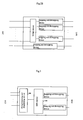
- the functional model of an enhanced bridge device is shown in Fig.2B .
- Fig. 3 shows a block diagram of the device utilizing RPR scheme in the third prior art.
- the device comprises one or more UNIs (standard Ethernet UNIs), two NNIs (synchronous digital transmission channels), and a RPR device 600 (described in IEEE802.17), two mapping and de-mapping devices, and a data processing device 500 which may be a data converging/diverging device or a bridge device).
- the data frames entering the device via the NNI are processed as follows:
- An object of the present invention is to provide a virtual interface device over a SDH/SONET network and the method for data frames access and transport over a SDH/SONET network thereof, in order to improve the access ability.
- one UNI or NNI can be expanded to a plurality of virtual interfaces, each of which corresponds to different users and different services to overcome the disadvantages of the prior art.
- An embodiment of the present invention provides a system according to claim 1.
- Another embodiment of the present invention provides a method according to claim 6.
- the operator may employ the system shown in Fig. 4 to provide Ethernet services for users, which correspond to combinations of a plurality of procedures.
- the operator may define and choose required procedure combinations flexibly according to network topology, the users' service demands and bandwidth resource.
- the commonly used procedure combinations are as follows:
- the device manufacturers may partially or completely employ the system and method according to the present invention. For some devices with simple functions, part of components can be omitted and the procedure is relatively simple. The device manufacturers may even fix the processing through fixing connections among the devices to omit the data processing and dispatching device. For instance, for a device that provides only Ethernet private service, it may comprises only the following devices:
- Said device supports the following combinations of procedures:
- integral VLAN services can be provided for users.
- the system and method of the present invention overcome the restriction on Ethernet data frame address space at UNIs. When a plurality of Ethernet data frames is sent to such a device of the network, there is no restriction on address space of Ethernet data frames.
- a device interface (UNI or NNI) can support both VLAN service and Ethernet data private service, and a plurality of Ethernet data frames from many users can be accessed and converged at a device interface, thus the accessing and converging capability of the device is enhanced greatly.
- the operator may maximize processing capacity of devices and utilization ratio of bandwidth resource through flexible adjustment to internal procedures according to network topology, the users' service demands, and bandwidth resource. 94] With the system and method of the present invention, individualized services can be quickly provided for users. The operator may provide new services for users through creating new flow combinations, without upgrading or purchasing devices.
- data frames entering the virtual interface device via device interfaces are processed after being classified; different data classes will be processed differently which are implemented by the virtual interface device.
- data frames from a device interface may contain various classes, and procedures for different classes of data frames are different; the corresponding relation between procedures and device interfaces is m:n.
- the present invention supports free combination of procedures; the data processing and dispatching device and the combination of its procedures is an important part of the present invention.
- a system lacking of flexibility is unable to adapt to the changing environment.
- the operator can update the procedures of the device dynamically, and users can choose flow combinations provided by the device or create new flow combinations by himself/herself as required. There are 22 procedure combinations available.
- the amount of bridge devices is certain; so conflicts among data frame address spaces of different users can be avoided only through restricting the data frame address spaces of users.
- the virtual bridge devices in the present invention can add virtual bridges dynamically, and the address space of each virtual bridge is independent; different virtual bridges correspond to different users; therefore, the present invention has no restriction to data frame address spaces of users.
- data frames for different users can be isolated, transported and shared by adding a label before sending, changing the label during transport and removing the label at destination address, thus the virtual private device of the present invention is achieved.
- any device has the following 3 functions:
- standard Ethernet interface used in the present invention means the following:
- IEEE802.3 defines the LAN interface in detail; in the present invention, an interface under IEEE802.3 is regarded as a standard Ethernet interface.
- Fig.4 shows a system for different data frames access and transport over a SDH/SONET network.
- the system comprises a plurality of UNIs designed to couple with the user's network; a plurality of NNIs designed to couple with said digital transport network to transport data frames; a plurality of mapping and de-mapping devices 10; a virtual interface device 80 coupled to said UNIs and coupled to said NNIs via said mapping and de-mapping devices 10; a data processing and dispatching device 90 coupled to said virtual interface device 80; a virtual private device 120 and a plurality of virtual bridge devices 100 and an PRP device 110 coupled to said data processing and dispatching device.
- mapping and de-mapping devices 10, said virtual interface device 80, and said data processing and dispatching device 90 constitute the data converting device of the present invention.
- a plurality of virtual private device 120, a virtual bridge device 100 and a PRP device 110 are described in the present invention, it should be noted that a combination of any one or two of them can implement the present invention.
- the input to said system for different data frames access and transport over a digital transport network comprises: (1) data frames entering the virtual interface device via the UNIs; (2) data frames entering the mapping and de-mapping devices via the NNIs.
- the data frames output from said system for different data frames access and transport over a digital transport network comprises: (1) data frames output to external of the virtual interface device via the UNIs; (2) data frames output to external of the mapping and de-mapping device via the NNIs.
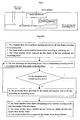
- Fig.4 (F) shows the processing steps for data frames entering the virtual interface device via the UNIs according to the system for different data frames access and transport over an SDH/SONET network.
- the device manufacturers may partially or completely employ above method.
- the processing is relatively simple.
- the device manufacturers may even treat the processing as firmware through fixing connections among the devices so as to omit the data processing and dispatching and device.
- Fig.4A shows the schematic block diagram of the virtual interface device according to a preferred embodiment of the system for Ethernet data frames access and transport over a SDH/SONET network of the present invention.
- a virtual interface device 80 is used to enhance access ability.
- a device interface (UNI 20 or NNI 30) may be expanded to a plurality of virtual interfaces, each of which corresponds to different users and different services respectively.
- a virtual interface processing unit 800 of the virtual interface device will classify them according to different services required by different users and choose a corresponding processing according to the classification.
- a different processing corresponds to different rules stored in the rule database 850.
- a control interface unit controls the virtual interface processing unit 800 to perform classification according to the instructions from a control interface, and the virtual interface processing unit searches for a corresponding rule stored in the rule database 850 to process the data frames.
- Data frames output from the virtual interface device are transported to a corresponding device interface to output after processing according to the classification in the virtual interface device.
- the virtual interface device stores N rules, the corresponding relation between the device interface and the rules is 1:N.
- the rules in the virtual interface device may be created or deleted dynamically. Therefore, it is easy to modify the rules to enhance the adaptability of the system according to the users' requirements and the updating of the system.
- the virtual interface device also comprises a software loader (not shown) to load different software.
- the virtual interface processing unit 800 is responsible for processing data frames and serves as a processing center; the processing steps and processing logics in the virtual interface processing unit are firmware and can' t be changed during operation of the virtual interface device.
- the rule database is a control center and is responsible for providing relevant processing and control parameters when the virtual interface processing unit processes the data frames. Different parameters lead to different processing actions.
- the rules in the rule database may be updated.
- the control interface unit is provided with an external control interface of the virtual interface device. Via the control interface, the control system of the virtual interface device may monitor the working status of the virtual interface processing unit and performs adding, deleting, modifying, and searching operations on rules in the rule database.
- the rule database may store a plurality of rules, each of which contains five parts: device interface number, data frame class number, data frame address offset, data frame eigenvalue, and data frame comparison mask.
- the virtual interface device is connected with the UNIs or NNIs via device interfaces.
- the corresponding relation between the UNIs (or NNIs) and the device interfaces is 1:1.
- the virtual interface device is connected with the data processing and dispatching device via the inter-device interface.
- the virtual interface device is connected with the control system of the virtual interface device via the control interface.
- Fig.4A shows the steps of the virtual interface processing unit processing data frames entering the virtual interface device via a device interface:
- Fig.4A shows the steps of the virtual interface processing unit processing data frames entering the virtual interface device via the inter-device interface.
- the processing steps performed by the virtual interface processing unit are as follows:
- Fig.5 is the schematic block diagram of the virtual private device according to a preferred embodiment of the system for Ethernet data frames access and transport over an SDH/SONET network of the present invention.
- a virtual private processing unit 8001 is coupled to an inter-device interface to process the data frames through the inter-device interface.
- the virtual private processing unit 8001 is also coupled to a rule database and a control interface unit.
- the control interface unit exchanges data with external via the control interface.
- the present invention enhances converging ability of the system by using the virtual private device.
- the virtual private device stores a plurality of converging rules, a plurality of diverging rules, and a plurality of relay rules (the relay rules are optional and unnecessary in some simple virtual private device).
- the corresponding relation between data classes and the rules is 1:1.
- the rules in the virtual private device can be created and deleted dynamically. Data frames of different users can be isolated, transported and shared over the same physical channel through virtual private device adding a label before sending, changing the label during transport and removing the label at the destination address.
- a virtual private device comprises a virtual private processing unit and a rule database.
- the virtual private processing unit has two major functions:
- the virtual private processing unit is a processing center of the virtual private device; the following items are fixed in the virtual private processing unit:
- the rule database is responsible for the processing action of the virtual private processing unit and serves as a control center.
- the rules in the rule database may be updated dynamically.
- the rule database may store a plurality of rules, each of which comprises the following four parts: input data frame class number, rule type (convergence/divergence/relay), label number, and output data frame class number.
- said virtual private device is connected with the said data processing and dispatching device via the inter-device interface; said virtual private device is connected with the control system of the system of the present invention via the control interface.
- the virtual private device In view of expandability and compatibility, it is recommended to implement the virtual private device with MPLS, GFP, VMAN, or Nested VLAN technology in the present invention.
- the virtual private device manufacturers may also employ self-defined label formats (or self-defined data frame encapsulations) to implement said virtual private device.
- the virtual private device may support a plurality of different technologies at a time.
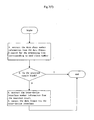
- Fig.5 (F) shows the flowchart of the virtual private processing; for data frames entering the virtual private device via the inter-device interface, the processing steps of the virtual private processing unit are as follows:
- Fig. 7 is the schematic block diagram of the data processing and dispatching device according to the system for Ethernet data frames access and transport over an SDH/SONET network of the present invention.
- the data processing and dispatching device is coupled to other devices via a plurality of inter-device interfaces to process the data passing through the inter-device interfaces.
- a data processing and dispatching unit coupled to a procedure database and a control interface unit.
- the control interface unit exchanges data with external via a control interface.
- the present invention employs the data processing and dispatching device to implement individualized services to improve serviceability of the device.
- the data processing and dispatching device stores a plurality of procedures in it. The corresponding relation between the procedures and the data frame classes is 1:1.
- the data processing and dispatching device finds a corresponding procedure according to a data frame class, and informs other corresponding devices to process the data frames according to the procedure.
- the procedure in the data frame processing and dispatching device may be created, modified, or deleted dynamically.
- the operator may quickly provide individualized services to maximize the efficacy of the data processing and dispatching device through dynamically adding, modifying, and deleting the procedures in the data processing and dispatching device.
- the data processing and dispatching unit is the processing center of the data processing and dispatching device, in which the processing steps are fixed.
- the data processing and dispatching device comprises the plurality of inter-device interfaces, each of which corresponds to a unique external device. The corresponding relation between the inter-device interfaces and the external devices are fixed.
- the procedure database is the control center of the data processing and dispatching device, and may be updated dynamically.
- Each procedure in the procedure database contains the following information:
- the data processing and dispatching device is connected with other devices via the inter-device interfaces, each of the inter-device interfaces corresponds to a virtual bridge device, a virtual private device, an RPR device, or a virtual interface device.
- the data processing and dispatching device is connected with the control system of the system of the present invention via the control interface.
- Fig.6 is the schematic block diagram of the virtual bridge device according to a preferred embodiment of the system for Ethernet data frames access and transport over a SDH/SONET network of the present invention.
- the present invention overcomes the problem of limited Ethernet data frame address space with virtual bridge devices.
- a virtual bridge device may provide a plurality of virtual bridges. Each virtual bridge possesses all functions and properties of a bridge device. However, it differs from the bridge device in that the virtual bridge may be created and deleted dynamically.
- the operator may create or delete a plurality of virtual bridges dynamically because each virtual bridge has an independent address space, the operator may provide VLAN services to users with different virtual bridges if that conflicts exists among address spaces.
- a virtual bridge device comprises a virtual bridge processing unit 802, a multicasting database 856, a control interface unit, a forwarding database 852, and a virtual bridge database 854.
- the virtual bridge processing unit has 3 major functions:
- the virtual bridge processing unit is the processing center of the virtual bridge device, and there are five items embedded in it:
- the virtual bridge database, the multicasting database, and the forwarding database are responsible for the processing action of the virtual bridge processing unit, and the items in the databases may be updated during operation of the virtual bridge device.
- the data formats of items in the multicasting database and the forwarding database are identical, and each item contains the following fields:
- the database code is the combination of all fields; in the forwarding database, the database code is the combination of all fields except for the output port of virtual bridge.
- an external control system of the virtual bridge device may implement the following functions:
- the virtual bridge device is connected with the data processing and dispatching device via the inter-device interface.
- the virtual bridge device is connected with the control system of the system of the present invention via the control interface.
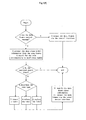
- Fig.6 (F1) is the flowchart of the virtual bridge device processing the incoming data frames from the inter-device interface according to a preferred embodiment of the system for Ethernet data frames access and transport over an SDH/SONET network of the present invention.
- the virtual bridge processing unit For data frames entering the virtual bridge device via the inter-device interface, the virtual bridge processing unit performs the following processing steps:
- Fig.7 (F) is the flowchart of the data processing and dispatching device processing the incoming data frames according to a preferred embodiment of the system for Ethernet data frames access and transport over a synchronous digital transport network of the present invention.
- the data processing and dispatching unit processes the incoming data frames as follows:
Landscapes
- Engineering & Computer Science (AREA)
- Computer Networks & Wireless Communication (AREA)
- Signal Processing (AREA)
- Computer Security & Cryptography (AREA)
- Data Exchanges In Wide-Area Networks (AREA)
- Time-Division Multiplex Systems (AREA)
- Circuits Of Receivers In General (AREA)
- Communication Control (AREA)
- Small-Scale Networks (AREA)
Claims (15)
- Système pour accéder à, et pour transporter des trames de données avec différents formats de trames, le système comprenant :au moins une interface utilisateur/réseau - que l'on appellera par la suite une UNI - qui est couplée à un réseau utilisateur ; et/ouau moins une interface réseau/réseau - que l'on appellera par la suite une NNI - qui est couplée à un réseau de transport numérique ; etun dispositif de conversion de données, qui est couplé à ladite au moins une UNI et/ou à ladite au moins une NNI, pour convertir les formats de trame des trames de données transportées entre les UNI, et/ou les formats de trame des trames de données transportées entre les NNI, et/ou les formats de trame des trames de données transportées entre la NNI et la UNI ;dans lequel ledit dispositif de conversion de données est caractérisé en ce qu'il comprend un dispositif d'interface virtuelle (80),
ledit dispositif d'interface virtuelle comprenant : au moins deux interfaces de dispositif pour entrer ou sortir des trames de données ; un module de traitement d'interface virtuelle (800) qui se couple aux dites interfaces de dispositif pour traiter lesdites trames de données et échanger des trames de données entre le module de traitement à interfaces virtuelles (800) et les interfaces de dispositif ; une base de données de règles (850) qui se couple au dit module de traitement à interfaces virtuelles (800) et qui contient des règles correspondant aux différents formats de trames de données, de façon à permettre au dit module de traitement d'interface virtuelle (800) de classifier les trames de données et de déterminer des procédures pour les différentes classes des trames de données en accord avec des règles ; un module d'interface de commande (900) qui se couple à, et qui commande ladite base de données de règles (850) et ledit module de traitement à interfaces virtuelles (800) ; et une interface inter dispositifs qui se couple au dit module de traitement à interfaces virtuelles (800) de façon à se coupler à des dispositifs externes pour échanger des trames de données. - Système selon la revendication 1, dans lequel la relation correspondante entre lesdites interfaces de dispositif et lesdites règles est de 1:N, dans laquelle N est un nombre naturel égal ou supérieur à 1, et chaque interface de dispositif est configurée comme une interface de dispositif satisfaisant les exigences de l'interface de données correspondant à l'une quelconque des règles.
- Système selon la revendication 1 ou 2, dans lequel ledit module d'interface de commande (900) procure une interface de commande par le biais de laquelle il est possible de surveiller le fonctionnement du module de traitement à interfaces virtuelles (800), et de réaliser des opérations d'ajout, de suppression, de modification, et de recherche, sur des règles dans ladite base de données de règles (850).
- Système selon la revendication 3, dans lequel une règle comprend un numéro d'interface de dispositif, un numéro de classe de trames de données, un décalage d'adresse de trames de données, une valeur propre d'une trame de données, et un masque de comparaison de trames de données, qui fournissent des paramètres de commande et de traitement lorsque ledit module de traitement à interfaces virtuelles (800) traite lesdites trames de données.
- Système selon la revendication 1, dans lequel :lesdites interfaces de dispositif se connectent à ladite au moins une UNI ou à ladite au moins une NNI,le dispositif à interfaces virtuelles (80) se connecte au dit dispositif de traitement et de transfert de données (90) par le biais de ladite interface inter dispositifs (860), etla relation correspondante entre lesdites interfaces de dispositif et ladite au moins une UNI ou ladite au moins une NNI est de 1:1.
- Procédé pour accéder à, et pour transporter des trames de données sur un réseau de transport numérique, utilisant un système selon la revendication 1, ledit système comprenant un dispositif de conversion de données qui est caractérisé en ce qu'il comprend un dispositif à interfaces virtuelles (80), ledit procédé comprenant les étapes suivantes consistant à :rechercher une première règle correspondant à une interface de dispositif ;déterminer si ladite première règle est trouvée - ou non ; si ladite première règle n'est pas trouvée, mettre un terme à la procédure ;si ladite première règle est trouvée, obtenir un numéro de classe de trames de données ;déterminer si ledit numéro de classe de données satisfait une deuxième règle ;si ledit numéro de classe de données ne satisfait pas une deuxième règle, rechercher une règle suivante correspondant à l'interface de dispositif, et revenir au début afin de déterminer si ladite première règle est trouvée ;si ledit numéro de classe de données satisfait une deuxième règle, modifier lesdites trames de données, transférer les trames de données par le biais d'une interface inter dispositifs, et mettre alors un terme à la procédure.
- Procédé selon la revendication 6, dans lequel ledit dispositif à interfaces virtuelles (80) traite les trames de données entrantes par le biais de l'interface inter dispositifs en accord avec les étapes suivantes consistant à :extraire un numéro de classe de trame de données, à partir duquel une recherche est effectuée pour une règle correspondant au numéro de type de trame de données dans la base de données de règles (850);si la règle n'est pas trouvée, supprimer lesdites trames de données, et mettre un terme à la procédure ;si la règle est trouvée, modifier lesdites trames de données, et transférer les trames de données vers l'une des interfaces de dispositif en accord avec la règle.
- Procédé selon la revendication 6, dans lequel l'étape de recherche d'une première règle correspondant à une interface de dispositif comprend l'étape consistant à : effectuer une recherche dans une base de données de règles (850) avec l'indice d'un numéro d'interface de dispositif de l'interface de dispositif qui reçoit les trames de données.
- Procédé selon la revendication 6, dans lequel ladite étape selon laquelle si ladite première règle n'est pas trouvée, il convient de mettre un terme à la procédure, comprend par ailleurs une étape consistant à délivrer en sortie un rapport et à supprimer lesdites trames de données.
- Procédé selon la revendication 6, dans lequel l'étape d'obtention d'un numéro de classe de trame de données comprend les étapes consistant à : lire des informations au niveau d'un décalage d'adresse pour les trames de données en accord avec le décalage d'adresse de trames de données dans la première règle, et exécuter une opération ET en bits entre lesdites informations lues et le masque de comparaison de trames de données dans la première règle.
- Procédé selon la revendication 10, dans lequel l'étape de détermination du fait que le numéro de classe de trame de données satisfait - ou non - la deuxième règle, comprend une étape consistant à comparer le numéro de classe de trame de données à une valeur propre de trame de données dans la première règle.
- Procédé selon la revendication 10, dans lequel l'étape de modification de trames de données comprend une étape consistant à insérer le numéro de classe de données dans un en-tête des trames de données.
- Procédé selon la revendication 7, dans lequel l'étape d'extraction du numéro de classe de trames de données comprend une étape consistant à extraire le numéro de classe de données dans un en-tête des trames de données.
- Procédé selon la revendication 13, dans lequel l'étape de recherche d'une règle correspondant au numéro de type de trames de données dans la base de données de règles (850) comprend une étape consistant à effectuer une recherche dans la base de données de règles (850) avec l'indice du numéro de classe de trames de données.
- Procédé selon la revendication 14, dans lequel les étapes de modification desdites trames de données, et de transfert des trames de données vers l'une des interfaces de dispositif en accord avec la règle comprennent les étapes consistant à : supprimer le numéro de classe de trames de données au niveau de l'en-tête des trames de données, et transférer les trames de données vers l'une des interfaces de dispositif en accord avec le numéro d'interface de dispositif dans la règle.
Applications Claiming Priority (3)
| Application Number | Priority Date | Filing Date | Title |
|---|---|---|---|
| CN03103094 | 2003-01-28 | ||
| CNB031030947A CN1303789C (zh) | 2003-01-28 | 2003-01-28 | 数字传送网上不同的数据帧接入和传送的系统和方法 |
| PCT/CN2003/000675 WO2004068789A1 (fr) | 2003-01-28 | 2003-08-13 | Procede et systeme de reception et d'emission de differentes trames de donnees sur un reseau d'emission numerique |
Publications (3)
| Publication Number | Publication Date |
|---|---|
| EP1594256A1 EP1594256A1 (fr) | 2005-11-09 |
| EP1594256A4 EP1594256A4 (fr) | 2006-06-28 |
| EP1594256B1 true EP1594256B1 (fr) | 2008-03-19 |
Family
ID=32778663
Family Applications (1)
| Application Number | Title | Priority Date | Filing Date |
|---|---|---|---|
| EP03815515A Expired - Lifetime EP1594256B1 (fr) | 2003-01-28 | 2003-08-13 | Prodédé et système de réception et d'émission de différentes trames de données sur une réseau d'émission numérique |
Country Status (7)
| Country | Link |
|---|---|
| US (1) | US7505481B2 (fr) |
| EP (1) | EP1594256B1 (fr) |
| CN (1) | CN1303789C (fr) |
| AT (1) | ATE389993T1 (fr) |
| AU (1) | AU2003255117A1 (fr) |
| DE (1) | DE60319882T2 (fr) |
| WO (1) | WO2004068789A1 (fr) |
Families Citing this family (9)
| Publication number | Priority date | Publication date | Assignee | Title |
|---|---|---|---|---|
| US7653526B1 (en) * | 2002-08-16 | 2010-01-26 | Cisco Technology, Inc. | Method and system for emulating an ethernet link over a sonet path |
| CN100440824C (zh) * | 2003-01-28 | 2008-12-03 | 华为技术有限公司 | 数字传送网上不同的数据帧接入和传送的方法 |
| US20060080467A1 (en) * | 2004-08-26 | 2006-04-13 | Sensory Networks, Inc. | Apparatus and method for high performance data content processing |
| US20070140271A1 (en) * | 2005-12-21 | 2007-06-21 | Amante Shane M | Method and system for terminating SONET/SDH circuits in an IP network |
| US7639699B2 (en) * | 2006-08-04 | 2009-12-29 | Cisco Technology, Inc. | Technique for sharing a physical port among a plurality of virtual bridges on a switch in a computer network |
| CN102316528B (zh) * | 2010-07-06 | 2015-06-03 | 中兴通讯股份有限公司 | 基于网络共享资源管理的方法及系统 |
| US8934783B2 (en) | 2011-02-17 | 2015-01-13 | International Business Machines Corporation | Adaptor system for an ethernet network |
| US11070395B2 (en) * | 2015-12-09 | 2021-07-20 | Nokia Of America Corporation | Customer premises LAN expansion |
| CN113676404A (zh) * | 2021-08-23 | 2021-11-19 | 北京字节跳动网络技术有限公司 | 数据传输方法、装置、设备、存储介质及程序 |
Family Cites Families (7)
| Publication number | Priority date | Publication date | Assignee | Title |
|---|---|---|---|---|
| GB9311935D0 (en) * | 1993-06-09 | 1993-07-28 | Madge Networks Ltd | Processor |
| US6122281A (en) * | 1996-07-22 | 2000-09-19 | Cabletron Systems, Inc. | Method and apparatus for transmitting LAN data over a synchronous wide area network |
| US6233611B1 (en) * | 1998-05-08 | 2001-05-15 | Sony Corporation | Media manager for controlling autonomous media devices within a network environment and managing the flow and format of data between the devices |
| CN1257691A (zh) * | 1999-12-21 | 2000-06-28 | 易际平 | 一种具有远程数据传送功能的脑电检查仪 |
| US20040076166A1 (en) * | 2002-10-21 | 2004-04-22 | Patenaude Jean-Marc Guy | Multi-service packet network interface |
| CN100484054C (zh) * | 2003-01-28 | 2009-04-29 | 华为技术有限公司 | 数字传送网上不同的数据帧接入和传送的系统和方法 |
| CN100396035C (zh) * | 2003-01-28 | 2008-06-18 | 华为技术有限公司 | 数字传送网上不同的数据帧接入和传送的系统和方法 |
-
2003
- 2003-01-28 CN CNB031030947A patent/CN1303789C/zh not_active Expired - Lifetime
- 2003-08-13 WO PCT/CN2003/000675 patent/WO2004068789A1/fr not_active Ceased
- 2003-08-13 AU AU2003255117A patent/AU2003255117A1/en not_active Abandoned
- 2003-08-13 AT AT03815515T patent/ATE389993T1/de not_active IP Right Cessation
- 2003-08-13 DE DE60319882T patent/DE60319882T2/de not_active Expired - Lifetime
- 2003-08-13 EP EP03815515A patent/EP1594256B1/fr not_active Expired - Lifetime
-
2004
- 2004-01-28 US US10/765,204 patent/US7505481B2/en active Active
Also Published As
| Publication number | Publication date |
|---|---|
| EP1594256A4 (fr) | 2006-06-28 |
| CN1303789C (zh) | 2007-03-07 |
| US20050008029A1 (en) | 2005-01-13 |
| US7505481B2 (en) | 2009-03-17 |
| EP1594256A1 (fr) | 2005-11-09 |
| CN1522004A (zh) | 2004-08-18 |
| WO2004068789A1 (fr) | 2004-08-12 |
| DE60319882D1 (de) | 2008-04-30 |
| AU2003255117A1 (en) | 2004-08-23 |
| DE60319882T2 (de) | 2009-02-05 |
| ATE389993T1 (de) | 2008-04-15 |
Similar Documents
| Publication | Publication Date | Title |
|---|---|---|
| US7565453B2 (en) | System and method for accessing and transmitting different data frames in a digital transmission network | |
| US5732080A (en) | Method and apparatus for controlling data flow within a switching device | |
| JP4115721B2 (ja) | スイッチングノードのための分類およびタグ付け規則 | |
| JP2004140776A (ja) | ネットワークにおけるフレーム転送方法及びノード、フレーム転送プログラム | |
| JPH11261641A (ja) | ルータ装置及びフレーム転送方法 | |
| US7565455B2 (en) | System and method of accessing and transmitting different data frames in a digital transmission network | |
| US6791948B1 (en) | Distributed switch and connection control arrangement and method for digital communications network | |
| JP5526047B2 (ja) | パケット中継装置およびパケット中継装置における出力先決定方法 | |
| EP1589697B1 (fr) | Procédé et système de réception et de transmission de differentes trames de données sur un réseau de transmission numérique | |
| EP1594256B1 (fr) | Prodédé et système de réception et d'émission de différentes trames de données sur une réseau d'émission numérique | |
| US7394810B2 (en) | Layer 2 switch and method of processing expansion VLAN tag of layer 2 frame | |
| US7797444B2 (en) | Data transfer apparatus and data transfer system | |
| US8064465B2 (en) | Packet forwarding apparatus | |
| US8064456B2 (en) | Frame relay apparatus and route learning method | |
| EP1594257A1 (fr) | Procede et systeme d'emission et de transfert de trames de donnees differentes dans un reseau de transmission numerique | |
| JP2004266874A (ja) | ネットワークにおけるフレーム転送方法及びノード、フレーム転送プログラム | |
| JP4587962B2 (ja) | Mac装置とそれを用いたブリッジ装置およびプログラム |
Legal Events
| Date | Code | Title | Description |
|---|---|---|---|
| PUAI | Public reference made under article 153(3) epc to a published international application that has entered the european phase |
Free format text: ORIGINAL CODE: 0009012 |
|
| 17P | Request for examination filed |
Effective date: 20050826 |
|
| AK | Designated contracting states |
Kind code of ref document: A1 Designated state(s): AT BE BG CH CY CZ DE DK EE ES FI FR GB GR HU IE IT LI LU MC NL PT RO SE SI SK TR |
|
| AX | Request for extension of the european patent |
Extension state: AL LT LV MK |
|
| DAX | Request for extension of the european patent (deleted) | ||
| A4 | Supplementary search report drawn up and despatched |
Effective date: 20060526 |
|
| 17Q | First examination report despatched |
Effective date: 20060926 |
|
| R17C | First examination report despatched (corrected) |
Effective date: 20060926 |
|
| GRAP | Despatch of communication of intention to grant a patent |
Free format text: ORIGINAL CODE: EPIDOSNIGR1 |
|
| RTI1 | Title (correction) |
Free format text: METHOD AND SYSTEM FOR RECEIVING AND TRANSMITTING DIFFERENT DATA FRAMES ON DIGITAL TRANSMISSION NETWORK |
|
| GRAS | Grant fee paid |
Free format text: ORIGINAL CODE: EPIDOSNIGR3 |
|
| GRAA | (expected) grant |
Free format text: ORIGINAL CODE: 0009210 |
|
| AK | Designated contracting states |
Kind code of ref document: B1 Designated state(s): AT BE BG CH CY CZ DE DK EE ES FI FR GB GR HU IE IT LI LU MC NL PT RO SE SI SK TR |
|
| REG | Reference to a national code |
Ref country code: GB Ref legal event code: FG4D |
|
| REG | Reference to a national code |
Ref country code: CH Ref legal event code: EP |
|
| REF | Corresponds to: |
Ref document number: 60319882 Country of ref document: DE Date of ref document: 20080430 Kind code of ref document: P |
|
| REG | Reference to a national code |
Ref country code: IE Ref legal event code: FG4D |
|
| PG25 | Lapsed in a contracting state [announced via postgrant information from national office to epo] |
Ref country code: FI Free format text: LAPSE BECAUSE OF FAILURE TO SUBMIT A TRANSLATION OF THE DESCRIPTION OR TO PAY THE FEE WITHIN THE PRESCRIBED TIME-LIMIT Effective date: 20080319 |
|
| PG25 | Lapsed in a contracting state [announced via postgrant information from national office to epo] |
Ref country code: AT Free format text: LAPSE BECAUSE OF FAILURE TO SUBMIT A TRANSLATION OF THE DESCRIPTION OR TO PAY THE FEE WITHIN THE PRESCRIBED TIME-LIMIT Effective date: 20080319 |
|
| NLV1 | Nl: lapsed or annulled due to failure to fulfill the requirements of art. 29p and 29m of the patents act | ||
| PG25 | Lapsed in a contracting state [announced via postgrant information from national office to epo] |
Ref country code: SI Free format text: LAPSE BECAUSE OF FAILURE TO SUBMIT A TRANSLATION OF THE DESCRIPTION OR TO PAY THE FEE WITHIN THE PRESCRIBED TIME-LIMIT Effective date: 20080319 Ref country code: BE Free format text: LAPSE BECAUSE OF FAILURE TO SUBMIT A TRANSLATION OF THE DESCRIPTION OR TO PAY THE FEE WITHIN THE PRESCRIBED TIME-LIMIT Effective date: 20080319 |
|
| PG25 | Lapsed in a contracting state [announced via postgrant information from national office to epo] |
Ref country code: SE Free format text: LAPSE BECAUSE OF FAILURE TO SUBMIT A TRANSLATION OF THE DESCRIPTION OR TO PAY THE FEE WITHIN THE PRESCRIBED TIME-LIMIT Effective date: 20080619 Ref country code: SK Free format text: LAPSE BECAUSE OF FAILURE TO SUBMIT A TRANSLATION OF THE DESCRIPTION OR TO PAY THE FEE WITHIN THE PRESCRIBED TIME-LIMIT Effective date: 20080319 Ref country code: ES Free format text: LAPSE BECAUSE OF FAILURE TO SUBMIT A TRANSLATION OF THE DESCRIPTION OR TO PAY THE FEE WITHIN THE PRESCRIBED TIME-LIMIT Effective date: 20080630 Ref country code: PT Free format text: LAPSE BECAUSE OF FAILURE TO SUBMIT A TRANSLATION OF THE DESCRIPTION OR TO PAY THE FEE WITHIN THE PRESCRIBED TIME-LIMIT Effective date: 20080826 Ref country code: CZ Free format text: LAPSE BECAUSE OF FAILURE TO SUBMIT A TRANSLATION OF THE DESCRIPTION OR TO PAY THE FEE WITHIN THE PRESCRIBED TIME-LIMIT Effective date: 20080319 |
|
| ET | Fr: translation filed | ||
| PG25 | Lapsed in a contracting state [announced via postgrant information from national office to epo] |
Ref country code: RO Free format text: LAPSE BECAUSE OF FAILURE TO SUBMIT A TRANSLATION OF THE DESCRIPTION OR TO PAY THE FEE WITHIN THE PRESCRIBED TIME-LIMIT Effective date: 20080319 Ref country code: NL Free format text: LAPSE BECAUSE OF FAILURE TO SUBMIT A TRANSLATION OF THE DESCRIPTION OR TO PAY THE FEE WITHIN THE PRESCRIBED TIME-LIMIT Effective date: 20080319 |
|
| PLBE | No opposition filed within time limit |
Free format text: ORIGINAL CODE: 0009261 |
|
| STAA | Information on the status of an ep patent application or granted ep patent |
Free format text: STATUS: NO OPPOSITION FILED WITHIN TIME LIMIT |
|
| PG25 | Lapsed in a contracting state [announced via postgrant information from national office to epo] |
Ref country code: DK Free format text: LAPSE BECAUSE OF FAILURE TO SUBMIT A TRANSLATION OF THE DESCRIPTION OR TO PAY THE FEE WITHIN THE PRESCRIBED TIME-LIMIT Effective date: 20080319 |
|
| 26N | No opposition filed |
Effective date: 20081222 |
|
| PG25 | Lapsed in a contracting state [announced via postgrant information from national office to epo] |
Ref country code: MC Free format text: LAPSE BECAUSE OF NON-PAYMENT OF DUE FEES Effective date: 20080831 |
|
| REG | Reference to a national code |
Ref country code: CH Ref legal event code: PL |
|
| GBPC | Gb: european patent ceased through non-payment of renewal fee |
Effective date: 20080813 |
|
| PG25 | Lapsed in a contracting state [announced via postgrant information from national office to epo] |
Ref country code: EE Free format text: LAPSE BECAUSE OF FAILURE TO SUBMIT A TRANSLATION OF THE DESCRIPTION OR TO PAY THE FEE WITHIN THE PRESCRIBED TIME-LIMIT Effective date: 20080319 Ref country code: BG Free format text: LAPSE BECAUSE OF FAILURE TO SUBMIT A TRANSLATION OF THE DESCRIPTION OR TO PAY THE FEE WITHIN THE PRESCRIBED TIME-LIMIT Effective date: 20080619 |
|
| PG25 | Lapsed in a contracting state [announced via postgrant information from national office to epo] |
Ref country code: LI Free format text: LAPSE BECAUSE OF NON-PAYMENT OF DUE FEES Effective date: 20080831 Ref country code: CH Free format text: LAPSE BECAUSE OF NON-PAYMENT OF DUE FEES Effective date: 20080831 |
|
| PG25 | Lapsed in a contracting state [announced via postgrant information from national office to epo] |
Ref country code: IE Free format text: LAPSE BECAUSE OF NON-PAYMENT OF DUE FEES Effective date: 20080813 |
|
| PG25 | Lapsed in a contracting state [announced via postgrant information from national office to epo] |
Ref country code: IT Free format text: LAPSE BECAUSE OF FAILURE TO SUBMIT A TRANSLATION OF THE DESCRIPTION OR TO PAY THE FEE WITHIN THE PRESCRIBED TIME-LIMIT Effective date: 20080319 |
|
| PG25 | Lapsed in a contracting state [announced via postgrant information from national office to epo] |
Ref country code: CY Free format text: LAPSE BECAUSE OF FAILURE TO SUBMIT A TRANSLATION OF THE DESCRIPTION OR TO PAY THE FEE WITHIN THE PRESCRIBED TIME-LIMIT Effective date: 20080319 |
|
| PG25 | Lapsed in a contracting state [announced via postgrant information from national office to epo] |
Ref country code: GB Free format text: LAPSE BECAUSE OF NON-PAYMENT OF DUE FEES Effective date: 20080813 |
|
| PG25 | Lapsed in a contracting state [announced via postgrant information from national office to epo] |
Ref country code: LU Free format text: LAPSE BECAUSE OF NON-PAYMENT OF DUE FEES Effective date: 20080813 Ref country code: HU Free format text: LAPSE BECAUSE OF FAILURE TO SUBMIT A TRANSLATION OF THE DESCRIPTION OR TO PAY THE FEE WITHIN THE PRESCRIBED TIME-LIMIT Effective date: 20080920 |
|
| PG25 | Lapsed in a contracting state [announced via postgrant information from national office to epo] |
Ref country code: TR Free format text: LAPSE BECAUSE OF FAILURE TO SUBMIT A TRANSLATION OF THE DESCRIPTION OR TO PAY THE FEE WITHIN THE PRESCRIBED TIME-LIMIT Effective date: 20080319 |
|
| PG25 | Lapsed in a contracting state [announced via postgrant information from national office to epo] |
Ref country code: GR Free format text: LAPSE BECAUSE OF FAILURE TO SUBMIT A TRANSLATION OF THE DESCRIPTION OR TO PAY THE FEE WITHIN THE PRESCRIBED TIME-LIMIT Effective date: 20080620 |
|
| REG | Reference to a national code |
Ref country code: FR Ref legal event code: PLFP Year of fee payment: 14 |
|
| REG | Reference to a national code |
Ref country code: FR Ref legal event code: PLFP Year of fee payment: 15 |
|
| REG | Reference to a national code |
Ref country code: FR Ref legal event code: PLFP Year of fee payment: 16 |
|
| PGFP | Annual fee paid to national office [announced via postgrant information from national office to epo] |
Ref country code: DE Payment date: 20220608 Year of fee payment: 20 |
|
| PGFP | Annual fee paid to national office [announced via postgrant information from national office to epo] |
Ref country code: FR Payment date: 20220709 Year of fee payment: 20 |
|
| REG | Reference to a national code |
Ref country code: DE Ref legal event code: R071 Ref document number: 60319882 Country of ref document: DE |