EP1575227A1 - Rasches Erhalten einer Teilmenge von Nachrichtendaten eines Servers zum Filtern - Google Patents
Rasches Erhalten einer Teilmenge von Nachrichtendaten eines Servers zum Filtern Download PDFInfo
- Publication number
- EP1575227A1 EP1575227A1 EP05101911A EP05101911A EP1575227A1 EP 1575227 A1 EP1575227 A1 EP 1575227A1 EP 05101911 A EP05101911 A EP 05101911A EP 05101911 A EP05101911 A EP 05101911A EP 1575227 A1 EP1575227 A1 EP 1575227A1
- Authority
- EP
- European Patent Office
- Prior art keywords
- message
- record
- data
- filtering criteria
- messages
- Prior art date
- Legal status (The legal status is an assumption and is not a legal conclusion. Google has not performed a legal analysis and makes no representation as to the accuracy of the status listed.)
- Withdrawn
Links
- 238000001914 filtration Methods 0.000 title claims abstract description 73
- 238000000034 method Methods 0.000 claims abstract description 38
- 101001094649 Homo sapiens Popeye domain-containing protein 3 Proteins 0.000 claims abstract 4
- 101000608234 Homo sapiens Pyrin domain-containing protein 5 Proteins 0.000 claims abstract 4
- 101000578693 Homo sapiens Target of rapamycin complex subunit LST8 Proteins 0.000 claims abstract 4
- 102100027802 Target of rapamycin complex subunit LST8 Human genes 0.000 claims abstract 4
- 238000012545 processing Methods 0.000 claims description 8
- 230000004044 response Effects 0.000 claims description 5
- 230000002085 persistent effect Effects 0.000 claims 3
- 230000007246 mechanism Effects 0.000 abstract description 7
- 238000011156 evaluation Methods 0.000 abstract description 3
- 230000032258 transport Effects 0.000 description 7
- 230000008901 benefit Effects 0.000 description 6
- 238000004891 communication Methods 0.000 description 6
- 238000012217 deletion Methods 0.000 description 5
- 230000037430 deletion Effects 0.000 description 5
- 238000010586 diagram Methods 0.000 description 5
- 230000008569 process Effects 0.000 description 5
- 230000009471 action Effects 0.000 description 2
- 230000008859 change Effects 0.000 description 2
- 238000010276 construction Methods 0.000 description 2
- 238000012986 modification Methods 0.000 description 2
- 230000004048 modification Effects 0.000 description 2
- 230000001360 synchronised effect Effects 0.000 description 2
- 230000004913 activation Effects 0.000 description 1
- 238000004590 computer program Methods 0.000 description 1
- 238000010295 mobile communication Methods 0.000 description 1
- 238000003032 molecular docking Methods 0.000 description 1
- 230000006855 networking Effects 0.000 description 1
- 238000012360 testing method Methods 0.000 description 1
Images


Classifications
-
- H—ELECTRICITY
- H04—ELECTRIC COMMUNICATION TECHNIQUE
- H04L—TRANSMISSION OF DIGITAL INFORMATION, e.g. TELEGRAPHIC COMMUNICATION
- H04L51/00—User-to-user messaging in packet-switching networks, transmitted according to store-and-forward or real-time protocols, e.g. e-mail
- H04L51/21—Monitoring or handling of messages
- H04L51/212—Monitoring or handling of messages using filtering or selective blocking
-
- E—FIXED CONSTRUCTIONS
- E02—HYDRAULIC ENGINEERING; FOUNDATIONS; SOIL SHIFTING
- E02D—FOUNDATIONS; EXCAVATIONS; EMBANKMENTS; UNDERGROUND OR UNDERWATER STRUCTURES
- E02D29/00—Independent underground or underwater structures; Retaining walls
- E02D29/02—Retaining or protecting walls
- E02D29/0208—Gabions
-
- E—FIXED CONSTRUCTIONS
- E02—HYDRAULIC ENGINEERING; FOUNDATIONS; SOIL SHIFTING
- E02B—HYDRAULIC ENGINEERING
- E02B3/00—Engineering works in connection with control or use of streams, rivers, coasts, or other marine sites; Sealings or joints for engineering works in general
- E02B3/04—Structures or apparatus for, or methods of, protecting banks, coasts, or harbours
- E02B3/12—Revetment of banks, dams, watercourses, or the like, e.g. the sea-floor
- E02B3/122—Flexible prefabricated covering elements, e.g. mats, strips
- E02B3/124—Flexible prefabricated covering elements, e.g. mats, strips mainly consisting of metal
-
- E—FIXED CONSTRUCTIONS
- E02—HYDRAULIC ENGINEERING; FOUNDATIONS; SOIL SHIFTING
- E02D—FOUNDATIONS; EXCAVATIONS; EMBANKMENTS; UNDERGROUND OR UNDERWATER STRUCTURES
- E02D2200/00—Geometrical or physical properties
- E02D2200/16—Shapes
- E02D2200/165—Shapes polygonal
-
- E—FIXED CONSTRUCTIONS
- E02—HYDRAULIC ENGINEERING; FOUNDATIONS; SOIL SHIFTING
- E02D—FOUNDATIONS; EXCAVATIONS; EMBANKMENTS; UNDERGROUND OR UNDERWATER STRUCTURES
- E02D2300/00—Materials
- E02D2300/0026—Metals
- E02D2300/0029—Steel; Iron
- E02D2300/0034—Steel; Iron in wire form
-
- H—ELECTRICITY
- H04—ELECTRIC COMMUNICATION TECHNIQUE
- H04L—TRANSMISSION OF DIGITAL INFORMATION, e.g. TELEGRAPHIC COMMUNICATION
- H04L51/00—User-to-user messaging in packet-switching networks, transmitted according to store-and-forward or real-time protocols, e.g. e-mail
- H04L51/42—Mailbox-related aspects, e.g. synchronisation of mailboxes
-
- H—ELECTRICITY
- H04—ELECTRIC COMMUNICATION TECHNIQUE
- H04L—TRANSMISSION OF DIGITAL INFORMATION, e.g. TELEGRAPHIC COMMUNICATION
- H04L51/00—User-to-user messaging in packet-switching networks, transmitted according to store-and-forward or real-time protocols, e.g. e-mail
- H04L51/58—Message adaptation for wireless communication
-
- Y—GENERAL TAGGING OF NEW TECHNOLOGICAL DEVELOPMENTS; GENERAL TAGGING OF CROSS-SECTIONAL TECHNOLOGIES SPANNING OVER SEVERAL SECTIONS OF THE IPC; TECHNICAL SUBJECTS COVERED BY FORMER USPC CROSS-REFERENCE ART COLLECTIONS [XRACs] AND DIGESTS
- Y10—TECHNICAL SUBJECTS COVERED BY FORMER USPC
- Y10S—TECHNICAL SUBJECTS COVERED BY FORMER USPC CROSS-REFERENCE ART COLLECTIONS [XRACs] AND DIGESTS
- Y10S707/00—Data processing: database and file management or data structures
- Y10S707/99951—File or database maintenance
- Y10S707/99952—Coherency, e.g. same view to multiple users
Definitions
- the invention relates generally to computing devices that receive data, particularly mobile computing devices including computers and mobile telephones.
- Mobile computing devices such as personal digital assistants, contemporary mobile telephones, hand-held and pocket-sized computers, tablet personal computers and the like are becoming important and popular user tools. In general, they have become small enough to be extremely convenient, while consuming less battery power, and at the same time have become capable of running more powerful applications.
- SMS Short Message Service
- MMS Short Message Service
- Such devices are able to store their received and other user data locally and/or by connecting to networks, including the Internet.
- these computers and computer-based mobile telephones (such as those running Microsoft Windows® Mobile software for Smartphones) allow users to make conventional mobile telephone calls, access the Internet, send and receive messages including attachments, store contacts, maintain appointments and do many other things contemporary desktop computers can now do.
- the present invention is directed towards a system and method in which client-side tracking mechanisms allow a computing device to efficiently decide which messages need to be downloaded from a server for filtering purposes, and request only those messages.
- the present invention essentially performs most of the filtering operations before any message data is downloaded.
- the present invention may be used to limit a download of POP3 email messages to those received in the last n days, but do so in an efficient manner that is orders of magnitude faster than current filtering operations.
- a message when a message is downloaded that does not meet user-specified filtering criteria, e.g., is outside a desired time (date) window, the message data is discarded, but the state of that message as not meeting the criteria is preserved in an "already-checked" (or simply "checked") table, based on its unique identifier (ID).
- ID unique identifier
- a subsequent data request e.g., a send/receive request of an inbox application program to a POP3 server
- a list of unique message IDs is acquired. Before requesting download of any message data from a server, the main message store and the checked table are evaluated, and only if the unique ID is not in either store is the message data downloaded.
- each item that was deleted at the server has its record removed from the checked table.
- a flag is associated with each message record in the checked table and is set prior to comparing the list of unique message IDs. Taking each message ID in the list, if that message ID is listed and is also in the checked table, the flag for that message is cleared.
- any message flag that is still set in a record in the checked table corresponds to a message that was not listed by the server, and therefore has been deleted at the server. The record for each such message is removed from the checked table.
- FIG. 1 shows functional components of one such handheld computing device 120, including a processor 122, a memory 124, a display 126, and a keyboard 128 (which may be a physical or virtual keyboard, or may represent both).
- a microphone 129 may be present to receive audio input.
- the memory 124 generally includes both volatile memory (e.g., RAM) and non-volatile memory (e.g., ROM, PCMCIA cards, and so forth).
- An operating system 130 is resident in the memory 124 and executes on the processor 122, such as the Windows® operating system from Microsoft Corporation, or another operating system.
- One or more application programs 132 are loaded into memory 124 and run on the operating system 130. Examples of applications include email programs, scheduling programs, PIM (personal information management) programs, word processing programs, spreadsheet programs, Internet browser programs, and so forth.
- the handheld personal computer 120 may also include a notification manager 134 loaded in the memory 124, which executes on the processor 122. The notification manager 134 handles notification requests, e.g., from the application programs 132.
- the handheld personal computer 120 includes networking software 136 (e.g., hardware drivers and the like) and network components 138 (e.g., a radio and antenna) suitable for connecting the handheld personal computer 120 to a network, which may include making a telephone call.
- the handheld personal computer 120 has a power supply 140, which is implemented as one or more batteries.
- the power supply 140 may further include an external power source that overrides or recharges the built-in batteries, such as an AC adapter or a powered docking cradle.
- the exemplary handheld personal computer 120 represented in FIG. 1 is shown with three types of external notification mechanisms: one or more light emitting diodes (LEDs) 142 and an audio generator 144. These devices may be directly coupled to the power supply 140 so that when activated, they remain on for a duration dictated by a notification mechanism even though the handheld personal computer processor 122 and other components might shut down to conserve battery power.
- the LED 142 preferably remains on indefinitely until the user takes action.
- contemporary versions of the audio generator 144 use too much power for today's handheld personal computer batteries, and so it is configured to turn off when the rest of the system does or at some finite duration after activation.
- the present invention is generally directed towards handling messages and similar data communications, such as email messages, particularly on small mobile computing devices including mobile telephones.
- the present invention is not limited to any type of computing device, and may, for example, be used with relatively large, stationary computing devices.
- the present invention will be generally described in terms of email applications and messages, it will be understood that the present invention is not limited to any particular applications or types of data, as other applications that download data can benefit from the present invention.
- the present invention will be primarily described in terms of filtering based on a time window (e.g., one day, two days, and so on in one day increments), however virtually any criteria that is sensible for a given set of data will be equivalent. Note that as used herein, the plural "criteria" is intended to cover a single criterion as well as any combination of criteria.
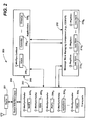
- FIG. 2 there is shown an architecture, generally designated 200, for handling mail-related messages and the like.
- One such architecture 200 is currently implemented in devices running Windows® for Mobile Devices.
- a radio 201 receives communications and a radio interface layer 202 provides access to the received data.
- a number of transports 203 are provided, with each transport 204 1 -204 i configured to receive (and transmit) different types of messages, e.g., IMAP4 (Internet Message Access Protocol version 4), SMS, POP3 (Post Office Protocol version 3), Active Sync (which supports synchronizing data between a Windows®-based desktop computer or an exchange server and Microsoft Windows® CE .NET-based portable devices), and others.
- IMAP4 Internet Message Access Protocol version 4
- SMS Internet Message Access Protocol version 3
- Active Sync which supports synchronizing data between a Windows®-based desktop computer or an exchange server and Microsoft Windows® CE .NET-based portable devices
- Such others may include IM (Instant Messaging), MMS (Multimedia Messaging Service) and
- application programs 206 are running on the mobile device, including applications that send and receive communications.
- Such application programs may include an inbox application 208 1 , a calendar application 208 2 and others 208 j , such as a contacts-related application program.
- one or more of these applications 208 1 -208 j may be configured to allow users to enter filtering criteria, whereby only those messages that meet the criteria will be maintained in a portable data store 214 1 -214 k .
- the data stores do not necessarily correspond to an application program; for example, the inbox application 208 1 may have multiple data stores maintained for it, e.g., one for IMAP4 messages, one for POP3 messages, and so on.
- a message store managing component 212 (e.g., CEMAPI) such as implemented in an API allows applications such as the inbox application 208 1 to store messages and retrieve stored messages as desired.
- the message store managing component 212 abstracts the storage from applications such as the inbox application 208 1 , such that in essence the application only knows that message data exists somewhere, and that the data can be accessed via the message store managing component 212.
- another such program that can receive data from a data store is an operating system component, and as such, any such computer program code should be considered equivalent for purposes of the present invention.
- the term "message-handling mechanism" will be used to refer to the inbox application or the like and/or the message storing component, and may also include the concept of a transport, where appropriate.
- the message stores 214 1 -214 j are COM (Component Object Model) objects associated with each inbox application service, and the message store managing component 212 provides access to these message stores via an IMsgStore interface.
- the message store libraries provide the IMsgStore interface, which provides access to unique, transport-specific storage.
- the Inbox may store SMS messages in one message store, IMAP4 messages in another, and so on.
- the IMsgStore::GetProps and IMsgStore::SetProps methods accessed through each messages store's IMsgStore interface are used to access custom properties of the store.
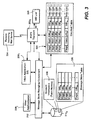
- FIG. 3 shows how tables of records are used to track the state of an inbox application program's messages, such that the state of any previously-downloaded messages with respect to current filtering criteria is known, and whereby only those messages that are in an unknown state need to have their data downloaded.
- a list of every message ID maintained at a server is obtained. For example, in a POP3 environment, a UIDL (unique identifier listing) command is issued to obtain the list, and the request received at the POP3 server, e.g., an incoming mail server 324, which may be a combination of more than one computing device.
- UIDL unique identifier listing
- the mail server 324 returns the list 325.
- the POP3 transport 203 3 processes the contents of this list against a message store table 326 and checked table 328. Because there may be multiple message stores, account information 330 is used to locate the table names and proper data store for this POP3 account. The first time the list is returned to a requesting device, the tables will be empty, and thus each listed message will need to have its data downloaded for evaluation against the filtering criteria, with those messages that meet the criteria being placed in the message store 214 a . A record is created in the message store table 326 for each saved message.
- the message data that does not meet the filtering criteria is discarded, however the known state of that message (as not meeting the filtering criteria) is stored in a corresponding record in the checked table 328.
- the record is indexed by a hash of the unique message ID, (or UID in FIG. 3), for more efficient lookup.
- the unique ID also may be kept in the record for that message, and would be needed if the hash value was not guaranteed to be unique.
- logic compares the listed UIDs with those in the message store table 326 or in the checked table 328, and downloads only those messages that are "new" and thus not listed in one of the tables 326 or 328.
- the logic is implemented in the POP3 transport 203 3 , however as can be readily appreciated, the logic may be elsewhere, such as in the inbox application and/or the message store managing component 212.
- the inbox application 208 1 includes a POP3 transport component.
- the logic evaluates the message data against the filtering criteria and if met, adds the message to the message store 214 a and creates a record for it in the message store table 326. If the filtering criteria is not met, the logic adds the unique ID (which may be a hashed value or in addition to a hashed value, as described above) to the checked table 328, and discards the message data. The state of each new message is thus preserved for the next evaluation, which will occur the next time that a send/receive request is received.
- the unique ID which may be a hashed value or in addition to a hashed value, as described above
- a mechanism removes its corresponding record from the checked table or from the message store (along with removing any corresponding message data).
- a message in the message store that is deleted at the server may be moved to a deleted items folder or the like, in which case the record may be kept but modified, however this can be considered essentially a "removal" and is generally unrelated to the present invention.
- the removal is so the tables on the client device stay synchronized with the server state, and also so that the tables do not contain irrelevant records.
- each message record is marked before comparing the message records against the UIDs in the UID list 325, and message records that remain marked after the comparisons are completed are removed. More particularly, in one implementation, a flag is associated with each message record, and the flag is set prior to comparing the list of unique message IDs against the table. Taking each message ID in the list, if that message ID is listed and is also in a table, the message is unmarked, e.g., by clearing the flag for that message. Upon completion of processing the list, any message flag that is still set in a record in a table corresponds to a message that was not listed by the server, and therefore has been deleted at the server. The record for each such message is removed from the appropriate table. Note that the removal process needs to be performed after each UID has been evaluated, and thus unless the removal is done prior to any message downloading, any new record created in a table following downloading of a message should be put in unmarked.
- any UID that exists in the list but not in the message store table 326 or the checked table 328 is a new message that is on the server, and thus not known to the client device.
- this message e.g., at least two kilobytes of related data
- this message is downloaded, and its date is evaluated, which is against the three-day filtering criteria in this example. If within the three-day window, the message is added to the message store table 326, otherwise the data is discarded. However, in either case, a record is added to the appropriate table as described above.
- the present invention can filter out messages that do not come from a certain source, such as an employer.
- a user can have only work-related messages on a handheld device used only at work; note that the messages are filtered at the device, not the server, and thus the user can obtain these other, non-work-related messages via another computer (or by changing the filtering criteria).
- any data that can be evaluated can be used as filtering criteria, although for purposes of simplicity the description herein will return to date-based examples.
- a user may want his or her inbox to automatically delete messages that are too old. Note that this may not be a deletion at the server, but only on the client device, such as to save memory space. Further, the deletion may or may not correspond to the filtering window, e.g., a user may want to only receive messages that are three days old or less, but may want messages automatically deleted when five-days old. In any event, when dealing with date-based filtering, upon deletion of a message from the client device but not actual deletion from the server, the automatic delete process should add a record to the checked table as it removes the record from the message store table, so that the message data for this message need not be downloaded again.
- the presence of the record in the checked table 328 prevents automatically-deleted messages that would otherwise fall within the date window from being downloaded. For example, if a user sets messages to be automatically deleted after two days, when the date window is three days, the user would not be able to get back an automatically-deleted message without taking some action to prevent the filtering.
- the mechanism may be made user-configurable as to whether an automatically-deleted message that is still within the filtering window should be again downloaded, in which case the record should be removed from (or never added to) the checked table 328 for each such message.
- the checked table 328 may contain invalid data when the user changes the criteria. For example, if a user decides that the filtering criteria should be a five-day window instead of three days, there is a problem because a four and five day old messages in the checked table are now being requested by the user, but the checked table will block their downloading. Note that if a user changes the criteria in the other direction, this is not a problem, e.g., if changing the criteria from six days to two days, the checked table will maintain the data for messages that are older than six days, and thus the cache data is incomplete, but still valid. On the next send/receive, during filtering, the checked table will have records added to it, e.g., for three, four and five day old messages that will be filtered out.
- the cache table contains invalid data (e.g., the new date window is larger than the old)
- the entire cache is invalidated, such as by removing all of the records from it. This causes a download for every record, however the cache will thereafter be valid, and can be used unless and until the next time the user increases the date window.
- a date field may be added to each record.
- a process can examine each record and discard those records that do not fit within the new date window, whereby their message data will be downloaded following the next send/receive. Note that there is a tradeoff between memory space needed for the additional date field for each record versus download time. A user that rarely ever changed a date-filtering window would not want such a feature, whereas a user that frequently changed the date-filtering window would prefer not to have the checked table fully invalidated every time the window was expanded.
- such a date field may be provided in a manner that allows a user to switch it on (whereby the checked table could be recopied to a different table that has space for the extra field) or off, or such a switch may be made automatic based on statistical history of how often a user changes the date-filtering window.
- step 400 of FIG. 4 represents initializing the records (e.g., setting the flags) in the message store table 326 and checked table 328 so that those not listed by the server, and were thus deleted at the server, can be identified for removal. Note that as described below, steps 408 and 412 unmark such records when listed.
- Step 402 represents retrieving the UIDs, such as via the UIDL command sent to a POP3 server.
- Step 402 also inherently represents the connect / logon operations. As described above, assuming no errors the UIDs are listed in the response from the server, and step 404 represents selecting one from the list 325.
- Step 406 tests, via the message store table 326, whether that UID is in the message store; if so the message is present and need not be downloaded, and thus step 406 branches to step 408 to unmark the flag in the appropriate record, which then continues to step 422 for the next listed message, if any, as described below. Otherwise, the message is either a new one or one that is already tracked in the checked table, so step 406 branches to step 410 to look further for message state data.
- step 410 a lookup is performed on the checked table 328 to determine whether the message is known to have been previously downloaded but did not (and thus still cannot) meet the filtering criteria. If so, step 410 branches to step 412 to unmark its flag, because the message was listed by the server and thus not deleted at the server, and thus the record in the checked table is still relevant. Step 412 then continues to step 422 for the next listed message, if any, as described below.
- step 410 If at step 410 the message is not in the checked table 410, (and was not in the message store via step 406), the message is one in an unknown state with respect to the filtering criteria.
- the message data e.g., the appropriate two kilobytes
- the filter criteria e.g., the date window
- step 420 creates an appropriate entry in the checked table 328, again with the flag unmarked so that it will not be removed unless and until it is independently deleted at the server. Note that any time a record is created, the UID (and/or a corresponding hash value) is included in the record so that the record can be located against the UIDs on subsequent lists.
- Steps 422 and 424 repeat the process for each UID in the list, until none remain.
- step 426 is executed to remove any record in any table (and the message data if in the message store) that was not listed, and hence was deleted at the server.
- the flags that are marked indicate records that were deleted at the server since they were never listed, and thus were never unmarked via step 408 or step 412.
Landscapes
- Engineering & Computer Science (AREA)
- General Engineering & Computer Science (AREA)
- Environmental & Geological Engineering (AREA)
- Signal Processing (AREA)
- Computer Networks & Wireless Communication (AREA)
- Structural Engineering (AREA)
- Civil Engineering (AREA)
- General Life Sciences & Earth Sciences (AREA)
- Paleontology (AREA)
- Ocean & Marine Engineering (AREA)
- Mechanical Engineering (AREA)
- Mining & Mineral Resources (AREA)
- Life Sciences & Earth Sciences (AREA)
- Information Transfer Between Computers (AREA)
Applications Claiming Priority (2)
| Application Number | Priority Date | Filing Date | Title |
|---|---|---|---|
| US10/797,994 US7613777B2 (en) | 2004-03-11 | 2004-03-11 | Rapidly obtaining a subset of message data from a server for filtering |
| US797994 | 2004-03-11 |
Publications (1)
| Publication Number | Publication Date |
|---|---|
| EP1575227A1 true EP1575227A1 (de) | 2005-09-14 |
Family
ID=34827652
Family Applications (1)
| Application Number | Title | Priority Date | Filing Date |
|---|---|---|---|
| EP05101911A Withdrawn EP1575227A1 (de) | 2004-03-11 | 2005-03-11 | Rasches Erhalten einer Teilmenge von Nachrichtendaten eines Servers zum Filtern |
Country Status (5)
| Country | Link |
|---|---|
| US (1) | US7613777B2 (de) |
| EP (1) | EP1575227A1 (de) |
| JP (1) | JP4828138B2 (de) |
| KR (1) | KR101109238B1 (de) |
| CN (1) | CN1674588B (de) |
Cited By (2)
| Publication number | Priority date | Publication date | Assignee | Title |
|---|---|---|---|---|
| CN101662451B (zh) * | 2008-08-26 | 2012-11-07 | 北京中京创原通信技术有限公司 | 基于消息标识机制的命令/响应关联性控制方法 |
| US8583731B1 (en) | 2006-11-17 | 2013-11-12 | Open Invention Network Llc | System and method for analyzing and filtering journaled electronic mail |
Families Citing this family (14)
| Publication number | Priority date | Publication date | Assignee | Title |
|---|---|---|---|---|
| US8671144B2 (en) * | 2004-07-02 | 2014-03-11 | Qualcomm Incorporated | Communicating information about the character of electronic messages to a client |
| US7792521B2 (en) * | 2005-11-28 | 2010-09-07 | Nokia Corporation | Method, apparatus, and computer program product for managing content items |
| US7921165B2 (en) * | 2005-11-30 | 2011-04-05 | Microsoft Corporation | Retaining mail for availability after relay |
| GB0625643D0 (en) * | 2006-12-21 | 2007-01-31 | Symbian Software Ltd | Sync field filtering |
| US7970881B2 (en) * | 2008-02-19 | 2011-06-28 | Microsoft Corporation | Bypassing uploading of data from a wireless device using outbound attachment caching |
| US9209993B2 (en) | 2010-11-16 | 2015-12-08 | Microsoft Technology Licensing, Llc | Cooperative session-based filtering |
| CN102098633A (zh) * | 2011-02-14 | 2011-06-15 | 华为终端有限公司 | 电子邮件的下载方法及移动终端 |
| CN103001851A (zh) * | 2012-01-16 | 2013-03-27 | 陈晓亮 | 一种线上用户求助互动系统及方法 |
| US9660947B1 (en) * | 2012-07-27 | 2017-05-23 | Intuit Inc. | Method and apparatus for filtering undesirable content based on anti-tags |
| US20150012597A1 (en) * | 2013-07-03 | 2015-01-08 | International Business Machines Corporation | Retroactive management of messages |
| CN104881414A (zh) * | 2014-02-28 | 2015-09-02 | 国际商业机器公司 | 数据展示方法和系统 |
| US10033680B2 (en) | 2015-10-27 | 2018-07-24 | Blackberry Limited | Method for priming inbox and conversations during initial synchronization of messages |
| US10715475B2 (en) * | 2018-08-28 | 2020-07-14 | Enveloperty LLC | Dynamic electronic mail addressing |
| US11750572B2 (en) * | 2020-08-12 | 2023-09-05 | Capital One Services, Llc | System, method, and computer-accessible medium for hiding messages sent to third parties |
Citations (2)
| Publication number | Priority date | Publication date | Assignee | Title |
|---|---|---|---|---|
| US20010054115A1 (en) * | 1998-05-29 | 2001-12-20 | Tabitha Ferguson | System and method for bundling information |
| US6647409B1 (en) * | 1999-07-13 | 2003-11-11 | Microsoft Corporation | Maintaining a sliding view of server based data on a handheld personal computer |
Family Cites Families (25)
| Publication number | Priority date | Publication date | Assignee | Title |
|---|---|---|---|---|
| US5974238A (en) * | 1996-08-07 | 1999-10-26 | Compaq Computer Corporation | Automatic data synchronization between a handheld and a host computer using pseudo cache including tags and logical data elements |
| US6212529B1 (en) * | 1996-11-13 | 2001-04-03 | Puma Technology, Inc. | Synchronization of databases using filters |
| US6141664A (en) * | 1996-11-13 | 2000-10-31 | Puma Technology, Inc. | Synchronization of databases with date range |
| US6401112B1 (en) * | 1997-01-29 | 2002-06-04 | Palm, Inc. | Method and apparatus for synchronizing an Email client on a portable computer system with an Email client on a desktop computer |
| US6006274A (en) * | 1997-01-30 | 1999-12-21 | 3Com Corporation | Method and apparatus using a pass through personal computer connected to both a local communication link and a computer network for indentifying and synchronizing a preferred computer with a portable computer |
| US5961590A (en) * | 1997-04-11 | 1999-10-05 | Roampage, Inc. | System and method for synchronizing electronic mail between a client site and a central site |
| US6633924B1 (en) * | 1997-10-02 | 2003-10-14 | Charles Wu | Object synchronization between objects stores on different computers |
| US6125369A (en) * | 1997-10-02 | 2000-09-26 | Microsoft Corporation | Continuous object sychronization between object stores on different computers |
| US6052735A (en) * | 1997-10-24 | 2000-04-18 | Microsoft Corporation | Electronic mail object synchronization between a desktop computer and mobile device |
| WO1999022305A1 (en) * | 1997-10-24 | 1999-05-06 | Microsoft Corporation | System and method for interaction between a desktop computer and multiple mobile devices |
| US5951636A (en) * | 1997-12-04 | 1999-09-14 | International Business Machines Corp. | Accessing a post office system from a client computer using applets |
| AU1907899A (en) * | 1997-12-22 | 1999-07-12 | Accepted Marketing, Inc. | E-mail filter and method thereof |
| US6052709A (en) * | 1997-12-23 | 2000-04-18 | Bright Light Technologies, Inc. | Apparatus and method for controlling delivery of unsolicited electronic mail |
| US5999932A (en) * | 1998-01-13 | 1999-12-07 | Bright Light Technologies, Inc. | System and method for filtering unsolicited electronic mail messages using data matching and heuristic processing |
| US6134582A (en) * | 1998-05-26 | 2000-10-17 | Microsoft Corporation | System and method for managing electronic mail messages using a client-based database |
| US7209949B2 (en) * | 1998-05-29 | 2007-04-24 | Research In Motion Limited | System and method for synchronizing information between a host system and a mobile data communication device |
| US6324544B1 (en) * | 1998-10-21 | 2001-11-27 | Microsoft Corporation | File object synchronization between a desktop computer and a mobile device |
| US6654787B1 (en) * | 1998-12-31 | 2003-11-25 | Brightmail, Incorporated | Method and apparatus for filtering e-mail |
| US6732149B1 (en) * | 1999-04-09 | 2004-05-04 | International Business Machines Corporation | System and method for hindering undesired transmission or receipt of electronic messages |
| US6505214B1 (en) * | 1999-09-28 | 2003-01-07 | Microsoft Corporation | Selective information synchronization based on implicit user designation |
| US6636897B1 (en) * | 1999-09-28 | 2003-10-21 | Microsoft Corporation | Selective information subset synchronization based on single user action |
| US7039678B1 (en) * | 2000-09-07 | 2006-05-02 | Axis Mobile, Ltd. | E-mail proxy |
| US7243163B1 (en) * | 2001-08-07 | 2007-07-10 | Good Technology, Inc. | System and method for full wireless synchronization of a data processing apparatus with a messaging system |
| US20030172118A1 (en) * | 2002-03-05 | 2003-09-11 | International Business Machines Corporation | Method and apparatus for providing post office protocol 3 support for limited storage devices |
| US7290034B2 (en) * | 2003-09-18 | 2007-10-30 | Vulcan Portals Inc. | Method and system for polling a server for new emails, downloading the new emails in a background process, and caching the downloaded emails for access by an email application of an electronic device, such as a portable computer |
-
2004
- 2004-03-11 US US10/797,994 patent/US7613777B2/en not_active Expired - Fee Related
-
2005
- 2005-03-11 KR KR1020050020390A patent/KR101109238B1/ko not_active Expired - Fee Related
- 2005-03-11 JP JP2005069273A patent/JP4828138B2/ja not_active Expired - Fee Related
- 2005-03-11 EP EP05101911A patent/EP1575227A1/de not_active Withdrawn
- 2005-03-11 CN CN2005100563229A patent/CN1674588B/zh not_active Expired - Fee Related
Patent Citations (2)
| Publication number | Priority date | Publication date | Assignee | Title |
|---|---|---|---|---|
| US20010054115A1 (en) * | 1998-05-29 | 2001-12-20 | Tabitha Ferguson | System and method for bundling information |
| US6647409B1 (en) * | 1999-07-13 | 2003-11-11 | Microsoft Corporation | Maintaining a sliding view of server based data on a handheld personal computer |
Cited By (2)
| Publication number | Priority date | Publication date | Assignee | Title |
|---|---|---|---|---|
| US8583731B1 (en) | 2006-11-17 | 2013-11-12 | Open Invention Network Llc | System and method for analyzing and filtering journaled electronic mail |
| CN101662451B (zh) * | 2008-08-26 | 2012-11-07 | 北京中京创原通信技术有限公司 | 基于消息标识机制的命令/响应关联性控制方法 |
Also Published As
| Publication number | Publication date |
|---|---|
| JP4828138B2 (ja) | 2011-11-30 |
| KR101109238B1 (ko) | 2012-01-30 |
| KR20060043865A (ko) | 2006-05-15 |
| CN1674588B (zh) | 2011-10-19 |
| US20050223085A1 (en) | 2005-10-06 |
| US7613777B2 (en) | 2009-11-03 |
| JP2005267634A (ja) | 2005-09-29 |
| CN1674588A (zh) | 2005-09-28 |
Similar Documents
| Publication | Publication Date | Title |
|---|---|---|
| US7613777B2 (en) | Rapidly obtaining a subset of message data from a server for filtering | |
| US7599991B2 (en) | Rules interface for implementing message rules on a mobile computing device | |
| US7409641B2 (en) | Method for replying to related messages | |
| JP5383660B2 (ja) | 外部電子メールサーバ及び/又はローカル電子メールサーバ及び/又は無線装置の間での電子メールメッセージの同期 | |
| US7738503B2 (en) | Multi-way, peer-to-peer synchronization | |
| JP4824364B2 (ja) | 電子メールメッセージの会話への編成 | |
| US7543031B2 (en) | Publication to shared content sources using natural language electronic mail destination addresses and interest profiles registered by the shared content sources | |
| US7865458B2 (en) | Enforcing rule selection on user inboxes | |
| JP2001251361A (ja) | 通信システムにおいて電子メール・メッセ−ジを処理するための方法及びシステム | |
| JP2010525740A (ja) | ワイヤレス・データ・サービス内において電子メール・メッセージをキャッシュする装置および方法 | |
| US20100057460A1 (en) | Verbal labels for electronic messages | |
| US8713109B1 (en) | Method and apparatus for storing email messages | |
| CN1648920A (zh) | 离线全局地址列表 | |
| EP1593065B1 (de) | Verfahren, mobile vorrichtungen und rechnerlesbare media zur datenverwaltung | |
| CN1714360A (zh) | 用于针对消息预先选择文件夹的方法、系统和计算机软件产品 | |
| US8805933B2 (en) | System and method for building interest profiles from related messages | |
| US7624920B2 (en) | Storing account information with related data in a common store | |
| US7818680B2 (en) | Method for deleting related messages | |
| US20030236842A1 (en) | E-mail address system and method for use between disparate client/server environments | |
| US8805942B2 (en) | Storing and partitioning email messaging data | |
| JPH11275137A (ja) | 電子メール管理支援方法およびそのプログラム記録媒体 | |
| CN1783117A (zh) | 一种协作系统和方法 | |
| US20030126220A1 (en) | Quick reply codes for communication of information between electronic devices | |
| US20050198033A1 (en) | Method for moving data between folders within a data space | |
| CN1856973A (zh) | 邮件服务器的负荷减少 |
Legal Events
| Date | Code | Title | Description |
|---|---|---|---|
| PUAI | Public reference made under article 153(3) epc to a published international application that has entered the european phase |
Free format text: ORIGINAL CODE: 0009012 |
|
| AK | Designated contracting states |
Kind code of ref document: A1 Designated state(s): AT BE BG CH CY CZ DE DK EE ES FI FR GB GR HU IE IS IT LI LT LU MC NL PL PT RO SE SI SK TR |
|
| AX | Request for extension of the european patent |
Extension state: AL BA HR LV MK YU |
|
| 17P | Request for examination filed |
Effective date: 20060119 |
|
| AKX | Designation fees paid |
Designated state(s): AT BE BG CH CY CZ DE DK EE ES FI FR GB GR HU IE IS IT LI LT LU MC NL PL PT RO SE SI SK TR |
|
| 17Q | First examination report despatched |
Effective date: 20120111 |
|
| STAA | Information on the status of an ep patent application or granted ep patent |
Free format text: STATUS: THE APPLICATION IS DEEMED TO BE WITHDRAWN |
|
| 18D | Application deemed to be withdrawn |
Effective date: 20120822 |