EP1570854A1 - Arzneimittel mit angiotensin-konvertase - Google Patents
Arzneimittel mit angiotensin-konvertase Download PDFInfo
- Publication number
- EP1570854A1 EP1570854A1 EP03769961A EP03769961A EP1570854A1 EP 1570854 A1 EP1570854 A1 EP 1570854A1 EP 03769961 A EP03769961 A EP 03769961A EP 03769961 A EP03769961 A EP 03769961A EP 1570854 A1 EP1570854 A1 EP 1570854A1
- Authority
- EP
- European Patent Office
- Prior art keywords
- ace
- gpi
- activity
- medicine
- cells
- Prior art date
- Legal status (The legal status is an assumption and is not a legal conclusion. Google has not performed a legal analysis and makes no representation as to the accuracy of the status listed.)
- Withdrawn
Links
Images



Classifications
-
- C—CHEMISTRY; METALLURGY
- C12—BIOCHEMISTRY; BEER; SPIRITS; WINE; VINEGAR; MICROBIOLOGY; ENZYMOLOGY; MUTATION OR GENETIC ENGINEERING
- C12Y—ENZYMES
- C12Y304/00—Hydrolases acting on peptide bonds, i.e. peptidases (3.4)
- C12Y304/15—Peptidyl-dipeptidases (3.4.15)
- C12Y304/15001—Peptidyl-dipeptidase A (3.4.15.1)
-
- A—HUMAN NECESSITIES
- A61—MEDICAL OR VETERINARY SCIENCE; HYGIENE
- A61K—PREPARATIONS FOR MEDICAL, DENTAL OR TOILETRY PURPOSES
- A61K38/00—Medicinal preparations containing peptides
- A61K38/16—Peptides having more than 20 amino acids; Gastrins; Somatostatins; Melanotropins; Derivatives thereof
- A61K38/43—Enzymes; Proenzymes; Derivatives thereof
- A61K38/46—Hydrolases (3)
- A61K38/48—Hydrolases (3) acting on peptide bonds (3.4)
- A61K38/4813—Exopeptidases (3.4.11. to 3.4.19)
-
- A—HUMAN NECESSITIES
- A61—MEDICAL OR VETERINARY SCIENCE; HYGIENE
- A61P—SPECIFIC THERAPEUTIC ACTIVITY OF CHEMICAL COMPOUNDS OR MEDICINAL PREPARATIONS
- A61P15/00—Drugs for genital or sexual disorders; Contraceptives
-
- A—HUMAN NECESSITIES
- A61—MEDICAL OR VETERINARY SCIENCE; HYGIENE
- A61P—SPECIFIC THERAPEUTIC ACTIVITY OF CHEMICAL COMPOUNDS OR MEDICINAL PREPARATIONS
- A61P15/00—Drugs for genital or sexual disorders; Contraceptives
- A61P15/08—Drugs for genital or sexual disorders; Contraceptives for gonadal disorders or for enhancing fertility, e.g. inducers of ovulation or of spermatogenesis
-
- A—HUMAN NECESSITIES
- A61—MEDICAL OR VETERINARY SCIENCE; HYGIENE
- A61P—SPECIFIC THERAPEUTIC ACTIVITY OF CHEMICAL COMPOUNDS OR MEDICINAL PREPARATIONS
- A61P25/00—Drugs for disorders of the nervous system
-
- A—HUMAN NECESSITIES
- A61—MEDICAL OR VETERINARY SCIENCE; HYGIENE
- A61P—SPECIFIC THERAPEUTIC ACTIVITY OF CHEMICAL COMPOUNDS OR MEDICINAL PREPARATIONS
- A61P25/00—Drugs for disorders of the nervous system
- A61P25/28—Drugs for disorders of the nervous system for treating neurodegenerative disorders of the central nervous system, e.g. nootropic agents, cognition enhancers, drugs for treating Alzheimer's disease or other forms of dementia
-
- A—HUMAN NECESSITIES
- A61—MEDICAL OR VETERINARY SCIENCE; HYGIENE
- A61P—SPECIFIC THERAPEUTIC ACTIVITY OF CHEMICAL COMPOUNDS OR MEDICINAL PREPARATIONS
- A61P29/00—Non-central analgesic, antipyretic or antiinflammatory agents, e.g. antirheumatic agents; Non-steroidal antiinflammatory drugs [NSAID]
-
- A—HUMAN NECESSITIES
- A61—MEDICAL OR VETERINARY SCIENCE; HYGIENE
- A61P—SPECIFIC THERAPEUTIC ACTIVITY OF CHEMICAL COMPOUNDS OR MEDICINAL PREPARATIONS
- A61P31/00—Antiinfectives, i.e. antibiotics, antiseptics, chemotherapeutics
- A61P31/04—Antibacterial agents
-
- A—HUMAN NECESSITIES
- A61—MEDICAL OR VETERINARY SCIENCE; HYGIENE
- A61P—SPECIFIC THERAPEUTIC ACTIVITY OF CHEMICAL COMPOUNDS OR MEDICINAL PREPARATIONS
- A61P31/00—Antiinfectives, i.e. antibiotics, antiseptics, chemotherapeutics
- A61P31/12—Antivirals
-
- A—HUMAN NECESSITIES
- A61—MEDICAL OR VETERINARY SCIENCE; HYGIENE
- A61P—SPECIFIC THERAPEUTIC ACTIVITY OF CHEMICAL COMPOUNDS OR MEDICINAL PREPARATIONS
- A61P43/00—Drugs for specific purposes, not provided for in groups A61P1/00-A61P41/00
-
- C—CHEMISTRY; METALLURGY
- C12—BIOCHEMISTRY; BEER; SPIRITS; WINE; VINEGAR; MICROBIOLOGY; ENZYMOLOGY; MUTATION OR GENETIC ENGINEERING
- C12N—MICROORGANISMS OR ENZYMES; COMPOSITIONS THEREOF; PROPAGATING, PRESERVING, OR MAINTAINING MICROORGANISMS; MUTATION OR GENETIC ENGINEERING; CULTURE MEDIA
- C12N9/00—Enzymes; Proenzymes; Compositions thereof; Processes for preparing, activating, inhibiting, separating or purifying enzymes
- C12N9/14—Hydrolases (3)
- C12N9/48—Hydrolases (3) acting on peptide bonds (3.4)
Definitions
- This application relates to the invention of angiotensin-converting enzyme containing medicine.
- the invention of this application relates to a medicine that is useful for prevention and treatment of diseases such as prion-related diseases, bacterial infectious diseases and male infertility by releasing GPI-anchored proteins from cell membrane.
- the angiotensin-coverting enzyme [ACE, dipeptidylcarboxypeptidase (EC 3.4.15.1)] is a member of rennin-angiotensin system regulating blood pressure. It is known that ACE leads some physiological changes (blood pressure elevation, for example) by converting angiotensin I to active angiotensin II and inactivating bradykinin (Non-patent Document 1). So, there are many inventions about medicine (blood pressure-lowering drug, for example) of which action mechanism is down regulation of blood pressure by inhibiting ACE (Patent Documents 1-4).
- the cell membrane is consisted with proteins and lipids, where many biological processes, such as energy production, signal transduction, cell-to-cell interaction and secretion, take place.
- the GPI-anchored protein is a main component of cell membrane, which bounds there via GPI-anchor, crucial for many biological processes.
- the normal prion protein also binds the GPI-anchor and when the pathogenic form of prion binds to the normal counterpart, prion-related diseases such as Creutzfeldt-Jakob disease, Gerstmann-Straussele syndrome and kuru disease, may occur.
- a bacterial toxin, lipopolysaccharide (LPS) binds to its receptor CD 14, which is also a GPI-anchored protein, and exhibits cytotoxicity.
- GPI-anchored proteins (ex. PH-20 and TESP5 in mouse; Non-patent Documents 2, 3) should be released from the sperm surface and, if not, male infertility might occur.
- GPI-anchored protein The release of GPI-anchored protein from the cell surface is effective for relieving or curing prion-related diseases, bacterial infection and some kind of male infertility.
- GPIase activity As a protein showing GPI-anchor-cleaving activity (GPIase activity), GPI-PLD is only enzyme known so far in mammals. However, GPI-PLD has been reported to exhibits the GPIase activity only when it is expressed intracellularly in culture cells (Non-patent Document 4). Therefore, GPI-PLD might not be useful as medicine in the light of use of GPIase activity for medication.
- ACE cleaves numbers of substrates other than angiotensin I and bradykinin, such as enkephalin and pre-enkephalin such as heptapeptide and octapeptide. Further, ACE is known to hydrolyze tridecapeptide and neurotensin, as well as to inactivate substance P by digesting. However, the GPI-anchored protein releasing activity of ACE has never been reported.
- the present inventor has searched for molecules that exhibit GPI-anchored protein releasing activity and found ACE to be one of such molecules.
- This invention owes to such novel findings by the inventor, and a subject of this invention is to provide novel medicine that may prevent or cure such diseases by releasing harmful GPI-anchored proteins from the cell surface.
- ACE peptidase activity causing blood pressure elevation and the like
- another subject of this invention is to provide an ACE of which the harmful peptidase activity is inhibited and the only GPI-anchored proteins releasing activity is available.
- this invention provides an angiotensin-converting enzyme containing medicine, of which action mechanism is release of GPI-anchored protein from the cell surface.
- the medicine is preferably for preventing or curing prion-related diseases, bacterial infection or male infertility.
- the angiotensin-converting enzyme is a mutant angiotensin-converting enzyme to which one or more amino acid mutation is introduced so that GPI-anchored protein releasing activity is maintained but peptidase activity is inactivated.
- the mutant enzyme has one or more amino acid substitution in the sequence of His Glu Met Gly, and most preferably, the mutant enzyme has Glu to Asp amino acid substitution in the sequence of His Glu Met Gly His.
- This invention also provides a mutant angiotensin-converting enzyme to which one or more amino acid mutation is introduced so that GPI-anchored protein releasing activity is maintained but peptidase activity is inactivated.
- the mutant enzyme has one or more amino acid substitution, and preferably has Glu to Asp amino acid substitution in the sequence of His Glu Met Gly His.
- GPI-anchored protein is defined as proteins that are bound to cell membrane via GPI-anchor, such as normal and pathogenic prion protein and CD 14, the receptor for LPS etc.
- the releasing of GPI-anchored protein from the cell surface means cleaving GPI-anchor from GPI-anchored proteins to inactivate their harmful functions.
- normal prion protein is released from the cell surface to prevent accession of pathogenic prion protein, which binds to its normal counterpart and exhibits its pathogenecity.
- CD 14 the receptor for LPS, is released from the cell surface to prevent membranous CD14-LPS complex formation, which triggers cytotoxicity and enhances inflammation.
- the prion-related diseases includes Creutzfeldt-Jakob disease, Gerstmann-Straussele syndrome and kuru disease etc.
- the bacterial infectious diseases includes infectious diseases by Gram-negative bacteria, such as Escherichia coli, Haemophilus influenzae, Salmonella typhimurium, Neisseria meningitis, Pseudomonas aerginosa etc, and endotoxin shock induced by bacterial toxin.
- the male infertility includes infertility developed by insufficiency of GPI-anchored proteins (TESP5, PH-20 etc.) release from the sperm surface on sperm-egg binding phase.
- GPI-anchored proteins TRIP5, PH-20 etc.
- the ACE (somatic ACE-S and germinal ACE-T) usable in this invention could be prepared from mammalian (including human) cells or tissues by known methods. Moreover, commercially available sample (ex. ACE-S: Sigma A-6778 derived from rabbit lung) or angiotensin-coverting enzyme homologue disclosed in JP2002-525108 A.
- ACE amino acid or polynuclotides derived from various species, such as human ACE-S (GenBank/J04144), human ACE-T (GenBank/M26657), human ACE isoform 3 precursor (GenBank/NM_152831), human ACE isoform 2 precursor (GenBank/NM_152830), human ACE isoform 1 precursor (GenBank/NM_000789), human ACE-like protein (GenBank/NM_021804), mouse ACE-T (GenBank/NM_009598), mouse ACE-S (GenBank/XM_110936), rat ACE (GenBank/NM_012544), rat ACE-T (GenBank/AF539425), rabbit ACE-T (Swissprot/P22968), rabbit ACE-S (Swissprot/P12822), chicken ACE (GenBank/Q10751), bovine ACE (Swissprot/1919242A), fly ACE precursor (cDNA sequences) derived from various species
- polynucleotides of ACE such as ACE cDNA
- ACE cDNA could also be obtained by screening established cDNA library or RT-PCR by using oligonucleotide probes synthesized from nucletide sequences published in GenBank or JP2002-525108 A, for example.
- RNA polymerase promoter such as pKA1, pCDM8, pT3/T7-18, pT3/T7-19, pBluescript II.
- RNA for ACE was produced by in vitro trancription using RNA polymerase, such as T7, T3, or SP6. These RNA molecules were incubated with rabbit reticrocyte lysate or wheat germ extract that contains materials for in vitro translation.
- ACE polynucletides described above were inserted in the vector carrying replication origin, promoter, ribosomal binding site, multiple cloning sites, and terminating site that could be worked in cognate prokaryotes.
- Recombinant protein products were extracted from cultured cells.
- pUC, pBluescripts II, pET or pGEX sytems could be used.
- ACE polynucletides described above were inserted in the vector carrying promoter, multiple cloning sites, splicing sequences, poly-A additional sequences, such as pKA1, pCDM8, pSVK3, pMSG, pSVL, pBK-CMV, EBV vector, pRS, pcDNA3, pYESs. Recombinant protein products were expressed in transformed cells.
- All eukaryotic cells could be avilable, while mammalian cells, such as COS7 and CHO, yeast cells, such as Saccahromyces cereviciae , and Schizosaccahromyces pombe, silkworm cells or Xenopus laevis oocytes are frequently used.
- mammalian cells such as COS7 and CHO
- yeast cells such as Saccahromyces cereviciae
- Schizosaccahromyces pombe Schizosaccahromyces pombe
- silkworm cells or Xenopus laevis oocytes are frequently used.
- ACE usable for this invention might be mutant ACE molecules that were inactivated for angiotensin-converting activity (peptidase activity for up-regulating blood pressure) but not GPI-anchored protein releasing activity. Because ACE has activity for up-regulating blood pressure, there may occur harmful side effect such as hypertension beside GPI-anchor releasing action when ACE was introduced in vivo. ACE mutants developed by substituting one or more amino acid residues in this invention are promising for reducing or removing such side effects, while maintaining the desirable main effect.
- mutant ACE molecules could be synthesized by the solid-phase polypeptide synthesis system (such as Organic Syntheses Collective Volumes, Gilman, et al. Eds. John Wiley & Sons, Inc., NY ), or obtained as expression products from mutant polynucleotide produced by site-directed mutagenesis using PCR or Kunkel method (Kunkel, T. A. Proc. Natl. Acad. Sci. USA, 82: 488, 1985 or Kunkel, T. A. et al. Methods in Enzymology 154: 367, 1987). From the prepared peptides having various mutations, the desired mutant ACE could be obtained by confirming the peptidase activity and GPIase according to the tests as described below.
- the solid-phase polypeptide synthesis system such as Organic Syntheses Collective Volumes, Gilman, et al. Eds. John Wiley & Sons, Inc., NY
- Kunkel method Kunkel, T. A. Proc. Natl. Acad
- the present invention provide as a preferable one the mutant ACE that carries more than one amino acid substitutions in the amino acid sequence of His Glu Met Gly His (the 413rd-417th of SEQ ID NO: 4) in the ACE amino acid sequence.
- This sequence region consists zinc binding site necessary for peptidase activity and are almost completely conserved among the reported ACE, either ACE-T or ACE-S, from all species, such as mammalian (human, mouse, rat, rabbit, cow), avian (chicken) and insect (fly).
- the present invention further provides, as a more preferable one, a mutant ACE having Glu to Asp substitution in the sequence of His Glu Met Gly His (hereinafter, the mutant may be refered to "peptidase inactivated ACE (E414D)").
- the ACE could be used substantially solely, or preferably combined with pharmaceutically acceptable carrier in accordance with the kinds of diseases and drug-administration routs etc. Therefore, the medicine of this invention could be mixed with carriers to be a suitable formulation for oral or non-oral administration.
- the non-oral administrations include topical injection, peritoneal injection, selective intra-venous administration, venous injection, subcutaneous injection, organ perfusion, or rectal administration, and such carrier as distilled water, salt solution, glucose solution, or a mixed solution of saline and glucose solution could be used for injection medicine.
- the medicine could also contain such supplement as pH-adjusting buffer (sodium hydroxy phosphate, citric acid etc.), osmotic compounds (sodium chloride, glucose etc.) and preservatives (para oxy methyl benzoate, hydroxy propil benzoate etc.).
- pH-adjusting buffer sodium hydroxy phosphate, citric acid etc.
- osmotic compounds sodium chloride, glucose etc.
- preservatives para oxy methyl benzoate, hydroxy propil benzoate etc.
- These drugs could be sterilized by membrane filtration, addition of anti-microbial chemicals, irradiation or heating.
- the medicine could also be produced as a powder and dissolved in a solution
- An oral medicine could be produced in an appropriate form for gastrointestinal absorption, such as pill, capsule, granule, powder, suspension or syrup.
- Carriers for the oral medicines could be ordinal supplements, such as binder (syrup, Arabian gum, gelatin, sorbit, tragacanth, poly vinyl pyrrolidone, hydroxy propil cellulose, etc.), diluents (lactose, sugar, cornstarch, calcium phosphate, glycine, etc.), lubricants (Magnesium stearate, talc, poly ethylene glycol, silica, etc.), disintegrating agents (potato starch, carboxy methyl cellulose, etc.), or humectants (sodium lauryl sulfate, etc.).
- Flavor components such as strawberry flavor or peppermint might be available. Tablets could be coated in a usual procedure. Oral medicine could be produced in a solution or a dry product. Such oral medicine could contain preservatives such as methyl or propil p-hydroxybenzoate, sorbinate, etc.
- Concentration of ACE in the medicine should be determined by type of diseases and the administration route. Usually, it should be 5-100% (w/w) or more preferably 10-60% (w/w).
- the amount of medicine to be administered should be determined by age, body weight, symptoms or the administration route. Usually, it should be 100-200mg/kg body weight/day. Since ACE is an endogeneous protein of human, it might not have any problem in terms of safety.
- EGFP-GPI transgenic mice (Kondoh, G., et al. FEBS lett., 458, 299-303, 1999) were deeply anesthetized with phenobarbital and fixed with 4% (w/v) paraformaldehyde-PBS via the left ventricle of the heart.
- Excised tissues were fixed in 4% (w/v) paraformaldehyde-PBS and then incubated in 20% sucrose-PBS for 48 h at 4°C. Pieces of tissues were then embedded in Tissue-Tek O. C. T. compound (Sakura Finetek, Torrance, CA), quickly frozen with dry ice and sectioned on a cryostat in 5-10 ⁇ M thicknesses. Preparations were examined by fluorescence microscopy with GFP-specified filters (Olympus, Tokyo).
- TNE solution (10 mM Tris-HCl pH 7.8, 1 mM EDTA, 150 mM NaCl) with Complete protease inhibitor (Boehringer Mannheim, Mannheim, Germany) at an ice cold temperature.
- the homogenates were centrifuged at 100, 000 ⁇ g .
- the supernatants were collected and stocked (the water-soluble fraction).
- the precipitates were washed with TNE buffer and then homogenized in 1% Triton X-114 (Nacalai tesque, Kyoto)-TNE solution with Complete protease inhibitor and centrifuged at 100, 000 ⁇ g .
- the supernatants were collected and stocked (the detergent-soluble fraction).
- Sperm samples were incubated in TYH medium for 1 h to allow capacitation.
- This assay uses a nature of nonionic detergent, TritonX-114, which distributes water-soluble molecules and hydrophobic molecules soluble to detergent.
- TritonX-114 which distributes water-soluble molecules and hydrophobic molecules soluble to detergent.
- PLAP conversion assay GPI-anchored protein releasing activity in a course of purification was monitored.
- PLAP was prepared by expressing cDNA in COS7 cells, extracted by buffer containing 20 mM Tris, pH 8.0, 150 mM NaCl, 1% TritonX-114, CompleteTM protease-inhibitor and the detergent-soluble phase was collected after partitioning at 37°C.
- PLAP was purified by DEAE-cellulose ionic exchange liquid chromatography (LC) (elution buffer: 20 nM tris pH8.0, 0.1% TritonX-100, 0 mM-500 mM NaCl gradient) and anti-PLAP antibody column (antibody: rabbit anti-PLAP polyclonal antibody, Biomeda; Column: Hitrap NHS-Activated HP, Amercham Bioscience; elution buffer: 100 mM glycine pH2.8). Using detergent-soluble PLAP protein as substrate performed assay. PLAP activity was measured with an alkaline phosphatase detection kit (Nacalai tesque).
- the conversion reaction was performed in 100 mM Tris, pH 7.5, 5 mM CaCl 2 , 150 mM NaCl and 0.3 IU/ml of PLAP for 90 min at 37°C.
- the reaction was stopped by adding TritonX-114 at a final concentration of 2% and 1 mM EDTA, followed by microcentrifugation at 25°C.
- the water-soluble phase was collected and PLAP activity was measured by the alkaline phosphatase detection kit.
- the water-soluble phase was also applied to immunoblotting using anit-PLAP polyclonal antibody (Biomeda, Foster City, USA).
- Germ cells prepared from 500 testes of adult ICR mice were cut in a size of less than 1mm 3 using razor. Isolation of germ cells was performed repetitive suctioning with pipette. After removing vas deferens by light centrifugation, supernatant was recovered and further precipitated by centrifuging at 1500 ⁇ g. The precipitate was crushed and sonificaterd in a buffer containing 3 mM Tris pH 7.4, 2 mM MgCl 2 , 1 mM EDTA, 0.25 M sucrose, and CompleteTM protease-inhibitor, and homogenates were centrifuged at 100,000 ⁇ g for 1 hour.
- the pellet was solubilized in a buffer containing 20 mM Tris, pH 8.0, 1% TritonX-100, and CompleteTM protease-inhibitor. Lysates were ultracentrifuged (100,000 ⁇ g ) for 1 hour, and the supernatant was collected. This sample was applied to serial LCs.
- Purified peptides were separated by SDS-PAGE, digested with a 70% formalin solution containing trypsin or 0.1 M cyanogen bromide, and then were applied to the capillary HPLC (Magic, Michrom) and ion-trap mass spectrometry (ThermoFinnigan). Sequest and Mascot search were done for each obtained signal. Peptides labeled with S mass spectrum were separated with trypsin-digested reverse HPLC, and identified with automatic peptide sequencer.
- F9, HeLa and COS7 cells were cultured in DMEM supplemented with 10% FCS.
- lipofectamine reagents (Life Technologies, Rockville, USA) were used according to the manufacturer's protocol.
- ACE cDNA was obtained by reverse transcription-polymerase chain reaction (RT-PCR) using mouse testis cDNA as a template and primer pairs: The obtained PCR product encodes a FLAG-tagged version of the soluble testicular isoform.
- the cDNA for peptidase-inactivated mutant with amino acid Glu414 replaced by Asp was prepared by the site-directed mutagenesis with the mutation promer: The culture supernatants of COS7 cells transfected with the ACE cDNAs were collected and recombinant ACEs were purified by anti-FLAG M2-agarose affinity column (Sigma).
- the somatic isoform of ACE (ACE-S) from rabbit lung (Sigma A-6778) was also used according to the manufacturer's protocol.
- the peptidase activity of the ACE was measured by the reported method (Kawahara and Ashihara, Clin. Chem. 27:1922-1925, 1981).
- Cells were detached from plate with 0.02% EDTA-PBS, and immersed in Hank's adjusted salt solution containing 1% BSA. Suspended cells were treated with 10 ⁇ g/ml filipin/PBS (Sigma) for 1 h. at 0°C. Cells were then treated with ACE, 1.0 IU/ml of PI-PLC (GLYKO) or PBS alone for 1 h at 37°C under the condition of presence or absence of captopril (Sigma).
- the cells were stained with biotin-conjugated antibodies for human CD59, human DAF, mouse Sca-1 (Pharmingen-Fujisawa), mouse Thy1.2 (Pharmingen-Fujisawa), mouse E-cadherin (Takarasyuzo), or human prion protein (3F4, Signet Laboratories), then treated with phycoerythrin-conjugated streptavidin (Pharmingen-Fujisawa).
- human embryo fibroblasts were stained with the monoclonal antibody for human prion protein, 3F4 (Signet Laboratories). The stained cells were applied to a FACScan cell sorter.
- the mean fluorescence value of PI-PLC-treated population was defined as the maximum shedding and that of ACE(?) as no shedding.
- F9 cells expressing EGFP-GPI were metabolically labeled with 0.2 mCi/ml of [ 32 P]-orthophosphoric acid (Amersham Bioscience) or 0.1 mCi/ml of [ 3 H]-ethanolamine (Amersham Bioscience) for 16 h.
- Filipin-pretreated cells were incubated with 0.5 ⁇ M of ACE, 1.0 IU/ml of PI-PLC or 10% lysate of mouse submaxillary gland containing mouse glandular kallikrein (mGK; enzyme digesting EGFP at near C-terminus) for 1 h at 37°C.
- EGFP-GPI protein was evaluated by measuring the density of bands detected on EGFP immunoblotting by using a densitometer (Molecular Device) and radioactivity of the cognate band was determined by a liquid scintillation counter.
- Incubated sperms (approximately 2.0 ⁇ 10 6 sperm/ml) were treated for 90 min with 0.2 U wild-type ACE (ACE-WT), 0.2 U ACE-E414D, 1.0 IU/ml PI-PLC, or 1.0 ml PI-PLC with 4 mM inositol monophosphate (Sigma), 4 mM inositol monophosphate, and buffer (PBS) alone.
- ACE-WT wild-type ACE
- ACE-E414D 1.0 IU/ml PI-PLC
- 1.0 ml PI-PLC with 4 mM inositol monophosphate (Sigma), 4 mM inositol monophosphate, and buffer (PBS) alone.
- sperm-egg (zona pellucida) binding assay gametes were co-incubated in a TYH droplet covered with mineral oil for 1 h, washed gently
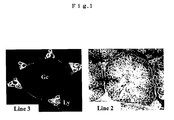
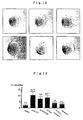
- Figure 1 shows EGFP-GPI fluorescence of testis in EGFP-GPI transgenic mouse lines. Expression of EGFP-GPI in germ cells (Gc) was found in the line 2 testis but not in lines 1 and 3.
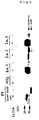
- FIG. 2 shows solubility of EGFP-GPI in transgenic testes.
- Tissues were solubilized with buffer containing detergent (Tx-114+) or buffer without detergent (Tx-114-) and a part of the solubilized matter were subjected to western blotting.
- EGFP-GPI was led to solubilized with Tx-114- buffer solely in line 2 testis. It is notable that size of water-soluble protein (Ln. 2, Tx-114-) was equivalent to membrane-anchored one (Ln. 2, Tx-114+).
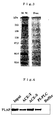
- This protein was subsequently identified as ACE by proteomics analysis. Then, the activity of the purified protein was compared with that of a recombinant ACE and a commercially available ACE. That is, to confirm whether the recombinant ACE and a commercially available ACE could change the PLAP to be soluble, a partially purified PLAP was reacted with a recombinant ACE (ACE-T) or a commercially available ACE (ACE-S). After treating with TritonX-114, a part of soluble phase was applied to SDS-PAGE and detected by immunoblotting. The results were shown in Figure 4. Though the band corresponding to the soluble PLAP was slightly small compared with the sample treated with the PI-PLC, it was detected in both sample with ACE-T and ACE-S.
- a dose-dependent activity of ACE was assessed by reacting the partially purified PLAP with ACE-S of various concentrations and measuring soluble PLAP activity. The results were shown in Figure 5.
- the ACE activity was dose-dependent manner in the commercial ACEs, and it was inhibited with the specific ACE inhibitor, captopril.
- Glu414 of ACE Since the Glu414 of ACE has been known as essential for peptidase activity, a recombinant ACE (E414D), of which Glu414 was replaced with Asp, was prepared and GPI-anchored protein releasing activity and peptidase activity thereof were measured ( Figures 6 and 7). Compared with wild-type ACE, peptidase activity of ACE (E414D) was decreased to less than 1/1000, while the GPI-anchored protein releasing activity was not changed. These results suggest that the active site element for the GPI-anchored protein releasing activity differ from that for peptidase activity.
- ACE Effect of ACE to GPI-anchored proteins was examined by using the F9 cell clone, which stably expressed EGFP-GPI on the cell surface.
- the F9 cells were reacted with 1.0 U/ml of ACE-S or 2.8 U/ml of PI-PLC under the condition of pre-treatment of filipin or non-treatment of filipin.
- Dynamics of EGFP-GPI was analyzed with GFP fluorescence observation and cell surface expressions of EGFP-GPI, Sca-1, Thy-1 and E-cadherin were with FACS analyiss.
- F9 cells expressing both EGFP-GPI were treated with ACE and PLAP, and released products were purified by antibody-conjugated columns. Attempts to identify the structure of the carboxy-terminal peptides several times by HPLC/mass spectrometry with trypsin, cyanogen bromide or Staphylococcus aureus V8 protease treatments of both proteins failed to recover the target peptides. It is assumed from this result that the released GFP-GPI has GPI-anchor components at its C-terminus.
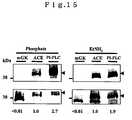
- the F9 cells expressing EGFP-GPI were metabolically labeled with [ 32 P]-phosphate or [ 3 H]-ethanolamine, and treated with ACE, PI-PLC or mGK. Then, the released proteins from the cells were applied to EGFP immunoblotting, to measure radioactivity for each band ( Figure 15). Measurements were performed at least four times, and the almost same results were obtained. Although the released EGFP-GPI products with 32 P or 3 H labeling were not detected by mGK treatments, both were detected by ACE treatment or PI-PLC treatment, indicating the presence of a portion of GPI-anchor structure in the ACE-released molecules.
- radioactivities of released-products were found to be about one-third when it was labeled on the phosphate and a half on the ethanolamine compared with those of PI-PLC-released molecules.
- radioactive isotopes for labels were localized on GPI anchors, and it was suggested from the difference of radioactivity that the ACE cleavage site is nearer to the GPI-anchored proteins than that of PI-PLC, and more precisely that the cleavage site might be near the three-consecutive mannoses of GPI anchor bone to which the anchor proteins bind.
- ACE knockout mouse The most prominent phenotype of ACE knockout mouse is male infertility. Compared with wild-type sperms, ACE knockout sperms showed defective sperm-egg binding at the zona pellucida (Krege et al., Nature 375: 146-148,1995).
- Epididymal sperms were collected from both wild-type and knockout mice and distributed into water-soluble fraction (WS) and detergent-soluble (DS) fraction. Then, GPI-anchored proteins, Tesp5 and Ph-20, which are known to be released from the sperm during fertilization (Non-patent Documents 3 and 4), in the fractions were analyzed with immunoblotting ( Figure 17). Since aqueous proteins released from sperm are distributed in soluble fraction, both Tesp5 and Ph-20 were detected from water-soluble fraction (WS) of wild-type sperm but not in the knockout sperm, implying that ACE is essential for release of GPI-anchored proteins.
- WS water-soluble fraction
- DS detergent-soluble
- PI-PLC treatment apparently cured the egg binding ability of ACE knockout sperms to a level comparable with both ACE treatments, confirmed by inhibition with inositol monophosphate, a PI-PLC-specific inhibitor.
- GPI-PLD As a protein showing GPI-anchor-cleaving activity (GPIase activity), GPI-PLD is only enzyme known so far in mammals. However, GPI-PLD has been reported to exhibits the GPIase activity only when it is expressed intracellularly in culture cells (Tujioka et al., Biochem. Biophys. Res. Commun. 251:737-747, 1998). Therefore, GPI-PLD has never been used as a medicine for the GPIase activity. In contrast, ACE has superior property that efficiently releases GPI-anchored protein by only adding to human cells or tissues without destroying cell membrane structure by any drug treatment.
- ACE Another outstandingness of ACE is its cleaving site for the GPI-anchors.
- the cleaving site in the GPI-anchor structure as shown on Figure 16 fatty acids addition to hydroxyl group of inositol (acylation) frequently occurs in matured GPI-anchors.
- GPI-PLD cleaves site is just proximal to inositol ( Figure 16 and Hagaman et al., Proc. Natl. Acad. Sci. USA., 95: 2552-2557, 1998), it cannot X cleavage. Indeed, GPI-PLD could not release DAF from the intact erythrocyte having prominent acylation (Davitz et al., J. Biol.
- bacterial PI-PLC As another protein having GPIase activity, bacterial PI-PLC is also known.
- ACE is much safer than the PI-PLC in terms of usage of the GPIase activity for madicine, because it is an endogeneous protein widely distributed in vivo .
- ACE up-regulates blood pressure. Therefore, researches for developing ACE inhibiting drugs (antihypertension medication) or as to inhibition of peptidase activity have been made.
- this invention provide a medicine for preventing or curing diseases, such as prion-related diseases, inflammatory diseases, bacterial infectious diseases and male infertility due to sperm-egg binding insufficiency, by releasing GPI-anchored proteins from the cell surface.
- diseases such as prion-related diseases, inflammatory diseases, bacterial infectious diseases and male infertility due to sperm-egg binding insufficiency, by releasing GPI-anchored proteins from the cell surface.
Landscapes
- Health & Medical Sciences (AREA)
- Life Sciences & Earth Sciences (AREA)
- Chemical & Material Sciences (AREA)
- Organic Chemistry (AREA)
- Engineering & Computer Science (AREA)
- General Health & Medical Sciences (AREA)
- Bioinformatics & Cheminformatics (AREA)
- Medicinal Chemistry (AREA)
- Public Health (AREA)
- Pharmacology & Pharmacy (AREA)
- Animal Behavior & Ethology (AREA)
- Veterinary Medicine (AREA)
- Chemical Kinetics & Catalysis (AREA)
- General Chemical & Material Sciences (AREA)
- Nuclear Medicine, Radiotherapy & Molecular Imaging (AREA)
- Genetics & Genomics (AREA)
- Zoology (AREA)
- Wood Science & Technology (AREA)
- Biomedical Technology (AREA)
- Biochemistry (AREA)
- General Engineering & Computer Science (AREA)
- Neurology (AREA)
- Reproductive Health (AREA)
- Neurosurgery (AREA)
- Microbiology (AREA)
- Gastroenterology & Hepatology (AREA)
- Epidemiology (AREA)
- Proteomics, Peptides & Aminoacids (AREA)
- Endocrinology (AREA)
- Molecular Biology (AREA)
- Biotechnology (AREA)
- Immunology (AREA)
- Communicable Diseases (AREA)
- Oncology (AREA)
- Virology (AREA)
- Hospice & Palliative Care (AREA)
- Psychiatry (AREA)
- Gynecology & Obstetrics (AREA)
- Pain & Pain Management (AREA)
- Rheumatology (AREA)
Applications Claiming Priority (3)
| Application Number | Priority Date | Filing Date | Title |
|---|---|---|---|
| JP2002314078 | 2002-10-29 | ||
| JP2002314078 | 2002-10-29 | ||
| PCT/JP2003/013851 WO2004039396A1 (ja) | 2002-10-29 | 2003-10-29 | アンギオテンシン変換酵素含有薬剤 |
Publications (2)
| Publication Number | Publication Date |
|---|---|
| EP1570854A1 true EP1570854A1 (de) | 2005-09-07 |
| EP1570854A4 EP1570854A4 (de) | 2008-07-30 |
Family
ID=32211601
Family Applications (1)
| Application Number | Title | Priority Date | Filing Date |
|---|---|---|---|
| EP03769961A Withdrawn EP1570854A4 (de) | 2002-10-29 | 2003-10-29 | Arzneimittel mit angiotensin-konvertase |
Country Status (6)
| Country | Link |
|---|---|
| US (1) | US7407933B2 (de) |
| EP (1) | EP1570854A4 (de) |
| JP (1) | JPWO2004039396A1 (de) |
| AU (1) | AU2003280601A1 (de) |
| CA (1) | CA2504205A1 (de) |
| WO (1) | WO2004039396A1 (de) |
Families Citing this family (2)
| Publication number | Priority date | Publication date | Assignee | Title |
|---|---|---|---|---|
| US7531938B2 (en) * | 2006-03-13 | 2009-05-12 | Mcmillan Electric Company | Insertable brush holder assembly for electric motor |
| US20090019803A1 (en) * | 2007-07-20 | 2009-01-22 | Chapman Robert A | Floor repair kit and method |
Family Cites Families (4)
| Publication number | Priority date | Publication date | Assignee | Title |
|---|---|---|---|---|
| FR2649412B1 (fr) * | 1989-07-05 | 1995-10-20 | Inst Nat Sante Rech Med | Acide nucleique codant pour l'enzyme de conversion de l'angiotensine (eca) testiculaire humaine, et ses applications, notamment pour le depistage in vitro de cette enzyme dans l'organisme |
| GB9410639D0 (en) * | 1994-05-27 | 1994-07-13 | Queen Mary & Westfield College | Method of improving fertilization |
| JP2001316287A (ja) * | 2000-05-01 | 2001-11-13 | Bml Inc | アルツハイマー病の治療剤 |
| WO2002012471A2 (en) * | 2000-08-09 | 2002-02-14 | Millennium Pharmaceuticals, Inc. | Angiotensin converting enzyme homolog and uses therefor |
-
2003
- 2003-10-29 EP EP03769961A patent/EP1570854A4/de not_active Withdrawn
- 2003-10-29 AU AU2003280601A patent/AU2003280601A1/en not_active Abandoned
- 2003-10-29 CA CA002504205A patent/CA2504205A1/en not_active Abandoned
- 2003-10-29 US US10/532,986 patent/US7407933B2/en not_active Expired - Fee Related
- 2003-10-29 JP JP2004548070A patent/JPWO2004039396A1/ja active Pending
- 2003-10-29 WO PCT/JP2003/013851 patent/WO2004039396A1/ja not_active Ceased
Also Published As
| Publication number | Publication date |
|---|---|
| US20060239993A1 (en) | 2006-10-26 |
| JPWO2004039396A1 (ja) | 2006-02-23 |
| AU2003280601A1 (en) | 2004-05-25 |
| CA2504205A1 (en) | 2004-05-13 |
| WO2004039396A1 (ja) | 2004-05-13 |
| US7407933B2 (en) | 2008-08-05 |
| EP1570854A4 (de) | 2008-07-30 |
Similar Documents
| Publication | Publication Date | Title |
|---|---|---|
| Williamson et al. | Transbilayer phospholipid movement and the clearance of apoptotic cells | |
| Horrocks et al. | Induction of acrosomal exocytosis in chicken spermatozoa by inner perivitelline-derived N-linked glycans | |
| Vijayasarathy et al. | Retinoschisin is a peripheral membrane protein with affinity for anionic phospholipids and affected by divalent cations | |
| US20110028387A1 (en) | METHODS OF SCREENING OF PP1-INTERACTING POLYPEPTIDES OR PROTEINS, PEPTIDES INHIBITING PP1c BINDING TO Bcl-2 PROTEINS, BCL-XL AND BCL-W, AND USES THEREOF | |
| Lee et al. | Collapsin response mediator protein-2 inhibits neuronal phospholipase D2 activity by direct interaction | |
| Nguyen et al. | Proteomic characterization of lipid rafts markers from the rat intestinal brush border | |
| Kroviarski et al. | Direct interaction between the Lu/B‐CAM adhesion glycoproteins and erythroid spectrin | |
| JP2001517943A (ja) | ヒト膵炎関連タンパク質、pap−2 | |
| US7407933B2 (en) | Drug containing angiotensin convertase | |
| Song et al. | Evidence for proteolytic processing and stimulated organelle redistribution of iPLA2β | |
| US7405202B2 (en) | CRISP polypeptides as contraceptives and inhibitors of sperm capacitation | |
| Váradi et al. | Characterisation of endoplasmic reticulum and plasma membrane Ca2+-ATPases in pancreatic β-cells and in islets of Langerhans | |
| JP2003189874A (ja) | ガレクチン−9活性制御剤 | |
| JP2003155251A (ja) | 生体内のアポトーシス細胞の除去促進剤及び除去阻害剤 | |
| Díaz-López et al. | Characterization of MDGA1, a novel human glycosylphosphatidylinositol-anchored protein localized in lipid rafts | |
| KR101144889B1 (ko) | 포스포리파제 d를 포함하는 펩티드 복합체 | |
| US20080114081A1 (en) | Methods for diagnosis and treatment of PH domain signal transduction disorders | |
| Ikeda et al. | Localization of N‐linked carbohydrate chains in glycoprotein ZPA of the bovine egg zona pellucida | |
| Kanner et al. | Structure and function of sodium-coupled neurotransmitter transporters | |
| Low | Structure and function of GPI-specific phospholipases | |
| Steff et al. | A cell death pathway induced by antibody-mediated cross-linking of CD45 on lymphocytes | |
| Müller et al. | Porcine spermadhesin AQN-3 binds to negatively charged phospholipids | |
| JP2004215612A (ja) | ガレクチン−8活性制御剤 | |
| KR20010085287A (ko) | 단백질 타이로신 포스파타아제의 세포내 도메인에 대한 항체 | |
| Zhou et al. | Identification of phosphoinositide-specific phospholipase C-β1 and GTP-binding protein, Gqα, in bovine iris sphincter membranes: characteristics of the phospholipase and its coupling to cholinergic muscarinic receptors |
Legal Events
| Date | Code | Title | Description |
|---|---|---|---|
| PUAI | Public reference made under article 153(3) epc to a published international application that has entered the european phase |
Free format text: ORIGINAL CODE: 0009012 |
|
| 17P | Request for examination filed |
Effective date: 20050527 |
|
| AK | Designated contracting states |
Kind code of ref document: A1 Designated state(s): AT BE BG CH CY CZ DE DK EE ES FI FR GB GR HU IE IT LI LU MC NL PT RO SE SI SK TR |
|
| AX | Request for extension of the european patent |
Extension state: AL LT LV MK |
|
| DAX | Request for extension of the european patent (deleted) | ||
| A4 | Supplementary search report drawn up and despatched |
Effective date: 20080630 |
|
| STAA | Information on the status of an ep patent application or granted ep patent |
Free format text: STATUS: THE APPLICATION HAS BEEN WITHDRAWN |
|
| 18W | Application withdrawn |
Effective date: 20080613 |