EP1570309B1 - Verfahren zur herstellung eines brillenglaspaares - Google Patents
Verfahren zur herstellung eines brillenglaspaares Download PDFInfo
- Publication number
- EP1570309B1 EP1570309B1 EP03812596A EP03812596A EP1570309B1 EP 1570309 B1 EP1570309 B1 EP 1570309B1 EP 03812596 A EP03812596 A EP 03812596A EP 03812596 A EP03812596 A EP 03812596A EP 1570309 B1 EP1570309 B1 EP 1570309B1
- Authority
- EP
- European Patent Office
- Prior art keywords
- pair
- lens
- progressive
- vision
- spectacle lenses
- Prior art date
- Legal status (The legal status is an assumption and is not a legal conclusion. Google has not performed a legal analysis and makes no representation as to the accuracy of the status listed.)
- Expired - Lifetime
Links
- 238000000034 method Methods 0.000 title claims 2
- 230000000750 progressive effect Effects 0.000 claims description 25
- 238000004519 manufacturing process Methods 0.000 claims description 3
- 208000001491 myopia Diseases 0.000 abstract description 3
- 239000011521 glass Substances 0.000 description 17
- 230000004438 eyesight Effects 0.000 description 12
- 230000000007 visual effect Effects 0.000 description 7
- 230000004304 visual acuity Effects 0.000 description 6
- 230000004075 alteration Effects 0.000 description 5
- 230000000694 effects Effects 0.000 description 5
- 201000011573 Aniseikonia Diseases 0.000 description 1
- 230000001419 dependent effect Effects 0.000 description 1
- 238000003384 imaging method Methods 0.000 description 1
- 229940052961 longrange Drugs 0.000 description 1
- 230000003313 weakening effect Effects 0.000 description 1
Images

Classifications
-
- G—PHYSICS
- G02—OPTICS
- G02C—SPECTACLES; SUNGLASSES OR GOGGLES INSOFAR AS THEY HAVE THE SAME FEATURES AS SPECTACLES; CONTACT LENSES
- G02C7/00—Optical parts
- G02C7/02—Lenses; Lens systems ; Methods of designing lenses
- G02C7/06—Lenses; Lens systems ; Methods of designing lenses bifocal; multifocal ; progressive
- G02C7/061—Spectacle lenses with progressively varying focal power
- G02C7/063—Shape of the progressive surface
- G02C7/066—Shape, location or size of the viewing zones
-
- G—PHYSICS
- G02—OPTICS
- G02C—SPECTACLES; SUNGLASSES OR GOGGLES INSOFAR AS THEY HAVE THE SAME FEATURES AS SPECTACLES; CONTACT LENSES
- G02C7/00—Optical parts
- G02C7/02—Lenses; Lens systems ; Methods of designing lenses
- G02C7/024—Methods of designing ophthalmic lenses
- G02C7/027—Methods of designing ophthalmic lenses considering wearer's parameters
-
- G—PHYSICS
- G02—OPTICS
- G02C—SPECTACLES; SUNGLASSES OR GOGGLES INSOFAR AS THEY HAVE THE SAME FEATURES AS SPECTACLES; CONTACT LENSES
- G02C7/00—Optical parts
- G02C7/02—Lenses; Lens systems ; Methods of designing lenses
- G02C7/06—Lenses; Lens systems ; Methods of designing lenses bifocal; multifocal ; progressive
- G02C7/061—Spectacle lenses with progressively varying focal power
Definitions
- the invention relates to a method for producing a pair of spectacle lenses.
- DE 44 14 106 A discloses a pair of progressive lenses, each lens having a spherical surface with a far vision zone, a near vision zone, and a mid-sight zone, and wherein one of the progressive lenses and the other of the progressive lenses is optimized for near vision.
- DE A 375491 discloses an eyeglass pair that distributes the effect of near and far parts on both eyes instead of - as in a multi-intensity lens - to unite the two visual tasks in a glass.
- For the two eyes glasses are used, which are of different refractive power, but give equal deflection of the main rays.
- this publication discloses the combination of a multi-thickness glass and a single-vision lens, and the combination of two multi-intensity lenses, one glass is designed primarily for the near, the other glass mainly for the distance.
- the object is achieved by the method for producing a pair of spectacle lenses according to claim 1.
- a preferred embodiment is the subject of the dependent claim 2.
- both lenses are progressive lenses, wherein one lens is optimized for distance and the other lens is optimized for proximity. With one glass, the near value is weakened and the distance between the other glass is increased.
- the main vision task is determined.
- the guide eye is determined and then a lens pair is calculated.
- the main vision task is first determined to determine a pair of spectacle lenses, then determines the guide eye and then calculates the pair of spectacle lenses.
- the binocular fields of vision are not limited in such a pair of spectacle lenses with two single-vision lenses, since the visual acuity is always optimal in each case (either for distance or proximity) is. However, then the remaining binocular imaging parameters are more limited.
- Another possibility is the supply of two progressive lenses.
- a lens for the distance and a lens for proximity is optimized.
- the binocular areas of vision are then very large both in the distance and in the vicinity.
- the visual range in the distance is increased by 38%, in the intermediate range by 9% and in the near range by 41%.
Landscapes
- Health & Medical Sciences (AREA)
- Ophthalmology & Optometry (AREA)
- Physics & Mathematics (AREA)
- General Health & Medical Sciences (AREA)
- General Physics & Mathematics (AREA)
- Optics & Photonics (AREA)
- Eyeglasses (AREA)
Abstract
Description
- Die Erfindung bezieht sich auf ein Verfahren zur Herstellung eines Brillenglaspaares.
- Insbesondere bei Progressivgläsern ist es wichtig, ein möglichst gutes Binokularsehen zu erzielen, da die Abbildungsfehler in der Peripherie stark zunehmen.
- Bei Progressivgläsern vom Stand der Technik, wobei hier insbesondere auf die
EP 0 944 375 von Essilor, auf dieWO 01/84213 US 4,606,622 von Zeiss verwiesen wird, wird versucht, dies zu erreichen, indem die Abbildungsfehler in der Peripherie beim rechten und linken Brillenglas in den korrespondierenden Durchblickstellen möglichst gleich gestaltet werden. Dies hat zur Folge, dass das rechte und das linke Auge beim Betrachten eines Objekts die gleichen Abbildungsfehler hat. - Dadurch können binokulare Parameter wie z. B. Aniseikonie, Verzerrungsunterschiede, querdisparates Tiefensehen etc. positiv beeinflußt werden.
- Es ist bekannt (vgl. Wörterbuch der Optometrie, Helmut Goersch, Enke Verlag, S. 19S), dass die binokulare Sehschärfe bzw. der binokulare Visus in der Regel größer ist als die maximale Sehschärfe des Einzelauges:
Visusbinokular > max (Visus R, Visus L). -
DE 44 14 106 A offenbart ein Paar von Gleitsichtlinsen, wobei jede Linse eine sphärische Oberfläche mit einer Fernsichtzone, einer Nahsichtzone und einer Mittelsichtzone aufweist und wobei eine der Gleitsichtlinsen für die Fernsicht und die andere der Gleitsichtlinsen für die Nahsicht optimiert ist. -
DE A 375491 offenbart ein Augenglaspaar, das die Wirkung von Nah- und Fernteil auf beide Augen verteilt, anstatt - wie bei einem Mehrstärkenglas - die beiden Sehaufgaben in einem Glas zu vereinen. Für die beiden Augen werden Gläser verwendet, die zwar von verschiedener Brechkraft sind, aber gleiche Ablenkung der Hauptstrahlen ergeben. Des weiteren offenbart diese Veröffentlichung die Kombination aus einem Mehrstärkenglas und einem Einstärkenglas, sowie die Kombination aus zwei Mehrstärkengläsern, wobei das eine Glas vorwiegend für die Nähe, das andere Glas vorwiegend für die Ferne ausgelegt ist. - Es ist Aufgabe der vorliegenden Erfindung, die eingeschränkte Sicht, die sich aus den charakteristischen Abbildungsfehlern in der Peripherie progressiver Brillengläser ergibt, zu verbessern.
- Die Aufgabe wird gelöst durch das Verfahren zur Herstellung eines Brillenglaspaars gemäß Anspruch 1.
- Eine bevorzugte Ausführungsform ist Gegenstand des abhängigen Anspruchs 2.
- Gemäß eines Ausführungsform, welche wicht Gegenstand der Ansprüche ist, sind beide Brillengläser Progressivgläser, wobei das eine Brillenglas für die Ferne optimiert und das andere Brillenglas für die Nähe optimiert wird. Bei einem Glas wird der Nahwert abgeschwächt und bei dem anderen Glas der Fernwert verstärkt.
- Zunächst wird die Hauptsehaufgabe bestimmt. Als nächstes wird das Führungsauge bestimmt und danach wird ein Brillenglaspaar berechnet.
- Die Erfindung wird nachstehend ohne Beschränkung des allgemeinen Erfindungsgedankens anhand von Ausführungsbeispielen unter Bezugnahme auf die Zeichnungen exemplarisch beschrieben, auf die im übrigen hinsichtlich der Offenbarung aller im Text nicht näher erläuterten erfindungsgemäßen Einzelheiten ausdrücklich verwiesen wird. Es zeigen:
-
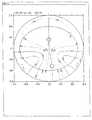
Fig. 1 ein konventionelles Progressivglas, bei dem rechts und links das gleiche Progressivglas verwendet wurde, -
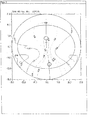
Fig. 2 ein Progressivglas mit R sph - 4,0 dpt Add 1,5 dpt, -
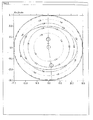
Fig. 3 ein Progressivglas mit L sph - 3,5 dpt Add 1,5 dpt, -
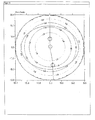
Fig. 4 die Pfeilhöhen vom rechten Glas vonFig. 2 und -
Fig. 5 die Pfeilhöhen vom linken Glas vonFig. 3 . - Wie bereits erwähnt, wird zur Bestimmung eines Brillenglaspaares zunächst die Hauptsehaufgabe bestimmt, dann das Führungsauge bestimmt und danach das Brillenglaspaar berechnet. Im Folgenden wird ein Beispiel angegeben:
Das Führungsauge ist rechts, die Hauptsehaufgabe ist die Ferne und die Verordnung ist R/L sph - 4 dpt Add 2,0 dpt. - Somit erhält man für an Brillenglaspaar, welchs micht von des Eifindung unfast ist, rechts ein Einstärkenglas mit der Wirkung sph - 4 dpt und links ein Einstärkenglas mit sph - 2 dpt. Solch ein Brillenglaspaar weist zwar keine optimalen binokularen Eigenschaften auf, allerdings ist die binokulare Sehschärfe in allen Durchblickpunkten sehr hoch und somit sind die binokularen Sehfelder sehr groß. Selbstverständlich ist dies auch auf rechts und links unterschiedliche Verordnungen oder auf von Ferne bzw. Nähe abweichende Sehaufgaben wie z. B. bei Computer- oder Arbeitsplatzbrillen anwendbar.
- Die binokularen Sehfelder sind bei einem solchen Brillenglaspaar mit zwei Einstärkengläsern nicht beschränkt, da bei jeweils einem Brillenglas die Sehschärfe immer optimal (entweder für Ferne oder Nähe) ist. Allerdings sind dann die restlichen binokularen Abbildungsparameter stärker eingeschränkt.
- Es ist bekannt, daß bei Progressivgläsern die Abbildungsfehler in der Peripherie störend sind. Dies läßt sich mit einer Ausführungsform nach der Erfindung beheben.
- Da bei zwei Einstärkenbrillengläsern das Binokularsehen stark eingeschränkt wird, wählt man deshalb auf der einen Seite ein Progressivglas und auf der anderen Seite ein Einstärkenglas. Das Rezept ist das gleiche, wie oben angegeben wurde. Somit würde man wählen: R Progressivglas sph - 4 dpt Add 2,0; L Einstärkenglas sph - 4 dpt. Somit ist in der Ferne das binokulare Sehfeld unbeschränkt und mit dem Nah - und Zwischenbereich ist es dennoch noch möglich, beispielsweise eine Speisekarte zu lesen. Soll also ein uneingeschränktes Fernblickfeld zur Verfügung gestellt werden und nur kurzzeitig Leseaufgaben übernommen werden, findet man mit solch einem Brillenglaspaar die ideale Lösung.
- Selbstverständlich sind auch hier alle denkbaren Kombinationen möglich. Liegt die Hauptsehaufgabe im Nahbereich, so wählt man auf der linken Seite ein Nahglas oder falls man der Hauptsehaufgabe noch mehr Bedeutung beimessen möchte, kann man auch das Führungsauge mit einem Einstärkenglas und das andere mit einem Progressivglas versehen.
- Eine weitere Möglichkeit besteht in der Versorgung mit zwei Progressivgläsern. Hierbei wird ein Brillenglas für die Ferne und ein Brillenglas für die Nähe optimiert. Somit erhält man bei einem Progressivglas einen großen Fernbereich und bei dem anderen einen großen Nahbereich. Dies hat zur Folge, dass die binokularen Sehbereiche dann sowohl in der Ferne als auch in der Nähe sehr groß sind.
- Dies kann noch verstärkt werden, indem man bei einem Progressivglas den Nahwert abschwächt (weniger Plus) und/oder bei dem anderen Progressivglas den Fernwert verstärkt, d. h. in Richtung Plus verändert. Dadurch wird der Progressionskanal sowohl monokular als auch binokular verbreitert.
- Dieses Beispiel wird in den
Fig. 2 und3 beschrieben. Man verwendet folgendes Rezept:
R/L sph - 4,0 dpt Add 2,0 dpt,
Führungsauge rechts, Hauptsehaufgabe Ferne. - Für das rechte Brillenglas wird ein Progressivglas mit optimalem Fernbereich und einer Wirkung sph - 4,0 Add 1,5 und für das linke Brillenglas ein Progressivglas mit optimalem Nahbereich und einer Wirkung sph - 3,5 Add 1,5 berechnet. Somit erhält man ein Brillenglaspaar, bei dem die binokularen Sehbereiche sowohl in der Ferne als auch in der Nähe und im Progressionsbereich deutlich vergrößert sind. In Abhängigkeit von der Größe der Sehfelder oder des Binokularsehens kann man die Verstärkung bzw. die Abschwächung im Fern- und Nahbereich (im Beispiel 0,5 dpt) und die Bevorzugung bei der Berechnung Ferne bzw. Nähe frei wählen. Die Verstärkung bzw. die Abschwächung muss dabei nicht notwendigerweise um den selben Betrag erfolgen. In der Tabelle 1 sind die Sehfeldbreiten (Visus > 0,9) dargestellt.
Tabelle 1 Sehfeldbreiten (Visus > 0,9) Konventionelles Progressivglas Erfindung R Erfindung L Erfindung Binokular Ferne (Fernbezugspunkt) 26,8 mm 37 mm 4,3 mm 37 mm Progressionskanal (engste Stelle) 2,2 mm 2,4 mm 2,4 mm 2,4 mm Nähe (Nahbezugspunkt) 9,5 mm 7,3 mm 13,4 mm 13,4 mm - Beim Brillenglaspaar ist der Sehbereich in der Ferne um 38 %, im Zwischenbereich um 9 % und im Nahbereich um 41% vergrößert.
Claims (2)
- Verfahren zur Herstellung eines Brillenglaspaares mit den Schritten:- Bestimmen einer Hauptsehaufgabe;- Bestimmen eines Führungsauges;- Berechnen eines Brillenglaspaares, wobeidas binokulare Sehfeld der Hauptsehaufgabe gegenüber dem Sehfeld des progressiven Brillenglases vergrößert ist.-- das Führungsauge mit einem Einstärkenbrillenglas entsprechend der Hauptsehaufgabe und das andere Auge mit einem Progressivbrillenglas ausgestattet ist; oder-- das Führungsauge mit einem Progressivbrillenglas und das andere Auge mit einem Einstärkenbrillenglas entsprechend der Hauptsehaufgabe ausgestattet ist, derart, daß
- Verfahren nach Anspruch 1, dadurch gekennzeichnet, daß das Brillenglaspaar derart berechnet wird, daß das binokulare Sehfeld der Hauptsehaufgabe unbeschränkt ist.
Applications Claiming Priority (3)
| Application Number | Priority Date | Filing Date | Title |
|---|---|---|---|
| DE10258332 | 2002-12-12 | ||
| DE10258332A DE10258332A1 (de) | 2002-12-12 | 2002-12-12 | Brillenglaspaar |
| PCT/EP2003/014017 WO2004053566A1 (de) | 2002-12-12 | 2003-12-10 | Brillenglaspaar |
Publications (2)
| Publication Number | Publication Date |
|---|---|
| EP1570309A1 EP1570309A1 (de) | 2005-09-07 |
| EP1570309B1 true EP1570309B1 (de) | 2008-08-20 |
Family
ID=32477615
Family Applications (1)
| Application Number | Title | Priority Date | Filing Date |
|---|---|---|---|
| EP03812596A Expired - Lifetime EP1570309B1 (de) | 2002-12-12 | 2003-12-10 | Verfahren zur herstellung eines brillenglaspaares |
Country Status (5)
| Country | Link |
|---|---|
| US (1) | US7083277B2 (de) |
| EP (1) | EP1570309B1 (de) |
| JP (1) | JP2006510041A (de) |
| DE (2) | DE10258332A1 (de) |
| WO (1) | WO2004053566A1 (de) |
Families Citing this family (10)
| Publication number | Priority date | Publication date | Assignee | Title |
|---|---|---|---|---|
| US7828433B2 (en) * | 2008-10-22 | 2010-11-09 | Shamir Optical Industry | Assymetrical progressive lens |
| US8622545B2 (en) | 2011-07-26 | 2014-01-07 | Shaw Vision Inc. | Spectacle lenses and method of making same |
| EP2581781A1 (de) | 2011-10-11 | 2013-04-17 | Essilor International (Compagnie Générale D'Optique) | Verfahren für die Zuweisung von zwei ophthalmischen Linsen des progressiven Zusatztyps für das rechte und linke Auge |
| WO2014128035A1 (en) | 2013-02-20 | 2014-08-28 | Essilor International (Compagnie Generale D'optique) | Pair of progressive ophthalmic lenses |
| BR112015019008A8 (pt) | 2013-02-20 | 2018-08-14 | Essilor Int | Par de lentes oftálmicas progressivas |
| US9759931B2 (en) | 2013-02-20 | 2017-09-12 | Essilor International (Compagnie Generale D'optique) | Pair of progressive ophthalmic lenses |
| CN107072779B (zh) | 2014-09-09 | 2020-01-14 | 斯塔尔外科有限公司 | 具有扩展的景深和增强的远距视力的眼科植入物 |
| US12127934B2 (en) | 2014-09-09 | 2024-10-29 | Staar Surgical Company | Method of Providing Modified Monovision to a Subject with a First Lens and a Second Lens |
| CN112867944A (zh) | 2018-08-17 | 2021-05-28 | 斯塔尔外科有限公司 | 呈现折射率纳米梯度的聚合物组合物 |
| AU2022360960A1 (en) | 2021-10-04 | 2024-04-18 | Staar Surgical Company | Ophthalmic implants for correcting vision with a tunable optic, and methods of manufacture and use |
Family Cites Families (12)
| Publication number | Priority date | Publication date | Assignee | Title |
|---|---|---|---|---|
| DE375491C (de) * | 1922-03-16 | 1923-09-08 | Walther Thorner Dr | Beidaeugiges Augenglas zum gleichzeitigen Gebrauch fuer Naehe und Ferne |
| DE3016935C2 (de) * | 1980-05-02 | 1991-01-24 | Fa. Carl Zeiss, 7920 Heidenheim | Multifokale Brillenlinse mit gebietsweise gleitendem Brechwert |
| SK377492A3 (en) * | 1992-01-28 | 1995-05-10 | Johnson & Johnson Vision Prod | Multifocal refracting lens and method of its manufacture |
| FR2701770B1 (fr) * | 1993-02-18 | 1995-05-12 | Essilor Int | Lentille ophtalmique à vision simultanée pour la correction de la presbytie et jeu de deux telles lentilles ophtalmiques pour un même porteur . |
| FR2704327B1 (fr) * | 1993-04-23 | 1995-06-23 | Essilor Int | Paire de lentilles ophtalmiques multifocales progressives. |
| US5574518A (en) * | 1995-01-10 | 1996-11-12 | Les Laboratoires Opti-Centre Inc. | System incorporation two different sphero-non-spherical contact lenses for correcting presbytia |
| JP3196877B2 (ja) * | 1995-04-18 | 2001-08-06 | ホーヤ株式会社 | 累進多焦点レンズ |
| US5790226A (en) * | 1996-11-15 | 1998-08-04 | Pollak; David A. | Golf bifocals |
| FR2803921B1 (fr) * | 2000-01-14 | 2002-04-05 | Essilor Int | Jeu de deux lentilles ophtalmiques, gamme et procede pour constituer un tel jeu |
| US6554859B1 (en) * | 2000-05-03 | 2003-04-29 | Advanced Medical Optics, Inc. | Accommodating, reduced ADD power multifocal intraocular lenses |
| US6561646B2 (en) * | 2000-05-09 | 2003-05-13 | Allan Silliphant | Viewing of an anaglyph with improved stereoscopic image perception |
| US6478422B1 (en) * | 2001-03-19 | 2002-11-12 | Richard A. Hansen | Single bifocal custom shooters glasses |
-
2002
- 2002-12-12 DE DE10258332A patent/DE10258332A1/de not_active Withdrawn
-
2003
- 2003-12-10 WO PCT/EP2003/014017 patent/WO2004053566A1/de not_active Ceased
- 2003-12-10 DE DE50310388T patent/DE50310388D1/de not_active Expired - Lifetime
- 2003-12-10 JP JP2004558060A patent/JP2006510041A/ja active Pending
- 2003-12-10 EP EP03812596A patent/EP1570309B1/de not_active Expired - Lifetime
-
2005
- 2005-06-10 US US11/149,301 patent/US7083277B2/en not_active Expired - Lifetime
Also Published As
| Publication number | Publication date |
|---|---|
| DE50310388D1 (de) | 2008-10-02 |
| JP2006510041A (ja) | 2006-03-23 |
| US20050280775A1 (en) | 2005-12-22 |
| US7083277B2 (en) | 2006-08-01 |
| WO2004053566A1 (de) | 2004-06-24 |
| DE10258332A1 (de) | 2004-07-08 |
| EP1570309A1 (de) | 2005-09-07 |
Similar Documents
| Publication | Publication Date | Title |
|---|---|---|
| DE3016935C2 (de) | Multifokale Brillenlinse mit gebietsweise gleitendem Brechwert | |
| DE4012609A1 (de) | Gleitsichtflaeche fuer eine gleitsichtbrillenlinse | |
| DE8104023U1 (de) | Brillenglas mit zunehmender brennpunktverstaerkung | |
| EP1277079A2 (de) | Verfahren zum berechnen eines progressiven brillenglases sowie verahren zur herstellung eines derartigen brillenglases | |
| EP0701709B1 (de) | Serie progressiver brillengläser | |
| DE7929203U1 (de) | Brillenglas, insbesondere fuer starbrillen oder starke fehlsichtigkeit | |
| EP1150140B1 (de) | Verfahren zur Herstellung einer Brillenlinse, Brillenlinse und Brillenlinsefamilie | |
| DE3716201A1 (de) | Progressives brillenglas | |
| EP0802441A2 (de) | Multifokale Brillenlinse | |
| EP1488274B1 (de) | Progressives brillenglas mit zwei asphärischen, progressiven flächen | |
| EP1656581A1 (de) | Individuelles einstärkenbrillenglas | |
| EP1570309A1 (de) | Brillenglaspaar | |
| EP1939668B1 (de) | Progressives Brillenglas mit geringen Vergrößerungsunterschieden | |
| EP1554624B1 (de) | Brillenglas mit geringen abbildungsfehlern höherer ordnung | |
| EP1415189B1 (de) | Progressives brillenglas für grosse und mittlere objektentfernungen | |
| EP1277076B1 (de) | Progressives brillenglas | |
| EP4587883A1 (de) | Reduktion der progression von myopie mit angepasstem wirkungsbereich | |
| DE10191693B4 (de) | Progressives Brillenglas mit geringer Änderung der binokularen Eigenschaften bei einer Blickbewegung | |
| EP1676169B1 (de) | Bildschirmarbeitsplatzglas | |
| DE3635777A1 (de) | Progressives brillenglas | |
| WO2018137962A1 (de) | Verfahren zur berücksichtigung unterschiedlicher prismatischer korrekturen in der ferne und der nähe | |
| EP1676168A1 (de) | Individuelles brillenglas | |
| DE4238067C3 (de) | Gruppe von progressiven Brillengläsern | |
| EP1277078B1 (de) | Progressives brillenglas mit geringer dynamischer änderung der gebrauchseigenschaften bei horizontalen blickbewegungen | |
| DE10300142A1 (de) | Gleitsichtbrillenglas |
Legal Events
| Date | Code | Title | Description |
|---|---|---|---|
| PUAI | Public reference made under article 153(3) epc to a published international application that has entered the european phase |
Free format text: ORIGINAL CODE: 0009012 |
|
| 17P | Request for examination filed |
Effective date: 20050616 |
|
| AK | Designated contracting states |
Kind code of ref document: A1 Designated state(s): AT BE BG CH CY CZ DE DK EE ES FI FR GB GR HU IE IT LI LU MC NL PT RO SE SI SK TR |
|
| RAP1 | Party data changed (applicant data changed or rights of an application transferred) |
Owner name: RODENSTOCK GMBH |
|
| RBV | Designated contracting states (corrected) |
Designated state(s): DE ES FR GB IT |
|
| 17Q | First examination report despatched |
Effective date: 20051006 |
|
| RTI1 | Title (correction) |
Free format text: METHOD OF PRODUCING A PAIR OF SPECTACLE LENSES |
|
| GRAP | Despatch of communication of intention to grant a patent |
Free format text: ORIGINAL CODE: EPIDOSNIGR1 |
|
| RIN1 | Information on inventor provided before grant (corrected) |
Inventor name: WEHNER, EDDA DR. Inventor name: WELK, ANDREA Inventor name: ESSER, GREGOR Inventor name: ALTHEIMER, HELMUT Inventor name: HAIMERL, WALTER DR. |
|
| GRAS | Grant fee paid |
Free format text: ORIGINAL CODE: EPIDOSNIGR3 |
|
| GRAA | (expected) grant |
Free format text: ORIGINAL CODE: 0009210 |
|
| AK | Designated contracting states |
Kind code of ref document: B1 Designated state(s): DE ES FR GB IT |
|
| REG | Reference to a national code |
Ref country code: GB Ref legal event code: FG4D Free format text: NOT ENGLISH |
|
| REF | Corresponds to: |
Ref document number: 50310388 Country of ref document: DE Date of ref document: 20081002 Kind code of ref document: P |
|
| PG25 | Lapsed in a contracting state [announced via postgrant information from national office to epo] |
Ref country code: ES Free format text: LAPSE BECAUSE OF FAILURE TO SUBMIT A TRANSLATION OF THE DESCRIPTION OR TO PAY THE FEE WITHIN THE PRESCRIBED TIME-LIMIT Effective date: 20081201 |
|
| PLBE | No opposition filed within time limit |
Free format text: ORIGINAL CODE: 0009261 |
|
| STAA | Information on the status of an ep patent application or granted ep patent |
Free format text: STATUS: NO OPPOSITION FILED WITHIN TIME LIMIT |
|
| 26N | No opposition filed |
Effective date: 20090525 |
|
| PG25 | Lapsed in a contracting state [announced via postgrant information from national office to epo] |
Ref country code: IT Free format text: LAPSE BECAUSE OF FAILURE TO SUBMIT A TRANSLATION OF THE DESCRIPTION OR TO PAY THE FEE WITHIN THE PRESCRIBED TIME-LIMIT Effective date: 20080820 |
|
| PGFP | Annual fee paid to national office [announced via postgrant information from national office to epo] |
Ref country code: FR Payment date: 20101221 Year of fee payment: 8 |
|
| PGFP | Annual fee paid to national office [announced via postgrant information from national office to epo] |
Ref country code: GB Payment date: 20101208 Year of fee payment: 8 |
|
| REG | Reference to a national code |
Ref country code: FR Ref legal event code: GC Effective date: 20110929 |
|
| REG | Reference to a national code |
Ref country code: GB Ref legal event code: 732E Free format text: REGISTERED BETWEEN 20111013 AND 20111019 |
|
| REG | Reference to a national code |
Ref country code: DE Ref legal event code: R084 Ref document number: 50310388 Country of ref document: DE Effective date: 20120306 |
|
| GBPC | Gb: european patent ceased through non-payment of renewal fee |
Effective date: 20111210 |
|
| REG | Reference to a national code |
Ref country code: FR Ref legal event code: ST Effective date: 20120831 |
|
| REG | Reference to a national code |
Ref country code: DE Ref legal event code: R081 Ref document number: 50310388 Country of ref document: DE Owner name: RODENSTOCK GMBH, DE Free format text: FORMER OWNER: RODENSTOCK GMBH, 80469 MUENCHEN, DE Effective date: 20120822 |
|
| PG25 | Lapsed in a contracting state [announced via postgrant information from national office to epo] |
Ref country code: GB Free format text: LAPSE BECAUSE OF NON-PAYMENT OF DUE FEES Effective date: 20111210 |
|
| PG25 | Lapsed in a contracting state [announced via postgrant information from national office to epo] |
Ref country code: FR Free format text: LAPSE BECAUSE OF NON-PAYMENT OF DUE FEES Effective date: 20120102 |
|
| PGFP | Annual fee paid to national office [announced via postgrant information from national office to epo] |
Ref country code: DE Payment date: 20221222 Year of fee payment: 20 |
|
| REG | Reference to a national code |
Ref country code: DE Ref legal event code: R071 Ref document number: 50310388 Country of ref document: DE |