EP1558364B1 - Verfahren zur kontinuierlichen rückführung des bei der oxidation von olefinen mit hydroperoxiden nicht umgesetzten olefins mittels lösungsmittelwäsche - Google Patents
Verfahren zur kontinuierlichen rückführung des bei der oxidation von olefinen mit hydroperoxiden nicht umgesetzten olefins mittels lösungsmittelwäsche Download PDFInfo
- Publication number
- EP1558364B1 EP1558364B1 EP03772249A EP03772249A EP1558364B1 EP 1558364 B1 EP1558364 B1 EP 1558364B1 EP 03772249 A EP03772249 A EP 03772249A EP 03772249 A EP03772249 A EP 03772249A EP 1558364 B1 EP1558364 B1 EP 1558364B1
- Authority
- EP
- European Patent Office
- Prior art keywords
- propene
- propane
- hydrocarbon
- oxidation
- olefin
- Prior art date
- Legal status (The legal status is an assumption and is not a legal conclusion. Google has not performed a legal analysis and makes no representation as to the accuracy of the status listed.)
- Expired - Lifetime
Links
- 238000000034 method Methods 0.000 title claims abstract description 58
- 150000001336 alkenes Chemical class 0.000 title claims abstract description 48
- 238000007254 oxidation reaction Methods 0.000 title claims abstract description 44
- JRZJOMJEPLMPRA-UHFFFAOYSA-N olefin Natural products CCCCCCCC=C JRZJOMJEPLMPRA-UHFFFAOYSA-N 0.000 title claims abstract description 43
- 230000003647 oxidation Effects 0.000 title claims abstract description 42
- 150000002432 hydroperoxides Chemical class 0.000 title description 8
- 239000002904 solvent Substances 0.000 title description 6
- 238000005406 washing Methods 0.000 title 1
- 229930195733 hydrocarbon Natural products 0.000 claims abstract description 41
- 150000002430 hydrocarbons Chemical class 0.000 claims abstract description 39
- 238000010521 absorption reaction Methods 0.000 claims abstract description 36
- 239000004215 Carbon black (E152) Substances 0.000 claims abstract description 34
- MHAJPDPJQMAIIY-UHFFFAOYSA-N Hydrogen peroxide Chemical compound OO MHAJPDPJQMAIIY-UHFFFAOYSA-N 0.000 claims abstract description 20
- 230000003134 recirculating effect Effects 0.000 claims abstract 3
- QQONPFPTGQHPMA-UHFFFAOYSA-N Propene Chemical compound CC=C QQONPFPTGQHPMA-UHFFFAOYSA-N 0.000 claims description 136
- ATUOYWHBWRKTHZ-UHFFFAOYSA-N Propane Chemical compound CCC ATUOYWHBWRKTHZ-UHFFFAOYSA-N 0.000 claims description 94
- 239000001294 propane Substances 0.000 claims description 46
- BGHCVCJVXZWKCC-UHFFFAOYSA-N tetradecane Chemical compound CCCCCCCCCCCCCC BGHCVCJVXZWKCC-UHFFFAOYSA-N 0.000 claims description 34
- 239000000203 mixture Substances 0.000 claims description 30
- 238000003795 desorption Methods 0.000 claims description 17
- GOOHAUXETOMSMM-UHFFFAOYSA-N Propylene oxide Chemical compound CC1CO1 GOOHAUXETOMSMM-UHFFFAOYSA-N 0.000 claims description 13
- QVGXLLKOCUKJST-UHFFFAOYSA-N atomic oxygen Chemical compound [O] QVGXLLKOCUKJST-UHFFFAOYSA-N 0.000 claims description 11
- 239000001301 oxygen Substances 0.000 claims description 11
- 229910052760 oxygen Inorganic materials 0.000 claims description 11
- 238000000926 separation method Methods 0.000 claims description 11
- IJGRMHOSHXDMSA-UHFFFAOYSA-N Atomic nitrogen Chemical compound N#N IJGRMHOSHXDMSA-UHFFFAOYSA-N 0.000 claims description 10
- 239000011261 inert gas Substances 0.000 claims description 10
- 239000007788 liquid Substances 0.000 claims description 9
- 229930195734 saturated hydrocarbon Natural products 0.000 claims description 8
- 238000004821 distillation Methods 0.000 claims description 6
- 238000001704 evaporation Methods 0.000 claims description 6
- 230000008020 evaporation Effects 0.000 claims description 6
- 229910052757 nitrogen Inorganic materials 0.000 claims description 5
- 150000002924 oxiranes Chemical class 0.000 abstract description 6
- 239000007789 gas Substances 0.000 description 42
- 238000006243 chemical reaction Methods 0.000 description 10
- 239000002250 absorbent Substances 0.000 description 7
- 230000002745 absorbent Effects 0.000 description 7
- KFZMGEQAYNKOFK-UHFFFAOYSA-N Isopropanol Chemical compound CC(C)O KFZMGEQAYNKOFK-UHFFFAOYSA-N 0.000 description 6
- 239000002360 explosive Substances 0.000 description 5
- 238000005057 refrigeration Methods 0.000 description 5
- XLYOFNOQVPJJNP-UHFFFAOYSA-N water Substances O XLYOFNOQVPJJNP-UHFFFAOYSA-N 0.000 description 5
- HGINCPLSRVDWNT-UHFFFAOYSA-N Acrolein Chemical compound C=CC=O HGINCPLSRVDWNT-UHFFFAOYSA-N 0.000 description 4
- 230000015572 biosynthetic process Effects 0.000 description 4
- 238000006735 epoxidation reaction Methods 0.000 description 4
- VNWKTOKETHGBQD-UHFFFAOYSA-N methane Chemical compound C VNWKTOKETHGBQD-UHFFFAOYSA-N 0.000 description 4
- 238000011084 recovery Methods 0.000 description 4
- 238000004064 recycling Methods 0.000 description 4
- 239000000126 substance Substances 0.000 description 4
- KZDCMKVLEYCGQX-UDPGNSCCSA-N 2-(diethylamino)ethyl 4-aminobenzoate;(2s,5r,6r)-3,3-dimethyl-7-oxo-6-[(2-phenylacetyl)amino]-4-thia-1-azabicyclo[3.2.0]heptane-2-carboxylic acid;hydrate Chemical compound O.CCN(CC)CCOC(=O)C1=CC=C(N)C=C1.N([C@H]1[C@H]2SC([C@@H](N2C1=O)C(O)=O)(C)C)C(=O)CC1=CC=CC=C1 KZDCMKVLEYCGQX-UDPGNSCCSA-N 0.000 description 3
- OKKJLVBELUTLKV-UHFFFAOYSA-N Methanol Chemical compound OC OKKJLVBELUTLKV-UHFFFAOYSA-N 0.000 description 3
- 238000000354 decomposition reaction Methods 0.000 description 3
- -1 heptane and octane Chemical class 0.000 description 3
- 238000002360 preparation method Methods 0.000 description 3
- 238000000746 purification Methods 0.000 description 3
- SMZOUWXMTYCWNB-UHFFFAOYSA-N 2-(2-methoxy-5-methylphenyl)ethanamine Chemical compound COC1=CC=C(C)C=C1CCN SMZOUWXMTYCWNB-UHFFFAOYSA-N 0.000 description 2
- NIXOWILDQLNWCW-UHFFFAOYSA-N 2-Propenoic acid Natural products OC(=O)C=C NIXOWILDQLNWCW-UHFFFAOYSA-N 0.000 description 2
- CSCPPACGZOOCGX-UHFFFAOYSA-N Acetone Chemical compound CC(C)=O CSCPPACGZOOCGX-UHFFFAOYSA-N 0.000 description 2
- XKRFYHLGVUSROY-UHFFFAOYSA-N Argon Chemical compound [Ar] XKRFYHLGVUSROY-UHFFFAOYSA-N 0.000 description 2
- VGGSQFUCUMXWEO-UHFFFAOYSA-N Ethene Chemical compound C=C VGGSQFUCUMXWEO-UHFFFAOYSA-N 0.000 description 2
- 239000005977 Ethylene Substances 0.000 description 2
- IAYPIBMASNFSPL-UHFFFAOYSA-N Ethylene oxide Chemical compound C1CO1 IAYPIBMASNFSPL-UHFFFAOYSA-N 0.000 description 2
- IMNFDUFMRHMDMM-UHFFFAOYSA-N N-Heptane Chemical compound CCCCCCC IMNFDUFMRHMDMM-UHFFFAOYSA-N 0.000 description 2
- 125000002723 alicyclic group Chemical group 0.000 description 2
- 125000001931 aliphatic group Chemical group 0.000 description 2
- 150000004945 aromatic hydrocarbons Chemical class 0.000 description 2
- 238000009835 boiling Methods 0.000 description 2
- 239000012267 brine Substances 0.000 description 2
- 125000004122 cyclic group Chemical group 0.000 description 2
- 238000000605 extraction Methods 0.000 description 2
- 230000002349 favourable effect Effects 0.000 description 2
- 239000003960 organic solvent Substances 0.000 description 2
- 150000002978 peroxides Chemical class 0.000 description 2
- 239000002244 precipitate Substances 0.000 description 2
- HPALAKNZSZLMCH-UHFFFAOYSA-M sodium;chloride;hydrate Chemical compound O.[Na+].[Cl-] HPALAKNZSZLMCH-UHFFFAOYSA-M 0.000 description 2
- CIHOLLKRGTVIJN-UHFFFAOYSA-N tert‐butyl hydroperoxide Chemical compound CC(C)(C)OO CIHOLLKRGTVIJN-UHFFFAOYSA-N 0.000 description 2
- GQNOPVSQPBUJKQ-UHFFFAOYSA-N 1-hydroperoxyethylbenzene Chemical compound OOC(C)C1=CC=CC=C1 GQNOPVSQPBUJKQ-UHFFFAOYSA-N 0.000 description 1
- 239000006096 absorbing agent Substances 0.000 description 1
- 239000007864 aqueous solution Substances 0.000 description 1
- 229910052786 argon Inorganic materials 0.000 description 1
- 125000004432 carbon atom Chemical group C* 0.000 description 1
- 239000007795 chemical reaction product Substances 0.000 description 1
- 238000002485 combustion reaction Methods 0.000 description 1
- 239000002826 coolant Substances 0.000 description 1
- 238000001816 cooling Methods 0.000 description 1
- 230000007423 decrease Effects 0.000 description 1
- 238000006356 dehydrogenation reaction Methods 0.000 description 1
- 230000001627 detrimental effect Effects 0.000 description 1
- 238000010586 diagram Methods 0.000 description 1
- 239000002638 heterogeneous catalyst Substances 0.000 description 1
- 239000007791 liquid phase Substances 0.000 description 1
- TVMXDCGIABBOFY-UHFFFAOYSA-N octane Chemical compound CCCCCCCC TVMXDCGIABBOFY-UHFFFAOYSA-N 0.000 description 1
- 238000005504 petroleum refining Methods 0.000 description 1
- 238000010926 purge Methods 0.000 description 1
- 239000011541 reaction mixture Substances 0.000 description 1
- 229920006395 saturated elastomer Polymers 0.000 description 1
- 238000007086 side reaction Methods 0.000 description 1
- 239000011877 solvent mixture Substances 0.000 description 1
- 229930195735 unsaturated hydrocarbon Natural products 0.000 description 1
Images
Classifications
-
- C—CHEMISTRY; METALLURGY
- C07—ORGANIC CHEMISTRY
- C07D—HETEROCYCLIC COMPOUNDS
- C07D301/00—Preparation of oxiranes
- C07D301/02—Synthesis of the oxirane ring
- C07D301/03—Synthesis of the oxirane ring by oxidation of unsaturated compounds, or of mixtures of unsaturated and saturated compounds
- C07D301/12—Synthesis of the oxirane ring by oxidation of unsaturated compounds, or of mixtures of unsaturated and saturated compounds with hydrogen peroxide or inorganic peroxides or peracids
-
- B—PERFORMING OPERATIONS; TRANSPORTING
- B01—PHYSICAL OR CHEMICAL PROCESSES OR APPARATUS IN GENERAL
- B01D—SEPARATION
- B01D53/00—Separation of gases or vapours; Recovering vapours of volatile solvents from gases; Chemical or biological purification of waste gases, e.g. engine exhaust gases, smoke, fumes, flue gases, aerosols
- B01D53/14—Separation of gases or vapours; Recovering vapours of volatile solvents from gases; Chemical or biological purification of waste gases, e.g. engine exhaust gases, smoke, fumes, flue gases, aerosols by absorption
- B01D53/1487—Removing organic compounds
-
- B—PERFORMING OPERATIONS; TRANSPORTING
- B01—PHYSICAL OR CHEMICAL PROCESSES OR APPARATUS IN GENERAL
- B01D—SEPARATION
- B01D53/00—Separation of gases or vapours; Recovering vapours of volatile solvents from gases; Chemical or biological purification of waste gases, e.g. engine exhaust gases, smoke, fumes, flue gases, aerosols
- B01D53/14—Separation of gases or vapours; Recovering vapours of volatile solvents from gases; Chemical or biological purification of waste gases, e.g. engine exhaust gases, smoke, fumes, flue gases, aerosols by absorption
- B01D53/1493—Selection of liquid materials for use as absorbents
-
- C—CHEMISTRY; METALLURGY
- C07—ORGANIC CHEMISTRY
- C07D—HETEROCYCLIC COMPOUNDS
- C07D301/00—Preparation of oxiranes
- C07D301/32—Separation; Purification
-
- B—PERFORMING OPERATIONS; TRANSPORTING
- B01—PHYSICAL OR CHEMICAL PROCESSES OR APPARATUS IN GENERAL
- B01D—SEPARATION
- B01D2257/00—Components to be removed
- B01D2257/70—Organic compounds not provided for in groups B01D2257/00 - B01D2257/602
- B01D2257/702—Hydrocarbons
Definitions
- the invention relates to a process for the continuous recycling of olefin in the oxidation of olefins with hydroperoxides to oxiranes unreacted olefin, wherein the olefin from the resulting exhaust gas during oxidation first in a solvent consisting of hydrocarbons, preferably tetradecane, absorbed, then desorbs therefrom , possibly purified from aliphatics, and recycled to the oxidation process, namely to recycle the propene used in the preparation of propene oxide.
- the invention also relates to a device with which the method according to the invention can be carried out.
- the EP 0 583 828 A2 relates to a process for the direct oxidation of ethylene.
- the absorption and desorption of ethylene from an argon purge gas in or from organic solvents is disclosed.
- the DE 12 12 507 describes the absorption and desorption of propene in organic solvents. A process for the direct oxidation of propene is disclosed.
- the US 5,599,955 discloses a process for producing propene and propene oxide comprising a separation of a propene / propane mixture. An absorption and desorption of propene in a solvent is in the US 5,599,955 not described.
- WO 02/102496 relates to a process for recovering combustible components from a gas stream containing the combustible components and oxygen by selectively absorbing the combustible components in a solvent.
- a method of recovering combustible components from an effluent gas stream from an oxidation reaction with a peroxide component is disclosed wherein oxygen accumulates due to the decomposition of the peroxide during the oxidation reaction.
- WO 01/96271 A2 relates to a process for the preparation of acrolein and / or acrylic acid from propane and / or propene, the process comprising the separation of propane and / or propene from a propane and / or propene-containing gas mixture by absorption in an absorbent, the separation of the propane and / or propene from the absorbent to obtain a gas B and the use of the resulting gas B for oxidation of propane and / or propene to acrolein and / or acrylic acid, wherein between the last two steps no heterogeneously catalyzed dehydrogenation of propane without supply of oxygen is carried out.
- a method has been proposed in which a gas mixture consisting of the olefin and oxygen, which originates from the decomposition reaction of the hydrogen peroxide used in the oxidation as hydroperoxide, separated, the olefin absorbed in a liquid absorbent from the gas mixture and the oxygen is an inert gas in sufficient amount is added to prevent the formation of flammable gas compositions ( EP-B 0 719 768 B1 ).
- this process is used to recover propene from the reaction with hydrogen peroxide to propene oxide.
- the inert gas used is preferably methane and the liquid absorbent is a mixture comprising isopropanol and water.
- hydrocarbons such as heptane and octane, and methanol and acetone can be used by this method.
- a disadvantage of the described method is the fact that the column used for absorption in addition to the exhaust gas stream another gas, in particular methane, must be supplied. By this measure, the formation of explosive mixtures should be prevented due to the oxygen content in the gas mixture.
- the low solubility of the olefin in the hydrous isopropanol has a detrimental effect in this process.
- solvent mixtures having a water content of between 30.6 mol% and 57.2 mol% must be used. This high water content affects the solubility of the olefin in isopropanol. Therefore, relatively large amounts of solvent must be used in order to still be able to recover the olefin by absorption from the exhaust gas stream.
- oxidation of olefins with hydroperoxides to oxiranes is known and can be carried out by known methods. Such methods as well as a technical procedure are used for example in the WO 00/07965 described.
- distillation columns can be used to separate off the oxiranes formed during the oxidation from the reaction mixtures.
- exhaust gas streams are obtained at the top of the columns.
- These exhaust streams contain as components always unreacted olefin and a small amount of oxygen, which comes from the decomposition reaction of the hydroperoxide used.
- inert gases preferably nitrogen, are used. Since these are also taken over the top of the columns, the exhaust gas streams thus also contain these gases. Thus, it is no longer necessary in the process according to the invention to feed an additional gas to avoid explosive mixtures in the absorption system.
- the hydrocarbons used as absorbents have excellent olefin solubility so that the process can be operated using comparatively small amounts of absorbent.
- the new method is therefore extremely advantageous.
- hydrocarbons includes aliphatic, cyclic, alicyclic, saturated, unsaturated and aromatic hydrocarbons which may also be substituted by aliphatic radicals.
- the hydrocarbons can also be used in the form of their mixtures in the process according to the invention. It is preferred that the hydrocarbons contain more than 10 carbon atoms in the molecule.
- tetradecane encompasses a mixture of long-chain hydrocarbons of the general formula C n H 2n + 2 , where n is an integer number between 10 and 20, preferably between 13 and 15.
- the component tetradecane of the formula C 14 M 30 should be present proportionally in amounts of preferably at least 10% by weight, more preferably at least 30%, in particular at least 50% by weight, the total amount of all components present in the mixture being 100 Wt .-% is. Accordingly, it is not necessary that the tetradecane used for the process according to the invention is present in a particularly high purity. Said mixture can be obtained, for example, in petroleum refining, the mixture being taken from the corresponding fraction.
- saturated hydrocarbons which may also be branched or unbranched, long-chain, cyclic or alicyclic, may be present as further components in addition to the tetradecane.
- Such a mixture may also contain unsaturated hydrocarbons or aromatic hydrocarbons.
- the hydrocarbon used for the absorption or the hydrocarbon mixture used for the absorption in particular tetradecane or a hydrocarbon mixture containing tetradecane, preferably has a boiling point between 200 and 300 ° C, preferably 220 to 270 ° C.
- a hydrocarbon or such a hydrocarbon mixture exhibits an extraordinarily favorable dissolving power for the olefins used in the olefin oxidation with hydroperoxides, in particular for propene.
- tetradecane or hydrocarbon mixtures containing tetradecane show this advantageous solvent power.
- the exhaust gas stream originating from an oxidation process of an olefin to an oxirane (epoxidation), which can also be a combination of several exhaust gas streams, is expediently brought to a pressure of 2 to 10 bar, preferably 3 to 6 bar, by means of a compressor. compressed, then cooled with cold water to a temperature of preferably 5 to 35 ° C, and fed to the separation of the olefin an absorption system.
- Such absorption systems preferably consist of the absorption and a downstream Desorptionsapparat. End products of such a system are always separated by selective absorption gas and the residual gas mixture. In addition, the regenerated absorbent accumulates, which is recirculated to the absorption apparatus.
- the absorption system can preferably be used in countercurrent Basal Med.
- Venturi scrubber In the overall system, the absorption and Desorptionsapparate are connected to a continuous unit.
- the exhaust gas stream from the oxidation process is first fed to the absorption apparatus, preferably in the lower part, and the hydrocarbon in the upper part.
- the absorption apparatus preferably in the lower part
- the hydrocarbon in the upper part This leads to a pronounced counterflow of the currents.
- a further supply of additional inert gas, as required in the prior art described method, is not necessary, since the exhaust gas flow already from the process components, preferably nitrogen, which prevent the formation of an explosive atmosphere.
- the prevailing in the absorption apparatus pressure of 2 to 10 bar, preferably 3 to 6 bar, increases the solubility of the soluble components of the exhaust stream, in particular the unreacted olefin, in the hydrocarbon, which is preferably tetradecane.
- the pure, non-soluble gas component of the absorption apparatus are preferably nitrogen, oxygen and small amounts of olefin, for example propene, if this is used in the oxidation process.
- This non-releasable gas component can be supplied, for example, to combustion.
- the desorption is preferably carried out in a distillation column at a pressure of 1 to 3 bar.
- the olefin in the column is purified from the hydrocarbon and separated via the top of the column in liquid form, brought to a higher pressure level with a conventional pump as a liquid and fed either directly to the reaction stage or another purification stage.
- a conventional pump as a liquid
- the olefin hydrocarbon precipitates, which is cooled and then returned to the absorption column.
- the desorption is carried out as a single-stage flash evaporation, also referred to as flash, at a pressure of 1 to 3 bar and a temperature of 50 to 100 ° C., preferably 70 to 90 ° C.
- the olefin is separated in vapor form and cooled in a subsequent heat exchanger, for example to about 35 ° C or to room temperature.
- a compressor By means of a compressor, the cooled gas stream is compressed to a pressure of about 11 to 12 bar, so that it can be liquefied using normal river water as a coolant.
- reciprocating compressors are suitable as compressors.
- the remaining in the evaporation of hydrocarbon in this case still contains low concentrations of the olefin.
- propene is used as the olefin, the proportion is about 1% by weight. It is cooled in a heat exchanger and returned to the absorption stage. The liquefied gas stream can now be fed either directly to the reaction stage or another purification stage.
- the process according to the invention in a preferred embodiment is characterized in that the olefin is absorbed at a pressure of 3 to 6 bar and a temperature of 5 to 35 ° C and liquid at a pressure of 1 to 3 bar in a distillation column overhead or in a flash evaporation at a pressure of 1 to 3 bar and a temperature of 70 to 90 ° C is separated in vapor form.
- the absorption system in the form of an extraction plant.
- the olefin to be separated off can not be desorbed in gaseous form when the apparatus is expanded from the hydrocarbon but precipitates, for example, as a liquid phase.
- Suitable plants consist for example of a countercurrent extraction apparatus with downstream rectification columns for the treatment of the hydrocarbon and the liquid olefin.
- the olefin which is preferably obtained in a purity of at least 95%, can now without further purification steps the oxidation process with the hydroperoxide be fed again.
- the olefin can be returned to the oxidation process to the extent that it is separated from the oxidation gas stream.
- an economically extremely favorable and continuously operated method is possible.
- the exhaust gas stream in addition to the olefin, comprises further components, namely saturated hydrocarbons, which are already present in the olefin used.
- propene is used as olefin in the oxidation stage.
- This contains propane as a saturated hydrocarbon.
- Preference is given to using fractions containing propene and propane in a volume ratio of about 97: 3 to 95: 5.
- Such mixtures are also referred to as propene with the purity level "chemical grade”. Propene of this purity level is preferably used in the preparation of propene oxide.
- the exhaust gas stream from the conversion of propene to propene oxide therefore contains propene as olefin and saturated hydrocarbon as propane.
- the exhaust gas stream also comprises inert gases, in particular nitrogen, and a small amount of oxygen.
- the exhaust gas freed from propene and propane is separated at the top of the absorption apparatus and the hydrocarbon loaded with propene and propane, which is preferably tetradecane, at the bottom of the column.
- the mixture of propene and propane is then separated from the hydrocarbon either in liquid or vapor form according to one of the embodiments described above at a pressure of about 1 to 3 bar.
- the hydrocarbon is cooled and returned to the absorption stage.
- the resulting stream of low-boiling components propene and propane is then in a C 3 splitter, as described for example in Ullmann's Encyclopedia of Industrial Chemistry, 5th ed., Vol. A22, page 214 , separated into the components propene and propane.
- the separation can take place in a column at a pressure of about 15 to 25 bar. It is also possible to use thermally coupled columns for separation and to operate them at a pressure of about 15 or 25 bar, for example.
- the propene is withdrawn via the top of the equipped as a column C 3 splitter, the propane through the bottom.
- the process according to the invention is also characterized in that the propene / propane mixture obtained after separation from the hydrocarbon is separated into propene and propane in a C 3 splitter.
- the separated propene is now returned to the oxidation process with the hydroperoxide.
- the propane can be used as an energy source for steam generation.
- hydroperoxides for the oxidation of all known from the prior art hydroperoxides which are suitable for the reaction of the olefin, into consideration.
- hydroperoxides are, for example, tert-butyl hydroperoxide or ethylbenzene hydroperoxide.
- Hydrogen peroxide can also be used as the hydroperoxide, for example as an aqueous solution.
- the exhaust gas streams can also originate from oxidation processes in which the reaction of the olefin with the hydroperoxide is catalyzed, for example by heterogeneous catalysts.
- propene is separated from an offgas stream which is obtained in the oxidation of propene with hydrogen peroxide to give propene oxide.
- hydrocarbon tetradecane is used for this separation.
- the invention relates a device for carrying out a process for the continuous recycling of propene which is unreacted in the oxidation of propene, which contains propane as saturated hydrocarbon, to propene oxide contained in the exhaust gas stream formed during the oxidation, which contains propane, characterized in that Device comprises at least one reactor for producing the propene oxide, at least one absorption and desorption unit for separating the propene and a C 3 splitter, wherein in the absorption unit propene and propane are separated from the exhaust gas stream by absorption in a hydrocarbon, wherein in the desorption Propene and propane are desorbed from the hydrocarbon and wherein the components propene and propane are separated in the C 3 splitter.
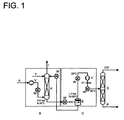
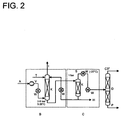
- FIGS. 1 and 2 Illustrated flow diagrams illustrate how propene can be recovered according to the invention by means of tetradecane wash from an exhaust gas stream which is formed during the epoxidation (oxidation) of propene to propene oxide. It is in FIG. 1 the recovery without refrigeration system and in FIG. 2 the recovery shown in the availability of a refrigeration system.
Landscapes
- Chemical & Material Sciences (AREA)
- Organic Chemistry (AREA)
- Engineering & Computer Science (AREA)
- Analytical Chemistry (AREA)
- General Chemical & Material Sciences (AREA)
- Oil, Petroleum & Natural Gas (AREA)
- Chemical Kinetics & Catalysis (AREA)
- Inorganic Chemistry (AREA)
- Organic Low-Molecular-Weight Compounds And Preparation Thereof (AREA)
- Epoxy Compounds (AREA)
Description
- Die Erfindung betrifft ein Verfahren zur kontinuierlichen Rückführung des bei der Oxidation von Olefinen mit Hydroperoxiden zu Oxiranen nicht umgesetzten Olefins, wobei das Olefin aus dem bei der Oxidation entstehenden Abgasstrom zunächst in einem Lösungsmittel, das aus Kohlenwasserstoffen besteht, vorzugsweise Tetradekan, absorbiert, anschließend daraus desorbiert, eventuell von Aliphaten gereinigt, und in den Oxidationsprozess zurückgeführt wird, nämlich zur Rückführung des bei der Herstellung von Propenoxid eingesetzten Propens. Die Erfindung betrifft auch eine Vorrichtung, mit der das erfindungsgemäße Verfahren durchgeführt werden kann.
- Bekanntlich nimmt bei der Oxidation von Olefinen mit Hydroperoxiden zu Oxiranen mit steigendem Olefinumsatz die Selektivität der Oxiranbildung zugunsten unerwünschter Nebenreaktionen deutlich ab. Um trotzdem eine hohe Selektivität von beispielsweise über 95 % erreichen zu können, werden deshalb insbesondere im technischen Maßstab diese Reaktionen vorzugsweise nur bis zu einem Olefinumsatz von ca. 85 bis 98 % betrieben.
- Die
EP 0 583 828 A2 betrifft ein Verfahren zur Direktoxidation von Ethylen. Dabei wird die Absorption und Desorption von Ethylen aus einem Argonspülgas in bzw. aus organischen Lösungsmitteln offenbart. - Die
DE 12 12 507 beschreibt die Absorption und Desorption von Propen in organischen Lösungsmitteln. Dabei wird ein Verfahren zur Direktoxidation von Propen offenbart. - Die
US 5,599,955 offenbart ein Verfahren zur Herstellung von Propen und von Propenoxid umfassend eine Auftrennung eines Propen/Propan-Gemischs. Eine Absorption und Desorption von Propen in einem Lösungsmittel wird in derUS 5,599,955 nicht beschrieben. -
WO 02/102496 -
WO 01/96271 - Es ist auch bereits bekannt, das nicht umgesetzte Olefin aus dem Reaktionsprozess zu isolieren und dann wieder in den Oxidationsprozess zurückzuführen.
- So wurde ein Verfahren vorgeschlagen, bei dem ein Gasgemisch, bestehend aus dem Olefin und Sauerstoff, der aus der Zersetzungsreaktion des bei der Oxidation als Hydroperoxid verwendeten Wasserstoffperoxids stammt, abgetrennt, das Olefin in einem flüssigen Absorptionsmittel aus dem Gasgemisch absorbiert und dem Sauerstoff ein Inertgas in ausreichender Menge zugesetzt wird, um die Bildung entflammbarer Gaszusammensetzungen zu verhindern (
EP-B 0 719 768 B1 - Ein Nachteil des geschilderten Verfahrens ist jedoch darin zu sehen, dass der zur Absorption verwendeten Kolonne zusätzlich zum Abgasstrom ein weiteres Gas, insbesondere Methan, zugeführt werden muss. Durch diese Maßnahme soll aufgrund des Sauerstoffanteils im Gasgemisch die Ausbildung explosionsfähiger Gemische verhindert werden.
- Auch wirkt sich bei diesem Verfahren die geringe Löslichkeit des Olefins im wasserhaltigen Isopropanol nachteilig aus. Beispielsweise müssen gemäß der Beschreibung Lösungsmittelgemische verwendet werden, die einen Gehalt an Wasser zwischen 30,6 Mol-% und 57,2 Mol-% aufweisen. Dieser hohe Wassergehalt beeinträchtigt die Löslichkeit des Olefins im Isopropanol. Deshalb müssen relativ große Mengen an Lösungsmittel eingesetzt werden, um das Olefin trotzdem durch Absorption aus dem Abgasstrom gewinnen zu können.
- Es war daher die Aufgabe gestellt, ein verbessertes Verfahren zur Rückgewinnung des bei der Oxidation von Olefinen zu Oxiranen verwendeten Olefins bereitzustellen, das ohne die zusätzliche Einspeisung eines Inertgases in die Absorberkolonne auskommt, und mit dem eine effektivere Rückgewinnung des Olefins aus dem Abgasstrom möglich ist als beim Verfahren des Standes der Technik.
- Diese Aufgabe konnte erfindungsgemäß durch ein Verfahren zur kontinuierlichen Rückführung des bei der Oxidation von Propen, welches als gesättigten Kohlenwasserstoff Propan enthält, mit Hydroperoxid zu Propenoxid nicht umgesetzten Propens, das im während der Oxidation entstehenden Abgasstrom enthalten ist, welcher Propan enthält, dadurch gekennzeichnet, dass es die Stufen (i) bis (iii) umfasst
- (i) Abtrennung des Propens und Propans aus dem Abgasstrom durch Absorption in einem Kohlenwasserstoff,
- (ii) Desorption des Propens und Propans aus dem Kohlenwasserstoff, wobei das Gemisch aus Propen und Propan bei einem Druck von 1 bis 3 bar in einer Destillationskolonne in flüssiger Form oder in einer Entspannungsverdampfung bei einem Druck von 1 bis 3 bar und einer Temperatur von 50 bis 100 °C in dampfförmiger Form abgetrennt wird;
- (iii) Rückführung des in Stufe (ii) erhaltenen Propens in den Oxidationsprozess,
- Die Oxidation von Olefinen mit Hydroperoxiden zu Oxiranen ist bekannt und kann nach bekannten Methoden durchgeführt werden. Solche Methoden sowie ein technisches Verfahren werden beispielsweise in der
WO 00/07965 - Zur Abtrennung der bei der Oxidation entstehenden Oxirane aus den Reaktionsgemischen können beispielsweise Destillationskolonnen verwendet werden. Hierbei werden Abgasströme am Kopf der Kolonnen erhalten. Diese Abgasströme enthalten als Komponenten stets nicht umgesetztes Olefin und eine geringe Menge Sauerstoff, der aus der Zersetzungsreaktion des eingesetzten Hydroperoxides stammt. Zur besseren Regelung der Destillation werden üblicherweise Inertgase, vorzugsweise Stickstoff, verwendet. Da diese gleichfalls über den Kopf der Kolonnen entnommen werden, enthalten die Abgasströme somit auch diese Gase. Damit ist es beim erfindungsgemäßen Verfahren nicht mehr notwendig, ein zusätzliches Gas zur Vermeidung explosionsfähiger Gemische in die Absorptionsanlage einzuspeisen.
- Des Weiteren besitzen die als Absorptionsmittel eingesetzten Kohlenwasserstoffe ein ausgezeichnetes Lösungsvermögen für Olefine, so dass das Verfahren unter Verwendung vergleichsweise geringer Mengen Absorptionsmittel betrieben werden kann. Für die technische Anwendung ist das neue Verfahren deshalb außerordentlich vorteilhaft.
- Der Begriff Kohlenwasserstoffe umfasst aliphatische, cyclische, alicyclische, gesättigte, ungesättigte und aromatische Kohlenwasserstoffe, die auch mit aliphatischen Resten substituiert sein können. Die Kohlenwasserstoffe können auch in Form ihrer Gemische in das erfindungsgemäße Verfahren eingesetzt werden. Es ist bevorzugt, dass die Kohlenwasserstoffe mehr als 10 Kohlenstoffatome im Molekül enthalten.
- Vorzugsweise wird als Kohlenwasserstoff Tetradekan eingesetzt.
- Der Begriff Tetradekan umfasst dabei ein Gemisch langkettiger Kohlenwasserstoffe der allgemeinen Formel CnH2n+2, wobei n eine ganzzahlige Zahl zwischen 10 und 20, vorzugsweise zwischen 13 und 15 bedeutet. In diesem Gemisch soll die Komponente Tetradekan der Formel C14M30 anteilsmäßig in Mengen von vorzugsweise mindestens 10 Gew.-%, mehr bevorzugt mindestens 30 %, insbesondere mindestens 50 Gew.-% vorhanden sein, wobei die Gesamtmenge aller im Gemisch vorhandenen Komponenten 100 Gew.-% beträgt. Demzufolge ist es nicht erforderlich, dass das für das erfindungsgemäße Verfahren verwendete Tetradekan in besonders hoher Reinheit vorliegt. Besagtes Gemisch kann beispielsweise bei der Erdölraffination erhalten werden, wobei das Gemisch der entsprechenden Fraktion entnommen wird. Als weitere Komponenten können demzufolge neben dem Tetradekan weitere gesättigte Kohlenwasserstoffe, die auch verzweigt oder unverzweigt, langkettig, cyclisch oder alicyclisch sein können, vorliegen. Ein solches Gemisch kann auch ungesättigte Kohlenwasserstoffe oder aromatische Kohlenwasserstoffe enthalten.
- Der zur Absorption verwendete Kohlenwasserstoff bzw. das zur Absorption verwendete Kohlenwasserstoffgemisch, insbesondere Tetradekan oder ein Kohlenwasserstoffgemisch enthaltend Tetradekan, weist vorzugsweise einen Siedepunkt zwischen 200 und 300 °C, vorzugsweise 220 bis 270 °C auf. Ein solcher Kohlenwasserstoff bzw. ein solches Kohlenwasserstoffgemisch zeigt ein außerordentlich günstiges Lösungsvermögen für die bei der Olefinoxidation mit Hydroperoxiden eingesetzten Olefine, insbesondere für Propen. Insbesondere Tetradekan oder Kohlenwasserstoffgemische enthaltend Tetradekan zeigen dieses vorteilhafte Lösungsvermögen.
- Zur Durchführung des erfindungsgemäßen Verfahrens wird nun zweckmäßigerweise der aus einem Oxidationsprozess eines Olefins zu einem Oxiran (Epoxidation) stammende Abgasstrom, der auch eine Kombination mehrerer Abgasströme darstellen kann, mittels eines Verdichters auf einen Druck von 2 bis 10 bar, vorzugsweise 3 bis 6 bar, komprimiert, anschließend mit Kaltwasser auf eine Temperatur von vorzugsweise 5 bis 35 °C gekühlt, und zur Abtrennung des Olefins einer Absorptionsanlage zugeführt.
- Solche Absorptionsanlagen bestehen vorzugsweise aus dem Absorptions- und einem nachgeschalteten Desorptionsapparat. Endprodukte einer solchen Anlage sind stets das durch selektive Absorption abgetrennte Gas sowie das Restgasgemisch. Außerdem fällt das regenerierte Absorptionsmittel an, das im Kreislauf in den Absorptionsapparat zurückgeführt wird.
- In der Absorptionsanlage können vorzugsweise im Gegenstrom arbeitende Füllkörper-, Bodenkolonnen und Blasensäulen sowie in Sonderfällen Venturiwäscher eingesetzt werden. In der Gesamtanlage sind die Absorptions- und Desorptionsapparate zu einer kontinuierlich arbeitenden Einheit verbunden.
- Dabei werden der Abgasstrom aus dem Oxidationssprozess zunächst dem Absorptionsapparat vorzugsweise im unteren Teil und der Kohlenwasserstoff im oberen Teil zugeführt. Dadurch kommt es zu einem ausgeprägten Gegenstrom der Ströme. Eine weitere Zuführung von zusätzlichem Inertgas, wie es beim Stand der Technik geschilderten Verfahren erforderlich ist, ist nicht notwendig, da der Abgasstrom bereits aus dem Prozess Komponenten, vorzugsweise Stickstoff, enthält, die die Ausbildung einer explosionsfähigen Atmosphäre verhindern.
- Der im Absorptionsapparat herrschende Druck von 2 bis 10 bar, vorzugsweise 3 bis 6 bar, erhöht die Löslichkeit der lösbaren Bestandteile des Abgasstroms, insbesondere des nicht umgesetzten Olefins, im Kohlenwasserstoff, der vorzugsweise Tetradekan ist. Am Kopf der Kolonne verlässt dann der reine, nicht lösbare Gasbestandteil den Absorptionsapparat. Dies sind vorzugsweise Stickstoff, Sauerstoff und in geringen Mengen Olefin, beispielsweise Propen, falls dieses in den Oxidationsprozess eingesetzt wird.
- Durch den Anteil an inerten Gasen im Abgasstrom der Oxidation verläuft die Stofftrennung außerhalb des Bereiches, in welchem sich explosionsfähige Gemische mit Sauerstoff bilden können. Deshalb erübrigt sich eine zusätzliche Einspeisung weiterer Gase zur Ausbildung nicht explosionsfähiger Gemische. Dieser nicht lösbare Gasanteil kann beispielsweise einer Verbrennung zugeführt werden.
- Der am Kolonnensumpf anfallende und mit Olefin beladene Kohlenwasserstoff wird der Desorptionsstufe zugeführt. Für die Desorption stehen zwei Möglichkeiten zur Verfügung, die nahezu äquivalent sind und deren Einsatz von der Verfügbarkeit einer Kälteanlage abhängt.
- Steht eine Kälteanlage mit Sole (ca. - 35 °C) zur Verfügung, wird die Desorption vorzugsweise in einer Destillationskolonne bei einem Druck von 1 bis 3 bar durchgeführt. In diesem Fall wird das Olefin in der Kolonne vom Kohlenwasserstoff gereinigt und über den Kopf der Kolonne in flüssiger Form abgetrennt, mit einer herkömmlichen Pumpe als Flüssigkeit auf ein höheres Druckniveau gebracht und entweder direkt der Reaktionsstufe oder einer weiteren Reinigungsstufe zugeführt. Am Sumpf fällt der vom Olefin befreite Kohlenwasserstoff an, welcher abgekühlt und anschließend in die Absorptionskolonne zurückgeführt wird.
- Steht keine Kälteanlage zur Verfügung, so empfiehlt es sich, die Desorption als einstufige Entspannungsverdampfung, auch als Flash bezeichnet, bei einem Druck von 1 bis 3 bar und einer Temperatur von 50 bis 100 °C, vorzugsweise 70 bis 90 °C durchzuführen. In diesem Fall wird das Olefin dampfförmig abgetrennt und in einem anschließenden Wärmetauscher gekühlt, beispielsweise auf ca. 35 °C oder auf Raumtemperatur. Mit Hilfe eines Verdichters wird der abgekühlte Gasstrom auf einen Druck von ca. 11 bis 12 bar verdichtet, so dass er unter Verwendung von normalem Flusswasser als Kühlmittel verflüssigt werden kann. Als Verdichter eignen sich beispielsweise Hubkolbenverdichter. Der in der Verdampfung übrigbleibende Kohlenwasserstoff enthält in diesem Fall noch geringe Konzentrationen des Olefins. Wird Propen als Olefin eingesetzt, so beträgt der Anteil ca. Gew.-1 %. Er wird in einem Wärmetauscher abgekühlt und in die Absorptionsstufe zurückgeführt. Der verflüssigte Gasstrom kann nun entweder direkt der Reaktionsstufe oder einer weiteren Reinigungsstufe zugeführt werden.
- Demgemäß ist das erfindungsgemäße Verfahren in einer bevorzugten Ausführungsform dadurch gekennzeichnet, dass das Olefin bei einem Druck von 3 bis 6 bar und einer Temperatur von 5 bis 35 °C absorbiert und bei einem Druck von 1 bis 3 bar in einer Destillationskolonne über Kopf flüssig oder in einer Entspannungsverdampfung bei einem Druck von 1 bis 3 bar und einer Temperatur von 70 bis 90°C dampfförmig abgetrennt wird.
- In einer weiteren Ausführung ist es möglich, die Absorptionsanlage auch in Form einer Extraktionsanlage zu betreiben. Dies ist insbesondere dann von Interesse, wenn das abzutrennende Olefin beim Entspannen der Apparatur aus dem Kohlenwasserstoff nicht gasförmig desorbiert werden kann, sondern sich beispielsweise als flüssige Phase abscheidet. Geeignete Anlagen bestehen beispielsweise aus einer Gegenstromextraktionsapparatur mit nachgeschalteten Rektifizierkolonnen zur Aufbereitung des Kohlenwasserstoffs und des flüssigen Olefins.
- Das Olefin, das vorzugsweise in einer Reinheit von mindestens 95 % anfällt, kann nun ohne weitere Reinigungsschritte dem Oxidationsprozess mit dem Hydroperoxid erneut zugeführt werden.
- Besonders vorteilhaft beim erfindungsgemäßen Verfahrens ist, dass das Olefin in dem Maße, wie es aus dem Abgasstrom der Oxidation abgetrennt wird, wieder in den Oxidationsprozess zurückgeführt werden kann. Somit ist ein wirtschaftlich außerordentlich günstiges und kontinuierlich zu betreibendes Verfahren möglich.
- Der Abgasstrom umfaßt zusätzlich zum Olefin noch weitere Komponenten, nämlich gesättigte Kohlenwasserstoffe, die bereits im eingesetzten Olefin enthalten sind.
- Erfindungsgemäß wird in die Oxidationsstufe als Olefin Propen eingesetzt. Dieses enthält als gesättigten Kohlenwasserstoff Propan. Vorzugsweise können Fraktionen eingesetzt werden, die Propen und Propan im Volumenverhältnis von etwa 97 : 3 bis 95 : 5 enthalten. Solche Gemische werden auch als Propen mit der Reinheitsstufe "chemical grade" bezeichnet. Vorzugsweise wird bei der Propenoxidherstellung Propen dieser Reinheitsstufe verwendet.
- Der Abgasstrom aus der Umsetzung von Propen zu Propenoxid enthält daher als Olefin Propen sowie als gesättigten Kohlenwasserstoff Propan.
- Wie vorstehend erläutert umfasst dann der Abgasstrom neben dem Propen und Propan auch Inertgase, insbesondere Stickstoff, und eine geringe Menge Sauerstoff.
- Im erfindungsgemäßen Verfahren wird das vom Propen und Propan befreite Abgas am Kopf des Absorptionsapparates und der mit Propen und Propan beladene Kohlenwasserstoff, welcher vorzugsweise Tetradekan ist, am Sumpf der Kolonne abgetrennt.
- In der nachgeschalteten Desorptionsstufe wird nun bei einem Druck von ca. 1 bis 3 bar das Gemisch aus Propen und Propan nach einer der vorstehend beschriebenen Ausführungen entweder in flüssiger oder dampfförmiger Form vom Kohlenwasserstoff abgetrennt. Der Kohlenwasserstoff wird gekühlt und in die Absorptionsstufe zurückgeführt.
- Der anfallende Strom der leichtsiedenden Komponenten Propen und Propan wird anschließend in einem C3-Splitter, wie er beispielsweise beschrieben ist in Ullmann's Encyclopedia of Industrial Chemistry, 5. Ed., Vol A22, Seite 214, in die Komponenten Propen und Propan getrennt. Die Trennung kann dabei in einer Kolonne bei einem Druck von ca. 15 bis 25 bar erfolgen. Man kann zur Trennung auch thermisch gekoppelte Kolonnen verwenden und diese beispielsweise bei einem Druck von ca. 15 bzw. 25 bar betreiben. Das Propen wird dabei über den Kopf des als Kolonne ausgerüsteten C3-Splitter abgezogen, das Propan über den Sumpf.
- Demzufolge ist das erfindungsgemäße Verfahren auch dadurch gekennzeichnet, dass das nach der Abtrennung vom Kohlenwasserstoff erhaltene Propen/Propan-Gemisch in einem C3-Splitter in Propen und Propan aufgetrennt wird.
- Das abgetrennte Propen wird nun wieder dem Oxidationsprozess mit dem Hydroperoxid zugeführt. Das Propan kann als Energiequelle zur Dampferzeugung verwendet werden.
- Als Hydroperoxide kommen für die Oxidation sämtliche aus dem Stand der Technik bekannten Hydroperoxide, die für die Umsetzung des Olefins geeignet sind, in Betracht. Beispiele für solche Hydroperoxide sind etwa tert.-Butylhydroperoxid oder Ethylbenzolhydroperoxid. Als Hydroperoxid kann auch Wasserstoffperoxid eingesetzt werden, beispielsweise als wässerige Lösung.
- Die Abgasströme können dabei auch aus Oxidationsprozessen stammen, bei denen die Umsetzung des Olefins mit dem Hydroperoxid katalysiert wird, beispielsweise durch heterogene Katalysatoren.
- In einer besonders bevorzugten Ausführung des erfindungsgemäßen Verfahrens wird Propen aus einem Abgasstrom abgetrennt, der bei der Oxidation von Propen mit Wasserstoffperoxid zu Propenoxid erhalten wird. Als bevorzugter Kohlenwasserstoff wird für diese Abtrennung Tetradekan eingesetzt.
- Ebenso betrifft die Erfindung eine Vorrichtung zur Durchführung eines Verfahrens zur kontinuierlichen Rückführung des bei der Oxidation von Propen, welches als gesättigten Kohlenwasserstoff Propan enthält, mit Hydroperoxid zu Propenoxid nicht umgesetzten Propens, das im während der Oxidation entstehenden Abgasstrom enthalten ist, welcher Propan enthält, dadurch gekennzeichnet, dass die Vorrichtung wenigstens einen Reaktor zur Herstellung des Propenoxids, wenigstens eine Absorptions- und Desorptionseinheit zur Abtrennung des Propens und einen C3-Splitter umfasst, wobei in der Absorptionseinheit Propen und Propan aus dem Abgasstrom durch Absorption in einem Kohlenwasserstoff abgetrennt werden, wobei in der Desorptionseinheit das Propen und Propan aus dem Kohlenwasserstoff desorbiert werden und wobei in dem C3-Splitter die Komponenten Propen und Propan getrennt werden.
- Die in den
Figuren 1 und2 dargestellten Fließbilder verdeutlichen, wie Propen mittels Tetradekanwäsche aus einem Abgasstrom, der bei der Epoxidierung (Oxidation) von Propen zu Propenoxid entsteht, erfindungsgemäß zurückgewonnen werden kann. Dabei ist inFigur 1 die Rückgewinnung ohne Kälteanlage und inFigur 2 die Rückgewinnung bei Verfügbarkeit einer Kälteanlage dargestellt. -
- Figur 1: A
- Abgas aus Epoxidierung
B Absorptionseinheit
V Verdichter
W Wärmetauscher
K Kolonne
T Tetradekan
I Inertgase (N2), O2
C Desorptionseinheit
V Verdichter
E Behälter für Entspannungsverdampfung
W Wärmetauscher
D C3-Splitter
P Propan (und Hochsieder)
C3" Propen "chemical grade" - Figur 2: A
- Abgas aus Epoxidierung
B Absorptionseinheit
V Verdichter
W Wärmetauscher
T Tetradekan
K Kolonne
I Inertgase (N2) O2
C Desorptionseinheit
S Kühlsole (-35 °C)
W Wärmetauscher
H Hochsieder
K Kolonne
D C3-Splitter
P Propan
C3" Propen "chemical grade"
Claims (7)
- Verfahren zur kontinuierlichen Rückführung des bei der Oxidation von Propen, welches als gesättigten Kohlenwasserstoff Propan enthält, mit Hydroperoxid zu Propenoxid nicht umgesetzten Propens, das im während der Oxidation entstehenden Abgasstrom enthalten ist, welcher Propan enthält, dadurch gekennzeichnet, dass es die Stufen (i) bis (iii) umfasst(i) Abtrennung des Propens und Propans aus dem Abgasstrom durch Absorption in einem Kohlenwasserstoff,(ii) Desorption des Propens und Propans aus dem Kohlenwasserstoff, wobei das Gemisch aus Propen und Propan bei einem Druck von 1 bis 3 bar in einer Destillationskolonne in flüssiger Form oder in einer Entspannungsverdampfung bei einem Druck von 1 bis 3 bar und einer Temperatur von 50 bis 100 °C in dampfförmiger Form abgetrennt wird;(iii) Rückführung des in Stufe (ii) erhaltenen Propens in den Oxidationsprozess,wobei das nach der Abtrennung vom Kohlenwasserstoff erhaltene Propen/ Propan-Gemisch vor der Rückführung des Propens in den Oxidationsprozess in einem C3-Splitter in Propen und Propan aufgetrennt wird.
- Verfahren nach Anspruch 1, dadurch gekennzeichnet, dass der in Stufe (ii) nach Desorption des Olefins erhaltene Kohlenwasserstoff in Stufe (i) zurückgeführt wird.
- Verfahren nach Anspruch 1 oder 2, dadurch gekennzeichnet, dass als Kohlenwasserstoff Tetradekan eingesetzt wird.
- Verfahren nach einem der Ansprüche 1 bis 3, dadurch gekennzeichnet, dass das Propen bei einem Druck von 3 bis 6 bar und einer Temperatur von 5 bis 35 °C absorbiert wird.
- Verfahren nach einem der Ansprüche 1 bis 4, dadurch gekennzeichnet, dass der Abgasstrom Inertgase und eine geringe Menge Sauerstoff umfasst.
- Verfahren nach Anspruch 5, dadurch gekennzeichnet, dass der Abgasstrom Stickstoff umfasst.
- Vorrichtung zur Durchführung eines Verfahrens zur kontinuierlichen Rückführung des bei der Oxidation von Propen, welches als gesättigten Kohlenwasserstoff Propan enthält, mit Hydroperoxid zu Propenoxid nicht umgesetzten Propens, das im während der Oxidation entstehenden Abgasstrom enthalten ist, welcher Propan enthält, dadurch gekennzeichnet, dass die Vorrichtung wenigstens einen Reaktor zur Herstellung des Propenoxids, wenigstens eine Absorptions- und Desorptionseinheit zur Abtrennung des Propens und einen C3-Splitter umfasst, wobei in der Absorptionseinheit Propen und Propan aus dem Abgasstrom durch Absorption in einem Kohlenwasserstoff abgetrennt werden, wobei in der Desorptionseinheit das Propen und Propan aus dem Kohlenwasserstoff desorbiert werden und wobei in dem C3-Splitter die Komponenten Propen und Propan getrennt werden.
Applications Claiming Priority (3)
| Application Number | Priority Date | Filing Date | Title |
|---|---|---|---|
| DE10249379 | 2002-10-23 | ||
| DE10249379A DE10249379A1 (de) | 2002-10-23 | 2002-10-23 | Verfahren zur kontinuierlichen Rückführung des bei der Oxidation von Olefinen mit Hydroperoxiden nicht umgesetzten Olefins mittels Lösungsmittelwäsche |
| PCT/EP2003/011735 WO2004037390A1 (de) | 2002-10-23 | 2003-10-23 | Verfahren zur kontinuierlichen rückführung des bei der oxidation von olefinen mit hydroperoxiden nicht umgesetzten olefins mittels lösungsmittelwäsche |
Publications (3)
| Publication Number | Publication Date |
|---|---|
| EP1558364A1 EP1558364A1 (de) | 2005-08-03 |
| EP1558364B1 true EP1558364B1 (de) | 2010-03-24 |
| EP1558364B8 EP1558364B8 (de) | 2010-05-19 |
Family
ID=32087127
Family Applications (1)
| Application Number | Title | Priority Date | Filing Date |
|---|---|---|---|
| EP03772249A Expired - Lifetime EP1558364B8 (de) | 2002-10-23 | 2003-10-23 | Verfahren zur kontinuierlichen rückführung des bei der oxidation von olefinen mit hydroperoxiden nicht umgesetzten olefins mittels lösungsmittelwäsche |
Country Status (12)
| Country | Link |
|---|---|
| US (1) | US7544818B2 (de) |
| EP (1) | EP1558364B8 (de) |
| CN (1) | CN100368057C (de) |
| AT (1) | ATE461740T1 (de) |
| AU (1) | AU2003279311A1 (de) |
| CA (1) | CA2503218A1 (de) |
| DE (2) | DE10249379A1 (de) |
| ES (1) | ES2341333T3 (de) |
| MX (1) | MX269933B (de) |
| MY (1) | MY143041A (de) |
| WO (1) | WO2004037390A1 (de) |
| ZA (1) | ZA200503271B (de) |
Families Citing this family (8)
| Publication number | Priority date | Publication date | Assignee | Title |
|---|---|---|---|---|
| US7223876B2 (en) † | 2004-04-21 | 2007-05-29 | Basf Aktiengesellschaft | Method of separating an olefin from a gas stream |
| CN103768893B (zh) * | 2012-10-19 | 2016-06-15 | 中国石油化工集团公司 | 一种乙二醇装置降低环氧乙烷吸收水温度的方法 |
| EP3166709A1 (de) * | 2014-07-10 | 2017-05-17 | Nederlandse Organisatie voor toegepast- natuurwetenschappelijk onderzoek TNO | Reinigung von faulgas durch terpenabsorption |
| TWI707847B (zh) * | 2015-11-26 | 2020-10-21 | 德商贏創運營有限公司 | 丙烯之環氧化方法 |
| CN105418351A (zh) * | 2015-12-02 | 2016-03-23 | 中国天辰工程有限公司 | 一种含氧丙烯混合气的净化回收方法 |
| CN105642082B (zh) * | 2016-01-08 | 2018-06-15 | 河南骏化发展股份有限公司 | 双氧水环氧化丙烯制备环氧丙烷的尾气处理装置及工艺 |
| MY200023A (en) * | 2017-04-24 | 2023-12-05 | Basf Se | Propene recovery by scrubbing with a solvent/water mixture |
| CN111116519B (zh) * | 2018-10-30 | 2022-11-01 | 中国石油化工股份有限公司 | 环氧烷烃利用方法 |
Family Cites Families (7)
| Publication number | Priority date | Publication date | Assignee | Title |
|---|---|---|---|---|
| DE1212507B (de) * | 1963-01-18 | 1966-03-17 | Bayer Ag | Verfahren zur Herstellung von Alkylenoxyden und Aldehyden durch Oxydation von Kohlen-wasserstoffen |
| US5233060A (en) * | 1992-08-13 | 1993-08-03 | The Dow Chemical Company | Ethylene recovery in direct-oxidation ethylene oxide processes |
| US5468885A (en) * | 1993-12-20 | 1995-11-21 | Arco Chemical Technology, L.P. | Epoxidizer oxygen recovery |
| US5599955A (en) * | 1996-02-22 | 1997-02-04 | Uop | Process for producing propylene oxide |
| DE19835907A1 (de) | 1998-08-07 | 2000-02-17 | Basf Ag | Verfahren zur Umsetzung einer organischen Verbindung mit einem Hydroperoxid |
| CZ304548B6 (cs) | 2000-06-14 | 2014-07-02 | Basf Aktiengesellschaft | Způsob výroby akroleinu a/nebo kyseliny akrylové |
| EP1270062A1 (de) * | 2001-06-18 | 2003-01-02 | Degussa AG | Verfahren zur Wiedergewinnung von brennbaren Bestandteilen aus einem Gasstrom |
-
2002
- 2002-10-23 DE DE10249379A patent/DE10249379A1/de not_active Withdrawn
-
2003
- 2003-10-22 MY MYPI20034020A patent/MY143041A/en unknown
- 2003-10-23 AU AU2003279311A patent/AU2003279311A1/en not_active Abandoned
- 2003-10-23 MX MXPA05004145 patent/MX269933B/es active IP Right Grant
- 2003-10-23 AT AT03772249T patent/ATE461740T1/de not_active IP Right Cessation
- 2003-10-23 US US10/531,868 patent/US7544818B2/en not_active Expired - Fee Related
- 2003-10-23 ES ES03772249T patent/ES2341333T3/es not_active Expired - Lifetime
- 2003-10-23 WO PCT/EP2003/011735 patent/WO2004037390A1/de not_active Ceased
- 2003-10-23 CN CNB2003801020746A patent/CN100368057C/zh not_active Expired - Lifetime
- 2003-10-23 DE DE50312551T patent/DE50312551D1/de not_active Expired - Lifetime
- 2003-10-23 EP EP03772249A patent/EP1558364B8/de not_active Expired - Lifetime
- 2003-10-23 CA CA002503218A patent/CA2503218A1/en not_active Abandoned
-
2005
- 2005-04-22 ZA ZA200503271A patent/ZA200503271B/en unknown
Also Published As
| Publication number | Publication date |
|---|---|
| ES2341333T3 (es) | 2010-06-18 |
| MY143041A (en) | 2011-02-28 |
| MX269933B (es) | 2009-09-09 |
| EP1558364B8 (de) | 2010-05-19 |
| US7544818B2 (en) | 2009-06-09 |
| EP1558364A1 (de) | 2005-08-03 |
| CN1708344A (zh) | 2005-12-14 |
| DE50312551D1 (de) | 2010-05-06 |
| CA2503218A1 (en) | 2004-05-06 |
| WO2004037390A1 (de) | 2004-05-06 |
| CN100368057C (zh) | 2008-02-13 |
| DE10249379A1 (de) | 2004-05-06 |
| US20060167287A1 (en) | 2006-07-27 |
| ATE461740T1 (de) | 2010-04-15 |
| AU2003279311A1 (en) | 2004-05-13 |
| MXPA05004145A (es) | 2005-10-05 |
| ZA200503271B (en) | 2006-11-29 |
Similar Documents
| Publication | Publication Date | Title |
|---|---|---|
| DE3321448C2 (de) | ||
| DE69308738T2 (de) | Verfahren und Vorrichtung zur katalytischen Dehydrierung einer C2+ paraffinischen Charge, einschliesslich eines Mittels zur Hemmung von Wasser im Ausfluss | |
| EP0141316B1 (de) | Verfahren zur Gewinnung von Isopren aus einem C5-Kohlenwasserstoffgemisch | |
| DE3226720A1 (de) | Verfahren zur gewinnung von ethylenoxid aus waessrigen loesungen | |
| DE69207230T2 (de) | Herstellung von Kohlenwasserstoffderivaten | |
| DE60106243T2 (de) | Verfahren zur entfernung von kohlensäuredioxid von 3,4-epoxy-1-buten wiederaufbereitungskreisläufen | |
| DE69215240T2 (de) | Rückgewinnung von 3,4-epoxy-1-buten aus den abgasen der 1,3-butadienoxydation | |
| WO2008071632A2 (de) | Verfahren zur isolierung von n2o | |
| DE1543174C3 (de) | Kontinuierliches Verfahren zur Herstellung von Propylenoxyd | |
| DE69402562T2 (de) | Gewinnung von 3,4-epoxy-1-buten aus dem abgas von 1,3-butadien-oxidation | |
| DE60308394T2 (de) | Propenrückgewinnung bei einem propylenoxidverfahren | |
| EP1558596A1 (de) | Rückführung des bei der oxidation von olefinen nicht umgesetzten olefins | |
| EP1558364A1 (de) | Verfahren zur kontinuierlichen rückführung des bei der oxidation von olefinen mit hydroperoxiden nicht umgesetzten olefins mittels lösungsmittelwäsche | |
| WO2007060160A2 (de) | Verfahren zur isolierung von n2o | |
| EP1724249A2 (de) | Verfahren zur Oligomerisierung von Butenen | |
| DE69411254T2 (de) | Verfahren zum kontinuierlichen Herstellen von Dimethylcarbonat | |
| DE69605460T2 (de) | Verfahren zur Herstellung von Isopropylalkohol | |
| DE3604968A1 (de) | Verfahren zur herstellung von dichlorethan | |
| DE112017005411T5 (de) | Neuartige prozessintegration eines pyrolyseschritts mit methan oder höheren kohlenwasserstoffen, um ethylen und methanol und/oder wasserstoff zu erzeugen | |
| DE2521965B2 (de) | Verfahren zur Abtrennung von Butadien aus einem Strom von C4 -Kohlenwasserstoffen | |
| DE1693042A1 (de) | Verfahren zur Herstellung von Vinylchlorid | |
| DE69905772T2 (de) | Verfahren zur rückgewinnung von 3,4-epoxy-1-buten | |
| DD232649A5 (de) | Verfahren zur entfernung von geloesten gasen aus einer waessrigen ethylenoxidloesung | |
| DE2252685B2 (de) | Verfahren zur Herstellung von tert-Butanol | |
| DE2658191C2 (de) | Verfahren zur Herstellung von Maleinsäureanhydrid |
Legal Events
| Date | Code | Title | Description |
|---|---|---|---|
| PUAI | Public reference made under article 153(3) epc to a published international application that has entered the european phase |
Free format text: ORIGINAL CODE: 0009012 |
|
| 17P | Request for examination filed |
Effective date: 20050523 |
|
| AK | Designated contracting states |
Kind code of ref document: A1 Designated state(s): AT BE BG CH CY CZ DE DK EE ES FI FR GB GR HU IE IT LI LU MC NL PT RO SE SI SK TR |
|
| AX | Request for extension of the european patent |
Extension state: AL LT LV MK |
|
| DAX | Request for extension of the european patent (deleted) | ||
| RAP1 | Party data changed (applicant data changed or rights of an application transferred) |
Owner name: BASF SE |
|
| 17Q | First examination report despatched |
Effective date: 20090115 |
|
| GRAP | Despatch of communication of intention to grant a patent |
Free format text: ORIGINAL CODE: EPIDOSNIGR1 |
|
| GRAS | Grant fee paid |
Free format text: ORIGINAL CODE: EPIDOSNIGR3 |
|
| GRAA | (expected) grant |
Free format text: ORIGINAL CODE: 0009210 |
|
| AK | Designated contracting states |
Kind code of ref document: B1 Designated state(s): AT BE BG CH CY CZ DE DK EE ES FI FR GB GR HU IE IT LI LU MC NL PT RO SE SI SK TR |
|
| REG | Reference to a national code |
Ref country code: GB Ref legal event code: FG4D Free format text: NOT ENGLISH |
|
| REG | Reference to a national code |
Ref country code: CH Ref legal event code: EP |
|
| REG | Reference to a national code |
Ref country code: IE Ref legal event code: FG4D |
|
| REF | Corresponds to: |
Ref document number: 50312551 Country of ref document: DE Date of ref document: 20100506 Kind code of ref document: P |
|
| REG | Reference to a national code |
Ref country code: ES Ref legal event code: FG2A Ref document number: 2341333 Country of ref document: ES Kind code of ref document: T3 |
|
| REG | Reference to a national code |
Ref country code: NL Ref legal event code: T3 |
|
| PG25 | Lapsed in a contracting state [announced via postgrant information from national office to epo] |
Ref country code: SI Free format text: LAPSE BECAUSE OF FAILURE TO SUBMIT A TRANSLATION OF THE DESCRIPTION OR TO PAY THE FEE WITHIN THE PRESCRIBED TIME-LIMIT Effective date: 20100324 Ref country code: FI Free format text: LAPSE BECAUSE OF FAILURE TO SUBMIT A TRANSLATION OF THE DESCRIPTION OR TO PAY THE FEE WITHIN THE PRESCRIBED TIME-LIMIT Effective date: 20100324 |
|
| REG | Reference to a national code |
Ref country code: IE Ref legal event code: FD4D |
|
| PG25 | Lapsed in a contracting state [announced via postgrant information from national office to epo] |
Ref country code: GR Free format text: LAPSE BECAUSE OF FAILURE TO SUBMIT A TRANSLATION OF THE DESCRIPTION OR TO PAY THE FEE WITHIN THE PRESCRIBED TIME-LIMIT Effective date: 20100625 Ref country code: SE Free format text: LAPSE BECAUSE OF FAILURE TO SUBMIT A TRANSLATION OF THE DESCRIPTION OR TO PAY THE FEE WITHIN THE PRESCRIBED TIME-LIMIT Effective date: 20100324 Ref country code: EE Free format text: LAPSE BECAUSE OF FAILURE TO SUBMIT A TRANSLATION OF THE DESCRIPTION OR TO PAY THE FEE WITHIN THE PRESCRIBED TIME-LIMIT Effective date: 20100324 Ref country code: RO Free format text: LAPSE BECAUSE OF FAILURE TO SUBMIT A TRANSLATION OF THE DESCRIPTION OR TO PAY THE FEE WITHIN THE PRESCRIBED TIME-LIMIT Effective date: 20100324 |
|
| PG25 | Lapsed in a contracting state [announced via postgrant information from national office to epo] |
Ref country code: SK Free format text: LAPSE BECAUSE OF FAILURE TO SUBMIT A TRANSLATION OF THE DESCRIPTION OR TO PAY THE FEE WITHIN THE PRESCRIBED TIME-LIMIT Effective date: 20100324 Ref country code: CZ Free format text: LAPSE BECAUSE OF FAILURE TO SUBMIT A TRANSLATION OF THE DESCRIPTION OR TO PAY THE FEE WITHIN THE PRESCRIBED TIME-LIMIT Effective date: 20100324 Ref country code: BG Free format text: LAPSE BECAUSE OF FAILURE TO SUBMIT A TRANSLATION OF THE DESCRIPTION OR TO PAY THE FEE WITHIN THE PRESCRIBED TIME-LIMIT Effective date: 20100624 |
|
| PLBE | No opposition filed within time limit |
Free format text: ORIGINAL CODE: 0009261 |
|
| STAA | Information on the status of an ep patent application or granted ep patent |
Free format text: STATUS: NO OPPOSITION FILED WITHIN TIME LIMIT |
|
| PG25 | Lapsed in a contracting state [announced via postgrant information from national office to epo] |
Ref country code: PT Free format text: LAPSE BECAUSE OF FAILURE TO SUBMIT A TRANSLATION OF THE DESCRIPTION OR TO PAY THE FEE WITHIN THE PRESCRIBED TIME-LIMIT Effective date: 20100726 Ref country code: IE Free format text: LAPSE BECAUSE OF FAILURE TO SUBMIT A TRANSLATION OF THE DESCRIPTION OR TO PAY THE FEE WITHIN THE PRESCRIBED TIME-LIMIT Effective date: 20100324 Ref country code: DK Free format text: LAPSE BECAUSE OF FAILURE TO SUBMIT A TRANSLATION OF THE DESCRIPTION OR TO PAY THE FEE WITHIN THE PRESCRIBED TIME-LIMIT Effective date: 20100324 |
|
| 26N | No opposition filed |
Effective date: 20101228 |
|
| PGFP | Annual fee paid to national office [announced via postgrant information from national office to epo] |
Ref country code: GB Payment date: 20101029 Year of fee payment: 8 Ref country code: IT Payment date: 20101025 Year of fee payment: 8 |
|
| PG25 | Lapsed in a contracting state [announced via postgrant information from national office to epo] |
Ref country code: MC Free format text: LAPSE BECAUSE OF NON-PAYMENT OF DUE FEES Effective date: 20101031 |
|
| REG | Reference to a national code |
Ref country code: CH Ref legal event code: PL |
|
| PG25 | Lapsed in a contracting state [announced via postgrant information from national office to epo] |
Ref country code: CH Free format text: LAPSE BECAUSE OF NON-PAYMENT OF DUE FEES Effective date: 20101031 Ref country code: LI Free format text: LAPSE BECAUSE OF NON-PAYMENT OF DUE FEES Effective date: 20101031 |
|
| REG | Reference to a national code |
Ref country code: AT Ref legal event code: MM01 Ref document number: 461740 Country of ref document: AT Kind code of ref document: T Effective date: 20101023 |
|
| PGFP | Annual fee paid to national office [announced via postgrant information from national office to epo] |
Ref country code: FR Payment date: 20111115 Year of fee payment: 9 Ref country code: ES Payment date: 20111124 Year of fee payment: 9 Ref country code: NL Payment date: 20111027 Year of fee payment: 9 |
|
| PG25 | Lapsed in a contracting state [announced via postgrant information from national office to epo] |
Ref country code: AT Free format text: LAPSE BECAUSE OF NON-PAYMENT OF DUE FEES Effective date: 20101023 |
|
| PGFP | Annual fee paid to national office [announced via postgrant information from national office to epo] |
Ref country code: BE Payment date: 20111124 Year of fee payment: 9 |
|
| PGFP | Annual fee paid to national office [announced via postgrant information from national office to epo] |
Ref country code: DE Payment date: 20120102 Year of fee payment: 9 |
|
| PG25 | Lapsed in a contracting state [announced via postgrant information from national office to epo] |
Ref country code: CY Free format text: LAPSE BECAUSE OF FAILURE TO SUBMIT A TRANSLATION OF THE DESCRIPTION OR TO PAY THE FEE WITHIN THE PRESCRIBED TIME-LIMIT Effective date: 20100324 |
|
| PG25 | Lapsed in a contracting state [announced via postgrant information from national office to epo] |
Ref country code: HU Free format text: LAPSE BECAUSE OF FAILURE TO SUBMIT A TRANSLATION OF THE DESCRIPTION OR TO PAY THE FEE WITHIN THE PRESCRIBED TIME-LIMIT Effective date: 20100925 Ref country code: LU Free format text: LAPSE BECAUSE OF NON-PAYMENT OF DUE FEES Effective date: 20101023 |
|
| PG25 | Lapsed in a contracting state [announced via postgrant information from national office to epo] |
Ref country code: TR Free format text: LAPSE BECAUSE OF FAILURE TO SUBMIT A TRANSLATION OF THE DESCRIPTION OR TO PAY THE FEE WITHIN THE PRESCRIBED TIME-LIMIT Effective date: 20100324 |
|
| BERE | Be: lapsed |
Owner name: BASF SE Effective date: 20121031 |
|
| REG | Reference to a national code |
Ref country code: NL Ref legal event code: V1 Effective date: 20130501 |
|
| GBPC | Gb: european patent ceased through non-payment of renewal fee |
Effective date: 20121023 |
|
| REG | Reference to a national code |
Ref country code: FR Ref legal event code: ST Effective date: 20130628 |
|
| PG25 | Lapsed in a contracting state [announced via postgrant information from national office to epo] |
Ref country code: BE Free format text: LAPSE BECAUSE OF NON-PAYMENT OF DUE FEES Effective date: 20121031 Ref country code: GB Free format text: LAPSE BECAUSE OF NON-PAYMENT OF DUE FEES Effective date: 20121023 Ref country code: DE Free format text: LAPSE BECAUSE OF NON-PAYMENT OF DUE FEES Effective date: 20130501 |
|
| REG | Reference to a national code |
Ref country code: DE Ref legal event code: R119 Ref document number: 50312551 Country of ref document: DE Effective date: 20130501 |
|
| PG25 | Lapsed in a contracting state [announced via postgrant information from national office to epo] |
Ref country code: FR Free format text: LAPSE BECAUSE OF NON-PAYMENT OF DUE FEES Effective date: 20121031 Ref country code: NL Free format text: LAPSE BECAUSE OF NON-PAYMENT OF DUE FEES Effective date: 20130501 Ref country code: IT Free format text: LAPSE BECAUSE OF NON-PAYMENT OF DUE FEES Effective date: 20121023 |
|
| REG | Reference to a national code |
Ref country code: ES Ref legal event code: FD2A Effective date: 20140116 |
|
| PG25 | Lapsed in a contracting state [announced via postgrant information from national office to epo] |
Ref country code: ES Free format text: LAPSE BECAUSE OF NON-PAYMENT OF DUE FEES Effective date: 20121024 |