EP1557277A1 - Tape print control device and program - Google Patents
Tape print control device and program Download PDFInfo
- Publication number
- EP1557277A1 EP1557277A1 EP03770058A EP03770058A EP1557277A1 EP 1557277 A1 EP1557277 A1 EP 1557277A1 EP 03770058 A EP03770058 A EP 03770058A EP 03770058 A EP03770058 A EP 03770058A EP 1557277 A1 EP1557277 A1 EP 1557277A1
- Authority
- EP
- European Patent Office
- Prior art keywords
- tape
- image
- image generation
- printed
- Prior art date
- Legal status (The legal status is an assumption and is not a legal conclusion. Google has not performed a legal analysis and makes no representation as to the accuracy of the status listed.)
- Granted
Links
Images





Classifications
-
- B—PERFORMING OPERATIONS; TRANSPORTING
- B41—PRINTING; LINING MACHINES; TYPEWRITERS; STAMPS
- B41J—TYPEWRITERS; SELECTIVE PRINTING MECHANISMS, i.e. MECHANISMS PRINTING OTHERWISE THAN FROM A FORME; CORRECTION OF TYPOGRAPHICAL ERRORS
- B41J11/00—Devices or arrangements of selective printing mechanisms, e.g. ink-jet printers or thermal printers, for supporting or handling copy material in sheet or web form
- B41J11/008—Controlling printhead for accurately positioning print image on printing material, e.g. with the intention to control the width of margins
-
- B—PERFORMING OPERATIONS; TRANSPORTING
- B41—PRINTING; LINING MACHINES; TYPEWRITERS; STAMPS
- B41J—TYPEWRITERS; SELECTIVE PRINTING MECHANISMS, i.e. MECHANISMS PRINTING OTHERWISE THAN FROM A FORME; CORRECTION OF TYPOGRAPHICAL ERRORS
- B41J3/00—Typewriters or selective printing or marking mechanisms characterised by the purpose for which they are constructed
- B41J3/407—Typewriters or selective printing or marking mechanisms characterised by the purpose for which they are constructed for marking on special material
- B41J3/4075—Tape printers; Label printers
Definitions
- the present invention relates to a tape printing device and a program which are used for printing a character string on a tape-like print medium.
- Tape printing devices capable of printing a character string on a print tape made of an adhesive print sheet (with an adhesive agent previously applied on its back) and a releasable sheet which are bonded together to be releasable, are well known.
- the tape printing devices of this type are widely used for office use, home use, etc. because of their high usability allowing users to print a title, caption, etc. on the surface of a print sheet easily and beautifully.
- a user peels the print sheet away from the releasable sheet and sticks the print sheet (i.e. a label) on the spine of a file, videotape, etc.
- Japanese Patent Provisional Publication No.HEI06-247431 pages 5 - 7, Table 1 (hereinafter referred to as a "document #1”) has proposed a tape printing device which can set a necessary "wound part" in a label to be wound around a cable and print identical character strings on parts of the label outside the wound part in the lengthwise direction of the print tape.
- a tape printing device which can set a necessary "wound part" in a label to be wound around a cable and print identical character strings on parts of the label outside the wound part in the lengthwise direction of the print tape.
- Japanese Patent Provisional Publication No.HEI06-320826 pages 5 - 10, Fig. 14 (hereinafter referred to as a "document #2”) has proposed a tape printing device which can print a character string while rotating it from the lengthwise direction of the print tape by 90 degrees, by which a label having a character string printed in the width direction of the print tape can be created. Further, by cutting the print tape to a length suitable for winding it around the cable, a label leaving no part protruding from the cable can be created.
- labels printed with character strings are generally applied on cables today in order to discriminate among a plurality of cables. Applying an identification label on a cable helps the user to recognize and identify the cable. However, with the identification label applied on the cable only, the user is not necessarily able to insert the plug of the cable into a correct socket. In order to increase the probability of correct insertion of numbers of plugs at the ends of cables into numbers of sockets, it is effective to further apply a label (printed with a character string identical with or similar to that on the label stuck on the cable) on a part in the vicinity of the socket, in addition to the label stuck on the cable.
- the label to be stuck on the part is desired to be an ordinary label on which the character string has been printed in the lengthwise direction of the print tape, differently from the label stuck on the cable. Therefore, it becomes necessary to create a label suitable for being stuck on a cylindrical member like a cable and a label (printed with a character string identical with or similar to that on the label stuck on the cylindrical member) suitable for being stuck on a flat part.
- a label having a character string printed thereon in the width direction of the print tape and a label having the character string printed thereon in the lengthwise direction of the print tape can be created by only one character string input and printing operation. Therefore, with the printing control device, two labels that can be suitably stuck on a cylindrical member like a network cable (plug side) and a flat part of a device like a hub into which the network cable is plugged (socket side) can be created with ease.
- a program provided by another aspect of the present invention causes a computer to execute a first storage step for storing a first character string to be printed on a tape-like print medium, a first image generation step for generating a print image in which the first character string stored by the first storage step is arranged in a width direction of the tape-like print medium, a second image generation step for generating a print image in which the first character string stored by the first storage step is arranged in a lengthwise direction of the tape-like print medium, and a print control step for executing print control so that the print image generated by one of the first and second image generation steps will be printed on the tape-like print medium first and thereafter the print image generated by the other will be printed on the tape-like print medium.
- a label having a character string printed thereon in the width direction of the print tape and a label having the character string printed thereon in the lengthwise direction of the print tape can be created by only one character string input and printing operation. Therefore, with the program, two labels that can be suitably stuck on a cylindrical member like a network cable (plug side) and a flat part of a device like a hub into which the network cable is plugged (socket side) can be created with ease.
- such a program can be distributed to computers by storing the program in a removable record medium like a CD-ROM, FD, MO, etc. or a fixed record medium like a hard disk, or via a communication network like the Internet by use of a wired/wireless telecommunication means.
- Fig. 1 is an external view of a tape printing device 1 in accordance with an embodiment of the present invention.
- the tape printing device 1 has a display 2 and a keyboard 3 which are arranged in a front part of its top surface.
- a cover 101 is formed to be openable and closable. Inside the cover 101, a cassette storage part provided with a printing head 4 (see Fig. 3) is placed.
- Print tape as a print medium for the tape printing device 1, includes a print sheet as a long tape-like print medium (having a print surface (on which characters, symbols, etc. are printed) on its front and an adhesive material layer on its back) and a releasable sheet (having a releasable surface processed with silicone resin, etc.) which are stacked up to be releasable.
- the print tape is rolled up and stored in a tape cassette.
- the tape cassette is loaded in the tape printing device 1 detachably.
- a tape exposing part is formed in order to expose the print tape for printing.
- the print tape inside the tape printing device 1 is pulled out from the tape cassette, printed on at the tape exposing part, and thereafter cut in an appropriate length.
- the user can use the print sheet as a label which can be stuck on an arbitrary object, article, etc.
- the tape printing device 1 is capable of printing on the print tape in various styles.
- the print styles include "normal printing” in which a character string is printed being arranged in the lengthwise direction of the print tape.
- the tape printing device 1 supports, for example, "cable wiring label printing", in which a character string arranged in the width direction of the print tape is printed and thereafter a character string arranged in the lengthwise direction of the print tape is printed.
- the cable wiring label printing the user can obtain a combination of labels to be suitably stuck on a cable (plug side) and a device (socket side, to which the cable should be connected) by only one printing operation.
- a cable wiring label obtained by the cable wiring label printing by the tape printing device 1 (hereinafter referred to as a "cable label 11") will be explained below referring to Fig. 2.
- Figs. 2(a) through 2(e) show examples of the cable label 11 created by the tape printing device 1.
- the cable label 11 includes a plug label 12 (part of Fig. 2(a) on the left side of the broken line) suitable for being wound around and stuck on a cable (plug side) and a socket label 13 (part of Fig.
- the number of plug labels 11 and socket labels 13 forming the cable label 11, the order of printing, the number of character strings printed on a label, etc. can be set in the tape printing device 1.
- the plug label 12 is stuck on a part of a cable (having a plug) close to the plug, by putting an end of the plug label 12 in its lengthwise direction (in the lengthwise direction of the print tape) on the part and winding the plug label 12 around the cable.
- Fig. 2(a) shows an example in which one character string for the identification of the cable (plug) is printed on the plug label 12.
- Fig. 2(b) shows an example in which a plurality of character strings extending in the width direction are evenly arranged on the whole plug label 12 along the length of the print tape.
- the user can recognize the printed character strings irrespective of the visual angle around the cable.
- the socket label 13 is a label to be stuck on a flat part of a device (hub, line concentrator, etc.) in the vicinity of a socket.
- a character string is printed in the lengthwise direction of the print tape similarly to the case of normal printing.
- a boundary line 14 parallel to the width direction of the print tape is printed (broken lines in Figs. 2(a) - 2(e)).
- the tape printing device 1 it is also possible to provide the tape printing device 1 with an automatic cutter function to cut the print tape (full cut) or the print sheet only (half cut) between the plug label 12 and the socket label 13, instead of printing the boundary lines as in Figs. 2(a) - 2(e).
- the cable label 11 can be a Type 1 cable label in which the same character string is printed both on the plug label 12 and on the socket label 13 (Figs. 2(a) - 2(d)) and a Type 2 cable label in which the socket label 13 is also printed with an extra character string which is added to the common character string integrally (Fig. 2(e)).
- the order of printing of the plug label 12 and the socket label 13 varies depending on a print setting in the tape printing device 1, and thus it is also possible to print the socket label 13 first as in the example of Fig. 2(c).
- the cable label 11 is not limited to a combination of one plug label 12 and one socket label 13, that is, plug labels 12 and socket labels 13 can be printed in various combinations: 1 and 1, 1 and n, or n and n.
- Figs. 2(a), 2(b), 2(c) and 2(e) show examples in which one plug label 12 and one socket label 13 are printed, while Fig. 2(d) shows an example in which one plug label 12 and two socket labels 13 are printed.
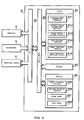
- Fig. 3 is a block diagram showing the composition of a control system inside the tape printing device 1.
- the tape printing device 1 includes the display 2, the keyboard 3, the printing head 4 and a control unit 6.
- the display 2 is implemented by a well-known liquid crystal display.
- the keyboard 3 is placed on the top surface of the tape printing device 1 (see Fig. 1).
- the keyboard 3 includes text keys for inputting characters to be printed, cursor keys for moving a cursor, function keys (print key, etc.) for calling various functions of the tape printing device 1, etc.
- the printing head 4 is installed in the cassette storage part of the tape printing device 1, at a position corresponding to the tape exposing part formed on a lateral face of each tape cassette.
- a number of heating elements electrically to be controlled by the control unit 6 are arranged in the width direction of the print tape (a direction orthogonal to the lengthwise direction of the print tape).
- the control unit 6 includes a CPU (Central Processing Unit) 61, a ROM (Read Only Memory) 62, a RAM (Random Access Memory) 63, an interface unit 66 and a data bus 65.
- the CPU 61 executes calculations according to various commands.
- the ROM 62 stores programs for letting the CPU 61 carry out processes shown in Figs. 4 through 6 (for implementing functional modules shown in Fig. 3), graphic data such as font data of characters and pattern data of frames for decorating printed characters, and various other data necessary for the execution of the programs.
- the RAM 63 is a volatile memory for temporarily storing data which are used by the CPU 61 for executing the programs.
- the interface unit 66 is a connection part for electrically connecting the control unit with devices as separate modules directly or indirectly.
- the data bus 65 is a group of data transmission lines for electrically connecting the CPU 61, the ROM 62, the RAM 63 and the interface unit 66 together. All the data transmission in the control unit 6 is performed through the data bus 66.
- a work area 631, a text area 632, a first storage module (first storage means) 633 and a second storage module (second storage means) 634 are formed in the RAM 63 of the tape printing device 1.
- a rotated image generation module (first image generation means) 611, a normal image generation module (second image generation means) 612, a print range setting module (print range setting means) 613, a character size change module (character size change means) 614, a print control module (print control means) 615, a print repetition specifying module (print repetition specifying means) 616 are included in the CPU 61.
- the work area 631 is a memory area for temporarily storing data that are necessary when the CPU 61 executes various processes.
- the text area 632 is a memory area for storing character string data when a character string is inputted and edited.
- the text area 632 stores text data of a character string associated with information on the font shape, character size, character decoration, frames, etc., in units of blocks.
- the "block” means a unit of inputting/editing a character string as an object of printing.
- Each block is set by use of a block change key as one of the function keys of the tape printing device 1.
- the user moves the cursor to a desired position in the inputted text and presses the block change key, by which a block change code is inserted at the end of the text data stored in the text area 632 and thereafter the character string inputting/editing can be carried out for each data (block) sandwiched by the block change codes.
- the settings of the print format and the print range can also be made in units of blocks. For example, when the user designates printing of a plurality of blocks or repetitive printing of a particular block, the printing of the block(s) is carried out successively in the lengthwise direction of the print tape. When no block setting has been made, all the character string on the input screen is regarded as one block.
- character string data of designated blocks are stored in the first storage module 633 and the second storage module 634.
- the rotated image generation module 611 of the CPU 61 generates a print image of a character string (stored in the first storage module 633) rotated counterclockwise from the lengthwise direction of the print tape by 90 degrees.
- the "print image” means image data spread in the work area 631 of the RAM 63 based on the text data of the character string, the character size which has been set, the font shape, the presence/absence of line decoration such as the character decoration (boldface, oblique face, etc.) and frames, as dot pattern data of a block corresponding to actual print status of the block.
- the rotated image generation module 611 executes a coordinate transformation calculation process for rotating the spread print image counterclockwise by 90 degrees and stores the result in the RAM 63 again. For example, when the character string stored in the first storage module 633 is "ABCD", a print image generated by the rotated image generation module 611 is printed out as the character string in the plug label 12 shown in Fig. 2(a).
- the normal image generation module 612 generates a print image so that the character string stored in the first storage module 633 will be arranged in the lengthwise direction of the print tape.
- the normal image generation module 6123 is also capable of generating a combination (composite) print image by combining the character string stored in the first storage module 633 with a character string stored in the second storage module 634. For example, when the character string stored in the first storage module 633 is "ABCD" and the normal image generation module 612 generates a print image of the character string stored in the first storage module 633, the character string "ABCD" is printed along the length of the print tape as in the socket label 13 shown in Fig. 2(b).
- the normal image generation module 612 When the character strings stored in the first and second storage modules 633 and 634 are "ABCD” and "1234" respectively and the normal image generation module 612 generates a composite print image of the character strings stored in the first and second storage modules 633 and 634, the character strings "ABCD” and "1234" are printed in two lines in the lengthwise direction of the print tape as in the socket label 13 shown in Fig. 2(e). What type of print image should be generated out of the above examples is determined according to the print format settings made by the user (see Fig. 5).
- socket label 13 On which character strings are printed in the lengthwise direction of the print tape, a socket label 13, having an explanatory comment, etc. thereon in addition to the character string printed on the label stuck on a cylindrical member (plug side), can be created with ease.
- the print range setting module 613 sets print ranges (in the lengthwise direction of the print tape) for the print images generated by the rotated image generation module 611 and the normal image generation module 612. By the setting of the print ranges, the lengths of blocks to be printed (in the lengthwise direction of the print tape) are determined.
- the print range settings are made by the user in the print format settings (see Fig. 5). Each print range is set in terms of the length of a block to be printed. For the label part to be wound around a cylindrical member, the print range may also be specified in terms of the diameter of the cylindrical member, instead of the length of the block. In the case where the print range is set in terms of the diameter, the print range setting module 613 calculates the perimeter of the cylindrical member from the specified diameter and regards the perimeter as the print range.
- the print range setting module 613 may also use a preset default value as the print range when no set value for the print range of a print image is given from outside.
- the print ranges in the lengthwise direction of the print tape can be set for both the print images generated by the rotated image generation module 611 and the normal image generation module 612, the user is allowed to create the labels in desired lengths.
- the size change module 614 changes the size of the print image generated by the rotated image generation module 611 or the normal image generation module 612.
- the size change module 614 automatically adjusts the print image size when the print image generated by the rotated image generation module 611 or the normal image generation module 612 does not fit in the print range set by the print range setting module 613.
- Possible methods for the print image size adjustment include a method generating the print image after adjusting the font size of each character.
- the methods for the print image size adjustment are not restricted to this example. For example, the adjustment may also be made by adjusting the character spacing or by directly compressing the print image.
- the print control module 615 carries out the print control so that a print image generated by one of the rotated image generation module 611 and the normal image generation module 612 will be printed first and thereafter a print image generated by the other will be printed. Therefore, by the function of the print control module 615, the print image generated by the rotated image generation module 611 and the print image generated by the normal image generation module 612 can be printed out by one printing operation while controlling the printing order of the print images.
- a print image generated by the rotated image generation module 611 (implemented by the sequential printing of the character string "ABCD") is printed first and thereafter a print image generated by the normal image generation module 612 (including the character string "ABCD” arranged in the lengthwise direction of the print tape) is printed, the character string "ABCD” rotated is printed sequentially on the left side of the broken line (boundary line) 14 and the character string "ABCD” in the normal direction is printed on the right side of the broken line (boundary line) 14 as shown in Fig. 2(b).
- the character string "ABCD” is printed normally on the left side of the broken line (boundary line) 14 and the character string “ABCD” rotated is printed sequentially on the right side of the broken line (boundary line) 14 as shown in Fig. 2(c).
- the order of printing is determined according to the print format settings made by the user (see Fig. 5).
- the print repetition specifying module 616 specifies the number of printings (the number of times of printing) for both the print images generated by the rotated image generation module 611 and the normal image generation module 612. For example, in a case where the number of printings of the print image generated by the rotated image generation module 611 (implemented by the sequential printing of the character string "ABCD") is 1 and that of the print image generated by the normal image generation module 612 (implemented by the normal printing of the character string "ABCD”) is 2, the character strings "ABCD” rotated are printed in a left-hand side part (out of the parts partitioned by broken lines 14) and the character string "ABCD” is printed normally in the middle part and in the right-hand side part as shown in Fig. 2(d). The number of printings is specified in the print format settings (see Fig. 5).
- Fig. 4 is a flowchart showing a process for the overall control of the tape printing device 1 (main flow).
- the tape printing device 1 starts operating when the power is turned on.
- a step S110 (hereinafter abbreviated as "S110", ditto for the following steps)
- the whole tape printing device 1 is initialized. Specifically, the operation check and initialization of the CPU 61, the RAM 63 and the interface 66, the operation check of the display 2 and the printing head 4 connected to the interface 66, and the initialization of hardware are carried out. If no abnormality is found, the data stored in the RAM 63 and each functional module are initialized. After the initialization is finished, the CPU 61 displays an operation screen on the display 2. Next, the process advances to S120.
- the CPU 61 waits for a key input by the user.
- the user can input text data to be stored in the text area 632 and operate the tape printing device 1 by making key inputs through the keyboard 3 while seeing a screen displayed on the display 2.
- the tape printing device 1 after the initialization stays on standby in a state allowing character inputs, in which the user can input characters and symbols to be printed out by pressing the text keys arranged on the keyboard 3. Even in the input standby state, the user can call various functions by pressing a function key such as a print key.
- a key code corresponding to the pressed key is stored.
- the process advances to S 130.
- the CPU 61 judges whether the key pressed in S120 is a text key based on the key code corresponding to the key. If the key is a text key (S130: YES), the CPU 61 executes a text input process (S 140).
- the text input process means a process for obtaining a text code corresponding to the key code stored in S120 and storing the text code in the text area 632. After the text input process is finished, the process returns to S120 and the CPU 61 waits for a key input by the user.
- the CPU 61 judges whether the key pressed in S120 is the print key (S 150). If the key is the print key (S 150: YES), the CPU 61 executes a print format setting which is shown in a flowchart of Fig. 5 (S160).
- the print format setting is a process for setting the format of characters in the printing, style or appearance as printed matter, etc. These settings can be made by the user. After the print format setting (S 160) is finished, the process advances to S 170 and a print process shown in a flowchart of Fig. 6 is executed. After the print process is finished, the process returns to S120 and the CPU 61 waits for a key input by the user.
- the process advances to S 180 and the CPU 61 executes other processes.
- the "other processes” include processes corresponding to functions keys other than the print key, processes corresponding to the cursor keys, etc. After the “other processes” are finished, the process returns to S120 and the CPU 61 waits for a key input by the user.
- the control system is ended by turning a power switch of the tape printing device 1 "OFF "
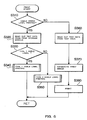
- Fig. 5 is a flowchart showing the procedure of the print format setting.
- the print format setting is a process for setting the format of characters in the printing, style or appearance as printed matter, etc.
- the print format setting is carried out in units of blocks.
- the print format setting is executed for data of a block that is currently displayed on the screen.
- the block print range setting by the print range setting module 613 is executed first (S210).
- S210 the length of the block to be printed out is set.
- a block print format setting is executed, in which the print style of the block is set.
- the print style can be selected from various options depending on the purpose. Whether to create the cable label 11 (as a cable wiring label) is also determined in this step.
- setting items for the cable label 11 are also set in this step.
- the process advances to S230.
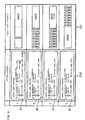
- Fig. 9 is a schematic diagram showing the combinations of setting screens for the cable label settings (column C10) and cable label examples to be printed in response to the cable label settings (column C2) in a table format.
- a cursor ">>" is displayed on the left of a setting item currently selected. The user can select an item by moving the cursor among the items by pressing the up/down cursor keys and change the setting of the selected item by pressing the right/left cursor keys.
- the first item (with the reference character K1) is an item for setting whether to carry out the sequential printing of the character string for the plug label 12 in the whole print range set in the block print range setting by the print range setting module 613.
- the user selects "NO SEQUENTIAL PRINTING” (see a setting A1 in Fig. 9) when the sequential printing is unnecessary, or selects "SEQUENTIAL PRINTING” (see a setting B1 in Fig. 9) when the sequential printing is necessary.
- a mark double circle
- the second item (with the reference character K2) is an item for specifying the contents of the character string to be printed on the socket label 13.
- the user selects "TYPE A” in order to select the Type 1 cable label in which the socket label 13 is printed with the same character string as that on the plug label 12 (see the setting B1 in Fig. 9) or "TYPE B” in order to select the Type 2 cable label in which the socket label 13 is printed with an extra character string in addition to the character string on the plug label 12 (see a setting C1 in Fig. 9).
- "TYPE B" a character string inputted to a block next to the current block (for which the cable label settings are made) is used as the extra character string to be printed on the socket label 13.
- a block at the time of the cable label settings is regarded as the block for the plug label 12 and the next block is regarded as the block for the socket label 13.
- the third item (with the reference character K3) is an item for letting the print control module 615 set the printing order of the plug label 12 and the socket label 13.
- the user selects "PLUG LABEL FIRST” when he/she hopes to create a cable label 11 having the plug label 12 and the socket label 13 printed in this order (see the setting B1 in Fig. 9) or "SOCKET LABEL FIRST” when he/she hopes to create a cable label 11 having the socket label 13 and the plug label 12 printed in this order (see a setting D1 in Fig. 9).
- the text area 632 is provided with a flag PA for storing the printing order of the plug label 12 and the socket label 13.
- the flag PA is set to "0" when the plug label 12 is to be printed first or "1" when the socket label B is to be printed first.
- block print repetition is specified.
- the block print repetition means the number of printings of each block.
- the character string to be printed on the plug label 12 and the socket label 13 has been inputted to one block; however, the block is imaginarily recognized in this step as two separate blocks and the number of printings is set separately for each of the blocks.
- the plug label 12 and the socket label 13 form independent blocks and thus the number of printings is set separately for each of the blocks.
- the character string data of the block to be printed on the plug label 12 is copied from the text memory 632 to the first storage module 633 when the cable label settings have been made.
- the character string data in a block next to the block to be printed on the plug label 12 is copied from the text memory 632 to the second storage module 634.
- Fig. 6 is a flowchart showing the procedure of the print process.
- the print process is executed for the block for which the aforementioned print format setting has been carried out.
- S310 whether the print style set in S220 of Fig. 5 is the cable wiring label printing is judged. If the print style is the cable wiring label printing (S310: YES), the process advances to S320 and the CPU 61 reads out the text data from the first storage module 633 to the work area 631 of the RAM 63. In the next S330, the CPU 61 judges whether the print type is the Type 1 cable label printing.
- a Type 1 cable label printing process shown in Fig. 7 is executed (S340). After S340 is finished, the process returns to S 120 of the flowchart of Fig. 4. On the other hand, if the print type is not judged to be the Type 1 cable label printing (S330: NO), the process advances to S350 and the CPU 61 executes a Type 2 cable label printing process shown in Fig. 8. After S350 is finished, the process returns to S120 of the flowchart of Fig. 4.
- the process advances to S360 and the CPU 61 reads out the text data as the object of printing from the text area 632 to the RAM 63 (S360). Subsequently, the CPU 61 generates a print image (made of dot pattern data) in the work area 631 of the RAM 63 from the text data according to necessary information as the character size, font shape, etc (S370). Thereafter, the CPU 61 carries out the printing on the print tape by driving the printing head 4, etc. in S380. After the printing in S380 is finished, the process returns to S120 of the flowchart of Fig. 4.
- Fig. 7 is a flowchart showing the procedure of the Type 1 cable label printing process.
- S410 whether to execute rotated printing is judged. The judgment on the rotated printing is made based on the flag PA, that is, the rotated printing is executed when the flag PA is "0" while not executed when the flag PA is "1". If the flag PA is "1" (if the rotated printing is not executed) (S410: NO), the CPU 61 makes a size adjustment by adjusting the character size so that the print image will fit in the print range set by the print range setting module 613 (S420). In the next S430, a normal print image (in which the character string is arranged in the lengthwise direction of the print tape) is generated by the normal image generation module 612 of the CPU 61 (S430). Thereafter, the process advances to S480.
- S480 the printing of the print image is carried out.
- S490 whether the printing has been finished for the number of times specified by the print repetition specifying module 616 is judged. If the printing for the specified number of times has not been finished yet (S490: NO), a boundary line 14 is printed (S491) and the process returns to S480 to repeat the printing. If the printing for the specified number of times has been finished (S490: YES), the process advances to S500 and the CPU 61 judges whether both the plug label 12 and the socket label 13 of the cable label have been printed.
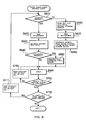
- Fig. 8 is a flowchart showing the procedure of the Type 2 cable label printing process.
- S610 whether to execute rotated printing is judged.
- the combination cable label also includes a plug label 12 (made by the rotated printing) and a socket label 13 (made by the normal printing) similarly to the Type 1 cable label.
- Which label is printed first is determined according to the flag PA which has been set in the block print format setting (S220 in the flowchart of Fig. 5).
- the CPU 61 reads out the text data stored in the second storage module 634 (S660).
- the CPU 61 adjusts the character size so that a print image made of the text data previously read out from the first storage module 633 and the text data read out from the second storage module 634 will fit in the print range set by the print range setting module 613.
- S690 the printing of the print image is carried out. Thereafter, the process advances to S700 and whether the printing has been finished for the number of times specified by the print repetition specifying module 616 is judged. If the printing for the specified number of times has not been finished yet (S700: NO), a boundary line 14 is printed (S701) and the process returns to S690 to repeat the printing. If the printing for the specified number of times has been finished (S700: YES), the process advances to S710 and whether both the plug label 12 and the socket label 13 of the cable label have been printed is judged.
- a cable label 11 as a combination of the plug label 12 and the socket label 13 can be created in one printing operation. Therefore, the user is released from the trouble of creating separate labels to be stuck on a plug and a socket (printed with the same or similar character strings arranged in the width direction and the lengthwise direction of the print tape, respectively) and the efficiency of label making is increased.
- the print repetition specifying module 616 allows a plurality of plug labels 12 and/or socket labels 13 to be printed in a cable label 11, the same effects can be achieved even in cases where one plug corresponds to two sockets, one socket corresponds to two plugs, etc.
- the label length can be set separately for the plug label 12 and the socket label 13 with the print range setting module 613, cable labels that can be applied to cylindrical members, flat members, etc. of various sizes can be created.
- the plug label 12 printed with a plurality of character strings arranged sequentially and evenly in the set print range is stuck on a cylindrical member such as a cable, the user can recognize the printed character strings irrespective of the visual angle around the cylindrical member.
- the character string on each label is adjusted to a proper character size by the size change module 614, by which fine-looking labels can be created.
- print range setting module 613 in the above embodiment is configured to set the print ranges for both the print images generated by the rotated image generation module 611 and the normal image generation module 612, either or both of the print ranges may be set constant.
- the print image for the sequential printing is generated by arranging a plurality of identical print images in the above embodiment, it is also possible to generate one print image of character strings previously arranged for a plurality of lines.
- the tape printing device in the above embodiment is configured to adjust the size of each print image by the size change module 614
- the tape printing device may also be configured to simply inform the user of an error when the print image does not fit in the print range, without employing the adjustment function.
- the data stored in the first and second storage modules 633 and 634 are text data in the above embodiment, the data are not restricted to text data.
- image data generated by an external computer may be imported via a communication line, etc. and stored in the first and second storage modules 633 and 634.
- the tape printing device of the above embodiment is configured to be able to print two types of cable labels (Type 1 cable label, Type 2 cable label), the tape printing device is not restricted to this configuration.
- the tape printing device may support only one type arbitrarily selected from the two types.
- character strings to be printed out are processed in units of blocks in the above embodiment, the character strings may also be processed in units of other inputting/editing units as lines.
- the socket label 13 may also be printed with the character string stored in the second storage module only.
- the tape printing device in the above embodiment is a device of a stand-alone type having the control unit incorporated in the tape printing device 1, the type of the tape printing device is not limited to the stand-alone type.
- part or all of the control unit may also be implemented by a personal computer which is connected to the tape printing device 1 via an interface.
- the procedure of each process described in the above embodiment can be implemented by a program which is executed by a computer.
- a program can be stored in record media of various types (flexible discs, CD-ROMs, etc.) in a format readable and executable by a computer.
Landscapes
- Record Information Processing For Printing (AREA)
- Printers Characterized By Their Purpose (AREA)
- Accessory Devices And Overall Control Thereof (AREA)
- Input Circuits Of Receivers And Coupling Of Receivers And Audio Equipment (AREA)
Abstract
Description
Claims (26)
- A tape printing control device comprising:first storage means for storing a first character string to be printed on a tape-like print medium;first image generation means for generating a print image in which the first character string stored in the first storage means is arranged in a width direction of the tape-like print medium;second image generation means for generating a print image in which the first character string stored in the first storage means is arranged in a lengthwise direction of the tape-like print medium; andprint control means for executing print control so that the print image generated by one of the first and second image generation means will be printed on the tape-like print medium first and thereafter the print image generated by the other will be printed on the tape-like print medium.
- The tape printing control device according to claim 1, further comprising print range setting means capable of setting a print range in the lengthwise direction of the tape-like print medium for at least one of the print images generated by the first and second image generation means.
- The tape printing control device according to claim 2, wherein the print control means executes the print control so that the print image generated by the first image generation means will be printed being repetitively arranged in the print range set by the print range setting means.
- The tape printing control device according to claim 2, wherein the first image generation means generates a print image in which an image of the first character string stored in the first storage means, being arranged in the width direction of tape-like print medium, is repetitively arranged in the print range set by the print range setting means.
- The tape printing control device according to claim 1, further comprising second storage means for storing a second character string to be printed on the tape-like print medium,
wherein the second image generation means generates a print image containing both the first character string stored in the first storage means and the second character string stored in the second storage means in one image. - The tape printing control device according to claim 1, further comprising size change means for changing sizes of the print images generated by the first and second image generation means.
- The tape printing control device according to claim 2, further comprising size change means for changing sizes of the print images generated by the first and second image generation means corresponding to the print ranges set by the print range setting means.
- The tape printing control device according to claim 1, further comprising print repetition specifying means for specifying the number of printings for the print image generated by the first or second image generation means.
- The tape printing control device according to claim 1, wherein order of printing of the print image generated by the first image generation means and the print image generated by the second image generation means in the print control means is settable.
- The tape printing control device according to claim 1, wherein the tape printing control device executes control for forming a mark allowing discrimination between the print images generated by the first and second image generation means.
- The tape printing control device according to claim 10, wherein the mark is formed by printing.
- The tape printing control device according to claim 11, wherein the mark is formed by a printed line.
- The tape printing control device according to claim 1, wherein the tape printing control device controls cutting means so as to make a cut or half cut between the print images generated by the first and second image generation means.
- A program that causes a computer to execute:a first storage step for storing a first character string to be printed on a tape-like print medium;a first image generation step for generating a print image in which the first character string stored by the first storage step is arranged in a width direction of the tape-like print medium;a second image generation step for generating a print image in which the first character string stored by the first storage step is arranged in a lengthwise direction of the tape-like print medium; anda print control step for executing print control so that the print image generated by one of the first and second image generation steps will be printed on the tape-like print medium first and thereafter the print image generated by the other will be printed on the tape-like print medium.
- The program according to claim 14, further causing the computer to execute a print range setting step capable of setting a print range in the lengthwise direction of the tape-like print medium for at least one of the print images generated by the first and second image generation steps.
- The program according to claim 15, wherein the print control step executes the print control so that the print image generated by the first image generation step will be printed being repetitively arranged in the print range set by the print range setting step.
- The program according to claim 15, wherein the first image generation step generates a print image in which an image of the first character string stored by the first storage step, being arranged in the width direction of tape-like print medium, is repetitively arranged in the print range set by the print range setting step.
- The program according to claim 14, further causing the computer to execute a second storage step for storing a second character string to be printed on the tape-like print medium,
wherein the second image generation step generates a print image containing both the first character string stored by the first storage step and the second character string stored by the second storage step in one image. - The program according to claim 14, further causing the computer to execute a size change step for changing size of the print image generated by the first or second image generation step.
- The program according to claim 15, further causing the computer to execute a size change step for changing sizes of the print images generated by the first and second image generation steps corresponding to the print ranges set by the print range setting step.
- The program according to claim 14, further causing the computer to execute a print repetition specifying step for specifying the number of printings for the print image generated by the first or second image generation step.
- The program according to claim 14, wherein order of printing of the print image generated by the first image generation step and the print image generated by the second image generation step is settable in the print control step.
- The program according to claim 14, wherein the print control step further executes control for forming a mark allowing discrimination between the print images generated by the first and second image generation steps.
- The program according to claim 23, wherein the mark is formed by printing.
- The program according to claim 24, wherein the mark is formed by a printed line.
- The program according to claim 14, further causing the computer to execute a cutting step for making a cut or half cut between the print images generated by the first and second image generation steps.
Applications Claiming Priority (3)
| Application Number | Priority Date | Filing Date | Title |
|---|---|---|---|
| JP2002318840 | 2002-10-31 | ||
| JP2002318840A JP2004148758A (en) | 2002-10-31 | 2002-10-31 | Tape print control device and program |
| PCT/JP2003/013967 WO2004039596A1 (en) | 2002-10-31 | 2003-10-30 | Tape print control device and program |
Publications (3)
| Publication Number | Publication Date |
|---|---|
| EP1557277A1 true EP1557277A1 (en) | 2005-07-27 |
| EP1557277A4 EP1557277A4 (en) | 2006-03-15 |
| EP1557277B1 EP1557277B1 (en) | 2008-03-19 |
Family
ID=32211788
Family Applications (1)
| Application Number | Title | Priority Date | Filing Date |
|---|---|---|---|
| EP03770058A Expired - Lifetime EP1557277B1 (en) | 2002-10-31 | 2003-10-30 | Tape printing control device and program |
Country Status (8)
| Country | Link |
|---|---|
| US (1) | US7052196B2 (en) |
| EP (1) | EP1557277B1 (en) |
| JP (1) | JP2004148758A (en) |
| CN (1) | CN100340410C (en) |
| AT (1) | ATE389542T1 (en) |
| AU (1) | AU2003280663A1 (en) |
| DE (1) | DE60319858T2 (en) |
| WO (1) | WO2004039596A1 (en) |
Cited By (1)
| Publication number | Priority date | Publication date | Assignee | Title |
|---|---|---|---|---|
| EP2045726A3 (en) * | 2007-10-04 | 2009-08-19 | Brother Kogyo Kabushiki Kaisha | Label data creating apparatus, label data creating method, and computer program product |
Families Citing this family (13)
| Publication number | Priority date | Publication date | Assignee | Title |
|---|---|---|---|---|
| KR20050010472A (en) * | 2003-07-16 | 2005-01-27 | 세이코 엡슨 가부시키가이샤 | Tape printing apparatus, label producing method, data processing method of tape printing apparatus, printing system, label producing method of printing system and storage medium |
| WO2007001069A1 (en) * | 2005-06-29 | 2007-01-04 | Canon Kabushiki Kaisha | Image processing device, image processing method, and program |
| WO2008023817A1 (en) * | 2006-08-25 | 2008-02-28 | Brother Kogyo Kabushiki Kaisha | Operation processing device |
| US7612288B1 (en) | 2007-12-27 | 2009-11-03 | Emc Corporation | Techniques for attaching a label to an electronic cable |
| JP5228897B2 (en) * | 2008-01-31 | 2013-07-03 | セイコーエプソン株式会社 | Image processing method, program thereof, and image processing apparatus |
| JP5104424B2 (en) * | 2008-03-12 | 2012-12-19 | セイコーエプソン株式会社 | Label making device |
| JP2011062852A (en) * | 2009-09-15 | 2011-03-31 | Toshiba Tec Corp | Printer, print data generation method and print data generation program |
| JP6144093B2 (en) * | 2013-04-12 | 2017-06-07 | セイコーエプソン株式会社 | Label data generation method, program, label data generation apparatus, and label generation system |
| JP5911460B2 (en) * | 2013-09-18 | 2016-04-27 | キヤノン株式会社 | Image forming apparatus and method, and program |
| JP2016170623A (en) * | 2015-03-12 | 2016-09-23 | セイコーエプソン株式会社 | Label production method, program, tape printer, and cable label |
| JP6283956B2 (en) * | 2015-03-31 | 2018-02-28 | ブラザー工業株式会社 | Label creation processing program and label creation apparatus |
| JP6376161B2 (en) * | 2016-03-25 | 2018-08-22 | ブラザー工業株式会社 | Print control program and print control apparatus |
| JP2018171868A (en) * | 2017-03-31 | 2018-11-08 | ブラザー工業株式会社 | Printing device |
Family Cites Families (21)
| Publication number | Priority date | Publication date | Assignee | Title |
|---|---|---|---|---|
| JPH0550657A (en) * | 1991-08-19 | 1993-03-02 | Brother Ind Ltd | Tape printer |
| JP3212039B2 (en) * | 1992-02-21 | 2001-09-25 | ブラザー工業株式会社 | Tape printer |
| JP2976416B2 (en) * | 1992-04-20 | 1999-11-10 | ブラザー工業株式会社 | Barcode printing device |
| JP3139514B2 (en) * | 1992-04-28 | 2001-03-05 | ブラザー工業株式会社 | Tape printer |
| JP3382659B2 (en) | 1993-02-18 | 2003-03-04 | ブラザー工業株式会社 | Code label making device |
| JPH06320826A (en) * | 1993-03-15 | 1994-11-22 | Brother Ind Ltd | Tape printer |
| US5562353A (en) * | 1993-11-02 | 1996-10-08 | Casio Computer Co., Ltd. | Tape printing apparatus that calculates character sizes and line lengths |
| JP3254653B2 (en) * | 1994-01-13 | 2002-02-12 | ブラザー工業株式会社 | Tape printer |
| JP3154249B2 (en) * | 1994-05-30 | 2001-04-09 | キヤノン株式会社 | Recording device and recording method |
| JPH0872320A (en) * | 1994-09-05 | 1996-03-19 | Brother Ind Ltd | Tape label making device |
| JP3224699B2 (en) * | 1994-09-29 | 2001-11-05 | ブラザー工業株式会社 | Tape printer |
| JP3444863B2 (en) * | 1994-11-29 | 2003-09-08 | 株式会社キングジム | Tape printer |
| JPH09202010A (en) * | 1996-01-29 | 1997-08-05 | Casio Comput Co Ltd | Printing equipment |
| US6045277A (en) * | 1996-04-15 | 2000-04-04 | Seiko Epson Corporation | Tape printing apparatus |
| JPH10818A (en) * | 1996-04-15 | 1998-01-06 | Seiko Epson Corp | Tape printer |
| TW415889B (en) * | 1998-02-06 | 2000-12-21 | Casio Computer Co Ltd | Tape printing apparatus |
| JP3597038B2 (en) * | 1998-03-16 | 2004-12-02 | 株式会社キングジム | Character information processing device |
| JP3601323B2 (en) * | 1998-11-18 | 2004-12-15 | セイコーエプソン株式会社 | Image printing method and apparatus for tape printing apparatus |
| JP4075171B2 (en) * | 1998-12-24 | 2008-04-16 | 株式会社デンソー | Block decompressor |
| JP2000301797A (en) * | 1999-04-19 | 2000-10-31 | Seiko Epson Corp | Tape printing apparatus and tape printing method |
| JP4042292B2 (en) | 2000-03-31 | 2008-02-06 | カシオ計算機株式会社 | Printing device |
-
2002
- 2002-10-31 JP JP2002318840A patent/JP2004148758A/en active Pending
-
2003
- 2003-10-30 WO PCT/JP2003/013967 patent/WO2004039596A1/en not_active Ceased
- 2003-10-30 AT AT03770058T patent/ATE389542T1/en not_active IP Right Cessation
- 2003-10-30 US US10/529,617 patent/US7052196B2/en not_active Expired - Lifetime
- 2003-10-30 EP EP03770058A patent/EP1557277B1/en not_active Expired - Lifetime
- 2003-10-30 AU AU2003280663A patent/AU2003280663A1/en not_active Abandoned
- 2003-10-30 CN CNB2003801022116A patent/CN100340410C/en not_active Expired - Fee Related
- 2003-10-30 DE DE60319858T patent/DE60319858T2/en not_active Expired - Lifetime
Cited By (2)
| Publication number | Priority date | Publication date | Assignee | Title |
|---|---|---|---|---|
| EP2045726A3 (en) * | 2007-10-04 | 2009-08-19 | Brother Kogyo Kabushiki Kaisha | Label data creating apparatus, label data creating method, and computer program product |
| US8307280B2 (en) | 2007-10-04 | 2012-11-06 | Brother Kogyo Kabushiki Kaisha | Label data creating apparatus, label data creating method, and computer program product |
Also Published As
| Publication number | Publication date |
|---|---|
| DE60319858T2 (en) | 2008-06-26 |
| ATE389542T1 (en) | 2008-04-15 |
| CN1708406A (en) | 2005-12-14 |
| EP1557277B1 (en) | 2008-03-19 |
| CN100340410C (en) | 2007-10-03 |
| JP2004148758A (en) | 2004-05-27 |
| WO2004039596A1 (en) | 2004-05-13 |
| AU2003280663A1 (en) | 2004-05-25 |
| US7052196B2 (en) | 2006-05-30 |
| EP1557277A4 (en) | 2006-03-15 |
| US20050271444A1 (en) | 2005-12-08 |
| DE60319858D1 (en) | 2008-04-30 |
Similar Documents
| Publication | Publication Date | Title |
|---|---|---|
| EP1557277B1 (en) | Tape printing control device and program | |
| JP2879756B2 (en) | Printer device | |
| EP2977213B1 (en) | Label printing apparatus | |
| CN101045402B (en) | Printing apparatus and format edit program recorded in computer-readable recording medium | |
| EP1559562B1 (en) | Tape print control device and program | |
| JP2008234481A (en) | Print control apparatus and print control program | |
| CN108621596A (en) | Print data generating apparatus and method, recording medium and printing equipment | |
| JP2000301797A (en) | Tape printing apparatus and tape printing method | |
| JP2008021248A (en) | Tape printer and tape printing program | |
| CN102609228A (en) | Electronic device, display control method and storage medium for displaying a plurality of lines of character strings | |
| CN100418782C (en) | Printing device and method for printing characters on labels | |
| JP2014004798A (en) | Printer and printing system | |
| JPH0966632A (en) | Tape printer | |
| JP3587181B2 (en) | Tape-shaped label making device | |
| JP2998829B2 (en) | Tape-shaped label making device | |
| JP5376235B2 (en) | Tape printing apparatus, method for creating enlarged width size label, and storage medium storing enlarged width size label creating program | |
| US20250045002A1 (en) | Printer, non-transitory computer readable medium storing print data editing program, and print data editing device | |
| JP2556231B2 (en) | Tape printer | |
| JP3094812B2 (en) | Tape printer that can print multiple lines | |
| JP3045022B2 (en) | Tape printing device capable of printing multiple blocks | |
| JPH07276715A (en) | Tape printer capable of printing multiple blocks of arbitrary number of lines | |
| JP2025147928A (en) | TAPE PRINTING DEVICE, TAPE PRINTING DEVICE CONTROL METHOD, INFORMATION PROCESSING DEVICE, AND PROGRAM | |
| JP2006315414A (en) | Tape printer | |
| JP6011113B2 (en) | Print control apparatus and print control program | |
| JP2004216757A (en) | Tape printing controller and program |
Legal Events
| Date | Code | Title | Description |
|---|---|---|---|
| PUAI | Public reference made under article 153(3) epc to a published international application that has entered the european phase |
Free format text: ORIGINAL CODE: 0009012 |
|
| 17P | Request for examination filed |
Effective date: 20050520 |
|
| AK | Designated contracting states |
Kind code of ref document: A1 Designated state(s): AT BE BG CH CY CZ DE DK EE ES FI FR GB GR HU IE IT LI LU MC NL PT RO SE SI SK TR |
|
| AX | Request for extension of the european patent |
Extension state: AL LT LV MK |
|
| DAX | Request for extension of the european patent (deleted) | ||
| A4 | Supplementary search report drawn up and despatched |
Effective date: 20060130 |
|
| GRAP | Despatch of communication of intention to grant a patent |
Free format text: ORIGINAL CODE: EPIDOSNIGR1 |
|
| GRAS | Grant fee paid |
Free format text: ORIGINAL CODE: EPIDOSNIGR3 |
|
| GRAJ | Information related to disapproval of communication of intention to grant by the applicant or resumption of examination proceedings by the epo deleted |
Free format text: ORIGINAL CODE: EPIDOSDIGR1 |
|
| RTI1 | Title (correction) |
Free format text: TAPE PRINT CONTROL DEVICE AND PROGRAM |
|
| 17Q | First examination report despatched |
Effective date: 20070713 |
|
| RTI1 | Title (correction) |
Free format text: TAPE PRINTING CONTROL DEVICE AND PROGRAM |
|
| GRAP | Despatch of communication of intention to grant a patent |
Free format text: ORIGINAL CODE: EPIDOSNIGR1 |
|
| GRAS | Grant fee paid |
Free format text: ORIGINAL CODE: EPIDOSNIGR3 |
|
| GRAA | (expected) grant |
Free format text: ORIGINAL CODE: 0009210 |
|
| AK | Designated contracting states |
Kind code of ref document: B1 Designated state(s): AT BE BG CH CY CZ DE DK EE ES FI FR GB GR HU IE IT LI LU MC NL PT RO SE SI SK TR |
|
| REG | Reference to a national code |
Ref country code: GB Ref legal event code: FG4D |
|
| REG | Reference to a national code |
Ref country code: CH Ref legal event code: EP |
|
| REF | Corresponds to: |
Ref document number: 60319858 Country of ref document: DE Date of ref document: 20080430 Kind code of ref document: P |
|
| REG | Reference to a national code |
Ref country code: IE Ref legal event code: FG4D |
|
| PG25 | Lapsed in a contracting state [announced via postgrant information from national office to epo] |
Ref country code: FI Free format text: LAPSE BECAUSE OF FAILURE TO SUBMIT A TRANSLATION OF THE DESCRIPTION OR TO PAY THE FEE WITHIN THE PRESCRIBED TIME-LIMIT Effective date: 20080319 |
|
| ET | Fr: translation filed | ||
| PG25 | Lapsed in a contracting state [announced via postgrant information from national office to epo] |
Ref country code: AT Free format text: LAPSE BECAUSE OF FAILURE TO SUBMIT A TRANSLATION OF THE DESCRIPTION OR TO PAY THE FEE WITHIN THE PRESCRIBED TIME-LIMIT Effective date: 20080319 |
|
| NLV1 | Nl: lapsed or annulled due to failure to fulfill the requirements of art. 29p and 29m of the patents act | ||
| PG25 | Lapsed in a contracting state [announced via postgrant information from national office to epo] |
Ref country code: BE Free format text: LAPSE BECAUSE OF FAILURE TO SUBMIT A TRANSLATION OF THE DESCRIPTION OR TO PAY THE FEE WITHIN THE PRESCRIBED TIME-LIMIT Effective date: 20080319 Ref country code: SI Free format text: LAPSE BECAUSE OF FAILURE TO SUBMIT A TRANSLATION OF THE DESCRIPTION OR TO PAY THE FEE WITHIN THE PRESCRIBED TIME-LIMIT Effective date: 20080319 |
|
| PG25 | Lapsed in a contracting state [announced via postgrant information from national office to epo] |
Ref country code: ES Free format text: LAPSE BECAUSE OF FAILURE TO SUBMIT A TRANSLATION OF THE DESCRIPTION OR TO PAY THE FEE WITHIN THE PRESCRIBED TIME-LIMIT Effective date: 20080630 Ref country code: CZ Free format text: LAPSE BECAUSE OF FAILURE TO SUBMIT A TRANSLATION OF THE DESCRIPTION OR TO PAY THE FEE WITHIN THE PRESCRIBED TIME-LIMIT Effective date: 20080319 Ref country code: PT Free format text: LAPSE BECAUSE OF FAILURE TO SUBMIT A TRANSLATION OF THE DESCRIPTION OR TO PAY THE FEE WITHIN THE PRESCRIBED TIME-LIMIT Effective date: 20080826 Ref country code: SE Free format text: LAPSE BECAUSE OF FAILURE TO SUBMIT A TRANSLATION OF THE DESCRIPTION OR TO PAY THE FEE WITHIN THE PRESCRIBED TIME-LIMIT Effective date: 20080619 Ref country code: SK Free format text: LAPSE BECAUSE OF FAILURE TO SUBMIT A TRANSLATION OF THE DESCRIPTION OR TO PAY THE FEE WITHIN THE PRESCRIBED TIME-LIMIT Effective date: 20080319 |
|
| PG25 | Lapsed in a contracting state [announced via postgrant information from national office to epo] |
Ref country code: NL Free format text: LAPSE BECAUSE OF FAILURE TO SUBMIT A TRANSLATION OF THE DESCRIPTION OR TO PAY THE FEE WITHIN THE PRESCRIBED TIME-LIMIT Effective date: 20080319 Ref country code: RO Free format text: LAPSE BECAUSE OF FAILURE TO SUBMIT A TRANSLATION OF THE DESCRIPTION OR TO PAY THE FEE WITHIN THE PRESCRIBED TIME-LIMIT Effective date: 20080319 |
|
| PLBE | No opposition filed within time limit |
Free format text: ORIGINAL CODE: 0009261 |
|
| STAA | Information on the status of an ep patent application or granted ep patent |
Free format text: STATUS: NO OPPOSITION FILED WITHIN TIME LIMIT |
|
| PG25 | Lapsed in a contracting state [announced via postgrant information from national office to epo] |
Ref country code: DK Free format text: LAPSE BECAUSE OF FAILURE TO SUBMIT A TRANSLATION OF THE DESCRIPTION OR TO PAY THE FEE WITHIN THE PRESCRIBED TIME-LIMIT Effective date: 20080319 |
|
| 26N | No opposition filed |
Effective date: 20081222 |
|
| PG25 | Lapsed in a contracting state [announced via postgrant information from national office to epo] |
Ref country code: BG Free format text: LAPSE BECAUSE OF FAILURE TO SUBMIT A TRANSLATION OF THE DESCRIPTION OR TO PAY THE FEE WITHIN THE PRESCRIBED TIME-LIMIT Effective date: 20080619 Ref country code: EE Free format text: LAPSE BECAUSE OF FAILURE TO SUBMIT A TRANSLATION OF THE DESCRIPTION OR TO PAY THE FEE WITHIN THE PRESCRIBED TIME-LIMIT Effective date: 20080319 |
|
| PG25 | Lapsed in a contracting state [announced via postgrant information from national office to epo] |
Ref country code: MC Free format text: LAPSE BECAUSE OF NON-PAYMENT OF DUE FEES Effective date: 20081031 |
|
| REG | Reference to a national code |
Ref country code: CH Ref legal event code: PL |
|
| PG25 | Lapsed in a contracting state [announced via postgrant information from national office to epo] |
Ref country code: IT Free format text: LAPSE BECAUSE OF FAILURE TO SUBMIT A TRANSLATION OF THE DESCRIPTION OR TO PAY THE FEE WITHIN THE PRESCRIBED TIME-LIMIT Effective date: 20080319 |
|
| PG25 | Lapsed in a contracting state [announced via postgrant information from national office to epo] |
Ref country code: CY Free format text: LAPSE BECAUSE OF FAILURE TO SUBMIT A TRANSLATION OF THE DESCRIPTION OR TO PAY THE FEE WITHIN THE PRESCRIBED TIME-LIMIT Effective date: 20080319 |
|
| PG25 | Lapsed in a contracting state [announced via postgrant information from national office to epo] |
Ref country code: IE Free format text: LAPSE BECAUSE OF NON-PAYMENT OF DUE FEES Effective date: 20081030 Ref country code: LI Free format text: LAPSE BECAUSE OF NON-PAYMENT OF DUE FEES Effective date: 20081031 Ref country code: CH Free format text: LAPSE BECAUSE OF NON-PAYMENT OF DUE FEES Effective date: 20081031 |
|
| PG25 | Lapsed in a contracting state [announced via postgrant information from national office to epo] |
Ref country code: LU Free format text: LAPSE BECAUSE OF NON-PAYMENT OF DUE FEES Effective date: 20081030 Ref country code: HU Free format text: LAPSE BECAUSE OF FAILURE TO SUBMIT A TRANSLATION OF THE DESCRIPTION OR TO PAY THE FEE WITHIN THE PRESCRIBED TIME-LIMIT Effective date: 20080920 |
|
| PG25 | Lapsed in a contracting state [announced via postgrant information from national office to epo] |
Ref country code: TR Free format text: LAPSE BECAUSE OF FAILURE TO SUBMIT A TRANSLATION OF THE DESCRIPTION OR TO PAY THE FEE WITHIN THE PRESCRIBED TIME-LIMIT Effective date: 20080319 |
|
| PG25 | Lapsed in a contracting state [announced via postgrant information from national office to epo] |
Ref country code: GR Free format text: LAPSE BECAUSE OF FAILURE TO SUBMIT A TRANSLATION OF THE DESCRIPTION OR TO PAY THE FEE WITHIN THE PRESCRIBED TIME-LIMIT Effective date: 20080620 |
|
| REG | Reference to a national code |
Ref country code: FR Ref legal event code: PLFP Year of fee payment: 14 |
|
| REG | Reference to a national code |
Ref country code: FR Ref legal event code: PLFP Year of fee payment: 15 |
|
| REG | Reference to a national code |
Ref country code: FR Ref legal event code: PLFP Year of fee payment: 16 |
|
| PGFP | Annual fee paid to national office [announced via postgrant information from national office to epo] |
Ref country code: FR Payment date: 20210921 Year of fee payment: 19 |
|
| PGFP | Annual fee paid to national office [announced via postgrant information from national office to epo] |
Ref country code: GB Payment date: 20210929 Year of fee payment: 19 |
|
| PGFP | Annual fee paid to national office [announced via postgrant information from national office to epo] |
Ref country code: DE Payment date: 20210916 Year of fee payment: 19 |
|
| REG | Reference to a national code |
Ref country code: DE Ref legal event code: R119 Ref document number: 60319858 Country of ref document: DE |
|
| GBPC | Gb: european patent ceased through non-payment of renewal fee |
Effective date: 20221030 |
|
| PG25 | Lapsed in a contracting state [announced via postgrant information from national office to epo] |
Ref country code: FR Free format text: LAPSE BECAUSE OF NON-PAYMENT OF DUE FEES Effective date: 20221031 Ref country code: DE Free format text: LAPSE BECAUSE OF NON-PAYMENT OF DUE FEES Effective date: 20230503 |
|
| PG25 | Lapsed in a contracting state [announced via postgrant information from national office to epo] |
Ref country code: GB Free format text: LAPSE BECAUSE OF NON-PAYMENT OF DUE FEES Effective date: 20221030 |