EP1556696B1 - Zucker bindende oberfläche - Google Patents
Zucker bindende oberfläche Download PDFInfo
- Publication number
- EP1556696B1 EP1556696B1 EP03809772.1A EP03809772A EP1556696B1 EP 1556696 B1 EP1556696 B1 EP 1556696B1 EP 03809772 A EP03809772 A EP 03809772A EP 1556696 B1 EP1556696 B1 EP 1556696B1
- Authority
- EP
- European Patent Office
- Prior art keywords
- plasma
- carbohydrate
- sulphate
- molecule
- binding
- Prior art date
- Legal status (The legal status is an assumption and is not a legal conclusion. Google has not performed a legal analysis and makes no representation as to the accuracy of the status listed.)
- Expired - Lifetime
Links
- 230000027455 binding Effects 0.000 title description 23
- 235000000346 sugar Nutrition 0.000 title description 10
- 238000000034 method Methods 0.000 claims description 64
- 150000001720 carbohydrates Chemical class 0.000 claims description 61
- 239000000178 monomer Substances 0.000 claims description 37
- 229920000642 polymer Polymers 0.000 claims description 35
- VVJKKWFAADXIJK-UHFFFAOYSA-N Allylamine Chemical compound NCC=C VVJKKWFAADXIJK-UHFFFAOYSA-N 0.000 claims description 28
- 229920002683 Glycosaminoglycan Polymers 0.000 claims description 16
- HTTJABKRGRZYRN-UHFFFAOYSA-N Heparin Chemical compound OC1C(NC(=O)C)C(O)OC(COS(O)(=O)=O)C1OC1C(OS(O)(=O)=O)C(O)C(OC2C(C(OS(O)(=O)=O)C(OC3C(C(O)C(O)C(O3)C(O)=O)OS(O)(=O)=O)C(CO)O2)NS(O)(=O)=O)C(C(O)=O)O1 HTTJABKRGRZYRN-UHFFFAOYSA-N 0.000 claims description 16
- 229920000669 heparin Polymers 0.000 claims description 16
- 229960002897 heparin Drugs 0.000 claims description 16
- 238000000576 coating method Methods 0.000 claims description 8
- 239000011159 matrix material Substances 0.000 claims description 7
- 238000002493 microarray Methods 0.000 claims description 7
- 239000011248 coating agent Substances 0.000 claims description 6
- 239000000523 sample Substances 0.000 claims description 6
- 229920002971 Heparan sulfate Polymers 0.000 claims description 5
- 238000001261 affinity purification Methods 0.000 claims description 5
- 230000001225 therapeutic effect Effects 0.000 claims description 5
- FPJHWYCPAOPVIV-VOZMEZHOSA-N (2R,3S,4R,5R,6R)-6-[(2R,3R,4R,5R,6R)-5-acetamido-2-(hydroxymethyl)-6-methoxy-3-sulfooxyoxan-4-yl]oxy-4,5-dihydroxy-3-methoxyoxane-2-carboxylic acid Chemical compound CO[C@@H]1O[C@H](CO)[C@H](OS(O)(=O)=O)[C@H](O[C@@H]2O[C@H]([C@@H](OC)[C@H](O)[C@H]2O)C(O)=O)[C@H]1NC(C)=O FPJHWYCPAOPVIV-VOZMEZHOSA-N 0.000 claims description 4
- 229920001287 Chondroitin sulfate Polymers 0.000 claims description 4
- 229920000045 Dermatan sulfate Polymers 0.000 claims description 4
- 229920000288 Keratan sulfate Polymers 0.000 claims description 4
- 229920002674 hyaluronan Polymers 0.000 claims description 4
- KIUKXJAPPMFGSW-MNSSHETKSA-N hyaluronan Chemical compound CC(=O)N[C@H]1[C@H](O)O[C@H](CO)[C@@H](O)C1O[C@H]1[C@H](O)[C@@H](O)[C@H](O[C@H]2[C@@H](C(O[C@H]3[C@@H]([C@@H](O)[C@H](O)[C@H](O3)C(O)=O)O)[C@H](O)[C@@H](CO)O2)NC(C)=O)[C@@H](C(O)=O)O1 KIUKXJAPPMFGSW-MNSSHETKSA-N 0.000 claims description 4
- 229940099552 hyaluronan Drugs 0.000 claims description 4
- KXCLCNHUUKTANI-RBIYJLQWSA-N keratan Chemical compound CC(=O)N[C@@H]1[C@@H](O)C[C@@H](COS(O)(=O)=O)O[C@H]1O[C@@H]1[C@@H](O)[C@H](O[C@@H]2[C@H](O[C@@H](O[C@H]3[C@H]([C@@H](COS(O)(=O)=O)O[C@@H](O)[C@@H]3O)O)[C@H](NC(C)=O)[C@H]2O)COS(O)(=O)=O)O[C@H](COS(O)(=O)=O)[C@@H]1O KXCLCNHUUKTANI-RBIYJLQWSA-N 0.000 claims description 4
- 241001465754 Metazoa Species 0.000 claims description 2
- 239000012472 biological sample Substances 0.000 claims description 2
- 210000002381 plasma Anatomy 0.000 description 77
- 235000014633 carbohydrates Nutrition 0.000 description 56
- IJGRMHOSHXDMSA-UHFFFAOYSA-N Atomic nitrogen Chemical compound N#N IJGRMHOSHXDMSA-UHFFFAOYSA-N 0.000 description 17
- 239000007789 gas Substances 0.000 description 16
- 150000004676 glycans Chemical class 0.000 description 16
- 229920001282 polysaccharide Polymers 0.000 description 16
- 239000005017 polysaccharide Substances 0.000 description 16
- 239000000758 substrate Substances 0.000 description 13
- 238000001179 sorption measurement Methods 0.000 description 12
- 239000000126 substance Substances 0.000 description 12
- 108090000623 proteins and genes Proteins 0.000 description 11
- 102000004169 proteins and genes Human genes 0.000 description 11
- 239000000243 solution Substances 0.000 description 11
- 150000001412 amines Chemical class 0.000 description 10
- 229930195733 hydrocarbon Natural products 0.000 description 10
- 150000002430 hydrocarbons Chemical class 0.000 description 10
- 229910052757 nitrogen Inorganic materials 0.000 description 9
- 239000004215 Carbon black (E152) Substances 0.000 description 8
- 125000000524 functional group Chemical group 0.000 description 8
- 150000008163 sugars Chemical class 0.000 description 8
- -1 KCI Chemical compound 0.000 description 7
- 238000000151 deposition Methods 0.000 description 7
- 150000001336 alkenes Chemical class 0.000 description 6
- 150000001875 compounds Chemical class 0.000 description 6
- 230000008021 deposition Effects 0.000 description 6
- 239000002253 acid Substances 0.000 description 5
- 238000003556 assay Methods 0.000 description 5
- 229920003023 plastic Polymers 0.000 description 5
- 239000004033 plastic Substances 0.000 description 5
- 150000003839 salts Chemical class 0.000 description 5
- SMZOUWXMTYCWNB-UHFFFAOYSA-N 2-(2-methoxy-5-methylphenyl)ethanamine Chemical compound COC1=CC=C(C)C=C1CCN SMZOUWXMTYCWNB-UHFFFAOYSA-N 0.000 description 4
- NIXOWILDQLNWCW-UHFFFAOYSA-N 2-Propenoic acid Natural products OC(=O)C=C NIXOWILDQLNWCW-UHFFFAOYSA-N 0.000 description 4
- 238000004833 X-ray photoelectron spectroscopy Methods 0.000 description 4
- 238000003491 array Methods 0.000 description 4
- 210000004027 cell Anatomy 0.000 description 4
- 239000003153 chemical reaction reagent Substances 0.000 description 4
- 230000002209 hydrophobic effect Effects 0.000 description 4
- 239000000463 material Substances 0.000 description 4
- 239000000203 mixture Substances 0.000 description 4
- 239000002904 solvent Substances 0.000 description 4
- 238000004458 analytical method Methods 0.000 description 3
- MSWZFWKMSRAUBD-UHFFFAOYSA-N beta-D-galactosamine Natural products NC1C(O)OC(CO)C(O)C1O MSWZFWKMSRAUBD-UHFFFAOYSA-N 0.000 description 3
- 210000004369 blood Anatomy 0.000 description 3
- 239000008280 blood Substances 0.000 description 3
- 125000004432 carbon atom Chemical group C* 0.000 description 3
- 125000003178 carboxy group Chemical group [H]OC(*)=O 0.000 description 3
- 229920001577 copolymer Polymers 0.000 description 3
- 230000014759 maintenance of location Effects 0.000 description 3
- VLKZOEOYAKHREP-UHFFFAOYSA-N n-Hexane Chemical compound CCCCCC VLKZOEOYAKHREP-UHFFFAOYSA-N 0.000 description 3
- OFBQJSOFQDEBGM-UHFFFAOYSA-N n-pentane Natural products CCCCC OFBQJSOFQDEBGM-UHFFFAOYSA-N 0.000 description 3
- 150000002894 organic compounds Chemical class 0.000 description 3
- 229920006395 saturated elastomer Polymers 0.000 description 3
- DKVBOUDTNWVDEP-NJCHZNEYSA-N teicoplanin aglycone Chemical compound N([C@H](C(N[C@@H](C1=CC(O)=CC(O)=C1C=1C(O)=CC=C2C=1)C(O)=O)=O)[C@H](O)C1=CC=C(C(=C1)Cl)OC=1C=C3C=C(C=1O)OC1=CC=C(C=C1Cl)C[C@H](C(=O)N1)NC([C@H](N)C=4C=C(O5)C(O)=CC=4)=O)C(=O)[C@@H]2NC(=O)[C@@H]3NC(=O)[C@@H]1C1=CC5=CC(O)=C1 DKVBOUDTNWVDEP-NJCHZNEYSA-N 0.000 description 3
- 108010088751 Albumins Proteins 0.000 description 2
- 102000009027 Albumins Human genes 0.000 description 2
- XKRFYHLGVUSROY-UHFFFAOYSA-N Argon Chemical compound [Ar] XKRFYHLGVUSROY-UHFFFAOYSA-N 0.000 description 2
- OKTJSMMVPCPJKN-UHFFFAOYSA-N Carbon Chemical compound [C] OKTJSMMVPCPJKN-UHFFFAOYSA-N 0.000 description 2
- RGSFGYAAUTVSQA-UHFFFAOYSA-N Cyclopentane Chemical compound C1CCCC1 RGSFGYAAUTVSQA-UHFFFAOYSA-N 0.000 description 2
- LFQSCWFLJHTTHZ-UHFFFAOYSA-N Ethanol Chemical compound CCO LFQSCWFLJHTTHZ-UHFFFAOYSA-N 0.000 description 2
- WQZGKKKJIJFFOK-GASJEMHNSA-N Glucose Natural products OC[C@H]1OC(O)[C@H](O)[C@@H](O)[C@@H]1O WQZGKKKJIJFFOK-GASJEMHNSA-N 0.000 description 2
- WJYIASZWHGOTOU-UHFFFAOYSA-N Heptylamine Chemical compound CCCCCCCN WJYIASZWHGOTOU-UHFFFAOYSA-N 0.000 description 2
- BAVYZALUXZFZLV-UHFFFAOYSA-N Methylamine Chemical compound NC BAVYZALUXZFZLV-UHFFFAOYSA-N 0.000 description 2
- LRHPLDYGYMQRHN-UHFFFAOYSA-N N-Butanol Chemical compound CCCCO LRHPLDYGYMQRHN-UHFFFAOYSA-N 0.000 description 2
- FAPWRFPIFSIZLT-UHFFFAOYSA-M Sodium chloride Chemical compound [Na+].[Cl-] FAPWRFPIFSIZLT-UHFFFAOYSA-M 0.000 description 2
- PPBRXRYQALVLMV-UHFFFAOYSA-N Styrene Chemical compound C=CC1=CC=CC=C1 PPBRXRYQALVLMV-UHFFFAOYSA-N 0.000 description 2
- 150000001335 aliphatic alkanes Chemical class 0.000 description 2
- AEMOLEFTQBMNLQ-VCSGLWQLSA-N alpha-L-iduronic acid Chemical compound O[C@@H]1O[C@@H](C(O)=O)[C@@H](O)[C@H](O)[C@H]1O AEMOLEFTQBMNLQ-VCSGLWQLSA-N 0.000 description 2
- QVGXLLKOCUKJST-UHFFFAOYSA-N atomic oxygen Chemical compound [O] QVGXLLKOCUKJST-UHFFFAOYSA-N 0.000 description 2
- 230000004071 biological effect Effects 0.000 description 2
- 229910052799 carbon Inorganic materials 0.000 description 2
- 150000001732 carboxylic acid derivatives Chemical class 0.000 description 2
- 238000004113 cell culture Methods 0.000 description 2
- 150000001923 cyclic compounds Chemical class 0.000 description 2
- 229940051593 dermatan sulfate Drugs 0.000 description 2
- 238000001514 detection method Methods 0.000 description 2
- 238000000502 dialysis Methods 0.000 description 2
- 150000001993 dienes Chemical class 0.000 description 2
- 150000002016 disaccharides Chemical group 0.000 description 2
- 239000012634 fragment Substances 0.000 description 2
- 238000013467 fragmentation Methods 0.000 description 2
- 238000006062 fragmentation reaction Methods 0.000 description 2
- 239000001257 hydrogen Substances 0.000 description 2
- 229910052739 hydrogen Inorganic materials 0.000 description 2
- 150000002500 ions Chemical class 0.000 description 2
- KWGKDLIKAYFUFQ-UHFFFAOYSA-M lithium chloride Chemical compound [Li+].[Cl-] KWGKDLIKAYFUFQ-UHFFFAOYSA-M 0.000 description 2
- 229920002521 macromolecule Polymers 0.000 description 2
- 238000012986 modification Methods 0.000 description 2
- 230000004048 modification Effects 0.000 description 2
- 230000007935 neutral effect Effects 0.000 description 2
- 239000001301 oxygen Substances 0.000 description 2
- 229910052760 oxygen Inorganic materials 0.000 description 2
- 239000002953 phosphate buffered saline Substances 0.000 description 2
- 238000002360 preparation method Methods 0.000 description 2
- 230000008569 process Effects 0.000 description 2
- WGYKZJWCGVVSQN-UHFFFAOYSA-N propylamine Chemical compound CCCN WGYKZJWCGVVSQN-UHFFFAOYSA-N 0.000 description 2
- 238000005086 pumping Methods 0.000 description 2
- 241000894007 species Species 0.000 description 2
- 238000011282 treatment Methods 0.000 description 2
- 239000012855 volatile organic compound Substances 0.000 description 2
- 238000005406 washing Methods 0.000 description 2
- QTYUSOHYEPOHLV-FNORWQNLSA-N 1,3-Octadiene Chemical compound CCCC\C=C\C=C QTYUSOHYEPOHLV-FNORWQNLSA-N 0.000 description 1
- VXNZUUAINFGPBY-UHFFFAOYSA-N 1-Butene Chemical compound CCC=C VXNZUUAINFGPBY-UHFFFAOYSA-N 0.000 description 1
- MSWZFWKMSRAUBD-GASJEMHNSA-N 2-amino-2-deoxy-D-galactopyranose Chemical compound N[C@H]1C(O)O[C@H](CO)[C@H](O)[C@@H]1O MSWZFWKMSRAUBD-GASJEMHNSA-N 0.000 description 1
- MSWZFWKMSRAUBD-IVMDWMLBSA-N 2-amino-2-deoxy-D-glucopyranose Chemical compound N[C@H]1C(O)O[C@H](CO)[C@@H](O)[C@@H]1O MSWZFWKMSRAUBD-IVMDWMLBSA-N 0.000 description 1
- WIFSDCDETBPLOR-UHFFFAOYSA-N 2-aminobenzoic acid Chemical compound NC1=CC=CC=C1C(O)=O.NC1=CC=CC=C1C(O)=O WIFSDCDETBPLOR-UHFFFAOYSA-N 0.000 description 1
- ATVJXMYDOSMEPO-UHFFFAOYSA-N 3-prop-2-enoxyprop-1-ene Chemical compound C=CCOCC=C ATVJXMYDOSMEPO-UHFFFAOYSA-N 0.000 description 1
- SQDAZGGFXASXDW-UHFFFAOYSA-N 5-bromo-2-(trifluoromethoxy)pyridine Chemical compound FC(F)(F)OC1=CC=C(Br)C=N1 SQDAZGGFXASXDW-UHFFFAOYSA-N 0.000 description 1
- FHVDTGUDJYJELY-UHFFFAOYSA-N 6-{[2-carboxy-4,5-dihydroxy-6-(phosphanyloxy)oxan-3-yl]oxy}-4,5-dihydroxy-3-phosphanyloxane-2-carboxylic acid Chemical compound O1C(C(O)=O)C(P)C(O)C(O)C1OC1C(C(O)=O)OC(OP)C(O)C1O FHVDTGUDJYJELY-UHFFFAOYSA-N 0.000 description 1
- 238000012935 Averaging Methods 0.000 description 1
- 108010017384 Blood Proteins Proteins 0.000 description 1
- 102000004506 Blood Proteins Human genes 0.000 description 1
- 108091003079 Bovine Serum Albumin Proteins 0.000 description 1
- 102000019034 Chemokines Human genes 0.000 description 1
- 108010012236 Chemokines Proteins 0.000 description 1
- 206010053567 Coagulopathies Diseases 0.000 description 1
- XDTMQSROBMDMFD-UHFFFAOYSA-N Cyclohexane Chemical compound C1CCCCC1 XDTMQSROBMDMFD-UHFFFAOYSA-N 0.000 description 1
- LVZWSLJZHVFIQJ-UHFFFAOYSA-N Cyclopropane Chemical compound C1CC1 LVZWSLJZHVFIQJ-UHFFFAOYSA-N 0.000 description 1
- AEMOLEFTQBMNLQ-AQKNRBDQSA-N D-glucopyranuronic acid Chemical compound OC1O[C@H](C(O)=O)[C@@H](O)[C@H](O)[C@H]1O AEMOLEFTQBMNLQ-AQKNRBDQSA-N 0.000 description 1
- MNQZXJOMYWMBOU-VKHMYHEASA-N D-glyceraldehyde Chemical compound OC[C@@H](O)C=O MNQZXJOMYWMBOU-VKHMYHEASA-N 0.000 description 1
- 238000000018 DNA microarray Methods 0.000 description 1
- 238000002965 ELISA Methods 0.000 description 1
- VGGSQFUCUMXWEO-UHFFFAOYSA-N Ethene Chemical compound C=C VGGSQFUCUMXWEO-UHFFFAOYSA-N 0.000 description 1
- 239000005977 Ethylene Substances 0.000 description 1
- 102000010834 Extracellular Matrix Proteins Human genes 0.000 description 1
- 108010037362 Extracellular Matrix Proteins Proteins 0.000 description 1
- IAJILQKETJEXLJ-UHFFFAOYSA-N Galacturonsaeure Natural products O=CC(O)C(O)C(O)C(O)C(O)=O IAJILQKETJEXLJ-UHFFFAOYSA-N 0.000 description 1
- 101000847156 Homo sapiens Tumor necrosis factor-inducible gene 6 protein Proteins 0.000 description 1
- 229920000869 Homopolysaccharide Polymers 0.000 description 1
- UFHFLCQGNIYNRP-UHFFFAOYSA-N Hydrogen Chemical compound [H][H] UFHFLCQGNIYNRP-UHFFFAOYSA-N 0.000 description 1
- AEMOLEFTQBMNLQ-HNFCZKTMSA-N L-idopyranuronic acid Chemical compound OC1O[C@@H](C(O)=O)[C@@H](O)[C@H](O)[C@H]1O AEMOLEFTQBMNLQ-HNFCZKTMSA-N 0.000 description 1
- OVRNDRQMDRJTHS-PVFLNQBWSA-N N-acetyl-alpha-D-glucosamine Chemical compound CC(=O)N[C@H]1[C@@H](O)O[C@H](CO)[C@@H](O)[C@@H]1O OVRNDRQMDRJTHS-PVFLNQBWSA-N 0.000 description 1
- MBLBDJOUHNCFQT-LXGUWJNJSA-N N-acetylglucosamine Natural products CC(=O)N[C@@H](C=O)[C@@H](O)[C@H](O)[C@H](O)CO MBLBDJOUHNCFQT-LXGUWJNJSA-N 0.000 description 1
- 108091034117 Oligonucleotide Proteins 0.000 description 1
- 239000004793 Polystyrene Substances 0.000 description 1
- 229920002125 Sokalan® Polymers 0.000 description 1
- 229920002472 Starch Polymers 0.000 description 1
- CZMRCDWAGMRECN-UGDNZRGBSA-N Sucrose Chemical compound O[C@H]1[C@H](O)[C@@H](CO)O[C@@]1(CO)O[C@@H]1[C@H](O)[C@@H](O)[C@H](O)[C@@H](CO)O1 CZMRCDWAGMRECN-UGDNZRGBSA-N 0.000 description 1
- 229930006000 Sucrose Natural products 0.000 description 1
- QAOWNCQODCNURD-UHFFFAOYSA-L Sulfate Chemical compound [O-]S([O-])(=O)=O QAOWNCQODCNURD-UHFFFAOYSA-L 0.000 description 1
- 241000700605 Viruses Species 0.000 description 1
- JLCPHMBAVCMARE-UHFFFAOYSA-N [3-[[3-[[3-[[3-[[3-[[3-[[3-[[3-[[3-[[3-[[3-[[5-(2-amino-6-oxo-1H-purin-9-yl)-3-[[3-[[3-[[3-[[3-[[3-[[5-(2-amino-6-oxo-1H-purin-9-yl)-3-[[5-(2-amino-6-oxo-1H-purin-9-yl)-3-hydroxyoxolan-2-yl]methoxy-hydroxyphosphoryl]oxyoxolan-2-yl]methoxy-hydroxyphosphoryl]oxy-5-(5-methyl-2,4-dioxopyrimidin-1-yl)oxolan-2-yl]methoxy-hydroxyphosphoryl]oxy-5-(6-aminopurin-9-yl)oxolan-2-yl]methoxy-hydroxyphosphoryl]oxy-5-(6-aminopurin-9-yl)oxolan-2-yl]methoxy-hydroxyphosphoryl]oxy-5-(6-aminopurin-9-yl)oxolan-2-yl]methoxy-hydroxyphosphoryl]oxy-5-(6-aminopurin-9-yl)oxolan-2-yl]methoxy-hydroxyphosphoryl]oxyoxolan-2-yl]methoxy-hydroxyphosphoryl]oxy-5-(5-methyl-2,4-dioxopyrimidin-1-yl)oxolan-2-yl]methoxy-hydroxyphosphoryl]oxy-5-(4-amino-2-oxopyrimidin-1-yl)oxolan-2-yl]methoxy-hydroxyphosphoryl]oxy-5-(5-methyl-2,4-dioxopyrimidin-1-yl)oxolan-2-yl]methoxy-hydroxyphosphoryl]oxy-5-(5-methyl-2,4-dioxopyrimidin-1-yl)oxolan-2-yl]methoxy-hydroxyphosphoryl]oxy-5-(6-aminopurin-9-yl)oxolan-2-yl]methoxy-hydroxyphosphoryl]oxy-5-(6-aminopurin-9-yl)oxolan-2-yl]methoxy-hydroxyphosphoryl]oxy-5-(4-amino-2-oxopyrimidin-1-yl)oxolan-2-yl]methoxy-hydroxyphosphoryl]oxy-5-(4-amino-2-oxopyrimidin-1-yl)oxolan-2-yl]methoxy-hydroxyphosphoryl]oxy-5-(4-amino-2-oxopyrimidin-1-yl)oxolan-2-yl]methoxy-hydroxyphosphoryl]oxy-5-(6-aminopurin-9-yl)oxolan-2-yl]methoxy-hydroxyphosphoryl]oxy-5-(4-amino-2-oxopyrimidin-1-yl)oxolan-2-yl]methyl [5-(6-aminopurin-9-yl)-2-(hydroxymethyl)oxolan-3-yl] hydrogen phosphate Polymers Cc1cn(C2CC(OP(O)(=O)OCC3OC(CC3OP(O)(=O)OCC3OC(CC3O)n3cnc4c3nc(N)[nH]c4=O)n3cnc4c3nc(N)[nH]c4=O)C(COP(O)(=O)OC3CC(OC3COP(O)(=O)OC3CC(OC3COP(O)(=O)OC3CC(OC3COP(O)(=O)OC3CC(OC3COP(O)(=O)OC3CC(OC3COP(O)(=O)OC3CC(OC3COP(O)(=O)OC3CC(OC3COP(O)(=O)OC3CC(OC3COP(O)(=O)OC3CC(OC3COP(O)(=O)OC3CC(OC3COP(O)(=O)OC3CC(OC3COP(O)(=O)OC3CC(OC3COP(O)(=O)OC3CC(OC3COP(O)(=O)OC3CC(OC3COP(O)(=O)OC3CC(OC3COP(O)(=O)OC3CC(OC3COP(O)(=O)OC3CC(OC3CO)n3cnc4c(N)ncnc34)n3ccc(N)nc3=O)n3cnc4c(N)ncnc34)n3ccc(N)nc3=O)n3ccc(N)nc3=O)n3ccc(N)nc3=O)n3cnc4c(N)ncnc34)n3cnc4c(N)ncnc34)n3cc(C)c(=O)[nH]c3=O)n3cc(C)c(=O)[nH]c3=O)n3ccc(N)nc3=O)n3cc(C)c(=O)[nH]c3=O)n3cnc4c3nc(N)[nH]c4=O)n3cnc4c(N)ncnc34)n3cnc4c(N)ncnc34)n3cnc4c(N)ncnc34)n3cnc4c(N)ncnc34)O2)c(=O)[nH]c1=O JLCPHMBAVCMARE-UHFFFAOYSA-N 0.000 description 1
- 150000007513 acids Chemical class 0.000 description 1
- 230000002411 adverse Effects 0.000 description 1
- 150000001298 alcohols Chemical class 0.000 description 1
- 125000003172 aldehyde group Chemical group 0.000 description 1
- 229940072056 alginate Drugs 0.000 description 1
- 229920000615 alginic acid Polymers 0.000 description 1
- 235000010443 alginic acid Nutrition 0.000 description 1
- 125000001931 aliphatic group Chemical group 0.000 description 1
- 150000001345 alkine derivatives Chemical class 0.000 description 1
- 125000000746 allylic group Chemical group 0.000 description 1
- 150000001413 amino acids Chemical class 0.000 description 1
- 125000000129 anionic group Chemical group 0.000 description 1
- 230000002429 anti-coagulating effect Effects 0.000 description 1
- 229910052786 argon Inorganic materials 0.000 description 1
- 150000001491 aromatic compounds Chemical class 0.000 description 1
- 125000003118 aryl group Chemical group 0.000 description 1
- 125000004429 atom Chemical group 0.000 description 1
- AEMOLEFTQBMNLQ-QIUUJYRFSA-N beta-D-glucuronic acid Chemical compound O[C@@H]1O[C@H](C(O)=O)[C@@H](O)[C@H](O)[C@H]1O AEMOLEFTQBMNLQ-QIUUJYRFSA-N 0.000 description 1
- 230000015572 biosynthetic process Effects 0.000 description 1
- 229940098773 bovine serum albumin Drugs 0.000 description 1
- 239000001273 butane Substances 0.000 description 1
- IAQRGUVFOMOMEM-UHFFFAOYSA-N butene Natural products CC=CC IAQRGUVFOMOMEM-UHFFFAOYSA-N 0.000 description 1
- 125000002915 carbonyl group Chemical group [*:2]C([*:1])=O 0.000 description 1
- 150000007942 carboxylates Chemical class 0.000 description 1
- 125000002843 carboxylic acid group Chemical group 0.000 description 1
- 150000001735 carboxylic acids Chemical class 0.000 description 1
- 229920002678 cellulose Polymers 0.000 description 1
- 239000001913 cellulose Substances 0.000 description 1
- 235000010980 cellulose Nutrition 0.000 description 1
- 230000003196 chaotropic effect Effects 0.000 description 1
- 238000012412 chemical coupling Methods 0.000 description 1
- 125000003636 chemical group Chemical group 0.000 description 1
- 230000003399 chemotactic effect Effects 0.000 description 1
- 229940059329 chondroitin sulfate Drugs 0.000 description 1
- 230000035602 clotting Effects 0.000 description 1
- 239000002131 composite material Substances 0.000 description 1
- 238000012790 confirmation Methods 0.000 description 1
- 239000000356 contaminant Substances 0.000 description 1
- 238000011109 contamination Methods 0.000 description 1
- XLJMAIOERFSOGZ-UHFFFAOYSA-M cyanate Chemical compound [O-]C#N XLJMAIOERFSOGZ-UHFFFAOYSA-M 0.000 description 1
- SSJXIUAHEKJCMH-UHFFFAOYSA-N cyclohexane-1,2-diamine Chemical compound NC1CCCCC1N SSJXIUAHEKJCMH-UHFFFAOYSA-N 0.000 description 1
- 230000003247 decreasing effect Effects 0.000 description 1
- 238000005137 deposition process Methods 0.000 description 1
- 238000001212 derivatisation Methods 0.000 description 1
- 238000010586 diagram Methods 0.000 description 1
- LOKCTEFSRHRXRJ-UHFFFAOYSA-I dipotassium trisodium dihydrogen phosphate hydrogen phosphate dichloride Chemical compound P(=O)(O)(O)[O-].[K+].P(=O)(O)([O-])[O-].[Na+].[Na+].[Cl-].[K+].[Cl-].[Na+] LOKCTEFSRHRXRJ-UHFFFAOYSA-I 0.000 description 1
- 230000000694 effects Effects 0.000 description 1
- 230000005684 electric field Effects 0.000 description 1
- 230000005670 electromagnetic radiation Effects 0.000 description 1
- 210000002889 endothelial cell Anatomy 0.000 description 1
- 150000002170 ethers Chemical class 0.000 description 1
- 230000005281 excited state Effects 0.000 description 1
- 238000002474 experimental method Methods 0.000 description 1
- 210000002744 extracellular matrix Anatomy 0.000 description 1
- 210000002950 fibroblast Anatomy 0.000 description 1
- 230000014509 gene expression Effects 0.000 description 1
- 238000012268 genome sequencing Methods 0.000 description 1
- 239000011521 glass Substances 0.000 description 1
- 229960002442 glucosamine Drugs 0.000 description 1
- 239000008103 glucose Substances 0.000 description 1
- 229940097042 glucuronate Drugs 0.000 description 1
- 230000005283 ground state Effects 0.000 description 1
- 230000035876 healing Effects 0.000 description 1
- 210000003709 heart valve Anatomy 0.000 description 1
- 238000010438 heat treatment Methods 0.000 description 1
- DMEGYFMYUHOHGS-UHFFFAOYSA-N heptamethylene Natural products C1CCCCCC1 DMEGYFMYUHOHGS-UHFFFAOYSA-N 0.000 description 1
- PGFXOWRDDHCDTE-UHFFFAOYSA-N hexafluoropropylene oxide Chemical compound FC(F)(F)C1(F)OC1(F)F PGFXOWRDDHCDTE-UHFFFAOYSA-N 0.000 description 1
- 102000050255 human TNFAIP6 Human genes 0.000 description 1
- 238000009396 hybridization Methods 0.000 description 1
- 150000004677 hydrates Chemical class 0.000 description 1
- 125000004435 hydrogen atom Chemical class [H]* 0.000 description 1
- 125000002887 hydroxy group Chemical group [H]O* 0.000 description 1
- 239000007943 implant Substances 0.000 description 1
- 238000011534 incubation Methods 0.000 description 1
- 230000003993 interaction Effects 0.000 description 1
- 210000003734 kidney Anatomy 0.000 description 1
- 238000002372 labelling Methods 0.000 description 1
- 239000003446 ligand Substances 0.000 description 1
- 125000005647 linker group Chemical group 0.000 description 1
- 238000011068 loading method Methods 0.000 description 1
- 230000007774 longterm Effects 0.000 description 1
- 238000005259 measurement Methods 0.000 description 1
- 238000002156 mixing Methods 0.000 description 1
- IJDNQMDRQITEOD-UHFFFAOYSA-N n-butane Chemical compound CCCC IJDNQMDRQITEOD-UHFFFAOYSA-N 0.000 description 1
- 230000014508 negative regulation of coagulation Effects 0.000 description 1
- 125000004433 nitrogen atom Chemical group N* 0.000 description 1
- QJGQUHMNIGDVPM-UHFFFAOYSA-N nitrogen group Chemical group [N] QJGQUHMNIGDVPM-UHFFFAOYSA-N 0.000 description 1
- 229920001542 oligosaccharide Polymers 0.000 description 1
- 150000002482 oligosaccharides Chemical class 0.000 description 1
- YWAKXRMUMFPDSH-UHFFFAOYSA-N pentene Chemical compound CCCC=C YWAKXRMUMFPDSH-UHFFFAOYSA-N 0.000 description 1
- 150000002972 pentoses Chemical class 0.000 description 1
- 229960004624 perflexane Drugs 0.000 description 1
- ZJIJAJXFLBMLCK-UHFFFAOYSA-N perfluorohexane Chemical compound FC(F)(F)C(F)(F)C(F)(F)C(F)(F)C(F)(F)C(F)(F)F ZJIJAJXFLBMLCK-UHFFFAOYSA-N 0.000 description 1
- 150000002978 peroxides Chemical class 0.000 description 1
- 239000011505 plaster Substances 0.000 description 1
- 229920000083 poly(allylamine) Polymers 0.000 description 1
- 239000004584 polyacrylic acid Substances 0.000 description 1
- 229920001223 polyethylene glycol Polymers 0.000 description 1
- 229920006254 polymer film Polymers 0.000 description 1
- 229920002223 polystyrene Polymers 0.000 description 1
- 150000003141 primary amines Chemical class 0.000 description 1
- 125000002924 primary amino group Chemical group [H]N([H])* 0.000 description 1
- ZNZJJSYHZBXQSM-UHFFFAOYSA-N propane-2,2-diamine Chemical compound CC(C)(N)N ZNZJJSYHZBXQSM-UHFFFAOYSA-N 0.000 description 1
- 238000000159 protein binding assay Methods 0.000 description 1
- 238000012216 screening Methods 0.000 description 1
- 150000003335 secondary amines Chemical class 0.000 description 1
- 238000011896 sensitive detection Methods 0.000 description 1
- 210000002966 serum Anatomy 0.000 description 1
- 239000011780 sodium chloride Substances 0.000 description 1
- 239000007787 solid Substances 0.000 description 1
- 239000007790 solid phase Substances 0.000 description 1
- 238000002764 solid phase assay Methods 0.000 description 1
- 125000006850 spacer group Chemical group 0.000 description 1
- 230000009870 specific binding Effects 0.000 description 1
- 235000019698 starch Nutrition 0.000 description 1
- 239000008107 starch Substances 0.000 description 1
- 239000007858 starting material Substances 0.000 description 1
- 239000005720 sucrose Substances 0.000 description 1
- BDHFUVZGWQCTTF-UHFFFAOYSA-M sulfonate Chemical compound [O-]S(=O)=O BDHFUVZGWQCTTF-UHFFFAOYSA-M 0.000 description 1
- 229910021653 sulphate ion Inorganic materials 0.000 description 1
- 230000003075 superhydrophobic effect Effects 0.000 description 1
- 238000004381 surface treatment Methods 0.000 description 1
- 150000003512 tertiary amines Chemical class 0.000 description 1
- UWHCKJMYHZGTIT-UHFFFAOYSA-N tetraethylene glycol Chemical compound OCCOCCOCCOCCO UWHCKJMYHZGTIT-UHFFFAOYSA-N 0.000 description 1
- 150000004044 tetrasaccharides Chemical class 0.000 description 1
- 125000003396 thiol group Chemical group [H]S* 0.000 description 1
- 230000017423 tissue regeneration Effects 0.000 description 1
- 150000004043 trisaccharides Chemical class 0.000 description 1
- 125000002348 vinylic group Chemical group 0.000 description 1
Images
Classifications
-
- G—PHYSICS
- G01—MEASURING; TESTING
- G01N—INVESTIGATING OR ANALYSING MATERIALS BY DETERMINING THEIR CHEMICAL OR PHYSICAL PROPERTIES
- G01N33/00—Investigating or analysing materials by specific methods not covered by groups G01N1/00 - G01N31/00
- G01N33/48—Biological material, e.g. blood, urine; Haemocytometers
- G01N33/50—Chemical analysis of biological material, e.g. blood, urine; Testing involving biospecific ligand binding methods; Immunological testing
- G01N33/53—Immunoassay; Biospecific binding assay; Materials therefor
- G01N33/543—Immunoassay; Biospecific binding assay; Materials therefor with an insoluble carrier for immobilising immunochemicals
- G01N33/544—Immunoassay; Biospecific binding assay; Materials therefor with an insoluble carrier for immobilising immunochemicals the carrier being organic
- G01N33/548—Carbohydrates, e.g. dextran
Definitions
- the invention relates to a method for the immobilisation of carbohydrates onto a surface, including substrates and products comprising said surfaces.
- Carbohydrates are organic compounds derived from carbon, hydrogen, and oxygen, they are hydrates of carbon, having the general chemical formula C x (H 2 0) y .
- the carbon atoms are normally in a linear chain and can be named by reference to the length of the these chains, for example, a carbohydrate with five carbon atoms is referred to as a pentose.
- Sugar, starch and cellulose are types of carbohydrate.
- Sugars are often referred to as simple carbohydrates and examples include glyceraldehyde (C 3 H 6 O 3 ), glucose (C 6 H 12 O 6 ) and sucrose (C 12 H 22 O 11 ).
- Polymers of sugars are referred to as saccharides. Where three, four or many sugars are linked together they are referred to as tri-, tetra- or polysaccharides (glycans), where these are composed of the same sugars they are referred to as a homopolysaccharides. If they are of different sugars they are referred to as heteropolysaccharides.
- glycosaminoglycans also referred to as anionic mucopolysaccharides.
- GAGs glycosaminoglycans
- the disaccharide units contain either of two modified sugars galactosamine (Gal) or glucosamine (Glc) and an uronic acid such as glucuronate or iduronate.
- GAGs are highly negatively charged molecules, with extended conformation that imparts high viscosity to a solution containing the GAGs.
- GAGs are located primarily on the surface of cells or in the extracellular matrix.
- the GAGs of physiological significance are hyaluronan, dermatan sulfate, chondroitin sulfate, heparin, heparan sulphate, and keratan sulphate.
- Heparin and the structurally related heparan sulfate, is a heterogeneous group of straight-chain glycosaminoglycans having anticoagulant properties. Although others may be present, the main sugars occurring in heparin are; (1) ⁇ -L-iduronic acid 2-sulfate, (2) 2-deoxy-2-sulfamino- ⁇ -D-glucose 6-sulfate, (3) ⁇ -D-glucuronic acid, (4) 2-acetamido-2-deoxy- ⁇ -D-glucose, and (5) ⁇ -L- iduronic acid. These sugars are present in decreasing amounts, usually in the order (2) > (1) > (4) > (3) > (5), and are joined by glycosidic linkages, forming polymers of varying sizes.
- US 6,180,769 discloses a method for linking negatively charged macrobiomolecules, such as glycosaminoglycans (GAGs) onto plastics.
- the method comprises contacting the macromolecules and the plastics with a non chaotropic solution containing a salt, preferably a salt belonging to the Hofmeister series of salts (e.g. NaCl, KCI, LiCl), in an amount of at least 20% of its saturation concentration.
- a salt preferably a salt belonging to the Hofmeister series of salts (e.g. NaCl, KCI, LiCl)
- a method of immobilising a complex of one or more labelled carbohydrates onto a solid surface such as glass is disclosed in US 5,641,390 .
- the labelled carbohydrates are derivatized in a substantially hydrophobic solvent system using conventional derivatisation reagents such as aminomethylfluorescein and 2-aminobenzoic acid (anthranilic acid).
- the labelled complex is then bound to the solid-phase and any contaminants, such as excess labelling reagent, removed by washing with a hydrophobic solvent such as butanol.
- a method of immobilising carbohydrates to a biosensor in order to generate a detectable signal via the specific binding of a protein, virus or cell is disclosed in US2001017270 .
- the complete carbohydrate, or fragments thereof, referred to as oligosaccharides, can be modified at their reducing end with an O-, N-, C- or S-glycosidically bound aglycon, which can be an aliphatic or an aromatic compound, an amino-acid, peptide- or protein molecule or derivative thereof.
- aglycons include OEtSEtCONHNH 2 , and -OetSPhMH 2 .
- the binding of the aglycon to the surface of the biosensor can be effected directly, via proteins, such as bovine serum albumin, or via a chemical linkage which has been adsorbed or covalently bound to the surface.
- Such chemical structures include carboxyl-, sulfonate, cyanate, epoxy-, aldehyde groups or other groups suitable for chemical conjunction with for example an amine or thiol group in the aglycon.
- carbohydrate being modified with extra chemical groups in order to aid binding, one important consideration is that the carbohydrate is not bound in its native conformation and this may result in altered binding specificities and kinetics.
- Plasma polymerisation is a technique which allows an ultrathin (e.g. ca.200nm) cross linked polymeric film to be deposited on substrates of complex geometry and with controllable chemical functionality. As a consequence, the surface chemistry of materials can be modified, without affecting the bulk properties of the substrate so treated.
- Plasmas or ionised gases are commonly excited by means of an electric field. They are highly reactive chemical environments comprising ions, electrons, neutrals (radicals, metastables, ground and excited state species) and electromagnetic radiation. At reduced pressure, a regime may be achieved where the temperature of the electrons differs substantially from that of the ions and neutrals. Such plasmas are referred to as "cold” or “non-equilibrium” plasmas.
- plasma polymer films can be prepared which retain a substantial degree of the chemistry of the original monomer.
- plasma polymerised films of acrylic acid contain the carboxyl group ( O'Toole L., Beck A.J., Short R.D., Macromolecules, 1996, 29, 5172-5177 ).
- the low power regime may be achieved either by lowering the continuous wave power, or by pulsing the power on and off ( Fraser S., Barton D., Bradley J.W., Short R.D., J. Phys. Chem. B., 2002, 22(106), 5596-5608 ).
- Co-polymerisation of one or more compounds having functional groups with a hydrocarbon allows a degree of control over the surface functional group concentrations in the resultant plasma copolymer (PCP) ( Beck A.J., Jones F.R., Short R.D., Polymer, 1996, 37(24), 5537-5539 ).
- the monomers are ethlenically unsaturated.
- the functional group compound may be unsaturated carboxylic acid, alcohol or amine, for example, whilst the hydrocarbon is suitably an alkene.
- plasma copolymerisation is the mixing of acrylic acid with octadiene in varying proportions of: 100 (aa) : 0 (oct.), 90: 10, 80: 20, and so forth until 0:100.
- the functionalised monomer may be allyl amine.
- plasma polymerisation it is also possible to deposit ethylene oxide-type molecules (eg. tetraethyleneglycol monoallyl ether) to form 'non-fouling' surfaces ( Lopez G.P., Ratner B.D., Tidwell C.D., Haycox C.L., Rapoza R.J., Horbett T.A., J. Biomed. Mater. Res. 1992, 26, 425-439 ).
- Thin polymeric films can be obtained from the plasmas of volatile organic compounds (at reduced pressure of 1-10 -3 mbar and ideally less than 100°C).
- plasma polymer deposition there is generally extensive fragmentation of the starting compound or ionised gas and a wide range of the resultant fragments or functional groups are undesirably incorporated into the deposit.
- a low plasma input power low plasma power/monomer flow rate ratio
- the power loading should be ⁇ 10 9 J/kg to achieve functional group retention in plasma polymers.
- plasma polymer deposits may be formed by pulsing the plasmas or ionised gases. Plasmas are formed either from single monomer species or in combination with other organic molecules
- carbohydrate immobilisation is based on the use of a chemical adaptor, linker or spacer to couple the carbohydrate to the plasma polymerisation treated surface. As such, the carbohydrate is not bound to the surface in its native form but rather is chemically modified prior to binding possibly altering the structure or binding specificity or functionality of the carbohydrate molecule.
- EP1048304 (Novartis) describes the covalent immobilisation of polysaccharides coatings to a plasma polymer surface of n-heptyl amine. This document addresses the provision of coatings that have a reduced rate of fouling by proteins (for biomedical devices, particularly contact lenses) and thus reduce rates of adverse biomedical consequences.
- the covalent binding of polysaccharide to a surface appears to be essential for long-term patency in biomedical devices.
- the covalent binding of the polysaccharide involves first the covalent binding of a difunctional link molecule to the plasma polymer surface and then the covalent binding of the "free" unbound end of this link molecule to the polysaccharide.
- the polysaccharide is not bound at a single point to the surface, but at a number of points, and cannot therefore adopt a confirmation approaching its native form (e. g. in solution). In this way, characteristics of the carbohydrate, such as its binding functionality/activity, are likely to be affected.
- WO94/10938 provides a method for surface modifying a substrate to provide the substrate with anticoagulant activity and resistance to the deposition of plasma proteins; and the resulting substrate.
- the invention provides a method to immobilise at least one type of carbohydrate molecule comprising the steps of:
- a method to immobilise at least one type of carbohydrate molecule comprising contacting a surface with a plasma of at least one monomer to provide a plasma polymer coated surface and contacting said polymer surface with a carbohydrate molecule wherein the carbohydrate molecule is in its native form is described.
- the "native form” is intended to include carbohydrates which are not physically or chemically modified, or carbohydrates modified to the extent that the functionality, for example substrate or binding specificity or biological activity, is unaffected.
- the skilled person will appreciate that minor modifications to the carbohydrates are possible without altering the physical characteristics of the molecule.
- it is preferred that the carbohydrate molecule is bound to the plasma polymer surface without any modification to its native form.
- the carbohydrate in its native form, can passively adsorb to the plasma polymer treated surface.
- the carbohydrates are passively adsorbed to the plasma polymer surface.
- Passive adsorption is intended to include, for example, non-covalent, electrostatic, hydrophilic or hydrophobic interactions between the carbohydrate and the plasma polymer surface.
- a method to immobilise a carbohydrate molecule comprising the steps of :
- the carbohydrate is provided as a solution comprising at least one carbohydrate molecule.
- the carbohydrate is provided in a solution of physiological pH, for example, pH 6 to 8. More preferably, the pH is between 6.8 and 7.4.
- the carbohydrate molecule is negatively charged.
- the carbohydrate may be negatively charged under acid conditions, for example at pH 2.0, 3.0, 4.0, 5.0 or 6.0.
- said surface comprises a polymer comprising a nitrogen content of at least 2%.
- said nitrogen content is 2-20%.
- said nitrogen content is greater than 20%.
- the percentages refer to the percent of nitrogen atoms in the surface. For example 20% nitrogen means that 20 of every one hundred atoms in the plasma polymer is nitrogen.
- the nitrogen content of a surface is determined by methods herein disclosed and are known in the art. For example, percent nitrogen maybe measured by x-ray photoelectron spectroscopy (XPS).
- Polymerizable monomers that may be used in the described methods preferably comprise unsaturated organic compounds such as olefinic amines, halogenated olefins, olefinic carboxylic acids and carboxylates, olefinic nitrile compounds, oxygenated olefins and olefinic hydrocarbons.
- olefins include vinylic and allylic forms.
- the monomer need not be olefinic, however, to be polymerizable.
- Cyclic compounds such as cyclohexane, cyclopentane and cyclopropane are commonly polymerizable in gas plasmas by glow discharge methods. Derivatives of these cyclic compounds, such as 1, 2- diaminocyclohexane for instance, are also commonly polymerizable in gas plasmas.
- polymerizable monomers containing hydroxyl, amino or carboxylic acid groups are particularly preferred.
- polymerisable monomers may be used.
- polymerisable monomers may be blended with other gases not generally considered as polymerisable in themselves, examples being argon, nitrogen and hydrogen.
- the polymerisable monomers are preferably introduced into the vacuum chamber in the form of a vapour.
- Polymerisable monomers having vapour pressures less than 5 x 10 -3 mbar are not generally suitable for use in the practice of the described methods.
- the vapour pressure of monomers may be elevated by heating of the monomer.
- Polymerisable monomers having vapour pressures of at least 6.6 x 10 -2 mbar at ambient room temperature are preferred. Where monomer grafting to plasma polymerisate deposits is employed, polymerisable monomers having vapour pressures of at least 5x10 -3 mbar at ambient conditions are particularly preferred.
- Examples of typical monomers include, fully saturated and unsaturated amine compounds up to 20 carbon atoms. More typically 2-8 carbons. Ethylenically unsaturated compounds (especially primary, secondary or tertiary amines) including allylamine. Saturated monomers include methylamine, propylamine, heptylamine and diaminopropane.
- said polymer comprises an amine copolymer.
- the co-polymer is prepared by the plasma polymerisation of an organic amine with a saturated (alkane) or unsaturated (alkene, diene or alkyne) hydrocarbon.
- the hydrocarbon would be of up to 20 carbons (but more usually of 4- 8).
- alkanes are butane, pentane and hexane.
- alkenes are butene and pentene.
- An example of a diene is 1-7 octadiene.
- the co-monomer may also be aromatic-containing e.g. styrene.
- Co-plasma polymerisation may be carried out using any ratio of amine : hydrocarbon, but will be typically using an amine : hydrocarbon ratio between the limits of 100 (amine):0(hydrocarbon) to 20 (amine):80 (hydrocarbon) and any ratio between these limits.
- the glow discharge through the gas or blend of gases in the vacuum chamber may be initiated by means of an audiofrequency, a microwave frequency or a radiofrequency field transmitted to or through a zone in the vacuum chamber.
- a radiofrequency (RF) discharge transmitted through a spatial zone in the vacuum chamber by an electrode connected to an RF signal generator.
- RF signal frequencies starting as low as 50 kHz may be used in causing and maintaining a glow discharge through the monomer vapour.
- an assigned radiofrequency of 13.56 MHz may be more preferable to use to avoid potential radio interference problems as with examples given later.
- the glow discharge need not be continuous, but may be intermittent in nature during plasma polymerisate deposition. Or, a continuous glow discharge may be employed, but exposure of a substrate surface to the gas plasma may be intermittent during the overall polymerisate deposition process. Or, both a continuous glow discharge and a continuous exposure of a substrate surface to the resulting gas plasma for a desired overall deposition time may be employed.
- the plasma polymerisate that deposits onto the substrate generally will not have the same elemental composition as the incoming polymerisable monomer (or monomers). During the plasma polymerisation, some fragmentation and loss of specific elements or elemental groups naturally occurs. Thus, in the plasma polymerisation of allylamine, nitrogen content of the plasma polymerisate is typically lower than would correspond to pure polyallylamine.
- carboxyl content of the plasma polymerisate is typically lower than would correspond to pure polyacrylic acid.
- the carbohydrate molecule comprises a glycosaminoglycan.
- said carbohydrate is a sulphated biomolecule, preferably highly sulphated.
- said glycosaminoglycan is selected from the group consisting of: hyaluronan; dermatan sulfate; chondroitin sulphate; heparin; heparan sulphate; or keratan sulphate.
- Passive adsorption involves the incubation of a surface with the carbohydrate in solution, such that the carbohydrate binds with the surface.
- the binding should be sufficiently strong that the polysaccharide is immobilised to the surface to the extent that it cannot be desorbed by washing, or by the typical processes carried out in biochemical or chemical assays.
- the immobilised polysaccharide should be bound in such a manner that it retains its (native) biological activity, as demonstrated by binding with target molecules that it would normally bind with it in solution.
- Passive adsorption to plasma polymer surfaces may be carried out from a solution containing polysaccharide, over a range of pH.
- the pH is from 3 to 11, for example pH 4 to 10, 5 to 9, 6 to 8 or 7.
- Passive adsorption to plasma polymer surfaces may be carried out from a solution containing polysaccharide concentrations (1ng/ml - 10 ng/ml 10-100ng/ml, 100 - 1000 ng/ml, or even microgram quantities per ml [1 - 10 ⁇ g/ml]). Adsorption is most likely (but not exclusively) to be carried out in the temperature range of 20-37.5°C.
- Adsorption may be carried out from phosphate buffered saline or a solution of physiological ionic strength.
- plasticware which is available for biochemical and chemical assays (e.g. culture dishes, 96 well microtitre plates etc.) is typically manufactured from polystyrene (although it may be surface treated to improve binding properties). Surface treatments may include corona, plasma, acid or alkaline rinses, and flame. These treatments introduce a range of new surface functionalities into the plastic, mainly oxygen (alcohols, ethers, carbonyls and carboxyls, as well as peroxides). But, alone, these functionalities do not promote the passive adsorption of negatively charged molecules.
- polysaccharides carrying a high net negative charge e.g. sulphated GAGs e.g. heparin
- Plasticware which is available for biochemical and chemical assays (e.g. culture dishes, 96 well microtitre plates etc.) is typically manufactured from polystyrene (although it may be surface treated to improve binding properties). Surface treatments may include corona, plasma, acid or alkaline rinses, and flame.
- the polysaccharide is adsorbed pure. Moreover it is preferred that the polysaccharide is not contaminated (e.g. with albumin or salts), or that the immobilisation surface is modified (for example by the binding of a first biomolecule (for example, albumin) that will in turn bind the polysaccharide.
- a first biomolecule for example, albumin
- said surface is part of a biosensor.
- biosensors maybe fabricated by the provision of a carbohydrate coated surface to allow the detection of biomolecules in a sample which bind, either directly or indirectly, carbohydrate molecules presented at the surface of the biosensor.
- the plasma polymerisation method allows the formation of a homogeneous surface which presents the immobilised carbohydrate in its native form thereby facilitating sensitive detection of a molecule present in a sample.
- said surface is part of a therapeutic vehicle.
- Therapeutic vehicle includes means to deliver cells to a wound and includes, by example: valves (e.g. heart valves); prosthesis; implant; matrix; stent; biodegradable matrix; polymeric film; wound dressings e.g. bandages; gauze; tape; or plaster casts.
- Implantable devices show increased integrity and stability when associated with glycosaminoglycans, see WO00/64371 .
- the present invention describes a vehicle comprising a surface with a plasma polymer coating of glucosaminoglycan which has improved properties when compared to prior art vehicles.
- wound dressings coated with glucosaminoglycans show chemotactic properties, see US4837024 , which attract cells involved in tissue repair (e.g. fibroblasts, endothelial cells) which enhance healing.
- the coating of dressings with glucosaminoglycans in particular, heparin, heparan sulphate or alginate.
- said surface is part of a device wherein said device is used in the collection of biological samples from an animal, preferably a human.
- Devices used in the collection of, for example blood or serum samples include syringes, blood collection bags, plastic bottles and the like, which are coated with heparin to prevent blood contained therein from clotting. Also included are devices used in kidney dialysis, for example dialysis tubing.
- said surface is part of an affinity purification matrix.
- Affinity purification is a well known method to isolate biological molecules which bind a molecule which is immobilised on an inert matrix.
- the immobilised molecule is a protein (e.g. a ligand, receptor, antibody) which has affinity for a target molecule in a complex, often unfractionated sample.
- the surfaces obtainable by the method according to the invention would have particularly useful properties in this respect because the immobilised carbohydrates would have a high probability of retaining their native structure thereby facilitating the binding of proteins which have specificity for a particular glucosaminoglycan.
- said surface is part of a microarray.
- Genomics analysis involves the analysis of sequence information (DNA, RNA or protein) typically generated from genome sequencing projects.
- sequence information DNA, RNA or protein
- arrays or microarrays biomolecules immobilised for this purpose are referred to as arrays or microarrays.
- An array is a two-dimensional sheet to which is applied different biomolecules at different sites on the sheet. This facilitates the screening of the biomolecules in parallel and on a much smaller scale than conventional solid phase assays.
- biomolecules are immobilised by chemical coupling or adsorption.
- arrays of biomolecules are made by depositing aliquots of sample under conditions which allow the molecules to bind or be bound to the array surface.
- biomolecules may be synthesised at the array surface and directly or indirectly immobilised. The number of different samples that are applied to a single array can reach thousands.
- array printers for example see Gene Expression Micro-Arrays, A New Tool for Genomics, Shalon, D, in Functional Genomics, IBC library series; Southern EM, DNA Chips: Analysing Sequence by Hybridisation to Oligonucleotides on a Large Scale, Trends in Genetics, 12: 110-5, 1996 ).
- array readers which are used to interpolate the data generated from the array, for example as disclosed in US5, 545, 531 .
- Arrays are typically made individually and used only once before being disposed of. Therefore, it is highly desirable to produce arrays which are manufactured to a high degree of reproducibility and with minimum error.
- An array comprising a surface obtained by the method of the invention would allow the binding of proteins which bind, for example glucosaminoglycans.
- An array maybe fabricated to contain different types of glucosaminoglycans to facilitate the identification, from complex mixtures, of proteins with particular specificities and/or affinities for a particular glucosaminoglycan or combination of glucosaminoglycan.
- a biosensor comprising a surface obtainable by the method according to the invention.
- a therapeutic vehicle comprising a surface obtainable by the method according to the invention.
- a sample collection device comprising a surface obtainable by the method according to the invention.
- an affinity purification matrix comprising a surface obtainable by the method according to the invention.
- a microarray comprising a surface obtainable by the method according to the invention.
- a cell culture system comprising a surface obtainable by the method according to the invention is also described.
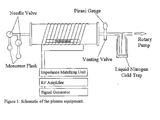
- Plasma polymerisation was carried out onto 96-well microtiter plates using allylamine as a monomer.
- An RF (13.56MHz) power of less than 10W was used with a flow rate between 1-5 cm 3 stp min -1 and a reactor pressure of around 2x10 -2 mbar.
- the chemical nature of the deposited film was analysed by X-Ray Photoelectron Spectroscopy (XPS).
- XPS X-Ray Photoelectron Spectroscopy
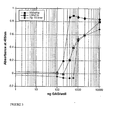
- a biotinylated detector molecule i.e., the Link module from human TSG-6
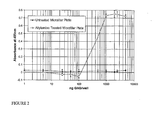
- FIG. 2 compares three different preparations of heparin (i.e., high Mr (HMw Hp; also used in the previous assay), low Mr (LMw Hp) and a defined decasaccharide (Hp 10-mer)) using the same detection system.
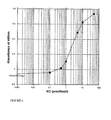
- Figure 4 shows an assay with a different detector protein (the mouse chemokine KC; where binding was determined using a biotinylated antibody), at a range of concentrations, with HMw Hp coated at 500 ng/well.
- the binding assays in figures 2 and 3 were conducted at pH 6.0, whereas, the experiment in figure 4 was performed at pH 7.2.
Landscapes
- Health & Medical Sciences (AREA)
- Life Sciences & Earth Sciences (AREA)
- Immunology (AREA)
- Molecular Biology (AREA)
- Engineering & Computer Science (AREA)
- Urology & Nephrology (AREA)
- Biomedical Technology (AREA)
- Chemical & Material Sciences (AREA)
- Hematology (AREA)
- Food Science & Technology (AREA)
- General Physics & Mathematics (AREA)
- Cell Biology (AREA)
- Biotechnology (AREA)
- Medicinal Chemistry (AREA)
- Physics & Mathematics (AREA)
- Analytical Chemistry (AREA)
- Biochemistry (AREA)
- General Health & Medical Sciences (AREA)
- Microbiology (AREA)
- Pathology (AREA)
- Treatments Of Macromolecular Shaped Articles (AREA)
- Materials For Medical Uses (AREA)
- Apparatus Associated With Microorganisms And Enzymes (AREA)
- Polysaccharides And Polysaccharide Derivatives (AREA)
- Prostheses (AREA)
- Investigating Or Analysing Biological Materials (AREA)
Claims (12)
- Verfahren zum Immobilisieren mindestens eines Typs eines Kohlenhydratmoleküls, umfassend die folgenden Schritte:i) Bereitstellen einer polymerisierbaren Allylaminmonomer-Quelle;ii) Erzeugen eines Plasmas des polymerisierbaren Allylaminmonomers;iii) Überziehen einer Oberfläche mit dem Plasma, um eine mit Plasmapolymer überzogene Oberfläche bereitzustellen; undiv) Kontaktherstellen der mit Polymer überzogenen Oberfläche mit einer Kohlenhydratlösung, die mindestens einen Typ eines biologisch aktiven Kohlenhydratmoleküls umfasst, wobei das Kohlenhydratmolekül ein Glykosaminoglykan ist, das aus der Gruppe ausgewählt ist bestehend aus Hyaluronan, Dermatansulfat, Chondroitinsulfat, Heparin, Heparansulfat und Keratansulfat.
- Verfahren nach Anspruch 1, wobei das Plasmapolymer abgeschieden wird von einem Plasma mit W/FM < 109 J/kg und idealerweise < 108 J/kg und noch besser < 107 J/kg, mit W = Leistung (J/Min), F = Strömungsrate (Mol/Min) und M = mittlere Molekülmasse (kg/Mol).
- Verfahren nach Anspruch 1 oder 2, wobei die Oberfläche Teil eines Biosensors ist.
- Verfahren nach Anspruch 1 oder 2, wobei die Oberfläche Teil eines therapeutischen Vehikels ist.
- Verfahren nach Anspruch 1 oder 2, wobei die Oberfläche Teil einer Vorrichtung ist, wobei die Vorrichtung zum Einsatz in der Entnahme biologischer Proben von einem Tier, vorzugsweise einem Menschen ist.
- Verfahren nach Anspruch 1 oder 2, wobei die Oberfläche Teil einer Affinitätsreinigungsmatrix ist.
- Verfahren nach Anspruch 1 oder 2, wobei die Oberfläche Teil eines Microarray ist.
- Biosensor, der eine durch ein Verfahren nach einem der Ansprüche 1, 2 oder 3 erhaltene Oberfläche umfasst.
- Therapeutisches Vehikel, das eine durch ein Verfahren nach einem der Ansprüche 1, 2 oder 4 erhaltene Oberfläche umfasst.
- Probenentnahmevorrichtung, die eine durch ein Verfahren nach einem der Ansprüche 1, 2 oder 5 erhaltene Oberfläche umfasst.
- Affinitätsreinigungsmatrix, die eine durch ein Verfahren nach einem der Ansprüche 1, 2 oder 6 erhaltene Oberfläche umfasst.
- Microarray, das eine durch ein Verfahren nach einem der Ansprüche 1, 2 oder 7 erhaltene Oberfläche umfasst.
Applications Claiming Priority (3)
| Application Number | Priority Date | Filing Date | Title |
|---|---|---|---|
| GB0225197 | 2002-10-30 | ||
| GBGB0225197.3A GB0225197D0 (en) | 2002-10-30 | 2002-10-30 | Surface |
| PCT/GB2003/004653 WO2004040308A1 (en) | 2002-10-30 | 2003-10-29 | Sugar binding surface |
Publications (2)
| Publication Number | Publication Date |
|---|---|
| EP1556696A1 EP1556696A1 (de) | 2005-07-27 |
| EP1556696B1 true EP1556696B1 (de) | 2014-07-23 |
Family
ID=9946825
Family Applications (1)
| Application Number | Title | Priority Date | Filing Date |
|---|---|---|---|
| EP03809772.1A Expired - Lifetime EP1556696B1 (de) | 2002-10-30 | 2003-10-29 | Zucker bindende oberfläche |
Country Status (9)
| Country | Link |
|---|---|
| US (1) | US20060251693A1 (de) |
| EP (1) | EP1556696B1 (de) |
| JP (1) | JP5153995B2 (de) |
| CN (1) | CN100475363C (de) |
| AU (1) | AU2003301706B2 (de) |
| CA (1) | CA2542354C (de) |
| GB (1) | GB0225197D0 (de) |
| NZ (1) | NZ539224A (de) |
| WO (1) | WO2004040308A1 (de) |
Families Citing this family (11)
| Publication number | Priority date | Publication date | Assignee | Title |
|---|---|---|---|---|
| US7148343B2 (en) * | 2001-10-12 | 2006-12-12 | Gentra Systems, Inc. | Compositions and methods for using a solid support to purify RNA |
| GB0408351D0 (en) * | 2004-04-15 | 2004-05-19 | Plasso Technology Ltd | Reversible binding surface |
| AU2005258281A1 (en) * | 2004-06-24 | 2006-01-05 | The Scripps Research Institute | Arrays with cleavable linkers |
| JP5390772B2 (ja) | 2004-11-05 | 2014-01-15 | キアゲン ノース アメリカン ホールディングス, インコーポレイテッド | 核酸を安定化試薬から精製するための組成物および方法 |
| EP2152417B1 (de) * | 2007-05-04 | 2018-07-11 | Opko Diagnostics, LLC | Vorrichtung und methode für analysen in mikrofluidsysteme |
| US8288118B2 (en) | 2007-09-19 | 2012-10-16 | Becton, Dickinson And Company | Method of analyzing various surface chemistries for culturing a given cell line |
| US8288513B2 (en) * | 2008-07-25 | 2012-10-16 | Becton, Dickinson And Company | Defined cell culturing surfaces and methods of use |
| US8802603B2 (en) | 2010-06-17 | 2014-08-12 | Becton, Dickinson And Company | Medical components having coated surfaces exhibiting low friction and low reactivity |
| GB2528856A (en) * | 2014-07-31 | 2016-02-10 | P2I Ltd | Binding surfaces |
| GB201513097D0 (en) | 2015-07-24 | 2015-09-09 | Univ Sheffield | Medical implant |
| FR3039548B1 (fr) * | 2015-07-30 | 2019-05-31 | Centre National De La Recherche Scientifique (C.N.R.S) | Nouveau procede de polymerisation de sucres |
Citations (1)
| Publication number | Priority date | Publication date | Assignee | Title |
|---|---|---|---|---|
| US4326532A (en) * | 1980-10-06 | 1982-04-27 | Minnesota Mining And Manufacturing Company | Antithrombogenic articles |
Family Cites Families (23)
| Publication number | Priority date | Publication date | Assignee | Title |
|---|---|---|---|---|
| US4362532A (en) * | 1981-08-11 | 1982-12-07 | Conoco Inc. | Production of blast furnace coke via novel briquetting system |
| CA1215676A (en) * | 1983-04-27 | 1986-12-23 | Terry S. Dunn | Heparinization of plasma treated substrates |
| US4632842A (en) * | 1985-06-20 | 1986-12-30 | Atrium Medical Corporation | Glow discharge process for producing implantable devices |
| JP2681653B2 (ja) * | 1988-05-13 | 1997-11-26 | 台糖株式会社 | 抗エイズウィルス剤 |
| US5262451A (en) * | 1988-06-08 | 1993-11-16 | Cardiopulmonics, Inc. | Multifunctional thrombo-resistant coatings and methods of manufacture |
| US4865870A (en) * | 1988-07-07 | 1989-09-12 | Becton, Dickinson And Company | Method for rendering a substrate surface antithrombogenic |
| US5455040A (en) * | 1990-07-26 | 1995-10-03 | Case Western Reserve University | Anticoagulant plasma polymer-modified substrate |
| DE69125828T2 (de) * | 1991-05-21 | 1997-07-31 | Hewlett Packard Gmbh | Verfahren zur Vorbehandlung der Oberfläche eines medizinischen Artikels |
| US5571166A (en) * | 1992-03-19 | 1996-11-05 | Medtronic, Inc. | Method of making an intraluminal stent |
| IL106922A (en) * | 1992-09-14 | 1998-08-16 | Novartis Ag | Composite materials with one or more wettable surfaces and process for their preparation |
| SE9301270D0 (sv) * | 1993-04-19 | 1993-04-17 | Biosensor | |
| US6022602A (en) * | 1994-01-26 | 2000-02-08 | Neomecs Incorporated | Plasma modification of lumen surface of tubing |
| US5925552A (en) * | 1996-04-25 | 1999-07-20 | Medtronic, Inc. | Method for attachment of biomolecules to medical devices surfaces |
| WO1998029126A1 (en) * | 1996-12-27 | 1998-07-09 | Sherwood Medical Company | Anticoagulant composition |
| US6776792B1 (en) * | 1997-04-24 | 2004-08-17 | Advanced Cardiovascular Systems Inc. | Coated endovascular stent |
| US5876730A (en) * | 1997-08-07 | 1999-03-02 | Childrens Hospital Research Foundation | Heparin-binding growth factor (HBGF) polypeptides |
| US6335029B1 (en) * | 1998-08-28 | 2002-01-01 | Scimed Life Systems, Inc. | Polymeric coatings for controlled delivery of active agents |
| US6159531A (en) * | 1999-08-30 | 2000-12-12 | Cardiovasc, Inc. | Coating having biological activity and medical implant having surface carrying the same and method |
| GB9925016D0 (en) * | 1999-10-23 | 1999-12-22 | Univ Sheffield | Binding surface |
| US6613432B2 (en) * | 1999-12-22 | 2003-09-02 | Biosurface Engineering Technologies, Inc. | Plasma-deposited coatings, devices and methods |
| US20020098513A1 (en) * | 2000-02-17 | 2002-07-25 | Glycominds Ltd. | Combinatorial complex carbohydrate libraries and methods for the manufacture and uses thereof |
| US6632470B2 (en) * | 2001-01-31 | 2003-10-14 | Percardia | Methods for surface modification |
| WO2003030958A1 (en) * | 2001-10-06 | 2003-04-17 | Celltran Limited | Corneal graft |
-
2002
- 2002-10-30 GB GBGB0225197.3A patent/GB0225197D0/en not_active Ceased
-
2003
- 2003-10-29 WO PCT/GB2003/004653 patent/WO2004040308A1/en not_active Ceased
- 2003-10-29 CA CA2542354A patent/CA2542354C/en not_active Expired - Fee Related
- 2003-10-29 EP EP03809772.1A patent/EP1556696B1/de not_active Expired - Lifetime
- 2003-10-29 AU AU2003301706A patent/AU2003301706B2/en not_active Expired
- 2003-10-29 CN CNB2003801024554A patent/CN100475363C/zh not_active Expired - Fee Related
- 2003-10-29 JP JP2004547780A patent/JP5153995B2/ja not_active Expired - Fee Related
- 2003-10-29 US US10/533,063 patent/US20060251693A1/en not_active Abandoned
- 2003-10-29 NZ NZ539224A patent/NZ539224A/en not_active IP Right Cessation
Patent Citations (1)
| Publication number | Priority date | Publication date | Assignee | Title |
|---|---|---|---|---|
| US4326532A (en) * | 1980-10-06 | 1982-04-27 | Minnesota Mining And Manufacturing Company | Antithrombogenic articles |
Also Published As
| Publication number | Publication date |
|---|---|
| GB0225197D0 (en) | 2002-12-11 |
| CA2542354A1 (en) | 2004-05-13 |
| JP2006504822A (ja) | 2006-02-09 |
| JP5153995B2 (ja) | 2013-02-27 |
| US20060251693A1 (en) | 2006-11-09 |
| WO2004040308A1 (en) | 2004-05-13 |
| AU2003301706B2 (en) | 2009-10-22 |
| CA2542354C (en) | 2014-04-22 |
| NZ539224A (en) | 2008-03-28 |
| AU2003301706A1 (en) | 2004-05-25 |
| CN100475363C (zh) | 2009-04-08 |
| EP1556696A1 (de) | 2005-07-27 |
| CN1708688A (zh) | 2005-12-14 |
Similar Documents
| Publication | Publication Date | Title |
|---|---|---|
| Slomkowski et al. | New types of microspheres and microsphere‐related materials for medical diagnostics | |
| EP1556696B1 (de) | Zucker bindende oberfläche | |
| US5773488A (en) | Hydrophilization of hydrophobic polymers | |
| Maccarana et al. | Mode of interaction between platelet factor 4 and heparin | |
| VandeVondele et al. | RGD‐grafted poly‐l‐lysine‐graft‐(polyethylene glycol) copolymers block non‐specific protein adsorption while promoting cell adhesion | |
| Bilek | Biofunctionalization of surfaces by energetic ion implantation: review of progress on applications in implantable biomedical devices and antibody microarrays | |
| US5455040A (en) | Anticoagulant plasma polymer-modified substrate | |
| US6852818B1 (en) | Molecularly imprinted polymers produced by template polymerization | |
| US8623610B2 (en) | Chondroitin sulfate binding proteins and modulators thereof | |
| WO1994010938A9 (en) | Anticoagulant plasma polymer-modified substrate | |
| Katan et al. | Solid phase peptide synthesis on chitosan thin films | |
| Mahoney et al. | A method for the non-covalent immobilization of heparin to surfaces | |
| EP1735090B1 (de) | Reversible bindungsfläche | |
| CA2849352A1 (en) | Photoreactor and process for preparing mip nanoparticles | |
| CN108129687B (zh) | 一种表面为磷酰胆碱的仿细胞外层膜结构涂层的制备方法 | |
| Yuan et al. | Immobilization of high‐affinity heparin oligosaccharides to radiofrequency plasma‐modified polyethylene | |
| NZ518609A (en) | Binding surface for biological assays | |
| CN105837730B (zh) | 一种结合层层组装技术和主客体相互作用构建生物活性表面的方法 | |
| WO2017215683A1 (en) | Method of preparation of a substrate containing carboxybetaine groups and bound bioactive substances which is resistant against undesirable deposition from biological media | |
| Díez-Buitrago et al. | Modification of chlorosulfonated polystyrene substrates for bioanalytical applications | |
| Seeberger | Glycan arrays and other tools produced by automated glycan assembly | |
| CN101070401A (zh) | 一种具有核壳结构的糖基化聚丙烯微球的制备方法及其应用 | |
| Schulte et al. | On‐Demand Cell Sheet Release with Low Density Peptide‐Functionalized Non‐LCST Polymer Brushes | |
| Hu et al. | Construction of glycosylated surfaces for poly (propylene) beads with a photoinduced grafting/chemical reaction sequence | |
| JPH08317785A (ja) | 糖鎖の固定化法及びそれを用いた細胞培養基材 |
Legal Events
| Date | Code | Title | Description |
|---|---|---|---|
| PUAI | Public reference made under article 153(3) epc to a published international application that has entered the european phase |
Free format text: ORIGINAL CODE: 0009012 |
|
| 17P | Request for examination filed |
Effective date: 20050503 |
|
| AK | Designated contracting states |
Kind code of ref document: A1 Designated state(s): AT BE BG CH CY CZ DE DK EE ES FI FR GB GR HU IE IT LI LU MC NL PT RO SE SI SK TR |
|
| AX | Request for extension of the european patent |
Extension state: AL LT LV MK |
|
| DAX | Request for extension of the european patent (deleted) | ||
| RAP1 | Party data changed (applicant data changed or rights of an application transferred) |
Owner name: BECTON, DICKINSON AND COMPANY |
|
| RAP1 | Party data changed (applicant data changed or rights of an application transferred) |
Owner name: CORNING INCORPORATED |
|
| REG | Reference to a national code |
Ref country code: DE Ref legal event code: R079 Ref document number: 60346543 Country of ref document: DE Free format text: PREVIOUS MAIN CLASS: G01N0033543000 Ipc: G01N0033548000 |
|
| RIC1 | Information provided on ipc code assigned before grant |
Ipc: G01N 33/548 20060101AFI20131021BHEP |
|
| GRAP | Despatch of communication of intention to grant a patent |
Free format text: ORIGINAL CODE: EPIDOSNIGR1 |
|
| INTG | Intention to grant announced |
Effective date: 20140317 |
|
| GRAS | Grant fee paid |
Free format text: ORIGINAL CODE: EPIDOSNIGR3 |
|
| GRAA | (expected) grant |
Free format text: ORIGINAL CODE: 0009210 |
|
| AK | Designated contracting states |
Kind code of ref document: B1 Designated state(s): AT BE BG CH CY CZ DE DK EE ES FI FR GB GR HU IE IT LI LU MC NL PT RO SE SI SK TR |
|
| REG | Reference to a national code |
Ref country code: GB Ref legal event code: FG4D |
|
| REG | Reference to a national code |
Ref country code: CH Ref legal event code: EP |
|
| REG | Reference to a national code |
Ref country code: IE Ref legal event code: FG4D |
|
| REG | Reference to a national code |
Ref country code: AT Ref legal event code: REF Ref document number: 679140 Country of ref document: AT Kind code of ref document: T Effective date: 20140815 |
|
| REG | Reference to a national code |
Ref country code: DE Ref legal event code: R096 Ref document number: 60346543 Country of ref document: DE Effective date: 20140828 |
|
| REG | Reference to a national code |
Ref country code: AT Ref legal event code: MK05 Ref document number: 679140 Country of ref document: AT Kind code of ref document: T Effective date: 20140723 |
|
| REG | Reference to a national code |
Ref country code: NL Ref legal event code: VDEP Effective date: 20140723 |
|
| PG25 | Lapsed in a contracting state [announced via postgrant information from national office to epo] |
Ref country code: ES Free format text: LAPSE BECAUSE OF FAILURE TO SUBMIT A TRANSLATION OF THE DESCRIPTION OR TO PAY THE FEE WITHIN THE PRESCRIBED TIME-LIMIT Effective date: 20140723 Ref country code: PT Free format text: LAPSE BECAUSE OF FAILURE TO SUBMIT A TRANSLATION OF THE DESCRIPTION OR TO PAY THE FEE WITHIN THE PRESCRIBED TIME-LIMIT Effective date: 20141124 Ref country code: BG Free format text: LAPSE BECAUSE OF FAILURE TO SUBMIT A TRANSLATION OF THE DESCRIPTION OR TO PAY THE FEE WITHIN THE PRESCRIBED TIME-LIMIT Effective date: 20141023 Ref country code: FI Free format text: LAPSE BECAUSE OF FAILURE TO SUBMIT A TRANSLATION OF THE DESCRIPTION OR TO PAY THE FEE WITHIN THE PRESCRIBED TIME-LIMIT Effective date: 20140723 Ref country code: SE Free format text: LAPSE BECAUSE OF FAILURE TO SUBMIT A TRANSLATION OF THE DESCRIPTION OR TO PAY THE FEE WITHIN THE PRESCRIBED TIME-LIMIT Effective date: 20140723 Ref country code: GR Free format text: LAPSE BECAUSE OF FAILURE TO SUBMIT A TRANSLATION OF THE DESCRIPTION OR TO PAY THE FEE WITHIN THE PRESCRIBED TIME-LIMIT Effective date: 20141024 |
|
| PG25 | Lapsed in a contracting state [announced via postgrant information from national office to epo] |
Ref country code: NL Free format text: LAPSE BECAUSE OF FAILURE TO SUBMIT A TRANSLATION OF THE DESCRIPTION OR TO PAY THE FEE WITHIN THE PRESCRIBED TIME-LIMIT Effective date: 20140723 Ref country code: CY Free format text: LAPSE BECAUSE OF FAILURE TO SUBMIT A TRANSLATION OF THE DESCRIPTION OR TO PAY THE FEE WITHIN THE PRESCRIBED TIME-LIMIT Effective date: 20140723 Ref country code: AT Free format text: LAPSE BECAUSE OF FAILURE TO SUBMIT A TRANSLATION OF THE DESCRIPTION OR TO PAY THE FEE WITHIN THE PRESCRIBED TIME-LIMIT Effective date: 20140723 |
|
| REG | Reference to a national code |
Ref country code: DE Ref legal event code: R097 Ref document number: 60346543 Country of ref document: DE |
|
| PG25 | Lapsed in a contracting state [announced via postgrant information from national office to epo] |
Ref country code: IT Free format text: LAPSE BECAUSE OF FAILURE TO SUBMIT A TRANSLATION OF THE DESCRIPTION OR TO PAY THE FEE WITHIN THE PRESCRIBED TIME-LIMIT Effective date: 20140723 Ref country code: SK Free format text: LAPSE BECAUSE OF FAILURE TO SUBMIT A TRANSLATION OF THE DESCRIPTION OR TO PAY THE FEE WITHIN THE PRESCRIBED TIME-LIMIT Effective date: 20140723 Ref country code: DK Free format text: LAPSE BECAUSE OF FAILURE TO SUBMIT A TRANSLATION OF THE DESCRIPTION OR TO PAY THE FEE WITHIN THE PRESCRIBED TIME-LIMIT Effective date: 20140723 Ref country code: EE Free format text: LAPSE BECAUSE OF FAILURE TO SUBMIT A TRANSLATION OF THE DESCRIPTION OR TO PAY THE FEE WITHIN THE PRESCRIBED TIME-LIMIT Effective date: 20140723 Ref country code: CZ Free format text: LAPSE BECAUSE OF FAILURE TO SUBMIT A TRANSLATION OF THE DESCRIPTION OR TO PAY THE FEE WITHIN THE PRESCRIBED TIME-LIMIT Effective date: 20140723 Ref country code: RO Free format text: LAPSE BECAUSE OF FAILURE TO SUBMIT A TRANSLATION OF THE DESCRIPTION OR TO PAY THE FEE WITHIN THE PRESCRIBED TIME-LIMIT Effective date: 20140723 |
|
| REG | Reference to a national code |
Ref country code: DE Ref legal event code: R119 Ref document number: 60346543 Country of ref document: DE |
|
| PG25 | Lapsed in a contracting state [announced via postgrant information from national office to epo] |
Ref country code: LU Free format text: LAPSE BECAUSE OF FAILURE TO SUBMIT A TRANSLATION OF THE DESCRIPTION OR TO PAY THE FEE WITHIN THE PRESCRIBED TIME-LIMIT Effective date: 20141029 Ref country code: MC Free format text: LAPSE BECAUSE OF FAILURE TO SUBMIT A TRANSLATION OF THE DESCRIPTION OR TO PAY THE FEE WITHIN THE PRESCRIBED TIME-LIMIT Effective date: 20140723 |
|
| PLBE | No opposition filed within time limit |
Free format text: ORIGINAL CODE: 0009261 |
|
| REG | Reference to a national code |
Ref country code: CH Ref legal event code: PL |
|
| STAA | Information on the status of an ep patent application or granted ep patent |
Free format text: STATUS: NO OPPOSITION FILED WITHIN TIME LIMIT |
|
| GBPC | Gb: european patent ceased through non-payment of renewal fee |
Effective date: 20141029 |
|
| PG25 | Lapsed in a contracting state [announced via postgrant information from national office to epo] |
Ref country code: BE Free format text: LAPSE BECAUSE OF NON-PAYMENT OF DUE FEES Effective date: 20141031 |
|
| 26N | No opposition filed |
Effective date: 20150424 |
|
| REG | Reference to a national code |
Ref country code: IE Ref legal event code: MM4A |
|
| PG25 | Lapsed in a contracting state [announced via postgrant information from national office to epo] |
Ref country code: CH Free format text: LAPSE BECAUSE OF NON-PAYMENT OF DUE FEES Effective date: 20141031 Ref country code: GB Free format text: LAPSE BECAUSE OF NON-PAYMENT OF DUE FEES Effective date: 20141029 Ref country code: LI Free format text: LAPSE BECAUSE OF NON-PAYMENT OF DUE FEES Effective date: 20141031 Ref country code: DE Free format text: LAPSE BECAUSE OF NON-PAYMENT OF DUE FEES Effective date: 20150501 |
|
| REG | Reference to a national code |
Ref country code: FR Ref legal event code: ST Effective date: 20150630 |
|
| PG25 | Lapsed in a contracting state [announced via postgrant information from national office to epo] |
Ref country code: FR Free format text: LAPSE BECAUSE OF NON-PAYMENT OF DUE FEES Effective date: 20141031 |
|
| PG25 | Lapsed in a contracting state [announced via postgrant information from national office to epo] |
Ref country code: IE Free format text: LAPSE BECAUSE OF NON-PAYMENT OF DUE FEES Effective date: 20141029 |
|
| PG25 | Lapsed in a contracting state [announced via postgrant information from national office to epo] |
Ref country code: SI Free format text: LAPSE BECAUSE OF FAILURE TO SUBMIT A TRANSLATION OF THE DESCRIPTION OR TO PAY THE FEE WITHIN THE PRESCRIBED TIME-LIMIT Effective date: 20140723 |
|
| PG25 | Lapsed in a contracting state [announced via postgrant information from national office to epo] |
Ref country code: HU Free format text: LAPSE BECAUSE OF FAILURE TO SUBMIT A TRANSLATION OF THE DESCRIPTION OR TO PAY THE FEE WITHIN THE PRESCRIBED TIME-LIMIT; INVALID AB INITIO Effective date: 20031029 Ref country code: TR Free format text: LAPSE BECAUSE OF FAILURE TO SUBMIT A TRANSLATION OF THE DESCRIPTION OR TO PAY THE FEE WITHIN THE PRESCRIBED TIME-LIMIT Effective date: 20140723 Ref country code: BE Free format text: LAPSE BECAUSE OF FAILURE TO SUBMIT A TRANSLATION OF THE DESCRIPTION OR TO PAY THE FEE WITHIN THE PRESCRIBED TIME-LIMIT Effective date: 20140723 |