EP1555771B1 - Verfahren und Vorrichtung zur Zuweisung von Zeitschlitzen in einem TDD-System - Google Patents
Verfahren und Vorrichtung zur Zuweisung von Zeitschlitzen in einem TDD-System Download PDFInfo
- Publication number
- EP1555771B1 EP1555771B1 EP05008682A EP05008682A EP1555771B1 EP 1555771 B1 EP1555771 B1 EP 1555771B1 EP 05008682 A EP05008682 A EP 05008682A EP 05008682 A EP05008682 A EP 05008682A EP 1555771 B1 EP1555771 B1 EP 1555771B1
- Authority
- EP
- European Patent Office
- Prior art keywords
- time slot
- transmitting
- time
- receiving
- time slots
- Prior art date
- Legal status (The legal status is an assumption and is not a legal conclusion. Google has not performed a legal analysis and makes no representation as to the accuracy of the status listed.)
- Expired - Lifetime
Links
- 238000000034 method Methods 0.000 title claims description 12
- 238000004891 communication Methods 0.000 claims description 36
- 230000001419 dependent effect Effects 0.000 claims 2
- 230000005540 biological transmission Effects 0.000 description 8
- 229920006395 saturated elastomer Polymers 0.000 description 3
- 238000010276 construction Methods 0.000 description 1
- 244000144992 flock Species 0.000 description 1
- 238000010295 mobile communication Methods 0.000 description 1
- 238000000926 separation method Methods 0.000 description 1
Images
Classifications
-
- H—ELECTRICITY
- H04—ELECTRIC COMMUNICATION TECHNIQUE
- H04B—TRANSMISSION
- H04B7/00—Radio transmission systems, i.e. using radiation field
- H04B7/24—Radio transmission systems, i.e. using radiation field for communication between two or more posts
- H04B7/26—Radio transmission systems, i.e. using radiation field for communication between two or more posts at least one of which is mobile
- H04B7/2643—Radio transmission systems, i.e. using radiation field for communication between two or more posts at least one of which is mobile using time-division multiple access [TDMA]
-
- H—ELECTRICITY
- H04—ELECTRIC COMMUNICATION TECHNIQUE
- H04B—TRANSMISSION
- H04B7/00—Radio transmission systems, i.e. using radiation field
- H04B7/24—Radio transmission systems, i.e. using radiation field for communication between two or more posts
- H04B7/26—Radio transmission systems, i.e. using radiation field for communication between two or more posts at least one of which is mobile
- H04B7/2643—Radio transmission systems, i.e. using radiation field for communication between two or more posts at least one of which is mobile using time-division multiple access [TDMA]
- H04B7/2656—Radio transmission systems, i.e. using radiation field for communication between two or more posts at least one of which is mobile using time-division multiple access [TDMA] for structure of frame, burst
Definitions
- the present invention relates to a communication method and unit for communicating in a time division duplex communication system.
- the receiving and the transmitting channels are separated on a time basis.
- the information is transmitted in time frames of a length of 10 ms having 24 time slots.
- the first 12 time slots are used for the downlink connection, that is the transmission of data from a base station to a mobile station.
- the last 12 time slots are used for the uplink connection, that is for the transmission of data from a mobile station to the base station.
- a combination of a frequency division duplex and a time division duplex is used.
- the information is transmitted in time frames having 8 time slots, whereby the uplink connection is provided in a lower frequency band and the downlink connection is provided in a higher frequency band.
- Each of the 8 time slots in each frame is assigned to a different mobile station.
- the time slots assigned to a certain mobile station within a downlink time frame are separated from the time slots assigned to the same mobile station in the uplink time frame by two time slots.
- the fourth time slot in an uplink time frame is assigned to the same mobile station.
- JP 05153033-A such a TD digital mobile telecommunication system is disclosed, in which the same frequency for transmitting and receiving information is used. 1 to N time slots within one uplink time frame are allocated to one mobile station and 1 to N time slots within one downlink time frame are allocated to one mobile station depending on the information volume to be transferred between the mobile station and a base station.
- Each frame is allocated either to the uplink transfer of data or the downlink transfer of data.
- the uplink time frames cannot e used for a downlink transfer of data, so that a strong asymmetric transmission of information with a large difference between the amount of uplink data and the amount of downlink data is not possible.
- the document EP 0 670 640 A discloses a radio communications system of the DECT type, whereby said system operates with a TDMA/TDD structure and with time slots for transmission of, inter alia, data. Moreover, two adjacent time slots are combined to form a double time slot.
- the object of the present invention is therefore to provide a communication method and a communication unit for transmitting and receiving information in a time division duplex communication system, which allow a simple and efficient time slot allocation for varying transfer information amounts.
- the transmitting time slot is an uplink time slot for transmitting data or information from the mobile station to a base station
- the receiving time slot 2 is a downlink time slot for transmitting data from the base station to the mobile station.
- the transmitting time slot 1 and the receiving time slot 2 are thus assigned to a certain pair of communication units, e.g. a base station and a mobile station.
- the base station can thereby be part of the multiple access communication system, in which one frame is assigned to several mobile stations.
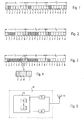
- the fixed block comprising the transmitting time slot 1 and the receiving time slot 2 is always on a fixed position.
- the six remaining time slots 3 to 8 in each frame are not used for transferring information. Since the transmitting time slot 1 is placed in advance of the receiving time slot 2, this slot allocation can cope with timing advance as explained above. For a base station, the timing advance is adjusted by adjusting the timing of the time slots transmitted from the base station to the mobile station.
- the first frame F 1 , the next frame F 2 and the third frame F 3 are not saturated since only the transmitting time slot 1 and the transmitting time slot 2 of the fixed flock are used to transfer information in each of the frames.
- the last time slot 8 of the third frame F 3 is an additional transmitting time slot of the fixed block of the fourth frame F 4 of figure 4 .
- the time slots to be transmitted or received may not come in a regular interval.
- the pattern of the slot allocation is maintained and continued over at least several frames, e.g. two frames F 1 and F 2 as shown in figure 1 .
- the slot allocation pattern changes for the succeeding frames F 4 , F 5 and F 6 .
- the pattern of the slot allocation is advantageously not changed frame by frame, but is changed only, when the required data amount to be transferred is changed. This is the case for the time frame shown in figure 2 , in which the data amount to be transferred is reduced to one transmitting time slot from frame F 4 to frame F 5 and the receiving time slot 2 from frame F 5 to frame F 6 .
- the time slots 3 and 4 being used as additional receiving time slots and the time slot 8 being used as additional transmitting time slot in the time frame F 4 can be assigned to a second mobile station, when the transmitting time slot 1 and the receiving time slot 2 or the fixed block are assigned to a first mobile station.
- the time slots 3 and 4 can also be allocated to a second mobile station and a third mobile station, respectively.
- the maximum information transfer rate can e achieved by using all the time slots in each time frame for transferring data, as shown in figure 3 for the time frame F 7 .
- the transmitting time slot 1 and the receiving time slot 2 are still on their fixed position at the beginning of each time frame.
- the time slots 3 to 7 of the frame F 7 are used as additional receiving time slots. Thereby, the different time slots 3 to 7 can be assigned or allocated to different mobile stations.
- An additional transmitting time slot 8 is also used in the time frame F 7 , so that the last additional receiving time slot 7 and the succeeding additional transmitting time slot 8 are adjacent to each other.
- FIG. 4 shows a section of figure 3 with the last additional receiving time slot 7 and the additional transmitting time slot 8 of the preceding frame F 7 as well as the transmitting time slot 1 of the succeeding time frame F 8 .
- the last portion of the receiving time slot 7 is emptied and used as a guard period to enable an earlier transmission of the additional transmitting time slot 8. It has to be understood, that the timing advance problem only occurs, when a receiving time slot and a succeeding transmitting time slot are adjacent to each other, which are assigned to the same mobile station. It is therefore advantageous, not to allocate successive transmitting and receiving time slots to one mobile station in this case.
- the communication unit 10 can e.g. be a mobile station or a base station of a mobile telecommunication system.
- the communication unit 10 comprises an antenna 11, through which information modulated onto respective carrier frequencies can be transmitted and received.
- the communication unit 10 comprises a receiving means 12, which receives incoming information through the antenna 11 and supplies the received information to a control unit 13, in which the received information are demodulated, decoded, etc.
- the control unit 13 comprises an allocation means 15, in which the time slots of the predetermined time frames are allocated depending on the amount of information to be transferred as receiving or transmitting time slots according to the method explained above.
- the control unit 13 can thus also comprise a means for determining the amount of information to be transferred, i.e. received or transmitted to give corresponding information to the allocation means 15, so that the allocation means 15 correspondingly allocates the time slots as receiving or transmitting time slots depending an the amount of transfer information.
- the allocation means 15 of the control unit 13 allocates the time slots according to the slot allocation method explained above in relation to figures 1 to 4 . Thereafter, the control unit 13 provides a transmission means 14 with corresponding information to be transmitted within the correspondingly allocated time slots by means of the antenna 11 to another communication unit.
- the control unit 13 can further comprise a guard period means 16, which, in case that an additional receiving time slot and an additional transmitting time slot become adjacent to each other, e.g. in the case shown in figures 3 and 4 , provides a guard period in at least one of said adjacent additional time slots. As stated above, this situation becomes only relevant in the case that the preceding receiving time slot and the succeeding transmitting time slot are assigned to the same communication unit 10. In this case it is advantageous, if the guard period means 16 provides said guard period at the end of said additional receiving time slots, e.g. the additional receiving time slot 7 of time frame F 7 , shown in figure 3 and 4 .
Landscapes
- Engineering & Computer Science (AREA)
- Computer Networks & Wireless Communication (AREA)
- Signal Processing (AREA)
- Time-Division Multiplex Systems (AREA)
- Mobile Radio Communication Systems (AREA)
- Bidirectional Digital Transmission (AREA)
Claims (8)
- Kommunikationsverfahren zum Übertragen und Empfangen von Information in einem Zeitmultiplex-Duplex-Kommunikationssystem, bei dem die Information in vorher festgelegten Zeitrahmen (F) übertragen wird, welche eine vorher festgelegte Anzahl von Zeitschlitzen haben, wobei das Verfahren den Schritt aufweist des
Zuordnens der Zeitschlitze als Empfangszeitschlitze und Übertragungszeitschlitze, wobei zuerst ein Paar, das aus einem Übertragungszeitschlitz und einem Empfangszeitschlitz unmittelbar nach dem Übertragungszeitschlitz besteht, in jedem Rahmen zugeordnet wird, wobei, wenn die zu übermittelnde Informationsmenge sich ändert, die Gesamtzahl zugeordneter Zeitschlitze durch Hinzufügen zusätzlicher Empfangszeitschlitze nach dem erwähnten Empfangszeitschlitz und durch Hinzufügen von zusätzlichen Übertragungszeitschlitzen vor dem erwähnten Übertragungszeitschlitz dynamisch geändert wird,
weiterhin den Schritt aufweist des Zuordnens von zumindest dem Zeitschlitz (8) unmittelbar vor dem ersten Übertragungszeitschlitz (1) in dem unmittelbar nachfolgenden Zeitrahmen (Fj+1) als zusätzlichen Übertragungszeitschlitz abhängig von der zu übermittelnden Informationsmenge, wobei der letzte Zeitschlitz des Zeitrahmens nicht als Empfangszeitschlitz zugeordnet wird und die Zuordnung der Zeitschlitze für alle Zeitschlitze des Rahmens durchgeführt wurde, und
wobei jeder Zeitrahmen (F1, F2,...),
einen der zusätzlichen Empfangszeitschlitze umfasst, wobei der zusätzliche Empfangszeitschlitz unmittelbar von einem Übertragungszeitschlitz gefolgt ist, wobei dieser Übertragungszeitschlitz einer der zusätzlichen Übertragungszeitschlitze oder Teil des nachfolgenden Zeitrahmens ist,
wobei eine Sicherheitsperiode (17) in dem zusätzlichen Empfangszeitschlitz oder dem Übertragungszeitschlitz unmittelbar nach dem zusätzlichen Empfangszeitschlitz vorgesehen ist, und der zusätzliche Empfangszeitschlitz und der Übertragungszeitschlitz unmittelbar nach dem zusätzlichen Empfangszeitschlitz der gleichen Kommunikationseinheit (10) zugeordnet sind. - Kommunikationsverfahren gemäß Anspruch 1, weiterhin aufweisend, dass die Anzahl der Empfangszeitschlitze und die Anzahl der Übertragungszeitschlitze unabhängig voneinander sind.
- Kommunikationsverfahren gemäß Anspruch 1 oder 2, weiterhin aufweisend, dass in den benachbarten Empfangs- und Übertragungszeitschlitzen ein Empfangszeitschlitz (7) vorausgeht und ein Übertragungszeitschlitz nachfolgt.
- Kommunikationsverfahren gemäß Anspruch 3, weiterhin aufweisend, dass die Sicherheitsperiode (17) an dem Ende des Empfangszeitschlitzes (7) vorgesehen ist.
- Kommunikationseinheit (10) zum Übertragen und Empfangen von Information in einem Zeitmultiplex-Duplex-Kommunikationssystem, bei dem die Information in vorher festgelegten Zeitrahmen (F) übertragen wird, welche eine vorher festgelegte Anzahl von Zeitschlitzen haben, mit einer Zuordnungseinrichtung (15) zum Zuordnen der Zeitschlitze als Empfangszeitschlitze und Übertragungszeitschlitze, wobei zuerst ein Paar, das aus einem Übertragungszeitschlitz und einem Empfangszeitschlitz unmittelbar nach dem Übertragungszeitschlitz besteht, in jedem Rahmen zugeordnet wird, einer Bestimmungseinrichtung zum Bestimmen einer zu übertragenden Informationsmenge, wobei die Schlitzzuweisung durch die Zuordnungseinrichtung (15) geändert wird, wenn sich die zu übermittelnde Informationsmenge ändert,
wobei die Gesamtzahl zugeordneter Zeitschlitze dynamisch geändert wird indem die Zuordnungseinrichtung (15) zusätzliche Empfangszeitschlitze nach dem erwähnten Empfangszeitschlitz und zusätzliche Übertragungszeitschlitze vor dem erwähnten Übertragungszeitschlitz hinzufügt,
wobei zumindest der Zeitschlitz (8) unmittelbar vor dem ersten Übertragungszeitschlitz (1) in dem unmittelbar nachfolgenden Zeitrahmen (Fj+1) als zusätzlicher Übertragungszeitschlitz abhängig von der zu übertragenden Informationsmenge zugeordnet wird, wobei der letzte Zeitschlitz des Zeitrahmens nicht als Empfangszeitschlitz zugeordnet wird und die Zuordnung der Zeitschlitze für alle Zeitschlitze des Rahmens durchgeführt wurde und,
wobei jeder Zeitrahmen (F1, F2, ...) einen der zusätzlichen Empfangszeitschlitze umfasst, wobei der zusätzliche Empfangszeitschlitz unmittelbar von einem Übertragungszeitschlitz gefolgt ist, wobei dieser Übertragungszeitschlitz einer der zusätzlichen Übertragungszeitschlitze oder Teil des nachfolgenden Zeitrahmens ist,
wobei eine Sicherheitsperiode-Einrichtung (16), die Teil der Kommunikationseinheit (10) ist, eine Sicherheitsperiode (17) in dem zusätzlichen Empfangszeitschlitz oder dem Übertragungszeitschlitz unmittelbar nach dem zusätzlichen Empfangszeitschlitz bereitstellt, und der zusätzliche Empfangszeitschlitz und der Übertragungszeitschlitz unmittelbar nach dem zusätzlichen Empfangszeitschlitz der gleichen Kommunikationseinheit (10) zugeordnet sind. - Kommunikationseinheit (10) gemäß Anspruch 5, weiterhin aufweisend, dass die Anzahl der Empfangszeitschlitze und die Anzahl der Übertragungszeitschlitze unabhängig voneinander sind.
- Kommunikationseinheit (10) gemäß Anspruch 5 oder 6, weiterhin aufweisend, dass in den benachbarten Empfangs- und Übertragungszeitschlitzen ein Empfangszeitschlitz vorausgeht und ein Übertragungszeitschlitz nachfolgt.
- Kommunikationseinheit (10) gemäß Anspruch 7, weiterhin aufweisend, dass die Sicherheitsperioden-Einrichtung (16) die Sicherheitsperiode (17) an dem Ende des Empfangszeitschlitzes (7) bereitstellt.
Priority Applications (3)
| Application Number | Priority Date | Filing Date | Title |
|---|---|---|---|
| DE69841950T DE69841950D1 (de) | 1998-03-31 | 1998-03-31 | Verfahren und Vorrichtung zur Zuweisung von Zeitschlitzen in einem TDD-System |
| EP10168939.6A EP2230779B1 (de) | 1998-03-31 | 1998-03-31 | Verfahren und Vorrichtung zur Zuweisung von Zeitschlitzen in einem TDD-System |
| EP11184095.5A EP2405595B1 (de) | 1998-03-31 | 1998-03-31 | Kommunikationsverfahren und Einheit zur Kommunikation in einem TDD-System |
Applications Claiming Priority (1)
| Application Number | Priority Date | Filing Date | Title |
|---|---|---|---|
| EP98105892A EP0948147B1 (de) | 1998-03-31 | 1998-03-31 | Verfahren und Vorrichtung zur Zuweisung von Zeitschlitzen in einem TDD-System |
Related Parent Applications (2)
| Application Number | Title | Priority Date | Filing Date |
|---|---|---|---|
| EP98105892.8 Division | 1998-03-31 | ||
| EP98105892A Division EP0948147B1 (de) | 1998-03-31 | 1998-03-31 | Verfahren und Vorrichtung zur Zuweisung von Zeitschlitzen in einem TDD-System |
Related Child Applications (3)
| Application Number | Title | Priority Date | Filing Date |
|---|---|---|---|
| EP11184095.5A Division EP2405595B1 (de) | 1998-03-31 | 1998-03-31 | Kommunikationsverfahren und Einheit zur Kommunikation in einem TDD-System |
| EP10168939.6A Division EP2230779B1 (de) | 1998-03-31 | 1998-03-31 | Verfahren und Vorrichtung zur Zuweisung von Zeitschlitzen in einem TDD-System |
| EP10168939.6 Division-Into | 2010-07-08 |
Publications (2)
| Publication Number | Publication Date |
|---|---|
| EP1555771A1 EP1555771A1 (de) | 2005-07-20 |
| EP1555771B1 true EP1555771B1 (de) | 2010-10-13 |
Family
ID=8231693
Family Applications (4)
| Application Number | Title | Priority Date | Filing Date |
|---|---|---|---|
| EP05008682A Expired - Lifetime EP1555771B1 (de) | 1998-03-31 | 1998-03-31 | Verfahren und Vorrichtung zur Zuweisung von Zeitschlitzen in einem TDD-System |
| EP11184095.5A Expired - Lifetime EP2405595B1 (de) | 1998-03-31 | 1998-03-31 | Kommunikationsverfahren und Einheit zur Kommunikation in einem TDD-System |
| EP10168939.6A Expired - Lifetime EP2230779B1 (de) | 1998-03-31 | 1998-03-31 | Verfahren und Vorrichtung zur Zuweisung von Zeitschlitzen in einem TDD-System |
| EP98105892A Expired - Lifetime EP0948147B1 (de) | 1998-03-31 | 1998-03-31 | Verfahren und Vorrichtung zur Zuweisung von Zeitschlitzen in einem TDD-System |
Family Applications After (3)
| Application Number | Title | Priority Date | Filing Date |
|---|---|---|---|
| EP11184095.5A Expired - Lifetime EP2405595B1 (de) | 1998-03-31 | 1998-03-31 | Kommunikationsverfahren und Einheit zur Kommunikation in einem TDD-System |
| EP10168939.6A Expired - Lifetime EP2230779B1 (de) | 1998-03-31 | 1998-03-31 | Verfahren und Vorrichtung zur Zuweisung von Zeitschlitzen in einem TDD-System |
| EP98105892A Expired - Lifetime EP0948147B1 (de) | 1998-03-31 | 1998-03-31 | Verfahren und Vorrichtung zur Zuweisung von Zeitschlitzen in einem TDD-System |
Country Status (4)
| Country | Link |
|---|---|
| US (2) | US6577641B1 (de) |
| EP (4) | EP1555771B1 (de) |
| JP (1) | JP4268721B2 (de) |
| DE (2) | DE69838971T2 (de) |
Families Citing this family (37)
| Publication number | Priority date | Publication date | Assignee | Title |
|---|---|---|---|---|
| JP3446946B2 (ja) | 1999-05-12 | 2003-09-16 | 日本電気株式会社 | データ通信システム及びタイムスロット割当方法並びにタイムスロット割当制御プログラムを格納した記憶媒体 |
| FI109508B (fi) * | 1999-09-28 | 2002-08-15 | Nokia Corp | Menetelmä Abis-rajapinnan transmissiokanavien allokoimiseksi pakettisolukkoradioverkossa ja pakettisolukkoradioverkon verkko-osa |
| US7006477B1 (en) * | 1999-12-10 | 2006-02-28 | Lucent Technologies Inc. | Method for interleaving of half rate channels suitable for half duplex operation and statistical multiplexing |
| US8321542B1 (en) * | 2000-05-05 | 2012-11-27 | Ipr Licensing, Inc. | Wireless channel allocation in a base station processor |
| JP2002009780A (ja) * | 2000-06-16 | 2002-01-11 | Mitsubishi Electric Corp | 動的帯域割当システム及び動的帯域割当方法 |
| JP3526265B2 (ja) * | 2000-09-29 | 2004-05-10 | 松下電器産業株式会社 | データ通信装置及びデータ通信方法 |
| KR20020034640A (ko) * | 2000-11-02 | 2002-05-09 | 윤종용 | 협대역 시분할 코드 분할 다중 접속 시스템에서 부프레임전송 타임 슬럿을 랜덤하게 제어하는 장치 및 방법 |
| EP1211823A1 (de) * | 2000-11-24 | 2002-06-05 | Siemens Aktiengesellschaft | Zeitmultiplexverfahren zur Datenübertragung |
| JP2002232940A (ja) * | 2001-02-05 | 2002-08-16 | Ntt Docomo Inc | タイムスロット割り当て装置、タイムスロット割り当て方法、移動体通信システム及びその動作方法、プログラム、記録媒体 |
| GB2383233B (en) * | 2001-12-15 | 2004-01-07 | Motorola Inc | An apparatus for allocating timeslots and method therefor |
| FR2848057B1 (fr) * | 2002-12-03 | 2005-03-18 | Sagem | Procede d'optimisation de debit bidirectionnel pour telephones mobiles fonctionnant selon un systeme tdma |
| US7633927B2 (en) * | 2003-01-31 | 2009-12-15 | Nokia Corporation | System and method for extending neighboring cell search window |
| KR100556843B1 (ko) * | 2003-04-18 | 2006-03-10 | 엘지전자 주식회사 | 이동 통신 단말기의 업/다운 링크 동기화 장치 및 방법 |
| WO2005109705A1 (en) * | 2004-05-01 | 2005-11-17 | Neocific, Inc. | Methods and apparatus for communication with time-division duplexing |
| GB2414897B (en) * | 2004-06-02 | 2009-07-01 | Vodafone Plc | Circuit-switched communication system and method |
| US7260100B1 (en) | 2005-08-08 | 2007-08-21 | Rockwell Collins, Inc. | System and method for net formation and merging in ad hoc networks |
| US8009605B1 (en) | 2005-08-08 | 2011-08-30 | Rockwell Collins, Inc. | Low power, programmable modem for software defined radio applications |
| US7430192B1 (en) | 2005-08-08 | 2008-09-30 | Rockwell Collins, Inc. | Net formation-merging system and method |
| US7969919B1 (en) | 2005-08-08 | 2011-06-28 | Rockwell Collins, Inc. | System and method for thermal load sharing between nodes in a communications network |
| US8139624B1 (en) | 2005-08-25 | 2012-03-20 | Rockwell Collins, Inc. | System and method for providing multiple ad hoc communication networks on a hardware channel |
| KR100698615B1 (ko) * | 2005-08-31 | 2007-03-22 | 삼성전자주식회사 | 멀티홉 애드호크 통신에서의 비콘 스케쥴링 방법 |
| US7839948B2 (en) * | 2005-12-02 | 2010-11-23 | Qualcomm Incorporated | Time slicing techniques for variable data rate encoding |
| EP1964332B1 (de) * | 2005-12-19 | 2013-09-25 | Gigaset Communications GmbH | Verfahren zum übertragen von teilnehmerspezifischen daten |
| US7912134B2 (en) * | 2006-07-21 | 2011-03-22 | Intel Corporation | Frame building in the presence of ARQ-enabled traffic |
| EP2153673B1 (de) * | 2007-05-02 | 2020-01-01 | Tyco Fire & Security GmbH | Drahtloses kommunikationssystem |
| US8204025B2 (en) * | 2007-11-09 | 2012-06-19 | Zte (Usa) Inc. | Flexible OFDM/OFDMA frame structure for communication systems |
| WO2009110545A1 (ja) * | 2008-03-06 | 2009-09-11 | 京セラ株式会社 | 通信方法およびそれを利用した基地局装置 |
| US8526460B2 (en) * | 2008-10-01 | 2013-09-03 | Harris Corporation | Systems and methods for scheduling asynchronous tasks to residual channel space |
| US8181184B2 (en) * | 2008-10-17 | 2012-05-15 | Harris Corporation | System and method for scheduling tasks in processing frames |
| KR102107677B1 (ko) * | 2012-07-10 | 2020-05-07 | 한국전자통신연구원 | 무선랜 시스템에서 플렉서블한 전송 슬롯 할당 방법 및 장치 |
| US9253773B2 (en) | 2013-08-29 | 2016-02-02 | Motorola Solutions, Inc. | Method and apparatus for wirelessly transacting simultaneous voice and data on adjacent timeslots |
| ES2726935T3 (es) | 2013-12-04 | 2019-10-10 | Ericsson Telefon Ab L M | Acortamiento de subtrama de enlace descendiente en los sistemas dúplex por división de tiempo (TDD) |
| EP4311127A3 (de) | 2013-12-04 | 2024-04-10 | Telefonaktiebolaget LM Ericsson (publ) | Uplink-subframe-kürzung in zeitduplex (tdd)-systemen |
| JP2015139178A (ja) * | 2014-01-24 | 2015-07-30 | 富士通株式会社 | 無線通信システム、無線通信方法、中継局、及び、無線基地局 |
| US11533719B2 (en) * | 2019-11-01 | 2022-12-20 | Verizon Patent And Licensing Inc. | Systems and methods for managing uplink and downlink throughput |
| CN115769539B (zh) * | 2020-08-06 | 2025-01-10 | Lg电子株式会社 | 在支持半双工频分双工的无线通信系统中发送或接收数据的方法及其设备 |
| US20230422256A1 (en) * | 2022-06-27 | 2023-12-28 | Qualcomm Incorporated | Physical layer association of extended reality data |
Family Cites Families (26)
| Publication number | Priority date | Publication date | Assignee | Title |
|---|---|---|---|---|
| JPS58154947A (ja) * | 1982-03-10 | 1983-09-14 | Nec Corp | 時分割多元接続による無線回線の時間軸調整方式 |
| US5629940A (en) * | 1985-11-27 | 1997-05-13 | Seiko Communications Holding N.V. | Transmitting and receiving long messages in a wireless one-way communication system while reserving selected slots for short messages |
| GB2232326A (en) * | 1989-05-26 | 1990-12-05 | Philips Electronic Associated | Data transmission over a tdm duplex frequency channel |
| GB2232562A (en) * | 1989-05-26 | 1990-12-12 | Philips Electronic Associated | Data transmission over a tdm duplex channel |
| JPH05153033A (ja) | 1991-11-30 | 1993-06-18 | Nec Corp | Tdd方式デジタル移動電話通信システム |
| FR2700086B1 (fr) * | 1992-12-30 | 1995-04-28 | Alcatel Radiotelephone | Procédé de transmission d'informations à débit élevé par allocation multiple de blocs, procédé de réception associé et dispositif de réception pour sa mise en Óoeuvre. |
| JP3014571B2 (ja) | 1993-09-30 | 2000-02-28 | 松下電器産業株式会社 | 無線通信システム |
| US5444696A (en) * | 1993-10-29 | 1995-08-22 | Pacific Communication Sciences, Inc. | Frame structure using consecutive slot assignments for mobile communications |
| US5420851A (en) | 1993-11-24 | 1995-05-30 | At&T Corp. | Method of multiple access |
| GB9400253D0 (en) * | 1994-01-07 | 1994-03-02 | Philips Electronics Uk Ltd | TDMA communications system |
| SE9400722L (sv) * | 1994-03-03 | 1995-09-04 | Telia Ab | Anordning för att förbättra funktion i radiokommunikationssystem |
| GB9418780D0 (en) * | 1994-09-16 | 1994-11-02 | Ionica L3 Limited | Digital telephony |
| FI96558C (fi) * | 1994-09-27 | 1996-07-10 | Nokia Telecommunications Oy | Menetelmä datasiirtoa varten TDMA-matkaviestinjärjestelmässä sekä menetelmän toteuttava matkaviestinjärjestelmä |
| FI99189C (fi) * | 1994-12-15 | 1997-10-10 | Nokia Telecommunications Oy | Kahta aikaväliä käyttävä liikennekanavajärjestely matkapuhelinjärjestelmässä |
| JPH08279798A (ja) * | 1995-04-06 | 1996-10-22 | Toshiba Corp | 移動通信システム |
| FI101114B (fi) * | 1995-04-25 | 1998-04-15 | Nokia Telecommunications Oy | Epäsymmetrinen suurinopeuksinen datasiirtomenetelmä matkapuhelinverkos sa |
| AT406533B (de) * | 1995-06-26 | 2000-06-26 | Ericsson Austria Ag | Verfahren zur bidirektionalen datenübertragung über eine zweidrahtleitung |
| US5719859A (en) * | 1995-09-19 | 1998-02-17 | Matsushita Electric Industrial Co., Ltd. | Time division multiple access radio communication system |
| US5862132A (en) * | 1996-04-22 | 1999-01-19 | Motorola, Inc. | System and method for multiple access short message communications |
| JPH09307524A (ja) * | 1996-05-15 | 1997-11-28 | Toyota Motor Corp | 双方向通信方式 |
| JP3666155B2 (ja) * | 1996-12-26 | 2005-06-29 | ソニー株式会社 | 通信方法、送信装置及び受信装置 |
| EP0990351B1 (de) * | 1997-06-17 | 2003-03-26 | Siemens Aktiengesellschaft | Verfahren, mobilstation und basisstation zur signalübertragung |
| US6104708A (en) * | 1997-08-11 | 2000-08-15 | Bbn Corporation | Wireless data communications system |
| US6016311A (en) * | 1997-11-19 | 2000-01-18 | Ensemble Communications, Inc. | Adaptive time division duplexing method and apparatus for dynamic bandwidth allocation within a wireless communication system |
| GB2332595B (en) * | 1997-12-17 | 2002-12-04 | Motorola Ltd | Slot allocation in a TDD wireless communications system |
| US6574202B1 (en) * | 1999-07-14 | 2003-06-03 | Lucent Technologies Inc. | Method for interleaving information conveyed in a wireless communication system |
-
1998
- 1998-03-31 EP EP05008682A patent/EP1555771B1/de not_active Expired - Lifetime
- 1998-03-31 DE DE69838971T patent/DE69838971T2/de not_active Expired - Lifetime
- 1998-03-31 EP EP11184095.5A patent/EP2405595B1/de not_active Expired - Lifetime
- 1998-03-31 EP EP10168939.6A patent/EP2230779B1/de not_active Expired - Lifetime
- 1998-03-31 DE DE69841950T patent/DE69841950D1/de not_active Expired - Lifetime
- 1998-03-31 EP EP98105892A patent/EP0948147B1/de not_active Expired - Lifetime
-
1999
- 1999-03-29 US US09/281,097 patent/US6577641B1/en not_active Ceased
- 1999-03-31 JP JP09425999A patent/JP4268721B2/ja not_active Expired - Lifetime
-
2005
- 2005-06-09 US US11/149,500 patent/USRE40715E1/en not_active Expired - Lifetime
Also Published As
| Publication number | Publication date |
|---|---|
| EP2405595A1 (de) | 2012-01-11 |
| US6577641B1 (en) | 2003-06-10 |
| DE69841950D1 (de) | 2010-11-25 |
| EP1555771A1 (de) | 2005-07-20 |
| USRE40715E1 (en) | 2009-05-26 |
| EP0948147A1 (de) | 1999-10-06 |
| DE69838971T2 (de) | 2009-01-15 |
| EP2230779A3 (de) | 2011-01-05 |
| EP2230779A2 (de) | 2010-09-22 |
| EP2405595B1 (de) | 2017-12-06 |
| JP4268721B2 (ja) | 2009-05-27 |
| EP2230779B1 (de) | 2017-11-22 |
| JP2000069550A (ja) | 2000-03-03 |
| EP0948147B1 (de) | 2008-01-09 |
| DE69838971D1 (de) | 2008-02-21 |
Similar Documents
| Publication | Publication Date | Title |
|---|---|---|
| EP1555771B1 (de) | Verfahren und Vorrichtung zur Zuweisung von Zeitschlitzen in einem TDD-System | |
| US6741579B1 (en) | Data communication method between base station and mobile terminal in mobile radio communication system | |
| AU727931B2 (en) | Channel allocation method and radio system using a combination of TDMA and CDMA | |
| AU728098B2 (en) | Time division multiple access radio systems | |
| US5594720A (en) | Multiple access cellular communication with dynamic slot allocation and reduced co-channel interferences | |
| AU663604B2 (en) | Multiple cavity tuning of a transmitter output in a communication system | |
| US5301188A (en) | Shared-carrier frequency hopping | |
| US5768254A (en) | Multiple access cellular communication with signal cancellation to reduce co-channel interference | |
| US6584116B1 (en) | Method of transmission in a UMTS mobile telephone network enabling preparation for handover to a GSM cell during a call in a UMTS cell | |
| EP1169877A1 (de) | Kommunikationsnetzwerk und verfahren zur zuteilung von ressourcen für sanftes weiterreichen | |
| KR19990058978A (ko) | 코드분할다중접속 셀룰러 시스템에서 다중코드를 이용한 주파수 간 핸드오프 제어방법 | |
| AU5401696A (en) | An asymmetric high-speed data transmission method in a mobile communications network | |
| EP1459461B8 (de) | Utra tdd zeitschlitzenzuordnung | |
| US5818832A (en) | Rapid synchronization for communication systems | |
| EP1304817B1 (de) | Verfahren zur Sendeleistungsfestlegung, Mobilkommunikationssystem und Basisstation | |
| CA2210170A1 (en) | Integrated cellular voice and digital packet data telecommunications systems and methods for their operation | |
| EP0990362B1 (de) | Kanalzuweisung für ein kommunikationssystem | |
| EP1073217A2 (de) | Zeitschlitz Zuteilungsverfahren | |
| EP1109365A1 (de) | Gerät und verfahren zur funkübertragung | |
| KR20010031496A (ko) | 무선 통신 시스템 및 제어 장치 | |
| EP1063860B1 (de) | Verfahren und System mit Mehrfachzugang in einem Radiokommunikationssystem | |
| JPH11285061A (ja) | 無線送受信方法 | |
| EP0860060B1 (de) | Frequenzzuteilung in einem zellularen telekommunikationsnetz |
Legal Events
| Date | Code | Title | Description |
|---|---|---|---|
| PUAI | Public reference made under article 153(3) epc to a published international application that has entered the european phase |
Free format text: ORIGINAL CODE: 0009012 |
|
| AC | Divisional application: reference to earlier application |
Ref document number: 0948147 Country of ref document: EP Kind code of ref document: P |
|
| AK | Designated contracting states |
Kind code of ref document: A1 Designated state(s): DE FR GB |
|
| RAP1 | Party data changed (applicant data changed or rights of an application transferred) |
Owner name: SONY DEUTSCHLAND GMBH |
|
| RAP1 | Party data changed (applicant data changed or rights of an application transferred) |
Owner name: SONY DEUTSCHLAND GMBH |
|
| 17P | Request for examination filed |
Effective date: 20051124 |
|
| RAP1 | Party data changed (applicant data changed or rights of an application transferred) |
Owner name: SONY DEUTSCHLAND GMBH |
|
| AKX | Designation fees paid |
Designated state(s): DE FR GB |
|
| 17Q | First examination report despatched |
Effective date: 20060119 |
|
| 17Q | First examination report despatched |
Effective date: 20060119 |
|
| GRAP | Despatch of communication of intention to grant a patent |
Free format text: ORIGINAL CODE: EPIDOSNIGR1 |
|
| GRAS | Grant fee paid |
Free format text: ORIGINAL CODE: EPIDOSNIGR3 |
|
| GRAA | (expected) grant |
Free format text: ORIGINAL CODE: 0009210 |
|
| AC | Divisional application: reference to earlier application |
Ref document number: 0948147 Country of ref document: EP Kind code of ref document: P |
|
| AK | Designated contracting states |
Kind code of ref document: B1 Designated state(s): DE FR GB |
|
| REG | Reference to a national code |
Ref country code: GB Ref legal event code: FG4D |
|
| REF | Corresponds to: |
Ref document number: 69841950 Country of ref document: DE Date of ref document: 20101125 Kind code of ref document: P |
|
| PLBE | No opposition filed within time limit |
Free format text: ORIGINAL CODE: 0009261 |
|
| STAA | Information on the status of an ep patent application or granted ep patent |
Free format text: STATUS: NO OPPOSITION FILED WITHIN TIME LIMIT |
|
| 26N | No opposition filed |
Effective date: 20110714 |
|
| REG | Reference to a national code |
Ref country code: DE Ref legal event code: R097 Ref document number: 69841950 Country of ref document: DE Effective date: 20110714 |
|
| REG | Reference to a national code |
Ref country code: FR Ref legal event code: PLFP Year of fee payment: 19 |
|
| REG | Reference to a national code |
Ref country code: FR Ref legal event code: PLFP Year of fee payment: 20 |
|
| PGFP | Annual fee paid to national office [announced via postgrant information from national office to epo] |
Ref country code: DE Payment date: 20170322 Year of fee payment: 20 Ref country code: FR Payment date: 20170322 Year of fee payment: 20 |
|
| PGFP | Annual fee paid to national office [announced via postgrant information from national office to epo] |
Ref country code: GB Payment date: 20170322 Year of fee payment: 20 |
|
| REG | Reference to a national code |
Ref country code: DE Ref legal event code: R071 Ref document number: 69841950 Country of ref document: DE |
|
| REG | Reference to a national code |
Ref country code: GB Ref legal event code: PE20 Expiry date: 20180330 |
|
| PG25 | Lapsed in a contracting state [announced via postgrant information from national office to epo] |
Ref country code: GB Free format text: LAPSE BECAUSE OF EXPIRATION OF PROTECTION Effective date: 20180330 |