EP1548988B1 - Übertragungsgerät und Sende-Empfängersystem - Google Patents
Übertragungsgerät und Sende-Empfängersystem Download PDFInfo
- Publication number
- EP1548988B1 EP1548988B1 EP20040030840 EP04030840A EP1548988B1 EP 1548988 B1 EP1548988 B1 EP 1548988B1 EP 20040030840 EP20040030840 EP 20040030840 EP 04030840 A EP04030840 A EP 04030840A EP 1548988 B1 EP1548988 B1 EP 1548988B1
- Authority
- EP
- European Patent Office
- Prior art keywords
- transmission rate
- data
- resolution
- threshold value
- receiving
- Prior art date
- Legal status (The legal status is an assumption and is not a legal conclusion. Google has not performed a legal analysis and makes no representation as to the accuracy of the status listed.)
- Expired - Lifetime
Links
- 230000005540 biological transmission Effects 0.000 claims description 184
- 230000015556 catabolic process Effects 0.000 description 11
- 238000006731 degradation reaction Methods 0.000 description 11
- 230000006870 function Effects 0.000 description 7
- 230000006835 compression Effects 0.000 description 6
- 238000007906 compression Methods 0.000 description 6
- 230000003287 optical effect Effects 0.000 description 4
- 238000003384 imaging method Methods 0.000 description 3
- 238000010586 diagram Methods 0.000 description 2
- 238000009434 installation Methods 0.000 description 2
- 230000009467 reduction Effects 0.000 description 2
- 230000008859 change Effects 0.000 description 1
- 230000003247 decreasing effect Effects 0.000 description 1
- 230000000694 effects Effects 0.000 description 1
- 230000001788 irregular Effects 0.000 description 1
- 238000012986 modification Methods 0.000 description 1
- 230000004048 modification Effects 0.000 description 1
Images

Classifications
-
- H—ELECTRICITY
- H04—ELECTRIC COMMUNICATION TECHNIQUE
- H04L—TRANSMISSION OF DIGITAL INFORMATION, e.g. TELEGRAPHIC COMMUNICATION
- H04L65/00—Network arrangements, protocols or services for supporting real-time applications in data packet communication
- H04L65/60—Network streaming of media packets
-
- H—ELECTRICITY
- H04—ELECTRIC COMMUNICATION TECHNIQUE
- H04N—PICTORIAL COMMUNICATION, e.g. TELEVISION
- H04N19/00—Methods or arrangements for coding, decoding, compressing or decompressing digital video signals
- H04N19/10—Methods or arrangements for coding, decoding, compressing or decompressing digital video signals using adaptive coding
- H04N19/169—Methods or arrangements for coding, decoding, compressing or decompressing digital video signals using adaptive coding characterised by the coding unit, i.e. the structural portion or semantic portion of the video signal being the object or the subject of the adaptive coding
- H04N19/17—Methods or arrangements for coding, decoding, compressing or decompressing digital video signals using adaptive coding characterised by the coding unit, i.e. the structural portion or semantic portion of the video signal being the object or the subject of the adaptive coding the unit being an image region, e.g. an object
- H04N19/172—Methods or arrangements for coding, decoding, compressing or decompressing digital video signals using adaptive coding characterised by the coding unit, i.e. the structural portion or semantic portion of the video signal being the object or the subject of the adaptive coding the unit being an image region, e.g. an object the region being a picture, frame or field
-
- H—ELECTRICITY
- H04—ELECTRIC COMMUNICATION TECHNIQUE
- H04N—PICTORIAL COMMUNICATION, e.g. TELEVISION
- H04N19/00—Methods or arrangements for coding, decoding, compressing or decompressing digital video signals
- H04N19/10—Methods or arrangements for coding, decoding, compressing or decompressing digital video signals using adaptive coding
- H04N19/102—Methods or arrangements for coding, decoding, compressing or decompressing digital video signals using adaptive coding characterised by the element, parameter or selection affected or controlled by the adaptive coding
- H04N19/115—Selection of the code volume for a coding unit prior to coding
-
- H—ELECTRICITY
- H04—ELECTRIC COMMUNICATION TECHNIQUE
- H04N—PICTORIAL COMMUNICATION, e.g. TELEVISION
- H04N19/00—Methods or arrangements for coding, decoding, compressing or decompressing digital video signals
- H04N19/10—Methods or arrangements for coding, decoding, compressing or decompressing digital video signals using adaptive coding
- H04N19/102—Methods or arrangements for coding, decoding, compressing or decompressing digital video signals using adaptive coding characterised by the element, parameter or selection affected or controlled by the adaptive coding
- H04N19/132—Sampling, masking or truncation of coding units, e.g. adaptive resampling, frame skipping, frame interpolation or high-frequency transform coefficient masking
-
- H—ELECTRICITY
- H04—ELECTRIC COMMUNICATION TECHNIQUE
- H04N—PICTORIAL COMMUNICATION, e.g. TELEVISION
- H04N19/00—Methods or arrangements for coding, decoding, compressing or decompressing digital video signals
- H04N19/10—Methods or arrangements for coding, decoding, compressing or decompressing digital video signals using adaptive coding
- H04N19/134—Methods or arrangements for coding, decoding, compressing or decompressing digital video signals using adaptive coding characterised by the element, parameter or criterion affecting or controlling the adaptive coding
- H04N19/162—User input
-
- H—ELECTRICITY
- H04—ELECTRIC COMMUNICATION TECHNIQUE
- H04N—PICTORIAL COMMUNICATION, e.g. TELEVISION
- H04N19/00—Methods or arrangements for coding, decoding, compressing or decompressing digital video signals
- H04N19/10—Methods or arrangements for coding, decoding, compressing or decompressing digital video signals using adaptive coding
- H04N19/134—Methods or arrangements for coding, decoding, compressing or decompressing digital video signals using adaptive coding characterised by the element, parameter or criterion affecting or controlling the adaptive coding
- H04N19/164—Feedback from the receiver or from the transmission channel
-
- H—ELECTRICITY
- H04—ELECTRIC COMMUNICATION TECHNIQUE
- H04N—PICTORIAL COMMUNICATION, e.g. TELEVISION
- H04N19/00—Methods or arrangements for coding, decoding, compressing or decompressing digital video signals
- H04N19/50—Methods or arrangements for coding, decoding, compressing or decompressing digital video signals using predictive coding
- H04N19/59—Methods or arrangements for coding, decoding, compressing or decompressing digital video signals using predictive coding involving spatial sub-sampling or interpolation, e.g. alteration of picture size or resolution
-
- H—ELECTRICITY
- H04—ELECTRIC COMMUNICATION TECHNIQUE
- H04N—PICTORIAL COMMUNICATION, e.g. TELEVISION
- H04N19/00—Methods or arrangements for coding, decoding, compressing or decompressing digital video signals
- H04N19/60—Methods or arrangements for coding, decoding, compressing or decompressing digital video signals using transform coding
- H04N19/61—Methods or arrangements for coding, decoding, compressing or decompressing digital video signals using transform coding in combination with predictive coding
-
- H—ELECTRICITY
- H04—ELECTRIC COMMUNICATION TECHNIQUE
- H04N—PICTORIAL COMMUNICATION, e.g. TELEVISION
- H04N21/00—Selective content distribution, e.g. interactive television or video on demand [VOD]
- H04N21/20—Servers specifically adapted for the distribution of content, e.g. VOD servers; Operations thereof
- H04N21/25—Management operations performed by the server for facilitating the content distribution or administrating data related to end-users or client devices, e.g. end-user or client device authentication, learning user preferences for recommending movies
- H04N21/266—Channel or content management, e.g. generation and management of keys and entitlement messages in a conditional access system, merging a VOD unicast channel into a multicast channel
- H04N21/2662—Controlling the complexity of the video stream, e.g. by scaling the resolution or bitrate of the video stream based on the client capabilities
-
- H—ELECTRICITY
- H04—ELECTRIC COMMUNICATION TECHNIQUE
- H04L—TRANSMISSION OF DIGITAL INFORMATION, e.g. TELEGRAPHIC COMMUNICATION
- H04L1/00—Arrangements for detecting or preventing errors in the information received
- H04L1/0001—Systems modifying transmission characteristics according to link quality, e.g. power backoff
- H04L1/0002—Systems modifying transmission characteristics according to link quality, e.g. power backoff by adapting the transmission rate
-
- H—ELECTRICITY
- H04—ELECTRIC COMMUNICATION TECHNIQUE
- H04L—TRANSMISSION OF DIGITAL INFORMATION, e.g. TELEGRAPHIC COMMUNICATION
- H04L12/00—Data switching networks
- H04L12/54—Store-and-forward switching systems
- H04L12/56—Packet switching systems
- H04L12/5601—Transfer mode dependent, e.g. ATM
- H04L2012/5638—Services, e.g. multimedia, GOS, QOS
- H04L2012/5664—Support of Video, e.g. MPEG
-
- H—ELECTRICITY
- H04—ELECTRIC COMMUNICATION TECHNIQUE
- H04L—TRANSMISSION OF DIGITAL INFORMATION, e.g. TELEGRAPHIC COMMUNICATION
- H04L65/00—Network arrangements, protocols or services for supporting real-time applications in data packet communication
- H04L65/60—Network streaming of media packets
- H04L65/61—Network streaming of media packets for supporting one-way streaming services, e.g. Internet radio
- H04L65/613—Network streaming of media packets for supporting one-way streaming services, e.g. Internet radio for the control of the source by the destination
-
- H—ELECTRICITY
- H04—ELECTRIC COMMUNICATION TECHNIQUE
- H04L—TRANSMISSION OF DIGITAL INFORMATION, e.g. TELEGRAPHIC COMMUNICATION
- H04L65/00—Network arrangements, protocols or services for supporting real-time applications in data packet communication
- H04L65/60—Network streaming of media packets
- H04L65/75—Media network packet handling
- H04L65/762—Media network packet handling at the source
-
- H—ELECTRICITY
- H04—ELECTRIC COMMUNICATION TECHNIQUE
- H04L—TRANSMISSION OF DIGITAL INFORMATION, e.g. TELEGRAPHIC COMMUNICATION
- H04L67/00—Network arrangements or protocols for supporting network services or applications
- H04L67/50—Network services
- H04L67/56—Provisioning of proxy services
- H04L67/565—Conversion or adaptation of application format or content
-
- H—ELECTRICITY
- H04—ELECTRIC COMMUNICATION TECHNIQUE
- H04L—TRANSMISSION OF DIGITAL INFORMATION, e.g. TELEGRAPHIC COMMUNICATION
- H04L67/00—Network arrangements or protocols for supporting network services or applications
- H04L67/50—Network services
- H04L67/56—Provisioning of proxy services
- H04L67/565—Conversion or adaptation of application format or content
- H04L67/5651—Reducing the amount or size of exchanged application data
Definitions
- the present invention generally relates to a transmitting apparatus. More specifically, the present invention relates to a transmitting apparatus for transmitting a video signal to a receiving apparatus for displaying pictures.
- This picture image communication apparatus that transmits video signals by way of a transmission channel, as shown in Japanese Laid-Open Patent Application No. 11-177947.
- This picture image communication apparatus is provided with an imaging apparatus as a transmitting apparatus, and a recording display as a receiving apparatus.
- the imaging apparatus compresses the captured image data for each field to generate compressed picture data, assigns a field number to each field of compressed picture data, and transmits the compressed picture data and field numbers.
- the receiving apparatus receives and stores the compressed picture data and the field numbers, determines the reception condition based on the field numbers received. If a poor reception state continues for a certain length of time, the receiving apparatus starts reading solely the even- or odd-numbered fields.
- the receiving apparatus carries out the read operation for each frame.
- Degradation of the display picture which tends to occur when the compressed picture data is transmitted and displayed through a transmission channel with a poor transmission condition, can thereby be alleviated.
- Reference EP-A2-1 058 459 describes a transmission of MPEG encoded video data from a camera to a monitor.
- the video data is encoded employing a layered encoding approach.
- a real time transmission or the transmission of stored image layers is described.
- layers are discarded during transmission in accordance with their relative importance.
- B-type pictures can be discarded from the MPEG encoded video data.
- the present invention provides a transmitting apparatus for transmitting image data signals to a receiving apparatus, the transmitting apparatus being capable of alleviating frame loss and breakup in images displayed by the receiving apparatus even when the transmission condition of the transmission channel is poor.
- the transmitting apparatus is a transmitting apparatus adapted to obtain from a recording medium data to be played, transmit the data to be played to a receiving apparatus, and to receive an incoming transmission data from the receiving apparatus.
- the transmitting apparatus includes a compresser, a baseband unit, a transmitter, a receiver, and a controller.
- the compresser is configured to compress the data to be played such that the compressed data has a preconfigured an resolution.
- the baseband unit is configured to output at a preconfigured outgoing transmission rate the data to be played.
- the transmitter is configured to transmit the data to be played.
- the receiver is configured to receive the incoming transmission rate from the receiving apparatus.
- the controller is operatively coupled to the compresser, the baseband unit, the transmitter, and the receiver, and is configured to adjust at least one of the resolution and the outgoing transmission rate based on the incoming transmission rate of the receiving apparatus.
- the transmission rate (the number of frames or fields transmitted per unit of time) and the resolution are controlled in accordance with the reception condition at the receiving apparatus, so frame or field loss in the video signal received in the receiving apparatus can be alleviated. Therefore, the video signal is received and displayed with substantially no frame or field loss, and frame loss and breakup in the displayed video can be prevented even when the reception condition of the receiving apparatus has worsened because of the poor transmission condition of the transmission channel between the transmitting and receiving apparatuses.
- the controller is configured to reduce one of the resolution and the outgoing transmission rate when the incoming transmission rate falls below a first threshold value.
- the controller is configured to further reduce the other of the resolution and the outgoing transmission rate when the incoming transmission rate falls below a second threshold value, the second threshold value being smaller than the first threshold value.
- the receiver is further configured to receive a selected priority mode from the receiving apparatus, the selected priority mode being either a transmission rate priority mode or a resolution priority mode.
- the controller is configured to reduce the outgoing transmission rate if the selected priority mode is the resolution priority mode, and reduce the resolution if the selected priority mode is the transmission rate priority mode.
- the transmitting apparatus further has a transmission mode receiving device for receiving the selection of a transmission rate priority mode or a resolution priority mode.
- the transmission control device carries out control for reducing the outgoing transmission rate when the reception state signal falls below a first threshold value, and reducing the resolution when the reception state signal additionally falls below a second threshold value in cases in which the resolution priority mode has been selected.
- the transmission control device carries out control for reducing the resolution when the reception state signal falls below a first threshold value, and reducing the outgoing transmission rate when the reception state signal additionally falls below a second threshold value in cases in which the transmission rate priority mode has been selected.
- the priority mode can be pre-selected by default, or if the configuration is such that the user can select the priority mode through the receiving apparatus, a transmission routine can be carried out in the priority mode selected by the user.
- the outgoing transmission rate (the number of frames or fields transmitted per unit of time) and the resolution are controlled in accordance with the reception condition of the receiving apparatus, so frame or field loss in the video signal received in the receiving apparatus can be prevented. Therefore, the video signal can be received and displayed with substantially no frame or field loss, and frame loss and breakup in the display picture can be alleviated even when the receiving condition of the receiving apparatus has worsened because of the poor transmission condition of the transmission channel between the transmitting and receiving apparatuses.
- the transmitting apparatus of the transceiving system further includes a player that is operatively coupled to the receiving side controller and is configured to play the data to be played received from the transmitting apparatus.
- the data to be played includes video data.
- the transmitting apparatus is adapted to obtain video data from a recording medium, transmit the video data to a display apparatus, and to receive an incoming transmission rate data from the display apparatus.
- the transmitting apparatus includes compressing means for compressing the video data such that the compressed data has a preconfigured resolution, encoding means for encoding the compressed video data so as to be transmitted over a wireless network at a preconfigured outgoing transmission rate, transmitting means for transmitting the encoded and compressed video signal as a wireless network radio wave, receiving means for receiving the incoming transmission rate from the display apparatus, and control means for controlling the compressing means and the encoding means so as to reduce the outgoing transmission rate when the incoming transmission rate is smaller than a first threshold value, and to further reduce the resolution of the video data when the incoming transmission rate is smaller than a second threshold value, the second threshold value being smaller than the first threshold value.
- the compressing means compresses the video data in MPEG format
- the encoding means encodes the compressed video data so as to be transmitted over a
- the compressing means compresses the video signal in the MPEG format.
- the encoding means encodes the video data that has been compressed in the MPEG format in conformance with wireless LAN specifications.
- the transmitting means transmits the video signal output from the encoding means as a wireless LAN radio wave.
- the outgoing transmission rate (the number of frames or fields transmitted per unit of time) and the resolution are controlled in accordance with the incoming transmission rate, so frame or field loss in the video signal received in the receiving apparatus can be alleviated. Therefore, the video signal is received and displayed without frame loss, and frame loss and breakup in the display picture can be prevented even when the reception condition at the receiving apparatus has worsened because of the poor condition of the transmission channel between the transmitting and receiving apparatuses.
- frame loss or other degradation is prevented by initially reducing the transmission rate without reducing the resolution; and when the incoming transmission rate is further lowered, frame loss or other degradation is prevented by reducing the resolution in addition to the transmission rate. Frame loss or other degradation can thereby be alleviated without reducing the resolution to as much as possible.
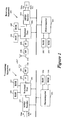
- FIG. 1 is a functional block diagram of a transceiving system according to an embodiment of the present invention.
- the transceiving system has a transmitting apparatus 100 and a receiving apparatus 200.
- the transmitting apparatus 100 is an optical disk apparatus or a videotape apparatus that reads audio and video signals from a DVD or other optical disk, or from videotape or other recording medium, and transmits audio and/or video signals as wireless LAN radio waves.
- the transmitting apparatus 100 may have a recording function, or may have solely a playing function without a recording function.
- the transmitting apparatus 100 in this embodiment is principally provided with a microcomputer 101, an MPEG encoder 104 (an example of the transmitting side compresser and compressing means), a baseband unit 105 (an example of the encoding means), an IF unit 108, an RF unit 109, and an antenna 110 (examples of the transmitter, the receiver, the transmitting side transceiver, transmitting means, and receiving means).
- the microcomputer 101 (an example of the transmitting side controller and the control means) is operatively connected to the MPEG encoder 104 and the baseband unit 105 in a conventional manner so as to be able to selectively control the operation of the MPEG encoder 104 and the baseband unit 105.
- the MPEG encoder 104 encodes (compresses), using the MPEG format, the audio and video signals that are read from the recording medium.
- the compression rate of the MPEG encoder 104 is adjustable, and is controlled by the microcomputer 101. More specifically, the spatial resolution per frame or field is adjusted by changing the compression rate of the MPEG encoder 104.
- the MPEG encoder 104 is used in this embodiment, any other codec can be utilized as long as its compression rate is adjustable.
- the baseband unit 105 is a circuit that encodes and decodes signals in conformance with wireless LAN specifications.
- the baseband unit 105 encodes the audio and video signals output from the MPEG encoder 104 to generate a baseband signal, and decodes the baseband signal output from the IF unit 108.
- the RAM 106 is a memory that is used as a work area for the encoding and decoding routines performed by the baseband unit 105.
- the ROM 107 is a memory in which various parameters used in the routines performed by the baseband unit 105 are stored.
- the baseband unit 105 can vary the number of frames or fields (outgoing transmission rate) of the audio/video data that are transmitted per a unit of time, and the baseband unit 105 is controlled by the microcomputer 101.
- the IF unit 108 converts the baseband signal generated by the baseband unit 105 into an intermediate frequency (IF) signal, outputs the IF signal to an RF (radio frequency) unit 109. Conversely, the IF unit 108 converts the IF signal output from the RF unit 109 into a baseband signal.
- the RF unit 109 converts the IF signal output from the IF unit 108 into an RF signal in a wireless waveband, outputs the RF signal to the antenna 110. Conversely, the RF unit 109 converts the RF signal output from the antenna 110 into an IF signal, and outputs the IF signal to the IF unit 108.
- the antenna 110 converts the audio and video signals into a wireless LAN radio wave and transmits the radio wave.
- the microcomputer 101 reads the audio and video signals from the recording medium, and controls the entire transmitting apparatus 100 including control of the compression ratio of the MPEG encoder 104 and control of the outgoing transmission rate in the baseband unit 105. Also, the microcomputer 101 obtains the incoming transmission rate S described below through the antenna 110, the RF unit 109, the IF unit 108 and the baseband unit 105. The microcomputer 101 also calculates the maximum outgoing transmission rate and the resolution in accordance with the incoming transmission rate S such that the outgoing transmission rate is maximized without exceeding the current transmission bandwidth. The microcomputer 101 then controls the MPEG encoder 104 and the baseband unit 105 so as to achieve the calculated outgoing transmission rate and resolution.
- the RAM 102 is a memory that is used as a work area for routines carried out by the microcomputer 101
- the ROM 107 is a memory in which programs and various parameters used in the routines carried out by the microcomputer 101 are stored.
- the receiving apparatus 200 is preferably an LCD, PDP, or other display apparatus.
- the receiving apparatus 200 displays audio and video signals received from the transmitting apparatus 100 on the display unit (not shown).
- the receiving apparatus 200 is principally provided with a microcomputer 201 (an example of the receiving side controller), an MPEG encoder 204, a baseband unit 205, an IF unit 208, an RF unit 209, and an antenna 210 (examples of the receiving side transceiver).
- the microcomputer 201 is operatively connected in a conventional manner to the baseband unit 205 and the MPEG encoder 204 so as to be able to selectively control the baseband unit 205 and the MPEG encoder 204.
- the receiving apparatus 200 further includes an output device 211 in this embodiment, the receiving apparatus of the present invention can be constituted without an output device and instead be coupled to an external output apparatus.
- the antenna 210 receives the wireless LAN radio waves containing audio and video signals.
- the RF unit 209 converts the RF signal output from the antenna 210 into an IF signal, and outputs the IF signal to the IF unit 208. Conversely, the RF unit 209 converts the IF signal output from the IF unit 208 into an RF signal in a wireless waveband, and outputs the RF signal to the antenna 210.
- the IF unit 208 converts the IF signal output from the RF unit 209 into a baseband signal, and outputs the baseband signal to the baseband unit 205. Conversely, the IF unit 208 converts the baseband signal generated by the baseband unit 205 into an IF signal, and outputs the baseband signal to the RF unit 209.
- the baseband unit 205 is a circuit that decodes the baseband signal output from the IF unit 208, and encodes and decodes signals in conformance with wireless LAN specifications.
- the RAM 206 is a memory that is used as a work area for the encoding and decoding routines performed by the baseband unit 205.
- the ROM 207 is a memory in which programs and various parameters used by the encoding and decoding routines carried out by the baseband unit 205 are stored.
- the MPEG encoder 204 decodes the signal encoded in the baseband unit 205 and outputs the audio and video signals, and these audio and video signals are output from the output device 211 having a display unit and a speaker.
- the microcomputer 201 controls the entire transmitting apparatus 200, including control of the MPEG decoder 204 and control of the baseband unit 205. Also, the microcomputer 201 calculates the incoming transmission rate S on the receiving side, which is the incoming transmission rate of the audio and video signals received by the antenna 210. The incoming transmission rate S is then transmitted to the transmitting apparatus 100 as a wireless LAN radio wave every predetermined period of time through the baseband unit 205, the IF unit 208, and the RF unit 209.
- the RAM 202 is a memory that is used as a work area for routines carried out by the microcomputer 201
- the ROM 207 is a memory in which programs and various parameters used in the routines carried out by the microcomputer 201 are stored.
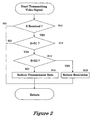
- step S11 a determination is made as to whether the incoming transmission rate S from the receiving apparatus 200 has been received.
- the system returns to the beginning if the incoming transmission rate S has not been received, and advances to step S12 if the incoming transmission rate S has been received.
- step S 12 a determination is made as to whether the incoming transmission rate S is smaller than a first threshold value S1.
- the system returns to the beginning if the incoming transmission rate S is equal to or greater than S1, and advances to step S13 if S is smaller than the first threshold valueS1.
- step S 13 a determination is made as to whether the incoming transmission rate S is smaller than a second threshold value S2.
- This second threshold value S2 is smaller than the first threshold value S1.
- the system advances from step S13 to step S14, and the baseband unit 105 is directed to reduce the outgoing transmission rate.
- the outgoing transmission rate is reduced to a maximum value that does not exceed the current transmission bandwidth.
- step S13 the compression ratio of the MPEG encoder 104 is increased, and the spatial resolution per frame or filed of the video signal to be transmitted is reduced.
- the resolution is reduced to a maximum value that does not exceed the current transmission bandwidth.
- the transmitting apparatus even if the state of the wireless radio waves between the transmitting apparatus 100 and the receiving apparatus 200 worsens and the transmission bandwidth has narrowed due to the installation distance between the transmitting apparatus 100 and the receiving apparatus 200, the shielding between the transmitting apparatus 100 and the receiving apparatus 200, and the radio waves from other wireless equipment, the audio and video signals can be received with substantially no frame or field loss in the receiving apparatus 200. Also, frame loss and breakup in the picture displayed on the receiving apparatus 200 can be prevented because the outgoing transmission rate and resolution are controlled, within a range in which the transmission bandwidth is not exceeded, in accordance with incoming transmission rate S received from the receiving apparatus 200.
- the outgoing transmission rate is initially reduced, and when it is not sufficient to merely reduce the outgoing transmission rate, the resolution is also reduced. In this manner, frame loss and breakup of the displayed image can be alleviated at the receiving apparatus 200, with a minimal amount of degradation in the resolution.
- the transceiving system according to the second embodiment initially reduces the resolution when the incoming transmission rate has decreased. When it is not sufficient to merely reduce the resolution, the outgoing transmission rate is reduced as well.
- the transceiving system according to the second embodiment of the present invention is configured in the same manner as in the first embodiment.
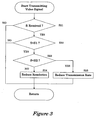
- Steps S21 and S22 are basically the same as step S11 and step S12 of the above-described first embodiment. More specifically, in step S21, a determination is made as to whether the incoming transmission rate S from the receiving apparatus 200 has been received. The system returns to the beginning if the incoming transmission rate S has not been received, and advances to step S22 if the incoming transmission rate S has been received. In step S22, a determination is made as to whether the incoming transmission rate S is smaller than a first threshold value S1. The system returns to the beginning if the incoming transmission rate S is equal to or greater than S1, and advances to step S23 if S is smaller than the first threshold valueS1.
- step S23 a determination is made as to whether the incoming transmission rate S is smaller than a second threshold value S2.
- This second threshold value S2 is smaller than the first threshold value S1.
- the system advances from step S23 to step S24, where the compression ratio of the MPEG encoder 104 is increased, and the spatial resolution per frame or field of the video signal to be transmitted is also reduced.
- the resolution is reduced to a maximum value that does not exceed the current transmission bandwidth. The lower the incoming transmission rate is, the narrower the current transmission bandwidth is. Therefore, the lower the incoming transmission rate S is, the more the resolution is reduced, and the resolution is lowered.
- step S23 When the incoming transmission rate S is smaller than S2 in step S23, the system advances from step S23 to step S25, and the baseband unit 105 is directed to reduce the outgoing transmission rate.
- the outgoing transmission rate is reduced to a maximum value that does not exceed the current transmission bandwidth. The lower the incoming transmission rate is, the narrower the current transmission bandwidth is. Therefore, the lower the incoming transmission rate is, the more the outgoing transmission rate is reduced, and the outgoing transmission rate is lowered.
- the resolution is reduced initially, and when it is not sufficient to merely reduce the resolution, the outgoing transmission rate is also reduced. In this manner, frame loss and breakup of the displayed image are alleviated in the receiving apparatus 200 with a minimal amount of reduction in the outgoing transmission rate.
- the transmitting apparatus receives a selection of transmission rate priority mode or resolution priority mode.
- the transmitting apparatus controls the outgoing transmission rate and resolution in accordance with the selected mode.
- the resolution priority mode is selected, the outgoing transmission rate is initially reduced if the transmission condition is poor, and when it is not sufficient to merely reduce the outgoing transmission rate, the resolution is also reduced.
- the transmission rate priority mode is selected, the resolution is initially reduced if the transmission condition is poor, and when it is not sufficient to merely reduce the resolution, the outgoing transmission rate is also reduced.
- the user can select the priority mode by direct input of data to the transmitting apparatus 200 either with a remote controller or other input device or by direct inputting to the main body of the transmitting apparatus 200.
- the selected mode may be transmitted to the transmitting apparatus 100 by way of the wireless LAN radio waves.
- the user can input data to the transmitting apparatus 100 with a remote controller or by directly operating the transmitting apparatus 100.
- the priority mode may be set to the resolution priority mode (or the transmission rate priority mode) by default, and the user may change the priority mode to the other priority mode.
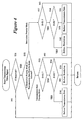
- step S31 Shown in FIG. 4 is the transmission routine according to the present embodiment.
- the processing in step S31 is basically the same as the step S11 in the above-described first embodiment. More specifically, in step S31, a determination is made as to whether the incoming transmission rate S from the receiving apparatus 200 has been received. The system returns to the beginning if the incoming transmission rate S has not been received, and advances to step S32 if the incoming transmission rate S has been received.
- step S32 a determination is made as to whether the transmission mode selected by the user is the resolution priority mode or the transmission rate priority mode.
- the system advances to step S37 and carries out processing in the same manner as the first embodiment.
- the system advances from step S32 to step S38 and then to step S39, and the baseband unit 105 is directed to reduce the outgoing transmission rate.
- the system advances from step S38 to step S40, and the MPEG encoder 104 is directed to reduce the resolution as well.
- step S32 When, on the other hand, the transmission rate priority mode is selected in step S32, the system advances to step S33 and carries out processing in the same manner as the second embodiment.
- the system advances from step S34 to step S35, and the MPEG encoder 104 is directed to reduce the resolution.
- the system advances from step S34 to step S36, and the baseband unit 105 is directed to reduce the outgoing transmission rate.
- one of the resolution and transmission rate is given priority as needed. In this manner; frame loss and breakup of the displayed image can be alleviated with a minimal amount of degradation or reduction of the displayed image.
- FIG. 5 shows various examples of combination of the transmitting apparatus 100 and the receiving apparatus 200.
- the transmitting apparatus 100 can be, aside from the recording apparatuses (optical disk apparatus or videotape apparatus) described above, a tuner that receives analog or digital broadcasting signals and BS, CS, or other satellite broadcast waves, a cable television (CATV) receiver, or other devices. Also, the tuner and the cable television (CATV) receiver may have a recording apparatus.
- the receiving apparatus 200 can be a display apparatus (CRT, LCD, PDP) or the like.
- a recording apparatus optical disk apparatus or videotape apparatus
- a display apparatus such as CRT, LCD, PDP, and other display apparatus, such that the receiving apparatus 200 can receive audio and video signals and output video signals to the display apparatus.
- frame loss and breakup of image data received by the receiving apparatus can be alleviated even when the condition of the transmission channel has worsened.
Landscapes
- Engineering & Computer Science (AREA)
- Multimedia (AREA)
- Signal Processing (AREA)
- Databases & Information Systems (AREA)
- Computer Networks & Wireless Communication (AREA)
- Two-Way Televisions, Distribution Of Moving Picture Or The Like (AREA)
- Compression Or Coding Systems Of Tv Signals (AREA)
Claims (10)
- Sendevorrichtung zum Senden wiederzugebender Bilddaten zu einer Empfangsvorrichtung (200), die umfasst:eine Kompressionseinrichtung (104) zum Komprimieren der zu sendenden wiederzugebenden Daten;eine Codiereinheit (105) zum Codieren der komprimierten Daten,eine Sendeeinheit (108, 109) zum Senden der komprimierten und codierten Daten,eine Empfangseinheit (108, 109) undeine Steuereinheit (101), die funktionell mit der Kompressionseinrichtung (104), der Codiereinheit (105), der Sendeeinheit (108, 109) und der Empfangseinheit (108, 109) verbunden ist, um wenigstens die räumliche Auflösung der wiederzugebenden Daten zum Senden zu der Empfangsvorrichtung (200) zu regulieren,dadurch gekennzeichnet, dass
die Kompressionseinrichtung (104) die wiederzugebenden Daten zum Senden mit einer vorgegebenen Auflösung komprimiert,
die Codiereinheit (105), die komprimierten Daten mit einer vorgegebenen Senderate codiert,
die Empfangseinheit (108, 109) eine eingehende Senderate (S) von der Empfangsvorrichtung (200) empfängt, und
die Steuereinheit (101) die Auflösung und die Senderate der wiederzugebenden Daten auf Basis der empfangenen eingehenden Senderate (S) der Empfangsvorrichtung (200) reguliert. - Sendevorrichtung nach Anspruch 1, wobei die Steuereinheit (101) die Auflösung und die Senderate der wiederzugebenden Daten reguliert, indem sie die eingehende Senderate (S) mit einem vorgespeicherten ersten Schwellenwert (S1) und einem vorgespeicherten zweiten Schwellenwert (S2) vergleicht, so dass entweder die Auflösung oder die Senderate reduziert wird, wenn die eingehende Senderate (S) kleiner ist als der erste Schwellenwert (S1) und der andere Wert, das heißt, die Auflösung oder die Senderate, reduziert wird, wenn die eingehende Senderate (S) kleiner ist als der zweite Schwellenwert (S2), wobei der zweite Schwellenwert (S2) kleiner ist als der erste Schwellenwert (S1).
- Sendevorrichtung nach Anspruch 1 oder 2, wobei
die Empfangseinheit (108, 109) des Weiteren einen ausgewählten Prioritätsmodus von der Empfangsvorrichtung (200) empfängt, der ausgewählte Prioritätsmodus entweder ein Senderaten-Prioritätsmodus oder ein Auflösungs-Prioritätsmodus ist, und
die Steuereinheit so konfiguriert ist, dass sie, wenn die eingehende Senderate unter den ersten Schwellenwert (S1) fällt, die abgehende Senderate reduziert, wenn der ausgewählte Prioritätsmodus der Auflösungs-Prioritätsmodus ist, und die Auflösung reduziert, wenn der ausgewählte Prioritätsmodus der Senderaten-Prioritätsmodus ist. - Sendevorrichtung nach einem der Ansprüche 1 bis 3, wobei die wiederzugebenden Daten Videodaten enthalten.
- Sendevorrichtung nach Anspruch 4, wobei die Kompressionseinrichtung (104) die Videodaten in MPEG-Format komprimiert und die Codiereinrichtung (105) die komprimierten Videodaten so komprimiert, dass sie über ein Drahtlosnetzwerk (WLAN) gesendet werden.
- Sendevorrichtung nach Anspruch 4 oder 5, wobei die Kompressionseinrichtung (104) die Videodaten so komprimiert, dass die Videodaten eine vorgegebene räumliche Auflösung pro Einzelbild oder Halbbild haben, und
die Codiereinheit (105) das komprimierte Videosignal mit einer vorgegebenen Senderate codiert, und die Senderate die Anzahl von Einzelbildern oder Halbbildern des Videosignals definiert, die pro Zeiteinheit gesendet werden. - Sende-Empfangs-System zum Senden eines Videosignals zu einer Empfangsvorrichtung (200), das umfasst:eine Sendevorrichtung (100), die nach einem der Ansprüche 1 bis 6 konfiguriert ist, undeine Empfangsvorrichtung (200), die enthält:einen Empfangsseiten-Sendempfänger (208, 209), der so konfiguriert ist, dass er die wiederzugebenden Daten von der Sendevorrichtung (100) empfängt und eine eingehende Senderate (S) zu der Sendevorrichtung (100) sendet; undeine Empfangsseiten-Steuereinheit (201), die funktionell mit dem Empfangsseiten-Sendempfänger (208, 209) verbunden ist und zum Berechnen der eingehenden Senderate (S) konfiguriert ist.
- Sende-Empfangssystem nach Anspruch 7, wobei die Empfangsvorrichtung (200), des Weiteren eine Wiedergabeeinrichtung enthält, die funktionell mit der Empfangsseiten-Steuereinheit (201) verbunden und zum Wiedergeben der von der Sendevorrichtung (100) empfangenen wiederzugebenden Daten konfiguriert ist.
- Sendeverfahren zum Senden wiederzugebender Bilddaten zu einer Empfangsvorrichtung (200), das die folgenden Schritte umfasst:Komprimieren der wiederzugebenden Daten,Codieren der komprimierten Daten,Senden der komprimierten und codierte Daten, undRegulieren wenigstens der Auflösung der wiederzugebenden Daten zu der Empfangsvorrichtung (200),
gekennzeichnet durch
einen Schritt des Empfangens einer eingehenden Senderate (S) von der Empfangsvorrichtung (200), wobei
der Kompressionsschritt umfasst, dass die wiederzugebenden Daten so komprimiert werden, dass die Daten eine vorgegebene Auflösung haben,
der Codierschritt die komprimierten Daten mit einer vorgegebenen Senderate codiert, und
der Regulierschritt die Auflösung und die Senderate der wiederzugebenden Daten auf Basis der empfangenen eingehenden Senderate (S) der Empfangsvorrichtung (200) reguliert. - Sendeverfahren nach Anspruch 9, wobei der Regulierschritt die folgenden Schritte umfasst:Vergleichen der eingehenden Senderate (S) mit einem vorgespeicherten ersten Schwellenwert (S1) und einem vorgespeicherten zweiten Schwellenwert (S2),Reduzieren der Auflösung oder der Senderate, wenn die eingehende Sendrate (S) kleiner ist als der erste Schwellenwert (S1), undReduzieren des anderen Wertes, d.h. der Auflösung oder der Senderate, wenn die eingehende Senderate (S) kleiner ist als der zweite Schwellenwert (S2), wobei der zweite Schwellenwert (S2) kleiner ist als der erste Schwellenwert (S1).
Applications Claiming Priority (2)
| Application Number | Priority Date | Filing Date | Title |
|---|---|---|---|
| JP2003430882A JP2005191933A (ja) | 2003-12-25 | 2003-12-25 | 送信装置、送受信システム |
| JP2003430882 | 2003-12-25 |
Publications (2)
| Publication Number | Publication Date |
|---|---|
| EP1548988A1 EP1548988A1 (de) | 2005-06-29 |
| EP1548988B1 true EP1548988B1 (de) | 2007-02-28 |
Family
ID=34545037
Family Applications (1)
| Application Number | Title | Priority Date | Filing Date |
|---|---|---|---|
| EP20040030840 Expired - Lifetime EP1548988B1 (de) | 2003-12-25 | 2004-12-27 | Übertragungsgerät und Sende-Empfängersystem |
Country Status (4)
| Country | Link |
|---|---|
| US (1) | US8667178B2 (de) |
| EP (1) | EP1548988B1 (de) |
| JP (1) | JP2005191933A (de) |
| DE (1) | DE602004004992T2 (de) |
Families Citing this family (12)
| Publication number | Priority date | Publication date | Assignee | Title |
|---|---|---|---|---|
| JP4912696B2 (ja) * | 2006-02-28 | 2012-04-11 | パナソニック株式会社 | ビデオデータの無線伝送方式 |
| SG135081A1 (en) * | 2006-03-03 | 2007-09-28 | Matrixview Ltd | Streaming repetition coded compression |
| JP4994698B2 (ja) * | 2006-04-13 | 2012-08-08 | キヤノン株式会社 | 情報伝送装置及び情報伝送方法 |
| US7962182B2 (en) * | 2006-08-25 | 2011-06-14 | Qualcomm Incorporated | Method and apparatus for content delivery to devices |
| US8489136B2 (en) | 2007-01-05 | 2013-07-16 | Aliphcom | Wireless link to transmit digital audio data between devices in a manner controlled dynamically to adapt to variable wireless error rates |
| JP5321269B2 (ja) * | 2009-06-16 | 2013-10-23 | ソニー株式会社 | 画像表示装置、画像表示方法、及びプログラム |
| EP2761869A4 (de) * | 2011-09-30 | 2015-03-18 | Intel Corp | Softwarebasierte wireless-kanalbewusste adaptive videobitratenkodierung |
| WO2013076778A1 (ja) * | 2011-11-25 | 2013-05-30 | 日立コンシューマエレクトロニクス株式会社 | 映像送信装置、映像受信装置、映像送信方法及び映像受信方法 |
| TW201349869A (zh) * | 2012-05-31 | 2013-12-01 | Novatek Microelectronics Corp | 資料傳送系統及方法 |
| US20140204994A1 (en) * | 2013-01-24 | 2014-07-24 | Silicon Image, Inc. | Auxiliary data encoding in video data |
| FR3076158B1 (fr) * | 2017-12-22 | 2020-01-10 | Aviwest | Procede de regulation de debit |
| US11137923B2 (en) * | 2019-07-18 | 2021-10-05 | Alibaba Group Holding Limited | Method and system for data reduction in a storage infrastructure to support a high-ration thin-provisioned service |
Family Cites Families (32)
| Publication number | Priority date | Publication date | Assignee | Title |
|---|---|---|---|---|
| US6041354A (en) * | 1995-09-08 | 2000-03-21 | Lucent Technologies Inc. | Dynamic hierarchical network resource scheduling for continuous media |
| US5956088A (en) | 1995-11-21 | 1999-09-21 | Imedia Corporation | Method and apparatus for modifying encoded digital video for improved channel utilization |
| US5961599A (en) * | 1996-10-15 | 1999-10-05 | Lucent Technologies Inc. | Apparatus and method for computing the processing delay of adaptive applications network terminals and applications thereof |
| US5918002A (en) * | 1997-03-14 | 1999-06-29 | Microsoft Corporation | Selective retransmission for efficient and reliable streaming of multimedia packets in a computer network |
| US6014694A (en) * | 1997-06-26 | 2000-01-11 | Citrix Systems, Inc. | System for adaptive video/audio transport over a network |
| JPH11177947A (ja) | 1997-12-11 | 1999-07-02 | Canon Inc | 画像通信装置、方法及びシステム |
| JP2000350197A (ja) | 1999-06-02 | 2000-12-15 | Hitachi Ltd | 映像伝送方法とそれを用いた監視システム |
| US20020059637A1 (en) | 2000-01-14 | 2002-05-16 | Rakib Selim Shlomo | Home gateway for video and data distribution from various types of headend facilities and including digital video recording functions |
| US7003794B2 (en) * | 2000-06-27 | 2006-02-21 | Bamboo Mediacasting, Inc. | Multicasting transmission of multimedia information |
| EP1182875A3 (de) * | 2000-07-06 | 2003-11-26 | Matsushita Electric Industrial Co., Ltd. | Strömungsverfahren und entsprechendes System |
| US8107524B2 (en) * | 2001-03-30 | 2012-01-31 | Vixs Systems, Inc. | Adaptive bandwidth footprint matching for multiple compressed video streams in a fixed bandwidth network |
| US20070053428A1 (en) * | 2001-03-30 | 2007-03-08 | Vixs Systems, Inc. | Managed degradation of a video stream |
| US7191246B2 (en) * | 2001-07-18 | 2007-03-13 | Sharp Laboratories Of America, Inc. | Transmission rate selection for a network of receivers having heterogenous reception bandwidth |
| US20030198184A1 (en) * | 2001-08-31 | 2003-10-23 | Joe Huang | Method of dynamically determining real-time multimedia streaming rate over a communications networks |
| JP3579403B2 (ja) | 2001-09-06 | 2004-10-20 | 株式会社セル・コーポレーション | 映像伝送ユニット及び映像伝送システム |
| JP3900413B2 (ja) * | 2002-02-14 | 2007-04-04 | Kddi株式会社 | 映像情報伝送方式およびプログラム |
| US7423990B2 (en) * | 2002-06-18 | 2008-09-09 | Vixs Systems Inc. | Dynamically adjusting data rate of wireless communications |
| US7274740B2 (en) * | 2003-06-25 | 2007-09-25 | Sharp Laboratories Of America, Inc. | Wireless video transmission system |
| US7526028B2 (en) * | 2003-07-25 | 2009-04-28 | Taiwan Imaging-Tek Corp. | Motion estimation method and apparatus for video data compression |
| CN1753493A (zh) * | 2004-09-24 | 2006-03-29 | 松下电器产业株式会社 | 无线多媒体通信系统的跨层联合方法 |
| US8356327B2 (en) * | 2004-10-30 | 2013-01-15 | Sharp Laboratories Of America, Inc. | Wireless video transmission system |
| US7962637B2 (en) * | 2006-11-03 | 2011-06-14 | Apple Computer, Inc. | Dynamic adjustments of video streams |
| US8285877B1 (en) * | 2006-12-05 | 2012-10-09 | Nvidia Corporation | Intelligent background data conversion |
| WO2008142774A1 (ja) * | 2007-05-21 | 2008-11-27 | Fujitsu Limited | 中継装置および出力制御方法 |
| US8812712B2 (en) * | 2007-08-24 | 2014-08-19 | Alcatel Lucent | Proxy-driven content rate selection for streaming media servers |
| US8396114B2 (en) * | 2009-01-29 | 2013-03-12 | Microsoft Corporation | Multiple bit rate video encoding using variable bit rate and dynamic resolution for adaptive video streaming |
| US8259816B2 (en) * | 2009-03-12 | 2012-09-04 | MIST Innovations, Inc. | System and method for streaming video to a mobile device |
| FR2954036B1 (fr) * | 2009-12-11 | 2012-01-13 | Thales Sa | Procede et systeme pour la determination de parametres de codage sur des flux a resolution variable |
| EP2779655B1 (de) * | 2010-01-06 | 2019-05-22 | Dolby Laboratories Licensing Corporation | Komplexitätsadaptives skalierbares Dekodieren und Streaming für mehrschichtige Videosysteme |
| WO2012057733A1 (en) * | 2010-10-25 | 2012-05-03 | Hewlett-Packard Development Company, L.P. | Systems, methods, and devices for adjusting video conference parameters to maintain system performance |
| US8990351B2 (en) * | 2011-04-20 | 2015-03-24 | Mobitv, Inc. | Real-time processing capability based quality adaptation |
| US8818171B2 (en) * | 2011-08-30 | 2014-08-26 | Kourosh Soroushian | Systems and methods for encoding alternative streams of video for playback on playback devices having predetermined display aspect ratios and network connection maximum data rates |
-
2003
- 2003-12-25 JP JP2003430882A patent/JP2005191933A/ja active Pending
-
2004
- 2004-12-17 US US11/013,532 patent/US8667178B2/en not_active Expired - Fee Related
- 2004-12-27 DE DE200460004992 patent/DE602004004992T2/de not_active Expired - Lifetime
- 2004-12-27 EP EP20040030840 patent/EP1548988B1/de not_active Expired - Lifetime
Also Published As
| Publication number | Publication date |
|---|---|
| EP1548988A1 (de) | 2005-06-29 |
| DE602004004992D1 (de) | 2007-04-12 |
| US20050141858A1 (en) | 2005-06-30 |
| JP2005191933A (ja) | 2005-07-14 |
| US8667178B2 (en) | 2014-03-04 |
| DE602004004992T2 (de) | 2007-06-14 |
Similar Documents
| Publication | Publication Date | Title |
|---|---|---|
| US10091528B2 (en) | Method and system for scalable video compression and transmission | |
| KR100550567B1 (ko) | 무선 네트워크망을 통해 통신하는 서버 시스템 및 그동작방법 | |
| EP1548988B1 (de) | Übertragungsgerät und Sende-Empfängersystem | |
| US6654498B2 (en) | Image capture apparatus and method operable in first and second modes having respective frame rate/resolution and compression ratio | |
| US7729255B2 (en) | Method of a signal transmission for controlling a quantity of data transmitted and a signal transmission apparatus therefor | |
| US8422565B2 (en) | Information processing device and method, and information processing system | |
| EP1069764A2 (de) | Vorrichtung und Verfahren zur Bildqualitätsauswahl, und Aufzeichnungsträger zur Programmabspeicherung dafür | |
| US5220425A (en) | Image processing apparatus and method having improved control of plural image memories | |
| JP2001510000A (ja) | Mpegストリームのシームレス結合のためのビデオバッファ | |
| WO2004056098A1 (en) | Method for a mosaic program guide | |
| US6345388B1 (en) | Method and apparatus for transmitting and receiving television signal | |
| US20040061805A1 (en) | Receiving apparatus, image display system and broadcasting method | |
| US7327792B2 (en) | Digital video system and control method thereof | |
| US20070297427A1 (en) | Media Gateway | |
| KR20070001080A (ko) | Av 시스템, av 유닛 및 이미지 신호 출력 방법 | |
| JP2008005382A (ja) | 通信システム | |
| US5978039A (en) | Image control method and image control apparatus capable of compensating for disturbed TV image | |
| US20090285547A2 (en) | Sgnal processing apparatus | |
| US7120163B2 (en) | Multiplexing apparatus and method, image output apparatus and method, and recording medium | |
| KR100939913B1 (ko) | 홈네트워크를 이용한 무선 tv 시스템 | |
| JP3341289B2 (ja) | 映像表示装置 | |
| US20060161945A1 (en) | Method for informing video receiving delay and broadcast receiving apparatus thereof | |
| JP2006324960A (ja) | 無線通信装置 | |
| JP2001339720A (ja) | 画像情報変換装置及び方法 | |
| JP2004242061A (ja) | 電子機器及び符号化方式選択方法 |
Legal Events
| Date | Code | Title | Description |
|---|---|---|---|
| PUAI | Public reference made under article 153(3) epc to a published international application that has entered the european phase |
Free format text: ORIGINAL CODE: 0009012 |
|
| AK | Designated contracting states |
Kind code of ref document: A1 Designated state(s): AT BE BG CH CY CZ DE DK EE ES FI FR GB GR HU IE IS IT LI LT LU MC NL PL PT RO SE SI SK TR |
|
| AX | Request for extension of the european patent |
Extension state: AL BA HR LV MK YU |
|
| 17P | Request for examination filed |
Effective date: 20051228 |
|
| AKX | Designation fees paid |
Designated state(s): DE FR GB |
|
| GRAP | Despatch of communication of intention to grant a patent |
Free format text: ORIGINAL CODE: EPIDOSNIGR1 |
|
| GRAS | Grant fee paid |
Free format text: ORIGINAL CODE: EPIDOSNIGR3 |
|
| GRAA | (expected) grant |
Free format text: ORIGINAL CODE: 0009210 |
|
| AK | Designated contracting states |
Kind code of ref document: B1 Designated state(s): DE FR GB |
|
| REG | Reference to a national code |
Ref country code: GB Ref legal event code: FG4D |
|
| REF | Corresponds to: |
Ref document number: 602004004992 Country of ref document: DE Date of ref document: 20070412 Kind code of ref document: P |
|
| ET | Fr: translation filed | ||
| PLBE | No opposition filed within time limit |
Free format text: ORIGINAL CODE: 0009261 |
|
| STAA | Information on the status of an ep patent application or granted ep patent |
Free format text: STATUS: NO OPPOSITION FILED WITHIN TIME LIMIT |
|
| 26N | No opposition filed |
Effective date: 20071129 |
|
| REG | Reference to a national code |
Ref country code: FR Ref legal event code: PLFP Year of fee payment: 12 |
|
| PGFP | Annual fee paid to national office [announced via postgrant information from national office to epo] |
Ref country code: GB Payment date: 20151223 Year of fee payment: 12 |
|
| PGFP | Annual fee paid to national office [announced via postgrant information from national office to epo] |
Ref country code: FR Payment date: 20151110 Year of fee payment: 12 |
|
| PGFP | Annual fee paid to national office [announced via postgrant information from national office to epo] |
Ref country code: DE Payment date: 20151222 Year of fee payment: 12 |
|
| REG | Reference to a national code |
Ref country code: DE Ref legal event code: R119 Ref document number: 602004004992 Country of ref document: DE |
|
| GBPC | Gb: european patent ceased through non-payment of renewal fee |
Effective date: 20161227 |
|
| REG | Reference to a national code |
Ref country code: FR Ref legal event code: ST Effective date: 20170831 |
|
| PG25 | Lapsed in a contracting state [announced via postgrant information from national office to epo] |
Ref country code: FR Free format text: LAPSE BECAUSE OF NON-PAYMENT OF DUE FEES Effective date: 20170102 |
|
| PG25 | Lapsed in a contracting state [announced via postgrant information from national office to epo] |
Ref country code: DE Free format text: LAPSE BECAUSE OF NON-PAYMENT OF DUE FEES Effective date: 20170701 Ref country code: GB Free format text: LAPSE BECAUSE OF NON-PAYMENT OF DUE FEES Effective date: 20161227 |