EP1547422B1 - Verfahren und gerät zum auswählen eines kommunikationssystems - Google Patents
Verfahren und gerät zum auswählen eines kommunikationssystems Download PDFInfo
- Publication number
- EP1547422B1 EP1547422B1 EP03754966A EP03754966A EP1547422B1 EP 1547422 B1 EP1547422 B1 EP 1547422B1 EP 03754966 A EP03754966 A EP 03754966A EP 03754966 A EP03754966 A EP 03754966A EP 1547422 B1 EP1547422 B1 EP 1547422B1
- Authority
- EP
- European Patent Office
- Prior art keywords
- channel
- list
- quality indicator
- channels
- threshold value
- Prior art date
- Legal status (The legal status is an assumption and is not a legal conclusion. Google has not performed a legal analysis and makes no representation as to the accuracy of the status listed.)
- Expired - Lifetime
Links
- 238000004891 communication Methods 0.000 title claims description 141
- 238000000034 method Methods 0.000 title claims description 37
- 230000004044 response Effects 0.000 claims description 16
- 238000010295 mobile communication Methods 0.000 claims description 12
- 230000010267 cellular communication Effects 0.000 description 4
- 230000001413 cellular effect Effects 0.000 description 3
- 230000005236 sound signal Effects 0.000 description 3
- 230000005540 biological transmission Effects 0.000 description 2
- 238000013500 data storage Methods 0.000 description 2
- 238000010586 diagram Methods 0.000 description 2
- 230000006870 function Effects 0.000 description 2
- 238000004519 manufacturing process Methods 0.000 description 2
- 230000008569 process Effects 0.000 description 2
- 230000009471 action Effects 0.000 description 1
- 230000006978 adaptation Effects 0.000 description 1
- 230000006399 behavior Effects 0.000 description 1
- 230000015556 catabolic process Effects 0.000 description 1
- 230000008859 change Effects 0.000 description 1
- 238000006243 chemical reaction Methods 0.000 description 1
- 238000006731 degradation reaction Methods 0.000 description 1
- 230000003111 delayed effect Effects 0.000 description 1
- 238000011156 evaluation Methods 0.000 description 1
- 230000002349 favourable effect Effects 0.000 description 1
- 230000000977 initiatory effect Effects 0.000 description 1
- 238000012544 monitoring process Methods 0.000 description 1
- 230000010363 phase shift Effects 0.000 description 1
- 230000000007 visual effect Effects 0.000 description 1
Images


Classifications
-
- H—ELECTRICITY
- H04—ELECTRIC COMMUNICATION TECHNIQUE
- H04W—WIRELESS COMMUNICATION NETWORKS
- H04W48/00—Access restriction; Network selection; Access point selection
- H04W48/18—Selecting a network or a communication service
-
- H—ELECTRICITY
- H04—ELECTRIC COMMUNICATION TECHNIQUE
- H04W—WIRELESS COMMUNICATION NETWORKS
- H04W36/00—Hand-off or reselection arrangements
- H04W36/24—Reselection being triggered by specific parameters
- H04W36/30—Reselection being triggered by specific parameters by measured or perceived connection quality data
- H04W36/305—Handover due to radio link failure
-
- H—ELECTRICITY
- H04—ELECTRIC COMMUNICATION TECHNIQUE
- H04W—WIRELESS COMMUNICATION NETWORKS
- H04W36/00—Hand-off or reselection arrangements
- H04W36/24—Reselection being triggered by specific parameters
- H04W36/30—Reselection being triggered by specific parameters by measured or perceived connection quality data
-
- H—ELECTRICITY
- H04—ELECTRIC COMMUNICATION TECHNIQUE
- H04W—WIRELESS COMMUNICATION NETWORKS
- H04W48/00—Access restriction; Network selection; Access point selection
- H04W48/16—Discovering, processing access restriction or access information
Definitions
- the present invention relates to communications and more particularly to a method and device of selecting a communication system in a grey zone or the like.
- the US 5,5517,677 describes a scanning technique wherein a microprocessor of a mobile unit activates a signal strength measuring circuit for measuring a signal strength of a carrier of a home channel. If the signal strength of the carrier is not above a predefined threshold the scan queue is accessed to identify a system identification code.
- US 6,289,220 describes a method and a system for generating neighbor cellars in a cellular system. If a received signal strength of a current channel falls below a threshold or is lower than a signal strength of a measured channel of a neighboring cell a mobile switching center or a network controller can initiate a hand-off to the neighboring cell.
- Mobile communications systems such as code division multiple access (CDMA) cellular communication systems and the like, may be limited in capacity by the mobile station or mobile terminal to base station communication path or link or the reverse link.
- CDMA code division multiple access
- the mobile station may be able to receive pages on the forward link, but a page response or access attempt on the reverse link may fail because of interference from other mobile stations communication with the cell. This may be referred to as a "grey zone" condition. Und such conditions, the mobile station may not have sufficient signal strength or transmit power level on the forward link to hold on to a paging channel to which it is tuned.
- the paging channel could be temporarily lost but not for such a time period that the mobile station determines that the system may be lost and that a system reselection process needs to occur.
- the mobile station temporarily losing the paging channel can result in the mobile station failing to receive incoming calls. Although the mobile station senses the availability of services and a sufficiently strong signal, the mobile station may be unable to receive or respond to a page. Outgoing calls may also fail. If the forward link is such that receipt of the paging channel by the mobile station is frequently interrupted, there is a very high likelihood than an access attempt on the reverse link will fail and eventually the system may be lost.
- the grey zone condition described above can occur when a mobile station first powers up and acquires a "most preferred" system from a "preferred roaming list" (PRL) or the mobile station moves or roams into a cell or area and experiences the grey zone condition.
- PRL preferred roaming list
- a method of selecting a communication system my include receiving at least a quality indicator for a channel. Any channels on a channel scan list may be scanned in response to at least the quality indicator of the channel being below a predetermined threshold value, and another channel from the channel scan list may be acquired in response to the other channel having at least the quality indicator greater than or equal to the predetermined threshold value.
- a method of selecting a communication system includes monitoring an E c /I o (ratio of chip energy to interference energy) of a CDMA pilot channel. Any channels on a channel scan list may be scanned to acquire another communication system in response to the E c /I o of the CDMA pilot channel remaining below a predetermined threshold for a predetermined period of time.
- E c /I o ratio of chip energy to interference energy
- a communication device includes a receiver to receive at least a quality indicator for a channel, a channel scan list and a microprocessor.
- the microprocessor may be adapted to cause scanning of any channels in the channel scan list in response to at least the quality indicator of the channel being below a predetermined threshold value.
- the microprocessor may be further adapted to acquire another channel from the channel scan list in response to the other channel having at least the quality indicator greater than the predetermined threshold value.
- a computer-readable medium having computer-executable instructions for performing a method may include receiving at least a quality indicator for a channel. Any channels on a channel scan list may be scanned in response to at least the quality indicator of the channel being below a predetermined threshold value; and another channel from the channel scan list may be acquired in response to the other channel having at least a quality indicator greater than or equal to the predetermined threshold value.
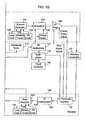
- Figures 1A and 1B are a block diagram of an example of a communication device 100 in which communication system selection may be implemented in accordance with an embodiment of the present invention.
- the communication device 100 shown in Figures 1A and 1B is an example of a CDMA mobile station or cellular phone.
- the present invention may also be applicable to other types of communication devices and communication standards.
- the communication device 100 may have an operator or user interface 102 ( Figure 1A ) to facilitate controlling operation of the communication device 100 including initiating and conducting phone calls and the like.
- the user interface 102 may include a display 104 to provide visual signals to the subscriber or user as to the status and operation of the communication device 100.
- the user interface 102 may also include a keypad 106 and function buttons 108, soft keys or the like.
- the display 104, keypad 106 and function buttons 108 may be coupled to a microprocessor 110 or the like.
- the microprocessor 110 may manage overall operation of the communication device 100 under stored program control using software programs that may be stored in a memory 112.
- the memory 112 or other data storage device or devices 113 may store a "preferred roaming list" 114, a "grey zone channel list” 116 and a "channel scan list” 118.
- the preferred roaming list 114 is a database that may include systems and channels in different geographical areas that are preferred systems or channels for the communication device 100 to acquire and to communicate over because of more favorable roaming charges, fees or the like. There may also be other reasons why a particular system or channel is in the preferred roaming list 114.
- the systems and channels in the preferred roaming list 114 may be listed in order of preference or desirability, so that the communication device 100 will scan and attempt to acquire those systems or channels before others in a particular geographical area.
- the grey zone list 116 may include those channels or systems that are evaluated by the communication device 100 as possibly causing a grey zone condition or whose operating parameters or indicators of communication quality or reliability may fall below predetermined threshold values or a grey zone threshold value. Examples of such communication quality indicators or reliability indicators may include received chip energy to interference noise ratio (E c /I o ) of a pilot channel, received signal strength indicator (RSSI) or the like.
- the grey zone channel list 116 may include a record of the channel number and frequency of any channels placed on the grey zone list 116. An E c /I o , RSSI or other communication quality indicator or parameter associated with the channel may also be recorded on the list 116.
- each bit of digital information or data may be coded into multiple chips of radio frequency energy that are transmitted over-the-air.
- the chip energy to interference noise energy ratio (E c /I o ) of a CDMA pilot channel is a measure or indicator of the communication quality or reliability of the CDMA system for the geographical location where the communication device 100 may be located at the time.
- the grey zone list 116 is a dynamic list because the communication device 100 may move from one geographical location to another and the conditions of the communication environment can differ from one location to another and over time as more or fewer communication devices communicate on a particular base station.
- a timing parameter may be associated with the channel in the list 116.
- the list 116 may be reviewed at selected time intervals and any channels with an expired timing parameter may be removed from the list 116 and made available for acquisition. Accordingly, channels in the grey zone channel list 116 may have a "settable life" during which they remain in the list 116. Grey zone behavior or conditions are dynamic and can vary with both time and geography. Setting the duration that a channel remains on the grey zone channel list 116 enables the communication device 100 to reacquire a more preferred communication system or channel that may have been placed in the grey zone list 116 because of a grey zone condition at a particular time or location of the device 100.
- the predetermined threshold values or grey zone threshold values may be programmed into the communication device 100 at the time of manufacture or at any time.
- a communication service provider or carrier may program or reprogram the predetermined threshold values or grey zone threshold values by using known handset programming tools. Enhancements may be made to the over-the-air provisioning or programming standards to permit such threshold values or parameters to be programmed over-the-air.
- the channel scan list 118 may include a group of channels for systems available in a geographical area that the communication device 100 can scan to initially acquire service in the geographical area, or to look for a new system or channel with better communication parameters or performance characteristics. For example, after the communication device 100 determines that it is in a possible grey zone, the communication device 100 may build the channel scan list 118 to look for a channel of an alternative system.
- the communication device 100 may also include a hysteresis timer 119 or the like ( Figure 1B ).
- the hysteresis timer 119 may be part of or incorporated into the microprocessor 110 or may be a separate component.
- the hysteresis timer 119 may be started when E c /I o , received signal strength or other communication quality indicator or signal falls below the predetermined threshold value or grey zone threshold value.
- E c /I o or other indicator may be checked again for the current channel.
- the channel number and frequency or other identifier of the current channel may be added to or recorded in the grey zone channel list 116, and the channel scan list 118 ( Figure 1A ) may be built and scanned for a new channel and system having an E c /I o or other quality indicator above the predetermined threshold. Therefore, the hysteresis timer 119 may cause the communication device 100 to scan any channels on the channel scan list 118 in response to at least E c /I o or other quality indicator of the current channel being below the predetermined threshold value for a predetermined period of time.
- E c /I o received signal strength or other indicator may vary rapidly as the communication device 100 moves about. Accordingly, confirming that E c /I o , received signal strength or other quality indicator consistently remains below the predetermined threshold for the predetermined time period prevents the communication device 100 from hopping between channels each time E c /I o or other quality indicator may momentarily fall below the threshold value.
- the communication device 100 may also include an initial acquisition scan timer 120 ( Figure 1A ). As described in more detail below, the initial acquisition scan timer 120 may be started after a current channel is added to the grey zone channel list 116 and before the communication device 100 scans to acquire a new channel or system. If the initial acquisition scan timer 120 expires before the new channel or system is acquired, an initial acquisition scan may be performed by the communication device 100. Accordingly, the initial scan timer 120 may cause the communication device 100 to conduct an initial acquisition scan in response to the communication device 100 failing to acquire another channel from the channel scan list 118 after a selected period of time. An initial acquisition scan is substantially a complete scan of available channels that the communications device 100 may perform when first powered-up. The initial acquisition scan timer 120 may be part of or incorporated into the microprocessor 110 or may be a separate component.
- the hysteresis timer 119 and the initial acquisition scan timer 120 may each be programmed during manufacturing or at any other time.
- a communication service provider or carrier may program or reprogram the hysteresis timer 119 and the initial acquisition scan timer 120 by using known handset programming tools, such as over-the-air programming or the like.
- the user interface 102 may also include a microphone 121 and a speaker 122.
- the microphone 121 may be connected to a transmitter 124 to convert audio signals from a subscriber into pulse code modulated (PCM) signals for transmission over the air.
- the transmitter 124 may include an analog-to-digital converter (ADC) 126 connected to the microphone 120 and the ADC 126 may be connected to a variable rate speech coder 128.
- the variable rate speech coder 128 may compress the digital signals from the ADC 126 into blocks of data.
- the variable rate speech coder 128 may be connected to a channel coder 130 that may perform a 1/3 rate convolutional coding of the signal blocks, add control information and interleave the blocks to produce a baseband data signal.
- the baseband data signal may be applied to a channel spreader 132 ( Figure 1B ).
- the channel spreader 132 may exclusive OR the baseband data signal with a unique subscriber code that may be referred to as a long code 133 to produce a private data signal.
- the data signal may be multiplexed or spread by a PseudoNoise (PN) code 134 and a Walsh code 135 that may be provided by the microprocessor 110.
- PN code 134 spreads the signal so that it is unique to other radio channels in the CDMA system and the Walsh code 135 provides the unique code which identifies the communication device 100 from other devices operating on the same radio channel.
- the resultant spread data signal may be applied to a modulator 136.
- the modulator 136 may be an offset quadrature phase shift keying (O-QPSK) type modulator.
- the modulator 136 may mix the spread data signal with a radio signal from a radio frequency (RF) synthesizer 137 and a phase shifted signal from a phase shifter 138 to provide an RF signal at a desired frequency.
- the RF signal may be boosted by an RF amplifier 140 for transmission by an antenna assembly 142.
- the gain of the RF amplifier 140 may be course adjusted by the receive signal level and fine adjusted by a control signal that may be received from a base station (not shown in Figure 1 ).
- a radio signal received by the antenna assembly 142 may be down converted by a receiver 144 ( Figure 1 B) and applied to the speaker 122 ( Figure 1A ) to produce an audio signal for the subscriber or user.
- the receiver 144 may include an RF receiver amplifier 146 connected to the antenna assembly 142 ( Figure 1B ).
- a signal from a fixed RF oscillator 148 may be mixed by a multiplexer 150 with a signal from the RF synthesizer 137 to produce a reference frequency that may be applied to the RF receiver amplifier 146 for frequency down-conversion.
- An output signal from the RF receiver amplifier 146 may be digitized by an RF demodulator 152 and supplied to a rake receiver 154.
- the rake receiver 154 may include a plurality of correlators (not shown in Figure 1B ) that may digitally decode the primary and delayed signals.
- a channel decoder 156 ( Figure 1A ) may extract data and control information from the signal from the rake receiver 154 ( Figure 1 B) .
- the control information may be sent to the microprocessor 110 and the data information or blocks may be sent to a variable rate speech decoder 158.
- the speech decoder 158 may convert the data blocks into a PCM signal and a digital-to-analog converter 160 may convert the PCM signal to an analog signal that may be produced into an audio signal by the speaker 122.
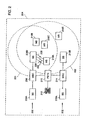
- FIG. 2 is an example of a plurality of communication systems in a geographical area in which communication system selection may be implemented in accordance with an embodiment of the present invention.
- a first communication system 200 and second communication system 202 may provide wireless or cellular communication service in a common geographical area 204.
- the first communication system 200 and the second communication system 202 may each be a CDMA communication system or the like.
- the first communication system 200 may include at least one mobile switching center (MSC) 206.
- the first MSC 206 may be connected to one or a plurality of base stations (BS) 208A and 208B.
- the MSC 206 may switch communication signals or telephone calls between the base stations 208 or between the base stations 208 and a public switched telephone network (PSTN) 210.
- PSTN public switched telephone network
- the PSTN 210 may route communication signals or phone calls to a fixed telephone station or terminal 212 or to a MSC 214 of the second communication system 202.
- the MSC 214 of the second system 202 may be connected to one or a plurality of base stations 216A and 216B.
- the base station 208B of the first communication system 200 may provide wireless or cellular communications to communication devices or mobile stations 218 located within a smaller geographical area 220 within the larger geographical area 204.
- the smaller geographical area 220 may be referred to as a cell.
- the base station 216B of the second communication system 202 may provide cellular communications to mobile stations 218 within another cell 222.
- Each of the mobile stations 218 may be similar to the communication device 100 in Figure 1 .
- the cells 220 and 222 may overlap or may have a substantially similar footprint or coverage area.
- the first communication system 200 may be a CDMA communication system operating around the 800 MHz band and the second communication system 202 may be a CDMA communication system operating around the 1900 MHz band.
- the mobile station 218 will perform an initial acquisition scan to obtain wireless communications within the geographical area of cell 220.
- the mobile station 218 may scan for communication channels of systems serving the cell 220 according to a preferred roaming list, such as list 114 in Figure 1A , to find a preferred system. If system 200 is a preferred CDMA system, a mobile station 218A may first scan for a CDMA pilot channel 224.
- the mobile station 218A may synchronize with the system 200 and update its communication parameters and channel decoding parameters from a CDMA synchronization channel 226. Even though the mobile station 218A may acquire a "most preferred" system, the quality of communication in a reverse link (from mobile station 218A to BS 208B) may degrade as the number of mobile stations 218 in the cell 220 increases creating a grey zone condition. The mobile station 218A may be able to receive pages on the forward link (from BS 208B to mobile station 218A), but a page response or access attempt on the reverse link may fail because of interference from other mobile stations 218 within the cell 220. Under grey zone conditions, the mobile station 218A may not have sufficient signal strength or transmit power because of power control measures within the CDMA system 200 to hold on to a paging channel 228.
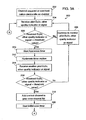
- Figures 3A and 3B are a flow chart of a method 300 to perform selection of a communication system in accordance with an embodiment of the present invention to avoid a grey zone condition or the like.
- the method 300 may be performed by a communication device like the communication device 100 of Figures 1A and 1B or mobile station 218 in Figure 2 .
- the communication device 100 may acquire a CDMA channel or the like or the communication device 100 may be idle on a communication channel.
- the communication device 100 or mobile station 218 may receive at least a pilot E c /I o on a CDMA pilot channel or at least another quality indicator or signal from a communication system, such as communication system 200 in Figure 2 .
- a determination may be made if the received pilot E c /I o or other quality indicator or signal is less than a predetermined threshold value or grey zone threshold value. If the received pilot E c /I o or other quality indicator or signal is not less than the predetermined threshold value, the method 300 may move to block 308 and the communication device 100 or mobile station 218 may continue to monitor the pilot E c /I o or other quality indicator or signal from the system 200.
- the method 300 may advance to block 310 and a hysteresis timer or the like may be started.
- the hysteresis timer may be the same as the timer 119 in Figure 1B .
- the communication device 100 or mobile station 218 may receive at least another pilot E c /I o or other quality indicator or signal in block 314.
- the method 300 may continue to monitor at least the pilot E c /I o or other quality indicator in block 308. If the other received pilot E c /I o or other quality indicator is below the predetermined threshold value in decision block 316, the method 300 may advance to block 318.
- the current channel to which the communication device 100 or mobile station 218 is tuned may be added to a grey zone channel list, such as grey zone channel list 116 in Figure 1 .
- the channel number may be recorded with the frequency, the RSSI and other communication parameters in the list 116.
- a channel recorded in the grey zone channel list 116 may have a "settable life" or timing parameter associated with it, and the channel may be removed from the grey zone channel list 116 ( Figure 1 ) after a predetermined period of time and made available again for acquisition by the communication device 100 or mobile station 218.
- a system may send a global action message, service redirection message or the like to a mobile station to inform the mobile station that CDMA service or other communication service is available on a specific channel. If that channel is in the grey zone channel list of the mobile station, the mobile station may be programmed to not attempt to acquire communication service on that channel.
- an initial scan timer such as initial scan timer 120 in Figure 1A
- a channel scan list may be built or created in block 322 ( Figure 3B ).
- the channel scan list may be the same as the channel scan list 118 in Figure 1A .
- the channel scan list may include channels on alternate communication systems, such as system 202 in Figure 2 , and the channel scan list may include a preferred roaming list, such as the preferred roaming list 114 in Figure 1A .
- the channel scan list may be built from a system table and then referencing from the system table into an acquisition table (not shown in the Figures).
- the system table and acquisition table may be stored in the memory 112 or other data storage device 113 of the communication device 100 ( Figure 1A ).
- the system table may be divided into geographical areas and may contain system identifications for systems in each geographical area.
- the communication device 100 determines the geographical area where it is located and then enters the acquisition table for specific channels for those systems in the system table for the specific geographical area. Channels may be selected from the acquisition table and placed on the channel scan list in an order based on predetermined rules so that the channels may be scanned in order of preference to minimize channel acquisition time.
- the communication device 100 or mobile station 218 may scan any channels in the channel scan list to acquire an alternate channel with a pilot E c /I o signal or other quality indicator signal greater than or equal to the predetermined threshold value.
- the communication device 100 may scan any channels in the channel scan list in a selected order, such as scanning the preferred roaming list 114 ( Figure 1A ) in order of preference first. While scanning, the communication device 100 or mobile station 218 may skip any channels in the grey zone channel list 116 ( Figure 1A ). In another embodiment of the present invention, the communication device 100 or mobile station 218 may perform a microscan of any channels in the grey zone channel list 116 in block 326.
- the microscan may include receiving a received signal strength indication (RSSI) or other communication parameter for a channel in the grey zone channel list 116.
- RSSI received signal strength indication
- the RSSI or other communication parameter may be compared to one of a chosen threshold value or alternatively, the RSSI or other parameter may be compared to a previously received RSSI or other parameter for the channel that may be stored with the channel information in the grey zone channel list. If the RSSI or other parameter equals or exceeds the chosen threshold value or the RSSI or other parameter has improved by a predetermined level or amount compared to the previously received RSSI or other parameter, the associated channel may be able to provide adequate communication service without a possibility of entering a grey zone condition. A more complete scan or evaluation of the channel may be performed before the channel is acquired by the communication device 100 or mobile station 218.
- the communication device 100 or mobile station 218 may conduct an initial acquisition scan upon call release.
- An initial acquisition scan is a more complete scan similar to that performed when the communication device 100 first powers-up.
- the initial acquisition scan may include all channels that the device 100 has most recently used including any channels in the grey zone channel list 116 because during the phone call, the communication device 100 may have moved and the communication environment may have changed.
- AMPS advanced mobile phone service
- the method 300 returns to block 304 ( Figure 3A ). If an AMPS channel is acquired, the communication device 100 or mobile station 218 may remain on the AMPS system in block 338 until there may be a need to scan for another system or channel.
- the method 200 may be embodied in a computer readable medium or electronic readable medium, such as memory 112 ( Figure 1 ) or the like, having computer-executable instructions for performing the method 300.
- the computer readable medium may include any type of memory, such as flash memory, floppy disk, compact disc-read only memory (CD-ROM), nonvolatile ROM, random access memory (RAM) or the like.
Landscapes
- Engineering & Computer Science (AREA)
- Computer Networks & Wireless Communication (AREA)
- Signal Processing (AREA)
- Computer Security & Cryptography (AREA)
- Mobile Radio Communication Systems (AREA)
Claims (18)
- Verfahren zum Wählen eines Kommunikationskanals für eine Mobilkommunikationseinrichtung (100; 218), umfassend die folgenden Schritte:(a) Empfangen (S304) eines Kommunikationsqualitätsindikators für einen aktuellen Kanal von einem Kommunikationssystem (200; 202);(b) Hinzufügen (S318) des aktuellen Kanals zu einer in einem Speicher (112) gespeicherten Grauzonenkanalliste (116),
falls (S306) der empfangene Kommunikationsqualitätsindikator für den aktuellen Kanal unterhalb eines vorbestimmten Schwellwerts liegt und
falls (S316) nach einer vorbestimmten Zeit bestätigt wird, dass der Kommunikationsqualitätsindikator unter dem vorbestimmten Schwellwert bleibt,
wobei die in der Grauzonenkanalscanliste (116) gespeicherten Kanäle einen Reverse-Link von der Mobilkommunikationseinrichtung (100; 218) zu einer Basisstation (208) aufweisen, die durch Interferenz von anderen Mobilkommunikationseinrichtungen (100; 218), die in einer Zelle (220) der Basisstation (208) kommunizieren, degradiert wird;(c) Scannen (S324) von Kanälen einer in dem Speicher (112) gespeicherten Kanalscanliste (114, 118), um einen anderen Kanal aus der Kanalscanliste (114, 118) mit einem Kommunikationsqualitätsindikator zu erfassen, der größer oder gleich dem vorbestimmten Schwellwert ist;(d) wobei alle Kanäle der in dem Speicher (112) gespeicherten Grauzonenkanalscanliste (116) beim Scannen (S324) übersprungen werden, um einen Ausfall einer Page-Response oder eines Zugriffsversuchs auf den Reverse-Link zu vermeiden. - Verfahren nach Anspruch 1, wobei der Kommunikationsqualitätsindikator ein Energie-zu-Interferenzrauschverhältnis (Ec/Io) eines CDMA (Code Division Multiple Access) Pilotkanals ist.
- Verfahren nach Anspruch 1, weiterhin umfassend:Starten (S310) eines Hysteresezeitgebers (119), falls (S306) der Kommunikationsqualitätsindikator unter dem vorbestimmten Schwellwert liegt;Empfangen (S314) eines anderen Kommunikationsqualitätsindikators nach Ablauf (S312) des Hysteresezeitgebers (119) und vor dem Scannen etwaiger weiterer Kanäle in der Kanalscanliste (114, 118) undScannen (S324) etwaiger Kanäle in der Kanalscanliste (114, 118), falls (S316) der andere Kommunikationsqualitätsindikator unter dem vorbestimmten Schwellwert liegt.
- Verfahren nach Anspruch 1, weiterhin umfassend:Ausführen (S334) eines Anfangserfassungsscans als Reaktion auf die Nichterfassung eines anderen Kanals mit einem Kommunikationsqualitätsindikator größer oder gleich dem vorbestimmten Schwellwert.
- Verfahren nach Anspruch 1, weiterhin umfassend:Starten (S320) eines Anfangsscanzeitgebers (120) vor dem Scannen etwaiger Kanäle in der Kanalscanliste (114, 118) undAusführen (S334) eines Anfangserfassungsscans als Reaktion auf den Ablauf (S328) des Anfangsscanzeitgebers (120) und die Nichterfassung eines anderen Kanals, dessen Kommunikationsqualitätsindikator mindestens größer oder gleich dem vorbestimmten Schwellwert ist.
- Verfahren nach Anspruch 1, wobei das Erfassen (S324) des anderen Kanals das Erfassen eines CDMA-Kanals oder eines AMPS-Kanals (Advanced Mobile Phone Service) umfasst.
- Verfahren nach Anspruch 1, weiterhin umfassend das Erstellen (S322) der Kanalscanliste (114, 118), wobei die Kanalscanliste (118) Kanäle von abwechselnden Kommunikationssystemen (200; 202) enthält.
- Verfahren nach Anspruch 1, weiterhin umfassend das Entfernen eines Kanals von der Grauzonenkanalliste (116), nachdem sich ein Kanal für eine vorbestimmte Zeitperiode auf der Grauzonenkanalliste (116) befunden hat.
- Verfahren nach Anspruch 1, wobei das Scannen (S324) der Kanäle in der Kanalscanliste (114, 118) das Ausführen (S326) eines Microscans von beliebigen Kanälen der Grauzonenkanalliste (116) umfasst, wobei das Ausführen (S326) eines Microscans Folgendes umfasst:Empfangen einer RSSI (Received Signal Strength Indicator - Anzeige der empfangenen Signalstärke) für einen Kanal der Grauzonenkanalliste (116) undVergleichen der RSSI mit einem Schwellwert oder einer vorhergehenden RSSI für den Kanal.
- Verfahren nach Anspruch 1, weiterhin umfassend das Programmieren des vorbestimmten Schwellwerts über die Luft.
- Verfahren nach Anspruch 1, weiterhin umfassend das Ausführen eines Anfangserfassungsscans (S334) nach dem Beenden eines Telefonanrufs, der vor dem Erfassen eines anderen Kommunikationskanals eingeleitet wurde.
- Mobilkommunikationseinrichtung (100; 218), umfassend:(a) einen Empfänger (144) zum Empfangen eines Kommunikationsqualitätsindikators für einen aktuellen Kanal;(b) einen Speicher (112) zum Speichern- einer Kanalscanliste (114, 118) von verfügbaren Kanälen und- eine dynamische Grauzonenkanalscanliste (116) von Kanälen mit einem Reverse-Link von der Mobilkommunikationseinrichtung (100; 218) zu einer Basisstation (208), die durch Interferenz von anderen Mobilkommunikationseinrichtungen (100; 218), die in einer Zelle (220) der Basisstation (208) kommunizieren, degradiert wird;(c) einen Mikroprozessor (110), der dafür ausgelegt ist, Kanäle zu der Grauzonenkanalscanliste hinzuzufügen,
falls (S306) der empfangene Kommunikationsqualitätsindikator des aktuellen Kanals unterhalb eines vorbestimmten Schwellwerts liegt und
falls (S316) nach einer vorbestimmten Zeit bestätigt wird, dass der Kommunikationsqualitätsindikator unter dem vorbestimmten Schwellwert bleibt,
wobei der Mikroprozessor (110) weiterhin dafür ausgelegt ist, ein Scannen (S324) der gespeicherten Kanalscanliste (114, 118) zu bewirken, um einen anderen Kanal aus der Kanalscanliste (114, 118) mit einem Kommunikationsqualitätsindikator zu erfassen, der größer oder gleich dem vorbestimmten Schwellwert ist;(d) wobei alle Kanäle der gespeicherten Grauzonenkanalscanliste (116) beim Scannen (S324) der Kanäle übersprungen werden, um einen Ausfall einer Page-Response oder eines Zugriffsversuchs auf den Reverse-Link zu vermeiden. - Mobilkommunikationseinrichtung nach Anspruch 12, wobei für jeden Kanal der Grauzonenkanalliste (116) eine entsprechende Aufzeichnung in dem Speicher (112) gespeichert wird, umfassend:- eine Kanalidentifikation,- eine Kanalfrequenz,- einen Kommunikationsqualitätsindikator und- einen einstellbaren Zeitgabeparameter.
- Kommunikationseinrichtung nach Anspruch 12, wobei der Kommunikationsqualitätsindikator ein Energie-zu-Interferenzrauschverhältnis (Ec/Io) eines CDMA (Code Division Multiple Access) Pilotkanals ist.
- Mobilkommunikationseinrichtung nach Anspruch 12, wobei eine bevorzugte Roaming-Liste (114) in dem Speicher (112) gespeichert ist.
- Mobilkommunikationseinrichtung nach Anspruch 12, weiterhin umfassend einen Hysteresezeitgeber (119), der das Scannen der Kanäle der Kanalscanliste (118) verursacht, falls der Kommunikationsqualitätsindikator des aktuellen Kanals für eine vorbestimmte Zeitperiode unter dem vorbestimmten Schwellwert liegt.
- Mobilkommunikationseinrichtung nach Anspruch 12, weiterhin umfassend einen Anfangsscanzeitgeber (120), der einen Anfangserfassungsscan als Reaktion auf die Nichterfassung eines anderen Kanals aus der Kanalscanliste (118) nach einer vorbestimmten Zeitperiode verursacht.
- Computerlesbares Medium mit auf einem Computer ausführbaren Anweisungen zum Ausführen des Verfahrens nach den Ansprüchen 1 bis 11.
Applications Claiming Priority (3)
| Application Number | Priority Date | Filing Date | Title |
|---|---|---|---|
| US65257 | 2002-09-30 | ||
| US10/065,257 US7299041B2 (en) | 2002-09-30 | 2002-09-30 | Method and device of selecting a communication system |
| PCT/US2003/030665 WO2004032560A1 (en) | 2002-09-30 | 2003-09-29 | Method and device of selecting a communication system |
Publications (2)
| Publication Number | Publication Date |
|---|---|
| EP1547422A1 EP1547422A1 (de) | 2005-06-29 |
| EP1547422B1 true EP1547422B1 (de) | 2010-03-31 |
Family
ID=32028512
Family Applications (1)
| Application Number | Title | Priority Date | Filing Date |
|---|---|---|---|
| EP03754966A Expired - Lifetime EP1547422B1 (de) | 2002-09-30 | 2003-09-29 | Verfahren und gerät zum auswählen eines kommunikationssystems |
Country Status (7)
| Country | Link |
|---|---|
| US (1) | US7299041B2 (de) |
| EP (1) | EP1547422B1 (de) |
| JP (1) | JP4384042B2 (de) |
| CN (1) | CN100450265C (de) |
| AU (1) | AU2003272765A1 (de) |
| DE (1) | DE60331932D1 (de) |
| WO (1) | WO2004032560A1 (de) |
Families Citing this family (40)
| Publication number | Priority date | Publication date | Assignee | Title |
|---|---|---|---|---|
| US7155219B2 (en) * | 2002-10-10 | 2006-12-26 | Motorola Inc. | Preferred roaming list and roaming indicator provision and synchronization |
| US7289801B2 (en) * | 2003-01-08 | 2007-10-30 | Vtech Telecommunications Limited | System and method for using RSSI to invoke features of a wireless device |
| KR100592885B1 (ko) * | 2003-04-29 | 2006-06-23 | 주식회사 팬택앤큐리텔 | 이동국의 시스템 선택 방법 |
| US9432848B2 (en) | 2004-03-23 | 2016-08-30 | Aruba Networks, Inc. | Band steering for multi-band wireless clients |
| US7969937B2 (en) | 2004-03-23 | 2011-06-28 | Aruba Networks, Inc. | System and method for centralized station management |
| US7277703B2 (en) * | 2004-06-30 | 2007-10-02 | Nokia Corporation | Apparatus, and an associated method, for facilitating network selection utilizing modified scan list |
| US7715351B2 (en) | 2004-07-28 | 2010-05-11 | Broadcom Corporation | Extended call handling functionality using multi-network simulcasting |
| US20070004407A1 (en) * | 2005-06-30 | 2007-01-04 | Biggs Robert A | System and method for selecting a network based on the velocity of a wireless device |
| WO2007016641A2 (en) * | 2005-08-02 | 2007-02-08 | Comhouse Wireless, Lp | Methods of remotely identifying, suppressing and/or disabling wireless devices of interest |
| US8767595B2 (en) * | 2005-08-02 | 2014-07-01 | L-3 Communications Corporation | Enhanced methods of cellular environment detection when interoperating with timed interfers |
| KR100728297B1 (ko) | 2006-01-17 | 2007-06-13 | 삼성전자주식회사 | 무선 애드 혹 네트워크에서의 무선 자원 처리 방법 및 그장치 |
| DE602007001205D1 (de) * | 2006-03-29 | 2009-07-16 | St Microelectronics Sa | Zweikanal Empfangsschaltkreis |
| SG172598A1 (en) * | 2006-05-25 | 2011-07-28 | Agency Science Tech & Res | Methods of determining whether a frequency channel is available for data transmission for a communication device |
| US8755770B2 (en) * | 2006-08-01 | 2014-06-17 | L-3 Communications Corporation | Methods for identifying wireless devices connected to potentially threatening devices |
| US20100226308A1 (en) * | 2006-08-15 | 2010-09-09 | Comhouse Wireless Lp | node- arbitrated media access control protocol for ad hoc broadcast networks carrying ephemeral information |
| US8532699B2 (en) | 2006-09-19 | 2013-09-10 | Qualcomm Incorporated | Method for power efficient activation of an inactive communication interface in a mobile station having multiple communication interfaces |
| US20080075035A1 (en) * | 2006-09-22 | 2008-03-27 | Intermec Ip Corp. | System and method for providing fast roaming |
| US8504119B2 (en) | 2007-01-09 | 2013-08-06 | Qualcomm Incorporated | Method for efficient assessment of communication service levels in a mobile station having multiple communication interfaces |
| US8842612B2 (en) * | 2007-06-20 | 2014-09-23 | Qualcomm Incorporated | Methods and apparatus for service acquisition in a multi-frequency network |
| KR101409751B1 (ko) * | 2007-09-13 | 2014-06-19 | 삼성전자주식회사 | 이동통신 단말기 및 그의 시스템 스캔 방법 |
| KR101407528B1 (ko) * | 2007-09-13 | 2014-06-16 | 삼성전자주식회사 | 이동통신 단말기 및 그의 시스템 스캔 방법 |
| WO2009104336A1 (ja) * | 2008-02-21 | 2009-08-27 | 日本電信電話株式会社 | 無線基地局探索方法、無線基地局探索装置および無線基地局探索プログラム |
| US8200217B2 (en) * | 2008-05-23 | 2012-06-12 | Qualcomm Incorporated | Method and apparatus for channel scanning that improves acquisition probability and power consumption |
| US8731622B2 (en) * | 2008-05-23 | 2014-05-20 | Qualcomm Incorporated | Method and apparatus for system acquisition while maintaining a defined battery life span |
| US8599767B2 (en) * | 2008-06-26 | 2013-12-03 | Netgear, Inc. | Method and apparatus for scanning multi-mode wireless communication environments |
| US8477727B2 (en) * | 2009-07-29 | 2013-07-02 | L-3 Communications Corporation | Methods for surreptitious manipulation of CDMA 2000 wireless devices |
| US8538469B2 (en) * | 2009-08-25 | 2013-09-17 | Telefonaktiebolaget L M Ericsson | Method for initial scanning of frequencies, frequency scanning controller, and apparatus |
| US8526395B2 (en) * | 2009-09-04 | 2013-09-03 | L-3 Communications Corporation | Using code channel overrides to suppress CDMA wireless devices |
| EP2302970A1 (de) * | 2009-09-28 | 2011-03-30 | ST-Ericsson (France) SAS | Vorrichtungen und Verfahren zur Beurteilung der Eignung einer Zelle in einem Netz für ein Teilnehmergerät |
| US8706110B2 (en) * | 2010-02-10 | 2014-04-22 | Apple Inc. | Methods for selecting cells in cellular telephone systems |
| US8571547B2 (en) * | 2010-03-17 | 2013-10-29 | Denso International America, Inc. | Prevention of overreach condition in cellular communication |
| CN103458480B (zh) * | 2012-11-05 | 2016-05-25 | 深圳信息职业技术学院 | 一种呼叫接入控制的方法、装置及高空平台通信系统 |
| US9547068B2 (en) * | 2013-11-07 | 2017-01-17 | Qualcomm Incorporated | Methods, systems and devices for providing location based services in a venue |
| US20150264635A1 (en) * | 2014-03-12 | 2015-09-17 | Qualcomm Incorporated | Systems and methods for performing recursive better system reselection |
| JP2016019101A (ja) * | 2014-07-07 | 2016-02-01 | 株式会社東芝 | タイミング決定装置、タイミング決定方法およびコンピュータプログラム |
| US9253599B1 (en) | 2014-08-20 | 2016-02-02 | Qualcomm Incorporated | RTT processing based on a characteristic of access points |
| JP2017208580A (ja) * | 2014-08-22 | 2017-11-24 | 株式会社日立製作所 | 無線通信システム、車載無線通信システム及びアクセスポイント |
| US10404359B2 (en) * | 2015-05-11 | 2019-09-03 | Sony Corporation | Mobile communications system, methods, controller, relay node and communications terminal |
| US20160373965A1 (en) * | 2015-06-19 | 2016-12-22 | Qualcomm Incorporated | Mobile communication device performance improvement by optimizing channel hashing |
| CN111628829A (zh) * | 2019-02-28 | 2020-09-04 | 北京信息科技大学 | 一种用于隧道通信的节点设备中的方法和装置 |
Citations (1)
| Publication number | Priority date | Publication date | Assignee | Title |
|---|---|---|---|---|
| US6289220B1 (en) * | 2000-06-22 | 2001-09-11 | Motorola, Inc. | Multiple controller identities for neighbor lists |
Family Cites Families (27)
| Publication number | Priority date | Publication date | Assignee | Title |
|---|---|---|---|---|
| US5152002A (en) * | 1987-08-03 | 1992-09-29 | Orion Industries, Inc. | System and method for extending cell site coverage |
| GB9300310D0 (en) | 1993-01-08 | 1993-03-03 | Ncr Int Inc | Handover method for mobile wireless station |
| US5517677A (en) * | 1993-05-13 | 1996-05-14 | Uniden America Corporation | Adaptive weighting of a scanning sequence |
| US5517667A (en) * | 1993-06-14 | 1996-05-14 | Motorola, Inc. | Neural network that does not require repetitive training |
| US6195555B1 (en) * | 1994-01-11 | 2001-02-27 | Ericsson Inc. | Method of directing a call to a mobile telephone in a dual mode cellular satellite communication network |
| US5524280A (en) * | 1994-10-31 | 1996-06-04 | Motorola, Inc. | Method of acquiring a channel in a general frequency reuse system |
| US5577022A (en) * | 1994-11-22 | 1996-11-19 | Qualcomm Incorporated | Pilot signal searching technique for a cellular communications system |
| US5915221A (en) * | 1995-08-08 | 1999-06-22 | Telefonaktiebolaget Lm Ericsson | Neighbor cell list creation and verification in a telecommunications system |
| JPH10191419A (ja) * | 1996-12-27 | 1998-07-21 | Matsushita Electric Ind Co Ltd | 移動局装置 |
| US5999816A (en) * | 1997-02-18 | 1999-12-07 | Qualcomm Incorporated | Method and apparatus for performing mobile assisted hard handoff between communication systems |
| US6047071A (en) * | 1997-04-15 | 2000-04-04 | Nokia Mobile Phones | Network-initiated change of mobile phone parameters |
| JPH11205843A (ja) | 1998-01-20 | 1999-07-30 | Nec Mobile Commun Ltd | 無線電話装置 |
| US6434186B2 (en) * | 1998-03-27 | 2002-08-13 | Nokia Mobile Phones Limited | Priority channel search based on spectral analysis and signal recognition |
| US7596378B1 (en) * | 1999-09-30 | 2009-09-29 | Qualcomm Incorporated | Idle mode handling in a hybrid GSM/CDMA network |
| US6539227B1 (en) * | 1998-12-18 | 2003-03-25 | Telefonaktiebolaget Lm Ericsson (Publ) | Methods and systems for controlling hard and soft handoffs in radio communications systems |
| US6961583B2 (en) * | 1999-05-24 | 2005-11-01 | Samsung Electronics Co., Ltd. | Wireless network system selection mechanism within a mobile station |
| US6496531B1 (en) * | 1999-09-02 | 2002-12-17 | Lucent Technologies Inc. | Method and system for controlling forward transmit power in a wireless system |
| US6782261B1 (en) * | 2000-04-27 | 2004-08-24 | Lucent Technologies Inc. | Wireless handoff management method and device |
| US6917808B1 (en) * | 2000-04-28 | 2005-07-12 | Lucent Technologies Inc. | Inter-frequency handoff evaluation method |
| ATE254381T1 (de) | 2000-09-14 | 2003-11-15 | Scoreboard Inc | Verfahren zum erstellen einer nachbarzellliste in einer mobileinheit in einem cdma zellularen telefonsystem |
| US6771960B1 (en) * | 2000-11-06 | 2004-08-03 | Motorola, Inc. | Method for a cellular radiotelephone to scan for service from adjacent cells |
| US6842621B2 (en) * | 2001-12-21 | 2005-01-11 | Motorola, Inc. | Method and apparatus for splitting control and media content from a cellular network connection |
| US6934544B2 (en) * | 2002-02-04 | 2005-08-23 | Qualcomm Incorporated | Method and apparatus for configurable selection and acquisition of a wireless communications system |
| US20040203745A1 (en) * | 2002-03-06 | 2004-10-14 | Rotem Cooper | Method and apparatus for efficient selection and acquisition of a wireless communications system |
| WO2003077433A2 (en) * | 2002-03-08 | 2003-09-18 | Ipr Licensing, Inc. | Antenna adaptation to manage the active set to manipulate soft hand-off regions |
| US7013140B2 (en) * | 2002-09-19 | 2006-03-14 | Telefonaktiebolaget L.M. Ericsson | Mobile terminals and methods for performing fast initial frequency scans and cell searches |
| US7123917B2 (en) * | 2002-12-17 | 2006-10-17 | Kyocera Wireless Corp. | System and method for determining when to exit an existing wireless communications coverage network |
-
2002
- 2002-09-30 US US10/065,257 patent/US7299041B2/en not_active Expired - Fee Related
-
2003
- 2003-09-29 AU AU2003272765A patent/AU2003272765A1/en not_active Abandoned
- 2003-09-29 CN CNB038157152A patent/CN100450265C/zh not_active Expired - Fee Related
- 2003-09-29 DE DE60331932T patent/DE60331932D1/de not_active Expired - Lifetime
- 2003-09-29 WO PCT/US2003/030665 patent/WO2004032560A1/en not_active Ceased
- 2003-09-29 EP EP03754966A patent/EP1547422B1/de not_active Expired - Lifetime
- 2003-09-29 JP JP2004541828A patent/JP4384042B2/ja not_active Expired - Fee Related
Patent Citations (1)
| Publication number | Priority date | Publication date | Assignee | Title |
|---|---|---|---|---|
| US6289220B1 (en) * | 2000-06-22 | 2001-09-11 | Motorola, Inc. | Multiple controller identities for neighbor lists |
Also Published As
| Publication number | Publication date |
|---|---|
| WO2004032560A1 (en) | 2004-04-15 |
| CN1666557A (zh) | 2005-09-07 |
| JP2006501773A (ja) | 2006-01-12 |
| AU2003272765A1 (en) | 2004-04-23 |
| US20040063427A1 (en) | 2004-04-01 |
| EP1547422A1 (de) | 2005-06-29 |
| JP4384042B2 (ja) | 2009-12-16 |
| CN100450265C (zh) | 2009-01-07 |
| US7299041B2 (en) | 2007-11-20 |
| DE60331932D1 (de) | 2010-05-12 |
Similar Documents
| Publication | Publication Date | Title |
|---|---|---|
| EP1547422B1 (de) | Verfahren und gerät zum auswählen eines kommunikationssystems | |
| CA2158114C (en) | Method for preventing a dropped call during a handoff in a radiotelephone system | |
| KR100362248B1 (ko) | Cdma 이동 단말 장치 | |
| EP3079401B1 (de) | Prüfung auf nutzung von dynamichen pre-konfigurationen während eines gsm-umts-inter-system-handovers | |
| JP5074609B2 (ja) | Geranからutranへのシステム間セル再選択の改善 | |
| US6587445B1 (en) | Cellular radio system allowing mobile station to perform communication through base station to which mobile station is connected over cdma radio channel, and base station apparatus and mobile station apparatus which are used for cellular radio system | |
| EP0624994B1 (de) | Verfahren zum Weiterreichen und Mobilstation für Spreizspektrum Kommunikationssystem | |
| US6185422B1 (en) | Method and apparatus for transitioning between control channels in a cellular system | |
| CA2428007A1 (en) | Method for a radiotelephone to scan for alternate radiotelephone systems | |
| US20090034469A1 (en) | Method and system for searching target cell by using multimode-multiband terminal in mobile communication environment | |
| EP1195072B1 (de) | Interfrequenzweiterreichen in drahtlosen cdma systemen | |
| US20070064648A1 (en) | Method and system for hand-over from wideband code division multiple access network to code division multiple access network by using dummy pilot signal | |
| JP3216809B2 (ja) | Cdma移動端末装置のハンドオーバ制御方法及びその制御プログラムを記録した記録媒体 | |
| JP3349127B2 (ja) | Cdma移動端末装置 | |
| KR20050039442A (ko) | 유휴 모드에 있는 wcdma 단말기의 주파수간 분산배치 및 이를 이용한 계층적 페이징 방법 및 시스템 | |
| KR100590677B1 (ko) | 이동통신 환경에서 멀티모드-멀티밴드 단말기의 통화 링크방법 및 시스템 | |
| KR20010057501A (ko) | 이동 무선 단말기에서 핸드 오프 기능 제어를 이용한배터리 소모 방지 방법 |
Legal Events
| Date | Code | Title | Description |
|---|---|---|---|
| PUAI | Public reference made under article 153(3) epc to a published international application that has entered the european phase |
Free format text: ORIGINAL CODE: 0009012 |
|
| 17P | Request for examination filed |
Effective date: 20041208 |
|
| AK | Designated contracting states |
Kind code of ref document: A1 Designated state(s): AT BE BG CH CY CZ DE DK EE ES FI FR GB GR HU IE IT LI LU MC NL PT RO SE SI SK TR |
|
| AX | Request for extension of the european patent |
Extension state: AL LT LV MK |
|
| RIN1 | Information on inventor provided before grant (corrected) |
Inventor name: NARASIMBA, MURALI Inventor name: HAKANSSON, URBAN |
|
| DAX | Request for extension of the european patent (deleted) | ||
| RBV | Designated contracting states (corrected) |
Designated state(s): DE FR GB |
|
| 17Q | First examination report despatched |
Effective date: 20050919 |
|
| RIC1 | Information provided on ipc code assigned before grant |
Ipc: H04W 48/18 20090101AFI20090731BHEP |
|
| GRAP | Despatch of communication of intention to grant a patent |
Free format text: ORIGINAL CODE: EPIDOSNIGR1 |
|
| GRAS | Grant fee paid |
Free format text: ORIGINAL CODE: EPIDOSNIGR3 |
|
| GRAA | (expected) grant |
Free format text: ORIGINAL CODE: 0009210 |
|
| AK | Designated contracting states |
Kind code of ref document: B1 Designated state(s): DE FR GB |
|
| REG | Reference to a national code |
Ref country code: GB Ref legal event code: FG4D |
|
| REF | Corresponds to: |
Ref document number: 60331932 Country of ref document: DE Date of ref document: 20100512 Kind code of ref document: P |
|
| PLBE | No opposition filed within time limit |
Free format text: ORIGINAL CODE: 0009261 |
|
| STAA | Information on the status of an ep patent application or granted ep patent |
Free format text: STATUS: NO OPPOSITION FILED WITHIN TIME LIMIT |
|
| 26N | No opposition filed |
Effective date: 20110104 |
|
| REG | Reference to a national code |
Ref country code: FR Ref legal event code: PLFP Year of fee payment: 14 |
|
| REG | Reference to a national code |
Ref country code: FR Ref legal event code: PLFP Year of fee payment: 15 |
|
| PGFP | Annual fee paid to national office [announced via postgrant information from national office to epo] |
Ref country code: FR Payment date: 20170824 Year of fee payment: 15 Ref country code: GB Payment date: 20170927 Year of fee payment: 15 |
|
| PGFP | Annual fee paid to national office [announced via postgrant information from national office to epo] |
Ref country code: DE Payment date: 20170927 Year of fee payment: 15 |
|
| REG | Reference to a national code |
Ref country code: DE Ref legal event code: R119 Ref document number: 60331932 Country of ref document: DE |
|
| GBPC | Gb: european patent ceased through non-payment of renewal fee |
Effective date: 20180929 |
|
| PG25 | Lapsed in a contracting state [announced via postgrant information from national office to epo] |
Ref country code: DE Free format text: LAPSE BECAUSE OF NON-PAYMENT OF DUE FEES Effective date: 20190402 |
|
| PG25 | Lapsed in a contracting state [announced via postgrant information from national office to epo] |
Ref country code: FR Free format text: LAPSE BECAUSE OF NON-PAYMENT OF DUE FEES Effective date: 20180930 |
|
| PG25 | Lapsed in a contracting state [announced via postgrant information from national office to epo] |
Ref country code: GB Free format text: LAPSE BECAUSE OF NON-PAYMENT OF DUE FEES Effective date: 20180929 |