EP1544298A1 - Mutiertes apc exprimierende kultivierte xenopus-zellinie - Google Patents
Mutiertes apc exprimierende kultivierte xenopus-zellinie Download PDFInfo
- Publication number
- EP1544298A1 EP1544298A1 EP03792706A EP03792706A EP1544298A1 EP 1544298 A1 EP1544298 A1 EP 1544298A1 EP 03792706 A EP03792706 A EP 03792706A EP 03792706 A EP03792706 A EP 03792706A EP 1544298 A1 EP1544298 A1 EP 1544298A1
- Authority
- EP
- European Patent Office
- Prior art keywords
- cells
- apc
- cell
- mutant
- piling
- Prior art date
- Legal status (The legal status is an assumption and is not a legal conclusion. Google has not performed a legal analysis and makes no representation as to the accuracy of the status listed.)
- Granted
Links
Images


Classifications
-
- C—CHEMISTRY; METALLURGY
- C07—ORGANIC CHEMISTRY
- C07K—PEPTIDES
- C07K14/00—Peptides having more than 20 amino acids; Gastrins; Somatostatins; Melanotropins; Derivatives thereof
- C07K14/435—Peptides having more than 20 amino acids; Gastrins; Somatostatins; Melanotropins; Derivatives thereof from animals; from humans
- C07K14/46—Peptides having more than 20 amino acids; Gastrins; Somatostatins; Melanotropins; Derivatives thereof from animals; from humans from vertebrates
- C07K14/47—Peptides having more than 20 amino acids; Gastrins; Somatostatins; Melanotropins; Derivatives thereof from animals; from humans from vertebrates from mammals
- C07K14/4701—Peptides having more than 20 amino acids; Gastrins; Somatostatins; Melanotropins; Derivatives thereof from animals; from humans from vertebrates from mammals not used
- C07K14/4702—Regulators; Modulating activity
- C07K14/4703—Inhibitors; Suppressors
-
- C—CHEMISTRY; METALLURGY
- C07—ORGANIC CHEMISTRY
- C07K—PEPTIDES
- C07K14/00—Peptides having more than 20 amino acids; Gastrins; Somatostatins; Melanotropins; Derivatives thereof
- C07K14/435—Peptides having more than 20 amino acids; Gastrins; Somatostatins; Melanotropins; Derivatives thereof from animals; from humans
- C07K14/46—Peptides having more than 20 amino acids; Gastrins; Somatostatins; Melanotropins; Derivatives thereof from animals; from humans from vertebrates
- C07K14/47—Peptides having more than 20 amino acids; Gastrins; Somatostatins; Melanotropins; Derivatives thereof from animals; from humans from vertebrates from mammals
Definitions
- the present invention relates to mutant APC proteins that can induce piling up of cells, and to cells expressing these proteins.
- the adenomatous polyposis coli (APC) gene is a tumor suppressor gene identified as a causative gene of Familial Adenomatous Polyposis (FAP). It has been shown that mutation of the APC gene is not restricted to FAP, but is involved also in the development of non-hereditary adenomatous polyposis and colon cancer (Polakis, P., Biochim Biophys Acta. (1997) 1332, F127-147). In FAP patients, many benign polyps form in the colon, from which malignantly transformed cancer cells develop. Although colon cancer develops through multistep changes that occur in a great number of oncogenes and tumor suppressor genes, mutations in the APC gene are found at the earliest stage. Therefore, APC gene abnormalities are considered to be causes of colon cancer.
- APC The APC protein
- APC-stimulated guanine nucleotide exchange factor (Asef) KAP3/KIF3A/KIF3B microtubule-associated motor protein complex belonging to the kinesin family
- ⁇ -catenin/GSK-3 ⁇ /Axin a constituent of the Wnt signal transduction pathway
- microtubules which are cytoskeleton components
- proteins of the microtubule-associated protein EB/RP family p34 cdc2 kinase, a cell cycle regulatory factor
- Siah-1 an apoptosis-related protein
- hDLG a tumor suppressor gene product
- APC has been reported to promote ⁇ -catenin degradation by complexing with ⁇ -catenin/GSK-3 ⁇ /Axin, and to function in maintaining a low level of existing ⁇ -catenin (Rubinfeld, B., Science (1993) 262:1731-1734; Su, L. K., Science (1993) 262:1734-1737).
- ⁇ -catenin When ⁇ -catenin is present in large amounts, it is transferred into the nucleus where it binds to a transcription factor and promotes cell proliferation. Therefore, initially, APC was considered to function as a tumor suppressor protein by regulating the level of existing ⁇ -catenin.
- APC was found to bind to Asef, which functions in the regulation of the actin cytoskeleton (Kawaki, Y., et. al . Science (2000) 289(5482), 1194-1197), and to microtubules at the leading edges of motile cells (Mimori-Kiyosue, Y. et. al., J. Cell Biol. (2000) 148(3), 505-518).
- Asef functions in the regulation of the actin cytoskeleton
- microtubules at the leading edges of motile cells
- the present invention was achieved in view of the above circumstances.
- An objective of the present invention is to elucidate the functions of normal and mutant APCs in cell morphology and motility.
- Another objective of the present invention is to provide uses of the mutant APC proteins based on the obtained findings.
- the present inventors expressed full-length and truncated APCs labeled with an autofluorescent protein (GFP; green fluorescent protein) in epithelial cells.
- GFP autofluorescent protein
- the fusion protein cDNAs were introduced into cells, and several strains from each independent clone stably expressing the fusion proteins were isolated by drug resistance, protruding cell layers were observed as a common feature among each of the clones that express the truncated structurally-different APCs.
- Observation under electron microscope showed that intercellular adhesive structures (AJ, TJ) are formed, but cell adhesion attenuates due to increased intercellular space and cell-substrate space, and the cells are piled up.
- mutant APCs cause piling up of cells, leading to the completion of this invention.
- the present inventors discovered, for the first time, the phenomenon that mutant APC-expressing cells cause piling up of cells while maintaining intercellular adhesive structures.
- mutant APCs of this invention inhibit the monolayering of normal epithelial cells, and cause the cells to pile up while maintaining cell-cell adhesion. Therefore, cells that express the mutant APCs of this invention are useful as model cells for the polyp-forming phenomenon. Furthermore, the mutant APC-expressing cells of this invention can be used to screen compounds that inhibit piling up of cells.
- the present invention relates to mutant APC proteins that may induce piling up of cells, cells that express these proteins, and uses of these cells. More specifically, the present invention relates to:
- mutant APC proteins which are abbreviated as "mutant APCs" in parts of this specification. Expression of the mutant APCs of this invention in cells induces piling up of cells.
- the mutant APCs of this invention were identified by the present inventors as proteins that induce piling up of cells while maintaining cell-cell adhesion.
- mutant refers to a protein comprising the amino acid sequence of a normal APC protein, in which one or more amino acids have been substituted, deleted, added, or inserted.
- the "mutation” may be a conservative mutation in which the amino acid used for the substitution has structural or chemical characteristics similar to those of the substituted amino acid, or a mutation involving non-conservative substitution. That is, the types of mutations present in the mutant APCs of this invention are not particularly limited, as long as they have the function of inducing piling up of cells.
- the mutant APCs of the present invention are usually produced artificially (or by modifying normal APCs), or obtained by isolation and purification.
- APC proteins have so far been discovered in a variety of organisms.
- the amino acid sequences of these normal APC proteins can be obtained easily from public databases.
- GenBank accession numbers for the amino acid sequences of human APC protein and Xenopus laevis APC protein are M74088 and U64442, respectively.
- the amino acid sequence of Xenopus laevis APC protein is shown in SEQ ID NO: 1.
- mutant APCs of this invention are not limited to specific types of APC mutants.
- An example of the mutant APCs of this invention is a mutant of the Xenopus laevis APC protein comprising the amino acid sequence of SEQ ID NO: 1.
- mutant APCs are proteins in which a portion of the amino acid region of a normal APC has been deleted (truncated APC proteins).
- the mutant APCs of this invention are normally proteins in which the three amino acids of a TSV sequence (DLG-binding region) at the C-terminus are deleted.
- This TSV sequence is recognized as a PDZ protein binding motif, and binding of the hDLG protein, which is one of the PDZ proteins, is reported to occur in this region (Matsumine, A., et al., Science (1996);272(5264):1020-3).
- the mutant APCs of this invention preferably comprise an N-terminal amino acid region containing at least a "heptad repeat" and "armadillo repeat", but the mutant APCs of this invention are not limited to those containing these repeats.
- mutant APCs of this invention are proteins having a structure in which at least one of the following amino acid regions of (a) to (c) is deleted:
- the present invention also comprises proteins that have the function of inducing piling up of cells, and comprise the amino acid sequences of the above-mentioned proteins, in which one or more amino acids are deleted, substituted, or added.
- Methods for preparing these proteins include methods that use hybridization techniques or gene amplification techniques. More specifically, one skilled in the art can use hybridization techniques (Current Protocols in Molecular Biology edit. Ausubel et al. (1987) Publish. John Wily & Sons Section 6.3-6.4) to isolate DNAs that are highly homologous to mutant APCs, based on the DNA sequences encoding the above mutant APCs, or a portion thereof, from DNA samples derived from an organism of the same or different species, and consequently obtain the proteins of this invention.
- the proteins of the present invention also comprise proteins that are encoded by DNAs hybridizing with the DNAs encoding the thus isolated proteins, and which have the function of inducing piling up of cells.
- Stringent hybridization conditions of "1x SSC, 0. 1% SDS, 37°C” are normally used for isolating a DNA encoding a protein that comprises an amino acid sequence of mutant a APC in which one or more amino acids are deleted, substituted, or added. More stringent conditions are "0.5x SSC, 0.1% SDS, 42°C", and even more stringent conditions are "0.2x SSC, 0.1% SDS, 65°C”. As the hybridization conditions become more stringent, isolation of DNAs having high homology to the probe sequence can be expected. However, the above combinations of SSC, SDS, and temperature conditions are only examples. Those skilled in the art can achieve similar stringencies as those described above by appropriately combining the above-mentioned factors or other factors that determine the stringency of hybridization (for example, probe concentration, probe length, and hybridization reaction time).
- Polypeptides encoded by DNAs that are isolated using such hybridization techniques are usually highly homologous to the mutant APCs of this invention at the amino acid sequence level.
- Highly homologous refers to a sequence homology of at least 40% or higher, preferably 60% or higher, more preferably 80% or higher, even more preferably 90% or higher, still more preferably 95% or higher, and yet more preferably 97% or higher (for example, 98-99%).
- the degree of homology of one amino acid sequence to another can be determined by following, for example, the BLAST algorithm by Karlin and Altschl (Proc. Natl. Acad. Sci. USA, 87: 2264-2268, 1990; Proc. Natl. Acad. Sci. USA, 90: 5873-5877, 1993).
- Programs such as BLASTX were developed based on this algorithm (Altschul et al. J. Mol. Biol.215: 403-410, 1990).
- the default parameters for each program are used. The specific techniques of these analyses are known in the art (http://www.ncbi.nlm.nih.gov.)
- the phrase "piling up of cells” can be described, for example, by the cellular conditions (forms) described below, but are not particularly limited to these conditions since an exact definition is usually difficult.
- one skilled in the art can determine whether a protein can induce piling up of cells using known methods. For example, whether cells expressing a target protein are piled up can be confirmed readily by phase contrast microscopy or fluorescent antibody methods.
- mutant APCs of this invention can be produced by commonly known methods (PCR and such), for example, by using the nucleotide sequence of a DNA encoding a normal APC protein as a template.
- the above mutant APC proteins can be produced by PCR amplification of the DNAs that encode these proteins, using the cDNA or genomic DNA of normal APCs as templates, and by cloning these DNAs into expression vectors.
- the cDNAs of normal APCs can be obtained by those skilled in the art by known methods, for example, by constructing a cDNA library from cells expressing normal APCs, and then performing a hybridization using a portion of the APC cDNA as a probe.
- the cDNA library may be prepared, for example, by a method described in literature (Sambrook, J. et al. , Molecular Cloning, Cold Spring Harbor Laboratory Press (1989)), or a commercially available DNA library may also be used.
- mutant APCs may be produced by methods presented in the Examples below. Those skilled in the art can appropriately modify methods shown in the Examples below to produce mutant APCs to carry any amino acid region of a normal APC.
- a mutant APC of this invention can be produced by modifying the amino acid sequence of a normal APC protein (for example, the amino acid sequence of SEQ ID NO: 1).
- an amino acid sequence can be modified by modifying the nucleotide sequence of a DNA encoding a normal APC protein, using well-known methods such as site-directed mutagenesis (Current Protocols in Molecular Biology edit. Ausubel et al. (1987) Publish. John Wily & Sons Section 8.1-8.5), and expressing the DNA with a modified nucleotide sequence in an appropriate cell.
- proteins of this invention include isolated natural mutant APC proteins as long as they comprise the function of inducing piling up of cells while maintaining cell-cell adhesion, although the mutant APCs of this invention are normally produced artificially.
- the mutant APCs of the present invention can be prepared as recombinant polypeptides by methods well known to those skilled in the art.
- a recombinant polypeptide can be prepared, for example, by inserting a DNA encoding a mutant APC of this invention into an appropriate expression vector, collecting a transformant obtained by transfecting the vector into an appropriate host cell, and purifying the polypeptide after obtaining an extract by chromatography such as ion exchange chromatography, reverse phase chromatography, gel filtration chromatography, or affinity chromatography in which an antibody against the mutant of this invention is fixed onto a column, or by a combination of these columns.
- chromatography such as ion exchange chromatography, reverse phase chromatography, gel filtration chromatography, or affinity chromatography in which an antibody against the mutant of this invention is fixed onto a column, or by a combination of these columns.
- a mutant APC of the present invention when expressed in a host cell (for example, an animal cell or E. coli ) as a fusion polypeptide with a glutathione S-transferase protein or recombinant polypeptide with multiple histidine residues, the expressed recombinant polypeptide can be purified using a glutathione column or a nickel column. After the fused polypeptide is purified, regions other than the desired mutant can be removed from the fused polypeptide, as necessary, by cleavage with thrombin, factor Xa, etc.
- the present invention also includes polynucleotides encoding the mutant APCs of this invention.
- the polynucleotides comprise DNAs that encode the mutant APCs of this invention, and RNAs which are transcription products of these DNAs.
- the present invention provides vectors into which DNAs of the present invention are inserted.
- the vectors of the present invention are useful in expressing or producing the mutant APCs of the present invention in cells.
- E. coli When E. coli is used as a host cell, there is no particular limitation other than that the above-mentioned vector should have an "ori” and a marker gene.
- the "ori” is used to amplify and mass-produce the vector in E. coli (e.g., JM109, DH5 ⁇ , HB101, or XL1Blue and such).
- the marker gene is used to select the transformed E. coli (e.g., a drug-resistance gene selected by an appropriate drug such as ampicillin, tetracycline, kanamycin, or chloramphenicol).
- E. coli e.g., a drug-resistance gene selected by an appropriate drug such as ampicillin, tetracycline, kanamycin, or chloramphenicol.
- M13-series vectors, pUC-series vectors, pBR322, pBluescript, pCR-Script, and such can be used.
- pGEM-T pDIRECT
- pT7 can also be used for the subcloning and excision of cDNAs.
- an expression vector when expressed, for example, in E. coli, it should have the above characteristics in order to be amplified in E. coli.
- the vector when E. coli such as JM109, DH5 ⁇ , HB101, or XL1-Blue are used as the host cell, the vector preferably has a promoter, for example, lacZ promoter (Ward et al . (1989) Nature 341:544-546; (1992) FASEB J. 6:2422-2427), araB promoter (Better et al.
- T7 promoter that allows efficient expression of the desired gene in E. coli.
- Other examples of the vectors include pGEX-5X-1 (Pharmacia), "QIAexpress system” (QIAGEN), pEGFP, and pET (where BL21, a strain expressing T7 RNA polymerase, is preferably used as the host).
- the vector may comprise a signal sequence for polypeptide secretion.
- the pelB signal sequence (Lei, S. P. et al. (1987) J. Bacteriol. 169:4379) may be used as a signal sequence for polypeptide secretion.
- calcium chloride methods or electroporation methods may be used to introduce the vector into a host cell.
- expression vectors derived from mammals e.g., pCDNA3 (Invitrogen), pEGF-BOS (Nucleic Acids Res. (1990) 18(17):5322), pEF, pCDM8), insect cells (e.g., "Bac-to-BAC baculovirus expression system” (GIBCO-BRL), pBacPAK8), plants (e.g., pMH1, pMH2), animal viruses (e.g., pHSV, pMV, pAdexLcw), retroviruses (e.g., pZIPneo), yeasts (e.g., "Pichia Expression Kit” (Invitrogen), pNV11, SP-Q01), and Bacillus subtilis (e.g., pPL608, pKTH50)may also be employed to express the mutant APCs of the present invention.
- mammals e.g., pCDNA3 (Invitrogen), pEGF
- the vector preferably has a promoter necessary for expression in such cells, for example, an SV40 promoter (Mulligan et al . (1979) Nature 277:108), MMLV-LTR promoter, EF1 ⁇ promoter (Mizushima et al. (1990) Nucleic Acids Res. 18:5322), CMV promoter, etc.). It is even more preferable that the vector also carries a marker gene for selecting transformants (for example, a drug-resistance gene selected by a drug such as neomycin and G418. Examples of vectors with such characteristics include pMAM, pDR2, pBK-RSV, pBK-CMV, pOPRSV, and pOP13, and such.
- Examples of methods for expressing the mutant APCs of the present invention in animals include inserting a DNA of this invention into an appropriate vector, and introducing the vector into a living body by retrovirus methods, liposome methods, cationic liposome methods, adenovirus methods, and such.
- the vectors used in these methods include, but are not limited to, adenovirus vectors (e.g., pAdexlcw), retrovirus vectors (e.g., pZIPneo), and such.
- General gene manipulation techniques, such as inserting a DNA of the invention into a vector can be performed by conventional methods (Molecular Cloning, 5.61-5.63).
- Administration to a living body may be performed by ex vivo or in vivo methods.
- the present invention also provides cells transfected with the vectors of this invention.
- the cells are those that artificially express the mutant APCs of this invention (for example, cells in which mutant APCs are artificially introduced and expressed).
- the cells are epithelial cells having the characteristic of piling up while maintaining cell-cell adhesion due to expression of the mutant APCs of this invention.
- the cells of the present invention are more preferably established cell lines that stably express the mutant APCs of this invention.
- the cells of the present invention are preferably cells derived from animals, and more preferably cells derived from Xenopus laevis (for example, A6 cells).
- Cells that express the mutant APCs of this invention are considered to be similar to the actual cells that form polyps due to APC mutation.
- Familial Adenomatous Polyposis (FAP) patients normal cell-cell adhesion occurs at an early stage, and then benign polyps are formed, which are non-infiltrative and have yet to become malignant. Normally, several hundreds to several thousands of such polyps are formed, and if they are left alone and not excised, malignant cells develop from them due to mutations also in genes besides APC. At this point, canceration is considered to occur.
- cells expressing the mutant APCs of this invention represent a condition that mimics only APC mutations, these cells are useful as research materials for elucidating the causes of polyp formation or canceration.
- the cells of the present invention are useful for screening compounds that inhibit piling up of cells.
- the cells expressing the mutant APCs of this invention are Xenopus laevis -derived cells
- the advantage is that the cells can be cultured at room temperature, in a carbon dioxide-free environment.
- the cells of the present invention can be used as a production system to produce and express the mutant APCs of the present invention.
- the systems for producing mutant APCs include in vitro and in vivo systems. Production systems that use eukaryotic cells or prokaryotic cells are examples of in vitro production systems.
- Eukaryotic host cells that can be used are, for example, animal cells, plant cells, and fungi cells.
- Mammalian cells for example, CHO (J.Exp.Med. (1995) 108:945), COS, 3T3, myeloma, BHK (baby hamster kidney), HeLa, Vero, amphibian cells (e.g., Xenopus cells), or insect cells (e.g., Sf9, Sf21, Tn5) are known as animal cells.
- CHO cells those defective in the DHFR gene, dhfr-CHO (Proc. Natl. Acad. Sci. USA (1980) 77:4216-4220), and CHO K-1 (Proc. Natl. Acad. Sci.
- a vector can be introduced into a host cell by, for example, calcium phosphate methods, DEAE-dextran methods, methods using cationic liposome DOTAP (Boehringer-Mannheim), electroporation methods, and lipofection methods.
- Useful prokaryotic cells comprise bacterial cells.
- E. coli for example, JM109, DH5 ⁇ , HB101, and such
- Bacillus subtilis are known.
- the culture medium for animal cells may be a culture medium such as DMEM, MEM, RPMI1640, or IMDM, and may be used with or without serum supplements such as fetal calf serum (FCS).
- FCS fetal calf serum
- Production systems using animal and plant hosts may be used as systems for producing polypeptides in vivo.
- DNAs that encode the mutant APCs of the present invention can be introduced into those animal or plant hosts; the mutant APCs are produced in the body of the animal or plant and then recovered.
- Animals to be used for the production system described above include mammals and insects. Mammals such as goats, pigs, sheep, mice, and cattle may be used (Vicki Glaser (1993) SPECTRUM Biotechnology Applications). Alternatively, the mammals may be transgenic animals.
- DNAs that encode the mutant APCs of the present invention may be prepared as a fusion gene with a gene that encodes a polypeptide specifically produced in milk, such as the goat ⁇ casein gene.
- DNA fragments comprising the fusion gene are injected into goat embryos, which are then introduced back into female goats.
- the mutant APCs of this invention can be obtained from the milk produced by the transgenic goats (i.e., those born from the goats that received the modified embryos) or from their offspring.
- Appropriate hormones may be administered to increase the volume of milk containing the polypeptides produced by transgenic goats, (Ebert, K. M. et al., (1994) Bio/Technology 12:699-702).
- insects such as silkworms may be used.
- Baculoviruses into which a DNA encoding the mutant APCs of this invention has been inserted, can be used to infect silkworms, and the mutant APCs can be recovered from body fluids (Susumu M. et al., (1985) Nature 315:592-594).
- такие when using plants, tobacco, for example, can be used.
- a DNA encoding a mutant APC of this invention may be inserted into a plant expression vector, such as pMON 530, which is then introduced into bacteria such as Agrobacterium tumefaciens . Then, the bacteria are used to infect tobacco such as Nicotiana tabacum, and the desired mutant APCs are recovered from the leaves (Julian K.-C. Ma et al., (1994) Eur. J. Immunol. 24:131-138).
- the mutant APCs of the present invention may be isolated from the inside or outside (the medium and such) of host cells, and purified as a substantially pure homogeneous polypeptide. Purification methods are not limited to any specific method. In fact, any standard method for isolating and purifying polypeptides may be used. For instance, column chromatography, filters, ultrafiltration, salting out, solvent precipitation, solvent extraction, distillation, immunoprecipitation, SDS-polyacrylamide gel electrophoresis, isoelectric point electrophoresis, dialysis, and recrystallization may be appropriately selected and combined to isolate and purify polypeptides.
- Chromatographies such as affinity chromatography, ion-exchange chromatography, hydrophobic chromatography, gel filtration chromatography, reverse phase chromatography, and adsorption chromatography may be used (Strategies for Protein Purification and Characterization: A Laboratory Course Manual. Ed. Daniel R. Marshak et al., Cold Spring Harbor Laboratory Press (1996)). These chromatographies may be performed using liquid chromatographies such as HPLC and FPLC. The present invention provides highly purified mutant APCs purified by the above methods.
- a widely-used assay for the Wnt signal transduction system involves the method of injecting a small amount of Wnt signal factor mRNA, antibody, and such into Xenopus oocytes, and examining the effects on development (Gloy, J., et al. , Nat. Cell Biol. (2002) 4(5):351-357).
- This technique is also used for APC and for APC-binding proteins, such as ⁇ -catenin and axin, and phenomena such as formation of double-headed tadpoles and abnormal head-formation have lead to discussions on the function of APC and APC-binding proteins in the Wnt signal transduction system. Therefore, the purified mutant APCs of the present invention can also be used in this type of experiments.
- this invention provides methods of screening for candidate compounds as agents that inhibit piling up of cells.
- the screening methods of this invention comprise the steps of: (a) contacting cells expressing a mutant APC of this invention with a test compound; (b) detecting piling up in these cells; and (c) selecting a compound that inhibits the piling up of cells.
- test compounds used in the screening methods of this invention are not particularly limited. Examples include libraries of synthetic low-molecular-weight compounds, purified proteins, gene library expression products, synthetic peptide libraries, cell extracts, and cell culture supernatants.
- step (a) mentioned above can be carried out by adding a test compound into a culture solution of cells expressing a mutant APC of this invention, but is not particularly limited to this method.
- Detecting piling up of cells in step (b) mentioned above can be performed by those skilled in the art using the above-mentioned methods (for example, methods that use phase contrast microscopy and such).
- step (c) mentioned above normally when the degree of piling up of cells is decreased compared to that when the test compound is not contacted with the cells, piling up of cells is considered to be inhibited.
- fibroblast transformation assays with oncoproteins such as Ras and Src, are widely used. These assays are for observing, using a light microscope, the "focus" formation phenomenon that is caused by an increase of cells that do not adhere to anywhere since theycontinue to proliferate after the loss of anchorage dependence.
- Ras, Src, or a number of oncogenes are expressed in epithelial cells, cell-cell adhesion and epithelial polarity are known to be lost, such that the cells take on a fibroblast or mesenchymal cell-like form.
- the cells of the present invention are cells that pile up while maintaining cell-cell adhesion, and thus differ from conventional cells. Therefore, the methods of this invention using these cells enable the screening of compounds that were difficult to obtain by conventional methods (for example, compounds that specifically inhibit the "piling up of epithelial cells").
- the mainly used assay system that employed cultured cells were the "focus" formation assays, which use the above-mentioned fibroblasts.
- Development of assay systems that use epithelial cells may provide a more effective screening system against many kinds of cancer cells.
- the assay systems are also useful as materials for elucidating the mechanisms of how epithelial cells maintain monolayers.
- the present invention comprises compounds obtained by the above-mentioned screening methods, and agents that inhibit piling up of cells or antitumor agents that contain these compounds as active ingredients.
- the above-mentioned pharmaceutical agents of the present invention can be formulated by known pharmaceutical methods.
- they can be formulated by appropriately combining with pharmaceutically acceptable carriers or vehicles, more specifically, sterilized water or physiological saline, vegetable oil, emulsifiers, suspending agents, surfactants, stabilizers, flavoring compounds, excipients, vehicles, preservatives, binding agents, and such, and by mixing at a unit dosage and form required by accepted pharmaceutical implementations.
- the present invention relates to methods of screening for polynucleotides encoding mutant APCs, which can induce piling up of cells.
- the screening methods comprise the step of introducing a test polynucleotide into Xenopus laevis -derived cells to express mutant APC proteins, culturing these cells, detecting piling up of these cells, and selecting polynucleotides that cause the piling up of these cells.
- whether a polynucleotide encoding a subject's APC causes polyp development may be examined by using such a polynucleotide as a test sample.
- the test polynucleotide is inserted into an expression vector suitable for cellular expression, and then introduced into cells.
- an expression vector suitable for cellular expression
- cells Those skilled in the art can appropriately select an expression vector, and use standard genetic engineering techniques to construct an expression vector that carries this polynucleotide.
- This expression vector can be introduced into cells by known methods, such as the electroporation methods mentioned above, or lipofection methods.
- Xenopus laevis -derived cells used in the above-mentioned screening methods is A6 cells.
- piling up of cells can be detected by, for example, a method utilizing a phase contrast microscope. More specifically, a detailed observation of the cell morphology using the methods presented in the following Examples will enable detection of piling up of cells.
- a test polynucleotide is judged to code for a mutant APC that may induce piling up of cells, when piling up is observed in the cells expressed with the polynucleotide.
- Anti-20-1 monoclonal antibody (Clone: T8-754) and anti-DLG antibody (anti-PSD-95 Family, clone K28/86.2), were purchased from Sanko Junyaku and Upstate Biotechnology, respectively.
- TOTO-3 that selectively stains nucleic acids, and rhodamine-phalloidin that selectively stains actin filaments, were purchased from Molecular Probe.
- Nocodazole a pharmaceutical agent that depolymerizes microtubules, was purchased from SIGMA.
- A6 cells ( Xenopus laevis renal epithelial cell line) were grown in Leivobitz's L-15 medium containing 10% fetal calf serum (GIBCO BRL) at 23°C in a carbon dioxide-free environment.
- the genes and cells of Xenopus laevis were chosen because of the reason described in Example 2.
- the Xenopus laevis APC gene sequence is known and is described in GenBank (U64442).
- GenBank GenBank
- the inventors established cell lines with stable expression by introducing the vectors obtained in Example 1 into A6 cells.
- APC expression is extremely difficult in many mammalian culture cell lines. Although cells that conditionally express full-length APCs have been reported to date (Mori, P. J. et al ., Proc. Natl. Acad. Sci. USA 93 (15): 7950-4, 1996), there are no reports on the establishment of cell lines that stably express foreign full-length and truncated APCs. Therefore, whether A6 cells are appropriate for expressing APC was examined.
- Example 1 Furthermore, the expression vectors of Example 1 were introduced, and proliferation of cells emitting GFP fluorescence was confirmed. These experiments were performed at the standard culturing conditions for A6 cells: room temperature and a carbon dioxide-free environment. These results confirmed that this cell line is appropriate for visual screening of proteins that are expressed from GFP-fused APCs.
- Example 1 Each of the cDNAs presented in Example 1 was introduced into cells under conditions similar to those described above, and screening was performed by detecting GFP fluorescence under a fluorescence microscope. Cell lines showing stable expression of each construct were established. After establishing stably expressing cell lines, the status of mutant APC expression could be monitored easily by GFP fluorescence without further manipulating the cells, and cellular localization of mutant APC in viable cells could be detected.
- Example 3 Morphological observation of cells expressing GFP-fused full-length and truncated APCs by phase contrast microscopy
- the morphology of cells expressing GFP-fused full-length and truncated APCs obtained in Example 2 was observed by phase contrast microscopy, and compared to that of the parental A6 cells.
- Cells were widely spread on a dish at 100% confluency, and cultured for five days or more with a medium exchange every day, until the cells became dense and polarized to an epithelial structure.
- Parental A6 cells and GFP-fAPC-expressing cells formed a flat monolayer structure having the morphology of an epithelium.
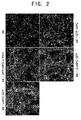
- bulging regions instead of a flat layer are formed at a certain frequency (Fig. 2).
- n2APC-GFP-expressing cells Similar bulging regions were also observed in n2APC-GFP-expressing cells. However, bulging regions were not observed in all of the strains, and were restricted to the cells where the existing GFP fluorescence intensity was high, or more specifically, to cells with high n2APC-GFP expression levels. In order for the cells to form bulges by n2APC-GFP, the expression level had to be approximately ten times of that of GFP-APC( ⁇ TSV), ⁇ cAPC-GFP, or nAPC-GFP, as measured by their cellular fluorescence intensities.
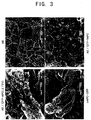
- Electron microscopic observation was carried out for a detailed examination of the morphology of GFP-fused full-length and truncated APC-expressing cells obtained in Example 2 (Fig. 3). Each of the cells was fixated in a 1% glutaraldehyde aqueous solution, prepared using a phosphate buffer. Sample preparation was carried out by routine procedures, and the cell surface structure was examined by scanning electron microscopy. In parental A6 cells and GFP-fAPC-expressing cells, the apical membrane of closely packed cells extended as a flat surface, and only protrusions of the microvillar and primary ciliary structures on the apical membrane were observed. In contrast, in GFP-APC( ⁇ TSV), ⁇ cAPC-GFP, and nAPC-GFP-expressing cells, several to several tens of cells formed protrusions, and regions that do not form flat cellular monolayers appeared.
- full-length APC has a function of strengthening cell-cell and cell-matrix adhesions
- this function is lost in mutant APCs without the C-terminus; cells are detached from the matrix due to dominant negative effects and then become piled up.
- n2APC-GFP requires a high expression level for cells to pile up (has low cell piling up activity)
- APC is reported to form a homodimer with its coiled-coil region at N-terminus (Joslyn, G., et. al., Proc. Natl. Acad. Sci. U S A. 1993; 90(23):11109-13).
- stable complex formation within cells seems to require also the armadillo repeat region since n2PAC-GFP can hardly co-localize with endogenous full-length APC while nAPC-GFP strongly co-localizes with APC.
- mutants that can form a stable complex with endogenous APC are more likely to exhibit dominant negative effects.
- Asef a regulatory factor of the actin skeleton, is reported to bind to the armadillo repeat region to enhance cell motility (Kawasaki, Y., et al. , Science (2000) 289(5482), 1194-1197), therefore, cellular adhesion and morphology might have altered due to the synergistic effects of a dominant negative effect and enhanced cell motility by Asef.
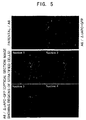
- Z0-1 is a component of tight junction (TJ), which is one of the intercellular adhesive units in the epithelial or endothelial cell layer. At the apical plasma membrane of cells that have normal epithelial polarity, Z0-1 is distributed in the continuous border surrounding the cell.
- Z0-1 was observed to be continuously present along the cellular border, and the cells were observed to have a normal epithelial morphology.
- GFP-APC( ⁇ TSV), ⁇ cAPC-GFP, and nAPC-GFP-expressing cells normal staining of Z0-1 was observed in regions where cells are not piled up, and even in the piled up regions, continuous strands of Z0-1 were observed. This result showed that the cells expressing GFP-APC( ⁇ TSV), ⁇ cAPC-GFP, and nAPC-GFP undergo piling-up while maintaining the intercellular adhesions (TJ, AJ).
- mutant APCs affect cellular morphology, and inhibit the monolayering of normal epithelial cells. Since piled up cells maintain intercellular adhesions (TJ, AJ), which resembles the polyp formation phenomenon in model mice, these cells can be used as a model system.
- GFP-fAPC was localized in the basolateral membrane and junction regions of A6 cells, which have taken on the morphology of polarized epithelial cells.
- the present inventors have reported in literature that a similar construct, fAPC-mGFP (a publicly disclosed full-length APC construct where GFP is inserted inside of the APC), is localized in the basolateral membrane of A6 cells (Mimori-Kiyosue, Y. and Tsukita, S., J. Cell Biol., 154(6):1105-1109, 2001).
- APC is considered to be localized in the basolateral membrane and junction regions due to TSV, its C-terminal PDZ binding motif. Since DLG, one of the PDZ proteins localized in the basolateral membrane and junction regions, is reported to bind to the APC C-terminus (Matsumine, A., et al. , Science. 1996;272(5264):1020-3), APC localization in the basolateral membrane and junction regions is considered to be dependent on PDZ-proteins such as DLG.
- nAPC-GFP In A6 cells that have become polarized and formed cell-cell adhesions, nAPC-GFP was found to be localized in the junction regions. However, this localization was different from that of full-length APC, which can localize not only to the junction regions but also to the basolateral membrane. Therefore, nAPC-GFP is considered to maintain only the binding with some of the APC binding proteins: junction-localized proteins.
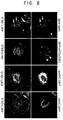
- GFP-fAPC that was localized on the microtubules moved to the basal side of the cell membrane, distributed in a striated pattern, and co-localized with DLG (Fig. 6).
- GFP-APC( ⁇ TSV), ⁇ cAPC-GFP, mAPC-GFP, nAPC-GFP, and n2APC-GFP were dispersed in the cytoplasm; DLG co-localization and the formation of a striated pattern as in GFP-fAPC was not observed.
- cell spreading assays were performed to examine the effects of full-length APC and mutant APCs on cell motility.
- Each of the cell lines was treated with trypsin, collected from dish, and plated onto cover glasses.
- the cover glasses were taken out for fixation 15, 30, 60, and 120 minutes later, and actin was stained with rhodamine-phalloidin to visualize cell shape.
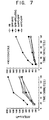
- Each sample was photographed under a fluorescence microscope, area of the region of cells stained with rhodamine-phalloidin was measured, and the average area for each cell was determined and plotted (Fig. 7).
- Fig. 7 cell spreading was significantly enhanced only in cells expressing fAPC-GFP.
- APC localizes to the cell membrane by binding to PDZ proteins through its C-terminus, and contributes to the regulation of cell motility and maintenance of cell morphology.
- the present invention provides mutant APC proteins which can induce piling up of cells.
- Cells expressing these proteins are useful for screening compounds that inhibit piling up of cells.
- the present inventors elucidated, for the first time, that cells expressing mutant APCs maintain the intercellular adhesive structure, and yet exhibit piling up of cells. Elucidation of the mechanisms of polyp formation and malignant formation from these findings is very much expected.
Landscapes
- Chemical & Material Sciences (AREA)
- Health & Medical Sciences (AREA)
- Life Sciences & Earth Sciences (AREA)
- Organic Chemistry (AREA)
- General Health & Medical Sciences (AREA)
- Gastroenterology & Hepatology (AREA)
- Biochemistry (AREA)
- Biophysics (AREA)
- Zoology (AREA)
- Genetics & Genomics (AREA)
- Medicinal Chemistry (AREA)
- Molecular Biology (AREA)
- Proteomics, Peptides & Aminoacids (AREA)
- Toxicology (AREA)
- Micro-Organisms Or Cultivation Processes Thereof (AREA)
- Medicines That Contain Protein Lipid Enzymes And Other Medicines (AREA)
Applications Claiming Priority (3)
| Application Number | Priority Date | Filing Date | Title |
|---|---|---|---|
| JP2002241487 | 2002-08-22 | ||
| JP2002241487 | 2002-08-22 | ||
| PCT/JP2003/010434 WO2004018677A1 (ja) | 2002-08-22 | 2003-08-19 | 変異型apc発現アフリカツメガエル培養細胞株 |
Publications (3)
| Publication Number | Publication Date |
|---|---|
| EP1544298A1 true EP1544298A1 (de) | 2005-06-22 |
| EP1544298A4 EP1544298A4 (de) | 2006-04-05 |
| EP1544298B1 EP1544298B1 (de) | 2009-05-27 |
Family
ID=31943994
Family Applications (1)
| Application Number | Title | Priority Date | Filing Date |
|---|---|---|---|
| EP03792706A Expired - Lifetime EP1544298B1 (de) | 2002-08-22 | 2003-08-19 | Kultivierte xenopus laevis-zellinien, die mutiertes apc exprimieren |
Country Status (7)
| Country | Link |
|---|---|
| US (2) | US7371843B2 (de) |
| EP (1) | EP1544298B1 (de) |
| JP (1) | JP4333955B2 (de) |
| AT (1) | ATE432351T1 (de) |
| AU (1) | AU2003257539A1 (de) |
| DE (1) | DE60327782D1 (de) |
| WO (1) | WO2004018677A1 (de) |
Family Cites Families (1)
| Publication number | Priority date | Publication date | Assignee | Title |
|---|---|---|---|---|
| AU6944100A (en) | 1999-09-01 | 2001-03-26 | Johns Hopkins University, The | Beta-catenin, tcf-4, and apc interact to prevent cancer |
-
2003
- 2003-08-19 AT AT03792706T patent/ATE432351T1/de not_active IP Right Cessation
- 2003-08-19 US US10/525,621 patent/US7371843B2/en not_active Expired - Fee Related
- 2003-08-19 WO PCT/JP2003/010434 patent/WO2004018677A1/ja not_active Ceased
- 2003-08-19 EP EP03792706A patent/EP1544298B1/de not_active Expired - Lifetime
- 2003-08-19 DE DE60327782T patent/DE60327782D1/de not_active Expired - Lifetime
- 2003-08-19 JP JP2004530562A patent/JP4333955B2/ja not_active Expired - Fee Related
- 2003-08-19 AU AU2003257539A patent/AU2003257539A1/en not_active Abandoned
-
2008
- 2008-03-21 US US12/053,198 patent/US7951930B2/en not_active Expired - Fee Related
Also Published As
| Publication number | Publication date |
|---|---|
| EP1544298B1 (de) | 2009-05-27 |
| JP4333955B2 (ja) | 2009-09-16 |
| WO2004018677A1 (ja) | 2004-03-04 |
| US20100003747A1 (en) | 2010-01-07 |
| US20060100418A1 (en) | 2006-05-11 |
| ATE432351T1 (de) | 2009-06-15 |
| JPWO2004018677A1 (ja) | 2005-12-15 |
| DE60327782D1 (de) | 2009-07-09 |
| US7951930B2 (en) | 2011-05-31 |
| AU2003257539A1 (en) | 2004-03-11 |
| US7371843B2 (en) | 2008-05-13 |
| EP1544298A4 (de) | 2006-04-05 |
Similar Documents
| Publication | Publication Date | Title |
|---|---|---|
| JP2018104464A (ja) | 腫瘍の診断と治療を目的とした表面会合抗原の同定 | |
| US8618273B2 (en) | Partial fragment of REIC/Dkk-3 gene and cancer therapeutic agent comprising the same | |
| EP1006186A1 (de) | Menschliche gene. | |
| JPWO2004038018A1 (ja) | 分裂停止後のドーパミン産生ニューロン前駆細胞に特異的に発現している遺伝子 | |
| KR101161923B1 (ko) | Atap 펩티드, 상기 펩티드를 엔코딩하는 핵산 및 이들과 관련된 사용 방법 | |
| US7803920B2 (en) | ECAT16 gene expressed specifically in ES cells and utilization of the same | |
| EP1544298B1 (de) | Kultivierte xenopus laevis-zellinien, die mutiertes apc exprimieren | |
| CN112062827B (zh) | Cep55蛋白在调控纤毛去组装和制备纤毛相关疾病模型中的应用 | |
| CA2433501C (en) | Bhlh-pas proteins, genes thereof and utilization of the same | |
| JP2001510991A (ja) | Alarm関連ペプチドおよび核酸ならびにそれらを用いた診断 | |
| JP4942127B2 (ja) | 新規アルマジロリピート含有蛋白質、alex1 | |
| US20080125388A1 (en) | Methods and compositions for CPG15-2 | |
| US7214774B2 (en) | Fetal polypeptides from human liver | |
| WO2001012808A1 (en) | Novel frizzled family genes 584 | |
| WO2008051048A2 (en) | Method and materials for inhibiting a nuclear export of gsk3 | |
| KR100678523B1 (ko) | Pro840 폴리펩티드 아고니스트 또는 길항제의 확인 방법 | |
| Segade et al. | Identification of a matrix binding domain in the microfibril-associated glycoproteins 1 and 2 (MAGP1 and 2) and intracellular localization of alternative splice forms | |
| WO2007074832A1 (ja) | 小細胞肺がんの診断のための方法、システムおよび組成物ならびに関連するスクリーニング方法 | |
| JP5099534B2 (ja) | Kank3遺伝子の癌治療及び癌検出並びに創薬への利用 | |
| US7317085B2 (en) | Human apoptosis-associated genes and human apoptosis-associated proteins produced thereby | |
| JP5099535B2 (ja) | Kank4遺伝子の癌治療及び癌検出並びに創薬への利用 | |
| US20050089858A1 (en) | Salvador tumor suppressor gene | |
| JPWO2004001038A1 (ja) | 細胞または組織の神経化に関与する新規遺伝子およびタンパク質、並びにその利用 |
Legal Events
| Date | Code | Title | Description |
|---|---|---|---|
| PUAI | Public reference made under article 153(3) epc to a published international application that has entered the european phase |
Free format text: ORIGINAL CODE: 0009012 |
|
| 17P | Request for examination filed |
Effective date: 20050218 |
|
| AK | Designated contracting states |
Kind code of ref document: A1 Designated state(s): AT BE BG CH CY CZ DE DK EE ES FI FR GB GR HU IE IT LI LU MC NL PT RO SE SI SK TR |
|
| AX | Request for extension of the european patent |
Extension state: AL LT LV MK |
|
| A4 | Supplementary search report drawn up and despatched |
Effective date: 20060217 |
|
| RAP1 | Party data changed (applicant data changed or rights of an application transferred) |
Owner name: EISAI R&D MANAGEMENT CO., LTD. |
|
| GRAP | Despatch of communication of intention to grant a patent |
Free format text: ORIGINAL CODE: EPIDOSNIGR1 |
|
| GRAS | Grant fee paid |
Free format text: ORIGINAL CODE: EPIDOSNIGR3 |
|
| GRAA | (expected) grant |
Free format text: ORIGINAL CODE: 0009210 |
|
| AK | Designated contracting states |
Kind code of ref document: B1 Designated state(s): AT BE BG CH CY CZ DE DK EE ES FI FR GB GR HU IE IT LI LU MC NL PT RO SE SI SK TR |
|
| AX | Request for extension of the european patent |
Extension state: AL LT LV MK |
|
| REG | Reference to a national code |
Ref country code: GB Ref legal event code: FG4D |
|
| REG | Reference to a national code |
Ref country code: CH Ref legal event code: EP |
|
| REG | Reference to a national code |
Ref country code: IE Ref legal event code: FG4D |
|
| REF | Corresponds to: |
Ref document number: 60327782 Country of ref document: DE Date of ref document: 20090709 Kind code of ref document: P |
|
| PG25 | Lapsed in a contracting state [announced via postgrant information from national office to epo] |
Ref country code: AT Free format text: LAPSE BECAUSE OF FAILURE TO SUBMIT A TRANSLATION OF THE DESCRIPTION OR TO PAY THE FEE WITHIN THE PRESCRIBED TIME-LIMIT Effective date: 20090527 Ref country code: FI Free format text: LAPSE BECAUSE OF FAILURE TO SUBMIT A TRANSLATION OF THE DESCRIPTION OR TO PAY THE FEE WITHIN THE PRESCRIBED TIME-LIMIT Effective date: 20090527 Ref country code: PT Free format text: LAPSE BECAUSE OF FAILURE TO SUBMIT A TRANSLATION OF THE DESCRIPTION OR TO PAY THE FEE WITHIN THE PRESCRIBED TIME-LIMIT Effective date: 20090927 |
|
| NLV1 | Nl: lapsed or annulled due to failure to fulfill the requirements of art. 29p and 29m of the patents act | ||
| LTIE | Lt: invalidation of european patent or patent extension |
Effective date: 20090527 |
|
| PG25 | Lapsed in a contracting state [announced via postgrant information from national office to epo] |
Ref country code: SE Free format text: LAPSE BECAUSE OF FAILURE TO SUBMIT A TRANSLATION OF THE DESCRIPTION OR TO PAY THE FEE WITHIN THE PRESCRIBED TIME-LIMIT Effective date: 20090827 Ref country code: NL Free format text: LAPSE BECAUSE OF FAILURE TO SUBMIT A TRANSLATION OF THE DESCRIPTION OR TO PAY THE FEE WITHIN THE PRESCRIBED TIME-LIMIT Effective date: 20090527 Ref country code: SI Free format text: LAPSE BECAUSE OF FAILURE TO SUBMIT A TRANSLATION OF THE DESCRIPTION OR TO PAY THE FEE WITHIN THE PRESCRIBED TIME-LIMIT Effective date: 20090527 |
|
| PG25 | Lapsed in a contracting state [announced via postgrant information from national office to epo] |
Ref country code: CZ Free format text: LAPSE BECAUSE OF FAILURE TO SUBMIT A TRANSLATION OF THE DESCRIPTION OR TO PAY THE FEE WITHIN THE PRESCRIBED TIME-LIMIT Effective date: 20090527 Ref country code: ES Free format text: LAPSE BECAUSE OF FAILURE TO SUBMIT A TRANSLATION OF THE DESCRIPTION OR TO PAY THE FEE WITHIN THE PRESCRIBED TIME-LIMIT Effective date: 20090907 Ref country code: EE Free format text: LAPSE BECAUSE OF FAILURE TO SUBMIT A TRANSLATION OF THE DESCRIPTION OR TO PAY THE FEE WITHIN THE PRESCRIBED TIME-LIMIT Effective date: 20090527 Ref country code: DK Free format text: LAPSE BECAUSE OF FAILURE TO SUBMIT A TRANSLATION OF THE DESCRIPTION OR TO PAY THE FEE WITHIN THE PRESCRIBED TIME-LIMIT Effective date: 20090527 Ref country code: RO Free format text: LAPSE BECAUSE OF FAILURE TO SUBMIT A TRANSLATION OF THE DESCRIPTION OR TO PAY THE FEE WITHIN THE PRESCRIBED TIME-LIMIT Effective date: 20090527 |
|
| PG25 | Lapsed in a contracting state [announced via postgrant information from national office to epo] |
Ref country code: SK Free format text: LAPSE BECAUSE OF FAILURE TO SUBMIT A TRANSLATION OF THE DESCRIPTION OR TO PAY THE FEE WITHIN THE PRESCRIBED TIME-LIMIT Effective date: 20090527 Ref country code: BE Free format text: LAPSE BECAUSE OF FAILURE TO SUBMIT A TRANSLATION OF THE DESCRIPTION OR TO PAY THE FEE WITHIN THE PRESCRIBED TIME-LIMIT Effective date: 20090527 |
|
| PG25 | Lapsed in a contracting state [announced via postgrant information from national office to epo] |
Ref country code: BG Free format text: LAPSE BECAUSE OF FAILURE TO SUBMIT A TRANSLATION OF THE DESCRIPTION OR TO PAY THE FEE WITHIN THE PRESCRIBED TIME-LIMIT Effective date: 20090827 Ref country code: MC Free format text: LAPSE BECAUSE OF NON-PAYMENT OF DUE FEES Effective date: 20090831 |
|
| REG | Reference to a national code |
Ref country code: CH Ref legal event code: PL |
|
| PLBE | No opposition filed within time limit |
Free format text: ORIGINAL CODE: 0009261 |
|
| STAA | Information on the status of an ep patent application or granted ep patent |
Free format text: STATUS: NO OPPOSITION FILED WITHIN TIME LIMIT |
|
| PG25 | Lapsed in a contracting state [announced via postgrant information from national office to epo] |
Ref country code: CH Free format text: LAPSE BECAUSE OF NON-PAYMENT OF DUE FEES Effective date: 20090831 Ref country code: LI Free format text: LAPSE BECAUSE OF NON-PAYMENT OF DUE FEES Effective date: 20090831 |
|
| 26N | No opposition filed |
Effective date: 20100302 |
|
| REG | Reference to a national code |
Ref country code: IE Ref legal event code: MM4A |
|
| PG25 | Lapsed in a contracting state [announced via postgrant information from national office to epo] |
Ref country code: IE Free format text: LAPSE BECAUSE OF NON-PAYMENT OF DUE FEES Effective date: 20090819 |
|
| PG25 | Lapsed in a contracting state [announced via postgrant information from national office to epo] |
Ref country code: GR Free format text: LAPSE BECAUSE OF FAILURE TO SUBMIT A TRANSLATION OF THE DESCRIPTION OR TO PAY THE FEE WITHIN THE PRESCRIBED TIME-LIMIT Effective date: 20090828 |
|
| PGFP | Annual fee paid to national office [announced via postgrant information from national office to epo] |
Ref country code: DE Payment date: 20100823 Year of fee payment: 8 Ref country code: FR Payment date: 20100901 Year of fee payment: 8 |
|
| PGFP | Annual fee paid to national office [announced via postgrant information from national office to epo] |
Ref country code: GB Payment date: 20100819 Year of fee payment: 8 |
|
| PG25 | Lapsed in a contracting state [announced via postgrant information from national office to epo] |
Ref country code: IT Free format text: LAPSE BECAUSE OF FAILURE TO SUBMIT A TRANSLATION OF THE DESCRIPTION OR TO PAY THE FEE WITHIN THE PRESCRIBED TIME-LIMIT Effective date: 20090527 |
|
| PG25 | Lapsed in a contracting state [announced via postgrant information from national office to epo] |
Ref country code: LU Free format text: LAPSE BECAUSE OF NON-PAYMENT OF DUE FEES Effective date: 20090819 |
|
| PG25 | Lapsed in a contracting state [announced via postgrant information from national office to epo] |
Ref country code: HU Free format text: LAPSE BECAUSE OF FAILURE TO SUBMIT A TRANSLATION OF THE DESCRIPTION OR TO PAY THE FEE WITHIN THE PRESCRIBED TIME-LIMIT Effective date: 20091128 |
|
| PG25 | Lapsed in a contracting state [announced via postgrant information from national office to epo] |
Ref country code: TR Free format text: LAPSE BECAUSE OF FAILURE TO SUBMIT A TRANSLATION OF THE DESCRIPTION OR TO PAY THE FEE WITHIN THE PRESCRIBED TIME-LIMIT Effective date: 20090527 |
|
| PG25 | Lapsed in a contracting state [announced via postgrant information from national office to epo] |
Ref country code: CY Free format text: LAPSE BECAUSE OF FAILURE TO SUBMIT A TRANSLATION OF THE DESCRIPTION OR TO PAY THE FEE WITHIN THE PRESCRIBED TIME-LIMIT Effective date: 20090527 |
|
| GBPC | Gb: european patent ceased through non-payment of renewal fee |
Effective date: 20110819 |
|
| REG | Reference to a national code |
Ref country code: FR Ref legal event code: ST Effective date: 20120430 |
|
| REG | Reference to a national code |
Ref country code: DE Ref legal event code: R119 Ref document number: 60327782 Country of ref document: DE Effective date: 20120301 |
|
| PG25 | Lapsed in a contracting state [announced via postgrant information from national office to epo] |
Ref country code: FR Free format text: LAPSE BECAUSE OF NON-PAYMENT OF DUE FEES Effective date: 20110831 Ref country code: GB Free format text: LAPSE BECAUSE OF NON-PAYMENT OF DUE FEES Effective date: 20110819 |
|
| PG25 | Lapsed in a contracting state [announced via postgrant information from national office to epo] |
Ref country code: DE Free format text: LAPSE BECAUSE OF NON-PAYMENT OF DUE FEES Effective date: 20120301 |