EP1537572B1 - Zugangsgeregelter optischer datenträger und verfahren dafür - Google Patents
Zugangsgeregelter optischer datenträger und verfahren dafür Download PDFInfo
- Publication number
- EP1537572B1 EP1537572B1 EP03763977A EP03763977A EP1537572B1 EP 1537572 B1 EP1537572 B1 EP 1537572B1 EP 03763977 A EP03763977 A EP 03763977A EP 03763977 A EP03763977 A EP 03763977A EP 1537572 B1 EP1537572 B1 EP 1537572B1
- Authority
- EP
- European Patent Office
- Prior art keywords
- tracks
- disc
- optical disc
- track
- primary
- Prior art date
- Legal status (The legal status is an assumption and is not a legal conclusion. Google has not performed a legal analysis and makes no representation as to the accuracy of the status listed.)
- Expired - Lifetime
Links
Images

Classifications
-
- G—PHYSICS
- G11—INFORMATION STORAGE
- G11B—INFORMATION STORAGE BASED ON RELATIVE MOVEMENT BETWEEN RECORD CARRIER AND TRANSDUCER
- G11B20/00—Signal processing not specific to the method of recording or reproducing; Circuits therefor
- G11B20/00086—Circuits for prevention of unauthorised reproduction or copying, e.g. piracy
- G11B20/00731—Circuits for prevention of unauthorised reproduction or copying, e.g. piracy involving a digital rights management system for enforcing a usage restriction
- G11B20/00818—Circuits for prevention of unauthorised reproduction or copying, e.g. piracy involving a digital rights management system for enforcing a usage restriction wherein the usage restriction limits the signal quality, e.g. by low-pass filtering of audio signals or by reducing the resolution of video signals
- G11B20/00826—Circuits for prevention of unauthorised reproduction or copying, e.g. piracy involving a digital rights management system for enforcing a usage restriction wherein the usage restriction limits the signal quality, e.g. by low-pass filtering of audio signals or by reducing the resolution of video signals wherein a spoiler signal is added to degrade the signal quality
-
- G—PHYSICS
- G11—INFORMATION STORAGE
- G11B—INFORMATION STORAGE BASED ON RELATIVE MOVEMENT BETWEEN RECORD CARRIER AND TRANSDUCER
- G11B19/00—Driving, starting, stopping record carriers not specifically of filamentary or web form, or of supports therefor; Control thereof; Control of operating function ; Driving both disc and head
- G11B19/02—Control of operating function, e.g. switching from recording to reproducing
- G11B19/04—Arrangements for preventing, inhibiting, or warning against double recording on the same blank or against other recording or reproducing malfunctions
-
- G—PHYSICS
- G11—INFORMATION STORAGE
- G11B—INFORMATION STORAGE BASED ON RELATIVE MOVEMENT BETWEEN RECORD CARRIER AND TRANSDUCER
- G11B19/00—Driving, starting, stopping record carriers not specifically of filamentary or web form, or of supports therefor; Control thereof; Control of operating function ; Driving both disc and head
- G11B19/02—Control of operating function, e.g. switching from recording to reproducing
- G11B19/12—Control of operating function, e.g. switching from recording to reproducing by sensing distinguishing features of or on records, e.g. diameter end mark
- G11B19/122—Control of operating function, e.g. switching from recording to reproducing by sensing distinguishing features of or on records, e.g. diameter end mark involving the detection of an identification or authentication mark
-
- G—PHYSICS
- G11—INFORMATION STORAGE
- G11B—INFORMATION STORAGE BASED ON RELATIVE MOVEMENT BETWEEN RECORD CARRIER AND TRANSDUCER
- G11B20/00—Signal processing not specific to the method of recording or reproducing; Circuits therefor
- G11B20/00086—Circuits for prevention of unauthorised reproduction or copying, e.g. piracy
-
- G—PHYSICS
- G11—INFORMATION STORAGE
- G11B—INFORMATION STORAGE BASED ON RELATIVE MOVEMENT BETWEEN RECORD CARRIER AND TRANSDUCER
- G11B20/00—Signal processing not specific to the method of recording or reproducing; Circuits therefor
- G11B20/00086—Circuits for prevention of unauthorised reproduction or copying, e.g. piracy
- G11B20/00137—Circuits for prevention of unauthorised reproduction or copying, e.g. piracy involving measures which result in a restriction to contents recorded on or reproduced from a record carrier to authorised users
- G11B20/00152—Circuits for prevention of unauthorised reproduction or copying, e.g. piracy involving measures which result in a restriction to contents recorded on or reproduced from a record carrier to authorised users involving a password
-
- G—PHYSICS
- G11—INFORMATION STORAGE
- G11B—INFORMATION STORAGE BASED ON RELATIVE MOVEMENT BETWEEN RECORD CARRIER AND TRANSDUCER
- G11B20/00—Signal processing not specific to the method of recording or reproducing; Circuits therefor
- G11B20/00086—Circuits for prevention of unauthorised reproduction or copying, e.g. piracy
- G11B20/00188—Circuits for prevention of unauthorised reproduction or copying, e.g. piracy involving measures which result in a restriction to authorised devices recording or reproducing contents to/from a record carrier
- G11B20/00202—Circuits for prevention of unauthorised reproduction or copying, e.g. piracy involving measures which result in a restriction to authorised devices recording or reproducing contents to/from a record carrier wherein the copy protection scheme builds on multi-session recording, e.g. defective table of contents [TOC] in the 2nd session
-
- G—PHYSICS
- G11—INFORMATION STORAGE
- G11B—INFORMATION STORAGE BASED ON RELATIVE MOVEMENT BETWEEN RECORD CARRIER AND TRANSDUCER
- G11B20/00—Signal processing not specific to the method of recording or reproducing; Circuits therefor
- G11B20/00086—Circuits for prevention of unauthorised reproduction or copying, e.g. piracy
- G11B20/0021—Circuits for prevention of unauthorised reproduction or copying, e.g. piracy involving encryption or decryption of contents recorded on or reproduced from a record carrier
-
- G—PHYSICS
- G11—INFORMATION STORAGE
- G11B—INFORMATION STORAGE BASED ON RELATIVE MOVEMENT BETWEEN RECORD CARRIER AND TRANSDUCER
- G11B20/00—Signal processing not specific to the method of recording or reproducing; Circuits therefor
- G11B20/00086—Circuits for prevention of unauthorised reproduction or copying, e.g. piracy
- G11B20/0021—Circuits for prevention of unauthorised reproduction or copying, e.g. piracy involving encryption or decryption of contents recorded on or reproduced from a record carrier
- G11B20/00485—Circuits for prevention of unauthorised reproduction or copying, e.g. piracy involving encryption or decryption of contents recorded on or reproduced from a record carrier characterised by a specific kind of data which is encrypted and recorded on and/or reproduced from the record carrier
- G11B20/00557—Circuits for prevention of unauthorised reproduction or copying, e.g. piracy involving encryption or decryption of contents recorded on or reproduced from a record carrier characterised by a specific kind of data which is encrypted and recorded on and/or reproduced from the record carrier wherein further management data is encrypted, e.g. sector headers, TOC or the lead-in or lead-out areas
-
- G—PHYSICS
- G11—INFORMATION STORAGE
- G11B—INFORMATION STORAGE BASED ON RELATIVE MOVEMENT BETWEEN RECORD CARRIER AND TRANSDUCER
- G11B20/00—Signal processing not specific to the method of recording or reproducing; Circuits therefor
- G11B20/00086—Circuits for prevention of unauthorised reproduction or copying, e.g. piracy
- G11B20/00572—Circuits for prevention of unauthorised reproduction or copying, e.g. piracy involving measures which change the format of the recording medium
- G11B20/00615—Circuits for prevention of unauthorised reproduction or copying, e.g. piracy involving measures which change the format of the recording medium said format change concerning the logical format of the recording medium, e.g. the structure of sectors, blocks, or frames
- G11B20/0063—Circuits for prevention of unauthorised reproduction or copying, e.g. piracy involving measures which change the format of the recording medium said format change concerning the logical format of the recording medium, e.g. the structure of sectors, blocks, or frames wherein the modification to the logical format mainly concerns management data, e.g., by changing the format of the TOC or the subcode
-
- G—PHYSICS
- G11—INFORMATION STORAGE
- G11B—INFORMATION STORAGE BASED ON RELATIVE MOVEMENT BETWEEN RECORD CARRIER AND TRANSDUCER
- G11B20/00—Signal processing not specific to the method of recording or reproducing; Circuits therefor
- G11B20/00086—Circuits for prevention of unauthorised reproduction or copying, e.g. piracy
- G11B20/00659—Circuits for prevention of unauthorised reproduction or copying, e.g. piracy involving a control step which is implemented as an executable file stored on the record carrier
-
- G—PHYSICS
- G11—INFORMATION STORAGE
- G11B—INFORMATION STORAGE BASED ON RELATIVE MOVEMENT BETWEEN RECORD CARRIER AND TRANSDUCER
- G11B20/00—Signal processing not specific to the method of recording or reproducing; Circuits therefor
- G11B20/00086—Circuits for prevention of unauthorised reproduction or copying, e.g. piracy
- G11B20/00666—Circuits for prevention of unauthorised reproduction or copying, e.g. piracy involving a step of erasing or nullifying data, e.g. data being overwritten with a random string
-
- G—PHYSICS
- G11—INFORMATION STORAGE
- G11B—INFORMATION STORAGE BASED ON RELATIVE MOVEMENT BETWEEN RECORD CARRIER AND TRANSDUCER
- G11B20/00—Signal processing not specific to the method of recording or reproducing; Circuits therefor
- G11B20/00086—Circuits for prevention of unauthorised reproduction or copying, e.g. piracy
- G11B20/0092—Circuits for prevention of unauthorised reproduction or copying, e.g. piracy involving measures which are linked to media defects or read/write errors
- G11B20/00927—Circuits for prevention of unauthorised reproduction or copying, e.g. piracy involving measures which are linked to media defects or read/write errors wherein said defects or errors are generated on purpose, e.g. intended scratches
-
- G—PHYSICS
- G11—INFORMATION STORAGE
- G11B—INFORMATION STORAGE BASED ON RELATIVE MOVEMENT BETWEEN RECORD CARRIER AND TRANSDUCER
- G11B20/00—Signal processing not specific to the method of recording or reproducing; Circuits therefor
- G11B20/00086—Circuits for prevention of unauthorised reproduction or copying, e.g. piracy
- G11B20/0092—Circuits for prevention of unauthorised reproduction or copying, e.g. piracy involving measures which are linked to media defects or read/write errors
- G11B20/00927—Circuits for prevention of unauthorised reproduction or copying, e.g. piracy involving measures which are linked to media defects or read/write errors wherein said defects or errors are generated on purpose, e.g. intended scratches
- G11B20/00956—Circuits for prevention of unauthorised reproduction or copying, e.g. piracy involving measures which are linked to media defects or read/write errors wherein said defects or errors are generated on purpose, e.g. intended scratches said intentional errors occurring due to an invalid TOC
Definitions
- the present invention relates to a method of controlling access to an optical disc, in particular when read by an optical disc data reader such as, for example, a CD-ROM drive in a personal computer.
- the invention also relates to an optical disc to which access is controlled.
- CD-DAs digital audio compact discs
- ISO International Standard 908 International Standard 908
- Philips TM and Sony TM "Red Book” standard This sets strict parameters on such features as the physical dimensions of the disc, the EFM data encoding scheme and the Reed-Solomon error correction which is employed.
- CD-ROMs Compact disc read-only memories
- ISO/IEC International Standard 10149 ISO/IEC International Standard 10149
- the Yellow Book standard incorporates but extends the Red Book standard such that, as a rule, a CD-ROM drive in a computer can make the data on the CD-ROM available to a computer system (for manipulation, execution or copying), but can also read the audio signal data on a CD-DA.
- WO-A-99/57723 discloses a method that involves interrupting the laser beam used to record a CD or glass master disc, the duration, frequency and placement of the laser beam interruptions being dependent on the content of the data being recorded.
- WO-A-00/74053 discloses a method whereby selected control data on a CD is rendered incorrect, such incorrect data not being generally accessed or read by an audio player but being such as to render the CD unplayable by a data reader.
- WO-A-01/61695 discloses a method whereby the timing and/or navigation data in the P- and Q-subchannels of a CD is rendered incorrect or inaccurate, thus interfering with the extraction or reading of the audio data by a data reader.
- US-B-6208598 discloses a method whereby selected sequences of audio data samples are substituted by incorrect data and the corresponding part of the P-channel is altered to prevent the incorrect data samples being passed to the digital-to-analogue converter of an audio player, an interpolated value being used instead.
- a copy disc however will not generally have the modified P-channel and so the incorrect data will he replayed, causing audible distortion.
- WO-A-01/15028 and WO-A-01/41130 disclose a method whereby selected audio signal data symbols are overwritten with grossly-erroneous values, the error correction parity symbols associated with the said data symbols are then located and overwritten in such a way as to create uncorrectable errors in the codewords containing the erroneous values, such that a CD player will apply interpolative error-concealment to prevent the output of the error.
- EP-A-1 093 120 (SONOPRESS) 18 April 2001 discloses an optical disk medium containing audio data of CD-DA format in which a data file (autorun.inf) and a copy protection program are added to the disk such that when the disk is placed in a computer CD-ROM drive and not a dedicated CD-DA player the copy protection program starts automatically, preventing illegal copying of the audio data.
- a data file autorun.inf
- a copy protection program are added to the disk such that when the disk is placed in a computer CD-ROM drive and not a dedicated CD-DA player the copy protection program starts automatically, preventing illegal copying of the audio data.
- an optical disc as defined in claim 1.
- optical disc data reader any device which allows random reading of data upon the disc, such as a CD-ROM drive or the like. Such devices are normally a part of a personal computer.
- Optical disc data readers are to be contrasted with CD-DA players such as are found in hi-fi or stereo players, which use a more sequential approach to the reading of digital audio data and which cannot read, for example, compressed audio data.
- the three alternate tracks each have a corresponding primary track.
- the three alternate tracks may include data which, when replayed, is substantially identical to that of the three corresponding primary tracks.
- an optical disc data reader is able instead to access the four primary tracks which have no alternate track counterpart, and the 3 alternate tracks.
- the disc access information preferably indicates to an optical disc data reader that there are only m tracks in total on the disc, made up of n alternate tracks and (m-n) primary tracks.
- the disc access information preferably indicates to a CD-DA player that there are likewise only m tracks, though here these are the m primary tracks.
- the alternate tracks may in preferred embodiments comprise standard uncompressed digital audio (CD-DA) format data.
- CD-DA standard uncompressed digital audio
- the optical disc data reader may be able to play back the three alternate tracks (in this example) as well (so that the output of an audio player on a personal computer is substantially the same for all 7 accessible tracks as the output of the 7 primary tracks when played back via a CD-DA player), in that case the alternate tracks can be copy protected or otherwise altered to prevent copying through data extraction and, optionally, by the subsequent use of a CD writer in communication with the optical disc data reader.
- the alternate tracks may be copy protected using known techniques.
- the above exemplary disc access control arrangement potentially provides for playback of all 7 primary tracks without any issues of compatibility with CD-DA players, but may allow copy protection of some (or, indeed, all) of the same tracks when played by an optical disc data reader by the use of the alternate tracks.
- the alternate tracks do not necessarily have to encode the same audio information as their corresponding primary tracks.
- the associated alternate tracks may either be shorter, the same length or longer than the corresponding primary track.
- a primary track representing a piece of music may be associated with a short excerpt from that piece of music which forms the associated alternate track.
- a CD-DA will play all of the piece of music (but without the risk of it being digitally copied at least onto another optical disc), whereas only the excerpt will be played back when (to a user) the apparent same track is accessed by an optical disc data reader.
- the alternate tracks may carry a short message, such as: "This disc is access controlled". Such a message may be included either by itself, or following a few seconds of the same content as contained on the primary track, or superimposed over a few seconds of the same content as contained on the corresponding primary track. Such a message may be repeated, if this is felt necessary to convey the relevant information.
- the associated alternate tracks may comprise a monophonic version of the same content as contained on the corresponding primary track on one channel (left or right) and a spoken message as described above on the other channel (right or left).
- Such alternate tracks would thereby reproduce the required spoken message when replayed on an optical disc data reader and also be copied in this same form onto any copy made of the content but nonetheless permit replay of the monophonic version of the content (without the message) by suitable adjustment of the left/right balance control provided in any disc replay software associated with the optical disc data reader.
- the associated alternate tracks may comprise the same content as contained on the corresponding primary track but with the spoken message added in opposite phase on the two channels (left and right), whereby any stereo reproduction would include the message but a monophonic reproduction would not include the message.
- the associated alternate tracks may comprise the same content as contained on the corresponding primary track but with a degraded quality, such that the content is still suitable for listening to in a workplace, for example, but is unsuitable for listening to in a more critical environment such as on high fidelity audio equipment.
- Such degradation may comprise, for example, the introduction of compression artefacts and/or the addition of low level random noise.
- noise or other interference could be added in opposite phase on the two channels, whereby any stereo reproduction or copying of the track would include the added noise but a monophonic reproduction of the track content would not include the noise or interference.
- Still a further alternative or additional feature may include the use of compressed audio files in the alternate tracks.
- the audio files of the alternate tracks may be compressed using MPEG 2/level 3 (MP3), Ogg Vorbis TM , streaming audio (e.g. Real Audio TM or Windows TM Media), or some other form of audio data compression scheme generally accessible by data readers.
- MP3 MPEG 2/level 3
- Ogg Vorbis TM streaming audio
- streaming audio e.g. Real Audio TM or Windows TM Media
- some other form of audio data compression scheme generally accessible by data readers.
- Such compressed tracks may incorporate a digital rights management technique allowing access by a data reader subject to certain conditions pre-set by the rights owner at the time of creation of the disc.
- Such conditions may allow the tracks to play on only a limited number of occasions, or for a limited number of days after first being accessed by that particular data reader, or they may allow the tracks to be uploaded to the data reader's hard disk but then bind the track to that particular data reader to prevent usable copies of that track being distributed.
- the alternate tracks include standard CD-DA format audio data (rather than compressed audio), and in particular when the alternate tracks are shorter than the primary tracks, it may be desirable to include additional compressed audio data which can be recorded to the disc in a second session using known techniques.
- additional compressed audio files, recorded in a second session when combined with the foregoing and following methods, provides a significant improvement over the known technique of combining copy protected CD audio tracks with compressed audio files.
- the above-mentioned advantages of the invention result at least partly from a method for identifying and editing track data in the Table of Contents (TOC) of the disc.
- An embodiment of the invention therefore allows editing the information in the Point field of the TOC entries both for the primary and for the secondary tracks and also in certain other TOC data fields which relate to the disc as a whole.
- the disc access information is included within a table of contents (TOC) of the optical disc, the TOC having a track number indicator indicative of the track number for each of the tracks on the disc, the track number indicator for the or each primary track which has an associated alternate track preferably being set to zero.
- TOC table of contents
- the entry or entries in the TOC for the or each primary track are swapped with the respective entry or entries for the or each of the corresponding alternate tracks.
- the disc access information is modified so that starting time of at least one of the primary tracks for which there is a corresponding alternate track is changed to the starting time of that alternate track.
- Entries in the disc access information relating to the primary tracks may optionally be deleted.
- the advantage of this procedure is that the data related to the relevant primary track(s) is removed from the disc access information (e.g. the TOC) and thus cannot be readily regenerated by someone intent on gaining access to such primary tracks on a data reader.
- the track number indicator for the or each alternate track which has a corresponding primary track is preferably set to indicate the track number of the corresponding primary track.
- the number of tracks on the disc is equal to the number of primary tracks only. A CD-DA player will then ignore any alternate tracks.
- the optical disc may include substitute disc access information stored within one or more of the alternate tracks in encrypted form, the substitute disc access information, when decrypted, being readable by an optical disc data reader and further being utilized thereby, when so decrypted, to permit location of the primary track(s).
- the optical disc also includes a further track, which in turn includes software code that, when executed by a computer that controls the optical disc data reader, causes the substitute disc access information to be decrypted.
- the software code may, for example, be executed automatically upon inserting the disc into the computer.
- the substitute disc access information may then be decrypted and used instead of the "default" disc access information stored upon the disc and which would otherwise be used to control disc access.
- the substitute disc access information may allow access to the, some more, or all of the primary tracks.
- the manner of decryption does not form a part of the present invention.
- the password for example, used to initiate the decryption by the software code on the disc may be subject to purchase by a user so that, in effect, a user pays for unlimited access to (including a licence to copy, perhaps) the primary track(s). If the user does not enter a valid password when prompted, it will be understood that the user need not be prevented from accessing the disc at all, but the original (default) disc access information would then continue to be used so that the user has restricted or no access to the primary tracks.
- substitute disc access information need not necessarily be included as one of the alternate tracks but may instead be written to the disc in a second session (using known techniques), as described above.
- the disc access control information also indicates to a CD-DA player that there are only m tracks on the disc.
- the m tracks indicated to be present to a CD-DA player are different from the m tracks indicated to be present to an optical disc data reader.
- an optical disc data.reader may determine from the disc access control information that there are n alternate tracks and (m-n) primary tracks, whereas a CD-DA player may simply determine the presence of the m primary tracks.
- the invention also extends to an optical disc master upon which is written or stamped data in accordance with the foregoing techniques.
- This optical disc master may in turn be used to produce, either directly or indirectly, one or more optical discs.
- the invention extends to an optical disc onto which data is burned, the data having been generated in accordance with the foregoing techniques.
- part of the data stream on a CD-DA is set aside to carry sevéral sub-code channels, labeled P, Q,R,S,T,U,V and W.
- P, Q,R,S,T,U,V and W Only the P and Q subchannels contain control data for the disc.
- the Q subchannel can operate in four modes, of which only three (Modes 1, 2 and 3) carry active data. When the Q subchannel is operating in Mode 1, it carries data for the disc lead-in zone, the program zone and the disc lead out zone.
- the Q subchannel data content in the lead-in zone differs from the data elsewhere on the disc.
- the lead-in data comprises the Table of Contents (TOC) for the disc.
- the TOC stores data indicating, inter alia, the number of audio tracks and the starting times of each track.
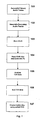
- Each of an array of first tracks for a CD referred to hereinafter as "primary" tracks are first assembled at step 101 on a PC's hard disk.
- a further set of tracks referred to hereinafter as “alternate tracks” are assembled in the corresponding order (step 102) on the PC's hard disc.
- a CD-R disc is then burned at step 103, using readily available CD-R burning software which will be well known to those skilled in the art and does not form a part of the present invention. It should be noted at this point that it is important that the tracks are assembled by the CD-R burning software in such a way that all the primary tracks (including any that may not have corresponding secondary tracks) are recorded on the disc first, in the required program order.
- step 104 the CD-R is then read back into the PC and at step 105, the TOC is analysed.
- the TOC is then edited at step 106 and this edited TOC is then used to produce a master disc image at step 107.
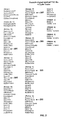
- Figure 2 illustrates the unedited TOC data for a sample disc containing four audio tracks of approximately 30 seconds duration each.
- the Point field is set to 0xa0 as in Entry 0, the minute field Pmin of that Entry 0, 201, shows the number of the first track on the disc.
- the Point field is set to Oxa1 as in Entry 1
- the minute field Pmin of Entry 1 shows the number of the last track on the disc.
- Entries 3, 4, 5 and 6 contain the data relating to each program track and in this example the Point field 203 of each entry (in the form 0xnn, where nn is the relevant track number in hexadecimal format) indicates the track number.
- the numbered Entries (0, 1, 2, 3 4, etc.) in square brackets [ ] are merely headings for convenience of reference, which are treated by the CD burning software as comments which are not to be acted upon.
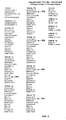
- Figure 3 illustrates the edited TOC data resulting from the application, to a sample disc, of a first method in accordance with the present invention.
- the sample disc contains four tracks, comprising two primary tracks of approximately 30 seconds duration each, and two tracks nominated as alternate tracks, also of approximately 30 seconds duration each.
- the number of tracks on the disc is modified to correspond with the number of primary tracks only (i.e. 2 in this case).
- the data in the Point field 302 for each primary track for which there is a corresponding alternate track is then changed to read 0 (zero), and finally the data in the Point field of each corresponding alternate track is then edited so as to have the track number of the relevant primary track, so in this example the Point field 303 for track 3 (Entry 5) is changed to 0x01 and the Point field 304 for track 4 (Entry 6) is changed to 0x02.
- a TOC edited as described in connection with Figure 3 may be written back to an optical disc as described above in connection with Figure 1.
- An optical disc including such an edited TOC will be access controlled as follows.
- a CD-DA attempting to access a disc with a TOC edited in accordance with Figure 3 will be told that there are only two tracks on the disc. This is because CD-DA players use the information in the Pmin field 301 of Entry 1 to determine the number of tracks m on the disc. The first m tracks are then read. Any tracks after the mth track are then ignored by a CD-DA player. Thus, by setting the Entry 1 Pmin pointer to 2, in this example, a CD-DA will ignore the 2 "extra" alternate tracks after the primary tracks.
- an optical disc data recorder accesses a disc with a TOC thus modified, it uses the information in the Pmin field 201 of Entry 0 to determine the number of the first track on the disc, and then searches for that number in the Point fields of the information in the PTime fields of the numbered track entries to determine the location on the disc of the relevant tracks, as well as using the information in the Pmin field 301 of Entry 1.
- an optical disc data reader is always directed to the two alternate tracks and is not aware of the presence of the two primary tracks.
- the method described in connection with Figure 3 is generally applicable, not just in the case (as described) where there are equal numbers of primary and alternate tracks.
- it may be desirable to include fewer alternate tracks than primary tracks for example when there are a number of tracks the copying of which would not be of significant concern to a copyright holder.
- there may be 10 tracks in total on a disc 7 of which are primary tracks and three of which are alternate tracks.
- three of the primary tracks may have corresponding alternate tracks, so that 4 of the primary tracks have no corresponding alternate track.
- a CD-DA will locate the 7 primary tracks and an optical disc data reader will locate 4 of the 7 primary tracks and the three alternate tracks.
- the alternate tracks may in fact be substantially shorter than the primary tracks (containing, perhaps, CD-DA audio representing an excerpt of the corresponding primary track, or a spoken copy protection warning as described above).
- the alternate tracks which are always accessed exclusively by an optical disc data reader rather than a CD-DA player in the described embodiments, can employ known audio compression techniques such as Moving Pictures Experts Group (MPEG) 2/level 3 (MP3), Ogg Vorbis TM , streaming audio (e.g. Real Audio TM or Windows TM Media), or some other form of audio data compression scheme generally accessible by data readers, to reduce the size of the alternate tracks.
- MPEG Moving Pictures Experts Group
- MP3 MP3
- Ogg Vorbis TM streaming audio
- streaming audio e.g. Real Audio TM or Windows TM Media
- some other form of audio data compression scheme generally accessible by data readers
- the alternate tracks include standard CD-DA format audio data (rather than compressed audio)
- additional compressed audio data which can be recorded to the disc in a second session using known techniques.
- additional compressed audio files, recorded in a second session when combined with the foregoing and following methods, provides a significant improvement over the known technique of combining copy protected CD audio tracks with compressed audio files.
- a CD-DA player will, of necessity, have to read a processed copy protected track when attempting to play back the latter type of disc. This in turn may well result in playback artefacts as will be the case with some of the prior art arrangements set out above.
- a CD-DA player playing a disc formed in accordance with embodiments of the present invention will, by contrast, not have to play a processed (primary) track so that no possibility of playback artefacts exists.
- an optical disc data reader plays back a disc in accordance with the present invention, however, it is directed to the alternate tracks, optionally along with the additional compressed audio files recorded in the second session.
- a voice message on the alternate tracks can direct the data reader user to play the compressed files if they wish to listen to the disc content.
- a software player for the compressed files can be bundled with the compressed files on the disc, and this software player can be set to autoplay when the disc is inserted in the data reader. If a copy of such a disc were made, the only content which would appear on the copied disc would be the alternate tracks and (subject to the characteristics and settings of the copying software utilised) any data content, such as the alternative compressed files along with the software player where present.
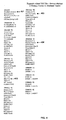
- Figure 4 illustrates the edited TOC data resulting from the application to the same unedited sample disc ( Figure 2) of a second method which embodies the present invention.
- the number of TOC entries is reduced by the number of secondary tracks on the disc - in this example with 2 secondary tracks, the number of entries (indicated in Figure 4 at 401) is reduced from 7 to 5.
- the number of tracks on the disc as noted in the minute field Pmin 402 of Entry 1, is modified to correspond with the number of primary tracks only (i.e. 2).
- the number of tracks on the disc is modified so as to correspond with the number of primary tracks only, in this case 2.
- the data in the PTime field for each primary track for which there is a corresponding alternate track is changed so as to have the relevant starting time of that corresponding alternate track, so in this example the Pmin, Psec and Pframes fields 502 for track 1 (Entry 3) are changed to 1, 2 and 71 respectively, whilst the Pmin, Psec and Pframes fields 503 for track 2 (Entry 4) are changed to 1, 33 and 32.
- this third method has the advantage that the data related to the relevant primary tracks has been removed from the TOC and thus cannot be readily regenerated by someone intent on gaining access to such primary tracks on a data reader.
- the complete TOC entries for the alternate tracks are swapped with those of the primary tracks and the track numbers exchanged so that the alternate tracks have the track numbers of the primary tracks and vice versa.
- the number of tracks on the disc as noted in the minute field Pmin of Entry 1, is again modified to correspond with the number of primary tracks only.
- one of the alternate tracks could be an encrypted version of a different, substitute TOC, accessible only to users who are given access to the decryption key - possibly in return for paying a fee. Access to such a substitute TOC would then enable a data reader to access some, some more or all of the primary tracks. In that case, a small additional data track recorded on the disc is usually necessary, to decode and extract the encrypted substitute TOC, such that the optical disc data reader can then use that (substitute) TOC instead.
- the substitute TOC may instead be written to the disc in a second session, using known techniques, as described above in connection with the addition of further compressed audio files.
- any executable code to allow access to this substitute TOC may be included as a data file recorded in a second session as well.
- the methods described do not of necessity require copy protection or digital rights management techniques to be applied to the alternate tracks: the methods embodying the invention can be operated in stand-alone' mode (that is, simply as a disc access control procedure) or incorporated as an extension to existing types of digital audio copy protection.
- the methods embodying the invention can be operated in stand-alone' mode (that is, simply as a disc access control procedure) or incorporated as an extension to existing types of digital audio copy protection.
Landscapes
- Engineering & Computer Science (AREA)
- Computer Security & Cryptography (AREA)
- Signal Processing (AREA)
- Multimedia (AREA)
- Signal Processing For Digital Recording And Reproducing (AREA)
- Optical Recording Or Reproduction (AREA)
- Management Or Editing Of Information On Record Carriers (AREA)
- Optical Communication System (AREA)
- Manufacturing Optical Record Carriers (AREA)
Claims (41)
- Optische Platte, umfassend:wenigstens eine Primärspur,wenigstens eine Ersatzspur, undPlattendatenzugangsinformation, welche auf der Platte gespeichert ist und welche nur durch einen Leser für Daten einer optischen Platte gelesen und verwendet wird, wobei die Plattendatenzugangsinformation so eingerichtet ist, dass eine Lokalisierung der Primärspur oder wenigstens einer der Primärspuren verhindert wird, wenn die Platte durch den Leser für Daten einer optischen Platte gelesen wird, und der Leser für Daten einer optischen Platte stattdessen auf die oder eine zugeordnete Ersatzspur geleitet wird.
- Optische Platte nach Anspruch 1, welche eine Mehrzahl von Primärspuren und eine Mehrzahl von Ersatzspuren aufweist, wobei wenigstens eine der Primärspuren eine zugeordnete Ersatzspur aufweist.
- Optische Platte nach Anspruch 2, wobei die oder wenigstens eine Primärspur eine Audiospur ist, welche Audioinformation codiert, die durch einen CD-Audiospieler wiedergegeben werden kann, und wobei die oder wenigstens eine Ersatzspur eine Datenspur ist, welche eine Audioinformation codiert, die durch einen Leser für Daten einer optischen Platte wiedergegeben werden kann.
- Optische Platte nach Anspruch 3, wobei die in einer Primärspur auf der optischen Platte codierte Audioinformation bei der Wiedergabe durch einen CD-Audiospieler im Wesentlichen der Audioinformation entspricht, die in einer zugeordneten Ersatzspur codiert ist, wenn diese durch einen Leser für Daten einer optischen Platte wiedergegeben wird.
- Optische Platte nach Anspruch 3, wobei die in einer Primärspur auf der optischen Platte codierte Audioinformation bei Wiedergabe durch einen CD-Audiospieler eine andere Länge und/oder einen anderen Audioinhalt aufweist als die in einer zugeordneten Ersatzspur codierte Audioinformation, wenn sie durch einen Leser für Daten einer optischen Platte wiedergegeben wird.
- Optische Platte nach Anspruch 2, wobei jede der Primärspuren eine zugeordnete Ersatzspur aufweist.
- Optische Platte nach Anspruch 2, ferner umfassend ein Inhaltsverzeichnis (TOC), welches die Plattendatenzugangsinformation enthält, die nur durch den Leser für Daten einer optischen Platte gelesen wird.
- Optische Platte nach Anspruch 7, wobei m Primärspuren und n Ersatzspuren vorhanden sind, wobei die Plattenzugangsinformation einem Leser für Daten einer optischen Platte anzeigt, dass insgesamt nur m Spuren auf der optischen Platte vorhanden sind.
- Optische Platte nach Anspruch 7, wobei das TOC Plattenaudiozugangsinformation umfasst, welche durch einen CD-Audiospieler lesbar ist.
- Optische Platte nach Anspruch 9, wobei die Plattenaudiozugangsinformation einem CD-Audiospieler anzeigt, dass insgesamt nur m Spuren auf der Platte vorhanden sind, wobei die Plattendatenzugangsinformation bewirkt, dass eine erste Zahl m der m Primär- und n Ersatzspuren für einen Leser für Daten einer optischen Platte zugänglich sind, und die Plattenaudiozugangsinformation bewirkt, dass eine zweite, andere Zahl m der m Primär- und n Ersatzspuren durch einen CD-Audiospieler zugänglich ist.
- Optische Platte nach Anspruch 9, wobei m ≥ n und wobei die Plattenaudiozugangsinformation einem CD-Audiospieler anzeigt, dass nur m Primärspuren vorhanden sind, und wobei die Plattendatenzugangsinformation einem Leser für Daten einer optischen Platte anzeigt, dass n Ersatzspuren und (m-n) Primärspuren vorhanden sind.
- Optische Platte nach Anspruch 2, wobei die Plattenzugangsinformation in einem Inhaltsverzeichnis (TOC) der optischen Platte enthalten ist, wobei das TOC einen Spurnummernanzeiger aufweist, der die Spurnummer für jede Spur auf der Platte angibt, und wobei der Spurnummernanzeiger für die oder jede Primärspur, welche eine zugeordnete Ersatzspur aufweist, auf Null gesetzt ist.
- Optische Platte nach Anspruch 2, wobei die Plattenzugangsinformation in einem Inhaltsverzeichnis (TOC) enthalten ist, wobei das TOC Einträge für die oder jede Ersatzspur enthält, für welche eine zugeordnete Primärspur vorhanden ist, jedoch keine Einträge für jede solche entsprechende Primärspur enthält.
- Optische Platte nach Anspruch 2, wobei die Plattenzugangsinformation in einem Inhaltsverzeichnis (TOC) enthalten ist, wobei das TOC Zeitsteuerungseinträge enthält, die eine Startzeit für die Spuren anzeigt, und wobei die Startzeit in dem Zeitsteuerungseintrag wenigstens einer der Primärspuren durch die Startzeit ihrer entsprechenden Ersatzspur ersetzt ist.
- Optische Platte nach Anspruch 2, wobei die Plattenzugangsinformation in einem Inhaltsverzeichnis (TOC) enthalten ist, wobei das TOC Spurnummerneinträge für jede der Spuren auf der optischen Platte umfasst, und wobei der Spurnummerneintrag oder die Spurnummerneinträge in dem TOC für das oder jede Primärspur mit dem jeweiligen Spurnummerneintrag oder den Spurnummerneinträgen für die oder jede der entsprechenden Ersatzspuren ausgetauscht ist/sind.
- Optische Platte nach Anspruch 10, wobei das TOC einen Gesamtspurmengeneintrag enthält, welcher die Gesamtanzahl an Spuren auf der Platte anzeigt, und wobei der Gesamtspurmengeneintrag nur die Gesamtanzahl an Primärspuren auf der Platte anzeigt.
- Optische Platte nach Anspruch 12, wobei der Spurnummernanzeiger für die oder jede Ersatzspur, die eine entsprechende Primärspur aufweist, so gesetzt ist, dass er die Spurnummer der entsprechenden Primärspur anzeigt.
- Optische Platte nach Anspruch 1, ferner umfassend Austauschplattenzugangsinformation, welche auf der Platte in verschlüsselter Form gespeichert ist, wobei die Austauschplattenzugangsinformation bei Entschlüsselung durch einen Leser für Daten einer optischen Platte verwendbar ist, um dann, wenn sie so entschlüsselt ist, eine Lokalisierung der Primärspur/Primärspuren zu erlauben.
- Optische Platte nach Anspruch 18, ferner umfassend Computerprogrammcode auf der Platte, welcher dann, wenn er ausgeführt wird, einen den Leser für Daten einer optischen Platte enthaltenden Computer dazu veranlasst, auf die Austauschplattenzugangsinformation zuzugreifen und diese zu entschlüsseln, und den Leser für Daten einer optischen Platte dann dazu veranlasst, die entschlüsselte Plattenzugangsinformation zum Lokalisieren von Spuren auf der Platte zu verwenden.
- Optische Platte nach Anspruch 18, wobei die Austauschplattenzugangsinformation dann, wenn die Austauschplattenzugangsinformation einmal entschlüsselt worden ist, nur die Lokalisierung der Primärspuren erlaubt.
- Optische Platte nach Anspruch 18, wobei die Austauschplattenzugangsinformation auf der Platte als eine Ersatzspur gespeichert ist.
- Optische Platte nach Anspruch 1, wobei wenigstens eine der Ersatzspuren komprimierte oder verschlüsselte Daten umfasst.
- Optische Platte nach Anspruch 22, wobei die komprimierten Daten ein Audiosignal repräsentieren, welches gemäß einem Standard, wie etwa MP3, codiert ist.
- Optische Platte nach Anspruch 1, wobei die oder wenigstens eine der Ersatzspuren eine Technik zur digitalen Rechteverwaltung einbezieht.
- Optische Platte nach Anspruch 1, wobei die oder wenigstens eine der Ersatzspuren einen Kopierschutz einbezieht.
- Verfahren zum Erzeugen von Daten zum Schreiben auf eine optische Platte, wobei das Verfahren umfasst:Erzeugen von Primärdaten, welche m Primärspuren für die optische Platte repräsentieren (m ≥ 1);Erzeugen von Ersatzdaten, welche n Ersatzspuren für die optische Platte repräsentieren (n ≥ 1), undEinrichten eines Inhaltsverzeichnisses (TOC) für die optische Platte, wobei das TOC eine Plattenzugangskontrollinformation enthält, welche dann, wenn sie auf eine optische Platte geschrieben wird, einem Leser für Daten einer optischen Platte anzeigt, dass insgesamt m Spuren auf die optische Platte geschrieben sind.
- Verfahren nach Anspruch 26, wobei die Plattenzugangskontrollinformation ferner einem CD-DA-Spieler anzeigt, dass insgesamt m Spuren auf diese optische Platte geschrieben sind, wobei die Plattenzugangsinformation bewirkt, dass einem Leser für Daten einer optischen Platte eine andere Zahl m der m+n Spuren zugänglich ist als die für einen CD-DA-Spieler zugängliche Zahl m von Spuren.
- Verfahren nach Anspruch 26, wobei der Schritt der Einrichtung eines TOC umfasst:Schreiben der erzeugten Primär- und Ersatzdaten auf eine optische Platte;Wiederauslesen der so geschriebenen Daten einschließlich eines nicht modifizierten TOC, einschließlich einer nicht modifizierten Plattenzugangsinformation für alle der m+n Spuren, in eine Datenanalyseeinrichtung, undBearbeiten des nicht modifizierten TOC, um ein modifiziertes TOC zu erzeugen, welches die Plattenzugangskontrollinformation enthält, die einem CD-Audiospieler das Vorhandensein der m Primärspuren anzeigt und die einem Leser für Daten einer optischen Platte das Vorhandensein von n Ersatzspuren und m-n Primärspuren anzeigt.
- Verfahren nach Anspruch 28, wobei das nicht modifizierte TOC ferner eine Mehrzahl von Spurnummernanzeigern umfasst, wobei das Verfahren ferner ein Bearbeiten des nicht modifizierten TOC umfasst, derart, dass die Spurnummernanzeiger für wenigstens einige der Primärspuren geändert werden.
- Verfahren nach Anspruch 29, wobei der Schritt der Bearbeitung des nicht modifizierten TOC umfasst: Nullsetzen der Spurnummernanzeiger derjeniger Primärspuren, welche zu ändern sind, sodass ein Leser für Daten einer optischen Platte das Vorhandensein des geänderten Primärspurnummernanzeigers/der geänderten Primärspurnummernanzeiger nicht mehr erfassen kann.
- Verfahren nach Anspruch 29, wobei der Schritt des Bearbeitens des nicht modifizierten TOC ein Löschen derjenigen Teile des TOC umfasst, die wenigstens einige der m Primärspuren betreffen.
- Verfahren nach Anspruch 29, wobei wenigstens eine der m Primärspuren eine zugeordnete Ersatzspur aufweist und wobei der Schritt des Bearbeitens des nicht modifizierten TOC ferner umfasst: Ersetzen der Spurnummernanzeiger einer jeden der Ersatzspuren, die eine entsprechende Primärspur aufweist, mit dem Spurnummernanzeiger der entsprechenden Primärspur in dem nicht modifizierten TOC.
- Verfahren nach Anspruch 29, wobei der Schritt des Bearbeitens des TOC ein Austauschen der Spurnummernanzeiger wenigstens einer der Primärspuren mit Spurnummernanzeigern für eine entsprechende Zahl von Ersatzspuren umfasst.
- Verfahren nach Anspruch 28, wobei der Schritt des Bearbeitens des TOC ein Ersetzen der Startzeit der Primärspur oder wenigstens einer der Primärspuren mit der Startzeit einer zugeordneten Ersatzspur umfasst.
- Verfahren nach Anspruch 28, wobei das nicht modifizierte TOC ferner einen Gesamtspurmengeneintrag umfasst und wobei der Schritt des Bearbeitens des nicht modifizierten TOC eine Reduzierung der Gesamtmenge an Spuren in dem Gesamtspurmengeneintrag umfasst, sodass dieser in dem modifizierten TOC nur die Zahl an vorhandenen Primärspuren anzeigt.
- Optische Masterplatte, auf welche Daten geschrieben oder gestanzt sind, die gemäß dem Verfahren des Anspruchs 24 erzeugt worden sind.
- Optische Platte, welche direkt oder indirekt von der optischen Masterplatte des Anspruchs 36 ausgebildet ist.
- Optische Platte, auf welche Daten gebrannt sind, wobei die Daten nach Maßgabe des Verfahrens des Anspruchs 26 erzeugt worden ist.
- Verfahren zur Kontrolle des Zugangs durch einen Leser für Daten einer optischen Platte auf eine optische Platte, welche wenigstens eine Primärspur und wenigstens eine Ersatzspur aufweist, wobei das Verfahren den Schritt umfasst, die Lokalisierung der Primärspur oder wenigstens einer der Primärspuren zu verhindern, wenn die Platte durch den Leser für Daten einer optischen Platte ausgelesen wird, und Führen des Datenlesers stattdessen auf die oder eine zugeordnete Ersatzspur.
- Verfahren nach Anspruch 39, wobei das Verfahren ferner ein Zulassen der Lokalisierung nur der oder nur jeder Primärspur umfasst, wenn die Platte durch einen CD-DA-Spieler gelesen wird.
- Verfahren nach Anspruch 39, wobei die Platte m Primärspuren (m ≥ 1) und n Ersatzspuren (n ≥ 1) aufweist, wobei das Verfahren ferner umfasst:Zulassen des Zugriffs auf die n Ersatzspur/Ersatzspuren und die (m-n) der Primärspuren, wenn auf die Platte durch einen Leser für Daten einer optischen Platte zugegriffen wird, und Zulassen des Zugriffs auf die m Primärspuren, wenn auf die Platte durch einen CD-DA-Spieler zugegriffen wird.
Applications Claiming Priority (3)
| Application Number | Priority Date | Filing Date | Title |
|---|---|---|---|
| GB0216142 | 2002-07-11 | ||
| GBGB0216142.0A GB0216142D0 (en) | 2002-07-11 | 2002-07-11 | Method and apparatus for optical disc access control |
| PCT/GB2003/002968 WO2004008456A1 (en) | 2002-07-11 | 2003-07-08 | Access controlled optical disc and method therefor |
Publications (2)
| Publication Number | Publication Date |
|---|---|
| EP1537572A1 EP1537572A1 (de) | 2005-06-08 |
| EP1537572B1 true EP1537572B1 (de) | 2008-01-02 |
Family
ID=9940280
Family Applications (1)
| Application Number | Title | Priority Date | Filing Date |
|---|---|---|---|
| EP03763977A Expired - Lifetime EP1537572B1 (de) | 2002-07-11 | 2003-07-08 | Zugangsgeregelter optischer datenträger und verfahren dafür |
Country Status (13)
| Country | Link |
|---|---|
| US (3) | US20050259559A1 (de) |
| EP (1) | EP1537572B1 (de) |
| JP (1) | JP4404768B2 (de) |
| CN (1) | CN1669085B (de) |
| AT (1) | ATE382937T1 (de) |
| AU (1) | AU2003250397B2 (de) |
| BR (1) | BR0312557A (de) |
| CA (1) | CA2492336A1 (de) |
| DE (1) | DE60318458T2 (de) |
| ES (1) | ES2299729T3 (de) |
| GB (2) | GB0216142D0 (de) |
| WO (1) | WO2004008456A1 (de) |
| ZA (1) | ZA200501201B (de) |
Families Citing this family (9)
| Publication number | Priority date | Publication date | Assignee | Title |
|---|---|---|---|---|
| CN1187756C (zh) * | 1999-05-28 | 2005-02-02 | 松下电器产业株式会社 | 半导体存储器卡、播放装置、记录装置、播放方法、记录方法、和计算机可读记录介质 |
| AU2002358951A1 (en) | 2001-12-06 | 2003-06-17 | Malvern House | A copy-protected compact disc and method for producing same |
| US7161885B2 (en) | 2002-12-06 | 2007-01-09 | Macrovision Corporation | Copy-protected compact disc and method for producing same |
| GB2402802B (en) | 2003-06-09 | 2007-05-30 | First 4 Internet Ltd | Copy protection system for data carriers |
| GB2433157B (en) * | 2003-06-09 | 2007-11-21 | First 4 Internet Ltd | Copy protection system for data carriers |
| US20050174923A1 (en) * | 2004-02-11 | 2005-08-11 | Contemporary Entertainment, Inc. | Living audio and video systems and methods |
| JP4570026B2 (ja) * | 2004-02-25 | 2010-10-27 | 大日本印刷株式会社 | 電子透かしの埋め込み方法 |
| WO2006103577A1 (en) * | 2005-03-29 | 2006-10-05 | Koninklijke Philips Electronics N.V. | Method and device for protecting the contents of an information carrier |
| US10945005B2 (en) * | 2018-12-07 | 2021-03-09 | Arris Enterprises Llc | Multiple parental rating content and method of presentation |
Family Cites Families (20)
| Publication number | Priority date | Publication date | Assignee | Title |
|---|---|---|---|---|
| US5815485A (en) * | 1993-02-02 | 1998-09-29 | Matsushita Electric Industrial Co., Ltd. | Recording medium, a method for producing the same, a control method using the recording medium, and a recording/reproducing apparatus using the recording medium |
| GB9409660D0 (en) * | 1994-05-13 | 1994-07-06 | Merck Patent Gmbh | Process for the preparation of multi-element metaloxide powders |
| US5841739A (en) * | 1995-03-17 | 1998-11-24 | Sony Corporation | Accessing method and apparatus for use in hybrid optical recording device |
| US6597648B1 (en) * | 1998-07-30 | 2003-07-22 | Lg Electronics Inc. | Optical disk having anti-piracy function and method of fabricating and authenticating the optical disk |
| US7228437B2 (en) * | 1998-08-13 | 2007-06-05 | International Business Machines Corporation | Method and system for securing local database file of local content stored on end-user system |
| US6988206B1 (en) * | 1998-10-20 | 2006-01-17 | Macrovision Europe Limited | Prevention of CD-audio piracy using sub-code channels |
| IL127091A (en) * | 1998-11-16 | 2002-09-12 | Midbar Tech 1998 Ltd | Anti-counterfeiting compact disc |
| GB9912312D0 (en) * | 1999-05-26 | 1999-07-28 | Dilla Limited C | The copy protection of digital audio compact discs |
| DE29917222U1 (de) * | 1999-09-30 | 2000-01-05 | Sonopress Produktionsgesellschaft für Ton- und Informationsträger mbH, 33332 Gütersloh | Plattenförmiges optisches Speichermedium |
| GB2357165B (en) * | 1999-12-02 | 2004-06-16 | Internat Federation Of The Pho | Copyright protection system and method |
| FR2805071B1 (fr) * | 2000-02-11 | 2002-05-03 | Moulage Plastique De L Ouest | Disque optique protege contre la copie et procede de protection pour un tel disque |
| GB0003530D0 (en) * | 2000-02-15 | 2000-04-05 | Dilla Limited C | The copy protection of digital audio compact discs |
| GB0003531D0 (en) * | 2000-02-15 | 2000-04-05 | Dilla Limited C | The copy protection of digital audio compact discs |
| CN1263026C (zh) * | 2000-08-16 | 2006-07-05 | 皇家菲利浦电子有限公司 | 用于控制数字作品的发行和使用的方法和装置 |
| GB0124723D0 (en) * | 2001-10-15 | 2001-12-05 | Macrovision Corp | Improvements in or relating to the copy protection of optical discs |
| US6952479B2 (en) * | 2001-11-27 | 2005-10-04 | Macrovision Europe Limited | Dynamic copy protection of optical media |
| AU2002358951A1 (en) * | 2001-12-06 | 2003-06-17 | Malvern House | A copy-protected compact disc and method for producing same |
| JP4003478B2 (ja) * | 2002-02-21 | 2007-11-07 | ソニー株式会社 | ディスクアクセス制御方法 |
| GB2386245B (en) * | 2002-03-08 | 2005-12-07 | First 4 Internet Ltd | Data protection system |
| AU2003201838A1 (en) * | 2002-04-01 | 2003-10-23 | Sony Corporation | Reproducing method, reproducing apparatus, and data accessing method |
-
2002
- 2002-07-11 GB GBGB0216142.0A patent/GB0216142D0/en not_active Ceased
-
2003
- 2003-07-08 WO PCT/GB2003/002968 patent/WO2004008456A1/en not_active Ceased
- 2003-07-08 ES ES03763977T patent/ES2299729T3/es not_active Expired - Lifetime
- 2003-07-08 CN CN03816498.1A patent/CN1669085B/zh not_active Expired - Fee Related
- 2003-07-08 AU AU2003250397A patent/AU2003250397B2/en not_active Ceased
- 2003-07-08 GB GB0316029A patent/GB2390735B/en not_active Expired - Fee Related
- 2003-07-08 EP EP03763977A patent/EP1537572B1/de not_active Expired - Lifetime
- 2003-07-08 CA CA002492336A patent/CA2492336A1/en not_active Abandoned
- 2003-07-08 US US10/520,950 patent/US20050259559A1/en not_active Abandoned
- 2003-07-08 JP JP2004520832A patent/JP4404768B2/ja not_active Expired - Fee Related
- 2003-07-08 AT AT03763977T patent/ATE382937T1/de not_active IP Right Cessation
- 2003-07-08 DE DE60318458T patent/DE60318458T2/de not_active Expired - Lifetime
- 2003-07-08 BR BR0312557-2A patent/BR0312557A/pt not_active IP Right Cessation
-
2005
- 2005-02-10 ZA ZA200501201A patent/ZA200501201B/xx unknown
-
2010
- 2010-03-08 US US12/719,149 patent/US20100177613A1/en not_active Abandoned
- 2010-11-23 US US12/953,088 patent/US20110069592A1/en not_active Abandoned
Non-Patent Citations (1)
| Title |
|---|
| None * |
Also Published As
| Publication number | Publication date |
|---|---|
| US20100177613A1 (en) | 2010-07-15 |
| AU2003250397A1 (en) | 2004-02-02 |
| AU2003250397A2 (en) | 2004-02-02 |
| CN1669085B (zh) | 2011-09-21 |
| EP1537572A1 (de) | 2005-06-08 |
| ES2299729T3 (es) | 2008-06-01 |
| DE60318458D1 (de) | 2008-02-14 |
| DE60318458T2 (de) | 2009-01-02 |
| GB0216142D0 (en) | 2002-08-21 |
| GB0316029D0 (en) | 2003-08-13 |
| WO2004008456A1 (en) | 2004-01-22 |
| ATE382937T1 (de) | 2008-01-15 |
| CN1669085A (zh) | 2005-09-14 |
| JP4404768B2 (ja) | 2010-01-27 |
| ZA200501201B (en) | 2005-09-01 |
| US20110069592A1 (en) | 2011-03-24 |
| GB2390735B (en) | 2004-10-13 |
| HK1058572A1 (en) | 2004-05-21 |
| JP2005532655A (ja) | 2005-10-27 |
| BR0312557A (pt) | 2005-04-19 |
| US20050259559A1 (en) | 2005-11-24 |
| GB2390735A (en) | 2004-01-14 |
| AU2003250397B2 (en) | 2008-07-10 |
| CA2492336A1 (en) | 2004-01-22 |
Similar Documents
| Publication | Publication Date | Title |
|---|---|---|
| EP1482498B1 (de) | Kopierschutz für optische Medien | |
| US20110069592A1 (en) | Access controlled optical disc and method therefor | |
| US7215610B2 (en) | Apparatus for and method of recording/reproducing audio data embedded with additive information | |
| WO2001080546A2 (en) | Prevention of cd-audio piracy using sub-code channels | |
| US6988206B1 (en) | Prevention of CD-audio piracy using sub-code channels | |
| US7161885B2 (en) | Copy-protected compact disc and method for producing same | |
| KR100712429B1 (ko) | 서브-코드 채널들을 이용한 컴팩트 디스크-음성 침해 방지 | |
| AU2007202302A1 (en) | Prevention of CD-audio piracy using sub-code channels |
Legal Events
| Date | Code | Title | Description |
|---|---|---|---|
| PUAI | Public reference made under article 153(3) epc to a published international application that has entered the european phase |
Free format text: ORIGINAL CODE: 0009012 |
|
| 17P | Request for examination filed |
Effective date: 20050117 |
|
| AK | Designated contracting states |
Kind code of ref document: A1 Designated state(s): AT BE BG CH CY CZ DE DK EE ES FI FR GB GR HU IE IT LI LU MC NL PT RO SE SI SK TR |
|
| AX | Request for extension of the european patent |
Extension state: AL LT LV MK |
|
| DAX | Request for extension of the european patent (deleted) | ||
| GRAP | Despatch of communication of intention to grant a patent |
Free format text: ORIGINAL CODE: EPIDOSNIGR1 |
|
| GRAS | Grant fee paid |
Free format text: ORIGINAL CODE: EPIDOSNIGR3 |
|
| GRAL | Information related to payment of fee for publishing/printing deleted |
Free format text: ORIGINAL CODE: EPIDOSDIGR3 |
|
| GRAS | Grant fee paid |
Free format text: ORIGINAL CODE: EPIDOSNIGR3 |
|
| GRAA | (expected) grant |
Free format text: ORIGINAL CODE: 0009210 |
|
| RIN1 | Information on inventor provided before grant (corrected) |
Inventor name: WIJNEN, ARIE, MARINUS Inventor name: KNOX, ALISTAIR, JOHN |
|
| AK | Designated contracting states |
Kind code of ref document: B1 Designated state(s): AT BE BG CH CY CZ DE DK EE ES FI FR GB GR HU IE IT LI LU MC NL PT RO SE SI SK TR |
|
| REG | Reference to a national code |
Ref country code: GB Ref legal event code: FG4D |
|
| REG | Reference to a national code |
Ref country code: IE Ref legal event code: FG4D |
|
| REG | Reference to a national code |
Ref country code: CH Ref legal event code: EP |
|
| REF | Corresponds to: |
Ref document number: 60318458 Country of ref document: DE Date of ref document: 20080214 Kind code of ref document: P |
|
| RAP2 | Party data changed (patent owner data changed or rights of a patent transferred) |
Owner name: H.T.A HIGH TECH APPLICATIONS HOLDINGS LIMITED |
|
| NLT2 | Nl: modifications (of names), taken from the european patent patent bulletin |
Owner name: H.T.A HIGH TECH APPLICATIONS HOLDINGS LIMITED Effective date: 20080220 |
|
| PG25 | Lapsed in a contracting state [announced via postgrant information from national office to epo] |
Ref country code: SI Free format text: LAPSE BECAUSE OF FAILURE TO SUBMIT A TRANSLATION OF THE DESCRIPTION OR TO PAY THE FEE WITHIN THE PRESCRIBED TIME-LIMIT Effective date: 20080102 Ref country code: NL Free format text: LAPSE BECAUSE OF FAILURE TO SUBMIT A TRANSLATION OF THE DESCRIPTION OR TO PAY THE FEE WITHIN THE PRESCRIBED TIME-LIMIT Effective date: 20080102 |
|
| REG | Reference to a national code |
Ref country code: ES Ref legal event code: FG2A Ref document number: 2299729 Country of ref document: ES Kind code of ref document: T3 |
|
| NLV1 | Nl: lapsed or annulled due to failure to fulfill the requirements of art. 29p and 29m of the patents act | ||
| PG25 | Lapsed in a contracting state [announced via postgrant information from national office to epo] |
Ref country code: FI Free format text: LAPSE BECAUSE OF FAILURE TO SUBMIT A TRANSLATION OF THE DESCRIPTION OR TO PAY THE FEE WITHIN THE PRESCRIBED TIME-LIMIT Effective date: 20080102 Ref country code: LI Free format text: LAPSE BECAUSE OF FAILURE TO SUBMIT A TRANSLATION OF THE DESCRIPTION OR TO PAY THE FEE WITHIN THE PRESCRIBED TIME-LIMIT Effective date: 20080102 Ref country code: CH Free format text: LAPSE BECAUSE OF FAILURE TO SUBMIT A TRANSLATION OF THE DESCRIPTION OR TO PAY THE FEE WITHIN THE PRESCRIBED TIME-LIMIT Effective date: 20080102 |
|
| REG | Reference to a national code |
Ref country code: CH Ref legal event code: PL |
|
| PG25 | Lapsed in a contracting state [announced via postgrant information from national office to epo] |
Ref country code: AT Free format text: LAPSE BECAUSE OF FAILURE TO SUBMIT A TRANSLATION OF THE DESCRIPTION OR TO PAY THE FEE WITHIN THE PRESCRIBED TIME-LIMIT Effective date: 20080102 Ref country code: BG Free format text: LAPSE BECAUSE OF FAILURE TO SUBMIT A TRANSLATION OF THE DESCRIPTION OR TO PAY THE FEE WITHIN THE PRESCRIBED TIME-LIMIT Effective date: 20080402 |
|
| ET | Fr: translation filed | ||
| PG25 | Lapsed in a contracting state [announced via postgrant information from national office to epo] |
Ref country code: PT Free format text: LAPSE BECAUSE OF FAILURE TO SUBMIT A TRANSLATION OF THE DESCRIPTION OR TO PAY THE FEE WITHIN THE PRESCRIBED TIME-LIMIT Effective date: 20080602 Ref country code: BE Free format text: LAPSE BECAUSE OF FAILURE TO SUBMIT A TRANSLATION OF THE DESCRIPTION OR TO PAY THE FEE WITHIN THE PRESCRIBED TIME-LIMIT Effective date: 20080102 |
|
| PG25 | Lapsed in a contracting state [announced via postgrant information from national office to epo] |
Ref country code: SE Free format text: LAPSE BECAUSE OF FAILURE TO SUBMIT A TRANSLATION OF THE DESCRIPTION OR TO PAY THE FEE WITHIN THE PRESCRIBED TIME-LIMIT Effective date: 20080402 Ref country code: CZ Free format text: LAPSE BECAUSE OF FAILURE TO SUBMIT A TRANSLATION OF THE DESCRIPTION OR TO PAY THE FEE WITHIN THE PRESCRIBED TIME-LIMIT Effective date: 20080102 Ref country code: DK Free format text: LAPSE BECAUSE OF FAILURE TO SUBMIT A TRANSLATION OF THE DESCRIPTION OR TO PAY THE FEE WITHIN THE PRESCRIBED TIME-LIMIT Effective date: 20080102 Ref country code: SK Free format text: LAPSE BECAUSE OF FAILURE TO SUBMIT A TRANSLATION OF THE DESCRIPTION OR TO PAY THE FEE WITHIN THE PRESCRIBED TIME-LIMIT Effective date: 20080102 |
|
| PLBE | No opposition filed within time limit |
Free format text: ORIGINAL CODE: 0009261 |
|
| STAA | Information on the status of an ep patent application or granted ep patent |
Free format text: STATUS: NO OPPOSITION FILED WITHIN TIME LIMIT |
|
| PG25 | Lapsed in a contracting state [announced via postgrant information from national office to epo] |
Ref country code: RO Free format text: LAPSE BECAUSE OF FAILURE TO SUBMIT A TRANSLATION OF THE DESCRIPTION OR TO PAY THE FEE WITHIN THE PRESCRIBED TIME-LIMIT Effective date: 20080102 |
|
| 26N | No opposition filed |
Effective date: 20081003 |
|
| PG25 | Lapsed in a contracting state [announced via postgrant information from national office to epo] |
Ref country code: MC Free format text: LAPSE BECAUSE OF NON-PAYMENT OF DUE FEES Effective date: 20080731 |
|
| PG25 | Lapsed in a contracting state [announced via postgrant information from national office to epo] |
Ref country code: EE Free format text: LAPSE BECAUSE OF FAILURE TO SUBMIT A TRANSLATION OF THE DESCRIPTION OR TO PAY THE FEE WITHIN THE PRESCRIBED TIME-LIMIT Effective date: 20080102 |
|
| PG25 | Lapsed in a contracting state [announced via postgrant information from national office to epo] |
Ref country code: IE Free format text: LAPSE BECAUSE OF NON-PAYMENT OF DUE FEES Effective date: 20080708 Ref country code: CY Free format text: LAPSE BECAUSE OF FAILURE TO SUBMIT A TRANSLATION OF THE DESCRIPTION OR TO PAY THE FEE WITHIN THE PRESCRIBED TIME-LIMIT Effective date: 20080102 |
|
| PG25 | Lapsed in a contracting state [announced via postgrant information from national office to epo] |
Ref country code: HU Free format text: LAPSE BECAUSE OF FAILURE TO SUBMIT A TRANSLATION OF THE DESCRIPTION OR TO PAY THE FEE WITHIN THE PRESCRIBED TIME-LIMIT Effective date: 20080703 Ref country code: LU Free format text: LAPSE BECAUSE OF NON-PAYMENT OF DUE FEES Effective date: 20080708 |
|
| PG25 | Lapsed in a contracting state [announced via postgrant information from national office to epo] |
Ref country code: TR Free format text: LAPSE BECAUSE OF FAILURE TO SUBMIT A TRANSLATION OF THE DESCRIPTION OR TO PAY THE FEE WITHIN THE PRESCRIBED TIME-LIMIT Effective date: 20080102 |
|
| PG25 | Lapsed in a contracting state [announced via postgrant information from national office to epo] |
Ref country code: GR Free format text: LAPSE BECAUSE OF FAILURE TO SUBMIT A TRANSLATION OF THE DESCRIPTION OR TO PAY THE FEE WITHIN THE PRESCRIBED TIME-LIMIT Effective date: 20080403 |
|
| PGFP | Annual fee paid to national office [announced via postgrant information from national office to epo] |
Ref country code: DE Payment date: 20110131 Year of fee payment: 8 Ref country code: IT Payment date: 20110131 Year of fee payment: 8 Ref country code: FR Payment date: 20110211 Year of fee payment: 8 |
|
| PGFP | Annual fee paid to national office [announced via postgrant information from national office to epo] |
Ref country code: ES Payment date: 20110208 Year of fee payment: 8 |
|
| REG | Reference to a national code |
Ref country code: FR Ref legal event code: ST Effective date: 20120330 |
|
| PG25 | Lapsed in a contracting state [announced via postgrant information from national office to epo] |
Ref country code: DE Free format text: LAPSE BECAUSE OF NON-PAYMENT OF DUE FEES Effective date: 20120201 Ref country code: FR Free format text: LAPSE BECAUSE OF NON-PAYMENT OF DUE FEES Effective date: 20110801 |
|
| REG | Reference to a national code |
Ref country code: DE Ref legal event code: R119 Ref document number: 60318458 Country of ref document: DE Effective date: 20120201 |
|
| PG25 | Lapsed in a contracting state [announced via postgrant information from national office to epo] |
Ref country code: IT Free format text: LAPSE BECAUSE OF NON-PAYMENT OF DUE FEES Effective date: 20110708 |
|
| PGFP | Annual fee paid to national office [announced via postgrant information from national office to epo] |
Ref country code: GB Payment date: 20120828 Year of fee payment: 10 |
|
| REG | Reference to a national code |
Ref country code: ES Ref legal event code: FD2A Effective date: 20121122 |
|
| PG25 | Lapsed in a contracting state [announced via postgrant information from national office to epo] |
Ref country code: ES Free format text: LAPSE BECAUSE OF NON-PAYMENT OF DUE FEES Effective date: 20110709 |
|
| GBPC | Gb: european patent ceased through non-payment of renewal fee |
Effective date: 20130708 |
|
| PG25 | Lapsed in a contracting state [announced via postgrant information from national office to epo] |
Ref country code: GB Free format text: LAPSE BECAUSE OF NON-PAYMENT OF DUE FEES Effective date: 20130708 |