EP1536593B1 - Einrichtung und verfahren zur authentisierung von vorrichtungen, informationsverarbeitungseinrichtung, informationsverarbeitungsverfahren und computerprogramm - Google Patents
Einrichtung und verfahren zur authentisierung von vorrichtungen, informationsverarbeitungseinrichtung, informationsverarbeitungsverfahren und computerprogramm Download PDFInfo
- Publication number
- EP1536593B1 EP1536593B1 EP03794135.8A EP03794135A EP1536593B1 EP 1536593 B1 EP1536593 B1 EP 1536593B1 EP 03794135 A EP03794135 A EP 03794135A EP 1536593 B1 EP1536593 B1 EP 1536593B1
- Authority
- EP
- European Patent Office
- Prior art keywords
- registration
- mac address
- client
- confirmation
- user
- Prior art date
- Legal status (The legal status is an assumption and is not a legal conclusion. Google has not performed a legal analysis and makes no representation as to the accuracy of the status listed.)
- Expired - Lifetime
Links
Images





Classifications
-
- H—ELECTRICITY
- H04—ELECTRIC COMMUNICATION TECHNIQUE
- H04L—TRANSMISSION OF DIGITAL INFORMATION, e.g. TELEGRAPHIC COMMUNICATION
- H04L63/00—Network architectures or network communication protocols for network security
- H04L63/08—Network architectures or network communication protocols for network security for authentication of entities
-
- H—ELECTRICITY
- H04—ELECTRIC COMMUNICATION TECHNIQUE
- H04L—TRANSMISSION OF DIGITAL INFORMATION, e.g. TELEGRAPHIC COMMUNICATION
- H04L12/00—Data switching networks
- H04L12/28—Data switching networks characterised by path configuration, e.g. LAN [Local Area Networks] or WAN [Wide Area Networks]
-
- G—PHYSICS
- G06—COMPUTING OR CALCULATING; COUNTING
- G06F—ELECTRIC DIGITAL DATA PROCESSING
- G06F15/00—Digital computers in general; Data processing equipment in general
-
- H—ELECTRICITY
- H04—ELECTRIC COMMUNICATION TECHNIQUE
- H04L—TRANSMISSION OF DIGITAL INFORMATION, e.g. TELEGRAPHIC COMMUNICATION
- H04L61/00—Network arrangements, protocols or services for addressing or naming
-
- H—ELECTRICITY
- H04—ELECTRIC COMMUNICATION TECHNIQUE
- H04L—TRANSMISSION OF DIGITAL INFORMATION, e.g. TELEGRAPHIC COMMUNICATION
- H04L63/00—Network architectures or network communication protocols for network security
- H04L63/08—Network architectures or network communication protocols for network security for authentication of entities
- H04L63/0876—Network architectures or network communication protocols for network security for authentication of entities based on the identity of the terminal or configuration, e.g. MAC address, hardware or software configuration or device fingerprint
-
- H—ELECTRICITY
- H04—ELECTRIC COMMUNICATION TECHNIQUE
- H04L—TRANSMISSION OF DIGITAL INFORMATION, e.g. TELEGRAPHIC COMMUNICATION
- H04L67/00—Network arrangements or protocols for supporting network services or applications
- H04L67/50—Network services
- H04L67/51—Discovery or management thereof, e.g. service location protocol [SLP] or web services
-
- H—ELECTRICITY
- H04—ELECTRIC COMMUNICATION TECHNIQUE
- H04L—TRANSMISSION OF DIGITAL INFORMATION, e.g. TELEGRAPHIC COMMUNICATION
- H04L2101/00—Indexing scheme associated with group H04L61/00
- H04L2101/60—Types of network addresses
- H04L2101/618—Details of network addresses
- H04L2101/622—Layer-2 addresses, e.g. medium access control [MAC] addresses
-
- H—ELECTRICITY
- H04—ELECTRIC COMMUNICATION TECHNIQUE
- H04L—TRANSMISSION OF DIGITAL INFORMATION, e.g. TELEGRAPHIC COMMUNICATION
- H04L63/00—Network architectures or network communication protocols for network security
- H04L63/08—Network architectures or network communication protocols for network security for authentication of entities
- H04L63/083—Network architectures or network communication protocols for network security for authentication of entities using passwords
-
- H—ELECTRICITY
- H04—ELECTRIC COMMUNICATION TECHNIQUE
- H04L—TRANSMISSION OF DIGITAL INFORMATION, e.g. TELEGRAPHIC COMMUNICATION
- H04L63/00—Network architectures or network communication protocols for network security
- H04L63/08—Network architectures or network communication protocols for network security for authentication of entities
- H04L63/083—Network architectures or network communication protocols for network security for authentication of entities using passwords
- H04L63/0838—Network architectures or network communication protocols for network security for authentication of entities using passwords using one-time-passwords
Definitions
- the present invention relates to a device authentication apparatus and a device authentication method, which are efficiently and reliably generating access right determination information in a configuration in which communication among devices which are connected over a network is performed, so that an access limitation process based on the generated information can be performed, to an information processing apparatus therefor, an information processing method therefor, and a computer program therefor. More particularly, the present invention relates to technology for a configuration suitable for use in a home network in which network-compatible household electrical appliances, computers, and peripheral devices thereof are connected via a network; in a public wireless LAN environment, etc.
- the home network provides convenience and comfort to users, for example, sharing the data processing function of each device and performing transmission and reception of content among devices by performing communication among network-connected devices, and it is predicted that, in the future, the home network will become increasingly common.
- UPnP Universal Plug and Play
- the universal plug-and-play (UPnP) makes it possible to easily construct a network without involving complex operation, and makes it possible to receive services provided by each connected device in the network-connected device without involving complex operation and settings. Furthermore, UPnP does not depend on the OS (operating system) of the device, and has the advantage in that devices can be easily added.
- UPnP exchanges a definition file in compliance with XML (extensible Markup Language) among connected devices and performs mutual recognition among devices.
- XML extensible Markup Language
- the device which is newly connected to the network acquires the device ID by the above-mentioned addressing process, acquires the information of the other network-connected devices by another discovery process, and thus making a request for services to the other devices becomes possible based on the obtained information.
- Content stored in the server within such a home network becomes accessible from another network-connected device.
- the device in which the above-described UPnP connection, which is a simple device connection configuration, is performed to obtain content.
- content is movie data or music data
- a TV or a player is connected as a network-connected device, it becomes possible to view a movie or listen to music.
- Access by a device connected by a user having a content usage right is permitted.
- a situation can also occur in which, with respect to the server within one's home, someone illegally enters the network by using a communication device from outdoors or from the house next door, and content is exploited.
- a configuration in which such unauthorized access is permitted causes secrecy to leak, and also, becomes a serious issue from the viewpoint of managing content copyright.
- the server is made to store a list of clients for whom access is permitted, so that, when a request for accessing the server from the client is made, a process for verifying against the list at the server is performed to eliminate unauthorized access.
- MAC address filtering in which a MAC (Media Access Control) address, which is a physical address specific to a network-connected device, is set as an access permission device list is known.
- the "MAC address filtering" is such that MAC addresses for permitting access are registered in advance in a router or a gateway which separates the internal network (subnet) such as the home network from an external network, so that the MAC address of the received packets is verified against the registered MAC address, and access from a device having a MAC address which is not registered is rejected.
- This type of technology is disclosed in, for example, Japanese Unexamined Patent Application Publication No. 10-271154 .
- US 6393484 B1 relates to a system for preventing unauthorized devices and users from obtaining network services in a dynamic user address environment comprising communication layers (OSI 2 and 3) and work equipment (routers and/or switches) which work in conjunction with Dynamic Host Control Protocols (DHCP) and Address Resolution Protocols (ARP).
- OSI 2 and 3 communication layers
- work equipment routers and/or switches
- DHCP Dynamic Host Control Protocols
- ARP Address Resolution Protocols
- authorized users and their authorized devices register for service by providing the DHCP server with user identification for log-in, passwords, MAC addresses, etc.
- the information is validated and entered into a server database for future authentication queries.
- US 2002 061748 A1 relates to registration and authentication between a wireless base station and a wireless terminal in a wireless communication system using a wireless LAN formed by wireless terminals and wireless base stations, such as a wireless LAN system called IEEE 802.11.
- An object of the present invention is to provide a device authentication apparatus and a device authentication method, which are capable of easily and appropriately constructing an access control configuration without imposing burden on an ordinary user having a network-connected device, and an information processing apparatus therefor, an information processing method therefor, and a computer program therefor, in a configuration in which various devices are connected via a network.
- Another object of the present invention is to provide a device authentication apparatus, a device authentication method, and a device authentication program, which are capable of performing access control with high security without using a router.
- the present invention realizes a configuration for ensuring that a proper registration process for client devices is reliably performed, specifically, a registration completion notification process, in an authentication process for constructing an access control configuration, that is, a device registration process.
- Another object of the present invention is to provide a device authentication apparatus and a device authentication method which solve problems in a case where a registration process message, the registration process being performed between the server and the client, is different depending on the version of a device registration process execution program and which reliably realize a device registration process also in a network environment in which various new and old devices coexist, in a device registration process, an information processing apparatus therefor, an information processing method therefor, and a computer program therefore.
- the present invention provides a device authentication apparatus including: a first device provided on the client side of a client/server system; and a second device provided on the server side of the client/server system, wherein the first device includes registration requesting means for simultaneously sending a request for registering a MAC address specific to the first device in response to a registration requesting operation of a user; the second device includes temporary storage means for, when a registration request having the same MAC address is received a plurality of times or for one time within a predetermined time after a first confirmation operation of the user is performed, temporarily storing the MAC address; the second device includes registration confirmation means for sending a registration confirmation to the first device having the MAC address stored in the temporary storage means in response to a second confirmation operation of the user; the first device includes registration confirmation responding means for receiving the registration confirmation so as to instruct the registration requesting means to stop the simultaneous sending, and also for sending back a registration confirmation response to the second device which has sent the registration confirmation; the second device includes authentication and
- the present invention provides a device authentication method including: wherein the first process includes a registration requesting step of simultaneously sending, on a network, a request for registering a MAC address specific to the client in response to a registration requesting operation of a user; the second process includes a temporary storing step of, when a registration request having the same MAC address is received a plurality of times within a predetermined time after a first confirmation operation of the user is performed, temporarily storing the MAC address; the second process includes a registration confirmation step of sending to the client side a registration confirmation performed at the client having the MAC address stored in the temporary storing step in response to a second confirmation operation of the user; the first process includes a registration confirmation responding step of receiving the registration confirmation so as to instruct the registration requesting step to stop the simultaneous sending, and also for sending back a registration confirmation response to the server which has sent the registration confirmation; the second process includes an authentication and registration step of authenticating and registering the MAC address which is temporarily stored in the temporary
- the present invention provides a device authentication program including: a first program executed on the client side of a client/server system; and a second program executed on the server side of the client/server system, wherein the first program includes a registration requesting step of simultaneously sending, on a network, a request for registering a MAC address specific to the client in response to a registration requesting operation of a user; the second program includes a temporary storing step of, when a registration request having the same.
- the second program includes a registration confirmation step of sending a registration confirmation to the first program executed at the client having the MAC address stored in the temporary storing step in response to a second confirmation operation of the user;
- the first program includes a registration confirmation responding step of receiving the registration confirmation so as to instruct the registration requesting step to stop the simultaneous sending, and also for sending back a registration confirmation response to the second program which has sent the registration confirmation;
- the second program includes an authentication and registration step of authenticating and registering the MAC address which is temporarily stored in the temporary storing step in response to a third confirmation operation of the user, which is performed after the registration confirmation response is received, and the second program rejects access from a client having a MAC address other than the MAC address which is authenticated and registered in the server itself, and instructs the server not to respond at all to the client.
- the second device permits only the access to the first device (client) having the authenticated and registered MAC address.
- a registration completion (Complete) confirmation process is performed, and a MAC registration completion confirmation is transmitted from the server (device) side to the client (controller) side. Therefore, at the two devices, it becomes possible for the user to confirm the final registration completion on the basis of the registration completion message.
- an M-search transmission process of SSDP simple service detection protocol
- SSDP simple service detection protocol
- an M-search transmission process can be automatically performed under the condition that the MAC registration completion confirmation notification is received from the server (device) side, and it becomes possible for the client to receive service information from the server following the registration process with respect to the server without the intervention of a user's input process, etc.
- a message display for informing that the registration has been completed becomes possible on the basis of these notifications, and thus the user can confirm the fact that the client device has already been registered in the server.
- the version information of the processing programs possessed by the two devices is notified, and by adjusting the processing sequence, the device registration process is performed. Therefore, a device registration process in accordance with a unified processing sequence can be performed even among devices in which programs of various versions are stored.
- the computer program of the present invention is a computer program which can be provided to, for example, a general-purpose computer system capable of executing various program codes, such computer program being provided by means of a storage medium and a communication medium, which are provided in a computer-readable format, for example, a storage medium such as a CD, an FD, and an MO, and a communication medium such as a network.
- a storage medium such as a CD, an FD, and an MO
- a communication medium such as a network.
- the system designates a logical assembly of a plurality of devices, and it is not essential that the devices be disposed in the same housing.
- Fig. 1 shows a configuration, for example, a home network configuration, in which a server 101 that performs a process in accordance with a processing request from various client devices, a PC 121, a monitor 122, a cellular phone 123, a player 124, and a PDA (Personal Digital Assistant) 125, as client devices that makes a processing request to the server 101, are connected to one another via a network 100.
- a server 101 that performs a process in accordance with a processing request from various client devices, a PC 121, a monitor 122, a cellular phone 123, a player 124, and a PDA (Personal Digital Assistant) 125, as client devices that makes a processing request to the server 101, are connected to one another via a network 100.
- client device various electronic devices and household electrical appliances can be connected.
- Examples of processes, which are performed by the server 101 in response to a request from the client include provision of content stored in storage means, such as a hard disk possessed by the server 101, and data processing services provided by the execution of an application program, which can be executed by the server.
- the server 101 and the client devices are shown in such a manner as to be distinguished, but a device which provides services for a request from the client is shown as a server, and any kind of client device becomes possible to provide functions as a server when self data processing services are provided to another client. Therefore, a network-connected client device shown in Fig. 1 can function as a server.
- the network 100 is wired, wireless, or the like, and each connected device transmits and receives communication packets, such as, for example, Ethernet (registered trademark) frames, via the network 100. That is, the client performs a data processing request for the server 101 by transmitting to the server 101 a frame such that processing request information is stored in the data part of the Ethernet frame.
- the server 101 performs data processing in response to the reception of the processing request frame, stores the result data as the data processing result in the data part of the communication packet as necessary, and transmits it to each client.
- the network-connected device is formed of, for example, a universal plug-and-play (UPnP: Universal Plug and Play)-compatible device. Therefore, this is a configuration in which addition and deletion of connected devices with respect to the network is easy. A device to be newly connected to the network becomes possible to receive services in which a network-connected device is used by performing the processing procedure described below:
- UPF Universal Plug and Play
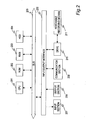
- FIG. 2 an example of the configuration of PC hardware as an example of an information processing apparatus which forms the server and the client device shown in Fig. 1 .
- a CPU (Central Processing Unit) 201 performs various processes in accordance with a program stored in the ROM (Read Only Memory) 202, an HDD (hard disk drive) 204, etc., so as to function as a data processing means or a communication control processing means.
- ROM Read Only Memory
- HDD hard disk drive
- programs to be executed by the CPU 201 and data are stored as appropriate.
- the CPU 201, the ROM 202, the RAM 203, and the HDD 204 are interconnected with one another via a bus 205.
- An input/output interface 206 is connected to the bus 205, and, for example, an input section 207, including a keyboard, switches, buttons, and a mouse, which is operated by a user, and an output section 208 including an LCD, a CRT, a speaker, etc., for displaying various kinds of information to the user are connected to the input/output interface 206.
- a communication section 209 functioning as a data transmission and reception means, and furthermore, a removable recording medium 211, such as a magnetic disk, an optical disk, an optical magnetic disk, or a semiconductor memory, can be loaded.
- a drive 210 for performing a data reading or writing process from or into the removable recording medium 211 is connected thereto.
- the configuration shown in Fig. 2 shows an example of the server or the personal computer (PC) as an example of the network-connected device shown in Fig. 1 .
- the network-connected device not being limited to a PC, can be formed by a portable communication terminal, such as a cellular phone, a PDA, etc., and by various other electronic devices and information processing apparatuses, such as a player, a display, etc. Therefore, it is possible to have a hardware configuration unique to each device, and a process in accordance with the hardware is performed.
- Fig. 3 is a block diagram showing an example of the minimum configuration of a server 310 and a client 320 of a home network 300 to which the device authentication apparatus of the present invention is applied.
- the network formed by the server 310 and the client 320 shown in this figure provides the above-described commonly called UPnP (universal plug-and-play) environment.
- UPnP universal plug-and-play
- the client 320 is formed of a network-compatible device 321 for performing various communication processing with the server, and a television receiver 322 for displaying, for example, content received from the server.
- the server 310 provides various kinds of application functions and content data in response to a request from the network-compatible device 321.
- the network-compatible device 321 which is hardware functioning as a control point of the home network 300, requests the server 310 to perform specified services in accordance with an event which occurs in response to user operation, and processes services provided from the server 321 in response to that request.
- the server 310 sends the video materials in response to a request from the network-compatible device 321, and in the network-compatible device, a video signal such that the MPEG-compressed video materials are decoded (decompressed) is supplied to the television receiver 322, whereby video playback is performed.
- a device authentication apparatus for preventing unauthorized access from another user within the same subnet is incorporated in the server and the network-compatible device.
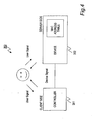
- Fig. 4 is a block diagram showing the functional configuration of the device authentication apparatus.
- a device authentication apparatus 350 which is a program aggregate formed from various types of routines called "methods" which define an operation on an object, is a virtual apparatus formed of a controller 351 implemented on the client side, that is, the network-compatible device, and a device 352 implemented on the server side.
- the controller 351 generates a user signal in response to user operation, for example, the pressing of the registration button, performed at the registration request time.
- the registration request is broadcast at the UDP layer in accordance with the user signal generated in response to the user operation.
- the controller 351 receives a method unicast at the TCP layer from the device 352 side, sends back a response, and generates a device signal for displaying content corresponding to the received method.
- the device 352 generates a user signal in response to user operation, for example, the pressing of the confirmation button, performed at the registration confirmation time.
- the device 352 when a registration request broadcast from the controller 351 side is received, in accordance with a user signal generated in response to the user operation, the MAC address on the client side is registered in the MAC address table so as to perform device authentication, and also the fact that authentication and registration is performed is unicast at the TCP layer to the controller 351 side which has issued the registration request.
- the device 352 receives a response which is sent back by unicast at the TCP layer from the controller 351 side, and generates a device signal for displaying content corresponding to the received response. In response to the predetermined user operation, the device 352 instructs the deletion of all or some of the MAC addresses registered in the MAC address table. Furthermore, in the device 352, access from a device having a MAC address other than that authenticated and registered in the MAC address table is rejected, and nothing is sent back.
- the home network 100 including such a device authentication apparatus 350 formed of the controller 351 and the device 352, even if a router for separating from another user within the same subnet is not disposed, while the device authentication apparatus 350 avoids access from an unauthorized party which is not authenticated and registered, access control having high security becomes possible so that the presence of the server 1 is not known to the controller 351 side which attempts to illegally perform device authentication.
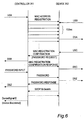
- FIG. 5 to 7 a first embodiment of client registration processing by the device authentication apparatus 350.
- an operation will be described in which, in the home network shown in, for example, Figs. 1 and 3 , a new network-compatible device including the controller 351 is connected, and the controller 351 implemented in the new network-compatible device (on the client side) requests the device 352 on the server side to perform authentication and registration.
- the device authentication apparatus 350 has a mode in which device authentication is performed without using a password, and a mode in which device authentication is performed using a password. In the following, the operation will be described separately for each mode.
- the user After the user presses the registration button provided on the client (controller 351) side, the user moves to the server (device 352) side. Then, the user presses the confirmation button provided on the server side. Just then, the device 352 receives the MAC address registration method in a period of 10 seconds in accordance with a user signal B (USB) which is generated in response to the pressing of the confirmation button.
- USB user signal B
- the device 352 When a plurality of MAC address registration methods having the same MAC address are received in a period of 10 seconds, the device 352 temporarily stores the MAC address in the MAC address table, and thereafter, generates a device signal A (DSA) for displaying for the user a message such that "A device has been discovered. Should the device be registered?", and waits for one minute in that state.
- This device signal A (DSA) may be omitted.
- the device 352 unicasts the MAC registration confirmation method at the TCR layer to the controller 351 in accordance with a user signal C (USC) which is generated in response to that pressing.
- USC user signal C
- the device 352 in a case where the device signal A (DSA) is omitted, when MAC address registration methods having the same MAC address are received in a period of 10 seconds, the device 352 does not require the user signal C (USC) and immediately unicasts the MAC registration confirmation method at the TCP layer to the controller 35. A device name dev-name whose registration is performed is added to the MAC registration confirmation method.
- DSA device signal A
- USC user signal C
- the controller 351 stops the transmission of the MAC address registration method, and also, the controller 351 generates a device signal Z (DSZ) for displaying for the user a message such that "The MAC registration confirmation method has been registered in the device "XXXX"" on the basis of the device name dev-name contained in the received MAC registration confirmation method. Then, the MAC registration confirmation response to which the self name cp-name is added is sent back by unicast to the device 352.
- DSZ device signal Z
- a device signal D for displaying for the user a message such that "The controller "YYYY” can be registered. Is it really OK to register?" on the basis of the controller name cp-name contained in the MAC registration confirmation response.
- the user presses the confirmation button provided on the server side.
- the device 352 generates a device signal Z (DSZ) for displaying a message such that "The controller "YYYY" has been registered.”, and the authentication and registration are completed.
- USD user signal
- DSZ device signal Z
- the device 352 After the above-described authentication and registration are completed, when M-search of the SSDP (simple service detection protocol), performed as a service searching process, is received from the controller 351, the device 352 confirms that it is a request from the registered device 352 by referring to the MAC list, and makes a response for the service search.
- M-search of the SSDP simple service detection protocol
- the device 352 in a case where M-search of the SSDP (simple service detection protocol) is received from the controller 351 before the user signal D (USD) is received, that is, before the authentication and registration are completed, the device 352 does not respond.
- M-search of the SSDP simple service detection protocol
- the user moves to the server (device 352) side. Then, the user presses the confirmation button provided on the server side. Just then, the device 352 receives, in a period of 10 seconds, the MAC address registration method in accordance with the user signal B (USB) generated in response to the pressing of the confirmation button.
- USB user signal B
- the device 352 When the MAC address registration method is received only from the same MAC address in a period of 10 seconds, the device 352 temporarily stores the MAC address in the MAC address table, and thereafter, generates the device signal A (DSA) for displaying for the user a message such that "A device has been discovered. Should this device be registered?", and the device 352 waits for one minute in that state.
- DSA device signal A
- the device 352 transmits the MAC registration confirmation method which means the completion of the MAC registration, and the authentication and registration are immediately terminated.
- the device 352 While waiting for one minute in a state in which the device signal A (DSA) is generated, the user presses the confirmation button provided on the server side. Just then, the device 352 unicasts the MAC registration confirmation method at the TCP layer in accordance with the user signal C (USC) generated in response to the pressing of the confirmation button. A password request flag is added to the MAC registration confirmation method.
- DSA device signal A
- USB user signal C
- the controller 351 When the controller 351 receives the MAC registration confirmation method to which the password request flag is added, the controller 351 stops the transmission of the MAC address registration method, and also sends back by unicast the MAC registration confirmation response to the device 352.
- the device 352 When the MAC registration confirmation response is received, the device 352 generates the device signal C (DSC) which displays for the user a message such that "The one-time password for the controller "YYYY” is “OOOO”.", and waits for five minutes in a state in which the one-time password is displayed.
- DSC device signal C
- the controller 351 generates the device signal B (DSB) which displays a message such that "Please input the password of the device "XXXX".” on the basis of the password request flag contained in the received MAC registration confirmation method, and waits for the input of the one-time password in a period of five minutes.
- DBS device signal B
- the user moves from the server side to the client (controller 351) side. Then, the user who has moved to the client (controller 351) side inputs a password. Just then, the controller 351 unicasts the password method to which the input password is added to the device 352 at the TCP layer, and waits for 10 seconds.
- the password method from the controller 351 when the password method from the controller 351 is received in a waiting state in which the one-time password is displayed, it is verified against the one-time password which is set in advance in the device 352 itself.
- the operation will be described separately between the case in which the password verification is OK and the case in which the password verification is NG.
- the device 352 When the one-time password sent from the controller 351 is valid, the device 352 officially authenticates and registers the MAC address which is temporarily stored in the MAC address table, and thereafter, sends back by unicast the password response in which the verification OK is added to the controller 351. Then, the device signal Z (DSZ) which displays for the user a message such that "The controller "YYYY" has been registered.” is generated, completing the authentication and registration.
- the controller 351 when a password response in which the password verification OK is added is received from the device 352 during the waiting period in a period of 10 seconds after the password method is unicast at the TCP layer to the device 352, by determining that the MAC address is authenticated and registered, the device signal Z (DSZ) which displays for the user a message such that "It has been registered in the device "XXXX" is generated, completing the device authentication.
- DSZ device signal Z
- the device 352 When the above-described authentication and registration are completed, in a case where the device 352 receives M-search of the SSDP (simple service detection protocol) performed as a service searching process from the controller 351, the device 352 confirms that is a request from the registered device 352 by referring to the MAC list, and makes a response for the services search.
- M-search of the SSDP simple service detection protocol
- the device 352 when M-search of the SSDP (simple service detection protocol) from the controller 351 is received before the device signal Z (DSZ) is generated, that is, before authentication and registration are terminated completely, the device 352 does not respond.
- the device 352 sends back by unicast the password response to which the verification NG is added to the controller 351, and waits again for the input of the password from the controller 351 in a period of five minutes.
- the device 352 stops the retry of the input of the password, and generates the device signal Z (DSZ) which displays for the user a message such that "The controller "YYYY" cannot be registered", completing the device authentication.
- the device signal Z DSZ
- the MAC address which is temporarily stored in the MAC address table is deleted.
- the controller 351 when the password response in which the result code of retry stop is added is received from the device 352, the device signal Z (DSZ) which displays for the user a message such that "Cannot be registered in the device "XXXX" " is generated, completing the device authentication.
- the device 352 when a MAC address registration method from a different MAC address is received, the device 352 generates the device signal X (DSX) which displays for the user a message such that "A plurality of controllers have been discovered. The registration will not be performed", stopping the device authentication.
- DSX device signal X
- the controller 351 cannot receive the MAC registration confirmation method, and generates the device signal X (DSX) which displays for the user a message such that "The registration has failed" when the time limit of five minutes for broadcasting the MAC address registration method has passed, stopping the device authentication.
- DSX device signal X
- the device 352 when the device 352 receives a plurality of MAC address registration methods from the same MAC address within two seconds, the device 352 generates the device signal X (DSX) which displays for the user a message such that "An invalid controller has been discovered. The registration will not be performed", completing the device authentication.
- DSX device signal X
- the controller 351 cannot receive the MAC registration confirmation method, and generates the device signal X (DSX) which displays for the user a message such that "The registration has failed" when the time limit of five minutes in which the MAC address registration method is broadcast has passed, stopping the device authentication.
- DSX device signal X
- the device 352 does not perform device authentication, and does not respond to any one of the controllers 351 having a conflicting MAC address so as to prevent unauthorized access and makes the presence of the device 352 itself not known to the controller 351 side which attempts to illegally perform device authentication.
- the controller 351 immediately stops the transmission of the MAC address registration method, and instead, broadcasts a MAC address registration stopping method several times, completing the processing.
- the device which is receiving this MAC address in a period of 10 seconds receives this MAC address registration stopping method, the device immediately stops the processing and displays for the user a message such that "The registration of the device has been cancelled".
- the controller 351 broadcasts the MAC address registration method on the network at a fixed period for a fixed time.
- the confirmation button on the server side in a case where the device 352 receives the MAC address registration method having the same MAC address within a fixed time, that MAC address is temporarily stored in the MAC address table.
- the device 352 unicasts the MAC registration confirmation method to the controller 351, and the controller 351 receiving the MAC registration confirmation method sends back by unicast a MAC registration confirmation response to the device 352.
- the device 352 receives the MAC registration confirmation response and promotes the user to perform authentication and registration.
- the confirmation button provided on the server side in response to that promotion, the MAC address which is temporarily stored in the MAC address table is authenticated and registered.
- the device 352 performs MAC address filtering for allowing access to the controller 351 (client) of the MAC address which is authenticated and registered in the MAC address table.
- the device authentication apparatus 350 make the presence of the server 1 not known to the controller 351 side which attempts to illegally perform device authentication. Therefore, it is possible to provide access control with high security.
- the device authentication apparatus 350 of the present invention can realize a function for protecting the copyright by using the above-described access control. That is, for performing device authentication, as described above, it is necessary for the user to operate both the confirmation button provided on the server side and the registration button provided on the client (controller 351) side.
- the controller 351 (client) of the other user within the same subnet cannot be authenticated on the home network 100 side.
- a situation in which the server 1 of the home network 100 is illegally accessed, and the copyright of the content stored in the server 1 is infringed does not occur.
- the device authentication apparatuses 350 disposed in a pair of server/client have been described as an example.
- the gist of the present invention is not limited to this example, and of course, the present invention can be applied to a network having a plurality of servers and a plurality of clients. That is, when a plurality of servers (devices 352) exist, if the confirmation button is pressed in the server for which the user is going to perform device authentication, the server inevitably becomes the authentication source.
- the registration completion (Complete) confirmation process is performed as the final step of the MAC registration process.
- a mode in which device authentication is performed without using a password and a mode in which device authentication is performed using a password are provided.
- the operation will be described separately for each mode.
- the user moves to the server (device 352) side.
- the confirmation button provided on the server side is pressed.
- the device 352 receives the MAC address registration method in a period of 10 seconds in accordance with the user signal B (USB) generated in response to the pressing of the confirmation button.
- the device 352 When a plurality of MAC address registration methods having the same MAC address are received in a period of 10 seconds, the device 352 temporarily stores the MAC address in the MAC address table, and thereafter, unicasts the MAC registration confirmation method at the TCP layer to the controller 351. In the MAC registration confirmation method, the device name dev-name whose registration is performed is added.
- the device 352 When a plurality of MAC address registration methods having the same MAC address are not received in a period of 10 seconds, the device 352 generates the device signal A (DSA) which displays a message such that "A device could not be discovered", completing the device authentication.
- DSA device signal A
- the controller 351 stops the transmission of the MAC address registration method, and also sends back by unicast the MAC registration confirmation response in which the self-name cp-name is added to the device 352. Thereafter, the controller 351 shifts to a state of waiting for the reception of the MAC registration completion confirmation method.
- the device signal C which displays for the user a message such that "The controller "YYYY" can be registered. Is it really OK to register?" is generated on the basis of the controller name cp-name contained in the MAC registration confirmation response.
- the user presses the confirmation button provided on the server side.
- the device 352 performs a registration process in accordance with the user signal C (USC) generated in response to that pressing, and also unicasts the MAC registration completion confirmation method at the TCP layer to the controller 351.
- the MAC registration completion confirmation method the device name dev-name whose registration is completed is added.
- the controller 351 sends back by unicast the MAC registration completion confirmation response to the device 352. Furthermore, based on the device name dev-name contained in the received MAC registration completion confirmation method, the device signal Z (DSZ) which displays for the user a message "Has been registered in the device "XXXX" " is generated.
- the device 352 waits for a predetermined time, for example, 10 minutes from when the MAC registration completion confirmation method was transmitted. Upon reception of the MAC registration completion confirmation response from the controller 351, the device 352 generates the device signal Z (DSZ) which displays for the user a message such that "The controller "YYYY" has been registered", completing the authentication and registration.
- a predetermined time for example, 10 minutes from when the MAC registration completion confirmation method was transmitted.
- the device 352 Upon reception of the MAC registration completion confirmation response from the controller 351, the device 352 generates the device signal Z (DSZ) which displays for the user a message such that "The controller "YYYY" has been registered", completing the authentication and registration.
- DSZ device signal Z
- the device 352 waits for a predetermined time, for example, 10 minutes, from when the MAC registration completion confirmation method was transmitted, and the MAC registration completion confirmation response is not received from the controller 351, two settings are possible.
- One is a processing mode in which the registration is made effective regardless of the presence or absence of the reception of the MAC registration completion confirmation response, and the device signal Z (DSZ) which displays for the user a message such that "The controller "YYYY" has been registered" is generated, completing the authentication and registration.
- Another processing mode is a mode in which, when the device 352 does not receive the MAC registration completion confirmation response from the controller 351 within a predetermined time, the registration is made invalid, and a message such that "The registration of the controller "YYYY” has been cancelled” is displayed for the user on the device 352 side, completing the processing.
- the device 352 transmits the registration cancellation notification to the controller 351, and displays for the user a message such that "The registration for the device "XXXX" has been cancelled" at the controller 351.
- the above-described two processing modes can be set.
- the device 352 receives M-search of the SSDP (simple service detection protocol) performed as a service searching process from the controller 351, confirms that this is a request from the registered device 352 by referring to the MAC list, and responds to the service search.
- M-search of the SSDP simple service detection protocol
- the device 352 When the device 352 receives M-search of SSDP (simple service detection protocol) from the controller 351 before the authentication and registration are completed, since the controller 351 is not yet registered in the MAC list, the device 352 does not respond.
- M-search of SSDP simple service detection protocol
- USB user signal B
- the device 352 When a plurality of MAC address registration methods having the same MAC address are received in a period of 10 seconds, the device 352 temporarily stores the MAC address in the MAC address table, generates the device signal A (DSA) which displays for the user a message such that "A device has been discovered", and unicasts the MAC registration confirmation method at the TCP layer. In the MAC registration confirmation method, a password request flag is added.
- DSA device signal A
- the device 352 When a plurality of MAC address registration methods having the same MAC address are not received in a period of 10 seconds, the device 352 generates the device signal A (DSA) which displays a message such that "A device could not be discovered", completing the device authentication.
- DSA device signal A
- the controller 351 stops the transmission of the MAC address registration method, and sends back by unicast the MAC registration confirmation response to the device 352.
- the device 352 When this MAC registration confirmation response is received, the device 352 generates the device signal C (DSC) which displays for the user a message such that "The one-time password for the controller "YYYY” is "OOOO".", and waits for five minutes in a state in which the one-time password is displayed.
- DSC device signal C
- a password [1334] is shown as an example. This password is generated by the device 352, for example, by a random number generation process.
- the controller 351 Based on the password request flag contained in the received MAC registration confirmation method, the controller 351 generates the device signal B (DSB) which displays for the user a message such that "Please input the password of the device "XXXX" ", and waits for an input of the one-time password for five minutes.
- DSB device signal B
- the user moves from the server side to the client (controller 351) side. Then, the user who has moved to the client (controller 351) side inputs the password displayed on the device 352 side from the input means on the client (controller 351) side. Just then, the controller 351 unicasts the password method in which the input password is added to the device 352 at the TCP layer, and waits for 10 minutes.
- the password method from the controller 351 when the password method from the controller 351 is received in the waiting state of five minutes after the one-time password is displayed, it is verified against the one-time password set in advance in its own device.
- the operation will be described separately between the case of the password verification OK and the case of the password verification NG.
- the device 352 When the one-time password sent from the controller 351 is valid, that is, it matches the one-time password set by the device, the device 352 officially authenticates and registers the MAC address which is temporarily stored in the MAC address table, and thereafter, sends back by unicast the password response in which the verification OK is added to the controller 351.
- the controller 351 shifts to the waiting state for receiving the MAC registration completion confirmation method.
- the device 352 generates the device signal C (DSC) which displays for the user a message such that "The controller "YYYY" can be registered. Is it really OK to register?" based on the controller name cp-name.
- DSC device signal C
- the user presses the confirmation button provided on the server side.
- the device 352 performs a registration process in accordance with the user signal C (USC) generated in response to that pressing, and also unicasts to the controller 351 the MAC registration completion confirmation method at the TCP layer.
- the MAC registration completion confirmation method the device name dev-name whose registration has been completed is added.
- the controller 351 sends back by unicast the MAC registration completion confirmation response to the device 352. Furthermore, based on the device name dev-name contained in the received MAC registration completion confirmation method, the device signal Z (DSZ) which displays for the user a message such that "Has been registered in the device "XXXX".” is generated.
- the device 352 When the device 352 waits for a predetermined time, for example, 10 seconds from when the MAC registration completion confirmation method is transmitted and receives the MAC registration completion confirmation response from the controller 351, the device 352 generates the device signal Z (DSZ) which displays for the user a message such that "The controller "YYYY" has been registered", completing the authentication and registration.
- a predetermined time for example, 10 seconds
- the device 352 When the device 352 waits for a predetermined time, for example, 10 seconds from when the MAC registration completion confirmation method is transmitted and receives the MAC registration completion confirmation response from the controller 351, the device 352 generates the device signal Z (DSZ) which displays for the user a message such that "The controller "YYYY" has been registered", completing the authentication and registration.
- DSZ device signal Z
- the device 352 waits for a predetermined time, for example, 10 seconds from when the MAC registration completion confirmation method is transmitted and the MAC registration completion confirmation response is not received from the controller 351, two settings are possible.
- a processing mode in which the registration is made effective regardless of the presence or absence of the reception of the MAC registration completion confirmation response, the device signal Z (DSZ) which displays for the user a message such that "The controller "YYYY" has been registered” is generated, completing the authentication and registration.
- Another processing mode is a mode in which, when the device 352 does not receive the MAC registration completion confirmation response from the controller 351 within a predetermined time, the registration is invalidated, and the device 352 side displays for the user a message such that "The registration of the controller "YYYY” has been cancelled", completing the processing.
- the device 352 transmits this registration cancellation notification to the controller 351 and a message such that "The registration for the device "XXXX" has been cancelled" is displayed for the user in the controller 351.
- the device 352 After the controller 351 is registered in the MAC list of the device 352, and the authentication and registration are completed, when M-search of the SSDP (simple service detection protocol) performed as a service searching process from the controller 351 is received, the device 352 confirms that this is a request from the registered device 352 by referring to the MAC list, and responds to the service search.
- M-search of the SSDP simple service detection protocol
- the device 352 When the device 352 receives M-search of the SSDP (simple service detection protocol) from the controller 351 before the authentication and registration are terminated completely, since the controller 351 is not yet registered in the MAC list, the device 352 does not respond.
- M-search of the SSDP simple service detection protocol
- the device 352 sends back by unicast the password response in which the password verification NG is added to the controller 351, and waits for the password to be input again from the controller 351 in a period of five minutes.
- the device 352 stops the retry of the password input, and generates a device signal E (DSE) which displays for the user a message such that "The controller "YYYY" cannot be registered", completing the device authentication.
- DSE device signal E
- the MAC address which is temporarily stored in the MAC address table is deleted.
- the controller 351 when the password response in which the result code for the retry stop is added is received from the device 352, the device signal E (DSE) which displays for the user a message such that "Registration for the device "XXXX” is not possible” is generated, completing the device authentication.
- DSE device signal E
- the operation in a case where another controller differing from the controller 351 which has broadcast the MAC address registration method is detected while the device 352 is receiving the MAC address registration method in a period of 10 seconds becomes processing (see Fig. 7 ) similar to that of the first embodiment, and the device 352 displays for the user a message such that "A plurality of controllers have been discovered. Registration will not be performed", stopping the device authentication.
- the controller 351 cannot receive the MAC registration confirmation method, displays for the user a message such that "The registration has failed" when the time limit of five minutes for broadcasting the MAC address registration method has passed, stopping the device authentication.
- the device 352 displays for the user a message such that "An invalid controller has been discovered. The registration will not be performed", completing the device authentication.
- the controller 351 cannot receive the MAC address registration method, and displays for the user a message such that "The registration has failed" when the time limit of five minutes for broadcasting the MAC registration confirmation method has passed, stopping the device authentication.
- the device 352 does not perform the device authentication and does not respond to any one of the controllers 351 having a conflicting MAC address so as to prevent unauthorized access, and also makes the presence of the device 352 itself not known to the controller 351 side which attempts to illegally perform device authentication.
- the registration completion (Complete) confirmation process is performed, and the MAC registration completion confirmation is transmitted from the server (device) side to the client (controller) side.
- This processing sequence may be automatically performed on the basis of the program of the device on the client (controller) side without performing the explicit M-search transmission process starting command by the user. That is, the M-search transmission process is performed automatically under the condition that the MAC registration completion confirmation notification is received from the server (device) side.
- step S111 the controller 351 on the client side broadcasts at the UDP layer the MAC address registration method on the basis of user instruction.
- step S211 the device 352 on the server side determines whether or not the MAC address contained in the MAC registration request from the controller has been registered in the MAC list.
- step S221 the normal MAC registration process sequence is performed. This is a process corresponding to each of the above-described process examples.
- step S212 the device 352 transmits, as a MAC registration confirmation, a registration confirmation notification indicating that the registration has been completed to the controller 351 on the client side.
- step S111 After the MAC registration request is transmitted in step S111, the controller 351 on the client side waits for the registration confirmation.
- step S112 No, step S121: Yes
- step S122 a time-out notification is made to a high-order application program, and a message displaying process for indicating that the reception of the registration confirmation has failed is performed by the high-order application program.
- step S113 determines whether or not the registration confirmation is a registration completion notification. If the registration confirmation is not a registration completion notification, the process proceeds to step S123, where a normal MAC registration process sequence is performed. This is a process corresponding to each of the above-described processing examples.
- step S114 a registration confirmation response as an acknowledgement response message for the registration completion notification is transmitted to the server (device) side.
- step S212 the server (device 352) waits for the registration confirmation response.
- step S213: No, step S222: Yes the registration confirmation response is not received within the waiting time
- step S223 a time-out notification is made to the high-order application program, and a message displaying process for indicating that the reception of the registration confirmation response has failed is performed in accordance with the high-order application program, completing the processing.
- step S214 a registration completion notification is made to the high-order application program.
- the high-order application program executes, for example, a message displaying process for indicating that the registration has already been completed.
- the client which has transmitted to the server (device) side a registration confirmation response as an acknowledgement response message for the registration completion notification in step S114, makes a registration completion notification to the high-order application program in step S115.
- the high-order application program executes, for example, a message displaying process for indicating that the registration has already been completed, completing the processing.
- the device registration process sequence performed between the server and the client is performed in accordance with a different sequence.
- the processing sequence may differ depending on the version of the device authentication program stored in the client or the server.
- these are defined as different versions, such as the first embodiment of the above-described client registration process example being as the program of version 1.0, and the second embodiment thereof being as the program of version 1.1.
- the version information of the processing program is notified between the server and the client, and the device registration is performed with the processing sequences being made to match each other.
- the versions of the processing programs are set in sequence as [1.0], [1.1], [1.2].., [2.0], [2.1].. from the old version to the new version.
- a newer version supports a processing sequence of an older version. That is, version [1.2] supports [1.0] and [1.1]. Version [2.1] supports [2.0]. The processing based on the notification of the version information in the device registration process sequence will now be described with reference to Figs. 11 and 12 .
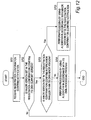
- Fig. 11 is a flowchart illustrating the processing sequence setting procedure based on the version notification from the client (controller) side at the server (device) side.
- the server receives the MAC registration request from the client.
- This is the MAC address registration method described in the first embodiment and the second embodiment for the above-described client registration process example, and is broadcast data of, for example, every three seconds in a period of five minutes at the UDP layer.
- the client stores the version information, for example, [1.0], [1.1]" etc., of the program for executing the MAC registration process sequence to be performed by the client itself in the MAC registration request from the client, and transmits it to the server.
- step S501 When the MAC registration request (Register) from the client is received in step S501, in step S502, the server makes a determination as to the processability on the basis of the comparison between the major version in the version information contained in the MAC registration request from the client and the major version of the version information of its self executable processing program.
- the server makes a determination as to the processability on the basis of the comparison between the major version in the version information contained in the MAC registration request from the client and the major version of the version information of its self executable processing program.
- step S503 since processing is possible in the case of the same major version, when the major version within the version information contained in the MAC registration request from the client matches the major version from the version information of the self executable processing program, the process proceeds to step S503.
- the server may perform a process for notifying the fact that the processing is not possible to the client.
- step S503 the minor version within the version information contained in the MAC registration request from the client is compared with the minor version of the version information of the self executable processing program. If the minor version contained in the MAC registration request of the client is smaller than the minor version of the self executable processing program, the process proceeds to step S505, where the processing in the processing sequence in accordance with the version information contained in the MAC registration request from the client is performed.
- step S504 the processing in the processing sequence in accordance with the version of the processing program possessed by the server itself is performed.
- step S701 the client receives a MAC registration confirmation request (Confirm) from the server.
- This is a response, from the server, for the MAC address registration method transmitted from the client, described in the first embodiment and the second embodiment of the above-described client registration process example, and is unicast data at the TCP layer.
- the server stores, in the MAC registration confirmation to be transmitted from the server, the version information, for example, [1.0], [1.1], etc., of the execution program of the MAC registration process sequence performed by the server itself.
- the client makes a determination as to the processability on the basis of the comparison between the major version within the version information contained in the MAC registration confirmation from the server and the major version of the version information of the self executable processing program.
- step S703 Since the processing is possible in the case of the same major version, when the major version within the version information contained in the MAC registration confirmation from the server matches the major version of the version information of the self executable processing program, the process proceeds to step S703. In the case of an unmatch, by determining that the processing is not possible, the processing is completed as is. In this case, the client may perform a process for notifying the fact that the processing is not possible to the server.
- step S703 the minor version within the version information contained in the MAC registration confirmation from the server is compared with the minor version of the version information of the self executable processing program. If the minor version contained in the MAC registration confirmation of the server is smaller than the minor version of the self executable processing program, the process proceeds to step S705, where the processing in the processing sequence in accordance with the version information contained in the MAC registration confirmation from the server is performed.
- step S704 a process in the processing sequence in accordance with the version of the self executable processing program is performed.
- the device registration process between the server and the client in the device registration process between the server and the client, the version information of the processing programs possessed by the two devices is notified, and by adjusting the processing sequence, the device registration process is performed. Therefore, also, among devices in which programs of various versions are stored, a device registration process in accordance with a unified processing sequence can be performed.
- the hardware configuration of the server and the client device is as described above with reference to Fig. 2 .
- the above-described various types of processes are performed by the CPU serving as the control section in accordance with the program stored in the storage section of each of the server and the client.
- Examples of processes performed by the CPU on the server side include a process for inputting a request from the client, analyzing the input information, and performing a registration in a MAC list, that is, access control information based on the analysis result, a process for generating and analyzing packets to be transmitted to and received from the client, and a process for outputting various kinds of messages and analyzing user input information in the registration process.
- Examples of processes on the client side include a process for analyzing information received from the server, a process for generating and analyzing packets to be transmitted to and received from the server, and a process for outputting various kinds of messages and analyzing user input information in the registration process.
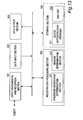
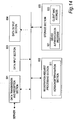
- Fig. 13 is a block diagram illustrating the main functional configuration of the server
- Fig. 14 is a block diagram illustrating the main functional configuration of the client.
- the data transmission and reception section 501 receives packets for the client and packets from the client.
- the data transmission and reception section 501 performs a transmission packet generation process and a received packet analysis process. Examples of the process thereof include a process for setting the address of packets, recognizing the address, storing data in the data part, and obtaining data from the data part.
- a registration process section 502 performs a series of processing sequences based on a registration request from the client.
- the registration process section 502 performs a process corresponding to each of the sequence diagrams and the flowcharts in accordance with a device authentication program 521 stored in the storage section 505.
- the registration process section 502 has a password generation determination section 511 for performing password generation and registration processes, and a version determination section 512 for determining the processing sequence by referring to the program version described with reference to the flowchart of Fig. 11 .
- a data input section 503 is an input section, such as a keyboard, for inputting a user signal to the registration process section 502.
- a data output section 504 is an output section, such as a display, for displaying message data, etc., based on a device signal output by the registration process section 502.
- the device authentication program 521 for performing the registration process sequence is stored.
- version information composed of the major version and the minor version is added.
- a MAC list 522 in which a client MAC address is stored as access control information of the client is stored.
- the data transmission and reception section 501 receives packets for the client and packets from the client.
- the data transmission and reception section 601 performs a process for generating transmission packets and a process for analyzing received packets. Examples of the process thereof include a process for setting the address of packets, recognizing the address, storing data in the data part, and obtaining data from the data part.
- a registration requesting process section 602 performs a series of processing sequences of the client registration requesting process with respect to the server.
- the registration requesting process section 602 performs a process corresponding to each of the above-described sequence diagrams and flowcharts in accordance with the device authentication program 621 stored in the storage section 605.
- the registration requesting process section 602 has a version determination section 611 for determining the processing sequence by referring to the program version described with reference to the flowchart of Fig. 12 .
- a data input section 603 is an input section, such as a keyboard, for inputting a user signal to the registration requesting process section 602.
- a data output section 604 is an output section, such as a display, for displaying message data, etc., based on the device signal output by the registration requesting process section 602.
- the device authentication program 621 for performing the registration process sequence is stored.
- version information composed of the major version and the minor version is added.
- a MAC address 622 of the client is stored.
- the server and the client have functions shown in Fig. 13 and 14 , and perform the above-described processes.
- the block diagrams shown in Figs. 13 and 14 are block diagrams for illustrating functions, and, in practice, various types of processing programs are performed under the control of the CPU in the hardware configuration, such as the PC shown in Fig. 2 .
- a series of processes described in the specification can be performed by hardware, software, or a combined configuration of them.
- a program in which a processing sequence is recorded can be installed into a memory in a computer incorporated into dedicated hardware, whereby the program is executed, or can be installed into a general-purpose computer capable of executing various types of processes, whereby the program is executed.
- the program can be recorded in advance in a hard disk or a ROM (Read Only Memory) as a recording medium.
- the program can be temporarily or permanently stored (recorded) in a removable recording medium such as a flexible disk, a CD-ROM (Compact Disc Read Only Memory), an MO (Magneto-optical) disk, a DVD (Digital Versatile Disc), a magnetic disk, or a semiconductor memory.
- a removable recording medium can be provided as commonly called packaged software.
- programs can be transferred wirelessly from a download site to a computer or can be transferred by wire to a computer via a network, such as a LAN (Local Area Network) or the Internet, and in the computer, the programs which are transferred in such a manner can be received and installed into a recording medium such as the hard disk contained therein.
- a network such as a LAN (Local Area Network) or the Internet
- the server permits only the access to the client having the authenticated and registered MAC address.
- the server permits only the access to the client having the authenticated and registered MAC address.
- the server permits only the access to the client having the authenticated and registered MAC address.
- the device authentication is stopped by deleting the MAC address which is temporarily stored. Therefore, unauthorized access by the misrepresentation of a password can be prevented.
- the registration completion (Complete) confirmation process is performed, and a MAC registration completion confirmation is transmitted from the server (device) side to the client (controller) side.
- a MAC registration completion confirmation is transmitted from the server (device) side to the client (controller) side.
- M-search of the SSDP simple service detection protocol
- an M-search transmission process can be automatically performed under the condition that the MAC registration completion confirmation notification is received from the server (device) side, and it becomes possible for the client to receive service information from the server following the registration process with respect to the server without the intervention of a user's input process, etc.
- a confirmation notification process for informing that the registration has already been completed is performed among the devices is performed. Therefore, a message display for informing that the registration has been completed becomes possible on the basis of these notifications, and thus the user can confirm the fact that the client device has already been registered in the server.
- the version information of the processing programs possessed by the two devices is notified, and by adjusting the processing sequence, the device registration process is performed. Therefore, a device registration process in accordance with a unified processing sequence can be performed even among devices in which programs of various versions are stored.
Landscapes
- Engineering & Computer Science (AREA)
- Computer Networks & Wireless Communication (AREA)
- Signal Processing (AREA)
- General Engineering & Computer Science (AREA)
- Computer Hardware Design (AREA)
- Computer Security & Cryptography (AREA)
- Computing Systems (AREA)
- Theoretical Computer Science (AREA)
- Power Engineering (AREA)
- General Physics & Mathematics (AREA)
- Physics & Mathematics (AREA)
- Small-Scale Networks (AREA)
- Mobile Radio Communication Systems (AREA)
Claims (9)
- Geräteauthentifizierungsvorrichtung, die Folgendes umfasst:ein erstes Gerät, das auf der Client-Seite eines Client/Server-Systems vorgesehen ist; undein zweites Gerät, das auf der Server-Seite des Client/-Server-Systems vorgesehen ist,wobei das erste Gerät Eintragungsanforderungsmittel zum gleichzeitigen Senden einer Anforderung zum Eintragen einer für das erste Gerät spezifischen MAC-Adresse in Reaktion auf eine Eintragungsanforderungsoperation eines Anwenders umfasst;das zweite Gerät temporäre Speichermittel zum temporären Speichern der MAC-Adresse, wenn eine Eintragungsanforderung, die die gleiche MAC-Adresse aufweist, mehrere Male empfangen wird oder einmal innerhalb einer vorgegebenen Zeit empfangen wird, nachdem eine erste Bestätigungsoperation des Anwenders ausgeführt worden ist, umfasst;das zweite Gerät Eintragungsbestätigungsmittel zum Senden einer Eintragungsbestätigung zu dem ersten Gerät, das eine in den temporären Speichermitteln gespeicherte MAC-Adresse aufweist, in Reaktion auf eine zweite Bestätigungsoperation des Anwenders umfasst;das erste Gerät Eintragungsbestätigungsantwortmittel zum Empfangen der Eintragungsbestätigung, um die Eintragungsanforderungsmittel anzuweisen, das gleichzeitige Senden zu beenden, und außerdem zum Zurücksenden einer Eintragungsbestätigungsantwort zu dem zweiten Gerät, das die Eintragungsbestätigung gesendet hat, umfasst;das zweite Gerät Authentifizierungs- und Eintragungsmittel zum Authentifizieren und Eintragen der MAC- Adresse, die temporär in den temporären Speichermitteln gespeichert wird, in Reaktion auf eine dritte Bestätigungsoperation des Anwenders, die ausgeführt wird, nachdem die zweite Eintragungsbestätigungsantwort empfangen worden ist, umfasst,das zweite Gerät den Zugriff von einem Client zurückweist, der das erste Gerät, das eine andere MAC-Adresse aufweist als die MAC-Adresse, die in dem zweiten Gerät selbst authentifiziert und eingetragen ist, umfasst, und den Server anweist, dem Client überhaupt nicht zu antworten, undwobei dann, wenn das zweite Gerät mehrere kollidierende Eintragungsanforderungen, die unterschiedliche MAC-Adressen aufweisen, empfängt, das zweite Gerät diese kollidierenden MAC-Adressen nicht temporär speichert und die Geräteauthentifikation beendet durch Ignorieren der Eintragungsanforderung von dem ersten Gerät, das eine kollidierende MAC-Adresse aufweist.
- Geräteauthentifizierungsvorrichtung nach Anspruch 1:wobei die Eintragungsbestätigungsmittel des zweiten Geräts ferner ausgelegt sind, in Reaktion auf eine zweite Bestätigungsoperation des Anwenders zusätzlich eine Passwortanforderung zu dem ersten Gerät, das die in den temporären Speichermitteln gespeicherte MAC-Adresse aufweist, zu senden; das zweite Gerät ferner Mittel zum Anzeigen des für den Anwender erzeugten Passworts; und Mittel zum Speichern des erzeugten Passworts in dem zweiten Gerät selbst umfasst;die Eintragungsbestätigungsantwortmittel des ersten Geräts ferner ausgelegt sind, zusätzlich das durch die Anwenderoperation eingegebene Passwort zu dem zweiten Gerät, das die Eintragungsbestätigung gesendet hat, zurückzusenden;die Authentifizierungs- und Eintragungsmittel des zweiten Geräts ferner ausgelegt sind, die MAC-Adresse, die temporär in den temporären Speichermitteln gespeichert wird, zu authentifizieren und einzutragen, wenn das von den Eintragungsbestätigungsantwortmitteln empfangene Passwort gegen das in dem zweiten Gerät selbst gespeicherte Passwort verifiziert wird und die beiden Passwörter miteinander übereinstimmen.
- Geräteauthentifizierungsvorrichtung nach Anspruch 2,
wobei das zweite Gerät die Geräteauthentifizierung durch Löschen der MAC-Adresse, die temporär in den temporären Speichermitteln gespeichert ist, beendet, wenn die Verifikation zwischen dem von der ersten Geräteseite empfangenen Passwort und dem Passwort, das vorab in dem zweiten Gerät selbst eingestellt worden ist, nicht kontinuierlich mit einer vorbestimmten Häufigkeit übereinstimmt. - Geräteauthentifizierungsverfahren, das Folgendes umfasst:einen ersten Prozess, der auf der Client-Seite eines Client/Server-Systems ausgeführt wird; undeinen zweiten Prozess, der auf der Server-Seite des Client/-Server-Systems ausgeführt wird,wobei der erste Prozess einen Eintragungsanforderungsschritt des gleichzeitigen Sendens auf einem Netz einer Anforderung zum Eintragen einer für den Client spezifischen MAC-Adresse in Reaktion auf eine Eintragungsanforderungsoperation eines Anwenders umfasst;der zweite Prozess einen temporären Speicherschritt des temporären Speicherns der MAC-Adresse, wenn eine Eintragungsanforderung, die die gleiche MAC-Adresse aufweist, mehrere Male innerhalb einer vorgegebenen Zeit empfangen wird, nachdem eine erste Bestätigungsoperation des Anwenders ausgeführt worden ist, umfasst;der zweite Prozess einen Eintragungsbestätigungsschritt des Sendens einer Eintragungsbestätigung zur Client-Seite, der in dem Client ausgeführt wird, der die in dem temporären Speicherschritt gespeichert Mac-Adresse aufweist, in Reaktion auf eine zweite Bestätigungsoperation des Anwenders umfasst;der erste Prozess einen Eintragungsbestätigungsschritt des Empfangens der Eintragungsbestätigung, um den Eintragungsanforderungsschritt anzuweisen, das gleichzeitige Senden zu beenden, und außerdem zum Zurücksenden einer Eintragungsbestätigungsantwort zu dem Server, der die Eintragungsbestätigung gesendet hat, umfasst;der zweite Prozess einen Authentifizierungs- und Eintragungsschritt zum Authentifizieren und Eintragen der MAC-Adresse, die in dem temporären Speicherschritt temporär gespeichert worden ist, in Reaktion auf eine dritte Bestätigungsoperation des Anwenders umfasst, der ausgeführt wird, nachdem die Eintragungsbestätigungsantwort empfangen worden ist,der zweite Prozess den Zugriff von einem Client, der eine andere MAC-Adresse als die die in dem Server selbst authentifizierte und eingetragene MAC-Adresse aufweist, zurückweist und den Server anweist, dem Client überhaupt nicht zu antworten, undwobei der zweite Prozess kollidierende MAC-Adressen nicht temporär speichert, wenn mehrere kollidierende Eintragungsanforderungen, die eine unterschiedliche MAC-Adresse aufweisen, empfangen werden, und die Authentifizierung durch Ignorieren der Eintragungsanforderung von dem ersten Prozess, der auf der Client-Seite ausgeführt wird, die eine kollidierende MAC-Adresse aufweist, beendet.
- Geräteauthentifizierungsverfahren nach Anspruch 4:wobei in dem Eintragungsbestätigungsschritt des zweiten Prozesses in Reaktion auf eine zweite Bestätigungsoperation des Anwenders zusätzlich eine Passwortanforderung zu dem ersten Prozess, der in dem Clientausgeführt wird, der die MAC-Adresse aufweist, die temporär in dem temporären Speicherschritt gespeichert worden ist, gesendet wird;in dem Eintragungsbestätigungsantwortschritt des ersten Prozesses zusätzlich das durch die Anwenderoperation eingegebene Passwort zu dem zweiten Prozess, der die Eintragungsbestätigung gesendet hat, zurückgesendet wird;in dem Authentifizierungs- und Eintragungsschritt des zweiten Prozesses die MAC-Adresse, die temporär in dem temporären Speicherschritt gespeichert worden ist, authentifiziert und eingetragen wird, wenn das in dem Eintragungsbestätigungsantwortschritt empfangene Passwort gegen das vorab in dem Server selbst eingestellte Passwort verifiziert wird und die beiden Passwörter miteinander übereinstimmen.
- Geräteauthentifizierungsverfahren nach Anspruch 5,
wobei der zweite Prozess die Geräteauthentifizierung durch Löschen der MAC-Adresse, die temporär in dem temporären Speicherschritt gespeichert worden ist, beendet, wenn die Verifikation zwischen dem von der ersten Prozessseite empfangenen Passwort und dem Passwort, das vorab in dem Server selbst eingestellt worden ist, nicht kontinuierlich mit einer vorbestimmten Häufigkeit übereinstimmt. - Geräteauthentifizierungsprogramm, das Folgendes umfasst:ein erstes Programm, das auf der Client-Seite eines Client/Server-Systems ausgeführt wird; undein zweites Programm, das auf der Server-Seite des Client/-Server-Systems ausgeführt wird,wobei das erste Programm einen Eintragungsanforderungsschritt des gleichzeitigen Sendens auf einem Netz einer Anforderung zum Eintragen einer für den Client spezifischen MAC-Adresse in Reaktion auf eine Eintragungsanforderungsoperation eines Anwenders umfasst;wobei das zweite Programm einen temporären Speicherschritt des temporären Speicherns der MAC-Adresse, wenn eine Eintragungsanforderung, die die gleiche MAC-Adresse aufweist, mehrere Male innerhalb einer vorgegebenen Zeit empfangen wird, nachdem eine erste Bestätigungsoperation des Anwenders ausgeführt worden ist, umfasst;wobei das zweite Programm einen Eintragungsbestätigungsschritt des Sendens einer Eintragungsbestätigung zu dem ersten Programm, das in dem Client, der die in dem temporären Speicherschritt gespeicherte MAC-Adresse aufweist, ausgeführt wird, in Reaktion auf eine zweite Bestätigungsoperation des Anwenders umfasst;das erste Programm einen Eintragungsbestätigungsantwortschritt des Empfangens der Eintragungsbestätigung, um den Eintragungsanforderungsschritt anzuweisen, das gleichzeitige Senden zu beenden, und außerdem zum Zurücksenden einer Eintragungsbestätigungsantwort zu dem zweiten Programm, das die Eintragungsbestätigung gesendet hat, umfasst;das zweite Programm einen Authentifizierungs- und Eintragungsschritt des Authentifizierens und Eintragens der MAC-Adresse, die temporär in dem Schritt des temporären Speicherns gespeichert worden ist, in Reaktion auf eine dritte Bestätigungsoperation des Anwenders umfasst, der ausgeführt wird, nachdem die Eintragungsbestätigungsantwort empfangen worden ist,das zweite Programm den Zugriff von einem Client, der eine andere MAC-Adresse als die in dem Server selbst authentifizierte und eingetragene MAC-Adresse aufweist, zurückweist und den Server anweist, dem Client überhaupt nicht zu antworten, undwobei dann, wenn mehrere kollidierende Eintragungsanforderungen, die unterschiedliche MAC-Adressen aufweisen, empfangen werden, das zweite Programm diese kollidierenden MAC-Adressen nicht temporär speichert und die Geräteauthentifizierung durch Ignorieren der Eintragungsanforderung von dem ersten Programm, das auf der Client-Seite ausgeführt wird, die die kollidierende MAC-Adresse aufweist, beendet.
- Geräteauthentifizierungsprogramm nach Anspruch 7:wobei in dem Eintragungsbestätigungsschritt des zweiten Programms in Reaktion auf eine zweite Bestätigungsoperation des Anwenders zusätzlich eine Passwortanforderung zu dem ersten Programm, das in dem Client ausgeführt wird, der die MAC-Adresse, die temporär in dem Schritt des temporären Speicherns gespeichert worden ist, aufweist, gesendet wird;in dem Eintragungsbestätigungsantwortschritt des ersten Programms zusätzlich das durch die Anwenderoperation eingegebene Passwort zu dem zweiten Programm, das die Eintragungsbestätigung gesendet hat, zurückgesendet wird;in dem Authentifizierungs- und Eintragungsschritt des zweiten Programms die MAC-Adresse, die temporär in dem Schritt des temporären Speicherns gespeichert worden ist, authentifiziert und eingetragen wird, wenn das von dem Eintragungsbestätigungsantwortschritt empfangene Passwort gegen das vorab in dem Server selbst eingestellte Passwort verifiziert wird und die beiden Passworte miteinander übereinstimmen.
- Geräteauthentifizierungsprogramm nach Anspruch 8,
wobei das zweite Programm die Geräteauthentifizierung durch Löschen der MAC-Adresse, die temporär in den Schritt des temporären Speicherns gespeichert worden ist, beendet, wenn die Verifikation zwischen dem von der ersten Programmseite empfangenen Passwort und dem Passwort, das vorab in dem zweiten Programm selbst eingestellt worden ist, nicht kontinuierlich mit einer vorbestimmten Häufigkeit übereinstimmt.
Applications Claiming Priority (5)
| Application Number | Priority Date | Filing Date | Title |
|---|---|---|---|
| JP2002256471 | 2002-09-02 | ||
| JP2002256471 | 2002-09-02 | ||
| JP2003052375A JP3767561B2 (ja) | 2002-09-02 | 2003-02-28 | 機器認証装置、機器認証方法、および情報処理装置、情報処理方法、並びにコンピュータ・プログラム |
| JP2003052375 | 2003-02-28 | ||
| PCT/JP2003/011034 WO2004023727A1 (ja) | 2002-09-02 | 2003-08-29 | 機器認証装置、機器認証方法、および情報処理装置、情報処理方法、並びにコンピュータ・プログラム |
Publications (3)
| Publication Number | Publication Date |
|---|---|
| EP1536593A1 EP1536593A1 (de) | 2005-06-01 |
| EP1536593A4 EP1536593A4 (de) | 2011-08-03 |
| EP1536593B1 true EP1536593B1 (de) | 2014-02-26 |
Family
ID=31980560
Family Applications (1)
| Application Number | Title | Priority Date | Filing Date |
|---|---|---|---|
| EP03794135.8A Expired - Lifetime EP1536593B1 (de) | 2002-09-02 | 2003-08-29 | Einrichtung und verfahren zur authentisierung von vorrichtungen, informationsverarbeitungseinrichtung, informationsverarbeitungsverfahren und computerprogramm |
Country Status (6)
| Country | Link |
|---|---|
| US (1) | US7752289B2 (de) |
| EP (1) | EP1536593B1 (de) |
| JP (1) | JP3767561B2 (de) |
| KR (1) | KR101019974B1 (de) |
| CN (2) | CN101005425B (de) |
| WO (1) | WO2004023727A1 (de) |
Families Citing this family (88)
| Publication number | Priority date | Publication date | Assignee | Title |
|---|---|---|---|---|
| KR101052896B1 (ko) * | 2004-07-26 | 2011-07-29 | 엘지전자 주식회사 | 네트워크 설정 장치 및 방법 |
| CN100373891C (zh) * | 2004-09-03 | 2008-03-05 | 上海贝尔阿尔卡特股份有限公司 | 一种控制网络mac地址冲突的方法及其装置 |
| DE102004043969A1 (de) * | 2004-09-11 | 2006-03-16 | Deutsche Thomson-Brandt Gmbh | Netzwerkverbindungsschalteinheit |
| US7752671B2 (en) | 2004-10-04 | 2010-07-06 | Promisec Ltd. | Method and device for questioning a plurality of computerized devices |
| US20060112192A1 (en) * | 2004-11-24 | 2006-05-25 | Motorola, Inc. | Method and apparatus to facilitate universal plug and play interaction between different local networks |
| US7881289B1 (en) * | 2004-12-22 | 2011-02-01 | At&T Intellectual Property Ii, L.P. | Method and apparatus for porting telephone numbers of endpoint devices |
| JP4568155B2 (ja) * | 2005-04-15 | 2010-10-27 | 株式会社東芝 | アクセス制御装置およびアクセス制御方法 |
| JP4892884B2 (ja) * | 2005-08-01 | 2012-03-07 | 日本電気株式会社 | 無線lan内蔵型携帯電話端末、携帯電話システムおよびその個人情報保護方法 |
| CN101292232B (zh) * | 2005-10-21 | 2011-02-02 | 株式会社爱可信 | 存在指示性终端设备和存在管理系统 |
| KR101131184B1 (ko) * | 2005-12-26 | 2012-03-28 | 주식회사 케이티 | 아이피 기반의 홈네트워크 서비스 제공 시스템 및 이의경로제어 시스템과 그 방법 |
| JP2007188184A (ja) * | 2006-01-11 | 2007-07-26 | Fujitsu Ltd | アクセス制御プログラム、アクセス制御方法およびアクセス制御装置 |
| JP2007324921A (ja) * | 2006-05-31 | 2007-12-13 | Toshiba Corp | ネットワーク接続機器及び提供サービス制御プログラム |
| KR100749720B1 (ko) * | 2006-08-18 | 2007-08-16 | 삼성전자주식회사 | 다중 인증 정책을 지원하는 접속노드 장치 및 방법 |
| US8312155B2 (en) * | 2006-11-28 | 2012-11-13 | Canon Kabushiki Kaisha | Service publication restriction apparatus, method, and computer-readable storage medium |
| JP5230126B2 (ja) * | 2006-11-28 | 2013-07-10 | キヤノン株式会社 | サービス公開抑制装置、方法、及び、プログラム |
| US8315951B2 (en) * | 2007-11-01 | 2012-11-20 | Alcatel Lucent | Identity verification for secure e-commerce transactions |
| JP2009200980A (ja) * | 2008-02-23 | 2009-09-03 | Nec Corp | Dhcpクライアントへ最新認証キーを配布するネットワークシステム及び方法 |
| JP2009277111A (ja) * | 2008-05-16 | 2009-11-26 | Funai Electric Co Ltd | 情報処理装置 |
| US8713697B2 (en) | 2008-07-09 | 2014-04-29 | Lennox Manufacturing, Inc. | Apparatus and method for storing event information for an HVAC system |
| US8689301B2 (en) * | 2008-09-30 | 2014-04-01 | Avaya Inc. | SIP signaling without constant re-authentication |
| US8527096B2 (en) | 2008-10-24 | 2013-09-03 | Lennox Industries Inc. | Programmable controller and a user interface for same |
| US8543243B2 (en) | 2008-10-27 | 2013-09-24 | Lennox Industries, Inc. | System and method of use for a user interface dashboard of a heating, ventilation and air conditioning network |
| US8548630B2 (en) | 2008-10-27 | 2013-10-01 | Lennox Industries, Inc. | Alarm and diagnostics system and method for a distributed-architecture heating, ventilation and air conditioning network |
| US8774210B2 (en) | 2008-10-27 | 2014-07-08 | Lennox Industries, Inc. | Communication protocol system and method for a distributed-architecture heating, ventilation and air conditioning network |
| US8437878B2 (en) | 2008-10-27 | 2013-05-07 | Lennox Industries Inc. | Alarm and diagnostics system and method for a distributed architecture heating, ventilation and air conditioning network |
| US8762666B2 (en) | 2008-10-27 | 2014-06-24 | Lennox Industries, Inc. | Backup and restoration of operation control data in a heating, ventilation and air conditioning network |
| US8560125B2 (en) | 2008-10-27 | 2013-10-15 | Lennox Industries | Communication protocol system and method for a distributed-architecture heating, ventilation and air conditioning network |
| US8463443B2 (en) | 2008-10-27 | 2013-06-11 | Lennox Industries, Inc. | Memory recovery scheme and data structure in a heating, ventilation and air conditioning network |
| US8694164B2 (en) | 2008-10-27 | 2014-04-08 | Lennox Industries, Inc. | Interactive user guidance interface for a heating, ventilation and air conditioning system |
| US9432208B2 (en) * | 2008-10-27 | 2016-08-30 | Lennox Industries Inc. | Device abstraction system and method for a distributed architecture heating, ventilation and air conditioning system |
| US9632490B2 (en) | 2008-10-27 | 2017-04-25 | Lennox Industries Inc. | System and method for zoning a distributed architecture heating, ventilation and air conditioning network |
| US8433446B2 (en) | 2008-10-27 | 2013-04-30 | Lennox Industries, Inc. | Alarm and diagnostics system and method for a distributed-architecture heating, ventilation and air conditioning network |
| US8564400B2 (en) | 2008-10-27 | 2013-10-22 | Lennox Industries, Inc. | Communication protocol system and method for a distributed-architecture heating, ventilation and air conditioning network |
| US8452906B2 (en) | 2008-10-27 | 2013-05-28 | Lennox Industries, Inc. | Communication protocol system and method for a distributed-architecture heating, ventilation and air conditioning network |
| US9325517B2 (en) | 2008-10-27 | 2016-04-26 | Lennox Industries Inc. | Device abstraction system and method for a distributed-architecture heating, ventilation and air conditioning system |
| US8977794B2 (en) | 2008-10-27 | 2015-03-10 | Lennox Industries, Inc. | Communication protocol system and method for a distributed-architecture heating, ventilation and air conditioning network |
| US9651925B2 (en) | 2008-10-27 | 2017-05-16 | Lennox Industries Inc. | System and method for zoning a distributed-architecture heating, ventilation and air conditioning network |
| US8892797B2 (en) | 2008-10-27 | 2014-11-18 | Lennox Industries Inc. | Communication protocol system and method for a distributed-architecture heating, ventilation and air conditioning network |
| US8442693B2 (en) | 2008-10-27 | 2013-05-14 | Lennox Industries, Inc. | System and method of use for a user interface dashboard of a heating, ventilation and air conditioning network |
| US8725298B2 (en) | 2008-10-27 | 2014-05-13 | Lennox Industries, Inc. | Alarm and diagnostics system and method for a distributed architecture heating, ventilation and conditioning network |
| US8600559B2 (en) | 2008-10-27 | 2013-12-03 | Lennox Industries Inc. | Method of controlling equipment in a heating, ventilation and air conditioning network |
| US8661165B2 (en) | 2008-10-27 | 2014-02-25 | Lennox Industries, Inc. | Device abstraction system and method for a distributed architecture heating, ventilation and air conditioning system |
| US8437877B2 (en) | 2008-10-27 | 2013-05-07 | Lennox Industries Inc. | System recovery in a heating, ventilation and air conditioning network |
| US8788100B2 (en) | 2008-10-27 | 2014-07-22 | Lennox Industries Inc. | System and method for zoning a distributed-architecture heating, ventilation and air conditioning network |
| US8463442B2 (en) | 2008-10-27 | 2013-06-11 | Lennox Industries, Inc. | Alarm and diagnostics system and method for a distributed architecture heating, ventilation and air conditioning network |
| US8600558B2 (en) | 2008-10-27 | 2013-12-03 | Lennox Industries Inc. | System recovery in a heating, ventilation and air conditioning network |
| US8655490B2 (en) | 2008-10-27 | 2014-02-18 | Lennox Industries, Inc. | System and method of use for a user interface dashboard of a heating, ventilation and air conditioning network |
| US8655491B2 (en) | 2008-10-27 | 2014-02-18 | Lennox Industries Inc. | Alarm and diagnostics system and method for a distributed architecture heating, ventilation and air conditioning network |
| US8994539B2 (en) | 2008-10-27 | 2015-03-31 | Lennox Industries, Inc. | Alarm and diagnostics system and method for a distributed-architecture heating, ventilation and air conditioning network |
| US8295981B2 (en) | 2008-10-27 | 2012-10-23 | Lennox Industries Inc. | Device commissioning in a heating, ventilation and air conditioning network |
| US8855825B2 (en) | 2008-10-27 | 2014-10-07 | Lennox Industries Inc. | Device abstraction system and method for a distributed-architecture heating, ventilation and air conditioning system |
| US8744629B2 (en) | 2008-10-27 | 2014-06-03 | Lennox Industries Inc. | System and method of use for a user interface dashboard of a heating, ventilation and air conditioning network |
| US8798796B2 (en) | 2008-10-27 | 2014-08-05 | Lennox Industries Inc. | General control techniques in a heating, ventilation and air conditioning network |
| US8452456B2 (en) | 2008-10-27 | 2013-05-28 | Lennox Industries Inc. | System and method of use for a user interface dashboard of a heating, ventilation and air conditioning network |
| US8802981B2 (en) | 2008-10-27 | 2014-08-12 | Lennox Industries Inc. | Flush wall mount thermostat and in-set mounting plate for a heating, ventilation and air conditioning system |
| US9268345B2 (en) | 2008-10-27 | 2016-02-23 | Lennox Industries Inc. | System and method of use for a user interface dashboard of a heating, ventilation and air conditioning network |
| US8874815B2 (en) | 2008-10-27 | 2014-10-28 | Lennox Industries, Inc. | Communication protocol system and method for a distributed architecture heating, ventilation and air conditioning network |
| US8615326B2 (en) | 2008-10-27 | 2013-12-24 | Lennox Industries Inc. | System and method of use for a user interface dashboard of a heating, ventilation and air conditioning network |
| US9678486B2 (en) | 2008-10-27 | 2017-06-13 | Lennox Industries Inc. | Device abstraction system and method for a distributed-architecture heating, ventilation and air conditioning system |
| CN101494937B (zh) * | 2008-12-19 | 2012-06-27 | 上海广茂达光艺科技股份有限公司 | 现场总线设备及其内置地址确认装置 |
| JP5293751B2 (ja) * | 2009-02-04 | 2013-09-18 | 日本電気株式会社 | 無線通信における移動局の登録装置、登録方法およびプログラムならびに基地局 |
| KR101606438B1 (ko) * | 2009-02-05 | 2016-03-28 | 코닌클리케 필립스 엔.브이. | 홈 네트워크 관리 |
| CN101610258B (zh) * | 2009-07-21 | 2012-03-28 | 北京九方中实电子科技有限责任公司 | 一种docsis mac地址过滤方法 |
| EP2299652A1 (de) * | 2009-09-21 | 2011-03-23 | Thomson Licensing | Vorrichtung und Verfahren zur Erzeugung von Bestätigungen von Datenübertragungen zwischen Kommunikationsgeräten durch Datenvergleich |
| TWI397834B (zh) * | 2009-10-20 | 2013-06-01 | Chunghwa Telecom Co Ltd | 避免帳戶被冒用之系統登入方法 |
| US8788810B2 (en) * | 2009-12-29 | 2014-07-22 | Motorola Mobility Llc | Temporary registration of devices |
| CN102474909A (zh) * | 2010-04-14 | 2012-05-23 | 松下电器产业株式会社 | 终端装置及其注册方法 |
| JP5587034B2 (ja) | 2010-05-27 | 2014-09-10 | キヤノン株式会社 | サービス公開装置、方法、及び、プログラム |
| KR101260648B1 (ko) * | 2010-11-29 | 2013-05-03 | 주식회사 케이티 | 무선인터넷 서비스의 온라인 개통 방법 및 그 시스템 |
| KR101583698B1 (ko) * | 2011-06-07 | 2016-01-08 | 주식회사 잉카인터넷 | 접속 시도 기기 인증 시스템 및 방법 |
| JP6501441B2 (ja) * | 2012-05-15 | 2019-04-17 | キヤノン株式会社 | データ通信装置、データ通信装置の制御方法、プログラム |
| WO2015012822A1 (en) * | 2013-07-24 | 2015-01-29 | Thomson Licensing | Method and apparatus for secure access to access devices |
| US9647981B2 (en) | 2013-10-02 | 2017-05-09 | Sony Corporation | Network discovery and connection using device addresses not correlated to a device |
| JP6270491B2 (ja) * | 2014-01-10 | 2018-01-31 | 大阪瓦斯株式会社 | 認証方法及び認証システム |
| US9838241B2 (en) * | 2014-02-06 | 2017-12-05 | Avago Technologies General Ip (Singapore) Pte. Ltd. | Discovery of services over infrastructure networks |
| JP6536037B2 (ja) * | 2014-09-25 | 2019-07-03 | 株式会社バッファロー | 通信システム、情報処理装置、情報処理装置における通信方法及びプログラム |
| JP6635800B2 (ja) * | 2016-01-21 | 2020-01-29 | キヤノン株式会社 | 監視システム、及び、監視システムの制御方法 |
| WO2019167384A1 (ja) * | 2018-02-28 | 2019-09-06 | 株式会社オートネットワーク技術研究所 | 車載通信システム、スイッチ装置、検証方法および検証プログラム |
| CN109544877A (zh) * | 2018-12-28 | 2019-03-29 | 江苏惠通集团有限责任公司 | 寻找遥控设备的方法及装置、存储介质、智能终端、服务器、遥控系统 |
| CN112533055A (zh) * | 2019-09-17 | 2021-03-19 | 青岛海信传媒网络技术有限公司 | 一种终端交互方法、装置、视频播放设备和存储介质 |
| JP2021152862A (ja) * | 2020-03-23 | 2021-09-30 | キヤノン株式会社 | 情報処理装置、情報処理方法、制御プログラム、記録媒体、物品の製造方法 |
| US20240048558A1 (en) * | 2020-12-25 | 2024-02-08 | Boe Technology Group Co., Ltd. | Device authentication method, terminal device, server, and computer device |
| CN115396402B (zh) * | 2021-05-21 | 2024-08-23 | 中信科智联科技有限公司 | 车联网中的地址冲突处理方法、装置及用户设备 |
| US11956226B2 (en) | 2021-07-29 | 2024-04-09 | Evernorth Strategic Development, Inc. | Medical records access system |
| CN113709235B (zh) * | 2021-08-25 | 2025-08-19 | 上海商汤智能科技有限公司 | 设备注册方法及装置、电子设备和存储介质 |
| CN114615030B (zh) * | 2022-02-27 | 2023-09-19 | 江苏欧软信息科技有限公司 | 一种基于工业互联网平台的身份认证方法和系统 |
| US12315604B2 (en) | 2022-06-02 | 2025-05-27 | Evernorth Stragic Development, Inc. | Recurring remote monitoring with real-time exchange to analyze health data and generate action plans |
| US12567482B2 (en) | 2022-06-02 | 2026-03-03 | Evernorth Strategic Development, Inc. | Survey and suggestion system |
Family Cites Families (26)
| Publication number | Priority date | Publication date | Assignee | Title |
|---|---|---|---|---|
| JPH0367019U (de) * | 1989-10-30 | 1991-06-28 | ||
| JPH07121449A (ja) | 1993-10-27 | 1995-05-12 | Ricoh Co Ltd | 二重化システム装置 |
| US6091732A (en) * | 1997-11-20 | 2000-07-18 | Cisco Systems, Inc. | Method for configuring distributed internet protocol gateways with lan emulation |
| JP3511875B2 (ja) * | 1998-01-13 | 2004-03-29 | 横河電機株式会社 | 通信制御システム |
| JP2000059393A (ja) | 1998-08-13 | 2000-02-25 | Nec Corp | ネットワーク集線装置 |
| JP3423628B2 (ja) * | 1998-11-02 | 2003-07-07 | キヤノン株式会社 | Macアドレス管理装置、macアドレス管理システム、macアドレス管理方法、及び記憶媒体 |
| US6556541B1 (en) * | 1999-01-11 | 2003-04-29 | Hewlett-Packard Development Company, L.P. | MAC address learning and propagation in load balancing switch protocols |
| US6393484B1 (en) | 1999-04-12 | 2002-05-21 | International Business Machines Corp. | System and method for controlled access to shared-medium public and semi-public internet protocol (IP) networks |
| JP3067019U (ja) * | 1999-08-31 | 2000-03-21 | 株式会社創竣 | 医療情報処理システム及び医療事務処理用端末装置 |
| US6734886B1 (en) * | 1999-12-21 | 2004-05-11 | Personalpath Systems, Inc. | Method of customizing a browsing experience on a world-wide-web site |
| FI109950B (fi) * | 2000-01-20 | 2002-10-31 | Nokia Corp | Osoitteen saanti |
| JP2001310283A (ja) | 2000-02-14 | 2001-11-06 | Sony Corp | ロボットシステム、ロボット装置及びその制御方法、並びに情報処理装置及び方法 |
| CN1136504C (zh) * | 2000-04-05 | 2004-01-28 | 黎明网络有限公司 | 一种动态分散信息交换方法及其实现模块 |
| AU2001249821A1 (en) * | 2000-04-07 | 2001-10-30 | Broadcom Homenetworking, Inc. | A transceiver method and signal therefor embodied in a carrier wave for a frame-based communications network |
| KR100359034B1 (ko) * | 2000-04-12 | 2002-10-31 | 정병철 | 웹사이트에서 개인정보 등록관리방법 |
| US6907470B2 (en) * | 2000-06-29 | 2005-06-14 | Hitachi, Ltd. | Communication apparatus for routing or discarding a packet sent from a user terminal |
| US7373425B2 (en) * | 2000-08-22 | 2008-05-13 | Conexant Systems, Inc. | High-speed MAC address search engine |
| JP3628250B2 (ja) * | 2000-11-17 | 2005-03-09 | 株式会社東芝 | 無線通信システムで用いられる登録・認証方法 |
| US20020075844A1 (en) * | 2000-12-15 | 2002-06-20 | Hagen W. Alexander | Integrating public and private network resources for optimized broadband wireless access and method |
| JP2002204247A (ja) | 2000-12-28 | 2002-07-19 | Net One Systems Co Ltd | 自動vlan情報登録システム |
| JP2002223227A (ja) * | 2001-01-25 | 2002-08-09 | Matsushita Electric Ind Co Ltd | ケーブルモデムの加入登録時の接続方法 |
| US6977939B2 (en) * | 2001-01-26 | 2005-12-20 | Microsoft Corporation | Method and apparatus for emulating ethernet functionality over a serial bus |
| US20030014535A1 (en) * | 2001-07-16 | 2003-01-16 | Oscar Mora | Collision avoidance method for home automation devices using an ethernet hub |
| US20040001433A1 (en) * | 2001-07-18 | 2004-01-01 | Gram Charles Andrew | Interactive control of network devices |
| US6937602B2 (en) * | 2001-10-23 | 2005-08-30 | Meshnetworks, Inc. | System and method for providing a congestion optimized address resolution protocol for wireless ad-hoc networks |
| FI113515B (fi) * | 2002-01-18 | 2004-04-30 | Nokia Corp | Osoitteistus langattomissa lähiverkoissa |
-
2003
- 2003-02-28 JP JP2003052375A patent/JP3767561B2/ja not_active Expired - Fee Related
- 2003-08-29 CN CN2006101688207A patent/CN101005425B/zh not_active Expired - Fee Related
- 2003-08-29 KR KR1020047006618A patent/KR101019974B1/ko not_active Expired - Fee Related
- 2003-08-29 CN CNB038014335A patent/CN1323527C/zh not_active Expired - Fee Related
- 2003-08-29 EP EP03794135.8A patent/EP1536593B1/de not_active Expired - Lifetime
- 2003-08-29 WO PCT/JP2003/011034 patent/WO2004023727A1/ja not_active Ceased
- 2003-08-29 US US10/491,890 patent/US7752289B2/en not_active Expired - Fee Related
Also Published As
| Publication number | Publication date |
|---|---|
| EP1536593A1 (de) | 2005-06-01 |
| CN1323527C (zh) | 2007-06-27 |
| JP3767561B2 (ja) | 2006-04-19 |
| KR20050033047A (ko) | 2005-04-08 |
| CN101005425A (zh) | 2007-07-25 |
| JP2004152249A (ja) | 2004-05-27 |
| KR101019974B1 (ko) | 2011-03-09 |
| US20050021786A1 (en) | 2005-01-27 |
| US7752289B2 (en) | 2010-07-06 |
| CN101005425B (zh) | 2010-09-29 |
| CN1579068A (zh) | 2005-02-09 |
| EP1536593A4 (de) | 2011-08-03 |
| WO2004023727A1 (ja) | 2004-03-18 |
Similar Documents
| Publication | Publication Date | Title |
|---|---|---|
| US7752289B2 (en) | Device authentication apparatus device authentication method information processing apparatus information processing method and computer program | |
| JP3800198B2 (ja) | 情報処理装置、およびアクセス制御処理方法、並びにコンピュータ・プログラム | |
| JP3829794B2 (ja) | 情報処理装置、サーバクライアントシステム、および方法、並びにコンピュータ・プログラム | |
| US8037538B2 (en) | Access control processing method | |
| US20060168264A1 (en) | Information processing device, information processing method, and computer program | |
| WO2015116593A1 (en) | Methods, devices and systems for dynamic network access administration | |
| CN1934844B (zh) | 服务器设备、客户机设备以及网络系统 | |
| CN100488098C (zh) | 信息处理设备及方法 | |
| JP4506637B2 (ja) | 情報処理装置、および情報処理方法、並びにコンピュータ・プログラム | |
| JP4642652B2 (ja) | 無線制御端末、無線通信システムおよび無線通信方法 | |
| KR20110008964A (ko) | 댁 내 범용 플러그 앤 플레이 디바이스에 대한 원격 접속 서비스를 제공하기 위한 원격 접속 서비스 프로파일 설정 방법 및 사용자 인증 방법 | |
| JP2007324921A (ja) | ネットワーク接続機器及び提供サービス制御プログラム |
Legal Events
| Date | Code | Title | Description |
|---|---|---|---|
| PUAI | Public reference made under article 153(3) epc to a published international application that has entered the european phase |
Free format text: ORIGINAL CODE: 0009012 |
|
| 17P | Request for examination filed |
Effective date: 20040406 |
|
| AK | Designated contracting states |
Kind code of ref document: A1 Designated state(s): AT BE BG CH CY CZ DE DK EE ES FI FR GB GR HU IE IT LI LU MC NL PT RO SE SI SK TR |
|
| RBV | Designated contracting states (corrected) |
Designated state(s): DE FR GB |
|
| A4 | Supplementary search report drawn up and despatched |
Effective date: 20110701 |
|
| RIC1 | Information provided on ipc code assigned before grant |
Ipc: G06F 15/00 20060101ALI20110627BHEP Ipc: H04L 12/28 20060101AFI20110627BHEP |
|
| 17Q | First examination report despatched |
Effective date: 20120612 |
|
| GRAP | Despatch of communication of intention to grant a patent |
Free format text: ORIGINAL CODE: EPIDOSNIGR1 |
|
| INTG | Intention to grant announced |
Effective date: 20130916 |
|
| GRAS | Grant fee paid |
Free format text: ORIGINAL CODE: EPIDOSNIGR3 |
|
| GRAA | (expected) grant |
Free format text: ORIGINAL CODE: 0009210 |
|
| AK | Designated contracting states |
Kind code of ref document: B1 Designated state(s): DE FR GB |
|
| REG | Reference to a national code |
Ref country code: GB Ref legal event code: FG4D |
|
| REG | Reference to a national code |
Ref country code: DE Ref legal event code: R096 Ref document number: 60345768 Country of ref document: DE Effective date: 20140410 |
|
| PGFP | Annual fee paid to national office [announced via postgrant information from national office to epo] |
Ref country code: DE Payment date: 20140821 Year of fee payment: 12 |
|
| REG | Reference to a national code |
Ref country code: DE Ref legal event code: R097 Ref document number: 60345768 Country of ref document: DE |
|
| PGFP | Annual fee paid to national office [announced via postgrant information from national office to epo] |
Ref country code: FR Payment date: 20140821 Year of fee payment: 12 Ref country code: GB Payment date: 20140820 Year of fee payment: 12 |
|
| PLBE | No opposition filed within time limit |
Free format text: ORIGINAL CODE: 0009261 |
|
| STAA | Information on the status of an ep patent application or granted ep patent |
Free format text: STATUS: NO OPPOSITION FILED WITHIN TIME LIMIT |
|
| 26N | No opposition filed |
Effective date: 20141127 |
|
| REG | Reference to a national code |
Ref country code: DE Ref legal event code: R097 Ref document number: 60345768 Country of ref document: DE Effective date: 20141127 |
|
| REG | Reference to a national code |
Ref country code: DE Ref legal event code: R119 Ref document number: 60345768 Country of ref document: DE |
|
| GBPC | Gb: european patent ceased through non-payment of renewal fee |
Effective date: 20150829 |
|
| REG | Reference to a national code |
Ref country code: FR Ref legal event code: ST Effective date: 20160429 |
|
| PG25 | Lapsed in a contracting state [announced via postgrant information from national office to epo] |
Ref country code: DE Free format text: LAPSE BECAUSE OF NON-PAYMENT OF DUE FEES Effective date: 20160301 Ref country code: GB Free format text: LAPSE BECAUSE OF NON-PAYMENT OF DUE FEES Effective date: 20150829 |
|
| PG25 | Lapsed in a contracting state [announced via postgrant information from national office to epo] |
Ref country code: FR Free format text: LAPSE BECAUSE OF NON-PAYMENT OF DUE FEES Effective date: 20150831 |