EP1535989B1 - Gear part with lubrication coating and method of manufacturing the same - Google Patents
Gear part with lubrication coating and method of manufacturing the same Download PDFInfo
- Publication number
- EP1535989B1 EP1535989B1 EP04025978A EP04025978A EP1535989B1 EP 1535989 B1 EP1535989 B1 EP 1535989B1 EP 04025978 A EP04025978 A EP 04025978A EP 04025978 A EP04025978 A EP 04025978A EP 1535989 B1 EP1535989 B1 EP 1535989B1
- Authority
- EP
- European Patent Office
- Prior art keywords
- gear part
- lubricant composition
- mass
- lubrication coating
- organic
- Prior art date
- Legal status (The legal status is an assumption and is not a legal conclusion. Google has not performed a legal analysis and makes no representation as to the accuracy of the status listed.)
- Expired - Lifetime
Links
Images
Classifications
-
- F—MECHANICAL ENGINEERING; LIGHTING; HEATING; WEAPONS; BLASTING
- F16—ENGINEERING ELEMENTS AND UNITS; GENERAL MEASURES FOR PRODUCING AND MAINTAINING EFFECTIVE FUNCTIONING OF MACHINES OR INSTALLATIONS; THERMAL INSULATION IN GENERAL
- F16H—GEARING
- F16H57/00—General details of gearing
- F16H57/04—Features relating to lubrication or cooling or heating
- F16H57/041—Coatings or solid lubricants, e.g. anti-seize layers or pastes
-
- C—CHEMISTRY; METALLURGY
- C10—PETROLEUM, GAS OR COKE INDUSTRIES; TECHNICAL GASES CONTAINING CARBON MONOXIDE; FUELS; LUBRICANTS; PEAT
- C10M—LUBRICATING COMPOSITIONS; USE OF CHEMICAL SUBSTANCES EITHER ALONE OR AS LUBRICATING INGREDIENTS IN A LUBRICATING COMPOSITION
- C10M173/00—Lubricating compositions containing more than 10% water
- C10M173/02—Lubricating compositions containing more than 10% water not containing mineral or fatty oils
-
- C—CHEMISTRY; METALLURGY
- C10—PETROLEUM, GAS OR COKE INDUSTRIES; TECHNICAL GASES CONTAINING CARBON MONOXIDE; FUELS; LUBRICANTS; PEAT
- C10M—LUBRICATING COMPOSITIONS; USE OF CHEMICAL SUBSTANCES EITHER ALONE OR AS LUBRICATING INGREDIENTS IN A LUBRICATING COMPOSITION
- C10M2201/00—Inorganic compounds or elements as ingredients in lubricant compositions
- C10M2201/085—Phosphorus oxides, acids or salts
-
- C—CHEMISTRY; METALLURGY
- C10—PETROLEUM, GAS OR COKE INDUSTRIES; TECHNICAL GASES CONTAINING CARBON MONOXIDE; FUELS; LUBRICANTS; PEAT
- C10M—LUBRICATING COMPOSITIONS; USE OF CHEMICAL SUBSTANCES EITHER ALONE OR AS LUBRICATING INGREDIENTS IN A LUBRICATING COMPOSITION
- C10M2201/00—Inorganic compounds or elements as ingredients in lubricant compositions
- C10M2201/087—Boron oxides, acids or salts
-
- C—CHEMISTRY; METALLURGY
- C10—PETROLEUM, GAS OR COKE INDUSTRIES; TECHNICAL GASES CONTAINING CARBON MONOXIDE; FUELS; LUBRICANTS; PEAT
- C10M—LUBRICATING COMPOSITIONS; USE OF CHEMICAL SUBSTANCES EITHER ALONE OR AS LUBRICATING INGREDIENTS IN A LUBRICATING COMPOSITION
- C10M2201/00—Inorganic compounds or elements as ingredients in lubricant compositions
- C10M2201/10—Compounds containing silicon
- C10M2201/102—Silicates
-
- C—CHEMISTRY; METALLURGY
- C10—PETROLEUM, GAS OR COKE INDUSTRIES; TECHNICAL GASES CONTAINING CARBON MONOXIDE; FUELS; LUBRICANTS; PEAT
- C10M—LUBRICATING COMPOSITIONS; USE OF CHEMICAL SUBSTANCES EITHER ALONE OR AS LUBRICATING INGREDIENTS IN A LUBRICATING COMPOSITION
- C10M2207/00—Organic non-macromolecular hydrocarbon compounds containing hydrogen, carbon and oxygen as ingredients in lubricant compositions
- C10M2207/10—Carboxylix acids; Neutral salts thereof
- C10M2207/12—Carboxylix acids; Neutral salts thereof having carboxyl groups bound to acyclic or cycloaliphatic carbon atoms
- C10M2207/125—Carboxylix acids; Neutral salts thereof having carboxyl groups bound to acyclic or cycloaliphatic carbon atoms having hydrocarbon chains of eight up to twenty-nine carbon atoms, i.e. fatty acids
- C10M2207/126—Carboxylix acids; Neutral salts thereof having carboxyl groups bound to acyclic or cycloaliphatic carbon atoms having hydrocarbon chains of eight up to twenty-nine carbon atoms, i.e. fatty acids monocarboxylic
-
- C—CHEMISTRY; METALLURGY
- C10—PETROLEUM, GAS OR COKE INDUSTRIES; TECHNICAL GASES CONTAINING CARBON MONOXIDE; FUELS; LUBRICANTS; PEAT
- C10M—LUBRICATING COMPOSITIONS; USE OF CHEMICAL SUBSTANCES EITHER ALONE OR AS LUBRICATING INGREDIENTS IN A LUBRICATING COMPOSITION
- C10M2207/00—Organic non-macromolecular hydrocarbon compounds containing hydrogen, carbon and oxygen as ingredients in lubricant compositions
- C10M2207/10—Carboxylix acids; Neutral salts thereof
- C10M2207/12—Carboxylix acids; Neutral salts thereof having carboxyl groups bound to acyclic or cycloaliphatic carbon atoms
- C10M2207/125—Carboxylix acids; Neutral salts thereof having carboxyl groups bound to acyclic or cycloaliphatic carbon atoms having hydrocarbon chains of eight up to twenty-nine carbon atoms, i.e. fatty acids
- C10M2207/127—Carboxylix acids; Neutral salts thereof having carboxyl groups bound to acyclic or cycloaliphatic carbon atoms having hydrocarbon chains of eight up to twenty-nine carbon atoms, i.e. fatty acids polycarboxylic
-
- C—CHEMISTRY; METALLURGY
- C10—PETROLEUM, GAS OR COKE INDUSTRIES; TECHNICAL GASES CONTAINING CARBON MONOXIDE; FUELS; LUBRICANTS; PEAT
- C10M—LUBRICATING COMPOSITIONS; USE OF CHEMICAL SUBSTANCES EITHER ALONE OR AS LUBRICATING INGREDIENTS IN A LUBRICATING COMPOSITION
- C10M2207/00—Organic non-macromolecular hydrocarbon compounds containing hydrogen, carbon and oxygen as ingredients in lubricant compositions
- C10M2207/10—Carboxylix acids; Neutral salts thereof
- C10M2207/14—Carboxylix acids; Neutral salts thereof having carboxyl groups bound to carbon atoms of six-membered aromatic rings
- C10M2207/141—Carboxylix acids; Neutral salts thereof having carboxyl groups bound to carbon atoms of six-membered aromatic rings monocarboxylic
-
- C—CHEMISTRY; METALLURGY
- C10—PETROLEUM, GAS OR COKE INDUSTRIES; TECHNICAL GASES CONTAINING CARBON MONOXIDE; FUELS; LUBRICANTS; PEAT
- C10M—LUBRICATING COMPOSITIONS; USE OF CHEMICAL SUBSTANCES EITHER ALONE OR AS LUBRICATING INGREDIENTS IN A LUBRICATING COMPOSITION
- C10M2209/00—Organic macromolecular compounds containing oxygen as ingredients in lubricant compositions
- C10M2209/10—Macromolecular compoundss obtained otherwise than by reactions only involving carbon-to-carbon unsaturated bonds
- C10M2209/103—Polyethers, i.e. containing di- or higher polyoxyalkylene groups
- C10M2209/104—Polyethers, i.e. containing di- or higher polyoxyalkylene groups of alkylene oxides containing two carbon atoms only
-
- C—CHEMISTRY; METALLURGY
- C10—PETROLEUM, GAS OR COKE INDUSTRIES; TECHNICAL GASES CONTAINING CARBON MONOXIDE; FUELS; LUBRICANTS; PEAT
- C10M—LUBRICATING COMPOSITIONS; USE OF CHEMICAL SUBSTANCES EITHER ALONE OR AS LUBRICATING INGREDIENTS IN A LUBRICATING COMPOSITION
- C10M2209/00—Organic macromolecular compounds containing oxygen as ingredients in lubricant compositions
- C10M2209/10—Macromolecular compoundss obtained otherwise than by reactions only involving carbon-to-carbon unsaturated bonds
- C10M2209/103—Polyethers, i.e. containing di- or higher polyoxyalkylene groups
- C10M2209/108—Polyethers, i.e. containing di- or higher polyoxyalkylene groups etherified
-
- C—CHEMISTRY; METALLURGY
- C10—PETROLEUM, GAS OR COKE INDUSTRIES; TECHNICAL GASES CONTAINING CARBON MONOXIDE; FUELS; LUBRICANTS; PEAT
- C10M—LUBRICATING COMPOSITIONS; USE OF CHEMICAL SUBSTANCES EITHER ALONE OR AS LUBRICATING INGREDIENTS IN A LUBRICATING COMPOSITION
- C10M2209/00—Organic macromolecular compounds containing oxygen as ingredients in lubricant compositions
- C10M2209/10—Macromolecular compoundss obtained otherwise than by reactions only involving carbon-to-carbon unsaturated bonds
- C10M2209/103—Polyethers, i.e. containing di- or higher polyoxyalkylene groups
- C10M2209/109—Polyethers, i.e. containing di- or higher polyoxyalkylene groups esterified
-
- C—CHEMISTRY; METALLURGY
- C10—PETROLEUM, GAS OR COKE INDUSTRIES; TECHNICAL GASES CONTAINING CARBON MONOXIDE; FUELS; LUBRICANTS; PEAT
- C10M—LUBRICATING COMPOSITIONS; USE OF CHEMICAL SUBSTANCES EITHER ALONE OR AS LUBRICATING INGREDIENTS IN A LUBRICATING COMPOSITION
- C10M2215/00—Organic non-macromolecular compounds containing nitrogen as ingredients in lubricant Compositions
- C10M2215/02—Amines, e.g. polyalkylene polyamines; Quaternary amines
- C10M2215/04—Amines, e.g. polyalkylene polyamines; Quaternary amines having amino groups bound to acyclic or cycloaliphatic carbon atoms
- C10M2215/042—Amines, e.g. polyalkylene polyamines; Quaternary amines having amino groups bound to acyclic or cycloaliphatic carbon atoms containing hydroxy groups; Alkoxylated derivatives thereof
-
- C—CHEMISTRY; METALLURGY
- C10—PETROLEUM, GAS OR COKE INDUSTRIES; TECHNICAL GASES CONTAINING CARBON MONOXIDE; FUELS; LUBRICANTS; PEAT
- C10M—LUBRICATING COMPOSITIONS; USE OF CHEMICAL SUBSTANCES EITHER ALONE OR AS LUBRICATING INGREDIENTS IN A LUBRICATING COMPOSITION
- C10M2219/00—Organic non-macromolecular compounds containing sulfur, selenium or tellurium as ingredients in lubricant compositions
- C10M2219/08—Thiols; Sulfides; Polysulfides; Mercaptals
- C10M2219/082—Thiols; Sulfides; Polysulfides; Mercaptals containing sulfur atoms bound to acyclic or cycloaliphatic carbon atoms
- C10M2219/085—Thiols; Sulfides; Polysulfides; Mercaptals containing sulfur atoms bound to acyclic or cycloaliphatic carbon atoms containing carboxyl groups; Derivatives thereof
-
- C—CHEMISTRY; METALLURGY
- C10—PETROLEUM, GAS OR COKE INDUSTRIES; TECHNICAL GASES CONTAINING CARBON MONOXIDE; FUELS; LUBRICANTS; PEAT
- C10M—LUBRICATING COMPOSITIONS; USE OF CHEMICAL SUBSTANCES EITHER ALONE OR AS LUBRICATING INGREDIENTS IN A LUBRICATING COMPOSITION
- C10M2223/00—Organic non-macromolecular compounds containing phosphorus as ingredients in lubricant compositions
- C10M2223/06—Organic non-macromolecular compounds containing phosphorus as ingredients in lubricant compositions having phosphorus-to-carbon bonds
-
- C—CHEMISTRY; METALLURGY
- C10—PETROLEUM, GAS OR COKE INDUSTRIES; TECHNICAL GASES CONTAINING CARBON MONOXIDE; FUELS; LUBRICANTS; PEAT
- C10N—INDEXING SCHEME ASSOCIATED WITH SUBCLASS C10M RELATING TO LUBRICATING COMPOSITIONS
- C10N2030/00—Specified physical or chemical properties which is improved by the additive characterising the lubricating composition, e.g. multifunctional additives
- C10N2030/06—Oiliness; Film-strength; Anti-wear; Resistance to extreme pressure
-
- C—CHEMISTRY; METALLURGY
- C10—PETROLEUM, GAS OR COKE INDUSTRIES; TECHNICAL GASES CONTAINING CARBON MONOXIDE; FUELS; LUBRICANTS; PEAT
- C10N—INDEXING SCHEME ASSOCIATED WITH SUBCLASS C10M RELATING TO LUBRICATING COMPOSITIONS
- C10N2040/00—Specified use or application for which the lubricating composition is intended
- C10N2040/04—Oil-bath; Gear-boxes; Automatic transmissions; Traction drives
-
- C—CHEMISTRY; METALLURGY
- C10—PETROLEUM, GAS OR COKE INDUSTRIES; TECHNICAL GASES CONTAINING CARBON MONOXIDE; FUELS; LUBRICANTS; PEAT
- C10N—INDEXING SCHEME ASSOCIATED WITH SUBCLASS C10M RELATING TO LUBRICATING COMPOSITIONS
- C10N2050/00—Form in which the lubricant is applied to the material being lubricated
- C10N2050/015—Dispersions of solid lubricants
- C10N2050/02—Dispersions of solid lubricants dissolved or suspended in a carrier which subsequently evaporates to leave a lubricant coating
-
- Y—GENERAL TAGGING OF NEW TECHNOLOGICAL DEVELOPMENTS; GENERAL TAGGING OF CROSS-SECTIONAL TECHNOLOGIES SPANNING OVER SEVERAL SECTIONS OF THE IPC; TECHNICAL SUBJECTS COVERED BY FORMER USPC CROSS-REFERENCE ART COLLECTIONS [XRACs] AND DIGESTS
- Y10—TECHNICAL SUBJECTS COVERED BY FORMER USPC
- Y10T—TECHNICAL SUBJECTS COVERED BY FORMER US CLASSIFICATION
- Y10T74/00—Machine element or mechanism
- Y10T74/19—Gearing
-
- Y—GENERAL TAGGING OF NEW TECHNOLOGICAL DEVELOPMENTS; GENERAL TAGGING OF CROSS-SECTIONAL TECHNOLOGIES SPANNING OVER SEVERAL SECTIONS OF THE IPC; TECHNICAL SUBJECTS COVERED BY FORMER USPC CROSS-REFERENCE ART COLLECTIONS [XRACs] AND DIGESTS
- Y10—TECHNICAL SUBJECTS COVERED BY FORMER USPC
- Y10T—TECHNICAL SUBJECTS COVERED BY FORMER US CLASSIFICATION
- Y10T74/00—Machine element or mechanism
- Y10T74/19—Gearing
- Y10T74/19949—Teeth
- Y10T74/19963—Spur
- Y10T74/19972—Spur form
- Y10T74/19977—Antifriction
Definitions
- the present invention relates to a gear part on the surface of which a coating excellent in sliding lubricity is formed and relates to a method of manufacturing the gear part.
- lubrication coatings are formed on sliding surfaces.
- lubrication coatings made of various materials.
- the lubrication coating is formed by a treatment called a lubricating treatment which forms a lubrication coating on a surface engaged with a surface of another member.
- a phosphate conversion coating has been proposed (Japanese Patent Application Laid-Open No. H7-90611).
- a specified chemical substance is used for forming the conversion coating.
- JP 62 190 294 A discloses a pinion for automobiles especially consisting of an Al(alloy) material obtained by carrying out plastic press processing by using a liquid lubricant containing a powdery organic compound having lubricant properties. Therefore, the surface of a pinion for automobiles is coated with a liquid lubricant containing (A) an organic phosphorus compound (e.g., polyoxyalkylene alkyl ether phosphoric ester, alkylpentaerythritol diphosphite or phosphonate) and/or (B) a powdery organic compound (e.g., metallic soap, non-soap or synthetic soap having a particle diameter of maximum 200 ⁇ m) and plastic press processing is carried out.
- A an organic phosphorus compound
- a powdery organic compound e.g., metallic soap, non-soap or synthetic soap having a particle diameter of maximum 200 ⁇ m
- GB 1 247 541 A discloses a lubricating composition
- a lubricating composition comprising a major proportion of a lubricating oil and a minor proportion of an alkanephosphonate.
- the alkanephosphonates used do not only provide superior friction properties, but they also render the metal surfaces on which they are used non-corrosive.
- the base oil may be a mineral oil, a polyolefin, polyglycol ether or an ester of a mono- or polyhydric alcohol with a mono- or polybasic carboxylic acid.
- the gear part needs to be held in a chemical conversion solution at high temperature for a certain period of time.
- the gear part is required to be immersed in the chemical conversion solution at a temperature as high as about 50 °C to 100 °C for about 5 to 20 minutes.
- use of an aqueous-based chemical conversion solution can lower the treatment temperature.
- chemical conversion of the sliding surface of the gear part with a predetermined chemical conversion solution requires particular equipment, thus increasing manufacturing costs of the gear part. Therefore, a method of readily forming a lubrication coating is required.
- a lubrication coating with a lubricity lasting for longer periods is desired so as to be applied to use for long periods, such as a vehicle.
- An object of the present invention is to provide a gear part including a lubrication coating with a long-lasting lubricity and to provide a method of readily manufacturing the lubrication coating.
- the first aspect of the present invention provides a gear part, comprising:
- the second aspect of the present invention provides a method of manufacturing a gear part, comprising:
- a first aspect of the present invention is a gear part, comprising:
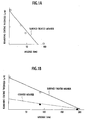
- FIGS. 1A and 1B are graphs each showing a relationship between mileage and remaining thickness of a coating formed on a surface of a gear of a final drive.
- FIG. 1A shows a relationship between the mileage and the remaining coating thickness in a conventional gear surface formed by chemical conversion.
- FIG. 1B shows a relationship between the mileage and the remaining coating thickness in the gear surface of the present invention.
- FIGS. 1A and 1B are drawn in a same scale.
- the lubrication coating present on the surface of the gear part of the present invention remains for long periods, and the lubricity lasts for long periods.
- the gear part of the present invention is therefore advantageous especially for an application whose performance is required to be maintained for long periods, such as a vehicle.
- the good persistence of the lubrication coating formed on the surface of the gear part of the present invention is because the lubrication coating can be transferred to a surface of a member with which the gear part engages.
- a "counter member” means a member with which the gear part of the present invention engages
- a "surface-treated member” indicates the gear part of the present invention.
- the relationship between the "surface-treated member” and the “counter member” corresponds to that between gears engaged with each other. Initially, the lubrication coating is formed only on the surface of the gear part indicated by the "surface-treated member".
- the lubrication coating is transferred to the surface of the counter member along with engagement of the gears, and a lubrication coating is formed on the surface of the counter member. As a result, the lubrication coating can be held on the surface of the gear part for long periods.
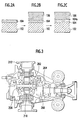
- a lubrication coating 104 capable of being transferred to a member with which the gear part engages is formed ( FIG. 2A ).
- a gear part 102 with the lubrication coating 104 formed thereon is placed opposite to a counter member 106 such as a gear ( FIG. 2B ).
- the gear part 102 and the counter member 106 are then used to transmit power.
- teeth of the gear part are omitted for convenience of explanation.
- a space is provided between the lubrication coating 104 and the counter member 106 in the drawing for clearly showing that the gear part 102 with the lubrication coating 104 and the counter member 106 are different members.
- the thickness of the lubrication coating is, depending on types of the gear part, generally 1 to 50 ⁇ m.
- the lubrication coating 104 When the lubrication coating 104 is a conventional coating formed by chemical conversion, the lubrication coating 104 has a high coating strength and excellent adhesion to the gear part. However, the lubrication coating 104 is likely to be crushed due to mechanical friction involved in use of the gear part 102 and the counter member 106 and is thus simply reduced. However, in the gear part of the present invention, the lubrication coating 104 formed on the surface of the gear part 102 is not simply reduced and is transferred to the surface of the counter member 106 by engagement of the gear part 102 with the counter member 106, so that a lubrication coating 104a is formed on the counter member 106. When the lubrication coating 104a is formed on the surface of the counter member 106 as described above, the lubrication coating is held between the gear part 102 and the counter member 106 for long periods.
- the formed lubrication coating is preferably an organic coating.
- the organic coating is flexible and likely to be transferred.
- the lubrication coating contains an organic phosphorous compound capable of being transferred to the tooth surface of the counter member engaged with the gear part.
- the lubrication coating contains, an alkylphosphonate derivative expressed by the following Formula I as the organic phosphorous compound.
- R 1 is an alkyl group with 10 to 50 carbon atoms.
- R 2 and R 3 may be either the same or different from each other.
- Each of R 2 and R 3 is a hydrogen atom or an alkyl group with 1 to 10 carbon atoms, and at least one of R 2 and R 3 is the alkyl group with 1 to 10 carbon atoms.
- the lubrication coating can be formed by adhering an aqueous lubricant composition to the surface of the gear part and evaporating water.
- the aqueous lubricant composition contains such an alkylphosphonate derivative, inorganic phosphate and water.
- the formed coating is an organic coating. Moreover, since the lubricant composition contains inorganic phosphate, the formed coating has a proper hardness.
- the formed lubrication coating being an organic coating and capable of being transferred are presumed to be influenced by a fact that a carbon atom and a phosphorous atom are directly coupled with each other in the phosphorous compound of Formula I. In a general phosphorous compound used for a lubricant, every atom directly coupled with a phosphorous atom is an oxygen atom.
- the general phosphorous compound having a same structure as Formula I has a "C-O-P" coupling in which an oxygen atom is between a carbon atom and a phosphorous atom.
- a "C-P” coupling is stronger, thermally stabler, and less likely to be disconnected than the "C-O-P” coupling. Therefore, such a coating continues remaining as the organic coating on the surface of the gear part.
- the lubrication coating is an organic coating
- the lubrication coating is flexible, and, as aforementioned, can be transferred to the engaging surface of the counter member. Note that the technical scope of the present invention is not limited to an embodiment in which the aforementioned mechanism exerts an effect.
- the lubricant composition contains the alkylphosphonate derivative expressed by the following Formula I.
- R 1 is an alkyl group with 10 to 50 carbon atoms.
- the alkyl group may have a straight-chain, branched-chain, or annular structure.
- Specific examples of the alkyl group with 10 to 50 carbon atoms include a decyl group, an undecyl group, a dodecyl group, a tetradecyl group, an octadecyl group, an i -octadecyl group, an eicosyl group, an octacosyl group, a triacontacyl group, a tetracontacyl group, a pentacontacyl group, a hexacontacyl group, a docosyl group, a tetracosyl group, a hexacosyl group, and a pentylcontacyl group.
- R 2 and R 3 is a hydrogen atom or an alkyl group with 1 to 10 carbon atoms.
- the alkyl group has a straight-chain, branched-chain, or annular structure.
- R 2 and R 3 are either the same or different from each other.
- alkyl group with 1 to 10 carbon atoms examples include a methyl group, an ethyl group, a propyl group, an i -propyl group, a butyl group, an i -butyl group, a pentyl group, a hexyl group, a 2-ethylhexyl group, a heptyl group, an octyl group, a nonyl group, and a decyl group.
- At least one of R 2 and R 3 is not a hydrogen atom but an alkyl group with 1 to 10 carbon atoms.
- the alkylphosphonate derivative expressed by Formula I is then monoalkyl alkylphosphonate ester or dialkyl alkylphosphonate ester. In some situations, more than one type of the alkylphosphonate derivative may be used.
- the alkylphosphonate derivative expressed by Formula I has a large adsorptivity to a metal surface.
- the alkylphosphonate derivative expressed by Formula I is chemically stable, and the compound thereof is less likely to be decomposed even in a high-pressure and high temperature environment.
- the alkylphosphonate derivative expressed by Formula I can be transferred to an opposite member. Because of these actions, the lubricant composition containing the alkylphosphonate derivative expressed by Formula I offers a long-lasting lubricating effect.
- the content of the alkylphosphonate derivative is within a range from 0.1 to 10 % by mass of the total mass of the lubricant composition. When the content is too little, the effect of the alkylphosphonate derivative cannot be exerted. In the case where the content is too much, the lubrication coating can be too thick when formed on the gear part, and the excess coating can be detached or be solubilized in some cases. When two or more types of the alkylphosphonate derivative are used, it is enough that the total content thereof is within the aforementioned range.
- the lubricant composition contains an inorganic phosphate
- the inorganic phosphate is a salt of various types of phosphoric acid and means a compound as an inorganic substance.
- the inorganic phosphate increases the hardness of the lubrication coating formed.
- inorganic phosphate such as disodium phosphite, dipotassium phosphite, disodium orthophosphate, dipotassium orthophosphate, sodium phosphate, potassium phosphate, sodium hypophosphite, potassium hypophosphite, sodium pyrophosphate, potassium pyrophosphate, sodium hexametaphosphate, potassium hexametaphosphate, sodium polyphosphate, potassium polyphosphate, sodium metaphosphate, potassium metaphosphate, sodium phosphomolybdate, potassium phosphomolybdate, sodium phosphate (monohydrate, dihydrate), potassium phosphate (monohydrate, dihydrate), trisodium phosphate, tripotassium phosphate, sodium hydrogenphosphate (monohydrate, dihydrate), potassium hydrogenphosphate (monohydrate, dihydrate), disodium phosphate (anhydrate, dihydrate, dodeca-hydrate), and dipotassium phosphate (anhydrate, dihydrate, dodeca-hydrate), The inorganic salt contained inorganic
- the content of the inorganic phosphate is within a range from 1 to 10 % by mass of the total mass of the lubricant composition. When the content thereof is too little, the effect of the inorganic salt cannot be sufficiently exerted. In the case where the content is too much, the lubrication coating can be too thick when formed on the gear part, and the excess coating may be detached or solubilized.
- the lubricant composition may further contain ingredients such as sulfurized fatty acid, organic acid, organic amine, and an emulsifier.
- ingredients such as sulfurized fatty acid, organic acid, organic amine, and an emulsifier.
- One, two, or three types of these ingredients may be contained, or all of the ingredients may be contained.
- the sulfurized fatty acid means a sulfide of fatty acid.
- the sulfurized fatty acid has an effect on extreme pressure between metals.
- the sulfurized fatty acid can be a sulfide of fatty acid with 8 to 20 carbon atoms.
- Specific examples of the sulfurized fatty acid are sulfurized pelargonic acid, sulfurized lauric acid, sulfurized palmitic acid, sulfurized oleic acid, sulfurized stearic acid, sulfurized nonadecanoic acid, sulfurized linolenic acid, and sulfurized linoleic acid. In some situations, more than one type of sulfurized fatty acid may be used.
- the content of sulfurized fatty acid is preferably within a range from 1 to 10 % by mass of the total mass of the lubricant composition. When the content thereof is too little, the effect of the sulfurized fatty acid cannot be sufficiently exerted. In the case where the content is too much, the lubrication coating can be too thick when formed on the gear part, and the excess coating can be detached or solubilized. When more than one type of the sulfurized fatty acid are used, it is enough that the total content thereof is within the aforementioned range.
- the organic acid means an acid of an organic compound such as benzoic acid, terephthalic acid, p -nitrobenzoic acid, p -toluyl acid, formylbezoic acid, anisic acid, phthalic acid, benzoylbenzoic acid, 3-methoxy-2-nitrobenzoic acid, and 4-methoxy-3-nitrobenzoic acid.
- an organic compound such as benzoic acid, terephthalic acid, p -nitrobenzoic acid, p -toluyl acid, formylbezoic acid, anisic acid, phthalic acid, benzoylbenzoic acid, 3-methoxy-2-nitrobenzoic acid, and 4-methoxy-3-nitrobenzoic acid.
- a compound including a carboxyl group is used as the organic acid.
- more than one type of organic acid may be used.
- the lubricant composition containing the organic acid increases an anti-corrosion effect on metal.
- the content of the organic acid is preferably within a range from 0.1 to 10 % by mass of the total mass of the lubricant composition. When the content thereof is too little, the effect of the organic acid cannot be sufficiently exerted. In the case where the content is too much, the lubrication coating can be too thick when formed on the gear part, and the excess coating can be detached or solubilized. When more than one type of organic acid are used, it is enough that the total content thereof is within the aforementioned range.
- the organic amine means an organic compound having an amino or imino group.
- Specific examples of the organic amine include alkanolamine such as monoethanolamine, diethanolamine, triethanolamine, N , N -dimethylethanolamine, and N , N -diethylethanolamine. In some situations, more than one type of organic amine may be used.
- the lubricant composition containing the organic amine increases the anti-corrosion effect on metal.
- the content of the organic amine is preferably within a range from 0.1 to 10 % by mass of the total mass of the lubricant composition. When the content thereof is too little, the effect of the organic amine cannot be sufficiently exerted. In the case where the content is too much, the lubrication coating can be too thick when formed on the gear part, and the excess coating can be detached or solubilized. When more than one type of organic amine are used, it is enough that the total content thereof is within the aforementioned range.
- an emulsifier a viscosity adjuster, an anti-gelling agent, an anti-sagging agent, and the like can be mixed.
- the emulsifier is mixed in the lubricant composition.
- an anionic surfactant a cationic surfactant, a nonionic surfactant, and an amphoteric surfactant can be used.
- an anionic surfactant such as fatty acid amine salt or polyoxyalkylene alkyl ether or ester is used.
- fatty acid amine salt is formed and can serve as the emulsifier.
- a similar effect to the case of adding the emulsifier can be exerted without separately adding the emulsifier.
- the content of the emulsifier is preferably within a range from 0.1 to 10 % by mass of the total mass of the lubricant composition. When the content thereof is too little, the effect of the emulsifier cannot be sufficiently exerted. In the case where the content is too much, the lubrication coating can be too thick when formed on the gear part, and the excess coating can be detached or solubilized. When more than one type of emulsifier are used, it is enough that the total content thereof is within the aforementioned range.
- Examples of the surfactant include the following compounds, but the surfactant is not limited to these compounds.
- Examples of the anionic surfactant include sodium laurate, sodium stearate, sodium oleate, ammonium lauryl sulfate, and sodium lauryl sulfate.
- Examples of the cationic surfactant include methyl ammonium chloride, lauryl ammonium chloride, stearyl ammonium chloride, dimethyl ammonium chloride, trimethyl ammonium chloride, lauryltrimethyl ammonium chloride, and polyoxyethylene monolaurylamine.
- nonionic surfactant examples include polyethyleneglycol laurate ester, polyethyleneglycol oleate diester, glycerine oleate monoester, polyoxyethylene lauryl ether, and polyethyleneglycol distearate ester.
- the components contained in the lubricant composition are dissolved or dispersed in a solvent.
- the solvent of the lubricant composition is basically water but need not to be composed of only water.
- Another ingredient may be mixed in the solvent to such a degree that evaporation of the solvent and handling are not adversely affected.
- a small amount of methanol or ethanol may be contained.
- the content of the solvent is determined by the contents of the ingredients present in the solvent.
- the content of the solvent is, not particularly limited, preferably 35 to 80 % by mass of the total mass of the lubricant composition.
- the content of the solvent is too much, the properties of the formed lubrication coating can be degraded.
- the lubrication coating can be too thick when formed on the gear part, and the excess coating can be detached or solubilized.
- the lubricant composition is used for forming the lubrication coating on the surface of the gear part and reducing friction between the gear part and the member with which the gear part comes into contact.
- the material of the gear part on which the lubrication coating is formed carbon steel, chromium steel, chromium molybdenum steel, high-carbon chromium steel, aluminum, an aluminum alloy, and the like can be used.
- the gear part of the present invention is applied to a vehicle.
- the gear part of the present invention is used in, for example, a differential. Specific examples thereof include a pinion mate shaft, a ring gear, and a pinion mate gear.
- FIG. 3 shows a final drive including a pinion mate shaft 202, a ring gear 204, a pinion mate gear 206, a drive pinion gear 208, a side gear 210, and a side flange 212.
- a second aspect of the present invention is a method of manufacturing a gear part, comprising:
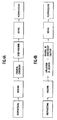
- FIG. 4A shows a conventional process of forming a lubrication coating
- FIG. 4B shows a process of forming a lubrication coating according to the present invention.
- the chemical conversion is a process in which a chemical conversion solution is maintained at a comparatively high temperature for a certain period of time.
- the chemical conversion generally requires a specified chemical substance, and a manager for managing the manufacturing process is required.
- the chemical conversion using a specified chemical substance is performed at high temperature and requires frequent maintenance of equipment.
- the lubrication coating can be formed by immersing the gear part in a solution composed of the lubricant composition for a short period of time and then drying the same.
- the gear part is immersed in the lubricant composition at a comparatively low temperature for a comparatively short period of time. Therefore, the productivity of the gear part with the lubrication coating formed thereon can be increased, and the stock of finished goods can be reduced.
- human costs can be reduced, and the maintenance cycle of equipment can be lengthened.
- the gear part just needs to be immersed in the composition, thus simplifying facilities for forming the lubrication coating and reducing the manufacturing costs.
- the manufacturing costs of the gear part with the lubrication coating formed thereon can be considerably reduced.
- the technical scope of the present invention is not limited to an embodiment including all of the aforementioned effects.
- facility costs may not be changed from the conventional one.
- the gear part on which the lubrication coating is to be formed and the lubricant composition are prepared.
- the gear part is preferably subjected to pretreatment such as degreasing and washing before the lubricant composition is adhered thereto.
- the lubricant composition is adhered to the surface of the gear part.
- the method of adhesion is not particularly limited. Giving priority to easy handling, a dipping method is preferred, in which the gear part is immersed in the lubricant composition and taken out.
- a method of applying the lubricant composition to the predetermined place. As applying method in such a case, method such as a spray and a brush can be used. If enough thickness cannot be achieved by one application, dipping or application can be repeated twice or more.
- solvent within the lubricant composition adhered on the surface of the gear part is evaporated.
- the lubrication coating is formed on the surface of the gear part.
- the solvent may be evaporated at around room temperature or forcibly evaporated at high temperature. Adopting the method of evaporating the solvent at around room temperature can eliminate the need for particular facilities or energy for drying, which is economical. Drying time is not particularly limited, but in view of an increase in productivity, it is preferable that the solvent evaporation is completed within a matter of minutes.
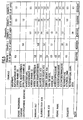
- the lubricant compositions were prepared by mixing ingredients shown in FIG. 5 . Gears of a final drive, which were the gear parts, are immersed in these lubricant compositions to adhere the lubricant compositions on the surfaces of the gears. Subsequently, water within the lubricant compositions was evaporated at room temperature to manufacture gears each of which had a lubrication coating formed on the surface. For checking the persistence of the lubricity, the relationship between the mileage and the remaining coating thickness was examined. In each case, it was confirmed that the lubrication coating was transferred to the counter member and the remaining coating was maintained for long periods.
Landscapes
- Chemical & Material Sciences (AREA)
- Engineering & Computer Science (AREA)
- General Engineering & Computer Science (AREA)
- Chemical Kinetics & Catalysis (AREA)
- General Chemical & Material Sciences (AREA)
- Oil, Petroleum & Natural Gas (AREA)
- Organic Chemistry (AREA)
- Mechanical Engineering (AREA)
- Gears, Cams (AREA)
- Lubricants (AREA)
- Other Surface Treatments For Metallic Materials (AREA)
Description
- The present invention relates to a gear part on the surface of which a coating excellent in sliding lubricity is formed and relates to a method of manufacturing the gear part.
- In order to improve the lubricity, abrasion resistance, initial fitness, and the like in engagement of tooth surfaces of gear parts made of metal, lubrication coatings are formed on sliding surfaces. There have been proposed lubrication coatings made of various materials. In order to secure the initial fitness of gears, the lubrication coating is formed by a treatment called a lubricating treatment which forms a lubrication coating on a surface engaged with a surface of another member. As the lubrication coating, a phosphate conversion coating has been proposed (Japanese Patent Application Laid-Open No. H7-90611). Generally, for forming the conversion coating, a specified chemical substance is used.
-
JP 62 190 294 A -
GB 1 247 541 A - However, to form the coating on a sliding surface of the gear part by means of chemical conversion, the gear part needs to be held in a chemical conversion solution at high temperature for a certain period of time. For example, the gear part is required to be immersed in the chemical conversion solution at a temperature as high as about 50 °C to 100 °C for about 5 to 20 minutes. As described in the Japanese Patent Application Laid-Open No. H7-90611, use of an aqueous-based chemical conversion solution can lower the treatment temperature. However, chemical conversion of the sliding surface of the gear part with a predetermined chemical conversion solution requires particular equipment, thus increasing manufacturing costs of the gear part. Therefore, a method of readily forming a lubrication coating is required.
- In terms of properties of the lubrication coating, a lubrication coating with a lubricity lasting for longer periods is desired so as to be applied to use for long periods, such as a vehicle.
- An object of the present invention is to provide a gear part including a lubrication coating with a long-lasting lubricity and to provide a method of readily manufacturing the lubrication coating.
- The first aspect of the present invention provides a gear part, comprising:
- a lubrication coating (104) formed on a surface of the gear part (102), the lubrication coating (104) containing an organic phosphorous compound,
- wherein the lubrication coating (104) is formed by adhering an aqueous lubricant composition to the surface of the gear part (102) and evaporating water, the lubricant composition containing: an alkylphosphonate derivative expressed by Formula I as the organic phosphorous compound; an inorganic phosphate; and water,

- wherein R1 is an alkyl group with 10 to 50 carbon atoms, R2 and R3 are either the same or different from each other, each of R2 and R3 is any one of a hydrogen atom and an alkyl group with 1 to 10 carbon atoms, and at least one of R2 and R3 is the alkyl group with 1 to 10 carbon atoms,
- wherein the content of the alkylphosphonate derivative expressed by Formula I ranges from 0.1 to 10 % by mass and the content of the inorganic phosphate ranges from 1 to 10 % by mass with respect to the total mass of the lubricant composition, and
- wherein when a tooth surface of the gear part (102) is engaged with a tooth surface of a counter member (106), the organic phosphorous compound is transferred to the tooth surface of the counter member (106) and another lubrication coating (104a) containing the organic phosphorous compound is formed on the tooth surface of the counter member (106).
- The second aspect of the present invention provides a method of manufacturing a gear part, comprising:
- adhering an aqueous lubricant composition on a surface of the gear part (102), the aqueous lubricant composition containing water and an organic phosphorous compound; and
- evaporating water within the aqueous lubricant composition adhered on the surface of the gear part (102) in order to form a lubrication coating (104) on the surface of the gear part (102),
- wherein the lubricant composition contains: an alkylphosphonate derivative expressed by Formula I as the organic phosphorous compound; an inorganic phosphate; and water,

- wherein R1 is an alkyl group with 10 to 50 carbon atoms, R2 and R3 are either the same or different from each other, each of R2 and R3 is any one of a hydrogen atom and an alkyl group with 1 to 10 carbon atoms, and at least one of R2 and R3 is the alkyl group with 1 to 10 carbon atoms,
- wherein the content of the alkylphosphonate derivative expressed by Formula I ranges from 0.1 to 10 % by mass and the content of the inorganic phosphate ranges from 1 to 10 % by mass with respect to the total mass of the lubricant composition, and
- wherein when a tooth surface of the gear part (102) is engaged with a tooth surface of a counter member (106), the organic phosphorous compound is transferred to the tooth surface of the counter member (106) and another lubrication coating (104a) containing the organic phosphorous compound is formed on the tooth surface of the counter member (106).
- The invention will now be described with reference to the accompanying drawings wherein;
-
FIG. 1A is a graph showing a relationship between mileage and remaining coating thickness in a conventional gear surface formed by chemical conversion; -
FIG. 1B is a graph showing a relationship between mileage and remaining coating thickness in a gear surface of the present invention; -
FIGS. 2A, 2B, and 2C are schematic views for explaining a way that a lubrication coating is formed on a surface of a counter member; -
FIG. 3 is a schematic view of a final drive using the gear part of the present invention; -
FIG. 4A is a flow chart showing a process of manufacturing the conventional lubrication coating; -
FIG. 4B is a flow chart showing a process of manufacturing the lubrication coating of the present invention; and -
FIG. 5 is a table showing ingredients contained in lubricant compositions of examples. - Hereinafter, description will be made of embodiments of the present invention with reference to the drawings.
- A first aspect of the present invention is a gear part, comprising:
- a lubrication coating (104) formed on a surface of the gear part (102), the lubrication coating (104) containing an organic phosphorous compound,
- wherein the lubrication coating (104) is formed by adhering an aqueous lubricant composition to the surface of the gear part (102) and evaporating water, the lubricant composition containing: an alkylphosphonate derivative expressed by Formula I as the organic phosphorous compound; an inorganic phosphate; and water,

- wherein R1 is an alkyl group with 10 to 50 carbon atoms, R2 and R3 are either the same or different from each other, each of R2 and R3 is any one of a hydrogen atom and an alkyl group with 1 to 10 carbon atoms, and at least one of R2 and R3 is the alkyl group with 1 to 10 carbon atoms,
- wherein the content of the alkylphosphonate derivative expressed by Formula I ranges from 0.1 to 10 % by mass and the content of the inorganic phosphate ranges from 1 to 10 % by mass with respect to the total mass of the lubricant composition, and
- wherein when a tooth surface of the gear part (102) is engaged with a tooth surface of a counter member (106), the organic phosphorous compound is transferred to the tooth surface of the counter member (106) and another lubrication coating (104a) containing the organic phosphorous compound is formed on the tooth surface of the counter member (106).
- The lubricating ability of the gear part of the present invention can last for long periods.
FIGS. 1A and 1B are graphs each showing a relationship between mileage and remaining thickness of a coating formed on a surface of a gear of a final drive.FIG. 1A shows a relationship between the mileage and the remaining coating thickness in a conventional gear surface formed by chemical conversion.FIG. 1B shows a relationship between the mileage and the remaining coating thickness in the gear surface of the present invention.FIGS. 1A and 1B are drawn in a same scale. - As shown in
FIG. 1 , the lubrication coating present on the surface of the gear part of the present invention remains for long periods, and the lubricity lasts for long periods. The gear part of the present invention is therefore advantageous especially for an application whose performance is required to be maintained for long periods, such as a vehicle. - The good persistence of the lubrication coating formed on the surface of the gear part of the present invention is because the lubrication coating can be transferred to a surface of a member with which the gear part engages. In
FIG. 1B , a "counter member" means a member with which the gear part of the present invention engages, and a "surface-treated member" indicates the gear part of the present invention. The relationship between the "surface-treated member" and the "counter member" corresponds to that between gears engaged with each other. Initially, the lubrication coating is formed only on the surface of the gear part indicated by the "surface-treated member". The lubrication coating is transferred to the surface of the counter member along with engagement of the gears, and a lubrication coating is formed on the surface of the counter member. As a result, the lubrication coating can be held on the surface of the gear part for long periods. - A description is given of a way that the lubrication coating is formed on the counter member with reference to
FIGS. 2A to 2C . In the gear part of the present invention, alubrication coating 104 capable of being transferred to a member with which the gear part engages is formed (FIG. 2A ). Agear part 102 with thelubrication coating 104 formed thereon is placed opposite to acounter member 106 such as a gear (FIG. 2B ). Thegear part 102 and thecounter member 106 are then used to transmit power. In the drawings, teeth of the gear part are omitted for convenience of explanation. As a matter of convenience, a space is provided between thelubrication coating 104 and thecounter member 106 in the drawing for clearly showing that thegear part 102 with thelubrication coating 104 and thecounter member 106 are different members. The thickness of the lubrication coating is, depending on types of the gear part, generally 1 to 50 µm. - When the
lubrication coating 104 is a conventional coating formed by chemical conversion, thelubrication coating 104 has a high coating strength and excellent adhesion to the gear part. However, thelubrication coating 104 is likely to be crushed due to mechanical friction involved in use of thegear part 102 and thecounter member 106 and is thus simply reduced. However, in the gear part of the present invention, thelubrication coating 104 formed on the surface of thegear part 102 is not simply reduced and is transferred to the surface of thecounter member 106 by engagement of thegear part 102 with thecounter member 106, so that alubrication coating 104a is formed on thecounter member 106. When thelubrication coating 104a is formed on the surface of thecounter member 106 as described above, the lubrication coating is held between thegear part 102 and thecounter member 106 for long periods. - In order to transfer the lubrication coating to the
counter member 106, the formed lubrication coating is preferably an organic coating. The organic coating is flexible and likely to be transferred. Specifically, the lubrication coating contains an organic phosphorous compound capable of being transferred to the tooth surface of the counter member engaged with the gear part. The lubrication coating contains, an alkylphosphonate derivative expressed by the following Formula I as the organic phosphorous compound.
- In Formula I, R1 is an alkyl group with 10 to 50 carbon atoms. R2 and R3 may be either the same or different from each other. Each of R2 and R3 is a hydrogen atom or an alkyl group with 1 to 10 carbon atoms, and at least one of R2 and R3 is the alkyl group with 1 to 10 carbon atoms.
- The lubrication coating can be formed by adhering an aqueous lubricant composition to the surface of the gear part and evaporating water. The aqueous lubricant composition contains such an alkylphosphonate derivative, inorganic phosphate and water.
- Since the lubricant composition contains a predetermined alkylphosphonate derivative, the formed coating is an organic coating. Moreover, since the lubricant composition contains inorganic phosphate, the formed coating has a proper hardness. The formed lubrication coating being an organic coating and capable of being transferred are presumed to be influenced by a fact that a carbon atom and a phosphorous atom are directly coupled with each other in the phosphorous compound of Formula I. In a general phosphorous compound used for a lubricant, every atom directly coupled with a phosphorous atom is an oxygen atom. In other words, the general phosphorous compound having a same structure as Formula I has a "C-O-P" coupling in which an oxygen atom is between a carbon atom and a phosphorous atom. A "C-P" coupling is stronger, thermally stabler, and less likely to be disconnected than the "C-O-P" coupling. Therefore, such a coating continues remaining as the organic coating on the surface of the gear part. When the lubrication coating is an organic coating, the lubrication coating is flexible, and, as aforementioned, can be transferred to the engaging surface of the counter member. Note that the technical scope of the present invention is not limited to an embodiment in which the aforementioned mechanism exerts an effect.
- Next, a detailed description is given of components of the aqueous lubricant composition containing the alkylphosphonate derivative expressed by Formula I, inorganic phosphate and water.
- The lubricant composition contains the alkylphosphonate derivative expressed by the following Formula I.

- R1 is an alkyl group with 10 to 50 carbon atoms. The alkyl group may have a straight-chain, branched-chain, or annular structure. Specific examples of the alkyl group with 10 to 50 carbon atoms include a decyl group, an undecyl group, a dodecyl group, a tetradecyl group, an octadecyl group, an i-octadecyl group, an eicosyl group, an octacosyl group, a triacontacyl group, a tetracontacyl group, a pentacontacyl group, a hexacontacyl group, a docosyl group, a tetracosyl group, a hexacosyl group, and a pentylcontacyl group.
- Each of R2 and R3 is a hydrogen atom or an alkyl group with 1 to 10 carbon atoms. The alkyl group has a straight-chain, branched-chain, or annular structure. R2 and R3 are either the same or different from each other. Examples of the alkyl group with 1 to 10 carbon atoms include a methyl group, an ethyl group, a propyl group, an i-propyl group, a butyl group, an i-butyl group, a pentyl group, a hexyl group, a 2-ethylhexyl group, a heptyl group, an octyl group, a nonyl group, and a decyl group.
- In the alkylphosphonate derivative expressed by Formula I, at least one of R2 and R3 is not a hydrogen atom but an alkyl group with 1 to 10 carbon atoms. The alkylphosphonate derivative expressed by Formula I is then monoalkyl alkylphosphonate ester or dialkyl alkylphosphonate ester. In some situations, more than one type of the alkylphosphonate derivative may be used.
- The alkylphosphonate derivative expressed by Formula I has a large adsorptivity to a metal surface. In addition, the alkylphosphonate derivative expressed by Formula I is chemically stable, and the compound thereof is less likely to be decomposed even in a high-pressure and high temperature environment. Moreover, the alkylphosphonate derivative expressed by Formula I can be transferred to an opposite member. Because of these actions, the lubricant composition containing the alkylphosphonate derivative expressed by Formula I offers a long-lasting lubricating effect.
- The content of the alkylphosphonate derivative is within a range from 0.1 to 10 % by mass of the total mass of the lubricant composition. When the content is too little, the effect of the alkylphosphonate derivative cannot be exerted. In the case where the content is too much, the lubrication coating can be too thick when formed on the gear part, and the excess coating can be detached or be solubilized in some cases. When two or more types of the alkylphosphonate derivative are used, it is enough that the total content thereof is within the aforementioned range.
- The lubricant composition contains an inorganic phosphate, The inorganic phosphate is a salt of various types of phosphoric acid and means a compound as an inorganic substance. The inorganic phosphate increases the hardness of the lubrication coating formed. Specific examples include inorganic phosphate such as disodium phosphite, dipotassium phosphite, disodium orthophosphate, dipotassium orthophosphate, sodium phosphate, potassium phosphate, sodium hypophosphite, potassium hypophosphite, sodium pyrophosphate, potassium pyrophosphate, sodium hexametaphosphate, potassium hexametaphosphate, sodium polyphosphate, potassium polyphosphate, sodium metaphosphate, potassium metaphosphate, sodium phosphomolybdate, potassium phosphomolybdate, sodium phosphate (monohydrate, dihydrate), potassium phosphate (monohydrate, dihydrate), trisodium phosphate, tripotassium phosphate, sodium hydrogenphosphate (monohydrate, dihydrate), potassium hydrogenphosphate (monohydrate, dihydrate), disodium phosphate (anhydrate, dihydrate, dodeca-hydrate), and dipotassium phosphate (anhydrate, dihydrate, dodeca-hydrate), The inorganic salt contained in the lubricant composition is not limited to those. In some situations, two or more types of inorganic salt may be used.
- The content of the inorganic phosphate is within a range from 1 to 10 % by mass of the total mass of the lubricant composition. When the content thereof is too little, the effect of the inorganic salt cannot be sufficiently exerted. In the case where the content is too much, the lubrication coating can be too thick when formed on the gear part, and the excess coating may be detached or solubilized.
- The lubricant composition may further contain ingredients such as sulfurized fatty acid, organic acid, organic amine, and an emulsifier. One, two, or three types of these ingredients may be contained, or all of the ingredients may be contained.
- The sulfurized fatty acid means a sulfide of fatty acid. The sulfurized fatty acid has an effect on extreme pressure between metals. The sulfurized fatty acid can be a sulfide of fatty acid with 8 to 20 carbon atoms. Specific examples of the sulfurized fatty acid are sulfurized pelargonic acid, sulfurized lauric acid, sulfurized palmitic acid, sulfurized oleic acid, sulfurized stearic acid, sulfurized nonadecanoic acid, sulfurized linolenic acid, and sulfurized linoleic acid. In some situations, more than one type of sulfurized fatty acid may be used.
- The content of sulfurized fatty acid is preferably within a range from 1 to 10 % by mass of the total mass of the lubricant composition. When the content thereof is too little, the effect of the sulfurized fatty acid cannot be sufficiently exerted. In the case where the content is too much, the lubrication coating can be too thick when formed on the gear part, and the excess coating can be detached or solubilized. When more than one type of the sulfurized fatty acid are used, it is enough that the total content thereof is within the aforementioned range.
- The organic acid means an acid of an organic compound such as benzoic acid, terephthalic acid, p-nitrobenzoic acid, p-toluyl acid, formylbezoic acid, anisic acid, phthalic acid, benzoylbenzoic acid, 3-methoxy-2-nitrobenzoic acid, and 4-methoxy-3-nitrobenzoic acid. Generally, a compound including a carboxyl group is used as the organic acid. In some situations, more than one type of organic acid may be used. The lubricant composition containing the organic acid increases an anti-corrosion effect on metal.
- The content of the organic acid is preferably within a range from 0.1 to 10 % by mass of the total mass of the lubricant composition. When the content thereof is too little, the effect of the organic acid cannot be sufficiently exerted. In the case where the content is too much, the lubrication coating can be too thick when formed on the gear part, and the excess coating can be detached or solubilized. When more than one type of organic acid are used, it is enough that the total content thereof is within the aforementioned range.
- The organic amine means an organic compound having an amino or imino group. Specific examples of the organic amine include alkanolamine such as monoethanolamine, diethanolamine, triethanolamine, N, N-dimethylethanolamine, and N, N-diethylethanolamine. In some situations, more than one type of organic amine may be used. The lubricant composition containing the organic amine increases the anti-corrosion effect on metal.
- The content of the organic amine is preferably within a range from 0.1 to 10 % by mass of the total mass of the lubricant composition. When the content thereof is too little, the effect of the organic amine cannot be sufficiently exerted. In the case where the content is too much, the lubrication coating can be too thick when formed on the gear part, and the excess coating can be detached or solubilized. When more than one type of organic amine are used, it is enough that the total content thereof is within the aforementioned range.
- It is possible to mix other additives in the lubricant composition. For example, an emulsifier, a viscosity adjuster, an anti-gelling agent, an anti-sagging agent, and the like can be mixed. Preferably, the emulsifier is mixed in the lubricant composition. When the emulsifier is added, the ingredients of the composition are uniformly dispersed, and a uniform coating can be formed. For the emulsifier, an anionic surfactant, a cationic surfactant, a nonionic surfactant, and an amphoteric surfactant can be used. Preferably, an anionic surfactant such as fatty acid amine salt or polyoxyalkylene alkyl ether or ester is used. In the case of using both the organic acid and amine, fatty acid amine salt is formed and can serve as the emulsifier. In such a case, a similar effect to the case of adding the emulsifier can be exerted without separately adding the emulsifier.
- The content of the emulsifier is preferably within a range from 0.1 to 10 % by mass of the total mass of the lubricant composition. When the content thereof is too little, the effect of the emulsifier cannot be sufficiently exerted. In the case where the content is too much, the lubrication coating can be too thick when formed on the gear part, and the excess coating can be detached or solubilized. When more than one type of emulsifier are used, it is enough that the total content thereof is within the aforementioned range.
- Examples of the surfactant include the following compounds, but the surfactant is not limited to these compounds. Examples of the anionic surfactant include sodium laurate, sodium stearate, sodium oleate, ammonium lauryl sulfate, and sodium lauryl sulfate. Examples of the cationic surfactant include methyl ammonium chloride, lauryl ammonium chloride, stearyl ammonium chloride, dimethyl ammonium chloride, trimethyl ammonium chloride, lauryltrimethyl ammonium chloride, and polyoxyethylene monolaurylamine. Examples of the nonionic surfactant include polyethyleneglycol laurate ester, polyethyleneglycol oleate diester, glycerine oleate monoester, polyoxyethylene lauryl ether, and polyethyleneglycol distearate ester.
- The components contained in the lubricant composition are dissolved or dispersed in a solvent. The solvent of the lubricant composition is basically water but need not to be composed of only water. Another ingredient may be mixed in the solvent to such a degree that evaporation of the solvent and handling are not adversely affected. For example, a small amount of methanol or ethanol may be contained.
- The content of the solvent is determined by the contents of the ingredients present in the solvent. The content of the solvent is, not particularly limited, preferably 35 to 80 % by mass of the total mass of the lubricant composition. When the content of the solvent is too much, the properties of the formed lubrication coating can be degraded. On the contrary, in the case where the content is too much, the lubrication coating can be too thick when formed on the gear part, and the excess coating can be detached or solubilized.
- The lubricant composition is used for forming the lubrication coating on the surface of the gear part and reducing friction between the gear part and the member with which the gear part comes into contact. For the material of the gear part on which the lubrication coating is formed, carbon steel, chromium steel, chromium molybdenum steel, high-carbon chromium steel, aluminum, an aluminum alloy, and the like can be used.
- The gear part of the present invention is applied to a vehicle. The gear part of the present invention is used in, for example, a differential. Specific examples thereof include a pinion mate shaft, a ring gear, and a pinion mate gear. For reference,
FIG. 3 shows a final drive including apinion mate shaft 202, aring gear 204, apinion mate gear 206, adrive pinion gear 208, aside gear 210, and aside flange 212. - A second aspect of the present invention is a method of manufacturing a gear part, comprising:
- adhering an aqueous lubricant composition on a surface of the gear part (102), the aqueous lubricant composition containing water and an organic phosphorous compound; and
- evaporating water within the aqueous lubricant composition adhered on the surface of the gear part (102) in order to form a lubrication coating (104) on the surface of the gear part (102),
- wherein the lubricant composition contains: an alkylphosphonate derivative expressed by Formula I as the organic phosphorous compound; an inorganic phosphate; and water,

- wherein R1 is an alkyl group with 10 to 50 carbon atoms, R2 and R3 are either the same or different from each other, each of R2 and R3 is any one of a hydrogen atom and an alkyl group with 1 to 10 carbon atoms, and at least one of R2 and R3 is the alkyl group with 1 to 10 carbon atoms,
- wherein the content of the alkylphosphonate derivative expressed by Formula I ranges from 0.1 to 10 % by mass and the content of the inorganic phosphate ranges from 1 to 10 % by mass with respect to the total mass of the lubricant composition, and
- wherein when a tooth surface of the gear part (102) is engaged with a tooth surface of a counter member (106), the organic phosphorous compound is transferred to the tooth surface of the counter member (106) and another lubrication coating (104a) containing the organic phosphorous compound is formed on the tooth surface of the counter member (106).
-
FIG. 4A shows a conventional process of forming a lubrication coating, andFIG. 4B shows a process of forming a lubrication coating according to the present invention. In the conventional process, chemical conversion and after-washing are required after washing (FIG. 4A ). The chemical conversion is a process in which a chemical conversion solution is maintained at a comparatively high temperature for a certain period of time. Moreover, the chemical conversion generally requires a specified chemical substance, and a manager for managing the manufacturing process is required. Moreover, the chemical conversion using a specified chemical substance is performed at high temperature and requires frequent maintenance of equipment. - On the other hand, in the case of forming the lubrication coating on the gear part by use of the lubricant composition specified by the present invention, the lubrication coating can be formed by immersing the gear part in a solution composed of the lubricant composition for a short period of time and then drying the same. The gear part is immersed in the lubricant composition at a comparatively low temperature for a comparatively short period of time. Therefore, the productivity of the gear part with the lubrication coating formed thereon can be increased, and the stock of finished goods can be reduced. In the case of forming the lubrication coating without using a specified chemical substance, human costs can be reduced, and the maintenance cycle of equipment can be lengthened. Moreover, using the lubricant composition specified by the present invention, the gear part just needs to be immersed in the composition, thus simplifying facilities for forming the lubrication coating and reducing the manufacturing costs.
- For aforementioned various reasons, the manufacturing costs of the gear part with the lubrication coating formed thereon can be considerably reduced. However, the technical scope of the present invention is not limited to an embodiment including all of the aforementioned effects. For example, in the case of forming the lubrication coating by use of the conventional equipment, facility costs may not be changed from the conventional one. However, that does not eliminate such an embodiment from the technical scope of the present invention.
- Next, a detailed description is given of the manufacturing method of the present invention. The specific examples of the lubricant composition and gear part used in the present invention are already described in the first aspect of the present invention, and the explanation thereof is omitted here.
- First, the gear part on which the lubrication coating is to be formed and the lubricant composition are prepared. The gear part is preferably subjected to pretreatment such as degreasing and washing before the lubricant composition is adhered thereto.
- Subsequently, the lubricant composition is adhered to the surface of the gear part. The method of adhesion is not particularly limited. Giving priority to easy handling, a dipping method is preferred, in which the gear part is immersed in the lubricant composition and taken out. In the case of forming the lubrication coating only in a predetermined place of the gear part, it is possible to employ a method of applying the lubricant composition to the predetermined place. As applying method in such a case, method such as a spray and a brush can be used. If enough thickness cannot be achieved by one application, dipping or application can be repeated twice or more.
- Thereafter, solvent within the lubricant composition adhered on the surface of the gear part is evaporated. By the evaporation of the solvent within the lubricant composition, the lubrication coating is formed on the surface of the gear part. The solvent may be evaporated at around room temperature or forcibly evaporated at high temperature. Adopting the method of evaporating the solvent at around room temperature can eliminate the need for particular facilities or energy for drying, which is economical. Drying time is not particularly limited, but in view of an increase in productivity, it is preferable that the solvent evaporation is completed within a matter of minutes.
- Next, a description is given of the present invention based on examples. The present invention is not limited to these examples.
- The lubricant compositions were prepared by mixing ingredients shown in
FIG. 5 . Gears of a final drive, which were the gear parts, are immersed in these lubricant compositions to adhere the lubricant compositions on the surfaces of the gears. Subsequently, water within the lubricant compositions was evaporated at room temperature to manufacture gears each of which had a lubrication coating formed on the surface. For checking the persistence of the lubricity, the relationship between the mileage and the remaining coating thickness was examined. In each case, it was confirmed that the lubrication coating was transferred to the counter member and the remaining coating was maintained for long periods.
Claims (6)
- A gear part, comprising:a lubrication coating (104) formed on a surface of the gear part (102), the lubrication coating (104) containing an organic phosphorous compound,wherein the lubrication coating (104) is formed by adhering an aqueous lubricant composition to the surface of the gear part (102) and evaporating water, the lubricant composition containing: an alkylphosphonate derivative expressed by Formula I as the organic phosphorous compound; an inorganic phosphate; and water,
 wherein R1 is an alkyl group with 10 to 50 carbon atoms, R2 and R3 are either the same or different from each other, each of R2 and R3 is any one of a hydrogen atom and an alkyl group with 1 to 10 carbon atoms, and at least one of R2 and R3 is the alkyl group with 1 to 10 carbon atoms,wherein the content of the alkylphosphonate derivative expressed by Formula I ranges from 0.1 to 10 % by mass and the content of the inorganic phosphate ranges from 1 to 10 % by mass with respect to the total mass of the lubricant composition, andwherein when a tooth surface of the gear part (102) is engaged with a tooth surface of a counter member (106), the organic phosphorous compound is transferred to the tooth surface of the counter member (106) and another lubrication coating (104a) containing the organic phosphorous compound is formed on the tooth surface of the counter member (106).
 - A gear part according to claim 1,
wherein the lubricant composition contains at least one of sulfurized fatty acid, organic acid, organic amine, and an emulsifier. - A gear part according to claim 2,
wherein the lubricant composition contains, with respect to the total mass of the lubricant composition, 0.1 to 10 % by mass of the alkylphosphonate derivative, 1 to 10 % by mass of the inorganic salt, 1 to 10 % by mass of the sulfurized fatty acid, 0.1 to 10 % by mass of the organic acid, 0.1 to 10 % by mass of the organic amine, and 0.1 to 10 % by mass of the emulsifier. - A method of manufacturing a gear part, comprising:adhering an aqueous lubricant composition on a surface of the gear part (102), the aqueous lubricant composition containing water and an organic phosphorous compound; andevaporating water within the aqueous lubricant composition adhered on the surface of the gear part (102) in order to form a lubrication coating (104) on the surface of the gear part (102),wherein the lubricant composition contains: an alkylphosphonate derivative expressed by Formula I as the organic phosphorous compound; an inorganic phosphate; and water,
 wherein R1 is an alkyl group with 10 to 50 carbon atoms, R2 and R3 are either the same or different from each other, each of R2 and R3 is any one of a hydrogen atom and an alkyl group with 1 to 10 carbon atoms, and at least one of R2 and R3 is the alkyl group with 1 to 10 carbon atoms,wherein the content of the alkylphosphonate derivative expressed by Formula I ranges from 0.1 to 10 % by mass and the content of the inorganic phosphate ranges from 1 to 10 % by mass with respect to the total mass of the lubricant composition, andwherein when a tooth surface of the gear part (102) is engaged with a tooth surface of a counter member (106), the organic phosphorous compound is transferred to the tooth surface of the counter member (106) and another lubrication coating (104a) containing the organic phosphorous compound is formed on the tooth surface of the counter member (106).
 - A method of manufacturing a gear part according to claim 4,
wherein the lubricant composition contains at least one of sulfurized fatty acid, organic acid, organic amine, and an emulsifier. - A method of manufacturing a gear part according to claim 5,
wherein the lubricant composition contains, with respect to the total mass of the lubricant composition, 0.1 to 10 % by mass of the alkylphosphonate derivative, 1 to 10 % by mass of the inorganic salt, 1 to 10 % by mass of the sulfurized fatty acid, 0.1 to 10 % by mass of the organic acid, 0.1 to 10 % by mass of the organic amine, and 0.1 to 10 % by mass of the emulsifier.
Applications Claiming Priority (2)
| Application Number | Priority Date | Filing Date | Title |
|---|---|---|---|
| JP2003397408A JP4124719B2 (en) | 2003-11-27 | 2003-11-27 | Manufacturing method of gear part having lubricating film |
| JP2003397408 | 2003-11-27 |
Publications (3)
| Publication Number | Publication Date |
|---|---|
| EP1535989A2 EP1535989A2 (en) | 2005-06-01 |
| EP1535989A3 EP1535989A3 (en) | 2010-03-03 |
| EP1535989B1 true EP1535989B1 (en) | 2012-01-11 |
Family
ID=34463838
Family Applications (1)
| Application Number | Title | Priority Date | Filing Date |
|---|---|---|---|
| EP04025978A Expired - Lifetime EP1535989B1 (en) | 2003-11-27 | 2004-11-02 | Gear part with lubrication coating and method of manufacturing the same |
Country Status (4)
| Country | Link |
|---|---|
| US (1) | US7511000B2 (en) |
| EP (1) | EP1535989B1 (en) |
| JP (1) | JP4124719B2 (en) |
| ES (1) | ES2379019T3 (en) |
Families Citing this family (6)
| Publication number | Priority date | Publication date | Assignee | Title |
|---|---|---|---|---|
| JP5062580B2 (en) * | 2006-10-27 | 2012-10-31 | 大同化学工業株式会社 | Environment-friendly water-soluble rust additive composition |
| DE102009032520A1 (en) * | 2009-07-10 | 2011-01-20 | Magna Steyr Fahrzeugtechnik Ag & Co Kg | Method for producing and commissioning a transmission with a lubricant based on water |
| CN102209801B (en) * | 2008-10-10 | 2014-05-14 | 玛格纳斯太尔汽车技术股份公司 | Method for producing and operating for first time transmission unit with lubricant based on water and such lubricant |
| EP3215590A1 (en) | 2014-11-04 | 2017-09-13 | Shell Internationale Research Maatschappij B.V. | Lubricating composition |
| KR102383142B1 (en) * | 2015-10-30 | 2022-04-06 | 한국자동차연구원 | Forming method for anti-friction coating layer and article comprising anti-friction coating layer thereof |
| WO2023012949A1 (en) * | 2021-08-04 | 2023-02-09 | 株式会社ハーモニック・ドライブ・システムズ | Lubricating method for strain wave gear device |
Family Cites Families (14)
| Publication number | Priority date | Publication date | Assignee | Title |
|---|---|---|---|---|
| GB1247541A (en) * | 1967-11-13 | 1971-09-22 | Mobil Oil Corp | Alkanephosphonates in lubricant compositions |
| US4215002A (en) * | 1978-07-31 | 1980-07-29 | Texaco Inc. | Water-based phosphonate lubricants |
| JPS59187194A (en) * | 1983-04-06 | 1984-10-24 | Honda Motor Co Ltd | Device for applying dry lubricant solution to spline teeth |
| JPS614797A (en) * | 1984-06-18 | 1986-01-10 | Sharp Corp | Driving gear |
| JPS62190294A (en) * | 1986-02-17 | 1987-08-20 | Hitachi Ltd | Pinion for automobile |
| JP2852758B2 (en) * | 1989-03-08 | 1999-02-03 | 大同化学工業株式会社 | Lubricating rust preventive oil composition |
| MX9305120A (en) * | 1992-09-04 | 1994-03-31 | Lubrizol Corp | SULFURATED OVERBASED COMPOSITIONS. |
| US5358650A (en) * | 1993-04-01 | 1994-10-25 | Ethyl Corporation | Gear oil compositions |
| US6096691A (en) * | 1993-04-09 | 2000-08-01 | Ethyl Corporation | Gear oil additive concentrates and lubricants containing them |
| JP3274917B2 (en) | 1993-09-14 | 2002-04-15 | 日本パーカライジング株式会社 | Manganese phosphate chemical conversion treatment solution for steel and method for forming chemical conversion film |
| IN192718B (en) * | 1998-06-09 | 2004-05-15 | Nihon Parkerizing | |
| US6569816B2 (en) * | 2000-08-18 | 2003-05-27 | Ntn Corporation | Composition having lubricity and product comprising the composition |
| JP3849482B2 (en) * | 2001-10-10 | 2006-11-22 | 新日本理化株式会社 | Lubricant |
| US6992049B2 (en) * | 2002-01-31 | 2006-01-31 | Exxonmobil Research And Engineering Company | Lubricating oil compositions |
-
2003
- 2003-11-27 JP JP2003397408A patent/JP4124719B2/en not_active Expired - Fee Related
-
2004
- 2004-11-02 EP EP04025978A patent/EP1535989B1/en not_active Expired - Lifetime
- 2004-11-02 ES ES04025978T patent/ES2379019T3/en not_active Expired - Lifetime
- 2004-11-16 US US10/988,701 patent/US7511000B2/en not_active Expired - Fee Related
Also Published As
| Publication number | Publication date |
|---|---|
| ES2379019T3 (en) | 2012-04-19 |
| EP1535989A3 (en) | 2010-03-03 |
| JP4124719B2 (en) | 2008-07-23 |
| US20050145052A1 (en) | 2005-07-07 |
| US7511000B2 (en) | 2009-03-31 |
| EP1535989A2 (en) | 2005-06-01 |
| JP2005154865A (en) | 2005-06-16 |
Similar Documents
| Publication | Publication Date | Title |
|---|---|---|
| US9487732B2 (en) | Lubricating coating agent for plastic working and method for producing the same | |
| CA1198655A (en) | Process for the cold forming of iron and steel | |
| US3372117A (en) | Cold forming lubricant | |
| US7727942B2 (en) | Lubricant coated sheet metal with improved deformation properties | |
| EP1535989B1 (en) | Gear part with lubrication coating and method of manufacturing the same | |
| JP2004262960A (en) | Water-soluble metalworking lubricant | |
| JPS61291687A (en) | Lubricant for cold forging aluminum | |
| CA2419732A1 (en) | Aqueous one step type lubricating agent for efficient cold forging | |
| EP0146140B1 (en) | Process for metal forming | |
| CN107523404B (en) | Water-based antirust metal cold forging lubricant and preparation method thereof | |
| KR101798804B1 (en) | Non-phosphorus chemical conversion treatment agent and treatment liquid for plastic working, chemical conversion coating, and metal material having chemical conversion coating | |
| JP3314201B2 (en) | Aqueous cold forging lubricant | |
| WO2001004241A1 (en) | Improved process and product for lubricating metal prior to cold forming | |
| JP3567311B2 (en) | Aqueous cold forging lubricant | |
| CA2514795A1 (en) | Method and composition for creation of conversion surface | |
| JP5299084B2 (en) | Lubricated steel sheet and treatment liquid for forming lubricating film | |
| US7479177B2 (en) | Coating for cold working metals | |
| JP3217072B2 (en) | Aqueous lubricant with sulfur as coordinating atom and its use | |
| US6318139B1 (en) | Waterborne lubricant for the cold plastic working of metals | |
| CN106256888A (en) | A kind of slushing compound and preparation method thereof | |
| JPH04337091A (en) | Lubricating anticorrosion composition | |
| JP4164230B2 (en) | Cross-linked complex-containing lubricant | |
| US3784472A (en) | Anti-corrosion lubricating compound | |
| JPS61211398A (en) | Lubricant for plastic working and method of using same | |
| JP2002206173A (en) | Surface treated steel sheet excellent in corrosion resistance and formability and method for producing the same |
Legal Events
| Date | Code | Title | Description |
|---|---|---|---|
| PUAI | Public reference made under article 153(3) epc to a published international application that has entered the european phase |
Free format text: ORIGINAL CODE: 0009012 |
|
| 17P | Request for examination filed |
Effective date: 20041102 |
|
| AK | Designated contracting states |
Kind code of ref document: A2 Designated state(s): AT BE BG CH CY CZ DE DK EE ES FI FR GB GR HU IE IS IT LI LU MC NL PL PT RO SE SI SK TR |
|
| AX | Request for extension of the european patent |
Extension state: AL HR LT LV MK YU |
|
| PUAL | Search report despatched |
Free format text: ORIGINAL CODE: 0009013 |
|
| AK | Designated contracting states |
Kind code of ref document: A3 Designated state(s): AT BE BG CH CY CZ DE DK EE ES FI FR GB GR HU IE IS IT LI LU MC NL PL PT RO SE SI SK TR |
|
| AX | Request for extension of the european patent |
Extension state: AL HR LT LV MK YU |
|
| 17Q | First examination report despatched |
Effective date: 20100528 |
|
| AKX | Designation fees paid |
Designated state(s): ES FR |
|
| REG | Reference to a national code |
Ref country code: DE Ref legal event code: 8566 |
|
| GRAP | Despatch of communication of intention to grant a patent |
Free format text: ORIGINAL CODE: EPIDOSNIGR1 |
|
| RIC1 | Information provided on ipc code assigned before grant |
Ipc: F16H 57/04 20100101ALI20110516BHEP Ipc: C10N 50/02 20060101ALN20110516BHEP Ipc: C10M 173/02 20060101AFI20110516BHEP Ipc: C10N 40/02 20060101ALN20110516BHEP |
|
| GRAS | Grant fee paid |
Free format text: ORIGINAL CODE: EPIDOSNIGR3 |
|
| GRAA | (expected) grant |
Free format text: ORIGINAL CODE: 0009210 |
|
| AK | Designated contracting states |
Kind code of ref document: B1 Designated state(s): ES FR |
|
| REG | Reference to a national code |
Ref country code: ES Ref legal event code: FG2A Ref document number: 2379019 Country of ref document: ES Kind code of ref document: T3 Effective date: 20120419 |
|
| PLBE | No opposition filed within time limit |
Free format text: ORIGINAL CODE: 0009261 |
|
| STAA | Information on the status of an ep patent application or granted ep patent |
Free format text: STATUS: NO OPPOSITION FILED WITHIN TIME LIMIT |
|
| 26N | No opposition filed |
Effective date: 20121012 |
|
| PGFP | Annual fee paid to national office [announced via postgrant information from national office to epo] |
Ref country code: FR Payment date: 20131108 Year of fee payment: 10 |
|
| PGFP | Annual fee paid to national office [announced via postgrant information from national office to epo] |
Ref country code: ES Payment date: 20131011 Year of fee payment: 10 |
|
| REG | Reference to a national code |
Ref country code: FR Ref legal event code: ST Effective date: 20150731 |
|
| PG25 | Lapsed in a contracting state [announced via postgrant information from national office to epo] |
Ref country code: FR Free format text: LAPSE BECAUSE OF NON-PAYMENT OF DUE FEES Effective date: 20141201 |
|
| REG | Reference to a national code |
Ref country code: ES Ref legal event code: FD2A Effective date: 20151230 |
|
| PG25 | Lapsed in a contracting state [announced via postgrant information from national office to epo] |
Ref country code: ES Free format text: LAPSE BECAUSE OF NON-PAYMENT OF DUE FEES Effective date: 20141103 |