EP1533372A1 - Menschliche Phospholipase C-alpha und dafür kodierende DNA-Sequenz - Google Patents
Menschliche Phospholipase C-alpha und dafür kodierende DNA-Sequenz Download PDFInfo
- Publication number
- EP1533372A1 EP1533372A1 EP04007181A EP04007181A EP1533372A1 EP 1533372 A1 EP1533372 A1 EP 1533372A1 EP 04007181 A EP04007181 A EP 04007181A EP 04007181 A EP04007181 A EP 04007181A EP 1533372 A1 EP1533372 A1 EP 1533372A1
- Authority
- EP
- European Patent Office
- Prior art keywords
- plc
- human
- bovine
- protein
- sequence
- Prior art date
- Legal status (The legal status is an assumption and is not a legal conclusion. Google has not performed a legal analysis and makes no representation as to the accuracy of the status listed.)
- Withdrawn
Links
- 108091028043 Nucleic acid sequence Proteins 0.000 title claims description 25
- 241000282414 Homo sapiens Species 0.000 title abstract description 49
- ZIIUUSVHCHPIQD-UHFFFAOYSA-N 2,4,6-trimethyl-N-[3-(trifluoromethyl)phenyl]benzenesulfonamide Chemical compound CC1=CC(C)=CC(C)=C1S(=O)(=O)NC1=CC=CC(C(F)(F)F)=C1 ZIIUUSVHCHPIQD-UHFFFAOYSA-N 0.000 title description 5
- 102000015439 Phospholipases Human genes 0.000 title description 5
- 108010064785 Phospholipases Proteins 0.000 title description 5
- 108090000765 processed proteins & peptides Proteins 0.000 claims abstract description 21
- 229920001184 polypeptide Polymers 0.000 claims abstract description 19
- 102000004196 processed proteins & peptides Human genes 0.000 claims abstract description 19
- 238000004519 manufacturing process Methods 0.000 claims description 7
- 239000000523 sample Substances 0.000 claims description 7
- 150000007523 nucleic acids Chemical group 0.000 claims 5
- 238000003745 diagnosis Methods 0.000 claims 4
- 239000000032 diagnostic agent Substances 0.000 claims 4
- 229940039227 diagnostic agent Drugs 0.000 claims 4
- 108091033319 polynucleotide Proteins 0.000 claims 3
- 102000040430 polynucleotide Human genes 0.000 claims 3
- 239000002157 polynucleotide Substances 0.000 claims 3
- 206010028980 Neoplasm Diseases 0.000 claims 2
- 201000011510 cancer Diseases 0.000 claims 2
- 238000001514 detection method Methods 0.000 claims 2
- 239000003814 drug Substances 0.000 claims 2
- 238000002560 therapeutic procedure Methods 0.000 claims 2
- 206010061218 Inflammation Diseases 0.000 claims 1
- 230000004054 inflammatory process Effects 0.000 claims 1
- 108090000623 proteins and genes Proteins 0.000 abstract description 52
- 239000013604 expression vector Substances 0.000 abstract description 18
- 238000005259 measurement Methods 0.000 abstract description 6
- 239000002260 anti-inflammatory agent Substances 0.000 abstract description 2
- 229940121363 anti-inflammatory agent Drugs 0.000 abstract description 2
- 238000011156 evaluation Methods 0.000 abstract description 2
- 241000283690 Bos taurus Species 0.000 description 55
- 239000002299 complementary DNA Substances 0.000 description 43
- 102000004169 proteins and genes Human genes 0.000 description 34
- 210000004027 cell Anatomy 0.000 description 30
- 150000001413 amino acids Chemical group 0.000 description 24
- 210000001541 thymus gland Anatomy 0.000 description 20
- 108020004414 DNA Proteins 0.000 description 19
- NOESYZHRGYRDHS-UHFFFAOYSA-N insulin Chemical compound N1C(=O)C(NC(=O)C(CCC(N)=O)NC(=O)C(CCC(O)=O)NC(=O)C(C(C)C)NC(=O)C(NC(=O)CN)C(C)CC)CSSCC(C(NC(CO)C(=O)NC(CC(C)C)C(=O)NC(CC=2C=CC(O)=CC=2)C(=O)NC(CCC(N)=O)C(=O)NC(CC(C)C)C(=O)NC(CCC(O)=O)C(=O)NC(CC(N)=O)C(=O)NC(CC=2C=CC(O)=CC=2)C(=O)NC(CSSCC(NC(=O)C(C(C)C)NC(=O)C(CC(C)C)NC(=O)C(CC=2C=CC(O)=CC=2)NC(=O)C(CC(C)C)NC(=O)C(C)NC(=O)C(CCC(O)=O)NC(=O)C(C(C)C)NC(=O)C(CC(C)C)NC(=O)C(CC=2NC=NC=2)NC(=O)C(CO)NC(=O)CNC2=O)C(=O)NCC(=O)NC(CCC(O)=O)C(=O)NC(CCCNC(N)=N)C(=O)NCC(=O)NC(CC=3C=CC=CC=3)C(=O)NC(CC=3C=CC=CC=3)C(=O)NC(CC=3C=CC(O)=CC=3)C(=O)NC(C(C)O)C(=O)N3C(CCC3)C(=O)NC(CCCCN)C(=O)NC(C)C(O)=O)C(=O)NC(CC(N)=O)C(O)=O)=O)NC(=O)C(C(C)CC)NC(=O)C(CO)NC(=O)C(C(C)O)NC(=O)C1CSSCC2NC(=O)C(CC(C)C)NC(=O)C(NC(=O)C(CCC(N)=O)NC(=O)C(CC(N)=O)NC(=O)C(NC(=O)C(N)CC=1C=CC=CC=1)C(C)C)CC1=CN=CN1 NOESYZHRGYRDHS-UHFFFAOYSA-N 0.000 description 16
- 238000000034 method Methods 0.000 description 16
- 239000013598 vector Substances 0.000 description 15
- 230000000694 effects Effects 0.000 description 14
- 210000002826 placenta Anatomy 0.000 description 13
- 102000002933 Thioredoxin Human genes 0.000 description 12
- 108060008226 thioredoxin Proteins 0.000 description 12
- 229940094937 thioredoxin Drugs 0.000 description 12
- 241000588724 Escherichia coli Species 0.000 description 10
- 238000002360 preparation method Methods 0.000 description 10
- 108020003519 protein disulfide isomerase Proteins 0.000 description 10
- 102000006010 Protein Disulfide-Isomerase Human genes 0.000 description 9
- 102000004877 Insulin Human genes 0.000 description 8
- 108090001061 Insulin Proteins 0.000 description 8
- 229940125396 insulin Drugs 0.000 description 8
- 230000033116 oxidation-reduction process Effects 0.000 description 8
- 239000013612 plasmid Substances 0.000 description 8
- 241000124008 Mammalia Species 0.000 description 7
- 230000001105 regulatory effect Effects 0.000 description 7
- QKNYBSVHEMOAJP-UHFFFAOYSA-N 2-amino-2-(hydroxymethyl)propane-1,3-diol;hydron;chloride Chemical compound Cl.OCC(N)(CO)CO QKNYBSVHEMOAJP-UHFFFAOYSA-N 0.000 description 6
- 241000283973 Oryctolagus cuniculus Species 0.000 description 6
- 238000012163 sequencing technique Methods 0.000 description 6
- 108091032973 (ribonucleotides)n+m Proteins 0.000 description 5
- 241000699666 Mus <mouse, genus> Species 0.000 description 5
- 108091036078 conserved sequence Proteins 0.000 description 5
- 239000012634 fragment Substances 0.000 description 5
- 239000001963 growth medium Substances 0.000 description 5
- 230000003248 secreting effect Effects 0.000 description 5
- 239000006228 supernatant Substances 0.000 description 5
- 101000852559 Homo sapiens Thioredoxin Proteins 0.000 description 4
- TWRXJAOTZQYOKJ-UHFFFAOYSA-L Magnesium chloride Chemical compound [Mg+2].[Cl-].[Cl-] TWRXJAOTZQYOKJ-UHFFFAOYSA-L 0.000 description 4
- 230000010802 Oxidation-Reduction Activity Effects 0.000 description 4
- FAPWRFPIFSIZLT-UHFFFAOYSA-M Sodium chloride Chemical compound [Na+].[Cl-] FAPWRFPIFSIZLT-UHFFFAOYSA-M 0.000 description 4
- 239000000872 buffer Substances 0.000 description 4
- 239000000287 crude extract Substances 0.000 description 4
- 230000001086 cytosolic effect Effects 0.000 description 4
- 238000000354 decomposition reaction Methods 0.000 description 4
- VHJLVAABSRFDPM-QWWZWVQMSA-N dithiothreitol Chemical compound SC[C@@H](O)[C@H](O)CS VHJLVAABSRFDPM-QWWZWVQMSA-N 0.000 description 4
- RWSXRVCMGQZWBV-WDSKDSINSA-N glutathione Chemical compound OC(=O)[C@@H](N)CCC(=O)N[C@@H](CS)C(=O)NCC(O)=O RWSXRVCMGQZWBV-WDSKDSINSA-N 0.000 description 4
- 238000002955 isolation Methods 0.000 description 4
- 239000012528 membrane Substances 0.000 description 4
- 210000002966 serum Anatomy 0.000 description 4
- 239000006144 Dulbecco’s modified Eagle's medium Substances 0.000 description 3
- 241000700159 Rattus Species 0.000 description 3
- 108091058545 Secretory proteins Proteins 0.000 description 3
- 102000040739 Secretory proteins Human genes 0.000 description 3
- 210000004102 animal cell Anatomy 0.000 description 3
- 230000000692 anti-sense effect Effects 0.000 description 3
- 238000003556 assay Methods 0.000 description 3
- 239000013599 cloning vector Substances 0.000 description 3
- 238000007796 conventional method Methods 0.000 description 3
- 239000012228 culture supernatant Substances 0.000 description 3
- 102000056461 human TXN Human genes 0.000 description 3
- 238000009396 hybridization Methods 0.000 description 3
- 238000003119 immunoblot Methods 0.000 description 3
- 238000001727 in vivo Methods 0.000 description 3
- 238000000746 purification Methods 0.000 description 3
- 230000009467 reduction Effects 0.000 description 3
- 238000012216 screening Methods 0.000 description 3
- 238000002415 sodium dodecyl sulfate polyacrylamide gel electrophoresis Methods 0.000 description 3
- 239000000243 solution Substances 0.000 description 3
- FWMNVWWHGCHHJJ-SKKKGAJSSA-N 4-amino-1-[(2r)-6-amino-2-[[(2r)-2-[[(2r)-2-[[(2r)-2-amino-3-phenylpropanoyl]amino]-3-phenylpropanoyl]amino]-4-methylpentanoyl]amino]hexanoyl]piperidine-4-carboxylic acid Chemical compound C([C@H](C(=O)N[C@H](CC(C)C)C(=O)N[C@H](CCCCN)C(=O)N1CCC(N)(CC1)C(O)=O)NC(=O)[C@H](N)CC=1C=CC=CC=1)C1=CC=CC=C1 FWMNVWWHGCHHJJ-SKKKGAJSSA-N 0.000 description 2
- 208000009746 Adult T-Cell Leukemia-Lymphoma Diseases 0.000 description 2
- 208000016683 Adult T-cell leukemia/lymphoma Diseases 0.000 description 2
- HEDRZPFGACZZDS-UHFFFAOYSA-N Chloroform Chemical compound ClC(Cl)Cl HEDRZPFGACZZDS-UHFFFAOYSA-N 0.000 description 2
- 102000053602 DNA Human genes 0.000 description 2
- 102000004190 Enzymes Human genes 0.000 description 2
- 108090000790 Enzymes Proteins 0.000 description 2
- 241000701959 Escherichia virus Lambda Species 0.000 description 2
- 108010024636 Glutathione Proteins 0.000 description 2
- ZRALSGWEFCBTJO-UHFFFAOYSA-N Guanidine Chemical compound NC(N)=N ZRALSGWEFCBTJO-UHFFFAOYSA-N 0.000 description 2
- 101001072202 Homo sapiens Protein disulfide-isomerase Proteins 0.000 description 2
- 108010044467 Isoenzymes Proteins 0.000 description 2
- FFEARJCKVFRZRR-BYPYZUCNSA-N L-methionine Chemical compound CSCC[C@H](N)C(O)=O FFEARJCKVFRZRR-BYPYZUCNSA-N 0.000 description 2
- 241000699670 Mus sp. Species 0.000 description 2
- 239000000020 Nitrocellulose Substances 0.000 description 2
- 102000006486 Phosphoinositide Phospholipase C Human genes 0.000 description 2
- 108010044302 Phosphoinositide phospholipase C Proteins 0.000 description 2
- 240000004808 Saccharomyces cerevisiae Species 0.000 description 2
- 201000006966 adult T-cell leukemia Diseases 0.000 description 2
- BFNBIHQBYMNNAN-UHFFFAOYSA-N ammonium sulfate Chemical compound N.N.OS(O)(=O)=O BFNBIHQBYMNNAN-UHFFFAOYSA-N 0.000 description 2
- 229910052921 ammonium sulfate Inorganic materials 0.000 description 2
- 235000011130 ammonium sulphate Nutrition 0.000 description 2
- 238000004458 analytical method Methods 0.000 description 2
- 230000001580 bacterial effect Effects 0.000 description 2
- 230000015572 biosynthetic process Effects 0.000 description 2
- 239000012888 bovine serum Substances 0.000 description 2
- 230000003197 catalytic effect Effects 0.000 description 2
- 230000008859 change Effects 0.000 description 2
- 238000006243 chemical reaction Methods 0.000 description 2
- 210000000349 chromosome Anatomy 0.000 description 2
- 238000003776 cleavage reaction Methods 0.000 description 2
- 238000010367 cloning Methods 0.000 description 2
- 229940088598 enzyme Drugs 0.000 description 2
- 210000003527 eukaryotic cell Anatomy 0.000 description 2
- 239000000706 filtrate Substances 0.000 description 2
- 238000005194 fractionation Methods 0.000 description 2
- 229960003180 glutathione Drugs 0.000 description 2
- BPHPUYQFMNQIOC-NXRLNHOXSA-N isopropyl beta-D-thiogalactopyranoside Chemical compound CC(C)S[C@@H]1O[C@H](CO)[C@H](O)[C@H](O)[C@H]1O BPHPUYQFMNQIOC-NXRLNHOXSA-N 0.000 description 2
- 230000002934 lysing effect Effects 0.000 description 2
- 229910001629 magnesium chloride Inorganic materials 0.000 description 2
- 229930182817 methionine Natural products 0.000 description 2
- 229920001220 nitrocellulos Polymers 0.000 description 2
- YBYRMVIVWMBXKQ-UHFFFAOYSA-N phenylmethanesulfonyl fluoride Chemical compound FS(=O)(=O)CC1=CC=CC=C1 YBYRMVIVWMBXKQ-UHFFFAOYSA-N 0.000 description 2
- 239000008363 phosphate buffer Substances 0.000 description 2
- 108091008146 restriction endonucleases Proteins 0.000 description 2
- 230000007017 scission Effects 0.000 description 2
- 238000002741 site-directed mutagenesis Methods 0.000 description 2
- 239000011780 sodium chloride Substances 0.000 description 2
- 238000012289 standard assay Methods 0.000 description 2
- 210000001519 tissue Anatomy 0.000 description 2
- 241000701161 unidentified adenovirus Species 0.000 description 2
- XLYOFNOQVPJJNP-UHFFFAOYSA-N water Substances O XLYOFNOQVPJJNP-UHFFFAOYSA-N 0.000 description 2
- HKWJHKSHEWVOSS-OMDJCSNQSA-N 1,2-dihexadecanoyl-sn-glycero-3-phospho-(1D-myo-inositol-3,4-bisphosphate) Chemical compound CCCCCCCCCCCCCCCC(=O)OC[C@@H](OC(=O)CCCCCCCCCCCCCCC)COP(O)(=O)O[C@H]1[C@H](O)[C@@H](O)[C@H](OP(O)(O)=O)[C@@H](OP(O)(O)=O)[C@H]1O HKWJHKSHEWVOSS-OMDJCSNQSA-N 0.000 description 1
- GZCWLCBFPRFLKL-UHFFFAOYSA-N 1-prop-2-ynoxypropan-2-ol Chemical compound CC(O)COCC#C GZCWLCBFPRFLKL-UHFFFAOYSA-N 0.000 description 1
- 102000013563 Acid Phosphatase Human genes 0.000 description 1
- 108010051457 Acid Phosphatase Proteins 0.000 description 1
- HRPVXLWXLXDGHG-UHFFFAOYSA-N Acrylamide Chemical compound NC(=O)C=C HRPVXLWXLXDGHG-UHFFFAOYSA-N 0.000 description 1
- 102000007469 Actins Human genes 0.000 description 1
- 108010085238 Actins Proteins 0.000 description 1
- 108010039627 Aprotinin Proteins 0.000 description 1
- 241000193830 Bacillus <bacterium> Species 0.000 description 1
- 241000894006 Bacteria Species 0.000 description 1
- UXVMQQNJUSDDNG-UHFFFAOYSA-L Calcium chloride Chemical compound [Cl-].[Cl-].[Ca+2] UXVMQQNJUSDDNG-UHFFFAOYSA-L 0.000 description 1
- 101100348617 Candida albicans (strain SC5314 / ATCC MYA-2876) NIK1 gene Proteins 0.000 description 1
- 208000005623 Carcinogenesis Diseases 0.000 description 1
- 241000282552 Chlorocebus aethiops Species 0.000 description 1
- 241000699802 Cricetulus griseus Species 0.000 description 1
- 241000701022 Cytomegalovirus Species 0.000 description 1
- 238000001712 DNA sequencing Methods 0.000 description 1
- 230000004568 DNA-binding Effects 0.000 description 1
- 241000196324 Embryophyta Species 0.000 description 1
- 241000206602 Eukaryota Species 0.000 description 1
- 241000233866 Fungi Species 0.000 description 1
- 108700039691 Genetic Promoter Regions Proteins 0.000 description 1
- UXDDRFCJKNROTO-UHFFFAOYSA-N Glycerol 1,2-diacetate Chemical compound CC(=O)OCC(CO)OC(C)=O UXDDRFCJKNROTO-UHFFFAOYSA-N 0.000 description 1
- 241000238631 Hexapoda Species 0.000 description 1
- 108090000144 Human Proteins Proteins 0.000 description 1
- 102000003839 Human Proteins Human genes 0.000 description 1
- 102000010789 Interleukin-2 Receptors Human genes 0.000 description 1
- 108010038453 Interleukin-2 Receptors Proteins 0.000 description 1
- 102000004195 Isomerases Human genes 0.000 description 1
- GDBQQVLCIARPGH-UHFFFAOYSA-N Leupeptin Natural products CC(C)CC(NC(C)=O)C(=O)NC(CC(C)C)C(=O)NC(C=O)CCCN=C(N)N GDBQQVLCIARPGH-UHFFFAOYSA-N 0.000 description 1
- 108010086093 Mung Bean Nuclease Proteins 0.000 description 1
- CHJJGSNFBQVOTG-UHFFFAOYSA-N N-methyl-guanidine Natural products CNC(N)=N CHJJGSNFBQVOTG-UHFFFAOYSA-N 0.000 description 1
- 108700020796 Oncogene Proteins 0.000 description 1
- 102000043276 Oncogene Human genes 0.000 description 1
- 108700026244 Open Reading Frames Proteins 0.000 description 1
- 101150012394 PHO5 gene Proteins 0.000 description 1
- ISWSIDIOOBJBQZ-UHFFFAOYSA-N Phenol Chemical compound OC1=CC=CC=C1 ISWSIDIOOBJBQZ-UHFFFAOYSA-N 0.000 description 1
- -1 Pho5 promoter Chemical compound 0.000 description 1
- 108091000080 Phosphotransferase Proteins 0.000 description 1
- OLTFZQIYCNOBLI-DCAQKATOSA-N Pro-Cys-Lys Chemical compound C1C[C@H](NC1)C(=O)N[C@@H](CS)C(=O)N[C@@H](CCCCN)C(=O)O OLTFZQIYCNOBLI-DCAQKATOSA-N 0.000 description 1
- 108010076504 Protein Sorting Signals Proteins 0.000 description 1
- 108030003943 Protein-disulfide reductases Proteins 0.000 description 1
- 241000589516 Pseudomonas Species 0.000 description 1
- 241000235070 Saccharomyces Species 0.000 description 1
- 101100007329 Saccharomyces cerevisiae (strain ATCC 204508 / S288c) COS1 gene Proteins 0.000 description 1
- 101100221606 Saccharomyces cerevisiae (strain ATCC 204508 / S288c) COS7 gene Proteins 0.000 description 1
- 229920005654 Sephadex Polymers 0.000 description 1
- 239000012507 Sephadex™ Substances 0.000 description 1
- 229920002684 Sepharose Polymers 0.000 description 1
- DBMJMQXJHONAFJ-UHFFFAOYSA-M Sodium laurylsulphate Chemical compound [Na+].CCCCCCCCCCCCOS([O-])(=O)=O DBMJMQXJHONAFJ-UHFFFAOYSA-M 0.000 description 1
- 241000187747 Streptomyces Species 0.000 description 1
- 229930006000 Sucrose Natural products 0.000 description 1
- CZMRCDWAGMRECN-UGDNZRGBSA-N Sucrose Chemical compound O[C@H]1[C@H](O)[C@@H](CO)O[C@@]1(CO)O[C@@H]1[C@H](O)[C@@H](O)[C@H](O)[C@@H](CO)O1 CZMRCDWAGMRECN-UGDNZRGBSA-N 0.000 description 1
- 101710137500 T7 RNA polymerase Proteins 0.000 description 1
- 101710167005 Thiol:disulfide interchange protein DsbD Proteins 0.000 description 1
- 229920004890 Triton X-100 Polymers 0.000 description 1
- 239000013504 Triton X-100 Substances 0.000 description 1
- 102000014384 Type C Phospholipases Human genes 0.000 description 1
- 108010079194 Type C Phospholipases Proteins 0.000 description 1
- 241000700605 Viruses Species 0.000 description 1
- IXKSXJFAGXLQOQ-XISFHERQSA-N WHWLQLKPGQPMY Chemical compound C([C@@H](C(=O)N[C@@H](CC=1C2=CC=CC=C2NC=1)C(=O)N[C@@H](CC(C)C)C(=O)N[C@@H](CCC(N)=O)C(=O)N[C@@H](CC(C)C)C(=O)N1CCC[C@H]1C(=O)NCC(=O)N[C@@H](CCC(N)=O)C(=O)N[C@@H](CC(O)=O)C(=O)N1CCC[C@H]1C(=O)N[C@@H](CCSC)C(=O)N[C@@H](CC=1C=CC(O)=CC=1)C(O)=O)NC(=O)[C@@H](N)CC=1C2=CC=CC=C2NC=1)C1=CNC=N1 IXKSXJFAGXLQOQ-XISFHERQSA-N 0.000 description 1
- 235000010724 Wisteria floribunda Nutrition 0.000 description 1
- MMWCIQZXVOZEGG-HOZKJCLWSA-N [(1S,2R,3S,4S,5R,6S)-2,3,5-trihydroxy-4,6-diphosphonooxycyclohexyl] dihydrogen phosphate Chemical compound O[C@H]1[C@@H](O)[C@H](OP(O)(O)=O)[C@@H](OP(O)(O)=O)[C@H](O)[C@H]1OP(O)(O)=O MMWCIQZXVOZEGG-HOZKJCLWSA-N 0.000 description 1
- 125000000539 amino acid group Chemical group 0.000 description 1
- 229960004405 aprotinin Drugs 0.000 description 1
- 108010058966 bacteriophage T7 induced DNA polymerase Proteins 0.000 description 1
- 230000027455 binding Effects 0.000 description 1
- 239000001110 calcium chloride Substances 0.000 description 1
- 229910001628 calcium chloride Inorganic materials 0.000 description 1
- 239000001506 calcium phosphate Substances 0.000 description 1
- 229910000389 calcium phosphate Inorganic materials 0.000 description 1
- 235000011010 calcium phosphates Nutrition 0.000 description 1
- 230000036952 cancer formation Effects 0.000 description 1
- 231100000504 carcinogenesis Toxicity 0.000 description 1
- 239000001913 cellulose Substances 0.000 description 1
- 229920002678 cellulose Polymers 0.000 description 1
- 238000005119 centrifugation Methods 0.000 description 1
- 238000000975 co-precipitation Methods 0.000 description 1
- 238000004440 column chromatography Methods 0.000 description 1
- 238000012217 deletion Methods 0.000 description 1
- 230000037430 deletion Effects 0.000 description 1
- 230000001419 dependent effect Effects 0.000 description 1
- 238000000502 dialysis Methods 0.000 description 1
- 230000001079 digestive effect Effects 0.000 description 1
- 238000010790 dilution Methods 0.000 description 1
- 239000012895 dilution Substances 0.000 description 1
- SWSQBOPZIKWTGO-UHFFFAOYSA-N dimethylaminoamidine Natural products CN(C)C(N)=N SWSQBOPZIKWTGO-UHFFFAOYSA-N 0.000 description 1
- 125000002228 disulfide group Chemical group 0.000 description 1
- 238000001962 electrophoresis Methods 0.000 description 1
- 239000012149 elution buffer Substances 0.000 description 1
- 239000003623 enhancer Substances 0.000 description 1
- 108010052305 exodeoxyribonuclease III Proteins 0.000 description 1
- 210000002950 fibroblast Anatomy 0.000 description 1
- 108700025906 fos Genes Proteins 0.000 description 1
- 239000012737 fresh medium Substances 0.000 description 1
- 150000002327 glycerophospholipids Chemical class 0.000 description 1
- 230000034659 glycolysis Effects 0.000 description 1
- 210000005260 human cell Anatomy 0.000 description 1
- 230000003301 hydrolyzing effect Effects 0.000 description 1
- 230000002209 hydrophobic effect Effects 0.000 description 1
- 238000003384 imaging method Methods 0.000 description 1
- 230000003053 immunization Effects 0.000 description 1
- 230000001939 inductive effect Effects 0.000 description 1
- ZPNFWUPYTFPOJU-LPYSRVMUSA-N iniprol Chemical compound C([C@H]1C(=O)NCC(=O)NCC(=O)N[C@H]2CSSC[C@H]3C(=O)N[C@@H](CCCCN)C(=O)N[C@@H](C)C(=O)N[C@@H](CCCNC(N)=N)C(=O)N[C@H](C(N[C@H](C(=O)N[C@@H](CCCNC(N)=N)C(=O)N[C@@H](CC=4C=CC(O)=CC=4)C(=O)N[C@@H](CC=4C=CC=CC=4)C(=O)N[C@@H](CC=4C=CC(O)=CC=4)C(=O)N[C@@H](CC(N)=O)C(=O)N[C@@H](C)C(=O)N[C@@H](CCCCN)C(=O)N[C@@H](C)C(=O)NCC(=O)N[C@@H](CC(C)C)C(=O)N[C@@H](CSSC[C@H](NC(=O)[C@H](CC(O)=O)NC(=O)[C@H](CCC(O)=O)NC(=O)[C@H](C)NC(=O)[C@H](CO)NC(=O)[C@H](CCCCN)NC(=O)[C@H](CC=4C=CC=CC=4)NC(=O)[C@H](CC(N)=O)NC(=O)[C@H](CC(N)=O)NC(=O)[C@H](CCCNC(N)=N)NC(=O)[C@H](CCCCN)NC(=O)[C@H](C)NC(=O)[C@H](CCCNC(N)=N)NC2=O)C(=O)N[C@@H](CCSC)C(=O)N[C@@H](CCCNC(N)=N)C(=O)N[C@@H]([C@@H](C)O)C(=O)N[C@@H](CSSC[C@H](NC(=O)[C@H](CC=2C=CC=CC=2)NC(=O)[C@H](CC(O)=O)NC(=O)[C@H]2N(CCC2)C(=O)[C@@H](N)CCCNC(N)=N)C(=O)N[C@@H](CC(C)C)C(=O)N[C@@H](CCC(O)=O)C(=O)N2[C@@H](CCC2)C(=O)N2[C@@H](CCC2)C(=O)N[C@@H](CC=2C=CC(O)=CC=2)C(=O)N[C@@H]([C@@H](C)O)C(=O)NCC(=O)N2[C@@H](CCC2)C(=O)N3)C(=O)NCC(=O)NCC(=O)N[C@@H](C)C(O)=O)C(=O)N[C@@H](CCC(N)=O)C(=O)N[C@H](C(=O)N[C@@H](CC=2C=CC=CC=2)C(=O)N[C@H](C(=O)N1)C(C)C)[C@@H](C)O)[C@@H](C)CC)=O)[C@@H](C)CC)C1=CC=C(O)C=C1 ZPNFWUPYTFPOJU-LPYSRVMUSA-N 0.000 description 1
- 108700025907 jun Genes Proteins 0.000 description 1
- GDBQQVLCIARPGH-ULQDDVLXSA-N leupeptin Chemical compound CC(C)C[C@H](NC(C)=O)C(=O)N[C@@H](CC(C)C)C(=O)N[C@H](C=O)CCCN=C(N)N GDBQQVLCIARPGH-ULQDDVLXSA-N 0.000 description 1
- 108010052968 leupeptin Proteins 0.000 description 1
- 239000007788 liquid Substances 0.000 description 1
- 239000006166 lysate Substances 0.000 description 1
- 239000000463 material Substances 0.000 description 1
- 230000007246 mechanism Effects 0.000 description 1
- 230000001404 mediated effect Effects 0.000 description 1
- 108020004999 messenger RNA Proteins 0.000 description 1
- 238000010369 molecular cloning Methods 0.000 description 1
- 210000004877 mucosa Anatomy 0.000 description 1
- 231100000219 mutagenic Toxicity 0.000 description 1
- 230000003505 mutagenic effect Effects 0.000 description 1
- 230000035772 mutation Effects 0.000 description 1
- 210000001672 ovary Anatomy 0.000 description 1
- 150000003905 phosphatidylinositols Chemical class 0.000 description 1
- 102000020233 phosphotransferase Human genes 0.000 description 1
- 229920002401 polyacrylamide Polymers 0.000 description 1
- 229920002981 polyvinylidene fluoride Polymers 0.000 description 1
- 210000001236 prokaryotic cell Anatomy 0.000 description 1
- 108020003175 receptors Proteins 0.000 description 1
- 102000005962 receptors Human genes 0.000 description 1
- 230000006798 recombination Effects 0.000 description 1
- 239000004017 serum-free culture medium Substances 0.000 description 1
- 239000011734 sodium Substances 0.000 description 1
- 229910052708 sodium Inorganic materials 0.000 description 1
- 210000000952 spleen Anatomy 0.000 description 1
- 108700026239 src Genes Proteins 0.000 description 1
- 230000004936 stimulating effect Effects 0.000 description 1
- 239000000758 substrate Substances 0.000 description 1
- 239000005720 sucrose Substances 0.000 description 1
- 238000003786 synthesis reaction Methods 0.000 description 1
- 238000010257 thawing Methods 0.000 description 1
- 125000003396 thiol group Chemical group [H]S* 0.000 description 1
- 150000003573 thiols Chemical class 0.000 description 1
- 229960003766 thrombin (human) Drugs 0.000 description 1
- QORWJWZARLRLPR-UHFFFAOYSA-H tricalcium bis(phosphate) Chemical compound [Ca+2].[Ca+2].[Ca+2].[O-]P([O-])([O-])=O.[O-]P([O-])([O-])=O QORWJWZARLRLPR-UHFFFAOYSA-H 0.000 description 1
- 241000701447 unidentified baculovirus Species 0.000 description 1
- 238000001262 western blot Methods 0.000 description 1
Images



Classifications
-
- C—CHEMISTRY; METALLURGY
- C12—BIOCHEMISTRY; BEER; SPIRITS; WINE; VINEGAR; MICROBIOLOGY; ENZYMOLOGY; MUTATION OR GENETIC ENGINEERING
- C12N—MICROORGANISMS OR ENZYMES; COMPOSITIONS THEREOF; PROPAGATING, PRESERVING, OR MAINTAINING MICROORGANISMS; MUTATION OR GENETIC ENGINEERING; CULTURE MEDIA
- C12N9/00—Enzymes; Proenzymes; Compositions thereof; Processes for preparing, activating, inhibiting, separating or purifying enzymes
- C12N9/14—Hydrolases (3)
- C12N9/16—Hydrolases (3) acting on ester bonds (3.1)
-
- A—HUMAN NECESSITIES
- A61—MEDICAL OR VETERINARY SCIENCE; HYGIENE
- A61K—PREPARATIONS FOR MEDICAL, DENTAL OR TOILETRY PURPOSES
- A61K38/00—Medicinal preparations containing peptides
Definitions
- the present invention relates to human phospholipase C- ⁇ , which is a secretory protein having an oxidation-reduction activity; genes encoding the human phospholipase C- ⁇ ; an expression vector containing the genes; and a transformant having the expression vector.
- PLC- ⁇ Phospholipase C- ⁇
- PLC- ⁇ has conventionally been considered to belong to the superfamily of various isozymes of phospholipase C (hereinafter referred to as PLC).
- PLC is an enzyme hydrolyzing (hereinafter referred to as a PLC activity) glycerophospholipid and sphingophospholipid; which is known to be present in the spleen, the tunica mucosa interstini tenuis, and the placenta, etc. of mammals and to play an important role in a living body.
- a PLC activity glycerophospholipid and sphingophospholipid
- PI-PLC phosphatidylinositol-specific phospholipase C
- PI-PLC which is widely present in a living body, hydrolyzes phosphatidylinositol 4,5-diphosphate to generate 1,2-diacylglycerol and inositol 1,4,5-triphosphate
- the above-mentioned PLC- ⁇ is not well known; however, the expression thereof is known to increase in a living body being subject to stress and having cancerous tissue.
- mice those of mice (W.M. Hempel et al., J. Immunol. 146, pp. 3713-3720 (1991)), rats (C.F. Bennett et al., Nature 334, pp. 268-270 (1988)), and bovines (Hirano et al., Extended Abstracts, 4L-23, The 15th Annual Meeting of The Japanese Society of Molecular Biology, 1992), have been reported.
- the PLC- ⁇ of these mammals does not have significant homology with any of known sequences of the other known PLC family members.
- the PLC- ⁇ of the above-mentioned mammals has a conserved amino acid sequence, Trp-Cys-Gly-His-Cys-Lys, at two places.
- This conserved amino acid sequence is identical with or very similar to the amino acid sequence of an active site for oxidation-reduction activity of protein disulfide isomerase (PDI) and thioredoxin.
- PDI and thioredoxin are both multifunctional proteins which function as protein disulfide reductase and isomerase, and catalyze the conversion of a thiol group to a disulfide group.
- PDI of mammals has two conserved sequences in its amino acid sequence, which are homologous to the above-mentioned PLC- ⁇ .
- Thioredoxin of prokaryotes and eukaryotes has one sequence, Trp-Cys-Gly-Pro-Cys-Lys, in its amino acid sequence which is similar to the conserved sequence as shown above. Cys residues in these sequences are respectively assumed to be active sites of catalytic activity (A. Holmgren, J. Biol. Chem. 264, pp. 13963-13966; R.B. Freedman, Cell 57, pp. 1069-1702).
- bovine PLC- ⁇ expressed in E. coli is a secretory protein which does not functionally have PLC activity and has the activity of reducing a disulfide bond of protein such as insulin (Hirano et al., Cloning of bovine PLC- ⁇ and biological significance thereof, Extended Abstracts, 4L-23, The 15th Annual Meeting of The Japanese Society of Molecular Biology, 1992).
- PLC- ⁇ is not supposed to belong to the PLC superfamily but to the oxidation-reduction control protein family; and its nomenclature has accordingly been changed to thymuredoxin (Hirano et al. supra). This is supported by the above-mentioned consensus of the sequence.
- the oxidation-reduction control protein family including PLC- ⁇ , thioredoxin, PDI, etc. is considered to be required for maintaining the normal function of a living body.
- findings obtained from various reports on various members of the oxidation-reduction control protein family will be shown.
- PLC- ⁇ has its expression level increased in animal cells transformed with oncogenes, v-src gene; therefore, it is considered to be related to carcinogenesis (H. Hirai et al., Genes Dev 4, pp. 2342-2352 (1990), Mol. Cell. Biol. 10, pp. 1307-1318 (1990), Proc. Natl. Acad. Sci. U.S.A. 87, pp. 8592-8596 (1990)).
- Human thioredoxin also called adult T-cell leukemia (ATL) derived factor, is known to induce the expression of interleukin-2 receptor and stimulate the multiplication of cells (Y. Tagaya et al., EMBO J. 8, pp. 757-764 (1989)).
- the protein level of thioredoxin is generally high in actively expanding tissue and the mRNA level of thioredoxin increases (S.W. Jones et al., J. Biol. Chem. 263, pp. 9607-9611 (1988)).
- S.W. Jones et al., J. Biol. Chem. 263, pp. 9607-9611 (1988) As one of functional mechanisms maintaining the normal cell morphology and function of the oxidation-reduction protein control family, controls of the relationships between DNA and protein and between proteins through a Cys residue are considered. This is described in the following document incorporated in the present specification for reference.
- thioredoxin can catalyzes this regulation (C. Abate et al., Science 249, pp. 1157-1161 (1991)).
- Receptor type tyirosinekinase (1tk) is regulated through the change in a cell oxidation-reduction ability, and kinase activity thereof is increased by the formation of a multimer composed of disulfide bonds (A.R. Bauskin et al., Cell 66, pp. 685-696 (1991)).
- the present invention solves the above-mentioned conventional problems and its objective is to provide human PLC- ⁇ , human PLC- ⁇ genes, an expression vector containing the genes, and a transformant having the expression vector.
- bovine csk protein (S. Noda et al., Nature 351, pp. 69-72 (1991)) from a bovine thymus, partially purified it, and prepared a rabbit polyclonal antiserum against the purified protein.
- a bovine thymus cDNA library was screened with the antiserum to find a DNA sequence encoding bovine PLC- ⁇ genes.
- human PLC- ⁇ cDNA from a human placenta cDNA library by hybridization using bovine PLC- ⁇ cDNA, thereby achieving the present invention.
- polypeptide of the present invention contains an amino acid sequence from Ser at the 1st position to Leu at the 481st position of SEQ ID NO: 1 of the Sequence Listing.
- the DNA sequence of the present invention encodes an amino acid sequence from Ser at the 1st position to Leu at the 481st position of SEQ ID NO: 1 of the Sequence Listing.
- the expression vector of the present invention has the above-mentioned DNA sequence.
- the transformant of the present invention is obtained by introducing the above-mentioned expression vector into a host.
- polypeptide and the DNA sequence encoding the same according to the present invention can be prepared, for example, in accordance with the following steps.
- a human placenta cDNA library can be prepared by a conventional method. First, total RNA is isolated from a human placenta by, for example, a guanidine ⁇ phenol/chloroform method ( Gene , 28 (1984), pp. 263-270), and the isolate is repeatedly subjected to oligo dT cellulose column chromatography to obtain polyA RNA. Double-stranded cDNA is synthesized from the RNA thus obtained. The synthesis of the double-stranded cDNA can be conducted by, for example, a method of Gubler and Hoffman (Gene, 25 (1983), pp. 263-269). An appropriate linker sequence is attached to the double-stranded cDNA thus obtained to form a restriction enzyme cleavage site.
- the resultant cDNA is inserted into a restriction enzyme cleavage site of a cloning vector, which is the same as that of the linker sequence, whereby a human placenta cDNA library is prepared.
- a cloning vector a phage vector such as ⁇ gtII is preferably used; however, the cloning vector is not limited thereto and any of the cloning vectors known to those skilled in the art can be used.
- Bovine csk protein can be partially purified from a bovine thymus by a purification method known to those skilled in the art, e.g., the method of Noda et al.
- Polyclonal antiserum can be prepared by a method known to those skilled in the art by, for example, immunizing a rabbit with partially purified bovine csk protein, collecting serum from the rabbit, and partially purifying the serum by ammonium sulfate fractionation. Synthesized bovine csk protein or a fragment thereof can be used in place of the partially purified bovine csk protein.
- a bovine thymus cDNA library can be prepared, using a bovine thymus as a material by a conventional method, as in the above-mentioned (1) Preparation of human placenta cDNA library.
- the analysis of the bovine thymus cDNA library obtained in the above (iii) can be conducted by screening plaques derived from phage in which the bovine thymus cDNA has been inserted, with the polyclonal antiserum obtained in the above (ii), using, for example, ProtoBlot system (produced by Promega).
- ProtoBlot system produced by Promega.
- Sequencing of the DNA insert of the positive phage clones obtained in the above (iv) can be conducted directly by a method known to those skilled in the art, for example, using a DNA sequencing kit.
- sequencing can be conducted by using phage DNA containing the DNA insert prepared from the clones.
- the preparation of the phage DNA containing the DNA insert can be conducted by, for example, a protocol of Maniatis et al., Molecular Cloning, A Laboratory manual, Cold Spring Harbor Laboratory Press, New York (1982).
- the DNA sequence of the bovine thymus cDNA clones thus sequenced and the amino acid sequence corresponding thereto are shown in SEQ ID NO: 2 of the Sequence Listing.
- Positive phage clones containing a human PLC- ⁇ DNA fragment can be isolated by screening the human placenta cDNA library obtained in the above (1) using bovine PLC- ⁇ cDNA labelled with 32 P as a probe under moderate hybridization conditions.
- the bovine PLC- ⁇ cDNA probe labelled with 32 P can be prepared based on the sequence determined in the above (v) by a method known to those skilled in the art.
- Sequencing of the DNA insert of the positive phage clones obtained in the above (3) can be conducted by the same method as that of the above (v).
- the DNA sequence of the human thymus cDNA clones thus determined and the amino acid sequence corresponding thereto are shown in SEQ ID NO: 1 of the Sequence Listing.
- Human PLC- ⁇ protein can be produced by a genetic recombination technique using a host/expression vector known to those skilled in the art.
- a number of kinds of combinations between a host and an expression vector can be used for expressing the human PLC- ⁇ protein of the present invention.
- effective expression vectors can contain segments of chromosomes, non-chromosomes, and a synthetic DNA sequence.
- Various known derivatives of SV40 and known bacterial plasmids are preferable as the vector. Specific examples of the vector include E.
- coli plasmids such as pCR1, pBR322, pMB9, pET-3A, and derivatives thereof; broad-range host plasmid RP4; a number of derivatives of ⁇ -phage; phage DNA such as M13 and filamentous single-stranded phage DNA; yeast plasmids such as 2 p plasmid or derivatives thereof; and plasmids containing an adenovirus major late promoter enhanced in the presence of SV40 enhancer.
- a number of kinds of expression regulatory sequences i.e., sequences regulating the expression of a DNA sequence when being operably bound by the DNA sequence, can be used in the above-mentioned vector for expressing the human PLC- ⁇ protein of the present invention.
- Such useful expression regulatory sequences include early and late promoters of SV40; early promoters of adenovirus or cytomegalovirus; the lac system; the trp system; the TAG or TRC system; the T7 promoter which is expressed by T7 RNA polymerase; a major operator region and a promoter region of ⁇ -phage; a regulatory region of fd-coated protein; promoters of 3-phosphoglyceratekinase or other glycolytic pathway enzymes; acid phosphatase such as Pho5 promoter, a promoter of yeast ⁇ -factor, and polyhedron promoter of Baculovirus; other known sequences regulating the expression of genes of prokaryotic cells, eukaryotic cells, or viruses thereof; and various combinations thereof.
- a number of kinds of single-cell host cells are useful for the expression of the human PLC- ⁇ protein of the present invention.
- the hosts can include E. coli ; Pseudomonas ; Bacillus ; Streptomyces ; Saccharomyces and other strains of fungi; Chinese hamster ovary (“CHO") cells and cultivated mouse cells; animal cells such as COS1, COS7, BSC1, BSC40, and BMT10 of the African green monkey; known eukaryotic cells such as cultivated insect cells, cultivated human cells, cultivated plant cells; and procaryotic cells.
- E. coli E. coli ; Pseudomonas ; Bacillus ; Streptomyces ; Saccharomyces and other strains of fungi; Chinese hamster ovary (“CHO") cells and cultivated mouse cells; animal cells such as COS1, COS7, BSC1, BSC40, and BMT10 of the African green monkey; known eukaryotic cells such as
- a vector having a DNA sequence of the above human PLC- ⁇ polypeptide is introduced into a host to obtain a transformant.
- a human PLC- ⁇ polypeptide can be produced by cultivating the transformant in an appropriate culture medium.
- human PLC- ⁇ which is a secretory protein having oxidation-reduction activity
- human PLC- ⁇ genes an expression vector containing the genes, and a transformant having the expression vector are provided.
- the polypeptide of the present invention has a conserved sequence which is identical with or very similar to an active site of thioredoxin stimulating the multiplication of cells and has an activity of reducing a disulfide bond of protein, and can therefore be utilized as an anti-inflammatory agent. Furthermore, the expression of PLC- ⁇ increases in a living body which is cancerated or is subject to stress, so that PLC- ⁇ functions as an indicator of these conditions and can provide a measurement system of clinical evaluation of these conditions.
- the first strand and the second strand of cDNA were synthesized from polyA RNA prepared from a human placenta. EcoRI-NotI-BamHI adaptors were attached to both ends of the double-stranded DNA thus obtained.
- the resultant DNA was inserted into vector ⁇ ZAPII to prepare a human placenta cDNA library.
- a peptide having an amino acid sequence Gly-Thr-Phe-Leu-Val-Arg-Glu-Ser which is a part of csk protein and is conserved in an SH2 (Src ⁇ Homology2) portion common to the src protein family was synthesized.
- Antiserum against this peptide was prepared from a rabbit.
- csk which is 50 kD protein partially purified from a bovine thymus, was obtained by Western blotting method using this antiserum.
- a rabbit was immunized with partially purified bovine csk protein, and serum was collected from the rabbit.
- the serum was partially purified by ammonium sulfate fractionation to obtain antiserum.
- the antiserum thus obtained was named polyclonal antiserum 507.
- the first strand and the second strand of cDNA were synthesized from polyA RNA prepared from a bovine thymus. EcoRI linkers were attached to both ends of the double-stranded DNA thus obtained. The resultant DNA was inserted into an EcoRI site of vector ⁇ gtll to obtain a cDNA library.
- the analysis of the bovine thymus cDNA library obtained in the above (iii) was conducted by screening 1.8 x 10 6 plaques derived from phage ⁇ gtll in which the bovine thymus cDNA was inserted, with polyclonal antiserum507 using the ProtoBlot system (produced by Promega), whereby 3 positive phage clones were isolated. More specifically, the above cDNA library was plated with E. coli Y1090R - and was cultivated at 43°C for 4 hours until small plaques were generated.
- nitrocellulose sheet Hybond C-Extra, produced by Amersham
- IPTG IPTG inducing the expression from lac promoter of vector ⁇ llgt
- the homology between the determined sequence and the known sequence was examined by using a DDBJ (DNA Data Bank of Japan) database in accordance with FASTA and TFASTA programs (W.R. Peason et al., Proc. Natn. Acad. Sci. U.S.A. 85, pp. 2444-2448 (1988)).
- the determined sequence was found to be a DNA sequence similar to that of bovine PLC- ⁇ but lacking a 5'-portion.
- the same library was screened using an EcoRI-EcoRV fragment (positioned closest to the 5'-terminus of a phage clone ⁇ 12 insert) of the phage clone ⁇ 12 insert, whereby phage clone ⁇ 21 having a DNA insert longer than a phage clone ⁇ 12 insert was obtained.
- the sequence of the insert of the phage clone ⁇ 21 thus obtained was determined in the same manner as the above and indicated that the phage clone ⁇ 21 contained full length sequence of a bovine PLC- ⁇ having the 5'-portion sequence.
- the full length DNA sequence of bovine PLC- ⁇ thus obtained and the amino acid sequence corresponding thereto are shown in SEQ ID NO: 2 of the Sequence Listing.
- the ⁇ ZAPII human placenta cDNA library obtained in the above (1) was screened using the DNA insert of the phage clone ⁇ 21 labelled with 32 P as a probe under the moderate hybridization conditions to obtain positive phage clones named ⁇ 17.
- the sequence of the insert in the phage clone thus obtained was determined by the same method as that of the above (1)(v).
- the full length DNA sequence of human PLC- ⁇ thus obtained and the amino acid sequence corresponding thereto are shown in SEQ ID NO: 1 of the Sequence Listing.
- the determined amino acid sequences of bovine and human PLC- ⁇ and the amino acid sequence of the known mouse PLC- ⁇ are shown in Figure 1.
- the bovine and human PLC- ⁇ cDNA sequences thus obtained were composed of 1515 bp of open reading frame and encoded a polypeptide including 505 amino acids having a hydrophobic N-terminal signal peptide (amino acid residues -24 to -1).
- the molecular weight of the respective polypeptides were calculated to be 56,895 Da and 56,698 Da.
- the amino acid sequence of bovine PLC- ⁇ had 90%, 87%, and 94% homology with mouse, rat, and human PLC- ⁇ sequences, respectively.
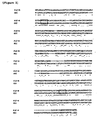
- FIG. 2 shows the determined human PLC- ⁇ and the known human protein disulfide reductase (hereinafter, referred to as PDI) (T. Pihlajaniemi et al., EMBO J. 6, pp. 643-649 (1987)).
- the human PLC- ⁇ had 56% homology and 32% similarity with human PDI at an amino acid level.
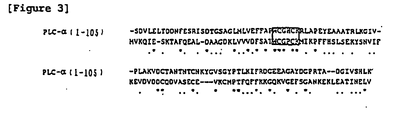
- Figure 3 shows the determined human PLC- ⁇ sequence and the known human thioredoxin sequence.
- the amino acids from the 1st to 105th positions of the human PLC- ⁇ sequence showed 55% homology and 23% similarity with human thioredoxin (Y. Tagaya et al., EMBO J. 8, pp. 757-764 (1989)).
- Sense vector PLC- ⁇ (expression vector) in which the bovine PLC- ⁇ cDNA sequence obtained in Example 1 was inserted downstream of a ⁇ -actin promoter of the mammal cell expression vector pUC-CAGGS in the forward direction and an antisense vector in which the bovine PLC- ⁇ cDNA sequence was inserted in the reverse direction were constructed.
- NIH3T3 mouse fibroblast was transformed together with pSV2NEO, using the sense vector and the antisense vector by a calcium phosphate coprecipitation method known to those skilled in the art.
- the transformant thus obtained was selected with 800 ⁇ g/ml of G418, whereby three kinds of independent stable transformants (named F01, F02, and F03) in which a sense vector is introduced and which expresses bovine PLC- ⁇ protein at a high level and two kinds of independent transformants (named R01 and R06) in which the antisense vector is introduced were obtained.
- the cells of the transformants F01, F02, F03, R01, and R06 thus obtained were collected and dissolved in an ice-cooled cell lysing solution containing 50 mM of Tris-HCl (pH 7.4), 150 mM of NaCl, 0.05% (W/V) sodium dodecyl sulfate, 1% (v/v) triton X-100, 10 U/ml of aprotinin, 2 mM of PMSF, 100 mg/l of leupeptin, and 1 mM of ortho-vanadyl sodium.
- the solution thus obtained was subjected to SDS-PAGE using 9% acrylamide and transferred to a polyvinylidene difluoride film (produced by Millipore).
- the PLC- ⁇ expression level of three kinds of cell lines was measured by immunoblotting using polyclonal antiserum 507.
- the PLC- ⁇ expression level of three kinds of stable transformants is 10 to 15 times as high as endogenous PLC
- a crude extract, a cytoplasmic fraction, and a membrane fraction of these five cell lines were prepared in accordance with a method of Kato et al. ( J. Biol. Chem. 267, pp. 6483-6487 (1991)).
- the PLC activity in the crude extract, the cytoplasmic fraction, and the membrane fraction thus obtained was measured by the method of Kato et al. using [ 3 H]PtdIns 4,5-P 2 as a substrate.
- Figure 4 shows the measurement result.
- a presents the PLC activity of the crude extract
- b presents that of in the cytoplasmic fraction
- c presents that of the membrane fraction.
- the PLC activities were not substantially different among the respective cell lines.
- Mammal PLC- ⁇ has an amino acid sequence which is completely the same sequence as that of an oxidation-reduction active site of PDI in its amino acid sequence; therefore, the PLC- ⁇ was assumed to have the reduction function similar to that of PDI.
- the reduction function of wild-type and mutant bovine PLC- ⁇ proteins expressed in E . coli was measured by a known assay (A. Holmgren, J . Biol. Chem. 254, pp. 9627-9632 (1979)) for measuring the decomposition of insulin in dithiothreitol.
- 1.8 kb of insert of phage clone ⁇ 12 obtained in Example 1 was treated with Mung bean nuclease so as to obtain blunt ends.
- the fragment thus obtained was sub-cloned at a SmaI site of bacterial expression vector pGEX2T (produced by Pharmacia) to construct plasmid pGEX-PLC- ⁇ .
- E. coli XL-1B was transformed with this plasmid.
- the transformant thus obtained was cultivated overnight by a conventional method, and the culture broth thus obtained was diluted with a fresh medium at a dilution rate of 1:10, followed by being cultivated at 25°C.
- the E. coli cells were lysed in a lysing buffer containing 50 mM of Tris-HCl (pH 7.5), 25% sucrose, 0.5% NP-40, and 5 mM of MgCl 2 by freeze-thawing. The lysate was purified by centrifugation to obtain supernatant. The supernatant was filtrated with 1.2 ⁇ m Acrodisc (produced by GelmanSciences), and the filtrate thus obtained was subjected to glutathione Sepharose 4B (produced by Pharmacia) column.
- the column was washed with a buffer containing 20 mM of Tris-HCl (pH 7.5), 2 mM of MgCl 2 , and 1 mM of dithiothreitol.
- the filtrate was eluted with an elution buffer containing 5 mM glutathione and 50 mM of Tris-HCl (pH 9.5).
- the eluate was fractionated by 1.5 ml portions, followed by being analyzed by electrophoresis using an 8% SDS-polyacrylamide gel. Fractions containing PLC- ⁇ protein were collected and dialyzed against a dialysis buffer containing 20 mM of Tris-HCl (pH 7.5) and 10 mM of dithiothreitol.
- the dialyzed sample was incubated with a digestive buffer containing 2.5 mM of CaCl 2 , 50 mM of Tris-HCl (pH 7.5), 150 mM of NaCl, and 400 U of human thrombin per milligram of protein at room temperature for 1.5 hours.
- This sample liquid was subjected to Sephadex 16/60 (produced by Pharmacia) equilibrated with a phosphate buffer and was eluted at 1 ml/min.
- the fractions thus obtained were analyzed with 12% SDS-PAGE and fractions containing bovine PLC- ⁇ protein were collected.
- the fractions thus collected were dialyzed against water and lyophilized to obtain PLC- ⁇ protein.
- This protein is wild-type PLC- ⁇ .
- Trp-Cys-Gly-His-Cys-Lys was subjected to specific site-directed mutation in order to prepare a mutant PLC- ⁇ DNA sequence.
- the site-directed mutagenesis was conducted by using the Muta-Gene Kit (produced by Bio-Rad). Mutagenic primers, 5' GCC-CCCTGGTCTCCACACAGCAAAAAGCTT-3' (sense) and 5'-GCTCCTTGGTCTGGTCACTCTAAGAATCTG-3' (sense), change Cys at the 33rd and 36th positions into Ser, and Cys at the 382nd and 385th positions into Ser, respectively.
- the site-directed mutagenesis thus obtained was confirmed by determining the base sequence.
- mutant PLC- ⁇ protein in both of the two conserved sequences 4 Cys residues in total were replaced by Ser. More specifically, the mutant PLC- ⁇ protein has two Trp-Ser-Gly-His-Ser-Lys sequences.
- the mutant PLC- ⁇ DNA sequence was expressed in E . coli in the same way as in the wild-type PLC- ⁇ DNA sequence to obtain a mutant PLC- ⁇ protein.
- PLC- ⁇ has an ability of catalyzing the reduction of disulfide bonds in the same way as in thioredoxin, and two Cys residues in the sequence Trp-Cys-Gly-His-Cys-Lys are indispensable for oxidation-reduction activity.
- F02 and R06 transformant cells were grown in 150 mm culture plates each containing DMEM culture medium (produced by GIBCO) with 10% bovine serum added. The grown cells were washed with a phosphate buffer and cultivated in 20 ml serum-free culture medium (Cell Grosser P. Sumitomo Pharmaceuticals Co.). Ten hours later, culture medium was collected and centrifuged at 4°C, 100,000 g for 1 hour, and then supernatant was recovered. The supernatant was dialyzed against water, followed by being lyophilized.
- DMEM culture medium produced by GIBCO
- bovine serum-free culture medium Cell Grosser P. Sumitomo Pharmaceuticals Co.
- the F02 and R06 transformant cells grown in the culture plates by the same method as the above were washed in DMEM culture medium containing no methionine. Those cells were labelled in vivo with [ 35 S]Met of 1 mCi at 37°C in DMEM culture medium which contained 15 ml of 1% dialyzed bovine serum and did not contain methionine.
- the culture supernatant of the transformant cell labelled in vivo was obtained by cultivating with the same method as that of Example 4.
- the culture supernatant thus obtained was subjected to 9% SDS-PAGE and exposed to Fuji Bass Imaging Plate c (produced by Fuji) to detect secretory PLC- ⁇ . As a result, it was confirmed that PLC- ⁇ was secreted at a high level in the culture supernatant.
Landscapes
- Life Sciences & Earth Sciences (AREA)
- Chemical & Material Sciences (AREA)
- Health & Medical Sciences (AREA)
- Genetics & Genomics (AREA)
- Organic Chemistry (AREA)
- Engineering & Computer Science (AREA)
- Bioinformatics & Cheminformatics (AREA)
- Zoology (AREA)
- Wood Science & Technology (AREA)
- Molecular Biology (AREA)
- Microbiology (AREA)
- Biotechnology (AREA)
- Biomedical Technology (AREA)
- Biochemistry (AREA)
- General Engineering & Computer Science (AREA)
- General Health & Medical Sciences (AREA)
- Medicinal Chemistry (AREA)
- Peptides Or Proteins (AREA)
- Micro-Organisms Or Cultivation Processes Thereof (AREA)
Applications Claiming Priority (3)
| Application Number | Priority Date | Filing Date | Title |
|---|---|---|---|
| JP23840293 | 1993-09-24 | ||
| JP23840293 | 1993-09-24 | ||
| EP94927098A EP0731164A4 (de) | 1993-09-24 | 1994-09-22 | MENSCHLICHE PHOSPHOLIPASE C-alpha UND DNA-SEQUENZ DAFÜR KODIEREND |
Related Parent Applications (1)
| Application Number | Title | Priority Date | Filing Date |
|---|---|---|---|
| EP94927098A Division EP0731164A4 (de) | 1993-09-24 | 1994-09-22 | MENSCHLICHE PHOSPHOLIPASE C-alpha UND DNA-SEQUENZ DAFÜR KODIEREND |
Publications (1)
| Publication Number | Publication Date |
|---|---|
| EP1533372A1 true EP1533372A1 (de) | 2005-05-25 |
Family
ID=17029673
Family Applications (2)
| Application Number | Title | Priority Date | Filing Date |
|---|---|---|---|
| EP04007181A Withdrawn EP1533372A1 (de) | 1993-09-24 | 1994-09-22 | Menschliche Phospholipase C-alpha und dafür kodierende DNA-Sequenz |
| EP94927098A Withdrawn EP0731164A4 (de) | 1993-09-24 | 1994-09-22 | MENSCHLICHE PHOSPHOLIPASE C-alpha UND DNA-SEQUENZ DAFÜR KODIEREND |
Family Applications After (1)
| Application Number | Title | Priority Date | Filing Date |
|---|---|---|---|
| EP94927098A Withdrawn EP0731164A4 (de) | 1993-09-24 | 1994-09-22 | MENSCHLICHE PHOSPHOLIPASE C-alpha UND DNA-SEQUENZ DAFÜR KODIEREND |
Country Status (3)
| Country | Link |
|---|---|
| US (1) | US6060302A (de) |
| EP (2) | EP1533372A1 (de) |
| WO (1) | WO1995008624A1 (de) |
Families Citing this family (9)
| Publication number | Priority date | Publication date | Assignee | Title |
|---|---|---|---|---|
| US5587306A (en) * | 1995-04-10 | 1996-12-24 | Incyte Pharmaceuticals, Inc. | Phospholipase C homolog |
| WO1996040939A2 (en) * | 1995-06-07 | 1996-12-19 | Cadus Pharmaceutical Corporation | Expression of functional vertebrate phospholipases in yeast |
| US20040033509A1 (en) | 2000-07-18 | 2004-02-19 | Millennium Pharmaceuticals, Inc. | Novel 13237, 18480, 2245, 16228, 7677, 26320, 46619, 33166, 16836, 46867, 21617, 55562, 39228, 62088, 46745, 23155, 21657, 42755, 32229, 22325, 46863 and 32252 molecules and uses therefor |
| AU2001249649A1 (en) * | 2000-03-31 | 2001-10-15 | Millennium Pharmaceuticals, Inc. | 16836, a novel human phospholipase c family member and uses thereof |
| JP2003531618A (ja) | 2000-04-29 | 2003-10-28 | メルク パテント ゲゼルシャフト ミット ベシュレンクテル ハフトング | 新規ヒト・ホスホリパーゼc・デルタ5 |
| EP1280918A2 (de) * | 2000-05-11 | 2003-02-05 | Incyte Genomics, Inc. | Enzyme des fettstoffwechsels |
| AU2001291685A1 (en) * | 2000-07-31 | 2002-02-13 | Bayer Aktiengesellschaft | Regulation of human phosphatidylinositol-specific phospholipase c-like enzyme |
| US6391606B1 (en) * | 2000-09-14 | 2002-05-21 | Pe Corporation | Isolated human phospholipase proteins, nucleic acid molecules encoding human phospholipase proteins, and uses thereof |
| WO2002038773A2 (en) * | 2000-11-08 | 2002-05-16 | Millennium Pharmaceuticals, Inc. | A human phospholipase c and uses thereof |
-
1994
- 1994-09-22 EP EP04007181A patent/EP1533372A1/de not_active Withdrawn
- 1994-09-22 EP EP94927098A patent/EP0731164A4/de not_active Withdrawn
- 1994-09-22 WO PCT/JP1994/001572 patent/WO1995008624A1/ja not_active Ceased
- 1994-09-22 US US08/627,907 patent/US6060302A/en not_active Expired - Lifetime
Non-Patent Citations (6)
| Title |
|---|
| DATABASE EMBL 1 October 1989 (1989-10-01), BENNETT CF, ET AL.: "Probable Protein Disulfide Isomerase ER-60 Precursor (Rat)", XP002148200 * |
| DATABASE EMBL 10 June 1993 (1993-06-10), HIRANO N: "Human mRNA for phospholipase C-alpha", XP002148198 * |
| DATABASE SWISSPROT 1 April 1993 (1993-04-01), HIRANO N, ET AL.: "Probable Protein Disulfide Isomerase ER-60 Precursor", XP002148199 * |
| HIRANO NAOTO ET AL: "Molecular cloning and characterization of a cDNA for bovine phospholipase C-alpha: Proposal of redesignation of phospholipase C-alpha.", BIOCHEMICAL AND BIOPHYSICAL RESEARCH COMMUNICATIONS, vol. 204, no. 1, 1994, pages 375 - 382, XP000919440, ISSN: 0006-291X * |
| HIRANO NAOTO ET AL: "Molecular cloning of the human glucose-regulated protein ERp57/GRP58, a thiol-dependent reductase: Identification of its secretory form and inducible expression by the oncogenic transformation.", EUROPEAN JOURNAL OF BIOCHEMISTRY, vol. 234, no. 1, 1995, pages 336 - 342, XP000919437, ISSN: 0014-2956 * |
| SRIVASTAVA SRI P ET AL: "The reported cDNA sequence for phospholipase C-alpha encodes protein disulfide isomerase, isozyme Q-2 and not phospholipase-C", BIOCHEMICAL AND BIOPHYSICAL RESEARCH COMMUNICATIONS, vol. 193, no. 3, 30 June 1993 (1993-06-30), pages 971 - 978, XP002322345, ISSN: 0006-291X * |
Also Published As
| Publication number | Publication date |
|---|---|
| US6060302A (en) | 2000-05-09 |
| WO1995008624A1 (fr) | 1995-03-30 |
| EP0731164A1 (de) | 1996-09-11 |
| EP0731164A4 (de) | 2000-11-22 |
Similar Documents
| Publication | Publication Date | Title |
|---|---|---|
| US5955583A (en) | Antibodies to cGMP-binding, cGMP-specific phospodiesterase | |
| CA2264484C (en) | Human plasma hyaluronidase | |
| US6123938A (en) | Human urinary hyaluronidase | |
| Tibell et al. | Expression of human extracellular superoxide dismutase in Chinese hamster ovary cells and characterization of the product. | |
| Dailey et al. | Mammalian ferrochelatase. Expression and characterization of normal and two human protoporphyric ferrochelatases. | |
| JP4295386B2 (ja) | 高活性アルカリ性ホスファターゼ | |
| EP0731164A1 (de) | MENSCHLICHE PHOSPHOLIPASE C- $g(a) UND DNA-SEQUENZ DAFÜR KODIEREND | |
| US6541615B1 (en) | SIRP proteins and uses thereof | |
| CA2150378C (en) | Mammalian muscle nad:arginine adp-ribosyltransferase | |
| US6274717B1 (en) | Splicing variant of human membrane-type matrix metalloproteinease-5 (MT-MMP5-L) | |
| Bianchi et al. | Molecular bases of hexokinase deficiency | |
| CA2387695A1 (en) | A novel member of the heparanase protein family | |
| JPH119288A (ja) | 新規has2スプライシング変種hoefc11:慢性腎不全、炎症性疾患および心筋虚血における標的 | |
| JPWO1995008624A1 (ja) | ヒトホスホリパーゼC−αおよびこれをコードするDNA配列 | |
| US6245544B1 (en) | Human serum inducible kinase (Snk) | |
| US6281014B1 (en) | SH3-containing protein, DNA and uses thereof | |
| WO2004061079A2 (en) | Candida kefyr cytosine deaminase | |
| EP1098970A1 (de) | Menschliches sbpsapl gen mit homologie zur prosaposin-familie der neurotrophe faktoren | |
| US20040126858A1 (en) | Novel polypeptide-nadp dependent leukotriene b412-hydroxydehydrogenase-36 and the polynucleotide encoding said polypeptide | |
| JPH11113580A (ja) | 新規化合物 | |
| WO1999059619A1 (en) | Acrp30r1: a homolog of acrp30 (30 kd adipocyte complement-related protein) | |
| US20030092156A1 (en) | Antibodies specifically binding cyclic nucleotide PDEs | |
| JPH10201489A (ja) | hRAD54 | |
| US20020065237A1 (en) | Novel compounds | |
| WO1999006546A1 (en) | Human orthologue of ngd5 protein regulated by opiod treatment |
Legal Events
| Date | Code | Title | Description |
|---|---|---|---|
| PUAI | Public reference made under article 153(3) epc to a published international application that has entered the european phase |
Free format text: ORIGINAL CODE: 0009012 |
|
| 17P | Request for examination filed |
Effective date: 20040325 |
|
| AC | Divisional application: reference to earlier application |
Ref document number: 0731164 Country of ref document: EP Kind code of ref document: P |
|
| AK | Designated contracting states |
Kind code of ref document: A1 Designated state(s): AT BE CH DE DK ES FR GB GR IE IT LI LU MC NL PT SE |
|
| AKX | Designation fees paid |
Designated state(s): AT BE CH DE DK ES FR GB GR IE IT LI LU MC NL PT SE |
|
| STAA | Information on the status of an ep patent application or granted ep patent |
Free format text: STATUS: THE APPLICATION IS DEEMED TO BE WITHDRAWN |
|
| 18D | Application deemed to be withdrawn |
Effective date: 20051126 |