EP1533361A1 - Grease composition for precision equipment and timepiece containing the same - Google Patents
Grease composition for precision equipment and timepiece containing the same Download PDFInfo
- Publication number
- EP1533361A1 EP1533361A1 EP03792709A EP03792709A EP1533361A1 EP 1533361 A1 EP1533361 A1 EP 1533361A1 EP 03792709 A EP03792709 A EP 03792709A EP 03792709 A EP03792709 A EP 03792709A EP 1533361 A1 EP1533361 A1 EP 1533361A1
- Authority
- EP
- European Patent Office
- Prior art keywords
- grease
- composition
- precision instrument
- grease composition
- watch
- Prior art date
- Legal status (The legal status is an assumption and is not a legal conclusion. Google has not performed a legal analysis and makes no representation as to the accuracy of the status listed.)
- Granted
Links
Classifications
-
- C—CHEMISTRY; METALLURGY
- C10—PETROLEUM, GAS OR COKE INDUSTRIES; TECHNICAL GASES CONTAINING CARBON MONOXIDE; FUELS; LUBRICANTS; PEAT
- C10M—LUBRICATING COMPOSITIONS; USE OF CHEMICAL SUBSTANCES EITHER ALONE OR AS LUBRICATING INGREDIENTS IN A LUBRICATING COMPOSITION
- C10M169/00—Lubricating compositions characterised by containing as components a mixture of at least two types of ingredient selected from base-materials, thickeners or additives, covered by the preceding groups, each of these compounds being essential
-
- C—CHEMISTRY; METALLURGY
- C10—PETROLEUM, GAS OR COKE INDUSTRIES; TECHNICAL GASES CONTAINING CARBON MONOXIDE; FUELS; LUBRICANTS; PEAT
- C10M—LUBRICATING COMPOSITIONS; USE OF CHEMICAL SUBSTANCES EITHER ALONE OR AS LUBRICATING INGREDIENTS IN A LUBRICATING COMPOSITION
- C10M169/00—Lubricating compositions characterised by containing as components a mixture of at least two types of ingredient selected from base-materials, thickeners or additives, covered by the preceding groups, each of these compounds being essential
- C10M169/06—Mixtures of thickeners and additives
-
- G—PHYSICS
- G04—HOROLOGY
- G04B—MECHANICALLY-DRIVEN CLOCKS OR WATCHES; MECHANICAL PARTS OF CLOCKS OR WATCHES IN GENERAL; TIME PIECES USING THE POSITION OF THE SUN, MOON OR STARS
- G04B31/00—Bearings; Point suspensions or counter-point suspensions; Pivot bearings; Single parts therefor
- G04B31/08—Lubrication
-
- G—PHYSICS
- G04—HOROLOGY
- G04D—APPARATUS OR TOOLS SPECIALLY DESIGNED FOR MAKING OR MAINTAINING CLOCKS OR WATCHES
- G04D3/00—Watchmakers' or watch-repairers' machines or tools for working materials
- G04D3/04—Devices for placing bearing jewels, bearing sleeves, or the like in position
-
- C—CHEMISTRY; METALLURGY
- C10—PETROLEUM, GAS OR COKE INDUSTRIES; TECHNICAL GASES CONTAINING CARBON MONOXIDE; FUELS; LUBRICANTS; PEAT
- C10M—LUBRICATING COMPOSITIONS; USE OF CHEMICAL SUBSTANCES EITHER ALONE OR AS LUBRICATING INGREDIENTS IN A LUBRICATING COMPOSITION
- C10M2201/00—Inorganic compounds or elements as ingredients in lubricant compositions
- C10M2201/06—Metal compounds
- C10M2201/065—Sulfides; Selenides; Tellurides
-
- C—CHEMISTRY; METALLURGY
- C10—PETROLEUM, GAS OR COKE INDUSTRIES; TECHNICAL GASES CONTAINING CARBON MONOXIDE; FUELS; LUBRICANTS; PEAT
- C10M—LUBRICATING COMPOSITIONS; USE OF CHEMICAL SUBSTANCES EITHER ALONE OR AS LUBRICATING INGREDIENTS IN A LUBRICATING COMPOSITION
- C10M2201/00—Inorganic compounds or elements as ingredients in lubricant compositions
- C10M2201/087—Boron oxides, acids or salts
-
- C—CHEMISTRY; METALLURGY
- C10—PETROLEUM, GAS OR COKE INDUSTRIES; TECHNICAL GASES CONTAINING CARBON MONOXIDE; FUELS; LUBRICANTS; PEAT
- C10M—LUBRICATING COMPOSITIONS; USE OF CHEMICAL SUBSTANCES EITHER ALONE OR AS LUBRICATING INGREDIENTS IN A LUBRICATING COMPOSITION
- C10M2201/00—Inorganic compounds or elements as ingredients in lubricant compositions
- C10M2201/10—Compounds containing silicon
- C10M2201/105—Silica
-
- C—CHEMISTRY; METALLURGY
- C10—PETROLEUM, GAS OR COKE INDUSTRIES; TECHNICAL GASES CONTAINING CARBON MONOXIDE; FUELS; LUBRICANTS; PEAT
- C10M—LUBRICATING COMPOSITIONS; USE OF CHEMICAL SUBSTANCES EITHER ALONE OR AS LUBRICATING INGREDIENTS IN A LUBRICATING COMPOSITION
- C10M2205/00—Organic macromolecular hydrocarbon compounds or fractions, whether or not modified by oxidation as ingredients in lubricant compositions
- C10M2205/02—Organic macromolecular hydrocarbon compounds or fractions, whether or not modified by oxidation as ingredients in lubricant compositions containing acyclic monomers
- C10M2205/0206—Organic macromolecular hydrocarbon compounds or fractions, whether or not modified by oxidation as ingredients in lubricant compositions containing acyclic monomers used as base material
-
- C—CHEMISTRY; METALLURGY
- C10—PETROLEUM, GAS OR COKE INDUSTRIES; TECHNICAL GASES CONTAINING CARBON MONOXIDE; FUELS; LUBRICANTS; PEAT
- C10M—LUBRICATING COMPOSITIONS; USE OF CHEMICAL SUBSTANCES EITHER ALONE OR AS LUBRICATING INGREDIENTS IN A LUBRICATING COMPOSITION
- C10M2207/00—Organic non-macromolecular hydrocarbon compounds containing hydrogen, carbon and oxygen as ingredients in lubricant compositions
- C10M2207/02—Hydroxy compounds
- C10M2207/023—Hydroxy compounds having hydroxy groups bound to carbon atoms of six-membered aromatic rings
-
- C—CHEMISTRY; METALLURGY
- C10—PETROLEUM, GAS OR COKE INDUSTRIES; TECHNICAL GASES CONTAINING CARBON MONOXIDE; FUELS; LUBRICANTS; PEAT
- C10M—LUBRICATING COMPOSITIONS; USE OF CHEMICAL SUBSTANCES EITHER ALONE OR AS LUBRICATING INGREDIENTS IN A LUBRICATING COMPOSITION
- C10M2207/00—Organic non-macromolecular hydrocarbon compounds containing hydrogen, carbon and oxygen as ingredients in lubricant compositions
- C10M2207/02—Hydroxy compounds
- C10M2207/023—Hydroxy compounds having hydroxy groups bound to carbon atoms of six-membered aromatic rings
- C10M2207/026—Hydroxy compounds having hydroxy groups bound to carbon atoms of six-membered aromatic rings with tertiary alkyl groups
-
- C—CHEMISTRY; METALLURGY
- C10—PETROLEUM, GAS OR COKE INDUSTRIES; TECHNICAL GASES CONTAINING CARBON MONOXIDE; FUELS; LUBRICANTS; PEAT
- C10M—LUBRICATING COMPOSITIONS; USE OF CHEMICAL SUBSTANCES EITHER ALONE OR AS LUBRICATING INGREDIENTS IN A LUBRICATING COMPOSITION
- C10M2207/00—Organic non-macromolecular hydrocarbon compounds containing hydrogen, carbon and oxygen as ingredients in lubricant compositions
- C10M2207/04—Ethers; Acetals; Ortho-esters; Ortho-carbonates
- C10M2207/0406—Ethers; Acetals; Ortho-esters; Ortho-carbonates used as base material
-
- C—CHEMISTRY; METALLURGY
- C10—PETROLEUM, GAS OR COKE INDUSTRIES; TECHNICAL GASES CONTAINING CARBON MONOXIDE; FUELS; LUBRICANTS; PEAT
- C10M—LUBRICATING COMPOSITIONS; USE OF CHEMICAL SUBSTANCES EITHER ALONE OR AS LUBRICATING INGREDIENTS IN A LUBRICATING COMPOSITION
- C10M2207/00—Organic non-macromolecular hydrocarbon compounds containing hydrogen, carbon and oxygen as ingredients in lubricant compositions
- C10M2207/10—Carboxylix acids; Neutral salts thereof
- C10M2207/12—Carboxylix acids; Neutral salts thereof having carboxyl groups bound to acyclic or cycloaliphatic carbon atoms
- C10M2207/125—Carboxylix acids; Neutral salts thereof having carboxyl groups bound to acyclic or cycloaliphatic carbon atoms having hydrocarbon chains of eight up to twenty-nine carbon atoms, i.e. fatty acids
- C10M2207/1256—Carboxylix acids; Neutral salts thereof having carboxyl groups bound to acyclic or cycloaliphatic carbon atoms having hydrocarbon chains of eight up to twenty-nine carbon atoms, i.e. fatty acids used as thickening agent
-
- C—CHEMISTRY; METALLURGY
- C10—PETROLEUM, GAS OR COKE INDUSTRIES; TECHNICAL GASES CONTAINING CARBON MONOXIDE; FUELS; LUBRICANTS; PEAT
- C10M—LUBRICATING COMPOSITIONS; USE OF CHEMICAL SUBSTANCES EITHER ALONE OR AS LUBRICATING INGREDIENTS IN A LUBRICATING COMPOSITION
- C10M2207/00—Organic non-macromolecular hydrocarbon compounds containing hydrogen, carbon and oxygen as ingredients in lubricant compositions
- C10M2207/10—Carboxylix acids; Neutral salts thereof
- C10M2207/12—Carboxylix acids; Neutral salts thereof having carboxyl groups bound to acyclic or cycloaliphatic carbon atoms
- C10M2207/125—Carboxylix acids; Neutral salts thereof having carboxyl groups bound to acyclic or cycloaliphatic carbon atoms having hydrocarbon chains of eight up to twenty-nine carbon atoms, i.e. fatty acids
- C10M2207/126—Carboxylix acids; Neutral salts thereof having carboxyl groups bound to acyclic or cycloaliphatic carbon atoms having hydrocarbon chains of eight up to twenty-nine carbon atoms, i.e. fatty acids monocarboxylic
- C10M2207/1265—Carboxylix acids; Neutral salts thereof having carboxyl groups bound to acyclic or cycloaliphatic carbon atoms having hydrocarbon chains of eight up to twenty-nine carbon atoms, i.e. fatty acids monocarboxylic used as thickening agent
-
- C—CHEMISTRY; METALLURGY
- C10—PETROLEUM, GAS OR COKE INDUSTRIES; TECHNICAL GASES CONTAINING CARBON MONOXIDE; FUELS; LUBRICANTS; PEAT
- C10M—LUBRICATING COMPOSITIONS; USE OF CHEMICAL SUBSTANCES EITHER ALONE OR AS LUBRICATING INGREDIENTS IN A LUBRICATING COMPOSITION
- C10M2207/00—Organic non-macromolecular hydrocarbon compounds containing hydrogen, carbon and oxygen as ingredients in lubricant compositions
- C10M2207/28—Esters
- C10M2207/283—Esters of polyhydroxy compounds
-
- C—CHEMISTRY; METALLURGY
- C10—PETROLEUM, GAS OR COKE INDUSTRIES; TECHNICAL GASES CONTAINING CARBON MONOXIDE; FUELS; LUBRICANTS; PEAT
- C10M—LUBRICATING COMPOSITIONS; USE OF CHEMICAL SUBSTANCES EITHER ALONE OR AS LUBRICATING INGREDIENTS IN A LUBRICATING COMPOSITION
- C10M2207/00—Organic non-macromolecular hydrocarbon compounds containing hydrogen, carbon and oxygen as ingredients in lubricant compositions
- C10M2207/28—Esters
- C10M2207/283—Esters of polyhydroxy compounds
- C10M2207/2835—Esters of polyhydroxy compounds used as base material
-
- C—CHEMISTRY; METALLURGY
- C10—PETROLEUM, GAS OR COKE INDUSTRIES; TECHNICAL GASES CONTAINING CARBON MONOXIDE; FUELS; LUBRICANTS; PEAT
- C10M—LUBRICATING COMPOSITIONS; USE OF CHEMICAL SUBSTANCES EITHER ALONE OR AS LUBRICATING INGREDIENTS IN A LUBRICATING COMPOSITION
- C10M2207/00—Organic non-macromolecular hydrocarbon compounds containing hydrogen, carbon and oxygen as ingredients in lubricant compositions
- C10M2207/28—Esters
- C10M2207/284—Esters of aromatic monocarboxylic acids
-
- C—CHEMISTRY; METALLURGY
- C10—PETROLEUM, GAS OR COKE INDUSTRIES; TECHNICAL GASES CONTAINING CARBON MONOXIDE; FUELS; LUBRICANTS; PEAT
- C10M—LUBRICATING COMPOSITIONS; USE OF CHEMICAL SUBSTANCES EITHER ALONE OR AS LUBRICATING INGREDIENTS IN A LUBRICATING COMPOSITION
- C10M2207/00—Organic non-macromolecular hydrocarbon compounds containing hydrogen, carbon and oxygen as ingredients in lubricant compositions
- C10M2207/28—Esters
- C10M2207/285—Esters of aromatic polycarboxylic acids
-
- C—CHEMISTRY; METALLURGY
- C10—PETROLEUM, GAS OR COKE INDUSTRIES; TECHNICAL GASES CONTAINING CARBON MONOXIDE; FUELS; LUBRICANTS; PEAT
- C10M—LUBRICATING COMPOSITIONS; USE OF CHEMICAL SUBSTANCES EITHER ALONE OR AS LUBRICATING INGREDIENTS IN A LUBRICATING COMPOSITION
- C10M2209/00—Organic macromolecular compounds containing oxygen as ingredients in lubricant compositions
- C10M2209/10—Macromolecular compoundss obtained otherwise than by reactions only involving carbon-to-carbon unsaturated bonds
- C10M2209/103—Polyethers, i.e. containing di- or higher polyoxyalkylene groups
- C10M2209/1033—Polyethers, i.e. containing di- or higher polyoxyalkylene groups used as base material
-
- C—CHEMISTRY; METALLURGY
- C10—PETROLEUM, GAS OR COKE INDUSTRIES; TECHNICAL GASES CONTAINING CARBON MONOXIDE; FUELS; LUBRICANTS; PEAT
- C10M—LUBRICATING COMPOSITIONS; USE OF CHEMICAL SUBSTANCES EITHER ALONE OR AS LUBRICATING INGREDIENTS IN A LUBRICATING COMPOSITION
- C10M2209/00—Organic macromolecular compounds containing oxygen as ingredients in lubricant compositions
- C10M2209/10—Macromolecular compoundss obtained otherwise than by reactions only involving carbon-to-carbon unsaturated bonds
- C10M2209/103—Polyethers, i.e. containing di- or higher polyoxyalkylene groups
- C10M2209/108—Polyethers, i.e. containing di- or higher polyoxyalkylene groups etherified
- C10M2209/1085—Polyethers, i.e. containing di- or higher polyoxyalkylene groups etherified used as base material
-
- C—CHEMISTRY; METALLURGY
- C10—PETROLEUM, GAS OR COKE INDUSTRIES; TECHNICAL GASES CONTAINING CARBON MONOXIDE; FUELS; LUBRICANTS; PEAT
- C10M—LUBRICATING COMPOSITIONS; USE OF CHEMICAL SUBSTANCES EITHER ALONE OR AS LUBRICATING INGREDIENTS IN A LUBRICATING COMPOSITION
- C10M2213/00—Organic macromolecular compounds containing halogen as ingredients in lubricant compositions
- C10M2213/06—Perfluoro polymers
- C10M2213/062—Polytetrafluoroethylene [PTFE]
-
- C—CHEMISTRY; METALLURGY
- C10—PETROLEUM, GAS OR COKE INDUSTRIES; TECHNICAL GASES CONTAINING CARBON MONOXIDE; FUELS; LUBRICANTS; PEAT
- C10M—LUBRICATING COMPOSITIONS; USE OF CHEMICAL SUBSTANCES EITHER ALONE OR AS LUBRICATING INGREDIENTS IN A LUBRICATING COMPOSITION
- C10M2215/00—Organic non-macromolecular compounds containing nitrogen as ingredients in lubricant Compositions
- C10M2215/02—Amines, e.g. polyalkylene polyamines; Quaternary amines
- C10M2215/06—Amines, e.g. polyalkylene polyamines; Quaternary amines having amino groups bound to carbon atoms of six-membered aromatic rings
- C10M2215/064—Di- and triaryl amines
-
- C—CHEMISTRY; METALLURGY
- C10—PETROLEUM, GAS OR COKE INDUSTRIES; TECHNICAL GASES CONTAINING CARBON MONOXIDE; FUELS; LUBRICANTS; PEAT
- C10M—LUBRICATING COMPOSITIONS; USE OF CHEMICAL SUBSTANCES EITHER ALONE OR AS LUBRICATING INGREDIENTS IN A LUBRICATING COMPOSITION
- C10M2215/00—Organic non-macromolecular compounds containing nitrogen as ingredients in lubricant Compositions
- C10M2215/10—Amides of carbonic or haloformic acids
- C10M2215/102—Ureas; Semicarbazides; Allophanates
- C10M2215/1026—Ureas; Semicarbazides; Allophanates used as thickening material
-
- C—CHEMISTRY; METALLURGY
- C10—PETROLEUM, GAS OR COKE INDUSTRIES; TECHNICAL GASES CONTAINING CARBON MONOXIDE; FUELS; LUBRICANTS; PEAT
- C10M—LUBRICATING COMPOSITIONS; USE OF CHEMICAL SUBSTANCES EITHER ALONE OR AS LUBRICATING INGREDIENTS IN A LUBRICATING COMPOSITION
- C10M2215/00—Organic non-macromolecular compounds containing nitrogen as ingredients in lubricant Compositions
- C10M2215/22—Heterocyclic nitrogen compounds
- C10M2215/223—Five-membered rings containing nitrogen and carbon only
- C10M2215/224—Imidazoles
-
- C—CHEMISTRY; METALLURGY
- C10—PETROLEUM, GAS OR COKE INDUSTRIES; TECHNICAL GASES CONTAINING CARBON MONOXIDE; FUELS; LUBRICANTS; PEAT
- C10M—LUBRICATING COMPOSITIONS; USE OF CHEMICAL SUBSTANCES EITHER ALONE OR AS LUBRICATING INGREDIENTS IN A LUBRICATING COMPOSITION
- C10M2219/00—Organic non-macromolecular compounds containing sulfur, selenium or tellurium as ingredients in lubricant compositions
- C10M2219/08—Thiols; Sulfides; Polysulfides; Mercaptals
- C10M2219/082—Thiols; Sulfides; Polysulfides; Mercaptals containing sulfur atoms bound to acyclic or cycloaliphatic carbon atoms
-
- C—CHEMISTRY; METALLURGY
- C10—PETROLEUM, GAS OR COKE INDUSTRIES; TECHNICAL GASES CONTAINING CARBON MONOXIDE; FUELS; LUBRICANTS; PEAT
- C10M—LUBRICATING COMPOSITIONS; USE OF CHEMICAL SUBSTANCES EITHER ALONE OR AS LUBRICATING INGREDIENTS IN A LUBRICATING COMPOSITION
- C10M2223/00—Organic non-macromolecular compounds containing phosphorus as ingredients in lubricant compositions
- C10M2223/02—Organic non-macromolecular compounds containing phosphorus as ingredients in lubricant compositions having no phosphorus-to-carbon bonds
-
- C—CHEMISTRY; METALLURGY
- C10—PETROLEUM, GAS OR COKE INDUSTRIES; TECHNICAL GASES CONTAINING CARBON MONOXIDE; FUELS; LUBRICANTS; PEAT
- C10M—LUBRICATING COMPOSITIONS; USE OF CHEMICAL SUBSTANCES EITHER ALONE OR AS LUBRICATING INGREDIENTS IN A LUBRICATING COMPOSITION
- C10M2223/00—Organic non-macromolecular compounds containing phosphorus as ingredients in lubricant compositions
- C10M2223/02—Organic non-macromolecular compounds containing phosphorus as ingredients in lubricant compositions having no phosphorus-to-carbon bonds
- C10M2223/04—Phosphate esters
-
- C—CHEMISTRY; METALLURGY
- C10—PETROLEUM, GAS OR COKE INDUSTRIES; TECHNICAL GASES CONTAINING CARBON MONOXIDE; FUELS; LUBRICANTS; PEAT
- C10M—LUBRICATING COMPOSITIONS; USE OF CHEMICAL SUBSTANCES EITHER ALONE OR AS LUBRICATING INGREDIENTS IN A LUBRICATING COMPOSITION
- C10M2223/00—Organic non-macromolecular compounds containing phosphorus as ingredients in lubricant compositions
- C10M2223/02—Organic non-macromolecular compounds containing phosphorus as ingredients in lubricant compositions having no phosphorus-to-carbon bonds
- C10M2223/04—Phosphate esters
- C10M2223/041—Triaryl phosphates
-
- C—CHEMISTRY; METALLURGY
- C10—PETROLEUM, GAS OR COKE INDUSTRIES; TECHNICAL GASES CONTAINING CARBON MONOXIDE; FUELS; LUBRICANTS; PEAT
- C10M—LUBRICATING COMPOSITIONS; USE OF CHEMICAL SUBSTANCES EITHER ALONE OR AS LUBRICATING INGREDIENTS IN A LUBRICATING COMPOSITION
- C10M2223/00—Organic non-macromolecular compounds containing phosphorus as ingredients in lubricant compositions
- C10M2223/02—Organic non-macromolecular compounds containing phosphorus as ingredients in lubricant compositions having no phosphorus-to-carbon bonds
- C10M2223/04—Phosphate esters
- C10M2223/043—Ammonium or amine salts thereof
-
- C—CHEMISTRY; METALLURGY
- C10—PETROLEUM, GAS OR COKE INDUSTRIES; TECHNICAL GASES CONTAINING CARBON MONOXIDE; FUELS; LUBRICANTS; PEAT
- C10M—LUBRICATING COMPOSITIONS; USE OF CHEMICAL SUBSTANCES EITHER ALONE OR AS LUBRICATING INGREDIENTS IN A LUBRICATING COMPOSITION
- C10M2223/00—Organic non-macromolecular compounds containing phosphorus as ingredients in lubricant compositions
- C10M2223/02—Organic non-macromolecular compounds containing phosphorus as ingredients in lubricant compositions having no phosphorus-to-carbon bonds
- C10M2223/04—Phosphate esters
- C10M2223/045—Metal containing thio derivatives
-
- C—CHEMISTRY; METALLURGY
- C10—PETROLEUM, GAS OR COKE INDUSTRIES; TECHNICAL GASES CONTAINING CARBON MONOXIDE; FUELS; LUBRICANTS; PEAT
- C10M—LUBRICATING COMPOSITIONS; USE OF CHEMICAL SUBSTANCES EITHER ALONE OR AS LUBRICATING INGREDIENTS IN A LUBRICATING COMPOSITION
- C10M2223/00—Organic non-macromolecular compounds containing phosphorus as ingredients in lubricant compositions
- C10M2223/02—Organic non-macromolecular compounds containing phosphorus as ingredients in lubricant compositions having no phosphorus-to-carbon bonds
- C10M2223/049—Phosphite
-
- C—CHEMISTRY; METALLURGY
- C10—PETROLEUM, GAS OR COKE INDUSTRIES; TECHNICAL GASES CONTAINING CARBON MONOXIDE; FUELS; LUBRICANTS; PEAT
- C10N—INDEXING SCHEME ASSOCIATED WITH SUBCLASS C10M RELATING TO LUBRICATING COMPOSITIONS
- C10N2010/00—Metal present as such or in compounds
- C10N2010/02—Groups 1 or 11
-
- C—CHEMISTRY; METALLURGY
- C10—PETROLEUM, GAS OR COKE INDUSTRIES; TECHNICAL GASES CONTAINING CARBON MONOXIDE; FUELS; LUBRICANTS; PEAT
- C10N—INDEXING SCHEME ASSOCIATED WITH SUBCLASS C10M RELATING TO LUBRICATING COMPOSITIONS
- C10N2010/00—Metal present as such or in compounds
- C10N2010/04—Groups 2 or 12
-
- C—CHEMISTRY; METALLURGY
- C10—PETROLEUM, GAS OR COKE INDUSTRIES; TECHNICAL GASES CONTAINING CARBON MONOXIDE; FUELS; LUBRICANTS; PEAT
- C10N—INDEXING SCHEME ASSOCIATED WITH SUBCLASS C10M RELATING TO LUBRICATING COMPOSITIONS
- C10N2010/00—Metal present as such or in compounds
- C10N2010/12—Groups 6 or 16
-
- C—CHEMISTRY; METALLURGY
- C10—PETROLEUM, GAS OR COKE INDUSTRIES; TECHNICAL GASES CONTAINING CARBON MONOXIDE; FUELS; LUBRICANTS; PEAT
- C10N—INDEXING SCHEME ASSOCIATED WITH SUBCLASS C10M RELATING TO LUBRICATING COMPOSITIONS
- C10N2040/00—Specified use or application for which the lubricating composition is intended
- C10N2040/06—Instruments or other precision apparatus, e.g. damping fluids
-
- C—CHEMISTRY; METALLURGY
- C10—PETROLEUM, GAS OR COKE INDUSTRIES; TECHNICAL GASES CONTAINING CARBON MONOXIDE; FUELS; LUBRICANTS; PEAT
- C10N—INDEXING SCHEME ASSOCIATED WITH SUBCLASS C10M RELATING TO LUBRICATING COMPOSITIONS
- C10N2050/00—Form in which the lubricant is applied to the material being lubricated
- C10N2050/10—Form in which the lubricant is applied to the material being lubricated semi-solid; greasy
Definitions
- the present invention relates to a grease composition for a precision instrument and a watch using the same. More particularly, the invention relates to a grease composition used for a slide portion of a precision instrument such as a watch, e.g., a sliding mechanism of a second wheel and pinion of a watch part, and a watch in which the grease composition is used.
- a precision instrument such as a watch, e.g., a sliding mechanism of a second wheel and pinion of a watch part, and a watch in which the grease composition is used.
- Each of the electronic watches and the mechanical watches has a train wheel portion to move hour hand, minute hand and second hand, such as wheels and bridges, and a slide portion such as levers.
- a train wheel portion to move hour hand, minute hand and second hand, such as wheels and bridges, and a slide portion such as levers.
- parts made of metals or plastics are used taking processability and strength into account.
- a magnetized rotor rotates 180° for one second and this rotation is transmitted in the following manner. That is to say, the rotation of the rotor is transmitted to a fifth wheel and pinion, a fourth wheel and pinion, a third wheel and pinion, a second wheel and pinion, a minute wheel, and an hour wheel in this order, and the fourth wheel and pinion moves the second hand, the second wheel and pinion moves the minute hand, and the hour wheel moves the hour hand, whereby each hand is operated.
- Watches usually have a time-adjusting function.
- a clutch wheel is gears into the minute wheel.
- the clutch wheel is rotated to thereby rotate the minute wheel.
- the hour wheel is rotated, whereby the hour hand can be moved.
- the second wheel and pinion is also rotated, whereby the minute hand can be moved.
- the minute wheel is interlocked with the rotor through the second wheel and pinion, the third wheel and pinion, the fourth wheel and pinion, and the fifth wheel and pinion, so that if the crown is revolved, even the rotor is rotated. Then, in order to prevent rotation of the rotor caused by adjusting time, watches are equipped with a braking mechanism and a sliding mechanism to rotate only wheels necessary to adjust time.
- the sliding mechanism is usually set on the second wheel and pinion.
- the sliding mechanism has an appropriate torque (referred to as "slip torque"), and when a force higher than a certain torque is applied, the sliding mechanism is activated, and thereby, rotation is not transmitted between the second wheel and pinion, and the third wheel and pinion. More specifically, in the usual motion of hands, the rotation is transmitted from the third wheel and pinion to the second wheel and pinion, but when the crown is revolved, a force of a certain torque is applied to actuate the sliding mechanism, whereby rotation is not transmitted from the second wheel and pinion to the third wheel and pinion.
- slip torque an appropriate torque
- the sliding mechanism suffers frictional wear and is deteriorated to thereby lower the slip torque. Consequently, it becomes difficult to stop the hand at the desired position in the time-adjusting operation, or also in the usual motion, the sliding mechanism sometimes is activated to thereby stop the motion of the minute hand.
- a lithium soap grease containing as a base oil an ester type synthetic oil or a mineral oil is conventionally poured into the sliding mechanism to prevent deterioration of the sliding mechanism caused by frictional wear and thereby inhibit lowering of torque.
- a synthetic oil having a large total acid number and exhibiting metal corrosiveness e.g., Mabis 9415
- the metal part is occasionally tarnished or dissolved.
- a grease e.g., CH-1 available from Citizen Watch Co., Ltd.
- a high-purity synthetic base oil e.g., International Publication No. WO01/59043
- the present inventor has earnestly studied to solve the above problems, and as a result, he has found that a grease composition for a precision instrument containing grease having no hydroxyl group in a molecule does not have metal corrosiveness and hardly suffers change of properties. Based on the finding, the present invention has been accomplished.
- a grease composition for a precision instrument is a grease composition for a precision instrument comprising a lithium soap grease or a urea grease, and an anti-wear agent, wherein the lithium soap grease and the urea grease are each grease having no hydroxyl group in a molecule, and the anti-wear agent is contained in an amount of 0.1 to 20% by weight based on the total amount of the grease composition.
- the lithium soap grease or the urea grease is preferably obtained from a polyol ester oil having no hydroxyl group in a molecule, a paraffinic hydrocarbon oil comprising an ⁇ -olefin polymer of 30 or more carbon atoms, or an ether oil having no hydroxyl group in a molecule.
- the ether oil is preferably an ether oil represented by the following formula (1): wherein R 1 and R 3 are each independently an alkyl group of 1 to 18 carbon atoms or a monovalent aromatic hydrocarbon group of 6 to 18 carbon atoms, R 2 is an alkylene group of 1 to 18 carbon atoms or a divalent aromatic hydrocarbon group of 6 to 18 carbon atoms, and n is an integer of 1 to 5.
- the anti-wear agent is preferably at least one compound selected from a neutral phosphate, a neutral phosphite and calcium borate.
- the grease composition for a precision instrument of the invention preferably further comprises a solid lubricant in an amount of 0.01 to 5% by weight based on the total amount of the grease composition, and the solid lubricant preferably comprises molybdenum disulfide and/or PTFE particles.
- the grease composition for a precision instrument of the invention preferably further comprises a metal deactivator, and the metal deactivator is preferably benzotriazole and/or a derivative thereof.
- the grease composition for a precision instrument of the invention preferably further comprises an antioxidant, and the antioxidant is preferably a phenol type antioxidant and/or an amine type antioxidant.
- the phenol type antioxidant is preferably 2,6-di-tributyl-p-cresol, 2,4,6-tri-t-butylphenol or 4,4'-methylenebis(2,6-di-tributylphenol), and the amine type antioxidant is preferably a diphenylamine derivative.
- the lithium soap grease or urea grease which is contained in the grease composition for a precision instrument of the invention, preferably has a change in weight of not more than 10% by weight after the grease is held at 90°C for 1000 hours.
- the grease composition for a precision instrument preferably has a total acid number of not more than 0.2 mgKOH/g.
- a watch according to the invention is a watch in which the above-mentioned grease composition for a precision instrument is used for a sliding mechanism of its slide portion.
- a combination of the grease composition for a precision instrument and the lubricating oil is preferably any one of the following combinations:
- a maintenance method of a watch according to the invention is a maintenance method of a watch in which a grease composition for a precision instrument containing a solid lubricant is used for a sliding mechanism of a slide portion, comprising:
- a grease composition for a precision instrument contains (A) a lithium soap grease or a urea grease, (B) an anti-wear agent, and if necessary, (C) a solid lubricant, (D) a metal deactivator and (E) an antioxidant.
- the grease for use in the invention is a lithium soap grease or a urea grease having no hydroxyl group in a molecule.
- Such grease can be prepared by the use of (a1) a polyol ester oil having no hydroxyl group in a molecule, (a2) a paraffinic hydrocarbon oil, or (a3) an ether oil having no hydroxyl group in a molecule.
- the polyol ester oil having no hydroxyl group in a molecule (referred to as a "polyol ester oil (a1)" simply hereinafter) for use in the invention can be prepared by reacting a polyol having at least two hydroxyl groups in one molecule with a monovalent acid or its salt in a mixing molar ratio ((monovalent acid or its salt)/polyol) of not less than 1.
- the resulting polyol ester oil (a1) is a complete ester having no hydroxyl group in a molecule.
- polyols having at least two hydroxyl groups in one molecule for use in the invention include neopentyl glycol, trimethylolpropane, pentaerythritol and dipentaerythritol.
- Examples of the monovalent acids include:
- Examples of the salts of monovalent acids include chlorides of the above-mentioned monovalent acids.
- polyol ester oils (a1) examples include neopentyl glycol-decanoic acid/octanoic acid mixed ester, trimethylolpropnane-valeric acid/heptanoic acid mixed ester, trimethylolpropane-decanoic acid/octanoic acid mixed ester, trimethylolpropane nonanoate, and pentaerythritol-heptanoic acid/decanoic acid mixed ester.
- the paraffinic hydrocarbon oil (a2) for use in the invention is desirably an ⁇ -olefin polymer of 30 or more carbon atoms, preferably 30 to 50 carbon atoms.
- the ⁇ -olefin polymer is preferably a homopolymer of one monomer selected from ethylene and an ⁇ -olefin of 3 to 18 carbon atoms, preferably an ⁇ -olefin of 10 to 18 carbon atoms, or a copolymer of at least two monomers selected from ethylene and ⁇ -olefins of 3 to 18 carbon atoms, preferably an ⁇ -olefin of 10 to 18 carbon atoms.
- Examples of such polymers include a trimer of 1-decene, a trimer of 1-undecene, a trimer of 1-dodecene, a trimer of 1-tridecene, a trimer of 1-tetradecene, and a copolymer of 1-hexene and 1-pentene.
- ether oil (a3) simply hereinafter
- ether oil (a3) simply hereinafter
- ether oil (a3) simply hereinafter
- R 1 and R 3 are each independently an alkyl group of 1 to 18 carbon atoms or a monovalent aromatic hydrocarbon group of 6 to 18 carbon atoms
- R 2 is an alkylene group of 1 to 18 carbon atoms or a divalent aromatic hydrocarbon group of 6 to 18 carbon atoms
- n is an integer of 1 to 5.
- alkyl groups of 1 to 18 carbon atoms include methyl, ethyl, propyl, isopropyl, n-butyl, isobutyl, sec-butyl, tert-butyl, n-pentyl, isopentyl, tert-pentyl, neopentyl, hexyl, isohexyl, heptyl, octyl, nonyl, decyl, undecyl, dodecyl, tridecyl, tetradecyl, pentadecyl, hexadecyl, heptadecyl and octadecyl.
- Examples of the monovalent aromatic hydrocarbon groups of 6 to 18 carbon atoms include phenyl, tolyl, xylyl, benzyl, phenethyl, 1-phenylethyl and 1-methyl-1-phenylethyl.
- alkylene groups of 1 to 18 carbon atoms examples include methylene, ethylene, propylene and butylene.
- divalent aromatic hydrocarbon groups of 6 to 18 carbon atoms examples include phenylene and 1,2-naphthylene.
- the grease (A) for use in the invention is a lithium soap grease or a urea grease of (a1) the polyol ester oil having no hydroxyl group in a molecule, (a2) the paraffinic hydrocarbon oil or (a3) the ether oil having no hydroxyl group in a molecule.
- the lithium soap grease can be prepared by a publicly known process using the polyol ester oil (a1), the paraffinic hydrocarbon oil (a2) or the ether oil (a3).
- the lithium soap grease can be prepared by adding lithium stearate to the polyol ester oil (a1), the paraffinic hydrocarbon oil (a2) or the ether oil (a3) and heating them at the melting point of lithium stearate or above.
- the urea grease can be prepared by a publicly known process using the polyol ester oil (a1), the paraffinic hydrocarbon oil (a2) or the ether oil (a3).
- the urea grease can be prepared by adding a diurea compound represented by the following formula (2) to the polyol ester oil (a1), the paraffinic hydrocarbon oil (a2) or the ether oil (a3) and heating them at the melting point of the diurea compound or above.
- R 4 -HNCONH-R 5 -HNCONH-R 6 wherein R 4 and R 6 are each independently a hydrocarbon group of 1 to 10 carbon atoms, and R 5 is a hydrocarbon group of 6 to 15 carbon atoms.
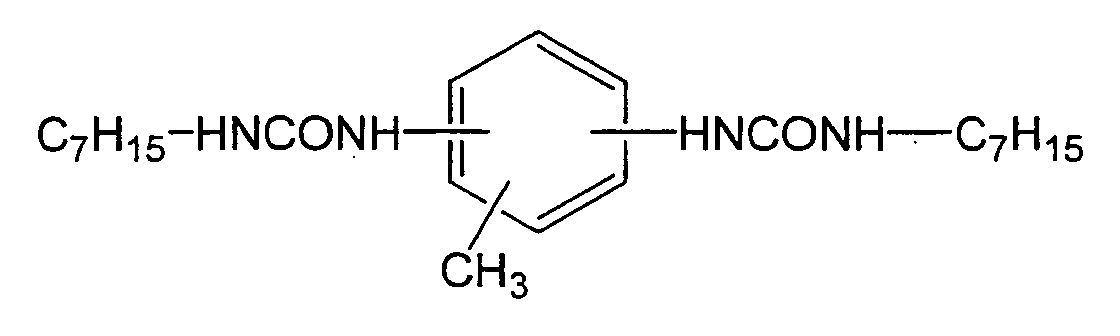
- R 4 and R 6 examples include alkyl groups of 1 to 10 carbon atoms. Of these, butyl, pentyl, hexyl and heptyl are preferred.
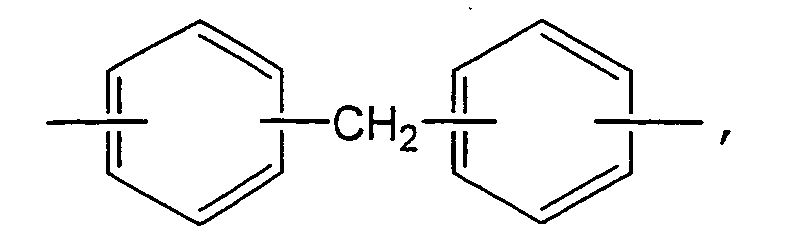
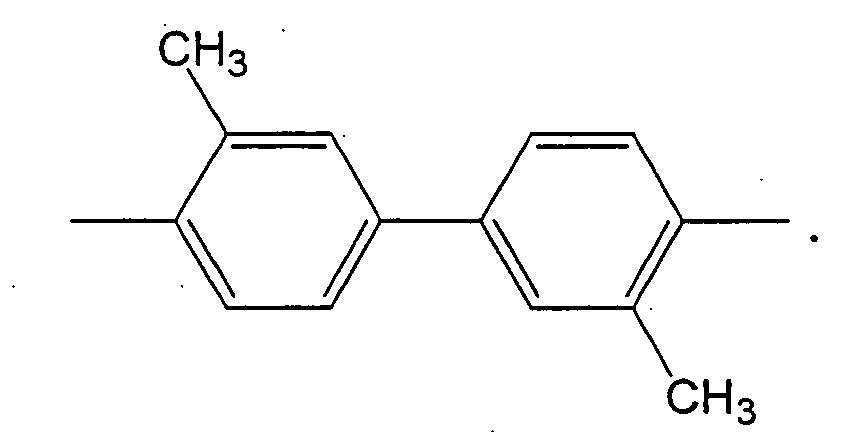
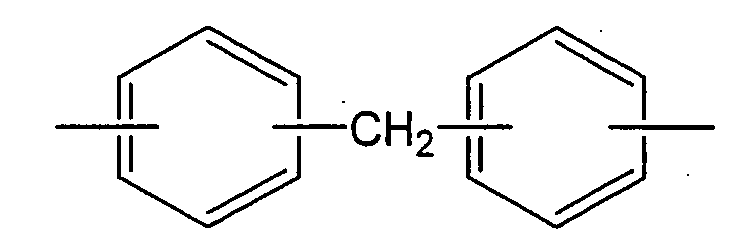
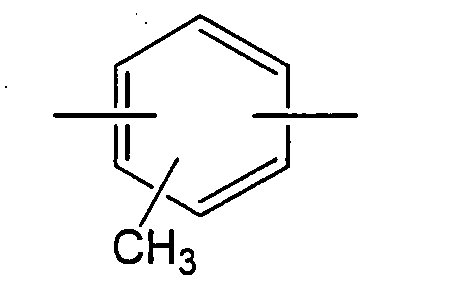
- R 5 examples include groups represented by the following formula:
- the grease (A) for use in the invention is grease used for a precision instrument such as a watch.
- the grease (A) has a penetration of 1/4-cone (defined by JIS K2220) at 25°C of a specific range.
- the penetration of 1/4-cone (JIS K2220) is a depth which 1/4-cone (JIS K2220) penetrates into grease at a specified temperature for specified time, as measured by the following manner.
- the penetration (25°C) of 1/4-cone is measured by the use of the consistometer and 1/4-cone (total amount of a holding bar and the cone: 9.38 g) as described in JIS K2220.
- a measured sample is prepared in accordance with the method for preparing a sample as described in the 1/4-worked penetration measurement method defined by JIS K2220 in order to homogenize grease, and the temperature of the sample is kept at 25°C.
- a pot wherein the sample kept at 25°C is placed is put on the stage of the consistometer, and then a tip of the 1/4-cone is brought in contact with the center of a sample surface. Thereafter, the 1/4-cone is allowed to penetrate into the sample for specified time (0.1 seconds or 1 second).
- a reading of indicating gauge at the time is read, and is regarded as a penetration (25°C, unit: mm) of 1/4-cone (JIS K2220) for specified time (0.1 seconds or 1 second).
- the 1/4-cone penetration of the grease (A) can be controlled by mixing, at an appropriate ratio, the polyol ester oil (a1) having no hydroxyl group in a molecule, the paraffinic hydrocarbon oil (a2) or the ether oil (a3) having no hydroxyl group in a molecule with the lithium soap grease or urea grease prepared by the method described above.
- the grease (A) for use in the invention has a penetration (25°C) of 1/4-cone (JIS K2220) for 1 second of not less than 5.0 mm, preferably not less than 5.5 mm.
- the grease (A) has desirably a penetration (25°C) of 1/4-cone (JIS K2220) for 0.1 seconds of 10.0 to 25.0 mm, preferably 12.0 to 22.0 mm, still preferably 13.0 to 18.0 mm.
- the grease (A) has desirably a penetration (25°C) of 1/4-cone (JIS K2220) for 1 second of 5.0 to 7.0 mm, preferably 5.7 to 6.7 mm.
- the sliding mechanism When the 1/4-cone penetration of the grease (A) is in the above range, the sliding mechanism has a suitable torque, and a precision instrument such as a watch can be stably operated.
- the grease (A) for use in the invention has no hydroxyl group in a molecule, and does not absorb moisture or very hardly absorbs moisture. Therefore, a grease composition for a precision instrument containing the grease (A) is free from change of properties and does not exhibit metal corrosiveness. Hence, corrosion of a slide portion of a precision instrument such as a watch is not brought about, and the precision instrument such as a watch can be stably operated.
- the grease composition for a precision instrument of the invention has a percentage of moisture absorption of usually not more than 1.0% by weight, preferably not more than 0.5% by weight.
- the grease (A) is contained in an amount of 80 to 99.8% by weight, preferably 90 to 99% by weight, more preferably 93 to 97% by weight, based on the total amount of the grease composition.
- the anti-wear agent (B) for use in the invention is, for example, a metal type anti-wear agent, a sulfide type anti-wear agent, an acid phosphate type anti-wear agent, an acid phosphite type anti-wear agent, an acid phosphoric ester amine salt, a neutral phosphate type anti-wear agent, a neutral phosphite type anti-wear agent or calcium borate.
- metal type anti-wear agents examples include alkyldithiophosphoric acid metal salts, such as zinc diethyldithiophosphate (ZnDTP) and molybdenum diethyldithiophosphate (MoDTP).
- ZnDTP zinc diethyldithiophosphate
- MoDTP molybdenum diethyldithiophosphate
- sulfide type anti-wear agents examples include alkyl sulfides, such as distearyl sulfide.
- acid phosphate type anti-wear agents examples include acid phosphates, such as lauryl acid phosphate.
- acid phosphite type anti-wear agents examples include acid phosphites, such as dilauryl hydrogenphosphite.
- acid phosphoric ester amine salts examples include lauryl acid phosphate diethylamine salt.
- neutral phosphate type anti-wear agents examples include neutral phosphates, such as triethyl phosphate, trioctyl phosphate, tris(tridecyl) phosphate, tristearyl phosphate, trimethylolpropane phosphate, triphenyl phosphate, tricresyl phosphate, trixylenyl phosphate, tris(nonylphenyl) phosphate, tris(2,4-di-t-butylphenyl) phosphate, tetraphenyldipropylene glycol diphosphate, tetraphenyltetra(tridecyl) pentaerythritol tetraphosphate, tetra(tridecyl)-4,4'-isopropylidenediphenyl diphosphate, bis(tridecyl) pentaerythritol diphosphate, bis(nonylphenyl) pentaerythri
- neutral phosphite type anti-wear agents examples include neutral phosphites, such as triethyl phosphite, trioctyl phosphite, tris(tridecyl) phosphite, trioleyl phosphite, tristearyl phosphite, trimethylolpropane phosphite, triphenyl phosphite, tris(nonylphenyl) phosphite, tris(2,4-di-t-butylphenyl) phosphite, tetraphenyldipropylene glycol diphosphite, tetraphenyltetra(tridecyl) pentaerythritol tetraphosphite, tetra(tridecyl)-4,4'-isopropylidenediphenyl diphosphite, bis(tridecyl) pentaerythri
- the above anti-wear agents can be used singly or in combination of two or more kinds.
- a neutral phosphate a neutral phosphite and calcium borate.
- a neutral phosphate a neutral phosphite or calcium borate, for a longer period of time, metal corrosion of a slide portion of a precision instrument such as a watch is not brought about, frictional wear of the slide portion can be prevented, and the precision instrument such as a watch can be stably operated.
- the anti-wear agent (B) is contained in an amount of 0.1 to 20% by weight, preferably 1 to 10% by weight, more preferably 3 to 7% by weight, based on the total amount of the grease composition.
- the anti-wear agent (B) is added in the above amount, frictional wear of a slide portion of a precision instrument such as a watch can be favorably prevented, and the precision instrument such as a watch can be stably operated.
- Examples of the solid lubricants (C) for use in the invention include molybdenum disulfide and PTFE particles.
- the PTFE particles are preferably those having a primary particle diameter of 0.5 to 8 ⁇ m.
- the above solid lubricants can be used singly or in combination of two or more kinds.
- the solid lubricant (C) is desirably contained in an amount of 0.01 to 5% by weight, preferably 0.01 to 3% by weight, more preferably 0.3 to 1% by weight, based on the total amount of the grease composition.
- the solid lubricant (C) is added in the above amount, frictional wear of a slide portion of a precision instrument such as a watch can be favorably prevented even if a part for the precision instrument has high extreme-pressure properties, and the precision instrument such as a watch can be stably operated.
- the metal deactivator (D) for use in the invention is preferably benzotriazole or its derivative.
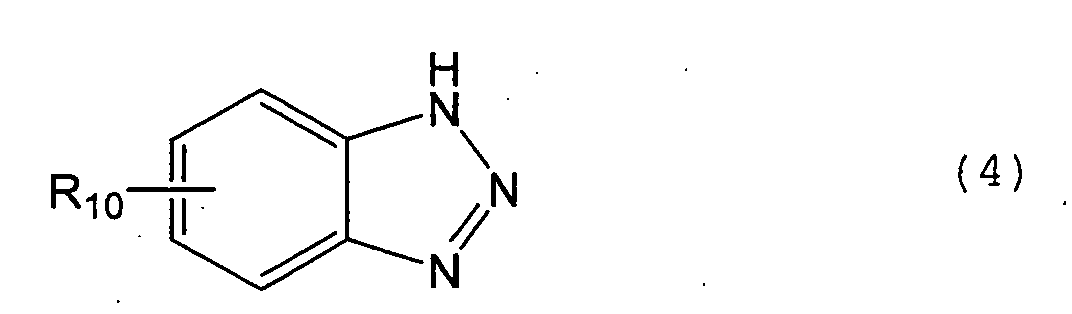
- benzotriazole derivatives examples include 2-(2'-hydroxy-5'-methylphenyl)benzotriazole, 2-[2'-hydroxy-3',5'-bis( ⁇ , ⁇ -dimethylbenzyl)phenyl]benzotriazole, 2-(2'-hydroxy-3',5'-di-t-butylphenyl)benzotriazole, compounds represented by the following formula (3), such as 1-(N,N-bis(2-ethylhexyl)aminomethyl)benzotriazole, and compounds represented by the following formula (4), wherein R 7 , R 8 and R 9 are each independently an alkyl group of 1 to 18 carbon atoms. wherein R 10 is an alkyl group of 1 to 18 carbon atoms.
- the above metal deactivators can be used singly or in combination of two or more kinds.
- the metal deactivator (D) is desirably contained in an amount of 0.01 to 3% by weight, preferably 0.02 to 1% by weight, more preferably 0.03 to 0.06% by weight, based on the total amount of the grease composition.
- the metal deactivator (D) is added in the above amount, corrosion of a metal such as copper can be favorably prevented.
- the antioxidant (E) for use in the invention is preferably a phenol type antioxidant or an amine type antioxidant.
- phenol type antioxidants examples include 2,6-di-1-butyl-p-cresol, 2,4,6-tri-t-butylphenol and 4,4'-methylenebis(2,6-di-t-butylphenol).
- amine type antioxidants examples include diphenylamine derivatives.
- the above antioxidants can be used singly or in combination or two or more kinds.
- the antioxidant (E) is desirably contained in an amount of 0.01 to 3% by weight, preferably 0.01 to 2% by weight, more preferably 0.03 to 1.2% by weight, based on the total amount of the grease composition.
- the antioxidant (E) is added in the above amount, change of properties of the grease composition and corrosion of a slide portion of a precision instrument such as a watch can be prevented over a long period of time.
- the grease composition for a precision instrument contains (A) the lithium soap grease or the urea grease and (B) the anti-wear agent.
- a decrease ratio of the slip torque after a 10-years accelerated test can be lowered to not more than 15%.
- the decrease ratio of a slip torque (referred to as “torque decrease ratio” hereinafter) is defined as change (change ratio) of a slip torque after the 10-years accelerated test for adjusting time to that at the start of operation test for sliding mechanism.
- the grease composition for a precision instrument of the invention further contains, if necessary, the solid lubricant (C).
- C solid lubricant
- a decrease ratio of the slip torque can be lowered to not more than 9%.
- the grease composition for a precision instrument of the invention contains the metal deactivator (D) and the antioxidant (E), a decrease ratio of the slip torque at high temperature can be lowered to not more than 10%.
- the change in weight (also referred to as "evaporation loss") of the lithium soap grease or urea grease , measured after the grease is held at 90°C for 1000 hours is desirably not more than 10% by weight, preferably not more than 5% by weight, more preferably not more than 1% by weight, particularly preferably not more than 0.5% by weight.
- a precision instrument using the grease composition containing such grease, such as a watch exhibits excellent high-temperature operating stability.
- the total acid number of the grease composition is desirably not more than 0.2 mgKOH/g.
- the total acid number of the grease composition is not more than 0.2 mgKOH/g, corrosion of parts of a precision instrument such as a watch can be prevented.
- a watch according to the invention is a watch in which the above-mentioned grease composition for a precision instrument is used in the slide portion.
- the grease composition for a precision instrument is applied to a slip portion of a second wheel and pinion having a sliding mechanism.
- frictional wear of part(s) of the sliding mechanism can be inhibited, and the watch exhibits stable operating performance.
- preferred combinations of the grease composition and the lubricating oil composition are the following combinations (1) to (3).
- the lubricating oil composition used in the invention is not specifically restricted provided that the lubricating oil composition is a lubricating oil composition used for a watch and that the above combinations are satisfied.
- a maintenance method of a watch according to the invention is a maintenance method of a watch in which the grease composition for a precision instrument containing a solid lubricant is used for a sliding mechanism of a slide portion.
- the watch assembled using the grease composition for a precision instrument containing a solid lubricant is disassembled and washed. Thereafter, when this watch is re-assembled, the grease composition for a precision instrument containing no solid lubricant is used for a sliding mechanism of a slide portion.
- the grease composition for a precision instrument containing no solid lubricant is cheaper than the grease composition for a precision instrument containing a solid lubricant, so that the maintenance method of a watch of the invention is economically excellent.
- the penetration (25°C) of 1/4-cone (JIS K2220) for the grease (A) for a specified time (0.1 seconds or 1 second) was measured by the use of the consistometer and 1/4-cone (total amount of a holding bar and the cone: 9.38 g) as described in JIS K2220.
- the grease (A) was placed into a 1/4-mixing pot, and the temperature of the grease (A) was maintained at 25°C.
- the grease (A) was sufficiently mixed to obtain a homogeneous sample.
- the pot in which the sample was placed was put on the stage of the consistometer, and then a tip of the 1/4-cone was brought in contact with the center of a sample surface.
- a agrafe was pushed to penetrate the 1/4-cone into the sample for specified time (0.1 seconds or 1 second).
- a reading of indicating gauge at the time was read, and was regarded as a penetration (25°C, unit: mm) of 1/4-cone (JIS K2220) for the specified time.
- Trimethylolpropane and valeric acid were mixed in a mixing ratio of 1:4 (trimethylolpropane:valeric acid) by mol to perform esterification reaction, whereby a crude trimethylolpropane-valeric acid ester was obtained.
- a trimethylolpropane-valeric acid ester (a1-1) having no hydroxyl group in a molecule was separated by the use of Wakogel (available from Wako Pure Chemical Ind., Ltd.). By the measurement of an infrared absorption spectrum of the trimethylolpropane-valeric acid ester (a1-1), it was confirmed that no hydroxyl group was present in a molecule.
- lithium stearate was added in an amount of not less than 10% by weight, and they were heated to not lower than the melting point of lithium stearate to obtain a lithium soap grease. Then, to the lithium soap grease, the trimethylolpropane-valeric acid ester (a1-1) was further added so that the penetration (25°C) of 1/4-cone (JIS K2220) for 0.1 seconds was 15.2 mm, to prepare a lithium soap grease (A1-1).
- Trimethylolpropane and nonanoic acid were mixed in a mixing ratio of 1:4 (trimethylolpropane:nonanoic acid) by mol to perform esterification reaction, whereby a crude trimethylolpropane-nonanoic acid ester was obtained.
- a trimethylolpropane-nonanoic acid ester (a1-2) having no hydroxyl group in a molecule was separated by the use of Wakogel (available from Wako Pure Chemical Ind., Ltd.). By the measurement of an infrared absorption spectrum of the trimethylolpropane-nonanoic acid ester (a1-2), it was confirmed that no hydroxyl group was present in a molecule.
- lithium stearate was added in an amount of not less than 10% by weight, and they were heated to not lower than the melting point of lithium stearate to obtain a lithium soap grease. Then, to the lithium soap grease, the trimethylolpropane-nonanoic acid ester (a1-2) was further added so that the penetration (25°C) of 1/4-cone (JIS K2220) for 0.1 seconds was 13.0 mm, to prepare a lithium soap grease (A1-2).
- Trimethylolpropane, decanoic acid and octanoic acid were mixed in a mixing ratio of 1:2:2 (trimethylolpropane:decanoic acid:octanoic acid) by mol to perform esterification reaction, whereby a crude trimethylolpropane-decanoic acid/octanoic acid mixed ester was obtained.
- a trimethylolpropane-decanoic acid/octanoic acid mixed ester (a1-3) having no hydroxyl group in a molecule was separated by the use of Wakogel (available from Wako Pure Chemical Ind., Ltd.). By the measurement of an infrared absorption spectrum of the trimethylolpropane-decanoic acid/octanoic acid mixed ester (a1-3), it was confirmed that no hydroxyl group was present in a molecule.
- lithium stearate was added in an amount of not less than 10% by weight, and they were heated to not lower than the melting point of lithium stearate to obtain a lithium soap grease. Then, to the lithium soap grease, the trimethylolpropane-decanoic acid/octanoic acid mixed ester (a1-3) was further added so that the penetration (25°C) of 1/4-cone (JIS K2220) for 0.1 seconds was 20.2 mm, to prepare a lithium soap grease (A1-3).
- Trimethylolpropane and valeric acid were mixed in a mixing ratio of 1:2 (trimethylolpropane:valeric acid) by mol to perform esterification reaction, whereby a crude trimethylolpropane-valeric acid ester was obtained.
- a trimethylolpropane-valeric acid ester (a1-4) having no hydroxyl group in a molecule was separated by the use of Wakogel (available from Wako Pure Chemical Ind., Ltd.). By the measurement of an infrared absorption spectrum of the trimethylolpropane-valeric acid ester (a1-4), it was confirmed that one hydroxyl group on the average was present in a molecule.
- lithium stearate was added in an amount of not less than 10% by weight, and they were heated to not lower than the melting point of lithium stearate to obtain a lithium soap grease. Then, to the lithium soap grease, the trimethylolpropane-valeric acid ester (a1-4) was further added so that the penetration (25°C) of 1/4-cone (JIS K2220) for 0.1 seconds was 14.0 mm, to prepare a lithium soap grease (A1-4).
- Neopentyl glycol, decanoic acid and octanoic acid were mixed in a mixing ratio of 1:3:3 (neopentyl glycol:decanoic acid:octanoic acid) by mol to perform esterification reaction, whereby a crude neopenytl glycol-decanoic acid/octanoic acid mixed ester was obtained.
- a nopentyl glycol-decanoic acid/octanoic acid mixed ester (a1-5) having no hydroxyl group in a molecule was separated by the use of Wakogel (available from Wako Pure Chemical Ind., Ltd.). By the measurement of an infrared absorption spectrum of the neopentyl glycol-decanoic acid/octanoic acid mixed ester (a1-5), it was confirmed that no hydroxyl group was present in a molecule.
- a diurea compound (A) represented by the following formula was added in an amount of not less than 10% by weight, and they were heated to not lower than the melting point of the diurea compound (A) to obtain a urea grease.
- the neopentyl glycol-decanoic acid/octanoic acid mixed ester (a1-5) was further added so that the penetration (25°C) of 1/4-cone (JIS K2220) for 0.1 seconds was 18.3 mm, to prepare a urea grease (A1-5).
- the urea grease (A1-5) was held at 90°C for 1000 hours. After that, a change in weight (evaporation loss) of the urea grease (A1-5) was measured, and as a result, the evaporation loss was 0.05% by weight.
- Trimethylolpropane and decanoic acid were mixed in a mixing ratio of 1:4 (trimethylolpropane:decanoic acid) by mol to perform esterification reaction, whereby a crude trimethylolpropane-decanoic acid ester was obtained.
- a trimethylolpropane-decanoic acid ester (a1-6) having no hydroxyl group in a molecule was separated by the use of Wakogel (available from Wako Pure Chemical Ind., Ltd.). By the measurement of an infrared absorption spectrum of the trimethylolpropane-decanoic acid ester (a1-6), it was confirmed that no hydroxyl group was present in a molecule.
- a diurea compound (B) represented by the following formula was added in an amount of not less than 10% by weight, and they were heated to not lower than the melting point of the diurea compound (B) to obtain a urea grease.
- the trimethylolpropane-decanoic acid/octanoic acid mixed ester (a1-5) was further added so that the penetration (25°C) of 1/4-cone (JIS K2220) for 0.1 seconds was 16.1 mm, to prepare a urea grease (A1-6).
- the evaporation loss measured after the urea grease (A1-6) was held at 90°C for 1000 hours was 0.08% by weight.
- the diurea compound (A) was added in an amount of not less than 10% by weight, and they were heated to not lower than the melting point of the diurea compound (A) to obtain a urea grease.
- the trimethylolpropane-nonanoic acid ester (a1-2) was further added so that the penetration (25°C) of 1/4-cone (JIS K2220) for 0.1 seconds was 15.5 mm, to prepare a urea grease (A1-7).
- trioleyl phosphate was added as an anti-wear agent in an amount of 1% by weight to prepare a lithium soap grease composition.
- the lithium soap grease composition was stored in an atmosphere of a temperature of 40°C and a humidity of 95% for 1000 hours. Then, a percentage of moisture absorption of the lithium soap grease composition was measured.
- a lithium soap grease composition was prepared in the same manner as in Example 1, except that the lithium soap grease (A1-4) was used instead of the lithium soap grease (A1-1). Then a percentage of moisture absorption of the lithium soap grease composition was measured in the same manner as in Example 1.
- urea grease (A1-5) anti-wear agents shown in Table 2 were each added in an amount of every 0.05% by weight within the range of 0.1 to 30% by weight to prepare urea grease compositions.
- watch movements (Citizen Watch #2035, train wheel portion: made of metal (mainly made of brass and iron)) were assembled. Then, operation confirmation test was carried out in the following manner. The results are set forth in Table 2.
- a crown was pulled to cause the watch to be in a state of adjusting time.
- the crown was rotated in the time-advancing direction and the time-returning direction alternately to make time-adjusting operations corresponding to those of a total of 10 years. Then, a ratio of the torque measured after the time-adjusting operations to the torque measured before the time-adjusting operations, namely, torque decrease ratio, was determined.
- Urea grease compositions were prepared in the same manner as in Example 2, except that the anti-wear agents shown in Table 2 were each added in an amount of 0% by weight or 0.05% by weight to the urea grease (A1-5). Using the urea grease compositions, watch movements were assembled and operation confirmation tests of the watch movements were carried out, in the same manner as in Example 2. The results are set forth in Table 2.
- the amount of the anti-wear agent added is preferably in the range of 0.1 to 20% by weight.
- lithium soap grease (A1-2) trixylenyl phosphate was added as an anti-wear agent in an amount of 2% by weight to prepare a lithium soap grease composition.
- PTFE particles particle diameter: 0.5 to 8 ⁇ m
- molybdenum disulfide was added as a solid lubricant in an amount of every 0.05% by weight within the range of 0.01 to 10% by weight to prepare lithium soap grease compositions containing a solid lubricant.
- watch movements were assembled and operation confirmation tests of the watch movements were carried out, in the same manner as in Example 2. The results are set forth in Table 3.
- Solid lubricant Amount added (wt%) Torque decrease ratio PTFE particle 0 9.5% 0.01 ⁇ 10 9 ⁇ 5%
- Molybdenum disulfide 0 9.5% 0.01 ⁇ 10 9 ⁇ 5%
- the amount of the anti-wear agent added is preferably in the range of 0.01 to 5% by weight.
- trioleyl phosphite was added as an anti-wear agent in an amount of 5% by weight to prepare a lithium soap grease composition.
- 0.05% by weight of benzotriazole as a metal deactivator and 0.05% by weight of a diphenylamine derivative as an antioxidant were added to prepare a lithium soap grease composition containing a metal deactivator and an antioxidant.
- watch movements were assembled in the same manner as in Example 2.
- operation confirmation test was carried out in the same manner as in Example 2, except that high-temperature operation confirmation test at 80°C was added. The results are set forth in Table 4.
- lithium soap grease (A1-3) trioleyl phosphite was added as an anti-wear agent in an amount of 5% by weight to prepare lithium soap grease compositions.
- the lithium soap grease compositions had total acid numbers of 0.1 to 3 mgKOH/g.
- 0.05% by weight of benzotriazole as a metal deactivator and 0.05% by weight of a diphenylamine derivative as an antioxidant were added to prepare lithium soap grease compositions containing a metal deactivator and an antioxidant.
- lithium stearate was added in an amount of not less than 10% by weight, and they were heated to not lower than the melting point of lithium stearate to obtain a lithium soap grease. Then, to the lithium soap grease, the trimer of 1-decene was further added so that the penetration (25°C) of 1/4-cone (JIS K2220) for 0.1 seconds was 15.0 mm, to prepare a lithium soap grease (A2-1).
- lithium stearate was added in an amount of not less than 10% by weight, and they were heated to not lower than the melting point of lithium stearate to obtain a lithium soap grease. Then, to the lithium soap grease, the tetramer of 1-decene was further added so that the penetration (25°C) of 1/4-cone (JIS K2220) for 0.1 seconds was 20.5 mm, to prepare a lithium soap grease (A2-2).
- lithium stearate was added in an amount of not less than 10% by weight, and they were heated to not lower than the melting point of lithium stearate to obtain a lithium soap grease. Then, to the lithium soap grease, the trimer of 1-undecene was further added so that the penetration (25°C) of 1/4-cone (JIS K2220) for 0.1 seconds was 15.8 mm, to prepare a lithium soap grease (A2-3).
- lithium stearate was added in an amount of not less than 10% by weight, and they were heated to not lower than the melting point of lithium stearate to obtain a lithium soap grease. Then, to the lithium soap grease, the trimer of 1-dodecene was further added so that the penetration (25°C) of 1/4-cone (JIS K2220) for 0.1 seconds was 17.5 mm, to prepare a lithium soap grease (A2-4).
- the diurea compound (A) was added in an amount of not less than 10% by weight, and they were heated to not lower than the melting point of the diurea compound (A) to obtain a urea grease. Then, to the urea grease, the trimer of 1-decene was further added so that the penetration (25°C) of 1/4-cone (JIS K2220) for 0.1 seconds was 21.1 mm, to prepare a urea grease (A2-5). The evaporation loss measured after the urea grease (A2-5) was held at 90°C for 1000 hours was 0.07% by weight.
- the diurea compound (B) was added in an amount of not less than 10% by weight, and they were heated to not lower than the melting point of the diurea compound (B) to obtain a urea grease. Then, to the urea grease, the trimer of 1-decene was further added so that the penetration (25°C) of 1/4-cone (JIS K2220) for 0.1 seconds was 17.5 mm, to prepare a urea grease (A2-6). The evaporation loss measured after the urea grease (A2-6) was held at 90°C for 1000 hours was 0.06% by weight.
- a diurea compound (C) represented by the following formula was added in an amount of not less than 10% by weight, and they were heated to not lower than the melting point of the diurea compound (C) to obtain a urea grease.
- the trimer of 1-decene was further added so that the penetration (25°C) of 1/4-cone (JIS K2220) for 0.1 seconds was 14.5 mm, to prepare a urea grease (A2-7).
- Urea grease compositions were prepared in the same manner as in Example 8, except that the anti-wear agents shown in Table 8 were each added in an amount of 0% by weight or 0.05% by weight to the urea grease (A2-5). Using the urea grease compositions, watch movements were assembled and operation confirmation tests of the watch movements were carried out, in the same manner as in Example 8. The results are set forth in Table 8.
- the amount of the anti-wear agent added is preferably in the range of 0.1 to 20% by weight.
- the amount of the anti-wear agent added is preferably in the range of 0.01 to 5% by weight.
- trioleyl phosphite was added as an anti-wear agent in an amount of 5% by weight to prepare a lithium soap grease composition.
- 0.05% by weight of benzotriazole as a metal deactivator and 0.05% by weight of a diphenylamine derivative as an antioxidant were added to prepare a lithium soap grease composition containing a metal deactivator and an antioxidant.
- watch movements were assembled in the same manner as in Example 2.
- operation confirmation test was carried out in the same manner as in Example 2, except that high-temperature operation confirmation test at 80°C was added. The results are set forth in Table 10.
- lithium soap grease (A2-3)
- trioleyl phosphite was added as an anti-wear agent in an amount of 5% by weight to prepare lithium soap grease compositions.
- the lithium soap grease compositions had total acid numbers of 0.1 to 3 mgKOH/g.
- 0.05% by weight of benzotriazole as a metal deactivator and 0.05% by weight of a diphenylamine derivative as an antioxidant were added to prepare lithium soap grease compositions containing a metal deactivator and an antioxidant.
- lithium stearate was added in an amount of not less than 10% by weight, and they were heated to not lower than the melting point of lithium stearate to obtain a lithium soap grease. Then, to the lithium soap grease, the ether oil (a3-1) was further added so that the penetration (25°C) of 1/4-cone (JIS K2220) for 0.1 seconds was 15.2 mm, to prepare a lithium soap grease (A3-1).
- lithium stearate was added in an amount of not less than 10% by weight, and they were heated to not lower than the melting point of lithium stearate to obtain a lithium soap grease. Then, to the lithium soap grease, the ether oil (a3-2) was further added so that the penetration (25°C) of 1/4-cone (JIS K2220) for 0.1 seconds was 17.1 mm, to prepare a lithium soap grease (A3-2).
- a diurea compound (D) represented by the following formula was added in an amount of not less than 10% by weight, and they were heated to not lower than the melting point of the diurea compound (D) to obtain a urea grease.
- the ether oil (a3-3) was further added so that the penetration (25°C) of 1/4-cone (JIS K2220) for 0.1 seconds was 15.5 mm, to prepare a urea grease (A3-3).
- a diurea compound (E) represented by the following formula was added in an amount of not less than 10% by weight, and they were heated to not lower than the melting point of the diurea compound (E) to obtain a urea grease.
- the ether oil (a3-4) was further added so that the penetration (25°C) of 1/4-cone (JIS K2220) for 0.1 seconds was 15.8 mm, to prepare a urea grease (A3-4).
- the diurea compound (A) was added in an amount of not less than 10% by weight, and they were heated to not lower than the melting point of the diurea compound (A) to obtain a urea grease.
- the ether oil (a3-5) was further added so that the penetration (25°C) of 1/4-cone (JIS K2220) for 0.1 seconds was 20.1 mm, to prepare a urea grease (A3-5).
- trioleyl phosphate was added as an anti-wear agent in an amount of 1% by weight to prepare a lithium soap grease composition.
- the lithium soap grease composition was stored in an atmosphere of a temperature of 40°C and a humidity of 95% for 1000 hours. Then, a percentage of moisture absorption of the lithium soap grease composition was measured.
- a lithium soap grease composition was prepared in the same manner as in Example 1, except that the lithium soap grease (A3-2) was used instead of the lithium soap grease (A3-1). Then a percentage of moisture absorption of the lithium soap grease composition was measured in the same manner as in Example 13.
- Urea grease compositions were prepared in the same manner as in Example 14, except that the anti-wear agents shown in Table 14 were each added in an amount of 0% by weight or 0.05% by weight to the urea grease (A3-3). Using the urea grease compositions, watch movements were assembled and operation confirmation tests of the watch movements were carried out, in the same manner as in Example 14. The results are set forth in Table 14.
- the amount of the anti-wear agent added is preferably in the range of 0.1 to 20% by weight.
- the amount of the anti-wear agent added is preferably in the range of 0.01 to 5% by weight.
- trioleyl phosphite was added as an anti-wear agent in an amount of 5% by weight to prepare a lithium soap grease composition.
- 0.05% by weight of benzotriazole as a metal deactivator and 0.05% by weight of a diphenylamine derivative as an antioxidant were added to prepare a lithium soap grease composition containing a metal deactivator and an antioxidant.
- watch movements were assembled in the same manner as in Example 2.
- operation confirmation test was carried out in the same manner as in Example 2, except that high-temperature operation confirmation test at 80°C was added. The results are set forth in Table 16.
- trioleyl phosphite was added as an anti-wear agent in an amount of 5% by weight to prepare lithium soap grease compositions.
- the lithium soap grease compositions had total acid numbers of 0.1 to 3 mgKOH/g.
- 0.05% by weight of benzotriazole as a metal deactivator and 0.05% by weight of a diphenylamine derivative as an antioxidant were added to prepare lithium soap grease compositions containing a metal deactivator and an antioxidant.
- lithium stearate was added in an amount of not less than 10% by weight, and they were heated to not lower than the melting point of lithium stearate to obtain lithium soap greases. Then, to each of the lithium soap greases, the ether oil was further added so that the penetration (25°C) of 1/4-cone (JIS K2220) for 0.1 seconds was 18.4 mm, to prepare lithium soap greases.
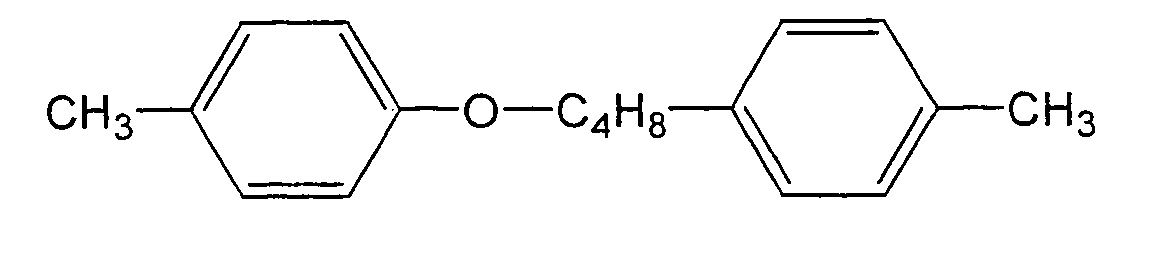
- the ether oil used in this Example is represented by the following formula: wherein R 1 and R 3 are each independently an alkyl group of 1 to 18 carbon atoms or a monovalent aromatic hydrocarbon group of 6 to 18 carbon atoms, R 2 is an alkylene group of 1 to 18 carbon atoms or a divalent aromatic hydrocarbon group of 6 to 18 carbon atoms, and n is an integer of 1 to 5.
- lithium soap grease compositions To each of the lithium soap greases, trioleyl phosphate was added as an anti-wear agent in an amount of 1% by weight to prepare lithium soap grease compositions. Using the lithium soap grease compositions, watch movements were assembled in the same manner as in Example 2. The watch movements were stored at a high temperature of 80°C. Then, operation confirmation test was carried out in the same manner as in Example 2. As a result, in any of the grease compositions, torque decrease ratios were about 10 to 15%, and the watch was favorably operated.
- Lubricating oil compositions and grease compositions used in this Example are given below.
- a lubricating oil composition containing a hydrocarbon 3% by weight of polyolefin (available from Mitsui Chemicals, Inc., trade name: LUCANT) as a viscosity index improver and 5% by weight of trioleyl phosphate as an anti-wear agent was added to prepare a lubricating oil composition containing a hydrocarbon.
- polyolefin available from Mitsui Chemicals, Inc., trade name: LUCANT
- ether oil (a3-1)
- polymethylmethacrylate available from Sanyo Chemical Ind., Ltd., trade name: ACLUBE
- trioleyl phosphate as an anti-wear agent was added to prepare a lubricating oil composition containing an ether oil.
- trioleyl phosphate was added as an anti-wear agent in an amount of 1% by weight to prepare a polyol ester type grease composition.
- trioleyl phosphate was added as an anti-wear agent in an amount of 1% by weight to prepare a hydrocarbon type grease composition.
- trioleyl phosphate was added as an anti-wear agent in an amount of 1% by weight to prepare an ether type grease composition.
- Each of the grease compositions was applied to a sliding mechanism of a slide portion in watch movements (Citizen Watch #2035, train wheel portion: made of metal (mainly made of brass and iron)).
- Each of the lubricating compositions was applied to a slide portion other than the sliding mechanism. Then, watches were assembled the watch movements.
- a crown was pulled to cause the watch to be in a state of adjusting time. The crown was continuously rotated for 2 hours.
- the results are set forth in Table 19.
- Lubricating oil composition Polyol ester type Hydrocarbon type Ether type Grease composition
- C Properties of the lubricating oil composition was change, and an operating performance of the watch was not acceptable.
- lithium soap grease A2-3)
- trixylenyl phosphate was added as an anti-wear agent in an amount of 2% by weight to prepare a lithium soap grease composition.
- PTFE particles particle diameter: 0.5 to 8 ⁇ m
- a solid lubricant was added as a solid lubricant in an amount of 3% by weight to prepare lithium soap grease composition containing a solid lubricant.
- a watch movement (Citizen Watch #2035, train wheel portion: made of metal (mainly made of brass and iron)) was assembled. A crown was pulled to cause the watch to be in a state of adjusting time. The crown was continuously rotated for 2 hours, and a slip torque was measured.
- the watch was disassembled and washed, and the watch was re-assembled using as a grease composition the lithium soap grease composition containing no solid lubricant.
- a crown was pulled to cause the watch to be in a state of adjusting time.
- the crown was continuously rotated for 2 hours, and a slip torque was measured.
- the slip torque decrease ratio of the watch are set forth in Table 20.
- the grease composition for a precision instrument of the invention for a sliding mechanism of a precision instrument such as a watch By the use of the grease composition for a precision instrument of the invention for a sliding mechanism of a precision instrument such as a watch, a stable slip torque can be obtained, and the precision instrument such as a watch can be stably operated. Further, by the use of the grease composition for a precision instrument of the invention for a sliding mechanism of a precision instrument such as a watch in combination with the same type of a lubricating oil composition as the grease composition, properties of the lubricating oil are not changed, and the precision instrument such as a watch can be stably operated.
Landscapes
- Chemical & Material Sciences (AREA)
- Physics & Mathematics (AREA)
- General Physics & Mathematics (AREA)
- Chemical Kinetics & Catalysis (AREA)
- General Chemical & Material Sciences (AREA)
- Oil, Petroleum & Natural Gas (AREA)
- Organic Chemistry (AREA)
- Lubricants (AREA)
Abstract
Description






| Grease | Percentage of moisture absorption | Corrosion |
| Lithium soap grease (A-1) | 0.1% by weight | not corroded |
| Lithium soap grease (A-4) | 8.9% by weight | tarnished |
| Anti-wear agent | Amount added (wt%) | Corrosion | Torque decrease ratio | Overall judgment |
| Zinc diethyldithiophosphate | 0 | - | C | C |
| 0.05 | B | C | C | |
| 0.1~30 | B | A | B | |
| Distearyl sulfide | 0 | - | C | C |
| 0.05 | B | C | C | |
| 0.1~30 | B | A | B | |
| Tricresyl phosphate | 0 | - | C | C |
| 0.05 | A | C | C | |
| 0.1~30 | A | A | A | |
| Lauryl acid phosphate | 0 | - | C | C |
| 0.05 | A | C | C | |
| 0.1~30 | B | A | B | |
| Trioleyl phosphite | 0 | - | C | C |
| 0.05 | A | C | C | |
| 0.1~30 | A | A | A | |
| 0 | - | C | C | |
| Dilauryl | 0.05 | A | C | C |
| hydrogenphosphite | 0.1~30 | B | A | B |
| Lauryl acid phosphate diethylamine salt | 0 | - | C | C |
| 0.05 | A | C | C | |
| 0.1~30 | B | A | B | |
| Calcium borate | 0 | - | C | C |
| 0.05 | A | C | C | |
| 0.1~30 | A | A | A | |
| (Evaluation) Corrosion: A: The metal part was free from corrosion, change of appearance and change of properties. B: The metal part was a little corroded. C: The metal part was markedly corroded. Torque decrease ratio: A: The torque decrease ratio was in the range of about 10 to 15%. B: The torque decrease ratio was more than 15%. C: A marked decrease was found in the initial stage of the operation confirmation test. Overall judgment: A: The watch movement is employable for a long period of time. B: The watch movement is employable for a short period of time. C: The watch movement is difficult to use. |
| Solid lubricant | Amount added (wt%) | Torque decrease ratio |
| PTFE particle | 0 | 9.5% |
| 0.01~10 | 9~5% | |
| Molybdenum disulfide | 0 | 9.5% |
| 0.01~10 | 9~5% |
| Benzotriazole | 0 wt% | 0.05 wt% |
| Diphenylamine derivative | 0 wt% | 0.05 wt% |
| Torque decrease ratio | ||
| Ordinary temperature | 7.5% | 7.5% |
| 80°C | 32.4% | 9.5% |
| Corrosion | ||
| Ordinary temperature | not corroded | not corroded |
| 80°C | corroded | not corroded |
| Urea grease | Evaporation loss (after stored at 90°C for 1000 hrs) | Torque decrease ratio |
| Urea grease (A1-5) | 0.05 wt% | 4.5% |
| Urea grease (A1-6) | 0.08 wt% | 5.0% |
| Urea grease (A1-7) | 0.10 wt% | 4.8% |
| Total acid number (mgKOH/g) | Appearance of metal part | Overall judgment | |
| in the initial stage of operation confirmation test | After operation confirmation test | ||
| 0 to 0.2 | Acceptable | Acceptable | A |
| more than 0.2 | Acceptable | Corroded and tarnish | B |
| (Evaluation) Overall judgment: A: The watch movement is employable for a long period of time. B: The watch movement is employable for a short period of time. C: The watch movement is difficult to use. |

| Grease | Number of carbon in hydrocarbon oil | Torque decrease ratio |
| Lithium soap grease (A2-1) | 30 | 10.8% |
| Lithium soap grease (A2-2) | 40 | 10.2% |
| Anti-wear agent | Amount added (wt%) | Corrosion | Torque decrease ratio | Overall judgment |
| Zinc diethyldithiophosphate | 0 | - | C | C |
| 0.05 | B | C | C | |
| 0.1~30 | B | A | B | |
| Distearyl sulfide | 0 | - | C | C |
| 0.05 | B | C | C | |
| 0.1~30 | B | A | B | |
| Tricresyl phosphate | 0 | - | C | C |
| 0.05 | A | C | C | |
| 0.1~30 | A | A | A | |
| Lauryl acid phosphate | 0 | - | C | C |
| 0.05 | A | C | C | |
| 0.1~30 | B | A | B | |
| Trioleyl phosphite | 0 | - | C | C |
| 0.05 | A | C | C | |
| 0.1~30 | A | A | A | |
| Dilauryl hydrogenphosphite | 0 | - | C | C |
| 0.05 | A | C | C | |
| 0.1~30 | B | A | B | |
| Lauryl acid phosphate diethylamine salt | 0 | - | C | C |
| 0.05 | A | C | C | |
| 0.1~30 | B | A | B | |
| Calcium borate | 0 | - | C | C |
| 0.05 | A | C | C | |
| 0.1~30 | A | A | A | |
| (Evaluation) Corrosion: A: The metal part was free from corrosion, change of appearance and change of properties. B: The metal part was a little corroded. C: The metal part was markedly corroded. Torque decrease ratio: A: The torque decrease ratio was in the range of about 10 to 15%. B: The torque decrease ratio was more than 15%. C: A marked decrease was found in the initial stage of the operation confirmation test. Overall judgment: A: The watch movement is employable for a long period of time. B: The watch movement is employable for a short period of time. C: The watch movement is difficult to use. |
| Solid lubricant | Amount added (wt%) | Torque decrease ratio |
| PTFE particle | 0 | 9.7% |
| 0.01~10 | 9~5% | |
| Molybdenum disulfide | 0 | 10.0% |
| 0.01~10 | 9~5% |
| Benzotriazole Diphenylamine derivative | 0 wt% | 0.05 wt% |
| 0 wt% | 0.05 wt% | |
| Torque decrease ratio | ||
| Ordinary temperature | 7.5% | 6.5% |
| 80°C | 35.8% | 8.9% |
| Corrosion | ||
| Ordinary temperature | not corroded | not corroded |
| 80°C | corroded | not corroded |
| Urea grease | Evaporation loss (after stored at 90°C for 1000 hrs) | Torque decrease ratio |
| Urea grease (A2-5) | 0.07 wt% | 9.5% |
| Urea grease (A2-6) | 0.06 wt% | 12.1% |
| Urea grease (A2-7) | 0.07 wt% | 11.3% |
| Total acid number (mgKOH/g) | Appearance of metal part | Overall judgment | |
| in the initial stage of operation confirmation test | After operation confirmation test | ||
| 0 to 0.2 | Acceptable | Acceptable | A |
| more than 0.2 | Acceptable | Corroded and tarnish | B |
| (Evaluation) Overall judgment: A: The watch movement is employable for a long period of time. B: The watch movement is employable for a short period of time. C: The watch movement is difficult to use. |




| Grease | Percentage of moisture absorption | Corrosion |
| Lithium soap grease (A-1) | 0.3% by weight | not corroded |
| Lithium soap grease (A-4) | 7.8% by weight | tarnished |
| Anti-wear agent | Amount added (wt%) | Corrosion | Torque decrease ratio | Overall judgment |
| Zinc diethyldithiophosphate | 0 | - | C | C |
| 0.05 | B | C | C | |
| 0.1~30 | B | A | B | |
| Distearyl sulfide | 0 | - | C | C |
| 0.05 | B | C | C | |
| 0.1~30 | B | A | B | |
| Tricresyl phosphate | 0 | - | C | C |
| 0.05 | A | C | C | |
| 0.1~30 | A | A | A | |
| Lauryl acid phosphate | 0 | - | C | C |
| 0.05 | A | C | C | |
| 0.1~30 | B | A | B | |
| Trioleyl phosphite | 0 | - | C | C |
| 0.05 | A | C | C | |
| 0.1~30 | A | A | A | |
| Dilauryl hydrogenphosphite | 0 | - | C | C |
| 0.05 | A | C | C | |
| 0.1~30 | B | A | B | |
| Lauryl acid phosphate diethylamine salt | 0 | - | C | C |
| 0.05 | A | C | C | |
| 0.1~30 | B | A | B | |
| Calcium borate | 0 | - | C | C |
| 0.05 | A | C | C | |
| 0.1~30 | A | A | A | |
| (Evaluation) Corrosion: A: The metal part was free from corrosion, change of appearance and change of properties. B: The metal part was a little corroded. C: The metal part was markedly corroded. Torque decrease ratio: A: The torque decrease ratio was in the range of about 10 to 15%. B: The torque decrease ratio was more than 15%. C: A marked decrease was found in the initial stage of the operation confirmation test. Overall judgment: A: The watch movement is employable for a long period of time. B: The watch movement is employable for a short period of time. C: The watch movement is difficult to use. |
| Solid lubricant | Amount added (wt%) | Torque decrease ratio |
| PTFE particle | 0 | 10.3% |
| 0.01~10 | 9~5% | |
| Molybdenum disulfide | 0 | 10.3% |
| 0.01~10 | 9~5% |
| Benzotriazole | 0 wt% | 0.05 wt% |
| Diphenylamine derivative | 0 wt% | 0.05 wt% |
| Torque decrease ratio | ||
| Ordinary temperature | 7.3% | 7.0% |
| 80°C | 35.4% | 9.7% |
| Corrosion | ||
| Ordinary temperature | not corroded | not corroded |
| 80°C | corroded | not corroded |
| Urea grease | Evaporation loss (after stored at 90°C for 1000 hrs) | Torque decrease ratio |
| Urea grease (A3-3) | 0.05 wt% | 9.4% |
| Urea grease (A3-4) | 0.11 wt% | 11.1% |
| Urea grease (A3-5) | 0.11 wt% | 10.8% |
| Total acid number (mgKOH/g) | Appearance of metal part | Overall judgment | |
| in the initial stage of operation confirmation test | After operation confirmation test | ||
| 0 to 0.2 | Acceptable | Acceptable | A |
| more than 0.2 | Acceptable | Corroded and tarnish | B |
| (Evaluation) Overall judgment: A: The watch movement is employable for a long period of time. B: The watch movement is employable for a short period of time. C: The watch movement is difficult to use. |
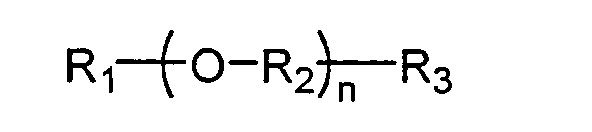
| Lubricating oil composition | ||||
| Polyol ester type | Hydrocarbon type | Ether type | ||
| Grease composition | Polyol ester type | A | B | B |
| Hydrocarbon type | B | A | B | |
| Ether type | B | B | A | |
| (Evaluation) Overall judgment: A: Properties of the lubricating oil composition was not change. B: Properties of the lubricating oil composition was a little change, but an operating performance of the watch was acceptable. C: Properties of the lubricating oil composition was change, and an operating performance of the watch was not acceptable. |
| Torque decrease | |
| Ex. 21 | 6.0% |
| Comp. Ex. 6 | 19.8% |
Claims (21)
- A grease composition for a precision instrument comprising a lithium soap grease or a urea grease, and an anti-wear agent:wherein the lithium soap grease and the urea grease are each a grease having no hydroxyl group in a molecule, andthe anti-wear agent is contained in an amount of 0.1 to 20% by weight based on the total amount of the grease composition.
- The grease composition for a precision instrument as claimed in claim 1, wherein the lithium soap grease or the urea grease is obtained from a polyol ester oil having no hydroxyl group in a molecule.
- The grease composition for a precision instrument as claimed in claim 1, wherein the lithium soap grease or the urea grease is obtained from a paraffinic hydrocarbon oil comprising an α-olefin polymer of 30 or more carbon atoms.
- The grease composition for a precision instrument as claimed in claim 1, wherein the lithium soap grease or the urea grease is obtained from an ether oil having no hydroxyl group in a molecule.
- The grease composition for a precision instrument as claimed in claim 4, wherein the ether oil is an ether oil represented by the following formula (1):wherein R1 and R3 are each independently an alkyl group of 1 to 18 carbon atoms or a monovalent aromatic hydrocarbon group of 6 to 18 carbon atoms, R2 is an alkylene group of 1 to 18 carbon atoms or a divalent aromatic hydrocarbon group of 6 to 18 carbon atoms, and n is an integer of 1 to 5.

- The grease composition for a precision instrument as claimed in claim 1, wherein the anti-wear agent is at least one compound selected from a neutral phosphate, a neutral phosphite and calcium borate.
- The grease composition for a precision instrument as claimed in claim 1, further comprising a solid lubricant in an amount of 0.01 to 5% by weight based on the total amount of the grease composition.
- The grease composition for a precision instrument as claimed in claim 7, wherein the solid lubricant comprises molybdenum disulfide and/or PTFE particles.
- The grease composition for a precision instrument as claimed in claim 1, further comprising a metal deactivator.
- The grease composition for a precision instrument as claimed in claim 9, wherein the metal deactivator is benzotriazole and/or a derivative thereof.
- The grease composition for a precision instrument as claimed in claim 1, further comprising an antioxidant.
- The grease composition for a precision instrument as claimed in claim 11, wherein the antioxidant is a phenol type antioxidant and/or an amine type antioxidant.
- The grease composition for a precision instrument as claimed in claim 12, wherein the phenol type antioxidant is 2,6-di-tributyl-p-cresol, 2,4,6-tri-t-butylphenol or 4,4'-methylenebis(2,6-di-tributylphenol).
- The grease composition for a precision instrument as claimed in claim 12, wherein the amine type antioxidant is a diphenylamine derivative.
- The grease composition for a precision instrument as claimed in any one of claims 1 to 14, wherein the change in weight of the lithium soap grease or the urea grease after the grease is held at 90°C for 1000 hours is not more than 10% by weight.
- The grease composition for a precision instrument as claimed in any one of claims 1 to 14, which has a total acid number of not more than 0.2 mgKOH/g.
- A watch, wherein the grease composition for a precision instrument of any one of claims 1 to 16 is used for a sliding mechanism of its slide portion.
- The watch as claimed in claim 17, wherein a grease composition for a precision instrument is used for a sliding mechanism of a slide portion, a lubricating oil composition is used for portions other than the sliding mechanism of the slide portion, the grease composition is a grease composition obtained from a polyol ester oil having no hydroxyl group in a molecule, and the lubricating oil composition is a lubricating oil composition obtained from the polyol ester oil having no hydroxyl group in a molecule.
- The watch as claimed in claim 17, wherein a grease composition for a precision instrument is used for a sliding mechanism of a slide portion, a lubricating oil composition is used for portions other than the sliding mechanism of the slide portion, the grease composition is a grease composition obtained from a paraffinic hydrocarbon oil comprising an α-olefin polymer of 30 or more carbon atoms, and the lubricating oil composition is a lubricating oil composition obtained from the paraffinic hydrocarbon oil comprising an α-olefin polymer of 30 or more carbon atoms.
- The watch as claimed in claim 17, wherein a grease composition for a precision instrument is used for a sliding mechanism of a slide portion, a lubricating oil composition is used for portions other than the sliding mechanism of the slide portion, the grease composition is a grease composition obtained from an ether oil having no hydroxyl group in a molecule, and the lubricating oil composition is a lubricating oil composition obtained from the ether oil having no hydroxyl group in a molecule.
- A maintenance method of a watch in which a grease composition for a precision instrument containing a solid lubricant is used for a sliding mechanism of a slide portion, comprising:after disassembly and washing of the watch, re-assembling the watch using a grease composition for a precision instrument containing no solid lubricant in a sliding mechanism of a slide portion.
Applications Claiming Priority (3)
| Application Number | Priority Date | Filing Date | Title |
|---|---|---|---|
| JP2002240429 | 2002-08-21 | ||
| JP2002240429 | 2002-08-21 | ||
| PCT/JP2003/010447 WO2004018594A1 (en) | 2002-08-21 | 2003-08-19 | Grease composition for precision equipment and timepiece containing the same |
Publications (3)
| Publication Number | Publication Date |
|---|---|
| EP1533361A1 true EP1533361A1 (en) | 2005-05-25 |
| EP1533361A4 EP1533361A4 (en) | 2010-07-28 |
| EP1533361B1 EP1533361B1 (en) | 2018-06-27 |
Family
ID=31943934
Family Applications (1)
| Application Number | Title | Priority Date | Filing Date |
|---|---|---|---|
| EP03792709.2A Expired - Lifetime EP1533361B1 (en) | 2002-08-21 | 2003-08-19 | Timepiece containing a grease composition |
Country Status (6)
| Country | Link |
|---|---|
| US (1) | US7385880B2 (en) |
| EP (1) | EP1533361B1 (en) |
| JP (1) | JPWO2004018594A1 (en) |
| CN (1) | CN1292060C (en) |
| MY (1) | MY142191A (en) |
| WO (1) | WO2004018594A1 (en) |
Families Citing this family (33)
| Publication number | Priority date | Publication date | Assignee | Title |
|---|---|---|---|---|
| KR101065374B1 (en) * | 2004-06-30 | 2011-09-16 | 삼성에스디아이 주식회사 | Polymer membrane for fuel cell and its manufacturing method |
| JP2007277459A (en) * | 2006-04-10 | 2007-10-25 | Cosmo Sekiyu Lubricants Kk | Flame retardant grease composition |
| EP2052062A2 (en) * | 2006-07-21 | 2009-04-29 | ExxonMobil Research and Engineering Company | Grease compositions |
| KR100828176B1 (en) | 2006-12-29 | 2008-05-08 | 한국프랜지공업 주식회사 | Grease composition for constant velocity joints with excellent durability and low friction |
| CN101368129B (en) * | 2008-08-06 | 2012-05-23 | 杭州得润宝油脂有限公司 | Urea-based lubricating grease composition and preparation method thereof |
| WO2010074242A1 (en) | 2008-12-26 | 2010-07-01 | シチズン電子株式会社 | Lubrication kit and small electronic device utilizing the lubrication kit |
| JP2011102780A (en) * | 2009-11-11 | 2011-05-26 | Seiko Instruments Inc | Component for timepiece and timepiece |
| US8618031B2 (en) | 2010-07-27 | 2013-12-31 | Exxonmobil Research And Engineering Company | Method for improving the deposit formation resistance performance of turbine oils containing amine antioxidants |
| WO2012015873A1 (en) * | 2010-07-27 | 2012-02-02 | Exxonmobil Research And Engineering Company | Method for improving the deposit formation resistance performance of turbine oils containing amine antioxidants |
| AU2012271204B2 (en) * | 2011-06-17 | 2016-12-22 | Biosynthetic Technologies, Llc | Grease compositions comprising estolide base oils |
| JP6041224B2 (en) * | 2013-01-22 | 2016-12-07 | シチズン時計株式会社 | Lubricating oil composition for watch and watch |
| WO2014115602A1 (en) * | 2013-01-22 | 2014-07-31 | シチズンホールディングス株式会社 | Clock lubricating-oil composition and clock |
| DE102014108253A1 (en) | 2014-06-12 | 2015-12-17 | Emitec France S.A.S | Pump for conveying a liquid |
| JP6476738B2 (en) * | 2014-10-22 | 2019-03-06 | 協同油脂株式会社 | GREASE COMPOSITION FOR ROLLING BEARING AND ROLLING BEARING |
| WO2016129148A1 (en) | 2015-02-09 | 2016-08-18 | 株式会社Moresco | Lubricant composition, use thereof and aliphatic ether compound |
| CN105238529A (en) * | 2015-10-29 | 2016-01-13 | 山东万友工业油脂有限公司 | Molybdenum disulfide lithium-based lubricating grease and preparation method therefor |
| CN105615432A (en) * | 2016-02-18 | 2016-06-01 | 江苏省阿珂姆野营用品有限公司 | Camping fabric sleeping bag |
| WO2018173555A1 (en) * | 2017-03-24 | 2018-09-27 | シチズン時計株式会社 | Lubricant composition for watch, treatment solution for watch lubrication, and watch |
| CN107760431A (en) * | 2017-10-20 | 2018-03-06 | 安徽中天石化股份有限公司 | A kind of high-performance lithium base grease and preparation method thereof |
| CN107903993A (en) * | 2017-11-30 | 2018-04-13 | 苏州科茂电子材料科技有限公司 | A kind of precision instrument wear-resistant resistant to heat aging lubricating oil and preparation method thereof |
| CN107868690A (en) * | 2017-12-01 | 2018-04-03 | 苏州科茂电子材料科技有限公司 | Wear-resistant heat-proof aging lubricating grease for precision instrument and preparation method thereof |
| EP3511780B1 (en) * | 2018-01-12 | 2023-03-29 | Richemont International S.A. | Method for lubricating an escapement |
| CH714550A1 (en) * | 2018-01-12 | 2019-07-15 | Richemont Int Sa | A method of lubricating a watch exhaust. |
| CN109370547A (en) * | 2018-11-15 | 2019-02-22 | 长江大学 | A kind of wear-resistant lubricant for drilling fluid and its preparation method and application |
| JP7186068B2 (en) * | 2018-11-16 | 2022-12-08 | シチズン時計株式会社 | Lubricating composition for watch band, method for producing watch band, and watch band |
| JP2021036031A (en) * | 2019-08-21 | 2021-03-04 | シチズン時計株式会社 | Grease composition for precision equipment and watches using it |
| CN111286387B (en) * | 2020-02-26 | 2022-02-01 | 上海果石实业(集团)有限公司 | Damping lubricating grease for furniture sliding rail with long service life and preparation method thereof |
| JP7403420B2 (en) * | 2020-09-09 | 2023-12-22 | シチズン時計株式会社 | Lubricating composition for barrels |
| CN114606044A (en) * | 2022-03-22 | 2022-06-10 | 姚文兵 | Extreme pressure lubricating grease and preparation method thereof |
| JP2023151693A (en) * | 2022-03-31 | 2023-10-16 | 出光興産株式会社 | grease composition |
| JP7551708B2 (en) * | 2022-09-12 | 2024-09-17 | Ntn株式会社 | Grease composition, rolling bearing and lubrication method |
| WO2026034201A1 (en) * | 2024-08-09 | 2026-02-12 | シチズン時計株式会社 | Grease composition for timepieces and timepiece using same |
| WO2026034202A1 (en) * | 2024-08-09 | 2026-02-12 | シチズン時計株式会社 | Lubricating composition for timepiece and timepiece employing same |
Family Cites Families (21)
| Publication number | Priority date | Publication date | Assignee | Title |
|---|---|---|---|---|
| JPS5331706A (en) | 1976-09-06 | 1978-03-25 | Nippon Oil Co Ltd | Lubricant for driving chain in vehicle |
| JPS6014795B2 (en) * | 1979-08-16 | 1985-04-16 | 日本精工株式会社 | Lithium complex grease and its manufacturing method |
| US4514312A (en) * | 1982-07-22 | 1985-04-30 | Witco Chemical Corporation | Lubricant compositions comprising a phosphate additive system |
| JPH0813980B2 (en) * | 1988-06-14 | 1996-02-14 | 協同油脂株式会社 | Hot rolling lubricant composition for steel |
| JPH044297A (en) * | 1990-04-23 | 1992-01-08 | Tokai Rika Co Ltd | Lubricant for electric sliding contact device |
| JP2975163B2 (en) * | 1991-05-31 | 1999-11-10 | エヌティエヌ株式会社 | Grease composition for torque limiter |
| JPH059489A (en) * | 1991-07-01 | 1993-01-19 | Nippon Seiko Kk | Grease composition for electronic computer bearing |
| US6432888B1 (en) * | 1992-08-05 | 2002-08-13 | Koyo Seiko Co., Ltd. | Grease for rolling bearing and grease-sealed rolling bearing |
| JP3402407B2 (en) | 1994-10-05 | 2003-05-06 | 昭和シェル石油株式会社 | Grease for tripod type constant velocity joint |
| JP3833756B2 (en) * | 1996-10-18 | 2006-10-18 | 昭和シェル石油株式会社 | Urea grease composition |
| US6010985A (en) * | 1997-01-31 | 2000-01-04 | Elisha Technologies Co L.L.C. | Corrosion resistant lubricants greases and gels |
| JPH10273690A (en) | 1997-03-31 | 1998-10-13 | Nachi Fujikoshi Corp | Grease composition for rolling bearings |
| JPH1135963A (en) | 1997-07-17 | 1999-02-09 | Nippon Kouyu:Kk | Lubricating grease composition |
| JP3782890B2 (en) | 1998-05-28 | 2006-06-07 | Ntn株式会社 | Dynamic pressure type sintered grease bearing |
| JP3782889B2 (en) | 1998-05-28 | 2006-06-07 | Ntn株式会社 | Hydrodynamic sintered oil-impregnated bearing |
| JP2001101943A (en) | 1999-09-30 | 2001-04-13 | Nippon Mitsubishi Oil Corp | Switch for electric circuit |
| JP4554744B2 (en) | 1999-11-10 | 2010-09-29 | Thk株式会社 | Grease composition and bearing device using the same |
| JP4406486B2 (en) | 1999-11-13 | 2010-01-27 | ミネベア株式会社 | Rolling device for information equipment |
| JP4447096B2 (en) | 1999-12-21 | 2010-04-07 | 新日鐵化学株式会社 | Lubricating oil composition |
| EP1632555B1 (en) | 2000-02-09 | 2012-12-19 | Citizen Holdings Co., Ltd. | Lubricating oil composition and watch using the same |
| JP2002308125A (en) | 2001-04-18 | 2002-10-23 | Nsk Ltd | Electric power steering device |
-
2003
- 2003-08-19 EP EP03792709.2A patent/EP1533361B1/en not_active Expired - Lifetime
- 2003-08-19 WO PCT/JP2003/010447 patent/WO2004018594A1/en not_active Ceased
- 2003-08-19 JP JP2004530565A patent/JPWO2004018594A1/en active Pending
- 2003-08-19 US US10/493,170 patent/US7385880B2/en not_active Expired - Lifetime
- 2003-08-19 CN CNB038013975A patent/CN1292060C/en not_active Expired - Fee Related
- 2003-08-21 MY MYPI20033184A patent/MY142191A/en unknown
Also Published As
| Publication number | Publication date |
|---|---|
| EP1533361A4 (en) | 2010-07-28 |
| CN1578826A (en) | 2005-02-09 |
| EP1533361B1 (en) | 2018-06-27 |
| WO2004018594A1 (en) | 2004-03-04 |
| US7385880B2 (en) | 2008-06-10 |
| CN1292060C (en) | 2006-12-27 |
| JPWO2004018594A1 (en) | 2005-12-08 |
| US20050014658A1 (en) | 2005-01-20 |
| MY142191A (en) | 2010-10-15 |
Similar Documents
| Publication | Publication Date | Title |
|---|---|---|
| US7385880B2 (en) | Grease composition for precision equipment and timepiece containing the same | |
| JP5204360B2 (en) | Lubricating oil composition and watch using the same | |
| US8242065B2 (en) | Grease composition | |
| KR20120109594A (en) | Lubricating oil composition | |
| US8153569B2 (en) | Lubricant base oil | |
| JP2016539225A (en) | Organosiloxane composition | |
| US7482312B2 (en) | Engine oils for racing applications and method of making same | |
| CN112410100B (en) | Grease composition for precision instruments and timepiece using the same | |
| EP0628623A1 (en) | Lubricant composition for limited slip differential of car | |
| EP0620267B1 (en) | Lubricating oil composition | |
| KR20210110799A (en) | Use of diesters to improve the anti-wear properties of lubricating compositions | |
| CN110312782B (en) | Lubricant composition for reducer and reducer | |
| CA2310352A1 (en) | Gear lubricating oil composition | |
| JP2012512945A (en) | Friction modifier and / or antiwear agent derived from hydrocarbon amine and cyclic carbonate | |
| KR20010023924A (en) | Lubricating compositions | |
| JP5025842B2 (en) | Gear oil composition | |
| EP0301727B1 (en) | Improved load-carrying grease | |
| US20070184989A1 (en) | Additive package for high temperature synthetic lubricants | |
| JPH03285990A (en) | Lubricating oil composition and its additive | |
| JP2023534529A (en) | Lubricating oil composition for automotive transmission with improved anti-corrosion properties | |
| US4176075A (en) | Dioxime and hydroxy benzoic acid metal salt antioxidants for lithium soap grease compositions | |
| AU667235B2 (en) | Complex alkoxy borates of alkylated phenols as lubricant stabilizers | |
| CN111100736B (en) | Lubricating grease composition and preparation method thereof | |
| EP0373454A1 (en) | Lubricating oil composition for power control | |
| JPH05331478A (en) | Hydraulic oil composition |
Legal Events
| Date | Code | Title | Description |
|---|---|---|---|
| PUAI | Public reference made under article 153(3) epc to a published international application that has entered the european phase |
Free format text: ORIGINAL CODE: 0009012 |
|
| 17P | Request for examination filed |
Effective date: 20040421 |
|
| AK | Designated contracting states |
Kind code of ref document: A1 Designated state(s): CH LI |
|
| RAP1 | Party data changed (applicant data changed or rights of an application transferred) |
Owner name: CITIZEN HOLDINGS CO., LTD. |
|
| A4 | Supplementary search report drawn up and despatched |
Effective date: 20100624 |
|
| RIC1 | Information provided on ipc code assigned before grant |
Ipc: C10N 10/04 20060101ALN20100618BHEP Ipc: C10N 10/02 20060101ALN20100618BHEP Ipc: C10M 169/06 20060101ALI20100618BHEP Ipc: C10N 50/10 20060101ALN20100618BHEP Ipc: C10N 30/06 20060101ALN20100618BHEP Ipc: C10N 40/06 20060101ALN20100618BHEP Ipc: C10N 30/12 20060101ALN20100618BHEP Ipc: C10M 169/00 20060101AFI20040317BHEP Ipc: G04B 31/08 20060101ALI20100618BHEP |
|
| 17Q | First examination report despatched |
Effective date: 20101018 |
|
| RAP1 | Party data changed (applicant data changed or rights of an application transferred) |
Owner name: CITIZEN WATCH CO., LTD. |
|
| RIC1 | Information provided on ipc code assigned before grant |
Ipc: C10N 10/04 20060101ALN20170915BHEP Ipc: G04B 31/08 20060101ALI20170915BHEP Ipc: C10M 169/06 20060101ALI20170915BHEP Ipc: C10N 30/12 20060101ALN20170915BHEP Ipc: C10N 10/02 20060101ALN20170915BHEP Ipc: G04D 3/04 20060101ALI20170915BHEP Ipc: C10N 50/10 20060101ALN20170915BHEP Ipc: C10N 30/06 20060101ALN20170915BHEP Ipc: C10N 40/06 20060101ALN20170915BHEP Ipc: C10M 169/00 20060101AFI20170915BHEP |
|
| GRAP | Despatch of communication of intention to grant a patent |
Free format text: ORIGINAL CODE: EPIDOSNIGR1 |
|
| RIC1 | Information provided on ipc code assigned before grant |
Ipc: C10N 30/06 20060101ALN20171025BHEP Ipc: G04D 3/04 20060101ALI20171025BHEP Ipc: C10M 169/06 20060101ALI20171025BHEP Ipc: C10N 10/04 20060101ALN20171025BHEP Ipc: C10N 10/02 20060101ALN20171025BHEP Ipc: C10N 30/12 20060101ALN20171025BHEP Ipc: C10N 40/06 20060101ALN20171025BHEP Ipc: G04B 31/08 20060101ALI20171025BHEP Ipc: C10N 50/10 20060101ALN20171025BHEP Ipc: C10M 169/00 20060101AFI20171025BHEP |
|
| INTG | Intention to grant announced |
Effective date: 20171114 |
|
| GRAS | Grant fee paid |
Free format text: ORIGINAL CODE: EPIDOSNIGR3 |
|
| GRAA | (expected) grant |
Free format text: ORIGINAL CODE: 0009210 |
|
| AK | Designated contracting states |
Kind code of ref document: B1 Designated state(s): CH LI |
|
| PLBE | No opposition filed within time limit |
Free format text: ORIGINAL CODE: 0009261 |
|
| STAA | Information on the status of an ep patent application or granted ep patent |
Free format text: STATUS: NO OPPOSITION FILED WITHIN TIME LIMIT |
|
| 26N | No opposition filed |
Effective date: 20190328 |
|
| PGFP | Annual fee paid to national office [announced via postgrant information from national office to epo] |
Ref country code: CH Payment date: 20210816 Year of fee payment: 19 |
|
| REG | Reference to a national code |
Ref country code: CH Ref legal event code: PL |
|
| PG25 | Lapsed in a contracting state [announced via postgrant information from national office to epo] |
Ref country code: LI Free format text: LAPSE BECAUSE OF NON-PAYMENT OF DUE FEES Effective date: 20220831 Ref country code: CH Free format text: LAPSE BECAUSE OF NON-PAYMENT OF DUE FEES Effective date: 20220831 |