EP1529763A2 - Keramische Bodenbelagplatte mit Abrieb-und Verschleiss-Festigkeit - Google Patents
Keramische Bodenbelagplatte mit Abrieb-und Verschleiss-Festigkeit Download PDFInfo
- Publication number
- EP1529763A2 EP1529763A2 EP04105594A EP04105594A EP1529763A2 EP 1529763 A2 EP1529763 A2 EP 1529763A2 EP 04105594 A EP04105594 A EP 04105594A EP 04105594 A EP04105594 A EP 04105594A EP 1529763 A2 EP1529763 A2 EP 1529763A2
- Authority
- EP
- European Patent Office
- Prior art keywords
- gahnite
- zno
- mullite
- weight
- ceramic
- Prior art date
- Legal status (The legal status is an assumption and is not a legal conclusion. Google has not performed a legal analysis and makes no representation as to the accuracy of the status listed.)
- Withdrawn
Links
Images

Classifications
-
- C—CHEMISTRY; METALLURGY
- C04—CEMENTS; CONCRETE; ARTIFICIAL STONE; CERAMICS; REFRACTORIES
- C04B—LIME, MAGNESIA; SLAG; CEMENTS; COMPOSITIONS THEREOF, e.g. MORTARS, CONCRETE OR LIKE BUILDING MATERIALS; ARTIFICIAL STONE; CERAMICS; REFRACTORIES; TREATMENT OF NATURAL STONE
- C04B35/00—Shaped ceramic products characterised by their composition; Ceramics compositions; Processing powders of inorganic compounds preparatory to the manufacturing of ceramic products
- C04B35/01—Shaped ceramic products characterised by their composition; Ceramics compositions; Processing powders of inorganic compounds preparatory to the manufacturing of ceramic products based on oxide ceramics
- C04B35/16—Shaped ceramic products characterised by their composition; Ceramics compositions; Processing powders of inorganic compounds preparatory to the manufacturing of ceramic products based on oxide ceramics based on silicates other than clay
- C04B35/18—Shaped ceramic products characterised by their composition; Ceramics compositions; Processing powders of inorganic compounds preparatory to the manufacturing of ceramic products based on oxide ceramics based on silicates other than clay rich in aluminium oxide
-
- C—CHEMISTRY; METALLURGY
- C04—CEMENTS; CONCRETE; ARTIFICIAL STONE; CERAMICS; REFRACTORIES
- C04B—LIME, MAGNESIA; SLAG; CEMENTS; COMPOSITIONS THEREOF, e.g. MORTARS, CONCRETE OR LIKE BUILDING MATERIALS; ARTIFICIAL STONE; CERAMICS; REFRACTORIES; TREATMENT OF NATURAL STONE
- C04B33/00—Clay-wares
- C04B33/02—Preparing or treating the raw materials individually or as batches
- C04B33/04—Clay; Kaolin
-
- C—CHEMISTRY; METALLURGY
- C04—CEMENTS; CONCRETE; ARTIFICIAL STONE; CERAMICS; REFRACTORIES
- C04B—LIME, MAGNESIA; SLAG; CEMENTS; COMPOSITIONS THEREOF, e.g. MORTARS, CONCRETE OR LIKE BUILDING MATERIALS; ARTIFICIAL STONE; CERAMICS; REFRACTORIES; TREATMENT OF NATURAL STONE
- C04B2235/00—Aspects relating to ceramic starting mixtures or sintered ceramic products
- C04B2235/02—Composition of constituents of the starting material or of secondary phases of the final product
- C04B2235/30—Constituents and secondary phases not being of a fibrous nature
- C04B2235/32—Metal oxides, mixed metal oxides, or oxide-forming salts thereof, e.g. carbonates, nitrates, (oxy)hydroxides, chlorides
- C04B2235/3217—Aluminum oxide or oxide forming salts thereof, e.g. bauxite, alpha-alumina
- C04B2235/3222—Aluminates other than alumino-silicates, e.g. spinel (MgAl2O4)
-
- C—CHEMISTRY; METALLURGY
- C04—CEMENTS; CONCRETE; ARTIFICIAL STONE; CERAMICS; REFRACTORIES
- C04B—LIME, MAGNESIA; SLAG; CEMENTS; COMPOSITIONS THEREOF, e.g. MORTARS, CONCRETE OR LIKE BUILDING MATERIALS; ARTIFICIAL STONE; CERAMICS; REFRACTORIES; TREATMENT OF NATURAL STONE
- C04B2235/00—Aspects relating to ceramic starting mixtures or sintered ceramic products
- C04B2235/02—Composition of constituents of the starting material or of secondary phases of the final product
- C04B2235/30—Constituents and secondary phases not being of a fibrous nature
- C04B2235/32—Metal oxides, mixed metal oxides, or oxide-forming salts thereof, e.g. carbonates, nitrates, (oxy)hydroxides, chlorides
- C04B2235/3231—Refractory metal oxides, their mixed metal oxides, or oxide-forming salts thereof
- C04B2235/3232—Titanium oxides or titanates, e.g. rutile or anatase
-
- C—CHEMISTRY; METALLURGY
- C04—CEMENTS; CONCRETE; ARTIFICIAL STONE; CERAMICS; REFRACTORIES
- C04B—LIME, MAGNESIA; SLAG; CEMENTS; COMPOSITIONS THEREOF, e.g. MORTARS, CONCRETE OR LIKE BUILDING MATERIALS; ARTIFICIAL STONE; CERAMICS; REFRACTORIES; TREATMENT OF NATURAL STONE
- C04B2235/00—Aspects relating to ceramic starting mixtures or sintered ceramic products
- C04B2235/02—Composition of constituents of the starting material or of secondary phases of the final product
- C04B2235/30—Constituents and secondary phases not being of a fibrous nature
- C04B2235/32—Metal oxides, mixed metal oxides, or oxide-forming salts thereof, e.g. carbonates, nitrates, (oxy)hydroxides, chlorides
- C04B2235/3284—Zinc oxides, zincates, cadmium oxides, cadmiates, mercury oxides, mercurates or oxide forming salts thereof
-
- C—CHEMISTRY; METALLURGY
- C04—CEMENTS; CONCRETE; ARTIFICIAL STONE; CERAMICS; REFRACTORIES
- C04B—LIME, MAGNESIA; SLAG; CEMENTS; COMPOSITIONS THEREOF, e.g. MORTARS, CONCRETE OR LIKE BUILDING MATERIALS; ARTIFICIAL STONE; CERAMICS; REFRACTORIES; TREATMENT OF NATURAL STONE
- C04B2235/00—Aspects relating to ceramic starting mixtures or sintered ceramic products
- C04B2235/02—Composition of constituents of the starting material or of secondary phases of the final product
- C04B2235/30—Constituents and secondary phases not being of a fibrous nature
- C04B2235/34—Non-metal oxides, non-metal mixed oxides, or salts thereof that form the non-metal oxides upon heating, e.g. carbonates, nitrates, (oxy)hydroxides, chlorides
- C04B2235/3418—Silicon oxide, silicic acids or oxide forming salts thereof, e.g. silica sol, fused silica, silica fume, cristobalite, quartz or flint
-
- C—CHEMISTRY; METALLURGY
- C04—CEMENTS; CONCRETE; ARTIFICIAL STONE; CERAMICS; REFRACTORIES
- C04B—LIME, MAGNESIA; SLAG; CEMENTS; COMPOSITIONS THEREOF, e.g. MORTARS, CONCRETE OR LIKE BUILDING MATERIALS; ARTIFICIAL STONE; CERAMICS; REFRACTORIES; TREATMENT OF NATURAL STONE
- C04B2235/00—Aspects relating to ceramic starting mixtures or sintered ceramic products
- C04B2235/02—Composition of constituents of the starting material or of secondary phases of the final product
- C04B2235/30—Constituents and secondary phases not being of a fibrous nature
- C04B2235/34—Non-metal oxides, non-metal mixed oxides, or salts thereof that form the non-metal oxides upon heating, e.g. carbonates, nitrates, (oxy)hydroxides, chlorides
- C04B2235/3427—Silicates other than clay, e.g. water glass
- C04B2235/3463—Alumino-silicates other than clay, e.g. mullite
-
- C—CHEMISTRY; METALLURGY
- C04—CEMENTS; CONCRETE; ARTIFICIAL STONE; CERAMICS; REFRACTORIES
- C04B—LIME, MAGNESIA; SLAG; CEMENTS; COMPOSITIONS THEREOF, e.g. MORTARS, CONCRETE OR LIKE BUILDING MATERIALS; ARTIFICIAL STONE; CERAMICS; REFRACTORIES; TREATMENT OF NATURAL STONE
- C04B2235/00—Aspects relating to ceramic starting mixtures or sintered ceramic products
- C04B2235/02—Composition of constituents of the starting material or of secondary phases of the final product
- C04B2235/30—Constituents and secondary phases not being of a fibrous nature
- C04B2235/34—Non-metal oxides, non-metal mixed oxides, or salts thereof that form the non-metal oxides upon heating, e.g. carbonates, nitrates, (oxy)hydroxides, chlorides
- C04B2235/3427—Silicates other than clay, e.g. water glass
- C04B2235/3463—Alumino-silicates other than clay, e.g. mullite
- C04B2235/3481—Alkaline earth metal alumino-silicates other than clay, e.g. cordierite, beryl, micas such as margarite, plagioclase feldspars such as anorthite, zeolites such as chabazite
-
- C—CHEMISTRY; METALLURGY
- C04—CEMENTS; CONCRETE; ARTIFICIAL STONE; CERAMICS; REFRACTORIES
- C04B—LIME, MAGNESIA; SLAG; CEMENTS; COMPOSITIONS THEREOF, e.g. MORTARS, CONCRETE OR LIKE BUILDING MATERIALS; ARTIFICIAL STONE; CERAMICS; REFRACTORIES; TREATMENT OF NATURAL STONE
- C04B2235/00—Aspects relating to ceramic starting mixtures or sintered ceramic products
- C04B2235/02—Composition of constituents of the starting material or of secondary phases of the final product
- C04B2235/30—Constituents and secondary phases not being of a fibrous nature
- C04B2235/34—Non-metal oxides, non-metal mixed oxides, or salts thereof that form the non-metal oxides upon heating, e.g. carbonates, nitrates, (oxy)hydroxides, chlorides
- C04B2235/349—Clays, e.g. bentonites, smectites such as montmorillonite, vermiculites or kaolines, e.g. illite, talc or sepiolite
-
- C—CHEMISTRY; METALLURGY
- C04—CEMENTS; CONCRETE; ARTIFICIAL STONE; CERAMICS; REFRACTORIES
- C04B—LIME, MAGNESIA; SLAG; CEMENTS; COMPOSITIONS THEREOF, e.g. MORTARS, CONCRETE OR LIKE BUILDING MATERIALS; ARTIFICIAL STONE; CERAMICS; REFRACTORIES; TREATMENT OF NATURAL STONE
- C04B2235/00—Aspects relating to ceramic starting mixtures or sintered ceramic products
- C04B2235/70—Aspects relating to sintered or melt-casted ceramic products
- C04B2235/72—Products characterised by the absence or the low content of specific components, e.g. alkali metal free alumina ceramics
-
- C—CHEMISTRY; METALLURGY
- C04—CEMENTS; CONCRETE; ARTIFICIAL STONE; CERAMICS; REFRACTORIES
- C04B—LIME, MAGNESIA; SLAG; CEMENTS; COMPOSITIONS THEREOF, e.g. MORTARS, CONCRETE OR LIKE BUILDING MATERIALS; ARTIFICIAL STONE; CERAMICS; REFRACTORIES; TREATMENT OF NATURAL STONE
- C04B2235/00—Aspects relating to ceramic starting mixtures or sintered ceramic products
- C04B2235/70—Aspects relating to sintered or melt-casted ceramic products
- C04B2235/74—Physical characteristics
- C04B2235/77—Density
-
- C—CHEMISTRY; METALLURGY
- C04—CEMENTS; CONCRETE; ARTIFICIAL STONE; CERAMICS; REFRACTORIES
- C04B—LIME, MAGNESIA; SLAG; CEMENTS; COMPOSITIONS THEREOF, e.g. MORTARS, CONCRETE OR LIKE BUILDING MATERIALS; ARTIFICIAL STONE; CERAMICS; REFRACTORIES; TREATMENT OF NATURAL STONE
- C04B2235/00—Aspects relating to ceramic starting mixtures or sintered ceramic products
- C04B2235/70—Aspects relating to sintered or melt-casted ceramic products
- C04B2235/80—Phases present in the sintered or melt-cast ceramic products other than the main phase
-
- C—CHEMISTRY; METALLURGY
- C04—CEMENTS; CONCRETE; ARTIFICIAL STONE; CERAMICS; REFRACTORIES
- C04B—LIME, MAGNESIA; SLAG; CEMENTS; COMPOSITIONS THEREOF, e.g. MORTARS, CONCRETE OR LIKE BUILDING MATERIALS; ARTIFICIAL STONE; CERAMICS; REFRACTORIES; TREATMENT OF NATURAL STONE
- C04B2235/00—Aspects relating to ceramic starting mixtures or sintered ceramic products
- C04B2235/70—Aspects relating to sintered or melt-casted ceramic products
- C04B2235/96—Properties of ceramic products, e.g. mechanical properties such as strength, toughness, wear resistance
Definitions
- the invention relates to a product consisting essentially of ceramic floor tiles for the coating of floors or walls having a ceramic mass in which is incorporated a crystalline phase of mullite (3Al 2 O 3 ⁇ 2SiO 2 ) formed in situ during a grésification.
- the majority of ceramic compositions for the manufacture of ceramic tiles promote the formation of mullite.
- the presence of mullite with a high hardness D Mohs between 7.5 and 8 has a beneficial influence on the wear resistance of the tiles.
- mullite is formed at relatively high temperatures from about 950 ° C to 1000 ° C and its formation kinetics is relatively slow, so that, when adopting rapid cycles of grivation, it is found in very low proportion in cooked products.
- One of the essential aims of the invention is to propose a product ceramic, in particular ceramic tiles, which has a wear resistance improved and a porosity that is substantially lower than the product porosity known as porcelain stoneware, as well as flexural modulus values which are 50 to 100% higher than conventional ceramic tiles.
- the above-mentioned ceramic mass contains in addition a crystal phase of Gahnite which is also formed in situ during said grésification.
- the product according to the invention has a modulus of rupture ⁇ F of between 75 and 115 MPa.
- the product according to the invention has, in in particular, an open porosity of between 0.25% and 1% by volume.
- said ceramic mass comprises 10 to 30% by weight of mullite and between 2 and 17% by weight of gahnite.
- the invention also relates to a composition for the manufacture of a product, in particular for the manufacture of ceramic tiles, comprising between 60 and 70% by weight of SiO 2 , between 20 and 33% by weight of Al 2 O 3 and fondants.
- This composition is characterized in that it contains between 1 and 7.5% by weight of ZnO, the ZnO content being preferably between 4 and 5% by weight.
- the content of Al 2 O 3 in this composition is greater than the content of ZnO in such a way as to obtain, after a gelling at at least 880 ° C, a product containing in its mass gahnite and mullite.
- the invention further relates to a method of making tiles ceramics, in particular for the floor and wall covering according to which one presses, from a substantially homogeneous powdery mixture comprising silicates, aluminum oxide and fluxes, plates or blocks which are then subjected to heat treatment type "grésification" until forming plates or blocks ceramics containing a crystalline phase of mullite.
- This process is characterized by zinc oxide is added to the above mixture in sufficient quantity to allow the formation, during the grésification, of a crystal phase of gahnite, together with the crystalline phase of mullite.
- Graising is the heat treatment adopted for cooking traditional ceramics such as tiles, sanitary ware, porcelain. It consists of wear the shaped ceramic article, generally very porous, at a temperature less than the melting of the main constituents. This temperature allows the formation, at the grain boundaries, of a liquefied phase collar thanks to the action of oxides fluxes. The liquefied phase facilitates grain approximation and therefore densification of the porous ceramic article. It is also the seat of new crystallization phases such as mullite and, according to the invention, gahnite formed together.
- Figures 1 and 2 show a photograph of the microstructure of the product according to the invention, observed by scanning electron microscopy.
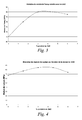
- Figure 3 is a graph showing the evolution of the Young module of the product, according to the invention, as a function of the ZnO content.
- Figure 4 is a graph showing the evolution of the module of rupture of the product, according to the invention, as a function of the ZnO content.
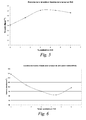
- Figure 5 is a graph showing the evolution of the tenacity of the product, according to the invention, depending on the content of ZnO.
- Figure 6 is a graph showing the evolution of the wear volume of the product, according to the invention, as a function of the ZnO content.
- the invention relates more particularly to the manufacture of tiles ceramics for flooring, and possibly walls, which is characterized by the fact that they contain in their mass even jointly crystalline phases of type mullite and gahnite in an optical strengthening mechanical properties and wear resistance.
- ZnO is generally introduced into a glaze which is applied to the surface of ceramic tiles, and not in the basic ceramic mass, which is the essential characteristic of the product according to the invention.
- This introduction of ZnO generally leads to the formation of silicate in the form of willemite (ZnO.SiO 2 ).
- the majority of ceramic compositions favor, during the heat treatment of the greasy type, the formation of mullite which crystallizes at a relatively high temperature between 950 ° and 1000 ° C. Training kinetics mullite is slow, so that when fast cooking cycles are adopted, it is found in a very small proportion in cooked products.
- the invention proposes to incorporate ZnO in ceramic compositions for the manufacture of tiles for the purpose of promote the formation of gahnite in addition to mullite.
- Gahnite could seem paradoxical, since the formation of Gahnite from a mixture of Al 2 O 3 powders and ZnO proceeds according to a particular solid-state reaction mechanism that tends to inhibit densification. and leads to obtaining porous products. Nevertheless, it has been observed, unexpectedly, that during the process of grésification (mechanism with liquid phase at the grain boundaries), the depletion of Al 2 O 3 following the formation of Gahnite increases the fusibility of the formed silica phase, which, on the one hand, facilitates the digestion of the quartz grains present and, on the other hand, reduces the porosity by a viscous flow mechanism.
- the gahnite is characterized, in particular, by a hardness value analogous to that of mullite, in this case 7.5 to 8 on the Mohs scale.
- catalysts such as ZrO 2 and TiO 2 powders can advantageously be introduced in a small amount into the mixture of raw materials.
- TiO 2 the effect of adding TiO 2 is reported.
- the first example relates to the preparation of ceramic masses for which the proportions of clays, feldspars and zinc oxide have been adjusted so that once the gahnite has completely crystallized, the ratio Al 2 O 3 / SiO 2 likewise that the content of fluxes, such as Na 2 O, K 2 O and CaO, tend towards those of the composition of a reference mixture for the production of classic sandstone-type tiles.
- the reference mixture was selected in order to quantify the gain that the presence of gahnite induces in terms of physical, mechanical and in terms of abrasion resistance of the tiles produced from this mixture.
- Component Composition based on ZnO (% by weight) Composition based on ZnO with addition of TiO 2 (% by weight) Composition of the reference product (% by weight) SiO 2 61.3 60.7 68.8 Al 2 O 3 27.3 27.0 24.6 MgO 0.7 0.7 0.5 TiO 2 1.2 2.2 1.3 ZnO 4.5 4.4 - K 2 O 1.6 1.6 1.6 Na 2 O 0.8 0.8 0.7 CaO 1.1 1.1 1.1 Other 1.5 1.5 1.4
- compositions which contain ZnO have a content of this oxide which has been calculated in order to obtain, after curing, a quantity of gahnite equal to 10% by weight.
- the ZnO content, according to the invention in Example 1, is 4.5% by weight.
- the mixtures have been homogenized using a double helix mixer (in Z). Then, after drying oven at 40 ° C, the powders obtained were sieved using an opening sieve 63 .mu.m.
- Table 3 shows the rupture modules and the abrasive wear volumes measured on the products obtained according to the compositions of Table 1 according to the process conditions of Table 2. Breakup modules and abrasive wear volumes (according to EN 102) measured on both gahnite reinforced materials and the reference product.
- FIGS. 1 and 2 show SEM micrographs of sintered products whose initial composition contains 4.5% by weight of ZnO. Note also the character bimodal distribution of grain size, which is beneficial in terms of mechanical properties.
- the essential difference lies in the starting composition which has not been modified (in terms of ratio SiO 2 / Al 2 O 3 ) to overcome the fact that a certain amount of Al 2 O 3 is consumed during the formation of gahnite.
- FIGS. 3, 4 and 5 make it possible to demonstrate a systematic increase following the presence of gahnite with a common optimum corresponding to a ZnO content of between 3 and 4.5% by weight.
- the improvement of the characteristics mechanics is accompanied by a reduction in wear volumes whose amplitude is the more pronounced for a content of 4.5% in ZnO.
- a reduction in the wear volume of the order of 20% is obtained if we consider the ZnO-free tile as reference. This is illustrated in Figure 6.
Landscapes
- Chemical & Material Sciences (AREA)
- Engineering & Computer Science (AREA)
- Ceramic Engineering (AREA)
- Materials Engineering (AREA)
- Structural Engineering (AREA)
- Organic Chemistry (AREA)
- Manufacturing & Machinery (AREA)
- Dispersion Chemistry (AREA)
- Compositions Of Oxide Ceramics (AREA)
- Road Paving Structures (AREA)
- Paints Or Removers (AREA)
Applications Claiming Priority (2)
| Application Number | Priority Date | Filing Date | Title |
|---|---|---|---|
| BE2003/0606A BE1015774A3 (fr) | 2003-11-07 | 2003-11-07 | Carreaux de pavement ceramiques a proprietes mecaniques et resistance a l'abrasion amelioree. |
| BE200300606 | 2003-11-07 |
Publications (2)
| Publication Number | Publication Date |
|---|---|
| EP1529763A2 true EP1529763A2 (de) | 2005-05-11 |
| EP1529763A3 EP1529763A3 (de) | 2009-03-18 |
Family
ID=34427385
Family Applications (1)
| Application Number | Title | Priority Date | Filing Date |
|---|---|---|---|
| EP04105594A Withdrawn EP1529763A3 (de) | 2003-11-07 | 2004-11-08 | Keramische Bodenbelagplatte mit Abrieb-und Verschleiss-Festigkeit |
Country Status (2)
| Country | Link |
|---|---|
| EP (1) | EP1529763A3 (de) |
| BE (1) | BE1015774A3 (de) |
Family Cites Families (2)
| Publication number | Priority date | Publication date | Assignee | Title |
|---|---|---|---|---|
| JP2000185933A (ja) * | 1998-12-24 | 2000-07-04 | Minolta Co Ltd | ガラス組成 |
| JP2000185939A (ja) * | 1998-12-24 | 2000-07-04 | Minolta Co Ltd | ガラス組成 |
-
2003
- 2003-11-07 BE BE2003/0606A patent/BE1015774A3/fr not_active IP Right Cessation
-
2004
- 2004-11-08 EP EP04105594A patent/EP1529763A3/de not_active Withdrawn
Non-Patent Citations (3)
| Title |
|---|
| DATABASE CHEMABS [Online] CHEMICAL ABSTRACTS SERVICE, COLUMBUS, OHIO, US; TAKENAKA, KATSUSHIGE ET AL: "Aluminosilicate glass composition and glass substrate from it" XP002290480 extrait de STN Database accession no. 133:77943 & JP 2000 185933 A2 (MINOLTA CAMERA CO., LTD., JAPAN) 4 juillet 2000 (2000-07-04) * |
| DATABASE CHEMABS [Online] CHEMICAL ABSTRACTS SERVICE, COLUMBUS, OHIO, US; TAKENAKA, KATSUSHIGE ET AL: "Aluminosilicate glass composition and glass substrate from it" XP002290481 extrait de STN Database accession no. 133:77944 & JP 2000 185939 A2 (MINOLTA CAMERA CO., LTD., JAPAN) 4 juillet 2000 (2000-07-04) * |
| DATABASE CHEMABS [Online] CHEMICAL ABSTRACTS SERVICE, COLUMBUS, OHIO, US; TKALCEC, E. ET AL: "Isothermal and non-isothermal crystallization kinetics of zinc-aluminosilicate glasses" XP002290482 extrait de STN Database accession no. 136:23680 & THERMOCHIMICA ACTA , 378(1-2), 135-144 CODEN: THACAS; ISSN: 0040-6031, 2001, * |
Also Published As
| Publication number | Publication date |
|---|---|
| BE1015774A3 (fr) | 2005-08-02 |
| EP1529763A3 (de) | 2009-03-18 |
Similar Documents
| Publication | Publication Date | Title |
|---|---|---|
| KR101649523B1 (ko) | 투명한 또는 불투명한 용융 실리카의 코팅된 성분을 제조하는 방법 | |
| CN1225431C (zh) | 卫生陶瓷 | |
| EP2516349B1 (de) | Pulver für trockenes glaskeramik-feuerfestmaterial | |
| FR2458520A1 (de) | ||
| EP0404610B2 (de) | Feuerfeste, monoklines Zirkon enthaltende Zusammensetzungen und daraus geformte Gegenstände, die mechanische Festigkeit bei erhöhter Temperatur und eine verbesserte Wärmeschockbeständigkeit aufweisen. | |
| JPH0656516A (ja) | 熔化質素地、その製造方法、それを用いた衛生陶器、及び熔化質素地用の釉薬 | |
| CN118495810B (zh) | 一种凸纹素色瓷砖及其制备方法 | |
| JP2011116568A (ja) | 衛生陶器用陶磁器素地 | |
| TWI773211B (zh) | 衛生陶器 | |
| EP1912917B1 (de) | Brennunterstützung für keramikartikel und verfahren zu deren herstellung | |
| BE1015774A3 (fr) | Carreaux de pavement ceramiques a proprietes mecaniques et resistance a l'abrasion amelioree. | |
| JP4408104B2 (ja) | 強化磁器及びその製造方法 | |
| WO1999043628A1 (fr) | Corps en ceramique pour appareils sanitaires et son procede de production | |
| JP2001253760A (ja) | 陶磁器 | |
| JP2002080266A (ja) | 衛生陶器 | |
| EP2691352B1 (de) | Verglastes sinterprodukt | |
| JP7790067B2 (ja) | 陶器素地材料 | |
| JP4626880B2 (ja) | 建材用ガラス物品の製造方法 | |
| EP4565544B1 (de) | Fliesen oder platten aus verdichtetem keramischem material | |
| US11299426B2 (en) | Process for manufacturing agglomerated stone slab | |
| JP7420209B1 (ja) | 釉薬層を備えた陶器 | |
| CN100417625C (zh) | 非氧化性气氛用窑具 | |
| KR20050123331A (ko) | 도판용 투명유약 조성물 | |
| JP2004300086A (ja) | 釉薬用抗菌剤及び抗菌窯業製品の製造方法 | |
| JP2002087874A (ja) | 陶器製品 |
Legal Events
| Date | Code | Title | Description |
|---|---|---|---|
| PUAI | Public reference made under article 153(3) epc to a published international application that has entered the european phase |
Free format text: ORIGINAL CODE: 0009012 |
|
| AK | Designated contracting states |
Kind code of ref document: A2 Designated state(s): AT BE BG CH CY CZ DE DK EE ES FI FR GB GR HU IE IT LI LU MC NL PL PT RO SE SI SK TR |
|
| AX | Request for extension of the european patent |
Extension state: AL HR LT LV MK YU |
|
| PUAL | Search report despatched |
Free format text: ORIGINAL CODE: 0009013 |
|
| AK | Designated contracting states |
Kind code of ref document: A3 Designated state(s): AT BE BG CH CY CZ DE DK EE ES FI FR GB GR HU IE IT LI LU MC NL PL PT RO SE SI SK TR |
|
| AX | Request for extension of the european patent |
Extension state: AL HR LT LV MK YU |
|
| 17P | Request for examination filed |
Effective date: 20090918 |
|
| AKX | Designation fees paid |
Designated state(s): BE ES FR IT TR |
|
| REG | Reference to a national code |
Ref country code: DE Ref legal event code: 8566 |
|
| 17Q | First examination report despatched |
Effective date: 20101222 |
|
| STAA | Information on the status of an ep patent application or granted ep patent |
Free format text: STATUS: THE APPLICATION IS DEEMED TO BE WITHDRAWN |
|
| 18D | Application deemed to be withdrawn |
Effective date: 20120601 |