EP1527432B1 - Systeme avionique et station au sol destines a un avion hors de gestion de route et des communications d'alarmes - Google Patents
Systeme avionique et station au sol destines a un avion hors de gestion de route et des communications d'alarmes Download PDFInfo
- Publication number
- EP1527432B1 EP1527432B1 EP03763791A EP03763791A EP1527432B1 EP 1527432 B1 EP1527432 B1 EP 1527432B1 EP 03763791 A EP03763791 A EP 03763791A EP 03763791 A EP03763791 A EP 03763791A EP 1527432 B1 EP1527432 B1 EP 1527432B1
- Authority
- EP
- European Patent Office
- Prior art keywords
- aircraft
- avionic
- flight
- onboard
- data
- Prior art date
- Legal status (The legal status is an assumption and is not a legal conclusion. Google has not performed a legal analysis and makes no representation as to the accuracy of the status listed.)
- Expired - Lifetime
Links
- 238000004891 communication Methods 0.000 title claims abstract description 18
- 238000012544 monitoring process Methods 0.000 claims abstract description 11
- 230000006870 function Effects 0.000 claims description 31
- 238000000034 method Methods 0.000 claims description 13
- 238000012545 processing Methods 0.000 claims description 5
- 238000011156 evaluation Methods 0.000 claims description 4
- 230000008569 process Effects 0.000 claims description 2
- 230000002452 interceptive effect Effects 0.000 claims 1
- 238000013459 approach Methods 0.000 description 5
- 230000005540 biological transmission Effects 0.000 description 5
- 230000008901 benefit Effects 0.000 description 3
- 238000010586 diagram Methods 0.000 description 3
- 230000009194 climbing Effects 0.000 description 2
- 238000012790 confirmation Methods 0.000 description 2
- 238000001514 detection method Methods 0.000 description 2
- RZVHIXYEVGDQDX-UHFFFAOYSA-N 9,10-anthraquinone Chemical compound C1=CC=C2C(=O)C3=CC=CC=C3C(=O)C2=C1 RZVHIXYEVGDQDX-UHFFFAOYSA-N 0.000 description 1
- 206010010144 Completed suicide Diseases 0.000 description 1
- 230000008859 change Effects 0.000 description 1
- 238000006243 chemical reaction Methods 0.000 description 1
- 238000010276 construction Methods 0.000 description 1
- 230000001419 dependent effect Effects 0.000 description 1
- 230000007613 environmental effect Effects 0.000 description 1
- 238000009434 installation Methods 0.000 description 1
- 230000003533 narcotic effect Effects 0.000 description 1
- 231100000614 poison Toxicity 0.000 description 1
- 230000007096 poisonous effect Effects 0.000 description 1
- 230000004224 protection Effects 0.000 description 1
- 230000009979 protective mechanism Effects 0.000 description 1
- 238000001228 spectrum Methods 0.000 description 1
- 230000007704 transition Effects 0.000 description 1
- 230000001960 triggered effect Effects 0.000 description 1
- 238000010200 validation analysis Methods 0.000 description 1
Images

Classifications
-
- G—PHYSICS
- G08—SIGNALLING
- G08G—TRAFFIC CONTROL SYSTEMS
- G08G5/00—Traffic control systems for aircraft
- G08G5/20—Arrangements for acquiring, generating, sharing or displaying traffic information
- G08G5/26—Transmission of traffic-related information between aircraft and ground stations
-
- G—PHYSICS
- G08—SIGNALLING
- G08G—TRAFFIC CONTROL SYSTEMS
- G08G5/00—Traffic control systems for aircraft
- G08G5/50—Navigation or guidance aids
- G08G5/52—Navigation or guidance aids for take-off
-
- G—PHYSICS
- G08—SIGNALLING
- G08G—TRAFFIC CONTROL SYSTEMS
- G08G5/00—Traffic control systems for aircraft
- G08G5/50—Navigation or guidance aids
- G08G5/53—Navigation or guidance aids for cruising
-
- G—PHYSICS
- G08—SIGNALLING
- G08G—TRAFFIC CONTROL SYSTEMS
- G08G5/00—Traffic control systems for aircraft
- G08G5/50—Navigation or guidance aids
- G08G5/54—Navigation or guidance aids for approach or landing
-
- G—PHYSICS
- G08—SIGNALLING
- G08G—TRAFFIC CONTROL SYSTEMS
- G08G5/00—Traffic control systems for aircraft
- G08G5/50—Navigation or guidance aids
- G08G5/55—Navigation or guidance aids for a single aircraft
-
- G—PHYSICS
- G08—SIGNALLING
- G08G—TRAFFIC CONTROL SYSTEMS
- G08G5/00—Traffic control systems for aircraft
- G08G5/70—Arrangements for monitoring traffic-related situations or conditions
- G08G5/72—Arrangements for monitoring traffic-related situations or conditions for monitoring traffic
- G08G5/727—Arrangements for monitoring traffic-related situations or conditions for monitoring traffic from a ground station
-
- H—ELECTRICITY
- H04—ELECTRIC COMMUNICATION TECHNIQUE
- H04B—TRANSMISSION
- H04B7/00—Radio transmission systems, i.e. using radiation field
- H04B7/14—Relay systems
- H04B7/15—Active relay systems
- H04B7/185—Space-based or airborne stations; Stations for satellite systems
- H04B7/18502—Airborne stations
- H04B7/18506—Communications with or from aircraft, i.e. aeronautical mobile service
-
- H—ELECTRICITY
- H04—ELECTRIC COMMUNICATION TECHNIQUE
- H04B—TRANSMISSION
- H04B7/00—Radio transmission systems, i.e. using radiation field
- H04B7/14—Relay systems
- H04B7/15—Active relay systems
- H04B7/185—Space-based or airborne stations; Stations for satellite systems
- H04B7/18502—Airborne stations
- H04B7/18506—Communications with or from aircraft, i.e. aeronautical mobile service
- H04B7/18508—Communications with or from aircraft, i.e. aeronautical mobile service with satellite system used as relay, i.e. aeronautical mobile satellite service
Definitions
- This invention relates to an avionic system and a ground station for aircraft out of route management and alarm communications. More particularly, it relates to a system for handling events in case of deviations from the authorized flight paths and from the pre-set altitude or flight level or spatial limits, and automatically transmitting the onboard situation in real time to ground control stations when potentially dangerous events occur.
- Document US5714948 discloses a satellite based air traffic control system with an aircraft unit on an aircraft which transmits aircraft identification information, GPS data, aircraft status information, and a transmit detect code to the ATC facility to allow the ATC to track the aircraft and identify the aircraft communicating on two-way radio.
- the traffic control system and a flight control system utilizing GPS may be used for aircraft in the air and on the ground. It may be used for ships, boats, automobiles, trains or railroads, and aircraft. This system, however, does not take into account terrorists acts or hijackings with suicide objectives.
- an avionic device which carries out "collision avoidance” and “alarm” functions; suitable sensors and on board transmitters; a ground control station composed of computing systems.
- the device it installed in a specific protected housing of the aircraft; it is not accessible and cannot be disabled from the cockpit.
- the first function is performed in the device and intervenes temporarily and independently of the pilot as soon as the aircraft deviates from the pre-set flight path, regardless of the causes. This could occur, for example, it the aircraft flies, in not allowed directions or descends below the altitudes/flight levels authorized by the air-traffic control regulations.
- the second function is also performed in the device and enables the above mentioned ground control stations to receive all the necessary information from the aircraft (for example, routes data and images) for carrying out appropriate evaluations when potentially dangerous events occur.
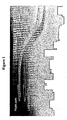
- Figure 1 shows an aircraft that uses the system of the invention.
- the authorized flight path is the upper one; the permissible limits for said flight path are also shown - if the aircraft descends below these limits, the system automatically intervenes temporarily by making the aircraft climb to the above said altitude limit and informing the ground control stations of the alarm condition ( Figure 2).
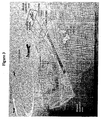
- Figure 3 shows a schematic diagram of an airport runway.
- the virtual cones set the spatial limits for containing the flying aircraft - if the aircraft descends below these, limits, the system automatically temporarily intervenes making the aircraft climb to a defined limit altitude and informing the ground control stations of the alarm condition.
- the system properly considers the land orography, buildings, nearby aircraft, the missing approach volumes and the authorized circling areas.
- the system in accordance with the invention, is composed by an avionic device installed onboard commercial and general aviation aircraft, several sensors and transmitters installed in appropriate points of the aircraft, and connections between said sensors and the avionic device.
- the system exchanges information with ground control stations specifically designed to handle the data transmitted from the aircraft and to perform secure communication with the avionic device.
- the avionic device comprises a CPU (Central Processor Unit) suitable for handling all the data at the required processing speed, specific software, electronic components; it has memory devices suitable for storing the world flight paths data and relevant limits, the world's airports positions and relevant limits, any other required data; input and output interfaces suitable for exchanging the required information and data between the aircraft, other nearby aircrafts and the ground control stations.
- CPU Central Processor Unit
- the "collision avoidance” function which is one of the functions carried out by the avionic device, is not only used to avoid collisions when the aircraft is flying, but also during landing and take-off.
- the unit operates based on the global authorised minimum cruising altitudes and flight levels, the so-called “limits”, covering every area of the globe, always in compliance with all the civil aviation regulations, including the ICAO ones.
- the unit automatically temporarily intervenes through appropriate connections with the unit itself, the autopilot and the navigation system.
- the unit During take-off and landing, the unit operates by creating virtual cones that delimit air space and considering the land orography, the flying and ground obstacles, and all other data of interest (as shown schematically in Figure 3); these data for every area of the globe are stored in the storage unit of the system as necessary.
- the "collision avoidance" function is carried out through two stages, In the first stage, the so-called “monitoring stage", the unit constantly compares the position of the aircraft with the pre-set and stored authorized limits. The unit continuously receives the data through its interfacing with the navigation system of the aircraft and its sensors. The limits depend on the flight areas, the applicable regulations, the man-built constructions, obstacles and many other factors.
- the stored data includes the coordinates of all the world's airports and all the landing and take-off procedures established in compliance with the ICAO regulations. All the necessary information is kept up to date in real time, so that any changes to the above parameters are considered when competent authorities or aeronautical bodies change it, and this is accomplished through appropriate automatic updating procedures performed connecting the unit to ground control stations through data links (links described in the alarm function).
- control stage when the aircraft deviates from the authorized limits the unit intervenes automatically on the autopilot; through the aforementioned interfaces, to take the aircraft to its spatial limit.
- the preferred version of the aircraft out of route management system is as follows: in the monitoring state, it allows all the aircraft flying at altitudes or flight levels higher than the pre-set limit (established by the ICAO regulations for the different flight paths) to stay under the direct pilot control, also allowing flight path changes above the limit altitude or flight level (alarms will be generated only in case of big flight path changes),
- the transition to the control state only occurs if the aircraft leaves its route to fly in unauthorised directions or descend below the pro-set limit.
- the unit temporarily takes control of the aircraft, through the collision avoidance function, to make the aircraft climb to the pre-set limit. Once the safety limits have been restored, the system gives the control back to the pilot.
- the preferred version of the collision avoidance function during landing and take-off is as follows: for each airport two virtual cones (one in the landing direction and one in the take-off direction) are designed via software, in compliance with the instrument approach procedure, the missed approach procedure and virtual circling areas for the concerned runways.
- the unit may also command the autopilot and temporarily take the control of the aircraft to place it in a predetermined position at a safety height. For example, this can occur in the following cases:
- interfaces with sensors to receive row signals in order to calculate automatically an independent present position interfaces with the navigation system to get the present position signals already computed by other equipment in order to check the accuracy of the data.
- the collision avoidance system may be optionally doubled to make the system even more reliable.
- the second main function carried out by the avionic device is to allow communication between the aircraft and ground control stations or other aircraft.
- the “alarm function” is also carried out through two stages.
- the first the so-called “monitoring stage” consists in collecting information on the aircraft onboard situation and storing it in the memory unit. This information is not automatically transmitted to the ground control stations.
- the so-called “alarm stage” which is activated in cases of alarm, the unit transmits the information generated onboard the aircraft to the ground control stations for appropriate evaluation.
- the avionic unit has a "surveillance" role and constantly communicates with the video cameras and sensors onboard the aircraft. It records the images and the required information at pre-determined time intervals, and stores the information and data for a pre-determined amount of time.
- the unit constantly compares the position of the aircraft with the expected route in the flight plan; furthermore, the unit continuously automatically checks its functions. The system enters the pre-alarm state if a hijacking or terrorist act is detected by the sensors or the flight crew, if there is a significant deviation from the flight plan or if the cones areas are not respected.
- a validation request is sent to the nearest ground control station. If this is not validated within the predetermined time interval by the ground control station, the unit will automatically pass from the monitoring state to the alarm state. It goes directly in alarm state if the aircraft flies below the a.m. flight limits.
- the unit constantly transmits the aircraft navigation data and other data (for example, images) to ground control stations, and receives messages to the flight crew and passengers. Both in the monitoring and in the alarm state, the unit works independently of the pilot and, in the event of attested terrorist events, it automatically communicates any necessary data to the ground control stations. Appropriate measures will be implemented so that, even in the case of mechanical damage to the onboard instruments or wiring, the unit is not affected.
- the unit has its interfaces with the onboard systems and with the aircraft communications system in order to communicate all the necessary data with the ground control stations.
- the system comprises a number of miniature surveillance video cameras, which are installed in appropriate positions depending on the size of the aircraft and are wired to the alarm unit. During the monitoring state, the video cameras automatically send a signal if they have been disabled, damaged, or covered. The video cameras transmit the images constantly both to the cockpit and to the unit.
- the system comprises several sensors appropriately connected to the alarm unit installed in the aeroplane in appropriate positions depending on the size of the aircraft. Preferred sensors are "radio controlled" crew wearable miniature transmitters that can be operated with switches. These are “radio controlled” heart rate monitors for the pilots, switches on board usable by the flight crew.
- the flight crew may manually activate the sensors, sending different impulses to the avionic unit in the event of hijacking or a terrorist act; these transmitters are equipped with switches and have specific protective mechanisms to protect against false alarms. Furthermore, switches are located in places that may be accessed by the passengers as well. Optionally, in case of alarm the unit could automatically lock access to the cockpit.
- ground control stations Preferably, these do not receive information during the monitoring state of the unit.
- the ground control stations receive, from the concerned aircraft flying in their range, both the information registered before the alarm event and real time information from the aircraft.
- the ground control stations will perform the following preferred procedure: provide the received information to the competent authorities; continuously check the correctness of the flight parameters of the aeroplanes under their control when in the pra-alarm state and alarm state; constantly check the aeroplane onboard situation during hijacking and promptly relay the needed information.
- An adequate number of ground control stations will be located for the proper management of the system in the locations deemed necessary by the national authorities.
- the stations will include at least the following systems: adequately powerful computers with specifications suitable for the functions to be performed, a receiver-transmitter radio system, an encryption and coding system, an audio-visual-data communications system.
- the onboard/ground/onboard transmission of the information will be performed preferably through a data link connection managing audio, data radar and video signals and featuring an encryption and coding system capable to provide high resistance to jamming.
- Transmitted data will be sent with a suitable data format on appropriate transmission frequencies and with adequate waveforms.
- Spread spectrum techniques Frequency Hopping or Direct Sequency
- the system will be provided with the nearby aircraft position.
- the unit may receive information coming from General Aviation systems such as the Automatic Dependent Surveillance (ADS) system, which is able to transmit the aircraft position via radio link, or can receive data detected by ground radars, which will transmit them to the concerned aircraft in the most appropriate way (for example, through the a.m. ground control station).
- ADS Automatic Dependent Surveillance
- the system may also operate through a specific satellite Wide Band Data Link connection. This will allow the aircraft to be monitored when flying over open oceans and improve the transmission of images in terms of speed and size, which could be very slow if a radio band is used.
- narcotic or poisonous gas detectors may be installed on board.
- the system also provides a function for handling the emergencies. This considers both the possibility that, the system may be disabled under the threat of arms and the need for the pilot to immediately intervene in the critical phases of a real emergency. To achieve the first objective the system always works automatically, and cannot be disabled by the pilot. In case of alarm the system sends messages, incuding diabling codes.
- the use of secure radio bands guarantees a secure connection with the ground control stations and makes it possible for the aircraft to send automatically, if the alarm event is triggered, standard messages that inform the competent authorities of the onboard situation and to receive any disabling signals from ground. For this reason it is possible to confirm the disabling of the entire system from a ground control station or from another aircraft after checking the received messages (example images). This covers the risk that the system may be shut down by accident, by "expert" telecommunications terrorists, or under threat of weapons.
- the system of the invention provides real time information on the situation onboard the aeroplane and allows the aircraft to fly below the limit altitude or flight level only for taking off or landing, preventing the aircraft from descending to any point of the globe unless there is a real emergency on board.
- the system is able to manage an aircraft out of route, increasing the flight safety, providing to ground, through secure communication, the onboard situation in real time.
- the system increases the day-to-day flight safety since it provides an automatic service that prevents the aircraft from descending, even in the event of an error, below the minimum height established by the regulations, avoiding possible accidents due to human and/or environmental factors.
- the system thanks to the interfaces with the onboard systems, can optionally take the aircraft to an autonomous landing, depending on the aircraft and airport equipment configuration.
Landscapes
- Engineering & Computer Science (AREA)
- Physics & Mathematics (AREA)
- Aviation & Aerospace Engineering (AREA)
- General Physics & Mathematics (AREA)
- Astronomy & Astrophysics (AREA)
- Computer Networks & Wireless Communication (AREA)
- Signal Processing (AREA)
- Traffic Control Systems (AREA)
- Small-Scale Networks (AREA)
- Alarm Systems (AREA)
- Mobile Radio Communication Systems (AREA)
- Navigation (AREA)
Claims (10)
- Système d'avionique destiné à un aéronef ayant perdu le contrôle de route et la communication d'alarme comprenant au moins une unité d'avionique, située à bord d'un aéronef, dotée d'une unité de mémoire permettant de stocker des informations prédéfinies, un moyen de traitement électronique permettant de traiter les informations reçues et de les comparer en temps réel avec des valeurs pré-établies, des interfaces permettant de recevoir des informations à partir de systèmes embarqués et d'envoyer des commandes à un pilote automatique d'aéronef afin de prendre le contrôle de l'aéronef et de le ramener à des niveaux de vol ou à des positions spatiales pré-établies, des détecteurs permettant d'obtenir des données relatives à la situation à bord de l'aéronef, un système de communication permettant de transmettre la situation de bord en temps réel à une station de contrôle au sol et de recevoir à partir de la station de contrôle au sol, ou à partir d'un autre aéronef, des instructions appropriées quand des événements prédéterminés surviennent, dans lequel l'unité d'avionique est à même de réaliser une fonction anti-collision, afin d'éviter des collisions au cours du vol de l'aéronef, de l'atterrissage et du décollage, dans lequel la fonction anti-collision se déroule par le biais d'une étape respective de surveillance, au cours de laquelle l'unité d'avionique compare constamment la position de l'aéronef avec des limites autorisées pré-établies et stockées, et par le biais d'une étape de contrôle, dans lequel quand l'aéronef dévie des limites autorisées, le système d'avionique intervient automatiquement sur le pilote automatique par le biais desdites interfaces, afin de ramener l'aéronef dans sa limite spatiale, caractérisé en ce que l'unité d'avionique est à même de réaliser une fonction d'alarme, dans lequel la fonction d'alarme se déroule par le biais d'une étape respective de surveillance au cours de laquelle des informations relatives à la situation à bord de l'aéronef stockées dans l'unité de mémoire et qui ne sont pas transmises automatiquement à la station de contrôle au sol, et par le biais d'une étape d'alarme qui est actionnée dans des cas d'alarme, dans lequel les informations produites à bord de l'aéronef par l'unité d'avionique sont transmises à la station de contrôle au sol pour une évaluation appropriée.
- Système d'avionique selon la revendication 1, dans lequel lesdites informations prédéfinies concernent des trajectoires de vol, des cartes des pistes d'aviation du monde, l'orographie du territoire, les obstacles, et où les valeurs pré-établies comprennent des trajectoires de vol et des altitudes ou des niveaux de vol.
- Système d'avionique selon la revendication 2, dans lequel les détecteurs d'aéronef comprennent des caméras de vidéosurveillance et des émetteurs miniatures, susceptibles d'être portés par l'équipage en vol, afin d'obtenir des informations destinées à l'unité d'avionique.
- Système d'avionique selon la revendication 3, dans lequel les caméras vidéo comprennent des moyens d'établir si elles ont été déconnectées, endommagées ou si elles sont en dysfonctionnement.
- Système d'avionique selon la revendication 4, dans lequel les détecteurs comprennent des appareils de surveillance du rythme cardiaque pour que les pilotes soient reliés à l'unité d'avionique.
- Système d'avionique selon la revendication 4, qui comporte des commutateurs situés en des points spécifiques de l'aéronef et permettant à l'équipage et aux passagers d'obtenir des informations destinées à l'unité d'avionique, et un système de verrouillage automatique de poste de pilotage.
- Système d'avionique selon la revendication 4, comprenant un moyen approprié pour déconnecter de façon externe et/ou automatique le système anti-collision conformément à des règles prédéfinies, en cas d'urgence.
- Système d'avionique selon l'une quelconque des revendications précédentes, comprenant des moyens de cryptage et de codage des signaux échangés entre l'aéronef et la station de contrôle au sol, qui n'interfèrent pas avec les communications de bande radio.
- Procédé destiné à un aéronef ayant perdu le contrôle de route, comprenant les étapes suivantes réalisées par un système d'avionique selon la revendication 1 :- le fait de définir des premières données relatives aux trajectoires de vol, aux cartes des pistes du monde, à l'orographie du territoire, aux obstacles et à des valeurs pré-établies comprenant des trajectoires de vol et des altitudes ou des niveaux de vol, en particulier en vue d'établir une fonction anti-collision et de charger lesdites premières données dans l'unité d'avionique de l'aéronef,- le fait de définir des deuxièmes données relatives à une trajectoire de vol pré-établie d'aéronef et des limites autorisées d'altitude et de vol, afin d'obtenir une fonction d'alarme et le chargement desdites deuxièmes données dans l'unité d'avionique d'aéronef,- le fait de définir des troisièmes données relatives à au moins une station de contrôle au sol et de charger lesdites troisièmes données dans la station,- la mise en oeuvre d'interfaces,- la mise en oeuvre de canaux de télécommunication et de leurs caractéristiques respectives,- la mise en oeuvre de détecteurs, d'émetteurs, de commutateurs et de caméras vidéo à bord de l'aéronef,- le fait de déterminer des logiques de fonctionnement de la fonction anti-collision et leur implémentation dans l'unité d'avionique, fondée sur une comparaison desdites premières données avec la position de l'aéronef,- le fait de déterminer des logiques de fonctionnement de la fonction d'alarme et leur implémentation dans l'unité d'avionique, fondée sur une comparaison desdites deuxièmes données avec une position réelle de l'aéronef,- le fait de déterminer des logiques de fonctionnement de la station de contrôle au sol et de les charger dans la station, de comparer constamment la position de l'aéronef avec les limites spatiales autorisées pré-établies et stockées intervenant automatiquement sur le pilote automatique afin de conduire l'aéronef vers ses limites spatiales autorisées par le biais des interfaces quand l'aéronef dévie des limites spatiales autorisées, en particulier à son niveau minimal d'altitude de croisière et de vol, de stocker la situation à bord de l'aéronef dans l'unité de mémoire et de ne pas la transmettre automatiquement vers la station de contrôle au sol, de transmettre lesdites informations produites à bord vers la station de contrôle au sol pour une évaluation appropriée quand une étape d'alarme est actionnée en cas d'alarme.
- Procédé selon la revendication 9, caractérisé en ce que le moyen de traitement électronique traite les informations reçues et les compare en temps réel à des données relatives à des trajectoires de vol pré-établies et à des altitudes ou à des niveaux de vol permis, et caractérisé en ce que les interfaces reçoivent des informations de vol issues de systèmes embarqués et envoient des commandes au pilote automatique d'aéronef pour prendre le contrôle de l'aéronef et le ramener à des altitudes ou à des niveaux de vol préétablis, et caractérisé en ce que les détecteurs obtiennent des données relatives à la situation à bord de l'aéronef, et caractérisé en ce que le moyen de communication et les interfaces de connexion transmettent des informations relatives à la situation à bord en temps réel à la station de contrôle au sol et reçoivent des instructions appropriées depuis la station de contrôle au sol ou d'un autre aéronef quand des événements prédéterminés surviennent.
Applications Claiming Priority (3)
| Application Number | Priority Date | Filing Date | Title |
|---|---|---|---|
| ITRM20020371 | 2002-07-10 | ||
| IT2002RM000371A ITRM20020371A1 (it) | 2002-07-10 | 2002-07-10 | Sistema di gestione della navigazione di velivoli fuori rotta e comunicazioni di allarme. |
| PCT/EP2003/007486 WO2004008415A1 (fr) | 2002-07-10 | 2003-07-10 | Systeme avionique et station au sol destines a un avion hors de gestion de route et des communications d'alarmes |
Publications (2)
| Publication Number | Publication Date |
|---|---|
| EP1527432A1 EP1527432A1 (fr) | 2005-05-04 |
| EP1527432B1 true EP1527432B1 (fr) | 2006-05-03 |
Family
ID=11456402
Family Applications (1)
| Application Number | Title | Priority Date | Filing Date |
|---|---|---|---|
| EP03763791A Expired - Lifetime EP1527432B1 (fr) | 2002-07-10 | 2003-07-10 | Systeme avionique et station au sol destines a un avion hors de gestion de route et des communications d'alarmes |
Country Status (12)
| Country | Link |
|---|---|
| US (1) | US20060167598A1 (fr) |
| EP (1) | EP1527432B1 (fr) |
| CN (1) | CN1666239A (fr) |
| AT (1) | ATE325408T1 (fr) |
| AU (1) | AU2003250032A1 (fr) |
| BR (1) | BR0312559A (fr) |
| CA (1) | CA2491831A1 (fr) |
| DE (1) | DE60305041T2 (fr) |
| ES (1) | ES2264006T3 (fr) |
| IT (1) | ITRM20020371A1 (fr) |
| RU (1) | RU2318243C2 (fr) |
| WO (1) | WO2004008415A1 (fr) |
Cited By (3)
| Publication number | Priority date | Publication date | Assignee | Title |
|---|---|---|---|---|
| WO2008089988A2 (fr) | 2007-01-24 | 2008-07-31 | Swiss Reinsurance Company | Système de navigation aérienne pour l'aviation comportant une station au sol, destiné à remédier de manière automatique aux perturbations de service qui se produisent pour des avions, ainsi que procédé correspondant |
| RU2474863C1 (ru) * | 2012-02-01 | 2013-02-10 | Открытое акционерное общество "Московский институт электромеханики и автоматики" | Способ изменения высоты полета летательного аппарата |
| US10228692B2 (en) | 2017-03-27 | 2019-03-12 | Gulfstream Aerospace Corporation | Aircraft flight envelope protection and recovery autopilot |
Families Citing this family (58)
| Publication number | Priority date | Publication date | Assignee | Title |
|---|---|---|---|---|
| US7782256B2 (en) | 1999-03-05 | 2010-08-24 | Era Systems Corporation | Enhanced passive coherent location techniques to track and identify UAVs, UCAVs, MAVs, and other objects |
| US7667647B2 (en) | 1999-03-05 | 2010-02-23 | Era Systems Corporation | Extension of aircraft tracking and positive identification from movement areas into non-movement areas |
| US7612716B2 (en) | 1999-03-05 | 2009-11-03 | Era Systems Corporation | Correlation of flight track data with other data sources |
| US7908077B2 (en) | 2003-06-10 | 2011-03-15 | Itt Manufacturing Enterprises, Inc. | Land use compatibility planning software |
| US7777675B2 (en) | 1999-03-05 | 2010-08-17 | Era Systems Corporation | Deployable passive broadband aircraft tracking |
| US7889133B2 (en) | 1999-03-05 | 2011-02-15 | Itt Manufacturing Enterprises, Inc. | Multilateration enhancements for noise and operations management |
| US8203486B1 (en) | 1999-03-05 | 2012-06-19 | Omnipol A.S. | Transmitter independent techniques to extend the performance of passive coherent location |
| US8446321B2 (en) | 1999-03-05 | 2013-05-21 | Omnipol A.S. | Deployable intelligence and tracking system for homeland security and search and rescue |
| US7739167B2 (en) | 1999-03-05 | 2010-06-15 | Era Systems Corporation | Automated management of airport revenues |
| US7570214B2 (en) | 1999-03-05 | 2009-08-04 | Era Systems, Inc. | Method and apparatus for ADS-B validation, active and passive multilateration, and elliptical surviellance |
| US7587278B2 (en) * | 2002-05-15 | 2009-09-08 | Honeywell International Inc. | Ground operations and advanced runway awareness and advisory system |
| US8145367B2 (en) | 2001-03-06 | 2012-03-27 | Honeywell International Inc. | Closed airport surface alerting system |
| US7904081B2 (en) | 2002-08-20 | 2011-03-08 | Arinc Incorporated | ACARS messages over iridium |
| US7398057B2 (en) * | 2002-08-20 | 2008-07-08 | Arinc Inc. | Security messenger system |
| FR2866171B1 (fr) * | 2004-02-06 | 2006-06-30 | Thales Sa | Procede automatique de transmission des alertes de surveillance bord vers le sol |
| US20050251616A1 (en) * | 2004-05-05 | 2005-11-10 | General Electric Company | Facility monitoring system, method, and article of manufacture for obtaining data from non-volatile memory and volatile memory |
| US7350748B2 (en) * | 2005-03-21 | 2008-04-01 | Karl F. Milde, Jr. | Modular construction of an aircraft control system |
| US7479925B2 (en) * | 2005-03-23 | 2009-01-20 | Honeywell International Inc. | Airport runway collision avoidance system and method |
| US8254913B2 (en) | 2005-08-18 | 2012-08-28 | Smartsky Networks LLC | Terrestrial based high speed data communications mesh network |
| FR2891646B1 (fr) * | 2005-09-30 | 2016-07-01 | Thales Sa | Procede et dispositif embarque d'aide au roulage dans un aeroport. |
| US7965227B2 (en) | 2006-05-08 | 2011-06-21 | Era Systems, Inc. | Aircraft tracking using low cost tagging as a discriminator |
| US7664596B2 (en) * | 2006-06-29 | 2010-02-16 | Lockheed Martin Corporation | Air traffic demand prediction |
| FR2911689B1 (fr) * | 2007-01-19 | 2009-04-03 | Airbus Sas | Procede et dispositif de controle de la vitesse d'un aeronef |
| FR2914802B1 (fr) * | 2007-04-06 | 2011-02-18 | Airbus France | Procede et dispositif de gestion de canaux de communication pour des echanges de donnees a partir d'un aeronef |
| DE102008013357B4 (de) * | 2008-03-10 | 2019-03-07 | Thales Alenia Space Deutschland Gmbh | Anordnung und Verfahren zur Flugsicherung und/oder Flugleitung von Luftfahrzeugen |
| DE102008026415A1 (de) | 2008-06-02 | 2009-12-24 | Deutsches Zentrum für Luft- und Raumfahrt e.V. | System zur Überwachung von Bewegungen von Flugkörpern im Luftraum |
| US8626361B2 (en) * | 2008-11-25 | 2014-01-07 | Honeywell International Inc. | System and methods for unmanned aerial vehicle navigation |
| US8957790B2 (en) * | 2009-01-06 | 2015-02-17 | The Boeing Company | System and method for cruise monitoring and alerting |
| WO2011002313A1 (fr) * | 2009-06-30 | 2011-01-06 | Spider Tracks Limited | Système, dispositif et procédé améliorés de suivi |
| US8656162B2 (en) * | 2009-10-22 | 2014-02-18 | Honeywell International Inc. | Aeronautical security management over broadband air/ground network |
| FR2968442B1 (fr) * | 2010-12-07 | 2012-12-28 | Airbus Operations Sas | Procede et dispositif pour aider a l'evaluation d'une trajectoire de vol destinee a etre suivie par un aeronef dans un environnement contraint. |
| FR2968784B1 (fr) * | 2010-12-09 | 2014-07-18 | Airbus Operations Sas | Procede et dispositif de surveillance automatique d'ordres de guidage lateraux d'un aeronef. |
| DE102011010679A1 (de) * | 2011-02-08 | 2012-08-09 | Eads Deutschland Gmbh | Unbemanntes Luftfahrzeug mit eingebautem Kollisionswarnsystem |
| US9870000B2 (en) | 2011-03-28 | 2018-01-16 | Honeywell International Inc. | Methods and systems for translating an emergency system alert signal to an automated flight system maneuver |
| CN102364553B (zh) * | 2011-10-21 | 2014-05-21 | 广州航新航空科技股份有限公司 | 基于tcas系统的区域空域管理监视系统 |
| US9324236B2 (en) * | 2011-11-23 | 2016-04-26 | The Boeing Company | System and methods for situation awareness, advisory, tracking, and aircraft control information |
| FR3013034B1 (fr) * | 2013-11-12 | 2017-01-20 | Airbus Operations Sas | Systeme d'activation de balise de detresse d'aeronef |
| FR3020170B1 (fr) * | 2014-04-22 | 2016-05-06 | Sagem Defense Securite | Procede de guidage d'un aeronef |
| US9701398B2 (en) * | 2014-11-03 | 2017-07-11 | Douglas Allen SCHULTZ | Method and apparatus for augmented pilot operations of fly-by-wire vehicles |
| FR3028975B1 (fr) * | 2014-11-26 | 2016-12-02 | Thales Sa | Procede de detection d'erreur d'un systeme de gestion de vol et de guidage d'un aeronef et syteme de gestion de vol et de guidage a haute integrite |
| US9550583B2 (en) | 2015-03-03 | 2017-01-24 | Honeywell International Inc. | Aircraft LRU data collection and reliability prediction |
| US9891978B1 (en) * | 2015-12-03 | 2018-02-13 | Rockwell Collins, Inc. | Fault detection in a multi-core safety-critical avionics system |
| US20180005459A1 (en) * | 2016-06-30 | 2018-01-04 | Ge Aviation Systems Llc | Triggering Scheme for Communicating Engine Data |
| US10347141B2 (en) * | 2017-04-26 | 2019-07-09 | Honeywell International Inc. | System and method for transmitting obstacle alerts to aircraft from a ground based database |
| ES2774728T3 (es) * | 2017-10-11 | 2020-07-22 | Boeing Co | Un método y sistema implementados por ordenador para generar una trayectoria 3D a una ubicación de aterrizaje para un vehículo aéreo |
| US10692389B2 (en) * | 2018-07-20 | 2020-06-23 | Aurora Flight Services Corporation, a subsidiary of The Boeing Company | Flight control systems for aerial vehicles and related methods |
| US10867520B2 (en) * | 2018-08-14 | 2020-12-15 | The Boeing Company | System and method to modify an aircraft flight trajectory |
| US10583845B1 (en) * | 2018-10-30 | 2020-03-10 | Honeywell International Inc. | Systems and methods for detecting and alerting security threats in vehicles |
| WO2020127706A1 (fr) * | 2018-12-19 | 2020-06-25 | Safran Electronics & Defense | Procédé de pilotage d'un aéronef |
| CN110162985A (zh) * | 2019-05-09 | 2019-08-23 | 中国航空工业集团公司西安航空计算技术研究所 | 一种机载任务系统的数据毁钥设计方法 |
| DE102019114354A1 (de) * | 2019-05-28 | 2020-12-03 | Volocopter Gmbh | Verfahren und System zur Vermeidung von Kollisionen zwischen Fluggeräten und anderen fliegenden Objekten |
| WO2021259493A1 (fr) | 2020-06-26 | 2021-12-30 | D3 Technologies Ag | Procédé et système de commande de mouvements de vol de véhicules aériens |
| CN112312397B (zh) * | 2020-09-28 | 2022-04-01 | 深圳市瑞迅通信息技术有限公司 | 一种信号安全监测系统和信号安全监测方法 |
| CN113359834B (zh) * | 2021-06-22 | 2022-06-10 | 中国民用航空总局第二研究所 | 一种无人机运行监控方法、系统及监控平台 |
| CN113949437B (zh) * | 2021-09-18 | 2024-03-26 | 西安空间无线电技术研究所 | 一种基于信道模拟技术的中继捕跟外场试验模拟系统及方法 |
| CN115440095B (zh) * | 2022-08-30 | 2023-09-29 | 上海航天电子有限公司 | 一种航空多模融合通信系统地面终端 |
| CN115440090B (zh) * | 2022-08-31 | 2024-05-28 | 亿航智能设备(广州)有限公司 | 一种飞行器的故障保护方法、设备及计算机可读存储介质 |
| CN118397880A (zh) * | 2024-04-10 | 2024-07-26 | 空地互联网络科技股份有限公司 | 一种通用航空运行监控系统 |
Family Cites Families (11)
| Publication number | Priority date | Publication date | Assignee | Title |
|---|---|---|---|---|
| US4860763A (en) * | 1987-07-29 | 1989-08-29 | Schminke Kevin L | Cardiovascular conditioning and therapeutic system |
| US5361212A (en) * | 1992-11-02 | 1994-11-01 | Honeywell Inc. | Differential GPS landing assistance system |
| US5714948A (en) * | 1993-05-14 | 1998-02-03 | Worldwide Notifications Systems, Inc. | Satellite based aircraft traffic control system |
| FR2717934B1 (fr) * | 1994-03-22 | 1996-04-26 | Sextant Avionique | Dispositif d'évitement de collisions pour aéronef notamment avec le sol par contrôle de pente d'approche. |
| US5842142A (en) * | 1995-05-15 | 1998-11-24 | The Boeing Company | Least time alternate destination planner |
| US5627546A (en) * | 1995-09-05 | 1997-05-06 | Crow; Robert P. | Combined ground and satellite system for global aircraft surveillance guidance and navigation |
| DE19983911B4 (de) * | 1999-01-27 | 2018-09-06 | Compumedics Sleep Pty. Ltd. | Wachsamkeitsüberwachungssystem |
| US6392692B1 (en) * | 1999-02-25 | 2002-05-21 | David A. Monroe | Network communication techniques for security surveillance and safety system |
| GB2396706B (en) * | 2001-09-13 | 2005-05-25 | Brian E Turung | Airplane emergency navigational system |
| US7225063B2 (en) * | 2001-09-20 | 2007-05-29 | Keith R Tart | Aircraft control system |
| US6641087B1 (en) * | 2001-10-09 | 2003-11-04 | Cubic Defense Systems, Inc. | Anti-hijacking system operable in emergencies to deactivate on-board flight controls and remotely pilot aircraft utilizing autopilot |
-
2002
- 2002-07-10 IT IT2002RM000371A patent/ITRM20020371A1/it unknown
-
2003
- 2003-07-10 CA CA002491831A patent/CA2491831A1/fr not_active Abandoned
- 2003-07-10 AT AT03763791T patent/ATE325408T1/de not_active IP Right Cessation
- 2003-07-10 EP EP03763791A patent/EP1527432B1/fr not_active Expired - Lifetime
- 2003-07-10 WO PCT/EP2003/007486 patent/WO2004008415A1/fr not_active Ceased
- 2003-07-10 US US10/520,613 patent/US20060167598A1/en not_active Abandoned
- 2003-07-10 BR BR0312559-9A patent/BR0312559A/pt not_active Application Discontinuation
- 2003-07-10 CN CN038161184A patent/CN1666239A/zh active Pending
- 2003-07-10 AU AU2003250032A patent/AU2003250032A1/en not_active Abandoned
- 2003-07-10 RU RU2005103593/11A patent/RU2318243C2/ru not_active IP Right Cessation
- 2003-07-10 ES ES03763791T patent/ES2264006T3/es not_active Expired - Lifetime
- 2003-07-10 DE DE60305041T patent/DE60305041T2/de not_active Expired - Lifetime
Cited By (6)
| Publication number | Priority date | Publication date | Assignee | Title |
|---|---|---|---|---|
| WO2008089988A2 (fr) | 2007-01-24 | 2008-07-31 | Swiss Reinsurance Company | Système de navigation aérienne pour l'aviation comportant une station au sol, destiné à remédier de manière automatique aux perturbations de service qui se produisent pour des avions, ainsi que procédé correspondant |
| EP1959416A1 (fr) | 2007-01-24 | 2008-08-20 | Swiss Reinsurance Company | Système aéronautique avionique doté d'une station au sol et destiné à la résolution automatique de pannes de fonctionnement survenant dans des avions, et procédé correspondant |
| RU2474863C1 (ru) * | 2012-02-01 | 2013-02-10 | Открытое акционерное общество "Московский институт электромеханики и автоматики" | Способ изменения высоты полета летательного аппарата |
| US10228692B2 (en) | 2017-03-27 | 2019-03-12 | Gulfstream Aerospace Corporation | Aircraft flight envelope protection and recovery autopilot |
| US10930164B2 (en) | 2017-03-27 | 2021-02-23 | Gulfstream Aerospace Corporation | Aircraft flight envelope protection and recovery autopilot |
| US11580865B2 (en) | 2017-03-27 | 2023-02-14 | Gulfstream Aerospace Corporation | Aircraft flight envelope protection and recovery autopilot |
Also Published As
| Publication number | Publication date |
|---|---|
| ITRM20020371A0 (it) | 2002-07-10 |
| AU2003250032A1 (en) | 2004-02-02 |
| DE60305041T2 (de) | 2006-11-30 |
| CN1666239A (zh) | 2005-09-07 |
| ITRM20020371A1 (it) | 2004-01-12 |
| US20060167598A1 (en) | 2006-07-27 |
| CA2491831A1 (fr) | 2004-01-22 |
| DE60305041D1 (de) | 2006-06-08 |
| EP1527432A1 (fr) | 2005-05-04 |
| RU2318243C2 (ru) | 2008-02-27 |
| BR0312559A (pt) | 2005-04-19 |
| ATE325408T1 (de) | 2006-06-15 |
| RU2005103593A (ru) | 2005-09-20 |
| WO2004008415A1 (fr) | 2004-01-22 |
| ES2264006T3 (es) | 2006-12-16 |
Similar Documents
| Publication | Publication Date | Title |
|---|---|---|
| EP1527432B1 (fr) | Systeme avionique et station au sol destines a un avion hors de gestion de route et des communications d'alarmes | |
| EP1422680B1 (fr) | Système, procédé et appareil de contrôle de securité d'urgence d'aéronef | |
| US11885897B2 (en) | Systems and methods for activating a radio beacon for global aircraft tracking | |
| US7099752B1 (en) | Safelander | |
| US10937327B2 (en) | Method and system for autonomous dynamic air traffic management | |
| US6676078B2 (en) | System and method for alerting a cockpit crew of terrorist activity | |
| WO2004025600A1 (fr) | Systeme de pilotage automatique d'avion | |
| US20090012661A1 (en) | Device and method for changing the zones prohibited to an aircraft | |
| WO2005069250A1 (fr) | Dispositif de surveillance du trafic integre | |
| US20160362093A1 (en) | Aircraft wheel braking performance communications systems and methods | |
| CN101093617B (zh) | 远程引航系统 | |
| CA2482521C (fr) | Systeme de securite pour aeronef | |
| EP1450227B1 (fr) | Procédé et dispositif pour contrôler automatiquement la trajectoire d'un Véhicule | |
| EP1613535B1 (fr) | Systeme de surete et de securite pour le transport aerien | |
| RU2699613C1 (ru) | Способ управления полетами в общем воздушном пространстве беспилотного воздушного судна | |
| EP4216194A1 (fr) | Système d'évaluation et d'annonce de charge de travail d'opérateur de véhicule | |
| Ruff-Stahl et al. | Not-so-risky business? Assessing the risk of integrating large RPVs into the current air traffic system | |
| RU2214934C2 (ru) | Способ предотвращения несанкционированного передвижения летательного аппарата | |
| Weber et al. | Avionics to enable UAS integration into the NextGen ATS | |
| CENTER et al. | Range Safety Guidelines for Small Unmanned Air Systems | |
| ITMI20012062A1 (it) | Sistema di controllo della strumentazione di bordo per aerei civili |
Legal Events
| Date | Code | Title | Description |
|---|---|---|---|
| PUAI | Public reference made under article 153(3) epc to a published international application that has entered the european phase |
Free format text: ORIGINAL CODE: 0009012 |
|
| 17P | Request for examination filed |
Effective date: 20050209 |
|
| AK | Designated contracting states |
Kind code of ref document: A1 Designated state(s): AT BE BG CH CY CZ DE DK EE ES FI FR GB GR HU IE IT LI LU MC NL PT RO SE SI SK TR |
|
| AX | Request for extension of the european patent |
Extension state: AL LT LV MK |
|
| 17Q | First examination report despatched |
Effective date: 20050525 |
|
| GRAP | Despatch of communication of intention to grant a patent |
Free format text: ORIGINAL CODE: EPIDOSNIGR1 |
|
| DAX | Request for extension of the european patent (deleted) | ||
| GRAS | Grant fee paid |
Free format text: ORIGINAL CODE: EPIDOSNIGR3 |
|
| GRAA | (expected) grant |
Free format text: ORIGINAL CODE: 0009210 |
|
| AK | Designated contracting states |
Kind code of ref document: B1 Designated state(s): AT BE BG CH CY CZ DE DK EE ES FI FR GB GR HU IE IT LI LU MC NL PT RO SE SI SK TR |
|
| PG25 | Lapsed in a contracting state [announced via postgrant information from national office to epo] |
Ref country code: IT Free format text: LAPSE BECAUSE OF FAILURE TO SUBMIT A TRANSLATION OF THE DESCRIPTION OR TO PAY THE FEE WITHIN THE PRESCRIBED TIME-LIMIT;WARNING: LAPSES OF ITALIAN PATENTS WITH EFFECTIVE DATE BEFORE 2007 MAY HAVE OCCURRED AT ANY TIME BEFORE 2007. THE CORRECT EFFECTIVE DATE MAY BE DIFFERENT FROM THE ONE RECORDED. Effective date: 20060503 Ref country code: SI Free format text: LAPSE BECAUSE OF FAILURE TO SUBMIT A TRANSLATION OF THE DESCRIPTION OR TO PAY THE FEE WITHIN THE PRESCRIBED TIME-LIMIT Effective date: 20060503 Ref country code: AT Free format text: LAPSE BECAUSE OF FAILURE TO SUBMIT A TRANSLATION OF THE DESCRIPTION OR TO PAY THE FEE WITHIN THE PRESCRIBED TIME-LIMIT Effective date: 20060503 Ref country code: BE Free format text: LAPSE BECAUSE OF FAILURE TO SUBMIT A TRANSLATION OF THE DESCRIPTION OR TO PAY THE FEE WITHIN THE PRESCRIBED TIME-LIMIT Effective date: 20060503 Ref country code: SK Free format text: LAPSE BECAUSE OF FAILURE TO SUBMIT A TRANSLATION OF THE DESCRIPTION OR TO PAY THE FEE WITHIN THE PRESCRIBED TIME-LIMIT Effective date: 20060503 Ref country code: CH Free format text: LAPSE BECAUSE OF FAILURE TO SUBMIT A TRANSLATION OF THE DESCRIPTION OR TO PAY THE FEE WITHIN THE PRESCRIBED TIME-LIMIT Effective date: 20060503 Ref country code: FI Free format text: LAPSE BECAUSE OF FAILURE TO SUBMIT A TRANSLATION OF THE DESCRIPTION OR TO PAY THE FEE WITHIN THE PRESCRIBED TIME-LIMIT Effective date: 20060503 Ref country code: LI Free format text: LAPSE BECAUSE OF FAILURE TO SUBMIT A TRANSLATION OF THE DESCRIPTION OR TO PAY THE FEE WITHIN THE PRESCRIBED TIME-LIMIT Effective date: 20060503 Ref country code: CZ Free format text: LAPSE BECAUSE OF FAILURE TO SUBMIT A TRANSLATION OF THE DESCRIPTION OR TO PAY THE FEE WITHIN THE PRESCRIBED TIME-LIMIT Effective date: 20060503 Ref country code: NL Free format text: LAPSE BECAUSE OF FAILURE TO SUBMIT A TRANSLATION OF THE DESCRIPTION OR TO PAY THE FEE WITHIN THE PRESCRIBED TIME-LIMIT Effective date: 20060503 |
|
| REG | Reference to a national code |
Ref country code: GB Ref legal event code: FG4D |
|
| REG | Reference to a national code |
Ref country code: CH Ref legal event code: EP |
|
| REF | Corresponds to: |
Ref document number: 60305041 Country of ref document: DE Date of ref document: 20060608 Kind code of ref document: P |
|
| REG | Reference to a national code |
Ref country code: IE Ref legal event code: FG4D |
|
| PG25 | Lapsed in a contracting state [announced via postgrant information from national office to epo] |
Ref country code: IE Free format text: LAPSE BECAUSE OF NON-PAYMENT OF DUE FEES Effective date: 20060710 |
|
| REG | Reference to a national code |
Ref country code: RO Ref legal event code: EPE |
|
| PG25 | Lapsed in a contracting state [announced via postgrant information from national office to epo] |
Ref country code: MC Free format text: LAPSE BECAUSE OF NON-PAYMENT OF DUE FEES Effective date: 20060731 |
|
| PG25 | Lapsed in a contracting state [announced via postgrant information from national office to epo] |
Ref country code: SE Free format text: LAPSE BECAUSE OF FAILURE TO SUBMIT A TRANSLATION OF THE DESCRIPTION OR TO PAY THE FEE WITHIN THE PRESCRIBED TIME-LIMIT Effective date: 20060803 Ref country code: DK Free format text: LAPSE BECAUSE OF FAILURE TO SUBMIT A TRANSLATION OF THE DESCRIPTION OR TO PAY THE FEE WITHIN THE PRESCRIBED TIME-LIMIT Effective date: 20060803 |
|
| RAP2 | Party data changed (patent owner data changed or rights of a patent transferred) |
Owner name: SELEX COMMUNICATIONS S.P.A. |
|
| NLT2 | Nl: modifications (of names), taken from the european patent patent bulletin |
Owner name: SELEX COMMUNICATIONS S.P.A. Effective date: 20060816 |
|
| PG25 | Lapsed in a contracting state [announced via postgrant information from national office to epo] |
Ref country code: PT Free format text: LAPSE BECAUSE OF FAILURE TO SUBMIT A TRANSLATION OF THE DESCRIPTION OR TO PAY THE FEE WITHIN THE PRESCRIBED TIME-LIMIT Effective date: 20061003 |
|
| NLV1 | Nl: lapsed or annulled due to failure to fulfill the requirements of art. 29p and 29m of the patents act | ||
| REG | Reference to a national code |
Ref country code: CH Ref legal event code: PL |
|
| ET | Fr: translation filed | ||
| REG | Reference to a national code |
Ref country code: ES Ref legal event code: FG2A Ref document number: 2264006 Country of ref document: ES Kind code of ref document: T3 |
|
| PLBE | No opposition filed within time limit |
Free format text: ORIGINAL CODE: 0009261 |
|
| STAA | Information on the status of an ep patent application or granted ep patent |
Free format text: STATUS: NO OPPOSITION FILED WITHIN TIME LIMIT |
|
| 26N | No opposition filed |
Effective date: 20070206 |
|
| PG25 | Lapsed in a contracting state [announced via postgrant information from national office to epo] |
Ref country code: GR Free format text: LAPSE BECAUSE OF FAILURE TO SUBMIT A TRANSLATION OF THE DESCRIPTION OR TO PAY THE FEE WITHIN THE PRESCRIBED TIME-LIMIT Effective date: 20060804 |
|
| PG25 | Lapsed in a contracting state [announced via postgrant information from national office to epo] |
Ref country code: EE Free format text: LAPSE BECAUSE OF FAILURE TO SUBMIT A TRANSLATION OF THE DESCRIPTION OR TO PAY THE FEE WITHIN THE PRESCRIBED TIME-LIMIT Effective date: 20060503 Ref country code: BG Free format text: LAPSE BECAUSE OF FAILURE TO SUBMIT A TRANSLATION OF THE DESCRIPTION OR TO PAY THE FEE WITHIN THE PRESCRIBED TIME-LIMIT Effective date: 20060803 |
|
| PG25 | Lapsed in a contracting state [announced via postgrant information from national office to epo] |
Ref country code: HU Free format text: LAPSE BECAUSE OF FAILURE TO SUBMIT A TRANSLATION OF THE DESCRIPTION OR TO PAY THE FEE WITHIN THE PRESCRIBED TIME-LIMIT Effective date: 20061104 Ref country code: LU Free format text: LAPSE BECAUSE OF NON-PAYMENT OF DUE FEES Effective date: 20060710 |
|
| PG25 | Lapsed in a contracting state [announced via postgrant information from national office to epo] |
Ref country code: CY Free format text: LAPSE BECAUSE OF FAILURE TO SUBMIT A TRANSLATION OF THE DESCRIPTION OR TO PAY THE FEE WITHIN THE PRESCRIBED TIME-LIMIT Effective date: 20060503 |
|
| PGFP | Annual fee paid to national office [announced via postgrant information from national office to epo] |
Ref country code: TR Payment date: 20140620 Year of fee payment: 12 |
|
| PGFP | Annual fee paid to national office [announced via postgrant information from national office to epo] |
Ref country code: RO Payment date: 20140701 Year of fee payment: 12 Ref country code: DE Payment date: 20140729 Year of fee payment: 12 |
|
| PGFP | Annual fee paid to national office [announced via postgrant information from national office to epo] |
Ref country code: GB Payment date: 20140729 Year of fee payment: 12 Ref country code: ES Payment date: 20140728 Year of fee payment: 12 Ref country code: FR Payment date: 20140717 Year of fee payment: 12 |
|
| REG | Reference to a national code |
Ref country code: DE Ref legal event code: R119 Ref document number: 60305041 Country of ref document: DE |
|
| GBPC | Gb: european patent ceased through non-payment of renewal fee |
Effective date: 20150710 |
|
| PG25 | Lapsed in a contracting state [announced via postgrant information from national office to epo] |
Ref country code: DE Free format text: LAPSE BECAUSE OF NON-PAYMENT OF DUE FEES Effective date: 20160202 Ref country code: GB Free format text: LAPSE BECAUSE OF NON-PAYMENT OF DUE FEES Effective date: 20150710 |
|
| REG | Reference to a national code |
Ref country code: FR Ref legal event code: ST Effective date: 20160331 |
|
| PG25 | Lapsed in a contracting state [announced via postgrant information from national office to epo] |
Ref country code: FR Free format text: LAPSE BECAUSE OF NON-PAYMENT OF DUE FEES Effective date: 20150731 Ref country code: RO Free format text: LAPSE BECAUSE OF NON-PAYMENT OF DUE FEES Effective date: 20150710 |
|
| PG25 | Lapsed in a contracting state [announced via postgrant information from national office to epo] |
Ref country code: ES Free format text: LAPSE BECAUSE OF NON-PAYMENT OF DUE FEES Effective date: 20150711 |
|
| PG25 | Lapsed in a contracting state [announced via postgrant information from national office to epo] |
Ref country code: TR Free format text: LAPSE BECAUSE OF NON-PAYMENT OF DUE FEES Effective date: 20150710 |
|
| REG | Reference to a national code |
Ref country code: ES Ref legal event code: FD2A Effective date: 20180706 |