EP1526419B1 - Verfahren zum Bestimmen und Bereitstellen von Laufzeitinformationen für Roboter-Steuerprogramme - Google Patents
Verfahren zum Bestimmen und Bereitstellen von Laufzeitinformationen für Roboter-Steuerprogramme Download PDFInfo
- Publication number
- EP1526419B1 EP1526419B1 EP04024887A EP04024887A EP1526419B1 EP 1526419 B1 EP1526419 B1 EP 1526419B1 EP 04024887 A EP04024887 A EP 04024887A EP 04024887 A EP04024887 A EP 04024887A EP 1526419 B1 EP1526419 B1 EP 1526419B1
- Authority
- EP
- European Patent Office
- Prior art keywords
- program
- time
- execution
- single instruction
- subroutine
- Prior art date
- Legal status (The legal status is an assumption and is not a legal conclusion. Google has not performed a legal analysis and makes no representation as to the accuracy of the status listed.)
- Expired - Lifetime
Links
Images
Classifications
-
- G—PHYSICS
- G05—CONTROLLING; REGULATING
- G05B—CONTROL OR REGULATING SYSTEMS IN GENERAL; FUNCTIONAL ELEMENTS OF SUCH SYSTEMS; MONITORING OR TESTING ARRANGEMENTS FOR SUCH SYSTEMS OR ELEMENTS
- G05B19/00—Program-control systems
- G05B19/02—Program-control systems electric
- G05B19/04—Program control other than numerical control, i.e. in sequence controllers or logic controllers
- G05B19/042—Program control other than numerical control, i.e. in sequence controllers or logic controllers using digital processors
- G05B19/0426—Programming the control sequence
-
- B—PERFORMING OPERATIONS; TRANSPORTING
- B25—HAND TOOLS; PORTABLE POWER-DRIVEN TOOLS; MANIPULATORS
- B25J—MANIPULATORS; CHAMBERS PROVIDED WITH MANIPULATION DEVICES
- B25J9/00—Program-controlled manipulators
- B25J9/16—Program controls
- B25J9/1656—Program controls characterised by programming, planning systems for manipulators
-
- G—PHYSICS
- G05—CONTROLLING; REGULATING
- G05B—CONTROL OR REGULATING SYSTEMS IN GENERAL; FUNCTIONAL ELEMENTS OF SUCH SYSTEMS; MONITORING OR TESTING ARRANGEMENTS FOR SUCH SYSTEMS OR ELEMENTS
- G05B2219/00—Program-control systems
- G05B2219/30—Nc systems
- G05B2219/39—Robotics, robotics to robotics hand
- G05B2219/39068—Time needed to execute an instruction
Definitions
- the invention relates to a method for providing runtime information for computer programs for controlling industrial robots.
- programmable control units are generally used which are designed so that application or user-specific computer programs for controlling industrial robots (robot control programs) can run on them.
- Such control programs are usually created by a user, a robot programmer, and contain a series of individual commands or sequences of individual commands in the form of procedures or subroutines, which act on the motorics of the robot as part of a motion control.
- the individual instructions and the subroutines constructed therefrom include arithmetic expressions, logical expressions, movement instructions, wait instructions or the like, through which the movement behavior of the robot depending on the actions to be performed.
- EP 0 639 808 For example, a system is known that determines the runtime of individual instructions of a computer program for controlling CNC machines. Nevertheless, used EP 0 639 808 additional program code for measuring the runtime of the computer program. By inserting additional program code in the control program, the time behavior to be determined is changed per se, which can lead to falsifications of the runtime behavior.
- the invention is based on the above-mentioned disadvantages, the task of providing a method for providing runtime information for computer programs for controlling industrial robots of the kind that runtime measurements on the robot control program without distorting the runtime behavior of the same with possible accurate assignment of code sections of the robot Control program to the time measurements performed are possible.
- This object is achieved in a method of the type mentioned in that the time of execution of at least one individual command due to the system time of the processor on which the program is executed, determined and stored together with the single command or the individual commands characterizing information.
- the system time includes a (relative) time given by the processor, such as by a clock, in particular by the processor clock of the timer of the control value of the processor.
- the time of access to a storage area associated with the at least one individual command a memory and the time of termination of access to the memory area is determined and stored with the at least one individual command characterizing information and / or the at least one individual command associated memory area, characterizing information with the time of execution of the at least one single command is stored.
- a concrete development of the invention provides that, after calling and before executing a single command or a sequence of individual commands (subroutine), a time of access to an individual command or subroutine associated region of a program memory of the program executing computer system in the form of a first system time the computer system itself is determined, then the single command or the subroutine is executed and after execution upon termination of access to the associated memory area, a second system time of the computer system is determined by the computer itself.
- the method allows a logging of the execution times of individual commands and / or subroutines of a running robot control program, without causing run-time losses due to additional commands in the program itself.
- the robot control program need not be changed by additional commands for the transit time measurement according to the proposed method.
- the use of the method according to the invention also does not lead to cycle time degradation in the measuring process, since the interpreter, ie the program serving the machine language for translating the control program source code, which is usually formulated in a higher programming language, translates the individual commands or subroutines mentioned in the course of program execution must work off anyway, so that the access times are derived directly from this.
- the duration for executing the single instruction or subroutine is only implicitly recorded, the duration of the storage process not being significant in relation to the time duration of the instruction or subroutine.
- a preferred development of the method according to the invention provides that the memory address identifying the single command or the subroutine is additionally stored , For example, in the course of the execution of a robot control program based on accesses to the program stack (program stack), in which inter alia the associated return addresses are stored, the call of a single command or subroutine can be derived.
- program stack program stack
- a subroutine is by definition composed of a series of individual instructions, it is possible, in particular, for a subroutine to contain a command by which it calls itself (partially) recursively in nested form, eg in the form of a loop, or a first Subprogram calls a second, different subroutine.
- the number of such nested calls is called the recursion depth.
- subroutines additionally a value of a recursion depth is determined.
- the actual runtime of the subroutine can be calculated from the difference of the specific system times in conjunction with the recursion depth.
- the determined system times and / or the associated memory addresses and / or the recursion depths Values are stored in a non-volatile memory.
- a non-volatile memory In particular, floppy disks, hard disks, Zip disks, log drives accessible via a TCP / IP network, flash cards, memory sticks or the corresponding device in the case of a log server via a TCP / IP network can be used. Additionally or alternatively, however, the use of a volatile RAM memory is possible.
- the stored system times and / or memory addresses and / or recursion depth values are used by a program unit connected downstream of said recorded data for optimization purposes for the robot control program.
- proposals for a redesign of the robot control program are output and / or automatically implemented by the program unit.
- the said program unit may be designed such that, according to various selection criteria, such as runtime maxima, subroutines, motion commands, I / O commands, wait instructions, etc., it makes suggestions to a user for possible optimization, preferably in graphical form.
- suitable expert systems or the like is also the already mentioned automatic implementation of such optimization proposals possible.
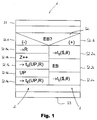
- the Fig. 1 shows a flowchart of the method according to the invention in the form of a structogram.
- the runtime measurement program shown works system-internally at the level of user programming and thus provides information about the program flow without the programmer's active involvement.
- the runtime program 1 is an interpreter, which in each case acquires the data (program name, record number, recursion depth, system times,..., See below) for subroutines or individual commands by means of a central routine 2, 3.
- step S1 The program sequence starts in step S1, which may be followed by further program steps, as in Fig. 1 is indicated by the vertical dashed lines.
- step S2 a case distinction is made as to whether or not the command to be executed during execution of a robot control program is a single command EB. If there is no single command EB (step S2.1), the transit time measurement according to the invention is carried out on a subroutine UP.
- the invention defines a variable Z for a counter whose value indicates how often the subroutine UP has been executed.
- variables t S , t E are defined for the system times at the beginning or at the end of execution of the subroutine UP.
- the horizontal arrows in Fig. 1 symbolize a saving of the corresponding values for the variables indicated on the right of the arrow on a suitable storage medium, such as a RAM, a floppy disk, hard disk, Zip disk or a memory stick or the corresponding facilities of a LOG computer via a TCP / IP Network.
- the symbols "$" and "#” designate program names (subroutine names) in the form of alpha-numeric character strings or sentence numbers of a robot control program.
- the block number indicates the position (line) of a command (subroutine or single command) within a subroutine.
- the central internal routine 2 in interpreter 1 performs the switching of the context (process environment) from one program to another. These programs can be the main program or a subroutine. When returning from subroutine UP, the same routine 2 is completed.
- the interpreter 1 thus knows when switching every subroutine UP about its name and can ultimately perform a complete so-called stack trace, ie the whole call hierarchy of subroutines is known.
- the system times for the beginning (t s ) and end (t E ) of the subroutine UP are recorded after the end of the context switchover or before the beginning of the context restore (return address of the subroutine UP).
- Executing subroutine name and caller together with a record number from which the subroutine UP is jumped to, are known and are stored with the system times for the beginning and end of the subroutine (t s , t E ).
- the block number indicates the position (line) of a command (subroutine or single command) within a subroutine.
- the call hierarchy P1 () -> UP1 () -> UP2 () can be identified and thus uniquely assigned to the interpreter stack.
- the system time is determined on entry and exit of the subprogram.
- the (sub) program name of the caller and the block number of the single command are known in the subroutine.
- a corresponding routine 3 exists in the interpreter 1 for Execution of single commands EB.
- This routine 3 the so-called sentence interpreter, allocates a system time to the single command, which is uniquely identified by means of (sub) program name and sentence number.
- the block number in the (sub) program is increased by 1 and the block interpreter 3 is called again to process the next (single) command.
- the recursion depth R indicates how often a program has called itself in order to clearly assign the respective execution time.
- the program name "$" and the block number "#" alone are no longer sufficient, since these specifications can no longer be used to unambiguously assign the execution time to the program name if several calls of the same subroutine are active.
- the runtime determination is performed for each recursion depth R to have the total duration as well as the single execution time for each recursion depth R available.
- the total duration for the calculation of the faculty is 9 ⁇ s, a simple calculation takes 2 ⁇ s each, and at the lowest level, the faculty requires 1 ⁇ s, since FAKULTAET (1) is the fastest calculable (the return value 1 is returned).
- the individual command EB can thus be an arithmetic expression, a logical expression or a movement or waiting instructions to a robot.
- the instruction is thus a single instruction EB or a subroutine UP, whereby a subroutine UP identified by a certain name is again a series of instructions, i. Single or subroutine commands.
- a subroutine UP itself can in turn call (further) subprograms, also in the form of loop instructions, which leads to a recursion depth R> 0.
- step S2.1e a saving of an end system time t E for the subroutine UP and the recursion depth R is carried out.
- the transit time measurement ends, possibly after previous execution of further steps (dashed vertical lines), in step S3.
- step S2.2 If the query in step S2 that it is to be processed in the instruction according to the BNF notation to a single command EB (step S2.2), as storing an initial system time t is initially in step with s S2.2a Program name "$" and record number "#". Subsequently, the individual command EB is executed in step S2.2b, whereupon in step S2.2c an end system time t E with program name "$" and sentence number "#" is stored.
- the program name and the block number can be used to uniquely assign system times and individual commands.
- the method according to the invention optionally ends after execution of further intermediate steps in step S3.
- program name, record number, recursion depth and system time for entry and exit of the subprogram or start and end of the individual command are necessary for the acquisition of the measurement data for the transit time measurement. Storing only individual commands is only necessary for measuring the runtime, if in the meantime the program is changed by changing, inserting or deleting program lines and thereby the reference of block number, runtime measurement and program instruction (single command) would be lost.
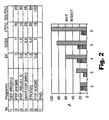
- the Fig. 2 shows on the basis of a concrete embodiment, with the aid of the method according to the invention in a simple and efficient way for an optimization of the relevant robot control program available runtime data.
- the table presented assigns to the listed (sub) programs with (program) name "$" certain runtimes t, which result from a difference between the stored start and end system times in accordance with the Fig. 1 result.
- a graphic corresponding to the last two columns of the table Illustration shows that in the Fig. 2 included bar chart.
- the user is provided with an efficient option for optimizing robot control programs which, after an inspection, for example the graphical representation of the Fig. 2 , "by hand" can be made by the user who gets by the inventive method directly and in an undistorted way weak points in the programming, which express themselves in high maturity shares for certain (sub) programs.
- certain optimization tasks it is also possible for certain optimization tasks to be performed automatically by a program unit connected downstream of the runtime measurement, for example by an expert system containing programs with high runtime shares, such as program no. 4 in the table of FIG Fig. 2 , recognizes and optimizes according to certain rules to be specified.
Landscapes
- Engineering & Computer Science (AREA)
- Physics & Mathematics (AREA)
- General Physics & Mathematics (AREA)
- Automation & Control Theory (AREA)
- Robotics (AREA)
- Mechanical Engineering (AREA)
- Numerical Control (AREA)
- Debugging And Monitoring (AREA)
Description
- Die Erfindung betrifft ein Verfahren zum Bereitstellen von Laufzeitinformationen für Computerprogramme zum Steuern von Industrierobotern.
- Zum Steuern von Industrierobotern werden in der Regel programmierbare Steuerungseinheiten verwendet, die derart ausgebildet sind, dass auf ihnen anwendungs- bzw. anwenderspezifische Computerprogramme zum Steuern von Industrierobotern (Roboter-Steuerprogramme) ablaufen können. Solche Steuerprogramme werden gewöhnlich durch einen Anwender, einen Roboterprogrammierer, erstellt und enthalten eine Reihe von Einzelbefehlen oder Folgen von Einzelbefehlen in Form von Prozeduren oder Unterprogrammen, über die im Rahmen einer Bewegungssteuerung auf die Motorik des Roboters eingewirkt wird. Insbesondere umfassen die Einzelbefehle und die aus diesen aufgebauten Unterprogramme arithmetische Ausdrücke, logische Ausdrücke, Bewegungsanweisungen, Warteanweisungen oder dergleichen, durch die sich das Bewegungsverhalten des Roboters in Abhängigkeit von den auszuführenden Tätigkeiten steuern lässt.
- Es ist allgemein bekannt, dass beim Ausführen von Computerprogrammen nicht alle in diesen enthaltene Einzelbefehle bzw. Unterprogramme einen gleichen Anteil an der gesamten Programmlaufzeit beanspruchen. Dies hängt zum einen mit der unterschiedlichen Häufigkeit des Aufrufens bestimmter Befehle oder Unterprogramme zusammen, zum anderen jedoch auch mit deren interner Komplexität, die einerseits inhärent gegeben sein, beispielsweise bei bestimmten arithmetischen Operationen wie Wurzeloperationen, andererseits aber auch aus einer fehlerhaften oder nicht optimalen Programmierung resultieren kann. Insbesondere bei der Steuerung von Industrierobotern, die dazu eingesetzt werden, wiederholte, hochpräzise Bewegungsabläufe mit höchstmöglicher Geschwindigkeit zu durchfahren, ist es daher erwünscht, derartige Engpässe und Schwachstellen der Programmierung effizient aufzufinden und auszuschalten.
- Es ist zum diesem Zweck bekannt, die Laufzeit von Roboter-Steuerprogrammen mit einer externen Uhr zu messen. Das Ergebnis einer solchen Messung ist jedoch verfahrensbedingt nur sehr ungenau und darüber hinaus wenig detailliert, da von außen in der Regel nicht erkennbar ist, in welchem konkreten Einzelbefehl oder Unterprogramm sich die Robotersteuerung beim Ausführen des auf ihr ablaufenden Steuerprogramms gerade befindet. Alternativ wurde vorgeschlagen, das zu überprüfende Roboter-Steuerprogramm um zusätzlichen Programmcode für eine Zeitmessung zu erweitern. Derartiger zusätzlicher Programmcode umfasst insbesondere Zeitnehmer/-geber im Programm oder ein Setzen/Rücksetzen von Ausgängen verbunden mit einer Messung der entsprechenden Ausgangssignale. Dabei hat sich insbesondere als nachteilig herausgestellt, dass durch das Einfügen von zusätzlichem Programmcode in das Roboter-Steuerprogramm das zu bestimmende Zeitverhalten des Roboter-Steuerprogramms an sich verändert wird, so dass durch die erhaltenen Messergebnisse keine eindeutige Aussage über das tatsächliche Laufzeitverhalten des überprüften Roboter-Steuerprogramms möglich ist.
- Von
EP 0 639 808 ist ein System bekannt, dass die Laufzeit von Einzelbefehlen eines Computerprogramms zum Steuern von CNC Maschinen ermittelt. Dennoch, benutztEP 0 639 808 zusätzlichen Programmcode zur Messung der Laufzeit des Computersprogramms. Durch das Einfügen von zusätzlichen Programmcode in das Steuerprogramm wird das zu bestimmende Zeitverhalten an sich verändert, was zu Verfälschungen des Laufzeitverhaltens führen kann. - Der Erfindung liegt ausgehend von den vorstehend genannten Nachteilen die Aufgabe zugrunde, ein Verfahren zum Bereitstellen von Laufzeitinformationen für Computerprogramme zum Steuern von Industrierobotern der Art zu schaffen, dass Laufzeitmessungen an dem Roboter-Steuerprogramm ohne Verfälschung des Laufzeitverhaltens desselben bei möglicher genauer Zuordnung von Codeabschnitten des Roboter-Steuerprogramms zu den durchgeführten Zeitmessungen möglich sind.
- Diese Aufgabe wird bei einem Verfahren der eingangs genannten Art dadurch gelöst, dass die Zeit der Ausführung mindestens eines Einzelbefehls aufgrund der Systemzeit des Prozessors, auf dem das Programm ausgeführt wird, bestimmt und zusammen mit dem Einzelbefehl oder die Einzelbefehle charakterisierenden Informationen gespeichert wird.
- Mehrere Einzelbefehle beinhalten eine Folge von Einzelbefehlen im Sinne eines Unterprogramms, insbesondere auch mit einer gewissen Rekursionstiefe. Soweit im Folgenden von System gesprochen wird, wird hierunter der Mikroprozessor eines Rechners verstanden. Die Systemzeit beinhaltet eine durch den Prozessor gegebene (relative) Zeit, wie eine durch einen Taktgeber, insbesondere durch den Prozessortakt des Taktgebers (Timer) des Steuerwertes des Prozessors.
- Gemäß bevorzugter Ausgestaltungen der Erfindung ist vorgesehen, dass der Zeitpunkt des Zugriffs auf einen dem mindestens einen Einzelbefehl zugeordneten Speicherbereichs eines Speichers und der Zeitpunkt der Beendigung des Zugriffs auf den Speicherbereich bestimmt und mit den mindestens einen Einzelbefehl charakterisierenden Informationen gespeichert wird und/oder dem mindestens einen Einzelbefehl zugeordneter Speicherbereich, charakterisierende Information mit der Zeit der Ausführung des mindestens einen Einzelbefehls gespeichert wird.
- Eine konkrete Weiterbildung der Erfindung sieht vor, dass nach Aufruf und vor Ausführung eines Einzelbefehls oder einer Folge von Einzelbefehlen (Unterprogramm) ein Zeitpunkt eines Zugriffs auf einen dem Einzelbefehl oder dem Unterprogramm zugeordneten Bereich eines Programmspeichers eines das Programm ausführenden Computersystems in Form einer ersten Systemzeit durch das Computersystem selbst bestimmt wird, anschließend der Einzelbefehl oder das Unterprogramm ausgeführt wird und nach der Ausführung bei Beendigung des Zugriffs auf den zugeordneten Speicherbereich eine zweite Systemzeit des Computersystems durch dieses selbst bestimmt wird.
- Erfindungsgemäß ermöglicht das Verfahren eine Protokollierung der Ausführungszeiten von Einzelbefehlen und/oder Unterprogrammen eines ablaufenden Roboter-Steuerprogramms, ohne dass es zu Laufzeiteinbußen durch zusätzliche Befehle im Programm selbst kommt. Das Roboter-Steuerprogramm braucht für die Laufzeitmessung nach dem vorgeschlagenen Verfahren nicht durch zusätzliche Befehle verändert zu werden. Weiterhin kommt es durch den Einsatz des erfindungsgemäßen Verfahrens auch nicht zu einer Taktzeitverschlechterung im Rahmen des Messvorgangs, da der Interpreter, d.h. das zum Übersetzen des in der Regel in einer höheren Programmiersprache formulierten Steuerprogramm-Quellcodes in die Maschinensprache dienende Programm die genannten Einzelbefehle bzw. Unterprogramme im Zuge der Programmausführung ohnehin abarbeiten muss, so dass die Zugriffszeiten hieraus direkt ableitbar sind. Durch das Speichern von Anfangs- und End-Systemzeit wird erfindungsgemäß lediglich implizit die Zeitdauer für das Ausführen des Einzelbefehls bzw. Unterprogramms festgehalten, wobei die Dauer des Speichervorgangs in Relation zur zeitlichen Dauer des Befehls bzw. Unterprogramms nicht ins Gewicht fällt.
- Um für eine nachfolgende Auswertung der Laufzeit-Messergebnisse eine eindeutige Zuordnung zwischen den Messergebnissen und dem zugeordneten Einzelbefehl bzw. Unterprogramm des Roboter-Steuerprogramms zu ermöglichen, sieht eine bevorzugte Weiterbildung des erfindungsgemäßen Verfahrens vor, dass zusätzlich die den Einzelbefehl oder das Unterprogramm identifizierende Speicheradresse gespeichert wird. Beispielsweise ist im Verlauf der Ausführung eines Roboter-Steuerprogramms anhand von Zugriffen auf den Programm-Stapelspeicher (Programmstack), in dem unter anderem die zugehörigen Rücksprungadressen abgelegt sind, der Aufruf eines Einzelbefehls oder Unterprogramms ableitbar.
- Da ein Unterprogramm sich per definitionem aus einer Reihe von Einzelbefehlen zusammensetzt, ist es insbesondere möglich, dass ein Unterprogramm einen Befehl enthält, durch den es sich selbst rekursiv in geschachtelter Form (teilweise) wieder aufruft, z.B. in Form einer Schleife, oder dass ein erstes Unterprogramm ein zweites, anderes Unterprogramm aufruft. Die Anzahl derart geschachtelter Aufrufe wird als Rekursionstiefe bezeichnet. Um anschließend bei einer Auswertung aus der gemessenen (Gesamt-)Laufzeit für ein rekursives Unterprogramm auf die tatsächliche Dauer einer einzelnen Ausführung dieses Unterprogramms zurück schließen zu können, ist nach einer bevorzugten Weiterbildung des erfindungsgemäßen Verfahrens vorgesehen, dass für Unterprogramme zusätzlich ein Wert einer Rekursionstiefe bestimmt wird. Somit lässt sich aus der Differenz der bestimmten Systemzeiten in Verbindung mit der Rekursionstiefe die tatsächliche Laufzeit des Unterprogramms errechnen.
- Um die durch das erfindungsgemäßen Verfahrens gewonnenen Laufzeit-Messergebnisse zum einen dauerhaft zu sichern und sie zum anderen auch einer späteren ggf. externen Auswertung zugänglich zu machen, kann vorgesehen sein, dass die bestimmten Systemzeiten und/oder die zugehörigen Speicheradressen und/oder die Rekursionstiefen-Werte in einem nicht flüchtigen Speicher abgelegt werden. Zum Einsatz kommen können insbesondere Floppy-Disks, Festplatten, Zip-Disketten, über ein TCP/IP-Netz ansprechbare Log-Laufwerke, Flashcards, Memorysticks bzw. die entsprechenden Einrichtung bei einem Log-Server über ein TCP/IP-Netz. Zusätzlich oder alternativ ist jedoch auch der Einsatz eines flüchtigen RAM-Speichers möglich.
- Nach einer äußerst bevorzugten Weiterbildung des erfindungsgemäßen Verfahrens ist vorgesehen, dass die gespeicherten Systemzeiten und/oder Speicheradressen und/oder Rekursionstiefen-Werte durch eine den genannten aufgezeichneten Daten nachgeschaltete Programmeinheit zu Optimierungszwecken für das Roboter-Steuerprogramm verwendet werden. Im Zuge der Optimierung kann dabei weiterhin vorgesehen sein, dass durch die Programmeinheit Vorschläge zu einer Umgestaltung des Roboter-Steuerprogramms ausgegeben und/oder automatisch umgesetzt werden. Beispielsweise kann die genannte Programmeinheit dahingehend ausgebildet sein, dass sie nach verschiedenen Auswahlkriterien, wie z.B. Laufzeitmaxima, Unterprogrammen, Bewegungsbefehlen, I/O-Befehlen, Warteanweisungen usw. einem Anwender Vorschläge zur möglichen Optimierung, vorzugsweise in graphischer Form, unterbreitet. In Verbindung mit geeigneten Expertensystemen oder dergleichen ist jedoch auch die bereits genannte automatische Umsetzung derartiger Optimierungsvorschläge möglich.
- Weitere Eigenschaften und Vorteile der Erfindung ergeben sich aus der nachfolgenden Beschreibung eines Ausführungsbeispiels anhand der Zeichnung. Es zeigt:
- Fig. 1
- den Ablauf einer Laufzeitbestimmung nach dem erfindungsgemäßen Verfahren; und
- Fig. 2
- eine im Zuge des erfindungsgemäßen Verfahrens zu Optimierungszwecken ausgegebene graphische Darstellung der Laufzeit-Messergebnisse.
- Die
Fig. 1 zeigt ein Ablaufdiagramm des erfindungsgemäßen Verfahrens in Form eines Struktogramms. Das dargestellte Laufzeit-Messprogramm arbeitet systemintern auf der Ebene der Anwenderprogrammierung und stellt auf diese Weise Informationen über den Programmablauf ohne aktives Zutun des Programmierers bereit. Bei dem Laufzeitprogramm 1 handelt es sich erfindungsgemäß um einen Interpreter, welcher jeweils mittels einer zentralen Routine 2, 3 für Unterprogramme bzw. Einzelbefehle die für eine Laufzeitbestimmung erforderlichen Daten (Programmname, Satznummer, Rekursionstiefe, Systemzeiten, ...; s.u.) erfasst. - Der Programmablauf startet in Schritt S1, auf den ggf. weitere Programmschritte folgen können, wie in
Fig. 1 durch die vertikalen gestrichelten Linien angedeutet ist. In Schritt S2 erfolgt eine Fallunterscheidung dahingehend, ob es sich bei dem im Zuge der Abarbeitung eines Roboter-Steuerprogramms auszuführenden Befehl um einen Einzelbefehl EB handelt oder nicht. Wenn kein Einzelbefehl EB vorliegt (Schritt S2.1), so erfolgt die erfindungsgemäße LaufzeitMessung an einem Unterprogramm UP. Zu diesem Zweck wird erfindungsgemäß eine Variable Z für einen Zähler definiert, deren Wert angibt, wie oft das Unterprogramm UP ausgeführt wurde. Eine weitere Variable R bezeichnet die Rekursionstiefe des Unterprogramms UP, d.h. die Anzahl der geschachtelten Aufrufe, wobei ein Wert R=0 bedeutet, dass der aktuelle Aufruf des Unterprogramms UP nicht aus der Prozedur/dem Unterprogramm selbst erfolgte. Weiterhin definiert sind Variablen tS, tE für die Systemzeiten zu Beginn bzw. am Ende der Ausführung des Unterprogramms UP. Die horizontalen Pfeile inFig. 1 symbolisieren ein Abspeichern der entsprechenden Werte für die rechts vom Pfeil angegebenen Variablen auf einem geeigneten Speichermedium, wie einem RAM, einer Floppy-Disk, Festplatte, Zip-Diskette oder einem Memorystick bzw. den entsprechenden Einrichtungen eines LOG-Rechners über ein TCP/IP-Netz. Die Symbole "$" und "#" bezeichnen Programmnamen (Bezeichnungen von Unterprogrammen) in Form von alpha-nummerischen Zeichenketten bzw. Satznummern eines Roboter-Steuerprogramms. Die Satznummer gibt die Position (Zeile) eines Befehls (Unterprogramm oder Einzelbefehl) innerhalb eines Unterprogramms an. - Bei jedem Unterprogrammaufruf führt die zentrale interne Routine 2 im Interpreter 1 die Umschaltung des Kontexts (Prozessumgebung) von einem Programm zum anderen aus. Bei den genannten Programmen kann es sich um das Hauptprogramm oder ein Unterprogramm handeln. Bei Rückkehr aus dem Unterprogramm UP wird dieselbe Routine 2 zu Ende durchlaufen. Der Interpreter 1 kennt somit bei der Umschaltung jedes Unterprogramm UP über dessen Namen und kann letztendlich einen kompletten sogenannten Stacktrace durchführen, d.h. die ganze Aufrufhierarchie der Unterprogramme ist bekannt. Die Systemzeiten für Beginn (ts) und Ende (tE) des Unterprogramms UP werden nach Ende der Kontextumschaltung bzw. vor Beginn der Kontextrücksicherung (Rücksprungadresse des Unterprogramms UP) festgehalten. Ausführender Unterprogrammname und Aufrufer nebst einer Satznummer, von der aus das Unterprogramm UP angesprungen wird, sind bekannt und werden mit den Systemzeiten für Beginn und Ende des Unterprogramms (ts, tE) abgespeichert. Die Satznummer gibt die Position (Zeile) eines Befehls (Unterprogramm oder Einzelbefehl) innerhalb eines Unterprogramms an.
-
 Programm P1 ruft UP1 auf; in UP1 wird UP2 aufgerufen.


 DEF P1()
 UP1()
 END


 DEF P1()
 UP2()
 END


 DEF UP2()
 ; Programm anhalten, um den Stracktrace anzeigen zu können.
 HALT
 END
 DEF P1()
 INT A; ganze Zahl A
 A=FAKULTAET(5)
 END


 DEF FAKULTAET (INT F)
 IF F>1 THEN
 RETURN (F*FAKULTAET(F-1)); verschalteter Aufruf von UP
 "Fakultät"
 ENDIF


 RETURN (1)
 END


 Aufrufhierarchie (Unterprogramm FALKUTAET hier kurz mit F
 bezeichnet):
 F(5)->F(4)->F(3)->F(2)->F(1)


 Rekursionstiefe R:
 0    1    2    3    4


 Auführungsdauer [µs]:
 9    7    5    3    1


 Delta Auführungsdauer [µs]:
   2     2     2     2
- <UP>:=
- "DEF" <Name>{<Befehl>}"END"
- <Befehl>:=
- [<Einzelbefehl>]|<UP>
- <Einzelbefehl>:=
- arithmetischer Ausdruck|logischer Ausdruck|...|Bewegungsanweisung|Warteanweisung
- <Name>:=
- A|...|Z|0|...|9
Claims (9)
- Verfahren zum Bereitstellen von Laufzeitinformationen von Computerprogrammen zum Steuern von Industrierobotern (Roboter-Steuerprogramme), dadurch gekennzeichnet, dass die Laufzeit der Ausführung mindestens eines Einzelbefehls aufgrund der Systemzeit des Prozessors, auf dem das Programm ausgeführt wird, bestimmt und zusammen mit dem Einzelbefehl oder die Einzelbefehle charakterisierenden Informationen gespeichert wird.
- Verfahren nach Anspruch 1, dadurch gekennzeichnet, dass der Zeitpunkt des Zugriffs auf einen dem mindestens einen Einzelbefehl zugeordneten Speicherbereichs eines Speichers und der Zeitpunkt der Beendigung des Zugriffs auf den Speicherbereich bestimmt und mit den mindestens einen Einzelbefehl charakterisierenden Informationen gespeichert wird.
- Verfahren nach Anspruch 1 oder 2, dadurch gekennzeichnet, dass dem mindestens einen Einzelbefehl zugeordneter Speicherbereich, charakterisierende Information mit der Zeit der Ausführung des mindestens einen Einzelbefehls gespeichert wird.
- Verfahren nach einem der vorangehenden Ansprüche, dadurch gekennzeichnet, dass nach Aufruf und vor Ausführung eines Einzelbefehls oder einer Folge von Einzelbefehlen (Unterprogramm) ein Zeitpunkt eines Zugriffs auf einen dem Einzelbefehl oder dem Unterprogramm zugeordneten Speicherbereich eines Programmspeichers eines das Programm ausführenden Computersystems in Form einer ersten Systemzeit durch das Computersystem selbst bestimmt wird, anschließend der Einzelbefehl oder das Unterprogramm ausgeführt wird und nach der Ausführung bei Beendigung des Zugriffs auf den zugeordneten Speicherbereich eine zweite Systemzeit des Computersystems durch dieses selbst bestimmt wird.
- Verfahren nach einem der vorangehenden Ansprüche, dadurch gekennzeichnet, dass für eine Folge von Einzelbefehlen in Form eines Unterprogramms zusätzlich ein Wert einer Rekursionstiefe bestimmt wird.
- Verfahren nach Anspruch 5, dadurch gekennzeichnet, dass eine Laufzeit des Einzelbefehls oder des Unterprogramms als Differenz der bestimmten Systemzeiten unter Berücksichtigung des Rekursionstiefen-Werts bestimmt wird.
- Verfahren nach einem der Ansprüche 1 bis 6, dadurch gekennzeichnet, dass die bestimmten Systemzeiten und/oder eine zugehörige Speicheradresse und/oder der Rekursionstiefen-Wert in einem nicht flüchtigen Speicher abgelegt werden.
- Verfahren nach einem der Ansprüche 1 bis 7, dadurch gekennzeichnet, dass die bestimmten Systemzeiten und/oder Speicheradressen und/oder Rekursionstiefen-Werte durch eine Programmeinheit zu Optimierungszwecken für das Roboter-Steuerprogramm verwendet werden.
- Verfahren nach Anspruch 8, dadurch gekennzeichnet, dass im Zuge der Optimierung durch die Programmeinheit Vorschläge zu einer Umgestaltung des Roboter-Steuerprogramms ausgegeben und/oder automatisch umgesetzt werden.
Applications Claiming Priority (2)
| Application Number | Priority Date | Filing Date | Title |
|---|---|---|---|
| DE10349349A DE10349349A1 (de) | 2003-10-23 | 2003-10-23 | Verfahren zum Bestimmen und Bereitstellen von Laufzeitinformationen für Roboter-Steuerprogramme |
| DE10349349 | 2003-10-23 |
Publications (3)
| Publication Number | Publication Date |
|---|---|
| EP1526419A2 EP1526419A2 (de) | 2005-04-27 |
| EP1526419A3 EP1526419A3 (de) | 2009-08-19 |
| EP1526419B1 true EP1526419B1 (de) | 2011-02-23 |
Family
ID=34384417
Family Applications (1)
| Application Number | Title | Priority Date | Filing Date |
|---|---|---|---|
| EP04024887A Expired - Lifetime EP1526419B1 (de) | 2003-10-23 | 2004-10-20 | Verfahren zum Bestimmen und Bereitstellen von Laufzeitinformationen für Roboter-Steuerprogramme |
Country Status (3)
| Country | Link |
|---|---|
| US (1) | US7886275B2 (de) |
| EP (1) | EP1526419B1 (de) |
| DE (2) | DE10349349A1 (de) |
Families Citing this family (4)
| Publication number | Priority date | Publication date | Assignee | Title |
|---|---|---|---|---|
| EP1990695A1 (de) | 2007-05-09 | 2008-11-12 | Siemens Aktiengesellschaft | Automatisierungsgerät und Verfahren zu dessen Betrieb |
| EP2071418A1 (de) * | 2007-12-10 | 2009-06-17 | Siemens Aktiengesellschaft | Automatisierungsgerät mit mehreren Betriebssystemprofilen und Verfahren zu dessen Betrieb |
| DE102016214117A1 (de) | 2016-08-01 | 2018-02-01 | Siemens Aktiengesellschaft | Ermitteln einer Ausführungszeit eines Anwenderprogramms |
| CN112207815B (zh) * | 2020-08-21 | 2022-04-12 | 北京卫星制造厂有限公司 | 一种多机多工序时空协同规划方法和系统 |
Family Cites Families (10)
| Publication number | Priority date | Publication date | Assignee | Title |
|---|---|---|---|---|
| US4338672A (en) * | 1978-04-20 | 1982-07-06 | Unimation, Inc. | Off-line teach assist apparatus and on-line control apparatus |
| US5177420A (en) | 1989-05-01 | 1993-01-05 | Honda Giken Kogyo Kabushiki Kaisha | Method of and apparatus for generating control program |
| JP2900646B2 (ja) * | 1991-07-10 | 1999-06-02 | 三菱電機株式会社 | 数値制御装置 |
| JPH06259129A (ja) * | 1993-03-03 | 1994-09-16 | Fanuc Ltd | シーケンス・プログラムのデバッグ方式 |
| JP3524585B2 (ja) * | 1994-08-02 | 2004-05-10 | 本田技研工業株式会社 | プログラム作成装置 |
| JP3727382B2 (ja) | 1994-12-26 | 2005-12-14 | 三菱電機株式会社 | 制御ソフトウェア実行システムの制御方法 |
| US5822207A (en) * | 1996-05-06 | 1998-10-13 | Amadasoft America, Inc. | Apparatus and method for integrating intelligent manufacturing system with expert sheet metal planning and bending system |
| US5966534A (en) * | 1997-06-27 | 1999-10-12 | Cooke; Laurence H. | Method for compiling high level programming languages into an integrated processor with reconfigurable logic |
| US6078747A (en) * | 1998-01-05 | 2000-06-20 | Jewitt; James W. | Application program interface to physical devices |
| JP3594016B2 (ja) * | 2001-01-30 | 2004-11-24 | 日本電気株式会社 | ロボットのプログラム実行方法、ロボットシステムおよびプログラム処理装置 |
-
2003
- 2003-10-23 DE DE10349349A patent/DE10349349A1/de not_active Ceased
-
2004
- 2004-10-20 EP EP04024887A patent/EP1526419B1/de not_active Expired - Lifetime
- 2004-10-20 DE DE502004012218T patent/DE502004012218D1/de not_active Expired - Lifetime
- 2004-10-22 US US10/970,955 patent/US7886275B2/en not_active Expired - Fee Related
Also Published As
| Publication number | Publication date |
|---|---|
| DE10349349A1 (de) | 2005-05-25 |
| DE502004012218D1 (de) | 2011-04-07 |
| EP1526419A2 (de) | 2005-04-27 |
| US7886275B2 (en) | 2011-02-08 |
| EP1526419A3 (de) | 2009-08-19 |
| US20050120338A1 (en) | 2005-06-02 |
Similar Documents
| Publication | Publication Date | Title |
|---|---|---|
| DE69229365T2 (de) | Verfahren und Anordnung zur kostenbezogenen heuristischen Befehlsreihenfolgeplanung | |
| DE69029983T2 (de) | Leistungsverbesserungsgerät für auf Regeln beruhendes Expertensystem | |
| DE1900141A1 (de) | Datenverarbeitungsvorrichtung | |
| DE102010011658A1 (de) | Applikationsplattform und Verfahren zum Betrieb einer Datenverarbeitungseinrichtung mit einer solchen | |
| DE1424732A1 (de) | Elektronische Ziffernrechenmaschine | |
| EP2330469B1 (de) | Verfahren und Entwicklungsumgebung zur Erzeugung eines ausführbaren Gesamtsteuerungsprogramms | |
| DE1285219B (de) | Steuerwerk zur Ausfuehrung von Unterprogrammen | |
| WO2020182541A1 (de) | Verfahren zum betreiben eines roboters in einem multiagentensystem, roboter und multiagentensystem | |
| DE102016107527A1 (de) | Echtzeitumgebung und speicherprogrammierbare Steuerung | |
| DE2101949A1 (de) | Verfahren zum Schutz von Datengruppen in einer Multiprocessing-Datenverarbeitungsanlage | |
| EP2363809B1 (de) | Verfahren zur Optimierung eines Steuerprogramms für Aktuatoren | |
| DE69307484T2 (de) | Steuerungsverfahren eines punktschweissroboters | |
| EP0784747A1 (de) | Verfahren und vorrichtung zur steuerung eines stellgliedes | |
| DE102019101391B4 (de) | Bearbeitungszeitvorhersageeinheit | |
| EP1526419A2 (de) | Verfahren zum Bestimmen und Bereitstellen von Laufzeitinformationen für Roboter-Steuerprogramme | |
| DE102004059972B4 (de) | Thread-Scheduling-Verfahren, und Thread-List-Scheduler-Vorrichtung | |
| WO2006131178A1 (de) | Mechanismus zum dynamischen registrieren von dateien in einer stapelverarbeitungsorientierten umgebung | |
| DE69032835T2 (de) | Prozedurzustandsdeskriptorsystem für digitale Datenprozessoren | |
| DE102009033967A1 (de) | Verfahren zum Programmieren einer speicherprogrammierbaren Steuerung mit resistenter Abspeicherung von Daten | |
| EP4174641A1 (de) | Verfahren zum erzeugen von programmcode, verfahren zum konfigurieren eines steuergeräts und computersystem | |
| DE19910535A1 (de) | Verfahren zur automatischen Wiedergewinnung von Engineeringdaten aus Anlagen | |
| EP4055473B1 (de) | Verfahren zum aktualisieren eines steuerprogramms eines automatisierungssystems mit datenmigration eines programmzustands des steuerprogramms | |
| EP3759594A1 (de) | Verfahren zum ausführen eines computerprogrammes in einem rechnerverbund, insbesondere zum steuern eines mikroskops | |
| DE2102935A1 (de) | Verfahren und Vorrichtung zur Be Stimmung der Leistungsfähigkeit von Maschinenprogrammen | |
| DE2216533C3 (de) | Anordnung zur Steuerung der Durchführung mehrerer Aufgaben in einer DTENVERARBEITUNGSANLAGE |
Legal Events
| Date | Code | Title | Description |
|---|---|---|---|
| PUAI | Public reference made under article 153(3) epc to a published international application that has entered the european phase |
Free format text: ORIGINAL CODE: 0009012 |
|
| AK | Designated contracting states |
Kind code of ref document: A2 Designated state(s): AT BE BG CH CY CZ DE DK EE ES FI FR GB GR HU IE IT LI LU MC NL PL PT RO SE SI SK TR |
|
| AX | Request for extension of the european patent |
Extension state: AL HR LT LV MK |
|
| PUAL | Search report despatched |
Free format text: ORIGINAL CODE: 0009013 |
|
| AK | Designated contracting states |
Kind code of ref document: A3 Designated state(s): AT BE BG CH CY CZ DE DK EE ES FI FR GB GR HU IE IT LI LU MC NL PL PT RO SE SI SK TR |
|
| AX | Request for extension of the european patent |
Extension state: AL HR LT LV MK |
|
| GRAP | Despatch of communication of intention to grant a patent |
Free format text: ORIGINAL CODE: EPIDOSNIGR1 |
|
| GRAJ | Information related to disapproval of communication of intention to grant by the applicant or resumption of examination proceedings by the epo deleted |
Free format text: ORIGINAL CODE: EPIDOSDIGR1 |
|
| 17P | Request for examination filed |
Effective date: 20091211 |
|
| AKX | Designation fees paid |
Designated state(s): DE IT SE |
|
| RIC1 | Information provided on ipc code assigned before grant |
Ipc: B25J 9/16 20060101ALI20100331BHEP Ipc: G05B 19/042 20060101AFI20100331BHEP |
|
| GRAP | Despatch of communication of intention to grant a patent |
Free format text: ORIGINAL CODE: EPIDOSNIGR1 |
|
| GRAS | Grant fee paid |
Free format text: ORIGINAL CODE: EPIDOSNIGR3 |
|
| GRAA | (expected) grant |
Free format text: ORIGINAL CODE: 0009210 |
|
| AK | Designated contracting states |
Kind code of ref document: B1 Designated state(s): DE IT SE |
|
| REF | Corresponds to: |
Ref document number: 502004012218 Country of ref document: DE Date of ref document: 20110407 Kind code of ref document: P |
|
| REG | Reference to a national code |
Ref country code: DE Ref legal event code: R096 Ref document number: 502004012218 Country of ref document: DE Effective date: 20110407 |
|
| PG25 | Lapsed in a contracting state [announced via postgrant information from national office to epo] |
Ref country code: SE Free format text: LAPSE BECAUSE OF FAILURE TO SUBMIT A TRANSLATION OF THE DESCRIPTION OR TO PAY THE FEE WITHIN THE PRESCRIBED TIME-LIMIT Effective date: 20110223 |
|
| PLBE | No opposition filed within time limit |
Free format text: ORIGINAL CODE: 0009261 |
|
| STAA | Information on the status of an ep patent application or granted ep patent |
Free format text: STATUS: NO OPPOSITION FILED WITHIN TIME LIMIT |
|
| 26N | No opposition filed |
Effective date: 20111124 |
|
| REG | Reference to a national code |
Ref country code: DE Ref legal event code: R097 Ref document number: 502004012218 Country of ref document: DE Effective date: 20111124 |
|
| REG | Reference to a national code |
Ref country code: DE Ref legal event code: R082 Ref document number: 502004012218 Country of ref document: DE Representative=s name: WALLINGER RICKER SCHLOTTER TOSTMANN PATENT- UN, DE Ref country code: DE Ref legal event code: R081 Ref document number: 502004012218 Country of ref document: DE Owner name: KUKA DEUTSCHLAND GMBH, DE Free format text: FORMER OWNER: KUKA ROBOTER GMBH, 86165 AUGSBURG, DE |
|
| PGFP | Annual fee paid to national office [announced via postgrant information from national office to epo] |
Ref country code: DE Payment date: 20191008 Year of fee payment: 16 |
|
| PGFP | Annual fee paid to national office [announced via postgrant information from national office to epo] |
Ref country code: IT Payment date: 20191009 Year of fee payment: 16 |
|
| REG | Reference to a national code |
Ref country code: DE Ref legal event code: R119 Ref document number: 502004012218 Country of ref document: DE |
|
| PG25 | Lapsed in a contracting state [announced via postgrant information from national office to epo] |
Ref country code: DE Free format text: LAPSE BECAUSE OF NON-PAYMENT OF DUE FEES Effective date: 20210501 |
|
| PG25 | Lapsed in a contracting state [announced via postgrant information from national office to epo] |
Ref country code: IT Free format text: LAPSE BECAUSE OF NON-PAYMENT OF DUE FEES Effective date: 20201020 |