EP1526175B2 - Coronavirus, Nukleinsäure, Protein, Verfahren zur Erzeugung der Impfstoffe, Medikamente und Diagnostika - Google Patents
Coronavirus, Nukleinsäure, Protein, Verfahren zur Erzeugung der Impfstoffe, Medikamente und Diagnostika Download PDFInfo
- Publication number
- EP1526175B2 EP1526175B2 EP04077342.6A EP04077342A EP1526175B2 EP 1526175 B2 EP1526175 B2 EP 1526175B2 EP 04077342 A EP04077342 A EP 04077342A EP 1526175 B2 EP1526175 B2 EP 1526175B2
- Authority
- EP
- European Patent Office
- Prior art keywords
- virus
- sequence
- hcov
- coronavirus
- depicted
- Prior art date
- Legal status (The legal status is an assumption and is not a legal conclusion. Google has not performed a legal analysis and makes no representation as to the accuracy of the status listed.)
- Expired - Lifetime
Links
Images

















Classifications
-
- G—PHYSICS
- G01—MEASURING; TESTING
- G01N—INVESTIGATING OR ANALYSING MATERIALS BY DETERMINING THEIR CHEMICAL OR PHYSICAL PROPERTIES
- G01N33/00—Investigating or analysing materials by specific methods not covered by groups G01N1/00 - G01N31/00
- G01N33/48—Biological material, e.g. blood, urine; Haemocytometers
- G01N33/50—Chemical analysis of biological material, e.g. blood, urine; Testing involving biospecific ligand binding methods; Immunological testing
- G01N33/53—Immunoassay; Biospecific binding assay; Materials therefor
- G01N33/569—Immunoassay; Biospecific binding assay; Materials therefor for microorganisms, e.g. protozoa, bacteria, viruses
- G01N33/56983—Viruses
-
- A—HUMAN NECESSITIES
- A61—MEDICAL OR VETERINARY SCIENCE; HYGIENE
- A61K—PREPARATIONS FOR MEDICAL, DENTAL OR TOILETRY PURPOSES
- A61K39/00—Medicinal preparations containing antigens or antibodies
- A61K39/12—Viral antigens
-
- A—HUMAN NECESSITIES
- A61—MEDICAL OR VETERINARY SCIENCE; HYGIENE
- A61K—PREPARATIONS FOR MEDICAL, DENTAL OR TOILETRY PURPOSES
- A61K39/00—Medicinal preparations containing antigens or antibodies
- A61K39/12—Viral antigens
- A61K39/215—Coronaviridae, e.g. avian infectious bronchitis virus
-
- A—HUMAN NECESSITIES
- A61—MEDICAL OR VETERINARY SCIENCE; HYGIENE
- A61P—SPECIFIC THERAPEUTIC ACTIVITY OF CHEMICAL COMPOUNDS OR MEDICINAL PREPARATIONS
- A61P31/00—Antiinfectives, i.e. antibiotics, antiseptics, chemotherapeutics
-
- A—HUMAN NECESSITIES
- A61—MEDICAL OR VETERINARY SCIENCE; HYGIENE
- A61P—SPECIFIC THERAPEUTIC ACTIVITY OF CHEMICAL COMPOUNDS OR MEDICINAL PREPARATIONS
- A61P31/00—Antiinfectives, i.e. antibiotics, antiseptics, chemotherapeutics
- A61P31/12—Antivirals
- A61P31/14—Antivirals for RNA viruses
-
- C—CHEMISTRY; METALLURGY
- C07—ORGANIC CHEMISTRY
- C07K—PEPTIDES
- C07K14/00—Peptides having more than 20 amino acids; Gastrins; Somatostatins; Melanotropins; Derivatives thereof
- C07K14/005—Peptides having more than 20 amino acids; Gastrins; Somatostatins; Melanotropins; Derivatives thereof from viruses
-
- C—CHEMISTRY; METALLURGY
- C07—ORGANIC CHEMISTRY
- C07K—PEPTIDES
- C07K16/00—Immunoglobulins [IG], e.g. monoclonal or polyclonal antibodies
- C07K16/08—Immunoglobulins [IG], e.g. monoclonal or polyclonal antibodies against material from viruses
- C07K16/10—RNA viruses
- C07K16/102—Coronaviridae (F)
-
- C—CHEMISTRY; METALLURGY
- C12—BIOCHEMISTRY; BEER; SPIRITS; WINE; VINEGAR; MICROBIOLOGY; ENZYMOLOGY; MUTATION OR GENETIC ENGINEERING
- C12N—MICROORGANISMS OR ENZYMES; COMPOSITIONS THEREOF; PROPAGATING, PRESERVING, OR MAINTAINING MICROORGANISMS; MUTATION OR GENETIC ENGINEERING; CULTURE MEDIA
- C12N7/00—Viruses; Bacteriophages; Compositions thereof; Preparation or purification thereof
-
- C—CHEMISTRY; METALLURGY
- C12—BIOCHEMISTRY; BEER; SPIRITS; WINE; VINEGAR; MICROBIOLOGY; ENZYMOLOGY; MUTATION OR GENETIC ENGINEERING
- C12Q—MEASURING OR TESTING PROCESSES INVOLVING ENZYMES, NUCLEIC ACIDS OR MICROORGANISMS; COMPOSITIONS OR TEST PAPERS THEREFOR; PROCESSES OF PREPARING SUCH COMPOSITIONS; CONDITION-RESPONSIVE CONTROL IN MICROBIOLOGICAL OR ENZYMOLOGICAL PROCESSES
- C12Q1/00—Measuring or testing processes involving enzymes, nucleic acids or microorganisms; Compositions therefor; Processes of preparing such compositions
- C12Q1/70—Measuring or testing processes involving enzymes, nucleic acids or microorganisms; Compositions therefor; Processes of preparing such compositions involving virus or bacteriophage
- C12Q1/701—Specific hybridization probes
-
- C—CHEMISTRY; METALLURGY
- C12—BIOCHEMISTRY; BEER; SPIRITS; WINE; VINEGAR; MICROBIOLOGY; ENZYMOLOGY; MUTATION OR GENETIC ENGINEERING
- C12Q—MEASURING OR TESTING PROCESSES INVOLVING ENZYMES, NUCLEIC ACIDS OR MICROORGANISMS; COMPOSITIONS OR TEST PAPERS THEREFOR; PROCESSES OF PREPARING SUCH COMPOSITIONS; CONDITION-RESPONSIVE CONTROL IN MICROBIOLOGICAL OR ENZYMOLOGICAL PROCESSES
- C12Q1/00—Measuring or testing processes involving enzymes, nucleic acids or microorganisms; Compositions therefor; Processes of preparing such compositions
- C12Q1/70—Measuring or testing processes involving enzymes, nucleic acids or microorganisms; Compositions therefor; Processes of preparing such compositions involving virus or bacteriophage
- C12Q1/701—Specific hybridization probes
- C12Q1/702—Specific hybridization probes for retroviruses
-
- A—HUMAN NECESSITIES
- A61—MEDICAL OR VETERINARY SCIENCE; HYGIENE
- A61K—PREPARATIONS FOR MEDICAL, DENTAL OR TOILETRY PURPOSES
- A61K39/00—Medicinal preparations containing antigens or antibodies
- A61K2039/51—Medicinal preparations containing antigens or antibodies comprising whole cells, viruses or DNA/RNA
- A61K2039/525—Virus
-
- A—HUMAN NECESSITIES
- A61—MEDICAL OR VETERINARY SCIENCE; HYGIENE
- A61K—PREPARATIONS FOR MEDICAL, DENTAL OR TOILETRY PURPOSES
- A61K38/00—Medicinal preparations containing peptides
-
- A—HUMAN NECESSITIES
- A61—MEDICAL OR VETERINARY SCIENCE; HYGIENE
- A61K—PREPARATIONS FOR MEDICAL, DENTAL OR TOILETRY PURPOSES
- A61K39/00—Medicinal preparations containing antigens or antibodies
-
- C—CHEMISTRY; METALLURGY
- C12—BIOCHEMISTRY; BEER; SPIRITS; WINE; VINEGAR; MICROBIOLOGY; ENZYMOLOGY; MUTATION OR GENETIC ENGINEERING
- C12N—MICROORGANISMS OR ENZYMES; COMPOSITIONS THEREOF; PROPAGATING, PRESERVING, OR MAINTAINING MICROORGANISMS; MUTATION OR GENETIC ENGINEERING; CULTURE MEDIA
- C12N2770/00—MICROORGANISMS OR ENZYMES; COMPOSITIONS THEREOF; PROPAGATING, PRESERVING, OR MAINTAINING MICROORGANISMS; MUTATION OR GENETIC ENGINEERING; CULTURE MEDIA ssRNA viruses positive-sense
- C12N2770/00011—Details
- C12N2770/20011—Coronaviridae
-
- C—CHEMISTRY; METALLURGY
- C12—BIOCHEMISTRY; BEER; SPIRITS; WINE; VINEGAR; MICROBIOLOGY; ENZYMOLOGY; MUTATION OR GENETIC ENGINEERING
- C12N—MICROORGANISMS OR ENZYMES; COMPOSITIONS THEREOF; PROPAGATING, PRESERVING, OR MAINTAINING MICROORGANISMS; MUTATION OR GENETIC ENGINEERING; CULTURE MEDIA
- C12N2770/00—MICROORGANISMS OR ENZYMES; COMPOSITIONS THEREOF; PROPAGATING, PRESERVING, OR MAINTAINING MICROORGANISMS; MUTATION OR GENETIC ENGINEERING; CULTURE MEDIA ssRNA viruses positive-sense
- C12N2770/00011—Details
- C12N2770/20011—Coronaviridae
- C12N2770/20021—Viruses as such, e.g. new isolates, mutants or their genomic sequences
-
- C—CHEMISTRY; METALLURGY
- C12—BIOCHEMISTRY; BEER; SPIRITS; WINE; VINEGAR; MICROBIOLOGY; ENZYMOLOGY; MUTATION OR GENETIC ENGINEERING
- C12N—MICROORGANISMS OR ENZYMES; COMPOSITIONS THEREOF; PROPAGATING, PRESERVING, OR MAINTAINING MICROORGANISMS; MUTATION OR GENETIC ENGINEERING; CULTURE MEDIA
- C12N2770/00—MICROORGANISMS OR ENZYMES; COMPOSITIONS THEREOF; PROPAGATING, PRESERVING, OR MAINTAINING MICROORGANISMS; MUTATION OR GENETIC ENGINEERING; CULTURE MEDIA ssRNA viruses positive-sense
- C12N2770/00011—Details
- C12N2770/20011—Coronaviridae
- C12N2770/20022—New viral proteins or individual genes, new structural or functional aspects of known viral proteins or genes
-
- C—CHEMISTRY; METALLURGY
- C12—BIOCHEMISTRY; BEER; SPIRITS; WINE; VINEGAR; MICROBIOLOGY; ENZYMOLOGY; MUTATION OR GENETIC ENGINEERING
- C12N—MICROORGANISMS OR ENZYMES; COMPOSITIONS THEREOF; PROPAGATING, PRESERVING, OR MAINTAINING MICROORGANISMS; MUTATION OR GENETIC ENGINEERING; CULTURE MEDIA
- C12N2770/00—MICROORGANISMS OR ENZYMES; COMPOSITIONS THEREOF; PROPAGATING, PRESERVING, OR MAINTAINING MICROORGANISMS; MUTATION OR GENETIC ENGINEERING; CULTURE MEDIA ssRNA viruses positive-sense
- C12N2770/00011—Details
- C12N2770/20011—Coronaviridae
- C12N2770/20034—Use of virus or viral component as vaccine, e.g. live-attenuated or inactivated virus, VLP, viral protein
-
- C—CHEMISTRY; METALLURGY
- C12—BIOCHEMISTRY; BEER; SPIRITS; WINE; VINEGAR; MICROBIOLOGY; ENZYMOLOGY; MUTATION OR GENETIC ENGINEERING
- C12Q—MEASURING OR TESTING PROCESSES INVOLVING ENZYMES, NUCLEIC ACIDS OR MICROORGANISMS; COMPOSITIONS OR TEST PAPERS THEREFOR; PROCESSES OF PREPARING SUCH COMPOSITIONS; CONDITION-RESPONSIVE CONTROL IN MICROBIOLOGICAL OR ENZYMOLOGICAL PROCESSES
- C12Q1/00—Measuring or testing processes involving enzymes, nucleic acids or microorganisms; Compositions therefor; Processes of preparing such compositions
- C12Q1/70—Measuring or testing processes involving enzymes, nucleic acids or microorganisms; Compositions therefor; Processes of preparing such compositions involving virus or bacteriophage
-
- G—PHYSICS
- G01—MEASURING; TESTING
- G01N—INVESTIGATING OR ANALYSING MATERIALS BY DETERMINING THEIR CHEMICAL OR PHYSICAL PROPERTIES
- G01N2333/00—Assays involving biological materials from specific organisms or of a specific nature
- G01N2333/005—Assays involving biological materials from specific organisms or of a specific nature from viruses
- G01N2333/08—RNA viruses
- G01N2333/165—Coronaviridae, e.g. avian infectious bronchitis virus
Definitions
- the invention relates to the fields of virology and medicine. More in particular the invention relates to the identification of a new coronavirus and to means and methods associated with a virus such as means and methods for typing the virus in various samples and diagnosing of disease, means and methods for developing vaccines and medicaments for the treatment of infected subjects or of subjects at risk thereof.
- Coronaviruses a genus in the family of Coronaviridae, are large enveloped plus strand RNA viruses.
- the genomic RNA is 27 to 32 kb in size, capped and polyadenylated.
- Three serologically distinct groups of coronaviruses have been identified. Within each group, viruses are identified by hosts range and genome sequence. Coronaviruses have been identified in mice, rats, chickens, turkeys, swine, dogs, cats, rabbits, horses, cattle and humans (39, 40). Most coronaviruses infect only one host species and can cause severe disease including gastroenteritis, and respiratory tract diseases. In humans, 3 coronaviruses have been studied in detail.
- HCoV-229E and HCoV-OC43 have been identified in the mid sixties and are known to cause common cold (13-17, 19, 41, 42).
- the sequence of HCoV-229E is disclosed in DATABASE EMBL [online] EBI; 2001-07-11, Thiel et al.; "Human coronavirus 229E", database accession no. AF304460 .
- E2 glycoprotein precursor spike glycoprotein
- nucleocapsid protein N structural protein
- SARS-CoV is the first member of a fourth group of coronaviruses, or that the virus is an outlier of the group 2 coronaviruses (27, 44). It has been suggested that the use of inhibitors of coronavirus Main Proteinase (3CL pro or M pro ) could be a valuable approach for treatment of SARS-CoV ( Anand K. et al. Science 300 (2003) 1763-1767 ). A homology model for SARS-CoV was developed based on the crystal structure of HCoV-229E M pro and an inhibitor of TGEV (porcine coronavirus).
- the avian infectious bronchitis virus has been identified (DATABASE ENTREZ NUCLEOTIDES [online]NCBI; 2003-06-24, Ziebuhr J et al,: "Avian infectious bronchitis virus", database accession no. NC_001451 ).
- the use of this virus in products such as vaccines, diagnostic kits and antigens has been suggested in patent application WO 01 / 09290 .
- the genome of coronaviruses encodes four structural proteins: the spike protein, the membrane protein, the envelope protein and the nucleocapsid protein.
- Several non-structural proteins are involved in replication and transcription, which are encoded by two long overlapping open reading frames (ORFs) at the 5'end of the genome (1A and 1B). These 2 ORFs are connected via a ribosomal frame shift.
- ORFs open reading frames
- the polypeptides encoded by ORF 1A and 1B are post-translationally processed by viral encoded proteases.
- additional non-structural proteins are encoded between the S and E gene, or between the M and N gene or downstream of the N gene.
- the coronavirus gene products of 1A and 1B are translated from the genomic RNA but the remaining viral proteins are translated from subgenomic mRNAs (sg mRNA), each with a 5'end derived from the 5' part of the genome.
- the sg mRNA are derived via a discontinuous transcription process that most probably occurs during negative strand synthesis (47). Discontinuous transcription requires base-pairing between cis-acting elements, the transcription associated sequences (TRSs), one located at the 5' part of the genome (the leader TRS) and others located upstream of the ORFs (the body TRSs)(48)).
- the novel coronavirus that we present here was isolated from a child suffering from bronchiolitis. Infection by this virus was not an isolated case since we found 7 more persons suffering from respiratory tract disease carrying the virus. In addition, we show here the complete genome sequence providing critical information concerning the genome structure of the new coronavirus.
- RNA or DNA is reproducibly amplified.
- the cDNA-AFLP method is used to monitor differential gene expression, however, we modified this method such that it can amplify viral sequences either directly from patient blood-plasma/serum samples or indirectly from CPE-positive virus culture ( Figure 1 ).
- VIDISCA modified Virus-Discovery-cDNA-AFLP
- the mRNA isolation step prior to amplification is replaced by a treatment to selectively enrich for viral nucleic acid.
- a centrifugation step to remove residual cells and mitochondria.
- a DNAse treatment can be used to remove interfering chromosomal and mitochondrial DNA from degraded cells whereas viral nucleic acid is protected within the viral particle.
- the method can be fine-tuned such that most viruses will be amplified.
- Immunofluorescent assays to detect RSV, adenovirus, influenza A and B virus, and parainfluenza virus type 1, 2 and 3 in cultures of the virus remained negative. Acid lability and chloroform sensitivity tests demonstrated that the virus was most likely enveloped and not a member of the Picornavirus group. In fact it was a new coronavirus.
- coronaviruses are characterized by a very long non-segmented, single-stranded, (+) sense RNA of approximately 27-31 kb. This is the longest genome of any known RNA virus. The genome has a 5' methylated cap and 3' poly-A and functions directly as mRNA. Thus far only 3 human coronaviruses have been characterized, therefore sorting out the characteristics of a fourth human coronavirus supplies attractive information on the variation among the human coronaviruses.
- the novel virus is a member of the group 1 coronaviruses and is most related to HCoV-229E, yet the differences are prominent.
- the similarity is not larger than 85% at the nucleotide level, at the position of the 4A and 4B gene of HCoV-229E only one ORF is present in HCoV-NL63 (ORF 3), and the 5' region of the S gene of HCoV-NL63 contains a unique in frame insertion of 537 nucleotides. Since binding of the receptor has been mapped to the N-terminal part of the protein, the 179 amino acids encoded by the insertion are most likely involved in receptor binding. This unique part at the N-terminus of the spike protein might explain the expanded host range of the virus in cell culture. Where HCoV-229E is fastidious in cell culture with a narrow host range, HCoV-NL63 replicates efficiently in monkey kidney cells.
- HCoV-NL63 also SARS-CoV is able to replicate in monkey kidney cells (Vero-E6 cells and NCI-H292 cells for SARS-CoV (21)). Yet, comparing the predicted Spike genes did not identify a protein region that is shared by both viruses to clarify the common host range of the viruses in vitro. Also the insertion in the S gene of HCoV-NL63 was not present in the SARS S gene. Alternatively, other viral proteins may be involved in the cell tropism of a virus, however we did not identify any gene of HCoV-NL63 that had more similarity at the protein level to the SARS-CoV than to the similarity to HCoV-229E.
- HCoV-229E and HCoV-NL63 are comparably to the differences that are noted between the porcine coronaviruses PRCoV and TGEV. Although these 2 porcine viruses are antigenically and genetically related their pathogenicity is very different. TGEV causes severe diarrhea with a high mortality in neonatal swine. It replicates and destroys the enterocytes in the small intestine whereas PRCoV has a selective tropism for respiratory tissue with very little to no replication in intestinal tissue. The genome differences in the S, 3A and 3B genes between TGEV and PRCoV are comparable with the differences between HCoV-NL63 and HCoV-229E.
- TGEV has a unique in frame insertion at the 5' part of the S gene ranging from 672 to 681nt (53). Furthermore, the accessory protein genes 3A and 3B that are intact in TGEV, are often mutated or inactive in the PRCoV. Extrapolating these data to the human coronaviruses one can speculate that HCoV-NL63 might be a more pathogenic human virus in comparison with HCoV-229E. However there are no epidemiological data supporting this. Based on our data it seems likely that HCoV-NL63 and HCoV-229E share the same pathogenicity. The common cold virus HCoV-229E can cause a more serious disease in infants (28), comparable to our data that suggest that HCoV-NL63 is causing a respiratory disease only in infants and immuno-compromised patients.
- Using primers that anneal in the nucleocapsid gene or 3'UTR supplies more template in the PCR because besides the genomic RNA also all sg mRNA in infected cells are template for amplification. It might be that the number of persons that we found positive for HCoV-NL63 is an underestimation of the correct number of persons carrying HCoV-NL63.
- the newly found coronavirus (designated HCoV-NL63) was characterized and sequenced.
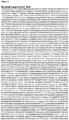
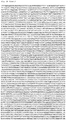
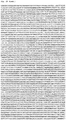
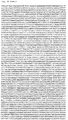
- a sequence of a prototype HCoV-NL63 is provided in figure 19 and parts thereof in table 3.
- the invention therefore provides an isolated and/or recombinant nucleic acid comprising a sequence as depicted in figure 19 and/or table 3.
- the virus HCoV-NL63 is characterized by the prototype, however, many natural variants exist as for instance shown in figure 16 for polymorphisms in the ORF 1a region. The existence of such natural variants is normal for RNA viruses that undergo frequent mutation through for instance the introduction of mistakes by the polymerases that copy the genome.
- HCoV-NL63 viruses that have a slightly divergent nucleic acid sequence as defined by the claims are thus also provided by the present invention.
- Such viruses are considered to be a derivative of the nucleic acid having the prototype nucleic acid sequence.
- the variant does not necessarily have to be a natural variant. It is very well possible to generate variants through recombinant means. For instance many parts of the virus can be altered through nucleotide substitution to make use of the redundancy in the triplet genetic code for particular amino acids. Thus without altering the amino acid sequence of the encoded proteins. However, even amino acid alterations can typically be introduced without affecting the replicating and coding potential of the viruses. For instance conservative amino acid substitutions are often tolerated.
- Alterations in the prototype virus may be up to 70% of the nucleic acid sequence without altering the replicating potential of the virus. Most of the viable variants however are at least 95% homologous and more preferably at least 99% to a nucleic acid according to the prototype HCoV-NL63.
- the homology between different coronaviruses in the UTR regions is typically high, for this reason the homology in this application is measured in a region outside the UTR regions, preferably in a protein coding region.
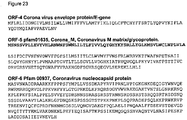
- the specification describes a derivative of HCoV-NL63 virus comprising at least 95% homology and preferably at least 99% homology (on the nucleic acid level) in at least one protein coding region depicted figure 20 , 21 , 22 , 23 , or table 3.
- the nucleic acid of the virus or parts thereof can be cloned and used as a probe to detect the virus in samples.
- the present specification further describes an isolated and/or recombinant nucleic acid comprising a stretch of 100 consecutive nucleotides of a nucleic acid of the prototype virus, or a region that is at least 95% and preferably at least 99% homologous to said 100 consecutive nucleotides(when measured on the nucleic acid level outside a UTR region).
- a stretch of 100 consecutive nucleotides is considered to be a functional part of the virus of the present disclosure.
- a bacterial vector comprising a nucleic acid of HCoV-NL63 as recited in the claims.
- the sequence of HCoV-NL63 or a part thereof can be used to generate a primer that is specific for HCoV-NL63 and thus capable of specifically replicating HCoV-NL63 nucleic acid.
- a probe can be generated that specifically hybridizes to HCoV-NL63 nucleic acid under stringent conditions.
- a primer and/or probe capable of specifically hybridizing to a nucleic acid of a HCoV-NL63 virus.
- said primer or probe is capable of hybridizing to said nucleic acid under stringent conditions.
- said primer and/or probe comprises a sequence as depicted in table 3, or figure 16 or figure 17 .
- the nucleic acid of the prototype virus encodes various proteins and polyproteins. These proteins are expressed for instance in cells producing the virus or transformed with a nucleic acid encoding the (poly)protein.
- the invention thus further provides an isolated and/or recombinant proteinaceous molecule that is the ORF-2 Spike protein/S-gene sequence as depicted in figure 22 ; or that is selected from the group consisting of:
- the overall homology of HCoV-NL63 virus with other human coronaviruses is not very high.
- binding molecules capable of specifically binding to HCoV-NL63 virus can be generated.
- Such binding molecules can be used to detect HCoV-NL63 virus in a sample.
- the specification thus further discloses an isolated or recombinant virus which is immunoreactive with a binding molecule capable of specifically binding HCoV-NL63 virus.
- the invention provides the use of an isolated and/or recombinant proteinaceous molecule as recited in the claims for detecting an antibody or fragment thereof capable of specifically binding HCoV-NL63 virus as recited in the claims in a sample.
- HCoV-NL63 virus can be used to detect a molecule capable of specifically binding said virus in a sample. Binding of HCoV-NL63 virus to a susceptible target cell occurs via a specific receptor. This receptor can be used as a binding molecule of the specification. Preferably, the binding molecule comprises an antibody or functional equivalent thereof. The detection methods can be used to diagnose HCoV-NL63 related disease in a subject.
- a method for detecting a HCoV-NL63 virus as recited in the claims in a sample comprising hybridizing and/or amplifying a nucleic acid of said virus with a HCoV-NL63 specific primer and/or probe as recited in the claims and detecting hybridized and/or amplified product.
- a diagnostic kit comprising a HCoV-NL63 virus as recited in the claims, an antibody or fragment thereof as recited in the claims, and/or a HCoV-NL63 virus specific primer/probe as recited in the claims.
- a primer or probe capable of specifically hybridizing to a nucleic acid of a HCoV-NL63 virus as recited in the claims or an antibody or fragment thereof capable of specifically binding a proteinaceous molecule as recited in the claims or an HCoV-NL63 virus as recited in the claims and/or a nucleic acid of a prototype HCoV-NL63 as recited in the claims for detecting and/or identifying a HCoV-NL63 coronavirus as recited in the claims in a sample.
- said nucleic acid comprises a sequence as depicted in table 3.
- the invention further provides a vaccine comprising HCoV-NL63 virus as recited in the claims.
- a vaccine comprising a proteinaceous molecule as recited in the claims.
- a proteinaceous molecule of the specification may be provided as a vaccine by itself or as a part of the protein or as derivatives or analogues thereof.
- a suitable analogue is a nucleic acid encoding a HCoV-NL63 virus proteinaceous molecule.
- the nucleic acid may be used in a DNA vaccine approach which is also provided in the present specification.
- a HCoV-NL63 virus encoded protein that is suited for such a DNA vaccine approach is the S protein depicted in figure 22 .
- a part of an S protein preferably comprises an immunogenic part of the 537 in frame insertion as compared with HCoV-229E virus.
- Preferably said part comprises essentially said 537 insertion.
- the 537 insertion is meant a sequence corresponding to sequences 20472 to 21009 of figure 19 .
- a vaccine includes an appropriate adjuvant.
- the mentioned virus and/or proteinaceous molecules can also be used to generate and/or boost a HCoV-NL63 virus specific immune response in a subject.
- the immune response can be both cellular or humoral.
- an isolated T-cell comprising a T-cell receptor that is specific for HCoV-NL63 virus or a proteinaceous molecule encoded by a prototype HCoV-NL63 virus.
- an isolated B-cell producing an antibody specific for HCoV-NL63 virus or a proteinaceous molecule encoded by a HCoV-NL63 virus.
- the antibody or T-cell receptor can be cloned whereupon a cell line can be provided with an expression cassette comprising the cloned receptor or antibody.
- a cell producing such a receptor or antibody is preferably a cell that is suitable for large scale production of the mentioned proteins such as CHO cells.
- a subject with passive immunity to HCoV-NL63 virus.
- the subject can be provided with a HCoV-NL63 specific binding molecule of the specification.
- Such immunity can be used to provide a barrier for (further) infection with HCoV-NL63 virus in the subject, thus further provided is a vaccine comprising a HCoV-NL63 virus specific antibody or fragment thereof according to the specification.
- passive immunity is provided by a human or humanized antibody capable of specifically binding a HCoV-NL63 virus of the specification.
- the barrier does not have to be perfect.
- the presence of an antibody or fragment thereof at least reduces the spread of the virus to other target cells in the subject.
- the passive immunity may be administered to a subject as prophylactic to at least reduce the spread of HCoV-NL63 virus in the subject when exposed to the virus.
- the passive immunity may be provided to a subject already infected with the virus.
- one or more HCoV-NL63 virus specific antibody or fragment thereof of the specification are used as a medicament to at least reduce the spread of the virus in the subject and thereby at least in part combat the virus infection.
- the specification thus further provides a medicament comprising a HCoV-NL63 virus specific antibody or fragment thereof.
- a virus of the specification or a proteinaceous molecule of the specification or a HCoV-NL63 virus specific antibody or fragment thereof of the specification for the preparation of a vaccine against a coronaviral genus related disease.
- a method for treating an individual suffering from, or at risk of suffering from, an HCoV-NL63 related disease comprising administering to said individual a vaccine or medicament according to the specification.
- a method for determining whether an individual suffers from an HCoV-NL63 as recited in the claims related disease comprising obtaining a sample from said individual and detecting a HCoV-NL63 virus as recited in the claims in said sample.
- an isolated cell, or recombinant or cell line comprising HCoV-NL63 virus as recited in the claims.
- said cell is a primate cell, preferably a monkey cell.
- said cell is a cell that replicates the HCoV-NL63 virus of the specification.
- the cell is a kidney cell.
- the cell can be used to produce the HCoV-NL63 virus of the specification or to attenuate HCoV-NL63 such that it becomes less pathogenic. Virus attenuation is spontaneous upon continued culture of the virus on the mentioned preferred cell lines. Attenuated HCoV-NL63 virus can be used as a vaccine.
- HCoV-NL63 virus encodes an endoprotease.
- a sequence for the protease in the prototype HCoV-NL63 virus is depicted in figure (21 ).
- the protease is important for the processing of the polyproteins encoded by HCoV-NL63.
- the action of the protease is at least in part inhibited by a viral protease inhibitor as further described herein.
- a viral protease inhibitor as further described herein.
- the specification further provides a compound for at least in part inhibiting HCoV-NL63 virus replication.
- Preferred compounds are inhibitors of inosine monophosphate dehydrogenase (55) (e.g. Ribavirin(54) and mycophenolic acid), orotidine-5'-phosphate decarboxylase inhibitors (e.g.
- VNSTLQ is the N-terminal proteolytic processing site of SARS-3CLpro that is used in the 3Clpro inhibitor VNSTLQ-AG7088 (56).
- VNSTLQ-AG7088 see structural formula 1 depicted below, that inhibits SARS 3CLpro activity.
- the hexapeptide VNSTLQ corresponds to YNSTLQ in HCoV-NL63. Therefore YNSTLQ- AG7088 inhibits the HCoV-NL63 3CLpro orthologs.
- the protease inhibitor comprises the amino acid sequence VNSTLQ more preferably YNSTLQ.
- Analogues of such protease inhibitors that comprise the same activity in kind not necessarily in amount are also provided.
- Such analogues include, compounds comprising a peptide with the preferred sequence, wherein the peptide comprises a modification.
- Other analogues include compounds having protein mimetic activity that mimic the preferred amino-acid sequence.
- S-adenosylmethionine-dependant ribose 2'-orthomethyltransferase Plays a role in the methylation of cap structure (GpppNm) at the 5'end of the viral RNA.
- Antiviral compounds inhibiting this transfer of methyl groups to reaction (carboxylic adenosine analogs e.g. Neoplanocin A and 3-deazaneoplancin A) interfere with expression of viral proteins.
- the specification further provides a proteinaceous molecule encoded by HCoV-NL63 nucleic acid, wherein said proteinaceous molecule is a 3CL protease.
- the specification thus further provides a method for determining whether a compound comprises anticoronavirus replication activity characterized in that said method utilizes HCoV-NL63-virus or a HCoV-NL63 protein involved in replication of HCoV-NL63.
- the specification provides a method for determining whether a compound is capable of at least in part inhibiting a viral protease characterized in that said protease is a 3CL protease of HCoV-NL63.
- Preferred compounds that can be tested for 3CL inhibiting quality are hexapeptides located N-terminally of 3Clpro cleavage sites.
- Compounds effective in at least in part inhibiting 3Cl proteolytic activity can be used for the preparation of a medicament for the treatment of an individual suffering or at risk of suffering from a HCoV-NL63 virus infection.
- One or more of the preferred anticoronaviral replication compounds can be used as a medicament for the treatment of a subject suffering from or at risk of suffering from a HCoV-NL63 virus infection.
- the specification thus further provides a medicament for the treatment of an individual suffering from an coronavirus infection or an individual at risk of suffering there from comprising wherein said coronavirus comprises a nucleic acid sequence of a HCoV-NL63 prototype virus.
- HCoV-NL63 virus nucleic acid as a backbone.
- Such replication competent or replication defective recombinant virus can be used for instance as gene delivery vehicles.
- parts of a HCoV-NL63 virus can be used in gene delivery vehicles that are based on other means for delivering genetic material to a cell.
- the specification further provides a gene delivery vehicle comprising at least part of a HCoV-NL63 virus nucleic acid as recited in the claims.
- the prototype virus Preferably comprising a nucleic acid encoding a protein of HCoV-NL63 virus.
- the specification also shows chimearic coronaviruses comprising nucleic acid derived from at least two coronaviruses wherein at least one of said parts is derived from a HCoV-NL63 virus.
- Said HCoV-NL63 virus derived part comprises preferably at least 1000 nucleotides of the sequence as depicted in figure 19 .
- the invention provides a chimearic coronavirus comprising at least 1000 nucleotides of a sequence as depicted in figure 19 and at least 1000 nucleotides of another coronavirus wherein said latter 1000 nucleotides comprise a sequence that is more than 5% sequence divergent with a sequence as depicted in figure 19 .
- the sequences of a number of HCoV-NL63 virus fragments are depicted in table 3.
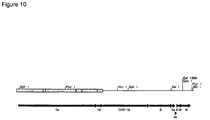
- the location of the fragments in the large genomic RNA is depicted in figure 5 .
- the specification therefore, in one aspect, provides an isolated or recombinant virus comprising a nucleic acid sequence as depicted in table 3.
- a primer is directed to a region of which the sequence is known and this primer is used to sequence a flanking region that is as yet unknown.
- a subsequent primer can be generated against the newly identified sequence and a further region can be sequenced. This procedure can be repeated until the entire sequence of the virus is elucidated.
- Dr. C. van der Hoek Department of Human Retrovirology, Academic Medical Center, University of Amsterdam, Amsterdam, The Netherlands.
- the specification further provides an isolated or recombinant virus comprising an amino acid sequence as depicted in (table 3).
- a particular amino acid sequence can be produced from a variety of nucleic acids depending on the codons used.
- the specification further provides a nucleic acid encoding an amino acid sequence as depicted in (table 3).
- an isolated or recombinant virus comprising a nucleic acid sequence encoding an amino acid sequence as depicted in (table 3).
- Coronaviruses as many other types of viruses acquire a plurality of spontaneous and selected mutations upon spreading of the virus through the subject population and/or during culturing ex vivo.
- artificial mutations having no recognized counterpart in nature can be introduced into the sequence of the prototype virus or a derivative thereof, without altering the viral- and/or disease causing properties of the virus.
- Having characterized the prototype of the newly discovered subtype gives access to this group of viruses belonging to the same subtype.
- the specification further provides an isolated or recombinant virus comprising a nucleic acid sequence that is approximately 95% homologous to a sequence as depicted in table 3, or 95 % homologous to an amino acid sequence depicted in Table 3.
- the homology is at least 99%.
- the respective prototype fragments were compared with a database of viral sequences and hits having a particularly high homology are mentioned in the tables 5 and 6. It may be noted that the compared fragments do not share extensive homology with any of the currently known Coronaviruses.
- the specification thus provides an isolated and/or recombinant virus comprising an amino acid sequence which is more than 95% homologous to 163- 2 amino acid sequence as depicted in Table 3. Preferably said homology is at least 99%. Further provided is an isolated or recombinant virus comprising an amino acid sequence which is more than 95 % homologous to 163- 4 amino acid sequence as depicted in Table 3. Preferably said homology is at least 99%.
- an isolated or recombinant virus comprising a nucleic acid sequence which is more than 95 % homologous to 163- 9 nucleic acid sequence as depicted in Table 3. Preferably said homology is at least 99%. Further provided is an isolated or recombinant virus comprising an amino acid sequence which is more than 95 % homologous to 163- 10 amino acid sequence as depicted in Table 3. Preferably said homology is at least 99%. Further provided is an isolated or recombinant virus comprising an amino acid sequence which is more than 95 % homologous to 163- 11 amino acid sequence as depicted in Table 3. Preferably said homology is at least 99%.
- an isolated or recombinant virus comprising an amino acid sequence which is more than 95 % homologous to 163- 14 amino acid sequence as depicted in Table 3. Preferably said homology is at least 99%. Further provided is an isolated or recombinant virus comprising an amino acid sequence which is more than 95 % homologous to 163- 15 amino acid sequence as depicted in Table 3. Preferably said homology is at least 99%.
- an isolated or recombinant virus comprising an amino acid sequence which is more than 95 % homologous to 163- 18 amino acid sequence as depicted in Table 3. Preferably said homology is at least 99%. Further provided is an isolated or recombinant virus comprising a nucleic acid sequence which is at least 95 % homologous to a nucleic acid sequence as depicted in Table 3. Preferably said homology is at least 99%.
- coronaviruses are associated with a variety of diseases of humans and domestic animals, including gastroenteritis and upper and lower respiratory tract disease.
- the human coronaviruses HCoV-229E and HCoV-OC43 are associated with mild disease (the common cold) but more severe disease is observed in children 16 , albeit at a very low incidence.
- SARS-CoV is the first example of a coronavirus that causes severe disease in humans.
- a substantial part of respiratory disease cases in humans remains undiagnosed. For instance, a recent survey of respiratory viruses in hospitalized children with bronchiolitis in Canada could not reveal a viral pathogen in about 20% of the patients 17 .
- HCoV-NL63 is a pathogenic respiratory virus.
- HCoV-NL63 is a pathogenic respiratory virus able to cause bronchiolitis in infected children
- the interesting question remains why HCoV-NL63 was not recognized previously by cell culture.
- the virus can be cultured in monkey kidney cells (tMK or LLC-MK2 cells), cells that are often used in a routine diagnostic setting and one might therefore speculate that HCoV-NL63, like SARS-CoV, was newly introduced from an animal reservoir into the human population or that this is a human virus that recently broadened its host cell range.
- HCoV-NL63 is associated with a particular phenotype in infected subjects.
- the phenotype can encompass bronchiolitis, coryza, conjunctivitis and fever and may further encompass other respiratory problems and diarrhea.
- the specification thus further provides an isolated and or recombinant virus (having one or more of the above mentioned homology) wherein said virus further comprises the capability to induce an HCoV-NL63 related disease or symptom in a subject.
- the specification provides an isolated and/or recombinant virus of the invention further comprising the property to cause CPE in tertiary monkey kidney cells (tMK; Cynomolgus monkey 37 ) and/or upon passage onto the monkey cell line LLC-MK2 (ECCAC 85062804, ATCC CCL-7).
- said virus does not produce CPE in Vero- cells (ATCC CRL-1586) 34 .
- the specification further provides a nucleic acid as depicted in table 3, and an amino acid sequence as depicted in Table 3.
- the specification further provides a primer and/or probe as recited in the claims, capable of specifically hybridizing to a nucleic acid of a virus, preferably a primer and/or probe, capable of specifically hybridizing to a nucleic acid sequence as depicted in Table 3. More preferably, a primer and/or probe, which is capable of hybridizing to said nucleic acid under stringent conditions.
- a specific binding member can be generated against an identified nucleic acid, lipid and/or amino acid sequence.
- Such specific binding members may be of any nature but are typically of a nucleic acid and/or proteinaceous nature.
- the specification thus further provides an isolated molecule capable of specifically binding a virus, nucleic acid and/or amino acid according to the specification.
- Said isolated molecule is also referred to as specific antibody or fragment thereof.
- said specific antibody or fragment thereof is capable of specifically binding at least part of a nucleic acid sequence as depicted in table 3 and/or at least part of an amino acid sequence as depicted in Table 3.
- said binding member is a proteinaceous molecule.
- a specific antibody or fragment thereof preferably comprises a significantly better binding property for the HCoV-NL63 virus compared to unrelated control.
- the epitope specifically recognized in HCoV-NL63 is also present in a limited number of other molecules.
- the binding of the antibody or fragment thereof may be specific, it may recognize also other molecules than those present in HCoV-NL63.
- This cross-reactivity is to be separated from a-specific binding and is a general property of antibodies. Cross-reactivity does not usually hinder the selection of suitable specific binding members for particular purposes. For instance a specific antibody or fragment thereof that also recognized a protein in liver cells can be used in many applications even in the presence of liver cells, where additional information such as location in the cell can often be used to discriminate.
- One source of an antibody of the specification is the blood of the infected subjects screened for the virus of the present specification.
- One may further characterize B-cells obtained from said subject.
- a suitable B-cell may be cultured and the antibody collected.
- the antibody may be sequenced from this B-cell and generated artificially.
- Another source of an antibody of the specification can be generated by immunisation of test animals or using artificial libraries to screen a purified fraction of virus.
- a functional part of an antibody has essentially the same properties of said antibody in kind, not necessarily in amount.
- Said functional part is preferably capable of specifically binding an antigen of HCoV-NL63. However, said functional part may bind such antigen to a different extend as compared to said whole antibody.
- a functional part or derivative of an antibody for instance comprises a FAB fragment or a single chain antibody.
- An analogue of an antibody for instance comprises a chimeric antibody.
- a desired property such as its binding capacity
- This can for instance be done by an Ala-scan and/or replacement net mapping method.
- Ala-scan and/or replacement net mapping method With these methods, many different proteinaceous molecules are generated, based on an original amino acid sequence but each molecule containing a substitution of at least one amino acid residue. Said amino acid residue may either be replaced by Alanine (Ala-scan) or by any other amino acid residue (replacement net mapping). Each variant is subsequently screened for said desired property. Generated data are used to design an improved proteinaceous molecule.
- the disclosure provides a method for producing a specific proteinaceous binding member comprising producing proteinaceous molecules capable of binding a virus according to the specification, and selecting a proteinaceous molecule that is specific for said virus. If need be, the method may be used to generate a collection of proteinaceous molecules capable of binding to said virus and selecting from said collection one or more binding members capable of specifically binding said virus.
- any specific binding member is characteristic for the HCoV-NL63virus of the specification.
- a virus that is specifically reactive with such binding member is an HCoV-NL63 virus and thus provided by the specification.
- the specification discloses an isolated and/or recombinant virus that is immunoreactive with specific binding member of the specification, preferably a proteinaceous binding member.
- the specification further discloses a composition of matter comprising isolated HCoV-NL63 virus, and/or a virus essentially corresponding to HCoV-NL63.
- a virus "essentially corresponding to HCoV-NL63” refers to HCoV-NL63 viruses which are either identical to the HCoV-NL63 strain described hereinabove, or which comprises one or more mutations compared to the said HCoV-NL63strain. These mutations may include natural mutations or artificial mutations. Said mutations of course should allow detection with a specific binding member of HCoV-NL63, not necessarily with all of the specific binding members). Said mutations should allow the detection of the variants using common detection methods such as antibody interaction, amplification and/or hybridization.
- the specification further provides the use of a virus of the specification for detecting a molecule capable of specifically binding said virus in a sample. Further described is the use of a nucleic acid and/or amino acid sequence of a virus as defined by the specification, for detecting a molecule capable of specifically binding said virus in a sample.
- said nucleic acid and/or amino acid sequence comprises a sequence as depicted in table 3 or Table 3.
- said part is at least 30 nucleotides and/or amino acids long wherein said part preferably comprises more than 95% sequence identity, preferably more than 99%.
- said specific binding member comprises a specific ligand and/or antibody of said virus.
- nucleic acid of a virus according to the invention for detecting and/or identifying a HCoV-NL63 coronavirus or part thereof in a sample.
- said nucleic acid comprises a sequence as depicted in table 3.
- HCoV-NL63 virus may be used to generate an immune response in a subject. This can be useful for instance in vaccination strategies.
- the specification further provides HCoV-NL63 virus for use as a vaccine or medicament.
- the medicament use is typically when the subject is already infected with the virus and the immunogen is used to augment the immune response against the virus.
- the specification further provides an antibody or fragment thereof of the specification for use as a vaccine or medicament. Such an antibody can provide passive immunity but may also have active components such as proteases attached to it.
- the medicament use may again be the case wherein a subject infected with an HCoV-NL63 virus is treated with the antibody or fragment thereof.
- Vaccines may be generated in a variety of ways.
- One way is to culture the HCoV-NL63 virus for example on the mentioned monkey cell line(s) and to use inactivated virus harvested from the culture. Alternatively, attenuated virus may be used either inactivated or as a live vaccine. Methods for the generation of coronavirus vaccines may be adapted to produce vaccines for the HCoV-NL63 of the specification.
- the specification thus further provides the use of an HCoV-NL63 virus for the preparation of a vaccine against a coronaviral genus related disease.
- the specification further provides the use of an antibody or fragment thereof of the specification for the preparation of a vaccine or medicament against a coronaviral genus related disease.
- an HCoV-NL63 virus an antibody or fragment thereof of the specification, a nucleic acid of the specification or a primer and/or probe of the specification for diagnosis of a coronaviral genus related disease.
- said coronaviral genus related disease comprises a HCoV-NL63 coronavirus related disease.
- a vaccine comprising an HCoV-NL63 virus as recited in the claims and/or an antibody or fragment thereof of the specification.
- a medicament comprising an HCoV-NL63virus and/or an antibody or fragment thereof of the specification.
- said vaccine or medicament is used for at least in part preventing and/or treating a HCoV-NL63 related disease.
- an important use of the present specification is the generation of a diagnostic tool for determining whether a subject is suffering from an HCoV-NL63 virus infection or has been exposed to an HCoV-NL63 virus infection.
- Many different diagnostic applications can be envisioned. They typically contain an identifying component allowing the typing of the virus that is or was present in the subject.
- One diagnostic tool for HCoV-NL63 makes use of the particular proliferation characteristics of the virus in various cell lines. It replicates in the mentioned preferred monkey cell lines but does not replicate in Vero- cells. This property can be used to discriminate HCoV-NL63 from other known coronaviruses.
- the specification provides a diagnostic kit comprising at least one of the preferred monkey cell lines, preferably the tertiary monkey kidney cells (tMK; Cynomolgus monkey or the monkey cell line LLC-MK2.
- diagnostic kits comprise an antibody or fragment thereof (to detect the virus or virus infected cells) and/or an HCoV-NL63 virus and/or amino acid of the specification (for detecting antibodies in blood components of the diagnosed subject).
- Many other current diagnostic kits rely on identification of HCoV-NL63 virus specific nucleic acid in a sample.
- an assay may be implemented one is a method for detecting an HCoV-NL63 virus in a sample, comprising hybridizing and/or amplifying a nucleic acid of said virus with a primer and/or probe according to the invention and detecting hybridized and/or amplified product.
- the specification thus also provides a diagnostic kit comprising an HCoV-NL63 virus, an antibody or fragment thereof according to the specification and/or a primer/probe according to the specification.
- a method for treating an individual suffering from, or at risk of suffering from, a HCoV-NL63 related disease comprising administering to said individual a vaccine or medicament according to the specification.
- a method for determining whether an individual suffers from a HCoV-NL63 as recited in the claims related disease comprising obtaining a sample from said individual and detecting a HCoV-NL63 virus as recited in the claims in said sample with a method and/or diagnostic kit of the specification.
- nucleic acid encoding a virus according to the specification and a nucleic acid according to the specification, comprising at least a sequence as depicted in Table 3.
- amino acid sequence encoded by a nucleic acid according to the specification and an amino acid sequence according to the specification, comprising at least a sequence as depicted in Table 3.
- a proteinaceous molecule capable of specifically binding HCoV-NL63 obtainable by a method according to the specification and, the use of such a proteinaceous molecule in a vaccine or a diagnostic method for the detection of HCoV-NL63.
- VIDISCA Virus Discovery cDNA-AFLP
- the reverse transcription was performed using 2.5 ⁇ g random hexamers (Amersham Bioscience), 200 U MMLV-RT (InVitrogen) in a buffer containing 10 mM Tris-HCl pH 8.3, 50 mM KCl, 0.1% Triton X-100, 4.8 mM MgCl2, and 0.4 mM of each dNTP. The sample was incubated at 37°C for 90 minutes.
- the second strand DNA synthesis was performed using 26 U Sequenase II (Amersham Bioscience), 7.5 U RNAse H (Amersham Bioscience) in 0.25 mM dNTPs each, 17.5 mM MgCl2 and 35 mM Tris-HCl pH 7.5. After the incubation at 37°C for 90 minutes a phenol/chloroform extraction was performed followed by an ethanol precipitation. The pellet was dissolved in 30 ⁇ l of H 2 O. The cDNA-AFLP was performed essentially as described by Bachem 1 with some modifications. The dsDNA was digested with the HinP I and MseI restriction enzymes (New England Biolabs) according to the manufacturers protocol.
- MseI adaptor and HinP I adaptor are added together with 5U ligase enzyme (InVitrogen) and ligase buffer, followed by an additional incubation of 2 hrs at 37°C.
- the MseI adaptor and HinP I adaptor were prepared previously by mixing a top strand oligo for the MSE and the HinP1 adaptors (Table 1) with a bottom strand oligo for the MSE adaptor and for the HinPl adaptor, incubate at 65° C. followed by cooling down to room temperature in the presence of a 1:40 dilution of ligase buffer.
- the first PCR was performed with 10 ⁇ l of ligation mixture as input, 2.5 U of AmpliTaq polymerase (Perkin-Elmer), 100 ng of HinPI standard primer and 100 ng of MseI standard primer.
- the PCR reaction was performed according to the profile 5min 95C; 20 cycles of: 1min 95°C-1min 55°C-2min 72°C; 10 min 72 °C.
- Five ⁇ l of first PCR product was used as input in the second "selective" amplification step containing 100 ng of HinPI-N primer and 100 ng MseI-N (sequence of the standard primers extended with one nucleotide) and 2 U AmpliTaq polymerase.
- the selective PCRs were amplified according to the profile of the "touch down PCR": 10 cycles of 60 sec 94° C-30 sec 65° C-1 min 72°C over which the annealing temperature was reduced from 65°C with 1 °C with each cycle, followed by 23 cycles: 30 sec 94°C-30 sec 56 °C-1 min 72 °C. Finally the sample was incubated for 10 min at 72°C.
- the PCR products were evaluated on 4% Metaphor® gels (Cambrex, Rockland, USA). If the bands on the gel were very faint the PCR products were concentrated by vacuum drying using 60 ⁇ l of the PCR product.
- the PCR fragments of interest were cut out of gel and DNA was eluted from the gel using the Qiagen gel purification kit according to the manufacturer's protocol.
- the PCR products were cloned using pCR® 2.1-TOPO plasmid (InVitrogen) and chemically competent One Shot E. coli (InVitrogen).
- a PCR on the colony was performed and this PCR product was input for sequencing the insert using Big Dye terminator chemistry (Applied Biosystems).
- the reverse transcription step was excluded, only HinP I digestion and adaptor ligation was performed, the first PCR was performed with 35 cycles instead of 20 and those first PCR fragments were visualized on agarose gel electrophoresis.
- Coronavirus-PCR product containing plasmids were sequenced with the BigDyeTM Terminator Cycle Sequencing Kit (Applied Biosystems, Foster City, Calif.), using the-21 M13RP and T7 primers. Electrophoresis of sequencing reaction mixtures was performed with an Applied Biosystems 377 automated sequencer, following the manufacturer's protocols. The Sequence Navigator (version 1.01) and Auto Assembler (version 2.1) software packages (ABI, California, USA) were used to analyze all sequencing data. Sequences were compared to all sequences in the Genbank database using the BLAST tool of the NCBI web page: http://www.ncbi.nlm.nih.gov/blast.
- nasopharyngeal aspirate specimen was collected (sample nr: HCoV-NL63). All routinely used tests on this sample for adenovirus, respiratory syncytial virus (RSV), influenza A and B, parainfluenza 1, 2 and 3, rhinovirus, HCoV-229E and HCoV-OC43 were negative.
- RSV respiratory syncytial virus
- the clinical sample was subsequently inoculated onto a variety of cells including human fibroblast lung (HFL) cells, tertiary monkey kidney cells (tMK; Cynomolgus) and R-HeLa cells.
- HFL human fibroblast lung
- tMK tertiary monkey kidney cells
- R-HeLa R-HeLa cells.
- a CPE was detected exclusively on tMK cells and first noted at eight days post-inoculation. The CPE was diffuse with a refractive appearance in the affected cells followed by cell detachment after 7 days. More pronounced CPE was observed upon passage onto LLC-MK2 cells. Besides overall cell rounding, moderate cell enlargement was observed. Additional subculturing on human endothelial lung cells, HFL, Rhabdomyosarcoma cells and Vero cells remained negative for CPE.
- VIDISCA As control we used the supernatant of uninfected LLC-MK2 cells.
- a Blast search in GenBank revealed that 8 of 16 fragments had sequence similarity to the family of corona viruses with the highest homology the human corona virus 229E (Tables 4 and 5).
- Genbank accession number of the used sequences are: MHV (mouse hepatitis virus): AF201929; HCoV-229E: AF304460; PEDV (porcine epidemic diarrhea virus): AF353511; TGEV (transmissible gastroenteritis virus): AJ271965; SARS-CoV: AY278554; IBV (avian infectious bronchitis virus): NC_001451; BCoV (bovine coronavirus): NC_003045; FCoV (feline coronavirus): Y13921 and X80799; CCoV (canine coronavirus): AB105373 and A22732; PRCoV (porcine respiratory coronavirus): M94097; FIPV (feline infectious peritonitis virus): D32044.
- HCoV-NL63 fragments compared to HCoV-229E AF304460: Replicase 1AB gene: 15155-15361, 16049-16182, 16190-16315, 18444-18550, Spike gene: 22124-22266; Nucleocapsid gene: 25667-25882 and 25887-25957; 3'UTR: 27052-27123. Branch lengths indicate the number of substitutions per sequence. From the most closely related species sequence identity scores were calculated (Tables 5 and 6).
- the human corona viruses account for 10 to 30% of the common colds in man 7 , and it is not unusual to find a coronavirus in a child with a respiratory illness. However, it is striking that the virus HCoV-NL63 was harvested from LLC-MK cells. Human Corona virus 229E and OC-43 are known for there inability to replicate on monkey kidney cells. Intriguingly, the newly identified human corona virus that is responsible for SARS is also able to replicate in monkey kidney cells 30 .
- a nasopharyngeal aspirate was collected 4 days after the onset of symptoms.
- the specimen was tested for the presence of adenovirus, RSV, influenza A, influenza B, and parainfluenza type 1, 2 an 3 using the Virus Respiratory Kit (Bartels: Trinity Biotech plc, Wicklow Ireland).
- PCR diagnosis for rhinoviruses, meta-pneumovirus and HCoV-OC43 and HCoV-229E were performed 2, 10 .
- the original nasopharyngeal aspirate was subsequently inoculated onto a variety of cell cultures including HFL cells, tMK cells and R-HeLa cells.
- the tubes were kept in a roller drum at 34°C and observed every 3 to 4 days.
- Optimem 1 without bovine fetal serum was used for the tMK cells and MEM Hanks' /Earle's medium (Gibco) with 3% bovine fetal serum was used for the remaining cell types.
- MEM Hanks' /Earle's medium (Gibco) with 3% bovine fetal serum was used for the remaining cell types.
- direct staining was performed with pools of fluorescent-labeled mouse antibodies against influenzavirus A and B, RSV and adenoviruses (Imagen, DAKO). Indirect staining was performed for parainfluenza virus types 1, 2 or 3 with mouse antibodies (Chemicon, Brunschwig, Amsterdam Netherlands) and subsequent staining with labeled rabbit anti-mouse antibodies (Imagen, DAKO).
- nucleic acids were extracted by the Boom method 4 4 from 50 ⁇ l virus supernatant or 50 ⁇ l suspended nasopharyngeal swab.
- the reverse transcription was performed as described above with the exception that 10 ng of reverse transcription primer repSZ-RT (Table 7) was used.
- the entire RT mixture was added to the first PCR mixture containing 100 ng of primer repSZ-1 and 100 ng of primer repSZ-3.
- the PCR reaction was performed according to the profile 5 min 95 °C; 20 cycles of: 1 min 95°C - 1min 55°C - 2 min 72°C; 10 min 72 °C.
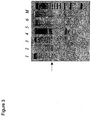
- a nested PCR was started using 5 ⁇ l of the first PCR with 100 ng of primer repSZ-2 and 100 ng of primer repSZ-4. Twenty-five PCR cycles were performed of the same profile as the first PCR. Ten ⁇ l of the first and 10 ⁇ l of the nested PCR was analyzed by agarose gel electrophoresis ( Fig. 2 ). Cloning and sequencing of the fragments was performed essentially as described above.
- Appropriate domains within the HCoV-NL63 surface proteins can be selected and amplified with suitable oligonucleotides and RT-PCR.
- the corresponding purified viral antigens can be obtained by expression in a suitable host (e.g. Yarrowia lipolytica as previously described 38 ).
- Female NZW rabbits (approx 4 kg) are primed with 0.5 to 5.0 mg of viral protein antigen preparation.
- the antigen is suspended in 0.5 ml. of phosphate buffered saline (pH 7.3) and emulsified in an equal volume of complete Freund's adjuvant (CFA).
- CFA complete Freund's adjuvant
- Freund's Adjuvant is a well-established adjuvant system that is appropriate for use in these experiments where small amounts of antigen are used, and where immunogenicity of the antigen (although likely) is unknown. Published guidelines for use will be followed, including limiting injection to 0.1 ml at each site, using CFA only for initial immunization dose. This antigen preparation (1 ml total volume) is injected subdermally in the loose skin on the backside of the rabbit's neck. This injection route is immunologically effective and minimizes the possibility of local inflammation associated with unilateral or bilateral flank injection (such ensuing flank inflammation can impair animal mobility). After resting for 3 weeks, one ml of blood will be removed from the ear artery for a test bleed.
- Antibodies will be boosted if titers of the desirable antibodies are judged to be too low. Rabbits with adequate antibody levels will be boosted subdermally 1.0 mg of antigen contained in CFA. Boosted animals will be bled after two weeks; i.e., 15 ml of blood will be taken from the ear artery using a heat lamp to dilate the blood vessel. The rabbit will be placed in a commercial restraint, tranquillized with xylazine not more than seven times in total after which the rabbit will be exsanguinated by cardiac puncture following anesthesia using xylazine/ketamine.
- the S-glycoprotein perhaps combined with the HE, M and N proteins, could be expressed in a suitable eukaryotic host (e.g. Y. lipolytica or LLC-MK2 cells) and purified using preferentially two small affinity tags (e.g. His-tag or the StrepII tag). After appropriate purification, the resulting viral proteins can be used as a subunit vaccine.
- a suitable eukaryotic host e.g. Y. lipolytica or LLC-MK2 cells
- preferentially two small affinity tags e.g. His-tag or the StrepII tag
- the HCoV-NL63 virus can be propagated in a suitable cell line as described above and subsequently treated as described by Wu 11 . Briefly the virus is precipitated from culture medium with 20% polyethylene glycol 6000 and purified by ultracentrifugation at 80.000 ⁇ g for 4 hours through a discontinuous 40-65% sucrose gradient followed by a linear 5 to 40 % CsCl gradient for 4 hours at 120.000 ⁇ g. The resulting virus preparation can be inactivated by heating for 30 minutes at 65° C as described by Blondel 3 .
- Binding reactions were carried out in an IAsys two-channel resonant mirror biosensor at 20°C (Affinity Sensors, Saxon Hill, Cambridge, United Kingdom) with minor modifications.
- Planar biotin surfaces with which a signal of 600 arc s corresponds to 1 ng of bound protein/mm2, were derivatized with streptavidin according to the manufacturer's instructions. Controls showed that the viral proteins did not bind to streptavidin-derivatized biotin surfaces (result not shown).
- Biotinylated antibody was immobilized on planar streptavidin-derivatized surfaces, which were then washed with PBS.
- Binding assays were conducted in a final volume of 30 ⁇ l of PBS at 20 ⁇ 0.1°C.
- the ligate was added at a known concentration in 1 ⁇ l to 5 ⁇ l of PBS to the cuvette to give a final concentration of S-glycoprotein ranging from 14 to 70 nM.
- the cuvette was washed three times with 50 ⁇ l of 2 M NaCl-10 mM Na2HPO4, pH 7.2, and three times with 50 ⁇ l of 20 mM HCl. Data were pooled from experiments carried out with different amounts of immobilized antibody (0.2, 0.6, and 1.2 ng/mm2). For the calculation of k on , low concentrations of ligate (S-glycoprotein) were used, whereas for the measurement of k off , higher concentrations of ligate were employed (1 ⁇ M) to avoid any rebinding artefacts.
- the binding parameters k on and k off were calculated from the association and dissociation phases of the binding reactions, respectively, using the non-linear curve-fitting FastFit software (Affinity Sensors) provided with the instrument.
- the dissociation constant (K d ) was calculated from the association and dissociation rate constants and from the extent of binding observed near equilibrium.
- the child who was living in Amsterdam, was admitted to the hospital with complaints of coryza and conjunctivitis since 3 days. At admission she had shortness of breath and refused to drink.
- the patient's temperature was 39 °C, the respiratory rate was 50 breaths/min with oxygen saturation of 96% and her pulse was 177 beats/min.
- a chest radiograph showed the typical features of bronchiolitis.
- the child was treated with salbutamol and ipratropium at the first day, followed by the use of salbutamol only for 5 days. The child was seen daily at the out patient clinic and the symptoms gradually decreased.
- a nasopharyngeal aspirate was collected 5 days after the onset of symptoms.
- the specimen was tested for the presence of RSV, adenovirus, influenza A and B virus, and parainfluenza virus type 1, 2 and 3 using the Virus Respiratory Kit (Bartels: Trinity Biotech plc, Wicklow Ireland).
- PCR tests for rhinoviruses, enterovirus, meta-pneumovirus and HCoV-OC43 and HCoV-229E were performed (2, 10).
- the original nasopharyngeal aspirate was inoculated onto a variety of cells. The cultures were kept in a roller drum at 34°C and observed every 3 to 4 days. Maintenance medium was replenished every 3 to 4 days.
- Optimem 1 InVitrogen, Breda, The Netherlands
- MEM Hanks' /Earle's medium InVitrogen, Breda, The Netherlands
- bovine fetal serum was used for the remaining cell types.
- Cell cultures that were infected with the aspirate specimen were stained for the presence of respiratory viruses after one week of incubation. Direct staining was performed with pools of fluorescent-labeled mouse antibodies against RSV and influenza A and B virus (Imagen, DakoCytomation Ltd, Cambridge, UK).
- Indirect staining was performed for adenoviruses and parainfluenza virus type 1, 2 or 3 with mouse antibodies (Chemicon International, Temecula, California) and subsequent staining with FITC-labeled rabbit anti-mouse antibodies (Imagen, DakoCytomation Ltd, Cambridge, UK).
- a reverse transcription reaction was performed with random hexamer primers (Amersham Bioscience, Roosendaal, The Netherlands) and MMLV-RT (InVitrogen, Breda The Netherlands) while second strand DNA synthesis was carried out with Sequenase II (Amersham Bioscience, Roosendaal, The Netherlands).
- Sequenase II Amersham Bioscience, Roosendaal, The Netherlands.
- a phenol/chloroform extraction was followed by an ethanol precipitation.
- the cDNA-AFLP was performed essentially as described by Bachem et al (1) with some modifications.
- the dsDNA was digested with the HinP I and Mse I restriction enzymes (New England Biolabs, Beverly, Massachusetts).
- Mse I- and HinP I-anchors were subsequently added with 5U ligase enzyme (InVitrogen, Breda, The Netherlands) in the supplied ligase buffer for 2 hrs at 37°C.
- the Mse I- and HinP I-anchors were prepared by mixing a top strand oligo (5'-CTCGTAGACTGCGTACC-3' for the Mse I anchor and 5'-GACGATGAGTCCTGAC-3' for the HinP I anchor) with a bottom strand oligo (5'-TAGGTACGCAGTC-3' for the Mse I anchor and 5'- CGGTCAGGACTCAT-3' for the HinP I anchor) in a 1:40 dilution of ligase buffer.
- a 20 cycle PCR was performed with 10 ⁇ l of the ligation mixture, 100 ng HinP I standard primer (5'-GACGATGAGTCCTGACCGC-3') and 100 ng Mse I standard primer (5'-CTCGTAGACTGCGTACCTAA-3'). Five ⁇ l of this PCR product was used as input in the second "selective" amplification step with 100 ng HinPI-N primer and 100 ng MseI-N (the "N” denotes that the standard primers are extended with one nucleotide: G, A, T or C).
- the selective rounds of amplification were done with a "touch down PCR”: 10 cycles of [60 sec 94°C-30 sec 65°C-1 min 72°C] and the annealing temperature was reduced with 1 °C each cycle, followed by 23 cycles: [30 sec 94°C-30 sec 56 °C-1 min 72 °C] and 1 cycle 10 min 72°C.
- the PCR products were analyzed on 4% Metaphor® agarose gels (Cambrex, Rockland, Maine) and the fragments of interest were cloned and sequenced using BigDye terminator reagents. Electrophoresis and data collection was performed on an ABI 377 instrument.
- the cDNA library was produced as described by Marra et al 17 , with minor modifications. During reverse transcription only random hexamer primers were used and no oligo-dT primer, and the amplified cDNA was cloned into PCR2.1-TOPO TA cloning vector. Colonies were picked and suspended in BHI media. The E.coli suspension was used as input in a PCR amplification using T7 and M13 RP for amplification. The PCR products were subsequently sequenced with the same primers that were used in the PCR-amplification and the BigDye terminator reagent. Electrophoresis and data collection was performed on an ABI 377 instrument. Sequences were assembled using the AutoAssembler DNA sequence Assembly software version 2.0.
- the entire RT mixture was added to the first PCR mixture containing 100 ng of primer repSZ-1 (5'-GTGATGCATATGCTAATTTG-3') and 100 ng of primer repSZ-3 (5'-CTCTTGCAGGTATAATCCTA-3').
- the PCR reaction was performed according to the profile 5min 95C; 20 cycles of: 1min 95°C-1min 55°C-2min 72°C; 10 min 72 °C.
- a nested PCR was started using 5 ⁇ l of the first PCR with 100 ng of primer repSZ-2 (5'-TTGGTAAACAAAAGATAACT-3') and 100 ng of primer repSZ-4 (5'-TCAATGCTATAAACAGTCAT-3'). Twenty-five PCR cycles were performed of the same profile as the first PCR. Ten ⁇ l of the PCR products was analyzed by agarose gel electrophoresis. All positive samples were sequenced to confirm the presence of HCoV-NL63 in the sample.
- Sequences were compared to all sequences in the Genbank database using the BLAST tool of the NCBI web page: http://www.ncbi.nlm.nih.gov/blast .
- the sequences were aligned using the ClustalX software package with the following settings: Gap opening penalties: 10.00; Gap extension penalty 0.20; Delay divergent sequences switch at 30% and transition weight 0.5 (9).
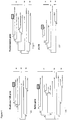
- Phylogenetic analysis was carried out using the neighbor-joining method of the MEGA program (5) using the information of all fragments within one gene.
- the nucleotide distance matrix was generated either by Kimura's 2 parameter estimation or by the p-distance estimation (6). Bootstrap resampling (500 replicates) was employed to place approximate confidence limits on individual branches.
- CPE was detected exclusively on tMK cells and first noted at eight days post-inoculation. The CPE was diffuse with a refractive appearance in the affected cells followed by cell detachment after 7 days. More pronounced CPE was observed upon passage onto the monkey kidney cell line LLC-MK2 with overall cell rounding and moderate cell enlargement ( Fig. 1 ). Additional subcultures on HFL, rhabdomyosarcoma cells and Vero cells remained negative for CPE. Immunofluorescent assays to detect RSV, adenovirus, influenza A and B virus, or parainfluenza virus type 1, 2 and 3 in the culture remained negative. Acid lability and chloroform sensitivity tests demonstrated that the virus is most likely enveloped and not a member of the picornavirus group 24 .
- VIDISCA RNA-binding protein
- a DNAse treatment is used to remove interfering chromosomal DNA and mitochondrial DNA from degraded cells, whereas viral nucleic acid is protected within the viral particle.
- the method is fine-tuned such that most viruses will be amplified.
- VIDISCA we were able to amplify viral nucleic acids from EDTA-plasma of a person with hepatitis B virus infection and a person with an acute parvovirus B19 infection. The technique can also detect HIV-1 in cell culture, demonstrating its capacity to identify both RNA and DNA viruses.
- the supernatant of the CPE-positive culture NL63 was analyzed by VIDISCA. We used the supernatant of uninfected cells as a control. After the second PCR amplification step, unique and prominent DNA fragments were present in the test sample but not in the control. These fragments were cloned and sequenced. Twelve out of 16 fragments showed sequence similarity to members of the family of coronaviruses, but significant sequence divergence was apparent in all fragments. These results indicate that we identified a novel coronavirus (HCoV-NL63).
- HCoV-NL63 originated from the nasopharyngeal aspirate of the child
- a diagnostic RT-PCR that specifically detects HCoV-NL63. This test, based on unique sequences within the 1b gene, confirmed the presence of HCoV-NL63 in the clinical sample.
- the sequence of this PCR product was identical to that of the virus identified upon in vitro passage in LLC-MK2 cells (results not shown).
- the genomes of coronaviruses have a characteristic, genome organization.
- the 5' half contains the large 1a and 1b genes, encoding the non-structural polyproteins, followed by the genes coding for four structural proteins: spike (S), membrane (M), envelope (E) and the nucleocapsid (N) protein. Additional non-structural proteins are encoded either between 1b and the S gene, between the S and E gene, between the M and N gene or downstream of the N gene.
- HCoV-NL63 genome organization shares these characteristics.
- a cDNA library with a purified virus stock as input material. A total of 475 genome fragments were analyzed, with an average coverage of 7 sequences per nucleotide. Specific PCRs were designed to fill in gaps and to sequence regions with low quality sequence data. Combined with 5'RACE (Rapid Amplification of cDNA Ends) and 3'RACE experiments the complete HCoV-NL63 genome sequence was resolved.
- the genome of HCoV-NL63 is a 27,553-nucleotide RNA with a poly A tail. With a G-C content of 34% it has the lowest G-C content among the coronaviridae, which range from 37%-42% 25 .
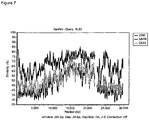
- ZCurve software was used to identify ORFs 26 and the genome configuration is portrayed using the similarity with known coronaviruses ( Fig. 6 ).
- the 1a and 1b genes encode the RNA polymerase and proteases that are essential for virus replication.
- a potential pseudoknot structure is present at position 12439, which may provide the -1 frameshift signal to translate the 1b polyprotein.
- Genes predicted to encode the S, E, M and N proteins are found in the 3' part of the genome.
- UTRs Short untranslated regions of 286 and 287 nucleotides are present at the 5' and 3' termini, respectively.
- the hemagglutinin-esterase gene which is present in some group 2 and group 3 coronaviruses, was not present.
- ORF 3 between the S and E gene probably encodes a single accessory non-structural protein.
- the 1a and 1ab polyproteins are translated from the genomic RNA, but the remaining viral proteins are translated from subgenomic mRNAs (sg mRNA), each with a common 5' end derived from the 5' part of the genome (the 5' leader sequence) and 3' coterminal parts.
- the sg mRNA are made by discontinuous transcription during negative strand synthesis 27 . Discontinuous transcription requires base-pairing between cis -acting transcription regulatory sequences (TRSs), one located near the 5' part of the genome (the leader TRS) and others located upstream of the respective ORFs (the body TRSs) 28 .
- TRSs cis -acting transcription regulatory sequences
- the cDNA bank that we used for sequencing contained copies of sg mRNA of the N protein, thus providing the opportunity to exactly map the leader sequence that is fused to all sg mRNAs.
- a leader of 72 nucleotides was identified at the 5' UTR.
- the leader TRS (5'-UCUCAACUAAAC-3') showed 11/12-nucleotide similarity with the body TRS upstream of the N gene.
- a putative TRS was also identified upstream of the S, ORF 3, E and M gene .
- HCoV-NL63 was aligned with the complete genomes of other coronaviruses. The percentage nucleotide identity was determined for each gene. For all genes except the M gene, the percentage identity was the highest with HCoV-229E.
- phylogenetic analysis was performed using the nucleotide sequence of the 1A, 1B, S, M and N gene. For each gene analyzed, HCoV-NL63 clustered with the group 1 coronaviruses. The bootstrap values of the subgroup HCoV-NL63/HCoV-229E were 100 for the 1a, 1b and S gene.
- Table 1 cDNA- AFLP oligonucleotides for virus discovery Oligo Sequence Top strand MSE adaptor CTCGTAGACTGCGTACC Top strand for HinP1 adaptor GACGATGAGTCCTGAC Bottom strand oligo for MSE adaptor TAGGTACGCAGTC Bottom strand oligo for HinP1 adaptor CGGTCAGGACTCAT HinPI standard primer GACGATGAGTCCTGACCGC MseI standard primer CTCGTAGACTGCGTACCTAA
- Table 2 Oligonucleotide for PALM extension of the HCOV-NL63 Sequence Oligonucleotide name, Application, Sequence 5'- 3' JZH2R 1st PCR GCTATCATCACAATGGACNNNNNG Table 3.
- ORF 1a and 1ab encode two polyproteins that are proteolytically converted to 16 largely uncharacterized enzymes that are involved in RNA replication (for review see Snijder, E. J., P. J. Bredenbeek, J. C. Dobbe, V. Thiel, J. Ziebuhr, L. L. Poon, Y. Guan, M. Rozanov, W. J. Spaan, and A. E. Gorbalenya. 2003. Unique and conserveed Features of Genome and Proteome of SARS-coronavirus, an Early Split-off From the Coronavirus Group 2 Lineage. J. Mol. Biol. 331:991-1004 ).
- Table 10 Amplification oligonucleotides for HCoV-NL65 S, M and N encoding regions Primer Sequence S1 ACAAGTTTGTACAAAAAAGCAGGCTTC AAACTTTTCTTGATTTTGCTTGTTTTGCCCC S2 ACCACTTTGTACAAGAAAGCTGGGTC TTGAACGTGGACCTTTTCAAATTCG M1 ACAAGTTTGTACAAAAAAGCAGGCTTC TCTAATAGTAGTGTGCCTCTTTTAGAGG M2 ACCACTTTGTACAAGAAAGCTGGGTC GATTAAATGAAGCAACTTCTC N1 ACAAGTTTGTACAAAAAAGCAGGCTTC GCTAGTGTAAATTGGGCCGATG N2 ACCACTTTGTACAAGAAAGCTGGGTC ATGCAAAACCTCGTTGACAATTTCTATAATGGC The S, M and N complementary sequences are indicated in bold print.
Landscapes
- Health & Medical Sciences (AREA)
- Life Sciences & Earth Sciences (AREA)
- Chemical & Material Sciences (AREA)
- Virology (AREA)
- Organic Chemistry (AREA)
- Immunology (AREA)
- Engineering & Computer Science (AREA)
- General Health & Medical Sciences (AREA)
- Medicinal Chemistry (AREA)
- Molecular Biology (AREA)
- Biochemistry (AREA)
- Genetics & Genomics (AREA)
- Wood Science & Technology (AREA)
- Proteomics, Peptides & Aminoacids (AREA)
- Zoology (AREA)
- Microbiology (AREA)
- Biotechnology (AREA)
- Bioinformatics & Cheminformatics (AREA)
- Biophysics (AREA)
- Biomedical Technology (AREA)
- Analytical Chemistry (AREA)
- General Engineering & Computer Science (AREA)
- Physics & Mathematics (AREA)
- Veterinary Medicine (AREA)
- Public Health (AREA)
- Animal Behavior & Ethology (AREA)
- Pharmacology & Pharmacy (AREA)
- Urology & Nephrology (AREA)
- Hematology (AREA)
- Epidemiology (AREA)
- Mycology (AREA)
- Communicable Diseases (AREA)
- Gastroenterology & Hepatology (AREA)
- Food Science & Technology (AREA)
- Cell Biology (AREA)
- Tropical Medicine & Parasitology (AREA)
- Pathology (AREA)
- Pulmonology (AREA)
- General Physics & Mathematics (AREA)
- General Chemical & Material Sciences (AREA)
Claims (39)
- Isolierte und/oder rekombinante Nukleinsäure mit mindestens 95 % Sequenzidentität mit einer Nukleinsäuresequenz wie in Tabelle 3 gezeigt oder umfassend eine Sequenz mit mindestens 99 % Sequenzidentität mit einer Nukleinsäuresequenz wie in Figur 19 gezeigt.
- Isolierte und/oder rekombinante Nukleinsäure gemäß Anspruch 1, umfassend eine Sequenz wie in Tabelle 3 oder Figur 19 gezeigt.
- Isoliertes und/oder rekombinantes proteinartiges Molekül, welches die Sequenz des ORF-2 Spike-Proteins/S-Gens wie in Figur 22 gezeigt, ist; oder welches ausgewählt ist aus der Gruppe, bestehend aus:- der Sequenz des ORF 1ab Replikasepolyproteins wie in Figur 21 gezeigt;- der Sequenz der 3Clpro Coronaviruspolyprotein-prozessierenden Endoprotease wie in Figur 21 gezeigt;- der Sequenz der RNA-abhängigen RNA-Polymerase (pfam00680) wie in Figur 21 gezeigt;- der Sequenz der ExoN 3'zu 5' Exonuklease und Helikase wie in Figur 21gezeigt;- der Sequenz der XendoU (Homolog der) polyU-spezifischen Endoribonuklease wie in Figur 21 gezeigt;- der Sequenz der 2'-O-MT 2: S-Adenosylmethionin-abhängigen Ribose 2'-Ortho-MethylTransferase wie in Figur 21gezeigt;- der Sequenz der/des ORF-5 pfam01635, Corona M, Coronavirus M Matrize/Glykoproteins wie in Figur 23 gezeigt; und- der Sequenz des ORF la, Replikase-enzymkomplexes wie in Figur 20 gezeigt.
- Nukleinsäure, kodierend ein proteinartiges Molekül gemäß Anspruch 3.
- Isoliertes oder rekombinantes Virus, umfassend eine Nukleinsäuresequenz gemäß einem der Ansprüche 1 bis 2 oder 4.
- Isoliertes oder rekombinantes Virus, umfassend ein proteinartiges Molekül gemäß Anspruch 3.
- Vektor, umfassend eine Nukleinsäure gemäß einem der Ansprüche 1 bis 2 oder 4.
- Primer und/oder Sonde, welche zum spezifischen Hybridisieren unter stringenten Bedingungen an eine Nukleinsäure eines Virus gemäß einem der Ansprüche 1 bis 2 oder 4, umfassend eine Sequenz GTGATGCATATGCTAATTTG oder TTGGTAAACAAAAGATAACT oder CTCTTGCAGGTATAATCCTA oder TCAATGCTATAAACAGTCAT oder eine Sequenz wie in Tabelle 3 oder Figur 16 oder Figur 17 gezeigt, in der Lage sind.
- Isolierter Antikörper oder Fragment davon, welche zum spezifischen Binden eines proteinartigen Moleküls gemäß Anspruch 3 und/oder eines isolierten oder rekombinanten Virus gemäß Anspruch 5 oder Anspruch 6 in der Lage sind.
- Isolierter Antikörper oder Fragment davon, welche zum spezifischen Binden einer Nukleinsäuresequenz eines Virus gemäß einem der Ansprüche 1 bis 2 oder 4 in der Lage sind.
- Isolierter Antikörper oder Fragment davon gemäß Anspruch 9, welche zum spezifischen Binden einer Nukleinsäuresequenz wie in Tabelle 3 gezeigt in der Lage sind.
- Verwendung eines Virus gemäß Anspruch 5 oder Anspruch 6 zum Nachweisen eines Moleküls, welches zum spezifischen Binden des Virus in einer Probe in der Lage ist.
- Verwendung eines isolierten und/oder rekombinanten proteinartigen Moleküls gemäß Anspruch 3 zum Nachweisen eines Antikörpers oder Fragments davon, welche zum spezifischen Binden eines Virus gemäß Anspruch 5 oder Anspruch 6 in einer Probe in der Lage sind.
- Verwendung eines Primers und/oder einer Sonde gemäß Anspruch 8, eines Antikörpers oder Fragments davon gemäß einem der Ansprüche 9 bis 11 und/oder einer Nukleinsäure gemäß einem der Ansprüche 1 bis 2 oder 4 zum Nachweisen und/oder Identifizieren eines Coronavirus gemäß Anspruch 5 oder Anspruch 6 in einer Probe.
- Impfstoff, umfassend ein Virus gemäß Anspruch 5 oder Anspruch 6, ein proteinartiges Molekül gemäß Anspruch 3 oder einen Antikörper oder ein Fragment davon gemäß einem der Ansprüche 9 bis 11.
- Medikament, umfassend einen Antikörper oder ein Fragment davon gemäß einem der Ansprüche 9 bis 11.
- Virus gemäß Anspruch 5 oder Anspruch 6 zur Verwendung gegen eine mit Virus gemäß Anspruch 5 oder 6 in Zusammenhang stehenden Erkrankung.
- Verfahren zum Nachweisen eines Coronavirus gemäß den Ansprüchen 5 oder 6 in einer Probe, dadurch gekennzeichnet, dass ein Antikörper oder Fragment davon gemäß einem der Ansprüche 9 bis 11 oder ein Primer und/oder eine Sonde gemäß Anspruch 8 verwendet werden.
- Verfahren zum Nachweisen eines Antikörpers oder Fragments davon für ein Coronavirus in vitro, dadurch gekennzeichnet, dass ein Virus gemäß Anspruch 5 oder Anspruch 6 oder ein proteinartiges Molekül gemäß Anspruch 3 verwendet werden.
- Verfahren zum Nachweisen eines Virus gemäß Anspruch 5 oder Anspruch 6 in einer Probe, umfassend das Hybridisieren und/oder Amplifizieren einer Nukleinsäure des Virus mit einem Primer und/oder einer Sonde gemäß Anspruch 8 und das Nachweisen von hybridisiertem und/oder amplifiziertem Produkt.
- Diagnosekit, umfassend ein Virus gemäß Anspruch 5 oder Anspruch 6, einen Antikörper oder ein Fragment davon gemäß einem der Ansprüche 9 bis 11 und/oder einen Primer/eine Sonde gemäß Anspruch 8.
- Impfstoff gemäß Anspruch 15 oder Antikörper oder Fragment davon gemäß einem der Ansprüche 9 bis 11 zur Verwendung in der Behandlung eines Individuums, welches unter einer mit einem Virus gemäß Anspruch 5 oder Anspruch 6 in Zusammenhang stehenden Erkrankung leidet oder ein Risiko aufweist, darunter zu leiden.
- Verfahren zum Nachweisen, ob ein Individuum unter einer mit einem Virus gemäß Anspruch 5 oder Anspruch 6 in Zusammenhang stehenden Erkrankung leidet, umfassend das Erhalten einer Probe von dem Individuum und das Nachweisen eines Virus gemäß Anspruch 5 oder Anspruch 6 in der Probe.
- In-vitro- oder nicht-humane Zelle, umfassend ein isoliertes und/oder rekombinantes Virus gemäß Anspruch 5 oder Anspruch 6.
- In-vitro- oder nicht-humane Zelle gemäß Anspruch 24, wobei die Zelle eine Primatenzelle ist.
- In-vitro- oder nicht-humane Zelle gemäß Anspruch 24 oder 25, wobei die Zelle eine Nierenzelle ist.
- In-vitro- oder nicht-humane Zelle gemäß Anspruch 25 oder Anspruch 26, wobei die Zelle eine Affenzelle ist.
- Proteinartiges Molekül gemäß Anspruch 3, kodierend eine 3CL-Protease.
- Verfahren zum Nachweisen, ob eine Verbindung zum mindestens teilweisen Inhibieren einer Virusprotease in der Lage ist, dadurch gekennzeichnet, dass die Protease eine Protease gemäß Anspruch 28 ist.
- Verwendung einer Verbindung, umfassend einen Virusproteaseinhibitor, zum Inhibieren einer Replikation eines Virus gemäß Anspruch 5 oder Anspruch 6 in vitro.
- Verwendung einer Verbindung, umfassend einen Virusproteaseinhibitor, zur Herstellung eines Medikaments zum Inhibieren einer Replikation eines Virus gemäß Anspruch 5 oder Anspruch 6.
- Verwendung oder Verbindung gemäß Anspruch 30 oder 31, wobei die Verbindung eine Aminosäuresequenz YNSTLQ umfasst.
- Medikament zum Behandeln eines Individuums, welches unter einer Coronavirus-Infektion leidet, oder eines Individuums, welches ein Risiko aufweist, darunter zu leiden, wobei das Coronavirus eine Nukleinsäuresequenz gemäß einem der Ansprüche 1 bis 2 oder 4 umfasst, wobei das Medikament eine Aminosäuresequenz YNSTLQ umfasst.
- Verbindung, umfassend eine Aminosäuresequenz YNSTLQ, zur Verwendung in der Behandlung eines Individuums, welches unter einer Coronavirus-Infektion leidet oder ein Risiko aufweist, darunter zu leiden, wobei das Coronavirus eine Sequenz gemäß einem der Ansprüche 1 bis 2 oder 4 umfasst.
- Genbereitstellungsvehikel, umfassend eine Sequenz gemäß einem der Ansprüche 1 bis 2 oder 4.
- Attenuiertes Virus gemäß Anspruch 5 oder Anspruch 6.
- Impfstoff gemäß Anspruch 15, umfassend das Spike-Protein mit einer Sequenz wie in Figur 21 gezeigt.
- Impfstoff gemäß Anspruch 37, umfassend eine Sequenz von 20472 bis 21009 von Figur 19.
- Chimäres Coronavirus, umfassend mindestens 1000 Nukleotide einer Sequenz wie in Figur 19 gezeigt und mindestens 1000 Nukleotide eines anderen Coronavirus, wobei die letzteren 1000 Nukleotide eine Sequenz umfassen, welche mehr als 5 % Sequenzunterschied mit einer Sequenz wie in Figur 19 gezeigt aufweist.
Priority Applications (1)
| Application Number | Priority Date | Filing Date | Title |
|---|---|---|---|
| EP04077342.6A EP1526175B2 (de) | 2003-08-18 | 2004-08-18 | Coronavirus, Nukleinsäure, Protein, Verfahren zur Erzeugung der Impfstoffe, Medikamente und Diagnostika |
Applications Claiming Priority (7)
| Application Number | Priority Date | Filing Date | Title |
|---|---|---|---|
| EP03077602A EP1508615A1 (de) | 2003-08-18 | 2003-08-18 | Coronavirus, Nukleinsäure, Protein, Verfahren zur Erzeugung der Impfstoffe, Medikamente und Diagnostika |
| EP03077602 | 2003-08-18 | ||
| US53500204P | 2004-01-07 | 2004-01-07 | |
| US535002P | 2004-01-07 | ||
| EP04075050 | 2004-01-07 | ||
| EP04075050A EP1553169A1 (de) | 2004-01-07 | 2004-01-07 | Coronavirus, Nukleinsäure, Protein, Verfahren zur Erzeugung der Impfstoffe, Medikamente und Diagnostika |
| EP04077342.6A EP1526175B2 (de) | 2003-08-18 | 2004-08-18 | Coronavirus, Nukleinsäure, Protein, Verfahren zur Erzeugung der Impfstoffe, Medikamente und Diagnostika |
Publications (4)
| Publication Number | Publication Date |
|---|---|
| EP1526175A2 EP1526175A2 (de) | 2005-04-27 |
| EP1526175A3 EP1526175A3 (de) | 2005-05-04 |
| EP1526175B1 EP1526175B1 (de) | 2011-03-02 |
| EP1526175B2 true EP1526175B2 (de) | 2021-04-14 |
Family
ID=43646188
Family Applications (1)
| Application Number | Title | Priority Date | Filing Date |
|---|---|---|---|
| EP04077342.6A Expired - Lifetime EP1526175B2 (de) | 2003-08-18 | 2004-08-18 | Coronavirus, Nukleinsäure, Protein, Verfahren zur Erzeugung der Impfstoffe, Medikamente und Diagnostika |
Country Status (8)
| Country | Link |
|---|---|
| US (3) | US7803918B2 (de) |
| EP (1) | EP1526175B2 (de) |
| JP (1) | JP2007502612A (de) |
| AT (1) | ATE500320T1 (de) |
| CA (1) | CA2536235C (de) |
| DE (1) | DE602004031581D1 (de) |
| DK (1) | DK1526175T4 (de) |
| WO (1) | WO2005017133A1 (de) |
Families Citing this family (42)
| Publication number | Priority date | Publication date | Assignee | Title |
|---|---|---|---|---|
| AU2004260884B2 (en) * | 2003-07-22 | 2009-11-19 | Crucell Holland B.V. | Binding molecules against SARS-coronavirus and uses thereof |
| US7803918B2 (en) * | 2003-08-18 | 2010-09-28 | Amsterdam Institute Of Viral Genomics B.V. | Coronavirus, nucleic acid, protein, and methods for the generation of vaccine, medicaments and diagnostics |
| EP1533370A1 (de) * | 2003-11-18 | 2005-05-25 | ViroNovative B.V. | Atypische Pneumonie verursachendes Virus |
| WO2005087793A2 (en) * | 2004-02-05 | 2005-09-22 | The Arizona Board Of Regents, A Body Corporate Acting On Behalf Of Arizona State University | Immunostimulatory compositions and uses thereof |
| US8178649B2 (en) * | 2004-12-07 | 2012-05-15 | Arizona Biomedical Research Commission | Immunostimulatory compositions and uses thereof |
| USRE46425E1 (en) | 2006-12-13 | 2017-06-06 | Susavion Biosciences, Inc. | Pro-angiogenic peptides and uses thereof |
| US8460697B2 (en) * | 2006-12-13 | 2013-06-11 | Susavion Biosciences, Inc. | Pro-angiogenic peptides and uses thereof |
| US7838497B2 (en) * | 2006-12-13 | 2010-11-23 | Susavion Biosciences, Inc. | Pro-angiogenic peptides |
| US8524220B1 (en) | 2010-02-09 | 2013-09-03 | David Gordon Bermudes | Protease inhibitor: protease sensitivity expression system composition and methods improving the therapeutic activity and specificity of proteins delivered by bacteria |
| US9597379B1 (en) | 2010-02-09 | 2017-03-21 | David Gordon Bermudes | Protease inhibitor combination with therapeutic proteins including antibodies |
| US8771669B1 (en) | 2010-02-09 | 2014-07-08 | David Gordon Bermudes | Immunization and/or treatment of parasites and infectious agents by live bacteria |
| KR20160091350A (ko) * | 2013-11-29 | 2016-08-02 | 더 트러스티스 오브 더 유니버시티 오브 펜실바니아 | 중동 호흡기 증후군 코로나바이러스(MERS-CoV) 백신 |
| US9737592B1 (en) | 2014-02-14 | 2017-08-22 | David Gordon Bermudes | Topical and orally administered protease inhibitors and bacterial vectors for the treatment of disorders and methods of treatment |
| US10676723B2 (en) | 2015-05-11 | 2020-06-09 | David Gordon Bermudes | Chimeric protein toxins for expression by therapeutic bacteria |
| US11180535B1 (en) | 2016-12-07 | 2021-11-23 | David Gordon Bermudes | Saccharide binding, tumor penetration, and cytotoxic antitumor chimeric peptides from therapeutic bacteria |
| US11129906B1 (en) | 2016-12-07 | 2021-09-28 | David Gordon Bermudes | Chimeric protein toxins for expression by therapeutic bacteria |
| GB201812474D0 (en) | 2018-07-31 | 2018-09-12 | Autolus Ltd | Nucleic acid construct |
| CN110187097B (zh) * | 2019-05-28 | 2021-09-14 | 中国农业科学院哈尔滨兽医研究所 | 猪流行性腹泻病毒荧光定量检测试纸条及其制备方法和应用 |
| CN110257357A (zh) * | 2019-07-04 | 2019-09-20 | 中国人民解放军军事科学院军事医学研究院 | MERS-CoV 3CLpro作为去泛素化酶和干扰素抑制剂的用途 |
| US12285437B2 (en) | 2019-10-30 | 2025-04-29 | The Research Foundation For The State University Of New York | Reversing the undesirable pH-profile of doxorubicin via activation of a disubstituted maleamic acid prodrug at tumor acidity |
| US20230082096A1 (en) * | 2019-12-18 | 2023-03-16 | Gen-Probe Incorporated | Compositions and methods for detecting coronavirus nucleic acid |
| WO2021173865A2 (en) * | 2020-02-25 | 2021-09-02 | Bambu Vault Llc | Compounds for detection of viral pathogens |
| CN111217920B (zh) * | 2020-03-10 | 2020-11-17 | 河北精硕生物科技有限公司 | 新冠病毒n-s优势表位融合蛋白、制备方法、应用,及表达蛋白、微生物、应用,试剂盒 |
| WO2021189032A1 (en) * | 2020-03-20 | 2021-09-23 | Yu Ruey J | Coronavirus: early detection and treatment |
| CN111323511B (zh) * | 2020-03-26 | 2022-04-29 | 浙江大学医学院附属第四医院(浙江省义乌医院、浙江大学医学院附属第四医院医共体) | 一种用于灭活新冠病毒的快速检测试剂盒及方法 |
| WO2021194603A2 (en) * | 2020-03-26 | 2021-09-30 | The Translational Genomics Research Institute | Methods, oligonucleotides, and kits for detection and treatment of coronavirus |
| IT202000006754A1 (it) | 2020-03-31 | 2021-10-01 | Diasorin S P A | Saggi per la rivelazione di SARS-CoV-2 |
| US11149320B1 (en) | 2020-03-31 | 2021-10-19 | Diasorin S.P.A. | Assays for the detection of SARS-CoV-2 |
| WO2021203236A1 (zh) * | 2020-04-07 | 2021-10-14 | 四川骋誉生物制品有限公司 | 用于预防covid-19的蝙蝠源性冠状病毒疫苗 |
| HRP20221110T1 (hr) * | 2020-05-08 | 2022-11-25 | Aicuris Gmbh & Co. Kg | Parapoxvirus za kondicioniranje i liječenje infekcija uzrokovanih koronavirusom |
| NL2026043B1 (en) | 2020-07-10 | 2022-03-15 | Leyden Laboratories B V | Methods for identifying coronavirus cross-reacting antibodies |
| NL2026094B1 (en) | 2020-07-20 | 2022-03-21 | Leyden Laboratories B V | Methods and compositions for increasing immunity against coronaviruses |
| US11476003B2 (en) | 2020-12-15 | 2022-10-18 | Biodesix, Inc. | Method for predicting risk of unfavorable outcomes, e.g., in COVID-19 hospitalization, from clinical characteristics and basic laboratory findings |
| AU2022208435A1 (en) * | 2021-01-18 | 2023-08-10 | Conserv Bioscience Limited | Coronavirus immunogenic compositions, methods and uses thereof |
| JP7133247B2 (ja) * | 2021-02-04 | 2022-09-08 | 株式会社Icst | 検査器具、検査キットおよび検査方法 |
| JP6976621B1 (ja) * | 2021-02-04 | 2021-12-08 | 株式会社Icst | 検査器具、検査キットおよび検査方法 |
| US12599625B2 (en) | 2021-05-13 | 2026-04-14 | Penland Foundation | Treatment of ARDS and other conditions caused by acutely elevated cytokine levels and post ARDS chronic cytokine production using inhaled anesthetics |
| CN113292659B (zh) * | 2021-05-19 | 2022-06-17 | 江苏省农业科学院 | 重组蛋白和猪流行性腹泻疫苗组合物 |
| EP4366768A4 (de) * | 2021-07-09 | 2025-05-21 | ModernaTX, Inc. | Impfstoffe gegen pan-humanen coronavirus |
| WO2023287726A1 (en) | 2021-07-12 | 2023-01-19 | Penland Foundation | Treatment of cancer using botulinum toxin and nitrous oxide |
| CN115948611B (zh) * | 2022-09-23 | 2025-06-24 | 广东润鹏生物技术有限公司 | 一种冠状病毒病原体核酸检测试剂及其检测方法和应用 |
| CN115852049B (zh) * | 2022-10-27 | 2024-08-02 | 广州海关技术中心 | 一种检测新冠、呼吸道合胞、流感和呼吸道腺病毒的试剂盒及其应用 |
Citations (3)
| Publication number | Priority date | Publication date | Assignee | Title |
|---|---|---|---|---|
| WO2001009290A2 (es) † | 1999-07-30 | 2001-02-08 | Laboratorio Avi-Mex, S.A. De C.V. | Serotipo de virus de bronquitis infecciosa aviar |
| WO2005049814A2 (en) † | 2003-11-18 | 2005-06-02 | Vironovative B.V. | Novel atypical pneumonia-causing virus |
| EP1470218B1 (de) † | 2001-05-17 | 2010-07-07 | Universiteit Utrecht | Coronavirus-ähnliche partikel enthaltende funktionell deletierte genome |
Family Cites Families (2)
| Publication number | Priority date | Publication date | Assignee | Title |
|---|---|---|---|---|
| EP1262488A3 (de) * | 2001-01-30 | 2004-02-25 | Aeomica, Inc. | Humanes LCCL-Domäne enthaltendes Protein |
| US7803918B2 (en) * | 2003-08-18 | 2010-09-28 | Amsterdam Institute Of Viral Genomics B.V. | Coronavirus, nucleic acid, protein, and methods for the generation of vaccine, medicaments and diagnostics |
-
2004
- 2004-08-18 US US10/922,232 patent/US7803918B2/en not_active Expired - Lifetime
- 2004-08-18 WO PCT/NL2004/000582 patent/WO2005017133A1/en not_active Ceased
- 2004-08-18 AT AT04077342T patent/ATE500320T1/de not_active IP Right Cessation
- 2004-08-18 DE DE602004031581T patent/DE602004031581D1/de not_active Expired - Lifetime
- 2004-08-18 DK DK04077342.6T patent/DK1526175T4/da active
- 2004-08-18 JP JP2006523800A patent/JP2007502612A/ja active Pending
- 2004-08-18 CA CA2536235A patent/CA2536235C/en not_active Expired - Lifetime
- 2004-08-18 EP EP04077342.6A patent/EP1526175B2/de not_active Expired - Lifetime
-
2010
- 2010-07-26 US US12/843,359 patent/US8835107B2/en not_active Expired - Lifetime
-
2014
- 2014-08-13 US US14/458,984 patent/US9945856B2/en not_active Expired - Fee Related
Patent Citations (3)
| Publication number | Priority date | Publication date | Assignee | Title |
|---|---|---|---|---|
| WO2001009290A2 (es) † | 1999-07-30 | 2001-02-08 | Laboratorio Avi-Mex, S.A. De C.V. | Serotipo de virus de bronquitis infecciosa aviar |
| EP1470218B1 (de) † | 2001-05-17 | 2010-07-07 | Universiteit Utrecht | Coronavirus-ähnliche partikel enthaltende funktionell deletierte genome |
| WO2005049814A2 (en) † | 2003-11-18 | 2005-06-02 | Vironovative B.V. | Novel atypical pneumonia-causing virus |
Non-Patent Citations (35)
| Title |
|---|
| ABD-ELSALAM, AFRICAN JOURNAL OF BIOTECHNOLOGY, vol. 2, no. 5, May 2003 (2003-05-01), pages 91 - 95 † |
| ANAND ET AL, THE EMBO JOURNAL, vol. 21, no. 13, 1 July 2002 (2002-07-01), pages 3213 - 3224 † |
| APPLEYARD ET AL, J. GEN. VIROL., vol. 66, 1985, pages 363 - 366 † |
| BRADBURNE ET AL, vol. 70, 1972, pages 235 - 244 † |
| CHAGNON ET AL: "abstract", CAN. J. MICROBIOL., October 1998 (1998-10-01), pages 1012 - 1017 † |
| CHIU ET AL, CLINICAL INFECTIOUS DISEASES, vol. 40, 15 June 2005 (2005-06-15), pages 1721 - 1729 † |
| DATABASE EMBL 11 July 2001 (2001-07-11), THIEL ET AL.: "Human coronavirus 229E", Database accession no. AF304460 † |
| DATABASE ENTREZ NUCLEOTIDES 24 March 2003 (2003-03-24), ZIEBUHR J ET AL.: "Avian infectious bronchitis virus", Database accession no. NC-001451 † |
| DATABASE SWISSPROT 23 April 2003 (2003-04-23), THIEL V ET AL.: "Human conoravirus 229E replicase polyprotein 1ab", Database accession no. Q05002 † |
| DROSTEN ET AL, NEW ENGLAND J OF MEDICINE, vol. 348, 15 May 2003 (2003-05-15), pages 1967 - 1976 † |
| HAHN ET AL, NEW ENGL J MED., vol. 338, no. 19, 7 May 1998 (1998-05-07), pages 1359 - 1368 † |
| HOLMES ET AL, NEW ENGL. J. MED., vol. 348, no. 20, pages 1948 - 1951 † |
| Immunology 5th edition 1998 pg. 381 + 386-388 † |
| Immunology 5th edition 1998, pg. 263-272 † |
| KRAAIJEWELD ET AL, J. CLIN MICROBIOLOGY, vol. 12, no. 4, October 1980 (1980-10-01), pages 493 - 497 † |
| KRAAIJEWELD ET AL, J. GEN VIROL., vol. 49, 1980, pages 83 - 89 † |
| KUO ET AL, JOURNAL OF VIROLOGY, vol. 74, no. 3, February 2000 (2000-02-01), pages 1393 - 1406 † |
| Molecular Biology of the Cell, 2nd edition pg. 102-103, 1989 † |
| Molecular Biology of the Cell, 2nd edition pg. 259, 1989 † |
| Molecular Biology of the Cell, 2nd edition, pg. 269+189-190, 1989. † |
| PATICK ET AL, ANTIMICR. AGENTS AND CHEMOTH., vol. 43, no. 10, October 1999 (1999-10-01), pages 2444 - 2450 † |
| POON ET AL, CLINICAL CHEMISTRY, vol. 49, 18 April 2003 (2003-04-18) † |
| POUTANEN ET AL, NEW ENGL J MED., vol. 348, 15 May 2003 (2003-05-15), pages 1995 - 2005 † |
| PYRC ET AL, VIROLOGY JOURNAL, vol. 1, no. 7, 17 November 2004 (2004-11-17) † |
| RAABE ET AL, J. OF GEN. VIROL., vol. 71, no. 5, 1 April 1990 (1990-04-01), pages 1065 - 1073 † |
| RUAN ET AL: "Mechnisms of disease", THE LANCET, 9 May 2003 (2003-05-09) † |
| SCHREIBER ET AL, VIROLOGY, vol. 169, no. 1, 11 April 2003 (2003-04-11), pages 142 - 151 † |
| SMITH ET ALL: "abstract", J. INFECT. DIS., vol. 163, no. 4, April 1991 (1991-04-01), pages 879 - 882 † |
| STEPHENSEN ET AL, VIRUS RESEARCH, vol. 60, 1999, pages 181 - 189 † |
| VABRET ET AL, CLINICAL INFECTIOUS DISEASES, vol. 36, 4 April 2003 (2003-04-04), pages 985 - 989 † |
| VABRET ET AL, JOURNAL OF VIROLOGICAL METHODS, vol. 97, no. 1-2, 24 March 2003 (2003-03-24), pages 59 - 66 † |
| VAN DER HOEK ET AL, FEMS MICROBIOL REV, vol. 30, 15 June 2006 (2006-06-15), pages 760 - 773 † |
| VAN DER HOEK ET AL, TIJDSCHRIFT VOOR INFECTIEZIEKTEN, vol. 1, no. 3, 2006, pages 108 - 114 † |
| ZENG ET AL, EXP BIOL MED, vol. 228, pages 866 - 873 † |
| ZIEBUHR ET AL, J. VIROL., vol. 71, no. 5, May 1997 (1997-05-01), pages 3992 - 3997 † |
Also Published As
| Publication number | Publication date |
|---|---|
| EP1526175B1 (de) | 2011-03-02 |
| US20060024668A1 (en) | 2006-02-02 |
| JP2007502612A (ja) | 2007-02-15 |
| ATE500320T1 (de) | 2011-03-15 |
| US8835107B2 (en) | 2014-09-16 |
| DE602004031581D1 (de) | 2011-04-14 |
| DK1526175T4 (da) | 2021-04-26 |
| CA2536235C (en) | 2017-11-21 |
| DK1526175T3 (da) | 2011-06-27 |
| CA2536235A1 (en) | 2005-02-24 |
| WO2005017133A1 (en) | 2005-02-24 |
| US20110065091A1 (en) | 2011-03-17 |
| EP1526175A2 (de) | 2005-04-27 |
| US20150050308A1 (en) | 2015-02-19 |
| US9945856B2 (en) | 2018-04-17 |
| US7803918B2 (en) | 2010-09-28 |
| EP1526175A3 (de) | 2005-05-04 |
Similar Documents
| Publication | Publication Date | Title |
|---|---|---|
| EP1526175B1 (de) | Coronavirus, Nukleinsäure, Protein, Verfahren zur Erzeugung der Impfstoffe, Medikamente und Diagnostika | |
| Ma et al. | Novel genotype of infectious bronchitis virus isolated in China | |
| US10781426B2 (en) | Human Betacoronavirus lineage C and identification of N-terminal dipeptidyl peptidase as its virus receptor | |
| US8092994B2 (en) | Human virus causing respiratory tract infection and uses thereof | |
| CN102021147B (zh) | 引起严重急性呼吸道综合征(sars)的新型人病毒及其应用 | |
| Huang et al. | Development of attenuated vaccines from Taiwanese infectious bronchitis virus strains | |
| CN1867667B (zh) | 冠状病毒、核酸、蛋白质及用于产生疫苗、药物和诊断剂的方法 | |
| Liu et al. | Altered pathogenicity, immunogenicity, tissue tropism and 3′-7 kb region sequence of an avian infectious bronchitis coronavirus strain after serial passage in embryos | |
| Brandão et al. | Molecular analysis of Brazilian strains of bovine coronavirus (BCoV) reveals a deletion within the hypervariable region of the S1 subunit of the spike glycoprotein also found in human coronavirus OC43 | |
| Stadler et al. | SARS: understanding the virus and development of rational therapy | |
| US7371837B2 (en) | Human virus causing respiratory tract infection and uses thereof | |
| WO2006024543A1 (en) | Vaccine against severe accute respiratory syndrome causing coronavirus (sars-cov) | |
| EP1553169A1 (de) | Coronavirus, Nukleinsäure, Protein, Verfahren zur Erzeugung der Impfstoffe, Medikamente und Diagnostika | |
| CN100543132C (zh) | 引起严重急性呼吸道综合征(sars)的新型人病毒及其应用 | |
| EP1780216A1 (de) | Pantropisches Hundecoronavirus | |
| US20250327039A1 (en) | Viral preparations and methods for treating and modulating mitochondrial effects of coronavirus infections. | |
| Mnyamana | Antibody production with synthetic peptides against human Coronavirus-NL63 ORF3 protein | |
| Penrice-Randal | Understanding severe coronavirus disease in humans from the analysis of clinical samples with RNA sequencing | |
| Ujike et al. | Recent Progress in Torovirus Molecular Biology. Viruses 2021, 13, 435 | |
| Mnyamana | Expression of human coronavirus NL63 and SARS-CoV nucleocapsid proteins for antibody production | |
| McKinley | Molecular diversity, evolutionary trends, and mutation rates in avian coronavirus infectious bronchitis virus | |
| Draker | Molecular characterization of the bovine torovirus: The complete sequence and cloning of the Breda-1 virus genome | |
| Donaldson et al. | Systematic Assembly of a Full-length Infectious Clone of Human Coronavirus NL63 1 Running Title: A Full-length Infectious Clone of NL63 2 | |
| Sisk et al. | Emerging Coronaviruses: Severe Acute Respiratory Syndrome (SARS) and Middle East Respiratory Syndrome (MERS) | |
| Lubbe | Cloning and expression of the M-gene from the human coronavirus NL-63 in different expression systems |
Legal Events
| Date | Code | Title | Description |
|---|---|---|---|
| PUAI | Public reference made under article 153(3) epc to a published international application that has entered the european phase |
Free format text: ORIGINAL CODE: 0009012 |
|
| PUAL | Search report despatched |
Free format text: ORIGINAL CODE: 0009013 |
|
| AK | Designated contracting states |
Kind code of ref document: A2 Designated state(s): AT BE BG CH CY CZ DE DK EE ES FI FR GB GR HU IE IT LI LU MC NL PL PT RO SE SI SK TR |
|
| AX | Request for extension of the european patent |
Extension state: AL HR LT LV MK |
|
| AK | Designated contracting states |
Kind code of ref document: A3 Designated state(s): AT BE BG CH CY CZ DE DK EE ES FI FR GB GR HU IE IT LI LU MC NL PL PT RO SE SI SK TR |
|
| AX | Request for extension of the european patent |
Extension state: AL HR LT LV MK |
|
| 17P | Request for examination filed |
Effective date: 20051017 |
|
| AKX | Designation fees paid |
Designated state(s): AT BE BG CH CY CZ DE DK EE ES FI FR GB GR HU IE IT LI LU MC NL PL PT RO SE SI SK TR |
|
| 17Q | First examination report despatched |
Effective date: 20071030 |
|
| GRAC | Information related to communication of intention to grant a patent modified |
Free format text: ORIGINAL CODE: EPIDOSCIGR1 |
|
| GRAP | Despatch of communication of intention to grant a patent |
Free format text: ORIGINAL CODE: EPIDOSNIGR1 |
|
| GRAS | Grant fee paid |
Free format text: ORIGINAL CODE: EPIDOSNIGR3 |
|
| GRAA | (expected) grant |
Free format text: ORIGINAL CODE: 0009210 |
|
| AK | Designated contracting states |
Kind code of ref document: B1 Designated state(s): AT BE BG CH CY CZ DE DK EE ES FI FR GB GR HU IE IT LI LU MC NL PL PT RO SE SI SK TR |
|
| REG | Reference to a national code |
Ref country code: GB Ref legal event code: FG4D |
|
| REG | Reference to a national code |
Ref country code: CH Ref legal event code: EP |
|
| REG | Reference to a national code |
Ref country code: IE Ref legal event code: FG4D |
|
| REF | Corresponds to: |
Ref document number: 602004031581 Country of ref document: DE Date of ref document: 20110414 Kind code of ref document: P |
|
| REG | Reference to a national code |
Ref country code: DE Ref legal event code: R096 Ref document number: 602004031581 Country of ref document: DE Effective date: 20110414 |
|
| REG | Reference to a national code |
Ref country code: SE Ref legal event code: TRGR |
|
| REG | Reference to a national code |
Ref country code: NL Ref legal event code: T3 |
|
| REG | Reference to a national code |
Ref country code: DK Ref legal event code: T3 |
|
| REG | Reference to a national code |
Ref country code: CH Ref legal event code: NV Representative=s name: BOVARD AG |
|
| PG25 | Lapsed in a contracting state [announced via postgrant information from national office to epo] |
Ref country code: ES Free format text: LAPSE BECAUSE OF FAILURE TO SUBMIT A TRANSLATION OF THE DESCRIPTION OR TO PAY THE FEE WITHIN THE PRESCRIBED TIME-LIMIT Effective date: 20110613 Ref country code: GR Free format text: LAPSE BECAUSE OF FAILURE TO SUBMIT A TRANSLATION OF THE DESCRIPTION OR TO PAY THE FEE WITHIN THE PRESCRIBED TIME-LIMIT Effective date: 20110603 |
|
| PG25 | Lapsed in a contracting state [announced via postgrant information from national office to epo] |
Ref country code: SI Free format text: LAPSE BECAUSE OF FAILURE TO SUBMIT A TRANSLATION OF THE DESCRIPTION OR TO PAY THE FEE WITHIN THE PRESCRIBED TIME-LIMIT Effective date: 20110302 Ref country code: AT Free format text: LAPSE BECAUSE OF FAILURE TO SUBMIT A TRANSLATION OF THE DESCRIPTION OR TO PAY THE FEE WITHIN THE PRESCRIBED TIME-LIMIT Effective date: 20110302 Ref country code: CY Free format text: LAPSE BECAUSE OF FAILURE TO SUBMIT A TRANSLATION OF THE DESCRIPTION OR TO PAY THE FEE WITHIN THE PRESCRIBED TIME-LIMIT Effective date: 20110302 Ref country code: BG Free format text: LAPSE BECAUSE OF FAILURE TO SUBMIT A TRANSLATION OF THE DESCRIPTION OR TO PAY THE FEE WITHIN THE PRESCRIBED TIME-LIMIT Effective date: 20110602 Ref country code: FI Free format text: LAPSE BECAUSE OF FAILURE TO SUBMIT A TRANSLATION OF THE DESCRIPTION OR TO PAY THE FEE WITHIN THE PRESCRIBED TIME-LIMIT Effective date: 20110302 |
|
| PG25 | Lapsed in a contracting state [announced via postgrant information from national office to epo] |
Ref country code: EE Free format text: LAPSE BECAUSE OF FAILURE TO SUBMIT A TRANSLATION OF THE DESCRIPTION OR TO PAY THE FEE WITHIN THE PRESCRIBED TIME-LIMIT Effective date: 20110302 Ref country code: PT Free format text: LAPSE BECAUSE OF FAILURE TO SUBMIT A TRANSLATION OF THE DESCRIPTION OR TO PAY THE FEE WITHIN THE PRESCRIBED TIME-LIMIT Effective date: 20110704 |
|
| PG25 | Lapsed in a contracting state [announced via postgrant information from national office to epo] |
Ref country code: CZ Free format text: LAPSE BECAUSE OF FAILURE TO SUBMIT A TRANSLATION OF THE DESCRIPTION OR TO PAY THE FEE WITHIN THE PRESCRIBED TIME-LIMIT Effective date: 20110302 Ref country code: RO Free format text: LAPSE BECAUSE OF FAILURE TO SUBMIT A TRANSLATION OF THE DESCRIPTION OR TO PAY THE FEE WITHIN THE PRESCRIBED TIME-LIMIT Effective date: 20110302 Ref country code: SK Free format text: LAPSE BECAUSE OF FAILURE TO SUBMIT A TRANSLATION OF THE DESCRIPTION OR TO PAY THE FEE WITHIN THE PRESCRIBED TIME-LIMIT Effective date: 20110302 |
|
| PLBI | Opposition filed |
Free format text: ORIGINAL CODE: 0009260 |
|
| 26 | Opposition filed |
Opponent name: PATHOFINDER B.V. Effective date: 20111129 |
|
| PLAX | Notice of opposition and request to file observation + time limit sent |
Free format text: ORIGINAL CODE: EPIDOSNOBS2 |
|
| PG25 | Lapsed in a contracting state [announced via postgrant information from national office to epo] |
Ref country code: PL Free format text: LAPSE BECAUSE OF FAILURE TO SUBMIT A TRANSLATION OF THE DESCRIPTION OR TO PAY THE FEE WITHIN THE PRESCRIBED TIME-LIMIT Effective date: 20110302 |
|
| REG | Reference to a national code |
Ref country code: DE Ref legal event code: R026 Ref document number: 602004031581 Country of ref document: DE Effective date: 20111129 |
|
| PG25 | Lapsed in a contracting state [announced via postgrant information from national office to epo] |
Ref country code: MC Free format text: LAPSE BECAUSE OF NON-PAYMENT OF DUE FEES Effective date: 20110831 |
|
| PLBB | Reply of patent proprietor to notice(s) of opposition received |
Free format text: ORIGINAL CODE: EPIDOSNOBS3 |
|
| PG25 | Lapsed in a contracting state [announced via postgrant information from national office to epo] |
Ref country code: IT Free format text: LAPSE BECAUSE OF FAILURE TO SUBMIT A TRANSLATION OF THE DESCRIPTION OR TO PAY THE FEE WITHIN THE PRESCRIBED TIME-LIMIT Effective date: 20110302 |
|
| PLAS | Information related to reply of patent proprietor to notice(s) of opposition deleted |
Free format text: ORIGINAL CODE: EPIDOSDOBS3 |
|
| PLBB | Reply of patent proprietor to notice(s) of opposition received |
Free format text: ORIGINAL CODE: EPIDOSNOBS3 |
|
| PG25 | Lapsed in a contracting state [announced via postgrant information from national office to epo] |
Ref country code: TR Free format text: LAPSE BECAUSE OF FAILURE TO SUBMIT A TRANSLATION OF THE DESCRIPTION OR TO PAY THE FEE WITHIN THE PRESCRIBED TIME-LIMIT Effective date: 20110302 |
|
| PG25 | Lapsed in a contracting state [announced via postgrant information from national office to epo] |
Ref country code: HU Free format text: LAPSE BECAUSE OF FAILURE TO SUBMIT A TRANSLATION OF THE DESCRIPTION OR TO PAY THE FEE WITHIN THE PRESCRIBED TIME-LIMIT Effective date: 20110302 |
|
| APBM | Appeal reference recorded |
Free format text: ORIGINAL CODE: EPIDOSNREFNO |
|
| APBP | Date of receipt of notice of appeal recorded |
Free format text: ORIGINAL CODE: EPIDOSNNOA2O |
|
| APAH | Appeal reference modified |
Free format text: ORIGINAL CODE: EPIDOSCREFNO |
|
| APBM | Appeal reference recorded |
Free format text: ORIGINAL CODE: EPIDOSNREFNO |
|
| APBP | Date of receipt of notice of appeal recorded |
Free format text: ORIGINAL CODE: EPIDOSNNOA2O |
|
| APBQ | Date of receipt of statement of grounds of appeal recorded |
Free format text: ORIGINAL CODE: EPIDOSNNOA3O |
|
| APBQ | Date of receipt of statement of grounds of appeal recorded |
Free format text: ORIGINAL CODE: EPIDOSNNOA3O |
|
| PLAB | Opposition data, opponent's data or that of the opponent's representative modified |
Free format text: ORIGINAL CODE: 0009299OPPO |
|
| R26 | Opposition filed (corrected) |
Opponent name: PATHOFINDER B.V. Effective date: 20111129 |
|
| REG | Reference to a national code |
Ref country code: FR Ref legal event code: PLFP Year of fee payment: 13 |
|
| REG | Reference to a national code |
Ref country code: FR Ref legal event code: PLFP Year of fee payment: 14 |
|
| REG | Reference to a national code |
Ref country code: FR Ref legal event code: PLFP Year of fee payment: 15 |
|
| APBU | Appeal procedure closed |
Free format text: ORIGINAL CODE: EPIDOSNNOA9O |
|
| PLAY | Examination report in opposition despatched + time limit |
Free format text: ORIGINAL CODE: EPIDOSNORE2 |
|
| PLBC | Reply to examination report in opposition received |
Free format text: ORIGINAL CODE: EPIDOSNORE3 |
|
| PLAB | Opposition data, opponent's data or that of the opponent's representative modified |
Free format text: ORIGINAL CODE: 0009299OPPO |
|
| PUAH | Patent maintained in amended form |
Free format text: ORIGINAL CODE: 0009272 |
|
| STAA | Information on the status of an ep patent application or granted ep patent |
Free format text: STATUS: PATENT MAINTAINED AS AMENDED |
|
| R26 | Opposition filed (corrected) |
Opponent name: PATHOFINDER B.V. Effective date: 20111129 |
|
| REG | Reference to a national code |
Ref country code: CH Ref legal event code: AELC |
|
| 27A | Patent maintained in amended form |
Effective date: 20210414 |
|
| AK | Designated contracting states |
Kind code of ref document: B2 Designated state(s): AT BE BG CH CY CZ DE DK EE ES FI FR GB GR HU IE IT LI LU MC NL PL PT RO SE SI SK TR |
|
| REG | Reference to a national code |
Ref country code: DE Ref legal event code: R102 Ref document number: 602004031581 Country of ref document: DE |
|
| REG | Reference to a national code |
Ref country code: DK Ref legal event code: T4 Effective date: 20210420 |
|
| REG | Reference to a national code |
Ref country code: NL Ref legal event code: FP |
|
| REG | Reference to a national code |
Ref country code: SE Ref legal event code: RPEO |
|
| PGFP | Annual fee paid to national office [announced via postgrant information from national office to epo] |
Ref country code: NL Payment date: 20230725 Year of fee payment: 20 |
|
| PGFP | Annual fee paid to national office [announced via postgrant information from national office to epo] |
Ref country code: LU Payment date: 20230821 Year of fee payment: 20 |
|
| PGFP | Annual fee paid to national office [announced via postgrant information from national office to epo] |
Ref country code: IE Payment date: 20230822 Year of fee payment: 20 Ref country code: GB Payment date: 20230824 Year of fee payment: 20 Ref country code: CH Payment date: 20230902 Year of fee payment: 20 |
|
| PGFP | Annual fee paid to national office [announced via postgrant information from national office to epo] |
Ref country code: SE Payment date: 20230821 Year of fee payment: 20 Ref country code: FR Payment date: 20230822 Year of fee payment: 20 Ref country code: DK Payment date: 20230823 Year of fee payment: 20 Ref country code: DE Payment date: 20230821 Year of fee payment: 20 Ref country code: BE Payment date: 20230821 Year of fee payment: 20 |
|
| REG | Reference to a national code |
Ref country code: DE Ref legal event code: R071 Ref document number: 602004031581 Country of ref document: DE |
|
| REG | Reference to a national code |
Ref country code: DK Ref legal event code: EUP Expiry date: 20240818 |
|
| REG | Reference to a national code |
Ref country code: NL Ref legal event code: MK Effective date: 20240817 |
|
| REG | Reference to a national code |
Ref country code: CH Ref legal event code: PL |
|
| REG | Reference to a national code |
Ref country code: BE Ref legal event code: MK Effective date: 20240818 |
|
| REG | Reference to a national code |
Ref country code: GB Ref legal event code: PE20 Expiry date: 20240817 |
|
| REG | Reference to a national code |
Ref country code: IE Ref legal event code: MK9A |
|
| REG | Reference to a national code |
Ref country code: SE Ref legal event code: EUG |
|
| PG25 | Lapsed in a contracting state [announced via postgrant information from national office to epo] |
Ref country code: IE Free format text: LAPSE BECAUSE OF EXPIRATION OF PROTECTION Effective date: 20240818 |
|
| PG25 | Lapsed in a contracting state [announced via postgrant information from national office to epo] |
Ref country code: GB Free format text: LAPSE BECAUSE OF EXPIRATION OF PROTECTION Effective date: 20240817 |
|
| PG25 | Lapsed in a contracting state [announced via postgrant information from national office to epo] |
Ref country code: IE Free format text: LAPSE BECAUSE OF EXPIRATION OF PROTECTION Effective date: 20240818 Ref country code: GB Free format text: LAPSE BECAUSE OF EXPIRATION OF PROTECTION Effective date: 20240817 |