The present invention relates to a novel herbicidal composition comprising a herbicidal active
ingredient combination that is suitable for the selective control of weeds in crops of useful
plants, for example in maize crops. The invention relates also to a method of controlling
weeds in crops of useful plants, and to the use of the novel composition for that purpose.
The compounds of formula I
wherein the definitions of the substituents are given hereinbelow have herbicidal activity.
Surprisingly, it has now been shown that a combination of variable amounts of active
ingredients, that is, of an active ingredient of formula I with one or more of the active
ingredients of formulae 2.1 to 2.51 listed below, which are known and some of which are
also commercially available, exhibits a synergistic action that is capable of controlling, both
pre-emergence and post-emergence, the majority of weeds occurring especially in crops of
useful plants.
There is therefore proposed in accordance with the present invention a novel synergistic
composition for selective weed control that, in addition to customary inert formulation
adjuvants, comprises as active ingredient a mixture of
or is the group Q
2
wherein R
23 is hydroxy, O
-M
+, halogen, C
1-C
12alkoxy, C
1-C
12alkylcarbonyloxy, C
2-C
4-alkenylcarbonyloxy,
C
3-C
6cycloalkylcarbonyloxy, C
1-C
12alkoxycarbonyloxy, C
1-C
12alkylcarbonyloxy,
R
24R
25N-C(O)O, C
1-C
12alkylthio, C
1-C
12alkylsulfinyl, C
1-C
12alkylsulfonyl,
C
1-C
4haloalkylthio, C
1-C
4haloalkylsulfinyl, C
1-C
4haloalkylsulfonyl, C
2-C
12alkenylthio, C
2-C
12-alkenylsulfinyl,
C
2-C
12alkenylsulfonyl, C
2-C
12haloalkenylthio, C
2-C
12haloalkenylsulfinyl, C
2-C
12-haloalkenylsulfonyl,
C
2-C
12alkynylthio, C
2-C
12alkynylsulfinyl, C
2-C
12alkynylsulfonyl,
C
1-C
4alkyl-S(O)
2O, phenyl-S(O)
2O, (C
1-C
4alkoxy)
2P(O)O, C
1-C
4alkyl(C
1-C
4alkoxy)P(O)O,
H(C
1-C
4alkoxy)P(O)O, C
1-C
12-alkyl-S(CO)O, benzyloxy, phenoxy, phenylthio, phenylsulfinyl
or phenylsulfonyl, wherein the phenyl group may itself be substituted by C
1-C
4alkyl, C
1-C
4haloalkyl,
C
1-C
4alkoxy, C
1-C
4haloalkoxy, C
1-C
4alkylcarbonyl, C
1-C
4alkoxycarbonyl, C
1-C
4alkylamino,
di(C
1-C
4alkyl)amino, C
1-C
4alkylthio, C
1-C
4alkylsulfinyl, C
1-C
4alkylsulfonyl,
C
1-C
4alkyl-S(O)
2O, C
1-C
4haloalkylthio, C
1-C
4haloalkylsulfinyl, C
1-C
4haloalkylsulfonyl,
C
1-C
4haloalkyl-S(O)
2O, C
1-C
4alkyl-S(O)
2NH, C
1-C
4alkyl-S(O)
2N(C
1-C
4alkyl), halogen, nitro or
by cyano;
- R24 and R25 are each independently of the other hydrogen or C1-C4alkyl; and
- Y is oxygen, sulfur, a chemical bond or a C1-C4alkylene bridge;
or is the group Q
3
wherein R
44, R
37, R
38 and R
39 are each independently of the others hydrogen, C
1-C
6alkyl,
C
1-C
6haloalkyl, C
2-C
6alkenyl, C
2-C
6alkynyl, C
1-C
6alkoxycarbonyl, C
1-C
6alkylthio, C
1-C
6alkylsulfinyl,
C
1-C
6alkylsulfonyl, C
1-C
6alkyl-NHS(O)
2, C
1-C
6alkylamino, di(C
1-C
6alkyl)amino,
hydroxy, C
1-C
6alkoxy, C
3-C
6alkenyloxy, C
3-C
6alkynyloxy, hydroxy-C
1-C
6alkyl, C
1-C
4alkylsulfonyloxy-C
1-C
6alkyl,
tosyloxy-C
1-C
6alkyl, halogen, cyano, nitro, phenyl, or phenyl
substituted by C
1-C
4alkyl, C
1-C
4haloalkyl, C
1-C
4alkoxy, C
1-C
4haloalkoxy, C
1-C
4alkylcarbonyl,
C
1-C
4alkoxycarbonyl, amino, C
1-C
4alkylamino, di(C
1-C
4alkyl)amino, C
1-C
6alkylthio, C
1-C
6alkylsulfinyl,
C
1-C
6alkylsulfonyl, C
1-C
4alkyl-S(O)
2O, C
1-C
6haloalkylthio, C
1-C
6haloalkylsulfinyl,
C
1-C
6haloalkylsulfonyl, C
1-C
4haloalkyl-S(O)
2O, C
1-C
4alkyl-S(O)
2NH, C
1-C
6alkylthio-N(C
1-C
4alkyl),
C
1-C
6alkylsulfinyl-N(C
1-C
4alkyl), C
1-C
6alkylsulfonyl-N(C
1-C
4alkyl),
halogen, nitro, COOH or by cyano; or adjacent R
44 and R
37 or R
38 and R
39 together are C
3-C
6alkylene;
- W is oxygen, sulfur, sulfinyl, sulfonyl, -CR41R42-, -C(O)- or -NR43-;
- R41 is hydrogen, C1-C4alkyl, C1-C4haloalkyl, C1-C4alkoxy-C1-C4alkyl, C1-C4alkylthio-C1-C4alkyl,
C1-C4alkylcarbonyloxy-C1-C4alkyl, C1-C4alkylsulfonyloxy-C1-C4alkyl, tosyloxy-C1-C4alkyl,
di(C1-C3alkoxyalkyl)methyl, di(C1-C3alkylthioalkyl)methyl, (C1-C3alkoxyalkyl)-(C1-C3alkylthioalkyl)methyl,
C3-C5oxacycloalkyl, C3-C5thiacycloalkyl, C3-C4dioxacycloalkyl, C3-C4dithiacycloalkyl,
C3-C4oxathiacycloalkyl, formyl, C1-C4alkoxycarbonyl, or phenyl which may
itself be substituted by C1-C4alkyl, C1-C4haloalkyl, C1-C4alkoxy, C1-C4haloalkoxy, C1-C4alkylcarbonyl,
C1-C4alkoxycarbonyl, amino, C1-C4alkylamino, di(C1-C4alkyl)amino, C1-C4alkylthio,
C1-C4alkylsulfinyl, C1-C4alkylsulfonyl, C1-C4alkyl-S(O)2O, C1-C4haloalkylthio, C1-C4haloalkylsulfinyl,
C1-C4haloalkylsulfonyl, C1-C4haloalkyl-S(O)2O, C1-C4alkyl-S(O)2NH, C1-C6alkylthio-N
(C1-C4alkyl), C1-C6alkylsulfinyl-N (C1-C4alkyl), C1-C6alkylsulfonyl-N (C1-C4alkyl),
halogen, nitro, COOH or by cyano; or R42 together with R39 is C1-C6alkylene;
- R42 is hydrogen, C1-C4alkyl or C1-C4haloalkyl;
- R40 is hydroxy, O-M+, halogen, C1-C12alkoxy, C1-C12alkylcarbonyloxy, C2-C4alkenylcarbonyloxy,
C3-C6cycloalkylcarbonyloxy, C1-C12alkoxycarbonyloxy, C1-C12alkylcarbonyloxy,
- R96R97N-C(O)O, C1-C12alkylthio, C1-C12alkylsulfinyl, C1-C12alkylsulfonyl, C1-C4haloalkylthio,
C1-C4haloalkylsulfinyl, C1-C4haloalkylsulfonyl, C2-C12alkenylthio, C2-C12alkenylsulfinyl, C2-C12-alkenylsulfonyl,
C2-C12haloalkenylthio, C2-C12haloalkenylsulfinyl, C2-C12haloalkenylsulfonyl,
C2-C12alkynylthio, C2-C12alkynylsulfinyl, C2-C12alkynylsulfonyl, C1-C4alkyl-S(O)2O,
phenyl-S(O)2O, (C1-C4alkoxy)2P(O)O, C1-C4alkyl(C1-C4alkoxy)P(O)O, H(C1-C4alkoxy)P(O)O,
C1-C12-alkyl-S(CO)O, benzyloxy, phenoxy, phenylthio, phenylsulfinyl or phenylsulfonyl,
wherein the phenyl group may itself be substituted by C1-C4alkyl, C1-C4haloalkyl, C1-C4alkoxy,
C1-C4haloalkoxy, C1-C4alkylcarbonyl, C1-C4alkoxycarbonyl, C1-C4alkylamino, di(C1-C4alkyl)amino,
C1-C4alkylthio, C1-C4alkylsulfinyl, C1-C4alkylsulfonyl, C1-C4alkyl-S(O)2O, C1-C4haloalkylthio,
C1-C4haloalkylsulfinyl, C1-C4haloalkylsulfonyl, C1-C4haloalkyl-S(O)2O, C1-C4alkyl-S(O)2NH,
C1-C4alkyl-S(O)2N(C1-C4alkyl), halogen, nitro or by cyano;
- R96 and R97 are each independently of the other hydrogen or C1-C4alkyl;
- R43 is hydrogen, C1-C4alkyl, C1-C4alkoxycarbonyl, or phenyl which may itself be substituted
by C1-C4alkyl, C1-C4haloalkyl, C1-C4alkoxy, C1-C4haloalkoxy, C1-C4alkylcarbonyl, C1-C4alkoxycarbonyl,
C1-C4alkylamino, di(C1-C4alkyl)amino, C1-C4alkylthio, C1-C4alkylsulfinyl,
C1-C4alkylsulfonyl, C1-C4alkyl-S(O)2O, C1-C4haloalkylthio, C1-C4haloalkylsulfinyl, C1-C4haloalkylsulfonyl,
C1-C4haloalkyl-S(O)2O, C1-C4alkyl-S(O)2NH, C1-C4alkyl-S(O)2N(C1-C4alkyl),
halogen, nitro or by cyano;
or is the group Q
4
wherein R
30 hydroxy, O
-M
+, halogen, C
1-C
12alkoxy, C
1-C
12alkylcarbonyloxy, C
2-C
4alkenylcarbonyloxy,
C
3-C
6cycloalkylcarbonyloxy, C
1-C
12alkoxycarbonyloxy, C
1-C
12alkylcarbonyloxy,
R
31R
32N-C(O)O, C
1-C
12alkylthio, C
1-C
12alkylsulfinyl, C
1-C
12alkylsulfonyl, C
1-C
4haloalkylthio,
C
1-C
4haloalkylsulfinyl, C
1-C
4haloalkylsulfonyl, C
2-C
12alkenylthio, C
2-C
12alkenylsulfinyl, C
2-C
12-alkenylsulfonyl,
C
2-C
12haloalkenylthio, C
2-C
12haloalkenylsulfinyl, C
2-C
12haloalkenylsulfonyl,
C
2-C
12alkynylthio, C
2-C
12alkynylsulfinyl, C
2-C
12alkynylsulfonyl, C
1-C
4alkyl-S(O)
2O,
phenyl-S(O)
2O, (C
1-C
4alkoxy)
2P(O)O, C
1-C
4alkyl(C
1-C
4alkoxy)P(O)O, H(C
1-C
4alkoxy)P(O)O,
C
1-C
12-alkyl-S(CO)O, benzyloxy, phenoxy, phenylthio, phenylsulfinyl or phenylsulfonyl,
wherein the phenyl group may itself be substituted by C
1-C
4alkyl, C
1-C
4haloalkyl, C
1-C
4alkoxy,
C
1-C
4haloalkoxy, C
1-C
4alkylcarbonyl, C
1-C
4alkoxycarbonyl, C
1-C
4alkylamino, di(C
1-C
4alkyl)amino,
C
1-C
4alkylthio, C
1-C
4alkylsulfinyl, C
1-C
4alkylsulfonyl, C
1-C
4alkyl-S(O)
2O, C
1-C
4haloalkylthio,
C
1-C
4haloalkylsulfinyl, C
1-C
4haloalkylsulfonyl, C
1-C
4haloalkyl-S(O)
2O, C
1-C
4alkyl-S(O)
2NH,
C
1-C
4alkyl-S(O)
2N(C
1-C
4alkyl), halogen, nitro or by cyano; and
R
31 and R
32 are each independently of the other hydrogen or C
1-C
4alkyl;
- R33 and R34 are each independently of the other hydrogen, hydroxy, C1-C4alkyl, C2-C6alkenyl,
C2-C6alkynyl, C1-C4alkoxycarbonyl, C1-C6alkylthio, C1-C6alkylsulfinyl, C1-C6alkylsulfonyl,
C1-C4alkyl-NHS(O)2, C1-C4haloalkyl, -NH-C1-C4alkyl, -N(C1-C4alkyl)2, C1-C6alkoxy, cyano,
nitro, halogen, or phenyl which may itself be substituted by C1-C4alkyl, C1-C4haloalkyl, C1-C4-alkoxy,
C1-C4haloalkoxy, C1-C4alkylcarbonyl, C1-C4alkoxycarbonyl, amino, C1-C4alkylamino,
di(C1-C4alkyl)amino, C1-C6alkylthio, C1-C6alkylsulfinyl, C1-C6alkylsulfonyl, C1-C4alkyl-S(O)2O,
C1-C4haloalkylthio, C1-C4haloalkylsulfinyl, C1-C4haloalkylsulfonyl, C1-C4haloalkyl-S(O)2O,
C1-C4alkyl-S(O)2NH, C1-C4alkyl-S(O)2N(C1-C4alkyl), halogen, nitro, COOH or by cyano; or
R33 and R34 together form a C2-C6alkylene bridge; and
- R35 is hydrogen, C1-C4alkyl, C1-C4alkoxycarbonyl, or phenyl which may itself be substituted
by C1-C4alkyl, C1-C4haloalkyl, C1-C4alkoxy, C1-C4haloalkoxy, C1-C4alkylcarbonyl, C1-C4alkoxycarbonyl,
amino, C1-C4alkylamino, di(C1-C4alkyl)amino, C1-C4alkylthio, C1-C4alkylsulfinyl,
C1-C4alkylsulfonyl, C1-C4alkyl-S(O)2O, C1-C4haloalkylthio, C1-C4haloalkylsulfinyl,
C1-C4haloalkylsulfonyl, C1-C4haloalkyl-S(O)2O, C1-C4alkyl-S(O)2NH, C1-C4alkyl-S(O)2N(C1-C4alkyl),
halogen, nitro, COOH or by cyano;
or is the group Q
5
wherein Z is sulfur, SO or SO
2;
- R01 is hydrogen, C1-C8alkyl, C1-C8alkyl substituted by halogen, C1-C4alkoxy, C1-C4alkylthio,
C1-C4alkylsulfonyl, C1-C4alkylsulfinyl, hydroxy, cyano, nitro, -CHO, -CO2R02, -COR03,
-COSR04, -NR05R06, CONR036R037, or by phenyl which may itself be substituted by C1-C4alkyl,
C1-C6haloalkyl, C1-C4alkoxy, C1-C4haloalkoxy, C2-C6alkenyl, C3-C6alkynyl, C3-C6alkenyloxy,
C3-C6alkynyloxy, halogen, nitro, cyano, -COOH, COOC1-C4alkyl, COOphenyl,
C1-C4alkoxy, phenoxy, (C1-C4alkoxy)-C1-C4alkyl, (C1-C4alkylthio)-C1-C4alkyl, (C1-C4alkylsulfinyl)-C1-C4alkyl,
(C1-C4alkylsulfonyl)-C1-C4alkyl, NHSO2-C1-C4alkyl, NHSO2-phenyl,
N(C1-C6alkyl)SO2-C1-C4alkyl, N(C1-C6alkyl)SO2-phenyl, N(C2-C6alkenyl)SO2-C1-C4alkyl, N(C2-C6alkenyl)SO2-phenyl,
N(C3-C6alkynyl)SO2-C1-C4alkyl, N(C3-C6alkynyl)SO2-phenyl, N(C3-C7-cycloalkyl)SO2-C1-C4alkyl,
N(C3-C7cycloalkyl)SO2-phenyl, N(phenyl)SO2-C1-C4alkyl,
N(phenyl)SO2-phenyl, OSO2-C1-C4alkyl, CONR025R026, OSO2-C1-C4haloalkyl, OSO2-phenyl,
C1-C4alkylthio, C1-C4haloalkylthio, phenylthio, C1-C4alkylsulfonyl, C1-C4haloalkylsulfonyl,
phenylsulfonyl, C1-C4alkylsulfinyl, C1-C4haloalkylsulfinyl, phenylsulfinyl, C1-C4alkylenephenyl
or by -NR015CO2R027;
- or R01 is C2-C8alkenyl or C2-C8alkenyl substituted by halogen, C1-C4alkoxy, C1-C4alkylthio,
C1-C4alkylsulfonyl, C1-C4alkylsulfinyl, -CONR032R033, cyano, nitro, -CHO, -CO2R038, -COR039,
-COS-C1-C4alkyl, -NR034R035, or by phenyl which may itself be substituted by C1-C4alkyl,
C1-C6haloalkyl, C1-C4alkoxy, C1-C4haloalkoxy, C2-C6alkenyl, C3-C6alkynyl, C3-C6alkenyloxy,
C3-C6alkynyloxy, halogen, nitro, cyano, -COOH, COOC1-C4alkyl, COOphenyl, C1-C4alkoxy,
phenoxy, (C1-C4alkoxy)-C1-C4alkyl, (C1-C4alkylthio)-C1-C4alkyl, (C1-C4alkylsulfinyl)-C1-C4alkyl,
(C1-C4alkylsulfonyl)-C1-C4alkyl, NHSO2-C1-C4alkyl, NHSO2-phenyl, N(C1-C6alkyl)SO2-C1-C4-alkyl,
N(C1-C6alkyl)SO2-phenyl, N(C2-C6alkenyl)SO2-C1-C4alkyl, N(C2-C6alkenyl)SO2-phenyl,
N(C3-C6alkynyl)SO2-C1-C4alkyl, N(C3-C6alkynyl)SO2-phenyl, N(C3-C7cycloalkyl)SO2-C1-C4-alkyl,
N(C3-C7cycloalkyl)SO2-phenyl, N(phenyl)SO2-C1-C4alkyl, N(phenyl)SO2-phenyl,
OSO2-C1-C4alkyl, CONR040R041, OSO2-C1-C4haloalkyl, OSO2-phenyl, C1-C4alkylthio, C1-C4-haloalkylthio,
phenylthio, C1-C4alkylsulfonyl, C1-C4haloalkylsulfonyl, phenylsulfonyl, C1-C4-alkylsulfinyl,
C1-C4haloalkylsulfinyl, phenylsulfinyl, C1-C4alkylenephenyl or by -NR043CO2R042;
or R01 is C3-C6alkynyl or C3-C6alkynyl substituted by halogen, C1-C4haloalkyl, cyano,
-CO2R044, or by phenyl which may itself be substituted by C1-C4alkyl, C1-C6haloalkyl, C1-C4-alkoxy,
C1-C4haloalkoxy, C2-C6alkenyl, C3-C6alkynyl, C3-C6alkenyloxy, C3-C6alkynyloxy,
halogen, nitro, cyano, -COOH, COOC1-C4alkyl, COOphenyl, C1-C4alkoxy, phenoxy, (C1-C4-alkoxy)-C1-C4alkyl,
(C1-C4alkylthio)-C1-C4alkyl, (C1-C4alkylsulfinyl)-C1-C4alkyl, (C1-C4alkyl-sulfonyl)-C1-C4alkyl,
NHSO2-C1-C4alkyl, NHSO2-phenyl, N(C1-C6alkyl)SO2-C1-C4alkyl,
N(C1-C6alkyl)SO2-phenyl, N(C2-C6alkenyl)SO2-C1-C4alkyl, N(C2-C6alkenyl)SO2-phenyl,
N(C3-C6alkynyl)SO2-C1-C4alkyl, N(C3-C6alkynyl)SO2-phenyl, N(C3-C7cycloalkyl)SO2-C1-C4-alkyl,
N(C3-C7cycloalkyl)SO2-phenyl, N(phenyl)SO2-C1-C4alkyl, N(phenyl)SO2-phenyl,
OSO2-C1-C4alkyl, CONR028R029, OSO2-C1-C4haloalkyl, OSO2-phenyl, C1-C4alkylthio, C1-C4-haloalkylthio,
phenylthio, C1-C4alkylsulfonyl, C1-C4haloalkylsulfonyl, phenylsulfonyl, C1-C4-alkylsulfinyl,
C1-C4haloalkylsulfinyl, phenylsulfinyl, C1-C4alkylenephenyl or by -NR031CO2R030;
or R01 is C3-C7cycloalkyl or C3-C7cycloalkyl substituted by C1-C4alkyl, C1-C4alkoxy, C1-C4alkylthio,
C1-C4alkylsulfinyl, C1-C4alkylsulfonyl, or by phenyl which may itself be substituted
by halogen, nitro, cyano, C1-C4alkoxy, C1-C4haloalkoxy, C1-C4alkylthio, C1-C4haloalkylthio,
C1-C4alkyl or by C1-C4haloalkyl; or
- R01 is C1-C4alkylene-C3-C7cycloalkyl, phenyl, or phenyl substituted by C1-C4alkyl, C1-C6haloalkyl,
C1-C4alkoxy, C1-C4haloalkoxy, C2-C6alkenyl, C3-C6alkynyl, C3-C6alkenyloxy, C3-C6-alkynyloxy,
halogen, nitro, cyano, -COOH, COOC1-C4alkyl, COOphenyl, C1-C4alkoxy,
phenoxy, (C1-C4alkoxy)-C1-C4alkyl, (C1-C4alkylthio)-C1-C4alkyl, (C1-C4alkylsulfinyl)-C1-C4alkyl,
(C1-C4alkylsulfonyl)-C1-C4alkyl, NHSO2-C1-C4alkyl, NHSO2-phenyl, N(C1-C6alkyl)SO2-C1-C4-alkyl,
N(C1-C6alkyl)SO2-phenyl, N(C2-C6alkenyl)SO2-C1-C4alkyl, N(C2-C6alkenyl)SO2-phenyl,
N(C3-C6alkynyl)SO2-C1-C4alkyl, N(C3-C6alkynyl)SO2-phenyl, N(C3-C7cycloalkyl)SO2-C1-C4-alkyl,
N(C3-C7cycloalkyl)SO2-phenyl, N(phenyl)SO2-C1-C4alkyl, N(phenyl)SO2-phenyl,
OSO2-C1-C4alkyl, CONR045R046, OSO2-C1-C4haloalkyl, OSO2-phenyl, C1-C4alkylthio, C1-C4-haloalkylthio,
phenylthio, C1-C4alkylsulfonyl, C1-C4haloalkylsulfonyl, phenylsulfonyl, C1-C4-alkylsulfinyl,
C1-C4haloalkylsulfinyl, phenylsulfinyl or by -NR048CO2R047; or
- R01 is C1-C4alkylenephenyl, COR07, or from 4- to 6-membered heterocyclyl;
- R02, R038, R044 and R066 are each independently of the others hydrogen, C1-C4alkyl, phenyl, or
phenyl substituted by C1-C4alkyl, C1-C6haloalkyl, C1-C4alkoxy, C1-C4haloalkoxy, C2-C6alkenyl,
C3-C6alkynyl, C3-C6alkenyloxy, C3-C6alkynyloxy, halogen, nitro, cyano, -COOH, COOC1-C4-alkyl,
COOphenyl, C1-C4alkoxy, phenoxy, (C1-C4alkoxy)-C1-C4alkyl, (C1-C4alkylthio)-C1-C4-alkyl,
(C1-C4alkylsulfinyl)-C1-C4alkyl, (C1-C4alkylsulfonyl)-C1-C4alkyl, NHSO2-C1-C4alkyl,
NHSO2-phenyl, N(C1-C6alkyl)SO2-C1-C4alkyl, N(C1-C6alkyl)SO2-phenyl, N(C2-C6alkenyl)-SO2-C1-C4alkyl,
N(C2-C6alkenyl)SO2-phenyl, N(C3-C6alkynyl)SO2-C1-C4alkyl, N(C3-C6-alkynyl)SO2-phenyl,
N(C3-C7cycloalkyl)SO2-C1-C4alkyl, N(C3-C7cycloalkyl)SO2-phenyl,
N(phenyl)SO2-C1-C4alkyl, N(phenyl)SO2-phenyl, OSO2-C1-C4alkyl, CONR049R050,
OSO2-C1-C4haloalkyl, OSO2-phenyl, C1-C4alkylthio, C1-C4haloalkylthio, phenylthio, C1-C4alkylsulfonyl,
C1-C4haloalkylsulfonyl, phenylsulfonyl, C1-C4alkylsulfinyl, C1-C4haloalkylsulfinyl,
phenylsulfinyl, -C1-C4-alkylphenyl or by -NR052CO2R053;
- R03, R039 and R067 are each independently of the others C1-C4alkyl, phenyl, or phenyl
substituted by C1-C4alkyl, C1-C6haloalkyl, C1-C4alkoxy, C1-C4haloalkoxy, C2-C6alkenyl, C3-C6-alkynyl,
C3-C6alkenyloxy, C3-C6alkynyloxy, halogen, nitro, cyano, -COOH, COOC1-C4alkyl,
COOphenyl, C1-C4alkoxy, phenoxy, (C1-C4alkoxy)-C1-C4alkyl, (C1-C4alkylthio)-C1-C4alkyl,
(C1-C4alkylsulfinyl)-C1-C4alkyl, (C1-C4alkylsulfonyl)-C1-C4alkyl, NHSO2-C1-C4alkyl,
NHSO2-phenyl, N(C1-C6alkyl)SO2-C1-C4alkyl, N(C1-C6alkyl)SO2-phenyl, N(C2-C6alkenyl)-SO2-C1-C4alkyl,
N(C2-C6alkenyl)SO2-phenyl, N(C3-C6alkynyl)SO2-C1-C4alkyl, N(C3-C6alkynyl)-SO2-phenyl,
N(C3-C7cycloalkyl)SO2-C1-C4alkyl, N(C3-C7cycloalkyl)SO2-phenyl, N(phenyl)-SO2-C1-C4alkyl,
N(phenyl)SO2-phenyl, OSO2-C1-C4alkyl, CONR068R054, OSO2-C1-C4haloalkyl,
OSO2-phenyl, C1-C4alkylthio, C1-C4haloalkylthio, phenylthio, C1-C4alkylsulfonyl, C1-C4haloalkylsulfonyl,
phenylsulfonyl, C1-C4alkylsulfinyl, C1-C4haloalkylsulfinyl, phenylsulfinyl,
-(CH2)t-phenyl or by -NR056CO2R055;
- R04 is C1-C4alkyl;
- R05 is hydrogen, C1-C4alkyl, C2-C6alkenyl, C3-C6alkynyl, C3-C7cycloalkyl, phenyl, or phenyl
substituted by C1-C4alkyl, C1-C6haloalkyl, C1-C4alkoxy, C1-C4haloalkoxy, C2-C6alkenyl, C3-C6-alkynyl,
C3-C6alkenyloxy, C3-C6alkynyloxy, halogen, nitro, cyano, -COOH, COOC1-C4alkyl,
COOphenyl, C1-C4alkoxy, phenoxy, (C1-C4alkoxy)-C1-C4alkyl, (C1-C4alkylthio)-C1-C4alkyl,
(C1-C4alkylsulfinyl)-C1-C4alkyl, (C1-C4alkylsulfonyl)-C1-C4alkyl, NHSO2-C1-C4alkyl,
NHSO2-phenyl, N(C1-C6alkyl)SO2-C1-C4alkyl, N(C1-C6alkyl)SO2-phenyl, N(C2-C6alkenyl)-SO2-C1-C4alkyl,
N(C2-C6alkenyl)SO2-phenyl, N(C3-C6alkynyl)SO2H, N(C3-C6alkynyl)-SO2-C1-C4alkyl,
N(C3-C6alkynyl)SO2-phenyl, N(C3-C7cycloalkyl)SO2H, N(C3-C7cycloalkyl)-SO2-C1-C4alkyl,
N(C3-C7cycloalkyl)SO2-phenyl, N(phenyl)SO2-C1-C4alkyl, N(phenyl)-SO2-phenyl,
OSO2-C1-C4alkyl, CONR057R058, OSO2-C1-C4haloalkyl, OSO2-phenyl, C1-C4alkylthio,
C1-C4haloalkylthio, phenylthio, C1-C4alkylsulfonyl, C1-C4haloalkylsulfonyl, phenylsulfonyl,
C1-C4alkylsulfinyl, C1-C4haloalkylsulfinyl, phenylsulfinyl, C1-C4alkylenephenyl or by
-NR060CO2R059;
- R06 is hydrogen, C1-C4alkyl, C2-C6alkenyl, C3-C6alkynyl, C3-C7cycloalkyl, phenyl, or phenyl
substituted by C1-C4alkyl, C1-C6haloalkyl, C1-C4alkoxy, C1-C4haloalkoxy, C2-C6alkenyl,
C3-C6alkynyl, C3-C6alkenyloxy, C3-C6alkynyloxy, halogen, nitro, cyano, -COOH, COOC1-C4-alkyl,
COOphenyl, C1-C4alkoxy, phenoxy, (C1-C4alkoxy)-C1-C4alkyl, (C1-C4alkylthio)-C1-C4-alkyl,
(C1-C4alkylsulfinyl)-C1-C4alkyl, (C1-C4alkylsulfonyl)-C1-C4alkyl, NHSO2-C1-C4alkyl,
NHSO2-phenyl, N(C1-C6alkyl)SO2-C1-C4alkyl, N(C1-C6alkyl)SO2-phenyl, N(C2-C6alkenyl)-SO2-C1-C4alkyl,
N(C2-C6alkenyl)SO2-phenyl, N(C3-C6alkynyl)SO2-C1-C4alkyl, N(C3-C6alkynyl)-SO2-phenyl,
N(C3-C7cycloalkyl)SO2-C1-C4alkyl, N(C3-C7cycloalkyl)SO2-phenyl, N(phenyl)-SO2-C1-C4alkyl,
N(phenyl)SO2-phenyl, OSO2-C1-C4alkyl, CONR061,R062, OSO2-C1-C4haloalkyl,
OSO2-phenyl, C1-C4alkylthio, C1-C4haloalkylthio, phenylthio, C1-C4alkylsulfonyl, C1-C4haloalkylsulfonyl,
phenylsulfonyl, C1-C4alkylsulfinyl, C1-C4haloalkylsulfinyl, phenylsulfinyl, C1-C4-alkylenephenyl
or by -NR064CO2R063;
- R07 is phenyl, C1-C4alkyl, C1-C4alkoxy or -NR08R09;
- R08 and R09 are each independently of the other C1-C4alkyl, phenyl, or phenyl substituted by
halogen, nitro, cyano, C1-C4alkyl, C1-C4alkoxy, C1-C4thioalkyl, -CO2R066, -COR067, C1-C4-alkylsulfonyl,
C1-C4alkylsulfinyl or by C1-C4haloalkyl; or R08 and R09 together form a 5- or 6-membered
ring, which may be interrupted by oxygen, NR065 or by S;
- R015, R031, R043, R048, R052, R056, R060 and R064 are each independently of the others hydrogen,
C1-C4alkyl, C2-C6alkenyl, C3-C6alkynyl or C3-C7cycloalkyl;
- R025, R026, R027, R028, R029, R030, R032, R033, R034, R035, R036, R037, R040, R041, R042, R045, R046,
R047, R049, R050, R053, R054, R055, R057, R058, R059, R061, R062, R063, R065 and R068 are each
independently of the others hydrogen, C1-C4alkyl, C2-C6alkenyl, C3-C6alkynyl, C3-C7cycloalkyl,
phenyl, or phenyl substituted by halogen, nitro, cyano, C1-C4alkoxy, C1-C4haloalkoxy,
C1-C4alkylthio, C1-C4haloalkylthio, C1-C4alkyl or by C1-C4haloalkyl; and
- R36 is C1-C4alkyl, C1-C4haloalkyl, C3-C6alkenyl, C3-C6haloalkenyl, C3-C6alkynyl, C3-C6haloalkynyl,
C3-C6cycloalkyl, or C3-C6cycloalkyl substituted by halogen, C1-C4alkyl, C1-C4haloalkyl,
C3-C6alkenyl, C3-C6haloalkenyl, C3-C6alkynyl, C3-C6haloalkynyl, C1-C4alkoxycarbonyl,
C1-C4alkylthio, C1-C4alkylsulfinyl, C1-C4alkylsulfonyl, C1-C4haloalkylthio, C1-C4haloalkylsulfinyl,
C1-C4haloalkylsulfonyl, C1-C4alkylcarbonyl, di(C1-C4alkyl)amino, C1-C4alkoxy,
C1-C4haloalkoxy, C1-C4alkyl-S(O)2O, C1-C4haloalkyl-S(O)2O, or by phenyl which
may itself be substituted by halogen, C1-C4alkyl, C1-C4haloalkyl, C3-C6alkenyl, C3-C6alkynyl,
cyano, nitro or by COOH;
or an agronomically acceptable salt of such a compound, and
b) a synergistically effective amount of one or more compounds selected from
a compound of formula 2.1
wherein R51 is CH2-OMe, ethyl or hydrogen;
R52 is hydrogen or R51 and R52 together are the group -CH=CH-CH=CH-;
and a compound of formula 2.2
wherein R53 is ethyl, R54 is methyl or ethyl and R55 is -CH(Me)-CH2OMe,
<S>-CH(Me)-CH2OMe, CH2OMe or CH2O-CH2CH3;
and a compound of formula 2.3
wherein R56 is CH(Me)-CH2OMe or <S>CH(Me)-CH2OMe;
and a compound of formula 2.4
wherein R57 is chlorine, methoxy or methylthio, R58 is ethyl and R59 is ethyl, isopropyl,
-C(CN)(CH3)-CH3 or tert-butyl;
and a compound of formula 2.5
wherein R
60 is ethyl or n-propyl, R
61 is COO
- 1/2 Ca
++, -CH
2-CH(Me)S-CH
2CH
3 or the group
and X is oxygen, N-O-CH
2CH
3 or N-O-CH
2CH=CH-Cl;
and a compound of formula 2.6
wherein R
62 is hydrogen, methoxy or ethoxy, R
63 is hydrogen, methyl, methoxy or fluorine,
R
64 is COOMe, fluorine or chlorine, R
65 is hydrogen or methyl, Y is methine, C-F or nitrogen,
Z is methine or nitrogen and R
66 is fluorine or chlorine;
and a compound of formula 2.7
wherein R
67 is hydrogen or -C(O)-S-n-octyl;
and a compound of formula 2.8
wherein R
68 is either bromine or iodine;
and a compound of formula 2.9
wherein R
69 is chlorine or nitro;
and a compound of formula 2.10
wherein R
70 is fluorine or chlorine and R
71 is -CH
2-CH(Cl)-COOCH
2CH
3 or -NH-SO
2Me;
and a compound of formula 2.11
wherein R
72 is trifluoromethyl or chlorine;
and a compound of formula 2.12
wherein R
73 is NH
2 or <S>NH
2;
and a compound of formula 2.13
wherein Y
1 is nitrogen, methine, NH-CHO or N-Me, Y
2 is nitrogen, methine or C-I, Y
3 is
methine, Y
4 is methine or Y
3 and Y
4 together are sulfur or C-Cl, Y
5 is nitrogen or methine, Y
6
is methyl, difluoromethoxy, trifluoromethyl or methoxy, Y
7 is methoxy or difluoromethoxy and
R
74 is CONMe
2, COOMe, COOC
2H
5, trifluoromethyl, CH
2-CH
2CF
3 or SO
2CH
2CH
3, or a
sodium salt thereof ("Me" being in each case the methyl group);
and the compound of formula 2.13.c
and the compound of formula 2.14
and the compound of formula 2.15
and the compound of formula 2.16
and the compound of formula 2.17
and the compound of formula 2.18
and the compound of formula 2.19
and the compound of formula 2.20
and the compound of formula 2.21
and the compound of formula 2.22
and the compound of formula 2.23
and the compound of formula 2.24
and the compound of formula 2.25
and the compound of formula 2.26
and the compound of formula 2.27
and the compound of formula 2.28
and the compound of formula 2.29
and the compound of formula 2.30
and the compound of formula 2.31
and the compound of formula 2.32
and the compound of formula 2.33
and the compound of formula 2.34
and the compound of formula 2.35
and the compound of formula 2.36
and the compound of formula 2.37
and the compound of formula 2.38
and the compound of formula 2.39
and the compound of formula 2.40
and the compound of formula 2.41
and the compound of formula 2.42
and the compound of formula 2.43
and the compound of formula 2.44
and the compound of formula 2.45
and the compound of formula 2.46
and the compound of formula 2.47
and the compound of formula 2.48
and the compound of formula 2.49
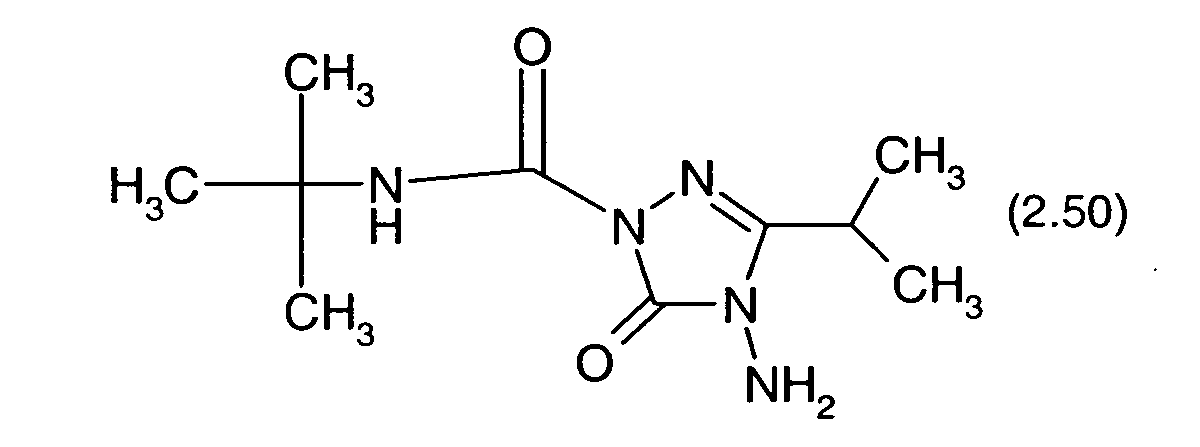
and the compound of formula 2.50
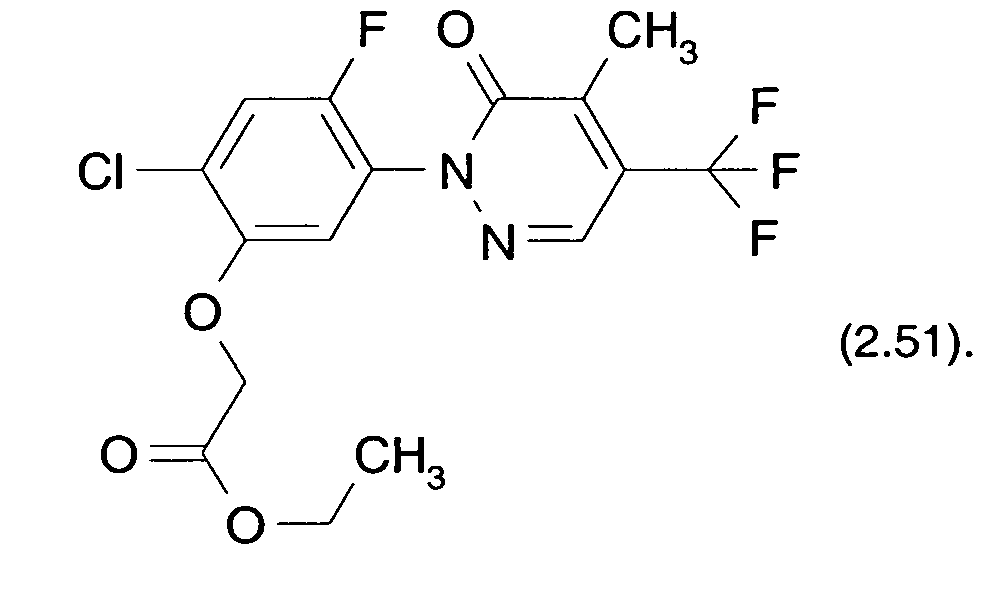
and the compound of formula 2.51
In the above formulae, "Me" is a methyl group. The alkyl groups appearing in the substituent
definitions may be straight-chained or branched and are, for example, methyl, ethyl,
n-propyl, isopropyl, n-butyl, sec-butyl, isobutyl, tert-butyl, pentyl, hexyl, heptyl, octyl, nonyl,
decyl, undecyl and dodecyl and also branched isomers thereof. Alkoxy, alkenyl and alkynyl
radicals are derived from the mentioned alkyl radicals. The alkenyl and alkynyl groups may
be unsaturated once or more than once.
An alkylene group may be substituted by one or more methyl groups; preferably, such
alkylene groups are unsubstituted in each case. The same also applies to all C
3-C
5cycloalkyl-,
C
3-C
5oxacycloalkyl-, C
3-C
5thiacycloalkyl-, C
3-C
4dioxacycloalkyl-,
C
3-C
4dithiacycloalkyl-, C
3-C
4oxathiacycloalkyl- and N(CH
2)-containing groups.
Halogen is, generally, fluorine, chlorine, bromine or iodine. The same correspondingly
applies to halogen in the context of other definitions, such as haloalkyl or halophenyl.
Haloalkyl groups having a chain length of from 1 to 6 carbon atoms are, for example, fluoromethyl,
difluoromethyl, trifluoromethyl, chloromethyl, dichloromethyl, trichloromethyl, 2,2,2-trifluoroethyl,
2-fluoroethyl, 2-chloroethyl, pentafluoroethyl, 1,1-difluoro-2,2,2-trichloroethyl,
2,2,3,3-tetrafluoroethyl and 2,2,2-trichloroethyl, pentafluoroethyl, heptafluoro-n-propyl,
perfluoro-n-hexyl; haloalkyl groups in the definitions of R2, R3 and especially R5 are
preferably trichloromethyl, dichlorofluoromethyl, difluorochloromethyl, difluoromethyl,
trifluoromethyl, pentafluoroethyl or heptafluoro-n-propyl.
Suitable haloalkenyl radicals include alkenyl groups substituted one or more times by
halogen, halogen being fluorine, chlorine, bromine or iodine and especially fluorine or
chlorine, for example 2,2-difluoro-1-methylvinyl, 3-fluoropropenyl, 3-chloropropenyl,
3-bromopropenyl, 2,3,3-trifluoropropenyl, 2,3,3-trichloropropenyl and 4,4,4-trifluorobut-2-en-1-yl.
Preferred C2-C12alkenyl radicals substituted once, twice or three times by halogen are
those having a chain length of from 2 to 5 carbon atoms. Suitable haloalkynyl radicals
include, for example, alkynyl groups substituted one or more times by halogen, halogen
being bromine or iodine and, especially, fluorine or chlorine, for example 3-fluoropropynyl,
3-chloropropynyl, 3-bromopropynyl, 3,3,3-trifluoropropynyl and 4,4,4-trifluoro-but-2-yn-1-yl.
Preferred alkynyl groups substituted one or more times by halogen are those having a chain
length of from 2 to 5 carbon atoms.
Alkoxy groups preferably have a chain length of from 1 to 6 carbon atoms. Alkoxy is, for
example, methoxy, ethoxy, propoxy, isopropoxy, n-butoxy, isobutoxy, sec-butoxy or tert-butoxy
or a pentyloxy or hexyloxy isomer, preferably methoxy and ethoxy. Alkylcarbonyl is
preferably acetyl or propionyl. Alkoxycarbonyl is, for example, methoxycarbonyl, ethoxycarbonyl,
propoxycarbonyl, isopropoxycarbonyl, n-butoxycarbonyl, isobutoxycarbonyl, sec-butoxycarbonyl
or tert-butoxycarbonyl, preferably methoxycarbonyl, ethoxycarbonyl or tert-butoxycarbonyl.
Haloalkoxy groups preferably have a chain length of from 1 to 8 carbon
atoms.
Haloalkoxy is, for example, fluoromethoxy, difluoromethoxy, trifluoromethoxy, 2,2,2-trifluoroethoxy,
1,1,2,2-tetrafluoroethoxy, 2-fluoroethoxy, 2-chloroethoxy, 2,2-difluoroethoxy or 2,2,2-trichloroethoxy,
preferably difluoromethoxy, 2-chloroethoxy or trifluoromethoxy.
Alkylthio groups preferably have a chain length of from 1 to 8 carbon atoms.
Alkylthio is, for example, methylthio, ethylthio, propylthio, isopropylthio, n-butylthio, isobutylthio,
sec-butylthio or tert-butylthio, preferably methylthio or ethylthio. Alkylsulfinyl is, for
example, methylsulfinyl, ethylsulfinyl, propylsulfinyl, isopropylsulfinyl, n-butylsulfinyl, isobutylsulfinyl,
sec-butylsulfinyl or tert-butylsulfinyl, preferably methylsulfinyl or ethylsulfinyl.
Alkylsulfonyl is, for example, methylsulfonyl, ethylsulfonyl, propylsulfonyl, isopropylsulfonyl,
n-butylsulfonyl, isobutylsulfonyl, sec-butylsulfonyl or tert-butylsulfonyl, preferably methylsulfonyl
or ethylsulfonyl.
Alkylamino is, for example, methylamino, ethylamino, n-propylamino, isopropylamino or a
butylamine isomer. Dialkylamino is, for example, dimethylamino, methylethylamino, diethylamino,
n-propylmethylamino, dibutylamino or diisopropylamino. Preference is given to
alkylamino groups having a chain length of from 1 to 4 carbon atoms. Alkoxyalkyl groups
preferably have from 1 to 6 carbon atoms. Alkoxyalkyl is, for example, methoxymethyl,
methoxyethyl, ethoxymethyl, ethoxyethyl, n-propoxymethyl, n-propoxyethyl, isopropoxymethyl
or isopropoxyethyl. Alkylthioalkyl groups preferably have from 1 to 6 carbon atoms.
Alkylthioalkyl is, for example, methylthiomethyl, methylthioethyl, ethylthiomethyl, ethylthio-ethyl,
n-propylthiomethyl, n-propylthioethyl, isopropylthiomethyl, isopropylthioethyl, butylthiomethyl,
butylthioethyl or butylthiobutyl.
The cycloalkyl groups preferably have from 3 to 6 ring carbon atoms and may be substituted
by one or more methyl groups; they are preferably unsubstituted, for example cyclopropyl,
cyclobutyl, cyclopentyl or cyclohexyl. Phenyl, including phenyl as part of a substituent such
as phenoxy, benzyl, benzyloxy, benzoyl, phenylthio, phenylalkyl, phenoxyalkyl or tosyl, may
be in mono- or poly-substituted form, in which case the substituents may, as desired, be in
the ortho-, meta- and/or para-position(s).
The invention also includes the salts that the compounds of formula I may form with amines,
alkali metal and alkaline earth metal bases or quaternary ammonium bases. Among the
alkali metal and alkaline earth metal hydroxides used as salt formers, emphasis is to be
given to the hydroxides of lithium, sodium, potassium, magnesium and calcium, but
especially those of sodium and potassium.
Examples of suitable amines for ammonium salt formation that come into consideration are
ammonia as well as primary, secondary and tertiary C1-C18alkylamines, C1-C4hydroxyalkylamines
and C2-C4alkoxyalkylamines, for example methylamine, ethylamine, n-propylamine,
isopropylamine, the four butylamine isomers, n-amylamine, isoamylamine, hexylamine,
heptylamine, octylamine, nonylamine, decylamine, pentadecylamine, hexadecylamine,
heptadecylamine, octadecylamine, methyl-ethylamine, methyl-isopropylamine, methylhexylamine,
methyl-nonylamine, methyl-pentadecylamine, methyl-octadecylamine, ethylbutylamine,
ethyl-heptylamine, ethyl-octylamine, hexyl-heptylamine, hexyl-octylamine,
dimethylamine, diethylamine, di-n-propylamine, diisopropylamine, di-n-butylamine, di-n-amylamine,
diisoamylamine, dihexylamine, diheptylamine, dioctylamine, ethanolamine,
n-propanolamine, isopropanolamine, N,N-diethanolamine, N-ethylpropanolamine, N-butylethanolamine,
allylamine, n-butenyl-2-amine, n-pentenyl-2-amine, 2,3-dimethylbutenyl-2-amine,
dibutenyl-2-amine, n-hexenyl-2-amine, propylenediamine, trimethylamine, triethylamine,
tri-n-propylamine, triisopropylamine, tri-n-butylamine, triisobutylamine, tri-sec-butylamine,
tri-n-amylamine, methoxyethylamine and ethoxyethylamine; heterocyclic amines,
for example pyridine, quinoline, isoquinoline, morpholine, piperidine, pyrrolidine, indoline,
quinuclidine and azepine; primary aryl amines for example anilines, methoxyanilines,
ethoxyanilines, o-, m- and p-toluidines, phenylenediamines, benzidines, naphthylamines and
o-, m- and p-chloroanilines; but especially triethylamine, isopropylamine and diisopropylamine.
It is extremely surprising that the combination of the active ingredient of formula I with one or
more active ingredients selected from formulae 2.1 to 2.51 exceeds the additive effect on the
weeds to be controlled that is to be expected in principle, and thus broadens the range of
action of the individual active ingredients especially in two respects: Firstly, the rates of
application of the individual compounds of formulae 1 and 2.1 to 2.51 are reduced while a
good level of action is maintained and, secondly, the composition according to the invention
achieves a high level of weed control also in those cases where the individual substances, in
the range of low rates of application, have become unusable from the agronomic standpoint.
The result is a considerable broadening of the spectrum of weeds and an additional increase
in selectivity in respect of the crops of useful plants, as is necessary and desirable in the
event of an unintentional overdose of active ingredient. The composition according to the
invention, while retaining excellent control of weeds in crops of useful plants, also enables
greater flexibility in succeeding crops.
The composition according to the invention can be used against a large number of
agronomically important weeds, such as Stellaria, Nasturtium, Agrostis, Digitaria, Avena,
Setaria, Sinapis, Lolium, Solanum, Phaseolus, Echinochloa, Scirpus, Monochoria, Sagittaria,
Bromus, Alopecurus, Sorghum halepense, Rottboellia, Cyperus, Abutilon, Sida, Xanthium,
Amaranthus, Chenopodium, Ipomoea, Chrysanthemum, Galium, Viola and Veronica. The
composition according to the invention is suitable for all methods of application
conventionally used in agriculture, e.g. pre-emergence application, post-emergence
application and seed dressing. The composition according to the invention is suitable
especially for controlling weeds in crops of useful plants, such as cereals, rape, sugar beet,
sugar cane, plantation crops, rice, maize and soybeans, and also for non-selective weed
control.
"Crops" are to be understood to mean also those crops which have been made tolerant to
herbicides or classes of herbicides as a result of conventional methods of breeding or
genetic engineering.
Preferred compositions according to the invention comprise compounds of formula I wherein
one R is hydrogen, C1-C6alkyl, C2-C6alkenyl, C2-C6haloalkenyl, C2-C6alkynyl, C2-C6haloalkynyl,
C3-C5cycloalkyl, C1-C6alkoxy, C1-C6haloalkoxy, C1-C6alkylthio, C1-C6alkylsulfinyl,
C1-C6alkylsulfonyl, C1-C6haloalkyl, C1-C6haloalkylthio, C1-C6haloalkylsulfinyl, C1-C6-haloalkylsulfonyl,
C1-C6alkoxycarbonyl, C1-C6alkylcarbonyl, C1-C6alkylamino, di(C1-C6alkyl)-amino,
C1-C6alkylaminosulfonyl, di(C1-C6alkyl)aminosulfonyl, -N(R1)-S-R2, -N(R3)-SO-R4,
-N(R5)-SO2-R6, nitro, cyano, halogen, hydroxy, amino, benzylthio, benzylsulfinyl, benzylsulfonyl,
phenyl, phenoxy, phenylthio, phenylsulfinyl or phenylsulfonyl; wherein the phenyl
group may itself be mono-, di- or tri-substituted by C1-C6alkyl, C1-C6haloalkyl, C3-C6alkenyl,
C3-C6haloalkenyl, C3-C6alkynyl, C3-C6haloalkynyl, C1-C6alkoxy, C1-C6haloalkoxy, C3-C6-alkenyloxy,
C3-C6alkynyloxy, mercapto, C1-C6alkylthio, C1-C6haloalkylthio, C3-C6alkenylthio,
C3-C6haloalkenylthio, C3-C6alkynylthio, C2-C5alkoxyalkylthio, C3-C5acetylalkylthio, C3-C6-alkoxycarbonylalkylthio,
C2-C4cyanoalkylthio, C1-C6alkylsulfinyl, C1-C6haloalkylsulfinyl,
C1-C6alkylsulfonyl, C1-C6haloalkylsulfonyl, aminosulfonyl, C1-C2alkylaminosulfonyl,
C2-C4dialkylaminosulfonyl, C1-C3alkylene-R45, NR46R47, halogen, cyano, nitro, phenyl or by
benzylthio, wherein the latter phenyl and benzylthio groups may themselves be substituted
on the phenyl ring by C1-C3alkyl, C1-C3haloalkyl, C1-C3alkoxy, C1-C3haloalkoxy, halogen,
cyano or by nitro;
or one R is a monocyclic or fused bicyclic ring system having from 5 to 10 members, which
may be aromatic or partially saturated and may contain from 1 to 4 hetero atoms selected
from nitrogen, oxygen and sulfur; wherein the ring system either is bound directly to the
pyridine ring or is bound to the pyridine ring via a C1-C4alkylene group, and each ring system
may not contain more than two oxygen atoms and may not contain more than two sulfur
atoms, and the ring system may itself be mono-, di- or tri-substituted by C1-C6alkyl, C1-C6haloalkyl,
C3-C6alkenyl, C3-C6haloalkenyl, C3-C6alkynyl, C3-C6haloalkynyl, C1-C6alkoxy, C1-C6haloalkoxy,
C3-C6alkenyloxy, C3-C6alkynyloxy, mercapto, C1-C6alkylthio, C1-C6haloalkylthio,
C3-C6alkenylthio, C3-C6haloalkenylthio, C3-C6alkynylthio, C2-C5alkoxyalkylthio,
C3-C5acetylalkylthio, C3-C6alkoxycarbonylalkylthio, C2-C4cyanoalkylthio, C1-C6alkylsulfinyl,
C1-C6haloalkylsulfinyl, C1-C6alkylsulfonyl, C1-C6haloalkylsulfonyl, aminosulfonyl,
C1-C2alkylaminosulfonyl, C2-C4dialkylaminosulfonyl, C1-C3alkylene-R7, NR8R9, halogen,
cyano, nitro, phenyl or by benzylthio, wherein phenyl and benzylthio may themselves be
substituted on the phenyl ring by C1-C3alkyl, C1-C3haloalkyl, C1-C3alkoxy, C1-C3haloalkoxy,
halogen, cyano or by nitro, and wherein the substituents on the nitrogen in the heterocyclic
ring are other than halogen.
Compositions according to the invention that are also preferred comprise, as compound of
formula I, a compound of formula la
wherein
Among that group of compounds preference is given to those wherein R48 is C1-C6alkyl,
C2-C6alkenyl, C2-C6haloalkenyl, C2-C6alkynyl, C2-C6haloalkynyl, C3-C6cycloalkyl or C1-C6-haloalkyl.
Preference is given also to compositions wherein, in formula I, Q is the group Q2 or Q3,
wherein, especially, in the group Q2 R23 is hydroxy and in the group Q3 R40 is hydroxy.
Among that group emphasis is to be given to those compounds wherein m is 2 and one
substituent R is C1-C4alkoxy-C1-C4alkyl or C1-C4alkoxy-C1-C4alkoxy-C1-C4alkyl.
Further preferred synergistic mixtures according to the invention comprise as active
ingredients a compound of formula I and either a compound of formula 2.2.a
(2.2.a, aRS,1'S(-)N-(1'-methyl-2'-methoxyethyl)-N-chloroacetyl-2-ethyl-6-methylaniline),
or a compound of formula 2.2.b
or a compound of formula 2.2 wherein R
3 is ethyl, R
4 is methyl and R
5 is ethoxymethyl, or a
compound of formula 2.2 wherein R
3 is ethyl, R
4 is ethyl and R
5 is methoxymethyl, or a
compound 2.3, or a compound of formula 2.30, or a compound of formula 2.4, or a
compound of formula 2.13, or a compound of formula 2.14, or a compound of formula 2.6
wherein R
12 is hydrogen, Z is methine, R
13 is methyl, Y is nitrogen, R
14 is fluorine, R
15 is
hydrogen and R
16 is fluorine, or R
12 is methoxy, Z is methine, R
13 is methoxy, Y is methine,
R
14 is chlorine, R
15 is methyl and R
16 is chlorine, or a compound of formula 2.7 wherein R
17 is
-C(O)-S-n-octyl, or a compound of formula 2.12, or a compound of formula 2.18, or a
compound of formula 2.19, or a compound of formula 2.21, or a compound of formula 2.25,
or a compound of formula 2.33, or a compound of formula 2.45, or a compound of
formula 2.1.
Especially preferred synergistic mixtures according to the invention comprise as active
ingredients a compound of formula I and either a compound of formula 2.2.a
(2.2.a, aRS,1'S(-)N-(1'-methyl-2'-methoxyethyl)-N-chloroacetyl-2-ethyl-6-methylaniline),
or a compound of formula 2.2.b
or a compound of formula 2.2 wherein R
3 is ethyl, R
4 is methyl and R
5 is ethoxymethyl, or a
compound of formula 2.2 wherein R
3 is ethyl, R
4 is ethyl and R
5 is methoxymethyl, or a
compound of formula 2.3, or a compound of formula 2.30.
Combinations of the compounds of formula I with the compound of formula 2.2a
(2.2a, aRS,1'S(-)N-(1'-methyl-2'-methoxyethyl)-N-chloroacetyl-2-ethyl-6-methylaniline)
have been found to be especially effective, the
compound 1.001 indicated hereinbelow under Table 1 being especially preferred as the
compound of formula I.
The compounds of formula I can be prepared in a manner analogous to the processes
described in WO 97/46530, by
wherein R and m are as defined for formula I, with compounds of formula III, IV, V or VI in an
inert, organic solvent in the presence of a base and a coupling agent, to form the compound
of formula VII, VIII, IX or X, and then isomerising that compound, for example in the manner
described under route a).
Compounds of formula I wherein Q is a group Q
5
wherein Z is sulfur and R
36 and R
01 are as defined for formula I, can be prepared in a
manner analogous to known processes (e.g. those described in WO 97/43270), by either
Preparation of the compounds of formula I is illustrated in greater detail in the following
Reaction Schemes 1 and 2.
The compounds of formula I containing the groups Q
1, Q
2, Q
3 and Q
4 wherein R
20, R
23, R
30
and R
40 are hydroxy can especially be prepared according to the above Reaction Scheme.
For preparation of the compounds of formula I wherein Q is a group Q
1 to Q
4 and R
20, R
23,
R
30 and R
40 are hydroxy, there are used as starting materials, in accordance with Reaction
Scheme 1, route a), the carboxylic acid derivatives of formula II wherein X is a leaving group,
for example halogen, e.g. iodine, bromine or especially chlorine, N-oxyphthalimide or N,O-dimethylhydroxylamino
or a moiety of an activated ester, for example
(formed from dicyclohexylcarbodiimide (DCC) and the appropriate carboxylic acid) or
(formed from N-ethyl-N'-(3-dimethylaminopropyl)carbodiimide
(EDC) and the appropriate carboxylic acid). Those compounds are reacted in an inert,
organic solvent, for example a halogenated hydrocarbon, e.g. dichloromethane, a nitrile, e.g.
acetonitrile, or an aromatic hydrocarbon, e.g. toluene, and in the presence of a base, for
example an alkylamine, e.g. triethylamine, an aromatic amine, e.g. pyridine or 4-dimethylaminopyridine
(DMAP), with the dione derivatives of formula III, IV, V or VI to form the
isomeric enol ethers of formula VII, VIII, IX and X. The esterification occurs at temperatures
of from 0°C to 110°C.
The isomerisation of the ester derivatives of formulae VII, VIII, IX and X to form the dione
derivatives of formula I (wherein R20, R23, R30 and R40 are hydroxy) can be carried out, for
example, analogously to EP 369 803 in the presence of a base, for example an alkylamine,
e.g. triethylamine, a carbonate, e.g. potassium carbonate, and a catalytic amount of DMAP
or a cyanide source, for example acetone cyanohydrin or potassium cyanide.
According to Reaction Scheme 1, route b), the desired diones of formula I (wherein R20, R23,
R30 and R40 are hydroxy) can be obtained, for example, analogously to Chem. Lett. 1975,
1045 by means of esterification of the carboxylic acids of formula XI with the dione
derivatives of formula III, IV, V or VI in an inert solvent, for example a halogenated hydrocarbon,
e.g. dichloromethane, à nitrile, e.g. acetonitrile, or an aromatic hydrocarbon, e.g.
toluene, in the presence of a base, for example an alkylamine, e.g. triethylamine, and a
coupling agent, for example 2-chloro-1-methyl-pyridinium iodide. The esterification occurs,
depending on the solvent used, at temperatures of from 0°C to 110°C and yields first, as
described under route a), the isomeric ester of formula I, which can be isomerised, as
described under route a), for example in the presence of a base and a catalytic amount of
DMAP, or a cyanide source to form the desired dione derivatives of formula I (wherein R20,
R23, R30 and R40 are hydroxy).
Preparation of the compounds of formula I wherein Q is the group Q
5 can be carried out in
accordance with Reaction Scheme 2, by reacting the b-diketone derivative of formula XII, for
example analogously to Synthesis 1991, 301; ibid. 1988, 793; or Tetrahedron 32, 3055
(1976), with carbon disulfide in the presence of a base, for example a carbonate, e.g.
potassium carbonate, a metal hydride, e.g. sodium hydride, or potassium fluoride on
aluminium, and an alkylating reagent of formula XIII, wherein X
1 is a leaving group, for
example halogen, e.g. iodine, bromine or especially chlorine, R
25OSO
2O-, CH
3SO
2O- or
. The reaction is preferably carried out in a solvent, for example an
amide, e.g. N,N-dimethylformamide (DMF), a sulfoxide, e.g. dimethyl sulfoxide (DMSO), or a
nitrile, e.g. acetonitrile. The ketene thioacetal of formula XIV formed is cyclised using
hydroxylamine hydrochloride in the presence of a base, for example sodium acetate, in a
solvent, for example an alcohol, e.g. ethanol, or an ether, e.g. tetrahydrofuran, to form the
compound of formula Ie wherein Z is S-. The cyclisation reaction is carried out at
temperatures of from 0°C to 100°C. The compound of formula Ie (Z=S) may optionally be
oxidised in a manner analogous to standard procedures, for example using peracids, e.g.
meta-chloroperbenzoic acid (m-CPBA) or peracetic acid, to form the corresponding sulfones
and sulfoxides of formula Ie (Z = SO- or SO
2-), wherein the degree of oxidation at the sulfur
atom (Z = SO- or SO
2-) can be controlled by the amount of oxidising agent.
Oxidation to the compound of formula le (Z = SO- or SO2-) is carried out as described, for
example, in H. O. House, "Modern Synthetic Reactions" W. A. Benjamin, Inc., Menlo Park,
California, 1972, pages 334-335 and 353-354.
The activated carboxylic acid derivatives of formula II in Reaction Scheme 1 (route a),
wherein X is a leaving group, for example halogen, e.g. bromine, iodine or especially
chlorine, can be prepared in accordance with known standard procedures, for example as
described in C. Ferri "Reaktionen der organischen Synthese", Georg Thieme Verlag,
Stuttgart, 1978, page 461 ff and as shown in the following Reaction Scheme 3.
According to Reaction Scheme 3, preparation of the compounds of formula II (X = leaving
group) or II (X = halogen) is carried out, for example, by using a halogenating agent, for
example a thionyl halide, e.g. thionyl chloride or bromide; a phosphorus halide or
phosphorus oxyhalide, e.g. phosphorus pentachloride or phosphorus oxychloride or
phosphorus pentabromide or phosphoryl bromide; or an oxalyl halide, e.g. oxalyl chloride, or
by using a reagent for the formation of an activated ester for example N,N'-dicyclohexylcarbodiimide
(DCC) or N-ethyl-N'-(3-dimethylaminopropyl)carbodiimide (EDC) of formula X.
In the compound of formula X, as a halogenating agent, X, for example, is a leaving group,
for example halogen, e.g. fluorine, bromine or iodine and especially chlorine, and W1 is, for
example, PCl2, SOCI, SOBr or ClCOCO.
The procedure is optionally carried out in an inert, organic solvent, for example in an
aliphatic, halogenated aliphatic, aromatic or halogenated aromatic hydrocarbon, e.g. n-hexane,
benzene, toluene, xylenes, dichloromethane, 1,2-dichloroethane or chlorobenzene,
at reaction temperatures in the range from -20°C to the reflux temperature of the reaction
mixture, preferably at from 40 to 150°C, and in the presence of a catalytic amount of N,N-dimethylformamide.
Such reactions are generally known and described in the literature in a
number of variants with respect to the leaving group X.
The compounds of formulae III, IV, V and VI are known and can be prepared in an
analogous manner to that described, for example, in WO 92/07837, DE 3 818 958,
EP 338 992 and DE 3 902 818.
The compounds of formula XII in Reaction Scheme 2 can be obtained by standard
procedures, for example from the corresponding compounds of formula II
wherein R and m are as defined for formula I and X is a leaving group, for example halogen,
for example
via Claisen condensation, or from the compounds of formula II by reaction with
a ketocarboxylic acid salt of formula XV
wherein R
36 is as defined for formula I and M
+ is an alkali metal ion (cf., for example,
WO 96/26192).
The compounds of formulae II and XI are known and can be prepared in an analogous
manner to that described, for example, in WO 97/46530, Heterocycles, 48, 779 (1998),
Heterocycles, 46, 129 (1997) or Tetrahedron Letters, 1749 (1998).
For the preparation of all further compounds of formula I functionalised according to the
definition of (R)m, a large number of known standard procedures, for example alkylation,
halogenation, acylation, amidation, oximation, oxidation and reduction, are available, the
choice of a suitable preparation procedure being governed by the properties (reactivities) of
the substituents in the respective intermediates. Examples of such reactions are given in
WO 97/46353.
All further compounds falling within the scope of formula I can be prepared by simple
means, taking into account the chemical properties of the pyridyl and Q moieties.
The end products of formula I can be isolated in customary manner by concentration or
evaporation of the solvent and can be purified by recrystallisation or trituration of the solid
residue in solvents in which they are not readily soluble, such as ethers, aromatic hydrocarbons
or chlorinated hydrocarbons, by distillation or by means of column chromatography
and a suitable eluant.
Furthermore, the person skilled in the art will be familiar with the sequence in which certain
reactions should advantageously be performed in order to avoid possible subsidiary
reactions.
Where synthesis is not directed at the isolation of pure isomers, the product may be in the
form of a mixture of two or more isomers. The isomers can be separated according to
methods known per se.
Preparation Examples:
Example P1: Preparation of 4-hydroxy-3-(2-methyl-6-trifluoromethyl-pyridine-3-carbonyl)-bicyclo[3.2.1]oct-3-en-2-one:
6.68 g (0.0305 mol) of 2-methyl-6-trifluoromethyl-nicotinic acid methyl ester (prepared in the
manner described in Heterocycles, 46, 129 (1997)) are dissolved in 250 ml of methanol/water
(3:1 mixture) and 1.92 g (0.046 mol) of lithium hydroxide hydrate are added in portions
at 22°C. After 4 hours at 22°C, the reaction mixture is added to ethyl acetate and 2N
hydrochloric acid; the organic phase is washed three times with water, dried with sodium
sulfate and concentrated by evaporation, and the residue is triturated with a small amount of
hexane. After filtering, 5.69 g (90 % of theory) of the expected 2-methyl-6-trifluoromethylnicotinic
acid having a melting point of 147-149°C are obtained.
The 2-methyl-6-trifluoromethyl-nicotinic acid (2.0 g, 0.0098 mol) obtained is dissolved in
20 ml of oxalyl chloride. Three drops of dimethylformamide are added and the mixture is
refluxed for 1 hour. The mixture is then concentrated using a rotary evaporator and the
residue (2-methyl-6-trifluoromethyl-nicotinoyl chloride) is taken up in 30 ml of methylene
chloride. At 0°C, 2.7 ml (0.0196 mol) of triethylamine and 0.12 g (0.00098 mol) of dimethylaminopyridine
are added, and then 1.49 g (0.0108 mol) of bicyclo[3.2.1]oct-2,4-dione,
dissolved in 20 ml of methylene chloride, are added dropwise. After 3 hours at 22°C, the
reaction mixture is extracted by shaking with 2N hydrochloric acid. The separated methylene
chloride phase is washed with water and then extracted by shaking with 10 % aqueous
sodium bicarbonate solution, dried over sodium sulfate and concentrated by evaporation.
3.18 g (100 % of theory) of 2-methyl-6-trifluoromethyl-nicotinic acid 4-oxo-bicyclo[3.2.1]oct-2-en-2-yl
ester are obtained in the form of an oil, which can be used further without purification.
3.02 g (0.0093 mol) of methyl-6-trifluoromethyl-nicotinic acid 4-oxo-bicyclo[3.2.1]oct-2-en-2-yl
ester and 1.9 ml (0.0136 mol) of triethylamine are dissolved in 45 ml of acetonitrile. At
22°C, 0.01 ml of acetone cyanohydrin is added. After 18 hours at 22°C, the reaction mixture
is poured onto a mixture of water and 2N hydrochloric acid and extracted by shaking with
ethyl acetate. The ethyl acetate phase is washed with water and then with brine, dried over
sodium sulfate and concentrated by evaporation, and the residue is dissolved in a small
amount of warm acetone. On being left to stand, the product crystallises out. After filtering,
0.99 g (33 % of theory) of the expected 4-hydroxy-3-(2-methyl-6-trifluoromethyl-pyridine-3-carbonyl)-bicyclo[3.2.1]oct-3-en-2-one
is obtained in the form of white crystals (m.p. 75-77°C).
Example P2: (5-Cyclopropyl-3-methylsulfanyl-isoxazol-4-yl)-(2-methyl-6-trifluoromethylpyridin-3-yl)-methanone:
14.8 g (0.080 mol) of 3-cyclopropyl-3-oxo-propionic acid tert-butyl ester are dissolved in
25 ml of MeOH and 1.93 g (0.080 mol) of magnesium are added. 7 ml of carbon
tetrachloride are added dropwise while cooling in an ice bath and the reaction mixture is
stirred at 22°C for 1 hour to complete the reaction. After concentrating by evaporation, the
residue is suspended in 100 ml of acetonitrile and, at 22°C, 16.31 g (0.073 mol) of 2-methyl-6-trifluoromethyl-nicotinoyl
chloride (prepared in the manner described in Example P1),
dissolved in 50 ml of acetonitrile, are added dropwise. After 6 hours, the reaction mixture is
taken up in ethyl acetate and washed with saturated sodium bicarbonate solution. The
separated ethyl acetate phase is washed with water, dried over sodium sulfate and
concentrated by evaporation. The residue is dissolved in 160 ml of methylene chloride and
10 ml of trifluoroacetic acid are added dropwise at 22°C. After 18 hours, the reaction mixture
is poured into water and extracted with methylene chloride. The methylene chloride phase is
washed with water and then with brine, dried over sodium sulfate and concentrated by
evaporation. 17.3 g (88 % of theory) of 1-cyclopropyl-3-(2-methyl-6-trifluoromethyl-pyridin-3-yl)-propane-1,3-dione
are obtained in the form of an oil, which can be used further without
purification.
The 1-cyclopropyl-3-(2-methyl-6-trifluoromethyl-pyridin-3-yl)-propane-1,3-dione (15.0 g,
0.055 mol) obtained is dissolved in 150 ml of dimethylformamide and 50 g of potassium
fluoride on an aluminium oxide support (Alox) (0.0055 mol/g, 0.276 mol) are added in
portions at 0°C. After 5 minutes, 6.7 g (0.088 mol) of carbon disulfide are added. After
2 hours, 23.6 g (0.166 mol) of methyl iodide are added dropwise and the reaction mixture is
heated at 22°C. After 2 hours the Alox is filtered off, the filtrate is poured into water and
extracted by shaking with ethyl acetate. The ethyl acetate phase is washed with water and
then with brine, dried over sodium sulfate and concentrated by evaporation. The residue is
chromatographed on silica gel (eluant: ethyl acetate/hexane 15/1). 12.0 g (60 % of theory) of
2-(bis-methylsulfanyl-methylene)-1-cyclopropyl-3-(2-methyl-6-trifluoromethyl-pyridin-3-yl)-propane-1,3-dione
are obtained in the form of a solid substance.
12.0 g (0.033 mol) of the product obtained are suspended in 120 ml of ethanol together with
5.4 g (0.066 mol) of anhydrous sodium acetate. 4.6 g (0.066 mol) of hydroxylamine hydrochloride
are added and the batch is reacted at 22°C for 5 hours. A further 2.7 g of anhydrous
sodium acetate and 2.3 g of hydroxylamine hydrochloride are then added. After 18 hours,
the reaction mixture is diluted with water and extracted with ethyl acetate. The ethyl acetate
phase is washed with water and then with brine, dried over sodium sulfate and concentrated
by evaporation. On triturating with a small amount of ethyl acetate, 9.0 g (79.5 %) of the
desired product are obtained in the form of white crystals (m.p. 103-104°C).
Example P3: (5-Cyclopropyl-3-methylsulfinyl-isoxazol-4-yl)-(2-methyl-6-trifluoromethylpyridin-3-yl)-methanone
1.50 g (0.0043 mol) of (5-cyclopropyl-3-methylsulfanyl-isoxazol-4-yl)-(2-methyl-6-trifluoromethyl-pyridin-3-yl)-methanone
are dissolved in 30 ml of acetone/water (2:1 mixture) and
1.02 g (0.0048 mol) of sodium metaperiodate are added in portions at 22°C. After 5 hours,
the reaction mixture is concentrated by evaporation using a rotary evaporator. The residue is
taken up in water and ethyl acetate. The ethyl acetate phase is dried over sodium sulfate
and concentrated by evaporation. The residue is chromatographed on silica gel (eluant: ethyl
acetate/hexane 3/1). 0.8 g (51 %) of the desired product is obtained in the form of white
crystals (m.p. 96-97°C).
Example P4: Preparation of 3-hydroxy-4,4-dimethyl-2-(2-methyl-6-trifluoromethyl-pyridine-3-carbonyl)-cyclohex-2-enone
(A2-B24):
6.68 g (0.0305 mol) of 2-methyl-6-trifluoromethyl-nicotinic acid methyl ester (prepared in the
manner described in Heterocycles, 46, 129 (1997)) are dissolved in 250 ml of methanol/water
(3:1 mixture) and 1.92 g (0.046 mol) of lithium hydroxide hydrate are added in portions
at a temperature of 22°C. After 4 hours at 22°C, the reaction mixture is added to ethyl
acetate and 2N hydrochloric acid; the organic phase is washed three times with water, dried
over sodium sulfate and concentrated by evaporation, and the residue is triturated with a
small amount of hexane. After filtering, 5.69 g (90 % of theory) of the expected 2-methyl-6-trifluoromethyl-nicotinic
acid having a melting point of 147-149°C are obtained.
The 2-methyl-6-trifluoromethyl-nicotinic acid (1.026 g, 0.005 mol) obtained is dissolved in
20 ml of oxalyl chloride. Three drops of dimethylformamide are added and the mixture is
refluxed for 1 hour. The mixture is then concentrated by evaporation using a rotary
evaporator and the residue (2-methyl-6-trifluoromethyl-nicotinoyl chloride) is taken up in
100 ml of methylene chloride. At a temperature of 0°C, 1.6 ml (0.0115 mol) of triethylamine
and 0.7 g (0.005 mol) 4,4-dimethyl-cyclohexane-1,3-dione are added. After 2 hours at a
temperature of 22°C, the solvent is removed using a vacuum rotary evaporator, the residue
that remains is dissolved in 55 ml of acetonitrile and, for rearrangement of the intermediate,
0.15 ml (0.0016 mol) of acetone cyanohydrin and 0.79 ml (0.0057 mol) of triethylamine are
added. After stirring for four hours at room temperature, the reaction solution is concentrated
by evaporation. The syrup that remains is chromatographed on silica gel. The light-yellow,
viscous oil obtained by eluting with a mixture of toluene, ethyl alcohol, dioxane, triethylamine
and water (100:40:20:20:5 parts by volume) (Rf = 0.39 based on the said mixture as mobile
phase) is dissolved in dichloromethane and washed with 75 ml of hydrochloric acid 5 % and
75 ml of water in succession. After drying the organic solution with Na2SO4, concentration by
evaporation yields 1.05 g (63 %) of pure title compound.
1H NMR (d6-DMSO, δ in ppm): 1.342, s, 6H: 2.088, t, J 9Hz, 2H: 2.685, s, 3H: 2.982, t, J
9Hz, 2H:8.030, d, J 8.1 Hz, IH: 8.094, d, J 8.1 Hz, 1H.
Example P5: Preparation of 5-methyl-5-trifluoromethyl-cyclohexane-1,3-dione (Example
B1066):
0.64 g of sodium is introduced into 40 ml of ethanol, 3.23 ml of acetic acid methyl ester and
4.9 g of 4,4,4-trifluoro-3-methyl-but-2-enoic acid isopropyl ester are incorporated and the
mixture is heated at boiling temperature for 18 hours. After extraction with dilute hydrochloric
acid against ethyl acetate, concentration by evaporation is carried out. The non-purified 2-methyl-4,6-dioxo-2-trifluoromethyl-cyclohexanecarboxylic
acid methyl ester that remains
behind is esterified in the presence of 9.1 g of sodium hydroxide in a mixture of methanol
and water at boiling temperature. The mixture is then acidified with hydrochloric acid and
extracted with fresh ethyl acetate. After recrystallisation (ethyl acetate), pure 5-methyl-5-trifluoromethyl-cyclohexane-1,3-dione
having a melting point of 150-152°C is obtained.
Example P6: Preparation of 2-hydroxy-1-methoxy-5-methyl-4-oxo-cyclohex-2-enecarboxylic
acid methyl ester (B1069):
A 30 % solution of 35.8 g of sodium methanolate is made up in 65 ml of dimethyl sulfoxide
and, over a period of 20 minutes, is treated at a temperature of from 30 to 35°C with a
mixture of 16.7 g of 3-methyl-3-buten-2-one and 32.4 g of methoxymalonic acid dimethyl
ester. The mixture is stirred for 1 hour at a temperature of 35°C, acidified with hydrochloric
acid and then extracted several times with dichloromethane. The organic phases are washed
with water, dried and concentrated. By crystallising from hot ethyl acetate and hexane, pure
2-hydroxy-1-methoxy-5-methyl-4-oxo-cyclohex-2-enecarboxylic acid methyl ester having a
melting point of 117-117.5°C is obtained.
Example P7: Preparation of 2-hydroxy-1-methoxy-5-methyl-3-(2-methyl-6-trifluoromethylpyridine-3-carbonyl)-4-oxo-cyclohex-2-ene-carboxylic
acid methyl ester (A2-B1069):
2.23 g of fresh 2-methyl-6-trifluoromethyl-nicotinoyl chloride are added to a mixture of 2.14 g
of 2-hydroxy-1-methoxy-5-methyl-4-oxo-cyclohex-2-ene-carboxylic acid methyl ester and
2.02 g of triethylamine in 30 ml of acetonitrile. After about 30 minutes, 0.065 g of potassium
cyanide is added and the batch is stirred for 18 hours. The batch is then extracted at pH 2
with water against ethyl acetate, dried over magnesium sulfate and concentrated by
evaporation. By filtering over silica gel (mobile phase: ethyl acetate/methanol/triethylamine
85:10:5), pure 2-hydroxy-1-methoxy-5-methyl-3-(2-methyl-6-trifluoromethyl-pyridine-3-carbonyl)-4-oxo-cyclohex-2-enecarboxylic
acid methyl ester is obtained in the form of a
viscous oil.
Example P8: Preparation of 3-hydroxy-4-methoxy-6-methyl-2-(2-methyl-6-trifluoromethylpyridine-3-carbonyl)-cyclohex-2-enone
(A2-B1070):
0.586 g of potassium hydroxide is added to 1.4 g of 2-hydroxy-1-methoxy-5-methyl-3-(2-methyl-6-trifluoromethyl-pyridine-3-carbonyl)-4-oxo-cyclohex-2-enecarboxylic
acid methyl
ester in dioxane/water (5:3) and the batch is stirred for 3 hours. The batch is then acidified
(pH 3) and extracted with fresh ethyl acetate. The crude product is purified by chromatography
analogously to Example P7. 3-Hydroxy-4-methoxy-6-methyl-2-(2-methyl-6-trifluoromethyl-pyridine-3-carbonyl)-cyclohex-2-enone
is obtained in the form of a viscous oil (as a
mixture of 3 tautomeric forms, according to 1H-NMR).
The compounds listed in the following Tables can also be prepared in an analogous manner
and using methods described in the general Reaction Schemes 1 and 2 and in the
references mentioned therein. In the following Tables Ph is the phenyl group and CC is an
ethyne group.
In the following Table 6 Q is Q
3
and Q
3 represents the following radicals B:
| Radicals B: |
| Radical | R44 | R37 | R38 | R39 | R40 | W |
| B1 | H | H | H | H | OH | CH2 |
| B2 | CH3 | H | H | H | OH | CH2 |
| B3 | CH3CH2 | H | H | H | OH | CH2 |
| B4 | CH3CH2CH2 | H | H | H | OH | CH2 |
| B5 | (CH3)2CH | H | H | H | OH | CH2 |
| B6 | (CH3)3C | H | H | H | OH | CH2 |
| B7 | CH3S | H | H | H | OH | CH2 |
| B8 | CH3SO | H | H | H | OH | CH2 |
| B9 | CH3SO2 | H | H | H | OH | CH2 |
| B10 | Ph | H | H | H | OH | CH2 |
| B11 | CH3O | H | H | H | OH | CH2 |
| B12 | CH3CO2 | H | H | H | OH | CH2 |
| B13 | CH3CH2CO2 | H | H | H | OH | CH2 |
| B14 | CH2=CHCH2 | H | H | H | OH | CH2 |
| B15 | HCCCH2 | H | H | H | OH | CH2 |
| B16 | CF3 | H | H | H | OH | CH2 |
| B17 | (CH3)2NSO2 | H | H | H | OH | CH2 |
| B18 | (CH3)2N | H | H | H | OH | CH2 |
| B19 | PhO | H | H | H | OH | CH2 |
| B20 | PhS | H | H | H | OH | CH2 |
| B21 | PhSO | H | H | H | OH | CH2 |
| B22 | PhSO2 | H | H | H | OH | CH2 |
| B23 | CN | H | H | H | OH | CH2 |
| B24 | CH3 | CH3 | H | H | OH | CH2 |
| B25 | CH3CH2 | CH3 | H | H | OH | CH2 |
| B26 | CH3CH2CH2 | CH3 | H | H | OH | CH2 |
| B27 | (CH3)2CH | CH3 | H | H | OH | CH2 |
| B28 | (CH3)3C | CH3 | H | H | OH | CH2 |
| B29 | CH3S | CH3 | H | H | OH | CH2 |
| B30 | CH3SO | CH3 | H | H | OH | CH2 |
| B31 | CH3SO2 | CH3 | H | H | OH | CH2 |
| B32 | Ph | CH3 | H | H | OH | CH2 |
| B33 | CH3O | CH3 | H | H | OH | CH2 |
| B34 | CH3CO2 | CH3 | H | H | OH | CH2 |
| B35 | CH3CH2CO2 | CH3 | H | H | OH | CH2 |
| B36 | CH2=CHCH2 | CH3 | H | H | OH | CH2 |
| B37 | HCCCH2 | CH3 | H | H | OH | CH2 |
| B38 | CF3 | CH3 | H | H | OH | CH2 |
| B39 | (CH3)2NSO2 | CH3 | H | H | OH | CH2 |
| B40 | (CH3)2N | CH3 | H | H | OH | CH2 |
| B41 | PhO | CH3 | H | H | OH | CH2 |
| B42 | PhS | CH3 | H | H | OH | CH2 |
| B43 | PhSO | CH3 | H | H | OH | CH2 |
| B44 | PhSO2 | CH3 | H | H | OH | CH2 |
| B45 | CN | CH3 | H | H | OH | CH2 |
| B46 | CH3 | H | CH3 | H | OH | CH2 |
| B47 | CH3CH2 | H | CH3 | H | OH | CH2 |
| B48 | CH3CH2CH2 | H | CH3 | H | OH | CH2 |
| B49 | (CH3)2CH | H | CH3 | H | OH | CH2 |
| B50 | (CH3)3C | H | CH3 | H | OH | CH2 |
| B51 | CH3S | H | CH3 | H | OH | CH2 |
| B52 | CH3SO | H | CH3 | H | OH | CH2 |
| B53 | CH3SO2 | H | CH3 | H | OH | CH2 |
| B54 | Ph | H | CH3 | H | OH | CH2 |
| B55 | CH3O | H | CH3 | H | OH | CH2 |
| B56 | CH3CO2 | H | CH3 | H | OH | CH2 |
| B57 | CH3CH2CO2 | H | CH3 | H | OH | CH2 |
| B58 | CH2=CHCH2 | H | CH3 | H | OH | CH2 |
| B59 | HCCCH2 | H | CH3 | H | OH | CH2 |
| B60 | CF3 | H | CH3 | H | OH | CH2 |
| B61 | (CH3)2NSO2 | H | CH3 | H | OH | CH2 |
| B62 | (CH3)2N | H | CH3 | H | OH | CH2 |
| B63 | PhO | H | CH3 | H | OH | CH2 |
| B64 | PhS | H | CH3 | H | OH | CH2 |
| B65 | PhSO | H | CH3 | H | OH | CH2 |
| B66 | PhSO2 | H | CH3 | H | OH | CH2 |
| B67 | CN | H | CH3 | H | OH | CH2 |
| B68 | CH3 | CH3 | CH3 | H | OH | CH2 |
| B69 | CH3CH2 | CH3 | CH3 | H | OH | CH2 |
| B70 | CH3CH2CH2 | CH3 | CH3 | H | OH | CH2 |
| B71 | (CH3)2CH | CH3 | CH3 | H | OH | CH2 |
| B72 | (CH3)3C | CH3 | CH3 | H | OH | CH2 |
| B73 | CH3S | CH3 | CH3 | H | OH | CH2 |
| B74 | CH3SO | CH3 | CH3 | H | OH | CH2 |
| B75 | CH3SO2 | CH3 | CH3 | H | OH | CH2 |
| B76 | Ph | CH3 | CH3 | H | OH | CH2 |
| B77 | CH3O | CH3 | CH3 | H | OH | CH2 |
| B78 | CH3CO2 | CH3 | CH3 | H | OH | CH2 |
| B79 | CH3CH2CO2 | CH3 | CH3 | H | OH | CH2 |
| B80 | CH2=CHCH2 | CH3 | CH3 | H | OH | CH2 |
| B81 | HCCCH2 | CH3 | CH3 | H | OH | CH2 |
| B82 | CF3 | CH3 | CH3 | H | OH | CH2 |
| B83 | (CH3)2NSO2 | CH3 | CH3 | H | OH | CH2 |
| B84 | (CH3)2N | CH3 | CH3 | H | OH | CH2 |
| B85 | PhO | CH3 | CH3 | H | OH | CH2 |
| B86 | PhS | CH3 | CH3 | H | OH | CH2 |
| B87 | PhSO | CH3 | CH3 | H | OH | CH2 |
| B88 | PhSO2 | CH3 | CH3 | H | OH | CH2 |
| B89 | CN | CH3 | CH3 | H | OH | CH2 |
| B90 | CH3 | CH3 | CH3 | CH3 | OH | CH2 |
| B91 | CH3CH2 | CH3 | CH3 | CH3 | OH | CH2 |
| B92 | CH3CH2CH2 | CH3 | CH3 | CH3 | OH | CH2 |
| B93 | (CH3)2CH | CH3 | CH3 | CH3 | OH | CH2 |
| B94 | (CH3)3C | CH3 | CH3 | CH3 | OH | CH2 |
| B95 | CH3S | CH3 | CH3 | CH3 | OH | CH2 |
| B96 | CH3SO | CH3 | CH3 | CH3 | OH | CH2 |
| B97 | CH3SO2 | CH3 | CH3 | CH3 | OH | CH2 |
| B98 | Ph | CH3 | CH3 | CH3 | OH | CH2 |
| B99 | CH3O | CH3 | CH3 | CH3 | OH | CH2 |
| B100 | CH3CO2 | CH3 | CH3 | CH3 | OH | CH2 |
| B101 | CH3CH2CO2 | CH3 | CH3 | CH3 | OH | CH2 |
| B102 | CH2=CHCH2 | CH3 | CH3 | CH3 | OH | CH2 |
| B103 | HCCCH2 | CH3 | CH3 | CH3 | OH | CH2 |
| B104 | CF3 | CH3 | CH3 | CH3 | OH | CH2 |
| B105 | (CH3)2NSO2 | CH3 | CH3 | CH3 | OH | CH2 |
| B106 | (CH3)2N | CH3 | CH3 | CH3 | OH | CH2 |
| B107 | PhO | CH3 | CH3 | CH3 | OH | CH2 |
| B108 | PhS | CH3 | CH3 | CH3 | OH | CH2 |
| B109 | PhSO | CH3 | CH3 | CH3 | OH | CH2 |
| B110 | PhSO2 | CH3 | CH3 | CH3 | OH | CH2 |
| B111 | CN | CH3 | CH3 | CH3 | OH | CH2 |
| B112 | CH3CH2 | CH3CH2 | H | H | OH | CH2 |
| B113 | CH3CH2CH2 | CH3CH2 | H | H | OH | CH2 |
| B114 | (CH3)2CH | CH3CH2 | H | H | OH | CH2 |
| B115 | (CH3)3C | CH3CH2 | H | H | OH | CH2 |
| B116 | CH3S | CH3CH2 | H | H | OH | CH2 |
| B117 | CH3SO | CH3CH2 | H | H | OH | CH2 |
| B118 | CH3SO2 | CH3CH2 | H | H | OH | CH2 |
| B119 | Ph | CH3CH2 | H | H | OH | CH2 |
| B120 | CH3O | CH3CH2 | H | H | OH | CH2 |
| B121 | CH3CO2 | CH3CH2 | H | H | OH | CH2 |
| B122 | CH3CH2CO2 | CH3CH2 | H | H | OH | CH2 |
| B123 | CH2=CHCH2 | CH3CH2 | H | H | OH | CH2 |
| B124 | HCCCH2 | CH3CH2 | H | H | OH | CH2 |
| B125 | CF3 | CH3CH2 | H | H | OH | CH2 |
| B126 | (CH3)2NSO2 | CH3CH2 | H | H | OH | CH2 |
| B127 | (CH3)2N | CH3CH2 | H | H | OH | CH2 |
| B128 | PhO | CH3CH2 | H | H | OH | CH2 |
| B129 | PhS | CH3CH2 | H | H | OH | CH2 |
| B130 | PhSO | CH3CH2 | H | H | OH | CH2 |
| B131 | PhSO2 | CH3CH2 | H | H | OH | CH2 |
| B132 | CN | CH3CH2 | H | H | OH | CH2 |
| B133 | H | H | H | H | OH | CHCH3 |
| B134 | CH3 | H | H | H | OH | CHCH3 |
| B135 | CH3CH2 | H | H | H | OH | CHCH3 |
| B136 | CH3CH2CH2 | H | H | H | OH | CHCH3 |
| B137 | (CH3)2CH | H | H | H | OH | CHCH3 |
| B138 | (CH3)3C | H | H | H | OH | CHCH3 |
| B139 | CH3S | H | H | H | OH | CHCH3 |
| B140 | CH3SO | H | H | H | OH | CHCH3 |
| B141 | CH3SO2 | H | H | H | OH | CHCH3 |
| B142 | Ph | H | H | H | OH | CHCH3 |
| B143 | CH3O | H | H | H | OH | CHCH3 |
| B144 | CH3CO2 | H | H | H | OH | CHCH3 |
| B145 | CH3CH2CO2 | H | H | H | OH | CHCH3 |
| B146 | CH2=CHCH2 | H | H | H | OH | CHCH3 |
| B147 | HCCCH2 | H | H | H | OH | CHCH3 |
| B148 | CF3 | H | H | H | OH | CHCH3 |
| B149 | (CH3)2NSO2 | H | H | H | OH | CHCH3 |
| B150 | (CH3)2N | H | H | H | OH | CHCH3 |
| B151 | PhO | H | H | H | OH | CHCH3 |
| B152 | PhS | H | H | H | OH | CHCH3 |
| B153 | PhSO | H | H | H | OH | CHCH3 |
| B154 | PhSO2 | H | H | H | OH | CHCH3 |
| B155 | CN | H | H | H | OH | CHCH3 |
| B156 | CH3 | CH3 | H | H | OH | CHCH3 |
| B157 | CH3CH2 | CH3 | H | H | OH | CHCH3 |
| 8158 | CH3CH2CH2 | CH3 | H | H | OH | CHCH3 |
| B159 | (CH3)2CH | CH3 | H | H | OH | CHCH3 |
| B160 | (CH3)3C | CH3 | H | H | OH | CHCH3 |
| B161 | CH3S | CH3 | H | H | OH | CHCH3 |
| B162 | CH3SO | CH3 | H | H | OH | CHCH3 |
| 8163 | CH3SO2 | CH3 | H | H | OH | CHCH3 |
| B164 | Ph | CH3 | H | H | OH | CHCH3 |
| B165 | CH3O | CH3 | H | H | OH | CHCH3 |
| B166 | CH3CO2 | CH3 | H | H | OH | CHCH3 |
| B167 | CH3CH2CO2 | CH3 | H | H | OH | CHCH3 |
| B168 | CH2=CHCH2 | CH3 | H | H | OH | CHCH3 |
| B169 | HCCCH2 | CH3 | H | H | OH | CHCH3 |
| B170 | CF3 | CH3 | H | H | OH | CHCH3 |
| B171 | (CH3)2NSO2 | CH3 | H | H | OH | CHCH3 |
| B172 | (CH3)2N | CH3 | H | H | OH | CHCH3 |
| B173 | PhO | CH3 | H | H | OH | CHCH3 |
| B174 | PhS | CH3 | H | H | OH | CHCH3 |
| B175 | PhSO | CH3 | H | H | OH | CHCH3 |
| B176 | PhSO2 | CH3 | H | H | OH | CHCH3 |
| B177 | CN | CH3 | H | H | OH | CHCH3 |
| B178 | CH3 | H | CH3 | H | OH | CHCH3 |
| B179 | CH3CH2 | H | CH3 | H | OH | CHCH3 |
| B180 | CH3CH2CH2 | H | CH3 | H | OH | CHCH3 |
| B181 | (CH3)2CH | H | CH3 | H | OH | CHCH3 |
| B182 | (CH3)3C | H | CH3 | H | OH | CHCH3 |
| B183 | CH3S | H | CH3 | H | OH | CHCH3 |
| B184 | CH3SO | H | CH3 | H | OH | CHCH3 |
| B185 | CH3SO2 | H | CH3 | H | OH | CHCH3 |
| B186 | Ph | H | CH3 | H | OH | CHCH3 |
| B187 | CH3O | H | CH3 | H | OH | CHCH3 |
| B188 | CH3CO2 | H | CH3 | H | OH | CHCH3 |
| B189 | CH3CH2CO2 | H | CH3 | H | OH | CHCH3 |
| B190 | CH2=CHCH2 | H | CH3 | H | OH | CHCH3 |
| B191 | HCCCH2 | H | CH3 | H | OH | CHCH3 |
| B192 | CF3 | H | CH3 | H | OH | CHCH3 |
| B193 | (CH3)2NSO2 | H | CH3 | H | OH | CHCH3 |
| B194 | (CH3)2N | H | CH3 | H | OH | CHCH3 |
| B195 | PhO | H | CH3 | H | OH | CHCH3 |
| B196 | PhS | H | CH3 | H | OH | CHCH3 |
| B197 | PhSO | H | CH3 | H | OH | CHCH3 |
| B198 | PhSO2 | H | CH3 | H | OH | CHCH3 |
| B199 | CN | H | CH3 | H | OH | CHCH3 |
| B200 | CH3 | CH3 | CH3 | H | OH | CHCH3 |
| B201 | CH3CH2 | CH3 | CH3 | H | OH | CHCH3 |
| B202 | CH3CH2CH2 | CH3 | CH3 | H | OH | CHCH3 |
| B203 | (CH3)2CH | CH3 | CH3 | H | OH | CHCH3 |
| B204 | (CH3)3C | CH3 | CH3 | H | OH | CHCH3 |
| B205 | CH3S | CH3 | CH3 | H | OH | CHCH3 |
| B206 | CH3SO | CH3 | CH3 | H | OH | CHCH3 |
| B207 | CH3SO2 | CH3 | CH3 | H | OH | CHCH3 |
| B208 | Ph | CH3 | CH3 | H | OH | CHCH3 |
| B209 | CH3O | CH3 | CH3 | H | OH | CHCH3 |
| B210 | CH3CO2 | CH3 | CH3 | H | OH | CHCH3 |
| B211 | CH3CH2CO2 | CH3 | CH3 | H | OH | CHCH3 |
| B212 | CH2=CHCH2 | CH3 | CH3 | H | OH | CHCH3 |
| B213 | HCCCH2 | CH3 | CH3 | H | OH | CHCH3 |
| B214 | CF3 | CH3 | CH3 | H | OH | CHCH3 |
| B215 | (CH3)2NSO2 | CH3 | CH3 | H | OH | CHCH3 |
| B216 | (CH3)2N | CH3 | CH3 | H | OH | CHCH3 |
| B217 | PhO | CH3 | CH3 | H | OH | CHCH3 |
| B218 | PhS | CH3 | CH3 | H | OH | CHCH3 |
| B219 | PhSO | CH3 | CH3 | H | OH | CHCH3 |
| B220 | PhSO2 | CH3 | CH3 | H | OH | CHCH3 |
| B221 | CN | CH3 | CH3 | H | OH | CHCH3 |
| B222 | CH3 | CH3 | CH3 | CH3 | OH | CHCH3 |
| B223 | CH3CH2 | CH3 | CH3 | CH3 | OH | CHCH3 |
| B224 | CH3CH2CH2 | CH3 | CH3 | CH3 | OH | CHCH3 |
| B225 | (CH3)2CH | CH3 | CH3 | CH3 | OH | CHCH3 |
| B226 | (CH3)3C | CH3 | CH3 | CH3 | OH | CHCH3 |
| B227 | CH3S | CH3 | CH3 | CH3 | OH | CHCH3 |
| B228 | CH3SO | CH3 | CH3 | CH3 | OH | CHCH3 |
| B229 | CH3SO2 | CH3 | CH3 | CH3 | OH | CHCH3 |
| B230 | Ph | CH3 | CH3 | CH3 | OH | CHCH3 |
| B231 | CH3O | CH3 | CH3 | CH3 | OH | CHCH3 |
| B232 | CH3CO2 | CH3 | CH3 | CH3 | OH | CHCH3 |
| B233 | CH3CH2CO2 | CH3 | CH3 | CH3 | OH | CHCH3 |
| B234 | CH2=CHCH2 | CH3 | CH3 | CH3 | OH | CHCH3 |
| B235 | HCCCH2 | CH3 | CH3 | CH3 | OH | CHCH3 |
| B236 | CF3 | CH3 | CH3 | CH3 | OH | CHCH3 |
| B237 | (CH3)2NSO2 | CH3 | CH3 | CH3 | OH | CHCH3 |
| B238 | (CH3)2N | CH3 | CH3 | CH3 | OH | CHCH3 |
| B239 | PhO | CH3 | CH3 | CH3 | OH | CHCH3 |
| B240 | PhS | CH3 | CH3 | CH3 | OH | CHCH3 |
| B241 | PhSO | CH3 | CH3 | CH3 | OH | CHCH3 |
| B242 | PhSO2 | CH3 | CH3 | CH3 | OH | CHCH3 |
| B243 | CN | CH3 | CH3 | CH3 | OH | CHCH3 |
| B244 | CH3CH2 | CH3CH2 | H | H | OH | CHCH3 |
| B245 | CH3CH2CH2 | CH3CH2 | H | H | OH | CHCH3 |
| B246 | (CH3)2CH | CH3CH2 | H | H | OH | CHCH3 |
| B247 | (CH3)3C | CH3CH2 | H | H | OH | CHCH3 |
| B248 | CH3S | CH3CH2 | H | H | OH | CHCH3 |
| B249 | CH3SO | CH3CH2 | H | H | OH | CHCH3 |
| B250 | CH3SO2 | CH3CH2 | H | H | OH | CHCH3 |
| B251 | Ph | CH3CH2 | H | H | OH | CHCH3 |
| B252 | CH3O | CH3CH2 | H | H | OH | CHCH3 |
| B253 | CH3CO2 | CH3CH2 | H | H | OH | CHCH3 |
| B254 | CH3CH2CO2 | CH3CH2 | H | H | OH | CHCH3 |
| B255 | CH2=CHCH2 | CH3CH2 | H | H | OH | CHCH3 |
| B256 | HCCCH2 | CH3CH2 | H | H | OH | CHCH3 |
| B257 | CF3 | CH3CH2 | H | H | OH | CHCH3 |
| B258 | (CH3)2NSO2 | CH3CH2 | H | H | OH | CHCH3 |
| B259 | (CH3)2N | CH3CH2 | H | H | OH | CHCH3 |
| B260 | PhO | CH3CH2 | H | H | OH | CHCH3 |
| B261 | PhS | CH3CH2 | H | H | OH | CHCH3 |
| B262 | PhSO | CH3CH2 | H | H | OH | CHCH3 |
| B263 | PhSO2 | CH3CH2 | H | H | OH | CHCH3 |
| B264 | CN | CH3CH2 | H | H | OH | CHCH3 |
| B265 | H | H | H | H | OH | C=O |
| B266 | CH3 | H | H | H | OH | C=O |
| B267 | CH3CH2 | H | H | H | OH | C=O |
| B268 | CH3CH2CH2 | H | H | H | OH | C=O |
| B269 | (CH3)2CH | H | H | H | OH | C=O |
| B270 | (CH3)3C | H | H | H | OH | C=O |
| B271 | CH3S | H | H | H | OH | C=O |
| B272 | CH3SO | H | H | H | OH | C=O |
| B273 | CH3SO2 | H | H | H | OH | C=O |
| B274 | Ph | H | H | H | OH | C=O |
| B275 | CH3O | H | H | H | OH | C=O |
| B276 | CH3CO2 | H | H | H | OH | C=O |
| B277 | CH3CH2CO2 | H | H | H | OH | C=O |
| B278 | CH2=CHCH2 | H | H | H | OH | C=O |
| B279 | HCCCH2 | H | H | H | OH | C=O |
| B280 | CF3 | H | H | H | OH | C=O |
| B281 | (CH3)2NSO2 | H | H | H | OH | C=O |
| B282 | (CH3)2N | H | H | H | OH | C=O |
| B283 | PhO | H | H | H | OH | C=O |
| B284 | PhS | H | H | H | OH | C=O |
| B285 | PhSO | H | H | H | OH | C=O |
| B286 | PhSO2 | H | H | H | OH | C=O |
| B287 | CN | H | H | H | OH | C=O |
| B288 | CH3 | CH3 | H | H | OH | C=O |
| B289 | CH3CH2 | CH3 | H | H | OH | C=O |
| B290 | CH3CH2CH2 | CH3 | H | H | OH | C=O |
| B291 | (CH3)2CH | CH3 | H | H | OH | C=O |
| B292 | (CH3)3C | CH3 | H | H | OH | C=O |
| B293 | CH3S | CH3 | H | H | OH | C=O |
| B294 | CH3SO | CH3 | H | H | OH | C=O |
| B295 | CH3SO2 | CH3 | H | H | OH | C=O |
| B296 | Ph | CH3 | H | H | OH | C=O |
| B297 | CH3O | CH3 | H | H | OH | C=O |
| B298 | CH3CO2 | CH3 | H | H | OH | C=O |
| B299 | CH3CH2CO2 | CH3 | H | H | OH | C=O |
| B300 | CH2=CHCH2 | CH3 | H | H | OH | C=O |
| B301 | HCCCH2 | CH3 | H | H | OH | C=O |
| B302 | CF3 | CH3 | H | H | OH | C=O |
| B303 | (CH3)2NSO2 | CH3 | H | H | OH | C=O |
| B304 | (CH3)2N | CH3 | H | H | OH | C=O |
| B305 | PhO | CH3 | H | H | OH | C=O |
| B306 | PhS | CH3 | H | H | OH | C=O |
| B307 | PhSO | CH3 | H | H | OH | C=O |
| B308 | PhSO2 | CH3 | H | H | OH | C=O |
| B309 | CN | CH3 | H | H | OH | C=O |
| B310 | CH3 | H | CH3 | H | OH | C=O |
| B311 | CH3CH2 | H | CH3 | H | OH | C=O |
| B312 | CH3CH2CH2 | H | CH3 | H | OH | C=O |
| B313 | (CH3)2CH | H | CH3 | H | OH | C=O |
| B314 | (CH3)3C | H | CH3 | H | OH | C=O |
| B315 | CH3S | H | CH3 | H | OH | C=O |
| B316 | CH3SO | H | CH3 | H | OH | C=O |
| B317 | CH3SO2 | H | CH3 | H | OH | C=O |
| B318 | Ph | H | CH3 | H | OH | C=O |
| B319 | CH3O | H | CH3 | H | OH | C=O |
| B320 | CH3CO2 | H | CH3 | H | OH | C=O |
| B321 | CH3CH2CO2 | H | CH3 | H | OH | C=O |
| B322 | CH2=CHCH2 | H | CH3 | H | OH | C=O |
| B323 | HCCCH2 | H | CH3 | H | OH | C=O |
| B324 | CF3 | H | CH3 | H | OH | C=O |
| B325 | (CH3)2NSO2 | H | CH3 | H | OH | C=O |
| B326 | (CH3)2N | H | CH3 | H | OH | C=O |
| B327 | PhO | H | CH3 | H | OH | C=O |
| B328 | PhS | H | CH3 | H | OH | C=O |
| B329 | PhSO | H | CH3 | H | OH | C=O |
| B330 | PhSO2 | H | CH3 | H | OH | C=O |
| B331 | CN | H | CH3 | H | OH | C=O |
| B332 | CH3 | CH3 | CH3 | H | OH | C=O |
| B333 | CH3CH2 | CH3 | CH3 | H | OH | C=O |
| B334 | CH3CH2CH2 | CH3 | CH3 | H | OH | C=O |
| B335 | (CH3)2CH | CH3 | CH3 | H | OH | C=O |
| B336 | (CH3)3C | CH3 | CH3 | H | OH | C=O |
| B337 | CH3S | CH3 | CH3 | H | OH | C=O |
| B338 | CH3SO | CH3 | CH3 | H | OH | C=O |
| B339 | CH3SO2 | CH3 | CH3 | H | OH | C=O |
| B340 | Ph | CH3 | CH3 | H | OH | C=O |
| B341 | CH3O | CH3 | CH3 | H | OH | C=O |
| B342 | CH3CO2 | CH3 | CH3 | H | OH | C=O |
| B343 | CH3CH2CO2 | CH3 | CH3 | H | OH | C=O |
| B344 | CH2=CHCH2 | CH3 | CH3 | H | OH | C=O |
| B345 | HCCCH2 | CH3 | CH3 | H | OH | C=O |
| B346 | CF3 | CH3 | CH3 | H | OH | C=O |
| B347 | (CH3)2NSO2 | CH3 | CH3 | H | OH | C=O |
| B348 | (CH3)2N | CH3 | CH3 | H | OH | C=O |
| B349 | PhO | CH3 | CH3 | H | OH | C=O |
| B350 | PhS | CH3 | CH3 | H | OH | C=O |
| B351 | PhSO | CH3 | CH3 | H | OH | C=O |
| B352 | PhSO2 | CH3 | CH3 | H | OH | C=O |
| B353 | CN | CH3 | CH3 | H | OH | C=O |
| B354 | CH3 | CH3 | CH3 | CH3 | OH | C=O |
| B355 | CH3CH2 | CH3 | CH3 | CH3 | OH | C=O |
| B356 | CH3CH2CH2 | CH3 | CH3 | CH3 | OH | C=O |
| B357 | (CH3)2CH | CH3 | CH3 | CH3 | OH | C=O |
| B358 | (CH3)3C | CH3 | CH3 | CH3 | OH | C=O |
| B359 | CH3S | CH3 | CH3 | CH3 | OH | C=O |
| B360 | CH3SO | CH3 | CH3 | CH3 | OH | C=O |
| B361 | CH3SO2 | CH3 | CH3 | CH3 | OH | C=O |
| B362 | Ph | CH3 | CH3 | CH3 | OH | C=O |
| B363 | CH3O | CH3 | CH3 | CH3 | OH | C=O |
| B364 | CH3CO2 | CH3 | CH3 | CH3 | OH | C=O |
| B365 | CH3CH2CO2 | CH3 | CH3 | CH3 | OH | C=O |
| B366 | CH2=CHCH2 | CH3 | CH3 | CH3 | OH | C=O |
| B367 | HCCCH2 | CH3 | CH3 | CH3 | OH | C=O |
| B368 | CF3 | CH3 | CH3 | CH3 | OH | C=O |
| B369 | (CH3)2NSO2 | CH3 | CH3 | CH3 | OH | C=O |
| B370 | (CH3)2N | CH3 | CH3 | CH3 | OH | C=O |
| B371 | PhO | CH3 | CH3 | CH3 | OH | C=O |
| B372 | PhS | CH3 | CH3 | CH3 | OH | C=O |
| B373 | PhSO | CH3 | CH3 | CH3 | OH | C=O |
| B374 | PhSO2 | CH3 | CH3 | CH3 | OH | C=O |
| B375 | CN | CH3 | CH3 | CH3 | OH | C=O |
| B376 | CH3CH2 | CH3CH2 | H | H | OH | C=O |
| B377 | CH3CH2CH2 | CH3CH2 | H | H | OH | C=O |
| B378 | (CH3)2CH | CH3CH2 | H | H | OH | C=O |
| B379 | (CH3)3C | CH3CH2 | H | H | OH | C=O |
| B380 | CH3S | CH3CH2 | H | H | OH | C=O |
| B381 | CH3SO | CH3CH2 | H | H | OH | C=O |
| B382 | CH3SO2 | CH3CH2 | H | H | OH | C=O |
| B383 | Ph | CH3CH2 | H | H | OH | C=O |
| B384 | CH3O | CH3CH2 | H | H | OH | C=O |
| B385 | CH3CO2 | CH3CH2 | H | H | OH | C=O |
| B386 | CH3CH2CO2 | CH3CH2 | H | H | OH | C=O |
| B387 | CH2=CHCH2 | CH3CH2 | H | H | OH | C=O |
| B388 | HCCCH2 | CH3CH2 | H | H | OH | C=O |
| B389 | CF3 | CH3CH2 | H | H | OH | C=O |
| B390 | (CH3)2NSO2 | CH3CH2 | H | H | OH | C=O |
| B391 | (CH3)2N | CH3CH2 | H | H | OH | C=O |
| B392 | PhO | CH3CH2 | H | H | OH | C=O |
| B393 | PhS | CH3CH2 | H | H | OH | C=O |
| B394 | PhSO | CH3CH2 | H | H | OH | C=O |
| B395 | PhSO2 | CH3CH2 | H | H | OH | C=O |
| B396 | CN | CH3CH2 | H | H | OH | C=O |
| B397 | H | H | H | H | OH | N-CH3 |
| B398 | CH3 | H | H | H | OH | N-CH3 |
| B399 | CH3CH2 | H | H | H | OH | N-CH3 |
| B400 | CH3CH2CH2 | H | H | H | OH | N-CH3 |
| B401 | (CH3)2CH | H | H | H | OH | N-CH3 |
| B402 | (CH3)3C | H | H | H | OH | N-CH3 |
| B403 | CH3S | H | H | H | OH | N-CH3 |
| B404 | CH3SO | H | H | H | OH | N-CH3 |
| B405 | CH3SO2 | H | H | H | OH | N-CH3 |
| B406 | Ph | H | H | H | OH | N-CH3 |
| B407 | CH3O | H | H | H | OH | N-CH3 |
| B408 | CH3CO2 | H | H | H | OH | N-CH3 |
| B409 | CH3CH2CO2 | H | H | H | OH | N-CH3 |
| B410 | CH2=CHCH2 | H | H | H | OH | N-CH3 |
| B411 | HCCCH2 | H | H | H | OH | N-CH3 |
| B412 | CF3 | H | H | H | OH | N-CH3 |
| B413 | (CH3)2NSO2 | H | H | H | OH | N-CH3 |
| B414 | (CH3)2N | H | H | H | OH | N-CH3 |
| B415 | PhO | H | H | H | OH | N-CH3 |
| B416 | PhS | H | H | H | OH | N-CH3 |
| B417 | PhSO | H | H | H | OH | N-CH3 |
| B418 | PhSO2 | H | H | H | OH | N-CH3 |
| B419 | CN | H | H | H | OH | N-CH3 |
| B420 | CH3 | CH3 | H | H | OH | N-CH3 |
| B421 | CH3CH2 | CH3 | H | H | OH | N-CH3 |
| B422 | CH3CH2CH2 | CH3 | H | H | OH | N-CH3 |
| B423 | (CH3)2CH | CH3 | H | H | OH | N-CH3 |
| B424 | (CH3)3C | CH3 | H | H | OH | N-CH3 |
| B425 | CH3S | CH3 | H | H | OH | N-CH3 |
| B426 | CH3SO | CH3 | H | H | OH | N-CH3 |
| B427 | CH3SO2 | CH3 | H | H | OH | N-CH3 |
| B428 | Ph | CH3 | H | H | OH | N-CH3 |
| B429 | CH3O | CH3 | H | H | OH | N-CH3 |
| B430 | CH3CO2 | CH3 | H | H | OH | N-CH3 |
| B431 | CH3CH2CO2 | CH3 | H | H | OH | N-CH3 |
| B432 | CH2=CHCH2 | CH3 | H | H | OH | N-CH3 |
| B433 | HCCCH2 | CH3 | H | H | OH | N-CH3 |
| B434 | CF3 | CH3 | H | H | OH | N-CH3 |
| B435 | (CH3)2NSO2 | CH3 | H | H | OH | N-CH3 |
| B436 | (CH3)2N | CH3 | H | H | OH | N-CH3 |
| B437 | PhO | CH3 | H | H | OH | N-CH3 |
| B438 | PhS | CH3 | H | H | OH | N-CH3 |
| B439 | PhSO | CH3 | H | H | OH | N-CH3 |
| B440 | PhSO2 | CH3 | H | H | OH | N-CH3 |
| B441 | CN | CH3 | H | H | OH | N-CH3 |
| B442 | CH3 | H | CH3 | H | OH | N-CH3 |
| B443 | CH3CH2 | H | CH3 | H | OH | N-CH3 |
| B444 | CH3CH2CH2 | H | CH3 | H | OH | N-CH3 |
| B445 | (CH3)2CH | H | CH3 | H | OH | N-CH3 |
| B446 | (CH3)3C | H | CH3 | H | OH | N-CH3 |
| B447 | CH3S | H | CH3 | H | OH | N-CH3 |
| B448 | CH3SO | H | CH3 | H | OH | N-CH3 |
| B449 | CH3SO2 | H | CH3 | H | OH | N-CH3 |
| B450 | Ph | H | CH3 | H | OH | N-CH3 |
| B451 | CH3O | H | CH3 | H | OH | N-CH3 |
| B452 | CH3CO2 | H | CH3 | H | OH | N-CH3 |
| B453 | CH3CH2CO2 | H | CH3 | H | OH | N-CH3 |
| B454 | CH2=CHCH2 | H | CH3 | H | OH | N-CH3 |
| B455 | HCCCH2 | H | CH3 | H | OH | N-CH3 |
| B456 | CF3 | H | CH3 | H | OH | N-CH3 |
| B457 | (CH3)2NSO2 | H | CH3 | H | OH | N-CH3 |
| B458 | (CH3)2N | H | CH3 | H | OH | N-CH3 |
| B459 | PhO | H | CH3 | H | OH | N-CH3 |
| B460 | PhS | H | CH3 | H | OH | N-CH3 |
| B461 | PhSO | H | CH3 | H | OH | N-CH3 |
| B462 | PhSO2 | H | CH3 | H | OH | N-CH3 |
| B463 | CN | H | CH3 | H | OH | N-CH3 |
| B464 | CH3 | CH3 | CH3 | H | OH | N-CH3 |
| B465 | CH3CH2 | CH3 | CH3 | H | OH | N-CH3 |
| B466 | CH3CH2CH2 | CH3 | CH3 | H | OH | N-CH3 |
| B467 | (CH3)2CH | CH3 | CH3 | H | OH | N-CH3 |
| B468 | (CH3)3C | CH3 | CH3 | H | OH | N-CH3 |
| B469 | CH3S | CH3 | CH3 | H | OH | N-CH3 |
| B470 | CH3SO | CH3 | CH3 | H | OH | N-CH3 |
| B471 | CH3SO2 | CH3 | CH3 | H | OH | N-CH3 |
| B472 | Ph | CH3 | CH3 | H | OH | N-CH3 |
| B473 | CH3O | CH3 | CH3 | H | OH | N-CH3 |
| B474 | CH3CO2 | CH3 | CH3 | H | OH | N-CH3 |
| B475 | CH3CH2CO2 | CH3 | CH3 | H | OH | N-CH3 |
| B476 | CH2=CHCH2 | CH3 | CH3 | H | OH | N-CH3 |
| B477 | HCCCH2 | CH3 | CH3 | H | OH | N-CH3 |
| B478 | CF3 | CH3 | CH3 | H | OH | N-CH3 |
| B479 | (CH3)2NSO2 | CH3 | CH3 | H | OH | N-CH3 |
| B480 | (CH3)2N | CH3 | CH3 | H | OH | N-CH3 |
| B481 | PhO | CH3 | CH3 | H | OH | N-CH3 |
| B482 | PhS | CH3 | CH3 | H | OH | N-CH3 |
| B483 | PhSO | CH3 | CH3 | H | OH | N-CH3 |
| B484 | PhSO2 | CH3 | CH3 | H | OH | N-CH3 |
| B485 | CN | CH3 | CH3 | H | OH | N-CH3 |
| B486 | CH3 | CH3 | CH3 | CH3 | OH | N-CH3 |
| B487 | CH3CH2 | CH3 | CH3 | CH3 | OH | N-CH3 |
| B488 | CH3CH2CH2 | CH3 | CH3 | CH3 | OH | N-CH3 |
| B489 | (CH3)2CH | CH3 | CH3 | CH3 | OH | N-CH3 |
| B490 | (CH3)3C | CH3 | CH3 | CH3 | OH | N-CH3 |
| B491 | CH3S | CH3 | CH3 | CH3 | OH | N-CH3 |
| B492 | CH3SO | CH3 | CH3 | CH3 | OH | N-CH3 |
| B493 | CH3SO2 | CH3 | CH3 | CH3 | OH | N-CH3 |
| B494 | Ph | CH3 | CH3 | CH3 | OH | N-CH3 |
| B495 | CH3O | CH3 | CH3 | CH3 | OH | N-CH3 |
| B496 | CH3CO2 | CH3 | CH3 | CH3 | OH | N-CH3 |
| B497 | CH3CH2CO2 | CH3 | CH3 | CH3 | OH | N-CH3 |
| B498 | CH2=CHCH2 | CH3 | CH3 | CH3 | OH | N-CH3 |
| B499 | HCCCH2 | CH3 | CH3 | CH3 | OH | N-CH3 |
| B500 | CF3 | CH3 | CH3 | CH3 | OH | N-CH3 |
| B501 | (CH3)2NSO2 | CH3 | CH3 | CH3 | OH | N-CH3 |
| B502 | (CH3)2N | CH3 | CH3 | CH3 | OH | N-CH3 |
| B503 | PhO | CH3 | CH3 | CH3 | OH | N-CH3 |
| B504 | PhS | CH3 | CH3 | CH3 | OH | N-CH3 |
| B505 | PhSO | CH3 | CH3 | CH3 | OH | N-CH3 |
| B506 | PhSO2 | CH3 | CH3 | CH3 | OH | N-CH3 |
| B507 | CN | CH3 | CH3 | CH3 | OH | N-CH3 |
| B508 | CH3CH2 | CH3CH2 | H | H | OH | N-CH3 |
| B509 | CH3CH2CH2 | CH3CH2 | H | H | OH | N-CH3 |
| B510 | (CH3)2CH | CH3CH2 | H | H | OH | N-CH3 |
| B511 | (CH3)3C | CH3CH2 | H | H | OH | N-CH3 |
| B512 | CH3S | CH3CH2 | H | H | OH | N-CH3 |
| B513 | CH3SO | CH3CH2 | H | H | OH | N-CH3 |
| B514 | CH3SO2 | CH3CH2 | H | H | OH | N-CH3 |
| B515 | Ph | CH3CH2 | H | H | OH | N-CH3 |
| B516 | CH3O | CH3CH2 | H | H | OH | N-CH3 |
| B517 | CH3CO2 | CH3CH2 | H | H | OH | N-CH3 |
| B518 | CH3CH2CO2 | CH3CH2 | H | H | OH | N-CH3 |
| B519 | CH2=CHCH2 | CH3CH2 | H | H | OH | N-CH3 |
| B520 | HCCCH2 | CH3CH2 | H | H | OH | N-CH3 |
| B521 | CF3 | CH3CH2 | H | H | OH | N-CH3 |
| B522 | (CH3)2NSO2 | CH3CH2 | H | H | OH | N-CH3 |
| B523 | (CH3)2N | CH3CH2 | H | H | OH | N-CH3 |
| B524 | PhO | CH3CH2 | H | H | OH | N-CH3 |
| B525 | PhS | CH3CH2 | H | H | OH | N-CH3 |
| B526 | PhSO | CH3CH2 | H | H | OH | N-CH3 |
| B527 | PhSO2 | CH3CH2 | H | H | OH | N-CH3 |
| B528 | CN | CH3CH2 | H | H | OH | N-CH3 |
| B529 | H | H | H | H | OH | O |
| B530 | CH3 | H | H | H | OH | O |
| B531 | CH3CH2 | H | H | H | OH | O |
| B532 | CH3CH2CH2 | H | H | H | OH | O |
| B533 | (CH3)2CH | H | H | H | OH | O |
| B534 | (CH3)3C | H | H | H | OH | O |
| B535 | CH3S | H | H | H | OH | O |
| B536 | CH3SO | H | H | H | OH | O |
| B537 | CH3SO2 | H | H | H | OH | O |
| B538 | Ph | H | H | H | OH | O |
| B539 | CH3O | H | H | H | OH | O |
| B540 | CH3CO2 | H | H | H | OH | O |
| B541 | CH3CH2CO2 | H | H | H | OH | O |
| B542 | CH2=CHCH2 | H | H | H | OH | O |
| B543 | HCCCH2 | H | H | H | OH | O |
| B544 | CF3 | H | H | H | OH | O |
| B545 | (CH3)2NSO2 | H | H | H | OH | O |
| B546 | (CH3)2N | H | H | H | OH | O |
| B547 | PhO | H | H | H | OH | O |
| B548 | PhS | H | H | H | OH | O |
| B549 | PhSO | H | H | H | OH | O |
| B550 | PhSO2 | H | H | H | OH | O |
| B551 | CN | H | H | H | OH | O |
| B552 | CH3 | CH3 | H | H | OH | O |
| B553 | CH3CH2 | CH3 | H | H | OH | O |
| B554 | CH3CH2CH2 | CH3 | H | H | OH | O |
| B555 | (CH3)2CH | CH3 | H | H | OH | O |
| B556 | (CH3)3C | CH3 | H | H | OH | O |
| B557 | CH3S | CH3 | H | H | OH | O |
| B558 | CH3SO | CH3 | H | H | OH | O |
| B559 | CH3SO2 | CH3 | H | H | OH | O |
| B560 | Ph | CH3 | H | H | OH | O |
| B561 | CH3O | CH3 | H | H | OH | O |
| B562 | CH3CO2 | CH3 | H | H | OH | O |
| B563 | CH3CH2CO2 | CH3 | H | H | OH | O |
| B564 | CH2=CHCH2 | CH3 | H | H | OH | O |
| B565 | HCCCH2 | CH3 | H | H | OH | O |
| B566 | CF3 | CH3 | H | H | OH | O |
| B567 | (CH3)2NSO2 | CH3 | H | H | OH | O |
| B568 | (CH3)2N | CH3 | H | H | OH | O |
| B569 | PhO | CH3 | H | H | OH | O |
| 8570 | PhS | CH3 | H | H | OH | O |
| B571 | PhSO | CH3 | H | H | OH | O |
| B572 | PhSO2 | CH3 | H | H | OH | O |
| B573 | CN | CH3 | H | H | OH | O |
| B574 | CH3 | H | CH3 | H | OH | O |
| B575 | CH3CH2 | H | CH3 | H | OH | O |
| B576 | CH3CH2CH2 | H | CH3 | H | OH | O |
| B577 | (CH3)2CH | H | CH3 | H | OH | O |
| B578 | (CH3)3C | H | CH3 | H | OH | O |
| B579 | CH3S | H | CH3 | H | OH | O |
| B580 | CH3SO | H | CH3 | H | OH | O |
| B581 | CH3SO2 | H | CH3 | H | OH | O |
| B582 | Ph | H | CH3 | H | OH | O |
| B583 | CH3O | H | CH3 | H | OH | O |
| B584 | CH3CO2 | H | CH3 | H | OH | O |
| B585 | CH3CH2CO2 | H | CH3 | H | OH | O |
| B586 | CH2=CHCH2 | H | CH3 | H | OH | O |
| B587 | HCCCH2 | H | CH3 | H | OH | O |
| B588 | CF3 | H | CH3 | H | OH | O |
| B589 | (CH3)2NSO2 | H | CH3 | H | OH | O |
| B590 | (CH3)2N | H | CH3 | H | OH | O |
| B591 | PhO | H | CH3 | H | OH | O |
| B592 | PhS | H | CH3 | H | OH | O |
| B593 | PhSO | H | CH3 | H | OH | O |
| B594 | PhSO2 | H | CH3 | H | OH | O |
| B595 | CN | H | CH3 | H | OH | O |
| B596 | CH3 | CH3 | CH3 | H | OH | O |
| B597 | CH3CH2 | CH3 | CH3 | H | OH | O |
| B598 | CH3CH2CH2 | CH3 | CH3 | H | OH | O |
| B599 | (CH3)2CH | CH3 | CH3 | H | OH | O |
| B600 | (CH3)3C | CH3 | CH3 | H | OH | O |
| B601 | CH3S | CH3 | CH3 | H | OH | O |
| B602 | CH3SO | CH3 | CH3 | H | OH | O |
| B603 | CH3SO2 | CH3 | CH3 | H | OH | O |
| B604 | Ph | CH3 | CH3 | H | OH | O |
| B605 | CH3O | CH3 | CH3 | H | OH | O |
| B606 | CH3CO2 | CH3 | CH3 | H | OH | O |
| B607 | CH3CH2CO2 | CH3 | CH3 | H | OH | O |
| B608 | CH2=CHCH2 | CH3 | CH3 | H | OH | O |
| B609 | HCCCH2 | CH3 | CH3 | H | OH | O |
| B610 | CF3 | CH3 | CH3 | H | OH | O |
| B611 | (CH3)2NSO2 | CH3 | CH3 | H | OH | O |
| B612 | (CH3)2N | CH3 | CH3 | H | OH | O |
| B613 | PhO | CH3 | CH3 | H | OH | O |
| B614 | PhS | CH3 | CH3 | H | OH | O |
| B615 | PhSO | CH3 | CH3 | H | OH | O |
| B616 | PhSO2 | CH3 | CH3 | H | OH | O |
| B617 | CN | CH3 | CH3 | H | OH | O |
| B618 | CH3 | CH3 | CH3 | CH3 | OH | O |
| B619 | CH3CH2 | CH3 | CH3 | CH3 | OH | O |
| B620 | CH3CH2CH2 | CH3 | CH3 | CH3 | OH | O |
| B621 | (CH3)2CH | CH3 | CH3 | CH3 | OH | O |
| B622 | (CH3)3C | CH3 | CH3 | CH3 | OH | O |
| B623 | CH3S | CH3 | CH3 | CH3 | OH | O |
| B624 | CH3SO | CH3 | CH3 | CH3 | OH | O |
| B625 | CH3SO2 | CH3 | CH3 | CH3 | OH | O |
| B626 | Ph | CH3 | CH3 | CH3 | OH | O |
| B627 | CH3O | CH3 | CH3 | CH3 | OH | O |
| B628 | CH3CO2 | CH3 | CH3 | CH3 | OH | O |
| B629 | CH3CH2CO2 | CH3 | CH3 | CH3 | OH | O |
| B630 | CH2=CHCH2 | CH3 | CH3 | CH3 | OH | O |
| B631 | HCCCH2 | CH3 | CH3 | CH3 | OH | O |
| B632 | CF3 | CH3 | CH3 | CH3 | OH | O |
| B633 | (CH3)2NSO2 | CH3 | CH3 | CH3 | OH | O |
| B634 | (CH3)2N | CH3 | CH3 | CH3 | OH | O |
| B635 | PhO | CH3 | CH3 | CH3 | OH | O |
| B636 | PhS | CH3 | CH3 | CH3 | OH | O |
| B637 | PhSO | CH3 | CH3 | CH3 | OH | O |
| B638 | PhSO2 | CH3 | CH3 | CH3 | OH | O |
| B639 | CN | CH3 | CH3 | CH3 | OH | O |
| B640 | CH3CH2 | CH3CH2 | H | H | OH | O |
| B641 | CH3CH2CH2 | CH3CH2 | H | H | OH | O |
| B642 | (CH3)2CH | CH3CH2 | H | H | OH | O |
| B643 | (CH3)3C | CH3CH2 | H | H | OH | O |
| B644 | CH3S | CH3CH2 | H | H | OH | O |
| B645 | CH3SO | CH3CH2 | H | H | OH | O |
| B646 | CH3SO2 | CH3CH2 | H | H | OH | O |
| B647 | Ph | CH3CH2 | H | H | OH | O |
| B648 | CH3O | CH3CH2 | H | H | OH | O |
| B649 | CH3CO2 | CH3CH2 | H | H | OH | O |
| B650 | CH3CH2CO2 | CH3CH2 | H | H | OH | O |
| B651 | CH2=CHCH2 | CH3CH2 | H | H | OH | O |
| B652 | HCCCH2 | CH3CH2 | H | H | OH | O |
| B653 | CF3 | CH3CH2 | H | H | OH | O |
| B654 | (CH3)2NSO2 | CH3CH2 | H | H | OH | O |
| B655 | (CH3)2N | CH3CH2 | H | H | OH | O |
| B656 | PhO | CH3CH2 | H | H | OH | O |
| B657 | PhS | CH3CH2 | H | H | OH | O |
| B658 | PhSO | CH3CH2 | H | H | OH | O |
| B659 | PhSO2 | CH3CH2 | H | H | OH | O |
| B660 | CN | CH3CH2 | H | H | OH | O |
| B661 | H | H | H | H | OH | S |
| B662 | CH3 | H | H | H | OH | S |
| B663 | CH3CH2 | H | H | H | OH | S |
| B664 | CH3CH2CH2 | H | H | H | OH | S |
| B665 | (CH3)2CH | H | H | H | OH | S |
| B666 | (CH3)3C | H | H | H | OH | S |
| B667 | CH3S | H | H | H | OH | S |
| B668 | CH3SO | H | H | H | OH | S |
| B669 | CH3SO2 | H | H | H | OH | S |
| B670 | Ph | H | H | H | OH | S |
| B671 | CH3O | H | H | H | OH | S |
| B672 | CH3CO2 | H | H | H | OH | S |
| B673 | CH3CH2CO2 | H | H | H | OH | S |
| B674 | CH2=CHCH2 | H | H | H | OH | S |
| B675 | HCCCH2 | H | H | H | OH | S |
| B676 | CF3 | H | H | H | OH | S |
| B677 | (CH3)2NSO2 | H | H | H | OH | S |
| B678 | (CH3)2N | H | H | H | OH | S |
| B679 | PhO | H | H | H | OH | S |
| B680 | PhS | H | H | H | OH | S |
| B681 | PhSO | H | H | H | OH | S |
| B682 | PhSO2 | H | H | H | OH | S |
| B683 | CN | H | H | H | OH | S |
| B684 | CH3 | CH3 | H | H | OH | S |
| B685 | CH3CH2 | CH3 | H | H | OH | S |
| B686 | CH3CH2CH2 | CH3 | H | H | OH | S |
| B687 | (CH3)2CH | CH3 | H | H | OH | S |
| B688 | (CH3)3C | CH3 | H | H | OH | S |
| B689 | CH3S | CH3 | H | H | OH | S |
| 8690 | CH3SO | CH3 | H | H | OH | S |
| B691 | CH3SO2 | CH3 | H | H | OH | S |
| B692 | Ph | CH3 | H | H | OH | S |
| B693 | CH3O | CH3 | H | H | OH | S |
| B694 | CH3CO2 | CH3 | H | H | OH | S |
| B695 | CH3CH2CO2 | CH3 | H | H | OH | S |
| B696 | CH2=CHCH2 | CH3 | H | H | OH | S |
| B697 | HCCCH2 | CH3 | H | H | OH | S |
| B698 | CF3 | CH3 | H | H | OH | S |
| B699 | (CH3)2NSO2 | CH3 | H | H | OH | S |
| B700 | (CH3)2N | CH3 | H | H | OH | S |
| B701 | PhO | CH3 | H | H | OH | S |
| B702 | PhS | CH3 | H | H | OH | S |
| B703 | PhSO | CH3 | H | H | OH | S |
| B704 | PhSO2 | CH3 | H | H | OH | S |
| B705 | CN | CH3 | H | H | OH | S |
| B706 | CH3 | H | CH3 | H | OH | S |
| B707 | CH3CH2 | H | CH3 | H | OH | S |
| B708 | CH3CH2CH2 | H | CH3 | H | OH | S |
| B709 | (CH3)2CH | H | CH3 | H | OH | S |
| B710 | (CH3)3C | H | CH3 | H | OH | S |
| B711 | CH3S | H | CH3 | H | OH | S |
| B712 | CH3SO | H | CH3 | H | OH | S |
| B713 | CH3SO2 | H | CH3 | H | OH | S |
| B714 | Ph | H | CH3 | H | OH | S |
| B715 | CH3O | H | CH3 | H | OH | S |
| B716 | CH3CO2 | H | CH3 | H | OH | S |
| B717 | CH3CH2CO2 | H | CH3 | H | OH | S |
| B718 | CH2=CHCH2 | H | CH3 | H | OH | S |
| B719 | HCCCH2 | H | CH3 | H | OH | S |
| B720 | CF3 | H | CH3 | H | OH | S |
| B721 | (CH3)2NSO2 | H | CH3 | H | OH | S |
| B722 | (CH3)2N | H | CH3 | H | OH | S |
| B723 | PhO | H | CH3 | H | OH | S |
| B724 | PhS | H | CH3 | H | OH | S |
| B725 | PhSO | H | CH3 | H | OH | S |
| B726 | PhSO2 | H | CH3 | H | OH | S |
| B727 | CN | H | CH3 | H | OH | S |
| B728 | CH3 | CH3 | CH3 | H | OH | S |
| B729 | CH3CH2 | CH3 | CH3 | H | OH | S |
| B730 | CH3CH2CH2 | CH3 | CH3 | H | OH | S |
| B731 | (CH3)2CH | CH3 | CH3 | H | OH | S |
| B732 | (CH3)3C | CH3 | CH3 | H | OH | S |
| B733 | CH3S | CH3 | CH3 | H | OH | S |
| B734 | CH3SO | CH3 | CH3 | H | OH | S |
| B735 | CH3SO2 | CH3 | CH3 | H | OH | S |
| B736 | Ph | CH3 | CH3 | H | OH | S |
| B737 | CH3O | CH3 | CH3 | H | OH | S |
| B738 | CH3CO2 | CH3 | CH3 | H | OH | S |
| B739 | CH3CH2CO2 | CH3 | CH3 | H | OH | S |
| B740 | CH2=CHCH2 | CH3 | CH3 | H | OH | S |
| B741 | HCCCH2 | CH3 | CH3 | H | OH | S |
| B742 | CF3 | CH3 | CH3 | H | OH | S |
| B743 | (CH3)2NSO2 | CH3 | CH3 | H | OH | S |
| B744 | (CH3)2N | CH3 | CH3 | H | OH | S |
| B745 | PhO | CH3 | CH3 | H | OH | S |
| B746 | PhS | CH3 | CH3 | H | OH | S |
| B747 | PhSO | CH3 | CH3 | H | OH | S |
| B748 | PhSO2 | CH3 | CH3 | H | OH | S |
| B749 | CN | CH3 | CH3 | H | OH | S |
| B750 | CH3 | CH3 | CH3 | CH3 | OH | S |
| B751 | CH3CH2 | CH3 | CH3 | CH3 | OH | S |
| B752 | CH3CH2CH2 | CH3 | CH3 | CH3 | OH | S |
| B753 | (CH3)2CH | CH3 | CH3 | CH3 | OH | S |
| B754 | (CH3)3C | CH3 | CH3 | CH3 | OH | S |
| B755 | CH3S | CH3 | CH3 | CH3 | OH | S |
| B756 | CH3SO | CH3 | CH3 | CH3 | OH | S |
| B757 | CH3SO2 | CH3 | CH3 | CH3 | OH | S |
| B758 | Ph | CH3 | CH3 | CH3 | OH | S |
| B759 | CH3O | CH3 | CH3 | CH3 | OH | S |
| B760 | CH3CO2 | CH3 | CH3 | CH3 | OH | S |
| B761 | CH3CH2CO2 | CH3 | CH3 | CH3 | OH | S |
| B762 | CH2=CHCH2 | CH3 | CH3 | CH3 | OH | S |
| B763 | HCCCH2 | CH3 | CH3 | CH3 | OH | S |
| B764 | CF3 | CH3 | CH3 | CH3 | OH | S |
| B765 | (CH3)2NSO2 | CH3 | CH3 | CH3 | OH | S |
| B766 | (CH3)2N | CH3 | CH3 | CH3 | OH | S |
| B767 | PhO | CH3 | CH3 | CH3 | OH | S |
| B768 | PhS | CH3 | CH3 | CH3 | OH | S |
| B769 | PhSO | CH3 | CH3 | CH3 | OH | S |
| B770 | PhSO2 | CH3 | CH3 | CH3 | OH | S |
| B771 | CN | CH3 | CH3 | CH3 | OH | S |
| B772 | CH3CH2 | CH3CH2 | H | H | OH | S |
| B773 | CH3CH2CH2 | CH3CH2 | H | H | OH | S |
| B774 | (CH3)2CH | CH3CH2 | H | H | OH | S |
| B775 | (CH3)3C | CH3CH2 | H | H | OH | S |
| B776 | CH3S | CH3CH2 | H | H | OH | S |
| B777 | CH3SO | CH3CH2 | H | H | OH | S |
| B778 | CH3SO2 | CH3CH2 | H | H | OH | S |
| B779 | Ph | CH3CH2 | H | H | OH | S |
| B780 | CH3O | CH3CH2 | H | H | OH | S |
| B781 | CH3CO2 | CH3CH2 | H | H | OH | S |
| B782 | CH3CH2CO2 | CH3CH2 | H | H | OH | S |
| B783 | CH2=CHCH2 | CH3CH2 | H | H | OH | S |
| B784 | HCCCH2 | CH3CH2 | H | H | OH | S |
| B785 | CF3 | CH3CH2 | H | H | OH | S |
| B786 | (CH3)2NSO2 | CH3CH2 | H | H | OH | S |
| B787 | (CH3)2N | CH3CH2 | H | H | OH | S |
| B788 | PhO | CH3CH2 | H | H | OH | S |
| B789 | PhS | CH3CH2 | H | H | OH | S |
| B790 | PhSO | CH3CH2 | H | H | OH | S |
| B791 | PhSO2 | CH3CH2 | H | H | OH | S |
| B792 | CN | CH3CH2 | H | H | OH | S |
| B793 | H | H | H | H | OH | SO2 |
| B794 | CH3 | H | H | H | OH | SO2 |
| B795 | CH3CH2 | H | H | H | OH | SO2 |
| B796 | CH3CH2CH2 | H | H | H | OH | SO2 |
| B797 | (CH3)2CH | H | H | H | OH | SO2 |
| B798 | (CH3)3C | H | H | H | OH | SO2 |
| B799 | CH3S | H | H | H | OH | SO2 |
| B800 | CH3SO | H | H | H | OH | SO2 |
| B801 | CH3SO2 | H | H | H | OH | SO2 |
| B802 | Ph | H | H | H | OH | SO2 |
| B803 | CH3O | H | H | H | OH | SO2 |
| B804 | CH3CO2 | H | H | H | OH | SO2 |
| B805 | CH3CH2CO2 | H | H | H | OH | SO2 |
| B806 | CH2=CHCH2 | H | H | H | OH | SO2 |
| B807 | HCCCH2 | H | H | H | OH | SO2 |
| B808 | CF3 | H | H | H | OH | SO2 |
| B809 | (CH3)2NSO2 | H | H | H | OH | SO2 |
| B810 | (CH3)2N | H | H | H | OH | SO2 |
| B811 | PhO | H | H | H | OH | SO2 |
| B812 | PhS | H | H | H | OH | SO2 |
| B813 | PhSO | H | H | H | OH | SO2 |
| B814 | PhSO2 | H | H | H | OH | SO2 |
| B815 | CN | H | H | H | OH | SO2 |
| B816 | CH3 | CH3 | H | H | OH | SO2 |
| B817 | CH3CH2 | CH3 | H | H | OH | SO2 |
| B818 | CH3CH2CH2 | CH3 | H | H | OH | SO2 |
| B819 | (CH3)2CH | CH3 | H | H | OH | SO2 |
| B820 | (CH3)3C | CH3 | H | H | OH | SO2 |
| B821 | CH3S | CH3 | H | H | OH | SO2 |
| B822 | CH3SO | CH3 | H | H | OH | SO2 |
| B823 | CH3SO2 | CH3 | H | H | OH | SO2 |
| B824 | Ph | CH3 | H | H | OH | SO2 |
| B825 | CH3O | CH3 | H | H | OH | SO2 |
| B826 | CH3CO2 | CH3 | H | H | OH | SO2 |
| B827 | CH3CH2CO2 | CH3 | H | H | OH | SO2 |
| B828 | CH2=CHCH2 | CH3 | H | H | OH | SO2 |
| B829 | HCCCH2 | CH3 | H | H | OH | SO2 |
| B830 | CF3 | CH3 | H | H | OH | SO2 |
| B831 | (CH3)2NSO2 | CH3 | H | H | OH | SO2 |
| B832 | (CH3)2N | CH3 | H | H | OH | SO2 |
| B833 | PhO | CH3 | H | H | OH | SO2 |
| B834 | PhS | CH3 | H | H | OH | SO2 |
| B835 | PhSO | CH3 | H | H | OH | SO2 |
| B836 | PhSO2 | CH3 | H | H | OH | SO2 |
| B837 | CN | CH3 | H | H | OH | SO2 |
| B838 | CH3 | H | CH3 | H | OH | SO2 |
| B839 | CH3CH2 | H | CH3 | H | OH | SO2 |
| B840 | CH3CH2CH2 | H | CH3 | H | OH | SO2 |
| B841 | (CH3)2CH | H | CH3 | H | OH | SO2 |
| B842 | (CH3)3C | H | CH3 | H | OH | SO2 |
| B843 | CH3S | H | CH3 | H | OH | SO2 |
| B844 | CH3SO | H | CH3 | H | OH | SO2 |
| B845 | CH3SO2 | H | CH3 | H | OH | SO2 |
| B846 | Ph | H | CH3 | H | OH | SO2 |
| B847 | CH3O | H | CH3 | H | OH | SO2 |
| B848 | CH3CO2 | H | CH3 | H | OH | SO2 |
| B849 | CH3CH2CO2 | H | CH3 | H | OH | SO2 |
| B850 | CH2=CHCH2 | H | CH3 | H | OH | SO2 |
| B851 | HCCCH2 | H | CH3 | H | OH | SO2 |
| B852 | CF3 | H | CH3 | H | OH | SO2 |
| B853 | (CH3)2NSO2 | H | CH3 | H | OH | SO2 |
| B854 | (CH3)2N | H | CH3 | H | OH | SO2 |
| B855 | PhO | H | CH3 | H | OH | SO2 |
| B856 | PhS | H | CH3 | H | OH | SO2 |
| B857 | PhSO | H | CH3 | H | OH | SO2 |
| B858 | PhSO2 | H | CH3 | H | OH | SO2 |
| B859 | CN | H | CH3 | H | OH | SO2 |
| B860 | CH3 | CH3 | CH3 | H | OH | SO2 |
| B861 | CH3CH2 | CH3 | CH3 | H | OH | SO2 |
| B862 | CH3CH2CH2 | CH3 | CH3 | H | OH | SO2 |
| B863 | (CH3)2CH | CH3 | CH3 | H | OH | SO2 |
| B864 | (CH3)3C | CH3 | CH3 | H | OH | SO2 |
| B865 | CH3S | CH3 | CH3 | H | OH | SO2 |
| B866 | CH3SO | CH3 | CH3 | H | OH | SO2 |
| B867 | CH3SO2 | CH3 | CH3 | H | OH | SO2 |
| B868 | Ph | CH3 | CH3 | H | OH | SO2 |
| B869 | CH3O | CH3 | CH3 | H | OH | SO2 |
| B870 | CH3CO2 | CH3 | CH3 | H | OH | SO2 |
| B871 | CH3CH2CO2 | CH3 | CH3 | H | OH | SO2 |
| B872 | CH2=CHCH2 | CH3 | CH3 | H | OH | SO2 |
| B873 | HCCCH2 | CH3 | CH3 | H | OH | SO2 |
| B874 | CF3 | CH3 | CH3 | H | OH | SO2 |
| B875 | (CH3)2NSO2 | CH3 | CH3 | H | OH | SO2 |
| B876 | (CH3)2N | CH3 | CH3 | H | OH | SO2 |
| B877 | PhO | CH3 | CH3 | H | OH | SO2 |
| B878 | PhS | CH3 | CH3 | H | OH | SO2 |
| B879 | PhSO | CH3 | CH3 | H | OH | SO2 |
| B880 | PhSO2 | CH3 | CH3 | H | OH | SO2 |
| B881 | CN | CH3 | CH3 | H | OH | SO2 |
| B882 | CH3 | CH3 | CH3 | CH3 | OH | SO2 |
| B883 | CH3CH2 | CH3 | CH3 | CH3 | OH | SO2 |
| B884 | CH3CH2CH2 | CH3 | CH3 | CH3 | OH | SO2 |
| B885 | (CH3)2CH | CH3 | CH3 | CH3 | OH | SO2 |
| B886 | (CH3)3C | CH3 | CH3 | CH3 | OH | SO2 |
| B887 | CH3S | CH3 | CH3 | CH3 | OH | SO2 |
| B888 | CH3SO | CH3 | CH3 | CH3 | OH | SO2 |
| B889 | CH3SO2 | CH3 | CH3 | CH3 | OH | SO2 |
| B890 | Ph | CH3 | CH3 | CH3 | OH | SO2 |
| B891 | CH3O | CH3 | CH3 | CH3 | OH | SO2 |
| B892 | CH3CO2 | CH3 | CH3 | CH3 | OH | SO2 |
| B893 | CH3CH2CO2 | CH3 | CH3 | CH3 | OH | SO2 |
| B894 | CH2=CHCH2 | CH3 | CH3 | CH3 | OH | SO2 |
| B895 | HCCCH2 | CH3 | CH3 | CH3 | OH | SO2 |
| B896 | CF3 | CH3 | CH3 | CH3 | OH | SO2 |
| B897 | (CH3)2NSO2 | CH3 | CH3 | CH3 | OH | SO2 |
| B898 | (CH3)2N | CH3 | CH3 | CH3 | OH | SO2 |
| B899 | PhO | CH3 | CH3 | CH3 | OH | SO2 |
| B900 | PhS | CH3 | CH3 | CH3 | OH | SO2 |
| B901 | PhSO | CH3 | CH3 | CH3 | OH | SO2 |
| B902 | PhSO2 | CH3 | CH3 | CH3 | OH | SO2 |
| B903 | CN | CH3 | CH3 | CH3 | OH | SO2 |
| B904 | CH3CH2 | CH3CH2 | H | H | OH | SO2 |
| B905 | CH3CH2CH2 | CH3CH2 | H | H | OH | SO2 |
| B906 | (CH3)2CH | CH3CH2 | H | H | OH | SO2 |
| B907 | (CH3)3C | CH3CH2 | H | H | OH | SO2 |
| B908 | CH3S | CH3CH2 | H | H | OH | SO2 |
| B909 | CH3SO | CH3CH2 | H | H | OH | SO2 |
| B910 | CH3SO2 | CH3CH2 | H | H | OH | SO2 |
| B911 | Ph | CH3CH2 | H | H | OH | SO2 |
| B912 | CH3O | CH3CH2 | H | H | OH | SO2 |
| B913 | CH3CO2 | CH3CH2 | H | H | OH | SO2 |
| B914 | CH3CH2CO2 | CH3CH2 | H | H | OH | SO2 |
| B915 | CH2=CHCH2 | CH3CH2 | H | H | OH | SO2 |
| B916 | HCCCH2 | CH3CH2 | H | H | OH | SO2 |
| B917 | CF3 | CH3CH2 | H | H | OH | SO2 |
| B918 | (CH3)2NSO2 | CH3CH2 | H | H | OH | SO2 |
| B919 | (CH3)2N | CH3CH2 | H | H | OH | SO2 |
| B920 | PhO | CH3CH2 | H | H | OH | SO2 |
| B921 | PhS | CH3CH2 | H | H | OH | SO2 |
| B922 | PhSO | CH3CH2 | H | H | OH | SO2 |
| B923 | PhSO2 | CH3CH2 | H | H | OH | SO2 |
| B924 | CN | CH3CH2 | H | H | OH | SO2 |
| B925 | H | H | H | H | OH | CH(CO2CH2CH3) |
| B926 | CH3 | H | H | H | OH | CH(CO2CH2CH3) |
| B927 | CH3CH2 | H | H | H | OH | CH(CO2CH2CH3) |
| B928 | CH3CH2CH2 | H | H | H | OH | CH(CO2CH2CH3) |
| B929 | (CH3)2CH | H | H | H | OH | CH(CO2CH2CH3) |
| B930 | (CH3)3C | H | H | H | OH | CH(CO2CH2CH3) |
| B931 | CH3S | H | H | H | OH | CH(CO2CH2CH3) |
| B932 | CH3SO | H | H | H | OH | CH(CO2CH2CH3) |
| B933 | CH3SO2 | H | H | H | OH | CH(CO2CH2CH3) |
| B934 | Ph | H | H | H | OH | CH(CO2CH2CH3) |
| B935 | CH3O | H | H | H | OH | CH(CO2CH2CH3) |
| B936 | CH3CO2 | H | H | H | OH | CH(CO2CH2CH3) |
| B937 | CH3CH2CO2 | H | H | H | OH | CH(CO2CH2CH3) |
| B938 | CH2=CHCH2 | H | H | H | OH | CH(CO2CH2CH3) |
| B939 | HCCCH2 | H | H | H | OH | CH(CO2CH2CH3) |
| B940 | CF3 | H | H | H | OH | CH(CO2CH2CH3) |
| B941 | (CH3)2NSO2 | H | H | H | OH | CH(CO2CH2CH3) |
| B942 | (CH3)2N | H | H | H | OH | CH(CO2CH2CH3) |
| B943 | PhO | H | H | H | OH | CH(CO2CH2CH3) |
| B944 | PhS | H | H | H | OH | CH(CO2CH2CH3) |
| B945 | PhSO | H | H | H | OH | CH(CO2CH2CH3) |
| B946 | PhSO2 | H | H | H | OH | CH(CO2CH2CH3) |
| B947 | CN | H | H | H | OH | CH(CO2CH2CH3) |
| B948 | CH3 | CH3 | H | H | OH | CH(CO2CH2CH3) |
| B949 | CH3CH2 | CH3 | H | H | OH | CH(CO2CH2CH3) |
| B950 | CH3CH2CH2 | CH3 | H | H | OH | CH(CO2CH2CH3) |
| B951 | (CH3)2CH | CH3 | H | H | OH | CH(CO2CH2CH3) |
| B952 | (CH3)3C | CH3 | H | H | OH | CH(CO2CH2CH3) |
| B953 | CH3S | CH3 | H | H | OH | CH(CO2CH2CH3) |
| B954 | CH3SO | CH3 | H | H | OH | CH(CO2CH2CH3) |
| B955 | CH3SO2 | CH3 | H | H | OH | CH(CO2CH2CH3) |
| B956 | Ph | CH3 | H | H | OH | CH(CO2CH2CH3) |
| B957 | CH3O | CH3 | H | H | OH | CH(CO2CH2CH3) |
| B958 | CH3CO2 | CH3 | H | H | OH | CH(CO2CH2CH3) |
| B959 | CH3CH2CO2 | CH3 | H | H | OH | CH(CO2CH2CH3) |
| B960 | CH2=CHCH2 | CH3 | H | H | OH | CH(CO2CH2CH3) |
| B961 | HCCCH2 | CH3 | H | H | OH | CH(CO2CH2CH3) |
| B962 | CF3 | CH3 | H | H | OH | CH(CO2CH2CH3) |
| B963 | (CH3)2NSO2 | CH3 | H | H | OH | CH(CO2CH2CH3) |
| B964 | (CH3)2N | CH3 | H | H | OH | CH(CO2CH2CH3) |
| B965 | PhO | CH3 | H | H | OH | CH(CO2CH2CH3) |
| B966 | PhS | CH3 | H | H | OH | CH(CO2CH2CH3) |
| B967 | PhSO | CH3 | H | H | OH | CH(CO2CH2CH3) |
| B968 | PhSO2 | CH3 | H | H | OH | CH(CO2CH2CH3) |
| B969 | CN | CH3 | H | H | OH | CH(CO2CH2CH3) |
| B970 | CH3 | H | CH3 | H | OH | CH(CO2CH2CH3) |
| B971 | CH3CH2 | H | CH3 | H | OH | CH(CO2CH2CH3) |
| B972 | CH3CH2CH2 | H | CH3 | H | OH | CH(CO2CH2CH3) |
| B973 | (CH3)2CH | H | CH3 | H | OH | CH(CO2CH2CH3) |
| B974 | (CH3)3C | H | CH3 | H | OH | CH(CO2CH2CH3) |
| B975 | CH3S | H | CH3 | H | OH | CH(CO2CH2CH3) |
| B976 | CH3SO | H | CH3 | H | OH | CH(CO2CH2CH3) |
| B977 | CH3SO2 | H | CH3 | H | OH | CH(CO2CH2CH3) |
| B978 | Ph | H | CH3 | H | OH | CH(CO2CH2CH3) |
| B979 | CH3O | H | CH3 | H | OH | CH(CO2CH2CH3) |
| B980 | CH3CO2 | H | CH3 | H | OH | CH(CO2CH2CH3) |
| B981 | CH3CH2CO2 | H | CH3 | H | OH | CH(CO2CH2CH3) |
| B982 | CH2=CHCH2 | H | CH3 | H | OH | CH(CO2CH2CH3) |
| B983 | HCCCH2 | H | CH3 | H | OH | CH(CO2CH2CH3) |
| B984 | CF3 | H | CH3 | H | OH | CH(CO2CH2CH3) |
| B985 | (CH3)2NSO2 | H | CH3 | H | OH | CH(CO2CH2CH3) |
| B986 | (CH3)2N | H | CH3 | H | OH | CH(CO2CH2CH3) |
| B987 | PhO | H | CH3 | H | OH | CH(CO2CH2CH3) |
| B988 | PhS | H | CH3 | H | OH | CH(CO2CH2CH3) |
| B989 | PhSO | H | CH3 | H | OH | CH(CO2CH2CH3) |
| B990 | PhSO2 | H | CH3 | H | OH | CH(CO2CH2CH3) |
| B991 | CN | H | CH3 | H | OH | CH(CO2CH2CH3) |
| B992 | CH3 | CH3 | CH3 | H | OH | CH(CO2CH2CH3) |
| B993 | CH3CH2 | CH3 | CH3 | H | OH | CH(CO2CH2CH3) |
| B994 | CH3CH2CH2 | CH3 | CH3 | H | OH | CH(CO2CH2CH3) |
| B995 | (CH3)2CH | CH3 | CH3 | H | OH | CH(CO2CH2CH3) |
| B996 | (CH3)3C | CH3 | CH3 | H | OH | CH(CO2CH2CH3) |
| B997 | CH3S | CH3 | CH3 | H | OH | CH(CO2CH2CH3) |
| B998 | CH3SO | CH3 | CH3 | H | OH | CH(CO2CH2CH3) |
| B999 | CH3SO2 | CH3 | CH3 | H | OH | CH(CO2CH2CH3) |
| B1000 | Ph | CH3 | CH3 | H | OH | CH(CO2CH2CH3) |
| B1001 | CH3O | CH3 | CH3 | H | OH | CH(CO2CH2CH3) |
| B1002 | CH3CO2 | CH3 | CH3 | H | OH | CH(CO2CH2CH3) |
| B1003 | CH3CH2CO2 | CH3 | CH3 | H | OH | CH(CO2CH2CH3) |
| B1004 | CH2=CHCH2 | CH3 | CH3 | H | OH | CH(CO2CH2CH3) |
| B1005 | HCCCH2 | CH3 | CH3 | H | OH | CH(CO2CH2CH3) |
| B1006 | CF3 | CH3 | CH3 | H | OH | CH(CO2CH2CH3) |
| B1007 | (CH3)2NSO2 | CH3 | CH3 | H | OH | CH(CO2CH2CH3) |
| B1008 | (CH3)2N | CH3 | CH3 | H | OH | CH(CO2CH2CH3) |
| B1009 | PhO | CH3 | CH3 | H | OH | CH(CO2CH2CH3) |
| B1010 | PhS | CH3 | CH3 | H | OH | CH(CO2CH2CH3) |
| B1011 | PhSO | CH3 | CH3 | H | OH | CH(CO2CH2CH3) |
| B1012 | PhSO2 | CH3 | CH3 | H | OH | CH(CO2CH2CH3) |
| B1013 | CN | CH3 | CH3 | H | OH | CH(CO2CH2CH3) |
| B1014 | CH3 | CH3 | CH3 | CH3 | OH | CH(CO2CH2CH3) |
| B1015 | CH3CH2 | CH3 | CH3 | CH3 | OH | CH(CO2CH2CH3) |
| B1016 | CH3CH2CH2 | CH3 | CH3 | CH3 | OH | CH(CO2CH2CH3) |
| B1017 | (CH3)2CH | CH3 | CH3 | CH3 | OH | CH(CO2CH2CH3) |
| B1018 | (CH3)3C | CH3 | CH3 | CH3 | OH | CH(CO2CH2CH3) |
| B1019 | CH3S | CH3 | CH3 | CH3 | OH | CH(CO2CH2CH3) |
| B1020 | CH3SO | CH3 | CH3 | CH3 | OH | CH(CO2CH2CH3) |
| B1021 | CH3SO2 | CH3 | CH3 | CH3 | OH | CH(CO2CH2CH3) |
| B1022 | Ph | CH3 | CH3 | CH3 | OH | CH(CO2CH2CH3) |
| B1023 | CH3O | CH3 | CH3 | CH3 | OH | CH(CO2CH2CH3) |
| B1024 | CH3CO2 | CH3 | CH3 | CH3 | OH | CH(CO2CH2CH3) |
| B1025 | CH3CH2CO2 | CH3 | CH3 | CH3 | OH | CH(CO2CH2CH3) |
| B1026 | CH2=CHCH2 | CH3 | CH3 | CH3 | OH | CH(CO2CH2CH3) |
| B1027 | HCCCH2 | CH3 | CH3 | CH3 | OH | CH(CO2CH2CH3) |
| B1028 | CF3 | CH3 | CH3 | CH3 | OH | CH(CO2CH2CH3) |
| B1029 | (CH3)2NSO2 | CH3 | CH3 | CH3 | OH | CH(CO2CH2CH3) |
| B1030 | (CH3)2N | CH3 | CH3 | CH3 | OH | CH(CO2CH2CH3) |
| B1031 | PhO | CH3 | CH3 | CH3 | OH | CH(CO2CH2CH3) |
| B1032 | PhS | CH3 | CH3 | CH3 | OH | CH(CO2CH2CH3) |
| B1033 | PhSO | CH3 | CH3 | CH3 | OH | CH(CO2CH2CH3) |
| B1034 | PhSO2 | CH3 | CH3 | CH3 | OH | CH(CO2CH2CH3) |
| B1035 | CN | CH3 | CH3 | CH3 | OH | CH(CO2CH2CH3) |
| B1036 | CH3CH2 | CH3CH2 | H | H | OH | CH(CO2CH2CH3) |
| B1037 | CH3CH2CH2 | CH3CH2 | H | H | OH | CH(CO2CH2CH3) |
| B1038 | (CH3)2CH | CH3CH2 | H | H | OH | CH(CO2CH2CH3) |
| B1039 | (CH3)3C | CH3CH2 | H | H | OH | CH(CO2CH2CH3) |
| B1040 | CH3S | CH3CH2 | H | H | OH | CH(CO2CH2CH3) |
| B1041 | CH3SO | CH3CH2 | H | H | OH | CH(CO2CH2CH3) |
| B1042 | CH3SO2 | CH3CH2 | H | H | OH | CH(CO2CH2CH3) |
| B1043 | Ph | CH3CH2 | H | H | OH | CH(CO2CH2CH3) |
| B1044 | CH3O | CH3CH2 | H | H | OH | CH(CO2CH2CH3) |
| B1045 | CH3CO2 | CH3CH2 | H | H | OH | CH(CO2CH2CH3) |
| B1046 | CH3CH2CO2 | CH3CH2 | H | H | OH | CH(CO2CH2CH3) |
| B1047 | CH2=CHCH2 | CH3CH2 | H | H | OH | CH(CO2CH2CH3) |
| B1048 | HCCCH2 | CH3CH2 | H | H | OH | CH(CO2CH2CH3) |
| B1049 | CF3 | CH3CH2 | H | H | OH | CH(CO2CH2CH3) |
| B1050 | (CH3)2NSO2 | CH3CH2 | H | H | OH | CH(CO2CH2CH3) |
| B1051 | (CH3)2N | CH3CH2 | H | H | OH | CH(CO2CH2CH3) |
| B1052 | PhO | CH3CH2 | H | H | OH | CH(CO2CH2CH3) |
| B1053 | PhS | CH3CH2 | H | H | OH | CH(CO2CH2CH3) |
| B1054 | PhSO | CH3CH2 | H | H | OH | CH(CO2CH2CH3) |
| B1055 | PhSO2 | CH3CH2 | H | H | OH | CH(CO2CH2CH3) |
| B1056 | CN | CH3CH2 | H | H | OH | CH(CO2CH2CH3) |
| B1057 | CH3OCO | H | H | H | OH | CHPh |
| B1058 | H | H | H | H | OH | CHPh |
| B1059 | H | H | H | H | OH | CH(CH2CH3) |
| B1060 | H | H | H | H | OH | CH(CH2CH2CH3) |
| B1061 | H | H | H | H | OH | CH(CH(CH3)2) |
| B1062 | H | H | H | H | OH | CH(C(CH3)3) |
| B1063 | H | H | H | H | OH | C(CH3)2 |
| B1064 | H | H | H | H | OH | CH(CF3) |
| B1065 | CH3OCO | H | H | H | OH | C(CH3)(CF3) |
| B1066 | H | H | H | H | OH | C(CH3)(CF3) |
| B1067 | CH3OCO | CH3O | H | H | OH | CH2 |
| B1068 | H | CH3O | H | H | OH | CH2 |
| B1069 | CH3O | CH3OCO | H | CH3 | OH | CH2 |
| B1070 | CH3O | H | CH3 | H | OH | CH2 |
| B1071 | Cl | H | H | H | OH | CH2 |
| B1072 | F | H | H | H | OH | CH2 |
| B1073 | H | H | H | H | OH | CH(OCH3)2 |
| B1074 | H | H | H | H | OH | CH2OSO2CH3 |
| B1075 | CH3 | CH3 | CH3 | CH3 | OH | S(O) |
| B1076 | ClCH2CH2 | H | H | H | OH | CH2 |
| B1077 | HO(CH2)2 | H | H | H | OH | CH2 |
| B1078 | MsO(CH2)2 | H | H | H | OH | CH2 |
| B1079 | HOCH(CH3)CH2 | H | H | H | OH | CH2 |
| B1080 | MsOCH(CH3)CH2 | H | H | H | OH | CH2 |
| B1081 | (CH3)2CH | H | CH3 | CH3 | OH | CH2 |
| B1082 | HCCCH2 | H | CH3 | CH3 | OH | CH2 |
| B1083 | H2C=CCH2 | H | CH3 | CH3 | OH | CH2 |
In the following Table 7 Q is Q
6
and Q
6 represents the following radicals C:
| Radicals C: |
| Radical | R84 | R85 | R86 | R83 | p | W |
| C1 | H | H | H | OH | 1 | CH2 |
| C2 | CH3 | H | H | OH | 1 | CH2 |
| C3 | CH3CH2 | H | H | OH | 1 | CH2 |
| C4 | CH3CH2CH2 | H | H | OH | 1 | CH2 |
| C5 | (CH3)2CH | H | H | OH | 1 | CH2 |
| C6 | (CH3)3C | H | H | OH | 1 | CH2 |
| C7 | CH3S | H | H | OH | 1 | CH2 |
| C8 | CH3SO | H | H | OH | 1 | CH2 |
| C9 | CH3SO2 | H | H | OH | 1 | CH2 |
| C10 | Ph | H | H | OH | 1 | CH2 |
| C11 | CH3O | H | H | OH | 1 | CH2 |
| C12 | CH3OCO2 | H | H | OH | 1 | CH2 |
| C13 | CH3CH2OCO2 | H | H | OH | 1 | CH2 |
| C14 | CH2=CHCH2 | H | H | OH | 1 | CH2 |
| C15 | HCCCH2 | H | H | OH | 1 | CH2 |
| C16 | CF3 | H | H | OH | 1 | CH2 |
| C17 | (CH3)2NSO2 | H | H | OH | 1 | CH2 |
| C18 | (CH3)2N | H | H | OH | 1 | CH2 |
| C19 | PhO | H | H | OH | 1 | CH2 |
| C20 | PhS | H | H | OH | 1 | CH2 |
| C21 | PhSO | H | H | OH | 1 | CH2 |
| C22 | PhSO2 | H | H | OH | 1 | CH2 |
| C23 | CN | H | H | OH | 1 | CH2 |
| C24 | CH3 | CH3 | H | OH | 1 | CH2 |
| C25 | CH3CH2 | CH3 | H | OH | 1 | CH2 |
| C26 | CH3CH2CH2 | CH3 | H | OH | 1 | CH2 |
| C27 | (CH3)2CH | CH3 | H | OH | 1 | CH2 |
| C28 | (CH3)3C | CH3 | H | OH | 1 | CH2 |
| C29 | CH3S | CH3 | H | OH | 1 | CH2 |
| C30 | CH3SO | CH3 | H | OH | 1 | CH2 |
| C31 | CH3SO2 | CH3 | H | OH | 1 | CH2 |
| C32 | Ph | CH3 | H | OH | 1 | CH2 |
| C33 | CH3O | CH3 | H | OH | 1 | CH2 |
| C34 | CH3OCO2 | CH3 | H | OH | 1 | CH2 |
| C35 | CH3CH2OCO2 | CH3 | H | OH | 1 | CH2 |
| C36 | CH2=CHCH2 | CH3 | H | OH | 1 | CH2 |
| C37 | HCCCH2 | CH3 | H | OH | 1 | CH2 |
| C38 | CF3 | CH3 | H | OH | 1 | CH2 |
| C39 | (CH3)2NSO2 | CH3 | H | OH | 1 | CH2 |
| C40 | (CH3)2N | CH3 | H | OH | 1 | CH2 |
| C41 | PhO | CH3 | H | OH | 1 | CH2 |
| C42 | PhS | CH3 | H | OH | 1 | CH2 |
| C43 | PhSO | CH3 | H | OH | 1 | CH2 |
| C44 | PhSO2 | CH3 | H | OH | 1 | CH2 |
| C45 | CN | CH3 | H | OH | 1 | CH2 |
| C46 | H | H | H | OH | 4 | CH2 |
| C47 | CH3 | H | H | OH | 4 | CH2 |
| C48 | CH3CH2 | H | H | OH | 4 | CH2 |
| C49 | CH3CH2CH2 | H | H | OH | 4 | CH2 |
| C50 | (CH3)2CH | H | H | OH | 4 | CH2 |
| C51 | (CH3)3C | H | H | OH | 4 | CH2 |
| C52 | CH3S | H | H | OH | 4 | CH2 |
| C53 | CH3SO | H | H | OH | 4 | CH2 |
| C54 | CH3SO2 | H | H | OH | 4 | CH2 |
| C55 | Ph | H | H | OH | 4 | CH2 |
| C56 | CH3O | H | H | OH | 4 | CH2 |
| C57 | CH3OCO2 | H | H | OH | 4 | CH2 |
| C58 | CH3CH2OCO2 | H | H | OH | 4 | CH2 |
| C59 | CH2=CHCH2 | H | H | OH | 4 | CH2 |
| C60 | HCCCH2 | H | H | OH | 4 | CH2 |
| C61 | CF3 | H | H | OH | 4 | CH2 |
| C62 | (CH3)2NSO2 | H | H | OH | 4 | CH2 |
| C63 | (CH3)2N | H | H | OH | 4 | CH2 |
| C64 | PhO | H | H | OH | 4 | CH2 |
| C65 | PhS | H | H | OH | 4 | CH2 |
| C66 | PhSO | H | H | OH | 4 | CH2 |
| C67 | PhSO2 | H | H | OH | 4 | CH2 |
| C68 | CN | H | H | OH | 4 | CH2 |
| C69 | CH3 | CH3 | H | OH | 4 | CH2 |
| C70 | CH3CH2 | CH3 | H | OH | 4 | CH2 |
| C71 | CH3CH2CH2 | CH3 | H | OH | 4 | CH2 |
| C72 | (CH3)2CH | CH3 | H | OH | 4 | CH2 |
| C73 | (CH3)3C | CH3 | H | OH | 4 | CH2 |
| C74 | CH3S | CH3 | H | OH | 4 | CH2 |
| C75 | CH3SO | CH3 | H | OH | 4 | CH2 |
| C76 | CH3SO2 | CH3 | H | OH | 4 | CH2 |
| C77 | Ph | CH3 | H | OH | 4 | CH2 |
| C78 | CH3O | CH3 | H | OH | 4 | CH2 |
| C79 | CH3OCO2 | CH3 | H | OH | 4 | CH2 |
| C80 | CH3CH2OCO2 | CH3 | H | OH | 4 | CH2 |
| C81 | CH2=CHCH2 | CH3 | H | OH | 4 | CH2 |
| C82 | HCCCH2 | CH3 | H | OH | 4 | CH2 |
| C83 | CF3 | CH3 | H | OH | 4 | CH2 |
| C84 | (CH3)2NSO2 | CH3 | H | OH | 4 | CH2 |
| C85 | (CH3)2N | CH3 | H | OH | 4 | CH2 |
| C86 | PhO | CH3 | H | OH | 4 | CH2 |
| C87 | PhS | CH3 | H | OH | 4 | CH2 |
| C88 | PhSO | CH3 | H | OH | 4 | CH2 |
| C89 | PhSO2 | CH3 | H | OH | 4 | CH2 |
| C90 | CN | CH3 | H | OH | 4 | CH2 |
| C91 | H | H | H | OH | 3 | CH2 |
| C92 | CH3 | H | H | OH | 3 | CH2 |
| C93 | CH3CH2 | H | H | OH | 3 | CH2 |
| C94 | CH3CH2CH2 | H | H | OH | 3 | CH2 |
| C95 | (CH3)2CH | H | H | OH | 3 | CH2 |
| C96 | (CH3)3C | H | H | OH | 3 | CH2 |
| C97 | CH3S | H | H | OH | 3 | CH2 |
| C98 | CH3SO | H | H | OH | 3 | CH2 |
| C99 | CH3SO2 | H | H | OH | 3 | CH2 |
| C100 | Ph | H | H | OH | 3 | CH2 |
| C101 | CH3O | H | H | OH | 3 | CH2 |
| C102 | CH3OCO2 | H | H | OH | 3 | CH2 |
| C103 | CH3CH2OCO2 | H | H | OH | 3 | CH2 |
| C104 | CH2=CHCH2 | H | H | OH | 3 | CH2 |
| C105 | HCCCH2 | H | H | OH | 3 | CH2 |
| C106 | CF3 | H | H | OH | 3 | CH2 |
| C107 | (CH3)2NSO2 | H | H | OH | 3 | CH2 |
| C108 | (CH3)2N | H | H | OH | 3 | CH2 |
| C109 | PhO | H | H | OH | 3 | CH2 |
| C110 | PhS | H | H | OH | 3 | CH2 |
| C111 | PhSO | H | H | OH | 3 | CH2 |
| C112 | PhSO2 | H | H | OH | 3 | CH2 |
| C113 | CN | H | H | OH | 3 | CH2 |
| C114 | CH3 | CH3 | H | OH | 3 | CH2 |
| C115 | CH3CH2 | CH3 | H | OH | 3 | CH2 |
| C116 | CH3CH2CH2 | CH3 | H | OH | 3 | CH2 |
| C117 | (CH3)2CH | CH3 | H | OH | 3 | CH2 |
| C118 | (CH3)3C | CH3 | H | OH | 3 | CH2 |
| C119 | CH3S | CH3 | H | OH | 3 | CH2 |
| C120 | CH3SO | CH3 | H | OH | 3 | CH2 |
| C121 | CH3SO2 | CH3 | H | OH | 3 | CH2 |
| C122 | Ph | CH3 | H | OH | 3 | CH2 |
| C123 | CH3O | CH3 | H | OH | 3 | CH2 |
| C124 | CH3OCO2 | CH3 | H | OH | 3 | CH2 |
| C125 | CH3CH2OCO2 | CH3 | H | OH | 3 | CH2 |
| C126 | CH2=CHCH2 | CH3 | H | OH | 3 | CH2 |
| C127 | HCCCH2 | CH3 | H | OH | 3 | CH2 |
| C128 | CF3 | CH3 | H | OH | 3 | CH2 |
| C129 | (CH3)2NSO2 | CH3 | H | OH | 3 | CH2 |
| C130 | (CH3)2N | CH3 | H | OH | 3 | CH2 |
| C131 | PhO | CH3 | H | OH | 3 | CH2 |
| C132 | PhS | CH3 | H | OH | 3 | CH2 |
| C133 | PhSO | CH3 | H | OH | 3 | CH2 |
| C134 | PhSO2 | CH3 | H | OH | 3 | CH2 |
| C135 | CN | CH3 | H | OH | 3 | CH2 |
| C136 | CH3CH2 | CH3CH2 | H | OH | 1 | CH2 |
| C137 | H | H | H | OH | 1 | CH(CH3) |
| C138 | CH3 | H | H | OH | 1 | CH(CH3) |
| C139 | CH3 | CH3 | H | OH | 1 | CH(CH3) |
| C140 | CH2CH3 | H | H | OH | 1 | CH(CH3) |
| C141 | CH2CH3 | CH3 | H | OH | 1 | CH(CH3) |
| C142 | CH3CH2 | CH3CH2 | H | OH | 1 | CH(CH3) |
| C143 | H | H | CH3 | OH | 1 | CH2 |
| C144 | CH3 | CH3 | CH3 | OH | 1 | CH2 |
| C145 | CH3CH2 | CH3CH2 | CH3 | OH | 1 | CH2 |
| C146 | H | H | H | OH | 2 | CH2 |
| C147 | CH3 | CH3 | H | OH | 2 | CH2 |
| C148 | CH3CH2 | CH3CH2 | H | OH | 2 | CH2 |
| C149 | H | H | H | OH | 5 | CH2 |
| C150 | CH3 | CH3 | H | OH | 5 | CH2 |
| C151 | CH3CH2 | CH3CH2 | H | OH | 5 | CH2 |
Compounds of formulae 2.1 and 2.3 to 2.13.c are known by the names imazamox,
imazethapyr, imazaquin, imazapyr, dimethenamid, atrazine, terbuthylazine, simazine,
terbutyrn, cyanazine, ametryn, terbumeton, prohexadione calcium, sethoxydim, clethodim,
tepraloxydim, flumetsulam, metosulam, pyridate, bromoxynil, ioxynil, sulcotrione,
carfentrazone, sulfentrazone, isoxaflutole, glufosinate, primisulfuron, prosulfuron,
rimsulfuron, halosulfuron, nicosulfuron, ethoxysulfuron, flazasulfuron and thifensulfuron and
are described in the Pesticide Manual, eleventh ed., British Crop Protection Council, 1997
under the entry numbers 412, 415, 414, 413, 240, 34, 692, 651, 693, 168, 20, 691, 595, 648,
146, 49, 339, 495, 626, 88, 425, 664, 112, 665, 436, 382, 589, 613, 644, 389, 519, 287, 325
and 704. The compound of formula 2.13 wherein Y1, Y3 and Y4 are methine, Y2 is C-I, R74 is
COOMe, Y5 is nitrogen, Y6 is methyl and Y7 is methoxy is known by the name iodosulfuron
(especially the sodium salt) from AGROW No. 296, 16th January 1998, page 22. The
compound of formula 2.13 wherein Y1, Y2, Y3 and Y4 are methine, R74 is trifluoromethyl, Y5 is
nitrogen, Y6 is trifluoromethyl and Y7 is methoxy is known by the name tritosulfuron and
described in DE-A-40 38 430. The compound of formula 2.13 wherein Y1 is NH-CHO, Y2, Y3
and Y4 are methine, R74 is CONMe2, Y5 is methine and Y6 and Y7 are methoxy is described,
for example, in WO 95/29899.
The S enantiomer of the compound of formula 2.12 is registered under the CAS-Reg. No.
[35597-44-5]. The compound of the general formula 2.2, aRS,1'S(-)N-(1'-methyl-2'-methoxyethyl)-N-chloroacetyl-2-ethyl-6-methylaniline,
and a compound of the general formula 2.3,
(1S,aRS)-2-chloro-N-(2,4-dimethyl-3-thienyl)-N-(2-methoxy-1-methylethyl)-acetamide, are
described, for example, in WO 97/34485. The compound of formula 2.9 wherein R69 is NO2
is known by the name mesotrione and is described, for example, in US-A-5 006 158. The
compound of formula 2.6 wherein R62 is ethoxy, R63 is fluorine, Y is methine, R64 is
methoxycarbonyl, R65 is hydrogen and R66 is chlorine is known by the name cloransulam, for
example from AGROW No. 261, 2nd August 1996, page 21. The compound of formula 2.6
wherein R62 is methoxy, R63 is hydrogen, Y is C-F, R64 is fluorine, R65 is hydrogen and R66 is
fluorine, is known by the name florasulam and described in US-A-5 163 995.
Furthermore, the following compounds of the composition according to the invention are
described in the Pesticide Manual, eleventh ed., British Crop Protection Council, 1997:
| Compound of formula (name) | Pesticide Manual eleventh ed., Entry No.: |
| 2.14 (metribuzin) | 497 |
| 2.15 (aclonifen) | 8 |
| 2.16 (glyphosate) | 383 |
| 2.17 (bentazone) | 65 |
| 2.18 (pendimethalin) | 557 |
| 2.19 (dicamba) | 210 |
| 2.20 (butylate) | 100 |
| 2.22 (clomazone) | 150 |
| 2.23 (2,4-D) | 192 |
| 2.24 (flumiclorac) | 340 |
| 2.25 (fluthiacet-methyl) | 359 |
| 2.26 (flurtamone) | 356 |
| 2.27 (flumioxazin) | 341 |
| 2.28 (paraquat) | 550 |
| 2.29 (azafenidin) | 37 |
| 2.30 (fluthiamid) | 51 |
| 2.33 (sulfosate) | 383 |
| 2.34 (asulam) | 33 |
| 2.35 (norflurazon) | 526 |
| 2.36 (terbacil) | 689 |
| 2.37 (thiazopyr) | 702 |
| 2.38 (dithiopyr) | 259 |
| 2.39 (hexazinone) | 400 |
| 2.40 (diuron) | 260 |
| 2.41 (MCPA) | 455 |
| 2.42 (mecoprop) | 459 |
| 2.43 (tebuthiuron) | 683 |
The compound of formula 2.7 wherein R67 is hydrogen and its preparation are described in
US-A-3 790 571; the compound of formula 2.6 wherein R62 is ethoxy, Z is nitrogen, R63 is
fluorine, R64 is chlorine, R65 is hydrogen and R66 is chlorine is described in US-A-5 498 773.
The compound of formula 2.21 and its preparation are described in US-A-5 183 492; the
compound of formula 2.22 is described by the name isoxachlortole in AGROW No. 296, 16th
January 1998, page 22. The compound of formula 2.31 is described under the name
fentrazamide in The 1997 British Crop Protection Conference - Weeds, Conference
Proceedings Vol. 1, 2-8, pages 67 to 72; the compound of formula 2.32 is described under
the name JV 485 (isoxapropazol) in The 1997 British Crop Protection Conference - Weeds,
Conference Proceedings Vol. 1, 3A-2, pages 93 to 98. The compound of formula 2.44 is
known by the name pethoxamid and is described, for example in EP-A-0 206 251. The
compound of formula 2.45 is known by the name procarbazone and is described, for
example, in EP-A-0 507 171; the compound of formula 2.46 is known by the name fluazolate
and is described, for example, in US-A-5 530 126. The compound of formula 2.47 is known
by the name cinidon-ethyl and is described, for example, in DE-A-4 037 840. The compound
of formula 2.48 is known by the name benzfendizone and is described, for example, in
WO 97/08953. The compound of formula 2.49 is known as diflufenzopyr and is described,
for example, in EP-A-0 646 315. The compound of formula 2.50 (amicarbazone) and its
preparation are disclosed in DD 298 393 and in US-A-5 194 085. The compound of
formula 2.51 (flufenpyr-ethyl) is described in Abstracts of Papers American Chemical
Society, (2000) Vol. 220, No. Part 1, pp. AGRO 174.
It is extremely surprising that the combination of the active ingredient of formula I with one or
more active ingredients selected from formulae 2.1 to 2.51 exceeds the additive effect on the
weeds to be controlled that is to be expected in principle, and thus broadens the range of
action of the individual active ingredients especially in two respects: Firstly, the rates of
application of the individual compounds of formulae 1 and 2.1 to 2.51 are reduced while a
good level of action is maintained and, secondly, the composition according to the invention
achieves a high level of weed control also in those cases where the individual substances, in
the range of low rates of application, have become unusable from the agronomic standpoint.
The result is a considerable broadening of the spectrum of weeds and an additional increase
in selectivity in respect of the crops of useful plants, as is necessary and desirable in the
event of an unintentional overdose of active ingredient. The composition according to the
invention, while retaining excellent control of weeds in crops of useful plants, also enables
greater flexibility in succeeding crops.
The composition according to the invention can be used against a large number of
agronomically important weeds, such as Stellaria, Nasturtium, Agrostis, Digitaria, Avena,
Setaria, Sinapis, Lolium, Solanum, Phaseolus, Echinochloa, Scirpus, Monochoria, Sagittaria,
Bromus, Alopecurus, Sorghum halepense, Rottboellia, Cyperus, Abutilon, Sida, Xanthium,
Amaranthus, Chenopodium, Ipomoea, Chrysanthemum, Galium, Viola and Veronica. The
composition according to the invention is suitable for all methods of application
conventionally used in agriculture, e.g. pre-emergence application, post-emergence
application and seed dressing. The composition according to the invention is suitable
especially for controlling weeds in crops of useful plants, such as cereals, rape, sugar beet,
sugar cane, plantation crops, rice, maize and soybeans, and also for non-selective weed
control.
"Crops" are to be understood to mean also those crops which have been made tolerant to
herbicides or classes of herbicides as a result of conventional methods of breeding or
genetic engineering.
The composition according to the invention comprises the active ingredient of formula I and
the active ingredients of formulae 2.1 to 2.51 in any mixing ratio, but usually has an excess
of one component over the others. Generally, the mixing ratios (ratios by weight) of the
active ingredient of formula I and the mixing partners of formulae 2.1 to 2.51 are from 1:2000
to 2000:1, especially from 200:1 to 1:200.
The rate of application may vary within wide limits and depends on the nature of the soil, the
method of application (pre- or post-emergence; seed dressing; application to the seed
furrow; no tillage application etc.), the crop plant, the weed to be controlled, the prevailing
climatic conditions, and other factors governed by the method of application, the time of
application and the target crop. The active ingredient mixture according to the invention can
generally be applied at a rate of from 1 to 5000 g of active ingredient mixture/ha.
The mixtures of the compound of formula I with the compounds of formulae 2.1 to 2.51 may
be used in unmodified form, that is to say as obtained in the synthesis. Preferably, however,
they are formulated in customary manner, together with the adjuvants conventionally used in
formulation technology, such as solvents, solid carriers or surfactants, for example into
emulsifiable concentrates, directly sprayable or dilutable solutions, dilute emulsions, wettable
powders, soluble powders, dusts, granules or microcapsules. As with the nature of the
compositions, the methods of application, such as spraying, atomising, dusting, wetting,
scattering or pouring, are chosen in accordance with the intended objectives and the
prevailing circumstances.
The formulations, i.e. the compositions, preparations or mixtures comprising the compounds
(active ingredients) of formulae I and 2.1 to 2.51 and, where appropriate, one or more solid
or liquid formulation adjuvants, are prepared in a manner known per se, e.g. by intimately
mixing and/or grinding the active ingredients with the formulation adjuvants, e.g. solvents or
solid carriers. In addition, surface-active compounds (surfactants) may also be used in the
preparation of the formulations.
Examples of solvents and solid carriers are given, for example, in WO 97/34485, page 6.
Depending on the nature of the compound of formula I to be formulated, suitable surface-active
compounds are non-ionic, cationic and/or anionic surfactants and surfactant mixtures
having good emulsifying, dispersing and wetting properties.
Examples of suitable anionic, non-ionic and cationic surfactants are listed, for example, in
WO 97/34485, pages 7 and 8.
Also suitable in the preparation of the herbicidal compositions according to the invention are
the surfactants conventionally used in formulation technology, which are described, inter alia,
in "McCutcheon's Detergents and Emulsifiers Annual" MC Publishing Corp., Ridgewood New
Jersey, 1981, Stache, H., "Tensid-Taschenbuch", Carl Hanser Verlag, Munich/Vienna, 1981
and M. and J. Ash, "Encyclopedia of Surfactants", Vol I-III, Chemical Publishing Co., New
York, 1980-81.
The herbicidal formulations usually contain from 0.1 to 99 % by weight, especially from 0.1 to
95 % by weight, of active ingredient mixture comprising a compound of formula I and the
compounds of formulae 2.1 to 2.51, from 1 to 99.9 % by weight of a solid or liquid formulation
adjuvant, and from 0 to 25 % by weight, especially from 0.1 to 25 % by weight, of a
surfactant.
Whereas commercial products are usually formulated as concentrates, the end user will
normally employ dilute formulations. The compositions may also comprise further
ingredients, such as stabilisers, e.g. vegetable oils or epoxidised vegetable oils (epoxidised
coconut oil, rapeseed oil or soybean oil), antifoams, e.g. silicone oil, preservatives, viscosity
regulators, binders, tackifiers, and also fertilisers or other active ingredients. Preferred
formulations have especially the following compositions:
(% = percent by weight)
| Emulsifiable concentrates: |
| active ingredient mixture: | 1 to 90 %, preferably 5 to 20 % |
| surfactant: | 1 to 30 %, preferably 10 to 20 % |
| liquid carrier: | 5 to 94 %, preferably 70 to 85 % |
| Dusts: |
| active ingredient mixture: | 0.1 to 10 %, preferably 0.1 to 5 % |
| solid carrier: | 99.9 to 90 %, preferably 99.9 to 99 % |
| Suspension concentrates: |
| active ingredient mixture: | 5 to 75 %, preferably 10 to 50 % |
| water: | 94 to 24 %, preferably 88 to 30 % |
| surfactant: | 1 to 40 %, preferably 2 to 30 % |
| Wettable powders: |
| active ingredient mixture: | 0.5 to 90 %, preferably 1 to 80 % |
| surfactant: | 0.5 to 20 %, preferably 1 to 15 % |
| solid carrier: | 5 to 95 %, preferably 15 to 90 % |
| Granules: |
| active ingredient mixture: | 0.1 to 30 %, preferably 0.1 to 15 % |
| solid carrier: | 99.5 to 70 %, preferably 97 to 85 % |
The following Examples illustrate the invention further, but do not limit the invention.
| F1. Emulsifiable concentrates | a) | b) | c) | d) |
| active ingredient mixture | 5 % | 10 % | 25 % | 50 % |
| calcium dodecylbenzenesulfonate | 6 % | 8 % | 6 % | 8 % |
| castor oil polyglycol ether | 4 % | - | 4 % | 4 % |
| (36 mol of ethylene oxide) |
| octylphenol polyglycol ether | - | 4 % | - | 2 % |
| (7-8 mol of ethylene oxide) |
| cyclohexanone | - | - | 10 % | 20 % |
| arom. hydrocarbon mixture C9-C12 | 85 % | 78 % | 55 % | 16 % |
Emulsions of any desired concentration can be obtained from such concentrates by dilution
with water.
| F2. Solutions | a) | b) | c) | d) |
| active ingredient mixture | 5 % | 10 % | 50 % | 90 % |
| 1-methoxy-3-(3-methoxypropoxy)-propane | - | 20 % | 20 % | - |
| polyethylene glycol MW 400 | 20 % | 10 % | - | - |
| N-methyl-2-pyrrolidone | - | - | 30 % | 10 % |
| arom. hydrocarbon mixture C9-C12 | 75 % | 60 % | - | - |
The solutions are suitable for use in the form of microdrops.
| F3. Wettable powders | a) | b) | c) | d) |
| active ingredient mixture | 5 % | 25 % | 50 % | 80 % |
| sodium lignosulfonate | 4 % | - | 3 % | - |
| sodium lauryl sulfate | 2 % | 3 % | - | 4 % |
| sodium diisobutylnaphthalene-sulfonate | - | 6 % | 5 % | 6 % |
| octylphenol polyglycol ether (7-8 mol of ethylene oxide) | - | 1 % | 2 % | - |
| highly dispersed silicic acid | 1 % | 3 % | 5 % | 10 % |
| kaolin | 88 % | 62 % | 35 % | - |
The active ingredient is mixed thoroughly with the adjuvants and the mixture is thoroughly
ground in a suitable mill, affording wettable powders which can be diluted with water to give
suspensions of any desired concentration.
| F4. Coated granules | a) | b) | c) |
| active ingredient mixture | 0.1 % | 5 % | 15 % |
| highly dispersed silicic acid | 0.9 % | 2 % | 2 % |
| inorganic carrier | 99.0 % | 93 % | 83 % |
| (Æ 0.1 - 1 mm) |
| e.g. CaCO3 or SiO2 |
The active ingredient is dissolved in methylene chloride and applied to the carrier by
spraying, and the solvent is then evaporated off
in vacuo.
| F5. Coated granules | a) | b) | c) |
| active ingredient mixture | 0.1 % | 5 % | 15 % |
| polyethylene glycol MW 200 | 1.0 % | 2 % | 3 % |
| highly dispersed silicic acid | 0.9 % | 1 % | 2 % |
| inorganic carrier | 98.0 % | 92 % | 80 % |
| (Æ 0.1 - 1 mm) |
| e.g. CaCO3 or SiO2 |
The finely ground active ingredient is uniformly applied, in a mixer, to the carrier moistened
with polyethylene glycol. Non-dusty coated granules are obtained in this manner.
| F6. Extruder granules | a) | b) | c) | d) |
| active ingredient mixture | 0.1 % | 3 % | 5 % | 15 % |
| sodium lignosulfonate | 1.5% | 2 % | 3 % | 4 % |
| carboxymethylcellulose | 1.4% | 2 % | 2 % | 2 % |
| kaolin | 97.0 % | 93 % | 90 % | 79 % |
The active ingredient is mixed and ground with the adjuvants, and the mixture is moistened
with water. The mixture is extruded and then dried in a stream of air.
| F7. Dusts | a) | b) | c) |
| active ingredient mixture | 0.1 % | 1 % | 5 % |
| talcum | 39.9 % | 49 % | 35 % |
| kaolin | 60.0 % | 50 % | 60 % |
Ready-to-use dusts are obtained by mixing the active ingredient with the carriers and
grinding the mixture in a suitable mill.
| F8. Suspension concentrates | a) | b) | c) | d) |
| active ingredient mixture | 3 % | 10 % | 25 % | 50 % |
| ethylene glycol | 5 % | 5 % | 5 % | 5 % |
| nonylphenol polyglycol ether (15 mol of ethylene oxide) | - | 1 % | 2 % | - |
| sodium lignosulfonate | 3 % | 3 % | 4 % | 5 % |
| carboxymethylcellulose | 1 % | 1 % | 1 % | 1 % |
| 37 % aqueous formaldehyde solution | 0.2 % | 0.2 % | 0.2 % | 0.2 % |
| silicone oil emulsion | 0.8 % | 0.8 % | 0.8 % | 0.8 % |
| water | 87 % | 79 % | 62 % | 38 % |
The finely ground active ingredient is intimately mixed with the adjuvants, giving a
suspension concentrate from which suspensions of any desired concentration can be
obtained by dilution with water.
It is often more practical for the compound of formula I and the mixing partner or partners of
formulae 2.1 to 2.51 to be formulated separately and to be brought together in the desired
mixing ratio in the applicator in the form of a "tank mixture" in water shortly before
application.
Biological Examples:
A synergistic effect exists whenever the action of the active ingredient combination of
compounds of formula I and 2.1 to 2.51 is greater than the sum of the actions of the active
ingredients applied separately.
The herbicidal action to be expected We for a given combination of two herbicides can be
calculated as follows (see COLBY, S.R., "Calculating synergistic and antagonistic response
of herbicide combinations", Weeds 15, pages 20-22, 1967):
We = X + [Y • (100 - X) / 100]
wherein:
When the action actually observed is greater than the value to be expected We, there is a
synergistic effect.
The synergistic effect of the combinations of a compound of formula I with the compounds of
formulae 2.1 to 2.51 is demonstrated in the following Examples.
Experiment description - pre-emergence test:
Monocotyledonous and dicotyledonous test plants are sown in standard soil in plastics pots.
Directly after sowing, the test substances are applied in aqueous suspension by spraying
(500 litres of water/ha). The rates of application depend on the optimum doses ascertained
under field conditions and greenhouse conditions. The test plants are then grown on in the
greenhouse under optimum conditions. The tests are evaluated after 36 days (% action,
100 % = plant has died, 0 % = no phytotoxic action). Examples of the synergistic action of
the compositions according to the invention are given in the following Tables B1 to B6:
Mixture A contains as active ingredients 915 g/litre of the compound of formula 2.2a and
45 g/litre of the compound of formula 3.1.
| Test plant: | Compd. 1.001 [25 g/ha] | Mixture A [900 g/ha] | Compd. 1.001 [25 g/ha] + mixture A [900 g/ha] | We according to Colby |
| Sorghum | 30 | 20 | 90 | 44 |
| Chenopodium | 0 | 0 | 100 | 0 |
| Sida | 0 | 70 | 100 | 70 |
| Test plant: | Compd. 1.001 [12.5 g/ha] | Mixture A [900 g/ha] | Compd. 1.001 [12.5 g/ha] + mixture A [900 g/ha] | We according to Colby |
| Sorghum | 0 | 20 | 80 | 20 |
| Chenopodium | 0 | 0 | 95 | 0 |
| Sida | 0 | 70 | 95 | 70 |
| Test plant: | Compd. 1.001 [6.25 g/ha] | Mixture A [900 g/ha] | Compd. 1.001 [6.25 g/ha] + mixture A [900 g/ha] | We according to Colby |
| Sorghum | 0 | 20 | 70 | 20 |
| Chenopodium | 0 | 0 | 95 | 0 |
| Sida | 0 | 70 | 95 | 70 |
| Test plant: | Compd. 1.001 [25 g/ha] | Mixture A [300 g/ha] | Compd. 1.001 [25 g/ha] + mixture A [300 g/ha] | We according to Colby |
| Chenopodium | 0 | 0 | 90 | 0 |
| Ipomoea | 30 | 0 | 100 | 30 |
| Sida | 0 | 0 | 40 | 0 |
| Test plant: | Compd. 1.001 [12.5 g/ha] | Mixture A [300 g/ha] | Compd. 1.001 [12.5 g/ha] + mixture A [300 g/ha] | We according to Colby |
| Chenopodium | 0 | 0 | 80 | 0 |
| Ipomoea | 0 | 0 | 60 | 0 |
| Sida | 0 | 0 | 40 | 0 |
| Test plant: | Compd. 1.001 [6.25 g/ha] | Mixture A [300 g/ha] | Compd. 1.001 [6.25 g/ha] + mixture A [300 g/ha] | We according to Colby |
| Chenopodium | 0 | 0 | 80 | 0 |
| Ipomoea | 0 | 0 | 60 | 0 |
| Sida | 0 | 0 | 40 | 0 |
The test plants are grown to the 2- to 3-leaf stage in plastics pots under greenhouse
conditions. A standard soil is used as cultivation substrate. At the 2- to 3-leaf stage, the
herbicide is applied to the test plants on its own and as a mixture. The application is carried
out using an aqueous suspension of the test substances in 500 litres of water/ha. The rates
of application depend on the optimum doses ascertained under field conditions and
greenhouse conditions. The tests are evaluated after 33 days (% action, 100 % = plant has
died, 0 % = no phytotoxic action). Examples of the synergistic action of the compositions
according to the invention are given in the following Tables B7 to B10:
Mixture A contains as active ingredients 915 g/litre of the compound of formula 2.2a and
45 g/litre of the compound of formula 3.1.
| Post-emergence test: |
| Test plant: | Compd. 1.001 [12.5 g/ha] | Mixture A [900 g/ha] | Compd. 1.001 [12.5 g/ha] + mixture A [900 g/ha] | We according to Colby |
| Ipomoea | 0 | 0 | 80 | 0 |
| Polygonum | 0 | 20 | 100 | 20 |
| Xanthium | 80 | 0 | 100 | 80 |
| Post-emergence test: |
| Test plant: | Compd. 1.001 [12.5 g/ha] | Mixture A [300 g/ha] | Compd. 1.001 [12.5 g/ha] + mixture A [300 g/ha] | We according to Colby |
| Ipomoea | 0 | 0 | 80 | 0 |
| Polygonum | 0 | 0 | 70 | 0 |
| Xanthium | 80 | 0 | 98 | 80 |
| Post-emergence test: |
| Test plant: | Compd. 1.001 [6.25 g/ha] | Mixture A [900 g/ha] | Compd. 1.001 [6.25 g/ha] + mixture A [900 g/ha] | We according to Colby |
| Ipomoea | 0 | 0 | 70 | 0 |
| Polygonum | 0 | 20 | 70 | 20 |
| Xanthium | 70 | 0 | 80 | 70 |
| Post-emergence test: |
| Test plant: | Compd. 1.001 [6.25 g/ha] | Mixture A [300 g/ha] | Compd. 1.001 [6.25 g/ha] + mixture A [300 g/ha] | We according to Colby |
| Ipomoea | 0 | 0 | 80 | 0 |
| Polygonum | 0 | 0 | 70 | 0 |
| Xanthium | 70 | 0 | 70 | 70 |
In the following Tables, evaluation is carried out after 14 days:
| Pre-emergence action: |
| Test plant: | Compd. E8 [50 g/ha] | Compd. 2.18 [500 g/ha] | Compd. E8 [50 g/ha] + compd. 2.18 [500 g/ha] | We according to Colby |
| Polygonum | 50 | 80 | 95 | 90 |
| Pre-emergence action: |
| Test plant: | Compd. E8 [100 g/ha] | Compd.2.14 [250 g/ha] | Compd.E8[100g/ha]+ compd. 2.14 [250 g/ha] | We acording to Colby |
| Polygonum | 50 | 50 | 90 | 75 |
| Pre-emergence action: |
| Test plant: | Compd. E8 [100 g/ha] | Compd. 2.14 [125 g/ha] | Compd. E8 [100 g/ha] + compd. 2.14 [125 g/ha] | We according to Colby |
| Polygonum | 50 | 30 | 90 | 65 |
| Pre-emergence action: Compound no. 2.13a corresponds to formula 2.13 wherein R74 is -CH2CH2CF3, Y1, Y2, Y3 and Y4 are each methine, Y5 is nitrogen and Y6 is methyl. |
| Test plant: | Compd. E8 [100 g/ha] | Compd. 2.13a [60 g/ha] | Compd. E8 [100 g/ha] + compd. 2.13a [60 g/ha] | We according to Colby |
| Polygonum | 50 | 80 | 95 | 90 |
| Pre-emergence action: |
| Test plant: | Compd. E8 [50 g/ha] | Compd. 2.30 [60 g/ha] | Compd. E8 [50 g/ha] + compd. 2.30 [60 g/ha] | We according to Colby |
| Polygonum | 50 | 30 | 90 | 65 |
| Pre-emergence action: |
| Test plant: | Compd. E8 [50 g/ha] | Compd. 2.21 [30 g/ha] | Compd. E8 [50 g/ha] + compd. 2.21 [30 g/ha] | We according to Colby |
| Polygonum | 50 | 50 | 100 | 75 |
| Pre-emergence action: Compound no. 2.4.a corresponds to formula 2.4 wherein R57 is chlorine, R58 is ethyl and R59 is tert-butyl. |
| Test plant: | Compd. E8 [50 g/ha] | Compd. 2.4.a [125 g/ha] | Compd. E8 [50 g/ha] + compd. 2.4.a [125 g/ha] | We according to Colby |
| Polygonum | 50 | 30 | 85 | 65 |
| Pre-emergence action: |
| Test plant: | Compd. 1.001 [25 g/ha] | Compd. 2.2.b [300 g/ha] | Compd. 1.001 [25 g/ha] + compd. 2.2.b [300 g/ha] | We according to Colby |
| Chenopodium | 80 | 0 | 95 | 80 |
| Solanum | 80 | 40 | 98 | 88 |
| Cyperus | 0 | 0 | 50 | 0 |
| Pre-emergence action: Compound no. 2.3.a corresponds to formula 2.3 wherein R56 is CH(Me)-CH2OMe. |
| Test plant: | Compd. 1.001 [12.5 g/ha] | Compd. 2.3.a [100 g/ha] | Compd. 1.001 [12.5 g/ha] + compd. 2.3.a [100 g/ha] | We according to Colby |
| Chenopodium | 80 | 20 | 90 | 84 |
| Solanum | 75 | 60 | 90 | 90 |
| Cyperus | 0 | 20 | 60 | 20 |
| Pre-emergence action: Compound no. 2.2.c corresponds to formula 2.2 wherein R53 and R54 are ethyl and R55 is CH2OMe. |
| Test plant: | Compd. 1.001 [12.5 g/ha] | Compd. 2.2.c [100 g/ha] | Compd. 1.001 [12.5 g/ha] + compd. 2.2.c [100 g/ha] | We according to Colby |
| Chenopodium | 80 | 20 | 90 | 84 |
| Solanum | 75 | 50 | 95 | 88 |
| Cyperus | 0 | 0 | 30 | 0 |
| Pre-emergence action: Compound no. 2.2.d corresponds to formula 2.2 wherein R53 is ethyl, R54 is methyl and R55 is CH2O-CH2CH3. |
| Test plant: | Compd. 1.001 [12.5 g/ha] | Compd. 2.2.d [100 g/ha] | Compd. 1.001 [12.5 g/ha] + compd. 2.2.d [100 g/ha] | We according to Colby |
| Solanum | 75 | 60 | 95 | 90 |
| Pre-emergence action: |
| Test plant: | Compd. 1.001 [25 g/ha] | Compd. 2.30 [100 g/ha] | Compd. 1.001 [25 g/ha] + compd. 2.30 [100 g/ha] | We according to Colby |
| Cyperus | 10 | 0 | 60 | 10 |
In the following Tables, evaluation is carried out after 31 days:
| Pre-emergence action: Compound no. 2.4.a corresponds to the compound of formula 2.4 wherein R57 is chlorine, R58 is ethyl and R59 is isopropyl. |
| Test plant: | Compd. 1.001 [25 g/ha] | Compd. 2.4.a [250 g/ha] | Compd. 1.001 [25 g/ha] + compd. 2.4.a [250 g/ha] | We according to Colby |
| Polygonum | 0 | 20 | 80 | 20 |
| Pre-emergence action: Compound no. 2.4.b corresponds to the compound of formula 2.4 wherein R57 is chlorine, R58 is ethyl and R59 is ethyl. |
| Test plant: | Compd. 1.001 [25 g/ha] | Compd. 2.4.b [125 g/ha] | Compd. 1.001 [25 g/ha] + compd. 2.4.b [125 g/ha] | We according to Colby |
| Polygonum | 0 | 0 | 40 | 0 |
| Pre-emergence action: Compound no. 2.4.c corresponds to the compound of formula 2.4 wherein R57 is chlorine, R58 is ethyl and R59 is tert-butyl. |
| Test plant: | Compd. 1.001 [25 g/ha] | Compd. 2.4.c [250 g/ha] | Compd. 1.001 [25 g/ha] + compd. 2.4.c [250 g/ha] | We according to Colby |
| Ipomoea | 70 | 0 | 90 | 70 |
| Xanthium | 80 | 0 | 100 | 80 |
| Pre-emergence action: Compound no. 2.4.d corresponds to the compound of formula 2.4 wherein R57 is methylthio, R58 is ethyl and R59 is tert-butyl. |
| Test plant: | Compd. 1.001 [25 g/ha] | Compd. 2.4.d [250 g/ha] | Compd. 1.001 [25 g/ha] + compd. 2.4.d [250 g/ha] | We according to Colby |
| Ipomoea | 70 | 0 | 80 | 70 |
| Xanthium | 80 | 10 | 95 | 82 |
| Pre-emergence action: |
| Test plant: | Compd. 1.001 [25 g/ha] | Compd. 2.14 [125 g/ha] | Compd. 1.001 [25 g/ha] + compd. 2.14 [125 g/ha] | We according to Colby |
| Ipomoea | 70 | 0 | 85 | 70 |
| Xanthium | 80 | 20 | 100 | 84 |
| Pre-emergence action: Compound no. 2.6.a corresponds to the compound of formula 2.6 wherein R62 is hydrogen, R63 is methyl, R64 is fluorine, R65 is hydrogen, Y is nitrogen, Z is methine and R66 is fluorine. |
| Test plant: | Compd. 1.001 [50 g/ha] | Compd. 2.6.a [30 g/ha] | Compd. 1.001 [50 g/ha] + compd. 2.6.a [30 g/ha] | We according to Colby |
| Polygonum | 0 | 30 | 90 | 30 |
In the following Tables, evaluation is carried out after 21 days:
| Post-emergence action: Compound no. 2.7.a corresponds to the compound of formula 2.7 wherein R67 is -C(O)-S-n-octyl. |
| Test plant: | Compd. 1.001 [25 g/ha] | Compd. 2.7.a [250 g/ha] | Compd. 1.001 [25 g/ha] + compd. 2.7.a [250 g/ha] | We according to Colby |
| Ipomoea | 30 | 10 | 80 | 30 |
| Polygonum | 75 | 0 | 95 | 75 |
| Xanthium | 90 | 10 | 100 | 91 |
| Post-emergence action: |
| Test plant: | Compd. 1.001 [25 g/ha] | Compd. 2.19 [250 g/ha] | Compd. 1.001 [25 g/ha] + compd. 2.19 [250 g/ha] | We according to Colby |
| Ipomoea | 30 | 60 | 95 | 72 |
| Post-emergence action: |
| Test plant: | Compd. 1.001 [25 g/ha] | Compd. 2.16 [360 g/ha] | Compd. 1.001 [25 g/ha] + compd. 2.16 [360 g/ha] | We according to Colby |
| Ipomoea | 30 | 20 | 70 | 46 |
| Polygonum | 75 | 10 | 90 | 84 |
| Post-emergence action: |
| Test plant: | Compd. 1.001 [12.5 g/ha] | Compd. 2.33 [360 g/ha] | Compd. 1.001 [12.5 g/ha] + compd. 2.33 [360 g/ha] | We according to Colby |
| Polygonum | 30 | 0 | 90 | 30 |
| Post-emergence action: Compound no. 2.12.a corresponds to the compound of formula 2.12 wherein R73 is NH2. |
| Test plant: | Compd. 1.001 [25 g/ha] | Compd. 2.12.a [400 g/ha] | Compd. 1.001 [25 g/ha] + compd. 2.33 [400 g/ha] | We according to Colby |
| Ipomoea | 30 | 20 | 90 | 44 |
| Post-emergence action: |
| Test plant: | Compd. 1.001 [12.5 g/ha] | Compd. 2.25 [2 g/ha] | Compd. 1.001 [12.5 g/ha] + compd. 2.25 [2 g/ha] | We according to Colby |
| Ipomoea | 30 | 0 | 50 | 30 |
| Polygonum | 30 | 0 | 40 | 30 |
| Post-emergence action: Compound no. 2.1.a corresponds to the compound of formula 2.1 wherein R52 is hydrogen and R51 is ethyl. |
| Test plant: | Compd. 1.001 [12.5 g/ha] | Compd. 2.1.a [30 g/ha] | Compd. 1.001 [12.5 g/ha] + compd. 2.1.a [30 g/ha] | We according to Colby |
| Polygonum | 30 | 30 | 70 | 51 |
| Post-emergence action: Compound no. 2.1.b corresponds to the compound of formula 2.1 wherein R51 is CH2OMe and R52 is hydrogen. |
| Test plant: | Compd. 1.001 [25 g/ha] | Compd. 2.1.b [30 g/ha] | Compd. 1.001 [25 g/ha] + compd. 2.1.b [30 g/ha] | We according to Colby |
| Polygonum | 75 | 30 | 90 | 83 |
In the following Tables, evaluation is carried out after 23 days:
| Pre-emergence action: Compound no. 2.13.b corresponds to formula 2.13 wherein R74 is -COOMe, Y1, Y2, Y3 and Y4 are each methine, Y5 is methine and Y6 and Y7 are difluoromethoxy. |
| Test plant: | Compd. 1.001 [6 g/ha] | Compd. 2.13.b [15 g/ha] | Compd. 1.001 [6 g/ha] + compd. 2.13.b [15 g/ha] | We according to Colby |
| Chenopodium | 50 | 70 | 95 | 85 |
| Pre-emergence action: |
| Test plant: | Compd. 1.001 [6 g/ha] | Compd. 2.13.c [60 g/ha] | Compd. 1.001 [6 g/ha] + compd. 2.13.c [60 g/ha] | We according to Colby |
| Chenopodium | 50 | 10 | 85 | 55 |
| Pre-emergence action: Compound no. 2.13.d corresponds to the compound of formula 2.13 wherein Y1, Y2, Y3 and Y4 are methine, R74 is trifluoromethyl, Y5 is nitrogen, Y6 is trifluoromethyl and Y7 is methoxy. |
| Test plant: | Compd. 1.001 [6 g/ha] | Compd. 2.13d [7.5 g/ha] | Compd. 1.001 [6 g/ha] + compd. 2.13.d [7.5 g/ha] | We according to Colby |
| Amaranthus | 10 | 80 | 95 | 82 |
It has surprisingly been shown that special safeners are suitable for mixing with the
synergistic composition according to the invention. The present invention accordingly relates
also to a herbicidally selective composition for controlling grasses and weeds in crops of
useful plants, especially in maize crops, that comprises a compound of formula I, one or
more compounds selected from the compounds of formulae 2.1 to 2.51, and a safener
(counter agent, antidote), and that protects the useful plants, but not the weeds, against the
phytotoxic action of the herbicide, as well as to the use of such a composition in the control
of weeds in crops of useful plants.
There is also proposed in accordance with the invention a herbicidally selective composition
that, in addition to comprising customary inert formulation adjuvants, such as carriers,
solvents and wetting agents, comprises as active ingredient a mixture of
The invention relates also to a herbicidally selective herbicidal composition that, in addition to
comprising customary inert formulation adjuvants, such as carriers, solvents and wetting
agents, comprises as active ingredient a mixture of
Preferred compositions according to the invention comprise as safener a compound selected
from the compounds of formulae 3.1, 3.3 and 3.8. Those safeners are especially suitable for
compositions according to the invention that comprise the above-mentioned preferred
compounds of formula I and optionally of formulae 2.1 to 2.51.
Combinations of compounds of formula I with the compound of formula 3.1 have been
shown to be especially effective compositions, with special preference being given to
compound no. 1.001 as the compound of formula I. That composition is preferably used
together with the compound of formula 2.2a
(2.2a, aRS,1'S(-)N-(1'-Methyl-2'-methoxyethyl)-N-chloroacetyl-2-ethyl-6-methylaniline).
The invention relates also to a method for the selective control of weeds in crops of useful
plants, which comprises treating the useful plants, seeds or cuttings thereof, or the area of
cultivation thereof, with a herbicidally effective amount of the herbicide of formula I, as
appropriate one or more herbicides selected from the compounds of formulae 2.1 to 2.51,
and a herbicidally-antagonistically effective amount of a safener of formulae 3.1 to 3.16.
The compounds of formulae 3.1 to 3.16 are known and are described, for example, in the
Pesticide Manual, eleventh ed., British Crop Protection Council, 1997 under the entry
numbers 61 (formula 3.1, benoxacor), 304 (formula 3.2, fenclorim), 154 (formula 3.3,
cloquintocet), 462 (formula 3.4, mefenpyr-diethyl), 377 (formula 3.5, furilazol), 363
(formula 3.8, fluxofenim), 213 (formula 3.9, dichlormid) and 350 (formula 3.10, flurazole).
The compound of formula 3.11 is known by the name MON 4660 (Monsanto) and is
described, for example, in EP-A-0 436 483.
The compound of formula 3.6 (AC 304 415) is described, for example, in EP-A-0 613 618,
and the compound of formula 3.7 in DE-A-2 948 535. The compounds of formula 3.12 are
described in DE-A-4 331 448, and the compound of formula 3.13 in DE-A-3 525 205. The
compound of formula 3.14 is known, for example, from US-A-5 215 570 and the compound
of formula 3.15 from EP-A-0 929 543. The compound of formula 3.16 is described in
WO 99/00020. In addition to the compound of formula 3.16, the other 3-(5-tetrazolylcarbonyl)-2-quinolones
described in WO 99/00020, especially the compounds specifically
disclosed in Tables 1 and 2 on pages 21 to 29, are suitable for protecting the crop plants
against the phytotoxic action of the compounds of formula I.
As crop plants that can be protected by the safeners of formulae 3.1 to 3.16 against the
damaging effect of the above-mentioned herbicides there come into consideration especially
cereals, cotton, soybeans, sugar beet, sugar cane, plantation crops, rape, maize and rice,
more especially maize. "Crops" are to be understood to mean also those crops which have
been made tolerant to herbicides or classes of herbicides as a result of conventional
methods of breeding or genetic engineering.
The weeds to be controlled may be both monocotyledonous and dicotyledonous weeds, e.g.
Stellaria, Agrostis, Digitaria, Avena, Apera, Brachiaria, Phalaris, Setaria, Sinapis, Lolium,
Solanum, Echinochloa, Scirpus, Monochoria, Sagittaria, Panicum, Bromus, Alopecurus,
Sorghum halepense, Sorghum bicolor, Rottboellia, Cyperus, Abutilon, Sida, Xanthium,
Amaranthus, Chenopodium, Ipomoea, Chrysanthemum, Galium, Viola and Veronica.
Areas of cultivation include the areas of ground on which the crop plants are already growing
or which have already been sown with the seeds of those crop plants, as well as ground
intended for cultivation with such crop plants.
Depending on the intended use, a safener of formula 3.1 to 3.16 can be used in the
pretreatment of the seed of the crop plant (dressing of the seeds or cuttings) or can be
introduced into the soil before or after sowing. It can, however, also be applied, either alone
or together with the herbicide, after emergence of the plants. The treatment of the plants or
seeds with the safener can therefore in principle be carried out independently of the time at
which the herbicide is applied. The plants can, however, also be treated by simultaneous
application of herbicide and safener (e.g. in the form of a tank mixture). The ratio of the rate
of application of safener to the rate of application of herbicide depends largely on the
method of application. In the case of field treatment, which is carried out either using a tank
mixture comprising a combination of safener and herbicide or by separate application of
safener and herbicide, the ratio of herbicides to safener is generally from 100:1 to 1:10,
preferably from 20:1 to 1:1. In the case of field treatment it is usual to apply from 0.001 to
1.0 kg of safener/ha, preferably from 0.001 to 0.25 kg of safener/ha.
The rate of application of herbicides is generally from 0.001 to 2 kg/ha, but preferably from
0.005 to 0.5 kg/ha.
The compositions according to the invention are suitable for all methods of application
conventionally used in agriculture, e.g. pre-emergence application, post-emergence
application and seed dressing.
In the case of seed dressing, generally from 0.001 to 10 g of safener/kg of seed, preferably
from 0.05 to 2 g of safener/kg of seed, are applied. When the safener is applied in liquid
form shortly before sowing, with soaking of the seeds, then advantageously the safener
solutions used contain the active ingredient in a concentration of from 1 to 10 000 ppm,
preferably from 100 to 1000 ppm.
For the purpose of application, the safeners of formulae 3.1 to 3.16 or combinations of those
safeners with the herbicide of formula I and, as appropriate, one or more herbicides selected
from formulae 2.1 to 2.51 are advantageously formulated together with adjuvants customary
in formulation technology, e.g. into emulsifiable concentrates, coatable pastes, directly
sprayable or dilutable solutions, dilute emulsions, wettable powders, soluble powders, dusts,
granules or microcapsules.
Such formulations are described, for example, in WO 97/34485, pages 9 to 13. The
formulations are prepared in known manner, e.g. by intimately mixing and/or grinding the
active ingredients with liquid or solid formulation adjuvants, e.g. solvents or solid carriers. In
addition, surface-active compounds (surfactants) can also be used in the preparation of the
formulations. Solvents and solid carriers suitable for that purpose are mentioned, e.g., in
WO 97/34485, page 6.
Depending on the nature of the compounds of formulae I, 2.1 to 2.51 and 3.1 to 3.16 to be
formulated, there come into consideration as surface-active compounds non-ionic, cationic
and/or anionic surfactants and surfactant mixtures having good emulsifying, dispersing and
wetting properties. Examples of suitable anionic, non-ionic and cationic surfactants are
listed, for example, on pages 7 and 8 of WO 97/34485. Also suitable for the preparation of
the herbicidal compositions according to the invention are the surfactants conventionally
employed in formulation technology, which are described, inter alia, in "McCutcheon's
Detergents and Emulsifiers Annual" MC Publishing Corp., Ridgewood New Jersey, 1981,
Stache, H., "Tensid-Taschenbuch", Carl Hanser Verlag, Munich/Vienna, 1981 and M. and
J. Ash, "Encyclopedia of Surfactants", Vol. I-III, Chemical Publishing Co., New York,
1980-81.
The herbicidal formulations usually contain from 0.1 to 99 % by weight, especially from 0.1 to
95 % by weight, of active ingredient mixture comprising a compound of formula I, a
compound selected from the compounds of formulae 2.1 to 2.51 and the compounds of
formulae 3.1 to 3.16, from 1 to 99.9 % by weight of a solid or liquid formulation adjuvant and
from 0 to 25 % by weight, especially from 0.1 to 25 % by weight, of a surfactant. Whereas
commercial products are usually formulated as concentrates, the end user will normally
employ dilute formulations.
The compositions may also comprise further ingredients, such as stabilisers, e.g. vegetable
oils or epoxidised vegetable oils (epoxidised coconut oil, rapeseed oil or soybean oil), antifoams,
e.g. silicone oil, preservatives, viscosity regulators, binders, tackifiers, and also
fertilisers or other active ingredients. For the use of safeners of formulae 3.1 to 3.16, or of
compositions comprising them, in the protection of crop plants against the damaging effects
of herbicides of formulae I and 2.1 to 2.51, various methods and techniques come into
consideration, such as, for example, the following:
i) Seed dressing
a) Dressing of the seeds with a wettable powder formulation of a compound of formulae 3.1
to 3.16 by shaking in a vessel until uniformly distributed over the seed surface (dry dressing).
In that procedure approximately from 1 to 500 g of compound of formulae 3.1 to 3.16 (4 g to
2 kg of wettable powder) are used per 100 kg of seed.
b) Dressing of the seeds with an emulsifiable concentrate of a compound of formulae 3.1 to
3.16 according to method a) (wet dressing).
c) Dressing by immersing the seeds for from 1 to 72 hours in a liquor comprising from 100 to
1000 ppm of a compound of formulae 3.1 to 3.16 and optionally subsequently drying the
seeds (immersion dressing).
Dressing the seed or treating the germinated seedling are naturally the preferred methods of
application, because treatment with the active ingredients is directed entirely at the target
crop. Generally from 1 to 1000 g of antidote, preferably from 5 to 250 g of antidote, are used
per 100 kg of seed, but depending on the methodology, which also enables the addition of
other active ingredients or micronutrients, the concentration limits indicated can be varied up
or down (repeat dressing).
ii) Application as a tank mixture
A liquid formulation of a mixture of antidote and herbicide is used (ratio by weight of the one
to the other from 10:1 to 1:100), the rate of application of herbicide being from 0.005 to
5.0 kg per hectare. Such tank mixtures are applied before or after sowing.
iii) Application to the seed furrow
The compounds of formulae 3.1 to 3.16 are introduced into the open, sown seed furrow in
the form of an emulsifiable concentrate, wettable powder or granules. Once the seed furrow
has been covered over, the herbicide is applied in the usual manner in the pre-emergence
process.
iv) Controlled release of active inqredient
The compounds of formulae 3.1 to 3.16 are applied in solution to mineral granule carriers or
polymerised granules (urea/formaldehyde) and dried. If desired, it is also possible to apply a
coating that allows the active ingredient to be released in metered amounts over a specific
period of time (coated granules).
Preferred formulations have especially the following compositions:
(% = percent by weight)
| Emulsifiable concentrates: |
| active ingredient mixture | 1 to 90 %, preferably 5 to 20 % |
| surfactant | 1 to 30 %, preferably 10 to 20 % |
| liquid carrier | 5 to 94 %, preferably 70 to 85 % |
| Dusts: |
| active ingredient mixture | 0.1 to 10 %, preferably 0.1 to 5 % |
| solid carrier | 99.9 to 90 %, preferably 99.9 to 99 % |
| Suspension concentrates: |
| active ingredient mixture | 5 to 75 %, preferably 10 to 50 % |
| water | 94 to 24 %, preferably 88 to 30 % |
| surfactant | 1 to 40 %, preferably 2 to 30 % |
| Wettable powders: |
| active ingredient mixture | 0.5 to 90 %, preferably 1 to 80 % |
| surfactant | 0.5 to 20 %, preferably 1 to 15 % |
| solid carrier | 5 to 95 %, preferably 15 to 90 % |
| Granules: |
| active ingredient mixture | 0.1 to 30 %, preferably 0.1 to 15 % |
| solid carrier | 99.5 to 70 %, preferably 97 to 85 % |
The following Examples illustrate the invention further, but do not limit the invention.
Formulation Examples for mixtures of herbicides of formula I, optionally herbicides of
formulae 2.1 to 2.51, and safeners of formulae 3.1 to 3.16 (% = percent by weight)
| F1. Emulsifiable concentrates |
a) |
b) |
c) |
d) |
| active ingredient mixture |
5 % |
10 % |
25 % |
50 % |
| calcium dodecylbenzenesulfonate |
6 % |
8 % |
6 % |
8 % |
| castor oil polyglycol ether (36 mol of ethylene oxide) |
4 % |
- |
4 % |
4 % |
| octylphenol polyglycol ether (7-8 mol of ethylene oxide) |
- |
4 % |
- |
2 % |
| cyclohexanone |
- |
- |
10 % |
20 % |
| aromatic hydrocarbon mixture C9-C12 |
85 % |
78 % |
55 % |
16 % |
Emulsions of any desired concentration can be obtained from such concentrates by dilution
with water.
| F2. Solutions | a) | b) | c) | d) |
| active ingredient mixture | 5 % | 10 % | 50 % | 90 % |
| 1-methoxy-3-(3-methoxypropoxy)-propane | - | 20 % | 20 % | - |
| polyethylene glycol MW 400 | 20 % | 10 % | - | - |
| N-methyl-2-pyrrolidone | - | - | 30 % | 10 % |
| aromatic hydrocarbon mixture C9-C12 | 75 % | 60 % | - | - |
The solutions are suitable for use in the form of microdrops.
| F3. Wettable powders | a) | b) | c) | d) |
| active ingredient mixture | 5 % | 25 % | 50 % | 80 % |
| sodium lignosulfonate | 4 % | - | 3 % | - |
| sodium lauryl sulfate | 2 % | 3 % | - | 4 % |
| sodium diisobutylnaphthalenesulfonate | - | 6 % | 5 % | 6 % |
| octylphenol polyglycol ether (7-8 mol of ethylene oxide) | - | 1 % | 2 % | - |
| highly dispersed silicic acid | 1 % | 3 % | 5 % | 10 % |
| kaolin | 88 % | 62 % | 35 % | - |
The active ingredient is mixed thoroughly with the adjuvants and the mixture is thoroughly
ground in a suitable mill, affording wettable powders which can be diluted with water to give
suspensions of any desired concentration.
| F4. Coated granules | a) | b) | c) |
| active ingredient mixture | 0.1 % | 5 % | 15 % |
| highly dispersed silicic acid | 0.9 % | 2 % | 2 % |
| inorganic carrier | 99.0 % | 93 % | 83 % |
| (Æ0.1 - 1 mm) |
| e.g. CaCO3 or SiO2 |
The active ingredient is dissolved in methylene chloride and applied to the carrier by
spraying, and the solvent is then evaporated off
in vacuo.
| F5. Coated granules | a) | b) | c) |
| active ingredient mixture | 0.1 % | 5 % | 15 % |
| polyethylene glycol MW 200 | 1.0 % | 2 % | 3 % |
| highly dispersed silicic acid | 0.9 % | 1 % | 2 % |
| inorganic carrier | 98.0 % | 92 % | 80 % |
| (Æ 0.1 - 1 mm) |
| e.g. CaCO3 or SiO2 |
The finely ground active ingredient is uniformly applied, in a mixer, to the carrier moistened
with polyethylene glycol. Non-dusty coated granules are obtained in this manner.
| F6. Extruder granules | a) | b) | c) | d) |
| active ingredient mixture | 0.1 % | 3 % | 5 % | 15 % |
| sodium lignosulfonate | 1.5 % | 2 % | 3 % | 4 % |
| carboxymethylcellulose | 1.4 % | 2 % | 2 % | 2 % |
| kaolin | 97.0 % | 93 % | 90 % | 79 % |
The active ingredient is mixed and ground with the adjuvants, and the mixture is moistened
with water. The mixture is extruded and then dried in a stream of air.
| F7. Dusts | a) | b) | c) |
| active ingredient mixture | 0.1 % | 1 % | 5 % |
| talcum | 39.9 % | 49 % | 35 % |
| kaolin | 60.0 % | 50 % | 60 % |
Ready-to-use dusts are obtained by mixing the active ingredient with the carriers and
grinding the mixture in a suitable mill.
| F8. Suspension concentrates | a) | b) | c) | d) |
| active ingredient mixture | 3 % | 10 % | 25 % | 50 % |
| ethylene glycol | 5 % | 5 % | 5 % | 5 % |
| nonylphenol polyglycol ether (15 mol of ethylene oxide) | - | 1 % | 2 % | - |
| sodium lignosulfonate | 3 % | 3 % | 4 % | 5 % |
| carboxymethylcellulose | 1 % | 1 % | 1 % | 1 % |
| 37 % aqueous formaldehyde solution | 0.2 % | 0.2 % | 0.2 % | 0.2 % |
| silicone oil emulsion | 0.8 % | 0.8 % | 0.8 % | 0.8 % |
| water | 87 % | 79 % | 62 % | 38 % |
The finely ground active ingredient is intimately mixed with the adjuvants, giving a
suspension concentrate from which suspensions of any desired concentration can be
obtained by dilution with water.
It is often more practical for the compounds of formulae I, 2.1 to 2.51 and 3.1 to 3.16 to be
formulated separately and then to be brought together in the desired mixinq ratio in the
applicator in the form of a "tank mixture" in water shortly before application.
The ability of the safeners of formulae 3.1 to 3.16 to protect crop plants against the
phytotoxic action of herbicides of formula I is illustrated in the following Examples.
Biological Example: safening action
The test plants are grown in plastics pots under greenhouse conditions to the 4-leaf stage.
At that stage, the herbicides alone, and the mixtures of the herbicides with the test
compounds that are to be tested as safeners, are applied to the test plants. The application
is in the form of an aqueous suspension of the test compounds prepared from a 25 %
wettable powder (Example F3, b)) with 500 litres of water/ha. 4 weeks after application, the
phytotoxic action of the herbicides on the crop plants, e.g. maize and cereals, is evaluated
using a percentage scale. 100 % denotes that the test plant has died, 0 % denotes no
phytotoxic action.
The results obtained in this test demonstrate that damage to the crop plant caused by the
herbicide of formula I in combination with one or more herbicides selected from formulae 2.1
to 2.51 can be significantly reduced by the compounds of formulae 3.1 to 3.16. Examples of
the safening action are given in the following Table B40:
| Test plant | Compd. 1.001 [50 g/ha] | Compd. 1.001 [50 g/ha] + compd. 3.3 [50 g/ha] | Compd. 1.001 [50 g/ha] + compd. 3.1 [50 g/ha] | Compd. 1.001 [50 g/ha] + compd. 3.8 [50 g/ha] |
| Maize | 50 | 5 | 5 | 0 |
| Abutilon | 100 | 100 | 100 | 100 |
| Setaria | 100 | 100 | 100 | 100 |
The same results are obtained when the mixtures are formulated in accordance with
Examples F1, F2 and F4 to F8.


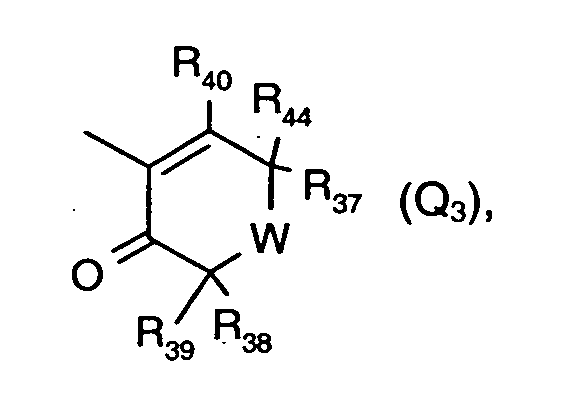


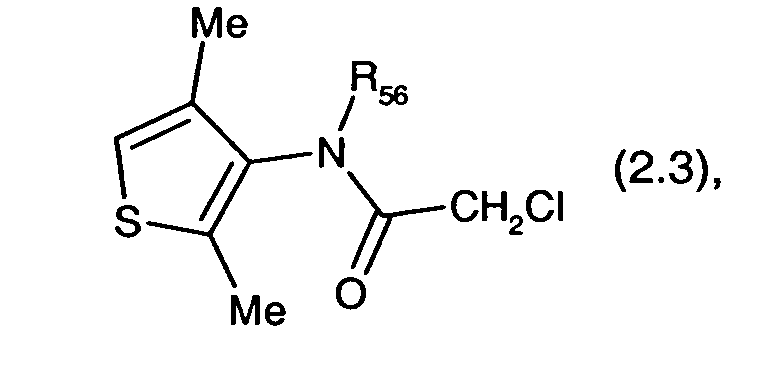


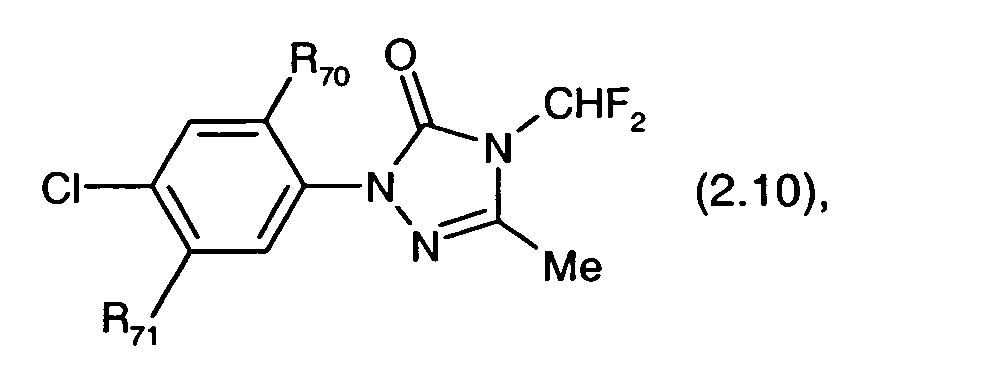
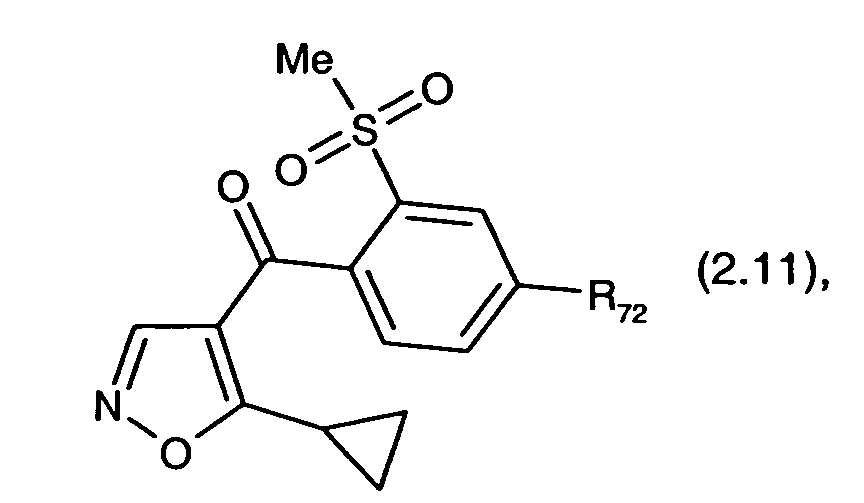


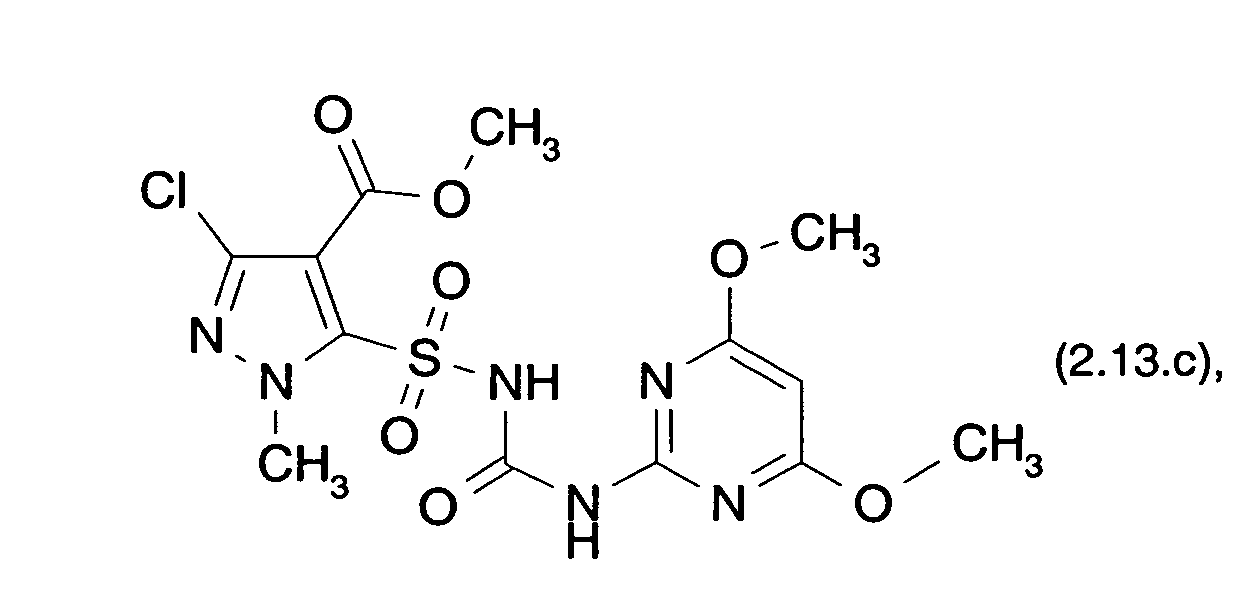
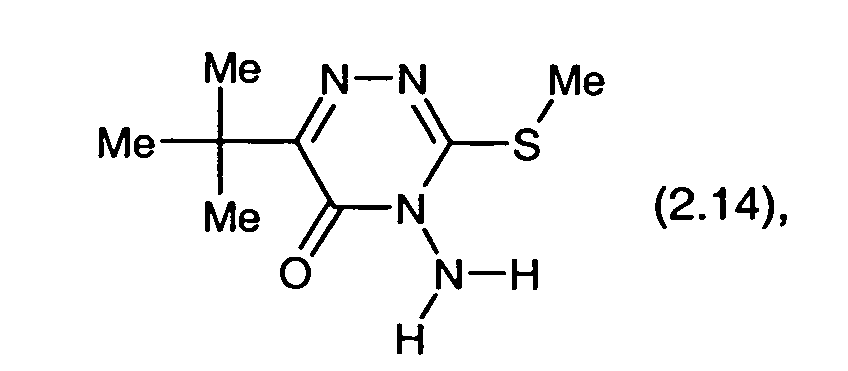
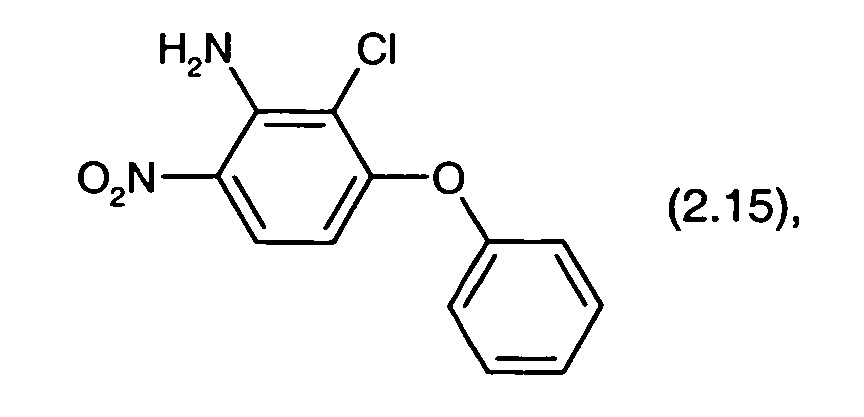


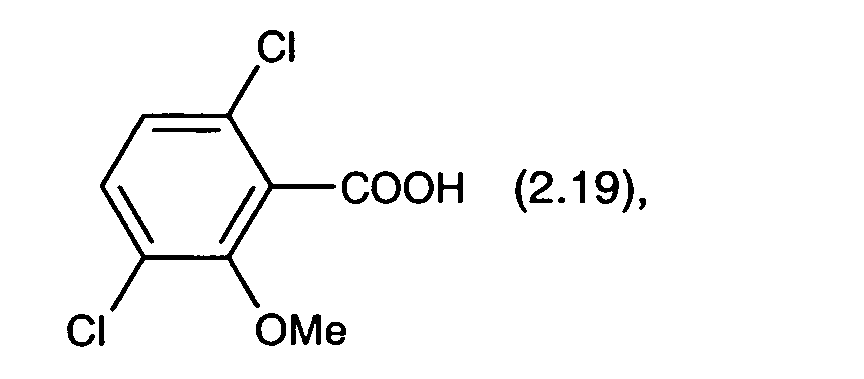
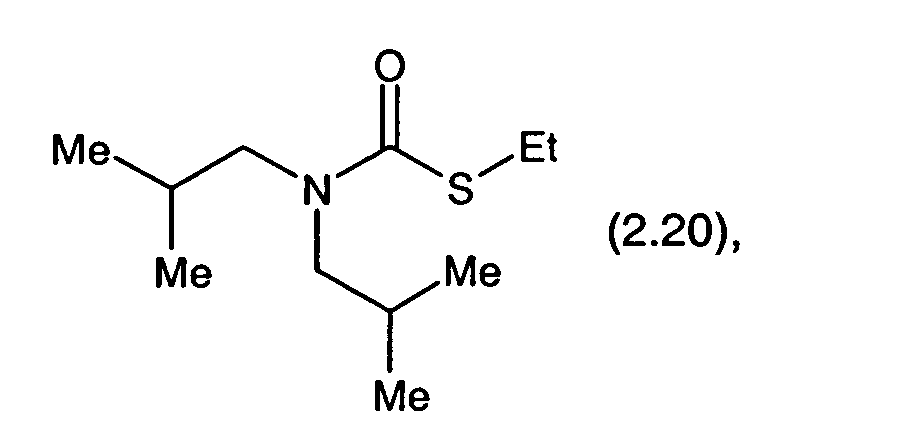
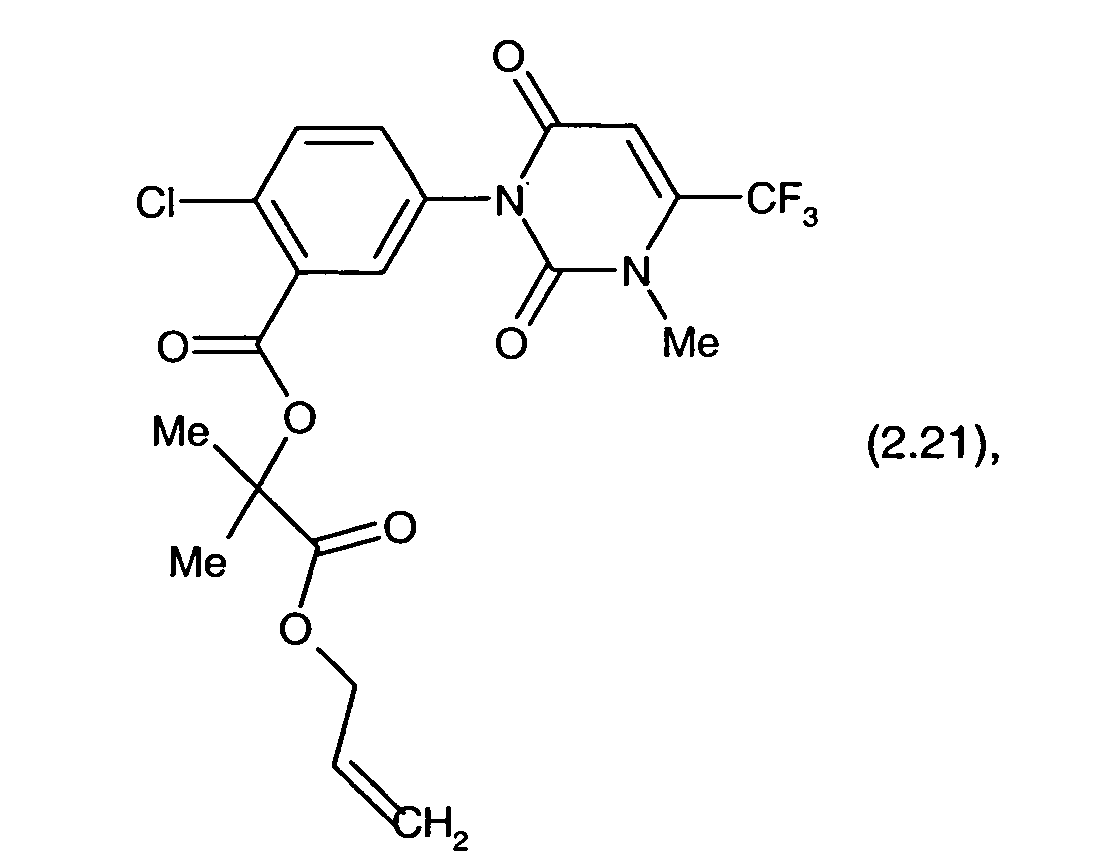

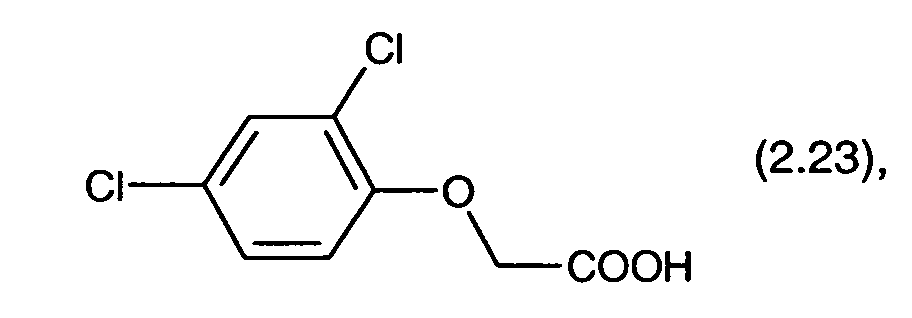

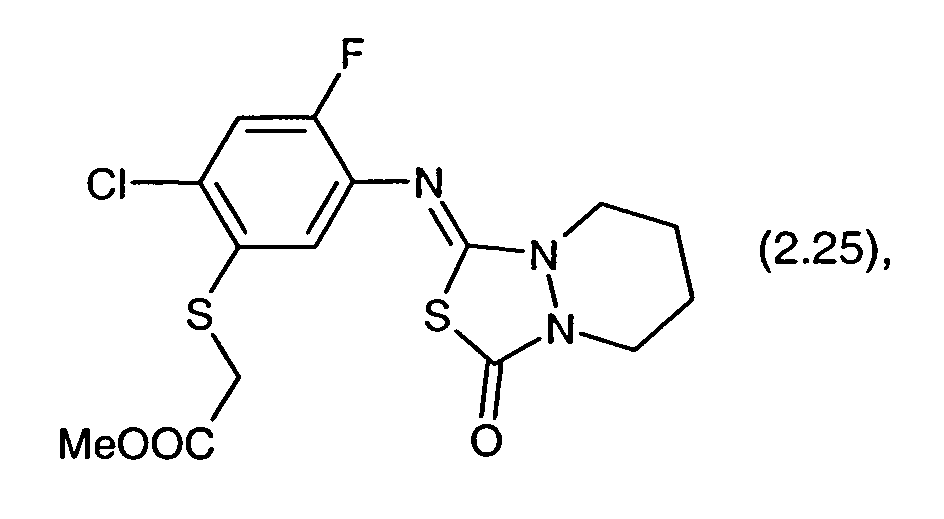


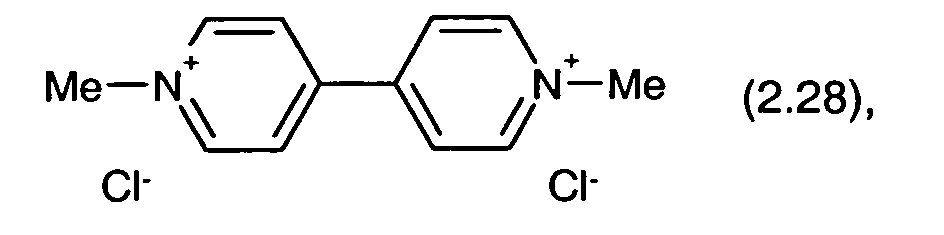
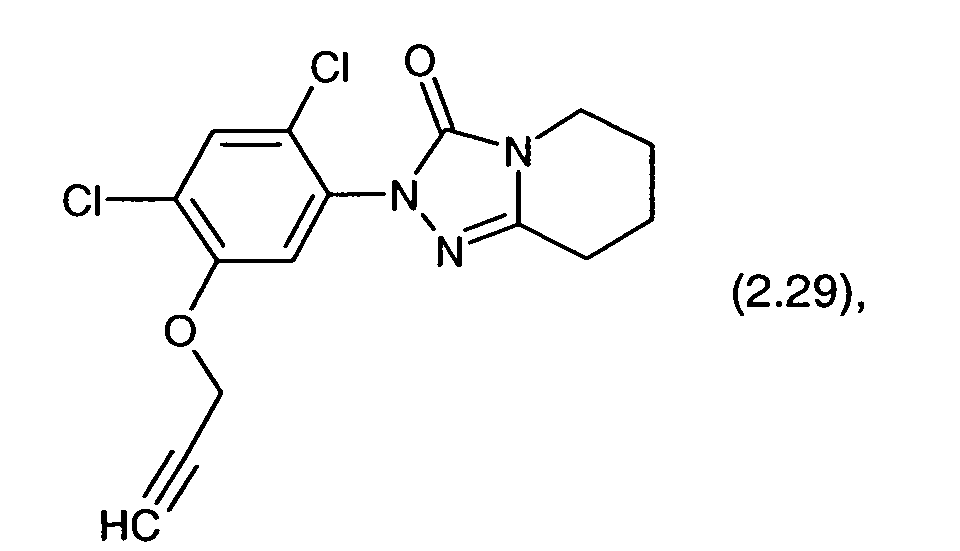

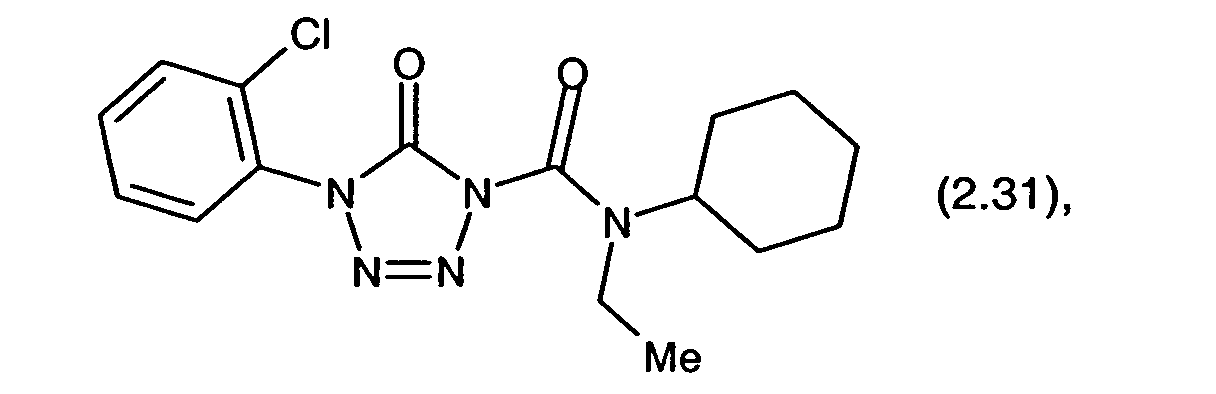


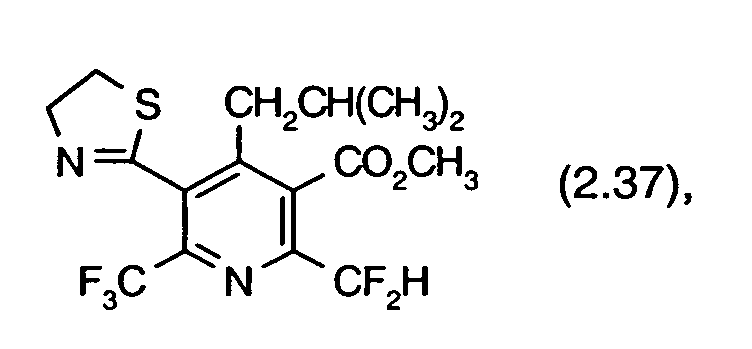


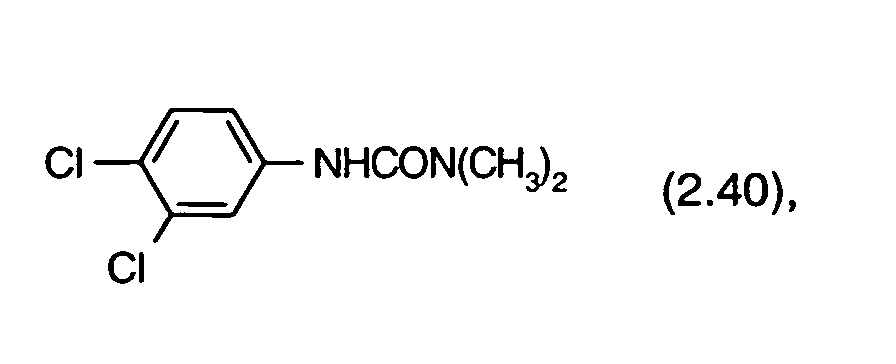


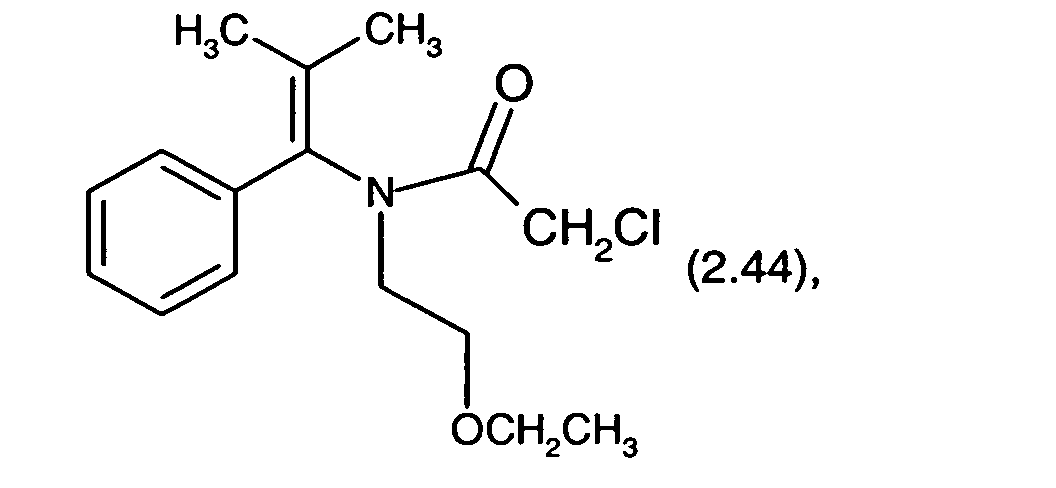


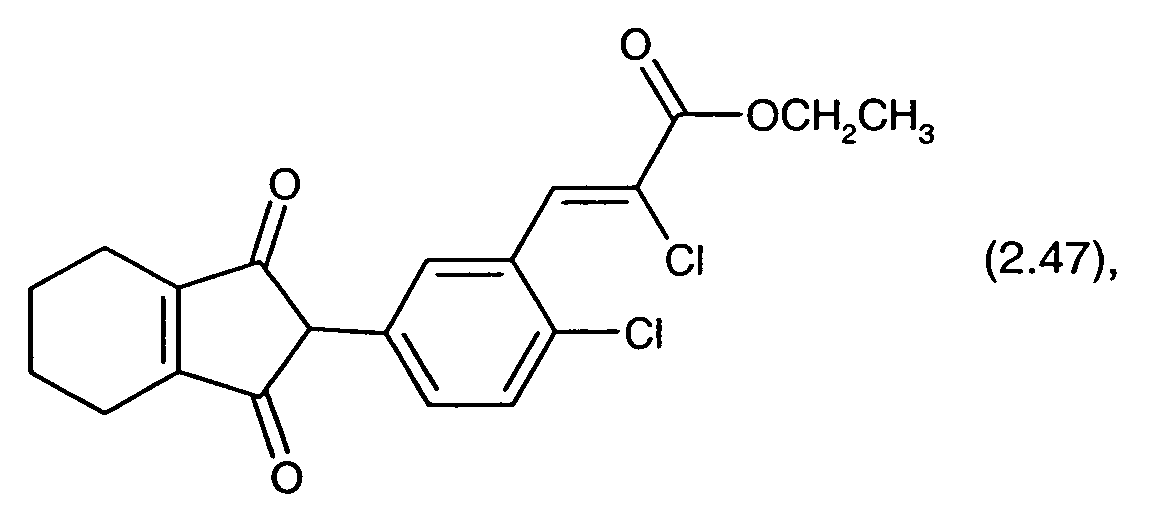

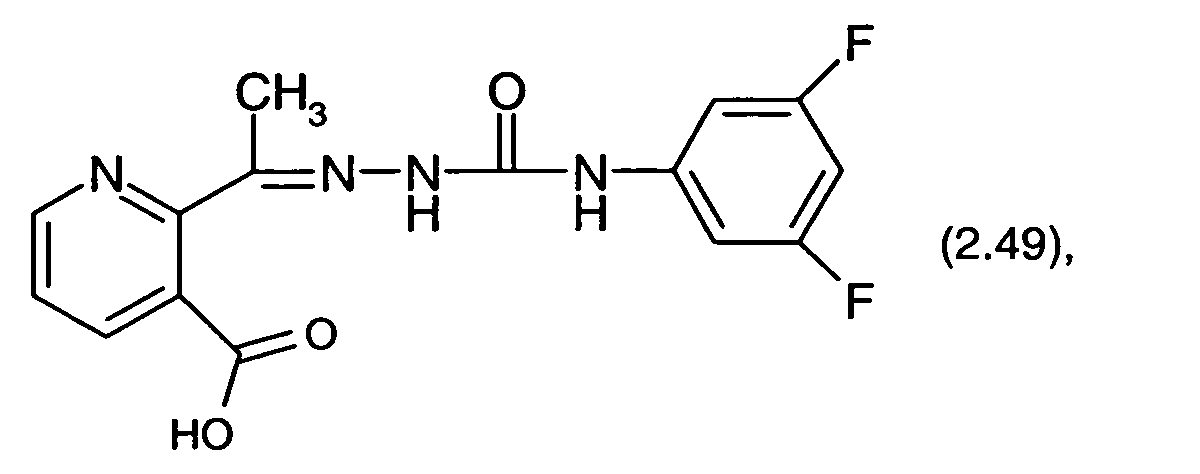
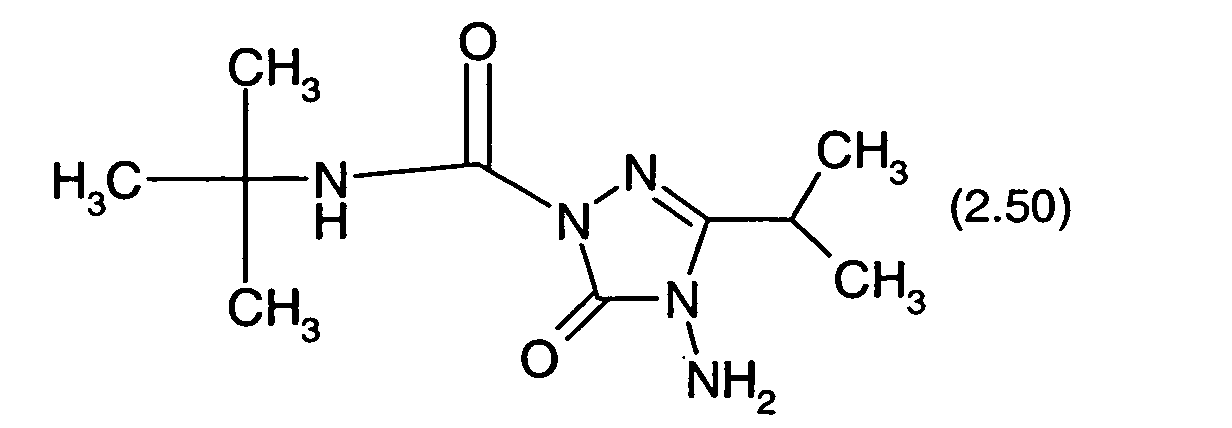
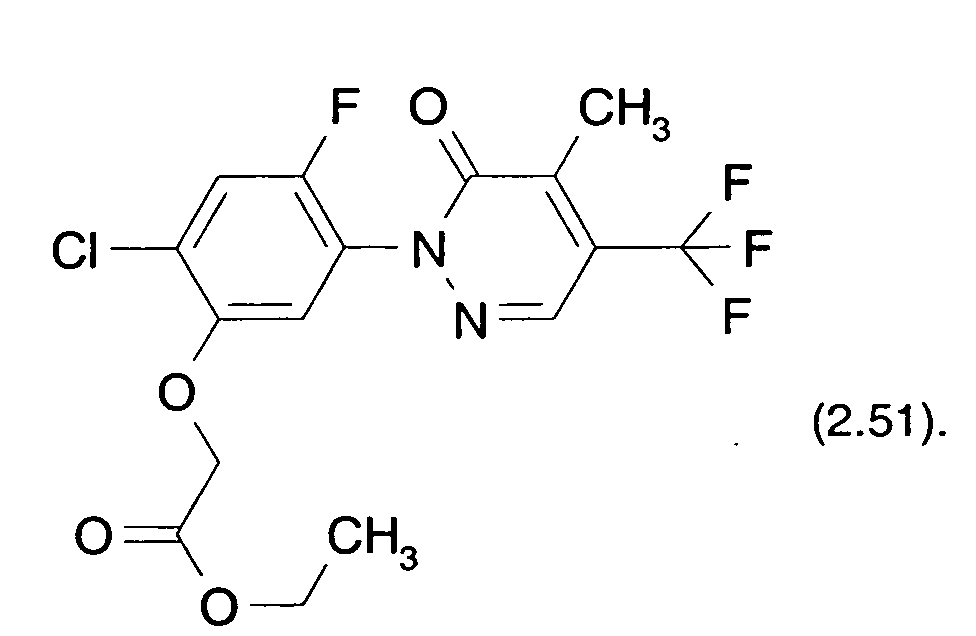
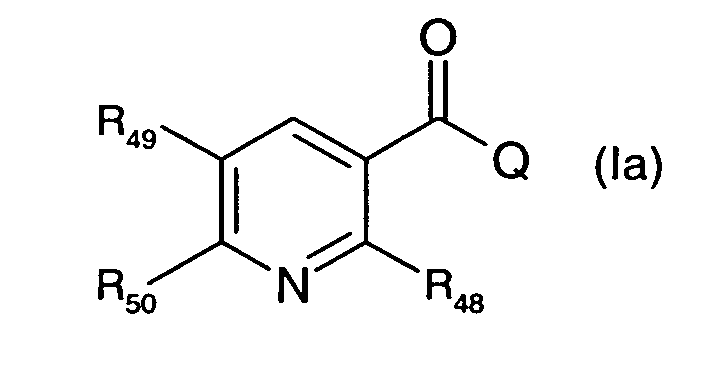


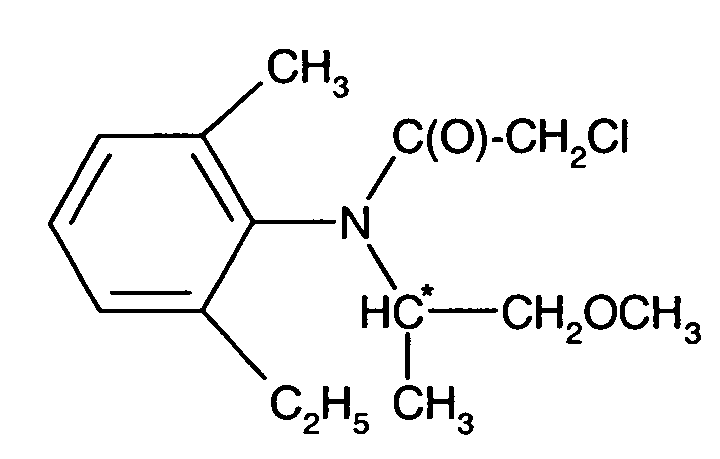
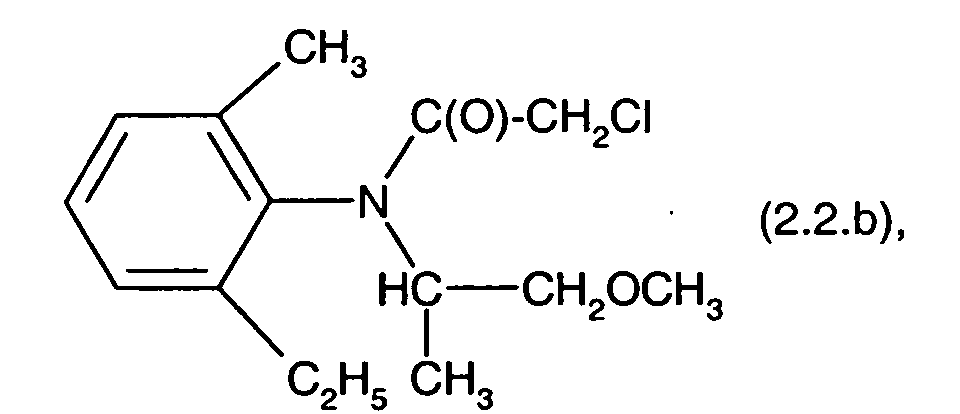

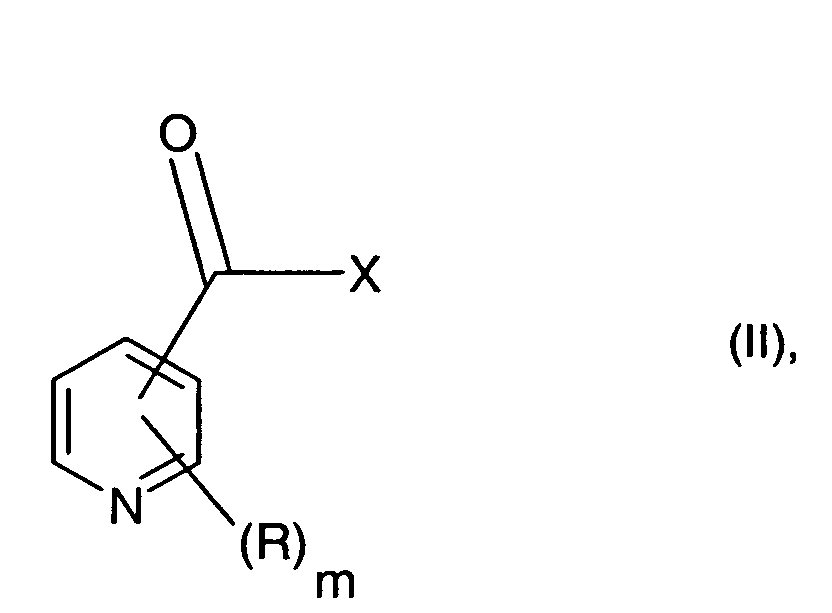

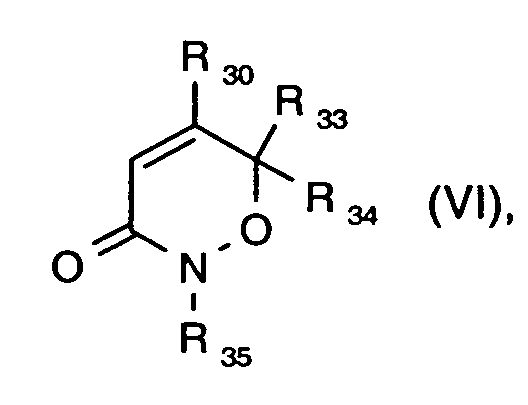
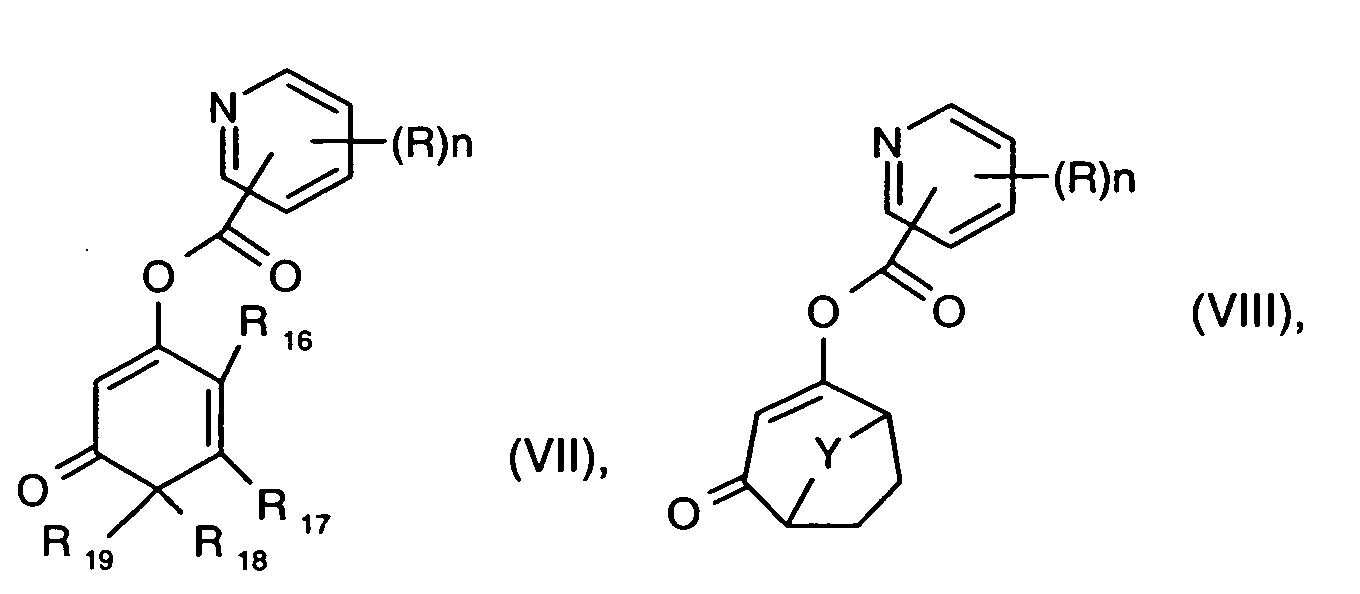

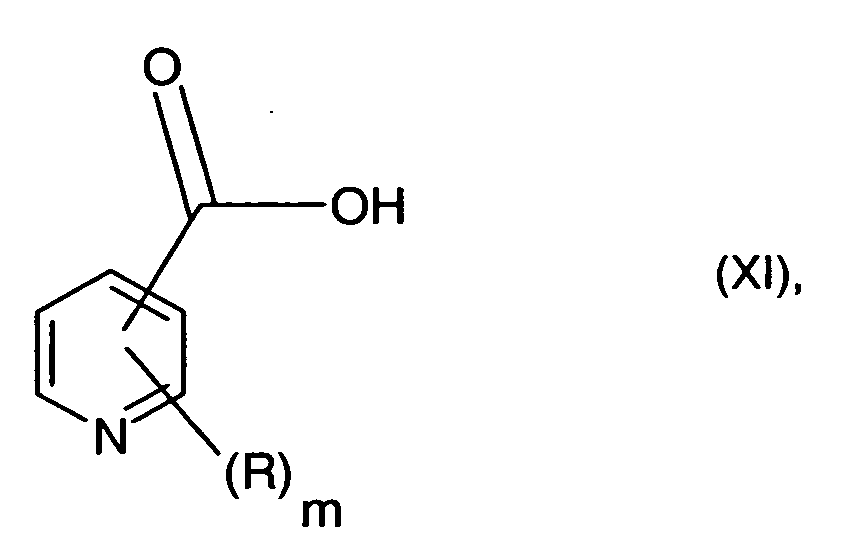
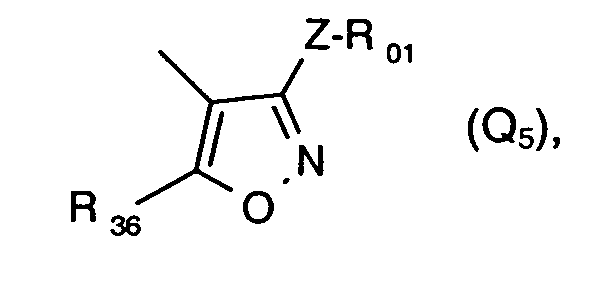
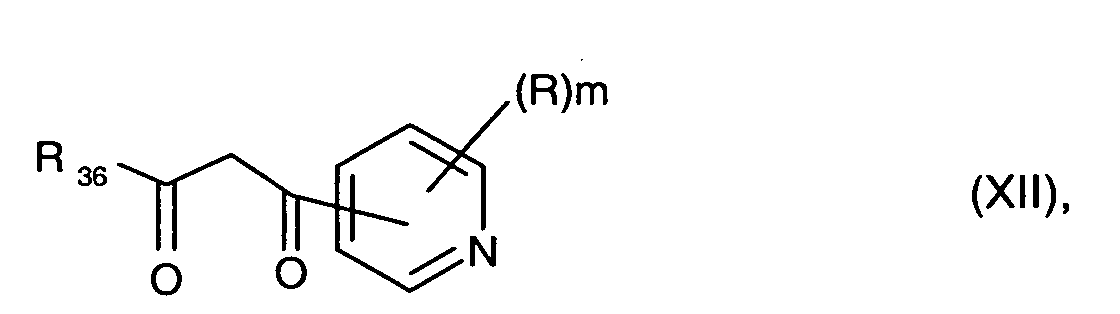
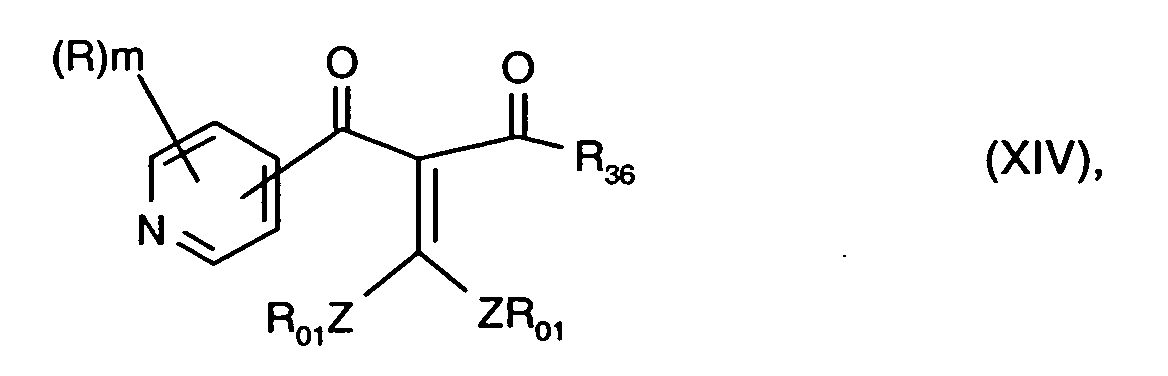


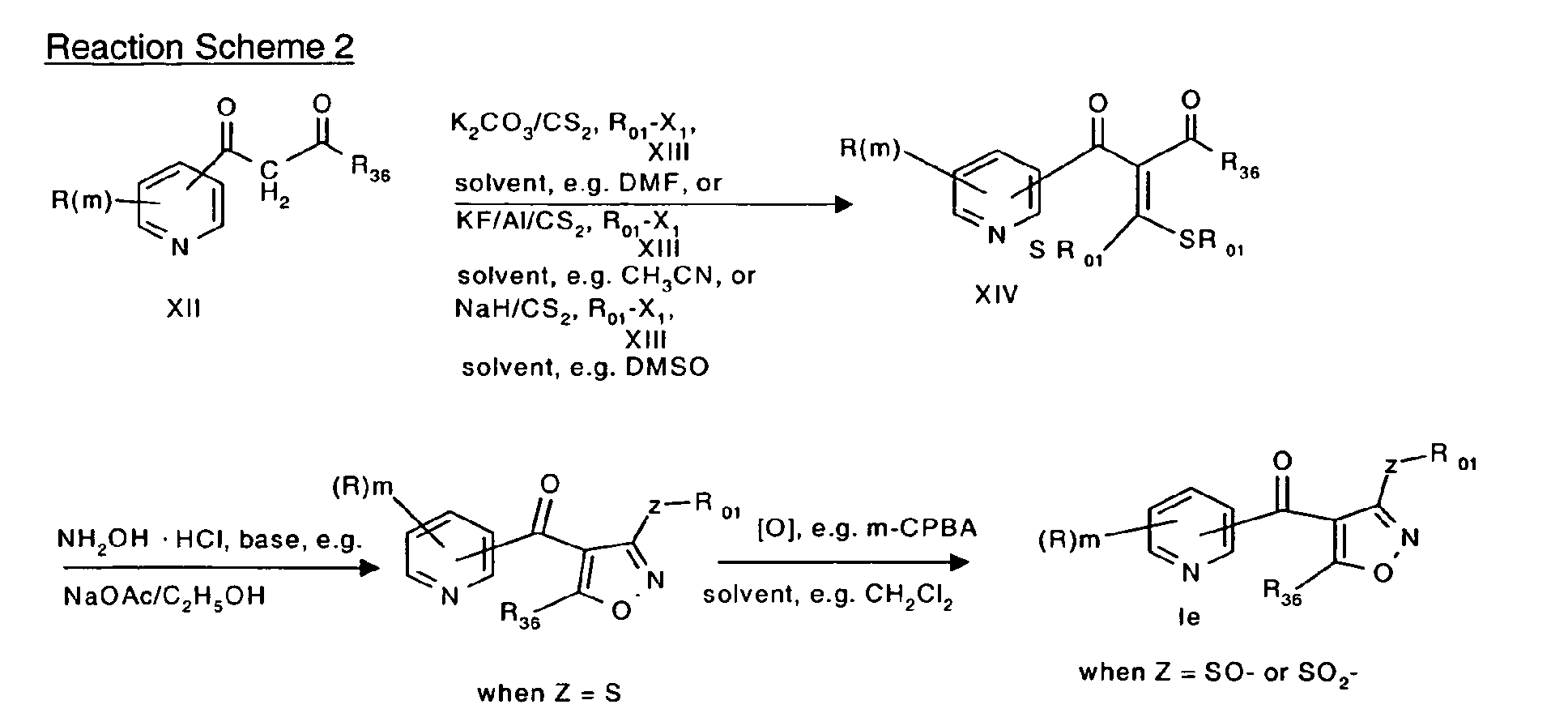
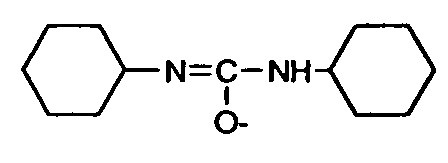
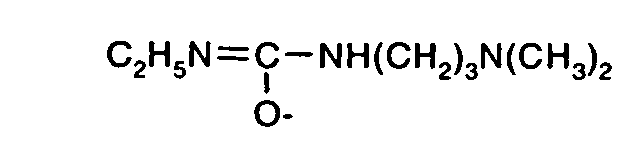
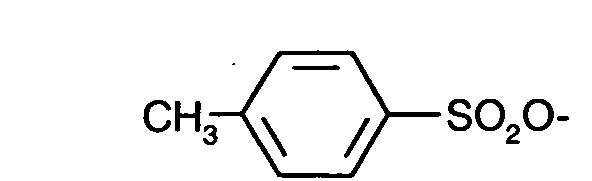


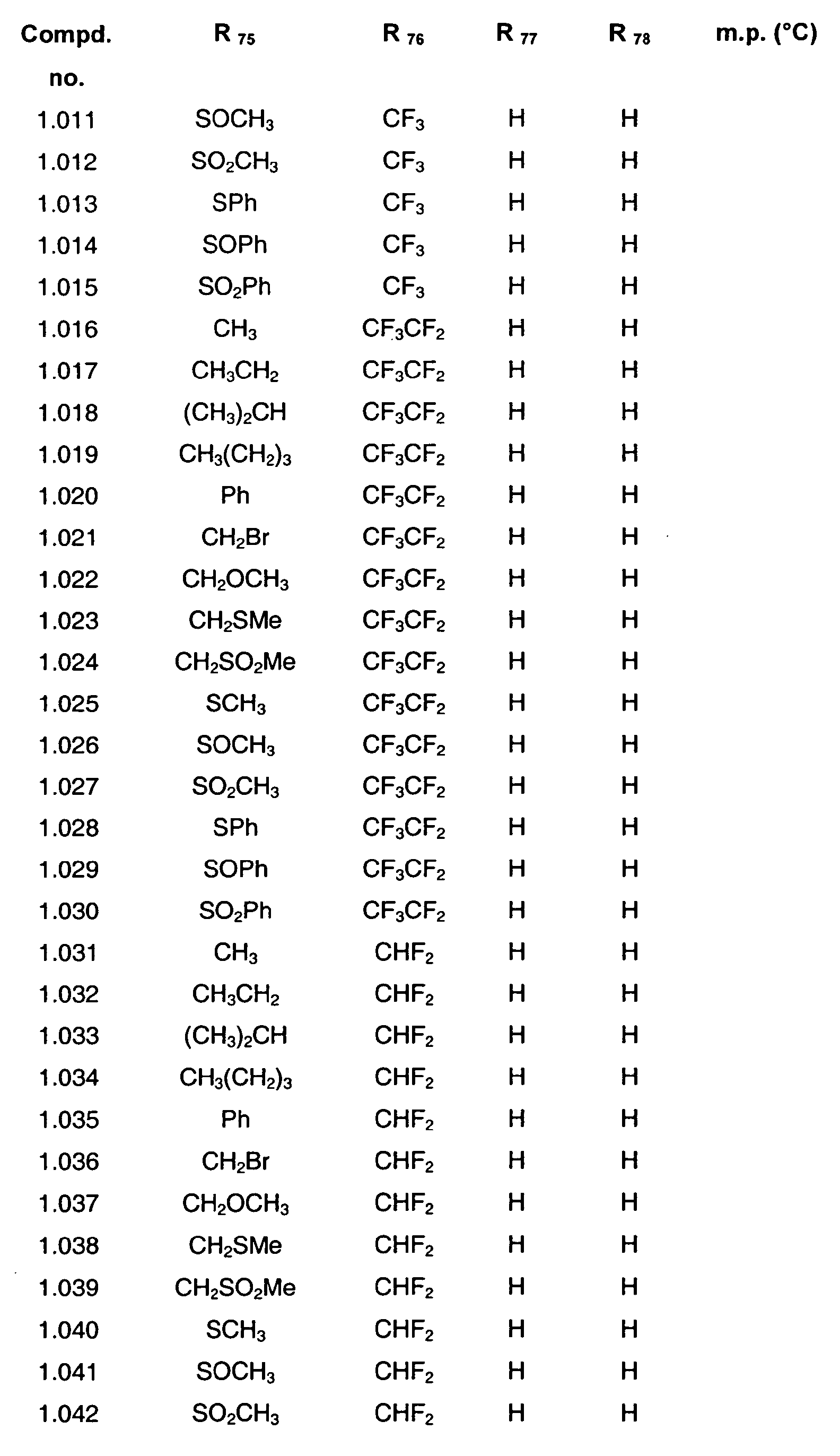


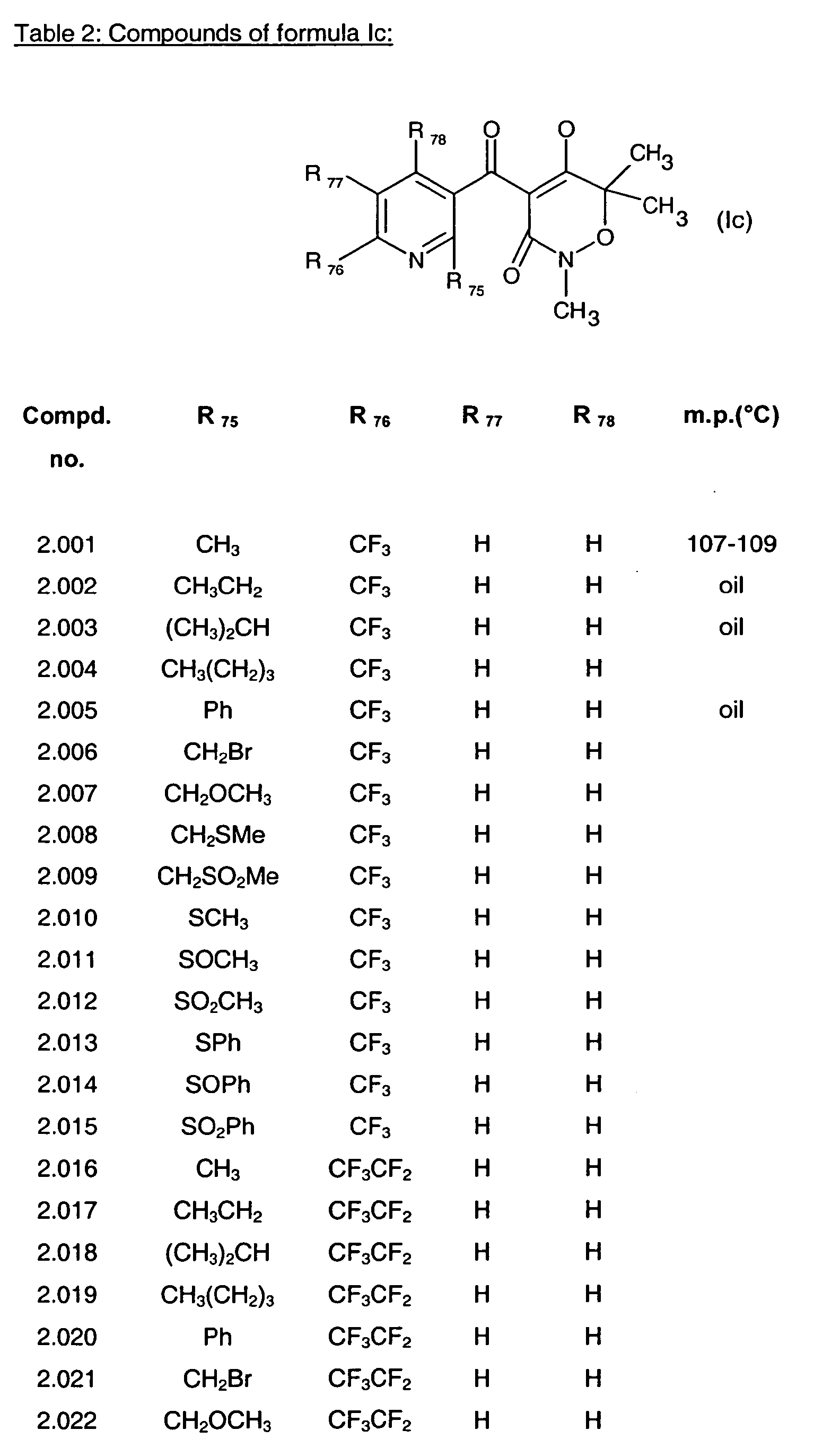


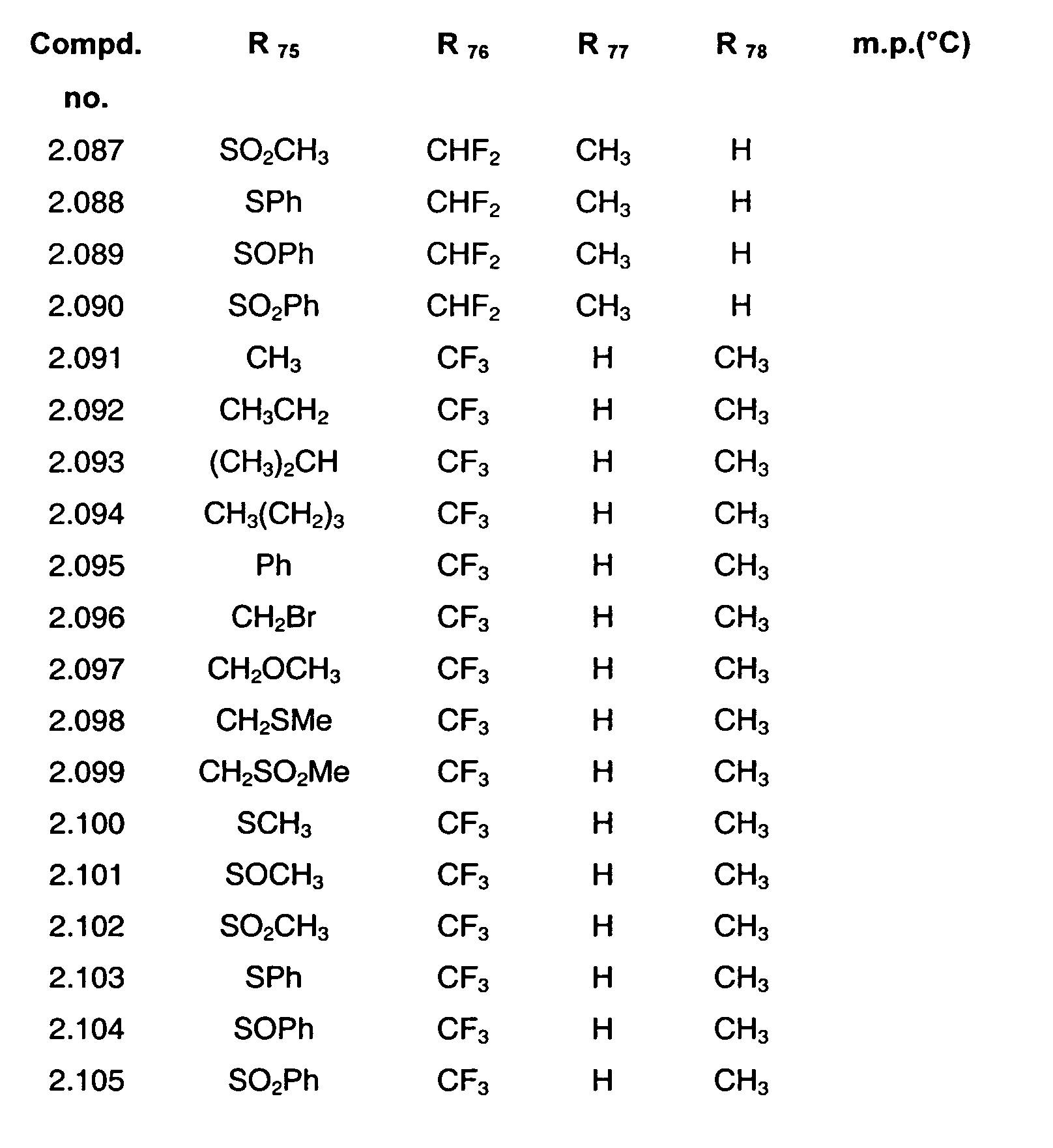
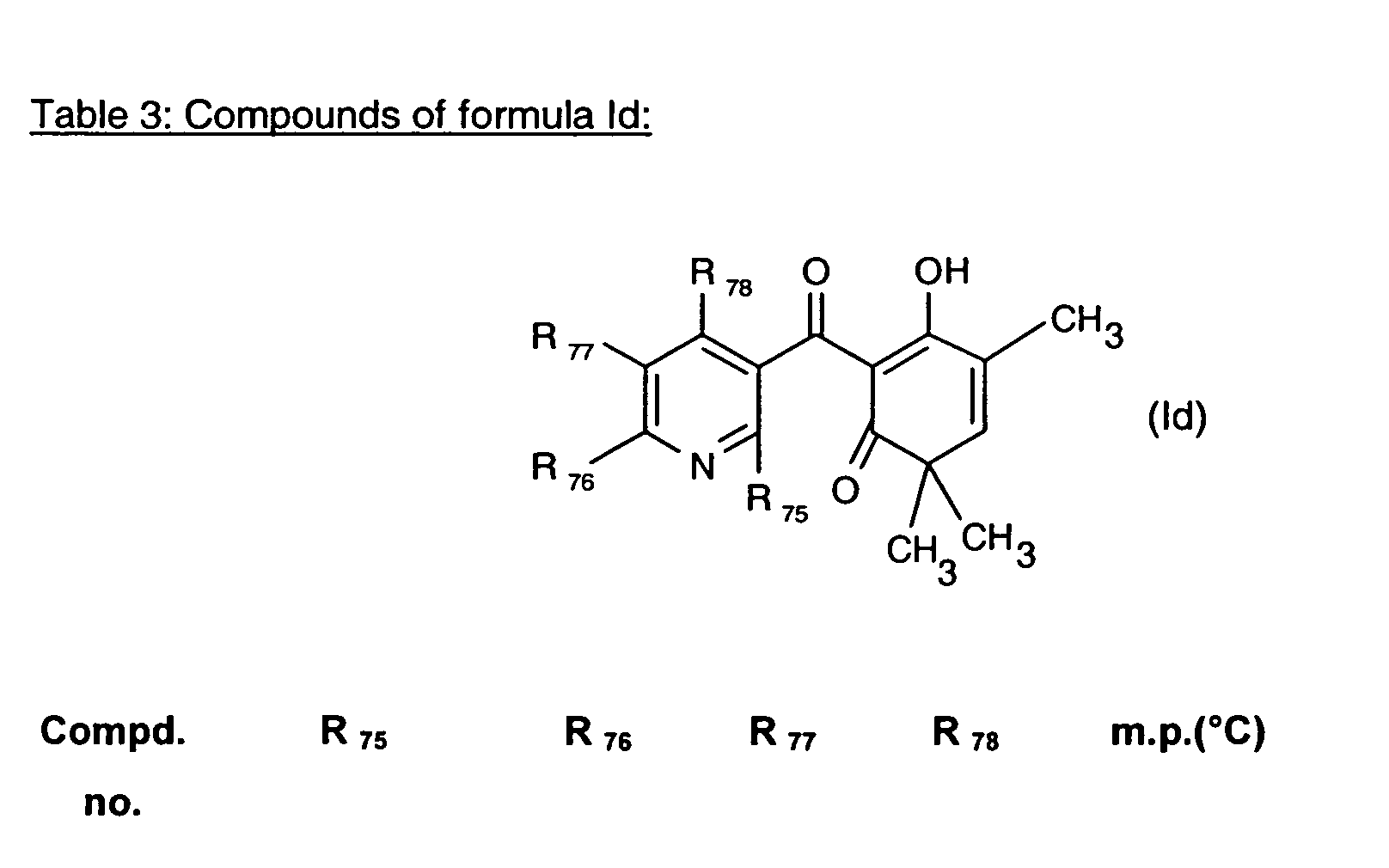
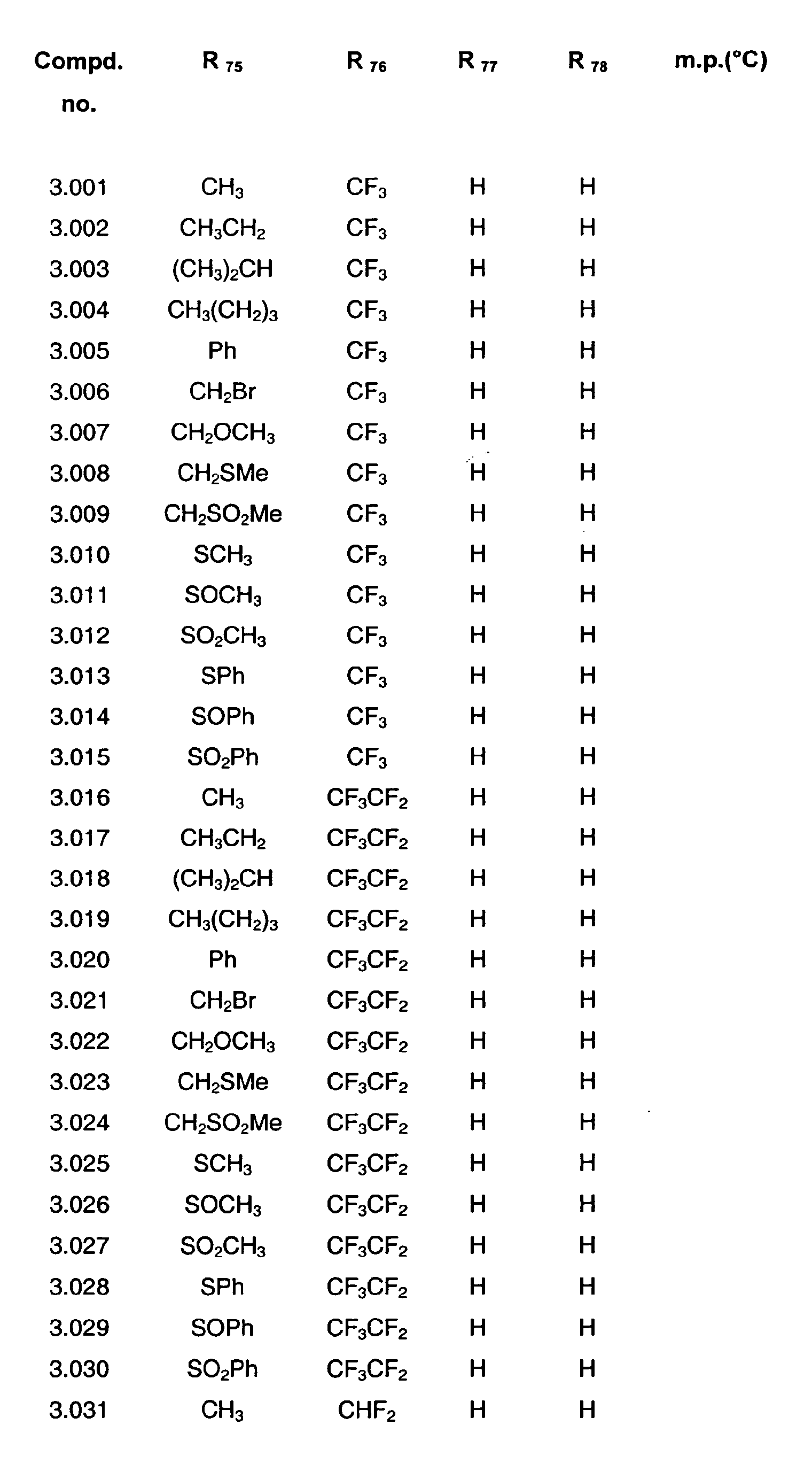


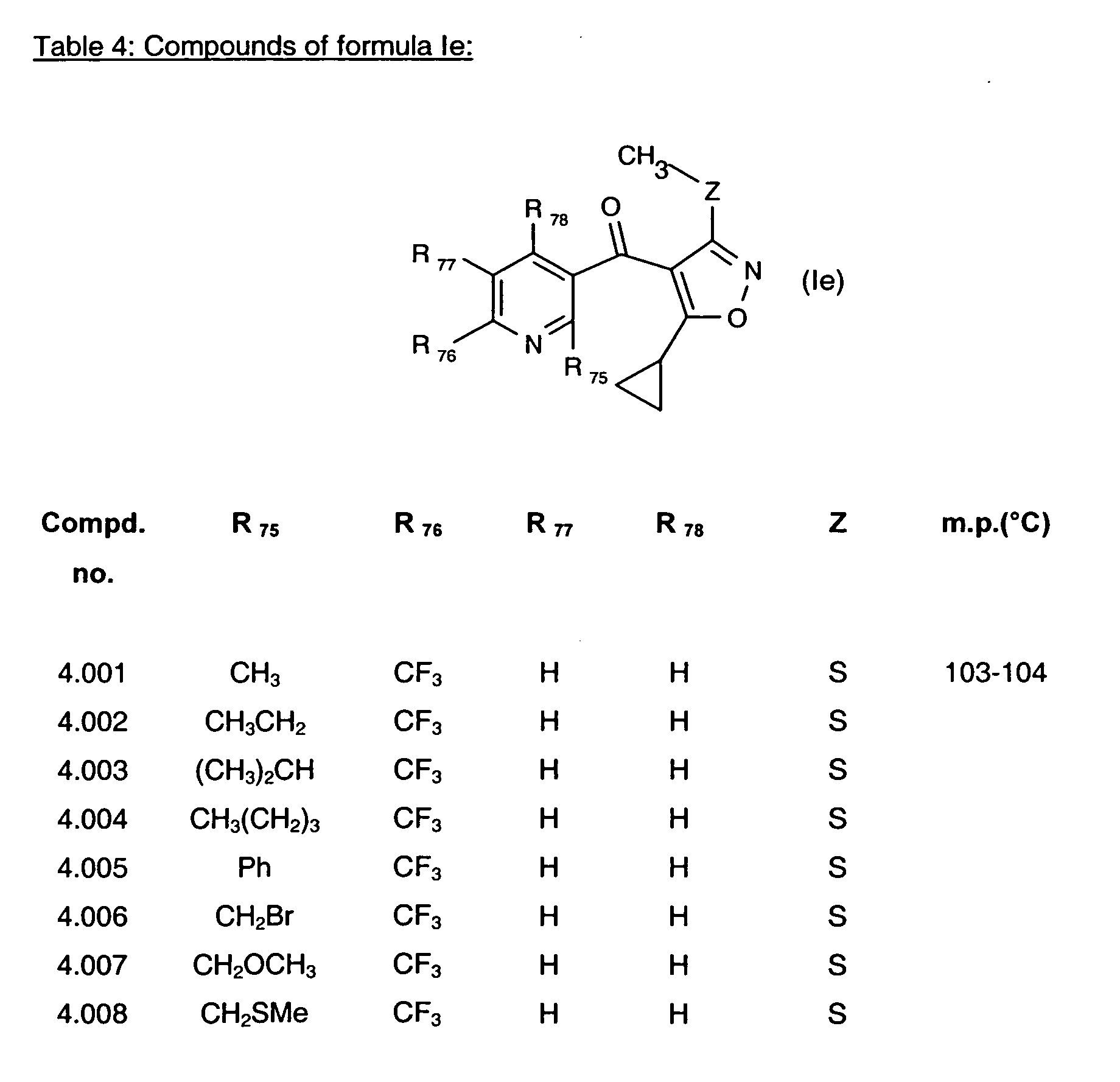


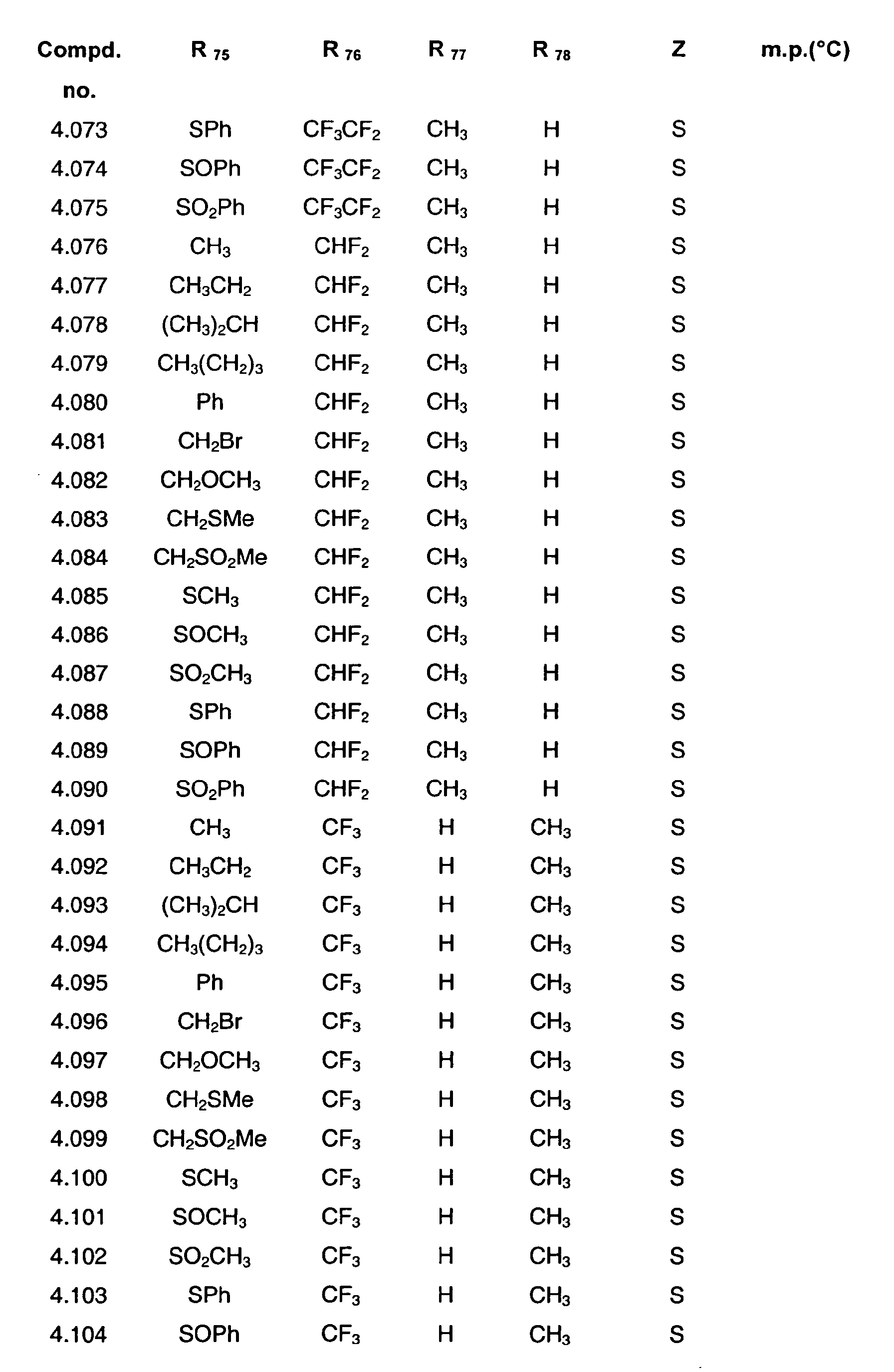

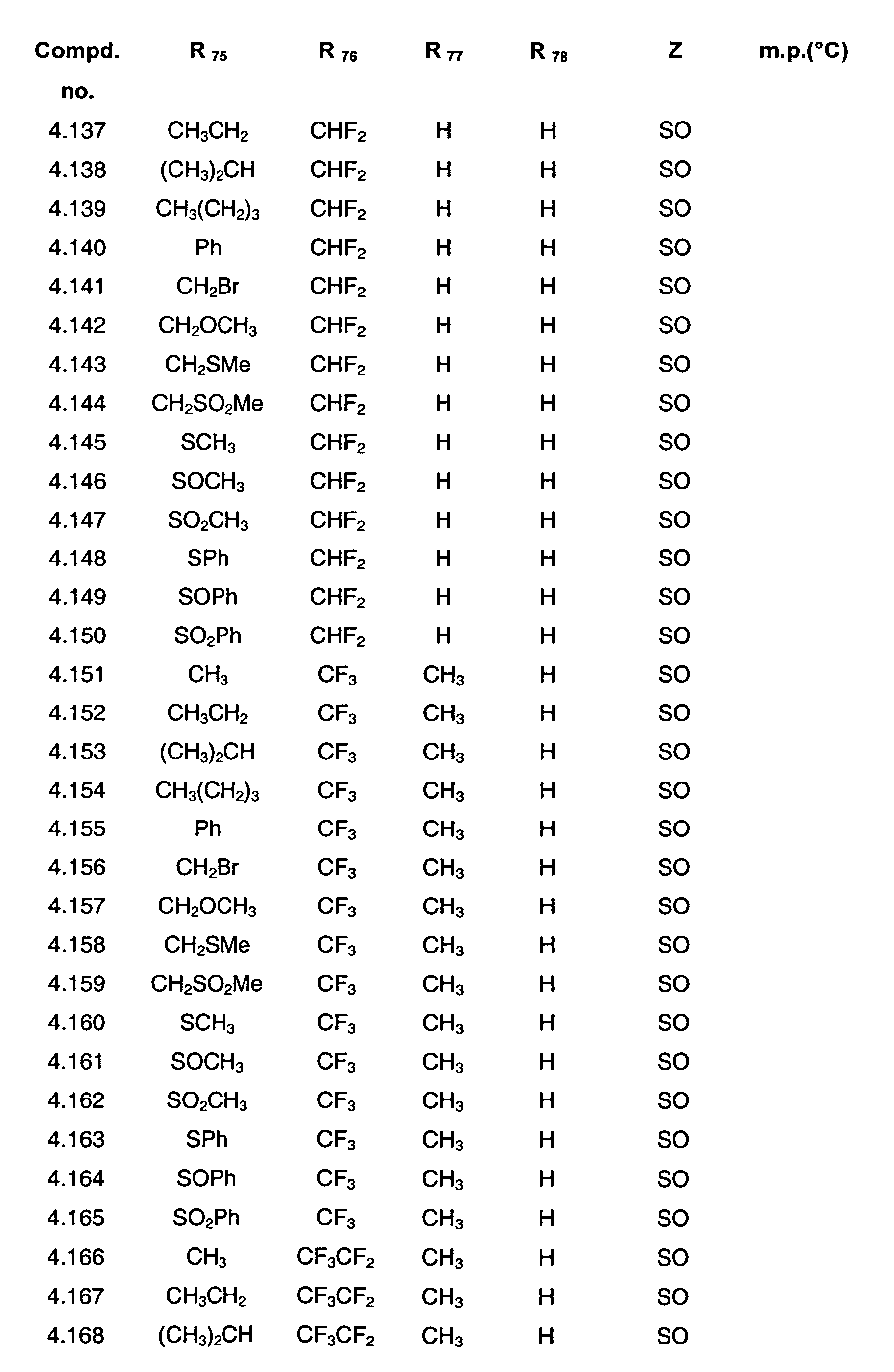


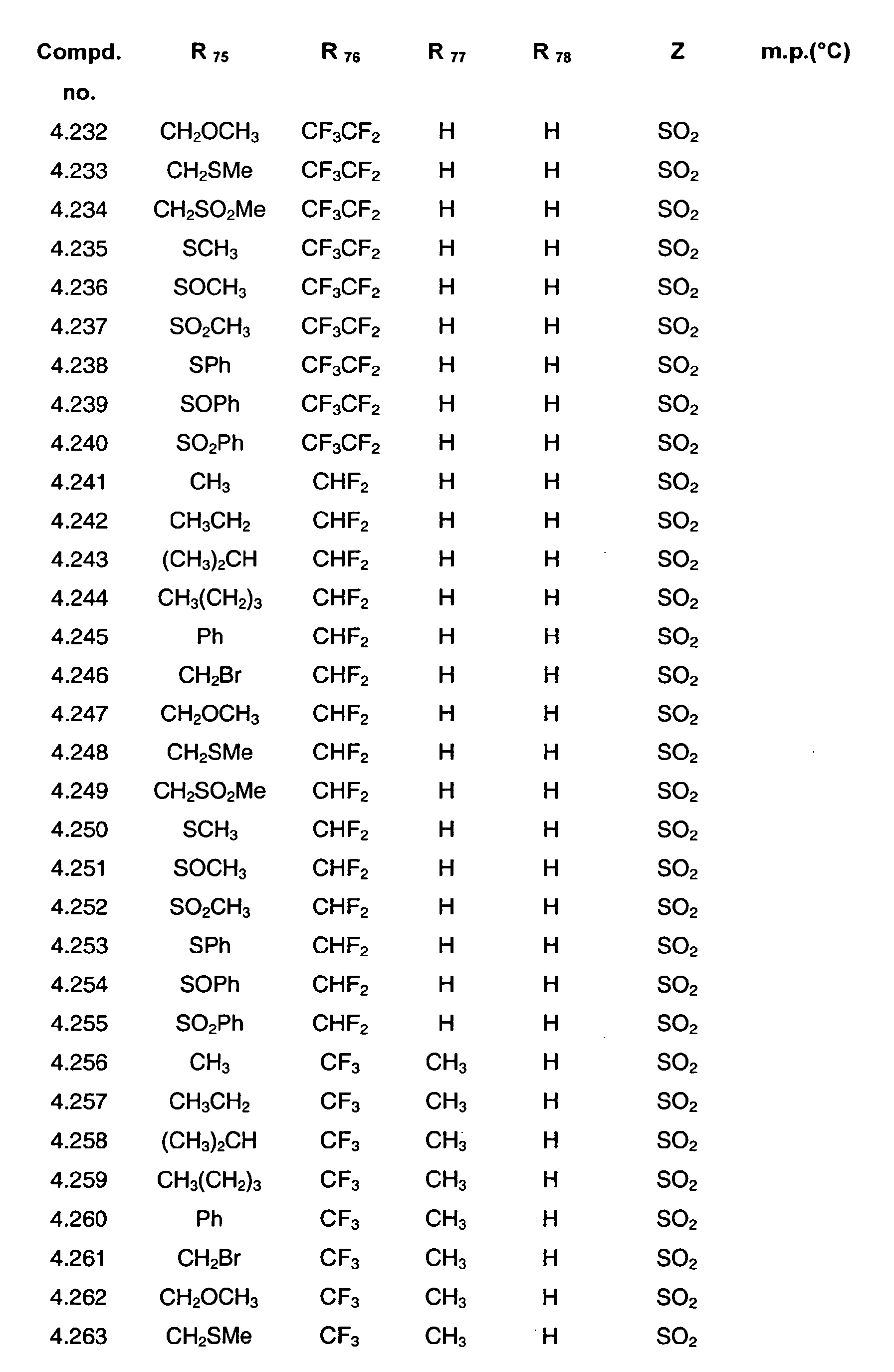

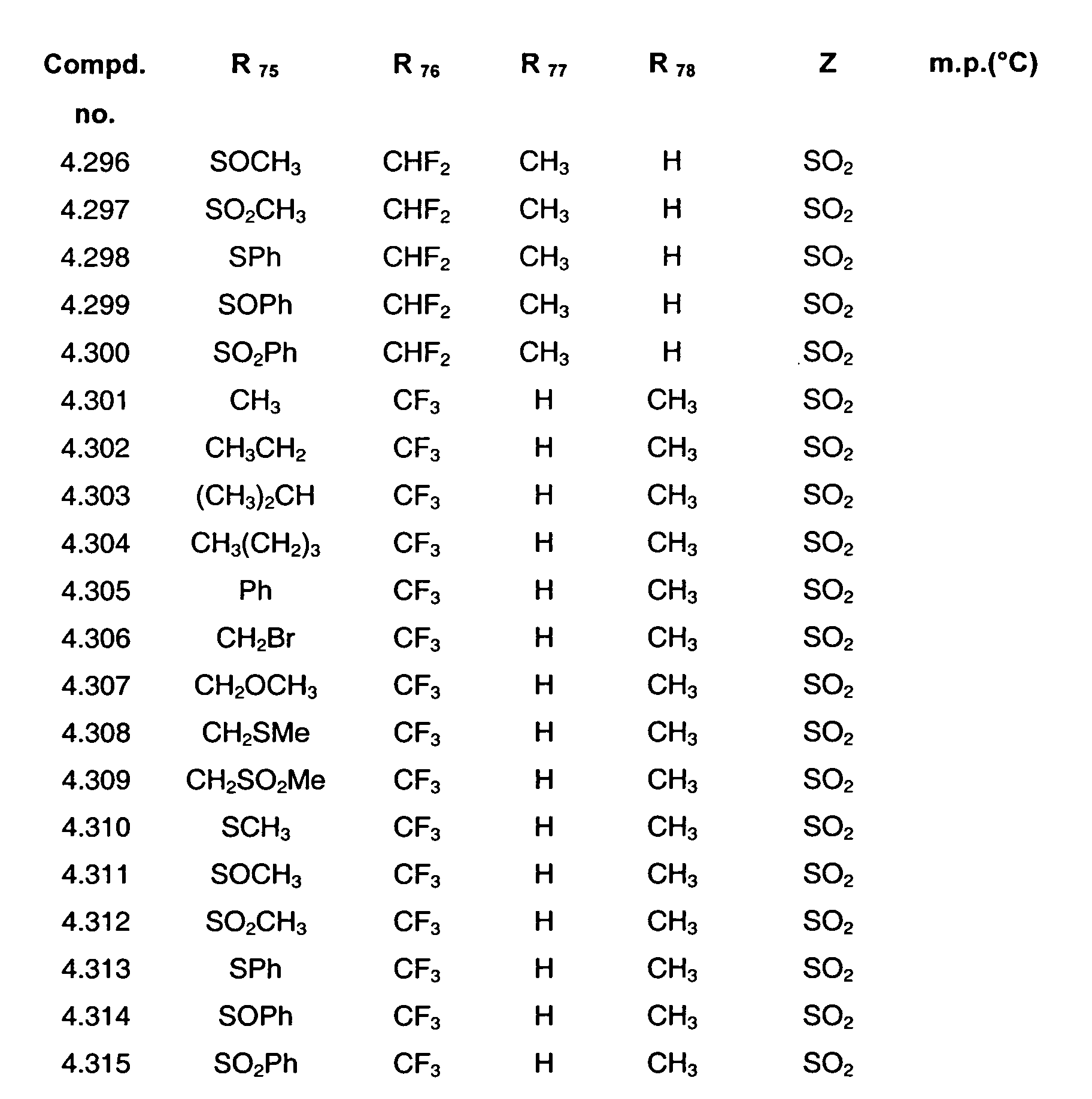
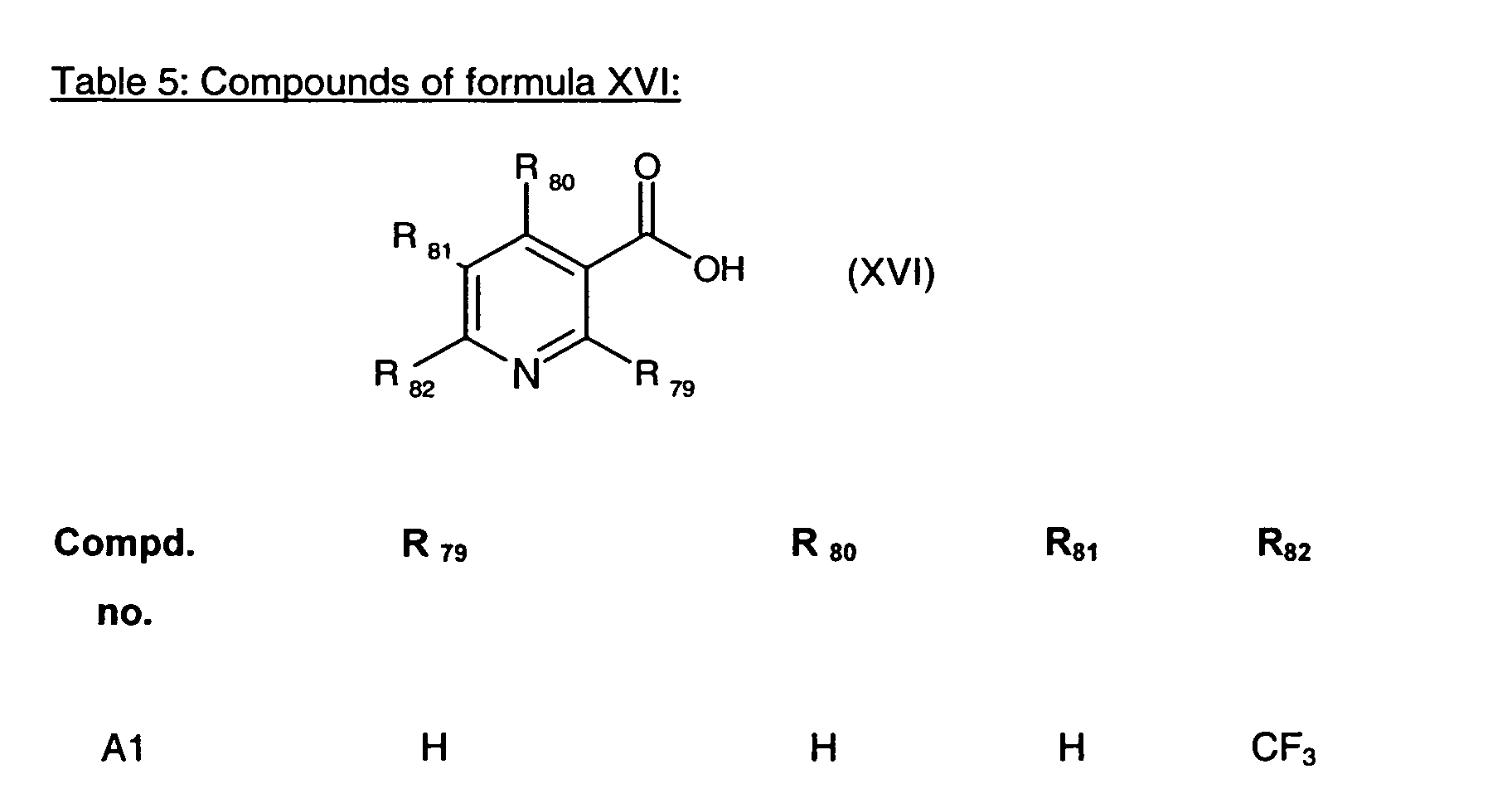


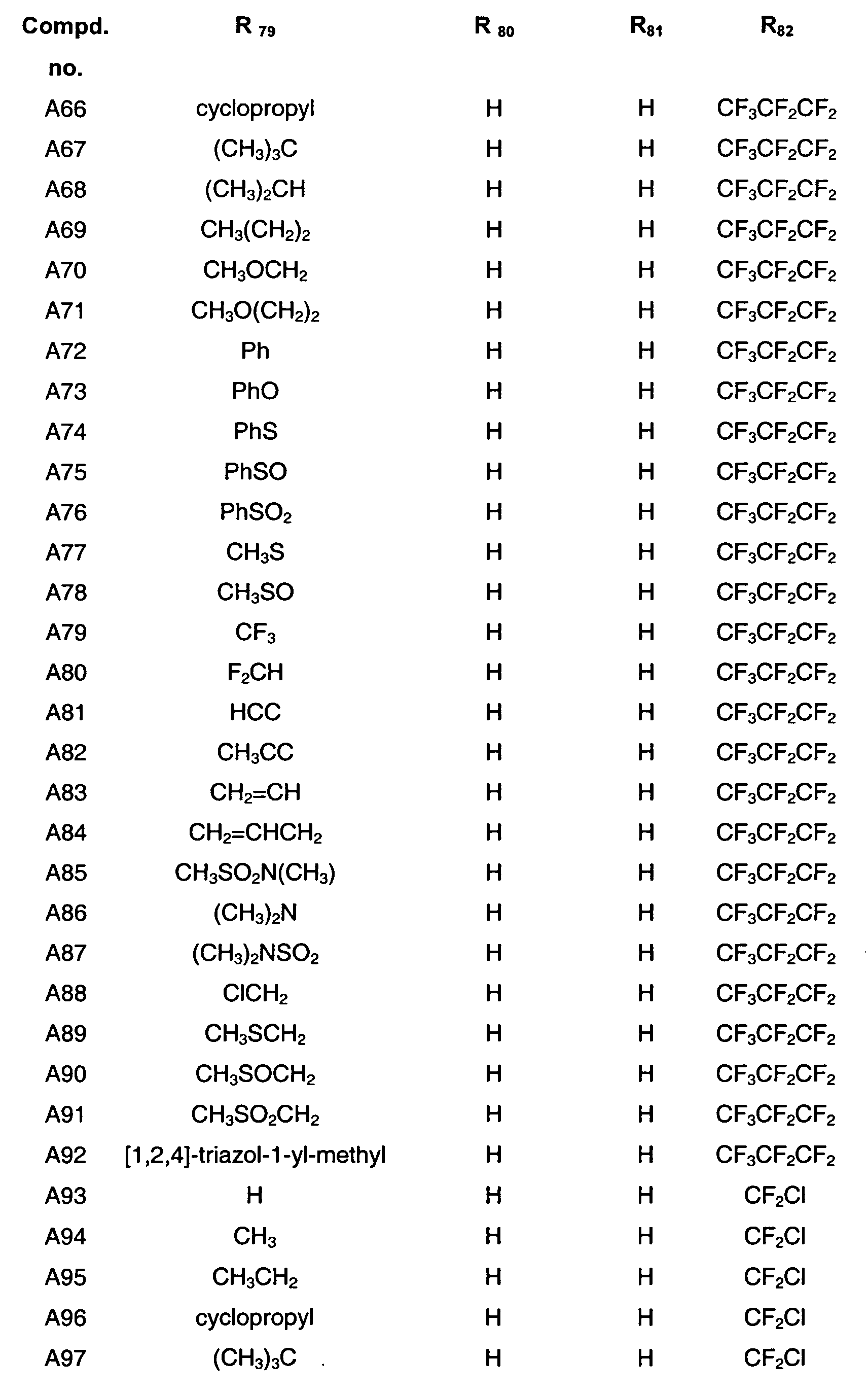
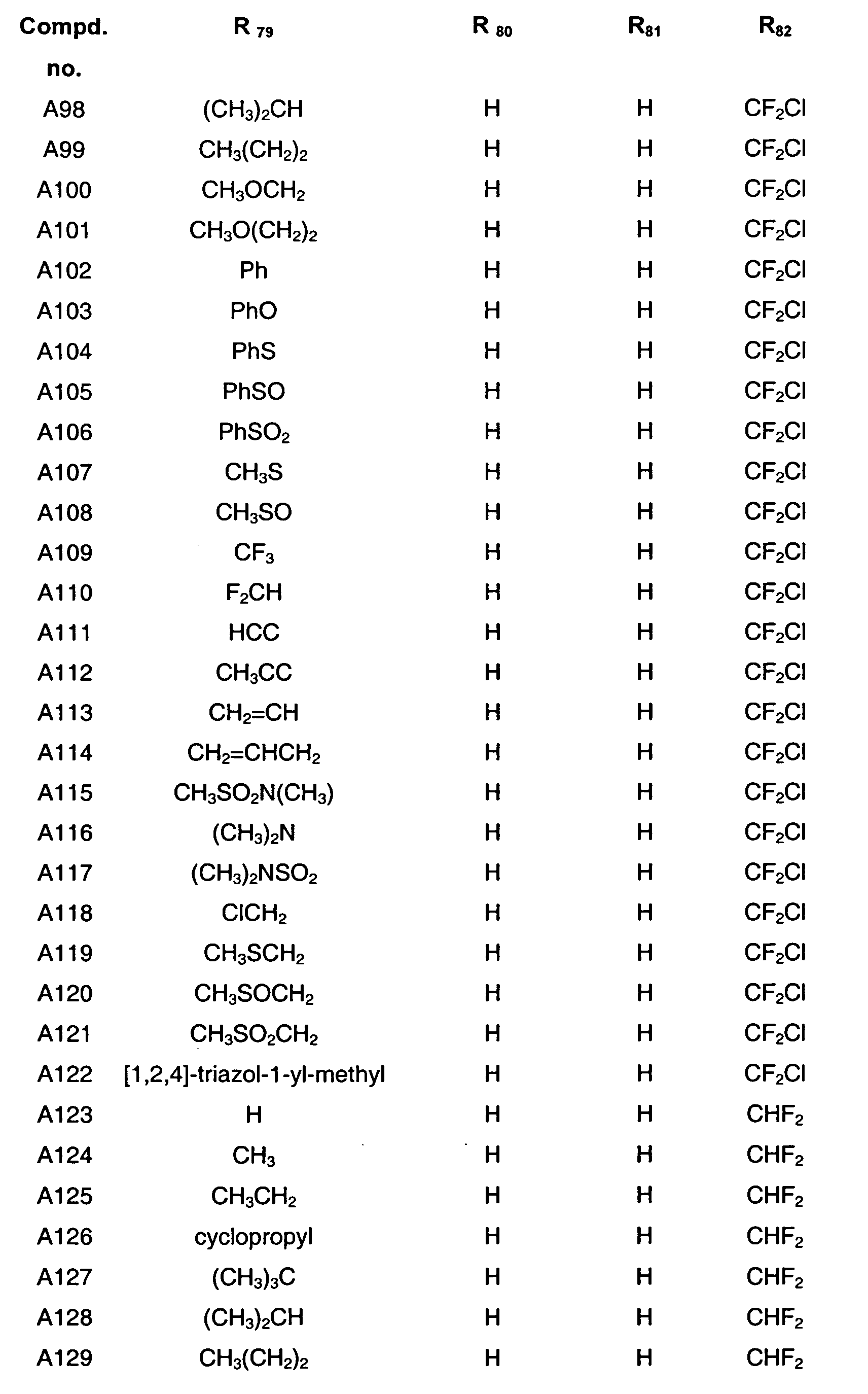
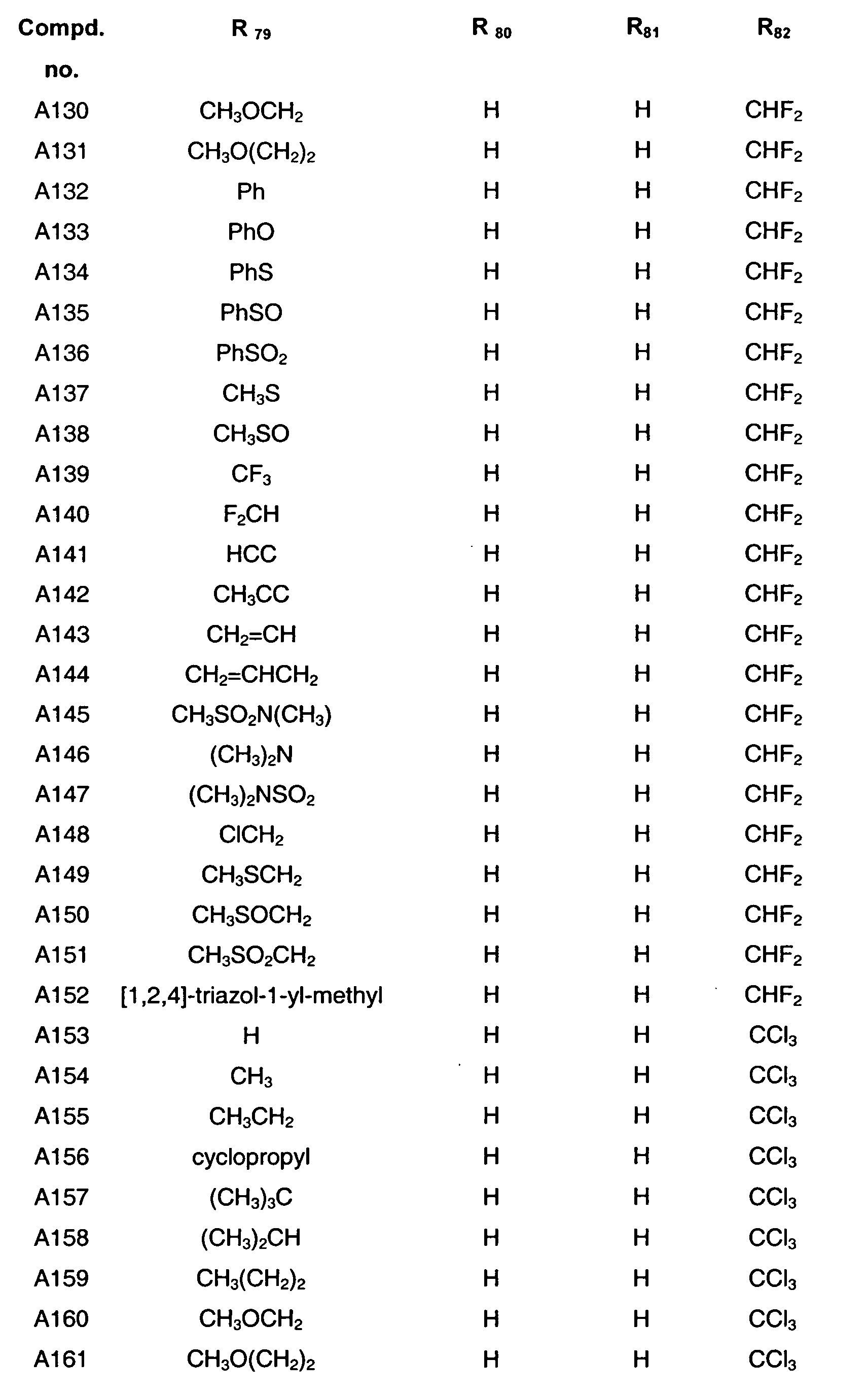
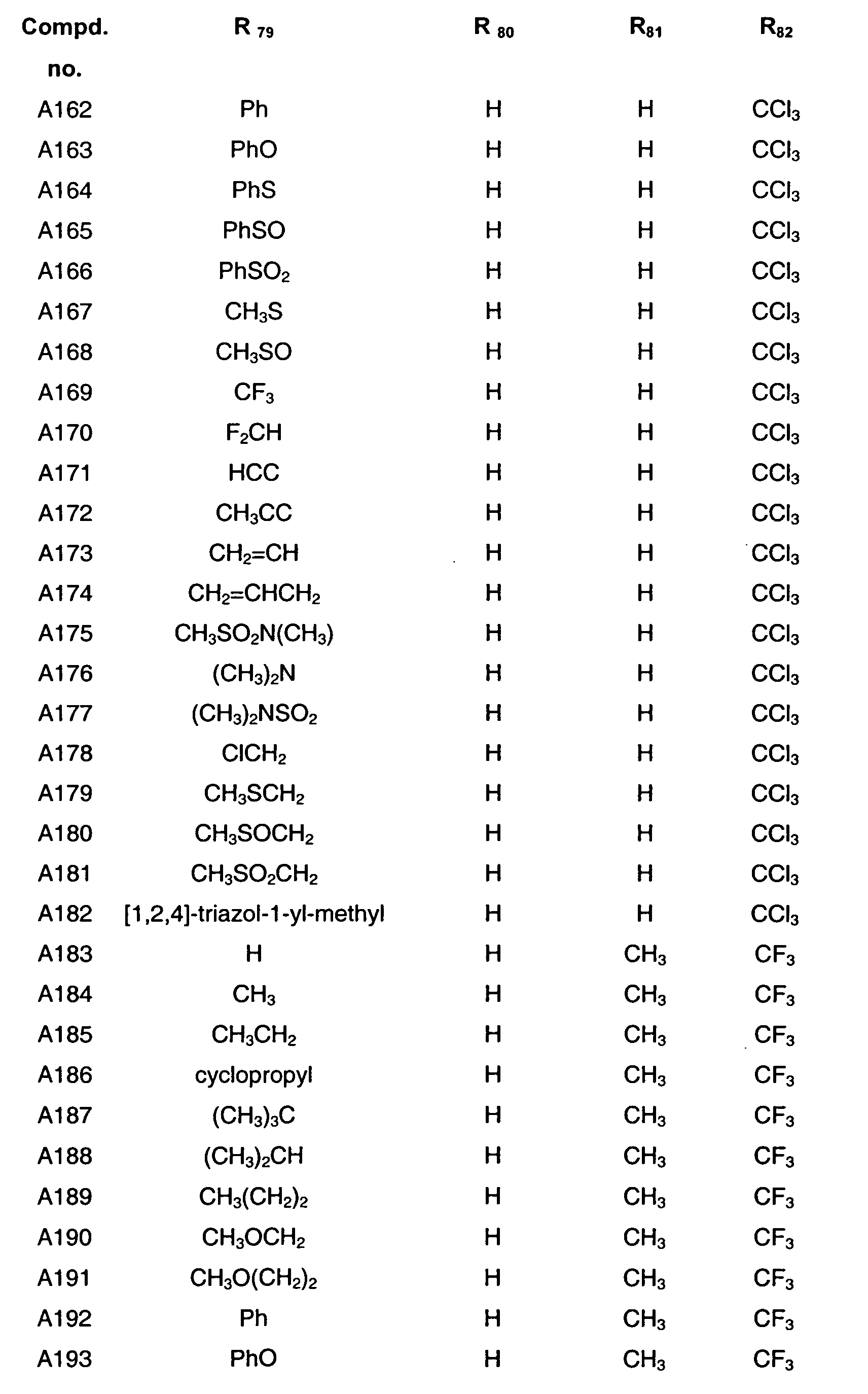


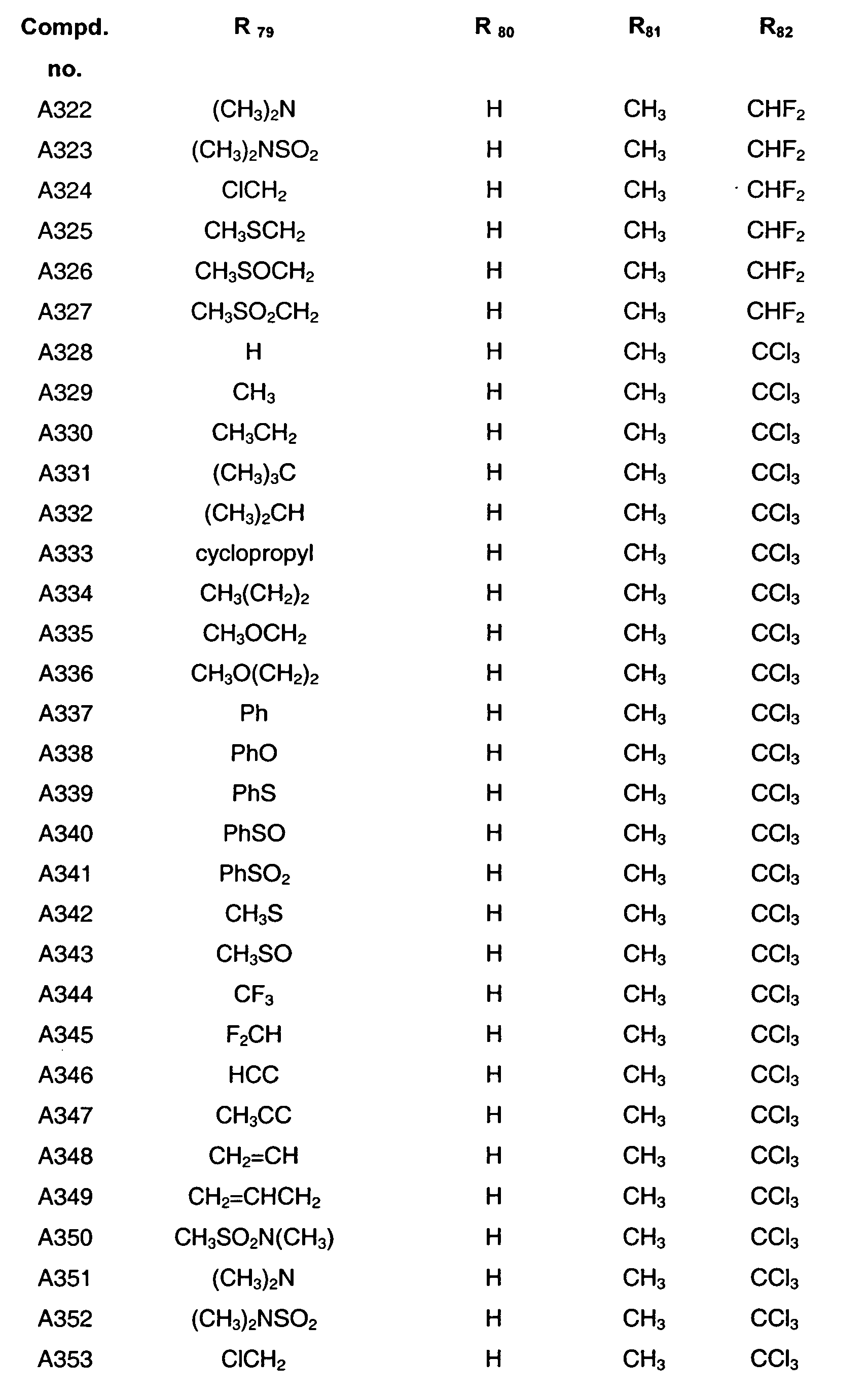
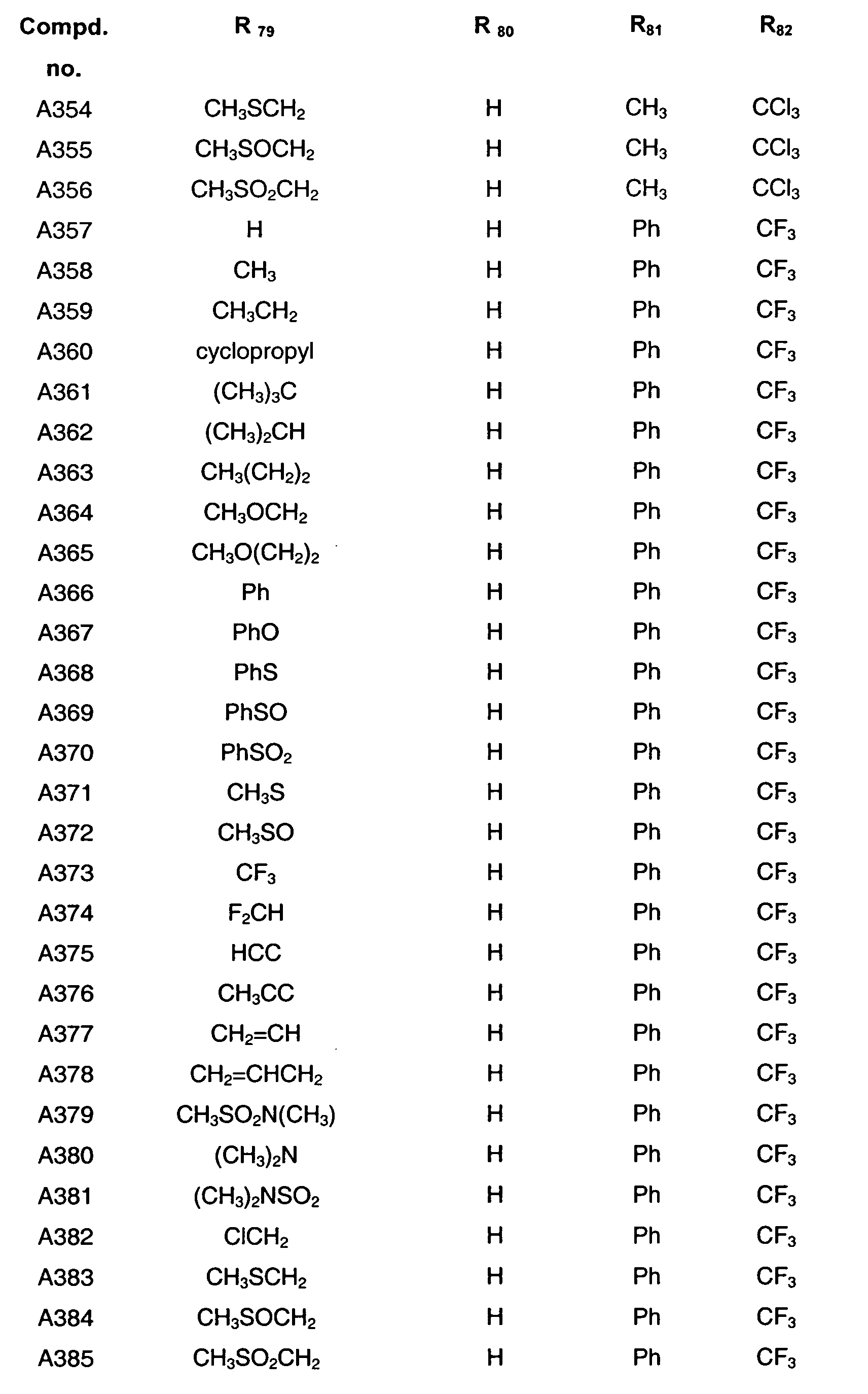

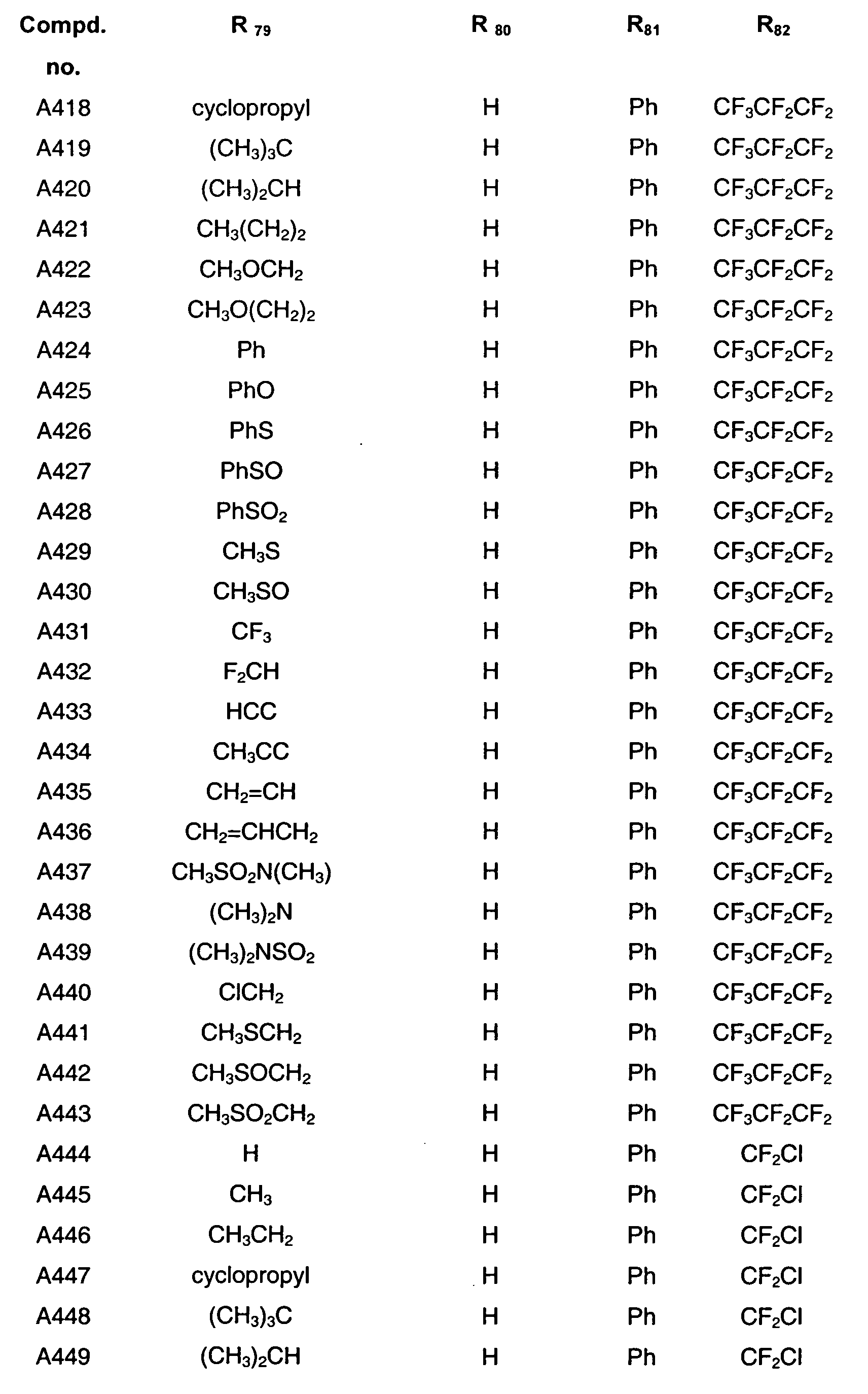

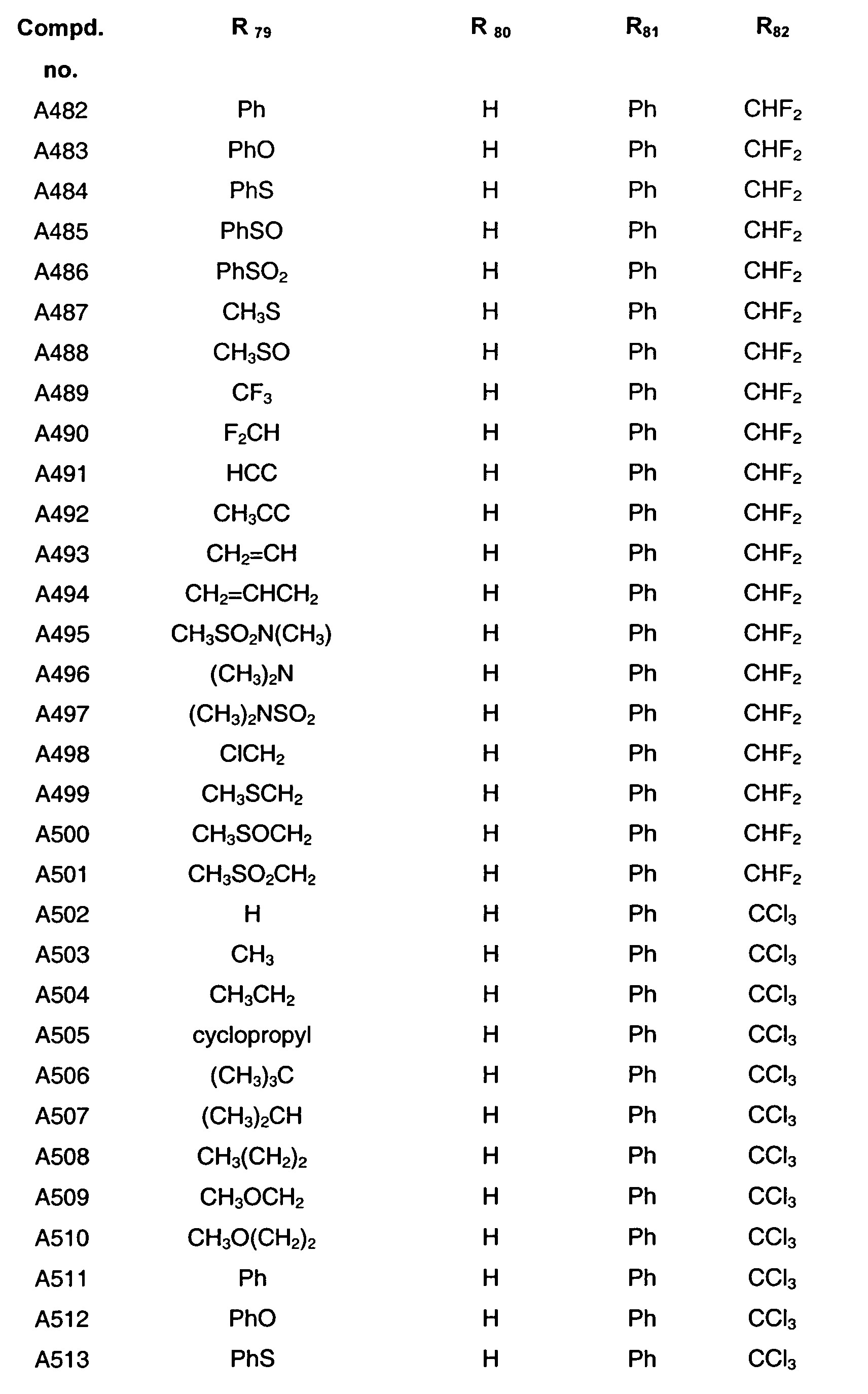
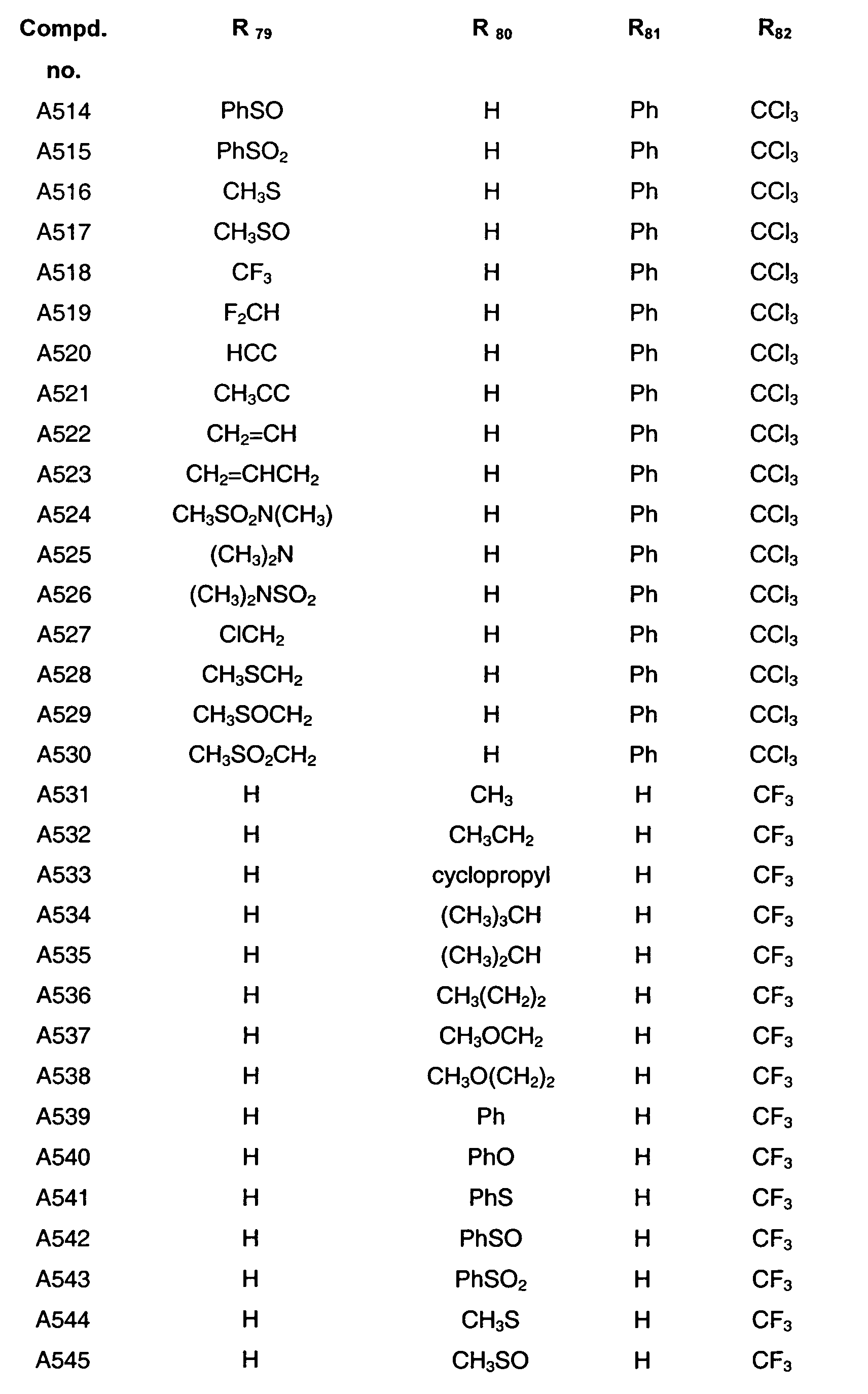

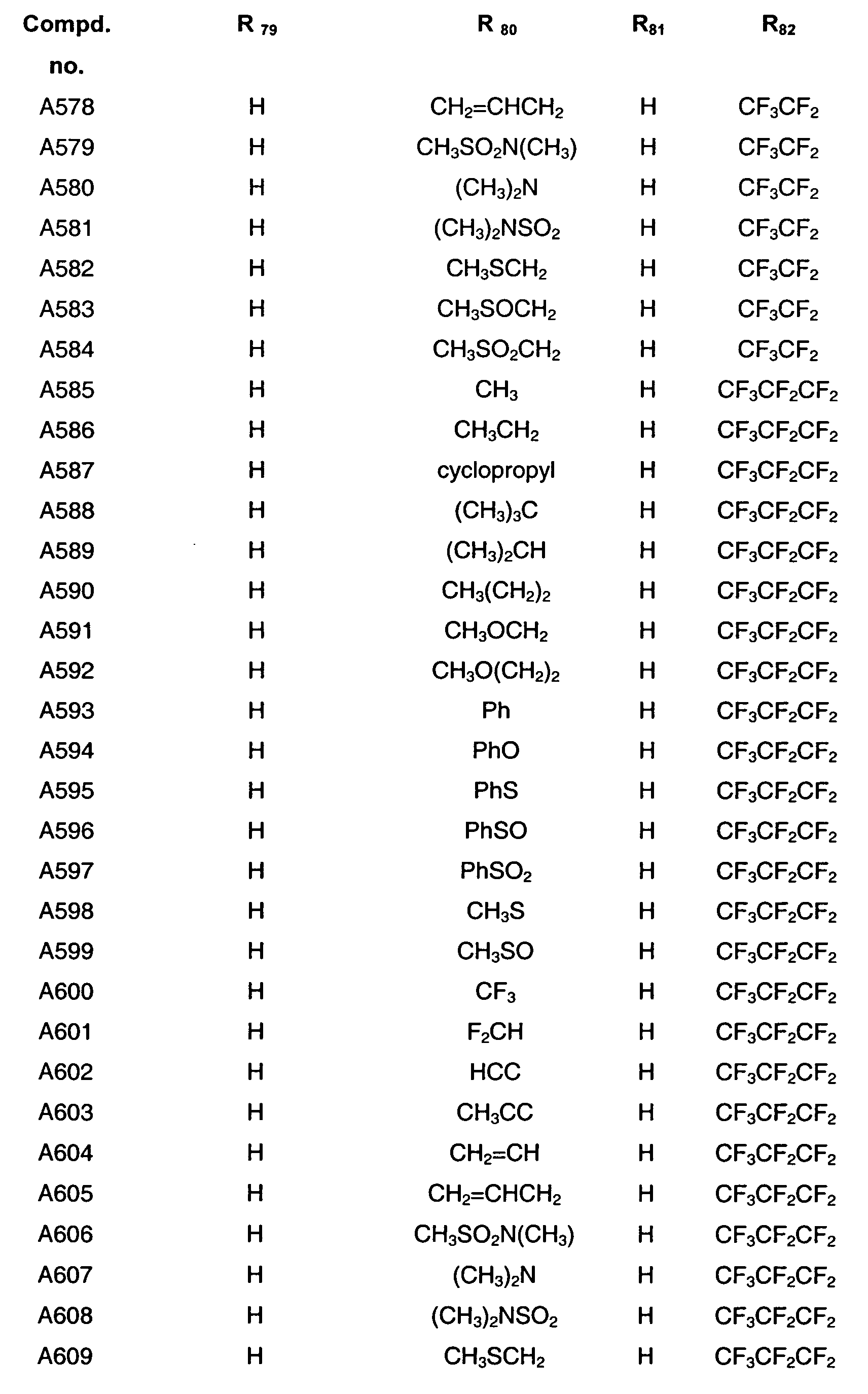


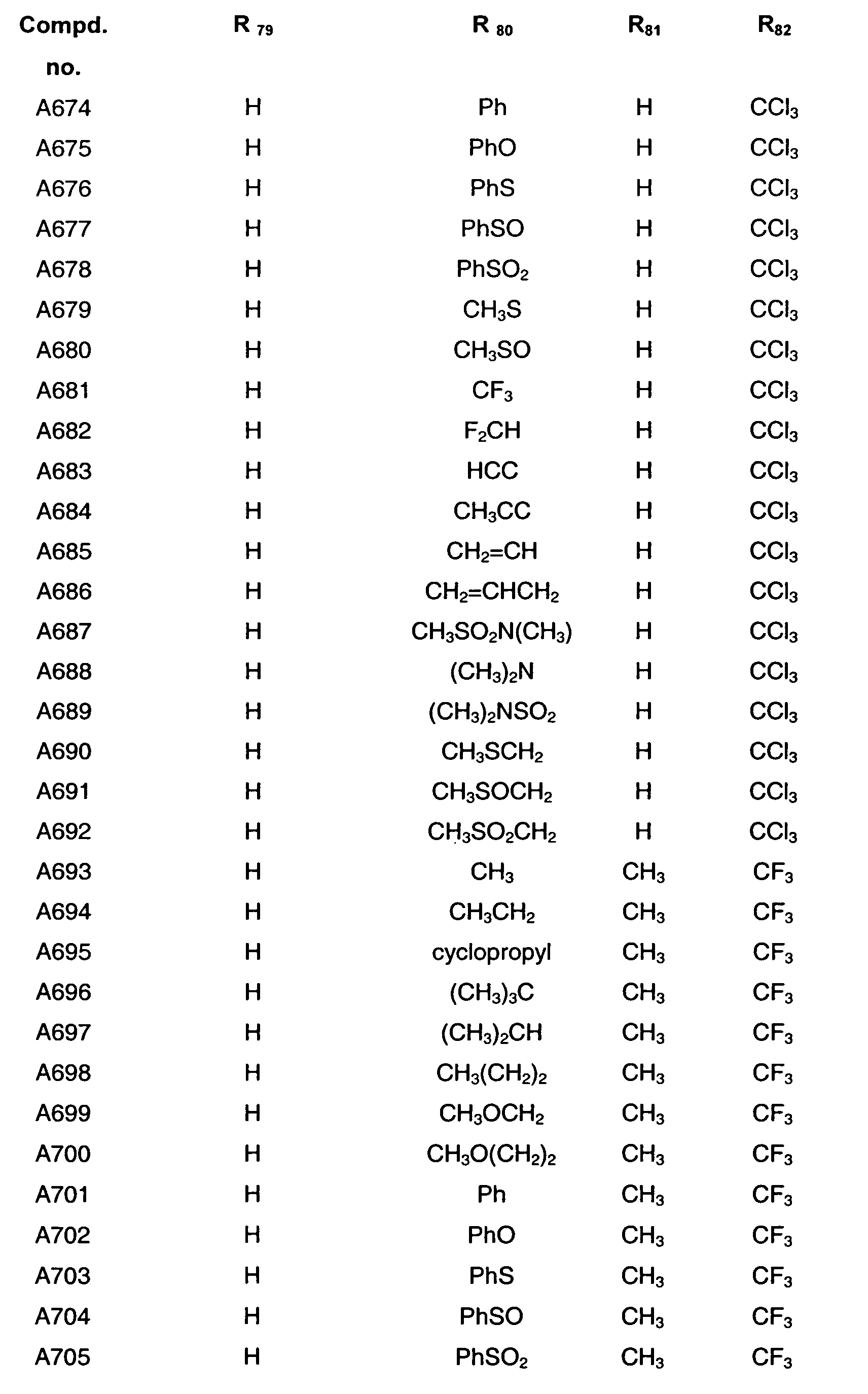


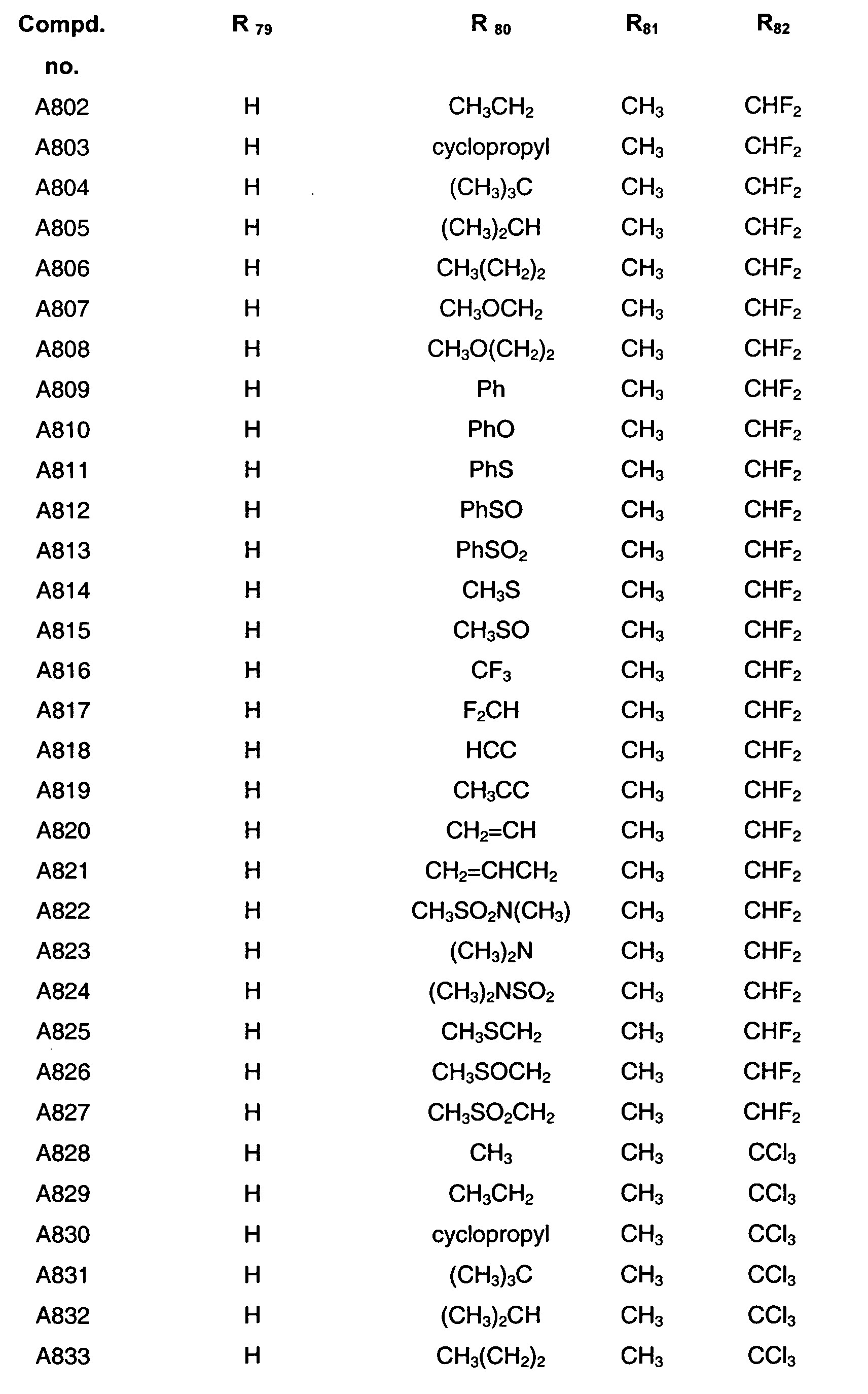


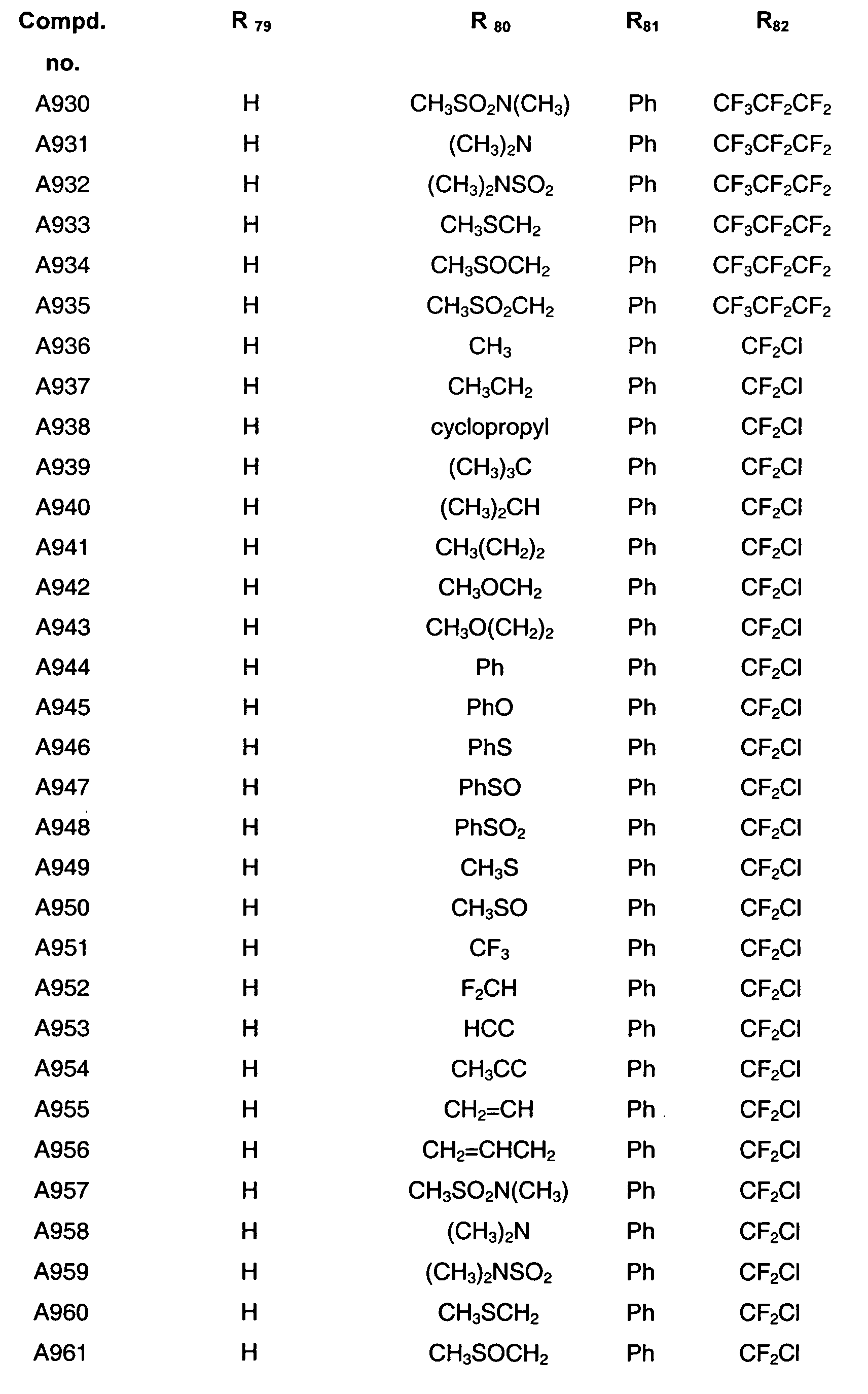
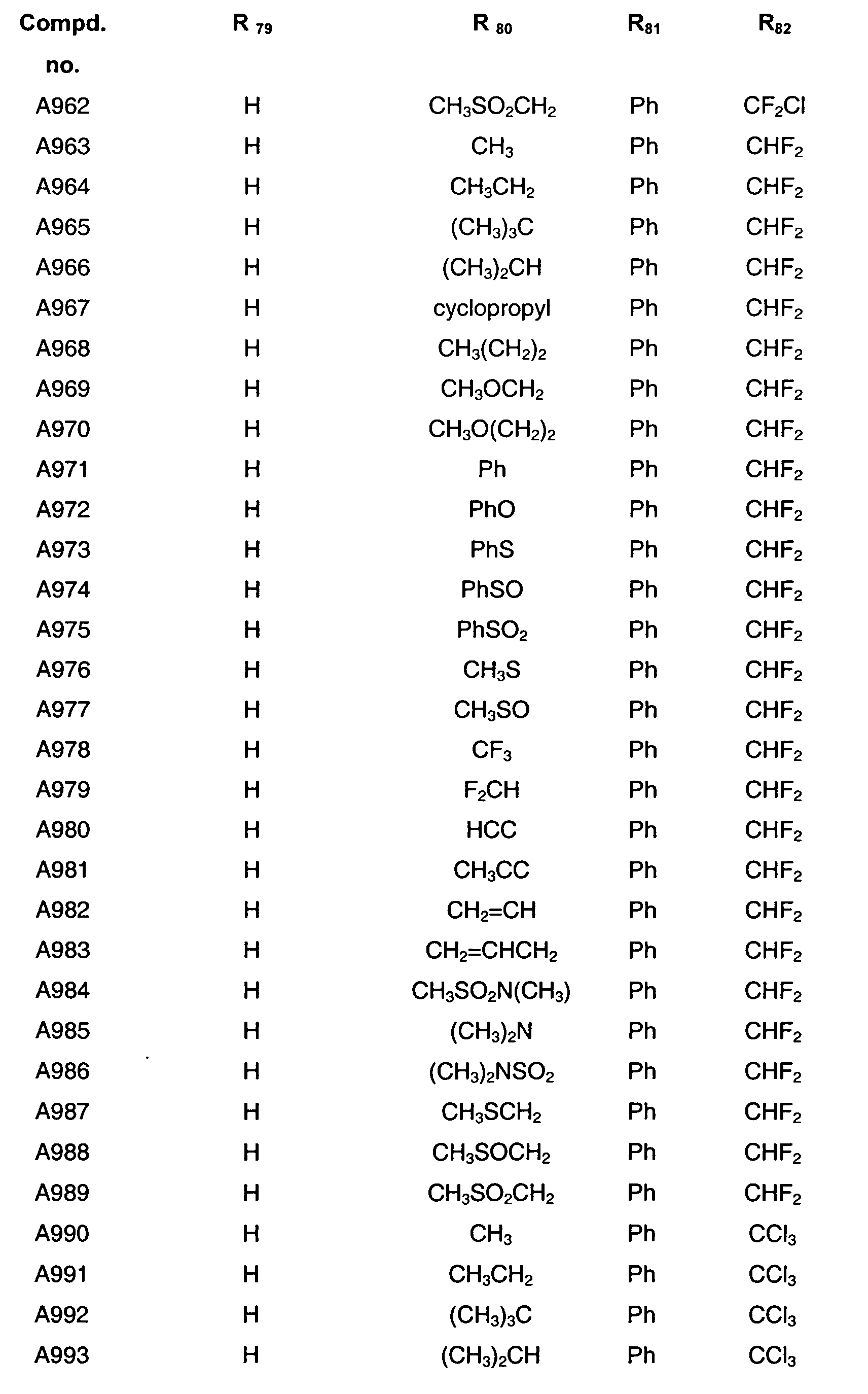
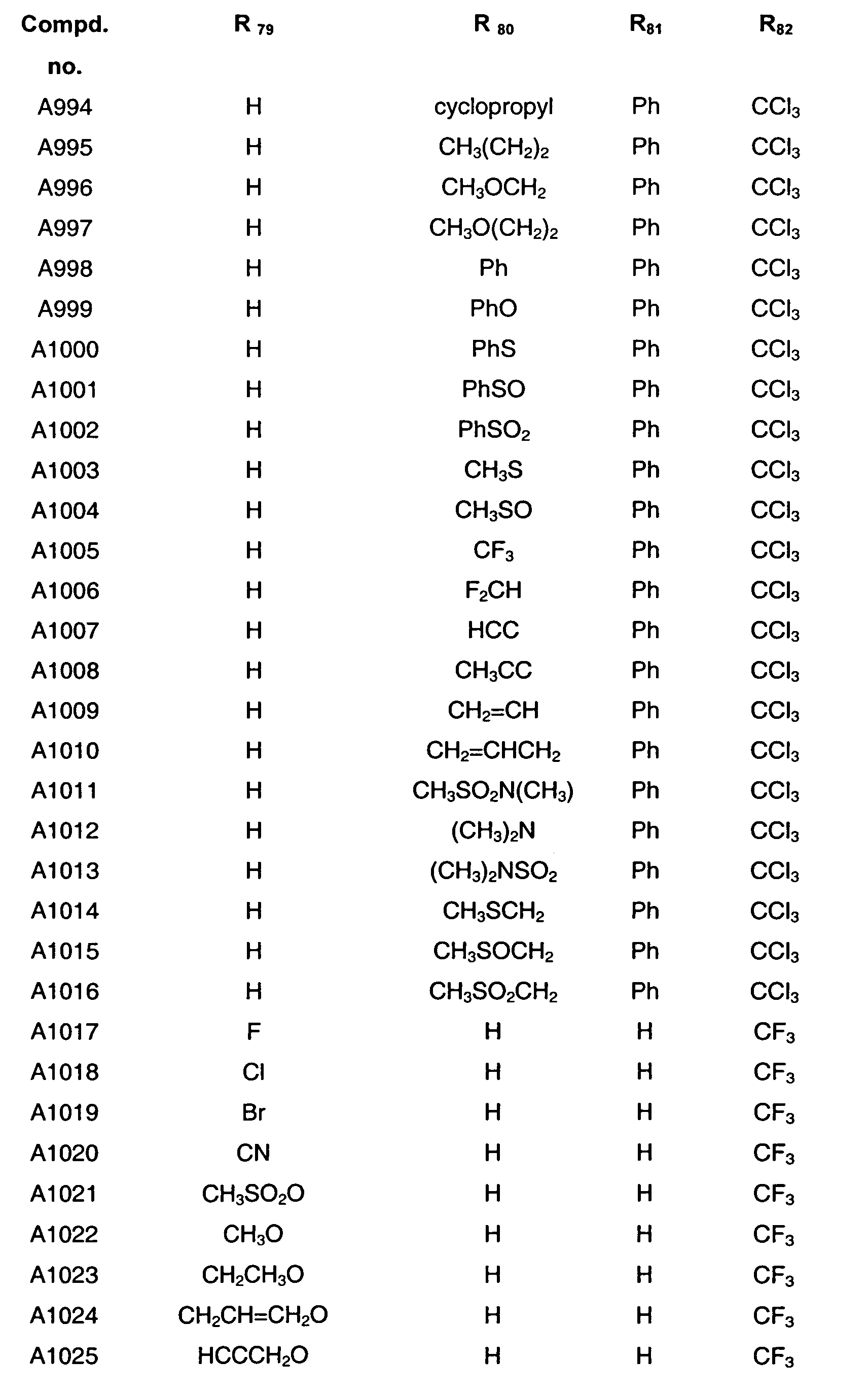


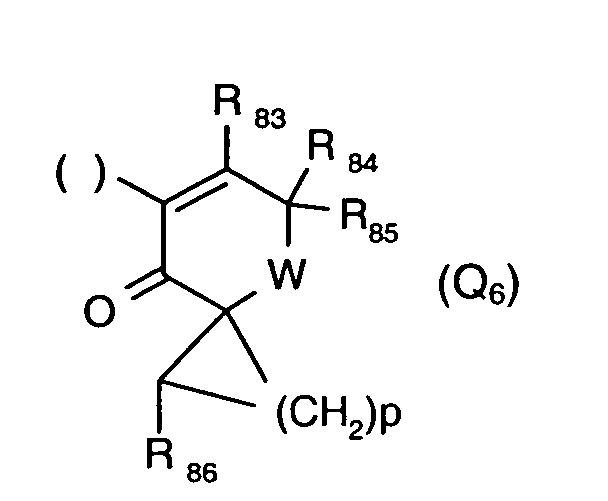

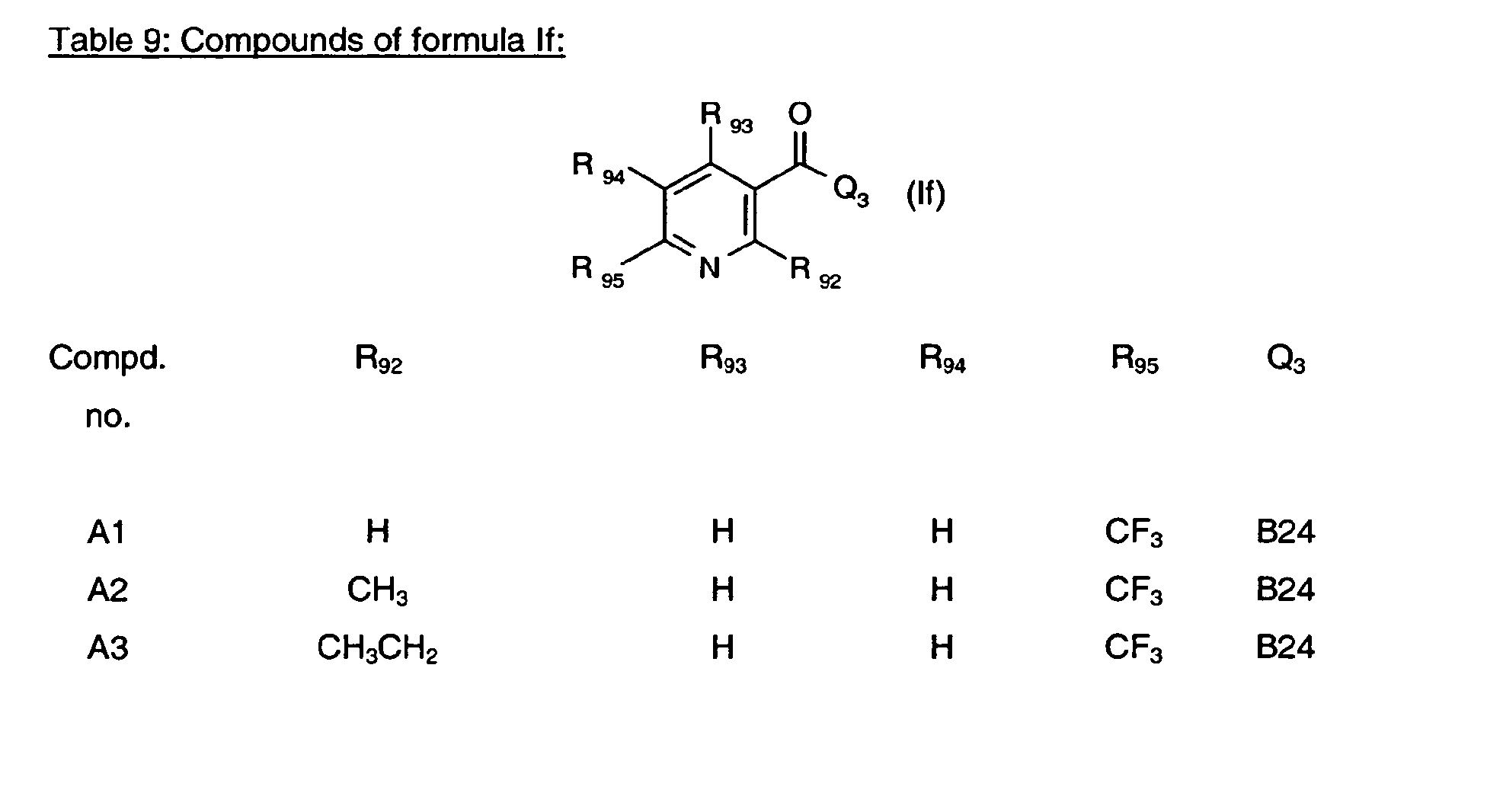


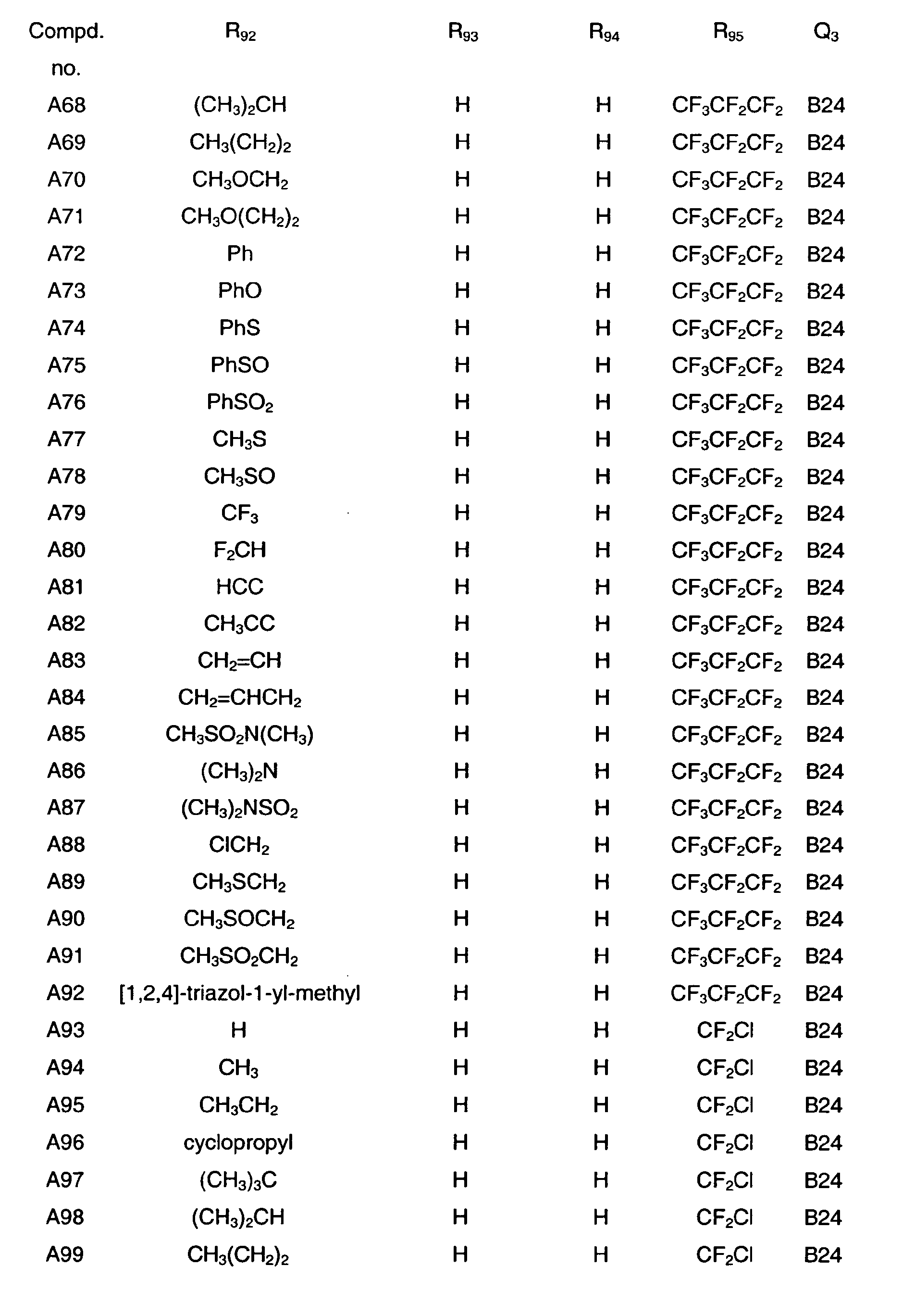

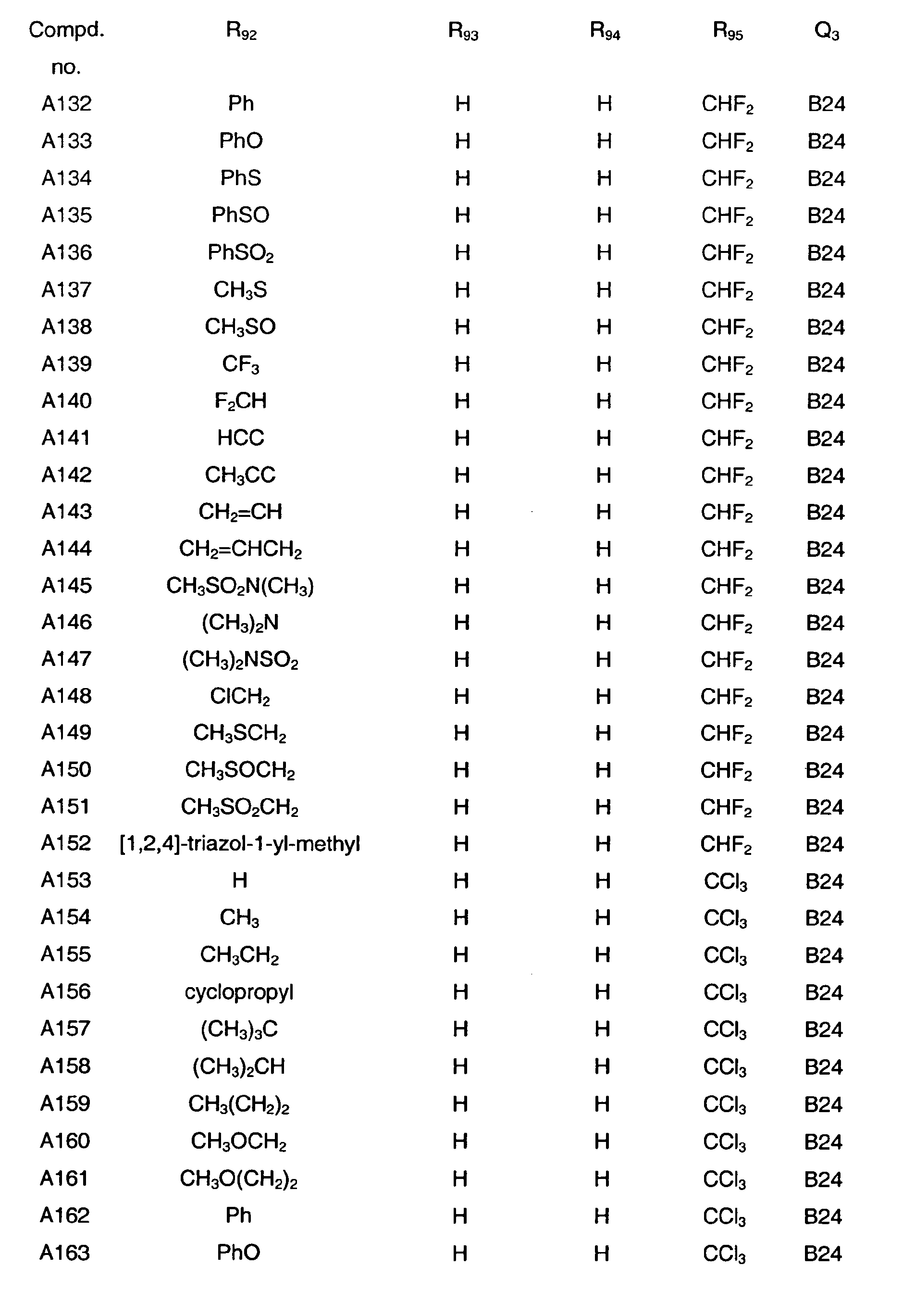
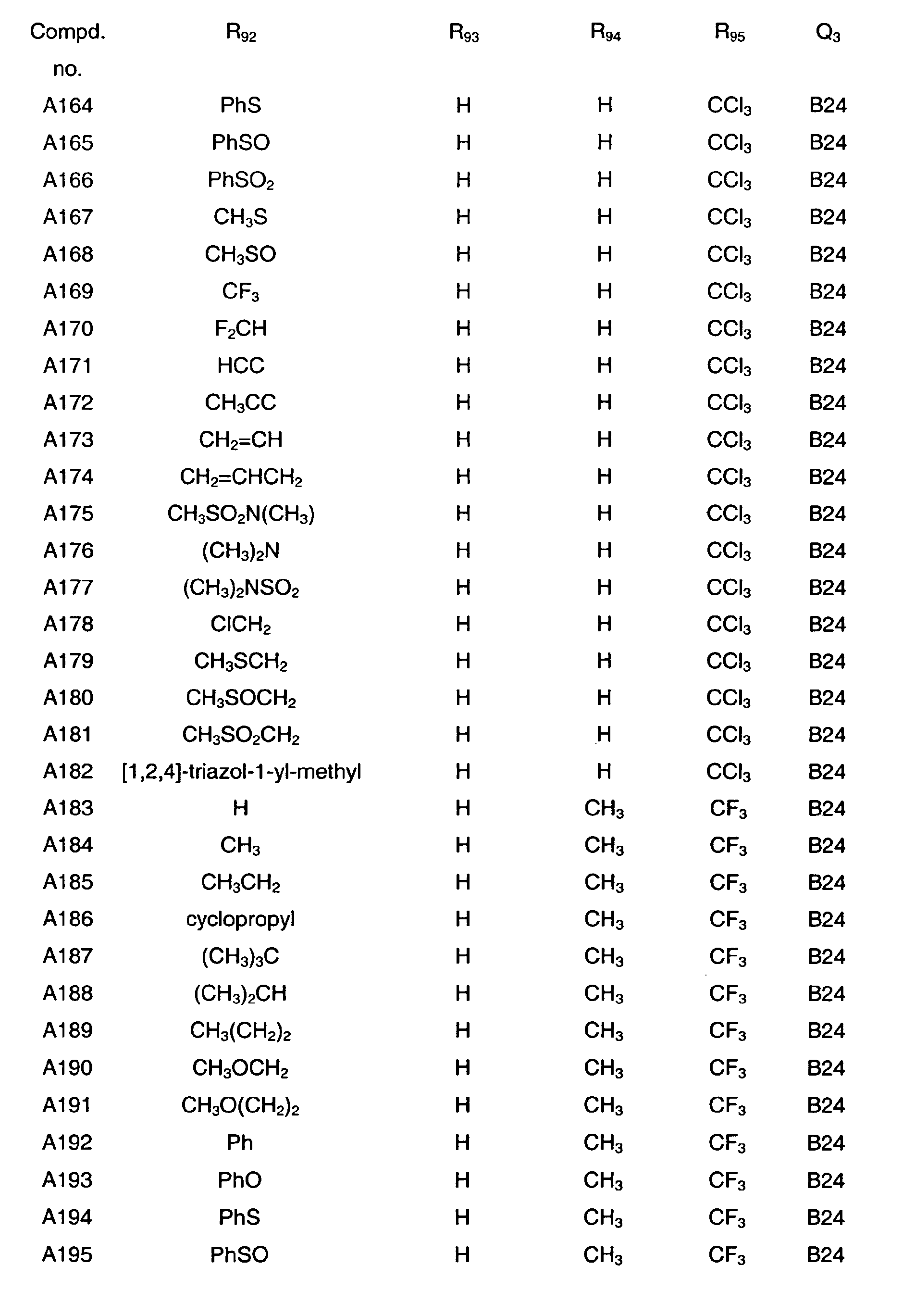
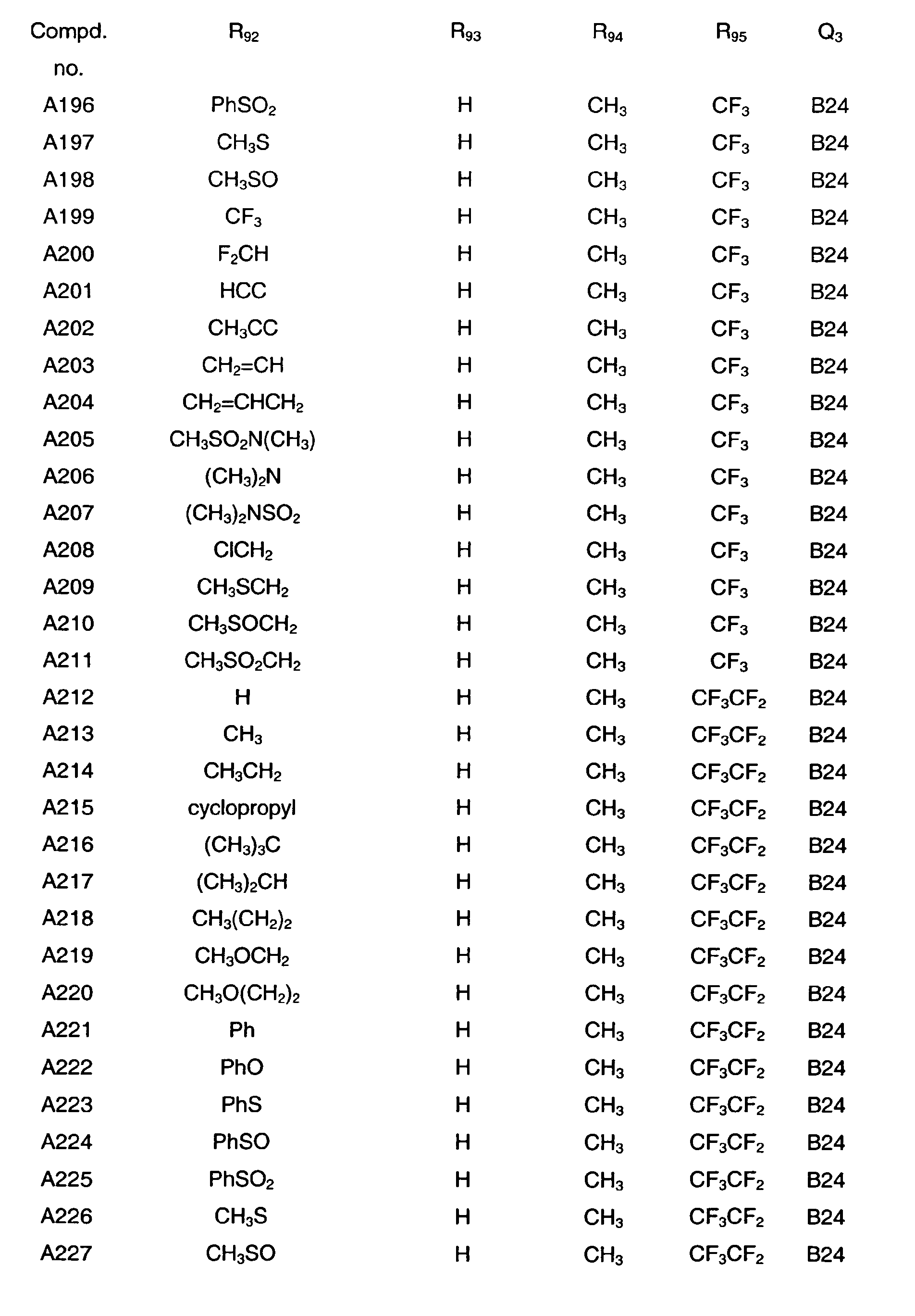

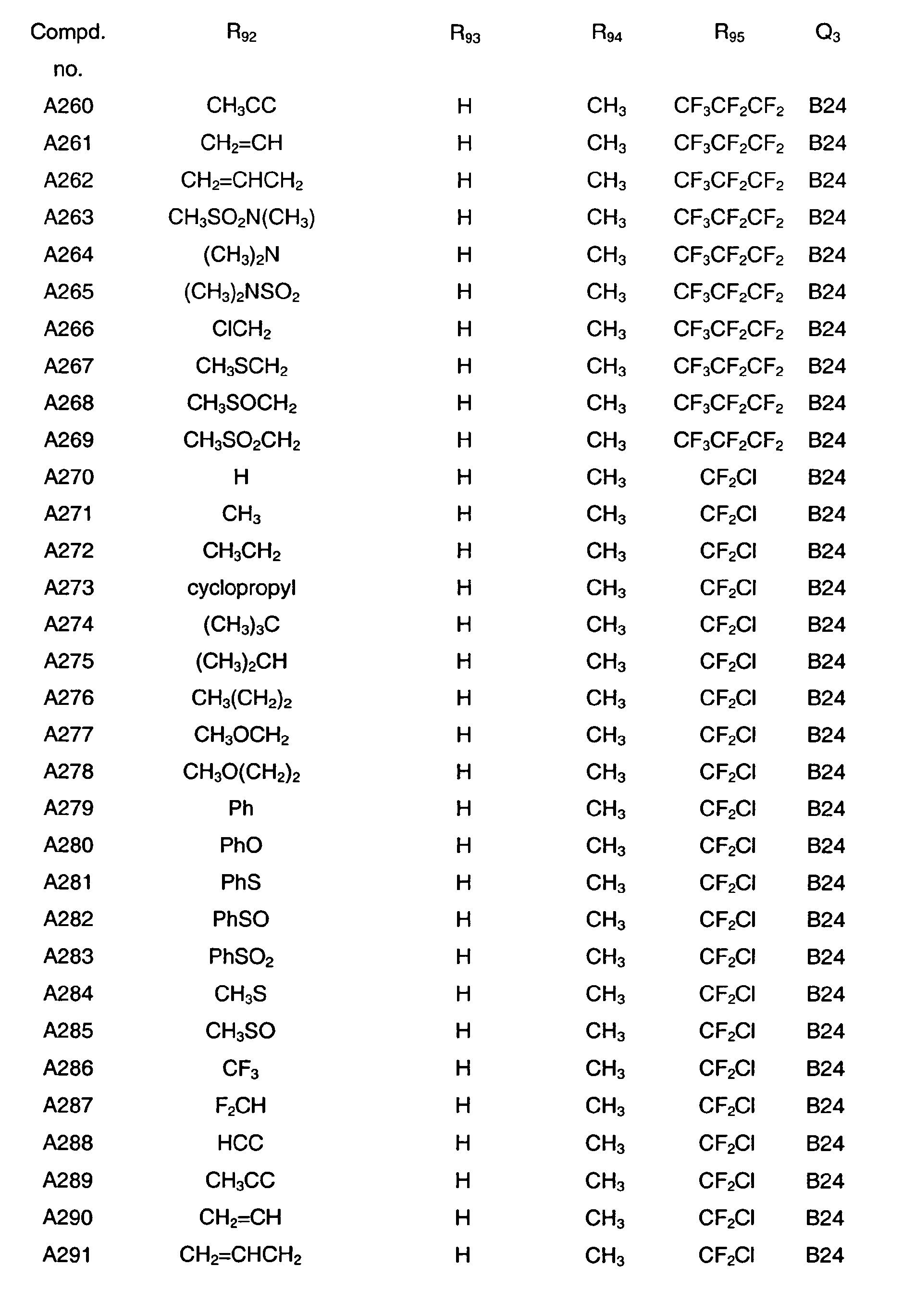
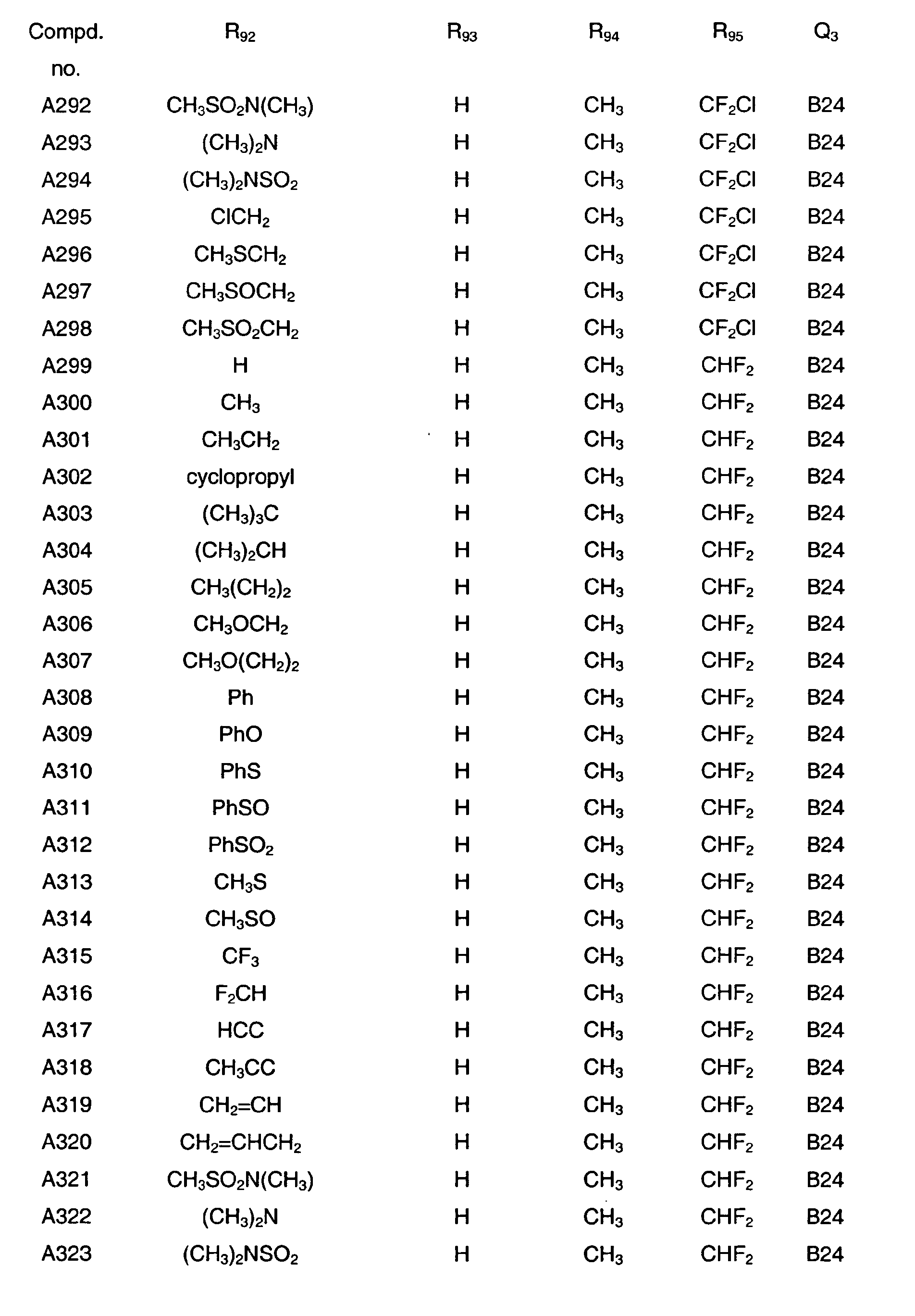
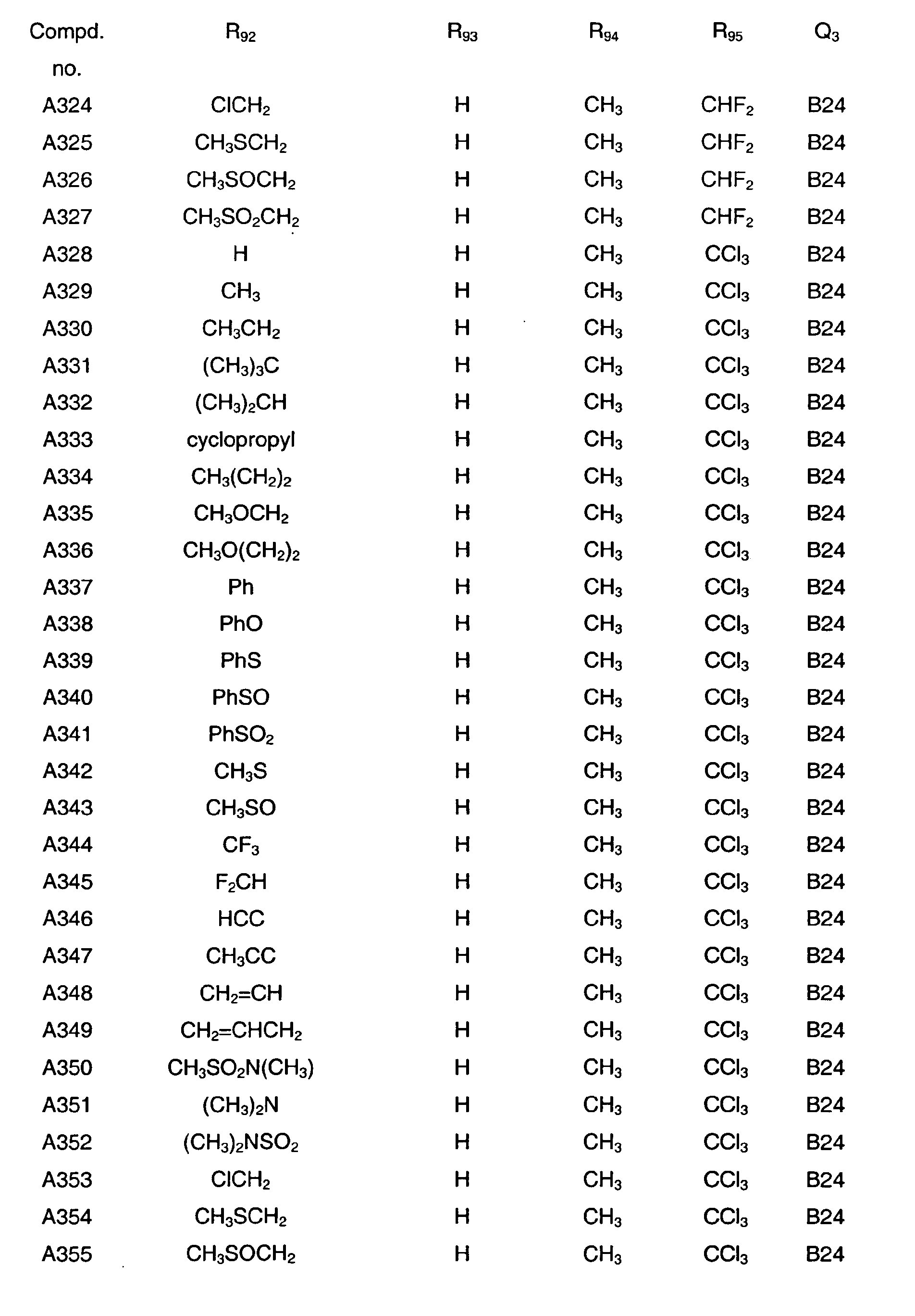
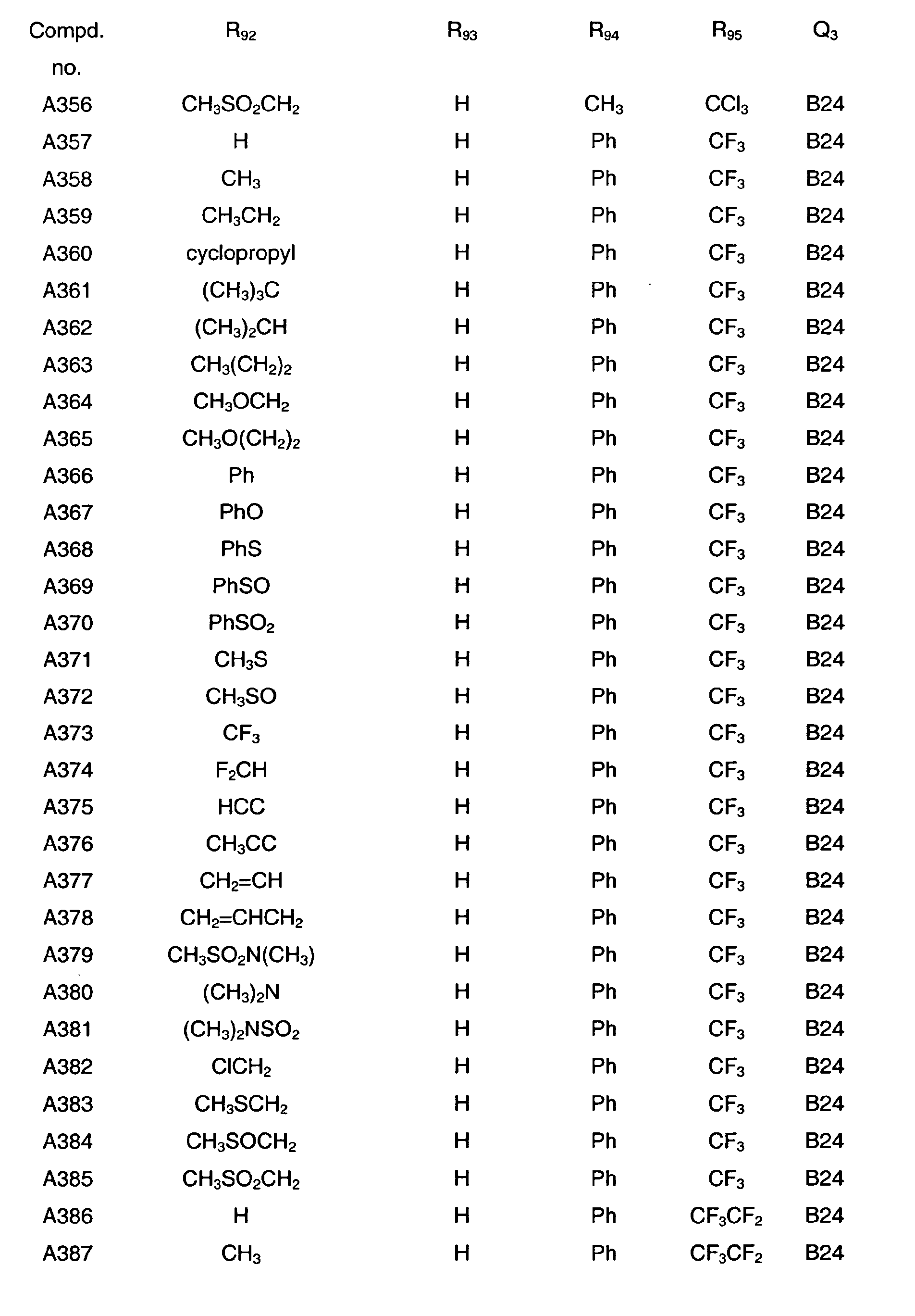

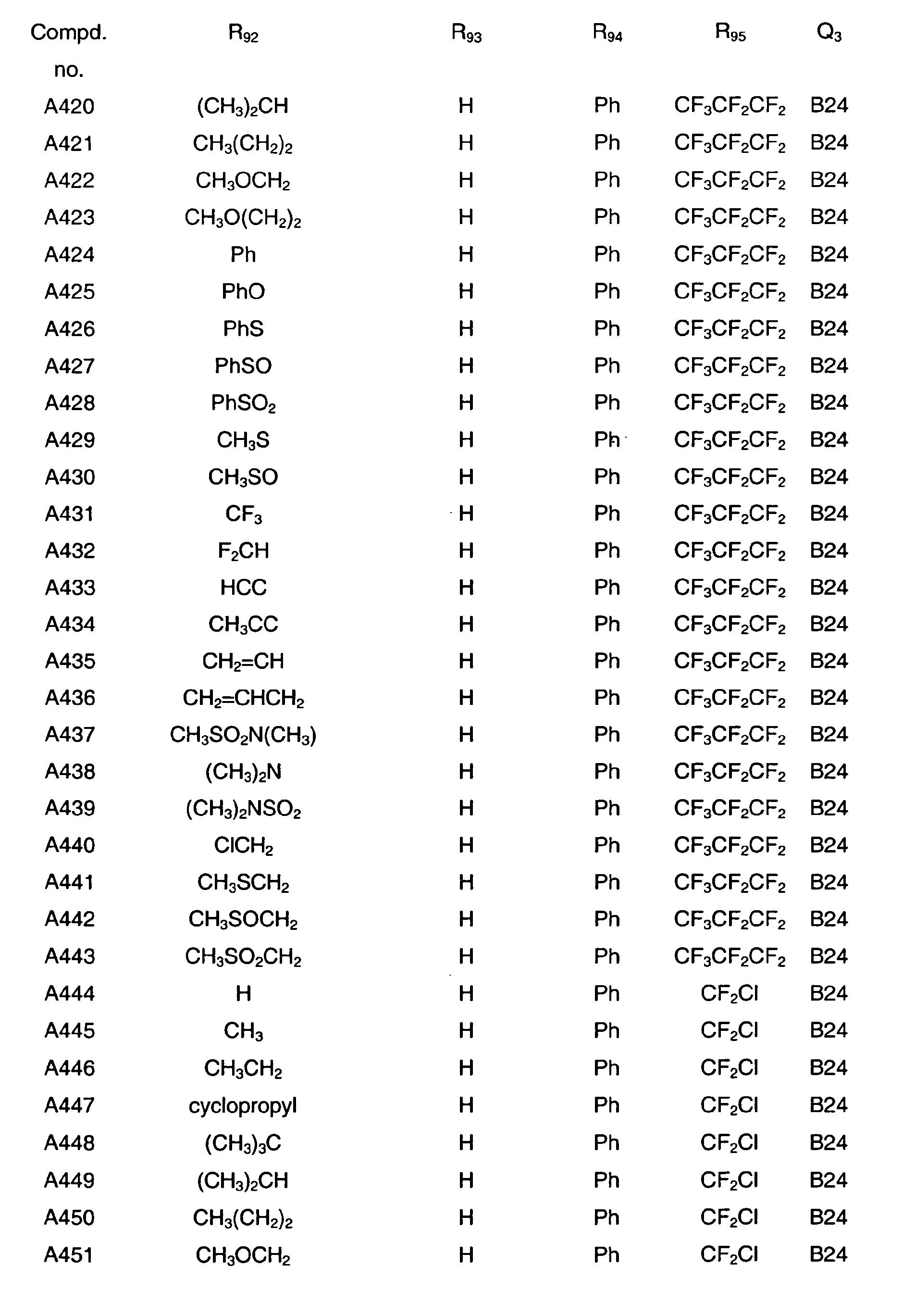

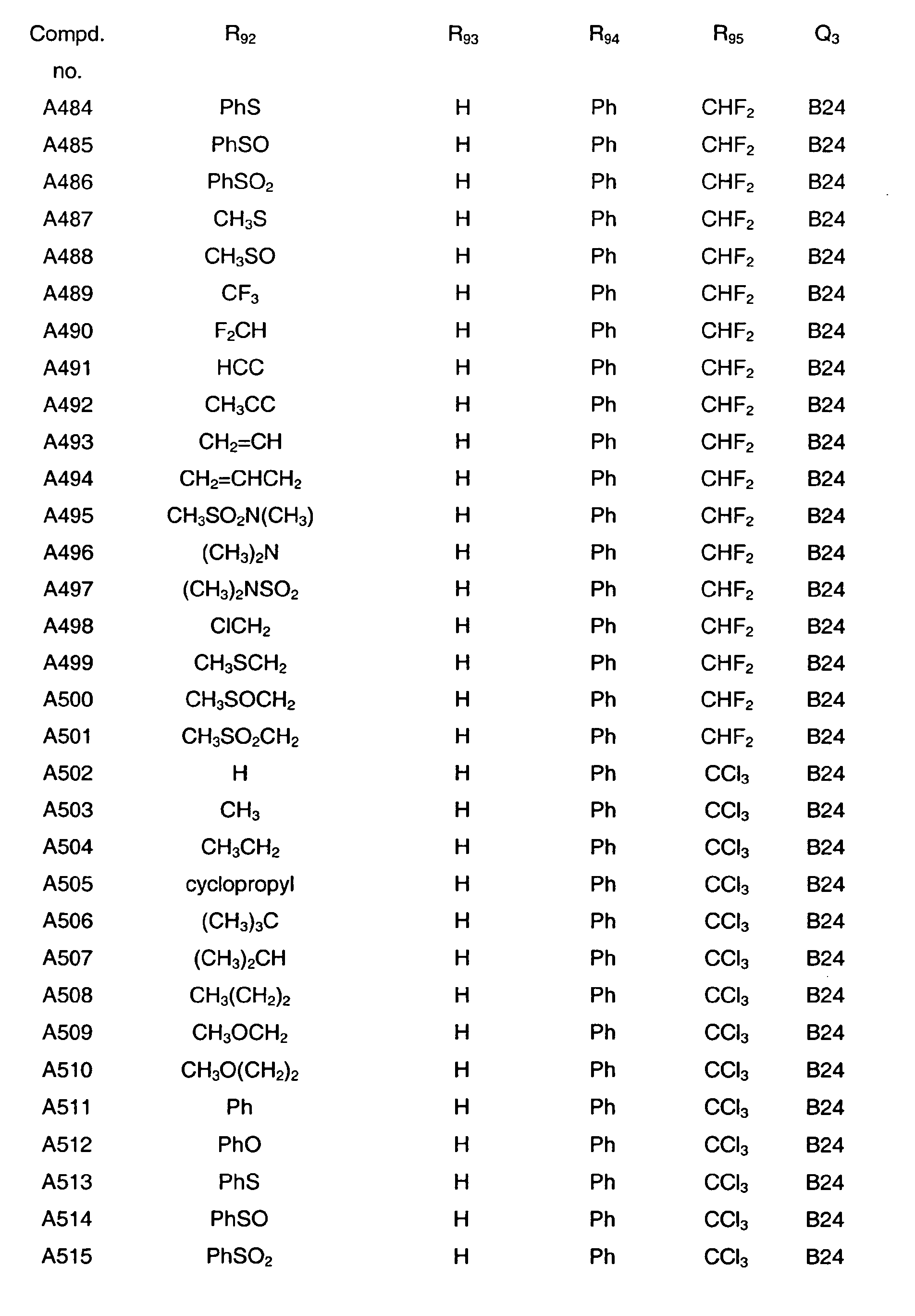


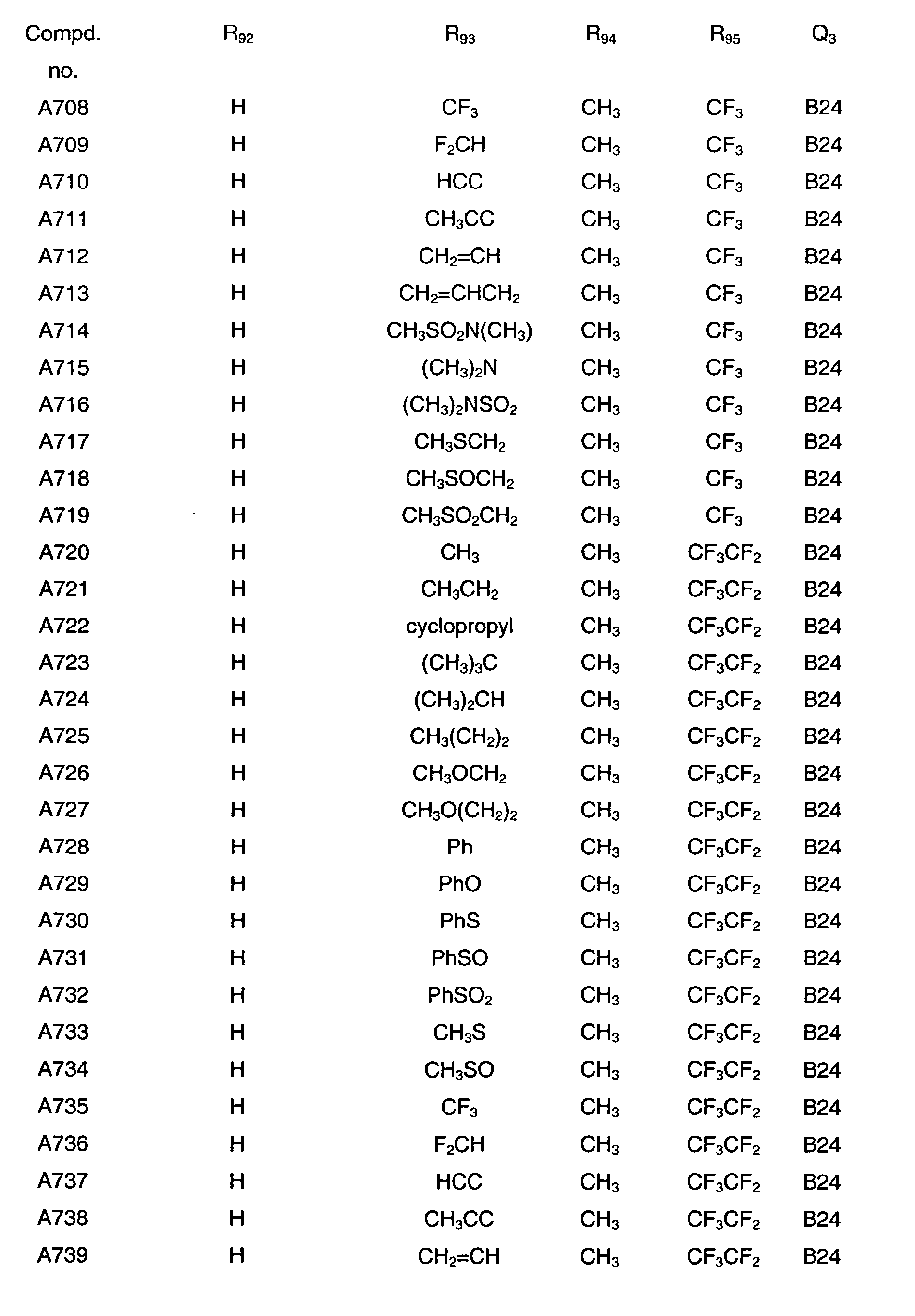
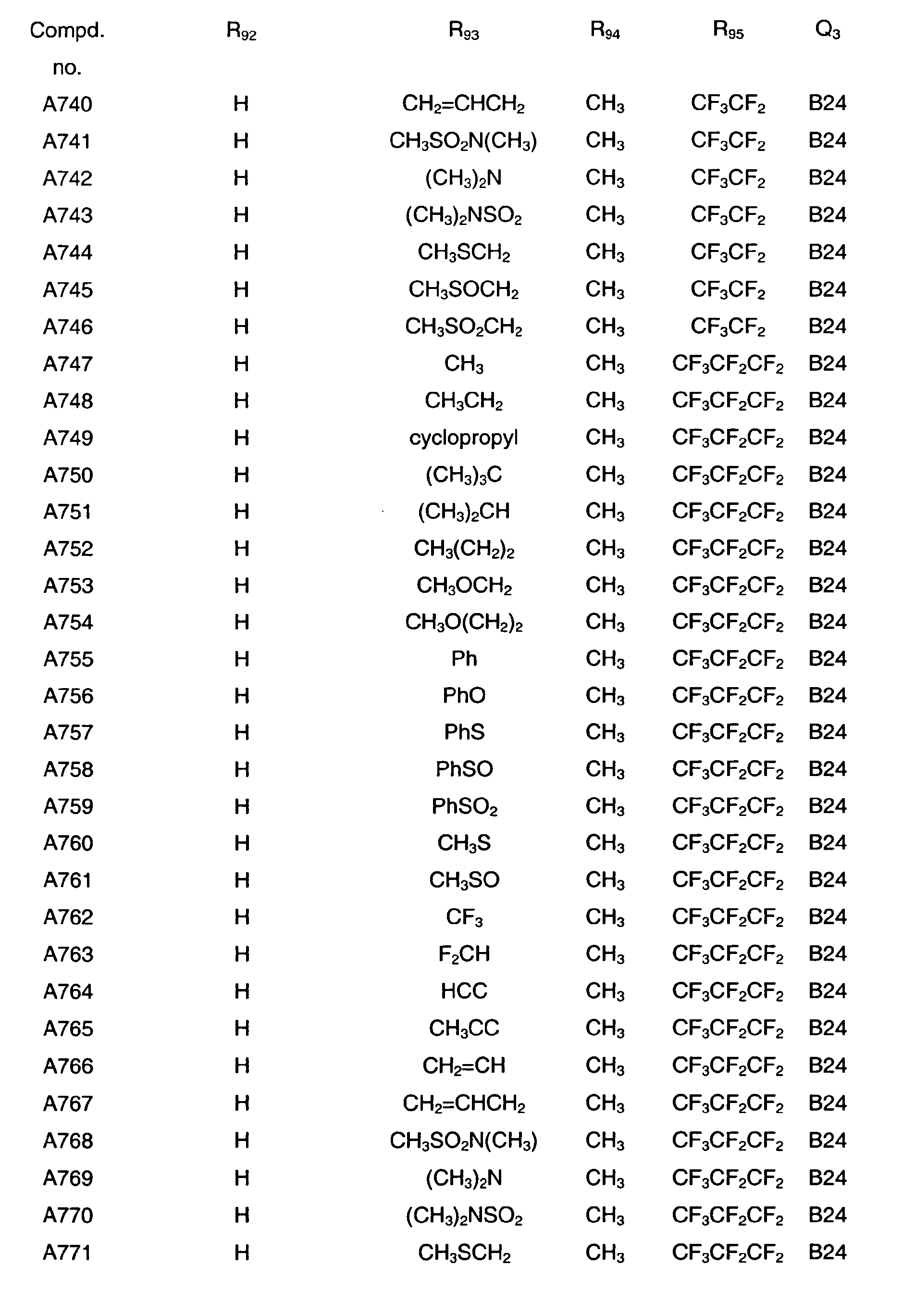
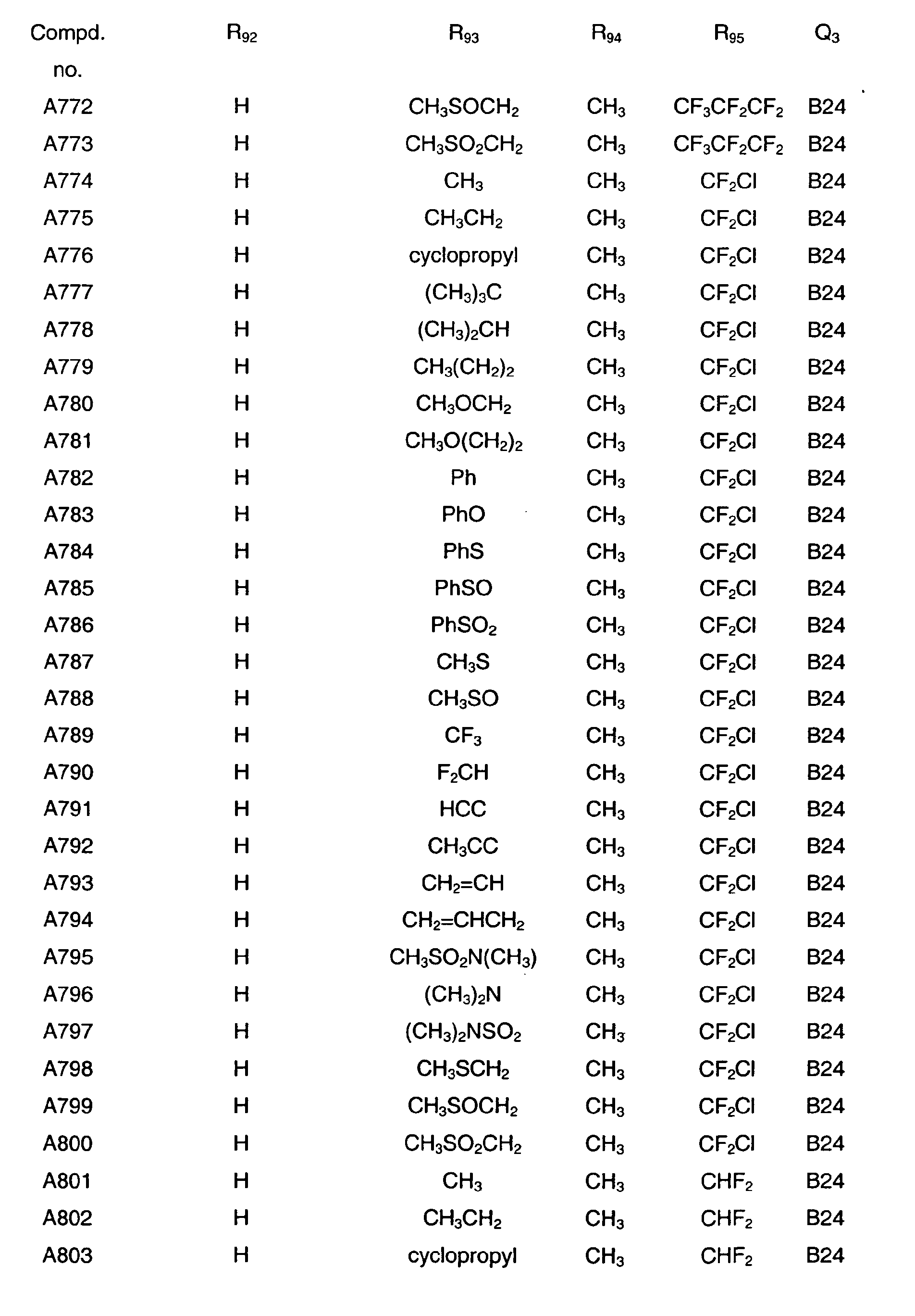
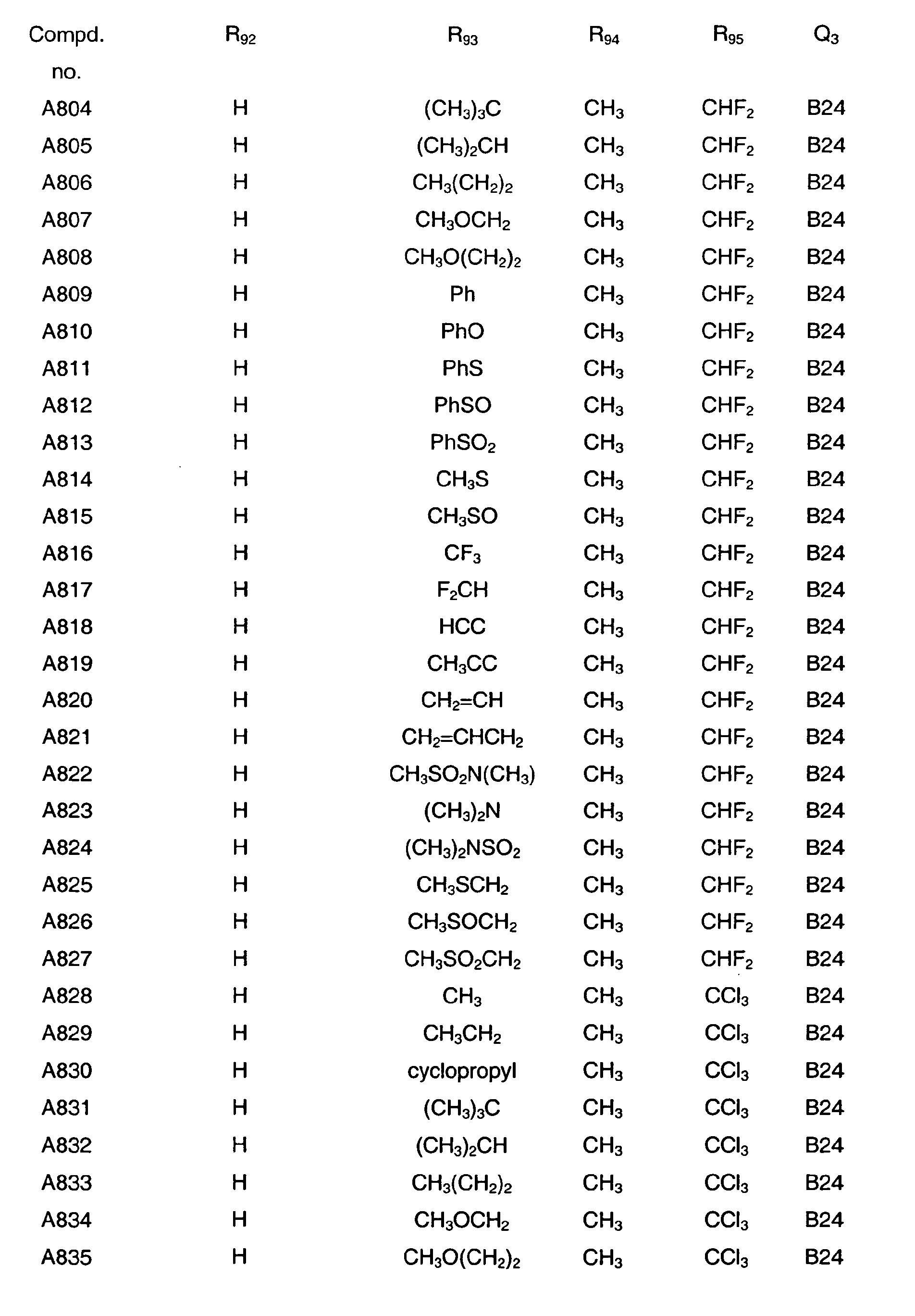
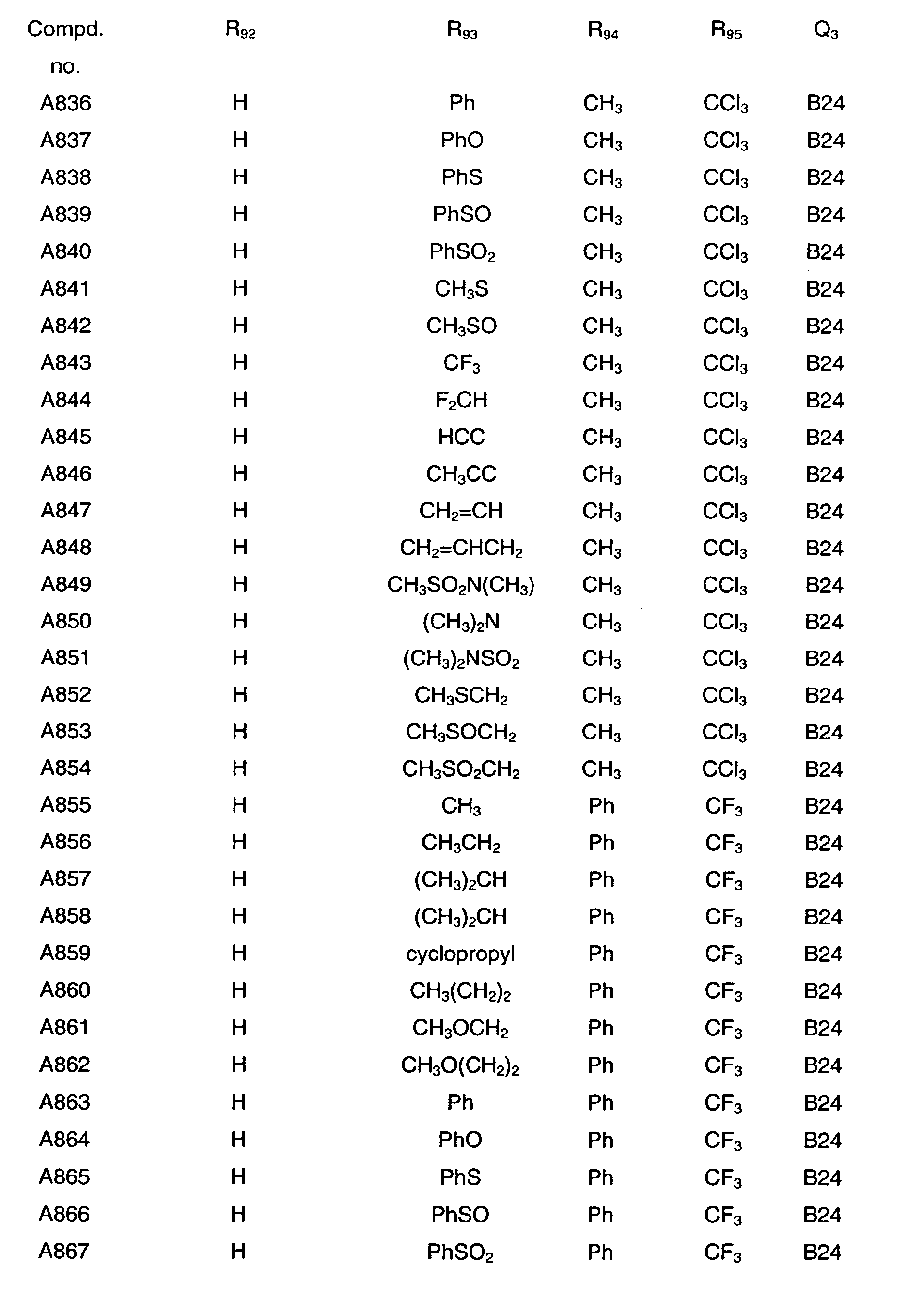
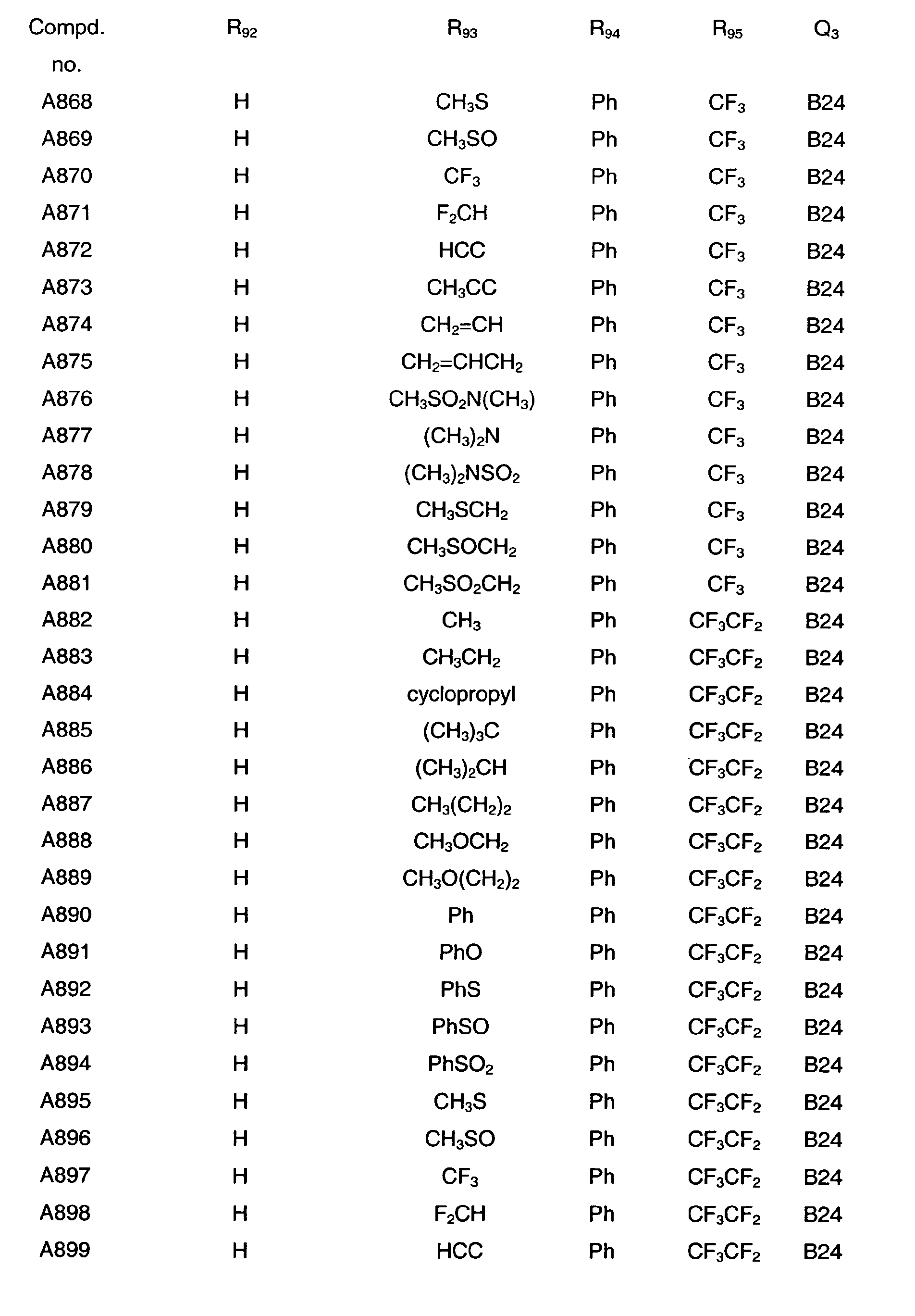

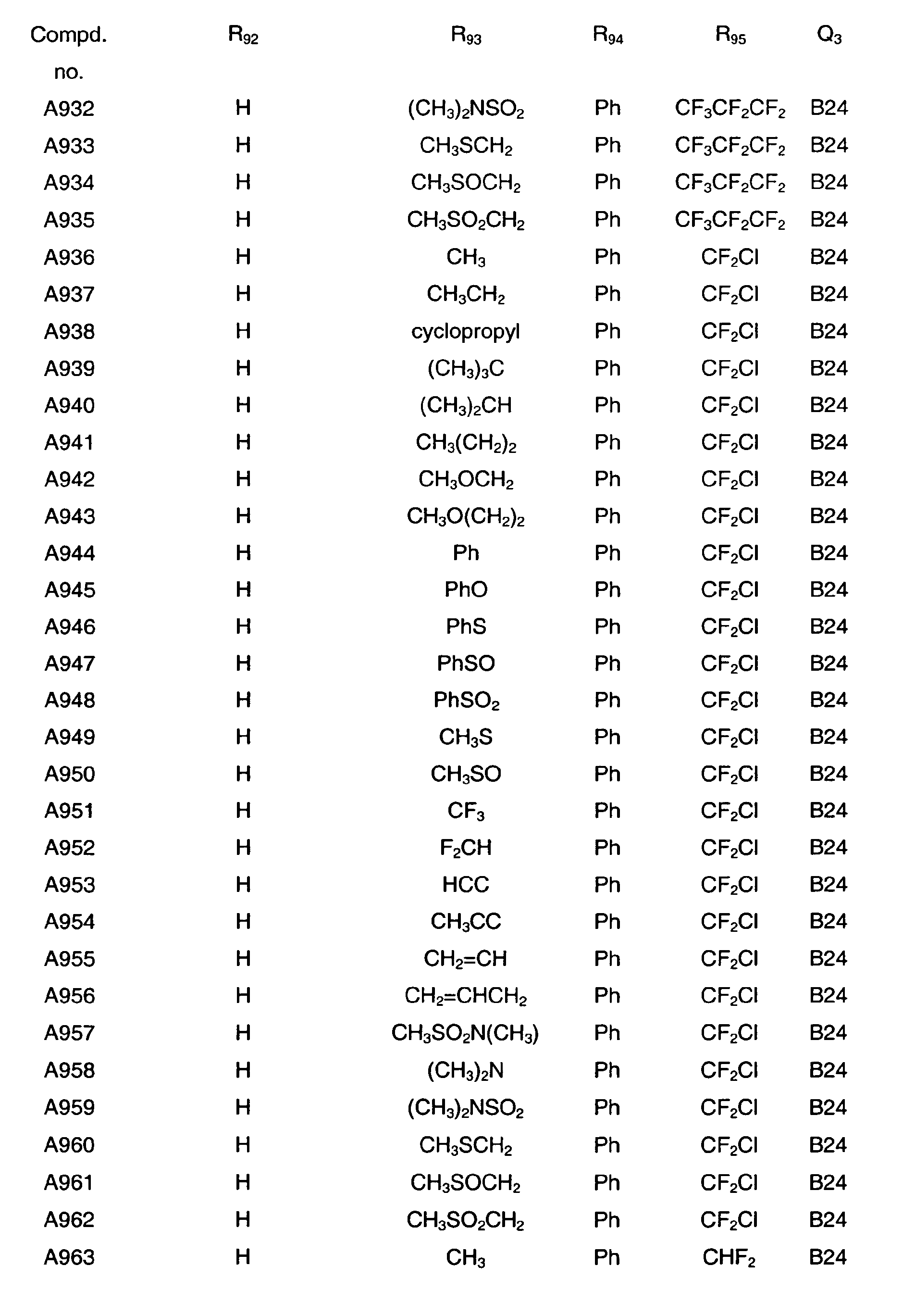


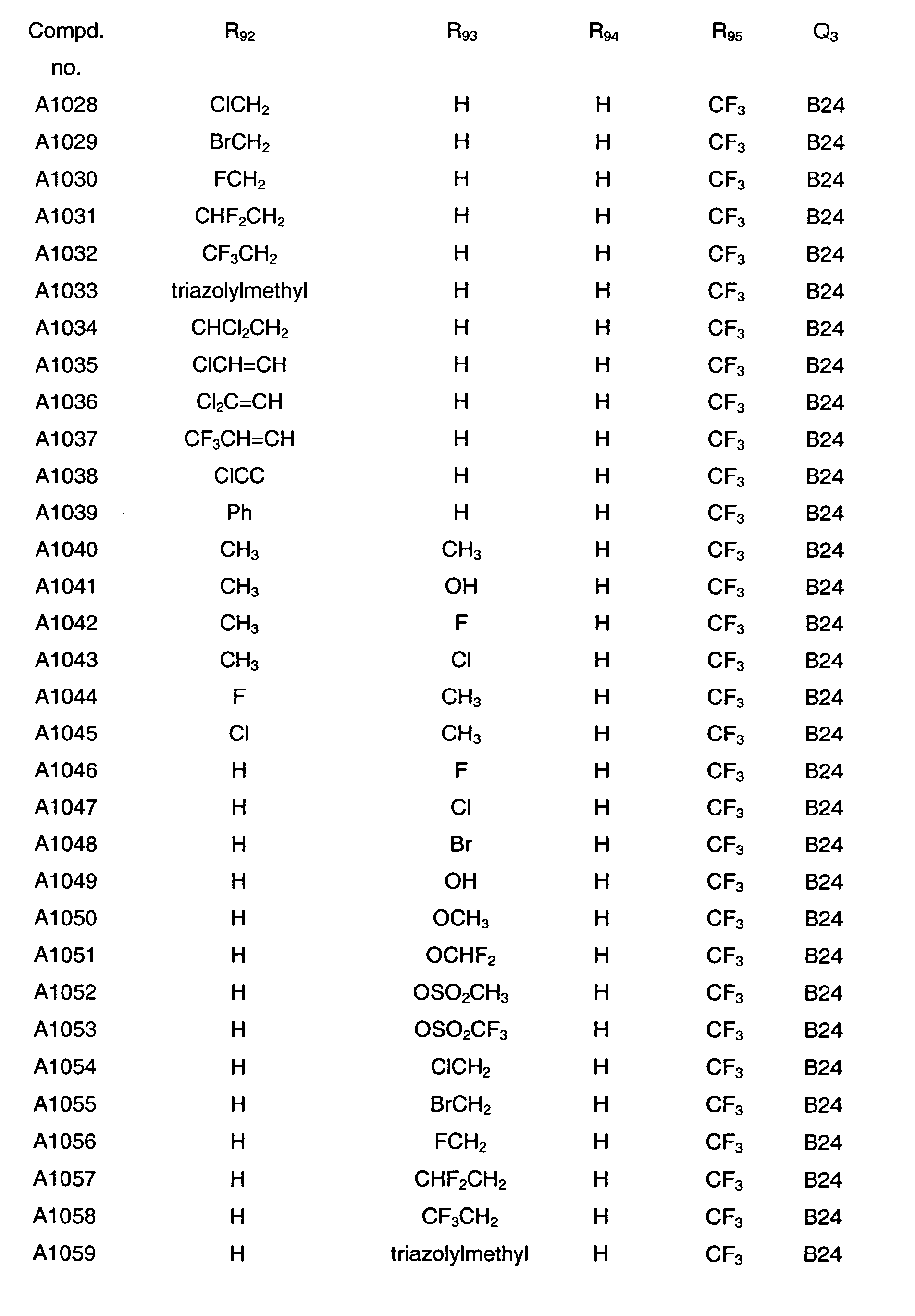
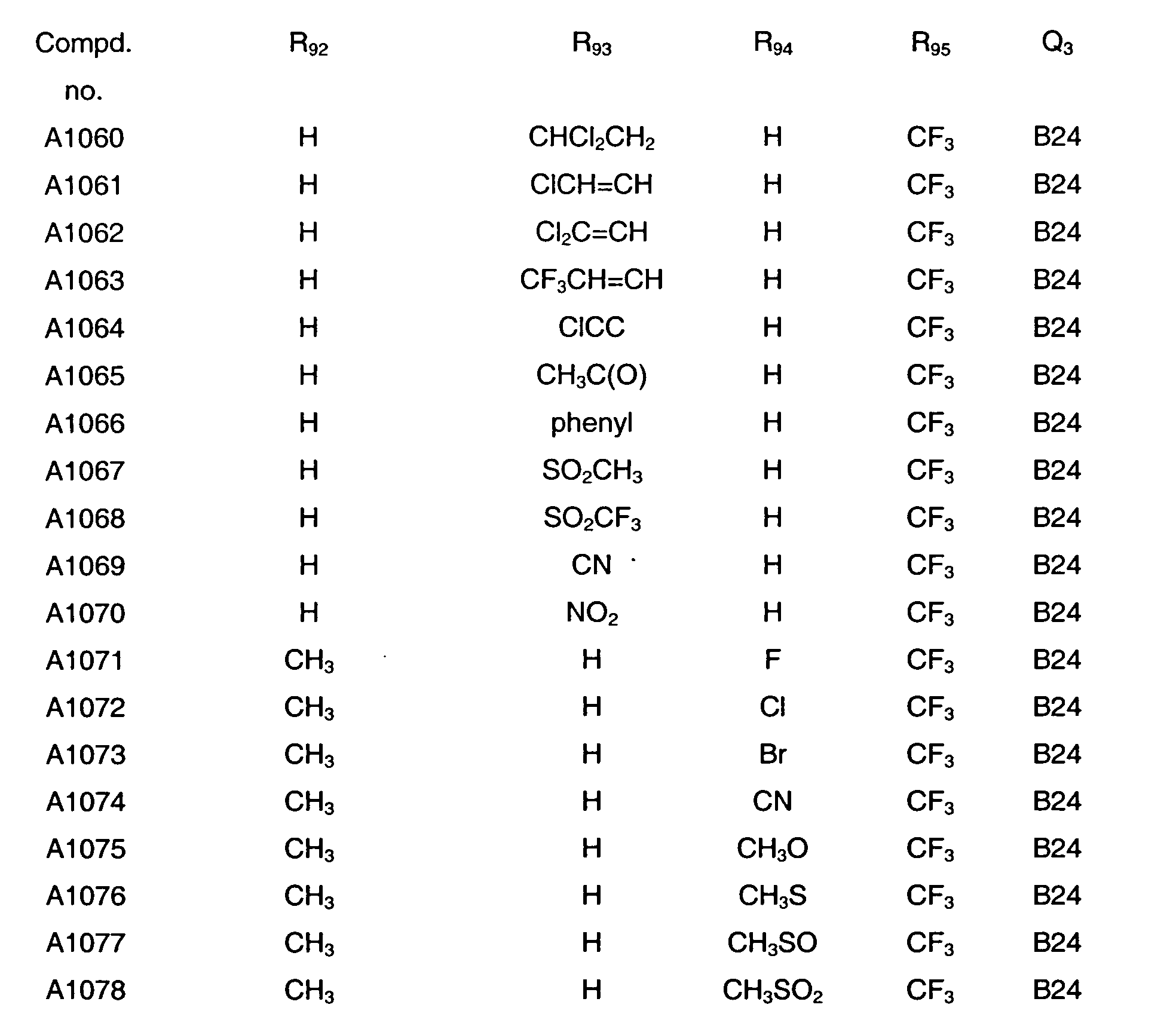
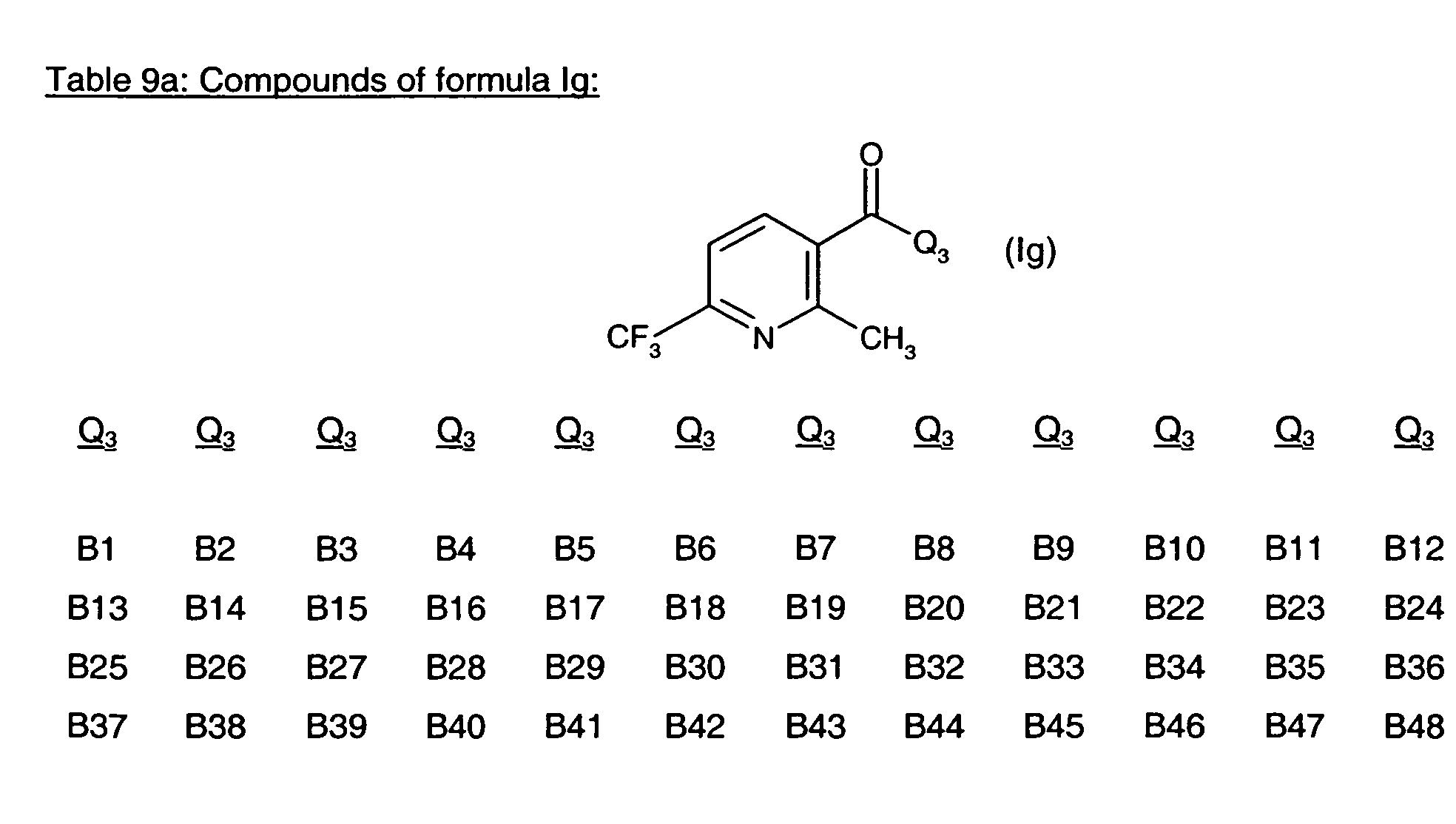


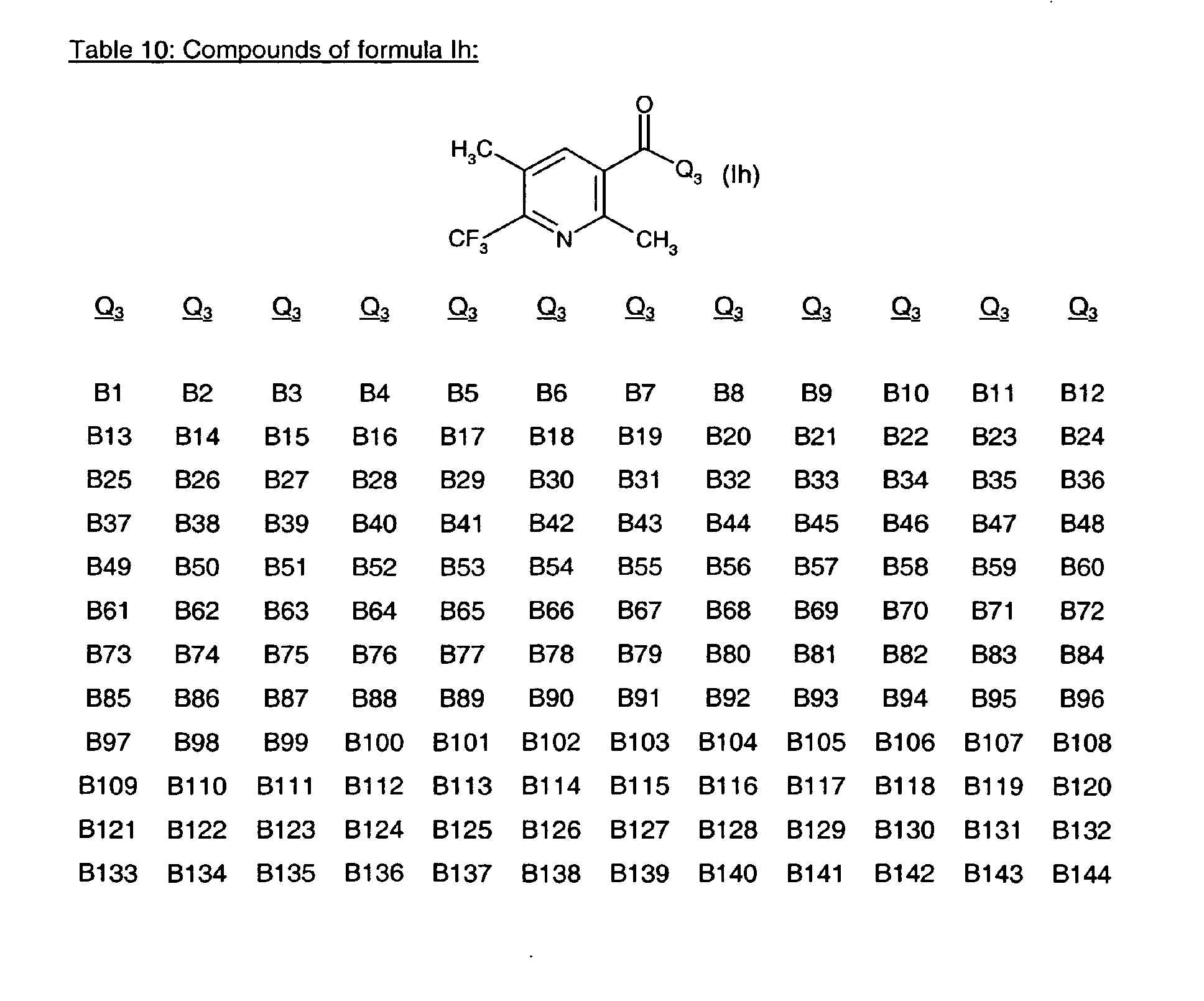


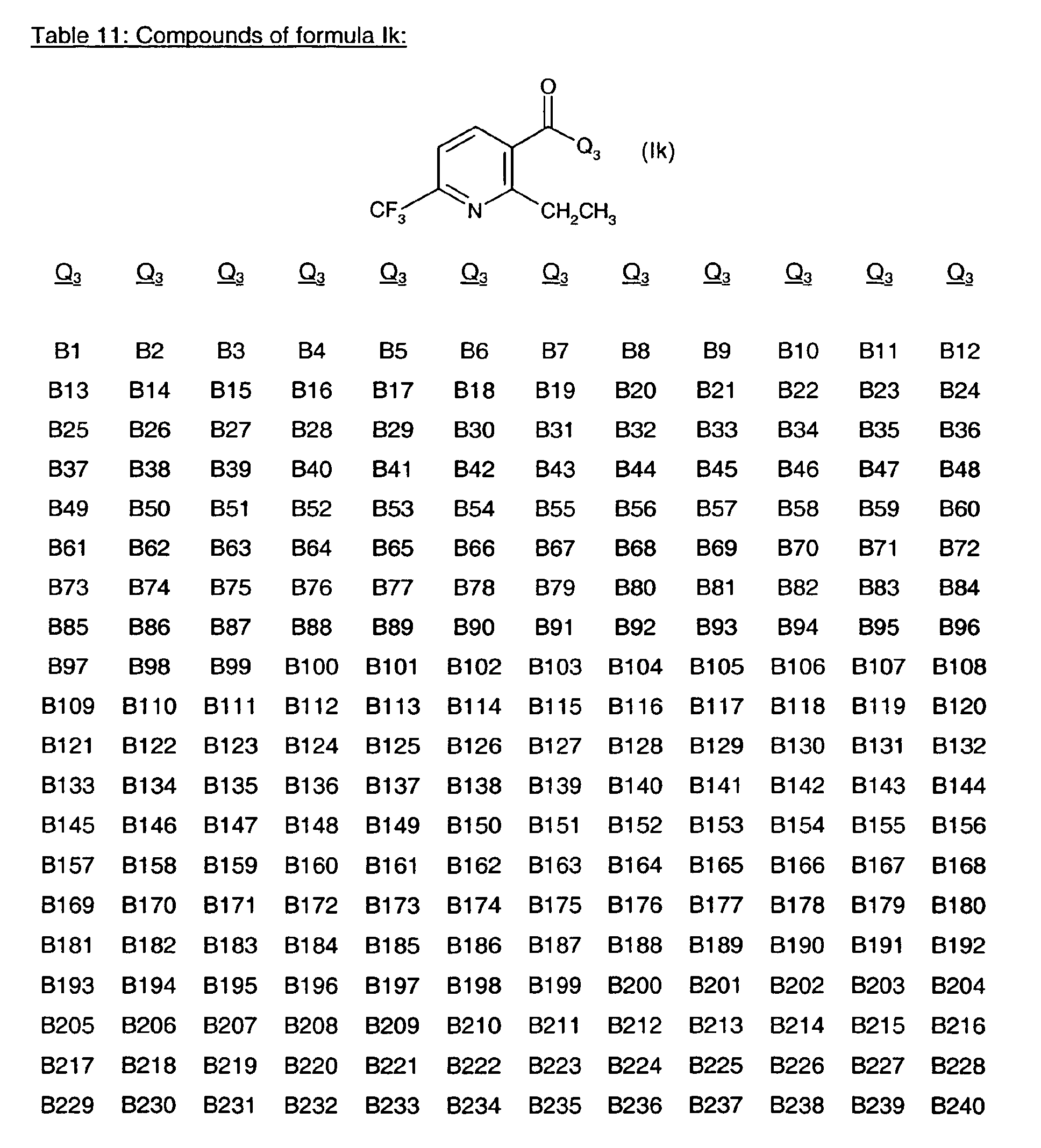





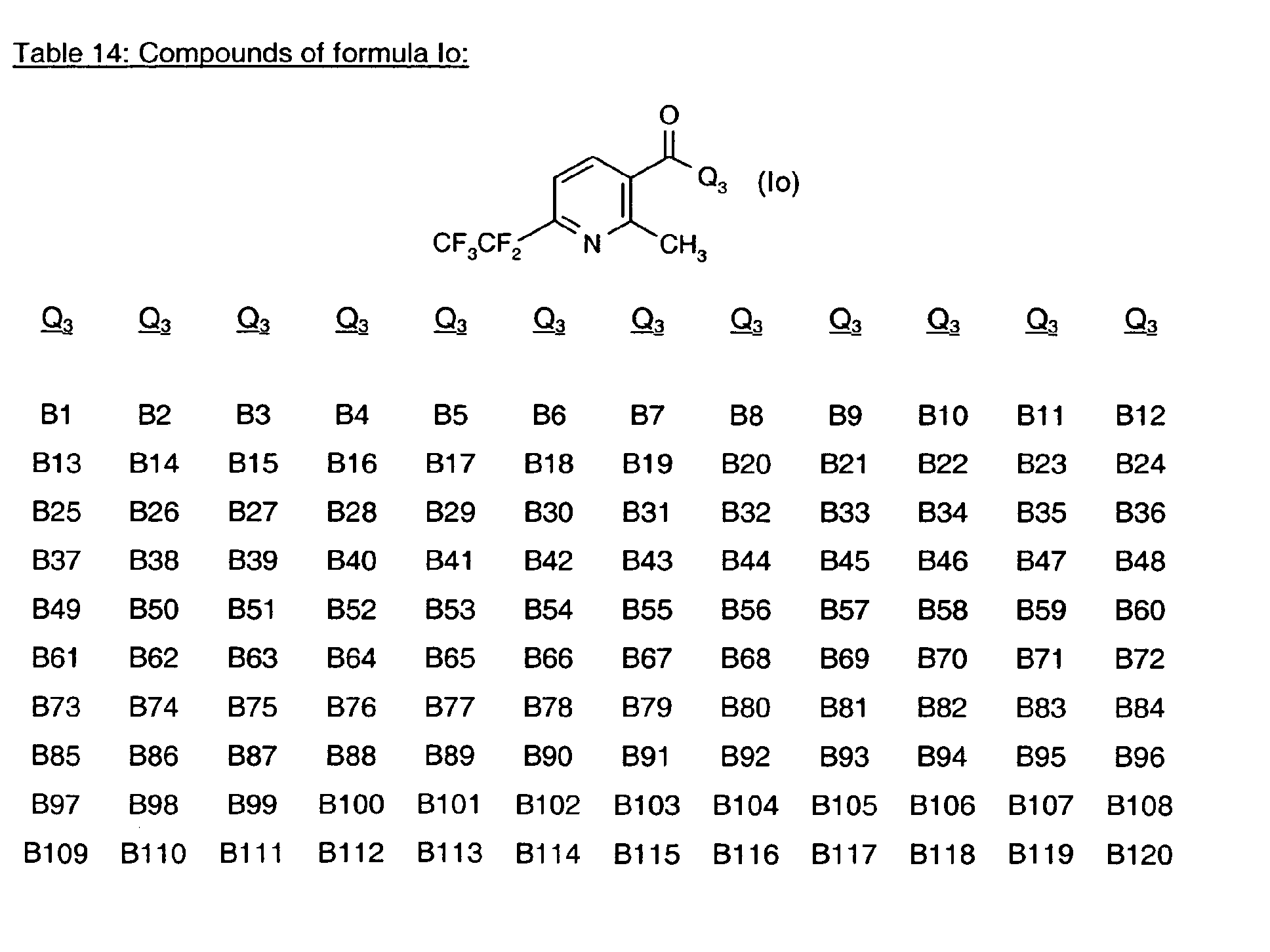
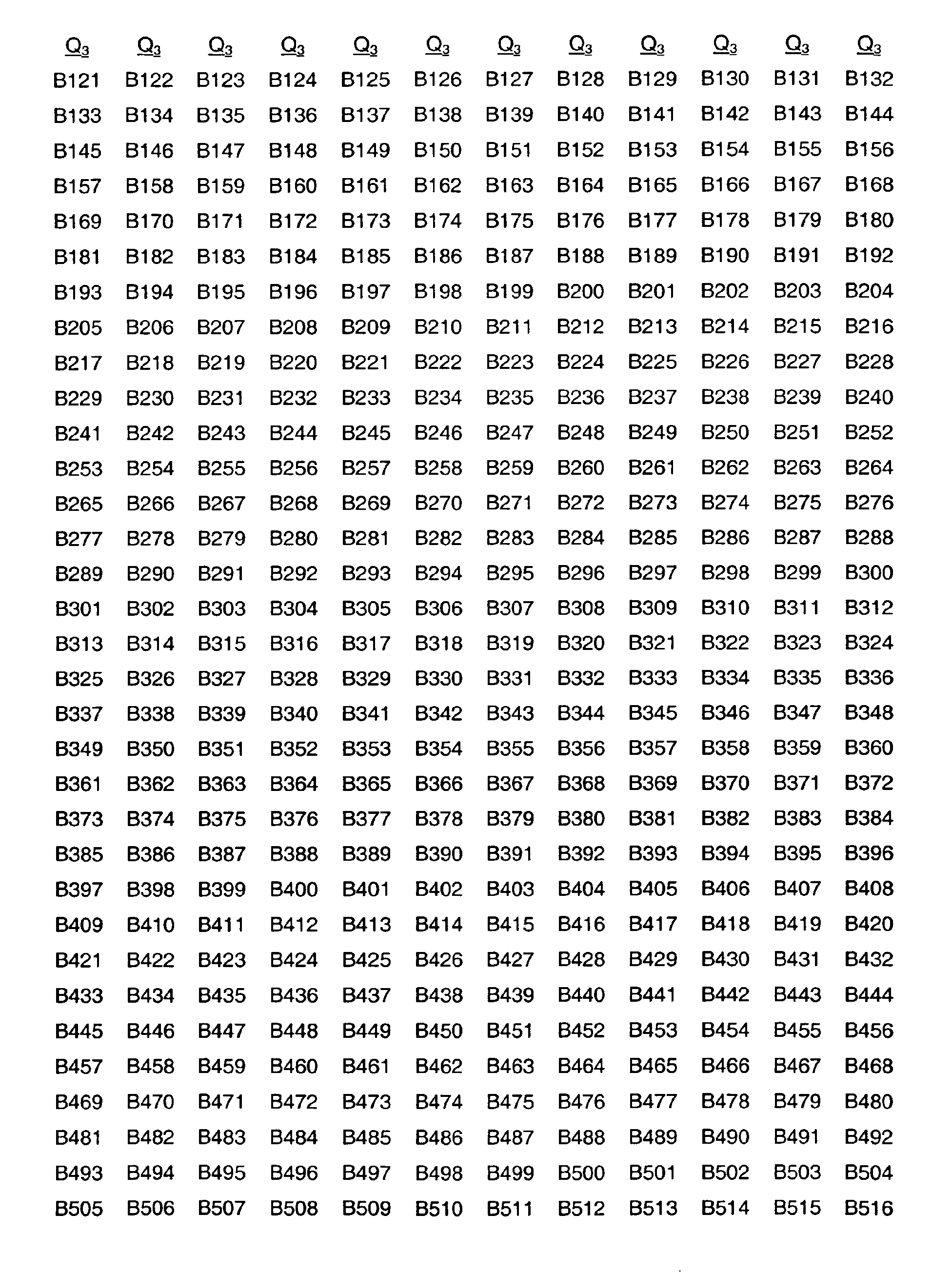
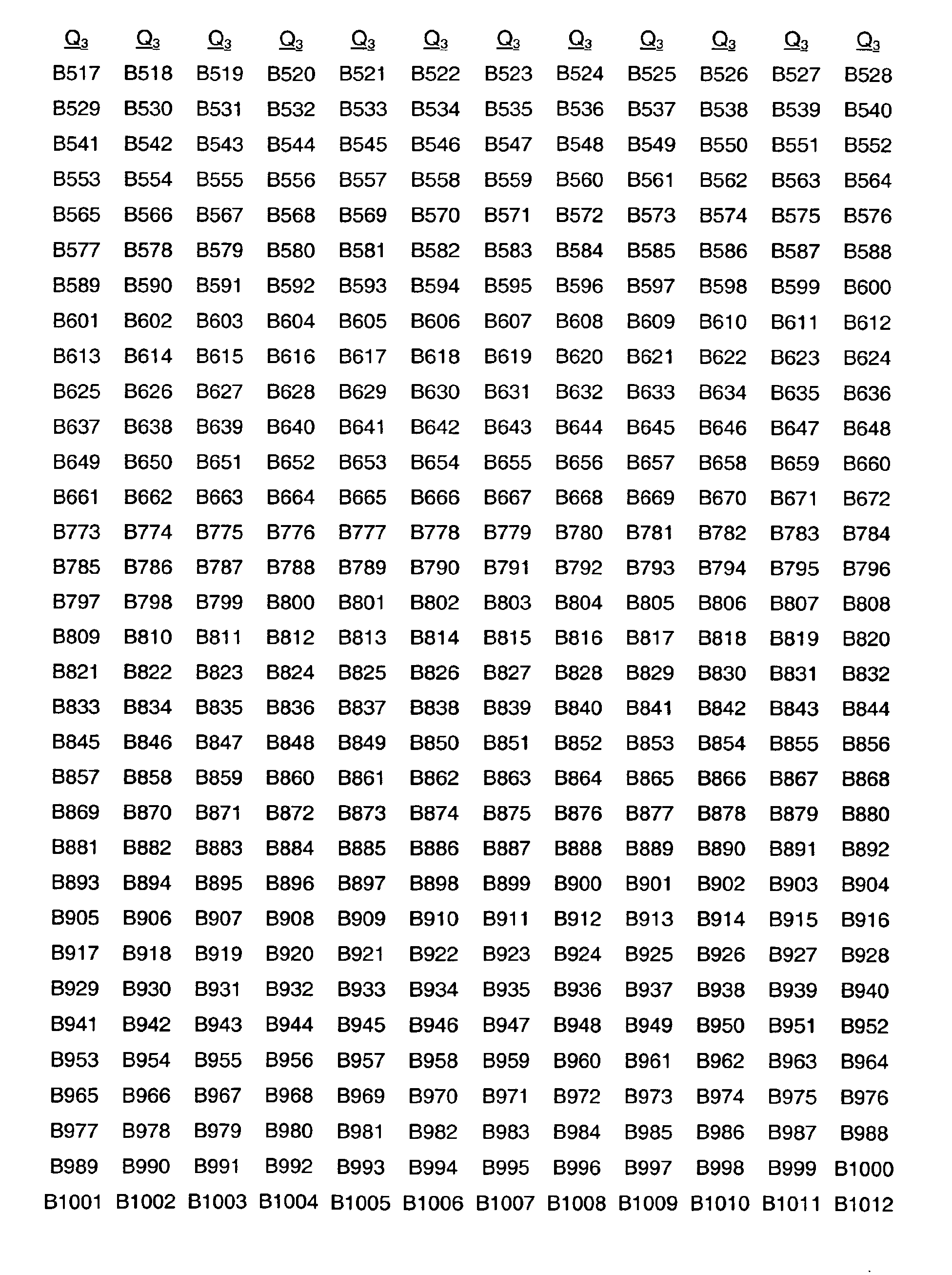
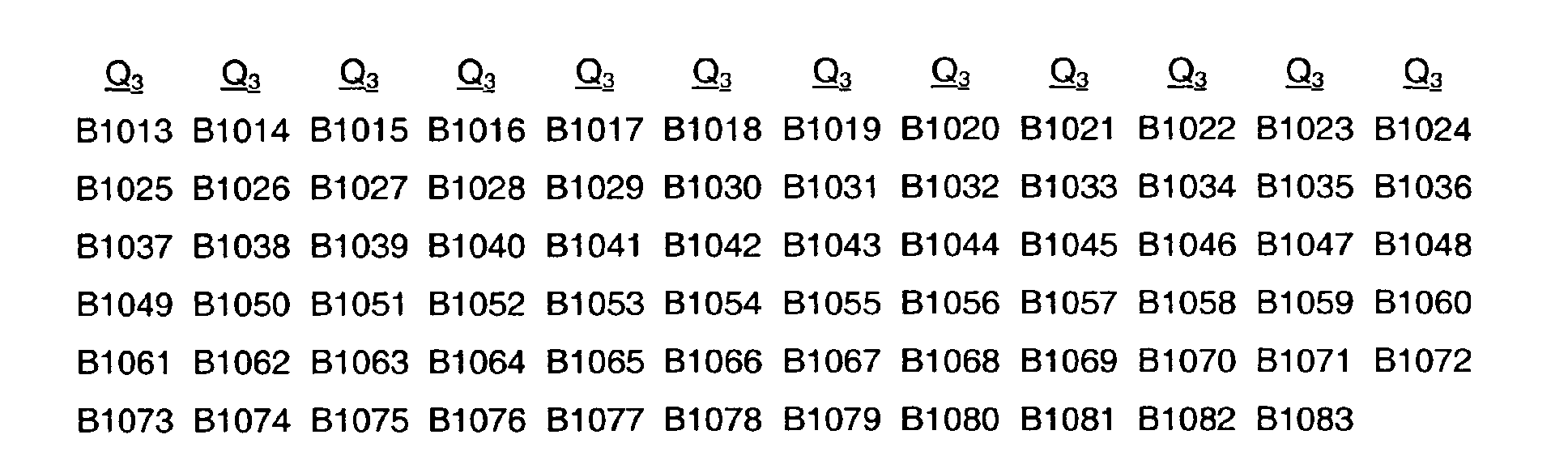

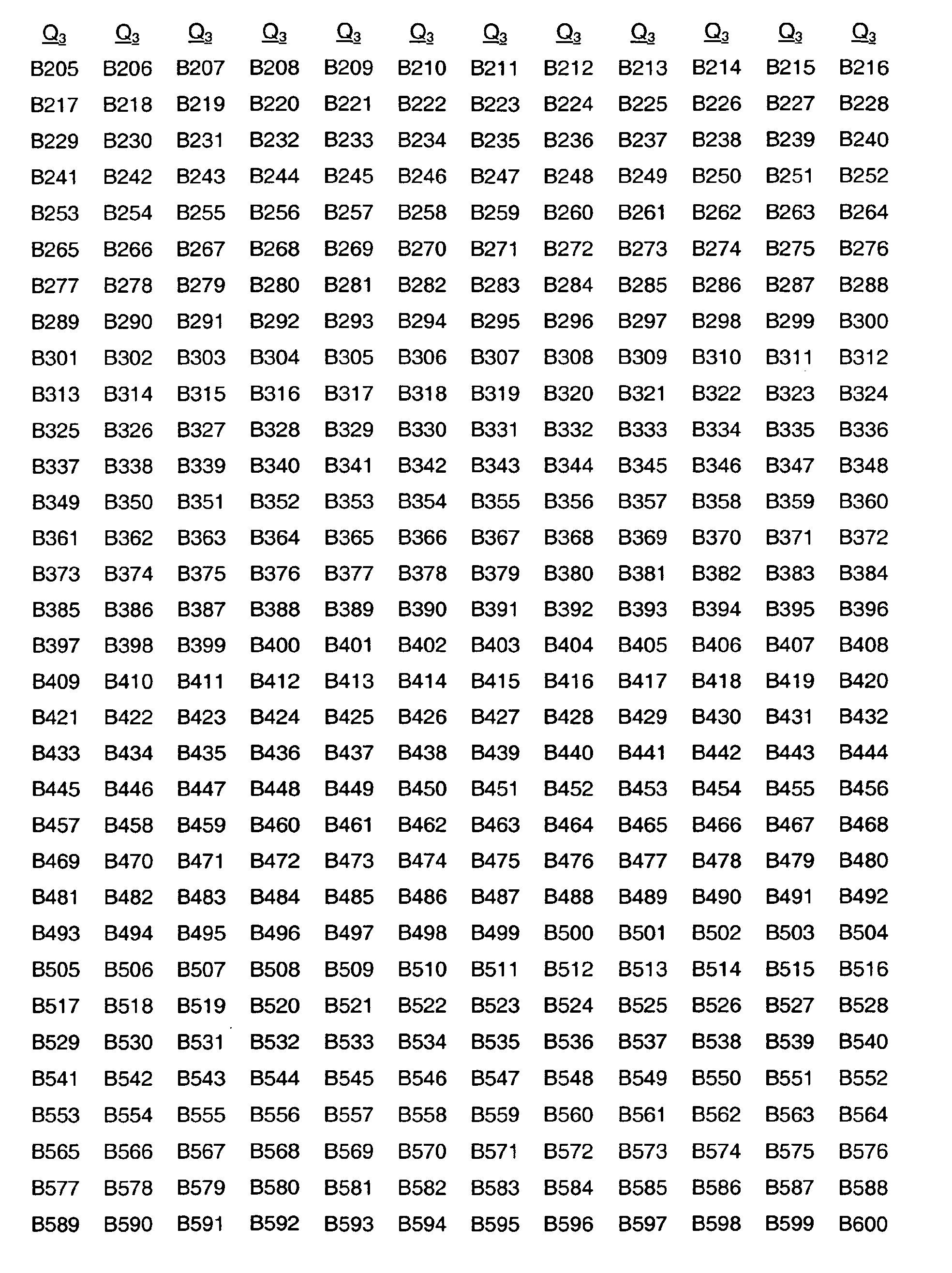


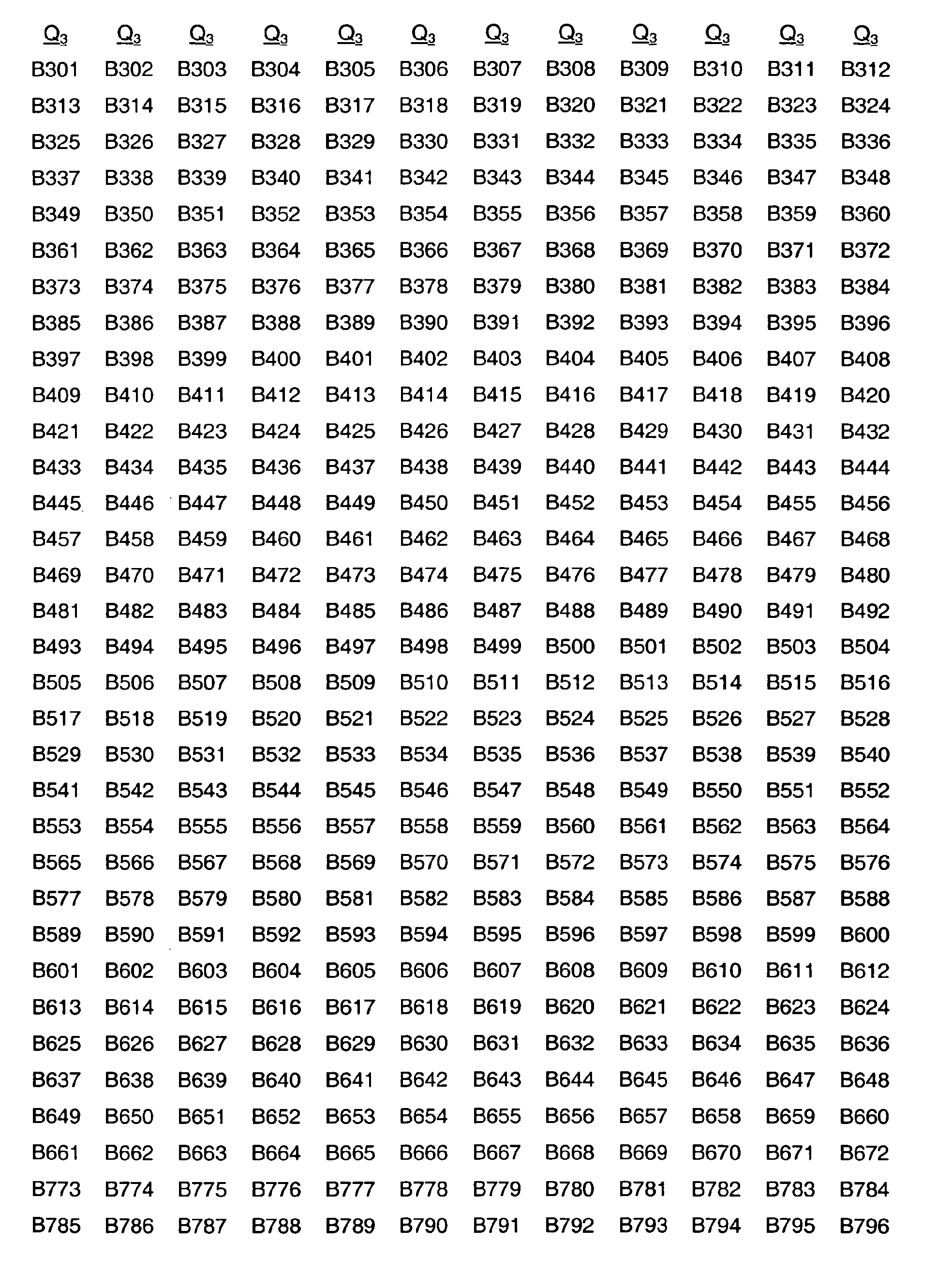

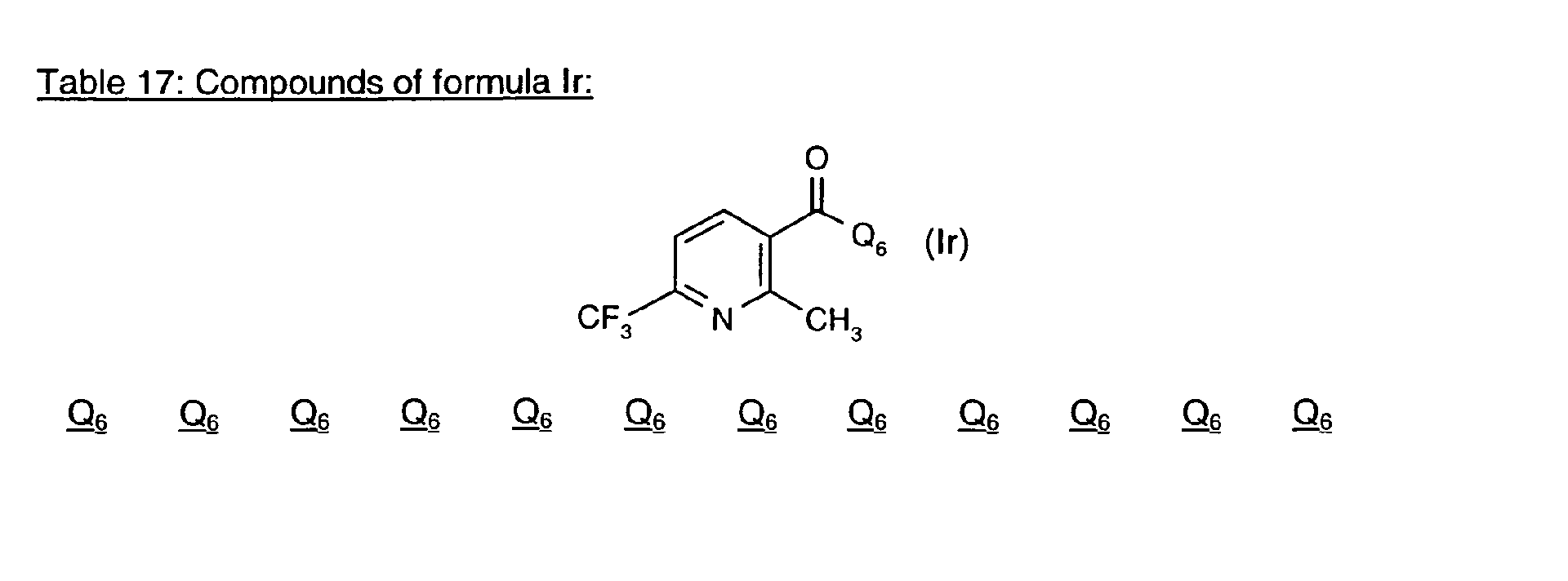
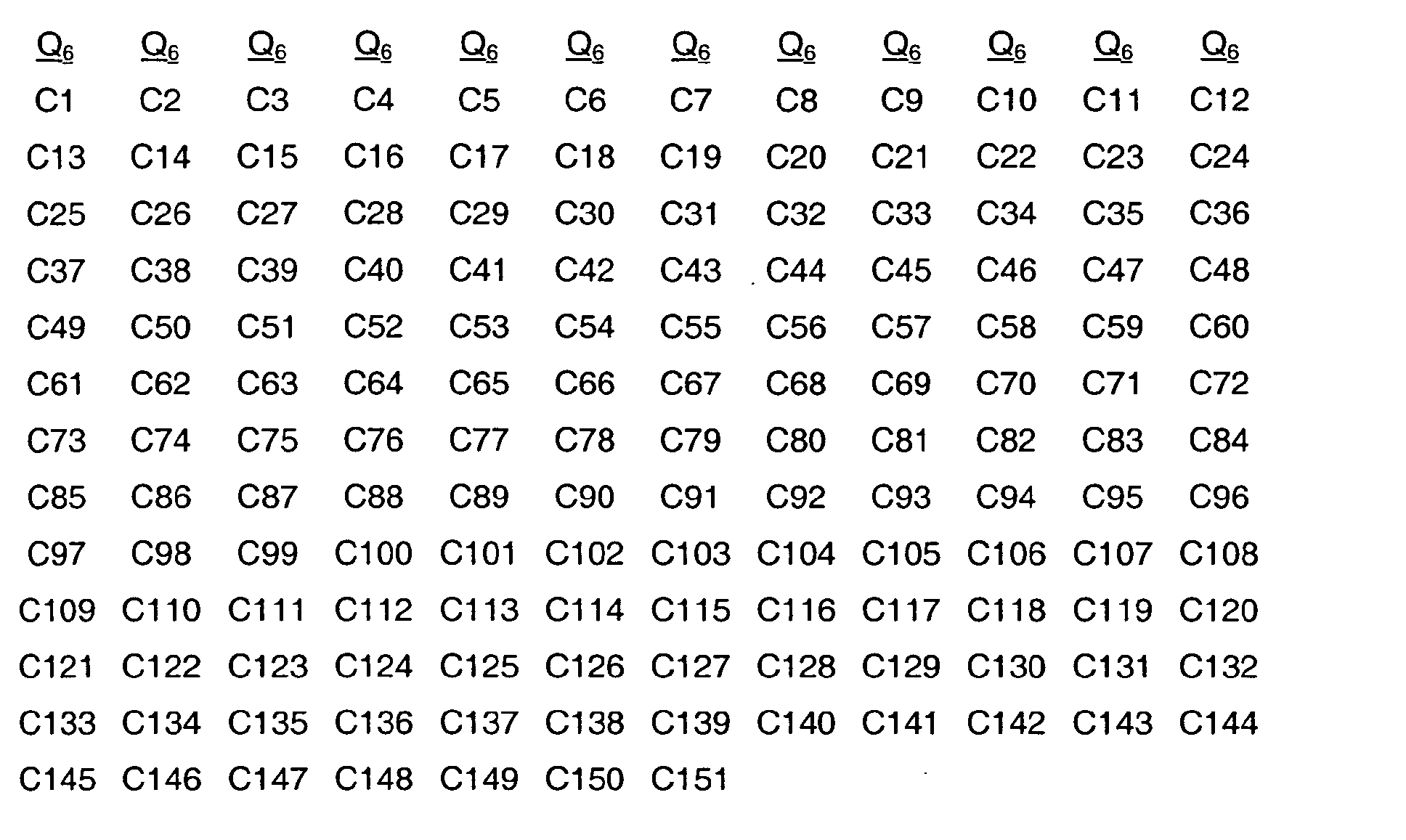
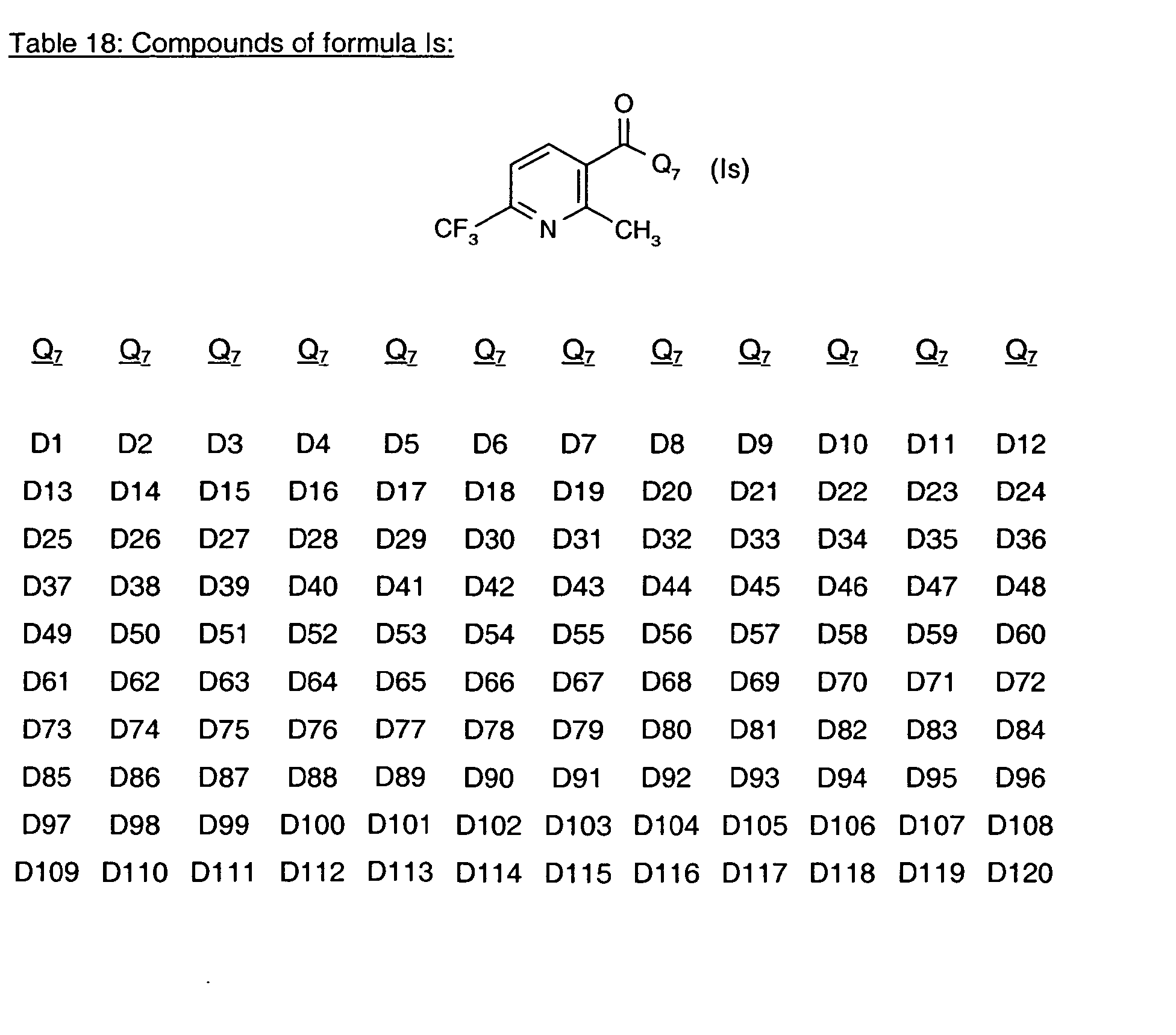

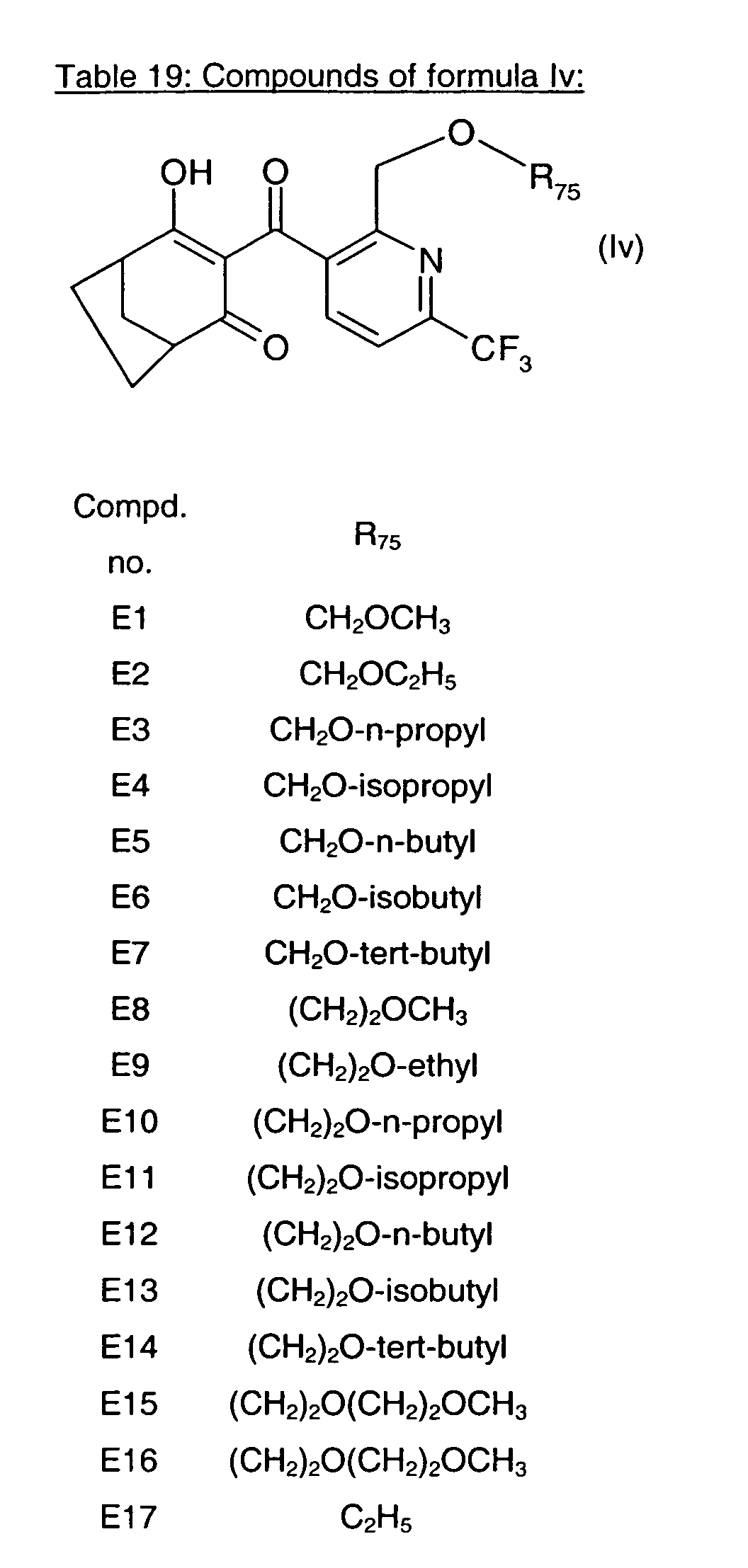


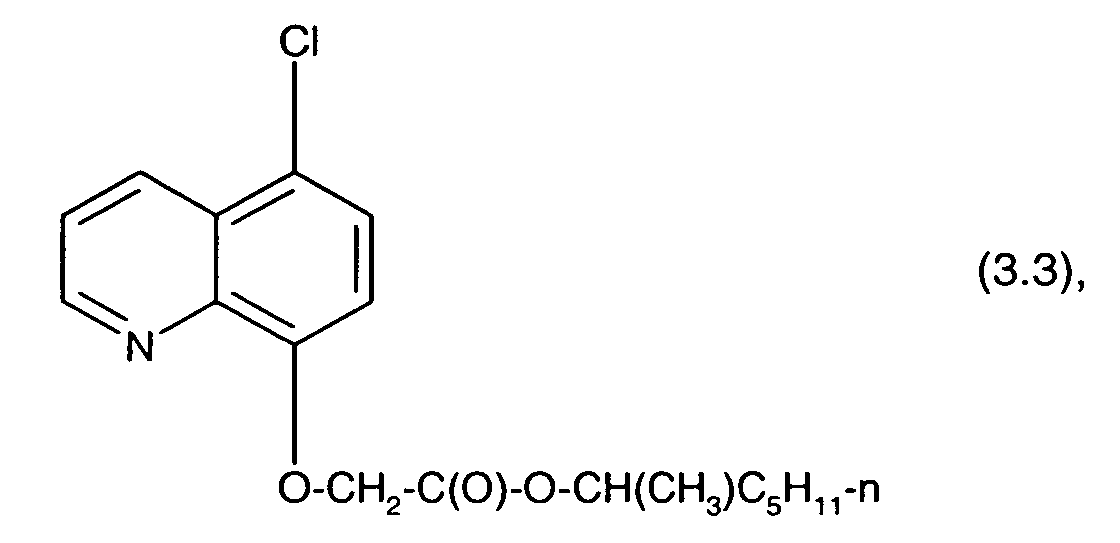
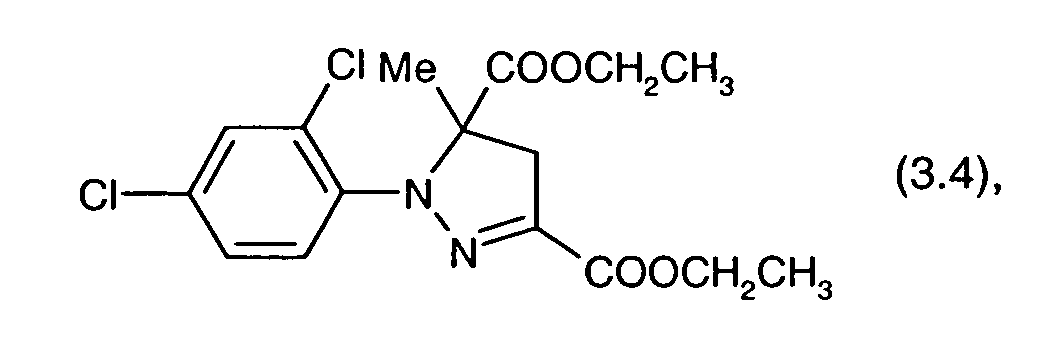
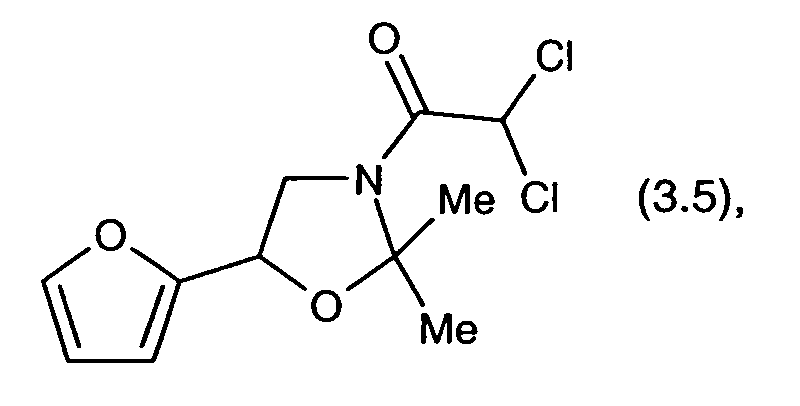


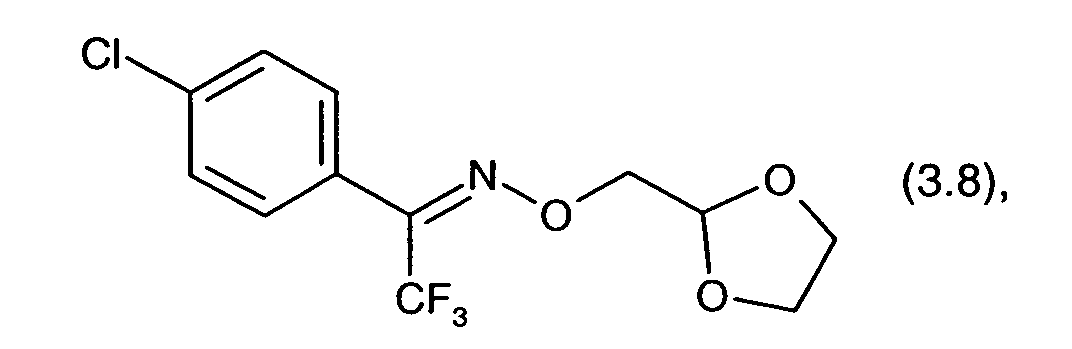


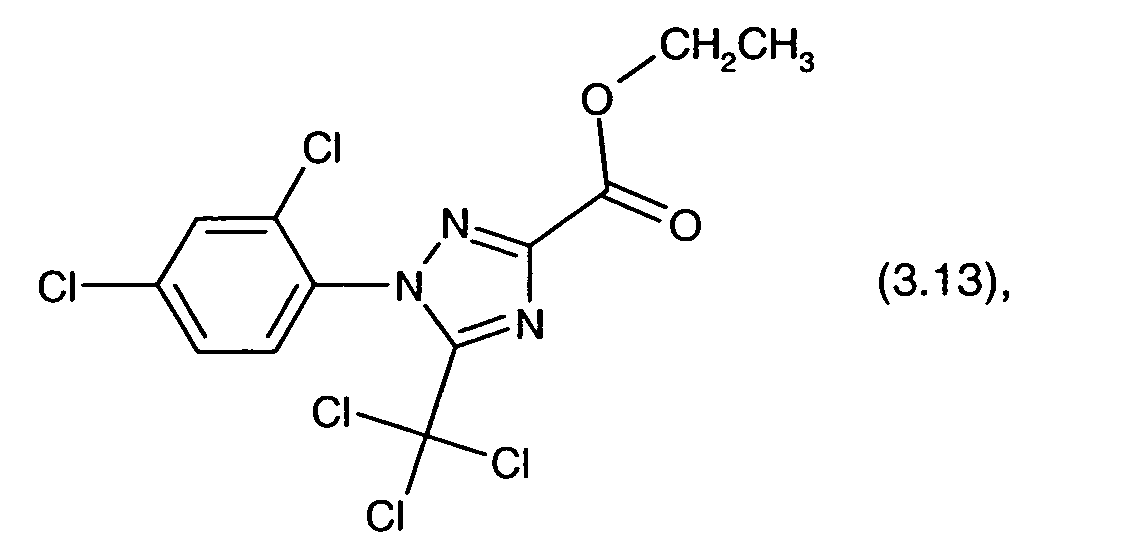


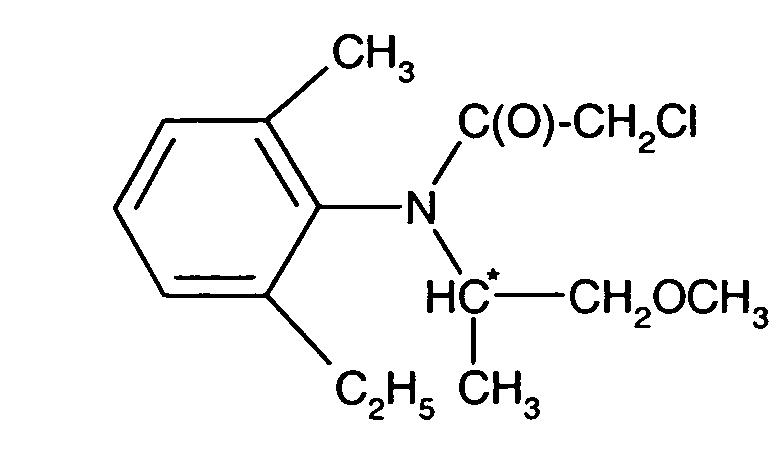
 wherein R23 is hydroxy; andm is 2 andone R is hydrogen, C1-C6alkyl, C2-C6alkenyl, C2-C6haloalkenyl, C2-C6alkynyl, C2-C6haloalkynyl, C3-C6cycloalkyl, C1-C6alkoxy, C1-C6haloalkoxy, C1-C6alkylthio, C1-C6alkylsulfinyl, C1-C6alkylsulfonyl, C1-C6haloalkyl, C1-C6haloalkylthio, C1-C6haloalkylsulfinyl, C1-C6haloalkylsulfonyl, C1-C6alkoxycarbonyl, C1-C6alkylcarbonyl, C1-C6alkylamino, di(C1-C6alkyl)amino, C1-C6alkylaminosulfonyl, di(C1-C6alkyl)aminosulfonyl, -N(R1)-S-R2, -N(R3)-SO-R4, -N(R5)-SO2-R6, nitro, cyano, halogen, hydroxy, amino, benzylthio, benzylsulfinyl, benzylsulfonyl, phenyl, phenoxy, phenylthio, phenylsulfinyl or phenylsulfonyl; wherein the phenyl group may itself be mono-, di- or tri-substituted by C1-C6alkyl, C1-C6haloalkyl, C3-C6alkenyl, C3-C6haloalkenyl, C3-C6alkynyl, C3-C6haloalkynyl, C1-C6alkoxy, C1-C6haloalkoxy, C3-C6alkenyloxy, C3-C6alkynyloxy, mercapto, C1-C6alkylthio, C1-C6haloalkylthio, C3-C6alkenylthio, C3-C6haloalkenylthio, C3-C6alkynylthio, C2-C5alkoxyalkylthio, C3-C5acetylalkylthio, C3-C6alkoxycarbonylalkylthio, C2-C4cyanoalkylthio, C1-C6alkylsulfinyl, C1-C6haloalkylsulfinyl, C1-C6alkylsulfonyl, C1-C6haloalkylsulfonyl, aminosulfonyl, C1-C2alkylaminosulfonyl, C2-C4dialkylaminosulfonyl, C1-C3alkylene-R45, NR46R47, halogen, cyano, nitro, phenyl or by benzylthio, wherein the latter phenyl and benzylthio groups may themselves be substituted on the phenyl ring by C1-C3alkyl, C1-C3haloalkyl, C1-C3alkoxy, C1-C3haloalkoxy, halogen, cyano or by nitro;
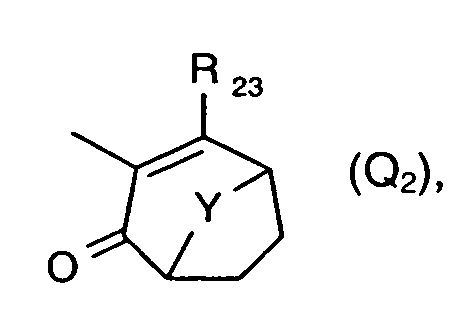 or is the group Q3Y is oxygen, sulfur, a chemical bond or a C1-C4alkylene bridge;
 wherein R44, R37, R38 and R39 are each independently of the others hydrogen, C1-C6alkyl, C1-C6haloalkyl, C2-C6alkenyl, C2-C6alkynyl, C1-C6alkoxycarbonyl, C1-C6alkylthio, C1-C6alkylsulfinyl, C1-C6alkylsulfonyl, C1-C6alkyl-NHS(O)2, C1-C6alkylamino, di(C1-C6alkyl)amino, hydroxy, C1-C6alkoxy, C3-C6alkenyloxy, C3-C6alkynyloxy, hydroxy-C1-C6alkyl, C1-C4alkylsulfonyloxy-C1-C6alkyl, tosyloxy-C1-C6alkyl, halogen, cyano, nitro, phenyl, or phenyl substituted by C1-C4alkyl, C1-C4haloalkyl, C1-C4alkoxy, C1-C4haloalkoxy, C1-C4alkylcarbonyl, C1-C4alkoxycarbonyl, amino, C1-C4alkylamino, di(C1-C4alkyl)amino, C1-C6alkylthio, C1-C6alkylsulfinyl, C1-C6alkylsulfonyl, C1-C4alkyl-S(O)2O, C1-C6haloalkylthio, C1-C6haloalkylsulfinyl, C1-C6haloalkylsulfonyl, C1-C4haloalkyl-S(O)2O, C1-C4alkyl-S(O)2NH, C1-C6alkylthio-N(C1-C4alkyl), C1-C6alkylsulfinyl-N(C1-C4alkyl), C1-C6alkylsulfonyl-N(C1-C4alkyl), halogen, nitro, COOH or by cyano; or adjacent R44 and R37 or R38 and R39 together are C3-C6alkylene;W is oxygen, sulfur, sulfinyl, sulfonyl, -CR41R42-, -C(O)- or -NR43-;R41 is hydrogen, C1-C4alkyl, C1-C4haloalkyl, C1-C4alkoxy-C1-C4alkyl, C1-C4alkylthio-C1-C4alkyl, C1-C4alkylcarbonyloxy-C1-C4alkyl, C1-C4alkylsulfonyloxy-C1-C4alkyl, tosyloxy-C1-C4alkyl, di(C1-C3alkoxyalkyl)methyl, di(C1-C3alkylthioalkyl)methyl, (C1-C3alkoxyalkyl)-(C1-C3alkylthioalkyl)methyl, C3-C5oxacycloalkyl, C3-C5thiacycloalkyl, C3-C4dioxacycloalkyl, C3-C4dithiacycloalkyl, C3-C4oxathiacycloalkyl, formyl, C1-C4alkoxycarbonyl, or phenyl which may itself be substituted by C1-C4alkyl, C1-C4haloalkyl, C1-C4alkoxy, C1-C4haloalkoxy, C1-C4alkylcarbonyl, C1-C4alkoxycarbonyl, amino, C1-C4alkylamino, di(C1-C4alkyl)amino, C1-C4alkylthio, C1-C4alkylsulfinyl, C1-C4alkylsulfonyl, C1-C4alkyl-S(O)2O, C1-C4haloalkylthio, C1-C4haloalkylsulfinyl, C1-C4haloalkylsulfonyl, C1-C4haloalkyl-S(O)2O, C1-C4alkyl-S(O)2NH, C1-C6alkylthio-N(C1-C4alkyl), C1-C6alkylsulfinyl-N(C1-C4alkyl), C1-C6alkylsulfonyl-N(C1-C4alkyl), halogen, nitro, COOH or by cyano; or R42 together with R39 is C1-C6alkylene;R42 is hydrogen, C1-C4alkyl or C1-C4haloalkyl;R40 is hydroxy;R43 is hydrogen, C1-C4alkyl, C1-C4alkoxycarbonyl, or phenyl which may itself be substituted by C1-C4alkyl, C1-C4haloalkyl, C1-C4alkoxy, C1-C4haloalkoxy, C1-C4alkylcarbonyl, C1-C4alkoxycarbonyl, C1-C4alkylamino, di(C1-C4alkyl)amino, C1-C4alkylthio, C1-C4alkylsulfinyl, C1-C4alkylsulfonyl, C1-C4alkyl-S(O)2O, C1-C4haloalkylthio, C1-C4haloalkylsulfinyl, C1-C4haloalkylsulfonyl, C1-C4haloalkyl-S(O)2O, C1-C4alkyl-S(O)2NH, C1-C4alkyl-S(O)2N(C1-C4alkyl), halogen, nitro or by cyano; or an agronomically acceptable salt of such a compound, andb) a synergistically effective amount of one or more compounds selected from a compound of formula 2.1
 and a compound of formula 2.2wherein R51 is CH2-OMe, ethyl or hydrogen;R52 is hydrogen or R51 and R52 together are the group -CH=CH-CH=CH-;
 and a compound of formula 2.3wherein R53 is ethyl, R54 is methyl or ethyl and R55 is -CH(Me)-CH2OMe,<S>-CH(Me)-CH2OMe, CH2OMe or CH2O-CH2CH3;wherein R56 is CH(Me)-CH2OMe or <S>CH(Me)-CH2OMe;
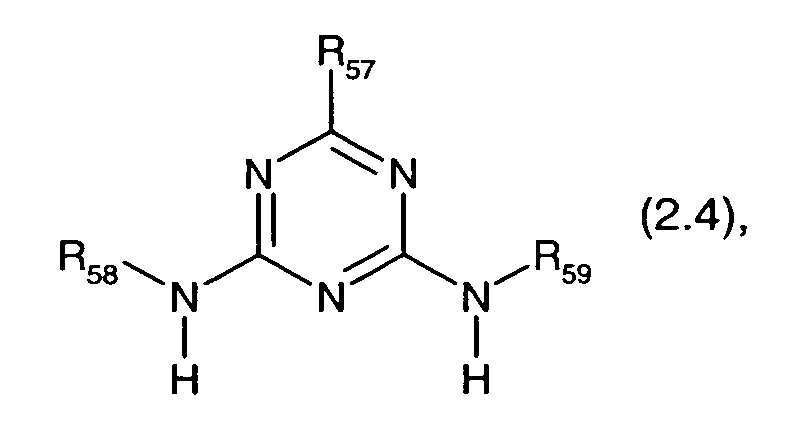
 and X is oxygen, N-O-CH2CH3 or N-O-CH2CH=CH-Cl; and a compound of formula 2.6
 wherein R62 is hydrogen, methoxy or ethoxy, R63 is hydrogen, methyl, methoxy or fluorine, R64 is COOMe, fluorine or chlorine, R65 is hydrogen or methyl, Y is methine, C-F or nitrogen, Z is methine or nitrogen and R66 is fluorine or chlorine; and a compound of formula 2.7wherein R67 is hydrogen or -C(O)-S-n-octyl;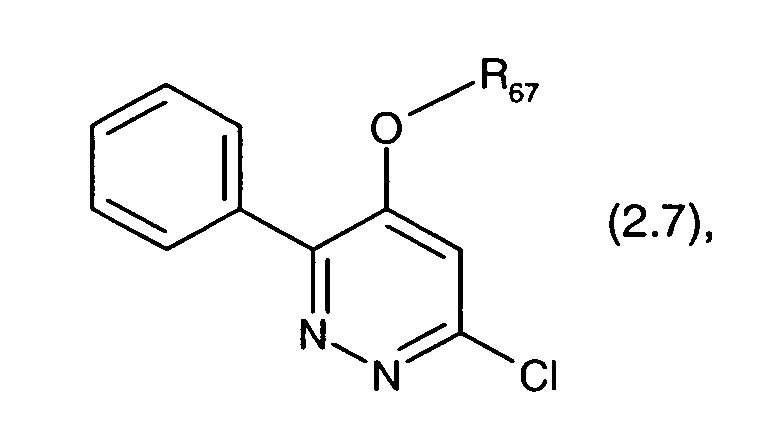
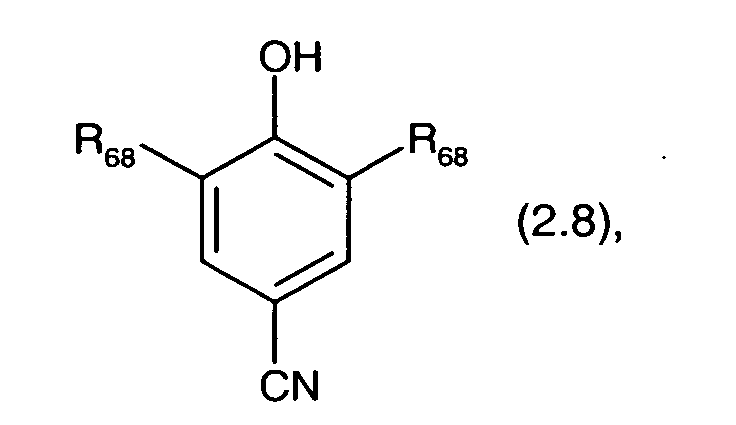
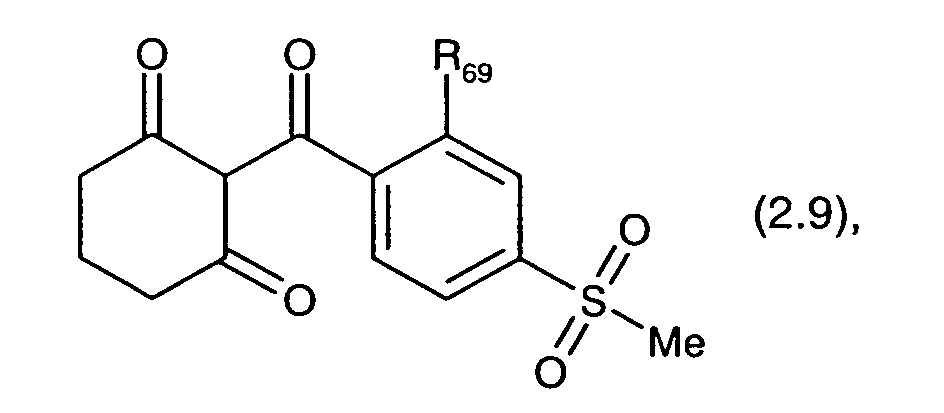
 wherein R72 is trifluoromethyl or chlorine;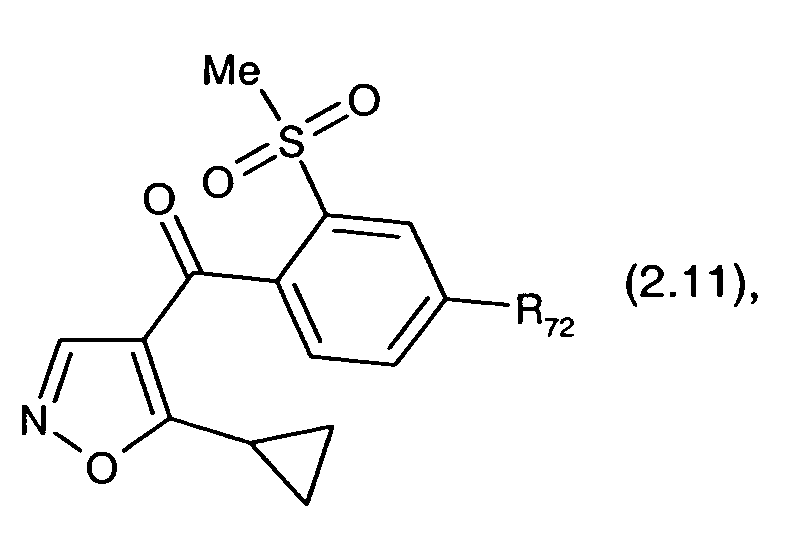
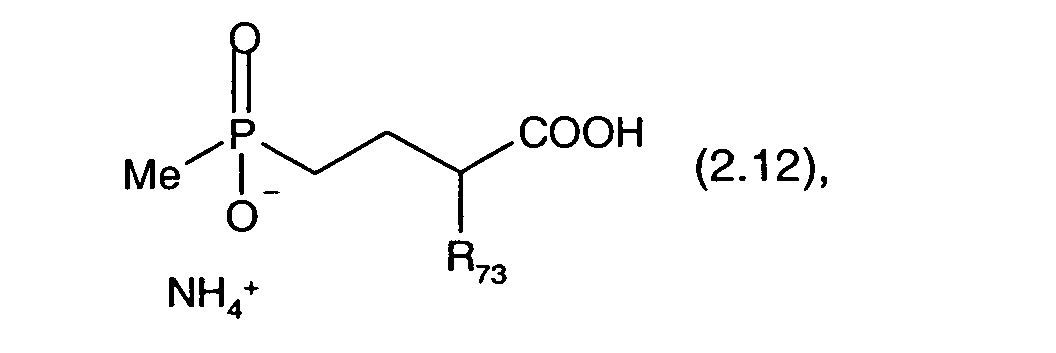

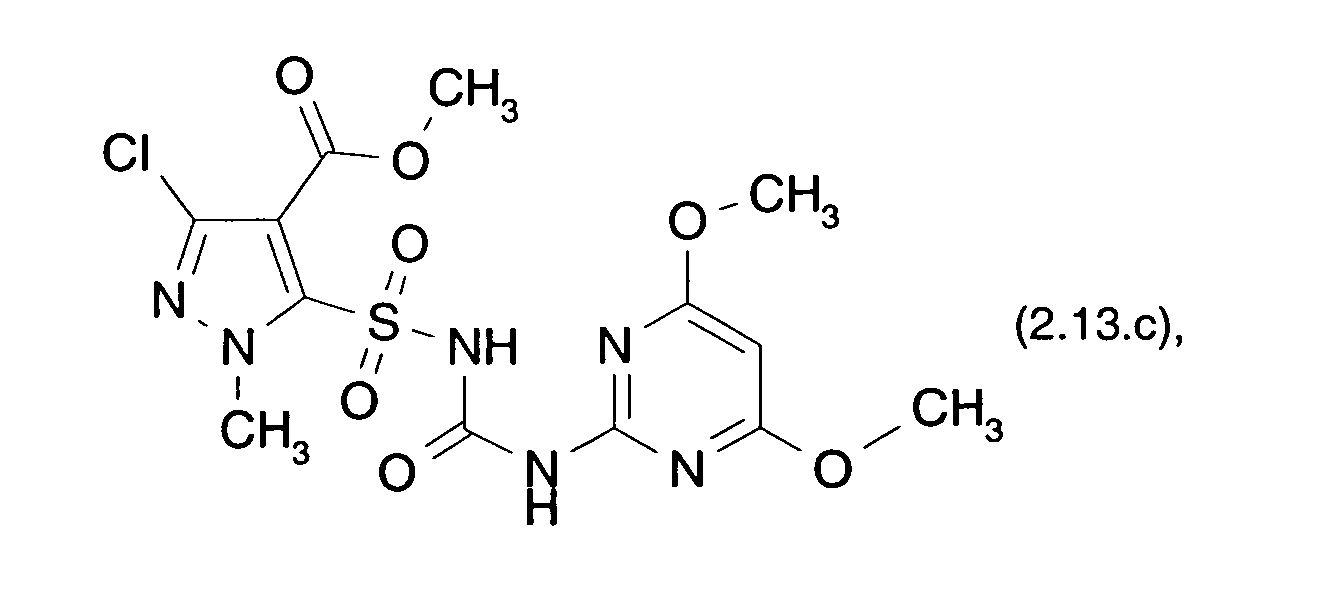 and the compound of formula 2.15
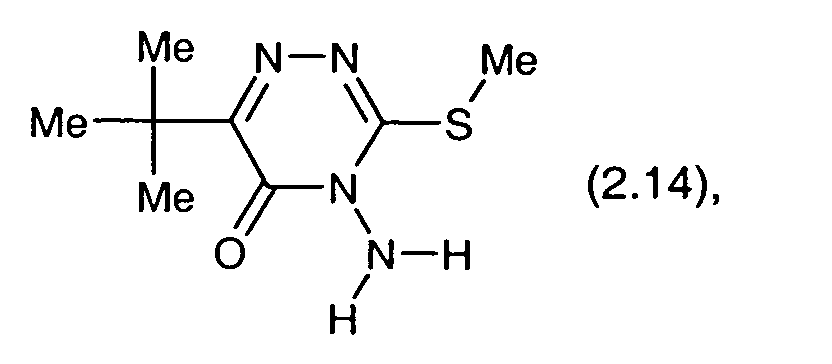 and the compound of formula 2.16
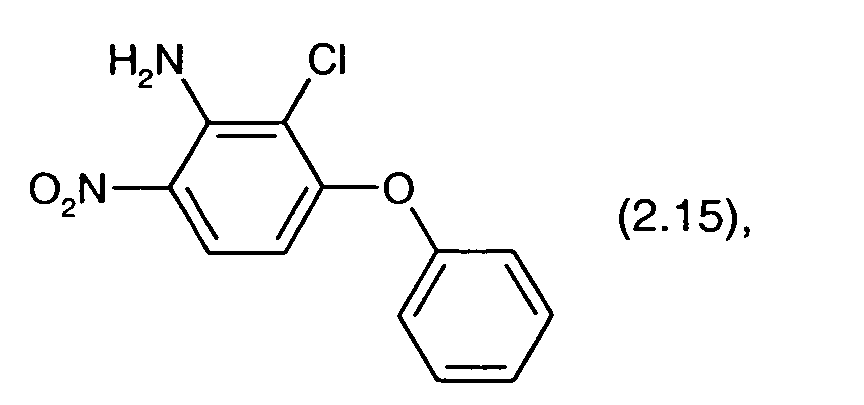 and the compound of formula 2.17
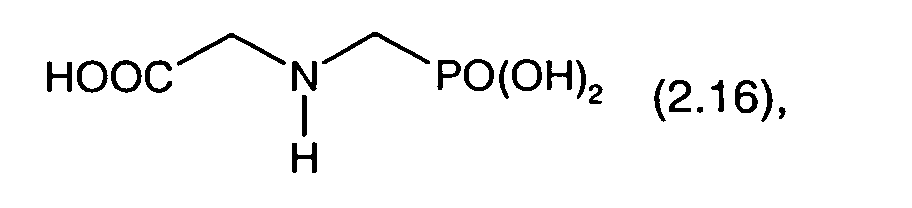 and the compound of formula 2.18
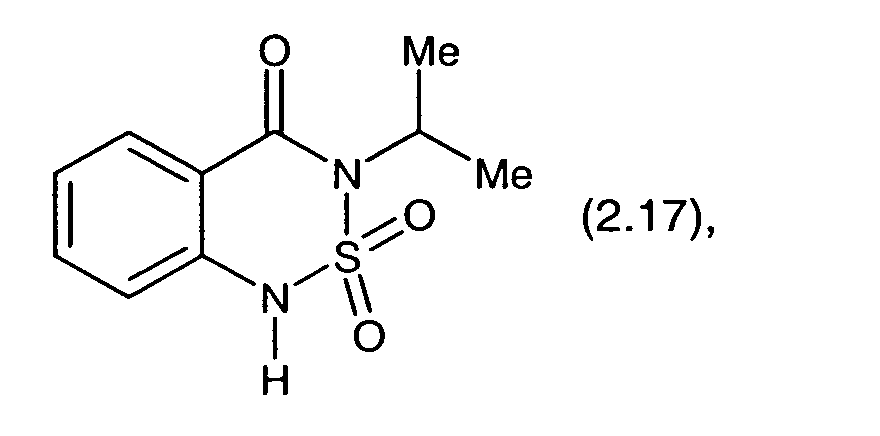 and the compound of formula 2.19
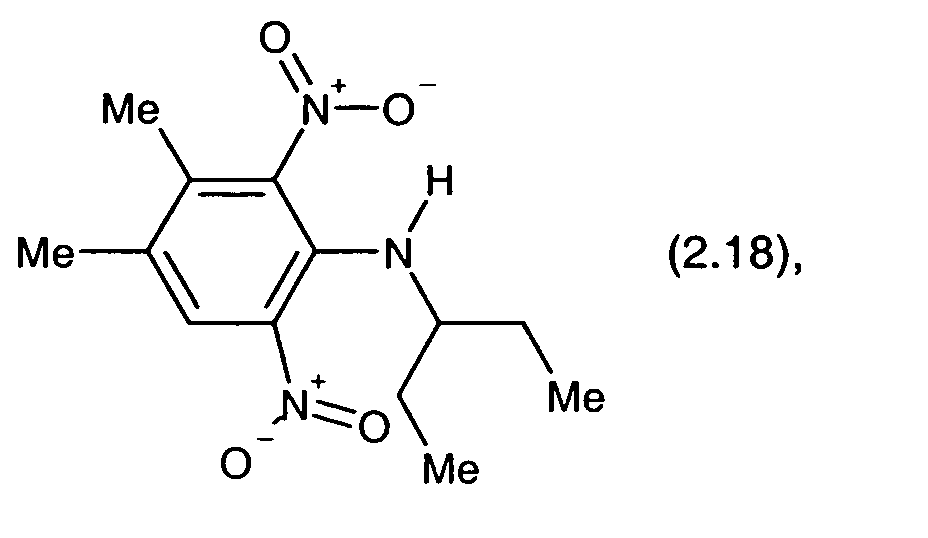 and the compound of formula 2.20
 and the compound of formula 2.21
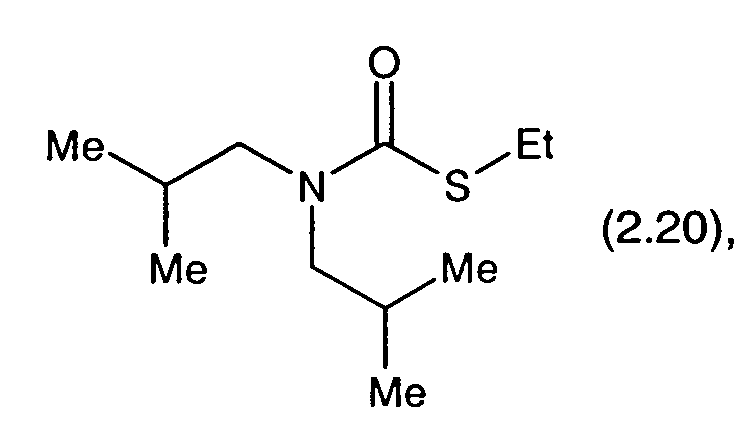 and the compound of formula 2.22
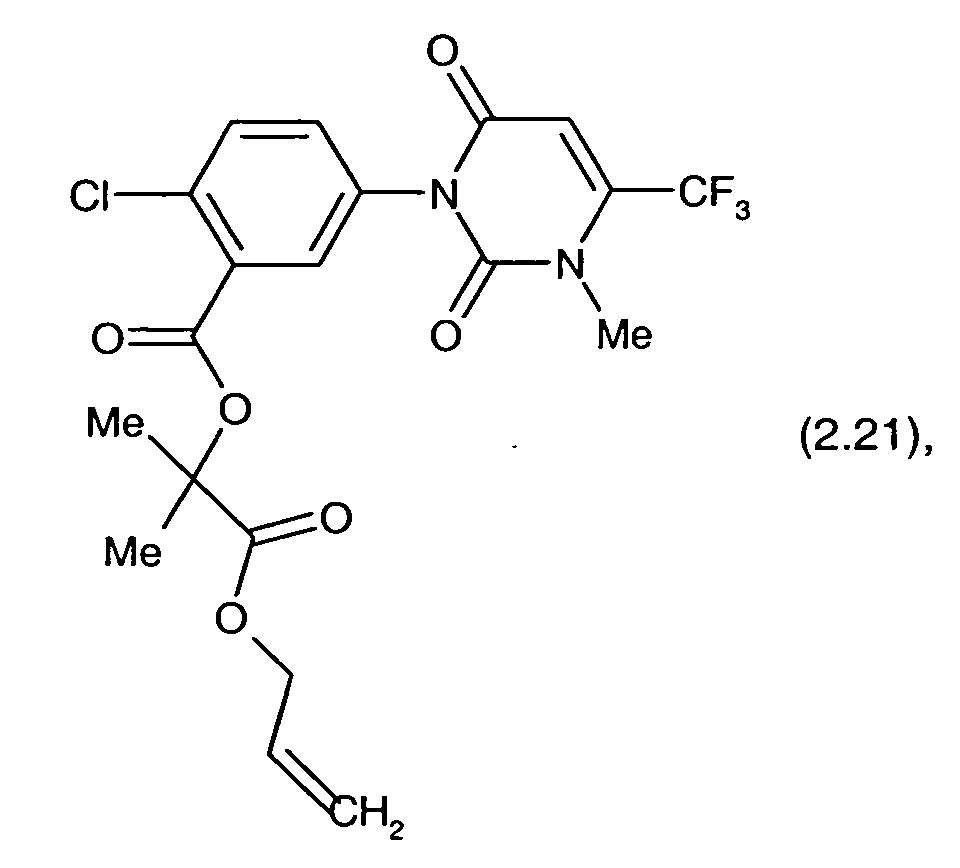 and the compound of formula 2.23
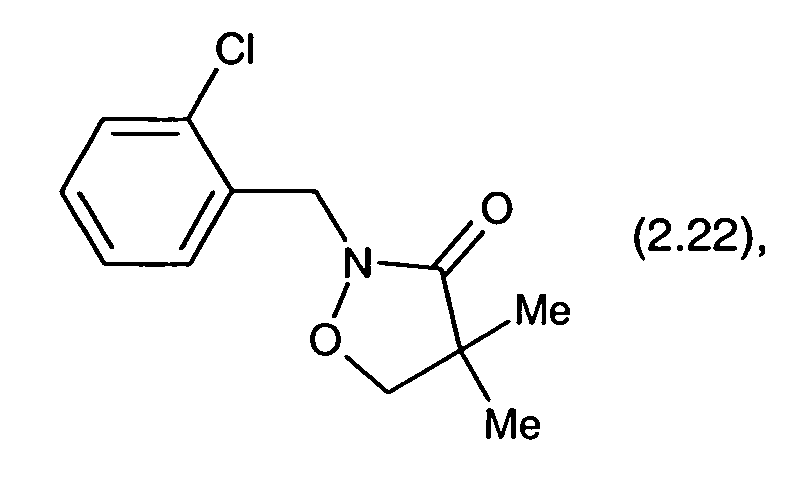 and the compound of formula 2.24
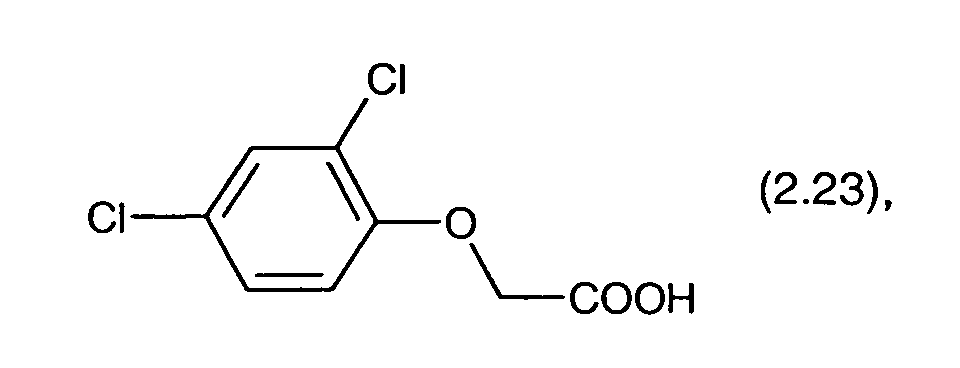 and the compound of formula 2.25
 and the compound of formula 2.26
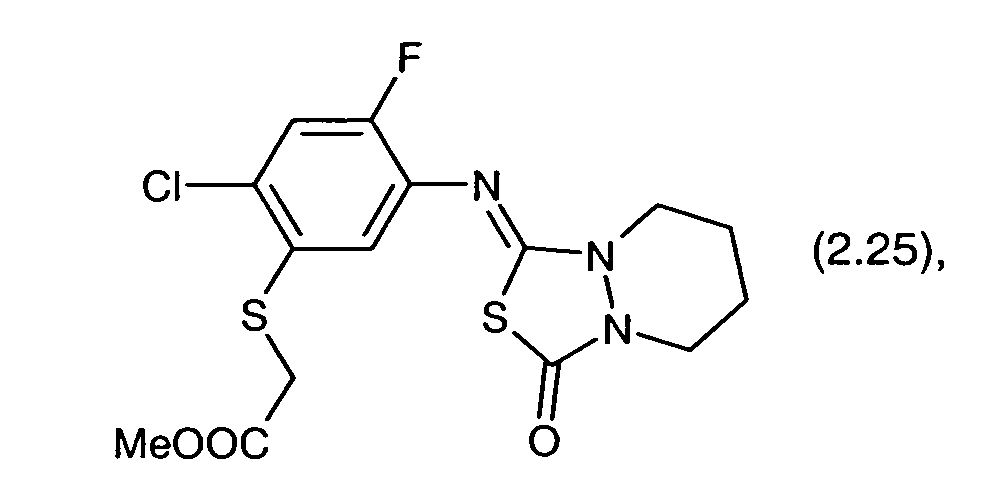 and the compound of formula 2.27
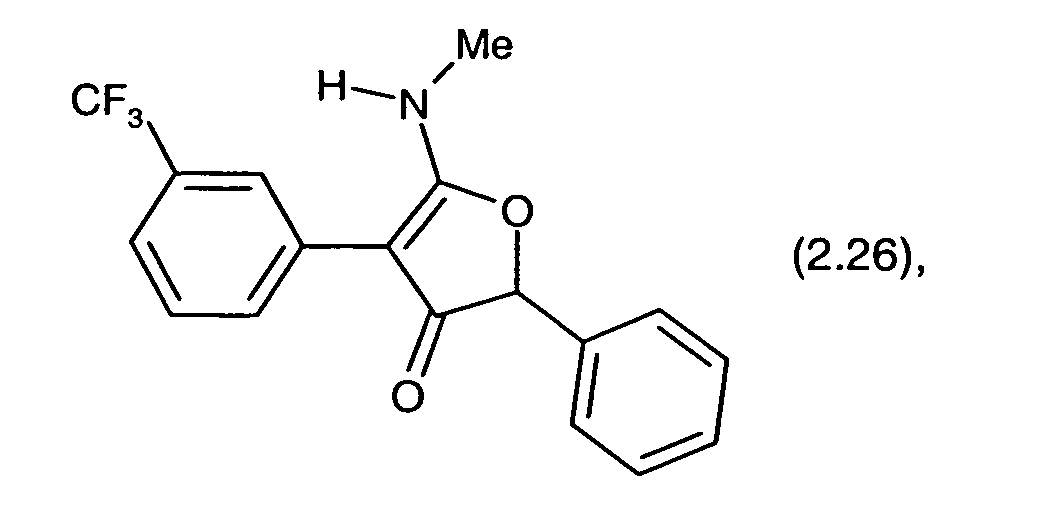 and the compound of formula 2.28
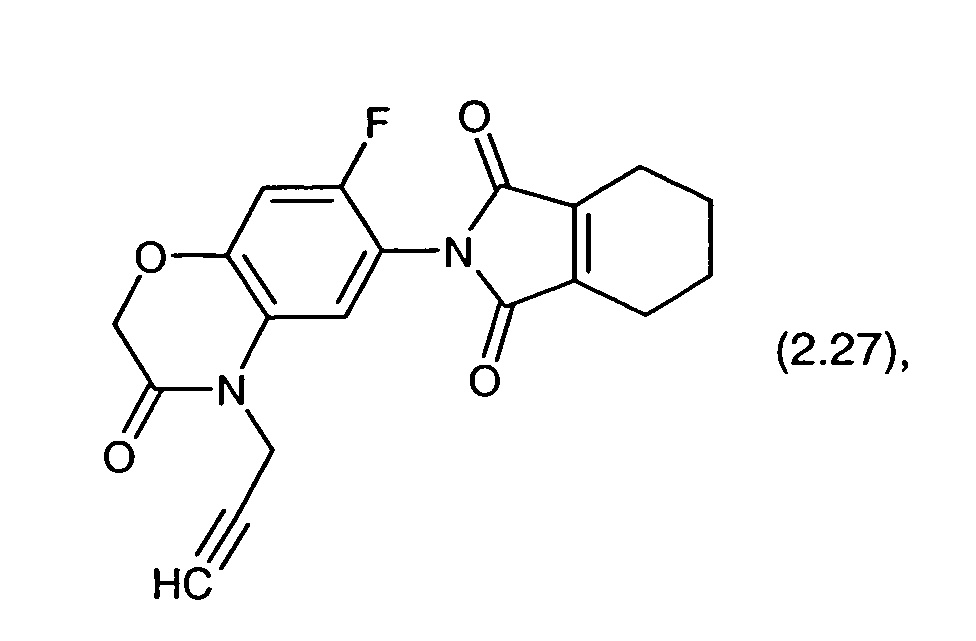 and the compound of formula 2.29
 and the compound of formula 2.30
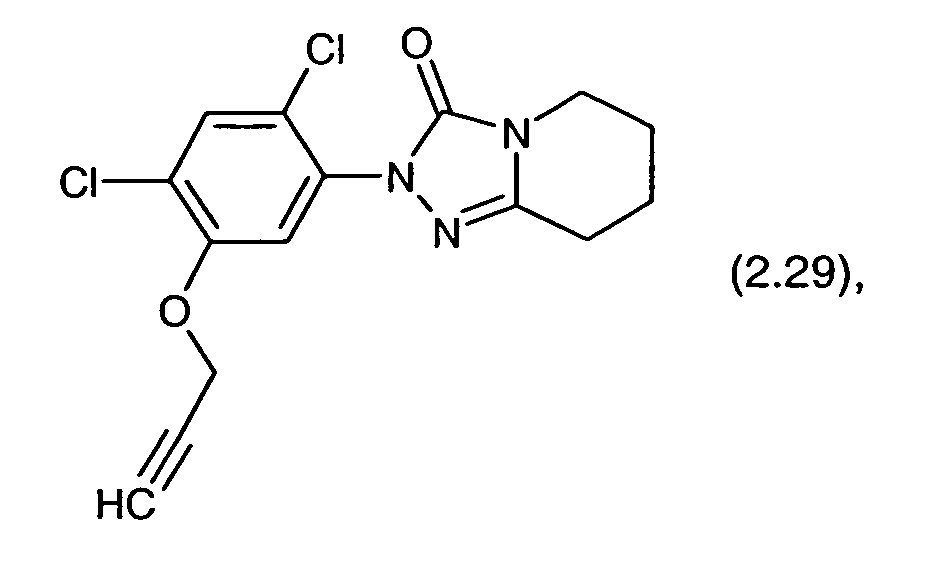 and the compound of formula 2.31
 and the compound of formula 2.32
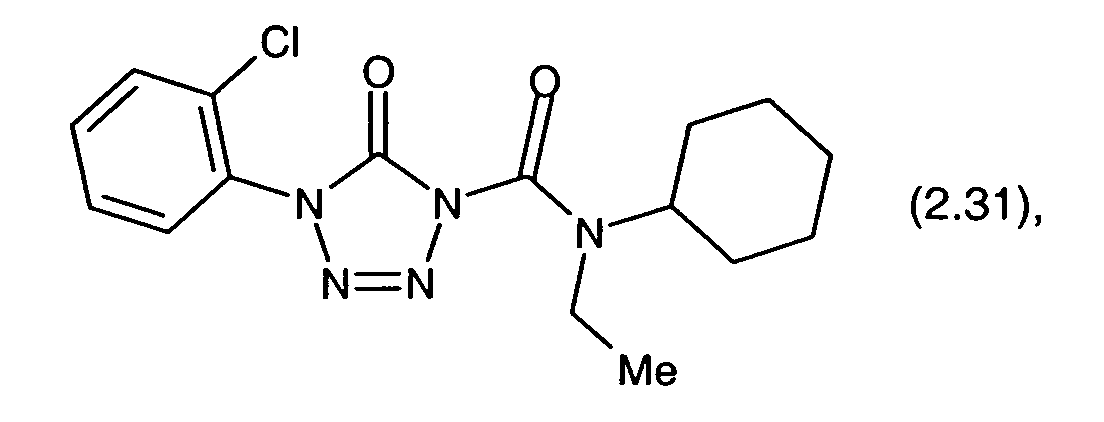 and the compound of formula 2.33
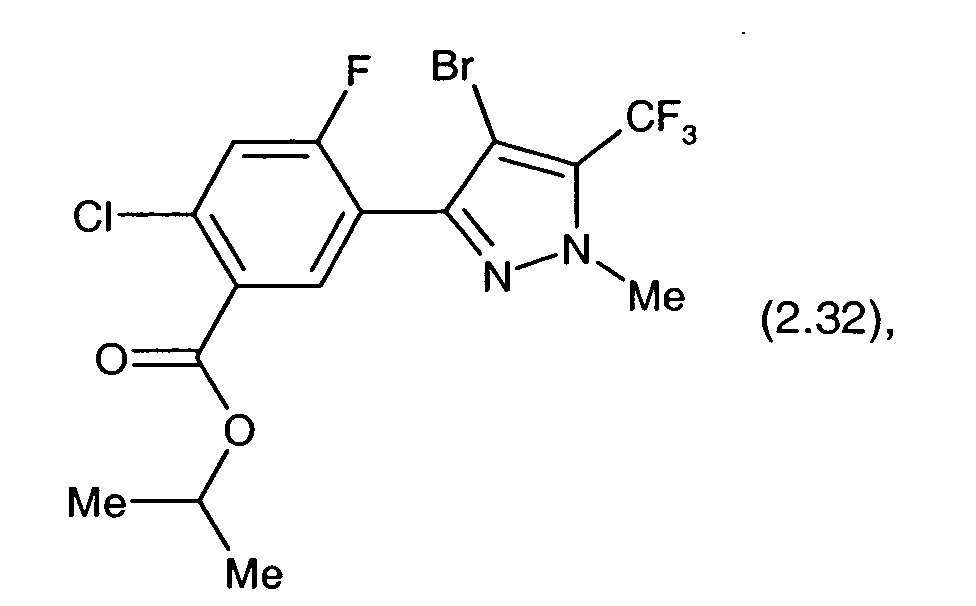 and the compound of formula 2.34
 and the compound of formula 2.35
 and the compound of formula 2.36
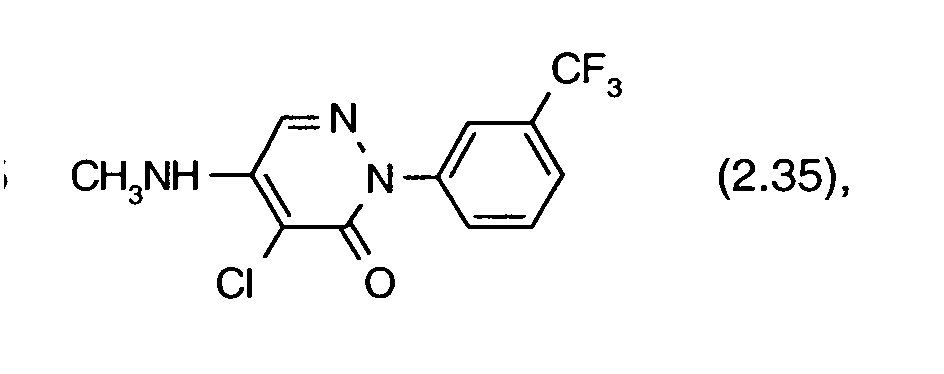 and the compound of formula 2.37
 and the compound of formula 2.38
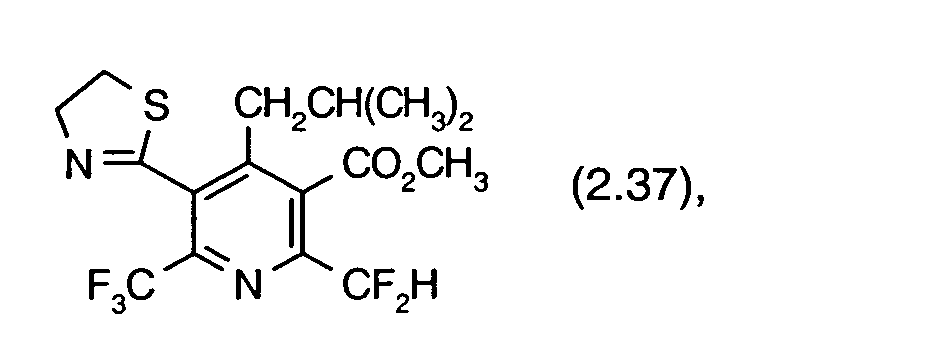 and the compound of formula 2.39
 and the compound of formula 2.40
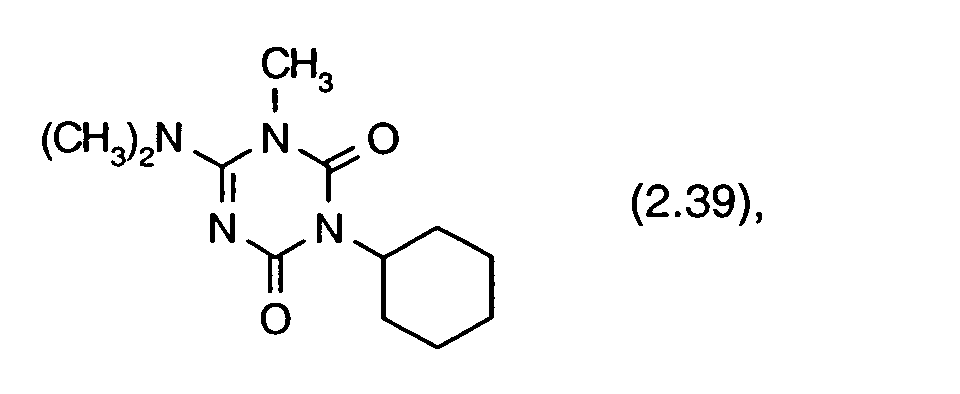 and the compound of formula 2.41
 and the compound of formula 2.42
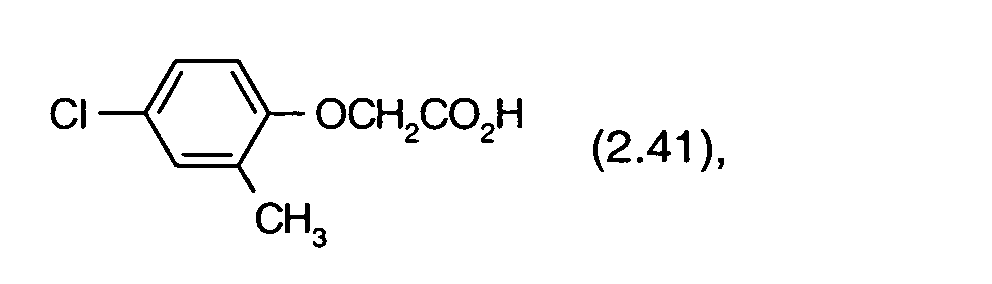 and the compound of formula 2.43
 and the compound of formula 2.44
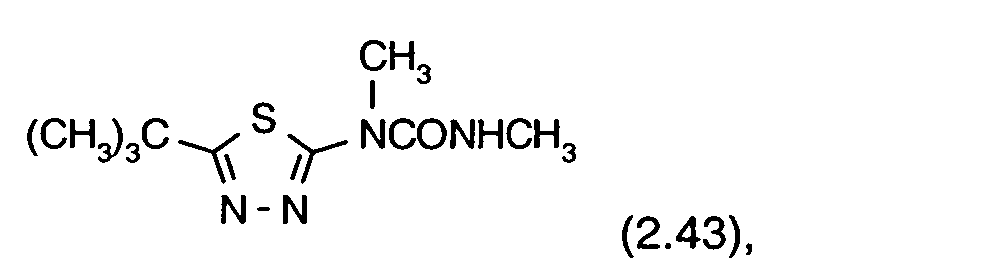 and the compound of formula 2.45
 and the compound of formula 2.46
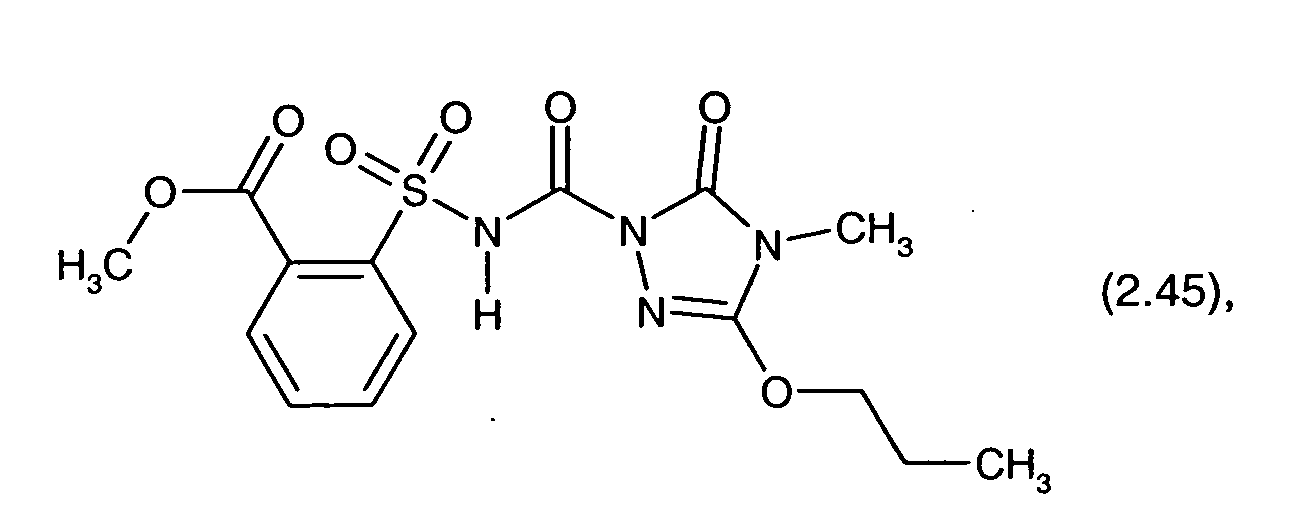 and the compound of formula 2.47
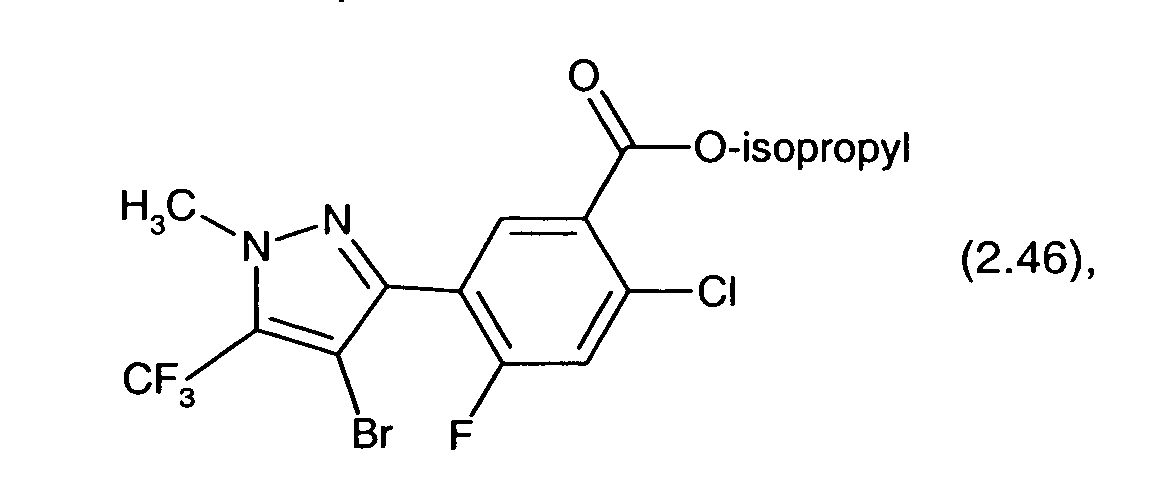 and the compound of formula 2.48
 and the compound of formula 2.49
 and the compound of formula 2.50
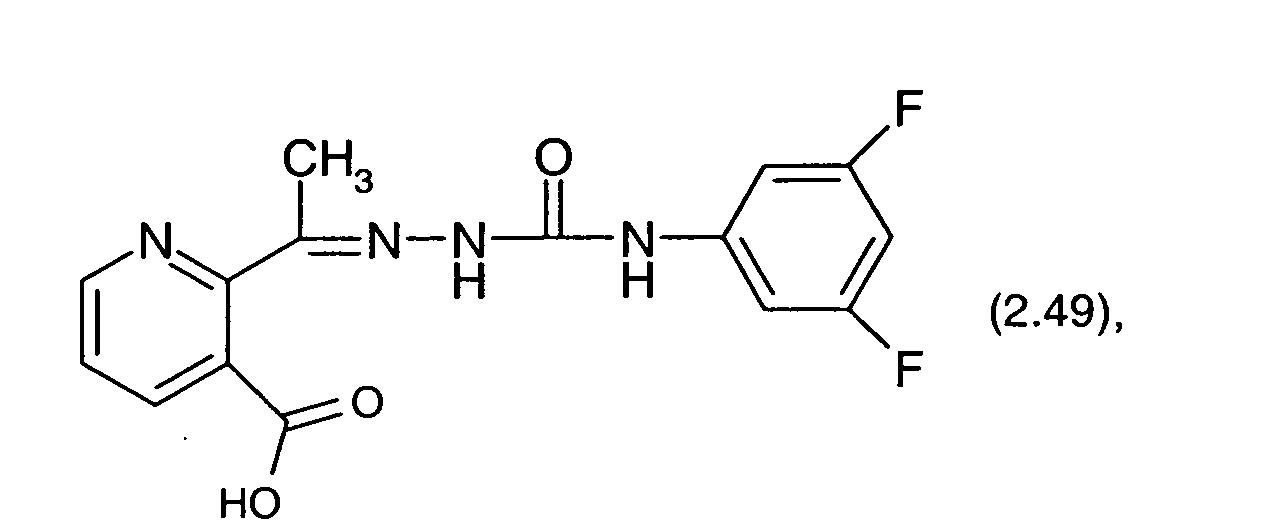 and the compound of formula 2.51