EP1520003B1 - Verfahren zur trennung pflanzlicher sterole von bei der raffination pflanzlicher öle anfallenden beiprodukten - Google Patents
Verfahren zur trennung pflanzlicher sterole von bei der raffination pflanzlicher öle anfallenden beiprodukten Download PDFInfo
- Publication number
- EP1520003B1 EP1520003B1 EP02755376A EP02755376A EP1520003B1 EP 1520003 B1 EP1520003 B1 EP 1520003B1 EP 02755376 A EP02755376 A EP 02755376A EP 02755376 A EP02755376 A EP 02755376A EP 1520003 B1 EP1520003 B1 EP 1520003B1
- Authority
- EP
- European Patent Office
- Prior art keywords
- sterols
- distillation
- process according
- fatty acids
- tocopherols
- Prior art date
- Legal status (The legal status is an assumption and is not a legal conclusion. Google has not performed a legal analysis and makes no representation as to the accuracy of the status listed.)
- Expired - Lifetime
Links
- 238000000034 method Methods 0.000 title claims description 30
- 230000008569 process Effects 0.000 title claims description 27
- 238000007670 refining Methods 0.000 title claims description 11
- 235000015112 vegetable and seed oil Nutrition 0.000 title claims description 9
- 239000008158 vegetable oil Substances 0.000 title claims description 9
- 235000002378 plant sterols Nutrition 0.000 title claims description 8
- 238000011084 recovery Methods 0.000 title claims description 7
- 239000006227 byproduct Substances 0.000 title description 4
- 229930182558 Sterol Natural products 0.000 claims description 79
- 235000003702 sterols Nutrition 0.000 claims description 79
- 150000003432 sterols Chemical class 0.000 claims description 58
- 229930003799 tocopherol Natural products 0.000 claims description 38
- 239000011732 tocopherol Substances 0.000 claims description 38
- 235000021588 free fatty acids Nutrition 0.000 claims description 35
- 238000004332 deodorization Methods 0.000 claims description 29
- -1 sterol esters Chemical class 0.000 claims description 29
- 235000019149 tocopherols Nutrition 0.000 claims description 29
- 238000004821 distillation Methods 0.000 claims description 27
- 239000000203 mixture Substances 0.000 claims description 22
- 239000002904 solvent Substances 0.000 claims description 19
- WQDUMFSSJAZKTM-UHFFFAOYSA-N Sodium methoxide Chemical compound [Na+].[O-]C WQDUMFSSJAZKTM-UHFFFAOYSA-N 0.000 claims description 18
- 239000000463 material Substances 0.000 claims description 17
- 238000006243 chemical reaction Methods 0.000 claims description 11
- GVJHHUAWPYXKBD-UHFFFAOYSA-N d-alpha-tocopherol Natural products OC1=C(C)C(C)=C2OC(CCCC(C)CCCC(C)CCCC(C)C)(C)CCC2=C1C GVJHHUAWPYXKBD-UHFFFAOYSA-N 0.000 claims description 11
- GVJHHUAWPYXKBD-IEOSBIPESA-N α-tocopherol Chemical compound OC1=C(C)C(C)=C2O[C@@](CCC[C@H](C)CCC[C@H](C)CCCC(C)C)(C)CCC2=C1C GVJHHUAWPYXKBD-IEOSBIPESA-N 0.000 claims description 11
- 239000003054 catalyst Substances 0.000 claims description 10
- 239000003513 alkali Substances 0.000 claims description 9
- 235000010384 tocopherol Nutrition 0.000 claims description 9
- 229960001295 tocopherol Drugs 0.000 claims description 9
- 238000007127 saponification reaction Methods 0.000 claims description 8
- 239000000126 substance Substances 0.000 claims description 8
- 150000003626 triacylglycerols Chemical class 0.000 claims description 8
- 150000008064 anhydrides Chemical class 0.000 claims description 7
- 229930195733 hydrocarbon Natural products 0.000 claims description 7
- 150000002430 hydrocarbons Chemical class 0.000 claims description 7
- 238000000526 short-path distillation Methods 0.000 claims description 7
- 238000005809 transesterification reaction Methods 0.000 claims description 7
- 239000002798 polar solvent Substances 0.000 claims description 6
- WPYMKLBDIGXBTP-UHFFFAOYSA-N benzoic acid Chemical compound OC(=O)C1=CC=CC=C1 WPYMKLBDIGXBTP-UHFFFAOYSA-N 0.000 claims description 5
- 239000002994 raw material Substances 0.000 claims description 5
- 240000002791 Brassica napus Species 0.000 claims description 4
- 244000020551 Helianthus annuus Species 0.000 claims description 4
- 238000005292 vacuum distillation Methods 0.000 claims description 4
- 244000068988 Glycine max Species 0.000 claims description 3
- 235000019484 Rapeseed oil Nutrition 0.000 claims description 3
- 235000019486 Sunflower oil Nutrition 0.000 claims description 3
- 125000001797 benzyl group Chemical group [H]C1=C([H])C([H])=C(C([H])=C1[H])C([H])([H])* 0.000 claims description 3
- 238000004587 chromatography analysis Methods 0.000 claims description 3
- 235000005687 corn oil Nutrition 0.000 claims description 3
- 239000002285 corn oil Substances 0.000 claims description 3
- LGRFSURHDFAFJT-UHFFFAOYSA-N phthalic anhydride Chemical class C1=CC=C2C(=O)OC(=O)C2=C1 LGRFSURHDFAFJT-UHFFFAOYSA-N 0.000 claims description 3
- 235000012424 soybean oil Nutrition 0.000 claims description 3
- 239000003549 soybean oil Substances 0.000 claims description 3
- 125000004432 carbon atom Chemical group C* 0.000 claims description 2
- 150000001244 carboxylic acid anhydrides Chemical class 0.000 claims description 2
- 239000012454 non-polar solvent Substances 0.000 claims description 2
- QUEDXNHFTDJVIY-UHFFFAOYSA-N γ-tocopherol Chemical class OC1=C(C)C(C)=C2OC(CCCC(C)CCCC(C)CCCC(C)C)(C)CCC2=C1 QUEDXNHFTDJVIY-UHFFFAOYSA-N 0.000 claims 4
- OKKJLVBELUTLKV-UHFFFAOYSA-N Methanol Chemical compound OC OKKJLVBELUTLKV-UHFFFAOYSA-N 0.000 description 30
- 125000002640 tocopherol group Chemical class 0.000 description 25
- VLKZOEOYAKHREP-UHFFFAOYSA-N n-Hexane Chemical compound CCCCCC VLKZOEOYAKHREP-UHFFFAOYSA-N 0.000 description 23
- 235000014113 dietary fatty acids Nutrition 0.000 description 14
- 229930195729 fatty acid Natural products 0.000 description 14
- 239000000194 fatty acid Substances 0.000 description 14
- 150000004665 fatty acids Chemical class 0.000 description 14
- LFQSCWFLJHTTHZ-UHFFFAOYSA-N Ethanol Chemical compound CCO LFQSCWFLJHTTHZ-UHFFFAOYSA-N 0.000 description 10
- PEDCQBHIVMGVHV-UHFFFAOYSA-N Glycerine Chemical compound OCC(O)CO PEDCQBHIVMGVHV-UHFFFAOYSA-N 0.000 description 9
- 125000005456 glyceride group Chemical group 0.000 description 9
- 150000004702 methyl esters Chemical class 0.000 description 8
- 239000000047 product Substances 0.000 description 8
- XLYOFNOQVPJJNP-UHFFFAOYSA-N water Substances O XLYOFNOQVPJJNP-UHFFFAOYSA-N 0.000 description 8
- 238000009835 boiling Methods 0.000 description 7
- 239000000344 soap Substances 0.000 description 7
- HEMHJVSKTPXQMS-UHFFFAOYSA-M sodium hydroxide Inorganic materials [OH-].[Na+] HEMHJVSKTPXQMS-UHFFFAOYSA-M 0.000 description 7
- OILXMJHPFNGGTO-UHFFFAOYSA-N (22E)-(24xi)-24-methylcholesta-5,22-dien-3beta-ol Natural products C1C=C2CC(O)CCC2(C)C2C1C1CCC(C(C)C=CC(C)C(C)C)C1(C)CC2 OILXMJHPFNGGTO-UHFFFAOYSA-N 0.000 description 6
- LGJMUZUPVCAVPU-UHFFFAOYSA-N beta-Sitostanol Natural products C1CC2CC(O)CCC2(C)C2C1C1CCC(C(C)CCC(CC)C(C)C)C1(C)CC2 LGJMUZUPVCAVPU-UHFFFAOYSA-N 0.000 description 6
- KRKNYBCHXYNGOX-UHFFFAOYSA-N citric acid Chemical compound OC(=O)CC(O)(C(O)=O)CC(O)=O KRKNYBCHXYNGOX-UHFFFAOYSA-N 0.000 description 6
- 239000011541 reaction mixture Substances 0.000 description 6
- QTBSBXVTEAMEQO-UHFFFAOYSA-N Acetic acid Chemical compound CC(O)=O QTBSBXVTEAMEQO-UHFFFAOYSA-N 0.000 description 5
- HVYWMOMLDIMFJA-DPAQBDIFSA-N cholesterol Chemical compound C1C=C2C[C@@H](O)CC[C@]2(C)[C@@H]2[C@@H]1[C@@H]1CC[C@H]([C@H](C)CCCC(C)C)[C@@]1(C)CC2 HVYWMOMLDIMFJA-DPAQBDIFSA-N 0.000 description 5
- 150000001875 compounds Chemical class 0.000 description 5
- 239000013078 crystal Substances 0.000 description 5
- 238000005886 esterification reaction Methods 0.000 description 5
- 239000007789 gas Substances 0.000 description 5
- 239000007788 liquid Substances 0.000 description 5
- 238000005406 washing Methods 0.000 description 5
- 230000007423 decrease Effects 0.000 description 4
- 230000003247 decreasing effect Effects 0.000 description 4
- 230000032050 esterification Effects 0.000 description 4
- 239000003921 oil Substances 0.000 description 4
- 235000019198 oils Nutrition 0.000 description 4
- GJJVAFUKOBZPCB-ZGRPYONQSA-N (r)-3,4-dihydro-2-methyl-2-(4,8,12-trimethyl-3,7,11-tridecatrienyl)-2h-1-benzopyran-6-ol Chemical class OC1=CC=C2OC(CC/C=C(C)/CC/C=C(C)/CCC=C(C)C)(C)CCC2=C1 GJJVAFUKOBZPCB-ZGRPYONQSA-N 0.000 description 3
- OQMZNAMGEHIHNN-UHFFFAOYSA-N 7-Dehydrostigmasterol Natural products C1C(O)CCC2(C)C(CCC3(C(C(C)C=CC(CC)C(C)C)CCC33)C)C3=CC=C21 OQMZNAMGEHIHNN-UHFFFAOYSA-N 0.000 description 3
- OILXMJHPFNGGTO-NRHJOKMGSA-N Brassicasterol Natural products O[C@@H]1CC=2[C@@](C)([C@@H]3[C@H]([C@H]4[C@](C)([C@H]([C@@H](/C=C/[C@H](C(C)C)C)C)CC4)CC3)CC=2)CC1 OILXMJHPFNGGTO-NRHJOKMGSA-N 0.000 description 3
- SGNBVLSWZMBQTH-FGAXOLDCSA-N Campesterol Natural products O[C@@H]1CC=2[C@@](C)([C@@H]3[C@H]([C@H]4[C@@](C)([C@H]([C@H](CC[C@H](C(C)C)C)C)CC4)CC3)CC=2)CC1 SGNBVLSWZMBQTH-FGAXOLDCSA-N 0.000 description 3
- BTEISVKTSQLKST-UHFFFAOYSA-N Haliclonasterol Natural products CC(C=CC(C)C(C)(C)C)C1CCC2C3=CC=C4CC(O)CCC4(C)C3CCC12C BTEISVKTSQLKST-UHFFFAOYSA-N 0.000 description 3
- KWYUFKZDYYNOTN-UHFFFAOYSA-M Potassium hydroxide Chemical compound [OH-].[K+] KWYUFKZDYYNOTN-UHFFFAOYSA-M 0.000 description 3
- OILXMJHPFNGGTO-ZRUUVFCLSA-N UNPD197407 Natural products C1C=C2C[C@@H](O)CC[C@]2(C)[C@@H]2[C@@H]1[C@@H]1CC[C@H]([C@H](C)C=C[C@H](C)C(C)C)[C@@]1(C)CC2 OILXMJHPFNGGTO-ZRUUVFCLSA-N 0.000 description 3
- HZYXFRGVBOPPNZ-UHFFFAOYSA-N UNPD88870 Natural products C1C=C2CC(O)CCC2(C)C2C1C1CCC(C(C)=CCC(CC)C(C)C)C1(C)CC2 HZYXFRGVBOPPNZ-UHFFFAOYSA-N 0.000 description 3
- 238000004458 analytical method Methods 0.000 description 3
- 229940076810 beta sitosterol Drugs 0.000 description 3
- NJKOMDUNNDKEAI-UHFFFAOYSA-N beta-sitosterol Natural products CCC(CCC(C)C1CCC2(C)C3CC=C4CC(O)CCC4C3CCC12C)C(C)C NJKOMDUNNDKEAI-UHFFFAOYSA-N 0.000 description 3
- 235000004420 brassicasterol Nutrition 0.000 description 3
- OILXMJHPFNGGTO-ZAUYPBDWSA-N brassicasterol Chemical compound C1C=C2C[C@@H](O)CC[C@]2(C)[C@@H]2[C@@H]1[C@@H]1CC[C@H]([C@H](C)/C=C/[C@H](C)C(C)C)[C@@]1(C)CC2 OILXMJHPFNGGTO-ZAUYPBDWSA-N 0.000 description 3
- 235000000431 campesterol Nutrition 0.000 description 3
- SGNBVLSWZMBQTH-PODYLUTMSA-N campesterol Chemical compound C1C=C2C[C@@H](O)CC[C@]2(C)[C@@H]2[C@@H]1[C@@H]1CC[C@H]([C@H](C)CC[C@@H](C)C(C)C)[C@@]1(C)CC2 SGNBVLSWZMBQTH-PODYLUTMSA-N 0.000 description 3
- 238000009833 condensation Methods 0.000 description 3
- 230000005494 condensation Effects 0.000 description 3
- 238000010908 decantation Methods 0.000 description 3
- 238000001704 evaporation Methods 0.000 description 3
- 235000019387 fatty acid methyl ester Nutrition 0.000 description 3
- 235000013305 food Nutrition 0.000 description 3
- 238000000926 separation method Methods 0.000 description 3
- KZJWDPNRJALLNS-VJSFXXLFSA-N sitosterol Chemical compound C1C=C2C[C@@H](O)CC[C@]2(C)[C@@H]2[C@@H]1[C@@H]1CC[C@H]([C@H](C)CC[C@@H](CC)C(C)C)[C@@]1(C)CC2 KZJWDPNRJALLNS-VJSFXXLFSA-N 0.000 description 3
- 229950005143 sitosterol Drugs 0.000 description 3
- NLQLSVXGSXCXFE-UHFFFAOYSA-N sitosterol Natural products CC=C(/CCC(C)C1CC2C3=CCC4C(C)C(O)CCC4(C)C3CCC2(C)C1)C(C)C NLQLSVXGSXCXFE-UHFFFAOYSA-N 0.000 description 3
- HCXVJBMSMIARIN-PHZDYDNGSA-N stigmasterol Chemical compound C1C=C2C[C@@H](O)CC[C@]2(C)[C@@H]2[C@@H]1[C@@H]1CC[C@H]([C@H](C)/C=C/[C@@H](CC)C(C)C)[C@@]1(C)CC2 HCXVJBMSMIARIN-PHZDYDNGSA-N 0.000 description 3
- 235000016831 stigmasterol Nutrition 0.000 description 3
- BFDNMXAIBMJLBB-UHFFFAOYSA-N stigmasterol Natural products CCC(C=CC(C)C1CCCC2C3CC=C4CC(O)CCC4(C)C3CCC12C)C(C)C BFDNMXAIBMJLBB-UHFFFAOYSA-N 0.000 description 3
- 229940032091 stigmasterol Drugs 0.000 description 3
- 229930003802 tocotrienol Natural products 0.000 description 3
- 239000011731 tocotrienol Substances 0.000 description 3
- 229940068778 tocotrienols Drugs 0.000 description 3
- 235000019148 tocotrienols Nutrition 0.000 description 3
- OSELKOCHBMDKEJ-UHFFFAOYSA-N (10R)-3c-Hydroxy-10r.13c-dimethyl-17c-((R)-1-methyl-4-isopropyl-hexen-(4c)-yl)-(8cH.9tH.14tH)-Delta5-tetradecahydro-1H-cyclopenta[a]phenanthren Natural products C1C=C2CC(O)CCC2(C)C2C1C1CCC(C(C)CCC(=CC)C(C)C)C1(C)CC2 OSELKOCHBMDKEJ-UHFFFAOYSA-N 0.000 description 2
- SECPZKHBENQXJG-FPLPWBNLSA-N (Z)-Palmitoleic acid Natural products CCCCCC\C=C/CCCCCCCC(O)=O SECPZKHBENQXJG-FPLPWBNLSA-N 0.000 description 2
- LQJBNNIYVWPHFW-UHFFFAOYSA-N 20:1omega9c fatty acid Natural products CCCCCCCCCCC=CCCCCCCCC(O)=O LQJBNNIYVWPHFW-UHFFFAOYSA-N 0.000 description 2
- OKTJSMMVPCPJKN-UHFFFAOYSA-N Carbon Chemical compound [C] OKTJSMMVPCPJKN-UHFFFAOYSA-N 0.000 description 2
- VEXZGXHMUGYJMC-UHFFFAOYSA-N Hydrochloric acid Chemical compound Cl VEXZGXHMUGYJMC-UHFFFAOYSA-N 0.000 description 2
- KFZMGEQAYNKOFK-UHFFFAOYSA-N Isopropanol Chemical compound CC(C)O KFZMGEQAYNKOFK-UHFFFAOYSA-N 0.000 description 2
- YWWVWXASSLXJHU-AATRIKPKSA-N Myristoleic acid Natural products CCCC\C=C\CCCCCCCC(O)=O YWWVWXASSLXJHU-AATRIKPKSA-N 0.000 description 2
- QAOWNCQODCNURD-UHFFFAOYSA-N Sulfuric acid Chemical compound OS(O)(=O)=O QAOWNCQODCNURD-UHFFFAOYSA-N 0.000 description 2
- 229960000583 acetic acid Drugs 0.000 description 2
- 239000002253 acid Substances 0.000 description 2
- 230000003078 antioxidant effect Effects 0.000 description 2
- 230000008901 benefit Effects 0.000 description 2
- CHIHQLCVLOXUJW-UHFFFAOYSA-N benzoic anhydride Chemical compound C=1C=CC=CC=1C(=O)OC(=O)C1=CC=CC=C1 CHIHQLCVLOXUJW-UHFFFAOYSA-N 0.000 description 2
- 230000015572 biosynthetic process Effects 0.000 description 2
- KBPLFHHGFOOTCA-UHFFFAOYSA-N caprylic alcohol Natural products CCCCCCCCO KBPLFHHGFOOTCA-UHFFFAOYSA-N 0.000 description 2
- 230000015556 catabolic process Effects 0.000 description 2
- 239000012141 concentrate Substances 0.000 description 2
- 239000002537 cosmetic Substances 0.000 description 2
- 238000006731 degradation reaction Methods 0.000 description 2
- 239000003925 fat Substances 0.000 description 2
- 235000019197 fats Nutrition 0.000 description 2
- YDLYQMBWCWFRAI-UHFFFAOYSA-N hexatriacontane Chemical compound CCCCCCCCCCCCCCCCCCCCCCCCCCCCCCCCCCCC YDLYQMBWCWFRAI-UHFFFAOYSA-N 0.000 description 2
- 230000000260 hypercholesteremic effect Effects 0.000 description 2
- 235000013310 margarine Nutrition 0.000 description 2
- 235000016709 nutrition Nutrition 0.000 description 2
- 230000035484 reaction time Effects 0.000 description 2
- 230000009467 reduction Effects 0.000 description 2
- 238000010992 reflux Methods 0.000 description 2
- 229920006395 saturated elastomer Polymers 0.000 description 2
- 159000000000 sodium salts Chemical class 0.000 description 2
- 239000007858 starting material Substances 0.000 description 2
- 238000001256 steam distillation Methods 0.000 description 2
- 239000001117 sulphuric acid Substances 0.000 description 2
- 235000011149 sulphuric acid Nutrition 0.000 description 2
- 150000004670 unsaturated fatty acids Chemical class 0.000 description 2
- 235000021122 unsaturated fatty acids Nutrition 0.000 description 2
- GWHCXVQVJPWHRF-KTKRTIGZSA-N (15Z)-tetracosenoic acid Chemical compound CCCCCCCC\C=C/CCCCCCCCCCCCCC(O)=O GWHCXVQVJPWHRF-KTKRTIGZSA-N 0.000 description 1
- MCWVPSBQQXUCTB-UHFFFAOYSA-N (24Z)-5alpha-Stigmasta-7,24(28)-dien-3beta-ol Natural products C1C(O)CCC2(C)C(CCC3(C(C(C)CCC(=CC)C(C)C)CCC33)C)C3=CCC21 MCWVPSBQQXUCTB-UHFFFAOYSA-N 0.000 description 1
- YYGNTYWPHWGJRM-UHFFFAOYSA-N (6E,10E,14E,18E)-2,6,10,15,19,23-hexamethyltetracosa-2,6,10,14,18,22-hexaene Chemical compound CC(C)=CCCC(C)=CCCC(C)=CCCC=C(C)CCC=C(C)CCC=C(C)C YYGNTYWPHWGJRM-UHFFFAOYSA-N 0.000 description 1
- WRIDQFICGBMAFQ-UHFFFAOYSA-N (E)-8-Octadecenoic acid Natural products CCCCCCCCCC=CCCCCCCC(O)=O WRIDQFICGBMAFQ-UHFFFAOYSA-N 0.000 description 1
- ZCJRGONXXDDVLB-UHFFFAOYSA-N 28-Isofucosterolacetat Natural products CC=C(CCC(C)C1CCC2C3CCC4CC(CCC4(C)C3CCC12C)OC(=O)C)/C(C)C ZCJRGONXXDDVLB-UHFFFAOYSA-N 0.000 description 1
- QSBYPNXLFMSGKH-UHFFFAOYSA-N 9-Heptadecensaeure Natural products CCCCCCCC=CCCCCCCCC(O)=O QSBYPNXLFMSGKH-UHFFFAOYSA-N 0.000 description 1
- YWWVWXASSLXJHU-UHFFFAOYSA-N 9E-tetradecenoic acid Natural products CCCCC=CCCCCCCCC(O)=O YWWVWXASSLXJHU-UHFFFAOYSA-N 0.000 description 1
- 235000004977 Brassica sinapistrum Nutrition 0.000 description 1
- MYMOFIZGZYHOMD-UHFFFAOYSA-N Dioxygen Chemical compound O=O MYMOFIZGZYHOMD-UHFFFAOYSA-N 0.000 description 1
- 241000196324 Embryophyta Species 0.000 description 1
- 229940123457 Free radical scavenger Drugs 0.000 description 1
- GBBBJSKVBYJMBG-QTWVXCTBSA-N Fucosterol Natural products CC=C(CC[C@@H](C)[C@@H]1CC[C@@H]2[C@H]3C=C[C@@H]4C[C@H](O)CC[C@@]4(C)[C@@H]3CC[C@@]12C)C(C)C GBBBJSKVBYJMBG-QTWVXCTBSA-N 0.000 description 1
- 235000003222 Helianthus annuus Nutrition 0.000 description 1
- UFHFLCQGNIYNRP-UHFFFAOYSA-N Hydrogen Chemical compound [H][H] UFHFLCQGNIYNRP-UHFFFAOYSA-N 0.000 description 1
- DGAQECJNVWCQMB-PUAWFVPOSA-M Ilexoside XXIX Chemical compound C[C@@H]1CC[C@@]2(CC[C@@]3(C(=CC[C@H]4[C@]3(CC[C@@H]5[C@@]4(CC[C@@H](C5(C)C)OS(=O)(=O)[O-])C)C)[C@@H]2[C@]1(C)O)C)C(=O)O[C@H]6[C@@H]([C@H]([C@@H]([C@H](O6)CO)O)O)O.[Na+] DGAQECJNVWCQMB-PUAWFVPOSA-M 0.000 description 1
- OSELKOCHBMDKEJ-VRUYXKNBSA-N Isofucosterol Natural products CC=C(CC[C@@H](C)[C@H]1CC[C@@H]2[C@H]3CC=C4C[C@@H](O)CC[C@]4(C)[C@@H]3CC[C@]12C)C(C)C OSELKOCHBMDKEJ-VRUYXKNBSA-N 0.000 description 1
- 108010028554 LDL Cholesterol Proteins 0.000 description 1
- 238000008214 LDL Cholesterol Methods 0.000 description 1
- 108010007622 LDL Lipoproteins Proteins 0.000 description 1
- OYHQOLUKZRVURQ-HZJYTTRNSA-N Linoleic acid Chemical compound CCCCC\C=C/C\C=C/CCCCCCCC(O)=O OYHQOLUKZRVURQ-HZJYTTRNSA-N 0.000 description 1
- 241001465754 Metazoa Species 0.000 description 1
- XJXROGWVRIJYMO-SJDLZYGOSA-N Nervonic acid Natural products O=C(O)[C@@H](/C=C/CCCCCCCC)CCCCCCCCCCCC XJXROGWVRIJYMO-SJDLZYGOSA-N 0.000 description 1
- ZQPPMHVWECSIRJ-UHFFFAOYSA-N Oleic acid Natural products CCCCCCCCC=CCCCCCCCC(O)=O ZQPPMHVWECSIRJ-UHFFFAOYSA-N 0.000 description 1
- BHEOSNUKNHRBNM-UHFFFAOYSA-N Tetramethylsqualene Natural products CC(=C)C(C)CCC(=C)C(C)CCC(C)=CCCC=C(C)CCC(C)C(=C)CCC(C)C(C)=C BHEOSNUKNHRBNM-UHFFFAOYSA-N 0.000 description 1
- 229930003427 Vitamin E Natural products 0.000 description 1
- 150000008065 acid anhydrides Chemical class 0.000 description 1
- 230000002378 acidificating effect Effects 0.000 description 1
- 238000013019 agitation Methods 0.000 description 1
- 150000001298 alcohols Chemical class 0.000 description 1
- 229940087168 alpha tocopherol Drugs 0.000 description 1
- MCWVPSBQQXUCTB-OQTIOYDCSA-N avenasterol Chemical compound C1[C@@H](O)CC[C@]2(C)[C@@H](CC[C@@]3([C@@H]([C@H](C)CC/C(=C/C)C(C)C)CC[C@H]33)C)C3=CC[C@H]21 MCWVPSBQQXUCTB-OQTIOYDCSA-N 0.000 description 1
- OGBUMNBNEWYMNJ-UHFFFAOYSA-N batilol Chemical class CCCCCCCCCCCCCCCCCCOCC(O)CO OGBUMNBNEWYMNJ-UHFFFAOYSA-N 0.000 description 1
- 238000004061 bleaching Methods 0.000 description 1
- 239000012159 carrier gas Substances 0.000 description 1
- 239000007795 chemical reaction product Substances 0.000 description 1
- SECPZKHBENQXJG-UHFFFAOYSA-N cis-palmitoleic acid Natural products CCCCCCC=CCCCCCCCC(O)=O SECPZKHBENQXJG-UHFFFAOYSA-N 0.000 description 1
- GWHCXVQVJPWHRF-UHFFFAOYSA-N cis-tetracosenoic acid Natural products CCCCCCCCC=CCCCCCCCCCCCCCC(O)=O GWHCXVQVJPWHRF-UHFFFAOYSA-N 0.000 description 1
- 238000004040 coloring Methods 0.000 description 1
- 239000000356 contaminant Substances 0.000 description 1
- 238000010924 continuous production Methods 0.000 description 1
- 239000007857 degradation product Substances 0.000 description 1
- 230000018044 dehydration Effects 0.000 description 1
- 238000006297 dehydration reaction Methods 0.000 description 1
- 229910001882 dioxygen Inorganic materials 0.000 description 1
- 239000012153 distilled water Substances 0.000 description 1
- UKMSUNONTOPOIO-UHFFFAOYSA-N docosanoic acid Chemical compound CCCCCCCCCCCCCCCCCCCCCC(O)=O UKMSUNONTOPOIO-UHFFFAOYSA-N 0.000 description 1
- PRAKJMSDJKAYCZ-UHFFFAOYSA-N dodecahydrosqualene Natural products CC(C)CCCC(C)CCCC(C)CCCCC(C)CCCC(C)CCCC(C)C PRAKJMSDJKAYCZ-UHFFFAOYSA-N 0.000 description 1
- 229940079593 drug Drugs 0.000 description 1
- 239000003814 drug Substances 0.000 description 1
- 238000001035 drying Methods 0.000 description 1
- 238000010980 drying distillation Methods 0.000 description 1
- 230000000694 effects Effects 0.000 description 1
- 230000008020 evaporation Effects 0.000 description 1
- 230000004133 fatty acid degradation Effects 0.000 description 1
- 238000001914 filtration Methods 0.000 description 1
- LQJBNNIYVWPHFW-QXMHVHEDSA-N gadoleic acid Chemical compound CCCCCCCCCC\C=C/CCCCCCCC(O)=O LQJBNNIYVWPHFW-QXMHVHEDSA-N 0.000 description 1
- WIGCFUFOHFEKBI-UHFFFAOYSA-N gamma-tocopherol Natural products CC(C)CCCC(C)CCCC(C)CCCC1CCC2C(C)C(O)C(C)C(C)C2O1 WIGCFUFOHFEKBI-UHFFFAOYSA-N 0.000 description 1
- 238000004817 gas chromatography Methods 0.000 description 1
- 239000012362 glacial acetic acid Substances 0.000 description 1
- 230000005484 gravity Effects 0.000 description 1
- 229910052739 hydrogen Inorganic materials 0.000 description 1
- 239000001257 hydrogen Substances 0.000 description 1
- 125000004435 hydrogen atom Chemical group [H]* 0.000 description 1
- 230000006872 improvement Effects 0.000 description 1
- 239000012535 impurity Substances 0.000 description 1
- 229910052500 inorganic mineral Inorganic materials 0.000 description 1
- 239000013067 intermediate product Substances 0.000 description 1
- OSELKOCHBMDKEJ-WGMIZEQOSA-N isofucosterol Chemical compound C1C=C2C[C@@H](O)CC[C@]2(C)[C@@H]2[C@@H]1[C@@H]1CC[C@H]([C@H](C)CC/C(=C/C)C(C)C)[C@@]1(C)CC2 OSELKOCHBMDKEJ-WGMIZEQOSA-N 0.000 description 1
- QXJSBBXBKPUZAA-UHFFFAOYSA-N isooleic acid Natural products CCCCCCCC=CCCCCCCCCC(O)=O QXJSBBXBKPUZAA-UHFFFAOYSA-N 0.000 description 1
- OYHQOLUKZRVURQ-IXWMQOLASA-N linoleic acid Natural products CCCCC\C=C/C\C=C\CCCCCCCC(O)=O OYHQOLUKZRVURQ-IXWMQOLASA-N 0.000 description 1
- KQQKGWQCNNTQJW-UHFFFAOYSA-N linolenic acid Natural products CC=CCCC=CCC=CCCCCCCCC(O)=O KQQKGWQCNNTQJW-UHFFFAOYSA-N 0.000 description 1
- 150000002632 lipids Chemical class 0.000 description 1
- 239000003264 margarine Substances 0.000 description 1
- 239000011707 mineral Substances 0.000 description 1
- TVMXDCGIABBOFY-UHFFFAOYSA-N n-Octanol Natural products CCCCCCCC TVMXDCGIABBOFY-UHFFFAOYSA-N 0.000 description 1
- 229930014626 natural product Natural products 0.000 description 1
- 230000007935 neutral effect Effects 0.000 description 1
- 238000006386 neutralization reaction Methods 0.000 description 1
- 230000035764 nutrition Effects 0.000 description 1
- 150000002888 oleic acid derivatives Chemical class 0.000 description 1
- 230000001590 oxidative effect Effects 0.000 description 1
- IPCSVZSSVZVIGE-UHFFFAOYSA-N palmitic acid group Chemical group C(CCCCCCCCCCCCCCC)(=O)O IPCSVZSSVZVIGE-UHFFFAOYSA-N 0.000 description 1
- BDERNNFJNOPAEC-UHFFFAOYSA-N propan-1-ol Chemical compound CCCO BDERNNFJNOPAEC-UHFFFAOYSA-N 0.000 description 1
- 238000000746 purification Methods 0.000 description 1
- 239000002516 radical scavenger Substances 0.000 description 1
- 230000009257 reactivity Effects 0.000 description 1
- 238000001953 recrystallisation Methods 0.000 description 1
- 150000003839 salts Chemical class 0.000 description 1
- 235000003441 saturated fatty acids Nutrition 0.000 description 1
- 210000002966 serum Anatomy 0.000 description 1
- 235000021391 short chain fatty acids Nutrition 0.000 description 1
- 150000004666 short chain fatty acids Chemical class 0.000 description 1
- 238000007086 side reaction Methods 0.000 description 1
- 238000002791 soaking Methods 0.000 description 1
- 229940031439 squalene Drugs 0.000 description 1
- TUHBEKDERLKLEC-UHFFFAOYSA-N squalene Natural products CC(=CCCC(=CCCC(=CCCC=C(/C)CCC=C(/C)CC=C(C)C)C)C)C TUHBEKDERLKLEC-UHFFFAOYSA-N 0.000 description 1
- 238000003756 stirring Methods 0.000 description 1
- 229960000984 tocofersolan Drugs 0.000 description 1
- 230000009466 transformation Effects 0.000 description 1
- 235000019165 vitamin E Nutrition 0.000 description 1
- 239000011709 vitamin E Substances 0.000 description 1
- 229940046009 vitamin E Drugs 0.000 description 1
- DTOSIQBPPRVQHS-UHFFFAOYSA-N α-Linolenic acid Chemical compound CCC=CCC=CCC=CCCCCCCCC(O)=O DTOSIQBPPRVQHS-UHFFFAOYSA-N 0.000 description 1
- 239000002076 α-tocopherol Substances 0.000 description 1
- 235000004835 α-tocopherol Nutrition 0.000 description 1
Images
Classifications
-
- C—CHEMISTRY; METALLURGY
- C11—ANIMAL OR VEGETABLE OILS, FATS, FATTY SUBSTANCES OR WAXES; FATTY ACIDS THEREFROM; DETERGENTS; CANDLES
- C11C—FATTY ACIDS FROM FATS, OILS OR WAXES; CANDLES; FATS, OILS OR FATTY ACIDS BY CHEMICAL MODIFICATION OF FATS, OILS, OR FATTY ACIDS OBTAINED THEREFROM
- C11C3/00—Fats, oils, or fatty acids by chemical modification of fats, oils, or fatty acids obtained therefrom
- C11C3/04—Fats, oils, or fatty acids by chemical modification of fats, oils, or fatty acids obtained therefrom by esterification of fats or fatty oils
- C11C3/10—Ester interchange
-
- A—HUMAN NECESSITIES
- A61—MEDICAL OR VETERINARY SCIENCE; HYGIENE
- A61P—SPECIFIC THERAPEUTIC ACTIVITY OF CHEMICAL COMPOUNDS OR MEDICINAL PREPARATIONS
- A61P3/00—Drugs for disorders of the metabolism
- A61P3/06—Antihyperlipidemics
-
- C—CHEMISTRY; METALLURGY
- C11—ANIMAL OR VEGETABLE OILS, FATS, FATTY SUBSTANCES OR WAXES; FATTY ACIDS THEREFROM; DETERGENTS; CANDLES
- C11B—PRODUCING, e.g. BY PRESSING RAW MATERIALS OR BY EXTRACTION FROM WASTE MATERIALS, REFINING OR PRESERVING FATS, FATTY SUBSTANCES, e.g. LANOLIN, FATTY OILS OR WAXES; ESSENTIAL OILS; PERFUMES
- C11B3/00—Refining fats or fatty oils
- C11B3/12—Refining fats or fatty oils by distillation
Definitions
- the invention concerns the recovery of plant sterols and other valuable components such as tocopherols from a by-product of vegetable oil refining, deodorization distillate composed of sterols, sterol esters, tocopherols, fats or oils and their derivatives as well as fatty acids.
- sterols are a group of natural compounds, the most important of which are summarised in the following table:
- Tocopherols and tocotrienols possess vitamin E activity, the highest level is exhibited by ⁇ -tocopherol.
- Tocopherols have important role in the human organism, due to their antioxidant properties they act as free radical scavengers and they also bind the molecular oxygen (A. Kamal-Eldin and L.A. Appleqvist: The Chemistry and Antioxidant properties of Tocopherols and Tocotrienols. Lipids 31. (1996) 671-701.).
- the concentration of sterols and tocopherols in vegetable oils is too low to allow their industrial recovery in an economical way.
- natural sterols and tocopherols are obtained from the so-called deodorization distillate formed during refining of vegetable oils.
- Vegetable oils are most widely refined by applying chemical or physical refining processes.
- the oil is subjected to vacuum-steam distillation in order to remove the taste and odoriferous materials as well as the free fatty acids and also to improve the oxidative stability of the oil.
- Deodorization is generally performed at a temperature of 210-270 °C, under reduced pressure (1-8 mbar), the deodorization distillate is obtained by condensation of the vapours formed during the operation.
- the composition of which can be characterised as follows: free fatty acids 30-85% unsaponifiable materials 7-35% tocopherols 1-8% free sterols 2-15% sterol esters 0-5% glycerides 5-30% others 0-5% * the % values relate to weight%
- distillation is preferably applied to remove fatty acids or fatty acid methyl esters (EP 0 333 472, USP 5,424,457, USP 5,627,289, USP 4,454,329).
- a saponification process is suggested for free fatty acid removal in the following patents: USP 3,335,154, USP 4,550,183 and WO 99/42471.
- the free sterols are esterified with the fatty acids present in the deodorization distillate.
- the advantage of this step is that the boiling point range of the formed sterol esters is much higher than that of the unreacted tocopherols, which makes the separation of the two groups of compounds simple using short-path distillation.
- crystalline free sterols can be recovered from the sterol esters concentrated in the residue of the distillation.
- Esterification of the free sterols with the free fatty acids present in the deodorization distillate requires relatively high temperature (150-250°C), long reaction time (1-12 hours) and reduced pressure (lower than 50 mbar), in some cases application of acidic type catalyst is necessary.
- high temperature, long reaction time unwanted side-reactions take place, such as degradation of tocopherols, transformation of sterols into hydrocarbons by losing the functional -OH group and a H atom as water, and increased formation of tar.
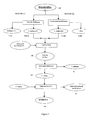
- the process of the present invention for recovery of plant sterols and tocopherols from deodorization distillates formed during chemical or physical refining of vegetable oils, by distillation or saponification of the components present, can be characterised with the following steps:
- the raw material of the process is deodorization distillate obtained during refining of sunflower, rapeseed, soybean or corn oil, but deodorization distillates of other oils can also be applied Free fatty acids are removed in a distillation column or in a film evaporator at 0.1-8 mbar pressure, 180-250°C temperature.
- free fatty acids can be saponified in an apolar/polar solvent medium at 10-40°C during 0.5-5 minutes, applying a slight excess of lye, then the fatty acids are removed in form of soaps by separating the polar phase.
- carboxylic acid anhydrides such as benzoic, benzyl, phenoxyacetic, phthalic, substituted phthalic acid anhydride, are applied.
- the anhydrides are added in a slight excess (maximum 5 mol%) over the amount of free sterols determined by gas chromatographic analysis.
- Sterols are liberated from the residue of tocopherol distillation containing 20-60 weight% sterol esters, using transesterification in methanol medium preferably in the presence of sodium methylate catalyst.
- the distillation residue containing sterol esters is preferably introduced continuously to the boiling sodium methylate solution and the reaction is made complete within 2-4 hours.
- the crystalline plant sterols obtained according to the invention are used for pharmaceutical, cosmetic or food industrial purposes. In specific cases sterols can be further purified before application.
- the raw material is a by-product of vegetable oil refining (deodorization) widely referred to as deodorization distillate, which can be originated from vacuum steam distillation of sunflower, rapeseed, soybean or corn oil.
- the deodorization distillate contains 2-15 weight% sterols and 30-85 weight% free fatty acids.
- the free fatty acid content of the material is more than 50 weight% (typically 60-85 weight%). Removing firstly the free fatty acids from the deodorization distillate, the quantity of the material can be decreased at least by half. Consequently, the size of the equipment necessary for the next reaction step, can be decreased.
- the sterol fraction is predominantly composed of the following compounds: ⁇ -sitosterol, campesterol, stigmasterol, brassicasterol (only in case of rapeseed origin), and avenasterol.
- the free fatty acid fraction includes C14-C24 saturated and unsaturated fatty acids (among others myristic, palmitic, stearic, arachidic, behenic and lignoceric as saturated and myristoleic, palmitoleic, oleic, linoleic, linolenic, gadoleic and nervonic acid as unsaturated fatty acid).
- the deodorization distillates consist of mono-, di-, and triglycerides as well as tocopherols (1-8 weight%), tocotrienols, hydrocarbons, sterol esters and some other minor components.
- the first step of the process is the removal of the major part of the free fatty acids present in the deodorization distillate (M0) in order to decrease the quantity of the reaction mixture.
- concentration factor ranges between 1.5 and 5.0 depending on the free fatty acid content and distillation parameters applied.
- the free fatty acids, together with the low boiling components of the unsaponifiable material are distilled off in a distillation column or film evaporator at 0.1-8 mbar pressure and 180-250 °C temperature.
- the pre-cut fraction contains the most volatile compounds, in which short chain fatty acids and fatty acid degradation products are concentrated.
- the main distillate fraction (S1-A) is mainly composed of different fatty acids and it contains some other compounds in small quantity (1-9 weight%) such as monoglycerides, hydrocarbons, traces of tocopherols and sterols.
- the residue of free fatty acid distillation contains sterols, tocopherols, hydrocarbons, mono-, di-, and triglycerides as well as some other, high boiling point compounds.
- the degradation and evaporation loss of sterols and tocopherols is less than 1.0%.
- the free fatty acids can be removed from the deodorizer distillate by alkali neutralization in a medium composed of polar and apolar solvents.
- the reaction takes place under mild conditions: low temperature (10-40°C), short contact time with alkali (0.5-5 min), slight or no excess of alkali (0-20%).
- the components of the deodorization distillate soluble in apolar solvent can be separated from the soaps by a simple decantation.
- Conventional fat solvents such as hexane can be applied as apolar solvent.
- Concerning the polar solvent a short-chain alcohol like methanol, ethanol, propanol or isopropanol is used.
- the alkali sodium or potassium hydroxide is applied in form of a 40-300 g/l water solution.
- the apolar phase contains triglycerides and the unsaponifiable substances
- the polar phase contains the dissolved soaps. Both phases have to be thoroughly washed because of the cross-solubility of the solvents.
- the polar phase is washed with an apolar solvent to improve the yield, the apolar phase is washed with a polar solvent to remove the residual soaps and the traces of alkali.
- Fatty acids can be recovered from the polar phase by soap splitting in miscella using a strong mineral acid such as sulphuric or hydrochloric acid at moderate pH and ambient temperature. Generally sulphuric acid is applied, the pH is adjusted to 1-5. The fatty acid phase is separated by gravity settling, then the fatty acids are washed to neutral by water, and finally the solvents are evaporated. The free fatty acid content of the resulted material (S1-B) is at least 95 weight%.
- a strong mineral acid such as sulphuric or hydrochloric acid at moderate pH and ambient temperature.
- sulphuric acid is applied, the pH is adjusted to 1-5.
- the fatty acid phase is separated by gravity settling, then the fatty acids are washed to neutral by water, and finally the solvents are evaporated.
- the free fatty acid content of the resulted material (S1-B) is at least 95 weight%.
- reaction mixture free of fatty acid according to the invention (M1-A or M1-B) is treated with acid anhydrides such as benzoic, benzyl, phenoxyacetic, phthalic, substituted phthalic acid anhydride to convert the free sterols into the corresponding sterol-esters.
- acid anhydrides such as benzoic, benzyl, phenoxyacetic, phthalic, substituted phthalic acid anhydride to convert the free sterols into the corresponding sterol-esters.
- the reaction takes place at a temperature of 50-150°C, under reduced pressure (50-100 mbar), dosing the anhydride in 0-5 weight% excess and it lasts approximately 0.5-2 hours.
- the reaction is followed up by gas chromatographic analysis.
- the tocopherols can be easily separated from the sterol esters by distillation based on their increased volatility difference.
- the tocopherols are removed by distillation in a short-path (molecular) distiller (0.01-0.1 mbar; 200-245°C) and it yields a concentrate rich in tocopherol (18-25 weight%) as distillate (S2) and a residue (M3) with high sterol-ester content (20-60 weight%).
- the next step of the process according to the invention is the liberation of free sterols from the sterol esters.
- Fatty acid methyl esters rise from the sterol esters present originally as fatty acid esters and from the glycerides, furthermore carboxylic acid methyl esters depending on the applied anhydride and free sterols form.
- the sodium methylate catalyst is neutralized by acetic acid.
- the reaction mixture is cooled to room temperature (15-25°C) meanwhile kept stirred then the formed sterol crystals are filtered off on a vacuum or pressure filter, preferably on a centrifuge.
- the filtered sterols have to be washed first with methanol (2-3 times) then with hexane (also 2-3 times) to get rid of coloring materials and other impurities.
- the amount of solvent used in the individual washing steps and/or the time of soaking between the individual filtration steps should be increased. If necessary, a re-ciystallization combined with activated carbon bleaching is performed. Long chain hydrocarbons (hexane and its homologues with higher molecular weight) and alcohols (n-octanol and its homologues with higher boiling point) as well as their mixtures can be applied as solvents in the re-crystallisation step.
- the first mother liquid (S3) consists of predominantly fatty acid methyl esters, other acid methyl esters and the excess methanol and it contains sodium salts originated from the catalyst in smaller quantities.
- the methanol is distilled off from the mixture, then the sodium salts and the glycerol are removed by washing with water, and finally, pure methyl esters are obtained by means of drying and vacuum distillation.
- the second mother liquid contains methanol as main component, which is recovered by distillation.
- the third mother liquid consists of mostly hexane, which is recovered by distillation.
- the white sterol crystals are dried in an appropriate dryer under a moderate vacuum (50-100 mbar) at a temperature between 60 and 120°C.
- the crystalline product (M4) obtained in this way contains at least 92 weight% free sterol and it is practically free from tocopherols and solvents.
- the typical composition of the crystalline sterol product obtained by this process is the following: ⁇ -Sitosterol: 40 - 65% Campesterol: 10 - 35% Stigmasterol: 2 - 25% Brassicasterol: 0 - 25% ⁇ 5-Avenasterol: 0 - 3% Other sterols: 0 - 9% * the % values relate to weight%
- a mixed deodorizer distillate (rape and sunflower, from physical and chemical refining process) was used as starting material.
- the composition of the initial mixture (M0) is characterised in Table I. The analyses were performed according to the methods given below:
- the same deodorization distillate (M0) as in Example 1 was used as starting material in the continuous solvent saponification reaction.
- the raw material (400 g) was dissolved in 2400 ml hexane.
- An alkali solution was made from 300 ml sodium hydroxide (concentration: 125 g/l), 400 ml water and 800 ml ethanol. This alkali solution was then added to the deodorization distillate - hexane solution and the mixture was intensively stirred for 5 min at room temperature. Afterwards the whole mixture was transferred into a separation funnel and it was subjected to decantation until two phases formed with sharp phase boundary (4 hours). The two phases were then separated. The upper, apolar phase contained glycerides and the unsaponifiable substances, the lower, polar phase contained the dissolved soaps.
- Both phases have to be washed because of the cross-solubility of the solvents.
- the polar phase was washed with an apolar solvent (3x100 ml hexane) to improve the yield, the apolar phase was washed with a polar solvent (3x100 ml ethanol) to remove the residual soaps. Afterwards the polar and apolar phases were unified respectively.
- the traces of alkali substances were removed from the unified polar phase by washing with 7 weight% citric acid solution (100 ml), then the traces of citric acid and the formed salts were removed by washing with distilled water (100 ml).
- the esterified mixture (250 g M2) was treated in a short-path distiller (0.075 m 2 ) equipped with a heated jacketed dosing funnel and a control needle valve.
- the distillate obtained in this step is the tocopherol concentrate.
- the composition of the distillation products is characterized in Table IV. Table IV.
- the first mother-liquid is composed predominantly of methyl esters and the excess methanol and it contains the catalyst residues, glycerol and other contaminants in smaller quantities.
- methyl-esters For further purification of methyl-esters, first the traces of the catalyst and glycerol as well as other water-soluble components were removed by washing with water, then the washed material was dried and finally, pure methyl esters were obtained by vacuum distillation.
Landscapes
- Chemical & Material Sciences (AREA)
- Life Sciences & Earth Sciences (AREA)
- Engineering & Computer Science (AREA)
- Chemical Kinetics & Catalysis (AREA)
- Organic Chemistry (AREA)
- Oil, Petroleum & Natural Gas (AREA)
- Wood Science & Technology (AREA)
- General Chemical & Material Sciences (AREA)
- Health & Medical Sciences (AREA)
- Microbiology (AREA)
- Medicinal Chemistry (AREA)
- Public Health (AREA)
- Obesity (AREA)
- Diabetes (AREA)
- Bioinformatics & Cheminformatics (AREA)
- Nuclear Medicine, Radiotherapy & Molecular Imaging (AREA)
- Pharmacology & Pharmacy (AREA)
- Animal Behavior & Ethology (AREA)
- General Health & Medical Sciences (AREA)
- Hematology (AREA)
- Veterinary Medicine (AREA)
- Fats And Perfumes (AREA)
- Steroid Compounds (AREA)
- Cosmetics (AREA)
- Pyrane Compounds (AREA)
- Pharmaceuticals Containing Other Organic And Inorganic Compounds (AREA)
- Coloring Foods And Improving Nutritive Qualities (AREA)
- Organic Low-Molecular-Weight Compounds And Preparation Thereof (AREA)
Claims (9)
- Verfahren zur Gewinnung von pflanzlichen Sterolen und Tocopherolen aus Desodorisationsdestillaten, die während der chemischen oder physikalischen Raffination von Pflanzenölen gebildet werden, durch Destillation oder Verseifung der vorliegenden Komponenten, dadurch gekennzeichnet, dassi) freie Fettsäuren aus dem Desodorisationsdestillat durch Vakuumdestillation oder kontinuierliche Lösungsmittelverseifung entfernt werden,ii) nach der Entfernung freier Fettsäuren das aus Sterolen, Tocopherolen, Kohlenwasserstoffen, Mono-, Di- und Triglyceriden als Hauptkomponenten bestehende erhaltene Material mit einem aromatischen Carbonsäureanhydrid mit mindestens 7 Kohlenstoffatomen bei einer Temperatur von 50-150 °C unter reduziertem Druck 0,5-2 h umgesetzt wird,iii) nach der Behandlung mit Anhydrid Tocopherole aus dem Gemisch unter Anwendung einer Kurzwegdestillation entfernt werden,iv) kristalline freie Sterole aus dem Destillationsrückstand, der Sterolester, Di- und Triglyceride enthält, durch Umesterung gewonnen werden.
- Verfahren nach Anspruch 1, dadurch gekennzeichnet, dass das Rohmaterial ein Desodorisationsdestillat ist, das während des Raffinierens von Sonnenblumen-, Raps-, Soja-, und Maisöl erhalten wird.
- Verfahren nach Anspruch 1i), dadurch gekennzeichnet, dass die freien Fettsäuren in einer Destillationskolonne oder in einem Filmverdampfer bei einem Druck von 0,1-8 mbar bei Temperaturen im Bereich von 180-250 °C destilliert werden.
- Verfahren nach Anspruch 1i), wobei die freien Fettsäuren in einem Medium von polaren/apolaren Lösungsmitteln bei einer Temperatur von 10-40 °C während 0,5-5 min in Gegenwart eines leichten Überschusses von Alkali verseift werden und die freien Fettsäuren durch Abtrennen der polaren Phase entfernt werden.
- Verfahren nach Anspruch 1ii), dadurch gekennzeichnet, dass Benzoesäure-, Benzyl-, Phenoxyessigsäure-, Phthalsäure-, substituiertes Phthalsäureanhydrid als Carbonsäureanhydrid eingesetzt werden.
- Verfahren nach Anspruch 1ii) und 5, dadurch gekennzeichnet, dass die Anhydride in einem auf 5 Mol-% über der Menge von Sterolen begrenzten, durch Gaschromatographieanalyse bestimmten Überschuss angewandt werden.
- Verfahren nach Anspruch 1iii), dadurch gekennzeichnet, dass die Kurzwegdestillation von Tocopherolen bei einem Druck von 0,01-0,1 bar unter Anwendung einer Temperatur von 200-260 °C durchgeführt wird.
- Verfahren nach Anspruch 1iv), dadurch gekennzeichnet, dass die Sterole aus dem 20-60 Gew.-% Sterolester enthaltenden Tocopheroldestillationsrückstand unter Anwendung von Umesterung vorzugsweise in Gegenwart von Natriummethylatkatalysator entfernt werden.
- Verfahren nach Anspruch 8, dadurch gekennzeichnet, dass während der Umesterung von Sterolestern der an Sterolestern reiche Destillationsrückstand der rückflusskochenden Natriummethylatlösung kontinuierlich zugesetzt und die Umsetzung innerhalb von 2-4 h abgeschlossen wird.
Priority Applications (1)
| Application Number | Priority Date | Filing Date | Title |
|---|---|---|---|
| SI200230583T SI1520003T1 (sl) | 2002-06-19 | 2002-07-02 | Postopek za rekuperiranje rastlinskih sterolov izstranskega produkta rafinacije rastlinskih olj |
Applications Claiming Priority (3)
| Application Number | Priority Date | Filing Date | Title |
|---|---|---|---|
| HU0200204 | 2002-06-19 | ||
| HU0202024A HU226074B1 (en) | 2002-06-19 | 2002-06-19 | Process for obtaining vegetable sterols from by-product originating in refining of vegetable oils |
| PCT/HU2002/000062 WO2004000979A1 (en) | 2002-06-19 | 2002-07-02 | Process for recovery of plant sterols from by-product of vegetable oil refining |
Publications (3)
| Publication Number | Publication Date |
|---|---|
| EP1520003A1 EP1520003A1 (de) | 2005-04-06 |
| EP1520003B1 true EP1520003B1 (de) | 2007-04-25 |
| EP1520003B8 EP1520003B8 (de) | 2007-11-07 |
Family
ID=89980531
Family Applications (1)
| Application Number | Title | Priority Date | Filing Date |
|---|---|---|---|
| EP02755376A Expired - Lifetime EP1520003B8 (de) | 2002-06-19 | 2002-07-02 | Verfahren zur trennung pflanzlicher sterole von bei der raffination pflanzlicher öle anfallenden beiprodukten |
Country Status (13)
| Country | Link |
|---|---|
| US (1) | US7368583B2 (de) |
| EP (1) | EP1520003B8 (de) |
| JP (1) | JP4180052B2 (de) |
| CN (1) | CN100374534C (de) |
| AU (1) | AU2002321664A1 (de) |
| BR (1) | BR0215782A (de) |
| CA (1) | CA2501963A1 (de) |
| EA (1) | EA200500051A1 (de) |
| HR (1) | HRP20050052A2 (de) |
| HU (1) | HU226074B1 (de) |
| MX (1) | MXPA04012787A (de) |
| UA (1) | UA78066C2 (de) |
| WO (1) | WO2004000979A1 (de) |
Families Citing this family (14)
| Publication number | Priority date | Publication date | Assignee | Title |
|---|---|---|---|---|
| CN101040036B (zh) * | 2004-10-19 | 2010-08-18 | 味之素株式会社 | 来自植物组织的油状物质中含有的微量组分的浓缩方法 |
| US8026380B2 (en) | 2007-07-30 | 2011-09-27 | H R D Corporation | System and process for production of fatty acids and wax alternatives from triglycerides |
| JP5808479B2 (ja) | 2011-04-14 | 2015-11-10 | アルファ−ラヴァル・コーポレート・アーベー | 脂肪酸の自己触媒エステル化のための方法 |
| CN102304418B (zh) * | 2011-07-26 | 2013-08-14 | 中山大学 | 一种除去动植物精油中被污染的邻苯二甲酸酯类物质的方法 |
| CN102352400B (zh) * | 2011-10-14 | 2013-08-07 | 河北科技大学 | 微生物发酵植物油脂脱臭馏出物生产植物甾醇的方法 |
| CN103319446B (zh) * | 2013-07-05 | 2015-07-29 | 河南懿丰油脂有限公司 | 从植物油脱臭馏出物中提取天然维生素e的方法 |
| CN103709133A (zh) * | 2013-12-27 | 2014-04-09 | 合肥工业大学 | 一种基于弱酸条件下从植物油脱臭馏出物中提纯生育酚的方法 |
| US9889084B2 (en) * | 2014-01-10 | 2018-02-13 | Valicor, Inc. | Compositions of cosmetic, personal care and skin care products derived from lipid feedstocks and methods to produce the same |
| CN109468171B (zh) * | 2018-12-18 | 2022-04-22 | 河南科技大学 | 一种从植物油中脱除生育酚的方法 |
| EP3696252B1 (de) | 2019-02-12 | 2021-11-17 | LANXESS Deutschland GmbH | Benzylhemiformal-haltige biodieselmischungen |
| CN109942369B (zh) * | 2019-04-15 | 2021-05-04 | 山东新元素生物科技有限公司 | 从维生素e生产渣油中提取长链脂肪醇的方法 |
| EP4034619A1 (de) | 2019-09-27 | 2022-08-03 | Basf Se | Verfahren zur produktion und reinigung von sterinen |
| CN114570101B (zh) * | 2022-02-28 | 2023-04-04 | 江西省巴斯夫生物科技有限公司 | 一种天然维生素e过滤装置 |
| CN114994210A (zh) * | 2022-06-10 | 2022-09-02 | 深圳市计量质量检测研究院 | 一种植物甾醇总量快速检测的前处理方法 |
Family Cites Families (6)
| Publication number | Priority date | Publication date | Assignee | Title |
|---|---|---|---|---|
| US3153055A (en) * | 1962-03-20 | 1964-10-13 | Eastman Kodak Co | Process for separating tocopherols and sterols from deodorizer sludge and the like |
| US5424457A (en) * | 1994-05-27 | 1995-06-13 | Eastman Chemical Company | Process for the production of sterol and tocopherol concentrates |
| US5512691A (en) * | 1994-11-07 | 1996-04-30 | Eastman Chemical Company | Process for the production of tocopherol concentrates |
| US5703252A (en) * | 1995-12-13 | 1997-12-30 | Henkel Corporation | Recovery of Tocopherols |
| US6706898B2 (en) * | 1998-01-29 | 2004-03-16 | Archer-Daniels-Midland Company | Methods for separating a tocopherol from a tocopherol-containing mixture |
| CA2279402C (en) * | 1998-03-24 | 2009-04-07 | Kao Corporation | Oil or fat composition containing phytosterol |
-
2002
- 2002-02-07 UA UAA200500511A patent/UA78066C2/uk unknown
- 2002-06-19 HU HU0202024A patent/HU226074B1/hu not_active IP Right Cessation
- 2002-07-02 WO PCT/HU2002/000062 patent/WO2004000979A1/en not_active Ceased
- 2002-07-02 JP JP2004515075A patent/JP4180052B2/ja not_active Expired - Fee Related
- 2002-07-02 EP EP02755376A patent/EP1520003B8/de not_active Expired - Lifetime
- 2002-07-02 MX MXPA04012787A patent/MXPA04012787A/es unknown
- 2002-07-02 US US10/519,769 patent/US7368583B2/en not_active Expired - Fee Related
- 2002-07-02 BR BR0215782-9A patent/BR0215782A/pt not_active IP Right Cessation
- 2002-07-02 EA EA200500051A patent/EA200500051A1/ru unknown
- 2002-07-02 CA CA002501963A patent/CA2501963A1/en not_active Abandoned
- 2002-07-02 AU AU2002321664A patent/AU2002321664A1/en not_active Abandoned
- 2002-07-02 HR HR20050052A patent/HRP20050052A2/hr not_active Application Discontinuation
- 2002-07-02 CN CNB028293959A patent/CN100374534C/zh not_active Expired - Fee Related
Also Published As
| Publication number | Publication date |
|---|---|
| MXPA04012787A (es) | 2005-09-20 |
| HRP20050052A2 (en) | 2005-08-31 |
| CN100374534C (zh) | 2008-03-12 |
| EP1520003A1 (de) | 2005-04-06 |
| JP4180052B2 (ja) | 2008-11-12 |
| WO2004000979A1 (en) | 2003-12-31 |
| HU226074B1 (en) | 2008-04-28 |
| US20060135794A1 (en) | 2006-06-22 |
| UA78066C2 (en) | 2007-02-15 |
| HUP0202024A2 (hu) | 2004-03-29 |
| CN1732251A (zh) | 2006-02-08 |
| BR0215782A (pt) | 2005-03-01 |
| CA2501963A1 (en) | 2003-12-31 |
| US7368583B2 (en) | 2008-05-06 |
| EA200500051A1 (ru) | 2005-10-27 |
| EP1520003B8 (de) | 2007-11-07 |
| HU0202024D0 (de) | 2002-08-28 |
| AU2002321664A1 (en) | 2004-01-06 |
| JP2005530018A (ja) | 2005-10-06 |
Similar Documents
| Publication | Publication Date | Title |
|---|---|---|
| CA2143441C (en) | Recovery of tocopherol and sterol | |
| US7368583B2 (en) | Process for recovery of plant sterols from by-product of vegetable oil refining | |
| AU2018420462B2 (en) | DHA enriched polyunsaturated fatty acid compositions | |
| US20240226050A9 (en) | DHA Enriched Polyunsaturated Fatty Acid Compositions | |
| AU2018428607B2 (en) | ALA enriched polyunsaturated fatty acid compositions | |
| AU2025201537A1 (en) | DHA Enriched Polyunsaturated Fatty Acid Compositions | |
| AU2018428608B2 (en) | DHA enriched polyunsaturated fatty acid compositions | |
| JPWO2011138957A1 (ja) | 食用油脂の精製方法 | |
| EP1610628B1 (de) | Verfahren zur herstellung von zubereitungen mit hohem sterolgehalt | |
| EP3817568B1 (de) | Verfahren zur herstellung einer gereinigten fettsäureesterzusammensetzung und fettsäureesterzusammensetzung | |
| HK40047677B (en) | Dha enriched polyunsaturated fatty acid compositions |
Legal Events
| Date | Code | Title | Description |
|---|---|---|---|
| PUAI | Public reference made under article 153(3) epc to a published international application that has entered the european phase |
Free format text: ORIGINAL CODE: 0009012 |
|
| 17P | Request for examination filed |
Effective date: 20050118 |
|
| AK | Designated contracting states |
Kind code of ref document: A1 Designated state(s): AT BE BG CH CY CZ DE DK EE ES FI FR GB GR IE IT LI LU MC NL PT SE SK TR |
|
| AX | Request for extension of the european patent |
Extension state: AL LT LV MK RO SI |
|
| RAX | Requested extension states of the european patent have changed |
Extension state: RO Payment date: 20050118 Extension state: SI Payment date: 20050118 |
|
| RBV | Designated contracting states (corrected) |
Designated state(s): CZ SK |
|
| REG | Reference to a national code |
Ref country code: DE Ref legal event code: 8566 |
|
| GRAP | Despatch of communication of intention to grant a patent |
Free format text: ORIGINAL CODE: EPIDOSNIGR1 |
|
| GRAS | Grant fee paid |
Free format text: ORIGINAL CODE: EPIDOSNIGR3 |
|
| GRAA | (expected) grant |
Free format text: ORIGINAL CODE: 0009210 |
|
| RIN1 | Information on inventor provided before grant (corrected) |
Inventor name: RECSEG, KATALIN Inventor name: KOVARI, ENDRENE Inventor name: KEMENY, ZSOLT Inventor name: CZUPPON, TIBOR |
|
| AK | Designated contracting states |
Kind code of ref document: B1 Designated state(s): CZ SK |
|
| AX | Request for extension of the european patent |
Extension state: RO SI |
|
| RIN2 | Information on inventor provided after grant (corrected) |
Inventor name: RECSEG, KATALIN Inventor name: CZUPPON, TIBOR Inventor name: KOEVARI, ENDRENE Inventor name: KEMENY, ZSOLT |
|
| RAP2 | Party data changed (patent owner data changed or rights of a patent transferred) |
Owner name: BUNGE ZRT. |
|
| PLBE | No opposition filed within time limit |
Free format text: ORIGINAL CODE: 0009261 |
|
| STAA | Information on the status of an ep patent application or granted ep patent |
Free format text: STATUS: NO OPPOSITION FILED WITHIN TIME LIMIT |
|
| 26N | No opposition filed |
Effective date: 20080128 |
|
| PGFP | Annual fee paid to national office [announced via postgrant information from national office to epo] |
Ref country code: CZ Payment date: 20120625 Year of fee payment: 11 Ref country code: SK Payment date: 20120629 Year of fee payment: 11 |
|
| PG25 | Lapsed in a contracting state [announced via postgrant information from national office to epo] |
Ref country code: CZ Free format text: LAPSE BECAUSE OF NON-PAYMENT OF DUE FEES Effective date: 20130702 |
|
| REG | Reference to a national code |
Ref country code: SI Ref legal event code: KO00 Effective date: 20140205 |
|
| REG | Reference to a national code |
Ref country code: SK Ref legal event code: MM4A Ref document number: E 2458 Country of ref document: SK Effective date: 20130702 |
|
| PG25 | Lapsed in a contracting state [announced via postgrant information from national office to epo] |
Ref country code: SK Free format text: LAPSE BECAUSE OF NON-PAYMENT OF DUE FEES Effective date: 20130702 |