EP1515232A1 - Dispositif de terminal d'execution de programme, procede d'execution de programme, et programme - Google Patents
Dispositif de terminal d'execution de programme, procede d'execution de programme, et programme Download PDFInfo
- Publication number
- EP1515232A1 EP1515232A1 EP03733256A EP03733256A EP1515232A1 EP 1515232 A1 EP1515232 A1 EP 1515232A1 EP 03733256 A EP03733256 A EP 03733256A EP 03733256 A EP03733256 A EP 03733256A EP 1515232 A1 EP1515232 A1 EP 1515232A1
- Authority
- EP
- European Patent Office
- Prior art keywords
- program
- execution format
- section
- runtime execution
- temporary
- Prior art date
- Legal status (The legal status is an assumption and is not a legal conclusion. Google has not performed a legal analysis and makes no representation as to the accuracy of the status listed.)
- Withdrawn
Links
Images








Classifications
-
- G—PHYSICS
- G06—COMPUTING OR CALCULATING; COUNTING
- G06F—ELECTRIC DIGITAL DATA PROCESSING
- G06F9/00—Arrangements for program control, e.g. control units
- G06F9/06—Arrangements for program control, e.g. control units using stored programs, i.e. using an internal store of processing equipment to receive or retain programs
- G06F9/44—Arrangements for executing specific programs
- G06F9/445—Program loading or initiating
Definitions
- the present invention relates to information terminal devices, program execution processing methods, and programs for performing an interpretation execution process for a received program, particularly, relates to an information terminal device, a program execution processing method, and a program by which quick start-up of a program is realized.
- a PIM (Personal Information Manager) application such as an electric telephone directory and an electric schedule book, and a game application, for example, are supplied.
- a user can freely select an application having a desired function, an easy-to-use user interface, or a favorite screen structure, and download the program, thereby using the selected application.
- Java (TM) is promising software architecture to realize a program distribution mechanism.
- Java (TM) which includes a virtual machine mechanism, is able to operate a program independent of hardware and an OS of a machine, thereby being considered effective architecture, not just in a computing field such as a workstation and a personal computer (hereinafter, referred to as a PC for short), but for a household electrical appliance.
- the start-up time means a time elapsed from when the userorotherapplication (e. g., abrowser, a mailer, or a telephone) installed in the portable information terminal gives an instruction to the virtual machine in the portable information terminal to start interpretation execution of a specific application to when an initial screen of the application, which is instructed to be started, is output to a display screen of the portable information terminal. That is, the start-up time is a latency time before the application is enabled, and therefore an unnecessary time for the user because he/she does not use the application during all that time, whereby the longer the start-up time becomes, the less an application execution efficiency becomes.
- the userorotherapplication e. g., abrowser, a mailer, or a telephone
- TM Java
- TM Java
- TM Java
- class files are supplied, in general, as being packaged in one file, and it is decompressed, after downloading, as one or more class files, which are stored as files in the portable information terminal.
- the start-up time of the application utilizing the virtual machine mechanism is longer than that required for starting an application (native application) written in a machine language of the portable information terminal.
- the present invention is designed to reduce a program start-up time by dividing (3) the class loading process included in the start-up process into "a class loading process necessary for a start-up of an application for the first time” and "a class loading process necessary for a start-up of the application for the second and subsequent times", and storing the processing results of the "first-time class loading process " as a record format (hereinafter , a temporary runtime execution format) different from a class file format, whereby only the "second-and-subsequent-time class loading process" is required at a start-up of the program.
- a record format hereinafter , a temporary runtime execution format
- a program execution processing terminal device of the present invention includes: a loader section for converting a program from a Java(TM) class file to a runtime execution format; a temporary runtime execution format storing section for storing a temporary runtime execution format generated based on the runtime execution format converted by the loader section, or a program stored in a program storing section; and a post-loader section for performing a postloading process for converting the temporary runtime execution format stored in the temporary runtime execution format storing section to a runtime execution format, determines whether or not there is a temporary runtime execution format in the temporary runtime execution format storing section when a start-up of a program is instructed, requests the loader section to perform conversion to a runtime execution format if there is none, and requests the post-loader section to perform conversion to a runtime execution format if there is any.
- a temporary runtime execution format may be obtained by converting the runtime execution format converted by the loader section to a temporary runtime execution format.
- a normal loading process is performed, and a runtime saving process is performed after the loading process for generating a temporary runtime execution format, whereby a postloading process, by which a runtime execution format is generated from a temporary runtime execution format, can be replaced with a normal loading process when the program is started-up for the second time and subsequent times, thereby reducing a processing time required for a program start-up for the second time and subsequent times.
- a temporary runtime execution format may be obtained by converting a program stored in the program storing section to a temporary runtime execution format.
- a preloading process is previously performed for a program for generating a temporary runtime execution format, whereby a postloading process can be replaced with a normal loading process in the first program start-up, thereby reducing a processing time required for a program start-up.
- a program execution processing method of the present invention includes: a program storing step of storing a received program in a program storing section; a loading step of converting the program stored in the program storing section to a runtime execution format; a converting step of converting the runtime execution format converted in the loading step, or the program stored in the program storing section to a temporary runtime execution format: a temporary runtime execution format storing step of storing the temporary runtime execution format converted in the converting step in a temporary runtime execution format storing section; a determining step of determining whether or not there is a temporary runtime execution format in the temporary runtime execution format storing section when a start-up of a program is instructed; a postloading step of converting, if there is a temporary runtime execution format in the temporary runtime execution format storing section as a result of the determination in the determining step, the temporary runtime execution format stored in the temporary runtime execution format storing section to a runtime execution format; and an interpreting step of performing interpretation execution execution
- a program of the present invention causes a computer to execute the above-described program execution processing method.
- This program may be supplied to a computer such as an information terminal device as being stored in a computer readable storage medium, or may be supplied to a computer such as an information terminal device via a communication line.
- a program download service using a portable information terminal, in which a Java (TM) mechanism is utilized, has already been widely available, whereby the present invention can be realized by extending the above mechanism.
- TM Java
- descriptions will be performed with appropriately referring to an embodiment in the case where the Java (TM) mechanism is used.
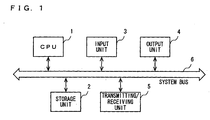
- FIG. 1 is a hardware structure of a portable information terminal according to a first embodiment of the present invention.
- a central processing unit (CPU) 1 a storage unit 2, an input unit 3, an output unit 4, and a transmitting/receiving unit 5 are included, and they are connected to each other via a system bus 6.
- the storage unit 2 is composed of a ROM, a RAM, and a hard disk, etc., and is used as a storage area to be used when the CPU 1 performs a process, or an area for storing a program itself.
- the input unit 3 is composed of a keyboard, a key button, a mouse, and a microphone, etc., for performing an input operation for an instruction by a user.
- the transmitting/receiving unit 5 performs data communications via a wireless or wire transmission path, and the CPU 1 can download data, for example, a program, from an external device (not shown) via the transmitting/receiving unit 5.
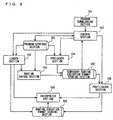
- FIG. 2 is a block diagram showing a structure of a program execution processing terminal device of the present embodiment.
- the program execution processing terminal device includes a program downloading section 101, a loader section 102, a runtime saving section 103, a preloader section 104, a post-loader section 105, an interpreter section 106, a control section 107, a program storing section 301, a temporary runtime execution format storing section 302, and a runtime execution format storing section 303.
- the program downloading section 101 receives a program from a program distribution source, and stores the received program in the program storing section 301 via the control section 107.
- the program downloading section 101 can be realized using a download system of a program installed in a conventional portable information terminal.
- the loader section 102 converts the program stored in the program storing section 301 to a runtime execution format in accordance with a request from the control section 107, and stores it in the runtime execution format storing section 303. Also, the interpreter section 106 is notified of a start of program execution. Further, after notifying the runtime saving section 103 of the converted runtime execution format, a runtime saving process is requested.
- the runtime saving section 103 converts the runtime execution format stored in the runtime execution format storing section 303 to a temporary runtime execution format, and stores it in the temporary runtime execution format storing section 302.
- the preloader section 104 converts the program stored in the program storing section 301 to a temporary runtime execution format, and stores it in the temporary runtime execution format storing section 302.
- the post-loader section 105 converts the temporary runtime execution format stored in the temporary runtime execution format storing section 302 to a runtime execution format, and stores it in the runtime execution format storing section 303. Also, the interpreter section 106 is notified of a start of program execution.
- the interpreter section 106 performs interpretation execution for the runtime execution format stored in the runtime execution format storing section 303.
- the above-described interpreter section 106 can be realized using a conventional Java (TM) virtual machine.
- the control section 107 determines whether or not there is a temporary runtime execution format of a program to be stated up in the temporary runtime execution format storing section 302, requests the loader section 102 to perform conversion to a runtime execution format if there is none, and requests the post-loader section 105 to perform conversion to a runtime execution format if there is any.
- What is needed to convert a temporary runtime execution format to a runtime execution format is to copy a greater portion of data, and to convert indirect reference representation address data to actual data, which will be described below, and therefore a processing time is shorter compared to a case where a program is converted to a runtime execution format.
- the program storing section 301 stores the program received by the program downloading section 101 from the program distribution source. Note that, if it is realizedby a nonvolatile memory typified by a flash memory, etc. , that is, a device in which record is retained even if a power of the portable information terminal is.turned OFF, it is possible to prevent redownloading of a program in the case where a power of the portable information terminal is turned OFF. Also, in addition to downloading a program, a specific program may be previously stored. Further, the previously stored program may be fixed by using a memory such as a ROM from which stored data cannot be erased.
- the runtime execution format storing section 303 stores the runtime execution format converted by the loader section 102 or the post-loader section 105.
- the runtime execution format is preferably realized by a storage device capable of fast access because it is a storage area to be directly accessed by the interpreter section 106 as an object for which interpretation execution is performed.
- a volatile memory such as a RAM is used therefor.
- the temporary runtime execution format storing section 302 stores the temporary runtime execution format converted by the runtime saving section 103.
- the temporary runtime execution format storing section 302 may be volatile or nonvolatile.
- a storage device whose data access speed is faster compared to one used for realizing the program storing device 301.
- a nonvolatile memory such as a flash memory, for example, as the temporary runtime execution format storing section 302 because the temporary runtime execution format, which is stored in the temporary runtime execution format storing section 302 immediately before a power of the portable information terminal is turned off, can be used when a power is turned on after power off.
- the runtime saving section 103 and the preloader section 104 are included, but the present invention is not limited thereto. That is, it may be provided with only either one. As is the case with the present embodiment, also in this case, it is possible to reduce a program start-up time.
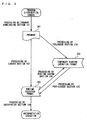
- FIG. 3 is an illustration showing an exemplary data flow performed in the following processing section: the loader section 102, the runtime saving section 103, the preloader section 104, and the post-loader section 105. It shows a flow of data conversion from when a program 201 is downloaded from the program distribution source to when interpretation execution is performed for a runtime execution format 203.
- the program 201 transmitted from the program distribution source is received by the program downloading section 101, and is stored in the program storing section 301.
- the loader section 102 converts the program 201 to the runtime execution format 203 in accordance with an instruction from the control section 107, and the interpreter section 106 performs interpretation execution for the runtime execution format 203.
- the runtime saving section 103 converts the runtime execution format 203 to a temporary runtime execution format 202, and stores it in the temporary runtime execution format storing section 302.
- the post-loader section 105 converts the temporary runtime execution format 202 to the runtime execution format 203, and the interpreter section 106 performs interpretation execution for the runtime execution format 203.
- the preloader section 104 converts the program 201 to the temporary runtime execution format 202, and stores it in the temporary runtime execution format storing section 302.
- the post-loader section 105 converts the temporary runtime execution format 202 to the runtime execution format 203 in accordance with the instruction from the control section 107, and the interpreter section 106 performs interpretation execution for the runtime execution format 203.
- FIGS. 4 to 8 show an exemplary structures of the program 201, the runtime execution format 203, and the temporary runtime execution format 202 described in FIG. 3. Hereinafter, they will be described in sequential order.
- the program 201 can be obtained as data having a format for which a mobile phone can perform interpretation execution.
- a class file which is a Java (TM) execution format, is downloaded as the program 201.
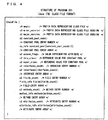
- FIG. 4 is a C language-based structure representation of data content stored in the program 201.
- U1, u2, and u4 types represent unsigned 1 byte, 2 bites, and 4 bytes data size, respectively.
- the program 201 is, in general, composed of more one or more class files, and all class files have the same class file structure.
- the structure of the class file is described in detail in a reference (TimLindholm and Frank Yellin: "The Java (TM) Virtual Machine Specification", Addison-Wesley, 1997). In FIG. 4, only the most significant structure is shown.
- the runtime execution format 203 is realized as a sequential memory image stored in the runtime execution format storing section 303.
- a format itself of a class file is defined, but a format of a runtime format is not defined because it is dependent on implementation of the Java (TM) virtual machine.
- the runtime execution format 203 is shown as a memory image in units of class.
- An actual program of Java (TM) is often composed of two or more class files, and in that case, similar memory images are generated according to the number of class files.
- the memory image representing a class includes a runtime format having a constant pool structure, a runtime format having an interface structure, a runtime format having a field structure, a runt ime format having a method structure, and aruntime format having an attribute structure, which are further lower structures.
- Data shown in a white box in the memory image of FIGS. 5 and 6 indicates that a value of data with the same name shown in FIG. 4 is directly recorded therein. Shaded data in the memory image of FIGS. 5 and 6 represents that the data is a reference value (pointer) indicating an address of another data storage location in the memory image.
- pointer pointer
- constant_pool is a pointer indicating a head of a runtime format having a constant pool structure
- constant_pool this_class
- constant_pool super_class
- interfaces is a pointer indicating a head of a runtime format having an interface structure
- fields is a pointer indicating a head of a runtime format having a field structure
- methods is a pointer indicating a head of a runtime format having a method structure
- attributes is a pointer indicating a head of a runtime format having an attribute structure.
- a pointer value does not necessarily indicate a structure in the memory image of the same class in which the pointer is included, and it may indicate a structure of a memory image of another class.
- the memory image of the runtime execution format 203 includes a pointer, and a value of this pointer is not set to a fixed value at the time of generation of a memory image (because a pointer value changes in accordance with a location of the memory image in the runtime execution format storing section 303).
- a pointer value may be included in data of an entry in the constant pool structure, an entry in the interface structure, an entry in the field structure, an entry in the method structure, and an entry in the attribute structure, but they are omitted in the present descriptions.
- the temporary runtime execution format 202 is stored in the temporary runtime execution format storing section 302. It may be recorded as a memory image or as a file containing a byte string of data, and it is represented here as a memory image as is the case with FIGS. 5 and 6. What is shown here is one example of implementation of the temporary runtime execution format 202 corresponding to the embodiment of the runtime execution format 203 as shown in FIGS. 5 and 6.
- Class_id is identification data (a class identification number) uniquely assigned to the memory image in units of class. In the case where a memory image with a plurality of classes is generated, a value of the class_id should not be redundant.
- runtime_image_size records a memory size of a runtime execution format generated from the temporary runtime execution format.
- FIGS. 7 and 8 differs from FIGS. 5 and 6 in that it does not contain a pointer value. All data represented as a pointer in FIGS. 5 and 6 is converted to a combination of following two pieces of data (a shaded portion in FIGS. 7 and 8).
- Ref_class_id designates a class identification number. This subsequent data is always followed by an entry number.
- the "entry number” indicates an entry number of data in the constant pool structure/interface structure/field structure/method structure/attribute structure.
- a pointer representation in the runtime execution format 203 may sometimes indicate a structure of a memory image of another class.
- the entry number is always represented as being combined with class_id.
- a pointer is not included in the memory image of the temporary runtime execution format 203, whereby it is set to a unique data string at the time of generation of the memory image independently of a location of the memory image in the temporary runtime execution format storing section 302. That is, a recording content of a temporary runtime execution format representing a certain class remains always unique.
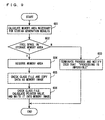
- FIG. 9 shows one example of a flow of a data conversion process in the loader section 102.
- memory usage of the runtime execution format 203 generated by the loader section 102 is calculated (step 601) . It can be calculated based on a value indicating the entry number of each structure, such as constant_pool_count, interfaces_count, fields_count, methods_count, and attributes_count, and a size of each entry of each structure, after checking a class file included in the program 201.
- the runtime execution format storing section 303 which is a storage location of the runtime execution format 203, is checked whether or not there is free space in a storage memory area (step 602). If there is no free space (N in step 602), determination is made that continuation of the data conversion process by the loader section 102 is impossible, the loading process itself is terminated, a user is notified that a start-up of the program is impossible, thereby ending the process (step 603). On the other hand, if there is free space (Y in step 602), a memory area corresponding to the value calculated in step 601 is reserved in the runtime execution format storing section 303 (step 604).
- the class file is checked, and data is stored in the runtime execution format storing section 303 by copying data other than a portion represented as a pointer value in the runtime execution format 203 (step 605). It corresponds to data represented as a white box in the memory image of FIGS. 5 and 6.
- data represented as a pointer value in the runtime execution format 203 is calculated, and the calculated data is stored in the runtime execution format storing section 303, thereby ending the conversion from the program 201 to the runtime execution format 203 (step 606). It corresponds to data represented as a shaded box in the memory image of FIGS. 5 and 6.
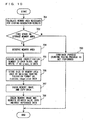
- FIG. 10 shows one example of a flow of a data conversion process in the runtime saving section 103.
- memory usage of the temporary runtime execution format 202 generated by the runtime saving section 103 is calculated (step 701). It can be calculated based on a value indicating the entry number of each structure, such as constant_pool_count, interfaces_count, fields_count, methods_count, and attributes_count, and a size of each entry of each structure, after checking the runtime execution format 203.
- the temporary runtime execution format storing section 302 which is a storage location of the temporary runtime execution format 202, is checked whether or not there is free space in a storage memory area (step 702). If there is no free space (N in step 702), determination is made that continuation of the data conversion process by the runtime saving section 103 is impossible, and the runtime saving process itself is terminated, thereby ending the process (step 703). On the other hand, if there is free space (Y in step 702), a memory area corresponding to the value calculated in step 601 is reserved in the temporary runtime execution format storing section 302 (step 704).
- identification numbers are assigned to all classes for which the runtime saving process is performed, and data is stored in the temporary runtime execution format storing section 302 as class_id data of the temporary runtime execution format 202 (step 705).
- a value of memory size used by the runtime execution format 203, which is processing source data of the runtime saving process, in the runtime execution format storing section 303 for recording is calculated, and is stored in the temporary runtime execution format storing section 302 as runtime_image_size data of the temporary runtime execution format 202 (step 706).
- the memory image of the runtime execution format 203 is checked, and data is stored in the temporary runtime execution format storing section 302 by copying data other than a portion represented as a pointer value in the runtime execution format 203 as data of the temporary runtime execution format (step 707) . It corresponds to data represented as a white box in the memory image of FIGS. 7 and 8.
- the memory image of the runtime execution format is checked, conversion is performed for data represented as a pointer value in the runtime execution format 203, the converted data is stored in the temporary runtime execution format storing section 302, thereby ending the conversion from the runtime execution format 203 to the temporary runtime execution format 202 (step 708).
- the pointer value data is converted to "an identification number of a class including a structure indicated by the pointer" and "an entry number in the structure". It corresponds to data represented as a shaded box in the memory image of FIGS. 7 and 8 other than class_id and runtime_image_size.
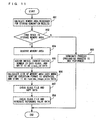
- FIG. 11 is one example of a flow of a data conversion process in the preloader section 104.
- memory usage of the temporary runtime execution format 202 generated by the preloader section 104 is calculated (step 801) . It can be calculated based on a value indicating the entry number of each structure, such as constant_pool_count, interfaces_count, fields_count, methods_count, and attributes_count, and a size of each entry of each structure, after checking an unprocessed class file.
- the temporary runtime execution format storing section 302 which is a storage location of the temporary runtime execution format 202, is checked whether or not there is free space in a storage memory area (step 802). If there is no free space (N in step 802), determination is made that continuation of the data conversion process by the preloader section 104 is impossible, the preloader process itself is terminated, thereby ending the process (step 803). On the other hand, if there is free space (Y in step 802), a memory area corresponding to the value calculated in step 801 is reserved in the temporary runtime execution format storing section 302 (step 804).
- identification numbers are assigned to all classes for which the preloading process is performed, and data is stored in the temporary runtime execution format storing section 302 as class_id data of the temporary runtime execution format 202 (step 805).
- the program 201 is checked, and data other than a portion represented as a reference value for another structure in the temporary runtime execution format 202 is copied as data of the temporary runtime execution format 202 (step 807). It corresponds to data represented as a white box in the memory image of FIGS. 7 and 8.
- the program 201 is checked, and data corresponding to a portion represented as a reference value for another structure in the temporary runtime execution format 202 is converted to "an identification number of a class including a structure of a reference destination" and "an entry number in the structure", thereby ending the conversion from the program 201 to the temporary runtime execution format 202 (step 808).
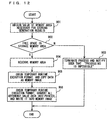
- FIG. 12 shows one example of a flow of a data conversion process in the post-loader section 105.
- step 901 memory usage of the runtime execution format 203 generated by the post-loader section 105 is calculated (step 901). It can be easily obtained by referring to runtime_image_size data of the temporary runtime execution format 202.
- the runtime execution format storing section 303 which is a storage location of the runtime execution format 203, is checked whether or not there is free space in a storage memory area (step 902). If there is no free space (N in step 902), determination is made that continuation of the process by the post-loader section 105 is impossible, the postloading process itself is terminated, and the user is notified that a start-up of the program is impossible, thereby ending the process (step 903). On the other hand, if there is free space (Y in step 902), a memory area corresponding to the value calculated in step 901 is reserved in the runtime execution format storing section 303 (step 904).
- the temporary runtime execution format 202 is checked, and data is stored in the runtime execution format storing section 303 by copying data other than a portion represented as a pointer value in the runtime execution format 203 (step 905). It corresponds to data represented as a white box in the memory image of FIGS. 5 and 6.
- data represented as a pointer value in the runtime execution format 203 is calculated, and the calculated data is stored in the runtime execution format storing section 303, thereby ending the conversion from the temporary runtime execution format 202 to the runtime execution format 203 (step 906).
- This calculation can be realized by converting a reference value in the temporary runtime execution format 202, that is, "an identification number of a class including a structure of a reference destination" and "an entry number in the structure" to a pointer.
- This data corresponds to data represented as a shaded box in the memory image of FIGS. 5 an 6.
- the temporary runtime execution format is previously reserved, whereby it is possible to start-up and execute the program only by the postloading process.
- FIG. 13 is an illustration showing an exemplary screen display during a runtime saving process.
- the runtime saving section 103 may check whether or not there is free space in a memory area in which a temporary runtime execution format is generated and stored, and perform a runtime saving process immediately after determination is made that there is free space.
- FIG. 13 (a) shows an exemplary case in which a display screen output of the portable information terminal during a process performed by the loader section 102 for converting the program 201 to the runtime execution format 203, and a display screen output of the portable information terminal during a process performed by the runtime saving section 103 for converting the runtime execution format 203 to the temporary runtime execution format 202 are changed for notifying the user of a processing status.
- the user may consider a runtime saving process superfluous, and get unnecessarily stressedwhilehe/she is waiting for a program to start execution.
- FIG. 13 (b) shows an exemplary case in which the same display screen outputs, not the different ones, are used for the above-described two processes, thereby not notifying the user of a break between the above-described processes.
- a processing time of the runtime saving process is included in the loading process, whereby it is possible to reduce the unnecessary stress the user may experience.
- FIG. 14 is an illustration for describing a screen display at the time of a preloading process.
- the preloader section 104 may check whether or not there is free space in a memory area in which a temporary runtime execution format is generated and stored, and perform the preloading process immediately after determination is made that there is free space.
- FIG. 14 (a) shows an exemplary case in which a display screen output of the portable information, terminal during a process performed by the program downloading section 101 for downloading the program 201, and a display screen output of the portable information terminal during a process performed by the preloader section 104 for converting the program 201 to the temporary runtime execution format 202 are changed for notifying the user of a processing status.
- the user may consider a preloading process superfluous, and get unnecessarily stressed while he/she is waiting for a program to start execution.
- FIG. 14(b) shows an exemplary case in which the same display screen outputs, not the different ones, are used for the above-described two processes, thereby not notifying the user of a break between the above-described processes.
- a processing time of the preloading process is included in the downloading process, whereby it is possible to reduce the unnecessary stress the user may experience.
- a temporary runtime execution format can be previously reserved by the runtime saving section 103 or the preloader section 104, and therefore interpretation execution of a program can be performed only by a postloading process, whereby it is possible to reduce a start-up time.
- FIG. 15 is a block diagram showing a structure of a program execution processing terminal device according to a second embodiment of the present invention. It is composed of the program downloading section 101, the loader section 102, the preloader section 104, the post-loader section 105, the interpreter section 106, the control section 107, a runtime saving section 110, the program storing section 301, the temporary runtime execution format storing section 302, the runtime execution format storing section 303, a configuration information storing section 304, and an interpret history storing section 305.
- the program downloading section 101, the loader section 102, the preloader section 104, the post-loader section 105, the interpreter section 106, the control section 107, the program storing section 301, the temporary runtime execution format storing section 302, and the runtime execution format storing section 303 are the same as those described in FIG. 2.
- the runtime saving section 110, the configuration information storing section 304, and the interpret history storing section 305, which are newly added, will be described.
- the runtime saving section 110 selects/determines a start timing of a runtime saving process and an object program based on the configuration information or the history information stored in the configuration information storing section 304 or the interpret history storing section 305.
- the configuration information storing section 304 stores configuration information for identifying a program for which a runtime saving process is to be performed.
- the configuration information is referred to by the runtime saving section 110 for performing a runtime saving process after a program (quick start-up program) specified as an object of a runtime saving process is loaded.
- the configuration information stored in the configuration information storing section 304 is determined, for example, based on a designation input by the user.
- FIG. 16 is an illustration showing one example of an input screen. The user can designate ON or OFF of a quick start-up for each program on a program list displayed on the display screen of the portable information terminal.
- "Schedule” and "MemoPad” are designated as a quick start-up ON program.
- a runtime saving process is performed, and a runtime saving process is not performed when other program is loaded. Note that it is possible to always designate a specific program as a quick start-up one irrespective of the designation input by the user.
- the interpret history storing section 305 stores history information about previously performed interpretation execution of each program.
- the history information is referred to by the runtime saving section 110 for performing a runtime saving process after a program, which is determined to be a frequently used one based on the history information, is loaded.
- FIG. 17 One example of the history information stored in the interpret history information storing section 305 is shown in FIG. 17.
- information about how many times each of the programs, which are stored in the program storing section 301, has been started-up so far, and information about when it was started-up last is reserved as a table.
- other information such as an average running time and a start-up interval may be included, or only a piece of information such as the number of start-up times may be enough.
- the following determination criteria for example, may be applied to determine whether to perform a runtime saving process for the program. Note that other determination criterion based on the history information of the interpret history storing section 305 may be used.
- a first determination criterion if a program which has been started-up three or more times is loaded, the program is determined as a frequently used one, and a runtime saving process is performed.
- a value of a selection criterion is not limited to three, but it may be an arbitrary value.
- a second determination criterion the first and second most frequently started-up programs among all programs are determined as frequently used ones, and a runtime saving process is performed.
- a value of a selection criterion it is not limited to the first and the second, but it may be an arbitrary value.
- a program for which a runtime saving process is to be performed can be selected, whereby it is possible to perform a runtime saving process by selecting a program requiring a quick start-up or a frequently used program.
- a temporary runtime execution format of a program requiring no quick start-up or a less frequently used program from occupying a storage area of the temporary runtime execution format storing section 302. That is, it is possible to prevent a failure of a runtime saving process of a program requiring a quick start-up or a frequently used program due to an insufficient free storage space in the temporary runtime execution format storing section 302, whereby it is possible to perform an efficient runtime saving process.
- the preloader section it is assumed that a preloading process by the preloader section is performed for a program downloaded after other program was downloaded. However, it is possible to select/determine a start timing of a preloading process and an object program based on other determination criterion.
- FIG. 18 is a block diagram showing a structure of a program execution processing terminal device according to a third embodiment of the present invention. It is composed of the program downloading section 101, the loader section 102, the post-loader section 105, the interpreter section 106, the control section 107, the runtime saving section 110, a preloader section 111, a preload control section 112, the program storing section 301, the temporary runtime execution format storing section 302, the runtime execution format storing section 303, the configuration information storing section 304, and the interpret history storing section 305.
- the program downloading section 101, the loader section 102, the post-loader section 105, the interpreter section 106, the control section 107, the program storing section 301, the temporary runtime execution format storing section 302, the runtime execution format storing section 303, the configuration information storing section 304, and the interpret history storing section 305 are the same as those described in FIG. 15.
- the preloader section 111 and the preload control section 112, which are newly added, will be described.
- the preloader section 111 receives a notification from the preload control section 112, thereby performing a preloading process for converting a program stored in the program storing section 301 to a temporary runtime execution format, and storing it in the temporary runtime execution format storing section 302. Especially, in the case where an identifier designating a specific program is notified, a notified program is selected as an object of a preloading process. Note that it is possible to perform a preloading process after a program is downloaded, by receiving a preloading process start instruction from the control section 107. Also, a program for which a preloading process is to be performed is selected/determined based on the configuration information or the history information stored in the configuration information storing section 304 or the interpret history storing section 305.
- the preload control section 112 determines a preload start timing based on a device status of the portable information terminal, and notifies the preloader section 111 of a start of a process.
- a program for which preloading is to be performed may be determined by the preload control section 112, thereby notifying the preloader section 111 of the determined program, or only a start timing may be notified without designating a program for which preloading is to be performed, and the preloader section 111 may select a program to be processed.
- the preloader section 111 may select a program to be processed.
- the following determination criteria may be applied as a device status, for example, the following determination criteria may be applied.
- a preloading process is performed in the case where the portable information terminal is in a (standby) state in which no user input operation is accepted.
- the preload control section 112 has previously-set time length data (reference time period), measures a continuous time period of a (standby) state in which no user input operation is performed, and performs a comparison with the reference time period, thereby determining a start timing.
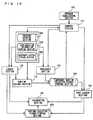
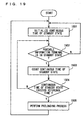
- FIG. 19 is a flowchart showing one example of a flow of a process in the preload control section 112.
- a continuous time period of a standby state is initialized (step 1501).
- step 1502 It is detected whether or not a device status of the portable information terminal is in a (standby) state in which no user input is accepted for more than a predetermined time (step 1502). If it is not in a standby state (N in step 1502), the process is repeated after going back to step 1501. On the other hand, if it is in a standby state (Y in step 1502), a continuous time period of the standby state is updated (step 1503), and a length of the continuous time period is compared with the reference time period (step 1504).
- step 1502 to step S1504 are repeated.
- a continuous time period of the standby state exceeds the reference time period ( Y in step 1504), it is determined that it is a start timing of a preloading process, and start of a process is notified to the preloader section 111.
- a reference time period may be a unique value of the portable information terminal, for example, in the form of ROM, or the value may be able to be changed by a user input.
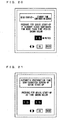
- FIG. 20 shows one example of a display screen at the time of setting by the user. Here, fifteen minutes are set as a reference time period, and a preloading process is started at a time when a continuous time period of a standby state exceeds fifteen minutes.
- a preloading processing is executed while the user does not operate the portable information terminal, the preloading process is hidden from the eye of the user.
- the user does not feel stress by the execution of the preloading process, which is an advantage.
- a preloading process is performed when the portable information terminal recovers from a standby state.
- the preload control section 112 detects that the portable information terminal enters anon -standby state from a standby state by the user's input operation, that is, a standby state is ended, thereby determining a start timing.
- a preloading process is performed when an internal time of the portable information terminal reaches a predetermined one.
- the preload control section 112 has previously-set time data (reference time), thereby determining a start timing by comparing an actual current time with the reference time, and detecting correspondence therebetween.
- the reference time may be a unique value of the portable information terminal, for example, in the form of ROM, or the value may be able to be changed by a user's input.
- FIG. 21 shows one example of a display screen at the time of setting bytheuser.
- 13:15 is set as a reference time, andapreloading process is started at a time when an actual current time reaches 13:15.
- a preloading process is performed when power is applied to the portable information terminal.
- the preload control section 112 determines a start timing when power is applied.
- a mechanism itself for detecting power-on of the portable information terminal can be realized using, for example, a mechanism used in a conventional portable information terminal for notifying an event from a device.
- a preloading process is performed when the user opens/closes the flip style portable information terminal.
- the preload control section 112 determines a start timing by detecting that the portable information terminal changes from a closed state to an open state, or the portable information terminal changed from an open state to a closed state.
- a mechanism itself for detecting opening/closing of the flip portable information terminal can be realized using, for example, a mechanism used in a conventional portable information terminal for notifying an event from a device.
- a preloading process is performed when communication is started between the portable information terminal and other electronic device.
- the preload control section 112 determines a start timing by detecting a start of data communication between the portable information terminal and other electronic device.
- a mechanism itself for detecting a start of communication can be realized using, for example, a mechanism used in a conventional portable information terminal for notifying an event from a device.
- the above-described communication may be call-in of a voice call, data communication using HTTP, data communication using FTP, data communication using SSL, and IrDA-compliant data communication, for example. Needless to add, it may be other types of communication supported by the portable information terminal. Also, a program for which a preloading process is to be performed based on a start of communication may be selected in accordance with a type of the started communication. The above-described program selection will be described below (FIG. 23).
- a preloading process is performed in the case where connection/disconnection is performed between the portable information terminal and other electronic device.
- the preload control section 112 determines a start timing by detecting that other electronic device is attached to (mounted on) the portable information terminal, or other electronic device attached to (mounted on) the portable information terminal is removed therefrom.
- a mechanism itself for detecting connection/disconnection of an external device can be realized using, for example, a mechanism used in a conventional portable information terminal for notifying an event from a device.
- the above-described external device may be an external storage device such as an SD card, a feature expansion unit such as Bluetooth, a USB connector, an earphone, a microphone, a power connector, a battery charger, and a keyboard, for example. Needless to add, it may be other types of external devices supported by the portable information terminal. Also, a program for which a preloading process is to be performed based on connection/disconnection of an external device may be selected in accordance with a type of the external device. The above-described program selection will be described below (FIG. 23).
- a preloading process is performed at the time of a start or end of execution of other application installed in the portable information terminal.
- the preload control section 112 determines a start timing by detecting that execution of other application installed in the portable information terminal is started, or execution of other application is ended.
- a mechanism itself for detecting a start/end of execution of other application can be realized using an inter-software communication mechanism used in a conventional portable information terminal.
- the above-described other application may be any application installed in the portable information terminal, such as a browser, a mailer, a scheduler, and a media player.
- the above-described other application may be described in a machine language (native), or may be described with a mechanism us ing other execution system such as Java(TM).
- a program for which a preloading process is to be performed in conjunction with a start or end of other application may be selected in accordance with a type of other application such that the program may be started-up in cooperation with the application whose execution was started. The above-described program selection will be described below (FIG. 23).
- a preloading process is performed when a predetermined screen change is performed in accordance with an input operation by the user of the portable information terminal.
- the preload control section 112 determines a start timing by detecting that a change of an internal state of the portable information terminal is performed based on the user input operation.
- a combination of instructions input-operatable by the user is set for each internal state, whereby a next processing operation performed after a specific input operation is determined. That is, the internal state sequentially changes in accordance with, for example, an input operation by the user and a status of communication with the outside, and a display screen often changes in accordance with a change of the internal state.
- the preload control section 112 detects it.
- Internal state change detection itself can be realized using an inter-software communication mechanism used in a conventional portable information terminal.
- FIG. 22 shows one example of an internal state change.
- three internal states :"(1) menu selection state", "(2) appli selection state” , and "(3) Java appli selection state” are shown.
- the preload control section 112 detect it, and notifies the preloader section 111 of a start of a process. In response to the notification, the preloader section 111 starts a preloading process for the program.
- a program for which a preloading process is to be performed in conjunction with an internal state change may be selected in accordance with a type of an internal state change. The above-described program selection will be described below (FIG. 23).
- a start timing of a preloading process can be determined based on each determination criterion, thereby performing an efficient preloading process also in a case other than downloading.
- A a case in which the preloader section 111 selects a program
- B a case in which a program to be processed is notified from the preload control section 112.
- the following selection criteria may be applied to the case (A).
- the preloader section 111 may perform a preloading process by selecting an appropriate one from among the programs stored in the program storing section 301.
- a preloading process is performed by selecting a program set as a quick start-up program from among the programs downloaded to the portable information terminal based on the configuration information stored in the configuration information storing section 304.
- a preloading process is not performed for other programs. Note that the configuration information storing section 304 has been described in the second embodiment.
- a preloading process is performed by selecting a program determined as a frequently used one based on the history information stored in the interpret history storing section 305. For example, a program with the greatest number of start-up times is selected, or a most recently started-up program is selected. Note that the interpret history storing section 305 has been described in the second embodiment.
- a preload control section 112 selects a program to be processed in accordance with a condition for starting a preloading process.
- the preload control section 112 has a preloading process correspondence table, and selects/determines a program to be processed based on the correspondence table.
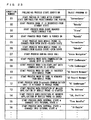
- FIG. 23 shows one example of a preloading process correspondence table.
- a unique ID number i. e. , a condition number
- start conditions are described as text, but it is sufficient if each meaning corresponds to each condition number without using the same number twice.
- an identifier of a program for which a preloading process is to be performed is represented as a letter string, but other representation may be used.
- a start timing of a preloading process and an object program can be selected, whereby it is possible to perform an effective preloading process by selecting a program requiring a quick start-up and a frequently used program.
- FIG. 24 is a block diagram showing a structure of a program execution processing terminal device according to a fourth embodiment of the present invention. It is composed of the program downloading section 101, the loader section 102, the runtime saving section 110, the post-loader section 105, the interpreter section 106, the control section 107, a preloader section 113, a different appli instruction notifying section 114, the program storing section 301, the temporaryruntime execution format storing section 302, the runtime execution format storing section 303, the configuration information storing section 304, and the interpret history storing section 305.
- the program downloading section 101, the loader section 102, the runtime saving section 110, the post-loader section 105, the interpreter section 106, the control section 107, the program storing section 301, the temporary runtime execution format storing section 302, the runtime execution format storing section 303, the configuration information storing section 304, and the interpret history storing section 305 are the same as those described in FIG. 15.
- the preloader section 113 and the different appli instruction notifying section 114, which are newly added, will be described.
- the preloader section 113 receives a notification from the different appli instruction notifying section 114, thereby performing a preloading process such that a program stored in the program storing section 301 is converted to a temporary runtime execution format, and is stored in the temporary runtime execution format storing section 302. Especially, in the case where an identifier for designating a specific program is notified, the notified program is selected as an object of a preloading process. Note that it is possible to perform a preloading process immediately after a program is downloaded by receiving a preload start instruction from the control section 107.
- the different appli instruction notifying section 114 notifies the preloader section 113 that a preload start instruction is issued from a different application installed in the portable information terminal.
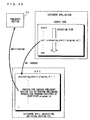
- FIG. 25 shows one example of an outline of an operation in the case where a preload start is instructed by the different application.
- a mechanism itself for receiving a preload start instruction from a different application can be realized, for example, by providing an API, which can be invoked from a source code of the different application, for the portable information terminal.
- the different appli instruction notifying section 114 performs a process for instructing the preloader section 113 to start a preloading process.
- FIG. 25 an exemplary operation in which an API represented as preloading_start is invoked from the different application for notifying the preloader section 113 of a preloading process start is shown.
- a program for which a preloading process is to be performed can be specified in conjunction with the API when it is invoked.
- FIG. 25 an example in which a program is specified as an argument of the API is shown.
- an argument program_id represents an identifier of a program stored in the program storing section 301
- a notification performed to the preloader section 113 during a process of preloading_start includes information about program_id.
- the preloader section 113 receives information about program_id, and selects a program for which a preloading process is to be performed. Note that it is possible to select/execute a program for which a preloading process is to be performed next by the preloader section 113 without designating a program.
- the portable information terminal executing the application is caused to perform a preloading process for the specific program such as a program scheduled to be effective next, whereby it is possible to reduce a start-up time of the specific program.
Landscapes
- Engineering & Computer Science (AREA)
- Software Systems (AREA)
- Theoretical Computer Science (AREA)
- Physics & Mathematics (AREA)
- General Engineering & Computer Science (AREA)
- General Physics & Mathematics (AREA)
- Stored Programmes (AREA)
Applications Claiming Priority (3)
| Application Number | Priority Date | Filing Date | Title |
|---|---|---|---|
| JP2002176855 | 2002-06-18 | ||
| JP2002176855 | 2002-06-18 | ||
| PCT/JP2003/006980 WO2003107186A1 (fr) | 2002-06-18 | 2003-06-03 | Dispositif de terminal d'execution de programme, procede d'execution de programme, et programme |
Publications (2)
| Publication Number | Publication Date |
|---|---|
| EP1515232A1 true EP1515232A1 (fr) | 2005-03-16 |
| EP1515232A4 EP1515232A4 (fr) | 2007-09-05 |
Family
ID=29728124
Family Applications (1)
| Application Number | Title | Priority Date | Filing Date |
|---|---|---|---|
| EP03733256A Withdrawn EP1515232A4 (fr) | 2002-06-18 | 2003-06-03 | Dispositif de terminal d'execution de programme, procede d'execution de programme, et programme |
Country Status (6)
| Country | Link |
|---|---|
| US (1) | US7506323B2 (fr) |
| EP (1) | EP1515232A4 (fr) |
| JP (1) | JP4376181B2 (fr) |
| CN (1) | CN1310148C (fr) |
| AU (1) | AU2003241885A1 (fr) |
| WO (1) | WO2003107186A1 (fr) |
Cited By (1)
| Publication number | Priority date | Publication date | Assignee | Title |
|---|---|---|---|---|
| CN101520733B (zh) * | 2008-02-27 | 2014-04-16 | 国际商业机器公司 | 装载类的方法和装置及重组类存档文件方法 |
Families Citing this family (26)
| Publication number | Priority date | Publication date | Assignee | Title |
|---|---|---|---|---|
| KR100697416B1 (ko) * | 2003-09-30 | 2007-03-20 | 교세라 가부시키가이샤 | 모바일 통신 단말기, 정보 제공 시스템 및 프로그램을기록한 컴퓨터 판독가능한 기록 매체 |
| US7647581B2 (en) * | 2004-06-30 | 2010-01-12 | International Business Machines Corporation | Evaluating java objects across different virtual machine vendors |
| US7493596B2 (en) * | 2004-06-30 | 2009-02-17 | International Business Machines Corporation | Method, system and program product for determining java software code plagiarism and infringement |
| US7539975B2 (en) * | 2004-06-30 | 2009-05-26 | International Business Machines Corporation | Method, system and product for determining standard Java objects |
| US9361137B2 (en) | 2006-03-10 | 2016-06-07 | International Business Machines Corporation | Managing application parameters based on parameter types |
| US9727604B2 (en) * | 2006-03-10 | 2017-08-08 | International Business Machines Corporation | Generating code for an integrated data system |
| US8160999B2 (en) * | 2006-12-13 | 2012-04-17 | International Business Machines Corporation | Method and apparatus for using set based structured query language (SQL) to implement extract, transform, and load (ETL) splitter operation |
| US8219518B2 (en) | 2007-01-09 | 2012-07-10 | International Business Machines Corporation | Method and apparatus for modelling data exchange in a data flow of an extract, transform, and load (ETL) process |
| US9298721B2 (en) * | 2007-02-28 | 2016-03-29 | Qualcomm Incorporated | Prioritized search results based on monitored data |
| US8745507B2 (en) * | 2007-11-30 | 2014-06-03 | At&T Intellectual Property I, L.P. | Preloader employing enhanced messages |
| US20100011357A1 (en) * | 2008-07-13 | 2010-01-14 | International Business Machines Corporation | System and method for garbage collection in a virtual machine |
| US8875115B2 (en) * | 2008-11-29 | 2014-10-28 | International Business Machines Corporation | Type merging technique to reduce class loading during Java verification |
| US8458676B2 (en) * | 2009-06-30 | 2013-06-04 | International Business Machines Corporation | Executing platform-independent code on multi-core heterogeneous processors |
| US9069543B2 (en) | 2011-12-22 | 2015-06-30 | International Business Machines Corporation | Predictive operator graph element processing |
| EP3594805B1 (fr) * | 2012-12-17 | 2021-05-12 | BlackBerry Limited | Système et procédés de lancement d'une application sur un dispositif électronique |
| US11483415B2 (en) | 2014-07-16 | 2022-10-25 | Tensera Networks Ltd. | Background pre-rendering of user applications |
| US11095743B2 (en) * | 2014-07-16 | 2021-08-17 | Tensera Networks Ltd. | Optimized content-delivery network (CDN) for the wireless last mile |
| US11516309B2 (en) * | 2014-07-16 | 2022-11-29 | Tensera Networks Ltd. | Transparent pre-loading of user applications |
| KR102401772B1 (ko) * | 2015-10-02 | 2022-05-25 | 삼성전자주식회사 | 전자 장치에서 어플리케이션 실행 장치 및 방법 |
| US11922187B2 (en) | 2018-03-05 | 2024-03-05 | Tensera Networks Ltd. | Robust application preloading with accurate user experience |
| WO2019171237A1 (fr) | 2018-03-05 | 2019-09-12 | Tensera Networks Ltd. | Préchargement d'application en présence d'actions de l'utilisateur |
| US12099856B2 (en) | 2018-03-05 | 2024-09-24 | Tensera Networks Ltd. | Robust application preloading with accurate user experience |
| EP4004767A4 (fr) | 2019-07-30 | 2023-03-08 | Tensera Networks Ltd. | Pré-rendu d'interfaces utilisateurs d'application dans des dispositifs d'utilisateur |
| CN115136564B (zh) | 2020-02-13 | 2025-01-24 | 腾赛拉网络有限公司 | 用户设备中应用和应用内的内容的预加载 |
| WO2022118131A1 (fr) | 2020-12-03 | 2022-06-09 | Tensera Networks | Préchargement d'applications ayant une tâche existante |
| CN116601602A (zh) | 2020-12-20 | 2023-08-15 | 腾赛拉网络有限公司 | 对用户透明地预加载应用 |
Family Cites Families (15)
| Publication number | Priority date | Publication date | Assignee | Title |
|---|---|---|---|---|
| JPH07191853A (ja) * | 1993-12-27 | 1995-07-28 | Nec Corp | メモリファイル化処理システム |
| JPH07271603A (ja) * | 1994-03-31 | 1995-10-20 | Mitsubishi Electric Corp | オーバレイプログラムロード方式 |
| JP3727677B2 (ja) * | 1994-09-20 | 2005-12-14 | 石塚硝子株式会社 | ガラス製品のプレス成形装置 |
| JP3586943B2 (ja) | 1995-10-20 | 2004-11-10 | 富士通株式会社 | プログラムロード装置と方法 |
| WO1997031313A1 (fr) | 1996-02-21 | 1997-08-28 | International Business Machines Corporation | Procede et systeme ordinateur pour ameliorer le temps de reponse du systeme ordinateur aux demandes des utilisateurs |
| JPH11212893A (ja) * | 1997-10-08 | 1999-08-06 | Sony Corp | 電子機器におけるプログラム起動装置、プログラム起動方法、媒体および電子機器 |
| US5966702A (en) | 1997-10-31 | 1999-10-12 | Sun Microsystems, Inc. | Method and apparatus for pre-processing and packaging class files |
| GB2331814B (en) * | 1997-11-19 | 2002-11-13 | Ibm | Pre-emptive download of software in data processing network |
| US6513155B1 (en) * | 1997-12-12 | 2003-01-28 | International Business Machines Corporation | Method and system for merging event-based data and sampled data into postprocessed trace output |
| US6349344B1 (en) * | 1997-12-16 | 2002-02-19 | Microsoft Corporation | Combining multiple java class files into a run-time image |
| DE69911104T2 (de) | 1998-03-24 | 2004-07-08 | Sun Microsystems, Inc., Palo Alto | Statische Bindung von dynamisch abgesendeten Anrufen in Anwesenheit von dynamischer Verknüpfung und Ladung |
| GB9825102D0 (en) * | 1998-11-16 | 1999-01-13 | Insignia Solutions Plc | Computer system |
| CA2255042C (fr) * | 1998-11-30 | 2004-04-13 | Leonard W. Theivendra | Chargeur de classes |
| JP3889227B2 (ja) * | 2000-01-21 | 2007-03-07 | 富士通株式会社 | プログラム実行装置、プログラム実行方法、記録媒体、及び制御プログラム |
| GB0013132D0 (en) * | 2000-05-31 | 2000-07-19 | Ibm | Virtual machine with reiitialisation |
-
2003
- 2003-06-03 JP JP2004513936A patent/JP4376181B2/ja not_active Expired - Fee Related
- 2003-06-03 AU AU2003241885A patent/AU2003241885A1/en not_active Abandoned
- 2003-06-03 US US10/496,968 patent/US7506323B2/en not_active Expired - Fee Related
- 2003-06-03 WO PCT/JP2003/006980 patent/WO2003107186A1/fr not_active Ceased
- 2003-06-03 CN CNB038019493A patent/CN1310148C/zh not_active Expired - Fee Related
- 2003-06-03 EP EP03733256A patent/EP1515232A4/fr not_active Withdrawn
Cited By (1)
| Publication number | Priority date | Publication date | Assignee | Title |
|---|---|---|---|---|
| CN101520733B (zh) * | 2008-02-27 | 2014-04-16 | 国际商业机器公司 | 装载类的方法和装置及重组类存档文件方法 |
Also Published As
| Publication number | Publication date |
|---|---|
| EP1515232A4 (fr) | 2007-09-05 |
| JPWO2003107186A1 (ja) | 2005-10-20 |
| WO2003107186A1 (fr) | 2003-12-24 |
| JP4376181B2 (ja) | 2009-12-02 |
| US20050066283A1 (en) | 2005-03-24 |
| US7506323B2 (en) | 2009-03-17 |
| AU2003241885A1 (en) | 2003-12-31 |
| CN1613061A (zh) | 2005-05-04 |
| CN1310148C (zh) | 2007-04-11 |
Similar Documents
| Publication | Publication Date | Title |
|---|---|---|
| US7506323B2 (en) | Program execution processing terminal device, program execution processing method, and program | |
| US6980979B2 (en) | Method and apparatus for customizing Java API implementations | |
| US7647075B2 (en) | Terminal device and program | |
| US6029000A (en) | Mobile communication system with cross compiler and cross linker | |
| JP4216722B2 (ja) | ネットワーク接続されたリソース上の制約を有する装置の実行及びリソースをオフロードする方法及びシステム | |
| CN101421711B (zh) | 用于资源受限设备的虚拟执行系统 | |
| US20090031243A1 (en) | Method and apparatus for controlling display of windows | |
| US7246346B2 (en) | System and method for persisting dynamically generated code in a directly addressable and executable storage medium | |
| KR100411756B1 (ko) | 객체 지향 소프트웨어 응용프로그램 제어방법 및 이를 포함하는 컴퓨터 시스템 | |
| US20040242205A1 (en) | Communication terminal | |
| JPH09128276A (ja) | 計算機システムおよびそのシステムで使用されるファイル管理方法 | |
| Helal | Pervasive java | |
| KR101164465B1 (ko) | 가상머신에서 연속전달을 위한 방법 및 장치 | |
| US10599444B2 (en) | Extensible input stack for processing input device data | |
| US7886304B1 (en) | Method and system implementing efficient remote procedure call and emulation system therefor | |
| CN112612531B (zh) | 应用程序启动方法、装置、电子设备及存储介质 | |
| CN118277127A (zh) | 视图传输方法、装置、系统和计算机可读存储介质 | |
| JP2003330736A (ja) | 不正リソース利用防止システム及びその方法並びにプログラム | |
| WO2024131486A1 (fr) | Procédé d'analyse de performances, support de stockage lisible, produit programme et dispositif électronique | |
| JP4230528B1 (ja) | 表示処理装置、表示処理装置を備えた携帯電話機、表示処理方法、制御プログラム、および、記録媒体 | |
| WO2019139738A1 (fr) | Empilement d'entrée extensible pour traiter des données de dispositif d'entrée | |
| WO2023169212A1 (fr) | Procédé d'identification de sdk dans une application, terminal et serveur | |
| Dorward et al. | Programming in limbo | |
| CN118733054B (zh) | 一种应用程序编译方法及电子设备 | |
| US20100205557A1 (en) | System, method and computer-readable medium for clean up of visually displayed icons |
Legal Events
| Date | Code | Title | Description |
|---|---|---|---|
| PUAI | Public reference made under article 153(3) epc to a published international application that has entered the european phase |
Free format text: ORIGINAL CODE: 0009012 |
|
| 17P | Request for examination filed |
Effective date: 20040830 |
|
| AK | Designated contracting states |
Kind code of ref document: A1 Designated state(s): AT BE BG CH CY CZ DE DK EE ES FI FR GB GR HU IE IT LI LU MC NL PT RO SE SI SK TR |
|
| AX | Request for extension of the european patent |
Extension state: AL LT LV MK |
|
| DAX | Request for extension of the european patent (deleted) | ||
| A4 | Supplementary search report drawn up and despatched |
Effective date: 20070807 |
|
| RIC1 | Information provided on ipc code assigned before grant |
Ipc: G06F 9/445 20060101AFI20070801BHEP |
|
| 17Q | First examination report despatched |
Effective date: 20071012 |
|
| RAP1 | Party data changed (applicant data changed or rights of an application transferred) |
Owner name: PANASONIC CORPORATION |
|
| STAA | Information on the status of an ep patent application or granted ep patent |
Free format text: STATUS: THE APPLICATION IS DEEMED TO BE WITHDRAWN |
|
| 18D | Application deemed to be withdrawn |
Effective date: 20110104 |