EP1515169B1 - Mehrmodenfaser mit Gradientindex und deren Herstellungsverfahren - Google Patents
Mehrmodenfaser mit Gradientindex und deren Herstellungsverfahren Download PDFInfo
- Publication number
- EP1515169B1 EP1515169B1 EP04292149A EP04292149A EP1515169B1 EP 1515169 B1 EP1515169 B1 EP 1515169B1 EP 04292149 A EP04292149 A EP 04292149A EP 04292149 A EP04292149 A EP 04292149A EP 1515169 B1 EP1515169 B1 EP 1515169B1
- Authority
- EP
- European Patent Office
- Prior art keywords
- core
- graded
- multimode fiber
- refractive index
- transmission bandwidth
- Prior art date
- Legal status (The legal status is an assumption and is not a legal conclusion. Google has not performed a legal analysis and makes no representation as to the accuracy of the status listed.)
- Expired - Lifetime
Links
- 239000000835 fiber Substances 0.000 title claims description 136
- 238000004519 manufacturing process Methods 0.000 title description 6
- 230000005540 biological transmission Effects 0.000 claims description 70
- YCKRFDGAMUMZLT-UHFFFAOYSA-N Fluorine atom Chemical compound [F] YCKRFDGAMUMZLT-UHFFFAOYSA-N 0.000 claims description 42
- 229910052731 fluorine Inorganic materials 0.000 claims description 42
- 239000011737 fluorine Substances 0.000 claims description 42
- 230000002093 peripheral effect Effects 0.000 claims description 41
- 229910052732 germanium Inorganic materials 0.000 claims description 40
- GNPVGFCGXDBREM-UHFFFAOYSA-N germanium atom Chemical compound [Ge] GNPVGFCGXDBREM-UHFFFAOYSA-N 0.000 claims description 40
- 238000005253 cladding Methods 0.000 claims description 36
- OAICVXFJPJFONN-UHFFFAOYSA-N Phosphorus Chemical compound [P] OAICVXFJPJFONN-UHFFFAOYSA-N 0.000 claims description 35
- 229910052698 phosphorus Inorganic materials 0.000 claims description 35
- 239000011574 phosphorus Substances 0.000 claims description 35
- 239000002019 doping agent Substances 0.000 claims description 28
- VYPSYNLAJGMNEJ-UHFFFAOYSA-N Silicium dioxide Chemical compound O=[Si]=O VYPSYNLAJGMNEJ-UHFFFAOYSA-N 0.000 claims description 16
- 239000013307 optical fiber Substances 0.000 claims description 14
- 235000012239 silicon dioxide Nutrition 0.000 claims description 5
- 239000006185 dispersion Substances 0.000 description 6
- 238000000034 method Methods 0.000 description 5
- 230000003287 optical effect Effects 0.000 description 5
- 230000001902 propagating effect Effects 0.000 description 4
- 238000005229 chemical vapour deposition Methods 0.000 description 3
- 230000007423 decrease Effects 0.000 description 2
- ZOXJGFHDIHLPTG-UHFFFAOYSA-N Boron Chemical compound [B] ZOXJGFHDIHLPTG-UHFFFAOYSA-N 0.000 description 1
- 229910052796 boron Inorganic materials 0.000 description 1
- 230000003247 decreasing effect Effects 0.000 description 1
- 230000001934 delay Effects 0.000 description 1
- 230000001419 dependent effect Effects 0.000 description 1
- 230000000694 effects Effects 0.000 description 1
- 230000001747 exhibiting effect Effects 0.000 description 1
- 239000011521 glass Substances 0.000 description 1
- 230000008018 melting Effects 0.000 description 1
- 238000002844 melting Methods 0.000 description 1
- 239000000377 silicon dioxide Substances 0.000 description 1
Images


Classifications
-
- G—PHYSICS
- G02—OPTICS
- G02B—OPTICAL ELEMENTS, SYSTEMS OR APPARATUS
- G02B6/00—Light guides; Structural details of arrangements comprising light guides and other optical elements, e.g. couplings
- G02B6/02—Optical fibres with cladding with or without a coating
- G02B6/028—Optical fibres with cladding with or without a coating with core or cladding having graded refractive index
- G02B6/0288—Multimode fibre, e.g. graded index core for compensating modal dispersion
-
- G—PHYSICS
- G02—OPTICS
- G02B—OPTICAL ELEMENTS, SYSTEMS OR APPARATUS
- G02B6/00—Light guides; Structural details of arrangements comprising light guides and other optical elements, e.g. couplings
- G02B6/02—Optical fibres with cladding with or without a coating
- G02B6/036—Optical fibres with cladding with or without a coating core or cladding comprising multiple layers
- G02B6/03694—Multiple layers differing in properties other than the refractive index, e.g. attenuation, diffusion, stress properties
-
- G—PHYSICS
- G02—OPTICS
- G02B—OPTICAL ELEMENTS, SYSTEMS OR APPARATUS
- G02B6/00—Light guides; Structural details of arrangements comprising light guides and other optical elements, e.g. couplings
- G02B6/02—Optical fibres with cladding with or without a coating
- G02B6/036—Optical fibres with cladding with or without a coating core or cladding comprising multiple layers
- G02B6/03616—Optical fibres characterised both by the number of different refractive index layers around the central core segment, i.e. around the innermost high index core layer, and their relative refractive index difference
- G02B6/03622—Optical fibres characterised both by the number of different refractive index layers around the central core segment, i.e. around the innermost high index core layer, and their relative refractive index difference having 2 layers only
Definitions
- the present invention relates to graded-index multimode fibers and to a manufacturing method therefor. More particularly, the present invention relates to graded-index multimode fibers which have a wide transmission bandwidth in a region around the center wavelength and to a manufacturing method therefor.
- GI multimode fibers which are one type of multimode fiber, have a large numerical aperture and have been used for transmission lines of optical local area networks (LAN). Driven by a need for a faster optical LAN, techniques to precisely control refractive index profiles of GI multimode fibers have been improved.
- WDM wavelength division multiplexing
- GI fibers are fabricated so that profiles (refractive index profiles) of these optical fibers have a graded-index profile.
- profiles reffractive index profiles
- Such GI multimode fibers have a larger numerical aperture, and have been widely used in various applications, e.g., the transmission lines of optical LANs.
- F is a function representing the shape of the profile
- a is a core radius
- n 1 is the refractive index at the center of the core
- r is a distance between any given position within the core and the center of the core.
- Conventional GI fibers are essentially made of silica glass and are doped with an amount of one or more dopants, e.g., germanium (Ge).
- concentration of the one or more dopants, e.g., germanium is varied in the cross-sectional direction.
- ⁇ opt which provides a high transmission bandwidth is wavelength dependent, a maximum transmission bandwidth is obtained only at a certain wavelength.
- Conventional GI fibers which are doped with a single dopant (e.g., germanium) are optimized for a certain wavelength since an optimal shape of the profile of such fibers varies depending on wavelength.
- GI multimode fibers doped with a single dopant e.g., germanium (Ge)
- a single dopant e.g., germanium (Ge)
- the transmission bandwidth of such fibers becomes significantly small at wavelengths other than the optimal wavelength.
- Such fibers are, therefore, unsuitable for wavelength division multiplexing.
- US-A-4 664 474 relates to an image fiber, i.e. an optical fiber designed for transporting images.
- An exemplary aspect of the present invention was made in view of the above, and an object thereof is to provide a graded-index multimode fiber which provides a maximum transmission bandwidth at various wavelengths and is free from any dependence on the wavelength of the signal light.
- the exemplary aspect of the present invention provides a graded-index multimode fiber including a core which is made of silica glass and includes a central region and an outer peripheral region, and a cladding which is provided at an outer periphery of the core.
- the central region of the core contains one of germanium and phosphorus, and the outer peripheral region of the core contains fluorine.
- the graded-index multimode fiber according to the exemplary aspect of the present invention is an improvement over a method described in E. A. J. Marcatili, "Modal dispersion in optical fibers with arbitrary numerical aperture and profile dispersion", The Bell System Technical Journal, Vol. 65, No.
- n(r) is a refractive index of the optical fiber at a distance "r" from the center of the core
- n 1 is a refractive index at the center of the core
- ⁇ 1 is
- each of the refractive index profile exponential parameters ⁇ 1 and ⁇ 2 in Formulas (2) and (3) may have an optimum value which maximizes the transmission bandwidth at an operating wavelength region.
- germanium may be contained in the central region of the core, fluorine may be contained in the outer peripheral region of the core, the diameter of the core may be 50 ⁇ m, the diameter of the cladding may be 125 ⁇ m, and the transmission bandwidth at operating wavelengths between 0.8 ⁇ m and 1.1 ⁇ m may be greater than 3 GHz•km.
- germanium may be contained in the central region of the core, fluorine may be contained in the outer peripheral region of the core, the diameter of the core may be 62.5 ⁇ m, the diameter of the cladding may be 125 ⁇ m, and the transmission bandwidth at wavelengths between 0.85 ⁇ m and 1.1 ⁇ m may be greater than 2 GHz•km.
- phosphorus may be contained in the central region of the core
- fluorine may be contained in the outer peripheral region of the core
- the diameter of the core may be 50 ⁇ m
- the diameter of the cladding may be 125 ⁇ m
- the transmission bandwidth at wavelengths between 0.8 ⁇ m and 1.3 ⁇ m may be greater than 3 GHz ⁇ km.
- phosphorus may be contained in the central region of the core
- fluorine may be contained in the outer peripheral region of the core
- the diameter of the core may be 62.5 ⁇ m
- the diameter of the cladding may be 125 ⁇ m
- the transmission bandwidth at wavelengths between 0.8 ⁇ m and 1.2 ⁇ m may be greater than 2 GHz ⁇ km.
- phosphorus may be contained in the central region of the core
- fluorine may be contained in the outer peripheral region of the core
- a transmission loss at wavelengths between 0.8 ⁇ m and 1.3 ⁇ m may be 2 dB/km or less.
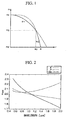
- FIG. 1 is a graph illustrating a refractive index profile of a fiber which is doped with different dopants in two different regions;
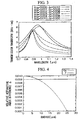
- FIG. 2 is a graph illustrating the wavelength dependence of the optimum values ⁇ opt of the refractive index profile exponential parameters a in Formulas (1) - (4) defining refractive index profiles of three GI multimode fibers each having a core doped with germanium or phosphorus or fluorine, respectively;
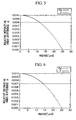
- FIG. 3 is a graph illustrating the wavelength dependence of transmission bandwidth of GI multimode fibers
- FIG. 9 is a graph illustrating the wavelength dependence of transmission bandwidth of GI multimode fibers.
- FIG 15 is a graph illustrating the wavelength dependence of transmission bandwidth of GI multimode fibers
- FIG. 16 is a graph illustrating the wavelength dependence of transmission bandwidth of GI multimode fibers
- FIG. 17 is a schematic cross-sectional view showing an example of the GI multimode fiber according to a first exemplary embodiment of the present invention.
- FIG. 17 is a schematic cross-sectional view showing an example of a GI multimode fiber 10 according to the exemplary embodiment of the present invention. It is not intended, however, that this figure shows the actual dimension of the GI multimode fibers of the first exemplary embodiment of the present invention.
- the GI multimode fiber 10 according to the exemplary embodiment of the present invention is an optical fiber including a core 12 made of silica glass containing either germanium (Ge) or phosphorus (P) in a central region 16 and containing fluorine (F) in an outer peripheral region 18, and a cladding 20 which is provided concentrically surrounding the core 12.
- the central region 16 of the core 12 is an inner region of the core 12 which concentrically surrounds the center of the core 14.
- the central region 16 contains either germanium or phosphorus, and extends radially from the center of the core to about 70% of the core radius.
- the outer peripheral region 18 of the core 12 is the rest of the core 12 which concentrically surrounds the central region 16.
- n(r) is a refractive index of the optical fiber 10 at a distance "r" from the
- the refractive index profile exponential parameters ⁇ i.e., ⁇ 1 and ⁇ 2
- the optimum values ⁇ opt of ⁇ 1 and ⁇ 2 vary depending on the dopant (e.g., germanium, phosphorus, fluorine) doped into silica glass.
- the refractive index profile of a GI multimode fiber 10 of the present invention which is represented by Formulas (1) - (4) is shaped such that once the refractive index profile is highest at the center of the core 14, it gradually decreases with increasing distance from the center. Therefore, signal light propagating through the GI multimode fiber 10 in a lower order mode travels a shorter distance but at a slower rate. In contrast, signal light propagating in a higher order mode travels a longer distance but at a higher rate near the boundary between the core 12 and the cladding 20 where the refractive index is smaller.
- the value of ⁇ which determines the shape of the profile determines the shape of the profile, the difference in arrival time until light signals at various modes propagating through the GI multimode fiber 10 reach the output port can be minimized.
- the modal dispersion becomes the theoretical minimum, providing the maximum transmission bandwidth at the wavelength of signal light.
- the optimum value ⁇ opt of a changes depending on the wavelength employed. Furthermore, this change is affected by the one or more dopants doped into the core 12 and the concentration of the one or more dopants.
- the optimum values of refractive index profile exponential parameter ⁇ 1 of germanium or phosphorus contained in the central region 16 of the core 12 and refractive index profile exponential parameter ⁇ 2 of fluorine contained in the outer peripheral region 18 of the core 12 can be controlled respectively so that a transmission bandwidth at an operating wavelength region is maximized, regardless of actual values thereof.
- refractive index profile exponential parameters ⁇ 1 and ⁇ 2 respectively determine refractive index profiles of the central and outer peripheral regions 18 of the core 12, respectively, as shown in FIG 1 , regardless of actual values thereof.
- the maximum relative refractive index difference ⁇ in of the central region 16 (r ⁇ a 0 ) of the core 12 with respect to the cladding 20 due to the dopant contained in the central region 16 of the core 12 (i.e., germanium or phosphorus) is expressed by the following Formula (6)
- the maximum relative refractive index difference ⁇ out of the outer peripheral region 18 of the core 12 (r > a 0 ) with respect to the cladding 20 due to the dopant contained in the outer peripheral region 18 of the core 12 i.e., fluorine
- n 1 and n 2 have a relationship defined by the following Formula (8):
- n 2 2 n 1 2 ⁇ 1 - 2 ⁇ ⁇ 2
- a maximum transmission bandwidth is obtained when both of the refractive index profile exponential parameters at and ⁇ 2 are optimized respectively.
- the optimum value of ⁇ 1 is a value of a which provides at maximum transmission bandwidth when it is assumed that only the dopant contained in the central region of the core contributes to the ⁇ -order index profile, i.e., refractive index profile defined by Formulas (1) - (4).
- the optimum value of ⁇ 2 is a value of ⁇ which provides a maximum transmission bandwidth when it is assumed that only the dopant contained in the outer Peripheral region of the core contributes to the ⁇ -order index profile.
- FIG. 2 is a graph illustrating the wavelength dependence of the optimum values ⁇ opt of the refractive index profile exponential parameters a of GI multimode fibers having a maximum relative refractive index difference of the core with respect to the cladding ⁇ 2 of 0.01 in Formulas (1) - (4) defining refractive index profiles of three GI multimode fibers each having a core 12 doped with germanium, phosphorus or fluorine, respectively.
- FIG 2 indicates that the optimum value ⁇ opt deviates the most with change in wavelength in the GI multimode fiber 10 including a core 12 containing germanium, exhibiting the largest wavelength dependence of transmission bandwidth.
- FIG 2 also shows that the change in the optimum value ⁇ opt with wavelength is smaller in the GI multimode fibers having a core 12 containing phosphorus or fluorine than the ones having a core 12 containing germanium. Therefore, the wavelength dependence of transmission bandwidth is smaller in these GI multimode fibers.
- a wavelength range which exhibits a large transmission bandwidth can be further expended by doping germanium and fluorine, or phosphorus and fluorine into the GI multimode fiber 10 according to the exemplary embodiment of the present invention.
- a larger maximum relative refractive index difference ⁇ 2 can be obtained in the exemplary embodiment of the present invention than GI multimode fibers obtained by doping only a single dopant.
- an optimum value ⁇ opt of germanium or phosphorus generally monotonically decreases with increase in wavelength while an optimum value ⁇ opt of fluorine generally monotonically increases with increase in wavelength. Therefore, a GI multimode fiber which exhibits a wide transmission bandwidth in a wide wavelength range can be obtained by doping these dopants in an appropriate ratio.
- a GI multimode fiber 10 which is doped with germanium into a central region 16 of the core 12 and is doped with fluorine into an outer peripheral region 18 of the core 12 will be described as an example.
- both a refractive index profile exponential parameter ⁇ 1 of germanium contained in the central region 16 of the core 12 and a refractive index profile exponential parameter ⁇ 2 of fluorine contained in an outer peripheral region 18 of the core 12 are optimized for a wavelength of 0.85 ⁇ m in this GI multimode fiber 10.
- the GI multimode fiber 10 has a maximum transmission bandwidth at a wavelength of 0.85 ⁇ m since the fiber 10 is optimized for this wavelength.
- the transmission bandwidth at wavelengths between 0.8 ⁇ m and 1.1 ⁇ m becomes greater than 3 GHz ⁇ km.
- a transmission bandwidth is defined as a product of a possible transmission rate and a length of an optical fiber, representing the transmission capacity of the optical fiber.
- the GI multimode fiber 10 according to the exemplary embodiment of the present invention has a high transmission rate at wavelengths between 0.8 ⁇ m and 1.1 ⁇ m.
- the fiber 10 is suitable for wavelength division multiplexing transmission.
- the transmission bandwidth at wavelengths between 0.85 ⁇ m and 1.1 ⁇ m becomes greater than 2 GHz ⁇ km.
- the GI multimode fiber 10 according to the exemplary embodiment of the present invention has a high transmission rate at wavelengths between 0.85 ⁇ m and 1.1 ⁇ m.
- the fiber 10 is suitable for wavelength division multiplexing transmission.
- the transmission bandwidth at wavelengths between 0.8 ⁇ m and 1.3 ⁇ m becomes greater than 3 GHz ⁇ km.
- the GI multimode fiber 10 according to the exemplary embodiment of the present invention has a high transmission rate at wavelengths between 0.8 ⁇ m and 1.3 ⁇ m.
- the fiber 10 is suitable for wavelength division multiplexing transmission.
- the transmission bandwidth at wavelengths between 0.8 ⁇ m and 1.2 ⁇ m becomes greater than 2 GHz ⁇ km.
- the GI multimode fiber 10 according to the exemplary embodiment of the present invention has a high transmission rate at wavelengths between 0.8 ⁇ m and 1.2 ⁇ m.
- the fiber 10 is suitable for wavelength division multiplexing transmission.
- a transmission loss at wavelengths between 0.8 ⁇ m and 1.3 ⁇ m becomes 2 dB/km or less.
- the GI multimode fiber 10 according to the exemplary embodiment of the present invention has a high transmission rate at wavelengths between 0.8 ⁇ m and 1.3 ⁇ m.
- the fiber 10 is suitable for wavelength division multiplexing transmission.
- a preform of the GI multimode fiber 10 of the exemplary embodiment of the present invention is fabricated using a PCVD (plasma chemical vapor deposition) or MCVD (modified plasma chemical vapor deposition) method by doping the two dopants into the outer peripheral region 18 of the core 12 and then into the central region 16 of the core 12, and precisely controlling the amount of the dopants so that a desired refractive index profile is obtained.
- a GI multimode fiber 10 is formed by drawing the obtained preform under high temperature conditions.
- GI multimode fibers 10 are fabricated including a core 12 made of silica glass containing germanium in a central region 16 and containing fluorine in an outer peripheral region 18, and a cladding 20 made of silica glass concentrically surrounding the core 12.
- the GI multimode fibers 10 are optimized at a wavelength of 0.85 ⁇ m, and the relative refractive index difference ⁇ of the fiber with respect to the cladding 20 at the center of the core 14 is adjusted to 0.01. Furthermore, the diameter of the core 12 is adjusted to 50 ⁇ m (core radius "a" of 25 ⁇ m), and the diameter of the cladding 20 is adjusted to 125 ⁇ m.
- the wavelength dependence of transmission bandwidth of the resultant GI multimode fibers 10 is examined, and the results are shown in FIG 3 .
- the results shown in FIG. 3 show that the GI multimode fibers 10 including a core 12 containing germanium in the central region 16 and containing fluorine in the outer peripheral region 18 have a large transmission bandwidth in a wider wavelength range than the GI multimode fibers including a core 12 containing only germanium. Furthermore, an optical fiber having a wide transmission bandwidth can be obtained by increasing the amount of fluorine since the optimum value ⁇ opt of the refractive index profile exponential parameter ⁇ of fluorine exhibits less dependence on wavelength.
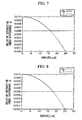
- FIGS. 4-8 show relative refractive index difference profiles with ⁇ Ge / ⁇ F of 0.001/0.009, 0.002/0.008, 0.003/0.007, 0.004/0.006, and 0.005/0.005, respectively.
- GI multimode fibers 10 are fabricated including a core 12 made of silica glass containing germanium in a central region 16 and containing fluorine in an outer peripheral region 18, and a cladding 20 made of silica glass concentrically surrounding the core 12.
- the GI multimode fibers 10 are optimized at a wavelength of 0.85 ⁇ m, and the relative refractive index difference ⁇ of the fiber 10 with respect to the cladding 20 at the center of the core 14 is adjusted to 0.02.
- the core diameter is set to 62.5 ⁇ m (a core radius "a" of 31.25 ⁇ m), and the diameter of the cladding 20 was set to 125 ⁇ m.
- the wavelength dependence of transmission bandwidth of the resultant GI multimode fibers 10 is examined, and the results are shown in FIG 9 .
- the results shown in FIG. 9 show that the GI multimode fibers 10 including a core 12 containing germanium in the central region 16 and containing fluorine in the outer peripheral region 18 have a large transmission bandwidth in a wider wavelength range than the GI multimode fibers including a core 12 containing only germanium. Furthermore, the fiber having ⁇ Ge of 0.004 and ⁇ F of 0.016 exhibits the best performance.
- FIGS. 10-14 show relative refractive index difference profiles with ⁇ Ge / ⁇ F of 0.002/0.018, 0.004/0.016, 0.006/0.014, 0.008/0.012, and 0.010/0.010, respectively.
- GI multimode fibers 10 are fabricated including a core 12 made of silica glass containing phosphorus in a central region 16 and containing fluorine in an outer peripheral region 18, and a cladding 20 made of silica glass concentrically surrounding the core 12.
- the GI multimode fibers 10 are optimized at a wavelength of 0.85 ⁇ m, and the relative refractive index difference ⁇ of the fiber with respect to the cladding 20 at the center of the core 14 is adjusted to 0.01. Furthermore, the diameter of the core 12 is adjusted to 50 ⁇ m (core radius "a" of 25 ⁇ m), and the diameter of the cladding 20 is adjusted to 125 ⁇ m.
- the wavelength dependence of transmission bandwidth of the resultant GI multimode fibers 10 is examined, and the results are shown in FIG. 15 .
- the results shown in FIG. 15 show that the GI multimode fibers including a core 12 doped with phosphorus and fluorine have a large transmission bandwidth in a wider wavelength range than the GI multimode fibers including a core 12 doped with either phosphorus. Furthermore, the fiber having ⁇ P of 0.002 and ⁇ F of 0.008 exhibits the best performance.
- the central region 16 of the core 12 has a low melting viscosity since it is made from silica glass containing phosphorus. Therefore, fiber preforms can be readily manufactured by the PCVD or MCVD methods since porous preforms can collapse easily.
- GI multimode fibers 10 are fabricated including a core 12 made of silica glass containing phosphorus in a central region 16 and containing fluorine in an outer peripheral region 18, and a cladding 20 made of silica glass concentrically surrounding the core 12.
- the GI multimode fibers 10 are optimized at a wavelength of 0.85 ⁇ m, and the relative refractive index difference ⁇ of the fiber 10 with respect to the cladding 20 at the center of the core 14 is adjusted to 0.02.
- the core diameter is set to 62.5 ⁇ m (a core radius "a" of 31.25 ⁇ m), and the diameter of the cladding 20 is set to 125 ⁇ m.
- the wavelength dependence of transmission bandwidth of the resultant GI multimode fibers 10 is examined, and the results are shown in FIG 16 .
- the results shown in FIG. 16 show that the GI multimode fibers including a core 12 containing phosphorus in the central region 16 and containing fluorine in the outer peripheral region 18 have a large transmission bandwidth in a wider wavelength range than the GI multimode fibers including a core 12 containing only phosphorus.
- the graded-index multimode fiber contains either germanium or phosphorus in the central region 16 of the core 12, and contains fluorine in the outer peripheral region 18 of the core 12, the GI multimode fiber is an optical fiber which has a large transmission bandwidth in a wide wavelength range.
- the fiber 10 is suitable for wavelength division multiplexing transmission.
- the graded-index multimode fiber according to the exemplary embodiment of the present invention contains different dopants in two different regions of the core 12, concentration profile of the dopants and refractive index profile of the core 12 can be easily controlled. Fabricating such fibers, therefore, is easier than that of fibers containing two kinds of dopants in the same region of a core 12.
- GI multimode fibers according to the exemplary embodiment of the present invention can be employed at wavelengths of 0.85 ⁇ m or less.
Landscapes
- Physics & Mathematics (AREA)
- General Physics & Mathematics (AREA)
- Optics & Photonics (AREA)
- Chemical & Material Sciences (AREA)
- Dispersion Chemistry (AREA)
- Glass Compositions (AREA)
- Manufacture, Treatment Of Glass Fibers (AREA)
Claims (15)
- Multimode-Gradientenfaser (10), die folgendes aufweist:einen Kern (12), der aus Quarzglas hergestellt ist, wobei der Kern (12) einen zentralen Bereich (16) und einen äußeren peripheren Bereich (18) aufweist; undeinen Mantel (20), der an einer äußeren Peripherie des Kerns (12) vorgesehen ist, wobei entweder Germanium oder Phosphor im zentralen Bereich (16) des Kerns enthalten ist und Fluor im äußeren peripheren Bereich (18) des Kerns enthalten ist,und wobei die Multimode-Gradientenfaser (10) ein Brechungsindexprofil hat, das die folgenden Formeln (1) bis (4) erfüllt:


 wobei n(r) ein Brechungsindex der optischen Faser bei einem Abstand "r" vom Zentrum des Kerns (14) ist, n1 ein Brechungsindex beim Zentrum des Kerns (14) ist, Δ1 eine maximale relative Brechungsindexdifferenz von Germanium oder Phosphor, das im zentralen Bereich des Kerns enthalten ist, in Bezug auf das reine Quarz ist, Δ2 eine maximale relative Brechungsindexdifferenz des zentralen Kerns in Bezug auf den Mantel ist, "a" ein Kernradius ist und α1 ein Brechungsindexprofil-Exponentialparameter von Germanium oder Phosphor ist, das im zentralen Bereich (16) des Kerns enthalten ist, α2 ein Brechungsindexprofil-Exponentialparameter von Fluor ist, das im äußeren peripheren Bereich (18) des Kerns enthalten ist, a0 ein Abstand zwischen dem zentralen und dem äußeren peripheren Bereich (16, 18) des Kerns ist und n0 ein Brechungsindex von reinem Quarz ist, und wobei n(a0) = n0,wobei die Multimode-Gradientenfaser (10) dadurch gekennzeichnet ist, dassein Wert von α1 derart bestimmt wird, dass eine maximale Übertragungsbandbreite für die Wellenlänge 0,85 µm zur Verfügung gestellt wird, wenn nur das im zentralen Bereich des Kerns enthaltene Dotierungsmittel zum Brechungsindexprofil beiträgt, und zwar für einen gegebenen Wert von dem Δ2, undein Wert von α2 derart bestimmt wird, dass eine maximale Übertragungsbandbreite für die Wellenlänge 0,85 µm zur Verfügung gestellt wird, wenn nur das im äußeren peripheren Bereich des Kerns enthaltene Dotierungsmittel zum Brechungsindexprofil beiträgt, und zwar für den gegebenen Wert von dem Δ2,
und dassein Verhältnis der Dotierungsmittel jeweils im zentralen Bereich des Kerns und im äußeren peripheren Bereich des Kerns derart gewählt wird, dass die Übertragungsbandbreite der Multimode-Gradientenfaser innerhalb eines Betriebswellenlängenbereichs maximiert ist. - Multimode-Gradientenfaser nach Anspruch 1, wobei das Dotierungsmittel des zentralen Bereichs des Kerns Germanium ist.
- Multimode-Gradientenfaser nach Anspruch 2, wobei der Durchmesser des Kerns (12) 50 µm ist und der Durchmesser des Mantels (20) 125 µm ist.
- Multimode-Gradientenfaser nach Anspruch 2 oder 3, wobei Δ1 im Wesentlichen 0,001 oder 0,002 ist und Δ2 im Wesentlichen 0,01 ist.
- Multimode-Gradientenfaser nach Anspruch 3 und 4, wobei die Übertragungsbandbreite bei Wellenlängen zwischen 0,8 µm und 1,1 µm größer als 3 GHz · km ist.
- Multimode-Gradientenfaser nach Anspruch 2, wobei der Durchmesser des Kerns (12) 62,5 µm ist und der Durchmesser des Mantels (20) 125 µm ist.
- Multimode-Gradientenfaser nach Anspruch 2 oder 6, wobei Δ1 im Wesentlichen 0,002 oder 0,004 ist und Δ2 im Wesentlichen 0,02 ist.
- Multimode-Gradientenfaser nach den Ansprüchen 6 und 7, wobei die Übertragungsbandbreite bei Wellenlängen zwischen 0,85 µm und 1,1 µm größer als 2 GHz · km ist.
- Multimode-Gradientenfaser nach Anspruch 1, wobei das Dotierungsmittel des zentralen Bereichs des Kerns Phosphor ist.
- Multimode-Gradientenfaser nach Anspruch 9, wobei der Durchmesser des Kerns (12) 50 µm ist und der Durchmesser des Mantels (20) 125 µm ist.
- Multimode-Gradientenfaser nach Anspruch 9 oder 10, wobei Δ1 im Wesentlichen 0,002 oder 0,004 ist und Δ2 im Wesentlichen 0,01 ist.
- Multimode-Gradientenfaser nach den Ansprüchen 10 und 11, wobei die Übertragungsbandbreite bei Wellenlängen zwischen 0,8 µm und 1,3 µm größer als 3 GHz · km ist.
- Multimode-Gradientenfaser nach Anspruch 9, wobei der Durchmesser des Kerns (12) 62,5 µm ist und der Durchmesser des Mantels (20) 125 µm ist.
- Multimode-Gradientenfaser nach Anspruch 9 oder 13, wobei Δ1 im Wesentlichen 0,004 oder 0,008 ist und Δ2 im Wesentlichen 0,02 ist.
- Multimode-Gradientenfaser nach den Ansprüchen 13 und 14, wobei die Übertragungsbandbreite bei Wellenlängen zwischen 0,8 µm und 1,2 µm größer als 2 GHz · km ist.
Applications Claiming Priority (4)
| Application Number | Priority Date | Filing Date | Title |
|---|---|---|---|
| JP2003316513 | 2003-09-09 | ||
| JP2003316513 | 2003-09-09 | ||
| JP2003342174 | 2003-09-30 | ||
| JP2003342174 | 2003-09-30 |
Publications (2)
| Publication Number | Publication Date |
|---|---|
| EP1515169A1 EP1515169A1 (de) | 2005-03-16 |
| EP1515169B1 true EP1515169B1 (de) | 2008-04-23 |
Family
ID=34138010
Family Applications (1)
| Application Number | Title | Priority Date | Filing Date |
|---|---|---|---|
| EP04292149A Expired - Lifetime EP1515169B1 (de) | 2003-09-09 | 2004-09-07 | Mehrmodenfaser mit Gradientindex und deren Herstellungsverfahren |
Country Status (4)
| Country | Link |
|---|---|
| US (1) | US7406235B2 (de) |
| EP (1) | EP1515169B1 (de) |
| CN (1) | CN100552481C (de) |
| DE (1) | DE602004013238T2 (de) |
Families Citing this family (39)
| Publication number | Priority date | Publication date | Assignee | Title |
|---|---|---|---|---|
| NL1024015C2 (nl) | 2003-07-28 | 2005-02-01 | Draka Fibre Technology Bv | Multimode optische vezel voorzien van een brekingsindexprofiel, optisch communicatiesysteem onder toepassing daarvan en werkwijze ter vervaardiging van een dergelijke vezel. |
| US7421174B2 (en) * | 2006-08-28 | 2008-09-02 | Furakawa Electric North America; Inc. | Multi-wavelength, multimode optical fibers |
| US7315677B1 (en) | 2006-09-14 | 2008-01-01 | Corning Incorporated | Dual dopant dual alpha multimode optical fiber |
| FR2922657B1 (fr) * | 2007-10-23 | 2010-02-12 | Draka Comteq France | Fibre multimode. |
| NL1035403C2 (nl) * | 2008-05-08 | 2009-11-11 | Draka Comteq Bv | Datacommunicatiekabel. |
| FR2932932B1 (fr) * | 2008-06-23 | 2010-08-13 | Draka Comteq France Sa | Systeme optique multiplexe en longueur d'ondes avec fibres optiques multimodes |
| FR2933779B1 (fr) * | 2008-07-08 | 2010-08-27 | Draka Comteq France | Fibres optiques multimodes |
| US20100154478A1 (en) * | 2008-12-01 | 2010-06-24 | Panduit Corp. | Multimode fiber having improved index profile |
| FR2940839B1 (fr) * | 2009-01-08 | 2012-09-14 | Draka Comteq France | Fibre optique multimodale a gradient d'indice, procedes de caracterisation et de fabrication d'une telle fibre |
| FR2946436B1 (fr) | 2009-06-05 | 2011-12-09 | Draka Comteq France | Fibre optique multimode a tres large bande passante avec une interface coeur-gaine optimisee |
| FR2949870B1 (fr) * | 2009-09-09 | 2011-12-16 | Draka Compteq France | Fibre optique multimode presentant des pertes en courbure ameliorees |
| FR2953030B1 (fr) * | 2009-11-25 | 2011-11-18 | Draka Comteq France | Fibre optique multimode a tres large bande passante avec une interface coeur-gaine optimisee |
| FR2953605B1 (fr) * | 2009-12-03 | 2011-12-16 | Draka Comteq France | Fibre optique multimode a large bande passante et a faibles pertes par courbure |
| US9014525B2 (en) | 2009-09-09 | 2015-04-21 | Draka Comteq, B.V. | Trench-assisted multimode optical fiber |
| FR2957153B1 (fr) * | 2010-03-02 | 2012-08-10 | Draka Comteq France | Fibre optique multimode a large bande passante et a faibles pertes par courbure |
| FR2953606B1 (fr) * | 2009-12-03 | 2012-04-27 | Draka Comteq France | Fibre optique multimode a large bande passante et a faibles pertes par courbure |
| FR2953029B1 (fr) * | 2009-11-25 | 2011-11-18 | Draka Comteq France | Fibre optique multimode a tres large bande passante avec une interface coeur-gaine optimisee |
| FR2950156B1 (fr) * | 2009-09-17 | 2011-11-18 | Draka Comteq France | Fibre optique multimode |
| FR2966256B1 (fr) | 2010-10-18 | 2012-11-16 | Draka Comteq France | Fibre optique multimode insensible aux pertes par |
| FR2971061B1 (fr) | 2011-01-31 | 2013-02-08 | Draka Comteq France | Fibre optique a large bande passante et a faibles pertes par courbure |
| EP2482106B1 (de) | 2011-01-31 | 2014-06-04 | Draka Comteq B.V. | Multimodusfaser |
| EP2503368A1 (de) | 2011-03-24 | 2012-09-26 | Draka Comteq B.V. | Multimodus-Glasfaser mit verbesserter Biegefestigkeit |
| EP2506044A1 (de) | 2011-03-29 | 2012-10-03 | Draka Comteq B.V. | Multimodus-Glasfaser |
| EP2518546B1 (de) | 2011-04-27 | 2018-06-20 | Draka Comteq B.V. | Strahlungsgresistente multimodale optische Faser mit hoher Bandbreite |
| DK2541292T3 (en) | 2011-07-01 | 2014-12-01 | Draka Comteq Bv | A multimode optical fiber |
| US8965163B2 (en) * | 2011-11-04 | 2015-02-24 | Corning Incorporated | Ge-P co-doped multimode optical fiber |
| US8588568B2 (en) * | 2011-11-04 | 2013-11-19 | Corning Incorporated | Bend loss resistant multi-mode fiber |
| US8824848B1 (en) * | 2013-06-10 | 2014-09-02 | Sumitomo Electric Industries, Ltd. | Multimode optical fiber including a core and a cladding |
| US8837888B1 (en) * | 2013-08-02 | 2014-09-16 | Sumitomo Electric Industries, Ltd. | Multimode optical fiber including a core and a cladding |
| ES2665784T3 (es) * | 2014-02-28 | 2018-04-27 | Draka Comteq Bv | Fibra óptica multimodo con alto ancho de banda en una gama de longitud de onda ampliada, y el sistema óptico multimodo correspondiente |
| US9835796B2 (en) | 2014-02-28 | 2017-12-05 | Draka Comteq, B.V. | Multimode optical fiber with high bandwidth over an extended wavelength range, and corresponding multimode optical system |
| US9804324B2 (en) * | 2015-01-30 | 2017-10-31 | Sumitomo Electric Industries, Ltd. | Multimode optical fiber |
| US9594212B2 (en) | 2015-03-12 | 2017-03-14 | Corning Incorporated | Multimode optical fibers |
| CN105204111A (zh) * | 2015-10-28 | 2015-12-30 | 长飞光纤光缆股份有限公司 | 一种具有较小模间色散的多模光纤 |
| CN106772784A (zh) * | 2016-12-30 | 2017-05-31 | 中天科技精密材料有限公司 | 一种宽带折射率渐变的多模光纤 |
| CN106707407B (zh) * | 2016-12-30 | 2019-06-28 | 中天科技精密材料有限公司 | 宽带半阶跃型多模光纤 |
| CN107132615B (zh) * | 2017-07-03 | 2020-01-10 | 长飞光纤光缆股份有限公司 | 一种多模光纤、其应用及测温系统 |
| CN108594361B (zh) * | 2018-04-17 | 2020-10-16 | 长飞光纤光缆股份有限公司 | 一种高带宽多模光纤 |
| CN111211471B (zh) | 2019-12-28 | 2021-08-20 | 华为技术有限公司 | 光纤放大器 |
Family Cites Families (11)
| Publication number | Priority date | Publication date | Assignee | Title |
|---|---|---|---|---|
| US4082420A (en) * | 1972-11-25 | 1978-04-04 | Sumitomo Electric Industries, Ltd. | An optical transmission fiber containing fluorine |
| US4478622A (en) * | 1978-03-03 | 1984-10-23 | Corning Glass Works | Method of making multicomponent optical waveguide having index gradient |
| US4372647A (en) * | 1979-10-08 | 1983-02-08 | Nippon Telegraph & Telephone Public Corporation | Single mode optical fibers |
| GB2062611A (en) * | 1979-10-29 | 1981-05-28 | Standard Telephones Cables Ltd | Single mode optical fibre |
| JPS59202401A (ja) * | 1983-05-02 | 1984-11-16 | Sumitomo Electric Ind Ltd | 光フアイバおよびその製造方法 |
| KR0162604B1 (ko) * | 1994-10-07 | 1999-04-15 | 김광호 | 광 섬유 모재 제조 방법 |
| DE19839870A1 (de) * | 1998-09-02 | 2000-03-09 | Deutsche Telekom Ag | Optische Single-Mode-Lichtleitfaser |
| DE19852704A1 (de) * | 1998-11-16 | 2000-05-18 | Heraeus Quarzglas | Verfahren zur Herstellung einer Vorform für eine optische Faser und für die Durchführung des Verfahrens geeignetes Substratrohr |
| US6542665B2 (en) * | 2001-02-17 | 2003-04-01 | Lucent Technologies Inc. | GRIN fiber lenses |
| US6895156B2 (en) * | 2001-10-09 | 2005-05-17 | 3M Innovative Properties Company | Small diameter, high strength optical fiber |
| US7116887B2 (en) * | 2002-03-19 | 2006-10-03 | Nufern | Optical fiber |
-
2004
- 2004-09-07 DE DE602004013238T patent/DE602004013238T2/de not_active Expired - Fee Related
- 2004-09-07 US US10/934,723 patent/US7406235B2/en not_active Expired - Fee Related
- 2004-09-07 EP EP04292149A patent/EP1515169B1/de not_active Expired - Lifetime
- 2004-09-07 CN CNB2004100791324A patent/CN100552481C/zh not_active Expired - Fee Related
Also Published As
| Publication number | Publication date |
|---|---|
| CN100552481C (zh) | 2009-10-21 |
| US7406235B2 (en) | 2008-07-29 |
| US20050053351A1 (en) | 2005-03-10 |
| DE602004013238D1 (de) | 2008-06-05 |
| EP1515169A1 (de) | 2005-03-16 |
| DE602004013238T2 (de) | 2009-07-23 |
| CN1595213A (zh) | 2005-03-16 |
Similar Documents
| Publication | Publication Date | Title |
|---|---|---|
| US7406235B2 (en) | Graded-index multimode fiber and manufacturing method therefor | |
| EP1498753B1 (de) | Multimode-Gradientenindex-Faser und Herstellungsmethode | |
| JPH0727443Y2 (ja) | シリカをもととした単一モード光ファイバ導波路 | |
| EP0260795B1 (de) | Optische Faser | |
| EP2203767B1 (de) | Multimodefaser | |
| EP1557965B1 (de) | Wellenlängenmultiplexsystem | |
| EP0762159B1 (de) | Dispersionskompensierende Faser und Verfahren zu ihrer Herstellung | |
| CA1202506A (en) | Low loss single mode fiber | |
| EP3111260B1 (de) | Multimodale optische faser mit hoher bandbreite über einen erweiterten wellenlängenbereich und entsprechendes multimodales optisches system | |
| US10775558B2 (en) | Low loss wide bandwidth optical fiber | |
| CN100535692C (zh) | 渐变折射率多模光纤 | |
| JP4421429B2 (ja) | グレーテッドインデックス型マルチモードファイバ | |
| EP2962138B1 (de) | Multimodale glasfasern und verfahren zur herstellung davon | |
| KR20010092522A (ko) | 산란 손실이 감소된 다중모드 광섬유 구조 | |
| CN119148287A (zh) | 一种基于沟槽辅助的非零色散位移环芯光纤 | |
| WO2004053550A1 (en) | Improvements relating to photonic crystal fibres | |
| JP4141914B2 (ja) | グレーテッドインデックス型マルチモードファイバおよびその製造方法 | |
| US4659353A (en) | Method of making birefringent optical fibers | |
| US9835796B2 (en) | Multimode optical fiber with high bandwidth over an extended wavelength range, and corresponding multimode optical system | |
| JP2005114766A (ja) | グレーテッドインデックス型マルチモードファイバ | |
| AU2023201002A1 (en) | Optical fiber with an attenuation reduction refractive index (ri) profile | |
| JP2006221051A (ja) | 光導波路、光伝送路及び光通信システム |
Legal Events
| Date | Code | Title | Description |
|---|---|---|---|
| PUAI | Public reference made under article 153(3) epc to a published international application that has entered the european phase |
Free format text: ORIGINAL CODE: 0009012 |
|
| 17P | Request for examination filed |
Effective date: 20040914 |
|
| AK | Designated contracting states |
Kind code of ref document: A1 Designated state(s): AT BE BG CH CY CZ DE DK EE ES FI FR GB GR HU IE IT LI LU MC NL PL PT RO SE SI SK TR |
|
| AX | Request for extension of the european patent |
Extension state: AL HR LT LV MK |
|
| 17Q | First examination report despatched |
Effective date: 20050627 |
|
| AKX | Designation fees paid |
Designated state(s): DE FR GB IT NL |
|
| GRAP | Despatch of communication of intention to grant a patent |
Free format text: ORIGINAL CODE: EPIDOSNIGR1 |
|
| RIC1 | Information provided on ipc code assigned before grant |
Ipc: G02B 6/028 20060101ALI20071106BHEP Ipc: G02B 6/02 20060101AFI20071106BHEP |
|
| GRAS | Grant fee paid |
Free format text: ORIGINAL CODE: EPIDOSNIGR3 |
|
| GRAA | (expected) grant |
Free format text: ORIGINAL CODE: 0009210 |
|
| AK | Designated contracting states |
Kind code of ref document: B1 Designated state(s): DE FR GB IT NL |
|
| REG | Reference to a national code |
Ref country code: GB Ref legal event code: FG4D |
|
| REF | Corresponds to: |
Ref document number: 602004013238 Country of ref document: DE Date of ref document: 20080605 Kind code of ref document: P |
|
| PGFP | Annual fee paid to national office [announced via postgrant information from national office to epo] |
Ref country code: GB Payment date: 20080822 Year of fee payment: 5 |
|
| ET | Fr: translation filed | ||
| PGFP | Annual fee paid to national office [announced via postgrant information from national office to epo] |
Ref country code: DE Payment date: 20080911 Year of fee payment: 5 |
|
| PLBE | No opposition filed within time limit |
Free format text: ORIGINAL CODE: 0009261 |
|
| STAA | Information on the status of an ep patent application or granted ep patent |
Free format text: STATUS: NO OPPOSITION FILED WITHIN TIME LIMIT |
|
| 26N | No opposition filed |
Effective date: 20090126 |
|
| GBPC | Gb: european patent ceased through non-payment of renewal fee |
Effective date: 20090907 |
|
| PG25 | Lapsed in a contracting state [announced via postgrant information from national office to epo] |
Ref country code: DE Free format text: LAPSE BECAUSE OF NON-PAYMENT OF DUE FEES Effective date: 20100401 |
|
| PG25 | Lapsed in a contracting state [announced via postgrant information from national office to epo] |
Ref country code: GB Free format text: LAPSE BECAUSE OF NON-PAYMENT OF DUE FEES Effective date: 20090907 |
|
| PGFP | Annual fee paid to national office [announced via postgrant information from national office to epo] |
Ref country code: IT Payment date: 20100917 Year of fee payment: 7 |
|
| PG25 | Lapsed in a contracting state [announced via postgrant information from national office to epo] |
Ref country code: IT Free format text: LAPSE BECAUSE OF NON-PAYMENT OF DUE FEES Effective date: 20110907 |
|
| REG | Reference to a national code |
Ref country code: FR Ref legal event code: PLFP Year of fee payment: 12 |
|
| REG | Reference to a national code |
Ref country code: FR Ref legal event code: PLFP Year of fee payment: 13 |
|
| REG | Reference to a national code |
Ref country code: FR Ref legal event code: PLFP Year of fee payment: 14 |
|
| REG | Reference to a national code |
Ref country code: FR Ref legal event code: PLFP Year of fee payment: 15 |
|
| PGFP | Annual fee paid to national office [announced via postgrant information from national office to epo] |
Ref country code: NL Payment date: 20190814 Year of fee payment: 16 |
|
| PGFP | Annual fee paid to national office [announced via postgrant information from national office to epo] |
Ref country code: FR Payment date: 20190815 Year of fee payment: 16 |
|
| REG | Reference to a national code |
Ref country code: NL Ref legal event code: MM Effective date: 20201001 |
|
| PG25 | Lapsed in a contracting state [announced via postgrant information from national office to epo] |
Ref country code: NL Free format text: LAPSE BECAUSE OF NON-PAYMENT OF DUE FEES Effective date: 20201001 |
|
| PG25 | Lapsed in a contracting state [announced via postgrant information from national office to epo] |
Ref country code: FR Free format text: LAPSE BECAUSE OF NON-PAYMENT OF DUE FEES Effective date: 20200930 |