EP1514540A1 - Calcium-containing tissue strengthening agents and use thereof - Google Patents
Calcium-containing tissue strengthening agents and use thereof Download PDFInfo
- Publication number
- EP1514540A1 EP1514540A1 EP02807341A EP02807341A EP1514540A1 EP 1514540 A1 EP1514540 A1 EP 1514540A1 EP 02807341 A EP02807341 A EP 02807341A EP 02807341 A EP02807341 A EP 02807341A EP 1514540 A1 EP1514540 A1 EP 1514540A1
- Authority
- EP
- European Patent Office
- Prior art keywords
- agent
- calcium
- commercialized
- weight
- japan
- Prior art date
- Legal status (The legal status is an assumption and is not a legal conclusion. Google has not performed a legal analysis and makes no representation as to the accuracy of the status listed.)
- Granted
Links
Images


Classifications
-
- C—CHEMISTRY; METALLURGY
- C07—ORGANIC CHEMISTRY
- C07D—HETEROCYCLIC COMPOUNDS
- C07D311/00—Heterocyclic compounds containing six-membered rings having one oxygen atom as the only hetero atom, condensed with other rings
- C07D311/02—Heterocyclic compounds containing six-membered rings having one oxygen atom as the only hetero atom, condensed with other rings ortho- or peri-condensed with carbocyclic rings or ring systems
- C07D311/04—Benzo[b]pyrans, not hydrogenated in the carbocyclic ring
- C07D311/22—Benzo[b]pyrans, not hydrogenated in the carbocyclic ring with oxygen or sulfur atoms directly attached in position 4
- C07D311/26—Benzo[b]pyrans, not hydrogenated in the carbocyclic ring with oxygen or sulfur atoms directly attached in position 4 with aromatic rings attached in position 2 or 3
- C07D311/28—Benzo[b]pyrans, not hydrogenated in the carbocyclic ring with oxygen or sulfur atoms directly attached in position 4 with aromatic rings attached in position 2 or 3 with aromatic rings attached in position 2 only
- C07D311/30—Benzo[b]pyrans, not hydrogenated in the carbocyclic ring with oxygen or sulfur atoms directly attached in position 4 with aromatic rings attached in position 2 or 3 with aromatic rings attached in position 2 only not hydrogenated in the hetero ring, e.g. flavones
-
- A—HUMAN NECESSITIES
- A23—FOODS OR FOODSTUFFS; TREATMENT THEREOF, NOT COVERED BY OTHER CLASSES
- A23L—FOODS, FOODSTUFFS OR NON-ALCOHOLIC BEVERAGES, NOT OTHERWISE PROVIDED FOR; PREPARATION OR TREATMENT THEREOF
- A23L33/00—Modifying nutritive qualities of foods; Dietetic products; Preparation or treatment thereof
- A23L33/10—Modifying nutritive qualities of foods; Dietetic products; Preparation or treatment thereof using additives
- A23L33/105—Plant extracts, their artificial duplicates or their derivatives
-
- A—HUMAN NECESSITIES
- A23—FOODS OR FOODSTUFFS; TREATMENT THEREOF, NOT COVERED BY OTHER CLASSES
- A23L—FOODS, FOODSTUFFS OR NON-ALCOHOLIC BEVERAGES, NOT OTHERWISE PROVIDED FOR; PREPARATION OR TREATMENT THEREOF
- A23L33/00—Modifying nutritive qualities of foods; Dietetic products; Preparation or treatment thereof
- A23L33/10—Modifying nutritive qualities of foods; Dietetic products; Preparation or treatment thereof using additives
- A23L33/105—Plant extracts, their artificial duplicates or their derivatives
- A23L33/11—Plant sterols or derivatives thereof, e.g. phytosterols
-
- A—HUMAN NECESSITIES
- A23—FOODS OR FOODSTUFFS; TREATMENT THEREOF, NOT COVERED BY OTHER CLASSES
- A23L—FOODS, FOODSTUFFS OR NON-ALCOHOLIC BEVERAGES, NOT OTHERWISE PROVIDED FOR; PREPARATION OR TREATMENT THEREOF
- A23L33/00—Modifying nutritive qualities of foods; Dietetic products; Preparation or treatment thereof
- A23L33/10—Modifying nutritive qualities of foods; Dietetic products; Preparation or treatment thereof using additives
- A23L33/15—Vitamins
-
- A—HUMAN NECESSITIES
- A23—FOODS OR FOODSTUFFS; TREATMENT THEREOF, NOT COVERED BY OTHER CLASSES
- A23L—FOODS, FOODSTUFFS OR NON-ALCOHOLIC BEVERAGES, NOT OTHERWISE PROVIDED FOR; PREPARATION OR TREATMENT THEREOF
- A23L33/00—Modifying nutritive qualities of foods; Dietetic products; Preparation or treatment thereof
- A23L33/10—Modifying nutritive qualities of foods; Dietetic products; Preparation or treatment thereof using additives
- A23L33/16—Inorganic salts, minerals or trace elements
-
- A—HUMAN NECESSITIES
- A61—MEDICAL OR VETERINARY SCIENCE; HYGIENE
- A61K—PREPARATIONS FOR MEDICAL, DENTAL OR TOILETRY PURPOSES
- A61K31/00—Medicinal preparations containing organic active ingredients
- A61K31/12—Ketones
-
- A—HUMAN NECESSITIES
- A61—MEDICAL OR VETERINARY SCIENCE; HYGIENE
- A61K—PREPARATIONS FOR MEDICAL, DENTAL OR TOILETRY PURPOSES
- A61K31/00—Medicinal preparations containing organic active ingredients
- A61K31/33—Heterocyclic compounds
- A61K31/335—Heterocyclic compounds having oxygen as the only ring hetero atom, e.g. fungichromin
- A61K31/34—Heterocyclic compounds having oxygen as the only ring hetero atom, e.g. fungichromin having five-membered rings with one oxygen as the only ring hetero atom, e.g. isosorbide
- A61K31/343—Heterocyclic compounds having oxygen as the only ring hetero atom, e.g. fungichromin having five-membered rings with one oxygen as the only ring hetero atom, e.g. isosorbide condensed with a carbocyclic ring, e.g. coumaran, bufuralol, befunolol, clobenfurol, amiodarone
-
- A—HUMAN NECESSITIES
- A61—MEDICAL OR VETERINARY SCIENCE; HYGIENE
- A61K—PREPARATIONS FOR MEDICAL, DENTAL OR TOILETRY PURPOSES
- A61K31/00—Medicinal preparations containing organic active ingredients
- A61K31/33—Heterocyclic compounds
- A61K31/335—Heterocyclic compounds having oxygen as the only ring hetero atom, e.g. fungichromin
- A61K31/35—Heterocyclic compounds having oxygen as the only ring hetero atom, e.g. fungichromin having six-membered rings with one oxygen as the only ring hetero atom
- A61K31/352—Heterocyclic compounds having oxygen as the only ring hetero atom, e.g. fungichromin having six-membered rings with one oxygen as the only ring hetero atom condensed with carbocyclic rings, e.g. methantheline
-
- A—HUMAN NECESSITIES
- A61—MEDICAL OR VETERINARY SCIENCE; HYGIENE
- A61K—PREPARATIONS FOR MEDICAL, DENTAL OR TOILETRY PURPOSES
- A61K31/00—Medicinal preparations containing organic active ingredients
- A61K31/33—Heterocyclic compounds
- A61K31/335—Heterocyclic compounds having oxygen as the only ring hetero atom, e.g. fungichromin
- A61K31/35—Heterocyclic compounds having oxygen as the only ring hetero atom, e.g. fungichromin having six-membered rings with one oxygen as the only ring hetero atom
- A61K31/352—Heterocyclic compounds having oxygen as the only ring hetero atom, e.g. fungichromin having six-membered rings with one oxygen as the only ring hetero atom condensed with carbocyclic rings, e.g. methantheline
- A61K31/353—3,4-Dihydrobenzopyrans, e.g. chroman, catechin
- A61K31/355—Tocopherols, e.g. vitamin E
-
- A—HUMAN NECESSITIES
- A61—MEDICAL OR VETERINARY SCIENCE; HYGIENE
- A61K—PREPARATIONS FOR MEDICAL, DENTAL OR TOILETRY PURPOSES
- A61K8/00—Cosmetics or similar toiletry preparations
- A61K8/18—Cosmetics or similar toiletry preparations characterised by the composition
- A61K8/30—Cosmetics or similar toiletry preparations characterised by the composition containing organic compounds
- A61K8/49—Cosmetics or similar toiletry preparations characterised by the composition containing organic compounds containing heterocyclic compounds
- A61K8/4973—Cosmetics or similar toiletry preparations characterised by the composition containing organic compounds containing heterocyclic compounds with oxygen as the only hetero atom
-
- A—HUMAN NECESSITIES
- A61—MEDICAL OR VETERINARY SCIENCE; HYGIENE
- A61K—PREPARATIONS FOR MEDICAL, DENTAL OR TOILETRY PURPOSES
- A61K8/00—Cosmetics or similar toiletry preparations
- A61K8/18—Cosmetics or similar toiletry preparations characterised by the composition
- A61K8/30—Cosmetics or similar toiletry preparations characterised by the composition containing organic compounds
- A61K8/49—Cosmetics or similar toiletry preparations characterised by the composition containing organic compounds containing heterocyclic compounds
- A61K8/4973—Cosmetics or similar toiletry preparations characterised by the composition containing organic compounds containing heterocyclic compounds with oxygen as the only hetero atom
- A61K8/498—Cosmetics or similar toiletry preparations characterised by the composition containing organic compounds containing heterocyclic compounds with oxygen as the only hetero atom having 6-membered rings or their condensed derivatives, e.g. coumarin
-
- A—HUMAN NECESSITIES
- A61—MEDICAL OR VETERINARY SCIENCE; HYGIENE
- A61P—SPECIFIC THERAPEUTIC ACTIVITY OF CHEMICAL COMPOUNDS OR MEDICINAL PREPARATIONS
- A61P19/00—Drugs for skeletal disorders
- A61P19/08—Drugs for skeletal disorders for bone diseases, e.g. rachitism, Paget's disease
-
- A—HUMAN NECESSITIES
- A61—MEDICAL OR VETERINARY SCIENCE; HYGIENE
- A61P—SPECIFIC THERAPEUTIC ACTIVITY OF CHEMICAL COMPOUNDS OR MEDICINAL PREPARATIONS
- A61P19/00—Drugs for skeletal disorders
- A61P19/08—Drugs for skeletal disorders for bone diseases, e.g. rachitism, Paget's disease
- A61P19/10—Drugs for skeletal disorders for bone diseases, e.g. rachitism, Paget's disease for osteoporosis
-
- A—HUMAN NECESSITIES
- A61—MEDICAL OR VETERINARY SCIENCE; HYGIENE
- A61P—SPECIFIC THERAPEUTIC ACTIVITY OF CHEMICAL COMPOUNDS OR MEDICINAL PREPARATIONS
- A61P43/00—Drugs for specific purposes, not provided for in groups A61P1/00-A61P41/00
-
- A—HUMAN NECESSITIES
- A61—MEDICAL OR VETERINARY SCIENCE; HYGIENE
- A61Q—SPECIFIC USE OF COSMETICS OR SIMILAR TOILETRY PREPARATIONS
- A61Q11/00—Preparations for care of the teeth, of the oral cavity or of dentures; Dentifrices, e.g. toothpastes; Mouth rinses
-
- C—CHEMISTRY; METALLURGY
- C07—ORGANIC CHEMISTRY
- C07C—ACYCLIC OR CARBOCYCLIC COMPOUNDS
- C07C49/00—Ketones; Ketenes; Dimeric ketenes; Ketonic chelates
- C07C49/76—Ketones containing a keto group bound to a six-membered aromatic ring
- C07C49/794—Ketones containing a keto group bound to a six-membered aromatic ring having unsaturation outside an aromatic ring
- C07C49/796—Ketones containing a keto group bound to a six-membered aromatic ring having unsaturation outside an aromatic ring polycyclic
-
- C—CHEMISTRY; METALLURGY
- C07—ORGANIC CHEMISTRY
- C07C—ACYCLIC OR CARBOCYCLIC COMPOUNDS
- C07C49/00—Ketones; Ketenes; Dimeric ketenes; Ketonic chelates
- C07C49/76—Ketones containing a keto group bound to a six-membered aromatic ring
- C07C49/82—Ketones containing a keto group bound to a six-membered aromatic ring containing hydroxy groups
- C07C49/83—Ketones containing a keto group bound to a six-membered aromatic ring containing hydroxy groups polycyclic
-
- C—CHEMISTRY; METALLURGY
- C07—ORGANIC CHEMISTRY
- C07C—ACYCLIC OR CARBOCYCLIC COMPOUNDS
- C07C49/00—Ketones; Ketenes; Dimeric ketenes; Ketonic chelates
- C07C49/76—Ketones containing a keto group bound to a six-membered aromatic ring
- C07C49/82—Ketones containing a keto group bound to a six-membered aromatic ring containing hydroxy groups
- C07C49/835—Ketones containing a keto group bound to a six-membered aromatic ring containing hydroxy groups having unsaturation outside an aromatic ring
-
- C—CHEMISTRY; METALLURGY
- C07—ORGANIC CHEMISTRY
- C07D—HETEROCYCLIC COMPOUNDS
- C07D307/00—Heterocyclic compounds containing five-membered rings having one oxygen atom as the only ring hetero atom
- C07D307/77—Heterocyclic compounds containing five-membered rings having one oxygen atom as the only ring hetero atom ortho- or peri-condensed with carbocyclic rings or ring systems
- C07D307/78—Benzo [b] furans; Hydrogenated benzo [b] furans
- C07D307/82—Benzo [b] furans; Hydrogenated benzo [b] furans with hetero atoms or with carbon atoms having three bonds to hetero atoms with at the most one bond to halogen, e.g. ester or nitrile radicals, directly attached to carbon atoms of the hetero ring
- C07D307/83—Oxygen atoms
-
- C—CHEMISTRY; METALLURGY
- C07—ORGANIC CHEMISTRY
- C07D—HETEROCYCLIC COMPOUNDS
- C07D311/00—Heterocyclic compounds containing six-membered rings having one oxygen atom as the only hetero atom, condensed with other rings
- C07D311/02—Heterocyclic compounds containing six-membered rings having one oxygen atom as the only hetero atom, condensed with other rings ortho- or peri-condensed with carbocyclic rings or ring systems
- C07D311/04—Benzo[b]pyrans, not hydrogenated in the carbocyclic ring
- C07D311/22—Benzo[b]pyrans, not hydrogenated in the carbocyclic ring with oxygen or sulfur atoms directly attached in position 4
- C07D311/26—Benzo[b]pyrans, not hydrogenated in the carbocyclic ring with oxygen or sulfur atoms directly attached in position 4 with aromatic rings attached in position 2 or 3
- C07D311/28—Benzo[b]pyrans, not hydrogenated in the carbocyclic ring with oxygen or sulfur atoms directly attached in position 4 with aromatic rings attached in position 2 or 3 with aromatic rings attached in position 2 only
- C07D311/32—2,3-Dihydro derivatives, e.g. flavanones
-
- C—CHEMISTRY; METALLURGY
- C07—ORGANIC CHEMISTRY
- C07D—HETEROCYCLIC COMPOUNDS
- C07D311/00—Heterocyclic compounds containing six-membered rings having one oxygen atom as the only hetero atom, condensed with other rings
- C07D311/02—Heterocyclic compounds containing six-membered rings having one oxygen atom as the only hetero atom, condensed with other rings ortho- or peri-condensed with carbocyclic rings or ring systems
- C07D311/04—Benzo[b]pyrans, not hydrogenated in the carbocyclic ring
- C07D311/58—Benzo[b]pyrans, not hydrogenated in the carbocyclic ring other than with oxygen or sulphur atoms in position 2 or 4
- C07D311/60—Benzo[b]pyrans, not hydrogenated in the carbocyclic ring other than with oxygen or sulphur atoms in position 2 or 4 with aryl radicals attached in position 2
- C07D311/62—Benzo[b]pyrans, not hydrogenated in the carbocyclic ring other than with oxygen or sulphur atoms in position 2 or 4 with aryl radicals attached in position 2 with oxygen atoms directly attached in position 3, e.g. anthocyanidins
-
- A—HUMAN NECESSITIES
- A61—MEDICAL OR VETERINARY SCIENCE; HYGIENE
- A61K—PREPARATIONS FOR MEDICAL, DENTAL OR TOILETRY PURPOSES
- A61K2121/00—Preparations for use in therapy
-
- A—HUMAN NECESSITIES
- A61—MEDICAL OR VETERINARY SCIENCE; HYGIENE
- A61K—PREPARATIONS FOR MEDICAL, DENTAL OR TOILETRY PURPOSES
- A61K2300/00—Mixtures or combinations of active ingredients, wherein at least one active ingredient is fully defined in groups A61K31/00 - A61K41/00
Definitions
- the present invention relates to an agent for strengthening calcium-containing tissues, which is usable to increase calcium contents in tissues such as bone and tooth, as well as to its use.
- Aging usually weakens calcium-containing tissues such as bone and tooth. Bone tissues undergo without cease the formation and absorption of bone which are kept in an adequate balance in younger living bodies. Such a balance may be lost by a variety of causes such as unbalanced hormone secretion which is caused by extreme diet and aging, resulting in an excessive bone absorption. If such a state prolongs, then calcium-containing tissues such as bone and tooth loose calcium, one of their important elements, and this may accelerate the incidence of bone disorders such as osteoporosis, bone break and backache, as well as of tooth disorders such as dental caries and periodontosis.
- Calcium in living bodies is present in a calcium phosphate solid such as hydroxyapatite: It plays an important role in the formation of bone and tooth and strengthening their tissues, as well as functioning as a source for calcium ion which is indispensable for living bodies. It is said that Japanese people may be lack for calcium intake, and this has triggered the commercialization of various health foods directed to supplement calcium.
- the way of supplementing calcium should be carefully chosen because calcium intake may be ineffective due to its less assimilativity, as well as because an excessive intake may cause hypercalcemia. Because of these, it has been recommended that in order to deposit calcium in tissues, calcium is intaken as nutrient, then other minerals such as magnesium is intaken to accelerate the assimilativity and metabolism of calcium. This however has been proved insufficient for effectiveness.
- lipid-soluble vitamins and hormones such as vitamin D, calcitonin, estrogen, protein anabolic hormone and bisphosphonate are administered together with these minerals.
- the method however has not been proved satisfiable: It may be more effective than sole intake of calcium but lead to complicated administration schedule for lipid-soluble vitamins and hormones when such a vitamin or hormone is used because their excessive administration is causative of undesirable side effects.
- the present invention is to provide a non-toxic agent for strengthening calcium-containing tissues with safeness, as well as to provide its uses including foods, cosmetics and pharmaceuticals to which such agent is incorporated.
- the present inventors eagerly screened plant substances, leading to an unexpected finding that a series of compounds having the basic structure represented by any one of General Formulae 1 to 5 as described heretoafter and their precursors (referred to as "compounds of General Formulae 1 to 5" hereinafter) consistently leads the calcium metabolism system in animals towards calcium deposition to accelerate the deposition of calcium in calcium-containing tissues and also strengthen them, thus increasing bone mass. Further, it was found that isoflavones leads the calcium metabolism system in animals towards calcium deposition to accelerate the deposition of calcium in calcium-containing tissues and strengthen them when used together with the compounds of General Formulae 1 to 5, thus increasing bone mass. These led to the present invention.
- the present invention is to provide an agent for strengthening calcium-containing tissues, which comprises as effective ingredient one or more compounds of General Formulae 1 to 5, for example, flavones, flavonols, flavanones, flavanonols, anthocyanidins, flavanols, chalcones, aurones and their precursors.
- an agent for strengthening calcium-containing tissues which comprises as effective ingredient one or more compounds of General Formulae 1 to 5, for example, flavones, flavonols, flavanones, flavanonols, anthocyanidins, flavanols, chalcones, aurones and their precursors.
- present invention is to provide an agent for strengthening calcium-containing tissues, which contains isoflavones together with the above described compounds.
- the present invention is to provide the use in foods, beverages, cosmetics and pharmaceuticals to which the above described agent is incorporated.
- Compounds of General Formulae 1 to 5 feasible in the present invention are substances classified into "flavonoid” or a plant ingredient with an extended distribution.
- Compounds with a basic structure of General Formula 1 are designated as either flavone, flavonol, flavanone, or flavanonol: flavones characterized in that R 1 is hydrogen atom and "X", a double bond; flavonols characterized in that R 1 is hydroxy group (where hydroxy group may be glycosylated with saccharide) and X, a double bond; flavanones characterized in that R 1 is hydrogen atom and X, a single bond; and flavanonols characterized in that R 1 is hydroxy group (where hydroxy group may be glycosylated with saccharide) and X, a single bond.
- the compounds of General Formulae 1 to 5, which are feasible in the present invention, are flavones, flavonols, flavanones, flavanonols, anthocyanidins, flavanols, chalcones, aurones, or their precursors usually in the form of an aglycon or glycoside.
- proanthocyanidin which is a precursor of cyanidin, a type of anthocyanidins, and proanthocyanidin polymer or persimmon tannin which is a polymer of proanthocyanidin.
- the compounds of General Formulae 1 to 5 and their derivatives are used in the form of, for example, an intact or purified extract, regardless of its purity and origin: Such extract can be obtained by subjecting a plant material with a higher compound content to extraction in an appropriated solvent, and further to purification to elevated the purity, if necessary. Also feasible are those which are synthesized in an artificial manner, and commercialized products.
- Such compound may be used in the form of a derivative which is subjected to a methylated, ethylated, methoxylated, ethoxylated, sulfated, or glycosylated derivative produced by a proper chemical or biochemical method, or soluble and/or stable derivatives thereof conjugated with an aqueous polymer such as polyethyleneglycol.
- ⁇ -glucosyl rutin product name " ⁇ G RUTIN”, commercialized by Hayashibara Shoji Inc., Okayama, Japan
- ⁇ -glucosyl hesperidin product name " ⁇ G HESPERIDIN”, commercialized by Hayashibara Shoji Inc., Okayama, Japan
- methylated hesperidin Alpha Pharmaceutical Industry Corporation, Gifu, Japan
- ⁇ -glycosyl quercetin and ⁇ -glycosyl narindin
- an insoluble compound uses, as necessary, it can be dissolved in appropriate solvent such as dimethyl sulfoxide and ethanol, optionally with trehalose, or prepared as a suspension as long as the effects of the present invention are exerted.
- the term "isoflavones" is a generic name for the compounds of having a structure represented by General Formula 6.
- the compounds are usually in the form of an aglycon or glycoside. For example, such compounds are listed in Table 6, and they can be advantageously incorporated into the agent of the present invention. Any isoflavone can be used in the present invention as long as it further enhances the effect of the compounds of General Formulae 1 to 5 on strengthening calcium-containing tissues.
- an intact or purified extract regardless of its purity or origin: Such extract can be obtained by subjecting a plant material with a higher compound content to extraction in an appropriate solvent, and further to purification to elevate the purity, if necessary.
- Soybean isoflavone is example of such isoflavone.
- Also feasible are those which are synthesized in an artificial manner, and commercialized products.
- an insoluble compound uses, as necessary, it can be dissolved in appropriate solvent such as dimethyl sulfoxide and ethanol, optionally with trehalose, or prepared as a suspension as long as the effects of the present invention are exerted.
- Such compounds may be used in the form of a derivative which is subjected to a methylated, ethylated, methoxylated, ethoxylated, sulfated, or glycosylated derivative produced by a proper chemical or biochemical method, or soluble and/or stable derivatives thereof conjugated with an aqueous polymer such as polyethyleneglycol.
- aqueous polymer such as polyethyleneglycol.
- Example of above derivative is an ⁇ -isoglycosylisoflavone. wherein R 1 to R 10 may be substituents.
- calcium-containing tissues means tissues in general which are abundant for crystal calcium solid, for example, potassium phosphate salt including hydroxyapatite. Bone and tooth tissues are illustrative for such a tissue. The agent of the present invention effectively strengthens these calcium-containing tissues.
- the agent of the present invention may further contain other ingredients for example, excipient such as anhydrous silicate, synthesized aluminum silicate, lactose, ⁇ , ⁇ -trehalose, ⁇ , ⁇ -trehalose, gum Arabic, corn starch, and crystalline cellulose, binder such as carboxymethyl cellulose and polyvinyl pyrrolidone, lubricant such as magnesium stearate and talc, disintegrant such as starch and carboxymethyl cellulose calcium, solvent such as water and ethanol, in addition to the compounds of General Formulae 1 to 5 or the compounds and isoflavones as effective ingredients, if necessary, the present agent can be prepared together with such an additional ingredient into powder, granule, tablet, liquid, paste or suspension. Particularly, since as disclosed in Japanese Patent Kokai Nos. 38,343/00 and 198,736/00, ⁇ , ⁇ -trehalose is useful for treatment or prevention of osteoporosis, it can be advantageously used in the present invention.
- excipient such as
- the compounds of General Formulae 1 to 5 can be used in the present invention alone or in combination with isoflavones and/or any pharmaceutically acceptable carrier or diluent.
- the effective ingredient according to the present invention is incorporated to give a concentration of 0.0001 % (w/w) or more, desirably 0.001 % (w/w) or more, on a dry solid basis.
- the agent can be administered through oral or parenteral route. Any administration routes can be employed in the present invention, as long as the present agent exhibits prescribed effects with such an administration route. Therefore the present invention provides no limitations for administration dose: However, it is usually administered in an amount of 0.1-500 mg/kg body weight/day, preferably 0.5- 200 mg/kg body weight/day for the effective ingredients while in human dividing such a dose by several times.
- the agent of the present invention is applicable to any animals, for example, vertebrates including human and non-human mammals which bear bone or tooth tissues containing calcium solid as basic ingredient.
- the agent of the present invention exhibits the prescribed effects in the treatment, acceleration of recovery, or prevention of bone disorders such as osteoporosis and bone break, tooth disorders such as dental caries and decay of the alveolar bone due periodontosis. Further, it can be used in the prevention of bone loss due to bone absorption or the decalcification caused by side effects of drugs such as hormones or cytokines which may be administered in the treatment of other diseases, as well as in the facilitation of rooting natural or artificial bones.
- the present agent is useful in the prevention of bone loss in healthy person because various factors induce bone loss even in healthy person.
- the present agent is effective in the treatment and prevention of any bone loss due to other causes, for example, postmenopausal or before-and-after childbirth hormone secretion disorders in women, excessive dietary or malnourish; lack of physical exercise in aged person, bedridden person such as acropatalysis and long-term inpatient, residence with no or less gravity such as those in the space or water, or excessive exercise.
- the present agent effectively accelerates bone-growth in infants, as well as maintaining an appropriated bone mass in aged person.
- the presented agent would be expected to improve hypercalcemia because it accelerates to deposition of blood plasma calcium in calcium-containing tissues.
- the agent of the present invention may exhibit higher effects when an effective amount of the agent is used in combination with conventional drugs for treatment of osteoporosis.
- conventional drugs for treatment of osteoporosis.
- examples of such a conventional drug are calcitonin preparation, estrogen preparation, bisphosphonate preparation, vitamin D preparation, and vitamin K preparation.
- the present agent can be used in combination with anesthetics, hypnotic sedatives, anti-anxieties, antiepileptics, antipyretic antiphlogistics, stimulants, wake amines, anti-parkinson drugs, agents for psychoneuroses, agents for central nervous system, skeletal muscle relaxants, agents for autonomic nervous system, antispastic agents, drugs for eye, drugs for nose and ear, anti-vertiginous drugs, cardiotonics, antiarrhythmic drugs, diuretics, pressure reduction drugs, vasoconstrictors, coronary vaso-dilators, periferal vasodilating drugs, hyperlipemia drugs, breath stimulants, antitussive and expectorant drugs, bronchodilators, drugs for allergy, antidiarrheal drugs, drugs for intestinal disorders, peptic ulcer drugs, stomachic digestants, antacids, cholagogues, pituitary hormone drugs, salivary gland hormones, thyroid hormone drugs, antithyroid drugs, an
- the agent of the present invention can be prepared in the form of extracts, elixirs, capsules, granules, pills, ointments for eye, suspensions, emulsions, plasters, suppositories, powders, ethanol preparations, tablets, syrups, infusions, decoctions, injections, tinctures, ophthalmic solutions, trochees, ointments, cataplasms, aromatic water, liniments, lemonades, fluidextracts, lotions, drinks, nasal drops, nasal nebulas, inhalants for lower airway, sustained-release drops for eye, oral mucosal patches, and enemas by adding with one or more agents which enable easily taking the agent of the present invention such as coadjuvants, fillers, diluents, excipients, stabilizers, antiseptics, coloring agents, or flavoring agents.
- agents which enable easily taking the agent of the present invention such as coadjuvants, fillers
- the agent of the present invention can be prepared by subjecting a prescribed amount of the effective ingredient to blending, kneading, resolving, immersing, diffusing, applying, spraying or injecting before the completion of preparation.
- Compounds of General Formulae 1 to 5 with or without isoflavones may be taken together with minerals, particularly, calcium compound so that the present agent exhibits its effects on calcium deposition in calcium-containing tissues as much as possible. Therefore, it is preferable that minerals are added in the agent which is then advantageously incorporated in foods, cosmetics, or pharmaceuticals.
- calcium chloride, calcium glycerophosphate, calcium gluconate, calcium lactate, calcium carbonate, calcium hydrogen phosphate, calcium dihydrogen phosphate, calcium hopantenate, calcium pantothenate, calcium fluoride, calcium thioglycollate, calcium sulfate, calcium silicate, calcium acetate, calcium L-aspartate, calcium citrate, calcium malate, and calcium succinate are illustrative for such calcium compound: These may be used in combination
- minerals other than the above described calcium compounds such as potassium, sodium, magnesium, manganese, phosphorus, iron, and zinc
- An amount of magnesium compound in the agent of the present invention is equimole or less, desirably, 0.5 to 0.05 moles to one mole of calcium compound.
- Magnesium oxide, magnesium chloride, magnesium carbonate, or magnesium sulfate are illustrative for such a mineral.
- Proteins or oligopeptides such as casein phosphopeptide, oligosaccharides such as isomaltoligosaccharide, fractoogligosaccharide, xylooligosaccharide, lactosucrose, soybean oligosaccharide, ⁇ , ⁇ -trehalose, ⁇ , ⁇ -trehalose, and lactose, organic acids such as lactic acid, acetic acid, citric acid, gluconic acid, and succinic acid are illustrative for such a substance and advantageously usable in the present invention.
- vitamins in the agent active vitamin D, vitamin K, L-ascorbic acid, or derivatives thereof are illustrative for such a vitamin.
- mice pre-osteoblastic cell MC3T3-E1 (RCB1126, Riken Gene Bank, Tokyo, Japan) were searched from variety of organic compounds known as plant ingredients by measuring alkaline phosphatase activity. The activity is at low level in pre-osteoblastic cells and at high level in osteoblastic cells differentiated form the pre-osteoblastic cells.
- Mouse pre-osteoblastic cell line MC3T3-E1 was suspended in ⁇ -MEM medium (pH6.8) supplemented with 10mM HEPES and 10(v/v)% calf serum albumin (produced by Gibco BRL Company), which contains the ingredients listed in Table 7 to be concentration of 5 ⁇ 10 4 cells/ml, placed into 24 hole plate (Commercialized by Falcon Becton Dickinson and Company) by each 1ml (5 ⁇ 10 4 cells) per one hole, and incubated at 37°C in 5 % CO 2 atmosphere to adhere to the plate bottom.
- ⁇ -MEM medium containing 0.2 %(v/v) ethanol was prepared as a negative control.
- the cells were inoculated for eight days as changing the medium therewith to fresh medium with or without each sample per three days.
- Alkaline phosphatase activity was measured using "Alkaline Phospha B-Test Wako" (commercialized by Wako Pure Chemical Industries, Osaka, Japan) according with Kajii et al (Archives of Oral Biology, Vol. 44, pp. 233-241, (1999)). Briefly, to the above described mouse pre-osteoblastic cells washed with 1 ml of 0.25 M sucrose solution three times after removing the medium were added 0.45 ml of 50 mM carbonate salt buffer (pH9.8) containing 1 mM magnesium chloride and 50 mM sucrose and 0.05ml of 3.4mM disodium p -nitrophenyl phosphate in due course.
- 50 mM carbonate salt buffer pH9.8
- Table 8 shows that kaempferol made alkaline phosphatase activity in mouse pre-osteoblastic cell line (MC3T3-E1) enhance more than indomethacin as a positive control. The result reveals that kaempferol enhances alkaline phosphatase activity in mouse pre-osteoblastic cells and has an activity of differentiating pre-osteoblastic cells into osteoblastic cells.
- Mouse MC3T3-E1 cells were treated with 20 mM each above compound dissolved in 1 ml of ⁇ -MEM medium supplemented with 10% (v/v) fetal calf serum and containing 10mM ⁇ -glycerophosphate. Since final ethanol concentration in the medium is 0.2 %(v/v), ⁇ -MEM medium containing 0.2 %(v/v) ethanol was prepared as a negative control.
- the cells were inoculated for eight days as changing the medium therewith to fresh medium with or without each sample per three days. The cells were applied to measure calcium deposition therein by usual alizarin red ⁇ S staining method.
- kaempferol or hesperetin was judged as same calcium deposition amount with indomethacin as negative control.
- the result reveals kaempferol or hesperetin has the activity of enhancing calcium deposition of pre-osteoblastic cells.
- Flavone commercialized by Kanto Kagaku, Tokyo, Japan
- apigenin commercialized by Funakoshi, Co., Ltd., Tokyo, Japan
- flavonol commercialized by Tokyo Kasei Kogyo, Co., Ltd., Tokyo, Japan
- quercetin commercialized by Kanto Kagaku, Tokyo, Japan
- kaempferol commercialized by Funakoshi, Co., Ltd., Tokyo, Japan
- rutin commercialized by Kanto Kagaku, Tokyo, Japan
- flavanone commercialized by Kanto Kagaku, Tokyo, Japan
- naringenin commercialized by Ardrich Corporation
- hesperetin commercialized by Funakoshi, Co., Ltd., Tokyo, Japan
- hesperidin commercialized by Kanto Kagaku, Tokyo, Japan
- chalcone commercialized by Merk Corporation
- fuloretin commercialized by Sigma
- Alkaline phosphatase activity was measured by the method of Experiment 1.
- Calcium deposition was measured by usual method using "Calcium C Test Wako" (commercialized by Wako Pure Chemical Industries, Osaka, Japan); briefly, cultured cells were washed with 1 ml of Dulbecco phosphate buffer saline three times after removing the medium. To the resultant was added 0.5ml of 2N hydrochloric acid to resolve deposited calcium.
- Relative Alkaline Phosphatase Activity (%) Relative Calcium Deposition Amount (%) 0.2%(v/v) Ethanol 100 100 Flavone 103 158 Apigenin 128 247 Flavonol 139 295 Quercetin 120 118 Kaempferol 162 305 Rutin 109 74 Flavanone 109 311 Naringenin 110 271 Hesperetin 116 289 Hesperidin 107 118 Chalcone 105 104 Phloretin 109 238 Catechin 118 247 Ipriflavone 114 263 Taxifolin 98 234 Sulfuretin 126 157 Cyanidin 115 216
- Kaempferol, hesperetin, or ipriflavone known as a curative of osteoporosis was selected as test samples and the enhancement of differentiating pre-osteoblastic cells into osteoblastic cells was compared.
- the experiment was performed by the method according to Experiment 1 except that culture day in the medium containing each sample was three, six or nine, and concentration of each sample was 5, 10 or 20 ⁇ M.
- Final ethanol concentration in the medium is 0.05 %(v/v) when the concentration of test sample is 5 ⁇ M; 0.1 %(v/v) when 10 ⁇ M; 0.2 %(v/v) when 20 ⁇ M.
- As a negative control mediums containing ethanol in the above concentration were prepared for calculating relative activity to the activity of each control. The result is shown in FIG. 1.
- 20 ⁇ M kaempferol demonstrated the delayed enhancement of alkaline phosphatase activity at sixth day, and hesperidin demonstrated the remarkable enhancement of alkaline phosphatase activity at third day.
- the result reveals that kaempferol or hesperetin equally enhances the alkaline phosphatase activity of mouse pre-osteoblastic cell line (MC3T3-E1) with ipriflavone known as an osteoporosis curative.
- kaempferol demonstrated higher enhancement of calcium deposition than ipriflavone.
- FIG. 3 shows the result of 5, 10 or 20 ⁇ M kaempferol (single), 5, 10 or 20 ⁇ M ipriflavone (single), or 5, 10 or 20 ⁇ M kaempferol and ipriflavone (combination).
- the experiment was performed using six three-weeks-aged female Wister rats per one group.
- the rats were fed with high sucrose feeding stuff containing ingredients listed Table 11 (In the Table, each value means "weight %".) and one part by weight of each test sample; hesperetin (commercialized by Funakoshi, Co., Ltd., Tokyo, Japan), quercetin (commercialized by Tokyo Kasei Kogyo, Co., Ltd., Tokyo, Japan), ⁇ -glycosyl hesperidin (product name " ⁇ G HESPERIDINE”, commercialized by Hayashibara Shoji Inc., Okayama, Japan), ⁇ -glycosyl rutin (product name " ⁇ G RUTIN P”, commercialized by Hayashibara Shoji Inc., Okayama, Japan), or ipriflavone (commercialized by Daito Corporation, Toyama, Japan) (positive control).
- hesperetin commercialized by Funakoshi, Co., Ltd., Tokyo, Japan
- quercetin commercialized
- rats fed with feedstuff containing one part by weight of sucrose replacing test sample were prepared.
- the rats were allowed to freely take water.
- the rats were killed after eight weeks, and then, their femurs and tibias were excised.
- Each femur or tibia dried at 100°C for about six hours was measured by electric even balance for high precision analysis (product name "HA180M/12QM", commercialized by A & D Co., Ltd., Tokyo, Japan), and then, each bone was placed into a crucible and burned in an incinerator at 950°C for six hours.
- the cinerary resultant was resolved in hydrochloric solution and provided for measuring calcium amount by atomic absorption photometer.
- the test was performed using five four-weeks-aged female Wister rats per one group.
- the 18-hours fasting rats were orally administered by constrained sonde with 10ml/kg rat weight of the solution containing one part by weight of each test sample used in Experiment 3; flavone (commercialized by Kanto Kagaku, Tokyo, Japan), apigenin (commercialized by Funakoshi, Co., Ltd., Tokyo, Japan), flavonol (commercialized by Tokyo Kasei Kogyo, Co., Ltd,.
- the product Since the product is easily taken, contains assimilable calcium, and has the activity of keeping and strengthening calcium-containing tissues, it can be advantageously used for treating and preventing osteoporosis or bone break.
- the product Since the product is easily taken, contains assimilable calcium, and has the activity of keeping and strengthening calcium-containing tissues, it can be advantageously used for treating and preventing osteoporosis or bone break.
- the product has an activity of keeping and strengthening calcium-containing tissues and can be advantageously used as an injection agent for treating and preventing osteoporosis or bone break, or accelerating the recovery from the diseases.
- the product Since the product easily resolves in water, contains a calcium and magnesium, and has the activity of strengthening calcium-containing tissues, it can be useful as an agent for treating and preventing osteoporosis or bone fracture or as a health food such as a health supplement and health-promoting food.
- the product Since the product easily resolves in water, contains a calcium and magnesium, and has the activity of strengthening calcium-containing tissues, it can be useful as an agent for treating and preventing osteoporosis or bone fracture or as a health food such as a health supplement and health-promoting food.
- the product is stable and useful as a troche agent for keeping and increasing the calcium content in alveolar bones and teeth.
- the product is stable and useful as a troche agent for keeping and increasing the calcium content in alveolar bones and teeth.
- the product Since the product is easily taken and disintegrated in alimentary canals, it can be useful as a health food such as a health supplement and health-promoting food for keeping and increasing calcium content.
- ⁇ G RUTIN P an ⁇ -glycosyl rutin commercialized by Hayashibara Shoji Inc., Okayama, Japan
- ⁇ -glycosyl narindin produced according to the method described in the Example A-2 of Japanese Patent Kokai No.
- the product Since the product has a good flavor and taste, and has the effect of strengthening calcium-containing tissues, it is useful as a drink agent for treating and preventing osteoporosis or bone break.
- the product Since the product has a good flavor and taste, and has the activity of strengthening calcium-containing tissues, it is useful as a drink agent for treating and preventing osteoporosis or bone break.
- the product is stable and useful as toothpaste for keeping and increasing the calcium content in alveolar bones and teeth.
- the product is stable and useful as toothpaste for keeping and increasing the calcium content in alveolar bones and teeth.
- the agent for strengthening calcium-containing tissues which comprises one or more compounds of General Formulae 1 to 5 or precursors thereof, demonstrates the strong effect on calcium deposition in pre-osteoblastic cells or osteoblastic cells, and further, it demonstrates the remarkably synergy effect in combination with isoflavones. Since it exerts the effects of inducing bone-growth and bone-formation and increasing bone mass, it can be taken in the form of a health food such as health supplement and health-promoting food, and also easily and comfortably taken in the form of daily foods and beverages.
- the agent of the present invention is useful for prevention of weakening bones and teeth of aged person and for treatment and prevention of osteoporosis, and is highly effective on prevention of delaying bone growth and bone formation caused by changing in dietary habits.
Landscapes
- Chemical & Material Sciences (AREA)
- Health & Medical Sciences (AREA)
- Organic Chemistry (AREA)
- Life Sciences & Earth Sciences (AREA)
- General Health & Medical Sciences (AREA)
- Veterinary Medicine (AREA)
- Public Health (AREA)
- Animal Behavior & Ethology (AREA)
- Epidemiology (AREA)
- Medicinal Chemistry (AREA)
- Pharmacology & Pharmacy (AREA)
- Engineering & Computer Science (AREA)
- Polymers & Plastics (AREA)
- Food Science & Technology (AREA)
- Physical Education & Sports Medicine (AREA)
- Mycology (AREA)
- Nutrition Science (AREA)
- Botany (AREA)
- Orthopedic Medicine & Surgery (AREA)
- Rheumatology (AREA)
- Chemical Kinetics & Catalysis (AREA)
- Nuclear Medicine, Radiotherapy & Molecular Imaging (AREA)
- General Chemical & Material Sciences (AREA)
- Birds (AREA)
- Bioinformatics & Cheminformatics (AREA)
- Inorganic Chemistry (AREA)
- Oral & Maxillofacial Surgery (AREA)
- Pharmaceuticals Containing Other Organic And Inorganic Compounds (AREA)
- Coloring Foods And Improving Nutritive Qualities (AREA)
Abstract
Description


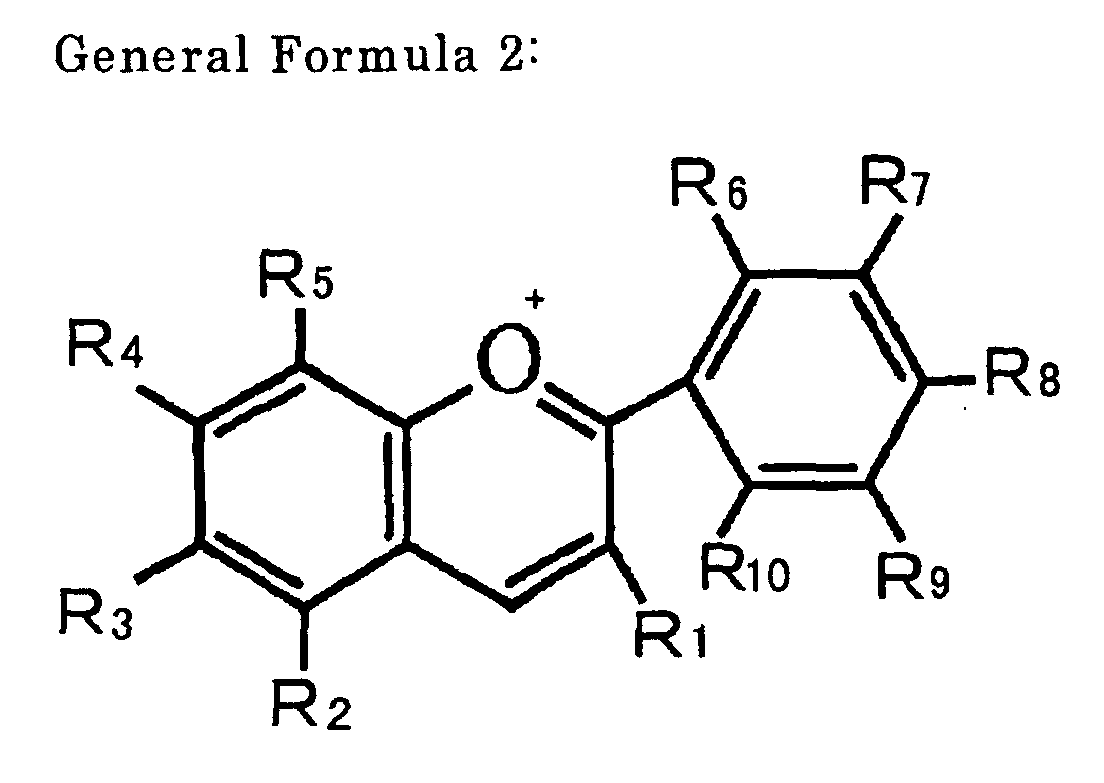
| Substance Name | R1 | R2 | R3 | R4 | R5 | R6 | R7 | R8 | R9 | R10 |
| Cyanidin | OH | OH | H | OH | H | H | OH | OH | H | H |
| Pelargonidin | OH | OH | H | OH | H | H | H | OH | H | H |
| Delphinidin | OH | OH | H | OH | H | H | OH | OH | OH | H |
| Peonidin | OH | OH | H | OH | H | H | H | OH | OCH3 | H |
| Malvidin | OH | OH | H | OH | H | H | OCH3 | OH | OCH3 | H |
| Malvidin-3-Glucoside | OGlu | OH | H | OH | H | H | OCH3 | OH | OCH3 | H |
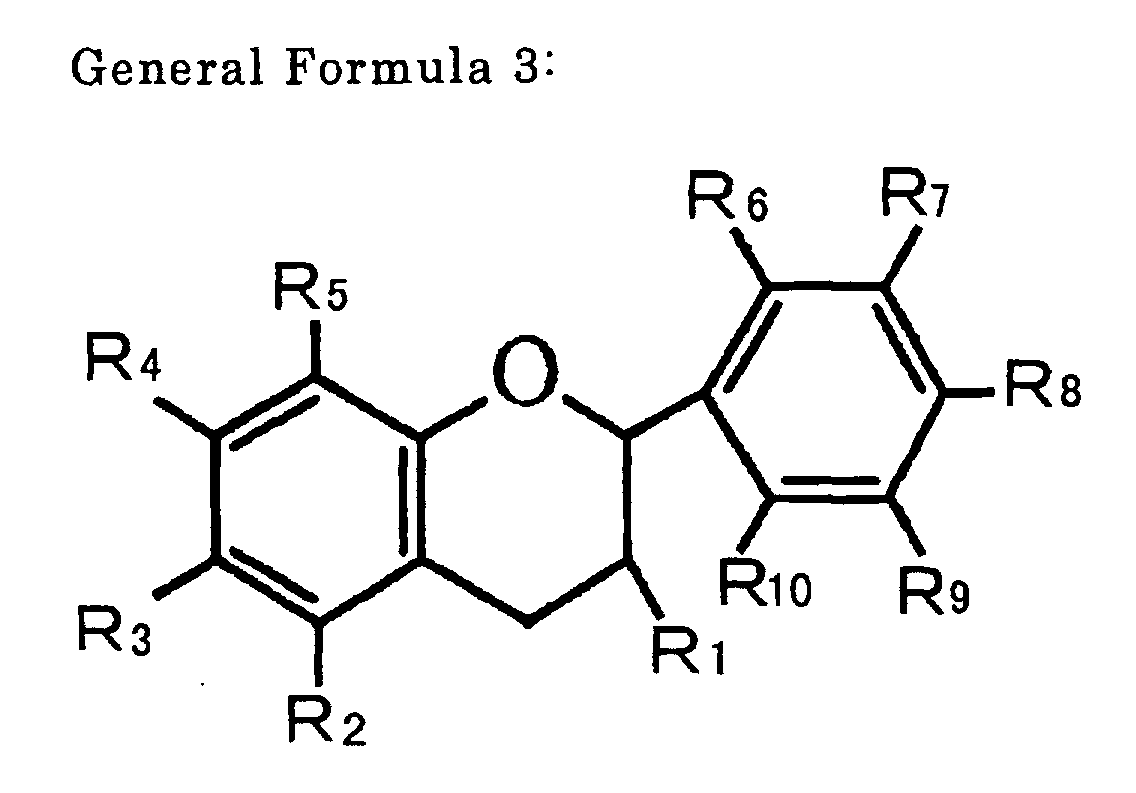
| Substance Name | R1 | R2 | R3 | R4 | R5 | R6 | R7 | R8 | R9 | R10 |
| Catechin | OH | OH | H | OH | H | H | H | OH | OH | H |
| Epicatechin | OH | OH | H | OH | H | H | OH | OH | H | H |
| Epigallocatechin | OH | OH | H | OH | H | H | OH | OH | OH | H |
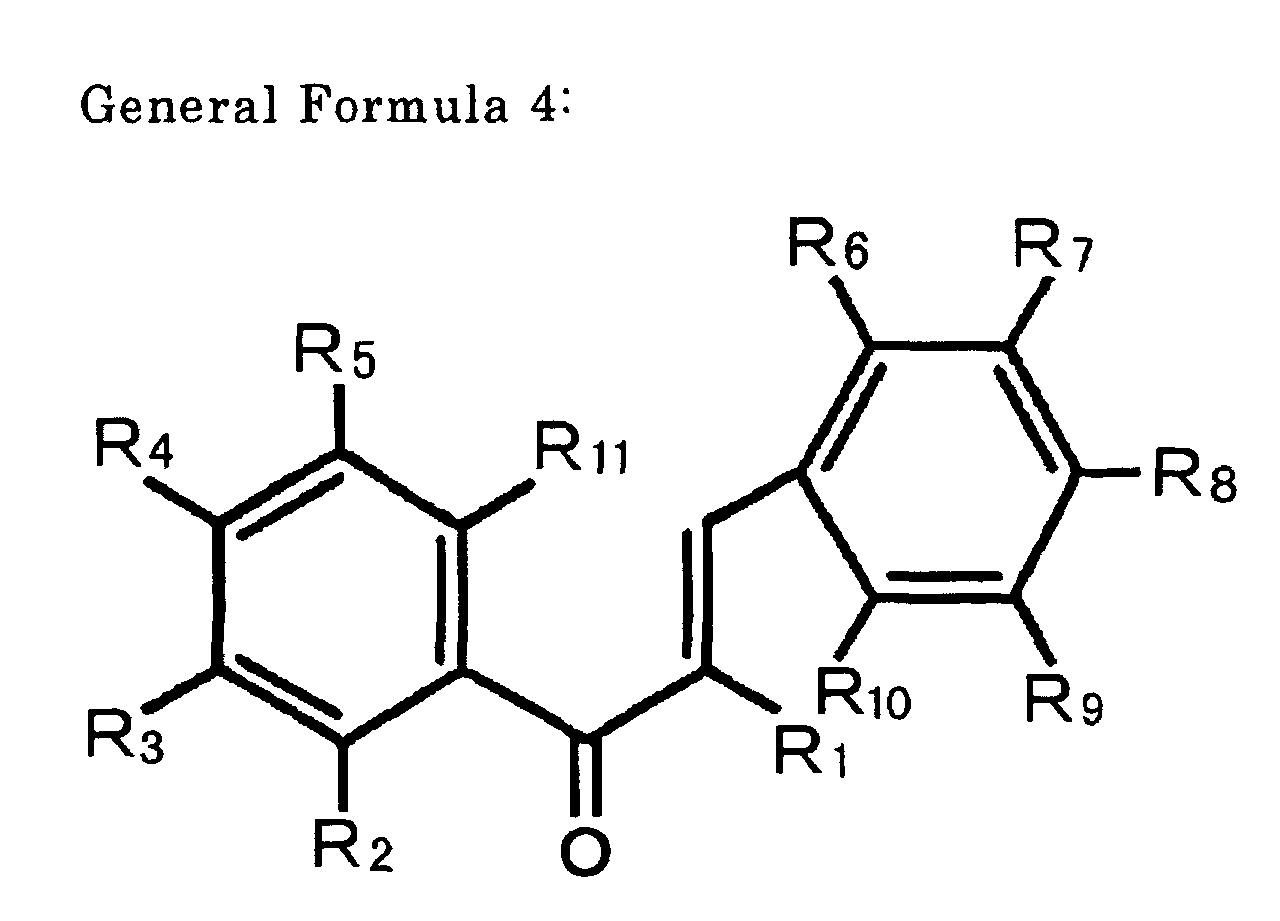
| Substance Name | R1 | R2 | R3 | R4 | R5 | R6 | R7 | R8 | R9 | R10 | R11 |
| Chalcone | H | H | H | H | H | H | H | H | H | H | H |
| Phloretin | H | OH | H | OH | H | H | H | OH | H | H | OH |

| Substance Name | R2 | R3 | R4 | R5 | R6 | R7 | R8 | R9 | R10 |
| Sulfuretin | H | H | OH | H | H | OH | OH | H | H |
| Leptosidin | H | H | OH | OCH3 | H | OH | OH | H | H |

| Compound Name | R1 | R2 | R3 | R4 | R5 | R6 | R7 | R8 | R9 | R10 |
| Ipriflavone | H | H | H | OC3H7 | H | H | H | H | H | H |
| Genistein | H | OH | H | OH | H | H | H | OH | H | H |
| Daidzein | H | H | H | OH | H | H | H | OH | H | H |
| Genistin | H | OH | H | OGlu | H | H | H | OH | H | H |
| Daidzin | H | H | H | OGlu | H | H | H | OH | H | H |
| Ingredient | mg/l | Ingredient | mg/l |
| L-Alanine | 25 | L-Ascorbic Acid | 50 |
| L-Arginine | 105 | Biotin | 0.1 |
| L-Asparagine | 25 | Choline | 1 |
| L- | 30 | Cyanocobalamin | 1.36 |
| L- | 100 | Folic Acid | 1 |
| L-Cystine | 24 | Inositol | 2 |
| L-Glutamic acid | 75 | Nicotinamide | 1 |
| L-Glutamine | 292 | Pantothenic Acid | 1 |
| | 50 | Pyridoxal | 1 |
| L-Histidine | 31 | Riboflavin | 0.1 |
| L-Isoleucine | 52 | Thiamine | 1 |
| L-Leucine | 52 | Calcium Chloride | 200 |
| L-Lysine | 58 | Potassium Chloride | 400 |
| L-Methionine | 15 | Magnesium Chloride | 200 |
| L-Phenylalanine | 32 | Sodium Chloride | 6.800 |
| L- | 40 | Sodium Bicarbonate | 2,000 |
| L-Serine | 25 | Sodium Dihydrogenphosphate | 150 |
| L-Threonine | 47.6 | Glucose | 1,000 |
| L- | 10 | Lipoic Acid | 0.2 |
| L-Tyrosine | 36 | Phenolsulfonphthalein | 10 |
| L-Valine | 46 | Sodium Pyruvate | 110 |
| Organic compound | Relative Alkaline phosphatase activity (%) |
| 0.2%(v/v) | 100 |
| Indomethacin | 142 |
| Kaempferol | 162 |
| Gallic Acid | 79 |
| Coffeic Acid | 97 |
| 4-Methylumbelliferone | 96 |
| | 100 |
| β-Carotene | 81 |
| Glycyrrizinic Acid | 97 |
| Menthol | 95 |
| Theophylline | 92 |
| | 100 |
| Vanillin | 89 |
| Organic Compound | Calcium Deposition Amount |
| 0.2%(v/v) Ethanol (Negative Control) | + |
| Indomethacin | +++ |
| Kaempferol | +++ |
| Hesperetin | +++ |
| Gallic Acid | + |
| Coffeic Acid | + |
| Relative Alkaline Phosphatase Activity (%) | Relative Calcium Deposition Amount (%) | |
| 0.2%(v/v) | 100 | 100 |
| Flavone | 103 | 158 |
| Apigenin | 128 | 247 |
| Flavonol | 139 | 295 |
| Quercetin | 120 | 118 |
| Kaempferol | 162 | 305 |
| Rutin | 109 | 74 |
| Flavanone | 109 | 311 |
| Naringenin | 110 | 271 |
| Hesperetin | 116 | 289 |
| Hesperidin | 107 | 118 |
| Chalcone | 105 | 104 |
| Phloretin | 109 | 238 |
| Catechin | 118 | 247 |
| Ipriflavone | 114 | 263 |
| Taxifolin | 98 | 234 |
| Sulfuretin | 126 | 157 |
| Cyanidin | 115 | 216 |
| Ingredient of Feeding Stuff (weight %) | Test Group | |||||
| Hesperetin | Quercetin | α-Glycosyl Rutin | α-Glycosyl Hesperidin | Ipriflavone | None (Control Group) | |
| Flavonoids (Samples) | 0.5 | 0.5 | 1.25 | 1.25 | 0.5 | 0 |
| Corn Starch | 14.5 | 14.5 | 13.75 | 13.75 | 14.5 | 15 |
| | 50 | |||||
| | 20 | |||||
| | 5 | |||||
| | 5 | |||||
| Minerals | 3.5 | |||||
| Vitamins | 1.2 | |||||
| Methionine | 0.3 |
| Sample | Dried Bone Mass (g) | Calcium Content Per One Dried Bone (mg) | Remark | |
| Hesperetin Hesperetin | Femur | 0.463 | 125.1 | The Present Invention |
| Tibia | 0.357 | 109.0 | ||
| Quercetin | Femur | 0.456 | 120.3 | The Present Invention |
| Tibia | 0.352 | 108.7 | ||
| α-Glycosyl Rutin | Femur | 0.439 | 119.9 | The Present Invention |
| Tibia | 0.343 | 107.7 | ||
| α-Glycosyl Hesperidin | Femur | 0.454 | 126.9 | The Present Invention |
| Tibia | 0.349 | 109.5 | ||
| Ipriflavone | Femur | 0.428 | 120.0 | Positive Control |
| Tibia | 0.338 | 106.0 | ||
| None | Femur | 0.427 | 116.4 | Negative Control |
| Tibia | 0.331 | 105.9 |
Claims (17)
- An agent for strengthening calcium-containing tissue, which comprises one or more compounds having a basic structure represented by any one of General Formulae 1 to 5 and precursors thereof:where "X" means a single or double bond, while R1 to R10 may be substituents,
 wherein R1 to R10 may be substituents,
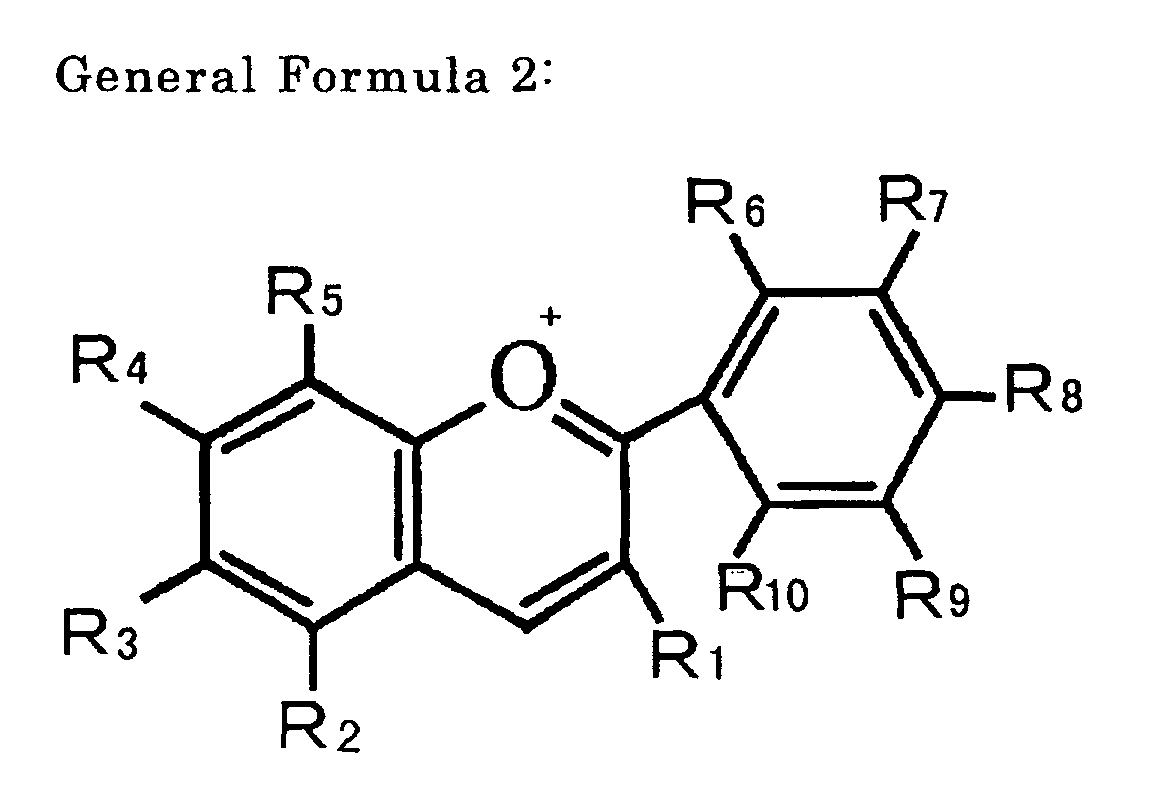 wherein R1 to R10 may be substituents,
 wherein R1 to R11 may be substituents,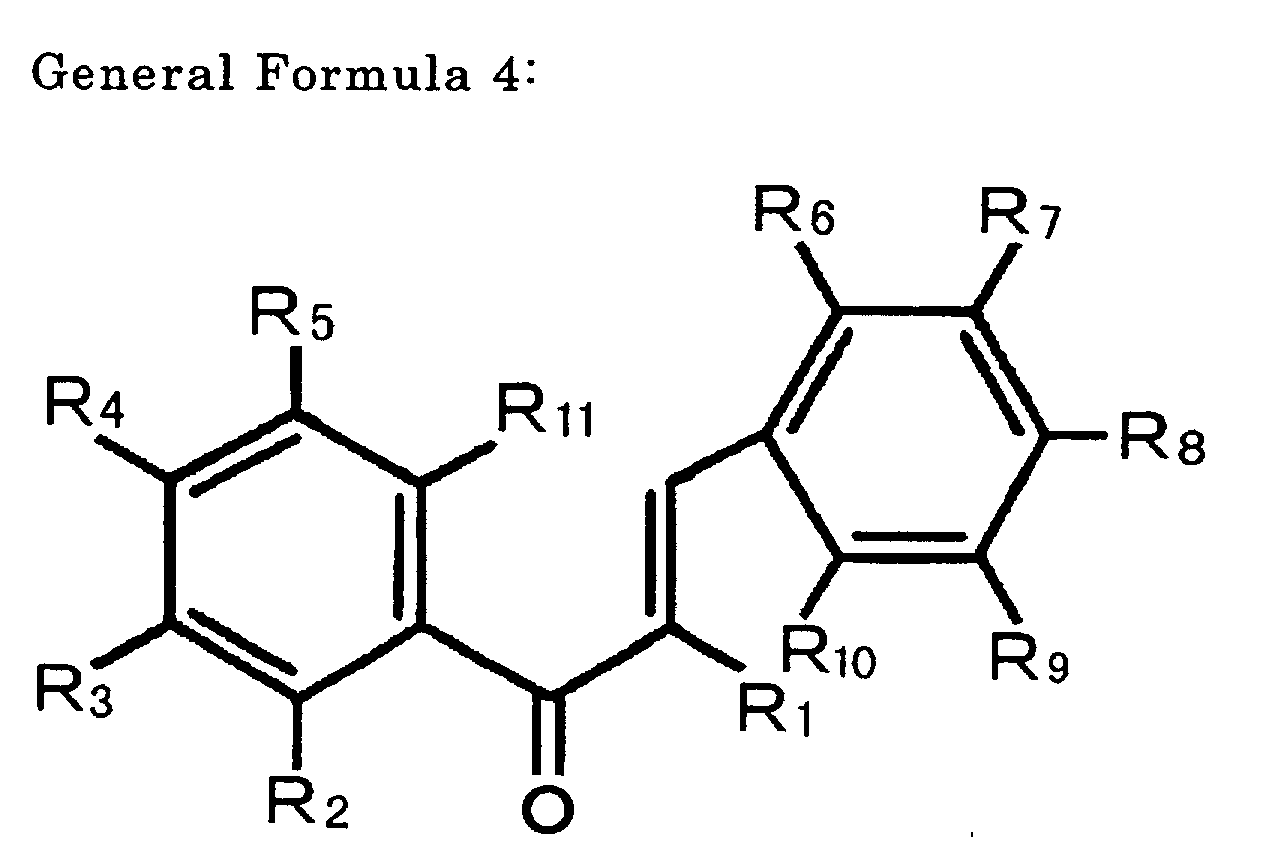
 wherein R1 to R10 may be substituents.
- The agent of claim 1, wherein said compounds are flavones, flavonols, flavanones, flavanonols, anthocyanidins, flavanols, calcones, and precursors thereof.
- The agent of claim 2, wherein said flavones, flavonols, flavanones, flavanonols, anthocyanidins, flavanols, and calcones are in the form of an aglycon, glycoside, polymer or derivative.
- The agent of claim 2 or 3, wherein said flavonols are kaempferol, quercetin, and α-glycosyl rutin.
- The agent of claim 2 or 3, wherein said flavanones are hesperetin, naringenin, and α-glycosyl hesperidin.
- The agent of claim 2 or 3, wherein said anthocyanidins or said precursors thereof are cyanidin or proanthocyanidin.
- The agent of claim 2 or 3, wherein said flavanols are catechin.
- The agent of any one of claims 1 to 7, which further comprises an isoflavone.
- The agent of claim 8, wherein said isoflavone is an ipriflavone or isoflavone from soy bean.
- The agent of claim 8 or 9, wherein said isoflavone is in the form of an aglycon, glycoside, polymer, or derivative.
- The agent of any one of claims 1 to 10, which further comprises one or more members selected from the group consisting of mineral, substance having mineral absorption-promoting activity, oligosaccharide, and vitamin.
- The agent of claim 11, wherein said mineral is a calcium compound, magnesium compound, and/or a mixture thereof.
- The agent of claim 11 or 12, wherein said substance having mineral absorption-promoting activity is casein, oligosaccharide, or mixture thereof.
- The agent of claim 11, 12, or 13, wherein said oligosaccharides are fractooligosaccharide, isomaltoligosaccharide, xylooligosaccharide, lactosucrose, soybean oligosaccharide, α,α-trehalose, and/or α,β-trehalose.
- The agent of any one of claims 11 to 14, wherein said vitamins are vitamin D, vitamin K, L-ascorbic acid, and/or derivatives thereof.
- A food, beverage, cosmetic, or pharmaceutical, which comprises the agent of any one of claims 1 to 15.
- The food or beverage of claim 16, which is a health food.
Applications Claiming Priority (3)
| Application Number | Priority Date | Filing Date | Title |
|---|---|---|---|
| JP2002130154 | 2002-05-01 | ||
| JP2002130154A JP4390428B2 (en) | 2001-05-01 | 2002-05-01 | Calcium-containing tissue strengthening agent |
| PCT/JP2002/004407 WO2003092666A1 (en) | 2002-05-01 | 2002-05-02 | Calcium-containing tissue strengthening agents and use thereof |
Publications (3)
| Publication Number | Publication Date |
|---|---|
| EP1514540A1 true EP1514540A1 (en) | 2005-03-16 |
| EP1514540A4 EP1514540A4 (en) | 2006-03-08 |
| EP1514540B1 EP1514540B1 (en) | 2014-08-27 |
Family
ID=29397322
Family Applications (1)
| Application Number | Title | Priority Date | Filing Date |
|---|---|---|---|
| EP02807341.9A Expired - Lifetime EP1514540B1 (en) | 2002-05-01 | 2002-05-02 | Calcium-containing tissue strengthening agents and use thereof |
Country Status (5)
| Country | Link |
|---|---|
| US (2) | US20050215493A1 (en) |
| EP (1) | EP1514540B1 (en) |
| KR (1) | KR100946822B1 (en) |
| TW (1) | TWI331032B (en) |
| WO (1) | WO2003092666A1 (en) |
Cited By (8)
| Publication number | Priority date | Publication date | Assignee | Title |
|---|---|---|---|---|
| EP1643863A2 (en) * | 2003-07-10 | 2006-04-12 | Carl A. Forest | Foods, beverages, condiments, spices and salad dressings with specialized supplements |
| WO2008007227A3 (en) * | 2006-05-19 | 2009-06-04 | Horphag Res Luxembourg Holding | Method and compositions for relieving menopausal and perimenopausal symptoms |
| WO2009110003A1 (en) * | 2008-03-05 | 2009-09-11 | Council Of Scientific & Industrial Research | Novel flavonol compounds, a bioactive extract/fraction from ulmus wallichiana and its compounds for prevention for treatment of osteo-health related disorders |
| EP2368442A2 (en) | 2005-07-27 | 2011-09-28 | Symrise AG | Use of hesperetin for enhancing the sweet taste |
| WO2011153470A3 (en) * | 2010-06-03 | 2012-01-26 | Stokely-Van Camp, Inc. | Electrolyte blends providing reduced salty taste |
| EP2415469A1 (en) * | 2006-10-24 | 2012-02-08 | David W. Krempin | Anti-Resorptive and Bone Building Dietary Supplements and Methods of Use |
| WO2012037023A1 (en) | 2010-09-17 | 2012-03-22 | Stokely-Van Camp, Inc. | Methods of reducing blood lactate concentration |
| CN103211836A (en) * | 2013-04-11 | 2013-07-24 | 天津天狮生物发展有限公司 | Composition for treating osteoporosis |
Families Citing this family (10)
| Publication number | Priority date | Publication date | Assignee | Title |
|---|---|---|---|---|
| AU2006222556B2 (en) * | 2005-03-11 | 2011-09-29 | Armaron Bio Pty Ltd | Flavonoid compounds and uses thereof |
| US20070092454A1 (en) * | 2005-10-24 | 2007-04-26 | Colgate-Palmolive Company | Oral composition containing morin |
| US20070116836A1 (en) * | 2005-11-23 | 2007-05-24 | The Coca-Cola Company | High-Potency Sweetener Composition for Treatment and/or Prevention of Osteoporosis and Compositions Sweetened Therewith |
| US9101160B2 (en) | 2005-11-23 | 2015-08-11 | The Coca-Cola Company | Condiments with high-potency sweetener |
| US20080003300A1 (en) * | 2006-06-30 | 2008-01-03 | Gaffar Maria C | Compostions containing Mg/Zn/F-CaP plus inhibitors of pro-inflammatory Cytokines (a combination of a Free-B-Ring flavonoids and a flavan) for osteoporosis prevention, therapy and treatment of bone diseases |
| GB0614353D0 (en) | 2006-07-20 | 2006-08-30 | Oraldent Ltd | Oral compositions, their preparation and use |
| US8017168B2 (en) | 2006-11-02 | 2011-09-13 | The Coca-Cola Company | High-potency sweetener composition with rubisco protein, rubiscolin, rubiscolin derivatives, ace inhibitory peptides, and combinations thereof, and compositions sweetened therewith |
| WO2008123970A1 (en) * | 2007-04-02 | 2008-10-16 | Alfredo Avila | Herbal formulation for the treatment of bone fractures and osseous defects |
| KR20150100960A (en) | 2008-01-28 | 2015-09-02 | 뷰티 펄 그룹 리미티드 | Formulas comprising calcium, magnesium, zinc, and vitamine D3 for the prevention and amelioration of osteoporosis |
| EP3685836A4 (en) | 2017-09-21 | 2021-06-02 | Hokuriku University | BONE REMODELING ACCELERATOR |
Family Cites Families (24)
| Publication number | Priority date | Publication date | Assignee | Title |
|---|---|---|---|---|
| JPH0629182B2 (en) * | 1986-12-20 | 1994-04-20 | キツセイ薬品工業株式会社 | Osteoporosis treatment |
| JPH0629184B2 (en) * | 1986-12-22 | 1994-04-20 | キツセイ薬品工業株式会社 | Osteoporosis treatment |
| JPH0629183B2 (en) * | 1986-12-22 | 1994-04-20 | キツセイ薬品工業株式会社 | Osteoporosis treatment |
| JPH0629185B2 (en) * | 1986-12-22 | 1994-04-20 | キツセイ薬品工業株式会社 | Osteoporosis treatment |
| JPH0729921B2 (en) * | 1987-02-14 | 1995-04-05 | キツセイ薬品工業株式会社 | Osteoporosis treatment |
| JPH0729920B2 (en) * | 1987-02-14 | 1995-04-05 | キツセイ薬品工業株式会社 | Osteoporosis treatment |
| JP3060227B2 (en) * | 1989-06-03 | 2000-07-10 | 株式会社林原生物化学研究所 | α-Glycosyl hesperidin, its production method and use |
| US5478579A (en) * | 1991-02-06 | 1995-12-26 | Biodyn Medical Research, Inc. | Method for treatment of osteoporosis |
| EP0619116A3 (en) * | 1993-04-05 | 1994-11-23 | Hoechst Japan | Use of synthetic retinoids for osteopathy. |
| US6261565B1 (en) * | 1996-03-13 | 2001-07-17 | Archer Daniels Midland Company | Method of preparing and using isoflavones |
| US6297273B1 (en) * | 1996-04-02 | 2001-10-02 | Mars, Inc. | Use of cocoa solids having high cocoa polyphenol content in tabletting compositions and capsule filling compositions |
| EP0969743B1 (en) * | 1997-03-20 | 2004-09-15 | Coventry Group, Ltd. | Nutritional supplement for cardiovascular health |
| JP3250071B2 (en) * | 1997-06-26 | 2002-01-28 | 株式会社ホーネンコーポレーション | Anti-osteoporosis composition |
| AU735713B2 (en) * | 1997-08-08 | 2001-07-12 | Otsuka Pharmaceutical Co., Ltd. | Isoflavone-containing composition |
| US6117429A (en) * | 1997-08-11 | 2000-09-12 | Weider Nutrition International, Inc | Compositions and treatments for reducing potential unwanted side effects associated with long-term administration of androgenic testosterone precursors |
| AU4573899A (en) * | 1998-06-19 | 2000-01-05 | Beth Israel Deaconess Medical Center | Dietary supplement for post-menopausal women |
| ID28460A (en) * | 1998-07-08 | 2001-05-24 | Lipogenics Inc | COMPOSITION AND METHODS FOR TREATMENT AND PREVENTION OF BONE DISEASE USING TOCOTRIENOL |
| JP3010210B1 (en) * | 1998-09-02 | 2000-02-21 | 農林水産省果樹試験場長 | Matrix metalloprotease production inhibitor |
| AU4550100A (en) * | 1999-05-05 | 2000-11-21 | Herzog, Leslie J. | Food product |
| KR100776465B1 (en) * | 1999-08-27 | 2007-11-16 | 미시간 스테이트 유니버시티 | Dietary Supplements Containing Natural Cyclooxygenase Inhibitors |
| JP2001072582A (en) * | 1999-09-07 | 2001-03-21 | Sunstar Inc | Functional oral composition |
| JP2001114675A (en) * | 1999-10-12 | 2001-04-24 | Fancl Corp | Vitamin composition |
| EP1127572A3 (en) | 2000-02-25 | 2003-05-02 | Basf Aktiengesellschaft | Use of flavones for treating cycloxygenase-2 mediated diseases |
| KR100814652B1 (en) * | 2000-06-02 | 2008-03-18 | 메르크 파텐트 게엠베하 | Compositions for the treatment and / or prevention of osteoporosis and / or inflammatory joint disease |
-
2002
- 2002-05-02 US US10/513,119 patent/US20050215493A1/en not_active Abandoned
- 2002-05-02 TW TW091109304A patent/TWI331032B/zh not_active IP Right Cessation
- 2002-05-02 KR KR1020047017557A patent/KR100946822B1/en not_active Expired - Fee Related
- 2002-05-02 WO PCT/JP2002/004407 patent/WO2003092666A1/en not_active Ceased
- 2002-05-02 EP EP02807341.9A patent/EP1514540B1/en not_active Expired - Lifetime
-
2008
- 2008-09-15 US US12/210,587 patent/US8778882B2/en not_active Expired - Fee Related
Cited By (13)
| Publication number | Priority date | Publication date | Assignee | Title |
|---|---|---|---|---|
| EP1643863A2 (en) * | 2003-07-10 | 2006-04-12 | Carl A. Forest | Foods, beverages, condiments, spices and salad dressings with specialized supplements |
| EP2368442A2 (en) | 2005-07-27 | 2011-09-28 | Symrise AG | Use of hesperetin for enhancing the sweet taste |
| WO2008007227A3 (en) * | 2006-05-19 | 2009-06-04 | Horphag Res Luxembourg Holding | Method and compositions for relieving menopausal and perimenopausal symptoms |
| EP2415469A1 (en) * | 2006-10-24 | 2012-02-08 | David W. Krempin | Anti-Resorptive and Bone Building Dietary Supplements and Methods of Use |
| US8669232B2 (en) | 2008-03-05 | 2014-03-11 | Council Of Scientific & Industrial Research | Flavonol compounds, a bioactive extract/fraction from Ulmus wallichiana and its compounds for prevention for treatment of osteo-health related disorders |
| WO2009110003A1 (en) * | 2008-03-05 | 2009-09-11 | Council Of Scientific & Industrial Research | Novel flavonol compounds, a bioactive extract/fraction from ulmus wallichiana and its compounds for prevention for treatment of osteo-health related disorders |
| WO2011153470A3 (en) * | 2010-06-03 | 2012-01-26 | Stokely-Van Camp, Inc. | Electrolyte blends providing reduced salty taste |
| CN102917606A (en) * | 2010-06-03 | 2013-02-06 | 斯托克里-丰康普公司 | Electrolyte blends providing reduced salty taste |
| EP3510874A3 (en) * | 2010-06-03 | 2019-08-21 | Stokely-Van Camp, Inc. | Electrolyte blends providing reduced salty taste |
| WO2012037023A1 (en) | 2010-09-17 | 2012-03-22 | Stokely-Van Camp, Inc. | Methods of reducing blood lactate concentration |
| AU2011302390B2 (en) * | 2010-09-17 | 2014-08-07 | Stokely-Van Camp, Inc. | Methods of reducing blood lactate concentration |
| US9198453B2 (en) | 2010-09-17 | 2015-12-01 | Stokely-Van Camp, Inc. | Methods of reducing blood lactate concentration |
| CN103211836A (en) * | 2013-04-11 | 2013-07-24 | 天津天狮生物发展有限公司 | Composition for treating osteoporosis |
Also Published As
| Publication number | Publication date |
|---|---|
| TWI331032B (en) | 2010-10-01 |
| EP1514540A4 (en) | 2006-03-08 |
| US8778882B2 (en) | 2014-07-15 |
| KR20040101576A (en) | 2004-12-02 |
| US20090075908A1 (en) | 2009-03-19 |
| US20050215493A1 (en) | 2005-09-29 |
| KR100946822B1 (en) | 2010-03-09 |
| EP1514540B1 (en) | 2014-08-27 |
| WO2003092666A1 (en) | 2003-11-13 |
Similar Documents
| Publication | Publication Date | Title |
|---|---|---|
| US8778882B2 (en) | Agent for strengthening calcium containing tissue and use thereof | |
| JP3763075B2 (en) | Food composition, oral composition and pharmaceutical composition for prevention or treatment of periodontal disease | |
| US7993684B2 (en) | Method of inhibiting alveolar bone resorption and periodontal membrane loss and composition for internal use to be used therein | |
| US5478579A (en) | Method for treatment of osteoporosis | |
| US8492363B2 (en) | Use of difructose anhydride-containing composition | |
| JP4390428B2 (en) | Calcium-containing tissue strengthening agent | |
| EP0934060A1 (en) | Dietary supplements | |
| US12090166B2 (en) | Pharmaceutical composition for preventing or treating dentin-dental pulp disease or periodontal disease, containing LPAR2 inhibitor | |
| JP3749978B2 (en) | Bone formation enhancing composition exhibiting anti-osteoporosis effect | |
| PT1379146E (en) | Preparation for the prevention and/or treatment of altered bone metabolism | |
| JP6800386B1 (en) | Composition for improving bone metabolism | |
| KR100718490B1 (en) | Jujube extract having osteoclast differentiation inhibitory effect and health functional food composition comprising the same | |
| RU2273492C1 (en) | Composition for prophylaxis and treatment of diseases caused by calcium deficiency (variants) | |
| WO2007026897A1 (en) | Oral composition for prevention or treatment of skin blemishes or freckles and food | |
| WO2010054052A1 (en) | Compositions and methods of sirt activation | |
| JPH119221A (en) | Antiosteoporotic composition | |
| TW202527919A (en) | Skin improving agent | |
| JP2002121146A (en) | Preparation for preventing periodontal disease | |
| JP2007063224A (en) | Tyrosinase activity inhibitor |
Legal Events
| Date | Code | Title | Description |
|---|---|---|---|
| PUAI | Public reference made under article 153(3) epc to a published international application that has entered the european phase |
Free format text: ORIGINAL CODE: 0009012 |
|
| 17P | Request for examination filed |
Effective date: 20041130 |
|
| AK | Designated contracting states |
Kind code of ref document: A1 Designated state(s): AT BE CH CY DE DK ES FI FR GB GR IE IT LI LU MC NL PT SE TR |
|
| A4 | Supplementary search report drawn up and despatched |
Effective date: 20060124 |
|
| 17Q | First examination report despatched |
Effective date: 20060928 |
|
| GRAP | Despatch of communication of intention to grant a patent |
Free format text: ORIGINAL CODE: EPIDOSNIGR1 |
|
| INTG | Intention to grant announced |
Effective date: 20140303 |
|
| RIN1 | Information on inventor provided before grant (corrected) |
Inventor name: IWAKI,KANSO K.K. HAYASHIBARA SEIBUTSU KAGAKU KENKY Inventor name: MIYAKE,MASAKI K.K.HAYASHIBARA SEIBUTSU KAGAKU KENK Inventor name: USHIO,SHIMPEI K.K. HAYASHIBARA SEIBUTSU KAGAKU KEN Inventor name: KURIMOTO, MASASHI K.K.HAYASHIBARA |
|
| GRAS | Grant fee paid |
Free format text: ORIGINAL CODE: EPIDOSNIGR3 |
|
| GRAA | (expected) grant |
Free format text: ORIGINAL CODE: 0009210 |
|
| RAP1 | Party data changed (applicant data changed or rights of an application transferred) |
Owner name: HAYASHIBARA CO., LTD. |
|
| AK | Designated contracting states |
Kind code of ref document: B1 Designated state(s): DE FR GB |
|
| REG | Reference to a national code |
Ref country code: GB Ref legal event code: FG4D |
|
| REG | Reference to a national code |
Ref country code: DE Ref legal event code: R096 Ref document number: 60246588 Country of ref document: DE Effective date: 20141002 |
|
| REG | Reference to a national code |
Ref country code: FR Ref legal event code: PLFP Year of fee payment: 14 |
|
| REG | Reference to a national code |
Ref country code: DE Ref legal event code: R097 Ref document number: 60246588 Country of ref document: DE |
|
| PLBE | No opposition filed within time limit |
Free format text: ORIGINAL CODE: 0009261 |
|
| STAA | Information on the status of an ep patent application or granted ep patent |
Free format text: STATUS: NO OPPOSITION FILED WITHIN TIME LIMIT |
|
| PGFP | Annual fee paid to national office [announced via postgrant information from national office to epo] |
Ref country code: DE Payment date: 20150428 Year of fee payment: 14 Ref country code: GB Payment date: 20150417 Year of fee payment: 14 |
|
| 26N | No opposition filed |
Effective date: 20150528 |
|
| PGFP | Annual fee paid to national office [announced via postgrant information from national office to epo] |
Ref country code: FR Payment date: 20150508 Year of fee payment: 14 |
|
| REG | Reference to a national code |
Ref country code: DE Ref legal event code: R119 Ref document number: 60246588 Country of ref document: DE |
|
| GBPC | Gb: european patent ceased through non-payment of renewal fee |
Effective date: 20160502 |
|
| REG | Reference to a national code |
Ref country code: FR Ref legal event code: ST Effective date: 20170131 |
|
| PG25 | Lapsed in a contracting state [announced via postgrant information from national office to epo] |
Ref country code: DE Free format text: LAPSE BECAUSE OF NON-PAYMENT OF DUE FEES Effective date: 20161201 Ref country code: FR Free format text: LAPSE BECAUSE OF NON-PAYMENT OF DUE FEES Effective date: 20160531 |
|
| PG25 | Lapsed in a contracting state [announced via postgrant information from national office to epo] |
Ref country code: GB Free format text: LAPSE BECAUSE OF NON-PAYMENT OF DUE FEES Effective date: 20160502 |