EP1511187B1 - Sendeleistungsregelung für ein Mehrkodemehrantennensystem - Google Patents
Sendeleistungsregelung für ein Mehrkodemehrantennensystem Download PDFInfo
- Publication number
- EP1511187B1 EP1511187B1 EP04019982.0A EP04019982A EP1511187B1 EP 1511187 B1 EP1511187 B1 EP 1511187B1 EP 04019982 A EP04019982 A EP 04019982A EP 1511187 B1 EP1511187 B1 EP 1511187B1
- Authority
- EP
- European Patent Office
- Prior art keywords
- transmit
- power
- code
- transmit power
- equation
- Prior art date
- Legal status (The legal status is an assumption and is not a legal conclusion. Google has not performed a legal analysis and makes no representation as to the accuracy of the status listed.)
- Expired - Lifetime
Links
Images



Classifications
-
- H—ELECTRICITY
- H04—ELECTRIC COMMUNICATION TECHNIQUE
- H04B—TRANSMISSION
- H04B7/00—Radio transmission systems, i.e. using radiation field
- H04B7/02—Diversity systems; Multi-antenna system, i.e. transmission or reception using multiple antennas
- H04B7/04—Diversity systems; Multi-antenna system, i.e. transmission or reception using multiple antennas using two or more spaced independent antennas
- H04B7/0413—MIMO systems
- H04B7/0426—Power distribution
-
- H—ELECTRICITY
- H04—ELECTRIC COMMUNICATION TECHNIQUE
- H04W—WIRELESS COMMUNICATION NETWORKS
- H04W52/00—Power management, e.g. Transmission Power Control [TPC] or power classes
- H04W52/04—Transmission power control [TPC]
- H04W52/06—TPC algorithms
- H04W52/16—Deriving transmission power values from another channel
-
- H—ELECTRICITY
- H04—ELECTRIC COMMUNICATION TECHNIQUE
- H04B—TRANSMISSION
- H04B17/00—Monitoring; Testing
- H04B17/30—Monitoring; Testing of propagation channels
- H04B17/309—Measuring or estimating channel quality parameters
- H04B17/336—Signal-to-interference ratio [SIR] or carrier-to-interference ratio [CIR]
-
- H—ELECTRICITY
- H04—ELECTRIC COMMUNICATION TECHNIQUE
- H04L—TRANSMISSION OF DIGITAL INFORMATION, e.g. TELEGRAPHIC COMMUNICATION
- H04L1/00—Arrangements for detecting or preventing errors in the information received
- H04L1/02—Arrangements for detecting or preventing errors in the information received by diversity reception
- H04L1/06—Arrangements for detecting or preventing errors in the information received by diversity reception using space diversity
- H04L1/0618—Space-time coding
- H04L1/0637—Properties of the code
- H04L1/0656—Cyclotomic systems, e.g. Bell Labs Layered Space-Time [BLAST]
-
- H—ELECTRICITY
- H04—ELECTRIC COMMUNICATION TECHNIQUE
- H04W—WIRELESS COMMUNICATION NETWORKS
- H04W52/00—Power management, e.g. Transmission Power Control [TPC] or power classes
- H04W52/04—Transmission power control [TPC]
- H04W52/38—TPC being performed in particular situations
- H04W52/42—TPC being performed in particular situations in systems with time, space, frequency or polarisation diversity
Definitions
- the present invention relates to a wireless communication apparatus and a method for a multiple transmit and receive antenna system using multiple codes, and more particularly to an apparatus and a method, which can allocate transmit power depending on transmit signals.
- a Bell Labs layered space-time (BLAST) system uses a multiple transmit-receive antenna.
- the BLAST system employs suitable signal processing at a receive end to improve spectral efficiency.
- a high data rate is achieved by transferring independent substreams from multiple transmit/receive antennas under a rich-scattering wireless channel environment employing channels independent of each other between transmit/receive antennas.
- Each transmitted signal from each transmit antenna is detected in a predetermined order according to channel conditions, and an already-detected transmitted signal is treated through a Successive Interference Cancellation (SIC) process in which a corresponding component is subtracted from a received signal when detecting the next transmitted signal.
- SIC Successive Interference Cancellation
- V-BLAST Vertical BLAST
- a multi-code CDMA system has been suggested as a transmission scheme for a high and variable data rate.
- data of a certain user are divided into several streams and transferred in parallel by allocating an orthogonal code to each stream.
- the V-BLAST system employing the multi-code CDMA transmission scheme is expected to be an important telecommunication system in a next generation mobile telecommunication, which will require a high data rate.
- signals are seriously distorted under the frequency-flat fading channel environment having a propagation delay. This phenomenon is a more serious problem under a highspeed data telecommunication environment in which the symbol duration is very short. Therefore, under the frequency-selective fading channel environment, although the multi-code V-BLAST system employs orthogonal codes, an interference occurrence between codes is inevitable. Accordingly, it is necessary to remove the interference occurrence between codes.
- a conventional method employs a group detection technique used in a CDMA system in order to remove correlation between codes.
- a maximum dimension of a matrix required while inverting a matrix for a group decorrelating detector through the group detection technique is equal to a number obtained after multiplying the number of antennas by the number of codes. Accordingly, as the number of used codes increases, a computation amount remarkably increases, and the group detection technique will encounter serious problems when applied to a real system.
- Conventional techniques also include a technique for removing Multi-Code Interference (MCI) by using a parallel interference cancellation scheme in a multi-code system of a single transmit-receive antenna.
- MCI Multi-Code Interference
- the technique since the technique has to simultaneously process received signals de-spread with respect to all codes, the technique has a problem in that hardware complexity increases in proportion to the number of codes.
- a SIC scheme individually processes each received signal for each code in order, the SIC scheme has a relatively low hardware complexity as compared with a parallel Interference Cancellation (PIC) scheme.
- PIC parallel Interference Cancellation
- a generalized layered space time, GLST, code structure reduces the complexity by separating transmit antennas into groups. By equalizing the derivative of an individual FER, the optimum performance of the GLST system can be attained. Through simulations, it has been shown that power allocation can lead to a significant performance gain, around 1 to 2.5 dB depending on the system configuration.
- space-time encoders are used which are by themselves optimum space-time encoders.
- the i-th encoder occupies a total of n i transmit antennas during the transmission.
- the number of transmit antennas used by each encoder can be different and the total number used is equal to the total number of transmit antennas.
- the assignment of the transmit antennas to the space-time coder is controlled by a sequence of mappings in time.
- decoding the transmit side knows nothing about the channel and the receive side has perfect knowledge about it.
- an order of decoding is selected. This order can affect the system performance. Different power levels are allocated to different codes according to their positions in the decoding order. As this power allocation has to be done at the transmitter which has no knowledge of the instantaneous channel information, the transmitter can select an arbitrary decoding order and then allocate power according to that order.
- variable rate space-time block codes in MPSK systems.
- a multiple antenna systems is considered when combined array processing with space time coding is used.
- Variable rate space-time block codes are presented for two, three and four transmit antennas and optimize the transmit power so that the average BER is minimized.
- the present invention has been made to solve the above-mentioned problems occurring in conventional systems. It is the object of the present invention to provide an essential technique in a next generation mobile telecommunication requiring a high data rate by suggesting an effective method for performance improvement of a multi-code V-BLAST system.
- An aspect of the present invention is to provide an effective detection algorithm for a multi-code V-BLAST system and a transmit power allocation method for the detection algorithm under a frequency-selective fading channel environment.
- Another aspect of the present invention is to provide a Successive Interference Cancellation (SIC) in both a code domain and an antenna domain by using a suggested detection algorithm so as to successively perform cancellation with respect to Multi-Code Interference (MCI).
- SIC Successive Interference Cancellation
- MCI Multi-Code Interference
- a further aspect of the present invention is to provide an effective transmit power allocation method suitable for a detection algorithm.
- a method for allocating transmit power in a receiver of a multi-code multiple antenna system including M transmit antennas and N receive antennas, the method employing K spreading codes to distinguish channels, the method including steps of determining a power ratio ⁇ ⁇ between transmit power of two spreading codes adjacent to each other from among the spreading codes by using a ratio ( ⁇ ) of power of combined channel signals to power of noises and transmitting a determined power ratio ( ⁇ ) to a transmitter, wherein the power ratio ( ⁇ ) is proportional to the power of the combined channel signals, is inverse proportional to the power of the noises, and is determined to have a value within a range between zero and one.
- a method for allocating transmit power in a multi-code multiple antenna system including M transmit antennas and N receive antennas, the method employing K spreading codes to distinguish channels, the method including steps of determining a power ratio ( ⁇ ) such that, from among the K channels transmitted through the M transmit antennas has been measured, a signal-to-noise of each of which has been measured, a higher power is allocated to a channel with a higher signal-to-noise ratio than to a channel with a lower signal-to-nose-ratio; dividing total transmit power ( P T ) into transmit power corresponding to each of the K channels by using the power ratio ( ⁇ ); and distributing the transmit power divided according to the K channels to each of the M antennas.
- ⁇ power ratio
- the detection algorithm suggested according to the present invention employs a method for successively canceling a Multi-Code Interference (MCI). Accordingly, a Successive Interference Cancellation (SIC) is employed in both a code domain and a space domain.
- MCI Multi-Code Interference
- SIC Successive Interference Cancellation
- An effective transmit power allocation suitable for such a detection algorithm is also described. Therefore, transmit power allocated to each code is computed using the effective transmit power allocation suitable for such a detection algorithm.
- the transmit power is determined as a simple ratio of power of a certain code signal to power of a next code signal.
- transmit power is allocated to each transmit antenna based on the computed code transmit power. As described above, transmit power computed at a receive end is fed back toward a transmit end through a feedback channel.
- a detection algorithm proposes signal processing suitable for a V-BLAST system with respect to received signals propagation-delayed by a time period as long as a chip time unit, based on an equation thoroughly reflecting all correlation between codes.
- a V-BLAST detection algorithm is performed by a particular antenna based on an presumption that output signals of rake fingers obtained through various multi-paths are received by additional virtual receive antennas. In other words, this is a result obtained when the multi-path diversity obtainable in a CDMA method is regarded as the virtual receive antenna diversity.
- a simple SIC scheme is employed to remarkably reduce the complexity of an overall system and to prevent performance deterioration due to MCI. That is, the simple SIC scheme avoids a problem of increasing hardware complexity caused by the "Parallel Interference Cancellation (PIC)".
- PIC Parallel Interference Cancellation
- the suggested algorithm employs the SIC method in a code domain, as well as in an antenna domain.
- transmit power allocated to each code is computed. This transmit power is determined as a simple ratio of power of a certain code signal to power of a next code signal. At this time, a greater amount of power is allocated to the first detected code signal in an order predetermined between transmit/receive ends without performing detection ordering of each code. This is performed to improve performance of the overall system, on the assumption that Signal-to-Interference-Noise Ratio (SINR) is inferior because the first detected code signal includes more interference signals, so that performance of an overall system is more degraded.
- SINR Signal-to-Interference-Noise Ratio
- transmit power allocated to each transmit/receive antenna is found based on calculated transmit power for each code. As described above, information about transmit power computed at a receive end is fed back toward a transmit end through a feedback channel.
- FIG. 1 is a block diagram illustrating a wireless communication system according to one embodiment of the present invention.
- a multiple transmit/receive antenna system uses K spreading codes, M transmit antennas, and N receive antennas.
- K spreading codes K transmit antennas
- N receive antennas N receive antennas.
- a data input stream is divided into KxM parallel substreams through a serial-to-parallel converter.
- Each transmit antenna creates transmission signals by multiplying K substreams by mutually different spreading codes, and then by summing the resultants.
- T c is the chip duration
- c k , i is the i th chip for the k th code
- ⁇ ( t ) is the chip pulse shape which is assumed to be rectangular, i.e. one for 0 ⁇ t ⁇ T c and zero otherwise.
- a summation of transmit power of all transmit antennas corresponding to k th code is called P k
- a channel model between a specific transmit antenna and a specific receive antenna is a frequency-selective Rayleigh fading channel.
- L corresponds to the number of resolvable multi-path components
- T c refers to a chip duration of a spreading code.
- 2 ] ⁇ n e - t ⁇ , where l is defined by 0, 1, ⁇ , l-1 , E [ ⁇ ] denotes the expectation and the parameter ⁇ represents the rate of the exponential decay of the average path power.
- w p ( t ) corresponds to the additive white Gaussian noise (AWGN) with zero mean at the p th receive antenna with one-sided power spectral density ⁇ 2 .
- AWGN additive white Gaussian noise
- Such signals received at each receive antenna are processed through the suggested successive MCI cancellation method with V-BLAST detection. As a result, transmitted data are estimated.
- each receive antenna has a rake receiver structure for detecting a received signal corresponding to each multi-path.
- a complex baseband received signal corresponding to an output of the correlator bank is calculated.
- correlation between two predetermined codes having a discordance of a time difference of lT c from each other is defined by the following Equation 6:
- R k 0 , k l ⁇ - ⁇ + ⁇ c k 0 t ⁇ c k ⁇ t - l ⁇ T c d t .
- Equation 8 each parameter used for equation 7 is defined in Equation 8 to Equation 12, provided below.
- n k 0 n k 0 , 1 , 0 n k 0 , 1 , 1 ... n k 0 , 1 , L - 1 n k 0 , 2 , 0 ... n k 0 , N , L - 1 T
- Equation 14 a covariance matrix of a noise vector, n k0 .
- R ⁇ k 0 ⁇ - ⁇ ⁇ ⁇ c k 0 t ⁇ c k 0 t T d t .
- ( R ⁇ k 0 ) i , j R k 0 , k 0 (
- ) is obtained from Equation 6 and Equation 15.
- elements of the Y k t , k matrix which is required for finding the covariance matrix due to MCI, include channels and all correlations between spreading codes for different users. Although the spreading codes can be found, the channels are given, and the correlations between the spreading codes are calculated as mean values in order to more simply calculate the correlations.
- FIG. 2 is a detailed block diagram illustrating a successive MCI cancellation with V-BLAST detection part of a receiver structure
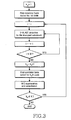
- FIG. 3 is a flowchart showing the signal processing procedure.
- Step 2) Initialization for SD-SIC (Space Domain SIC):
- step 2) and step 4 which can be called an inner loop, are processes repeated in order to detect data symbols employing identical codes, and are similar to a detection algorithm of a conventional narrowband V-BLAST system.
- the number of columns of the matrix Y k 0 - ko which is used for calculating pseudo-inverse increases up to the number of multi-paths, and a matrix exactly using all correlations between spreading codes is employed.
- the inner loop computes SINR based on MCI when processing detection ordering.
- step 1) and step 4 which are called an outer loop, are repeated whenever all data symbols corresponding to each spreading code are detected through the V-BLAST algorithm.
- the outer loop computes output signals of the correlator bank corresponding to new spreading codes.
- the outer loop reproduces MCI of data symbols of already-detected spreading codes to subtract the MCI.
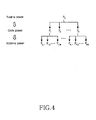
- FIG. 4 illustrates an overall structure for transmit power allocation. Such information about each transmit power is calculated at a receive end, and then is fed back to a transmit end.
- ⁇ denotes the Euclidean norm of a vector, and the squared norms are averaged over the spreading sequences as well as the data symbols and the additive noise.
- Equation 29 when MN approaches ⁇ , that is, MN ⁇ , ⁇ h approaches to ⁇ , that is, ⁇ h ⁇ .
- code power ratios found through Scheme A and Scheme B are approximately similar value to each other.
- the code power ratio relates to only average power and not instantaneous power of a channel gain. Therefore, when this value is constant and can be exactly measured at the receive end, it is enough to perform only one feedback to the transmit end from the receive end.
- transmit power allocated for each transmit antenna is founded based on the above-found transmit power allocated for each code.
- transmit power P k of all transmit antennas corresponding to one code is found by using an earlier found value.
- transmit power P k , m of each transmit antenna is allocated through the V-BLAST algorithm such that post-detection SINR, which is obtained after estimating transmit antenna symbols, is identical to all transmit antennas.
- the post-detection SINR is represented as P k 0 , m ⁇ ⁇ k 0 , m + ⁇ ⁇ k 0 , m .
- Equation 30 An algorithm for solving Equation 30 is as follows:
- Step 3 Repetition or termination for inner loop:
- Step 5 Repetition or termination for outer loop:
- nulling vector and detection ordering calculated in the power allocation procedure, can be used in the detection procedure described without repeating calculations.
- FIG. 5 is a graph showing an example simulation result according to one embodiment of the present invention.
- QPSK is employed as a modulation scheme, and an exponential decay rate ⁇ of each path power of a channel has a value of 0.5.
- variance of each path gain is normalized by using ⁇ sum having a value of one ('1').
- For spreading codes orthogonal Walsh-Hadamard codes multiplied by common scrambling codes are used.
- scrambling codes random binary codes are used.
- SNR is defined by PT / ⁇ 2 , where P is equal to P T / K.
- FIG. 5 illustrates BER performance comparison when K, M, N, L, and G are equal to '8', '4', '4', '2', and '32', respectively.
- BER performance is much more improved as compared with a case in which the successive MCI cancellation scheme is not employed.
- a simple and effective detection algorithm is suggested by employing an SIC scheme in both an antenna domain and a code domain in order to improve performance of a multi-code V-BLAST system under a frequency-selective fading channel environment. Since the SIC scheme has low hardware complexity and superior performance as compared with a PIC scheme, the present invention has an advantage in view of a system embodiment. Also, according to the present invention, a computation amount can be remarkably reduced as compared with a conventional technique using a group decorrelating detector.
- an effective transmit power allocation method is suggested based on a multi-code system characteristic in which all transmitted signals corresponding to each code reach a receive end through the same channel. That is, when a complex detection ordering process used for a typical SIC scheme is employed in a code domain, the detection ordering process seldom improves performance. Therefore, the detection ordering process is replaced with a code transmit power allocation scheme, so that the code transmit power allocation scheme achieves performance improvement.
- transmit power of codes is determined only by finding a ratio of power of a certain code signal to power of a next code signal.
- a computation amount is reduced by omitting the complex detection ordering process, and an information amount for feedback is remarkably reduced because only one ratio value is fed back to a transmit end when code transmit power information is fed back to a receive end from the transmit end.
- a constant ratio value found by measuring average power of a channel gain is employed, approximately identical performance is achieved. Accordingly, when average power of the channel gain is constant, and the average power is exactly measured, although the magnitude of an instantaneous channel gain is frequently varied depending on time, the code transmit power allocation is sufficiently achieved by performing only one feedback to the transmit end from the receive end.
Landscapes
- Engineering & Computer Science (AREA)
- Computer Networks & Wireless Communication (AREA)
- Signal Processing (AREA)
- Quality & Reliability (AREA)
- Physics & Mathematics (AREA)
- Electromagnetism (AREA)
- Power Engineering (AREA)
- Radio Transmission System (AREA)
- Mobile Radio Communication Systems (AREA)
Claims (8)
- Verfahren zum Zuweisen von Sendeleistung in einem Empfänger eines Mehrcode-Mehrantennen-Systems, das M Sendeantennen und N Empfangsantennen enthält, wobei das Verfahren K Spreizcodes zum Unterscheiden von Kanälen verwendet, wobei das Verfahren folgende Schritte umfasst:Bestimmen eines Leistungsverhältnisses γ zwischen den Sendeleistungen von zwei benachbarten Spreizcodes unter Verwendung eines Verhältnisses
 Senden eines bestimmten Leistungsverhältnisses γ zu einem Sender,wobei das Verhältnis γ proportional zu der Leistung der kombinierten Kanalsignale ist, umgekehrt proportional zu der Rauschleistung ist und mit einem Wert im Bereich zwischen '0' und '1' bestimmt wird.
 - Verfahren nach Anspruch 1, wobei das Verhältnis γ mittels der folgenden Gleichung bestimmt wird:

wobei PT die gesamte gegebene Sendeleistung angibt,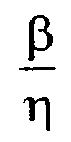
- Verfahren nach Anspruch 2, wobei, wenn G an L angenähert wird,

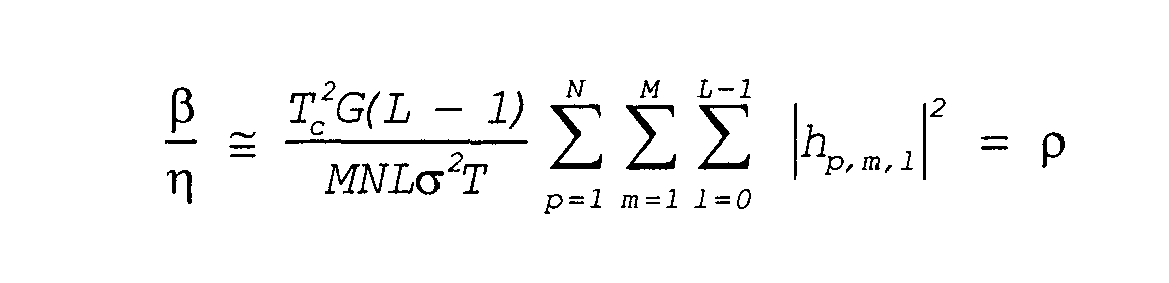
- Verfahren nach Anspruch 2, wobei, wenn ein Signal-zu-Rauschen-Verhältnis in Übereinstimmung mit den Spreizcodes durch das Berechnen von Mittelwerten aller Kanäle erhalten


wobei alle |hp,m,1|2 für einen bestimmten Pfadindex 1 als unabhängige und gleich verteilte Zufallsvariablen mit einem endlichen gemittelten Ω1 für alle p und m angenommen werden. - Verfahren zum Zuweisen von Sendeleistung in einem Sender eines Mehrcode-Mehrantennen-Systems, das M Sendeantennen und N Empfangsantennen enthält, wobei das Verfahren K Spreizcodes zum Unterscheiden von Kanälen verwendet, wobei das Verfahren folgende Schritte umfasst:Empfangen eines Leistungsverhältnisses γ zwischen Sendeleistungen Pk , Pk+1, die jeweils zwei benachbarten Spreizcodes zuzuweisen sind, als von einem Empfänger gesendete Rückmeldungsinformationen, undZuweisen der Sendeleistung Pk in Übereinstimmung mit K Spreizcodes durch das Einsetzen des Leistungsverhältnisses γ und der Gesamtsendeleistung PT in die Gleichung

- Verfahren nach Anspruch 5, das weiterhin einen Schritt zum Zuweisen von Sendeleistung zu jeder der M Sendeantennen durch das Verteilen der in Übereinstimmung mit jedem Spreizcodes zugewiesenen Sendeleistung Pk auf die M Sendeantennen umfasst.
- Verfahren nach Anspruch 6, wobei die Sendeleistung Pk,m für jede der M Sendeantennen unter Verwendung der folgenden Gleichung zugewiesen wird:

wobei M die Gesamtanzahl der Sendeantennen angibt, k einen Index zum Angeben eines Spreizcodes angibt und m einen Index zum Angeben einer Sendeantenne angibt. - Verfahren nach Anspruch 6, wobei der Schritt zum Teilen der Sendeleistung P k
0 für einen vorbestimmten Kanal ko aus den K Kanälen in die Sendeleistung jeder der M Antennen folgende Schritte umfasst:1) Setzen von k o auf K,2) Bestimmen G k0 unter Verwendung von (Y k0 ,k0 )+, nachdem ein vorbestimmter Index i auf ,1' gesetzt wurde,3) Berechnen von β̃ k0 ,g(i) und η̃ k0 ,g(i) für einen g(i)-ten Teilstrom von k0 unter Verwendung der folgenden Gleichung:


 4) Bestimmen der Sendeleistung eines Kanals ko in einer g(i)-ten Antenne unter Verwendung der folgenden Gleichung:
wobei, wenn der Index i um '1' erhöht wird, G k0 in Entsprechung zu dem erhöhten Index i unter Verwendung von (〈Y k0 ,k0 〉g ( i ) )+ bestimmt wird und dann ein Prozess zum Bestimmen der Sendeleistung mittels der Schritte 3) und 4) wiederholt wird, bis der Index i die Anzahl M erreicht.
Applications Claiming Priority (2)
| Application Number | Priority Date | Filing Date | Title |
|---|---|---|---|
| KR1020030058555A KR100969767B1 (ko) | 2003-08-23 | 2003-08-23 | 다중 코드를 사용하는 다중 송수신 안테나 시스템을 위한 송신 전력 할당 방법 |
| KR2003058555 | 2003-08-23 |
Publications (3)
| Publication Number | Publication Date |
|---|---|
| EP1511187A2 EP1511187A2 (de) | 2005-03-02 |
| EP1511187A3 EP1511187A3 (de) | 2009-11-04 |
| EP1511187B1 true EP1511187B1 (de) | 2013-06-05 |
Family
ID=34101834
Family Applications (1)
| Application Number | Title | Priority Date | Filing Date |
|---|---|---|---|
| EP04019982.0A Expired - Lifetime EP1511187B1 (de) | 2003-08-23 | 2004-08-23 | Sendeleistungsregelung für ein Mehrkodemehrantennensystem |
Country Status (3)
| Country | Link |
|---|---|
| EP (1) | EP1511187B1 (de) |
| KR (1) | KR100969767B1 (de) |
| CN (1) | CN100505581C (de) |
Families Citing this family (2)
| Publication number | Priority date | Publication date | Assignee | Title |
|---|---|---|---|---|
| KR20110036489A (ko) * | 2009-10-01 | 2011-04-07 | 삼성전자주식회사 | LTE-Advanced 시스템 및 그 시스템에서 상향 링크 전력 제어 방법 |
| KR102241045B1 (ko) * | 2013-04-16 | 2021-04-19 | 칸도우 랩스 에스에이 | 고 대역폭 통신 인터페이스를 위한 방법 및 시스템 |
Family Cites Families (3)
| Publication number | Priority date | Publication date | Assignee | Title |
|---|---|---|---|---|
| JP2001094487A (ja) * | 1999-09-22 | 2001-04-06 | Matsushita Electric Ind Co Ltd | 無線送信装置及び送信ダイバーシチ方法 |
| GB0110125D0 (en) | 2001-04-25 | 2001-06-20 | Koninkl Philips Electronics Nv | Radio communication system |
| EP1255369A1 (de) | 2001-05-04 | 2002-11-06 | TELEFONAKTIEBOLAGET LM ERICSSON (publ) | Verbindungsanpassung für drahtlose Kommunikationssysteme mit mehreren Eingängen und mehreren Ausgängen |
-
2003
- 2003-08-23 KR KR1020030058555A patent/KR100969767B1/ko not_active Expired - Fee Related
-
2004
- 2004-08-23 EP EP04019982.0A patent/EP1511187B1/de not_active Expired - Lifetime
- 2004-08-23 CN CNB200410100594XA patent/CN100505581C/zh not_active Expired - Fee Related
Also Published As
| Publication number | Publication date |
|---|---|
| EP1511187A3 (de) | 2009-11-04 |
| EP1511187A2 (de) | 2005-03-02 |
| CN1627660A (zh) | 2005-06-15 |
| KR100969767B1 (ko) | 2010-07-13 |
| KR20050020533A (ko) | 2005-03-04 |
| CN100505581C (zh) | 2009-06-24 |
Similar Documents
| Publication | Publication Date | Title |
|---|---|---|
| EP1894312B1 (de) | Verfahren und vorrichtung zur beeinträchtigungskorrelationsschätzung in einem drahtlosen kommunikationsempfänger | |
| KR100948007B1 (ko) | 적응성 전송 안테나 어레이를 이용한 무선 전송 | |
| US7212578B2 (en) | Transmit diversity apparatus and method using two or more antennas | |
| EP1575188B1 (de) | Verfahren und Gerät zum Empfangen eines Signals in einem MIMO-Kommunikationssystem | |
| US7397843B2 (en) | Reduced complexity soft value generation for multiple-input multiple-output (MIMO) joint detection generalized RAKE (JD-GRAKE) receivers | |
| US6721293B1 (en) | Unsupervised adaptive chip separation filter for CDMA terminal | |
| US7437135B2 (en) | Joint channel equalizer interference canceller advanced receiver | |
| EP0926913A2 (de) | Zellulares Funkkommunikationssystem mit Teilnehmeraufteilung mittels Antenne-Strahlformung | |
| US7535970B2 (en) | Wireless communication apparatus and method for multiple transmit and receive antenna system using multiple codes | |
| US20070189362A1 (en) | Method and system for channel estimation, related receiver and computer program product | |
| WO2000054418A1 (en) | Unsupervised adaptive chip separation filter for cdma terminal | |
| US7184465B2 (en) | Signal processing method and apparatus for a spread spectrum radio communication receiver | |
| EP1511187B1 (de) | Sendeleistungsregelung für ein Mehrkodemehrantennensystem | |
| Park et al. | Transmit power allocation for successive interference cancellation in multicode MIMO systems | |
| CN101213762B (zh) | 无线通信接收器中的减损相关估算的方法和装置 | |
| Li et al. | Nonblind and semiblind space–time-frequency multiuser detection for space–time block-coded MC-CDMA | |
| KR20070104570A (ko) | 안테나 어레이를 구비한 무선통신 시스템에 이용되는조인트 검출 방법 및 기지국 | |
| Hassell Sweatman et al. | Multiuser detection for CDMA antenna array receivers using spatial equivalence classes | |
| Dahlhaus et al. | Smart antenna concepts for the UMTS terrestrial radio access | |
| Bosanska et al. | Performance evaluation of intra-cell interference cancelation in D-TxAA HSDPA | |
| Kocian et al. | Iterative joint data detection and channel estimation of DS/CDMA signals in multipath fading using the SAGE algorithm | |
| de Lamare et al. | Blind adaptive space-time block-coded receivers for DS-CDMA systems in multipath channels based on the constant modulus criterion | |
| Medina et al. | Channel estimation for RLS-based linearly constrained minimum variance receivers | |
| Dahlhaus et al. | Comparison of conventional and adaptive receiver concepts for the UTRA downlink | |
| Kim et al. | Performance enhancement of 1/spl times/EV/DV MIMO systems in frequency selective fading channels |
Legal Events
| Date | Code | Title | Description |
|---|---|---|---|
| PUAI | Public reference made under article 153(3) epc to a published international application that has entered the european phase |
Free format text: ORIGINAL CODE: 0009012 |
|
| 17P | Request for examination filed |
Effective date: 20040823 |
|
| AK | Designated contracting states |
Kind code of ref document: A2 Designated state(s): AT BE BG CH CY CZ DE DK EE ES FI FR GB GR HU IE IT LI LU MC NL PL PT RO SE SI SK TR |
|
| AX | Request for extension of the european patent |
Extension state: AL HR LT LV MK |
|
| PUAL | Search report despatched |
Free format text: ORIGINAL CODE: 0009013 |
|
| AK | Designated contracting states |
Kind code of ref document: A3 Designated state(s): AT BE BG CH CY CZ DE DK EE ES FI FR GB GR HU IE IT LI LU MC NL PL PT RO SE SI SK TR |
|
| AX | Request for extension of the european patent |
Extension state: AL HR LT LV MK |
|
| 17Q | First examination report despatched |
Effective date: 20100122 |
|
| AKX | Designation fees paid |
Designated state(s): DE FI FR GB IT SE |
|
| RAP1 | Party data changed (applicant data changed or rights of an application transferred) |
Owner name: SEOUL NATIONAL UNIVERSITY INDUSTRY FOUNDATION Owner name: SAMSUNG ELECTRONICS CO., LTD. |
|
| REG | Reference to a national code |
Ref country code: DE Ref legal event code: R079 Ref document number: 602004042329 Country of ref document: DE Free format text: PREVIOUS MAIN CLASS: H04B0007005000 Ipc: H04W0052420000 |
|
| GRAP | Despatch of communication of intention to grant a patent |
Free format text: ORIGINAL CODE: EPIDOSNIGR1 |
|
| RIC1 | Information provided on ipc code assigned before grant |
Ipc: H04W 52/42 20090101AFI20121128BHEP Ipc: H04W 52/16 20090101ALI20121128BHEP |
|
| GRAS | Grant fee paid |
Free format text: ORIGINAL CODE: EPIDOSNIGR3 |
|
| GRAA | (expected) grant |
Free format text: ORIGINAL CODE: 0009210 |
|
| AK | Designated contracting states |
Kind code of ref document: B1 Designated state(s): DE FI FR GB IT SE |
|
| REG | Reference to a national code |
Ref country code: GB Ref legal event code: FG4D |
|
| REG | Reference to a national code |
Ref country code: DE Ref legal event code: R096 Ref document number: 602004042329 Country of ref document: DE Effective date: 20130801 |
|
| PG25 | Lapsed in a contracting state [announced via postgrant information from national office to epo] |
Ref country code: SE Free format text: LAPSE BECAUSE OF FAILURE TO SUBMIT A TRANSLATION OF THE DESCRIPTION OR TO PAY THE FEE WITHIN THE PRESCRIBED TIME-LIMIT Effective date: 20130605 Ref country code: FI Free format text: LAPSE BECAUSE OF FAILURE TO SUBMIT A TRANSLATION OF THE DESCRIPTION OR TO PAY THE FEE WITHIN THE PRESCRIBED TIME-LIMIT Effective date: 20130605 |
|
| PLBE | No opposition filed within time limit |
Free format text: ORIGINAL CODE: 0009261 |
|
| STAA | Information on the status of an ep patent application or granted ep patent |
Free format text: STATUS: NO OPPOSITION FILED WITHIN TIME LIMIT |
|
| 26N | No opposition filed |
Effective date: 20140306 |
|
| REG | Reference to a national code |
Ref country code: FR Ref legal event code: ST Effective date: 20140430 |
|
| REG | Reference to a national code |
Ref country code: DE Ref legal event code: R097 Ref document number: 602004042329 Country of ref document: DE Effective date: 20140306 |
|
| PG25 | Lapsed in a contracting state [announced via postgrant information from national office to epo] |
Ref country code: FR Free format text: LAPSE BECAUSE OF NON-PAYMENT OF DUE FEES Effective date: 20130902 |
|
| PGFP | Annual fee paid to national office [announced via postgrant information from national office to epo] |
Ref country code: IT Payment date: 20170810 Year of fee payment: 14 Ref country code: DE Payment date: 20170720 Year of fee payment: 14 Ref country code: GB Payment date: 20170720 Year of fee payment: 14 |
|
| REG | Reference to a national code |
Ref country code: DE Ref legal event code: R119 Ref document number: 602004042329 Country of ref document: DE |
|
| GBPC | Gb: european patent ceased through non-payment of renewal fee |
Effective date: 20180823 |
|
| PG25 | Lapsed in a contracting state [announced via postgrant information from national office to epo] |
Ref country code: IT Free format text: LAPSE BECAUSE OF NON-PAYMENT OF DUE FEES Effective date: 20180823 Ref country code: DE Free format text: LAPSE BECAUSE OF NON-PAYMENT OF DUE FEES Effective date: 20190301 |
|
| PG25 | Lapsed in a contracting state [announced via postgrant information from national office to epo] |
Ref country code: GB Free format text: LAPSE BECAUSE OF NON-PAYMENT OF DUE FEES Effective date: 20180823 |